EP4583546A2 - Kommunikationsverfahren, slrb-herstellungsverfahren und kommunikationsvorrichtung - Google Patents
Kommunikationsverfahren, slrb-herstellungsverfahren und kommunikationsvorrichtung Download PDFInfo
- Publication number
- EP4583546A2 EP4583546A2 EP25153672.8A EP25153672A EP4583546A2 EP 4583546 A2 EP4583546 A2 EP 4583546A2 EP 25153672 A EP25153672 A EP 25153672A EP 4583546 A2 EP4583546 A2 EP 4583546A2
- Authority
- EP
- European Patent Office
- Prior art keywords
- slrb
- terminal device
- information
- sidelink
- qos
- Prior art date
- Legal status (The legal status is an assumption and is not a legal conclusion. Google has not performed a legal analysis and makes no representation as to the accuracy of the status listed.)
- Pending
Links
Images

Classifications
-
- H—ELECTRICITY
- H04—ELECTRIC COMMUNICATION TECHNIQUE
- H04W—WIRELESS COMMUNICATION NETWORKS
- H04W76/00—Connection management
- H04W76/30—Connection release
-
- H—ELECTRICITY
- H04—ELECTRIC COMMUNICATION TECHNIQUE
- H04W—WIRELESS COMMUNICATION NETWORKS
- H04W24/00—Supervisory, monitoring or testing arrangements
- H04W24/10—Scheduling measurement reports ; Arrangements for measurement reports
-
- H—ELECTRICITY
- H04—ELECTRIC COMMUNICATION TECHNIQUE
- H04L—TRANSMISSION OF DIGITAL INFORMATION, e.g. TELEGRAPHIC COMMUNICATION
- H04L41/00—Arrangements for maintenance, administration or management of data switching networks, e.g. of packet switching networks
- H04L41/08—Configuration management of networks or network elements
- H04L41/0803—Configuration setting
- H04L41/0813—Configuration setting characterised by the conditions triggering a change of settings
- H04L41/0816—Configuration setting characterised by the conditions triggering a change of settings the condition being an adaptation, e.g. in response to network events
-
- H—ELECTRICITY
- H04—ELECTRIC COMMUNICATION TECHNIQUE
- H04L—TRANSMISSION OF DIGITAL INFORMATION, e.g. TELEGRAPHIC COMMUNICATION
- H04L43/00—Arrangements for monitoring or testing data switching networks
- H04L43/02—Capturing of monitoring data
- H04L43/026—Capturing of monitoring data using flow identification
-
- H—ELECTRICITY
- H04—ELECTRIC COMMUNICATION TECHNIQUE
- H04L—TRANSMISSION OF DIGITAL INFORMATION, e.g. TELEGRAPHIC COMMUNICATION
- H04L43/00—Arrangements for monitoring or testing data switching networks
- H04L43/06—Generation of reports
- H04L43/065—Generation of reports related to network devices
-
- H—ELECTRICITY
- H04—ELECTRIC COMMUNICATION TECHNIQUE
- H04W—WIRELESS COMMUNICATION NETWORKS
- H04W28/00—Network traffic management; Network resource management
- H04W28/02—Traffic management, e.g. flow control or congestion control
- H04W28/0252—Traffic management, e.g. flow control or congestion control per individual bearer or channel
-
- H—ELECTRICITY
- H04—ELECTRIC COMMUNICATION TECHNIQUE
- H04W—WIRELESS COMMUNICATION NETWORKS
- H04W28/00—Network traffic management; Network resource management
- H04W28/02—Traffic management, e.g. flow control or congestion control
- H04W28/0252—Traffic management, e.g. flow control or congestion control per individual bearer or channel
- H04W28/0263—Traffic management, e.g. flow control or congestion control per individual bearer or channel involving mapping traffic to individual bearers or channels, e.g. traffic flow template [TFT]
-
- H—ELECTRICITY
- H04—ELECTRIC COMMUNICATION TECHNIQUE
- H04W—WIRELESS COMMUNICATION NETWORKS
- H04W28/00—Network traffic management; Network resource management
- H04W28/02—Traffic management, e.g. flow control or congestion control
- H04W28/0268—Traffic management, e.g. flow control or congestion control using specific QoS parameters for wireless networks, e.g. QoS class identifier [QCI] or guaranteed bit rate [GBR]
-
- H—ELECTRICITY
- H04—ELECTRIC COMMUNICATION TECHNIQUE
- H04W—WIRELESS COMMUNICATION NETWORKS
- H04W28/00—Network traffic management; Network resource management
- H04W28/02—Traffic management, e.g. flow control or congestion control
- H04W28/04—Error control
-
- H—ELECTRICITY
- H04—ELECTRIC COMMUNICATION TECHNIQUE
- H04W—WIRELESS COMMUNICATION NETWORKS
- H04W76/00—Connection management
- H04W76/10—Connection setup
- H04W76/14—Direct-mode setup
-
- H—ELECTRICITY
- H04—ELECTRIC COMMUNICATION TECHNIQUE
- H04L—TRANSMISSION OF DIGITAL INFORMATION, e.g. TELEGRAPHIC COMMUNICATION
- H04L41/00—Arrangements for maintenance, administration or management of data switching networks, e.g. of packet switching networks
- H04L41/08—Configuration management of networks or network elements
- H04L41/0894—Policy-based network configuration management
-
- H—ELECTRICITY
- H04—ELECTRIC COMMUNICATION TECHNIQUE
- H04W—WIRELESS COMMUNICATION NETWORKS
- H04W4/00—Services specially adapted for wireless communication networks; Facilities therefor
- H04W4/30—Services specially adapted for particular environments, situations or purposes
- H04W4/40—Services specially adapted for particular environments, situations or purposes for vehicles, e.g. vehicle-to-pedestrians [V2P]
-
- H—ELECTRICITY
- H04—ELECTRIC COMMUNICATION TECHNIQUE
- H04W—WIRELESS COMMUNICATION NETWORKS
- H04W4/00—Services specially adapted for wireless communication networks; Facilities therefor
- H04W4/30—Services specially adapted for particular environments, situations or purposes
- H04W4/40—Services specially adapted for particular environments, situations or purposes for vehicles, e.g. vehicle-to-pedestrians [V2P]
- H04W4/46—Services specially adapted for particular environments, situations or purposes for vehicles, e.g. vehicle-to-pedestrians [V2P] for vehicle-to-vehicle communication [V2V]
-
- H—ELECTRICITY
- H04—ELECTRIC COMMUNICATION TECHNIQUE
- H04W—WIRELESS COMMUNICATION NETWORKS
- H04W76/00—Connection management
- H04W76/10—Connection setup
- H04W76/11—Allocation or use of connection identifiers
-
- H—ELECTRICITY
- H04—ELECTRIC COMMUNICATION TECHNIQUE
- H04W—WIRELESS COMMUNICATION NETWORKS
- H04W92/00—Interfaces specially adapted for wireless communication networks
- H04W92/16—Interfaces between hierarchically similar devices
- H04W92/18—Interfaces between hierarchically similar devices between terminal devices
Definitions
- This application relates to the communications field, and more specifically, to a communication method, an SLRB establishment method, and a communications apparatus.
- a terminal device when transmitting data through a sidelink (sidelink, SL), a terminal device needs to know sidelink radio bearer (sidelink radio bearer, SLRB) configuration information to which a quality of service (quality of service, QoS) flow from a V2X layer needs to be mapped.
- sidelink radio bearer sidelink radio bearer, SLRB
- QoS quality of service
- This application provides a communication method and a communications apparatus, to clearly define a condition for triggering reporting of QoS information, so that a terminal device can determine when to report the QoS information.
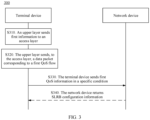
- a communication method including: An access layer (access layer, AS) of a terminal device receives first information sent by an upper layer of the terminal device, where the first information is used to identify a first quality of service QoS flow.
- the access layer determines that the first QoS flow is a new QoS flow for which sidelink communication needs to be performed, or when the access layer determines that the first QoS flow is a new QoS flow for which sidelink communication needs to be performed and no mapping relationship from the first QoS flow to a sidelink radio bearer SLRB is configured, or when the access layer determines that no mapping relationship from the first QoS flow to a sidelink radio bearer SLRB is configured, the terminal device reports first QoS information to a network device, where the first QoS information includes some or all content in the first information, and the first QoS information is used to request SLRB configuration information associated with the first QoS flow.
- the method may further include: The terminal device receives the SLRB configuration information that is associated with the first QoS flow and that is sent by the network device.
- that the access layer determines that the first QoS flow is a new QoS flow for which sidelink communication needs to be performed includes: If the access layer determines that a stored PFI does not include the first PFI, and/or a stored QoS parameter does not include the first QoS parameter, the access layer determines that the first QoS flow is the new QoS flow for which sidelink communication needs to be performed.
- the first QoS information includes the first QoS parameter and the first communication type information.
- the first QoS information includes the first PFI, the first QoS parameter, and the first sidelink information.
- a communication method including: A network device receives first quality of service QoS information reported by a terminal device, where the first QoS information is used to request a mapping relationship from a first quality of service QoS flow to a sidelink radio bearer SLRB. The network device sends, to the terminal device, SLRB configuration information associated with the first QoS flow.
- this application provides an SLRB establishment method, to clearly define a condition for triggering a terminal device to establish an SLRB, so that the terminal device may establish the SLRB when the condition is met, to perform sidelink transmission.
- a sidelink radio bearer SLRB establishment method including:
- a first terminal device establishes a first SLRB to which a first quality of service QoS flow needs to be mapped:
- the first SLRB is not a default (default) SLRB.
- the first SLRB is associated with first sidelink information
- the first sidelink information is used to identify a first sidelink
- the first sidelink information includes one or more of first communication type information, a first source identifier, and a first destination identifier
- the first communication type information is one of unicast, multicast, and broadcast.
- a condition for triggering a terminal device to establish an SLRB is clearly defined, so that the terminal device may establish the SLRB when the condition is met, to perform sidelink transmission.
- the first QoS flow has data includes: The upper layer of the first terminal device initiates the first QoS flow, or the second terminal device initiates the first QoS flow.
- the upper layer of the first terminal device initiates the first QoS flow includes: The upper layer indicates, to an access layer of the first terminal device, a first PC5 interface quality of service flow identifier PFI and a first QoS parameter that are associated with the first QoS flow; or the upper layer delivers, to the access layer, a data packet corresponding to the first QoS flow.
- the second terminal device initiates the first QoS flow includes: The second terminal device sends, to the first terminal device, a first PC5 interface quality of service flow identifier PFI and a first QoS parameter that are associated with the first QoS flow.
- the second configuration information is an RRC reconfiguration message.
- the RRC reconfiguration message is a PC5-RRC reconfiguration message.
- the second configuration information is sent by the second terminal device when the second terminal device needs to establish a second SLRB associated with the first SLRB.
- this application provides an SLRB reconfiguration method, to clearly define a condition for triggering a terminal device to reconfigure an SLRB, so that the terminal device may reconfigure the SLRB when the condition is met, to perform sidelink transmission.
- a sidelink radio bearer SLRB reconfiguration method including: When one or more of the following is met, a first terminal device reconfigures a first SLRB to which a first quality of service QoS flow needs to be mapped:
- the first SLRB is associated with first sidelink information
- the first sidelink information is used to identify a first sidelink
- the first sidelink information includes one or more of first communication type information, a first source identifier, and a first destination identifier
- the first communication type information is one of unicast, multicast, and broadcast.
- the first SLRB is not a default (default) SLRB.
- a condition for triggering a terminal device to reconfigure an SLRB is clearly defined, so that the terminal device may reconfigure the SLRB when the condition is met, to perform sidelink transmission.
- the first QoS flow has data includes: The upper layer of the first terminal device initiates the first QoS flow, or the second terminal device initiates the first QoS flow.
- the upper layer of the first terminal device initiates the first QoS flow includes: The upper layer indicates, to an access layer of the first terminal device, a first PC5 interface quality of service flow identifier PFI and a first QoS parameter that are associated with the first QoS flow; or the upper layer delivers, to the access layer, a data packet corresponding to the first QoS flow.
- the second terminal device initiates the first QoS flow includes: The second terminal device sends, to the first terminal device, a first PC5 interface quality of service flow identifier PFI and a first QoS parameter that are associated with the first QoS flow.
- the second configuration information is an RRC reconfiguration message.
- the RRC reconfiguration message is a PC5-RRC reconfiguration message.
- the second configuration information is sent by the second terminal device when the second terminal device needs to re-establish a second SLRB associated with the first SLRB.
- a sidelink radio bearer SLRB release method including: When one or more of the following is met, a first terminal device releases a first SLRB:
- a first sidelink information is used to identify a first sidelink
- the first sidelink information includes one or more of first communication type information, a first source identifier, and a first destination identifier
- the first communication type information is one of unicast, multicast, and broadcast.
- the first SLRB is not a default (default) SLRB.
- SLRB release method a condition for releasing an SLRB is clearly defined, so that a terminal device can release the SLRB on a proper occasion, thereby saving resources.
- that no QoS flow with data is mapped to the first SLRB includes: All QoS flows with data that are mapped to the first SLRB have been released.
- the first SLRB release information includes an identifier or an index of the first SLRB, and/or includes the first sidelink information.
- the first SLRB release information is an RRC reconfiguration message.
- the RRC reconfiguration message is a PC5-RRC reconfiguration message.
- the first SLRB release information is sent by the second terminal device when the second terminal device needs to release a second SLRB associated with the first SLRB.
- a terminal device when a terminal device detects that a beam failure (beam failure) occurs on an interface between the terminal device and a network device, the terminal device needs to contend for a resource in an exceptional pool (exceptional pool) with another terminal device to perform sidelink transmission. This may cause a case in which the terminal device cannot obtain a resource through contention, thereby affecting service continuity.
- beam failure beam failure
- exceptional pool exceptional pool
- a communication method includes: When a terminal device detects that a beam failure occurs on an interface between the terminal device and a network device, or in a process in which a terminal device performs detection on a beam failure on an interface between the terminal device and a network device, or when a terminal device is synchronized to a global navigation satellite system (global navigation satellite system, GNSS), if a configured grant (configured grant) has been configured for the terminal device, sidelink transmission is performed by using the configured grant.
- GNSS global navigation satellite system
- the terminal device is in the process of performing detection on a beam failure on the interface between the terminal device and the network device.
- the terminal device may preferentially use the configured grant that has been configured. Because the configured grant is dedicated to the terminal device, a collision caused by resource contention with another terminal device can be avoided, thereby ensuring service continuity of the terminal device, and meeting a QoS requirement.
- sidelink transmission is performed by using an exceptional pool (exceptional pool).
- the configured grant includes a configured grant type 1 and a configured grant type 2.
- the configured grant type 1 can be directly used.
- the configured grant type 2 can be used after being activated by using DCI.
- the configured grant may still be used.
- a media access control (media access control, MAC) layer of the terminal device notifies an RRC layer that the exceptional pool is not in use.
- the performing sidelink transmission by using the configured grant includes:
- the RRC layer of the terminal device indicates a lower layer to perform sidelink transmission by using the configured grant.
- the lower layer may be the media access control (media access control, MAC) layer.
- media access control media access control, MAC
- the preferentially using the configured grant that has been configured may be understood as follows: When resources of the configured grant and the exceptional pool overlap, the terminal device or a logical channel that is on the terminal device and that is allowed to use the configured grant uses the configured grant that has been configured, but does not use the exceptional pool.
- the foregoing solution is also applicable to a radio link failure, a physical layer link problem, a cell handover scenario, and the like. This is not specifically limited in the present invention.
- the terminal device may select the GNSS as a synchronization source.
- a first service data adaptation protocol SDAP entity of a terminal device maps a first QoS flow to a first sidelink radio bearer SLRB based on first sidelink information and a first PC5 interface quality of service flow identifier PFI, or based on the first sidelink information and a first quality of service QoS parameter.
- the first sidelink information, the first QoS parameter, and the first PFI are all associated with the first QoS flow.
- the first sidelink information is used to identify a first sidelink.
- the first sidelink information includes one or more of first communication type information, a first source identifier, and a first destination identifier.
- the first communication type information is one of unicast, multicast, and broadcast.
- an SDAP entity of the terminal device may map a QoS flow to a corresponding SLRB.
- the terminal device includes the first SDAP entity, and the terminal device includes only one SDAP entity.
- a communication method including: An upper layer of a terminal device delivers a first quality of service QoS flow to a first service data adaptation protocol SDAP entity based on first sidelink information.
- the first QoS flow is associated with the first sidelink information, a first PC5 interface quality of service flow identifier PFI, and a first quality of service QoS parameter.
- the first sidelink information is used to identify a first sidelink.
- the first sidelink information includes one or more of first communication type information, a first source identifier, and a first destination identifier.
- the first communication type information is one of unicast, multicast, and broadcast.
- the first SDAP entity maps the first QoS flow to a first sidelink radio bearer SLRB based on the first PFI or the first QoS parameter.
- the upper layer of the terminal device may deliver a QoS flow to a corresponding SDAP entity, and the SDAP entity may map the QoS flow to a corresponding SLRB.
- the terminal device includes SDAP entities, the plurality of SDAP entities include the first SDAP entity, and the plurality of SDAP entities are in a one-to-one correspondence with a plurality of sidelinks.
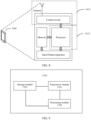
- a communications apparatus including modules or units configured to perform the method in any one of the first aspect, the third aspect to the eighth aspect, or the possible implementations of the first aspect and the third aspect to the eighth aspect.
- a communications apparatus including modules or units configured to perform the method in any one of the second aspect or the possible implementations of the second aspect.
- an apparatus including a processor.
- the processor is coupled to a memory, and may be configured to execute an instruction in the memory, so that the apparatus performs the method in any one of the first aspect, the third aspect to the eighth aspect, or the possible implementations of the first aspect and the third aspect to the eighth aspect.
- the apparatus further includes the memory.
- the apparatus further includes an interface circuit, and the processor is coupled to the interface circuit.
- a processor including an input circuit, an output circuit, and a processing circuit.
- the processing circuit is configured to receive a signal by using the input circuit, and transmit a signal by using the output circuit, so that the processor performs the method in any one of the first aspect to the eighth aspect or the possible implementations of the first aspect to the eighth aspect.
- the processor may be a chip
- the input circuit may be an input pin
- the output circuit may be an output pin
- the processing circuit may be a transistor, a gate circuit, a trigger, various logic circuits, or the like.
- An input signal received by the input circuit may be received and input by, for example, but not limited to, a receiver.
- a signal output by the output circuit may be output to, for example, but not limited to, a transmitter, and transmitted by the transmitter.
- the input circuit and the output circuit may be a same circuit, and the circuit serves as the input circuit and the output circuit at different moments. Specific implementations of the processor and various circuits are not limited in this embodiment of this application.
- a processing apparatus including a processor and a memory.
- the processor is configured to read an instruction stored in the memory, and may receive a signal by using a receiver, and transmit a signal by using a transmitter, to perform the method in any one of the first aspect to the eighth aspect or the possible implementations of the first aspect to the eighth aspect.
- processors there are one or more processors, and there are one or more memories.
- the memory may be integrated with the processor, or the memory and the processor are disposed separately.
- the memory may be a non-transitory (non-transitory) memory, for example, a read-only memory (read only memory, ROM).
- the memory and the processor may be integrated on one chip, or may be separately disposed on different chips.
- a type of the memory and a manner of disposing the memory and the processor are not limited in this embodiment of this application.
- a related data exchange process may be a process of sending controlling information by the processor, and receiving first QoS information may be a process of receiving the first QoS information by the processor.
- data output by the processor may be output to a transmitter, and input data received by the processor may come from a receiver.
- the transmitter and the receiver may be collectively referred to as a transceiver.
- the processing apparatus in the fourteenth aspect may be a chip.
- the processor may be implemented by hardware or software.
- the processor may be a logic circuit, an integrated circuit, or the like.
- the processor may be a general-purpose processor, and is implemented by reading software code stored in a memory.
- the memory may be integrated in the processor, or may be located outside the processor and exist independently.
- a computer program product includes a computer program (which may also be referred to as code or an instruction).
- a computer program which may also be referred to as code or an instruction.
- a computer-readable medium stores a computer program (which may also be referred to as code or an instruction).
- the computer program When the computer program is run on a computer, the computer is enabled to perform the method in any one of the first aspect to the eighth aspect or the possible implementations of the first aspect to the eighth aspect.
- a communications system including the foregoing network device and/or terminal device.
- the technical solutions provided in this application may be used in a device-to-device (device to device, D2D) scenario, and optionally, may be used in an internet of vehicles (vehicle to everything, V2X) scenario.
- the V2X scenario may be specifically any one of the following systems: vehicle-to-vehicle (vehicle to vehicle, V2V) communication, vehicle-to-pedestrian (vehicle to pedestrian, V2P) communication, a vehicle-to-network (vehicle to network, V2N) service, vehicle-to-infrastructure (vehicle to infrastructure, V2I) communication, and the like.
- D2D may be long term evolution (long term evolution, LTE) D2D or new radio (new radio, NR) D2D, or may be D2D in another communications system that may appear with development of technologies.
- V2X may be LTE V2X or NR V2X, or may be V2X in another communications system that may appear with development of technologies.
- a terminal device may be user equipment (user equipment, UE), a vehicle, a vehicle-mounted sensor, an on-board unit (on-board unit, OBU), a roadside unit (roadside unit, RSU), a subscriber unit, a subscriber station, a mobile station, a mobile console, a remote station, a remote terminal, a mobile device, a user terminal, a terminal, a wireless communications device, a user agent, a user apparatus, a cellular phone, a cordless phone, a session initiation protocol (session initiation protocol, SIP) phone, a wireless local loop (wireless local loop, WLL) station, a personal digital assistant (personal digital assistant, PDA), a handheld device with a wireless communication function, a computing device or another processing device connected to a wireless modem, a wearable device, or the like.
- OBU on-board unit
- RSU roadside unit
- subscriber unit subscriber station
- mobile station a mobile console
- remote station a remote terminal
- a network device is an access network device.
- the access network device may be an evolved NodeB (evolved NodeB, eNB or eNodeB) in an LTE system, a gNodeB (gNB) in a 5G or NR network, or a radio controller, a relay station, an access point, or a transmission and reception point (transmission and reception point, TRP) in a cloud radio access network (cloud radio access network, CRAN) scenario.
- eNB evolved NodeB
- gNB gNodeB
- 5G or NR network a 5G or NR network
- a radio controller a relay station
- an access point or a transmission and reception point (transmission and reception point, TRP) in a cloud radio access network (cloud radio access network, CRAN) scenario.
- cloud radio access network cloud radio access network
- the terminal device may be alternatively a chip, a communications apparatus with a D2D or V2X communication function, a unit, a module, or the like in a terminal device, for example, an in-vehicle communications apparatus, an in-vehicle communications module, or an in-vehicle communications chip.
- the terminal device or the network device includes a hardware layer, an operating system layer running at the hardware layer, and an application layer running at the operating system layer.
- the hardware layer includes hardware such as a central processing unit (central processing unit, CPU), a memory management unit (memory management unit, MMU), and a memory (also referred to as a main memory).
- the operating system may be any one or more computer operating systems that implement service processing by using a process (process), for example, a Linux operating system, a Unix operating system, an Android operating system, an iOS operating system, or a Windows operating system.
- the application layer includes applications such as a browser, an address book, word processing software, and instant messaging software.
- a specific structure of an entity for performing a method provided in the embodiments of this application is not particularly limited in the embodiments of this application, provided that the entity can run a program that records code of the method provided in the embodiments of this application to perform communication according to the method provided in the embodiments of this application.
- the entity for performing the method provided in the embodiments of this application may be a terminal device, a network device, or a functional module that is in a terminal device or a network device and that can invoke and execute the program.
- aspects or features of this application may be implemented as a method, an apparatus or a product that uses standard programming and/or engineering technologies.
- the term "product" used in this application covers a computer program that can be accessed from any computer-readable component, carrier or medium.
- the computer-readable medium may include but is not limited to: a magnetic storage component (for example, a hard disk, a floppy disk or a magnetic tape), an optical disc (for example, a compact disc (compact disc, CD), or a digital versatile disc (digital versatile disc, DVD)), a smart card and a flash memory component (for example, an erasable programmable read-only memory (erasable programmable read-only memory, EPROM), a card, a stick, or a key drive).
- a magnetic storage component for example, a hard disk, a floppy disk or a magnetic tape
- an optical disc for example, a compact disc (compact disc, CD), or a digital versatile disc (digital versatile disc, DVD)
- various storage media described in this specification may indicate one or more devices and/or other machine-readable media that are configured to store information.
- machine-readable media may include but is not limited to a radio channel, and various other media that can store, contain, and/or carry an instruction and/or data.
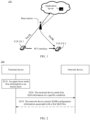
- FIG. 1 is a schematic diagram of a V2X communications architecture. As shown in FIG. 1 , the architecture includes two communications interfaces: a PC5 interface and a Uu interface.
- the PC5 interface is a direct communications interface between V2X UEs (for example, V2X UE 1 and V2X UE 2 shown in the figure).
- a direct communication link between V2X UEs is also defined as a side-link or a sidelink (sidelink, SL).
- Uu interface communication is a communication mode in which sender V2X UE (for example, the V2X UE 1) sends V2X data to a base station through the Uu interface, the base station sends the data to a V2X application server for processing, the V2X application server delivers processed data to a base station, and then the base station sends the data to receiver V2X UE (for example, the V2X UE 2).
- the base station that forwards the uplink data of the sender V2X UE to the application server and the base station that forwards the downlink data delivered by the application server to the receiver V2X UE may be a same base station, or may be different base stations. This may be specifically determined by the application server.
- the network device may alternatively broadcast a list of GFBR lists by using a SIB.
- the terminal device determines that an index value 0 indicates the 1 st GFBR list in the list, an index value 1 indicates the 2 nd GFBR list in the list, and so on.
- Each GFBR in a GFBR list is represented by a specific value, and there is no intersection between any two GFBR lists.
- the MFBR may also be indicated in a similar manner.
- the first GFBR may be a GFBR list indicated by the index value 1
- the first MFBR may be an MFBR list indicated by the index value 1.
- S220 may be performed by the RRC layer of the access layer. However, this is not limited in this application.
- a mapping relationship from the QoS flow to an SLRB may have been configured, or no mapping relationship from the QoS flow to an SLRB has been configured.
- the terminal device reports corresponding QoS information to the network device, to request a mapping relationship from the QoS flow to an SLRB.
- the terminal device reports corresponding QoS to the network device only when the QoS flow is the new QoS flow and no mapping relationship from the QoS flow to an SLRB has been configured.
- corresponding QoS information is reported to the network device, without determining whether the QoS flow is the new QoS flow.
- the following describes how to determine whether the first QoS flow is a new QoS flow for which sidelink communication needs to be performed.
- a PFI and a QoS parameter that are associated with the first sidelink information and that are stored at the access layer comply with the following principle: Each PFI is associated with one QoS parameter, and PFIs are associated with different QoS parameters.
- the PFI that is associated with the first sidelink information and that is stored (or currently configured) at the access layer does not include the first PFI, and the QoS parameter associated with the first sidelink information does not include the first QoS parameter, it is determined that the first QoS flow is a new QoS flow.
- the first PFI and the first QoS parameter are respectively denoted as a PFI #1 and a QoS parameter #1 herein.
- the PFI that is associated with the first sidelink information and that is stored at the access layer does not include the PFI #1, and the QoS parameter associated with the first sidelink information does not include the QoS parameter #1. Therefore, it is determined that the first QoS flow is a new QoS flow.
- the PFI that is associated with the first sidelink information and that is stored at the access layer does not include the first PFI, it is determined that the first QoS flow is a new QoS flow.
- the access layer determines that the first QoS flow is not a new QoS flow.
- the access layer of the terminal device updates a mapping relationship from the first sidelink information, the PFI #5, and the first QoS parameter to the SLRB #5 to a mapping relationship from the first sidelink information, the PFI #1, and the first QoS parameter to the SLRB #5.
- the QoS parameter that is associated with the first sidelink information and that is stored at the access layer does not include the first QoS parameter, it is determined that the first QoS flow is a new QoS flow.
- a PFI stored at the access layer does not include the first PFI, and a stored QoS parameter does not include the first QoS parameter, it is determined that the first QoS flow is a new QoS flow.
- a PFI stored at the access layer does not include the first PFI, it is determined that the first QoS flow is a new QoS flow.
- a QoS parameter stored at the access layer does not include the first QoS parameter, it is determined that the first QoS flow is a new QoS flow.
- any one of the manner 1, the manner 2, and the manner 3 that are described herein may be combined with the first manner for the first information in S210, and any one of the manner 4, the manner 5, and the manner 6 may be combined with the second manner for the first information in S210.
- this is not limited in this application.
- the access layer may store an association relationship between the first sidelink information, the first PFI, and the first QoS parameter.
- the configuring a mapping relationship from the first QoS flow to an SLRB does not include configuring a mapping relationship from the first QoS flow to a default (default) SLRB.
- the first QoS information may include the first QoS parameter and the first communication type information.
- the first QoS information may include the first PFI, the first QoS parameter, and the first sidelink information.
- the first QoS information may include the first PFI and the first QoS parameter.
- the first QoS information may further include the first communication type information.
- one piece of SDAP entity configuration information may include one or more of the following (1) to (5).
- an LCH configuration may specifically include at least one of the following:
- the first SLRB configuration information may be further obtained by using a SIB or through pre-configuration.
- the first SDAP entity configuration information includes information about the first QoS flow. It should be understood that the first QoS flow is a QoS flow that needs to be added to the first SDAP entity configuration information and that is mapped to an SL-DRB corresponding to the first SL-DRB configuration information.
- the terminal device may establish corresponding SL-DRBs based on the first SL-DRB configuration information for different sidelinks associated with the first QoS parameter. For example, the terminal device may establish an SL-DRB based on the first SL-DRB configuration information for the first sidelink, and may further establish an SL-DRB based on the first SL-DRB configuration information for another sidelink associated with the first QoS parameter.
- the first SDAP configuration information is as follows:
- the second QoS parameter meets the following condition:
- a QoS parameter (including the first QoS parameter and the second QoS parameter) includes a GFBR
- a value or a value range or a value list corresponding to a GFBR in the second QoS parameter includes a value range or a value list corresponding to a GFBR in the first QoS parameter.
- a QoS parameter includes an MFBR
- a value range or a value list corresponding to an MFBR in the second QoS parameter includes a value or a value range or a value list corresponding to an MFBR in the first QoS parameter.
- a PQI in the second QoS parameter is the same as a PQI in the first QoS parameter.
- a QoS parameter includes a range
- a range in the second QoS parameter is the same as a range in the first QoS parameter.
- the terminal device may establish, based on the first SL-DRB configuration information, a corresponding SL-DRB for a sidelink associated with a QoS parameter whose value range falls within a value range (or a value list) corresponding to the second QoS parameter. For example, the terminal device may establish an SL-DRB based on the first SL-DRB configuration information for the first sidelink, and may further establish an SL-DRB based on the first SL-DRB configuration information for another sidelink associated with a QoS parameter whose value range falls within the value range corresponding to the second QoS parameter.
- the design 1 and the design 2 herein may be combined with the design 1 of the first QoS information in the foregoing descriptions.
- this is not limited in this application.
- the information about the first QoS flow may include the first PFI, that is, the first SDAP entity configuration information may include the first PFI.
- the first SDAP entity configuration information may further include the first communication type information, or the first communication type information is associated with the first SDAP entity configuration information, and the first SDAP entity configuration information may further include content other than the first communication type information in the first sidelink information, for example, the first source identifier and the first destination identifier.
- the first SDAP entity configuration information may further include the first sidelink information.
- the first SDAP configuration information is as follows:
- the design 3 herein may be combined with the design 2 of the first QoS information in the foregoing descriptions.
- this is not limited in this application.
- An upper layer of a terminal device sends first information to an access layer of the terminal device.
- the first information is used to identify a first QoS flow.
- the upper layer may send, to the access layer, the first information associated with the first QoS flow.
- the access layer has not received a data packet associated with the first PFI before, or if the access layer has received a data packet associated with the first PFI before but an association relationship between the first PFI and a QoS parameter changes subsequently, it is determined that the first PFI associated with the first data packet is the new PFI.
- the access layer has received a data packet associated with the first PFI before, and an association relationship between the first PFI and a QoS parameter has not changed, it is determined that the first PFI associated with the first data packet is an existing PFI.
- the network device sends SLRB configuration information to the terminal device.
- the terminal device receives the SLRB configuration information.
- the SLRB configuration information includes first SLRB configuration information.
- FIG. 4 is a schematic flowchart of another communication method according to this application. As shown in FIG. 4 , the method includes S410 and S420. Optionally, the method may further include S430.
- S430 may alternatively not be performed.
- the network device receives the second QoS information, and subsequently does not trigger updating of the SLRB configuration information to be sent to the terminal device.
- a condition for triggering the terminal device to report QoS information is clearly defined, so that the terminal device may report QoS information only when a specific condition is met, thereby avoiding signaling overheads caused by frequently reporting QoS information. Further, the terminal device reports a release of a QoS flow to the network device, so that the network device may release a resource or a configuration related to the QoS flow, thereby reducing overheads.
- the second information may include a second PFI and second sidelink information that are associated with the second QoS flow.
- the second sidelink information is used to identify a second sidelink.
- the second information may include only the second PFI, and does not include the second sidelink information.
- the second sidelink information may include one or more of second communication type information, a second source identifier, and a second destination identifier.
- the second communication type information is one of unicast, multicast, and broadcast.
- the second sidelink information may include the second communication type information, the second source identifier, and the second destination identifier.
- the second sidelink information may include only the second communication type information and the second destination identifier.
- the second sidelink information may include only the second source identifier and the second destination identifier.
- the second sidelink information may include only the second destination identifier.
- the second QoS information may be sent by using an SUI message or another RRC message.
- the second QoS information may include some or all content in the second information.
- the second QoS information may include a second QoS parameter and the second communication type information that are associated with the second QoS flow.
- the second QoS information may include the second PFI, a second QoS parameter, and the second sidelink information.
- the second QoS information may include the second PFI and a second QoS parameter.
- the second QoS information may further include the second communication type information.
- the second QoS information may include information about at least one QoS flow.
- the information about the at least one QoS flow does not include information about the second QoS flow.
- the second QoS information includes information that is about a QoS flow and that is previously sent by the terminal device to the network device, and the information about the second QoS flow is included in QoS information previously sent by the terminal device to the network device. In this manner, that the terminal device is to release the second QoS flow may be implicitly indicated.
- information about a QoS flow may include one or more of a PFI, sidelink information, and a QoS parameter that are associated with the QoS flow.
- QoS information that has been reported before may be further reported when the second QoS information is reported.
- This application further provides a communication method, including: A terminal device sends third QoS information to a network device when the terminal device completes establishment of a unicast connection (including a PC5-S connection or a PC5-RRC connection) or when the terminal device initiates establishment of a unicast connection (for example, sending a direct communication request message to establish a PC5-S connection).
- a network device when the terminal device completes establishment of a unicast connection (including a PC5-S connection or a PC5-RRC connection) or when the terminal device initiates establishment of a unicast connection (for example, sending a direct communication request message to establish a PC5-S connection).
- This application further provides a communication method, including: A terminal device sends fourth QoS information to a network device when the terminal device determines that a QoS requirement of a fourth QoS flow is not met (for example, a delay, reliability, or a rate of actual QoS transmission does not meet a specified QoS requirement).
- the network device may learn that the QoS requirement of the fourth QoS flow is not met, so that the network device may adjust a mapping relationship from a QoS flow to an SLRB to meet the QoS requirement of the fourth QoS flow, or the network device adjusts SLRB configuration information associated with the fourth QoS flow to meet the QoS requirement of the fourth QoS flow.
- an upper layer of the terminal device may first send fourth information to an access layer of the terminal device. If the access layer determines that the QoS requirement of the fourth QoS flow is not met, the access layer sends the fourth QoS information to the network device.
- the access layer of the terminal device determines that the QoS requirement of the fourth QoS flow is not met, the access layer of the terminal device sends the fourth QoS information to the upper layer of the terminal device, to indicate that the QoS requirement of the fourth QoS flow is not met.
- the access layer of the terminal device determines that the fourth QoS flow has no corresponding SLRB
- the access layer of the terminal device sends the fourth QoS information to the upper layer of the terminal device, to indicate that the QoS requirement of the fourth QoS flow is not met.
- the fourth QoS flow has no corresponding SLRB may be understood as that the terminal device cannot obtain the SLRB configuration information associated with the fourth QoS flow, where the SLRB configuration information may further include default SLRB configuration information; or may be understood as that the terminal device has no SLRB to which the fourth QoS flow can be mapped.
- the upper layer of the terminal device learns that the QoS requirement of the fourth QoS flow is not met, so that the upper layer may adjust the QoS requirement corresponding to the fourth QoS flow, or the upper layer indicates the access layer to release the fourth QoS flow.
- the fourth information is used to indicate that the upper layer is to send the fourth QoS flow.
- the fourth QoS information may include some or all content in the fourth information.
- the fourth information includes one or more of a fourth PFI, a fourth QoS parameter, and fourth sidelink information.
- the fourth PFI, the fourth QoS parameter, and the fourth sidelink information are associated with each other.
- the fourth sidelink information is used to identify a fourth sidelink.
- the fourth sidelink information may include one or more of fourth communication type information, a fourth source identifier, and a fourth destination identifier.
- the fourth communication type information is one of unicast, multicast, and broadcast.
- the fourth QoS information includes some or all content in information about the fourth QoS flow.
- the fourth QoS information may include the fourth QoS parameter and the fourth communication type information that are associated with the fourth QoS flow.
- the fourth QoS information may include the fourth PFI, the fourth QoS parameter, and the fourth sidelink information.
- the fourth QoS information may include the fourth PFI and the fourth QoS parameter.
- the fourth QoS information may further include the fourth communication type information.
- the fourth QoS information may include information about at least one QoS flow.
- the information about the at least one QoS flow does not include the information about the fourth QoS flow.
- the fourth QoS information includes information that is about a QoS flow and that is previously sent by the terminal device to the network device, and the information about the fourth QoS flow is included in QoS information previously sent by the terminal device to the network device. In this manner, the fourth QoS flow, of the terminal device, that does not meet the QoS requirement may be implicitly indicated.
- the fourth QoS information may be sent by using an SUI message or another RRC message.
- This application further provides an SDAP entity establishment method.
- the method includes:
- a terminal device When one or more of the following conditions (1) to (11) are met, a terminal device establishes a first SDAP entity associated with first sidelink information, where the first sidelink information is used to identify a first sidelink.
- the terminal device may establish the first SDAP entity when a specific one or any one of the foregoing conditions is met, or when a plurality of the foregoing conditions are met.
- condition (1) may be further understood as follows:
- the upper layer indicates, to the access layer, the PFI and the QoS parameter that are associated with the first sidelink information, and a corresponding SDAP entity has not been established for a QoS flow associated with the PFI and the QoS parameter.
- the indicating, by the upper layer to the access layer, the PFI and the QoS parameter that are associated with the first sidelink information means that the upper layer initiates the QoS flow associated with the PFI and the QoS parameter to the access layer.
- condition (2) may be further understood as follows:
- the upper layer delivers a data packet associated with the first sidelink information to the access layer, and a corresponding SDAP entity has not been established for the data packet.
- delivering, by the upper layer, a data packet associated with the first sidelink information to the access layer means that the upper layer initiates a QoS flow associated with the first sidelink information to the access layer.
- the sidelink communication request message in the condition (4) may be Direct_communication_request.
- the sidelink communication accept message in the condition (5) may be Direct_communication_accept.
- the QoS information associated with the first sidelink information in the condition (6) may correspond to the first QoS information in the foregoing descriptions.
- the SLRB configuration information for the first sidelink information in the conditions (7) and (8) is the first SLRB configuration information in the foregoing descriptions.
- This application further provides an SDAP entity release method.
- the method includes: When one or more of the following conditions are met, a terminal device releases a first SDAP entity associated with first sidelink information, where the first sidelink information is used to identify a first sidelink.
- the terminal device may release the first SDAP entity when a specific one or any one of the foregoing conditions is met, or when a plurality of the foregoing conditions are met.
- the second terminal device is a peer terminal device of the first terminal device in the unicast connection.
- the first configuration information in the condition (3) may be carried in an RRC reconfiguration message or a SIB system broadcast message, or the first configuration information is pre-configured information.
- the pre-configured information may be sent by a V2X-control function (control function) network element by using the network device.
- the V2X-control function network element may be a policy control function (policy control function, PCF) network element.
- the SLRB configuration information may be carried in one or more of the following information elements (information element, IE): DRB-ToAddModlist, DRB-ToAddMod, RLC-BearerToAddModList, and RLC-BearerConfig.
- IE information element
- SL-DRBs corresponding to the SL-DRB IDs or the SL-DRB indexes are SL-DRBs to be configured (in other words, "added").
- the first SLRB has not been established in the condition (3) may be indicated by using the first configuration information, or may be determined by the first terminal device.
- that the first SLRB has not been established in the condition (5) may be indicated by using the second configuration information, or may be determined by the first terminal device.
- the establishing the first SLRB includes one or more of the following: establishing a first SDAP entity associated with the first QoS flow or the first SLRB, configuring the first SDAP entity based on SDAP configuration information associated with the first SLRB, establishing a first PDCP entity associated with the first SLRB, establishing a first RLC entity associated with the first SLRB, configuring a first logical channel associated with the first SLRB, and associating the first PDCP entity with the first RLC entity (the first logical channel).
- the first SDAP entity is established.
- the condition (4) needs to be considered only when the first sidelink associated with the first SLRB is a unicast link. In other words, the condition (4) needs to be considered only when the first terminal device sends the PC5-RRC reconfiguration message.
- the first terminal device may establish the first SLRB when a specific one or any one of the foregoing conditions is met, or when a plurality of the foregoing conditions are met. For example, when the conditions (1), (2), (3), and (4) are met, the first SLRB may be established. For another example, when the conditions (1), (2), and (5) are met, the first SLRB is established.
- the first SLRB is not a default SL-DRB.
- the method may further include: After establishing the first SLRB, the first terminal device releases the first SLRB if the first terminal device receives an establishment failure response message sent by the second terminal device.
- the establishment failure response message is used to indicate that the second terminal device fails to establish the second SLRB.
- the establishment failure response message sent by the second terminal device may be a PC5-RRC reconfiguration failure message.
- This application further provides another SLRB establishment method.
- the method includes: A first terminal device establishes a first SLRB based on obtained SLRB configuration information.
- the first terminal device herein is the terminal device in the foregoing descriptions.
- the SLRB in the method is mainly an SL-DRB.
- the first terminal device may establish an SLRB for each piece of sidelink information based on the obtained SLRB configuration information.
- Each piece of sidelink information is sidelink information currently existing on the first terminal device, for example, may include first sidelink information.
- the obtaining, by the first terminal device, the SLRB configuration information includes:
- the first terminal device may alternatively obtain the SLRB configuration information by using a SIB or through pre-configuration; and in the RRC idle state or inactive state, the first terminal device may alternatively obtain the SLRB configuration information through pre-configuration.
- the obtaining, by the first terminal device, the SLRB configuration information includes: The first terminal device receives the SLRB configuration information sent by a second terminal device.
- the second terminal device is a peer terminal device of the first terminal device in a unicast connection when the SLRB configuration information is associated with the unicast connection.
- the SLRB configuration information may be carried in one or more of the following IEs: DRB-ToAddModlist, DRB-ToAddMod, RLC-BearerToAddModList, and RLC-BearerConfig.
- SL-DRBs corresponding to the SL-DRB IDs or the SL-DRB indexes are SL-DRBs to be configured (in other words, "added").
- SLRB configuration information includes first SDAP entity configuration information
- a first SDAP entity is configured based on the first SDAP entity configuration information.
- SLRB configuration information includes first PDCP entity configuration information
- a first PDCP entity is established based on the first PDCP entity configuration information.
- SLRB configuration information includes first RLC entity configuration information
- a first RLC entity is established based on the first RLC entity configuration information.
- SLRB configuration information includes first logical channel configuration information
- a first logical channel is configured based on the first logical channel configuration information.
- the method may further include: The first terminal device sends an SLRB establishment request message to a target terminal device.
- the first terminal device receives an SLRB establishment response message sent by the target terminal device.
- the target terminal device is a peer end of a first sidelink corresponding to the first sidelink information.
- the SLRB establishment request message is used to request the target terminal device to establish a second SLRB, and the second SLRB is associated with the first SLRB.
- the first SLRB is associated with the second SLRB means that the first SLRB and the second SLRB are associated with same sidelink information, and some configuration parameters (parameters related to both sending and receiving) of the first SLRB and the second SLRB are the same.
- the SLRB establishment request message and the SLRB establishment response message each are sent by using a PC5-RRC message.
- the PC5-RRC message may be a PC5-RRC reconfiguration message.
- the SLRB establishment request message includes configuration information related to the second SLRB.
- the first terminal device sends the SLRB establishment request message to the target terminal device only when communication type information associated with the first sidelink is unicast.
- the first terminal device may send the SLRB establishment request message when or after establishing the first SLRB.
- the first terminal device may establish the first SLRB when or after receiving the SLRB establishment response message.
- the first terminal device establishes the first SLRB only when or after receiving an SLRB establishment success response message.
- the first terminal device releases the first SLRB after establishing the first SLRB and receiving an establishment failure response message sent by the target terminal device.
- the terminal device when the first terminal device updates an L2 ID, for example, updates a first source identifier in the first sidelink information to a second source identifier, the terminal device associates, with the second source identifier, an LCH originally associated with the first sidelink information.
- This application further provides an SLRB establishment method.
- the method includes:
- a target terminal device receives SLRB configuration information associated with first sidelink information, and has not established an SLRB for the first sidelink information and a first logical channel, the target terminal device establishes a second SLRB based on the SLRB configuration information associated with the first sidelink information.
- the SLRB configuration information includes information about the first logical channel.
- the target terminal device establishes the second SLRB based on the SLRB configuration information associated with the first sidelink information only when the target terminal device receives the SLRB configuration information associated with the first sidelink information, has not established an SLRB for the first sidelink information and the first logical channel, and has sent a PC5-RRC reconfiguration complete message.
- the SLRB in the method is an SL-DRB.
- This application further provides an SLRB establishment method.
- the method includes: When an upper layer has established a unicast connection identified by a first source identifier and/or a first destination identifier, a terminal device establishes, according to a pre-configuration in a protocol, an SL-DRB associated with the unicast connection, where the SL-DRB is used to send or receive a PC5-S message.
- This application further provides an SLRB reconfiguration method. Details are described below.
- FIG. 6 shows an SLRB reconfiguration method according to this application.
- the method may include S610 and S620. The steps are described below.
- a first terminal device determines whether one or more of the following is met:
- That the first QoS flow is mapped to the first SLRB means that the first QoS flow is associated with the first SLRB.
- the first SLRB is associated with first sidelink information
- the first QoS flow is associated with the first sidelink information. That the first QoS flow is associated with the first sidelink information may be understood as that the first QoS flow is a QoS flow for the first sidelink information.
- the first sidelink information includes one or more of first communication type information, a first source identifier, and a first destination identifier, and the first communication type information is one of unicast, multicast, and broadcast.
- the second terminal device is a peer terminal device corresponding to the first terminal device in the unicast connection.
- the first terminal device herein is the terminal device in the foregoing descriptions.
- the SLRB in the method is mainly an SL-DRB.
- the first terminal device reconfigures the first SLRB.
- a condition for triggering a terminal device to reconfigure an SLRB is clearly defined, so that the terminal device may reconfigure the SLRB when the condition is met, to perform sidelink transmission.
- a meaning of that the first QoS flow has a data in the condition (1) is the same as the meaning of that the first QoS flow has a data in the condition (1) in the method 500.
- a meaning of that the first QoS flow has a data in the condition (1) in the method 500 is the same as the meaning of that the first QoS flow has a data in the condition (1) in the method 500.
- the first configuration information in the condition (3) may be carried in an RRC reconfiguration message, a SIB system broadcast message, or pre-configured information.
- the pre-configured information may be sent by a V2X-control function (control function) network element by using the network device.
- the V2X-control function network element may be a PCF.
- the reconfiguration complete message in the condition (4) may be a PC5-RRC reconfiguration complete message.
- the reconfiguration complete message may be a feedback message of the second terminal device for a corresponding SLRB reconfiguration request message of the first terminal device for requesting to reconfigure the first SLRB.
- the first terminal device sends the SLRB reconfiguration request message to the second terminal device before the second terminal device sends the reconfiguration complete message to the first terminal device.
- the second terminal device After receiving the SLRB reconfiguration request message, the second terminal device sends the reconfiguration complete message to the first terminal device.
- the SLRB reconfiguration request message is sent by the first terminal device when the first terminal device needs to reconfigure the first SLRB.
- the SLRB reconfiguration request message may be used to request the second terminal device to reconfigure a second SLRB, and the second SLRB is associated with the first SLRB.
- first SLRB is associated with the second SLRB means that the first SLRB and the second SLRB are associated with same sidelink information, and some configuration parameters (parameters related to both sending and receiving) of the first SLRB and the second SLRB are the same.
- the parameters related to both sending and receiving are parameters related to both sending and receiving of an SLRB.
- the parameters may be an RLC mode, an RLC SN length, a PDCP SN length, a mapping relationship from a QoS flow to an SLRB, an SLRB ID or an SLRB index, a logical channel ID or a logical channel index, and PDCP header compression.
- the first terminal device sends the SLRB reconfiguration request message to the second terminal device only when the first QoS flow is associated with the unicast connection, that is, when the first SLRB is associated with the unicast connection.
- the SLRB reconfiguration request message may be a PC5-RRC reconfiguration message.
- the SLRB reconfiguration request message may include configuration information related to the second SLRB.
- the first terminal device sends the SLRB reconfiguration request message to the second terminal device if a parameter that is related to both sending and receiving and that corresponds to the first SLRB changes.
- both the first configuration information and the second configuration information may be SLRB configuration information associated with the first QoS flow.
- the SLRB configuration information associated with the first QoS flow is the first SLRB configuration information in the foregoing descriptions.
- the parameters related to both sending and receiving may be alternatively an SLRB configuration parameter included in the PC5-RRC reconfiguration message.
- the first terminal device sends the SLRB reconfiguration request message to the second terminal device only when a parameter that is related to both sending and receiving and that is in the SLRB configuration information associated with the first QoS flow changes, where this may be further understood as that a parameter that is related to both sending and receiving and that is in the SLRB configuration information associated with the first QoS flow is different from a parameter that is related to both sending and receiving and that is currently in the first SLRB associated with the first QoS flow.
- the SLRB configuration information may be carried in one or more of the following IEs: DRB-ToAddModlist, DRB-ToAddMod, RLC-BearerToAddModList, and RLC-BearerConfig.
- the first terminal device determines, based on whether an SLRB identifier, an SLRB index, an RLC or LCH identifier, or an RLC or LCH index in the SLRB configuration information is included in a currently stored SLRB configuration, whether the SLRB configuration is a reconfiguration.
- SL-DRBs corresponding to the SL-DRB IDs are SL-DRBs to be reconfigured (in other words, "modified").
- the first terminal device determines, based on whether an SLRB corresponding to the SLRB configuration information has been established, whether the SLRB configuration information is reconfiguration information. For example, if the SLRB corresponding to the SLRB configuration information has been established, the SLRB configuration information is reconfiguration information.
- the second configuration information in the condition (5) may be carried in a PC5-RRC reconfiguration message.
- the first SLRB has been established in the condition (3) may be indicated by using the first configuration information, or may be determined by the first terminal device.
- the first SLRB has been established in the condition (5) may be indicated by using the second configuration information, or may be determined by the first terminal device.
- the reconfiguring the first SLRB includes one or more of the following: reconfiguring an SDAP entity associated with the first SLRB, reconfiguring a first PDCP entity associated with the first SLRB, reconfiguring a first RLC entity associated with the first SLRB, and reconfiguring a first logical channel associated with the first SLRB.
- a first SDAP entity is reconfigured.
- the first PDCP entity is reconfigured.
- the first RLC entity is reconfigured.
- the first logical channel is reconfigured.
- condition (4) needs to be considered only when the first SLRB is associated with the unicast connection.
- condition (4) needs to be considered only when the first terminal device sends the PC5-RRC reconfiguration message.
- the first SLRB may be reconfigured.
- the conditions (1), (2), (3), and (4) are met, the first SLRB is reconfigured; or when the conditions (1), (2), and (5) are met, the first SLRB is reconfigured.
- an SLRB configuration associated with the first QoS flow includes re-establishment indication information.
- reestablishPDCP is included in the SLRB configuration information associated with the first QoS flow to indicate re-establishment.
- the method may further include: After reconfiguring the first SLRB, if the first terminal device receives a reconfiguration failure response message sent by the second terminal device, the first terminal device releases the first SLRB or restores the first SLRB to a corresponding first SLRB that exists before the reconfiguration.
- the reconfiguration failure response message is used to indicate that the second terminal device fails to reconfigure the second SLRB.
- the reconfiguration failure response message sent by the second terminal device may be carried in a PC5-RRC reconfiguration failure message.
- This application further provides an SLRB reconfiguration method.
- the method includes:
- a target terminal device receives an SLRB configuration information associated with first sidelink information, and has established an SLRB for the first sidelink information and a first logical channel, the target terminal device reconfigures a second SLRB based on the SLRB configuration information associated with the first sidelink information.
- the SLRB configuration information includes information about the first logical channel.
- the target terminal device reconfigures the second SLRB based on the SLRB configuration information associated with the first sidelink information only when the target terminal device receives the SLRB configuration information associated with the first sidelink information, and has established the SLRB for the first sidelink information and the first logical channel, and a parameter that is related to both sending and receiving and that is in an SLRB reconfiguration information associated with the first sidelink information is different from a parameter that is related to both sending and receiving and that is currently in the second SLRB.
- the target terminal device reconfigures the second SLRB based on the SLRB configuration information associated with the first sidelink information only when the target terminal device receives the SLRB configuration information associated with the first sidelink information, and has established the SLRB for the first sidelink information and the first logical channel, a parameter that is related to both sending and receiving and that is in an SLRB reconfiguration information associated with the first sidelink information is different from a parameter that is related to both sending and receiving and that is currently in the second SLRB, and the target terminal device has sent a PC5-RRC reconfiguration complete message.
- the SLRB in the method is an SL-DRB.
- This application further provides an SLRB release method.
- the method includes: When one or more of the following is met, a first terminal device releases a first SLRB:
- the first SLRB is associated with first sidelink information.
- the first sidelink information includes one or more of first communication type information, a first source identifier, and a first destination identifier, and the first communication type information is one of unicast, multicast, and broadcast.
- the second terminal device is a peer terminal device of the first terminal device in the unicast connection.
- the first terminal device herein is the terminal device in the foregoing descriptions.
- the SLRB in the method is mainly an SL-DRB.
- a terminal device may release an SLRB in a specific condition, thereby improving resource utilization.
- the first terminal device receives the first SLRB release information sent by the network device in the condition (2) may be further understood as that an SLRB ID or an SLRB index corresponding to the first SLRB is included in an IE in sl-RadioBearerToReleaseList sent by the network device.
- the sl-RadioBearerToReleaseList may be included in an RRC reconfiguration message.
- no QoS flow with data is mapped to the first SLRB in the condition (3) may be further understood as that no QoS flow with data to be sent or received is mapped to the first SLRB, or may be further understood as that all QoS flows with data that are mapped to the first SLRB are released.
- no QoS flow with data is mapped to the first SLRB may be indicated by using an RRC dedicated signaling message configuration (or indication, or the like), a SIB system message configuration, a pre-configuration, an upper-layer configuration, a PC5-RRC reconfiguration message, or the like.
- the first terminal device receives the first SLRB release information sent by the second terminal device in the condition (5) may be further understood as that an SLRB ID or an SLRB index corresponding to the first SLRB is included in an IE in slrb-ConfigToReleaseList sent by the second terminal device.
- the slrb-ConfigToReleaseList may be included in a PC5-RRC reconfiguration message.
- the first SLRB has no data to be sent or received in the condition (6) may be further understood as that a buffer corresponding to the first SLRB has no data to be sent or received.
- the first SLRB release information in the condition (2) or (5) may be carried in an IE such as DRB-ToReleaselist or RLC-BearerToRleaseList.
- the DRB-ToReleaselist is used to indicate information about an SL-DRB ID or an SL-DRB index for release.
- SLRBs that correspond to all sidelink information and that are associated with the SLR-DRB ID or the SL-DRB index are released.
- the first SLRB release information includes SLDRB-ToReleaselist
- a PDCP entity is released based on the SLDRB-ToReleaselist.
- the first SLRB release information includes SLRLC-BearerToRleaseList
- an RLC entity and an LCH are released based on the SL RLC-BearerToRleaseList.
- the first terminal device when the first terminal device encounters a state transition (an RRC state or a coverage state changes), and an SLRB configuration corresponding to the first SLRB no longer exists (expires), it may be understood that the first terminal device has received the first SLRB release information sent by the network device.
- a state transition an RRC state or a coverage state changes
- an SLRB configuration corresponding to the first SLRB no longer exists it may be understood that the first terminal device has received the first SLRB release information sent by the network device.
- condition (4) needs to be considered only when the first sidelink associated with the first SLRB is a unicast link. In other words, the condition (4) needs to be considered only when the first terminal device sends the reconfiguration message.
- condition (2) and the condition (5) indicate that both the condition (2) and the condition (5) need to be considered only when the first SLRB is a bidirectional SLRB (that is, the first SLRB is used for both sending data and receiving data). It should be further understood that the first SLRB may be released when one or more of the foregoing plurality of conditions are met. Optionally, when releasing the first SLRB, the first terminal device releases a PDCP entity associated with the first SLRB.
- the first terminal device when releasing the first SLRB, indicates, to an associated first SDAP entity, the release of the first SLRB.
- the first SDAP entity associated with the first SLRB is configured to perform sidelink communication
- the release of the first SLRB is indicated to the first SDAP entity.
- the first terminal device when releasing the first SLRB, releases an RLC entity associated with the first SLRB.
- the first terminal device when releasing the first SLRB, releases a logical channel associated with the first SLRB.
- the first SDAP entity is released when all SLRBs associated with the first SDAP entity are released.
- the method may further include: The first terminal device sends SLRB release indication information to the network device, where the SLRB release indication information is used to indicate that the first terminal device has released or is to release the first SLRB.
- the network device may learn, based on the SLRB release indication information, that the first terminal device has released or is to release the first SLRB. Further, the network device may release configuration information related to the first SLRB, thereby improving resource utilization.
- the SLRB release indication information may include the first sidelink information and/or an ID of the first SLRB.
- the first terminal device sends the SLRB release indication information to the network device only when all SLRBs associated with the SLRB ID corresponding to the first SLRB are released in all sidelink information.
- the SLRB release indication information may include the ID of the first SLRB.
- the first terminal device sends the SLRB release request message to the second terminal device when the first terminal device needs to release the first SLRB.
- the SLRB release request message may be a PC5-RRC reconfiguration message.
- the first terminal device triggers a PC5-RRC reconfiguration message procedure when the first terminal device needs to release the first SLRB.
- the first terminal device may send the SLRB release request message to the second terminal device after releasing the first SLRB.
- the first terminal device may first send the SLRB release request message to the second terminal device, and then release the first SLRB when or after receiving an SLRB release response message sent by the second terminal device.
- the first terminal device releases the first SLRB only when or after receiving an SLRB release success response message.
- the first terminal device restores the first SLRB to a corresponding first SLRB that exists before the release.
- the SLRB release success response message or the SLRB release failure response message may be a PC5-RRC reconfiguration complete message or a PC5-RRC reconfiguration failure message.
- This application further provides an SLRB release method.
- the method includes: If a first terminal device obtains release indication information for an SLRB configuration, the first terminal device releases, based on the release indication information for the SLRB configuration, SLRBs corresponding to all sidelink information.
- the SLRB configuration herein may correspond to the SLRB configuration information in the foregoing descriptions.
- the SLRB configuration may correspond to the SLRB configuration information that includes the SLRB configuration information associated with the first QoS flow and that is described in the method 200.
- the SLRB herein is mainly an SL-DRB.
- the first terminal device may correspond to the first terminal device in the foregoing descriptions.
- a terminal device may release an SLRB in a specific condition, thereby improving resource utilization.
- the first terminal device when the first terminal device performs sidelink communication with a peer terminal device, the first terminal device obtains the release indication information for the SLRB configuration by using a PC5-RRC reconfiguration message.
- a PDCP entity is released based on the SLDRB-ToReleaselist.
- an SLRB release indication includes SLRLC-BearerToRleaseList
- an RLC entity and an LCH are released based on the SL RLC-BearerToRleaseList.
- the first terminal device may first send the SLRB release request message to the target terminal device, and then release the first SLRB when or after receiving an SLRB release response message sent by the target terminal device.
- the SLRB in the method is an SL-DRB.
- This application further provides an SLRB release method.
- the method includes: When one or more of the following conditions are met, a first terminal device releases a first SLRB associated with first sidelink information:
- first SLRB may be released when one or more of the foregoing conditions are met.
- the second SLRB may be released when one or more of the foregoing conditions are met.
- This application further provides a communication method.
- an SLRB for first sidelink information may be understood as follows: The terminal device establishes an SLRB for a sidelink corresponding to the first sidelink information.
- the method further includes: When the terminal device performs a MAC multiplexing (Multiplexing) or logical channel prioritization (Logical channel prioritization, LCP) process, the terminal device determines, based on a communication type attribute associated with a received scheduling resource grant and a communication type attribute associated with each LCH, an LCH that can be multiplexed to the grant. For example, the terminal device receives a grant associated with a unicast attribute, and the terminal device can multiplex, to the grant, only data corresponding to an LCH associated with a unicast attribute.
- MAC multiplexing Multiplexing
- LCP Logical channel prioritization
- a terminal device when a terminal device detects that a beam failure (beam failure) occurs on an interface between the terminal device and a network device, the terminal device needs to contend for a resource in an exceptional pool (exceptional pool) with another terminal device to perform sidelink transmission. This may cause a case in which the terminal device cannot obtain a resource through contention, thereby affecting service continuity.
- beam failure beam failure
- exceptional pool exceptional pool
- this application further provides a communication method.
- the method includes: When a terminal device detects that a beam failure occurs on an interface between the terminal device and a network device, or in a process in which a terminal device performs detection on a beam failure on an interface between the terminal device and a network device, or when a terminal device is synchronized to a global navigation satellite system (global navigation satellite system, GNSS), if a configured grant (configured grant) has been configured for the terminal device, sidelink transmission is performed by using the configured grant.
- GNSS global navigation satellite system
- the terminal device is in the process of performing detection on a beam failure on the interface between the terminal device and the network device.
- the terminal device may preferentially use the configured grant that has been configured. Because the configured grant is dedicated to the terminal device, a collision caused by resource contention with another terminal device can be avoided, thereby ensuring service continuity of the terminal device, and meeting a QoS requirement.
- sidelink transmission is performed by using an exceptional pool (exceptional pool).
- the configured grant includes a configured grant type 1 and a configured grant type 2.
- the configured grant type 1 can be directly used.
- the configured grant type 2 can be used after being activated by using downlink control information (downlink control information, DCI).
- the configured grant may still be used.
- a MAC layer of the terminal device notifies an RRC layer that the exceptional pool is not in use.
- the performing sidelink transmission by using the configured grant includes:
- the RRC layer of the terminal device indicates a lower layer to perform sidelink transmission by using the configured grant.
- the lower layer may be the media access control (media access control, MAC) layer.
- media access control media access control, MAC
- the exceptional pool may be configured by using RRC or a SIB, or through pre-configuration.
- the configured grant that has been configured is preferentially used for transmission on an SL; or if no configured grant is configured, an exceptional pool is used for transmission on the SL.
- the preferentially using the configured grant that has been configured may be understood as follows: When resources of the configured grant and the exceptional pool overlap, the terminal device or a logical channel that is on the terminal device and that is allowed to use the configured grant uses the configured grant that has been configured, but does not use the exceptional pool.
- the foregoing solution is also applicable to a radio link failure, a physical layer link problem, a cell handover scenario, and the like. This is not specifically limited in the present invention.
- the terminal device may select the GNSS as a synchronization source.
- an embodiment of this application further provides a corresponding apparatus.
- the apparatus includes a corresponding module configured to perform the foregoing embodiments.
- the module may be software, hardware, or a combination of software and hardware.
- FIG. 7 is a schematic structural diagram of an apparatus.
- the apparatus 1500 may be a network device; or may be a terminal device; or may be a chip, a chip system, a processor, or the like that supports a network device in implementing the foregoing methods; or may be a chip, a chip system, a processor, or the like that supports a terminal device in implementing the foregoing methods.
- the apparatus may be configured to implement the methods described in the foregoing method embodiments. For details, refer to the descriptions in the foregoing method embodiments.
- the apparatus 1500 may include one or more processors 1501.
- the processor 1501 may also be referred to as a processing unit, and may implement a specific control function.
- the processor 1501 may be a general-purpose processor, a dedicated processor, or the like.
- the processor 1501 may be a baseband processor or a central processing unit.
- the baseband processor may be configured to process a communication protocol and communication data.
- the central processing unit may be configured to control a communications apparatus (for example, a base station, a baseband chip, a terminal, a terminal chip, a DU, or a CU), execute a software program, and process data of the software program.
- the processor 1501 may alternatively store an instruction and/or data 1503, and the instruction and/or data 1503 may be run by the processor, so that the apparatus 1500 performs the methods described in the foregoing method embodiments.
- the processor 1501 may include a transceiver unit configured to implement a sending function and a receiving function.
- the transceiver unit may be a transceiver circuit, an interface, or an interface circuit.
- a transceiver circuit, an interface, or an interface circuit configured to implement the sending function and that configured to implement the receiving function may be separated, or may be integrated.
- the transceiver circuit, the interface, or the interface circuit may be configured to read and write code or data.
- the transceiver circuit, the interface, or the interface circuit may be configured to transmit or transfer a signal.
- the apparatus 1500 may include a circuit, and the circuit may implement the sending, receiving, or communication function in the foregoing method embodiments.
- the apparatus 1500 may include one or more memories 1502.
- the memory 1502 may store an instruction 1504, and the instruction may be run on the processor, so that the apparatus 1500 performs the methods described in the foregoing method embodiments.
- the memory may further store data.
- the processor may also store an instruction and/or data.
- the processor and the memory may be disposed separately, or may be integrated. For example, the correspondences described in the foregoing method embodiments may be stored in the memory or stored in the processor.
- the apparatus 1500 may further include a transceiver 1505 and/or an antenna 1506.
- the processor 1501 may be referred to as a processing unit, and control the apparatus 1500.
- the transceiver 1505 may be referred to as a transceiver unit, a transceiver device, a transceiver circuit, a transceiver, or the like, and is configured to implement sending and receiving functions.
- the processor and the transceiver described in this application may be implemented in an integrated circuit (integrated circuit, IC), an analog IC, a radio frequency integrated circuit RFIC, a mixed-signal IC, an application-specific integrated circuit (application specific integrated circuit, ASIC), a printed circuit board (printed circuit board, PCB), an electronic device, or the like.
- integrated circuit integrated circuit, IC
- analog IC analog IC
- radio frequency integrated circuit RFIC radio frequency integrated circuit
- RFIC radio frequency integrated circuit
- mixed-signal IC mixed-signal IC
- ASIC application specific integrated circuit
- PCB printed circuit board
- electronic device or the like.
- the processor and the transceiver may also be fabricated by using various IC process technologies, for example, a complementary metal oxide semiconductor (complementary metal oxide semiconductor, CMOS), an n-type metal oxide semiconductor (nMetal-oxide-semiconductor, NMOS), a p-type metal oxide semiconductor (positive channel metal oxide semiconductor, PMOS), a bipolar junction transistor (Bipolar Junction Transistor, BJT), a bipolar CMOS (BiCMOS), silicon germanium (SiGe), and gallium arsenide (GaAs).
- CMOS complementary metal oxide semiconductor
- NMOS n-type metal oxide semiconductor
- NMOS nMetal-oxide-semiconductor
- PMOS positive channel metal oxide semiconductor
- BJT bipolar junction transistor
- BiCMOS bipolar CMOS
- SiGe silicon germanium
- GaAs gallium arsenide
- the apparatus described in the foregoing embodiment may be a network device or a terminal device.
- a range of the apparatus described in this application is not limited thereto, and a structure of the apparatus may not be limited to FIG. 7 .
- the apparatus may be an independent device, or may be a part of a larger device.
- the apparatus may be as follows:
- FIG. 8 is a schematic structural diagram of a terminal device.
- the terminal device is applicable to the scenario shown in FIG. 1 .
- FIG. 8 shows only main components of the terminal device.
- the terminal device 1600 includes a processor, a memory, a control circuit, an antenna, and an input/output apparatus.
- the processor is mainly configured to process a communication protocol and communication data, control the entire terminal device, execute a software program, and process data of the software program.
- the memory is mainly configured to store the software program and data.
- the control circuit is mainly configured to perform conversion between a baseband signal and a radio frequency signal, and process a radio frequency signal.
- the antenna is mainly configured to send or receive a radio frequency signal in an electromagnetic wave form.
- the input/output apparatus such as a touchscreen, a display screen, or a keyboard, is mainly configured to receive data entered by a user and output data to the user.
- the processor may read the software program in the storage unit, parse and execute an instruction of the software program, and process the data of the software program.
- the processor performs baseband processing on the to-be-sent data, and outputs a baseband signal to the control circuit.
- the control circuit processes the baseband signal to obtain a radio frequency signal, and sends the radio frequency signal in an electromagnetic wave form by using the antenna.
- the control circuit receives a radio frequency signal by using the antenna, further converts the radio frequency signal into a baseband signal, and outputs the baseband signal to the processor.
- the processor converts the baseband signal into data, and processes the data.
- FIG. 8 shows only one memory and one processor.
- the memory may also be referred to as a storage medium, a storage device, or the like. This is not limited in this embodiment of the present invention.
- the processor may include a baseband processor and a central processing unit.
- the baseband processor is mainly configured to process the communication protocol and the communication data.
- the central processing unit is mainly configured to control the entire terminal device, execute the software program, and process the data of the software program.
- the processor in FIG. 8 integrates the functions of the baseband processor and the central processing unit.
- the baseband processor and the central processing unit may be alternatively processors independent of each other, and are interconnected by using a technology such as a bus.
- the terminal device may include a plurality of baseband processors to adapt to different network standards, the terminal device may include a plurality of central processing units to enhance a processing capability of the terminal device, and components of the terminal device may be connected by using various buses.
- the baseband processor may also be expressed as a baseband processing circuit or a baseband processing chip.
- the central processing unit may also be expressed as a central processing circuit or a central processing chip.
- a function of processing the communication protocol and the communication data may be built in the processor, or may be stored in the storage unit in a form of a software program, where the processor executes the software program to implement a baseband processing function.
- the antenna and the control circuit that have a transceiver function may be treated as a transceiver unit 1611 of the terminal device 1600, and the processor that has a processing function may be treated as a processing unit 1612 of the terminal device 1600.
- the terminal device 1600 includes the transceiver 1611 and the processing unit 1612.
- the transceiver unit may also be referred to as a transceiver, a transceiver device, a transceiver apparatus, or the like.
- a device that is in the transceiver unit 1611 and that is configured to implement a receiving function may be treated as a receiving unit
- a device that is in the transceiver unit 1611 and that is configured to implement a sending function may be treated as a sending unit
- the transceiver unit 1611 includes the receiving unit and the sending unit.
- the receiving unit may also be referred to as a receiving device, a receiver, a receiving circuit, or the like
- the sending unit may be referred to as a transmitting device, a transmitter, a transmitting circuit, or the like.
- the receiving unit and the sending unit may be one integrated unit, or may be a plurality of independent units.
- the receiving unit and the sending unit may be in one geographical location, or may be distributed in a plurality of geographical locations.
- the apparatus may be a terminal device, or may be a component (for example, an integrated circuit or a chip) of a terminal device.
- the apparatus may be a network device, or may be a component (for example, an integrated circuit or a chip) of a network device.
- the apparatus may be another communications module configured to implement the methods in the method embodiments of this application.
- the apparatus 1700 may include a processing module 1702 (a processing unit).
- the apparatus 1700 may further include a transceiver module 1701 (a transceiver unit) and a storage module 1703 (a storage unit).
- one or more modules in FIG. 9 may be implemented by one or more processors, or implemented by one or more processors and memories, or implemented by one or more processors and transceivers, or implemented by one or more processors, memories, and transceivers. This is not limited in this embodiment of this application.
- the processor, the memory, and the transceiver may be disposed separately, or may be integrated.
- the apparatus has a function of implementing the terminal device described in the embodiments of this application.
- the apparatus includes a corresponding module, unit, or means (means) used for the terminal device to perform the steps related to the terminal device that are described in the embodiments of this application.
- the function, the unit, or the means (means) may be implemented by software or hardware, or may be implemented by hardware executing corresponding software, or may be implemented by a combination of software and hardware.
- the function, the unit, or the means (means) may be implemented by software or hardware, or may be implemented by hardware executing corresponding software, or may be implemented by a combination of software and hardware.
- the apparatus has a function of implementing the network device described in the embodiments of this application.
- the apparatus includes a corresponding module, unit, or means (means) used for the network device to perform the steps related to the network device that are described in the embodiments of this application.
- the function, the unit, or the means (means) may be implemented by software or hardware, or may be implemented by hardware executing corresponding software, or may be implemented by a combination of software and hardware.
- the function, the unit, or the means (means) may be implemented by software or hardware, or may be implemented by hardware executing corresponding software, or may be implemented by a combination of software and hardware.
- the modules in the apparatus 1700 may be configured to perform the operations performed by the terminal device in the method described in FIG. 2 in the embodiments of this application.
- the processing module 1702 is configured to receive, by using an access layer, first information sent by an upper layer, where the first information is used to identify a first quality of service QoS flow.
- the processing module 1702 determines, by using the access layer, that the first QoS flow is a new QoS flow for which sidelink communication needs to be performed, or when the processing module 1702 determines, by using the access layer, that the first QoS flow is a new QoS flow for which sidelink communication needs to be performed and no mapping relationship from the first QoS flow to a sidelink radio bearer SLRB is configured, or when the processing module 1702 determines, by using the access layer, that no mapping relationship from the first QoS flow to a sidelink radio bearer SLRB is configured, the transceiver module 1701 is configured to report first QoS information to a network device, where the first QoS information includes some or all content in the first information, and the first QoS information is used to request SLRB configuration information associated with the first QoS flow.
- the transceiver module 1701 is configured to receive the SLRB configuration information that is associated with the first QoS flow and that is sent by the network device.
- the first information includes first sidelink information, a first PC5 interface quality of service flow identifier PFI, and a first QoS parameter.
- the first sidelink information is associated with the first PFI and the first QoS parameter.
- the first sidelink information is used to identify a first sidelink.
- the first sidelink information includes one or more of first communication type information, a first source identifier, and a first destination identifier.
- the first communication type information is one of unicast, multicast, and broadcast.
- processing module 1702 determines, by using the access layer, that the first QoS flow is a new QoS flow for which sidelink communication needs to be performed includes:
- the processing module 1702 determines, by using the access layer, that a stored PFI associated with the first sidelink information does not include the first PFI, and/or a stored QoS parameter associated with the first sidelink information does not include the first QoS parameter, the processing module 1702 determines, by using the access layer, that the first QoS flow is the new QoS flow for which sidelink communication needs to be performed.
- the first QoS information includes the first QoS parameter and the first communication type information.
- the SLRB configuration information associated with the first QoS flow includes first service data adaptation protocol SDAP entity configuration information, the first SDAP entity configuration information includes the first QoS parameter, and the first SDAP entity configuration information is associated with the first communication type information.
- the first QoS information includes the first PFI, the first QoS parameter, and the first sidelink information.
- the SLRB configuration information associated with the first QoS flow includes first service data adaptation protocol SDAP entity configuration information.
- the first SDAP entity configuration information includes the first PFI, and includes content other than the first communication type information in the first sidelink information, and the first SDAP entity configuration information is associated with the first communication type information.
- the first SDAP entity configuration information includes the first PFI and the first sidelink information.
- the modules in the apparatus 1700 may be configured to perform the operations performed by the network device in the method described in FIG. 2 in the embodiments of this application.
- the transceiver module 1701 is configured to receive first quality of service QoS information reported by a terminal device, where the first QoS information is used to request a mapping relationship from a first quality of service QoS flow to a sidelink radio bearer SLRB; and send, to the terminal device, SLRB configuration information associated with the first QoS flow.
- the first QoS flow is identified by first information, and the first QoS information includes some or all content in the first information.
- the first information includes first sidelink information, a first PC5 interface quality of service flow identifier PFI, and a first QoS parameter.
- the first sidelink information is associated with the first PFI and the first QoS parameter.
- the first sidelink information is used to identify a first sidelink.
- the first sidelink information includes one or more of first communication type information, a first source identifier, and a first destination identifier.
- the first communication type information is one of unicast, multicast, and broadcast.
- the modules in the apparatus 1700 may be configured to perform the operations performed by the first terminal device in the method described in FIG. 5 in the embodiments of this application.
- the processing module 1702 is configured to determine whether one or more of the following is met:
- the processing module 1702 is further configured to: when one or more of the foregoing is met, the first terminal device establishes the first SLRB to which the first quality of service QoS flow needs to be mapped.
- the modules in the apparatus 1700 may be configured to perform the operations performed by the first terminal device in the method described in FIG. 6 in the embodiments of this application.
- the processing module 1702 is configured to determine whether one or more of the following is met: the first QoS flow has data; the first terminal device is configured by an upper layer to perform sidelink communication; the first terminal device receives first configuration information sent by a network device, where the first configuration information indicates that the first QoS flow is mapped to a first SLRB, and the first SLRB has been established; the first terminal device receives a corresponding PC5-RRC reconfiguration complete message; the first terminal device receives second configuration information sent by a second terminal device, where the second configuration information indicates that the first QoS flow is mapped to the first SLRB, and the first SLRB has been established.
- the second terminal device is a peer terminal device of the first terminal device in the unicast connection.
- the processing module 1702 is further configured to: when one or more of the foregoing is met, the first terminal device reconfigures the first SLRB.
- the processing module 1702 is configured to determine whether one or more of the following is met.
- the first terminal device releases the first SLRB:
- the processing module 1702 is further configured to: when one or more of the foregoing is met, the first terminal device reconfigures the first SLRB.
- the processing module 1702 is configured to: when it is detected that a beam failure occurs on an interface between the terminal device and a network device, or in a process of performing detection on a beam failure on an interface between the terminal device and a network device, or when it is determined that the apparatus 1700 is synchronized to a global navigation satellite system GNSS, if a configured grant has been configured for the apparatus 1700, control the transceiver module 1701 to perform sidelink transmission by using the configured grant.
- the transceiver module 1701 is controlled to perform sidelink transmission by using a resource in an exceptional pool.
- the apparatus 1700 may perform any method in the foregoing descriptions and a possible implementation of the method. Only some content corresponding to the method is described herein, and other content is not described in detail.
- the processor in the embodiments of this application may be an integrated circuit chip, and has a signal processing capability.
- steps in the foregoing method embodiments can be implemented by using a hardware integrated logical circuit in the processor, or by using instructions in a form of software.
- the foregoing processor may be a general-purpose processor, a digital signal processor (digital signal processor, DSP), an application-specific integrated circuit (application specific integrated circuit, ASIC), a field programmable gate array (field programmable gate array, FPGA) or another programmable logic device, a discrete gate or transistor logic device, or a discrete hardware component.
- the memory in the embodiments of this application may be a volatile memory or a nonvolatile memory, or may include a volatile memory and a nonvolatile memory.
- the nonvolatile memory may be a read-only memory (read-only memory, ROM), a programmable read-only memory (programmable ROM, PROM), an erasable programmable read-only memory (erasable PROM, EPROM), an electrically erasable programmable read-only memory (electrically EPROM, EEPROM), or a flash memory.
- the volatile memory may be a random access memory (random access memory, RAM), used as an external cache.
- RAMs may be used, for example, a static random access memory (static RAM, SRAM), a dynamic random access memory (dynamic RAM, DRAM), a synchronous dynamic random access memory (synchronous DRAM, SDRAM), a double data rate synchronous dynamic random access memory (double data rate SDRAM, DDR SDRAM), an enhanced synchronous dynamic random access memory (enhanced SDRAM, ESDRAM), a synchlink dynamic random access memory (synchlink DRAM, SLDRAM), and a direct rambus random access memory (direct rambus RAM, DR RAM).
- static random access memory static random access memory
- DRAM dynamic random access memory
- DRAM dynamic random access memory
- SDRAM synchronous dynamic random access memory
- double data rate SDRAM double data rate SDRAM
- DDR SDRAM double data rate SDRAM
- ESDRAM enhanced synchronous dynamic random access memory
- synchlink dynamic random access memory synchlink dynamic random access memory
- direct rambus RAM direct rambus RAM
- This application further provides a computer-readable medium.
- the computer-readable medium stores a computer program.
- the computer program When the computer program is executed by a computer, functions of any one of the foregoing method embodiments are implemented.
- This application further provides a computer program product.
- the computer program product is executed by a computer, functions of any one of the foregoing method embodiments are implemented.
- All or some of the foregoing embodiments may be implemented by using software, hardware, firmware, or any combination thereof.
- the embodiments may be implemented completely or partially in a form of a computer program product.
- the computer program product includes one or more computer instructions.
- the computer may be a general-purpose computer, a dedicated computer, a computer network, or another programmable apparatus.
- the computer instructions may be stored in a computer-readable storage medium or may be transmitted from a computer-readable storage medium to another computer-readable storage medium.
- the computer instructions may be transmitted from a website, computer, server, or data center to another website, computer, server, or data center in a wired (for example, a coaxial cable, an optical fiber, or a digital subscriber line (digital subscriber line, DSL)) or wireless (for example, infrared, radio, or microwave) manner.
- the computer-readable storage medium may be any usable medium accessible by a computer, or a data storage device, such as a server or a data center, integrating one or more usable media.
- the usable medium may be a magnetic medium (for example, a floppy disk, a hard disk, or a magnetic tape), an optical medium (for example, a digital video disc (digital video disc, DVD)), a semiconductor medium (for example, a solid-state drive (solid state disk, SSD)), or the like.
- a magnetic medium for example, a floppy disk, a hard disk, or a magnetic tape
- an optical medium for example, a digital video disc (digital video disc, DVD)
- a semiconductor medium for example, a solid-state drive (solid state disk, SSD)
- both "when” and “if” mean that UE or a base station performs corresponding processing in an objective case, but do not constitute a limitation on time, do not require that the UE or the base station perform a determining action during implementation, and do not mean that there is another limitation.
- system and “network” may be used interchangeably in this specification.
- network may be used interchangeably in this specification.
- the term “and/or” in this specification describes only an association relationship for describing associated objects and represents that three relationships may exist. For example, A and/or B may represent the following three cases: Only A exists, both A and B exist, and only B exists.
- the term "at least one of” or “at least one type of” indicates all or any combination of listed items.
- “at least one of A, B, and C” may indicate the following six cases: Only A exists, only B exists, only C exists, both A and B exist, both B and C exist, and all of A, B, and C exist.
- B corresponding to A indicates that B is associated with A, and B may be determined based on A.
- B is determined based on A does not mean that B is determined based on A only, that is, B may also be determined based on A and/or other information.
- the disclosed system, apparatus, and method may be implemented in another manner.
- the described apparatus embodiments are merely examples.
- the unit division is merely logical function division and there may be another division in actual implementation.
- a plurality of units or components may be combined or integrated into another system, or some features may be ignored or not performed.
- the displayed or discussed mutual couplings or direct couplings or communication connections may be implemented by using some interfaces.
- the indirect couplings or communication connections between the apparatuses or units may be implemented in electronic, mechanical, or other forms.
- the units described as separate parts may or may not be physically separate, and parts displayed as units may or may not be physical units, that is, may be located in one position, or may be distributed on a plurality of network units. Some or all of the units may be selected based on actual requirements to achieve the objectives of the solutions of the embodiments.
- the functions When the functions are implemented in the form of a software functional unit and sold or used as an independent product, the functions may be stored in a computer-readable storage medium. Based on such an understanding, the technical solutions of this application essentially, or the part contributing to the prior art, or some of the technical solutions may be implemented in a form of a software product.
- the computer software product is stored in a storage medium, and includes several instructions for instructing a computer device (which may be a personal computer, a server, a network device, or the like) to perform all or some of the steps of the methods described in the embodiments of this application.
- the foregoing storage medium includes: any medium that can store program code, such as a USB flash drive, a removable hard disk, a read-only memory (read-only memory, ROM), a random access memory (random access memory, RAM), a magnetic disk, or an optical disc.
- program code such as a USB flash drive, a removable hard disk, a read-only memory (read-only memory, ROM), a random access memory (random access memory, RAM), a magnetic disk, or an optical disc.
- the invention also provides the following embodiments. It should be noted that, the numbering of the following embodiments does not necessarily need to comply with the numbering sequence of the foregoing embodiments.
- Embodiment 1 A communication method, comprising:
- Embodiment 2 The method according to embodiment 1, wherein the first information comprises one or more of first sidelink information, a first PC5 interface quality of service flow identifier PFI, and a first QoS parameter, wherein the first sidelink information is associated with the first PFI and the first QoS parameter, the first sidelink information is used to identify a first sidelink, the first sidelink information comprises one or more of first communication type information, a first source identifier, and a first destination identifier, and the first communication type information is one of unicast, multicast, and broadcast.
- the first information comprises one or more of first sidelink information, a first PC5 interface quality of service flow identifier PFI, and a first QoS parameter
- the first sidelink information is used to identify a first sidelink
- the first sidelink information comprises one or more of first communication type information, a first source identifier, and a first destination identifier
- the first communication type information is one of unicast, multicast, and broadcast.
- Embodiment 3 The method according to embodiment 2, wherein that the access layer determines that the first QoS flow is a new QoS flow for which sidelink communication needs to be performed comprises: if the access layer determines that a stored PFI associated with the first sidelink information does not comprise the first PFI, and/or a stored QoS parameter associated with the first sidelink information does not comprise the first QoS parameter, the access layer determines that the first QoS flow is the new QoS flow for which sidelink communication needs to be performed.
- Embodiment 4 The method according to embodiment 2 or 3, wherein the first QoS information comprises the first QoS parameter and the first communication type information.
- Embodiment 5 The method according to any one of embodiments 2 to 4, wherein the SLRB configuration information associated with the first QoS flow comprises first service data adaptation protocol SDAP entity configuration information, the first SDAP entity configuration information comprises the first QoS parameter, and the first SDAP entity configuration information is associated with the first communication type information.
- the first QoS information comprises the first PFI, the first QoS parameter, and the first sidelink information.
- Embodiment 7 The method according to any one of embodiments 2, 3, and 6, wherein the SLRB configuration information associated with the first QoS flow comprises first service data adaptation protocol SDAP entity configuration information, and
- Embodiment 8 The method according to any one of embodiments 1 to 7, wherein the method further comprises: receiving, by the terminal device, the SLRB configuration information that is associated with the first QoS flow and that is sent by the network device.
- Embodiment 9 A communication method, comprising:
- Embodiment 10 The method according to embodiment 9, wherein the terminal device comprises a plurality of SDAP entities, the plurality of SDAP entities comprise the first SDAP entity, and the plurality of SDAP entities are in a one-to-one correspondence with a plurality of sidelink information.
- Embodiment 11 A sidelink radio bearer SLRB establishment method, comprising: when one or more of the following is met, establishing, by a first terminal device, a first SLRB to which a first quality of service QoS flow needs to be mapped:
- Embodiment 12 The method according to embodiment 11, wherein that the first QoS flow has data comprises:
- Embodiment 13 The method according to embodiment 12, wherein that the upper layer of the first terminal device initiates the first QoS flow comprises:
- Embodiment 14 The method according to embodiment 12, wherein that the second terminal device initiates the first QoS flow comprises: the second terminal device sends, to the first terminal device, a first PC5 interface quality of service flow identifier PFI and a first QoS parameter that are associated with the first QoS flow.
- Embodiment 15 The method according to any one of embodiments 11 to 14, wherein the second configuration information is a PC5-RRC reconfiguration message.
- Embodiment 16 The method according to any one of embodiments 11 to 15, wherein the second configuration information is sent by the second terminal device when the second terminal device needs to establish a second SLRB associated with the first SLRB.
- Embodiment 17 The method according to any one of embodiments 11 to 16, wherein the first SLRB is associated with first sidelink information, the first sidelink information is used to identify a first sidelink, the first sidelink information comprises one or more of first communication type information, a first source identifier, and a first destination identifier, and the first communication type information is one of unicast, multicast, and broadcast.
- Embodiment 18 A sidelink radio bearer SLRB release method, comprising: when one or more of the foregoing is met, releasing, by a first terminal device, a first SLRB:
- Embodiment 19 The method according to embodiment 18, wherein the first SLRB is associated with first sidelink information, the first sidelink information is used to identify a first sidelink, the first sidelink information comprises one or more of first communication type information, a first source identifier, and a first destination identifier, and the first communication type information is one of unicast, multicast, and broadcast.
- Embodiment 20 The method according to embodiment 18 or 19, wherein that no QoS flow with data is mapped to the first SLRB comprises: all QoS flows with data that are mapped to the first SLRB have been released.
- Embodiment 21 The method according to any one of embodiments 18 to 20, wherein the first SLRB release information comprises an identifier or an index of the first SLRB, and/or comprises the first sidelink information.
- Embodiment 22 The method according to any one of embodiments 18 to 21, wherein the first SLRB release information sent by the second terminal device is a PC5-RRC reconfiguration message.
- Embodiment 23 The method according to any one of embodiments 18 to 22, wherein the first SLRB release information is sent by the second terminal device when the second terminal device needs to release a second SLRB associated with the first SLRB.
- Embodiment 24 A communication method, comprising: when a terminal device detects that a beam failure occurs on an interface between the terminal device and a network device, or in a process in which a terminal device performs detection on a beam failure on an interface between the terminal device and a network device, or when a terminal device is synchronized to a global navigation satellite system GNSS, if a configured grant has been configured for the terminal device, performing sidelink transmission by using the configured grant.
- Embodiment 25 The method according to embodiment 24, wherein the method further comprises: if both the configured grant and an exceptional pool are configured for the terminal device, preferentially performing the sidelink transmission by using a resource of the configured grant.
- Embodiment 26 A communications apparatus, configured to perform the method according to any one of embodiments 1 to 25.
- Embodiment 27 An apparatus, comprising a processor, wherein the processor is coupled to a memory, the memory is configured to store a program or an instruction, and when the program or the instruction is executed by the processor, the apparatus is enabled to perform the method according to any one of embodiments 1 to 25.
- Embodiment 28 A storage medium, wherein the storage medium stores a computer program or an instruction, and when the computer program or the instruction is executed, a computer is enabled to perform the method according to any one of embodiments 1 to 25.
Landscapes
- Engineering & Computer Science (AREA)
- Computer Networks & Wireless Communication (AREA)
- Signal Processing (AREA)
- Mobile Radio Communication Systems (AREA)
- Multimedia (AREA)
Applications Claiming Priority (3)
| Application Number | Priority Date | Filing Date | Title |
|---|---|---|---|
| CN201910727621.2A CN112351403B (zh) | 2019-08-07 | 2019-08-07 | 通信方法、建立slrb的方法和通信装置 |
| EP19940627.3A EP4009691A4 (de) | 2019-08-07 | 2019-11-01 | Kommunikationsverfahren, verfahren zum einrichten von slrb und kommunikationsvorrichtung |
| PCT/CN2019/115168 WO2021022687A1 (zh) | 2019-08-07 | 2019-11-01 | 通信方法、建立slrb的方法和通信装置 |
Related Parent Applications (1)
| Application Number | Title | Priority Date | Filing Date |
|---|---|---|---|
| EP19940627.3A Division EP4009691A4 (de) | 2019-08-07 | 2019-11-01 | Kommunikationsverfahren, verfahren zum einrichten von slrb und kommunikationsvorrichtung |
Publications (2)
| Publication Number | Publication Date |
|---|---|
| EP4583546A2 true EP4583546A2 (de) | 2025-07-09 |
| EP4583546A3 EP4583546A3 (de) | 2025-10-22 |
Family
ID=74367319
Family Applications (2)
| Application Number | Title | Priority Date | Filing Date |
|---|---|---|---|
| EP25153672.8A Pending EP4583546A3 (de) | 2019-08-07 | 2019-11-01 | Kommunikationsverfahren, slrb-herstellungsverfahren und kommunikationsvorrichtung |
| EP19940627.3A Withdrawn EP4009691A4 (de) | 2019-08-07 | 2019-11-01 | Kommunikationsverfahren, verfahren zum einrichten von slrb und kommunikationsvorrichtung |
Family Applications After (1)
| Application Number | Title | Priority Date | Filing Date |
|---|---|---|---|
| EP19940627.3A Withdrawn EP4009691A4 (de) | 2019-08-07 | 2019-11-01 | Kommunikationsverfahren, verfahren zum einrichten von slrb und kommunikationsvorrichtung |
Country Status (7)
| Country | Link |
|---|---|
| US (2) | US12232208B2 (de) |
| EP (2) | EP4583546A3 (de) |
| JP (2) | JP7467597B2 (de) |
| KR (2) | KR20250119667A (de) |
| CN (2) | CN117544919A (de) |
| BR (1) | BR112022002162A2 (de) |
| WO (1) | WO2021022687A1 (de) |
Families Citing this family (14)
| Publication number | Priority date | Publication date | Assignee | Title |
|---|---|---|---|---|
| CN110831075B (zh) * | 2018-08-10 | 2024-08-27 | 中兴通讯股份有限公司 | 数据传输方法及装置,业务切换方法及装置 |
| EP4014677A4 (de) * | 2019-08-13 | 2023-04-12 | Lenovo (Beijing) Limited | Verfahren und vorrichtung zur slrb-konfiguration für nr v2x sidelink-benutzergerät |
| CN115699985A (zh) * | 2020-04-09 | 2023-02-03 | 诺基亚技术有限公司 | 新无线电(nr)侧链(sl)中监测pc5到无线电资源控制(rrc)配置过程的增强 |
| CN113596928A (zh) * | 2020-04-30 | 2021-11-02 | 华为技术有限公司 | 通信方法及装置 |
| WO2022000253A1 (en) * | 2020-06-30 | 2022-01-06 | Mediatek Singapore Pte. Ltd. | Methods and apparatus of reliable multicast transmission with compact protocol stack |
| EP4241405A4 (de) * | 2020-11-05 | 2024-10-16 | Qualcomm Incorporated | Techniken zur wiederherstellung aus einem datenstillstand mit doppelter konnektivität |
| EP4301005A4 (de) * | 2021-03-02 | 2024-04-03 | Guangdong Oppo Mobile Telecommunications Corp., Ltd. | Kommunikationsverfahren, vorrichtung und speichermedium |
| US11659410B2 (en) * | 2021-05-03 | 2023-05-23 | Qualcomm Incorporated | Directional quality of service for beamformed sidelink communication |
| CN116762411A (zh) * | 2021-05-10 | 2023-09-15 | Oppo广东移动通信有限公司 | 无线通信方法及设备 |
| CN115915288A (zh) * | 2021-08-03 | 2023-04-04 | 中兴通讯股份有限公司 | 数据连接的建立方法、终端、应用服务端及网络侧设备 |
| EP4393198A4 (de) * | 2022-01-14 | 2025-04-23 | ZTE Corporation | Aufbau und freigabe einer aggregationsverbindung für drahtlose kommunikation |
| CN116097869A (zh) * | 2022-08-17 | 2023-05-09 | 北京小米移动软件有限公司 | 一种侧行链路pdcp复用的激活方法及装置 |
| CN118524579A (zh) * | 2023-02-17 | 2024-08-20 | 华为技术有限公司 | 无线承载的配置方法、设备和可读存储介质 |
| WO2025097452A1 (zh) * | 2023-11-10 | 2025-05-15 | 北京小米移动软件有限公司 | 一种通信方法及其装置 |
Family Cites Families (18)
| Publication number | Priority date | Publication date | Assignee | Title |
|---|---|---|---|---|
| CN102355692A (zh) * | 2011-07-22 | 2012-02-15 | 电信科学技术研究院 | 配置业务质量测量及业务质量测量上报方法和设备 |
| CN103200599A (zh) * | 2012-01-06 | 2013-07-10 | 华为技术有限公司 | 传输数据的方法及设备 |
| WO2015030483A1 (en) * | 2013-08-27 | 2015-03-05 | Samsung Electronics Co., Ltd. | Method and system for random access procedure and radio link failure in inter-enb carrier aggregation |
| EP3435702B1 (de) * | 2016-03-22 | 2020-12-02 | LG Electronics Inc. -1- | Verfahren und benutzergerät zur übertragung einer dateneinheit sowie verfahren und benutzergerät zum empfangen einer dateneinheit |
| CN108924866B (zh) * | 2017-03-24 | 2022-09-02 | 夏普株式会社 | 基站、用户设备和相关方法 |
| CN108632889B (zh) * | 2017-03-24 | 2024-06-14 | 中兴通讯股份有限公司 | 一种缓冲区状态报告的触发方法、装置、终端 |
| CN109151915B (zh) * | 2017-06-16 | 2023-11-17 | 夏普株式会社 | 用于数据分组递送的方法、用户设备和基站 |
| US11950287B2 (en) * | 2017-08-10 | 2024-04-02 | Comcast Cable Communications, Llc | Resource configuration of beam failure recovery request transmission |
| CN109661833B (zh) * | 2017-08-10 | 2021-07-27 | 瑞典爱立信有限公司 | 用于副链路数据复制的方法和设备 |
| EP4117387B1 (de) * | 2017-09-06 | 2024-10-30 | LG Electronics Inc. | Ressourcenverwaltung in einem drahtloskommunikationssystem |
| WO2019061180A1 (en) * | 2017-09-28 | 2019-04-04 | Zte Corporation | SYSTEMS AND METHODS FOR EXECUTING DOUBLE CONNECTIVITY LATERAL LINK COMMUNICATIONS |
| US10772151B2 (en) * | 2018-01-05 | 2020-09-08 | Ofinno, Llc | Beam management in discontinuous reception |
| WO2019137472A1 (en) * | 2018-01-11 | 2019-07-18 | Telefonaktiebolaget Lm Ericsson (Publ) | Method and apparatus for beam failure recovery |
| JP2021511710A (ja) * | 2018-01-11 | 2021-05-06 | テレフオンアクチーボラゲット エルエム エリクソン(パブル) | ビーム障害回復のためのコンテンションベースランダムアクセス |
| CN109412771B (zh) * | 2018-04-04 | 2020-01-03 | 华为技术有限公司 | 通信方法和装置 |
| EP4694516A2 (de) * | 2018-09-25 | 2026-02-11 | InterDigital Patent Holdings, Inc. | L2-verfahren zur herstellung und wartung von unicast- und/oder multicast-verbindungen |
| JP7225861B2 (ja) | 2019-02-04 | 2023-02-21 | 株式会社リコー | インクセット、印刷装置、及び印刷方法 |
| KR102339018B1 (ko) * | 2019-08-02 | 2021-12-14 | 아서스테크 컴퓨터 인코포레이션 | 무선 통신 시스템에서 사이드링크 라디오 베어러를 해제하기 위한 방법 및 장치 |
-
2019
- 2019-08-07 CN CN202311295893.2A patent/CN117544919A/zh active Pending
- 2019-08-07 CN CN201910727621.2A patent/CN112351403B/zh active Active
- 2019-11-01 BR BR112022002162A patent/BR112022002162A2/pt unknown
- 2019-11-01 WO PCT/CN2019/115168 patent/WO2021022687A1/zh not_active Ceased
- 2019-11-01 KR KR1020257025672A patent/KR20250119667A/ko active Pending
- 2019-11-01 EP EP25153672.8A patent/EP4583546A3/de active Pending
- 2019-11-01 JP JP2022507500A patent/JP7467597B2/ja active Active
- 2019-11-01 EP EP19940627.3A patent/EP4009691A4/de not_active Withdrawn
- 2019-11-01 KR KR1020227006515A patent/KR102842257B1/ko active Active
-
2022
- 2022-02-01 US US17/590,656 patent/US12232208B2/en active Active
-
2024
- 2024-04-03 JP JP2024060322A patent/JP7751017B2/ja active Active
-
2025
- 2025-01-16 US US19/025,001 patent/US20250159757A1/en active Pending
Also Published As
| Publication number | Publication date |
|---|---|
| EP4009691A4 (de) | 2022-09-21 |
| US20250159757A1 (en) | 2025-05-15 |
| EP4009691A1 (de) | 2022-06-08 |
| CN112351403B (zh) | 2023-10-20 |
| US20220159776A1 (en) | 2022-05-19 |
| CN112351403A (zh) | 2021-02-09 |
| KR102842257B1 (ko) | 2025-08-01 |
| JP7467597B2 (ja) | 2024-04-15 |
| WO2021022687A1 (zh) | 2021-02-11 |
| KR20250119667A (ko) | 2025-08-07 |
| BR112022002162A2 (pt) | 2022-06-07 |
| KR20220042176A (ko) | 2022-04-04 |
| JP2024096768A (ja) | 2024-07-17 |
| JP7751017B2 (ja) | 2025-10-07 |
| CN117544919A (zh) | 2024-02-09 |
| JP2022543157A (ja) | 2022-10-07 |
| EP4583546A3 (de) | 2025-10-22 |
| US12232208B2 (en) | 2025-02-18 |
Similar Documents
| Publication | Publication Date | Title |
|---|---|---|
| US12232208B2 (en) | Communication method, SLRB establishment method, and communications apparatus | |
| CN115765932B (zh) | 确定可用于传输的数据 | |
| EP3509371B1 (de) | Verfahren und system zur übertragung einer nachricht | |
| CN111866796B (zh) | 用于获取无线承载配置的方法和装置 | |
| US11369000B2 (en) | Communication method and communications apparatus | |
| EP3764670A1 (de) | Verfahren, vorrichtung und system zum senden von daten | |
| EP4236396A2 (de) | Kommunikationsverfahren und kommunikationsvorrichtung | |
| US20230199600A1 (en) | Method and communications apparatus for configuring assistance information | |
| WO2018228558A1 (zh) | 一种传输数据的方法、网络设备和终端设备 | |
| WO2019192458A1 (zh) | 通信方法和装置 | |
| WO2020199034A1 (zh) | 用于中继通信的方法和装置 | |
| WO2022041127A1 (en) | Method and apparatus for multicast and broadcast services | |
| WO2022141332A1 (zh) | 一种通信方法及装置 | |
| EP3836622A1 (de) | Datenübertragungsverfahren und -vorrichtung | |
| WO2024140600A1 (zh) | 通信方法、通信装置及通信系统 | |
| EP4468782A1 (de) | Kommunikationsverfahren und kommunikationsvorrichtung | |
| EP4255094A1 (de) | Konfigurationsrücksetzungsverfahren und -vorrichtung sowie endgerätevorrichtung | |
| WO2025031158A1 (zh) | 一种通信方法及装置 | |
| EP3661300A1 (de) | Verfahren und vorrichtung zur übertragung von systeminformationen |
Legal Events
| Date | Code | Title | Description |
|---|---|---|---|
| PUAI | Public reference made under article 153(3) epc to a published international application that has entered the european phase |
Free format text: ORIGINAL CODE: 0009012 |
|
| STAA | Information on the status of an ep patent application or granted ep patent |
Free format text: STATUS: THE APPLICATION HAS BEEN PUBLISHED |
|
| AC | Divisional application: reference to earlier application |
Ref document number: 4009691 Country of ref document: EP Kind code of ref document: P |
|
| AK | Designated contracting states |
Kind code of ref document: A2 Designated state(s): AL AT BE BG CH CY CZ DE DK EE ES FI FR GB GR HR HU IE IS IT LI LT LU LV MC MK MT NL NO PL PT RO RS SE SI SK SM TR |
|
| REG | Reference to a national code |
Ref country code: DE Ref legal event code: R079 Free format text: PREVIOUS MAIN CLASS: H04W0004100000 Ipc: H04W0024100000 |
|
| PUAL | Search report despatched |
Free format text: ORIGINAL CODE: 0009013 |
|
| AK | Designated contracting states |
Kind code of ref document: A3 Designated state(s): AL AT BE BG CH CY CZ DE DK EE ES FI FR GB GR HR HU IE IS IT LI LT LU LV MC MK MT NL NO PL PT RO RS SE SI SK SM TR |
|
| RIC1 | Information provided on ipc code assigned before grant |
Ipc: H04W 24/10 20090101AFI20250918BHEP Ipc: H04W 4/10 20090101ALI20250918BHEP |