EP4582517A1 - Liquid fuel production system and liquid fuel production method - Google Patents
Liquid fuel production system and liquid fuel production method Download PDFInfo
- Publication number
- EP4582517A1 EP4582517A1 EP23860399.7A EP23860399A EP4582517A1 EP 4582517 A1 EP4582517 A1 EP 4582517A1 EP 23860399 A EP23860399 A EP 23860399A EP 4582517 A1 EP4582517 A1 EP 4582517A1
- Authority
- EP
- European Patent Office
- Prior art keywords
- gas
- liquid fuel
- carbon dioxide
- flow path
- outflow
- Prior art date
- Legal status (The legal status is an assumption and is not a legal conclusion. Google has not performed a legal analysis and makes no representation as to the accuracy of the status listed.)
- Pending
Links
Images

Classifications
-
- C—CHEMISTRY; METALLURGY
- C10—PETROLEUM, GAS OR COKE INDUSTRIES; TECHNICAL GASES CONTAINING CARBON MONOXIDE; FUELS; LUBRICANTS; PEAT
- C10L—FUELS NOT OTHERWISE PROVIDED FOR; NATURAL GAS; SYNTHETIC NATURAL GAS OBTAINED BY PROCESSES NOT COVERED BY SUBCLASSES C10G OR C10K; LIQUIFIED PETROLEUM GAS; USE OF ADDITIVES TO FUELS OR FIRES; FIRE-LIGHTERS
- C10L1/00—Liquid carbonaceous fuels
- C10L1/04—Liquid carbonaceous fuels essentially based on blends of hydrocarbons
-
- B—PERFORMING OPERATIONS; TRANSPORTING
- B01—PHYSICAL OR CHEMICAL PROCESSES OR APPARATUS IN GENERAL
- B01D—SEPARATION
- B01D53/00—Separation of gases or vapours; Recovering vapours of volatile solvents from gases; Chemical or biological purification of waste gases, e.g. engine exhaust gases, smoke, fumes, flue gases, aerosols
- B01D53/02—Separation of gases or vapours; Recovering vapours of volatile solvents from gases; Chemical or biological purification of waste gases, e.g. engine exhaust gases, smoke, fumes, flue gases, aerosols by adsorption, e.g. preparative gas chromatography
- B01D53/04—Separation of gases or vapours; Recovering vapours of volatile solvents from gases; Chemical or biological purification of waste gases, e.g. engine exhaust gases, smoke, fumes, flue gases, aerosols by adsorption, e.g. preparative gas chromatography with stationary adsorbents
- B01D53/0407—Constructional details of adsorbing systems
- B01D53/0438—Cooling or heating systems
-
- B—PERFORMING OPERATIONS; TRANSPORTING
- B01—PHYSICAL OR CHEMICAL PROCESSES OR APPARATUS IN GENERAL
- B01D—SEPARATION
- B01D53/00—Separation of gases or vapours; Recovering vapours of volatile solvents from gases; Chemical or biological purification of waste gases, e.g. engine exhaust gases, smoke, fumes, flue gases, aerosols
- B01D53/22—Separation of gases or vapours; Recovering vapours of volatile solvents from gases; Chemical or biological purification of waste gases, e.g. engine exhaust gases, smoke, fumes, flue gases, aerosols by diffusion
- B01D53/229—Integrated processes (Diffusion and at least one other process, e.g. adsorption, absorption)
-
- B—PERFORMING OPERATIONS; TRANSPORTING
- B01—PHYSICAL OR CHEMICAL PROCESSES OR APPARATUS IN GENERAL
- B01D—SEPARATION
- B01D53/00—Separation of gases or vapours; Recovering vapours of volatile solvents from gases; Chemical or biological purification of waste gases, e.g. engine exhaust gases, smoke, fumes, flue gases, aerosols
- B01D53/26—Drying gases or vapours
- B01D53/268—Drying gases or vapours by diffusion
-
- B—PERFORMING OPERATIONS; TRANSPORTING
- B01—PHYSICAL OR CHEMICAL PROCESSES OR APPARATUS IN GENERAL
- B01J—CHEMICAL OR PHYSICAL PROCESSES, e.g. CATALYSIS OR COLLOID CHEMISTRY; THEIR RELEVANT APPARATUS
- B01J8/00—Chemical or physical processes in general, conducted in the presence of fluids and solid particles; Apparatus for such processes
- B01J8/005—Separating solid material from the gas/liquid stream
- B01J8/006—Separating solid material from the gas/liquid stream by filtration
-
- B—PERFORMING OPERATIONS; TRANSPORTING
- B01—PHYSICAL OR CHEMICAL PROCESSES OR APPARATUS IN GENERAL
- B01J—CHEMICAL OR PHYSICAL PROCESSES, e.g. CATALYSIS OR COLLOID CHEMISTRY; THEIR RELEVANT APPARATUS
- B01J8/00—Chemical or physical processes in general, conducted in the presence of fluids and solid particles; Apparatus for such processes
- B01J8/02—Chemical or physical processes in general, conducted in the presence of fluids and solid particles; Apparatus for such processes with stationary particles, e.g. in fixed beds
- B01J8/0278—Feeding reactive fluids
-
- B—PERFORMING OPERATIONS; TRANSPORTING
- B01—PHYSICAL OR CHEMICAL PROCESSES OR APPARATUS IN GENERAL
- B01J—CHEMICAL OR PHYSICAL PROCESSES, e.g. CATALYSIS OR COLLOID CHEMISTRY; THEIR RELEVANT APPARATUS
- B01J8/00—Chemical or physical processes in general, conducted in the presence of fluids and solid particles; Apparatus for such processes
- B01J8/02—Chemical or physical processes in general, conducted in the presence of fluids and solid particles; Apparatus for such processes with stationary particles, e.g. in fixed beds
- B01J8/0285—Heating or cooling the reactor
-
- C—CHEMISTRY; METALLURGY
- C07—ORGANIC CHEMISTRY
- C07C—ACYCLIC OR CARBOCYCLIC COMPOUNDS
- C07C29/00—Preparation of compounds having hydroxy or O-metal groups bound to a carbon atom not belonging to a six-membered aromatic ring
- C07C29/15—Preparation of compounds having hydroxy or O-metal groups bound to a carbon atom not belonging to a six-membered aromatic ring by reduction of oxides of carbon exclusively
- C07C29/151—Preparation of compounds having hydroxy or O-metal groups bound to a carbon atom not belonging to a six-membered aromatic ring by reduction of oxides of carbon exclusively with hydrogen or hydrogen-containing gases
- C07C29/152—Preparation of compounds having hydroxy or O-metal groups bound to a carbon atom not belonging to a six-membered aromatic ring by reduction of oxides of carbon exclusively with hydrogen or hydrogen-containing gases characterised by the reactor used
-
- C—CHEMISTRY; METALLURGY
- C10—PETROLEUM, GAS OR COKE INDUSTRIES; TECHNICAL GASES CONTAINING CARBON MONOXIDE; FUELS; LUBRICANTS; PEAT
- C10G—CRACKING HYDROCARBON OILS; PRODUCTION OF LIQUID HYDROCARBON MIXTURES, e.g. BY DESTRUCTIVE HYDROGENATION, OLIGOMERISATION, POLYMERISATION; RECOVERY OF HYDROCARBON OILS FROM OIL-SHALE, OIL-SAND, OR GASES; REFINING MIXTURES MAINLY CONSISTING OF HYDROCARBONS; REFORMING OF NAPHTHA; MINERAL WAXES
- C10G2/00—Production of liquid hydrocarbon mixtures of undefined composition from oxides of carbon
-
- C—CHEMISTRY; METALLURGY
- C10—PETROLEUM, GAS OR COKE INDUSTRIES; TECHNICAL GASES CONTAINING CARBON MONOXIDE; FUELS; LUBRICANTS; PEAT
- C10G—CRACKING HYDROCARBON OILS; PRODUCTION OF LIQUID HYDROCARBON MIXTURES, e.g. BY DESTRUCTIVE HYDROGENATION, OLIGOMERISATION, POLYMERISATION; RECOVERY OF HYDROCARBON OILS FROM OIL-SHALE, OIL-SAND, OR GASES; REFINING MIXTURES MAINLY CONSISTING OF HYDROCARBONS; REFORMING OF NAPHTHA; MINERAL WAXES
- C10G2/00—Production of liquid hydrocarbon mixtures of undefined composition from oxides of carbon
- C10G2/50—Production of liquid hydrocarbon mixtures of undefined composition from oxides of carbon from carbon dioxide with hydrogen
-
- B—PERFORMING OPERATIONS; TRANSPORTING
- B01—PHYSICAL OR CHEMICAL PROCESSES OR APPARATUS IN GENERAL
- B01D—SEPARATION
- B01D2257/00—Components to be removed
- B01D2257/50—Carbon oxides
- B01D2257/504—Carbon dioxide
-
- B—PERFORMING OPERATIONS; TRANSPORTING
- B01—PHYSICAL OR CHEMICAL PROCESSES OR APPARATUS IN GENERAL
- B01D—SEPARATION
- B01D2257/00—Components to be removed
- B01D2257/80—Water
-
- B—PERFORMING OPERATIONS; TRANSPORTING
- B01—PHYSICAL OR CHEMICAL PROCESSES OR APPARATUS IN GENERAL
- B01J—CHEMICAL OR PHYSICAL PROCESSES, e.g. CATALYSIS OR COLLOID CHEMISTRY; THEIR RELEVANT APPARATUS
- B01J2208/00—Processes carried out in the presence of solid particles; Reactors therefor
- B01J2208/00008—Controlling the process
- B01J2208/00017—Controlling the temperature
- B01J2208/00106—Controlling the temperature by indirect heat exchange
- B01J2208/00168—Controlling the temperature by indirect heat exchange with heat exchange elements outside the bed of solid particles
-
- C—CHEMISTRY; METALLURGY
- C01—INORGANIC CHEMISTRY
- C01B—NON-METALLIC ELEMENTS; COMPOUNDS THEREOF; METALLOIDS OR COMPOUNDS THEREOF NOT COVERED BY SUBCLASS C01C
- C01B32/00—Carbon; Compounds thereof
- C01B32/50—Carbon dioxide
-
- C—CHEMISTRY; METALLURGY
- C10—PETROLEUM, GAS OR COKE INDUSTRIES; TECHNICAL GASES CONTAINING CARBON MONOXIDE; FUELS; LUBRICANTS; PEAT
- C10L—FUELS NOT OTHERWISE PROVIDED FOR; NATURAL GAS; SYNTHETIC NATURAL GAS OBTAINED BY PROCESSES NOT COVERED BY SUBCLASSES C10G OR C10K; LIQUIFIED PETROLEUM GAS; USE OF ADDITIVES TO FUELS OR FIRES; FIRE-LIGHTERS
- C10L2200/00—Components of fuel compositions
- C10L2200/04—Organic compounds
- C10L2200/0461—Fractions defined by their origin
- C10L2200/0469—Renewables or materials of biological origin
-
- C—CHEMISTRY; METALLURGY
- C10—PETROLEUM, GAS OR COKE INDUSTRIES; TECHNICAL GASES CONTAINING CARBON MONOXIDE; FUELS; LUBRICANTS; PEAT
- C10L—FUELS NOT OTHERWISE PROVIDED FOR; NATURAL GAS; SYNTHETIC NATURAL GAS OBTAINED BY PROCESSES NOT COVERED BY SUBCLASSES C10G OR C10K; LIQUIFIED PETROLEUM GAS; USE OF ADDITIVES TO FUELS OR FIRES; FIRE-LIGHTERS
- C10L2200/00—Components of fuel compositions
- C10L2200/04—Organic compounds
- C10L2200/0461—Fractions defined by their origin
- C10L2200/0469—Renewables or materials of biological origin
- C10L2200/0492—Fischer-Tropsch products
Definitions
- Patent Literature 1 there is a disclosure of a carbon dioxide-capturing system that separates and captures CO 2 as follows: the system causes a carbon dioxide adsorbent to adsorb CO 2 , and causes the adsorbent to desorb CO 2 through its heating.
- CO 2 is grasped as a carbon resource, and is converted into a liquid fuel useful as an industrial basic raw material.
- Patent Literature 2 there is a disclosure of a liquid fuel synthesis system that performs a conversion reaction from a raw material gas containing CO 2 and hydrogen (H 2 ) to methanol with a membrane reactor including a catalyst and a water vapor separation membrane.
- the carbon neutral liquid fuel synthesis system in addition to hydrogen obtained by water electrolysis, a stable CO 2 supply source needs to be secured as a raw material.
- the liquid fuel synthesis system requires a large amount of energy in cooling for liquefying and capturing a produced liquid fuel gas and a condensable by-product gas.
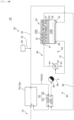
- the liquid fuel production system 1B illustrated in FIG. 1B includes:
- the carbon dioxide-adsorbing layer is not particularly limited as long as the layer is arranged on the surface of the base material so as to be capable of being brought into contact with the CO 2 -containing gas.
- the carbon dioxide-adsorbing layer may contain substantially only the carbon dioxide adsorbent, or may contain any other component except the carbon dioxide adsorbent (e.g., a porous carrier).
- nitrogen-containing compounds are more preferred. More specific examples of the nitrogen-containing compounds include: amine compounds, such as monoethanolamine, diethanolamine, triethanolamine, N-(3-aminopropyl)diethanolamine, aminopropyltrimethoxysilane, and polyvinylamine; imine compounds, such as polyethylenimine and polyethylenimine-trimethoxysilane; amide compounds such as polyamidoamine; piperazine compounds such as 1-(2-hydroxyethyl)piperazine; and aminosilane coupling agents, such as 3-aminopropyltriethoxysilane and N-(2-aminoethyl)-3-aminopropyltrimethoxysilane.
- the adsorbents may be used alone or in combination thereof.
- the carbon dioxide-adsorbing layer may be produced by, for example, the following method. First, the carbon dioxide adsorbent and any appropriate other component are dissolved or dispersed in a solvent to prepare a carbon dioxide-adsorbing layer-forming liquid. Examples of the solvent include water, alcohols, diols, and combinations thereof. Next, the carbon dioxide-adsorbing layer-forming liquid is applied onto the base material, and then the coating film is dried, and as required, sintered to form the carbon dioxide-adsorbing layer.
- the liquid fuel-synthesizing portion 20 is a so-called membrane reactor for converting the raw material gas into the liquid fuel.
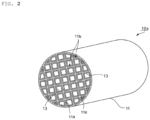
- the shape of the liquid fuel-synthesizing portion 20 is not particularly limited, but may be set to, for example, a monolith shape, a flat-plate shape, a tubular shape, a cylindrical shape, a columnar shape, or a polygonal columnar shape.
- the liquid fuel-synthesizing portion 20 includes: a catalyst 22 that advances the conversion reaction from the raw material gas containing at least CO 2 and hydrogen to the liquid fuel; a water vapor separation membrane 24; a non-permeation-side space 20A; and a permeation-side space 20B.
- a first supply port s1 and a first discharge port d1 that communicate to each other through the non-permeation-side space 20A
- a second supply port s2 and a second discharge port d2 that communicate to each other through the permeation-side space 20B are arranged.
- the non-permeation-side space 20A is a space on the non-permeation side of the water vapor separation membrane 24.
- the raw material gas is supplied from the raw material gas-supplying portion 90 to the non-permeation-side space 20A through the first supply port s1 .
- the liquid fuel synthesized in the catalyst 22 and the remaining raw material gas flow as the first outflow gas out of the non-permeation-side space 20A to a first outflow gas-capturing portion 80 through the first discharge port d1 . That is, the non-permeation-side space 20A is the first gas flow path.
- the catalyst 22 advances the conversion reaction from the raw material gas to the liquid fuel.
- the catalyst is arranged in the non-permeation-side space 20A.
- the catalyst may be arranged in a layer shape or an island shape on the surface of the water vapor separation membrane 24.
- the particle diameters (diameters) of catalyst particles may each be set to, for example, 0.5 mm or more and 10 mm or less.
- Each of the catalyst particles may be formed only of the catalyst, or may have a configuration in which the catalyst is carried by a carrier particle.
- the carrier particle is preferably a porous particle.
- any catalyst suitable for a conversion reaction to a desired liquid fuel may be used as the catalyst.
- metal catalysts e.g., copper and palladium
- oxide catalysts e.g., zinc oxide, zirconia, and gallium oxide
- catalysts obtained by compositing these catalysts e.g., copper-zinc oxide, copper-zinc oxide-alumina, copper-zinc oxide-chromium oxide-alumina, copper-cobalt-titania, and catalysts obtained by modifying these catalysts with palladium
- metal catalysts e.g., copper and palladium
- oxide catalysts e.g., zinc oxide, zirconia, and gallium oxide
- catalysts obtained by compositing these catalysts e.g., copper-zinc oxide, copper-zinc oxide-alumina, copper-zinc oxide-chromium oxide-alumina, copper-cobalt-titania, and catalysts obtained by modifying these catalysts with palladium
- the water vapor separation membrane 24 causes water vapor, which is a by-product of the conversion reaction from the raw material gas to the liquid fuel, to permeate therethrough.
- the reaction equilibrium of the formula (1) can be shifted to a product side through utilization of an equilibrium shift effect.
- the molecular diameter (0.26 nm) of water is close to the molecular diameter (0.296 nm) of hydrogen. Accordingly, not only the water vapor that is a by-product of the conversion reaction but also part of hydrogen in the raw material gas can permeate through the water vapor separation membrane 24.
- the water vapor separation membrane 24 preferably has a separation coefficient of 100 or more. As the separation coefficient becomes larger, the membrane more easily causes the water vapor to permeate therethrough, and more hardly causes components except the water vapor (e.g., hydrogen, carbon dioxide, and the liquid fuel) to permeate therethrough.
- the separation coefficient may be determined by an existing method (see Fig. 1 of " Separation and Purification Technology 239 (2020) 116533 ").
- any appropriate membrane may be used as the water vapor separation membrane 24.
- an inorganic membrane may be used as the water vapor separation membrane 24.
- the inorganic membrane is preferred because the membrane has heat resistance, pressure resistance, water vapor resistance, and the like.
- the inorganic membrane include a zeolite membrane, a silica membrane, an alumina membrane, and a composite membrane thereof.
- an LTA zeolite membrane in which the molar ratio (Si/Al) of a silicon element (Si) to an aluminum element (Al) is 1.0 or more and 3.0 or less is suitable because the membrane is excellent in water vapor permeability.
- the zeolite membrane to be used as the water vapor separation membrane 24 may be obtained by a production method described in JP 2004-66188 A .
- the silica membrane to be used as the water vapor separation membrane 24 may be obtained by a production method described in WO 2008/050812 A1 .
- the water vapor separation membrane 24 is supported by a porous support 26.
- the porous support 26 includes a porous material.
- a ceramic material, a metal material, and a resin material may each be used as the porous material, and the ceramic material is particularly suitable.
- alumina Al 2 O 3
- titania TiO 2
- mullite Al 2 O 3 ⁇ SiO 2
- ceramic fragments Al 2 O 3 ⁇ SiO 2
- cordierite Mg 2 Al 4 Si 5 O 18
- At least one of titania, mullite, easily sinterable alumina, silica, glass frit, a clay mineral, or easily sinterable cordierite may be used as an inorganic binder for the ceramic material.
- the ceramic material may be free of any inorganic binder.
- the average pore diameter of the porous support may be set to 5 ⁇ m or more and 25 ⁇ m or less.
- the average pore diameter of the porous support may be measured by a mercury intrusion method.
- the porosity of the porous support may be set to 25% or more and 50% or less.
- the average particle diameter of the porous material for forming the porous support may be set to 1 ⁇ m or more and 100 ⁇ m or less. In this embodiment, the average particle diameter is the arithmetic average value of the maximum diameters of 30 measurement object particles (randomly selected) measured by sectional microstructure observation with a scanning electron microscope (SEM).
- the carbon dioxide-containing gas-supplying portion 70 optionally includes a blower or the like, and supplies the CO 2 -containing gas from air or various facilities, such as a factory and a commercial facility, to the carbon dioxide-capturing portion 10 (more specifically, the carbon dioxide-adsorbing/desorbing portion 10a ).
- the sweeping gas-supplying portion 30 is configured to supply the CO 2 -enriched gas as a constituent component for the sweeping gas from the carbon dioxide-capturing portion 10 to the liquid fuel-synthesizing portion 20.
- the sweeping gas-supplying portion 30 includes: a carbon dioxide-enriched gas-supplying pipe 32; a hydrogen-supplying pipe 34; and a hydrogen-producing portion 36.
- One end of the carbon dioxide-enriched gas-supplying pipe 32 is connected to the carbon dioxide-capturing portion 10, and the other end thereof is connected to the second supply port s2 of the liquid fuel-synthesizing portion 20.
- One end of the hydrogen-supplying pipe 34 is connected to the hydrogen-producing portion 36, and the other end thereof is connected to the carbon dioxide-enriched gas-supplying pipe 32.
- the hydrogen-producing portion 36 is, for example, a hydrogen-producing facility utilizing a water electrolysis technology.
- the CO 2 -enriched gas supplied from the carbon dioxide-capturing portion 10 to the liquid fuel-synthesizing portion 20 through the carbon dioxide-enriched gas-supplying pipe 32 is mixed with hydrogen supplied from the hydrogen-producing portion 36.
- the sweeping gas containing the CO 2 -enriched gas and hydrogen is produced.
- the sweeping gas is heated to a desired temperature (e.g., 150°C or more and 350°C or less), and is then supplied to the second supply port s2 of the liquid fuel-synthesizing portion 20.
- the sweeping gas contains hydrogen as a main component.
- the phrase "contains hydrogen as a main component" as used herein means that the content of hydrogen out of the gases incorporated into the sweeping gas is highest.
- the concentration of CO 2 in the sweeping gas is, for example, 10 vol% or more and 40 vol% or less, preferably 20 vol% or more and 30 vol% or less.
- the concentration of hydrogen in the sweeping gas is, for example, 60 vol% or more and 90 vol% or less, preferably 70 vol% or more and 80 vol% or less.
- the liquid fuel or water and the remaining raw material gas are separated and captured from the first outflow gas, and the remaining raw material gas is reused as part of the raw material gas in the step (III).
Landscapes
- Chemical & Material Sciences (AREA)
- Chemical Kinetics & Catalysis (AREA)
- Oil, Petroleum & Natural Gas (AREA)
- Organic Chemistry (AREA)
- Engineering & Computer Science (AREA)
- General Chemical & Material Sciences (AREA)
- Analytical Chemistry (AREA)
- Hydrogen, Water And Hydrids (AREA)
- Separation Using Semi-Permeable Membranes (AREA)
Applications Claiming Priority (2)
| Application Number | Priority Date | Filing Date | Title |
|---|---|---|---|
| JP2022140351 | 2022-09-02 | ||
| PCT/JP2023/031433 WO2024048637A1 (ja) | 2022-09-02 | 2023-08-30 | 液体燃料製造システムおよび液体燃料の製造方法 |
Publications (1)
| Publication Number | Publication Date |
|---|---|
| EP4582517A1 true EP4582517A1 (en) | 2025-07-09 |
Family
ID=90099635
Family Applications (1)
| Application Number | Title | Priority Date | Filing Date |
|---|---|---|---|
| EP23860399.7A Pending EP4582517A1 (en) | 2022-09-02 | 2023-08-30 | Liquid fuel production system and liquid fuel production method |
Country Status (7)
| Country | Link |
|---|---|
| US (1) | US20250197751A1 (enExample) |
| EP (1) | EP4582517A1 (enExample) |
| JP (1) | JPWO2024048637A1 (enExample) |
| CN (1) | CN119731290A (enExample) |
| AU (1) | AU2023334931A1 (enExample) |
| TW (1) | TW202428856A (enExample) |
| WO (1) | WO2024048637A1 (enExample) |
Families Citing this family (1)
| Publication number | Priority date | Publication date | Assignee | Title |
|---|---|---|---|---|
| WO2025244133A1 (ja) * | 2024-05-24 | 2025-11-27 | 国立大学法人東北大学 | 脱水蒸気ガスの製造方法、co2の回収方法、co2とco2吸収剤との化学反応物の製造方法、co2ガス回収システム、及びイオン液体膜 |
Family Cites Families (9)
| Publication number | Priority date | Publication date | Assignee | Title |
|---|---|---|---|---|
| JP4204273B2 (ja) | 2002-08-09 | 2009-01-07 | 日本碍子株式会社 | Ddr型ゼオライト膜複合体及びその製造方法 |
| JP2004202393A (ja) * | 2002-12-25 | 2004-07-22 | Tokyo Electric Power Co Inc:The | 二酸化炭素の脱着方法 |
| JP2007055970A (ja) * | 2005-08-26 | 2007-03-08 | Mitsui Eng & Shipbuild Co Ltd | メタノール製造用反応器及びメタノール製造方法 |
| US7717272B2 (en) | 2006-10-18 | 2010-05-18 | Ngk Insulators, Ltd. | Ceramic porous membrane and ceramic filter |
| JP7076229B2 (ja) * | 2018-03-08 | 2022-05-27 | Jfeスチール株式会社 | 二酸化炭素の再利用方法 |
| JP7430498B2 (ja) | 2018-08-02 | 2024-02-13 | 三菱ケミカル株式会社 | メタノールの製造方法 |
| WO2020027337A1 (ja) * | 2018-08-02 | 2020-02-06 | 三菱ケミカル株式会社 | 接合体、それを有する分離膜モジュール及びアルコールの製造方法 |
| JP7151832B1 (ja) * | 2021-06-11 | 2022-10-12 | Jfeスチール株式会社 | 膜反応器における未利用ガスの再利用方法 |
| AU2022408465B2 (en) * | 2021-12-17 | 2025-06-19 | Ngk Insulators, Ltd. | Liquid fuel synthesis system and liquid fuel synthesis method |
-
2023
- 2023-08-30 WO PCT/JP2023/031433 patent/WO2024048637A1/ja not_active Ceased
- 2023-08-30 AU AU2023334931A patent/AU2023334931A1/en active Pending
- 2023-08-30 JP JP2024544321A patent/JPWO2024048637A1/ja active Pending
- 2023-08-30 EP EP23860399.7A patent/EP4582517A1/en active Pending
- 2023-08-30 CN CN202380062917.1A patent/CN119731290A/zh active Pending
- 2023-08-31 TW TW112132908A patent/TW202428856A/zh unknown
-
2025
- 2025-02-20 US US19/058,111 patent/US20250197751A1/en active Pending
Also Published As
| Publication number | Publication date |
|---|---|
| AU2023334931A1 (en) | 2025-02-20 |
| JPWO2024048637A1 (enExample) | 2024-03-07 |
| WO2024048637A1 (ja) | 2024-03-07 |
| US20250197751A1 (en) | 2025-06-19 |
| TW202428856A (zh) | 2024-07-16 |
| CN119731290A (zh) | 2025-03-28 |
Similar Documents
| Publication | Publication Date | Title |
|---|---|---|
| US9138718B2 (en) | Compact catalytic membrane reactor for chemical process intensification | |
| Nomura et al. | Preparation of a stable silica membrane by a counter diffusion chemical vapor deposition method | |
| AU766490B2 (en) | Hydrogen-selective silica based membrane | |
| US7390347B2 (en) | Zeolite membranes for selective oxidation of carbon monoxide in mixed hydrogen gas source | |
| US7297184B2 (en) | Apparatus and method for separating gases | |
| US20250197751A1 (en) | Liquid fuel production system and liquid fuel production method | |
| US20230372887A1 (en) | Liquid fuel synthesis system and liquid fuel synthesis method | |
| EP4582516A1 (en) | Liquid fuel production system and liquid fuel production method | |
| US9486787B1 (en) | Method and apparatus for chemical process intensification | |
| US20230264142A1 (en) | Gas separation method and gas separation apparatus | |
| US20250197750A1 (en) | Liquid fuel production system and liquid fuel production method | |
| CN115943194B (zh) | 液体燃料合成系统 | |
| CN117157379A (zh) | 液体燃料合成系统以及液体燃料合成方法 | |
| AU2023335011A1 (en) | Method for producing liquid fuel and liquid fuel synthesis system | |
| TW202541897A (zh) | 燃燒尾氣之二氧化碳純化系統及其方法 | |
| CN119855886A (zh) | 液体燃料的制造方法以及液体燃料合成系统 |
Legal Events
| Date | Code | Title | Description |
|---|---|---|---|
| STAA | Information on the status of an ep patent application or granted ep patent |
Free format text: STATUS: THE INTERNATIONAL PUBLICATION HAS BEEN MADE |
|
| PUAI | Public reference made under article 153(3) epc to a published international application that has entered the european phase |
Free format text: ORIGINAL CODE: 0009012 |
|
| STAA | Information on the status of an ep patent application or granted ep patent |
Free format text: STATUS: REQUEST FOR EXAMINATION WAS MADE |
|
| 17P | Request for examination filed |
Effective date: 20250220 |
|
| AK | Designated contracting states |
Kind code of ref document: A1 Designated state(s): AL AT BE BG CH CY CZ DE DK EE ES FI FR GB GR HR HU IE IS IT LI LT LU LV MC ME MK MT NL NO PL PT RO RS SE SI SK SM TR |
|
| DAV | Request for validation of the european patent (deleted) | ||
| DAX | Request for extension of the european patent (deleted) |