EP4580288A1 - Informationsmeldeverfahren und kommunikationsvorrichtung - Google Patents
Informationsmeldeverfahren und kommunikationsvorrichtung Download PDFInfo
- Publication number
- EP4580288A1 EP4580288A1 EP23870253.4A EP23870253A EP4580288A1 EP 4580288 A1 EP4580288 A1 EP 4580288A1 EP 23870253 A EP23870253 A EP 23870253A EP 4580288 A1 EP4580288 A1 EP 4580288A1
- Authority
- EP
- European Patent Office
- Prior art keywords
- index
- index table
- adjacency
- information
- difference
- Prior art date
- Legal status (The legal status is an assumption and is not a legal conclusion. Google has not performed a legal analysis and makes no representation as to the accuracy of the status listed.)
- Pending
Links
Images

Classifications
-
- H—ELECTRICITY
- H04—ELECTRIC COMMUNICATION TECHNIQUE
- H04W—WIRELESS COMMUNICATION NETWORKS
- H04W72/00—Local resource management
- H04W72/20—Control channels or signalling for resource management
- H04W72/21—Control channels or signalling for resource management in the uplink direction of a wireless link, i.e. towards the network
-
- H—ELECTRICITY
- H04—ELECTRIC COMMUNICATION TECHNIQUE
- H04L—TRANSMISSION OF DIGITAL INFORMATION, e.g. TELEGRAPHIC COMMUNICATION
- H04L41/00—Arrangements for maintenance, administration or management of data switching networks, e.g. of packet switching networks
- H04L41/50—Network service management, e.g. ensuring proper service fulfilment according to agreements
- H04L41/5003—Managing SLA; Interaction between SLA and QoS
-
- H—ELECTRICITY
- H04—ELECTRIC COMMUNICATION TECHNIQUE
- H04L—TRANSMISSION OF DIGITAL INFORMATION, e.g. TELEGRAPHIC COMMUNICATION
- H04L69/00—Network arrangements, protocols or services independent of the application payload and not provided for in the other groups of this subclass
- H04L69/30—Definitions, standards or architectural aspects of layered protocol stacks
- H04L69/32—Architecture of open systems interconnection [OSI] 7-layer type protocol stacks, e.g. the interfaces between the data link level and the physical level
-
- H—ELECTRICITY
- H04—ELECTRIC COMMUNICATION TECHNIQUE
- H04W—WIRELESS COMMUNICATION NETWORKS
- H04W28/00—Network traffic management; Network resource management
- H04W28/02—Traffic management, e.g. flow control or congestion control
- H04W28/0278—Traffic management, e.g. flow control or congestion control using buffer status reports
-
- H—ELECTRICITY
- H04—ELECTRIC COMMUNICATION TECHNIQUE
- H04W—WIRELESS COMMUNICATION NETWORKS
- H04W72/00—Local resource management
- H04W72/20—Control channels or signalling for resource management
- H04W72/23—Control channels or signalling for resource management in the downlink direction of a wireless link, i.e. towards a terminal
- H04W72/231—Control channels or signalling for resource management in the downlink direction of a wireless link, i.e. towards a terminal the control data signalling from the layers above the physical layer, e.g. RRC or MAC-CE signalling
-
- H—ELECTRICITY
- H04—ELECTRIC COMMUNICATION TECHNIQUE
- H04W—WIRELESS COMMUNICATION NETWORKS
- H04W72/00—Local resource management
- H04W72/20—Control channels or signalling for resource management
- H04W72/23—Control channels or signalling for resource management in the downlink direction of a wireless link, i.e. towards a terminal
- H04W72/232—Control channels or signalling for resource management in the downlink direction of a wireless link, i.e. towards a terminal the control data signalling from the physical layer, e.g. DCI signalling
-
- H—ELECTRICITY
- H04—ELECTRIC COMMUNICATION TECHNIQUE
- H04W—WIRELESS COMMUNICATION NETWORKS
- H04W72/00—Local resource management
- H04W72/50—Allocation or scheduling criteria for wireless resources
- H04W72/51—Allocation or scheduling criteria for wireless resources based on terminal or device properties
-
- H—ELECTRICITY
- H04—ELECTRIC COMMUNICATION TECHNIQUE
- H04W—WIRELESS COMMUNICATION NETWORKS
- H04W72/00—Local resource management
- H04W72/20—Control channels or signalling for resource management
- H04W72/23—Control channels or signalling for resource management in the downlink direction of a wireless link, i.e. towards a terminal
Definitions
- the data format includes a buffer status report.
- the first information is the first index. This implementation helps determine, from a plurality of index tables, a specific table corresponding to the first index.
- the at least two index tables include a first index table and a second index table. If the first information is greater than a first threshold, the first information indicates that the index table corresponding to the first index is the first index table. If the first information is less than or equal to the first threshold, the first information indicates that the index table corresponding to the first index is the second index table.
- the at least two index tables include a first index table and a second index table. If the first information is greater than or equal to a first threshold, the first information indicates that the index table corresponding to the first index is the first index table. If the first information is less than the first threshold, the first information indicates that the index table corresponding to the first index is the second index table.
- the index table includes a correspondence between an index and second information.
- the at least two index tables include the first index table and the second index table.
- An adjacency difference less than an adjacency difference in the second index table exists in the first index table.
- an adjacency ratio less than an adjacency ratio in the second index table exists in the first index table.
- the adjacency difference is a difference between second information corresponding to two adjacent indexes in an index table.
- the adjacency ratio is a ratio between second information corresponding to two adjacent indexes in an index table.
- adjacency differences in the first index table are the same.
- the first index table satisfies one or more of the following conditions: an adjacency difference between every two indexes belonging to a first value range in the first index table is equal to a first adjacency difference; an adjacency difference between every two indexes belonging to a second value range in the first index table is equal to a second adjacency difference; an adjacency ratio between every two indexes belonging to a third value range in the first index table is equal to a first adjacency ratio; and an adjacency ratio between every two indexes belonging to a fourth value range in the first index table is equal to a second adjacency ratio.
- the first adjacency difference is different from the second adjacency difference
- the first adjacency ratio is different from the second adjacency ratio.
- a smallest index in the first index table is 0.
- a largest value of second information corresponding to the index 0 is M.
- M is 0, or M is an integer greater than 0.
- a smallest index in the first index table is N.
- N is an integer greater than 0.
- a value range of an index included in the second index table is an integer between 0 and N - 1.
- the method further includes: obtaining indication information.
- the indication information indicates the first index table.
- the indication information indicates one or more of the following parameters: a quantity of indexes in the first index table, a largest index in the first index table, a smallest index in the first index table, second information in the first index table, a first range in the first index table, an adjacency difference in the first index table, and an adjacency ratio in the first index table.
- the indication information indicates a smallest index in the first index table.
- the method further includes: determining the first index table based on L preset buffer sections and the smallest index in the first index table. A difference between the smallest index in the first index table and a largest index in the first index table is less than or equal to L. L is an integer greater than 1.
- this application proposes an information reporting method.
- the method includes: receiving a data format that is sent from a terminal device and that indicates first information.
- the first information indicates a first index or an index table corresponding to the first index, and the first index corresponds to one of at least two index tables.
- the data format is one of the following formats: a media access control control element MAC CE, a service data unit, a protocol data unit, downlink control information, or radio resource control signaling.
- the media access control control element MAC CE is a MAC CE
- the service data unit is an SDU
- the protocol data unit is a PDU
- the downlink control information is DCI
- the radio resource control signaling is RRC signaling.
- the data format includes a buffer status report.
- the first information indicates a data type or the data format
- the data format indicates the first index
- the first information is the first index.
- the at least two index tables include a first index table and a second index table. If the first information is greater than a first threshold, the first information indicates that the index table corresponding to the first index is the first index table. If the first information is less than or equal to the first threshold, the first information indicates that the index table corresponding to the first index is the second index table.
- the at least two index tables include a first index table and a second index table. If the first information is greater than or equal to a first threshold, the first information indicates that the index table corresponding to the first index is the first index table. If the first information is less than the first threshold, the first information indicates that the index table corresponding to the first index is the second index table.
- the index table includes a correspondence between an index and second information.
- the at least two index tables include the first index table and the second index table.
- An adjacency difference less than an adjacency difference in the second index table exists in the first index table.
- an adjacency ratio less than an adjacency ratio in the second index table exists in the first index table.
- the adjacency difference is a difference between second information corresponding to two adjacent indexes in an index table.
- the adjacency ratio is a ratio between second information corresponding to two adjacent indexes in an index table.
- adjacency differences in the first index table are the same.
- adjacency ratios in the first index table are the same or a difference between two adjacency ratios is less than a second threshold.
- the first index table satisfies one or more of the following conditions: an adjacency difference between every two indexes belonging to a first value range in the first index table is equal to a first adjacency difference; an adjacency difference between every two indexes belonging to a second value range in the first index table is equal to a second adjacency difference; an adjacency ratio between every two indexes belonging to a third value range in the first index table is equal to a first adjacency ratio; and an adjacency ratio between every two indexes belonging to a fourth value range in the first index table is equal to a second adjacency ratio.
- the first adjacency difference is different from the second adjacency difference
- the first adjacency ratio is different from the second adjacency ratio.
- a smallest index in the first index table is 0.
- a largest value of second information corresponding to the index 0 is M.
- M is 0, or M is an integer greater than 0.
- a smallest index in the first index table is N.
- N is an integer greater than 0.
- a value range of an index included in the second index table is an integer between 0 and N - 1.
- the method further includes: sending indication information to the terminal device.
- the indication information indicates the first index table.
- the indication information indicates one or more of the following parameters: a quantity of indexes in the first index table, a largest index in the first index table, a smallest index in the first index table, second information in the first index table, a first range in the first index table, an adjacency difference in the first index table, and an adjacency ratio in the first index table.
- this application proposes an information reporting method.
- the method includes: obtaining third information.
- the third information indicates an index table that is of a first index and that corresponds to a first granularity, and the index table that is of the first index and that corresponds to the first granularity is from one of at least two index tables.
- the first granularity is one of the following granularities: a logical channel group, a logical channel, a protocol data unit set, and a quality of service flow.
- the third information is configuration information related to the first granularity
- an information parameter of the configuration information is an identifier of the first granularity
- the index table includes a correspondence between an index and second information.
- the at least two index tables include the first index table and the second index table.
- An adjacency difference less than an adjacency difference in the second index table exists in the first index table.
- an adjacency ratio less than an adjacency ratio in the second index table exists in the first index table.
- the adjacency difference is a difference between second information corresponding to two adjacent indexes in an index table.
- the adjacency ratio is a ratio between second information corresponding to two adjacent indexes in an index table.
- adjacency ratios in the first index table are the same or a difference between two adjacency ratios is less than a second threshold.
- a smallest index in the first index table is 0.
- a largest value of second information corresponding to the index 0 is M.
- M is 0, or M is an integer greater than 0.
- a smallest index in the first index table is N.
- N is an integer greater than 0.
- a value range of an index included in the second index table is an integer between 0 and N - 1.
- the method further includes: obtaining indication information.
- the indication information indicates the first index table.
- the indication information indicates one or more of the following parameters: a quantity of indexes in the first index table, a largest index in the first index table, a smallest index in the first index table, second information in the first index table, a first range in the first index table, an adjacency difference in the first index table, and an adjacency ratio in the first index table.
- the indication information indicates a smallest index in the first index table.
- the method further includes: determining the first index table based on L preset buffer sections and the smallest index in the first index table. A difference between the smallest index in the first index table and a largest index in the first index table is less than or equal to L. L is an integer greater than 1.
- adjacency differences in the first index table are the same.
- adjacency ratios in the first index table are the same or a difference between two adjacency ratios is less than a second threshold.
- the first index table satisfies one or more of the following conditions: an adjacency difference between every two indexes belonging to a first value range in the first index table is equal to a first adjacency difference; an adjacency difference between every two indexes belonging to a second value range in the first index table is equal to a second adjacency difference; an adjacency ratio between every two indexes belonging to a third value range in the first index table is equal to a first adjacency ratio; and an adjacency ratio between every two indexes belonging to a fourth value range in the first index table is equal to a second adjacency ratio.
- the first adjacency difference is different from the second adjacency difference
- the first adjacency ratio is different from the second adjacency ratio.
- a smallest index in the first index table is 0.
- a largest value of second information corresponding to the index 0 is M.
- M is 0, or M is an integer greater than 0.
- a smallest index in the first index table is N.
- N is an integer greater than 0.
- a value range of an index included in the second index table is an integer between 0 and N - 1.
- the method further includes: sending indication information to the terminal device.
- the indication information indicates the first index table.
- the indication information indicates one or more of the following parameters: a quantity of indexes in the first index table, a largest index in the first index table, a smallest index in the first index table, second information in the first index table, a first range in the first index table, an adjacency difference in the first index table, and an adjacency ratio in the first index table.
- this application proposes an information reporting method.
- the method includes: obtaining fourth information.
- the fourth information indicates a first index table.
- the fourth information indicates one or more of the following parameters: a quantity of indexes in the first index table, a largest index in the first index table, a smallest index in the first index table, second information in the first index table, a first range in the first index table, an adjacency difference in the first index table, and an adjacency ratio in the first index table.
- a terminal device determines one or more index tables.
- the two index tables include the first index table and a second index table.
- An adjacency difference less than an adjacency difference in the second index table exists in the first index table.
- an adjacency ratio less than an adjacency ratio in the second index table exists in the first index table.
- the adjacency difference is a difference between second information corresponding to two adjacent indexes in an index table.
- the adjacency ratio is a ratio between second information corresponding to two adjacent indexes in an index table.
- adjacency differences in the first index table are the same.
- adjacency ratios in the first index table are the same or a difference between two adjacency ratios is less than a second threshold.
- the first index table satisfies one or more of the following conditions: an adjacency difference between every two indexes belonging to a first value range in the first index table is equal to a first adjacency difference; an adjacency difference between every two indexes belonging to a second value range in the first index table is equal to a second adjacency difference; an adjacency ratio between every two indexes belonging to a third value range in the first index table is equal to a first adjacency ratio; and an adjacency ratio between every two indexes belonging to a fourth value range in the first index table is equal to a second adjacency ratio.
- the first adjacency difference is different from the second adjacency difference
- the first adjacency ratio is different from the second adjacency ratio.
- a smallest index in the first index table is 0.
- a largest value of second information corresponding to the index 0 is M.
- M is 0, or M is an integer greater than 0.
- this application provides a communication apparatus.
- the communication apparatus may be a terminal device or a network device, an apparatus of the terminal device or the network device, or an apparatus that can match and be used with the terminal device or the network device.
- the communication device may alternatively be a chip system.
- the communication apparatus may perform the method in any one of the first aspect, the second aspect, the third aspect, the fourth aspect, the fifth aspect, or the sixth aspect, and the possible implementations thereof.
- a function of the communication apparatus may be implemented by hardware, or may be implemented by hardware executing corresponding software.
- the hardware or software includes one or more units or modules corresponding to the foregoing function.
- the unit or module may be software and/or hardware.
- this application provides a communication apparatus.
- the communication apparatus includes a processor.
- the processor invokes a computer program in a memory, the method in the first aspect, the second aspect, the third aspect, the fourth aspect, the fifth aspect, or the sixth aspect, and the possible implementations thereof is implemented.
- this application provides a communication apparatus.
- the communication apparatus includes a processor and a memory.
- the processor and the memory are coupled.
- the processor is configured to implement the method in the first aspect, the second aspect, the third aspect, the fourth aspect, the fifth aspect, or the sixth aspect, and the possible implementations thereof.
- the application provides a communication apparatus.
- the communication apparatus includes a processor and an interface circuit.
- the interface circuit is configured to receive a signal from a communication apparatus other than the communication apparatus and transmit the signal to the processor, or send a signal from the processor to a communication apparatus other than the communication apparatus.
- the processor is configured to implement the method in the first aspect, the second aspect, the third aspect, the fourth aspect, the fifth aspect, or the sixth aspect, and the possible implementations thereof through a logic circuit or by executing code instructions.
- the application provides a computer-readable storage medium, having a computer program or instructions stored therein.
- the computer program or instructions are executed by a communication apparatus, the method in any one of the first aspect, the second aspect, the third aspect, the fourth aspect, the fifth aspect, or the sixth aspect, and the possible implementations thereof is implemented.
- the application provides a computer program product including instructions.
- the computer When a computer reads and executes the computer program product, the computer is enabled to perform the method in the first aspect, the second aspect, the third aspect, the fourth aspect, the fifth aspect, or the sixth aspect, and the possible implementations thereof.
- an embodiment means that a specified feature, structure, or characteristic described with reference to the embodiment may be included in at least one embodiment of this application. Appearances of the phrase in various locations in this specification are not necessarily all referring to a same embodiment, nor are separate or alternative embodiments mutually exclusive of another embodiment. It is explicitly and implicitly understood by a person skilled in the art that embodiments described in this specification may be combined with another embodiment.
- At least one (item) means one or more
- a plurality means two or more
- at least two (items) means two or three and more.
- the term “and/or” describes a correspondence relationship between associated objects and represents that three associations may exist. For example, “A and/or B” may indicate that only A exists, only B exists, and both A and B exist. A and B may be singular or plural.
- the character “/” usually indicates an "or” relationship between the associated objects.
- At least one of the following items” or a similar expression means any combination of these items, including a single item or any combination of a plurality of items.
- At least one of a, b, or c may represent a, b, c, "a and b", “a and c", “b and c", or "a, b, and c", where a, b, and c may be singular or plural.
- system architecture of a method provided in the embodiments of this application is briefly described below. It may be understood that the system architecture described in the embodiments of this application is to illustrate the technical solutions of the embodiments of this application more clearly, and does not constitute a limitation on the technical solutions provided in the embodiments of this application.
- the technical solutions of the embodiments of this application may be applied to various communication systems, for example, a satellite communication system or a conventional mobile communication system.
- the satellite communication system may be merged with the conventional mobile communication system (namely, a terrestrial communication system).
- the communication system may be, for example, a wireless local area network (wireless local area network, WLAN) communication system, a wireless fidelity (wireless fidelity, WiFi) system, a long term evolution (long term evolution, LTE) system, an LTE frequency division duplex (frequency division duplex, FDD) system, an LTE time division duplex (time division duplex, TDD) system, a 5th generation (5th generation, 5G) system or a new radio (new radio, NR) system, a 6th generation (6th generation, 6G) system, and another future communication system.
- WLAN wireless local area network
- WLAN wireless local area network
- WiFi wireless fidelity
- LTE long term evolution
- LTE frequency division duplex frequency division duplex
- FDD frequency division duplex
- TDD time division
- a communication system in which a plurality of wireless technologies are converged is further supported.
- the technical solutions may alternatively be applied to a system in which a non-terrestrial network (non-terrestrial network, NTN) is converged with a terrestrial mobile communication system, such as an uncrewed aerial vehicle, a satellite communication system, or communication in a high altitude platform station (high altitude platform station, HAPS).
- NTN non-terrestrial network
- HAPS high altitude platform station
- the network device in this application may be an evolved NodeB (evolved Node B, eNB or eNodeB) in LTE, a base station in a 5G network, another base station evolved in the future, a broadband network gateway (broadband network gateway, BNG), an aggregation switch, a non-3rd generation partnership project (3rd generation partnership project, 3GPP) access device, or the like. This is not specifically limited in the embodiments of this application.
- eNB evolved Node B
- eNodeB evolved Node B
- BNG broadband network gateway
- 3GPP non-3rd generation partnership project
- the base station in the embodiments of this application may include base stations of various forms, such as a transmission and reception point (transmitting and receiving point, TRP), a macro base station, a micro base station (also referred to as a small station), a relay station, an access point, a next-generation base station (gNodeB, gNB), a transmission point (transmitting point, TP), or a mobile switch center, or may be a device or the like that takes on a wireless access function in device-to-device (Device-to-Device, D2D), vehicle-to-everything (vehicle-to-everything, V2X), machine-to-machine (machine-to-machine, M2M), or Internet of things (Internet of Things) communication.
- TRP transmission and reception point
- a macro base station also referred to as a small station
- gNodeB, gNB next-generation base station
- TP transmission point
- TP transmission point
- mobile switch center
- an apparatus configured to implement a function of the network device may be a network device, or may be an apparatus that can support the network device in implementing the function, for example, a chip system or a combination device or component that can implement the function of the network device.
- the apparatus may be mounted in the network device.
- an example in which the apparatus configured to implement the function of the network device is the network device is used to describe the technical solutions provided in the embodiments of this application.
- the terminal device may be an apparatus configured to implement a function of the terminal device, or may be an apparatus that can support the terminal device in implementing the function, for example, a chip system.
- the apparatus may be mounted in the terminal device.
- the terminal device may alternatively be a vehicle detector or a sensor in a gas station.
- a value range of I is from 0 to 7.
- the first bit is 0 and the second bit is 1.
- the first bit is 1 and the second bit is 0.
- bits corresponding to an LCG 0 to an LCG 3 are the first bits
- bits corresponding to an LCG 4 to an LCG 7 are the second bits.
- the first information indicates the first index.
- the first information indicates a data type or the data format.
- the data format may include the first index, or include information indicating the first index.
- the first information is a logical channel identifier (logical channel identifier, LCID).
- the at least two index tables include a first index table and a second index table.
- an LCID corresponding to the data format is a first LCID
- the data format may be determined based on the first LCID.
- the data format includes the first index, or includes the information indicating the first index.
- the table corresponding to the first index is the first index table. Therefore, it may be determined, based on the first LCID, that the index table corresponding to the first index is the first index table.
- the first information indicates that the index table corresponding to the first index is the second index table.
- the first index table and the second index table may form one index table, or may be two different index tables.
- the first threshold may be configured or predefined by the network device. This implementation helps determine a specific table corresponding to the first index.
- the first information indicates the index table corresponding to the first index.
- the indication information indicates the index table corresponding to the first index when there are two index tables. If there are a plurality of index tables, similarly, the indication information may also indicate, according to a similar method, the index table corresponding to the first index. This is not limited in this embodiment of this application. This implementation helps determine, from a plurality of index tables, a specific table corresponding to the first index.
- the at least two index tables include the first index table and the second index table.
- An adjacency difference less than an adjacency difference in the second index table exists in the first index table.
- an adjacency ratio less than an adjacency ratio in the second index table exists in the first index table.
- the adjacency difference is a difference between second information corresponding to two adjacent indexes in an index table.
- the adjacency ratio is a ratio between second information corresponding to two adjacent indexes in an index table.
- That an adjacency difference less than an adjacency difference in the second index table exists in the first index table may be understood as that the first index table includes a plurality of adjacency differences, the second index table includes a plurality of adjacency differences, and at least one of the plurality of adjacency differences in the first index table is less than an adjacency difference in the second index table.
- the adjacency ratio may be understood as a ratio of a largest value in a buffer section corresponding to a second index to a largest value in a buffer section corresponding to a third index in the index table.
- the second index and the third index are two adjacent indexes in the index table, and a value of the second index is greater than a value of the third index.
- an adjacency difference is a difference 10 between the largest values in the buffer sections corresponding to the index 1 and the index 2.
- an adjacency ratio is a ratio 2 between the largest values in the buffer sections corresponding to the index 1 and the index 2.
- Table 4 and Table 5 below are used as an example.
- Table 4 Index (index) Buffer section (BS value) 0 0 1 ⁇ 2 2 ⁇ 4 3 ⁇ 6
- Table 5 Index (index) Buffer section (BS value) 0 0 1 ⁇ 3 2 ⁇ 6 3 ⁇ 9
- the first index table is Table 4
- the second index table is Table 5. It may be learned through calculation that an adjacency difference in the first index table is 2, and an adjacency difference in the second index table is 3. Therefore, it can be learned that the adjacency difference in the first index table is less than the adjacency difference in the second index table. In this case, if the index table corresponding to the first index is the first index table, an indicated range of a size of buffered data is smaller than that in the second index table.
- Table 6 and Table 7 below are used as an example.
- Table 6 Index (index) Buffer section (BS value) 0 ⁇ 1 1 ⁇ 2 2 ⁇ 4 3 ⁇ 8
- Table 7 Index (index) Buffer section (BS value) 0 ⁇ 1 1 ⁇ 3 2 ⁇ 9 3 ⁇ 27
- the second index table may be a table already defined in the current 3GPP R17 standard V17.2.0, for example, Table 1 in the foregoing descriptions.
- the first index table is an index table that is newly defined in this embodiment of this application and whose granularity is less than that of the second index table.
- the granularity of the first index table is introduced below.
- the adjacency difference is a difference between second information corresponding to two adjacent indexes in an index table.
- the adjacency difference may be understood as a difference between largest values in buffer sections corresponding to two adjacent indexes in the index table.
- the adjacency difference may be understood as lengths of the buffer sections corresponding to the two indexes. For example, it is assumed that a buffer section corresponding to an index 2 is (2, 4]. A length of the buffer section is 2, and an adjacency difference is correspondingly 2. Because the largest value of the buffer section corresponding to the index 2 is 4, it may be determined that a buffer section corresponding to an index 3 is (4, 6].
- adjacency ratios between second information corresponding to two adjacent indexes in the first index table are the same or a difference between two adjacency ratios is less than a second threshold.
- the adjacency ratio is a ratio between second information corresponding to two adjacent indexes in an index table. That a difference between two adjacency ratios is less than a second threshold, and the second threshold is approximately 0 may be understood as that all the adjacency ratios in the first index table are approximately the same.
- the adjacency ratio may be understood as a ratio between largest values in buffer sections corresponding to two adjacent indexes in the index table.
- a buffer section corresponding to an index 1 is (1, 2]
- a buffer section corresponding to an index 2 is (2, 4]. It may be learned through calculation that an adjacency ratio is 2, and the largest value in the buffer section corresponding to the index 2 is 4. Therefore, it may be determined that a buffer section corresponding to an index 3 is (4, 8].
- the first index table satisfies one or more of the following conditions: a condition 1: an adjacency difference between every two indexes belonging to a first value range in the first index table is equal to a first adjacency difference; a condition 2: an adjacency difference between every two indexes belonging to a second value range in the first index table is equal to a second adjacency difference; a condition 3: an adjacency ratio between every two indexes belonging to a third value range in the first index table is equal to a first adjacency ratio; and a condition 4: an adjacency ratio between every two indexes belonging to a fourth value range in the first index table is equal to a second adjacency ratio.
- the first adjacency difference is different from the second adjacency difference
- the first adjacency ratio is different from the second adjacency ratio.
- the adjacency difference may be understood as a difference between largest values in buffer sections corresponding to two adjacent indexes in the index table.
- the adjacency difference may be understood as lengths of the buffer sections corresponding to the two indexes.
- the adjacency ratio may be understood as a ratio between largest values in buffer sections corresponding to two adjacent indexes in the index table.
- the value range may be an index range or a buffer section range.
- the value range is an index range
- the first value range is an index 1 to an index 3
- the third value range is an index 4 to an index 10.
- An index 2 and the index 3 both belong to the first value range.
- the first adjacency difference is 2. It is assumed that a buffer section corresponding to the index 2 is (2, 4]. Because the largest value in the buffer section corresponding to the index 2 is 4, it may be determined that a buffer section corresponding to the index 3 is (4, 6]. An index 4, an index 5, and an index 6 all belong to the third value range.
- the first adjacency ratio is 2.
- a corresponding index table is as follows. Table 8 Index (index) Buffer section (BS value) Index (index) Buffer section (BS value) 1 ⁇ 2 4 ⁇ 12 2 ⁇ 4 5 ⁇ 24 3 ⁇ 6 6 ⁇ 48
- the value range is a buffer section range.
- the first index table is Table 8
- the first value range is being less than or equal to 8
- the second value range is being greater than 8
- the first adjacency difference is 2
- the second adjacency difference is 4.
- a difference between largest values in buffer sections corresponding to two adjacent indexes is 2.
- a largest value of a buffer section corresponding to an index 1 is 2
- a largest value of a buffer section corresponding to an index 2 is 4, and a difference between the largest values is 2.
- sizes of buffer sections corresponding to an index 4 to an index 7 are all greater than 8.
- a difference between largest values in buffer sections corresponding to two adjacent indexes is 4.
- a largest value of a buffer section corresponding to an index 5 is 16
- a largest value of a buffer section corresponding to an index 6 is 20, and a difference between the largest values is 4.
- the value range is an index range, same content may be similarly obtained based on the foregoing example. Details are not described herein again.
- the value range is a buffer section range.
- the first index table is Table 9
- the third value range is being less than or equal to 8
- the fourth value range is being greater than 8
- the first adjacency ratio is 2
- the second adjacency ratio is 3. It can be learned based on Table 9 that sizes of buffer sections corresponding to an index 0 to an index 3 are all less than or equal to 8. Therefore, in the index 0 to the index 3, a ratio between largest values in buffer sections corresponding to two adjacent indexes is 2. For example, a largest value of a buffer section corresponding to an index 1 is 2, a largest value of a buffer section corresponding to an index 2 is 4, and a ratio between the largest values is 2. It can be learned based on Table 9 that sizes of buffer sections corresponding to an index 4 to an index 7 are all greater than 8.
- a ratio between largest values in buffer sections corresponding to two adjacent indexes is 4.
- a largest value of a buffer section corresponding to an index 5 is 36
- a largest value of a buffer section corresponding to an index 6 is 108
- a ratio between the largest values is 3.
- the first index table is Table 12. It can be learned that a largest value in a buffer section corresponding to the index 0 is 0. If the first index is 0, and the first index is from the first index table, a buffer size that is indicated by the first index and that corresponds to an LCG is 0.
- Table 12 Index (index) Buffer section (BS value) 0 0 1 ⁇ 2 2 ⁇ 4 3 ⁇ 8
- the first index table is Table 13. It can be learned that a largest value in a buffer section corresponding to the index 0 is 1. If the first index is 0, and the first index is from the first index table, a buffer size that is indicated by the first index and that corresponds to an LCG is less than or equal to 1.
- Table 13 Index (index) Buffer section (BS value) 0 ⁇ 1 1 ⁇ 2 2 ⁇ 4 3 ⁇ 8
- the second index table is Table 14
- the first index table is Table 15.
- Table 14 Index (index) Buffer section (BS value) 0 0 1 ⁇ 2 2 ⁇ 4 3 ⁇ 6
- the first threshold is set to 3. If the first index is 2, because the first index is less than 3, it may be determined, based on the second index table, namely, Table 12, that a size of a buffer section corresponding to the first index is (2, 4]. If the first index is 6, because the first index is greater than 3, it may be determined, based on the first index table, namely, Table 13, that the size of the buffer section corresponding to the first index is (10, 12].
- first index table and the second index table may alternatively be combined into a third index table. Assuming that a largest index in the first index table is P, a value range of an index in the third index table is from 0 to P.
- the first index table and the second index table may be combined into the third index table, for example, Table 16 below.
- the first index table may be predefined, or may be configured by the network device. How the terminal device determines the first index table is mainly introduced below.
- the terminal device obtains indication information.
- the indication information is sent by the network device.
- the network device configures the first index table and sends the indication information to the terminal device.
- the indication information indicates the first index table.
- the terminal device receives the indication information from the network device.
- the terminal device may determine the first index table based on the indication information. Based on this implementation, the network device can flexibly adjust content in the first index table based on a change in a current network load, so that the terminal device can more accurately indicate the corresponding second information based on the first index table and the first index.
- the indication information may be the first index table, or the indication information indicates one or more of the following parameters: a quantity of indexes in the first index table, a largest index in the first index table, a smallest index in the first index table, second information in the first index table, a first range in the first index table, an adjacency difference in the first index table, and an adjacency ratio in the first index table.
- the first range may be one or more of the first value range, the second value range, the third value range, and the fourth value range that are described above.
- the terminal device may determine the first index table based on the one or more parameters indicated by the indication information.
- the one or more parameters indicated by the indication information are configured by the network device, or predefined.
- the indication information may be the foregoing described one or more parameters in the first index table, or may be some other information.
- the terminal device determines a parameter in the first index table based on the other information, and then determines the first index table.
- the indication information is a threshold, and the smallest index in the first index table may be determined based on the threshold.
- the terminal device determines that the smallest index in the first index table is an index value corresponding to a buffer section to which the limitation belongs in the second index table.
- the second information is a buffer section. It is assumed that the second index table is Table 17.
- Table 17 Index (index) Buffer section (BS value) 0 0 1 ⁇ 2 2 ⁇ 4 3 ⁇ 8
- the terminal device determines that the threshold is three bytes.
- a buffer section corresponding to three bytes is (2, 4], and an index value corresponding to the buffer section (2, 4] is 2.
- it may be determined that the smallest index in the first index table is 2.
- the largest index in the first index table is equal to a largest index in the second index table, and the network device already presets five buffer sections, which are respectively (4, 6], (6, 8], (8, 10], (10, 12], and (12, 14]. Therefore, two index tables that are suitable for the current first index table may be determined from the five buffer sections. Therefore, it may be learned that the first index table is 18.
- the indication information may not be sent by the network device.
- the indication information may be predefined, or determined by the terminal device by sensing a current network environment or another parameter, or sent by another device. This is not limited in this embodiment of this application.
- the terminal device sends, to the network device, a data format indicating the first information.
- the network device receives, from the terminal device, the data format indicating the first information.
- the data format may be one of the following formats: a media access control element (Media Access Control Control Element, MAC CE), a service data unit (Service Data Unit, SDU), a PDU, downlink control information (Downlink Control Information, DCI), or radio resource control (Radio Resource Control, RRC) signaling.
- the data format may alternatively be another format.
- the da includes a BSR. Because the first information indicates the first index, the table corresponding to the first index may be determined from the at least two index tables based on the first information. The method described in this application helps determine, from a plurality of index tables, a specific table corresponding to the first index.
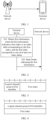
- an embodiment of this application further proposes an information reporting method.
- the information reporting method includes the following step 801.
- An execution body of the method shown in FIG. 8 may be a terminal device and a network device, or may be a chip in the terminal device or a chip in the network device.
- FIG. 8 an example in which the execution body of the method is the terminal device and the network device is used for description.
- the execution body of the method is not limited in this embodiment of this application.
- a terminal device obtains third information, where the third information indicates an index table that is of a first index and that corresponds to a first granularity.
- the second information may be a largest value, a smallest value, or an intermediate value in a section in an index table, a length of a section, or a largest value, a smallest value, or an intermediate value in an index table.
- the at least two index tables include a first index table and a second index table. It needs to be noted that the first index table and the second index table are merely examples provided in this application.
- the at least two index tables may alternatively include a plurality of index tables such as a third index table.
- a quantity of index tables is not limited in this embodiment of this application. In the following content, the first index table and the second index table are used as an example.
- a quantity of index tables included in the at least two index tables is not limited in this embodiment of this application.
- the at least two index tables include an index table that is a table already defined in the current 3GPP R17 standard V17.2.0, for example, Table 1 in the foregoing descriptions.
- the third information may be sent by the network device, predefined, or obtain in another manner. How the terminal device obtains the third information is not limited in this embodiment of this application.
- the first granularity may be one of the following granularities: an LCH, an LCG, a PDU set, and a Qos Flow.
- the first index is an index in a BSR.
- the first granularity is an LCG
- the second information is a buffer section.
- the first index indicates a buffer section corresponding to a size of data buffered in the LCG.
- the buffer section corresponding to the size of the data buffered in the LCG may be determined based on the first index and the table corresponding to the first index.
- the third information is related to a bitmap.
- the third information includes configuration information related to the first granularity.
- An information parameter of the configuration information is in one-to-one correspondence to a bit in the bitmap.
- the manner 1 is implemented in a manner of bit mapping.
- the configuration information at the first granularity includes a plurality of information parameters.
- the plurality of information parameters include a first information parameter and a second information parameter.
- the bitmap includes a first bit and a second bit. A bitmap corresponding to the first information parameter is the first bit, and a bitmap corresponding to the second information parameter is the second bit.
- An index table that corresponds to the first information parameter and that is of the first index is the first index table
- an index table that corresponds to the second information parameter and that is of the first index is the second index table
- the first bit is 0 and the second bit is 1.
- the first bit is 1 and the second bit is 0.
- the first granularity as an LCG.
- the configuration information includes four information parameters (an LCG 1, an LCG 2, an LCG 3, and an LCG 4).
- the first bit is 0 and the second bit is 1.
- the bitmap is represented as 0011.
- the bitmap includes four bits, and the four bits sequentially correspond to the LCG 1, the LCG 2, the LCG 3, and the LCG 4 respectively.
- Bits corresponding to the LCG 1 and the LCG 2 are 1, and are the first bits.
- Corresponding index tables of the first index are the first index tables.
- Bits corresponding to the LCG 3 and the LCG 4 are 0, and are the second bits.
- Corresponding index tables of the first index are the second index tables.
- the third information is configuration information related to the first granularity, and an information parameter of the configuration information is an identifier of the first granularity.
- the third information indicates an index table that is of the first index and that corresponds to the information parameter in the configuration information.
- the third information includes a configuration parameter related to an LCG granularity.
- the information parameter is an LCG ID.
- the configuration parameter includes (an LCG 2 and an LCG 3). Eight LCGs are configured in a network, which are (an LCG 1 to an LCG 8) in total.
- the third information is an LCG configuration, and includes an LCG ID.
- An index table that is of the first index and that corresponds to the LCG ID configured in the third information is the first index table. It may be understood that, aside from the LCG ID indicated in the third information, an index table that is of the first index and that corresponds to another LCG ID configured in the network is not the first index table, and may be the second index table or another index table.
- the index table is the same as the descriptions in step 201. In this embodiment of this application, only brief descriptions are provided. For a specific implementations and example, refer to the descriptions in step 201.
- the at least two index tables include the first index table and the second index table.
- An adjacency difference less than an adjacency difference in the second index table exists in the first index table.
- an adjacency ratio less than an adjacency ratio in the second index table exists in the first index table.
- the adjacency difference is a difference between second information corresponding to two adjacent indexes in an index table.
- the adjacency ratio is a ratio between second information corresponding to two adjacent indexes in an index table.
- That an adjacency difference less than an adjacency difference in the second index table exists in the first index table may be understood as that the first index table includes a plurality of adjacency differences, the second index table includes a plurality of adjacency differences, and at least one of the plurality of adjacency differences in the first index table is less than an adjacency difference in the second index table.
- an adjacency ratio less than an adjacency ratio in the second index table exists in the first index table may be understood as that the first index table includes a plurality of adjacency ratios, the second index table includes a plurality of adjacency ratios, and at least one of the plurality of adjacency ratios in the first index table is less than an adjacency ratio in the second index table.
- the first granularity is an LCG.
- the second information may be understood as a largest value, a smallest value, or an intermediate value in a buffer section corresponding to the first index. An example in which the second information is the largest value in the buffer section is used.
- the adjacency difference may be understood as a difference between largest values in buffer sections corresponding to two adjacent indexes in the index table. In this case, the adjacency difference may alternatively be understood as lengths of the buffer sections corresponding to the two indexes.
- the adjacency ratio may be understood as a ratio of a largest value in a buffer section corresponding to a second index to a largest value in a buffer section corresponding to a third index in the index table.
- the second index and the third index are two adjacent indexes in the index table, and a value of the second index is greater than a value of the third index.
- the second index table may be a table already defined in the current 3GPP R17 standard V17.2.0, for example, Table 1 in the foregoing descriptions.
- the first index table is an index table that is newly defined in this embodiment of this application and whose granularity is less than that of the second index table.
- the granularity of the first index table is introduced below. Descriptions of the first index table are the same as the descriptions in step 201. In this embodiment of this application, only brief descriptions are provided. For a specific implementations and example, refer to the descriptions in step 201.
- adjacency differences in the first index table are the same.
- the adjacency difference is a difference between second information corresponding to two adjacent indexes in an index table.
- the adjacency difference may be understood as a difference between largest values in buffer sections corresponding to two adjacent indexes in the index table.
- the adjacency difference may be understood as lengths of the buffer sections corresponding to the two indexes.
- adjacency ratios between second information corresponding to two adjacent indexes in the first index table are the same or a difference between two adjacency ratios is less than a second threshold.
- the adjacency ratio is a ratio between second information corresponding to two adjacent indexes in an index table. That a difference between two adjacency ratios is less than a second threshold, and the second threshold is close to 0 may be understood as that all the adjacency ratios in the first index table are approximately the same.
- the adjacency ratio may be understood as a ratio between largest values in buffer sections corresponding to two adjacent indexes in the index table.
- the first index table satisfies one or more of the following conditions: a condition 1: an adjacency difference between every two indexes belonging to a first value range in the first index table is equal to a first adjacency difference; a condition 2: an adjacency difference between every two indexes belonging to a second value range in the first index table is equal to a second adjacency difference; a condition 3: an adjacency ratio between every two indexes belonging to a third value range in the first index table is equal to a first adjacency ratio; and a condition 4: an adjacency ratio between every two indexes belonging to a fourth value range in the first index table is equal to a second adjacency ratio.
- the first adjacency difference is different from the second adjacency difference
- the first adjacency ratio is different from the second adjacency ratio.
- the adjacency difference may be understood as a difference between largest values in buffer sections corresponding to two adjacent indexes in the index table.
- the adjacency difference may be understood as lengths of the buffer sections corresponding to the two indexes.
- the adjacency ratio may be understood as a ratio between largest values in buffer sections corresponding to two adjacent indexes in the index table.
- the value range may be an index range or a buffer section range.
- the first value range may alternatively be understood as an index satisfying a first condition
- the second value range may alternatively be understood as an index satisfying a second condition
- the third value range may alternatively be understood as an index satisfying a third condition
- the fourth value range may alternatively be understood as an index satisfying a fourth condition.
- the first condition, the second condition, the third condition, and the fourth condition described above may be any condition.
- the first condition is that an index value is greater than a preset threshold. This is not limited in this embodiment of this application.
- the index included in the first index table and the second information are described below. Descriptions of the index and the second information are the same as the descriptions in step 201. In this embodiment of this application, only brief descriptions are provided. For a specific implementations and example, refer to the descriptions in step 201. Details are not described again in this embodiment of this application.
- the fourth information may be a target parameter.
- the target parameter indicates one or more of the following parameters: a quantity of indexes in the first index table, a largest index in the first index table, a smallest index in the first index table, second information in the first index table, a first range in the first index table, an adjacency ratio in the first index table, and an adjacency difference in the first index table.
- the first threshold may be configured by the network device or predefined. This is not limited in this embodiment of this application.
- the first threshold is merely an example in this application, and may include a plurality of thresholds, such as a second threshold. This is not limited in this embodiment of this application.
- the second threshold may be configured by the network device or predefined. This is not limited in this embodiment of this application.
- the first threshold is merely an example in this application, and may include a plurality of thresholds, such as a third threshold. This is not limited in this embodiment of this application.
- the index included in the first index table and the second information are described below. Descriptions of the index and the second information are the same as the descriptions in step 201. In this embodiment of this application, only brief descriptions are provided. For a specific implementations and example, refer to the descriptions in step 201. Details are not described again in this embodiment of this application.
- a smallest index in the first index table is 0.
- a largest value of second information corresponding to the index 0 is M.
- M is 0, or M is an integer greater than 0.
- a smallest index in the first index table is N.
- N is an integer greater than 0.
- a value range of an index included in the second index table is an integer between 0 and N - 1.
- the method further includes: The terminal device sends a data format to the network device.
- the data format indicates the first index.
- the first index corresponds one of at least two index tables, and the at least two index tables include the first index table.
- the data format may be one of the following formats: MAC CE, an SDU, a PDU, DCI, or RRC signaling.
- the data format may alternatively be another format. This is not limited in this embodiment of this application.
- the first index indicates second information of a first granularity. That the first index corresponds to one of the at least two index tables may be understood as that the first index is an index from one of the at least two index tables.
- the second information that is indicated by the first index and that is of the first granularity is determined based on the first index and the index table corresponding to the first index.
- the first granularity may be one of the following granularities: an LCH, an LCG, a PDU set, and a Qos Flow.
- the first index is an index indicated in a BSR.
- the first granularity is an LCG
- the second information is a buffer section.
- the first index indicates a buffer section corresponding to a size of data buffered in the LCG.
- the buffer section corresponding to the size of the data buffered in the LCG may be determined based on the first index and the table corresponding to the first index.
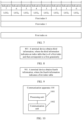
- FIG. 10 is a schematic diagram of a structure of a communication apparatus according to an embodiment of this application.
- the communication apparatus may be a terminal device or an apparatus (such as a chip) having a function of the terminal device.
- the communication apparatus 100 may include a processing unit 1001 and a communication unit 1002.
- the communication apparatus may perform steps related to the terminal device in the foregoing method embodiments.
- the processing unit 1001 obtains first information, where the first information indicates a first index or an index table corresponding to the first index, and the first index corresponds to one of at least two index tables.
- the communication unit 1002 is configured to send, to a network device, a data format indicating the first information.
- the data format is one of the following formats: a media access control control element MAC CE, a service data unit, a protocol data unit, downlink control information, or radio resource control signaling.
- the data format includes a buffer status report.
- the first information indicates a data type or the data format
- the data format indicates the first index
- the index table includes a correspondence between an index and second information.
- the at least two index tables include the first index table and the second index table.
- An adjacency difference less than an adjacency difference in the second index table exists in the first index table.
- an adjacency ratio less than an adjacency ratio in the second index table exists in the first index table.
- the adjacency difference is a difference between second information corresponding to two adjacent indexes in an index table.
- the adjacency ratio is a ratio between second information corresponding to two adjacent indexes in an index table.
- adjacency ratios in the first index table are the same or a difference between two adjacency ratios is less than a second threshold.
- the first index table satisfies one or more of the following conditions: an adjacency difference between every two indexes belonging to a first value range in the first index table is equal to a first adjacency difference; an adjacency difference between every two indexes belonging to a second value range in the first index table is equal to a second adjacency difference; an adjacency ratio between every two indexes belonging to a third value range in the first index table is equal to a first adjacency ratio; and an adjacency ratio between every two indexes belonging to a fourth value range in the first index table is equal to a second adjacency ratio.
- the first adjacency difference is different from the second adjacency difference
- the first adjacency ratio is different from the second adjacency ratio.
- a smallest index in the first index table is 0.
- a largest value of second information corresponding to the index 0 is M.
- M is 0, or M is an integer greater than 0.
- a smallest index in the first index table is N.
- N is an integer greater than 0.
- a value range of an index included in the second index table is an integer between 0 and N - 1.
- the communication unit 1002 is further configured to obtain indication information.
- the indication information indicates the first index table.
- the indication information indicates one or more of the following parameters: a quantity of indexes in the first index table, a largest index in the first index table, a smallest index in the first index table, second information in the first index table, a first range in the first index table, an adjacency difference in the first index table, and an adjacency ratio in the first index table.
- the third information is related to a bitmap.
- the third information is configuration information related to the first granularity
- an information parameter of the configuration information is an identifier of the first granularity
- the index table includes a correspondence between an index and second information.
- the at least two index tables include the first index table and the second index table.
- An adjacency difference less than an adjacency difference in the second index table exists in the first index table.
- an adjacency ratio less than an adjacency ratio in the second index table exists in the first index table.
- the adjacency difference is a difference between second information corresponding to two adjacent indexes in an index table.
- the adjacency ratio is a ratio between second information corresponding to two adjacent indexes in an index table.
- the communication unit 1002 is further configured to: if an index table that is of the first index and that corresponds to a target granularity is the first index table, and a target information value of the target granularity is less than or equal to a second threshold, skip currently reporting a data format, and report the data format after the target information value of the target granularity is greater than a third threshold.
- FIG. 10 is a schematic diagram of a structure of a communication apparatus according to an embodiment of this application.
- the communication apparatus may be a network device or an apparatus (such as a chip) having a function of the network device.
- the communication apparatus 100 may include a processing unit 1001 and a communication unit 1002.
- the communication apparatus may perform steps related to the network device in the foregoing method embodiments.
- adjacency differences in the first index table are the same.
- the indication information indicates one or more of the following parameters: a quantity of indexes in the first index table, a largest index in the first index table, a smallest index in the first index table, second information in the first index table, a first range in the first index table, an adjacency difference in the first index table, and an adjacency ratio in the first index table.
- the communication unit 1002 is configured to send third information to a terminal device.
- the third information indicates an index table of a first index corresponding to a first granularity, and the index table is from one of at least two index tables.
- the first granularity is one of the following granularities: a logical channel group, a logical channel, a protocol data unit, and a quality of service flow.
- the third information is related to a bitmap.
- the index table includes a correspondence between an index and second information.
- the at least two index tables include the first index table and the second index table.
- An adjacency difference less than an adjacency difference in the second index table exists in the first index table.
- an adjacency ratio less than an adjacency ratio in the second index table exists in the first index table.
- the adjacency difference is a difference between second information corresponding to two adjacent indexes in an index table.
- the adjacency ratio is a ratio between second information corresponding to two adjacent indexes in an index table.
- adjacency ratios in the first index table are the same or a difference between two adjacency ratios is less than a second threshold.
- the first index table satisfies one or more of the following conditions: an adjacency difference between every two indexes belonging to a first value range in the first index table is equal to a first adjacency difference; an adjacency difference between every two indexes belonging to a second value range in the first index table is equal to a second adjacency difference; an adjacency ratio between every two indexes belonging to a third value range in the first index table is equal to a first adjacency ratio; and an adjacency ratio between every two indexes belonging to a fourth value range in the first index table is equal to a second adjacency ratio.
- the first adjacency difference is different from the second adjacency difference
- the first adjacency ratio is different from the second adjacency ratio.
- a smallest index in the first index table is 0.
- a largest value of second information corresponding to the index 0 is M.
- M is 0, or M is an integer greater than 0.
- a smallest index in the first index table is N.
- N is an integer greater than 0.
- a value range of an index included in the second index table is an integer between 0 and N - 1.
- the communication unit 1002 is further configured to send indication information to the terminal device.
- the indication information indicates the first index table.
- the indication information indicates one or more of the following parameters: a quantity of indexes in the first index table, a largest index in the first index table, a smallest index in the first index table, second information in the first index table, a first range in the first index table, an adjacency difference in the first index table, and an adjacency ratio in the first index table.
- the communication unit 1002 sends fourth information to a terminal device.
- the fourth information indicates a first index table.
- the indication information indicates one or more of the following parameters: a quantity of indexes in the first index table, a largest index in the first index table, a smallest index in the first index table, second information in the first index table, a first range in the first index table, an adjacency difference in the first index table, and an adjacency ratio in the first index table.
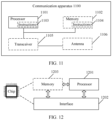
- FIG. 11 is a schematic diagram of a structure of a communication apparatus.
- the communication apparatus 1100 may be the terminal device or the network device in the foregoing method embodiments, or may be a chip, a chip system, a processor, or the like that supports the terminal device or the network device in implementing the foregoing methods.
- the communication apparatus 1100 may alternatively be an entity apparatus corresponding to the communication apparatus described in FIG. 4 .
- the communication apparatus may be configured to implement the methods described in the foregoing method embodiments. For details, refer to the descriptions in the foregoing method embodiments.
- the communication apparatus 1100 may include one or more processors 1101.
- the processor 1101 may be a general-purpose processor, a dedicated processor, or the like.
- the processor 1101 may be a baseband processor or a central processing unit.
- the baseband processor may be configured to process a communication protocol and communication data.
- the central processing unit may be configured to control the communication apparatus (for example, a base station, a baseband chip, a terminal, a terminal chip, a DU, or a CU), to execute a software program, and process data of the software program.
- the communication apparatus 1100 may include one or more memories 1102, having instructions 1104 stored therein.
- the instructions may be executed on the processor 1101, to enable the communication apparatus 1100 to perform the methods described in the foregoing method embodiments.
- the memory 1102 may further store data.
- the processor 1101 and the memory 1102 may be disposed separately or integrated together.
- the communication apparatus 1100 may further include a transceiver 1105 and an antenna 1106.
- the transceiver 1105 may be referred to as a transceiver unit, a transceiver machine, a transceiver circuit, or the like, and is configured to implement a transceiver function.
- the transceiver 1105 may include a receiver and a transmitter.
- the receiver may be referred to as a receiving machine, a receiving circuit, or the like, and is configured to implement a receiving function.
- the transmitter may be referred to as a transmitting machine, a transmitting circuit, or the like, and is configured to implement a transmitting function.
- the communication apparatus 1100 is a terminal device or a network device.
- the processor 1101 is configured to perform a data processing operation of the terminal device or the network device in the foregoing method embodiments.
- the transceiver 1105 is configured to perform a data transceiver operation of the terminal device or the network device in the foregoing method embodiments.
- the processor 1101 may include a transceiver configured to implement both a receiving function and a transmitting function.
- the transceiver may be a transceiver circuit, an interface, or an interface circuit.
- the transceiver circuit, interface, or interface circuit configured to implement the receiving function and the transmitting function may be separated or integrated together.
- the transceiver circuit, interface, or interface circuit may be configured to read and write code/data, or the transceiver circuit, interface, or interface circuit may be configured to transmit or transfer a signal.
- the processor 1101 may store instructions 1103.
- the instructions 1103 are run on the processor 1101, to enable the communication apparatus 1100 to perform the methods described in the foregoing method embodiments.
- the instructions 1103 may be fixed in the processor 1101.
- the processor 1101 may be implemented by hardware.
- the communication apparatus 1100 may include a circuit.
- the circuit may implement a transmitting, receiving, or communication function in the foregoing method embodiments.
- the processor and the transceiver described in this embodiment of this application may be implemented on an integrated circuit (integrated circuit, IC), an analog IC, a radio frequency integrated circuit RFIC, a mixed signal IC, an application specific integrated circuit (application specific integrated circuit, ASIC), a printed circuit board (printed circuit board, PCB), an electronic device, or the like.
- the communication apparatus described in the foregoing embodiment may be a terminal device or a network device, but a scope of the communication apparatus described in this embodiment of this application is not limited thereto, and a structure of the communication apparatus may not be limited by FIG. 11 .
- the communication apparatus may be a stand-alone device or may be part of a larger device.
- the communication apparatus may be:
- the communication apparatus may be a chip or a chip system
- the chip shown in FIG. 12 includes a processor 1201 and an interface 1202.
- the chip may further include a memory 1203.
- the processor 1201 is configured to perform a data processing operation of the network device in the embodiments of this application.
- the interface 1202 is configured to receive or output a signal.
- the processor 1201 is configured to perform a data processing operation of the terminal device in the foregoing method embodiments.
- the interface 1202 is configured to receive or output a signal.
- the processor in this embodiment of this application may be an integrated circuit chip having a signal processing capability.
- the steps of the foregoing method embodiment may be implemented by using a hardware integrated logic circuit in the processor or implemented by using instructions in a software form.
- the processor may be a general-purpose processor, a digital signal processor (digital signal processor, DSP), an application specific integrated circuit (application specific integrated circuit, ASIC), a field programmable gate array (field programmable gate array, FPGA), another programmable logical device, a discrete gate or transistor logical device, or a discrete hardware component.
- the memory in this embodiment of this application may be a volatile memory or a non-volatile memory, or may include both a volatile memory and a non-volatile memory.
- the non-volatile memory may be a read-only memory (read-only memory, ROM), a programmable read-only memory (programmable ROM, PROM), an erasable programmable read-only memory (erasable PROM, EPROM), an electrically erasable programmable read-only memory (electrically EPROM, EEPROM), or a flash memory.
- the volatile memory may be a random access memory (random access memory, RAM), and is used as an external cache.
- RAMs may be used, for example, a static random access memory (static RAM, SRAM), a dynamic random access memory (dynamic RAM, DRAM), a synchronous dynamic random access memory (synchronous DRAM, SDRAM), a double data rate synchronous dynamic random access memory (double data rate SDRAM, DDR SDRAM), an enhanced synchronous dynamic random access memory (enhanced SDRAM, ESDRAM), a synchlink dynamic random access memory (synchlink DRAM, SLDRAM), and a direct rambus random access memory (direct rambus RAM, DR RAM).
- static random access memory static random access memory
- DRAM dynamic random access memory
- DRAM dynamic random access memory
- SDRAM synchronous dynamic random access memory
- double data rate SDRAM double data rate SDRAM
- DDR SDRAM double data rate SDRAM
- ESDRAM enhanced synchronous dynamic random access memory
- synchlink dynamic random access memory synchlink dynamic random access memory
- direct rambus RAM direct rambus RAM
- This application further provides a computer-readable medium, configured to store computer software instructions.
- a function in any one of the foregoing method embodiments is implemented.
- This application further provides a computer program product, configured to store computer software instructions.
- a function in any one of the foregoing method embodiments is implemented.
- All or some of the foregoing embodiments may be implemented by using software, hardware, firmware, or any combination thereof.
- implementation may be entirely or partially performed in a form of a computer program product.
- the computer program product includes one or more computer instructions.
- the computer may be a general-purpose computer, a dedicated computer, a computer network, or another programmable apparatus.
- the computer instructions may be stored in a computer-readable storage medium or transmitted from one computer-readable storage medium to another computer-readable storage medium.
- the usable medium may be a magnetic medium (for example, a floppy disk, a hard disk, or a magnetic tape), an optical medium (for example, a digital video disc (digital video disc, DVD)), a semiconductive medium (for example, a solid-state drive (solid state disk, SSD)), or the like.
- a magnetic medium for example, a floppy disk, a hard disk, or a magnetic tape
- an optical medium for example, a digital video disc (digital video disc, DVD)
- a semiconductive medium for example, a solid-state drive (solid state disk, SSD)
- An embodiment of this application further provides a computer program product.
- the computer program product runs on a processor, the method procedures in the foregoing method embodiments are implemented.
- This application further provides a computer-readable storage medium, having a computer program stored therein.
- the computer-readable storage medium When the computer-readable storage medium is executed by a computer, a function in any one of the foregoing method embodiments is implemented.
- This application further provides a computer program product.
- the computer program product is executed by a computer, a function in any one of the foregoing method embodiments is implemented.
- All or some of the foregoing embodiments may be implemented by using software, hardware, firmware, or any combination thereof.
- implementation may be entirely or partially performed in a form of a computer program product.
- the computer program product includes one or more computer instructions.
- the computer may be a general-purpose computer, a dedicated computer, a computer network, or another programmable apparatus.
- the computer instructions may be stored in a computer-readable storage medium or transmitted from one computer-readable storage medium to another computer-readable storage medium.
- the computer instructions may be transmitted from one website, computer, server or data center to another website, computer, server or data center in a wired (for example, a coaxial cable, an optical fiber or a digital subscriber line (digital subscriber line, DSL)) or wireless (for example, infrared, wireless or microwave) manner.
- the computer-readable storage medium may be any usable medium that can be accessed by the computer, or a data storage device, such as a server or a data center in which one or more usable media are integrated.
- the usable medium may be a magnetic medium (for example, a floppy disk, a hard disk, or a magnetic tape), an optical medium (for example, a digital video disc (digital video disc, DVD)), a semiconductive medium (for example, a solid-state drive (solid state drive, SSD)), or the like.
- a magnetic medium for example, a floppy disk, a hard disk, or a magnetic tape
- an optical medium for example, a digital video disc (digital video disc, DVD)
- a semiconductive medium for example, a solid-state drive (solid state drive, SSD)
- the correspondences shown in the tables in this application may be configured or predefined.
- the values of the information in the tables are merely examples, and may be configured as other values. This is not limited in this application.
- the correspondence between the information and each parameter not all correspondences shown in the tables are required to be necessarily configured.
- the correspondences shown in some rows in the tables of this application may not be configured.
- appropriate deformation and adjustment, such as splitting or combination may be made based on the foregoing tables.
- Other names that can be understood by the communication apparatus may alternatively be used for the names of the parameters shown in the titles of the foregoing tables, and the values or representation manners of the parameters may alternatively be other values or representation manners that can be understood by the communication apparatus.
- Another data structures may alternatively be used when the foregoing tables are implemented.
- Predefining in this application may be understood as defining, predefining, storing, pre-storing, pre-negotiating, pre-configuring, curing, or pre-firing.
Landscapes
- Engineering & Computer Science (AREA)
- Computer Networks & Wireless Communication (AREA)
- Signal Processing (AREA)
- Computer Security & Cryptography (AREA)
- Mobile Radio Communication Systems (AREA)
Applications Claiming Priority (2)
| Application Number | Priority Date | Filing Date | Title |
|---|---|---|---|
| CN202211196975.7A CN117835429B (zh) | 2022-09-28 | 2022-09-28 | 一种信息上报方法及通信装置 |
| PCT/CN2023/117578 WO2024067014A1 (zh) | 2022-09-28 | 2023-09-07 | 一种信息上报方法及通信装置 |
Publications (2)
| Publication Number | Publication Date |
|---|---|
| EP4580288A1 true EP4580288A1 (de) | 2025-07-02 |
| EP4580288A4 EP4580288A4 (de) | 2025-11-26 |
Family
ID=90476020
Family Applications (1)
| Application Number | Title | Priority Date | Filing Date |
|---|---|---|---|
| EP23870253.4A Pending EP4580288A4 (de) | 2022-09-28 | 2023-09-07 | Informationsmeldeverfahren und kommunikationsvorrichtung |
Country Status (6)
| Country | Link |
|---|---|
| US (1) | US20250227038A1 (de) |
| EP (1) | EP4580288A4 (de) |
| JP (1) | JP2025533777A (de) |
| KR (1) | KR20250073402A (de) |
| CN (3) | CN117835429B (de) |
| WO (1) | WO2024067014A1 (de) |
Family Cites Families (13)
| Publication number | Priority date | Publication date | Assignee | Title |
|---|---|---|---|---|
| WO2011123549A1 (en) * | 2010-04-02 | 2011-10-06 | Interdigital Patent Holdings, Inc. | Method and apparatus for supporting communication via a relay node |
| CN102947800B (zh) * | 2010-06-18 | 2016-01-20 | 富士通株式会社 | 缓存状态报告的报告方法、获取方法、终端、基站和通信系统 |
| CN105491618B (zh) * | 2010-06-18 | 2019-05-14 | 富士通株式会社 | 终端、基站和通信系统 |
| CN102291772B (zh) * | 2010-06-21 | 2016-04-13 | 电信科学技术研究院 | Ue上报bsr及基站确定ue上报的缓存数据量的方法 |
| US8953459B2 (en) * | 2010-06-22 | 2015-02-10 | Zte Corporation | Method and system for reporting buffer size index |
| JP2014197907A (ja) * | 2014-07-14 | 2014-10-16 | 富士通株式会社 | バッファ状態報告の報告方法、取得方法、端末、基地局及び通信システム |
| CN107113807B (zh) * | 2015-07-27 | 2020-09-11 | 华为技术有限公司 | 一种传输通信资源的方法、基站和终端 |
| CN108990165B (zh) * | 2017-05-31 | 2023-11-24 | 株式会社Kt | 下一代移动通信的用于处理缓冲状态报告的方法和装置 |
| CN109041110B (zh) * | 2017-06-09 | 2020-06-26 | 维沃移动通信有限公司 | 一种bsr传输方法、相关设备和系统 |
| WO2019032734A1 (en) * | 2017-08-10 | 2019-02-14 | Sharp Laboratories Of America, Inc. | SYSTEMS AND METHODS FOR INDICATING A LOGIC CHANNEL GROUP (LCG) PRIORITY IN A 5G NR BUFFER STATUS REPORT (BSR) |
| CN109561464B (zh) * | 2017-09-25 | 2020-11-24 | 电信科学技术研究院 | 一种上报缓存状态和分配资源的方法及设备 |
| JP7327568B2 (ja) * | 2017-11-14 | 2023-08-16 | 富士通株式会社 | 無線端末、無線基地局、無線通信システム |
| EP3793138A4 (de) * | 2018-05-10 | 2021-04-21 | Huawei Technologies Co., Ltd. | Kommunikationsverfahren, kommunikationsvorrichtung und system |
-
2022
- 2022-09-28 CN CN202211196975.7A patent/CN117835429B/zh active Active
- 2022-09-28 CN CN202411911375.3A patent/CN119653499A/zh active Pending
-
2023
- 2023-09-07 EP EP23870253.4A patent/EP4580288A4/de active Pending
- 2023-09-07 KR KR1020257013543A patent/KR20250073402A/ko active Pending
- 2023-09-07 WO PCT/CN2023/117578 patent/WO2024067014A1/zh not_active Ceased
- 2023-09-07 CN CN202380069486.1A patent/CN119948985A/zh active Pending
- 2023-09-07 JP JP2025518188A patent/JP2025533777A/ja active Pending
-
2025
- 2025-03-25 US US19/089,571 patent/US20250227038A1/en active Pending
Also Published As
| Publication number | Publication date |
|---|---|
| CN119948985A (zh) | 2025-05-06 |
| CN117835429A (zh) | 2024-04-05 |
| JP2025533777A (ja) | 2025-10-09 |
| KR20250073402A (ko) | 2025-05-27 |
| CN119653499A (zh) | 2025-03-18 |
| US20250227038A1 (en) | 2025-07-10 |
| WO2024067014A1 (zh) | 2024-04-04 |
| CN117835429B (zh) | 2025-01-24 |
| EP4580288A4 (de) | 2025-11-26 |
Similar Documents
| Publication | Publication Date | Title |
|---|---|---|
| EP4184995B1 (de) | Drahtloskommunikationsverfahren, endgerätevorrichtung und netzwerkvorrichtung | |
| KR102278948B1 (ko) | 데이터 표시 방법, 디바이스 및 통신 시스템 | |
| JP7327831B2 (ja) | 通信方法及びデバイス | |
| WO2020164613A1 (zh) | 中继通信的方法和装置 | |
| US12004228B2 (en) | Information transmission method, terminal device, and network device | |
| US11259362B2 (en) | Method for repeatedly transmitting data and device | |
| CN114402637B (zh) | 通信方法和通信装置 | |
| EP4149070A1 (de) | Kommunikationsverfahren, -vorrichtung und -system | |
| US12323849B2 (en) | Method and apparatus for indicating QoS flow information | |
| JP6941054B2 (ja) | Wlan/3gppアグリゲーションでの上りリンクスケジューリング | |
| US20250294469A1 (en) | Power determination method, communication apparatus, and storage medium | |
| US11546102B2 (en) | Data sending method, information sending method, and apparatus | |
| WO2020043009A1 (zh) | 一种ui显示方法、装置、终端设备及存储介质 | |
| WO2020199034A1 (zh) | 用于中继通信的方法和装置 | |
| US20230232274A1 (en) | Apparatus, system, and method of communicating cellular quality of service (qos) information | |
| EP4443940A1 (de) | Kommunikationsverfahren, -vorrichtung und -system | |
| KR20250161429A (ko) | 페이징 송신을 처리하는 방법 및 통신 디바이스 | |
| EP4580288A1 (de) | Informationsmeldeverfahren und kommunikationsvorrichtung | |
| US20240349367A1 (en) | Communication method and communication apparatus | |
| EP4415288A1 (de) | Kommunikationsverfahren und kommunikationsvorrichtung | |
| EP4615044A1 (de) | Verfahren und vorrichtung zur meldung von verzögerungsinformationen | |
| CN117546589A (zh) | 数据传输方法、装置及存储介质 | |
| US12507229B2 (en) | WLAN enhancements for co-existence | |
| WO2021062763A1 (zh) | 信号传输的方法和装置 | |
| US20250081017A1 (en) | Method and device for reporting measurement report |
Legal Events
| Date | Code | Title | Description |
|---|---|---|---|
| STAA | Information on the status of an ep patent application or granted ep patent |
Free format text: STATUS: THE INTERNATIONAL PUBLICATION HAS BEEN MADE |
|
| PUAI | Public reference made under article 153(3) epc to a published international application that has entered the european phase |
Free format text: ORIGINAL CODE: 0009012 |
|
| STAA | Information on the status of an ep patent application or granted ep patent |
Free format text: STATUS: REQUEST FOR EXAMINATION WAS MADE |
|
| 17P | Request for examination filed |
Effective date: 20250325 |
|
| AK | Designated contracting states |
Kind code of ref document: A1 Designated state(s): AL AT BE BG CH CY CZ DE DK EE ES FI FR GB GR HR HU IE IS IT LI LT LU LV MC ME MK MT NL NO PL PT RO RS SE SI SK SM TR |
|
| A4 | Supplementary search report drawn up and despatched |
Effective date: 20251024 |
|
| RIC1 | Information provided on ipc code assigned before grant |
Ipc: H04W 72/12 20230101AFI20251020BHEP Ipc: H04W 72/04 20230101ALI20251020BHEP Ipc: H04W 72/21 20230101ALI20251020BHEP Ipc: H04W 28/02 20090101ALI20251020BHEP |
|
| DAV | Request for validation of the european patent (deleted) | ||
| DAX | Request for extension of the european patent (deleted) |