EP4579634A2 - Hybride wärmeübertragungsetikettanordnungen - Google Patents
Hybride wärmeübertragungsetikettanordnungen Download PDFInfo
- Publication number
- EP4579634A2 EP4579634A2 EP25176624.2A EP25176624A EP4579634A2 EP 4579634 A2 EP4579634 A2 EP 4579634A2 EP 25176624 A EP25176624 A EP 25176624A EP 4579634 A2 EP4579634 A2 EP 4579634A2
- Authority
- EP
- European Patent Office
- Prior art keywords
- layer
- printed
- digitally printed
- label
- digitally
- Prior art date
- Legal status (The legal status is an assumption and is not a legal conclusion. Google has not performed a legal analysis and makes no representation as to the accuracy of the status listed.)
- Pending
Links
Images



Classifications
-
- G—PHYSICS
- G09—EDUCATION; CRYPTOGRAPHY; DISPLAY; ADVERTISING; SEALS
- G09F—DISPLAYING; ADVERTISING; SIGNS; LABELS OR NAME-PLATES; SEALS
- G09F3/00—Labels, tag tickets, or similar identification or indication means; Seals; Postage or like stamps
- G09F3/04—Labels, tag tickets, or similar identification or indication means; Seals; Postage or like stamps to be fastened or secured by the material of the label itself, e.g. by thermo-adhesion
-
- G—PHYSICS
- G09—EDUCATION; CRYPTOGRAPHY; DISPLAY; ADVERTISING; SEALS
- G09F—DISPLAYING; ADVERTISING; SIGNS; LABELS OR NAME-PLATES; SEALS
- G09F3/00—Labels, tag tickets, or similar identification or indication means; Seals; Postage or like stamps
- G09F3/02—Forms or constructions
-
- B—PERFORMING OPERATIONS; TRANSPORTING
- B41—PRINTING; LINING MACHINES; TYPEWRITERS; STAMPS
- B41F—PRINTING MACHINES OR PRESSES
- B41F17/00—Printing apparatus or machines of special types or for particular purposes, not otherwise provided for
-
- B—PERFORMING OPERATIONS; TRANSPORTING
- B41—PRINTING; LINING MACHINES; TYPEWRITERS; STAMPS
- B41J—TYPEWRITERS; SELECTIVE PRINTING MECHANISMS, i.e. MECHANISMS PRINTING OTHERWISE THAN FROM A FORME; CORRECTION OF TYPOGRAPHICAL ERRORS
- B41J3/00—Typewriters or selective printing or marking mechanisms characterised by the purpose for which they are constructed
- B41J3/407—Typewriters or selective printing or marking mechanisms characterised by the purpose for which they are constructed for marking on special material
- B41J3/4075—Tape printers; Label printers
-
- G—PHYSICS
- G09—EDUCATION; CRYPTOGRAPHY; DISPLAY; ADVERTISING; SEALS
- G09F—DISPLAYING; ADVERTISING; SIGNS; LABELS OR NAME-PLATES; SEALS
- G09F3/00—Labels, tag tickets, or similar identification or indication means; Seals; Postage or like stamps
- G09F3/08—Fastening or securing by means not forming part of the material of the label itself
- G09F3/10—Fastening or securing by means not forming part of the material of the label itself by an adhesive layer
-
- G—PHYSICS
- G09—EDUCATION; CRYPTOGRAPHY; DISPLAY; ADVERTISING; SEALS
- G09F—DISPLAYING; ADVERTISING; SIGNS; LABELS OR NAME-PLATES; SEALS
- G09F3/00—Labels, tag tickets, or similar identification or indication means; Seals; Postage or like stamps
- G09F3/02—Forms or constructions
- G09F2003/0202—Forms or constructions printed before use
-
- G—PHYSICS
- G09—EDUCATION; CRYPTOGRAPHY; DISPLAY; ADVERTISING; SEALS
- G09F—DISPLAYING; ADVERTISING; SIGNS; LABELS OR NAME-PLATES; SEALS
- G09F3/00—Labels, tag tickets, or similar identification or indication means; Seals; Postage or like stamps
- G09F3/02—Forms or constructions
- G09F2003/0208—Indicia
- G09F2003/0211—Transfer or thermo-sensitive
-
- G—PHYSICS
- G09—EDUCATION; CRYPTOGRAPHY; DISPLAY; ADVERTISING; SEALS
- G09F—DISPLAYING; ADVERTISING; SIGNS; LABELS OR NAME-PLATES; SEALS
- G09F3/00—Labels, tag tickets, or similar identification or indication means; Seals; Postage or like stamps
- G09F3/02—Forms or constructions
- G09F2003/0225—Carrier web
-
- G—PHYSICS
- G09—EDUCATION; CRYPTOGRAPHY; DISPLAY; ADVERTISING; SEALS
- G09F—DISPLAYING; ADVERTISING; SIGNS; LABELS OR NAME-PLATES; SEALS
- G09F3/00—Labels, tag tickets, or similar identification or indication means; Seals; Postage or like stamps
- G09F3/02—Forms or constructions
- G09F2003/023—Adhesive
- G09F2003/025—Activatable adhesive
-
- G—PHYSICS
- G09—EDUCATION; CRYPTOGRAPHY; DISPLAY; ADVERTISING; SEALS
- G09F—DISPLAYING; ADVERTISING; SIGNS; LABELS OR NAME-PLATES; SEALS
- G09F3/00—Labels, tag tickets, or similar identification or indication means; Seals; Postage or like stamps
- G09F3/02—Forms or constructions
- G09F2003/0257—Multilayer
-
- G—PHYSICS
- G09—EDUCATION; CRYPTOGRAPHY; DISPLAY; ADVERTISING; SEALS
- G09F—DISPLAYING; ADVERTISING; SIGNS; LABELS OR NAME-PLATES; SEALS
- G09F3/00—Labels, tag tickets, or similar identification or indication means; Seals; Postage or like stamps
- G09F3/02—Forms or constructions
- G09F2003/0282—Forms or constructions for textiles, e.g. clothing
Definitions
- the subject matter described herein relates to labels that can be transferred to surfaces using application of heat or a combination of heat and pressure.
- Labels having indicia and/or graphics are used in the garment industry to decorate clothing articles and/or to mark the articles (e.g., to identify the manufacture, size, washing instructions, etc.). These labels may be used with durable goods as well.
- Heat transfer labels including graphics and/or markings may be made using screen printing, flexographic printing, gravure printing, or rotogravure priming processes. These printing processes use ink and heat activated adhesive systems that can provide necessary properties for heat transfer labels, such as adhesion to a target article, and other chemical and environmental resistance properties.
- Digital printing can provide superior quality graphics than the above printing processes with tight tolerances, fine details, and multi-color capabilities. Further, digital printing can allow for variable data to be easily printed onto articles (e.g., personalized information that is different for different articles), as digital printing does not require pre-fabricated printing plates.
- the label can be transferred to an article (e.g., a garment) by placing the adhesive against the article and applying heat or heat and pressure to separate the digitally printed layer and the protective layer from the carrier layer.
- the adhesive secures the digitally printed layer and the coating layer to the article.
- hybrid labels One issue with these types of hybrid labels is that the digitally printed layer may be susceptible to damage or other effects after transfer to the article. This can deteriorate the appearance of the image and/or indicia. Another issue with these types of hybrid labels is that dyes within the article may seep into the label and interfere with the appearance of the image and/or indicia.
- a hybrid heat transfer label assembly in one embodiment, includes a carrier layer, a non-digitally printed protective layer disposed above the carrier layer, a digitally printed layer disposed above the non-digitally printed protective layer, and a non-digitally printed layer disposed above the digitally printed layer.
- the non-digitally printed protective layer, the digitally printed layer, and the non-digitally printed layer form a label that is configured to separate from the carrier layer and adhere to an article upon application of heat to the carrier layer.
- a method for producing a hybrid heat transfer label assembly also is provided.
- the method includes printing a protective layer above a carrier layer using a first non-digital printer, digitally printing a digitally printed layer above the non-digitally printed protective layer, and printing a non-digitally printed layer above the digitally printed layer using the first non-digital printer or a second non-digital printer.
- the protective layer, the digitally printed layer, and the non-digitally printed layer form a label that is configured to separate from the carrier layer and adhere to an article upon application of heat to the carrier layer.
- another method for producing a hybrid heat transfer label assembly includes screen printing a protective layer onto a carrier layer, digitally printing one or more of a graphic or indicia above the protective layer, screen printing one or more additional layers above the one or more of the graphic or the indicia that are digitally printed, and applying an adhesive above the one or more additional layers to form a hybrid heat transfer label assembly.
- the inventive subject matter described herein provides hybrid heat transfer label assemblies and methods for manufacturing and applying the same.
- the label assemblies combine both digital and non-digital printing processes to provide the label assemblies that can be applied to a wide variety of surfaces while having the benefits of digital printing and non-digital printing.
- the images and/or indicia that are digitally printed can be higher quality, higher resolution, and more photorealistic than the same images and/or indicia printed using non-digital printing.
- the digitally printed images and/or indicia can be printed using a wide variety of colors, including (but not limited to) cyan, magenta, yellow, black, white, invisible (or translucent), taggant, spot colors, metallic colors, foils, fluorescents, clear matte, and gloss inks.
- These images and/or indicia can be printed in a single pass through a digital printer. This reduces re-insertions of the label assemblies when compared to some known printing methods. This also provides more reliable registration between colors that are digitally printed.
- Digital printing also provides the ability to incorporate variable data, such as images and/or indicia that are different for each or at least several label assemblies.
- Variable designs, embellishments, effects, variable barcodes (e.g., 1D or 2D barcodes), quick response (QR) codes, sequential numbering, etc. can be digitally printed all in one pass through the digital printer.
- Digital printing also provides the ability to incorporate security features into the label assemblies.
- security features can include watermarks (which may be invisible to the naked or unmagnified eye), marks that are detectable by a scanner or mobile device, etc. These watermarks also or alternatively can be used to provide consumer engagement, brand authenticity, and track and trace functionality using marks that are almost imperceptible to the naked and unmagnified human eye.
- Invisible ultraviolet (UV) ink can be digitally printed into the label assemblies to provide covert identification, sequential numbering, and other variable data design. This type of ink can then be seen by exposing the label assembly using UV light.
- Machine taggant inks, magnetic inks, or other inks can be digitally printed into the label assemblies.
- the non-digitally printed layers can provide for improved durability of the underlying digitally printed images and/or indicia, such as scratch and abrasion resistance due to thicker deposits, as well as improved chemical resistance and durability through incorporation of a first down protective layer (e.g., a layer that is deposited between the carrier layer and the digitally printed layer, as described below).
- a first down protective layer e.g., a layer that is deposited between the carrier layer and the digitally printed layer, as described below.
- screen printable inks suitable for use in this invention include solvent-based inks, water-based inks, UV curable inks as well as 100% solids inks as described by Downs et. al. US 5,919,834 and Penrose et. al. US2019/0378438 A1 .
- the composition is heat transferred to the substrate and the carrier web is removed.
- a method for making the label and a method for marking an item are also disclosed.
- Hybrid heat transfer labels made using a combination of digital printing and at least one other conventional printing method, such as screen printing, are provided according to various embodiments.
- the hybrid heat transfer labels include a heat activated adhesive layer and an optional protective layer, which are printed via screen, flexographic, rotogravure, or pad printing method to provide excellent adhesion to a target article and good chemical and other environmental resistance.
- the hybrid heat transfer labels include a digitally printed layer offering superior quality graphic images and markings that can be customized quickly and easily to provide cost effective specialty heat transfer labels.
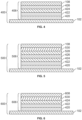
- Figure 1 illustrates one example of a hybrid heat transfer label assembly 100.
- the assemblies shown in the Figures are not necessarily drawn to scale.
- One or more layers in the assemblies may be thicker or thinner than one or more other layers, even though the relative thicknesses of the layers shown in the Figures may show a different relative thickness.
- a first layer that is shown in a Figure as being thinner than a second layer may actually be thicker than the second layer.
- the label assembly 100 includes a carrier layer 102 having an upper surface 104 that supports a multi-layered label 106 and an adhesive 108.
- the multi-layered label 106 is formed on the upper surface 104 of the carrier layer 102 from several layers with at least one layer being digitally printed (e.g., by one or more digital printers in one or more passes) and at least one layer being non-digitally printed (e.g., screen printed, flexographic printed, gravure printed, rotogravure printed, pad printed, etc.).
- the carrier layer 102 can be formed from a paper or plastic film. Suitable materials for the carrier layer 102 include polypropylene film, as well as polyester films, with polyester being more heat resistant. MYLAr ® and MELINEX ® are two trademarks under which these materials are commercially available. Paper is less costly than plastic films, however, the dimensional stability of paper is less desirable unless printing is conducted in a controlled environment with regard to temperature and relative humidity.
- the carrier layer 102 can be a release coated paper or plastic film.
- the release coating can be silicone based, or the release coating can include other coatings.
- both surfaces 104, 110 of the carrier layer 102 are coated with release coatings, in which the release coatings have different release characteristics.
- the printed surface 104 will generally have a tighter release than the non-printed surface 110, alternatively it could be the same release value to help prevent curling issues, or it could be on the print side 104 only.
- the adhesive 108 may be non-digitally printed onto the multi-layered label 106 or may be applied to the multi-layered label 106 as a powder or printable adhesive.
- the adhesive 108 may be applied to the multi-layered label 106 as a powder while an upper surface or layer on which the powder adhesive 108 is applied is wet.
- the adhesive 108 may be a heat activated adhesive, such as one or more powdered resins including polyamide, polyester, and polyurethane.
- polyamide resins include GRILTEX ® IA and other polyamides from EMS-GRILTECH, a unit of EMS-CHEMIE, as well as UNEX ® PA T11 and other polyamides from DAKOTA COATINGS N.V.
- polyester resins include GRILTEX ® 6E and other polyesters from EMS-GRILTECH and UNEX ® PES T6 and other polyesters from DAKOTA COATING N.V.
- polyurethane resins include UNEX ® 4529 and other polyurethanes from DAKOTA COATINGS N.V. If applied as a powder, the adhesive powder resin can be dispersed in a resin solution, solvent, or water prior to application to create a printable adhesive.
- the adhesive 108 may also be a non-digitally printed adhesive based on a combination of one or more rosin and/or one or more resins. These can be solvent-borne, water-borne or UV-curable. These can be heat-activated combinations of polyolefins, polyesters, polyacrylics, polyvinyl chloride/polyvinyl acetate (PVC/PVA) resins and terpene-based rosins.
- polyacrylics can be PARALOID ® B-48N or others provided by DOW COATING MATERIALS, a division of DOW CHEMICAL CORPORATION.
- PVC/PVA resins can be VINNOL ® E 22/48A, VINNOL ® H 15/50 of others provided by WACKER CHEMIE AG.
- terpene rosins include SYLVARES ® 1095, SYLVARES ® TR7125 or others from KRATON CORPORATION as well as STABELITE TM ESTER 10-E, LEWISOL TM 28-M and others from EASTMAN CHEMICAL COMPANY. These can be blended in varying percentages in solvent, water and/or liquid monomer prior to application to create a printable adhesive.
- Figures 2 and 3 illustrate application of the label assembly 100 shown in Figure 1 to an article 212.
- the article 212 can represent an object to which the multi-layered label 106 is to be affixed, such as a garment, plastics such as a cosmetic or personal care object or container, a medical fabric, a sports fabric, a safety fabric, an automotive fabric, a rubber object, a vulcanized rubber object, a metal object, a fibrous object, a glass object, etc.
- the label assembly 100 is positioned onto the article 212 so that the adhesive 108 contacts a surface 214 of the article 212.
- Heat 216 or a combination of heat 216 and pressure 218 can be applied onto the non-printed surface 110 of the carrier layer 102 that is opposite the printed surface 104 of the carrier layer 102. As shown, the label assembly 100 may be flipped over relative to the perspective in Figure 1 when applied to the article 212. The heat 216 or heat 216 and pressure 218 can cause the multi-layered label 106 to separate from the release coating of or on the carrier layer 102 and for the adhesive 108 to couple the multi-layered label 106 to the article 212.
- the adhesive 108 may soften and permanently adhere to the article 212. Since the adhesion strengths between the layers of the multi-layered label 106 are greater than that between the multi-layered label 106 and the carrier layer 102, the layers of the multi-layered label 106 remain attached to each other and transfer together to the article 212 upon application of the heat 216 or heat 216 and pressure 218, as shown in Figure 3 . After this heat transfer process, the carrier layer 102 is peeled off or otherwise removed from the multi-layered label 106 and the multi-layered label 106 is permanently attached on the article 212 via the adhesive 108, as shown in Figure 3 .
- Each of the non-digitally printed layers and digitally printed layers described herein can be formed from a single printing pass or multiple printing passes.
- any of the layers can be formed by a single pass of a digital printer or non-digital printer over the underlying layer(s), or can be formed by several successive printing passes (e.g., as multiple layers printed directly onto each other in the successive printing passes).
- Figure 4 illustrates one example of a hybrid heat transfer label assembly 400.
- the label assembly 400 can represent the label assembly 100 shown in Figures 1 and 2 , and includes a multi-layered label 406 that can represent the multi-layered label 106 shown in Figures 1 through 3 .
- the multi-layered label 406 can be formed (e.g., printed) onto the carrier layer 102 described above.
- the multi-layered label 406 includes a coated protective layer 420 that can be non-digitally printed directly onto the carrier layer 102. Optionally, part or all of the protective layer 420 can be digitally printed onto the carrier layer 102.
- the protective layer 420 can be referred to as the first down layer.
- the protective layer 420 can be clear, translucent, light-transmissive, etc., so that one or more of the layers printed onto the protective layer 420 are visible through the protective layer 420 after the multi-layered label 406 is adhered to the article 212.
- the protective layer 420 can be formed from polymer material through which the one or more of the layers printed onto the protective layer 420 are visible.
- the protective layer 420 can be printed from a composition comprising about 82.6% by weight Estane ® 5703 resin solution (comprised of about 20% polyester type thermoplastic polyurethane in a cyclohexanone/ethyl 3-ethoxypropionate mixture) (Lubrizol Advanced materials, Inc.), about 9.9% CAB-381-20 resin solution (comprised of about 20% cellulose acetate butyrate in a cyclohexanone/ethyl 3-ethoxypropionate mixture) (Eastman Chemical Company), about 5% cyclohexanone (Ashland Inc.), about 2% Cab-O-Sil ® TS-610 fumed silica (Cabot Corp), and about 0.5% TEGO ® Foamex-N defoamer (Evonik industries AG).
- Estane ® 5703 resin solution comprised of about 20% polyester type thermoplastic polyurethane in a cyclohexanone/ethyl 3-ethoxypropionat
- the above composition contains about 20.5%, by weight, solids and about 79.5%, by weight, VOCs.
- the protective top clear can contain any of several crosslinking agents to improve the toughness and chemical resistance of the protective top clear, e.g. 5% of Desmodur ® N-75 aliphatic polyisocyanate (Bayer Material Science).
- the term "about” includes the value stated above, as well as other values within manufacturing tolerances (e.g., within a 1% range, within a 2% range, or within a 3% range in different embodiments).
- a surface treatment layer 422 can be printed onto the protective layer 420.
- the surface treatment layer 422 can be printed using a non-digital printing process described herein. Alternatively, part or all of the surface treatment layer 422 can be digitally printed.
- the surface treatment layer 422 can be formed from one or more primers or coatings to provide a surface on which a digitally printed layer 424 can be digitally printed.
- the protective layer 420 may be too smooth for the digital printer (e.g., an ink jet printer) to digitally print the digitally printed layer 424 directly onto the protective layer 420.
- the surface treatment layer 422 may provide a less smooth surface that is more receptive to the digitally printed inks of the digitally printed layer 424 (e.g., a higher or lower surface energy to prevent unintended smearing, beading or blending of the digitally or post-printed inks of an incompatible surface tension).
- the surface treatment layer 422 is not provided but the exposed surface of the protective layer 420 is treated to improve adhesion between the protective layer and the digitally printed layer 424.
- the surface of the protective layer 420 can be treated to change energy of the surface (e.g., by changing the surface energy of the protective layer 420), to roughen, clean and prepare the surface, or the like, to thereby improve adhesion between the protective layer 420 and the digitally printed layer 424.
- the surface can be treated using one or more of a variety of techniques, such as by exposing the surface to a gas flame, exposing the surface to air plasma, using a corona treatment, exposing the surface to a chemical plasma, or the like.
- the digitally printed layer 424 can include one or more inks that are digitally printed to form one or more images and/or indicia. As described above, these images can include variable data (e.g., different images and/or indicia for different labels) and/or non-variable data (e.g., the same image and/or indicia for each label). For example, the digitally printed layer 424 can include bar codes, variable embellishments and effects, QR codes, sequential numbering (e.g., between or among different labels), etc.
- the digitally printed layer 424 can include security features such as data and watermarks, watermarks with invisible marks for security detection (e.g., by hand held scanner or mobile device).
- the watermarks formed in the digitally printed layer 424 can be optically detected by an optical sensor (e.g., a camera on a mobile phone) and can cause the mobile device to take one or more actions, such as, performing a security validation check or loading a website connected with the article 212 to which the digitally printed layer 424 is eventually interconnected.
- the digitally printed layer 424 can include UV sensitive ink so that the images and/or indicia are only visible when exposed to UV light.
- the digitally printed layer 424 can include machine taggant inks or magnetic inks that can be electronically detected by a scanner.
- the digitally printed layer 424 can include inks that provide a unique effect, such as a gloss appearance, a matte appearance, a foil or metallic appearance, embossing, etc. These detectable designs, watermarks or inks can also be printed into the label by the non-digital parts of the process i.e. screen printing of the magnetic or coded inks, to provide a more reliable functionality or detection by increase of deposit thickness or visibility.
- a tie layer 426 can be printed onto the digitally printed layer 424.
- the tie layer 426 is not included in the label assembly 406.
- the tie layer 426 can be printed using a non-digital printing process, such as screen printing.
- the tie layer 426 assists in coupling the underlying layers 420, 422, 424 to the article 212 via the adhesive 108.
- the tie layer 426 can be formed from a polymeric material that softens and bonds with the article 212 when subjected to heat 216 or a combination of heat 216 and pressure 218.
- the adhesive 108 can be applied onto the tie layer 426 or onto the digitally printed layer 424 (if the tie layer 426 is not included in the label assembly 400).
- the tie layer 426 and the adhesive 108 can be combined into a single layer.
- the tie layer 426 and the adhesive 108 shown in Figure 4 may be replaced by a single layer representing a combination of the materials forming the tie layer 426 and the adhesive 108.
- One or more surfaces of the label assembly 400 can be treated to change the energy, surface tension, or smoothness of the surfaces and thereby improve the adhesion of a layer to the treated surface.
- surfaces of one or more of the layers 420, 422, 424, and/or 426 can be exposed to an air plasma (e.g., a corona treatment), chemical plasma, gas flame, or the like, to roughen the surface (e.g., on a microscopic scale), to change the surface tension of the layers 420, 422, 424, and/or 426, or to otherwise improve adhesion between the surface and another layer 420, 422, 424, or 426.
- an air plasma e.g., a corona treatment
- chemical plasma e.g., gas flame, or the like
- the label assembly 400 can be placed into contact with the article 212 such that the adhesive 108 contacts the surface 214 of the article 212.
- Heat 216 or a combination of heat 216 and pressure 218 is applied to the surface 110 of the carrier layer 102 to separate the label 406 from the carrier layer 102 and adhere the label 406 to the article 212.
- the label 406 can be adhered to articles 212 such as cosmetic containers, personal care products (e.g., toothbrushes, hairbrushes, etc.), other polymer surfaces, etc.
- Figure 5 illustrates another example of a hybrid heat transfer label assembly 500.
- the label assembly 500 can represent the label assembly 100 shown in Figures 1 and 2 , and includes a multi-layered label 506 that can represent the multi-layered label 106 shown in Figures 1 through 3 .
- the label assembly 500 and the label 506 can represent another embodiment of the label assembly 400 and the label 406 shown in Figure 4 .
- One difference between the label assemblies 400, 500 and the labels 406, 506 is the presence of an additional graphic layer 528 and, optionally, a backup or backer layer 530.
- the graphic layer 528 can be printed onto the tie layer 426 or onto the digitally printed layer 424 (if the tie layer 426 is not included in the label 506).
- the graphic layer 528 can include one or more images and/or indicia that are printed in a non-digital manner (e.g., using screen printing).
- the graphic layer 528 is printed above the digitally printed layer 424 such that the digitally printed layer 424 is on top of the graphic layer 528 once the label 506 is adhered to the article 212.
- the graphic layer 528 can be printed using a non-digital technique, such as screen printing.
- the graphic layer 528 can be a layer of a solid (e.g., the same) color of ink, or may include different colored inks in different areas of the graphic layer 528.
- the graphic layer 528 can include images and/or indicia.
- the digitally printed layer 424 overlaying the graphic layer 528 can provide for various appearances, such as a different background color (than the article 212), increased contrast between the digitally printed layer 424 and the article 212, or the like.
- the backup layer 530 can be printed using a non-digital technique, such as screen printing.
- the backup layer 530 can be a layer of a solid (e.g., the same) color of ink, such as white, black, or the like.
- the backup layer 530 is printed using a white pigment.
- the backup layer 530 can be formed of a white ink formulation including a resin solution (formulated from 36.73 percent by weight ethyl 3-ethoxypropionate, 4.51 percent by weight cyclohexanone, 4.61 percent by weight Estane ® 5703 thermoplastic polyurethane resin and 1.14 percent by weight CAB-381-20 cellulose ester resin), 1.84 percent by weight Nanomer ® 1.28E nanoclay, white paste (formulated from 18.66 percent by weight ethyl 3-ethoxypropionate, 3.96 percent by weight cyclohexanone, 5.66 percent by weight Estane ® 5703, and 18.86 percent by weight TIOXIDE ® TR90 titanium dioxide), 0.86 percent by weight INEOS ® IJI silica gel, 0.17 percent by weight TEGO ® Foamex N defoamer and 3.00 percent Desmodur ® N-75 aliphatic polyisocyanate.
- the white ink can be screen printed through a stainless steel mesh, for example, with
- the backup layer 530 can include images and/or indicia.
- the backup layer 530 can make the images, indicia, and/or colors of the digitally printed layer 424 and/or graphic layer 528 clearer and/or have increased contrast relative to the label 506 not including the backup layer 530.
- the backup layer 530 can prevent the color of the underlying article 212 (once the label 506 is applied to the article 212) from strikethrough or making the images and/or indicia harder to see.
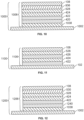
- the carrier layer 1002 can be carrier layer 102 shown in Figures 1 through 3 but without a release coating already on the carrier layer 1002.
- the carrier layer 102 may be obtained with the release coating already present on the carrier layer 102, the carrier layer 1002 may not have any release coating.
- a release coating 1038 can be printed (e.g., in a non-digital way, such as via screen, gravure or flexographic printing) onto the carrier layer 1002.
- silicone, wax, or other materials that release the carrier layer 1002 from the other layers 420, 422, 424, 528, and/or 936 may be added to the carrier layer 1002.
- One or more surfaces of the label assembly 1000 can be treated to change the energy of the surface(s), change the surface tension of the surface(s), or roughen the surfaces and thereby improve the adhesion of a layer to the treated surface, as described above.
- the label assembly 1200 can be placed into contact with the article 212 such that the adhesive 108 contacts the surface 214 of the article 212.
- the article 212 can be formed of metal, fiber, or glass, and/or the surface 214 of the article 212 may include metal, fiber, or glass.
- Heat 216 or a combination of heat 216 and pressure 218 is applied to the surface 110 of the carrier layer 102 to separate the label 1206 from the carrier layer 102 and adhere the label 1206 to the article 212.
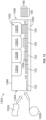
- the carrier layer 102 can be provided as individual sheets 102A (e.g., in sheet form) or as a continuous roll 102B (e.g., in roll form) into the printing system 1342.
- One or more conveyors, cylinders or rollers 1350 can carry the carrier layer 102 to and/or through several printers 1352 (e.g., printers 1352A-E).
- the number of printers 1352 is provided as one example.
- Each of the printers 1352 can print one or more additional layers 1354 onto the carrier layer 102 and/or other layers 1354 already on the carrier layer 102, as shown in Figure 13 .
- the layers 1354 can represent the layers 420, 422, 424, 426, 528, 530, 608, 630, 732, 834, 936, 1002, 1038, and/or 1240, as described above.
- the carrier layer 102 passes through or beneath the printers 1352 so that the various layers in the label assembly 100 are sequentially printed without removing the carrier layer 102 or the printed layers from the printing system 1342.
- one or more of the printers 1352 may deposit a layer in a single pass or strike, or by depositing the layer in multiple passes or strikes.
- the label 106 (in roll or sheet form) may be removed from the printing system 1342.
- the in-line printing system 1342 can form the label assembly 100 and decrease the number of times that the label assembly 100 is handled by an operator, thereby decreasing registration errors between the layers, reducing printing time, and the like.
- Figure 14 illustrates another example of a printing system 1442 that can be used to create one or more of the hybrid digital heat transfer label assemblies described herein.
- the printing system 1442 has two or more separate printers 1352 that do not directly supply the carrier layer 102 (and any printed layers) from one printer 1352 to the next printer 1352. Instead, the carrier layer 102 and any printed layers are removed from one printer 1352 (e.g., by an operator of the printing system 1442) and then inserted into the next printer 1352.
- a method for creating a hybrid heat transfer label assembly can include obtaining a carrier layer.
- the method can be used to create one or more of the label assemblies described herein. If the carrier layer does not include a release coating or layer, the method can include subsequently printing (e.g., in a non-digital manner) a release coating or layer onto the carrier layer.
- the method also can include subsequently printing, in a non-digital manner, one or more underlying layers on the carrier layer (with the release coating). These underlying layers can include one or more of the protective layer, the surface treatment layer, and/or the special effects layer.
- a hybrid heat transfer label assembly in one embodiment, includes a carrier layer, a non-digitally printed protective layer disposed above the carrier layer, a digitally printed layer disposed above the non-digitally printed protective layer, and a non-digitally printed layer disposed above the digitally printed layer.
- the non-digitally printed protective layer, the digitally printed layer, and the non-digitally printed layer form a label that is configured to separate from the carrier layer and adhere to an article upon application of heat to the carrier layer.
- the digitally printed layer is visible through the non-digitally printed protective layer once the label is adhered to the article.
- the non-digitally printed layer includes an adhesive.
- the non-digitally printed layer includes a tie layer.
- the non-digitally printed layer includes a screen printed backup layer.
- the non-digitally printed layer includes a blocker layer that prevents stains from migrating from the article to the digitally printed layer.
- the non-digitally printed layer includes a rubber layer.
- the non-digitally printed layer is a first non-digitally printed layer
- the label assembly also can include a second non-digitally printed layer disposed above the first non-digitally printed layer and the digitally printed layer.
- a method for producing a hybrid heat transfer label assembly also is provided.
- the method includes printing a protective layer above a carrier layer using a first non-digital printer, digitally printing a digitally printed layer above the non-digitally printed protective layer, and printing a non-digitally printed layer above the digitally printed layer using the first non-digital printer or a second non-digital printer.
- the protective layer, the digitally printed layer, and the non-digitally printed layer form a label that is configured to separate from the carrier layer and adhere to an article upon application of heat to the carrier layer.
- the protective layer and the non-digitally printed layer are screen printed.
- the non-digitally printed layer is printed using an adhesive.
- the non-digitally printed layer is printed as a tie layer.
- the non-digitally printed layer is screen printed as a graphic layer.
- the non-digitally printed layer is screen printed as a backup layer.
- the non-digitally printed layer is printed as a blocker layer that prevents stains from migrating from the article to the digitally printed layer.
- the non-digitally printed layer is printed using a lacquer.
- another method for producing a hybrid heat transfer label assembly includes screen printing a protective layer onto a carrier layer, digitally printing one or more of a graphic or indicia above the protective layer, screen printing one or more additional layers above the one or more of the graphic or the indicia that are digitally printed, and applying an adhesive above the one or more additional layers to form a hybrid heat transfer label assembly.
- a hybrid heat transfer label assembly comprising:
- Clause 3 The hybrid heat transfer label assembly of clause 1, wherein the non-digitally printed layer includes an adhesive that includes a combination of one or more rosins and one or more resins.
- Clause 7 The hybrid heat transfer label assembly of clause 1, wherein the non-digitally printed layer includes a blocker layer that prevents stains from migrating from the article to the digitally printed layer.
- Clause 8 The hybrid heat transfer label assembly of clause 1, wherein the non-digitally printed layer includes a lacquer layer.
- Clause 10 The hybrid heat transfer label assembly of clause 1, wherein the non-digitally printed layer is a first non-digitally printed layer, and further comprising a second non-digitally printed layer disposed above the first non-digitally printed layer and the digitally printed layer.
- Clause 12 The method of clause 11, wherein the protective layer is one or more of a clear, a translucent, or a light-transmissive layer.
- Clause 14 The method of clause 11, wherein the non-digitally printed layer is printed using an adhesive, is printed as a tie layer, or is printed as a combination of the tie layer and the adhesive.
- Clause 15 The method of clause 11, wherein the non-digitally printed layer is printed as a tie layer.
- Clause 16 The method of clause 11, wherein the non-digitally printed layer is screen printed as a graphic layer.
- Clause 17 The method of clause 11, wherein the non-digitally printed layer is screen printed as a backup layer.
- Clause 18 The method of clause 11, wherein the non-digitally printed layer is printed as a blocker layer that prevents stains from migrating from the article to the digitally printed layer.
- Clause 19 The method of clause 11, wherein the non-digitally printed layer is printed using a lacquer.
Landscapes
- Physics & Mathematics (AREA)
- General Physics & Mathematics (AREA)
- Engineering & Computer Science (AREA)
- Theoretical Computer Science (AREA)
- Decoration By Transfer Pictures (AREA)
- Laminated Bodies (AREA)
- Making Paper Articles (AREA)
Applications Claiming Priority (3)
| Application Number | Priority Date | Filing Date | Title |
|---|---|---|---|
| US202063059421P | 2020-07-31 | 2020-07-31 | |
| PCT/US2021/043599 WO2022026641A1 (en) | 2020-07-31 | 2021-07-29 | Hybrid heat transfer label assemblies |
| EP21766731.0A EP4189665B1 (de) | 2020-07-31 | 2021-07-29 | Hybride wärmeübertragungsetikettanordnungen |
Related Parent Applications (2)
| Application Number | Title | Priority Date | Filing Date |
|---|---|---|---|
| EP21766731.0A Division EP4189665B1 (de) | 2020-07-31 | 2021-07-29 | Hybride wärmeübertragungsetikettanordnungen |
| EP21766731.0A Division-Into EP4189665B1 (de) | 2020-07-31 | 2021-07-29 | Hybride wärmeübertragungsetikettanordnungen |
Publications (2)
| Publication Number | Publication Date |
|---|---|
| EP4579634A2 true EP4579634A2 (de) | 2025-07-02 |
| EP4579634A3 EP4579634A3 (de) | 2025-07-16 |
Family
ID=77693569
Family Applications (2)
| Application Number | Title | Priority Date | Filing Date |
|---|---|---|---|
| EP21766731.0A Active EP4189665B1 (de) | 2020-07-31 | 2021-07-29 | Hybride wärmeübertragungsetikettanordnungen |
| EP25176624.2A Pending EP4579634A3 (de) | 2020-07-31 | 2021-07-29 | Hybride wärmeübertragungsetikettanordnungen |
Family Applications Before (1)
| Application Number | Title | Priority Date | Filing Date |
|---|---|---|---|
| EP21766731.0A Active EP4189665B1 (de) | 2020-07-31 | 2021-07-29 | Hybride wärmeübertragungsetikettanordnungen |
Country Status (7)
| Country | Link |
|---|---|
| US (1) | US12307925B2 (de) |
| EP (2) | EP4189665B1 (de) |
| CN (1) | CN116137918A (de) |
| CA (1) | CA3190216A1 (de) |
| ES (1) | ES3042116T3 (de) |
| MX (2) | MX2023001177A (de) |
| WO (1) | WO2022026641A1 (de) |
Citations (2)
| Publication number | Priority date | Publication date | Assignee | Title |
|---|---|---|---|---|
| US5919834A (en) | 1995-08-11 | 1999-07-06 | Illinois Tool Works Inc. | U-V cured heat activated labels for substrates and preparation methods therefore |
| US20190378438A1 (en) | 2018-06-12 | 2019-12-12 | Illinois Tool Works Inc. | Environmentally Friendly Heat Transfer Label |
Family Cites Families (24)
| Publication number | Priority date | Publication date | Assignee | Title |
|---|---|---|---|---|
| USRE28732E (en) * | 1966-01-28 | 1976-03-09 | Njm, Inc. | Method of and apparatus for printing and feeding labels in a continuous web, and for verifying and cutting individual labels therefrom for application to articles |
| EP0491991A1 (de) | 1990-12-27 | 1992-07-01 | Kufner Textilwerke GmbH | Thermo-Release-Verbund und Verfahren zu dessen Herstellung |
| US5573834A (en) | 1995-06-13 | 1996-11-12 | Stahl; Ted A. | Web for graphics transfer to garment |
| EP0880613B1 (de) | 1995-12-14 | 2003-03-12 | Reflex Holding A/S | Schiebebild zum verzieren von textilien mit farbigen mustern |
| US5691437A (en) * | 1996-01-02 | 1997-11-25 | Kobel, Inc. | Adhesive label assembly having a specific internal adhesive pattern |
| JP2002019390A (ja) * | 2000-07-07 | 2002-01-23 | Japan Polymer-Ku Kk | 繊維製品用の熱転写ラベル |
| US6793688B2 (en) | 2002-01-22 | 2004-09-21 | Logotec Usa, Llc | Method of imprinting image on soft surface |
| US6818271B2 (en) * | 2002-02-12 | 2004-11-16 | Spear Usa, Llc | Adhesive coated thin film label |
| DE10249131B4 (de) * | 2002-10-19 | 2006-08-10 | Kolbe-Coloco Spezialdruck Gmbh & Co. Kg | Selbstklebendes Material mit bedruckbaren Weißflächen, sowie Verfahren zu dessen Herstellung |
| CN100389888C (zh) * | 2002-12-02 | 2008-05-28 | 艾弗芮丹尼逊有限公司 | 在织物上贴标签的方法和适用于该方法的热转移标签 |
| ES2438529T3 (es) | 2002-12-02 | 2014-01-17 | Avery Dennison Corporation | Procedimiento para etiquetar tejidos y etiqueta de transferencia por calor muy adecuada para su utilización en dicho procedimiento |
| US7758938B2 (en) | 2004-01-09 | 2010-07-20 | Avery Dennison Corporation | Label assembly and method of using the same to label articles durably yet removably |
| GB0513251D0 (en) | 2005-06-29 | 2005-08-03 | Macon Man And Design Ltd | Apparatus for and a method of inserting a series of contents into a series of containers |
| GB0621748D0 (en) | 2006-11-01 | 2006-12-13 | Macon Man And Design Ltd | Method and apparatus for producing security documentation |
| US9842518B2 (en) | 2010-08-10 | 2017-12-12 | Avery Dennison Retail Information Services, Llc | Breathable heat transfer labels |
| WO2011091817A1 (en) | 2010-02-01 | 2011-08-04 | Inspectron Holdings Plc | Method and apparatus for incorporating non-visible information into a product |
| WO2013019821A1 (en) | 2011-08-01 | 2013-02-07 | Sun Chemical Corporation | High-stretch energy curable inks & method of use in heat transfer label applications |
| US20130287972A1 (en) * | 2012-04-27 | 2013-10-31 | Illinois Tool Works Inc. | Hybrid heat transfer label |
| CN105246704B (zh) | 2013-05-28 | 2018-12-14 | 伊利诺斯工具制品有限公司 | 热转印标签及其制造方法 |
| CN115359714A (zh) | 2014-01-06 | 2022-11-18 | 艾利丹尼森零售信息服务公司 | 在性能织物上具有最小转印标志的热转印 |
| US9799238B2 (en) | 2015-06-02 | 2017-10-24 | Avery Dennison Retail Information Services, Llc | Digitally printed heat transfer label |
| CN210119922U (zh) * | 2019-08-20 | 2020-02-28 | 福建省张氏新材料科技有限公司 | 一种防变形的转印标 |
| CN210515926U (zh) * | 2019-09-23 | 2020-05-12 | 李玉朋 | 一种用于轮胎模具的轮胎防伪标签 |
| CN210836830U (zh) * | 2019-11-29 | 2020-06-23 | 上海东三印刷有限公司 | 一种警示标签 |
-
2021
- 2021-07-29 EP EP21766731.0A patent/EP4189665B1/de active Active
- 2021-07-29 US US18/017,286 patent/US12307925B2/en active Active
- 2021-07-29 CA CA3190216A patent/CA3190216A1/en active Pending
- 2021-07-29 EP EP25176624.2A patent/EP4579634A3/de active Pending
- 2021-07-29 WO PCT/US2021/043599 patent/WO2022026641A1/en not_active Ceased
- 2021-07-29 CN CN202180062617.4A patent/CN116137918A/zh active Pending
- 2021-07-29 MX MX2023001177A patent/MX2023001177A/es unknown
- 2021-07-29 ES ES21766731T patent/ES3042116T3/es active Active
-
2023
- 2023-01-26 MX MX2026002551A patent/MX2026002551A/es unknown
Patent Citations (2)
| Publication number | Priority date | Publication date | Assignee | Title |
|---|---|---|---|---|
| US5919834A (en) | 1995-08-11 | 1999-07-06 | Illinois Tool Works Inc. | U-V cured heat activated labels for substrates and preparation methods therefore |
| US20190378438A1 (en) | 2018-06-12 | 2019-12-12 | Illinois Tool Works Inc. | Environmentally Friendly Heat Transfer Label |
Also Published As
| Publication number | Publication date |
|---|---|
| ES3042116T3 (en) | 2025-11-18 |
| US12307925B2 (en) | 2025-05-20 |
| CA3190216A1 (en) | 2022-02-03 |
| EP4189665B1 (de) | 2025-07-02 |
| US20230274663A1 (en) | 2023-08-31 |
| WO2022026641A1 (en) | 2022-02-03 |
| MX2023001177A (es) | 2023-03-01 |
| MX2026002551A (es) | 2026-04-01 |
| EP4189665A1 (de) | 2023-06-07 |
| EP4579634A3 (de) | 2025-07-16 |
| CN116137918A (zh) | 2023-05-19 |
Similar Documents
| Publication | Publication Date | Title |
|---|---|---|
| US11124015B2 (en) | Method for producing a decal, and a decal and a device for producing a decal, and method for decorating surfaces of objects | |
| CA2499742C (en) | Color changing tape, label, card and game intermediates | |
| JP7620558B2 (ja) | ソフトグッズへのデジタル印刷された熱転写画像 | |
| US8197631B2 (en) | Method of transfer printing, and print originals for these purposes | |
| JP2008132773A (ja) | 熱転写記録方法および画像形成方法、ならびに画像形成物 | |
| US20230118044A1 (en) | Digitally printed and produced heat transfer and method of manufacture | |
| JP2008188864A (ja) | 中間転写記録媒体、及び画像形成方法 | |
| US20040018345A1 (en) | Dry-erase ink marking media | |
| US12307925B2 (en) | Hybrid heat transfer label assemblies | |
| US10131177B2 (en) | Barrier coating for a substrate | |
| US20130287972A1 (en) | Hybrid heat transfer label | |
| US6602006B2 (en) | Techniques for printing onto a transparent receptor media using an inkjet printer | |
| EP1592567B1 (de) | Bereitstellung von bildern auf oberflächen | |
| US20250252872A1 (en) | Hybrid heat transfer label assemblies | |
| JP2009066789A (ja) | 画像形成方法及び中間転写記録媒体 | |
| US20030035014A1 (en) | Method and apparatus for reverse printing labels | |
| JP2009297930A (ja) | 中間転写記録媒体、及び画像記録繊維質基材 | |
| EP1180088B1 (de) | Werbeinformation auf einem förderband | |
| EP3745211A1 (de) | Verfahren zum aufbringen von transfermaterial auf eine substratoberfläche | |
| JP2009274290A (ja) | 中間転写記録媒体、及び偽造防止媒体 |
Legal Events
| Date | Code | Title | Description |
|---|---|---|---|
| PUAI | Public reference made under article 153(3) epc to a published international application that has entered the european phase |
Free format text: ORIGINAL CODE: 0009012 |
|
| STAA | Information on the status of an ep patent application or granted ep patent |
Free format text: STATUS: THE APPLICATION HAS BEEN PUBLISHED |
|
| REG | Reference to a national code |
Ref country code: DE Ref legal event code: R079 Free format text: PREVIOUS MAIN CLASS: G09F0003020000 Ipc: G09F0003040000 |
|
| PUAL | Search report despatched |
Free format text: ORIGINAL CODE: 0009013 |
|
| AC | Divisional application: reference to earlier application |
Ref document number: 4189665 Country of ref document: EP Kind code of ref document: P |
|
| AK | Designated contracting states |
Kind code of ref document: A2 Designated state(s): AL AT BE BG CH CY CZ DE DK EE ES FI FR GB GR HR HU IE IS IT LI LT LU LV MC MK MT NL NO PL PT RO RS SE SI SK SM TR |
|
| AK | Designated contracting states |
Kind code of ref document: A3 Designated state(s): AL AT BE BG CH CY CZ DE DK EE ES FI FR GB GR HR HU IE IS IT LI LT LU LV MC MK MT NL NO PL PT RO RS SE SI SK SM TR |
|
| RIC1 | Information provided on ipc code assigned before grant |
Ipc: G09F 3/04 20060101AFI20250606BHEP Ipc: G09F 3/02 20060101ALN20250606BHEP |
|
| STAA | Information on the status of an ep patent application or granted ep patent |
Free format text: STATUS: REQUEST FOR EXAMINATION WAS MADE |
|
| 17P | Request for examination filed |
Effective date: 20260113 |