EP4579190A2 - Systeme und verfahren zur automatischen umkehr - Google Patents
Systeme und verfahren zur automatischen umkehr Download PDFInfo
- Publication number
- EP4579190A2 EP4579190A2 EP25177029.3A EP25177029A EP4579190A2 EP 4579190 A2 EP4579190 A2 EP 4579190A2 EP 25177029 A EP25177029 A EP 25177029A EP 4579190 A2 EP4579190 A2 EP 4579190A2
- Authority
- EP
- European Patent Office
- Prior art keywords
- uav
- images
- image
- feature points
- image features
- Prior art date
- Legal status (The legal status is an assumption and is not a legal conclusion. Google has not performed a legal analysis and makes no representation as to the accuracy of the status listed.)
- Pending
Links
Images



Classifications
-
- G—PHYSICS
- G01—MEASURING; TESTING
- G01C—MEASURING DISTANCES, LEVELS OR BEARINGS; SURVEYING; NAVIGATION; GYROSCOPIC INSTRUMENTS; PHOTOGRAMMETRY OR VIDEOGRAMMETRY
- G01C21/00—Navigation; Navigational instruments not provided for in groups G01C1/00 - G01C19/00
- G01C21/20—Instruments for performing navigational calculations
-
- G—PHYSICS
- G01—MEASURING; TESTING
- G01C—MEASURING DISTANCES, LEVELS OR BEARINGS; SURVEYING; NAVIGATION; GYROSCOPIC INSTRUMENTS; PHOTOGRAMMETRY OR VIDEOGRAMMETRY
- G01C21/00—Navigation; Navigational instruments not provided for in groups G01C1/00 - G01C19/00
- G01C21/005—Navigation; Navigational instruments not provided for in groups G01C1/00 - G01C19/00 with correlation of navigation data from several sources, e.g. map or contour matching
-
- G—PHYSICS
- G01—MEASURING; TESTING
- G01C—MEASURING DISTANCES, LEVELS OR BEARINGS; SURVEYING; NAVIGATION; GYROSCOPIC INSTRUMENTS; PHOTOGRAMMETRY OR VIDEOGRAMMETRY
- G01C21/00—Navigation; Navigational instruments not provided for in groups G01C1/00 - G01C19/00
- G01C21/38—Electronic maps specially adapted for navigation; Updating thereof
- G01C21/3804—Creation or updating of map data
- G01C21/3833—Creation or updating of map data characterised by the source of data
- G01C21/3852—Data derived from aerial or satellite images
-
- G—PHYSICS
- G01—MEASURING; TESTING
- G01S—RADIO DIRECTION-FINDING; RADIO NAVIGATION; DETERMINING DISTANCE OR VELOCITY BY USE OF RADIO WAVES; LOCATING OR PRESENCE-DETECTING BY USE OF THE REFLECTION OR RERADIATION OF RADIO WAVES; ANALOGOUS ARRANGEMENTS USING OTHER WAVES
- G01S19/00—Satellite radio beacon positioning systems; Determining position, velocity or attitude using signals transmitted by such systems
- G01S19/01—Satellite radio beacon positioning systems transmitting time-stamped messages, e.g. GPS [Global Positioning System], GLONASS [Global Orbiting Navigation Satellite System] or GALILEO
- G01S19/13—Receivers
- G01S19/14—Receivers specially adapted for specific applications
-
- G—PHYSICS
- G05—CONTROLLING; REGULATING
- G05D—SYSTEMS FOR CONTROLLING OR REGULATING NON-ELECTRIC VARIABLES
- G05D1/00—Control of position, course, altitude or attitude of land, water, air or space vehicles, e.g. using automatic pilots
- G05D1/10—Simultaneous control of position or course in three dimensions
- G05D1/101—Simultaneous control of position or course in three dimensions specially adapted for aircraft
-
- G—PHYSICS
- G05—CONTROLLING; REGULATING
- G05D—SYSTEMS FOR CONTROLLING OR REGULATING NON-ELECTRIC VARIABLES
- G05D1/00—Control of position, course, altitude or attitude of land, water, air or space vehicles, e.g. using automatic pilots
- G05D1/10—Simultaneous control of position or course in three dimensions
- G05D1/101—Simultaneous control of position or course in three dimensions specially adapted for aircraft
- G05D1/106—Change initiated in response to external conditions, e.g. avoidance of elevated terrain or of no-fly zones
-
- G—PHYSICS
- G05—CONTROLLING; REGULATING
- G05D—SYSTEMS FOR CONTROLLING OR REGULATING NON-ELECTRIC VARIABLES
- G05D1/00—Control of position, course, altitude or attitude of land, water, air or space vehicles, e.g. using automatic pilots
- G05D1/40—Control within particular dimensions
- G05D1/43—Control of position or course in two dimensions [2D]
-
- G—PHYSICS
- G05—CONTROLLING; REGULATING
- G05D—SYSTEMS FOR CONTROLLING OR REGULATING NON-ELECTRIC VARIABLES
- G05D1/00—Control of position, course, altitude or attitude of land, water, air or space vehicles, e.g. using automatic pilots
- G05D1/40—Control within particular dimensions
- G05D1/46—Control of position or course in three dimensions [3D]
-
- G—PHYSICS
- G05—CONTROLLING; REGULATING
- G05D—SYSTEMS FOR CONTROLLING OR REGULATING NON-ELECTRIC VARIABLES
- G05D1/00—Control of position, course, altitude or attitude of land, water, air or space vehicles, e.g. using automatic pilots
- G05D1/60—Intended control result
- G05D1/606—Compensating for or utilising external environmental conditions, e.g. wind or water currents
-
- G—PHYSICS
- G06—COMPUTING OR CALCULATING; COUNTING
- G06T—IMAGE DATA PROCESSING OR GENERATION, IN GENERAL
- G06T7/00—Image analysis
- G06T7/20—Analysis of motion
- G06T7/246—Analysis of motion using feature-based methods, e.g. the tracking of corners or segments
-
- G—PHYSICS
- G05—CONTROLLING; REGULATING
- G05D—SYSTEMS FOR CONTROLLING OR REGULATING NON-ELECTRIC VARIABLES
- G05D2109/00—Types of controlled vehicles
- G05D2109/20—Aircraft, e.g. drones
Definitions
- aerial photography utilizes a single camera which causes images sampled at locations where the vehicle has traveled to be segmented.
- an aerial vehicle may fly towards the north with a forward-facing camera, and may result in recording images on the northern side.
- the forward-facing camera may be pointing southward, and may only record images on the southern side. The differences in these images may prevent the vehicle from auto-returning using visual cognition.
- Multiple cameras may be supported on an aerial vehicle to aid in collecting image data that can be used for auto-return.
- the multiple cameras may face in different directions to have different fields of view, to allow a wide scope of coverage so that regardless of orientation of the UAV, the UAV may use the image data to determine how to return along its original path.
- selected features from selected images may be stored and/or used to aid in navigation.
- the features may be feature points, which may be used to guide the auto-return.
- the features may be selected based on their presence or absence in multiple cameras.
- the intervals for storing features may be selected based on various parameters.
- An aspect of the invention is directed to a method of controlling flight of an unmanned aerial vehicle (UAV), said method comprising: collecting a first set of images corresponding to different fields of view of an environment around the UAV using multiple image capture devices, each of the multiple image capture devices having the different fields of view while traversing a flight path; extracting a first set of feature points from the first set of images while traversing the flight path; collecting a second set of images corresponding to different fields of view using the multiple image capture devices while traversing a return path; and traversing the return path by comparing the first set of feature points extracted during the flight path with a second set of feature points extracted from the second set of images.
- UAV unmanned aerial vehicle
- aspects of the invention are directed to an apparatus for controlling flight of an unmanned aerial vehicle (UAV), said apparatus comprising: multiple image capture devices, each having different fields of view, configured to: (1) collect a first set of images corresponding to the different fields of view of an environment around the UAV while traversing a flight path, and (2) collect a second set of images corresponding to the different fields of view while traversing a return path; and one or more processors, individually or collectively configured to: (1) extract a first set of feature points from the first set of images while traversing the flight path, and (2) generate a signal that causes the UAV to traverse the return path by comparing the first set of feature points extracted during the flight path with a second set of feature points extracted from the second set of images.
- UAV unmanned aerial vehicle
- a method of controlling flight of an unmanned aerial vehicle is provided in accordance with further aspects of the invention.
- the method may comprise: collecting a set of images while traversing a flight path; extracting a set of feature points from the set of images while traversing the flight path; and selecting a subset of the feature points from the set of feature points to be stored for navigational aid, based on (1) movement of the UAV, (2) degree of overlap between images within the set of images, (3) degree of overlap between feature points within the set of feature points, or (4) a determination whether the feature points are stationary.
- aspects of the invention may include an apparatus for controlling flight of an unmanned aerial vehicle (UAV), said apparatus comprising: one or more processors, individually or collectively configured to: receive a set of images collected by the UAV while traversing the flight path; extract a set of feature points from the set of images while traversing the flight path; and select a subset of the feature points from the set of feature points to be stored for navigational aid, based on (1) movement of the UAV, (2) degree of overlap between images within the set of images, (3) degree of overlap between feature points within the set of feature points, or (4) a determination whether the feature points are stationary.
- UAV unmanned aerial vehicle
- Another aspect of the invention is directed to a method of controlling flight of an unmanned aerial vehicle (UAV), said method comprising: collecting a set of images corresponding to different fields of view of an environment around the UAV using multiple image capture devices, each of the multiple image capture devices having the different fields of view while traversing a flight path; extracting a set of feature points from the set of images while traversing the flight path; and selecting a subset of the feature points from the set of feature points to be stored for navigational aid, based on a number of image capture devices that collect an image including the feature points.
- UAV unmanned aerial vehicle
- aspects of the invention may be directed to an apparatus for controlling flight of an unmanned aerial vehicle (UAV), said apparatus comprising: one or more processors, individually or collectively configured to: receive a set of images corresponding to different fields of view of an environment around the UAV collected using multiple image capture devices, each of the multiple image capture devices having the different fields of view while traversing a flight path; extract a set of feature points from the set of images while traversing the flight path; and select a subset of the feature points from the set of feature points to be stored for navigational aid, based on a number of image capture devices that collect an image including the feature points.
- UAV unmanned aerial vehicle
- An unmanned aerial vehicle may traverse an environment.
- the UAV may record information about its flight path.
- the UAV may have an auto-return function that may enable the UAV to return to a starting point in its flight path.
- an event may occur, or a command may be received where it may be desirable to initiate an auto-return function for the UAV.
- Visual cognition may be a useful tool for auto-return since it may not rely on communications with external objects.
- Some navigational tools, such as a global positioning system (GPS), on its own may be unreliable in situations where a signal with one or more satellites may cut out.
- GPS global positioning system
- the UAV may rely on collection and analysis of visual data to follow the auto-return function.
- the UAV may use multiple cameras supported by the UAV to collect image data that may aid in navigation of the UAV.
- the multiple cameras may be oriented at different directions relative to one another, and may have different fields of view.
- the multiple cameras may cover a lateral 360 degree area.
- the multiple cameras may cover a spherical 360 degree spatial field.
- the UAV may use the collected image data to in conducting its auto-return function.
- the image data may be stored and/or processed to aid in UAV navigation.
- the UAV may be collecting image data and analyzing stored image data in substantially real-time. This may place significant demand on processing and memory storage capabilities of the UAV.
- the auto-return systems and methods described herein may utilize selected storage of image data to reduce the demand. For instance, selected features from images, such as feature points, may be stored. In other instances, selected features from selected images may be stored.
- such selection may be based on one or more parameters. For instance, the selection may be based on the number of cameras that a particular feature or object appears in. The selection may depend on a comparison with other images in a time-based sequence of images. For instance, the selection may be depend on a degree of overlap between images within a sequence of images, or a degree of overlap between feature points within a set of feature points. In some instances, only image data pertaining to stationary objects within an environment may be saved. For instance, only stationary feature points within an environment may be saved. The selection may be based on movement characteristics of the UAV, such as speed or direction of the UAV.
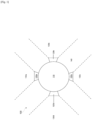
- FIG. 1 shows a schematic top view of an unmanned aerial vehicle (UAV) having multiple cameras facing in different directions, in accordance with embodiments of the invention.
- UAV unmanned aerial vehicle
- Having multiple cameras may enable a UAV to collect image data from a greater portion of the environment.
- the multiple cameras may enable the UAV to navigate an environment regardless of the orientation of the UAV.
- a UAV 100 may have a UAV body 110.
- the UAV body may support one or more cameras 120a, 120b, 120c, 120d.
- Each camera may have a corresponding field of view 130a, 130b, 130c, 130d.
- a UAV 100 may apply to any type of aerial vehicle, and vice versa.
- the aerial vehicle may or may not be unmanned.
- any description herein of a UAV may apply to any type of movable object, and vice versa.
- a movable object may be a vehicle capable of self-propelled movement.
- the vehicle may have one or more propulsion units that may be capable of permitting the vehicle to move within an environment.
- a movable object may be capable of traversing on land or underground, on or in the water, within the air, within space, or any combination thereof.
- the movable object may be an aerial vehicle (e.g., airplanes, rotor-craft, lighter-than air vehicles), land-based vehicle (e.g., cars, trucks, buses, trains, rovers, subways), water-based vehicles (e.g., boats, ships, submarines), or space-based vehicles (e.g., satellites, shuttles, rockets).
- the movable object may be manned or unmanned.
- a UAV may have a UAV body 110.
- the UAV body may optionally include a housing that may enclose one or more components of the UAV.
- a housing may enclose one or more electrical components of the UAV.
- electrical components may include, but are not limited to, a flight controller of the UAV, an inertial measurement unit, a power supply unit, a memory storage unit, one or more processors, a navigational unit (e.g. GPS), a communication unit, one or more electronic speed controls (ESCs), one or more actuators, or one or more sensors.
- sensors may include, but are not limited to, location sensors (e.g., global positioning system (GPS) sensors, mobile device transmitters enabling location triangulation), vision sensors (e.g., imaging devices capable of detecting visible, infrared, or ultraviolet light, such as cameras), proximity sensors (e.g., ultrasonic sensors, lidar, time-of-flight cameras), inertial sensors (e.g., accelerometers, gyroscopes, inertial measurement units (IMUs)), altitude sensors, pressure sensors (e.g., barometers), audio sensors (e.g., microphones) or field sensors (e.g., magnetometers, electromagnetic sensors).
- location sensors e.g., global positioning system (GPS) sensors, mobile device transmitters enabling location triangulation
- vision sensors e.g., imaging devices capable of detecting visible, infrared, or ultraviolet light, such as cameras
- proximity sensors e.g., ultrasonic sensors, lidar, time-of-flight cameras
- any suitable number and combination of sensors can be used, such as one, two, three, four, five, or more sensors.
- the data can be received from sensors of different types (e.g., two, three, four, five, or more types).
- Sensors of different types may measure different types of signals or information (e.g., position, orientation, velocity, acceleration, proximity, pressure, etc.) and/or utilize different types of measurement techniques to obtain data.
- the sensors may include any suitable combination of active sensors (e.g., sensors that generate and measure energy from their own source) and passive sensors (e.g., sensors that detect available energy).
- the UAV body may support one or more components, such as one or more of the electrical components.
- the one or more components may be within a housing, outside a housing, embedded into a housing, or any combination thereof.
- the UAV body may be a central body.
- one or more arms may extend from the central body.
- An arm may support one or more propulsion units that may aid the UAV in flight.
- the propulsion units may include one or more rotors that may generate lift for the UAV.
- the propulsion units may include a rotor blade and a corresponding actuator that may effect rotation of the rotor blades about an axis.
- the lift may be in the direction of the axis.
- one or more, two or more, three or more, four or more, five or more, six or more, seven or more, eight or more, ten or more, twelve or more, twenty or more, or thirty or more arms may extend from the central body.
- Each arm may have one or more, two or more, three or more, four or more, or five or more propulsion units supported by the arm.
- the UAV may have any other characteristic as described in greater detail elsewhere herein. Any description herein of a UAV may apply to any movable object having a characteristic as described in greater detail elsewhere herein.
- the UAV may support one or more cameras 120a, 120b, 120c, 120d. Any description herein of a camera may apply to any type of image capture device, and vice versa.
- a camera may be a physical imaging device.
- An imaging device can be configured to detect electromagnetic radiation (e.g., visible, infrared, and/or ultraviolet light) and generate image data based on the detected electromagnetic radiation.
- An imaging device may include an image sensor, such as a charge-coupled device (CCD) sensor or a complementary metal-oxide-semiconductor (CMOS) sensor that generates electrical signals in response to wavelengths of light. The resultant electrical signals can be processed to produce image data.
- CCD charge-coupled device
- CMOS complementary metal-oxide-semiconductor
- the image data generated by an imaging device can include one or more images, which may be static images (e.g., photographs), dynamic images (e.g., video), or suitable combinations thereof.
- the image data can be polychromatic (e.g., RGB, CMYK, HSV) or monochromatic (e.g., grayscale, black-and-white, sepia).
- the imaging device may include a lens configured to direct light onto an image sensor.
- the camera can be a movie or video camera that captures dynamic image data (e.g., video).
- a camera can be a still camera that captures static images (e.g., photographs).
- a camera may capture both dynamic image data and static images.
- a camera may switch between capturing dynamic image data and static images.
- a camera can be used to generate 2D images of a 3D scene (e.g., an environment, one or more objects, etc.).
- the images generated by the camera can represent the projection of the 3D scene onto a 2D image plane. Accordingly, each point in the 2D image corresponds to a 3D spatial coordinate in the scene.
- the camera may comprise optical elements (e.g., lens, mirrors, filters, etc).
- the camera may capture color images, greyscale image, infrared images, and the like.
- the camera may capture an image or a sequence of images at a specific image resolution.
- the image resolution may be defined by the number of pixels in an image.
- the image resolution may be greater than or equal to about 352x420 pixels, 480x320 pixels, 720x480 pixels, 1280x720 pixels, 1440x1080 pixels, 1920x1080 pixels, 2048x1080 pixels, 3840x2160 pixels, 4096x2160 pixels, 7680x4320 pixels, or 15360x8640 pixels.
- the camera may be a 4K camera or a camera with a higher resolution.
- the camera may capture a sequence of images at a specific capture rate.
- the sequence of images may be captured standard video frame rates such as about 24p, 25p, 30p, 48p, 50p, 60p, 72p, 90p, 100p, 120p, 300p, 50i, or 60i.
- the sequence of images may be captured at a rate less than or equal to about one image every 0.0001 seconds, 0.0002 seconds, 0.0005 seconds, 0.001 seconds, 0.002 seconds, 0.005 seconds, 0.01 seconds, 0.02 seconds, 0.05 seconds. 0.1 seconds, 0.2 seconds, 0.5 seconds, 1 second, 2 seconds, 5 seconds, or 10 seconds.
- the capture rate may change depending on user input and/or external conditions (e.g. rain, snow, wind, unobvious surface texture of environment).
- the camera may have adjustable parameters. Under differing parameters, different images may be captured by the imaging device while subject to identical external conditions (e.g., location, lighting).
- the adjustable parameter may comprise exposure (e.g., exposure time, shutter speed, aperture, film speed), gain, gamma, area of interest, binning/subsampling, pixel clock, offset, triggering, ISO, etc.
- Exposure e.g., exposure time, shutter speed, aperture, film speed
- gain e.g., gamma, area of interest, binning/subsampling, pixel clock, offset, triggering, ISO, etc.
- Parameters related to exposure may control the amount of light that reaches an image sensor in the imaging device.
- shutter speed may control the amount of time light reaches an image sensor and aperture may control the amount of light that reaches the image sensor in a given time.
- Parameters related to gain may control the amplification of a signal from the optical sensor.
- ISO may control the level of sensitivity of the camera to available
- One or more cameras supported by the UAV may have one or more of the same parameters, characteristics or features. In some instances, all of the cameras supported by the UAV may have the same characteristics or features. Alternatively, one or more of the cameras supported by the UAV may have different characteristics or features. In some instances, each of the cameras supported by the UAV may have different characteristics or features.
- the one or more cameras may be supported by a UAV body.
- the one or more cameras may be supported on a central body of the UAV.
- the one or more cameras may or may not be supported on one or more arms of the UAV.
- the one or more cameras may be supported by a housing of the UAV.
- the one or more cameras may be attached to an external surface of the housing the UAV.
- the one or more cameras may be embedded within an external surface of the housing of the UAV.
- the one or more cameras may have an optical element, such as a lens, that may be exposed to an environment exterior to the UAV.
- the optical element may optionally be protected from an environment exterior to the UAV with aid of a cover.
- the cover may be transparent.
- the cover may or may not include an optical filter.
- any number of cameras may be provided. For instance, there may be 1 or more, 2 or more, 3 or more, 4 or more, 5 or more, 6 or more, 7 or more, 8 or more, 9 or more, 10 or more, 12 or more, 15 or more, 18 or more, 20 or more, 21 or more, 22 or more, 24 or more, 25 or more, 27 or more, 30 or more, 35 or more, 40 or more, 45 or more, 50 or more, 60 or more, 70 or more, or 100 or more cameras supported by the UAV.
- the cameras may be stationary relative to a UAV body.
- the cameras may be configured so that they do not move relative to the UAV body during operation of the UAV (e.g., flight of the UAV).
- the cameras may be configured so that they do not move relative to the UAV body during operation of the camera (e.g., capturing images by the camera).
- the cameras may be affixed relative to the UAV body.
- all of the cameras supported by the UAV may be stationary relative to the UAV.
- only a selected number of cameras or none of the cameras supported by the UAV may be stationary relative to the UAV.
- the cameras may be movable relative to a UAV body.
- the cameras may be configured so that they are capable of movement relative to the UAV body during operation of the UAV (e.g., flight of the UAV).
- the cameras may be configured so that they are capable of movement relative to the UAV body during operation of the camera (e.g., capturing images by the camera).
- the cameras may include one or more carriers or components that may enable the cameras to move relative to the UAV body. For instance, a camera may translate along one, two or three directions relative to the UAV body, or rotate about one, two, or three axes relative to the UAV body.
- the camera may be supported by a carrier having a gimbaled frame assembly. Any characteristics described elsewhere herein for a payload and a carrier may be applied.
- the multiple cameras 120a, 120b, 120c, 120d may be arranged so that they have different fields of view 130a, 130b, 130c, 130d relative to one another.
- each of the multiple cameras supported by a UAV body may have different fields of view relative to one another.
- one or more of the cameras supported by the UAV body may have the same field of view relative to one another.
- One or more of the cameras may have a different orientation relative to one another.
- each of the cameras supported by the UAV may have a different orientation relative to one another.
- one or more of the cameras may have the same orientation.
- a camera may have an optical axis that may pass through a lens of the camera.
- the optical axes of one or more, or all, of the cameras may be at different orientations relative to one another.
- the orientation of the cameras may differ by at least 1, 2, 3, 4, 5, 6, 7, 8, 10, 12, 15, 20, 25, 30, 35, 40, 45, 60, or 90 degrees.
- the orientation of the cameras may differ by less than any of the angle measurements described herein.
- the orientation of the cameras may differ by a degree falling within a range between any two of the values described herein.
- the cameras may be arranged so that the different fields of view span a 360 panoramic view around the UAV.
- a 360 panoramic view of around the UAV may be provided so that there are few or no blind spots laterally in a 360 degree region around the UAV.
- the cameras may be arranged so that the different fields of view span a 360 vertical view around the UAV.
- a 360 vertical view of around the UAV may be provided so that there are few or no blind spots vertically in a 360 degree region around the UAV.
- the cameras may be arranged so that the different fields of view span a spherical space around the UAV.
- a spherical view of around the UAV may be provided so that there are few or no blind spots horizontally in a 360 lateral view around the UAV and vertically in a 360 degree region around the UAV.
- FIG. 1 provides an illustration where one or more blind spots 140 may be provided laterally around the UAV by way of example only.
- such blind spots may not exist more than 1 cm, 5 cm, 10 cm, 15 cm, 20 cm, 25 cm, 30 cm, 40 cm, 50 cm, 60 cm, 70 cm, 80 cm, 90 cm, 1 m, 1.5 m, 2m, 3 m, 5m, 10 m, 20 m, 30 m, or 50 m away from the UAV.
- all spatial views may be covered by at least one camera at any of the distances described away from the UAV surface.
- the fields of view may overlap to prevent the existence of blind spots.
- One or more of the different fields of view may overlap with one another. For instance, multiple cameras may simultaneously capture an image of a portion of an environment. In some instances, each field of view may partially overlap with another adjacent field of view.
- the UAV may be able to obtain multi-directional image information from the environment that the UAV is traversing.
- the UAV may be able to obtain substantially omni-directional image data from the environment, when sampling image data from all directions. Even if the vehicle changes orientation during operation, coincident image information can be captured on at least one of the cameras, which would significantly improve reliability for generating an auto-return path. Using only a single camera would provide increased risk of an inaccurate turn voyage.
- the multiple cameras such as cameras that cover the entirety of the space around the UAV, there is a reduced risk of inaccuracies for a return voyage.
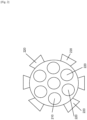
- FIG. 2 shows a schematic example of cameras 220 that may be spatially arranged on a UAV body 210, in accordance with embodiments of the invention.
- the multiple cameras may be directed so that substantially an entirety of a spherical space around the UAV may be captured on camera.
- the number and/or positioning of the camera may be selected in order to prevent the existence of blind spots. In some instances, no blind spots may be provided at a specified distance away from the UAV, such as those distances previously described above. Any number of cameras may be spatially arranged to span the spherical space, such as any of the numbers described elsewhere herein. In one example, 21 cameras may be distributed over the UAV body. Each camera, or a subset of the cameras may have a spatial orientation that is different from the other cameras. The spatial orientation may be different with respect to a yaw axis, roll axis, and/or pitch axis of the UAV.
- the number and/or positioning of the camera may be selected based on a field of view of the cameras. For instance, if the cameras have a wider field of view, fewer cameras may be required to capture images from the desired space around the camera. If the cameras have a narrower field of view, a larger number of cameras may be required to capture images from the desired space around the camera. In some instances, wide-angle cameras may be employed to reduce the number of cameras.
- the number and/or positioning of the camera may be selected to provide a desired amount of overlap between fields of view. It may be desirable for adjacent cameras to have fields of view overlapping by at least 1%, 3%, 5%, 10%, 15%, 20%, 25%, 30%, 40%, 50%, 60%, 70%, 80%, or 90%. In other instances, it may be desirable for adjacent cameras to have fields of view overlapping by less than any of the percentages described herein. Adjacent cameras may have fields of view that overlap by a percentage falling within a range between any two of the values described herein.
- FIG. 3 shows a flow chart of an exemplary auto-return process, in accordance with embodiments of the invention.
- Images may be captured using the multiple cameras 310, while the UAV traverses an environment. Descriptors of one or more image features may be generated 320. The image features may be compared with an image feature library 330. If the image feature is unknown, the image features may be added to the image feature library 340. If the image is already known, a determination may be made whether to initiate an auto-return procedure 350. If no auto-return, the multiple cameras may continue to capture images during flight of the UAV 310. If an auto-return procedure is to be started, the currently collected images are compared with a previous image to calculate a return direction 360.
- Images may be captured using the multiple cameras 310, while the UAV traverses an environment. At a given location or point in time, each of the multiple cameras may capture an image. Each of the multiple cameras may capture the image substantially simultaneously (e.g., within less than 0.001, 0.005, 0.01, 0.05, 0.1, 0.3, 0.5, 1, 1.5, 2, 3, 5, 7, 10, 15, or 20 seconds of one another). Each of the multiple cameras may capture images while the UAV is substantially at the same location (e.g., within less than a 0.001, 0.005 0.01, 0.05, 0.1, 0.5, 1, 2, 3, 5, 10, 15, 20, 30, 40, 50, 70, 100, 200, 300, 500, or 1,000 cm shift of the UAV).
- a set of images may correspond to images from the multiple cameras collected substantially at the same time or place. For instance, a first set of images may be collected at substantially at a first time and/or first location while a second set of images may be collected at substantially a second time and/or second location.
- Sets of images may be stored with location information about where the image is captured.
- the location information may be provided with aid of one or more navigational sensor.
- GPS coordinates may be stored with the corresponding sets of image data.
- the GPS coordinates may be the GPS coordinates of the UAV.
- Sets of images may be stored with timing information about when the image was captured. For instance, a timestamp may be located with a set of images, or each individual image within the set of images.
- information about which camera collected each image may be associated with each individual image within the set of images. For example, a corresponding camera identifier may be stored with each image.
- Information about the positioning of the camera e.g., orientation of the camera
- the positioning of the UAV e.g., orientation of the UAV relative to the inertial reference frame
- the positioning of each camera relative to the UAV may be known, and a positioning of each camera relative to the inertial reference frame may be calculated.
- the positioning (e.g., orientation) associated with each image of the image set may be calculated or stored.
- the images may be captured substantially in real-time as a streaming image.
- the images may be captured with any frequency (e.g., at least 1 Hz, 3 Hz, 5 Hz, 10 Hz, 20 Hz, 30 Hz, 40 Hz, 50 Hz, 60 Hz, 70 Hz, 80 Hz, or 100 Hz).
- the images may be captured at even intervals in time.
- the intervals of the image capture may vary.
- the interval of the image capture may vary depending on a movement characteristic of the UAV, (e.g., linear speed, linear acceleration, rotational speed, and/or rotational direction of the UAV). For instance, if the UAV is traveling more rapidly, the images may be captured at a higher frequency. Alternatively, the images may be captured at the same frequency regardless of movement of the UAV.
- each of the multiple cameras may be operating at the same frequency.
- different cameras from the multiple cameras may operate at different frequencies.
- Images can be stored and/or transmitted to an external device.
- all of the image data may be stored, or only a selection of the image data may be stored.
- all of the image data may be stored for replay, but only a selection of the image data may be used to aid in navigation.
- Descriptors of one or more image features may be generated 320.
- the image features may be generated as a selection of the image data that may be used to aid in navigation. Data about image features of a set of images may be less than the data about an entirety of the set of images.
- image features may be extracted on a set by set basis. For instance, a first set of image features may be extracted from a first set of image data. A second set of image data may be extracted from a second set of image data. The first set of image data may be extracted prior to, concurrently with, or subsequent to collection of the second set of image data.
- an example of an image feature may be feature points of an image, as described in greater detail elsewhere herein.
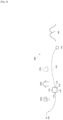
- FIG. 4 shows an example of a UAV traversing a flight path within an environment 400, in accordance with embodiments of the invention.
- a UAV 410 may start at a starting point 420 and have an initial flight path 430 to an end location 440 at which an auto-return function may be initialized.
- the UAV may optionally have multiple cameras 415.
- the UAV may pass one or more visual landmarks 450a, 450b, 450c within an environment.
- Various visual markers 460 may be captured by the multiple cameras of the UAV, even when the UAV is not necessarily passing the visual markers.
- the UAV 410 may have any of the features or characteristics described elsewhere herein.
- the UAV may support multiple cameras 415.
- the cameras may be facing in different directions.
- the cameras may capture different fields of view to capture multiple images of the environment.
- the cameras may be arranged so that the UAV has a full 360 lateral panoramic view, and/or a full 360 vertical view.
- the cameras may be arranged to give the UAV a full spherical spatial view around the UAV. Thus, regardless of the orientation of the UAV, the UAV may be able to collect a full view of the environment around the UAV.
- the flight path may be manually controlled by a user.
- the user may control flight of the UAV in real-time and generate the flight path as the UAV traverses the path.
- the flight path may be pre-planned.
- the UAV may automatically follow the pre-planned flight path.
- the UAV may deviate from a pre-planned flight path when detecting stationary or moving obstacles.
- the UAV may employ collision avoidance maneuvers but may substantially return to a pre-planned flight path.
- a user may take manual control over the UAV while the UAV is following a pre-planned flight path and may deviate from the pre-planned flight path.
- the flight path may terminate at the end location 440.
- the end location may be a location at which an auto-return mode is entered.
- the end location may or may not be a predetermined target location or the location of a target object (e.g., stationary or moving target object).
- the end location may be determined in real-time in response to the UAV entering an auto-return mode.
- the end location may be determined in real-time in response to a detected condition that causes the UAV to enter an auto-return mode.
- a user may or may not specify an end location ahead of time or in real-time.
- the UAV may pass by one or more visual landmarks 450a, 450b, 450c while traversing the environment.
- the one or more visual landmarks may be captured in one or more images captured by one or more of the UAV's cameras. Images captured by the UAV cameras may be assessed for one or more image features.
- Visual landmarks may have one or more discernible features. For instance, visual landmarks may permit the extraction of one or more feature points that may be stored, as discussed in greater detail elsewhere herein. Visual landmarks may or may not be unique. Visual landmarks may be discernible from background features. Visual landmarks may be distinguishable from one another. In some embodiments, visual landmarks may be substantially stationary.
- the cameras may capture images of the visual landmarks.
- One or more image features may be extracted from the visual landmarks and stored and/or used for navigational aid.
- Various visual markers 460 may be captured by the multiple cameras of the UAV, even when the UAV is not necessarily passing the visual markers.
- the visual markers may be visual landmarks that need not necessarily be passed by the UAV. For instance, the UAV may be approaching a visual marker or traveling away from a visual marker. As a UAV approaches a visual marker, the image of the visual marker may become larger. As a UAV travels away from the visual marker, the image of the visual marker may become smaller. As a UAV passes by a visual marker (e.g., visual landmark), the position of the visual marker within the image may change. Any combination of size and/or position change of a visual landmark may be indicative of a movement of the UAV relative to the visual marker.
- a visual marker e.g., visual landmark
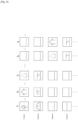
- FIG. 5 shows examples of images that may be captured with aid of multiple cameras on the UAV while the UAV is traversing an environment, in accordance with embodiments of the invention.
- Sets of images may be captured at multiple times t A , t B , t C , t D , t E .
- Each set of images may include images from multiple cameras (camera 1, camera 2, camera 3, camera 4, ). Several cameras are shown by way of illustration only, any number of cameras may be employed to capture various fields of view.
- Any number of image sets may be collected during flight of a UAV.
- several sets e.g., sets collected at t A , t B , t C , may be collected while the UAV is flying along an initial flight path. Additional sets of images may be collected prior to t A , t B , t C , subsequent to t A , t B , t C , or between t A , t B , t C . Examples of images from the various cameras for these corresponding image sets are provided.
- camera 1 may capture images of visual landmarks, such as a first tree, a building, and a second tree.
- camera 2 may capture images of a visual marker, such as a mountain range that gets progressive closer.
- Some cameras (e.g., camera 3, camera 4) may capture images of a relatively featureless portion of the environment.
- ⁇ sets may be collected while the UAV is flying along a return path. Additional sets of images may be collected prior to t D , t E , subsequent to t D , t E , or between t D , t E . Examples of images from the various cameras for these corresponding image sets are provided.
- camera 3 may capture images of visual landmarks, such as a first tree, a building, and a second tree. These visual landmarks may be provided in reverse of the order they were collected using camera 1 during the initial flight path.
- camera 4 may capture images of a visual marker, such as a mountain range that gets progressive further away. These images may be substantially in reverse of the images of the mountain range that were collected using camera 2 during the initial flight path.
- Some cameras (e.g., camera 1, camera 2) may capture images of a relatively featureless portion of the environment.
- the relevant images may be captured and compared. For instance, due to a change in orientation of the UAV between the initial flight path and the return path, during the return, camera 3 may be facing the direction that camera 1 was initially facing, camera 4 may be facing the direction that camera 2 was initially facing, camera 1 may be facing the direction that camera 3 was initially facing, and camera 2 may be facing the direction that camera 4 was initially facing.
- Such changes in orientation of the UAV may occur about a yaw axis of the UAV, pitch axis of the UAV, and/or roll axis of the UAV.
- the images captured during the return flight of the UAV may be compared with those previously captured during the initial flight to determine a relative position of the UAV, and a direction that the UAV should continue on during the return flight. For instance, if a UAV passed a first tree, building, and second tree during the initial flight, the UAV may try to pass by the second tree, building, and first tree on its return path, so that the UAV has a relatively similar position relative to these landmarks during the return path.
- FIG. 6 shows an example of a sequence of images and how images may be selected, in accordance with embodiments of the invention.
- image sets may be captured at various locations/times along a flight path and/or return path.
- Each image set may include one or more images captured by one or more corresponding cameras.
- each image set may include multiple images captured using multiple corresponding cameras.
- only a selected portion of the image data may be used for navigational aid. Only a selected portion of the image data may be stored for navigational aid. The entirety of the image data may or may not be stored for various other purposes. In some embodiments, images may be stored only if there are significant differences between the image and previously stored images. Such selective storing and/ or processing may reduce the demand on the on-board resources of the UAV, such as on-board memory or processors.
- camera 1 captures a series of images over time (e.g., at t A , t B , t C , t D , t E ).
- the images may be analyzed for different features or objects.
- the image at t A shows a tree with a portion of the building.
- the image at t B shows a portion of the tree with the entirety of the building.
- These images may be determined to have sufficiently different features to warrant that both images be saved or used for navigational aid.
- the bolding around the image frame may be used to indicate the images are saved or used for navigational aid.
- the images in their entirety may be saved.
- the images in their entirety may not be saved and one or more extracted image features (such as feature points) may be saved.
- the image at t C shows the same building shifted over
- the image at t D shows the same building shifted further over.
- these images may be determined to not have sufficiently different features to warrant that these images also be saved and used for navigational aid.
- the lack of bolding around the image frame may be used to indicate that these images are not saved or are not used for navigational aid.
- the image at t E shows a new tree. The new tree may be considered to provide a sufficiently different feature to warrant that the image be saved or used for navigational aid, as indicated by the bold border.
- camera 2 captures a series of images over time (e.g., at t A , t B , t C , t D , t E ). These images may also be analyzed for different features or objects. These images may be analyzed independently of the images collected by camera 1. For example, the image at t A shows a tower. The first image of the tower may be stored or used for navigational aid. The image at t B shows the same tower shifted over. The image at t C shows the same tower shifted even further over. In some instances, since the tower has already been stored, these images may be determined to not have sufficiently different features to warrant that these images also be saved and used for navigational aid. The image at t D shows a relatively featureless image.
- the lack of a significant visual landmark or feature may cause the image to be determined to not have sufficiently different unit features to warrant that this image be also be saved and used for navigational aid.
- the image at t E shows a new structure.
- the new structure may be considered to provide a sufficiently different feature to warrant that the image be saved or used for navigational aid.
- the images within a sequence may be compared to determine whether significant differences, to select which images or image features to store or use for navigational aid.
- the images within the sequence that are compared may be from the same camera.
- the images within the sequence that are compared may be from different camera. Images from each camera may be assessed individually within the sequence. In this scenario, if a first camera captured the image of the building, and a second camera also captured the image of the same building later on, such a comparison or assessment may not be made and both images may be saved or used for navigational aid.
- images from all of the cameras or a group of cameras may be assessed collectively within the sequence. Thus, if a first camera captured the image of the building, and a second camera also captured the image of the same building later on, a comparison or assessment may be made and if there is not sufficient difference, only the first image may be saved or used for navigational aid.
- the comparison between images may be comparison of one or more images as a whole. It may be determined how much the images overlap. In some embodiments, if the images overlap by more than a threshold amount, the subsequent image need not be saved or used for navigational aid may be sufficiently deemed to already be represented. For instance, the subsequent image may not be added to an image feature library. In some instances, the threshold amount may be about 5%, 10%, 15%, 20%, 25%, 30%, 35%, 40%, 45%, 50%, 55%, 60%, 65%, 70%, 75%, 80%, 85%, 90%, 95%, or 97% of the image.
- the comparison between images may be a comparison of image features of the one or more images in a sequence.
- the comparison may be comparison of one or more feature points extracted from the images. Further description of feature extraction and comparison is provided in greater detail elsewhere herein.
- the comparison may be provided on a pixel basis of the image.
- the images may be compared on a pixel by pixel basis to determine a degree of overlap, or whether there is sufficient difference to save the image.
- the images may be processed, balanced, or auto-corrected prior to performing the pixel by pixel analysis.
- the image features may include pixels.
- the subsequent image features need not be saved or used for navigational aid may be sufficiently deemed to already be represented.
- the subsequent image features may not be added to an image feature library.
- the threshold amount may be about 5%, 10%, 15%, 20%, 25%, 30%, 35%, 40%, 45%, 50%, 55%, 60%, 65%, 70%, 75%, 80%, 85%, 90%, 95%, or 97% of the image features.
- the image or image features may be stored or used for navigational aid if they are below a threshold value, such as the threshold values described herein.
- the overlap between the images may be based on a comparison of multiple images taken at different points in time (e.g., images in a sequence).
- the images being compared may be taken by the same camera or different cameras.
- the overlap may be between image features, and may be a comparison of image features collected or extracted at different points in time (e.g., after images collected in a sequence).
- the selection of images or image features for storage or use in navigational aid may occur only on the initial flight path. Such selection and/or storage may not be required on the return path.
- the images collected in real-time during the return path may be analyzed against the pre-stored data. In some alternative embodiments, such selection and/or storage may occur on the return path.
- the subset of images features may be selected based on movement of the UAV. For instance, more rapid linear or rotational movement of the UAV may result in less overlap between images within a sequence. Movement of the UAV (e.g., linear velocity, linear acceleration, angular velocity, angular acceleration) may be assessed. The positioning and/or movement of the UAV may be ascertained with aid of one or more sensors. The images from the cameras may or may not aid in ascertaining the positioning and/or movement of the UAV. A greater percentage or subset of the image features may be selected to be stored or used for navigational aid when a velocity is higher, compared to when a velocity is lower.
- movement of the UAV e.g., linear velocity, linear acceleration, angular velocity, angular acceleration
- the positioning and/or movement of the UAV may be ascertained with aid of one or more sensors.
- the images from the cameras may or may not aid in ascertaining the positioning and/or movement of the UAV.
- a greater percentage or subset of the image features
- a determination whether the image features are stationary may also affect the subset of image features that are selected.
- only stationary image features may be stored or used for navigational aid.
- Moving image features may optionally not be stored or used for navigational aid.
- Stationary image features may include features pertaining to visual landmarks that may remain stationary within the environment.
- Moving image features may include features pertaining to objects that may move within the environment. For instance, a feature point may be stored or used for navigational aid when the feature point is determined to be a stationary feature point and is not stored or used for navigational aid when the feature point is determined to be a moving feature point.
- object recognition algorithms may be employed.
- the object recognition algorithms may analyze an image to determine which portions of the images are objects that are stationary, and which are objects that are moving. This may be used to determine which image features are stationary image features and which are moving image features. Such object recognition may not require the use of multiple images in sequence. Alternatively, they may be analyzed in combination with the analysis of the multiple images in sequence.
- the stationary image features may be stored or use for navigational aid because they will not likely have moved between when a UAV makes an initial flight, and when the UAV makes a return flight. If the landmarks move significantly, it may be difficult for the UAV to find its way back, or it may likely be taking a different path. If the image features can be relied on to be stationary, this may aid in a more accurate determination of the positioning of the UAV along the return path while the UAV is returning.
- Feature detection as described herein can be accomplished using various algorithms which may extract one or more feature points from image data and calculate the total number of feature points, or "feature point number.”
- the algorithm may be an edge detection algorithm, a corner detection algorithm, a blob detection algorithm, or a ridge detection algorithm.
- the corner detection algorithm may be a "Features from accelerated segment test" (FAST).
- the feature detector may extract feature points and calculate a feature point number using FAST.
- the selected feature points may be determined based on an assessment of whether the feature points are stationary or are moving.
- a first set of feature points 710 may be deemed to be stationary feature points and/or a second set of feature points 720 may be deemed to be moving feature points.
- images may be analyzed in a sequence to determine which feature points are stationary and which are moving. For instance, feature points that are consistent across the sequence of images and/or move in a predictable manner may be deemed to be stationary feature points. If the feature points appear and disappear, or move in an unpredictable manner, they may be deemed to be moving feature points.
- object recognition or pattern recognition algorithms may be utilized to determine whether a feature point is stationary or moving.
- stationary feature points may be stored or used for navigational aid.
- the stationary feature points may be determined to reliably remain substantially in the same place to aid a UAV in finding its return path.
- Moving feature points may optionally not be stored or used for navigational aid.
- the moving points may not be reliable and may move between the time when the UAV is in on its initial flight path and when it follows its return path. If the UAV is looking for a moving object that is no longer there, it may be confused and not able to accurately follow the return path.
- an assessment may be made whether a feature point is a stationary feature point or a moving feature point while the UAV is following a return path. If a feature point is a stationary feature point, the stationary feature point may be compared with previously stored feature points to aid the UAV in navigation. If the feature point is a moving feature point, it may be ignored and not compared with previously stored stationary feature points.
- the selected feature points may be determined based on a strength assessment of the feature points.
- a certainty of a feature point may be assigned to the feature point.
- the feature point may only be stored if it is confirmed to pass a threshold value for the certainty.
- the strength assessment of the feature point may depend on the appearance of the feature point in multiple image frames within the sequence. Even if not feature points from all images in the sequence are stored, the existence of another corroborating feature point may permit the feature point to be initially stored.
- the corroborated feature points 710 may cause at least the first set of feature points from the first image frame (t A ) to be stored. The existence of the corroborating feature points at t B or t C may validate the storage of the first set of feature points.
- the images and/or features (e.g., feature points) from the images may be captured at regular intervals or at variable intervals. In some instances, they may be captured at variable intervals depending on an operational parameter of the UAV.
- the operational parameter of the UAV may be movement characteristic of the UAV such as linear speed, angular speed, linear acceleration, and/or angular acceleration. For instance, if the UAV is moving more quickly or is rotating, the images and/or features may be captured more frequently.
- the images and/or features (e.g., feature points) from the images may be captured at variable intervals depending on environmental conditions. For instance, rapidly changing light conditions may cause the images and/or features to be captured more frequently. Any environmental condition that may affect a quality of the image or consistency of the images from frame to frame may be affecting the intervals. Other factors such as wind, dust, precipitation, temperature contrasts, may affect the intervals.
- FIG. 8 shows an example of an object may be captured by multiple cameras carried on a UAV, each camera having different fields of view, in accordance with an embodiment of the invention.
- the fields of view of the multiple cameras may overlap to some extent.
- a set of image features, such as image feature points may be extracted from the images.
- a subset of the image features, such as a subset of the image feature points may be selected to be stored or used for navigational aid, based on a number of image capture devices that collect an image including the feature (e.g., feature points).
- the threshold number of cameras may be any number of cameras including, but not limited to 2 or more, 3 or more, 4 or more, 5 or more, 6 or more, 7 or more, 8 or more, 9 or more, 10 or more, 12 or more, 15 or more, or 20 or more. In some instances, the threshold number of cameras may be at least a threshold percentage of cameras including, but not limited to 1%, 3%, 5%, 7%, 10%, 12%, 15%, 20%, 25%, 30%, 35%, 40%, or 50% of the cameras capturing images for an image set.
- the tree appears in at least six of the cameras simultaneously.
- the features extracted from the tree may be ascertained to have appeared in enough cameras for the features to be stored to aid in navigation.
- only a single set of the features from one of the cameras, or a combination of the cameras may be stored.
- a complete set of features representative of the tree may be stored, based on data from a single camera or multiple cameras.
- multiple sets of features corresponding to multiple cameras may be stored.
- image features may only appear in two of the cameras simultaneously. In some instances, these may not be enough cameras to meet the threshold. The image features may not be stored or used for navigational aid.
- the higher number of cameras may be indicative that the feature was more likely accurately extracted and not extracted in error.
- the higher number of cameras may also indicate that the feature is valuable and useful for the auto-return. If the feature is likely to appear in multiple cameras, there is a high probability that the feature will be detected in the return trip. Also, if the feature is extracted in a large number of cameras, there is a greater probability that the feature will be extracted and/or recognized in the return trip.
- FIG. 9 shows an example of a UAV traversing a return path, in accordance with an embodiment of the invention.
- the UAV may traverse an environment 900.
- the UAV 910 may start at a starting point 920 and have an initial flight path 930 to an end location 940 at which an auto-return function may be initialized.
- the UAV may pass one or more visual landmarks 950a, 950b, 950c within an environment.
- the UAV may start taking a return path 970 in response to initialization of an auto-return function.
- the UAV 910 may have any of the features or characteristics described elsewhere herein.
- the UAV may support multiple cameras. The cameras may be facing in different directions. The cameras may capture different fields of view to capture multiple images of the environment.
- the cameras may be arranged so that the UAV has a full 360 lateral panoramic view, and/or a full 360 vertical view.
- the cameras may be arranged to give the UAV a full spherical spatial view around the UAV. Thus, regardless of the orientation of the UAV, the UAV may be able to collect a full view of the environment around the UAV.
- the UAV may start a flight path at a starting point 920.
- the starting point may be the location where a UAV is turned on.
- the starting point may be a location where the UAV takes off from an underlying surface.
- the starting point may be a location at which the UAV initiates flight.
- the starting point may be a location defined by a user as a start of the flight path (which may or may not be the same as a take-off location).
- the starting point may be a reference point defined by the user as a location for the UAV to auto-return to.
- the flight path may terminate at the end location 940.
- the end location may be a location at which an auto-return mode is entered.
- the end location may or may not be a predetermined target location or the location of a target object (e.g., stationary or moving target object).
- the end location may be determined in real-time in response to the UAV entering an auto-return mode.
- the end location may be determined in real-time in response to a detected condition that causes the UAV to enter an auto-return mode.
- a user may or may not specify an end location ahead of time or in real-time.
- the UAV or a flight controller on-board the UAV may receive an instruction to traverse the return path.
- the instruction may start the initialization of the auto-return mode.
- the mode of operation of the UAV may be different for a return path 970 compared to an initial flight path 930.
- a comparison may be initiated between a second set of image features (e.g., feature points) collected while the UAV traverses the return path with a first set of image features (e.g., feature points) collected while the UAV traverses the initial flight path.
- the UAV may pass by one or more visual landmarks 950a, 950b, 950c while traversing the environment.
- the one or more visual landmarks may be captured in one or more images captured by one or more of the UAV's cameras. Images captured by the UAV cameras may be assessed for one or more image features.
- Visual landmarks may have one or more discernible features. For instance, visual landmarks may permit the extraction of one or more feature points that may be stored. Visual landmarks may or may not be unique. Visual landmarks may be discernible from background features. Visual landmarks may be distinguishable from one another. In some embodiments, visual landmarks may be substantially stationary.
- the cameras may capture images of the visual landmarks.
- One or more image features may be extracted from the visual landmarks and stored and/or used for navigational aid. As previously described, in some embodiments, a subset of the one or more image features may be selected to be stored and/or used for navigational aid.
- the UAV While traversing the return path 970 the UAV may collect additional sets of images.
- the cameras may capture images of the visual landmarks.
- the same visual landmarks may be viewed as in the initial flight path.
- the same visual landmarks may be viewed in reverse order.
- the UAV have multiple cameras that may permit the visual landmarks to be captured even if the UAV is in a different orientation when traversing the return path.
- the cameras may optionally be arranged in such a way so that if a landmark were detected during an initial flight path, it could be detected during the return path, even if the UAV is any other orientation.
- a first set of features collected during an initial path may be compared with a second set of features collected during a return path.
- the comparison may comprise finding recognizable landmarks denoted by the features (e.g., feature points).
- the landmarks denoted by the features may be recognizable when the UAV return path varies from the initial flight path.
- the landmarks denoted by the features may be recognizable when the UAV has a different orientation during the return path from the initial flight path.
- the return path of the UAV may be calculated and/or determined in real-time as the UAV traverses the return path.
- the return path may be determined based on a calculated relative positioning between the UAV and the landmarks.
- an initial flight path of the UAV may be recorded based on visual navigation by detecting a location of a landmark and relative positioning of the UAV relative to the landmark.
- the landmarks may be detected, and the return path of the UAV may be controlled to permit the UAV to have similar placement relative to the landmark during the return.
- a direction of the UAV to travel during the return path may be determined by one or more algorithm.
- a random sample consensus (RANSAC) method may be used to determined return path.
- a perspective n point (PnP) motion estimation may be used to determine a return path.
- the algorithms may be used to determine a UAV placement or desired placement relative to the landmarks denoted by one or more feature points. Current estimated UAV placement relative to a landmark may be compared to data about the initial flight path to determine a desired UAV placement relative to the landmark for that point in the return path. The UAV may be directed to the desired UAV placement.
- the return path of the UAV may follow the initial flight path in reverse.
- the UAV may be exactly on the initial flight path in reverse.
- the return flight path may have some variation to the initial flight path.
- the UAV may remain within a particular distance threshold of an initial flight path.
- the UAV may have a different return path from the initial flight path.
- the different return path may occur due to one or more detected conditions, such as one or more obstacles or inclement environmental conditions.
- the different return path may occur due to one or more other conditions that may prevent the UAV from following the initial flight path.
- the UAV may use visual navigation techniques to head back to the starting point.
- the UAV may use visual navigation techniques to head toward the initial flight path.
- the UAV may use visual navigation techniques to head back to the starting point without necessarily heading back to the initial flight paths.
- the visual navigation techniques may still utilize landmarks to keep track of UAV position, and make sure it is in a visual range that would enable it to find its way back to the starting point, but need not follow the exact return path back.
- the initial flight path may follow a circuitous or indirect path to the end point.
- the return path may closely follow the initial flight path back, even if it is circuitous or indirect. Even if some deviations are required during the return path due to conditions that do not enable the UAV to exactly follow the exact initial path in reverse, the UAV may try to follow the initial path as closely as possible, or return to the initial flight path when it is able. Alternatively, the UAV may find an alternative path back, but still utilizing the same visual landmarks or markers that were detected when the UAV made the initial flight path out. In some instances, the UAV may take a return path back that is less circuitous or roundabout than the initial path out.
- the UAV may be able to calculate a return flight path that is independent of the initial flight path, based on the visual markers.
- the return flight path may be calculated to be the shortest distance to the starting point, the least amount of energy consumption to the starting point, and/or the least amount of time to get to the starting point.
- the return flight path may incorporate one or more of these parameters while retaining visual contact with the visual landmarks.
- the UAV may take a longer flight path that enables the UAV to retain recognizable visual contact with the visual landmark.
- a UAV may follow an initial flight path and/or take a return path using visual navigation alone.
- the UAV may rely on information gathered by one or more cameras on-board the UAV to perform navigational functions.
- the UAV may rely on information gathered by the cameras alone collected during the initial flight path to determine a return flight path.
- the UAV may not need other data or navigational functions to perform the return flight. This may be useful in locations or scenarios where information from external sources may be unreliable. For example, if there is a bad wireless connection, the UAV may still be capable of performing an auto-return function based on information stored locally on-board a memory of the UAV and the visual sensors.
- the UAV may follow an initial flight path and/or take a return path using visual navigation in combination with any other type of navigational aid.
- sensor fusion techniques may be employed to combine the visual navigation information with other types of navigation information. Any sensors or communication units provided on-board the UAV may be used in combination with the visual navigation information to control flight of the UAV during the initial flight path and/or return path.
- Such GPS information may be used to collect geo-spatial coordinate information for the UAV while the UAV is traversing the initial flight path and/or return flight path.
- the geo-spatial coordinate information may be coupled with visual navigation information, such as image features.
- the image features may be correlated with the geo-spatial coordinate information at the location where the image features are captured, or calculated to be located. For instance, a UAV may be at a first location when the UAV captures an image of a tree some distance away at a second location.
- Visual algorithms that may or may not employ analysis of multiple frames may be used to calculate the location of the object (e.g., tree) relative to the camera location (e.g., UAV location).
- the location of the UAV (e.g., first location) may be associated with the image and/or image features, and/or the location of the object (e.g., second location) may be associated with the image and/or image features.
- the geo-spatial coordinate information may aid in generation a map of the environment, as described in greater detail elsewhere herein.
- GPS information may not be reliable, and/or may cut in and out while the UAV is traveling within an environment.
- the GPS information may be used to supplement the visual navigation information when available, but the system may be capable of operating without the GPS information if necessary.
- a UAV may also comprise an inertial measurement unit (IMU), which can include one or more accelerometers, one or more gyroscopes, one or more magnetometers, or suitable combinations thereof.
- IMU inertial measurement unit
- the IMU can include up to three orthogonal accelerometers to measure linear acceleration of the UAV and/or camera on-board the UAV along up to three axes of translation, and up to three orthogonal gyroscopes to measure the angular acceleration about up to three axes of rotation.
- the IMU can be rigidly coupled to the UAV and/or camera such that the motion of the UAV and/or camera corresponds to motion of the IMU.
- the IMU can be permitted to move relative to the UAV and/or camera with respect to up to six degrees of freedom.
- the IMU can be directly mounted onto the UAV and/or camera, or coupled to a support structure mounted onto the UAV and/or camera.
- the IMU can provide a signal indicative of a position or motion of the UAV and/or camera, such as a position, orientation, velocity, and/or acceleration of the UAV and/or camera (e.g., with respect to one, two, or three axes of translation, and/or one, two, or three axes of rotation).
- the IMU can sense a signal representative of the acceleration of the UAV and/or camera, and the signal can be integrated once to provide velocity information, and twice to provide location and/or orientation information.
- Such IMU information can be used to determine an overall position (e.g., spatial location and/or orientation) of the UAV and/or movement of the UAV in combination with visual navigation.
- the IMU information may be used to determine an overall position and/or movement of one or more cameras carried by the UAV.
- the IMU information may be used to determine an overall position and/or movement of each of the cameras used for visual navigation by the UAV.
- the UAV may support multiple cameras, each of which may have a different orientation.
- the IMU may collect information about the orientation of each of the multiple cameras separately using different sensors (e.g., camera 1 may have one or more sensors that detect the position and/or movement of camera 1, camera 2 may have one or more sensors that detect the position and/or movement of camera 2, .).
- each camera may have a known orientation relative to the UAV orientation, and knowing the UAV position (e.g., orientation/ spatial location) may allow the position of each camera to be calculated.
- the IMU information may be used to determine the orientation of each of the cameras supported by the UAV.
- the IMU information may be coupled with visual navigation information, such as image features.
- the image features may be correlated with the IMU information of the UAV and/or camera at the location where the image features are captured. For instance, a camera may have a particular positon when the UAV captures an image of a tree as a visual landmark.
- the IMU information may be used to determine a relative position of the visual landmark relative to the UAV. Visual algorithms that may or may not employ analysis of multiple frames may be used to calculate the position of the camera and/or UAV may be associated with the image and/or image features, when the image is taken.
- the IMU information may aid in generation a map of the environment, as described in greater detail elsewhere herein.
- the IMU information may be gathered using one or more sensors on-board the UAV.
- the IMU information may not require external signals, reflections or communications.
- the IMU and visual data may be used in combination with one another even when external communications or wireless signals are not working.
- visual navigation may be used in combination with GPS information and/or IMU information.
- additional sensors e.g., global positioning system (GPS) sensors, mobile device transmitters enabling location triangulation
- vision sensors e.g., imaging devices capable of detecting visible, infrared, or ultraviolet light, such as cameras
- proximity sensors e.g., ultrasonic sensors, lidar, time-of-flight cameras
- inertial sensors e.g., accelerometers, gyroscopes, inertial measurement units (IMUs)
- altitude sensors e.g., pressure sensors (e.g., barometers)
- audio sensors e.g., microphones
- field sensors e.g., magnetometers, electromagnetic sensors
- one or more image features may be extracted from one or more images. In some instances, all of the image features, or a subset of the image features may be selected for storage or use in navigation of the UAV. For instance, a selection of the image features may be stored or used for the auto-return of the UAV. In some embodiments, the selection of the image features may include a subset of the feature points from the images.
- the selection of the image features may be used to construct a map of the environment.
- One or more representations of landmarks that the UAV may encounter during flight may be stored on the map.
- a map of the image features within the environment may be constructed.
- a map of the selected subset of feature points within the environment may be constructed.
- the map may be a three-dimensional map or a two-dimensional map.
- the map may or may not take altitude into account.
- the map may be constructed in real-time as the UAV traverses an initial flight path.
- the position of the UAV relative to the features within the map may be determined.
- the position of the UAV as it traversed the initial flight path may be provided within the map.
- the position of the UAV may include a spatial location and/or orientation of the UAV.
- the position of the UAV as it captured each image may be within the map.
- the position of each camera (e.g., spatial location and/or orientation) supported by the UAV may be stored in the map or in a memory.
- the position of the UAV and/or camera may be determined along three spatial axes.
- the position of the UAV and/or camera may include a determination about three orthogonal axes, such as a pitch, yaw, and/or roll axis relative to the UAV and/or the camera.
- the map may be used by the UAV when the UAV is planning and/or taking the return path.
- the UAV position relative to one or more landmark may be determined while the UAV is taking the return path.
- the UAV position relative to one or more image features (e.g., feature points) may be determined when the UAV is taking the return path.
- Sets of images collected by the UAV while the UAV is taking the return path may be used to determine the UAV position relative to the one or more image features.
- the UAV position relative to a UAV initial flight path may be determined during the return flight. In some instances, the UAV position relative to the one or more image features, and the position of the one or more image features relative to the UAV initial flight path may be used to determine the UAV position relative to the initial flight path.
- algorithms may be used to determine a UAV position and/ or return path.
- RANSAC or PnP algorithms may be employed to aid in UAV return.
- outlying image data such as outlying feature points may be discounted when using the algorithms.
- a model of best fit for one or more inliers may be generated.
- a voting scheme may be utilized to select a model, which may be used to determine the auto-return path.
- the map may be stored in a local memory on-board the UAV.
- the map may be stored on an external device, such as one or more servers, other UAVs, remote controller, visual display device, or a cloud computing infrastructure.
- the map may be accessible on-board the local memory of the UAV.
- the UAV may be capable of accessing and/or adding to the map even if external communications or signals are not working.
- the movable object may have a maximum dimension (e.g., length, width, height, diameter, diagonal) of less than or equal to about: 2 cm, 5 cm, 10 cm, 50 cm, 1 m, 2 m, 5 m, or 10 m.
- the maximum dimension may be greater than or equal to about: 2 cm, 5 cm, 10 cm, 50 cm, 1 m, 2 m, 5 m, or 10 m.
- the distance between shafts of opposite rotors of the movable object may be less than or equal to about: 2 cm, 5 cm, 10 cm, 50 cm, 1 m, 2 m, 5 m, or 10 m.
- the distance between shafts of opposite rotors may be greater than or equal to about: 2 cm, 5 cm, 10 cm, 50 cm, 1 m, 2 m, 5 m, or 10 m.
- the movable object may have a footprint (which may refer to the lateral cross-sectional area encompassed by the movable object) less than or equal to about: 32,000 cm2, 20,000 cm2, 10,000 cm2, 1,000 cm2, 500 cm2, 100 cm2, 50 cm2, 10 cm2, or 5 cm2.
- the footprint may be greater than or equal to about: 32,000 cm2, 20,000 cm2, 10,000 cm2, 1,000 cm2, 500 cm2, 100 cm2, 50 cm2, 10 cm2, or 5 cm2.
- the movable object may weigh no more than 1000 kg.
- the weight of the movable object may be less than or equal to about: 1000 kg, 750 kg, 500 kg, 200 kg, 150 kg, 100 kg, 80 kg, 70 kg, 60 kg, 50 kg, 45 kg, 40 kg, 35 kg, 30 kg, 25 kg, 20 kg, 15 kg, 12 kg, 10 kg, 9 kg, 8 kg, 7 kg, 6 kg, 5 kg, 4 kg, 3 kg, 2 kg, 1 kg, 0.5 kg, 0.1 kg, 0.05 kg, or 0.01 kg.
- the weight may be greater than or equal to about: 1000 kg, 750 kg, 500 kg, 200 kg, 150 kg, 100 kg, 80 kg, 70 kg, 60 kg, 50 kg, 45 kg, 40 kg, 35 kg, 30 kg, 25 kg, 20 kg, 15 kg, 12 kg, 10 kg, 9 kg, 8 kg, 7 kg, 6 kg, 5 kg, 4 kg, 3 kg, 2 kg, 1 kg, 0.5 kg, 0.1 kg, 0.05 kg, or 0.01 kg.
- the movable object may have low energy consumption.
- the movable object may use less than about: 5 W/h, 4 W/h, 3 W/h, 2 W/h, 1 W/h, or less.
- a carrier of the movable object may have low energy consumption.
- the carrier may use less than about: 5 W/h, 4 W/h, 3 W/h, 2 W/h, 1 W/h, or less.
- a payload of the movable object may have low energy consumption, such as less than about: 5 W/h, 4 W/h, 3 W/h, 2 W/h, 1 W/h, or less.
- FIG. 10 illustrates an unmanned aerial vehicle (UAV) 1000, in accordance with embodiments of the invention.
- the UAV may be an example of a movable object as described herein.
- the UAV 1000 can include a propulsion system having four rotors 1002, 1004, 1006, and 1008. Any number of rotors may be provided (e.g., one, two, three, four, five, six, or more).
- the rotors, rotor assemblies, or other propulsion systems of the unmanned aerial vehicle may enable the unmanned aerial vehicle to hover/maintain position, change orientation, and/or change location.
- the distance between shafts of opposite rotors can be any suitable length 1010.
- the length 1010 can be less than or equal to 1 m, or less than equal to 5 m. In some embodiments, the length 1010 can be within a range from 1 cm to7 m, from 70 cm to 2 m, or from 5 cm to 5 m. Any description herein of a UAV may apply to a movable object, such as a movable object of a different type, and vice versa. The UAV may use an assisted takeoff system or method as described herein.
- the movable object can be configured to carry a load.
- the load can include one or more of passengers, cargo, equipment, instruments, and the like.
- the load can be provided within a housing.
- the housing may be separate from a housing of the movable object, or be part of a housing for a movable object.
- the load can be provided with a housing while the movable object does not have a housing.
- portions of the load or the entire load can be provided without a housing.
- the load can be rigidly fixed relative to the movable object.
- the load can be movable relative to the movable object (e.g., translatable or rotatable relative to the movable object).
- the load can include a payload and/or a carrier, as described elsewhere herein.
- the movement of the movable object, carrier, and payload relative to a fixed reference frame (e.g., the surrounding environment) and/or to each other, can be controlled by a terminal.
- the terminal can be a remote control device at a location distant from the movable object, carrier, and/or payload.
- the terminal can be disposed on or affixed to a support platform.
- the terminal can be a handheld or wearable device.
- the terminal can include a smartphone, tablet, laptop, computer, glasses, gloves, helmet, microphone, or suitable combinations thereof.
- the terminal can include a user interface, such as a keyboard, mouse, joystick, touchscreen, or display. Any suitable user input can be used to interact with the terminal, such as manually entered commands, voice control, gesture control, or position control (e.g., via a movement, location or tilt of the terminal).
- the terminal can include a suitable display unit for viewing information of the movable object, carrier, and/or payload.
- the terminal can be configured to display information of the movable object, carrier, and/or payload with respect to position, translational velocity, translational acceleration, orientation, angular velocity, angular acceleration, or any suitable combinations thereof.
- the terminal can display information provided by the payload, such as data provided by a functional payload (e.g., images recorded by a camera or other image capturing device).
- the same terminal may both control the movable object, carrier, and/or payload, or a state of the movable object, carrier and/or payload, as well as receive and/or display information from the movable object, carrier and/or payload.
- a terminal may control the positioning of the payload relative to an environment, while displaying image data captured by the payload, or information about the position of the payload.
- different terminals may be used for different functions. For example, a first terminal may control movement or a state of the movable object, carrier, and/or payload while a second terminal may receive and/or display information from the movable object, carrier, and/or payload.
- a first terminal may be used to control the positioning of the payload relative to an environment while a second terminal displays image data captured by the payload.
- Various communication modes may be utilized between a movable object and an integrated terminal that both controls the movable object and receives data, or between the movable object and multiple terminals that both control the movable object and receives data.
- at least two different communication modes may be formed between the movable object and the terminal that both controls the movable object and receives data from the movable object.
- FIG. 11 illustrates a movable object 1100 including a carrier 1102 and a payload 1104, in accordance with embodiments.
- the movable object 1100 is depicted as an aircraft, this depiction is not intended to be limiting, and any suitable type of movable object can be used, as previously described herein.
- the payload 1104 may be provided on the movable object 1100 without requiring the carrier 1102.
- the movable object 1100 may include propulsion mechanisms 1106, a sensing system 1108, and a communication system 1112.
- the propulsion mechanisms 1106 can include one or more of rotors, propellers, blades, engines, motors, wheels, axles, magnets, or nozzles, as previously described.
- the movable object may have one or more, two or more, three or more, or four or more propulsion mechanisms.
- the propulsion mechanisms may all be of the same type. Alternatively, one or more propulsion mechanisms can be different types of propulsion mechanisms.
- the propulsion mechanisms 1106 can be mounted on the movable object 1100 using any suitable means, such as a support element (e.g., a drive shaft) as described elsewhere herein.
- the propulsion mechanisms 1106 can be mounted on any suitable portion of the movable object 1100, such on the top, bottom, front, back, sides, or suitable combinations thereof.
- the propulsion mechanisms 1106 can enable the movable object 1100 to take off vertically from a surface or land vertically on a surface without requiring any horizontal movement of the movable object 1100 (e.g., without traveling down a runway).
- the propulsion mechanisms 1106 can be operable to permit the movable object 1100 to hover in the air at a specified position and/or orientation.
- One or more of the propulsion mechanisms 1100 may be controlled independently of the other propulsion mechanisms.
- the propulsion mechanisms 1100 can be configured to be controlled simultaneously.
- the movable object 1100 can have multiple horizontally oriented rotors that can provide lift and/or thrust to the movable object.
- the multiple horizontally oriented rotors can be actuated to provide vertical takeoff, vertical landing, and hovering capabilities to the movable object 1100.
- one or more of the horizontally oriented rotors may spin in a clockwise direction, while one or more of the horizontally rotors may spin in a counterclockwise direction.
- the number of clockwise rotors may be equal to the number of counterclockwise rotors.
- each of the horizontally oriented rotors can be varied independently in order to control the lift and/ or thrust produced by each rotor, and thereby adjust the spatial disposition, velocity, and/or acceleration of the movable object 1100 (e.g., with respect to up to three degrees of translation and up to three degrees of rotation).
- the sensing system 1108 can include one or more sensors that may sense the spatial disposition, velocity, and/or acceleration of the movable object 1100 (e.g., with respect to up to three degrees of translation and up to three degrees of rotation).
- the one or more sensors can include global positioning system (GPS) sensors, motion sensors, inertial sensors, proximity sensors, or image sensors.
- GPS global positioning system
- the sensing data provided by the sensing system 1108 can be used to control the spatial disposition, velocity, and/or orientation of the movable object 1100 (e.g., using a suitable processing unit and/or control module, as described below).
- the sensing system 1108 can be used to provide data regarding the environment surrounding the movable object, such as weather conditions, proximity to potential obstacles, location of geographical features, location of manmade structures, and the like.
- the communication system 1110 enables communication with terminal 1112 having a communication system 1114 via wireless signals 1116.
- the communication systems 1110, 1114 may include any number of transmitters, receivers, and/or transceivers suitable for wireless communication.
- the communication may be one-way communication, such that data can be transmitted in only one direction.
- one-way communication may involve only the movable object 1100 transmitting data to the terminal 1112, or vice-versa.
- the data may be transmitted from one or more transmitters of the communication system 1110 to one or more receivers of the communication system 1112, or vice-versa.
- the communication may be two-way communication, such that data can be transmitted in both directions between the movable object 1100 and the terminal 1112.
- the two-way communication can involve transmitting data from one or more transmitters of the communication system 1110 to one or more receivers of the communication system 1114, and vice-versa.
- the terminal 1112 can provide control data to one or more of the movable object 1100, carrier 1102, and payload 1104 and receive information from one or more of the movable object 1100, carrier 1102, and payload 1104 (e.g., position and/or motion information of the movable object, carrier or payload; data sensed by the payload such as image data captured by a payload camera).
- control data from the terminal may include instructions for relative positions, movements, actuations, or controls of the movable object, carrier and/or payload.
- control data may result in a modification of the location and/or orientation of the movable object (e.g., via control of the propulsion mechanisms 1106), or a movement of the payload with respect to the movable object (e.g., via control of the carrier 1102).
- the control data from the terminal may result in control of the payload, such as control of the operation of a camera or other image capturing device (e.g., taking still or moving pictures, zooming in or out, turning on or off, switching imaging modes, change image resolution, changing focus, changing depth of field, changing exposure time, changing viewing angle or field of view).
- the communications from the movable object, carrier and/or payload may include information from one or more sensors (e.g., of the sensing system 1108 or of the payload 1104).
- the communications may include sensed information from one or more different types of sensors (e.g., GPS sensors, motion sensors, inertial sensor, proximity sensors, or image sensors). Such information may pertain to the position (e.g., location, orientation), movement, or acceleration of the movable object, carrier and/or payload.
- Such information from a payload may include data captured by the payload or a sensed state of the payload.
- the control data provided transmitted by the terminal 1112 can be configured to control a state of one or more of the movable object 1100, carrier 1102, or payload 1104.
- the carrier 1102 and payload 1104 can also each include a communication module configured to communicate with terminal 1112, such that the terminal can communicate with and control each of the movable object 1100, carrier 1102, and payload 1104 independently.
- the movable object 1100 can be configured to communicate with another remote device in addition to the terminal 1112, or instead of the terminal 1112.
- the terminal 1112 may also be configured to communicate with another remote device as well as the movable object 1100.
- the movable object 1100 and/ or terminal 1112 may communicate with another movable object, or a carrier or payload of another movable object.
- the remote device may be a second terminal or other computing device (e.g., computer, laptop, tablet, smartphone, or other mobile device).
- the remote device can be configured to transmit data to the movable object 1100, receive data from the movable object 1100, transmit data to the terminal 1112, and/or receive data from the terminal 1112.
- the remote device can be connected to the Internet or other telecommunications network, such that data received from the movable object 1100 and/or terminal 1112 can be uploaded to a website or server.
- FIG. 12 is a schematic illustration by way of block diagram of a system 1200 for controlling a movable object, in accordance with embodiments.
- the system 1200 can be used in combination with any suitable embodiment of the systems, devices, and methods disclosed herein.
- the system 1200 can include a sensing module 1202, processing unit 1204, non-transitory computer readable medium 1206, control module 1208, and communication module 1210.
- the processing unit 1204 can have one or more processors, such as a programmable processor (e.g., a central processing unit (CPU)).
- the processing unit 1204 can be operatively coupled to a non-transitory computer readable medium 1206.
- the non-transitory computer readable medium 1206 can store logic, code, and/or program instructions executable by the processing unit 1204 for performing one or more steps.
- the non-transitory computer readable medium can include one or more memory units (e.g., removable media or external storage such as an SD card or random access memory (RAM)).
- data from the sensing module 1202 can be directly conveyed to and stored within the memory units of the non-transitory computer readable medium 1206.
- the memory units of the non-transitory computer readable medium 1206 can store logic, code and/or program instructions executable by the processing unit 1204 to perform any suitable embodiment of the methods described herein.
- the processing unit 1204 can be configured to execute instructions causing one or more processors of the processing unit 1204 to analyze sensing data produced by the sensing module.
- the memory units can store sensing data from the sensing module to be processed by the processing unit 1204.
- the memory units of the non-transitory computer readable medium 1206 can be used to store the processing results produced by the processing unit 1204.
- the processing unit 1204 can be operatively coupled to a control module 1208 configured to control a state of the movable object.
- the control module 1208 can be configured to control the propulsion mechanisms of the movable object to adjust the spatial disposition, velocity, and/or acceleration of the movable object with respect to six degrees of freedom.
- the control module 1208 can control one or more of a state of a carrier, payload, or sensing module.
- the components of the system 1200 can be arranged in any suitable configuration.
- one or more of the components of the system 1200 can be located on the movable object, carrier, payload, terminal, sensing system, or an additional external device in communication with one or more of the above.
- FIG. 12 depicts a single processing unit 1204 and a single non-transitory computer readable medium 1206, one of skill in the art would appreciate that this is not intended to be limiting, and that the system 1200 can include a plurality of processing units and/or non-transitory computer readable media.
- one or more of the plurality of processing units and/or non-transitory computer readable media can be situated at different locations, such as on the movable object, carrier, payload, terminal, sensing module, additional external device in communication with one or more of the above, or suitable combinations thereof, such that any suitable aspect of the processing and/or memory functions performed by the system 1200 can occur at one or more of the aforementioned locations.
Landscapes
- Engineering & Computer Science (AREA)
- Remote Sensing (AREA)
- Radar, Positioning & Navigation (AREA)
- Physics & Mathematics (AREA)
- General Physics & Mathematics (AREA)
- Automation & Control Theory (AREA)
- Aviation & Aerospace Engineering (AREA)
- Multimedia (AREA)
- Computer Networks & Wireless Communication (AREA)
- Computer Vision & Pattern Recognition (AREA)
- Theoretical Computer Science (AREA)
- Control Of Position, Course, Altitude, Or Attitude Of Moving Bodies (AREA)
- Image Processing (AREA)
- Traffic Control Systems (AREA)
- Studio Devices (AREA)
- Navigation (AREA)
Priority Applications (1)
| Application Number | Priority Date | Filing Date | Title |
|---|---|---|---|
| EP25177029.3A EP4579190A3 (de) | 2015-12-09 | 2015-12-09 | Systeme und verfahren zur automatischen umkehr |
Applications Claiming Priority (4)
| Application Number | Priority Date | Filing Date | Title |
|---|---|---|---|
| EP20209521.2A EP3835912B1 (de) | 2015-12-09 | 2015-12-09 | Systeme und verfahren für automatisches zurückkehren |
| EP15910023.9A EP3387506B1 (de) | 2015-12-09 | 2015-12-09 | Systeme und verfahren zur automatisches umkehren |
| PCT/CN2015/096746 WO2017096548A1 (en) | 2015-12-09 | 2015-12-09 | Systems and methods for auto-return |
| EP25177029.3A EP4579190A3 (de) | 2015-12-09 | 2015-12-09 | Systeme und verfahren zur automatischen umkehr |
Related Parent Applications (3)
| Application Number | Title | Priority Date | Filing Date |
|---|---|---|---|
| EP15910023.9A Division EP3387506B1 (de) | 2015-12-09 | 2015-12-09 | Systeme und verfahren zur automatisches umkehren |
| EP20209521.2A Division EP3835912B1 (de) | 2015-12-09 | 2015-12-09 | Systeme und verfahren für automatisches zurückkehren |
| EP20209521.2A Division-Into EP3835912B1 (de) | 2015-12-09 | 2015-12-09 | Systeme und verfahren für automatisches zurückkehren |
Publications (2)
| Publication Number | Publication Date |
|---|---|
| EP4579190A2 true EP4579190A2 (de) | 2025-07-02 |
| EP4579190A3 EP4579190A3 (de) | 2025-07-30 |
Family
ID=59012430
Family Applications (3)
| Application Number | Title | Priority Date | Filing Date |
|---|---|---|---|
| EP20209521.2A Active EP3835912B1 (de) | 2015-12-09 | 2015-12-09 | Systeme und verfahren für automatisches zurückkehren |
| EP25177029.3A Pending EP4579190A3 (de) | 2015-12-09 | 2015-12-09 | Systeme und verfahren zur automatischen umkehr |
| EP15910023.9A Active EP3387506B1 (de) | 2015-12-09 | 2015-12-09 | Systeme und verfahren zur automatisches umkehren |
Family Applications Before (1)
| Application Number | Title | Priority Date | Filing Date |
|---|---|---|---|
| EP20209521.2A Active EP3835912B1 (de) | 2015-12-09 | 2015-12-09 | Systeme und verfahren für automatisches zurückkehren |
Family Applications After (1)
| Application Number | Title | Priority Date | Filing Date |
|---|---|---|---|
| EP15910023.9A Active EP3387506B1 (de) | 2015-12-09 | 2015-12-09 | Systeme und verfahren zur automatisches umkehren |
Country Status (5)
| Country | Link |
|---|---|
| US (4) | US10670407B2 (de) |
| EP (3) | EP3835912B1 (de) |
| JP (1) | JP6609833B2 (de) |
| CN (2) | CN114510080A (de) |
| WO (1) | WO2017096548A1 (de) |
Families Citing this family (46)
| Publication number | Priority date | Publication date | Assignee | Title |
|---|---|---|---|---|
| US9146558B2 (en) * | 2010-11-30 | 2015-09-29 | Irobot Corporation | Mobile robot and method of operating thereof |
| CN114510080A (zh) * | 2015-12-09 | 2022-05-17 | 深圳市大疆创新科技有限公司 | 用于控制无人飞行器的飞行的方法和系统 |
| US9949091B1 (en) | 2015-12-11 | 2018-04-17 | Massachusetts Mutual Life Insurance Company | Path storage and recovery using wireless devices |
| US9721451B1 (en) | 2015-12-11 | 2017-08-01 | Massachusetts Mutual Life Insurance Company | Location-based warning notification using wireless devices |
| US10054445B2 (en) * | 2016-05-16 | 2018-08-21 | Northrop Grumman Systems Corporation | Vision-aided aerial navigation |
| CN106454069B (zh) * | 2016-08-31 | 2019-11-08 | 歌尔股份有限公司 | 一种控制无人机拍摄的方法、装置和可穿戴设备 |
| WO2018086140A1 (en) * | 2016-11-14 | 2018-05-17 | SZ DJI Technology Co., Ltd. | Flight path determination |
| US11068837B2 (en) * | 2016-11-21 | 2021-07-20 | International Business Machines Corporation | System and method of securely sending and receiving packages via drones |
| CN107291099A (zh) * | 2017-07-06 | 2017-10-24 | 杨顺伟 | 无人机返航方法及装置 |
| KR20190009103A (ko) * | 2017-07-18 | 2019-01-28 | 삼성전자주식회사 | 외부 객체와의 거리에 기반하여 이동 되는 전자 장치 및 그 제어 방법 |
| US10387727B2 (en) * | 2017-09-13 | 2019-08-20 | Wing Aviation Llc | Backup navigation system for unmanned aerial vehicles |
| DE102017216267B4 (de) * | 2017-09-14 | 2020-02-06 | Robert Bosch Gmbh | Verfahren und Vorrichtung zur Datenreduktion merkmalsbasierter Umfeldinformationen eines Fahrerassistenzsystems |
| EP3659332A4 (de) * | 2017-09-29 | 2020-06-17 | SZ DJI Technology Co., Ltd. | Systeme und verfahren zur verarbeitung und anzeige von bilddaten basierend auf lageinformationen |
| KR102354229B1 (ko) * | 2017-12-27 | 2022-01-21 | 해성옵틱스(주) | 무인 비행체의 비행 제어장치 및 그 방법 |
| JP6833296B2 (ja) * | 2018-02-26 | 2021-02-24 | 東芝三菱電機産業システム株式会社 | 無人飛行体、無人飛行体の飛行経路作成方法およびプラント制御システム |
| WO2019168960A1 (en) * | 2018-02-28 | 2019-09-06 | Walmart Apollo, Llc | System and method for managing traffic flow of one or more unmanned aerial vehicles |
| EP3731053B1 (de) * | 2018-02-28 | 2023-11-29 | Honda Motor Co., Ltd. | Verwaltungsvorrichtung, verwaltungssystem, bewegtkörper und programm |
| JP2020003428A (ja) * | 2018-06-29 | 2020-01-09 | エスゼット ディージェイアイ テクノロジー カンパニー リミテッドSz Dji Technology Co.,Ltd | 情報処理装置、飛行経路生成方法、プログラム、及び記録媒体 |
| CN110832495A (zh) * | 2018-07-13 | 2020-02-21 | 深圳市大疆创新科技有限公司 | 波浪识别方法、装置、计算机可读存储介质和无人飞行器 |
| CN108961155B (zh) * | 2018-07-13 | 2023-06-27 | 惠州市德赛西威汽车电子股份有限公司 | 一种高保真的鱼眼镜头畸变校正方法 |
| US11097796B2 (en) * | 2018-11-29 | 2021-08-24 | Saudi Arabian Oil Company | Articulated magnet-bearing legs for UAV landing on curved surfaces |
| US10902634B2 (en) * | 2018-12-04 | 2021-01-26 | Here Global B.V. | Method and apparatus for providing feature triangulation |
| US11320821B2 (en) * | 2018-12-11 | 2022-05-03 | Airbus Helicopters | Drone for industrial activities |
| WO2020144245A1 (en) | 2019-01-09 | 2020-07-16 | Signify Holding B.V. | Systems, methods, and devices for drone detection using an outdoor lighting network |
| CN109521780B (zh) * | 2019-01-28 | 2023-07-07 | 徐工集团工程机械股份有限公司 | 遥控作业车辆的控制系统及控制方法 |
| CN113677412B (zh) * | 2019-04-08 | 2023-10-10 | 索尼集团公司 | 信息处理装置、信息处理方法和程序 |
| US11866167B2 (en) * | 2019-04-10 | 2024-01-09 | Rhoman Aerospace Corporation | Method and algorithm for flight, movement, autonomy, in GPS, communication, degraded, denied, obstructed non optimal environment |
| US11521160B2 (en) * | 2019-06-13 | 2022-12-06 | International Business Machines Corporation | Intelligent vehicle delivery |
| WO2021056144A1 (zh) * | 2019-09-23 | 2021-04-01 | 深圳市大疆创新科技有限公司 | 可移动平台的返航控制方法、装置及可移动平台 |
| US11900820B2 (en) | 2019-11-20 | 2024-02-13 | Wing Aviation Llc | Map including data for routing aerial vehicles during GNSS failure |
| KR102192635B1 (ko) * | 2019-11-29 | 2020-12-18 | 박상원 | 방제용 드론 및 이를 이용한 방제 시스템 |
| WO2021144874A1 (ja) * | 2020-01-15 | 2021-07-22 | 日本電信電話株式会社 | 撮影範囲推定装置、撮影範囲推定方法およびプログラム |
| KR102187654B1 (ko) * | 2020-07-09 | 2020-12-07 | 주식회사 이노드 | 저고도 무인 비행체 및 이를 포함하는 작물 재배 정보 획득 시스템 |
| EP4006875A1 (de) * | 2020-11-25 | 2022-06-01 | THALES DIS AIS Deutschland GmbH | Verfahren, vorrichtung, chip und system zur steuerung einer vorrichtung |
| CN112987797B (zh) * | 2021-05-12 | 2021-08-24 | 北京三快在线科技有限公司 | 无人机控制方法、装置、存储介质及无人机 |
| US12405615B2 (en) | 2021-06-04 | 2025-09-02 | Rhoman Aerospace Corporation | Cloud and hybrid-cloud flight vehicle and robotic control system AI and ML enabled cloud-based software and data system method for the optimization and distribution of flight control and robotic system solutions and capabilities |
| US12298134B2 (en) * | 2021-06-23 | 2025-05-13 | Palantir Technologies Inc. | Approaches of obtaining geospatial coordinates of sensor data |
| CN117693664A (zh) * | 2021-07-12 | 2024-03-12 | 银河空间解决方案私人有限公司 | 用于感测星球地形的系统和方法 |
| CN114253300B (zh) * | 2021-12-03 | 2023-04-07 | 国网智能科技股份有限公司 | 一种网格化机巢的无人机巡检系统及方法 |
| CN114071424B (zh) * | 2021-12-27 | 2024-06-11 | 京东方科技集团股份有限公司 | 移动端的失联找回方法、装置、系统、设备及存储介质 |
| KR102662332B1 (ko) * | 2022-01-14 | 2024-05-08 | 한국전력공사 | 문제수목 확인드론 및 방법 |
| TWI835320B (zh) * | 2022-09-29 | 2024-03-11 | 國立政治大學 | 地面特徵影像定位及校正之無人機視覺導航系統及方法 |
| HRP20230410A1 (hr) * | 2023-04-27 | 2024-11-08 | SMART SENSE d.o.o. | Multimodalni sustav za precizno pozicioniranje drona u fazi slijetanja |
| KR102920662B1 (ko) * | 2023-06-19 | 2026-01-30 | 주식회사 베이리스 | 위치 정보 신호의 오류에 대응 가능한 비행 경로 설정 시스템 |
| CN117631674B (zh) * | 2024-01-23 | 2024-05-14 | 齐鲁工业大学(山东省科学院) | 基于采样信息的移动机器人分布式平均控制方法及装置 |
| US12608931B2 (en) * | 2024-04-19 | 2026-04-21 | Wing Aviation Llc | Generating aerial paths based on properties of aerial image data |
Family Cites Families (38)
| Publication number | Priority date | Publication date | Assignee | Title |
|---|---|---|---|---|
| US6875019B2 (en) * | 2002-02-11 | 2005-04-05 | United Defense, Lp | Naval virtual target range system |
| US7912633B1 (en) * | 2005-12-01 | 2011-03-22 | Adept Mobilerobots Llc | Mobile autonomous updating of GIS maps |
| US8666661B2 (en) * | 2006-03-31 | 2014-03-04 | The Boeing Company | Video navigation |
| WO2008024772A1 (en) * | 2006-08-21 | 2008-02-28 | University Of Florida Research Foundation, Inc. | Image-based system and method for vehicle guidance and navigation |
| US7725257B2 (en) * | 2006-09-05 | 2010-05-25 | Honeywell International Inc. | Method and system for navigation of an ummanned aerial vehicle in an urban environment |
| CN100567898C (zh) * | 2007-01-16 | 2009-12-09 | 北京航空航天大学 | 无人直升机着陆引导方法及其装置 |
| KR100877071B1 (ko) * | 2007-07-18 | 2009-01-07 | 삼성전자주식회사 | 파티클 필터 기반의 이동 로봇의 자세 추정 방법 및 장치 |
| CN100547603C (zh) * | 2007-08-08 | 2009-10-07 | 华中科技大学 | 一种地面建筑物识别定位方法 |
| KR100955483B1 (ko) * | 2008-08-12 | 2010-04-30 | 삼성전자주식회사 | 3차원 격자 지도 작성 방법 및 이를 이용한 자동 주행 장치의 제어 방법 |
| JP5618840B2 (ja) * | 2011-01-04 | 2014-11-05 | 株式会社トプコン | 飛行体の飛行制御システム |
| CN102201115B (zh) * | 2011-04-07 | 2013-12-11 | 湖南天幕智能科技有限公司 | 无人机航拍视频实时全景图拼接方法 |
| JP5882693B2 (ja) * | 2011-11-24 | 2016-03-09 | 株式会社トプコン | 航空写真撮像方法及び航空写真撮像装置 |
| JP5983209B2 (ja) * | 2012-09-07 | 2016-08-31 | 株式会社Ihi | 移動体検出方法 |
| US9051043B1 (en) * | 2012-12-28 | 2015-06-09 | Google Inc. | Providing emergency medical services using unmanned aerial vehicles |
| US20140207365A1 (en) * | 2013-01-18 | 2014-07-24 | Ge Aviation Systems Llc | Methods for determining a flight path |
| JP6150531B2 (ja) * | 2013-01-21 | 2017-06-21 | 三菱重工業株式会社 | 地形情報取得装置、地形情報取得システム、地形情報取得方法及びプログラム |
| US9075415B2 (en) * | 2013-03-11 | 2015-07-07 | Airphrame, Inc. | Unmanned aerial vehicle and methods for controlling same |
| JP6187967B2 (ja) * | 2013-09-04 | 2017-08-30 | みこらった株式会社 | 防御装置及び防御システム |
| FR3016694B1 (fr) * | 2014-01-20 | 2016-01-22 | Airbus Helicopters | Procede d'assistance a la navigation pour giravion, par affichage dynamique d'une representation du monde exterieur construite en vol instantanement et/ou en differe |
| CN103822635B (zh) * | 2014-03-05 | 2016-12-07 | 北京航空航天大学 | 基于视觉信息的无人机飞行中空间位置实时计算方法 |
| US9562773B2 (en) * | 2014-03-15 | 2017-02-07 | Aurora Flight Sciences Corporation | Autonomous vehicle navigation system and method |
| EP3081902B1 (de) * | 2014-03-24 | 2019-04-17 | SZ DJI Technology Co., Ltd. | Verfahren und vorrichtung zur korrektur des flugzeugstatus in echtzeit |
| CN103941746B (zh) * | 2014-03-29 | 2016-06-01 | 国家电网公司 | 无人机巡检图像处理系统及方法 |
| CN103916632B (zh) * | 2014-04-03 | 2017-01-25 | 北京工业大学 | 一种飞机跑道实时全景视频远程监控系统 |
| US9734399B2 (en) * | 2014-04-08 | 2017-08-15 | The Boeing Company | Context-aware object detection in aerial photographs/videos using travel path metadata |
| US9457901B2 (en) * | 2014-04-22 | 2016-10-04 | Fatdoor, Inc. | Quadcopter with a printable payload extension system and method |
| JP6441586B2 (ja) * | 2014-04-25 | 2018-12-19 | 国立大学法人 東京大学 | 情報処理装置および情報処理方法 |
| CN103941748B (zh) * | 2014-04-29 | 2016-05-25 | 百度在线网络技术(北京)有限公司 | 自主导航方法及系统和地图建模方法及系统 |
| US9046759B1 (en) * | 2014-06-20 | 2015-06-02 | nearmap australia pty ltd. | Compact multi-resolution aerial camera system |
| CN104102218B (zh) * | 2014-06-30 | 2017-04-05 | 西北工业大学 | 基于视觉伺服的感知与规避方法及系统 |
| JP6222879B2 (ja) * | 2014-11-14 | 2017-11-01 | エスゼット ディージェイアイ テクノロジー カンパニー リミテッドSz Dji Technology Co.,Ltd | 移動体の制御方法、装置及び移動デバイス |
| CN104516354A (zh) * | 2014-12-25 | 2015-04-15 | 中国人民解放军总参谋部第六十研究所 | 一种无人直升机电力巡线智能返航路径控制方法 |
| EP3265885A4 (de) * | 2015-03-03 | 2018-08-29 | Prenav Inc. | Abtastung von umgebungen und verfolgung von unbemannten luftfahrzeugen |
| CN105182995B (zh) * | 2015-03-10 | 2016-09-07 | 海安索菲亚生态环境新材料科技有限公司 | 无人机自动着陆系统 |
| CN104932515B (zh) * | 2015-04-24 | 2019-10-11 | 深圳市大疆创新科技有限公司 | 一种自主巡航方法以及巡航设备 |
| CN104807456B (zh) * | 2015-04-29 | 2018-04-17 | 深圳市保千里电子有限公司 | 一种gps无信号时自动返航的方法 |
| US9508263B1 (en) * | 2015-10-20 | 2016-11-29 | Skycatch, Inc. | Generating a mission plan for capturing aerial images with an unmanned aerial vehicle |
| CN114510080A (zh) * | 2015-12-09 | 2022-05-17 | 深圳市大疆创新科技有限公司 | 用于控制无人飞行器的飞行的方法和系统 |
-
2015
- 2015-12-09 CN CN202210163218.3A patent/CN114510080A/zh active Pending
- 2015-12-09 CN CN201580084785.8A patent/CN108292140B/zh active Active
- 2015-12-09 JP JP2018524396A patent/JP6609833B2/ja active Active
- 2015-12-09 EP EP20209521.2A patent/EP3835912B1/de active Active
- 2015-12-09 EP EP25177029.3A patent/EP4579190A3/de active Pending
- 2015-12-09 EP EP15910023.9A patent/EP3387506B1/de active Active
- 2015-12-09 WO PCT/CN2015/096746 patent/WO2017096548A1/en not_active Ceased
-
2018
- 2018-06-06 US US16/001,926 patent/US10670407B2/en active Active
-
2020
- 2020-05-28 US US16/885,841 patent/US11300413B2/en active Active
-
2022
- 2022-04-11 US US17/718,301 patent/US11879737B2/en active Active
-
2023
- 2023-12-28 US US18/398,956 patent/US12405113B2/en active Active
Also Published As
| Publication number | Publication date |
|---|---|
| CN108292140B (zh) | 2022-03-15 |
| US20240410697A1 (en) | 2024-12-12 |
| US20200292317A1 (en) | 2020-09-17 |
| US11300413B2 (en) | 2022-04-12 |
| US12405113B2 (en) | 2025-09-02 |
| CN114510080A (zh) | 2022-05-17 |
| EP3835912B1 (de) | 2025-06-25 |
| US20180292214A1 (en) | 2018-10-11 |
| JP2018537335A (ja) | 2018-12-20 |
| US20220244054A1 (en) | 2022-08-04 |
| US11879737B2 (en) | 2024-01-23 |
| WO2017096548A1 (en) | 2017-06-15 |
| JP6609833B2 (ja) | 2019-11-27 |
| US10670407B2 (en) | 2020-06-02 |
| EP3387506B1 (de) | 2021-01-13 |
| EP3387506A1 (de) | 2018-10-17 |
| EP3835912A1 (de) | 2021-06-16 |
| EP3387506A4 (de) | 2019-01-30 |
| CN108292140A (zh) | 2018-07-17 |
| EP4579190A3 (de) | 2025-07-30 |
Similar Documents
| Publication | Publication Date | Title |
|---|---|---|
| US12405113B2 (en) | System and method for auto-return | |
| US11604479B2 (en) | Methods and system for vision-based landing | |
| US10936869B2 (en) | Camera configuration on movable objects | |
| US10802509B2 (en) | Selective processing of sensor data | |
| US10599149B2 (en) | Salient feature based vehicle positioning | |
| US10650235B2 (en) | Systems and methods for detecting and tracking movable objects | |
| US20190385339A1 (en) | Sensor fusion using inertial and image sensors | |
| EP3158417B1 (de) | Sensorfusion unter verwendung von trägheits- und bildsensoren | |
| CN111527463A (zh) | 用于多目标跟踪的方法和系统 | |
| EP3734394A1 (de) | Sensorfusion unter verwendung von trägheits- und bildsensoren |
Legal Events
| Date | Code | Title | Description |
|---|---|---|---|
| PUAI | Public reference made under article 153(3) epc to a published international application that has entered the european phase |
Free format text: ORIGINAL CODE: 0009012 |
|
| STAA | Information on the status of an ep patent application or granted ep patent |
Free format text: STATUS: THE APPLICATION HAS BEEN PUBLISHED |
|
| PUAL | Search report despatched |
Free format text: ORIGINAL CODE: 0009013 |
|
| AC | Divisional application: reference to earlier application |
Ref document number: 3387506 Country of ref document: EP Kind code of ref document: P Ref document number: 3835912 Country of ref document: EP Kind code of ref document: P |
|
| AK | Designated contracting states |
Kind code of ref document: A2 Designated state(s): AL AT BE BG CH CY CZ DE DK EE ES FI FR GB GR HR HU IE IS IT LI LT LU LV MC MK MT NL NO PL PT RO RS SE SI SK SM TR |
|
| AK | Designated contracting states |
Kind code of ref document: A3 Designated state(s): AL AT BE BG CH CY CZ DE DK EE ES FI FR GB GR HR HU IE IS IT LI LT LU LV MC MK MT NL NO PL PT RO RS SE SI SK SM TR |
|
| RIC1 | Information provided on ipc code assigned before grant |
Ipc: G01C 21/00 20060101AFI20250624BHEP Ipc: G01C 21/20 20060101ALI20250624BHEP Ipc: G01S 19/14 20100101ALI20250624BHEP Ipc: G06T 7/246 20170101ALI20250624BHEP Ipc: G05D 1/00 20240101ALI20250624BHEP |
|
| STAA | Information on the status of an ep patent application or granted ep patent |
Free format text: STATUS: REQUEST FOR EXAMINATION WAS MADE |
|
| 17P | Request for examination filed |
Effective date: 20260107 |