EP4576865A1 - Verfahren und vorrichtung zur dynamischen lastvorhersage, basisstation und speichermedium - Google Patents
Verfahren und vorrichtung zur dynamischen lastvorhersage, basisstation und speichermedium Download PDFInfo
- Publication number
- EP4576865A1 EP4576865A1 EP23856056.9A EP23856056A EP4576865A1 EP 4576865 A1 EP4576865 A1 EP 4576865A1 EP 23856056 A EP23856056 A EP 23856056A EP 4576865 A1 EP4576865 A1 EP 4576865A1
- Authority
- EP
- European Patent Office
- Prior art keywords
- load
- neighbor cell
- base station
- cell
- predicted
- Prior art date
- Legal status (The legal status is an assumption and is not a legal conclusion. Google has not performed a legal analysis and makes no representation as to the accuracy of the status listed.)
- Pending
Links
Images
Classifications
-
- H—ELECTRICITY
- H04—ELECTRIC COMMUNICATION TECHNIQUE
- H04W—WIRELESS COMMUNICATION NETWORKS
- H04W24/00—Supervisory, monitoring or testing arrangements
- H04W24/06—Testing, supervising or monitoring using simulated traffic
-
- H—ELECTRICITY
- H04—ELECTRIC COMMUNICATION TECHNIQUE
- H04W—WIRELESS COMMUNICATION NETWORKS
- H04W28/00—Network traffic management; Network resource management
- H04W28/02—Traffic management, e.g. flow control or congestion control
- H04W28/08—Load balancing or load distribution
- H04W28/09—Management thereof
- H04W28/0925—Management thereof using policies
- H04W28/0942—Management thereof using policies based on measured or predicted load of entities- or links
-
- H—ELECTRICITY
- H04—ELECTRIC COMMUNICATION TECHNIQUE
- H04W—WIRELESS COMMUNICATION NETWORKS
- H04W16/00—Network planning, e.g. coverage or traffic planning tools; Network deployment, e.g. resource partitioning or cells structures
- H04W16/22—Traffic simulation tools or models
-
- H—ELECTRICITY
- H04—ELECTRIC COMMUNICATION TECHNIQUE
- H04W—WIRELESS COMMUNICATION NETWORKS
- H04W24/00—Supervisory, monitoring or testing arrangements
- H04W24/02—Arrangements for optimising operational condition
-
- H—ELECTRICITY
- H04—ELECTRIC COMMUNICATION TECHNIQUE
- H04W—WIRELESS COMMUNICATION NETWORKS
- H04W28/00—Network traffic management; Network resource management
- H04W28/02—Traffic management, e.g. flow control or congestion control
- H04W28/08—Load balancing or load distribution
- H04W28/086—Load balancing or load distribution among access entities
- H04W28/0861—Load balancing or load distribution among access entities between base stations
-
- H—ELECTRICITY
- H04—ELECTRIC COMMUNICATION TECHNIQUE
- H04W—WIRELESS COMMUNICATION NETWORKS
- H04W28/00—Network traffic management; Network resource management
- H04W28/02—Traffic management, e.g. flow control or congestion control
- H04W28/10—Flow control between communication endpoints
-
- H—ELECTRICITY
- H04—ELECTRIC COMMUNICATION TECHNIQUE
- H04W—WIRELESS COMMUNICATION NETWORKS
- H04W36/00—Hand-off or reselection arrangements
- H04W36/0005—Control or signalling for completing the hand-off
- H04W36/0083—Determination of parameters used for hand-off, e.g. generation or modification of neighbour cell lists
- H04W36/00833—Handover statistics
-
- H—ELECTRICITY
- H04—ELECTRIC COMMUNICATION TECHNIQUE
- H04W—WIRELESS COMMUNICATION NETWORKS
- H04W36/00—Hand-off or reselection arrangements
- H04W36/16—Performing reselection for specific purposes
- H04W36/22—Performing reselection for specific purposes for handling the traffic
-
- Y—GENERAL TAGGING OF NEW TECHNOLOGICAL DEVELOPMENTS; GENERAL TAGGING OF CROSS-SECTIONAL TECHNOLOGIES SPANNING OVER SEVERAL SECTIONS OF THE IPC; TECHNICAL SUBJECTS COVERED BY FORMER USPC CROSS-REFERENCE ART COLLECTIONS [XRACs] AND DIGESTS
- Y02—TECHNOLOGIES OR APPLICATIONS FOR MITIGATION OR ADAPTATION AGAINST CLIMATE CHANGE
- Y02D—CLIMATE CHANGE MITIGATION TECHNOLOGIES IN INFORMATION AND COMMUNICATION TECHNOLOGIES [ICT], I.E. INFORMATION AND COMMUNICATION TECHNOLOGIES AIMING AT THE REDUCTION OF THEIR OWN ENERGY USE
- Y02D30/00—Reducing energy consumption in communication networks
- Y02D30/70—Reducing energy consumption in communication networks in wireless communication networks
Definitions
- the present disclosure relates to the field of base station systems, and particularly relates to a dynamic load prediction method and apparatus, a base station and a storage medium.
- a load of a mobile communication network generally refers to the number of users (number of terminals) accessing a network base station cell, or various resource occupancy rates of the network base station cell.
- the load of the network is directly related to stable operation of the network, user awareness and energy conservation, and thereby has become a research hotspot and application focus of the mobile communication network field.
- a network base station can be assisted and guided to implement various energy-saving measures and timely wake up, and deploy load balancing and admission control with special guarantee for high traffic special guarantee in advance, thereby ensuring smooth operation of the base station and the user's service awareness.
- an Auto Regressive Integrated Moving Average (ARIMA) model is commonly used, and subjected to training, learning and regression with historical load data of the network base station cell itself, so as to implement prediction of future loads of each base station cell.
- ARIMA Auto Regressive Integrated Moving Average
- a deep neural network model such as a Recurrent Neural Network (RNN) model or an improved Long Short-term Memory (LSTM) model, may be used for load prediction.
- RNN Recurrent Neural Network
- LSTM Long Short-term Memory
- the conventional prediction methods typically consume a great deal of time and historical data to complete effective training and learning, and to achieve relatively accurate prediction, while the load prediction also requires periodic and regular load changes of the base station cell.
- the present disclosure provides a dynamic load prediction method and apparatus, a base station and a storage medium.
- a base station including a processor, a communication interface, a memory, and a communication bus, wherein the processor, the communication interface and the memory are communicated with each other through the communication bus; the memory has a computer program stored thereon; and the processor is configured to, when executing the program stored on the memory, implement the dynamic load prediction method according to the first aspect.
- a computer-readable storage medium storing a computer program thereon, wherein the computer program, when executed by a processor, causes the dynamic load prediction method according to the first aspect to be implemented.
- performing load prediction with the preset load prediction model and based on the real-time load, the historical predicted load and the cross-layer neighbor cell load data, to obtain the forward predicted load and the reverse predicted load corresponding to the target base station cell is implemented by the following operations 21 to 22.
- determining a nearest left neighbor cell and a nearest right neighbor cell corresponding to each base station cell and respectively acquiring actual loads of the nearest right neighbor cell and the nearest left neighbor cell corresponding to the base station cell at the previous moment, where by defining a direction from a left end to a right end of the preset load migration line as a forward direction, the nearest left neighbor cell represents a first base station cell on a left side of a corresponding base station cell in the forward direction, and the nearest right neighbor cell represents a first base station cell on a right side of a corresponding base station cell in the forward direction.
- the nearest left neighbor cell is a first base station cell on a left side of (i.e., behind) a corresponding base station cell in the forward direction
- the nearest right neighbor cell is a first base station cell on a right side of (i.e., before) a corresponding base station cell in the forward direction.
- the nearest left neighbor cell receives the reverse migration load of the base station cell
- the nearest right neighbor cell receives the forward migration load of the base station cell.
- the actual load corresponding to the forward or reverse prediction of the base station cell at the current moment is determined based on a difference between the first actual load and the first or second migration load, so that according to the loads at the current moment determined in this manner, the predicted load obtained by the load prediction operation can better reflect the load change trend of the base station cell. For example, an arrival moment of a corresponding load of a corresponding base station cell can be predicted more accurately.
- the load prediction model includes a forward predicted load calculation equation L ⁇ i p ⁇ (m) and a reverse predicted load calculation equation L ⁇ i p ⁇ (m):
- each of ⁇ , ⁇ and ⁇ is defaulted to 0.5.
- C p ⁇ j represents a primary neighbor cell of the K th layer in the right neighbor cell same-direction group corresponding to the target base station cell C i , where j only indicates the serial number of the corresponding base station cell, and does not represent a magnitude of the parameters participating in predicted load calculations.
- the main purpose of the load prediction is not to obtain a predicted load as close to the actual load as possible, or achieve a core objective of improving the prediction accuracy, but to consider the predicted load and the actual load comprehensively to provide effective reference and guidance for energy conservation, load control, traffic guarantee and other operations of the base station cell.
- determining the corresponding load prediction result based on the forward predicted load and the reverse predicted load is implemented by the following operations 41 to 42.
- the total predicted load is equal to the first predicted total load
- the total predicted load corresponding to the target base station cell at an intersection of a plurality of load migration lines is a sum of multiple first predicted total loads
- the following operations 51 to 53 are further performed.
- the forward predicted load and the reverse predicted load are collected, and the total predicted loads corresponding to a plurality of load migration lines are summed, thereby obtaining a predicted load corresponding to the target base station cell at the current moment.
- the weight factors corresponding to the load prediction model includes the weight ⁇ of the load of the target base station cell C i itself, the weight ⁇ of the actual load of each base station cell, and the first preset proportion ⁇ .
- a preset threshold i.e., a corresponding threshold
- model parameters of the load prediction model can be adjusted in real time according to the prediction result, so that both the accuracy of load prediction and the extended detection and sensing distance of the load prediction are taken into consideration.
- receiving cross-layer neighbor cell load data respectively transferred from the left neighbor cell same-direction group and the right neighbor cell same-direction group of the cross-layer same-direction group is implemented by the following operations 61 to 62.
- the nearest left neighbor cell detects first target load data from received first neighbor cell group load data, synthesizing, by the nearest left neighbor cell, the first target load data, the actual load of the nearest left neighbor cell at the current moment, and the historical predicted load of the nearest left neighbor cell at the previous moment into first cross-layer neighbor cell load data according to a preset format, and transferring, by the nearest left neighbor cell, the first cross-layer neighbor cell load data to the corresponding target base station cell, where the first neighbor cell group load data includes cross-layer neighbor cell load data corresponding to a left neighbor cell same-direction group of the nearest left neighbor cell, and the first target load data includes cross-layer neighbor cell load data corresponding to all primary neighbor cells excluding the primary neighbor cell of the K th layer in the left neighbor cell same-direction group of the nearest left neighbor cell.
- the target base station cell is set to C 8
- the left neighbor cell same-direction group corresponding to the target base station cell C 8 is set to ⁇ C 2 , C 3 , C 4 , C 5 , C 6 , C 7 ⁇
- the nearest left neighbor cell corresponding to the target base station cell C 8 is C 7
- the nearest right neighbor cell detects second target load data from received second neighbor cell group load data, synthesizing, by the nearest right neighbor cell, the second target load data, the actual load of the nearest right neighbor cell at the current moment, and the historical predicted load of the nearest right neighbor cell at the previous moment into second cross-layer neighbor cell load data according to a preset format, and transferring, by the nearest right neighbor cell, the second cross-layer neighbor cell load data to the corresponding target base station cell, where the second neighbor cell group load data includes cross-layer neighbor cell load data corresponding to a right neighbor cell same-direction group of the nearest right neighbor cell, and the second target load data includes cross-layer neighbor cell load data corresponding to all primary neighbor cells excluding the primary neighbor cell of the K th layer in the right neighbor cell same-direction group of the nearest right neighbor cell.
- the target base station cell is set to C 8
- the right neighbor cell same-direction group corresponding to the target base station cell C 8 is set to ⁇ C 9 , C 10 , C 11 , C 12 , C 13 , C 14 ⁇
- the nearest right neighbor cell corresponding to the target base station cell C 8 is C 9
- the nearest right neighbor cell and the nearest left neighbor cell constitute the left and right primary neighbor cells of the corresponding base station cell.
- the load information transferred by the base station cell is based on a real-time load of the base station cell at the current moment, a historical predicted load corresponding to the previous moment, and load information of a primary neighbor cell in the corresponding cross-layer same-direction group.
- the nearest left neighbor cell before preparing to transfer the load data to the target base station cell, the nearest left neighbor cell firstly receives cross-layer neighbor cell load data transferred by its own left neighbor cell same-direction group. At this time, since the primary neighbor cell of the K th layer in the left neighbor cell same-direction group corresponding to the nearest left neighbor cell is not a primary neighbor cell in the left neighbor cell same-direction group corresponding to the target base station cell, the load data transferred by the nearest left neighbor cell does not include the load data of the primary neighbor cell of the K th layer in the left neighbor cell same-direction group corresponding to the nearest left neighbor cell.
- the nearest right neighbor cell Before preparing to transfer the load data to the target base station cell, the nearest right neighbor cell firstly receives cross-layer neighbor cell load data transferred by its own right neighbor cell same-direction group. At this time, since the primary neighbor cell of the K th layer in the right neighbor cell same-direction group corresponding to the nearest right neighbor cell is not a primary neighbor cell in the right neighbor cell same-direction group corresponding to the target base station cell, the load data transferred by the target base station cell does not include the load data of the primary neighbor cell of the K th layer in the right neighbor cell same-direction group corresponding to the nearest right neighbor cell.
- the real-time load at the current moment and the historical predicted load corresponding to the previous moment of the nearest left neighbor cell or the nearest right neighbor cell are added to form the load data stored in the preset format, which is then transferred to the target base station cell.
- load information is transferred among the base station cells in a directional relayed manner.
- determining, in the plurality of base station cells located on the preset load migration line, the cross-layer same-direction group is implemented by the following operations 71 to 73.
- acquiring granularity data of switching frequency corresponding to each base station cell on the preset load migration line and selecting a neighbor cell with the largest granularity data of switching frequency as a primary neighbor cell of the base station cell, where the granularity data of switching frequency represents the number of user switches between the base station cell and a neighbor cell corresponding to the base station cell within a preset time period.
- neighbor cells of the base station cell C i are classified into two types by a clustering algorithm, where the type having more switches is the primary neighbor cells of the base station cell C i .
- a network planning and optimization worker may manually screen the nearest neighbor cells on left side and right side of the base station cell C i along a direction of the high-speed rail line, and set the nearest left and right neighbor cells as the primary neighbor cells of the base station cell C i .
- the nearest left and right neighbor cells of the base station cell C i are taken as the corresponding same-direction group of the base station cell C i , and, based on the association between the same-direction groups corresponding to the plurality of base station cells, the cross-layer same-direction group corresponding to each base station cell is determined. For example, if C 2 is a right neighbor cell of the same-direction group of C 1 , and C 3 is a right neighbor cell of the same-direction group of C 2 , then it may be associated and determined that C 3 is a right neighbor cell of C 1 crossing one layer, so on and so forth, thereby obtaining C K , a right neighbor cell of C 1 crossing K layers. Therefore, ⁇ C 1 , C 2 , ..., C K ⁇ form a cross-layer same-direction group of C 1 crossing K layers.
- primary neighbor cells of the base station cell are classified into left primary neighbor cells or right primary neighbor cells by matching and screening with a space-time feature pattern of load migration of the primary neighbor cells on lines of a same direction, and divided into a same-direction line group, that is, a same-direction group.
- the target base station cell C i and the primary neighbor cells thereof For the target base station cell C i and the primary neighbor cells thereof, several time periods with the largest number of switches are selected from the switching statistical data of hour granularity in one week. For example, 2 busy time periods with the largest number of switches are selected every day, then 14 hours are obtained in one week. Then, user number statistical data D2 of a granularity of 10 to 60 seconds (such as 30 seconds) in these time periods is acquired and divided into two types by a clustering algorithm, where a load with more users is set to 1, and a load with fewer users is set to 0.
- a cross-layer same-direction group of each base station cell is determined from a plurality of associated same-direction groups. If C 2 is a right neighbor cell of the same-direction group of C 1 , and C 3 is a right neighbor cell of the same-direction group of C 2 , then it may be associated and determined that C 3 is a right neighbor cell of C 1 crossing one layer, so on and so forth, thereby obtaining C K , a right neighbor cell of C 1 crossing K layers, and ⁇ C 1 , C 2 , ..., C K ⁇ form a cross-layer same-direction group of C 1 crossing K layers.
- the determined cross-layer same-direction group corresponding to the target base station cell includes a left cross-layer same-direction group and a right cross-layer same-direction group, for example, a left neighbor cell same-direction group and a right neighbor cell same-direction group, where each of the left neighbor cell same-direction group and the right neighbor cell same-direction group has K layers of primary neighbor cells, and K is a preset value. For example, if it is expected to predict a future possible load of the target base station cell C i earlier and sense a load at a further distance, then K may be set to a large value, but this may cause higher overhead and difficulty in load information transfer across layers, as well as increased random uncertainty.
- K K ⁇ 9.
- C 1 , C 2 , C 3 , C 4 , C 5 and C 6 are cross-layer same-direction left neighbor cells of C 7 crossing 6 layers
- C 8 , C 9 , C 10 , C 11 , C 12 and C 13 are cross-layer same-direction right neighbor cells of C 7 crossing 6 layers
- load information may be transferred in a relayed manner through 6 layers to the left or right.
- a case of a single high-speed train moving in a forward direction from left to right is simulated, where actual loads and predicted loads are respectively shown in tables 3 and 4.
- the prediction model can detect and sense upcoming loads and change trends in advance, and by combining the actual loads and the predicted loads, a base station cell can prepare operations such as energy conservation or load control in advance.
- a case of a single high-speed train moving in a reverse direction from right to left is simulated, where actual loads and predicted loads are respectively shown in tables 5 and 6.
- the prediction model can detect and sense upcoming loads and change trends in advance, and by combining the actual loads and the predicted loads, a base station cell can prepare operations such as energy conservation or load control in advance.
- the prediction model can detect and sense upcoming loads and change trends in advance, and by combining the actual loads and the predicted loads, a base station cell can prepare operations such as energy conservation or load control in advance.
- a case of two high-speed trains simultaneously moving in a forward direction from left to right from different start points is simulated, where actual loads and predicted loads are respectively shown in tables 9 and 10.
- the prediction model can detect and sense upcoming loads and change trends in advance, and by combining the actual loads and the predicted loads, a base station cell can prepare operations such as energy conservation or load control in advance.
- a case where the number of users is randomly increased or decreased in some intermediate cells during movement of a single high-speed train in a forward direction from left to right is simulated, so as to simulate changes in the user load caused by passengers getting on/off the train at stations, where actual loads and predicted loads are respectively shown in tables 13 and 14.
- the prediction model can detect and sense upcoming loads and change trends in advance, and by combining the actual loads and the predicted loads, a cell can prepare operations such as energy conservation or load control in advance.
- An embodiment of the present disclosure further provides a dynamic load prediction apparatus for implementing the above embodiments and optional implementations. Details which have been explained above will not be repeated here.
- the terms "module,” “unit,” “subunit,” and the like as used below may implement a combination of software and/or hardware of predetermined functions.
- the apparatus described in the embodiments below is preferably implemented in software, an implementation in hardware or a combination of software and hardware is also possible and contemplated.
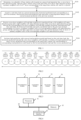
- FIG. 3 is a block diagram of a dynamic load prediction apparatus according to an embodiment of the present disclosure. As shown in FIG. 3 , the apparatus includes: an acquisition module 31, an acquisition module 32, a receiving module 33, and a prediction module 34.
- the determination module 31 is configured to determine, in a plurality of base station cells located on a preset load migration line, a cross-layer same-direction group, where a base station cell at each end of the cross-layer same-direction group is a primary neighbor cell of a K th layer corresponding to the target base station cell, and K is a preset value.
- the acquisition module 32 is coupled to the determination module 31 and configured to acquire a real-time load at a current moment and a historical predicted load corresponding to a previous moment, where the historical predicted load represents a load migration change of the current moment predicted at the previous moment.
- the receiving module 33 is coupled to the acquisition module 32 and configured to receive cross-layer neighbor cell load data respectively transferred from a left neighbor cell same-direction group and a right neighbor cell same-direction group of the cross-layer same-direction group, where the corresponding cross-layer neighbor cell load data includes historical load data and real-time load data, the historical load data represents a predicted load at the previous moment corresponding to K layers of primary neighbor cells of a corresponding neighbor cell same-direction group, and the real-time load data represents an actual load at the current moment of the K layers of primary neighbor cells of the corresponding neighbor cell same-direction group.
- the prediction module 34 is coupled to the receiving module 33 and configured to perform load prediction with a preset load prediction model and based on the real-time load, the historical predicted load and the cross-layer neighbor cell load data, to obtain a forward predicted load and a reverse predicted load corresponding to the target base station cell, and determine a corresponding load prediction result based on the forward predicted load and the reverse predicted load.
- the dynamic load prediction apparatus by determining, in a plurality of base station cells located on a preset load migration line, a cross-layer same-direction group, where a base station cell at each end of the cross-layer same-direction group is a primary neighbor cell of a K th layer corresponding to the target base station cell, and K is a preset value; acquiring a real-time load at a current moment and a historical predicted load corresponding to a previous moment, where the historical predicted load represents a load migration change of the current moment predicted at the previous moment; receiving cross-layer neighbor cell load data respectively transferred from a left neighbor cell same-direction group and a right neighbor cell same-direction group of the cross-layer same-direction group, where the corresponding cross-layer neighbor cell load data includes historical load data and real-time load data, the historical load data represents a predicted load at the previous moment corresponding to K layers of primary neighbor cells of a corresponding neighbor cell same-direction group, and the real-time load data
- the prediction module 34 is further configured to perform, by the load prediction model, forward load calculation on the real-time load, the historical predicted load and the historical load data and real-time load data corresponding to the left neighbor cell same-direction group, to obtain the forward predicted load; and perform, by the load prediction model, reverse load calculation on the real-time load, the historical predicted load and the historical load data and real-time load data corresponding to the right neighbor cell same-direction group, to obtain the reverse predicted load.
- the apparatus is further configured to acquire a first actual load of each base station cell on the preset load migration line at the current moment. determine a nearest left neighbor cell and a nearest right neighbor cell corresponding to each base station cell, and respectively acquire actual loads of the nearest right neighbor cell and the nearest left neighbor cell corresponding to the base station cell at the previous moment, where by defining a direction from a left end to a right end of the preset load migration line as a forward direction, the nearest left neighbor cell represents a first base station cell on a left side of a corresponding base station cell in the forward direction, and the nearest right neighbor cell represents a first base station cell on a right side of a corresponding base station cell in the forward direction; determine, based on the actual load of the nearest right neighbor cell at the previous moment, a first migration load of the nearest right neighbor cell which is migrated to the base station cell according to a first preset proportion at the previous moment, and determine, based on the actual load of the nearest left neighbor cell at the previous moment, a second migration load of the
- the load prediction model includes a forward predicted load calculation equation L ⁇ p ⁇ i m and a reverse predicted load calculation equation L ⁇ p ⁇ i m :
- the prediction module 34 is further configured to sum the forward predicted load and the reverse predicted load to obtain a first predicted total load corresponding to the target base station on the preset load migration line; and accumulate first predicted total loads corresponding to a plurality of preset load migration lines to generate a total predicted load, where the load prediction result includes the total predicted load.
- the apparatus is further configured to respectively acquire the total predicted load corresponding to the current moment and an actual load corresponding to the current moment, and respectively acquire a historical total predicted load corresponding to the previous moment and a historical actual load corresponding to the previous moment; generate a difference variation function of load prediction based on at least two of the actual load corresponding to the current moment, the total predicted load corresponding to the current moment, the historical total predicted load corresponding to the previous moment and the historical actual load corresponding to the previous moment, and determine a calculated value of the difference variation function, where the difference variation function represents prediction performance of load prediction; and judge whether the calculated value of the difference variation function is greater than a preset threshold, and adjust weight factors corresponding to the load prediction model according to a judgment result, where the weight factors corresponding to the load prediction model includes the weight ⁇ of the load of the target base station cell C i itself, the weight ⁇ of the actual load of each base station cell, and the first preset proportion ⁇ .
- the difference variation function includes one of: a difference between the actual load corresponding to the current moment and the historical total predicted load corresponding to the previous moment; a ratio of the difference between the actual load corresponding to the current moment and the historical total predicted load corresponding to the previous moment to the actual load corresponding to the current moment; a difference between the historical total predicted load corresponding to the previous moment and the total predicted load corresponding to the current moment; a difference between the actual load corresponding to the current moment and the historical actual load corresponding to the previous moment; or a load difference generated by weighting the difference between the total predicted load corresponding to the current moment and the historical total predicted load corresponding to the previous moment, and weighting the difference between the actual load corresponding to the current moment and the historical actual load corresponding to the previous moment.
- the acquisition module 31 is further configured to acquire granularity data of switching frequency corresponding to each base station cell on the preset load migration line, and select a neighbor cell with the largest granularity data of switching frequency as a primary neighbor cell of the base station cell, where the granularity data of switching frequency represents the number of user switches between the base station cell and a neighbor cell corresponding to the base station cell within a preset time period; take a selected left primary neighbor cell and a selected right primary neighbor cell corresponding to each base station cell as a base station cell same-direction group corresponding to the base station cell; and take the target base station cell as a start point, select K continuous base station cells corresponding to the base station cell same-direction groups in both forward and reverse directions of the preset load migration line, and perform de-duplication on the selected base station cells in the base station cell same-direction groups to obtain the cross-layer same-direction group.
- FIG. 4 is a schematic structural diagram of a base station according to an embodiment of the present disclosure.
- an embodiment of the present disclosure provides a base station including a processor 41, a communication interface 42, a memory 43, and a communication bus 44.
- the processor 41, the communication interface 42 and the memory 43 are communicated with each other through the communication bus 44.
- the memory 43 has a computer program stored thereon.
- the processor 41 is configured to, when executing the program stored on the memory 43, implement the method as shown in FIG. 1 .
- the processing in the base station implements the method steps in FIG. 1 , and the technical effects brought by the processing in the base station are consistent with the technical effects of the dynamic load prediction method in FIG. 1 executed in the foregoing embodiments, and thus are not repeated here.
- the communication bus mentioned in the base station may be a peripheral component interconnect (PCI) bus or an extended industry standard architecture (EISA) bus or the like.
- the communication bus may be divided into an address bus, a data bus, a control bus, or the like. For ease of illustration, only one thick line is shown in FIG. 4 , but it does not indicate only one bus or one bus type.
- the communications interface is configured for mutual communication of the terminal and other devices.
- the memory may include a random access memory (RAM), or a non-volatile memory, such as at least one disk memory.
- RAM random access memory
- non-volatile memory such as at least one disk memory.
- the memory may be at least one memory device located remotely from the processor.
- the processor may be a general purpose processor, including a central processing unit (CPU), a network processor (NP), or the like; or may be a digital signal processor (DSP), an application specific integrated circuit (ASIC), a field-programmable gate array (FPGA) or any other programmable logic device, a discrete gate or a transistor logic device, or a discrete hardware component.
- CPU central processing unit
- NP network processor
- DSP digital signal processor
- ASIC application specific integrated circuit
- FPGA field-programmable gate array
- An embodiment of the present disclosure further provides a computer-readable storage medium storing a computer program thereon, where the computer program, when executed by a processor, causes the dynamic load prediction method according to any one of the method embodiments described above to be implemented.
- a computer program product including instructions which, when executed on a computer, cause the computer to implement the dynamic load prediction method according to any one of the above embodiments.
- the embodiments of the present disclosure provide a dynamic load prediction method and apparatus, a base station and a storage medium which, by determining, in a plurality of base station cells located on a preset load migration line, a cross-layer same-direction group, where a base station cell at each end of the cross-layer same-direction group is a primary neighbor cell of a K th layer corresponding to the target base station cell, and K is a preset value; acquiring a real-time load at a current moment and a historical predicted load corresponding to a previous moment, where the historical predicted load represents a load migration change of the current moment predicted at the previous moment; receiving cross-layer neighbor cell load data respectively transferred from a left neighbor cell same-direction group and a right neighbor cell same-direction group of the cross-layer same-direction group, where the corresponding cross-layer neighbor cell load data includes historical load data and real-time load data, the historical load data represents a predicted load at the previous moment corresponding to K layers of primary neighbor cells of
Landscapes
- Engineering & Computer Science (AREA)
- Computer Networks & Wireless Communication (AREA)
- Signal Processing (AREA)
- Mobile Radio Communication Systems (AREA)
Applications Claiming Priority (2)
| Application Number | Priority Date | Filing Date | Title |
|---|---|---|---|
| CN202211028169.9A CN117692941B (zh) | 2022-08-25 | 2022-08-25 | 动态负荷预测方法、装置、基站和存储介质 |
| PCT/CN2023/083168 WO2024040960A1 (zh) | 2022-08-25 | 2023-03-22 | 动态负荷预测方法、装置、基站和存储介质 |
Publications (2)
| Publication Number | Publication Date |
|---|---|
| EP4576865A1 true EP4576865A1 (de) | 2025-06-25 |
| EP4576865A4 EP4576865A4 (de) | 2025-12-10 |
Family
ID=90012301
Family Applications (1)
| Application Number | Title | Priority Date | Filing Date |
|---|---|---|---|
| EP23856056.9A Pending EP4576865A4 (de) | 2022-08-25 | 2023-03-22 | Verfahren und vorrichtung zur dynamischen lastvorhersage, basisstation und speichermedium |
Country Status (4)
| Country | Link |
|---|---|
| EP (1) | EP4576865A4 (de) |
| JP (1) | JP7841185B2 (de) |
| CN (1) | CN117692941B (de) |
| WO (1) | WO2024040960A1 (de) |
Families Citing this family (5)
| Publication number | Priority date | Publication date | Assignee | Title |
|---|---|---|---|---|
| CN117951555B (zh) * | 2024-03-27 | 2024-06-14 | 山东德源电力科技股份有限公司 | 一种用于负控安装测试装置的策略制定方法 |
| CN118803837A (zh) * | 2024-04-02 | 2024-10-18 | 中国移动通信集团湖南有限公司 | 网络规模的预测方法、装置及电子设备 |
| CN118804174B (zh) * | 2024-06-04 | 2025-12-09 | 中国移动通信集团浙江有限公司 | 小区负荷均衡方法、装置、设备及计算机程序产品 |
| CN119997169A (zh) * | 2025-04-09 | 2025-05-13 | 中国电信股份有限公司 | 列车基站节能方法、装置及相关设备 |
| CN120711445B (zh) * | 2025-08-25 | 2025-11-18 | 天翼物联科技有限公司 | 一种基站拥塞预测方法及相关设备 |
Family Cites Families (9)
| Publication number | Priority date | Publication date | Assignee | Title |
|---|---|---|---|---|
| US20160088522A1 (en) * | 2013-06-18 | 2016-03-24 | Telefonaktiebolaget Lm Ericsson (Publ) | Method and Apparatus in a Base Station for Controlling Communication Resources to a Plurality of Antenna Sites of the Base Station |
| JP2014161131A (ja) * | 2014-06-12 | 2014-09-04 | Hitachi Ltd | 無線通信システム、そのシステム用の収容先変更方法、並びに管理装置、及び無線基地局 |
| KR101782283B1 (ko) * | 2015-12-14 | 2017-09-26 | 텔레폰악티에볼라겟엘엠에릭슨(펍) | 무선 네트워크 조건들에 기반한 계획된 운동의 조정 |
| CN107659943B (zh) * | 2016-07-26 | 2020-05-22 | 大唐移动通信设备有限公司 | 一种负荷均衡方法和装置 |
| CN112954707B (zh) * | 2019-12-11 | 2022-09-16 | 中国电信股份有限公司 | 基站的节能方法、装置、基站和计算机可读存储介质 |
| CN113132945B (zh) * | 2019-12-30 | 2023-07-18 | 中国移动通信集团辽宁有限公司 | 一种铁路专网基站小区节能调度方法和系统 |
| CN113825165B (zh) * | 2020-06-18 | 2023-08-04 | 中国移动通信集团浙江有限公司 | 基于时间图网络的5g切片网络拥塞预警方法及装置 |
| CN113938954B (zh) * | 2021-10-12 | 2023-06-30 | 中国联合网络通信集团有限公司 | 负荷均衡优化方法、装置及存储介质 |
| CN113891415A (zh) * | 2021-11-17 | 2022-01-04 | 西藏先锋绿能环保科技股份有限公司 | 可节能小区快速筛选方法 |
-
2022
- 2022-08-25 CN CN202211028169.9A patent/CN117692941B/zh active Active
-
2023
- 2023-03-22 EP EP23856056.9A patent/EP4576865A4/de active Pending
- 2023-03-22 JP JP2025511872A patent/JP7841185B2/ja active Active
- 2023-03-22 WO PCT/CN2023/083168 patent/WO2024040960A1/zh not_active Ceased
Also Published As
| Publication number | Publication date |
|---|---|
| WO2024040960A1 (zh) | 2024-02-29 |
| CN117692941B (zh) | 2025-11-25 |
| JP7841185B2 (ja) | 2026-04-06 |
| EP4576865A4 (de) | 2025-12-10 |
| JP2025527012A (ja) | 2025-08-15 |
| CN117692941A (zh) | 2024-03-12 |
Similar Documents
| Publication | Publication Date | Title |
|---|---|---|
| EP4576865A1 (de) | Verfahren und vorrichtung zur dynamischen lastvorhersage, basisstation und speichermedium | |
| EP4138466A1 (de) | Energiesparverfahren, basisstation, steuereinheit und speichermedium | |
| WO2021169577A1 (zh) | 一种基于加权联邦学习的无线业务流量预测方法 | |
| Ma et al. | Context-aware proactive 5G load balancing and optimization for urban areas | |
| CN110505650B (zh) | 随机异构分层网容量智能评估方法及装置 | |
| US20170353913A1 (en) | Device and method for allocating physical cell identifier of mobile base station | |
| CN106102099B (zh) | 一种基于驻留时间的异构车联网切换方法 | |
| CN108134979B (zh) | 基于深度神经网络的小基站开关控制方法 | |
| CN110621006A (zh) | 用户设备的接入处理方法、智能设备及计算机存储介质 | |
| CN103002495A (zh) | 无线网络结构的评估方法及装置 | |
| WO2018184667A1 (en) | Apparatus and method for performing network optimization | |
| CN103929752A (zh) | 基站间动态协同覆盖方法 | |
| CN110913407A (zh) | 重叠覆盖的分析方法及装置 | |
| CN115499884B (zh) | 小区的业务迁移方法、装置及计算机可读存储介质 | |
| CN116471632A (zh) | 一种移动边缘计算中基于多点协作的任务迁移方法 | |
| CN113115321B (zh) | 一种无线传感网络节点部署优化方法 | |
| Zaki et al. | PLTO: Path loss-aware task offloading for vehicular cooperative perception | |
| CN120342441A (zh) | 一种基于智能超表面的信号增强方法、装置以及存储介质 | |
| Zhang et al. | A novel heuristic for handover priority in mobile heterogeneous networks based on a multimodule Takagi–Sugeno–Kang fuzzy system | |
| CN119967444A (zh) | 一种基于无线覆盖增强与感知通信一体化的系统及方法 | |
| EP3662694A1 (de) | Optimierung der zellausfallsminderung in einem kommunikationsnetz | |
| CN116170815A (zh) | 一种小区业务量的处理方法、装置及设备 | |
| CN106131920A (zh) | 一种基于多属性与排队理论的异构网络选择方法 | |
| Agyare et al. | An Optimized Vertical Handover Decision Model for the Heterogeneous DSRC/LTE Vehicular Networks. | |
| CN111611332B (zh) | 航线中转的优化方法及系统 |
Legal Events
| Date | Code | Title | Description |
|---|---|---|---|
| STAA | Information on the status of an ep patent application or granted ep patent |
Free format text: STATUS: THE INTERNATIONAL PUBLICATION HAS BEEN MADE |
|
| PUAI | Public reference made under article 153(3) epc to a published international application that has entered the european phase |
Free format text: ORIGINAL CODE: 0009012 |
|
| STAA | Information on the status of an ep patent application or granted ep patent |
Free format text: STATUS: REQUEST FOR EXAMINATION WAS MADE |
|
| 17P | Request for examination filed |
Effective date: 20250320 |
|
| AK | Designated contracting states |
Kind code of ref document: A1 Designated state(s): AL AT BE BG CH CY CZ DE DK EE ES FI FR GB GR HR HU IE IS IT LI LT LU LV MC ME MK MT NL NO PL PT RO RS SE SI SK SM TR |
|
| DAV | Request for validation of the european patent (deleted) | ||
| DAX | Request for extension of the european patent (deleted) | ||
| A4 | Supplementary search report drawn up and despatched |
Effective date: 20251112 |
|
| RIC1 | Information provided on ipc code assigned before grant |
Ipc: H04W 24/06 20090101AFI20251106BHEP Ipc: H04W 24/02 20090101ALI20251106BHEP Ipc: H04W 28/086 20230101ALI20251106BHEP Ipc: H04W 28/08 20230101ALI20251106BHEP Ipc: H04W 28/10 20090101ALI20251106BHEP Ipc: H04W 36/22 20090101ALI20251106BHEP |