EP4574201A2 - Magnetische stimulationsvorrichtungen für therapeutische behandlungen - Google Patents
Magnetische stimulationsvorrichtungen für therapeutische behandlungen Download PDFInfo
- Publication number
- EP4574201A2 EP4574201A2 EP25175734.0A EP25175734A EP4574201A2 EP 4574201 A2 EP4574201 A2 EP 4574201A2 EP 25175734 A EP25175734 A EP 25175734A EP 4574201 A2 EP4574201 A2 EP 4574201A2
- Authority
- EP
- European Patent Office
- Prior art keywords
- magnetic field
- stimulation
- field generating
- magnetic
- treatment
- Prior art date
- Legal status (The legal status is an assumption and is not a legal conclusion. Google has not performed a legal analysis and makes no representation as to the accuracy of the status listed.)
- Pending
Links
Images










Classifications
-
- A—HUMAN NECESSITIES
- A61—MEDICAL OR VETERINARY SCIENCE; HYGIENE
- A61N—ELECTROTHERAPY; MAGNETOTHERAPY; RADIATION THERAPY; ULTRASOUND THERAPY
- A61N2/00—Magnetotherapy
- A61N2/12—Magnetotherapy using variable magnetic fields obtained by mechanical movement
-
- A—HUMAN NECESSITIES
- A61—MEDICAL OR VETERINARY SCIENCE; HYGIENE
- A61B—DIAGNOSIS; SURGERY; IDENTIFICATION
- A61B18/00—Surgical instruments, devices or methods for transferring non-mechanical forms of energy to or from the body
- A61B18/04—Surgical instruments, devices or methods for transferring non-mechanical forms of energy to or from the body by heating
- A61B18/12—Surgical instruments, devices or methods for transferring non-mechanical forms of energy to or from the body by heating by passing a current through the tissue to be heated, e.g. high-frequency current
- A61B18/14—Probes or electrodes therefor
-
- A—HUMAN NECESSITIES
- A61—MEDICAL OR VETERINARY SCIENCE; HYGIENE
- A61M—DEVICES FOR INTRODUCING MEDIA INTO, OR ONTO, THE BODY; DEVICES FOR TRANSDUCING BODY MEDIA OR FOR TAKING MEDIA FROM THE BODY; DEVICES FOR PRODUCING OR ENDING SLEEP OR STUPOR
- A61M19/00—Local anaesthesia; Hypothermia
-
- A—HUMAN NECESSITIES
- A61—MEDICAL OR VETERINARY SCIENCE; HYGIENE
- A61N—ELECTROTHERAPY; MAGNETOTHERAPY; RADIATION THERAPY; ULTRASOUND THERAPY
- A61N2/00—Magnetotherapy
- A61N2/002—Magnetotherapy in combination with another treatment
-
- A—HUMAN NECESSITIES
- A61—MEDICAL OR VETERINARY SCIENCE; HYGIENE
- A61N—ELECTROTHERAPY; MAGNETOTHERAPY; RADIATION THERAPY; ULTRASOUND THERAPY
- A61N2/00—Magnetotherapy
- A61N2/004—Magnetotherapy specially adapted for a specific therapy
-
- A—HUMAN NECESSITIES
- A61—MEDICAL OR VETERINARY SCIENCE; HYGIENE
- A61N—ELECTROTHERAPY; MAGNETOTHERAPY; RADIATION THERAPY; ULTRASOUND THERAPY
- A61N2/00—Magnetotherapy
- A61N2/004—Magnetotherapy specially adapted for a specific therapy
- A61N2/006—Magnetotherapy specially adapted for a specific therapy for magnetic stimulation of nerve tissue
-
- A—HUMAN NECESSITIES
- A61—MEDICAL OR VETERINARY SCIENCE; HYGIENE
- A61N—ELECTROTHERAPY; MAGNETOTHERAPY; RADIATION THERAPY; ULTRASOUND THERAPY
- A61N2/00—Magnetotherapy
- A61N2/004—Magnetotherapy specially adapted for a specific therapy
- A61N2/008—Magnetotherapy specially adapted for a specific therapy for pain treatment or analgesia
-
- A—HUMAN NECESSITIES
- A61—MEDICAL OR VETERINARY SCIENCE; HYGIENE
- A61N—ELECTROTHERAPY; MAGNETOTHERAPY; RADIATION THERAPY; ULTRASOUND THERAPY
- A61N2/00—Magnetotherapy
- A61N2/02—Magnetotherapy using magnetic fields produced by coils, including single turn loops or electromagnets
-
- H—ELECTRICITY
- H01—ELECTRIC ELEMENTS
- H01F—MAGNETS; INDUCTANCES; TRANSFORMERS; SELECTION OF MATERIALS FOR THEIR MAGNETIC PROPERTIES
- H01F7/00—Magnets
- H01F7/06—Electromagnets; Actuators including electromagnets
- H01F7/064—Circuit arrangements for actuating electromagnets
-
- A—HUMAN NECESSITIES
- A61—MEDICAL OR VETERINARY SCIENCE; HYGIENE
- A61B—DIAGNOSIS; SURGERY; IDENTIFICATION
- A61B18/00—Surgical instruments, devices or methods for transferring non-mechanical forms of energy to or from the body
- A61B18/04—Surgical instruments, devices or methods for transferring non-mechanical forms of energy to or from the body by heating
- A61B18/12—Surgical instruments, devices or methods for transferring non-mechanical forms of energy to or from the body by heating by passing a current through the tissue to be heated, e.g. high-frequency current
- A61B18/1206—Generators therefor
-
- A—HUMAN NECESSITIES
- A61—MEDICAL OR VETERINARY SCIENCE; HYGIENE
- A61B—DIAGNOSIS; SURGERY; IDENTIFICATION
- A61B18/00—Surgical instruments, devices or methods for transferring non-mechanical forms of energy to or from the body
- A61B2018/00315—Surgical instruments, devices or methods for transferring non-mechanical forms of energy to or from the body for treatment of particular body parts
- A61B2018/00452—Skin
-
- A—HUMAN NECESSITIES
- A61—MEDICAL OR VETERINARY SCIENCE; HYGIENE
- A61N—ELECTROTHERAPY; MAGNETOTHERAPY; RADIATION THERAPY; ULTRASOUND THERAPY
- A61N1/00—Electrotherapy; Circuits therefor
- A61N1/02—Details
- A61N1/04—Electrodes
- A61N1/06—Electrodes for high-frequency therapy
-
- A—HUMAN NECESSITIES
- A61—MEDICAL OR VETERINARY SCIENCE; HYGIENE
- A61N—ELECTROTHERAPY; MAGNETOTHERAPY; RADIATION THERAPY; ULTRASOUND THERAPY
- A61N1/00—Electrotherapy; Circuits therefor
- A61N1/18—Applying electric currents by contact electrodes
- A61N1/32—Applying electric currents by contact electrodes alternating or intermittent currents
- A61N1/328—Applying electric currents by contact electrodes alternating or intermittent currents for improving the appearance of the skin, e.g. facial toning or wrinkle treatment
-
- A—HUMAN NECESSITIES
- A61—MEDICAL OR VETERINARY SCIENCE; HYGIENE
- A61N—ELECTROTHERAPY; MAGNETOTHERAPY; RADIATION THERAPY; ULTRASOUND THERAPY
- A61N1/00—Electrotherapy; Circuits therefor
- A61N1/18—Applying electric currents by contact electrodes
- A61N1/32—Applying electric currents by contact electrodes alternating or intermittent currents
- A61N1/36—Applying electric currents by contact electrodes alternating or intermittent currents for stimulation
- A61N1/36014—External stimulators, e.g. with patch electrodes
Definitions
- the present invention relates to apparatus and methods for treating a patient by a magnetic field.
- the application of the magnetic field is provided by a plurality of magnetic field generating devices.
- Magnet therapy originally used permanent magnets with a stationary magnetic field. Natural magnets were applied especially to acupuncture points, or to the location of pain. Thereafter natural magnets were replaced by synthetic magnets and electromagnets of stationary magnetic field of higher induction than permanent magnets. In the last few decades, therapeutic methods have used mainly a pulsed magnetic field.
- a time-varying magnetic field induces electric currents in the patient's body, which may provide similar effect as electrotherapeutic treatment.
- the induced electrical currents may evoke an active response by sufficient intensity, impulse duration and/or repetition rate.
- the advantage of the methods using magnetic field compared with electrotherapeutical methods is that changing magnetic field therapy does not require contact with the patient and can be performed through clothing. With magnetic field treatments, the stimulating signal does not pass through the skin. Rather, the electrical currents are induced directly in the stimulated tissue. This increases stimulation focus and eliminates unwanted side effects of the therapy (e.g. skin irritation). Using a sufficiently large magnetic flux density and/or repetition rate, it is possible to stimulate various tissues without need of invasive methods.
- the currently used magnetic stimulation devices mostly consist of one magnetic field generating device, a capacitor parallel to a power source and a switching device in series to the power source. Further such topology requires a snubbering device, such as diode or RC snubbering circuit, for protecting the energy source during the reverse polarity of resonance.
- a snubbering device causes high energy losses.
- the magnetic stimulation device wastes a lot of energy because of low efficiency due to significant electric losses while generating the time-varying magnetic field. Therefore these devices generate magnetic impulses ineffectively.
- the large areas may be at least one muscle group or region prone to cellulite.
- the shape of the magnetic field is dependent on the shape of the magnetic field generating device.
- the magnetic field may not be selectively focused during the treatment.
- the adjustable parameters are magnetic flux density, repetition rate and/or time duration of the treatment.
- Still another disadvantage of currently used magnetic stimulation devices is the slow treatment in the case of large and/or a plurality of treated areas.
- the applicator has to be manually moved from one position to another position to stimulate the large and/or the plurality of treated areas and the treatment of the entire area takes a long time. Further the treatment is not homogenous since the magnetic field does not stimulate the entire large target area at the same time.
- magnetic stimulation devices using a plurality of magnetic field generating devices have limited effectiveness due to the serial connection of the switching device and magnetic field generating device which requires a snubbering device, causing high energy losses.
- a magnetic stimulation device Currently used devices and methods of operating a magnetic stimulation device are strictly limited to generating a time-varying magnetic field. Any combined methods are applied by two separate devices generating two different types of treatment. There is a demand for a device providing combined treatments, e.g. contactless treatment by electromagnetic field, such as conventional treatment and treatment by time-varying magnetic field.
- stimulation for treatment and improvement of patient's wellbeing and/or appearance is performed by magnet treatment methods reaching low repetition rates or direct current methods.
- the magnetic stimulation device operation is limited by the factory settings and/or by the worst potential cases which are predefined by the dependence of the maximal values of magnetic flux densities and the repetition rates.
- the treatment is limited by the preset operation parameters.
- the stimulation by a time-varying magnetic field is limited by key parameters of repetition rate, magnetic flux density and/or treatment duration.
- the applicator may exceed a predetermined temperature which may cause heat injury to the patient where the treatment of the biological structure requires high magnetic flux density. If the magnetic stimulation device produces more heat than the cooling system can dissipate, the treatment device is turned off based on feedback from a temperature sensor in the applicator.
- the limit may be set by the operator.
- the control system of the magnetic stimulation device may operate the magnetic stimulation device to reach the predetermined magnetic flux density which is determined empirically by the manufacturer during the most discriminating stimulation, e.g. the case of the highest repetition rate. Therefore the stimulation is limited in the magnetic flux density domain and/or the depth of the stimulated target tissue is limited. Furthermore, the stimulation is also limited by the repetition rate and/or the treatment duration.
- no commercially available magnetic stimulation device is able to monitor the stimulation energy and protect the patient and/or the magnetic stimulation device from an unintended event by monitoring the current value of the operation parameter. Therefore, an unintended event may cause heat damage to the patient and/or the magnetic stimulation device without ceasing the treatment.
- Unintended events may cause the operation parameter drop so the efficiency of the magnetic stimulation device decreases if an unintended event occurs. Power consumption may increase during the unchanged treatment parameters, placing the patient and/or the magnetic stimulation device at risk.
- Magnet therapy uses the influence of magnetic flux on biological tissue. Electric current is induced in the tissue due to voltage change which causes a polarization of the cell membrane.
- One of fundamental phenomenon of electric current in biological tissue is a transfer of neural excitation or muscle contraction. The intensity of the effect is dependent on the magnetic flux density, repetition rate of the pulses, pulse time duration or envelope of the stimulation signal.
- PEMF pulsed electromagnetic field
- Existing methods of magnet therapy generally tend to be limited by the key parameters of repetition rate and/or magnetic flux density. These methods may use high values of magnetic flux density at low repetition rate or vice versa. These combinations limit the effectiveness of muscle therapy at higher repetition rates over 50 Hz. Therefore the stimulation of deep structures or stimulation by high repetition rates or the combination of both is limited.
- Existing designs do not provide any device and/or method for stimulating biological structure at repetition rate over 50 Hz and magnetic flux density sufficient to cause at least partial muscle contraction repetitively. Additionally existing methods do not disclose time duration of the therapy.
- muscle contraction or neural structure stimulation for diagnosis or prognosis or causing improvement of patient's well-being such as strengthening, training, myorelaxation or analgesic effect at higher repetition rates over 50 Hz and at sufficient intensity stimulus may be achieved only by direct current therapy.
- direct current methods require contact with the patient and even may be invasive. These methods can result in skin irritation, painful application especially for the high intensity stimulus, discomfort during the treatment, lack of deep tissue stimulation by non-invasive methods, and a lack of patient compliance with a prescribed therapy due to these factors.
- Aesthetic medicine includes all treatments resulting in enhancing a visual appearance and satisfaction of the patient. Patients not only want to be in good health, they also want to minimize all imperfections including body shape and effects of natural aging. Indeed, patients request quick, non-invasive procedures providing satisfactory results with minimal risks.
- the most common methods used for non-invasive aesthetic applications are based on application of mechanical waves, e.g. ultrasound or shock wave therapy; or electromagnetic waves, e.g. radiofrequency treatment or light treatment, such as intense pulsed light or laser treatment.
- mechanical waves e.g. ultrasound or shock wave therapy
- electromagnetic waves e.g. radiofrequency treatment or light treatment, such as intense pulsed light or laser treatment.
- the effect of mechanical waves on tissue is based especially on cavitation, vibration and/or heat inducing effects.
- the effect of applications using electromagnetic waves is based especially on heat production in the biological structure.
- Skin tissue is composed of three basic elements: epidermis, dermis and hypodermis or so called subcutis.
- the outer and also the thinnest layer of skin is the epidermis.
- the dermis consists of collagen, elastic tissue and reticular fibres.
- the hypodermis is the lowest layer of the skin and contains hair follicle roots, lymphatic vessels, collagen tissue, nerves and also fat forming a subcutaneous white adipose tissue (SWAT).
- SWAT subcutaneous white adipose tissue
- the fat cells create lobules which are bounded by connective tissue, fibrous septa (retinaculum cutis).
- VWAT visceral white adipose tissue
- PEMF may be used to improve the conventional non-invasive aesthetic medicine applications, e.g. radiofrequency treatment, diathermy treatment, ultrasound treatment, etc.
- the enhanced visual results are achieved in combination with these methods as described in patent application US2015025299 .
- the magnetic flux density of the recited magnetic field reaches 20 Gauss and the repetition rate varies from 16 to 25 Hz.
- US2015157873 recites an applicator including stimulation coil for emitting magnetic field to the patient to induce muscle contraction for the purpose of fatty tissue breakdown.
- the magnetic flux density is in range of 0.01 to 0.1 T at distance of 5 cm from the coil surface, the recited repetition rate varies from 10 to 30 Hz and impulse duration is in range of 100 to 300 ⁇ s.
- the proposed stimulation by magnetic flux density 0.1 T is limited to stimulate only superficial muscle. Additionally, this stimulation may be time consuming and provide limited results.
- Magnetic flux density of 0.1 T is insufficient to intensively stimulate superficial muscle or deep biological structures since the magnetic flux density is low.
- the magnetic flux density is able to stimulate limited number of muscle fibres. Therefore the muscle contraction is weak and the method is insufficient to be applied for satisfactory enhancement of visual appearance. In order to achieve any results the treatment duration lasts long time period. Accordingly, patients with a high BMI cannot be well treated using existing methods.
- the present aesthetic approaches don't provide any treatment combining the effect of time-varying magnetic field treatment and conventional treatment, e.g. treatment by electromagnetic field such as radiofrequency treatment.
- the currently used radiofrequency treatment includes many adverse events such as non-homogenous thermal temperature, insufficient blood and/or lymph flow during and/or after the treatment. Additionally several adverse event such as panniculitis may occur after the treatment.
- a time varying magnetic field may be used to treat variety disorders and injuries of muscle, nerve and connective tissue. It may also be used also in physiotherapy, aesthetic therapy, urology, urogynecology, psychiatry, neurology and neurophysiology for therapy and diagnosis/prognosis.
- a device for time variable magnetic field generation may include an energy source, an energy storage device, a switching circuit, a coil and possibly a core.
- the energy storage device accumulates tens of Joules of energy and the magnetic flux density induced by the coil is in the range of tenths of a Tesla to about one Tesla.
- Existing devices have low efficiency and they waste energy, which limits their use. Eddy currents induced within the coil create engineering challenges. Existing devices contain coils which are made of metallic strips, electric wires or hollow conductors. Since the therapy requires large currents, significant losses are caused by induced eddy currents within the coil. Eddy currents lead to production of unwanted is heat and therefore there is need to sufficiently cool the coil. Also, the energy source must be protected during reverse polarity of resonance. This requires using protective circuits which consume significant amounts of energy.
- existing devices may not achieve repetition rates of magnetic pulses above one hundred Hertz, as may be needed to produce a magnetic flux density sufficient for acting on neurons, muscle fibers and/or endocrine cells (e.g. at least partial muscle contraction).
- interruptions during therapy or between therapies are often necessary to avoid overheating the device.
- the present methods and devices as described below produce a time varying magnetic field for patient treatment which better optimizes energy use, increases the effectiveness of the treatments and provide a new treatment.
- the magnetic impulses may be generated in monophasic, biphasic or polyphasic regimes.
- the device has one or more coils; a switch; an energy storage device and a connection to an energy source.
- the coil may be made of insulated wires with a conductor diameter less than 3 mm even more preferably less than 0.5 mm and most preferably less than 0.05 mm. Smaller diameter and individual insulation of the wires significantly reduces self-heating of the coil and therefore increase efficiency of magnetic stimulation device.
- the coil may be flexibly attached in a casing of device.
- the casing may comprise a blower or blowers which ensure cooling of the coil.
- Space between the insulated wires may be filled with a solid material so as to reduce the noise caused by vibrations.
- the coil is connected with an energy storage device which serves as a storage of energy.
- the switch can be any kind of switch such as diode, MOSFET, JFET, IGBT, BJT, thyristor or a combination of them.
- the switch can be connected in parallel to the coil and the energy storage device, to eliminate reversal polarity of high voltage on the terminals of the energy source in the second half of the resonant effect. Therefore there is no need for additional protective circuits to protect the energy source from the negative voltage. Electric losses associated with such protective circuits are avoided. Energy use is reduced. The voltage drop in the energy storage device between first and second oscillation maximum during resonance is also reduced. Via the lower voltage drop, higher repetition rates of magnetic pulses and higher magnetic flux density may be achieved for treatment of the patient.
- the coil of the magnetic stimulation device may be flexibly attached to casing of the device.
- the blower or blowers may be arranged to blow air on both sides of coil.
- the coil may be a flat type coil.
- continuous therapy and “continual magnetic stimulation” means therapy where the set of the magnetic flux density and repetition rate of magnetic pulses does not lead to exceeding of the operating temperature 43 °C on the casing of the device operating in an ambient temperature of 30 °C regardless of the duration of therapy.
- the present invention provides a magnetic stimulation device including a radiofrequency treatment device and method of controlling the device.
- the combined magnetic and radiofrequency treatment device includes at least one magnetic field generating device which is able to generate high power magnetic pulses and radiofrequency treatment as well.
- the present invention provides a magnetic stimulation device and method of controlling the magnetic stimulation device using a plurality of magnetic field generating devices.
- Using a plurality of magnetic field generating devices provides faster treatment. Large and/or different areas may be treated in shorter time.
- Using a plurality of applicators allows different areas and/or target biological structures to be stimulated at the same time. The movement of the at least one applicator may automatically follow a predetermined trajectory. Hence manual manipulation is not needed. Furthermore the shape of the generated magnetic field may be adjusted by an operator.
- the treatment effect is more focused since the magnetic stimulation may be focused by interference of the magnetic fields generated by the plurality of magnetic field generating devices.
- the magnetic field may selectively stimulate small biological structures and the treatment effect may be more effective.
- the results may be achieved faster since the treatment is enhanced due to using the plurality of magnetic field generating devices.
- the treatment is more effective with reference to the currently used magnetic stimulation devices due to use of a parallel switching device with reference to the energy source, since the effectivity is higher due to lower energy losses. Additionally there are no losses in snubbering devices no snubbering device is needed or used. Additionally the hardware components may be rated at the nominal working voltage of the power supply even during resonance. This provides a significant advantage relative to existing devices which use serial switch topology where during resonance the hardware components are loaded by a voltage approximately double the nominal working voltage.
- the present invention provides a new approach in determining the parameters of biological structure treatment.
- the magnetic stimulation device monitors the stimulation energy based on the current value of an operation parameter and/or the operation parameter waveform of one period.
- the magnetic stimulation device may include additional thermal protection based on mathematic and/or signal processing methods which determine the relation of the currently determined operation parameter with a reference and/or with the operation parameter measured in a different value of characteristic quantity.
- the magnetic stimulation device may determine, based on the transition thermal characteristic of the magnetic stimulation device, the maximal treatment parameters which can be sufficiently cooled by the cooling system.
- control unit may calculate optimal flow of the cooling medium based on the treatment parameters, transition thermal characteristic of the magnetic stimulation device and/or the cooling medium temperature and significantly reduce the noise of the cooling system.
- control unit may optimize the treatment parameters based on the current value of operation parameters and a transition thermal characteristic of the magnetic stimulation device.
- the present invention provides an alternative treatment of neural diseases, diagnoses or prognosis, alleviating pain, myorelaxation, muscle stimulation, tissue healing, sleep improvement or edema reduction. Additionally, the present methods may be provided in combination with traditional medicament treatment.
- the method may provide a non-invasive transfer of a stimulation signal from an applicator to biological structure to evoke the action potential of biological structure.
- the method may use a peak to peak magnetic flux density on a coil surface at least 0.2 T, 0.4 T, 1.5 T, 2 T, or at least 3 T.
- the repetition rate may exceed 50 Hz, 80 Hz, 90 Hz, 100 Hz or 120 Hz, and up to 150 Hz, with preferable repetition rate up to 700 Hz. with initial or successive treatments lasting several seconds or longer, for example, for at least 5, 10, 30, 60, 120 or 240 seconds, or longer.
- the pulse width is in the range of tens to hundreds of microseconds.
- a method provides stimulation of biological structure using magnetic field at repetition rates exceeding 50 Hz for purpose of at least a partial muscle contraction.
- the time-varying magnetic field at higher repetition rate exceeding the repetition rate resolution of the neural structure may be used for generating an envelope of lower repetition frequency than the repetition rate.
- the envelope may be generated by time-varying magnetic flux density and/or repetition rate and/or impulse duration. This method is effective for stimulation of denervated muscle.
- the time-varying magnetic field at a magnetic flux density of at least 0.1 T and/or repetition rate at least 100 Hz may be used for stimulation of biological structure for diagnosis, prognosis or improving the patient's well-being.
- the time-varying magnetic field may be used for stimulation of biological structure to improve the patient's mental health or for influencing the hormonal production and/or balance.
- the time-varying magnetic field may also be used for stimulation of deep neural structures e.g., to treat psychiatric and/or neurodegenerative and/or psychiatric diseases, such as treatment of Parkinson's or Alzheimer's disease.
- the time-varying magnetic field may be used for stimulation of neural structure to determine whether the neural pathway is impaired or not, or the level of the impairment may be determined.
- the one approach is stimulating central neural system or peripheral neural structure and determining the feedback, e.g. muscle contraction.
- the conduction deficiency may be determined via maximal voluntary contraction.
- the time-varying magnetic field may also be used for stimulation of neural structure to alleviate pain via central neural system stimulation or via peripheral neural structure.
- the peripheral neural structure may be stimulated by repetition rates exceeding 100 Hz and/or by envelopes of lower repetition frequencies.
- the repetition rate and magnetic flux density selectively stimulates different neural structures.
- the pain is alleviated at specific repetition rates, pulse shapes and/or current densities.
- the pain alleviation effect may be caused by high power time-varying magnetic field at different levels of neural system.
- the time-varying magnetic field may be used for stimulation of neural structure to cause myorelaxation effects.
- the myorelaxation effects may occur generally during stimulation by time-varying magnetic field of repetition rate at least 100 Hz.
- the neural structure may be stimulated by envelopes at lower repetition frequencies below 100 Hz.
- a neuromuscular plate is stimulated causing an at least partial contraction of the muscle.
- the muscle is contracted at higher repetition rates and the contraction is stronger and more efficient for improving the muscle strength.
- the method is especially useful for deep muscles, major muscles, and for treatment of patients with high value of BMI.
- Deep muscle is the muscle underneath the superficial muscle.
- Muscle tissues may be selectively stimulated and the magnetic flux density of the stimulation may be adjusted based on patient characteristics or input. Treatment time can be shortened to a minimum due to selective stimulation of targeted muscles. Additionally, the treatment may be non-invasive or even contactless due to the high value of magnetic flux density. The patient may be treated without removing clothing, thereby reducing patient discomfort.
- the time-varying magnetic field may be used for stimulation of neural structure to cause muscle stimulation.
- the muscle stimulation may occur during stimulation by envelopes of repetition frequencies below 100 Hz.
- the application may be used for stimulation of denervated muscle treatment.
- the target biological structure may be a joint. Due to the pulsed magnetic field, the dynamic fluid properties of synovial fluid are improved and muscle contraction is achieved, contributing to positioning of the joint by short movements of the joint compartments.
- the time-varying magnetic field may be used for stimulation of neural structure to cause healing tissue effect, improve the sleeping patterns or reduce the edema.
- the method stimulates the biological structure via a magnetic stimulation signal of at least 100 Hz, where the stimulation is intended for at least partial muscle contraction.
- the pulsed magnetic field induces the electric current which may provide myorelaxation.
- the stimulation signal repetition rate may be at least 120 Hz or at least 140 Hz.
- Advantages of the present magnet therapy may include: stimulation of the deep neural structures which are problematically stimulated by superficial stimulation; non-invasive and/or non-contact application of magnetic flux density; treatment without removing clothing; absolute non-invasiveness of the stimulation and elimination of skin irritation in the place of time-varying magnetic field application; high rate of acceptability of the stimulation by patients; elimination of stimulation side effects; elimination of the necessity of applicator made of biocompatible materials; providing a clean and sterile applicator; and capability to provide local or area treatment.
- the present invention provides new methods of aesthetic treatment of a patient.
- a method for stimulation of biological structure uses a time-varying magnetic field at a magnetic flux density of at least 0.15 T and/or repetition rate 30 Hz for the purpose of at least a partial muscle contraction and enhancing the visual appearance of the treated body area.
- the stimulation utilizes non-invasive and/or contactless transfer of the stimulation signal from an applicator to biological structure to evoke the action potential of the biological structure to induce at least partial muscle contraction.
- the applicator may include a source of magnetic field e.g. a coil.
- the present methods enable new treatments defined by a peak to peak magnetic flux density on the coil surface at least 0.15, 0.2, 0.8, 1.5, 2, 2.4 or up to 7 Tesla at repetition rate at least 1, 10, 30, 50, 55, 60 or up to 700 Hertz with treatment/successive treatments lasting several seconds or longer, for example, for at least 5, 10, 30, 60, 120 or 240 seconds, or longer.
- the pulse width is in the range of tens to hundreds of ⁇ s.
- a neuromuscular plate and/or the nerve innervating the neuromuscular plate is stimulated and at least partial muscle contraction is provided.
- the muscle may be contracted at higher repetition rates and the contraction is stronger. Therefore the stimulation is more efficient for reducing the number and/or volume of adipocytes and enhancing the visual appearance of the treated body area via targeted muscle contraction. Additionally, strong muscle contractions at higher repetition rates cause mechanical movement of all the layers in proximity of the contracted muscle. This method therefore causes remodeling and/or neogenesis of the collagen and elastin fibers.
- the method may be applied for enhancing the visual appearance of body area including or proximate to major muscle structures. Further the method for enhancing the visual appearance is convenient for treatment of patients with high BMI.
- the muscle tissue is selectively stimulated and the magnetic flux density of the stimulation may be adjusted based on the patient's feeling and/or needs. Treatment time is shortened due to selective stimulation of muscles. Additionally, the treatment may be non-invasive or even contactless due to the high value of magnetic flux density. Invasive methods may be used as well. The patient may be treated without the necessity of taking clothes off. The method reduces patient discomfort.
- the present methods may be used for enhancing visual appearance of body areas including adipose tissue reduction, muscle toning, muscle shaping, body contouring, body shaping, skin tightening, cellulite treatment, circumferential reduction, breast enhancement and/or lip enhancement.
- a method of treating a biological structure uses a combination of non-invasive methods for enhancing human appearance.
- the invention utilizes electromagnetic radiation. Methods may be used for targeted remodeling adipose tissue, focused treatment of cellulite, body contouring, skin tightening or skin rejuvenation.
- the invention relates to focused heating of the target tissue by electromagnetic waves, whereas the effect of focused heating of the target tissue is amplified by the effect of a pulsed magnetic field treatment.
- Patient refers to any living organism, such as human or animal.
- Stimulation refers to a magnetic flux density inducing an electric current in the biological structure.
- Biological structure/target biological structure includes a cell, a neuron, a neuromuscular plate, a nerve, a muscle fiber, a tissue, a filament, an organ, an adipocyte, a collagen, an elastin, a pigment or a skin.
- Magnetic stimulation device refers to a complete magnetic stimulation device or any part of it, such as an applicator, a stimulating coil, resistors, wires etc.
- Impulse refers to a single magnetic stimulus.
- Repetition rate refers to the frequency of firing the pulses; it is derived from the time duration of a pulse.
- Calibration value refers to a correct value of an operation parameter which is established by factory settings, mathematical model, mathematic and/or signal processing methods.
- Operation parameter impulse refers to an operation parameter waveform inducing one impulse.
- Operation parameter refers to voltage, current or magnetic flux density.
- Currently determined value of the operation parameter refers to the value of the operation parameter determined at a specified time during the currently examined magnetic pulse.
- Characteristic quantity refers to time, frequency, amplitude or phase.
- Treatment parameters refer to magnetic flux density, repetition rate, impulse duration or treatment duration.
- Input parameters refer to treatment parameters, real and/or theoretical energy losses, transition thermal characteristic, actual temperature of the magnetic stimulation device, ambient temperature or cooling medium temperature and/or flow.
- Mathematical model refers to an abstract model using mathematical language to describe the thermal behavior of a magnetic stimulation device.
- Mathematic method refers to a calculation and/or statistic method.
- Statistic method refers to any statistic quantity, e.g. mean, modus, median, running average, correlation and/or correlation coefficient.
- Signal processing method refers to any method of signal processing, e.g. Fourier transformation, wavelet transformation, filtering etc.
- Reference refers to the calibration curve and/or to the reference value measured in the same value of the characteristic quantity.
- Normalized conditions refer to predetermined properties of the operation parameter, e.g. period, measurement time etc.
- Energy storage device refers to a capacitor or other electrical energy storage device which is charged by a power supply and discharged to provide a current flow creating the magnetic field.
- relation refers to any relation of at least two values of operation parameter, i.e. relation may be correlation, correlation coefficient, ratio or any other method expressing the similarity of at least two values by mathematic and/or signal processing method.
- Active response refers to any biological reaction based on the stimulation by time-varying magnetic field including a change in a permeability of cell membrane for ions or any other particles, generation of an action potential, at least partial muscle contraction, a change of rheological properties of synovial fluid.
- Noxious-threshold stimulus is stimulation by magnetic flux density which induces sufficient current flow in the target biological structure at a level which causes the patient to recognize first painful stimulus.
- Below-sensory-threshold stimulus is stimulation by magnetic flux density that reaches sensory-threshold stimulus and is consequently slightly decreased after reaching the sensory-threshold stimulus.
- Over-sensory-threshold stimulus is stimulation by magnetic flux density that reaches sensory-threshold stimulus and is consequently increased, however the motor-threshold stimulus is not reached.
- Below-motor-threshold stimulus is stimulation by magnetic flux density that reaches motor-threshold stimulus and is consequently slightly decreased after reaching the motor-threshold stimulus.
- Over-motor-threshold stimulus is stimulation by magnetic flux density that reaches sensory-threshold stimulus and is consequently increased, however the noxious-threshold stimulus is not reached.
- Below-noxious-threshold stimulus is stimulation by magnetic flux density that reaches sensory-threshold stimulus and is consequently slightly decreased after reaching the sensory-threshold stimulus.
- Over-noxious-threshold stimulus is stimulation by magnetic flux density that reaches sensory-threshold stimulus and is consequently increased.
- Neural structure includes at least one neural cell, a neuron, a neuroglia, a Schwann cell, a nerve, a neural tissue, spine or brain.
- Neural system includes central neural system and/or peripheral neural system.
- Central neural system includes brain and/or spinal cord.
- Deep neural structure refers to hippocampus, hypothalamus, hypophysis or thalamus, subthalamic nucleus, globus pallidus externa or substantia nigra reticulata or any other.
- a device for stimulation of a biological structure by high-power time-varying magnetic field is described.
- the individual insulation of each wire reduces eddy currents.
- the individually insulated wires may be wound either one by one or in a bundle of individually insulated wires so as to form a coil, which will serve as a magnetic field generator.
- the magnetic field generating device provides an improvement in the efficiency of energy transfer in the LC resonant circuit and also reduces or eliminates unwanted thermal effects.
- the magnetic field generating device may have a planar shape where the individually insulated wires may have cross-section wires with conductor diameter less than 3 mm even more preferably less than 0.5 mm and most preferably less than 0.05 mm.
- the wires are preferably made of materials with higher density and higher resistivity e.g. gold, platinum or copper.
- the diameters of the single wires should be minimal.
- the total diameter should be maximal because of inverse proportion between the cross-section of all wires forming the magnetic field generating device and the electrical resistance. Therefore the ohmic part of the heat is then lower. Eq.
- E R ⁇ ⁇ l S ⁇ I 2 ⁇ t imp
- E R the energy loss (J); ⁇ is the resistance ( ⁇ m); I is the length of wire (m); S is the surface area (m 2 ); I is the current (A); t imp is the time of an impulse (s).
- E TOT is the total energy loss (J);
- E EDDY is the energy loss of eddy currents (J);
- E R is the energy loss of ohmic resistance (J).
- Dynamic forces produced by current pulses passing through the wires of the magnetic field generating device cause vibrations and unwanted noise.
- the individual insulated wires of the magnetic field generating device may be impregnated under pressure so as to eliminate air bubbles between the individual insulated wires.
- the space between wires can be filled with suitable material which causes unification, preservation and electric insulation of the system. Suitable rigid impregnation materials like resin, and elastic materials like PTE can be also used.
- the magnetic field generating device may be attached to the case of the applicator, such as a hand held applicator of the magnetic stimulation device; built-in applicator in e.g. chair, bed; or stand-alone applicator e.g. on mechanical fixture.
- the attachment may be provided by an elastic material e.g., silicone, gum; or other flexible manner.
- Connection with the magnetic field generating device of the applicator's case can be ensured by several points.
- the several fastening points ensure the connection of the magnetic field generating device to the casing by flexible material so that the main part of the magnetic field generating device and the main part of the casing of applicator are spaced apart.
- the spacing should be at least 0.1 mm so that air can easily flow.
- the gap between the magnetic field generating device and the casing can be used either for spontaneous or controlled cooling.
- the magnetic field generating device may optionally be connected to the case of the applicator by only one fastening point.
- the fastening points eliminate vibrations of wires which could be transferred to housing of the applicator and therefore reduce noise of the magnetic stimulation device.
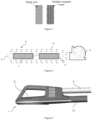
- Fig. 2 is a cross-section of the magnetic applicator which allows better flow on the lower and upper sides of the magnetic field generating device and thus more efficient heat dissipation.
- the magnetic stimulation device includes a magnetic field generating device 1, the circuit wires 2 and the fastening points 3 for connection of the magnetic field generating device to the casing of the applicator (not shown).
- the fastening points 3 are preferably made of flexible material however the rigid material may be used as well.
- the fastening points 3 may be located on the outer circumferential side of the magnetic field generating device. However, alternatively it is possible to put these fastening points to a lower or upper side of the magnetic field generating device.
- the fastening points 3 connect the magnetic field generating device to the case of the applicator in at least one point.
- the fastening points 3 maintain the magnetic field generating device and the main part of the case of the applicator spaced apart so that fluid (which may be air or any liquid) can flow between them.
- At least one blower 4 can be placed around the circumference of the magnetic field generating device, or perpendicular to the magnetic field generating device.
- the blower can be any known kind of device for directing the fluid e.g. outer air directed into the case of the applicator. This arrangement of the blower allows air to bypass the magnetic field generating device from upper and lower (patient's) sides. In still another embodiment the outer air can be cooled before directing into the case.
- the blower can have an inlet placed around the circumference of the magnetic field generating device for injecting air, to remove heat from the magnetic field generating device.
- a connecting tube (not shown) can ensure connection of the applicator 5 with the energy source and/or control unit of magnetic stimulation device.
- the connecting tube may also contain a conduit of the fluid.
- the arrows 6 indicate the air flow through the applicator 5.
- This arrangement of the blower allows the air to bypass the magnetic field generating device from upper and lower (patient's) side. Outlet may be preferably placed on upper side of the casing.
- Fig. 3 is an illustrative embodiment of a casing of the magnetic applicator.
- the overview drawing contains casing itself 7, which might contain an outlet 8 preferably placed on upper side of the casing 7.
- a connecting tube 9 may not only ensure connection of the applicator with the energy source and/or control unit of magnetic stimulation device, but also connection to a source of the fluid; however the conduit of the fluid 10 may also be connected separately.
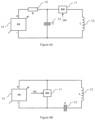
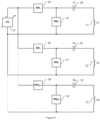
- Fig. 4A and Fig. 4B illustrate circuits for providing high power pulses to the stimulating magnetic field generating device.
- Fig. 4A shows a circuit for providing high power magnetic impulses.
- Fig. 4B shows a circuit for providing high power impulses.
- the device enables achieving repetition rates above 100 Hz, more preferably repetition rates above 150 Hz, most preferably repetition rates above 200 Hz with the magnetic flux density providing a therapeutic effect on neurons and/or muscle fibers and/or endocrine cells (e.g. at least partial muscle contraction, action potential in cell). Based on achievement of repetition rates in order of few hundreds the device also enables assembling the magnetic impulses into the various shapes (e.g. triangular, rectangular, exponential), with the shape widths from 6 ms to several seconds or longer.
- various shapes e.g. triangular, rectangular, exponential
- the at least one RF source may provide the energy for the at least one magnetic field generating device providing magnet treatment wherein the at least one magnetic field generating device may be used as the at least one electrode.
- the essence is the far different stimulation frequencies which are used for RF treatment and magnet treatment.
- the magnetic field generating device in the high frequency field is similar to the electrode. This enables the magnetic field generating device to be the electrode for radiofrequency treatment.
- a flat magnetic field generating device may be used as the electrode.
- the frequencies for the radiofrequency treatment may be in the range of ones of MHz to hundreds of GHz, more preferably in the range of 13 MHz to 3GHz, most preferably around 13.56 or 40.68 or 27.12 MHz or 2.45 GHz.
- the term "around” should be interpreted as in the range of 5 % of the recited value.
- the impulse frequencies for the magnet treatment may be in the range of hundreds of Hz to hundreds of kHz, more preferably in the range of ones of kHz to tens of kHz, most preferably up to 10 kHz.
- the repetition rate of the magnetic impulses may reach up to 700 Hz, more preferably up to 500 Hz, most preferably in the range of 1 to 300 Hz.
- An alternative device may include a plurality of magnetic field generating devices.
- the magnetic stimulation device may include at least one energy source, at least one energy storage device (e.g. a capacitor), at least one magnetic field generating device (e.g. a coil) and at least one switching device.
- the magnetic field generating device may include a core, however in a preferred embodiment the magnetic field generating device includes no core.
- the switching device may be any kind of switching device such as diode, MOSFET, JFET, IGBT, BJT, thyristor or a combination of them.
- the at least one magnetic generating device may be in various shapes to enhance a variability of magnetic field profile.
- the shape of the magnetic field generating device may be circular, semicircular, rectangular, " figure 8 ", V-shape, Y-shape or a butterfly shape.
- the magnetic field generating device may be flat (2-D shape).
- the magnetic field generating device may correspond to various 3-D bodies, e.g. a hemisphere.
- the magnetic field generating device may be flexible to be better fitted to the patient.
- the magnetic field generating device may or may not include a core for the field shaping.
- the positioning of the plurality of magnetic generating device may be very useful.
- the plurality of magnetic field generating devices may generate a plurality of independent magnetic fields, e.g. two magnetic field generating devices may generate two magnetic fields with two peaks of magnitude of magnetic flux density.
- the plurality of magnetic field generating devices may be operated at various treatment parameters and/or operation modes to provide various treatment effects for the patient during the treatment, e.g. myostimulation, myorelaxation, analgesic effect or aesthetic effects such as adipose tissue reduction, muscle toning, muscle shaping, body contouring, body shaping, skin tightening, cellulite treatment, circumferential reduction, breast enhancement and/or lip enhancement.
- myostimulation myorelaxation
- analgesic effect or aesthetic effects such as adipose tissue reduction, muscle toning, muscle shaping, body contouring, body shaping, skin tightening, cellulite treatment, circumferential reduction, breast enhancement and/or lip enhancement.
- the magnetic field generating devices may be positioned and/or movable in the at least one applicator in one plane; in at least two mutually tilted planes defined by a convex or concave angle, or perpendicular to each other; or in at least two parallel planes with the at least one magnetic field generating device in each parallel plane.
- the movement of the at least one magnetic field generating device may be translational and/or rotational, constant or accelerated.
- the movement may follow a predetermined, random or predefined trajectory, such as a pattern, array or matrix.
- the angles of the planes and/or the movement of the at least one magnetic field generating device may be adjusted by an operator following the patient's needs.
- the patient may be positioned in the intersection of the magnetic fields generated by the plurality of magnetic field generating devices.
- the positions of the at least two magnetic field generating devices may focus the magnetic fields to the target area; or the magnetic field generated by one magnetic field generating device may interfere with the magnetic field generated by another magnetic field generating device and the resulting magnetic field may be shaped.
- the magnetic flux density may be summed from the plurality of magnetic field generating devices.
- the plurality of the magnetic field generating devices may extend the active time duration of the stimulation in the case that the switching devices are switched in sequence. Therefore the treatment is more effective and the treatment time may be shortened.
- the magnetic stimulation device may include the at least one applicator, the at least one energy source and at least two magnetic field generating devices.
- the magnetic stimulation device may include a plurality of applicators and/or a plurality of energy sources.
- the plurality of applicators may be used for treatment of at least two cooperating muscle groups with different treatment effects.
- the triceps brachii muscle may be treated to achieve myostimulation effects and the biceps brachii muscle may be treated to achieve myorelaxation effects.
- the at least one applicator may be movable in a predefined pattern, e.g. a scanning movement, or the movement may follow a random trajectory.
- the movement may be constant or accelerated to provide the most comfortable treatment for the patient.
- the movement of the applicator may be adjusted by the operator.
- the treatment by the magnetic stimulation device may be in different operation modes.
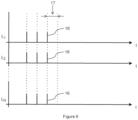
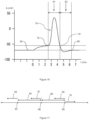
- One operation mode may generate a plurality of impulses 16 at one time within the pulse 17 as illustrated in Fig. 6 .
- Another operation mode may generate a plurality of the impulses 16 at different times within the pulse 17 as illustrated in Fig. 7 . Both operation modes may be combined.
- the switching devices 24-26 may be switched separately, with the magnetic field generated by separate magnetic field generating devices.
- any switching device may be switched in combination with at least one other switching device.
- the magnetic stimulation device may generate a plurality of impulses 16 generated by the magnetic field generation devices L 1 , L 2 , ... L N at different times within the pulse 17.
- This operation mode is illustrated in Fig. 7 .
- This operation mode may multiply the repetition rate perceived by the patient, e.g. when the number of magnetic field generation device is 3 and the repetition rate of each magnetic field generating device is 100 Hz, then the patient may perceive the repetition rate 300 Hz.
- this operation mode may be used for treatments of high repetition rate when the magnetic stimulation devices are switched to reach such repetition rates which may be sufficiently cooled.
- a magnetic stimulation device includes at least one energy source 27, N energy storage devices 28-30 , N magnetic field generating devices 31-33 and 2xN switching devices 34-39, wherein N is positive integer greater than 1.
- the at least one energy storage device 28-30 may be selectively charged by the energy source 27 by selectively switching the switching devices 34, 36, 38 and the impulses may be selectively generated by selectively switching the switching devices 35, 37, 39.
- the benefit of this exemplary embodiment is the time independency of the impulses generated by the separate magnetic field generating devices.
- the switching devices may be synchronized to generate the impulses at one fixed time within the pulse or both operation modes may be combined using this embodiment.
- Another benefit of this embodiment is the possibility of providing various treatments by a plurality of magnetic field generating devices.
- Various treatments may provide various effects for the patient, e.g. stimulation, such as myostimulation, pain alleviation or myorelaxation.
- Fig. 10 illustrates an example where the magnetic stimulation device includes N energy sources 40, N energy storage device 41, N magnetic field generating devices 42 and N switching devices 43, wherein N is positive integer greater than 1.
- the at least one energy storage device 41 may be selectively charged by the energy source 40 and the impulses may be selectively generated by selectively switching the switching devices 43.
- the impulses generated by the separate magnetic field generating devices are time independent. However, the switching devices may be synchronized to generate the impulses at one time within the pulse or both operation modes may be combined.
- the magnetic stimulation device may include a plurality of applicators.
- the applicator includes at least one magnetic field generating device which may be movable.
- the benefit of this embodiment is that the movement and/or positioning of the plurality of the applicators may be independent. Hence different parts of the patient's body may be treated simultaneously. Therefore the total treatment time is reduced and patient's downtimes are reduced as well.
- the movement of the at least one applicator may be automatic so that manual manipulation may not be needed.
- the movement of the at least one applicator may follow a predetermined trajectory or it may be random. In an alternative embodiment the movement of the plurality of applicators may be synchronized.
- the plurality of applicators may be positioned with respect to each other in one plane; in at least two mutually tilted planes defined by convex or concave angles, or perpendicular to each other; or in at least two parallel planes.
- the angles of the planes may be adjusted by an operator following the patient's needs.
- the patient may be positioned in the intersection of the magnetic fields generated by the plurality of magnetic field generating devices.
- the benefit of this application may be treatment of a plurality of cooperating muscles, such as agonists and antagonists, e.g. one muscle may be stimulated to achieve strengthening effect and on the other side the other muscle may be stimulated to achieve myorelaxation effect.
- cooperating muscles such as agonists and antagonists
- All the above described exemplary embodiments may be used in one or a plurality of applicators.
- the inductance of magnetic field generating devices in each embodiment may vary.
- the capacitance of the energy storage devices in each embodiment may vary as well.
- the impulse duration may be variable and/or the magnetic flux density generated by different magnetic field generating devices may vary as well. Safety concept Method of operating the magnetic stimulation device.
- An important parameter for the safe concept is the temperature of the magnetic stimulation device. Heat is generated by total energy losses which are caused by static and dynamic components (Equations 1 - 3). The heat is distributed within the magnetic stimulation device and the heat is dissipated by the cooling medium flow.
- the generated heat needs to be monitored since overheating may cause damage to the magnetic stimulation device and heat damage of the medical device may also be a potential risk for the patient. Therefore heat generation has to be monitored to prevent thermal damage to the magnetic stimulation device and/or the patient.
- Power losses and/or heat generation may be monitored and/or determined by the magnetic stimulation device based on determining the waveform of any operation parameter, e.g. voltage, electric current or magnetic flux density.
- the determined waveform is related with a reference and/or with the operation parameter measured in a different value of a characteristic quantity, e.g. time, frequency, amplitude or phase.
- a current value of an operation parameter e.g. voltage, electric current or magnetic flux density
- an operation parameter e.g. voltage, electric current or magnetic flux density
- the at least one currently determined operation parameter may be used for determining a correctness of the stimulation.
- the correctness of the stimulation may be determined by the relation between a current value of an operation parameter and a reference or the operation parameter measured in a different value of characteristic quantity. The relation is result of a mathematic and/or signal processing method.
- a calibration curve may be established.
- the calibration curve is calibration waveform of the operation parameter.
- the calibration curve may be implemented by the manufacturer as a factory setting. Alternatively, the calibration curve may be established by a mathematic and/or signal processing method.
- the calibration curve may be determined from at least one waveform, more preferably at least 2 waveforms, even more preferably at least 5 waveforms, even more preferably 10 waveforms, most preferably at least 50 waveforms.
- the reference may be established by the complete calibration curve, a representative segment of the calibration curve or by predefined reference points of the calibration curve, e.g. a look-up-table.
- the currently measured voltage waveform and the calibration curve are related using a mathematic and/or signal processing method. Based on the relation at least one threshold may be established.
- the at least one threshold may correspond to the correctness of the stimulation and/or notify operator of the magnetic stimulation device about an unintended event.
- the unintended event may refer to detection of a metal object e.g. metal jewelry such as ring or bracelet, or a prosthetic device such as an endoprosthesis or surgical nail within the proximity of the magnetic stimulation device; or to detection of a hardware error of the magnetic stimulation device, e.g. error of the switching device such as a thyristor.
- the treatment may be disabled and/or the notification for the operator may be generated by the magnetic stimulation device in a human perceptible form, e.g. by mechanical and/or electromagnetic means, such as audibly perceptible notification (e.g. beep) or visually perceptible notification (flashing light, color change etc.).
- audibly perceptible notification e.g. beep
- visually perceptible notification flashing light, color change etc.
- the relation between currently measured voltage waveform and the voltage calibration curve may be determined by a statistic method resulting in a correlation coefficient.
- the time duration of the correlated calibration curve and the voltage waveform may be longer than the time duration sufficient to reach the value of a second maximum.
- the correct stimulation may be determined if the correlation coefficient value is in absolute value at least 0.9, more preferably at least 0.95, most preferably at least 0.99.
- the unintended event may be detected if the correlation coefficient value is in absolute value at least 0.4, more preferably at least 0.6, even more preferably at least 0.7, most preferably at least 0.9.
- the value of correlation coefficient may be used for detection of a metal object within the proximity of the magnetic stimulation device e.g. metal jewelry such as a ring or bracelet, or a prosthetic device such as an endoprosthesis or a surgical nail; or for detection of hardware error of the magnetic stimulation device, e.g. error of a switching device such as thyristor.
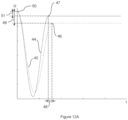
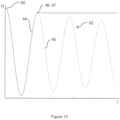
- Fig. 13 illustrates the case when a hardware error occurs, e.g. a failure of the switching device.
- a hardware error occurs, e.g. a failure of the switching device.
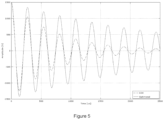
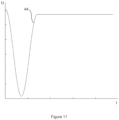
- the voltage calibration curve 44 value remains constant after reaching the value of second maximum 47.
- the currently measured voltage waveform 45 continues in resonance 52 although the value of second maximum 46 equals to the value of second maximum 47 of the calibration curve 44.
- the calibration curve may be set by the manufacturer or by a mathematic and/or signal processing method.
- the magnetic stimulation device may verify and/or adjust the calibration values periodically after a predetermined time period and/or after changing any part of the magnetic stimulation device.
- the correct voltage drop threshold may be established at 30 %, more preferably 21 %, even more preferably 14 %, most preferably 7 % of the value of first voltage maximum. If the voltage drop reaches the threshold then the proximity of the metal object may be determined. If the voltage drop varies in time after reaching the value of second maximum then a hardware error may be detected. The notification relating to an unintended event may be generated in human perceptible form.
- the correctness of the treatment may be also determined only by the relation values of second voltage maximums 46, 47 and/or by the relation of any other reference points in voltage calibration curve 44 and the currently measured voltage waveform 45.
- the reference points and/or threshold may be established by the manufacturer as factory settings, e.g. a look-up-table, or the reference points and/or threshold may be established by the operator.
- the operation parameter may be voltage.
- the correctness of the stimulation may be determined by at least one reference point in the currently measured voltage waveform.
- the value of second maximum is used because it is well defined and it may be easily determined.
- the correctness of the stimulation may be determined by the relation of at least two reference points.
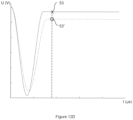
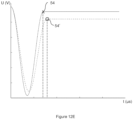
- Fig. 12C shows determining an incorrect stimulation by currently measured values of voltage (U I1 , U I2 ) measured in predetermined values of time (t 1 , t 2 ).
- the correctness of the stimulation may be determined by the relation of U I1 (t 1 ) and U I2 (t 2 ). If the relation exceeds a predefined threshold then an unintended event is present and the magnetic stimulation device generates a notification to the personnel.
- the values of first and second maximum may be used.
- a method of controlling a magnetic stimulation device for treating a biological structure by time-varying magnetic field includes determining at least one value, for example (Volts), of an operation parameter (Voltage) in at least one value (microseconds) of characteristic quantity (time), wherein the value of operation parameter is related to at least one of: a calibration curve; a calibration value; or at least one value (two voltage measurements at specific times) of the same operation parameter in a different value (microseconds) of the same characteristic quantity (time), wherein the calibration curve and/or the calibration value may be determined in the same value (microseconds) or in a different value (microseconds) of the same characteristic quantity (time).
- the calibration curve is plurality of calibration values (Volts in this example) of an operation parameter (Voltage) in a plurality of values (microseconds) of a characteristic quantity (time).
- a calibration value in this example, is a specified voltage at a specified time.
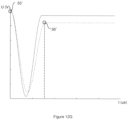
- Figs. 12D-12G all currently measured values are shown as a circle with reference numbers marked with an apostrophe; all calibration values are marked as cross and reference numbers are without an apostrophe; all relations determined at the same time are reference numbers 53; and all relations determined at different times are reference numbers 54.
- a complete waveform of one impulse is measured.
- the impulse (when the voltage value changes in time) lasts e.g. 280 ⁇ s during correct stimulation.
- the complete voltage waveform is related (using the definition in the glossary above) to the calibration curve (stored in memory of the magnetic stimulation device). The relation is expressed by the value of a correlation coefficient which indicates the similarity of the currently measured waveform and calibration curve.
- the calibration voltage waveform 53 may be related to the currently measured voltage waveform 53' with the same time duration, e.g. 350 ⁇ s, i.e. the time duration of calibration voltage waveform 53 equals the time duration of currently measured voltage waveform 53'.
- the complete voltage waveform need not be determined. It is sufficient to set at least one calibration value.
- the currently measured voltage value 53' is related to the predetermined calibration voltage value 53.
- the ratio of the voltage values 53, 53' (or value of voltage drop, or correlation) determines an incorrect stimulation.
- the currently measured voltage value 53' and the calibration voltage value 53 may be determined at the same time.
- the calibration voltage waveform 54 may be related to the currently measured voltage waveform 54' with a different time duration.
- the currently measured voltage value 54' is measured at the time when the second maximum is reached.
- the measured voltage second maximum occurs at a time different than the time of second maximum of calibration curve.
- the currently measured voltage value 54' is related to the predetermined calibration voltage value 54.
- the ratio of the voltage values 54, 54' determines an incorrect stimulation.
- the currently measured voltage value 54' and the calibration voltage value 54 may be determined at different times. The result of the relation is the same, although the currently measured voltage 54' is measured at a different time (e.g. at time 600 ⁇ s) than the calibration voltage value 54 (e.g. at time 400 ⁇ s).
- the complete voltage waveform need not be determined, and any calibration voltage value does not have to be set.
- a relation between the currently measured voltage values 55' and 56' is determined.
- the at least two currently measured voltage values 55', 56' in the current pulse are measured at different times of the same pulse.
- the system may determine an incorrect stimulation e.g. based on knowledge of the correct voltage drop.
- the correct voltage drop may be determined by the system manufacturer/operator as an absolute voltage value in Volts (dependent on a first maximum value); or by a ratio of currently measured voltage values with respect to a first maximum value; or a percentage of a first maximum value; or it may be derived from a mathematical model.
- the magnetic stimulation device may send a notification concerning the hardware error to the service department and/or manufacturer to repair the device.
- the magnetic stimulation device may also include a black box for storing data concerning unintended events to provide a statistics for the operator and/or the manufacturer.
- the benefit of the application is determining an unintended event within each impulse. Hence patient's safety is significantly improved and the patient and/or the magnetic stimulation device is prevented from heat damage. Additionally, the magnetic stimulation device may be able to provide a notification concerning the unintended event to the operating personnel in human perceptible form. Further benefit is recognizing the type of unintended event. magnetic field generating device.
- a method of controlling a magnetic stimulation device for treating a biological structure by a time-varying magnetic field includes measuring a voltage of the device over a time interval; relating the measured voltage to a calibration curve; and turning the device off and/or providing a notification to the operating personnel, based on the relating of the measured voltage to the calibration curve.
- the method may further include determining a correlation coefficient between the measured voltage and the calibration curve; and turning the device off and/or providing a notification to the operating personnel, if the correlation coefficient is below a predetermined value.
- the magnetic stimulation device may be described by a transition thermal characteristic (TTC).
- TTC transition thermal characteristic
- the TTC may be determined by experimental measurement during standard ambient conditions such as temperature and/or pressure, or it may be a mathematical model based on technical and/or electric specifications of all components of the magnetic stimulation device.
- TTC characterizes the temperature dependence of the magnetic stimulation device on heat. TTC is established by the manufacturer as a factory setting.
- An essential principle of magnet therapy used for biological structure stimulation is the influence of the magnetic field on the cell.
- the cell membrane is polarized due to the induced electric current.
- One of fundamental phenomenon of electric current in biological tissue may be an action potential occurrence, a transfer of neural excitation and/or a partial or full muscle contraction may be induced. Additionally, the effect of the generated action potential may modulate a painful stimulus transmission, providing a pain management effect. Furthermore, the action potential generation may be used for diagnostics or neural diseases treatment.
- Convenient repetition rates may cause pain alleviation and/or myorelaxation.
- Various repetition rates may cause muscle stimulation, stimulation of denervated muscleor may improve movability of a joint. Different repetition rates may improve the patient's mental state.
- Advantages of the present magnet therapy include: affecting the deep structures which are problematically stimulated by superficial stimulation; non-invasive or non-contact application of magnetic flux, it may be applied even with clothes; absolute non-invasiveness of the stimulation and elimination of skin irritation in the place of magnetic field application; high rate of acceptability of the stimulation by patients; elimination of stimulation side effects; elimination necessity of applicator made of biocompatible materials; providing a clean and sterile applicator on the highest level; possibility of local or area treatment.
- Present invention relates to methods using magnetic stimulation of magnetic flux density at least sufficient to cause active response of a biological structure at the repetition rates at least 50 Hz.
- Incontinence is currently treated by exercising pelvic floor muscles or by utilizing vaginal or rectal probes using direct current therapy, or using urologic chairs using stimulation by pulsed magnetic field.
- urologic chairs achieve low magnetic flux density at high repetition rate.
- Efficacy of urological chairs is low because the values of stimulation parameters, repetition rate and magnetic flux density, are insufficient. Therefore the therapy is relatively time consuming and uncomfortable for the patient.
- the time period from the end of absolute refractory period 81 to resting potential 80' is called relative refractory period 82.
- the cell is able to be stimulated only by the intensive over-threshold stimulus during the relative refractory period 82.
- Over-threshold stimulus is a stimulus of higher magnetic flux density than the value of threshold stimulus.
- the absolute refractory period 81 is the same time duration for all the cells, however, the relative refractory period 82 varies following the cell type.
- the magnetic flux density may reach several values of stimulation.
- the magnetic flux density may induce sensory-threshold stimulus 83, below-sensory-threshold stimulus 84, over-sensory-threshold stimulus 85, motor-threshold stimulus 86, below-motor-threshold stimulus 87, over-motor-threshold stimulus 88, noxious-threshold stimulus 89, below-noxious-threshold stimulus 90; inducing the over-noxious-threshold stimulus 91 is not recommended.
- the below-threshold stimulus is reached by inducing the threshold stimulus and consequently slightly decreasing the magnetic flux density.
- the over-threshold stimulus is reached by reaching the threshold stimulus and consequently slightly increasing the magnetic flux density. Therefore the situation may occur, that the value of magnetic flux density inducing the over-sensory-threshold equals to the value of magnetic flux density inducing the below-motor-threshold stimulus. Likewise the situation may occurs, that the value of magnetic flux density inducing the over-motor-threshold stimulus equals to the value of magnetic flux density inducing the below-noxious-threshold stimulus. Following the stimulation process the difference is that the magnetic flux density inducing the over-sensory-threshold stimulus/over-motor-threshold stimulus never reaches the motor-threshold stimulus/noxious-threshold stimulus.
- the induced energy (IE) stimulating the target neural structure is a function of repetition rate, magnetic flux density and/or impulse duration.
- the envelope may consist of several impulses called train. The number of pulses in one train varies in range of at least 2 pulses to thousands of pulses.
- the repetition frequency of envelope is given by the envelope period, i.e. the envelope may include time with no stimulation as well.
- the envelope may consist of stimulation signals with various burst frequencies, e.g. 5, 10, 20, 50, or more Hz.
- the envelope may be generated by several modulation approaches.
- envelope may be generated in repetition rate domain hence the process is called repetition rate modulation (RRM).
- RRM repetition rate modulation
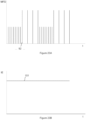
- the principle of RRM is described in Figures 19A and 19B .
- the magnetic flux density of each impulse 92 remains constants.
- the impulse duration remains constant as well. Therefore the induced energy for one pulse is constant.
- the repetition rate varies hence the time duration of each pulse varies with respect to the preceding pulse, see Fig. 19A .
- the actual value of induced energy corresponds to the actual repetition rate of the time-varying magnetic field.
- the principle is explained by triangular shaped envelope 93, see Fig. 19B .
- envelope may be generated in impulse duration domain.
- the principle of impulse duration modulation is shown in Figures 20A and 20B where the magnetic flux density and the repetition rate of time-varying magnetic field remains constant. However, the impulse 92 duration of each pulse varies as shown Fig. 20A . The principle is explained by triangular shaped envelope 93 in Fig. 20B .
- the modulation approaches are not limited by exemplary waveform. Therefore the envelope may be rectangular, square, saw-tooth, trapezoidal, sinusoidal, exponential etc. Person skilled in the art of neurology and/or physiotherapy may modulate various envelopes and/or envelopes combination.
- the target biological structure may be stimulated by a pretreatment sequence including a plurality of pulses of different repetition rate. Based on the pretreatment sequence the optimal / most comfortable magnetic flux density may be determined for the treatment of the patient.
- the pretreatment sequence includes at least one repetition rate, more preferably at least two different repetition rates.
- the complete pretreatment sequence may last up to 120 seconds, more preferably in the range of 1 to 60 seconds, most preferably around 30 seconds.
- the pretreatment sequence may include one repetition rate including at least one pulse, more preferably a plurality of pulses, e.g. at least two pulses, more preferably 5 pulses, even more preferably at least 10 or more pulses fired by the magnetic stimulation device.
- the magnetic flux density may be adjusted by an operator during the pretreatment sequence to provide the patient the optimal / most comfortable treatment.
- This aspect may be used for treatments including at least one repetition rate.
- This aspect may be also used for treatments including a plurality of repetition rates where the highest repetition rate may be preferably involved in the pretreatment section.
- the pretreatment sequence may include a plurality of different repetition rates.
- the first repetition rate may be the lowest repetition rate of the treatment.
- the second repetition rate may be the highest repetition rate of the treatment.
- the at least one pulse, more preferably a plurality of pulses, e.g. at least five pulses, more preferably 10 pulses or more pulses of each repetition rate may be fired by the magnetic stimulation device.
- the pretreatment sequences may include two trains of repetition rate 5 Hz 94 and 50 Hz 95. Each train may last 1 second and the trains may be separated by time with no stimulation 96. The trains may alternate all the time of the pretreatment sequence. The complete exemplary pretreatment sequence may last 30 seconds.
- the magnetic flux density may be adjusted by an operator during the pretreatment sequence to provide the patient the most comfortable treatment. The magnetic flux density of the trains may be the same for at least two trains.
- the pretreatment sequence may be in repetition rate domain.
- the neural structure stimulation by time-varying magnetic field may be used for treatment of psychiatric diseases.
- the successive repetition rate of the present method reaches at least 100 Hz, more preferably at least 110 Hz, most preferably at least 120 Hz.
- the magnetic flux density of the present treatment method exceeds at least 0.1 T, more preferably at least 0.5 T, even more preferably at least 1 T, most preferably at least 2 T or up to 7 T.
- the method may be used for treatment of psychiatric diseases, such as e.g. depression, schizophrenia, migraine, depression, dyskinesias, Alzheimer's disease, Asperger's syndrome, Tourette's syndrome, attention-deficit hyperactivity disorder (ADHD), cognitive impairment, dementia, dystonia, restless legs, tremor, aphasia, ataxia or sphincter of Oddi disorders.
- psychiatric diseases such as e.g. depression, schizophrenia, migraine, depression, dyskinesias, Alzheimer's disease, Asperger's syndrome, Tourette's syndrome, attention-deficit hyperactivity disorder (ADHD), cognitive impairment, dementia, dystonia, restless legs, tremor, aphasia, ataxia or sphincter of Oddi disorders.
- the applicator is placed in the proximity of the stimulated neural structure, e.g. brain, to focus the magnetic flux density to the targeted neural structure.
- the targeted neural structure is most commonly e.g. prefrontal cortex for alleviating the symptoms of depression or schizophrenia.
- person skilled in the art of neurology and/or physiotherapy may apply the stimuli to other locations which stimulation cause similar effect.
- the magnetic flux density and/or the repetition rate may be sufficient to induce at least action potential or even a partial seizure in the CNS.
- the most commonly stimulated neural structure for migraine or headache treatment is trigeminal or occipital nerve.
- the trigeminal or occipital nerve stimulation is able to prevent and treat migraines.
- the stimulation by time-varying magnetic field may also stimulate and/or temper the production of hormones, e.g. hypophysis hormones.
- hormones e.g. hypophysis hormones.
- person skilled in the art of neurology and/or physiology may apply the stimuli to other locations to influence the hormone production of other glands or visceral organs as well.
- the treatment of substance addiction may be promoted by the present method.
- the neural structure may be stimulated by low repetition frequency envelope created by time-varying magnetic field of repetition rate exceeding 100 Hz, more preferably at least 150 Hz, even more preferably at least 200 Hz, most preferably at least 250 Hz, or up to 700.
- the repetition frequency may be up to 350 Hz, more preferably, up to 200 Hz, even more preferably up to 100 Hz.
- the neural structure stimulation by time-varying magnetic field may be used for treatment of neurodegenerative diseases and deep neural structure using repetition rates over 100 Hz, and a repetition rate of e.g., 130 - 160 Hz.
- the repetition rate may also exceed 200 Hz or 260 Hz, the repetition rate may reach up to 700 Hz.
- the impulse duration is in the range of 10 to 700 ⁇ s, more preferably in the range of 30 to 500 ⁇ s, even more preferably 50 to 250 ⁇ s, most preferably in the range of 60 - 90 ⁇ s.
- Magnetic flux density necessary for the effect of application is at least 0.1 T, more preferably at least 0.5 T, even more preferably 1 T, even more preferably at least 2.5 T, or up to 7 T.
- the application of the invention may be used for treatment of neurodegenerative diseases, such as e.g. Alzheimer's disease, Parkinson's disease, Huntington's disease, Asperger's syndrome, Tourette's syndrome amyotrophic lateral sclerosis, depression, quadriplegia, paraplegia, dyskinesias, multiple sclerosis, attention-deficit hyperactivity disorder (ADHD), cognitive impairment, dementia, dystonia, restless legs, tremor, aphasia, ataxia, insufficient blood flow in the brain and many other diseases, disorders or syndromes.
- the stimulation by time-varying magnetic field is targeted to the damaged nerve or CNS to treat essential symptoms of the disease.
- the method may stimulate deep neural structures, e.g. brain structures.
- the effect of the stimulation may be similar to the effect of conventional invasive deep brain stimulation using implanted electrodes into the proximity of nucleus basalis of Meynert.
- the neural structure may be stimulated by low repetition frequency envelope created by time-varying magnetic field of repetition rate exceeding 100 Hz, more preferably at least 150 Hz, even more preferably at least 200 Hz, most preferably at least 250 Hz, or up to 700 Hz.
- the repetition frequency may be up to 350 Hz, more preferably, up to 200 Hz, even more preferably up to 100 Hz.
- the neural structure stimulation by time-varying magnetic field may be used for alleviating symptoms of e.g. Parkinson's disease.
- the neural structure may be stimulated by envelope of repetition frequency in the range of 40 to 60 Hz, more preferably in the range of 45 to 55 Hz, most preferably around 50 Hz.
- the magnetic flux density is sufficient to induce at least motor-threshold stimulus, more preferably at least over-motor-threshold stimulus.
- the treatment time may last for at least 20 minutes, more preferably at least 30 minutes, most preferably up to 60 minutes.
- the neural structure stimulation by time-varying magnetic field may be used for neural system diagnostics.
- the neural structure may be stimulated by time-varying magnetic field generating various envelopes.
- the magnetic flux density of the present treatment method exceeds at least 0.1 T, more preferably at least 0.5 T, even more preferably at least 1 T, most preferably at least 2 T or up to 7 T.
- the neural structure may be stimulated by single pulses.
- the operator stimulates a patient by predefined different repetition rates to determine minimal magnetic flux density inducing at least partial muscle contraction for each repetition rate value.
- Feedback registering the at least partial muscle contraction may be e.g. visual, or by using technical device.
- Based on the measurement the graph of dependency of magnetic flux density and repetition rate may be compiled. The graph is very useful in the therapy planning.
- the neural structure may be stimulated by single pulses or rectangular shaped envelope, and by increasing shaped envelope. Both envelopes are used for determination of minimal magnetic flux density value sufficient to induce at least partial muscle contraction.
- the envelope duration may last 1 second. After the determination of both magnetic flux densities values, the level of muscle denervation may be calculated.
- the neural structure may be stimulated in the at least one predefined location and in another predefined location the response of the stimulus may be measured.
- the reaction time may be determined.
- the time-varying magnetic field stimulates at the at least one predefined location on the arm and the recording device is placed on the hand.
- the recording device may be contact electrode or non-contact magnetic measuring device, e.g. superconducting quantum interference device.
- the feedback may be determined visually as well.
- the preferred repetition rate value for stimulation is in the range of 1 to 50 Hz and the impulse width is in the range of tens to hundreds of ⁇ s.
- the stimulation may be in predefined location, e.g. brain, and the feedback may be registered visually. It may be used planning neural surgery or during the surgery.
- the neural structure may be stimulated during the maximal voluntary contraction.
- the additional contraction originating from stimulation by time-varying magnetic field is superposed.
- Several neural disorders may be determined, e.g. conduction deficiency, based on the determination of the additional muscle contraction strength.
- the contraction may be isometric, concentric or eccentric.
- the neural structure may be stimulated by low repetition frequency envelope created by time-varying magnetic field of repetition rate exceeding 100 Hz, more preferably at least 150 Hz, even more preferably at least 200 Hz, most preferably at least 250 Hz, or up to 700 Hz.
- the repetition frequency may be up to 350 Hz, more preferably, up to 200 Hz, even more preferably up to 100 Hz.
- pain is defined as an unpleasant sensory or emotional experience associated with actual or potential tissue damage, or described in terms of such damage.
- Pain may be caused by spastic and/or overtoned muscle, hence the myorelaxation effect may be cause analgesic effect as well.
- the neural structure stimulation by time-varying magnetic field may be used for pain management.
- the method is focused on neural structure stimulation by time-varying magnetic field of repetition rate at least 100 Hz and/or magnetic flux density sufficient to induce and/or modulate an action potential in a stimulated neural structure.
- the neural structure may be stimulated by at least repetition rate 100 Hz, more preferably at least 120 Hz, most preferably at least 140 Hz.
- the stimulation causes the pain alleviating effect.
- the principle is stimulation of neural structures which are able to transmit pain excitement.
- the purpose of the present stimulation by time-varying magnetic field is pain relief.
- the alternative effect may be a suppression of pain excitement transmission at different levels of receptors or CNS.
- the higher repetition rate may include myorelaxative effect induced by short magnetic flux density impulses.
- the application of the invention may be used for alleviation of e.g. back pain, Guillain Barre syndrome, diabetic polyneuropathy, dental procedure pain, knee osteoarthritis, anesthesia (pain relief during surgery), angina (chest pain from heart disease), ankylosing spondylitis, back pain, bum pain, cancer pain, chronic pain, dysmenorrhea (painful menstruation), headache, hemiplegia, hemiparesis (paralysis on one side of the body), labor pain, local anesthesia during gallstone lithotripsy, facial pain, trigeminal neuralgia, bruxism (tooth grinding) pain, myofascial pain, neck and shoulder pain, pain from broken bones, rib fracture or acute trauma, diabetic peripheral neuropathy, phantom limb pain, post-herpetic neuralgia (pain after shingles), irritable bowel syndrome, postoperative pain, post-stroke rehabilitation, rheumatoid arthritis, skin ulcers, temporom
- Pain is transmitted by several types of pain conducting fibers differing by myelin sheath thickness and by the properties of the fiber.
- the magnetic flux density threshold of major pain fibers is written in Table 1.
- Table 1 Fiber Diameter Myelin sheath thickness Magnetic flux density threshold A ⁇ Large Large Low A ⁇ Medium Small Medium C Small No myelin High
- Pattern theory premises that the pain excitement is transmitted from the peripheral receptor to the CNS in a pattern coded signal and the pain is interpreted by decoding the signal in CNS.
- Another pain management approach reveals gate-control theory based on a premise that the pain is transmitted through a "gate” in substantia gelatinosa in spinal dorsal horn wherein the large-diameter fibers block the "gate", whereas small-diameter fibers open the gate.
- Last pain management theory is called release of endogenous opioids based on the effect of endorphins, enkephalins and dynorphins. The secretion of these three endogenous opioids is activated by stimulation of A ⁇ -and C-fibers by low repetition rate time-varying magnetic field or by the low repetition rate envelope.
- the neural structure may be stimulated by time-varying magnetic field at low repetition rate to cause pain management via stimulating central neural system or any part of it, e.g. anterior cingulate cortex or gyrus.
- the repetition rate may be at least several Hz, more preferably at least 10 Hz, even more preferably at least 20 Hz, even more preferably at least 50 Hz.
- the neural structure may be stimulated by an envelope created by higher repetition rate values, e.g. exceeding 100 Hz, more preferably at least 150Hz, even more preferably at least 200Hz, most preferably at least 250Hz, or up to 700 Hz.
- the envelope may be generated with predefined repetition frequency and/or shape.
- the neural structure e.g. central neural system, may be stimulated by envelope at low repetition frequency at least 1 Hz, more preferably at least 2 Hz, even more preferably at least 5 Hz, even more preferably at least 10 Hz, even more preferably at least 200 Hz, or up to 350 Hz.
- the neural structure may be stimulated by various envelope shapes.
- the peak to peak magnetic flux density of the time-varying magnetic field may reach at least 0.1 T, more preferably at least 0.5 T, even more preferably at least 1 T, even more preferably at least 1.5 T, most preferably at least 2 T or up to 7 Tesla on the magnetic field generating device surface.
- the neural structure may be stimulated by time-varying magnetic field at repetition rate in the range of 80 to 120 Hz, more preferably 90 to 110 Hz, even more preferably 95 to 105 Hz, most preferably around 100 Hz, with magnetic flux density inducing at least below-sensory-threshold stimulus or more preferably at least sensory-threshold stimulus following the application and indication.
- the method may stimulate the large diameter neural fibers.
- time-varying magnetic field of repetition rate around 100 Hz with magnetic flux density inducing at least sensory-threshold stimulus is used preferably for pain relief effect.
- the magnetic flux density may induce the at least sensory-threshold stimulus and the time-varying magnetic field is modulated in the repetition rate range of 80 and 120 Hz.
- the method may be used for e.g. pain management in rheumatology or for treating posttraumatic states.
- the time-varying magnetic field repetition rate is at least 90 Hz, more preferably at least 100 Hz, even more preferably at least 110 Hz.
- the magnetic flux density may induce at least sensory-threshold stimulus, more preferably at least over-sensory-threshold stimulus to cause analgesic effect.
- the method may be used e.g. for chronic pain relief or Sudeck syndrome treatment amongst other.
- the method is used for treatment of phantom pain.
- the magnetic flux density may induce below-sensory-threshold stimulus.
- the treatment lasts at least 20 minutes, more preferably in the range of 25 to 30 minutes, or longer.
- the neural structure may be stimulated by time-varying magnetic field at sufficient magnetic flux density and at repetition rate up to 700 Hz, more preferably up to 500 Hz, most preferably up to 250 Hz to locally relief the pain and to enhance the patient comfort without taking pain killers or analgesics due to selected effect to nerve endings.
- the impulse duration is less than 1 ms, more preferably less than 800 ⁇ s, most preferably in the range of tens to hundreds of ⁇ s. The longer the impulse is the stronger subjective contraction intensity is perceived.
- the neural structure may be stimulated in constant magnetic flux density manner by repetition rate in the range of 50 to 250 Hz, more preferably at least 100 Hz, most preferably at least 110 Hz and the pulse duration preferably at least 70 ⁇ s, more preferably at least 100 ⁇ s, most preferably at least 250 ⁇ s or up to 1000 ⁇ s.
- the magnetic flux density is sufficient to induce at least sensory-threshold stimulus, more preferably at least over-sensory-threshold stimulus.
- Quick adaptation to stimulus occurs during the stimulation in time therefore the magnetic flux density may be adjusted during the procedure following the patient's needs and perception.
- the method may be indicated for e.g. pain relief or for burns treatment.
- the neural structure may be stimulated by a time-varying magnetic field to induce electric current of random repetition rate fluctuation around a predefined repetition rate.
- the repetition rate fluctuates at least 5 %, more preferably at least 15 %, most preferably at least 30 % or up to 50 %
- the magnetic flux density is sufficient to induce at least sensory-threshold stimulus, more preferably at least over-sensory-threshold stimulus of the neural structure.
- the neural structure is not able to adapt for the stimulation by time-varying magnetic field since the repetition rate varies. Additionally, the magnetic flux density may be adjusted during the time. The method may provide analgesic effect.
- the neural structure may be stimulated by trains 97 of several pulses 98 and time with no stimulation after the train 97.
- the group of several pulses 98 and the time 99 with no stimulation is called burst 100. Therefore one burst 100 consists of the only one train 97 and time with no stimulation 99.
- the train 97 preferably consists of at least 2 pulses, more preferably 5 pulses, even more preferably tens pulses or up to hundreds pulses; repetition rate of the pulses 98 is at least 100 Hz.
- the burst repetition rate may vary following the patient's needs. In the preferred application the burst repetition rate vary from 1 to 10 Hz.
- the number of pulses 98 in train 97 and/or the time with no stimulation 99 may vary following the patient needs.
- the magnetic flux density is sufficient to induce at least motor-threshold stimulus, more preferably over-motor-threshold stimulus, even more preferably below-noxious-threshold stimulus.
- Fig. 22 shows an example of application of the stimulation by time-varying magnetic field with a repetition rate of 125 Hz in train 97 consisting of 5 pulses 98, with a burst repetition rate 10 Hz.
- Total time duration of one burst 100 is 100 ms.
- Total stimulation time of one train 97 is 40 ms, hence the time with no stimulation 99 is 60 ms.
- the most important advantage of this approach is analgesic effect and almost no adaptation of the neural structure to the stimulation. The approach may be used e.g. for alleviating the acute pain.
- the treatment program, envelope shape and magnetic flux density are indicated individually following the patient's needs and his/her subjective perception.
- the present method may be applicable for treatment of e.g. postoperative pain, labor pains, acute and chronic pain, neuralgia and neuropathia, musculoskeletal pains, sciatica, arthritis, knee or ankle pain, tendonitis, lower back pain, chronic headache, trigeminal pain, thalamic pain, causalgia, cancer pain, angina pectoris (reduces angina attacks and nitroglycerine consumption), metastatic bone pain, pain caused by burn injury, postoperative nausea, suprapubic or perineal pain, dysmenorrhea, postpartum pain, phantom pain, stump pain, anxiety, or for improving breath parameters via improving tidal inspiration volume and vital capacity etc.
- the neural structure may be stimulated by time-varying magnetic field at repetition rate in the range of 80 to 240 Hz, more preferably in the range of 100 to 200 Hz and by magnetic flux density inducing at least over-sensory-threshold stimulus, more preferably at least motor-threshold or over-motor-threshold stimulus inducing the at least partial muscle contraction, the noxious-threshold stimulus mustn't be induced.
- the stimulation may cause analgesic effect and the method may be used for treatment of e.g. causalgia, backbone pains, headache, migraine or thalamic, phantom or posttraumatic pains.
- the neural structure may be stimulated by time-varying magnetic field for alleviating the pain via spinal cord and/or spinal nerve stimulation.
- the aspect of the application may be based on the pattern theory of pain perception.
- the time-varying magnetic field may be delivered to the target area of backbone and/or spine.
- the method exploits benefits and pain alleviating effect of stimulation with repetition rate at least 125 Hz, more preferably at least 135 Hz, most preferably around 145 Hz or up to 170 Hz.
- the magnetic flux density is sufficient to induce at least motor-threshold stimulus, more preferably below-noxious-threshold stimulus. Additionally, during the application at least partial muscle contraction may occur hence the local perfusion may increase.
- Still another benefit of the presented aspect may be myorelaxative effect, long lasting analgesic effect which may be used e.g. for alleviating pain after injuries, in orthopaedics, rheumatology, migraine, headache, neck pain, lumbago, pain of upper or lower extremities and improving the perfusion of itself.
- various pain syndromes may be treated by the present method.
- the neural structure may be stimulated by time-varying magnetic field at repetition rate of at least 160 Hz, more preferably at least 170 Hz, most preferably around 180 Hz, or up to 250 Hz.
- the present method may be based on gate-control theory of pain.
- the impulse duration lasts 500 ⁇ s at repetition rate around 180 Hz.
- Optimal magnetic flux density is sufficient to induce at least motor-threshold stimulus, more preferably below-noxious-threshold stimulus.
- the magnetic flux density may be adjusted following the patient's needs based on the sensitivity of a patient and the depth of the stimulated neural structure.
- the minimal magnetic flux density exceeds 0.1 T, more preferably 0.5 T, even more preferably 1 T, most preferably up to 7 T to induce the at least one action potential.
- Benefit of the present method is myorelaxative effect.
- the stimulated location may be situated over the backbone, e.g. over cervical, thoracic, lumbar and sacral regions.
- Several stimulation positions are established to alleviate a pain in different locations or extremities. The most significant usage may be for alleviating chronic pain, pain originating from coxarthrosis or gonarthrosis, posttraumatic states or rheumatic pain.
- the neural structure may be stimulated by time-varying magnetic field at repetition rate at least 180 Hz, more preferably at least 200 Hz, even more preferably up to 240 Hz for alleviating the pain caused by e.g. causalgia, backbone pains, headache, migraine or thalamic, phantom or posttraumatic pains.
- the magnetic flux density is sufficient to induce at least motor-threshold stimulus and then the stimulation may continue up to below-noxious-threshold stimulus.
- the neural structure may be stimulated by envelope at lower repetition frequencies, e.g. below 100 Hz. Therefore the time-varying magnetic field repetition rate reaches the higher values, e.g. exceeding 100 Hz, more preferably at least 150Hz, even more preferably at least 200Hz, most preferably at least 250Hz, or up to 700 Hz in order to generate the envelope with repetition frequency up to 350 Hz, more preferably, up to 200 Hz, most preferably below 100 Hz.
- the neural structure may be stimulated by the high repetition rate time-varying magnetic field.
- the envelope 101 remains constant, see Fig. 23B , and may cause analgesic effect.
- the constant envelope 101 may be generated by e.g. constant repetition rate and magnetic flux density and impulse duration, or any combination of modulation approaches, e.g. varying magnetic flux density and repetition rate of impulses 102 (see Fig. 23A ).
- the magnetic flux density is sufficient to induce at least sensory-threshold stimulus, more preferably at least over-sensory-threshold stimulus, most preferably at least motor-threshold stimulus.
- the method may be used for alleviating a pain caused by neuropathy, neuralgia, or for innervation deficiency treatment, treatment of paresis or plegia. Additional effects may be improved metabolism or perfusion.
- the perfusion diseases may be treated as well, e.g. Raynaud's syndrome.
- the neural structure may be stimulated by high repetition rate time-varying magnetic field generating low repetition frequency envelope up to 20 Hz, more preferably in the range of 1 to 15 Hz, most preferably in the range of 2 to 10 Hz.
- the magnetic flux density is sufficient to induce at least below-sensory-threshold stimulus, more preferably at least sensory-threshold stimulus, even more preferably motor-threshold stimulus or even noxious-threshold stimulus.
- the target neural structures are large diameter neural fibers in the case of lower magnetic flux densities. In the case of higher magnetic flux densities the target neural fibers are small diameter fibers.
- the impulse duration is at least 100 ⁇ s, more preferably at least 300 ⁇ s, even more preferably at least 500 ⁇ s or up to 1000 ⁇ s.
- the stimulation of small diameter fibers induces the increase of secretion of endogenous endorphins.
- the neural structure may be stimulated by high repetition rate time-varying magnetic field generating low repetition frequency envelope in the range of 20 to 40 Hz, more preferably around 30 Hz.
- the magnetic flux density is sufficient to induce at least below-sensory-threshold stimulus, more preferably at least sensory-threshold stimulus, the repetition frequency remains preferably constant.
- the approach may be applied for pain alleviation in rheumatology or posttraumatic states.
- the neural structure may be stimulated by monophasic envelope or by different wave rectification of biphasic envelope 102 (BE) as shown in Fig. 24A .
- the first envelope 103 is half-wave rectified BE 102. Therefore the repetition frequency of FE 103 is the same as the repetition frequency of the original BE 102. Further, FE 103 includes magnetic stimulation for the same time duration as the original BE 102, the second time duration of the period is no stimulation, e.g. the FE 103 includes half-period of sinusoidal and second half-period with no stimulation in the case of symmetric BE 102 (see Fig. 24B ).
- the effect of FE 103 may be rather stimulating, toning or excitatory. However, it may cause analgesic effect by magnetic flux density sufficient to induce at least below-sensory-threshold stimulus, more preferably at least motor-threshold stimulus.
- the second envelope 104 is full-wave rectified BE 102.
- SE 104 includes magnetic stimulation for entire period. Therefore, in the case of symmetric BE 102 the repetition frequency of SE 104 is double repetition frequency of the original BE 102. (see Fig. 24C ).
- the SE 104 effect may be rather inhibitory, e.g. analgesic or relaxation. Following the pain alleviating effect the muscle contraction is not painful during the increased magnetic flux density of the time-varying magnetic field.
- the both envelopes, FE and/or SE may be superposed on the constant envelope (CE) inducing at least below-sensory-threshold stimulus. The superposition of CE and FE and/or SE may induce at least sensory-threshold stimulus, more preferably at least motor-threshold stimulus.
- FE and/or SE may be combined in one treatment.
- the ratio of FE and SE may vary as well.
- the amplitude and/or repetition frequency of both envelopes may vary as well.
- the present approach may be applied e.g. for treatment of pain, neuralgia, arthrosis pain, spondylosis, periarthritis, epicondylitis, myalgia, lumbago, torticollis, posttraumatic states, Raynaud's disease, Sudeck's syndrome, varicosities or pain in abdominal region.
- the effect of the modulated repetition frequency in the range up to 10 Hz may cause pain relief effect by selective application the time-varying magnetic field to the neural structures, e.g. C-fibers.
- the effect of the stimulation may increase the opioid generation to relief the pain.
- the modulated time-varying magnetic field repetition frequency may be around 100 Hz, e.g. in the range of 80 to 120 Hz, more preferably in the range of 90 to 110 Hz.
- the higher value of repetition frequency induces spasmolytic effect.
- the repetition frequency in the range of 85 to 105 Hz, more preferably in the range of 90 to 100 Hz may be used to spasmolytic stimulation of spastic muscles, in the preferred application the repetition frequency may vary.
- the repetition frequency is constant around 100 Hz, the application may be used for treatment of e.g. spastic obstipation.
- the neural structure stimulation by time-varying magnetic field may be used for myorelaxation.
- the neural structure may be stimulated by at least repetition rate at least 100 Hz, more preferably at least 110 Hz, even more preferably at least 120 Hz, most preferably 130 Hz.
- the neural structure may be stimulated by various time-varying magnetic field shapes.
- the magnetic flux density may be sufficient to cause at least motor-threshold stimulus and at least partial muscle contraction.
- the myorelaxation effect may be reached by higher repetition rates and/or relatively short impulse duration in the range of tens to several hundreds of ⁇ s.
- the application of the invention may be used for treatment of e.g. postoperative ileus (bowel obstruction), over-active bladder, Guillain Barre syndrome, quadriplegia, paraplegia, dyskinesias, paresthesias, knee osteoarthritis, anesthesia (pain relief during surgery), bruxism (tooth grinding) pain, myofascial pain, neck and shoulder pain, irritable bowel syndrome, temporomandibular joint pain, spinal muscular atrophy (in children), chronic obstructive pulmonary disease rehabilitation, achalasia, bursitis, esophageal spasm, fibromyalgia, menstrual cramps, muscle cramps, muscle spasticity, muscle strain or pain, musculoskeletal trauma, myofascial pain dysfunction syndrome, sacral pain, thrombophlebitis, central and peripheral neuropathic pain, spinal stenosis, repetitive strain injuries or detrusor instability.
- postoperative ileus bowel obstruction
- over-active bladder Gu
- the method may be used also in sport medicine for stretching of athletes before a performance and muscle relaxation after the performance, thereafter it significantly contributes to muscle regeneration. Further applications are treating for muscle imbalance or muscle relaxation caused by overload, pain relief or elimination and preparation the muscle for physical activity.
- the neural structure may be stimulated by time-varying magnetic field at repetition rate up to 250 Hz, more preferably up to 235 Hz, even more preferably up to 225 Hz, most preferably up to 220 Hz.
- the neural structure may be stimulated by envelope at lower repetition frequencies, e.g. below 100 Hz. Therefore the time-varying magnetic field repetition rate reaches the higher values, e.g. exceeding 100 Hz, more preferably at least 150Hz, even more preferably at least 200Hz, most preferably at least 250Hz, or up to 700 Hz in order to generate the envelope with repetition frequency up to 350 Hz, more preferably, up to 200 Hz, most preferably below 100 Hz.
- the neural structure may be stimulated by envelope of repetition frequency range up to 100 Hz, more preferably up to 50 Hz, most preferably up to 30 Hz.
- the magnetic flux density is sufficient to induce at least over-sensory-threshold stimulus, more preferably motor-threshold, even more preferably over-motor-threshold stimulus.
- the neural structure may be stimulated by time-varying magnetic field at repetition rate in the range of 30 to 150 Hz, more preferably in the range of 50 to 100 Hz.
- the time-varying magnetic field is preferably modulated to prevent the neural structure to adapt the magnetic stimulation.
- the magnetic flux density is sufficient to induce at least over-sensory-threshold stimulus, more preferably motor-threshold, even more preferably over-motor-threshold stimulus
- All the mentioned aspects of the application of the invention causing myorelaxation effect may also include analgesic effect.
- the patient may perceive different subjective intensity of analgesic effect for the specific aspects of the application of the invention.
- the application of the invention may be also used in sport medicine for stretching of athletes before a performance and muscle relaxation after the performance, thereafter it significantly contributes to muscle regeneration. Further applications are treating for muscle imbalance or muscle relaxation caused by overload, pain relief or elimination and preparation the muscle for physical activity.
- the neural structure stimulation by time-varying magnetic field may be used for causing stimulation effect.
- the neural structure may be stimulated by the envelope hence the repetition rate exceeds 100 Hz, more preferably at least 150 Hz, even more preferably at least 200 Hz, most preferably at least 250 Hz or up to 700 Hz.
- the envelope may be generated with predefined repetition frequency.
- neural structure may be stimulated by low repetition frequency envelope to induce at least motor-threshold stimulus and at least partial muscle contraction occurs.
- the magnetic flux density of the present treatment method exceeds at least 0.1 T, more preferably at least 0.5 T, even more preferably at least 1 T, most preferably at least 2 T or up to 7 T.
- the stimulation effect may be caused by stimulating CNS.
- the application of the invention may be used for muscle stimulation in general, however, the application may be used for treatment of e.g. urinary incontinence, fecal incontinence, Guillain Barre syndrome, quadriplegia, paraplegia, hemiplegia, hemiparesis (paralysis on one side of the body), post-stroke rehabilitation, spinal cord injury, spinal muscular atrophy (in children), gastroparesis, chronic obstructive pulmonary disease rehabilitation or spinal stenosis as well.
- the application of the invention may also improve the breath parameter such as tidal inspiration volume.
- the at least partial muscle contraction may be caused by neural structure stimulation at low repetition rate via stimulation of central neural system or any part of it, e.g. brain or motor cortex.
- the repetition rate may be at least several Hz, more preferably at least 10 Hz, even more preferably at least 20 Hz, even more preferably at least 30 Hz, most preferably at least 50 Hz.
- the magnetic flux density may reach at least 0.002 T, more preferably at least 0.1 T, even more preferably at least 1 T, most preferably at least 2 T, or up to 7 T.
- the aspect of the application in muscle stimulation may have great benefit in treatment of motoric and/or mobility dysfunctions, e.g. the treatment may accelerate recovery after stroke.
- the neural structure may be stimulated by envelope of repetition frequency up to 10 Hz, more preferably in the range of 0.5 to 5 Hz.
- the low repetition frequency may cause the stimulation effect to smooth muscle.
- the application is beneficial for treatment of digestive diseases, e.g. obstipation.
- the neural structure may be stimulated by envelope of repetition frequency in the range of 20 to 40 Hz, more preferably in the range of 25 to 35 Hz, most preferably around 30 Hz.
- the pulses are formed in trains of duration up to hundreds of ms, more preferably up to 500 ms, even more preferably in the range of 40 to 400 ms.
- the application may be useful for stimulation of patients suffering for hemiplegia.
- the neural structure may be stimulated by increasing envelope. Repetition rates over 50 Hz, 100 Hz, 150 Hz, or 200 Hz are favorable mainly for treatment of denervated muscle.
- Denervated muscle lacks the ability of voluntary contraction due to a lesion or nerve degradation caused by e.g. polio or trauma, so that the signals from the central neural system are not received.
- the muscle loses the ability of contraction and/or flexibility and it atrophies. Effects of muscle atrophy are significant just after three weeks of inactivity. Due to ineffective muscle contraction the function of the denervated muscle is performed by the synergist muscles. Therefore the synergists are overloaded and many dysbalances may occur. Additionally, the overloaded muscle become tough and hard and pain may occur as well.
- the present method provides contactless method for prevention and treatment of muscle dysbalances caused by denervated muscle.
- the stimulation of denervated muscle is based on the adaptability of health motor unit for the raising magnetic flux density.
- Denervated muscle lacks an ability of adaptation to raise induced electric stimulus as normal healthy muscle. Hence the denervated muscle may be stimulated by low magnetic flux density.
- Fig. 25 illustrates the different shapes of the envelope of the stimulation signal and corresponding different threshold values of a healthy muscle.
- the time duration of the envelope may last at least 6 ms, 10 ms or 20 ms.
- Magnetic flux density value A 2 108 is multiplication of magnetic flux density value A 1 106, wherein the multiplication coefficient is positive number greater than 1.
- the stimulation results in an at least partial contraction of denervated muscle and the contraction of healthy muscle is eliminated or minimized.
- the neural structure may be stimulated by the increasing or triangular envelope of repetition frequency in the range of 25 to 65 Hz, more preferably in the range of 35 to 55 Hz, even more preferably in the range of 40 to 50 Hz, most preferably around 45 Hz.
- the period may include a time with no stimulation, however, the repetition frequency of complete envelope remains as mentioned before.
- the method may be used for stimulation of denervated muscle structure in advance.
- the neural structure may be stimulated by envelope of repetition frequency in the range of 20 to 80 Hz, more preferably in the range of 30 to 70 Hz, most preferably in the range of 40 to 60 Hz.
- An application may e.g. use repetition rate at least 35 Hz, more preferably at least 40 Hz, most preferably at least 45 Hz, the envelope may be rectangular.
- the stimulation may be used for e.g. muscle exercising and/or strengthening or muscle reeducation after injuries. Another application may be used for muscle fatigue testing.
- the envelope repetition frequency is at in the range of 40 to 60 Hz, more preferably in the range of 45 to 55 Hz, most preferably around 50 Hz.
- the envelope is rectangular shaped and lasts for 10 ms with 10 ms time of no stimulation.
- the neural structure may be stimulated by monophasic envelope or by different wave rectification of biphasic envelope 102 (BE) as shown in Fig. 24A .
- the first envelope 103 is half-wave rectified BE 102. Therefore the repetition frequency of FE 103 is the same as the repetition frequency of the original BE 102. Further, FE 103 includes magnetic stimulation for the same time duration as the original BE 102, the second time duration of the period is no stimulation, e.g. the FE 103 includes half-period of sinusoidal and second half-period with no stimulation in the case of symmetric BE 102 as shown in Fig. 24B .
- the effect of FE 103 may be rather stimulating, toning or excitatory. However, it may cause analgesic effect by magnetic flux density sufficient to induce at least below-sensory-threshold stimulus, more preferably at least motor-threshold stimulus.
- the second envelope 104 is full-wave rectified BE 102.
- SE 104 includes magnetic stimulation for entire period. Therefore, in the case of symmetric BE 102 the repetition frequency of SE 104 is double repetition frequency of the original BE 22. (see Fig. 24C ).
- the SE 104 effect may be rather inhibitory, e.g. analgesic or relaxation. Following the pain alleviating effect the muscle contraction is not painful during the increased magnetic flux density of the time-varying magnetic field.
- the both envelopes, FE and/or SE may be superposed on the constant envelope (CE) inducing at least below-sensory-threshold stimulus.
- the superposition of CE and FE and/or SE may induce at least sensory-threshold stimulus, more preferably at least motor-threshold stimulus.
- FE and/or SE may be combined in one treatment.
- the ratio of FE and SE may vary as well.
- the amplitude and/or repetition frequency of both envelopes may vary as well.
- the optimal value of magnetic flux density is sufficient to induce at least sensory-threshold stimulus, more preferably at least motor-threshold stimulus.
- the FE may be interrupted by the time period with no stimulation lasting for at least 0.1 second, more preferably at least 0.5 second, most preferably at least 1 second, the continual repeating of FE may last for at least 0.1 second, more preferably at least 0.5 second, most preferably at least 1 second as well.
- the periodic FE and SE alternation is also applicable.
- the neural structure may be stimulated by alternation of FE and SE in ratio 1:1.
- FE and SE may alternate in at least 0.1 second, more preferably at least 0.5 second, most preferably at least 1 second lasting periods of each envelope.
- the resulting stimulation is called modulated with short periods (MSP). Therefore the MSP period is as the burst of FE and/or SE.
- MSP modulated with short periods
- the repetition of MSP is up to 20 Hz, more preferably up to 15 Hz, most preferably up to 10 Hz.
- a joint may include muscular structure providing the movement of the joint, joint itself including synovial fluid.
- Functional joint blockade may be caused by spastic muscles in the vicinity of the joint whose secondary effect is pain.
- the most common functional joint blockades are in the backbone. These can cause vertebrogenic problems, headache and backbone pain, migraine, perfusion ailment resulting to dizziness, backbone sharp pain directing to limbs, visual insufficiency, tinnitus, toothache or earache etc.
- the scoliosis, sacral pain (even after fractures), weakness of pelvic floor muscles and incontinence, urine retention or constipation or functional sterility may also be treated by treatment of functional joint blockade.
- the preferred repetition rates may be at least 50 Hz, 60 Hz, 70 Hz or 100 Hz, magnetic flux density at least 0.2 T, 0.4 T, 0.5 T, or at least 1 T or up to 7 T.
- the functional joint blockades were treated by manual positioning, traction, mobilization of the soft tissues, reflex therapy or even pharmacologically.
- the present method achieves at least partial muscle contraction in the vicinity of the joint, e.g. backbone, by stimulation of neuromuscular plate by pulsed magnetic field at low repetition rate and high magnetic flux density providing at least partial muscle contraction.
- the joint contact surfaces are moved and the joint is moved due to at least partial muscle contractions of muscles in the vicinity of the joint, e.g. the muscles in the vicinity of the backbone are represented by rotators which causes local microrotations of the backbone.
- the functional joint blockade is unblocked via muscle mobilization by mechanical approach.
- Still another approach of the present method is affecting the rheological properties of synovial fluid by pulsed magnetic field.
- the total effect of this method may be synergic.
- the method is explained on example of backbone functional joint blockade, the application of the method is not limited to the backbone.
- a person skilled in anatomy or physical therapy is able to apply the method for any other joint provided by sufficient amount of neuromuscular structures in vicinity.
- the present method may be preferably used in combination with analgesic methods. It is very convenient to use the present method in combination with method providing myorelaxation since the functional joint blockade is caused by spastic biological structures in vicinity.
- the neural structure may be stimulated by envelope generated by two repetition rates interference.
- the first repetition rate may differ from the second repetition rate.
- the first repetition rate may be 500 Hz and the second repetition rate may be 490 Hz.
- the interference of the two repetition rates generates envelope of repetition frequency given by the repetition rate difference hence the interference signal repetition frequency may be 10 Hz in the exemplary application.
- the effect of the modulated repetition frequency in range up to 10 Hz may cause stimulation effect by the magnetic flux density induce at least sensory-threshold stimulus, more preferably motor-threshold stimulus.
- the neural structure stimulation by time-varying magnetic field may be used for edema treatment.
- All the described applications of the invention may also provide trophotropic, anti-oedematous or placebo effect which contributes to improving the patient's well-being and comfort. Local metabolism may be increased as well.
Landscapes
- Health & Medical Sciences (AREA)
- Engineering & Computer Science (AREA)
- Biomedical Technology (AREA)
- Life Sciences & Earth Sciences (AREA)
- Animal Behavior & Ethology (AREA)
- Veterinary Medicine (AREA)
- Public Health (AREA)
- General Health & Medical Sciences (AREA)
- Nuclear Medicine, Radiotherapy & Molecular Imaging (AREA)
- Radiology & Medical Imaging (AREA)
- Physics & Mathematics (AREA)
- Electromagnetism (AREA)
- Power Engineering (AREA)
- Anesthesiology (AREA)
- Neurology (AREA)
- Heart & Thoracic Surgery (AREA)
- Surgery (AREA)
- Medicinal Chemistry (AREA)
- Pain & Pain Management (AREA)
- Hospice & Palliative Care (AREA)
- Hematology (AREA)
- Chemical & Material Sciences (AREA)
- Plasma & Fusion (AREA)
- Otolaryngology (AREA)
- Medical Informatics (AREA)
- Molecular Biology (AREA)
- Magnetic Treatment Devices (AREA)
- Electrotherapy Devices (AREA)
Applications Claiming Priority (11)
| Application Number | Priority Date | Filing Date | Title |
|---|---|---|---|
| US14/789,658 US9636519B2 (en) | 2015-07-01 | 2015-07-01 | Magnetic stimulation methods and devices for therapeutic treatments |
| US14/789,156 US11491342B2 (en) | 2015-07-01 | 2015-07-01 | Magnetic stimulation methods and devices for therapeutic treatments |
| US14/926,365 US20170001024A1 (en) | 2015-07-01 | 2015-10-29 | High power time varying magnetic field therapy |
| US14/951,093 US20170001025A1 (en) | 2015-07-01 | 2015-11-24 | Aesthetic method of biological structure stimulation by magnetic field |
| US15/073,318 US9919161B2 (en) | 2015-07-01 | 2016-03-17 | Method of neural structure stimulation by magnetic field |
| US15/099,274 US20170001029A1 (en) | 2015-07-01 | 2016-04-14 | Methods for controlling a magnetic stimulation device |
| US15/151,012 US10124187B2 (en) | 2015-04-28 | 2016-05-10 | Combination of radiofrequency and magnetic treatment methods |
| US15/178,455 US20170001030A1 (en) | 2015-07-01 | 2016-06-09 | Magnetic stimulation device and methods |
| PCT/IB2016/053930 WO2017002065A1 (en) | 2015-07-01 | 2016-06-30 | Magnetic stimulation methods and devices for therapeutic treatments |
| EP16744527.9A EP3316962B1 (de) | 2015-07-01 | 2016-06-30 | Vorrichtungen zur magnetischen stimulation für therapeutische behandlungen |
| EP21214041.2A EP3988166B1 (de) | 2015-07-01 | 2016-06-30 | Vorrichtungen zur magnetischen stimulation für therapeutische behandlungen |
Related Parent Applications (2)
| Application Number | Title | Priority Date | Filing Date |
|---|---|---|---|
| EP21214041.2A Division EP3988166B1 (de) | 2015-07-01 | 2016-06-30 | Vorrichtungen zur magnetischen stimulation für therapeutische behandlungen |
| EP16744527.9A Division EP3316962B1 (de) | 2015-07-01 | 2016-06-30 | Vorrichtungen zur magnetischen stimulation für therapeutische behandlungen |
Publications (2)
| Publication Number | Publication Date |
|---|---|
| EP4574201A2 true EP4574201A2 (de) | 2025-06-25 |
| EP4574201A3 EP4574201A3 (de) | 2025-09-24 |
Family
ID=56550922
Family Applications (5)
| Application Number | Title | Priority Date | Filing Date |
|---|---|---|---|
| EP21214041.2A Active EP3988166B1 (de) | 2015-07-01 | 2016-06-30 | Vorrichtungen zur magnetischen stimulation für therapeutische behandlungen |
| EP21209190.4A Active EP3978070B1 (de) | 2015-07-01 | 2016-06-30 | Vorrichtungen zur magnetischen stimulation für therapeutische behandlungen |
| EP16744527.9A Revoked EP3316962B1 (de) | 2015-07-01 | 2016-06-30 | Vorrichtungen zur magnetischen stimulation für therapeutische behandlungen |
| EP25175734.0A Pending EP4574201A3 (de) | 2015-07-01 | 2016-06-30 | Magnetische stimulationsvorrichtungen für therapeutische behandlungen |
| EP20166309.3A Active EP3698847B1 (de) | 2015-07-01 | 2016-06-30 | Vorrichtungen zur magnetischen stimulation für therapeutische behandlungen |
Family Applications Before (3)
| Application Number | Title | Priority Date | Filing Date |
|---|---|---|---|
| EP21214041.2A Active EP3988166B1 (de) | 2015-07-01 | 2016-06-30 | Vorrichtungen zur magnetischen stimulation für therapeutische behandlungen |
| EP21209190.4A Active EP3978070B1 (de) | 2015-07-01 | 2016-06-30 | Vorrichtungen zur magnetischen stimulation für therapeutische behandlungen |
| EP16744527.9A Revoked EP3316962B1 (de) | 2015-07-01 | 2016-06-30 | Vorrichtungen zur magnetischen stimulation für therapeutische behandlungen |
Family Applications After (1)
| Application Number | Title | Priority Date | Filing Date |
|---|---|---|---|
| EP20166309.3A Active EP3698847B1 (de) | 2015-07-01 | 2016-06-30 | Vorrichtungen zur magnetischen stimulation für therapeutische behandlungen |
Country Status (12)
| Country | Link |
|---|---|
| US (1) | US20170001030A1 (de) |
| EP (5) | EP3988166B1 (de) |
| DE (5) | DE202016008804U1 (de) |
| DK (1) | DK3698847T3 (de) |
| ES (4) | ES3028357T3 (de) |
| HR (3) | HRP20220076T1 (de) |
| HU (1) | HUE057641T2 (de) |
| LT (1) | LT3698847T (de) |
| PL (4) | PL3316962T3 (de) |
| PT (1) | PT3698847T (de) |
| SI (2) | SI3698847T1 (de) |
| WO (1) | WO2017002065A1 (de) |
Families Citing this family (38)
| Publication number | Priority date | Publication date | Assignee | Title |
|---|---|---|---|---|
| DE102012013534B3 (de) | 2012-07-05 | 2013-09-19 | Tobias Sokolowski | Vorrichtung für repetitive Nervenstimulation zum Abbau von Fettgewebe mittels induktiver Magnetfelder |
| US11491342B2 (en) | 2015-07-01 | 2022-11-08 | Btl Medical Solutions A.S. | Magnetic stimulation methods and devices for therapeutic treatments |
| US10478634B2 (en) | 2015-07-01 | 2019-11-19 | Btl Medical Technologies S.R.O. | Aesthetic method of biological structure treatment by magnetic field |
| US10478633B2 (en) | 2015-07-01 | 2019-11-19 | Btl Medical Technologies S.R.O. | Aesthetic method of biological structure treatment by magnetic field |
| US11266850B2 (en) | 2015-07-01 | 2022-03-08 | Btl Healthcare Technologies A.S. | High power time varying magnetic field therapy |
| US10695575B1 (en) | 2016-05-10 | 2020-06-30 | Btl Medical Technologies S.R.O. | Aesthetic method of biological structure treatment by magnetic field |
| US10569095B1 (en) | 2015-07-01 | 2020-02-25 | Btl Medical Technologies S.R.O. | Aesthetic method of biological structure treatment by magnetic field |
| US10549110B1 (en) | 2015-07-01 | 2020-02-04 | Btl Medical Technologies S.R.O. | Aesthetic method of biological structure treatment by magnetic field |
| US20180001107A1 (en) | 2016-07-01 | 2018-01-04 | Btl Holdings Limited | Aesthetic method of biological structure treatment by magnetic field |
| US10569094B2 (en) | 2015-07-01 | 2020-02-25 | Btl Medical Technologies S.R.O. | Aesthetic method of biological structure treatment by magnetic field |
| US10709894B2 (en) | 2015-07-01 | 2020-07-14 | Btl Medical Technologies S.R.O. | Aesthetic method of biological structure treatment by magnetic field |
| US10493293B2 (en) | 2015-07-01 | 2019-12-03 | Btl Medical Technologies S.R.O. | Aesthetic method of biological structure treatment by magnetic field |
| US10471269B1 (en) | 2015-07-01 | 2019-11-12 | Btl Medical Technologies S.R.O. | Aesthetic method of biological structure treatment by magnetic field |
| US10549109B2 (en) | 2015-07-01 | 2020-02-04 | Btl Medical Technologies S.R.O. | Aesthetic method of biological structure treatment by magnetic field |
| US10695576B2 (en) | 2015-07-01 | 2020-06-30 | Btl Medical Technologies S.R.O. | Aesthetic method of biological structure treatment by magnetic field |
| US10821295B1 (en) | 2015-07-01 | 2020-11-03 | Btl Medical Technologies S.R.O. | Aesthetic method of biological structure treatment by magnetic field |
| US11253717B2 (en) | 2015-10-29 | 2022-02-22 | Btl Healthcare Technologies A.S. | Aesthetic method of biological structure treatment by magnetic field |
| US11464993B2 (en) | 2016-05-03 | 2022-10-11 | Btl Healthcare Technologies A.S. | Device including RF source of energy and vacuum system |
| US11247039B2 (en) | 2016-05-03 | 2022-02-15 | Btl Healthcare Technologies A.S. | Device including RF source of energy and vacuum system |
| US10709895B2 (en) | 2016-05-10 | 2020-07-14 | Btl Medical Technologies S.R.O. | Aesthetic method of biological structure treatment by magnetic field |
| US11534619B2 (en) | 2016-05-10 | 2022-12-27 | Btl Medical Solutions A.S. | Aesthetic method of biological structure treatment by magnetic field |
| US10583287B2 (en) | 2016-05-23 | 2020-03-10 | Btl Medical Technologies S.R.O. | Systems and methods for tissue treatment |
| US10556122B1 (en) | 2016-07-01 | 2020-02-11 | Btl Medical Technologies S.R.O. | Aesthetic method of biological structure treatment by magnetic field |
| US11141219B1 (en) | 2016-08-16 | 2021-10-12 | BTL Healthcare Technologies, a.s. | Self-operating belt |
| EP3415199B1 (de) * | 2017-05-22 | 2024-12-11 | BTL Medical Solutions a.s. | Ästhetische vorrichtung zur behandlung einer biologischen struktur durch ein magnetfeld |
| US12156689B2 (en) | 2019-04-11 | 2024-12-03 | Btl Medical Solutions A.S. | Methods and devices for aesthetic treatment of biological structures by radiofrequency and magnetic energy |
| CA3203181A1 (en) | 2019-04-11 | 2020-10-15 | Btl Medical Solutions A.S. | Methods and devices for aesthetic treatment of biological structures by radiofrequency and magnetic energy |
| USD1028258S1 (en) | 2019-11-20 | 2024-05-21 | Zeltiq Aesthetics, Inc. | Applicator for a therapeutic device |
| EP4635560A3 (de) | 2019-11-20 | 2025-12-17 | Zeltiq Aesthetics, Inc. | Alternierende hochfrequenz- und niederfrequenz-arbeitszyklen zur muskelstimulation |
| US11878167B2 (en) | 2020-05-04 | 2024-01-23 | Btl Healthcare Technologies A.S. | Device and method for unattended treatment of a patient |
| EP4483950A3 (de) | 2020-05-04 | 2025-03-26 | BTL Healthcare Technologies a.s. | Vorrichtung und verfahren zur unbeaufsichtigten behandlung eines patienten |
| EP3995176A1 (de) * | 2020-11-09 | 2022-05-11 | Charité - Universitätsmedizin Berlin | System zur stimulation vom biologischen gewebe |
| CN116457563A (zh) * | 2020-11-17 | 2023-07-18 | 贝克顿·迪金森公司 | 用于测试压电式声转换器的方法 |
| US12415085B2 (en) | 2020-11-19 | 2025-09-16 | Zeltiq Aesthetics, Inc. | Phase adjusted coil excitation for muscle stimulation |
| WO2022266679A1 (en) * | 2021-06-10 | 2022-12-29 | Just Technology Sh.P.K | System of trans-cranial and trans-spinal treatment for neurological deficit |
| EP4415812A1 (de) | 2021-10-13 | 2024-08-21 | BTL Medical Solutions a.s. | Vorrichtungen zur ästhetischen behandlung biologischer strukturen durch hochfrequenz und magnetische energie |
| US11896816B2 (en) | 2021-11-03 | 2024-02-13 | Btl Healthcare Technologies A.S. | Device and method for unattended treatment of a patient |
| LU506459B1 (en) * | 2024-02-26 | 2025-08-28 | Novahealthlux Holding S A R L | Pulsed electromagnetic field therapy device for cellular regeneration and pain management |
Citations (2)
| Publication number | Priority date | Publication date | Assignee | Title |
|---|---|---|---|---|
| US20150025299A1 (en) | 2008-06-29 | 2015-01-22 | Venus Concept Ltd | Esthetic apparatus useful for increasing skin rejuvenation and methods thereof |
| US20150157873A1 (en) | 2012-07-05 | 2015-06-11 | Tobias Sokolowski | Device For Repetitive Nerve Stimulation In Order To Break Down Fat Tissue Means Of Inductive Magnetic Fields |
Family Cites Families (28)
| Publication number | Priority date | Publication date | Assignee | Title |
|---|---|---|---|---|
| US5061234A (en) | 1989-09-25 | 1991-10-29 | Corteks, Inc. | Magnetic neural stimulator for neurophysiology |
| US6117066A (en) * | 1992-12-04 | 2000-09-12 | Somatics, Inc. | Prevention of seizure arising from medical magnetoictal non-convulsive stimulation therapy |
| GB9402545D0 (en) * | 1994-02-10 | 1994-04-06 | Magstim Co Ltd | Magnetic stimulators |
| GB2298370B (en) | 1995-03-02 | 1997-07-16 | Magstim Co Ltd | Magnetic stimulator for neuro-muscular tissue |
| US7608035B2 (en) * | 1996-09-10 | 2009-10-27 | Gradient Technologies, Llc | Method and morphologically adaptable apparatus for altering the charge distribution upon living membranes with functional stabilization of the membrane physical electrical integrity |
| GB9808764D0 (en) * | 1998-04-25 | 1998-06-24 | Magstim Co Ltd | Magnetic stimulators for neuro-muscular tissue |
| JP2001293098A (ja) | 2000-04-14 | 2001-10-23 | Nippon Koden Corp | コイル装置およびコイル駆動装置 |
| US20030158585A1 (en) * | 2002-02-19 | 2003-08-21 | Burnett Daniel R. | Method and apparatus for electromagnetic stimulation of nerve, muscle, and body tissues |
| DE10229112B4 (de) * | 2002-06-28 | 2004-07-15 | Siemens Ag | Schaltkreis für eine elektromagnetische Quelle zur Erzeugung akustischer Wellen |
| GB0304714D0 (en) * | 2003-03-01 | 2003-04-02 | Finetech Medical Ltd | Nerve stimulation apparatus |
| KR100547265B1 (ko) * | 2003-03-31 | 2006-01-26 | 모승기 | 변조 기능을 갖는 펄스 자기 자극 생성 장치 및 방법 |
| US7601115B2 (en) | 2004-05-24 | 2009-10-13 | Neuronetics, Inc. | Seizure therapy method and apparatus |
| US20110125203A1 (en) | 2009-03-20 | 2011-05-26 | ElectroCore, LLC. | Magnetic Stimulation Devices and Methods of Therapy |
| WO2008109058A1 (en) * | 2007-03-01 | 2008-09-12 | Finsterwald P Michael | Magnetic stimulator |
| CA2684864A1 (en) * | 2007-04-06 | 2008-10-16 | Stephen Flock | Inductive heating of tissues using alternating magnetic fields and uses thereof |
| KR100841596B1 (ko) | 2007-06-05 | 2008-06-26 | 한국전기연구원 | 자기장 치료기의 냉각 장치 |
| US7744523B2 (en) | 2007-06-07 | 2010-06-29 | Emory University | Drive circuit for magnetic stimulation |
| US20090108969A1 (en) * | 2007-10-31 | 2009-04-30 | Los Alamos National Security | Apparatus and method for transcranial and nerve magnetic stimulation |
| KR100936914B1 (ko) | 2007-11-13 | 2010-01-18 | 이근용 | 자기치료기 |
| KR20090063618A (ko) | 2007-12-14 | 2009-06-18 | 주식회사 씨알테크놀러지 | 자기장을 이용한 자극 치료기 및 그 제어방법 |
| KR101022244B1 (ko) | 2008-08-29 | 2011-03-16 | (주) 엠큐브테크놀로지 | 방열특성이 우수한 저소음 자기장 발생 장치 |
| US9180305B2 (en) * | 2008-12-11 | 2015-11-10 | Yeda Research & Development Co. Ltd. At The Weizmann Institute Of Science | Systems and methods for controlling electric field pulse parameters using transcranial magnetic stimulation |
| US20100331603A1 (en) * | 2009-03-18 | 2010-12-30 | Johann Szecsi | Method and device for the physical treatment of paretic patients |
| WO2010135425A1 (en) | 2009-05-19 | 2010-11-25 | The Trustees Of Columbia University In The City Of New York | Systems and methods for inducing electric field pulses in a body organ |
| DE102010004307B4 (de) | 2010-01-11 | 2013-01-31 | Technische Universität München | Magnetstimulation mit frei wählbarer Pulsform |
| FR2963518B1 (fr) | 2010-07-29 | 2012-09-07 | Myriad France | Procede de connexion entre une carte mmsim et une application |
| WO2015012672A1 (ru) * | 2013-07-22 | 2015-01-29 | Товарищество С Ограниченной Ответственностью "Фармацевтическая Компания "Ромат" | Магнитоимпульсный корректор (варианты) |
| JP5771261B2 (ja) * | 2013-12-03 | 2015-08-26 | 株式会社Ifg | 医療用連発磁気パルス発生装置 |
-
2016
- 2016-06-09 US US15/178,455 patent/US20170001030A1/en not_active Abandoned
- 2016-06-30 SI SI201631434T patent/SI3698847T1/sl unknown
- 2016-06-30 WO PCT/IB2016/053930 patent/WO2017002065A1/en not_active Ceased
- 2016-06-30 PT PT201663093T patent/PT3698847T/pt unknown
- 2016-06-30 DE DE202016008804.2U patent/DE202016008804U1/de active Active
- 2016-06-30 EP EP21214041.2A patent/EP3988166B1/de active Active
- 2016-06-30 HR HRP20220076TT patent/HRP20220076T1/hr unknown
- 2016-06-30 EP EP21209190.4A patent/EP3978070B1/de active Active
- 2016-06-30 DE DE202016008884.0U patent/DE202016008884U1/de active Active
- 2016-06-30 LT LTEP20166309.3T patent/LT3698847T/lt unknown
- 2016-06-30 DE DE202016009130.2U patent/DE202016009130U1/de active Active
- 2016-06-30 ES ES21209190T patent/ES3028357T3/es active Active
- 2016-06-30 PL PL16744527T patent/PL3316962T3/pl unknown
- 2016-06-30 ES ES16744527T patent/ES2906570T3/es active Active
- 2016-06-30 HU HUE20166309A patent/HUE057641T2/hu unknown
- 2016-06-30 ES ES20166309T patent/ES2906959T3/es active Active
- 2016-06-30 EP EP16744527.9A patent/EP3316962B1/de not_active Revoked
- 2016-06-30 DK DK20166309.3T patent/DK3698847T3/da active
- 2016-06-30 PL PL21214041.2T patent/PL3988166T3/pl unknown
- 2016-06-30 EP EP25175734.0A patent/EP4574201A3/de active Pending
- 2016-06-30 EP EP20166309.3A patent/EP3698847B1/de active Active
- 2016-06-30 DE DE202016009197.3U patent/DE202016009197U1/de active Active
- 2016-06-30 PL PL21209190.4T patent/PL3978070T3/pl unknown
- 2016-06-30 HR HRP20250771TT patent/HRP20250771T1/hr unknown
- 2016-06-30 DE DE202016008810.7U patent/DE202016008810U1/de active Active
- 2016-06-30 ES ES21214041T patent/ES3033061T3/es active Active
- 2016-06-30 HR HRP20250763TT patent/HRP20250763T1/hr unknown
- 2016-06-30 PL PL20166309T patent/PL3698847T3/pl unknown
- 2016-06-30 SI SI201631441T patent/SI3316962T1/sl unknown
Patent Citations (2)
| Publication number | Priority date | Publication date | Assignee | Title |
|---|---|---|---|---|
| US20150025299A1 (en) | 2008-06-29 | 2015-01-22 | Venus Concept Ltd | Esthetic apparatus useful for increasing skin rejuvenation and methods thereof |
| US20150157873A1 (en) | 2012-07-05 | 2015-06-11 | Tobias Sokolowski | Device For Repetitive Nerve Stimulation In Order To Break Down Fat Tissue Means Of Inductive Magnetic Fields |
Non-Patent Citations (2)
| Title |
|---|
| BRONZINO, JOSEPH, D.: "The Biomedical Engineering Handbook", vol. I, 2000, CRC PRESS LLC, pages: 1 - 8 |
| HEISEL, JORGEN.: "Physikalische Medizin", 2005, GEORG THIEME VERLAG, pages: 159 |
Also Published As
Similar Documents
| Publication | Publication Date | Title |
|---|---|---|
| EP3698847B1 (de) | Vorrichtungen zur magnetischen stimulation für therapeutische behandlungen | |
| US11253718B2 (en) | High power time varying magnetic field therapy | |
| US12109427B2 (en) | Aesthetic method of biological structure treatment by magnetic field | |
| US9919161B2 (en) | Method of neural structure stimulation by magnetic field | |
| US9974519B1 (en) | Aesthetic method of biologoical structure treatment by magnetic field | |
| US10549109B2 (en) | Aesthetic method of biological structure treatment by magnetic field | |
| EP4366639A1 (de) | Ästhetische vorrichtung zur steigerung der hautverjüngung und verfahren dafür | |
| US20170001025A1 (en) | Aesthetic method of biological structure stimulation by magnetic field | |
| ES1280437U (es) | Dispositivos de estimulación magnética para tratamientos terapéuticos | |
| HK40122404A (en) | Magnetic stimulation devices for therapeutic treatments | |
| HK40063346A (en) | Magnetic stimulation methods and devices for therapeutic treatments |
Legal Events
| Date | Code | Title | Description |
|---|---|---|---|
| PUAI | Public reference made under article 153(3) epc to a published international application that has entered the european phase |
Free format text: ORIGINAL CODE: 0009012 |
|
| STAA | Information on the status of an ep patent application or granted ep patent |
Free format text: STATUS: THE APPLICATION HAS BEEN PUBLISHED |
|
| AC | Divisional application: reference to earlier application |
Ref document number: 3316962 Country of ref document: EP Kind code of ref document: P Ref document number: 3988166 Country of ref document: EP Kind code of ref document: P |
|
| AK | Designated contracting states |
Kind code of ref document: A2 Designated state(s): AL AT BE BG CH CY CZ DE DK EE ES FI FR GB GR HR HU IE IS IT LI LT LU LV MC MK MT NL NO PL PT RO RS SE SI SK SM TR |
|
| REG | Reference to a national code |
Ref country code: DE Ref legal event code: R079 Free format text: PREVIOUS MAIN CLASS: A61N0001360000 Ipc: A61N0002020000 |
|
| PUAL | Search report despatched |
Free format text: ORIGINAL CODE: 0009013 |
|
| AK | Designated contracting states |
Kind code of ref document: A3 Designated state(s): AL AT BE BG CH CY CZ DE DK EE ES FI FR GB GR HR HU IE IS IT LI LT LU LV MC MK MT NL NO PL PT RO RS SE SI SK SM TR |
|
| RIC1 | Information provided on ipc code assigned before grant |
Ipc: A61N 2/02 20060101AFI20250819BHEP Ipc: A61N 2/00 20060101ALI20250819BHEP Ipc: A61B 18/12 20060101ALI20250819BHEP Ipc: A61B 18/14 20060101ALI20250819BHEP Ipc: A61N 1/06 20060101ALI20250819BHEP Ipc: A61N 1/32 20060101ALI20250819BHEP Ipc: A61N 1/36 20060101ALI20250819BHEP Ipc: H01F 7/06 20060101ALN20250819BHEP |
|
| REG | Reference to a national code |
Ref country code: HK Ref legal event code: DE Ref document number: 40122404 Country of ref document: HK |