EP4572070A1 - Power control system - Google Patents
Power control system Download PDFInfo
- Publication number
- EP4572070A1 EP4572070A1 EP23852180.1A EP23852180A EP4572070A1 EP 4572070 A1 EP4572070 A1 EP 4572070A1 EP 23852180 A EP23852180 A EP 23852180A EP 4572070 A1 EP4572070 A1 EP 4572070A1
- Authority
- EP
- European Patent Office
- Prior art keywords
- electric power
- bus line
- voltage
- converter
- power generation
- Prior art date
- Legal status (The legal status is an assumption and is not a legal conclusion. Google has not performed a legal analysis and makes no representation as to the accuracy of the status listed.)
- Pending
Links
Images




Classifications
-
- H—ELECTRICITY
- H02—GENERATION; CONVERSION OR DISTRIBUTION OF ELECTRIC POWER
- H02J—ELECTRIC POWER NETWORKS; CIRCUIT ARRANGEMENTS OR SYSTEMS FOR SUPPLYING OR DISTRIBUTING ELECTRIC POWER; SYSTEMS FOR STORING ELECTRIC ENERGY
- H02J3/00—Circuit arrangements for AC mains or AC distribution networks
- H02J3/38—Arrangements for feeding a single network from two or more generators or sources in parallel; Arrangements for feeding already energised networks from additional generators or sources in parallel
- H02J3/381—Dispersed generators
-
- H—ELECTRICITY
- H02—GENERATION; CONVERSION OR DISTRIBUTION OF ELECTRIC POWER
- H02J—ELECTRIC POWER NETWORKS; CIRCUIT ARRANGEMENTS OR SYSTEMS FOR SUPPLYING OR DISTRIBUTING ELECTRIC POWER; SYSTEMS FOR STORING ELECTRIC ENERGY
- H02J1/00—Circuit arrangements for DC mains or DC distribution networks
- H02J1/08—Three-wire DC power distribution systems; Systems having more than three wires
- H02J1/082—DC supplies with two or more different DC voltage levels
-
- H—ELECTRICITY
- H02—GENERATION; CONVERSION OR DISTRIBUTION OF ELECTRIC POWER
- H02J—ELECTRIC POWER NETWORKS; CIRCUIT ARRANGEMENTS OR SYSTEMS FOR SUPPLYING OR DISTRIBUTING ELECTRIC POWER; SYSTEMS FOR STORING ELECTRIC ENERGY
- H02J15/00—Systems for storing electric energy specially adapted for power networks
- H02J15/50—Systems for storing electric energy specially adapted for power networks using stored hydrogen
-
- H—ELECTRICITY
- H02—GENERATION; CONVERSION OR DISTRIBUTION OF ELECTRIC POWER
- H02J—ELECTRIC POWER NETWORKS; CIRCUIT ARRANGEMENTS OR SYSTEMS FOR SUPPLYING OR DISTRIBUTING ELECTRIC POWER; SYSTEMS FOR STORING ELECTRIC ENERGY
- H02J3/00—Circuit arrangements for AC mains or AC distribution networks
- H02J3/28—Arrangements for balancing of the load in networks by storage of energy
- H02J3/32—Arrangements for balancing of the load in networks by storage of energy using batteries or super capacitors with converting means
-
- H—ELECTRICITY
- H02—GENERATION; CONVERSION OR DISTRIBUTION OF ELECTRIC POWER
- H02J—ELECTRIC POWER NETWORKS; CIRCUIT ARRANGEMENTS OR SYSTEMS FOR SUPPLYING OR DISTRIBUTING ELECTRIC POWER; SYSTEMS FOR STORING ELECTRIC ENERGY
- H02J2101/00—Supply or distribution of decentralised, dispersed or local electric power generation
- H02J2101/20—Dispersed power generation using renewable energy sources
- H02J2101/22—Solar energy
- H02J2101/24—Photovoltaics
-
- H—ELECTRICITY
- H02—GENERATION; CONVERSION OR DISTRIBUTION OF ELECTRIC POWER
- H02J—ELECTRIC POWER NETWORKS; CIRCUIT ARRANGEMENTS OR SYSTEMS FOR SUPPLYING OR DISTRIBUTING ELECTRIC POWER; SYSTEMS FOR STORING ELECTRIC ENERGY
- H02J2101/00—Supply or distribution of decentralised, dispersed or local electric power generation
- H02J2101/20—Dispersed power generation using renewable energy sources
- H02J2101/30—Fuel cells
-
- H—ELECTRICITY
- H02—GENERATION; CONVERSION OR DISTRIBUTION OF ELECTRIC POWER
- H02J—ELECTRIC POWER NETWORKS; CIRCUIT ARRANGEMENTS OR SYSTEMS FOR SUPPLYING OR DISTRIBUTING ELECTRIC POWER; SYSTEMS FOR STORING ELECTRIC ENERGY
- H02J7/00—Circuit arrangements for charging or discharging batteries or for supplying loads from batteries
- H02J7/34—Parallel operation in networks using both storage and other DC sources, e.g. providing buffering
Definitions
- the present disclosure relates to a power (electric power) control system.
- Patent Literature 1 discloses a Direct Current (DC) bus control system using the fuel cell and the water electrolysis device.
- Patent Literature 1 International Patent Publication No. WO2019/103059
- each device is connected to one DC bus line via a DC/DC converter. Furthermore, in the case of a fuel cell and a water electrolysis device, a voltage specification value is lower than that of a power supply device, so that the DC bus line and each device need to be connected via two DC/DC converters. Therefore, in the case where the water electrolysis device and the fuel cell are electrically connected, a large power loss occurs.
- An object of the present invention is to provide an electric power control system capable of stabilizing power while suppressing power loss.
- a power control system including an electric power generation mechanism using renewable energy, a first DC(Direct Current) bus line connected to the electric power generation mechanism and corresponding to a first voltage, a DC/DC converter connected to the first DC bus line and capable of converting the first voltage into a second voltage lower than the first voltage, a second DC bus line connected to the DC/DC converter and corresponding to the second voltage, a power generation apparatus electrically connected to the second DC bus line, and a power generation fuel generation apparatus electrically connected to the second DC bus line and connected to the power generation apparatus, which is configured to generate fuel for use in power generation in the power generation apparatus.
- a first DC(Direct Current) bus line connected to the electric power generation mechanism and corresponding to a first voltage
- a DC/DC converter connected to the first DC bus line and capable of converting the first voltage into a second voltage lower than the first voltage
- a second DC bus line connected to the DC/DC converter and corresponding to the second voltage
- a power generation apparatus electrically connected to the second DC bus line
- the electric power generation mechanism may be a solar cell.
- the electric power control system may further include an electric power storage mechanism connected to the second DC bus line and storing electric power generated by the electric power generation mechanism.
- the power generation apparatus may be a fuel cell, and the power generation fuel generation apparatus may be a water electrolysis device.
- the electric power control system may further include a control device configured to control driving and termination of the power generation apparatus and the power generation fuel generation apparatus depending on a voltage value of a DC current in the first DC bus line.
- the electric power control system may include a first DC/AC converter connected to the first DC bus line; a second DC/AC converter connected to the second DC bus line; and a load connected to the first DC/AC converter and the second DC/AC converter, and when the first DC bus line satisfies a predetermined condition, the control device may supply power to the load via the second DC/AC converter.
- an electric power control system capable of stabilizing power while suppressing power loss.
- voltage can be replaced with power or current
- power can be replaced with current or voltage
- current can be replaced with voltage or power
- FIG. 1 is an overall configuration diagram of an electric power control system 1 according to the present embodiment.
- the electric power control system 1 includes a control device 10, a solar power generation unit 20, a storage battery unit 30, a water electrolysis unit 40, a fuel cell unit 50, a first DC bus line 100, a second DC bus line 200, a DC/DC converter 110, a DC/AC converter 120, and a load 90.
- the solar power generation unit 20, the storage battery unit 30, the DC/DC converter 110, and the DC/AC converter 120 are directly connected to the first DC bus line 100.
- the solar power generation unit 20 includes a solar cell 21 and a DC/DC converter 23.
- the solar cell 21 generates electric power using sunlight.
- the DC/DC converter 23 converts a voltage value of a DC current generated by the solar cell 21 so as to match a voltage value of a DC current of the first DC bus line 100.
- the storage battery unit 30 includes a storage battery 31 and a DC/DC converter 33.
- the storage battery 31 stores electric power generated by the electric power control system.
- the DC/DC converter 33 converts the voltage value of the DC current flowing through the first DC bus line 100 so as to match a specified voltage of the storage battery 31 in order to store the surplus power in the electric power control system 1 in the storage battery 31.
- the DC/DC converter 110 is connected to the first DC bus line 100 and the second DC bus line 200.
- the DC/DC converter 110 converts (lowers) the voltage value of the DC current flowing through the first DC bus line 100 so as to match a voltage value of a DC current flowing through the second DC bus line 200.
- the DC/DC converter 110 converts (boosts) the voltage value of the DC current flowing through the second DC bus line 200 so as to match the voltage value of the DC current in the first DC bus line 100.
- the DC voltage value flowing through the first DC bus line 100 corresponds to a first voltage.
- the voltage value flowing through the second DC bus line 200 corresponds to a second voltage.
- the second voltage is lower than the first voltage. In this example, the first voltage is 400 V and the second voltage is 48 V.
- the DC/AC converter 120 converts the DC current flowing through the first DC bus line 100 into an AC(Alternating current) current.
- the load 90 indicates each device that consumes power.
- examples of the load 90 include various electrical devices such as a television, an air conditioner, an electric lamp, a washing machine, a refrigerator, and a personal computer.
- the water electrolysis unit 40 and the fuel cell unit 50 are electrically connected to the second DC bus line 200.
- the water electrolysis unit 40 includes a water electrolysis device 41 and a DC/DC converter 43.
- the water electrolysis device 41 generates hydrogen by utilizing electrolysis of water.
- the generated hydrogen is stored in a hydrogen storage vessel/tank 45.
- the DC/DC converter 43 converts the voltage value of the DC current in the second DC bus line 200 so as to match a specified voltage value of the water electrolysis device 41.
- the fuel cell unit 50 includes a fuel cell 51 and a DC/DC converter 53.
- the fuel cell 51 generates electric power by an electrochemical reaction using hydrogen generated in the water electrolysis device 41 and stored in the hydrogen storage vessel/tank 45.
- the DC/DC converter 53 converts the voltage value of the DC current generated by the fuel cell 51 so as to match the voltage value of the DC current of the second DC bus line 200.
- the water electrolysis device 41 and the fuel cell 51 are connected via the hydrogen storage vessel/tank 45.
- the fuel cell 51 can generate electric power using hydrogen supplied from the water electrolysis device 41. Therefore, since the water electrolysis device 41 can generate fuel for use in power generation for the fuel cell 51, it can be referred to as a power generation fuel generation apparatus.
- FIG. 2 is a diagram of the control device 10.
- the control device 10 includes at least a control unit 101, a memory unit 103, a display unit 105, and a communication unit 107.
- the control unit 101 controls driving of each unit of the electric power control system 1.
- the control unit 101 includes a processor equipped with a calculation processing device exemplified by a CPU (Central Processing Unit) and memories exemplified by a ROM (Read On Memory) and a RAM (Random Access Memory).
- the control unit 101 monitors the driving status of each unit, the voltage value of the DC current in the first DC bus line 100, and the voltage value of the DC current in the second DC bus line 200, and controls each device.
- the control unit 101 can detect an abnormality in the voltage value of the first DC bus line 100 and the voltage value of the second DC bus line 200, respectively.
- a semiconductor memory such as a memory or an SSD (Solid State Drive)
- a magnetic recording medium (a magnetic tape, a magnetic disk, or the like), an optical recording medium, a magneto-optical recording medium, or a memory element that is a storage medium
- the memory unit 103 has a function of storing a control program and various kinds of information used in the control program.
- the display unit 105 displays control information under the control of the control unit 101.
- the display unit 105 may display the control information via a GUI (Graphical User Interface).
- GUI Graphic User Interface
- the display unit 105 may display the abnormality information in the display unit.
- the display unit 105 may not necessarily be arranged depending on the aspect of the control device 10.
- the communication unit 107 transmits and receives information to and from each device based on the control of the control unit 101.
- a notification unit that notifies an abnormality may be arranged in the control device 10 in addition to the control unit 101, the memory unit 103, the display unit 105, and the communication unit 107.
- a light or a buzzer may be used as the notification unit.
- FIG. 3 is a functional block diagram in the control unit 101.
- the control unit 101 includes an acquisition unit 1011, a determination unit 1013, and a drive instruction unit 1015 as a functional unit.
- the acquisition unit 1011 has a function of acquiring the voltage value of the DC current in the first DC bus line 100. In addition, the acquisition unit 1011 has a function of acquiring the voltage value of the DC current in the second DC bus line 200.
- the determination unit 1013 has a function of determining whether the voltage value of the DC current satisfies a predetermined condition (whether the voltage is higher than a reference voltage).
- the drive instruction unit 1015 has a function of instructing driving and termination of the water electrolysis device 41 and the fuel cell 51.
- FIG. 4 is a flowchart of the electric power control method.
- FIG. 5A to FIG. 5C and FIG. 6A to FIG. 6B are schematic diagrams showing a relationship between time and voltage in the electric power control system 1.
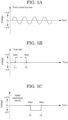
- FIG. 5A is a schematic diagram showing a time variation of a voltage of the first DC bus line 100, and a schematic diagram showing a relationship between the time and a difference between the electric power from the solar power generation unit 20 of FIG. 1 and the electric power consumed by the load 90.
- the voltage of the first DC bus line 100 is constantly fluctuating.
- the control device 10 constantly acquires and monitors the voltage of the first DC bus line 100.
- control device 10 determines whether the acquired voltage satisfies a predetermined condition. Specifically, the control device 10 determines whether the acquired voltage of the first DC bus line 100 is higher than a reference voltage V 0 (step S103).
- FIG. 5B is a schematic diagram showing a relationship between a voltage fluctuation and time in the driving of the fuel cell 51.
- the voltage increases from a reference voltage V 0 by + ⁇ V.
- driving of the fuel cell 51 makes it possible to switch to a direction in which the voltage of the first DC bus line 100 in the electric power control system 1 is increased(replenishing the power).
- FIG. 5C is a schematic diagram showing a relationship between a voltage fluctuation and time in the driving of the water electrolysis device 41.
- the water electrolysis device 41 when the water electrolysis device 41 is driven in a range from time T3 to time T4, the voltage decreases from the reference voltage V 0 by - ⁇ V.
- driving the water electrolysis device 41 makes it possible to switch to a direction in which the voltage of the first DC bus line 100 in the electric power control system 1 is decreased (consuming power).
- FIG. 6A and FIG. 6B are schematic diagrams in which the relationship between the voltage of the first DC bus line 100 and the time shown in FIG. 5A is combined with the relationship between the driving of the fuel cell and the water electrolysis device and the time shown in FIG. 5B and FIG. 5C .
- the control device 10 switches driving and termination of the fuel cell 51 and the water electrolysis device 41 depending on the voltage of the first DC bus line 100. Specifically, in the case where the voltage of the first DC bus line 100 is higher than the reference voltage V 0 and the electric power is excessive, the water electrolysis device 41 is driven to generate hydrogen. Conversely, in the case where the voltage of the first DC bus line 100 is lower than the reference voltage V 0 and the electric power is insufficient, the fuel cell 51 is driven to supply the electric power.
- FIG. 6A a part where the voltage of the first DC bus line 100 is switched from the voltage higher than the reference voltage V 0 to the voltage lower than the reference voltage V 0 is surrounded by a dotted line, and the surrounded area is shown in an enlarged view in FIG. 6B .
- FIG. 6A a part where the voltage of the first DC bus line 100 is switched from the voltage higher than the reference voltage V 0 to the voltage lower than the reference voltage V 0 is surrounded by a dotted line, and the surrounded area is shown in an enlarged view in FIG. 6B .
- the control device 10 transmits a signal instructing termination of the water electrolysis device 41 and driving of the fuel cell 51 to the water electrolysis device 41 and the fuel cell 51 (step S107).
- the control device 10 transmits a signal instructing termination of the water electrolysis device 41 and driving of the fuel cell 51 to the water electrolysis device 41 and the fuel cell 51 (step S107).
- the control device 10 since it is desirable for the control device 10 to gradually change the voltage when driving or terminating the water electrolysis device and the fuel cell, there is a period during which the water electrolysis device 41 and the fuel cell 51 are simultaneously driven.
- the control device 10 transmits a signal instructing termination of the fuel cell 51 and driving of the water electrolysis device 41 to the water electrolysis device 41 and the fuel cell 51 (step S105). Also in this case, as in the case where the voltage of the first DC bus line 100 changes from the voltage higher than the reference voltage V 0 to the voltage lower than the reference voltage V 0 , if the electrochemical reaction inside the water electrolysis device 41 and the fuel cell 51 abruptly changes, there is a risk of breakage or a reduction in lifetime. Therefore, since it is desirable for the control device 10 to gradually change the voltage when driving or terminating the water electrolysis device and the fuel cell, a period of time occurs when the water electrolysis device 41 and the fuel cell 51 are simultaneously driven.
- control device 10 After transmitting each instruction signal to the water electrolysis device 41 and the fuel cell 51 (step S105, step S107), the control device 10 loops to a process of acquiring the voltage (voltage value) of the first DC bus line (step S101).
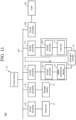
- FIG. 11 is a configuration diagram of a conventional electric power control system 500.
- the conventional electric power control system does not include the second DC bus line 200 as shown in FIG. 1 of the present application.
- the specification voltage value in the water electrolysis device and the fuel cell may be lower than the voltage value of the DC current flowing through the first DC bus line 100 by about 20 times or more.
- two converters namely, the DC/DC converter 110 and the DC/DC converter 43 are arranged between the first DC bus line 100 and the water electrolysis device 41.
- two converters, a DC/DC converter 111 and the DC/DC converter 53 are arranged between the first DC bus line 100 and the fuel cell 51.
- the electric power is supplied from the fuel cell 51 to the water electrolysis device 41 via the four DC/DC converters (the DC/DC converters 53, 111, 110, and 43).
- the DC/DC converters 53, 111, 110, and 43 the DC/DC converters 53, 111, 110, and 43.
- electric power loss occurs when the voltage is converted.
- the four DC/DC converters are required, the number of times the voltage was converted by the DC/DC converter reached four, resulting in significant power loss.
- the water electrolysis unit 40 and the fuel cell unit 50 are connected in parallel to the second DC bus line 200.
- the water electrolysis device 41 and the fuel cell 51 are simultaneously driven, when the electric power from the fuel cell flows to the water electrolysis device, the electric power passes through the second DC bus line 200 without passing through the first DC bus line 100.
- the number of times the voltage was converted by the DC/DC converter can be reduced to two, resulting in the reduction of the electric power loss.
- an electric power control system different from the first embodiment will be described. Specifically, an example in which a device other than the water electrolysis device 41 and the fuel cell 51 is connected to the second DC bus line will be described.
- FIG. 8 is an overall configuration diagram of an electric power control system 1A according to the present embodiment.
- the electric power control system 1A may include a storage battery unit 60 and a capacitor unit 70 in addition to the control device 10, the solar power generation unit 20, the storage battery unit 30, the water electrolysis unit 40, the fuel cell unit 50, the first DC bus line 100, the second DC bus line 200, the DC/DC converter 110, and the DC/AC converter 120, and the load 90.
- the storage battery unit 60 and the capacitor unit 70 are connected to the second DC bus line 200.
- the storage battery unit 60 includes a storage battery 61 and a DC/DC converter 63.
- the storage battery 61 stores electric power generated by the electric power control system 1A.
- the DC/DC converter 63 converts the voltage value of the DC current flowing through the second DC bus line 200 so as to match the specified voltage of the storage battery 61 in order to store the surplus electric power in the electric power control system 1A in the storage battery 61.
- the capacitor unit 70 includes a capacitor 71 and a DC/DC converter 73.
- the capacitor 71 stores electric power generated by the electric power control system 1A.
- the DC/DC converter 73 converts the voltage value of the DC current flowing through the second DC bus line 200 to match a specified voltage of the capacitor 71 in order to store the surplus power in the electric power control system 1A in the capacitor 71.
- the electric power control system 1A includes an electric power storage mechanism for storing electric power, such as the storage battery 61 and the capacitor 71 connected to the second DC bus line 200.
- an electric power storage mechanism for storing electric power such as the storage battery 61 and the capacitor 71 connected to the second DC bus line 200.
- the DC/AC converter is connected to the second DC bus line 200, and a method of supplying electric power to a load will be described.
- FIG. 9 is an overall configuration diagram of an electric power control system 1B according to the present embodiment.
- the electric power control system 1B may include a DC/AC converter 210 in addition to the control device 10, the solar power generation unit 20, the storage battery unit 30, the water electrolysis unit 40, the fuel cell unit 50, the first DC bus line 100, the second DC bus line 200, the DC/DC converter 110, the DC/AC converter 120, the load 90, the storage battery unit 60, and the capacitor unit 70.
- the DC/AC converter 210 may be connected to the second DC bus line 200.
- the DC/AC converter 210 converts the DC current flowing through the second DC bus line 200 into an AC current, and supplies the AC current to the load 90.
- FIG. 10 is a flowchart of the electric power control method.
- the control device 10 acquires the voltage value of the first DC bus line 100 (step S201).
- the control device 10 constantly acquires and monitors the voltage value (power value).
- the control device 10 determines whether the voltage of the first DC bus line satisfies the predetermined condition (step S203). Specifically, the presence or absence of an abnormality in the electric power control system 1B is determined.
- the abnormality in this case includes an emergency such as a momentary low voltage or a power failure.
- step S203 the control device 10 instructs the supply of electrical power to the load 90 via the DC/AC converter 120 (also referred to as a first DC/AC converter) (step S205).
- the DC/AC converter 120 also referred to as a first DC/AC converter
- step S203 If an abnormality is detected (step S203; Yes), the control device 10 instructs the supply of electrical power to the load 90 via the DC/AC converter 210 (also referred to as a second DC/AC converter) (step S207).
- the DC/AC converter 210 also referred to as a second DC/AC converter
- the second DC bus line can be used as an emergency power source, and stable power can be supplied in an emergency.
- the electric power control system includes the solar power generation unit
- the present invention is not limited to this.
- a unit having an electric power generation mechanism that uses wind, geothermal, biomass, hydroelectric, temperature differential, or other renewable energy may be used or a combination of these electric power generation mechanisms may be used, as appropriate.
- the present invention is not limited to this.
- an engine such as an internal combustion engine or an external combustion engine may be used as the power generation apparatus.
- V 0 reference voltage
- the reference voltage of the power generation apparatus (fuel cell) and the power generation fuel generation apparatus (water electrolysis device) may have different values. In this case, it is possible to reduce the number of unnecessary start-stop operations due to small voltage fluctuations.
Landscapes
- Engineering & Computer Science (AREA)
- Power Engineering (AREA)
- Fuel Cell (AREA)
- Electrolytic Production Of Non-Metals, Compounds, Apparatuses Therefor (AREA)
Abstract
Description
- The present disclosure relates to a power (electric power) control system.
- In recent years, initiatives for the Sustainable Development Goals (SDGs) have been expanding. In addition, electric power control systems using renewable energy such as solar, wind, and geothermal power have attracted attention from conventional methods of producing power using fossil fuels such as oil, coal, and liquefied natural gas.
- In this type of electric power control system, the generated power varies greatly depending on the weather, season, location, and the like. In addition, the power consumption of consumers (load) such as a house, a store, or the like also varies. Therefore, an excess or deficiency of power occurs depending on the power supply-demand balance between power generation and consumption. Therefore, in recent years, efforts have been made to stabilize power using a fuel cell or a water electrolysis device.
Patent Literature 1 discloses a Direct Current (DC) bus control system using the fuel cell and the water electrolysis device. - Patent Literature 1: International Patent Publication No.
WO2019/103059 - In a typical electric power control system, each device is connected to one DC bus line via a DC/DC converter. Furthermore, in the case of a fuel cell and a water electrolysis device, a voltage specification value is lower than that of a power supply device, so that the DC bus line and each device need to be connected via two DC/DC converters. Therefore, in the case where the water electrolysis device and the fuel cell are electrically connected, a large power loss occurs.
- An object of the present invention is to provide an electric power control system capable of stabilizing power while suppressing power loss.
- According to one embodiment of the present invention, a power control system is provided including an electric power generation mechanism using renewable energy, a first DC(Direct Current) bus line connected to the electric power generation mechanism and corresponding to a first voltage, a DC/DC converter connected to the first DC bus line and capable of converting the first voltage into a second voltage lower than the first voltage, a second DC bus line connected to the DC/DC converter and corresponding to the second voltage, a power generation apparatus electrically connected to the second DC bus line, and a power generation fuel generation apparatus electrically connected to the second DC bus line and connected to the power generation apparatus, which is configured to generate fuel for use in power generation in the power generation apparatus.
- In the electric power control system, the electric power generation mechanism may be a solar cell.
- The electric power control system may further include an electric power storage mechanism connected to the second DC bus line and storing electric power generated by the electric power generation mechanism.
- In the electric power control system, the power generation apparatus may be a fuel cell, and the power generation fuel generation apparatus may be a water electrolysis device.
- The electric power control system may further include a control device configured to control driving and termination of the power generation apparatus and the power generation fuel generation apparatus depending on a voltage value of a DC current in the first DC bus line.
- The electric power control system may include a first DC/AC converter connected to the first DC bus line; a second DC/AC converter connected to the second DC bus line; and a load connected to the first DC/AC converter and the second DC/AC converter, and when the first DC bus line satisfies a predetermined condition, the control device may supply power to the load via the second DC/AC converter.
- According to an embodiment of the present invention, it is possible to provide an electric power control system capable of stabilizing power while suppressing power loss.
-
-
FIG. 1 is an overall configuration diagram of an electric power control system according to an embodiment of the present invention. -
FIG. 2 is a block diagram of a control device according to an embodiment of the present invention. -
FIG. 3 is a functional block diagram of a control device according to an embodiment of the present invention. -
FIG. 4 is a flowchart of a control method according to an embodiment of the present invention. -
FIG. 5A is a schematic diagram showing a relationship between time and power in an electric power control system according to an embodiment of the present invention. -
FIG. 5B is a schematic diagram showing a relationship between time and power in an electric power control system according to an embodiment of the present invention. -
FIG. 5C is a schematic diagram showing a relationship between time and power in an electric power control system according to an embodiment of the present invention. -
FIG. 6A is a schematic diagram showing a relationship between time and power in an electric power control system according to an embodiment of the present invention. -
FIG. 6B is a schematic diagram showing a relationship between time and power in an electric power control system according to an embodiment of the present invention. -
FIG. 7 is a schematic diagram showing a flow of power in the electric power control system according to an embodiment of the present invention. -
FIG. 8 is an overall configuration diagram of an electric power control system according to an embodiment of the present invention. -
FIG. 9 is an overall configuration diagram of an electric power control system according to an embodiment of the present invention. -
FIG. 10 is a flowchart of a control method according to an embodiment of the present invention. -
FIG. 11 is an overall configuration diagram of a conventional electric power control system. - Hereinafter, embodiments of the present invention disclosed in the present application will be described with reference to the drawings. However, the present invention can be implemented in various forms without departing from the gist thereof, and should not be construed as being limited to the description of the following exemplary embodiments.
- In the drawings referred to in the present embodiment, parts with the same or similar functions are denoted by the same reference signs or similar reference signs (only denoted by A, B, and the like after the numerals). In addition, for the convenience of description, the dimensional ratio of the drawings may be different from the actual ratio, or a part of the configuration may be omitted from the drawings.
- Furthermore, although the term "voltage" is used in the present specification for the purposes of description, the voltage can be replaced with power or current, power can be replaced with current or voltage, or current can be replaced with voltage or power.
- Hereinafter, an electric power control system according to the present embodiment will be described with reference to the drawings.
-
FIG. 1 is an overall configuration diagram of an electricpower control system 1 according to the present embodiment. As shown inFIG. 1 , the electricpower control system 1 includes acontrol device 10, a solarpower generation unit 20, astorage battery unit 30, awater electrolysis unit 40, afuel cell unit 50, a firstDC bus line 100, a secondDC bus line 200, a DC/DC converter 110, a DC/AC converter 120, and aload 90. - The solar
power generation unit 20, thestorage battery unit 30, the DC/DC converter 110, and the DC/AC converter 120 are directly connected to the firstDC bus line 100. - The solar
power generation unit 20 includes asolar cell 21 and a DC/DC converter 23. Thesolar cell 21 generates electric power using sunlight. The DC/DC converter 23 converts a voltage value of a DC current generated by thesolar cell 21 so as to match a voltage value of a DC current of the firstDC bus line 100. - The
storage battery unit 30 includes astorage battery 31 and a DC/DC converter 33. Thestorage battery 31 stores electric power generated by the electric power control system. The DC/DC converter 33 converts the voltage value of the DC current flowing through the firstDC bus line 100 so as to match a specified voltage of thestorage battery 31 in order to store the surplus power in the electricpower control system 1 in thestorage battery 31. - The DC/
DC converter 110 is connected to the firstDC bus line 100 and the secondDC bus line 200. The DC/DC converter 110 converts (lowers) the voltage value of the DC current flowing through the firstDC bus line 100 so as to match a voltage value of a DC current flowing through the secondDC bus line 200. In addition, the DC/DC converter 110 converts (boosts) the voltage value of the DC current flowing through the secondDC bus line 200 so as to match the voltage value of the DC current in the firstDC bus line 100. The DC voltage value flowing through the firstDC bus line 100 corresponds to a first voltage. The voltage value flowing through the secondDC bus line 200 corresponds to a second voltage. The second voltage is lower than the first voltage. In this example, the first voltage is 400 V and the second voltage is 48 V. - The DC/
AC converter 120 converts the DC current flowing through the firstDC bus line 100 into an AC(Alternating current) current. Theload 90 indicates each device that consumes power. For example, examples of theload 90 include various electrical devices such as a television, an air conditioner, an electric lamp, a washing machine, a refrigerator, and a personal computer. - The
water electrolysis unit 40 and thefuel cell unit 50 are electrically connected to the secondDC bus line 200. - The
water electrolysis unit 40 includes awater electrolysis device 41 and a DC/DC converter 43. Thewater electrolysis device 41 generates hydrogen by utilizing electrolysis of water. The generated hydrogen is stored in a hydrogen storage vessel/tank 45. The DC/DC converter 43 converts the voltage value of the DC current in the secondDC bus line 200 so as to match a specified voltage value of thewater electrolysis device 41. - The
fuel cell unit 50 includes afuel cell 51 and a DC/DC converter 53. Thefuel cell 51 generates electric power by an electrochemical reaction using hydrogen generated in thewater electrolysis device 41 and stored in the hydrogen storage vessel/tank 45. The DC/DC converter 53 converts the voltage value of the DC current generated by thefuel cell 51 so as to match the voltage value of the DC current of the secondDC bus line 200. - In the above description, the
water electrolysis device 41 and thefuel cell 51 are connected via the hydrogen storage vessel/tank 45. As a result, thefuel cell 51 can generate electric power using hydrogen supplied from thewater electrolysis device 41. Therefore, since thewater electrolysis device 41 can generate fuel for use in power generation for thefuel cell 51, it can be referred to as a power generation fuel generation apparatus. -
FIG. 2 is a diagram of thecontrol device 10. Thecontrol device 10 includes at least acontrol unit 101, amemory unit 103, adisplay unit 105, and acommunication unit 107. - The
control unit 101 controls driving of each unit of the electricpower control system 1. For example, thecontrol unit 101 includes a processor equipped with a calculation processing device exemplified by a CPU (Central Processing Unit) and memories exemplified by a ROM (Read On Memory) and a RAM (Random Access Memory). For example, thecontrol unit 101 monitors the driving status of each unit, the voltage value of the DC current in the firstDC bus line 100, and the voltage value of the DC current in the secondDC bus line 200, and controls each device. By monitoring the voltage value of the DC current in the firstDC bus line 100 and the voltage value of the DC current in the secondDC bus line 200, thecontrol unit 101 can detect an abnormality in the voltage value of the firstDC bus line 100 and the voltage value of the secondDC bus line 200, respectively. - In addition to a semiconductor memory such as a memory or an SSD (Solid State Drive), a magnetic recording medium (a magnetic tape, a magnetic disk, or the like), an optical recording medium, a magneto-optical recording medium, or a memory element that is a storage medium is used as the
memory unit 103. Thememory unit 103 has a function of storing a control program and various kinds of information used in the control program. - The
display unit 105 displays control information under the control of thecontrol unit 101. In this case, thedisplay unit 105 may display the control information via a GUI (Graphical User Interface). Furthermore, in the case where the abnormality is detected in the electricpower control system 1, thedisplay unit 105 may display the abnormality information in the display unit. In addition, thedisplay unit 105 may not necessarily be arranged depending on the aspect of thecontrol device 10. - The
communication unit 107 transmits and receives information to and from each device based on the control of thecontrol unit 101. - Furthermore, a notification unit that notifies an abnormality may be arranged in the
control device 10 in addition to thecontrol unit 101, thememory unit 103, thedisplay unit 105, and thecommunication unit 107. A light or a buzzer may be used as the notification unit. -
FIG. 3 is a functional block diagram in thecontrol unit 101. As shown inFIG. 3 , thecontrol unit 101 includes anacquisition unit 1011, adetermination unit 1013, and adrive instruction unit 1015 as a functional unit. - The
acquisition unit 1011 has a function of acquiring the voltage value of the DC current in the firstDC bus line 100. In addition, theacquisition unit 1011 has a function of acquiring the voltage value of the DC current in the secondDC bus line 200. - The
determination unit 1013 has a function of determining whether the voltage value of the DC current satisfies a predetermined condition (whether the voltage is higher than a reference voltage). - The
drive instruction unit 1015 has a function of instructing driving and termination of thewater electrolysis device 41 and thefuel cell 51. - Next, an electric power control method will be described.
FIG. 4 is a flowchart of the electric power control method.FIG. 5A to FIG. 5C andFIG. 6A to FIG. 6B are schematic diagrams showing a relationship between time and voltage in the electricpower control system 1. - The
control device 10 ofFIG. 2 acquires the voltage value of the first DC bus line 100 (step S101).FIG. 5A is a schematic diagram showing a time variation of a voltage of the firstDC bus line 100, and a schematic diagram showing a relationship between the time and a difference between the electric power from the solarpower generation unit 20 ofFIG. 1 and the electric power consumed by theload 90. As shown inFIG. 5A , the voltage of the firstDC bus line 100 is constantly fluctuating. Thecontrol device 10 constantly acquires and monitors the voltage of the firstDC bus line 100. - Next, the
control device 10 determines whether the acquired voltage satisfies a predetermined condition. Specifically, thecontrol device 10 determines whether the acquired voltage of the firstDC bus line 100 is higher than a reference voltage V0 (step S103). -
FIG. 5B is a schematic diagram showing a relationship between a voltage fluctuation and time in the driving of thefuel cell 51. As shown inFIG. 5B , when afuel cell 51 is driven in a range from time T1 to time T2, the voltage increases from a reference voltage V0 by +ΔV. In other words, driving of thefuel cell 51 makes it possible to switch to a direction in which the voltage of the firstDC bus line 100 in the electricpower control system 1 is increased(replenishing the power). -
FIG. 5C is a schematic diagram showing a relationship between a voltage fluctuation and time in the driving of thewater electrolysis device 41. As shown inFIG. 5C , when thewater electrolysis device 41 is driven in a range from time T3 to time T4, the voltage decreases from the reference voltage V0 by -ΔV. In other words, driving thewater electrolysis device 41 makes it possible to switch to a direction in which the voltage of the firstDC bus line 100 in the electricpower control system 1 is decreased (consuming power). -
FIG. 6A and FIG. 6B are schematic diagrams in which the relationship between the voltage of the firstDC bus line 100 and the time shown inFIG. 5A is combined with the relationship between the driving of the fuel cell and the water electrolysis device and the time shown inFIG. 5B and FIG. 5C . In the present embodiment, thecontrol device 10 switches driving and termination of thefuel cell 51 and thewater electrolysis device 41 depending on the voltage of the firstDC bus line 100. Specifically, in the case where the voltage of the firstDC bus line 100 is higher than the reference voltage V0 and the electric power is excessive, thewater electrolysis device 41 is driven to generate hydrogen. Conversely, in the case where the voltage of the firstDC bus line 100 is lower than the reference voltage V0 and the electric power is insufficient, thefuel cell 51 is driven to supply the electric power. - In this case, attention is paid to when the voltage of the first
DC bus line 100 inFIG. 6A is switched from the voltage higher than the reference voltage V0 to the voltage lower than the reference voltage V0. InFIG. 6A , a part where the voltage of the firstDC bus line 100 is switched from the voltage higher than the reference voltage V0 to the voltage lower than the reference voltage V0 is surrounded by a dotted line, and the surrounded area is shown in an enlarged view inFIG. 6B . InFIG. 6B , when the voltage of the firstDC bus line 100 is switched from the voltage higher than the reference voltage V0 to the voltage lower than the reference voltage V0, there is a period during which an operation for switching off driving of thewater electrolysis device 41 that is being driven when the voltage of the firstDC bus line 100 is the high voltage overlaps an operation for switching on driving of thefuel cell 51 that is to be driven by the voltage being lower than the reference voltage V0. In other words, when the voltage is switched as shown inFIG. 6B , since the aim is to keep the voltage of the firstDC bus line 100 at the reference voltage V0 at all times, thefuel cell 51 and thewater electrolysis device 41 need to be driven simultaneously for a certain period. Specifically, when the voltage of the firstDC bus line 100 is switched from the voltage higher than the reference voltage V0 to the voltage lower than the reference voltage V0, and the voltage of the firstDC bus line 100 becomes lower than the reference voltage V0 (step S103; No), thecontrol device 10 transmits a signal instructing termination of thewater electrolysis device 41 and driving of thefuel cell 51 to thewater electrolysis device 41 and the fuel cell 51 (step S107). In this case, in the case of thewater electrolysis device 41 and thefuel cell 51, if the electrochemical reaction inside is abruptly changed, there is a risk of breakage or a reduction in lifetime. Therefore, since it is desirable for thecontrol device 10 to gradually change the voltage when driving or terminating the water electrolysis device and the fuel cell, there is a period during which thewater electrolysis device 41 and thefuel cell 51 are simultaneously driven. - In addition, when the voltage of the first
DC bus line 100 is switched from the voltage lower than the reference voltage V0 to the voltage higher than the reference voltage V0, and the voltage of the firstDC bus line 100 becomes higher than the reference voltage V0 (step S103; Yes), thecontrol device 10 transmits a signal instructing termination of thefuel cell 51 and driving of thewater electrolysis device 41 to thewater electrolysis device 41 and the fuel cell 51 (step S105). Also in this case, as in the case where the voltage of the firstDC bus line 100 changes from the voltage higher than the reference voltage V0 to the voltage lower than the reference voltage V0, if the electrochemical reaction inside thewater electrolysis device 41 and thefuel cell 51 abruptly changes, there is a risk of breakage or a reduction in lifetime. Therefore, since it is desirable for thecontrol device 10 to gradually change the voltage when driving or terminating the water electrolysis device and the fuel cell, a period of time occurs when thewater electrolysis device 41 and thefuel cell 51 are simultaneously driven. - After transmitting each instruction signal to the
water electrolysis device 41 and the fuel cell 51 (step S105, step S107), thecontrol device 10 loops to a process of acquiring the voltage (voltage value) of the first DC bus line (step S101). - In the period during which the
water electrolysis device 41 and thefuel cell 51 are simultaneously driven as described above, inFIG. 1 , the electric power output from thefuel cell 51 is supplied to the firstDC bus line 100 and is simultaneously supplied to thewater electrolysis device 41 via the secondDC bus line 200. The situation in this case is shown inFIG. 7 . - In this case, a conventional electric power control system and the electric power control system according to the present embodiment will be compared.
FIG. 11 is a configuration diagram of a conventional electricpower control system 500. The conventional electric power control system does not include the secondDC bus line 200 as shown inFIG. 1 of the present application. The specification voltage value in the water electrolysis device and the fuel cell may be lower than the voltage value of the DC current flowing through the firstDC bus line 100 by about 20 times or more. In this case, since it is difficult to perform voltage conversion in one DC/DC converter, in the conventional electric power control system, as shown inFIG. 11 , two converters, namely, the DC/DC converter 110 and the DC/DC converter 43 are arranged between the firstDC bus line 100 and thewater electrolysis device 41. Similarly, two converters, a DC/DC converter 111 and the DC/DC converter 53 are arranged between the firstDC bus line 100 and thefuel cell 51. - Therefore, in a period during which the
water electrolysis device 41 and thefuel cell 51 are simultaneously driven, the electric power is supplied from thefuel cell 51 to thewater electrolysis device 41 via the four DC/DC converters (the DC/DC converters - However, in the present embodiment, as shown in
FIG. 7 , thewater electrolysis unit 40 and thefuel cell unit 50 are connected in parallel to the secondDC bus line 200. In the case where thewater electrolysis device 41 and thefuel cell 51 are simultaneously driven, when the electric power from the fuel cell flows to the water electrolysis device, the electric power passes through the secondDC bus line 200 without passing through the firstDC bus line 100. As a result, the number of times the voltage was converted by the DC/DC converter can be reduced to two, resulting in the reduction of the electric power loss. In other words, by using the present embodiment, it is possible to stabilize electric power while suppressing electric power loss. - In the present embodiment, an electric power control system different from the first embodiment will be described. Specifically, an example in which a device other than the
water electrolysis device 41 and thefuel cell 51 is connected to the second DC bus line will be described. -
FIG. 8 is an overall configuration diagram of an electricpower control system 1A according to the present embodiment. As shown inFIG. 8 , the electricpower control system 1A may include astorage battery unit 60 and acapacitor unit 70 in addition to thecontrol device 10, the solarpower generation unit 20, thestorage battery unit 30, thewater electrolysis unit 40, thefuel cell unit 50, the firstDC bus line 100, the secondDC bus line 200, the DC/DC converter 110, and the DC/AC converter 120, and theload 90. - In the present embodiment, in addition to the
water electrolysis unit 40 and thefuel cell unit 50, thestorage battery unit 60 and thecapacitor unit 70 are connected to the secondDC bus line 200. - The
storage battery unit 60 includes astorage battery 61 and a DC/DC converter 63. Thestorage battery 61 stores electric power generated by the electricpower control system 1A. The DC/DC converter 63 converts the voltage value of the DC current flowing through the secondDC bus line 200 so as to match the specified voltage of thestorage battery 61 in order to store the surplus electric power in the electricpower control system 1A in thestorage battery 61. - The
capacitor unit 70 includes acapacitor 71 and a DC/DC converter 73. Thecapacitor 71 stores electric power generated by the electricpower control system 1A. The DC/DC converter 73 converts the voltage value of the DC current flowing through the secondDC bus line 200 to match a specified voltage of thecapacitor 71 in order to store the surplus power in the electricpower control system 1A in thecapacitor 71. - In the above description, the electric
power control system 1A includes an electric power storage mechanism for storing electric power, such as thestorage battery 61 and thecapacitor 71 connected to the secondDC bus line 200. As a result, the electric power generated by thefuel cell 51 can be stored in thestorage battery 61 or thecapacitor 71, and the number of times of a voltage is converted can be reduced as compared with the case where the electric power is stored in thestorage battery 31. Therefore, by using the present embodiment, it is possible to stabilize electric power while suppressing electric power loss. - Furthermore, in the present embodiment, other electrical devices, in addition to the
storage battery unit 60 and thecapacitor unit 70, may be directly connected to the secondDC bus line 200. - In the present embodiment, an electric power control system different from the second embodiment will be described. Specifically, the DC/AC converter is connected to the second
DC bus line 200, and a method of supplying electric power to a load will be described. -
FIG. 9 is an overall configuration diagram of an electricpower control system 1B according to the present embodiment. As shown inFIG. 9 , the electricpower control system 1B may include a DC/AC converter 210 in addition to thecontrol device 10, the solarpower generation unit 20, thestorage battery unit 30, thewater electrolysis unit 40, thefuel cell unit 50, the firstDC bus line 100, the secondDC bus line 200, the DC/DC converter 110, the DC/AC converter 120, theload 90, thestorage battery unit 60, and thecapacitor unit 70. - In the present embodiment, in addition to the
water electrolysis unit 40, thefuel cell unit 50, thestorage battery unit 60, and thecapacitor unit 70, the DC/AC converter 210 may be connected to the secondDC bus line 200. - The DC/
AC converter 210 converts the DC current flowing through the secondDC bus line 200 into an AC current, and supplies the AC current to theload 90. - Next, the electric power control method will be described.
FIG. 10 is a flowchart of the electric power control method. - The
control device 10 acquires the voltage value of the first DC bus line 100 (step S201). Thecontrol device 10 constantly acquires and monitors the voltage value (power value). - Next, the
control device 10 determines whether the voltage of the first DC bus line satisfies the predetermined condition (step S203). Specifically, the presence or absence of an abnormality in the electricpower control system 1B is determined. The abnormality in this case includes an emergency such as a momentary low voltage or a power failure. - Under normal conditions, in other words, no abnormality is detected (step S203; No), the
control device 10 instructs the supply of electrical power to theload 90 via the DC/AC converter 120 (also referred to as a first DC/AC converter) (step S205). - If an abnormality is detected (step S203; Yes), the
control device 10 instructs the supply of electrical power to theload 90 via the DC/AC converter 210 (also referred to as a second DC/AC converter) (step S207). - By using the present embodiment, in the case where an abnormality is detected in the electric power control system, the second DC bus line can be used as an emergency power source, and stable power can be supplied in an emergency.
- Within the spirit of the present invention, it is understood that various modifications and changes can be made by those skilled in the art and that these modifications and changes also fall within the scope of the present invention. For example, the addition, deletion, or design change of components, or the addition, deletion, or condition change of processes as appropriate by those skilled in the art based on each embodiment are also included in the scope of the present invention as long as they are provided with the gist of the present invention.
- In addition, although an example in which the electric power control system includes the solar power generation unit has been described in the first embodiment of the present invention, the present invention is not limited to this. For example, instead of the solar power generation unit, a unit having an electric power generation mechanism that uses wind, geothermal, biomass, hydroelectric, temperature differential, or other renewable energy, may be used or a combination of these electric power generation mechanisms may be used, as appropriate.
- Although an example in which the fuel cell is used as the power generation apparatus and the water electrolysis device is used as the power generation fuel generation apparatus has been described in the first embodiment of the present invention, the present invention is not limited to this. For example, an engine such as an internal combustion engine or an external combustion engine may be used as the power generation apparatus.
- Although an example in which one reference voltage (V0) is used as the reference voltage in the power generation apparatus (fuel cell) and the power generation fuel generation apparatus (water electrolysis device) has been described in the first embodiment of the present invention, the present invention is not limited to this. The reference voltage of the power generation apparatus (fuel cell) and the power generation fuel generation apparatus (water electrolysis device) may have different values. In this case, it is possible to reduce the number of unnecessary start-stop operations due to small voltage fluctuations.
- 1: electric power control system, 10: control device, 20: solar power generation unit, 21: solar cell, 23: DC/DC converter, 30: storage battery unit, 31: storage battery, 33: DC/DC converter, 40: water electrolysis unit, 41: water electrolysis device, 43: DC/DC converter, 45: hydrogen storage, 50: fuel cell unit, 51: fuel cell, 53: DC/DC converter, 60: storage battery unit, 61: storage battery, 63: DC/DC converter, 70: capacitor unit, 71: capacitor, 73: DC/DC converter, 90: load, 100: first DC bus line, 101: control unit, 103: memory unit, 105: display unit, 107: communication unit, 110: DC/DC converter, 120: DC/AC converter, 200: second DC bus line, 210: DC/AC converter, 1011: acquisition unit, 1013: determination unit, 1015: drive instruction unit
Claims (6)
- An electric power control system comprising:an electric power generation mechanism using renewable energy;a first DC(Direct Current) bus line connected to the electric power generation mechanism and corresponding to a first voltage;a DC/DC converter connected to the first DC bus line and capable of converting the first voltage into a second voltage lower than the first voltage;a second DC bus line connected to the DC/DC converter and corresponding to the second voltage;a power generation apparatus electrically connected to the second DC bus line; anda power generation fuel generation apparatus electrically connected to the second DC bus line and connected to the power generation apparatus, which is configured to generate fuel for use in power generation in the power generation apparatus.
- The electric power control system according to claim 1, wherein the electric power generation mechanism is a solar cell.
- The electric power control system according to claim 1, further comprising:
an electric power storage mechanism connected to the second DC bus line and storing electric power generated by the electric power generation mechanism. - The electric power control system according to claim 1, whereinthe power generation apparatus is a fuel cell, andthe power generation fuel generation apparatus is a water electrolysis device.
- The electric power control system according to claim 1, further comprising:
a control device configured to control driving and termination of the power generation apparatus and the power generation fuel generation apparatus depending on a voltage value of a DC current in the first DC bus line. - The electric power control system according to claim 5 comprising:a first DC/AC(alternating current) converter connected to the first DC bus line;a second DC/AC converter connected to the second DC bus line; anda load connected to the first DC/AC converter and the second DC/AC converter, whereinwhen the first DC bus line satisfies a predetermined condition, the control device supplies power to the load via the second DC/AC converter.
Applications Claiming Priority (2)
| Application Number | Priority Date | Filing Date | Title |
|---|---|---|---|
| JP2022127416 | 2022-08-09 | ||
| PCT/JP2023/016197 WO2024034194A1 (en) | 2022-08-09 | 2023-04-25 | Power control system |
Publications (2)
| Publication Number | Publication Date |
|---|---|
| EP4572070A1 true EP4572070A1 (en) | 2025-06-18 |
| EP4572070A4 EP4572070A4 (en) | 2025-12-10 |
Family
ID=89851480
Family Applications (1)
| Application Number | Title | Priority Date | Filing Date |
|---|---|---|---|
| EP23852180.1A Pending EP4572070A4 (en) | 2022-08-09 | 2023-04-25 | POWER CONTROL SYSTEM |
Country Status (5)
| Country | Link |
|---|---|
| US (1) | US20250167559A1 (en) |
| EP (1) | EP4572070A4 (en) |
| JP (2) | JP7796882B2 (en) |
| CN (1) | CN119563267A (en) |
| WO (1) | WO2024034194A1 (en) |
Family Cites Families (11)
| Publication number | Priority date | Publication date | Assignee | Title |
|---|---|---|---|---|
| US7622888B2 (en) * | 2005-12-13 | 2009-11-24 | Lockheed Martin Corporation | Fuel cell-electrolyzer system controlled by a single bi-directional DC-to-DC converter |
| JP5308268B2 (en) * | 2009-08-05 | 2013-10-09 | 本田技研工業株式会社 | Power supply system |
| US8970176B2 (en) * | 2010-11-15 | 2015-03-03 | Bloom Energy Corporation | DC micro-grid |
| JP6365550B2 (en) | 2014-01-08 | 2018-08-01 | ソニー株式会社 | Power control apparatus and power control method |
| JP5841279B2 (en) | 2014-05-16 | 2016-01-13 | 米沢電気工事株式会社 | Electric power charging device |
| CN106160022A (en) | 2015-03-31 | 2016-11-23 | 积能环保电机工程科技有限公司 | Direct-current multi-voltage power transmission and distribution system |
| KR102444737B1 (en) * | 2017-11-21 | 2022-09-19 | 고쿠리쓰 겐큐 가이하쓰 호징 리가가쿠 겐큐소 | DC bus control system |
| CN211790787U (en) * | 2020-03-17 | 2020-10-27 | 珠海格力电器股份有限公司 | Direct-current micro-grid system applying fuel cell |
| US12009669B2 (en) * | 2020-03-25 | 2024-06-11 | Tdk Corporation | Power feeding system and power management device |
| JP7710243B2 (en) * | 2020-06-22 | 2025-07-18 | 国立研究開発法人理化学研究所 | DC Bus Control System |
| JP7585781B2 (en) | 2020-12-25 | 2024-11-19 | オムロン株式会社 | Power generation system, control method and program |
-
2023
- 2023-04-25 EP EP23852180.1A patent/EP4572070A4/en active Pending
- 2023-04-25 WO PCT/JP2023/016197 patent/WO2024034194A1/en not_active Ceased
- 2023-04-25 CN CN202380053624.7A patent/CN119563267A/en active Pending
- 2023-04-25 JP JP2024540263A patent/JP7796882B2/en active Active
-
2025
- 2025-01-22 US US19/033,801 patent/US20250167559A1/en active Pending
- 2025-12-23 JP JP2025279363A patent/JP2026053552A/en active Pending
Also Published As
| Publication number | Publication date |
|---|---|
| CN119563267A (en) | 2025-03-04 |
| JPWO2024034194A1 (en) | 2024-02-15 |
| JP2026053552A (en) | 2026-03-25 |
| WO2024034194A1 (en) | 2024-02-15 |
| US20250167559A1 (en) | 2025-05-22 |
| EP4572070A4 (en) | 2025-12-10 |
| JP7796882B2 (en) | 2026-01-09 |
Similar Documents
| Publication | Publication Date | Title |
|---|---|---|
| EP2715904B1 (en) | System and method for integrating and managing demand/response between alternative energy sources, grid power, and loads | |
| CN102270884B (en) | Energy-storage system and control method thereof | |
| US20090189445A1 (en) | Renewable energy management and storage system | |
| US8148844B2 (en) | Power supply system including alternative sources | |
| US8253271B2 (en) | Home power supply system | |
| US20120043819A1 (en) | Power storage system, method of controlling the same, and computer readable recording medium storing a program for executing the method | |
| US9846418B2 (en) | Energy control system, energy control device, and energy control method for prioritizing a power generation source based on the possibility of selling generated power | |
| JP3759151B1 (en) | Power storage system | |
| WO2021261094A1 (en) | Dc bus control system | |
| EP4239823A1 (en) | Electrolyzer power conversion | |
| Tephiruk et al. | Hybrid energy storage system to enhance efficiency of renewable energy usage | |
| JP2016021863A (en) | Power supply system | |
| JP4202371B2 (en) | Power supply system, housing complex, and program | |
| JP2007066724A (en) | Fuel cell power generation system | |
| JP2015220889A (en) | Power supply system | |
| JP2012034534A (en) | Emergency power supply device | |
| KR20150085227A (en) | The control device and method for Energy Storage System | |
| KR101020200B1 (en) | Power control method of fuel cell and fuel cell system thereof | |
| EP4572070A1 (en) | Power control system | |
| JP2003153448A (en) | Power generation system | |
| JP4624717B2 (en) | Power system | |
| JP5820984B2 (en) | Power distribution system | |
| KR102573283B1 (en) | Power conversion system for salinity gradient power generation | |
| EP2869429B1 (en) | Battery storage system and controlling method of the same | |
| KR20120080018A (en) | An electric generating system using a fuel cell |
Legal Events
| Date | Code | Title | Description |
|---|---|---|---|
| STAA | Information on the status of an ep patent application or granted ep patent |
Free format text: STATUS: THE INTERNATIONAL PUBLICATION HAS BEEN MADE |
|
| PUAI | Public reference made under article 153(3) epc to a published international application that has entered the european phase |
Free format text: ORIGINAL CODE: 0009012 |
|
| STAA | Information on the status of an ep patent application or granted ep patent |
Free format text: STATUS: REQUEST FOR EXAMINATION WAS MADE |
|
| 17P | Request for examination filed |
Effective date: 20250123 |
|
| AK | Designated contracting states |
Kind code of ref document: A1 Designated state(s): AL AT BE BG CH CY CZ DE DK EE ES FI FR GB GR HR HU IE IS IT LI LT LU LV MC ME MK MT NL NO PL PT RO RS SE SI SK SM TR |
|
| REG | Reference to a national code |
Ref country code: DE Ref legal event code: R079 Free format text: PREVIOUS MAIN CLASS: H02J0003380000 Ipc: H02J0001080000 |
|
| DAV | Request for validation of the european patent (deleted) | ||
| DAX | Request for extension of the european patent (deleted) | ||
| A4 | Supplementary search report drawn up and despatched |
Effective date: 20251111 |
|
| RIC1 | Information provided on ipc code assigned before grant |
Ipc: H02J 1/08 20060101AFI20251105BHEP Ipc: H02J 3/32 20060101ALI20251105BHEP Ipc: H02J 15/00 20060101ALI20251105BHEP Ipc: H02J 3/38 20060101ALI20251105BHEP Ipc: H02J 1/10 20060101ALI20251105BHEP |
|
| RAP3 | Party data changed (applicant data changed or rights of an application transferred) |
Owner name: FUJITA CORPORATION |