EP4566622A2 - Dap10/dap12 fusionspolypeptide - Google Patents
Dap10/dap12 fusionspolypeptide Download PDFInfo
- Publication number
- EP4566622A2 EP4566622A2 EP25156844.0A EP25156844A EP4566622A2 EP 4566622 A2 EP4566622 A2 EP 4566622A2 EP 25156844 A EP25156844 A EP 25156844A EP 4566622 A2 EP4566622 A2 EP 4566622A2
- Authority
- EP
- European Patent Office
- Prior art keywords
- cancer
- cells
- seq
- cell
- polypeptide
- Prior art date
- Legal status (The legal status is an assumption and is not a legal conclusion. Google has not performed a legal analysis and makes no representation as to the accuracy of the status listed.)
- Pending
Links
Images















Classifications
-
- C—CHEMISTRY; METALLURGY
- C07—ORGANIC CHEMISTRY
- C07K—PEPTIDES
- C07K14/00—Peptides having more than 20 amino acids; Gastrins; Somatostatins; Melanotropins; Derivatives thereof
- C07K14/435—Peptides having more than 20 amino acids; Gastrins; Somatostatins; Melanotropins; Derivatives thereof from animals; from humans
- C07K14/46—Peptides having more than 20 amino acids; Gastrins; Somatostatins; Melanotropins; Derivatives thereof from animals; from humans from vertebrates
- C07K14/47—Peptides having more than 20 amino acids; Gastrins; Somatostatins; Melanotropins; Derivatives thereof from animals; from humans from vertebrates from mammals
- C07K14/4701—Peptides having more than 20 amino acids; Gastrins; Somatostatins; Melanotropins; Derivatives thereof from animals; from humans from vertebrates from mammals not used
- C07K14/4702—Regulators; Modulating activity
- C07K14/4705—Regulators; Modulating activity stimulating, promoting or activating activity
-
- A—HUMAN NECESSITIES
- A61—MEDICAL OR VETERINARY SCIENCE; HYGIENE
- A61K—PREPARATIONS FOR MEDICAL, DENTAL OR TOILETRY PURPOSES
- A61K38/00—Medicinal preparations containing peptides
-
- A—HUMAN NECESSITIES
- A61—MEDICAL OR VETERINARY SCIENCE; HYGIENE
- A61K—PREPARATIONS FOR MEDICAL, DENTAL OR TOILETRY PURPOSES
- A61K40/00—Cellular immunotherapy
- A61K40/10—Cellular immunotherapy characterised by the cell type used
- A61K40/11—T-cells, e.g. tumour infiltrating lymphocytes [TIL] or regulatory T [Treg] cells; Lymphokine-activated killer [LAK] cells
-
- A—HUMAN NECESSITIES
- A61—MEDICAL OR VETERINARY SCIENCE; HYGIENE
- A61K—PREPARATIONS FOR MEDICAL, DENTAL OR TOILETRY PURPOSES
- A61K40/00—Cellular immunotherapy
- A61K40/30—Cellular immunotherapy characterised by the recombinant expression of specific molecules in the cells of the immune system
- A61K40/31—Chimeric antigen receptors [CAR]
-
- A—HUMAN NECESSITIES
- A61—MEDICAL OR VETERINARY SCIENCE; HYGIENE
- A61K—PREPARATIONS FOR MEDICAL, DENTAL OR TOILETRY PURPOSES
- A61K40/00—Cellular immunotherapy
- A61K40/40—Cellular immunotherapy characterised by antigens that are targeted or presented by cells of the immune system
- A61K40/41—Vertebrate antigens
- A61K40/42—Cancer antigens
- A61K40/4202—Receptors, cell surface antigens or cell surface determinants
- A61K40/4203—Receptors for growth factors
- A61K40/4205—Her-2/neu/ErbB2, Her-3/ErbB3 or Her 4/ ErbB4
-
- A—HUMAN NECESSITIES
- A61—MEDICAL OR VETERINARY SCIENCE; HYGIENE
- A61K—PREPARATIONS FOR MEDICAL, DENTAL OR TOILETRY PURPOSES
- A61K40/00—Cellular immunotherapy
- A61K40/40—Cellular immunotherapy characterised by antigens that are targeted or presented by cells of the immune system
- A61K40/41—Vertebrate antigens
- A61K40/42—Cancer antigens
- A61K40/4254—Adhesion molecules, e.g. NRCAM, EpCAM or cadherins
- A61K40/4255—Mesothelin [MSLN]
-
- A—HUMAN NECESSITIES
- A61—MEDICAL OR VETERINARY SCIENCE; HYGIENE
- A61P—SPECIFIC THERAPEUTIC ACTIVITY OF CHEMICAL COMPOUNDS OR MEDICINAL PREPARATIONS
- A61P35/00—Antineoplastic agents
-
- C—CHEMISTRY; METALLURGY
- C07—ORGANIC CHEMISTRY
- C07K—PEPTIDES
- C07K14/00—Peptides having more than 20 amino acids; Gastrins; Somatostatins; Melanotropins; Derivatives thereof
- C07K14/435—Peptides having more than 20 amino acids; Gastrins; Somatostatins; Melanotropins; Derivatives thereof from animals; from humans
- C07K14/705—Receptors; Cell surface antigens; Cell surface determinants
- C07K14/70503—Immunoglobulin superfamily
- C07K14/7051—T-cell receptor (TcR)-CD3 complex
-
- C—CHEMISTRY; METALLURGY
- C07—ORGANIC CHEMISTRY
- C07K—PEPTIDES
- C07K14/00—Peptides having more than 20 amino acids; Gastrins; Somatostatins; Melanotropins; Derivatives thereof
- C07K14/435—Peptides having more than 20 amino acids; Gastrins; Somatostatins; Melanotropins; Derivatives thereof from animals; from humans
- C07K14/705—Receptors; Cell surface antigens; Cell surface determinants
- C07K14/7056—Lectin superfamily, e.g. CD23, CD72
-
- C—CHEMISTRY; METALLURGY
- C12—BIOCHEMISTRY; BEER; SPIRITS; WINE; VINEGAR; MICROBIOLOGY; ENZYMOLOGY; MUTATION OR GENETIC ENGINEERING
- C12N—MICROORGANISMS OR ENZYMES; COMPOSITIONS THEREOF; PROPAGATING, PRESERVING, OR MAINTAINING MICROORGANISMS; MUTATION OR GENETIC ENGINEERING; CULTURE MEDIA
- C12N15/00—Mutation or genetic engineering; DNA or RNA concerning genetic engineering, vectors, e.g. plasmids, or their isolation, preparation or purification; Use of hosts therefor
- C12N15/09—Recombinant DNA-technology
- C12N15/11—DNA or RNA fragments; Modified forms thereof; Non-coding nucleic acids having a biological activity
- C12N15/62—DNA sequences coding for fusion proteins
-
- C—CHEMISTRY; METALLURGY
- C12—BIOCHEMISTRY; BEER; SPIRITS; WINE; VINEGAR; MICROBIOLOGY; ENZYMOLOGY; MUTATION OR GENETIC ENGINEERING
- C12N—MICROORGANISMS OR ENZYMES; COMPOSITIONS THEREOF; PROPAGATING, PRESERVING, OR MAINTAINING MICROORGANISMS; MUTATION OR GENETIC ENGINEERING; CULTURE MEDIA
- C12N5/00—Undifferentiated human, animal or plant cells, e.g. cell lines; Tissues; Cultivation or maintenance thereof; Culture media therefor
- C12N5/06—Animal cells or tissues; Human cells or tissues
- C12N5/0602—Vertebrate cells
- C12N5/0634—Cells from the blood or the immune system
- C12N5/0636—T lymphocytes
-
- C—CHEMISTRY; METALLURGY
- C12—BIOCHEMISTRY; BEER; SPIRITS; WINE; VINEGAR; MICROBIOLOGY; ENZYMOLOGY; MUTATION OR GENETIC ENGINEERING
- C12N—MICROORGANISMS OR ENZYMES; COMPOSITIONS THEREOF; PROPAGATING, PRESERVING, OR MAINTAINING MICROORGANISMS; MUTATION OR GENETIC ENGINEERING; CULTURE MEDIA
- C12N5/00—Undifferentiated human, animal or plant cells, e.g. cell lines; Tissues; Cultivation or maintenance thereof; Culture media therefor
- C12N5/06—Animal cells or tissues; Human cells or tissues
- C12N5/0602—Vertebrate cells
- C12N5/0634—Cells from the blood or the immune system
- C12N5/0646—Natural killers cells [NK], NKT cells
-
- A—HUMAN NECESSITIES
- A61—MEDICAL OR VETERINARY SCIENCE; HYGIENE
- A61K—PREPARATIONS FOR MEDICAL, DENTAL OR TOILETRY PURPOSES
- A61K2239/00—Indexing codes associated with cellular immunotherapy of group A61K40/00
- A61K2239/31—Indexing codes associated with cellular immunotherapy of group A61K40/00 characterized by the route of administration
-
- A—HUMAN NECESSITIES
- A61—MEDICAL OR VETERINARY SCIENCE; HYGIENE
- A61K—PREPARATIONS FOR MEDICAL, DENTAL OR TOILETRY PURPOSES
- A61K2239/00—Indexing codes associated with cellular immunotherapy of group A61K40/00
- A61K2239/38—Indexing codes associated with cellular immunotherapy of group A61K40/00 characterised by the dose, timing or administration schedule
-
- A—HUMAN NECESSITIES
- A61—MEDICAL OR VETERINARY SCIENCE; HYGIENE
- A61K—PREPARATIONS FOR MEDICAL, DENTAL OR TOILETRY PURPOSES
- A61K2239/00—Indexing codes associated with cellular immunotherapy of group A61K40/00
- A61K2239/46—Indexing codes associated with cellular immunotherapy of group A61K40/00 characterised by the cancer treated
- A61K2239/55—Lung
-
- C—CHEMISTRY; METALLURGY
- C07—ORGANIC CHEMISTRY
- C07K—PEPTIDES
- C07K2319/00—Fusion polypeptide
- C07K2319/20—Fusion polypeptide containing a tag with affinity for a non-protein ligand
- C07K2319/21—Fusion polypeptide containing a tag with affinity for a non-protein ligand containing a His-tag
-
- C—CHEMISTRY; METALLURGY
- C07—ORGANIC CHEMISTRY
- C07K—PEPTIDES
- C07K2319/00—Fusion polypeptide
- C07K2319/20—Fusion polypeptide containing a tag with affinity for a non-protein ligand
- C07K2319/22—Fusion polypeptide containing a tag with affinity for a non-protein ligand containing a Strep-tag
-
- C—CHEMISTRY; METALLURGY
- C07—ORGANIC CHEMISTRY
- C07K—PEPTIDES
- C07K2319/00—Fusion polypeptide
- C07K2319/70—Fusion polypeptide containing domain for protein-protein interaction
-
- C—CHEMISTRY; METALLURGY
- C12—BIOCHEMISTRY; BEER; SPIRITS; WINE; VINEGAR; MICROBIOLOGY; ENZYMOLOGY; MUTATION OR GENETIC ENGINEERING
- C12N—MICROORGANISMS OR ENZYMES; COMPOSITIONS THEREOF; PROPAGATING, PRESERVING, OR MAINTAINING MICROORGANISMS; MUTATION OR GENETIC ENGINEERING; CULTURE MEDIA
- C12N2510/00—Genetically modified cells
Definitions
- This invention relates to fusion polypeptides comprising a DNAX-activating protein 10 (DAP10) polypeptide and a DNAX-activating protein 12 (DAP12) polypeptide.
- DAP10 DNAX-activating protein 10
- DAP12 DNAX-activating protein 12
- the disclosure also relates to cells comprising such fusion polypeptides and their use in treating cancer.
- CAR chimeric antigen receptor
- NKG2D ligands comprise a group of 8 stress-induced proteins (MICA, MICB, ULBP1-6) that are aberrantly expressed on virtually all tumour cell types.
- MICA, MICB, ULBP1-6 stress-induced proteins
- NKG2D ligands are also found on tumour associated stromal elements such as endothelium, regulatory T-cells and myeloid derived suppressor cells ( Parihar, R., et al., 2019, Cancer Immunol. Res. 7(3):363-375 ; Schmiedel & Mandelboim, 2018, Front. Immunol. (9)2040 ).
- NKG2D mice that are genetically deficient in NKG2D demonstrate impaired immunosurveillance for both epithelial and lymphoid malignancies.
- ongoing clinical trials involving NKG2D-targeted CARs have not revealed significant safety issues, even when combined with fludarabine/ cyclophosphamide lymphodepleting chemotherapy (see https://www.celyad.com/en/news/celyad-presents-update-on-autologous-allogeneic-nkg2d-based-car-t-therapies-in-solid-tumors ).
- the NKG2D receptor is naturally expressed by natural killer (NK) and some T-cell populations. Each NKG2D homodimer associates with two homodimeric DAP10 adaptor molecules via complementary charged amino acids within the plasma membrane. This interaction is required for cell surface expression and function of NKG2D.
- DAP10 resembles CD28 in its ability to provide co-stimulation via phosphatidylinositol 3-kinase but, importantly, it lacks a p56lck binding motif that promotes the unwanted recruitment of regulatory T-cells ( Kofler, et al., 2011, Mol. Ther. 19:760-767 ). Potency of DAP10 co-stimulation is underscored by its continued ability to signal following internalisation. However, since DAP10 lacks an immunoreceptor tyrosine-based activation motif (ITAM), NKG2D engagement does not lead to full T-cell activation.
- ITAM immunoreceptor tyrosine-based activation motif
- CARs have been developed which use different methods to provide ITAM-dependent signal 1 in addition to co-stimulation (also known as signal 2), as both signal types are necessary to elicit full T-cell activation.
- the first NKG2D targeted CAR was developed by Sentman et al. and consists of a fusion of NKG2D to CD3 ⁇ ( Zhang et al, 2005, Blood 106:1544-1551 ). Although nominally a first-generation CAR, it associates with endogenous DAP10 in T-cells, meaning that both signals 1 and 2 are provided. This CAR is currently undergoing clinical development by Celyad S.A. as Cyad-01. More recently, Chang et al. (2013, Cancer Res.
- the disclosure provides fusion polypeptides comprising (i) a DNAX-activating protein 10 (DAP10) polypeptide, or a functional variant thereof and (ii) a DNAX-activating protein 12 (DAP12) polypeptide, or a functional variant thereof.
- DAP10 polypeptide (or functional variant thereof) and DAP12 polypeptide (or functional variant thereof) may be directly fused together, or may be joined by a linker.
- the fusion polypeptide may further comprise N-terminal or C-terminal amino acid sequences, for example, to assist with detection or purification, to improve expression or to increase half-life.
- the disclosure provides a fusion polypeptide having the formula, from N-terminus to C-terminus: A-B-C-D-E, wherein
- the fusion polypeptide does not comprise or consist of SEQ ID NO: 1 of WO 2019/182425 (referred to as SEQ ID NO: 84 herein). In some embodiments, the fusion polypeptide does not comprise an anti-EpCAM peptide. In some embodiments, the fusion polypeptide does not comprise an EpCAM specific antigen receptor. In some embodiments, the fusion polypeptide does not comprise or consist of SEQ ID NO: 9 of WO 2019/182425 (referred to as SEQ ID NO: 85 herein). In some embodiments, the DAP10 polypeptide or functional variant thereof does not comprise or consist of SEQ ID NO: 85.
- the fusion polypeptide does not comprise or consist of SEQ ID NO: 11 of WO 2019/182425 (referred to as SEQ ID NO: 86 herein).
- the DAP12 polypeptide or functional variant thereof does not comprise or consist of SEQ ID NO: 86.
- the fusion polypeptide does not comprise or consist of both SEQ ID NO: 85 and SEQ ID NO: 86.
- the disclosure relates to a nucleic acid molecule (e.g., an isolated nucleic acid molecule), including DNA and RNA molecules, that encodes a fusion polypeptide as described herein.
- a nucleic acid molecule e.g., an isolated nucleic acid molecule
- Such nucleic acid molecules may optionally also encode a NKG2D polypeptide or functional variant thereof.
- vectors particularly expression vectors, comprising a nucleic acid molecule of the disclosure.
- the disclosure also provides host cells comprising a nucleic acid and/or vector that encodes a fusion polypeptide as described herein.
- Host cells comprising the fusion polypeptide of the invention are also provided herein.
- the disclosure also provides a method for making a fusion polypeptide as described herein, comprising maintaining a host cell of the disclosure under conditions suitable for expression of the nucleic acid, whereby the recombinant nucleic acid is expressed and the fusion polypeptide is produced.
- the disclosure also provides a pharmaceutical composition
- a pharmaceutical composition comprising a fusion polypeptide, nucleic acid molecule, vector or host cell of the disclosure, optionally further comprising a pharmaceutically or physiologically acceptable carrier.
- the disclosure also provides a method of treating a patient suffering from a pathological condition, comprising administering a fusion polypeptide, nucleic acid molecule, vector or host cell comprising a fusion polypeptide of the disclosure to a subject in need thereof.
- the disclosure also provides a fusion polypeptide, nucleic acid molecule, vector, host cell or pharmaceutical composition according to the disclosure (i) for use in therapy and (ii) in the manufacture of a medicament for the treatment of a disease or condition disclosed herein.
- the DAP10 polypeptide used in the fusion polypeptide described herein may be mammalian, for example human.
- Wild-type human DAP10 is encoded by the amino acid sequence having UniProt accession no: Q9UBK5 (SEQ ID NO: 1). This is a 93aa polypeptide.
- the first 18aa are considered to be a signal/leader sequence, amino acids 19-48 the extracellular domain, amino acids 49-69 the transmembrane domain, and amino acids 70-93 the cytoplasmic/intracellular domain.
- a DAP10 polypeptide used in the fusion polypeptide of the disclosure comprises an amino acid sequence having at least about 80%, at least about 85%, at least about 90%, at least about 95%, at least about 97%, at least about 98% or at least about 99% sequence identity to the DAP10 polypeptide of SEQ ID NO: 1.
- a DAP10 polypeptide used in the fusion polypeptide of the disclosure comprises an amino acid sequence of SEQ ID NO: 1.
- a functional variant DAP10 polypeptide used in the fusion polypeptide of the disclosure may comprise one or more (i.e. 1, 2, 3, 4, 5, 6, 7, 8, 9, 10 or more) point mutations that add, delete or substitute any of the amino acids of the amino acids of DAP10 (such as that of wild-type human DAP10 (SEQ ID NO:1)).
- Truncated versions of a DAP10 polypeptide may also be used in fusion polypeptides of the disclosure.
- a truncated version of DAP10 comprising only amino acids 19-93 of SEQ ID NO:1 (i.e. lacking amino acids 1-18, the signal/leader sequence) may be used in the fusion polypeptide of the disclosure.
- Such a sequence is referred to as SEQ ID NO: 2 herein.
- Other truncated versions may comprise amino acids 19-69 of SEQ ID NO: 1, such a sequence comprising merely the extracellular and transmembrane domains of DAP10, and referred to herein as SEQ ID NO:3.
- a further truncated version of DAP10 used in the invention may comprise amino acids 1-71 of SEQ ID NO: 1 (i.e. the signal/leader sequence, extracellular domain, transmembrane domain and 2 amino acids from the cytoplasmic/intracellular domain), referred to as SEQ ID NO: 4 herein.
- a further truncated version of DAP10 used in the invention may comprise amino acids 19-71 of SEQ ID NO: 1 (i.e. the extracellular domain, transmembrane domain and 2 amino acids from the cytoplasmic/intracellular domain), referred to as SEQ ID NO: 5 herein.
- a further truncated version of DAP10 used in the invention may comprise amino acids 70-93 of SEQ ID NO: 1 (i.e.
- a yet further truncated version of DAP10 used in the invention may comprise amino acids 49-93 of SEQ ID NO: 1 (i.e. the transmembrane and cytoplasmic/intracellular domains), referred to as SEQ ID NO: 7 herein.
- a yet further truncated version of DAP10 used in the invention may comprise amino acids 49-69 of SEQ ID NO: 1 (i.e. the transmembrane domain), referred to as SEQ ID NO: 8 herein.
- mutated versions or truncated versions of the DAP10 polypeptide are also suitable for use in the disclosure.
- such mutated versions or truncated versions that are used as functional variants of DAP10 polypeptides in the disclosure retain the activity of the wild type polypeptide shown in SEQ ID NO: 1.
- a functional variant of a DAP10 polypeptide of the disclosure retains at least 10% (for example 20%, 30%, 40%, 50%, 60%, 70%, 80%, 90%, 95%, 97%, 98%, 99% or more) of the activity of the wild type polypeptide shown in SEQ ID NO: 1.
- the activity may be measured by assessment of tyrosine phosphorylation of DAP10 and/or recruitment and activation of the p85 subunit of phosphatidylinositol 3-kinase and the downstream anti-apoptotic kinase, AKT.
- the DAP12 polypeptide used in the fusion polypeptide described herein may be mammalian, for example human.
- Wild-type human DAP12 is encoded by the amino acid sequence having UniProt accession no: 043914 (SEQ ID NO: 9).
- the first 21 amino acids are considered to be a signal/leader sequence, amino acids 22-40 the extracellular domain, amino acids 41-61 the transmembrane domain, and amino acids 62-113 the cytoplasmic/intracellular domain.
- a DAP12 polypeptide used in the fusion polypeptide of the disclosure comprises an amino acid sequence having at least about 80%, at least about 85%, at least about 90%, at least about 95%, at least about 97%, at least about 98% or at least about 99% sequence identity to the DAP12 polypeptide of SEQ ID NO: 9.
- a DAP12 polypeptide used in the fusion polypeptide of the disclosure comprises an amino acid sequence of SEQ ID NO: 9.
- a functional variant DAP12 polypeptide used in the fusion polypeptide of the disclosure may comprise one or more (i.e. 1, 2, 3, 4, 5, 6, 7, 8, 9, 10 or more) point mutations that add, delete or substitute any of the amino acids of the amino acids of DAP12 (such as that of wild-type human DAP12 (SEQ ID NO: 9)).
- Truncated versions of a DAP12 polypeptide may also be used in fusion polypeptides of the disclosure.
- a truncated version of DAP12 comprising only amino acids 22-113 of SEQ ID NO: 9 (i.e. lacking amino acids 1-21, the signal/leader sequence) may be used in the fusion polypeptide of the disclosure.
- Such a sequence is referred to as SEQ ID NO: 10 herein.
- Other truncated versions may comprise amino acids 62-113 of SEQ ID NO: 9, such a sequence comprising merely the cytoplasmic/intracellular domain of DAP12, and referred to herein as SEQ ID NO:11.
- Other truncated versions may comprise amino acids 41-61 of SEQ ID NO: 9 (i.e.
- SEQ ID NO: 12 the transmembrane domain
- SEQ ID NO: 13 Another truncated version may comprise amino acids 22-61 of SEQ ID NO: 9 (i.e. the extracellular and transmembrane domains), referred to as SEQ ID NO: 13 herein.
- Mutated versions or truncated versions of the DAP12 polypeptide are also suitable for use in the disclosure. Mutated versions or truncated versions that are used as functional variants of DAP12 polypeptides in the disclosure may retain the activity of the wild type polypeptide shown in SEQ ID NO: 9.
- a functional variant of a DAP12 polypeptide of the disclosure retains at least 10% (for example 20%, 30%, 40%, 50%, 60%, 70%, 80%, 90%, 95%, 97%, 98%, 99% or more) of the activity of the wild type polypeptide shown in SEQ ID NO: 9.
- the activity may be measured using functional assays, such as MTT and measuring cytokine secretion by ELISA.
- the fusion polypeptide of the invention may associate with other polypeptides. Such association may be due to electrostatic forces, such as provided by complementary charged amino acids.
- polypeptide that may associate with a fusion polypeptide of the invention is the NKG2D polypeptide ( Wu et al., 2000, J. Exp. Med., 192(7):1059-1067 and Rosen et al., 2004, J. Immunol., 173(4):2470-2478 ).
- such polypeptides may be genetically encoded as part of a contiguous chimeric construct with the gene that encodes for the fusion polypeptide of the disclosure.
- the fusion polypeptide and other polypeptide may then be separated during translation (e.g. using a ribosomal skip peptide) or by post translation cleavage (e.g. using a furin cleavage site).
- the fusion polypeptide and other polypeptide may therefore be joined by an optional linker.
- Such a linker may comprise a cleavage site to facilitate cleavage.
- the NKG2D polypeptide used in a chimeric polypeptide described herein may be mammalian, for example human. Wild-type human NKG2D is encoded by the amino acid sequence having UniProt accession no: P26718 (SEQ ID NO: 14). The polypeptide is considered to comprise a cytoplasmic domain (amino acids 1-51), a transmembrane domain (amino acids 52-72) and an extracellular domain (amino acids 73-216).
- a NKG2D polypeptide used in the disclosure comprises an amino acid sequence having at least about 80%, at least about 85%, at least about 90%, at least about 95%, at least about 97%, at least about 98% or at least about 99% sequence identity to the NKG2D polypeptide of SEQ ID NO: 14. In some embodiments, a NKG2D polypeptide used in the disclosure comprises an amino acid sequence of SEQ ID NO: 14.
- a functional variant NKG2D polypeptide used in the disclosure may comprise one or more (i.e. 1, 2, 3, 4, 5, 6, 7, 8, 9, 10 or more) point mutations that add, delete or substitute any of the amino acids of the amino acids of NKG2D (such as that of wild-type human NKG2D (SEQ ID NO: 14)).
- Truncated versions of a NKG2D polypeptide may also be used in polypeptides of the disclosure.
- a truncated version of NKG2D comprising only amino acids 73-216 of SEQ ID NO:14 (i.e. the extracellular domain) may be used in the disclosure.
- Such a sequence is referred to as SEQ ID NO: 15 herein.
- Other truncated versions may comprise amino acids 82-216 of SEQ ID NO: 14, such a sequence comprising part of the extracellular domain of NKG2D, and referred to herein as SEQ ID NO:16.
- a further truncated version comprises amino acids 52-216 of SEQ ID NO: 14 (i.e. the transmembrane and extracellular domains), referred to as SEQ ID NO: 17 herein.
- mutated versions or truncated versions of the NKG2D polypeptide are also suitable for use in the disclosure.
- any such mutated versions or truncated versions that are used as functional variants of NKG2D polypeptides in the disclosure should preferably retain the activity of the wild type polypeptide shown in SEQ ID NO: 14.
- a functional variant of a NKG2D polypeptide of the disclosure retains at least 10% (for example 20%, 30%, 40%, 50%, 60%, 70%, 80%, 90%, 95%, 97%, 98%, 99% or more) of the activity of the wild type polypeptide shown in SEQ ID NO: 14.
- the activity may be measured using flow cytometry to confirm continued binding to NKG2D ligands and through various cell culture assays (such as MTT and ELISA) aimed at confirming target cell lysis, cytokine secretion and co-stimulation.
- the DAP10 and DAP12 moieties described in this disclosure can be directly bonded to each other in a contiguous polypeptide chain, or may be indirectly bonded to each other through a suitable linker.
- the linker may be a peptide linker.
- Peptide linkers are commonly used in fusion polypeptides and methods for selecting or designing linkers are well-known. (See, e.g., Chen X et al., 2013, Adv. Drug Deliv. Rev.
- Linkers may also be used to join the fusion polypeptide of the disclosure to another polypeptide (such as a NKG2D polypeptide) in a chimeric construct as described above.
- Peptide linkers generally are categorized as i) flexible linkers, ii) helix forming linkers, and iii) cleavable linkers, and examples of each type are known in the art.
- a flexible linker is included in the fusion polypeptides described herein.
- Flexible linkers may contain a majority of amino acids that are sterically unhindered, such as glycine and alanine.
- the hydrophilic amino acid Ser is also conventionally used in flexible linkers.
- Examples of flexible linkers include, without limitation: polyglycines (e.g., (Gly) 4 and (Gly) 5 ), polyalanines poly(Gly-Ala), and poly(Gly-Ser) (e.g., (Gly n -Ser n ) n or (Ser n -Gly n ) n , wherein each n is independently an integer equal to or greater than 1).
- polyglycines e.g., (Gly) 4 and (Gly) 5
- poly(Gly-Ser) e.g., (Gly n -Ser n ) n or (Ser n -Gly n ) n , wherein each n is independently an integer equal to or greater than 1).
- Peptide linkers can be of a suitable length.
- the peptide linker sequence may be at least 1, 2, 3, 4, 5, 6, 7, 8, 9, 10, 11, 12, 13, 14, 15, 16, 17, 18, 19, 20, 25, 30, 35, 40, 45, 50, 55, 60, 65, 70, 75, or more amino acid residues in length.
- a peptide linker can be from about 5 to about 50 amino acids in length; from about 10 to about 40 amino acids in length; from about 15 to about 30 amino acids in length; or from about 15 to about 20 amino acids in length. Variation in peptide linker length may retain or enhance activity, giving rise to superior efficacy in activity studies.
- the peptide linker sequence may be comprised of naturally or non-naturally occurring amino acids, or a mixture of both naturally and non-naturally occurring amino acids.
- the amino acids glycine and serine comprise the amino acids within the linker sequence.
- the linker region comprises sets of glycine repeats (GSG 3 ) n (SEQ ID NO:18), where n is a positive integer equal to or greater than 1 (for example 1 to about 20). More specifically, the linker sequence may be GSGGG (SEQ ID NO: 19). The linker sequence may be GSGG (SEQ ID NO: 20).
- the linker region orientation comprises sets of glycine repeats (SerGly 3 ) n , where n is a positive integer equal to or greater than 1 (for example 1 to about 20) (SEQ ID NO: 21).
- a linker may contain glycine (G) and serine (S) in a random or a repeated pattern.
- the linker can be (GGGGS) n (SEQ ID NO: 22), wherein n is an integer ranging from 1 to 20, for example 1 to 4.
- n is 4 and the linker is GGGGSGGGGSGGGGSGGGGS (SEQ ID NO: 23).
- n is 3 and the linker is GGGGSGGGGSGGGGS (SEQ ID NO: 24).
- a linker may contain glycine (G), serine (S) and proline (P) in a random or repeated pattern.
- the linker can be (GPPGS) n , wherein n is an integer ranging from 1 to 20, for example 1-4. In a particular example, n is 1 and the linker is GPPGS (SEQ ID NO: 25).
- linker is not immunogenic when administered in a patient, such as a human.
- linkers may be chosen such that they have low immunogenicity or are thought to have low immunogenicity.
- the linkers described herein are exemplary, and the linker can include other amino acids, such as Glu and Lys, if desired.
- the peptide linkers may include multiple repeats of, for example, (G 3 S) (SEQ ID NO: 26), (G 4 S) (SEQ ID NO: 27), (GYS) (SEQ ID NO: 28), and/or (GlySer) (SEQ ID NO: 29), if desired.
- the peptide linkers may include multiple repeats of, for example, (SG 4 ) (SEQ ID NO: 30), (SG 3 ) (SEQ ID NO: 31), (SG 2 ) (SEQ ID NO: 32), (SG) 2 (SEQ ID NO: 33) or (SerGly) (SEQ ID NO: 34).
- the peptide linkers may include combinations and multiples of repeating amino acid sequence units, such as (G 3 S)+(G 4 S)+(GlySer) (SEQ ID NO: 26 +SEQ ID NO: 27 +SEQ ID NO: 29).
- Ser can be replaced with Ala e.g., (G 4 A) (SEQ ID NO: 35) or (G 3 A) (SEQ ID NO: 36).
- the linker comprises the motif (EAAAK) n , where n is a positive integer equal to or greater than 1, for example 1 to about 20 (SEQ ID NO: 37).
- peptide linkers may also include cleavable linkers.
- the linkers may comprise further domains and/or features, such as a furin cleavage site (RRKR)(SEQ ID NO: 38), a P2A ribosomal skip peptide (ATNFSLLKQAGDVEENPGP)(SEQ ID NO: 39) and/or a T2A ribosomal skip peptide (EGRGSLLTCGDVEENPGP)(SEQ ID NO: 40).
- RRKR furin cleavage site
- ATNFSLLKQAGDVEENPGP P2A ribosomal skip peptide
- EGRGSLLTCGDVEENPGP T2A ribosomal skip peptide
- linkers comprising these domains include SGSG + a P2A ribosomal skip peptide (SGSGATNFSLLKQAGDVEENPGP)(SEQ ID NO: 41), SGSG + a T2A ribosomal skip peptide (SGSGEGRGSLLTCGDVEENPGP)(SEQ ID NO: 42), and versions also including a furin cleavage site, i.e.
- furin cleavage site + SGSG + a P2A ribosomal skip peptide (RRKRSGSGATNFSLLKQAGDVEENPGP) (SEQ ID NO: 43) and furin cleavage site + SGSG + a T2A ribosomal skip peptide (RRKRSGSGEGRGSLLTCGDVEENPGP) (SEQ ID NO: 44).
- Alternative ribosomal skip peptides that may be used in the invention include F2A (VKQTLNFDLLKLAGDVESNPGP) (SEQ ID NO: 45) and E2A (QCTNYALLKLAGDVESNPGP) (SEQ ID NO: 46).
- sequences may be attached to the N- or C-terminus of the fusion polypeptides of the disclosure, or to the NKG2D polypeptides disclosed herein. These may be functional, such as signal peptides, purification tags/sequences, or half-life extension moieties, or may simply comprise spacer sequences. Alternatively, they may comprise a function, such as a T-cell stimulatory function.
- tags or markers may be attached to the N- or C-terminus of the fusion polypeptides of the disclosure to assist with purification.
- Any affinity tag may be combined with the fusion polypeptides of the disclosure to assist with purification.
- affinity tags are a His-tag, a FLAG-tag, Arg-tag, T7-tag, Strep-tag, S-tag, aptamer-tag, V5 tag, AviTag TM , myc epitope tag or any combination of these tags.
- the affinity tag is a His-tag (usually comprising 5-10 histidine residues), for example a 6His tag (i.e. HHHHHH) (SEQ ID NO: 47).
- the affinity tag is a FLAG tag (i.e. DYKDDDDK) (SEQ ID NO: 48).
- the affinity tag is an AviTag TM (i.e. GLNDIFEAQKIEWHE) (SEQ ID NO: 49).
- the affinity tag is a V5 tag (GKPIPNPLLGLDST) (SEQ ID NO: 50) or (IPNPLLGLD) (SEQ ID NO: 51).
- the affinity tag is a myc epitope tag recognised by the 9e10 antibody (EQKLISEEDL) (SEQ ID NO: 52).
- EQKLISEEDL a myc epitope tag recognised by the 9e10 antibody
- Such affinity tags may also be used, either comprising one or more tags at the N-terminus, one or more tags at the C-terminus, or one or more tags at each of the N-terminus and the C-terminus.
- Examples of such combinations include a His tag (H) combined with an AviTag (A), or a His tag (H) combined with both an AviTag (A) and a FLAG tag (F).
- the tags may be in either orientation, thus the AviTag/His tag may have the orientation N-AH-C or N-HA-C, while the Avi/His/FLAG tag may have the orientation N-AHF-C, N-FHA-C, etc.
- a fusion polypeptide according to the disclosure comprises an "AHF” tag having the sequence "GLNDIFEAQKIEWHEGGHHHHHHDYKDDDDK” (SEQ ID NO: 53).
- a fusion polypeptide according to the disclosure comprises an "FHA” tag having the sequence "DYKDDDDKHHHHHHGGGLNDIFEAQKIEWHE” (SEQ ID NO: 54).
- the CD8 ⁇ leader sequence (amino acids 1-21 of UniProt: P01732 or a shortened derivative comprising amino acids 1-18), is a commonly used T-cell sequence, and is referred to as SEQ ID NO: 55 herein.
- T-cell co-stimulatory activation sequences are known from previous work to engineer CAR-T cells. These may also be added to fusion polypeptides of the disclosure.
- the 4-1BB endodomain (amino acids 214-255 of UniProt: Q07011) may also be used as an N- or C-terminal sequence.
- the 4-1BB endodomain is referred to as SEQ ID NO: 56 herein.
- the 4-1BB endodomain may act as a co-stimulatory domain.
- the CD27 endodomain (amino acids 213-260 of UniProt: P26842) may also be used as an N- or C-terminal sequence.
- the CD27 endodomain is referred to as SEQ ID NO: 57 herein.
- the CD27 endodomain may act as a co-stimulatory domain.
- the human IgG1 hinge (amino acids 218-229 of UniProt: P0DOX5) may also be used as an N- or C-terminal sequence.
- the human IgG1 hinge is referred to as SEQ ID NO: 58.
- a truncated CD8 ⁇ hinge (amino acids 138-182 of Uniprot: P01732) may also be used as an N- or C-terminal sequence.
- the truncated CD8a hinge is referred to as SEQ ID NO: 59.
- Table 1 Exemplary DAP10/DAP12 fusion polypeptide constructs Name Sequence DAP10 (full sequence - aa1-93)-DAP12 endodomain (aa62-113) (SEQ ID NO: 60) CD8 ⁇ leader-FLAG-DAP10 (extracellular and TM - aa19-69)- DAP12 endodomain (aa62-113) (SEQ ID NO: 61) CD8 ⁇ leader-FLAG-human IgG1 hinge (aa 218-229 Uniprot ref P0DOX5)-DAP10 (TM and endodomain aa 49-93)-DAP12 endodomain (aa 62-113) (SEQ ID NO: 62) CD8 ⁇ leader-truncated CD8a hinge (aa 138-182 Uniprot reference P01732)-DAP10 (TM and endodomain-aa 49-93)-DAP12 endodomain (aa 62-113) (SEQ ID NO: 60) CD8 ⁇ leader-FLAG-human IgG1 hinge
- fusion polypeptides of the disclosure may be expressed as a single chimeric construct with a NKG2D polypeptide, for translation-associated or post-translational cleavage.
- the translated polypeptides are cleaved to create the separate polypeptides which then self-associate to form a CAR.
- a fusion polypeptide of the disclosure is cleaved from a NKG2D polypeptide.
- Table 2 Exemplary chimeric constructs Name Sequence DAP10 (aa1-93)-DAP12 endodomain (aa62-113)-Furin cleavage-linker-P2A-NKG2D (aa1-216) (Construct 1) (SEQ ID NO: 64) (N1012) CD8 ⁇ leader-FLAG-DAP10 (aa19-69)-DAP12 (aa62-113) - Furin cleavage-linker-T2A-DAP10 (aa 1-93)-Furin cleavage-linker-P2A-NKG2D (aa1-216) (Construct 3) (SEQ ID NO: 65) DAP10 (aa1-93)-DAP12 endodomain (aa62-113)-Furin cleavage-linker-P2A-NKG2D (aa1-216)-Furin cleavage-linker-T2A-DAP10 (aa1-71)-4-1
- nucleic acid molecules that encode a fusion polypeptide or chimeric construct of the disclosure.
- This may be as DNA or RNA.
- the term encompasses nucleic acids containing known analogues of natural nucleotides that have similar properties as the reference nucleic acid and are metabolized in a manner similar to naturally occurring nucleotides. Examples of such analogs include, without limitation, phosphorothioates, phosphoramidates, methyl phosphonates, chiral-methyl phosphorates, 2-O-methyl ribonucleotides, peptide-nucleic acids (PNAs).
- PNAs peptide-nucleic acids
- a particular nucleic acid sequence also implicitly encompasses conservatively modified variants thereof (e.g., degenerate codon substitutions) and complementary sequences, as well as the sequence explicitly indicated.
- degenerate codon substitutions may be achieved by generating sequences in which the third position of one or more selected (or all) codons is substituted with mixed-base and/or deoxyinosine residues ( Batzer et al., 1991, Nucleic Acid Res. 19:5081 ; Ohtsuka et al., 1985, J. Biol. Chem. 260:2605-2608 ; and Rossolini et al., 1994, Mol. Cell. Probes 8:91-98 ).
- the disclosure also provides a nucleic acid comprising a nucleotide sequence encoding the polypeptide sequence of any one or more of SEQ ID NOs: 60-69.
- the disclosure further provides a nucleic acid comprising a nucleotide sequence having at least about 80%, at least about 85%, at least about 90%, at least about 95%, at least about 97% or at least about 99% sequence identity with a nucleic acid encoding any of SEQ ID NOS: 60-69. Sequence identity is typically measured along the full length of the reference sequence.
- the disclosure further provides a nucleic acid comprising a nucleotide sequence having at least about 80%, at least about 85%, at least about 90%, at least about 95%, at least about 97% or at least about 99% sequence identity with any one of SEQ ID NOs: 70-79.
- the disclosure also provides a nucleic acid comprising the nucleotide sequence of any one of SEQ ID NOs: 70-79.
- the disclosure also provides a nucleic acid consisting of the nucleotide sequence of any one of SEQ ID NOs: 70-79.
- the polynucleotide sequences can be produced by de novo solid-phase DNA synthesis or by PCR mutagenesis of an existing sequence (e.g., sequences as described in the Examples below).
- Direct chemical synthesis of nucleic acids can be accomplished by methods known in the art, such as the phosphotriester method of Narang et al., 1979, Meth. Enzymol. 68:90 ; the phosphodiester method of Brown et al., 1979, Meth. Enzymol. 68:109 ; the diethylphosphoramidite method of Beaucage et al., 1981, Tetra. Lett., 22:1859 ; and the solid support method of U.S. Pat. No. 4,458,066 .
- PCR Technology Principles and Applications for DNA Amplification, H. A. Erlich (Ed.), Freeman Press, NY, N.Y., 1992 ; PCR Protocols: A Guide to Methods and Applications, Innis et al. (Ed.), Academic Press, San Diego, Calif, 1990 ; Mattila et al., 1991, Nucleic Acids Res. 19:967 ; and Eckert et al., 1991, PCR Methods and Applications 1:17 .
- the present disclosure also provides vectors comprising one or more nucleic acid molecules of the disclosure.
- the nucleic acid encoding a fusion polypeptide can be present in a suitable vector and after introduction into a suitable host, the sequence can be expressed to produce the encoded fusion polypeptide according to standard cloning and expression techniques, which are known in the art (e.g., as described in Sambrook, J., Fritsh, E. F., and Maniatis, T. Molecular Cloning: A Laboratory Manual 2nd, ed., Cold Spring Harbor Laboratory, Cold Spring Harbor Laboratory Press, Cold Spring Harbor, N.Y., 1989 ).
- the disclosure also relates to such vectors comprising a nucleic acid sequence according to the disclosure.
- Non-viral vectors and systems include plasmids, episomal vectors, typically with an expression cassette for expressing a protein or RNA, and human artificial chromosomes (see, e.g., Harrington et al., 1997, Nat Genet. 15:345 ).
- non-viral vectors useful for expression of the polynucleotides and polypeptides of the fusion polypeptides of the disclosure in mammalian (e.g., human) cells include pThioHis A, B and C, pcDNA3.1/His, pEBVHis A, B and C, (Invitrogen, San Diego, Calif.), MPS V vectors, and numerous other vectors known in the art for expressing other proteins.
- Useful viral vectors include vectors based on retroviruses, adenoviruses, adeno-associated viruses, herpes viruses, vectors based on SV40, papilloma virus, HBP Epstein Barr virus, vaccinia virus vectors and Semliki Forest virus (SFV). See, Brent et al., supra; Smith, 1995, Annu. Rev. Microbiol. 49:807 ; and Rosenfeld et al., 1992, Cell 68: 143 .
- retroviral, lentiviral, adenoviral or adeno-associated viral vectors are commonly used for expression in T-cells.
- lentiviral vectors examples include the SFG retroviral expression vector (see Riviere et al., 1995, Proc. Natl. Acad. Sci. (USA) 92:6733-6737 ).
- SFG retroviral expression vector see Riviere et al., 1995, Proc. Natl. Acad. Sci. (USA) 92:6733-6737 .
- a lentiviral vector is used, these include self-inactivating lentiviral vectors (so-called SIN vectors).
- Expression vectors for mammalian host cells can include expression control sequences, such as an origin of replication, a promoter, and an enhancer (see, e.g., Queen, et al., 1986, Immunol. Rev. 89:49-68 ), and necessary processing information sites, such as ribosome binding sites, RNA splice sites, polyadenylation sites, and transcriptional terminator sequences.
- expression control sequences such as an origin of replication, a promoter, and an enhancer (see, e.g., Queen, et al., 1986, Immunol. Rev. 89:49-68 )
- necessary processing information sites such as ribosome binding sites, RNA splice sites, polyadenylation sites, and transcriptional terminator sequences.
- These expression vectors usually contain promoters derived from mammalian genes or from mammalian viruses. Suitable promoters may be constitutive, cell type-specific, stage-specific, and/or modulatable or regulatable.
- Useful promoters include, but are not limited to, the metallothionein promoter, the constitutive adenovirus major late promoter, the dexamethasone-inducible MMTV promoter, the SV40 promoter, the MRP polIII promoter, the constitutive MPS V promoter, the tetracycline-inducible CMV promoter (such as the human immediate-early CMV promoter), the constitutive CMV promoter, the EF1 alpha promoter, the phosphoglycerate kinase (PGK) promoter and promoter-enhancer combinations known in the art.
- the metallothionein promoter the constitutive adenovirus major late promoter
- the dexamethasone-inducible MMTV promoter the SV40 promoter, the MRP polIII promoter, the constitutive MPS V promoter
- the tetracycline-inducible CMV promoter such as the human immediate-early CMV promoter
- Cultures of transformed organisms can be expanded under non-inducing conditions without biasing the population for coding sequences whose expression products are better tolerated by the host cells.
- promoters other regulatory elements may also be required or desired for efficient expression of the antibody of the disclosure or fragments thereof. These elements typically include an ATG initiation codon and adjacent ribosome binding site or other sequences.
- the efficiency of expression may be enhanced by the inclusion of enhancers appropriate to the cell system in use (see, e.g., Scharf et al., 1994, Results Probl. Cell Differ. 20:125 ; and Bittner et al., 1987, Meth. Enzymol., 153:516 ).
- the SV40 enhancer or CMV enhancer may be used to increase expression in mammalian host cells.
- the disclosure provides a cloning or expression vector comprising a nucleic acid comprising a nucleotide sequence having at least about 80%, at least about 85%, at least about 90%, at least about 95%, at least about 97% or at least about 99% sequence identity with a nucleic acid encoding any of SEQ ID NOS: 60-69. Furthermore, the disclosure provides a cloning or expression vector comprising a nucleic acid encoding one or more of SEQ ID NOs: 60-69. The disclosure provides a cloning or expression vector comprising the nucleic acid sequence of any one of SEQ ID NOs: 70-79.
- Host cells comprising a polypeptide of the disclosure, nucleic acid of the disclosure, vector of the disclosure, or combinations of either or both thereof are provided. Such cells are generally utilized for the expression of the fusion polypeptides according to the disclosure.
- the nucleic acid or vector may be transfected into a host cell by standard techniques.
- transfection are intended to encompass a wide variety of techniques commonly used for the introduction of exogenous DNA into a prokaryotic or eukaryotic host cell, e.g., electroporation, calcium-phosphate precipitation, DEAE-dextran transfection and the like.
- the nucleic acid or vector may be delivered into the host cell by transduction.
- a viral vector as disclosed above, may be used for delivery of the nucleic acid or vector.
- fusion polypeptides of the disclosure in either prokaryotic or eukaryotic host cells.
- Representative host cells include many E. coli strains, mammalian cell lines, such as CHO, CHO-K1, and HEK293; insect cells, such as Sf9 cells; and yeast cells, such as S. cerevisiae and P. pastoris.
- the host cell is an immunoresponsive cell, such as a NK cell (either a primary NK cell, or a NK cell line) or a T cell (either a primary T-cell, or a T-cell line).
- the T-cell may be a CD4 + or CD8 + T-cell.
- the host cell is a human cell.
- the host cell is a human T-cell.
- the host cell is a primary human T-cell.
- Cell lines which may be used include the NK cell line NK-92.
- Mammalian host cells for expressing the fusion polypeptides of the disclosure include Chinese Hamster Ovary (CHO cells) (including dhfr- CHO cells, described Urlaub and Chasin, 1980, Proc. Natl. Acad. Sci. USA 77:4216-4220 used with a DH FR selectable marker, e.g., as described in R.J. Kaufman and P.A. Sharp, 1982, Mol. Biol. 159:601-621 ), NSO myeloma cells, COS cells and SP2 cells.
- the host cells are CHO K1PD cells.
- the host cells are NSO1 cells.
- GS gene expression system shown in WO 87/04462 , WO 89/01036 and EP 338,841 .
- the fusion polypeptides may be produced by culturing the host cells for a period of time sufficient to allow for expression of the fusion polypeptide in the host cells or secretion of the fusion polypeptide into the culture medium in which the host cells are grown. Fusion polypeptides can be recovered from the culture medium using standard protein purification methods.
- the present disclosure also provides methods of producing immunoresponsive cells comprising a fusion polypeptide of the disclosure.
- Such a method may comprise transducing a cell with a nucleic acid or vector encoding a fusion polypeptide of the disclosure.
- the method may further comprise culturing the cell, such that the fusion polypeptide is expressed and associates with a NKG2D polypeptide to form a CAR.
- the present disclosure provides a method for preparing an immunoresponsive cell comprising the steps of (i) transducing a nucleic acid or vector encoding a fusion polypeptide of the disclosure into the immunoresponsive cell, and (ii) culturing the immunoresponsive cell such that the fusion polypeptide is expressed and associates with a NKG2D polypeptide to form a CAR.
- the present disclosure provides a method comprising, (i) obtaining T-cells and/or NK cells from a patient, (ii) transducing a nucleic acid or vector encoding a fusion polypeptide of the disclosure into the T-cells and/or NK cells, and (iii) culturing the T-cells and/or NK cells such that the fusion polypeptide is expressed and associates with a NKG2D polypeptide to form a CAR.
- compositions comprising a fusion polypeptide, nucleic acid, vector or host cell as described herein.
- Such pharmaceutical compositions can comprise a pharmaceutically or physiologically acceptable diluent and/or carrier.
- the carrier is generally selected to be suitable for the intended mode of administration and can include agents for modifying, maintaining, or preserving, for example, the pH, osmolarity, viscosity, clarity, colour, isotonicity, odour, sterility, stability, rate of dissolution or release, adsorption, or penetration of the composition.
- these carriers include aqueous or alcoholic/aqueous solutions, emulsions or suspensions, including saline and/or buffered media.
- Suitable agents for inclusion in the pharmaceutical compositions include, but are not limited to, amino acids (such as glycine, glutamine, asparagine, arginine, or lysine), antimicrobials, antioxidants (such as ascorbic acid, sodium sulphite, or sodium hydrogen-sulphite), buffers (such as borate, bicarbonate, Tris-HCl, citrates, phosphates, or other organic acids), bulking agents (such as mannitol or glycine), chelating agents (such as ethylenediamine tetraacetic acid (EDTA)), complexing agents (such as caffeine, polyvinylpyrrolidone, beta-cyclodextrin, or hydroxypropyl-beta-cyclodextrin), fillers, monosaccharides, disaccharides, and other carbohydrates (such as glucose, mannose, or dextrins), proteins (such as free serum albumin, gelatin, or immunoglobulins), colouring, flavouring and di
- Parenteral vehicles include sodium chloride solution, Ringer's dextrose, dextrose and sodium chloride and lactated Ringer's. Suitable physiologically-acceptable thickeners such as carboxymethylcellulose, polyvinylpyrrolidone, gelatin and alginates may be included.
- Intravenous vehicles include fluid and nutrient replenishers and electrolyte replenishers, such as those based on Ringer's dextrose.
- agents to adjust tonicity of the composition for example, sugars, polyalcohols such as mannitol, sorbitol, or sodium chloride in a pharmaceutical composition. For example, in many cases it is desirable that the composition is substantially isotonic.
- Preservatives and other additives such as antimicrobials, antioxidants, chelating agents and inert gases, may also be present.
- the precise formulation will depend on the route of administration. Additional relevant principle, methods and components for pharmaceutical formulations are well known (see, e.g., Allen, Loyd V. Ed, (2012) Remington's Pharmaceutical Sciences, 22nd Editi on).
- a pharmaceutical composition of the present disclosure can be administered by one or more routes of administration using one or more of a variety of methods known in the art. As will be appreciated by the skilled artisan, the route and/or mode of administration will vary depending upon the desired results. Routes of administration for pharmaceutical compositions of the disclosure include intravenous, intramuscular, intradermal, intraperitoneal, subcutaneous, spinal or other parenteral routes of administration, for example by injection or infusion.
- parenteral administration means modes of administration other than enteral and topical administration, usually by injection, and includes, without limitation, intravenous, intramuscular, intraarterial, intrathecal, intracapsular, intraorbital, intracardiac, intradermal, intraperitoneal, transtracheal, subcutaneous, subcuticular, intraarticular, subcapsular, subarachnoid, intraspinal, epidural and intra-sternal injection and infusion.
- the pharmaceutical composition is administered intratumourally.
- the pharmaceutical compositions are usually in the form of a sterile, pyrogen-free, parenterally acceptable composition.
- a particularly suitable vehicle for parenteral injection is a sterile, isotonic solution, properly preserved.
- the pharmaceutical composition can be in the form of a lyophilizate, such as a lyophilized cake.
- the pharmaceutical composition described herein can be administered by a nonparenteral route, such as a topical, epidermal or mucosal route of administration, for example, intranasally, orally, vaginally, rectally, sublingually or topically.
- a nonparenteral route such as a topical, epidermal or mucosal route of administration, for example, intranasally, orally, vaginally, rectally, sublingually or topically.
- the pharmaceutical composition is for subcutaneous administration.
- suitable formulation components and methods for subcutaneous administration of polypeptide therapeutics are known in the art, see, for example, US2011/0044977 , US8465739 and US8476239 .
- the pharmaceutical compositions for subcutaneous administration contain suitable stabilizers (e.g, amino acids, such as methionine, and or saccharides such as sucrose), buffering agents and tonicifying agents.
- the composition comprising the host cell is administered to the patient by intravenous infusion.
- fusion polypeptides, nucleic acids, vectors, host cells or pharmaceutical compositions of the disclosure can be administered to a subject and may be used in the treatment of disease, prophylaxis and/or for delaying the onset of disease symptoms.
- the disclosure provides a fusion polypeptide, nucleic acid, vector, host cell or pharmaceutical composition of the disclosure for use in therapy or as a medicament.
- the disclosure further provides a fusion polypeptide, nucleic acid, vector, host cell or pharmaceutical composition of the disclosure for use in the treatment of a pathological disorder.
- the disclosure also provides the use of a fusion polypeptide, nucleic acid, vector, host cell or pharmaceutical composition of the disclosure in the manufacture of a medicament for the treatment of a pathological disorder.
- the disclosure further provides a method of treating a patient suffering from a pathological disorder comprising administering a therapeutically effective amount of a fusion polypeptide, nucleic acid, vector, host cell or pharmaceutical composition of the disclosure to said patient.
- the term "pathological disorder” includes cancer, including but not limited to, a solid tumour cancer, a soft tissue tumour, a metastatic lesion and a haematological cancer.
- the cancer can be liver cancer, lung cancer, breast cancer, prostate cancer, lymphoid cancer, colon cancer, renal cancer, bone cancer, pancreatic cancer, skin cancer, cancer of the head or neck, cutaneous or intraocular malignant melanoma, uterine cancer, ovarian cancer, rectal cancer, cancer of the anal region, stomach cancer, testicular cancer, uterine cancer, carcinoma of the fallopian tubes, carcinoma of the endometrium, carcinoma of the cervix, carcinoma of the vagina, carcinoma of the vulva, Hodgkin's Disease, non-Hodgkin's lymphoma, cancer of the oesophagus, cancer of the small intestine, cancer of the endocrine system, cancer of the thyroid gland, cancer of the parathyroid gland, cancer of the adrenal gland, sarcom
- the cancer is a solid tumour cancer.
- treatment of the pathological disorder involves targeting of non-tumour cells, such as tumour-associated stromal cells.
- non-tumour cells such as tumour-associated stromal cells.
- tumour-associated stromal cells include pancreatic stromal cells.
- Other types of non-tumour cells that may be targeted include macrophages, regulatory T-cells and myeloid-derived suppressor cells.
- the patient has been pre-treated with a chemotherapeutic agent.
- the administration of host cells to the patient results in a decrease in tumour size of 10%, 20%, 30%, 40%, 50%, 60%, 70%, 80%, 90%, or even 100%, when compared to an untreated tumour.
- the amount of host cells administered to the patent should take into account the route of administration, the cancer being treated, the weight of the patient and/or the age of the patient. In general, about 1 x 10 6 to about 1 x 10 11 cells are administered to the patient. In one embodiment, about 1 x 10 7 to about 1 x 10 10 cells, or about 1 x 10 8 to about 1 x 10 9 cells are administered to the patient.
- Sequence identity can be determined by standard methods that are commonly used to compare the similarity in position of the amino acids of two polypeptides. Using a computer program such as BLAST, FASTA or Clustal Omega, two polypeptides are aligned for optimal matching of their respective amino acids (either along the full length of one or both sequences or along a pre-determined portion of one or both sequences). The programs provide a default opening penalty and a default gap penalty, and a scoring matrix such as PAM 250 [a standard scoring matrix; see Dayhoff et al., in Atlas of Protein Sequence and Structure, vol. 5, supp. 3 (1978 )] can be used in conjunction with the computer program. For example, the percent identity can then be calculated as: the total number of identical matches multiplied by 100 and then divided by the sum of the length of the longer sequence within the matched span and the number of gaps introduced into the longer sequences in order to align the two sequences.
- PBMCs Peripheral blood mononuclear cells
- T-cells were activated using anti-CD3 and anti-CD28 coated paramagnetic beads at a 1:2 T-cell:bead ratio for 48 hours.
- 1x10 6 T-cells were plated onto a retronectin-coated plate that had been pre-treated with 3mL retroviral supernatant. Each well was subsequently treated with 3mL fresh viral supernatant and 100IU/mL IL-2.
- Retroviral transduction was performed with viral particles produced by stable gibbon ape leukaemia virus (GALV)-pseudotyped 293TVec stable packaging cells. Thereafter, T-cells were fed with 100IU/mL in RPMI1640 media + 5% normal human AB serum, with fresh media and IL-2 (100IU/mL) provided thrice weekly.
- GALV stable gibbon ape leukaemia virus
- T-cell transduction and transfection of 293T cells was assessed flow cytometry, making comparison where indicated with an appropriate isotype control.
- NKG2D-based constructs cells were stained with mouse anti-human CD4-FITC, mouse anti-human NKG2D-PE and mouse anti-human CD8-APC and compensated appropriately. Due to high levels of endogenous NKG2D expression in CD8 + T-cells, transduction efficiency was compared against NKG2D expression in untransduced CD4 + T-cells. Expression of the panErbB-specific T4 and TMY CARs was assessed using biotinylated goat anti-human EGF, followed by PE-conjugated streptavidin.
- Transduction efficiency was calculated by comparison with N1012 + T-cells stained using the same reagents. Prior to use, the transduction efficiency was normalised between constructs by spiking in the requisite proportion of untransduced T-cells. This ensured that all conditions were identical for the total number of CAR + T-cells and overall T-cell concentration.
- transfected 293T cells were fixed in 4% formaldehyde for 10 minutes at room temperature before washing twice in permeabilisation solution (PBS + 0.5% BSA + 0.1% saponin). The cells were subsequently stained with 500ng PE-conjugated anti-human NKG2D, or an appropriate isotype control, in the presence of 100uL permeabilisation solution. Cells were further washed twice in permeabilisation solution prior to analysis by flow cytometry.
- tumour cells were plated per well (100 ⁇ L) of a 96-well plate and incubated at 37°C and 5% CO 2 overnight. Twenty-four hours later T-cells were added at log2 CAR T-cell:tumour cell ratios ranging from 1:1 to 1:64. After 72 hours, the T-cells were removed and 100 ⁇ L MTT solution (500 ⁇ g/mL) added, before the plates were incubated at 37°C and 5% CO 2 for approximately 1 hour. Following removal of the MTT solution, the resulting formazan crystals were solubilised in DMSO (100 ⁇ L/well) and the absorbance measured at 560nm. Tumour cell viability was calculated as follows: (Absorbance of monolayer with T-cells/absorbance of monolayer without T-cells)*100.
- 1x10 5 tumour cells were plated in triplicate wells of a 24-well plate and incubated for 24 hours at 37°C and 5% CO 2 . Twenty-four hours later, 1mL containing 1x10 5 CAR + T-cells were added per well. After 72 hours, the T-cells were gently removed and the well was washed with 1mL PBS. Following removal of the PBS, 1mL of MTT (at a final concentration of 500 ⁇ g/mL) was added to each well and the plate incubated at 37°C and 5% CO 2 for approximately 1 hour. Absorbance was measured in the appropriate wells at 560nm and tumour cell viability calculated as detailed in the 'dose response' section. A re-stimulation was considered successful if the tumour cell viability was measured as less than 50%.
- T-cells that had been removed from the plate were centrifuged at 400xg for 5 minutes and the supernatant removed.
- the pellet was re-suspended in 3.2mL R5 media and 1mL added to each well of fresh tumour monolayer (1x10 5 tumour cells per well of a 24-well plate) in triplicate.
- Total T-cell number was assessed by trypan blue exclusion of a small aliquot of the remaining 200 ⁇ L.
- tumour spheroids 1x10 3 tumour cells and 1x10 3 PS1 stellate cells were added per well of an ultra-low affinity 96-well plate and incubated for 72 hours at 37°C and 5% CO 2 . Spheroid generation was confirmed by standard light microscope visualisation.
- ffLUC firefly luciferase
- Tumour growth was monitored by BLI, with all data presented as total flux (photons/second) or average total flux (photons/second) per treatment. Mice were monitored closely and weighed three times per week for signs of ill health.
- Example 1 Expression of NKG2D and DAP10/12 fusion protein in 293T cells
- N1012 (SEQ ID NO: 64) comprises a complex comprising an exogenous human NKG2D protein and fusion exogenous DAP10/12 homodimers according to the invention.
- the N1012 plasmid comprises SEQ ID NO: 74, which encodes SEQ ID NO: 64.
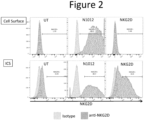
- the surface expression of NKG2D was assessed 72 hours later by flow cytometry.
- NKG2D expression was readily detected at the surface of 293T cells transfected with the N1012 plasmid
- no NKG2D expression was detected at the surface of those transfected with the plasmid encoding the control NKG2D ( Figure 2 , top panel).
- NKG2D surface expression is dependent upon the expression of DAP10
- the lack of NKG2D surface expression could be explained by the absence of DAP10 co-expression within the NKG2D plasmid.
- intracellular staining for the presence of NKG2D was undertaken.
- NKG2D intracellular expression of NKG2D was observed in 293T cells transfected with either the N1012 or the NKG2D plasmid ( Figure 2 , bottom panel). This demonstrates the successful expression of NKG2D from both constructs and also confirms the requirement of DAP10 co-expression to achieve surface expression of NKG2D.
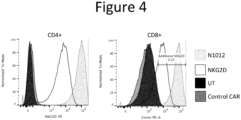
- NKG2D Primary human T-cells were activated with paramagnetic beads coated with anti-human CD3 and anti-human CD28 antibodies. Forty-eight hours after activation, T-cells were engineered by retroviral transduction to express N1012 or NKG2D. Surface expression of NKG2D was assessed by flow cytometry, co-staining for CD4 and CD8 expression. The percentage expression ( Figure 3A ) and median fluorescence intensity (MFI, Figure 3B ) of NKG2D was compared against untransduced T-cells. Due to endogenous expression of NKG2D in CD8 + T-cells, data are gated on CD4 + T-cells. As shown, both NKG2D and N1012 constructs are reproducibly expressed at high levels at the surface of primary human T-cells, in contrast to either UT T-cells, or T-cells expressing a control CAR ( Figure 4 ).
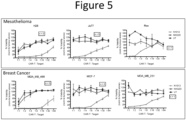
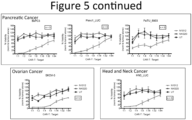
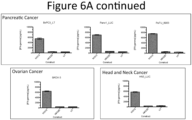
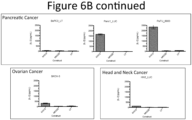
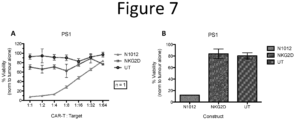
- N1012 + T-cells were co-cultured with eleven different human tumour cell lines, representing 5 different tumour types (mesothelioma, ovarian cancer, squamous cell carcinoma of the head and neck, pancreatic cancer and breast cancer), or with tumour-associated stromal cells (PS1) at varying E:T ratios. After 72 hours, the T-cells were removed and MTT assay performed to assess tumour cell viability. Whereas a minimal reduction in tumour viability was observed when target cells were co-cultured with either UT T-cells, or those expressing NKG2D, N1012 + T-cells demonstrated potent lysis of all target cell lines, even at low E:T ratios ( Figure 5 and 7A and B ).
- Example 4 Exemplification of tumour cell and stromal cell co-cultures destruction by N1012 T-cells
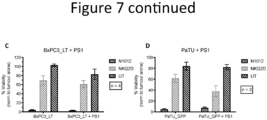
- N1012 + T-cells retained the ability to lyse tumour cells when grown in the presence of stromal cells. They were co-cultured with a monolayer containing both tumour and stromal cells. To achieve this, 5x10 4 tumour cells and 5x10 4 PS1 stellate cells were mixed and plated into triplicate wells of a 24-well plate. Twenty-four hours later, 1x10 5 T-cells were added and the plates incubated for 72 hours. The T-cells were subsequently removed and the viability of the tumour cell and stromal cell monolayer was assessed by MTT assay as detailed in Example 3.
- N1012 + T-cells Both N1012 + T-cells and those expressing the A2028z CAR mediated equivalent lysis of BxPC3_LT-cells grown in isolation.
- the a2028zCAR is a pCAR that targets the ⁇ v ⁇ 6 integrin.
- the targeting moiety of this CAR is composed of a VPI-derived A20FMDV2 20mer peptide (SEQ ID NO: 80) that binds to the ⁇ v ⁇ 6 integrin.
- CD124 signal peptide (aa1-25 of Uniprot reference P24394, SEQ ID NO: 81).
- the targeting moiety is fused via a AAA linker to a partial extracellular domain, the transmembrane domain and the intracellular domain of CD28 (aa114-220, Uniprot reference P10747, SEQ ID NO: 82), in which the B7 binding residues of CD28 (aa117-122) have been replaced with aa410-419 of human c-myc (Uniprot reference P01106, SEQ ID NO: 52).
- This is fused in frame with aa52-164 of CD247 (Uniprot reference P20963, SEQ ID NO: 83).
- N1012 + T-cells maintained potent lysis of monolayers comprising both BxPC3_LT tumour cells and PS1 stellate cells
- the efficacy ( Figure 7E-F ) and cytokine secretion ( Figure 7G-H ) by A2028z T-cells was substantially reduced.
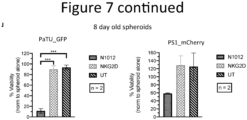
- N1012 + T-cells To assess the ability of N1012 + T-cells to mediate target cell lysis within a 3D system, they were co-cultured with tumour spheroids. Following spheroid generation, 6x10 3 CellTracker Violet-labelled T-cells were added per well. Tumour cell and stellate cell viability was assessed after 72 hours and 192 hours using fluorescent microscopy, by measuring GFP and RFP, respectively. Quantification of the GFP and RFP signals was undertaken using Image J software and expressed as a percentage of the fluorescence readings from spheroids grown in the absence of T-cells.
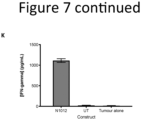
- N1012 + T-cells Potent lysis of the spheroids was observed with N1012 + T-cells, but not with either NKG2D or UT T-cells ( Figure 7I-J ). Furthermore, only N1012 + T-cells demonstrated secretion of IFN-y ( Figure 7K ).
- Spheroid viability and T-cell proliferation were alternatively assessed using flow cytometry.
- the spheroids were removed from the plate, either 72 or 192 hours after T-cell addition and placed into a flow cytometry tube, with up to five spheroids treated with the same CAR T-cells added to the same tube.
- Spheroid disaggregation was achieved using Accutase solution and vigorous re-suspension through a pipette tip. The resulting single cell suspension was washed in RPMI1640 media + 5% normal human AB serum and subsequently re-suspended in PBS containing counting beads.
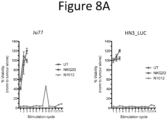
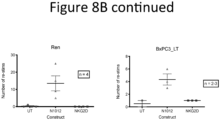
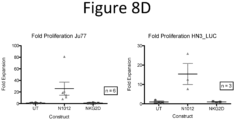
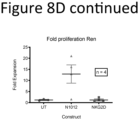
- N1012 + T-cells To assess the ability of N1012 + T-cells to undertake serial lysis of target cells ('re-stimulation'), they were co-cultured with fresh monolayer twice weekly until monolayer destruction was not observed. Whereas UT or NKG2D + T-cells mediated minimal target cell destruction and displayed no evidence of proliferation, N1012 + T-cells mediated potent lysis through multiple rounds of re-stimulation ( Figures 8A-B ). Target cell destruction was also associated with substantial proliferation and expansion of N1012 + T-cells ( Figures 8C-D ).
- N1012 + T-cells When compared to the CYAD-01 NKG2D CAR and control T-cells, N1012 + T-cells underwent significantly more rounds of re-stimulation upon BxPC3_LT-cells ( Figure 14A ). Furthermore, N1012 + T-cells also demonstrated substantially greater proliferation than CYAD-01 T-cells or controls ( Figure 14B ).
- Example 7 Efficacy of N1012 T-cells in in vivo models of pancreatic cancer
- T-cells expressing N1012, NKG2D or two different iterations of a pan-ErbB targeting CAR were generated.
- Expression of the various constructs within primary human T-cells ( Figure 9A ) and efficacy of the T-cells cells was demonstrated in vitro against three cell lines after a 72 hour co-culture at a 1:1 ratio ( Figure 9B ).
- ffLUC intraperitoneal firefly luciferase
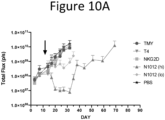
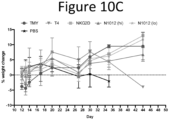
- Tumour-bearing mice were treated intraperitoneally with either PBS, 4x10 6 (N1012 (lo), T4 or TMY) T-cells, or 1x10 7 (N1012 (hi) or NKG2D) transduced T-cells. Tumour growth was measured weekly by bioluminescence imaging, with mice weighed thrice weekly. The data are presented as both average total flux (photons/second) per treatment group ( Figure 10A ), or total flux (photons/second) per individual mouse ( Figure 10B ). Tumour burden in mice receiving NKG2D + , T4 + or TMY + T-cells was identical to those receiving PBS, suggesting a lack of efficacy.
- tumour was completely eradicated in 2/5 mice and 4/5 mice treated with either N1012 (lo) or N1012 (hi) respectively. These mice remained tumour free 76 days after T-cell administration. No evidence of toxicity was observed when assessed by measurement of percentage change in body weight ( Figure 10C ).
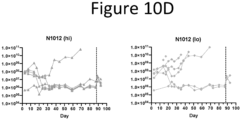
- mice that had completely rejected tumour received a second inoculation of 1x10 5 ffLUC-tagged BxPC3 cells into the peritoneal cavity 88 days after initial tumour inoculation (76 days post T-cell infusion). Whilst an increase in luminescence was observed by BLI 24 hours after tumour re-challenge, 4/5 mice subsequently demonstrated a substantial reduction in tumour size, thus indicating re-activation of the N1012 + T-cells ( Figure 10D ). The experiment was ended after 145 days and a survival curve generated, which demonstrated the potent anti-tumour efficacy of the N1012 T-cells ( Figure 10E ).
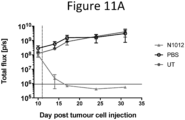
- mice that were tumour free at day 41 29 days after T-cell infusion were re-challenged i.p. with a fresh bolus of 1x10 5 ffLUC-tagged BxPC3 cells.
- Mice were imaged on day 42 to confirm tumour take.
- Subsequent imaging demonstrated that 5/5 re-challenged mice reduced tumour burden below detection, with 3/5 mice demonstrating long term tumour control ( Figure 11B ).
- Example 8 Efficacy of N1012 T-cells in an in vivo model of malignant mesothelioma
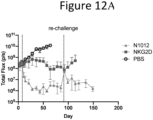
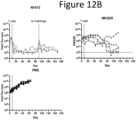
- NSG mice were inoculated i.p. with 1x10 6 ffLUC-tagged H226 malignant mesothelioma cells. Eight days after tumour inoculation, mice were treated with either PBS, or 4x10 6 N1012 + T-cells. As a control, one group of mice were treated with 4x10 6 T-cells expressing NKG2D alone. Tumour growth was monitored weekly by bioluminescent imaging and the data are presented as average total flux (photons/second) per treatment ( Figure 12A ) and as total flux (photons/second) per individual mouse ( Figure 12B ). Whereas consistent tumour growth was observed in the mice that received PBS, 100% tumour eradication was observed in mice receiving N1012 + T-cells.
- tumour-free mice were inoculated i.p. with an additional 1x10 6 ffLUC-tagged H226 cells, 91 days after initial tumour inoculation. Tumour take was confirmed in all mice after 24 hours by bioluminescent imaging. All re-challenged mice rejected the tumour, confirming persistence of the N1012 + T-cells and the ability of these T-cells to mediate long-term tumour control.
- N1012 T-cells The restimulation and proliferation potential of N1012 T-cells was compared to CYAD-01 T-cells.
- the CYAD-01 CAR consists of a fusion of NKG2D to CD3 ⁇ ( Zhang et al, 2005, Blood 106:1544-1551 ). Although nominally a first-generation CAR, it associates with endogenous DAP10 in T-cells, meaning that both signals 1 and 2 are provided. This CAR is currently undergoing clinical development by Celyad S.A. as CYAD-01, and so is provided in these examples for the purposes of comparison only.
- N1012 or CYAD-01 T-cells were co-cultured with fresh monolayer twice weekly until monolayer destruction was not observed.
- 1x10 5 tumour cells were plated in triplicate wells of a 24-well plate and incubated for 24 hours at 37°C and 5% CO2. Twenty-four hours later, 1x10 5 CAR+ T-cells were added per well at a final concentration of 1x10 5 CAR+/mL. After 72 hours, the T-cells were gently removed and the well was washed with 1mL PBS. Following removal of the PBS, 1mL of MTT (at a final concentration of 500 ⁇ g/mL) was added to each well and the plate incubated at 37°C and 5% CO 2 for approximately 1 hour. The plate was read and tumour cell viability calculated as detailed above. A re-stimulation was considered successful if the tumour cell viability was measured as less than 50%.
- T-cell proliferation in response to target cell recognition, the T-cells that had been removed from the plate were spinoculated at 400xg for 5 minutes and the supernatant removed. The pellet was re-suspended in 3.2mL R5 media and 1mL added to each well of fresh tumour monolayer in triplicate. Total T-cell number was assessed by trypan blue exclusion of a small aliquot of the remaining 200 ⁇ L.
- N1012 + T-cells Underwent significantly more rounds of re-stimulation upon BxPC3_LT-cells ( Figure 14A ). Furthermore, N1012 T-cells also demonstrated substantially greater proliferation than CYAD-01 T-cells or controls ( Figure 14B ).
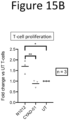
- N1012 + T-cells When co-cultured with tumour spheroids, a significant reduction in spheroid viability was observed with N1012 + T-cells, but not with UT control T-cells, nor with those expressing the functional CYAD-01 CAR ( Figure 15A ). N1012 T-cells also demonstrated significant proliferation compared to either UT or CYAD-01 T-cells ( Figure 15B ).
Landscapes
- Health & Medical Sciences (AREA)
- Life Sciences & Earth Sciences (AREA)
- Chemical & Material Sciences (AREA)
- Engineering & Computer Science (AREA)
- General Health & Medical Sciences (AREA)
- Organic Chemistry (AREA)
- Genetics & Genomics (AREA)
- Biomedical Technology (AREA)
- Immunology (AREA)
- Zoology (AREA)
- Animal Behavior & Ethology (AREA)
- Veterinary Medicine (AREA)
- Public Health (AREA)
- Bioinformatics & Cheminformatics (AREA)
- Biotechnology (AREA)
- Wood Science & Technology (AREA)
- Epidemiology (AREA)
- Biochemistry (AREA)
- Cell Biology (AREA)
- Medicinal Chemistry (AREA)
- General Engineering & Computer Science (AREA)
- Microbiology (AREA)
- Molecular Biology (AREA)
- Proteomics, Peptides & Aminoacids (AREA)
- Hematology (AREA)
- Biophysics (AREA)
- Pharmacology & Pharmacy (AREA)
- Toxicology (AREA)
- Gastroenterology & Hepatology (AREA)
- Nuclear Medicine, Radiotherapy & Molecular Imaging (AREA)
- General Chemical & Material Sciences (AREA)
- Chemical Kinetics & Catalysis (AREA)
- Physics & Mathematics (AREA)
- Plant Pathology (AREA)
- Peptides Or Proteins (AREA)
- Micro-Organisms Or Cultivation Processes Thereof (AREA)
- Medicines That Contain Protein Lipid Enzymes And Other Medicines (AREA)
- Medicines Containing Material From Animals Or Micro-Organisms (AREA)
- Preparation Of Compounds By Using Micro-Organisms (AREA)
Applications Claiming Priority (3)
| Application Number | Priority Date | Filing Date | Title |
|---|---|---|---|
| GB201913697A GB201913697D0 (en) | 2019-09-23 | 2019-09-23 | DAP10/DAP12 fusion polypeptides |
| EP20788997.3A EP4034555B1 (de) | 2019-09-23 | 2020-09-23 | Dap10/dap12-fusionspolypeptide |
| PCT/EP2020/076566 WO2021058563A1 (en) | 2019-09-23 | 2020-09-23 | Dap10/dap12 fusion polypeptides |
Related Parent Applications (1)
| Application Number | Title | Priority Date | Filing Date |
|---|---|---|---|
| EP20788997.3A Division EP4034555B1 (de) | 2019-09-23 | 2020-09-23 | Dap10/dap12-fusionspolypeptide |
Publications (2)
| Publication Number | Publication Date |
|---|---|
| EP4566622A2 true EP4566622A2 (de) | 2025-06-11 |
| EP4566622A3 EP4566622A3 (de) | 2025-08-20 |
Family
ID=68425491
Family Applications (2)
| Application Number | Title | Priority Date | Filing Date |
|---|---|---|---|
| EP20788997.3A Active EP4034555B1 (de) | 2019-09-23 | 2020-09-23 | Dap10/dap12-fusionspolypeptide |
| EP25156844.0A Pending EP4566622A3 (de) | 2019-09-23 | 2020-09-23 | Dap10/dap12 fusionspolypeptide |
Family Applications Before (1)
| Application Number | Title | Priority Date | Filing Date |
|---|---|---|---|
| EP20788997.3A Active EP4034555B1 (de) | 2019-09-23 | 2020-09-23 | Dap10/dap12-fusionspolypeptide |
Country Status (15)
| Country | Link |
|---|---|
| US (1) | US20220332788A1 (de) |
| EP (2) | EP4034555B1 (de) |
| JP (2) | JP2022550485A (de) |
| KR (1) | KR20220069025A (de) |
| CN (1) | CN114729027A (de) |
| AU (2) | AU2020352574B2 (de) |
| BR (1) | BR112022005426A2 (de) |
| CA (1) | CA3155168A1 (de) |
| DK (1) | DK4034555T3 (de) |
| ES (1) | ES3015617T3 (de) |
| FI (1) | FI4034555T3 (de) |
| GB (1) | GB201913697D0 (de) |
| IL (1) | IL291493A (de) |
| MX (2) | MX2022003531A (de) |
| WO (1) | WO2021058563A1 (de) |
Families Citing this family (5)
| Publication number | Priority date | Publication date | Assignee | Title |
|---|---|---|---|---|
| WO2023084073A1 (en) | 2021-11-15 | 2023-05-19 | Neogene Therapeutics B.V. | Engineered t cells with reduced tgf-beta receptor signaling |
| GB202214120D0 (en) * | 2022-09-27 | 2022-11-09 | King S College London | Compositions comprising NKG2D, CXCR2, and DAP10/DAP12 fusion polypeptides and methods of use thereof |
| WO2024209084A1 (en) | 2023-04-05 | 2024-10-10 | Kings College London | Parallel chimeric antigen receptors (pcars) and adaptor chimeric antigen receptors comprising alternative signalling domains and methods of use thereof |
| WO2025140265A1 (en) * | 2023-12-26 | 2025-07-03 | Wuxi Biologics (Shanghai) Co., Ltd. | Combination of chimeric antigen receptor and dap10 in cell therapy |
| GB202403718D0 (en) | 2024-03-14 | 2024-05-01 | King S College London | Therapeutic agents |
Citations (8)
| Publication number | Priority date | Publication date | Assignee | Title |
|---|---|---|---|---|
| US4458066A (en) | 1980-02-29 | 1984-07-03 | University Patents, Inc. | Process for preparing polynucleotides |
| WO1987004462A1 (en) | 1986-01-23 | 1987-07-30 | Celltech Limited | Recombinant dna sequences, vectors containing them and method for the use thereof |
| WO1989001036A1 (en) | 1987-07-23 | 1989-02-09 | Celltech Limited | Recombinant dna expression vectors |
| EP0338841A1 (de) | 1988-04-18 | 1989-10-25 | Celltech Limited | Rekombinante DNS-Verfahren, Verktoren und Wirtszellen |
| US20110044977A1 (en) | 2009-07-31 | 2011-02-24 | Genentech, Inc. | Subcutaneous anti-HER2 antibody formulations and uses thereof |
| US8465739B2 (en) | 2001-11-08 | 2013-06-18 | Abbvie Biotherapeutics Inc. | Stable aqueous pharmaceutical formulations of daclizumab antibodies |
| US8476239B2 (en) | 2005-12-20 | 2013-07-02 | Bristol-Myers Squibb Company | Stable protein formulations |
| WO2019182425A1 (ko) | 2018-03-23 | 2019-09-26 | 주식회사 에스엘바이젠 | 신규 키메라 항원 수용체 암호화 유전자가 형질도입된 유전자 변형 nk 세포주 및 그의 용도 |
Family Cites Families (10)
| Publication number | Priority date | Publication date | Assignee | Title |
|---|---|---|---|---|
| CN113862292B (zh) * | 2015-01-29 | 2024-12-27 | 明尼苏达大学董事会 | 嵌合抗原受体、组合物以及方法 |
| EP3286211A1 (de) * | 2015-04-23 | 2018-02-28 | Novartis AG | Behandlung von krebs mit chimärem antigenrezeptor- und proteinkinase-a-blocker |
| CN109312304A (zh) * | 2016-04-20 | 2019-02-05 | 弗雷德哈钦森癌症研究中心 | 免疫调节性il2r融合蛋白及其用途 |
| KR102660336B1 (ko) * | 2017-03-27 | 2024-04-26 | 내셔널 유니버시티 오브 싱가포르 | 절단된 nkg2d 키메라 수용체 및 자연 살해 세포 면역요법에서의 그의 용도 |
| WO2019077165A1 (en) * | 2017-10-20 | 2019-04-25 | Institut Curie | DAP10 / 12-BASED CHIMERIC ANTIGENIC RECEPTORS (CAR) ADAPTED FOR RUSH |
| WO2020050667A1 (ko) * | 2018-09-05 | 2020-03-12 | 공석경 | 고형암을 위한 키메라 항원 수용체 및 키메라 항원 수용체가 발현된 t 세포 |
| CN109734814A (zh) * | 2019-02-12 | 2019-05-10 | 南京卡提医学科技有限公司 | 具有免疫受体的工程化t细胞治疗癌症的用途 |
| AU2020221324A1 (en) * | 2019-02-15 | 2021-09-02 | University Of Southern California | Lym-1 and Lym-2 antibody compositions and improved CAR constructs |
| GB202007655D0 (en) * | 2020-05-22 | 2020-07-08 | King S College London | Chimeric nkg2d protein |
| KR20230159476A (ko) * | 2021-03-23 | 2023-11-21 | 킹즈 컬리지 런던 | NKG2D, CXCR2 및 dap10/dap12 융합 폴리펩티드를 포함하는 조성물 및 이의 사용 방법 |
-
2019
- 2019-09-23 GB GB201913697A patent/GB201913697D0/en not_active Ceased
-
2020
- 2020-09-23 ES ES20788997T patent/ES3015617T3/es active Active
- 2020-09-23 DK DK20788997.3T patent/DK4034555T3/da active
- 2020-09-23 EP EP20788997.3A patent/EP4034555B1/de active Active
- 2020-09-23 US US17/762,657 patent/US20220332788A1/en active Pending
- 2020-09-23 EP EP25156844.0A patent/EP4566622A3/de active Pending
- 2020-09-23 AU AU2020352574A patent/AU2020352574B2/en active Active
- 2020-09-23 MX MX2022003531A patent/MX2022003531A/es unknown
- 2020-09-23 CA CA3155168A patent/CA3155168A1/en active Pending
- 2020-09-23 CN CN202080079564.2A patent/CN114729027A/zh active Pending
- 2020-09-23 WO PCT/EP2020/076566 patent/WO2021058563A1/en not_active Ceased
- 2020-09-23 KR KR1020227011676A patent/KR20220069025A/ko active Pending
- 2020-09-23 JP JP2022543798A patent/JP2022550485A/ja active Pending
- 2020-09-23 FI FIEP20788997.3T patent/FI4034555T3/fi active
- 2020-09-23 BR BR112022005426A patent/BR112022005426A2/pt unknown
-
2022
- 2022-03-20 IL IL291493A patent/IL291493A/en unknown
- 2022-03-23 MX MX2025010859A patent/MX2025010859A/es unknown
-
2025
- 2025-04-08 JP JP2025063542A patent/JP2025108507A/ja active Pending
-
2026
- 2026-03-11 AU AU2026201858A patent/AU2026201858A1/en active Pending
Patent Citations (8)
| Publication number | Priority date | Publication date | Assignee | Title |
|---|---|---|---|---|
| US4458066A (en) | 1980-02-29 | 1984-07-03 | University Patents, Inc. | Process for preparing polynucleotides |
| WO1987004462A1 (en) | 1986-01-23 | 1987-07-30 | Celltech Limited | Recombinant dna sequences, vectors containing them and method for the use thereof |
| WO1989001036A1 (en) | 1987-07-23 | 1989-02-09 | Celltech Limited | Recombinant dna expression vectors |
| EP0338841A1 (de) | 1988-04-18 | 1989-10-25 | Celltech Limited | Rekombinante DNS-Verfahren, Verktoren und Wirtszellen |
| US8465739B2 (en) | 2001-11-08 | 2013-06-18 | Abbvie Biotherapeutics Inc. | Stable aqueous pharmaceutical formulations of daclizumab antibodies |
| US8476239B2 (en) | 2005-12-20 | 2013-07-02 | Bristol-Myers Squibb Company | Stable protein formulations |
| US20110044977A1 (en) | 2009-07-31 | 2011-02-24 | Genentech, Inc. | Subcutaneous anti-HER2 antibody formulations and uses thereof |
| WO2019182425A1 (ko) | 2018-03-23 | 2019-09-26 | 주식회사 에스엘바이젠 | 신규 키메라 항원 수용체 암호화 유전자가 형질도입된 유전자 변형 nk 세포주 및 그의 용도 |
Non-Patent Citations (35)
| Title |
|---|
| "PCR Protocols: A Guide to Methods and Applications", 1990, ACADEMIC PRESS |
| "Remington's Pharmaceutical Sciences", 2012 |
| "UniProt", Database accession no. P26718 |
| BATZER ET AL., NUCLEIC ACID RES., vol. 19, 1991, pages 5081 |
| BEAUCAGE ET AL., TETRA. LETT., vol. 22, 1981, pages 1859 |
| BITTNER ET AL., METH. ENZYMOL., vol. 153, 1987, pages 516 |
| CHANG ET AL., CANCER RES., vol. 73, 2013, pages 1777 - 1786 |
| CHEN X ET AL., ADV. DRUG DELIV. REV., vol. 65, no. 10, 2013, pages 135701369 |
| DAVIES ET AL., MOL. MED., vol. 18, 2012, pages 565 - 576 |
| DAYHOFF ET AL.: "Atlas of Protein Sequence and Structure", vol. 5, 1978 |
| DENMAN CJ ET AL., PLOS ONE, vol. 7, no. 1, 2012, pages 30264 |
| ECKERT ET AL., PCR METHODS AND APPLICATIONS, vol. 1, 1991, pages 17 |
| GHASSEMI 5 ET AL., CANCER IMMUNOL RES, vol. 6, no. 9, 2018, pages 1100 - 1109 |
| HARRINGTON ET AL., NAT GENET., vol. 15, 1997, pages 345 |
| KOFLER ET AL., MOL. THER., vol. 19, 2011, pages 760 - 767 |
| MATTILA ET AL., NUCLEIC ACIDS RES., vol. 19, 1991, pages 967 |
| NARANG ET AL., METH. ENZYMOL., vol. 68, no. 90, 1979, pages 109 |
| OHTSUKA ET AL., J. BIOL. CHEM., vol. 260, 1985, pages 2605 - 2608 |
| PARENTE-PEREIRA AC ET AL., J. BIOL. METHODS, vol. 1, no. 2, 2014, pages 7 |
| PARIHAR, R. ET AL., CANCER IMMUNOL. RES., vol. 7, no. 3, 2019, pages 363 - 375 |
| QUEEN ET AL., IMMUNOL. REV., vol. 89, 1986, pages 49 - 68 |
| R.J. KAUFMANP.A. SHARP, MOL. BIOL., vol. 159, 1982, pages 601 - 621 |
| RIVIERE ET AL., PROC. NATL. ACAD. SCI. (USA, vol. 92, 1995, pages 6733 - 6737 |
| ROSEN ET AL., J. IMMUNOL., vol. 173, no. 4, 2004, pages 2470 - 2478 |
| ROSENFELD ET AL., CELL, vol. 68, 1992, pages 143 |
| ROSSOLINI ET AL., MOL. CELL. PROBES, vol. 8, 1994, pages 91 - 98 |
| SAMBROOK, J.FRITSH, E. F.MANIATIS, T.: "Molecular Cloning: A Laboratory Manual", 1989, COLD SPRING HARBOR LABORATORY |
| SCHARF ET AL., RESULTS PROBL. CELL DIFFER., vol. 20, 1994, pages 125 |
| SCHMIEDELMANDELBOIM, FRONT. IMMUNOL., no. 9, 2018, pages 2040 |
| SMITH, ANNU. REV. MICROBIOL., vol. 49, 1995, pages 807 |
| SONG ET AL., HUM. GENE THER., vol. 24, 2013, pages 295 - 305 |
| URLAUBCHASIN, PROC. NATL. ACAD. SCI. USA, vol. 77, 1980, pages 4216 - 4220 |
| WRIGGERS W ET AL., BIOPOLYMERS, vol. 80, 2005, pages 736 - 746 |
| WU ET AL., J. EXP. MED., vol. 192, no. 7, 2000, pages 1059 - 1067 |
| ZHANG ET AL., BLOOD, vol. 106, 2005, pages 1544 - 1551 |
Also Published As
| Publication number | Publication date |
|---|---|
| JP2022550485A (ja) | 2022-12-01 |
| DK4034555T3 (da) | 2025-03-24 |
| MX2022003531A (es) | 2022-07-11 |
| GB201913697D0 (en) | 2019-11-06 |
| CA3155168A1 (en) | 2021-04-01 |
| EP4034555B1 (de) | 2025-02-12 |
| CN114729027A (zh) | 2022-07-08 |
| MX2025010859A (es) | 2025-10-01 |
| JP2025108507A (ja) | 2025-07-23 |
| FI4034555T3 (fi) | 2025-03-17 |
| AU2020352574A1 (en) | 2022-04-21 |
| US20220332788A1 (en) | 2022-10-20 |
| EP4566622A3 (de) | 2025-08-20 |
| WO2021058563A1 (en) | 2021-04-01 |
| AU2020352574B2 (en) | 2025-12-18 |
| BR112022005426A2 (pt) | 2022-06-21 |
| ES3015617T3 (en) | 2025-05-06 |
| AU2026201858A1 (en) | 2026-04-02 |
| IL291493A (en) | 2022-05-01 |
| KR20220069025A (ko) | 2022-05-26 |
| EP4034555A1 (de) | 2022-08-03 |
Similar Documents
| Publication | Publication Date | Title |
|---|---|---|
| EP4034555B1 (de) | Dap10/dap12-fusionspolypeptide | |
| ES3037919T3 (en) | Mage a4 t cell receptors | |
| EP3483179B1 (de) | Syntac-polypeptide und verwendungen davon | |
| JP2021118736A (ja) | Bcmaに結合するキメラ抗原受容体(car)及びその応用 | |
| EP4171622B1 (de) | Zusammensetzungen mit nkg2d, cxcr2 und dap10/dap12 fusionspolypeptiden und verfahren zur verwendung davon | |
| US20230257443A1 (en) | Chimeric nkg2d protein | |
| CN112533943B (zh) | Il-13/il-4超级因子:免疫细胞靶向性构建体及其使用方法 | |
| HK40127971A (en) | Dap10/dap12 fusion polypeptides | |
| HK40076445A (en) | Dap10/dap12 fusion polypeptides | |
| HK40076445B (en) | Dap10/dap12 fusion polypeptides | |
| WO2024068760A1 (en) | Compositions comprising nkg2d, cxcr2, and dap10/dap12 fusion polypeptides and methods of use thereof | |
| HK40115885A (en) | Compositions comprising nkg2d, cxcr2, and dap10/dap12 fusion polypeptides and methods of use thereof | |
| HK40092832A (en) | Compositions comprising nkg2d, cxcr2, and dap10/dap12 fusion polypeptides and methods of use thereof | |
| HK40092832B (en) | Compositions comprising nkg2d, cxcr2, and dap10/dap12 fusion polypeptides and methods of use thereof | |
| WO2021176042A1 (en) | Therapeutic agents | |
| CA3268631A1 (en) | Compositions comprising nkg2d, cxcr2, and dap10/dap12 fusion polypeptides and methods of use thereof | |
| CN118206620A (zh) | 一种多肽标签及其应用 | |
| HK40005537A (en) | Syntac polypeptides and uses thereof | |
| BR112016027897B1 (pt) | Polipeptídeo multimérico, proteína, método para modular seletivamente a atividade de uma célula t, composição e método para inibir seletivamente a atividade e/ou reduzir o número de uma célula t autorreativa | |
| HK1236106B (en) | Syntac polypeptides and uses thereof |
Legal Events
| Date | Code | Title | Description |
|---|---|---|---|
| PUAI | Public reference made under article 153(3) epc to a published international application that has entered the european phase |
Free format text: ORIGINAL CODE: 0009012 |
|
| STAA | Information on the status of an ep patent application or granted ep patent |
Free format text: STATUS: THE APPLICATION HAS BEEN PUBLISHED |
|
| AC | Divisional application: reference to earlier application |
Ref document number: 4034555 Country of ref document: EP Kind code of ref document: P |
|
| AK | Designated contracting states |
Kind code of ref document: A2 Designated state(s): AL AT BE BG CH CY CZ DE DK EE ES FI FR GB GR HR HU IE IS IT LI LT LU LV MC MK MT NL NO PL PT RO RS SE SI SK SM TR |
|
| REG | Reference to a national code |
Ref country code: DE Ref legal event code: R079 Free format text: PREVIOUS MAIN CLASS: A61K0039000000 Ipc: C07K0014725000 |
|
| PUAL | Search report despatched |
Free format text: ORIGINAL CODE: 0009013 |
|
| RIN1 | Information on inventor provided before grant (corrected) |
Inventor name: MAHER, JOHN Inventor name: DAVIES, DAVID MARC |
|
| AK | Designated contracting states |
Kind code of ref document: A3 Designated state(s): AL AT BE BG CH CY CZ DE DK EE ES FI FR GB GR HR HU IE IS IT LI LT LU LV MC MK MT NL NO PL PT RO RS SE SI SK SM TR |
|
| RIC1 | Information provided on ipc code assigned before grant |
Ipc: C07K 14/725 20060101AFI20250714BHEP Ipc: A61P 35/00 20060101ALI20250714BHEP Ipc: A61K 35/17 20250101ALI20250714BHEP Ipc: A61K 39/00 20060101ALI20250714BHEP |
|
| REG | Reference to a national code |
Ref country code: HK Ref legal event code: DE Ref document number: 40127971 Country of ref document: HK |
|
| STAA | Information on the status of an ep patent application or granted ep patent |
Free format text: STATUS: REQUEST FOR EXAMINATION WAS MADE |
|
| 17P | Request for examination filed |
Effective date: 20260217 |