EP4559474A1 - Tumormikroumgebungsaktiviertes cytokin und verwendung davon - Google Patents
Tumormikroumgebungsaktiviertes cytokin und verwendung davon Download PDFInfo
- Publication number
- EP4559474A1 EP4559474A1 EP23842282.8A EP23842282A EP4559474A1 EP 4559474 A1 EP4559474 A1 EP 4559474A1 EP 23842282 A EP23842282 A EP 23842282A EP 4559474 A1 EP4559474 A1 EP 4559474A1
- Authority
- EP
- European Patent Office
- Prior art keywords
- ifnα
- antibody
- inf
- aan
- mutant
- Prior art date
- Legal status (The legal status is an assumption and is not a legal conclusion. Google has not performed a legal analysis and makes no representation as to the accuracy of the status listed.)
- Pending
Links
Images

Classifications
-
- C—CHEMISTRY; METALLURGY
- C07—ORGANIC CHEMISTRY
- C07K—PEPTIDES
- C07K14/00—Peptides having more than 20 amino acids; Gastrins; Somatostatins; Melanotropins; Derivatives thereof
- C07K14/435—Peptides having more than 20 amino acids; Gastrins; Somatostatins; Melanotropins; Derivatives thereof from animals; from humans
- C07K14/52—Cytokines; Lymphokines; Interferons
- C07K14/555—Interferons [IFN]
-
- A—HUMAN NECESSITIES
- A61—MEDICAL OR VETERINARY SCIENCE; HYGIENE
- A61K—PREPARATIONS FOR MEDICAL, DENTAL OR TOILETRY PURPOSES
- A61K47/00—Medicinal preparations characterised by the non-active ingredients used, e.g. carriers or inert additives; Targeting or modifying agents chemically bound to the active ingredient
- A61K47/50—Medicinal preparations characterised by the non-active ingredients used, e.g. carriers or inert additives; Targeting or modifying agents chemically bound to the active ingredient the non-active ingredient being chemically bound to the active ingredient, e.g. polymer-drug conjugates
- A61K47/51—Medicinal preparations characterised by the non-active ingredients used, e.g. carriers or inert additives; Targeting or modifying agents chemically bound to the active ingredient the non-active ingredient being chemically bound to the active ingredient, e.g. polymer-drug conjugates the non-active ingredient being a modifying agent
- A61K47/62—Medicinal preparations characterised by the non-active ingredients used, e.g. carriers or inert additives; Targeting or modifying agents chemically bound to the active ingredient the non-active ingredient being chemically bound to the active ingredient, e.g. polymer-drug conjugates the non-active ingredient being a modifying agent the modifying agent being a protein, peptide or polyamino acid
- A61K47/64—Drug-peptide, drug-protein or drug-polyamino acid conjugates, i.e. the modifying agent being a peptide, protein or polyamino acid which is covalently bonded or complexed to a therapeutically active agent
- A61K47/642—Drug-peptide, drug-protein or drug-polyamino acid conjugates, i.e. the modifying agent being a peptide, protein or polyamino acid which is covalently bonded or complexed to a therapeutically active agent the peptide or protein in the drug conjugate being a cytokine, e.g. IL2, chemokine, growth factors or interferons being the inactive part of the conjugate
-
- A—HUMAN NECESSITIES
- A61—MEDICAL OR VETERINARY SCIENCE; HYGIENE
- A61K—PREPARATIONS FOR MEDICAL, DENTAL OR TOILETRY PURPOSES
- A61K38/00—Medicinal preparations containing peptides
- A61K38/16—Peptides having more than 20 amino acids; Gastrins; Somatostatins; Melanotropins; Derivatives thereof
- A61K38/17—Peptides having more than 20 amino acids; Gastrins; Somatostatins; Melanotropins; Derivatives thereof from animals; from humans
- A61K38/19—Cytokines; Lymphokines; Interferons
- A61K38/21—Interferons [IFN]
- A61K38/212—IFN-alpha
-
- A—HUMAN NECESSITIES
- A61—MEDICAL OR VETERINARY SCIENCE; HYGIENE
- A61K—PREPARATIONS FOR MEDICAL, DENTAL OR TOILETRY PURPOSES
- A61K39/00—Medicinal preparations containing antigens or antibodies
- A61K39/395—Antibodies; Immunoglobulins; Immune serum, e.g. antilymphocytic serum
- A61K39/39533—Antibodies; Immunoglobulins; Immune serum, e.g. antilymphocytic serum against materials from animals
- A61K39/3955—Antibodies; Immunoglobulins; Immune serum, e.g. antilymphocytic serum against materials from animals against proteinaceous materials, e.g. enzymes, hormones, lymphokines
-
- A—HUMAN NECESSITIES
- A61—MEDICAL OR VETERINARY SCIENCE; HYGIENE
- A61K—PREPARATIONS FOR MEDICAL, DENTAL OR TOILETRY PURPOSES
- A61K39/00—Medicinal preparations containing antigens or antibodies
- A61K39/395—Antibodies; Immunoglobulins; Immune serum, e.g. antilymphocytic serum
- A61K39/39533—Antibodies; Immunoglobulins; Immune serum, e.g. antilymphocytic serum against materials from animals
- A61K39/39558—Antibodies; Immunoglobulins; Immune serum, e.g. antilymphocytic serum against materials from animals against tumor tissues, cells, antigens
-
- A—HUMAN NECESSITIES
- A61—MEDICAL OR VETERINARY SCIENCE; HYGIENE
- A61K—PREPARATIONS FOR MEDICAL, DENTAL OR TOILETRY PURPOSES
- A61K47/00—Medicinal preparations characterised by the non-active ingredients used, e.g. carriers or inert additives; Targeting or modifying agents chemically bound to the active ingredient
- A61K47/50—Medicinal preparations characterised by the non-active ingredients used, e.g. carriers or inert additives; Targeting or modifying agents chemically bound to the active ingredient the non-active ingredient being chemically bound to the active ingredient, e.g. polymer-drug conjugates
- A61K47/51—Medicinal preparations characterised by the non-active ingredients used, e.g. carriers or inert additives; Targeting or modifying agents chemically bound to the active ingredient the non-active ingredient being chemically bound to the active ingredient, e.g. polymer-drug conjugates the non-active ingredient being a modifying agent
- A61K47/56—Medicinal preparations characterised by the non-active ingredients used, e.g. carriers or inert additives; Targeting or modifying agents chemically bound to the active ingredient the non-active ingredient being chemically bound to the active ingredient, e.g. polymer-drug conjugates the non-active ingredient being a modifying agent the modifying agent being an organic macromolecular compound, e.g. an oligomeric, polymeric or dendrimeric molecule
- A61K47/59—Medicinal preparations characterised by the non-active ingredients used, e.g. carriers or inert additives; Targeting or modifying agents chemically bound to the active ingredient the non-active ingredient being chemically bound to the active ingredient, e.g. polymer-drug conjugates the non-active ingredient being a modifying agent the modifying agent being an organic macromolecular compound, e.g. an oligomeric, polymeric or dendrimeric molecule obtained otherwise than by reactions only involving carbon-to-carbon unsaturated bonds, e.g. polyureas or polyurethanes
- A61K47/60—Medicinal preparations characterised by the non-active ingredients used, e.g. carriers or inert additives; Targeting or modifying agents chemically bound to the active ingredient the non-active ingredient being chemically bound to the active ingredient, e.g. polymer-drug conjugates the non-active ingredient being a modifying agent the modifying agent being an organic macromolecular compound, e.g. an oligomeric, polymeric or dendrimeric molecule obtained otherwise than by reactions only involving carbon-to-carbon unsaturated bonds, e.g. polyureas or polyurethanes the organic macromolecular compound being a polyoxyalkylene oligomer, polymer or dendrimer, e.g. PEG, PPG, PEO or polyglycerol
-
- A—HUMAN NECESSITIES
- A61—MEDICAL OR VETERINARY SCIENCE; HYGIENE
- A61P—SPECIFIC THERAPEUTIC ACTIVITY OF CHEMICAL COMPOUNDS OR MEDICINAL PREPARATIONS
- A61P35/00—Antineoplastic agents
-
- C—CHEMISTRY; METALLURGY
- C07—ORGANIC CHEMISTRY
- C07K—PEPTIDES
- C07K14/00—Peptides having more than 20 amino acids; Gastrins; Somatostatins; Melanotropins; Derivatives thereof
- C07K14/435—Peptides having more than 20 amino acids; Gastrins; Somatostatins; Melanotropins; Derivatives thereof from animals; from humans
- C07K14/52—Cytokines; Lymphokines; Interferons
- C07K14/555—Interferons [IFN]
- C07K14/56—IFN-alpha
-
- C—CHEMISTRY; METALLURGY
- C07—ORGANIC CHEMISTRY
- C07K—PEPTIDES
- C07K16/00—Immunoglobulins [IG], e.g. monoclonal or polyclonal antibodies
- C07K16/18—Immunoglobulins [IG], e.g. monoclonal or polyclonal antibodies against material from animals or humans
- C07K16/28—Immunoglobulins [IG], e.g. monoclonal or polyclonal antibodies against material from animals or humans against receptors, cell surface antigens or cell surface determinants
- C07K16/2803—Immunoglobulins [IG], e.g. monoclonal or polyclonal antibodies against material from animals or humans against receptors, cell surface antigens or cell surface determinants against the immunoglobulin superfamily
- C07K16/2818—Immunoglobulins [IG], e.g. monoclonal or polyclonal antibodies against material from animals or humans against receptors, cell surface antigens or cell surface determinants against the immunoglobulin superfamily against CD28 or CD152
-
- A—HUMAN NECESSITIES
- A61—MEDICAL OR VETERINARY SCIENCE; HYGIENE
- A61K—PREPARATIONS FOR MEDICAL, DENTAL OR TOILETRY PURPOSES
- A61K39/00—Medicinal preparations containing antigens or antibodies
- A61K2039/505—Medicinal preparations containing antigens or antibodies comprising antibodies
-
- A—HUMAN NECESSITIES
- A61—MEDICAL OR VETERINARY SCIENCE; HYGIENE
- A61K—PREPARATIONS FOR MEDICAL, DENTAL OR TOILETRY PURPOSES
- A61K39/00—Medicinal preparations containing antigens or antibodies
- A61K2039/545—Medicinal preparations containing antigens or antibodies characterised by the dose, timing or administration schedule
-
- A—HUMAN NECESSITIES
- A61—MEDICAL OR VETERINARY SCIENCE; HYGIENE
- A61K—PREPARATIONS FOR MEDICAL, DENTAL OR TOILETRY PURPOSES
- A61K38/00—Medicinal preparations containing peptides
-
- C—CHEMISTRY; METALLURGY
- C07—ORGANIC CHEMISTRY
- C07K—PEPTIDES
- C07K2317/00—Immunoglobulins specific features
-
- C—CHEMISTRY; METALLURGY
- C07—ORGANIC CHEMISTRY
- C07K—PEPTIDES
- C07K2317/00—Immunoglobulins specific features
- C07K2317/70—Immunoglobulins specific features characterized by effect upon binding to a cell or to an antigen
- C07K2317/73—Inducing cell death, e.g. apoptosis, necrosis or inhibition of cell proliferation
Definitions
- the present disclosure refers to the field of biochemistry. More specifically, the present disclosure refers to tumor microenvironment-activated cytokine and use thereof.
- Cytokines are molecular messengers that allow immune cells to communicate with each other, generating a coordinated, robust and self-limiting response to target antigens. Although the immune system often communicates with each other by direct intercellular interactions, cytokine secretions enables immune signals to spread rapidly in a multifaceted and efficient manner.
- cytokines comprising GM-CSF, IL-7, IL-12, IL-15, IL-18 and IL-21
- cytokines comprising GM-CSF, IL-7, IL-12, IL-15, IL-18 and IL-21
- Interferons are classified according to their ability to bind to specific receptors known as Type I, Type II and the recently described Type III IFN receptors.
- Type I specific receptors known as Type I, Type II and the recently described Type III IFN receptors.
- high-dose IFN ⁇ is the most commonly used regimen for providing adjuvant therapy to melanoma patients, therapies with better therapeutic indexes are urgently needed and several alternative regimens are currently under investigation.
- Experience with the use of IFN has led to established guidelines for recognizing and managing toxicity and side effects. Toxic features of IFN ⁇ are typically dose-dependent and most side effects can be controlled without discontinuing treatment.
- Systemic symptoms comprising fever, fatigue, headache, gastrointestinal symptoms and myalgia are common and may occur in 80% or more patients.
- IFN ⁇ can also elevate liver enzymes in some patients, particularly during high-dose intravenous administration, at which point frequent monitoring is necessary, and treatment should be continued or the dose should be reduced in patients with elevated liver enzymes. Therefore, reducing the dosage of IFN ⁇ and improving the administration effect of IFN ⁇ are urgent problems to be solved in this field.
- the aim of the present disclosure is to provide a tumor microenvironment-activated cytokine IFN ⁇ and use thereof.
- the present disclosure provides a biomolecular conjugate of cytokine IFN ⁇ with the following structure: R1-AAN-PABC-R3-S-Cys-IFN ⁇ wherein,
- R1 is selected from (but are not limited to) polyethylene glycol with a molecular weight of 44 to 132000, such as polyethylene glycol with a molecular weight of 1000 to 50000, 3,000 to 80000 or 10000 to 60000;
- the IFN ⁇ mutant is a mutant obtained by single point mutation on INF- ⁇ , wherein the IFN ⁇ mutant has mutations of Arg149, Ala145, His57, Gln61, Phe64 or Ser68, Phe27, Ser152, Arg162 residues to Cys, according to the amino acid sequence of SEQ ID NO: 1.
- R1 is selected from:
- R3 is selected from (but are not limited to):
- R1-AAN-PABC-R3 has a structure selected from:
- the present disclosure provides a use of the biomolecular conjugate for preparing a composition or drug kit for inhibiting tumors.
- the present disclosure provides a use of the biomolecular conjugate for preparing a composition or drug kit for inhibiting tumors in combination with an anti-tumor antibody.
- the present disclosure provides a composition or drug kit for inhibiting tumors, wherein the composition or kit comprises the biomolecular conjugate; preferably, the composition also comprises a pharmaceutically acceptable carrier.
- composition or drug kit also comprises an anti-tumor antibody.
- the drug kit also comprises: an anti-tumor antibody or a composition comprising an anti-tumor antibody.
- the anti-tumor antibody is an anti-PD-1 antibody.
- the biomolecular conjugate and the anti-PD-1 antibody are at a mass ratio of 1: (0.05-50) (such as 1: 0.1, 1: 0.15, 1: 0.2, 1: 0.4, 1: 0.5, 1: 0.6, 1: 0.8, 1: 1, 1: 2, 1: 4, 1: 5, 1: 6, 1: 8, 1: 10, 1: 20, 1: 30, 1: 40); preferably 1: (0.2-8); more preferably 1: (0.4-5).
- dosage forms of the composition comprise (but are not limited to): injections, infusions, powders, tablets, capsules, etc.; preferably injections.
- the drug kit comprises a container, wherein the INF- ⁇ mutant and/or the anti-tumor antibody or a composition comprising the INF- ⁇ mutant and/or the anti-tumor antibody is placed in the container.
- the container comprises (but is not limited to): a syringe.
- the drug kit also comprises: instructions describing methods of inhibiting tumors.
- the present disclosure provides a method of preparing activated INF- ⁇ in a tumor microenvironment, comprising: mutating INF- ⁇ at specific residues of the amino acid sequence thereof to Cys by single point mutation.
- the present disclosure provides an IFN ⁇ mutant, wherein the mutant is obtained by single point mutation on INF- ⁇ and wherein the IFN ⁇ mutant has mutations of Arg 149, Ala145, His57, Gln61, Phe64 or Ser68, Phe27, Ser152, Arg162 residues to Cys, according to the amino acid sequence of SEQ ID NO: 1.
- the present disclosure provides an isolated polynucleotide, wherein the polynucleotide encodes the INF- ⁇ mutant.
- the present disclosure provides a vector, wherein it comprises the polynucleotide.
- the present disclosure provides a genetically engineered host cell, wherein it comprises the vector, or the polynucleotide integrated into genome.
- the present disclosure provides a method for preparing the INF- ⁇ mutant, comprising the steps of: (1) culturing the host cell to obtain a culture; and (2) isolating the INF- ⁇ mutant from the culture.
- the present disclosure provides a use of the INF- ⁇ mutant for conjugating with R1-AAN-PABC-R3 to form a biomolecular conjugate that inhibits tumors;
- R1 is a group that prevents IFN ⁇ mutants from binding to its ligand or receptor;
- AAN represents a tripeptide, wherein A is alanine, N is aspartic acid and PABC is para-aminobenzyl carbamate;
- R3 is a linking arm covalently conjugated to the sulfur atom of the cysteine introduced by the single mutation of IFN ⁇ via an EMC group;
- the function of R3 is to remain attached to the cytokine after AAN cleavage, allowing R3-S-Cys-IFN ⁇ partially restores, fully recovers, or even enhances the affinity to the IFN ⁇ receptor.
- inhibiting tumors comprises preventing, alleviating, and/or treating tumors.
- the anti-tumor antibody is a monoclonal antibody or a polyclonal antibody.
- the anti-PD-1 antibody is any antibody that specifically neutralizes/binds PD-1.
- the tumors comprise: melanoma, NSCLC, head and neck squamous cell carcinoma, urothelial carcinoma, classic Hodgkin lymphoma, gastric cancer, adenocarcinoma of esophagogastric junction, cervical cancer, B-cell lymphoma, hepatocellular carcinoma, Merkel cell carcinoma, renal cell carcinoma, primary liver cancer, small cell lung cancer.
- the inventors After in-depth researches, the inventors have revealed an optimized modified INF- ⁇ , wherein the IFN- ⁇ is joined to a substrate and a mask body (R) that can be recognized and cleaved by substances highly expressed by tumors to form a biomolecular conjugate.
- the INF- ⁇ activity of the biomolecular conjugate in normal tissues is hindered, not causing toxicity to normal tissues.
- the INF- ⁇ activity is activated for effective tumor inhibition in tumor environments.
- the conjugate of the present disclosure enable inhibitory activity of INF- ⁇ highly focused in the tumor environment, thereby achieving an ideal anti-tumor effect.
- IFN ⁇ mutant and mutant IFN ⁇ are interchangeable terms referring to products obtained by mutating wild-type IFN ⁇ ; preferably, the terms refer to proteins resulting from amino acid residue mutations at the following positions in wild-type IFN ⁇ (e.g., SEQ ID NO: 1): Arg149, Ala145, His57, Gln61, Phe64 or Ser68, Phe27, Ser152, Arg162. More preferably, the residues Arg149, Ala145, His57, Gln61, Phe64 or Ser68 are mutated to Cys.
- WT wild-type IFN ⁇
- SEQ ID NO: 1 the protein with the amino acid sequence shown in SEQ ID NO: 1.
- recombinant refers to proteins, genetic engineering vectors or cells obtained (or prepared in large quantities) by means of genetic engineering.
- antibody encompasses monoclonal antibodies, polyclonal antibodies, dimers, multimers, multispecific antibodies (for example, bispecific antibodies), and antibody fragments, provided they exhibit desired biological activity.
- inhibiting tumors comprises preventing, alleviating, and/or treating tumors.
- an anti-PD-1 antibody is any antibody that specifically neutralizes/binds PD-1.
- a "pharmaceutically acceptable” component is one that is suitable for use with humans and/or animals without undue adverse side effects (such as toxicity, irritation and allergic response), that is, a substance with a reasonable benefit risk ratio.
- a “pharmaceutically acceptable carrier” is a pharmaceutically acceptable solvent, suspending agent or excipient used to deliver an active ingredient of the present disclosure to an animal or human.
- a “pharmaceutically acceptable carrier” may be a liquid or a solid.
- an “effective amount” means an amount of an ingredient sufficient to produce desired reactions.
- the present disclosure provides an INF- ⁇ mutant, wherein Arg149, Ala145, His57, Gln61, Phe64 or Ser68, Phe27, Ser152, Arg162 residues of the amino acid sequence are mutated to Cys; preferably, the Arg149 residue is mutated to Cys.
- INF- ⁇ mutants of the present disclosure can be the product of chemical synthesis or produced by recombinant methods from prokaryotic or eukaryotic hosts (eg, bacteria, yeast, higher plants, insects and mammalian cells).
- prokaryotic or eukaryotic hosts eg, bacteria, yeast, higher plants, insects and mammalian cells.
- the present disclosure also comprises fragments, derivatives and analogues of the INF- ⁇ mutants.
- fragment refers to proteins that maintain essentially the same biological function or activity as the original INF- ⁇ mutant of the present disclosure.
- the protein fragments, derivatives or analogues of the present disclosure may be (i) proteins having one or more conservative or non-conservative amino acid residues (preferably conservative amino acid residues) substituted, and such substituted amino acid residues may or may not be encoded by the genetic code, or (ii) a protein having a substituent group in one or more amino acid residues, or (iii) a protein formed by an additional amino acid sequences fused to the protein sequence (such as leader sequence or secretory sequence or sequence used to purify the protein or proprotein sequence, or fused protein). According to the teaching herein, these fragments, derivatives and analogues belong to the common knowledge to those skilled in the art.
- the mutation is a mutation of Arg149, Ala145, His57, Gln61, Phe64 or Ser68, Phe27, Ser152, Arg162 mutated to Cys corresponding to the amino acid sequence shown in SEQ ID NO: 1; preferably, Arg149 is mutated to Cys.
- the "INF- ⁇ mutant” further comprises (but is not limited to): deletion, insertion and/or substitution of one or more (usually 1-20, preferably 1-10, more preferably 1-8, 1-5, 1-3 or 1-2) amino acids, and addition or deletion of one or several (usually within 20, preferably within 10, more preferably within 5) amino acids at the C-terminal and/or N-terminal.
- substitution with amino acids of approaching or similar property generally does not alter the function of a protein.
- the addition of one or several amino acids to C-terminal and/or N-terminal also generally does not alter the function of a protein.
- the term also comprises functional fragments and functional derivatives of INF- ⁇ mutants.
- the mutation is a mutation of Arg149, Ala145, His57, Gln61, Phe64 or Ser68, Phe27, Ser152, Arg162 mutated to Cys corresponding to the amino acid sequence shown in SEQ ID NO: 1; preferably, Arg149 is mutated to Cys.
- the term "INF- ⁇ mutant” further comprises (but is not limited to) derivatives retaining protein activity with at least 80%, preferably at least 85%, more preferably at least 90%, even more preferably at least 95%, for example at least 98%, at least 99% sequence identity with the amino acid sequence of the INF- ⁇ mutant.
- the mutations described above in this disclosure must be present, preferably, the mutation is a mutation of Arg149, Ala145, His57, Gln61, Phe64 or Ser68, Phe27, Ser152, Arg162 mutated to Cys corresponding to the amino acid sequence shown in SEQ ID NO: 1; preferably, Arg149 is mutated to Cys.
- the present disclosure also provides analogs of the INF- ⁇ mutants.
- the difference between these analogs and the INF- ⁇ mutants may be differences in amino acid sequences, differences in modifications that do not affect the sequence, or both.
- These polypeptides include natural or induced genetic variants. Induced variants can be obtained by various techniques, such as random mutagenesis by radiation or exposure to mutagens, site-directed mutagenesis or other techniques known in molecular biology.
- Analogues also include analogs with residues that differ from natural L-amino acids (eg, D-amino acids), as well as analogs with non-naturally occurring or synthetic amino acids (eg, ⁇ , ⁇ -amino acids).
- Modified (usually without changing the primary structure) forms comprise chemically derived forms of in-vivo or in-vitro polypeptides, for example acetylated or carboxylated forms. Modifications also include glycosylation, such as those resulting from glycosylation modifications either in the synthesis and processing of the protein or in further processing steps. This modification can be accomplished by exposing the polypeptide to enzymes for glycosylation, such as mammalian glycosylases or deglycosylases. The modified forms also include sequences with phosphorylated amino acid residues such as phosphotyrosine, phosphoserine, phosphothreonine. Polypeptides that were modified to improve their antiproteolytic properties or optimize the solubilization properties were also included.
- the present disclosure also provides a polynucleotide sequence encoding the INF- ⁇ mutant or a conservative variant protein thereof in the present disclosure.
- the polynucleotide of the present disclosure can be in the form of DNAs or RNAs.
- DNAs include cDNAs, genomic DNAs, or synthetic DNAs.
- DNAs can be single stranded DNAs or double stranded DNAs.
- DNAs can be coding or noncoding strand DNAs.
- the polynucleotide encoding the mature protein of the mutant comprises: the coding sequence encoding only the mature protein; the coding sequence of the mature protein and various additional coding sequences; the coding sequence of the mature protein (and optional additional coding sequences) and non-coding sequence.
- Polynucleotide encoding a polypeptide may include a polynucleotide encoding the polypeptide, or may include a polynucleotide further including additional coding and/or non-coding sequences.
- the present disclosure also relates to vectors containing the polynucleotides of the present disclosure, as well as host cells produced by genetic engineering methods using the vectors or coding sequences of the INF- ⁇ mutants of the present disclosure, and methods for producing enzymes with the mutations of the present disclosure through recombinant technology.
- the polynucleotide sequences of the present disclosure can be used for expressing or producing recombinant INF- ⁇ mutants.
- steps are as follows: (1) transforming or transducing an appropriate host cell with a polynucleotide encoding the INF- ⁇ mutants (or variants), or with a recombinant expression vector containing the polynucleotide; (2) culturing the host cells in a suitable medium; (3) isolating and purifying proteins from the culture medium or cells.
- the polynucleotide sequence encoding the INF- ⁇ mutant protein can be inserted into a recombinant expression vector.
- Any plasmid and vector can be used as long as it can replicate and be stable in the hosts.
- An important characteristic of an expression vector is that it usually contains an origin of replication, a promoter, a marker gene, and translation control elements.
- Those skilled in the art are well known of methods for constructing expression vectors comprising DNA sequences encoded by the INF- ⁇ mutants and suitable transcription/translation control signals.
- the DNA sequence can be effectively ligated to an appropriate promoter in an expression vector to direct mRNA synthesis.
- the expression vector also includes a ribosome binding site for translation initiation and a transcription terminator.
- the expression vector preferably comprises one or more selectable marker genes to provide a phenotypic trait for selection of transformed host cells.
- Vectors comprising the appropriate DNA sequences described above, together with appropriate promoter or control sequences, can be used to transform appropriate host cells so that they can express the protein.
- the host cell may be a prokaryotic cell, such as a bacterial cell, preferably Escherichia coli ; or a lower eukaryotic cell, such as a mold cell or yeast cell; or a higher eukaryotic cell, such as a plant cell.
- a prokaryotic cell such as a bacterial cell, preferably Escherichia coli ; or a lower eukaryotic cell, such as a mold cell or yeast cell; or a higher eukaryotic cell, such as a plant cell.
- Representative examples comprise: Escherichia coli , Bacillus subtilis , Streptomyces , Agrobacterium ; eukaryotic cells such as yeast, plant cells, etc.
- the recombinant cells (host cells) established in the present disclosure can be cultured using conventional methods to express the polypeptides encoded by the genes of the present disclosure.
- the medium used in the culture can be selected from various conventional media. Culture is performed under conditions suitable for host cell growth. When the host cells grow to the appropriate cell density, the selected promoters are induced by appropriate methods (such as temperature conversion or chemical induction), and the cells are cultured for another period of time.
- the INF- ⁇ mutants of the present disclosure can be expressed intracellularly, on the cell membrane or secreted outside the cell.
- the recombinant protein can be separated and purified by various separation methods using its physical, chemical, and other characteristics. These methods are familiar to those skilled in the art. Examples of these methods include but are not limited to: conventional renaturation treatment, treatment with protein precipitant (salting-out method), centrifugation, permeation, ultra-treatment, ultra-centrifugation, molecular sieve chromatography (gel filtration), adsorption chromatography, ion exchange chromatography, high-performance liquid chromatography (HPLC) and other various liquid chromatography technologies and combinations of these methods.
- the optimized INF- ⁇ mutants of the present disclosure have multiple uses related to the properties of INF- ⁇ , including use as active molecules that inhibit tumors. It is understood that host cells expressing the mutants or their expression products (e.g., cleavage products or secreted products) can also be used as described above.
- the INF- ⁇ mutant is used for conjugation with R1-AAN-PABC-R3 to form biomolecular conjugates for tumor inhibition.
- R1-L-IFN ⁇ mutant R1 is a protective group for the IFN ⁇ mutant, wherein it can be selected from any group capable of preventing the IFN ⁇ mutant from binding to its ligand or receptor, thereby avoiding interference from other molecules.
- R1 prevents binding to its ligand or receptor before reaching a pathological microenvironment, such as a tumor microenvironment.
- Suitable R1 groups can be selected from polyethylene glycol (PEG), polyethylene glycol-C1-5 alkyl carbonyl, naphthyl carbonyl, quinolyl carbonyl, fluorenyl carbonyl or adamantyl carbonyl.
- each R group is independently a C1-4 alkyl group; each n is independently an integer in the range of 1 to 30000, such as integers in the ranges of 1 to 15000, 1 to 5000, 1 to 2000, 1 to 300, 1 to 150, 1 to 50, or 1 to 20, or specifically 3 to 12; polyethylene glycol or Peg m represents polyethylene glycol with a molecular weight of 44 to 132000, such as polyethylene glycol with a molecular weight of 1000 to 50000 or 10000 to 30000; m represents the molecular weight of the polyethylene glycol; wavy line indicates the position that R1 is connected to L.
- R1 can be selected from:
- L is the linker; preferably, L comprises L1 and L2; preferably, L1 is AA-PABC and L2 is R3, wherein AA represents a dipeptide or tripeptide fragment (i.e., a fragment formed by 2-3 amino acids linked via peptide bonds), preferably Ala-Ala-Asn (alanine-alanine-asparagine) and PABC is p-aminobenzyl carbamate.
- AA represents a dipeptide or tripeptide fragment (i.e., a fragment formed by 2-3 amino acids linked via peptide bonds), preferably Ala-Ala-Asn (alanine-alanine-asparagine) and PABC is p-aminobenzyl carbamate.
- L2 can also be a cleavable linker arm. It may be a peptide that can be activated by proteases, proteinases or peptidases.
- the proteases, proteinases or peptidases can be those present in pathological microenvironments.
- the protease may comprise cysteine proteases, aspartic proteases, glutamic proteases, threonine proteases, gelatinases, metalloproteases or asparaginyl endopeptidases.
- L2 can also be cleaved by at least one of the enzymes selected from asparaginyl endopeptidase (Legumain), cathepsin B, cathepsin C, cathepsin D, cathepsin E, cathepsin K, cathepsin L, kallikrein, hK1, hK10, hK15, plasmin, collagenase, type IV collagenase, astacin, factor Xa, chymotrypsin-like protease, trypsin-like protease, elastase-like protease, subtilisin-like protease, actinidain, bromelain, calpain, caspase, caspase-3, Mirl-CP, papain, HIV-1 protease, HSV protease, CMV protease, rennin, pepsin, matriptase, legumain, plasm
- enzymes
- the present disclosure relates to asparaginyl endopeptidase, primarily expressed and secreted by tumor cells in the tumor microenvironment.
- Tumor-associated macrophages M2 also differ from monocytes and inflammatory macrophages (M1) through the expression of asparagine endopeptidase.
- a polypeptide can be a substrate for a proteolytic enzyme and can be recognized and cleaved by a proteolytic enzyme.
- L2 of the present disclosure can be represented by -L2a-, -L2b-, -L2a-N-, -L2a-D-, -L2a-AAN-, -L2a-AAD- or -L2a-L2b-; wherein L2a is a peptide cleavable by one or more proteases at an amide bond; L2b is a peptide that can form a carbamate with PABC via an amino group in its side chain and the carbamate can be cleaved by one or more proteases; A is alanine; N is asparagine, the amino group in its side chain forms carbamate with nearby groups and the carbamate can be cleaved by asparagine endopeptidase; D is asparagine acid, with its side chain amino group forming a carbamate with PABC that can be cleaved by granzyme B.
- L2a and L2b can be linked by forming an amide bond.
- granzyme B cleaves the bond (e.g., carbamate) between L2 and PABC, leading to a rapid self-release of PABC.
- suitable peptides activated by proteases may comprise tripeptides. Any substrate peptide known to be recognized and cleaved (activated) by proteases in pathological microenvironments can be used as L2 in the present disclosure. Such peptides have structures disclosed in WO 2016/026458 with its entire contents incorporated by reference in the present disclosure.
- the amino acid residue connected to R1 can be selected from Ala, Thr, Val and Ile, the middle amino acid residue can be selected from Ala, Thr, Val and Asn, and the third amino acid residue can be selected from Asn and Asp.
- L connects to R1 via the amino group of its amino acid residue in the form of an amide, ester, carbamate, urea or hydrazone and connects to PABC via the carboxyl group of its amino acid residue in the form of an amide, ester, carbamate, urea, or hydrazone.
- the tripeptide is selected from Ala-Ala-Asn and Ala-Ala-Asp. Ala-Ala-Asn can be recognized and cleaved by asparagine endopeptidase and Ala-Ala-Asp can be recognized and cleaved by granzymes.
- a suitable R3 can be expressed as:
- R c is selected from C 1-12 alkyl, C 1-12 oxyalkyl-C 1-12 alkyl, C 1-12 alkyl-C 3-8 cycloalkyl, (C 1-4 alkyl- O) p -C 1 -12 alkyl, C 1-12 alkylcarbonylamino-(C 1-4 alkyl-O)p-C 1-12 alkyl, phenyl-C 1-12 alkyl, C 3-8 cycloalkyl, C 1-12 alkyl-C 3-8 cycloalkyl-C 1-12 alkyl and C 1-12 alkyl-phenyl-C 1-12 alkyl, wherein phenyl group can be one or two optionally substituted phenyl groups and the substituted group can be halogen atoms;
- the specific structure of R3 may be selected from:
- R3 can form a covalent bond with the sulfur (S) of cysteine at specific sites of the IFN ⁇ mutant.
- R1 can be cleaved by proteases from the structure R1-AAN-PABC-R3-S- Cys-IFN ⁇ , releasing PABC-R3-S-Cys-IFN ⁇ . Subsequently, PABC spontaneously detaches, releasing R3-S-Cys-IFN ⁇ mutant.
- the wavy line used in each indicated formula represents the site of connection between the part containing the wavy line and the rest of the molecule.
- conjugates disclosed herein such as R1-AAN-PABC-R3 and R1-AAN-PABC-R3-S- Cys-IFN ⁇ , can be synthesized using methods well-known in this field.
- compositions comprising the disclosed biomolecular conjugates (e.g., pharmaceutical compositions) that comprise the conjugates as described herein.
- the pharmaceutical composition may further comprise a pharmaceutically acceptable carrier.
- the carrier may be any pharmaceutically acceptable carrier or excipient, varying with the dosage form and mode of administration.
- Pharmaceutically acceptable carriers are typically safe and non-toxic, and may include any known substances used in the pharmaceutical industry for formulating drug compositions, such as fillers, diluents, coagulants, binders, lubricants, auxiliaries, glidants, stabilizers, colorants, wetting agents, disintegrants, and so on.
- Suitable pharmaceutically acceptable carriers comprise sugars, such as lactose or sucrose, mannitol or sorbitol; cellulose preparations and/or calcium phosphates, such as tricalcium phosphate or dicalcium phosphate; starch, including corn starch, wheat starch, rice starch, potato starch, gelatin, tragacanth, methylcellulose, hydroxypropylmethylcellulose, sodium carboxymethylcellulose and/or polyvinylpyrrolidone; silicon dioxide, talc, stearic acid or the salts thereof, such as magnesium stearate or calcium stearate; and/or polyethylene glycol, etc.
- a pharmaceutically acceptable carrier a major consideration is the mode of administration of the pharmaceutical dosage form. This is well known in the art.
- compositions may comprise a therapeutically or prophylactically effective amount of the conjugate.
- Specific effective amount depends on various factors, such as the specific disease to be treated, the patient's physical condition such as weight, age and sex, the duration of treatment, co-administered treatments (if any) and the specific formulation used.
- an "effective amount" as referred to herein is a conventional amount of the biomolecule.
- the therapeutically or prophylactically effective amount of the conjugate in the pharmaceutical composition disclosed herein may be lower than conventional amounts of the biomolecule but may yield better therapeutic or prophylactic outcomes, as the biomolecule is protected by a masking group before reaching the pathological microenvironment for binding to its ligand or receptor.
- compositions of this disclosure can be formulated into various suitable dosage forms, including but not limited to tablets, capsules, injections, etc., and can be administered via any appropriate route to achieve the intended purpose.
- it can be administered parenterally, subcutaneously, intravenously, intramuscularly, intraperitoneally, transdermally, orally, intrathecally, intracranially, intranasally or topically.
- the dosage of the drug may depend on the age, health condition, and weight of the patient, concurrent therapies, treatment frequency, and other factors.
- the pharmaceutical compositions of the present disclosure can be administered to any subject in need, such as mammals, especially humans.
- tumor cells carrying tumor antigens or antigen-presenting cells partially or completely suppress the host's immune response against the tumor through interaction with T cells.
- the disclosed conjugates are activated and released in the pathological microenvironment by proteases, particularly asparaginyl endopeptidases or granzymes, or under acidic conditions.
- the disclosed conjugates can effectively penetrate the individual's immune barrier, reach the pathological microenvironment, and then be activated and released therein. As a result, they can selectively promote proliferation or cytotoxic effects of T cells or other cells in the tumor microenvironment, thereby achieving low autoimmunity and high efficacy.
- the biomolecular conjugates disclosed herein can be used for tumor treatment or as active ingredients for preparing drugs for tumor treatment.
- the tumors described herein may comprise any tumors known to be treated with IFN ⁇ as disclosed, including but not limited to those listed previously.
- This disclosure further comprises methods for treating or preventing tumors, comprising administering to a subject in need a therapeutically or prophylactically effective amount of the conjugates or the pharmaceutical compositions as described herein.
- This method can be used in combination with any known radiotherapy or immunotherapy.
- the present disclosure constructs a cytokine prodrug, wherein the prodrug chemically couples the masker (R) to the mutated cytokine through a chemical linker, thereby losing the activity of the cytokine in normal tissues and reducing the toxicity of the cytokine.
- the cytokine prodrug can be further conjugated with antibodies to enhance drug performance (e.g., further optimization of targeting, half-life, and expression).
- the prodrug is activated by enzymatic cleavage or acidic conditions, restoring the cytokine to its original or better activity to exert therapeutic effects.
- the present disclosure provides a method of combination therapy, comprising a method of combining the biomolecular conjugate with an anti-tumor antibody.
- the anti-tumor antibody may comprise, for example: anti-PD-1 antibody, anti-Her2 antibody, anti-EGFR antibody, anti-VEGFR antibody, anti-CD20 antibody, anti-CD33 antibody, anti-PD-L1 antibody, anti-CTLA-4 antibody, anti-TNF ⁇ .
- anti-CD28 antibody anti-4-1BB antibody, anti-OX40 antibody, anti-GITR antibody, anti-CD27 antibody, anti-CD40 antibody or anti-ICOS antibody, anti-CD25 antibody, anti-CD30 antibody, anti-CD3 antibody, anti-CD22 antibody, anti- CCR4 antibody, anti-CD38 antibody, anti-CD52 antibody, anti-complement C5 antibody, anti-F protein of RSV, anti-GD2 antibody, anti-GITR antibody, anti-glycoprotein receptor lib/Illa antibody, anti-ICOS antibody, anti-IL2R antibody, anti-LAG3 antibody, anti-integrin ⁇ 4 antibody, anti-lgE antibody, anti-PDGFRa antibody, anti-RANKL antibody, anti-SLAMF7 antibody, anti-LTIGIT antibody, anti-TIM-3 antibody, anti-VEGFR2 antibody, anti-VISTA antibody, or functional fragments thereof.
- the anti-tumor antibody is an anti-PD-1 antibody.
- the combination of the anti-tumor antibody with the biomolecule conjugate of the present disclosure shows a very significant synergy.
- the present disclosure provides a use of the biomolecular conjugate and an anti-tumor antibody (for example, an anti-PD-1 antibody) for preparing a tumor-inhibiting mixture, pharmaceutical composition or drug kit.
- an anti-tumor antibody for example, an anti-PD-1 antibody
- biomolecular conjugate and the anti-tumor antibody can be administered separately or simultaneously. It is understood that various administration methods are contemplated by the present disclosure.
- the anti-tumor antibody may be murine, human, humanized, chimeric or from other species.
- the antibody may be of any type (e.g., IgG, IgE, IgM, IgD and IgA), class (e.g., IgG1, IgG2, IgG3, IgG4, IgA1 and IgA2) or subclass of immunoglobulin molecule.
- the antibody can be from any species. As some embodiments, the antibody is derived from human, mouse or rabbit.
- Antibody fragments or binding portions of the antibody may also be used in the present disclosure.
- the antibody fragment or binding portion of an antibody comprises a portion of the entire length of the antibody, typically the antigen-binding or variable region of the antibody.
- the fragment of the antibody is a functional fragment, i.e., retaining antigen-binding ability of the intact antibody.
- Examples of antibody fragments or functional fragments comprise Fab, Fab', F(ab')2 and Fv fragments; diabodies; linear antibodies; and single chain antibody molecules (scFv); and so on.
- the present disclosure provides a mixture comprising the biomolecular conjugate and an anti-tumor antibody as active components.
- the biomolecular conjugate and the tumor-targeted antibody are at a mass ratio of 1: (0.05-50), such as 1: 0.1, 1: 0.15, 1: 0.2, 1: 0.4, 1: 0.5, 1: 0.6, 1: 0.8, 1: 1, 1: 2, 1: 4, 1: 5, 1: 6, 1: 8, 1: 10, 1: 20, 1: 30, 1: 40.
- the present disclosure provides a pharmaceutical composition
- a pharmaceutical composition comprising: (a) an effective amount of the biomolecular conjugate; (b) an effective amount of an anti-tumor antibody; and (c) a pharmaceutically acceptable carrier or excipient.
- the biomolecular conjugate and the tumor-targeted antibody are at a mass ratio of 1: (0.05-50), such as 1: 0.1, 1: 0.15, 1: 0.2, 1: 0.4, 1: 0.5, 1: 0.6, 1: 0.8, 1: 1, 1: 2, 1: 4, 1: 5, 1: 6, 1: 8, 1: 10, 1: 20, 1: 30, 1: 40.
- the pharmaceutical composition or mixture of the present disclosure can be prepared into any conventional preparation form by conventional methods. Dosage forms can be diverse, the dosage form is acceptable as long as the active ingredients can effectively reach the body of the mammal. For example, it can be selected from: injection, infusion, tablet, capsule, pill.
- the active ingredient may be present in a suitable solid or liquid carrier or diluent. Suitable pharmaceutically acceptable carriers are the same as mentioned above.
- the mixture or pharmaceutical composition of the biomolecular conjugate and the tumor-targeted antibody of the present disclosure may also be stored in a sterile device suitable for injection or infusion.
- biomolecular conjugate and the tumor-targeted antibody, acted as active ingredients can account for 0.0001-20% of the total weight of the pharmaceutical composition, and the rest can be a pharmaceutically acceptable carrier.
- the effective amount of the biomolecular conjugate and the tumor-targeted antibody may vary with the route of administration and the severity of the disease to be treated.
- the biomolecular conjugate can also be administered in combination with other active ingredients or drugs.
- the present disclosure also provides a drug kit for treating tumors.
- the kit comprises: a container 1 and the biomolecular conjugate placed in the container 1; and a container 2 and the anti-tumor antibody placed in the container 2.
- the drug kit may also comprise a mixture of the biomolecular conjugate and the anti-tumor antibody, wherein the contents of the biomolecular conjugate and the anti-tumor antibody are as described above.
- auxiliary materials for medication in the drug kit such as syringes for injections and so on.
- the drug kit can also comprise instructions for use, illustrating the method of inhibiting tumors by using the method of combination in the present disclosure.
- the present disclosure discloses for the first time that the combination of the biomolecular conjugate and the anti-tumor antibody has excellent anti-tumor effects and can achieve extremely significant synergistic effects. This effects greatly exceeds the expectations of ordinary people/physicians in this field.
- the biomolecular conjugate formed by cytokine IFN ⁇ has a structure as follows: R1-AAN-PABC-R3-S-Cys-IFN ⁇ wherein,
- R1 used is as shown in Table 1.
- Table 1 Name Molecular formula R1-12 Peg-5000 R1-13 Peg-10000 R1-15 Peg-20000 R1-17 Peg-40000
- Example 1 Conjugation of IFN- ⁇ proteins with amino acid mutations on the surface and the R1-AAN-PABC-R3 compound.
- IFN- ⁇ protein with any amino acid mutation to Cys on the surface can be conjugated with the R1-AAN-PABC-R3 compound, but conjugation efficiency varies.
- IFN- ⁇ protein was mutated at positions 2-165 of the amino acid sequence by single-point mutation. Based on mutated IFN- ⁇ amino acid sequences and DNA sequences thereof, plasmids capable of expressing His*6-INF- ⁇ in mammalian cells were constructed (GENEWIZ). The expression host was HEK293 cells (Life Technologies). Prior to transfection, HEK293 cells were cultured in complete medium comprising 10% FBS (Gibco) at 37°C with 5% CO 2 .
- the purified mutants were incubated at a concentration of 0.3 mg/mL in 20 mM phosphate buffer (pH 7.4) comprising 5 mM EDTA.
- TCEP solution was added to the mixture at a 100:1 molar ratio and the mixture was incubated at 4°C for 4 hours with gentle stirring.
- the mixture was then dialyzed against 20 mM phosphate buffer (pH 7.4) containing 150 mM NaCl at 4°C for 2 hours.
- R1-AAN-PABC-R3 was added to the mixture at a 20:1 molar ratio and the mixture was gently stirred at 25°C for 16 hours. The reaction was stopped and residual R1-AAN-PABC-R3 compounds were removed.
- Conjugation efficiency was determined by scanning the grayscale intensity of the protein bands (the ratio of the scanned grayscale is the conjugation efficiency: grayscale of conjugated protein band/ (grayscale of unbounded protein band + grayscale of conjugated protein band)). Conjugation efficiencies of IFN- ⁇ proteins with single-point Cys mutations with the R1-AAN-PABC-R3 compound are listed in Table 4.
- Example 2 Receptor binding ability after conjugation of IFN- ⁇ proteins with amino acid mutations on the surface and the R1-AAN-PABC-R3 compound.
- IFN- ⁇ protein was mutated at positions 2-165 of the amino acid sequence by single-point mutation.
- the binding activity of each mutant after conjugation compared to that of wild-type IFN- ⁇ was detected by ELISA.
- a 96-well plate was coated overnight with INFR1 or INFR2 receptors, then blocked with 1% BSA blocking solution (ThermoFisher) at 37°C for 2 hours and washed three times with PBST.
- Corresponding antibodies or mutants were added to the wells and incubated at 37°C for 1 hour, followed by washing three times with PBST.
- HRP-conjugated anti-human IFN- ⁇ 2b antibodies were added and incubated at 37°C for 1 hour, followed by washing three times with PBST.
- TMB substrate (Solarbio, Inc.) was added and absorbance was measured at 450 nm.
- Receptor binding abilities after conjugation of IFN- ⁇ proteins with single-point Cys mutation with the R1-AAN-PABC-R3 compound are listed in Table 5.
- the linker R1-AAN-PABC-R3 is linker 3 from Table 2, wherein R1 is peg5000.
- Example 3 Receptor binding ability after conjugation and activation of IFN- ⁇ proteins with amino acid mutations on the surface and the R1-AAN-PABC-R3 compound.
- IFN- ⁇ protein was mutated at positions 2-165 of the amino acid sequence by single-point mutation, followed by an activation assay.
- Receptor binding abilities after conjugation and activation of IFN- ⁇ proteins with single-point Cys mutation with the R1-AAN-PABC-R3 compound are listed in Table 6.
- the linker R1-AAN-PABC-R3 is linker 3 from Table 2, wherein R1 is peg5000.
- Example 4 Binding activity after conjugation of mutated IFN- ⁇ with different R1-AAN-PABC-R3 compounds.
- IFN- ⁇ protein was mutated at positions 2-165 of the amino acid sequence by single-point mutation.
- plasmids capable of expressing His*6-INF- ⁇ in mammalian cells were constructed (GENEWIZ).
- the expression host was HEK293 cells (Life Technologies). Prior to transfection, HEK293 cells were cultured in complete medium comprising 10% FBS (Gibco) at 37°C with 5% CO 2 . On the day before transfection, cells were seeded at an appropriate density in 15 cm culture dishes and the medium was replaced with low IgG FBS. Six hours or two days after transfection, the medium was replaced with Freestyle293 medium (Gibco).
- plasmids encoding the target protein were co-transfected into 293T cells using Lipofectamine 2000 (Life Technologies) and PEI (Sigma). Supernatants were collected on days 4 and 6 post-transfection to detect protein expression and activity, followed by protein purification.
- the purified mutants were incubated at a concentration of 0.3 mg/mL in 20 mM phosphate buffer (pH 7.4) comprising 5 mM EDTA.
- TCEP solution was added to the mutants at a 100:1 molar ratio and the mixture was incubated at 4°C for 4 hours with gentle stirring.
- the mixture was then dialyzed against 20 mM phosphate buffer (pH 7.4) containing 150 mM NaCl at 4°C for 2 hours.
- R1-AAN-PABC-R3 was added to the mixture at a 20:1 molar ratio and the mixture was gently stirred at 25°C for 16 hours. The reaction was stopped and residual R1-AAN-PABC-R3 compounds were removed.
- the binding activity after conjugation of each mutant with single-point mutation compared to wild-type INF- ⁇ was tested by ELISA. Specifically, a 96-well plate was coated overnight with INFR1 or INFR2 receptors, then blocked with 1% BSA blocking solution (ThermoFisher) at 37°C for 2 hours and washed three times with PBST. Corresponding antibodies or mutants were added to the wells and incubated at 37°C for 1 hour, followed by washing three times with PBST. HRP-conjugated anti-human IFN- ⁇ 2b antibodies were added and incubated at 37°C for 1 hour, followed by washing three times with PBST.
- BSA blocking solution ThermoFisher
- TMB substrate (Solarbio, Inc.) was added and absorbance was measured at 450 nm.
- binding activity after conjugation of mutated IFN- ⁇ with different R1-AAN-PABC-R3 compounds was evaluated.
- Binding activity after conjugation of mutated IFN- ⁇ with R was as shown in Table 7.
- Table 7 Amino acid Position (AAN-PABC-R3) R1 inhibitory ligand (binding ability after conjugation/binding ability of wild type) *100% His 57 R1-12 INFR1 25.1% His 57 R3-7 R1-13 INFR1 22.6% His 57 R3-7 R1-15 INFR1 4.6% His 57 R3-7 R1-17 INFR1 3.7% Gln 61 R3-7 R1-12 INFR1 23.6% Gln 61 R3-7 R1-13 INFR1 5.3% Gln 61 R3-7 R1-15 INFR1 2.8% Gln 61 R3-7 R1-17 INFR1 0.78% Phe 64 R3-7 R1-12 INFR1 34.2% Phe 64 R3-7 R1-13 INFR1 19.9% Phe 64 R3-7 R1-15 INFR1 7.8% Phe 64 R3-7 R1-17 INFR1 4.8% Ser 68 R3-7 R1-12 IN
- mutant positions that inhibit INFR1 binding after His57, Gln61, Phe64 or Ser68 was mutated to Cys respectively, and then conjugated with certain R1-AAN-PABC-R3, its ability to bind to INFR1 was reduced to below 10% of the wild type.
- mutant positions that inhibit INFR2 binding after Ala145 or Arg149 was mutated to Cys respectively, and then conjugated with certain R1-AAN-PABC-R3, its ability to bind to INFR2 was reduced to below 1%, even below 0.1% of the wild type.
- Phe27, Ser152 or Arg162 also declined to varying degrees.
- Example 5 Binding activity after conjugation and activation of mutated IFN- ⁇ with R1-AAN-PABC-R3.
- activation-specific Legumain enzyme Capable of cleaving at the position of AAN
- 10 ⁇ g of activation-specific Legumain enzyme was added to 1 mg/mL of the conjugated mutant and incubated at 37°C for 1 hour.
- Binding activity after conjugation and activation of mutated IFN- ⁇ with R1-AAN-PABC-R3 was as shown in Table 8.
- Table 8 Amino acid Position (AAN-PABC-R3) R1 inhibitory ligand (EC50 after activation/ wild-type EC50) His 57 R3-7 R1-15 INFR1 1.2 His 57 R3-7 R1-15 INFR1 0.32 His 57 R3-7 R1-15 INFR1 2.4 Gln 61 R3-7 R1-15 INFR1 0.56 Gln 61 R3-7 R1-15 INFR1 0.48 Gln 61 R3-7 R1-15 INFR1 1.1 Phe 64 R3-7 R1-15 INFR1 0.42 Phe 64 R3-7 R1-15 INFR1 0.30 Phe 64 R3-7 R1-15 INFR1 0.51 Ser 68 R3-7 R1-15 INFR1 0.45 Ser 68 R3-7 R1-15 INFR1 0.30 Ser 68 R3-7 R1-15 INFR1 0.67 Phe 27 R3
- mutant positions aimed at inhibiting INFR1 binding except for Phe64 and Ser68 with similar side chains to R3 structure, mutant corresponding to His57 with distinct structural difference to R3 structure and mutant corresponding to Gln61 with charged side chain, exhibit binding activity to INFR1 that is restored to more than 200% of the wild-type level after conjugation and activation. Since IFN- ⁇ has inherently high binding activity to INFR2, any modifications to IFN- ⁇ may result in reduced INFR2 binding. Therefore, the key to selecting mutant positions for INFR2 lies in the recovery of binding activity after conjugation and activation.
- mutant corresponding to Arg149 exhibit a declined binding activity to 0.27% of the original after conjugation, but its binding ability to INFR2 can be restored to nearly 100% of the wild-type level after activation.
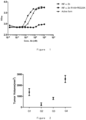
- HEK-Blue IFN-a/b cell suspension 280,000 cells/ml HEK-Blue IFN-a/b cell suspension was prepared in culture medium containing 10% heat-inactivated FBS. 20 ⁇ L of different concentrations of IFN- ⁇ , mutant IFN- ⁇ + R1-AAN-PABC-R3 (wherein R1 is peg20000), Active form were added into a 96-well cell plate, separately. Then 180 ⁇ l of cell suspension was added to each well. The 96-well cell plate was placed in a carbon dioxide incubator at 37°C for 20-24 hours.
- QUANTI-Blue TM was prepared according to product instructions and 180 ⁇ l QUANTI-Blue TM was added to each well of a new 96-well cell plate. Then 20 ⁇ l of the above HEK-Blue IFN-a/b cell supernatant was added and incubate at 37°C for 1 hour. SEAP levels were measured at 620-055nm wavelength.
- Example 7 Growth inhibition of activated IFN- ⁇ in a tumor microenvironment on MC38 tumors
- mice were subcutaneously implanted into C57BL/6 mice (provided by Shanghai Research Center of model organisms), with 2 ⁇ 10 6 cells per mouse. After one week, mice implanted with MC38 tumors were randomly divided into groups. Group 1 (G1) was injected with a solvent control once weekly, while the other groups was injected with 100ug of mutant INF- ⁇ + R1-AAN-PABC-R3, administered once a week. The treatment cycle lasted for 3 weeks. Tumor volumes of the mice were recorded three times weekly. Tumor Growth Inhibition (TGI) effects of different INF- ⁇ + R1-AAN-PABC-R3 treatments are shown in Table 10.
- TGI Tumor Growth Inhibition
- MC38 cells were subcutaneously implanted into C57BL/6 mice (provided by Shanghai Model Organisms Center), with 2 ⁇ 10 6 cells per mouse. After one week, mice implanted with MC38 tumors were randomly divided into 4 groups.
- the treatment cycle lasted for 3 weeks. Tumor volumes of the mice were recorded three times weekly. The tumor volume results at the end of the treatment period are presented in Figure 2 .
- R1-AAN-PABC-R3 specifically refers to Linker 10 in Table 3.
- CT26 cells were subcutaneously implanted into Balb/c mice (provided by Shanghai Research Center of model organisms), with 2 ⁇ 10 6 cells per mouse. After one week, mice implanted with CT26 tumors were randomly divided into 4 groups.
- R1-AAN-PABC-R specifically refers to Linker 10 in Table 3.
- the treatment cycle lasted for 3 weeks. Tumor volumes of the mice were recorded three times weekly. The tumor volume results at the end of the treatment period are presented in Figure 3 . The results showed that a combination of 100 ⁇ g INF- ⁇ R149 + R1-AAN-PABC-R3 with anti-PD-1 antibody effectively inhibited the growth of CT26 tumors, wherein four mice were cured and all mice exhibited significant tumor suppression. The reduction in tumor volume was extremely pronounced, indicating that the combined use achieved a synergistic enhanced effect.
Landscapes
- Health & Medical Sciences (AREA)
- Chemical & Material Sciences (AREA)
- Life Sciences & Earth Sciences (AREA)
- Medicinal Chemistry (AREA)
- General Health & Medical Sciences (AREA)
- Organic Chemistry (AREA)
- Immunology (AREA)
- Engineering & Computer Science (AREA)
- Veterinary Medicine (AREA)
- Public Health (AREA)
- Pharmacology & Pharmacy (AREA)
- Animal Behavior & Ethology (AREA)
- Bioinformatics & Cheminformatics (AREA)
- Proteomics, Peptides & Aminoacids (AREA)
- Epidemiology (AREA)
- Molecular Biology (AREA)
- Biochemistry (AREA)
- Genetics & Genomics (AREA)
- Biophysics (AREA)
- Chemical Kinetics & Catalysis (AREA)
- General Chemical & Material Sciences (AREA)
- Nuclear Medicine, Radiotherapy & Molecular Imaging (AREA)
- Microbiology (AREA)
- Mycology (AREA)
- Zoology (AREA)
- Gastroenterology & Hepatology (AREA)
- Toxicology (AREA)
- Endocrinology (AREA)
- Oncology (AREA)
- Biomedical Technology (AREA)
- Medicines That Contain Protein Lipid Enzymes And Other Medicines (AREA)
- Peptides Or Proteins (AREA)
- Medicinal Preparation (AREA)
- Medicines Containing Antibodies Or Antigens For Use As Internal Diagnostic Agents (AREA)
Applications Claiming Priority (2)
| Application Number | Priority Date | Filing Date | Title |
|---|---|---|---|
| CN202210844222.6A CN117417429A (zh) | 2022-07-18 | 2022-07-18 | 肿瘤微环境激活的细胞因子及其应用 |
| PCT/CN2023/107809 WO2024017219A1 (zh) | 2022-07-18 | 2023-07-18 | 肿瘤微环境激活的细胞因子及其应用 |
Publications (1)
| Publication Number | Publication Date |
|---|---|
| EP4559474A1 true EP4559474A1 (de) | 2025-05-28 |
Family
ID=89528930
Family Applications (1)
| Application Number | Title | Priority Date | Filing Date |
|---|---|---|---|
| EP23842282.8A Pending EP4559474A1 (de) | 2022-07-18 | 2023-07-18 | Tumormikroumgebungsaktiviertes cytokin und verwendung davon |
Country Status (7)
| Country | Link |
|---|---|
| US (1) | US20260021191A1 (de) |
| EP (1) | EP4559474A1 (de) |
| JP (1) | JP2025523889A (de) |
| CN (1) | CN117417429A (de) |
| AU (1) | AU2023309154A1 (de) |
| CA (1) | CA3262538A1 (de) |
| WO (1) | WO2024017219A1 (de) |
Family Cites Families (7)
| Publication number | Priority date | Publication date | Assignee | Title |
|---|---|---|---|---|
| CN1738640A (zh) * | 2002-11-18 | 2006-02-22 | 马克西根公司 | 干扰素-α多肽和偶联物 |
| RU2005118998A (ru) * | 2002-11-18 | 2006-01-27 | Максиджен, Инк. (Us) | Полипептиды и конъюгаты альфа-интерферона |
| US20100135959A1 (en) * | 2005-06-03 | 2010-06-03 | Ambrx, Inc. | Human Interferon Molecules and Their Uses |
| CA2958495C (en) | 2014-08-22 | 2023-04-18 | Yafei Shanghai Biolog Medicine Science & Technology Co., Ltd. | Small molecule conjugates specifically activated in tumor microenvironment for targeting and use thereof |
| US11319341B2 (en) * | 2016-12-21 | 2022-05-03 | Yafei (Shanghai) Biopharmaceutical Co., Ltd. | Immune-stimulating soluble doxorubicin-conjugated complex |
| JP7404252B2 (ja) * | 2017-11-08 | 2023-12-25 | ヤフェイ シャンハイ バイオロジー メディスン サイエンス アンド テクノロジー カンパニー リミテッド | 生体分子のコンジュゲートおよびその使用 |
| JP2021503005A (ja) * | 2017-11-14 | 2021-02-04 | ダイナバックス テクノロジーズ コーポレイション | Tlr7/8アゴニスト化合物の切断可能なコンジュゲート、その調製方法および使用 |
-
2022
- 2022-07-18 CN CN202210844222.6A patent/CN117417429A/zh active Pending
-
2023
- 2023-07-18 AU AU2023309154A patent/AU2023309154A1/en active Pending
- 2023-07-18 WO PCT/CN2023/107809 patent/WO2024017219A1/zh not_active Ceased
- 2023-07-18 JP JP2025502366A patent/JP2025523889A/ja active Pending
- 2023-07-18 CA CA3262538A patent/CA3262538A1/en active Pending
- 2023-07-18 EP EP23842282.8A patent/EP4559474A1/de active Pending
- 2023-07-18 US US18/996,892 patent/US20260021191A1/en active Pending
Also Published As
| Publication number | Publication date |
|---|---|
| US20260021191A1 (en) | 2026-01-22 |
| WO2024017219A1 (zh) | 2024-01-25 |
| CN117417429A (zh) | 2024-01-19 |
| JP2025523889A (ja) | 2025-07-25 |
| CA3262538A1 (en) | 2025-03-21 |
| AU2023309154A1 (en) | 2025-02-13 |
Similar Documents
| Publication | Publication Date | Title |
|---|---|---|
| JP7460609B2 (ja) | 活性化可能なインターロイキン-2ポリペプチド及びその使用方法 | |
| KR102771546B1 (ko) | 생체분자의 컨쥬게이트 및 이의 용도 | |
| EP1572748B1 (de) | Humanisierter antikörper (h14.18) des maus antikörpers 14.18, der gd2 bindet und seine fusion mit il-2 | |
| CA3206549A1 (en) | Methods of making modified tumor infiltrating lymphocytes and their use in adoptive cell therapy | |
| US20180125988A1 (en) | Targeted xten conjugate compositions and methods of making same | |
| CN113784728B (zh) | 用于靶向免疫治疗的具有可裂解细胞因子的双特异性t细胞接合物 | |
| US20250215414A1 (en) | Combination cancer immunotherapies with arginine depletion agents | |
| WO2021097060A1 (en) | Pro immune modulating molecule comprising a clustering moiety | |
| JP2024517871A (ja) | プロテアーゼ活性化治療剤を含む組成物および方法 | |
| TW200906436A (en) | Novel uses | |
| US20230340159A1 (en) | Constrained conditionally activated binding proteins | |
| EP4559474A1 (de) | Tumormikroumgebungsaktiviertes cytokin und verwendung davon | |
| EP4578875A1 (de) | Bispezifischer anti-her2/cd3-antikörper, der spezifisch in tumormikroumgebung aktiviert wird | |
| US20260085118A1 (en) | Conjugate of anti-ctla-4 antibody activated by tumor microenvironment and use thereof | |
| KR20250084992A (ko) | 신규한 pd1-표적 il-15 면역사이토카인 및 비토카인 융합체 | |
| HK40125781A (zh) | 肿瘤微环境特异激活的cd47抗体 | |
| WO2025077875A1 (zh) | 肿瘤微环境特异激活的cd47抗体 | |
| KR20250081952A (ko) | 신규한 pd1-표적 il-2 면역사이토카인 및 비토카인 융합체 | |
| HK40098030A (en) | Activatable interleukin-2 polypeptides and methods of use thereof |
Legal Events
| Date | Code | Title | Description |
|---|---|---|---|
| STAA | Information on the status of an ep patent application or granted ep patent |
Free format text: STATUS: THE INTERNATIONAL PUBLICATION HAS BEEN MADE |
|
| PUAI | Public reference made under article 153(3) epc to a published international application that has entered the european phase |
Free format text: ORIGINAL CODE: 0009012 |
|
| STAA | Information on the status of an ep patent application or granted ep patent |
Free format text: STATUS: REQUEST FOR EXAMINATION WAS MADE |
|
| 17P | Request for examination filed |
Effective date: 20250217 |
|
| AK | Designated contracting states |
Kind code of ref document: A1 Designated state(s): AL AT BE BG CH CY CZ DE DK EE ES FI FR GB GR HR HU IE IS IT LI LT LU LV MC ME MK MT NL NO PL PT RO RS SE SI SK SM TR |
|
| DAV | Request for validation of the european patent (deleted) | ||
| DAX | Request for extension of the european patent (deleted) |