EP4556022A1 - Anti-nectin-4 antibody and use thereof - Google Patents
Anti-nectin-4 antibody and use thereof Download PDFInfo
- Publication number
- EP4556022A1 EP4556022A1 EP23839029.8A EP23839029A EP4556022A1 EP 4556022 A1 EP4556022 A1 EP 4556022A1 EP 23839029 A EP23839029 A EP 23839029A EP 4556022 A1 EP4556022 A1 EP 4556022A1
- Authority
- EP
- European Patent Office
- Prior art keywords
- seq
- set forth
- nectin
- sequence
- antibody
- Prior art date
- Legal status (The legal status is an assumption and is not a legal conclusion. Google has not performed a legal analysis and makes no representation as to the accuracy of the status listed.)
- Pending
Links
Images


Classifications
-
- C—CHEMISTRY; METALLURGY
- C07—ORGANIC CHEMISTRY
- C07K—PEPTIDES
- C07K16/00—Immunoglobulins [IG], e.g. monoclonal or polyclonal antibodies
- C07K16/18—Immunoglobulins [IG], e.g. monoclonal or polyclonal antibodies against material from animals or humans
- C07K16/28—Immunoglobulins [IG], e.g. monoclonal or polyclonal antibodies against material from animals or humans against receptors, cell surface antigens or cell surface determinants
- C07K16/2803—Immunoglobulins [IG], e.g. monoclonal or polyclonal antibodies against material from animals or humans against receptors, cell surface antigens or cell surface determinants against the immunoglobulin superfamily
-
- A—HUMAN NECESSITIES
- A61—MEDICAL OR VETERINARY SCIENCE; HYGIENE
- A61P—SPECIFIC THERAPEUTIC ACTIVITY OF CHEMICAL COMPOUNDS OR MEDICINAL PREPARATIONS
- A61P35/00—Antineoplastic agents
-
- C—CHEMISTRY; METALLURGY
- C12—BIOCHEMISTRY; BEER; SPIRITS; WINE; VINEGAR; MICROBIOLOGY; ENZYMOLOGY; MUTATION OR GENETIC ENGINEERING
- C12N—MICROORGANISMS OR ENZYMES; COMPOSITIONS THEREOF; PROPAGATING, PRESERVING, OR MAINTAINING MICROORGANISMS; MUTATION OR GENETIC ENGINEERING; CULTURE MEDIA
- C12N5/00—Undifferentiated human, animal or plant cells, e.g. cell lines; Tissues; Cultivation or maintenance thereof; Culture media therefor
- C12N5/06—Animal cells or tissues; Human cells or tissues
- C12N5/0602—Vertebrate cells
- C12N5/0684—Cells of the urinary tract or kidneys
- C12N5/0686—Kidney cells
-
- G—PHYSICS
- G01—MEASURING; TESTING
- G01N—INVESTIGATING OR ANALYSING MATERIALS BY DETERMINING THEIR CHEMICAL OR PHYSICAL PROPERTIES
- G01N33/00—Investigating or analysing materials by specific methods not covered by groups G01N1/00 - G01N31/00
- G01N33/48—Biological material, e.g. blood, urine; Haemocytometers
- G01N33/50—Chemical analysis of biological material, e.g. blood, urine; Testing involving biospecific ligand binding methods; Immunological testing
- G01N33/53—Immunoassay; Biospecific binding assay; Materials therefor
- G01N33/575—Immunoassay; Biospecific binding assay; Materials therefor for cancer
- G01N33/5758—Immunoassay; Biospecific binding assay; Materials therefor for cancer involving compounds serving as markers for tumours, cancers or neoplasias, e.g. cellular determinants, receptors, heat shock/stress proteins, A-protein, oligosaccharides or metabolites
- G01N33/5759—Immunoassay; Biospecific binding assay; Materials therefor for cancer involving compounds serving as markers for tumours, cancers or neoplasias, e.g. cellular determinants, receptors, heat shock/stress proteins, A-protein, oligosaccharides or metabolites involving compounds localised on the membrane of tumour or cancer cells
-
- G—PHYSICS
- G01—MEASURING; TESTING
- G01N—INVESTIGATING OR ANALYSING MATERIALS BY DETERMINING THEIR CHEMICAL OR PHYSICAL PROPERTIES
- G01N33/00—Investigating or analysing materials by specific methods not covered by groups G01N1/00 - G01N31/00
- G01N33/48—Biological material, e.g. blood, urine; Haemocytometers
- G01N33/50—Chemical analysis of biological material, e.g. blood, urine; Testing involving biospecific ligand binding methods; Immunological testing
- G01N33/68—Chemical analysis of biological material, e.g. blood, urine; Testing involving biospecific ligand binding methods; Immunological testing involving proteins, peptides or amino acids
- G01N33/6872—Intracellular protein regulatory factors and their receptors, e.g. including ion channels
-
- A—HUMAN NECESSITIES
- A61—MEDICAL OR VETERINARY SCIENCE; HYGIENE
- A61K—PREPARATIONS FOR MEDICAL, DENTAL OR TOILETRY PURPOSES
- A61K39/00—Medicinal preparations containing antigens or antibodies
- A61K2039/505—Medicinal preparations containing antigens or antibodies comprising antibodies
-
- C—CHEMISTRY; METALLURGY
- C07—ORGANIC CHEMISTRY
- C07K—PEPTIDES
- C07K2317/00—Immunoglobulins specific features
- C07K2317/30—Immunoglobulins specific features characterized by aspects of specificity or valency
- C07K2317/33—Crossreactivity, e.g. for species or epitope, or lack of said crossreactivity
-
- C—CHEMISTRY; METALLURGY
- C07—ORGANIC CHEMISTRY
- C07K—PEPTIDES
- C07K2317/00—Immunoglobulins specific features
- C07K2317/50—Immunoglobulins specific features characterized by immunoglobulin fragments
- C07K2317/56—Immunoglobulins specific features characterized by immunoglobulin fragments variable (Fv) region, i.e. VH and/or VL
- C07K2317/565—Complementarity determining region [CDR]
-
- C—CHEMISTRY; METALLURGY
- C07—ORGANIC CHEMISTRY
- C07K—PEPTIDES
- C07K2317/00—Immunoglobulins specific features
- C07K2317/50—Immunoglobulins specific features characterized by immunoglobulin fragments
- C07K2317/56—Immunoglobulins specific features characterized by immunoglobulin fragments variable (Fv) region, i.e. VH and/or VL
- C07K2317/567—Framework region [FR]
-
- C—CHEMISTRY; METALLURGY
- C07—ORGANIC CHEMISTRY
- C07K—PEPTIDES
- C07K2317/00—Immunoglobulins specific features
- C07K2317/60—Immunoglobulins specific features characterized by non-natural combinations of immunoglobulin fragments
- C07K2317/62—Immunoglobulins specific features characterized by non-natural combinations of immunoglobulin fragments comprising only variable region components
- C07K2317/622—Single chain antibody (scFv)
-
- C—CHEMISTRY; METALLURGY
- C07—ORGANIC CHEMISTRY
- C07K—PEPTIDES
- C07K2317/00—Immunoglobulins specific features
- C07K2317/70—Immunoglobulins specific features characterized by effect upon binding to a cell or to an antigen
- C07K2317/77—Internalization into the cell
-
- C—CHEMISTRY; METALLURGY
- C07—ORGANIC CHEMISTRY
- C07K—PEPTIDES
- C07K2317/00—Immunoglobulins specific features
- C07K2317/90—Immunoglobulins specific features characterized by (pharmaco)kinetic aspects or by stability of the immunoglobulin
- C07K2317/92—Affinity (KD), association rate (Ka), dissociation rate (Kd) or EC50 value
-
- C—CHEMISTRY; METALLURGY
- C12—BIOCHEMISTRY; BEER; SPIRITS; WINE; VINEGAR; MICROBIOLOGY; ENZYMOLOGY; MUTATION OR GENETIC ENGINEERING
- C12N—MICROORGANISMS OR ENZYMES; COMPOSITIONS THEREOF; PROPAGATING, PRESERVING, OR MAINTAINING MICROORGANISMS; MUTATION OR GENETIC ENGINEERING; CULTURE MEDIA
- C12N15/00—Mutation or genetic engineering; DNA or RNA concerning genetic engineering, vectors, e.g. plasmids, or their isolation, preparation or purification; Use of hosts therefor
- C12N15/09—Recombinant DNA-technology
- C12N15/63—Introduction of foreign genetic material using vectors; Vectors; Use of hosts therefor; Regulation of expression
- C12N15/79—Vectors or expression systems specially adapted for eukaryotic hosts
- C12N15/85—Vectors or expression systems specially adapted for eukaryotic hosts for animal cells
-
- C—CHEMISTRY; METALLURGY
- C12—BIOCHEMISTRY; BEER; SPIRITS; WINE; VINEGAR; MICROBIOLOGY; ENZYMOLOGY; MUTATION OR GENETIC ENGINEERING
- C12N—MICROORGANISMS OR ENZYMES; COMPOSITIONS THEREOF; PROPAGATING, PRESERVING, OR MAINTAINING MICROORGANISMS; MUTATION OR GENETIC ENGINEERING; CULTURE MEDIA
- C12N2510/00—Genetically modified cells
-
- C—CHEMISTRY; METALLURGY
- C12—BIOCHEMISTRY; BEER; SPIRITS; WINE; VINEGAR; MICROBIOLOGY; ENZYMOLOGY; MUTATION OR GENETIC ENGINEERING
- C12N—MICROORGANISMS OR ENZYMES; COMPOSITIONS THEREOF; PROPAGATING, PRESERVING, OR MAINTAINING MICROORGANISMS; MUTATION OR GENETIC ENGINEERING; CULTURE MEDIA
- C12N2800/00—Nucleic acids vectors
- C12N2800/10—Plasmid DNA
- C12N2800/106—Plasmid DNA for vertebrates
- C12N2800/107—Plasmid DNA for vertebrates for mammalian
-
- G—PHYSICS
- G01—MEASURING; TESTING
- G01N—INVESTIGATING OR ANALYSING MATERIALS BY DETERMINING THEIR CHEMICAL OR PHYSICAL PROPERTIES
- G01N2333/00—Assays involving biological materials from specific organisms or of a specific nature
- G01N2333/435—Assays involving biological materials from specific organisms or of a specific nature from animals; from humans
- G01N2333/705—Assays involving receptors, cell surface antigens or cell surface determinants
- G01N2333/70503—Immunoglobulin superfamily, e.g. VCAMs, PECAM, LFA-3
Definitions
- the present application relates to the field of immunology, and in particular, to an anti-Nectin-4 antibody and use thereof.
- Nectin-4 is one of the cell adhesion molecules (CAMs) in the immunoglobulin superfamily (IgSF). It is a calcium-independent cell adhesion molecule, and is also known as poliovirus receptor-like protein 4 (PVRL4) or poliovirus receptor-related 4 (PRR4).
- PVRL4 poliovirus receptor-like protein 4
- PRR4 poliovirus receptor-related 4
- Nectin-4 is a single-pass transmembrane protein comprising an extracellular region, a transmembrane region, and an intracellular region, where the extracellular region contains three highly glycosylated domains, namely two C2 domains proximal to the cell membrane and one V domain distal to the cell membrane.
- Nectin-4 molecule binds to H protein through the V domain at the N-terminal of the Nectin-4 molecule, thereby achieving the infection of a virus to cells.
- Nectin-4 is involved in the establishment and maintenance of adhering junctions by interacting with cadherin.
- Nectin-4 mediates Ca 2+ -independent adhesion, and promotes anchorage-independent growth by driving intercellular adhesion and activating matrix-independent integrin ⁇ 4/SHP-2/c-Src.
- Nectin-4 is expressed during fetal development, but unlike the widespread expression of other Nectins in adult tissues, its expression in adult tissues is significantly reduced.
- Several institutions have confirmed that Nectin-4 is overexpressed in many tumors, including breast cancer, bladder cancer, and the like.
- Nectin-4 has low or moderate expression in the stratum corneum of skin, skin appendages (sweat glands and hair follicles), transitional epithelium of bladder, salivary glands, esophagus, mammary glands, and stomach, and low expression in the larynx, pituitary, placenta, testis, ureter, and uterus among normal adult tissues.
- the present application relates to an anti-Nectin-4 antibody and use thereof. Specifically, the present disclosure relates to the following aspects:
- the anti-Nectin-4 antibody or antigen-binding fragment is derived from a bird or a mammal. In some embodiments, the anti-Nectin-4 antibody is derived from a human, a mouse, a donkey, a rabbit, a goat, a camel, a llama, a horse, or a chicken origin.
- the anti-Nectin-4 antibody comprises the HCDR1 set forth in SEQ ID NO: 8, the HCDR2 set forth in SEQ ID NO: 9, and the HCDR3 set forth in SEQ ID NO: 10.
- the anti-Nectin-4 antibody comprises the HCDR1 set forth in SEQ ID NO: 8, the HCDR2 set forth in SEQ ID NO: 9, and the HCDR3 set forth in SEQ ID NO: 12.
- the anti-Nectin-4 antibody comprises the HCDR1 set forth in SEQ ID NO: 8, the HCDR2 set forth in SEQ ID NO: 9, and the HCDR3 set forth in SEQ ID NO: 14.
- the anti-Nectin-4 antibody comprises the HCDR1 set forth in SEQ ID NO: 8, the HCDR2 set forth in SEQ ID NO: 9, and the HCDR3 set forth in SEQ ID NO: 16.
- the anti-Nectin-4 antibody comprises the HCDR1 set forth in SEQ ID NO: 8, the HCDR2 set forth in SEQ ID NO: 9, and the HCDR3 set forth in SEQ ID NO: 18.
- the anti-Nectin-4 antibody comprises the HCDR1 set forth in SEQ ID NO: 8, the HCDR2 set forth in SEQ ID NO: 9, and the HCDR3 set forth in SEQ ID NO: 20.
- the anti-Nectin-4 antibody comprises the HCDR1 set forth in SEQ ID NO: 8, the HCDR2 set forth in SEQ ID NO: 9, and the HCDR3 set forth in SEQ ID NO: 22.
- the anti-Nectin-4 antibody comprises the HCDR1 set forth in SEQ ID NO: 8, the HCDR2 set forth in SEQ ID NO: 9, and the HCDR3 set forth in SEQ ID NO: 24.
- the anti-Nectin-4 antibody comprises the HCDR1 set forth in SEQ ID NO: 181, the HCDR2 set forth in SEQ ID NO: 196, and the HCDR3 set forth in SEQ ID NO: 14.
- the anti-Nectin-4 antibody comprises the HCDR1 set forth in SEQ ID NO: 182, the HCDR2 set forth in SEQ ID NO: 197, and the HCDR3 set forth in SEQ ID NO: 14.
- the anti-Nectin-4 antibody comprises the HCDR1 set forth in SEQ ID NO: 183, the HCDR2 set forth in SEQ ID NO: 9, and the HCDR3 set forth in SEQ ID NO: 14.
- the anti-Nectin-4 antibody comprises the HCDR1 set forth in SEQ ID NO: 185, the HCDR2 set forth in SEQ ID NO: 200, and the HCDR3 set forth in SEQ ID NO: 14.
- the anti-Nectin-4 antibody comprises the HCDR1 set forth in SEQ ID NO: 184, the HCDR2 set forth in SEQ ID NO: 201, and the HCDR3 set forth in SEQ ID NO: 14.
- the anti-Nectin-4 antibody comprises the HCDR1 set forth in SEQ ID NO: 186, the HCDR2 set forth in SEQ ID NO: 202, and the HCDR3 set forth in SEQ ID NO: 14.
- the anti-Nectin-4 antibody comprises the HCDR1 set forth in SEQ ID NO: 187, the HCDR2 set forth in SEQ ID NO: 203, and the HCDR3 set forth in SEQ ID NO: 14.
- the anti-Nectin-4 antibody comprises the HCDR1 set forth in SEQ ID NO: 183, the HCDR2 set forth in SEQ ID NO: 204, and the HCDR3 set forth in SEQ ID NO: 14.
- the anti-Nectin-4 antibody comprises the HCDR1 set forth in SEQ ID NO: 182, the HCDR2 set forth in SEQ ID NO: 205, and the HCDR3 set forth in SEQ ID NO: 14.
- the anti-Nectin-4 antibody comprises the HCDR1 set forth in SEQ ID NO: 187, the HCDR2 set forth in SEQ ID NO: 206, and the HCDR3 set forth in SEQ ID NO: 14.
- the anti-Nectin-4 antibody comprises the HCDR1 set forth in SEQ ID NO: 188, the HCDR2 set forth in SEQ ID NO: 207, and the HCDR3 set forth in SEQ ID NO: 14.
- the anti-Nectin-4 antibody comprises the HCDR1 set forth in SEQ ID NO: 189, the HCDR2 set forth in SEQ ID NO: 208, and the HCDR3 set forth in SEQ ID NO: 14.
- the anti-Nectin-4 antibody comprises the HCDR1 set forth in SEQ ID NO: 190, the HCDR2 set forth in SEQ ID NO: 209, and the HCDR3 set forth in SEQ ID NO: 14.
- the anti-Nectin-4 antibody comprises the HCDR1 set forth in SEQ ID NO: 184, the HCDR2 set forth in SEQ ID NO: 210, and the HCDR3 set forth in SEQ ID NO: 14.
- the anti-Nectin-4 antibody comprises the HCDR1 set forth in SEQ ID NO: 183, the HCDR2 set forth in SEQ ID NO: 211, and the HCDR3 set forth in SEQ ID NO: 14.
- the anti-Nectin-4 antibody comprises the HCDR1 set forth in SEQ ID NO: 185, the HCDR2 set forth in SEQ ID NO: 212, and the HCDR3 set forth in SEQ ID NO: 14.
- the anti-Nectin-4 antibody comprises the HCDR1 set forth in SEQ ID NO: 184, the HCDR2 set forth in SEQ ID NO: 213, and the HCDR3 set forth in SEQ ID NO: 14.
- the anti-Nectin-4 antibody comprises the HCDR1 set forth in SEQ ID NO: 189, the HCDR2 set forth in SEQ ID NO: 214, and the HCDR3 set forth in SEQ ID NO: 14.
- the anti-Nectin-4 antibody comprises the HCDR1 set forth in SEQ ID NO: 191, the HCDR2 set forth in SEQ ID NO: 215, and the HCDR3 set forth in SEQ ID NO: 14.
- the anti-Nectin-4 antibody comprises the HCDR1 set forth in SEQ ID NO: 183, the HCDR2 set forth in SEQ ID NO: 216, and the HCDR3 set forth in SEQ ID NO: 14.
- the anti-Nectin-4 antibody comprises the HCDR1 set forth in SEQ ID NO: 181, the HCDR2 set forth in SEQ ID NO: 217, and the HCDR3 set forth in SEQ ID NO: 14.
- the anti-Nectin-4 antibody comprises the HCDR1 set forth in SEQ ID NO: 183, the HCDR2 set forth in SEQ ID NO: 218, and the HCDR3 set forth in SEQ ID NO: 14.
- the anti-Nectin-4 antibody comprises the HCDR1 set forth in SEQ ID NO: 192, the HCDR2 set forth in SEQ ID NO: 219, and the HCDR3 set forth in SEQ ID NO: 14.
- the anti-Nectin-4 antibody comprises the HCDR1 set forth in SEQ ID NO: 8, the HCDR2 set forth in SEQ ID NO: 220, and the HCDR3 set forth in SEQ ID NO: 14.
- the anti-Nectin-4 antibody comprises the HCDR1 set forth in SEQ ID NO: 185, the HCDR2 set forth in SEQ ID NO: 207, and the HCDR3 set forth in SEQ ID NO: 14.
- the anti-Nectin-4 antibody comprises the HCDR1 set forth in SEQ ID NO: 190, the HCDR2 set forth in SEQ ID NO: 222, and the HCDR3 set forth in SEQ ID NO: 14.
- the anti-Nectin-4 antibody comprises the HCDR1 set forth in SEQ ID NO: 183, the HCDR2 set forth in SEQ ID NO: 223, and the HCDR3 set forth in SEQ ID NO: 14.
- the anti-Nectin-4 antibody comprises the HCDR1 set forth in SEQ ID NO: 184, the HCDR2 set forth in SEQ ID NO: 224, and the HCDR3 set forth in SEQ ID NO: 14.
- the anti-Nectin-4 antibody comprises the HCDR1 set forth in SEQ ID NO: 193, the HCDR2 set forth in SEQ ID NO: 225, and the HCDR3 set forth in SEQ ID NO: 14.
- the anti-Nectin-4 antibody comprises the HCDR1 set forth in SEQ ID NO: 184, the HCDR2 set forth in SEQ ID NO: 226, and the HCDR3 set forth in SEQ ID NO: 14.
- the anti-Nectin-4 antibody comprises the HCDR1 set forth in SEQ ID NO: 194, the HCDR2 set forth in SEQ ID NO: 227, and the HCDR3 set forth in SEQ ID NO: 14.
- the anti-Nectin-4 antibody comprises the HCDR1 set forth in SEQ ID NO: 184, the HCDR2 set forth in SEQ ID NO: 228, and the HCDR3 set forth in SEQ ID NO: 14.
- the anti-Nectin-4 antibody comprises the HCDR1 set forth in SEQ ID NO: 184, the HCDR2 set forth in SEQ ID NO: 229, and the HCDR3 set forth in SEQ ID NO: 14.
- the anti-Nectin-4 antibody comprises the HCDR1 set forth in SEQ ID NO: 189, the HCDR2 set forth in SEQ ID NO: 230, and the HCDR3 set forth in SEQ ID NO: 14.
- the anti-Nectin-4 antibody comprises the HCDR1 set forth in SEQ ID NO: 190, the HCDR2 set forth in SEQ ID NO: 231, and the HCDR3 set forth in SEQ ID NO: 14.
- the anti-Nectin-4 antibody comprises the HCDR1 set forth in SEQ ID NO: 195, the HCDR2 set forth in SEQ ID NO: 198, and the HCDR3 set forth in SEQ ID NO: 14.
- the anti-Nectin-4 antibody comprises the HCDR1 set forth in SEQ ID NO: 183, the HCDR2 set forth in SEQ ID NO: 221, and the HCDR3 set forth in SEQ ID NO: 14.
- the anti-Nectin-4 antibody comprises the HCDR1 set forth in SEQ ID NO: 234, the HCDR2 set forth in SEQ ID NO: 251, and the HCDR3 set forth in SEQ ID NO: 12.
- the anti-Nectin-4 antibody comprises the HCDR1 set forth in SEQ ID NO: 8, the HCDR2 set forth in SEQ ID NO: 252, and the HCDR3 set forth in SEQ ID NO: 12.
- the anti-Nectin-4 antibody comprises the HCDR1 set forth in SEQ ID NO: 8, the HCDR2 set forth in SEQ ID NO: 253, and the HCDR3 set forth in SEQ ID NO: 12.
- the anti-Nectin-4 antibody comprises the HCDR1 set forth in SEQ ID NO: 181, the HCDR2 set forth in SEQ ID NO: 254, and the HCDR3 set forth in SEQ ID NO: 12.
- the anti-Nectin-4 antibody comprises the HCDR1 set forth in SEQ ID NO: 181, the HCDR2 set forth in SEQ ID NO: 255, and the HCDR3 set forth in SEQ ID NO: 12.
- the anti-Nectin-4 antibody comprises the HCDR1 set forth in SEQ ID NO: 181, the HCDR2 set forth in SEQ ID NO: 256, and the HCDR3 set forth in SEQ ID NO: 12.
- the anti-Nectin-4 antibody comprises the HCDR1 set forth in SEQ ID NO: 235, the HCDR2 set forth in SEQ ID NO: 257, and the HCDR3 set forth in SEQ ID NO: 12.
- the anti-Nectin-4 antibody comprises the HCDR1 set forth in SEQ ID NO: 186, the HCDR2 set forth in SEQ ID NO: 202, and the HCDR3 set forth in SEQ ID NO: 12.
- the anti-Nectin-4 antibody comprises the HCDR1 set forth in SEQ ID NO: 236, the HCDR2 set forth in SEQ ID NO: 258, and the HCDR3 set forth in SEQ ID NO: 12.
- the anti-Nectin-4 antibody comprises the HCDR1 set forth in SEQ ID NO: 237, the HCDR2 set forth in SEQ ID NO: 259, and the HCDR3 set forth in SEQ ID NO: 12.
- the anti-Nectin-4 antibody comprises the HCDR1 set forth in SEQ ID NO: 181, the HCDR2 set forth in SEQ ID NO: 260, and the HCDR3 set forth in SEQ ID NO: 12.
- the anti-Nectin-4 antibody comprises the HCDR1 set forth in SEQ ID NO: 238, the HCDR2 set forth in SEQ ID NO: 261, and the HCDR3 set forth in SEQ ID NO: 12.
- the anti-Nectin-4 antibody comprises the HCDR1 set forth in SEQ ID NO: 8, the HCDR2 set forth in SEQ ID NO: 262, and the HCDR3 set forth in SEQ ID NO: 12.
- the anti-Nectin-4 antibody comprises the HCDR1 set forth in SEQ ID NO: 235, the HCDR2 set forth in SEQ ID NO: 263, and the HCDR3 set forth in SEQ ID NO: 12.
- the anti-Nectin-4 antibody comprises the HCDR1 set forth in SEQ ID NO: 237, the HCDR2 set forth in SEQ ID NO: 264, and the HCDR3 set forth in SEQ ID NO: 12.
- the anti-Nectin-4 antibody comprises the HCDR1 set forth in SEQ ID NO: 8, the HCDR2 set forth in SEQ ID NO: 265, and the HCDR3 set forth in SEQ ID NO: 12.
- the anti-Nectin-4 antibody comprises the HCDR1 set forth in SEQ ID NO: 239, the HCDR2 set forth in SEQ ID NO: 266, and the HCDR3 set forth in SEQ ID NO: 12.
- the anti-Nectin-4 antibody comprises the HCDR1 set forth in SEQ ID NO: 237, the HCDR2 set forth in SEQ ID NO: 267, and the HCDR3 set forth in SEQ ID NO: 12.
- the anti-Nectin-4 antibody comprises the HCDR1 set forth in SEQ ID NO: 236, the HCDR2 set forth in SEQ ID NO: 268, and the HCDR3 set forth in SEQ ID NO: 12.
- the anti-Nectin-4 antibody comprises the HCDR1 set forth in SEQ ID NO: 238, the HCDR2 set forth in SEQ ID NO: 269, and the HCDR3 set forth in SEQ ID NO: 12.
- the anti-Nectin-4 antibody comprises the HCDR1 set forth in SEQ ID NO: 240, the HCDR2 set forth in SEQ ID NO: 270, and the HCDR3 set forth in SEQ ID NO: 12.
- the anti-Nectin-4 antibody comprises the HCDR1 set forth in SEQ ID NO: 241, the HCDR2 set forth in SEQ ID NO: 271, and the HCDR3 set forth in SEQ ID NO: 12.
- the anti-Nectin-4 antibody comprises the HCDR1 set forth in SEQ ID NO: 237, the HCDR2 set forth in SEQ ID NO: 272, and the HCDR3 set forth in SEQ ID NO: 12.
- the anti-Nectin-4 antibody comprises the HCDR1 set forth in SEQ ID NO: 242, the HCDR2 set forth in SEQ ID NO: 273, and the HCDR3 set forth in SEQ ID NO: 12.
- the anti-Nectin-4 antibody comprises the HCDR1 set forth in SEQ ID NO: 242, the HCDR2 set forth in SEQ ID NO: 274, and the HCDR3 set forth in SEQ ID NO: 12.
- the anti-Nectin-4 antibody comprises the HCDR1 set forth in SEQ ID NO: 185, the HCDR2 set forth in SEQ ID NO: 275, and the HCDR3 set forth in SEQ ID NO: 12.
- the anti-Nectin-4 antibody comprises the HCDR1 set forth in SEQ ID NO: 243, the HCDR2 set forth in SEQ ID NO: 276, and the HCDR3 set forth in SEQ ID NO: 12.
- the anti-Nectin-4 antibody comprises the HCDR1 set forth in SEQ ID NO: 187, the HCDR2 set forth in SEQ ID NO: 277, and the HCDR3 set forth in SEQ ID NO: 12.
- the anti-Nectin-4 antibody comprises the HCDR1 set forth in SEQ ID NO: 245, the HCDR2 set forth in SEQ ID NO: 279, and the HCDR3 set forth in SEQ ID NO: 12.
- the anti-Nectin-4 antibody comprises the HCDR1 set forth in SEQ ID NO: 240, the HCDR2 set forth in SEQ ID NO: 280, and the HCDR3 set forth in SEQ ID NO: 12.
- the anti-Nectin-4 antibody comprises the HCDR1 set forth in SEQ ID NO: 181, the HCDR2 set forth in SEQ ID NO: 281, and the HCDR3 set forth in SEQ ID NO: 12.
- the anti-Nectin-4 antibody comprises the HCDR1 set forth in SEQ ID NO: 237, the HCDR2 set forth in SEQ ID NO: 282, and the HCDR3 set forth in SEQ ID NO: 12.
- the anti-Nectin-4 antibody comprises the HCDR1 set forth in SEQ ID NO: 8, the HCDR2 set forth in SEQ ID NO: 283, and the HCDR3 set forth in SEQ ID NO: 12.
- the anti-Nectin-4 antibody comprises the HCDR1 set forth in SEQ ID NO: 246, the HCDR2 set forth in SEQ ID NO: 284, and the HCDR3 set forth in SEQ ID NO: 12.
- the anti-Nectin-4 antibody comprises the HCDR1 set forth in SEQ ID NO: 247, the HCDR2 set forth in SEQ ID NO: 285, and the HCDR3 set forth in SEQ ID NO: 12.
- the anti-Nectin-4 antibody comprises the HCDR1 set forth in SEQ ID NO: 237, the HCDR2 set forth in SEQ ID NO: 286, and the HCDR3 set forth in SEQ ID NO: 12.
- the anti-Nectin-4 antibody comprises the HCDR1 set forth in SEQ ID NO: 237, the HCDR2 set forth in SEQ ID NO: 287, and the HCDR3 set forth in SEQ ID NO: 12.
- the anti-Nectin-4 antibody comprises the HCDR1 set forth in SEQ ID NO: 8, the HCDR2 set forth in SEQ ID NO: 288, and the HCDR3 set forth in SEQ ID NO: 12.
- the anti-Nectin-4 antibody comprises the HCDR1 set forth in SEQ ID NO: 194, the HCDR2 set forth in SEQ ID NO: 289, and the HCDR3 set forth in SEQ ID NO: 12.
- the anti-Nectin-4 antibody comprises the HCDR1 set forth in SEQ ID NO: 181, the HCDR2 set forth in SEQ ID NO: 290, and the HCDR3 set forth in SEQ ID NO: 12.
- the anti-Nectin-4 antibody comprises the HCDR1 set forth in SEQ ID NO: 243, the HCDR2 set forth in SEQ ID NO: 291, and the HCDR3 set forth in SEQ ID NO: 12.
- the anti-Nectin-4 antibody comprises the HCDR1 set forth in SEQ ID NO: 8, the HCDR2 set forth in SEQ ID NO: 292, and the HCDR3 set forth in SEQ ID NO: 12.
- the anti-Nectin-4 antibody comprises the HCDR1 set forth in SEQ ID NO: 181, the HCDR2 set forth in SEQ ID NO: 255, and the HCDR3 set forth in SEQ ID NO: 12.
- the anti-Nectin-4 antibody comprises the HCDR1 set forth in SEQ ID NO: 244, the HCDR2 set forth in SEQ ID NO: 293, and the HCDR3 set forth in SEQ ID NO: 12.
- the anti-Nectin-4 antibody comprises the HCDR1 set forth in SEQ ID NO: 247, the HCDR2 set forth in SEQ ID NO: 294, and the HCDR3 set forth in SEQ ID NO: 12.
- the anti-Nectin-4 antibody comprises the HCDR1 set forth in SEQ ID NO: 194, the HCDR2 set forth in SEQ ID NO: 295, and the HCDR3 set forth in SEQ ID NO: 12.
- the anti-Nectin-4 antibody comprises the HCDR1 set forth in SEQ ID NO: 238, the HCDR2 set forth in SEQ ID NO: 296, and the HCDR3 set forth in SEQ ID NO: 12.
- the anti-Nectin-4 antibody comprises the HCDR1 set forth in SEQ ID NO: 181, the HCDR2 set forth in SEQ ID NO: 297, and the HCDR3 set forth in SEQ ID NO: 12.
- the anti-Nectin-4 antibody comprises the HCDR1 set forth in SEQ ID NO: 181, the HCDR2 set forth in SEQ ID NO: 298, and the HCDR3 set forth in SEQ ID NO: 12.
- the anti-Nectin-4 antibody comprises the HCDR1 set forth in SEQ ID NO: 8, the HCDR2 set forth in SEQ ID NO: 299, and the HCDR3 set forth in SEQ ID NO: 12.
- the anti-Nectin-4 antibody comprises the HCDR1 set forth in SEQ ID NO: 248, the HCDR2 set forth in SEQ ID NO: 300, and the HCDR3 set forth in SEQ ID NO: 12.
- the anti-Nectin-4 antibody comprises the HCDR1 set forth in SEQ ID NO: 181, the HCDR2 set forth in SEQ ID NO: 301, and the HCDR3 set forth in SEQ ID NO: 12.
- the anti-Nectin-4 antibody comprises the HCDR1 set forth in SEQ ID NO: 237, the HCDR2 set forth in SEQ ID NO: 302, and the HCDR3 set forth in SEQ ID NO: 12.
- the anti-Nectin-4 antibody comprises the HCDR1 set forth in SEQ ID NO: 237, the HCDR2 set forth in SEQ ID NO: 9, and the HCDR3 set forth in SEQ ID NO: 12.
- the anti-Nectin-4 antibody comprises the HCDR1 set forth in SEQ ID NO: 181, the HCDR2 set forth in SEQ ID NO: 303, and the HCDR3 set forth in SEQ ID NO: 12.
- the anti-Nectin-4 antibody comprises the HCDR1 set forth in SEQ ID NO: 304, the HCDR2 set forth in SEQ ID NO: 318, and the HCDR3 set forth in SEQ ID NO: 16.
- the anti-Nectin-4 antibody comprises the HCDR1 set forth in SEQ ID NO: 304, the HCDR2 set forth in SEQ ID NO: 319, and the HCDR3 set forth in SEQ ID NO: 16.
- the anti-Nectin-4 antibody comprises the HCDR1 set forth in SEQ ID NO: 305, the HCDR2 set forth in SEQ ID NO: 320, and the HCDR3 set forth in SEQ ID NO: 16.
- the anti-Nectin-4 antibody comprises the HCDR1 set forth in SEQ ID NO: 306, the HCDR2 set forth in SEQ ID NO: 321, and the HCDR3 set forth in SEQ ID NO: 16.
- the anti-Nectin-4 antibody comprises the HCDR1 set forth in SEQ ID NO: 307, the HCDR2 set forth in SEQ ID NO: 322, and the HCDR3 set forth in SEQ ID NO: 16.
- the anti-Nectin-4 antibody comprises the HCDR1 set forth in SEQ ID NO: 308, the HCDR2 set forth in SEQ ID NO: 323, and the HCDR3 set forth in SEQ ID NO: 16.
- the anti-Nectin-4 antibody comprises the HCDR1 set forth in SEQ ID NO: 306, the HCDR2 set forth in SEQ ID NO: 324, and the HCDR3 set forth in SEQ ID NO: 16.
- the anti-Nectin-4 antibody comprises the HCDR1 set forth in SEQ ID NO: 306, the HCDR2 set forth in SEQ ID NO: 321, and the HCDR3 set forth in SEQ ID NO: 16.
- the anti-Nectin-4 antibody comprises the HCDR1 set forth in SEQ ID NO: 305, the HCDR2 set forth in SEQ ID NO: 325, and the HCDR3 set forth in SEQ ID NO: 16.
- the anti-Nectin-4 antibody comprises the HCDR1 set forth in SEQ ID NO: 309, the HCDR2 set forth in SEQ ID NO: 326, and the HCDR3 set forth in SEQ ID NO: 16.
- the anti-Nectin-4 antibody comprises the HCDR1 set forth in SEQ ID NO: 310, the HCDR2 set forth in SEQ ID NO: 327, and the HCDR3 set forth in SEQ ID NO: 16.
- the anti-Nectin-4 antibody comprises the HCDR1 set forth in SEQ ID NO: 311, the HCDR2 set forth in SEQ ID NO: 328, and the HCDR3 set forth in SEQ ID NO: 16.
- the anti-Nectin-4 antibody comprises the HCDR1 set forth in SEQ ID NO: 305, the HCDR2 set forth in SEQ ID NO: 329, and the HCDR3 set forth in SEQ ID NO: 16.
- the anti-Nectin-4 antibody comprises the HCDR1 set forth in SEQ ID NO: 238, the HCDR2 set forth in SEQ ID NO: 330, and the HCDR3 set forth in SEQ ID NO: 16.
- the anti-Nectin-4 antibody comprises the HCDR1 set forth in SEQ ID NO: 309, the HCDR2 set forth in SEQ ID NO: 331, and the HCDR3 set forth in SEQ ID NO: 16.
- the anti-Nectin-4 antibody comprises the HCDR1 set forth in SEQ ID NO: 305, the HCDR2 set forth in SEQ ID NO: 332, and the HCDR3 set forth in SEQ ID NO: 16.
- the anti-Nectin-4 antibody comprises the HCDR1 set forth in SEQ ID NO: 308, the HCDR2 set forth in SEQ ID NO: 333, and the HCDR3 set forth in SEQ ID NO: 16.
- the anti-Nectin-4 antibody comprises the HCDR1 set forth in SEQ ID NO: 310, the HCDR2 set forth in SEQ ID NO: 334, and the HCDR3 set forth in SEQ ID NO: 16.
- the anti-Nectin-4 antibody comprises the HCDR1 set forth in SEQ ID NO: 307, the HCDR2 set forth in SEQ ID NO: 335, and the HCDR3 set forth in SEQ ID NO: 16.
- the anti-Nectin-4 antibody comprises the HCDR1 set forth in SEQ ID NO: 312, the HCDR2 set forth in SEQ ID NO: 336, and the HCDR3 set forth in SEQ ID NO: 16.
- the anti-Nectin-4 antibody comprises the HCDR1 set forth in SEQ ID NO: 310, the HCDR2 set forth in SEQ ID NO: 337, and the HCDR3 set forth in SEQ ID NO: 16.
- the anti-Nectin-4 antibody comprises the HCDR1 set forth in SEQ ID NO: 311, the HCDR2 set forth in SEQ ID NO: 338, and the HCDR3 set forth in SEQ ID NO: 16.
- the anti-Nectin-4 antibody comprises the HCDR1 set forth in SEQ ID NO: 313, the HCDR2 set forth in SEQ ID NO: 339, and the HCDR3 set forth in SEQ ID NO: 16.
- the anti-Nectin-4 antibody comprises the HCDR1 set forth in SEQ ID NO: 305, the HCDR2 set forth in SEQ ID NO: 340, and the HCDR3 set forth in SEQ ID NO: 16.
- the anti-Nectin-4 antibody comprises the HCDR1 set forth in SEQ ID NO: 310, the HCDR2 set forth in SEQ ID NO: 341, and the HCDR3 set forth in SEQ ID NO: 16.
- the anti-Nectin-4 antibody comprises the HCDR1 set forth in SEQ ID NO: 314, the HCDR2 set forth in SEQ ID NO: 339, and the HCDR3 set forth in SEQ ID NO: 16.
- the anti-Nectin-4 antibody comprises the HCDR1 set forth in SEQ ID NO: 315, the HCDR2 set forth in SEQ ID NO: 342, and the HCDR3 set forth in SEQ ID NO: 16.
- the anti-Nectin-4 antibody comprises the HCDR1 set forth in SEQ ID NO: 310, the HCDR2 set forth in SEQ ID NO: 343, and the HCDR3 set forth in SEQ ID NO: 16.
- the anti-Nectin-4 antibody comprises the HCDR1 set forth in SEQ ID NO: 310, the HCDR2 set forth in SEQ ID NO: 344, and the HCDR3 set forth in SEQ ID NO: 16.
- the anti-Nectin-4 antibody comprises the HCDR1 set forth in SEQ ID NO: 310, the HCDR2 set forth in SEQ ID NO: 339, and the HCDR3 set forth in SEQ ID NO: 16.
- the anti-Nectin-4 antibody comprises the HCDR1 set forth in SEQ ID NO: 305, the HCDR2 set forth in SEQ ID NO: 345, and the HCDR3 set forth in SEQ ID NO: 16.
- the anti-Nectin-4 antibody comprises the HCDR1 set forth in SEQ ID NO: 305, the HCDR2 set forth in SEQ ID NO: 346, and the HCDR3 set forth in SEQ ID NO: 16.
- the anti-Nectin-4 antibody comprises the HCDR1 set forth in SEQ ID NO: 306, the HCDR2 set forth in SEQ ID NO: 347, and the HCDR3 set forth in SEQ ID NO: 16.
- the anti-Nectin-4 antibody comprises the HCDR1 set forth in SEQ ID NO: 307, the HCDR2 set forth in SEQ ID NO: 339, and the HCDR3 set forth in SEQ ID NO: 16.
- the anti-Nectin-4 antibody comprises the HCDR1 set forth in SEQ ID NO: 235, the HCDR2 set forth in SEQ ID NO: 348, and the HCDR3 set forth in SEQ ID NO: 16.
- the anti-Nectin-4 antibody comprises the HCDR1 set forth in SEQ ID NO: 314, the HCDR2 set forth in SEQ ID NO: 349, and the HCDR3 set forth in SEQ ID NO: 16.
- the anti-Nectin-4 antibody comprises the HCDR1 set forth in SEQ ID NO: 316, the HCDR2 set forth in SEQ ID NO: 350, and the HCDR3 set forth in SEQ ID NO: 16.
- the anti-Nectin-4 antibody comprises the HCDR1 set forth in SEQ ID NO: 306, the HCDR2 set forth in SEQ ID NO: 351, and the HCDR3 set forth in SEQ ID NO: 16.
- the anti-Nectin-4 antibody comprises the HCDR1 set forth in SEQ ID NO: 304, the HCDR2 set forth in SEQ ID NO: 352, and the HCDR3 set forth in SEQ ID NO: 16.
- the anti-Nectin-4 antibody comprises the HCDR1 set forth in SEQ ID NO: 309, the HCDR2 set forth in SEQ ID NO: 353, and the HCDR3 set forth in SEQ ID NO: 16.
- the anti-Nectin-4 antibody comprises the HCDR1 set forth in SEQ ID NO: 310, the HCDR2 set forth in SEQ ID NO: 354, and the HCDR3 set forth in SEQ ID NO: 16.
- the anti-Nectin-4 antibody comprises the HCDR1 set forth in SEQ ID NO: 305, the HCDR2 set forth in SEQ ID NO: 355, and the HCDR3 set forth in SEQ ID NO: 16.
- the anti-Nectin-4 antibody comprises the HCDR1 set forth in SEQ ID NO: 305, the HCDR2 set forth in SEQ ID NO: 356, the HCDR3 set forth in SEQ ID NO: 16, the LCDR1 set forth in SEQ ID NO: 26, the LCDR2 set forth in SEQ ID NO: 27, and the LCDR3 set forth in SEQ ID NO: 28.
- the anti-Nectin-4 antibody comprises the HCDR1 set forth in SEQ ID NO: 241, the HCDR2 set forth in SEQ ID NO: 357, and the HCDR3 set forth in SEQ ID NO: 16.
- the anti-Nectin-4 antibody comprises the HCDR1 set forth in SEQ ID NO: 317, the HCDR2 set forth in SEQ ID NO: 358, and the HCDR3 set forth in SEQ ID NO: 16.
- the anti-Nectin-4 antibody further comprises the LCDR1 set forth in SEQ ID NO: 26, the LCDR2 set forth in SEQ ID NO: 27, and the LCDR3 set forth in SEQ ID NO: 28.
- the polypeptide further comprises the sequences set forth in SEQ ID NO: 26, SEQ ID NO: 27, and SEQ ID NO: 28. In some embodiments, the polypeptide further comprises the sequence set forth in SEQ ID NO: 25 or a variant thereof.
- the variant sequences have 3, 2, or 1 amino acid difference (preferably a conservative amino acid substitution) from or at least 60%, 65%, 70%, 75%, 80%, 81%, 82%, 83%, 84%, 85%, 86%, 87%, 88%, 89%, 90%, 91%, 92%, 93%, 94%, 95%, 96%, 97%, 98%, or 99% identity to the corresponding sequences, and the variants retain the binding affinity for Nectin-4.
- 3, 2, or 1 amino acid difference preferably a conservative amino acid substitution
- the antibody or antigen-binding fragment of the present disclosure binds to Nectin-4 with an equilibrium dissociation constant (KD) of about 1 ⁇ M or less. In some embodiments, the antibody or antigen-binding fragment of the present disclosure binds to Nectin-4 with a KD of about 100 nM to about 1 pM or less. In some embodiments, the antibody or antigen-binding fragment of the present disclosure binds to Nectin-4 with a KD of about 10 nM to about 1 pM or less. In some embodiments, the antibody or antigen-binding fragment of the present disclosure binds to Nectin-4 with a KD of about 10 nM to about 1 nM or less.
- the antibody or antigen-binding fragment of the present disclosure binds to human Nectin-4 (e.g., the antigen hNectin-4-His set forth in SEQ ID NO: 2) with a KD of about 100 nM to about 1 pM or less. In some embodiments, the antibody or antigen-binding fragment of the present disclosure binds to Nectin-4 with a KD of about 10 nM to about 1 pM or less, or about 10 nM to about 1 nM or less.
- human Nectin-4 e.g., the antigen hNectin-4-His set forth in SEQ ID NO: 2
- the antibody or antigen-binding fragment of the present disclosure binds to Nectin-4 with a KD of about 10 nM to about 1 pM or less, or about 10 nM to about 1 nM or less.
- amino acid refers to an organic compound containing an amino group and a carboxyl group, such as an ⁇ -amino acid that can be encoded by a nucleic acid, either directly or in the form of a precursor.
- a single amino acid is encoded by a nucleic acid consisting of three nucleotides (so-called codon or base triplet). Each amino acid is encoded by at least one codon. The encoding of the same amino acid by different codons is known as "codon degeneracy".
- the amino acids include natural amino acids and non-natural amino acids.
- Natural amino acids include alanine (three-letter symbol: Ala, one-letter symbol: A), arginine (Arg, R), asparagine (Asn, N), aspartic acid (Asp, D), cysteine (Cys, C), glutamine (Gln, Q), glutamic acid (Glu, E), glycine (Gly, G), histidine (His, H), isoleucine (Ile, I), leucine (Leu, L), lysine (Lys, K), methionine (Met, M), phenylalanine (Phe, F), proline (Pro, P), serine (Ser, S), threonine (Thr, T), tryptophan (Trp, W), tyrosine (Tyr, Y) and valine (Val, V).
- the “antibody” refers to a polypeptide or polypeptide complex that specifically recognizes and binds to an antigen.
- the antibody may be an intact antibody and any antigen-binding fragment or single chain thereof.
- the term “antibody” thus includes any protein or peptide comprising at least a portion of an immunoglobulin molecule that has biological activity for binding to an antigen.
- Examples of the antibody include, but are not limited to, complementarity determining region (CDR) of a heavy chain, a light chain, or a ligand binding portion thereof, heavy chain variable regions (VH), light chain variable region (VL), heavy chain constant region (CH), light chain constant regions (CL), framework region (FR), or any portion thereof, or at least a portion of a binding protein.
- the CDRs include light chain CDRs (LCDR1-3) and heavy chain CDRs (HCDR1-3).
- the CDR regions of the antibody are responsible for the binding specificity of the antibody to the antigen.
- sequences of the heavy and light chain variable regions of the antibody are known, there are currently several methods of determining the CDR regions of the antibody, including the Kabat, IMGT, Chothia, and AbM numbering systems.
- every application of the definition of CDRs regarding the antibody or variant thereof will fall within the scope of the terms defined and used herein.
- amino acid sequences of the variable regions of the antibody those skilled in the art can generally determine which residues are included in a particular CDR, without relying on any experimental data other than the sequence itself.
- amino acid sequence homology also referred to herein as "amino acid identity”
- amino acid identity the percentage "sequence homology" (also referred to herein as "amino acid identity") between a first amino acid sequence and a second amino acid sequence can be calculated by dividing [the number of amino acid residues in the first amino acid sequence that are identical to those at corresponding positions in the second amino acid sequence] by [the total number of the amino acid residues in the first amino acid sequence] and multiplying by [100%], where every deletion, insertion, substitution, or addition of amino acid residue in the second amino acid sequence is considered as a difference in single amino acid residue (position), i.e., an "amino acid difference" as defined herein, as compared to that of the first amino acid sequence.
- some other techniques, computer algorithms, and settings for determining the sequence identity are described, for example, in WO04/037999 , EP0967284 , EP1085089 , WO00/55318 , WO00/78972 , WO98/49185 , and GB2357768-A .
- amino acid sequence with a higher number of amino acid residues is considered the “first" amino acid sequence
- amino acid sequence with a higher number of amino acid residues is considered the “second” amino acid sequence.
- amino acid substitution when determining the sequence identity between two amino acid sequences, those skilled in the art may consider a so-called “conservative" amino acid substitution, which may usually be described as an amino acid substitution in which an amino acid residue is substituted with another amino acid residue having a similar chemical structure and little or no effects on functionality, activity or other biological properties of the polypeptide.
- Such a conservative amino acid substitution is well known in the art, for example, from WO04/037999 , GB-A-3357768 , WO98/49185 , WO00/46383 , and WO01/09300 ; and (preferred) types and/or combinations of such a substitution may be selected on the basis of the relevant teachings in WO04/037999 and WO98/49185 and other references cited therein.
- the "conservative amino acid substitution” is an amino acid substitution in which the amino acid residue is substituted with an amino acid residue having a similar side chain.
- Families of amino acid residues having similar side chains have been defined in the art, including basic side chains (e.g., lysine, arginine, and histidine), acidic side chains (e.g., aspartic acid and glutamic acid), uncharged polar side chains (e.g., glycine, asparagine, glutamine, serine, threonine, tyrosine, cysteine), nonpolar side chains (e.g., alanine, valine, leucine, isoleucine, proline, phenylalanine, methionine, and tryptophan), ⁇ -branched side chains (e.g., threonine, valine, and isoleucine), and aromatic side chains (e.g., tyrosine, phenylalanine, tryptophan, and hist
- non-essential amino acid residues of an immunoglobulin polypeptide are preferably substituted with other amino acid residues from the same side chain family.
- a series of amino acids may be substituted with a series of structurally similar amino acids, which differ in sequence and/or composition of the side chain family.
- Non-limiting examples of conservative amino acid substitutions are provided in the table below, where a similarity score of 0 or higher indicates that the substitution between the two amino acids is conservative.
- the conservative substitution is such a substitution that one amino acid within the following groups (a)-(e) is substituted with another amino acid residue within the same group: (a) small aliphatic, non-polar or weakly polar residues: Ala, Ser, Thr, Pro, and Gly; (b) polar, negatively charged residues and their (uncharged) amides: Asp, Asn, Glu, and Gln; (c) polar, positively charged residues: His, Arg, and Lys; (d) large aliphatic, nonpolar residues: Met, Leu, Ile, Val, and Cys; and (e) aromatic residues: Phe, Tyr, and Trp.
- the conservative substitution is as follows: Ala is substituted with Gly or Ser; Arg is substituted with Lys; Asn is substituted with Gln or His; Asp is substituted with Glu; Cys is substituted with Ser; Gln is substituted with Asn; Glu is substituted with Asp; Gly is substituted with Ala or Pro; His is substituted with Asn or Gln; Ile is substituted with Leu or Val; Leu is substituted with Ile or Val; Lys is substituted with Arg, Gln, or Glu; Met is substituted with Leu, Tyr, or Ile; Phe is substituted with Met, Leu, or Tyr; Ser is substituted with Thr; Thr is substituted with Ser; Trp is substituted with Tyr; Tyr is substituted with Trp; and/or Phe is substituted with Val, Ile, or Leu.
- ⁇ -amino acids differ in side chain R groups.
- the conservative amino acid substitution is as follows: Gly, Ala, Val, Leu, and Ile may be substituted with one another; Ser and Thr may be substituted with one another; Cys and Met may be substituted with one another, Asn and Gln may be substituted with one another; Asp and Glu may be substituted with one another; Lys and Arg may be substituted with one another; Phe and Tyr may be substituted with one another.
- antibody fragment or "antigen-binding fragment” includes, but is not limited to, F(ab') 2 , F(ab) 2 , Fab', Fab, Fv, Fd, dAb, Fab/c, complementarity determining region (CDR) fragment, single-chain Fvs (scFv), disulfide-stabilized Fv fragment (dsFv), (dsFv) 2 , bispecific dsFv (dsFv-dsFv'), diabody, disulfide-stabilized diabody (ds-diabody), scFv multimer (e.g., scFv dimer, scFv trimer), multispecific antibody formed from a portion of an antibody including one or more CDRs, nanobody, single domain antibody (sdab), domain antibody, a bivalent domain antibody, or any other antibody fragments that bind to an antigen but do not contain an intact antibody structure.
- CDR complementarity determining region
- the antigen-binding fragment includes any polypeptide or polypeptide complex capable of binding to the same antigen to which the parent antibody or parent antibody fragment binds.
- the structure of dsFv is introduced in Mao C S et al, "Disulfide stabilized Fv Fragments (dsFv): a New Type of Engineering Antibody Fragments". Progress in Biochemistry and Biophysics, 1998, 25(6):525-526 .
- the antigen-binding fragments known as "domain antibodies” (dAbs) are summarized in Holt et al, "Domain antibodies: proteins for therapy”. Trends in Biotechnology (2003): Vol. 21, No.
- the antigen-binding fragment only contains a VH or VL domain of the antibody, and is thus smaller than, for example, Fab and scFv.
- the dAbs are the smallest known antigen-binding fragments of an antibody, ranging from 11 kDa to 15 kDa.
- the term "antibody fragment” includes aptamers, spiegelmers, and diabodies.
- the term "antibody fragment” also includes any synthetic or genetically engineered proteins that, like antibodies, may bind to a particular antigen to form a complex.
- the antibody fragment has at least about 50 consecutive amino acids, preferably at least about 50 consecutive amino acids, more preferably at least about 80 consecutive amino acids, and most preferably at least about 100 consecutive amino acids of the antibody of the present disclosure.
- the antibody or antigen-binding fragment of the present disclosure includes modified derivatives, i.e., modified by covalent linking of any type of molecules to the antibody or antigen-binding fragment, wherein the covalent linking does not prevent the antibody or antigen-binding fragment from binding to an epitope.
- the antibody or antigen-binding fragment may be modified by glycosylation, acetylation, pegylation, phosphorylation, amidation, derivatization by known protecting/blocking groups, proteolytic cleavage, attachment to cellular ligands or other proteins, or the like. Any one of various chemical modifications may be made by techniques in the prior art, including but not limited to specific chemical cleavage, acetylation, formylation, metabolic synthesis of tunicamycin, and the like.
- the antibody or antigen-binding fragment may be conjugated with a therapeutic agent, a prodrug, a peptide, a protein, an enzyme, a virus, a lipid, a biological response modifier, an agent, or polyethylene glycol (PEG).
- a therapeutic agent a prodrug, a peptide, a protein, an enzyme, a virus, a lipid, a biological response modifier, an agent, or polyethylene glycol (PEG).
- PEG polyethylene glycol
- the Nectin-4 antigen is derived from human, monkey (such as a cynomolgus monkey), or a murine species.
- the antibody described herein may be derived from any animals, including birds and mammals.
- the antibody is derived from a human, a mouse, a donkey, a rabbit, a goat, a camel, a horse, or a chicken origin.
- isolated refers to molecules that are separated from one or more other components, e.g., DNA or RNA, in the natural cellular environment.
- isolated refers to nucleic acids or peptides that are substantially free of cellular materials, viral materials, or cell media when produced by recombinant DNA techniques, or free of chemical precursors or other chemicals when chemically synthesized.
- isolated nucleic acid is intended to include nucleic acid fragments that are not and will not be present in nature.
- isolated is also used to refer to cells or polypeptides that are separated from other cellular proteins or tissue.
- the isolated polypeptides are intended to include both purified and recombinant polypeptides.
- the isolated polypeptides, antibodies, and the like are usually prepared by at least one purification procedure. In some embodiments, the purity of the isolated nucleic acids, polypeptides, and antibodies is at least about 50%, about 60%, about 70%, about 80%, about 90%, about 95%, about 99%, or a range between any two of these values (inclusive) or any value therein.
- the polynucleotide consists of a specific sequence of four nucleotide bases: adenine (A), cytosine (C), guanine (G), thymine (T)/uracil (U, instead of thymine when the polynucleotide is RNA).
- the "polynucleotide sequence” may be a letter representation of the polynucleotide molecule. The letter representation can be input into a database in a computer with a central processing unit and used for bioinformatics applications, such as functional genomics and homology searches.
- polynucleotide and “nucleic acid” are used interchangeably to refer to a polymeric form of nucleotides of any length, whether deoxyribonucleotides or ribonucleotides or analogs thereof.
- the polynucleotide may have any three-dimensional structure and may perform any functions, either known or unknown.
- polynucleotides genes or gene fragments (such as probes, primers, EST or SAGE tags), exons, introns, messenger RNA (mRNA), transport RNA, ribosomal RNA, ribozymes, cDNA, dsRNA, siRNA, miRNA, recombinant polynucleotides, branched polynucleotides, plasmids, vectors, isolated DNA of any sequence, isolated RNA of any sequence, and nucleic acid probes and primers.
- the polynucleotides may include modified nucleotides, such as methylated nucleotides and nucleotide analogs.
- nucleotide can be made before or after the assembly of the polynucleotide.
- sequence of nucleotides may be interrupted by non-nucleotide components.
- the polynucleotide may be further modified after polymerization, such as by conjugation with a labeling component.
- This term also refers to double-stranded and single-stranded molecules. Unless otherwise stated or required, examples of any polynucleotide disclosed herein include a double-stranded form and each of the two complementary single-stranded forms known or predicted to constitute the double-stranded form.
- encoding refers to a polynucleotide known to "encode” a polypeptide.
- the polynucleotide can be transcribed and/or translated to produce the polypeptide and/or a fragment thereof.
- treatment refers to both therapeutic treatment and prophylactic or preventative measures, the purpose of which is to prevent, slow down, ameliorate, or halt undesirable physiological changes or disorders, such as the progression of a disease, including, but not limited to, alleviation of symptoms, diminishment of the extent of disease, stabilized (i.e., not worsening) state of disease, delay or slowing of progressive disease, amelioration, palliation, alleviation, or elimination (whether partial or total) of state of disease, prolongation of life expectancy as compared with that in the absence of treatment, and the like, as either detectable or undetectable.
- the patients in need of the treatment include patients already having a condition or disorder, patients susceptible to a condition or disorder, or patients in need of prevention of the condition or disorder, or patients who may or are expected to benefit from the administration of the antibody, the antigen-binding fragment, or the pharmaceutical composition of the present disclosure for detection, diagnostic procedures, and/or treatment.
- the effective dosage and therapeutic regimen for treating a particular patient will depend upon a variety of factors including the particular antibody, the antigen-binding fragment or derivative thereof used, the age and body weight, general health condition, sex and diet of the patient, and the time of administration, frequency of excretion, drug combination, and the severity of the particular disease being treated. These factors are judged by healthcare providers, who are included within the scope of those of ordinary skill in the art.
- the dosage employed can be determined by pharmacological and pharmacokinetic principles well known in the art.
- the antibody of the present disclosure is administered to the patient at 0.01 mg/kg to 100 mg/kg body weight of the patient per dose. In some embodiments, the treatment is given once weekly or monthly.
- the "patient” refers to any mammal in need of diagnosis, prognosis, or treatment, including human, dog, cat, rabbit, murine, horse, cattle, and the like. In some embodiments, the patient is a human patient.
- pharmaceutically acceptable refers to materials listed in pharmacopeia for use in drugs for animals, and in particular for humans.
- pharmaceutically acceptable carrier and/or excipient will generally be any type of non-toxic solid, semi-solid or liquid filler, diluent, encapsulating material, or formulation additive.
- carrier refers to a diluent, an adjuvant, an excipient, or a carrier that can be administered to a patient together with the active ingredient.
- Such pharmaceutical carriers may be sterile liquids, such as water and oils, including oils originating from petroleum, animal, plant or synthesis, such as peanut oil, soybean oil, mineral oil, and sesame oil. Water is a preferred carrier when the pharmaceutical composition is administered intravenously.
- a saline aqueous solution, a glucose aqueous solution, and a glycerol solution may also be used as a liquid carrier, especially for injection.
- Suitable pharmaceutical excipients include starch, glucose, gelatin, malt, rice, flour, chalk, silica gel, sodium stearate, glycerol monostearate, talc, skimmed milk powder, glycerol, propylene, glycol, water, ethanol, and the like.
- the composition may also contain a small amount of a wetting agent, an emulsifier, or a pH buffering agent.
- Such compositions may be in the form of solutions, suspensions, emulsions, tablets, pills, capsules, pulvises, sustained-release formulations and the like.
- the composition may be formulated as a suppository using conventional binders and carriers such as triglyceride.
- Oral formulations may contain standard carriers such as starch, magnesium stearate, sodium saccharin, cellulose and magnesium carbonate of pharmaceutical grade. Examples of suitable pharmaceutical carriers are described in Remington's Pharmaceutical Sciences by E. W. Martin, which is incorporated herein by reference.
- Such compositions will contain a clinically effective dose of an antibody or antigen-binding fragment, preferably in a purified form, together with an appropriate amount of a carrier and/or excipient, to provide a form suitable for administration to a patient.
- the formulation should be suitable for the administration mode.
- the formulation may be encapsulated in an ampoule bottle, a disposable syringe, or a multi-dose vial made of glass or plastic.
- the composition is formulated into a pharmaceutical composition suitable for intravenous injection into a human body according to conventional procedures.
- a composition for intravenous administration is a solution in a sterile isotonic aqueous buffer.
- the active ingredients are provided in a unit dosage form individually or as a mixture.
- the active ingredients are encapsulated in sealed containers (such as ampoule bottles or sachets) that can indicate the amount of the active agent, in the form of lyophilized powder or anhydrous concentrate.
- the composition can be dispensed in infusion bottles containing sterile, pharmaceutical grade water or saline.
- an ampoule bottle containing sterile water or saline for injection can be used, such that the active ingredients can be mixed before administration.
- the antibody or antigen-binding fragment of the present disclosure includes neutral or salt forms.
- the pharmaceutically acceptable salts include, but are not limited to, salts formed with anions derived from acids such as hydrochloric acid, phosphoric acid, acetic acid, oxalic acid and tartaric acid, and salts formed with cations derived from, e.g., sodium, potassium, ammonium, calcium, iron hydroxide, isopropylamine, triethylamine, 2-ethylaminoethanol, histidine, and procaine.
- the "about” refers to a conventional error range for corresponding values as readily understood by those skilled in the relevant art. In some embodiments, the “about” mentioned herein refers to the values described and ranges of ⁇ 10%, ⁇ 5%, or ⁇ 1% therefrom.
- the “EC 50" i.e., concentration for 50% of maximal effect, refers to a concentration that causes 50% of the maximal effect.
- the present disclosure further discloses a polynucleotide or a nucleic acid molecule encoding the antibody, the antigen-binding fragment, and a derivative thereof of the present disclosure.
- the polynucleotide disclosed herein may encode a heavy chain variable region, a light chain variable region, an Fc region, a portion of a heavy chain variable region, a portion of a light chain variable region, a heavy chain, a light chain, or the like.
- the antibodies can be prepared by a variety of methods known in the art, including phage display methods using antibody libraries from immunoglobulin sequences. Reference may also be made to U.S. Pat. Nos. 4,444,887 and 4,716,111 , and PCT Publication Nos. WO 98/46645 , WO 98/50433 , WO 98/24893 , WO 98/16654 , WO 96/34096 , WO 96/33735 and WO 91/10741 , which are incorporated herein by reference in their entireties.
- Antibodies can be prepared by using conventional recombinant DNA techniques. Vectors and cell lines for antibody production can be selected, constructed, and cultured using techniques well known to those skilled in the art. Such techniques are described in various laboratory manuals and main publications, such as Recombinant DNA Technology for Production of Protein Therapeutics in Cultured Mammalian Cells, D. L. hacker, F. M. Wurm, in Reference Module in Life Sciences, 2017 , which, including supplementary content, is incorporated by reference in its entirety.
- the DNA encoding the antibody can be designed and synthesized according to the antibody amino acid sequence described herein by conventional methods, inserted into an expression vector, and transfected into a host cell. The transfected host cell is then cultured in a medium to produce the monoclonal antibody.
- the vector expressing the antibody comprises at least one promoter element, an antibody encoding sequence, a transcription termination signal and a polyA tail. Other elements include enhancers, Kozak sequences, and donor and recipient sites flanking the inserted sequence for RNA splicing.
- Efficient transcription can be obtained by early and late promoters of SV40, long terminal repeats from retroviruses such as RSV, HTLV1 and HIVI, and early promoters of cytomegalovirus, and promoters from other cells such as actin promoter can also be used.
- Suitable expression vectors may include pIRES1neo, pRetro-Off, pRetro-On, PLXSN, or Plncx, pcDNA3.1 (+/-), pcDNA/Zeo (+/-), pcDNA3.1/Hygro(+/-), PSVL, PMSG, pRSVcat, pSV2dhfr, pBC12MI, pCS2, etc.
- Commonly used mammalian cells include 293 cells, Cos1 cells, Cos7 cells, CV1 cells, murine L cells, CHO cells, and the like.
- the inserted gene fragment should comprise a screening label, common ones of which include screening genes such as dihydrofolate reductase, glutamine synthetase, neomycin resistance and hygromycin resistance, to facilitate the screening and separation of cells that have been successfully transfected.
- screening genes such as dihydrofolate reductase, glutamine synthetase, neomycin resistance and hygromycin resistance, to facilitate the screening and separation of cells that have been successfully transfected.
- the constructed plasmid is transfected to a host cell without the above genes, and the successfully transfected cells are cultured in a large quantity in a selective culture medium to produce the desired target protein.
- scFv single chain Fv
- an antibody examples include, for example, those described in U.S. Pat. Nos. 4,946,778 and 5,258,498 , and Huston et al., Methods in Enzymology, 203:46-88 (1991 ), Shu et al., Proc. Natl. Sci. USA, 90:1995-1999 (1993 ) and Skerra et al., Science, 240:1038-1040 (1988 ).
- a chimeric antibody, a humanized antibody, or a fully human antibody may be used.
- Chimeric antibodies are molecules in which different portions of the antibody are derived from different animal species, such as antibodies having variable regions of a murine monoclonal antibody and constant regions of a human immunoglobulin.
- Methods for producing chimeric antibodies are known in the art, see Morrison, Science 229:1202 (1985 ); Oi et al., BioTechniques 4:214 (1986 ); Gillies et al., J. Immunol. Methods 125:191-202 (1989 ); Neuberger et al., Nature 372:604-608 (1984 ); Takeda et al., Nature 314:452-454 (1985 ); and U.S. Pat. Nos. 5,807,715 , 4,816,567 and 4,816,397 , which are incorporated herein by reference in their entireties.
- the human Nectin-4 extracellular antigen (hNectin-4-His) was prepared according to conventional methods: the signal peptide sequence of the human Nectin-4 extracellular sequence (sequence source: GenBank No. Q96NY8) was replaced with an albumin signal peptide (MKWVTFISLLFLFSSAYS, as set forth in SEQ ID NO: 1), and a histidine tag 8 ⁇ His was added to the C-terminus of the albumin signal peptide to give the antigen protein (the sequence is set forth in SEQ ID NO: 2, and denoted as hNectin-4-His).
- the DNA sequence of the antigen protein hNectin-4-His was cloned to an expression vector. Eukaryotic cells, i.e., HEK293F cells, were transiently transfected, or CHO cells were stably transfected. Stable cell lines were selected, and purification and expression were performed.
- the amino acid sequences of the heavy and light chains of the reference antibody ASG-22 are shown in Table 1.
- signal peptides were added to N-termini of the heavy and light chains, where the signal peptide sequence linked to the N-terminus of the heavy chain was MELGLCWVFLVAILEGVQC (as set forth in SEQ ID NO: 3) and the signal peptide sequence linked to the N-terminus of the light chain was MDMRVPAQLLGLLLLWFPGSRC (as set forth in SEQ ID NO: 4).
- DNA sequences of the heavy and light chains were synthesized by conventional methods, and the antibody normally bound to hNectin-4-His expressed in Example 1.
- Table 1 Amino acid sequences of reference antibody ASG-22 Amino acid sequence (with CDR sequences underlined, according to the Kabat numbering system) SEQ ID NO: Heavy chain 5 Light chain 6
- Table 2 shows the light and heavy chain variable regions of scFv, where the light chain variable regions have identical amino acid sequences.
- Table 2 Sequences of heavy chain variable region and light chain variable region Clone No. Type Amino acid sequence (with CDR sequences underlined, according to the Kabat numbering system) 1B4 VH HCDR1: SYAMS (SEQ ID NO:8) HCDR2: AISGSGGSTYYADSVKG (SEQ ID NO:9) HCDR3: QTEDRYYGYDLDY (SEQ ID NO:10) 1G8 VH HCDR1: SYAMS (SEQ ID NO:8) HCDR2: AISGSGGSTYYADSVKG (SEQ ID NO:9) HCDR3: QTEDRSYGYDLDY (SEQ ID NO:12) 1F3 VH HCDR1: SYAMS (SEQ ID NO:8) HCDR2: AISGSGGSTYYADSVKG (SEQ ID NO:9) HCDR3: AELLAFDVYTASDY (
- sequences of the framework regions HFR1-HFR4 in the VH are set forth in SEQ ID NOs: 29-32, and the sequences of the framework regions LFR1-LFR4 in the VL are set forth in SEQ ID NOs: 33-36.
- the HCDR3 of the above 1F3, 1G8, and 10F4 were cloned into scFv phage libraries of HCDR1 and HCDR2, and supernatants of phage clones were screened and selected for detection.
- the supernatants were diluted 50-fold, and the binding OD values of the diluted supernatants to hNectin-4-His were measured by ELISA.
- the samples were serially 3-fold diluted, and the EC 50 titer for the binding of the supernatants to the antigen was measured by ELISA.
- Clones with higher OD values were selected for sequencing to give the heavy chain variable region sequences and the HCDR1 and HCDR2 sequences of all the clones, as shown in Tables 3-8.
- the light chain variable region sequence is set forth in SEQ ID NO: 25.
- the OD value is the measurement of ELISA, and the EC 50 value denotes the EC 50 value of the binding activity titer of the supernatant to the antigen.
- signal peptides were added to N-termini of the heavy and light chains, where the signal peptide sequence linked to the N-terminus of the heavy chain was MEWSWVFLFFLSVTTGVHS (as set forth in SEQ ID NO: 39) and the signal peptide sequence linked to the N-terminus of the light chain was MDMRVPAQLLGLLLLWLPGARC (as set forth in SEQ ID NO: 40).
- the antibody numbers are consistent with the clone numbers corresponding to the heavy chain variable regions.
- the amino acid sequence of the light chain is set forth in SEQ ID NO: 250, and the nucleic acid sequence of the light chain is set forth in SEQ ID NO: 359.
- the nucleic acid sequence was synthesized according to the antibody sequences.
- the amino acid sequence of the heavy chain is set forth in SEQ ID NO: 232; for antibody 1G8, the amino acid sequence of the heavy chain is set forth in SEQ ID NO: 233; for antibody 10F4, the amino acid sequence of the heavy chain is set forth in SEQ ID NO: 249; for antibody 10F4-3, the amino acid sequence of the heavy chain is set forth in SEQ ID NO: 360, and the nucleic acid sequence of the heavy chain is set forth in SEQ ID NO: 364; for antibody 1F3-1E4, the amino acid sequence of the heavy chain is set forth in SEQ ID NO: 361, and the nucleic acid sequence of the heavy chain is set forth in SEQ ID NO: 365; for antibody 1F3-2B9, the amino acid sequence of the heavy chain is set forth in SEQ ID NO: 362, and the nucleic acid sequence of the heavy chain is set forth in SEQ ID NO: 366; for antibody 1G8-1C10, the amino
- the light and heavy chain expression vectors were constructed according to conventional operation methods. HEK293F cells were transformed, and the acquired antibodies were subjected to further detection.
- Table 3 Heavy chain variable region sequences of 1F3-series antibodies Clone No. VH sequences (with CDR sequences underlined, according to the Kabat numbering system) OD value EC 50 1F3 NA NA 1F3-1A9 1.635 309.2 1F3-1B1 1.651 195.1 1F3-1C11 1.633 78.51 1F3-1C4 1.591 238.3 1F3-1D1 1.287 78.33 1F3-1D12 1.633 323.6 1F3-1D6 1.441 97.88 1F3-1E1 1.643 214.1 1F3-1E10 1.545 187.9 1F3-1E4 1.615 386.4 1F3-1E9 1.555 192 1F3-1F4 1.421 147.1 1F3-1F8 1.671 677 1F3-1G11 1.652
- the binding activity of intact antibodies was detected by ELISA.
- the procedures are briefly described as follows: the hNectin-4-His antigen protein of Example 1 was immobilized at a concentration of 1 ⁇ g/mL on a plate; the plate was blocked with skimmed milk powder overnight, and then, serially diluted antibodies of interest were added for co-incubation (antibodies in Table 9 were serially 2-fold diluted from 2 ⁇ g/mL; antibodies in Tables 10 and 11 were serially 3-fold diluted from 10 ⁇ g/mL) at room temperature for 2 h; then an HRP-labeled anti-human-kappa (Sigma, A7164) secondary antibody was added for co-incubation for 1 h, followed by the addition of TMB (Huzhou InnoReagents, TMB-S-001) for chromogenic reaction, and the reaction was stopped with 0.1 M H 2 SO 4 ; after the absorbance at OD450 was read on a microplate reader, the binding EC 50 value
- Table 9 Binding activity of anti-Nectin-4 antibodies Antibody No. EC 50 ( ⁇ g/mL) Antibody No. EC 50 ( ⁇ g/mL) ASG-22 0.042 1G8 0.068 3A10 0.068 1G7 0.022 10F4 0.038 1B4 0.025 10A4 0.041 1F3 0.041 1G12 0.073
- Table 10 Binding activity of antibodies Antibody No. EC 50 ( ⁇ g/mL) Antibody No.
- Capture was performed using a Protein A chip (Cat#29127556, GE Healthcare), and 5 ⁇ g/mL antibody dilutions (in HBS-EP+(10 ⁇ ): GE Healthcare, Cat# BR-1006-69, with a working concentration of 1 ⁇ ) were directed through the experimental flow channels (Fc2 and Fc4) at a flow rate of 10 ⁇ L/min for 10 s; then, the flow rate was adjusted to 30 ⁇ L/min, the hNectin-4-His dilutions at different concentrations (0 nM, 1.23 nM, 3.7 nM, 11.1 nM, 33.3 nM, and 100 nM) were sequentially added, and simultaneously directed through the surfaces of the experimental flow channels (Fc2 and Fc4) and reference flow channels (Fc1 and Fc3) with an association time of 120 s and a dissociation time of 180 s, and finally, the chip was regenerated in Glycine 1.5.
- a Protein A chip Cat#29127
- Table 12 Affinity of anti-Nectin-4 antibodies to hNectin-4-His Antibody No.
- T-47D cells human ductal breast cancer cells, derived from the Cell Bank of Chinese Academy of Sciences, Cat.No.
- TCHu 87 the antibodies were adjusted to 10 ⁇ g/mL and co-incubated with the cells on ice for 1 h; the cells were washed 3 times with pre-cooled PBS, and then placed at 37 °C and incubated for 0 h, 2 h and 4 h; 0.2% N 3 Na was added to stop the endocytosis reaction; the cells were washed with PBS thrice, followed by the addition of the PE-labeled anti-human Fc secondary antibody (Invitrogen 12-4998-82); the cells were incubated at 4 °C for 30 min; the red fluorescence signal was detected on a flow cytometer.
- the endocytosis results of the antibodies of interest are shown in Tables 14-15.
- T-47D cells the Cell Bank of Chinese Academy of Sciences, TCHu 87
- the antibodies were serially diluted and co-incubated with T-47D cells at 4 °C for 0.5-1 h, followed by the addition of the secondary PE-labeled anti-human Fc antibody (Invitrogen, 12-4998-82); the signal intensity of red fluorescence was detected on a flow cytometer, and curves were plotted using Graphpad Prism and the EC 50 was calculated.
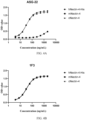
- Table 16 The binding curves and the EC 50 results are shown in Table 16 and FIG. 2 .
- Table 16 EC 50 value for binding of anti-Nectin-4 antibody to cells EC 50 ASG-22 1F3 1G8 3A10 10F4 ⁇ g/mL 0.118 0.116 0.109 0.186 0.156 nM 0.788 0.770 0.727 1.241 1.039
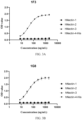
- Antibody 3A10 exhibited weaker binding to hNectin-3, while the remaining antibodies exhibited good specificity, which did not bind to the homologous proteins hNectin-1/2/3 but bound to hNectin-4-His. The binding curves are shown in FIG. 3 .
- Table 17 Binding of anti-Nectin-4 antibodies to human Nectin-4 homologous proteins Sample 1F3 1G8 3A10 10F4 EC 50 ( ⁇ g/mL) hNectin-1 NA NA NA NA NA hNectin-2 NA NA NA NA NA hNectin-3 NA NA 0.626 NA hNectin-4-His 0.040 0.041 0.062 0.045 Note: NA indicates not available in this assay.
- Nectin-4 has high homology in different species.
- Nectin-4 proteins The binding of different antibodies to different species of Nectin-4 proteins was detected by ELISA.
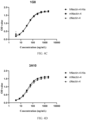
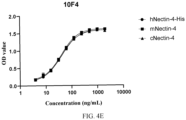
- hNectin-4-His monkey cNectin-4 protein (ACRO, NE4-C52H4) and mouse mNectin-4 protein (ACRO, NE4-M52H3) were immobilized; antibodies ASG-22, 1F3, 1G8, 3A10, and 10F4 were serially diluted, and HRP-labeled anti-human-Kappa secondary antibody was added for chromogenic reaction. The results are shown in Table 18 and FIG. 4 .
- the antibodies of interest exhibited similar binding activity to human Nectin-4, cynomolgus monkey Nectin-4, and mouse Nectin-4, while the reference antibody exhibited weak binding to mouse Nectin-4.
- Table 18 Binding of anti-Nectin-4 antibody to Nectin-4 of different species Sample EC 50 ( ⁇ g/mL) ASG-22 1F3 1G8 3A10 10F4 hNectin-4-His 0.035 0.036 0.043 0.037 0.041 cNectin-4 0.033 0.034 0.036 0.042 0.041 mNectin-4 1.229 0.034 0.037 0.037 0.041 0.041
Landscapes
- Health & Medical Sciences (AREA)
- Life Sciences & Earth Sciences (AREA)
- Chemical & Material Sciences (AREA)
- Immunology (AREA)
- Engineering & Computer Science (AREA)
- Organic Chemistry (AREA)
- Molecular Biology (AREA)
- Genetics & Genomics (AREA)
- Biomedical Technology (AREA)
- General Health & Medical Sciences (AREA)
- Biochemistry (AREA)
- Medicinal Chemistry (AREA)
- Biotechnology (AREA)
- Urology & Nephrology (AREA)
- Proteomics, Peptides & Aminoacids (AREA)
- Biophysics (AREA)
- Cell Biology (AREA)
- Hematology (AREA)
- Microbiology (AREA)
- Bioinformatics & Cheminformatics (AREA)
- Zoology (AREA)
- Wood Science & Technology (AREA)
- Physics & Mathematics (AREA)
- General Engineering & Computer Science (AREA)
- General Physics & Mathematics (AREA)
- Food Science & Technology (AREA)
- Analytical Chemistry (AREA)
- Pathology (AREA)
- Pharmacology & Pharmacy (AREA)
- Public Health (AREA)
- Veterinary Medicine (AREA)
- Animal Behavior & Ethology (AREA)
- Nuclear Medicine, Radiotherapy & Molecular Imaging (AREA)
- General Chemical & Material Sciences (AREA)
- Chemical Kinetics & Catalysis (AREA)
- Plant Pathology (AREA)
- Peptides Or Proteins (AREA)
- Micro-Organisms Or Cultivation Processes Thereof (AREA)
- Medicinal Preparation (AREA)
- Medicines Containing Antibodies Or Antigens For Use As Internal Diagnostic Agents (AREA)
Applications Claiming Priority (2)
| Application Number | Priority Date | Filing Date | Title |
|---|---|---|---|
| CN202210838320 | 2022-07-14 | ||
| PCT/CN2023/107283 WO2024012539A1 (zh) | 2022-07-14 | 2023-07-13 | 抗Nectin-4抗体及其应用 |
Publications (1)
| Publication Number | Publication Date |
|---|---|
| EP4556022A1 true EP4556022A1 (en) | 2025-05-21 |
Family
ID=89498909
Family Applications (1)
| Application Number | Title | Priority Date | Filing Date |
|---|---|---|---|
| EP23839029.8A Pending EP4556022A1 (en) | 2022-07-14 | 2023-07-13 | Anti-nectin-4 antibody and use thereof |
Country Status (6)
| Country | Link |
|---|---|
| US (1) | US20250388667A1 (enExample) |
| EP (1) | EP4556022A1 (enExample) |
| JP (1) | JP2025523049A (enExample) |
| CN (1) | CN117402243A (enExample) |
| CA (1) | CA3262070A1 (enExample) |
| WO (1) | WO2024012539A1 (enExample) |
Families Citing this family (7)
| Publication number | Priority date | Publication date | Assignee | Title |
|---|---|---|---|---|
| CN116381251B (zh) * | 2023-03-13 | 2024-06-25 | 柏定生物工程(北京)有限公司 | 一种肿瘤标志物诊断试剂盒及其诊断方法 |
| CN118307673A (zh) * | 2024-04-02 | 2024-07-09 | 上海洛启生物医药技术有限公司 | Nectin-4单域抗体及其用途 |
| CN117986367B (zh) * | 2024-04-02 | 2024-07-16 | 上海美迪西生物医药股份有限公司 | 靶点为Nectin-4的抗体及其应用 |
| WO2025261506A1 (zh) * | 2024-06-21 | 2025-12-26 | 信达生物制药(苏州)有限公司 | 抗Nectin-4抗体以及其用途 |
| WO2026057016A1 (en) * | 2024-09-12 | 2026-03-19 | LaNova Medicines Limited | Anti-nectin-4 antibodies and conjugates thereof |
| CN121851170A (zh) * | 2024-10-10 | 2026-04-14 | 上海医药工业研究院有限公司 | 一种靶向Nectin4的全人源纳米抗体及其应用 |
| US20260167719A1 (en) * | 2024-12-17 | 2026-06-18 | Merck Sharp & Dohme Llc | Nectin-4 antibodies |
Family Cites Families (29)
| Publication number | Priority date | Publication date | Assignee | Title |
|---|---|---|---|---|
| US4444887A (en) | 1979-12-10 | 1984-04-24 | Sloan-Kettering Institute | Process for making human antibody producing B-lymphocytes |
| US4716111A (en) | 1982-08-11 | 1987-12-29 | Trustees Of Boston University | Process for producing human antibodies |
| GB8308235D0 (en) | 1983-03-25 | 1983-05-05 | Celltech Ltd | Polypeptides |
| US4816567A (en) | 1983-04-08 | 1989-03-28 | Genentech, Inc. | Recombinant immunoglobin preparations |
| US4694778A (en) | 1984-05-04 | 1987-09-22 | Anicon, Inc. | Chemical vapor deposition wafer boat |
| US5807715A (en) | 1984-08-27 | 1998-09-15 | The Board Of Trustees Of The Leland Stanford Junior University | Methods and transformed mammalian lymphocyte cells for producing functional antigen-binding protein including chimeric immunoglobulin |
| US4946778A (en) | 1987-09-21 | 1990-08-07 | Genex Corporation | Single polypeptide chain binding molecules |
| US5258498A (en) | 1987-05-21 | 1993-11-02 | Creative Biomolecules, Inc. | Polypeptide linkers for production of biosynthetic proteins |
| HK1007330A1 (en) | 1990-01-12 | 1999-04-09 | Amgen Fremont Inc. | Generation of xenogeneic antibodies |
| EP1709970A1 (en) | 1995-04-27 | 2006-10-11 | Abgenix, Inc. | Human antibodies against EGFR, derived from immunized xenomice |
| AU2466895A (en) | 1995-04-28 | 1996-11-18 | Abgenix, Inc. | Human antibodies derived from immunized xenomice |
| US5916771A (en) | 1996-10-11 | 1999-06-29 | Abgenix, Inc. | Production of a multimeric protein by cell fusion method |
| CA2273194C (en) | 1996-12-03 | 2011-02-01 | Abgenix, Inc. | Transgenic mammals having human ig loci including plural vh and vk regions and antibodies produced therefrom |
| EP0970126B1 (en) | 1997-04-14 | 2001-04-18 | Micromet AG | Novel method for the production of antihuman antigen receptors and uses thereof |
| US6329516B1 (en) | 1997-04-28 | 2001-12-11 | Fmc Corporation | Lepidopteran GABA-gated chloride channels |
| US6235883B1 (en) | 1997-05-05 | 2001-05-22 | Abgenix, Inc. | Human monoclonal antibodies to epidermal growth factor receptor |
| EP0967284A1 (en) | 1998-05-28 | 1999-12-29 | Pfizer Limited | Phosphodiesterases |
| EP1157119A1 (en) | 1999-02-05 | 2001-11-28 | Rijksuniversiteit Leiden | Method of modulating metabolite biosynthesis in recombinant cells |
| WO2000055318A2 (en) | 1999-03-15 | 2000-09-21 | University Of British Columbia | Abc1 polypeptide and methods and reagents for modulating cholesterol levels |
| TR200200440T2 (tr) | 1999-06-18 | 2002-09-23 | Cv Therapeutics, Inc. | ATP Bağlayıcı Kaset Transporter Protein ABC1'i kullanarak kolesterolün dışa akımını artırmak ve HDL'yi yükseltmek için terkipler ve yöntemler |
| AU6322900A (en) | 1999-08-02 | 2001-02-19 | Keygene N.V. | Method for generating resistance against cgmmv in plants, genetic constructs for use in said method, and cgmmv-resistant plants obtained via said method |
| GB9922124D0 (en) | 1999-09-17 | 1999-11-17 | Pfizer Ltd | Phosphodiesterase enzymes |
| DE19955408A1 (de) | 1999-11-18 | 2001-05-23 | Bayer Ag | GABA-B-Rezeptoren |
| WO2004037999A2 (en) | 2002-10-23 | 2004-05-06 | Ludwig Institute For Cancer Research | A34 and a33-like 3 dna, proteins, antibodies thereto and methods of treatment using same |
| WO2010067487A1 (en) * | 2008-12-12 | 2010-06-17 | Oncotherapy Science, Inc. | Nectin-4 for target genes of cancer therapy and diagnosis |
| WO2017042210A1 (en) * | 2015-09-09 | 2017-03-16 | INSERM (Institut National de la Santé et de la Recherche Médicale) | Antibodies having specificity to nectin-4 and uses thereof |
| CN114514246B (zh) * | 2019-10-07 | 2025-12-30 | 埃克斯-马赛大学 | 对nectin-4具有特异性的抗体及其用途 |
| CN113527486B (zh) * | 2020-04-21 | 2025-12-02 | 迈威(上海)生物科技股份有限公司 | 一种抗Nectin-4的抗体及其应用 |
| EP4208259A2 (en) * | 2020-09-04 | 2023-07-12 | NovaRock Biotherapeutics, Ltd. | Nectin-4 antibodies and uses thereof |
-
2023
- 2023-07-13 CA CA3262070A patent/CA3262070A1/en active Pending
- 2023-07-13 US US18/992,925 patent/US20250388667A1/en active Pending
- 2023-07-13 CN CN202310863081.7A patent/CN117402243A/zh active Pending
- 2023-07-13 JP JP2025501498A patent/JP2025523049A/ja active Pending
- 2023-07-13 WO PCT/CN2023/107283 patent/WO2024012539A1/zh not_active Ceased
- 2023-07-13 EP EP23839029.8A patent/EP4556022A1/en active Pending
Also Published As
| Publication number | Publication date |
|---|---|
| US20250388667A1 (en) | 2025-12-25 |
| CN117402243A (zh) | 2024-01-16 |
| CA3262070A1 (en) | 2025-06-13 |
| WO2024012539A1 (zh) | 2024-01-18 |
| JP2025523049A (ja) | 2025-07-17 |
Similar Documents
| Publication | Publication Date | Title |
|---|---|---|
| US20250388667A1 (en) | Anti-nectin-4 antibody and use thereof | |
| JP7682335B2 (ja) | オンコスタチンm受容体抗原結合タンパク質 | |
| TWI564306B (zh) | 雙特異性抗體 | |
| KR102904453B1 (ko) | 클라우딘 18.2를 표적화하는 항체-약물 콘쥬게이트 | |
| KR20190140943A (ko) | 항-cd33 항체 제제 | |
| JP7641910B2 (ja) | Pd-1と結合する抗体 | |
| EP3353209A1 (en) | Anti-cd47 antibodies and methods of use | |
| CN113527495A (zh) | 与cd38结合的抗体治疗剂 | |
| WO2022242758A1 (zh) | 抗cd73抗体及其应用 | |
| WO2021238932A1 (zh) | 多特异性抗体及其应用 | |
| US20150147274A1 (en) | Antibodies against hgf - receptor and uses | |
| JP2023551113A (ja) | 二重特異性抗体及びその応用 | |
| WO2022143794A1 (zh) | 抗cldn18.2抗体及其制备方法和应用 | |
| JP7823021B2 (ja) | 抗pd-l1抗体及びその応用 | |
| WO2022194201A1 (zh) | 一种靶向cldn18.2的抗体或其抗原结合片段及其应用 | |
| CN114656567A (zh) | 抗icos抗体及其应用 | |
| KR20230060527A (ko) | Pd-1 폴리펩티드 변이체 | |
| CN119816519A (zh) | 抗ror1抗体、包含其的双特异性抗体及其用途 | |
| WO2022206677A1 (zh) | 抗vista抗体及其应用 | |
| HK40106335A (en) | Anti-nectin-4 antibodies and uses thereof | |
| WO2022022526A1 (zh) | 抗her2抗体及其应用 | |
| WO2024153163A1 (zh) | 抗cd93抗体及其应用 | |
| WO2023193794A1 (zh) | 抗vista抗体在联合用药中的应用 | |
| WO2022247933A1 (zh) | 抗SIPRα抗体及其应用 | |
| CN116375871A (zh) | 抗gitr抗体及其应用 |
Legal Events
| Date | Code | Title | Description |
|---|---|---|---|
| STAA | Information on the status of an ep patent application or granted ep patent |
Free format text: STATUS: THE INTERNATIONAL PUBLICATION HAS BEEN MADE |
|
| PUAI | Public reference made under article 153(3) epc to a published international application that has entered the european phase |
Free format text: ORIGINAL CODE: 0009012 |
|
| STAA | Information on the status of an ep patent application or granted ep patent |
Free format text: STATUS: REQUEST FOR EXAMINATION WAS MADE |
|
| 17P | Request for examination filed |
Effective date: 20250213 |
|
| AK | Designated contracting states |
Kind code of ref document: A1 Designated state(s): AL AT BE BG CH CY CZ DE DK EE ES FI FR GB GR HR HU IE IS IT LI LT LU LV MC ME MK MT NL NO PL PT RO RS SE SI SK SM TR |
|
| DAV | Request for validation of the european patent (deleted) | ||
| DAX | Request for extension of the european patent (deleted) | ||
| REG | Reference to a national code |
Ref country code: DE Ref legal event code: R079 Free format text: PREVIOUS MAIN CLASS: A61K0039395000 Ipc: C07K0016280000 |