EP4553104A1 - Verfahren zur herstellung einer homogenen kollagensuspension, verwendung einer homogenen kollagensuspension, verfahren zur herstellung von hydrogelen materialien auf kollagenbasis, verfahren zur herstellung eines kollagenfilms und/oder einer kollagenschicht und/oder eines kultursubstrats, verfahren zur herstellung von kollagenausdrucken und verfahren zur herstellung von porösen kollagenformen - Google Patents
Verfahren zur herstellung einer homogenen kollagensuspension, verwendung einer homogenen kollagensuspension, verfahren zur herstellung von hydrogelen materialien auf kollagenbasis, verfahren zur herstellung eines kollagenfilms und/oder einer kollagenschicht und/oder eines kultursubstrats, verfahren zur herstellung von kollagenausdrucken und verfahren zur herstellung von porösen kollagenformen Download PDFInfo
- Publication number
- EP4553104A1 EP4553104A1 EP24211932.9A EP24211932A EP4553104A1 EP 4553104 A1 EP4553104 A1 EP 4553104A1 EP 24211932 A EP24211932 A EP 24211932A EP 4553104 A1 EP4553104 A1 EP 4553104A1
- Authority
- EP
- European Patent Office
- Prior art keywords
- collagen
- solution
- suspension
- solvent
- homogeneous
- Prior art date
- Legal status (The legal status is an assumption and is not a legal conclusion. Google has not performed a legal analysis and makes no representation as to the accuracy of the status listed.)
- Pending
Links
Images
Classifications
-
- C—CHEMISTRY; METALLURGY
- C08—ORGANIC MACROMOLECULAR COMPOUNDS; THEIR PREPARATION OR CHEMICAL WORKING-UP; COMPOSITIONS BASED THEREON
- C08J—WORKING-UP; GENERAL PROCESSES OF COMPOUNDING; AFTER-TREATMENT NOT COVERED BY SUBCLASSES C08B, C08C, C08F, C08G or C08H
- C08J3/00—Processes of treating or compounding macromolecular substances
- C08J3/02—Making solutions, dispersions, lattices or gels by other methods than by solution, emulsion or suspension polymerisation techniques
-
- C—CHEMISTRY; METALLURGY
- C08—ORGANIC MACROMOLECULAR COMPOUNDS; THEIR PREPARATION OR CHEMICAL WORKING-UP; COMPOSITIONS BASED THEREON
- C08J—WORKING-UP; GENERAL PROCESSES OF COMPOUNDING; AFTER-TREATMENT NOT COVERED BY SUBCLASSES C08B, C08C, C08F, C08G or C08H
- C08J3/00—Processes of treating or compounding macromolecular substances
- C08J3/02—Making solutions, dispersions, lattices or gels by other methods than by solution, emulsion or suspension polymerisation techniques
- C08J3/03—Making solutions, dispersions, lattices or gels by other methods than by solution, emulsion or suspension polymerisation techniques in aqueous media
- C08J3/075—Macromolecular gels
-
- A—HUMAN NECESSITIES
- A61—MEDICAL OR VETERINARY SCIENCE; HYGIENE
- A61K—PREPARATIONS FOR MEDICAL, DENTAL OR TOILETRY PURPOSES
- A61K8/00—Cosmetics or similar toiletry preparations
- A61K8/18—Cosmetics or similar toiletry preparations characterised by the composition
- A61K8/30—Cosmetics or similar toiletry preparations characterised by the composition containing organic compounds
- A61K8/64—Proteins; Peptides; Derivatives or degradation products thereof
- A61K8/65—Collagen; Gelatin; Keratin; Derivatives or degradation products thereof
-
- A—HUMAN NECESSITIES
- A61—MEDICAL OR VETERINARY SCIENCE; HYGIENE
- A61L—METHODS OR APPARATUS FOR STERILISING MATERIALS OR OBJECTS IN GENERAL; DISINFECTION, STERILISATION OR DEODORISATION OF AIR; CHEMICAL ASPECTS OF BANDAGES, DRESSINGS, ABSORBENT PADS OR SURGICAL ARTICLES; MATERIALS FOR BANDAGES, DRESSINGS, ABSORBENT PADS OR SURGICAL ARTICLES
- A61L15/00—Chemical aspects of, or use of materials for, bandages, dressings or absorbent pads
- A61L15/16—Bandages, dressings or absorbent pads for physiological fluids such as urine or blood, e.g. sanitary towels, tampons
- A61L15/22—Bandages, dressings or absorbent pads for physiological fluids such as urine or blood, e.g. sanitary towels, tampons containing macromolecular materials
- A61L15/32—Proteins, polypeptides; Degradation products or derivatives thereof, e.g. albumin, collagen, fibrin, gelatin
-
- A—HUMAN NECESSITIES
- A61—MEDICAL OR VETERINARY SCIENCE; HYGIENE
- A61L—METHODS OR APPARATUS FOR STERILISING MATERIALS OR OBJECTS IN GENERAL; DISINFECTION, STERILISATION OR DEODORISATION OF AIR; CHEMICAL ASPECTS OF BANDAGES, DRESSINGS, ABSORBENT PADS OR SURGICAL ARTICLES; MATERIALS FOR BANDAGES, DRESSINGS, ABSORBENT PADS OR SURGICAL ARTICLES
- A61L27/00—Materials for grafts or prostheses or for coating grafts or prostheses
- A61L27/14—Macromolecular materials
- A61L27/22—Polypeptides or derivatives thereof, e.g. degradation products
- A61L27/24—Collagen
-
- A—HUMAN NECESSITIES
- A61—MEDICAL OR VETERINARY SCIENCE; HYGIENE
- A61L—METHODS OR APPARATUS FOR STERILISING MATERIALS OR OBJECTS IN GENERAL; DISINFECTION, STERILISATION OR DEODORISATION OF AIR; CHEMICAL ASPECTS OF BANDAGES, DRESSINGS, ABSORBENT PADS OR SURGICAL ARTICLES; MATERIALS FOR BANDAGES, DRESSINGS, ABSORBENT PADS OR SURGICAL ARTICLES
- A61L27/00—Materials for grafts or prostheses or for coating grafts or prostheses
- A61L27/36—Materials for grafts or prostheses or for coating grafts or prostheses containing ingredients of undetermined constitution or reaction products thereof, e.g. transplant tissue, natural bone, extracellular matrix
- A61L27/3641—Materials for grafts or prostheses or for coating grafts or prostheses containing ingredients of undetermined constitution or reaction products thereof, e.g. transplant tissue, natural bone, extracellular matrix characterised by the site of application in the body
- A61L27/3645—Connective tissue
- A61L27/3662—Ligaments, tendons
-
- A—HUMAN NECESSITIES
- A61—MEDICAL OR VETERINARY SCIENCE; HYGIENE
- A61L—METHODS OR APPARATUS FOR STERILISING MATERIALS OR OBJECTS IN GENERAL; DISINFECTION, STERILISATION OR DEODORISATION OF AIR; CHEMICAL ASPECTS OF BANDAGES, DRESSINGS, ABSORBENT PADS OR SURGICAL ARTICLES; MATERIALS FOR BANDAGES, DRESSINGS, ABSORBENT PADS OR SURGICAL ARTICLES
- A61L27/00—Materials for grafts or prostheses or for coating grafts or prostheses
- A61L27/50—Materials characterised by their function or physical properties, e.g. injectable or lubricating compositions, shape-memory materials, surface modified materials
- A61L27/56—Porous materials, e.g. foams or sponges
-
- B—PERFORMING OPERATIONS; TRANSPORTING
- B33—ADDITIVE MANUFACTURING TECHNOLOGY
- B33Y—ADDITIVE MANUFACTURING, i.e. MANUFACTURING OF THREE-DIMENSIONAL [3-D] OBJECTS BY ADDITIVE DEPOSITION, ADDITIVE AGGLOMERATION OR ADDITIVE LAYERING, e.g. BY 3-D PRINTING, STEREOLITHOGRAPHY OR SELECTIVE LASER SINTERING
- B33Y70/00—Materials specially adapted for additive manufacturing
-
- C—CHEMISTRY; METALLURGY
- C08—ORGANIC MACROMOLECULAR COMPOUNDS; THEIR PREPARATION OR CHEMICAL WORKING-UP; COMPOSITIONS BASED THEREON
- C08J—WORKING-UP; GENERAL PROCESSES OF COMPOUNDING; AFTER-TREATMENT NOT COVERED BY SUBCLASSES C08B, C08C, C08F, C08G or C08H
- C08J3/00—Processes of treating or compounding macromolecular substances
- C08J3/02—Making solutions, dispersions, lattices or gels by other methods than by solution, emulsion or suspension polymerisation techniques
- C08J3/09—Making solutions, dispersions, lattices or gels by other methods than by solution, emulsion or suspension polymerisation techniques in organic liquids
- C08J3/091—Making solutions, dispersions, lattices or gels by other methods than by solution, emulsion or suspension polymerisation techniques in organic liquids characterised by the chemical constitution of the organic liquid
- C08J3/097—Sulfur containing compounds
-
- C—CHEMISTRY; METALLURGY
- C08—ORGANIC MACROMOLECULAR COMPOUNDS; THEIR PREPARATION OR CHEMICAL WORKING-UP; COMPOSITIONS BASED THEREON
- C08J—WORKING-UP; GENERAL PROCESSES OF COMPOUNDING; AFTER-TREATMENT NOT COVERED BY SUBCLASSES C08B, C08C, C08F, C08G or C08H
- C08J5/00—Manufacture of articles or shaped materials containing macromolecular substances
- C08J5/18—Manufacture of films or sheets
-
- C—CHEMISTRY; METALLURGY
- C08—ORGANIC MACROMOLECULAR COMPOUNDS; THEIR PREPARATION OR CHEMICAL WORKING-UP; COMPOSITIONS BASED THEREON
- C08J—WORKING-UP; GENERAL PROCESSES OF COMPOUNDING; AFTER-TREATMENT NOT COVERED BY SUBCLASSES C08B, C08C, C08F, C08G or C08H
- C08J9/00—Working-up of macromolecular substances to porous or cellular articles or materials; After-treatment thereof
- C08J9/26—Working-up of macromolecular substances to porous or cellular articles or materials; After-treatment thereof by elimination of a solid phase from a macromolecular composition or article, e.g. leaching out
-
- C—CHEMISTRY; METALLURGY
- C08—ORGANIC MACROMOLECULAR COMPOUNDS; THEIR PREPARATION OR CHEMICAL WORKING-UP; COMPOSITIONS BASED THEREON
- C08J—WORKING-UP; GENERAL PROCESSES OF COMPOUNDING; AFTER-TREATMENT NOT COVERED BY SUBCLASSES C08B, C08C, C08F, C08G or C08H
- C08J9/00—Working-up of macromolecular substances to porous or cellular articles or materials; After-treatment thereof
- C08J9/28—Working-up of macromolecular substances to porous or cellular articles or materials; After-treatment thereof by elimination of a liquid phase from a macromolecular composition or article, e.g. drying of coagulum
-
- C—CHEMISTRY; METALLURGY
- C08—ORGANIC MACROMOLECULAR COMPOUNDS; THEIR PREPARATION OR CHEMICAL WORKING-UP; COMPOSITIONS BASED THEREON
- C08K—Use of inorganic or non-macromolecular organic substances as compounding ingredients
- C08K3/00—Use of inorganic substances as compounding ingredients
- C08K3/16—Halogen-containing compounds
-
- C—CHEMISTRY; METALLURGY
- C08—ORGANIC MACROMOLECULAR COMPOUNDS; THEIR PREPARATION OR CHEMICAL WORKING-UP; COMPOSITIONS BASED THEREON
- C08K—Use of inorganic or non-macromolecular organic substances as compounding ingredients
- C08K3/00—Use of inorganic substances as compounding ingredients
- C08K3/18—Oxygen-containing compounds, e.g. metal carbonyls
- C08K3/24—Acids; Salts thereof
-
- C—CHEMISTRY; METALLURGY
- C08—ORGANIC MACROMOLECULAR COMPOUNDS; THEIR PREPARATION OR CHEMICAL WORKING-UP; COMPOSITIONS BASED THEREON
- C08L—COMPOSITIONS OF MACROMOLECULAR COMPOUNDS
- C08L89/00—Compositions of proteins; Compositions of derivatives thereof
-
- C—CHEMISTRY; METALLURGY
- C08—ORGANIC MACROMOLECULAR COMPOUNDS; THEIR PREPARATION OR CHEMICAL WORKING-UP; COMPOSITIONS BASED THEREON
- C08L—COMPOSITIONS OF MACROMOLECULAR COMPOUNDS
- C08L89/00—Compositions of proteins; Compositions of derivatives thereof
- C08L89/04—Products derived from waste materials, e.g. horn, hoof or hair
- C08L89/06—Products derived from waste materials, e.g. horn, hoof or hair derived from leather or skin, e.g. gelatin
-
- C—CHEMISTRY; METALLURGY
- C08—ORGANIC MACROMOLECULAR COMPOUNDS; THEIR PREPARATION OR CHEMICAL WORKING-UP; COMPOSITIONS BASED THEREON
- C08J—WORKING-UP; GENERAL PROCESSES OF COMPOUNDING; AFTER-TREATMENT NOT COVERED BY SUBCLASSES C08B, C08C, C08F, C08G or C08H
- C08J2389/00—Characterised by the use of proteins; Derivatives thereof
- C08J2389/04—Products derived from waste materials, e.g. horn, hoof or hair
- C08J2389/06—Products derived from waste materials, e.g. horn, hoof or hair derived from leather or skin
Definitions
- the method for preparing a homogeneous collagen suspension comprises preparing homogeneous suspensions based on the principles of green chemistry, and further enables obtaining forms of collagen with desired shapes, morphologies and sizes, and mechanical handiness (films, layers, injectable materials, shapes produced by 3D printing techniques, by mould casting or direct printing using extrusion techniques).
- biopolymers provide optimal biomimicry, i.e., they are able to reproduce the natural biological environment in which cells function in a living organism.
- Current research trends suggest performing cell culturing on specially prepared 3D substrates, which increases results' translatability of research conducted in vitro to tests in vivo. In turn, better results' translatability means viable reduction in the costs of developing new drugs and therapeutic strategies.
- collagen is the predominant building component of animals, available in significant quantities in by-products of food and clothing manufacturing: in tendons, joints, bones, internal organs and skin. Since collagen is a byproduct of many production processes, it fits perfectly into the trend of a closed-loop economy. On the other hand, the fact that it is present in a large number of animal tissues is a factor determining its high biomimicry - it reflects the natural environment of cells, because it is the main component of the extracellular matrix making up the tissues in which these cells live. In this respect, of particular importance is collagen type I, which has a natural ability to form fibrils and fibres, has good mechanical properties and is the most prevalent type of collagen, constituting the main building component of many tissues.
- photo-cross-linkers such as Igracure 2959 (e.g., Cellink protocol: https://www.cellink.com/wp-content/uploads/2018/04/GelMACastingProtocolver 1 .pdf), or chemical cross-linkers, such as 1-ethyl-3-(3-dimethylaminopropyl)carbodiimide hydrochloride (EDC, used for example in publication N640CHE2013A), glutaraldehyde (as in patent document EP3921372B1 ), and other cross-linkers commonly used and known in the art, including in particular those in which cross-linking is initiated by activating the functional groups of gelatine (and collagen), in particular via an amide bond, such as N,N'-dicyclohexylcarbodiimide (DCC), carbodiimide, or thionyl chloride.
- Igracure 2959 e.g., Cellink protocol: https://www.cellink.com/wp-content/uploads/2018/04/
- Cell culturing substrates which comprise collagen (especially type IV) as well as other biopolymers, are also known in the art. Examples include Matrigel ® and Geltrex ® . In both cases, a low-concentration material is added to the culture medium and a small amount of fibres settles at the bottom of the culture wells. There is no possibility of processing such substrates into more stable and easy to handle structures, including 3D structures.
- the first strategy does not fit into the framework of green chemistry and often causes denaturation of the material.
- the second with an appropriately selected methodology, allows collagen processing in a "green" way, without its denaturation.
- the dissolution reaction is completely reversible, and the precipitation/gelation of collagen takes place by neutralizing the biopolymer solution with a solution of any base, e.g., sodium hydroxide ( US20040028738A1 ).
- US20040028738A1 describes a method for producing a porous collagen matrix obtained by processing fat- and hair-free pigskin.
- the skin is fragmented, digested with pepsin and dissolved in acids (0.5M acetic acid is provided as the preferred acid).
- the solution is then neutralized to a pH in the range of 5 - 9, e.g., by dialysis into a buffer (preferably a phosphate buffer).
- a buffer with the addition of appropriate salts e.g., NaCl
- the solution thus prepared is then incubated at a temperature between about 30 and about 45°C (preferably 37°C) for a minimum of 0.5 h, preferably 24 h, to form a collagen gel (fibrillation), without removing the liquid.
- the gel is then frozen and freeze-dried, wherein the freezing rate and target temperature are selected to obtain the desired porosity (the exact effect of the freezing rate and target temperature on the size and distribution of pores is discussed in the publication).
- a cooling rate greater than 10°C and a target temperature of -80°C give a fibrous collagen structure with a uniform distribution of pores in the range of 30 ⁇ m.
- the porous collagen is subsequently soaked in a liquid organic compound that wets well the collagen (low surface tension between collagen and liquid), preferably ethanol, the patent also mentions dimethyl sulfoxide (DMSO).
- a liquid organic compound that wets well the collagen low surface tension between collagen and liquid
- DMSO dimethyl sulfoxide
- This publication does not address the issue of storage of the materials, their long-term chemical and mechanical stability, and possible cytotoxicity of residual solvent when using the finally obtained material as a biomaterial. Additionally, this publication proposes only one form and method for production (lyophilization to obtain porous substrates), which significantly limits the potential applications.
- US5541234A discloses a method for producing highly porous shapes using biopolymers and synthetic polymers, wherein a common feature is a high content of hydroxyl groups - thus the ability to form hydrogels.
- the proposed materials include: alginates, gums, carrageenan, starch, dextrins, agar, gelatines, casein, collagen, polyvinyl alcohol, polyethyleneimine, acrylate polymers, polyalkylene amides, polyacrylamides, polyalkylene imides, and any copolymers of all of the foregoing. Polymers or their mixtures are gelled at a concentration of 0.02% to 15% in an undisclosed solvent; only water is provided in the embodiments.
- hydration takes place in the presence of an additional gelling agent known in the art; gelation by rapid cooling is also possible.
- an additional gelling agent known in the art; gelation by rapid cooling is also possible.
- some of the materials listed, including collagen are not soluble in water, and the provided method in most cases only assumes hydration of the material (partial hydration), and not its dissolution.
- the disclosed technology assumes dissolution in water at 80°C. There is no corresponding information for collagen, although in its case heating to 80°C will lead to denaturation.
- the disclosed method does not provide any information on the hydration methodology and the importance of preparing a homogeneous suspension for the final properties of the polymer.
- the hydrated/gelled polymer/copolymer can then be formed into any shape, the publication providing casting into moulds, casting films, shaping fibres or particles. The method further assumes replacing the gelling agent with a cross-linking solvent.
- the cross-linking solvent should have a surface tension equal to or lower than that of the gelling liquid (preferably below 75 dynes/cm), allowing diffusion and liquid exchange to occur.
- DMSO is mentioned as one cross-linking solvent.
- the gelling liquid is completely replaced by the cross-linking solvent via diffusion processes (with the possible use of an intermediate step with additional liquid and/or by exchange at a concentration gradient - increasing concentration of the cross-linking solvent to minimize pore collapse).
- the liquid exchange can be performed by other methods known in the art: freeze-drying or supercritical fluid extraction. Then, the material is cross-linked using any cross-linker known in the art that is able to bind -OOH, NH 2 or -OSO 3 groups.
- Diamines and polyamines, preferably diisocyanates, are mentioned as preferred cross-linkers. It should be noted that the proposed cross-linkers are generally toxic. The duration and temperature of the cross-linking are selected experimentally, and after the process is completed, the residue of the cross-linker dissolved in the organic solvent is removed by methods known in the art, including in particular drying at 20°C at reduced pressure. The obtained material is characterized by open porosity, density of less than about 1.0 g/cm 3 , surface area ⁇ 30 m 2 and compressive strength equal to or less than about 75% of the yield strength at 300 psi. This publication does not provide the methodology of collagen processing. The publication also does not address the issue of materials' storage, their long-term chemical and mechanical stability, and possible cytotoxicity of the cross-linker and solvent residues when using the finally obtained material as a biomaterial.
- CN112920427A describes a method for preparing a hydrogel, comprising the following steps: the precursor solution is subjected to directed freezing (controlled cooling rate, to a controlled temperature) and drying to obtain a hydrogel precursor, which is then immersed in water to obtain a hydrogel. Improvement of mechanical properties is obtained by directed crystallization in the freezing step, which can be achieved by methods known in the art: adding crystallization seeds to the precursor solution, applying external stress during freezing, or modifying the hydrogel precursor itself.
- the hydrogel obtained in this way has an ordered structure, nanocrystalline domains, and directionally arranged pores.
- the hydrogel is given shape by casting into moulds of the desired shape, also those obtained by 3D printing techniques (and other methods known in the art), and then lyophilization.
- the hydrogel used may be a synthetic polymer (including PEG, PVA, polyacrylamides) or a biopolymer (including collagen, chitosan), as well as their copolymers.
- Water or organic liquids, including DMSO, are suggested as solvents.
- concentrations used are in the range of 0.5 - 50%; preferably, an inorganic additive is added to the material.
- this publication does not include a collagen processing methodology, nor are there any additional solution homogenization steps. Little emphasis is also given to obtaining a homogeneous suspension, and the preparation time of the suspension is not considered. The publication does not address the issue of materials' storage, their long-term chemical and mechanical stability.
- WO2018204315A1 describes a method for producing an implant making use of a hydrogel, which may be a hydrogel containing collagen and/or a non-biodegradable polymer (e.g. polyvinyl alcohol, PVA).
- a hydrogel which may be a hydrogel containing collagen and/or a non-biodegradable polymer (e.g. polyvinyl alcohol, PVA).
- PVA polyvinyl alcohol
- the publication discusses the use of prefabricated, porous shapes (sponges), made of, e.g., gelatine, collagen, polylactide, polyglycolide, chitosan, alginate, PVA or polyethylene glycol (PEG).
- the sponges are hydrated in water and then the liquid is replaced with an organic solvent, preferably DMSO (similarly to US5541234A and US20040028738A1 ).
- an organic solvent preferably DMSO (similarly to US5541234A and US20040028738
- the dissolved polymer (including hydrogel) is extruded in a controlled manner into moulds.
- the publication mainly discusses various strategies for obtaining materials with a hierarchical microstructure, in which solid and porous areas are predetermined. However, this publication does not discuss the processes of dissolving and cross-linking collagen. There are also no steps of additional solution homogenization. Little emphasis is given to obtaining a homogeneous suspension, and the preparation time of the suspension is not considered.
- US20220175534A1 describes production of collagen microspheres and collagen bioink, obtained using a collagen (type I, II, III or IV) suspension.
- the collagen suspension is fibrillated by increasing the temperature or using an ionic liquid.
- the process of preparing a suspension of the desired concentration assumes the use of a precursor in the form of commercially available collagen suspensions.
- porcine collagen type I is used, probably suspended in 0.1 M HCl (Porcogen, 10 mg/ml Sunmax Biotechnology, Taiwan).
- the first step of the preparation is precipitation of collagen from the solution, which is performed by adding 1.04 M NaCl solution and centrifuging to form a pellet, at a speed of 3500 rpm, for 15 minutes.
- the pellet is then dissolved for 12 hours in 0.5 M acetic acid at a concentration of 1% by weight (acetic acid can also be replaced with ethanol, acetone, acetonitrile or a mixture of all these 4 substances) and dialyzed in a 35 mM solution of EDTA (which acted as a chelating agent for divalent ions; (ethylene glycol)-O-O'-bis(2-aminoethyl)-N,N,N',N'-tetraacetic acid (EGTA) can also be used), adjusted to pH 7.4 using 10 M NaOH.
- EDTA ethylene glycol)-O-O'-bis(2-aminoethyl)-N,N,N',N'-tetraacetic acid
- microparticles are obtained (by emulsification in oil and sorbitan monostearate/monooleate), which can be conjugated with bioactive substances.
- the same suspension can also be used as a bioink.
- collagen is printed into 15 ml of double-distilled water at 24°C, placed inside a polystyrene Petri dish 150 mm in diameter. Printing is performed with the following parameters: layer thickness 0.2 mm, printing speed 3 mm/s, efflux pressure - 10 kPa. After printing, the materials are left for 5 min to fibrillate and transferred to 70% ethanol for storage. Alternatively, printing is performed using the FRESH technique, into a suspension of agarose particles.
- the materials can also be cross-linked by adding the cross-linker directly to water/agarose or by washing after printing with a cross-linker solution.
- the proposed cross-linkers are 1-ethyl-3-(3-dimethylaminopropyl)-1-carbodiimide hydrochloride (EDC) + N-hydroxysuccinimide (NHS) or genipin.
- EDC 1-ethyl-3-(3-dimethylaminopropyl)-1-carbodiimide hydrochloride
- NHS N-hydroxysuccinimide
- genipin genipin.
- the cross-linkers proposed in the publication are generally toxic.
- the proposed solution assumes printing with a very low collagen concentration, using organic solvents that do not fulfil the principles of green chemistry. This publication does not discuss collagen dissolution, and there are no steps of additional homogenization of the solutions. Little emphasis is given to obtaining a homogeneous suspension, and the preparation time of the suspension is not considered.
- AU2001249079B2 discloses a method for producing cohesive coatings by using a dissolved protein suspension that is applied to surfaces, dried and pressed.
- the suspension contains one or more biocompatible protein materials combined with one or more biocompatible solvents, with or without the addition of one or more pharmaceutically active substances.
- the publication assumes the use of all methods for producing coatings that are known in the art.
- the protein used may be synthetic or natural (including collagen, elastin, albumin, keratin, fibronectin, silk and its derivatives, actin, myosin, fibrinogen, thrombin, atroponin, antithrombin II) and the solvent may be water, DMSO, organic acids, alcohols, oils, glycols, etc.
- the publication does not discuss the process of dissolving and cross-linking collagen. There are also no steps of additional solution homogenization. Little emphasis is given to obtaining a homogeneous suspension, and the preparation time of the suspension is not considered.
- US3393080A discloses a composition comprising a dispersion of microcrystalline collagen at a concentration of at least 10% by weight and tropocollagen at a concentration of up to 0.75% by weight.
- the size of microcrystallites is up to about one micron (in any dimension).
- Publication discloses the advantageous use of 0.01 M hydrochloric acid (with minimum concentration of 0.0025 M, which is selected according to the concentration of collagen in the solution) for processing cowhides to obtain microcrystalline collagen. It has also been shown that too high a concentration of HCl (from 0.025 M up) causes undesirable degradation of collagen to tropocollagen. In an embodiment, dissolution leading to a 7.5% by weight collagen solution is done using 0.03 M HCl.
- the collagen solution in HCl is then diluted with an organic solvent miscible with water (e.g., isopropanol) to impart antibacterial properties to the material.
- an organic solvent miscible with water e.g., isopropanol
- the amount of organic solvent should not exceed 65% by weight (above this value collagen precipitates), preferably it should be in the range of 25-35%. If DMSO is added to the solution, the amount of the second organic solvent can be increased to 75%.
- Suspensions prepared in this way are used to produce thin layers, dried using a lyophilizer.
- the invention therefore includes the use of DMSO and HCl, where HCl is used at a concentration similar to that proposed in our invention (in the publication, between 0.0025 and 0.025 M, preferably 0.01, in the technical solution according to the invention, between 0.0025 and 0.01 M, preferably 0.005).
- HCl is used at a concentration similar to that proposed in our invention (in the publication, between 0.0025 and 0.025 M, preferably 0.01, in the technical solution according to the invention, between 0.0025 and 0.01 M, preferably 0.005).
- DMSO is the only organic solvent used, which increases the potential biocompatibility of the material and the so-called "greenness" of the process.
- the publication does not discuss methods of dissolving and cross-linking collagen. There are also no steps of additional homogenization of solutions.
- US8198408B2 describes preparation of a porous collagen matrix directly from connective tissue, devoid of fat, hair and hair follicles, by methods known in the art.
- origin stocks include animal skin, tendons, cartilage, etc.
- the methodology describes the use of a PBS solution for initial washing of tissue from contaminants, and a mixture of an organic solvent (including DMSO) and water for hydration and swelling of tissues, which facilitates subsequent penetration of acids into the material.
- the tissue is soaked (swollen) in an organic or inorganic acid, or a mixture thereof, to a stage of increasing the initial thickness by at least 50%.
- acetic acid is mentioned with a concentration in the range of 0.1 to 6 M and pH 2-6.
- Acceleration of the swelling step can be achieved by irrigation with a pressurized acid stream or by using an ultrasonic basin. Then, the soaked tissue is rinsed with a solution that may contain detergent and/or chelating agents and/or proteolytic enzymes, in order to get rid of non-collagen contaminants.
- the swollen matrix thus prepared can then be slowly frozen (freezing rate is not defined), to a temperature of -20°C and lyophilized or stored in a PBS solution at 4°C (permissible storage time is not defined).
- the material can be subjected to additional cross-linking by methods known in the art. Additionally, the object of publication US8198408B2 is only the processing of the hydrated matrix, and not the dissolution of collagen and subsequent processing into desired shapes, which is the object of our invention.
- Publication US3758660A describes a method for producing three-dimensional collagen shapes obtained from a highly concentrated suspension of water-insoluble collagen (15 to 90%).
- the shapes include, for example, sheaths for cold cuts (sausages, hot dogs, etc.), threads, and cylinder-shape-rolled edible films.
- the material is obtained by treating native collagen with an acid at a pH in the range of 1.6 - 2.6, and then mechanically fragmenting it until at least 1% of the collagen particles in the suspension (preferably 25%, and most preferably above 85%) have a size below 1 ⁇ m.
- the collagen so obtained is referred to as a partially ionized collagen salt and is characterized by the fact that the content of bound acid is below stoichiometric (not all amino functional groups of collagen are bound with acid).
- the invention assumes the use of any organic and inorganic acids (and their salts), HCl and citric acid being mentioned as preferred.
- An appropriate amount of collagen is combined with acid and mechanically mixed using methods known in the art.
- the minimum water content in the mixture is 5% by weight.
- plasticizers and DMSO is mentioned as one of the examples.
- the mixture is then heated and shaped using methods known in the art: extrusion, transfer moulding, hot pressing. Process temperatures range between 50 and 125°C.
- IN640CHE2013A (entitled: A method for preparing three dimensional collagen fibre mat using benign solvent and products thereof) describes a method for obtaining fibrous collagen mats.
- Collagen type I, II, III, V or XI (also mixtures thereof) is dissolved in a mixture of 75-99% acetic acid and 1-25% DMSO.
- the collagen concentration is 12% and the suspension is obtained by continuous mixing (the mixing method and time are not disclosed).
- a polymer for example, polycaprolactone (PCL) or polyhydroxybutyrate (PHB)
- PCL polycaprolactone
- PHB polyhydroxybutyrate
- the material is then electrospun (a process known in the art) to obtain fibres with a diameter of 50 nm to 2 ⁇ m, and the resulting mats are cross-linked by immersion in a 170 mM solution of EDC. Next, they are washed in a PBS solution with the addition of antibiotics. The mats obtained are cytocompatible and stable for up to 9 months (storage conditions are not provided).
- the publication assumes dissolving collagen in a mixture of acetic acid and DMSO. Little emphasis is given to obtaining a homogeneous suspension, and the preparation time of the suspension is not considered. The obtained collagen is used only for the production of fibres, which in fact are not 100% composed of collagen, but of collagen combined with another synthetic or natural polymer (PCL or PHB).
- PCL or PHB synthetic or natural polymer
- US10046087B2 describes a method for producing a polymeric material based on functionalized collagen and/or functionalized collagen derivatives, wherein the functionalization comprises attaching unsaturated ethylene derivatives, including in particular vinyl derivatives, particularly 4-vinylbenzyl chloride (4VBC).
- the functionalization also comprises modifying the collagen with glycidyl methacrylate.
- the starting collagen is collagen type I, II, III or IV, and mixtures thereof.
- the functionalization can take place by any methods known in the art, preferably by electrophilic substitution.
- the first reaction step is the dissolution of collagen in any solvent known in the art, preferably an aqueous acid solution.
- HCl is provided at a concentration of up to 0.005 M (preferably up to 0.001 mM).
- the collagen is dissolved at a concentration of 0.2 to 1% by weight.
- the dissolution takes place at a temperature of 25°C, for 24 h.
- the material can be neutralized, preferably by adding NaOH, to obtain a pH in the range of 7.2 - 7.5.
- a surfactant known in the art (e.g. Tween ® , Pluronic ® ), in an amount of 0.1 to 2% by weight, which is intended to increase the solubility of the monomers of unsaturated ethylene derivatives.
- the monomer is then added to the mixture, in an amount relative to lysine in collagen, in a ratio of 5:1 to 150:1 (monomer:lysine).
- the reaction can be additionally catalysed by any catalyst known in the art, for example triethylamine, in a ratio relative to the monomer of 1:5 to 2:1 (catalyst:monomer).
- the reaction lasts for up to 24 hours and can be stopped by any known technique, e.g., by dialysis, and the collagen itself can be recovered by any known technique, e.g., by centrifugation.
- the final degree of functionalization is in the range of 5 mol% to 100 mol%.
- Collagen cross-linking is carried out by dissolving 0.5 to 1.5% of collagen in any aqueous solvent, preferably a PBS solution or 0.001 M HCl (pH unknown).
- the collagen is mixed at 4°C, for 24 to 60 hours, after which the cross-linker is added.
- the material is cross-linked by adding unsaturated ethylene derivatives, photo-cross-linking using a photo-cross-linker or radiation cross-linking. After cross-linking, the material is washed by incubation in water or a PBS solution for 24 to 72 hours.
- the final product has a preserved triple helix structure and the degradation time in water is up to 60 days.
- the publication suggests processing collagen into fibres, films, filaments or substrates.
- wet spinning in which collagen is dissolved at a concentration of 5 to 16% in any solvent, preferably water-based (20 ⁇ , 10 ⁇ , and 5 ⁇ PBS are suggested, mixed with ethanol in a ratio of 1:1 to 5:1 (PBS:ethanol).
- Duration of the dissolution is between 24 and 72 h, at any temperature, preferably at 25°C.
- Spinning takes place in a coagulation bath; as examples of liquids ethanol, acetone, methanol and their mixtures are provided.
- the publication does not contain practical examples of processing collagen into forms other than fibres.
- the publication discloses functionalized collagen, which is stable due to the use of chemical modification and an additional, potentially toxic cross-linker. Collagen dissolution takes place primarily in an acid, PBS and ethanol also being proposed, however no addition of other organic substances is suggested. There is no analysis of the degree of dispersion of the biopolymer in the liquid and its effect on the final product properties. The possibilities of processing into forms other than fibres are not demonstrated.
- CN110713727A discloses a method for producing a collagen hydrogel.
- the method comprises soaking collagen in an acetic acid solution, and subsequent adjustment of the pH of the mixture using HCl, and aging at a low temperature.
- CN103333508A discloses an injectable collagen hydrogel produced using, among others, collagen as a raw material, and a cross-linking agent.
- the method for preparing same comprises using HCl as a pH-regulating agent.
- the objective of the invention is to propose a new method for processing collagen, preferably of type I, into a homogeneous suspension, based on the principles of green chemistry, which enables obtaining homogeneous collagen materials of the desired shape, size and morphology - films, layers, 3D substrates, print-outs, injectable materials, in a repeatable manner.
- the collagen used is type I collagen, preferably the collagen derived from bovine tendons.
- the concentration of the collagen with respect to the solvent is in the range from 0.1 to 10% w/v, preferably from 0.1 to 5% w/v, equally preferably in the range from 5 to 10% w/v, more preferably 7% w/v, or preferably 5 - 15% w/v.
- the solvent is a solvent for which the contact angle value for collagen is below 20°.
- the organic solvent is dimethyl sulfoxide (DMSO).
- the buffer is a phosphate buffer (PBS).
- PBS phosphate buffer
- step I the solvent and the buffer are mixed in a ratio of 5 parts DMSO to 1 part PBS, by volume.
- step I HCl and HF acids are added, wherein the minimum concentration of HCl is 0.001 M and the minimum concentration of HF is 0.001 M, more preferably the concentration of HCl is 0.005 M and the concentration of HF is 0.012 M.
- the acid solution is 1 M HCl acid.
- the collagen is admixed with glycerol in an amount of 0.1 - 15% by weight.
- the collagen suspension is mixed with any component, preferably a drug, another biopolymer, a hormone, organic and inorganic particles and nanoparticles.
- An object of the invention is the use of a homogeneous collagen suspension obtained by the method described above, for the production of homogeneous collagen materials.
- the homogeneous collagen materials are collagen materials of the desired shape, size, morphology and sterility, preferably the homogeneous collagen materials being in the form of a film, a cell substrate layer, a tissue substrate layer, a porous shape, a 3D substrate, a 3D print-out, an injectable material, a dressing material, a sorbent, a bioseparation material, a membrane for filtration/biofiltration, selective separation, adsorption, a catalyst, a bioink and a carrier for various types of active substances including drugs or fertilizers.
- An object of the invention is a method for obtaining collagen-based hydrogel materials, characterized in that it comprises the following steps:
- step I the mixture is neutralized until it reaches a pH in the range 5-9, preferably 6-7, most preferably 7, preferably by adding a solution of a base, preferably NaOH, more preferably 1 M NaOH.
- a base preferably NaOH, more preferably 1 M NaOH.
- the collagen is admixed with glycerol in an amount of 0.1 - 15% by weight.
- the collagen suspension is mixed with any component, preferably a drug, another biopolymer, a hormone, organic and inorganic particles and nanoparticles.
- the method for obtaining collagen-based hydrogel materials comprises the following steps:
- An object of the invention is a method for obtaining a collagen film and/or layer and/or substrate for culture, characterized in that it comprises the following steps:
- step V a step of incubation in water is carried out to get rid of residues from synthesis.
- step V. a step of incubation is carried out, wherein the incubation is carried out in 70% ethylene alcohol, for additional cross-linking of the material and sterilization, then the resulting material is preferably rinsed in ultra-pure distilled water.
- step V a step of incubation is carried out, wherein the incubation is carried out in a sterile culture medium for 24 hours.
- An object of the invention is a method for obtaining collagen print-outs, characterized in that it comprises the following steps:
- the pH of the homogeneous suspension from step I. is adjusted to not less than 4 before mixing with the cells.
- An object of the invention is a method for obtaining porous collagen shapes, characterized in that it comprises the following steps:
- the collagen suspension is mixed with any porogen known in the art, having the desired grain size and shape, the porogen preferably being a salt or a sugar.
- An object of the invention is a method for obtaining porous collagen shapes, characterized in that it comprises the following steps:
- step V a step of incubation in water is carried out to get rid of residues from synthesis.
- step V. a step of incubation is carried out, wherein the incubation is carried out in 70% ethylene alcohol, for additional cross-linking of the material and sterilization, then the resulting material is preferably rinsed in ultra-pure distilled water.
- step V a step of incubation is carried out, wherein the incubation is carried out in a sterile culture medium for 24 hours.
- Collagen derived from any source, preferably of type I, preferably derived from bovine tendons, is placed in a solution composed of a mild organic solvent and a buffer.
- the organic solvent should have a low surface tension with respect to collagen, preferably being dimethyl sulfoxide (DMSO), but any other solvent known in the art, for which the contact angle with respect to collagen is below 20°, is also acceptable.
- DMSO dimethyl sulfoxide
- the buffer used should contain salts naturally occurring in a living organism, preferably being a phosphate buffer (PBS), but other buffers known in the art are also acceptable.
- PBS phosphate buffer
- DMSO DMSO-containing ions contained in the buffer are intended to partially disentangle the collagen structure and stabilize the fibrils. Both liquids can be mixed together in various proportions, preferably 5 parts DMSO to 1 part PBS, by volume.
- Small amounts of acids are also added to the solution, preferably being HCl and HF, in such an amount that the final concentration of each of them in the solution is not higher than 0.1 M (as low as possible, but ensuring a homogeneous suspension, preferably 0.005 M of HCl, 0.012 M of HF).
- the minimum concentrations are 0.001 M of HCl and 0.001 M of HF.
- the solution thus prepared is subsequently pre-mixed on a vortex, then placed on a magnetic stirrer, at a temperature of 2 - 8°C (preferably 4 - 6°C), for a period of 3 to 7 days (preferably 3).
- the solution is acidified using an acid solution, preferably 1 M HCl, to a pH in the range of 2 to 4, preferably 2.5.
- an acid solution preferably 1 M HCl
- the acidified solution is mixed, preferably on a magnetic stirrer, most preferably on a vortex.
- Delayed acidification with a low concentration of acid allows preserving the native structure of collagen - at the stage of adding acid, the collagen is already to some extent disentangled in the suspension, which minimizes the formation of local concentration gradients of acid ions that could denature its structure.
- the solution is again vortexed and placed on a magnetic stirrer at a temperature of 2 - 8°C (preferably 4 - 6°C) for a time needed to further reduce the number of agglomerates in the solution.
- a temperature of 2 - 8°C preferably 4 - 6°C
- the process of further mixing lasts 3 days. After this time, there are only small amounts of agglomerates in the suspension, difficult to detect with the naked eye.
- the suspension is subjected to homogenization - first mechanically, and then manually.
- homogenization - first mechanically, and then manually.
- the following are used for this purpose: a Bio-Gen PRO200 Series mechanical tissue homogenizer equipped with a Multi-Gen 7XL tip and a Potter-Elvehjem-type manual Teflon homogenizer. Mechanical mixing is intended to break up larger structures, whereas manual homogenization leads to further homogenization and further breaking up of agglomerates.
- the suspension thus prepared is ready for further processing, depending on the desired shape, using methods known in the art.
- the suspensions processed into foils, films and membranes are subjected to a neutralization process using a solution of a base.
- neutralization may be performed by adding an NaOH solution until a pH of 5 - 9 (preferably 6-7, most preferably 7) is reached. Any other methods known in the art may also be used, including the use of another base or dialysis into a buffer, for example PBS.
- collagen may also be admixed with glycerol, in an amount of 0.1 - 15% by weight, which enhances flexibility of the resulting materials and thus their handling.
- Rinsing of the printed shape may be performed using a solution composed of 1 M NaOH and DMSO mixed together in a ratio of 7:3.
- the pH of the solution should be in the range of 9 - 14, preferably 10 - 12, most preferably 11.
- the materials provided in the present invention are easy to handle and easy to store.
- Hydrogel collagen materials can be processed into a film, a layer, a cell substrate, porous shapes or 3D prints.
- collagen can also be admixed with glycerol, in an amount of 0.1 - 15% by weight, which enhances the flexibility of the obtained materials, and thus their ease of handling.
- the collagen suspension can be mixed with any component to obtain a blend.
- Possible additives include inter alia: drugs, other biopolymers, hormones, organic and inorganic particles and nanoparticles. In this way, the material gains additional functions, for example becoming: a drug carrier, a catalyst, a sorbent, a bioactive material.
- the solution should be mixed on a vortex and homogenized again using a hand homogenizer.
- the solution When processing into thin layers, films, membranes, shapes and the like, the solution should be neutralized to a neutral pH, preferably 7.
- the method is most preferably practiced using 1 M NaOH solution.
- the base is added gradually with vortex mixing. This step is crucial because it initiates the gelation process.
- the desired additive either by directly introducing the dry substance into the suspension or by adding a dispersion of this substance in DMSO. After adding the additive, the solution should be mixed again on a vortex.
- the material takes the shape and form of the container in which it is cast.
- Example 1 casting of films, layers, substrates for culture
- the solution can be used to obtain standalone, easy to handle films that can be fit by cutting to any shape and size.
- the layers are obtained by casting a small amount of material onto hydrophilic surfaces.
- the volume of the cast suspension depends on the desired thickness of the final product and the dimensions of the hydrophilic surface.
- step vi. and casting should be performed under sterile conditions (in a laminar flow cabinet), and the drying of the film should take place in a previously sterilized drying oven.
- Steps viii., ix., and x. can be carried out both together and separately, depending on need and purpose.
- Example 5 General description of the method of production and composition (for approximately 20 ml of suspension)
- the solution should be mixed on a vortex mixer and re-homogenized using a hand homogenizer.
- the hand homogenizer used glass, conical or straight, with or without a cap, from Lab-Szklo, with a capacity of 20 ml.
- the solution is placed in the homogenizer tube and ground with circular piston movements for about 5 minutes.
- the prepared suspension can then be transferred to cartridges for 3D printing or neutralized using a 1M solution of base, in our case NaOH, and cast into appropriate containers.
- Example 8 Method of the realisation of the ink for 3 D printing
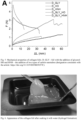
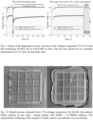
- the ink intended for 3D printing should have rheological properties that involve the phenomenon of shear thinning. This allows the material to be extruded from the nozzle. As can be seen in Fig. 8 , the obtained collagen ink has a shear-rate dependence of viscosity analogous to commercially available inks - it is shear thinning as the viscosity decreases with increasing shear rate.
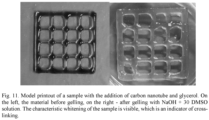
- Collagen gelation occurs by immersing the print in a NaOH solution with a pH of 11, doped with a 30% addition of DMSO (which slows the diffusion process and solvent exchange between the print and the surrounding liquid). It is also possible to print directly into the neutralizing liquid.
- Fig. 10 shows an example print obtained from a 7% collagen suspension (with glycerol).
- Fig. 11 shows the same model obtained using a collagen suspension with the addition of carbon nanotubes (and glycerol).
Landscapes
- Chemical & Material Sciences (AREA)
- Health & Medical Sciences (AREA)
- Medicinal Chemistry (AREA)
- Chemical Kinetics & Catalysis (AREA)
- Polymers & Plastics (AREA)
- Organic Chemistry (AREA)
- Life Sciences & Earth Sciences (AREA)
- Engineering & Computer Science (AREA)
- Animal Behavior & Ethology (AREA)
- Veterinary Medicine (AREA)
- Public Health (AREA)
- General Health & Medical Sciences (AREA)
- Materials Engineering (AREA)
- Epidemiology (AREA)
- Dermatology (AREA)
- Dispersion Chemistry (AREA)
- Oral & Maxillofacial Surgery (AREA)
- Transplantation (AREA)
- Manufacturing & Machinery (AREA)
- Biophysics (AREA)
- Biomedical Technology (AREA)
- Botany (AREA)
- Rehabilitation Therapy (AREA)
- Rheumatology (AREA)
- Orthopedic Medicine & Surgery (AREA)
- Vascular Medicine (AREA)
- Hematology (AREA)
- Birds (AREA)
- General Chemical & Material Sciences (AREA)
- Peptides Or Proteins (AREA)
- Materials For Medical Uses (AREA)
- Manufacture Of Porous Articles, And Recovery And Treatment Of Waste Products (AREA)
- Micro-Organisms Or Cultivation Processes Thereof (AREA)
Applications Claiming Priority (1)
| Application Number | Priority Date | Filing Date | Title |
|---|---|---|---|
| PL446675A PL446675A1 (pl) | 2023-11-08 | 2023-11-08 | Sposób otrzymywania jednorodnej zawiesiny kolagenu, zastosowanie jednorodnej zawiesiny kolagenu, sposób otrzymywania hydrożelowych materiałów na bazie kolagenu, sposób otrzymywania kolagenowej folii i/lub warstwy i/lub podłoża do hodowli, sposób otrzymywania kolagenowych wydruków oraz sposoby otrzymywania porowatych kształtek kolagenowych |
Publications (1)
| Publication Number | Publication Date |
|---|---|
| EP4553104A1 true EP4553104A1 (de) | 2025-05-14 |
Family
ID=94173415
Family Applications (1)
| Application Number | Title | Priority Date | Filing Date |
|---|---|---|---|
| EP24211932.9A Pending EP4553104A1 (de) | 2023-11-08 | 2024-11-08 | Verfahren zur herstellung einer homogenen kollagensuspension, verwendung einer homogenen kollagensuspension, verfahren zur herstellung von hydrogelen materialien auf kollagenbasis, verfahren zur herstellung eines kollagenfilms und/oder einer kollagenschicht und/oder eines kultursubstrats, verfahren zur herstellung von kollagenausdrucken und verfahren zur herstellung von porösen kollagenformen |
Country Status (2)
| Country | Link |
|---|---|
| EP (1) | EP4553104A1 (de) |
| PL (1) | PL446675A1 (de) |
Citations (16)
| Publication number | Priority date | Publication date | Assignee | Title |
|---|---|---|---|---|
| US3393080A (en) | 1965-10-20 | 1968-07-16 | Fmc Corp | Microcrystalline colloidal collagen dispersions in dispersing media containing dimethyl sulfoxide and water-miscible organic solvents |
| US3758660A (en) | 1971-10-15 | 1973-09-11 | Avicon Inc | Method of forming structures from microcrystalline collagen |
| US5541234A (en) | 1991-12-20 | 1996-07-30 | Alliedsignal Inc. | Process for making low density hydrogel materials having high surface areas |
| US5869080A (en) | 1995-05-30 | 1999-02-09 | Johnson & Johnson Medical, Inc. | Absorbable implant materials having controlled porosity |
| US20020019516A1 (en) * | 2000-04-18 | 2002-02-14 | Matitiau Noff | Cross-linked collagen matrices and methods for their preparation |
| US20040028738A1 (en) | 2000-10-05 | 2004-02-12 | Lynn L.H. Huang | Process for the preparation of porous collagen matrix |
| AU2001249079B2 (en) | 2000-02-28 | 2005-11-03 | Gel-Del Technologies, Inc. | Protein matrix materials, devices and methods of making and using thereof |
| US8198408B2 (en) | 2009-07-27 | 2012-06-12 | National Cheng Kung University | Method for preparing porous collagen matrices |
| CN103333508A (zh) | 2013-06-28 | 2013-10-02 | 陕西巨子生物技术有限公司 | 一种注射用胶原蛋白水凝胶及其制备方法 |
| US10046087B2 (en) | 2013-03-22 | 2018-08-14 | University Of Leeds | Collagen based materials |
| WO2018204315A1 (en) | 2017-05-01 | 2018-11-08 | New York Society For The Ruptured And Crippled Maintaining The Hospital For Special Surgery | A method of and a mold for the manufacture, making and/or production of a multi-component implant, device, construct or material |
| CN110713727A (zh) | 2018-06-27 | 2020-01-21 | 中国科学院过程工程研究所 | 一种低温制备的胶原蛋白水凝胶、其制备方法及应用 |
| CN112920427A (zh) | 2021-01-26 | 2021-06-08 | 南方科技大学 | 一种抗疲劳水凝胶及其制备方法和应用 |
| US20220175534A1 (en) | 2020-12-07 | 2022-06-09 | The Curators Of The University Of Missouri | Liquid collagen bioinks and methods to make and use collagen structures |
| EP3921372B1 (de) | 2019-02-04 | 2022-09-21 | Real Research Sp. z o.o. | Proteinhydrogel, herstellungsverfahren und verwendung davon |
| EP4249008A1 (de) * | 2022-03-21 | 2023-09-27 | Typeone Biomaterials S.r.l. | Bioink-zusammensetzung auf der basis von pferdekollagen typ i, verfahren zu ihrer herstellung und ihre verwendung |
-
2023
- 2023-11-08 PL PL446675A patent/PL446675A1/pl unknown
-
2024
- 2024-11-08 EP EP24211932.9A patent/EP4553104A1/de active Pending
Patent Citations (16)
| Publication number | Priority date | Publication date | Assignee | Title |
|---|---|---|---|---|
| US3393080A (en) | 1965-10-20 | 1968-07-16 | Fmc Corp | Microcrystalline colloidal collagen dispersions in dispersing media containing dimethyl sulfoxide and water-miscible organic solvents |
| US3758660A (en) | 1971-10-15 | 1973-09-11 | Avicon Inc | Method of forming structures from microcrystalline collagen |
| US5541234A (en) | 1991-12-20 | 1996-07-30 | Alliedsignal Inc. | Process for making low density hydrogel materials having high surface areas |
| US5869080A (en) | 1995-05-30 | 1999-02-09 | Johnson & Johnson Medical, Inc. | Absorbable implant materials having controlled porosity |
| AU2001249079B2 (en) | 2000-02-28 | 2005-11-03 | Gel-Del Technologies, Inc. | Protein matrix materials, devices and methods of making and using thereof |
| US20020019516A1 (en) * | 2000-04-18 | 2002-02-14 | Matitiau Noff | Cross-linked collagen matrices and methods for their preparation |
| US20040028738A1 (en) | 2000-10-05 | 2004-02-12 | Lynn L.H. Huang | Process for the preparation of porous collagen matrix |
| US8198408B2 (en) | 2009-07-27 | 2012-06-12 | National Cheng Kung University | Method for preparing porous collagen matrices |
| US10046087B2 (en) | 2013-03-22 | 2018-08-14 | University Of Leeds | Collagen based materials |
| CN103333508A (zh) | 2013-06-28 | 2013-10-02 | 陕西巨子生物技术有限公司 | 一种注射用胶原蛋白水凝胶及其制备方法 |
| WO2018204315A1 (en) | 2017-05-01 | 2018-11-08 | New York Society For The Ruptured And Crippled Maintaining The Hospital For Special Surgery | A method of and a mold for the manufacture, making and/or production of a multi-component implant, device, construct or material |
| CN110713727A (zh) | 2018-06-27 | 2020-01-21 | 中国科学院过程工程研究所 | 一种低温制备的胶原蛋白水凝胶、其制备方法及应用 |
| EP3921372B1 (de) | 2019-02-04 | 2022-09-21 | Real Research Sp. z o.o. | Proteinhydrogel, herstellungsverfahren und verwendung davon |
| US20220175534A1 (en) | 2020-12-07 | 2022-06-09 | The Curators Of The University Of Missouri | Liquid collagen bioinks and methods to make and use collagen structures |
| CN112920427A (zh) | 2021-01-26 | 2021-06-08 | 南方科技大学 | 一种抗疲劳水凝胶及其制备方法和应用 |
| EP4249008A1 (de) * | 2022-03-21 | 2023-09-27 | Typeone Biomaterials S.r.l. | Bioink-zusammensetzung auf der basis von pferdekollagen typ i, verfahren zu ihrer herstellung und ihre verwendung |
Non-Patent Citations (2)
| Title |
|---|
| ANONYMOUS: "Conference proceedings", 31ST ANNUAL CONFERENCE BIOMATERIALS IN MEDICINE AND VETERINARY MEDICINE, 16 October 2022 (2022-10-16), pages 1 - 130, XP093229284, ISBN: 978-83-659-5562-3, Retrieved from the Internet <URL:http://biomat.krakow.pl/files/konferencje/rytro/rytro_2022_conference_proceedings.pdf> DOI: 10.34821/eng.biomat * |
| BIOMATERIALS IN MEDICINE AND VETERINARY MEDICINE CONFERENCE, 16 October 2022 (2022-10-16) |
Also Published As
| Publication number | Publication date |
|---|---|
| PL446675A1 (pl) | 2025-05-12 |
Similar Documents
| Publication | Publication Date | Title |
|---|---|---|
| Zhang et al. | Design and performance of a sericin-alginate interpenetrating network hydrogel for cell and drug delivery | |
| Sionkowska et al. | Modification of collagen and chitosan mixtures by the addition of tannic acid | |
| Hu et al. | Biocompatible fibroin blended films with recombinant human-like collagen for hepatic tissue engineering | |
| JP7494395B2 (ja) | 筋肉幹細胞培養用架橋型ハイドロゲルの調製方法及びその使用 | |
| JP7515718B2 (ja) | 筋肉幹細胞培養用架橋型ハイドロゲルの調製方法及びその使用 | |
| EP2644620A1 (de) | Nichtfibrillarer kollagenformkörper und herstellungsverfahren dafür | |
| WO2011047047A2 (en) | Composites containing polypeptides attached to polysaccharides and molecules | |
| CN100591364C (zh) | 含有磷灰石/胶原复合体纤维的多孔体的制造方法 | |
| WO2005079879A1 (ja) | コラーゲンゲルおよびその製造方法 | |
| CN102458493A (zh) | 新胶原材料及其获得方法 | |
| CN116966345A (zh) | 3d可打印生物凝胶及其使用方法 | |
| WO2018073235A1 (en) | Printed hyaluronic acid scaffolds | |
| JP2005334625A (ja) | 伸縮性コラーゲン成形体、その製造方法および用途 | |
| CN109251330A (zh) | 纳米甲壳素-pva水凝胶及其制备方法和应用 | |
| JP5453690B2 (ja) | コラーゲン・キトサン複合繊維状多孔体及びその製造方法 | |
| IL150042A (en) | Cytosene particles with large constituents, a method for their preparation and use in a method for producing living cells or plant cells | |
| RU2471824C1 (ru) | Биосовместимый биодеградируемый пористый композиционный материал и способ его получения | |
| TW477802B (en) | Method for preparing hydrophilic porous polymeric materials | |
| Elder et al. | Synthesis and characterization of chitosan scaffolds for cartilage-tissue engineering | |
| EP4553104A1 (de) | Verfahren zur herstellung einer homogenen kollagensuspension, verwendung einer homogenen kollagensuspension, verfahren zur herstellung von hydrogelen materialien auf kollagenbasis, verfahren zur herstellung eines kollagenfilms und/oder einer kollagenschicht und/oder eines kultursubstrats, verfahren zur herstellung von kollagenausdrucken und verfahren zur herstellung von porösen kollagenformen | |
| JP3437430B2 (ja) | コラーゲン成形体及びコラーゲン成形体の作製法 | |
| Mori et al. | Interpenetrating gelatin/alginate mixed hydrogel: The simplest method to prepare an autoclavable scaffold | |
| CN105727369B (zh) | 一种明胶/碳酸化羟基磷灰石骨支架的制备方法 | |
| CN110339403B (zh) | 球形纳米羟基磷灰石/天然高分子仿生支架及制备方法 | |
| Liu et al. | Porous poly (DL-lactic acid) modified chitosan-gelatin scaffolds for tissue engineering |
Legal Events
| Date | Code | Title | Description |
|---|---|---|---|
| PUAI | Public reference made under article 153(3) epc to a published international application that has entered the european phase |
Free format text: ORIGINAL CODE: 0009012 |
|
| STAA | Information on the status of an ep patent application or granted ep patent |
Free format text: STATUS: THE APPLICATION HAS BEEN PUBLISHED |
|
| AK | Designated contracting states |
Kind code of ref document: A1 Designated state(s): AL AT BE BG CH CY CZ DE DK EE ES FI FR GB GR HR HU IE IS IT LI LT LU LV MC ME MK MT NL NO PL PT RO RS SE SI SK SM TR |
|
| STAA | Information on the status of an ep patent application or granted ep patent |
Free format text: STATUS: REQUEST FOR EXAMINATION WAS MADE |
|
| 17P | Request for examination filed |
Effective date: 20251114 |