EP4545452A2 - Verfahren zur handhabung von defekten fahrzeugen auf einem gleissystem und regalbedienungssystem mit einem solchen verfahren - Google Patents
Verfahren zur handhabung von defekten fahrzeugen auf einem gleissystem und regalbedienungssystem mit einem solchen verfahren Download PDFInfo
- Publication number
- EP4545452A2 EP4545452A2 EP24223416.9A EP24223416A EP4545452A2 EP 4545452 A2 EP4545452 A2 EP 4545452A2 EP 24223416 A EP24223416 A EP 24223416A EP 4545452 A2 EP4545452 A2 EP 4545452A2
- Authority
- EP
- European Patent Office
- Prior art keywords
- vehicle
- vehicles
- zone
- remotely operated
- track system
- Prior art date
- Legal status (The legal status is an assumption and is not a legal conclusion. Google has not performed a legal analysis and makes no representation as to the accuracy of the status listed.)
- Pending
Links
Images


Classifications
-
- B—PERFORMING OPERATIONS; TRANSPORTING
- B65—CONVEYING; PACKING; STORING; HANDLING THIN OR FILAMENTARY MATERIAL
- B65G—TRANSPORT OR STORAGE DEVICES, e.g. CONVEYORS FOR LOADING OR TIPPING, SHOP CONVEYOR SYSTEMS OR PNEUMATIC TUBE CONVEYORS
- B65G1/00—Storing articles, individually or in orderly arrangement, in warehouses or magazines
- B65G1/02—Storage devices
- B65G1/04—Storage devices mechanical
-
- B—PERFORMING OPERATIONS; TRANSPORTING
- B65—CONVEYING; PACKING; STORING; HANDLING THIN OR FILAMENTARY MATERIAL
- B65G—TRANSPORT OR STORAGE DEVICES, e.g. CONVEYORS FOR LOADING OR TIPPING, SHOP CONVEYOR SYSTEMS OR PNEUMATIC TUBE CONVEYORS
- B65G1/00—Storing articles, individually or in orderly arrangement, in warehouses or magazines
- B65G1/02—Storage devices
- B65G1/04—Storage devices mechanical
- B65G1/0464—Storage devices mechanical with access from above
-
- B—PERFORMING OPERATIONS; TRANSPORTING
- B65—CONVEYING; PACKING; STORING; HANDLING THIN OR FILAMENTARY MATERIAL
- B65G—TRANSPORT OR STORAGE DEVICES, e.g. CONVEYORS FOR LOADING OR TIPPING, SHOP CONVEYOR SYSTEMS OR PNEUMATIC TUBE CONVEYORS
- B65G1/00—Storing articles, individually or in orderly arrangement, in warehouses or magazines
- B65G1/02—Storage devices
- B65G1/04—Storage devices mechanical
- B65G1/0478—Storage devices mechanical for matrix-arrangements
-
- B—PERFORMING OPERATIONS; TRANSPORTING
- B65—CONVEYING; PACKING; STORING; HANDLING THIN OR FILAMENTARY MATERIAL
- B65G—TRANSPORT OR STORAGE DEVICES, e.g. CONVEYORS FOR LOADING OR TIPPING, SHOP CONVEYOR SYSTEMS OR PNEUMATIC TUBE CONVEYORS
- B65G1/00—Storing articles, individually or in orderly arrangement, in warehouses or magazines
- B65G1/02—Storage devices
- B65G1/04—Storage devices mechanical
- B65G1/0492—Storage devices mechanical with cars adapted to travel in storage aisles
-
- B—PERFORMING OPERATIONS; TRANSPORTING
- B65—CONVEYING; PACKING; STORING; HANDLING THIN OR FILAMENTARY MATERIAL
- B65G—TRANSPORT OR STORAGE DEVICES, e.g. CONVEYORS FOR LOADING OR TIPPING, SHOP CONVEYOR SYSTEMS OR PNEUMATIC TUBE CONVEYORS
- B65G1/00—Storing articles, individually or in orderly arrangement, in warehouses or magazines
- B65G1/02—Storage devices
- B65G1/04—Storage devices mechanical
- B65G1/06—Storage devices mechanical with means for presenting articles for removal at predetermined position or level
- B65G1/065—Storage devices mechanical with means for presenting articles for removal at predetermined position or level with self propelled cars
-
- B—PERFORMING OPERATIONS; TRANSPORTING
- B65—CONVEYING; PACKING; STORING; HANDLING THIN OR FILAMENTARY MATERIAL
- B65G—TRANSPORT OR STORAGE DEVICES, e.g. CONVEYORS FOR LOADING OR TIPPING, SHOP CONVEYOR SYSTEMS OR PNEUMATIC TUBE CONVEYORS
- B65G1/00—Storing articles, individually or in orderly arrangement, in warehouses or magazines
- B65G1/02—Storage devices
- B65G1/04—Storage devices mechanical
- B65G1/137—Storage devices mechanical with arrangements or automatic control means for selecting which articles are to be removed
- B65G1/1373—Storage devices mechanical with arrangements or automatic control means for selecting which articles are to be removed for fulfilling orders in warehouses
- B65G1/1378—Storage devices mechanical with arrangements or automatic control means for selecting which articles are to be removed for fulfilling orders in warehouses the orders being assembled on fixed commissioning areas remote from the storage areas
-
- B—PERFORMING OPERATIONS; TRANSPORTING
- B65—CONVEYING; PACKING; STORING; HANDLING THIN OR FILAMENTARY MATERIAL
- B65G—TRANSPORT OR STORAGE DEVICES, e.g. CONVEYORS FOR LOADING OR TIPPING, SHOP CONVEYOR SYSTEMS OR PNEUMATIC TUBE CONVEYORS
- B65G43/00—Control devices, e.g. for safety, warning or fault-correcting
- B65G43/02—Control devices, e.g. for safety, warning or fault-correcting detecting dangerous physical condition of load carriers, e.g. for interrupting the drive in the event of overheating
-
- G—PHYSICS
- G05—CONTROLLING; REGULATING
- G05B—CONTROL OR REGULATING SYSTEMS IN GENERAL; FUNCTIONAL ELEMENTS OF SUCH SYSTEMS; MONITORING OR TESTING ARRANGEMENTS FOR SUCH SYSTEMS OR ELEMENTS
- G05B19/00—Program-control systems
- G05B19/02—Program-control systems electric
- G05B19/418—Total factory control, i.e. centrally controlling a plurality of machines, e.g. direct or distributed numerical control [DNC], flexible manufacturing systems [FMS], integrated manufacturing systems [IMS] or computer integrated manufacturing [CIM]
- G05B19/4189—Total factory control, i.e. centrally controlling a plurality of machines, e.g. direct or distributed numerical control [DNC], flexible manufacturing systems [FMS], integrated manufacturing systems [IMS] or computer integrated manufacturing [CIM] characterised by the transport system
- G05B19/41895—Total factory control, i.e. centrally controlling a plurality of machines, e.g. direct or distributed numerical control [DNC], flexible manufacturing systems [FMS], integrated manufacturing systems [IMS] or computer integrated manufacturing [CIM] characterised by the transport system using automatic guided vehicles [AGV]
-
- G—PHYSICS
- G05—CONTROLLING; REGULATING
- G05D—SYSTEMS FOR CONTROLLING OR REGULATING NON-ELECTRIC VARIABLES
- G05D1/00—Control of position, course, altitude or attitude of land, water, air or space vehicles, e.g. using automatic pilots
- G05D1/02—Control of position or course in two dimensions
- G05D1/021—Control of position or course in two dimensions specially adapted to land vehicles
- G05D1/0287—Control of position or course in two dimensions specially adapted to land vehicles involving a plurality of land vehicles, e.g. fleet or convoy travelling
-
- G—PHYSICS
- G05—CONTROLLING; REGULATING
- G05D—SYSTEMS FOR CONTROLLING OR REGULATING NON-ELECTRIC VARIABLES
- G05D1/00—Control of position, course, altitude or attitude of land, water, air or space vehicles, e.g. using automatic pilots
- G05D1/60—Intended control result
- G05D1/69—Coordinated control of the position or course of two or more vehicles
- G05D1/698—Control allocation
- G05D1/6987—Control allocation by centralised control off-board any of the vehicles
-
- B—PERFORMING OPERATIONS; TRANSPORTING
- B65—CONVEYING; PACKING; STORING; HANDLING THIN OR FILAMENTARY MATERIAL
- B65G—TRANSPORT OR STORAGE DEVICES, e.g. CONVEYORS FOR LOADING OR TIPPING, SHOP CONVEYOR SYSTEMS OR PNEUMATIC TUBE CONVEYORS
- B65G2201/00—Indexing codes relating to handling devices, e.g. conveyors, characterised by the type of product or load being conveyed or handled
- B65G2201/02—Articles
- B65G2201/0235—Containers
- B65G2201/0258—Trays, totes or bins
-
- B—PERFORMING OPERATIONS; TRANSPORTING
- B65—CONVEYING; PACKING; STORING; HANDLING THIN OR FILAMENTARY MATERIAL
- B65G—TRANSPORT OR STORAGE DEVICES, e.g. CONVEYORS FOR LOADING OR TIPPING, SHOP CONVEYOR SYSTEMS OR PNEUMATIC TUBE CONVEYORS
- B65G2207/00—Indexing codes relating to constructional details, configuration and additional features of a handling device, e.g. Conveyors
- B65G2207/30—Modular constructions
-
- B—PERFORMING OPERATIONS; TRANSPORTING
- B65—CONVEYING; PACKING; STORING; HANDLING THIN OR FILAMENTARY MATERIAL
- B65G—TRANSPORT OR STORAGE DEVICES, e.g. CONVEYORS FOR LOADING OR TIPPING, SHOP CONVEYOR SYSTEMS OR PNEUMATIC TUBE CONVEYORS
- B65G2207/00—Indexing codes relating to constructional details, configuration and additional features of a handling device, e.g. Conveyors
- B65G2207/40—Safety features of loads, equipment or persons
Definitions
- the present invention relates to a method for handling malfunctioning vehicles on a track system constituting part of a storage and retrieval system configured to store a plurality of stacks of storage containers, a storage and retrieval system and a control system carrying out the method.
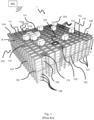
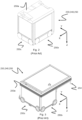
- Fig. 1 discloses a typical prior art automated storage and retrieval system 1 with a framework structure 100 and Fig. 2 and 3 discloses two different prior art container handling vehicles 250 suitable for operating on such a system 1.
- the framework structure 100 comprises upright members 102, horizontal members 103 and a storage volume comprising storage columns 105 arranged in rows between the upright members 102 and the horizontal members 103.
- storage columns 105 storage containers 106, also known as bins, are stacked one on top of one another to form stacks 107.
- the members 102,103 may typically be made of metal, e.g. extruded aluminum profiles.
- the framework structure 100 of the automated storage and retrieval system 1 comprises a transport rail system 108 arranged across the top of framework structure 100, on which transport rail system 108 a plurality of container handling vehicles 250 are operated to raise storage containers 106 from, and lower storage containers 106 into, the storage columns 105, and also to transport the storage containers 106 above the storage columns 105.
- the transport rail system 108 comprises a first set of parallel rails 110 arranged to guide movement of the container handling vehicles 250 in a first direction X across the top of the frame structure 100, and a second set of parallel rails 111 arranged perpendicular to the first set of rails 110 to guide movement of the container handling vehicles 250 in a second direction Y which is perpendicular to the first direction X.
- a plurality of cells 122 are formed in the transport rail system 108 being delimited by a pair of neighboring rails 110a,110b of the first set of rails 110 and a pair of neighboring rails 111a,111b of the second set of rails 111.
- Containers 106 stored in the columns 105 are accessed by the container handling vehicles through access openings 112 in the transport rail system 108.
- the container handling vehicles 250 can move laterally above the storage columns 105, i.e. in a plane which is parallel to the horizontal X-Y plane.
- the upright members 102 of the framework structure 100 may be used to guide the storage containers during raising of the containers out from and lowering of the containers into the columns 105.
- the stacks 107 of containers 106 are typically self-supportive.
- Each prior art container handling vehicle 250 comprises a vehicle body 250a and a wheel assembly comprising first and second sets of wheels 250b,250c which enable the lateral movement of the container handling vehicles 250 in the X direction and in the Y direction, respectively.
- the first set of wheels 250b is arranged to engage with two adjacent rails of the first set 110 of rails
- the second set of wheels 250c is arranged to engage with two adjacent rails of the second set 111 of rails.
- At least one of set wheels 250b,250c can be lifted and lowered, so that the first set of wheels 250b and/or the second set of wheels 250c can be engaged with the respective set of rails 110,111 at any one time.
- Each prior art container handling vehicle 250 also comprises a lifting device (not shown) for vertical transportation of storage containers 106, e.g. raising a storage container 106 from, and lowering a storage container 106 into, a storage column 105.
- the lifting device comprises one or more gripping/engaging devices which are adapted to engage a storage container 106, and which gripping / engaging devices can be lowered from the vehicle 250 so that the position of the gripping / engaging devices with respect to the vehicle 250 can be adjusted in a third direction Z which is orthogonal the first direction X and the second direction Y.
- Parts of the gripping device of the container handling vehicle 250 is shown in in Fig. 3 and is indicated with reference number 254.
- the gripping device of the container handling device 250 is located within the vehicle body 250a in Fig. 2 .
- the storage volume of the framework structure 100 has often been referred to as a grid 104, where the possible storage positions within this grid is referred to as a storage cell.
- Each storage column may be identified by a position in an X- and Y-direction, while each storage cell may be identified by a container number in the X-, Y and Z-direction.
- Each prior art container handling vehicle 250 comprises a storage compartment or space for receiving and stowing a storage container 106 when transporting the storage container 106 across the transport rail system 108.
- the storage space may comprise a cavity arranged centrally within the vehicle body 250a as shown in Fig. 2 and as described in e.g. WO2015/193278A1 , the contents of which are incorporated herein by reference.
- Fig. 3 shows an alternative configuration of a container handling vehicle 250 with a cantilever construction.
- a container handling vehicle 250 with a cantilever construction.
- Such a vehicle is described in detail in e.g. NO317366, the contents of which are also incorporated herein by reference.
- the central cavity container handling vehicles 250 shown in Fig. 2 may have a footprint that covers an area with dimensions in the X and Y directions which is generally equal to the lateral extent of a storage column 105, e.g. as is described in WO2015/193278A1 , the contents of which are incorporated herein by reference.
- the term 'lateral' used herein may mean 'horizontal'.
- the central cavity container handling vehicles 101 may have a footprint which is larger than the lateral area defined by a storage column 105, e.g. as is disclosed in WO2014/090684A1 .
- the transport rail system 108 typically comprises rails with grooves into which the wheels of the vehicles are inserted.
- the rails may comprise upwardly protruding elements, where the wheels of the vehicles comprise flanges to prevent derailing. These grooves and upwardly protruding elements are collectively known as tracks.
- Each rail may comprise one track, or each rail may comprise two parallel tracks. A track system is therefore arranged on the transport rail system 108.
- WO2018146304 illustrates a typical configuration of a transport rail system 108 comprising rails and parallel tracks in both X and Y directions.
- columns 105 In the framework structure 100, a majority of the columns 105 are storage columns 105, i.e. columns 105 where storage containers 106 are stored in stacks 107. However, some columns 105 may have other purposes.
- columns 119 and 120 are such special-purpose columns used by the container handling vehicles 250 to drop off and/or pick up storage containers 106 so that they can be transported to an access station (not shown) where the storage containers 106 can be accessed from outside of the framework structure 100 or transferred out of or into the framework structure 100.
- such a location is normally referred to as a 'port' and the column in which the port is located may be referred to as a 'port column' 119,120.
- the transportation to the access station may be in any direction, that is horizontal, tilted and/or vertical.
- the storage containers 106 may be placed in a random or dedicated column 105 within the framework structure 100, then picked up by any container handling vehicle and transported to a port column 119,120 for further transportation to an access station.
- 'tilted' means transportation of storage containers 106 having a general transportation orientation somewhere between horizontal and vertical.
- the first port column 119 may for example be a dedicated drop-off port column where the container handling vehicles 250 can drop off storage containers 106 to be transported to an access or a transfer station
- the second port column 120 may be a dedicated pick-up port column where the container handling vehicles 250 can pick up storage containers 106 that have been transported from an access or a transfer station.
- the access station may typically be a picking or a stocking station where product items are removed from or positioned into the storage containers 106.
- the storage containers 106 are normally not removed from the automated storage and retrieval system 1, but are returned into the framework structure 100 again once accessed.
- a port can also be used for transferring storage containers to another storage facility (e.g. to another framework structure or to another automated storage and retrieval system), to a transport vehicle (e.g. a train or a lorry), or to a production facility.
- a conveyor system comprising conveyors is normally employed to transport the storage containers between the port columns 119,120 and the access station.
- the conveyor system may comprise a lift device with a vertical component for transporting the storage containers 106 vertically between the port column 119,120 and the access station.
- the conveyor system may be arranged to transfer storage containers 106 between different framework structures, e.g. as is described in WO2014/075937A1 , the contents of which are incorporated herein by reference.
- one of the container handling vehicles 250 is instructed to retrieve the target storage container 106 from its position and transport it to the drop-off port column 119.
- This operation involves moving the container handling vehicle 250 to a location above the storage column 105 in which the target storage container 106 is positioned, retrieving the storage container 106 from the storage column 105 using the container handling vehicle's 250 lifting device, and transporting the storage container 106 to the drop-off port column 119. If the target storage container 106 is located deep within a stack 107, i.e.
- the operation also involves temporarily moving the above-positioned storage containers prior to lifting the target storage container 106 from the storage column 105.
- This step which is sometimes referred to as "digging" within the art, may be performed with the same container handling vehicle that is subsequently used for transporting the target storage container to the drop-off port column 119, or with one or a plurality of other cooperating container handling vehicles.
- the automated storage and retrieval system 1 may have container handling vehicles specifically dedicated to the task of temporarily removing storage containers from a storage column 105. Once the target storage container 106 has been removed from the storage column 105, the temporarily removed storage containers can be repositioned into the original storage column 105. However, the removed storage containers may alternatively be relocated to other storage columns.
- one of the container handling vehicles 250 When a storage container 106 is to be stored in one of the columns 105, one of the container handling vehicles 250 is instructed to pick up the storage container 106 from the pick-up port column 120 and transport it to a location above the storage column 105 where it is to be stored. After any storage containers positioned at or above the target position within the storage column stack 107 have been removed, the container handling vehicle 250 positions the storage container 106 at the desired position. The removed storage containers may then be lowered back into the storage column 105, or relocated to other storage columns.
- the automated storage and retrieval system 1 For monitoring and controlling the automated storage and retrieval system 1, e.g. monitoring and controlling the location of respective storage containers 106 within the framework structure 100, the content of each storage container 106; and the movement of the container handling vehicles 250 so that a desired storage container 106 can be delivered to the desired location at the desired time without the container handling vehicles 250 colliding with each other, the automated storage and retrieval system 1 comprises a control system 500 which typically is computerized and which typically comprises a database for keeping track of the storage containers 106.
- a problem associated with known automated storage and retrieval systems 1 is that it is challenging for personnel to access the transport rail system 108 for carrying out inspection, or to carry out maintenance of or to remove malfunctioning container handling vehicles 250.
- Another important problem with maintenance or removal of malfunctioning vehicles 250 is that a complete shutdown of the system 1 is needed in a prior art storage system for the personnel to access with low or zero risk of injury.
- a particular objective is to provide a method that allows personnel to enter the track system without requiring a complete shutdown.
- the invention concerns a method for handling malfunctioning vehicles on a track system constituting part of an automated storage and retrieval system configured to store a plurality of stacks of storage containers.
- the automated storage and retrieval system further comprises a plurality of remotely operated vehicles comprising driving wheels configured to move laterally on the track system, i.e. within a horizontal plane set up by the track system, and a control system for monitoring and controlling wirelessly movements of the plurality of remotely operated vehicles.
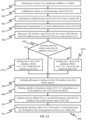
- the method performs by wireless data communication with the control system at least the following steps:
- Step E includes, in other words, ordering all the remotely operated vehicles in operation within the shutdown zone to either move out of the shutdown zone, to halt within the shutdown zone, or a combination thereof such that at least one operable remotely operated vehicle is moved out of the shutdown zone and/or at least one operable remotely operated vehicle is brought to halt.
- the indication of allowance of entry into the entrance zone of step F) may for example include that the gateway is automatically opened (partly or fully) such that the human operator can enter the entrance zone or that a lock on the gateway is opened allowing a human operator to open that gateway manually.
- the gateway should be understood as a gate or door which allows a human operator to enter the entrance zone when open/unlocked.
- the entry-allowed signal may be a visible and/or audio signal indicating that the human operator can safely enter the entrance zone.
- the visible signal may inter alia be a light, a raised flag, a changing screen or similar, while the audio signal may be one or more alarm tones or similar.
- the entry-allowed signal may be any signal registrable by a human operator, and preferably a human operator located outside the gateway. Examples of positions for such signals may be at the gateway and/or on the remotely operated vehicles and/or on the malfunctioning vehicle.
- the notification/transmittal of an entry-allowed signal may appear on a graphical user interface (GUI) of a computer connected to the control system informing the human operator that it is safe to enter the entrance zone.
- GUI graphical user interface
- a dedicated software may be uploaded on the computer allowing the human operator to inform the system when the service of the malfunctioning vehicle has been completed and the shutdown zone can be removed.
- the latter software may for example use the same GUI on which the entry-allowed signal is shown.
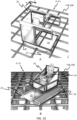
- the service vehicle may move the malfunctioning vehicle out of the track system through the gateway. After removal of the malfunctioning vehicle, the control system can instruct the operable remotely operated vehicles to continue their tasks.
- the method may further involve:
- the method may involve
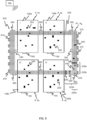
- the method may involve rerouting a plurality of operable remotely operated vehicles to a position located at an edge of the shutdown zone extending across the tracks of the track system and transmitting one or more signals to the plurality of said operable remotely operated vehicles, bringing the plurality of operable remotely operated vehicles to a halt thereby making a physical barrier of operable remotely operated vehicles such that the physical barrier at least partly surrounds the shutdown zone.
- the operable remotely operated vehicles When forming a physical barrier, the operable remotely operated vehicles may be arranged adjacent each other in a closed-pack formation, or they may be spaced apart but with a gap between them of less than the width of a vehicle, preferably the smallest width of the vehicle.
- the operable remotely operated vehicles may be arranged in more than one row along part or all of the edge of the malfunctioning vehicle zone, the entrance zone and/or the shutdown zone to form a physical barrier.
- the operable remotely operated vehicles may be arranged in an overlapping, staggered configuration along part or all of the edge of the malfunctioning vehicle zone, the entrance zone and/or the shutdown zone to form the physical barrier.
- Operable remotely operated vehicles should be understood as functioning remotely operated vehicles, thus not including the malfunctioning vehicle.
- the number of first and second operable remotely operated vehicles being rerouted to the boundaries of the malfunctioning vehicle zone and the entrance zone is sufficient to create a physical barrier of vehicles around the entire shutdown zone with the exception of an opening at the periphery of the track system having a minimum size to allow the human operator and/or the service vehicle to move between the periphery of the track system and the malfunctioning vehicle.
- the shutdown zone may have the size of the entire track system that the malfunctioning vehicle is located on.
- the boundary of the malfunctioning vehicle zone, the entrance zone or shutdown zone may be defined as a location where the one or more remotely operated vehicles are located outside the relevant zone set by the control system, but with at least one outer extremity in the horizontal plane at a position at or near position coordinates of relevant zone.
- the one or more boundary defining remotely operated vehicles may be located inside the malfunctioning vehicle zone, the entrance zone or shutdown zone set by the control system, but with at least one outer extremity in the horizontal plane at a position at or near position coordinates of the relevant zone.
- the one or more boundary defining remotely operated vehicles may be located with their lateral center position on position coordinates of the relevant zone.
- the position coordinates of the malfunctioning vehicle zone, the entrance zone or shutdown zone are preferably based on the particular position of the grid cells in the horizontal plane.
- the malfunctioning vehicle zone, the entrance zone and/or shutdown zone are preferably defined in terms of integer numbers of grid cells, to maintain the grid geometry. However, they could also be defined in other ways as appropriate.
- operable remotely operated vehicles can be employed to form a physical barrier extending around in part the malfunctioning vehicle.
- These functioning remotely operated vehicles, halted on or adjacent the boundary of the malfunctioning vehicle zone, entrance zone and/or shutdown zone (e.g. just inside or just outside) may be referred to herein as "boundary defining vehicles”.
- boundary defining operable remotely operated vehicles When the boundary defining operable remotely operated vehicles are brought to a halt, additional means may be performed to optimize stability of the physical barrier such as maximizing contact with the underlying track system by lowering all sets of wheels (the wheels of a first set will block any tendency for the wheels of a second set to allow the vehicle to roll in a direction perpendicular to a rolling direction of the first set of wheels and vice versa) and/or to lower/raise a storage container to a midway position through the grid so that the storage container acts as a block within an opening of the grid cell. It may also be possible to arrange the boundary defining vehicles in several layers along the horizontal plane P or staggered, at least in places. For example, a second layer of boundary defining vehicles may partly overlap the boundary defining vehicles of an innermost layer to spread the forces in the event of an impact and/or boundary defining vehicles may be staggered to resist displacement of other boundary defining vehicles that are subject to the impact.
- the track system is divided into a plurality of regions.
- the track system has a first track system region and a second track system region, where the second track system region forms the two-dimensional shutdown zone.
- a vehicle blocking barrier may be arranged between the first and the second track system regions.
- the vehicle blocking barrier comprises a vehicle passage with a minimum lateral width in the horizontal plane allowing one of the plurality of operable remotely operated vehicles to move between the first track system and the second track system via the vehicle passage.
- the method may further involve rerouting of at least one of the plurality of operable remotely operated vehicles (not the malfunctioning vehicle) to a position within the vehicle passage and bringing the at least one operable remotely operated vehicle to a halt such that entry into the second track system region/shutdown zone is avoided.
- the rerouting of the operable remotely operated vehicle(s) may be seen to plug the gap in the vehicle blocking barrier, i.e. to block the vehicle passage.
- a minimum lateral width is hereinafter defined as a minimum one-dimensional size of an opening, e.g. perpendicular to the direction of a remotely operated vehicle corresponding to the width of the remotely operated vehicle when seen from above.
- the automated storage and retrieval system may comprise at least one fence building remotely operated vehicle which, after step E and before step F, can be ordered to enter the track system to build a fence at least partly surrounding the shutdown zone.
Landscapes
- Engineering & Computer Science (AREA)
- Mechanical Engineering (AREA)
- Physics & Mathematics (AREA)
- Automation & Control Theory (AREA)
- General Physics & Mathematics (AREA)
- Remote Sensing (AREA)
- Radar, Positioning & Navigation (AREA)
- Aviation & Aerospace Engineering (AREA)
- General Engineering & Computer Science (AREA)
- Quality & Reliability (AREA)
- Manufacturing & Machinery (AREA)
- Mathematical Physics (AREA)
- Warehouses Or Storage Devices (AREA)
- Radar Systems Or Details Thereof (AREA)
- Control Of Position, Course, Altitude, Or Attitude Of Moving Bodies (AREA)
- Indexing, Searching, Synchronizing, And The Amount Of Synchronization Travel Of Record Carriers (AREA)
Applications Claiming Priority (3)
| Application Number | Priority Date | Filing Date | Title |
|---|---|---|---|
| NO20191462A NO345822B1 (en) | 2019-12-10 | 2019-12-10 | Method for handling malfunctioning vehicles on a track system and a storage and retrieval system using such a method |
| EP20819687.3A EP4072975B1 (de) | 2019-12-10 | 2020-12-02 | Verfahren zum handhaben von fehlerhaften fahrzeugen auf einem spursystem und regalbedienungssystem unter verwendung eines solchen verfahrens |
| PCT/EP2020/084218 WO2021115864A1 (en) | 2019-12-10 | 2020-12-02 | Method for handling malfunctioning vehicles on a track system and a storage and retrieval system using such a method |
Related Parent Applications (2)
| Application Number | Title | Priority Date | Filing Date |
|---|---|---|---|
| EP20819687.3A Division-Into EP4072975B1 (de) | 2019-12-10 | 2020-12-02 | Verfahren zum handhaben von fehlerhaften fahrzeugen auf einem spursystem und regalbedienungssystem unter verwendung eines solchen verfahrens |
| EP20819687.3A Division EP4072975B1 (de) | 2019-12-10 | 2020-12-02 | Verfahren zum handhaben von fehlerhaften fahrzeugen auf einem spursystem und regalbedienungssystem unter verwendung eines solchen verfahrens |
Publications (2)
| Publication Number | Publication Date |
|---|---|
| EP4545452A2 true EP4545452A2 (de) | 2025-04-30 |
| EP4545452A3 EP4545452A3 (de) | 2025-07-23 |
Family
ID=73698823
Family Applications (2)
| Application Number | Title | Priority Date | Filing Date |
|---|---|---|---|
| EP20819687.3A Active EP4072975B1 (de) | 2019-12-10 | 2020-12-02 | Verfahren zum handhaben von fehlerhaften fahrzeugen auf einem spursystem und regalbedienungssystem unter verwendung eines solchen verfahrens |
| EP24223416.9A Pending EP4545452A3 (de) | 2019-12-10 | 2020-12-02 | Verfahren zur handhabung von defekten fahrzeugen auf einem gleissystem und regalbedienungssystem mit einem solchen verfahren |
Family Applications Before (1)
| Application Number | Title | Priority Date | Filing Date |
|---|---|---|---|
| EP20819687.3A Active EP4072975B1 (de) | 2019-12-10 | 2020-12-02 | Verfahren zum handhaben von fehlerhaften fahrzeugen auf einem spursystem und regalbedienungssystem unter verwendung eines solchen verfahrens |
Country Status (9)
| Country | Link |
|---|---|
| US (2) | US12325588B2 (de) |
| EP (2) | EP4072975B1 (de) |
| JP (1) | JP7659557B2 (de) |
| KR (1) | KR20220106835A (de) |
| CN (2) | CN115066380B (de) |
| CA (1) | CA3160745A1 (de) |
| ES (1) | ES3062056T3 (de) |
| NO (1) | NO345822B1 (de) |
| WO (1) | WO2021115864A1 (de) |
Families Citing this family (12)
| Publication number | Priority date | Publication date | Assignee | Title |
|---|---|---|---|---|
| DK3807181T3 (da) * | 2018-06-12 | 2024-02-05 | Autostore Tech As | Fremgangsmåde til håndtering af defekte køretøjer på et skinnesystem og et lagrings- og hentningssystem, der anvender en sådan fremgangsmåde |
| NO345822B1 (en) * | 2019-12-10 | 2021-08-23 | Autostore Tech As | Method for handling malfunctioning vehicles on a track system and a storage and retrieval system using such a method |
| CN112224728A (zh) * | 2020-09-30 | 2021-01-15 | 深圳市海柔创新科技有限公司 | 仓储系统控制方法、装置、安全门及仓储系统 |
| US11960282B2 (en) * | 2021-01-05 | 2024-04-16 | Abb Schweiz Ag | Systems and methods for servicing a data center using autonomous vehicle |
| EP4238901B1 (de) * | 2022-03-03 | 2024-08-14 | Jungheinrich Aktiengesellschaft | Verfahren zum betreiben einer blocklageranordnung und blockanordnung |
| NO20221348A1 (en) * | 2022-12-16 | 2024-06-17 | Autostore Tech As | An automated storage and retrieval system comprising lockable barriers for safe transfer of persons into a transport vehicle on a live grid, and associated method |
| GB2627197B (en) * | 2023-02-14 | 2025-06-25 | Ocado Innovation Ltd | Method and system for determining obstruction of a gripping assembly |
| CN116921238A (zh) * | 2023-08-24 | 2023-10-24 | 芜湖驿龙科技有限公司 | 基于保险装置的识别系统、快递分拣系统和识别方法 |
| EP4546070A1 (de) * | 2023-10-27 | 2025-04-30 | Autostore Technology As | Verfahren und system zur verbesserung der sicherheit eines bemannten dienstfahrzeugs |
| WO2025187408A1 (ja) * | 2024-03-06 | 2025-09-12 | パナソニックIpマネジメント株式会社 | 倉庫システム、および、荷物の再配置方法 |
| EP4723005A1 (de) * | 2024-10-07 | 2026-04-08 | AutoStore Technology AS | Automatisiertes regalbedienungssystem mit einem sicherheitsschutzbot |
| WO2026077585A1 (en) * | 2024-10-07 | 2026-04-16 | Autostore Technology AS | An automated storage and retrieval system with a security guard bot |
Citations (4)
| Publication number | Priority date | Publication date | Assignee | Title |
|---|---|---|---|---|
| WO2014075937A1 (en) | 2012-11-13 | 2014-05-22 | Jakob Hatteland Logistics As | Storage system |
| WO2014090684A1 (en) | 2012-12-10 | 2014-06-19 | Jakob Hatteland Logistics As | Robot for transporting storage bins |
| WO2015193278A1 (en) | 2014-06-19 | 2015-12-23 | Jakob Hatteland Logistics As | Robot for transporting storage bins |
| WO2018146304A1 (en) | 2017-02-13 | 2018-08-16 | Autostore Technology AS | Rail arrangement for a storage system |
Family Cites Families (20)
| Publication number | Priority date | Publication date | Assignee | Title |
|---|---|---|---|---|
| NO317366B1 (no) | 1999-07-01 | 2004-10-18 | Autostore As | Lagringsanlegg med fjernstyrte vogner med to hjulsett og heisinnretning for drift på skinner anlagt i kryss over kolonner av lagringsenheter som er adskilt med vertikale profilstolper |
| CN201027091Y (zh) | 2006-08-03 | 2008-02-27 | 陈延行 | 仓库管理机器人 |
| US8594835B2 (en) * | 2009-04-10 | 2013-11-26 | Symbotic, LLC | Control system for storage and retrieval systems |
| JP4615620B1 (ja) * | 2010-06-18 | 2011-01-19 | 日揮株式会社 | 処理設備 |
| US8694152B2 (en) * | 2010-12-15 | 2014-04-08 | Symbotic, LLC | Maintenance access zones for storage and retrieval systems |
| KR102265424B1 (ko) * | 2013-03-15 | 2021-06-15 | 심보틱 엘엘씨 | 통합 보안 직원 액세스 구역 및 원격 로버 조업 중지를 구비한 자율화된 저장 및 인출 시스템 |
| GB201310125D0 (en) * | 2013-06-06 | 2013-07-24 | Ocado Ltd | Storage and retrieval system |
| GB201404870D0 (en) * | 2014-03-18 | 2014-04-30 | Ocado Ltd | Robotic service device and handling method |
| US9280157B2 (en) * | 2013-09-04 | 2016-03-08 | Amazon Technologies, Inc. | System and method for transporting personnel within an active workspace |
| JP6131975B2 (ja) * | 2015-03-19 | 2017-05-24 | トヨタ自動車株式会社 | 搬送機構 |
| GB201603520D0 (en) * | 2016-02-29 | 2016-04-13 | Ocado Innovation Ltd | Robotic service device and handling method |
| GB201604095D0 (en) * | 2016-03-10 | 2016-04-20 | Ocado Innovation Ltd | Storage systems and methods |
| NO343300B1 (en) * | 2017-03-10 | 2019-01-21 | Autostore Tech As | Automated storage and retrieval system and method of operating the same |
| CN109748022B (zh) * | 2017-11-03 | 2020-09-01 | 北京京东乾石科技有限公司 | 穿梭车货架系统及其控制方法 |
| US11623342B2 (en) * | 2017-12-12 | 2023-04-11 | Walmart Apollo, Llc | Configurable service isolation zones for service of equipment employing mobile robots |
| NO344889B1 (en) * | 2018-06-06 | 2020-06-15 | Autostore Tech As | A service vehicle, an automated storage and retrieval system using such a service vehicle and a method thereof |
| WO2019238662A1 (en) * | 2018-06-12 | 2019-12-19 | Autostore Technology AS | Method for handling malfunctioning vehicles on a rail system and a storage and retrieval system using such a method |
| CN109877831B (zh) | 2019-02-27 | 2021-08-24 | 广州高新兴机器人有限公司 | 多机器人的自主故障救援方法、装置及计算机存储介质 |
| US11174104B2 (en) * | 2019-10-18 | 2021-11-16 | Grey Orange Pte. Ltd. | Method and system for transporting payloads in storage facilities |
| NO345822B1 (en) * | 2019-12-10 | 2021-08-23 | Autostore Tech As | Method for handling malfunctioning vehicles on a track system and a storage and retrieval system using such a method |
-
2019
- 2019-12-10 NO NO20191462A patent/NO345822B1/en unknown
-
2020
- 2020-12-02 KR KR1020227023224A patent/KR20220106835A/ko not_active Ceased
- 2020-12-02 JP JP2022534719A patent/JP7659557B2/ja active Active
- 2020-12-02 CA CA3160745A patent/CA3160745A1/en active Pending
- 2020-12-02 EP EP20819687.3A patent/EP4072975B1/de active Active
- 2020-12-02 CN CN202080095969.5A patent/CN115066380B/zh active Active
- 2020-12-02 WO PCT/EP2020/084218 patent/WO2021115864A1/en not_active Ceased
- 2020-12-02 ES ES20819687T patent/ES3062056T3/es active Active
- 2020-12-02 US US17/783,964 patent/US12325588B2/en active Active
- 2020-12-02 EP EP24223416.9A patent/EP4545452A3/de active Pending
- 2020-12-02 CN CN202411343664.8A patent/CN119117517A/zh active Pending
-
2025
- 2025-01-31 US US19/042,213 patent/US20250171229A1/en not_active Abandoned
Patent Citations (4)
| Publication number | Priority date | Publication date | Assignee | Title |
|---|---|---|---|---|
| WO2014075937A1 (en) | 2012-11-13 | 2014-05-22 | Jakob Hatteland Logistics As | Storage system |
| WO2014090684A1 (en) | 2012-12-10 | 2014-06-19 | Jakob Hatteland Logistics As | Robot for transporting storage bins |
| WO2015193278A1 (en) | 2014-06-19 | 2015-12-23 | Jakob Hatteland Logistics As | Robot for transporting storage bins |
| WO2018146304A1 (en) | 2017-02-13 | 2018-08-16 | Autostore Technology AS | Rail arrangement for a storage system |
Also Published As
| Publication number | Publication date |
|---|---|
| JP7659557B2 (ja) | 2025-04-09 |
| KR20220106835A (ko) | 2022-07-29 |
| CN115066380B (zh) | 2024-10-11 |
| EP4072975B1 (de) | 2025-11-26 |
| EP4072975C0 (de) | 2025-11-26 |
| CN115066380A (zh) | 2022-09-16 |
| NO20191462A1 (en) | 2021-06-11 |
| US20250171229A1 (en) | 2025-05-29 |
| ES3062056T3 (en) | 2026-04-08 |
| EP4072975A1 (de) | 2022-10-19 |
| JP2023505355A (ja) | 2023-02-08 |
| NO345822B1 (en) | 2021-08-23 |
| US20230002156A1 (en) | 2023-01-05 |
| WO2021115864A1 (en) | 2021-06-17 |
| CA3160745A1 (en) | 2021-06-17 |
| US12325588B2 (en) | 2025-06-10 |
| CN119117517A (zh) | 2024-12-13 |
| EP4545452A3 (de) | 2025-07-23 |
Similar Documents
| Publication | Publication Date | Title |
|---|---|---|
| EP4072975B1 (de) | Verfahren zum handhaben von fehlerhaften fahrzeugen auf einem spursystem und regalbedienungssystem unter verwendung eines solchen verfahrens | |
| US12252159B2 (en) | Method for handling malfunctioning vehicles on a rail system and a storage and retrieval system using such a method | |
| EP4034478B1 (de) | Ein automatisches lager- und bereitstellungssystem mit einem fahrzeuggehäuse und ein verfahren zum bewegen eines fahrzeugs zwischen einem ersten bereich und einem zweiten bereich eines automatischen lager- und bereitstellungssystems | |
| US12552420B2 (en) | Service vehicle with a vehicle pen | |
| WO2019238662A1 (en) | Method for handling malfunctioning vehicles on a rail system and a storage and retrieval system using such a method | |
| NO346210B1 (en) | Method for handling malfunctioning vehicles on a rail system and a storage and retrieval system using such a method | |
| US20250320064A1 (en) | Automated storage and retrieval system comprising a barrier | |
| HK40074232B (zh) | 用於处置轨道系统上的故障车辆的方法以及使用该方法的存储和取回系统 | |
| HK40074232A (en) | Method for handling malfunctioning vehicles on a track system and a storage and retrieval system using such a method | |
| HK40040189B (en) | Method for handling malfunctioning vehicles on a rail system and a storage and retrieval system using such a method | |
| HK40040189A (en) | Method for handling malfunctioning vehicles on a rail system and a storage and retrieval system using such a method | |
| NO20221350A1 (en) | An automated storage and retrieval system with logically operable barriers for safe enter and exit into a transport vehicle, and an associated method |
Legal Events
| Date | Code | Title | Description |
|---|---|---|---|
| PUAI | Public reference made under article 153(3) epc to a published international application that has entered the european phase |
Free format text: ORIGINAL CODE: 0009012 |
|
| STAA | Information on the status of an ep patent application or granted ep patent |
Free format text: STATUS: REQUEST FOR EXAMINATION WAS MADE |
|
| 17P | Request for examination filed |
Effective date: 20241227 |
|
| AC | Divisional application: reference to earlier application |
Ref document number: 4072975 Country of ref document: EP Kind code of ref document: P |
|
| AK | Designated contracting states |
Kind code of ref document: A2 Designated state(s): AL AT BE BG CH CY CZ DE DK EE ES FI FR GB GR HR HU IE IS IT LI LT LU LV MC MK MT NL NO PL PT RO RS SE SI SK SM TR |
|
| REG | Reference to a national code |
Ref country code: DE Ref legal event code: R079 Free format text: PREVIOUS MAIN CLASS: B65G0001060000 Ipc: B65G0001040000 |
|
| PUAL | Search report despatched |
Free format text: ORIGINAL CODE: 0009013 |
|
| AK | Designated contracting states |
Kind code of ref document: A3 Designated state(s): AL AT BE BG CH CY CZ DE DK EE ES FI FR GB GR HR HU IE IS IT LI LT LU LV MC MK MT NL NO PL PT RO RS SE SI SK SM TR |
|
| RIC1 | Information provided on ipc code assigned before grant |
Ipc: B65G 1/04 20060101AFI20250617BHEP Ipc: B65G 1/06 20060101ALN20250617BHEP |
|
| RAP3 | Party data changed (applicant data changed or rights of an application transferred) |
Owner name: AUTOSTORE TECHNOLOGY AS |