EP4545451A2 - Streckenbasierte geschwindigkeitsreduktion - Google Patents
Streckenbasierte geschwindigkeitsreduktion Download PDFInfo
- Publication number
- EP4545451A2 EP4545451A2 EP25164252.6A EP25164252A EP4545451A2 EP 4545451 A2 EP4545451 A2 EP 4545451A2 EP 25164252 A EP25164252 A EP 25164252A EP 4545451 A2 EP4545451 A2 EP 4545451A2
- Authority
- EP
- European Patent Office
- Prior art keywords
- container handling
- handling vehicle
- subsection
- rail system
- container
- Prior art date
- Legal status (The legal status is an assumption and is not a legal conclusion. Google has not performed a legal analysis and makes no representation as to the accuracy of the status listed.)
- Pending
Links
Images



Classifications
-
- B—PERFORMING OPERATIONS; TRANSPORTING
- B65—CONVEYING; PACKING; STORING; HANDLING THIN OR FILAMENTARY MATERIAL
- B65G—TRANSPORT OR STORAGE DEVICES, e.g. CONVEYORS FOR LOADING OR TIPPING, SHOP CONVEYOR SYSTEMS OR PNEUMATIC TUBE CONVEYORS
- B65G1/00—Storing articles, individually or in orderly arrangement, in warehouses or magazines
- B65G1/02—Storage devices
- B65G1/04—Storage devices mechanical
- B65G1/06—Storage devices mechanical with means for presenting articles for removal at predetermined position or level
- B65G1/065—Storage devices mechanical with means for presenting articles for removal at predetermined position or level with self propelled cars
-
- B—PERFORMING OPERATIONS; TRANSPORTING
- B65—CONVEYING; PACKING; STORING; HANDLING THIN OR FILAMENTARY MATERIAL
- B65G—TRANSPORT OR STORAGE DEVICES, e.g. CONVEYORS FOR LOADING OR TIPPING, SHOP CONVEYOR SYSTEMS OR PNEUMATIC TUBE CONVEYORS
- B65G1/00—Storing articles, individually or in orderly arrangement, in warehouses or magazines
- B65G1/02—Storage devices
- B65G1/04—Storage devices mechanical
- B65G1/0464—Storage devices mechanical with access from above
-
- B—PERFORMING OPERATIONS; TRANSPORTING
- B65—CONVEYING; PACKING; STORING; HANDLING THIN OR FILAMENTARY MATERIAL
- B65G—TRANSPORT OR STORAGE DEVICES, e.g. CONVEYORS FOR LOADING OR TIPPING, SHOP CONVEYOR SYSTEMS OR PNEUMATIC TUBE CONVEYORS
- B65G1/00—Storing articles, individually or in orderly arrangement, in warehouses or magazines
- B65G1/02—Storage devices
- B65G1/04—Storage devices mechanical
- B65G1/0478—Storage devices mechanical for matrix-arrangements
-
- B—PERFORMING OPERATIONS; TRANSPORTING
- B65—CONVEYING; PACKING; STORING; HANDLING THIN OR FILAMENTARY MATERIAL
- B65G—TRANSPORT OR STORAGE DEVICES, e.g. CONVEYORS FOR LOADING OR TIPPING, SHOP CONVEYOR SYSTEMS OR PNEUMATIC TUBE CONVEYORS
- B65G1/00—Storing articles, individually or in orderly arrangement, in warehouses or magazines
- B65G1/02—Storage devices
- B65G1/04—Storage devices mechanical
- B65G1/137—Storage devices mechanical with arrangements or automatic control means for selecting which articles are to be removed
-
- G—PHYSICS
- G05—CONTROLLING; REGULATING
- G05B—CONTROL OR REGULATING SYSTEMS IN GENERAL; FUNCTIONAL ELEMENTS OF SUCH SYSTEMS; MONITORING OR TESTING ARRANGEMENTS FOR SUCH SYSTEMS OR ELEMENTS
- G05B19/00—Program-control systems
- G05B19/02—Program-control systems electric
- G05B19/418—Total factory control, i.e. centrally controlling a plurality of machines, e.g. direct or distributed numerical control [DNC], flexible manufacturing systems [FMS], integrated manufacturing systems [IMS] or computer integrated manufacturing [CIM]
- G05B19/4189—Total factory control, i.e. centrally controlling a plurality of machines, e.g. direct or distributed numerical control [DNC], flexible manufacturing systems [FMS], integrated manufacturing systems [IMS] or computer integrated manufacturing [CIM] characterised by the transport system
- G05B19/41895—Total factory control, i.e. centrally controlling a plurality of machines, e.g. direct or distributed numerical control [DNC], flexible manufacturing systems [FMS], integrated manufacturing systems [IMS] or computer integrated manufacturing [CIM] characterised by the transport system using automatic guided vehicles [AGV]
-
- G—PHYSICS
- G05—CONTROLLING; REGULATING
- G05D—SYSTEMS FOR CONTROLLING OR REGULATING NON-ELECTRIC VARIABLES
- G05D1/00—Control of position, course, altitude or attitude of land, water, air or space vehicles, e.g. using automatic pilots
- G05D1/02—Control of position or course in two dimensions
- G05D1/021—Control of position or course in two dimensions specially adapted to land vehicles
- G05D1/0212—Control of position or course in two dimensions specially adapted to land vehicles with means for defining a desired trajectory
- G05D1/0223—Control of position or course in two dimensions specially adapted to land vehicles with means for defining a desired trajectory involving speed control of the vehicle
-
- G—PHYSICS
- G05—CONTROLLING; REGULATING
- G05D—SYSTEMS FOR CONTROLLING OR REGULATING NON-ELECTRIC VARIABLES
- G05D1/00—Control of position, course, altitude or attitude of land, water, air or space vehicles, e.g. using automatic pilots
- G05D1/60—Intended control result
- G05D1/65—Following a desired speed profile
-
- B—PERFORMING OPERATIONS; TRANSPORTING
- B65—CONVEYING; PACKING; STORING; HANDLING THIN OR FILAMENTARY MATERIAL
- B65G—TRANSPORT OR STORAGE DEVICES, e.g. CONVEYORS FOR LOADING OR TIPPING, SHOP CONVEYOR SYSTEMS OR PNEUMATIC TUBE CONVEYORS
- B65G1/00—Storing articles, individually or in orderly arrangement, in warehouses or magazines
- B65G1/02—Storage devices
- B65G1/04—Storage devices mechanical
- B65G1/137—Storage devices mechanical with arrangements or automatic control means for selecting which articles are to be removed
- B65G1/1373—Storage devices mechanical with arrangements or automatic control means for selecting which articles are to be removed for fulfilling orders in warehouses
- B65G1/1378—Storage devices mechanical with arrangements or automatic control means for selecting which articles are to be removed for fulfilling orders in warehouses the orders being assembled on fixed commissioning areas remote from the storage areas
-
- B—PERFORMING OPERATIONS; TRANSPORTING
- B65—CONVEYING; PACKING; STORING; HANDLING THIN OR FILAMENTARY MATERIAL
- B65G—TRANSPORT OR STORAGE DEVICES, e.g. CONVEYORS FOR LOADING OR TIPPING, SHOP CONVEYOR SYSTEMS OR PNEUMATIC TUBE CONVEYORS
- B65G2201/00—Indexing codes relating to handling devices, e.g. conveyors, characterised by the type of product or load being conveyed or handled
- B65G2201/02—Articles
- B65G2201/0235—Containers
-
- B—PERFORMING OPERATIONS; TRANSPORTING
- B65—CONVEYING; PACKING; STORING; HANDLING THIN OR FILAMENTARY MATERIAL
- B65G—TRANSPORT OR STORAGE DEVICES, e.g. CONVEYORS FOR LOADING OR TIPPING, SHOP CONVEYOR SYSTEMS OR PNEUMATIC TUBE CONVEYORS
- B65G2203/00—Indexing code relating to control or detection of the articles or the load carriers during conveying
- B65G2203/02—Control or detection
- B65G2203/0266—Control or detection relating to the load carrier(s)
- B65G2203/0291—Speed of the load carrier
-
- B—PERFORMING OPERATIONS; TRANSPORTING
- B65—CONVEYING; PACKING; STORING; HANDLING THIN OR FILAMENTARY MATERIAL
- B65G—TRANSPORT OR STORAGE DEVICES, e.g. CONVEYORS FOR LOADING OR TIPPING, SHOP CONVEYOR SYSTEMS OR PNEUMATIC TUBE CONVEYORS
- B65G2203/00—Indexing code relating to control or detection of the articles or the load carriers during conveying
- B65G2203/04—Detection means
-
- G—PHYSICS
- G05—CONTROLLING; REGULATING
- G05D—SYSTEMS FOR CONTROLLING OR REGULATING NON-ELECTRIC VARIABLES
- G05D2105/00—Specific applications of the controlled vehicles
- G05D2105/20—Specific applications of the controlled vehicles for transportation
- G05D2105/28—Specific applications of the controlled vehicles for transportation of freight
-
- G—PHYSICS
- G05—CONTROLLING; REGULATING
- G05D—SYSTEMS FOR CONTROLLING OR REGULATING NON-ELECTRIC VARIABLES
- G05D2107/00—Specific environments of the controlled vehicles
- G05D2107/70—Industrial sites, e.g. warehouses or factories
Definitions
- the present invention relates to an automated storage and retrieval system for storage and retrieval of containers, in particular to a system and a method for controlling movement of a plurality of container handling vehicles on a rail system to reduce speed and/or acceleration such that the movement of the container handling vehicle within a subsection of the rail system is below the container handling vehicle movement threshold of the subsection.
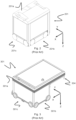
- Fig. 1 discloses a typical prior art automated storage and retrieval system 1 with a framework structure 100 and Fig. 2 and 3 disclose two different prior art container handling vehicles 201,301 suitable for operating on such a system 1.
- the framework structure 100 comprises upright members 102, horizontal members 103 and a storage volume comprising storage columns 105 arranged in rows between the upright members 102 and the horizontal members 103.
- storage columns 105 storage containers 106, also known as bins, are stacked one on top of one another to form stacks 107.
- the members 102, 103 may typically be made of metal, e.g. extruded aluminum profiles.
- the framework structure 100 of the automated storage and retrieval system 1 comprises a rail system 108 arranged across the top of framework structure 100, on which rail system 108 a plurality of container handling vehicles 201,301 are operated to raise storage containers 106 from, and lower storage containers 106 into, the storage columns 105, and also to transport the storage containers 106 above the storage columns 105.
- the rail system 108 comprises a first set of parallel rails 110 arranged to guide movement of the container handling vehicles 201,301 in a first direction X across the top of the frame structure 100, and a second set of parallel rails 111 arranged perpendicular to the first set of rails 110 to guide movement of the container handling vehicles 201,301 in a second direction Y which is perpendicular to the first direction X.
- Containers 106 stored in the columns 105 are accessed by the container handling vehicles through access openings 112 in the rail system 108.
- the container handling vehicles 201,301 can move laterally above the storage columns 105, i.e. in a plane which is parallel to the horizontal X-Y plane.
- the upright members 102 of the framework structure 100 may be used to guide the storage containers during raising of the containers out from and lowering of the containers into the columns 105.
- the stacks 107 of containers 106 are typically selfsupportive.
- Each prior art container handling vehicle 201,301 comprises a vehicle body 201a,301a, and first and second sets of wheels 201b,301b,201c,301c which enable the lateral movement of the container handling vehicles 201,301 in the X direction and in the Y direction, respectively.
- first and second sets of wheels 201b,301b,201c,301c which enable the lateral movement of the container handling vehicles 201,301 in the X direction and in the Y direction, respectively.
- the first set of wheels 201b,301b is arranged to engage with two adjacent rails of the first set 110 of rails
- the second set of wheels 201c,301c is arranged to engage with two adjacent rails of the second set 111 of rails.
- At least one of the sets of wheels 201b,301b,201c,301c can be lifted and lowered, so that the first set of wheels 201b,301b and/or the second set of wheels 201c,301c can be engaged with the respective set of rails 110, 111 at any one time.
- Each prior art container handling vehicle 201,301 also comprises a lifting device (not shown) for vertical transportation of storage containers 106, e.g. raising a storage container 106 from, and lowering a storage container 106 into, a storage column 105.
- the lifting device comprises one or more gripping / engaging devices which are adapted to engage a storage container 106, and which gripping / engaging devices can be lowered from the vehicle 201,301 so that the position of the gripping / engaging devices with respect to the vehicle 201,301 can be adjusted in a third direction Z which is orthogonal the first direction X and the second direction Y.
- Parts of the gripping device of the container handling vehicle 301 are shown in fig. 3 indicated with reference number 304.
- the gripping device of the container handling device 201 is located within the vehicle body 301a in Fig. 2 .
- Each prior art container handling vehicle 201,301 comprises a storage compartment or space for receiving and stowing a storage container 106 when transporting the storage container 106 across the rail system 108.
- the storage space may comprise a cavity arranged centrally within the vehicle body 201a as shown in Fig. 2 and as described in e.g. WO2015193278A1 , the contents of which are incorporated herein by reference.
- Fig. 3 shows an alternative configuration of a container handling vehicle 301 with a cantilever construction.
- a container handling vehicle 301 with a cantilever construction.
- Such a vehicle is described in detail in e.g. NO317366, the contents of which are also incorporated herein by reference.
- the central cavity container handling vehicles 201 shown in Fig. 2 may have a footprint that covers an area with dimensions in the X and Y directions which is generally equal to the lateral extent of a storage column 105, e.g. as is described in WO2015193278A1 , the contents of which are incorporated herein by reference.
- the term 'lateral' used herein may mean 'horizontal'.
- the central cavity container handling vehicles 101 may have a footprint which is larger than the lateral area defined by a storage column 105, e.g. as is disclosed in WO2014090684A1 .
- the rail system 108 typically comprises rails with grooves in which the wheels of the vehicles run.
- the rails may comprise upwardly protruding elements, where the wheels of the vehicles comprise flanges to prevent derailing. These grooves and upwardly protruding elements are collectively known as tracks.
- Each rail may comprise one track, or each rail may comprise two parallel tracks.
- WO2018146304 illustrates a typical configuration of rail system 108 comprising rails and parallel tracks in both X and Y directions.
- columns 105 In the framework structure 100, a majority of the columns 105 are storage columns 105, i.e. columns 105 where storage containers 106 are stored in stacks 107. However, some columns 105 may have other purposes.
- columns 119 and 120 are such special-purpose columns used by the container handling vehicles 201,301 to drop off and/or pick up storage containers 106 so that they can be transported to an access station (not shown) where the storage containers 106 can be accessed from outside of the framework structure 100 or transferred out of or into the framework structure 100.
- such a location is normally referred to as a 'port' and the column in which the port is located may be referred to as a 'port column' 119,120.
- the first port column 119 may for example be a dedicated drop-off port column where the container handling vehicles 201,301 can drop off storage containers 106 to be transported to an access or a transfer station
- the second port column 120 may be a dedicated pick-up port column where the container handling vehicles 201,301 can pick up storage containers 106 that have been transported from an access or a transfer station.
- the access station may typically be a picking or a stocking station where product items are removed from or positioned into the storage containers 106.
- the storage containers 106 are normally not removed from the automated storage and retrieval system 1, but are returned into the framework structure 100 again once accessed.
- a port can also be used for transferring storage containers to another storage facility (e.g. to another framework structure or to another automated storage and retrieval system), to a transport vehicle (e.g. a train or a lorry), or to a production facility.
- a conveyor system comprising conveyors is normally employed to transport the storage containers between the port columns 119,120 and the access station.
- the conveyor system may comprise a lift device with a vertical component for transporting the storage containers 106 vertically between the port column 119,120 and the access station.
- the conveyor system may be arranged to transfer storage containers 106 between different framework structures, e.g. as is described in WO2014075937A1 , the contents of which are incorporated herein by reference.
- the operation also involves temporarily moving the above-positioned storage containers prior to lifting the target storage container 106 from the storage column 105.
- This step which is sometimes referred to as "digging" within the art, may be performed with the same container handling vehicle that is subsequently used for transporting the target storage container to the drop-off port column 119, or with one or a plurality of other cooperating container handling vehicles.
- the automated storage and retrieval system 1 may have container handling vehicles specifically dedicated to the task of temporarily removing storage containers from a storage column 105. Once the target storage container 106 has been removed from the storage column 105, the temporarily removed storage containers can be repositioned into the original storage column 105. However, the removed storage containers may alternatively be relocated to other storage columns.
- one of the container handling vehicles 201,301 When a storage container 106 is to be stored in one of the columns 105, one of the container handling vehicles 201,301 is instructed to pick up the storage container 106 from the pick-up port column 120 and transport it to a location above the storage column 105 where it is to be stored. After any storage containers positioned at or above the target position within the storage column stack 107 have been removed, the container handling vehicle 201,301 positions the storage container 106 at the desired position. The removed storage containers may then be lowered back into the storage column 105, or relocated to other storage columns.
- the automated storage and retrieval system 1 For monitoring and controlling the automated storage and retrieval system 1, e.g. monitoring and controlling the location of respective storage containers 106 within the framework structure 100, the content of each storage container 106; and the movement of the container handling vehicles 201,301 so that a desired storage container 106 can be delivered to the desired location at the desired time without the container handling vehicles 201,301 colliding with each other, the automated storage and retrieval system 1 comprises a control system 500 which typically is computerized and which typically comprises a database for keeping track of the storage containers 106.
- WO2018146687 describes a system for controlling movement of plurality of container handling vehicles where the container handling vehicles transport storage containers, store and retrieve storage containers into/from storage columns.
- the framework structure 100 and the rail system 108 is specified and constructed to allow operation of the plurality of container handling vehicles 201, 301 at full speed and acceleration. However, after installation or during operation it may be determined that some areas of the framework structure 100 and/or the rail system 108 are outside specifications. This may lead to operational errors of the container handling vehicles 201, 301. The operational errors may lead to system stop or crash of container handling vehicles 201, 301. In order to be safe and avoid the operation errors, the speed and/or acceleration is reduced for all container handling vehicles 201, 301 on the rail system 108. This leads to a considerably reduced capacity of the automated storage and retrieval system 1.
- WO2019138392 an access control method is utilized in order to guarantee the structural integrity of a grid-like storage facility.
- the access control method limits the number of transporting devices in a constraint area by granting or withholding clearance to each transporting device to traverse the constraint area. It does not address operational errors of the transporting vehicles.
- the present invention aims to provide a system and method for the automated storage and retrieval system which avoids operational errors of the container handling vehicles in out of specification areas without significantly reducing the capacity of the automated storage and retrieval system.
- the invention is related to a method for controlling movement of a plurality of container handling vehicles on a rail system arranged at least partially across a top of framework structure of an automated storage and retrieval system, on which rail system the plurality of container handling vehicles are operable to raise storage containers from, and lower storage containers into, storage columns arranged in rows between upright members and horizontal members of the framework structure, and also to transport the storage containers above the storage columns.
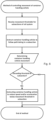
- the following steps are performed by a central operational controller which is in communication with a local controller in each container handling vehicle.
- the method may further comprise, prior to the step of instructing the container handling vehicle to reduce speed and/or acceleration, a step of determining that a current movement of the container handling vehicle exceeds the container handling vehicle movement threshold of the subsection.
- the central operation controller may then only instruct to reduce speed and/or acceleration when the current movement of the container handling vehicle exceeds the container handling vehicle movement threshold of the subsection. The number of instructions over the communication channel is therefore reduced and unwanted additional load on the communication channels is avoided.
- determining that the container handling vehicle exceeds the container handling vehicle movement threshold may further comprise classifying the container handling vehicle according to a container handling vehicle classification, and determining, based on the container handling vehicle classification, that the container handling vehicle exceeds the container handling vehicle movement threshold.
- the container handling vehicle classification comprises a default speed and/or acceleration of the container handling vehicle.
- determining that the container handling vehicle exceeds the container handling vehicle movement threshold may further comprise receiving data of the weight of a storage container transported by the container handling vehicle, and determining, based on the weight of the storage container and the container handling classification, that the container handling vehicle exceeds the container handling vehicle movement threshold.
- determining that the container handling vehicle exceeds the container handling vehicle movement threshold may further comprise receiving historical movement data of the container handling vehicle, and determining, based on the historical movement data of the container handling vehicle, that the container handling vehicle exceeds the container handling vehicle movement threshold.
- the container handling vehicle movement threshold sets a maximum speed of the container handling vehicle.
- the container handling vehicle movement threshold sets a maximum acceleration of the container handling vehicle.
- the container handling vehicle movement threshold sets a maximum linear momentum of the container handling vehicle.
- the method may further comprise determining, using a rail inspection vehicle traversing the rail system, the container handling vehicle movement threshold for the subsection of the rail system.
- the container handling vehicle movement threshold may be determined based on detected vertical and/or horizontal movement of the rail inspection vehicle due to movement in the rail system above a fault threshold.
- the container handling vehicle movement threshold may be determined based on detected changes in horizontal movement of the rail inspection vehicle due to a change in a condition of the rail system.
- the container handling vehicle movement threshold may also be determined based on visually detected faults in the rail system using the rail inspection vehicle or other method.
- the method may further comprise determining the container handling vehicle movement threshold for the subsection based on a reduced mechanical stability in the subsection of the of rail system compared to a mechanical stability of the rail system outside the subsection.
- the method may further comprise determining the container handling vehicle movement threshold for the subsection based on a displacement of the of rail system in the subsection in relation to the rail system outside the subsection.
- the method may further comprise determining the container handling vehicle movement threshold for the subsection based on a reduced friction in the subsection of the rail system compared to a friction of the rail system outside the subsection.
- the method may further comprise determining the container handling vehicle movement threshold for the subsection based on different environmental conditions in the subsection of the rail system than in the rail system outside the subsection.
- the method may further comprise transmitting the container handling vehicle movement threshold for the subsection to the local controller in the container handling vehicle, and performing, using the local controller in the container handling vehicle, the step of instructing the container handling vehicle to reduce speed and/or acceleration such that the movement of the container handling vehicle within the subsection is below the container handling vehicle movement threshold of the subsection.
- the invention concerns a system comprising a rail system arranged at least partially across a top of framework structure of an automated storage and retrieval system, a plurality of container handling vehicles operating on the rail system to raise storage containers from, and lower storage containers into, storage columns arranged in rows between upright members and horizontal members of the framework structure, and also to transport the storage containers above the storage columns, each container handling vehicle comprising a local controller adapted to control movements of the container handling vehicle, and a central operational controller in communication with the local controller in each container handling vehicle.
- the central operational controller is adapted to perform receiving data relating to a subsection of the rail system, the data comprising a container handling vehicle movement threshold for the subsection, instructing a container handling vehicle to follow a path which takes in at least a part of the subsection, and instructing the container handling vehicle to reduce speed and/or acceleration such that the movement of the container handling vehicle within the subsection is below the container handling vehicle movement threshold of the subsection.
- Driving the container handling vehicle at slower speed/acceleration allows the control system to better handle operational errors. In this way, system stops or crashes can be avoided.
- the central operational controller may be further adapted to, prior to instructing the container handling vehicle to reduce speed and/or acceleration, determining that a current movement of the container handling vehicle exceeds the container handling vehicle movement threshold of the subsection. The central operation controller may then only instruct to reduce speed and/or acceleration when the current movement of the container handling vehicle exceeds the container handling vehicle movement threshold of the subsection. The number of instructions over the communication channel is therefore reduced and unwanted additional load on the communication channels is avoided.
- determining that the container handling vehicle exceeds the container handling vehicle movement threshold may further comprise classifying the container handling vehicle according to a container handling vehicle classification, and determining, based on the container handling vehicle classification, that the container handling vehicle exceeds the container handling vehicle movement threshold.
- the container handling vehicle classification comprises a default speed and/or acceleration of the container handling vehicle.
- determining that the container handling vehicle exceeds the container handling vehicle movement threshold may further comprise receiving data of the weight of a storage container transported by the container handling vehicle, and determining, based on the weight of the storage container and the container handling classification, that the container handling vehicle exceeds the container handling vehicle movement threshold.
- determining that the container handling vehicle exceeds the container handling vehicle movement threshold may further comprise receiving historical movement data of the container handling vehicle, and determining, based on the historical movement data of the container handling vehicle, that the container handling vehicle exceeds the container handling vehicle movement threshold.
- the central operational controller may be further adapted to instructing the container handling vehicle to revert to a default speed and/or acceleration when the container handling vehicle is leaving and/or about to leave the subsection.
- the container handling vehicle movement threshold sets a maximum speed of the container handling vehicle.
- the container handling vehicle movement threshold sets a maximum acceleration of the container handling vehicle.
- the container handling vehicle movement threshold sets a maximum linear momentum of the container handling vehicle.
- the container handling vehicle movement threshold for the subsection may be determined based on a reduced mechanical stability in the subsection of the of rail system compared to a mechanical stability of the rail system outside the subsection.
- the central operational controller may be further adapted to transmitting the container handling vehicle movement threshold for the subsection to the local controller in the container handling vehicle, and the local controller in the container handling vehicle may be further adapted to instructing the container handling vehicle to reduce speed and/or acceleration such that the movement of the container handling vehicle within the subsection is below the container handling vehicle movement threshold of the subsection.
- the invention is directed to a computer program product for a central operational controller in a system comprising a plurality of container handling vehicles on a rail system arranged at least partially across a top of framework structure of an automated storage and retrieval system, on which rail system the plurality of container handling vehicles are operable to raise storage containers from, and lower storage containers into, storage columns arranged in rows between upright members and horizontal members of the framework structure, and also to transport the storage containers above the storage columns, each container handling vehicle comprising a local controller adapted to control movements of the container handling vehicle, and the central operational controller is in communication with the local controller in each container handling vehicle, the computer program product comprises instructions that when executed on the central operational controller performs the method according to the first aspect of the invention.
- the framework structure 100 of the automated storage and retrieval system 1 is constructed in accordance with the prior art framework structure 100 described above in connection with Figs. 1-3 , i.e. a number of upright members 102 and a number of horizontal members 103, which are supported by the upright members 102, and further that the framework structure 100 comprises a first, upper rail system 108 in the X direction and Y direction.
- the framework structure 100 further comprises storage compartments in the form of storage columns 105 provided between the members 102, 103, where storage containers 106 are stackable in stacks 107 within the storage columns 105.
- the framework structure 100 can be of any size. In particular it is understood that the framework structure can be considerably wider and/or longer and/or deeper than disclosed in Fig. 1 .
- the framework structure 100 may have a horizontal extent of more than 700x700 columns and a storage depth of more than twelve containers.
- Fig. 4 is a schematic overview of a part of the rail system 108, where it is shown container handling vehicles 201, 301 instructed to follow paths 402, 403, respectively, taking in at least a part of two subsections 401a, 401b.
- the two subsections 401a, 401b are for simplicity defined in terms of integer units of storage columns but may also be defined by fractional units of storage columns, or by other suitable coordinates.
- An exemplary third subsection 401c is defined by one and a half storage column in the Y-direction two storage columns in the X-direction.
- the subsections 401a, 401b, 401c are areas of the rail system 108 where there is a higher likelihood for operational errors of the container handling vehicles 201, 301compared to the remaining areas of the rail system 108.
- Operational errors may include that the container handling vehicles 201, 301 are incapable of stopping in the correct position, or the container handling vehicles 201, 301 detects that sensor data does not correlate with expected data. The operation errors may lead to a system stop, or worse, a crash between container handling vehicles.
- Each container handling vehicle 201, 301 comprises a local controller adapted to control movements of the container handling vehicle 201, 301.
- Controlling the movements of the container handling vehicle 201, 301 includes controlling electric motors driving the driving means, such as wheels, of the container handling vehicle.
- the container handling vehicle 201, 301 usually run at full speed and acceleration.
- the full speed and acceleration of the container handling vehicle 201, 301 is defined by the construction of the electric motors driving the driving means of the container handling vehicle.
- the speed and acceleration of the electric motor may be controlled by adjusting frequency and or voltage of the power supplied to the electric motor.
- the system is provided with a central operational controller 501 in communication with the local controller in each container handling vehicle 201, 301.
- the communication between the local controller and the central operational controller may be any suitable wired or wireless communication technology.
- the central operational controller 501 is also in communication with the control system 500 using any suitable wired or wireless communication technology.
- the central operational controller 501 receives data relating to a subsection 401a, 401b of the rail system 108, the data comprises a container handling vehicle movement threshold for the subsection 401a, 401b.
- the central operation controller 501 may receive the container handling vehicle movement threshold from the control system 500.
- the container handling vehicle movement threshold may set at least one of a maximum speed of the container handling vehicle 201, 301, a maximum acceleration of the container handling vehicle 201, 301, and a maximum linear momentum of the container handling vehicle 201, 301.
- the central operational controller 501 instructs the container handling vehicle 201, 301 to follow a path 402, 403 on the rail system 108.
- the central operation controller 501 may receive data from the control system 500 related to columns on the rail system 108 that requires a container handling vehicle 201, 301 to pick up a storage bin, and to columns where the storage bin should be dropped off.
- the central operational controller 501 may instruct the container handling vehicle to follow the path 402, 403 by step-by-step instructions.
- the central operational controller 501 may instruct the container handling vehicle 201, 301 to follow a path 402, 403 which takes in at least a part of the subsection 401a, 401b.
- the central operational controller 501 instructs the container handling vehicle 201, 301 to reduce speed and/or acceleration such that the movement of the container handling vehicle within the subsection 401a, 401b is below the container handling vehicle movement threshold of the subsection 401a, 401b. While instructing the container handling vehicle to follow a path and instructing the container handling vehicle to reduce speed and/or acceleration is described in separate steps, both instructions may be part of a joint step-by-step instruction from the central operational controller to the container handling vehicle. In one embodiment, some of the steps may be performed by the local controller in each container handling vehicle 201, 301 under the control of the central operational controller 501. In one example, the container handling vehicle movement threshold of the subsection 401a, 401b may be transmitted to and stored in the local controller. The local controller of the container handling vehicle 201, 301 may then make the determination to reduce speed and/or acceleration on its own behalf.
- the central operational controller 501 having knowledge of the path 402, 403 of the container handling vehicle may instruct the container handling vehicle 201, 301 prior to the container handling entering the subsection 401a, 401b, such that the container vehicle 201, 301 has reduced the speed prior to entering the subsection.
- the central operational controller 501 having knowledge of the container handling vehicle 201, 301 may also predict the latest point in time when the instructions needs to be effectuated in order for the container handling vehicle to have reduced its speed below the vehicle movement threshold at the time a side of the container handling vehicle crosses a border of the subsection 401a, 401b.
- the central operational controller 501 having knowledge of the path 402, 403 of the container handling vehicle 201, 301 may instruct the container handling vehicle 201, 301 to reduce the speed and/or acceleration below the vehicle movement threshold once a side of the container handling vehicle 201, 301 crosses a border of the subsection 401a, 401b.
- Instructions to the container handling vehicle 201, 301 to reduce speed and/or acceleration may be part of the instructions to the container handling vehicle 201, 301 to follow the path 402, 403.
- the central operation controller instructs the container handling vehicle 201, 301 to revert to a default speed and/or acceleration.
- the default speed and/or acceleration would typically be the maximum speed and/or acceleration of the container handling device 201, 301.
- the instructions to the container handling vehicle 201, 301 to revert to a default speed and/or acceleration may be part of the instructions to the container handling vehicle 201, 301 to follow the path 402, 403.
- the point in time when the container handling vehicle 201, 301 is leaving the subsection 401a, 401b may depend on the specific requirements of the system.
- one suitable point in time may be when a first side of the container handling vehicle 201, 301 crosses a border of the subsection 401a, 401b on its way out of the subsection 401a, 401b.
- Another suitable point in time may be when the container handling vehicle 201, 301 has completely left the subsection 401a, 401b.
- the central operational controller 501 is further adapted to, prior to instructing the container handling vehicle 201, 301 to reduce speed and/or acceleration, determining that a current movement of the container handling vehicle exceeds the container handling vehicle movement threshold of the subsection 401a, 401b. The central operation controller 501 may then only instruct to reduce speed and/or acceleration when the current movement of the container handling vehicle exceeds the container handling vehicle movement threshold of the subsection 401a, 401b.
- Determining that a current movement of the container handling vehicle exceeds the container handling vehicle movement threshold of the subsection 401a, 401b, may also be directional for the vehicles themselves, for example, due to a non-symmetry in the container handling vehicle 201, 301 and its engagement with the rail system 108.
- the container handling vehicle 201 might have different length to width thresholds due to asymmetry in the internal arrangement of the components and the resultant asymmetric weight distribution and wheelbase.
- the container handling vehicle 301 are usually arranged as left or right-handed cantilevers. The asymmetry in handling will depend on the load being carried in the container and the balance with respect to the motor weight.
- determining that the container handling vehicle exceeds the container handling vehicle movement may be based on classifying the container handling vehicle 201, 301 according to a container handling vehicle classification.
- the container handling vehicle classification may be different types of container handling vehicles, such as cantilever type 301 or cavity type 201, or versions of the same type of container handling vehicles having different specifications, such as different electric motors, different weights, different wheels etc.
- the container handling vehicle classification comprises a default speed and/or acceleration of the container handling vehicle, e.g. a measured average maximum speed and/or acceleration, or an expected maximum speed and/or acceleration based on the specifications of the container handling vehicles in the classification.
- the determination that the container handling vehicle exceeds the container vehicle movement threshold in the subsection 401a, 401b, is then simply based on determining the container handling vehicle classification.
- the central operation controller 501 may additionally receive data of the weight of a storage container transported by the container handling vehicle.
- the central operation controller 501 may receive the weight from weight sensors in the container handling vehicle or get information about the weight from the control system 500 that has knowledge about the content of the storage container. Determining that that the container handling vehicle exceeds the container handling vehicle movement threshold may then be based on the combined knowledge of the weight of the storage container and the container handling classification.
- Weight in a storage container may for example affect the handling of a cantilever type container handling device in larger degree than a cavity type container handling device.
- the central operation controller 501 may receive historical movement data of the container handling vehicle 201, 301 and determining that the container handling vehicle 201, 301 exceeds the container handling vehicle movement threshold based on the historical movement data. The determination may for example based on that the historical movement data show instability in the vehicle. Other historical movement data may include a number of derailings, a number of navigational errors, such as missed detections of rail crossings, etc.
- Fig. 4 shows two different container handling vehicles 201, 301 instructed to follow paths 402 and 403, respectively.
- the central operational controller 501 have knowledge of footprints of the container handling vehicles on the rail system 108.
- the exemplary container handling vehicles 201, 301 illustrates exemplary sizes and footprints of container handling vehicles that may be put on the rail system 108.
- the container handling vehicle 201 shown in fig. 4 may have a footprint which is generally equal to the lateral extent of one storage column 105.
- the container handling vehicle 201 is instructed to follow a path 402 that crosses subsection 401a.
- the central operational controller 501 has knowledge of the path 402 and that the path crosses subsection 401a, and instructs the container handling vehicle 201 to reduce speed and/or acceleration such that the movement of the container handling vehicle 201 within the subsection 401a is below the container handling vehicle movement threshold of the subsection 401a.
- the instructions may in one example be effectuated when the first long side of the footprint of the container handling vehicle 201 crosses the perimeter of the subsection 401a.
- the central operation controller 501 instructs 501 the container handling vehicle 201 to revert to the default speed and/or acceleration and continue to follow the path 402. In some embodiments, if the central operation controller 501 determine that the container handling vehicle 201 does not exceeds the container handling vehicle movement threshold of the subsection 401a both instructions are redundant and none of them are sent to the container handling vehicle 201. When the container handling vehicle is about to enter the next subsection 401b, the instructions to reduce speed and/or acceleration may in one example be effectuated when the first short side of the footprint of the container handling vehicle 201 crosses the perimeter of the next subsection 401b.
- the container handling vehicle 301 shown in fig. 4 has a cantilever construction and may have a footprint approximately the lateral extent of two storage columns 105.
- the container handling vehicle 301 is instructed to follow a path 403 that takes in subsection 401b.
- the central operational controller 501 has knowledge of the path 403 and that the path takes in subsection 401b, and instructs the container handling vehicle 301 to reduce speed and/or acceleration such that the movement of the container handling vehicle 301 within the subsection 401b is below the container handling vehicle movement threshold of the subsection 401b.
- the instructions may in one example be effectuated when the first short side of the footprint of the container handling vehicle 301 crosses the perimeter of the subsection 401b.
- the instructions may be effectuated when the first wheels following the cantilever crosses the perimeter of the subsection 401b.
- the central operation controller instructs 501 the container handling vehicle 301 to revert to the default speed and/or acceleration and continue to follow the path 403.
- the instructions to revert to default speed and/or acceleration may be effectuated when the first or second long side of the footprint of the container handling vehicle 301 crosses the perimeter of the subsection 401b.
- both instructions are redundant and none of them are sent to the container handling vehicle 301.
- the higher likelihood for operational errors of the container handling vehicle 201, 301 in the subsections 401a, 401b may be due to mechanical differences in the rail system 108 and/or the framework structure 100 that leads to reduced mechanical stability of the subsection 401a, 401b, or a displacement of the rail system 108 in the subsection 401a, 401b in relation to the rail system 108 outside the subsection 401a, 401b.
- the reduced mechanical stability and displacement of the rail system may stem from a floor not according to specifications, erroneous mounting of the framework structure, damages on framework structure, displacement of framework structure, a building that has moved etc.
- Determining the container handling vehicle movement threshold for the subsection 401a, 401b may be based on reduced mechanical stability in the subsection 401a, 401b of the of rail system 108 compared to a mechanical stability of the rail system 108 outside the subsection 401a, 401b.
- the higher likelihood for operational errors of the container handling vehicle 201, 301 in the subsections 401a, 401b may also be due to reduced friction in the subsection 401a, 401b compared to a friction of the rail system 108 outside the subsection 401a, 401b, for example based on detection of oil, water, grease etc. on the rail system 108.
- Determining the container handling vehicle movement threshold for the subsection 401a, 401b may be based on a displacement of the of rail system 108 in the subsection 401a, 401b in relation to the rail system 108 outside the subsection 401a, 401b.
- the higher likelihood for operational errors of the container handling vehicle 201, 301 in the subsections 401a, 401b may also be due to a difference in environmental conditions in the subsection 401a, 401b, such as difference in temperature, air pressure, humidity, ambient gasses etc. Changes in environmental conditions may change the performance of the container handling vehicle 201, 301. In one example, water may condense on the wheels of a container handling vehicle 201, 301 entering a cold zone from a warmer and more humid zone, which may cause reduced friction. In another example, the efficiency of the motor may change such that the speed of the container handling vehicle increases.
- Determining the container handling vehicle movement threshold for the subsection 401a, 401b may be based on a reduced friction in the subsection 401a, 401b of the rail system 108 compared to a friction of the rail system 108 outside the subsection 401a, 401b.
- the container handling vehicle movement threshold for the subsection 401a, 401b may be different in the first direction X and the second direction Y.
- the rails are closer together in the first direction X, that may make the structure stronger or more rigid than for the wider spacing between the junction points in the second direction Y.
- the higher likelihood for operational errors of the container handling vehicle 201, 301 in the subsections 401a, 401b may be determined by physical and/or visual inspection of the rail system 108 and the framework structure 100.
- the physical and/or visual inspection may be performed manually.
- the system comprises a rail inspection vehicle adapted to traverse the rail system 108.
- the system is adapted to determining, using the rail inspection vehicle, the container handling vehicle movement threshold for the subsection 401a, 401b of the rail system 108.
- the rail inspection vehicle may be provided with gyros, accelerometers, or other suitable movement sensor to determine vertical and/or horizontal movement of the rail inspection vehicle due to movement in the rail system while traversing the rail system 108.
- the system may then determine the container handling vehicle movement threshold based on detected vertical and/or horizontal movement of the rail inspection vehicle due to movement in the rail system above a fault threshold.
- the container handling vehicle movement threshold may be determined by the system based on detected changes in horizontal movement of the rail inspection vehicle due to a change in a condition of the rail system.
- the rail inspection vehicle may be provided with an imaging device, such as a camera, in any suitable range of the electromagnetic spectrum, adapted to visually detect faults in the rail system while traversing the rail system 108.
- the system may then determine the container handling vehicle movement threshold based on visually detected faults in the rail system 108.
Landscapes
- Engineering & Computer Science (AREA)
- Mechanical Engineering (AREA)
- Physics & Mathematics (AREA)
- General Physics & Mathematics (AREA)
- Automation & Control Theory (AREA)
- Aviation & Aerospace Engineering (AREA)
- Radar, Positioning & Navigation (AREA)
- Remote Sensing (AREA)
- Mathematical Physics (AREA)
- Manufacturing & Machinery (AREA)
- General Engineering & Computer Science (AREA)
- Quality & Reliability (AREA)
- Warehouses Or Storage Devices (AREA)
- Vehicle Body Suspensions (AREA)
- Electrophonic Musical Instruments (AREA)
- Magnetic Resonance Imaging Apparatus (AREA)
- Electric Propulsion And Braking For Vehicles (AREA)
Applications Claiming Priority (3)
| Application Number | Priority Date | Filing Date | Title |
|---|---|---|---|
| NO20200387A NO346249B1 (en) | 2020-03-31 | 2020-03-31 | Section based speed reduction |
| EP21715798.1A EP4126710B1 (de) | 2020-03-31 | 2021-03-23 | Streckenbasierte geschwindigkeitsreduktion |
| PCT/EP2021/057385 WO2021197914A1 (en) | 2020-03-31 | 2021-03-23 | Section based speed reduction |
Related Parent Applications (2)
| Application Number | Title | Priority Date | Filing Date |
|---|---|---|---|
| EP21715798.1A Division EP4126710B1 (de) | 2020-03-31 | 2021-03-23 | Streckenbasierte geschwindigkeitsreduktion |
| EP21715798.1A Division-Into EP4126710B1 (de) | 2020-03-31 | 2021-03-23 | Streckenbasierte geschwindigkeitsreduktion |
Publications (2)
| Publication Number | Publication Date |
|---|---|
| EP4545451A2 true EP4545451A2 (de) | 2025-04-30 |
| EP4545451A3 EP4545451A3 (de) | 2025-07-02 |
Family
ID=75339685
Family Applications (2)
| Application Number | Title | Priority Date | Filing Date |
|---|---|---|---|
| EP21715798.1A Active EP4126710B1 (de) | 2020-03-31 | 2021-03-23 | Streckenbasierte geschwindigkeitsreduktion |
| EP25164252.6A Pending EP4545451A3 (de) | 2020-03-31 | 2021-03-23 | Streckenbasierte geschwindigkeitsreduktion |
Family Applications Before (1)
| Application Number | Title | Priority Date | Filing Date |
|---|---|---|---|
| EP21715798.1A Active EP4126710B1 (de) | 2020-03-31 | 2021-03-23 | Streckenbasierte geschwindigkeitsreduktion |
Country Status (10)
| Country | Link |
|---|---|
| US (1) | US12559314B2 (de) |
| EP (2) | EP4126710B1 (de) |
| JP (2) | JP7723005B2 (de) |
| KR (1) | KR20220160081A (de) |
| CN (1) | CN115667100A (de) |
| CA (1) | CA3174024A1 (de) |
| ES (1) | ES3031968T3 (de) |
| NO (1) | NO346249B1 (de) |
| PL (1) | PL4126710T3 (de) |
| WO (1) | WO2021197914A1 (de) |
Families Citing this family (3)
| Publication number | Priority date | Publication date | Assignee | Title |
|---|---|---|---|---|
| NO347437B1 (en) * | 2020-08-12 | 2023-11-06 | Autostore Tech As | System and method for detection of anomalies in the tracks on a three-dimensional storage system |
| GB2623532A (en) * | 2022-10-18 | 2024-04-24 | Ocado Innovation Ltd | Method and system for detecting track defects |
| NO20221353A1 (en) * | 2022-12-16 | 2024-06-17 | Autostore Tech As | On-board analysis for condition-based monitoring of automated vehicles of an automated storage system |
Citations (6)
| Publication number | Priority date | Publication date | Assignee | Title |
|---|---|---|---|---|
| WO2014075937A1 (en) | 2012-11-13 | 2014-05-22 | Jakob Hatteland Logistics As | Storage system |
| WO2014090684A1 (en) | 2012-12-10 | 2014-06-19 | Jakob Hatteland Logistics As | Robot for transporting storage bins |
| WO2015193278A1 (en) | 2014-06-19 | 2015-12-23 | Jakob Hatteland Logistics As | Robot for transporting storage bins |
| WO2018146687A1 (en) | 2017-02-12 | 2018-08-16 | Commonsense Robotics Ltd. | Human-assisted robotic picking apparatus |
| WO2018146304A1 (en) | 2017-02-13 | 2018-08-16 | Autostore Technology AS | Rail arrangement for a storage system |
| WO2019138392A1 (en) | 2018-01-10 | 2019-07-18 | Ocado Innovation Limited | A controller and method for transporting devices |
Family Cites Families (17)
| Publication number | Priority date | Publication date | Assignee | Title |
|---|---|---|---|---|
| US4766547A (en) | 1986-04-14 | 1988-08-23 | Transfer Technologies, Inc. | Computer controlled conveyor system |
| JPH02204807A (ja) * | 1989-02-02 | 1990-08-14 | Toshiba Corp | 無人搬送車 |
| JPH05286527A (ja) * | 1992-04-14 | 1993-11-02 | Hitachi Ltd | 入出庫作業用クレーンの制御方法及び装置 |
| US6550666B2 (en) | 2001-08-21 | 2003-04-22 | Advanpack Solutions Pte Ltd | Method for forming a flip chip on leadframe semiconductor package |
| WO2007132951A1 (en) * | 2006-05-11 | 2007-11-22 | Posco | Method and apparatus for control and safe braking in personal rapid transit systems with in-track linear induction motors |
| AT503427B1 (de) * | 2006-08-03 | 2007-10-15 | Katt Logistik Gmbh | Verfahren zum ein- und auslagern von ladegut |
| GB201314313D0 (en) | 2013-08-09 | 2013-09-25 | Ocado Ltd | Apparatus for retrieving units from a storage system |
| GB201409883D0 (en) * | 2014-06-03 | 2014-07-16 | Ocado Ltd | Methods, systems, and apparatus for controlling movement of transporting devices |
| US10241515B2 (en) | 2015-05-29 | 2019-03-26 | Clearpath Robotics, Inc. | Method, system and apparatus for handling operational constraints for control of unmanned vehicles |
| US10081106B2 (en) * | 2015-11-24 | 2018-09-25 | X Development Llc | Safety system for integrated human/robotic environments |
| JP6730057B2 (ja) | 2016-03-30 | 2020-07-29 | 株式会社東芝 | 電気車制御装置 |
| WO2018187152A1 (en) * | 2017-04-03 | 2018-10-11 | Walmart Apollo, Llc | Systems and methods for intake and transport of physical objects in a facility |
| JP6859868B2 (ja) * | 2017-06-22 | 2021-04-14 | 株式会社ダイフク | 物品収納設備 |
| JP6906754B2 (ja) * | 2017-10-31 | 2021-07-21 | 村田機械株式会社 | 搬送システム |
| JP7095474B2 (ja) * | 2018-08-07 | 2022-07-05 | 村田機械株式会社 | 搬送装置 |
| CN109885070B (zh) * | 2019-04-01 | 2020-12-18 | 上海快仓智能科技有限公司 | 机器人的运动控制方法、运动控制设备以及自动仓储系统 |
| IL289694B2 (en) * | 2019-07-12 | 2023-12-01 | Murata Machinery Ltd | Traveling vehicle system and traveling vehicle control method |
-
2020
- 2020-03-31 NO NO20200387A patent/NO346249B1/en unknown
-
2021
- 2021-03-23 WO PCT/EP2021/057385 patent/WO2021197914A1/en not_active Ceased
- 2021-03-23 CA CA3174024A patent/CA3174024A1/en active Pending
- 2021-03-23 KR KR1020227037556A patent/KR20220160081A/ko active Pending
- 2021-03-23 EP EP21715798.1A patent/EP4126710B1/de active Active
- 2021-03-23 US US17/907,636 patent/US12559314B2/en active Active
- 2021-03-23 ES ES21715798T patent/ES3031968T3/es active Active
- 2021-03-23 PL PL21715798.1T patent/PL4126710T3/pl unknown
- 2021-03-23 CN CN202180038990.6A patent/CN115667100A/zh active Pending
- 2021-03-23 JP JP2022559579A patent/JP7723005B2/ja active Active
- 2021-03-23 EP EP25164252.6A patent/EP4545451A3/de active Pending
-
2025
- 2025-07-31 JP JP2025128065A patent/JP2025160410A/ja active Pending
Patent Citations (6)
| Publication number | Priority date | Publication date | Assignee | Title |
|---|---|---|---|---|
| WO2014075937A1 (en) | 2012-11-13 | 2014-05-22 | Jakob Hatteland Logistics As | Storage system |
| WO2014090684A1 (en) | 2012-12-10 | 2014-06-19 | Jakob Hatteland Logistics As | Robot for transporting storage bins |
| WO2015193278A1 (en) | 2014-06-19 | 2015-12-23 | Jakob Hatteland Logistics As | Robot for transporting storage bins |
| WO2018146687A1 (en) | 2017-02-12 | 2018-08-16 | Commonsense Robotics Ltd. | Human-assisted robotic picking apparatus |
| WO2018146304A1 (en) | 2017-02-13 | 2018-08-16 | Autostore Technology AS | Rail arrangement for a storage system |
| WO2019138392A1 (en) | 2018-01-10 | 2019-07-18 | Ocado Innovation Limited | A controller and method for transporting devices |
Also Published As
| Publication number | Publication date |
|---|---|
| CN115667100A (zh) | 2023-01-31 |
| US12559314B2 (en) | 2026-02-24 |
| EP4126710A1 (de) | 2023-02-08 |
| ES3031968T3 (en) | 2025-07-14 |
| JP2023520206A (ja) | 2023-05-16 |
| JP7723005B2 (ja) | 2025-08-13 |
| EP4126710B1 (de) | 2025-05-07 |
| EP4545451A3 (de) | 2025-07-02 |
| NO346249B1 (en) | 2022-05-09 |
| WO2021197914A1 (en) | 2021-10-07 |
| CA3174024A1 (en) | 2021-10-07 |
| NO20200387A1 (en) | 2021-10-01 |
| JP2025160410A (ja) | 2025-10-22 |
| KR20220160081A (ko) | 2022-12-05 |
| US20230136087A1 (en) | 2023-05-04 |
| EP4126710C0 (de) | 2025-05-07 |
| PL4126710T3 (pl) | 2025-09-08 |
Similar Documents
| Publication | Publication Date | Title |
|---|---|---|
| US12358724B2 (en) | Robotic consolidation station and storage system | |
| US12559314B2 (en) | Section based speed reduction | |
| EP4534453A2 (de) | System und verfahren zur erkennung von anomalien in den spuren eines dreidimensionalen speichersystems | |
| US20240351783A1 (en) | System, method and computer program product of determining a position of a container handling vehicle in an automated grid based storage and retrieval system | |
| EP4620869A2 (de) | Automatisiertes lagerungs- und entnahmesystem zur lagerung von frischen lebensmitteln und produkten | |
| US20250178836A1 (en) | A buffer system for temporarily storing containers in an automated storage and retrieval system | |
| WO2024133300A1 (en) | Method, system and computer program product for moving a storage container | |
| US20230384796A1 (en) | Method, system and computer program product for controlling movement of a plurality of container handling vehicles | |
| HK40082562A (zh) | 基於减速的区段 | |
| EP4546070A1 (de) | Verfahren und system zur verbesserung der sicherheit eines bemannten dienstfahrzeugs | |
| AU2023469407A1 (en) | Method, system and computer readable storage medium of controlling movement of cantilever container handling vehicles | |
| WO2025077992A1 (en) | Method, system and computer readable storage medium of controlling movement of cantilever container handling vehicles | |
| AU2024323504A1 (en) | Charging container handling vehicles operating on an automated storage and retrieval system |
Legal Events
| Date | Code | Title | Description |
|---|---|---|---|
| PUAI | Public reference made under article 153(3) epc to a published international application that has entered the european phase |
Free format text: ORIGINAL CODE: 0009012 |
|
| STAA | Information on the status of an ep patent application or granted ep patent |
Free format text: STATUS: THE APPLICATION HAS BEEN PUBLISHED |
|
| AC | Divisional application: reference to earlier application |
Ref document number: 4126710 Country of ref document: EP Kind code of ref document: P |
|
| AK | Designated contracting states |
Kind code of ref document: A2 Designated state(s): AL AT BE BG CH CY CZ DE DK EE ES FI FR GB GR HR HU IE IS IT LI LT LU LV MC MK MT NL NO PL PT RO RS SE SI SK SM TR |
|
| PUAL | Search report despatched |
Free format text: ORIGINAL CODE: 0009013 |
|
| AK | Designated contracting states |
Kind code of ref document: A3 Designated state(s): AL AT BE BG CH CY CZ DE DK EE ES FI FR GB GR HR HU IE IS IT LI LT LU LV MC MK MT NL NO PL PT RO RS SE SI SK SM TR |
|
| RIC1 | Information provided on ipc code assigned before grant |
Ipc: B65G 1/04 20060101AFI20250523BHEP |
|
| STAA | Information on the status of an ep patent application or granted ep patent |
Free format text: STATUS: REQUEST FOR EXAMINATION WAS MADE |
|
| 17P | Request for examination filed |
Effective date: 20251222 |
|
| RAP3 | Party data changed (applicant data changed or rights of an application transferred) |
Owner name: AUTOSTORE TECHNOLOGY AS |