EP4539149A2 - Festkörpersekundärbatterie - Google Patents
Festkörpersekundärbatterie Download PDFInfo
- Publication number
- EP4539149A2 EP4539149A2 EP24181881.4A EP24181881A EP4539149A2 EP 4539149 A2 EP4539149 A2 EP 4539149A2 EP 24181881 A EP24181881 A EP 24181881A EP 4539149 A2 EP4539149 A2 EP 4539149A2
- Authority
- EP
- European Patent Office
- Prior art keywords
- active material
- layer
- solid
- anode
- anode active
- Prior art date
- Legal status (The legal status is an assumption and is not a legal conclusion. Google has not performed a legal analysis and makes no representation as to the accuracy of the status listed.)
- Pending
Links
Images



Classifications
-
- H—ELECTRICITY
- H01—ELECTRIC ELEMENTS
- H01M—PROCESSES OR MEANS, e.g. BATTERIES, FOR THE DIRECT CONVERSION OF CHEMICAL ENERGY INTO ELECTRICAL ENERGY
- H01M10/00—Secondary cells; Manufacture thereof
- H01M10/05—Accumulators with non-aqueous electrolyte
- H01M10/058—Construction or manufacture
- H01M10/0585—Construction or manufacture of accumulators having only flat construction elements, i.e. flat positive electrodes, flat negative electrodes and flat separators
-
- H—ELECTRICITY
- H01—ELECTRIC ELEMENTS
- H01M—PROCESSES OR MEANS, e.g. BATTERIES, FOR THE DIRECT CONVERSION OF CHEMICAL ENERGY INTO ELECTRICAL ENERGY
- H01M4/00—Electrodes
- H01M4/02—Electrodes composed of, or comprising, active material
- H01M4/36—Selection of substances as active materials, active masses, active liquids
- H01M4/362—Composites
- H01M4/366—Composites as layered products
-
- H—ELECTRICITY
- H01—ELECTRIC ELEMENTS
- H01M—PROCESSES OR MEANS, e.g. BATTERIES, FOR THE DIRECT CONVERSION OF CHEMICAL ENERGY INTO ELECTRICAL ENERGY
- H01M10/00—Secondary cells; Manufacture thereof
- H01M10/05—Accumulators with non-aqueous electrolyte
- H01M10/052—Li-accumulators
-
- H—ELECTRICITY
- H01—ELECTRIC ELEMENTS
- H01M—PROCESSES OR MEANS, e.g. BATTERIES, FOR THE DIRECT CONVERSION OF CHEMICAL ENERGY INTO ELECTRICAL ENERGY
- H01M10/00—Secondary cells; Manufacture thereof
- H01M10/05—Accumulators with non-aqueous electrolyte
- H01M10/056—Accumulators with non-aqueous electrolyte characterised by the materials used as electrolytes, e.g. mixed inorganic/organic electrolytes
- H01M10/0561—Accumulators with non-aqueous electrolyte characterised by the materials used as electrolytes, e.g. mixed inorganic/organic electrolytes the electrolyte being constituted of inorganic materials only
- H01M10/0562—Solid materials
-
- H—ELECTRICITY
- H01—ELECTRIC ELEMENTS
- H01M—PROCESSES OR MEANS, e.g. BATTERIES, FOR THE DIRECT CONVERSION OF CHEMICAL ENERGY INTO ELECTRICAL ENERGY
- H01M10/00—Secondary cells; Manufacture thereof
- H01M10/05—Accumulators with non-aqueous electrolyte
- H01M10/056—Accumulators with non-aqueous electrolyte characterised by the materials used as electrolytes, e.g. mixed inorganic/organic electrolytes
- H01M10/0564—Accumulators with non-aqueous electrolyte characterised by the materials used as electrolytes, e.g. mixed inorganic/organic electrolytes the electrolyte being constituted of organic materials only
- H01M10/0565—Polymeric materials, e.g. gel-type or solid-type
-
- H—ELECTRICITY
- H01—ELECTRIC ELEMENTS
- H01M—PROCESSES OR MEANS, e.g. BATTERIES, FOR THE DIRECT CONVERSION OF CHEMICAL ENERGY INTO ELECTRICAL ENERGY
- H01M4/00—Electrodes
- H01M4/02—Electrodes composed of, or comprising, active material
- H01M4/13—Electrodes for accumulators with non-aqueous electrolyte, e.g. for lithium-accumulators; Processes of manufacture thereof
- H01M4/134—Electrodes based on metals, Si or alloys
-
- H—ELECTRICITY
- H01—ELECTRIC ELEMENTS
- H01M—PROCESSES OR MEANS, e.g. BATTERIES, FOR THE DIRECT CONVERSION OF CHEMICAL ENERGY INTO ELECTRICAL ENERGY
- H01M4/00—Electrodes
- H01M4/02—Electrodes composed of, or comprising, active material
- H01M4/13—Electrodes for accumulators with non-aqueous electrolyte, e.g. for lithium-accumulators; Processes of manufacture thereof
- H01M4/136—Electrodes based on inorganic compounds other than oxides or hydroxides, e.g. sulfides, selenides, tellurides, halogenides or LiCoFy
-
- H—ELECTRICITY
- H01—ELECTRIC ELEMENTS
- H01M—PROCESSES OR MEANS, e.g. BATTERIES, FOR THE DIRECT CONVERSION OF CHEMICAL ENERGY INTO ELECTRICAL ENERGY
- H01M4/00—Electrodes
- H01M4/02—Electrodes composed of, or comprising, active material
- H01M4/36—Selection of substances as active materials, active masses, active liquids
- H01M4/362—Composites
- H01M4/364—Composites as mixtures
-
- H—ELECTRICITY
- H01—ELECTRIC ELEMENTS
- H01M—PROCESSES OR MEANS, e.g. BATTERIES, FOR THE DIRECT CONVERSION OF CHEMICAL ENERGY INTO ELECTRICAL ENERGY
- H01M4/00—Electrodes
- H01M4/02—Electrodes composed of, or comprising, active material
- H01M4/36—Selection of substances as active materials, active masses, active liquids
- H01M4/38—Selection of substances as active materials, active masses, active liquids of elements or alloys
- H01M4/381—Alkaline or alkaline earth metals elements
- H01M4/382—Lithium
-
- H—ELECTRICITY
- H01—ELECTRIC ELEMENTS
- H01M—PROCESSES OR MEANS, e.g. BATTERIES, FOR THE DIRECT CONVERSION OF CHEMICAL ENERGY INTO ELECTRICAL ENERGY
- H01M4/00—Electrodes
- H01M4/02—Electrodes composed of, or comprising, active material
- H01M4/36—Selection of substances as active materials, active masses, active liquids
- H01M4/38—Selection of substances as active materials, active masses, active liquids of elements or alloys
- H01M4/386—Silicon or alloys based on silicon
-
- H—ELECTRICITY
- H01—ELECTRIC ELEMENTS
- H01M—PROCESSES OR MEANS, e.g. BATTERIES, FOR THE DIRECT CONVERSION OF CHEMICAL ENERGY INTO ELECTRICAL ENERGY
- H01M4/00—Electrodes
- H01M4/02—Electrodes composed of, or comprising, active material
- H01M4/36—Selection of substances as active materials, active masses, active liquids
- H01M4/38—Selection of substances as active materials, active masses, active liquids of elements or alloys
- H01M4/40—Alloys based on alkali metals
- H01M4/405—Alloys based on lithium
-
- H—ELECTRICITY
- H01—ELECTRIC ELEMENTS
- H01M—PROCESSES OR MEANS, e.g. BATTERIES, FOR THE DIRECT CONVERSION OF CHEMICAL ENERGY INTO ELECTRICAL ENERGY
- H01M4/00—Electrodes
- H01M4/02—Electrodes composed of, or comprising, active material
- H01M4/36—Selection of substances as active materials, active masses, active liquids
- H01M4/48—Selection of substances as active materials, active masses, active liquids of inorganic oxides or hydroxides
- H01M4/52—Selection of substances as active materials, active masses, active liquids of inorganic oxides or hydroxides of nickel, cobalt or iron
- H01M4/525—Selection of substances as active materials, active masses, active liquids of inorganic oxides or hydroxides of nickel, cobalt or iron of mixed oxides or hydroxides containing iron, cobalt or nickel for inserting or intercalating light metals, e.g. LiNiO2, LiCoO2 or LiCoOxFy
-
- H—ELECTRICITY
- H01—ELECTRIC ELEMENTS
- H01M—PROCESSES OR MEANS, e.g. BATTERIES, FOR THE DIRECT CONVERSION OF CHEMICAL ENERGY INTO ELECTRICAL ENERGY
- H01M4/00—Electrodes
- H01M4/02—Electrodes composed of, or comprising, active material
- H01M4/36—Selection of substances as active materials, active masses, active liquids
- H01M4/58—Selection of substances as active materials, active masses, active liquids of inorganic compounds other than oxides or hydroxides, e.g. sulfides, selenides, tellurides, halogenides or LiCoFy; of polyanionic structures, e.g. phosphates, silicates or borates
- H01M4/581—Chalcogenides or intercalation compounds thereof
- H01M4/5815—Sulfides
-
- H—ELECTRICITY
- H01—ELECTRIC ELEMENTS
- H01M—PROCESSES OR MEANS, e.g. BATTERIES, FOR THE DIRECT CONVERSION OF CHEMICAL ENERGY INTO ELECTRICAL ENERGY
- H01M4/00—Electrodes
- H01M4/02—Electrodes composed of, or comprising, active material
- H01M4/62—Selection of inactive substances as ingredients for active masses, e.g. binders, fillers
- H01M4/621—Binders
- H01M4/622—Binders being polymers
-
- H—ELECTRICITY
- H01—ELECTRIC ELEMENTS
- H01M—PROCESSES OR MEANS, e.g. BATTERIES, FOR THE DIRECT CONVERSION OF CHEMICAL ENERGY INTO ELECTRICAL ENERGY
- H01M4/00—Electrodes
- H01M4/02—Electrodes composed of, or comprising, active material
- H01M4/62—Selection of inactive substances as ingredients for active masses, e.g. binders, fillers
- H01M4/624—Electric conductive fillers
- H01M4/625—Carbon or graphite
-
- H—ELECTRICITY
- H01—ELECTRIC ELEMENTS
- H01M—PROCESSES OR MEANS, e.g. BATTERIES, FOR THE DIRECT CONVERSION OF CHEMICAL ENERGY INTO ELECTRICAL ENERGY
- H01M4/00—Electrodes
- H01M4/02—Electrodes composed of, or comprising, active material
- H01M4/64—Carriers or collectors
- H01M4/66—Selection of materials
- H01M4/661—Metal or alloys, e.g. alloy coatings
-
- H—ELECTRICITY
- H01—ELECTRIC ELEMENTS
- H01M—PROCESSES OR MEANS, e.g. BATTERIES, FOR THE DIRECT CONVERSION OF CHEMICAL ENERGY INTO ELECTRICAL ENERGY
- H01M4/00—Electrodes
- H01M4/02—Electrodes composed of, or comprising, active material
- H01M4/64—Carriers or collectors
- H01M4/66—Selection of materials
- H01M4/665—Composites
- H01M4/667—Composites in the form of layers, e.g. coatings
-
- H—ELECTRICITY
- H01—ELECTRIC ELEMENTS
- H01M—PROCESSES OR MEANS, e.g. BATTERIES, FOR THE DIRECT CONVERSION OF CHEMICAL ENERGY INTO ELECTRICAL ENERGY
- H01M4/00—Electrodes
- H01M4/02—Electrodes composed of, or comprising, active material
- H01M4/64—Carriers or collectors
- H01M4/66—Selection of materials
- H01M4/668—Composites of electroconductive material and synthetic resins
-
- H—ELECTRICITY
- H01—ELECTRIC ELEMENTS
- H01M—PROCESSES OR MEANS, e.g. BATTERIES, FOR THE DIRECT CONVERSION OF CHEMICAL ENERGY INTO ELECTRICAL ENERGY
- H01M4/00—Electrodes
- H01M4/02—Electrodes composed of, or comprising, active material
- H01M2004/021—Physical characteristics, e.g. porosity, surface area
-
- H—ELECTRICITY
- H01—ELECTRIC ELEMENTS
- H01M—PROCESSES OR MEANS, e.g. BATTERIES, FOR THE DIRECT CONVERSION OF CHEMICAL ENERGY INTO ELECTRICAL ENERGY
- H01M4/00—Electrodes
- H01M4/02—Electrodes composed of, or comprising, active material
- H01M2004/026—Electrodes composed of, or comprising, active material characterised by the polarity
- H01M2004/027—Negative electrodes
-
- H—ELECTRICITY
- H01—ELECTRIC ELEMENTS
- H01M—PROCESSES OR MEANS, e.g. BATTERIES, FOR THE DIRECT CONVERSION OF CHEMICAL ENERGY INTO ELECTRICAL ENERGY
- H01M4/00—Electrodes
- H01M4/02—Electrodes composed of, or comprising, active material
- H01M2004/026—Electrodes composed of, or comprising, active material characterised by the polarity
- H01M2004/028—Positive electrodes
-
- H—ELECTRICITY
- H01—ELECTRIC ELEMENTS
- H01M—PROCESSES OR MEANS, e.g. BATTERIES, FOR THE DIRECT CONVERSION OF CHEMICAL ENERGY INTO ELECTRICAL ENERGY
- H01M10/00—Secondary cells; Manufacture thereof
- H01M10/42—Methods or arrangements for servicing or maintenance of secondary cells or secondary half-cells
- H01M2010/4292—Aspects relating to capacity ratio of electrodes/electrolyte or anode/cathode
-
- H—ELECTRICITY
- H01—ELECTRIC ELEMENTS
- H01M—PROCESSES OR MEANS, e.g. BATTERIES, FOR THE DIRECT CONVERSION OF CHEMICAL ENERGY INTO ELECTRICAL ENERGY
- H01M2300/00—Electrolytes
- H01M2300/0017—Non-aqueous electrolytes
- H01M2300/0065—Solid electrolytes
-
- H—ELECTRICITY
- H01—ELECTRIC ELEMENTS
- H01M—PROCESSES OR MEANS, e.g. BATTERIES, FOR THE DIRECT CONVERSION OF CHEMICAL ENERGY INTO ELECTRICAL ENERGY
- H01M2300/00—Electrolytes
- H01M2300/0017—Non-aqueous electrolytes
- H01M2300/0065—Solid electrolytes
- H01M2300/0068—Solid electrolytes inorganic
-
- H—ELECTRICITY
- H01—ELECTRIC ELEMENTS
- H01M—PROCESSES OR MEANS, e.g. BATTERIES, FOR THE DIRECT CONVERSION OF CHEMICAL ENERGY INTO ELECTRICAL ENERGY
- H01M2300/00—Electrolytes
- H01M2300/0017—Non-aqueous electrolytes
- H01M2300/0065—Solid electrolytes
- H01M2300/0068—Solid electrolytes inorganic
- H01M2300/008—Halides
-
- Y—GENERAL TAGGING OF NEW TECHNOLOGICAL DEVELOPMENTS; GENERAL TAGGING OF CROSS-SECTIONAL TECHNOLOGIES SPANNING OVER SEVERAL SECTIONS OF THE IPC; TECHNICAL SUBJECTS COVERED BY FORMER USPC CROSS-REFERENCE ART COLLECTIONS [XRACs] AND DIGESTS
- Y02—TECHNOLOGIES OR APPLICATIONS FOR MITIGATION OR ADAPTATION AGAINST CLIMATE CHANGE
- Y02E—REDUCTION OF GREENHOUSE GAS [GHG] EMISSIONS, RELATED TO ENERGY GENERATION, TRANSMISSION OR DISTRIBUTION
- Y02E60/00—Enabling technologies; Technologies with a potential or indirect contribution to GHG emissions mitigation
- Y02E60/10—Energy storage using batteries
Definitions
- Embodiments of the present disclosure described herein are related to an all-solid-state secondary battery.
- lithium batteries are utilized in a variety of applications, including information devices, communication devices, and vehicles (e.g., electrical vehicles, automobiles, and/or cars), etc.
- the typical vehicles are connected to users' or people's wellbeing, and consequently, safety of lithium batteries is important or crucial.
- Lithium batteries utilizing a liquid electrolyte are relatively more likely to catch on fire and/or to explode in the event of a short circuit. All-solid-state secondary batteries that utilize a solid electrolyte instead of a liquid electrolyte have been suggested or proposed. Solid electrolytes are less likely to ignite as compared to liquid electrolytes.
- all-solid-state secondary batteries can or may reduce the possibility of fire or explosion by utilizing a solid electrolyte instead of a liquid electrolyte.
- the all-solid-state batteries can or may provide improved safety.
- aspects according to one or more embodiments are directed toward an all-solid-state secondary battery with improved cycle characteristics and with suppressed or reduced change in volume during charging and discharging by including a fibrous carbon-based material and a binder in an anode active material layer of which initial charge capacity is smaller than the initial charge capacity of a cathode active material layer.
- an all-solid-state secondary battery includes
- an all-solid-state secondary battery includes
- lithiumation and “lithiate” utilized herein refer to a process of adding lithium to an electrode active material.
- cathode utilized herein refer to an electrode in which electrochemical reduction and lithiation occur during a discharging process.
- anode utilized herein refer to an electrode in which electrochemical oxidation and delithiation occurs during the discharge process.
- the term “substantially” and similar terms are utilized as terms of approximation and not as terms of degree, and are intended to account for the inherent deviations in measured or calculated values that would be recognized by those of ordinary skill in the art.
- the term “about” and similar terms when utilized herein in connection with a numerical value or a numerical range, are inclusive of the stated value and a value within an acceptable range of deviation for the particular value as determined by one of ordinary skill in the art, considering the measurement in question and the error associated with measurement of the particular quantity (e.g., the limitations of the measurement system). For example, “about” may refer to within one or more standard deviations, or within ⁇ 30%, 20%, 10%, 5% of the stated value.
- An all-solid-state secondary battery includes a cathode layer, an anode layer, and a solid electrolyte layer between the cathode layer and the anode layer, wherein the cathode layer includes a cathode current collector and a cathode active material layer on at least one side (e.g., one or both (e.g., opposite) sides) the cathode current collector, the anode layer includes an anode current collector and a first anode active material layer on at least one side (e.g., one or both (e.g., opposite) sides) of the anode current collector, the first anode active material layer includes an anode active material capable of forming an alloy or compound with lithium, a fibrous carbon-based material, and a binder, the ratio (B/A) of the initial charge capacity (B) of the first anode active material layer to the initial charge capacity (A) of the cathode active material layer is about 0.01 to about 0.75, the catho
- the fibrous carbon-based material may provide a conducting path among a plurality of anode active materials. Accordingly, the increase in internal resistance of the first anode active material layer may be easily suppressed or reduced. The increase in internal resistance of the all-solid-state secondary battery may be suppressed or reduced.
- the fibrous carbon-based material may act as a support/buffer among a plurality of anode active materials. Accordingly, the change in the volume of the first anode active material layer due to precipitation and/or dissolution of lithium during charging and discharging may be more easily alleviated. Therefore, the change in volume during charging and discharging of the all-solid-state secondary battery may be reduced.
- the binder may bind the anode active material to the fibrous carbon-based material. Accordingly, the cut-off of the conducting path between the anode active material and the fibrous carbon-based material due to a change in the volume of the anode active material during the precipitation and/or dissolution of lithium during charging and discharging, may be suppressed or reduced more effectively. Non-uniformity in the electrode reaction of an all-solid-state secondary battery may be suppressed or reduced.
- the binder may improve the binding force between the first anode active material layer and the solid electrolyte layer or between the first anode active material layer and the anode current collector.
- the binder may improve the wettability between the first anode active material layer and the solid electrolyte layer or between the first anode active material layer and the anode current collector. Therefore, the binder may more effectively reduce the increase in interfacial resistance caused by the formation of voids between the first anode active material layer and the solid electrolyte layer or between the first anode active material layer and the anode current collector.
- the cycle characteristics of the all-solid-state secondary battery may be improved.
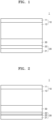
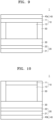
- an all-solid-state secondary battery 1 includes a cathode layer 10, an anode layer 20, and a solid electrolyte layer 30 between the cathode layer 10 and the anode layer 20.
- the cathode layer 10 may include a cathode current collector 11 and a cathode active material layer 12 on at least one side (e.g., one or both (e.g., opposite) sides) of the cathode current collector 11.
- the anode layer 20 may include an anode current collector 21 and a first anode active material layer 22 on at least one side (e.g., one or both (e.g., opposite) sides) of the anode current collector 21.
- the first anode active material layer 22 may include an anode active material that is capable of form an alloy with lithium or a compound with lithium, a fibrous carbon-based material, and a binder.
- the ratio (B/A) of the initial charge capacity (B) of the first anode active material layer to the initial charge capacity (A) of the cathode active material layer may be about 0.01 to about 0.75.
- the initial charge capacity of the cathode active material layer may be determined by charging from a 1 st open circuit voltage to the maximum charging voltage with respect to Li/Li + .
- the initial charge capacity of the first anode active material layer is determined by charging from a 2 nd open circuit voltage to about 0.01 V with respect to Li/Li + .
- Anode layer anode active material
- the anode layer 20 may include the first anode active material layer 22.
- the first anode active material layer 22 may include an anode active material capable of forming an alloy or compound with lithium.
- the anode active material may be, for example, an anode material that is capable of forming an alloy with lithium or an anode material that is capable of forming a compound with lithium.
- the first anode active material layer 22 may include the anode active material, and the anode active material may include, for example, a particle.
- the size of the anode active material in the particle form may be, for example, about 2 ⁇ m or less, about 1 ⁇ m or less, about 500 nm or less, about 300 nm or less, or about 100 nm or less.
- the size of the anode active material in the particle form may be, for example, about 10 nm to about 2 ⁇ m, about 100 nm to about 2 ⁇ m, about 200 nm to about 2 ⁇ m, about 500 nm to about 2 ⁇ m, or about 500 nm to about 1.5 ⁇ m.
- the size of the anode active material in the particle form may be, for example, about 10 nm to about 2 ⁇ m, about 10 nm to about 1 ⁇ m, about 10 nm to about 500 nm, about 10 nm to about 300 nm, about 10 nm to about 200 nm, or about 10 nm to about 100 nm.
- the anode active material may more easily perform reversible absorption and/or desorbing of lithium during charging and discharging.
- the size of the anode active material may be, for example, the average particle diameter of the anode active material.
- the average particle diameter of the anode active material may be, for example, the median diameter (D50) measured utilizing a laser particle size distribution meter.
- the aspect ratio of the anode active material may be, for example, about 5 or less, about 4 or less, about 3 or less, or about 2 or less.
- the aspect ratio of the anode active material may be, for example, about 1 to about 5, about 1 to about 4, about 1 to about 3, or about 1 to about 2.
- the anode active material may be more uniformly distributed in the first anode active material layer 22. As a result, non-uniformity in change in volume during charging and discharging of the anode active material may be suppressed or reduced.
- the aspect ratio of the anode active material may be measured utilizing, for example, a scanning electron microscope.
- the aspect ratio of the anode active material e.g., a ratio of diameter and length of the anode active material may be determined from SEM images.
- the anode active material included in the first anode active material layer 22 may include, for example, a metal-based anode active material.
- Metal-based anode active materials include, for example, silicon (Si), gold (Au), platinum (Pt), palladium (Pd), silver (Ag), aluminum (Al), bismuth (Bi), tin (Sn), zinc (Zn), or a combination thereof, but is not necessarily limited thereto, and any metal-based anode active material that is capable of forming an alloy or compound with lithium in the art, may be applicable herein.
- nickel (Ni) does not form an alloy with lithium, and accordingly, nickel (Ni) is not a metallic anode active material.
- the first anode active material layer 22 may not include (e.g., may exclude) a carbon-based anode active material. Due to the absence of a carbon-based anode active material in the first anode active material layer 22, the energy density of the first anode active material layer 22 may be further improved.
- the first anode active material layer 22 includes an anode active material
- the anode active material may be, for example, a composite anode active material.
- the composite anode active material may include, for example, a carbon-based support and a metal-based anode active material supported on the carbon-based support.
- a composite anode active material having this structure may prevent or reduce localization of the metal-based anode active material in the first anode active material layer 22 and may provide substantially uniform distribution. As a result, the cycle characteristics of the all-solid-state secondary battery 1 including the first anode active material layer 22 may be further improved.
- Metal-based anode active materials supported on a carbon-based support may include, for example, silicon (Si), gold (Au), platinum (Pt), palladium (Pd), silver (Ag), aluminum (Al), bismuth (Bi), and tin. (Sn), tellurium (Te), and zinc (Zn).
- the carbon-based support may be, for example, amorphous carbon.
- Amorphous carbon may include, for example, carbon black, (CB), acetylene black (AB), furnace black (FB), ketjen black (KB), graphene, activated carbon, etc., but is not necessarily limited thereto, and any carbon that is classified as amorphous carbon in the relevant technical field may be applicable herein.
- Amorphous carbon is carbon that does not have crystallinity or has very low crystallinity, and is distinguished from crystalline carbon or graphite-based carbon.
- the composite anode active material may have a particle form, for example.
- the particle diameter of the composite anode active material having a particle shape may be, for example, about 10 nm to about 2 ⁇ m, about 10 nm to about 1 ⁇ m, about 10 nm to about 500 nm, about 10 nm to about 200 nm, or about 10 nm to about 100 nm. Within these ranges of particle diameter, reversible absorption and/or desorbing of lithium may be facilitated during charging and discharging.
- the metal-based anode active material supported on the support may have, for example, a particle form.
- the particle diameter of the metal-based anode active material may be, for example, about 1 nm to about 200 nm, about 1 nm to about 150 nm, about 5 nm to about 100 nm, or about 10 nm to about 50 nm.
- the carbon-based support may have, for example, a particle form.
- the particle diameter of the carbon-based support may be, for example, about 10 nm to about 2 ⁇ m, about 10 nm to about 1 ⁇ m, about 10 nm to about 500 nm, about 10 nm to about 200 nm, or about 10 nm to about 100 nm.
- the carbon-based support may be more uniformly disposed in the first anode active material layer.
- the carbon-based support may be, for example, nanoparticles with a particle diameter of 500 nm or less.
- the particle size of the composite anode active material, the particle size of the metal-based anode active material, and the particle size of the carbon-based support may be, for example, an average particle size.
- the average particle diameter may be, for example, the median diameter (D50) measured utilizing a laser particle size distribution meter. In some embodiments, the average particle diameter may be determined, for example, automatically utilizing software from an electron microscope image, or manually.
- Anode layer fibrous carbon-based material
- the first anode active material layer 22 may include a fibrous carbon-based material in addition to the anode active material.
- the first anode active material layer 22 may include a mixture including an anode active material capable of forming an alloy or compound with lithium and a fibrous carbon-based material.
- the first anode active material layer 22 may include a mixture including a fibrous carbon-based material and one or more selected from among silicon (Si), gold (Au), platinum (Pt), palladium (Pd), silver (Ag), aluminum (Al), bismuth (Bi), tin (Sn), and zinc (Zn).
- Si silicon
- Au gold
- Pt palladium
- silver Ag
- bismuth (Bi), tin (Sn), and zinc (Zn zinc
- the cycle characteristics of the all-solid-state secondary battery 1 may be further improved.
- the first anode active material layer 22 may include a mixture of first particles consisting of metal and second particles consisting of a fibrous carbon-based material.
- Metals may include, for example, silicon (Si), gold (Au), platinum (Pt), palladium (Pd), silver (Ag), aluminum (Al), bismuth (Bi), tin (Sn), zinc (Zn), or a combination thereof.
- the content (e.g., amount) of the second particles may be about 1 wt% to about 99 wt%, about 1 wt% to about 70 wt%, about 10 wt% to about 70 wt%, about 11 wt% to about 60 wt%, about 12 wt% to about 50 wt%, based on the total weight of the mixture.
- the fibrous carbon-based material having these ranges of content (e.g., amount)
- the cycle characteristics of the all-solid-state secondary battery 1 may be further improved.
- the ratio of the size of the anode active material and the length of the fibrous carbon-based material may be, for example, about 1:10 to about 1:2000, about 1:10 to about 1:1000, about 1:10 to about 1 :500, about 1:10 to about 1:200, about 1:10 to about 1:100, about 1:10 to about 1:50, or about 1:10 to about 1:20.
- the cycle characteristics of the all-solid-state secondary battery 1 may be further improved.
- the fibrous carbon-based material may be, for example, a conductive carbon-based material.
- a fibrous carbon-based material having conductivity may provide a conductive path inside the first anode active material layer 22.
- the fibrous carbon-based material may more effectively reduce the internal resistance of the first anode active material layer 22.
- the first anode active material layer 22 may not additionally include any other carbon-based conductive material other than the fibrous carbon-based material. Due to the absence of other carbon-based conductive materials than the fibrous carbon-based material in the first anode active material layer 22, the energy density of the first anode active material layer 22 may be further improved.
- the aspect ratio of the fibrous carbon-based material may be, for example, about 10 or more, about 20 or more, about 30 or more, or about 50 or more.
- the aspect ratio of the fibrous carbon-based material may be, for example, about 2000 or less, about 1000 or less, about 500 or less, about 200 or less, or about 100 or less.
- the aspect ratio of the fibrous carbon-based material may be, for example, about 10 to about 2000, about 20 to about 2000, about 30 to about 2000, or about 50 to about 2000.
- the aspect ratio of the fibrous carbon-based material may be, for example, about 10 to about 2000, about 10 to about 1000, about 10 to about 500, about 10 to about 200, about 10 to about 100, about 10 to about 50, or about 10 to about 20.
- the aspect ratio of the fibrous carbon-based material may be, for example, the ratio of the length of the long axis of the fibrous carbon-based material, that is, the length of the fibrous carbon-based material, and the length of the minor axis normal or perpendicular to the long axis, that is, the diameter of a second carbon-based material.
- the "aspect ratio" used herein may refer to the average aspect ratio and may be determined from SEM images. Within these ranges of aspect ratio of the fibrous carbon-based material, the fibrous carbon-based material may be longer than the conducting path inside the first anode active material layer 22.
- the fibrous carbon-based material may form a three-dimensional conductive network within the first anode active material layer 22, thereby reducing the internal resistance of the first anode active material layer 22 more effectively. As a result, the internal resistance of the all-solid-state secondary battery 1 may be reduced. For example, the high rate characteristics of the all-solid-state secondary battery 1 may be improved.
- the fibrous carbon-based material may include, for example, an amorphous fibrous carbon-based material, a crystalline fibrous carbon-based material, or a combination thereof.
- an amorphous fibrous carbon-based material in the fibrous carbon-based material, side reactions between lithium and the fibrous carbon-based material may be more effectively suppressed or reduced.
- the cycle characteristics of the all-solid-state secondary battery 1 may be improved by improving the reversibility of the electrode reaction during charging and discharging of the all-solid-state secondary battery 1.
- the diameter of the fibrous carbon-based material may be, for example, about 50 nm or less, about 30 nm or less, about 20 nm or less, or about 10 nm or less.
- the diameter of the fibrous carbon-based material may be, for example, about 1 nm to about 50 nm, about 1 nm to about 30 nm, or about 1 nm to about 10 nm.
- a fibrous carbon-based material having these ranges of diameter may effectively reduce the internal resistance of the first anode active material layer 22, and may be easily dispersed in a solvent and/or slurry during manufacturing the first anode active material layer 22.
- the length of the fibrous carbon-based material may be, for example, about 1000 ⁇ m or less, about 100 ⁇ m or less, about 50 ⁇ m or less, about 10 ⁇ m or less, about 5 ⁇ m or less, about 2 ⁇ m or less, about 1 ⁇ m or less, about 500 nm or less, or about 300 nm or less.
- the length of the fibrous carbon-based material may be, for example, about 100 nm to about 1,000 ⁇ m, about 100 nm to about 500 ⁇ m, about 100 nm to about 100 ⁇ m, about 100 nm to about 50 ⁇ m, about 100 nm to about 10 ⁇ m, about 100 nm to about 5 ⁇ m, about 100 nm to about 2 ⁇ m, about 100 nm to about 1 ⁇ m, about 100 nm to about 500 nm, or about 100 nm to about 300 nm.
- the length of the fibrous carbon-based material may be, for example, about 500 nm to about 1000 ⁇ m, about 500 nm to about 500 ⁇ m, about 500 nm to about 100 ⁇ m, about 500 nm to about 50 ⁇ m, about 500 nm to about 10 ⁇ m, about 1 ⁇ m to about 10 ⁇ m, or about 2 ⁇ m to about 8 ⁇ m.
- the internal resistance of an electrode may be reduced.
- diameter indicates a circle diameter or an average circle diameter
- the “diameter” indicates a major axis length or an average major axis length
- the fibrous carbon-based material may include, for example, fibrous carbon nanostructures.
- the fibrous carbon nanostructure may include, for example, carbon nanofibers, carbon nanotubes, carbon nanobelts, or a combination thereof.
- Carbon nanotubes may include, for example, a carbon nanotube primary structure, a carbon nanotube secondary structure formed by agglomerating a plurality of carbon nanotube primary particles, or a combination thereof.
- the carbon nanotube primary structure may be one carbon nanotube unit.
- the carbon nanotube unit has a graphite sheet that has the shape of a cylinder with a nano-sized diameter, and a sp 2 bond structure. Depending on the angle and structure at which the graphite surface is bent, the characteristics of a conductor or a semiconductor may be obtained.
- the carbon nanotube unit can be classified as a single-walled carbon nanotube (SWCNT), a double-walled carbon nanotube (DWCNT), and a multi-walled carbon nanotube (MWCNT), etc. The smaller the wall thickness of the carbon nanotube unit, the lower the resistance.
- a carbon nanotube primary structure may include, for example, a single-walled carbon nanotube (SWCNT), a double-walled carbon nanotube (DWCNT), and a multi-walled carbon nanotube (MWCNT), or a combination thereof.
- the diameter of the carbon nanotube primary structure may be, for example, about 1 nm or more or about 2 nm or more.
- the diameter of the carbon nanotube primary structure may be, for example, about 20 nm or less or about 10 nm or less.
- the diameter of the carbon nanotube primary structure may be, for example, about 1 nm to about 20 nm, about 1 nm to about 15 nm, or about 1 nm to about 10 nm.
- the length of the carbon nanotube primary structure may be, for example, about 100 nm or more or about 200 nm or more.
- the length of the carbon nanotube primary structure may be, for example, about 2 ⁇ m or less, about 1 ⁇ m or less, about 500 nm or less, or about 300 nm or less.
- the length of the carbon nanotube primary structure may be, for example, about 100 nm to about 2 ⁇ m, about 100 nm to about 1 ⁇ m, about 100 nm to about 500 nm, about 100 nm to about 400 nm, about 100 nm to about 300 nm, or about 200 nm to about 300 nm.
- the diameter and length of the carbon nanotube primary structure may be measured utilizing a scanning electron microscopy (SEM) image or a transmission electron microscopy (TEM) image. In some embodiments, the diameter and/or length of the carbon nanotube primary structure may be measured by laser diffraction.
- SEM scanning electron microscopy
- TEM transmission electron microscopy
- a carbon nanotube secondary structure may be a structure formed by completely or partially gathering carbon nanotube primary structures to form a bundle-type or kind or a rope-type or kind.
- the carbon nanotube secondary structure may include, for example, a bundle-type or kind carbon nanotube, a rope-type or kind carbon nanotube, or a combination thereof.
- the diameter of the carbon nanotube secondary structure may be, for example, about 2 nm or more or about 3 nm or more.
- the diameter of the carbon nanotube secondary structure may be, for example, about 50 nm or less, about 30 nm or less, about 20 nm or less, or about 10 nm or less.
- the diameter of the carbon nanotube secondary structure may be, for example, about 2 nm to about 50 nm, about 2 nm to about 30 nm, or about 2 nm to about 20 nm.
- the length of the carbon nanotube secondary structure may be, for example, about 500 nm or more, about 700 nm or more, about 1 ⁇ m or more, or about 10 ⁇ m or more.
- the length of the carbon nanotube secondary structure may be, for example, less than about 1000 ⁇ m, less than about 500 ⁇ m, or less than about 100 ⁇ m.
- the length of the carbon nanotube secondary structure may be, for example, about 500 nm to about 1000 ⁇ m, about 500 nm to about 500 ⁇ m, about 500 nm to about 200 ⁇ m, about 500 nm to about 100 ⁇ m, about 500 nm to about 50 ⁇ m, about 500 nm to about 10 ⁇ m, about 1 ⁇ m to about 10 ⁇ m, or about 2 ⁇ m to about 8 ⁇ m.
- the diameter and length of the carbon nanotube secondary structure may be measured utilizing a SEM image or an optical microscope image. In some embodiments, the diameter and/or length of the carbon nanotube secondary structure may be measured by laser diffraction.
- the carbon nanotube secondary structure may be converted into carbon nanotube primary structures by dispersing the same in a solvent, and then, utilized to manufacture the first anode active material layer 22.
- Anode layer binder
- the first anode active material layer 22 may include a binder in addition to the anode active material and the fibrous carbon-based material.
- the binder may be, for example, a polymer binder.
- the binder included in the first anode active material layer 22 may be, for example, a binder containing a polar functional group.
- the polar functional group includes, for example, a carboxyl group, a hydroxyl group, an amide group, an aldehyde group, or a combination thereof.
- the polar functional group may be partially or entirely substituted with lithium.
- the polar functional group may include, for example, a lithium-substituted or unsubstituted carboxyl group, a lithium-substituted or unsubstituted hydroxyl group, a lithium-substituted or unsubstituted amide group, a lithium-substituted or unsubstituted aldehyde group, or a combination thereof.
- the binder may include, for example, polyacrylic acid, lithium-substituted polyacrylic acid, or a combination thereof.
- the degree of substitution of lithium in lithium-substituted polyacrylic acid may be, for example, about 0.1 to about 1.0.
- the degree of substitution of lithium may be the ratio of carboxyl groups substituted with lithium with respect to the carboxyl groups (-COOH) and lithium-substituted carboxyl groups (-COOLi) included in polyacrylic acid.
- the polymer of the polymer binder may include, for example, polyacrylic acid represented by Formula 1: wherein R 1 , R 2 , and R 3 may each independently hydrogen, halogen, a C1 to C10 alkyl group that is unsubstituted or substituted with halogen, a C2 to C10 alkenyl group that is unsubstituted or substituted with halogen, a C2 to C10 alkynyl group that is unsubstituted or substituted with halogen, a C5 to C10 cycloalkyl group that is unsubstituted or substituted with halogen, a C6 to C20 aryl group that is unsubstituted or substituted with halogen, or a C2 to C20 heteroaryl group that is unsubstituted or substituted with halogen, M is hydrogen or lithium, and n is the degree of polymerization and may be about 10 to about 10000.
- R 1 , R 2 , and R 3
- the weight average molecular weight of the polymer may be, for example, about 1,000 Dalton to about 250,000 Dalton or about 10,000 Dalton to about 200,000 Dalton.
- the weight average molecular weight of the polymer may be measured by, for example, gel permeation chromatography (GPC) utilizing a polystyrene standard sample.
- the ionic conductivity of the first anode active material layer 22 including the binder may be further improved.
- the internal resistance of the first anode active material layer 22 including a binder containing a lithium-substituted polar functional group may be lower than the internal resistance of the first anode active material layer 22 including a binder that does not include the lithium-substituted polar functional group.
- the cycle characteristics of the all-solid-state secondary battery 1 including the first anode active material layer 22 including a binder containing a lithium-substituted polar functional group may be improved.
- the first anode active material layer 22 may additionally include another binder.
- the first anode active material layer 22 may additionally include another binder, and the other binder may be, for example, styrene-butadiene rubber (SBR), polytetrafluoroethylene, polyvinylidene fluoride, polyethylene, a polyvinylidene fluoride/hexafluoropropylene copolymer, polyacrylonitrile, polymethylmethacrylate, etc., but is not necessarily limited thereto, and any binder that is utilized as a binder in the art, may be applicable herein.
- SBR styrene-butadiene rubber
- the first anode active material layer 22 is stabilized on the anode current collector 21.
- cracking of the first anode active material layer 22 is suppressed or reduced despite change in volume and/or change in relative position of the first anode active material layer 22 during the charging and discharging process.
- the first anode active material layer 22 may be easily separated from the anode current collector 21.
- the first anode active material layer 22 may be manufactured by, for example, applying a slurry in which materials, constituting the first anode active material layer 22, are dispersed onto the anode current collector 21 and drying the same. Due to the inclusion of a binder in the first anode active material layer 22, the anode active material and the fibrous carbon-based material may be stably dispersed in the slurry. For example, if (e.g., when) the slurry is applied onto the anode current collector 21 by screen printing, clogging of the screen (for example, clogging by aggregates of the anode active material) may be suppressed or reduced.
- the binder content (e.g., amount) may be about 0.1 parts by weight to about 20 parts by weight, about 0.1 parts by weight to about 15 parts by weight, about 1 part by weight to about 10 parts by weight, or about 5 parts by weight to about 10 parts by weight, based on 100 parts by weight of the anode active material. Within these ranges of a binder content (e.g., amount), the cycle characteristics of the all-solid-state secondary battery 1 may be further improved.
- Anode layer first anode active material layer
- the initial charge capacity (B) of the first anode active material layer 22 may be, for example, about 75 % or less, about 70 % or less, about 60 % or less, about 50 % or less, about 40 % or less, about 30 % or less, about 20 % or less, or about 10 % or less of the initial charge capacity (A) of the cathode active material layer 12.
- the ratio (B/A) of the initial charge capacity (B) of the first anode active material layer 22 to the initial charge capacity (A) of the cathode active material layer 12 may be, for example, about 0.01 to about 0.75, about 0.01 to about 0.7, about 0.01 to about 0.6, about 0.01 to about 0.5, about 0.01 to about 0.6, about 0.01 to about 0.5, about 0.01 to about 0.4, about 0.01 to about 0.3, about 0.01 to about 0.2, or about 0.01 to about 0.1.
- the ratio (B/A) of the initial charge capacity (B) of the first anode active material layer 22 to the initial charge capacity (A) of the cathode active material layer 12 may be, for example, about 0.05 to about 0.75, about 0.1 to about 0.7, about 0.1 to about 0.6, about 0.2 to about 0.6, about 0.2 to about 0.5, or about 0.2 to about 0.45.
- the initial charge capacity of the cathode active material layer 12 may be determined by charging from a 1 st open circuit voltage to the maximum charging voltage with respect to Li/Li + .
- the initial charge capacity of the first anode active material layer 22 is determined by charging from a 2 nd open circuit voltage to about 0.01 V with respect to Li/Li + .
- the maximum charging voltage is determined depending on the type or kind of cathode active material.
- the maximum charging voltage may be, for example, about 1.5 V, about 2.0 V, about 2.5 V, about 3.0 V, about 3.5 V, about 4.0 V, about 4.2 V, or about 4.3 V.
- the maximum charging voltage of Li 2 S or Li 2 S composite may be determined between about 2.5 V and about 3.0 V with respect to Li/Li + .
- the maximum charging voltage of lithium transition metal oxide may be determined between about 3.0 V and about 4.5 V with respect to Li/Li + .
- the initial charge capacity (mAh) of the cathode active material layer 12 may be obtained by multiplying the charge specific capacity (mAh/g) of the cathode active material by the mass (g) of the cathode active material in the cathode active material layer 12. If (e.g., when) several types (kinds) of cathode active materials are utilized, the equation of the charging capacity density ⁇ mass value is applied to each cathode active material, and the sum of these values is the initial charging capacity of the cathode active material layer 12. The initial charge capacity of the first anode active material layer 22 is also calculated in substantially the same manner.
- the initial charge capacity of the first anode active material layer 22 may be obtained by multiplying the charge specific capacity (mAh/g) of the anode active material by the mass of the anode active material in the first anode active material layer 22. If (e.g., when) several types (kinds) of anode active materials are utilized, the equation of the charging capacity density ⁇ mass value is applied to each anode active material, and the sum of these values is the initial charging capacity of the first anode active material layer 22.
- the charge specific capacity of each of the cathode active material and the anode active material may be measured utilizing an all-solid half-cell utilizing lithium metal as a counter electrode.
- the initial charge capacity of each of the cathode active material layer 12 and the first anode active material layer 22 may be directly measured utilizing an all-solid half-cell at a constant current density, for example, about 0.1 mA/cm 2 .
- the measurements may be performed from the 1 st open circuit voltage (OCV) to the maximum charging voltage, for example, an operating voltage of about 3.0 V (vs. Li/Li + ).
- OCV open circuit voltage
- the measurements may be performed from the 2 nd open circuit voltage (OCV) to the operating voltage of about 0.01 V with respect to the anode, for example, lithium metal.
- an all-solid half battery having a cathode active material layer may be charged with a constant current of about 0.1 mA/cm 2 from the 1 st open circuit voltage to about 3.0 V.
- An all-solid half battery having the first anode active material layer may be charged with a constant current of about 0.1 mA/cm 2 from the 2 nd open circuit voltage to about 0.01 V.
- the current density during constant current charging may be, for example, about 0.2 mA/cm 2 , or 0.5 mA/cm 2 .
- the all-solid-state half-cell having a cathode active material layer may be charged, for example, from the 1 st open circuit voltage to about 2.5 V, about 2.0 V, about 3.5 V, about 4.0 V, or about 4.5 V.
- the maximum charging voltage of the cathode active material layer may be determined by the maximum voltage of a battery that satisfies the safety conditions according to JISC8712:2015 of the Japanese Standards Association.
- the thickness of the first anode active material layer 22 becomes very small, so that the lithium dendrite formed between the first anode active material layer 22 and the anode current collector 21 may collapse the first anode active material layer 22. In this case, it may be difficult to improve the cycle characteristics of the all-solid-state secondary battery 1. If (e.g., when) the charging capacity of the first anode active material layer 22 is increased excessively, the energy density of the all-solid-state secondary battery 1 may be decreased and the internal resistance of the all-solid-state secondary battery 1 due to the first anode active material layer 22 may be increased. Therefore, it may be difficult to improve the cycle characteristics of the all-solid-state secondary battery 1.
- the thickness of the first anode active material layer 22 may be, for example, about 50 % or less, about 40 % or less, about 30 % or less, about 20 % or less, or about 10 % or less of the thickness of the cathode active material layer 12.
- the thickness of the first anode active material layer 22 may be, for example, about 1 % to about 50 %, about 1 % to about 40 %, about 1 % to about 30 %, about 1 % to about 20 %, or about 1 % to about 10 % of the thickness of cathode active material layer 12.
- the thickness of the first anode active material layer 22 may be, for example, about 1 ⁇ m to about 50 ⁇ m, about 2 ⁇ m to about 40 ⁇ m, about 3 ⁇ m to about 30 ⁇ m, about 4 ⁇ m to about 20 ⁇ m, or about 5 ⁇ m to about 20 ⁇ m.
- the thickness of the first anode active material layer 22 may be, for example, about 5 ⁇ m to about 50 ⁇ m, about 10 ⁇ m to about 50 ⁇ m, about 15 ⁇ m to about 50 ⁇ m, about 20 ⁇ m to about 50 ⁇ m, or about 25 ⁇ m to about 50 ⁇ m.
- the lithium dendrites formed between the first anode active material layer 22 and the anode current collector 21 may collapse the first anode active material layer 22. Accordingly, it may be difficult to improve the cycle characteristics of the all-solid-state secondary battery 1. If (e.g., when) the thickness of the first anode active material layer 22 increases excessively, the energy density of the all-solid-state secondary battery 1 may be decreased and the internal resistance of the all-solid-state secondary battery 1 due to the first anode active material layer 22 may be increased. Therefore, it may be difficult to improve the cycle characteristics of the all-solid-state secondary battery 1. If (e.g., when) the thickness of the first anode active material layer 22 is decreased, the initial charge capacity of the first anode active material layer 22 may also be decreased, for example.
- the all-solid-state secondary battery 1 may further include, for example, a second anode active material layer 24 disposed between the anode current collector 21 and the first anode active material layer 22.
- the second anode active material layer 24 may be a metal layer containing lithium or lithium alloy.
- the metal layer may include lithium or a lithium alloy. Therefore, as the second anode active material layer 24 is a metal layer containing lithium, the second anode active material layer 24 may act as, for example, a lithium reservoir.
- Lithium alloys include, for example, Li-Al alloy, Li-Sn alloy, Li-In alloy, Li-Ag alloy, Li-Au alloy, Li-Zn alloy, Li-Ge alloy, Li-Si alloy, etc., and are not limited thereto, and any lithium alloy utilized in the relevant technical field may be applicable herein.
- the second anode active material layer 24 may include (e.g., consist of) one of these alloys or lithium, or may include (e.g., consist of) several types (kinds) of alloys.
- the second anode active material layer 24 may be, for example, a plated layer.
- the second anode active material layer 24 may be plated between the first anode active material layer 22 and the anode current collector 21 during the charging process of the all-solid-state secondary battery 1.
- the thickness of the second anode active material layer 24 is not limited, and may be, for example, about 1 ⁇ m to about 200 ⁇ m, about 1 ⁇ m to about 150 ⁇ m, about 1 ⁇ m to about 100 ⁇ m, about 1 ⁇ m to about 50 ⁇ m, about 1 ⁇ m to about 30 ⁇ m, about 1 ⁇ m to about 22 ⁇ m, or about 1 ⁇ m to about 10 ⁇ m. If (e.g., when) the thickness of the second anode active material layer 24 is too small, it is difficult for the second anode active material layer 24 to function as a lithium reservoir. If (e.g., when) the thickness of the second anode active material layer 24 is too great, the mass and volume of the all-solid-state secondary battery 1 may be increased and the cycle characteristics of the all-solid-state secondary battery 1 may actually deteriorate.
- the thickness of the second anode active material layer 24 may be smaller than the thickness of the first anode active material layer 22.
- the thickness of the second anode active material layer 24 may be, for example, about 70 % or less, about 60 % or less, about 50 % or less, about 40 % or less, or about 30 % or less of the thickness of the first anode active material layer 22.
- the thickness of the second anode active material layer 24 may be, for example, about 1 % to about 70 %, about 1 % to about 60 %, about 1 % to about 50 %, about 1 % to about 40 %, or about 1 % to about 30 % of the thickness of the first anode active material layer 22.
- the change in volume during charging and discharging of the all-solid-state secondary battery may be suppressed or reduced.
- deterioration may be suppressed or reduced.
- the second anode active material layer 24 of the all-solid-state secondary battery 1 may be disposed between the anode current collector 21 and the first anode active material layer 22 before the assembly of the all-solid-state secondary battery 1. If (e.g., when) the second anode active material layer 24 is disposed between the anode current collector 21 and the first anode active material layer 22 before the assembly of the all-solid-state secondary battery 1, the second anode active material layer 24 may act as a lithium reservoir because the second anode active material layer 24 is a metal layer including lithium. For example, before the assembly of the all-solid-state secondary battery 1, lithium foil may be placed between the anode current collector 21 and the first anode active material layer 22.
- the energy density of the all-solid-state secondary battery 1 may be increased because the second anode active material layer 24 is not included during the assembly of the all-solid-state secondary battery 1.
- the charging capacity of the first anode active material layer 22 may be exceeded.
- the first anode active material layer 22 may be overcharged.
- lithium is adsorbed on the first anode active material layer 22.
- the anode active material included in the first anode active material layer 22 may form an alloy or compound with lithium ions that have migrated from the cathode 10.
- the second anode active material layer 24 may be a metal layer mainly consisting of lithium (i.e., metallic lithium). This result is obtained due to, for example, the inclusion of a material that forms an alloy or compound with lithium in the anode active material included in the first anode active material layer 22.
- lithium in the first anode active material layer 22 and the second anode active material layer 24, that is, the metal layer, is ionized and moves toward the cathode 10. Therefore, lithium can be utilized as an anode active material in the all-solid-state secondary battery 1.
- the first anode active material layer 22 may act as a protective layer for the second anode active material layer 24, that is, the metal layer, and at the same time, may suppress or reduce precipitation growth of lithium dendrites.
- the short circuit and capacity reduction of the all-solid-state secondary battery 1 are suppressed or reduced, and as a result, the cycle characteristics of the all-solid-state secondary battery 1 are improved.
- the anode 20, that is, the anode current collector 21 and the first anode active material layer 22 and an area therebetween may be lithium (Li)-free areas that do not contain lithium in the initial state or the post- complete discharging state of the all-solid-state secondary battery 1.
- Anode anode current collector
- the anode current collector 21 may include, for example, a material that does not react with lithium, that is, does not form any alloy or compound.
- Materials constituting the anode current collector 21 include, for example, copper (Cu), stainless steel, titanium (Ti), iron (Fe), cobalt (Co), and nickel (Ni), but are not necessarily limited thereto, and any that is utilized as an electrode current collector in the art may be applicable herein.
- the anode current collector 21 may include (e.g., consist of) one of the metals described above, or an alloy or coating material of two or more of the metals described above.
- the anode current collector 21 may be, for example, sheet-shaped or foil-shaped.
- the all-solid-state secondary battery 1 may further include a thin film 23 containing an element capable of forming an alloy with lithium on at least one side (e.g., one or both (e.g., opposite) sides) of the anode current collector 21.
- the thin film 23 may be disposed between the anode current collector 21 and the first anode active material layer 22.
- the thin film 23 may include, for example, an element that is capable of forming an alloy with lithium.
- Elements that are capable of forming an alloy with lithium include, for example, gold, silver, zinc, tin, indium, silicon, aluminum, and bismuth, but are not necessarily limited thereto, and any element that can form an alloy with lithium in the art, may be applicable herein.
- the thin film 23 may include (e.g., consist of) one of these metals or an alloy of several types (kinds) of metals thereof. Due to the placement of the thin film 23 on at least one side (e.g., one or both (e.g., opposite) sides) of the anode current collector 21, for example, the plated form of the second anode active material layer 24 to be plated between the thin film 23 and the first anode active material layer 22 may be more flat, and the cycle characteristics of the all-solid-state secondary battery 1 may be further improved.
- the thickness of the thin film 23 may be, for example, about 1 nm to about 800 nm, about 10 nm to about 700 nm, about 50 nm to about 600 nm, or about 100 nm to about 500 nm. If (e.g., when) the thickness of the thin film 23 is less than 1 nm, it may be difficult for the thin film 23 to perform the function thereof. If (e.g., when) the thickness of the thin film 23 is too great, the thin film 23 itself may be configured to absorb lithium and thus the amount of lithium plated at the anode may be decreased, thereby lowering the energy density of the all-solid-state secondary battery 1 and reducing the cycle characteristics of the all-solid-state secondary battery 1.
- the thin film 23 may be disposed on the anode current collector 21 by, for example, a vacuum deposition method, a sputtering method, a plating method, etc., but the method of forming the coating layer is not necessarily limited to these methods, and any method capable of forming a thin film in the art may be utilized herein.
- the anode current collector 21 may include, for example, a base film and a metal layer disposed on at least one side (e.g., one or both (e.g., opposite) sides) of the base film.
- the base film may include, for example, a polymer.
- the polymer may be, for example, a thermoplastic polymer.
- the polymer may include, for example, polyethylene terephthalate (PET), polyethylene (PE), polypropylene (PP), polybutylene terephthalate (PBT), polyimide (PI), or a combination thereof.
- the polymer may be an insulating polymer.
- the base film includes an insulating thermoplastic polymer
- the base film softens or liquefies and blocks the battery operation, thereby suppressing a rapid increase in current.
- the metal layer may include, for example, copper (Cu), stainless steel, titanium (Ti), iron (Fe), cobalt (Co), nickel (Ni), or an alloy thereof.
- the anode current collector 21 may additionally include a metal chip and/or a lead tab. For more detailed information about the anode current collector 21, the metal layer, the metal chip, and the lead tab of the anode current collector 21, may be understood in connection with a cathode current collector. By having this structure, the anode current collector 21 may contribute to a decrease in the weight of the anode and consequently improve the energy density of an anode and a lithium battery.
- Anode layer first inactive member
- the all-solid-state secondary battery 1 may further include a first inactive member 40, 40a, or 40b disposed on one or more of another side of the anode current collector 21 and another side of the cathode current collector 11.
- the first inactive member 40, 40a, or 40b may not include (e.g., may exclude) an electrode active material.
- the first inactive member 40, 40a, or 40b may be, for example, an insulating member.
- the first inactive member 40, 40a, or 40b may have conductivity by additionally including a conductive material.
- the first inactive member 40, 40a, or 40b may be, for example, a flame retardant inactive member by additionally including a flame retardant material.
- the first inactive member 40, 40a, or 40b may be, for example, an elastic member.
- the first inactive member 40, 40a, or 40b may be, for example, a porous elastic member.
- the first inactive member 40, 40a, or 40b may be, for example, an elastic member having one or more of porosity, conductivity, and flame retardancy.
- the first inactive member 40, 40a, or 40b may provide a buffering function to the all-solid-state secondary battery 1.
- the first inactive member 40, 40a, or 40b may provide, for example, stress relaxation and restoring force.
- the first inactive member 40, 40a, or 40b may effectively tolerate change in volume of the all-solid-state secondary battery 1 and may apply a constant pressure to the all-solid-state secondary battery 1.
- the first inactive member 40, 40a, or 40b may have, for example, a lower elastic modulus than the anode current collector 21. Due to a smaller elastic modulus of the first inactive member 40, 40a, or 40b than the anode current collector 21, change in the volume of the anode layer 20 during charging and discharging of all-solid-state secondary battery 1 may be more effectively tolerated.
- the first inactive member 40, 40a, or 40b may effectively reduce the internal stress caused by the change in volume of the all-solid-state secondary battery 1 during charging and discharging of the all-solid-state secondary battery 1, thereby improving the cycle characteristics of the all-solid-state secondary battery 1.
- the first inactive member 40, 40a, or 40b may be placed on the anode layer 20 of the all-solid-state secondary battery 1. If (e.g., when) the change in volume of the anode layer 20 is relatively large compared to the cathode layer 10 and the solid electrolyte layer 30 during charging and discharging of the all-solid-state secondary battery 1, due to the first inactive member 40, 40a, or 40b positioned adjacent to the anode layer 20, the change in the volume of the anode layer 20 may be more effectively tolerated.
- the first inactive member 40, 40a, or 40b may induce substantially uniform plating of lithium metal in the anode layer 20 by applying a certain pressure to the anode layer 20. Therefore, the defects formed in the all-solid-state secondary battery 1 due to uneven plating of lithium metal, may be effectively prevented or reduced.
- the first inactive member 40, 40a, or 40b may be disposed on the cathode layer 10 of the all-solid-state secondary battery 1. By placing the first inactive member 40, 40a, or 40b to be adjacent to the cathode layer 10, change in the volume of the all-solid-state secondary battery 1 may be more effectively tolerated. In some embodiments, the first inactive member 40, 40a, or 40b applies a constant pressure to the all-solid-state secondary battery 1 to induce substantially uniform plating of lithium metal in the anode layer 20. Therefore, the defects formed in the all-solid-state secondary battery 1 due to uneven plating of lithium metal, may be effectively prevented or reduced.
- the first inactive member 40, 40a, or 40b may include a polymer material, a rubber material, or a combination thereof.
- the first inactive member 40, 40a, or 40b may have stress relief and resilience by including a polymer material, a rubber material, or a combination thereof.
- the polymer material may include, for example, a polyurethane-based polymer, a polyacrylic polymer, a polystyrene-based polymer, a polyester-based polymer, a polyamide-based polymer, a polyolefin-based polymer, or a combination thereof.
- the polymer material may be, for example, a polymer resin.
- the polymer material may be, for example, an adhesive resin.
- the rubber material may include, for example, natural rubber (NR), butadiene rubber (BR), nitrile rubber, silicone rubber, isoprene rubber (IR), styrene-butadiene rubber (SBR), isoprene-butadiene rubber, styrene-isoprene-butadiene rubber, acrylonitrile-butadiene rubber (NBR), ethylene-propylene-diene rubber, halogenated butyl rubber, chloroprene (CR), halogenated isoprene rubber, halogenated isobutylene copolymer, chloroprene rubber, butyl rubber (IIR), halogenated isobutylene-p-methylstyrene rubber, or a combination thereof.
- natural rubber NR
- BR butadiene rubber
- IR isoprene rubber
- SBR styrene-butadiene rubber
- NBR acrylonitrile-butadiene rubber
- the polyurethane-based polymer may include, for example, polyester-based polyurethane, polyether-based polyurethane, or a combination thereof.
- the polyacrylic polymer may include, for example, polyacrylate, methyl polyacrylate, polymethacrylate, polymethylmethacrylate, or a combination thereof.
- the polystyrene-based polymer may include, for example, a styrene-ethylene-butylene copolymer (SEB), a styrene-butadiene-styrene copolymer (SBS), a hydrogenated product of SBS (styrene-ethylene-butylene-styrene copolymer (SEBS)), a styrene-isoprene-styrene copolymer (SIS), a hydrogenated product of SIS (a styrene-ethylene-propylene-styrene copolymer (SEPS)), a styrene-isobutylene-styrene copolymer (SIBS), a styrene-butadiene-styrene-butadiene copolymer (SBSB), a styrene-butadiene-styrene-butadiene-st
- the polyester-based polymer may include, for example, polyethylene terephthalate, polybutylene terephthalate, or a combination thereof.
- the polyamide-based polymer may include, for example, polyamide 6, polyamide 11, polyamide 12, polyamide 66, polyamide 610, or a combination thereof.
- the polyolefin polymer may include, for example, polyethylene, polypropylene, an ethylene propylene copolymer, a propylene-1-hexene copolymer, a propylene-4-methyl-1-pentene copolymer, a propylene-1-butene copolymer, an ethylene-1-hexene copolymer, an ethylene-4-methyl-pentene copolymer, an ethylene-1-butene copolymer, a 1-butene-1-hexene copolymer, a 1-butene-4-methyl-pentene copolymer, an ethylene methacrylic acid copolymer, an ethylene ethyl metacrylate copolymer, an ethylene methacrylate ethyl copolymer, an ethylene methacrylate butyl copolymer, an ethylene-methyl acrylate copolymer, an ethylene-ethyl acrylate copolymer, an ethylene-but
- the first inactive member 40, 40a, or 40b may include, for example, porous foam, porous sponge, or a combination thereof.
- the first inactive member 40, 40a, or 40b may include, for example, a porous foam sheet, a porous sponge sheet, or a combination thereof. Due to these configurations, the first inactive member 40, 40a, or 40b may provide porosity and buffering functions.
- Porous foams may include, for example, closed cells, open cells, or a combination thereof.
- Porous sponges may include, for example, closed cells, open cells, or a combination thereof.
- a closed cell refers to a cell or pore that is not connected to the around (e.g., surrounding) atmosphere, for example, a closed pore.
- An open cell refers to a cell or pore that is connected to the around (e.g., surrounding) atmosphere, for example, an open pore.
- the first inactive member 40, 40a, or 40b may include, for example, closed cell porous foam, open cell porous foam, closed cell porous sponge, open cell porous sponge, or a combination thereof.
- Porous foams may include, for example, both (e.g., simultaneously) closed and open cells.
- Porous sponges may include, for example, both (e.g., simultaneously) closed and open cells.
- the first inactive member 40, 40a, or 40b may include, for example, a conductive material.
- the conductive material may be, for example, graphite, carbon black, acetylene black, Ketjen black, Denka black, carbon fiber, carbon nanotubes (CNT), graphene, metal fiber, metal powder, etc.
- the content (e.g., amount) of the conductive material included in the first inactive member 40, 40a, or 40b may be, for example, about 1 part by weight, about 1 part by weight to 30 parts by weight, about 1 part by weight to 20 parts, about 1 part by weight to 15 parts, about 1 part by weight to 10 parts, about 5 parts by weight to 40 parts, about 5 parts by weight to 30 parts, or about 5 parts by weight to 35 parts, based on 100 parts by weight of the first inactive member 40, 40a, or 40b. If (e.g., when) the first inactive member 40, 40a, or 40b has conductivity (e.g., is a conductor), the first inactive member 40, 40a, or 40b may function as an anode current collector.
- the first inactive member 40, 40a, or 40b may include, for example, a matrix and a filler.
- the matrix may include, for example, a substrate and a reinforcement material.
- the matrix may include, for example, a fibrous substrate and a fibrous reinforcement material. By including a fibrous substrate, the matrix may have elasticity.
- the fibrous substrate may include, for example, one or more selected from pulp fibers, insulating polymer fibers, and ion conductive polymer fibers. Due to the inclusion of the reinforcement material, the matrix may have enhanced strength.
- a fibrous reinforcement material may include, for example, glass fiber, metal oxide fiber, and ceramic fiber.
- the fibrous reinforcement material may be, for example, a flame retardant material.
- Fillers may be, for example, moisture getters and/or flame retardants.
- the filler may be, for example, a metal hydroxide having moisture adsorption properties.
- Metal hydroxides contained in the filler may be, for example, Mg(OH) 2 , Fe(OH) 3 , Sb(OH) 3 , Sn(OH) 4 , TI(OH) 3 , Zr(OH) 4 , Al(OH) 3 , or a combination thereof.
- the thickness of the first inactive member 40, 40a, or 40b may be greater than the thickness of the first anode active material layer 22. As the first inactive member 40, 40a, or 40b has a greater thickness than the first anode active material layer 22, the change in volume of anode layer 20 during charging and discharging may be more effectively tolerated.
- the thickness of the first anode active material layer 22 may be about 50 % or less, about 40 % or less, about 30 % or less, about 20 % or less, or about 10 % or less of the thickness of the first anode active material layer.
- the thickness of the first anode active material layer 22 may be, for example, about 1 % to about 50 %, about 1 % to about 40 %, about 1 % to about 30 %, about 1 % to about 20 %, or about 1 % to about 10 % of the thickness of the first inactive member 40, 40a, or 40b.
- the thickness of the first inactive member 40, 40a, or 40b may be, for example, about 10 ⁇ m to about 300 ⁇ m, about 20 ⁇ m to about 300 ⁇ m, about 50 ⁇ m to about 300 ⁇ m, or about 100 ⁇ m to about 200 ⁇ m.
- the intended effect may not be provided, and if (e.g., when) the thickness of the first inactive member 40, 40a, or 40b is too small, the intended effect may not be provided, and if (e.g., when) the thickness of the first inactive member 40, 40a, or 40b is too great, the energy density of the all-solid-state secondary battery 1 may be decreased.
- the shape of the first inactive member 40, 40a, or 40b is not limited and may be selected depending on the shape of the all-solid-state secondary battery 1.
- the first inactive member 40, 40a, or 40b may be, for example, includes a sheet, a rod, or a gasket. In some embodiments, the first inactive member 40, 40a, or 40b may not be provided.
- Cathode layer cathode active material
- the cathode active material layer 12 may include, for example, a cathode active material.
- the cathode active material included in the cathode active material layer 12 may be a cathode active material that may reversibly absorb and desorb lithium ions.
- the cathode active material may include, for example, an oxide-based cathode active material, a sulfide-based cathode active material, or a combination thereof.
- the oxide-based cathode active material may include, for example, lithium transition metal oxide, metal oxide, or a combination thereof.
- Lithium transition metal oxide may include, for example, lithium cobalt oxide, lithium nickel oxide, lithium nickel cobalt oxide, lithium nickel cobalt aluminum oxide, lithium nickel cobalt manganese oxide, lithium manganate, lithium iron phosphate, or a combination thereof.
- the metal oxide may include, for example, iron oxide, vanadium oxide, or a combination thereof.
- a sulfide-based cathode active material may include, for example, nickel sulfide, copper sulfide, Li 2 S, a Li 2 S-containing composite, or a combination thereof.
- An oxide-based cathode active material may be, for example, one or more types (kinds) of a composite oxide of lithium and a metal selected from among cobalt, manganese, nickel, and combinations thereof.
- a lithium-containing oxide based cathode active material may include, for example, a compound represented by one of: Li a A 1-b B' b D 2 (where 0.90 ⁇ a ⁇ 1, and 0 ⁇ b ⁇ 0.5); Li a E 1-b B' b O 2-c D c (where 0.90 ⁇ a ⁇ 1, 0 ⁇ b ⁇ 0.5, and 0 ⁇ c ⁇ 0.05); LiE 2-b B' b O 4 - c D c (where 0 ⁇ b ⁇ 0.5 and 0 ⁇ c ⁇ 0.05); Li a Ni 1-b-c Co b B' c D ⁇ (where 0.90 ⁇ a ⁇ 1, 0 ⁇ b ⁇ 0.5, 0 ⁇ c
- a compound in which a coating layer is provided on the surface of these compound may be utilized, and a mixture of these compounds and the compounds provided with the coating layer may also be utilized.
- the coating layer provided on the surface of these compounds may include a coating element compound such as oxide of a coating element, hydroxide of a coating element, oxyhydroxide of a coating element, oxycarbonate of a coating element, or hydroxycarbonate of a coating element.
- the compound constituting the coating layer may be amorphous or crystalline.
- the coating element included in the coating layer may be Mg, Al, Co, K, Na, Ca, Si, Ti, V, Sn, Ge, Ga, B, As, Zr, or a mixture thereof.
- a method of forming the coating layer may be selected within a range that does not adversely affect the physical properties of the cathode active material.
- the coating method may be, for example, spray coating, dipping method, and/or the like. A detailed description of the coating method will not be provided because it may be well understood by those in the art.
- the oxide-based cathode active material may include, for example, lithium transition metal oxides represented by Formulae 1 to 8: Formula 1 Li a Ni x Co y M z O 2-b A b wherein, in Formula 1,
- the oxide-based cathode active material may be covered by a coating layer.
- the coating layer may be any coating layer suitable as a coating layer for a cathode active material for an all-solid-state secondary battery.
- the coating layer may be, for example, Li 2 O-ZrO 2 (LZO).
- the size of the oxide-based cathode active material may be, for example, about 0.1 ⁇ m to about 30 ⁇ m, about 0.5 ⁇ m to about 20 ⁇ m, or about 1 ⁇ m to about 15 ⁇ m.
- the oxide-based cathode active material may be, for example, single crystal particles or polycrystal particles.
- a Li 2 S-containing composite may include, for example, a composite of Li 2 S and carbon, a composite of Li 2 S, carbon, and a solid electrolyte, a composite of Li 2 S and a solid electrolyte, a composite of Li 2 S and a lithium salt, a composite of Li 2 S, a lithium salt, and carbon, and a composite of Li 2 S and metal carbide, a composite of Li 2 S, carbon, and metal carbide, a composite of Li 2 S and metal nitride, a composite of Li 2 S, carbon, and metal nitride, or a combination thereof.
- a composite of Li 2 S and carbon may include carbon.
- Carbon may be, for example, a material containing carbon atoms and may be any material that is utilized as a conductive material in the art. Carbon may be, for example, crystalline carbon, amorphous carbon, or a combination thereof. Carbon may be, for example, a calcined product of a carbon precursor. Carbon may be, for example, a carbon nanostructure. The carbon nanostructure may be, for example, a one-dimensional carbon nanostructure, a two-dimensional carbon nanostructure, a three-dimensional carbon nanostructure, or a combination thereof.
- Carbon nanostructures may include, for example, carbon nanotubes, carbon nanofibers, carbon nanobelts, carbon nanorods, graphene, graphene oxide (GO), reduced graphene oxide (rGO), graphene balls (GB), or a combination thereof.
- the carbon may be, for example, porous carbon or nonporous carbon.
- Porous carbon may include, for example, periodic and ordered two-dimensional or three-dimensional pores.
- Porous carbon may include, for example, carbon black such as Ketjen black, acetylene black, Denka black, thermal black, and channel black; graphite, activated carbon, or a combination thereof.
- the form of carbon may be, for example, a particle form, a sheet form, a fibrous form, etc., but is not limited thereto, and any carbon that is utilized in the art can be applicable herein.
- the manufacturing method of the composite of Li 2 S and carbon may be a dry method, a wet method, or a combination thereof, but is not limited thereto. In the technical field, the manufacturing method of the composite of Li 2 S and carbon may be, for example milling, heat treatment, deposition, etc., but is not limited thereto, and may be any method that is utilized in the art.
- a sulfide-based solid electrolyte may include, for example, at least one selected from among Li 3 PO 4 -Li 2 SO 4 , Li 2 S-P 2 S 5 , Li 2 S-P 2 S 5 -LiX, where X may be a halogen element, Li 2 S-P 2 S 5 -Li 2 O, Li 2 S-P 2 S 5 -Li 2 O-LiI, Li 2 S-SiS 2 , Li 2 S-SiS 2 -LiI, Li 2 S-SiS 2 -LiBr, Li 2 S-SiS 2 -LiCl, Li 2 S-SiS 2 -B 2 S 3 -LiI, Li 2 S-SiS 2 -P 2 S 5 -LiI, Li 2 S-B 2 S 3 , Li 2 S-P 2 S 5 -Z m S n where m and n may be positive numbers, and Z may be one of Ge, Zn, or Ga, Li
- the composite of Li 2 S and solid electrolyte may include a solid electrolyte.
- the solid electrolyte may be understood by referring to the description provided in connection with the composite of Li 2 S, carbon, and a solid electrolyte.
- the composite of Li 2 S and lithium salt may include a lithium salt compound.
- a lithium salt compound does not include, for example, a sulfur (S) atom.
- a lithium salt compound may be, for example, a binary compound including (e.g., consisting of) lithium and one type or kind of element selected from among Group 13 to Group 17 of the Periodic Table of Elements.
- Binary compounds may include, for example, one or more selected from among LiF, LiCl, LiBr, Lil, LiH, Li 2 S, Li 2 O, Li 2 Se, Li 2 Te, LisN, LisP, LisAs, Li 3 Sb, LiI 3 , and LiB 3.
- the lithium salt compound may be one or more lithium halide compounds selected from LiF, LiCl, LiBr, and Lil.
- the composite of Li 2 S and solid electrolyte may include a solid electrolyte.
- the solid electrolyte may be understood by referring to the description provided in connection with the solid electrolyte utilized in the composite of Li 2 S, carbon, and a solid electrolyte.
- a composite of Li 2 S and a solid electrolyte may include, for example, a composite of Li 2 S and one or more lithium salts selected from among LiF, LiCl, LiBr, Lil, LiH, Li 2 S, Li 2 O, Li 2 Se, Li 2 Te, Li 3 N, LisP, LisAs, LisSb, Lil 3 , and LiBs
- the composite of Li 2 S, lithium salt, and carbon may include a lithium salt compound and carbon. Carbon may be understood by referring to the description provided in connection with the composite of Li 2 S and carbon described above.
- the composite of Li 2 S and metal carbide may include metal carbide.
- Metal carbide may be, for example, a two-dimensional metal carbide.
- a two-dimensional metal carbide may be, for example, MXene.
- Two-dimensional metal carbides may be, for example, Ti 2 CT x , (Ti 0.5 , Nb 0.5 ) 2 CT x , Nb 2 CT x , V 2 CT x , Ti 3 C 2 T x , (V 0.5 , Cr 0.5 ) 3 C 2 T x , Ti 3 CNT x , Ta 4 C 3 T x , Nb 4 C 3 T x , or a combination thereof.
- the surfaces of two-dimensional metal carbides may be terminated with O, OH and/or F.
- the composite of Li 2 S, carbon, and metal carbide may include carbon and metal carbide.
- Carbon may be understood by referring to the description provided in connection with the composite of Li 2 S and carbon described above.
- Metal carbide may be understood by referring to the description provided in connection with the composite of Li 2 S and metal carbide described previously.
- the composite of Li 2 S and metal nitride may include metal nitride.
- Metal nitride may be, for example, a two-dimensional metal nitride.
- the surfaces of two-dimensional metal nitrides may be terminated with O, OH and/or F.
- the composite of Li 2 S, carbon, and metal nitride may include carbon and metal nitride.
- Carbon may be understood by referring to the description provided in connection with the composite of Li 2 S and carbon described above.
- Metal carbide may be understood by referring to the description provided in connection with the composite of Li 2 S and metal nitride described above.
- the Li 2 S-containing composite may further include, for example, a second fibrous sulfide-based solid electrolyte.
- the Li 2 S-containing composite may be a composite of Li 2 S and a second fibrous sulfide-based solid electrolyte, or a composite of Li 2 S, a second fibrous sulfide-based solid electrolyte, the above-described carbon, solid electrolyte, lithium salt, metal carbide, or metal nitride.
- the size of the second fibrous sulfide-based solid electrolyte may be smaller than the size of a first fibrous sulfide-based solid electrolyte.
- the length and/or thickness of the second fibrous sulfide-based solid electrolyte may respectively be about 50 % or less, about 40 % or less, about 30 % or less, about 20 % or less, or about 10 % or less of the length and/or thickness of the first fibrous sulfide-based solid electrolyte 100.
- the length and/or thickness of the second fibrous sulfide-based solid electrolyte may respectively be about 0.1 % to about 50 %, about 0.5 % to about 40 %, about 1 % to about 30 %, about 1 % to about 20 %, or about 1 % to about 10 % of the length and/or thickness of the first fibrous sulfide-based solid electrolyte 100.
- the second fibrous sulfide-based solid electrolyte may have the same shape as and a smaller size than the first fibrous sulfide-based solid electrolyte 100.
- the second fibrous sulfide-based solid electrolyte may have a reduced length and/or thickness, and in this case, may be easily distributed within the Li 2 S-containing composite. If (e.g., when) the second fibrous sulfide-based solid electrolyte has such a reduced length and/or thickness, deterioration of the lithium battery may be further suppressed or reduced and the cycle characteristics of the lithium battery may be further improved.
- the size of the sulfide-based cathode active material may be, for example, about 0.1 ⁇ m to about 50 ⁇ m, about 0.5 ⁇ m to about 30 ⁇ m, about 0.5 ⁇ m to about 20 ⁇ m, or about 1 ⁇ m to about 10 ⁇ m.
- the size of Li 2 S may be, for example, about 1 nm to about 10 ⁇ m, about 10 nm to about 5 ⁇ m, about 10 nm to about 3 ⁇ m, or about 10 nm to about 1 ⁇ m.
- the size of the Li 2 S-containing composite may be, for example, about 0.1 ⁇ m to about 50 ⁇ m, about 0.5 ⁇ m to about 30 ⁇ m, about 0.5 ⁇ m to about 20 ⁇ m, or about 1 ⁇ m to about 10 ⁇ m.
- the solid electrolyte included in the cathode active material layer 12 may have a D50 average particle diameter smaller than that of the solid electrolyte included in the solid electrolyte layer 30.
- the D50 average particle diameter of the solid electrolyte included in cathode active material layer 12 may be about 90 % or less, about 80 % or less, about 70 % or less, about 60 % or less, about 50 % or less, about 40 % or less, about 30 % or less, or about 20 % or less of the D50 average particle diameter of the solid electrolyte included in the solid electrolyte layer 30.
- the D50 average particle diameter may be, for example, a median particle diameter (D50). D50 corresponds to the size of a particle corresponding to about 50 % cumulative volume, calculated from the smaller particle size in a particle size distribution measured by, for example, laser diffraction.
- Cathode layer conductive material
- the cathode active material layer 12 may further include a conductive material.
- the conductive material may be, for example, a carbon-based conductive material, a metal-based conductive material, or a combination thereof.
- the carbon-based conductive material may be, for example, graphite, carbon black, acetylene black, Ketjen black, carbon fiber, or a combination thereof, but is not limited thereto, and may be any carbon-based conductive material that is utilized in the art.
- a metal-based conductive material may be metal powder, metal fiber, or a combination thereof, but is not limited thereto, and may be any material that is utilized as a metal-based conductive material in the art.
- the content (e.g., amount) of the conductive material included in the cathode active material layer 12 may be, for example, about 1 wt% to about 30 wt%, about 1 wt% to about 20 wt%, or about 1 wt% to about 10 wt% of the total weight of the cathode active material layer 12.
- the cathode active material layer 12 may further include a binder.
- the binder may be, for example, styrene butadiene rubber (SBR), polytetrafluoroethylene, polyvinylidene fluoride, polyethylene, etc., but is not limited thereto, and may be any material that is utilized as a binder in the art.
- the content (e.g., amount) of the binder included in the cathode active material layer 12 may be, for example, about 1 wt% to about 10 wt% of the total weight of the cathode active material layer 12.
- the binder may not be provided.
- the cathode current collector 11 may be, for example, a plate or foil including (e.g., consisting of) indium (In), copper (Cu), magnesium (Mg), stainless steel, titanium (Ti), iron (Fe), cobalt (Co), nickel (Ni), zinc (Zn), aluminum (Al), germanium (Ge), lithium (Li), or alloys thereof.
- the cathode current collector 11 may not be provided.
- the thickness of the cathode current collector 11 may be, for example, about 1 ⁇ m to about 100 ⁇ m, about 1 ⁇ m to about 50 ⁇ m, about 5 ⁇ m to about 25 ⁇ m, or about 10 ⁇ m to about 20 ⁇ m.
- the metal chip may be a chip of the same material as the metal of the metal layer.
- the metal chip may be, for example, a metal foil or a metal mesh.
- the metal chip may be, for example, an aluminum foil, a copper foil, or a stainless steel (SUS) foil.
- SUS stainless steel
- the thickness of the base film may be, for example, about 1 ⁇ m to about 50 ⁇ m, about 1.5 ⁇ m to about 50 ⁇ m, about 1.5 ⁇ m to about 40 ⁇ m, or about 1 ⁇ m to about 30 ⁇ m. If (e.g., when) the base film has these ranges of thickness, the weight of the electrode assembly may be more effectively reduced.
- the melting point of the base film may be, for example, about 100 °C to about 300 °C, about 100 °C to about 250 °C, or about 100 °C to about 200 °C. If (e.g., when) the base film has these ranges of a melting point, the base film may be melted and easily coupled to the lead tab in the process of welding the lead tab.
- the thickness of the metal layer may be, for example, about 0.01 ⁇ m to about 3 ⁇ m, about 0.1 ⁇ m to about 3 ⁇ m, about 0.1 ⁇ m to about 2 ⁇ m, or about 0.1 ⁇ m to about 1 ⁇ m. If (e.g., when) the metal layer has these ranges of thickness, stability of the electrode assembly may be ensured while conductivity is maintained.
- the thickness of the metal chip may be, for example, about 2 ⁇ m to about 10 ⁇ m, about 2 ⁇ m to about 7 ⁇ m, or about 4 ⁇ m to about 6 ⁇ m.
- a cathode current collector 11 having this structure may contribute to a decrease in the weight of the cathode and ultimately, an increase in the energy density of the cathode and the all-solid-state secondary battery.
- the all-solid-state secondary battery 1 may further include a first inactive member 40, 40a, or 40b disposed on at least one side (e.g., one or both (e.g., opposite) sides) of the anode current collector 21 and another side of the cathode current collector 11.
- a first inactive member 40, 40a, or 40b disposed on at least one side (e.g., one or both (e.g., opposite) sides) of the anode current collector 21 and another side of the cathode current collector 11.
- the first inactive member 40, 40a, or 40b may be understood by referring to the description provided in connection with the first inactive member 40, 40a, or 40b of the anode layer.
- the cathode layer 10 includes the cathode current collector 11 and the cathode active material layer 12 disposed on at least one side (e.g., one or both (e.g., opposite) sides) of the cathode current collector 11.
- a second inactive member 50 may be disposed on at least one side (e.g., one or both (e.g., opposite) sides) of the anode layer 10.
- the second inactive member 50 may be disposed on at least one side (e.g., one or both (e.g., opposite) sides) of the cathode active material layer 12 and between the solid electrolyte layer 30 and the cathode current collector 11 opposing the solid electrolyte layer 30.
- the second inactive member 50 may not be placed on one side surface of the cathode current collector 11.
- the second inactive member 50 may be disposed on at least one side surface (e.g., one or both (e.g., opposite) side surface) of each of the cathode active material layer 12 and the cathode current collector 11.
- cracking of the solid electrolyte layer 30 may be prevented or reduced during manufacturing and/or charging and discharging of the all-solid-state secondary battery 1, resulting in the improvement of the all-solid-state secondary battery 1.
- uneven pressure is applied onto the solid electrolyte layer 30 in contact with the cathode layer 10 during manufacturing and/or charging and discharging of the all-solid-state secondary battery 1, and thus, cracks may occur in the solid electrolyte layer 30, and the growth of lithium metal through the cracks may increase the possibility of a short circuit.
- the thickness of the second inactive member 50 may be greater than the thickness of the first anode active material layer 22.
- the thickness of the second inactive member 50 may be greater than the thickness of the solid electrolyte layer 30.
- the second inactive member 50 may surround the side of the cathode layer 10 and may be in contact with the solid electrolyte layer 30.
- the second inactive member 50 surrounds the side surfaces of the cathode layer 10 and contacts the solid electrolyte layer 30, and in this case, cracks in a portion of the solid electrolyte layer 30 that is not in contact with the cathode layer 10, which may be caused by pressure differences during pressing, may be effectively suppressed or reduced.
- the second inactive member 50 may surround the side surfaces of the cathode layer 10 and may be separated from the anode layer 20, for example, the first anode active material layer 22.
- the second inactive member 50 may surround the side surfaces of the cathode layer 10 and contact the solid electrolyte layer 30, and may be separated from the anode layer 20. In this regard, the possibility of a short circuit occurring due to physical contact between the cathode layer 10 and the first anode active material layer 22 or overcharging of lithium is suppressed or reduced.
- the second inactive member 50 is disposed on side surfaces of the cathode active material layer 12 and the cathode current collector 11 at the same time (e.g., simultaneously), and in this case, the possibility of short circuit due to contact between the cathode current collector 11 and the anode layer 20 may be more effectively suppressed or reduced.
- the second inactive member 50 extends from one side surface of the cathode layer 10 to an end portion of the solid electrolyte layer 30.
- the end portion of the solid electrolyte layer 30 refers to the outermost portion in contact with the side surface of the solid electrolyte layer 30.
- the second inactive member 50 may extend to the outermost portion in contact with the side surface of the solid electrolyte layer 30.
- the second inactive member 50 may be separated from the anode layer 20, for example, the first anode active material layer 22.
- the second inactive member 50 may extend to the end portion of the solid electrolyte layer 30, but does not contact the anode layer 20. In some embodiments, the second inactive member 50 may fill the space extending from one side surface of the cathode layer 10 to the end portion of the solid electrolyte layer 30.
- the area of the cathode active material layer 12 or the cathode layer 10 may be smaller than the area of the first anode active material layer 22 or the anode layer 20.
- the area of the cathode active material layer 12 or the cathode layer 10 may be smaller than the area of the solid electrolyte layer 30.
- the second inactive member 50 may be, for example, a gasket.
- a gasket is utilized as the second inactive member 50, and in this case, cracking of the solid electrolyte layer 30 caused by pressure difference during the pressing process may be effectively suppressed or reduced.
- the second inactive member 50 may have, for example, a single-layer structure.
- the second inactive member 50 may have a multilayer structure.
- the multilayer structure may have, for example, a two-layer, three-layer, or four-layer structure, and by having a multilayer structure, the physical properties of the second inactive member 50 may be more precisely controlled or selected.
- part or all of the second inactive member 50 may be arranged to be spaced apart from the side surface of the cathode active material layer 12.
- the manufacturing process of the all-solid-state secondary battery 1 becomes easier and the manufacturing speed of the all-solid-state secondary battery 1 may be increased.
- the change in volume in the side direction of the cathode active material layer 12 during charging and discharging is more effectively tolerated, thereby further improving lifespan characteristics of the all-solid-state secondary battery 1.
- the distance between the second inactive member 50 and the side surface of the cathode active material layer 12 may be, for example, about 0.1 ⁇ m to about 10 mm, about 1 ⁇ m to about 1 mm, about 1 ⁇ m to about 500 ⁇ m, about 1 ⁇ m to about 100 ⁇ m, about 1 ⁇ m to about 50 ⁇ m, or about 1 ⁇ m to about 10 ⁇ m.
- the second inactive member 50 may be selected from among materials utilized in the first inactive member 40, 40a, or 40b described previously.
- the second inactive member 50 may not include (e.g., may exclude), for example, an electrode active material.
- the second inactive member 50 may be, for example, a flame retardant inactive member, an electron-insulating inactive member, an ion-insulating inactive member, or an elastic inactive member.
- Solid electrolyte layer solid electrolyte
- the all-solid-state secondary battery 1 may include the solid electrolyte layer 30 disposed between the anode layer 10 and the cathode layer 20.
- the solid electrolyte layer 30 may include, for example, a solid electrolyte or a combination of a solid electrolyte and a gel electrolyte.
- the solid electrolyte may include, for example, a sulfide-based solid electrolyte, an oxide-based solid electrolyte, a polymer solid electrolyte, or a combination thereof.
- the solid electrolyte may be, for example, a sulfide-based solid electrolyte.
- a sulfide-based solid electrolyte may include, for example, at least one selected from among Li 2 S-P 2 S 5 , Li 2 S-P 2 S 5 -LiX, where X may be a halogen element, Li 2 S-P 2 S 5 -Li 2 O, Li 2 S-P 2 S 5 -Li 2 O-LiI, Li 2 S-SiS 2 , Li 2 S-SiS 2 -LiI, Li 2 S-SiS 2 -LiBr, Li 2 S-SiS 2 -LiCI, Li 2 S-SiS 2 -B 2 S 3 -LiI, Li 2 S-SiS 2 -P 2 S 5 -LiI, Li 2 S-B 2 S 3 , Li 2 S-P 2 S 5 -Z m S n where m and n may be positive numbers,
- Sulfide-based solid electrolytes are produced by treating starting materials such as Li 2 S and P 2 S 5 by melting quenching or mechanical milling. In some embodiments, after this treatment, heat treatment may be performed.
- the solid electrolyte may be amorphous, crystalline, or a mixture thereof.
- the solid electrolyte may include, for example, sulfur (S), phosphorus (P), and lithium (Li) as constituent elements of at least those selected from among the sulfide-based solid electrolyte materials described previously.
- the solid electrolyte may be a material containing Li 2 S-P 2 S 5 .
- the sulfide-based solid electrolyte may include, for example, an argyrodite type or kind solid electrolyte (e.g., an argyrodite solid electrolyte) represented by Formula 1: Formula 1 Li + 12-n-x A n+ X 2- 6-x Y - x where A may be P, As, Ge, Ga, Sb, Si, Sn, Al, In, Ti, V, Nb, or Ta, X may be S, Se, or Te, and Y may be Cl, Br, I, F, CN, OCN, SCN, or N 3 , 1 ⁇ n ⁇ 5, and 0 ⁇ x ⁇ 2.
- an argyrodite type or kind solid electrolyte represented by Formula 1: Formula 1 Li + 12-n-x A n+ X 2- 6-x Y - x
- A may be P, As, Ge, Ga, Sb, Si, Sn, Al, In, Ti, V, Nb, or Ta
- X may be S, Se,
- the sulfide-based solid electrolyte may be, for example, an argyrodite-type or kind (e.g., argyrodite) compound including one or more selected from among Li 7-x PS 6-x Cl x , 0 ⁇ x ⁇ 2, Li 7-x PS 6-x Br x , 0 ⁇ x ⁇ 2, and Li 7-x PS 6-x I x where x satisfies the condition of 0 ⁇ x ⁇ 2.
- the sulfide-based solid electrolyte may be, for example, an argyrodite-type or kind (e.g., argyrodite) compound containing one or more selected from among Li 6 PS 5 Cl, Li 6 PS 5 Br, and Li 6 PS 5 I.
- Argyrodite-type or kind (e.g., argyrodite) solid electrolyte may have a density of about 1.5 g/cc to about 2.0 g/cc. In some embodiments, argyrodite-type or kind (e.g., argyrodite) solid electrolyte may have a density of about 1.5 g/cc or more, and in this case, the internal resistance of the all-solid-state secondary battery may be reduced, and the penetration of the solid electrolyte layer by Li may be effectively suppressed or reduced.
- Oxide-based solid electrolyte may be, for example, Li 1+x+y Al x Ti 2-x Si y P 3-y O 12 (0 ⁇ x ⁇ 2, 0 ⁇ y ⁇ 3), BaTiOs, Pb(Zr,Ti)O 3 (PZT), Pb 1-x La x Zr 1-y Ti y O 3 (PLZT)(0 ⁇ x ⁇ 1, 0 ⁇ y ⁇ 1), PB(Mg 3 Nb 2/3 )O 3 -PbTiO 3 (PMN-PT), HfO 2 , SrTiOs, SnO 2 , CeO 2 , Na 2 O, MgO, NiO, CaO, BaO, ZnO, ZrO 2 , Y 2 O 3 , Al 2 O 3 , TiO 2 , SiO 2 , Li 3 PO 4 , Li x Ti y (PO 4 ) 3 (0 ⁇ x ⁇ 2, 0 ⁇ y ⁇ 3), Li x Al y Ti z (PO 4 ) 3 (0 ⁇ x ⁇
- LLZO Li 7 La 3 Zr 2 O 12
- M Li 3+x La 3 Zr 2-a M a O 12
- the polymer solid electrolyte may include a mixture of a lithium salt and a polymer, or a polymer having an ion conductive functional group.
- the polymer solid electrolyte may be, for example, a polymer electrolyte that is in a solid state at about 25 °C and about 1 atm.
- the polymer solid electrolyte may not contain liquid, for example.
- the polymer solid electrolyte may include a polymer, and the polymer may be, for example, polyethylene oxide (PEO), polyvinylidene fluoride (PVDF), vinylidene fluoride-hexafluoropropylene (PVDF-HFP), polyethylene oxide (PEO), and a poly(styrene-b-ethylene oxide) block or reduce copolymer (PS-PEO), poly(styrene-butadiene), poly(styrene-isoprene-styrene), a poly(styrene-b-divinylbenzene) block or reduce copolymer, a poly(styrene-ethyleneoxide-styrene) block or reduce copolymer, polystyrene sulfonate (PSS), polyvinyl fluoride (PVF), poly(methylmethacrylate) (PMMA), polyethylene glycol (PEG), polyacrylonitrile (PAN), polyt
- the lithium salt may be, for example, LiPF 6 , LiBF 4 , LiSbF 6 , LiAsF 6 , LiClO 4 , LiCF 3 SO 3 , Li(CF 3 SO 2 ) 2 N, LiC 4 F 9 SO 3 , LiAlO 2 , LiAlCl 4 , LiN(C x F 2x+1 SO 2 )(C y F 2y+1 SO 2 ) (where x and y are each from 1 to 20), LiCl, Lil, or a mixture thereof.
- the polymer included in the polymer solid electrolyte may be, for example, a compound containing about 10 or more, about 20 or more, about 50 or more, or about 100 or more repeating units.
- the weight average molecular weight of the polymer contained in the polymer solid electrolyte may be, for example, about 1000 Dalton or more, about 10,000 Dalton or more, about 100,000 Dalton or more, or about 1,000,000 Dalton or more.
- a gel electrolyte may be, for example, a polymer gel electrolyte.
- a gel electrolyte may be in a gel state without containing polymers.
- the polymer gel electrolyte may include a liquid electrolyte and a polymer, or may include an organic solvent and a polymer having an ion-conducting functional group.
- the polymer gel electrolyte may be, for example, a polymer electrolyte that is in a gel state at about 25 °C and about 1 atm.
- a polymer gel electrolyte may have a gel state without liquid therein.
- Liquid electrolytes utilized in polymer gel electrolytes may be, for example, a mixture including an ionic liquid, a lithium salt, and an organic solvent; a mixture including a lithium salt and an organic solvent; a mixture including an ionic liquid and an organic solvents; or a mixture including a lithium salt, ionic liquid, and an organic solvent.
- the polymer utilized in the polymer gel electrolyte may be selected from among polymers utilized in solid polymer electrolytes.
- the organic solvent may be selected from among organic solvents utilized for liquid electrolytes.
- the organic solvent may be, for example, propylene carbonate, ethylene carbonate, fluoroethylene carbonate, butylene carbonate, dimethyl carbonate, diethyl carbonate, methylethyl carbonate, methylpropyl carbonate, ethylpropyl carbonate, methylisopropyl carbonate, dipropyl carbonate, dibutyl carbonate, benzonitrile, acetonitrile, tetrahydrofuran, 2-methyltetrahydrofuran, ⁇ -butyrolactone, dioxolane, 4-methyldioxolane, N, N-dimethylformamide, dimethylacetamide, dimethylsulfoxide, dioxane, 1,2-dimethoxyethane, sulfolane, dichloroethane, chlorobenzene, nitrobenzene, diethylene glycol, dimethylether, or a mixture thereof.
- the lithium salt may be selected from among lithium salts utilized in polymer solid electrolytes.
- the ionic liquid refers to a salt in a liquid state at room temperature or a room-temperature molten salt that has a melting point of room temperature or lower and consists only of ions.
- the ionic liquid may be at least one selected from among compounds including: a) at least one cation selected from among ammonium, pyrrolidinium, pyridinium, pyrimidinium, imidazolium, piperidinium, pyrazolium, oxazolium, pyridazinium, phosphonium, sulfonium, triazolium, and a mixture thereof, and b) at least one anion selected from among BF 4 - , PF 6 - , AsF 6 - , SbF 6 - , AlCl 4 - , HSO 4 - , ClO 4 - , CH 3 SO 3 - , CF 3 CO 2 - , Cl - , Br - , I - , BF 4 - , SO 4 - , CF 3 SO 3 - , (FSO 2 ) 2 N - , (C 2 F 5 SO 2 ) 2 N - ,
- a polymer solid electrolyte may be impregnated with a liquid electrolyte in a secondary battery to form a polymer gel electrolyte.
- the polymer gel electrolyte may further include inorganic particles.
- the polymer included in the polymer gel electrolyte may be, for example, a compound containing about 10 or more, about 20 or more, about 50 or more, or about 100 or more repeating units.
- the weight average molecular weight of the polymer contained in the polymer gel electrolyte may be, for example, about 500 Dalton or more, about 1000 Dalton or more, about 10,000 Dalton or more, about 100,000 Dalton or more, or about 1,000,000 Dalton or more.
- Solid electrolyte layer binder
- the solid electrolyte layer 30 may include, for example, a binder.
- the binder included in the solid electrolyte layer 30 may be, for example, styrene-butadiene rubber (SBR), polytetrafluoroethylene, polyvinylidene fluoride, polyethylene, etc., but is not limited to these.
- the binder may be any material that can be utilized as a binder in the relevant technical field.
- the binder of the solid electrolyte layer 30 may be the same as or different from the binder included in each of the cathode active material layer 12 and the anode active material layer 22. The binder may not be provided.
- the content (e.g., amount) of the binder included in the solid electrolyte layer 30 may be about 0.1 wt% to about 10 wt%, about 0.1 wt% to about 5 wt%, about 0.1 wt% to about 3 wt%, about 0.1 wt% to about 1 wt%, about 0 wt% to about 0.5 wt%, or about 0 wt% to about 0.1 wt%, based on the total weight of the solid electrolyte layer 30.
- substituents are derived by exchanging one or more hydrogen atoms with other atoms or functional groups in an unsubstituted parent group.
- the case where a functional group is considered as being "substituted” refers to a case where the functional group is substituted with one or more substituents selected from among a C1 to C40 alkyl group, a C2 to C40 alkenyl group, a C2 to C40 alkynyl group, a C3 to C40 cycloalkyl group, a C3 to C40 cycloalkenyl group, and a C7 to C40 aryl group.
- the case where a functional group is "optionally substituted” refers to a case where the functional group may be substituted with the substituents described above.
- a and b in the expression "Ca to Cb" utilized herein refer to the number of carbon atom of a specific functional group.
- the functional group may include carbon atoms in the number of a to the number of b.
- "a C1 to C4 alkyl group” refers to an alkyl group having 1 to 4 carbon atoms, for example, CH 3 -, CH 3 CH 2 -, CH 3 CH 2 CH 2 -, (CH 3 ) 2 CH-, CH 3 CH 2 CH 2 CH 2 -, CH 3 CH 2 CH(CH 3 )- and (CH 3 ) 3 C-.
- a particular radical may include either a mono-radical or a di-radical, depending on the context.
- the substituent should be understood as a diradical.
- a substituent specified by an alkyl group requiring two linking sites includes diradicals such as -CH 2 -, -CH 2 CH 2 -, - CH 2 CH(CH 3 )CH 2 -, and/or the like.
- Other radical nomenclatures such as "alkylene" clearly indicate that the radical is a diradical.
- alkyl group refers to a branched or unbranched aliphatic hydrocarbon group.
- an alkyl group may be substituted or unsubstituted.
- the alkyl group includes methyl group, an ethyl group, a propyl group, an isopropyl group, a butyl group, an isobutyl group, a tert-butyl group, a pentyl group, a hexyl group, a cyclopropyl group, a cyclopentyl group, a cyclohexyl group, a cycloheptyl group, etc., and is not necessarily limited thereto, and each of these may optionally be substituted or unsubstituted.
- an alkyl group may have 1 to 6 carbon atoms.
- the C1-C6 alkyl group may be methyl, ethyl, propyl, isopropyl, butyl, iso-butyl, sec-butyl, pentyl, 3-pentyl, hexyl, etc., but is not necessarily limited thereto.
- alkenyl group utilized herein refers to a hydrocarbon group containing at least one carbon-carbon double bond and containing 2 to 20 carbon atoms, and the alkenyl group includes an ethenyl group, a 1-propenyl group, a 2-propenyl group, a 2-methyl-1-propenyl group, a 1-butenyl group, a 2-butenyl group, a cyclopropenyl group, a cyclopentenyl group, a cyclohexenyl group, a cycloheptenyl group, etc., and is not limited thereto.
- an alkenyl group may be substituted or unsubstituted.
- an alkenyl group may have 2 to 40 carbon atoms.
- alkynyl group is a hydrocarbon group containing at least one carbon-carbon triple bond and containing 2 to 20 carbon atoms.
- the alkynyl group includes an ethynyl group, a 1-propynyl group, a 1-butynyl group, a 2-butynyl group, and is not limited thereto.
- an alkynyl group may be substituted or unsubstituted.
- an alkynyl group may have 2 to 40 carbon atoms.
- cycloalkyl group utilized herein refers to a fully saturated carbocyclic ring or a fully saturated ring system.
- the term refers to cyclopropyl, cyclobutyl, cyclopentyl, or cyclohexyl.
- aromatic utilized herein refers to a ring or ring system having a conjugated pi electron system, and includes carbocyclic aromatic groups (for example, phenyl groups) and heterocyclic aromatic groups (for example, pyridine).
- carbocyclic aromatic groups for example, phenyl groups
- heterocyclic aromatic groups for example, pyridine
- the term includes monocyclic or fused polycyclic rings (that is, rings that share adjacent pairs of atoms), provided that the entire ring system is aromatic.
- each ring in the system is aromatic.
- the aryl group includes, but is not limited to, a phenyl group, a biphenyl group, a naphthyl group, a phenanthrenyl group, a naphthacenyl group, and/or the like.
- the aryl group may be substituted or unsubstituted.
- heteroatoms include, but are not necessarily limited to, oxygen, sulfur, and nitrogen.
- the heteroaryl group may include a furanyl group, a thienyl group, an imidazolyl group, a quinazolinyl group, a quinolinyl group, an isoquinolinyl group, a quinoxalinyl group, a pyridinyl group, a pyrrolyl group, an oxazolyl group, an indolyl group, and/or the like, and is not limited thereto.
- halogen utilized herein is a stable element belonging to Group 17 of the Periodic Table of Elements, and may be, for example, fluorine, chlorine, bromine, or iodine, or for example, fluorine and/or chlorine.
- the weight average molecular weight of polymers is determined by gel permeation chromatography (GPC) relative to polystyrene standards.
- Li 2 S and LiI were mixed at a weight ratio of about 30:20.
- the mixture was mechanically milled utilizing a ball mill to prepare a Li 2 S-LiI composite. Milling conditions were about 25°C, about 510 rpm, and about 10 hours.
- the Li 2 S-LiI composite and carbon nanofiber (CNF) were mixed at a weight ratio of about 50:10.
- the mixture was mechanically milled utilizing a ball mill to prepare a Li 2 S-LiI-CNF composite. Milling conditions were about 25°C, about 510 rpm, and about 10 hours.
- the Li 2 S-LiI-CNF composite was utilized as a composite cathode active material.
- Li 2 O-ZrO 2 (LZO)-coated LiNi 0.8 Co 0.15 Al 0.05 O 2 (NCM) was prepared as a cathode active material.
- the LZO-coated cathode active material was manufactured according to the method disclosed in Korean Patent Publication No. 10-2016-0064942 (the entire content of which is incorporated herein by reference).
- a polytetrafluoroethylene (PTFE) binder was prepared as a binder.
- Carbon nanofibers (CNF) were prepared as a conductive material.
- the slurry was formed into a sheet and vacuum-dried at about 40 °C for about 8 hours to prepare a cathode sheet.
- the prepared cathode sheet was placed on a carbon layer of a cathode current collector consisting of an aluminum foil having one side that is coated with a carbon layer, followed by heated-roll-pressing at a temperature of about 85 °C.
- the total thickness of the cathode layer was about 112 ⁇ m.
- the thickness of the cathode active material layer was about 92 ⁇ m, and the thickness of the carbon-coated aluminum foil was about 20 ⁇ m.
- the initial charge capacity of the cathode was measured utilizing the half-cell described above.
- the initial charge capacity of the cathode active material layer was about 25 mAh.
- a SUS (stainless steel) foil having a thickness of about 10 ⁇ m was prepared as an anode current collector.
- Silicon (Si) particles with a particle diameter of about 1 ⁇ m were prepared as an anode active material.
- Carbon nanotubes were prepared as a fibrous carbon-based material.
- Carbon nanotubes included carbon nanotube primary structures and carbon nanotube secondary structures.
- the carbon nanotube primary structure consisted of one carbon nanotube unit.
- the length of a carbon nanotube unit was about 200 nm to about 300 nm, and the diameter of the carbon nanotube unit was about 5 nm to about 10 nm.
- the carbon nanotube secondary structure was formed by agglomerating a plurality of carbon nanotube units.
- the length of the carbon nanotube secondary structure was about 5 ⁇ m and the diameter thereof was about 40 nm.
- a mixed powder of silicon (Si) particles and carbon nanotubes in a weight ratio of about 3:1 was placed in a container, and about 4 g of NMP solution containing about 7 wt% of lithium substituted polyacrylic acid (Li-PAA)F binder was added thereto to prepare a mixed solution.
- NMP was added to the prepared mixed solution gradually while stirring the mixed solution to prepare slurry.
- the prepared slurry was applied onto a SUS substrate utilizing a bar coater, dried in air at about 80°C for about 10 minutes, and then vacuum-dried at about 40°C for about 10 hours to prepare a laminate.
- the prepared laminate was cold roll pressed to planarize the surface thereof to prepare an anode having a first anode active material layer/anode current collector structure.
- the thickness of the first anode active material layer was about 27 ⁇ m.
- Li-PAA was prepared by mixing polyacrylic acid and LiOH at a ratio of about 1 mole LiOH per about 1 mole of polyacrylic acid-COOH group and then drying.
- the initial charge capacity of the anode was measured utilizing the half-cell described previously.
- the initial charge capacity of the first anode active material layer was about 9.2 mAh.
- the ratio (B/A) of the initial charge capacity (B) of the first anode active material layer and the initial charge capacity (A) of the cathode active material layer was about 0.37.
- the initial charge capacity of the cathode active material layer was determined by charging from 1 st open circuit voltage to about 4.25 V vs. Li/Li + .
- the initial charge capacity of the first anode active material layer was determined by charging from a 2 nd open circuit voltage to about 0.01 V vs. Li/Li + .
- Octyl acetate was added to the prepared mixture while stirring, to prepare slurry.
- the prepared slurry was applied utilizing a bar coater on a nonwoven fabric placed on a PET substrate, and dried in air at about 80 °C for about 10 minutes to prepare a laminate.
- the prepared laminate was vacuum dried at about 80°C for about 2 hours to prepare a solid electrolyte layer.
- Inactive member elastic sheet
- a porous polyurethane foam sheet having a thickness of about 50 ⁇ m was prepared as an elastic sheet.
- a laminate was prepared by placing a first anode active material layer on an anode such that the first anode active material layer was in contact with a solid electrolyte layer, and placing a cathode on the solid electrolyte layer such that a cathode active material layer is in contact with the solid electrolyte layer.
- the prepared laminate was plate pressed at about 85 °C and a pressure of about 500 MPa for about 30 min. Through this pressure treatment, the solid electrolyte layer were sintered and battery characteristics were improved.
- the thickness of the sintered solid electrolyte layer was about 30 ⁇ m.
- the density of the Li 6 PS 5 Cl solid electrolyte, which is an argyrodite type or kind (e.g., argyrodite) crystal included in the sintered solid electrolyte layer, was about 1.6 g/cc.
- the area of the solid electrolyte layer was equal to the area of the anode.
- An elastic sheet was additionally placed on the cathode current collector of the pressurized laminate.
- the laminate further including the elastic sheet was placed in a pouch and vacuum sealed to manufacture an all-solid-state secondary battery. Parts of the cathode current collector and the anode current collector were extended outside the sealed battery and utilized as positive and negative terminals.
- An all-solid-state secondary battery was manufactured in substantially the same manner as in Example 1, except that the composition ratio of the anode active material and the fibrous carbon-based material was changed to be about 3.2:0.8 (4:1).
- An all-solid-state secondary battery was manufactured in substantially the same manner as in Example 1, except that the composition ratio of the anode active material and the fibrous carbon-based material was changed to be about 3.5:0.5 (7:1).
- An all-solid-state secondary battery was manufactured in substantially the same manner as in Example 1, except that the composition ratio of the anode active material and the fibrous carbon-based material was changed to be about 3.6:0.4 (9:1).
- An all-solid-state secondary battery was manufactured in substantially the same manner as in Example 1, except that the composition ratio of the anode active material and the fibrous carbon-based material was changed to be about 2:2 (1:1).
- An all-solid-state secondary battery was manufactured in substantially the same manner as in Example 4, except that a binder was not utilized.
- Reference Example 1 Elastic sheet (100 ⁇ m)/cathode layer (112 ⁇ m, NCA)/solid electrolyte layer (30 ⁇ m)/anode layer (17 ⁇ m, Ag-C+binder)
- An all-solid-state secondary battery was manufactured in substantially the same manner as in Example 1, except that the anode prepared by the following method was utilized and the thickness of the elastic sheet was changed to be about 100 ⁇ m.
- SUS foil having a thickness of about 10 ⁇ m was prepared as an anode current collector.
- About 4 g of a mixture including carbon black (CB) and silver (Ag) in a weight ratio of about 3:1 was placed in a container, and then about 4 g of an NMP solution containing about 7 wt% PVDF binder (#9300 from Kureha company) was added thereto to prepare a mixed solution.
- NMP was added to the prepared mixed solution gradually while stirring the mixed solution to prepare slurry.
- the prepared slurry was applied onto a SUS substrate utilizing a bar coater, dried in air at about 80°C for about 10 minutes, and then vacuum dried at 40°C for 10 hours to prepare a laminate.
- the prepared laminate was cold roll pressed to planarize the surface thereof to prepare an anode having a first anode active material layer/anode current collector structure.
- the thickness of the first anode active material layer was about 7 ⁇ m.
- An all-solid-state secondary battery was manufactured in substantially the same manner as Example 1, except a cathode including a sulfide-based cathode active material was utilized, and the elastic sheet was omitted.
- the Li 2 S-LiI-CNF composite prepared in Preparation Example 1 was prepared as a cathode active material.
- PTFE was prepared as a binder.
- a cathode mixture was prepared by mixing the composite cathode active material, the solid electrolyte, and the binder in a weight ratio of about 60:40:1.2. The cathode mixture was obtained by mixing utilizing a ball mill.
- the cathode mixture was placed on at least one side (e.g., one or both (e.g., opposite) sides) of a cathode current collector consisting of aluminum foil having one side coated with carbon, and a cathode was manufactured by plate pressing at a pressure of about 200 MPa for about 10 minutes.
- the total thickness of the cathode layer was about 113.8 ⁇ m.
- the thickness of the cathode active material layer was about 93.8 ⁇ m, and the thickness of the carbon-coated aluminum foil was about 20 ⁇ m.
- Example 1 the ratio (B/A) of the initial charge capacity (B) of the first anode active material layer and the initial charge capacity (A) of the cathode active material layer was about 0.35.
- the initial charge capacity of the cathode active material layer was determined by charging from 1 st open circuit voltage to about 2.8 V vs. Li/Li + .
- the initial charge capacity of the first anode active material layer was determined by charging from a 2 nd open circuit voltage to about 0.01 V vs. Li/Li + .
- An all-solid-state secondary battery was manufactured in substantially the same manner as in Example 4, except that the cathode of Example 6 was utilized, the binder was not utilized, and the elastic sheet was omitted.
- Reference Example 2 Elastic sheet (50 ⁇ m)/cathode layer (113.8 ⁇ m, Li 2 S-LiI-CNF)/solid electrolyte layer (30 ⁇ m)/anode layer (17 ⁇ m, Ag-C+binder)
- An all-solid-state secondary battery was manufactured in substantially the same manner as in Example 6, except that an anode prepared by the following method was utilized and an elastic sheet having a thickness of about 50 ⁇ m was utilized.
- SUS foil having a thickness of about 10 ⁇ m was prepared as an anode current collector.
- About 4 g of a mixture including carbon black (CB) and silver (Ag) in a weight ratio of about 3:1 was placed in a container, and then about 4 g of an NMP solution containing about 7 wt% PVDF binder (#9300 from Kureha company) was added thereto to prepare a mixed solution.
- NMP was added to the prepared mixed solution gradually while stirring the mixed solution to prepare slurry.
- the prepared slurry was applied onto a SUS substrate utilizing a bar coater, dried in air at about 80°C for about 10 minutes, and then vacuum dried at about 40°C for about 10 hours to prepare a laminate.
- the prepared laminate was cold roll pressed to planarize the surface thereof to prepare an anode having a first anode active material layer/anode current collector structure.
- the thickness of the first anode active material layer was about 7 ⁇ m.
- Evaluation Example 1-1 Evaluation of change in volume during charging and discharging (NCA cathode active material)
- a lithium metal layer was formed between the first anode active material layer and the anode current collector.
- the thickness of a lithium metal layer formed between the first anode active material layer and the anode current collector after initial charging was about 8 ⁇ m, which was smaller than the thickness of the first anode active material layer (about 34 ⁇ m) after charging.
- the increase in thickness of the all-solid-state secondary battery of Example 1 after initial charging was about 10 % or less of the initial thickness of the all-solid-state secondary battery. As a result, the change in volume was suppressed or reduced during the charging and discharging process of the all-solid-state secondary battery of Example 1.
- an elastic member having a thickness of about 50 ⁇ m was utilized to tolerate the change in volume during charging and discharging. Due to the inclusion of an elastic member having a thickness of about 50 ⁇ m, the energy density of the all-solid-state secondary battery was slightly reduced.
- the thickness of a lithium metal layer formed between the first anode active material layer and the anode current collector after initial charging was about 30 ⁇ m, which was greater than the thickness of the first anode active material layer (about 7 ⁇ m) after charging.
- the increase in thickness of the all-solid-state secondary battery of Reference Example 1 after initial charging was more than about 15 % of the initial thickness of the all-solid-state secondary battery.
- the change in volume was significant during the charging and discharging process of the all-solid-state secondary battery of Reference Example 1.
- an elastic member having a thickness of about 100 ⁇ m was utilized to tolerate the change in volume during charging and discharging. As a result, the energy density of the all-solid-state secondary battery was further reduced by including an elastic member having a thickness of about 100 ⁇ m.
- Evaluation Example 1-2 Evaluation of change in volume during charging and discharging (Li 2 S-LiI-CNF cathode active material)
- a lithium metal layer was formed between the first anode active material layer and the anode current collector.
- the thickness of a lithium metal layer formed between the first anode active material layer and the anode current collector after initial charging was about 8 ⁇ m, which was smaller than the thickness of the first anode active material layer (34 ⁇ m) after charging.
- the increase in thickness of the all-solid-state secondary battery of Example 6 after initial charging was about 5 % or less of the initial thickness of the all-solid-state secondary battery.
- the change in volume was insignificant during the charging and discharging process of the all-solid-state secondary battery of Example 6.
- the thickness of a lithium metal layer formed between the first anode active material layer and the anode current collector after initial charging was about 30 ⁇ m, which was greater than the thickness of the first anode active material layer (about 7 ⁇ m).
- the increase in thickness of the all-solid-state secondary battery of Reference Example 2 after initial charging was more than about 10 % of the initial thickness of the all-solid-state secondary battery.
- the change in volume was significant during the charging and discharging process of the all-solid-state secondary battery of Reference Example 2.
- an elastic member having a thickness of about 50 ⁇ m was utilized to tolerate the increased change in volume during charging and discharging. Due to the inclusion of an elastic member having a thickness of about 50 ⁇ m, the energy density of the all-solid-state secondary battery was slightly reduced.
- the charging/discharging characteristics of the all-solid-state secondary batteries manufactured according to Examples 1 to 5, Comparative Example 1, and Reference Example 1 were evaluated by the following charging/discharging test.
- the charging/discharging test was performed by placing the all-solid-state secondary batteries in a constant temperature bath at about 45°C.
- charging was performed for about 12.5 hours at a constant current of about 0.5 mA/cm 2 until the battery voltage was about 3.9 V to about 4.25 V.
- discharging was performed for about 12.5 hours at a constant current of about 0.5 mA/cm 2 until the battery voltage reached about 2.5 V.
- the charging/discharging characteristics of the all-solid-state secondary batteries manufactured in Example 6, Comparative Example 2, and Reference Example 2 were evaluated by the following charging/discharging test.
- the charging/discharging test was performed by placing the all-solid-state secondary batteries in a constant temperature bath at about 45°C.
- the discharge capacity of the first cycle was taken as the standard capacity.
- the number of cycles refers to the number of cycles required for the discharge capacity to decrease to about 80 % of the standard capacity after the second cycle. It was considered to have excellent or suitable lifespan characteristics as the number of cycles was increased.
- Table 1 Number of cycles [times]
- Example 3 Elastic sheet (50 ⁇ m)/cathode layer (112 ⁇ m, NCA)/solid electrolyte layer (30 ⁇ m)/anode layer (37 ⁇ m, Si particle: CNT:bind
- the all-solid-state secondary batteries of Examples 1 to 5 showed excellent or suitable lifespan characteristics by suppressing change in volume during charging and discharging and suppressing an increase in internal resistance.
- the all-solid-state secondary batteries of Examples 1 to 5 had improved lifespan characteristics compared to the all-solid-state secondary battery of Comparative Example 1 that did not contain a binder.
- the all-solid-state secondary battery of Example 6 showed excellent or suitable lifespan characteristics by suppressing change in volume during charging and discharging and suppressing increase in internal resistance.
- the all-solid-state secondary battery of Example 6 had improved lifespan characteristics compared to the all-solid-state secondary battery of Comparative Example 2 that did not contain a binder.
- the high-rate characteristics of the all-solid-state secondary batteries of Examples 1 to 5, Comparative Example 1, and Reference Example 1 were evaluated by the following charging/discharging test.
- the charging/discharging test was performed by placing the all-solid-state secondary batteries in a constant temperature bath at about 45°C.
- the all-solid-state secondary battery that had undergone the formation cycle was charged at a constant current of about 0.2 C rate at about 45°C until the voltage reached about 3.9 V (vs. Li). Subsequently, the discharging was performed at a constant current of about 0.2 C rate until the voltage reached about 2.5 V (vs. Li) (first cycle).
- the all-solid-state secondary battery that had undergone the first cycle was charged at a constant current of about 0.2 C rate at about 45°C until the voltage reached about 3.9 V (vs. Li). Subsequently, the discharging was performed at a constant current of about 0.33 C rate until the voltage reached about 2.5 V (vs. Li) (second cycle).
- the all-solid-state secondary battery that had undergone the second cycle was charged at a constant current of about 0.2 C rate at about 45°C until the voltage reached about 3.9 V (vs. Li). Subsequently, the discharging was performed at a constant current of about 0.5 C rate until the voltage reached about 2.5 V (vs. Li) (third cycle).
- the all-solid-state secondary battery that had undergone the third cycle was charged at a constant current of about 0.2 C rate at about 45°C until the voltage reached about 3.9 V (vs. Li). Subsequently, the discharging was performed at a constant current of about 1.0 C rate until the voltage reached about 2.5 V (vs. Li) (fourth cycle).
- the high-rate characteristics of the all-solid-state secondary batteries of Example 6, Comparative Example 2, and Reference Example 2 were evaluated by the following charging/discharging test.
- the charging/discharging test was performed by placing the solid secondary battery in a constant temperature bath at about 45 °C.
- the all-solid-state secondary batteries of Example 6, Comparative Example 2, and Reference Example 2 were charged at a constant current of about 0.1 C rate at about 45°C until the voltage reached about 2.5 V (vs. Li), and while the voltage of about 2.5 V was maintained in constant voltage mode, a cut-off was performed at about 0.05 C rate. Subsequently, the discharging was performed at a constant current of about 0.1 C rate until the voltage reached about 0.3 V (vs. Li) (formation cycle).
- the all-solid-state secondary battery that had undergone the formation cycle was charged at a constant current of about 0.2 C rate at about 45°C until the voltage reached about 2.5 V (vs. Li). Subsequently, the discharging was performed at a constant current of about 0.2 C rate until the voltage reached about 0.3 V (vs. Li) (first cycle).
- the all-solid-state secondary battery that had undergone the first cycle was charged at a constant current of about 0.2 C rate at about 45°C until the voltage reached about 2.5 V (vs. Li). Subsequently, the discharging was performed at a constant current of about 0.33 C rate until the voltage reached about 0.3 V (vs. Li) (second cycle).
- the all-solid-state secondary battery that had undergone the second cycle was charged at a constant current of about 0.2 C rate at about 45°C until the voltage reached about 2.5 V (vs. Li). Subsequently, the discharging was performed at a constant current of about 0.5 C rate until the voltage reached about 0.3 V (vs. Li) (third cycle).
- the all-solid-state secondary battery that had undergone the third cycle was charged at a constant current of about 0.2 C rate at about 45°C until the voltage reached about 2.5 V (vs. Li). Subsequently, the discharging was performed at a constant current of about 1.0 C rate until the voltage reached about 0.3 V (vs. Li) (fourth cycle).
- High rate characteristics are defined by Equation 1.
- High rate characteristics [%] [Discharge capacity in the 4 th cycle/discharge capacity in the formation cycle] ⁇ 100
- Table 2 High rate characteristics (1C/0.1C) [%]
- Example 3 Elastic sheet (50 ⁇ m)/cathode layer (112 ⁇ m,
- the all-solid-state secondary batteries of Examples 1 to 5 although the first anode active material layer undergoes the change in volume during charging and discharging, due to the inclusion of the binder in the first anode active material layer, the conductive path between the anode active material and the fibrous carbon-based material is maintained and the uniformity of the electrode reaction was improved. Accordingly, the high-rate characteristics of the all-solid-state secondary batteries of Examples 1 to 5 are improved compared to that of the all-solid-state secondary battery of Comparative Example 1.
- the all-solid-state secondary battery of Example 6 had improved high-rate characteristics compared to the all-solid-state secondary battery of Comparative Example 2.
- the all-solid-state secondary battery of Example 6 although the first anode active material layer undergoes the change in volume in the first anode active material layer during charging and discharging due to the inclusion of the binder in the first anode active material layer, the conductive path between the anode active material and the fibrous carbon-based material is maintained and the uniformity of the electrode reaction was improved. Accordingly, the high-rate characteristics of the all-solid-state secondary batteries of Examples 1 to 5 are improved compared to that of the all-solid-state secondary battery of Comparative Example 2.
- an all-solid-state secondary battery with reduced change in volume during charging and discharging and improved cycle characteristics can be provided.
- not include a or any 'component' refers to that the "component” not being added, selected or utilized as a component in the composition or compound, but the "component” of less than a suitable amount may still be included due to other impurities and/or external factors.
- a battery management system (BMS) device and/or any other relevant devices or components according to embodiments of the present invention described herein may be implemented utilizing any suitable hardware, firmware (e.g. an application-specific integrated circuit), software, or a combination of software, firmware, and hardware.
- the various components of the device may be formed on one integrated circuit (IC) chip or on separate IC chips.
- the various components of the device may be implemented on a flexible printed circuit film, a tape carrier package (TCP), a printed circuit board (PCB), or formed on one substrate.
- the various components of the device may be a process or thread, running on one or more processors, in one or more computing devices, executing computer program instructions and interacting with other system components for performing the various functionalities described herein.
- the computer program instructions are stored in a memory which may be implemented in a computing device using a standard memory device, such as, for example, a random access memory (RAM).
- the computer program instructions may also be stored in other non-transitory computer readable media such as, for example, a CD-ROM, flash drive, or the like.
- a person of skill in the art should recognize that the functionality of various computing devices may be combined or integrated into a single computing device, or the functionality of a particular computing device may be distributed across one or more other computing devices without departing from the scope of the present disclosure.
Landscapes
- Chemical & Material Sciences (AREA)
- Chemical Kinetics & Catalysis (AREA)
- Electrochemistry (AREA)
- General Chemical & Material Sciences (AREA)
- Engineering & Computer Science (AREA)
- Materials Engineering (AREA)
- Inorganic Chemistry (AREA)
- Composite Materials (AREA)
- Manufacturing & Machinery (AREA)
- General Physics & Mathematics (AREA)
- Condensed Matter Physics & Semiconductors (AREA)
- Physics & Mathematics (AREA)
- Dispersion Chemistry (AREA)
- Battery Electrode And Active Subsutance (AREA)
- Secondary Cells (AREA)
- Cell Electrode Carriers And Collectors (AREA)
Applications Claiming Priority (1)
| Application Number | Priority Date | Filing Date | Title |
|---|---|---|---|
| KR1020230135167A KR20250052526A (ko) | 2023-10-11 | 2023-10-11 | 전고체 이차전지 |
Publications (2)
| Publication Number | Publication Date |
|---|---|
| EP4539149A2 true EP4539149A2 (de) | 2025-04-16 |
| EP4539149A3 EP4539149A3 (de) | 2025-06-11 |
Family
ID=91540032
Family Applications (1)
| Application Number | Title | Priority Date | Filing Date |
|---|---|---|---|
| EP24181881.4A Pending EP4539149A3 (de) | 2023-10-11 | 2024-06-13 | Festkörpersekundärbatterie |
Country Status (5)
| Country | Link |
|---|---|
| US (1) | US20250125340A1 (de) |
| EP (1) | EP4539149A3 (de) |
| JP (1) | JP2025066658A (de) |
| KR (1) | KR20250052526A (de) |
| CN (1) | CN119812431A (de) |
Citations (1)
| Publication number | Priority date | Publication date | Assignee | Title |
|---|---|---|---|---|
| KR20160064942A (ko) | 2014-11-28 | 2016-06-08 | 삼성전자주식회사 | 리튬 이온 이차 전지의 양극 및 리튬 이온 이차 전지 |
Family Cites Families (2)
| Publication number | Priority date | Publication date | Assignee | Title |
|---|---|---|---|---|
| US11702337B2 (en) * | 2019-09-27 | 2023-07-18 | Samsung Sdi Co., Ltd. | Solid ion conductor, solid electrolyte including the solid ion conductor, electrochemical cell including the solid ion conductor, and preparation method of the same |
| CN117730431A (zh) * | 2021-07-28 | 2024-03-19 | 松下知识产权经营株式会社 | 负极材料、负极和电池以及它们的制造方法 |
-
2023
- 2023-10-11 KR KR1020230135167A patent/KR20250052526A/ko active Pending
-
2024
- 2024-04-26 US US18/648,098 patent/US20250125340A1/en active Pending
- 2024-05-30 CN CN202410686624.7A patent/CN119812431A/zh active Pending
- 2024-06-13 EP EP24181881.4A patent/EP4539149A3/de active Pending
- 2024-09-26 JP JP2024167404A patent/JP2025066658A/ja active Pending
Patent Citations (1)
| Publication number | Priority date | Publication date | Assignee | Title |
|---|---|---|---|---|
| KR20160064942A (ko) | 2014-11-28 | 2016-06-08 | 삼성전자주식회사 | 리튬 이온 이차 전지의 양극 및 리튬 이온 이차 전지 |
Also Published As
| Publication number | Publication date |
|---|---|
| EP4539149A3 (de) | 2025-06-11 |
| JP2025066658A (ja) | 2025-04-23 |
| US20250125340A1 (en) | 2025-04-17 |
| KR20250052526A (ko) | 2025-04-21 |
| CN119812431A (zh) | 2025-04-11 |
Similar Documents
| Publication | Publication Date | Title |
|---|---|---|
| US20240154103A1 (en) | Composite cathode active material, method of preparing the same, cathode including the same, and all-solid secondary battery including the same | |
| EP4345938A2 (de) | Positivelektrode und festkörpersekundärbatterie damit | |
| EP4553921A2 (de) | Kathodenaktivmaterial, kathode damit, vollständig feste sekundärbatterie damit und verfahren zur herstellung des kathodenaktivmaterials | |
| EP4550472A2 (de) | Kathodenmischung, festkörpersekundärbatterie damit und verfahren zur herstellung der festkörpersekundärbatterie | |
| EP4517861A1 (de) | Festkörpersekundärbatterie | |
| EP4365993A1 (de) | Verbundkathodenaktivmaterial, verfahren zur herstellung davon, kathode damit und festkörpersekundärbatterie damit | |
| EP4546469A2 (de) | Kathode und lithiumsekundärbatterie selbige umfassend | |
| KR20250115732A (ko) | 전고체 이차전지 | |
| EP4539149A2 (de) | Festkörpersekundärbatterie | |
| KR20240103831A (ko) | 건식 전극 필름, 이를 포함하는 건식 전극 및 리튬전지 | |
| EP4576242A2 (de) | Festkörpersekundärbatterie | |
| US20240322149A1 (en) | Composite cathode active material, method of preparing the same, cathode including the same, and all-solid secondary battery including the same | |
| US20250132378A1 (en) | All-solid secondary battery | |
| US20250132309A1 (en) | All-solid secondary battery | |
| EP4521540A1 (de) | Festelektrolytseparator, festkörpersekundärbatterie damit und verfahren zur herstellung des festelektrolytseparators | |
| EP4517866A1 (de) | Trockenkathodenfilm, trockenkathode damit und festkörpersekundärbatterie mit dem trockenkathodenfilm | |
| EP4439700A2 (de) | Trockenelektrodenfilm, trockenelektrode damit und lithiumbatterie mit der trockenelektrode | |
| EP4462491A1 (de) | Verfahren zur herstellung eines trockenelektrodenfilms, trockenelektrode und lithiumbatterie | |
| EP4539150A1 (de) | Kathode für eine festkörpersekundärbatterie und festkörpersekundärbatterie damit | |
| EP4507025A1 (de) | Festkörpersekundärbatterie und verfahren zur herstellung davon | |
| US20240178516A1 (en) | All-solid secondary battery | |
| KR20250085891A (ko) | 전고체 이차전지 | |
| KR20250097627A (ko) | 전고체 이차전지 | |
| KR20250147909A (ko) | 전고체 이차전지 | |
| KR20250102229A (ko) | 전고체 이차전지 |
Legal Events
| Date | Code | Title | Description |
|---|---|---|---|
| PUAI | Public reference made under article 153(3) epc to a published international application that has entered the european phase |
Free format text: ORIGINAL CODE: 0009012 |
|
| STAA | Information on the status of an ep patent application or granted ep patent |
Free format text: STATUS: REQUEST FOR EXAMINATION WAS MADE |
|
| 17P | Request for examination filed |
Effective date: 20240613 |
|
| AK | Designated contracting states |
Kind code of ref document: A2 Designated state(s): AL AT BE BG CH CY CZ DE DK EE ES FI FR GB GR HR HU IE IS IT LI LT LU LV MC ME MK MT NL NO PL PT RO RS SE SI SK SM TR |
|
| PUAL | Search report despatched |
Free format text: ORIGINAL CODE: 0009013 |
|
| AK | Designated contracting states |
Kind code of ref document: A3 Designated state(s): AL AT BE BG CH CY CZ DE DK EE ES FI FR GB GR HR HU IE IS IT LI LT LU LV MC ME MK MT NL NO PL PT RO RS SE SI SK SM TR |
|
| RIC1 | Information provided on ipc code assigned before grant |
Ipc: H01M 4/38 20060101ALI20250502BHEP Ipc: H01M 10/0562 20100101ALI20250502BHEP Ipc: H01M 4/62 20060101ALI20250502BHEP Ipc: H01M 4/134 20100101AFI20250502BHEP |