EP4538351A1 - Liquid hydrocarbon production method and liquid hydrocarbon production device - Google Patents
Liquid hydrocarbon production method and liquid hydrocarbon production device Download PDFInfo
- Publication number
- EP4538351A1 EP4538351A1 EP23823837.2A EP23823837A EP4538351A1 EP 4538351 A1 EP4538351 A1 EP 4538351A1 EP 23823837 A EP23823837 A EP 23823837A EP 4538351 A1 EP4538351 A1 EP 4538351A1
- Authority
- EP
- European Patent Office
- Prior art keywords
- gas
- reaction
- reactor
- metal oxide
- liquid hydrocarbon
- Prior art date
- Legal status (The legal status is an assumption and is not a legal conclusion. Google has not performed a legal analysis and makes no representation as to the accuracy of the status listed.)
- Pending
Links
Images


Classifications
-
- C—CHEMISTRY; METALLURGY
- C07—ORGANIC CHEMISTRY
- C07C—ACYCLIC OR CARBOCYCLIC COMPOUNDS
- C07C1/00—Preparation of hydrocarbons from one or more compounds, none of them being a hydrocarbon
- C07C1/02—Preparation of hydrocarbons from one or more compounds, none of them being a hydrocarbon from oxides of a carbon
- C07C1/12—Preparation of hydrocarbons from one or more compounds, none of them being a hydrocarbon from oxides of a carbon from carbon dioxide with hydrogen
-
- C—CHEMISTRY; METALLURGY
- C01—INORGANIC CHEMISTRY
- C01B—NON-METALLIC ELEMENTS; COMPOUNDS THEREOF; METALLOIDS OR COMPOUNDS THEREOF NOT COVERED BY SUBCLASS C01C
- C01B32/00—Carbon; Compounds thereof
- C01B32/40—Carbon monoxide
-
- B—PERFORMING OPERATIONS; TRANSPORTING
- B01—PHYSICAL OR CHEMICAL PROCESSES OR APPARATUS IN GENERAL
- B01J—CHEMICAL OR PHYSICAL PROCESSES, e.g. CATALYSIS OR COLLOID CHEMISTRY; THEIR RELEVANT APPARATUS
- B01J6/00—Heat treatments such as Calcining; Fusing ; Pyrolysis
- B01J6/008—Pyrolysis reactions
-
- B—PERFORMING OPERATIONS; TRANSPORTING
- B01—PHYSICAL OR CHEMICAL PROCESSES OR APPARATUS IN GENERAL
- B01J—CHEMICAL OR PHYSICAL PROCESSES, e.g. CATALYSIS OR COLLOID CHEMISTRY; THEIR RELEVANT APPARATUS
- B01J8/00—Chemical or physical processes in general, conducted in the presence of fluids and solid particles; Apparatus for such processes
- B01J8/02—Chemical or physical processes in general, conducted in the presence of fluids and solid particles; Apparatus for such processes with stationary particles, e.g. in fixed beds
- B01J8/04—Chemical or physical processes in general, conducted in the presence of fluids and solid particles; Apparatus for such processes with stationary particles, e.g. in fixed beds the fluid passing successively through two or more beds
- B01J8/0492—Feeding reactive fluids
-
- C—CHEMISTRY; METALLURGY
- C01—INORGANIC CHEMISTRY
- C01B—NON-METALLIC ELEMENTS; COMPOUNDS THEREOF; METALLOIDS OR COMPOUNDS THEREOF NOT COVERED BY SUBCLASS C01C
- C01B3/00—Hydrogen; Gaseous mixtures containing hydrogen; Separation of hydrogen from mixtures containing it; Purification of hydrogen; Reversible storage of hydrogen
- C01B3/02—Production of hydrogen; Production of gaseous mixtures containing hydrogen
- C01B3/32—Production of hydrogen; Production of gaseous mixtures containing hydrogen by reaction of gaseous or liquid organic compounds with gasifying agents, e.g. water, carbon dioxide or air
- C01B3/34—Production of hydrogen; Production of gaseous mixtures containing hydrogen by reaction of gaseous or liquid organic compounds with gasifying agents, e.g. water, carbon dioxide or air by reaction of hydrocarbons with gasifying agents
- C01B3/38—Production of hydrogen; Production of gaseous mixtures containing hydrogen by reaction of gaseous or liquid organic compounds with gasifying agents, e.g. water, carbon dioxide or air by reaction of hydrocarbons with gasifying agents using catalysts
-
- C—CHEMISTRY; METALLURGY
- C01—INORGANIC CHEMISTRY
- C01B—NON-METALLIC ELEMENTS; COMPOUNDS THEREOF; METALLOIDS OR COMPOUNDS THEREOF NOT COVERED BY SUBCLASS C01C
- C01B3/00—Hydrogen; Gaseous mixtures containing hydrogen; Separation of hydrogen from mixtures containing it; Purification of hydrogen; Reversible storage of hydrogen
- C01B3/02—Production of hydrogen; Production of gaseous mixtures containing hydrogen
- C01B3/32—Production of hydrogen; Production of gaseous mixtures containing hydrogen by reaction of gaseous or liquid organic compounds with gasifying agents, e.g. water, carbon dioxide or air
- C01B3/34—Production of hydrogen; Production of gaseous mixtures containing hydrogen by reaction of gaseous or liquid organic compounds with gasifying agents, e.g. water, carbon dioxide or air by reaction of hydrocarbons with gasifying agents
- C01B3/48—Production of hydrogen; Production of gaseous mixtures containing hydrogen by reaction of gaseous or liquid organic compounds with gasifying agents, e.g. water, carbon dioxide or air by reaction of hydrocarbons with gasifying agents followed by reaction of water vapour with carbon monoxide
-
- C—CHEMISTRY; METALLURGY
- C10—PETROLEUM, GAS OR COKE INDUSTRIES; TECHNICAL GASES CONTAINING CARBON MONOXIDE; FUELS; LUBRICANTS; PEAT
- C10B—DESTRUCTIVE DISTILLATION OF CARBONACEOUS MATERIALS FOR PRODUCTION OF GAS, COKE, TAR, OR SIMILAR MATERIALS
- C10B53/00—Destructive distillation, specially adapted for particular solid raw materials or solid raw materials in special form
- C10B53/07—Destructive distillation, specially adapted for particular solid raw materials or solid raw materials in special form of solid raw materials consisting of synthetic polymeric materials, e.g. tyres
-
- C—CHEMISTRY; METALLURGY
- C10—PETROLEUM, GAS OR COKE INDUSTRIES; TECHNICAL GASES CONTAINING CARBON MONOXIDE; FUELS; LUBRICANTS; PEAT
- C10B—DESTRUCTIVE DISTILLATION OF CARBONACEOUS MATERIALS FOR PRODUCTION OF GAS, COKE, TAR, OR SIMILAR MATERIALS
- C10B57/00—Other carbonising or coking processes; Features of destructive distillation processes in general
- C10B57/005—After-treatment of coke, e.g. calcination desulfurization
-
- C—CHEMISTRY; METALLURGY
- C10—PETROLEUM, GAS OR COKE INDUSTRIES; TECHNICAL GASES CONTAINING CARBON MONOXIDE; FUELS; LUBRICANTS; PEAT
- C10G—CRACKING HYDROCARBON OILS; PRODUCTION OF LIQUID HYDROCARBON MIXTURES, e.g. BY DESTRUCTIVE HYDROGENATION, OLIGOMERISATION, POLYMERISATION; RECOVERY OF HYDROCARBON OILS FROM OIL-SHALE, OIL-SAND, OR GASES; REFINING MIXTURES MAINLY CONSISTING OF HYDROCARBONS; REFORMING OF NAPHTHA; MINERAL WAXES
- C10G1/00—Production of liquid hydrocarbon mixtures from oil-shale, oil-sand, or non-melting solid carbonaceous or similar materials, e.g. wood, coal
- C10G1/002—Production of liquid hydrocarbon mixtures from oil-shale, oil-sand, or non-melting solid carbonaceous or similar materials, e.g. wood, coal in combination with oil conversion- or refining processes
-
- C—CHEMISTRY; METALLURGY
- C10—PETROLEUM, GAS OR COKE INDUSTRIES; TECHNICAL GASES CONTAINING CARBON MONOXIDE; FUELS; LUBRICANTS; PEAT
- C10G—CRACKING HYDROCARBON OILS; PRODUCTION OF LIQUID HYDROCARBON MIXTURES, e.g. BY DESTRUCTIVE HYDROGENATION, OLIGOMERISATION, POLYMERISATION; RECOVERY OF HYDROCARBON OILS FROM OIL-SHALE, OIL-SAND, OR GASES; REFINING MIXTURES MAINLY CONSISTING OF HYDROCARBONS; REFORMING OF NAPHTHA; MINERAL WAXES
- C10G1/00—Production of liquid hydrocarbon mixtures from oil-shale, oil-sand, or non-melting solid carbonaceous or similar materials, e.g. wood, coal
- C10G1/02—Production of liquid hydrocarbon mixtures from oil-shale, oil-sand, or non-melting solid carbonaceous or similar materials, e.g. wood, coal by distillation
-
- C—CHEMISTRY; METALLURGY
- C10—PETROLEUM, GAS OR COKE INDUSTRIES; TECHNICAL GASES CONTAINING CARBON MONOXIDE; FUELS; LUBRICANTS; PEAT
- C10G—CRACKING HYDROCARBON OILS; PRODUCTION OF LIQUID HYDROCARBON MIXTURES, e.g. BY DESTRUCTIVE HYDROGENATION, OLIGOMERISATION, POLYMERISATION; RECOVERY OF HYDROCARBON OILS FROM OIL-SHALE, OIL-SAND, OR GASES; REFINING MIXTURES MAINLY CONSISTING OF HYDROCARBONS; REFORMING OF NAPHTHA; MINERAL WAXES
- C10G1/00—Production of liquid hydrocarbon mixtures from oil-shale, oil-sand, or non-melting solid carbonaceous or similar materials, e.g. wood, coal
- C10G1/10—Production of liquid hydrocarbon mixtures from oil-shale, oil-sand, or non-melting solid carbonaceous or similar materials, e.g. wood, coal from rubber or rubber waste
-
- C—CHEMISTRY; METALLURGY
- C10—PETROLEUM, GAS OR COKE INDUSTRIES; TECHNICAL GASES CONTAINING CARBON MONOXIDE; FUELS; LUBRICANTS; PEAT
- C10G—CRACKING HYDROCARBON OILS; PRODUCTION OF LIQUID HYDROCARBON MIXTURES, e.g. BY DESTRUCTIVE HYDROGENATION, OLIGOMERISATION, POLYMERISATION; RECOVERY OF HYDROCARBON OILS FROM OIL-SHALE, OIL-SAND, OR GASES; REFINING MIXTURES MAINLY CONSISTING OF HYDROCARBONS; REFORMING OF NAPHTHA; MINERAL WAXES
- C10G2/00—Production of liquid hydrocarbon mixtures of undefined composition from oxides of carbon
- C10G2/30—Production of liquid hydrocarbon mixtures of undefined composition from oxides of carbon from carbon monoxide with hydrogen
- C10G2/32—Production of liquid hydrocarbon mixtures of undefined composition from oxides of carbon from carbon monoxide with hydrogen with the use of catalysts
-
- C—CHEMISTRY; METALLURGY
- C10—PETROLEUM, GAS OR COKE INDUSTRIES; TECHNICAL GASES CONTAINING CARBON MONOXIDE; FUELS; LUBRICANTS; PEAT
- C10G—CRACKING HYDROCARBON OILS; PRODUCTION OF LIQUID HYDROCARBON MIXTURES, e.g. BY DESTRUCTIVE HYDROGENATION, OLIGOMERISATION, POLYMERISATION; RECOVERY OF HYDROCARBON OILS FROM OIL-SHALE, OIL-SAND, OR GASES; REFINING MIXTURES MAINLY CONSISTING OF HYDROCARBONS; REFORMING OF NAPHTHA; MINERAL WAXES
- C10G35/00—Reforming naphtha
-
- C—CHEMISTRY; METALLURGY
- C10—PETROLEUM, GAS OR COKE INDUSTRIES; TECHNICAL GASES CONTAINING CARBON MONOXIDE; FUELS; LUBRICANTS; PEAT
- C10G—CRACKING HYDROCARBON OILS; PRODUCTION OF LIQUID HYDROCARBON MIXTURES, e.g. BY DESTRUCTIVE HYDROGENATION, OLIGOMERISATION, POLYMERISATION; RECOVERY OF HYDROCARBON OILS FROM OIL-SHALE, OIL-SAND, OR GASES; REFINING MIXTURES MAINLY CONSISTING OF HYDROCARBONS; REFORMING OF NAPHTHA; MINERAL WAXES
- C10G35/00—Reforming naphtha
- C10G35/04—Catalytic reforming
-
- C—CHEMISTRY; METALLURGY
- C10—PETROLEUM, GAS OR COKE INDUSTRIES; TECHNICAL GASES CONTAINING CARBON MONOXIDE; FUELS; LUBRICANTS; PEAT
- C10G—CRACKING HYDROCARBON OILS; PRODUCTION OF LIQUID HYDROCARBON MIXTURES, e.g. BY DESTRUCTIVE HYDROGENATION, OLIGOMERISATION, POLYMERISATION; RECOVERY OF HYDROCARBON OILS FROM OIL-SHALE, OIL-SAND, OR GASES; REFINING MIXTURES MAINLY CONSISTING OF HYDROCARBONS; REFORMING OF NAPHTHA; MINERAL WAXES
- C10G50/00—Production of liquid hydrocarbon mixtures from lower carbon number hydrocarbons, e.g. by oligomerisation
-
- C—CHEMISTRY; METALLURGY
- C10—PETROLEUM, GAS OR COKE INDUSTRIES; TECHNICAL GASES CONTAINING CARBON MONOXIDE; FUELS; LUBRICANTS; PEAT
- C10K—PURIFYING OR MODIFYING THE CHEMICAL COMPOSITION OF COMBUSTIBLE GASES CONTAINING CARBON MONOXIDE
- C10K3/00—Modifying the chemical composition of combustible gases containing carbon monoxide to produce an improved fuel, e.g. one of different calorific value, which may be free from carbon monoxide
- C10K3/001—Modifying the chemical composition of combustible gases containing carbon monoxide to produce an improved fuel, e.g. one of different calorific value, which may be free from carbon monoxide by thermal treatment
- C10K3/003—Reducing the tar content
- C10K3/006—Reducing the tar content by steam reforming
-
- C—CHEMISTRY; METALLURGY
- C10—PETROLEUM, GAS OR COKE INDUSTRIES; TECHNICAL GASES CONTAINING CARBON MONOXIDE; FUELS; LUBRICANTS; PEAT
- C10K—PURIFYING OR MODIFYING THE CHEMICAL COMPOSITION OF COMBUSTIBLE GASES CONTAINING CARBON MONOXIDE
- C10K3/00—Modifying the chemical composition of combustible gases containing carbon monoxide to produce an improved fuel, e.g. one of different calorific value, which may be free from carbon monoxide
- C10K3/02—Modifying the chemical composition of combustible gases containing carbon monoxide to produce an improved fuel, e.g. one of different calorific value, which may be free from carbon monoxide by catalytic treatment
- C10K3/04—Modifying the chemical composition of combustible gases containing carbon monoxide to produce an improved fuel, e.g. one of different calorific value, which may be free from carbon monoxide by catalytic treatment reducing the carbon monoxide content, e.g. water-gas shift [WGS]
-
- C—CHEMISTRY; METALLURGY
- C01—INORGANIC CHEMISTRY
- C01B—NON-METALLIC ELEMENTS; COMPOUNDS THEREOF; METALLOIDS OR COMPOUNDS THEREOF NOT COVERED BY SUBCLASS C01C
- C01B2203/00—Integrated processes for the production of hydrogen or synthesis gas
- C01B2203/02—Processes for making hydrogen or synthesis gas
- C01B2203/0205—Processes for making hydrogen or synthesis gas containing a reforming step
- C01B2203/0227—Processes for making hydrogen or synthesis gas containing a reforming step containing a catalytic reforming step
- C01B2203/0233—Processes for making hydrogen or synthesis gas containing a reforming step containing a catalytic reforming step the reforming step being a steam reforming step
-
- C—CHEMISTRY; METALLURGY
- C01—INORGANIC CHEMISTRY
- C01B—NON-METALLIC ELEMENTS; COMPOUNDS THEREOF; METALLOIDS OR COMPOUNDS THEREOF NOT COVERED BY SUBCLASS C01C
- C01B2203/00—Integrated processes for the production of hydrogen or synthesis gas
- C01B2203/02—Processes for making hydrogen or synthesis gas
- C01B2203/0283—Processes for making hydrogen or synthesis gas containing a CO-shift step, i.e. a water gas shift step
-
- C—CHEMISTRY; METALLURGY
- C01—INORGANIC CHEMISTRY
- C01B—NON-METALLIC ELEMENTS; COMPOUNDS THEREOF; METALLOIDS OR COMPOUNDS THEREOF NOT COVERED BY SUBCLASS C01C
- C01B2203/00—Integrated processes for the production of hydrogen or synthesis gas
- C01B2203/04—Integrated processes for the production of hydrogen or synthesis gas containing a purification step for the hydrogen or the synthesis gas
- C01B2203/042—Purification by adsorption on solids
- C01B2203/043—Regenerative adsorption process in two or more beds, one for adsorption, the other for regeneration
-
- C—CHEMISTRY; METALLURGY
- C01—INORGANIC CHEMISTRY
- C01B—NON-METALLIC ELEMENTS; COMPOUNDS THEREOF; METALLOIDS OR COMPOUNDS THEREOF NOT COVERED BY SUBCLASS C01C
- C01B2203/00—Integrated processes for the production of hydrogen or synthesis gas
- C01B2203/04—Integrated processes for the production of hydrogen or synthesis gas containing a purification step for the hydrogen or the synthesis gas
- C01B2203/0465—Composition of the impurity
- C01B2203/0475—Composition of the impurity the impurity being carbon dioxide
-
- C—CHEMISTRY; METALLURGY
- C01—INORGANIC CHEMISTRY
- C01B—NON-METALLIC ELEMENTS; COMPOUNDS THEREOF; METALLOIDS OR COMPOUNDS THEREOF NOT COVERED BY SUBCLASS C01C
- C01B2203/00—Integrated processes for the production of hydrogen or synthesis gas
- C01B2203/06—Integration with other chemical processes
- C01B2203/062—Hydrocarbon production, e.g. Fischer-Tropsch process
-
- C—CHEMISTRY; METALLURGY
- C01—INORGANIC CHEMISTRY
- C01B—NON-METALLIC ELEMENTS; COMPOUNDS THEREOF; METALLOIDS OR COMPOUNDS THEREOF NOT COVERED BY SUBCLASS C01C
- C01B2203/00—Integrated processes for the production of hydrogen or synthesis gas
- C01B2203/12—Feeding the process for making hydrogen or synthesis gas
- C01B2203/1205—Composition of the feed
- C01B2203/1211—Organic compounds or organic mixtures used in the process for making hydrogen or synthesis gas
- C01B2203/1235—Hydrocarbons
- C01B2203/1241—Natural gas or methane
-
- C—CHEMISTRY; METALLURGY
- C10—PETROLEUM, GAS OR COKE INDUSTRIES; TECHNICAL GASES CONTAINING CARBON MONOXIDE; FUELS; LUBRICANTS; PEAT
- C10G—CRACKING HYDROCARBON OILS; PRODUCTION OF LIQUID HYDROCARBON MIXTURES, e.g. BY DESTRUCTIVE HYDROGENATION, OLIGOMERISATION, POLYMERISATION; RECOVERY OF HYDROCARBON OILS FROM OIL-SHALE, OIL-SAND, OR GASES; REFINING MIXTURES MAINLY CONSISTING OF HYDROCARBONS; REFORMING OF NAPHTHA; MINERAL WAXES
- C10G2400/00—Products obtained by processes covered by groups C10G9/00 - C10G69/14
- C10G2400/08—Jet fuel
-
- C—CHEMISTRY; METALLURGY
- C10—PETROLEUM, GAS OR COKE INDUSTRIES; TECHNICAL GASES CONTAINING CARBON MONOXIDE; FUELS; LUBRICANTS; PEAT
- C10G—CRACKING HYDROCARBON OILS; PRODUCTION OF LIQUID HYDROCARBON MIXTURES, e.g. BY DESTRUCTIVE HYDROGENATION, OLIGOMERISATION, POLYMERISATION; RECOVERY OF HYDROCARBON OILS FROM OIL-SHALE, OIL-SAND, OR GASES; REFINING MIXTURES MAINLY CONSISTING OF HYDROCARBONS; REFORMING OF NAPHTHA; MINERAL WAXES
- C10G2400/00—Products obtained by processes covered by groups C10G9/00 - C10G69/14
- C10G2400/20—C2-C4 olefins
-
- C—CHEMISTRY; METALLURGY
- C10—PETROLEUM, GAS OR COKE INDUSTRIES; TECHNICAL GASES CONTAINING CARBON MONOXIDE; FUELS; LUBRICANTS; PEAT
- C10G—CRACKING HYDROCARBON OILS; PRODUCTION OF LIQUID HYDROCARBON MIXTURES, e.g. BY DESTRUCTIVE HYDROGENATION, OLIGOMERISATION, POLYMERISATION; RECOVERY OF HYDROCARBON OILS FROM OIL-SHALE, OIL-SAND, OR GASES; REFINING MIXTURES MAINLY CONSISTING OF HYDROCARBONS; REFORMING OF NAPHTHA; MINERAL WAXES
- C10G2400/00—Products obtained by processes covered by groups C10G9/00 - C10G69/14
- C10G2400/30—Aromatics
Definitions
- Patent Literature 1 discloses a technology for producing liquid hydrocarbons from waste materials.
- Patent Literature 1 carbon compounds contained in waste materials are decomposed into carbon monoxide (CO) and hydrogen gas (H 2 ) during gasification. This increases the amount of oxygen that is required to be removed when liquid hydrocarbons are produced from the gas as a raw material. In order to remove oxygen, H 2 is consumed to form water (H 2 O), and thus hydrogen contained in the carbon compounds is consumed. The consumption of hydrogen decreases the yield of liquid hydrocarbons formed using carbon compounds contained in waste materials as a raw material.
- CO carbon monoxide
- H 2 hydrogen gas
- liquid hydrocarbon producing method it is characterized in that a liquid hydrocarbon having a carbon chain length equal to or more than a predetermined length is produced by conducting an oligomer reaction and a Fischer-Tropsch reaction using the first gas and the third gas.
- the liquid hydrocarbon producing method is characterized in that the light saturated hydrocarbon gas is generated as a by-product when the oligomer reaction or the Fischer-Tropsch reaction is conducted, and the steam reforming reaction is conducted using the generated light saturated hydrocarbon gas to generate H 2 .
- liquid hydrocarbon producing method it is characterized in that the solid carbon is reacted with oxygen in the metal oxide in a CO 2 atmosphere to conduct partial oxidation of the solid carbon, and the metal oxide that is in a reduced state by the partial oxidation is oxidized with oxygen in air to generate heat.
- liquid hydrocarbon producing method it is characterized in that naphtha and kerosene are formed as the liquid hydrocarbon in the oligomer reaction and the Fischer-Tropsch reaction, and a reforming reaction is conducted on the formed naphtha to form BTX.
- a liquid hydrocarbon producing apparatus is characterized by comprising: a pyrolysis furnace for pyrolyzing a carbon compound using a metal oxide as a heat medium to generate a first gas containing H 2 , CH 4 , and light olefins; a partial oxidation furnace for partially oxidizing solid carbon formed as a by-product on a surface of the metal oxide during the pyrolysis in a CO 2 atmosphere to generate a second gas containing CO; a first reactor for supplying steam to the second gas and a light saturated hydrocarbon gas and conducting a steam reforming reaction and a water gas shift reaction to generate a third gas containing CO and H 2 ; and a second reactor for conducting an oligomer reaction of the first gas and a Fischer-Tropsch reaction of the third gas to produce a liquid hydrocarbon having a carbon chain length equal to or more than a predetermined length.
- the ratio of light hydrocarbons, CO and H 2 which are the raw materials for liquid hydrocarbons can be adjusted.
- waste plastics which are synthetic resins contained in waste materials, are pyrolyzed, and kerosene is formed by an oligomer reaction and a Fischer-Tropsch reaction using the gas generated by the pyrolysis.
- Waste plastics correspond to carbon compounds.
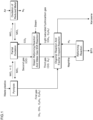
- FIG. 1 is a conceptual diagram illustrating the outline of the liquid hydrocarbon producing method.
- waste plastics are pyrolyzed using a metal oxide as a heat medium.
- the metal oxide is represented by MO x , where x is a natural number.
- the metal oxide is, for example, iron oxide.
- the temperature during pyrolysis is 500°C or more.
- waste plastics are, for example, polypropylene (PP), polystyrene (PS) or polyethylene (PE).
- the first gas mainly composed of hydrogen gas (H 2 ), methane (CH 4 ) and light olefins is generated.
- the term "light” means that the carbon chain length is short and the substance is volatile.
- Light olefins are volatile olefins and are, for example, olefins in which the number of carbon atoms contained in the carbon chain is less than six, such as C 2 H 4 and C 3 H 6 .
- An example of the pyrolysis of waste plastics is expressed by the following Formula (1).
- solid carbon is formed as a by-product, and the formed solid carbon is attached to the metal oxide.
- solid carbon is represented by C.
- CO 2 is introduced into the metal oxide to which solid carbon is attached, and the solid carbon is partially oxidized in a CO 2 atmosphere.
- the solid carbon reacts with oxygen in the metal oxide to generate carbon monoxide (CO).
- the chemical reaction formula for the partial oxidation of solid carbon is expressed by the following Formula (2), where y is a natural number. yC + MO x ⁇ yCO + MO x-y ... (2)
- a second gas mainly composed of CO is generated by the partial oxidation of solid carbon.
- the reduced metal oxide is represented by MO x-y .
- the oxidation of the reduced metal oxide is conducted by bringing the reduced metal oxide into contact with the air.
- the chemical reaction formula for the oxidation of the reduced metal oxide is expressed by the following Formula (4).
- a steam reforming reaction is conducted using steam and a light saturated hydrocarbon gas, which is a by-product of the Fischer-Tropsch reaction described later.
- the light saturated hydrocarbon gas is a gas composed of light saturated hydrocarbons.
- Light saturated hydrocarbons are volatile saturated hydrocarbons and, for example, saturated hydrocarbons having six or less carbon atoms in the molecule, such as CH 4 and C 2 H 6 .
- the chemical reaction formula for an example of the steam reforming reaction is expressed by the following Formula (5).
- a water gas shift reaction is conducted using the CO generated by the steam reforming reaction and the CO contained in the second gas and steam.
- the chemical reaction formula for an example of the water gas shift reaction is expressed by the following Formula (6). CO + H 2 O ⁇ CO 2 + H 2 ... (6)
- CO 2 and H 2 are generated.
- the CO 2 and H 2 are separated from each other by a separation process such as PSA (pressure swing adsorption).
- PSA pressure swing adsorption
- the separated CO 2 is utilized in the partial oxidation of solid carbon.
- a third gas is generated which is composed of CO and H 2 generated by the steam reforming reaction and the water gas shift reaction and a part of CO contained in the second gas.
- the third gas is mainly composed of CO and H 2 .
- the oligomer reaction and the Fischer-Tropsch reaction are conducted using the first gas generated by the pyrolysis of waste plastics and the third gas.
- n and m in Formula (7) are natural numbers of 2 or more, and n in Formula (8) is a natural number of 1 or more.
- the ratio of the amounts of light hydrocarbons, CO, and H 2 is within a predetermined range.
- the ratio of H 2 to CO is desirably 3 or more.
- Formula (9) is the chemical reaction formula for the reaction to convert heptane contained in naphtha into toluene.
- BTX is formed by conducting a reforming reaction on naphtha.
- BTX is a general term for benzene, toluene and xylene.
- the BTX is recovered.
- the BTX is used as an industrial raw material.
- the BTX is used as a raw material for synthetic resins.
- H 2 generated by the reforming reaction is used in the oligomer reaction and the Fischer-Tropsch reaction.
- the hydrogen that has not been contained in the liquid hydrocarbons is used again in the oligomer reaction and the Fischer-Tropsch reaction.
- the yield of forming liquid hydrocarbons from hydrogen derived from waste plastics can be improved.
- Kerosene formed by the oligomer reaction and the Fischer-Tropsch reaction is recovered.
- the kerosene may be used as a liquid fuel.
- the kerosene may be used singly as a liquid fuel, or may be mixed with other liquid hydrocarbons and used as a liquid fuel. In this manner, a liquid fuel such as aviation fuel is produced.
- FIG. 2 is a block diagram of an example of a liquid hydrocarbon producing apparatus 10.
- the liquid hydrocarbon producing apparatus 10 is an apparatus that carries out the outline of the liquid hydrocarbon producing method.
- the liquid hydrocarbon producing apparatus 10 includes a pyrolysis furnace 1, a partial oxidation furnace 2, and a chemical looping reactor 3.
- the pyrolysis furnace 1 pyrolyzes waste plastics using a metal oxide as a heat medium to generate a first gas.
- the partial oxidation furnace 2 partially oxidizes solid carbon attached to the metal oxide in a CO 2 atmosphere to generate a second gas.
- the chemical looping reactor 3 conducts oxidation of the metal oxide.
- the pyrolysis furnace 1 is composed of a fluidized bed reactor.
- the pyrolysis furnace 1 and the partial oxidation furnace 2 are connected to each other via a conveying path for conveying a metal oxide from the pyrolysis furnace 1 to the partial oxidation furnace 2 and a conveying path for conveying a metal oxide from the partial oxidation furnace 2 to the pyrolysis furnace 1.
- the pyrolysis furnace 1 is equipped with a mechanism for charging waste plastics, a mechanism for charging a metal oxide conveyed from the partial oxidation furnace 2, a mechanism for discharging the metal oxide, and a mechanism for discharging the first gas.
- a heated metal oxide and waste plastics are charged into the pyrolysis furnace 1, and the waste plastics and metal oxide are agitated by the fluidized bed.
- the pyrolysis furnace 1 may be equipped with a mechanism for heating the inside thereof or a mechanism for heating the metal oxide.
- the second reactor 5 is connected to the fractionator 51 via a pipe.
- the second reactor 5 is equipped with a mechanism for discharging the formed hydrocarbons, including liquid hydrocarbons and light saturated hydrocarbon gases.
- the formed hydrocarbons are discharged from the second reactor 5 and flow through the pipe to the fractionator 51.
- the reactor for conducting the oligomer reaction and the reactor for conducting the Fischer-Tropsch reaction may be separated from each other.
- the second reactor 5 may be composed of the reactor for the oligomer reaction and the reactor for the Fischer-Tropsch reaction, which are separated from each other.
- the heating furnace 52 is equipped with a mechanism for introducing naphtha from the fractionator 51.
- the naphtha from the fractionator 51 is introduced into the heating furnace 52.
- the heating furnace 52 heats the introduced naphtha.
- the heating furnace 52 heats the naphtha to a temperature sufficient to conduct the reforming reaction.
- the heating furnace 52 is connected to the reforming reactor 6 via a pipe.
- the heating furnace 52 is equipped with a mechanism for discharging the heated naphtha.
- the heated naphtha is discharged from the heating furnace 52 and flows through the pipe to the reforming reactor 6.
- the reforming reactor 6 is composed of a fixed bed reactor, and contains a catalyst for the reforming reaction therein. For example, a large number of catalyst carriers carrying catalysts on their surfaces are packed inside the reforming reactor 6.
- the reforming reactor 6 is equipped with a mechanism for introducing naphtha from the heating furnace 52.
- the reforming reaction takes place.
- dehydrogenation of saturated hydrocarbons contained in naphtha takes place.
- the reforming reactor 6 is connected to the fractionator 61 via a pipe.
- the reforming reactor 6 is equipped with a mechanism for discharging the naphtha after being subjected to the reforming reaction.
- the naphtha after being subjected to the reforming reaction is discharged from the reforming reactor 6 and flows to the fractionator 61.
- the fractionator 61 is configured to fractionate naphtha after being subjected to the reforming reaction.
- the fractionator 61 fractionates naphtha after being subjected to the reforming reaction into H 2 and BTX.
- the fractionator 61 is equipped with a mechanism for separately discharging H 2 and BTX after fractionation.
- the fractionated H 2 is discharged from the fractionator 61, passes through the pipe connected to the second reactor 5, and is introduced into the second reactor 5.
- the discharged BTX is recovered.
- the waste plastics are pyrolyzed using a metal oxide as a heat medium to generate the first gas containing H 2 , CH 4 and light olefins.
- Solid carbon formed by the pyrolysis is partially oxidized in a CO 2 atmosphere to generate the second gas containing CO.
- a steam reforming reaction and a water gas shift reaction are conducted using the second gas and a light saturated hydrocarbon gas to generate the third gas containing CO and H 2 .
- An oligomer reaction and a Fischer-Tropsch reaction are conducted using the first gas and the third gas as raw materials to produce liquid hydrocarbons.
- kerosene and BTX are obtained. Kerosene is used as a liquid fuel, so a liquid fuel is produced.
- waste plastics are pyrolyzed without performing combustion. Since there is no generation of CO 2 due to combustion, generation of CO 2 decreases compared to a conventional method in which waste plastics are burned. For this reason, by utilizing the formed liquid hydrocarbons, it is possible to suppress the emission of CO 2 .
- the formed BTX as an industrial raw material, industrial products can be produced while suppressing the emission of CO 2 .
- a liquid fuel consisting of the formed kerosene can be utilized as an energy source that can suppress the emission of CO 2 .
- the amount of nitrogen that is mixed into the raw material for liquid hydrocarbons is cut down compared to a method in which waste plastics are burned.
- the solid carbon does not come into direct contact with the air, it is possible to suppress mixing of nitrogen into the raw material for liquid hydrocarbons. For this reason, the amount of nitrogen that is mixed into the raw material for liquid hydrocarbons is small.
- the amount of nitrogen atoms contained in the produced liquid hydrocarbons decreases, and the quality of the liquid hydrocarbons is improved.
- waste plastics are not completely pyrolyzed into CO and H 2 , but the first gas containing CH 4 and light olefins is generated from waste plastics and the first gas is used as a raw material for liquid hydrocarbons.
- the energy required for pyrolyzing waste plastics decreases.
- the energy required to form liquid hydrocarbons from waste plastics decreases, and it is possible to produce a liquid fuel and BTX at a high efficiency.
- waste plastics are not completely decomposed into CO and H 2 , the amount of oxygen atoms bonded to carbon atoms decreases compared to a conventional method in which waste plastics are burned and decomposed into CO and H 2 .
- the amount of hydrogen atoms consumed to remove oxygen atoms during the formation of hydrocarbons decreases, and the yield of liquid hydrocarbons produced is improved. This makes it possible to produce liquid hydrocarbons at a high efficiency.
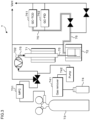
- FIG. 3 is a block diagram illustrating a configuration example of an experimental apparatus 7 for conducting an experiment to form hydrocarbons by the oligomer reaction and the Fischer-Tropsch reaction.
- the lines connecting the various sections of the experimental apparatus 7 indicate the pipes through which the fluid flows, and the arrows indicate the direction in which the fluid flows.
- the experimental apparatus 7 includes a reactor 71 corresponding to the second reactor 5.
- the reactor 71 used in the experiment was a cylindrical reactor having an inner diameter of 8.0 mm and a length of 300 mm.
- the reactor 71 has an inlet through which raw materials for the reaction flow and an outlet through which products of the reaction flow.
- the reactor 71 is capable of adjusting the internal temperature and pressure.
- the experimental apparatus 7 further includes an ice trap 72, a first tank 73, and a second tank 74.
- the first tank 73 stores a synthesis gas containing CO, H 2 , argon (Ar) and CO 2 .
- the second tank 74 stores 1,5-hexadiene.
- the ice trap 72 captures products formed by the reaction in the reactor 71.
- the first tank 73 is connected to the gas inlet of the reactor 71 via a pipe.
- the pipe from the first tank 73 to the reactor 71 passes through an MFC (mass flow controller) 731 and a vaporizer 732.
- the synthesis gas flows from the first tank 73 through the pipe and into the reactor 71.
- the MFC 731 controls the flow rate of the synthesis gas flowing from the first tank 73 through the pipe.
- the vaporizer 732 converts the liquid, which has entered therein through the pipe, into a gas.
- the outlet of the reactor 71 is connected to the ice trap 72 via a pipe.
- the product which has flowed out of the reactor 71, flows through the pipe into the ice trap 72.
- the pipe connected to the outlet of the ice trap 72 leads to a vent.
- a GC-TCD (gas chromatograph - thermal conductivity detector) 761 and a GC-FID (gas chromatograph - flame ionization detector) 762 are connected to a portion of the pipe between the ice trap 72 and the vent.
- a line heater 75 is provided in the pipe between the vaporizer 732 and the reactor 71, the pipe between the reactor 71 and the ice trap 72, and the pipe between the ice trap 72 and the GC-TCD 761 and GC-FID 762.
- Co Co
- Mn manganese
- Silicon dioxide (SiO 2 ) and zirconium dioxide (ZrO 2 ) nano-dispersions were adopted as catalyst carriers.
- the catalyst carriers carrying catalysts on their surfaces were prepared by impregnation.
- the gas flowing through the reactor 71 was changed to the synthesis gas from the first tank 73.
- the proportions of the respective components in the synthesis gas are as follows: CO 25 vol%, H 2 65 vol%, Ar 5 vol%, and CO 2 5 vol%.
- the flow rate of the synthesis gas was set to 20 NmL/min.
- the pump 742 was operated so that 1,5-hexadiene flowed through the reactor 71 at a predetermined flow rate in addition to the synthesis gas.
- the predetermined flow rate was set to 3.82 mmol/min.
- the internal pressure of the reactor 71 was set to 1.0 MPaG and the temperature to 240°C, and the reaction for forming hydrocarbons was started in the reactor 71.
- the product formed by the reaction in the reactor 71 flows out from the outlet of the reactor 71.
- the product consists of various kinds of hydrocarbons having different numbers of carbon atoms in the molecule.
- gas components having 4 or less carbon atoms, which flowed out from the ice trap 72 were analyzed by the GC-TCD 761 and the GC-FID 762. After 6 hours had elapsed since the start of the reaction, the reaction was stopped by releasing the pressure.
- components having 4 or more carbon atoms, which were captured in the ice trap 72 were recovered. The recovered components having 4 or more carbon atoms were separately analyzed by GC-FID.
- FIG. 4 is a graph illustrating the amount of hydrocarbons formed in the experiment.
- the horizontal axis indicates the number of carbon atoms in a hydrocarbon molecule
- the vertical axis indicates the carbon-based selectivity.
- w/o on the horizontal axis indicates that the product was formed under the condition in which 1,5-hexadiene was not added
- w/ indicates that the product was formed under the condition in which 1,5-hexadiene was added.
- Cn indicates that the number of carbon atoms in a molecule is n.
- FIG. 4 presents the selectivities of linear alkanes, olefins and isoalkanes formed.
- the liquid hydrocarbons according to the present embodiment are produced at a high efficiency using waste plastics as a raw material, and can therefore be utilized as SAF (sustainable aviation fuel). Since the freezing point of liquid fuel is lowered as the liquid fuel contains isoalkanes, the proportion of liquid hydrocarbons having a high isoalkane content mixable in the jet fuel can be increased. The result of improving the isoalkane selectivity in the present embodiment indicates that the method for producing liquid hydrocarbons according to the present embodiment can be one means for producing high-quality SAF.
- the liquid hydrocarbon producing method may be in a form in which carbon compounds other than waste plastics are pyrolyzed to produce liquid hydrocarbons.
- the liquid hydrocarbon producing method may be in a form in which synthetic resins other than waste plastics are pyrolyzed or a form in which carbon compounds contained in waste materials other than waste plastics are pyrolyzed.
Landscapes
- Chemical & Material Sciences (AREA)
- Organic Chemistry (AREA)
- Engineering & Computer Science (AREA)
- Oil, Petroleum & Natural Gas (AREA)
- Chemical Kinetics & Catalysis (AREA)
- General Chemical & Material Sciences (AREA)
- Combustion & Propulsion (AREA)
- Inorganic Chemistry (AREA)
- Life Sciences & Earth Sciences (AREA)
- Wood Science & Technology (AREA)
- Materials Engineering (AREA)
- General Health & Medical Sciences (AREA)
- Physics & Mathematics (AREA)
- Thermal Sciences (AREA)
- Health & Medical Sciences (AREA)
- Production Of Liquid Hydrocarbon Mixture For Refining Petroleum (AREA)
Applications Claiming Priority (2)
| Application Number | Priority Date | Filing Date | Title |
|---|---|---|---|
| JP2022095204 | 2022-06-13 | ||
| PCT/JP2023/021443 WO2023243547A1 (ja) | 2022-06-13 | 2023-06-09 | 液体炭化水素製造方法及び液体炭化水素製造装置 |
Publications (1)
| Publication Number | Publication Date |
|---|---|
| EP4538351A1 true EP4538351A1 (en) | 2025-04-16 |
Family
ID=89191268
Family Applications (1)
| Application Number | Title | Priority Date | Filing Date |
|---|---|---|---|
| EP23823837.2A Pending EP4538351A1 (en) | 2022-06-13 | 2023-06-09 | Liquid hydrocarbon production method and liquid hydrocarbon production device |
Country Status (5)
| Country | Link |
|---|---|
| US (1) | US20250171380A1 (https=) |
| EP (1) | EP4538351A1 (https=) |
| JP (1) | JPWO2023243547A1 (https=) |
| AU (1) | AU2023292346A1 (https=) |
| WO (1) | WO2023243547A1 (https=) |
Families Citing this family (3)
| Publication number | Priority date | Publication date | Assignee | Title |
|---|---|---|---|---|
| WO2025186869A1 (ja) * | 2024-03-04 | 2025-09-12 | 株式会社レゾナック | 基礎化学原料の製造方法及び基礎化学原料の製造装置 |
| JP7659247B1 (ja) * | 2024-11-29 | 2025-04-09 | 有限会社市川事務所 | バイオジェット燃料の製造方法及びバイオジェット燃料の製造装置 |
| WO2026004221A1 (ja) * | 2024-06-25 | 2026-01-02 | 有限会社市川事務所 | ガスの製造方法及び製造装置、並びにバイオジェット燃料の製造方法及び製造装置 |
Family Cites Families (5)
| Publication number | Priority date | Publication date | Assignee | Title |
|---|---|---|---|---|
| FR2945817B1 (fr) * | 2009-05-25 | 2013-09-27 | Francois Hustache | Nouveau dispositif pour la gazeification de dechets organiques, et procede de mise en oeuvre de ce dispositif |
| EP2534122A4 (en) | 2010-02-08 | 2013-12-18 | Fulcrum Bioenergy Inc | PROCESS FOR THE COMFORTABLE CONVERSION OF SOLID HOUSE MILL IN ETHANOL |
| JP6892077B2 (ja) * | 2017-09-26 | 2021-06-18 | 三菱パワー株式会社 | 燃料反応塔及びこれを備えたケミカルルーピング燃焼システム |
| CN120624046A (zh) * | 2019-01-30 | 2025-09-12 | 格林菲尔德全球有限公司 | 一种生产合成喷气燃料的方法 |
| WO2021222823A1 (en) * | 2020-04-30 | 2021-11-04 | Fulcrum Bioenergy, Inc. | Feedstock processing systems and methods for producing fischer-tropsch liquids and transportation fuels |
-
2023
- 2023-06-09 JP JP2024528793A patent/JPWO2023243547A1/ja active Pending
- 2023-06-09 WO PCT/JP2023/021443 patent/WO2023243547A1/ja not_active Ceased
- 2023-06-09 US US18/868,653 patent/US20250171380A1/en active Pending
- 2023-06-09 AU AU2023292346A patent/AU2023292346A1/en active Pending
- 2023-06-09 EP EP23823837.2A patent/EP4538351A1/en active Pending
Also Published As
| Publication number | Publication date |
|---|---|
| WO2023243547A1 (ja) | 2023-12-21 |
| US20250171380A1 (en) | 2025-05-29 |
| AU2023292346A1 (en) | 2024-12-19 |
| JPWO2023243547A1 (https=) | 2023-12-21 |
Similar Documents
| Publication | Publication Date | Title |
|---|---|---|
| EP4538351A1 (en) | Liquid hydrocarbon production method and liquid hydrocarbon production device | |
| US9834440B2 (en) | Parallel preparation of hydrogen, carbon monoxide and a carbon-comprising product | |
| KR101599374B1 (ko) | 이산화탄소의 일산화탄소로의 전환을 위한 방법 및 시스템 | |
| US7667085B2 (en) | Process for the conversion of natural gas to hydrocarbon liquids | |
| EA025607B1 (ru) | Способ риформинга газа газификации | |
| JP2009519371A (ja) | 天然ガスからの炭化水素の生成 | |
| US12351457B2 (en) | Method and device for producing hydrogen and pyrolytic carbon from hydrocarbons | |
| JP2009179591A (ja) | メタノールの製造方法 | |
| CA2848250A1 (en) | Method for obtaining olefins from furnace gases of steel works | |
| CA2846936C (en) | Method of reforming gasification gas | |
| US8088187B2 (en) | Hydrogen and carbon utilization in synthetic fuels production plants | |
| CN113574009A (zh) | 由通过催化部分氧化结合裂化制得的合成气生产甲醇的方法 | |
| US12252405B2 (en) | Process and device for producing hydrogen, carbon monoxide and a carbon-containing product | |
| GB2612647A (en) | Fuel generation system and process | |
| JP5886443B2 (ja) | 合成ガスの生成方法及び装置 | |
| CN116924404A (zh) | 一种利用二氧化碳和含甲烷气干重整制备一氧化碳的系统及方法 | |
| RU2075432C1 (ru) | Способ получения синтез-газа | |
| RU2790380C1 (ru) | Способ и устройство для получения водорода и пироуглерода из углеводородов | |
| JP2005087984A (ja) | 芳香族化合物のハイブリッド製造方法 | |
| JP2005089436A (ja) | 芳香族化合物のハイブリッド製造方法 | |
| Udemu et al. | Steam Reforming Process for Conversion of Hydrocarbons to Hydrogen | |
| KR20260058857A (ko) | 탄화수소 분해용 막 반응기 | |
| EP4720229A1 (en) | Process for the production of fuel and chemicals from waste materials by utilizing carbon dioxide-rich feedstock | |
| AU2024334777A1 (en) | A membrane reactor for the cracking of hydrocarbons | |
| CN121548550A (zh) | 通过利用富二氧化碳原料来生产羧酸和羰基化合物的方法 |
Legal Events
| Date | Code | Title | Description |
|---|---|---|---|
| STAA | Information on the status of an ep patent application or granted ep patent |
Free format text: STATUS: THE INTERNATIONAL PUBLICATION HAS BEEN MADE |
|
| PUAI | Public reference made under article 153(3) epc to a published international application that has entered the european phase |
Free format text: ORIGINAL CODE: 0009012 |
|
| STAA | Information on the status of an ep patent application or granted ep patent |
Free format text: STATUS: REQUEST FOR EXAMINATION WAS MADE |
|
| 17P | Request for examination filed |
Effective date: 20250102 |
|
| AK | Designated contracting states |
Kind code of ref document: A1 Designated state(s): AL AT BE BG CH CY CZ DE DK EE ES FI FR GB GR HR HU IE IS IT LI LT LU LV MC ME MK MT NL NO PL PT RO RS SE SI SK SM TR |
|
| DAV | Request for validation of the european patent (deleted) | ||
| DAX | Request for extension of the european patent (deleted) |