EP4538295A2 - Antigenbindende moleküle und verfahren zur verwendung davon - Google Patents
Antigenbindende moleküle und verfahren zur verwendung davon Download PDFInfo
- Publication number
- EP4538295A2 EP4538295A2 EP24223050.6A EP24223050A EP4538295A2 EP 4538295 A2 EP4538295 A2 EP 4538295A2 EP 24223050 A EP24223050 A EP 24223050A EP 4538295 A2 EP4538295 A2 EP 4538295A2
- Authority
- EP
- European Patent Office
- Prior art keywords
- seq
- antigen binding
- antibody
- binding molecule
- amino acid
- Prior art date
- Legal status (The legal status is an assumption and is not a legal conclusion. Google has not performed a legal analysis and makes no representation as to the accuracy of the status listed.)
- Pending
Links
Images








Classifications
-
- C—CHEMISTRY; METALLURGY
- C07—ORGANIC CHEMISTRY
- C07K—PEPTIDES
- C07K16/00—Immunoglobulins [IGs], e.g. monoclonal or polyclonal antibodies
- C07K16/42—Immunoglobulins [IGs], e.g. monoclonal or polyclonal antibodies against immunoglobulins
- C07K16/4208—Immunoglobulins [IGs], e.g. monoclonal or polyclonal antibodies against immunoglobulins against an idiotypic determinant on Ig
- C07K16/4241—Immunoglobulins [IGs], e.g. monoclonal or polyclonal antibodies against immunoglobulins against an idiotypic determinant on Ig against anti-human or anti-animal Ig
- C07K16/4258—Immunoglobulins [IGs], e.g. monoclonal or polyclonal antibodies against immunoglobulins against an idiotypic determinant on Ig against anti-human or anti-animal Ig against anti-receptor Ig
-
- A—HUMAN NECESSITIES
- A61—MEDICAL OR VETERINARY SCIENCE; HYGIENE
- A61K—PREPARATIONS FOR MEDICAL, DENTAL OR TOILETRY PURPOSES
- A61K35/00—Medicinal preparations containing materials or reaction products thereof with undetermined constitution
- A61K35/12—Materials from mammals; Compositions comprising non-specified tissues or cells; Compositions comprising non-embryonic stem cells; Genetically modified cells
- A61K35/14—Blood; Artificial blood
- A61K35/17—Lymphocytes; B-cells; T-cells; Natural killer cells; Interferon-activated or cytokine-activated lymphocytes
-
- A—HUMAN NECESSITIES
- A61—MEDICAL OR VETERINARY SCIENCE; HYGIENE
- A61K—PREPARATIONS FOR MEDICAL, DENTAL OR TOILETRY PURPOSES
- A61K39/00—Medicinal preparations containing antigens or antibodies
- A61K39/0005—Vertebrate antigens
- A61K39/0011—Cancer antigens
-
- A—HUMAN NECESSITIES
- A61—MEDICAL OR VETERINARY SCIENCE; HYGIENE
- A61K—PREPARATIONS FOR MEDICAL, DENTAL OR TOILETRY PURPOSES
- A61K39/00—Medicinal preparations containing antigens or antibodies
- A61K39/395—Antibodies; Immunoglobulins; Immune serum, e.g. antilymphocytic serum
- A61K39/39533—Antibodies; Immunoglobulins; Immune serum, e.g. antilymphocytic serum against materials from animals
- A61K39/3955—Antibodies; Immunoglobulins; Immune serum, e.g. antilymphocytic serum against materials from animals against proteinaceous materials, e.g. enzymes, hormones, lymphokines
-
- C—CHEMISTRY; METALLURGY
- C07—ORGANIC CHEMISTRY
- C07K—PEPTIDES
- C07K14/00—Peptides having more than 20 amino acids; Gastrins; Somatostatins; Melanotropins; Derivatives thereof
- C07K14/435—Peptides having more than 20 amino acids; Gastrins; Somatostatins; Melanotropins; Derivatives thereof from animals; from humans
- C07K14/705—Receptors; Cell surface antigens; Cell surface determinants
- C07K14/70503—Immunoglobulin superfamily
- C07K14/7051—T-cell receptor (TcR)-CD3 complex
-
- C—CHEMISTRY; METALLURGY
- C07—ORGANIC CHEMISTRY
- C07K—PEPTIDES
- C07K16/00—Immunoglobulins [IGs], e.g. monoclonal or polyclonal antibodies
- C07K16/18—Immunoglobulins [IGs], e.g. monoclonal or polyclonal antibodies against material from animals or humans
- C07K16/28—Immunoglobulins [IGs], e.g. monoclonal or polyclonal antibodies against material from animals or humans against receptors, cell surface antigens or cell surface determinants
- C07K16/2803—Immunoglobulins [IGs], e.g. monoclonal or polyclonal antibodies against material from animals or humans against receptors, cell surface antigens or cell surface determinants against the immunoglobulin superfamily
-
- C—CHEMISTRY; METALLURGY
- C07—ORGANIC CHEMISTRY
- C07K—PEPTIDES
- C07K16/00—Immunoglobulins [IGs], e.g. monoclonal or polyclonal antibodies
- C07K16/42—Immunoglobulins [IGs], e.g. monoclonal or polyclonal antibodies against immunoglobulins
- C07K16/4208—Immunoglobulins [IGs], e.g. monoclonal or polyclonal antibodies against immunoglobulins against an idiotypic determinant on Ig
-
- G—PHYSICS
- G01—MEASURING; TESTING
- G01N—INVESTIGATING OR ANALYSING MATERIALS BY DETERMINING THEIR CHEMICAL OR PHYSICAL PROPERTIES
- G01N33/00—Investigating or analysing materials by specific methods not covered by groups G01N1/00 - G01N31/00
- G01N33/48—Biological material, e.g. blood, urine; Haemocytometers
- G01N33/50—Chemical analysis of biological material, e.g. blood, urine; Testing involving biospecific ligand binding methods; Immunological testing
- G01N33/53—Immunoassay; Biospecific binding assay; Materials therefor
- G01N33/569—Immunoassay; Biospecific binding assay; Materials therefor for microorganisms, e.g. protozoa, bacteria, viruses
- G01N33/56966—Animal cells
- G01N33/56972—White blood cells
-
- G—PHYSICS
- G01—MEASURING; TESTING
- G01N—INVESTIGATING OR ANALYSING MATERIALS BY DETERMINING THEIR CHEMICAL OR PHYSICAL PROPERTIES
- G01N33/00—Investigating or analysing materials by specific methods not covered by groups G01N1/00 - G01N31/00
- G01N33/48—Biological material, e.g. blood, urine; Haemocytometers
- G01N33/50—Chemical analysis of biological material, e.g. blood, urine; Testing involving biospecific ligand binding methods; Immunological testing
- G01N33/68—Chemical analysis of biological material, e.g. blood, urine; Testing involving biospecific ligand binding methods; Immunological testing involving proteins, peptides or amino acids
- G01N33/6854—Immunoglobulins
- G01N33/686—Anti-idiotype
-
- A—HUMAN NECESSITIES
- A61—MEDICAL OR VETERINARY SCIENCE; HYGIENE
- A61K—PREPARATIONS FOR MEDICAL, DENTAL OR TOILETRY PURPOSES
- A61K39/00—Medicinal preparations containing antigens or antibodies
- A61K2039/51—Medicinal preparations containing antigens or antibodies comprising whole cells, viruses or DNA/RNA
- A61K2039/515—Animal cells
- A61K2039/5156—Animal cells expressing foreign proteins
-
- A—HUMAN NECESSITIES
- A61—MEDICAL OR VETERINARY SCIENCE; HYGIENE
- A61K—PREPARATIONS FOR MEDICAL, DENTAL OR TOILETRY PURPOSES
- A61K39/00—Medicinal preparations containing antigens or antibodies
- A61K2039/51—Medicinal preparations containing antigens or antibodies comprising whole cells, viruses or DNA/RNA
- A61K2039/515—Animal cells
- A61K2039/5158—Antigen-pulsed cells, e.g. T-cells
-
- A—HUMAN NECESSITIES
- A61—MEDICAL OR VETERINARY SCIENCE; HYGIENE
- A61P—SPECIFIC THERAPEUTIC ACTIVITY OF CHEMICAL COMPOUNDS OR MEDICINAL PREPARATIONS
- A61P35/00—Antineoplastic agents
- A61P35/02—Antineoplastic agents specific for leukemia
-
- C—CHEMISTRY; METALLURGY
- C07—ORGANIC CHEMISTRY
- C07K—PEPTIDES
- C07K16/00—Immunoglobulins [IGs], e.g. monoclonal or polyclonal antibodies
- C07K16/42—Immunoglobulins [IGs], e.g. monoclonal or polyclonal antibodies against immunoglobulins
- C07K16/4208—Immunoglobulins [IGs], e.g. monoclonal or polyclonal antibodies against immunoglobulins against an idiotypic determinant on Ig
- C07K16/4241—Immunoglobulins [IGs], e.g. monoclonal or polyclonal antibodies against immunoglobulins against an idiotypic determinant on Ig against anti-human or anti-animal Ig
-
- C—CHEMISTRY; METALLURGY
- C07—ORGANIC CHEMISTRY
- C07K—PEPTIDES
- C07K2317/00—Immunoglobulins specific features
- C07K2317/20—Immunoglobulins specific features characterized by taxonomic origin
-
- C—CHEMISTRY; METALLURGY
- C07—ORGANIC CHEMISTRY
- C07K—PEPTIDES
- C07K2317/00—Immunoglobulins specific features
- C07K2317/20—Immunoglobulins specific features characterized by taxonomic origin
- C07K2317/24—Immunoglobulins specific features characterized by taxonomic origin containing regions, domains or residues from different species, e.g. chimeric, humanized or veneered
-
- C—CHEMISTRY; METALLURGY
- C07—ORGANIC CHEMISTRY
- C07K—PEPTIDES
- C07K2317/00—Immunoglobulins specific features
- C07K2317/50—Immunoglobulins specific features characterized by immunoglobulin fragments
- C07K2317/51—Complete heavy chain or Fd fragment, i.e. VH + CH1
-
- C—CHEMISTRY; METALLURGY
- C07—ORGANIC CHEMISTRY
- C07K—PEPTIDES
- C07K2317/00—Immunoglobulins specific features
- C07K2317/50—Immunoglobulins specific features characterized by immunoglobulin fragments
- C07K2317/515—Complete light chain, i.e. VL + CL
-
- C—CHEMISTRY; METALLURGY
- C07—ORGANIC CHEMISTRY
- C07K—PEPTIDES
- C07K2317/00—Immunoglobulins specific features
- C07K2317/50—Immunoglobulins specific features characterized by immunoglobulin fragments
- C07K2317/56—Immunoglobulins specific features characterized by immunoglobulin fragments variable (Fv) region, i.e. VH and/or VL
- C07K2317/565—Complementarity determining region [CDR]
-
- C—CHEMISTRY; METALLURGY
- C07—ORGANIC CHEMISTRY
- C07K—PEPTIDES
- C07K2317/00—Immunoglobulins specific features
- C07K2317/60—Immunoglobulins specific features characterized by non-natural combinations of immunoglobulin fragments
- C07K2317/62—Immunoglobulins specific features characterized by non-natural combinations of immunoglobulin fragments comprising only variable region components
- C07K2317/622—Single chain antibody (scFv)
-
- C—CHEMISTRY; METALLURGY
- C07—ORGANIC CHEMISTRY
- C07K—PEPTIDES
- C07K2319/00—Fusion polypeptide
- C07K2319/01—Fusion polypeptide containing a localisation/targetting motif
- C07K2319/03—Fusion polypeptide containing a localisation/targetting motif containing a transmembrane segment
-
- C—CHEMISTRY; METALLURGY
- C07—ORGANIC CHEMISTRY
- C07K—PEPTIDES
- C07K2319/00—Fusion polypeptide
- C07K2319/33—Fusion polypeptide fusions for targeting to specific cell types, e.g. tissue specific targeting, targeting of a bacterial subspecies
-
- C—CHEMISTRY; METALLURGY
- C07—ORGANIC CHEMISTRY
- C07K—PEPTIDES
- C07K2319/00—Fusion polypeptide
- C07K2319/70—Fusion polypeptide containing domain for protein-protein interaction
- C07K2319/74—Fusion polypeptide containing domain for protein-protein interaction containing a fusion for binding to a cell surface receptor
Definitions
- antigen binding molecules such as antibodies, which specifically bind to the anti-CD19 scFv FMC63, as well as molecules comprising these sequences and cells presenting such molecules, polynucleotides encoding such antigen binding molecules, as well as humanized forms of the antigen binding molecules; methods of using the antigen binding molecules are also disclosed.
- Antigen binding molecules including antibodies, and fragments such as Fabs, F(ab') 2 , scFvs, etc, are used in immunotherapy and solid phase-based applications such as biosensors, affinity chromatography, and immunoassays. These antibodies and other antigen binding molecules gain their utility by virtue of their ability to specifically bind their targets.
- Anti-idiotypic antibodies are a subset of antibodies, and are antibodies raised against immunizing antibodies. These anti-idiotypic antibodies demonstrated specific binding against the idiotopes (unique antigenic determinants on the surface of the antibodies) of the immunizing antibodies. Anti-idiotypic antibodies can be generally classified into three distinct groups: (1) antibodies are those that recognize idiotopes distinct from the antigen-binding site (ABS) on immunizing antibodies; (2) antibodies that recognize epitopes within the ABS and mimic the structure, and forming the so-called "internal image,” of the nominal antigen; and (3) antibodies that recognize epitopes within the ABS without the structural resemblance of the nominal antigen (see, e.g., Pan et al., (1995) FASEB J 9:43-49 ).
- ABS antigen-binding site
- FMC63 is an IgG2a mouse monoclonal antibody that recognizes CD19, which is expressed on the surface of B cells ( Zola et al., (1991) Immunol Cell Biol 69:411-22 ).
- Single chain variable fragments (scFv) formed from FMC63 comprise the targeting component of some chimeric antigen receptors (CARs) ( Kochenderfer et al., (2009) J Immunother 32(7):689-702 ), and the scFv of FMC63 has previously been used to generate anti-FMC63 antibodies ( Jena et al., (2013) PLoS ONE 8(3):e57838 ).
- CARs chimeric antigen receptors
- rabbit antigen binding molecules including antibodies, that specifically bind to the anti-CD19 scFv FMC63 (SEQ ID NO: 1), as well as molecules comprising these sequences and cells presenting such molecules.
- Humanized forms of the disclosed rabbit antigen binding molecules also form as aspect of the disclosure. Applications and uses of these antigen binding molecules are also disclosed.
- an isolated antigen binding molecule that specifically binds a molecule comprising SEQ ID NO: 1 is provided.
- the antigen binding molecule specifically binds a molecule comprising one or more peptides (e.g., complementarity determining regions (CDRs)) selected from the group consisting of SEQ ID NOs:74-82.
- CDRs complementarity determining regions
- the antigen binding molecule is selected from the group consisting of an antibody, an scFv, a Fab, a Fab', a Fv, a F(ab') 2 , a dAb, a human antibody, a humanized antibody, a chimeric antibody, a monoclonal antibody, a polyclonal antibody, a recombinant antibody, an IgE antibody, an IgD antibody, an IgM antibody, an IgG1 antibody, an IgG1 antibody having at least one mutation in the hinge region, an IgG2 antibody an IgG2 antibody having at least one mutation in the hinge region, an IgG3 antibody, an IgG3 antibody having at least one mutation in the hinge region, an IgG4 antibody, an IgG4 antibody having at least one mutation in the hinge region, an antibody comprising at least one non-naturally occurring amino acid, and any combination thereof.
- the antigen binding molecule comprises a heavy chain (HC) and in further embodiments the HC comprises a heavy chain variable region (VH) sequence selected from the group consisting of SEQ ID NOs: 3, 15, 21, 33, 39 and 51.
- the variable region (VH) of the antigen binding molecule comprises one or more of (a) a CDR1, (b) a CDR2, and (c) a CDR3.
- the antigen binding molecule comprises a heavy chain CDR1 selected from the group consisting of SEQ ID NOs: 5, 23, 41 and 53.
- the antigen binding molecule comprises a heavy chain CDR2 selected from the group consisting of SEQ ID NOs: 6, 24, 42 and 54.
- the antigen binding molecule comprises a heavy chain CDR3 selected from the group consisting of SEQ ID NOs: 7, 25, 43 and 55.
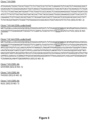
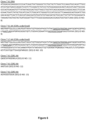
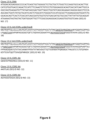
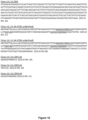
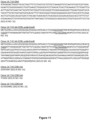
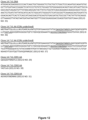
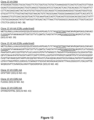
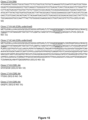
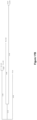
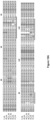
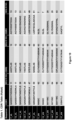
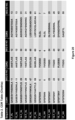
- the antigen binding molecule comprises a heavy chain comprising a heavy chain CDR1, a heavy chain CDR2, and a heavy chain CDR3, each CDR comprising an amino acid sequence shown in FIGURES 5-21 .
- an antigen binding molecule which comprises a VH amino acid sequence that is at least about 70%, at least about 75%, at least about 80%, at least about 85%, at least about 90%, at least about 95%, at least about 96%, at least about 97%, at least about 98%, at least about 99%, or about 100% identical to a VH of an antigen binding molecule provided herein.
- the antigen binding molecule comprises a light chain (LC) and in further embodiments the LC comprises a light chain variable region (VL) sequence selected from the group consisting of SEQ ID NOs: 8, 18, 27, 36, 45 and 57.
- the variable region (VL) and comprises one or more of (a) a CDR1, (b) a CDR2, and (c) a CDR3.
- the antigen binding molecule comprises a light chain CDR1 selected from the group consisting of SEQ ID NOs: 11, 29, 47 and 59.
- the antigen binding molecule comprises a light chain CDR2 selected from the group consisting of SEQ ID NOs: 12, 30, 48 and 60.
- the antigen binding molecule comprises a light chain CDR3 selected from the group consisting of SEQ ID NOs: 13, 31, 49 and 61.
- the light chain comprises a light chain CDR1, a light chain CDR2, and a light chain CDR3, each CDR comprising an amino acid sequence shown in one of FIGURES 5-21 .
- an antigen binding molecule which comprises a VL amino acid sequence that is at least about 70%, at least about 75%, at least about 80%, at least about 85%, at least about 90%, at least about 95%, at least about 96%, at least about 97%, at least about 98%, at least about 99%, or about 100% identical to a VL of an antigen binding molecule provided herein.
- an antigen binding molecule comprises (a) a VH comprising the amino acid sequence of SEQ ID NO: 3; and (b) a VL comprising the amino acid sequence of SEQ ID NO: 9.
- an antigen binding molecule comprises: (a) a VH CDR1 region comprising the amino acid sequence of SEQ ID NO: 5; (b) a VH CDR2 region comprising the amino acid sequence of SEQ ID NO: 6; (c) a VH CDR3 region comprising the amino acid sequence of SEQ ID NO: 7; (d) a VL CDR1 region comprising the amino acid sequence of SEQ ID NO: 11; (e) a VL CDR2 region comprising the amino acid sequence of SEQ ID NO: 12; and (f) a VL CDR3 region comprising the amino acid sequence of SEQ ID NO: 13.
- an antigen binding molecule comprises (a) a VH comprising the amino acid sequence of SEQ ID NO: 15; and (b) a VL comprising the amino acid sequence of SEQ ID NO: 18.
- an antigen binding molecule comprises (a) a VH CDR1 region comprising the amino acid sequence of SEQ ID NO: 5; (b) a VH CDR2 region comprising the amino acid sequence of SEQ ID NO: 6; (c) a VH CDR3 region comprising the amino acid sequence of SEQ ID NO: 7; (d) a VL CDR1 region comprising the amino acid sequence of SEQ ID NO: 11; (e) a VL CDR2 region comprising the amino acid sequence of SEQ ID NO: 12; and (f) a VL CDR3 region comprising the amino acid sequence of SEQ ID NO: 13.
- an antigen binding molecule comprises (a) a VH comprising the amino acid sequence of SEQ ID NO: 21; and (b) a VL comprising the amino acid sequence of SEQ ID NO: 27.
- an antigen binding molecule comprises (a) a VH CDR1 region comprising the amino acid sequence of SEQ ID NO: 23; (b) a VH CDR2 region comprising the amino acid sequence of SEQ ID NO: 24; (c) a VH CDR3 region comprising the amino acid sequence of SEQ ID NO: 25; (d) a VL CDR1 region comprising the amino acid sequence of SEQ ID NO: 29; (e) a VL CDR2 region comprising the amino acid sequence of SEQ ID NO: 30; and (f) a VL CDR3 region comprising the amino acid sequence of SEQ ID NO: 31.
- an antigen binding molecule comprises (a) a VH comprising the amino acid sequence of SEQ ID NO: 33; and (b) a VL comprising the amino acid sequence of SEQ ID NO: 36.
- an antigen binding molecule comprises (a) a VH CDR1 region comprising the amino acid sequence of SEQ ID NO: 23; (b) a VH CDR2 region comprising the amino acid sequence of SEQ ID NO: 24; (c) a VH CDR3 region comprising the amino acid sequence of SEQ ID NO: 25; (d) a VL CDR1 region comprising the amino acid sequence of SEQ ID NO: 29; (e) a VL CDR2 region comprising the amino acid sequence of SEQ ID NO: 30; and (f) a VL CDR3 region comprising the amino acid sequence of SEQ ID NO: 31.
- an antigen binding molecule comprises (a) a VH comprising the amino acid sequence of SEQ ID NO: 39; and (b) a VL comprising the amino acid sequence of SEQ ID NO: 45.
- an antigen binding molecule comprises (a) a VH CDR1 region comprising the amino acid sequence of SEQ ID NO: 41; (b) a VH CDR2 region comprising the amino acid sequence of SEQ ID NO: 42; (c) a VH CDR3 region comprising the amino acid sequence of SEQ ID NO: 43; (d) VL CDR1 region comprising the amino acid sequence of SEQ ID NO: 47; (e) a VL CDR2 region comprising the amino acid sequence of SEQ ID NO: 48; and (f) a VL CDR3 region comprising the amino acid sequence of SEQ ID NO: 49.
- an antigen binding molecule comprises (a) a VH comprising the amino acid sequence of SEQ ID NO: 51; and (b) a VL comprising the amino acid sequence of SEQ ID NO: 57.
- an antigen binding molecule comprises (a) a VH CDR1 region comprising the amino acid sequence of SEQ ID NO: 53; (b) a VH CDR2 region comprising the amino acid sequence of SEQ ID NO: 54; (c) a VH CDR3 region comprising the amino acid sequence of SEQ ID NO: 55; (d) a VL CDR1 region comprising the amino acid sequence of SEQ ID NO: 59; (e) a VL CDR2 region comprising the amino acid sequence of SEQ ID NO: 60; and (f) a VL CDR3 region comprising the amino acid sequence of SEQ ID NO: 61.
- an antigen binding molecule provided herein further comprises a detectable label, and can be selected from the group consisting of a fluorescent label, a photochromic compound, a proteinaceous fluorescent label, a magnetic label, a radiolabel, and a hapten.
- a fluorescent label is selected from the group consisting of an Atto dye, an Alexafluor dye, quantum dots, Hydroxycoumarin, Aminocouramin, Methoxycourmarin, Cascade Blue, Pacific Blue, Pacific Orange Lucifer Yellow, NBD, R-Phycoerythrin (PE), PE-Cy5 conjugates, PE-Cy7 conjugates, Red 613, PerCP, TruRed, FluorX, Fluorescein, BODIPY-FL, Cy2, Cy3, Cy3B, Cy3.5, Cy5, Cy5.5, Cy7, TRITC, X-Rhodamine, Lissamine Rhocamine B, Texas Red, Allophycocyanin (APC), APC-Cy7 conjugates, Indo-1, Fluo-3, Fluo-4, DCFH, DHR, SNARF, GFP (Y66H mutation), GFP (Y66F mutation), EBFP, EBFP2, Azurite, GFPuv, T-Sapphire, Cerulean, mCF
- composition comprising an antigen binding molecule disclosed herein.
- a polynucleotide encoding the heavy chain of an antigen binding molecule disclosed herein, and a polynucleotide encoding the light chain of an antigen binding molecule disclosed herein.
- a vector comprising the polynucleotides is also disclosed.
- a cell comprising one or more such vectors is disclosed.
- the cell comprises a cell selected from the group consisting of a CHO cell, a Sp2/0 cell, a rabbit cell and an E. coli cell.
- a method of making an antigen binding molecule disclosed herein comprising incubating a cell disclosed herein under suitable conditions is provided.
- a method of administering a dose of a medicament to a subject comprising a preselected number of cells presenting a therapeutic molecule comprising SEQ ID NO: 1
- the method comprises (a) providing a sample of known volume comprising a population comprising a known number of cells, which cells are known or suspected to be presenting a molecule comprising SEQ ID NO: 1; (b) providing an aliquot of the sample comprising a population of cells presenting a therapeutic molecule comprising SEQ ID NO: 1; (c) providing an antigen binding molecule that specifically binds the SEQ ID NO: 1, the antigen binding molecule further comprising a detectable label; (d) contacting the aliquot of (b) with the antigen binding molecule of (c) under conditions that permit the formation of a binding complex comprising a cell present in the sample and the antigen binding molecule; (e) determining the fraction of cells present in a binding complex of (d) in the aliquot; (a) providing a sample of known volume comprising
- the molecule comprising SEQ ID NO: 1 is a CAR; and (b) the cell is an immune cell selected from the group consisting of CD8+ T cells, CD4+ T cells, tumor infiltrating lymphocytes (TILs), NK cells, TCR-expressing cells, dendritic cells, and NK-T cells.
- TILs tumor infiltrating lymphocytes
- the CAR further comprises a molecule, or a fragment thereof, selected from the group consisting of CD28, OX-40, 4-1BB/CD137, CD2, CD7, CD27, CD30, CD40, Programmed Death-1 (PD-1), inducible T cell co-stimulator (ICOS), lymphocyte function-associated antigen-1 (LFA-1, CDl-la/CD18), CD3 gamma, CD3 delta, CD3 epsilon, CD3 zeta, CD247, CD276 (B7-H3), LIGHT, (TNFSF14), NKG2C, Ig alpha (CD79a), DAP-10, Fc gamma receptor, MHC class 1 molecule, TNF receptor proteins, an Immunoglobulin protein, cytokine receptor, integrins, Signaling Lymphocytic Activation Molecules (SLAM proteins), activating NK cell receptors, BTLA, a Toll ligand receptor, ICAM-1, B7-H3,
- the detectable label is selected from the group consisting of a fluorescent label, a photochromic compound, a proteinaceous fluorescent label, a magnetic label, a radiolabel, and a hapten.
- the fluorescent label is selected from the group consisting of an Atto dye, an Alexafluor dye, quantum dots, Hydroxycoumarin, Aminocouramin, Methoxycourmarin, Cascade Blue, Pacific Blue, Pacific Orange Lucifer Yellow, NBD, R-Phycoerythrin (PE), PE-Cy5 conjugates, PE-Cy7 conjugates, Red 613, PerCP, TruRed, FluorX, Fluorescein, BODIPY-FL, Cy2, Cy3, Cy3B, Cy3.5, Cy5, Cy5.5, Cy7, TRITC, X-Rhodamine, Lissamine Rhocamine B, Texas Red, Allophycocyanin (APC), APC-Cy7 conjugates, Indo-1, Fluo-3, Fluo-4, DCFH, D
- the immune cell is a T cell and in still further embodiments the T cell is disposed in vitro or the T cell is disposed in vivo. In other embodiments, the T cell is in one of blood, extracted tissue, tissue grown ex vivo, and cell culture media. In some embodiments, the T cell is an autologous T cell, and in other embodiments the T cell is an allogenic T cell. In an embodiment, the dose is 1.0x10 6 cells per kilogram of the subject. Additionally, in various embodiments of the disclosed method the antigen binding molecule comprises an antigen binding molecule disclosed herein, and humanized forms thereof.
- a method of administering a dose of a medicament to a subject comprising a preselected number of cells presenting a therapeutic molecule comprising CDR sequences according to any one of SEQ ID Nos: 74-82, is provided.
- the method comprises (a) providing a sample of known volume comprising a population comprising a known number of cells, which cells are known or suspected to be presenting a molecule comprising CDR sequences according to any one of SEQ ID Nos: 74-82; (b) providing an aliquot of the sample comprising a population of cells presenting a therapeutic molecule comprising CDR sequences according to any one of SEQ ID Nos: 74-82; (c) providing an antigen binding molecule that specifically binds a molecule comprising CDR sequences according to any one of SEQ ID Nos: 74-82, the antigen binding molecule further comprising a detectable label; (d) contacting the aliquot of (b) with the antigen binding molecule of (c) under conditions that permit the formation of a binding complex comprising a cell present in the sample and the antigen binding molecule; (e) determining the fraction of cells present in a binding complex of (d) in the aliquot; (f) determining the concentration
- the molecule comprising CDR sequences according to any one of SEQ ID Nos: 74-82 is a CAR; and (b) the cell is an immune cell selected from the group consisting of CD8+ T cells, CD4+ T cells, tumor infiltrating lymphocytes (TILs), NK cells, TCR-expressing cells, dendritic cells, and NK-T cells.
- TILs tumor infiltrating lymphocytes
- the CAR further comprises a molecule, or a fragment thereof, selected from the group consisting of CD28, OX-40, 4-1BB/CD137, CD2, CD7, CD27, CD30, CD40, Programmed Death-1 (PD-1), inducible T cell co-stimulator (ICOS), lymphocyte function-associated antigen-1 (LFA-1, CDl-la/CD18), CD3 gamma, CD3 delta, CD3 epsilon, CD3 zeta, CD247, CD276 (B7-H3), LIGHT, (TNFSF14), NKG2C, Ig alpha (CD79a), DAP-10, Fc gamma receptor, MHC class 1 molecule, TNF receptor proteins, an Immunoglobulin protein, cytokine receptor, integrins, Signaling Lymphocytic Activation Molecules (SLAM proteins), activating NK cell receptors, BTLA, a Toll ligand receptor, ICAM-1, B7-H
- the detectable label is selected from the group consisting of a fluorescent label, a photochromic compound, a proteinaceous fluorescent label, a magnetic label, a radiolabel, and a hapten.
- the fluorescent label is selected from the group consisting of an Atto dye, an Alexafluor dye, quantum dots, Hydroxycoumarin, Aminocouramin, Methoxycourmarin, Cascade Blue, Pacific Blue, Pacific Orange Lucifer Yellow, NBD, R-Phycoerythrin (PE), PE-Cy5 conjugates, PE-Cy7 conjugates, Red 613, PerCP, TruRed, FluorX, Fluorescein, BODIPY-FL, Cy2, Cy3, Cy3B, Cy3.5, Cy5, Cy5.5, Cy7, TRITC, X-Rhodamine, Lissamine Rhocamine B, Texas Red, Allophycocyanin (APC), APC-Cy7 conjugates, Indo-1, Fluo-3, Fluo-4, DCFH, D
- the immune cell is a T cell and in still further embodiments the T cell is disposed in vitro or the T cell is disposed in vivo. In other embodiments, the T cell is in one of blood, extracted tissue, tissue grown ex vivo, and cell culture media. In some embodiments, the T cell is an autologous T cell, and in other embodiments the T cell is an allogenic T cell. In an embodiment, the dose is 1.0x10 6 cells per kilogram of the subject. Additionally, in various embodiments of the disclosed method the antigen binding molecule comprises an antigen binding molecule disclosed herein, and humanized forms thereof.
- a method of determining a number of cells presenting a molecule comprising SEQ ID NO: 1 in a sample comprises (a) providing a sample comprising cells known or suspected to be presenting a molecule comprising SEQ ID NO: 1; (b) contacting the sample of (a) with an antigen binding molecule that specifically binds the molecule comprising SEQ ID NO: 1, the antigen binding molecule further comprising a detectable label, under conditions that permit the formation of a binding complex comprising a cell present in the sample and the antigen binding molecule; and (c) determining the number of cells present in a binding complex of (b) in the sample.
- the molecule comprising SEQ ID NO: 1 is a CAR; and (b) the cell is an immune cell selected from the group consisting of CD8+ T cells, CD4+ T cells, tumor infiltrating lymphocytes (TILs), NK cells, TCR-expressing cells, dendritic cells, and NK-T cells.
- TILs tumor infiltrating lymphocytes
- the CAR further comprises a molecule, or a fragment thereof, selected from the group consisting of CD28, OX-40, 4-1BB/CD137, CD2, CD7, CD27, CD30, CD40, Programmed Death-1 (PD-1), inducible T cell co-stimulator (ICOS), lymphocyte function-associated antigen-1 (LFA-1, CDl-la/CD18), CD3 gamma, CD3 delta, CD3 epsilon, CD3 zeta, CD247, CD276 (B7-H3), LIGHT, (TNFSF14), NKG2C, Ig alpha (CD79a), DAP-10, Fc gamma receptor, MHC class 1 molecule, TNF receptor proteins, an Immunoglobulin protein, cytokine receptor, integrins, Signaling Lymphocytic Activation Molecules (SLAM proteins), activating NK cell receptors, BTLA, a Toll ligand receptor, ICAM-1, B7-H
- the detectable label is selected from the group consisting of a fluorescent label, a photochromic compound, a proteinaceous fluorescent label, a magnetic label, a radiolabel, and a hapten.
- the fluorescent label is selected from the group consisting of an Atto dye, an Alexafluor dye, quantum dots, Hydroxycoumarin, Aminocouramin, Methoxycourmarin, Cascade Blue, Pacific Blue, Pacific Orange Lucifer Yellow, NBD, R-Phycoerythrin (PE), PE-Cy5 conjugates, PE-Cy7 conjugates, Red 613, PerCP, TruRed, FluorX, Fluorescein, BODIPY-FL, Cy2, Cy3, Cy3B, Cy3.5, Cy5, Cy5.5, Cy7, TRITC, X-Rhodamine, Lissamine Rhocamine B, Texas Red, Allophycocyanin (APC), APC-Cy7 conjugates, Indo-1, Fluo-3, Fluo-4, DCFH, D
- the immune cell is a T cell and in still further embodiments the T cell is disposed in vitro or the T cell is disposed in vivo. In other embodiments, the T cell is in one of blood, extracted tissue, tissue grown ex vivo, and cell culture media. In some embodiments, the T cell is an autologous T cell, and in other embodiments the T cell is an allogenic T cell. Additionally, in various embodiments of the disclosed method, the antigen binding molecule comprises an antigen binding molecule disclosed herein, and humanized forms thereof.
- a method of determining a number of cells presenting a molecule comprising CDR sequences according to any one of SEQ ID Nos: 74-82 in a sample comprises (a) providing a sample comprising cells known or suspected to be presenting a molecule comprising CDR sequences according to any one of SEQ ID Nos: 74-82; (b) contacting the sample of (a) with an antigen binding molecule that specifically binds the molecule comprising CDR sequences according to any one of SEQ ID Nos: 74-82 is provided, the antigen binding molecule further comprising a detectable label, under conditions that permit the formation of a binding complex comprising a cell present in the sample and the antigen binding molecule; and (c) determining the number of cells present in a binding complex of (b) in the sample.
- the molecule comprising CDR sequences according to any one of SEQ ID Nos: 74-82 is a CAR; and (b) the cell is an immune cell selected from the group consisting of CD8+ T cells, CD4+ T cells, tumor infiltrating lymphocytes (TILs), NK cells, TCR-expressing cells, dendritic cells, and NK-T cells.
- TILs tumor infiltrating lymphocytes
- the CAR further comprises a molecule, or a fragment thereof, selected from the group consisting of CD28, OX-40, 4-1BB/CD137, CD2, CD7, CD27, CD30, CD40, Programmed Death-1 (PD-1), inducible T cell co-stimulator (ICOS), lymphocyte function-associated antigen-1 (LFA-1, CDl-la/CD18), CD3 gamma, CD3 delta, CD3 epsilon, CD3 zeta, CD247, CD276 (B7-H3), LIGHT, (TNFSF14), NKG2C, Ig alpha (CD79a), DAP-10, Fc gamma receptor, MHC class 1 molecule, TNF receptor proteins, an Immunoglobulin protein, cytokine receptor, integrins, Signaling Lymphocytic Activation Molecules (SLAM proteins), activating NK cell receptors, BTLA, a Toll ligand receptor, ICAM-1, B7-H
- the immune cell is a T cell and in still further embodiments the T cell is disposed in vitro or the T cell is disposed in vivo. In other embodiments, the T cell is in one of blood, extracted tissue, tissue grown ex vivo, and cell culture media. In some embodiments, the T cell is an autologous T cell, and in other embodiments the T cell is an allogenic T cell. Additionally, in various embodiments of the disclosed method the antigen binding molecule comprises an antigen binding molecule disclosed herein, and humanized forms thereof.
- a method of isolating a molecule comprising SEQ ID NO: 1 comprises (a) providing a sample known or suspected to comprise a molecule comprising SEQ ID NO: 1; (b) providing an antigen binding molecule that specifically binds a molecule comprising SEQ ID NO: 1, optionally comprising a detectable label; (c) contacting the sample with the antigen binding molecule, under conditions that permit the formation of a binding complex comprising the molecule comprising SEQ ID NO: 1 and the antigen binding molecule; (d) separating any molecules not part of a binding complex from formed binding complexes; and (e) separating a formed binding complex into: (a) a molecule comprising SEQ ID NO: 1, and (b) an antigen binding molecule.
- the molecule comprising SEQ ID NO: 1 is a CAR.
- the CAR further comprises a molecule, or a fragment thereof, selected from the group consisting of CD28, OX-40, 4-1BB/CD137, CD2, CD7, CD27, CD30, CD40, Programmed Death-1 (PD-1), inducible T cell co-stimulator (ICOS), lymphocyte function-associated antigen-1 (LFA-1, CDl-la/CD18), CD3 gamma, CD3 delta, CD3 epsilon, CD3 zeta, CD247, CD276 (B7-H3), LIGHT, (TNFSF14), NKG2C, Ig alpha (CD79a), DAP-10, Fc gamma receptor, MHC class 1 molecule, TNF receptor proteins, an Immunoglobulin protein, cytokine receptor, integrins, Signaling Lymphocytic Activation Molecules (SLAM proteins), activating NK cell
- SLAM proteins Signaling Ly
- the antigen binding molecule is disposed on a surface selected from the group consisting of an agarose bead, a magnetic bead, a plastic welled plate, a glass welled plate, a ceramic welled plate and a cell culture bag.
- the detectable label is selected from the group consisting of a fluorescent label, a photochromic compound, a proteinaceous fluorescent label, a magnetic label, a radiolabel, and a hapten.
- the fluorescent label is selected from the group consisting of an Atto dye, an Alexafluor dye, quantum dots, Hydroxycoumarin, Aminocouramin, Methoxycourmarin, Cascade Blue, Pacific Blue, Pacific Orange Lucifer Yellow, NBD, R-Phycoerythrin (PE), PE-Cy5 conjugates, PE-Cy7 conjugates, Red 613, PerCP, TruRed, FluorX, Fluorescein, BODIPY-FL, Cy2, Cy3, Cy3B, Cy3.5, Cy5, Cy5.5, Cy7, TRITC, X-Rhodamine, Lissamine Rhocamine B, Texas Red, Allophycocyanin (APC), APC-Cy7 conjugates, Indo-1, Fluo-3, Fluo-4, DCFH, DHR, SNARF, GFP (Y66H mutation), GFP (Y66F mutation), EBFP, EBFP2, Azurite, GFPuv, T-Sapphire, Cerulean, mCFP
- a method of isolating a molecule comprising CDR sequences according to any one of SEQ ID Nos: 74-82 comprises (a) providing a sample known or suspected to comprise a molecule comprising CDR sequences according to any one of SEQ ID Nos: 74-82; (b) providing an antigen binding molecule that specifically binds a molecule comprising CDR sequences according to any one of SEQ ID Nos: 74-82, optionally comprising a detectable label; (c) contacting the sample with the antigen binding molecule, under conditions that permit the formation of a binding complex comprising the molecule comprising CDR sequences according to any one of SEQ ID Nos: 74-82 and the antigen binding molecule; (d) separating any molecules not part of a binding complex from formed binding complexes; and (e) separating a formed binding complex into: (a) a molecule comprising CDR sequences according to any one of SEQ ID Nos:
- the molecule comprising CDR sequences according to any one of SEQ ID Nos: 74-82 is a CAR.
- the CAR further comprises a molecule, or a fragment thereof, selected from the group consisting of CD28, OX-40, 4-1BB/CD137, CD2, CD7, CD27, CD30, CD40, Programmed Death-1 (PD-1), inducible T cell co-stimulator (ICOS), lymphocyte function-associated antigen-1 (LFA-1, CDl-la/CD18), CD3 gamma, CD3 delta, CD3 epsilon, CD3 zeta, CD247, CD276 (B7-H3), LIGHT, (TNFSF14), NKG2C, Ig alpha (CD79a), DAP-10, Fc gamma receptor, MHC class 1 molecule, TNF receptor proteins, an Immunoglobulin protein, cytokine receptor, integrins, Signaling Lymphocytic Activation Mol
- the antigen binding molecule is disposed on a surface selected from the group consisting of an agarose bead, a magnetic bead, a plastic welled plate, a glass welled plate, a ceramic welled plate and a cell culture bag.
- the detectable label is selected from the group consisting of a fluorescent label, a photochromic compound, a proteinaceous fluorescent label, a magnetic label, a radiolabel, and a hapten.
- the fluorescent label is selected from the group consisting of an Atto dye, an Alexafluor dye, quantum dots, Hydroxycoumarin, Aminocouramin, Methoxycourmarin, Cascade Blue, Pacific Blue, Pacific Orange Lucifer Yellow, NBD, R-Phycoerythrin (PE), PE-Cy5 conjugates, PE-Cy7 conjugates, Red 613, PerCP, TruRed, FluorX, Fluorescein, BODIPY-FL, Cy2, Cy3, Cy3B, Cy3.5, Cy5, Cy5.5, Cy7, TRITC, X-Rhodamine, Lissamine Rhocamine B, Texas Red, Allophycocyanin (APC), APC-Cy7 conjugates, Indo-1, Fluo-3, Fluo-4, DCFH, DHR, SNARF, GFP (Y66H mutation), GFP (Y66F mutation), EBFP, EBFP2, Azurite, GFPuv, T-Sapphire, Cerulean, mCFP
- a method of determining the presence or absence of a molecule comprising SEQ ID NO: 1 in a sample comprises (a) providing a sample known or suspected to comprise a molecule comprising SEQ ID NO: 1; (b) providing an antigen binding molecule comprising a detectable label that specifically binds a molecule comprising SEQ ID NO: 1; (c) contacting the sample with the antigen binding molecule under conditions that permit the formation of a binding complex; (d) separating any molecules not part of a binding complex from formed binding complexes; and (e) detecting the presence or absence of a binding complex.
- the molecule comprising SEQ ID NO: 1 is a CAR, and in further embodiments, the CAR further comprises a molecule, or a fragment thereof, selected from the group consisting of CD28, OX-40, 4-1BB/CD137, CD2, CD7, CD27, CD30, CD40, Programmed Death-1 (PD-1), inducible T cell co-stimulator (ICOS), lymphocyte function-associated antigen-1 (LFA-1, CDl-la/CD18), CD3 gamma, CD3 delta, CD3 epsilon, CD3 zeta, CD247, CD276 (B7-H3), LIGHT, (TNFSF14), NKG2C, Ig alpha (CD79a), DAP-10, Fc gamma receptor, MHC class 1 molecule, TNF receptor proteins, an Immunoglobulin protein, cytokine receptor, integrins, Signaling Lymphocytic Activation Molecules (SLAM proteins), activating NK cell receptor
- the antigen binding molecule is disposed on a surface selected from the group consisting of an agarose bead, a magnetic bead, a plastic welled plate, a glass welled plate, a ceramic welled plate and a cell culture bag.
- the detectable label is selected from the group consisting of a fluorescent label, a photochromic compound, a proteinaceous fluorescent label, a magnetic label, a radiolabel, and a hapten.
- the fluorescent label is selected from the group consisting of an Atto dye, an Alexafluor dye, quantum dots, Hydroxycoumarin, Aminocouramin, Methoxycourmarin, Cascade Blue, Pacific Blue, Pacific Orange Lucifer Yellow, NBD, R-Phycoerythrin (PE), PE-Cy5 conjugates, PE-Cy7 conjugates, Red 613, PerCP, TruRed, FluorX, Fluorescein, BODIPY-FL, Cy2, Cy3, Cy3B, Cy3.5, Cy5, Cy5.5, Cy7, TRITC, X-Rhodamine, Lissamine Rhocamine B, Texas Red, Allophycocyanin (APC), APC-Cy7 conjugates, Indo-1, Fluo-3, Fluo-4, DCFH, DHR, SNARF, GFP (Y66H mutation), GFP (Y66F mutation), EBFP, EBFP2, Azurite, GFPuv, T-Sapphire, Cerulean, mCF
- a method of determining the presence or absence of a molecule comprising CDR sequences according to any one of SEQ ID Nos: 74-82 in a sample comprises (a) providing a sample known or suspected to comprise a molecule comprising CDR sequences according to any one of SEQ ID Nos: 74-82; (b) providing an antigen binding molecule comprising a detectable label that specifically binds a molecule comprising CDR sequences according to any one of SEQ ID Nos: 74-82; (c) contacting the sample with the antigen binding molecule under conditions that permit the formation of a binding complex; (d) separating any molecules not part of a binding complex from formed binding complexes; and (e) detecting the presence or absence of a binding complex.
- the molecule comprising CDR sequences according to any one of SEQ ID Nos: 74-82 is a CAR, and in further embodiments, the CAR further comprises a molecule, or a fragment thereof, selected from the group consisting of CD28, OX-40, 4-1BB/CD137, CD2, CD7, CD27, CD30, CD40, Programmed Death-1 (PD-1), inducible T cell co-stimulator (ICOS), lymphocyte function-associated antigen-1 (LFA-1, CDl-la/CD18), CD3 gamma, CD3 delta, CD3 epsilon, CD3 zeta, CD247, CD276 (B7-H3), LIGHT, (TNFSF14), NKG2C, Ig alpha (CD79a), DAP-10, Fc gamma receptor, MHC class 1 molecule, TNF receptor proteins, an Immunoglobulin protein, cytokine receptor, integrins, Signaling Lymphocytic Activation Molecul
- the antigen binding molecule is disposed on a surface selected from the group consisting of an agarose bead, a magnetic bead, a plastic welled plate, a glass welled plate, a ceramic welled plate and a cell culture bag.
- the detectable label is selected from the group consisting of a fluorescent label, a photochromic compound, a proteinaceous fluorescent label, a magnetic label, a radiolabel, and a hapten.
- the fluorescent label is selected from the group consisting of an Atto dye, an Alexafluor dye, quantum dots, Hydroxycoumarin, Aminocouramin, Methoxycourmarin, Cascade Blue, Pacific Blue, Pacific Orange Lucifer Yellow, NBD, R-Phycoerythrin (PE), PE-Cy5 conjugates, PE-Cy7 conjugates, Red 613, PerCP, TruRed, FluorX, Fluorescein, BODIPY-FL, Cy2, Cy3, Cy3B, Cy3.5, Cy5, Cy5.5, Cy7, TRITC, X-Rhodamine, Lissamine Rhocamine B, Texas Red, Allophycocyanin (APC), APC-Cy7 conjugates, Indo-1, Fluo-3, Fluo-4, DCFH, DHR, SNARF, GFP (Y66H mutation), GFP (Y66F mutation), EBFP, EBFP2, Azurite, GFPuv, T-Sapphire, Cerulean, mCF
- a method of increasing the concentration of cells presenting a molecule comprising SEQ ID NO: 1 comprises (a) providing a sample comprising a cell known or suspected to present a molecule comprising SEQ ID NO: 1; (b) providing an antigen binding molecule that specifically binds a molecule comprising SEQ ID NO: 1, optionally comprising a detectable label; (c) contacting the sample with the antigen binding molecule under conditions that permit the formation of a binding complex comprising the molecule comprising SEQ ID NO: 1 and the antigen binding molecule; (d) removing any components not part of a binding complex; and (e) repeating steps (a)-(d) a desired number of times.
- the molecule comprising SEQ ID NO: 1 is a CAR; and (b) the cell is an immune cell selected from the group consisting of CD8+ T cells, CD4+ T cells, tumor infiltrating lymphocytes (TILs), NK cells, TCR-expressing cells, dendritic cells, and NK-T cells.
- TILs tumor infiltrating lymphocytes
- the CAR further comprises a molecule, or a fragment thereof, selected from the group consisting of CD28, OX-40, 4-1BB/CD137, CD2, CD7, CD27, CD30, CD40, Programmed Death-1 (PD-1), inducible T cell co-stimulator (ICOS), lymphocyte function-associated antigen-1 (LFA-1, CDl-la/CD18), CD3 gamma, CD3 delta, CD3 epsilon, CD3 zeta, CD247, CD276 (B7-H3), LIGHT, (TNFSF14), NKG2C, Ig alpha (CD79a), DAP-10, Fc gamma receptor, MHC class 1 molecule, TNF receptor proteins, an Immunoglobulin protein, cytokine receptor, integrins, Signaling Lymphocytic Activation Molecules (SLAM proteins), activating NK cell receptors, BTLA, a Toll ligand receptor, ICAM-1, B7-H
- the immune cell is a T cell and in still further embodiments the T cell is disposed in vitro or the T cell is disposed in vivo. In other embodiments, the T cell is in one of blood, extracted tissue, tissue grown ex vivo, and cell culture media. In some embodiments, the T cell is an autologous T cell, and in other embodiments the T cell is an allogenic T cell. Additionally, in various embodiments of the disclosed method the antigen binding molecule comprises an antigen binding molecule disclosed herein, and humanized forms thereof. In further embodiments, the detectable label is selected from the group consisting of a fluorescent label, a photochromic compound, a proteinaceous fluorescent label, a magnetic label, a radiolabel, and a hapten.
- the molecule comprising CDR sequences according to any one of SEQ ID Nos: 74-82 is a CAR; and (b) the cell is an immune cell selected from the group consisting of CD8+ T cells, CD4+ T cells, tumor infiltrating lymphocytes (TILs), NK cells, TCR-expressing cells, dendritic cells, and NK-T cells.
- TILs tumor infiltrating lymphocytes
- the CAR further comprises a molecule, or a fragment thereof, selected from the group consisting of CD28, OX-40, 4-1BB/CD137, CD2, CD7, CD27, CD30, CD40, Programmed Death-1 (PD-1), inducible T cell co-stimulator (ICOS), lymphocyte function-associated antigen-1 (LFA-1, CDl-la/CD18), CD3 gamma, CD3 delta, CD3 epsilon, CD3 zeta, CD247, CD276 (B7-H3), LIGHT, (TNFSF14), NKG2C, Ig alpha (CD79a), DAP-10, Fc gamma receptor, MHC class 1 molecule, TNF receptor proteins, an Immunoglobulin protein, cytokine receptor, integrins, Signaling Lymphocytic Activation Molecules (SLAM proteins), activating NK cell receptors, BTLA, a Toll ligand receptor, ICAM-1, B7-H
- the fluorescent label is selected from the group consisting of an Atto dye, an Alexafluor dye, quantum dots, Hydroxycoumarin, Aminocouramin, Methoxycourmarin, Cascade Blue, Pacific Blue, Pacific Orange Lucifer Yellow, NBD, R-Phycoerythrin (PE), PE-Cy5 conjugates, PE-Cy7 conjugates, Red 613, PerCP, TruRed, FluorX, Fluorescein, BODIPY-FL, Cy2, Cy3, Cy3B, Cy3.5, Cy5, Cy5.5, Cy7, TRITC, X-Rhodamine, Lissamine Rhocamine B, Texas Red, Allophycocyanin (APC), APC-Cy7 conjugates, Indo-1, Fluo-3, Fluo-4, DCFH, DHR, SNARF, GFP (Y66H mutation), GFP (Y66F mutation), EBFP, EBFP2, Azurite, GFPuv, T-Sapphire, Cerulean, mCFP,
- the molecule comprising SEQ ID NO: 1 is a CAR; and (b) the immune cell selected from the group consisting of CD8+ T cells, CD4+ T cells, tumor infiltrating lymphocytes (TILs), NK cells, TCR-expressing cells, dendritic cells, and NK-T cells.
- the immune cell selected from the group consisting of CD8+ T cells, CD4+ T cells, tumor infiltrating lymphocytes (TILs), NK cells, TCR-expressing cells, dendritic cells, and NK-T cells.
- the CAR further comprises a molecule, or a fragment thereof, selected from the group consisting of CD28, OX-40, 4-1BB/CD137, CD2, CD7, CD27, CD30, CD40, Programmed Death-1 (PD-1), inducible T cell co-stimulator (ICOS), lymphocyte function-associated antigen-1 (LFA-1, CDl-la/CD18), CD3 gamma, CD3 delta, CD3 epsilon, CD3 zeta, CD247, CD276 (B7-H3), LIGHT, (TNFSF14), NKG2C, Ig alpha (CD79a), DAP-10, Fc gamma receptor, MHC class 1 molecule, TNF receptor proteins, an Immunoglobulin protein, cytokine receptor, integrins, Signaling Lymphocytic Activation Molecules (SLAM proteins), activating NK cell receptors, BTLA, a Toll ligand receptor, ICAM-1, B7-
- the molecule comprising CDR sequences according to any one of SEQ ID Nos: 74-82 is a CAR; and (b) the immune cell selected from the group consisting of CD8+ T cells, CD4+ T cells, tumor infiltrating lymphocytes (TILs), NK cells, TCR-expressing cells, dendritic cells, and NK-T cells.
- the immune cell selected from the group consisting of CD8+ T cells, CD4+ T cells, tumor infiltrating lymphocytes (TILs), NK cells, TCR-expressing cells, dendritic cells, and NK-T cells.
- the CAR further comprises a molecule, or a fragment thereof, selected from the group consisting of CD28, OX-40, 4-1BB/CD137, CD2, CD7, CD27, CD30, CD40, Programmed Death-1 (PD-1), inducible T cell co-stimulator (ICOS), lymphocyte function-associated antigen-1 (LFA-1, CDl-la/CD18), CD3 gamma, CD3 delta, CD3 epsilon, CD3 zeta, CD247, CD276 (B7-H3), LIGHT, (TNFSF14), NKG2C, Ig alpha (CD79a), DAP-10, Fc gamma receptor, MHC class 1 molecule, TNF receptor proteins, an Immunoglobulin protein, cytokine receptor, integrins, Signaling Lymphocytic Activation Molecules (SLAM proteins), activating NK cell receptors, BTLA, a Toll ligand receptor, ICAM-1, B7-
- the immune cell is a T cell and in still further embodiments the T cell is disposed in vitro or the T cell is disposed in vivo. In other embodiments, the T cell is in one of blood, extracted tissue, tissue grown ex vivo, and cell culture media. In some embodiments, the T cell is an autologous T cell, and in other embodiments the T cell is an allogenic T cell. Additionally, in various embodiments of the disclosed method the antigen binding molecule comprises an antigen binding molecule disclosed herein, and humanized forms thereof.
- the present invention relates to anti-idiotypic antigen binding molecules, including antibodies, which specifically bind to antigen binding molecules that specifically bind the amino acid sequence of the anti-CD19 scFv FMC63 ( see, Nicholson et al., (1997) Mol Immunol 34(16-17):1157-65).
- the anti-CD19 scFv FMC63 has the amino acid sequence:
- Humanized forms of the antigen binding molecules molecules comprising the anti-CD19 scFv FMC63 and cells presenting a molecule comprising the anti-CD19 scFv FMC63 are also provided. Additionally, polynucleotides encoding the antigen binding molecules, as well as vectors comprising the polynucleotides, and in vitro cells comprising the polynucleotides and vectors, are also disclosed.
- the antigen binding molecules, polynucleotides, vectors, in vitro cells and methods described herein can be used in a range of applications, e.g. , as reagents to detect the presence of moieties comprising the anti-CD19 scFv FMC63, as well as molecules comprising this sequence and cells presenting such molecules, quantifying the amount of a moiety comprising anti-CD19 scFv FMC63, as well as molecules comprising this sequence and cells presenting such molecules, screening for moieties comprising the anti-CD19 scFv FMC63, as well as molecules comprising this sequence and cells presenting such molecules, purifying moieties comprising the anti-CD19 scFv FMC63, as well as molecules comprising this sequence and cells presenting such molecules, and biomarker studies focused on moieties comprising the anti-CD19 scFv FMC63, as well as molecules comprising this sequence and cells presenting such molecules.
- antigen binding molecules disclosed herein were generated from hybridomas generated using B-cells of rabbit origin, but can be readily humanized using standard methods known to those of skill in the art, as well as those described herein. Representative humanized forms of the disclosed antigen binding molecules can be generated as described herein.
- the twenty conventional (e.g. , naturally occurring) amino acids and their abbreviations follow conventional usage. See, e.g., Immunology - A Synthesis (2nd Edition), Golub and Green, eds., Sinauer Assoc., Sunderland, Mass. (1991), which is incorporated herein by reference for any purpose.
- Stereoisomers e.g., D-amino acids
- unnatural amino acids such as alpha-, alpha-disubstituted amino acids, N-alkyl amino acids, lactic acid, and other unconventional amino acids can also be suitable components for polypeptides of the present invention.
- Examples of unconventional amino acids include: 4-hydroxyproline, gamma-carboxyglutamate, epsilon-N,N,N-trimethyllysine, e-N-acetyllysine, O-phosphoserine, N-acetylserine, N-formylmethionine, 3-methylhistidine, 5-hydroxylysine, sigma-N-methylarginine, and other similar amino acids and imino acids (e.g. , 4-hydroxyproline).
- the left-hand direction is the amino terminal direction and the right-hand direction is the carboxy-terminal direction, in accordance with standard usage and convention.
- the term “about” refers to a value or composition that is within an acceptable error range for the particular value or composition as determined by one of ordinary skill in the art, which will depend in part on how the value or composition is measured or determined, i.e., the limitations of the measurement system.
- “about” or “comprising essentially of” can mean within one or more than one standard deviation per the practice in the art.
- “about” or “comprising essentially of” can mean a range of up to 10% ( i.e. , ⁇ 10%).
- about 5mg can include any number between 4.5 mg and 5.5 mg.
- the terms can mean up to an order of magnitude or up to 5-fold of a value.
- any concentration range, percentage range, ratio range or integer range is to be understood to be inclusive of the value of any integer within the recited range and, when appropriate, fractions thereof (such as one-tenth and one-hundredth of an integer), unless otherwise indicated.
- allogeneic refers to any material derived from one individual which is then introduced to another individual of the same species, e.g. , allogeneic T cell transplantation.
- an antibody includes, without limitation, a glycoprotein immunoglobulin which binds specifically to an antigen.
- an antibody can comprise at least two heavy (HC) chains and two light (LC) chains interconnected by disulfide bonds, or an antigen binding molecule thereof.
- Each HC chain comprises a heavy chain variable region (abbreviated herein as VH) and a heavy chain constant region.
- the heavy chain constant region comprises three constant domains, CH1, CH2 and CH3.
- Each LC chain comprises a light chain variable region (abbreviated herein as VL) and a light chain constant region.
- the light chain constant region comprises one constant domain, CL.
- VH and VL regions can be further subdivided into regions of hypervariability, termed complementarity determining regions (CDRs), interspersed with regions that are more conserved, termed framework regions (FR).
- CDRs complementarity determining regions
- FR framework regions
- Each VH and VL comprises three CDRs and four FRs, arranged from amino-terminus to carboxy-terminus in the following order: FR1, CDR1, FR2, CDR2, FR3, CDR3, FR4.
- the variable regions of the heavy and light chains contain a binding domain that interacts with an antigen.
- the constant regions of the Abs may mediate the binding of the immunoglobulin to host tissues or factors, including various cells of the immune system (e.g. , effector cells) and the first component of the classical complement system (C1q).
- the term "antigen" means any molecule that provokes an immune response or is capable of being bound by an antibody or other antigen binding molecule.
- the immune response can involve either antibody production, or the activation of specific immunologically-competent cells, or both.
- any macromolecule including virtually all proteins or peptides (including the anti-CD19 scFv FMC63; SEQ ID NO: 1), as well as molecules comprising this sequence and cells presenting such molecules), can serve as an antigen.
- an antigen can be endogenously expressed, i.e. expressed by genomic DNA, or it can be recombinantly expressed, or it can be chemically synthesized.
- antigen binding molecules examples include a scFv, a human, mouse or rabbit antibody; a humanized antibody; a chimeric antibody; a recombinant antibody; a single chain antibody; a diabody; a triabody; a tetrabody; a Fab fragment; a F(ab')2 fragment; an IgD antibody; an IgE antibody; an IgM antibody; an IgGl antibody; an IgG2 anti-body; an IgG3 antibody; or an IgG4 antibody, and fragments thereof.
- An antigen binding molecule can have one or more binding sites. If there is more than one binding site, the binding sites can be identical to one another or they can be different. For example, a naturally occurring human immunoglobulin typically has two identical binding sites, while a "bispecific” or “bifunctional” antibody has two different binding sites, and is capable of specifically binding two different antigens (e.g. , the anti-CD19 scFv FMC63 and a cell surface activator molecule).
- an antigen binding molecule is an antibody or fragment thereof, including one or more of the complementarity determining regions (CDRs) disclosed herein and shown in FIGURES 5-21 , which specifically bind the anti-CD19 scFv FMC63, as well as molecules comprising the anti-CD19 scFv FMC63, and cells presenting such molecules.
- the antigen binding molecule binds to a CAR comprising the anti-CD19 scFv FMC63, as well as molecules comprising the anti-CD19 scFv FMC63, and can be expressed on an immune cell, such as a T cell.
- autologous refers to any material derived from the same individual to which it is later to be re-introduced.
- eACT TM engineered autologous cell therapy
- binding affinity means the strength of the sum total of non-covalent interactions between a single binding site of a molecule (e.g., an antigen binding molecule such as an antibody) and its binding partner (e.g. , an antigen). Unless indicated otherwise, as used herein, “binding affinity” refers to intrinsic binding affinity which reflects a 1:1 interaction between members of a binding pair ( e.g. , antibody and antigen).
- the affinity of a molecule X for its partner Y can generally be represented by the dissociation constant (K D ).
- Non-conservative substitutions can involve the exchange of a member of one of these classes for a member from another class. Such substituted residues can be introduced, for example, into regions of a human antibody that are homologous with non-human antibodies, or into the non-homologous regions of the molecule. Exemplary conservative amino acid substitutions are set forth in Table B below.
- cross competes means the situation in which the interaction between an antigen and a first antigen binding molecule or binding fragment thereof blocks, limits, inhibits, or otherwise reduces the ability of a reference antigen binding molecule or binding fragment thereof to interact with the antigen.
- Cross competition can be complete, e.g. , binding of the binding molecule to the antigen completely blocks the ability of the reference binding molecule to bind the antigen, or it can be partial, e.g. , binding of the binding molecule to the antigen reduces the ability of the reference binding molecule to bind the antigen.
- derivative refers to a molecule that includes a chemical modification other than an insertion, deletion, or substitution of amino acids (or nucleic acids).
- derivatives comprise covalent modifications, including, but not limited to, chemical bonding with polymers, lipids, or other organic or inorganic moieties.
- a chemically modified antigen binding molecule (a derivative) can have a greater circulating half-life than an antigen binding molecule that is not chemically modified.
- a derivative antigen binding molecule is covalently modified to include one or more water soluble polymer attachments, including, but not limited to, polyethylene glycol, polyoxyethylene glycol, or polypropylene glycol.
- the term "diabody” or dAB means bivalent antibodies comprising two polypeptide chains, wherein each polypeptide chain comprises VH and VL domains joined by a linker that is too short to allow for pairing between two domains on the same chain, thus allowing each domain to pair with a complementary domain on another polypeptide chain (see, e.g., Holliger et al., (1993) Proc Natl Acad Sci U.S.A. 90:6444-48 , Poljak et al., (1994) Structure 2: 1121-23 , and Perisic et al., (1994) Strucure 2(12): 1217-26 ).
- polypeptide chains having different sequences can be used to make a diabody with two different antigen binding sites.
- tribodies and tetrabodies are antibodies comprising three and four polypeptide chains, respectively, and forming three and four antigen binding sites, respectively, which can be the same or different.
- an epitope is a term in the art and refers to a localized region of an antigen to which an antibody can specifically bind.
- An epitope can be, for example, contiguous amino acids of a polypeptide (linear or contiguous epitope) or an epitope can, for example, come together from two or more non-contiguous regions of a polypeptide or polypeptides (conformational, non-linear, discontinuous, or non-contiguous epitope).
- crystallization may be accomplished using any of the known methods in the art (e.g., Giege et al., (1994) Acta Crystallogr D Biol Crystallogr 50(Pt 4): 339-350 ; McPherson, (1990) Eur J Biochem 189: 1-23 ; Chayen, (1997) Structure 5: 1269-1274 ; McPherson, (1976) J Biol Chem 251: 6300-6303 ).
- Antibody:antigen crystals can be studied using well known X-ray diffraction techniques and may be refined using computer software such as X-PLOR (Yale University, 1992, distributed by Molecular Simulations, Inc.; see , e.g.
- molecules that specifically bind to an antigen bind with a dissociation constant (K d ) of about 1 x 10 -7 M.
- the antigen binding molecule specifically binds an antigen (e.g., the anti-CD19 scFv FMC63, as well as molecules comprising this sequence and cells presenting such molecules) with "high affinity" when the K d is about 1 x 10 -9 M to about 5 x 10 -9 M.
- molecules that specifically bind to an antigen do not cross react with other proteins under similar binding conditions.
- molecules that specifically bind to an antigen do not cross react with other proteins that do not comprise the anti-CD19 scFv FMC63, molecules comprising this sequence and cells presenting such molecules.
- the term "heavy chain” when used in reference to an antibody can refer to any distinct type, e.g., alpha ( ⁇ ), delta ( ⁇ ), epsilon ( ⁇ ), gamma ( ⁇ ) and mu ( ⁇ ), based on the amino acid sequence of the constant domain, which give rise to IgA, IgD, IgE, IgG and IgM classes of antibodies, respectively, including subclasses of IgG, e.g., IgG 1 , IgG 2 , IgG 3 and IgG 4 .
- An immunoglobulin is a tetrameric molecule, normally composed of two identical pairs of polypeptide chains, each pair having one "light” (about 25 kDa) and one "heavy" chain (about 50-70 kDa).
- the amino-terminal portion of each chain includes a variable region of about 100 to 130 or more amino acids primarily responsible for antigen recognition.
- the carboxy-terminal portion of each chain defines a constant region primarily responsible for effector function.
- Human light chains are classified as kappa and lambda light chains.
- Heavy chains are classified as mu, delta, gamma, alpha, or epsilon, and define the antibody's isotype as IgM, IgD, IgG, IgA, or IgE, respectively.
- variable and constant regions are joined by a "J" region of about 12 or more amino acids, with the heavy chain also including a "D” region of about 10 more amino acids.
- the variable regions of each light/heavy chain pair form the antibody binding site such that an intact immunoglobulin has two primary binding sites.
- Naturally occurring immunoglobulin chains exhibit the same general structure of relatively conserved framework regions (FR) joined by three hypervariable regions, also called complementarity determining regions or "CDRs.” From N-terminus to C-terminus, both light and heavy chains comprise the domains FR1, CDRl, FR2, CDR2, FR3, CDR3 and FR4. The assignment of amino acids to each domain can be done in accordance with the definitions of Kabat ( see, e.g., Kabat et al.
- Polypeptides include, for example, biologically active fragments, substantially homologous polypeptides, oligopeptides, homodimers, heterodimers, variants of polypeptides, modified polypeptides, derivatives, analogs, fusion proteins, among others.
- polypeptide includes natural peptides, recombinant peptides, synthetic peptides, or a combination thereof.
- polypeptides and/or proteins have deletions from, additions to, and/or substitutions of one or more amino acids of antigen binding molecule.
- Useful polypeptide fragments may include immunologically functional fragments of antigen binding molecules, including not limited to one or more CDR regions, variable domains of a heavy and/or light chain, a portion of other portions of an antibody chain, and the like.
- Moieties that can be substituted for one or more amino acids of an antigen binding molecule include, e.g., D or L forms of amino acids, an amino acid different from the amino acid normally found in the same position of an antigen binding molecule (relative to SEQ ID NOs: 2-73), deletions, non-naturally occurring amino acids, and chemical analogs of amino acids.
- Polypeptides, peptides, proteins and analogous molecules comprising the anti-CD19 scFv FMC63, as well as molecules comprising this sequence and cells presenting such molecules, are specifically encompassed by the terms.
- the sequences being compared are aligned in a way that gives the largest match between the sequences.
- the computer program used to determine percent identity can be, e.g., MOE (Chemical Computing Group) or DNASTAR (University of Wisconsin, Madison, WI).
- the computer algorithm GAP can be used to align the two polypeptides or polynucleotides for which the percent sequence identity is to be determined.
- the sequences are aligned for optimal matching of their respective amino acid or nucleotide (the "matched span,” as determined by the algorithm).
- a gap opening penalty (which is calculated as 3x the average diagonal, wherein the "average diagonal” is the average of the diagonal of the comparison matrix being used; the “diagonal” is the score or number assigned to each perfect amino acid match by the particular comparison matrix) and a gap extension penalty (which is usually 1/10 times the gap opening penalty), as well as a comparison matrix such as PAM 250 or BLOSUM 62 are used in conjunction with the algorithm.
- a standard comparison matrix (see, e.g., Dayhoff et al., (1978) Atlas of Protein Sequence and Structure 5:345-352 for the PAM 250 comparison matrix; Henikoff et al., (1992) Proc. Natl. Acad. Sci. U.S.A. 89: 10915-10919 for the BLOSUM 62 comparison matrix) is also used by the algorithm.
- Certain alignment schemes for aligning two amino acid sequences can result in matching of only a short region of the two sequences, and this small aligned region can have very high sequence identity even though there is no significant relationship between the two full-length sequences. Accordingly, the selected alignment method (e.g., the GAP program) can be adjusted if desired to result in an alignment that spans at least 50 contiguous amino acids of the target polypeptide.
- the selected alignment method e.g., the GAP program
- a “therapeutically effective amount,” “effective dose,” “effective amount,” or “therapeutically effective dosage” of a therapeutic agent, is any amount that, when used alone or in combination with another therapeutic agent, protects a subject against the onset of a disease or promotes disease regression evidenced by a decrease in severity of disease symptoms, an increase in frequency and duration of disease symptom-free periods, or a prevention of impairment or disability due to the disease affliction.
- the ability of a therapeutic agent to promote disease regression can be evaluated using a variety of methods known to the skilled practitioner, such as in human subjects during clinical trials, in animal model systems predictive of efficacy in humans, or by assaying the activity of the agent in in vitro assays.
- the vector is a retroviral vector, a DNA vector, a RNA vector, an adenoviral vector, a baculoviral vector, an Epstein Barr viral vector, a papovaviral vector, a vaccinia viral vector, a herpes simplex viral vector, an adenovirus associated vector, a lentiviral vector, or any combination thereof.
- variable region or “variable domain” are used interchangeably and mean a portion of an antibody, generally, a portion of a light or heavy chain, typically about the amino-terminal end of the antibody and comprising about 100-130 amino acids in the heavy chain and about 90 to 115 amino acids in the light chain, which differ extensively in sequence among antibodies and are used in the binding and specificity of a particular antibody for its particular antigen.
- the variability in sequence is concentrated in those regions called complementarity determining regions (CDRs) while the more highly conserved regions in the variable domain are called framework regions (FR).
- CDRs complementarity determining regions
- FR framework regions
- VH VH domain
- VH chain VH chain
- an antibody or antigen binding molecule encoded of the present invention can be single chained or double chained.
- the antibody or antigen binding molecule is single chained.
- the antigen binding molecule is selected from the group consisting of an scFv, a Fab, a Fab', a Fv, a F(ab') 2 , a dAb, and any combination thereof.
- the antibody or antigen binding molecule comprises an scFv.
- an antigen binding molecule such as an antibody comprises a single chain, wherein the heavy chain variable region and the light chain variable region are connected by a linker (e.g., an scFv).
- a linker e.g., an scFv.
- the VH is located at the N terminus of the linker and the VL is located at the C terminus of the linker.
- the VL is located at the N terminus of the linker and the VH is located at the C terminus of the linker.
- an antigen binding molecule specifically binds to the anti-CD19 scFv FMC63, as well as molecules comprising this sequence and cells presenting such molecules, with a K D of less than 1 x 10 -7 M.
- an antigen binding molecule specifically binds the anti-CD19 scFv FMC63, as well as molecules comprising this sequence and cells presenting such molecules, with a K D of less than 1 x 10 -8 M.
- an antigen binding molecule binds the anti-CD19 scFv FMC63, as well as molecules comprising this sequence and cells presenting such molecules, with a K D of about 1 x 10 -7 M, about 2 x 10 -7 M, about 3 x 10 -7 M, about 4 x 10 -7 M, about 5 x 10 -7 M, about 6 x 10 -7 M, about 7 x 10 -7 M, about 8 x 10 -7 M, about 9 x 10 -7 M, about 1 x 10 -8 M, about 2 x 10 -8 M, about 3 x 10 -8 M, about 4 x 10 -8 M, about 5 x 10 -8 M, about 6 x 10 -8 M, about 7 x 10 -8 M, about 8 x 10 -8 M, about 9 x 10 -8 M, about 1 x 10 -9 M, about 2 x 10 -9 M, about 3 x 10 -9 M, about 4 x 10 -9 M, about 5 x 10 -9 M, about 5
- a humanized monoclonal antibody comprises the variable domain of a murine or rabbit antibody (or all or part of the antigen binding site thereof) and a constant domain derived from a human antibody.
- a humanized antibody fragment may comprise an antigen binding site of a murine or rabbit monoclonal antibody and a variable domain fragment (lacking the antigen binding site) derived from a human antibody.
- Procedures for the production of engineered monoclonal antibodies include those described in Riechmann et al., (1988) Nature 332:323 , Liu et al., (1987) Proc. Nat. Acad. Sci.
- An antigen binding molecule of the present invention can also be a fully human monoclonal antibody.
- Fully human monoclonal antibodies can be generated by any number of techniques with which those having ordinary skill in the art will be familiar. Such methods include, but are not limited to, Epstein Barr Virus (EBV) transformation of human peripheral blood cells (e.g., containing B lymphocytes), in vitro immunization of human B-cells, fusion of spleen cells from immunized transgenic mice carrying inserted human immunoglobulin genes, isolation from human immunoglobulin V region phage libraries, or other procedures as known in the art and based on the disclosure herein.
- EBV Epstein Barr Virus
- An additional method for obtaining antigen binding molecules of the invention is by the use of phage display, which is well-established for this purpose. See, e.g., Winter et al., (1994) Ann. Rev. Immunol. 12:433-55 ; Burton et al., (1994) Adv. Immunol 57:191-280 .
- Human or murine immunoglobulin variable region gene combinatorial libraries can be created in phage vectors that can be screened to select Ig fragments (Fab, Fv, sFv, or multimers thereof) that bind the anti-CD19 scFv FMC63, as well as molecules comprising this sequence and cells presenting such molecules. See, e.g., U.S. Pat. No.
- a library containing a plurality of polynucleotide sequences encoding Ig variable region fragments can be inserted into the genome of a filamentous bacteriophage, such as M13 or lambda phage ( ⁇ ImmunoZap TM (H) and ⁇ ImmunoZap TM (L) vectors (Stratagene, La Jolla, Calif) can also be used in this approach) or a variant thereof, in frame with the sequence encoding a phage coat protein.
- a filamentous bacteriophage such as M13 or lambda phage ( ⁇ ImmunoZap TM (H) and ⁇ ImmunoZap TM (L) vectors (Stratagene, La Jolla, Calif) can also be used in this approach) or a variant thereof, in frame with the sequence encoding a phage coat protein.
- An alternative method for production of a murine monoclonal antibody is to inject the hybridoma cells into the peritoneal cavity of a syngeneic mouse, for example, a mouse that has been treated ( e.g ., pristane-primed) to promote formation of ascites fluid containing the monoclonal antibody.
- Monoclonal antibodies can be isolated and purified by a variety of well-established techniques. Such isolation techniques include affinity chromatography with Protein-A Sepharose, size-exclusion chromatography, and ion-exchange chromatography ( see, e.g., Baines and Thorpe, (1992) in Methods in Molecular Biology, 10:79-104 (The Humana Press ).
- the polynucleotides of the present invention encodes an antibody or antigen binding molecule that specifically binds the anti-CD19 scFv FMC63 (SEQ ID NO: 1), as well as molecules comprising these sequences and cells presenting such molecules, wherein the antibody or antigen binding molecule binds the same or an overlapping epitope as a reference antibody disclosed herein ( e.g ., those comprising sequences presented in Figures 5-21 ). In certain embodiments, the antibody or antigen binding molecule binds the same or an overlapping epitope as a reference antibody.
- an antigen binding molecule or antibody that specifically binds to the anti-CD19 scFv FMC63 comprises a VH CDR2 comprising, consisting of, or consisting essentially of the amino acid sequence YVGSSD (SEQ ID NO: 6).
- the antigen binding molecule or antibody that specifically binds to the anti-CD19 scFv FMC63 (SEQ ID NO: 1), molecules comprising this sequence and cells presenting this sequence comprises the VH framework regions (FRs) described herein.
- the antibody or antigen binding molecule comprises the VH FRs as set forth in, or derivable from, the sequences presented in FIGURE 5 ( e.g., one, two, three, or four of the FRs in one sequence of FIGURE 5 ).
- an antigen binding molecule or antibody that specifically binds to the anti-CD19 scFv FMC63 comprises a VL CDR2 comprising, consisting of, or consisting essentially of the amino acid sequence AASTLAS (SEQ ID NO: 12).
- an antigen binding molecule or antibody that specifically binds to the anti-CD19 scFv FMC63 comprises a VL CDR3 comprising, consisting of, or consisting essentially of the amino acid sequence AGYKSSSTDGIA (SEQ ID NO: 13).
- an antigen binding molecule or antibody that specifically binds to the anti-CD19 scFv FMC63 comprises a light chain VL comprising: (a) a VL CDR1 comprising, consisting of, or consisting essentially of the amino acid sequence QASESVYNSDWLA (SEQ ID NO: 11); and/or (b) a VL CDR2 comprising, consisting of, or consisting essentially of the amino acid sequence AASTLAS (SEQ ID NO: 12); and/or (c) a VL CDR3 comprising, consisting of, or consisting essentially of the amino acid sequence AGYKSSSTDGIA (SEQ ID NO: 13).
- the antigen binding molecule or antibody that specifically binds to the anti-CD19 scFv FMC63 (SEQ ID NO: 1), molecules comprising this sequence and cells presenting this sequence comprises a VL CDR1, a VL CDR2, and VL CDR3, wherein the VL CDR1, VL CDR2, and VL CDR3 comprise the amino acid sequence of the VL CDR1, VL CDR2, and VL CDR3 sequences presented in FIGURES 6 , 19 , 20 and 21 .
- the VL CDRs are those presented in FIGURE 6 .
- the antigen binding molecule or antibody that specifically binds to the anti-CD19 scFv FMC63 (SEQ ID NO: 1), molecules comprising this sequence and cells presenting this sequence comprises the VL framework regions (FRs) described herein.
- the antibody or antigen binding molecule comprises the VL FRs as set forth in, or derivable from, the sequences presented in FIGURE 6 (e.g., one, two, three, or four of the FRs in one sequence of FIGURE 6 ).
- the light chain variable region is 80%, 85%, 90%, 91%, 92%, 93%, 94%, 95%, 96%, 97%, 98% or 99% identical to the light chain variable region sequence of SEQ ID NO: 9.
- the antibody or antigen binding molecule that specifically binds to the anti-CD19 scFv FMC63 (SEQ ID NO: 1), molecules comprising this sequence and cells presenting this sequence comprises any one, two, and/or three VH CDR sequences disclosed herein.
- the antibody or antigen binding molecule comprises a VH CDR1, a VH CDR2, and a VH CDR3 having the amino acid sequence of any VH CDR1, VH CDR2, and VH CDR3 disclosed herein, respectively.
- the antibody or antigen binding molecule comprises any one, two, and/or three VL CDR sequences disclosed herein.
- the antibody or antigen binding molecule comprises a VL CDR1, a VL CDR2, and a VL CDR3 having the amino acid sequence of any VL CDR1, VL CDR2, and VL CDR3 disclosed herein, respectively.
- the antibody or antigen binding molecule that specifically binds to the anti-CD19 scFv FMC63 comprises: (a) a VH CDR1 region comprising the amino acid sequence of SEQ ID NO: 5; (b) a VH CDR2 region comprising the amino acid sequence of SEQ ID NO: 6; (c) a VH CDR3 region comprising the amino acid sequence of SEQ ID NO: 7; (d) a VL CDR1 region comprising the amino acid sequence of SEQ ID NO: 11; (e) a VL CDR2 region comprising the amino acid sequence of SEQ ID NO: 12; and (f) a VL CDR3 region comprising the amino acid sequence of SEQ ID NO: 13.
- the antibody or antigen binding molecule that specifically binds to the anti-CD19 scFv FMC63 comprises: (a) a VH CDR1 region; (b) a VH CDR2 region; (c) a VH CDR3 region; (d) a VL CDR1 region; (e) a VL CDR2 region; and (f) a VL CDR3 region, wherein the VH and VL CDRs are shown in FIGURES 5 , 6 , respectively, and in FIGURES 19 , 20 and 21 .
- the antibody or antigen binding molecule that specifically binds to the anti-CD19 scFv FMC63 (SEQ ID NO: 1), molecules comprising this sequence and cells presenting this sequence comprises a heavy chain variable region sequence disclosed herein ( e.g., in FIGURE 5 ) and a light chain variable region sequence disclosed herein ( e.g., in FIGURE 6 ).
- the antibody or antigen binding molecule comprises: (a) a heavy chain variable region comprising the amino acid sequence of SEQ ID NO: 3; and (b) a light chain variable region comprising the amino acid sequence of SEQ ID NO: 9. Nucleotide sequences encoding the heavy chain variable region and the light chain variable region are provided in FIGURES 5 and 6 , respectively.
- the antibody or antigen binding molecule that specifically binds to the anti-CD19 scFv FMC63 (SEQ ID NO: 1), molecules comprising this sequence and cells presenting this sequence comprises a heavy chain sequence disclosed herein (e.g., in FIGURE 5 ) and a light chain sequence disclosed herein (e.g., in FIGURE 6 ).
- the antibody or antigen binding molecule comprises: (a) a heavy chain comprising the amino acid sequence of SEQ ID NO: 4; and (b) a light chain comprising the amino acid sequence of SEQ ID NO: 10.
- the antibody or antigen binding molecule comprises: (a) a heavy chain comprising an amino acid sequence that is 80%, 85%, 90%, 91%, 92%, 93%, 94%, 95%, 96%, 97%, 98% or 99% identical to the amino acid sequence of SEQ ID NO: 4; and (b) a light chain comprising an amino acid sequence that is 80%, 85%, 90%, 91%, 92%, 93%, 94%, 95%, 96%, 97%, 98% or 99% identical to the amino acid sequence of SEQ ID NO: 10.
- an antigen binding molecule or antibody that specifically binds to the anti-CD19 scFv FMC63 comprises a VH CDR1 comprising, consisting of, or consisting essentially of the amino acid sequence GFSFNN (SEQ ID NO: 5).
- an antigen binding molecule or antibody that specifically binds to the anti-CD19 scFv FMC63 comprises a VH CDR2 comprising, consisting of, or consisting essentially of the amino acid sequence YVGSSD (SEQ ID NO: 6).
- an antigen binding molecule or antibody that specifically binds to the anti-CD19 scFv FMC63 comprises a heavy chain VH comprising: (a) a VH CDR1 comprising, consisting of, or consisting essentially of the amino acid sequence GFSFNN (SEQ ID NO: 5); and/or (b) a VH CDR2 comprising, consisting of, or consisting essentially of the amino acid sequence YVGSSD (SEQ ID NO: 6); and/or (c) a VH CDR3 comprising, consisting of, or consisting essentially of the amino acid sequence NLGL (SEQ ID NO: 7).
- the antigen binding molecule or antibody that specifically binds to the anti-CD19 scFv FMC63 (SEQ ID NO: 1), molecules comprising this sequence and cells presenting this sequence comprises a VH CDR1, a VH CDR2, and VH CDR3, wherein the VH CDR1, VH CDR2, and VH CDR3 comprise the amino acid sequence of the VH CDR1, VH CDR2, and VH CDR3 sequences presented in FIGURES 7 , 19 , 20 and 21 .
- the VH CDRs are those presented in FIGURE 7 .
- the antigen binding molecule or antibody that specifically binds to the anti-CD19 scFv FMC63 comprises a heavy chain variable region sequence comprising an amino acid sequence of FIGURE 7 (SEQ ID NO: 15).
- the antigen binding molecule or antibody that specifically binds to the anti-CD19 scFv FMC63 (SEQ ID NO: 1), molecules comprising this sequence and cells presenting this sequence comprises the VH framework regions (FRs) described herein.
- the antibody or antigen binding molecule comprises the VH FRs as set forth in, or derivable from, the sequences presented in FIGURE 7 (e.g., one, two, three, or four of the FRs in one sequence of FIGURE 7 ).
- the antigen binding molecule or antibody that specifically binds to the anti-CD19 scFv FMC63 (SEQ ID NO: 1), molecules comprising this sequence and cells presenting this sequence comprises a heavy chain sequence disclosed herein (e.g., SEQ ID NO: 16 in FIGURE 7 ).
- the antibody or antigen binding molecule comprises a heavy chain variable region comprising the amino acid sequence of SEQ ID NO: 15.
- the heavy chain variable region is 80%, 85%, 90%, 91%, 92%, 93%, 94%, 95%, 96%, 97%, 98% or 99% identical to the heavy chain variable region sequence of SEQ ID NO:15.
- an antigen binding molecule or antibody that specifically binds to the anti-CD19 scFv FMC63 comprises a VL CDR2 comprising, consisting of, or consisting essentially of the amino acid sequence AASTLAS (SEQ ID NO: 12).
- an antigen binding molecule or antibody that specifically binds to the anti-CD19 scFv FMC63 comprises a VL CDR3 comprising, consisting of, or consisting essentially of the amino acid sequence AGYKSSSTDGIA (SEQ ID NO: 13).
- an antigen binding molecule or antibody that specifically binds to the anti-CD19 scFv FMC63 comprises a light chain VL comprising: (a) a VL CDR1 comprising, consisting of, or consisting essentially of the amino acid sequence QASESVYNSDWLA (SEQ ID NO: 11); and/or (b) a VL CDR2 comprising, consisting of, or consisting essentially of the amino acid sequence AASTLAS (SEQ ID NO: 12); and/or (c) a VL CDR3 comprising, consisting of, or consisting essentially of the amino acid sequence AGYKSSSTDGIA (SEQ ID NO: 13).
- the antigen binding molecule or antibody that specifically binds to the anti-CD19 scFv FMC63 (SEQ ID NO: 1), molecules comprising this sequence and cells presenting this sequence comprises a VL CDR1, a VL CDR2, and VL CDR3, wherein the VL CDR1, VL CDR2, and VL CDR3 comprise the amino acid sequence of the VL CDR1, VL CDR2, and VL CDR3 sequences presented in FIGURES 8 , 19 , 20 and 21 .
- the VL CDRs are those presented in FIGURE 8 .
- the antigen binding molecule or antibody that specifically binds to the anti-CD19 scFv FMC63 comprises a light chain variable region sequence comprising an amino acid sequence of FIGURE 8 (SEQ ID NO: 18)
- the antigen binding molecule or antibody that specifically binds to the anti-CD19 scFv FMC63 (SEQ ID NO: 1), molecules comprising this sequence and cells presenting this sequence comprises the VL framework regions (FRs) described herein.
- the antibody or antigen binding molecule comprises the VL FRs as set forth in, or derivable from, the sequences presented in FIGURE 8 (e.g., one, two, three, or four of the FRs in one sequence of FIGURE 8 ).
- the antigen binding molecule or antibody that specifically binds to the anti-CD19 scFv FMC63 (SEQ ID NO: 1), molecules comprising this sequence and cells presenting this sequence comprises a light chain sequence disclosed herein (e.g., SEQ ID NO: 19 in FIGURE 8 ).
- the antibody or antigen binding molecule comprises a light chain variable region comprising the amino acid sequence of SEQ ID NO: 18.
- the light chain variable region is 80%, 85%, 90%, 91%, 92%, 93%, 94%, 95%, 96%, 97%, 98% or 99% identical to the light chain variable region sequence of SEQ ID NO: 18.
- the antibody or antigen binding molecule that specifically binds to the anti-CD19 scFv FMC63 (SEQ ID NO: 1), molecules comprising this sequence and cells presenting this sequence comprises any one, two, and/or three VH CDR sequences disclosed herein.
- the antibody or antigen binding molecule comprises a VH CDR1, a VH CDR2, and a VH CDR3 having the amino acid sequence of any VH CDR1, VH CDR2, and VH CDR3 disclosed herein, respectively.
- the antibody or antigen binding molecule comprises any one, two, and/or three VL CDR sequences disclosed herein.
- the antibody or antigen binding molecule comprises a VL CDR1, a VL CDR2, and a VL CDR3 having the amino acid sequence of any VL CDR1, VL CDR2, and VL CDR3 disclosed herein, respectively.
- the antibody or antigen binding molecule that specifically binds to the anti-CD19 scFv FMC63 comprises: (a) a VH CDR1 region comprising the amino acid sequence of SEQ ID NO: 5; (b) a VH CDR2 region comprising the amino acid sequence of SEQ ID NO: 6; (c) a VH CDR3 region comprising the amino acid sequence of SEQ ID NO: 7; (d) a VL CDR1 region comprising the amino acid sequence of SEQ ID NO: 11; (e) a VL CDR2 region comprising the amino acid sequence of SEQ ID NO: 12; and (f) a VL CDR3 region comprising the amino acid sequence of SEQ ID NO: 13.
- the antibody or antigen binding molecule that specifically binds to the anti-CD19 scFv FMC63 comprises: (a) a VH CDR1 region; (b) a VH CDR2 region; (c) a VH CDR3 region; (d) a VL CDR1 region; (e) a VL CDR2 region; and (f) a VL CDR3 region, wherein the VH and VL CDRs are shown in FIGURES 7 , 8 , respectively, and in FIGURES 19 , 20 and 21 .
- the antibody or antigen binding molecule that specifically binds to the anti-CD19 scFv FMC63 (SEQ ID NO: 1), molecules comprising this sequence and cells presenting this sequence comprises a heavy chain variable region sequence disclosed herein (e.g., in FIGURE 7 ) and a light chain variable region sequence disclosed herein (e.g., in FIGURE 8 ).
- the antibody or antigen binding molecule comprises: (a) a heavy chain variable region comprising the amino acid sequence of SEQ ID NO: 15; and (b) a light chain variable region comprising the amino acid sequence of SEQ ID NO: 18. Nucleotide sequences encoding the heavy chain variable region and the light chain variable region are provided in FIGURES 7 and 8 , respectively.
- the antibody or antigen binding molecule that specifically binds to the anti-CD19 scFv FMC63 (SEQ ID NO: 1), molecules comprising this sequence and cells presenting this sequence comprises a heavy chain sequence disclosed herein (e.g., in FIGURE 7 ) and a light chain sequence disclosed herein (e.g., in FIGURE 8 ).
- the antibody or antigen binding molecule comprises: (a) a heavy chain comprising the amino acid sequence of SEQ ID NO: 16; and (b) a light chain comprising the amino acid sequence of SEQ ID NO: 19.
- the antibody or antigen binding molecule comprises: (a) a heavy chain comprising an amino acid sequence that is 80%, 85%, 90%, 91%, 92%, 93%, 94%, 95%, 96%, 97%, 98% or 99% identical to the amino acid sequence of SEQ ID NO: 16; and (b) a light chain comprising an amino acid sequence that is 80%, 85%, 90%, 91%, 92%, 93%, 94%, 95%, 96%, 97%, 98% or 99% identical to the amino acid sequence of SEQ ID NO: 19.
- an antigen binding molecule or antibody that specifically binds to the anti-CD19 scFv FMC63 comprises a VH CDR1 comprising, consisting of, or consisting essentially of the amino acid sequence GFDFSINY (SEQ ID NO: 23).
- an antigen binding molecule or antibody that specifically binds to the anti-CD19 scFv FMC63 comprises a VH CDR2 comprising, consisting of, or consisting essentially of the amino acid sequence YTGDD (SEQ ID NO: 24).
- an antigen binding molecule or antibody that specifically binds to the anti-CD19 scFv FMC63 comprises a VH CDR3 comprising, consisting of, or consisting essentially of the amino acid sequence GLYSGSINNL (SEQ ID NO: 25).
- an antigen binding molecule or antibody that specifically binds to the anti-CD19 scFv FMC63 comprises a heavy chain VH comprising: (a) a VH CDR1 comprising, consisting of, or consisting essentially of the amino acid sequence GFDFSINY (SEQ ID NO: 23); and/or (b) a VH CDR2 comprising, consisting of, or consisting essentially of the amino acid sequence YTGDD (SEQ ID NO: 24); and/or (c) a VH CDR3 comprising, consisting of, or consisting essentially of the amino acid sequence GLYSGSINNL (SEQ ID NO: 25).
- the antigen binding molecule or antibody that specifically binds to the anti-CD19 scFv FMC63 (SEQ ID NO: 1), molecules comprising this sequence and cells presenting this sequence comprises a VH CDR1, a VH CDR2, and VH CDR3, wherein the VH CDR1, VH CDR2, and VH CDR3 comprise the amino acid sequence of the VH CDR1, VH CDR2, and VH CDR3 sequences presented in FIGURES 19 , 20 , and 21 .
- the VH CDRs are those presented in FIGURE 9 .
- the antigen binding molecule or antibody that specifically binds to the anti-CD19 scFv FMC63 comprises a heavy chain variable region sequence comprising an amino acid sequence of FIGURE 9 (SEQ ID NO: 21).
- the antigen binding molecule or antibody that specifically binds to the anti-CD19 scFv FMC63 (SEQ ID NO: 1), molecules comprising this sequence and cells presenting this sequence comprises the VH framework regions (FRs) described herein.
- the antibody or antigen binding molecule comprises the VH FRs as set forth in, or derivable from, the sequences presented in FIGURE 9 ( e.g., one, two, three, or four of the FRs in one sequence of FIGURE 9 ).
- the antigen binding molecule or antibody that specifically binds to the anti-CD19 scFv FMC63 (SEQ ID NO: 1), molecules comprising this sequence and cells presenting this sequence comprises a heavy chain sequence disclosed herein (e.g., SEQ ID NO: 22 in FIGURE 9 ).
- the antibody or antigen binding molecule comprises a heavy chain variable region comprising the amino acid sequence of SEQ ID NO: 21.
- the heavy chain variable region is 80%, 85%, 90%, 91%, 92%, 93%, 94%, 95%, 96%, 97%, 98% or 99% identical to the heavy chain variable region sequence of SEQ ID NO:21.
- an antigen binding molecule or antibody that specifically binds to the anti-CD19 scFv FMC63 comprises a VL CDR1 comprising, consisting of, or consisting essentially of the amino acid sequence QASQSVYNNDYLS (SEQ ID NO: 29).
- an antigen binding molecule or antibody that specifically binds to the anti-CD19 scFv FMC63 comprises a VL CDR2 comprising, consisting of, or consisting essentially of the amino acid sequence YASTLAS (SEQ ID NO: 30).
- an antigen binding molecule or antibody that specifically binds to the anti-CD19 scFv FMC63 comprises a VL CDR3 comprising, consisting of, or consisting essentially of the amino acid sequence AGVKGYSNDNNG (SEQ ID NO: 31).
- an antigen binding molecule or antibody that specifically binds to the anti-CD19 scFv FMC63 comprises a light chain VL comprising: (a) a VL CDR1 comprising, consisting of, or consisting essentially of the amino acid sequence QASQSVYNNDYLS (SEQ ID NO: 29); and/or (b) a VL CDR2 comprising, consisting of, or consisting essentially of the amino acid sequence YASTLAS (SEQ ID NO: 30); and/or (c) a VL CDR3 comprising, consisting of, or consisting essentially of the amino acid sequence AGVKGYSNDNNG (SEQ ID NO: 31).
- the antigen binding molecule or antibody that specifically binds to the anti-CD19 scFv FMC63 (SEQ ID NO: 1), molecules comprising this sequence and cells presenting this sequence comprises a VL CDR1, a VL CDR2, and VL CDR3, wherein the VL CDR1, VL CDR2, and VL CDR3 comprise the amino acid sequence of the VL CDR1, VL CDR2, and VL CDR3 sequences presented in FIGURES 19 , 20 and 21 .
- the VL CDRs are those presented in FIGURE 10 .
- the antigen binding molecule or antibody that specifically binds to the anti-CD19 scFv FMC63 comprises a light chain variable region sequence comprising an amino acid sequence of FIGURE 10 (SEQ ID NO: 27).
- the antigen binding molecule or antibody that specifically binds to the anti-CD19 scFv FMC63 (SEQ ID NO: 1), molecules comprising this sequence and cells presenting this sequence comprises the VL framework regions (FRs) described herein.
- the antibody or antigen binding molecule comprises the VL FRs as set forth in, or derivable from, the sequences presented in FIGURE 10 (e.g., one, two, three, or four of the FRs in one sequence of FIGURE 10 ).
- the antigen binding molecule or antibody that specifically binds to the anti-CD19 scFv FMC63 (SEQ ID NO: 1), molecules comprising this sequence and cells presenting this sequence comprises a light chain sequence disclosed herein (e.g., SEQ ID NO: 28 in FIGURE 10 ).
- the antibody or antigen binding molecule comprises a light chain variable region comprising the amino acid sequence of SEQ ID NO: 27.
- the light chain variable region is 80%, 85%, 90%, 91%, 92%, 93%, 94%, 95%, 96%, 97%, 98% or 99% identical to the light chain variable region sequence of SEQ ID NO: 27.
- the antibody or antigen binding molecule that specifically binds to the anti-CD19 scFv FMC63 (SEQ ID NO: 1), molecules comprising this sequence and cells presenting this sequence comprises any one, two, and/or three VH CDR sequences disclosed herein.
- the antibody or antigen binding molecule comprises a VH CDR1, a VH CDR2, and a VH CDR3 having the amino acid sequence of any VH CDR1, VH CDR2, and VH CDR3 disclosed herein, respectively.
- the antibody or antigen binding molecule comprises any one, two, and/or three VL CDR sequences disclosed herein.
- the antibody or antigen binding molecule comprises a VL CDR1, a VL CDR2, and a VL CDR3 having the amino acid sequence of any VL CDR1, VL CDR2, and VL CDR3 disclosed herein, respectively.
- the antibody or antigen binding molecule that specifically binds to the anti-CD19 scFv FMC63 comprises: (a) a VH CDR1 region comprising the amino acid sequence of SEQ ID NO: 23; (b) a VH CDR2 region comprising the amino acid sequence of SEQ ID NO: 24; (c) a VH CDR3 region comprising the amino acid sequence of SEQ ID NO: 25; (d) a VL CDR1 region comprising the amino acid sequence of SEQ ID NO: 29; (e) a VL CDR2 region comprising the amino acid sequence of SEQ ID NO: 30; and (f) a VL CDR3 region comprising the amino acid sequence of SEQ ID NO: 31.
- the antibody or antigen binding molecule that specifically binds to the anti-CD19 scFv FMC63 comprises: (a) a VH CDR1 region; (b) a VH CDR2 region; (c) a VH CDR3 region; (d) a VL CDR1 region; (e) a VL CDR2 region; and (f) a VL CDR3 region, wherein the VH and VL CDRs are shown in FIGURES 9 , 10 , respectively, and in FIGURES 19 , 20 and 21 .
- the antibody or antigen binding molecule that specifically binds to the anti-CD19 scFv FMC63 (SEQ ID NO: 1), molecules comprising this sequence and cells presenting this sequence comprises a heavy chain variable region sequence disclosed herein (e.g., in FIGURE 9 ) and a light chain variable region sequence disclosed herein (e.g., in FIGURE 10 ).
- the antibody or antigen binding molecule comprises: (a) a heavy chain variable region comprising the amino acid sequence of SEQ ID NO: 22; and (b) a light chain variable region comprising the amino acid sequence of SEQ ID NO: 28. Nucleotide sequences encoding the heavy chain variable region and the light chain variable region are provided in FIGURES 9 and 10 , respectively.
- the antibody or antigen binding molecule comprises: (a) a heavy chain comprising the amino acid sequence of SEQ ID NO: 22; and (b) a light chain comprising the amino acid sequence of SEQ ID NO: 28.
- the antibody or antigen binding molecule comprises: (a) a heavy chain comprising an amino acid sequence that is 80%, 85%, 90%, 91%, 92%, 93%, 94%, 95%, 96%, 97%, 98% or 99% identical to the amino acid sequence of SEQ ID NO: 22; and (b) a light chain comprising an amino acid sequence that is 80%, 85%, 90%, 91%, 92%, 93%, 94%, 95%, 96%, 97%, 98% or 99% identical to the amino acid sequence of SEQ ID NO: 28.
- an antigen binding molecule or antibody that specifically binds to the anti-CD19 scFv FMC63 comprises a VH CDR1 comprising, consisting of, or consisting essentially of the amino acid sequence GFDFSINY (SEQ ID NO: 23).
- an antigen binding molecule or antibody that specifically binds to the anti-CD19 scFv FMC63 comprises a VH CDR2 comprising, consisting of, or consisting essentially of the amino acid sequence YTGDD (SEQ ID NO: 24).
- an antigen binding molecule or antibody that specifically binds to the anti-CD19 scFv FMC63 comprises a heavy chain VH comprising: (a) a VH CDR1 comprising, consisting of, or consisting essentially of the amino acid sequence GFDFSINY (SEQ ID NO: 23); and/or (b) a VH CDR2 comprising, consisting of, or consisting essentially of the amino acid sequence YTGDD (SEQ ID NO: 24); and/or (c) a VH CDR3 comprising, consisting of, or consisting essentially of the amino acid sequence GLYSGSINNL (SEQ ID NO: 25).
- the antigen binding molecule or antibody that specifically binds to the anti-CD19 scFv FMC63 (SEQ ID NO: 1), molecules comprising this sequence and cells presenting this sequence comprises a VH CDR1, a VH CDR2, and VH CDR3, wherein the VH CDR1, VH CDR2, and VH CDR3 comprise the amino acid sequence of the VH CDR1, VH CDR2, and VH CDR3 sequences presented in FIGURES 19 , 20 and 21 .
- the VH CDRs are those presented in FIGURE 11 .
- the antigen binding molecule or antibody that specifically binds to the anti-CD19 scFv FMC63 (SEQ ID NO: 1), molecules comprising this sequence and cells presenting this sequence comprises the VH framework regions (FRs) described herein.
- the antibody or antigen binding molecule comprises the VH FRs as set forth in, or derivable from, the sequences presented in FIGURE 11 ( e.g., one, two, three, or four of the FRs in one sequence of FIGURE 11 ).
- the antigen binding molecule or antibody that specifically binds to the anti-CD19 scFv FMC63 (SEQ ID NO: 1), molecules comprising this sequence and cells presenting this sequence comprises a heavy chain sequence disclosed herein (e.g., in FIGURE 11 ).
- the antibody or antigen binding molecule comprises a heavy chain variable region comprising the amino acid sequence of SEQ ID NO: 33.
- the heavy chain variable region is 80%, 85%, 90%, 91%, 92%, 93%, 94%, 95%, 96%, 97%, 98% or 99% identical to the heavy chain variable region sequence of SEQ ID NO: 33.
- an antigen binding molecule or antibody that specifically binds to the anti-CD19 scFv FMC63 comprises a VL CDR1 comprising, consisting of, or consisting essentially of the amino acid sequence QASQSVYNNDYLS (SEQ ID NO: 29).
- an antigen binding molecule or antibody that specifically binds to the anti-CD19 scFv FMC63 comprises a VL CDR2 comprising, consisting of, or consisting essentially of the amino acid sequence YASTLAS (SEQ ID NO: 30).
- the antigen binding molecule or antibody that specifically binds to the anti-CD19 scFv FMC63 (SEQ ID NO: 1), molecules comprising this sequence and cells presenting this sequence comprises a VL CDR1, a VL CDR2, and VL CDR3, wherein the VL CDR1, VL CDR2, and VL CDR3 comprise the amino acid sequence of the VL CDR1, VL CDR2, and VL CDR3 sequences presented in FIGURES 20 , 21 and 22 .
- the VL CDRs are those presented in FIGURE 12 .
- the antigen binding molecule or antibody that specifically binds to the anti-CD19 scFv FMC63 comprises a light chain variable region sequence comprising an amino acid sequence of FIGURE 12 (SEQ ID NO: 36).
- the antigen binding molecule or antibody that specifically binds to the anti-CD19 scFv FMC63 (SEQ ID NO: 1), molecules comprising this sequence and cells presenting this sequence comprises the VL framework regions (FRs) described herein.
- the antibody or antigen binding molecule comprises the VL FRs as set forth in, or derivable from, the sequences presented in FIGURE 12 ( e.g., one, two, three, or four of the FRs in one sequence of FIGURE 12 ).
- the antigen binding molecule or antibody that specifically binds to the anti-CD19 scFv FMC63 (SEQ ID NO: 1), molecules comprising this sequence and cells presenting this sequence comprises a light chain sequence disclosed herein (e.g., SEQ ID NO: 37 in FIGURE 12 ).
- the antibody or antigen binding molecule comprises a light chain variable region comprising the amino acid sequence of SEQ ID NO: 36.
- the light chain variable region is 80%, 85%, 90%, 91%, 92%, 93%, 94%, 95%, 96%, 97%, 98% or 99% identical to the light chain variable region sequence of SEQ ID NO: 36.
- the antibody or antigen binding molecule that specifically binds to the anti-CD19 scFv FMC63 (SEQ ID NO: 1), molecules comprising this sequence and cells presenting this sequence comprises any one, two, and/or three VH CDR sequences disclosed herein.
- the antibody or antigen binding molecule comprises a VH CDR1, a VH CDR2, and a VH CDR3 having the amino acid sequence of any VH CDR1, VH CDR2, and VH CDR3 disclosed herein, respectively.
- the antibody or antigen binding molecule comprises any one, two, and/or three VL CDR sequences disclosed herein.
- the antibody or antigen binding molecule comprises a VL CDR1, a VL CDR2, and a VL CDR3 having the amino acid sequence of any VL CDR1, VL CDR2, and VL CDR3 disclosed herein, respectively.
- the antibody or antigen binding molecule that specifically binds to the anti-CD19 scFv FMC63 comprises: (a) a VH CDR1 region; (b) a VH CDR2 region; (c) a VH CDR3 region; (d) a VL CDR1 region; (e) a VL CDR2 region; and (f) a VL CDR3 region, wherein the VH and VL CDRs are shown in FIGURES 11 , 12 , respectively, and in FIGURES 19 , 20 and 21 .
- the antibody or antigen binding molecule that specifically binds to the anti-CD19 scFv FMC63 (SEQ ID NO: 1), molecules comprising this sequence and cells presenting this sequence comprises a heavy chain variable region sequence disclosed herein ( e.g., in FIGURE 11 ) and a light chain variable region sequence disclosed herein ( e.g., in FIGURE 12 ).
- the antibody or antigen binding molecule comprises: (a) a heavy chain variable region comprising the amino acid sequence of SEQ ID NO: 33; and (b) a light chain variable region comprising the amino acid sequence of SEQ ID NO: 36. Nucleotide sequences encoding the heavy chain variable region and the light chain variable region are provided in FIGURES 11 and 12 , respectively.
- the antibody or antigen binding molecule that specifically binds to the anti-CD19 scFv FMC63 (SEQ ID NO: 1), molecules comprising this sequence and cells presenting this sequence comprises a heavy chain sequence disclosed herein ( e.g., in FIGURE 11 ) and a light chain sequence disclosed herein ( e.g., in FIGURE 12 ).
- the antibody or antigen binding molecule comprises: (a) a heavy chain comprising an amino acid sequence that is 80%, 85%, 90%, 91%, 92%, 93%, 94%, 95%, 96%, 97%, 98% or 99% identical to the amino acid sequence of SEQ ID NO: 34; and (b) a light chain comprising an amino acid sequence that is 80%, 85%, 90%, 91%, 92%, 93%, 94%, 95%, 96%, 97%, 98% or 99% identical to the amino acid sequence of SEQ ID NO: 37.
- an antigen binding molecule or antibody that specifically binds to the anti-CD19 scFv FMC63 comprises a VH CDR1 comprising, consisting of, or consisting essentially of the amino acid sequence GFSFTSNY (SEQ ID NO: 41).
- an antigen binding molecule or antibody that specifically binds to the anti-CD19 scFv FMC63 comprises a VH CDR2 comprising, consisting of, or consisting essentially of the amino acid sequence FLGSSG (SEQ ID NO: 42).
- an antigen binding molecule or antibody that specifically binds to the anti-CD19 scFv FMC63 comprises a VH CDR3 comprising, consisting of, or consisting essentially of the amino acid sequence DYVNGYDYFNL (SEQ ID NO: 43).
- an antigen binding molecule or antibody that specifically binds to the anti-CD19 scFv FMC63 comprises a heavy chain VH comprising: (a) a VH CDR1 comprising, consisting of, or consisting essentially of the amino acid sequence GFSFTSNY (SEQ ID NO: 41); and/or (b) a VH CDR2 comprising, consisting of, or consisting essentially of the amino acid sequence FLGSSG (SEQ ID NO: 42); and/or (c) a VH CDR3 comprising, consisting of, or consisting essentially of the amino acid sequence DYVNGYDYFNL (SEQ ID NO: 43).
- the antigen binding molecule or antibody that specifically binds to the anti-CD19 scFv FMC63 (SEQ ID NO: 1), molecules comprising this sequence and cells presenting this sequence comprises a VH CDR1, a VH CDR2, and VH CDR3, wherein the VH CDR1, VH CDR2, and VH CDR3 comprise the amino acid sequence of the VH CDR1, VH CDR2, and VH CDR3 sequences presented in FIGURES 19 , 20 and 21 .
- the VH CDRs are those presented in FIGURE 13 .
- the antigen binding molecule or antibody that specifically binds to the anti-CD19 scFv FMC63 comprises a heavy chain variable region sequence comprising an amino acid sequence of FIGURE 13 (SEQ ID NO: 39).
- the antigen binding molecule or antibody that specifically binds to the anti-CD19 scFv FMC63 (SEQ ID NO: 1), molecules comprising this sequence and cells presenting this sequence comprises the VH framework regions (FRs) described herein.
- the antibody or antigen binding molecule comprises the VH FRs as set forth in, or derivable from, the sequences presented in FIGURE 13 ( e.g., one, two, three, or four of the FRs in one sequence of FIGURE 13 ).
- the antigen binding molecule or antibody that specifically binds to the anti-CD19 scFv FMC63 (SEQ ID NO: 1), molecules comprising this sequence and cells presenting this sequence comprises a heavy chain sequence disclosed herein (e.g .,SEQ ID NO: 40 in FIGURE 13 ).
- the antibody or antigen binding molecule comprises a heavy chain variable region comprising the amino acid sequence of SEQ ID NO: 39.
- the heavy chain variable region is 80%, 85%, 90%, 91%, 92%, 93%, 94%, 95%, 96%, 97%, 98% or 99% identical to the heavy chain variable region sequence of SEQ ID NO:39.
- an antigen binding molecule or antibody that specifically binds to the anti-CD19 scFv FMC63 comprises a VL CDR1 comprising, consisting of, or consisting essentially of the amino acid sequence QSSQSVYNKNLA (SEQ ID NO: 47).
- an antigen binding molecule or antibody that specifically binds to the anti-CD19 scFv FMC63 comprises a VL CDR2 comprising, consisting of, or consisting essentially of the amino acid sequence STSTLDS (SEQ ID NO: 48).
- an antigen binding molecule or antibody that specifically binds to the anti-CD19 scFv FMC63 comprises a VL CDR3 comprising, consisting of, or consisting essentially of the amino acid sequence LGSYDCSSADCNA (SEQ ID NO: 49).
- an antigen binding molecule or antibody that specifically binds to the anti-CD19 scFv FMC63 comprises a light chain VL comprising: (a) a VL CDR1 comprising, consisting of, or consisting essentially of the amino acid sequence QSSQSVYNKNLA (SEQ ID NO: 47); and/or (b) a VL CDR2 comprising, consisting of, or consisting essentially of the amino acid sequence STSTLDS (SEQ ID NO: 48); and/or (c) a VL CDR3 comprising, consisting of, or consisting essentially of the amino acid sequence LGSYDCSSADCNA (SEQ ID NO: 49).
- the antigen binding molecule or antibody that specifically binds to the anti-CD19 scFv FMC63 (SEQ ID NO: 1), molecules comprising this sequence and cells presenting this sequence comprises a VL CDR1, a VL CDR2, and VL CDR3, wherein the VL CDR1, VL CDR2, and VL CDR3 comprise the amino acid sequence of the VL CDR1, VL CDR2, and VL CDR3 sequences presented in FIGURES 19 , 20 and 21 .
- the VL CDRs are those presented in FIGURE 14 .
- the antigen binding molecule or antibody that specifically binds to the anti-CD19 scFv FMC63 comprises a light chain variable region sequence comprising an amino acid sequence of FIGURE 14 (SEQ ID NO: 45).
- the antigen binding molecule or antibody that specifically binds to the anti-CD19 scFv FMC63 (SEQ ID NO: 1), molecules comprising this sequence and cells presenting this sequence comprises the VL framework regions (FRs) described herein.
- the antibody or antigen binding molecule comprises the VL FRs as set forth in, or derivable from, the sequences presented in FIGURE 14 (e.g., one, two, three, or four of the FRs in one sequence of FIGURE 14 ).
- the antigen binding molecule or antibody that specifically binds to the anti-CD19 scFv FMC63 (SEQ ID NO: 1), molecules comprising this sequence and cells presenting this sequence comprises a light chain sequence disclosed herein (e.g., SEQ ID NO: 46 in FIGURE 14 ).
- the antibody or antigen binding molecule comprises a light chain variable region comprising the amino acid sequence of SEQ ID NO: 45.
- the light chain variable region is 80%, 85%, 90%, 91%, 92%, 93%, 94%, 95%, 96%, 97%, 98% or 99% identical to the light chain variable region sequence of SEQ ID NO: 45.
- the antibody or antigen binding molecule that specifically binds to the anti-CD19 scFv FMC63 (SEQ ID NO: 1), molecules comprising this sequence and cells presenting this sequence comprises any one, two, and/or three VH CDR sequences disclosed herein.
- the antibody or antigen binding molecule comprises a VH CDR1, a VH CDR2, and a VH CDR3 having the amino acid sequence of any VH CDR1, VH CDR2, and VH CDR3 disclosed herein, respectively.
- the antibody or antigen binding molecule comprises any one, two, and/or three VL CDR sequences disclosed herein.
- the antibody or antigen binding molecule comprises a VL CDR1, a VL CDR2, and a VL CDR3 having the amino acid sequence of any VL CDR1, VL CDR2, and VL CDR3 disclosed herein, respectively.
- the antibody or antigen binding molecule that specifically binds to the anti-CD19 scFv FMC63 comprises: (a) a VH CDR1 region comprising the amino acid sequence of SEQ ID NO: 41; (b) a VH CDR2 region comprising the amino acid sequence of SEQ ID NO: 42; (c) a VH CDR3 region comprising the amino acid sequence of SEQ ID NO: 43; (d) a VL CDR1 region comprising the amino acid sequence of SEQ ID NO: 47; (e) a VL CDR2 region comprising the amino acid sequence of SEQ ID NO: 48; and (f) a VL CDR3 region comprising the amino acid sequence of SEQ ID NO: 49.
- the antibody or antigen binding molecule that specifically binds to the anti-CD19 scFv FMC63 comprises: (a) a VH CDR1 region; (b) a VH CDR2 region; (c) a VH CDR3 region; (d) a VL CDR1 region; (e) a VL CDR2 region; and (f) a VL CDR3 region, wherein the VH and VL CDRs are shown in FIGURES 13 , 14 , respectively, and in FIGURES 19 , 20 and 21 .
- the antibody or antigen binding molecule that specifically binds to the anti-CD19 scFv FMC63 (SEQ ID NO: 1), molecules comprising this sequence and cells presenting this sequence comprises a heavy chain variable region sequence disclosed herein (e.g., in FIGURE 13 ) and a light chain variable region sequence disclosed herein (e.g., in FIGURE 14 ).
- the antibody or antigen binding molecule comprises: (a) a heavy chain variable region comprising the amino acid sequence of SEQ ID NO: 39; and (b) a light chain variable region comprising the amino acid sequence of SEQ ID NO: 45. Nucleotide sequences encoding the heavy chain variable region and the light chain variable region are provided in FIGURES 13 and 14 , respectively.
- the antibody or antigen binding molecule that specifically binds to the anti-CD19 scFv FMC63 (SEQ ID NO: 1), molecules comprising this sequence and cells presenting this sequence comprises a heavy chain sequence disclosed herein (e.g., in FIGURE 13 ) and a light chain sequence disclosed herein (e.g., in FIGURE 14 ).
- the antibody or antigen binding molecule comprises: (a) a heavy chain comprising the amino acid sequence of SEQ ID NO: 40; and (b) a light chain comprising the amino acid sequence of SEQ ID NO: 46.
- the antibody or antigen binding molecule comprises: (a) a heavy chain comprising an amino acid sequence that is 80%, 85%, 90%, 91%, 92%, 93%, 94%, 95%, 96%, 97%, 98% or 99% identical to the amino acid sequence of SEQ ID NO: 40; and (b) a light chain comprising an amino acid sequence that is 80%, 85%, 90%, 91%, 92%, 93%, 94%, 95%, 96%, 97%, 98% or 99% identical to the amino acid sequence of SEQ ID NO: 46.
- an antigen binding molecule or antibody that specifically binds to the anti-CD19 scFv FMC63 comprises a VH CDR1 comprising, consisting of, or consisting essentially of the amino acid sequence GFSFSDSW (SEQ ID NO: 53).
- an antigen binding molecule or antibody that specifically binds to the anti-CD19 scFv FMC63 comprises a VH CDR2 comprising, consisting of, or consisting essentially of the amino acid sequence YTGDG (SEQ ID NO: 54).
- an antigen binding molecule or antibody that specifically binds to the anti-CD19 scFv FMC63 comprises a VH CDR3 comprising, consisting of, or consisting essentially of the amino acid sequence GAQFYL (SEQ ID NO: 55).
- an antigen binding molecule or antibody that specifically binds to the anti-CD19 scFv FMC63 comprises a heavy chain VH comprising: (a) a VH CDR1 comprising, consisting of, or consisting essentially of the amino acid sequence GFSFTSNY (SEQ ID NO: 53); and/or (b) a VH CDR2 comprising, consisting of, or consisting essentially of the amino acid sequence FLGSSG (SEQ ID NO: 54); and/or (c) a VH CDR3 comprising, consisting of, or consisting essentially of the amino acid sequence DYVNGYDYFNL (SEQ ID NO: 55).
- the antigen binding molecule or antibody that specifically binds to the anti-CD19 scFv FMC63 (SEQ ID NO: 1), molecules comprising this sequence and cells presenting this sequence comprises a VH CDR1, a VH CDR2, and VH CDR3, wherein the VH CDR1, VH CDR2, and VH CDR3 comprise the amino acid sequence of the VH CDR1, VH CDR2, and VH CDR3 sequences presented in FIGURES 19 , 20 and 21 .
- the VH CDRs are those presented in FIGURE 15 .
- the antigen binding molecule or antibody that specifically binds to the anti-CD19 scFv FMC63 comprises a heavy chain variable region sequence comprising an amino acid sequence of FIGURE 15 (SEQ ID NO: 51).
- the antigen binding molecule or antibody that specifically binds to the anti-CD19 scFv FMC63 (SEQ ID NO: 1), molecules comprising this sequence and cells presenting this sequence comprises the VH framework regions (FRs) described herein.
- the antibody or antigen binding molecule comprises the VH FRs as set forth in, or derivable from, the sequences presented in FIGURE 15 (e.g., one, two, three, or four of the FRs in one sequence of FIGURE 15 ).
- the antigen binding molecule or antibody that specifically binds to the anti-CD19 scFv FMC63 (SEQ ID NO: 1), molecules comprising this sequence and cells presenting this sequence comprises a heavy chain sequence disclosed herein (e.g., SEQ ID NO: 52 in FIGURE 15 ).
- the antibody or antigen binding molecule comprises a heavy chain variable region comprising the amino acid sequence of SEQ ID NO: 51.
- the heavy chain variable region is 80%, 85%, 90%, 91%, 92%, 93%, 94%, 95%, 96%, 97%, 98% or 99% identical to the heavy chain variable region sequence of SEQ ID NO:51.
- an antigen binding molecule or antibody that specifically binds to the anti-CD19 scFv FMC63 comprises a VL CDR1 comprising, consisting of, or consisting essentially of the amino acid sequence QSSQSVYANTYLS (SEQ ID NO: 59).
- an antigen binding molecule or antibody that specifically binds to the anti-CD19 scFv FMC63 comprises a VL CDR2 comprising, consisting of, or consisting essentially of the amino acid sequence SASSLAS (SEQ ID NO: 60).
- an antigen binding molecule or antibody that specifically binds to the anti-CD19 scFv FMC63 comprises a VL CDR3 comprising, consisting of, or consisting essentially of the amino acid sequence LGRYSCGLADCAA (SEQ ID NO: 61).
- an antigen binding molecule or antibody that specifically binds to the anti-CD19 scFv FMC63 comprises a light chain VL comprising: (a) a VL CDR1 comprising, consisting of, or consisting essentially of the amino acid sequence QSSQSVYANTYLS (SEQ ID NO: 59); and/or (b) a VL CDR2 comprising, consisting of, or consisting essentially of the amino acid sequence SASSLAS (SEQ ID NO: 60); and/or (c) a VL CDR3 comprising, consisting of, or consisting essentially of the amino acid sequence LGRYSCGLADCAA (SEQ ID NO: 61).
- the antigen binding molecule or antibody that specifically binds to the anti-CD19 scFv FMC63 (SEQ ID NO: 1), molecules comprising this sequence and cells presenting this sequence comprises a VL CDR1, a VL CDR2, and VL CDR3, wherein the VL CDR1, VL CDR2, and VL CDR3 comprise the amino acid sequence of the VL CDR1, VL CDR2, and VL CDR3 sequences presented in FIGURES 20 , 21 and 22 .
- the VL CDRs are those presented in FIGURE 21 .
- the antigen binding molecule or antibody that specifically binds to the anti-CD19 scFv FMC63 (SEQ ID NO: 1), molecules comprising this sequence and cells presenting this sequence comprises a light chain variable region sequence comprising an amino acid sequence of FIGURE 16 (SEQ ID NO: 57).
- the antigen binding molecule or antibody that specifically binds to the anti-CD19 scFv FMC63 (SEQ ID NO: 1), molecules comprising this sequence and cells presenting this sequence comprises the VL framework regions (FRs) described herein.
- the antibody or antigen binding molecule comprises the VL FRs as set forth in, or derivable from, the sequences presented in FIGURE 16 (e.g., one, two, three, or four of the FRs in one sequence of FIGURE 16 ).
- the antigen binding molecule or antibody that specifically binds to the anti-CD19 scFv FMC63 (SEQ ID NO: 1), molecules comprising this sequence and cells presenting this sequence comprises a light chain sequence disclosed herein (e.g., SEQ ID NO: 58 in FIGURE 16 ).
- the antibody or antigen binding molecule comprises a light chain variable region comprising the amino acid sequence of SEQ ID NO: 57.
- the light chain variable region is 80%, 85%, 90%, 91%, 92%, 93%, 94%, 95%, 96%, 97%, 98% or 99% identical to the light chain variable region sequence of SEQ ID NO:57.
- the antibody or antigen binding molecule that specifically binds to the anti-CD19 scFv FMC63 (SEQ ID NO: 1), molecules comprising this sequence and cells presenting this sequence comprises any one, two, and/or three VH CDR sequences disclosed herein.
- the antibody or antigen binding molecule comprises a VH CDR1, a VH CDR2, and a VH CDR3 having the amino acid sequence of any VH CDR1, VH CDR2, and VH CDR3 disclosed herein, respectively.
- the antibody or antigen binding molecule comprises any one, two, and/or three VL CDR sequences disclosed herein.
- the antibody or antigen binding molecule comprises a VL CDR1, a VL CDR2, and a VL CDR3 having the amino acid sequence of any VL CDR1, VL CDR2, and VL CDR3 disclosed herein, respectively.
- the antibody or antigen binding molecule that specifically binds to the anti-CD19 scFv FMC63 comprises: (a) a VH CDR1 region comprising the amino acid sequence of SEQ ID NO: 53; (b) a VH CDR2 region comprising the amino acid sequence of SEQ ID NO: 54; (c) a VH CDR3 region comprising the amino acid sequence of SEQ ID NO: 55; (d) a VL CDR1 region comprising the amino acid sequence of SEQ ID NO: 59; (e) a VL CDR2 region comprising the amino acid sequence of SEQ ID NO: 60; and (f) a VL CDR3 region comprising the amino acid sequence of SEQ ID NO: 61.
- the antibody or antigen binding molecule that specifically binds to the anti-CD19 scFv FMC63 comprises: (a) a VH CDR1 region; (b) a VH CDR2 region; (c) a VH CDR3 region; (d) a VL CDR1 region; (e) a VL CDR2 region; and (f) a VL CDR3 region, wherein the VH and VL CDRs are shown in FIGURES 15 , 16 , respectively, and in FIGURES 19 , 20 and 21 .
- the antibody or antigen binding molecule that specifically binds to the anti-CD19 scFv FMC63 (SEQ ID NO: 1), molecules comprising this sequence and cells presenting this sequence comprises a heavy chain variable region sequence disclosed herein (e.g., in FIGURE 15 ) and a light chain variable region sequence disclosed herein (e.g., in FIGURE 16 ).
- the antibody or antigen binding molecule comprises: (a) a heavy chain variable region comprising the amino acid sequence of SEQ ID NO: 45; and (b) a light chain variable region comprising the amino acid sequence of SEQ ID NO: 57. Nucleotide sequences encoding the heavy chain variable region and the light chain variable region are provided in FIGURES 15 and 16 , respectively.
- the antibody or antigen binding molecule that specifically binds to the anti-CD19 scFv FMC63 (SEQ ID NO: 1), molecules comprising this sequence and cells presenting this sequence comprises a heavy chain sequence disclosed herein (e.g., in FIGURE 15 ) and a light chain sequence disclosed herein (e.g., in FIGURE 16 ).
- the antibody or antigen binding molecule comprises: (a) a heavy chain comprising the amino acid sequence of SEQ ID NO: 52; and (b) a light chain comprising the amino acid sequence of SEQ ID NO: 58.
- the antibody or antigen binding molecule comprises: (a) a heavy chain comprising an amino acid sequence that is 80%, 85%, 90%, 91%, 92%, 93%, 94%, 95%, 96%, 97%, 98% or 99% identical to the amino acid sequence of SEQ ID NO: 52; and (b) a light chain comprising an amino acid sequence that is 80%, 85%, 90%, 91%, 92%, 93%, 94%, 95%, 96%, 97%, 98% or 99% identical to the amino acid sequence of SEQ ID NO: 58.
- the present invention is also directed to polynucleotides encoding antibodies and other antigen binding molecules that specifically bind to the anti-CD19 scFv FMC63 (SEQ ID NO: 1), molecules comprising this sequence and cells presenting this sequence.
- a polynucleotide of the present invention encodes an antigen binding molecule, wherein the antigen binding molecule comprises a heavy chain variable region amino acid sequence that is at least about 75%, at least about 85%, at least about 85%, at least about 90%, at least about 95%, at least about 96%, at least about 97%, at least about 98%, at least about 99%, or 100% identical to a heavy chain variable region amino acid sequence selected from the group consisting of SEQ ID NOs: 3, 15, 21, 33, 39 and 51.
- a polynucleotide of the present invention encodes antigen binding molecule, wherein the antigen binding molecule comprises a light chain variable amino acid sequence that is at least about 75%, at least about 85%, at least about 85%, at least about 90%, at least about 95%, at least about 96%, at least about 97%, at least about 98%, at least about 99%, or 100% identical to a light chain variable region amino acid sequence selected from the group consisting of SEQ ID NOs: 8, 18, 27, 36, 45 and 57.
- the polynucleotide comprises a heavy chain coding sequence selected from the group consisting of SEQ ID NO: 2, SEQ ID NO: 14, SEQ ID NO: 20, SEQ ID NO: 32, SEQ ID NO: 38 and SEQ ID NO: 50.
- the polynucleotide comprises a light chain coding sequence selected from the group consisting of SEQ ID NO: 8, SEQ ID NO: 17, SEQ ID NO: 26, SEQ ID NO: 35, SEQ ID NO: 44 and SEQ ID NO: 56.
- vectors comprising a polynucleotide disclosed herein.
- the present invention is directed to a vector or a set of vectors comprising a polynucleotide(s) encoding an amino acid sequence of an antibody or antigen binding molecule that specifically binds to the anti-CD19 scFv FMC63 (SEQ ID NO: 1), molecules comprising this sequence and cells presenting this sequence, as described herein.
- the vector is a viral vector.
- the vector is a retroviral vector, a DNA vector, a murine leukemia virus vector, an SFG vector, a plasmid, a RNA vector, an adenoviral vector, a baculoviral vector, an Epstein Barr viral vector, a papovaviral vector, a vaccinia viral vector, a herpes simplex viral vector, an adenovirus associated vector (AAV), a lentiviral vector, or any combination thereof.
- AAV adenovirus associated vector
- cells comprising a polynucleotide or a vector of the present invention.
- the present invention is directed to cells, in vitro cells, comprising a polynucleotide encoding an antigen binding molecule, as described herein.
- the present invention is directed to cells, e.g., in vitro cells, comprising a polynucleotide encoding an antibody or an antigen binding molecule thereof that specifically binds to the anti-CD19 scFv FMC63 (SEQ ID NO: 1), molecules comprising this sequence and cells presenting this sequence, as disclosed herein.
- a host cell can be a prokaryotic cell, fungal cell, yeast cell, or higher eukaryotic cells such as a mammalian cell.
- Suitable prokaryotic cells include, without limitation, eubacteria, such as Gram-negative or Gram-positive organisms, for example, Enterobactehaceae such as Escherichia, e.g., E.
- a host cell is a human cell.
- a host cell is a CHO cell and in other embodiments a host cell is a sP2/0 or other murine cell.
- a host cell of the present invention can be obtained through any source known in the art.
- compositions comprising a polynucleotide described herein, a vector described herein, an antibody and/or an antigen binding molecule described herein, or an in vitro cell described herein.
- the composition comprises a pharmaceutically acceptable carrier, diluent, solubilizer, emulsifier, preservative and/or adjuvant.
- the composition comprises an excipient.
- the composition comprises a polynucleotide encoding an antibody or antigen binding molecule that specifically binds to that specifically binds to the anti-CD19 scFv FMC63 (SEQ ID NO: 1), molecules comprising this sequence and cells presenting this sequence.
- the composition comprises an antigen binding molecule encoded by a polynucleotide of the present invention, wherein the antigen binding molecule specifically binds to the anti-CD19 scFv FMC63 (SEQ ID NO: 1), molecules comprising this sequence and cells presenting this sequence, as disclosed herein.
- the composition comprises an in vitro cell comprising a polynucleotide encoding an antibody or an antigen binding molecule thereof encoded by a polynucleotide of the present invention.
- the composition comprises one antibody or antigen binding molecule that specifically binds to the anti-CD19 scFv FMC63 (SEQ ID NO: 1), molecules comprising this sequence and cells presenting this sequence, as disclosed herein.
- the composition comprises more than one antibody or antigen binding molecule that specifically binds to the anti-CD19 scFv FMC63 (SEQ ID NO: 1), molecules comprising this sequence and cells presenting this sequence, as disclosed herein, wherein the antibodies or antigen binding molecules bind more than one epitope.
- the antibodies or antigen binding molecules will not compete with one another for binding to that epitope.
- two or more of the antibodies or antigen binding molecules provided herein are combined together in a pharmaceutical composition.
- a composition will be suitable for administration to a subject, including a human.
- the antigen binding molecule is selected from the group consisting of an antibody, an scFv, a Fab, a Fab', a Fv, a F(ab') 2 , a dAb, a human antibody, a humanized antibody, a chimeric antibody, a monoclonal antibody, a polyclonal antibody, a recombinant antibody, an IgE antibody, an IgD antibody, an IgM antibody, an IgG1 antibody, an IgG1 antibody having at least one mutation in the hinge region, an IgG2 antibody an IgG2 antibody having at least one mutation in the hinge region, an IgG3 antibody, an IgG1 antibody having at least one mutation in the hinge region, an IgG4 antibody, an IgG4 antibody having at least one mutation in the hinge region, an antibody comprising at least one non-naturally occurring amino acid, and any combination thereof.
- T cells can be employed.
- T cells can come from any source known in the art.
- T cells can be differentiated in vitro from a hematopoietic stem cell population, or T cells can be obtained from a subject.
- T cells can be obtained from, e.g. , peripheral blood mononuclear cells (PBMCs), bone marrow, lymph node tissue, cord blood, thymus tissue, tissue from a site of infection, ascites, pleural effusion, spleen tissue, and tumors.
- PBMCs peripheral blood mononuclear cells
- the T cells can be derived from one or more T cell lines available in the art.
- T cells can also be obtained from a unit of blood collected from a subject using any number of techniques known to the skilled artisan, such as FICOLL TM separation and/or apheresis. Additional methods of isolating T cells for a T cell therapy are disclosed in U.S. Patent Publication No. 2013/0287748 , which is herein incorporated by references in its entirety.
- an antigen binding molecule specifically binds to the anti-CD19 scFv FMC63 (SEQ ID NO: 1), molecules comprising this sequence and cells presenting this sequence, as disclosed herein.
- the antigen binding molecule comprises one or more of (a) a light chain CDR1, (b) a light chain CDR2, (c) a light chain CDR3, (d) a heavy chain CDR1, (e) a heavy chain CDR2, and (f) a heavy chain CDR3.
- an antigen binding molecule comprises a heavy chain CDR3 comprising one of SEQ ID NOs: 7, 25, 43, 55, or a light chain CDR3 comprising one of SEQ ID NOs: 13, 31, 49, 61, or both the heavy and light chain CDR3s.
- the antigen binding molecule comprises a heavy chain CDR1 comprising an amino acid sequence comprising one of SEQ ID NOs: 5, 23, 41 and 53, or a heavy chain CDR2 comprising the amino acid sequence of one of SEQ ID NOs: 6, 24, 42 and 54, or a light chain CDR1 comprising the amino acid sequence of one of SEQ ID NOs: 11, 29, 47 and 59 or a light chain CDR2 comprising the amino acid sequence of one of SEQ ID NOs: 12, 30, 48 and 60.
- the antigen binding molecule comprises a heavy chain CDR1, a heavy chain CDR2, a heavy chain CDR3, a light chain CDR1, a light chain CDR2, and a light chain CDR3, each CDR comprising an amino acid sequence shown in FIGURES 5-21 .
- an antigen binding molecule can be employed which comprises a VH amino acid sequence that is at least about 70%, at least about 75%, at least about 80%, at least about 85%, at least about 90%, at least about 95%, at least about 96%, at least about 97%, at least about 98%, at least about 99%, or about 100% identical to a VH of an antigen binding molecule of claim disclosed herein (e.g., an antigen binding molecules comprising a variable region (VH) sequence comprising one of SEQ ID NOs: 3, 15, 21, 33, 39 and 51).
- VH variable region
- an antigen binding molecule comprises a light chain (LC), and the LC can comprise a heavy chain variable region (VL) sequence comprising one of SEQ ID NOs: 9, 18, 27, 36, 44 and 57.
- VL heavy chain variable region
- the light chain comprises a light chain CDR1, a light chain CDR2, and a light chain CDR3, each CDR comprising an amino acid sequence shown in FIGURES 5-21 .
- an antigen binding molecule can be employed which comprises a VL amino acid sequence that is at least about 70%, at least about 75%, at least about 80%, at least about 85%, at least about 90%, at least about 95%, at least about 96%, at least about 97%, at least about 98%, at least about 99%, or about 100% identical to a VL of an antigen binding molecule of claim disclosed herein (e.g., an antigen binding molecules comprising a variable region (VL) sequence comprising SEQ ID NO: 9, 18, 27, 36, 44 and 57).
- VL variable region
- a method of administering a dose of a medicament to a subject comprising a preselected number of cells presenting a therapeutic molecule comprising the anti-CD19 scFv FMC63 (SEQ ID NO: 1), is provided.
- the dose comprises 0.5 x10 6 cells per kilogram of the subject, 1.0x10 6 cells per kilogram of the subject, 2.0x10 6 cells per kilogram of the subject, 3.0x10 6 cells per kilogram of the subject, 4.0x10 6 cells per kilogram of the subject, or 5.0x10 6 cells per kilogram of the subject, although the method can be employed using any dose.
- 1.0x10 6 cells per kilogram of the subject is a preferred dose.
- a subject is a human or non-human subject.
- the subject can be, e.g., any human who is being treated for an abnormal physiological condition, such as cancer or has been formally diagnosed with a disorder, those without formally recognized disorders, those receiving medical attention, those at risk of developing the disorders, those being studied for the presence or absence of a disorder, etc.
- the cells of the method can comprise any type of cell, with immune cells (e.g., B lymphocytes, monocytes, dendritic cells, Langerhans cells, keratinocytes, endothelial cells, astrocytes, fibroblasts, and oligodendrocytes).
- immune cells e.g., B lymphocytes, monocytes, dendritic cells, Langerhans cells, keratinocytes, endothelial cells, astrocytes, fibroblasts, and oligodendrocytes.
- T cells including T cytotoxic, T helper and Treg cells
- the cells are T cells, which can be obtained as described herein and by methods known in the art. Any type of cell can be employed in the method, and the cell can be a human or non-human cell (including both prokaryotic and eukaryotic cells).
- the cells can be disposed in, or isolated from, any environment capable of maintaining the cells in a viable form, such as blood, tissue or any other sample obtained from a subject, cell culture media, tissue grown ex vivo, etc. Gradient purification, cell culture selection and/or cell sorting can also be employed in obtaining T cells.
- the therapeutic molecule expressed by the cell can comprise any molecule known or suspected to provide a therapeutic benefit to a subject to which is it administered.
- a therapeutic molecule can be a peptide or polypeptide of any structure or design.
- the SEQ ID NO: 1 component is expressed or disposed, at least in part, extracellularly, i.e. , to a degree that it can be recognized by an extracellular interaction partner such as the antigen binding molecules of the instant disclosure.
- Conditions that permit the formation of a binding complex will be dependent on a variety of factors, however generally aqueous buffers at physiological pH and ionic strength, such as in phosphate-buffered saline (PBS), will favor formation of binding complexes and are preferred in the disclosed method.
- PBS phosphate-buffered saline
- the fraction of cells presenting the therapeutic protein is known, and the volume of the aliquot is known; thus a simple comparison of the number of cells in the sample from which the aliquot was taken that are expressing the therapeutic molecule to the volume of the larger sample provides the fraction of the cells in the sample bearing the therapeutic molecule on a therapeutic molecule/volume basis ( i.e., the concentration of cells bearing the therapeutic molecule in the larger sample).
- a sample comprising cells known or suspected to be expressing a molecule comprising the amino acid sequence of the anti-CD19 scFv FMC63 (SEQ ID NO: 1) is provided.
- the cell can be a human or non-human cell (including both prokaryotic and eukaryotic cells).
- exemplary cells include, but are not limited to immune cells such as T cells, tumor infiltrating lymphocytes (TILs), NK cells, TCR-expressing cells, dendritic cells, and NK-T cells.
- TILs tumor infiltrating lymphocytes
- NK cells TCR-expressing cells
- dendritic cells dendritic cells
- NK-T cells eukaryotic cells
- the T cells can be autologous, allogeneic, or heterologous.
- the cells are T cells presenting a CAR.
- the T cells can be CD4+ T cells or CD8+ T cells.
- the T cell can be an in vivo T cell or an in vitro T cell.
- the cells can be disposed in, or isolated from, any environment capable of maintaining the cells in a viable form, such as blood, tissue or any other sample obtained from a subject, cell culture media, tissue grown
- the molecule comprising the anti-CD19 scFv FMC63 is a CAR.
- the molecule can comprise a molecule, or fragment thereof, selected from the group consisting of CD28, OX-40, 4-1BB/CD137, CD2, CD7, CD27, CD30, CD40, Programmed Death-1 (PD-1), inducible T cell co-stimulator (ICOS), lymphocyte function-associated antigen-1 (LFA-1, CDl-la/CD18), CD3 gamma, CD3 delta, CD3 epsilon, CD3 zeta, CD247, CD276 (B7-H3), LIGHT, (TNFSF14), NKG2C, Ig alpha (CD79a), DAP-10, Fc gamma receptor, MHC class 1 molecule, TNF receptor proteins, an Immunoglobulin protein, cytokine receptor, integrins, Signaling Lymphocytic Activation Molecul
- the sample is then contacted with an antigen binding molecule that specifically binds SEQ ID NO: 1 and comprises a detectable label, under conditions that permit the formation of a binding complex comprising a cell present in the sample and the antigen binding molecule.
- the antigen binding molecule is preferably an antigen binding molecule (or fragment thereof) disclosed herein, e.g., in the figures, sequence listing or the instant section of the disclosure. Any antigen binding molecule that specifically binds SEQ ID NO: 1 can be employed in the disclosed method. Multiple examples of suitable antigen binding molecules are provided herein, e.g. , those having one or more of the CDRs shown in FIGURE 5-21 .
- any detectable label can be employed in the method, as described herein, and suitable labels can be selected using a desired set of criteria.
- detectable labels include fluorescent labels (e.g ., fluorescein, rhodamine, tetramethylrhodamine, eosin, erythrosin, coumarin, methyl-coumarins, pyrene, Malachite green, stilbene, Lucifer Yellow, Cascade Blue, Texas Red, IAEDANS, EDANS, BODIPY FL, LC Red 640, Cy 5, Cy 5.5, LC Red 705, Oregon green, the Alexa-Fluor dyes (Alexa Fluor 350, Alexa Fluor 430, Alexa Fluor 488, Alexa Fluor 546, Alexa Fluor 568, Alexa Fluor 594, Alexa Fluor 633, Alexa Fluor 647, Alexa Fluor 660, Alexa Fluor 680), Cascade Blue, Cas-cade Yellow and R-phycoerythrin (
- Suitable optical dyes including fluoro-phores, are described in Johnson, Molecular Probes Handbook:A Guide to Fluorescent Probes and Labeling Techniques, 11th Edition, Life Technologies, (2010 ), hereby expressly incorporated by reference, radiolabels (e.g. , isotope markers such as 3 H, 11 C, 14 C, 15 N, 18 F, 3S S, 64 CU 90 Y, 99 Tc, 111 In, 124 I, 125 I, 131 I), photochromic compounds, a Halo-tag, Atto dyes, Tracy dyes, proteinaceous fluorescent labels (e.g.
- the label can be associated with the antigen binding molecule at any position in the molecule, although it is preferable to associate the label with the molecule at a position (or positions, if multiple labels are employed) at a point such that the binding properties of the molecule are not modified (unless such modified binding activity is desired).
- Any antigen binding molecule that specifically binds the anti-CD19 scFv FMC63 sequence (SEQ ID NO: 1) (or fragment thereof) can be employed, such as those disclosed herein, e.g. , those having one or more of the CDRs shown in FIGURES 5-21 .
- the antigen binding molecule can be disposed on any surface, or no surface at all.
- the antigen binding molecule can be present in a buffer and the buffer-antigen binding molecule can be contacted with the sample.
- the antigen binding molecule can be associated with a surface. Suitable surfaces include agarose beads, magnetic beads such as DYNABEADS, or a plastic, glass or ceramic plate such as a welled plate, a bag such as a cell culture bag, etc.
- the surface can itself be disposed in another structure, such as a column.
- a method of isolating a molecule comprising the anti-CD19 scFv FMC63 is provided.
- An antigen binding molecule that specifically binds the anti-CD19 scFv FMC63 sequence (SEQ ID NO: 1) and optionally comprises a detectable label is provided.
- any detectable label can be employed in the method, as described herein, and suitable labels can be selected using a desired set of criteria.
- detectable labels examples include fluorescent labels (e.g., fluorescein, rhodamine, tetramethylrhodamine, eosin, erythrosin, coumarin, methyl-coumarins, pyrene, Malachite green, stilbene, Lucifer Yellow, Cascade Blue, Texas Red, IAEDANS, EDANS, BODIPY FL, LC Red 640, Cy 5, Cy 5.5, LC Red 705, Oregon green, the Alexa-Fluor dyes (Alexa Fluor 350, Alexa Fluor 430, Alexa Fluor 488, Alexa Fluor 546, Alexa Fluor 568, Alexa Fluor 594, Alexa Fluor 633, Alexa Fluor 647, Alexa Fluor 660, Alexa Fluor 680), Cascade Blue, Cas-cade Yellow and R-phycoerythrin (PE) (Molecular Probes), FITC, Rhodamine, and Texas Red (Pierce), Cy5, Cy5.5, Cy7 (
- the label can be associated with the antigen binding molecule at any position in the molecule, although it is preferable to associate the label with the molecule at a position (or positions, if multiple labels are employed) at a point such that the binding properties of the molecule are not modified (unless such modified binding activity is desired).
- Any antigen binding molecule that specifically binds anti-CD19 scFv FMC63 sequence (SEQ ID NO: 1) (or fragment thereof) can be employed, such as those disclosed herein, e.g. , those having one or more of the CDRs shown in FIGURES 5-21 .
- binding complex Conditions that permit the formation of a binding complex will be dependent on a variety of factors, however generally aqueous buffers at physiological pH and ionic strength, such as in phosphate-buffered saline (PBS), will favor formation of binding complexes and are preferred in the disclosed method. Since the component parts of a binding complex can be disposed on surfaces as described herein, formed binding complexes can also be disposed on surfaces.
- PBS phosphate-buffered saline
- binding complexes may have formed, or a plurality of binding complexes comprising one or more antigen binding molecules bound to a molecule comprising SEQ ID NO: 1 (or one or more molecules comprising SEQ ID NO: 1 bound to an antigen binding molecule) may have formed. Unbound molecules comprising SEQ ID NO: 1 and/or unbound antigen binding molecules may also be present in the local environment of any formed binding complexes.
- the solution used to induce the formation of binding complexes can be used, for example, as a wash solution to remove unbound components. Any suitable buffer or solution that does not disrupt formed binding complexes can also be used. Typically, buffers having high salt concentrations, non-physiological pH, containing chaotropes or denaturants, are preferably avoided when performing this step of the method.
- the molecule comprising SEQ ID NO: 1 is of primary interest it can be collected; alternatively, if the antigen binding molecule is of primary interest it can be collected.
- a molecule comprising the anti-CD19 scFv FMC63 sequence (SEQ ID NO: 1), as provided herein.
- simply knowing whether a molecule comprising SEQ ID NO: 1 provided herein is present or absent from a sample is enough information.
- the qualitative determination of the presence or absence of a molecule comprising the anti-CD19 scFv FMC63 sequence (SEQ ID NO: 1) of the instant disclosure can be useful in multiple applications.
- a method of determining the presence or absence of a molecule comprising SEQ ID NO: 1 in a sample is provided.
- proteinaceous fluorescent labels also include, but are not limited to, green fluorescent protein, including a Renilla, Ptilosarcus, or Aequorea species of GFP ( Chalfie et al., (1994) Science 263:802-805 ), EGFP (Clon-tech Labs., Inc., Genbank Accession Number U55762), blue fluorescent protein (BFP, Quantum Biotechnologies, Inc; Stauber, (1998) Biotechniques 24:462-471 ; Heim et al., (1996) Curr. Biol. 6: 178-182 ), enhanced yellow fluorescent protein (Clontech Labs., Inc.), luciferase ( Ichiki et al., (1993) J. Immunol.
- the sample is contacted with the antigen binding molecule under conditions that permit the formation of a binding complex comprising a molecule comprising SEQ ID NO: 1 (which can be presented on a cell) present in the sample and the antigen binding molecule.
- the antigen binding molecule can be disposed on any surface, or no surface at all.
- the antigen binding molecule can be present in a buffer and the buffer-antigen binding molecule can be contacted with the sample.
- the antigen binding molecule can be associated with a surface. Suitable surfaces include agarose beads, magnetic beads such as DYNABEADS, or a plastic, glass or ceramic plate such as a welled plate, a bag such as a cell culture bag, etc.
- the surface can itself be disposed in another structure, such as a column.
- binding complexes may have formed, or a plurality of binding complexes comprising one or more antigen binding molecules bound to a molecule comprising the anti-CD19 scFv FMC63 sequence (SEQ ID NO: 1) (or one or more molecules comprising SEQ ID NO: 1 bound to an antigen binding molecule) may have formed. Unbound molecules comprising SEQ ID NO: 1 and/or unbound antigen binding molecules may also be present in the local environment of any formed binding complexes.
- the solution used to induce the formation of binding complexes can be used, for example, as a wash solution to remove unbound components. Any suitable buffer or solution that does not disrupt formed binding complexes can also be used. Typically, buffers having high salt concentrations, non-physiological pH, containing chaotropes or denaturants, should be avoided when performing this step of the method.
- a binding complex-- which will comprise a molecule comprising SEQ ID NO: 1 and an antigen binding molecule-is detected.
- the specific method employed to detect the presence or absence of a binding complex will be dependent on the nature of the label selected. For example, flow cytometry or FACS can be employed when a fluorescent label is selected; when an isotope label is selected mass spectrometry, NMR or other technique can be employed; magnetic-based cell sorting can be employed when a magnetic label is chosen; microscopy can also be employed.
- the end result of the method is a qualitative assessment of the presence or absence of the antigen binding molecule comprising the detectable label, and thus, the presence or absence of its binding partner, the molecule comprising SEQ ID NO: 1.
- the molecule comprising the anti-CD19 scFv FMC63 sequence can be disposed in any environment.
- the molecule comprising SEQ ID NO: 1 is expressed on the surface of a cell.
- the cell can be of any type, and can be human or non-human (e.g., mouse, rate, rabbit, hamster, etc).
- the cell is an immune cell.
- An immune cell of the method can be any type of immune cell (e.g., B lymphocytes, monocytes, dendritic cells, Langerhans cells, keratinocytes, endothelial cells, astrocytes, fibroblasts, and oligodendrocytes).
- T cells including T cytotoxic, T helper and Treg cells
- the cells are T cells, which can be obtained as described herein and by methods known in the art.
- Any type of immune cell can be employed in this embodiment of the disclosed method, and the cell can be a human or non-human cell (including both prokaryotic and eukaryotic cells).
- Exemplary cells include, but are not limited to immune cells such as T cells, tumor infiltrating lymphocytes (TILs), NK cells, TCR-expressing cells, dendritic cells, and NK-T cells.
- TILs tumor infiltrating lymphocytes
- NK cells TCR-expressing cells
- dendritic cells dendritic cells
- NK-T cells NK cells
- the T cells can be autologous, allogeneic, or heterologous.
- the cells are T cells presenting a CAR.
- the T cells can be CD4+ T cells or CD8+ T cells.
- the T cell can be an in vivo T cell or an in vitro T cell.
- a molecule of interest is present in a sample in lower-than-desired levels. For example, when a cell is transfected with a foreign gene expression levels of the protein(s) encoded by the foreign gene are sometimes low. The same can be true for molecules secreted from a cell; such molecules are often present in low quantities (but can still be detected using the methods provided herein, if the molecule comprises the anti-CD19 scFv FMC63 sequence (SEQ ID NO: 1).
- One solution to the problem of low expression levels is to increase the concentration of the molecule of interest, which can be free in solution, or expressed on the surface of a cell. The concentration of intracellularly-expressed molecules of interest can also be enhanced, however the cells must first be lysed to release the molecule. To address this problem, a method of increasing the concentration of cells presenting a molecule comprising the anti-CD19 scFv FMC63 sequence (SEQ ID NO: 1) is provided.
- Suitable optical dyes including fluoro-phores, are described in Johnson, Molecular Probes Handbook:A Guide to Fluorescent Probes and Labeling Techniques, 11th Edition, Life Technologies, (2010 ), hereby expressly incorporated by reference, radiolabels (e.g., isotope markers such as 3 H, 11 C, 14 C, 15 N, 18 F, 3S S, 64 CU 90 Y, 99 Tc, 111 In, 124 I, 125 I, 131 I), photochromic compounds, a Halo-tag, Atto dyes, Tracy dyes, proteinaceous fluorescent labels (e.g.
- proteinaceous fluorescent labels also include, but are not limited to, green fluorescent protein, including a Renilla, Ptilosarcus, or Aequorea species of GFP ( Chalfie et al., (1994) Science 263:802-805 ), EGFP (Clon-tech Labs., Inc., Genbank Accession Number U55762), blue fluorescent protein (BFP, Quantum Biotechnologies, Inc; Stauber, (1998) Biotechniques 24:462-471 ; Heim et al., (1996) Curr. Biol. 6: 178-182 ), enhanced yellow fluorescent protein (Clontech Labs., Inc.), luciferase ( Ichiki et al., (1993) J. Immunol.
- the label can be associated with the antigen binding molecule at any position in the molecule, although it is preferable to associate the label with the molecule at a position (or positions, if multiple labels are employed) at a point such that the binding properties of the molecule are not modified (unless such modified binding activity is desired).
- Any antigen binding molecule that specifically binds the anti-CD19 scFv FMC63 sequence (SEQ ID NO: 1) (or fragment thereof) can be employed, such as those disclosed herein, e.g ., those having one or more of the CDRs shown in FIGURES 5-21 .
- the antigen binding molecule can be disposed on any surface, or no surface at all.
- the antigen binding molecule can be present in a buffer and the buffer-antigen binding molecule can be contacted with the sample.
- the antigen binding molecule can be associated with a surface. Suitable surfaces include agarose beads, magnetic beads such as DYNABEADS, or a plastic, glass or ceramic plate such as a welled plate, a bag such as a cell culture bag, etc.
- the surface can itself be disposed in another structure, such as a column.
- a cell presenting a molecule comprising SEQ ID NO: 1 can be of any type, and can be human or non-human (e.g., mouse, rate, rabbit, hamster, etc).
- the cell is an immune cell.
- An immune cell of the method can be any type of immune cell (e.g., B lymphocytes, monocytes, dendritic cells, Langerhans cells, keratinocytes, endothelial cells, astrocytes, fibroblasts, and oligodendrocytes).
- T cells including T cytotoxic, T helper and Treg cells
- the cells are T cells, which can be obtained as described herein and by methods known in the art.
- the cell can be a human or non-human cell (including both prokaryotic and eukaryotic cells).
- exemplary cells include, but are not limited to immune cells such as T cells, tumor infiltrating lymphocytes (TILs), NK cells, TCR-expressing cells, dendritic cells, and NK-T cells.
- TILs tumor infiltrating lymphocytes
- NK cells TCR-expressing cells
- dendritic cells dendritic cells
- NK-T cells eukaryotic cells
- the T cells can be autologous, allogeneic, or heterologous.
- the cells are T cells presenting a CAR.
- the T cells can be CD4+ T cells or CD8+ T cells.
- the T cell can be an in vivo T cell or an in vitro T cell.
- the cells can be disposed in, or isolated from, any environment capable of maintaining the cells in a viable form, such as blood, tissue or any other sample obtained from a subject, cell culture media, tissue grown
- the sample comprising cells is contacted with the antigen binding molecule, under conditions that permit the formation of a binding complex comprising a molecule comprising anti-CD19 scFv FMC63 sequence (SEQ ID NO: 1) and the antigen binding molecule.
- Conditions that permit the formation of a binding complex will be dependent on a variety of factors, however generally aqueous buffers at physiological pH and ionic strength, such as in phosphate-buffered saline (PBS), will favor formation of binding complexes and are preferred in the disclosed method. Since the component parts of a binding complex can be disposed on surfaces as described herein, formed binding complexes can also be disposed on surfaces.
- binding complexes may have formed, or a plurality of binding complexes comprising one or more antigen binding molecules bound to a molecule comprising the anti-CD19 scFv FMC63 sequence (SEQ ID NO: 1) (or one or more molecules comprising SEQ ID NO: 1 bound to an antigen binding molecule) may have formed. Unbound molecules comprising SEQ ID NO: 1 and/or unbound antigen binding molecules may also be present in the local environment of any formed binding complexes.
- Any molecules or cells not part of a binding complex are then separated from any formed binding complexes.
- the method of the removal will depend on the structure and/or local environment of the binding complexes. For example, if the antigen binding molecule is disposed on a bead, plate or bag the unbound components of the reaction mixture can be washed away using a solution that leaves formed binding complexes intact. If a binding complex is disposed on a bead, the bead itself may be situated in a column or other structure and the same approach can be used.
- the solution used to induce the formation of binding complexes can be used, for example, as a wash solution to remove unbound components. Any suitable buffer or solution that does not disrupt formed binding complexes can also be used. Typically, buffers having high salt concentrations, non-physiological pH, containing chaotropes or denaturants, should be avoided when performing this step of the method.
- a population of cells presenting a molecule comprising the SEQ ID NO: 1 will be present. If a detectable label was employed, the concentration of the cells can be easily determined, consistent with the nature of the label. Cells not expressing the molecule comprising SEQ ID NO: 1 will be absent, and thus the population (or concentration) of cells presenting a molecule comprising SEQ ID NO: 1 will be increased compared to the levels prior to performing the method.
- the above steps can be repeated a desired number of times.
- a desired number of times can also be zero, if the desired concentration of cells is already present.
- a subject When a subject has an immune cell-mediated condition, it can be of significant importance that the condition be controlled in a timely fashion so as to prevent harm to the subject. For example, when a subject has an autoimmune reaction it may be desirable to suppress an immune cell-mediated response by depleting a population of immune cells, in an effort to prevent harm. In another example, a subject receiving immunotherapy may react too strongly to the therapy and be at risk of harm; depleting the population of immune cells administered to the subject may be an effective approach to mitigating the subject's reaction to the immunotherapy.
- a method of depleting a population of immune cells presenting a molecule comprising the anti-CD19 scFv FMC63 sequence (SEQ ID NO: 1) is provided.
- An antigen binding molecule that specifically recognizes SEQ ID NO: 1, e.g., those having one or more of the CDRs shown in Figure 6 can be employed in the method.
- the method comprises providing a population of immune cells to be depleted, wherein the cells are known or suspected to be expressing a molecule comprising the anti-CD19 scFv FMC63 sequence (SEQ ID NO: 1).
- the molecule comprising SEQ ID NO: 1 is a CAR.
- the molecule can comprise a molecule, or fragment thereof, selected from the group consisting of CD28, OX-40, 4-1BB/CD137, CD2, CD7, CD27, CD30, CD40, Programmed Death-1 (PD-1), inducible T cell co-stimulator (ICOS), lymphocyte function-associated antigen-1 (LFA-1, CDl-la/CD18), CD3 gamma, CD3 delta, CD3 epsilon, CD3 zeta, CD247, CD276 (B7-H3), LIGHT, (TNFSF14), NKG2C, Ig alpha (CD79a), DAP-10, Fc gamma receptor, MHC class 1 molecule, TNF receptor proteins, an Immunoglobulin protein, cytokine receptor, integrins, Signaling Lymphocytic Activation Molecules (SLAM proteins), activating NK cell receptors
- SLAM proteins Signaling Ly
- An immune cell expressing a molecule comprising the anti-CD19 scFv FMC63 (SEQ ID NO: 1) sequence can be of any type, and can be human or non-human (e.g., mouse, rate, rabbit, hamster, etc).
- An immune cell of the method can be any type of immune cell (e.g., B lymphocytes, monocytes, dendritic cells, Langerhans cells, keratinocytes, endothelial cells, astrocytes, fibroblasts, and oligodendrocytes).
- T cells including T cytotoxic, T helper and Treg cells
- the cells are T cells, which can be obtained as described herein and by methods known in the art.
- the cell can be a human or non-human cell (including both prokaryotic and eukaryotic cells).
- exemplary cells include, but are not limited to immune cells such as T cells, tumor infiltrating lymphocytes (TILs), NK cells, TCR-expressing cells, dendritic cells, and NK-T cells.
- TILs tumor infiltrating lymphocytes
- NK cells TCR-expressing cells
- dendritic cells and NK-T cells.
- the T cells can be autologous, allogeneic, or heterologous.
- the cells are T cells presenting a CAR.
- the T cells can be CD4+ T cells or CD8+ T cells.
- the T cell can be an in vivo T cell or an in vitro T cell.
- the cells can be disposed in, or isolated from, any environment capable of maintaining the cells in a viable form, such as blood, tissue or any other sample obtained from a subject, cell culture media, tissue grown ex vivo, a suitable buffer, etc.
- a viable form such as blood, tissue or any other sample obtained from a subject, cell culture media, tissue grown ex vivo, a suitable buffer, etc.
- the population of immune cells are disposed in a subject, and more preferably a human subject.
- the immune cells are contacted with an antigen binding molecule that specifically binds to (a) the molecule comprising SEQ ID NO: 1, and (b) an activating molecule expressed on the surface of the immune cell not expressing the molecule comprising SEQ ID NO: 1, under conditions that permit the formation of a ternary binding complex comprising the molecule comprising SEQ ID NO: 1, the activating molecule and the antigen binding molecule.
- the antigen binding molecule can be disposed on any surface, or no surface at all.
- the antigen binding molecule (which can also comprise the population of immune cells to be depleted and/or can be present in a buffer) and the buffer-antigen binding molecule can be contacted with the sample.
- the antigen binding molecule can be associated with a surface.
- Suitable surfaces include agarose beads, magnetic beads such as DYNABEADS, or a plastic, glass or ceramic plate such as a welled plate, a bag such as a cell culture bag, etc.
- the surface can itself be disposed in another structure, such as a column.
- the immune cells are contacted with the antigen binding molecule, under conditions that permit the formation of a ternary binding complex comprising a molecule comprising the anti-CD19 scFv FMC63 (SEQ ID NO: 1) sequence, the antigen binding molecule and an activating molecule expressed on the surface of an immune cell not expressing the molecule comprising SEQ ID NO: 1.
- Conditions that permit the formation of a binding complex will be dependent on a variety of factors, however generally aqueous buffers at physiological pH and ionic strength, such as in phosphate-buffered saline (PBS), will favor formation of binding complexes and are preferred in the disclosed method. Since the component parts of a binding complex can be disposed on surfaces as described herein, formed binding complexes can also be disposed on surfaces.
- the contacting is performed by administering the antigen binding molecule directly to a subject.
- the subject will already have a population of cells to be depleted, wherein the cells express a molecule comprising the anti-CD19 scFv FMC63 (SEQ ID NO: 1) sequence.
- these cells, as well as cells presenting an activating molecule will be present in the subject prior to the administration of the antigen binding molecule to the subject.
- the human blood, lymph and tissue environment will permit the formation of ternary binding complexes.
- the binding of the antigen binding molecule with the molecule comprising the anti-CD19 scFv FMC63 (SEQ ID NO: 1) sequence serves to "tag" those cells presenting the molecule comprising SEQ ID NO: 1 ( i.e., the cells to be depleted).
- This binding event may or may not lead to depletion on its own.
- this binding event brings both cells ( i.e., the cell expressing the molecule comprising SEQ ID NO: 1, and the cell expressing the activating molecule) together into proximity.
- the physiological result of the binding event is the killing of the cell expressing the molecule comprising SEQ ID NO: 1.
- the instant disclosure comprises a number of nucleic acid and polypeptide sequences.
- the table below correlates each sequence with its appropriate description and SEQ ID NO.
- SEQ ID NO Description Sequence 1 Anti-CD19 scFv FMC63 2 Clone 7 VH 3 Clone 7 VH 4 Clone 7 HC 5 Clone 7 VH CDR1 GFSFSNN 6 Clone 7 VH CDR2 YVGSSD 7 Clone 7 VH CDR3 NLGL 8 Clone 7 VL 9 Clone 7 VL 10 Clone 7 LC 11 Clone 7 VL CDR1 QASESVYNSDWLA 12 Clone 7 VL CDR2 AASTLAS 13 Clone 7 VL CDR3 AGYKSSSTDGIA 14 Clone 13 VH 15 Clone 13 VH 16 Clone 13 HC 5 Clone 13 VH CDR1 GFSFSNN 6 Clone 13 VH CDR2 YVGSSD 7 Clone 13 VH CDR3 NLGL 17 Clone 13 VL 18 Clone 13 VL 19 Clone 13 LC
- Monoclonal antibodies were generated through immunization of rabbits using the anti-CD19 scFv FMC63 (SEQ ID NO: 1), conjugated to Fc as immunogen. Titer was determined via screening polyclonal sera by using Fc as a screen. A secondary screen was performed using CAR T cells assayed via flow cytometry. Once titer was achieved, the immunized rabbits were sacrificed and monoclonals were derived using standard hybridoma generation and subcloning techniques. The final screening of the hybridoma subclones was accomplished via additional rounds of flow cytometry and immunohistochemistry (IHC) of proliferating CAR T cells or fixed cell pellets derived from CAR T cells, respectively. The sequences of the final two subclones selected were determined by standard Sanger sequencing of the hybridomas subclones.
- IHC immunohistochemistry
- the antigen binding molecules disclosed herein are anti-idiotypic antigen binding molecules, and recognize an epitope on the anti-CD19 scFv FMC63.
- An antigen binding molecule e.g., an antibody
- An antigen binding molecule disclosed herein can thus be used to purify a molecule, such as the anti-CD19 scFv FMC63, macromolecule, polymer, cell, material, etc., displaying an epitope that is recognized by the antigen binding molecules disclosed herein.
- an antigen binding molecule disclosed herein e.g., Clones 7, 13, 14-1, 14-7, 15 and/or 17 and fragments thereof
- a resin which can be disposed in a column or other structure.
- a sample comprising a molecule comprising all or a fragment of anti-CD19 scFv FMC63 can then be contacted with the beads, resin, etc to which the antigen binding molecule was attached or with which an antigen binding molecule was associated. This allows the formation of an association or binding complex comprising the antigen binding molecule and the molecule comprising all or a fragment of the anti-CD19 scFv FMC63.
- the beads or resin can then be washed with a suitable solution, such as a buffer solution (e.g., PBS, HEPES, MOPS, Tris, Tricine, etc) having a pH selected to maintain the stability of the molecule comprising all or a fragment of the anti-CD19 scFv FMC63.
- a buffer solution e.g., PBS, HEPES, MOPS, Tris, Tricine, etc
- the washing can remove unwanted and unbound components of the sample.
- the molecule comprising all or a fragment of the anti-CD19 scFv FMC63 can then be eluted from the antigen binding molecules using an elution buffer and conditions selected to disrupt any association or binding complexes formed.
- an antigen binding molecule can be disposed in solution with any molecular entity displaying the epitope, and purified from a mixed population of molecules, cells, etc. and eluted from the beads, resin, or free antibody by washing with 300-500 mM sodium chloride or lowering the pH and neutralizing with 1 M Tris, for proteins, or phosphate buffer. Subsequently, dialysis can be used to return materials to desired buffer conditions.
- cells displaying a molecule comprising all or a fragment of the anti-CD19 scFv FMC63 can be incubated with magnetic beads (e.g., DYNABEADS) with which an antigen binding molecule disclosed herein has been associated.
- magnetic beads e.g., DYNABEADS
- the incubation is performed under conditions that both allow for the formation of binding complexes/associations, such as under physiological conditions, in the presence of a media selected for this purpose (e.g., RPMI-1640).
- Cells bound by the beads are then separated from cells not displaying a molecule comprising the anti-CD19 scFv FMC63 or fragment thereof.
- the beads can be washed with media, such as RPMI-1640 supplemented with 10% FBS, in the presence of a magnet.
- Selected cells i.e., those presenting molecules that comprise the anti-CD19 scFv FMC63 can then be separated from the beads: First, selected cells are grown out in media. After growing out cells for 48 hours, the magnetic beads can be separated from cells in solution and discarded, leaving a pure population of cells expressing desired molecule.
- the beads are not magnetic, and in this embodiment the above steps can also be followed and adapted to maintain cell integrity, but also to allow separation of bead-bound cells from non-bead bound cells.
- an antigen binding molecule disclosed herein e.g ., Clones 7, 13, 14-1, 14-7, 15 and/or 17 and fragments thereof
- His-tagged i.e., labeled with a short polyhistidine sequence
- the antigen binding molecules can then be incubated with cells known or suspected to be expressing SEQ ID NO: 1 under conditions suitable for the formation of complexes comprising the cells and the antigen binding molecules.
- the cells are contacted with the resin, which can be disposed in a solid structure such as a welled plate, column or other structure.
- the antigen binding molecule-cell complexes can then be separated from one another by washing with imidazole, which will be of a higher concentration than any imidazole included in any solutions used in the formation of the binding complexes.
- Eluted cells can then be spun down, washed in RPMI or other suitable media, and then resuspended in media.
- a method of activating CAR-positive T cells presenting a molecule comprising a specific idiotope recognized by a specific antigen binding molecule (e.g., an antigen binding molecule that recognizes the anti-CD19 scFv FMC63 (SEQ ID NO: 1), such as those disclosed herein: Clone 7, 13, 14-1, 14-7, 15 and/or 17, and fragments thereof).
- This method may be adapted for any antibody recognizing a protein of interest on a T-cell containing an activation domain, such as a chimeric antigen receptor (CAR) comprising SEQ ID NO: 1.
- Activation can be achieved using plate-bound, bead-bound, polymer-bound, or other form of the antibody that specifically recognizes an extracellular component of the CAR or similar molecule.
- the method can be performed as follows: first, a 12-well tissue culture treated plate is coated with 1 mL of a 1.5 ⁇ g/mL solution of an anti-CD19 scFv FMC63 antigen binding molecule disclosed herein, which has been diluted in HBSS or other phosphate buffer, and placed in an incubator at 37 C for 2 hours. Next, the plate is washed three times with HBSS or other phosphate buffer having a suitable pH, ionic strength, etc. Continuing, CAR-positive T-cells in OpTmizer media (with supplements) or RPMI-1640 media with 10% FBS are added to the tissue culture treated plate. The cells are then grown at 37 C with 5% CO 2 .
- the cells are examined to determine any increase in the percent CAR-positive cells. This determination can be made by identifying any increase in the expression of any cell-surface and/or internal markers, including, but not limited to 4-1BB, CD69, CD25, PD-1, and Ki-67.
- the Molecular Operating Environment (MOE) software developed by Chemical Computing Group (CCG) can be used to generate alignments between the rabbit antibody Clones 7, 13, 14-1, 14-7, 15 and 17 and pairs of variable light and heavy chains, VL and VH, respectively from two databases:
- Humanized FMC63 CAR constructs were identified comprising conserved CDR loops (e.g., comprising amino acid sequences defined in Table C and D) and bind to CD19.
- Jurkat cells expressing FMC63 and humanized FMC63 CAR constructs were generated by transduction with lentivirus carrying the respective constructs.
- Monoclonal antibodies 14-1, 15, and 17-4 were incubated with CAR-expressing Jurkat cells and detected with a FITC-conjugated goat anti-rabbit F(ab')2 antibody (Thermo). An antibody reactive against all of these CAR constructs was used as a control to verify expression ( Figure 22 , top row).
- Clone 15 binds to the common amino acids in the CDR loops of FMC63 and all the humanized constructs, but shows no reactivity against mock-transduced Jurkat cells. ( Figure 22 ). Secondary antibody only and mock-transduced controls show no background staining. Table C.
- CDRs for the light chain variable (VL) region of the humanized FMC63 anti-CD19 Sequence (Convention) CDR1 SEQ ID NO CDR2 SEQ ID NO CDR3 SEQ ID NO VL (Chothia) 74 HTSRLHS 75 QQGNTLPYT 76 VL (Kabat) 74 HTSRLHS 75 QQGNTLPYT 76 VL (IMGT) 74 HTSRLHS 75 QQGNTLPYT 76 Table D.
- the present invention pertains to the following:
Landscapes
- Health & Medical Sciences (AREA)
- Life Sciences & Earth Sciences (AREA)
- Immunology (AREA)
- Chemical & Material Sciences (AREA)
- Medicinal Chemistry (AREA)
- General Health & Medical Sciences (AREA)
- Engineering & Computer Science (AREA)
- Molecular Biology (AREA)
- Cell Biology (AREA)
- Organic Chemistry (AREA)
- Hematology (AREA)
- Biochemistry (AREA)
- Biomedical Technology (AREA)
- Proteomics, Peptides & Aminoacids (AREA)
- Urology & Nephrology (AREA)
- Microbiology (AREA)
- Genetics & Genomics (AREA)
- Biophysics (AREA)
- Biotechnology (AREA)
- Pharmacology & Pharmacy (AREA)
- Epidemiology (AREA)
- Animal Behavior & Ethology (AREA)
- Public Health (AREA)
- Veterinary Medicine (AREA)
- Zoology (AREA)
- Virology (AREA)
- Pathology (AREA)
- General Physics & Mathematics (AREA)
- Food Science & Technology (AREA)
- Analytical Chemistry (AREA)
- Physics & Mathematics (AREA)
- Mycology (AREA)
- Tropical Medicine & Parasitology (AREA)
- Developmental Biology & Embryology (AREA)
- Oncology (AREA)
- Endocrinology (AREA)
- Bioinformatics & Cheminformatics (AREA)
- Gastroenterology & Hepatology (AREA)
- Toxicology (AREA)
- Peptides Or Proteins (AREA)
Applications Claiming Priority (3)
| Application Number | Priority Date | Filing Date | Title |
|---|---|---|---|
| US201662401007P | 2016-09-28 | 2016-09-28 | |
| EP17857353.1A EP3518972B1 (de) | 2016-09-28 | 2017-09-27 | Antigenbindende moleküle und verfahren zur verwendung davon |
| PCT/US2017/053790 WO2018064205A1 (en) | 2016-09-28 | 2017-09-27 | Antigen binding molecules and methods of use thereof |
Related Parent Applications (1)
| Application Number | Title | Priority Date | Filing Date |
|---|---|---|---|
| EP17857353.1A Division EP3518972B1 (de) | 2016-09-28 | 2017-09-27 | Antigenbindende moleküle und verfahren zur verwendung davon |
Publications (2)
| Publication Number | Publication Date |
|---|---|
| EP4538295A2 true EP4538295A2 (de) | 2025-04-16 |
| EP4538295A3 EP4538295A3 (de) | 2025-06-18 |
Family
ID=61687622
Family Applications (2)
| Application Number | Title | Priority Date | Filing Date |
|---|---|---|---|
| EP24223050.6A Pending EP4538295A3 (de) | 2016-09-28 | 2017-09-27 | Antigenbindende moleküle und verfahren zur verwendung davon |
| EP17857353.1A Active EP3518972B1 (de) | 2016-09-28 | 2017-09-27 | Antigenbindende moleküle und verfahren zur verwendung davon |
Family Applications After (1)
| Application Number | Title | Priority Date | Filing Date |
|---|---|---|---|
| EP17857353.1A Active EP3518972B1 (de) | 2016-09-28 | 2017-09-27 | Antigenbindende moleküle und verfahren zur verwendung davon |
Country Status (6)
| Country | Link |
|---|---|
| US (4) | US10626187B2 (de) |
| EP (2) | EP4538295A3 (de) |
| ES (1) | ES3013602T3 (de) |
| PL (1) | PL3518972T3 (de) |
| TW (4) | TWI779479B (de) |
| WO (1) | WO2018064205A1 (de) |
Families Citing this family (20)
| Publication number | Priority date | Publication date | Assignee | Title |
|---|---|---|---|---|
| ES2867224T3 (es) | 2014-04-10 | 2021-10-20 | Seattle Childrens Hospital Dba Seattle Childrens Res Inst | Etiquetas genéticas transgénicas y métodos de uso |
| JP7162530B2 (ja) | 2015-08-07 | 2022-10-28 | シアトル チルドレンズ ホスピタル (ディービーエイ シアトル チルドレンズ リサーチ インスティテュート) | 固形腫瘍を標的とする二重特異性car t細胞 |
| US10501775B2 (en) | 2016-07-12 | 2019-12-10 | Kite Pharma, Inc. | Antigen binding molecules and methods of use thereof |
| TWI779479B (zh) | 2016-09-28 | 2022-10-01 | 美商凱特製藥公司 | 抗原結合分子類和使用彼等之方法 |
| US12156887B2 (en) | 2018-04-12 | 2024-12-03 | Kite Pharma, Inc. | Chimeric receptor T cell treatment using characteristics of the tumor microenvironment |
| CA3101856A1 (en) | 2018-06-01 | 2019-12-05 | Kite Pharma, Inc. | Chimeric antigen receptor t cell therapy |
| CN112839675A (zh) * | 2018-06-14 | 2021-05-25 | 贝丝以色列女执事医疗中心 | 通过外切核苷酸酶抑制和抗体介导的靶吞排作用预防或逆转t细胞衰竭的组合物和方法 |
| CN110850068B (zh) * | 2018-08-21 | 2023-08-15 | 上海恒润达生生物科技股份有限公司 | 一种嵌合抗原受体亲和力检测方法 |
| US12422440B2 (en) | 2018-10-05 | 2025-09-23 | Seattle Children's Hospital | Newborn screening for primary immunodeficiencies, cystinosis, and Wilson disease |
| CN111349161B (zh) * | 2018-12-20 | 2022-02-08 | 上海星湾生物技术有限公司 | 抗cd19抗体的单克隆抗体及其应用 |
| BR112021017537A2 (pt) | 2019-03-05 | 2021-12-14 | Nkarta Inc | Receptores de antígeno quimérico dirigidos a cd19 e usos dos mesmos em imunoterapia |
| WO2021003432A1 (en) | 2019-07-02 | 2021-01-07 | Fred Hutchinson Cancer Research Center | Recombinant ad35 vectors and related gene therapy improvements |
| JP2022539388A (ja) * | 2019-07-02 | 2022-09-08 | アスチュート メディカル,インコーポレイテッド | Ccl14の抗体およびアッセイ |
| CN112390894A (zh) * | 2019-08-12 | 2021-02-23 | 广东东阳光药业有限公司 | 嵌合抗原受体及其应用 |
| CN110894238B (zh) * | 2019-11-25 | 2021-01-19 | 华道(上海)生物医药有限公司 | Car-t细胞的检测用单克隆抗体、试剂盒及应用 |
| US20230103885A1 (en) * | 2020-02-11 | 2023-04-06 | Crispr Therapeutics Ag | Anti-idiotype antibodies targeting anti-cd19 chimeric antigen receptor |
| WO2021202807A1 (en) * | 2020-03-31 | 2021-10-07 | Seattle Children's Hospital D/B/A Seattle Children's Research Institute | Proteomic screening for lysosomal storage diseases |
| JP2023520459A (ja) * | 2020-04-02 | 2023-05-17 | シアトル・チルドレンズ・ホスピタル・ドゥーイング/ビジネス/アズ・シアトル・チルドレンズ・リサーチ・インスティテュート | 原発性免疫不全症すなわちウィスコット・アルドリッチ症候群及びx連鎖無ガンマグロブリン血症に関連するペプチドに特異的に結合する抗体 |
| CN115916347A (zh) * | 2020-04-21 | 2023-04-04 | 德克萨斯大学系统董事会 | 针对壳多糖酶3样1的抗体及其使用方法 |
| CN117820478B (zh) * | 2023-12-29 | 2024-10-29 | 北京贝来药业有限公司 | 纳米抗体的串联分子及其在疾病治疗中的用途 |
Citations (11)
| Publication number | Priority date | Publication date | Assignee | Title |
|---|---|---|---|---|
| US5223409A (en) | 1988-09-02 | 1993-06-29 | Protein Engineering Corp. | Directed evolution of novel binding proteins |
| US5225539A (en) | 1986-03-27 | 1993-07-06 | Medical Research Council | Recombinant altered antibodies and methods of making altered antibodies |
| US5545806A (en) | 1990-08-29 | 1996-08-13 | Genpharm International, Inc. | Ransgenic non-human animals for producing heterologous antibodies |
| US5569825A (en) | 1990-08-29 | 1996-10-29 | Genpharm International | Transgenic non-human animals capable of producing heterologous antibodies of various isotypes |
| US5814318A (en) | 1990-08-29 | 1998-09-29 | Genpharm International Inc. | Transgenic non-human animals for producing heterologous antibodies |
| US5821337A (en) | 1991-06-14 | 1998-10-13 | Genentech, Inc. | Immunoglobulin variants |
| US5859205A (en) | 1989-12-21 | 1999-01-12 | Celltech Limited | Humanised antibodies |
| US5869619A (en) | 1991-12-13 | 1999-02-09 | Xoma Corporation | Modified antibody variable domains |
| US5877397A (en) | 1990-08-29 | 1999-03-02 | Genpharm International Inc. | Transgenic non-human animals capable of producing heterologous antibodies of various isotypes |
| US6881557B2 (en) | 2001-07-12 | 2005-04-19 | Arrowsmith Technologies Llp | Super humanized antibodies |
| US20130287748A1 (en) | 2010-12-09 | 2013-10-31 | The Trustees Of The University Of Pennsylvania | Use of Chimeric Antigen Receptor-Modified T-Cells to Treat Cancer |
Family Cites Families (8)
| Publication number | Priority date | Publication date | Assignee | Title |
|---|---|---|---|---|
| US20100015665A1 (en) * | 2006-11-10 | 2010-01-21 | Ucb Pharma S.A. | Antibodies and diagnostics |
| ES2709654T3 (es) * | 2011-04-29 | 2019-04-17 | Apexigen Inc | Anticuerpos anti-CD40 y métodos de uso |
| US9701758B2 (en) * | 2013-05-24 | 2017-07-11 | Board Of Regents, The University Of Texas System | Anti-CD19 scFv (FMC63) polypeptide |
| EP4205749A1 (de) * | 2014-07-31 | 2023-07-05 | Novartis AG | Subset-optimierte chimäre antigenrezeptorhaltige zellen |
| US10501775B2 (en) | 2016-07-12 | 2019-12-10 | Kite Pharma, Inc. | Antigen binding molecules and methods of use thereof |
| US20240018268A1 (en) * | 2016-07-29 | 2024-01-18 | Juno Therapeutics, Inc. | Anti-idiotypic antibodies against anti-cd19 antibodies |
| TWI779479B (zh) | 2016-09-28 | 2022-10-01 | 美商凱特製藥公司 | 抗原結合分子類和使用彼等之方法 |
| JP6918465B2 (ja) * | 2016-10-14 | 2021-08-11 | 株式会社明治 | 腸管内ラクトバチルス属乳酸菌減少抑制用組成物 |
-
2017
- 2017-09-27 TW TW110104217A patent/TWI779479B/zh active
- 2017-09-27 TW TW109114726A patent/TWI719894B/zh active
- 2017-09-27 EP EP24223050.6A patent/EP4538295A3/de active Pending
- 2017-09-27 ES ES17857353T patent/ES3013602T3/es active Active
- 2017-09-27 US US15/717,691 patent/US10626187B2/en active Active
- 2017-09-27 EP EP17857353.1A patent/EP3518972B1/de active Active
- 2017-09-27 PL PL17857353.1T patent/PL3518972T3/pl unknown
- 2017-09-27 WO PCT/US2017/053790 patent/WO2018064205A1/en not_active Ceased
- 2017-09-27 TW TW111136483A patent/TWI828334B/zh active
- 2017-09-27 TW TW106133121A patent/TWI695010B/zh active
-
2020
- 2020-03-10 US US16/814,661 patent/US11384155B2/en active Active
-
2022
- 2022-06-09 US US17/836,862 patent/US12202909B2/en active Active
-
2024
- 2024-12-10 US US18/975,713 patent/US20250243295A1/en active Pending
Patent Citations (12)
| Publication number | Priority date | Publication date | Assignee | Title |
|---|---|---|---|---|
| US5225539A (en) | 1986-03-27 | 1993-07-06 | Medical Research Council | Recombinant altered antibodies and methods of making altered antibodies |
| US5223409A (en) | 1988-09-02 | 1993-06-29 | Protein Engineering Corp. | Directed evolution of novel binding proteins |
| US5859205A (en) | 1989-12-21 | 1999-01-12 | Celltech Limited | Humanised antibodies |
| US5545806A (en) | 1990-08-29 | 1996-08-13 | Genpharm International, Inc. | Ransgenic non-human animals for producing heterologous antibodies |
| US5569825A (en) | 1990-08-29 | 1996-10-29 | Genpharm International | Transgenic non-human animals capable of producing heterologous antibodies of various isotypes |
| US5814318A (en) | 1990-08-29 | 1998-09-29 | Genpharm International Inc. | Transgenic non-human animals for producing heterologous antibodies |
| US5877397A (en) | 1990-08-29 | 1999-03-02 | Genpharm International Inc. | Transgenic non-human animals capable of producing heterologous antibodies of various isotypes |
| US5821337A (en) | 1991-06-14 | 1998-10-13 | Genentech, Inc. | Immunoglobulin variants |
| US5869619A (en) | 1991-12-13 | 1999-02-09 | Xoma Corporation | Modified antibody variable domains |
| US6881557B2 (en) | 2001-07-12 | 2005-04-19 | Arrowsmith Technologies Llp | Super humanized antibodies |
| US7709226B2 (en) | 2001-07-12 | 2010-05-04 | Arrowsmith Technology Licensing Llc | Method of humanizing antibodies by matching canonical structure types CDRs |
| US20130287748A1 (en) | 2010-12-09 | 2013-10-31 | The Trustees Of The University Of Pennsylvania | Use of Chimeric Antigen Receptor-Modified T-Cells to Treat Cancer |
Non-Patent Citations (102)
| Title |
|---|
| "Genbank", Database accession no. U55762 |
| "Site-Specific Protein Labeling: Methods and Protocols", 2015, SPRINGER |
| AL-LAZIKANI B ET AL., J MOL BIOL, vol. 273, 1997, pages 927 - 948 |
| ALTING-MEES ET AL., STRATEGIES IN MOLECULAR BIOLOGY, vol. 3, 1990, pages 1 - 9 |
| ARBONES ET AL., IMMUNITY, vol. 1, 1994, pages 247 - 60 |
| BAINESTHORPE: "Methods in Molecular Biology", vol. 10, 1992, THE HUMANA PRESS, pages: 79 - 104 |
| BERZOFSKYBERKOWER: "Fundamental Immunology", vol. 7, 2012, LIPPINCOTT WILLIAMS & WILKINS |
| BIRD ET AL., SCIENCE, vol. 242, 1988, pages 423 - 26 |
| BRICOGNE, ACTA CRYSTALLOGR D BIOL CRYSTALLOGR, vol. 49, no. 1, 1993, pages 37 - 60 |
| BRICOGNE, METH ENZYMOL 276A, 1997, pages 361 - 423 |
| BRUGGEMANN ET AL., CURR. OPIN. BIOTECHNOL., vol. 8, 1997, pages 455 - 58 |
| BURTON ET AL., ADV. IMMUNOL, vol. 57, 1994, pages 191 - 280 |
| CAMMACK ET AL.: "The Oxford Dictionary Of Biochemistry And Molecular Biology", 2006, OXFORD UNIVERSITY PRESS |
| CARILLO ET AL., J. APPLIED MATH., vol. 48, 1988, pages 1073 |
| CHALFIE ET AL., SCIENCE, vol. 263, 1994, pages 802 - 805 |
| CHAMPE ET AL., J BIOL CHEM, vol. 270, 1995, pages 1388 - 94 |
| CHAYEN, STRUCTURE, vol. 5, 1997, pages 1269 - 1274 |
| CHEN ET AL., INTL IMMUNOL, vol. 5, 1993, pages 647 - 656 |
| CHEUNG ET AL., VIROLOGY, vol. 176, 1990, pages 546 - 52 |
| CHOI ET AL., NATURE GENETICS, vol. 4, 1993, pages 117 - 23 |
| CHOTHIA C ET AL., J MOL BIOL, vol. 227, 1992, pages 799 - 817 |
| CHOTHIA CLESK AM, J MOL BIOL, vol. 196, 1987, pages 901 - 3242 |
| CHOTHIA ET AL., NATURE, vol. 342, 1989, pages 878 - 883 |
| CHOTHIALESK, J. MOL. BIOL., vol. 196, 1987, pages 901 - 917 |
| CLARK, IMMUNOLOGY TODAY, vol. 21, no. 8, 2000, pages 397 - 402 |
| CUNNINGHAMWELLS, SCIENCE, vol. 246, 1989, pages 1275 - 81 |
| DALL' ACQUA ET AL., METHODS, vol. 36, no. 1, 2005, pages 43 - 60 |
| DAVIS ET AL., CANCER METASTASIS REV., vol. 18, 1999, pages 421 - 25 |
| DAVIS ET AL.: "Antibody Engineering: Methods and Protocols", 2003, HUMANA PRESS, pages: 191 - 200 |
| DAYHOFF ET AL., ATLAS OF PROTEIN SEQUENCE AND STRUCTURE, vol. 5, 1978, pages 345 - 352 |
| EVANS ET AL., J. MED. CHEM, vol. 30, 1987, pages 1229 - 39 |
| FAUCHERE, ADV. DRUG RES., vol. 15, 1986, pages 29 - 69 |
| FISHWILD ET AL., NATURE BIOTECHNOLOGY, vol. 14, 1996, pages 845 - 51 |
| GALLO ET AL., EUR J. IMMUN., vol. 30, 2000, pages 534 - 40 |
| GIEGE ET AL., ACTA CRYSTALLOGR D BIOL CRYSTALLOGR, vol. 50, no. 4, 1994, pages 339 - 350 |
| GREEN ET AL., J EXP MED., vol. 188, 1998, pages 483 - 95 |
| GREEN ET AL., NAT. GENET., vol. 7, 1994, pages 13 - 21 |
| GREEN, J IMMUNOL METHODS, vol. 231, 1999, pages 11 - 23 |
| HARRIS, J CHROMATOG, vol. 705, 1995, pages 129 - 34 |
| HAUSERMAYERSODING, BMC BIOINFORMATICS, 2013, pages 248 |
| HEIM ET AL., CURR. BIOL., vol. 6, 1996, pages 178 - 182 |
| HENIKOFF ET AL., PROC. NATL. ACAD. SCI. U.S.A., vol. 89, 1992, pages 10915 - 10919 |
| HOLLIGER ET AL., PROC NATL ACAD SCI U.S.A., vol. 90, 1993, pages 6444 - 48 |
| HONEGGERPLUCKTHUN, J MOLBIOL, vol. 309, 2001, pages 657 - 670 |
| HOOGENBOOM ET AL., J. MOL. BIOL., vol. 227, 1992, pages 381 - 388 |
| HUSTON ET AL., PROC. NATL. ACAD. SCI. U.S.A., vol. 85, 1988, pages 5879 - 83 |
| HWANG ET AL., METHODS., vol. 36, no. 1, 2005, pages 35 - 42 |
| ICHIKI ET AL., J. IMMUNOL., vol. 150, 1993, pages 5408 - 5417 |
| JAKOBOVITS ET AL., ANN. N.Y. ACAD. SCI., vol. 764, 1995, pages 525 - 35 |
| JAKOBOVITS ET AL., NATURE, vol. 362, 1993, pages 255 - 58 |
| JAKOBOVITS ET AL., PROC NATL ACAD SCI USA, vol. 90, 1993, pages 2551 - 55 |
| JAKOBOVITS, ADVANCED DRUG DELIVERY REVIEWS, vol. 31, 1998, pages 33 - 42 |
| JAKOBOVITS, CURR BIOL., vol. 4, 1994, pages 761 - 63 |
| JAKOBOVITS, EXP. OPIN. INVEST. DRUGS., vol. 7, 1998, pages 607 - 14 |
| JENA ET AL., PLOS ONE, vol. 8, no. 3, 2013, pages e57838 |
| JOHNSON: "Molecular Probes Handbook:A Guide to Fluorescent Probes and Labeling Techniques", 2010, LIFE TECHNOLOGIES |
| KANG ET AL., PROC. NATL. ACAD. SCI. USA, vol. 88, 1991, pages 4363 - 3242 |
| KELLERMANN ET AL., CURR OPIN BIOTECHNOL., vol. 13, 2002, pages 593 - 97 |
| KIRKLAND ET AL., J IMMUNAL, vol. 137, 1986, pages 3614 - 19 |
| KOCHENDERFER ET AL., J IMMUNOTHER, vol. 32, no. 7, 2009, pages 689 - 702 |
| KORNDORFER ET AL., PROTEINS: STRUCTURE, FUNCTION, AND BIOINFORMATICS, vol. 53, no. 1, 2003, pages 121 - 129 |
| LARRICK ET AL., BIO/TECHNOLOGY, vol. 7, 1989, pages 934 |
| LIU ET AL., PROC. NAT. ACAD. SCI. USA, vol. 84, pages 3439 |
| LONBERG ET AL., NATURE, vol. 368, 1994, pages 856 - 59 |
| LONBERG, HANDBOOK OF EXPERIMENTAL PHARMACOLOGY, vol. 113, 1994, pages 49 - 101 |
| MCPHERSON, EUR J BIOCHEM, vol. 189, 1990, pages 1 - 23 |
| MCPHERSON, J BIOL CHEM, vol. 251, 1976, pages 6300 - 6303 |
| MENDEZ ET AL., NAT. GENET., vol. 15, 1997, pages 146 - 56 |
| MOLDENHAUER ET AL., SCAND J IMMUNOL, vol. 32, 1990, pages 77 - 82 |
| MOREL ET AL., MOLEC IMMUNOL, vol. 25, 1988, pages 7 - 15 |
| NEUBERGER, NATURE BIOTECH, vol. 14, 1996, pages 826 |
| NICHOLSON ET AL., MOL IMMUNAL, vol. 34, no. 16-17, 1997, pages 1157 - 65 |
| OBERMAIER ET AL., METHODS MOL BIOL, vol. 1295, 2015, pages 153 - 65 |
| PADLAN ET AL., FASEB J., vol. 9, 1995, pages 133 - 39 |
| PAN ET AL., FASEB J, vol. 9, 1995, pages 43 - 49 |
| PERISIC ET AL., STRUCURE, vol. 2, no. 12, 1994, pages 1217 - 26 |
| POLJAK ET AL., STRUCTURE, vol. 2, 1994, pages 1121 - 23 |
| RIECHMANN ET AL., NATURE, vol. 332, 1988, pages 323 |
| ROQUE ET AL., BIOTECHNOL. PROG., vol. 20, 2004, pages 639 - 654 |
| ROVERSI ET AL., ACTA CRYSTALLOGR D BIOL CRYSTALLOGR, vol. 56, no. 10, 2000, pages 1316 - 1323 |
| RUSSEL ET AL., INFECT IMMUN., vol. 68, 2000, pages 1820 - 26 |
| SASTRY ET AL., PROC. NATL. ACAD. SCI. USA, vol. 86, 1989, pages 5728 - 32 |
| SCHLEBUSCH ET AL., HYBRIDOMA, vol. 16, 1997, pages 47 - 52 |
| STAHLI ET AL., METHOD ENZYMOL, vol. 9, 1983, pages 242 - 53 |
| STAUBER, BIOTECHNIQUES, vol. 24, 1998, pages 462 - 471 |
| STOCKS, DRUG DISCOVERY TODAY, vol. 9, no. 22, 2004, pages 960 - 66 |
| STRACK, NATURE METHODS, vol. 13, 2016, pages 33 |
| TAMURA ET AL., J. IMMUNOL., vol. 164, 2000, pages 1432 - 41 |
| TAYLOR ET AL., INTL IMMUNOL, vol. 6, 1994, pages 579 - 91 |
| TAYLOR ET AL., NUCLEIC ACIDS RESEARCH, vol. 20, 1992, pages 6287 - 95 |
| TOMIZUKA ET AL., NATURE GENETICS, vol. 16, 1997, pages 133 - 43 |
| TOMIZUKA ET AL., PROC NAT ACAD SCI USA, vol. 97, 2000, pages 722 - 27 |
| TRAMONTANO A ET AL., J MOL BIOL, vol. 215, no. 1, 1990, pages 175 - 82 |
| TSUDA ET AL., GENOMICS, vol. 42, 1997, pages 413 - 21 |
| TUAILLON ET AL., J IMMUNAL, vol. 152, 1994, pages 2912 - 20 |
| TUAILLON ET AL., PROC NAT ACADSCI USA, vol. 90, 1993, pages 3720 - 24 |
| VEBERFREIDINGER, TINS, vol. 114-115, 1985, pages 392 |
| VON HEINJE: "Sequence Analysis in Molecular Biology", 1987, ACADEMIC PRESS |
| WINTER ET AL., ANN. REV. IMMUNOL., vol. 12, 1994, pages 433 - 55 |
| WINTER ET AL., TIPS, vol. 14, 1993, pages 139 |
| ZHANG ET AL., MOL. IMMUNOL., vol. 42, no. 12, 2005, pages 1445 - 1451 |
| ZOLA ET AL., IMMUNOL CELL BIOL, vol. 69, 1991, pages 411 - 22 |
Also Published As
| Publication number | Publication date |
|---|---|
| TW202033545A (zh) | 2020-09-16 |
| US20200354475A1 (en) | 2020-11-12 |
| US20250243295A1 (en) | 2025-07-31 |
| ES3013602T3 (en) | 2025-04-14 |
| TW202124424A (zh) | 2021-07-01 |
| US20220403050A1 (en) | 2022-12-22 |
| TWI695010B (zh) | 2020-06-01 |
| TW202304966A (zh) | 2023-02-01 |
| EP4538295A3 (de) | 2025-06-18 |
| US11384155B2 (en) | 2022-07-12 |
| TWI719894B (zh) | 2021-02-21 |
| PL3518972T3 (pl) | 2025-04-07 |
| TWI779479B (zh) | 2022-10-01 |
| EP3518972B1 (de) | 2024-12-25 |
| TW201827457A (zh) | 2018-08-01 |
| US20180086846A1 (en) | 2018-03-29 |
| US12202909B2 (en) | 2025-01-21 |
| EP3518972A1 (de) | 2019-08-07 |
| EP3518972C0 (de) | 2024-12-25 |
| US10626187B2 (en) | 2020-04-21 |
| TWI828334B (zh) | 2024-01-01 |
| WO2018064205A1 (en) | 2018-04-05 |
| EP3518972A4 (de) | 2020-07-22 |
Similar Documents
| Publication | Publication Date | Title |
|---|---|---|
| US12202909B2 (en) | Antigen binding molecules specific for an anti-CD19 scFV | |
| AU2020210684B2 (en) | Antigen binding molecules and methods of use thereof | |
| EP4253959A2 (de) | Gegen den antigenbindenden teil eines bcma-bindenden moleküls gerichtete antiidiotypische antikörper | |
| US20240150750A1 (en) | Antigen binding molecules and methods of use thereof | |
| US20220396628A1 (en) | Anti-idiotypic antigen binding molecules and methods of use thereof | |
| US20240343820A1 (en) | Antigen binding molecules and methods of use | |
| HK40102075A (en) | Antigen binding molecules and methods of use thereof | |
| HK40012838B (en) | Antigen binding molecules and methods of use thereof | |
| HK40012838A (en) | Antigen binding molecules and methods of use thereof | |
| HK40008698A (en) | Antigen binding molecules and methods of use thereof | |
| HK40008698B (en) | Antigen binding molecules and methods of use thereof |
Legal Events
| Date | Code | Title | Description |
|---|---|---|---|
| PUAI | Public reference made under article 153(3) epc to a published international application that has entered the european phase |
Free format text: ORIGINAL CODE: 0009012 |
|
| STAA | Information on the status of an ep patent application or granted ep patent |
Free format text: STATUS: THE APPLICATION HAS BEEN PUBLISHED |
|
| AC | Divisional application: reference to earlier application |
Ref document number: 3518972 Country of ref document: EP Kind code of ref document: P |
|
| AK | Designated contracting states |
Kind code of ref document: A2 Designated state(s): AL AT BE BG CH CY CZ DE DK EE ES FI FR GB GR HR HU IE IS IT LI LT LU LV MC MK MT NL NO PL PT RO RS SE SI SK SM TR |
|
| REG | Reference to a national code |
Ref country code: DE Ref legal event code: R079 Free format text: PREVIOUS MAIN CLASS: C07K0016460000 Ipc: A61K0039000000 |
|
| PUAL | Search report despatched |
Free format text: ORIGINAL CODE: 0009013 |
|
| AK | Designated contracting states |
Kind code of ref document: A3 Designated state(s): AL AT BE BG CH CY CZ DE DK EE ES FI FR GB GR HR HU IE IS IT LI LT LU LV MC MK MT NL NO PL PT RO RS SE SI SK SM TR |
|
| RIC1 | Information provided on ipc code assigned before grant |
Ipc: C07K 16/46 20060101ALI20250512BHEP Ipc: C07K 16/42 20060101ALI20250512BHEP Ipc: C07K 16/28 20060101ALI20250512BHEP Ipc: C07K 14/705 20060101ALI20250512BHEP Ipc: A61P 35/02 20060101ALI20250512BHEP Ipc: A61K 39/00 20060101AFI20250512BHEP |
|
| REG | Reference to a national code |
Ref country code: HK Ref legal event code: DE Ref document number: 40125195 Country of ref document: HK |