EP4535111A2 - Benachrichtigungsvorrichtung und steuerungsvorrichtung - Google Patents
Benachrichtigungsvorrichtung und steuerungsvorrichtung Download PDFInfo
- Publication number
- EP4535111A2 EP4535111A2 EP24192881.1A EP24192881A EP4535111A2 EP 4535111 A2 EP4535111 A2 EP 4535111A2 EP 24192881 A EP24192881 A EP 24192881A EP 4535111 A2 EP4535111 A2 EP 4535111A2
- Authority
- EP
- European Patent Office
- Prior art keywords
- mobile body
- notification
- target
- processor
- handling
- Prior art date
- Legal status (The legal status is an assumption and is not a legal conclusion. Google has not performed a legal analysis and makes no representation as to the accuracy of the status listed.)
- Pending
Links
Images




Classifications
-
- G—PHYSICS
- G05—CONTROLLING; REGULATING
- G05D—SYSTEMS FOR CONTROLLING OR REGULATING NON-ELECTRIC VARIABLES
- G05D1/00—Control of position, course, altitude or attitude of land, water, air or space vehicles, e.g. using automatic pilots
- G05D1/20—Control system inputs
- G05D1/22—Command input arrangements
- G05D1/221—Remote-control arrangements
- G05D1/222—Remote-control arrangements operated by humans
- G05D1/224—Output arrangements on the remote controller, e.g. displays, haptics or speakers
- G05D1/2244—Optic
- G05D1/2247—Optic providing the operator with simple or augmented images from one or more cameras
- G05D1/2248—Optic providing the operator with simple or augmented images from one or more cameras the one or more cameras located remotely from the vehicle
-
- G—PHYSICS
- G06—COMPUTING OR CALCULATING; COUNTING
- G06F—ELECTRIC DIGITAL DATA PROCESSING
- G06F11/00—Error detection; Error correction; Monitoring
- G06F11/07—Responding to the occurrence of a fault, e.g. fault tolerance
- G06F11/0703—Error or fault processing not based on redundancy, i.e. by taking additional measures to deal with the error or fault not making use of redundancy in operation, in hardware, or in data representation
- G06F11/0766—Error or fault reporting or storing
- G06F11/0784—Routing of error reports, e.g. with a specific transmission path or data flow
-
- G—PHYSICS
- G05—CONTROLLING; REGULATING
- G05B—CONTROL OR REGULATING SYSTEMS IN GENERAL; FUNCTIONAL ELEMENTS OF SUCH SYSTEMS; MONITORING OR TESTING ARRANGEMENTS FOR SUCH SYSTEMS OR ELEMENTS
- G05B23/00—Testing or monitoring of control systems or parts thereof
- G05B23/02—Electric testing or monitoring
- G05B23/0205—Electric testing or monitoring by means of a monitoring system capable of detecting and responding to faults
- G05B23/0259—Electric testing or monitoring by means of a monitoring system capable of detecting and responding to faults characterized by the response to fault detection
- G05B23/0267—Fault communication, e.g. human machine interface [HMI]
- G05B23/0272—Presentation of monitored results, e.g. selection of status reports to be displayed; Filtering information to the user
-
- G—PHYSICS
- G05—CONTROLLING; REGULATING
- G05B—CONTROL OR REGULATING SYSTEMS IN GENERAL; FUNCTIONAL ELEMENTS OF SUCH SYSTEMS; MONITORING OR TESTING ARRANGEMENTS FOR SUCH SYSTEMS OR ELEMENTS
- G05B23/00—Testing or monitoring of control systems or parts thereof
- G05B23/02—Electric testing or monitoring
- G05B23/0205—Electric testing or monitoring by means of a monitoring system capable of detecting and responding to faults
- G05B23/0259—Electric testing or monitoring by means of a monitoring system capable of detecting and responding to faults characterized by the response to fault detection
- G05B23/0286—Modifications to the monitored process, e.g. stopping operation or adapting control
- G05B23/0291—Switching into safety or degraded mode, e.g. protection and supervision after failure
-
- G—PHYSICS
- G05—CONTROLLING; REGULATING
- G05D—SYSTEMS FOR CONTROLLING OR REGULATING NON-ELECTRIC VARIABLES
- G05D1/00—Control of position, course, altitude or attitude of land, water, air or space vehicles, e.g. using automatic pilots
- G05D1/20—Control system inputs
- G05D1/22—Command input arrangements
- G05D1/221—Remote-control arrangements
- G05D1/227—Handing over between remote control and on-board control; Handing over between remote control arrangements
- G05D1/2279—Handing over between remote control and on-board control; Handing over between remote control arrangements involving allocation of control between two or more remote operators, e.g. tele-assistance
-
- G—PHYSICS
- G06—COMPUTING OR CALCULATING; COUNTING
- G06Q—INFORMATION AND COMMUNICATION TECHNOLOGY [ICT] SPECIALLY ADAPTED FOR ADMINISTRATIVE, COMMERCIAL, FINANCIAL, MANAGERIAL OR SUPERVISORY PURPOSES; SYSTEMS OR METHODS SPECIALLY ADAPTED FOR ADMINISTRATIVE, COMMERCIAL, FINANCIAL, MANAGERIAL OR SUPERVISORY PURPOSES, NOT OTHERWISE PROVIDED FOR
- G06Q50/00—Information and communication technology [ICT] specially adapted for implementation of business processes of specific business sectors, e.g. utilities or tourism
- G06Q50/04—Manufacturing
-
- G—PHYSICS
- G05—CONTROLLING; REGULATING
- G05B—CONTROL OR REGULATING SYSTEMS IN GENERAL; FUNCTIONAL ELEMENTS OF SUCH SYSTEMS; MONITORING OR TESTING ARRANGEMENTS FOR SUCH SYSTEMS OR ELEMENTS
- G05B2219/00—Program-control systems
- G05B2219/20—Pc systems
- G05B2219/26—Pc applications
- G05B2219/2637—Vehicle, car, auto, wheelchair
-
- G—PHYSICS
- G05—CONTROLLING; REGULATING
- G05D—SYSTEMS FOR CONTROLLING OR REGULATING NON-ELECTRIC VARIABLES
- G05D2107/00—Specific environments of the controlled vehicles
- G05D2107/70—Industrial sites, e.g. warehouses or factories
-
- G—PHYSICS
- G05—CONTROLLING; REGULATING
- G05D—SYSTEMS FOR CONTROLLING OR REGULATING NON-ELECTRIC VARIABLES
- G05D2109/00—Types of controlled vehicles
- G05D2109/10—Land vehicles
Definitions
- a worker When a mobile body is stopped because of a certain failure caused while the mobile body is moved through unattended operation, a worker may be requested to take action.
- a notification to request action is sent to all the workers and all the stations where the workers are standing by, the notification may be sent to workers and stations that are not suitable to take action, such as workers situated at locations far from the stopped mobile body and stations where no workers are standing by, for example.
- the handling may not include controlling the mobile body through the unattended operation.
- a worker can be instructed to move the mobile body in which an abnormal state has occurred through attended operation, for example.
- the unattended operation may include a manual mode based on operations performed by the worker using an input device provided at a different location from the mobile body, and an automatic mode not based on operations performed by the worker using the input device; the abnormal state may be caused in the automatic mode; and the handling may be an operation of input device.
- a notification to instruct operations of the input device is sent to the notification target that meets the specification condition. Therefore, a notification can be sent to appropriate workers and stations.
- the notification device may further include a storage unit that stores an installation position of the input device; the specification condition includes a distance between the installation position and a located position of a specification target of the one or more specification targets being equal to or less than a second threshold distance determined in advance; and the processor may be configured to specify the specification target for which the distance between the installation position and the located position is equal to or less than the second threshold distance.
- the specific condition may include a status of work of a specification target of the one or more specification targets; and the processor may be configured to specify the specification target in a status of work that allows the specification target to operate the input device.
- a notification to instruct the unattended operation can be sent to a notification target that is highly likely able to perform the unattended operation using the input device.
- a control device may include a processor, and the processor may be configured to perform evacuation control of the mobile body in the automatic mode when a notification that the notification target that meets the specification condition is not present is received from the notification device according to the above aspect.
- the control device according to this aspect the mobile body can be evacuated even when the unattended operation cannot be performed using the input device.
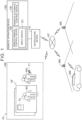
- FIG. 1 illustrates the configuration of a remote operation system 10 according to a first embodiment.
- the remote operation system 10 is used to move a mobile body 200 through unattended operation in a factory that produces the mobile body 200.
- the term "unattended operation” means operation not based on driving operations by a passenger.
- the driving operations mean operations related to at least one of "traveling", “turning”, and “stopping" of a vehicle.
- the unattended operation is achieved through automatic or manual remote control performed using a device provided external to the vehicle or through autonomous control of the vehicle.
- a passenger that does not perform the driving operations may be on board the vehicle that travels through the unattended operation. Examples of the passenger that does not perform the driving operations include a person simply seated on a seat of the vehicle and a person that performs work different from the driving operations, such assembly, inspection, and operation of switches, while being on board the vehicle. Operation based on the driving operations by a passenger is occasionally referred to as "attended operation".
- the unattended operation includes a manual mode and an automatic mode.
- the manual mode is a mode based on operations performed using an input device 121 by a worker WO to be discussed later.
- the automatic mode is a mode not based on operations performed using the input device 121 by the worker WO.
- the remote operation system 10 includes a control device 100, a notification device 110, a mobile body 200, and detection devices 300.
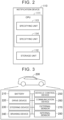
- FIG. 2 is a schematic diagram illustrating an overview of the notification device 110.
- the notification device 110 is composed of a computer constituted of a central processing unit (CPU), a random access memory (RAM), a read only memory (ROM), etc., and implements the functions of a specifying unit 113 and a notification unit 114 by a CPU 111 executing a program installed in advance in a storage unit 112 of the notification device 110.
- CPU 111 may be a processor, for example.
- the specifying unit 113 specifies a notification target that meets a specification condition determined in advance from the specification target 400 in response to the occurrence of an abnormal state of the mobile body 200 operated through remote operations.
- a specification condition include a condition about the position of the specification target 400, the status of work of the specification target 400, the manufacturing process in which the mobile body 200 is positioned, and the cause of the occurrence of the abnormal state of the mobile body 200.
- the specification condition will be discussed in detail later.
- the remote manual control device 120 (see FIG. 1 ) is a device that remotely operates the mobile body 200 according to operations by the worker WO. That is, the remote manual control device 120 is a device that performs unattended operation in the manual mode. More specifically, the remote manual control device 120 remotely operates the mobile body 200 according to a travel control signal generated according to operations of the input device 121 by the worker WO.
- the input device 121 includes a steering wheel, an accelerator pedal, a brake pedal, etc. (not illustrated).
- the mobile body 200 adopts a steer-by-wire system, a throttle-by-wire system, and a brake-by-wire system.
- the input device 121 and a control unit that generates a control instruction value may be provided away from each other.
- the travel control signal includes the travel route (path), position, travel speed, acceleration, and wheel steering angle of the mobile body 200, for example.
- the control unit may be a processor, for example.
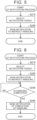
- FIG. 3 is a schematic diagram illustrating an overview of the mobile body 200.
- the mobile body 200 includes: a battery 210 that is a power source of the mobile body 200; a drive device 220 that drives the mobile body 200; a steering device 230 that changes the advancing direction of the mobile body 200; a braking device 240 that decelerates the mobile body 200; a mobile body control device 250 that controls various portions of the mobile body 200 according to operations from the outside of the mobile body 200; a communication device 260 that communicates with the control device 100 through wireless communication; an external sensor 270 that can detect the surroundings of the mobile body 200; and an internal sensor 280 that can acquire information that indicates the state of the mobile body 200.
- the communication device 260 communicates with the outside of the mobile body 200 through controller area network (CAN) communication, for example.
- CAN controller area network
- the CAN communication is a communication standard that allows transmission and reception in multiple directions.
- the communication device 260 communicates with the control device 100 connected to a network NT via an access point (not illustrated) in a factory, for example.
- the external sensor 270 is a sensor capable of detecting a target that is present around the mobile body 200.
- the external sensor 270 may include an in-vehicle camera, a radar, a lidar, etc., for example.
- step S 120 the control device 100 determines a target position for which the mobile body 200 should be bound next.
- the target position is represented by X, Y, and Z coordinates in the global coordinate system of the factory.
- the control device 100 stores a reference path in advance as a path along which the mobile body 200 should travel.
- the path is represented by a node that indicates a departure location, nodes that indicate pass points, a node that indicates a destination location, and links that connect between the nodes.
- the control device 100 determines the target position for which the mobile body 200 should be bound next using the position information on the mobile body 200 and the reference path.
- the control device 100 determines the target position on the reference path further ahead of the present location of the mobile body 200.
- the control device 100 determines the steering angle and the acceleration such that the mobile body 200 does not deviate from the reference path when the mobile body 200 is positioned on the reference path, and determines the steering angle and the acceleration such that the mobile body 200 returns to the reference path when the mobile body 200 is not positioned on the reference path, or in other words when the mobile body 200 has deviated from the reference path.
- the control device 100 transmits the generated travel control signal to the mobile body 200.
- the control device 100 acquires position information on the mobile body 200, determines a target position, generates a travel control signal, and transmits the travel control signal repeatedly in predetermined cycles.
- step S150 the mobile body control device 250 mounted on the mobile body 200 receives the travel control signal from the control device 100.
- step S160 the mobile body control device 250 controls the drive device 220, the steering device 230, and the braking device 240 using the received travel control signal so as to cause the mobile body 200 to travel at the acceleration and the steering angle represented by the travel control signal.
- the mobile body control device 250 receives the travel control signal and controls the drive device 220, the steering device 230, and the braking device 240 repeatedly in predetermined cycles.
- the remote operation system 10 according to the present embodiment, the mobile body 200 can be caused to travel through remote control, and therefore the mobile body 200 can be moved without using conveyance equipment such as a crane or a conveyor.
- the position of the mobile body 200 and the orientation of the mobile body 200 are estimated using the captured image acquired by the detection devices 300 provided at different locations from the mobile body 200.
- the position of the mobile body 200 can be acquired by calculating the coordinates of measurement points of the mobile body 200 in an image coordinate system using the outer shape of the mobile body 200 detected from the captured image, and converting the calculated coordinates into coordinates in the global coordinate system, for example.
- the orientation of the mobile body 200 can be estimated based on the orientation of a movement vector of the mobile body 200 calculated from variations in position of feature points of the mobile body 200 between frames of the captured image using an optical flow method, for example.
- the orientation of the mobile body 200 may be calculated using the output result from a yaw rate sensor etc. mounted on the mobile body 200, for example.
- the mobile body position in Condition 1 above is specified by the GNSS receiver of the mobile body 200 or the detection devices 300, for example.
- the located position is specified by the GNSS receiver of the terminal device T1 or the detection device 300, for example.
- Information that indicates the position of the station OF is stored in the storage unit 112, for example.
- the first specification condition preferably includes Condition 3.
- the specifying unit 113 determines whether the worker WO is standing by at the station OF using information indicating the presence or absence of entry and exit of the worker WO into and from the station OF detected by the detection device 300, for example.
- the worker WO can resolve the cause of the stop of the mobile body 200.
- the first specification condition preferably includes Condition 7.
- the specifying unit 113 determines whether the cause can be handled using information stored in advance in the storage unit 112 and indicating causes that can be handled by the specification target 400, for example.
- a first specification condition can be set by combining Conditions 1 to 7 above and other conditions as appropriate.
- Condition 1 discussed above is adopted.
- the notification device 110 sends a notification to instruct handling of the abnormal state of the mobile body 200 to the notification target specified in step S210. More specifically, the notification device 110 sends a notification to the terminal device T1 of the worker WO as the notification target and the terminal device T2 installed at the station OF as the notification target. The notification device 110 sends a message that says "Mobile body 200 has been stopped. Please take action", for example. In the present embodiment, the notification device 110 sends a notification of the mobile body position as the position of the mobile body 200 to be handled, together with an instruction to handle the mobile body 200.
- a notification to instruct handling of the abnormal state of the mobile body 200 is sent to the notification target that meets the specification condition. Therefore, a notification can be sent to appropriate workers WO and stations OF.
- the notification unit 114 notifies the notification target of the mobile body position. Therefore, the notification target can head for the mobile body 200 without the need for work to specify the position of the mobile body 200 in an abnormal state.
- the notification target can head for the mobile body 200 in an abnormal state without the need for work to specify which one of the mobile bodies 200 is the mobile body 200 in an abnormal state.
- the first specification condition includes the distance between the mobile body position and the located position being equal to or less than a first threshold distance. Therefore, the notification unit 114 can send a notification to the notification target at a short distance from the mobile body 200.
- the notification device 110 determines in step S230 whether handling of the abnormal state of the mobile body 200 in which an abnormality has occurred is completed. More specifically, the notification device 110 determines whether a signal for completion of handling by the worker WO that has handled the stop of the mobile body 200 is received. When handling of the stop of the mobile body 200 is completed, the notification device 110 proceeds to the process in step S240. When handling of the abnormal state of the mobile body 200 is not completed, on the other hand, the notification device 110 returns to the process in step S230. That is, the process in step S230 is repeatedly performed until handling of the abnormal state of the mobile body 200 is completed.
- step S240 the notification device 110 notifies the notification target specified in step S210 that handling of the abnormal state of the mobile body 200 is completed.
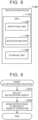
- FIG. 7 is a flowchart illustrating an example of a notification process according to a third embodiment.
- the notification process according to the third embodiment is different from that according to the first embodiment in that the mobile body 200 is evacuated through remote operations when no notification target is present.
- the configuration of the remote operation system 10 according to the third embodiment is the same as that according to the first embodiment.
- step S200 the notification device 110 determines whether a notification target is present. More specifically, the notification device 110 determines whether a specification target 400 that meets the first specification condition is present. When a specification target 400 that meets the first specification condition is present, that is, when a notification target is present, the notification device 110 proceeds to the process in step S210. When a specification target 400 that meets the first specification condition is not present, that is, when a notification target is not present, on the other hand, the notification device 110 proceeds to the process in step S225.
- step S225 the notification device 110 instructs the control device 100 to perform control so as to evacuate the mobile body 200 through remote operations.
- the notification device 110 instructs the remote automatic control device 130 to perform control so as to evacuate the mobile body 200.
- the remote automatic control device 130 evacuates the mobile body 200 through remote operations.
- control for evacuating the mobile body 200 through remote operations is performed when no notification target is present. Therefore, the mobile body 200 can be evacuated even when the abnormal state of the mobile body 200 cannot be handled.
- FIG. 8 is a schematic diagram illustrating an overview of a notification device 110B according to a fourth embodiment.
- the notification device 110B according to the fourth embodiment is different from that according to the first embodiment in that a notification to instruct remote operations of the mobile body 200 through operations of the input device 121 is sent to the notification target.
- the configuration of the remote operation system 10 according to the fourth embodiment is the same as that according to the first embodiment.
- the specifying unit 113B specifies a notification target that meets a specification condition determined in advance from the specification target 400 in response to an unintended stop of the mobile body 200 operated through remote operations.
- Examples of the specification condition include a condition about the position of the specification target 400 and a condition about the status of work of the specification target 400, for example. The specification condition will be discussed in detail later.
- FIG. 9 is a flowchart illustrating an example of a notification process.
- the notification process is a process in which the notification device 110B sends a notification to instruct remote operations of the mobile body 200 using the input device 121. In the present embodiment, this process is performed when the mobile body 200 operated through remote operations by the remote automatic control device 130 is unintentionally stopped.
- the notification device 110B specifies a notification target. More specifically, the notification device 110B specifies a notification target that meets a second specification condition determined in advance from the specification target 400. It can be determined whether the specification target 400 meets the second specification condition using a detection signal from the external sensor 270 or the internal sensor 280 of the mobile body 200 or a detection signal from the detection device 300. One or more of the following conditions, for example, can be adopted as the second specification condition.
- step S300 the notification device 110B determines whether a notification target is present. More specifically, the notification device 110B determines whether a specification target 400 that meets the second specification condition is present. When a specification target 400 that meets the second specification condition is present, that is, when a notification target is present, the notification device 110B proceeds to the process in step S310. When a specification target 400 that meets the second specification condition is not present, that is, when a notification target is not present, on the other hand, the notification device 110B proceeds to the process in step S315.
- the notification device 110B specifies a target.
- the notification device 110B specifies a target that meets the first specification condition discussed above.
- the first specification condition is different from the second specification condition.
- a notification to instruct handling of the abnormal state of the mobile body 200 is made when no notification target is present. Therefore, the abnormal state of the mobile body 200 can be handled even when remote operations cannot be performed using the input device 121.
- the control device 100 executes processes from acquiring position information on the mobile body 200 to generating a travel control signal.
- the mobile body 200 may execute at least a part of the processes from acquiring position information on the mobile body 200 to generating a travel control signal.
- the following aspects (1) to (3) may be used.
- the mobile body 200 should include components that enable movement through unattended operation, and the mobile body 200 may be in the form of a platform that includes the following components, for example. Specifically, it is only necessary that the mobile body 200 should include at least a mobile body control device 250, the drive device, the steering device, and the braking device in order to implement three functions including "traveling", “turning", and "stopping" through unattended operation. In order for the mobile body 200 to acquire information from the outside for unattended operation, it is only necessary that the mobile body 200 should further include a communication device.
- the mobile body 200 may be manufactured by combining a plurality of modules.
- the modules each mean a unit constituted of a plurality of parts grouped according to the area or the function in the mobile body 200.
- the platform of the mobile body 200 may be manufactured by combining a front module that constitutes a front part of the platform, a center module that constitutes a center part of the platform, and a rear module that constitutes a rear part of the platform.
- the number of modules that constitute the platform is not limited to three, and may be two or less or four or more.
- the modules may include a part that constitutes a portion of the mobile body 200 that is different from the platform, in addition to or in place of the parts that constitute the platform.
- the various modules may include any exterior part such as a bumper or a grille, or any interior part such as a seat or a console.
- the mobile body 200 may be manufactured by combining a plurality of modules.
- Such modules may be manufactured by joining a plurality of parts by welding, using a fixture, etc., or may be manufactured by integrally molding at least a part of parts that constitute a module as a single part by casting, for example.
- the method of integrally molding a single part, in particular a relatively large part is called gigacasting or megacasting.
- the front module, the center module, and the rear module described above may be manufactured by gigacasting.
- (F5) Conveying the mobile body 200 using travel of the mobile body 200 through unattended operation is called “self-propelled conveyance”.
- the configuration for implementing the self-propelled conveyance is called a “vehicle remote control autonomous travel conveyance system”.
- the method of producing the mobile body 200 using the self-propelled conveyance is called “self-propelled production”.
- self-propelled production at least a part of conveyance of the mobile body 200 is implemented through self-propelled conveyance in a factory that manufactures the mobile body 200, for example.
- step S430 the mobile body control device 250 generates a travel control signal for causing the mobile body 200 to travel toward the determined target position.
- step S440 the mobile body control device 250 controls the drive device 220, the steering device 230, and the braking device 240 using the generated travel control signal so as to cause the mobile body 200 to travel at the acceleration and the steering angle represented by the travel control signal.
- the mobile body control device 250 acquires position information on the mobile body 200, determines a target position, generates a travel control signal, and controls the drive device 220, the steering device 230, and the braking device 240 repeatedly in predetermined cycles.
- the mobile body control device 250 may acquire position information using a detection result from the external sensor 270 or the internal sensor 280 of the mobile body 200, determine a target position for which the mobile body 200 should be bound next, generate a path from a present location of the mobile body 200 represented by the acquired position information to the target position, generate a travel control signal for traveling along the generated path, and control the drive device 220, the steering device 230, and the braking device 240 using the generated travel control signal.
- the mobile body 200 can travel without using a detection result from the detection devices 300 at all.
- the mobile body 200 may acquire a target arrival time and traffic congestion information from the outside of the mobile body 200 and reflect the target arrival time or the traffic congestion information in at least one of a path and a travel control signal.
- the remote manual control device 120 and the remote automatic control device 130 are constituted integrally with each other as the control device 100. This is not limiting, and the remote manual control device 120 and the remote automatic control device 130 may be constituted separately from each other in the control device 100.
- the control device 100 and the notification device 110, 110B may be constituted integrally with each other.
- the control device 100 may be configured to include the notification device 110, 110B, or the notification device 110, 110B may be configured to include the control device 100.
- the handling of the stop of the mobile body 200 is collection of the mobile body 200. This is not limiting, and the handling of the stop of the mobile body 200 may be to repair the cause of the stop of the mobile body 200 and move the mobile body 200.
- the present disclosure is not limited to the above embodiments, and can be implemented by a variety of configurations without departing from the spirit of the present disclosure.
- the technical features in the embodiments corresponding to the technical features in the aspects described in "SUMMARY OF THE INVENTION" can be replaced or combined, as appropriate, in order to address the above issue or achieve some or all of the above effects.
- the technical features are not described as essential herein, such technical features can be omitted as appropriate.
Landscapes
- Engineering & Computer Science (AREA)
- Physics & Mathematics (AREA)
- General Physics & Mathematics (AREA)
- Automation & Control Theory (AREA)
- Theoretical Computer Science (AREA)
- Business, Economics & Management (AREA)
- Remote Sensing (AREA)
- Radar, Positioning & Navigation (AREA)
- Aviation & Aerospace Engineering (AREA)
- Marketing (AREA)
- Health & Medical Sciences (AREA)
- Strategic Management (AREA)
- General Business, Economics & Management (AREA)
- Primary Health Care (AREA)
- Human Resources & Organizations (AREA)
- General Health & Medical Sciences (AREA)
- General Engineering & Computer Science (AREA)
- Economics (AREA)
- Tourism & Hospitality (AREA)
- Manufacturing & Machinery (AREA)
- Computer Networks & Wireless Communication (AREA)
- Quality & Reliability (AREA)
- Human Computer Interaction (AREA)
- Control Of Position, Course, Altitude, Or Attitude Of Moving Bodies (AREA)
- Forklifts And Lifting Vehicles (AREA)
- Alarm Systems (AREA)
- General Factory Administration (AREA)
- Emergency Alarm Devices (AREA)
Applications Claiming Priority (1)
| Application Number | Priority Date | Filing Date | Title |
|---|---|---|---|
| JP2023173479A JP2025064060A (ja) | 2023-10-05 | 2023-10-05 | 通知装置および制御装置 |
Publications (2)
| Publication Number | Publication Date |
|---|---|
| EP4535111A2 true EP4535111A2 (de) | 2025-04-09 |
| EP4535111A3 EP4535111A3 (de) | 2025-05-14 |
Family
ID=92214392
Family Applications (1)
| Application Number | Title | Priority Date | Filing Date |
|---|---|---|---|
| EP24192881.1A Pending EP4535111A3 (de) | 2023-10-05 | 2024-08-05 | Benachrichtigungsvorrichtung und steuerungsvorrichtung |
Country Status (4)
| Country | Link |
|---|---|
| US (1) | US20250117280A1 (de) |
| EP (1) | EP4535111A3 (de) |
| JP (1) | JP2025064060A (de) |
| CN (1) | CN119781451A (de) |
Family Cites Families (9)
| Publication number | Priority date | Publication date | Assignee | Title |
|---|---|---|---|---|
| JP2004318536A (ja) * | 2003-04-16 | 2004-11-11 | Matsushita Electric Ind Co Ltd | 車両修理支援システム、管理装置及び管理方法 |
| JP6839770B2 (ja) * | 2017-10-20 | 2021-03-10 | 株式会社日立製作所 | 移動体制御システム、および、管制装置 |
| JP2019152963A (ja) * | 2018-03-01 | 2019-09-12 | パナソニックIpマネジメント株式会社 | 運転支援装置、運転支援方法、および記録媒体 |
| WO2019171337A1 (en) * | 2018-03-09 | 2019-09-12 | Rikatec (Pty) Ltd. | Vehicle monitoring system and method |
| IL277233B2 (en) * | 2018-03-18 | 2024-04-01 | Driveu Tech Ltd | Device, system, and method of autonomous driving and tele-operated vehicles |
| WO2021199345A1 (ja) * | 2020-03-31 | 2021-10-07 | 日本電気株式会社 | 車両管制システム、装置、方法、及びコンピュータ可読媒体 |
| KR102563281B1 (ko) * | 2020-08-18 | 2023-08-02 | 세메스 주식회사 | 제조 공장 내 물품 반송 시스템에서 차량 제어 장치 및 동작 방법 |
| KR102882438B1 (ko) * | 2021-03-25 | 2025-11-06 | 현대자동차주식회사 | 차량의 품질 관리 시스템 및 그 방법 |
| JP7838738B2 (ja) * | 2022-03-31 | 2026-04-01 | 日本信号株式会社 | 管制システム |
-
2023
- 2023-10-05 JP JP2023173479A patent/JP2025064060A/ja active Pending
-
2024
- 2024-08-05 EP EP24192881.1A patent/EP4535111A3/de active Pending
- 2024-08-16 US US18/807,291 patent/US20250117280A1/en active Pending
- 2024-09-29 CN CN202411369873.XA patent/CN119781451A/zh active Pending
Also Published As
| Publication number | Publication date |
|---|---|
| EP4535111A3 (de) | 2025-05-14 |
| JP2025064060A (ja) | 2025-04-17 |
| US20250117280A1 (en) | 2025-04-10 |
| CN119781451A (zh) | 2025-04-08 |
Similar Documents
| Publication | Publication Date | Title |
|---|---|---|
| EP4535111A2 (de) | Benachrichtigungsvorrichtung und steuerungsvorrichtung | |
| US20240317340A1 (en) | Control system, server, and vehicle | |
| US20250117013A1 (en) | Control device and control method | |
| US20260080772A1 (en) | Vehicle control device, notification device, and vehicle control method | |
| US20250271855A1 (en) | Apparatus, moving object, and method of producing moving object | |
| US20250355434A1 (en) | Control device and control method | |
| US12613531B2 (en) | Abnormality detection device, detection device, and vehicle | |
| EP4607305A1 (de) | Fahrzeugherstellungssystem, fahrzeugherstellungsverfahren und programm | |
| US20260010162A1 (en) | Control device | |
| JP7841525B2 (ja) | 情報処理装置および情報処理方法 | |
| US20250251727A1 (en) | Control device, system, and control method | |
| US12578732B2 (en) | Control device, moving object, and control method | |
| US20250155891A1 (en) | Control device | |
| US20250175847A1 (en) | Communication control system, server device, and communication control method | |
| US20250199546A1 (en) | System, device, moving object, and control method | |
| US20250271849A1 (en) | Device | |
| US20250271842A1 (en) | Apparatus | |
| US20250284295A1 (en) | Vehicle manufacturing system and vehicle manufacturing method | |
| US20250244777A1 (en) | Control device | |
| US20250284296A1 (en) | Vehicle manufacturing system and vehicle manufacturing method | |
| US20250238034A1 (en) | Control device | |
| US20250117014A1 (en) | Controller | |
| US20250269919A1 (en) | Control device, system, mounting device, and moving object | |
| US20250206324A1 (en) | Monitoring device and method | |
| US20260100046A1 (en) | Vehicle monitoring system |
Legal Events
| Date | Code | Title | Description |
|---|---|---|---|
| PUAI | Public reference made under article 153(3) epc to a published international application that has entered the european phase |
Free format text: ORIGINAL CODE: 0009012 |
|
| STAA | Information on the status of an ep patent application or granted ep patent |
Free format text: STATUS: REQUEST FOR EXAMINATION WAS MADE |
|
| 17P | Request for examination filed |
Effective date: 20240805 |
|
| AK | Designated contracting states |
Kind code of ref document: A2 Designated state(s): AL AT BE BG CH CY CZ DE DK EE ES FI FR GB GR HR HU IE IS IT LI LT LU LV MC ME MK MT NL NO PL PT RO RS SE SI SK SM TR |
|
| PUAL | Search report despatched |
Free format text: ORIGINAL CODE: 0009013 |
|
| AK | Designated contracting states |
Kind code of ref document: A3 Designated state(s): AL AT BE BG CH CY CZ DE DK EE ES FI FR GB GR HR HU IE IS IT LI LT LU LV MC ME MK MT NL NO PL PT RO RS SE SI SK SM TR |
|
| RIC1 | Information provided on ipc code assigned before grant |
Ipc: G05B 23/02 20060101AFI20250409BHEP |
|
| STAA | Information on the status of an ep patent application or granted ep patent |
Free format text: STATUS: EXAMINATION IS IN PROGRESS |
|
| 17Q | First examination report despatched |
Effective date: 20251201 |