EP4534677A1 - Nuecleic acid molecule, vector, recombinant cells, and drug for treating central nervous system diseases - Google Patents
Nuecleic acid molecule, vector, recombinant cells, and drug for treating central nervous system diseases Download PDFInfo
- Publication number
- EP4534677A1 EP4534677A1 EP23835598.6A EP23835598A EP4534677A1 EP 4534677 A1 EP4534677 A1 EP 4534677A1 EP 23835598 A EP23835598 A EP 23835598A EP 4534677 A1 EP4534677 A1 EP 4534677A1
- Authority
- EP
- European Patent Office
- Prior art keywords
- antibody
- ids
- protein
- central nervous
- acid molecule
- Prior art date
- Legal status (The legal status is an assumption and is not a legal conclusion. Google has not performed a legal analysis and makes no representation as to the accuracy of the status listed.)
- Pending
Links
Images





Classifications
-
- A—HUMAN NECESSITIES
- A61—MEDICAL OR VETERINARY SCIENCE; HYGIENE
- A61K—PREPARATIONS FOR MEDICAL, DENTAL OR TOILETRY PURPOSES
- A61K48/00—Medicinal preparations containing genetic material which is inserted into cells of the living body to treat genetic diseases; Gene therapy
- A61K48/005—Medicinal preparations containing genetic material which is inserted into cells of the living body to treat genetic diseases; Gene therapy characterised by an aspect of the 'active' part of the composition delivered, i.e. the nucleic acid delivered
-
- A—HUMAN NECESSITIES
- A61—MEDICAL OR VETERINARY SCIENCE; HYGIENE
- A61P—SPECIFIC THERAPEUTIC ACTIVITY OF CHEMICAL COMPOUNDS OR MEDICINAL PREPARATIONS
- A61P25/00—Drugs for disorders of the nervous system
-
- A—HUMAN NECESSITIES
- A61—MEDICAL OR VETERINARY SCIENCE; HYGIENE
- A61K—PREPARATIONS FOR MEDICAL, DENTAL OR TOILETRY PURPOSES
- A61K35/00—Medicinal preparations containing materials or reaction products thereof with undetermined constitution
- A61K35/12—Materials from mammals; Compositions comprising non-specified tissues or cells; Compositions comprising non-embryonic stem cells; Genetically modified cells
- A61K35/14—Blood; Artificial blood
- A61K35/17—Lymphocytes; B-cells; T-cells; Natural killer cells; Interferon-activated or cytokine-activated lymphocytes
-
- A—HUMAN NECESSITIES
- A61—MEDICAL OR VETERINARY SCIENCE; HYGIENE
- A61K—PREPARATIONS FOR MEDICAL, DENTAL OR TOILETRY PURPOSES
- A61K35/00—Medicinal preparations containing materials or reaction products thereof with undetermined constitution
- A61K35/12—Materials from mammals; Compositions comprising non-specified tissues or cells; Compositions comprising non-embryonic stem cells; Genetically modified cells
- A61K35/28—Bone marrow; Haematopoietic stem cells; Mesenchymal stem cells of any origin, e.g. adipose-derived stem cells
-
- A—HUMAN NECESSITIES
- A61—MEDICAL OR VETERINARY SCIENCE; HYGIENE
- A61K—PREPARATIONS FOR MEDICAL, DENTAL OR TOILETRY PURPOSES
- A61K38/00—Medicinal preparations containing peptides
- A61K38/16—Peptides having more than 20 amino acids; Gastrins; Somatostatins; Melanotropins; Derivatives thereof
- A61K38/43—Enzymes; Proenzymes; Derivatives thereof
- A61K38/46—Hydrolases (3)
- A61K38/465—Hydrolases (3) acting on ester bonds (3.1), e.g. lipases, ribonucleases
-
- A—HUMAN NECESSITIES
- A61—MEDICAL OR VETERINARY SCIENCE; HYGIENE
- A61K—PREPARATIONS FOR MEDICAL, DENTAL OR TOILETRY PURPOSES
- A61K47/00—Medicinal preparations characterised by the non-active ingredients used, e.g. carriers or inert additives; Targeting or modifying agents chemically bound to the active ingredient
- A61K47/50—Medicinal preparations characterised by the non-active ingredients used, e.g. carriers or inert additives; Targeting or modifying agents chemically bound to the active ingredient the non-active ingredient being chemically bound to the active ingredient, e.g. polymer-drug conjugates
- A61K47/51—Medicinal preparations characterised by the non-active ingredients used, e.g. carriers or inert additives; Targeting or modifying agents chemically bound to the active ingredient the non-active ingredient being chemically bound to the active ingredient, e.g. polymer-drug conjugates the non-active ingredient being a modifying agent
- A61K47/68—Medicinal preparations characterised by the non-active ingredients used, e.g. carriers or inert additives; Targeting or modifying agents chemically bound to the active ingredient the non-active ingredient being chemically bound to the active ingredient, e.g. polymer-drug conjugates the non-active ingredient being a modifying agent the modifying agent being an antibody, an immunoglobulin or a fragment thereof, e.g. an Fc-fragment
- A61K47/6801—Drug-antibody or immunoglobulin conjugates defined by the pharmacologically or therapeutically active agent
- A61K47/6803—Drugs conjugated to an antibody or immunoglobulin, e.g. cisplatin-antibody conjugates
- A61K47/6811—Drugs conjugated to an antibody or immunoglobulin, e.g. cisplatin-antibody conjugates the drug being a protein or peptide, e.g. transferrin or bleomycin
- A61K47/6815—Enzymes
-
- A—HUMAN NECESSITIES
- A61—MEDICAL OR VETERINARY SCIENCE; HYGIENE
- A61K—PREPARATIONS FOR MEDICAL, DENTAL OR TOILETRY PURPOSES
- A61K47/00—Medicinal preparations characterised by the non-active ingredients used, e.g. carriers or inert additives; Targeting or modifying agents chemically bound to the active ingredient
- A61K47/50—Medicinal preparations characterised by the non-active ingredients used, e.g. carriers or inert additives; Targeting or modifying agents chemically bound to the active ingredient the non-active ingredient being chemically bound to the active ingredient, e.g. polymer-drug conjugates
- A61K47/51—Medicinal preparations characterised by the non-active ingredients used, e.g. carriers or inert additives; Targeting or modifying agents chemically bound to the active ingredient the non-active ingredient being chemically bound to the active ingredient, e.g. polymer-drug conjugates the non-active ingredient being a modifying agent
- A61K47/68—Medicinal preparations characterised by the non-active ingredients used, e.g. carriers or inert additives; Targeting or modifying agents chemically bound to the active ingredient the non-active ingredient being chemically bound to the active ingredient, e.g. polymer-drug conjugates the non-active ingredient being a modifying agent the modifying agent being an antibody, an immunoglobulin or a fragment thereof, e.g. an Fc-fragment
- A61K47/6835—Medicinal preparations characterised by the non-active ingredients used, e.g. carriers or inert additives; Targeting or modifying agents chemically bound to the active ingredient the non-active ingredient being chemically bound to the active ingredient, e.g. polymer-drug conjugates the non-active ingredient being a modifying agent the modifying agent being an antibody, an immunoglobulin or a fragment thereof, e.g. an Fc-fragment the modifying agent being an antibody or an immunoglobulin bearing at least one antigen-binding site
- A61K47/6849—Medicinal preparations characterised by the non-active ingredients used, e.g. carriers or inert additives; Targeting or modifying agents chemically bound to the active ingredient the non-active ingredient being chemically bound to the active ingredient, e.g. polymer-drug conjugates the non-active ingredient being a modifying agent the modifying agent being an antibody, an immunoglobulin or a fragment thereof, e.g. an Fc-fragment the modifying agent being an antibody or an immunoglobulin bearing at least one antigen-binding site the antibody targeting a receptor, a cell surface antigen or a cell surface determinant
-
- C—CHEMISTRY; METALLURGY
- C07—ORGANIC CHEMISTRY
- C07K—PEPTIDES
- C07K14/00—Peptides having more than 20 amino acids; Gastrins; Somatostatins; Melanotropins; Derivatives thereof
- C07K14/435—Peptides having more than 20 amino acids; Gastrins; Somatostatins; Melanotropins; Derivatives thereof from animals; from humans
- C07K14/475—Growth factors; Growth regulators
- C07K14/48—Nerve growth factor [NGF]
-
- C—CHEMISTRY; METALLURGY
- C07—ORGANIC CHEMISTRY
- C07K—PEPTIDES
- C07K16/00—Immunoglobulins [IGs], e.g. monoclonal or polyclonal antibodies
- C07K16/18—Immunoglobulins [IGs], e.g. monoclonal or polyclonal antibodies against material from animals or humans
- C07K16/28—Immunoglobulins [IGs], e.g. monoclonal or polyclonal antibodies against material from animals or humans against receptors, cell surface antigens or cell surface determinants
- C07K16/2881—Immunoglobulins [IGs], e.g. monoclonal or polyclonal antibodies against material from animals or humans against receptors, cell surface antigens or cell surface determinants against CD71
-
- C—CHEMISTRY; METALLURGY
- C12—BIOCHEMISTRY; BEER; SPIRITS; WINE; VINEGAR; MICROBIOLOGY; ENZYMOLOGY; MUTATION OR GENETIC ENGINEERING
- C12N—MICROORGANISMS OR ENZYMES; COMPOSITIONS THEREOF; PROPAGATING, PRESERVING, OR MAINTAINING MICROORGANISMS; MUTATION OR GENETIC ENGINEERING; CULTURE MEDIA
- C12N15/00—Mutation or genetic engineering; DNA or RNA concerning genetic engineering, vectors, e.g. plasmids, or their isolation, preparation or purification; Use of hosts therefor
- C12N15/09—Recombinant DNA-technology
- C12N15/11—DNA or RNA fragments; Modified forms thereof; Non-coding nucleic acids having a biological activity
- C12N15/62—DNA sequences coding for fusion proteins
-
- C—CHEMISTRY; METALLURGY
- C12—BIOCHEMISTRY; BEER; SPIRITS; WINE; VINEGAR; MICROBIOLOGY; ENZYMOLOGY; MUTATION OR GENETIC ENGINEERING
- C12N—MICROORGANISMS OR ENZYMES; COMPOSITIONS THEREOF; PROPAGATING, PRESERVING, OR MAINTAINING MICROORGANISMS; MUTATION OR GENETIC ENGINEERING; CULTURE MEDIA
- C12N15/00—Mutation or genetic engineering; DNA or RNA concerning genetic engineering, vectors, e.g. plasmids, or their isolation, preparation or purification; Use of hosts therefor
- C12N15/09—Recombinant DNA-technology
- C12N15/63—Introduction of foreign genetic material using vectors; Vectors; Use of hosts therefor; Regulation of expression
- C12N15/79—Vectors or expression systems specially adapted for eukaryotic hosts
- C12N15/85—Vectors or expression systems specially adapted for eukaryotic hosts for animal cells
- C12N15/86—Viral vectors
-
- C—CHEMISTRY; METALLURGY
- C12—BIOCHEMISTRY; BEER; SPIRITS; WINE; VINEGAR; MICROBIOLOGY; ENZYMOLOGY; MUTATION OR GENETIC ENGINEERING
- C12N—MICROORGANISMS OR ENZYMES; COMPOSITIONS THEREOF; PROPAGATING, PRESERVING, OR MAINTAINING MICROORGANISMS; MUTATION OR GENETIC ENGINEERING; CULTURE MEDIA
- C12N9/00—Enzymes; Proenzymes; Compositions thereof; Processes for preparing, activating, inhibiting, separating or purifying enzymes
- C12N9/14—Hydrolases (3)
- C12N9/16—Hydrolases (3) acting on ester bonds (3.1)
-
- C—CHEMISTRY; METALLURGY
- C12—BIOCHEMISTRY; BEER; SPIRITS; WINE; VINEGAR; MICROBIOLOGY; ENZYMOLOGY; MUTATION OR GENETIC ENGINEERING
- C12N—MICROORGANISMS OR ENZYMES; COMPOSITIONS THEREOF; PROPAGATING, PRESERVING, OR MAINTAINING MICROORGANISMS; MUTATION OR GENETIC ENGINEERING; CULTURE MEDIA
- C12N9/00—Enzymes; Proenzymes; Compositions thereof; Processes for preparing, activating, inhibiting, separating or purifying enzymes
- C12N9/14—Hydrolases (3)
- C12N9/24—Hydrolases (3) acting on glycosyl compounds (3.2)
- C12N9/2402—Hydrolases (3) acting on glycosyl compounds (3.2) hydrolysing O- and S- glycosyl compounds (3.2.1)
- C12N9/2405—Glucanases
-
- C—CHEMISTRY; METALLURGY
- C12—BIOCHEMISTRY; BEER; SPIRITS; WINE; VINEGAR; MICROBIOLOGY; ENZYMOLOGY; MUTATION OR GENETIC ENGINEERING
- C12N—MICROORGANISMS OR ENZYMES; COMPOSITIONS THEREOF; PROPAGATING, PRESERVING, OR MAINTAINING MICROORGANISMS; MUTATION OR GENETIC ENGINEERING; CULTURE MEDIA
- C12N9/00—Enzymes; Proenzymes; Compositions thereof; Processes for preparing, activating, inhibiting, separating or purifying enzymes
- C12N9/14—Hydrolases (3)
- C12N9/24—Hydrolases (3) acting on glycosyl compounds (3.2)
- C12N9/2402—Hydrolases (3) acting on glycosyl compounds (3.2) hydrolysing O- and S- glycosyl compounds (3.2.1)
- C12N9/2405—Glucanases
- C12N9/2434—Glucanases acting on beta-1,4-glucosidic bonds
- C12N9/2445—Beta-glucosidase (3.2.1.21)
-
- C—CHEMISTRY; METALLURGY
- C12—BIOCHEMISTRY; BEER; SPIRITS; WINE; VINEGAR; MICROBIOLOGY; ENZYMOLOGY; MUTATION OR GENETIC ENGINEERING
- C12N—MICROORGANISMS OR ENZYMES; COMPOSITIONS THEREOF; PROPAGATING, PRESERVING, OR MAINTAINING MICROORGANISMS; MUTATION OR GENETIC ENGINEERING; CULTURE MEDIA
- C12N9/00—Enzymes; Proenzymes; Compositions thereof; Processes for preparing, activating, inhibiting, separating or purifying enzymes
- C12N9/14—Hydrolases (3)
- C12N9/24—Hydrolases (3) acting on glycosyl compounds (3.2)
- C12N9/2402—Hydrolases (3) acting on glycosyl compounds (3.2) hydrolysing O- and S- glycosyl compounds (3.2.1)
- C12N9/2468—Hydrolases (3) acting on glycosyl compounds (3.2) hydrolysing O- and S- glycosyl compounds (3.2.1) acting on beta-galactose-glycoside bonds, e.g. carrageenases (3.2.1.83; 3.2.1.157); beta-agarase (3.2.1.81)
- C12N9/2471—Beta-galactosidase (3.2.1.23), i.e. exo-(1-->4)-beta-D-galactanase
-
- C—CHEMISTRY; METALLURGY
- C12—BIOCHEMISTRY; BEER; SPIRITS; WINE; VINEGAR; MICROBIOLOGY; ENZYMOLOGY; MUTATION OR GENETIC ENGINEERING
- C12Y—ENZYMES
- C12Y302/00—Hydrolases acting on glycosyl compounds, i.e. glycosylases (3.2)
- C12Y302/01—Glycosidases, i.e. enzymes hydrolysing O- and S-glycosyl compounds (3.2.1)
- C12Y302/01023—Beta-galactosidase (3.2.1.23), i.e. exo-(1-->4)-beta-D-galactanase
-
- A—HUMAN NECESSITIES
- A01—AGRICULTURE; FORESTRY; ANIMAL HUSBANDRY; HUNTING; TRAPPING; FISHING
- A01K—ANIMAL HUSBANDRY; AVICULTURE; APICULTURE; PISCICULTURE; FISHING; REARING OR BREEDING ANIMALS, NOT OTHERWISE PROVIDED FOR; NEW BREEDS OF ANIMALS
- A01K2217/00—Genetically modified animals
- A01K2217/07—Animals genetically altered by homologous recombination
- A01K2217/075—Animals genetically altered by homologous recombination inducing loss of function, i.e. knock out
-
- A—HUMAN NECESSITIES
- A01—AGRICULTURE; FORESTRY; ANIMAL HUSBANDRY; HUNTING; TRAPPING; FISHING
- A01K—ANIMAL HUSBANDRY; AVICULTURE; APICULTURE; PISCICULTURE; FISHING; REARING OR BREEDING ANIMALS, NOT OTHERWISE PROVIDED FOR; NEW BREEDS OF ANIMALS
- A01K2227/00—Animals characterised by species
- A01K2227/10—Mammal
- A01K2227/105—Murine
-
- A—HUMAN NECESSITIES
- A61—MEDICAL OR VETERINARY SCIENCE; HYGIENE
- A61K—PREPARATIONS FOR MEDICAL, DENTAL OR TOILETRY PURPOSES
- A61K38/00—Medicinal preparations containing peptides
-
- C—CHEMISTRY; METALLURGY
- C07—ORGANIC CHEMISTRY
- C07K—PEPTIDES
- C07K2317/00—Immunoglobulins specific features
- C07K2317/60—Immunoglobulins specific features characterized by non-natural combinations of immunoglobulin fragments
- C07K2317/62—Immunoglobulins specific features characterized by non-natural combinations of immunoglobulin fragments comprising only variable region components
- C07K2317/622—Single chain antibody (scFv)
-
- C—CHEMISTRY; METALLURGY
- C07—ORGANIC CHEMISTRY
- C07K—PEPTIDES
- C07K2319/00—Fusion polypeptide
-
- C—CHEMISTRY; METALLURGY
- C07—ORGANIC CHEMISTRY
- C07K—PEPTIDES
- C07K2319/00—Fusion polypeptide
- C07K2319/33—Fusion polypeptide fusions for targeting to specific cell types, e.g. tissue specific targeting, targeting of a bacterial subspecies
-
- C—CHEMISTRY; METALLURGY
- C12—BIOCHEMISTRY; BEER; SPIRITS; WINE; VINEGAR; MICROBIOLOGY; ENZYMOLOGY; MUTATION OR GENETIC ENGINEERING
- C12N—MICROORGANISMS OR ENZYMES; COMPOSITIONS THEREOF; PROPAGATING, PRESERVING, OR MAINTAINING MICROORGANISMS; MUTATION OR GENETIC ENGINEERING; CULTURE MEDIA
- C12N2740/00—Reverse transcribing RNA viruses
- C12N2740/00011—Details
- C12N2740/10011—Retroviridae
- C12N2740/15011—Lentivirus, not HIV, e.g. FIV, SIV
- C12N2740/15061—Methods of inactivation or attenuation
- C12N2740/15063—Methods of inactivation or attenuation by chemical treatment
-
- C—CHEMISTRY; METALLURGY
- C12—BIOCHEMISTRY; BEER; SPIRITS; WINE; VINEGAR; MICROBIOLOGY; ENZYMOLOGY; MUTATION OR GENETIC ENGINEERING
- C12N—MICROORGANISMS OR ENZYMES; COMPOSITIONS THEREOF; PROPAGATING, PRESERVING, OR MAINTAINING MICROORGANISMS; MUTATION OR GENETIC ENGINEERING; CULTURE MEDIA
- C12N2740/00—Reverse transcribing RNA viruses
- C12N2740/00011—Details
- C12N2740/10011—Retroviridae
- C12N2740/16011—Human Immunodeficiency Virus, HIV
- C12N2740/16041—Use of virus, viral particle or viral elements as a vector
- C12N2740/16043—Use of virus, viral particle or viral elements as a vector viral genome or elements thereof as genetic vector
-
- C—CHEMISTRY; METALLURGY
- C12—BIOCHEMISTRY; BEER; SPIRITS; WINE; VINEGAR; MICROBIOLOGY; ENZYMOLOGY; MUTATION OR GENETIC ENGINEERING
- C12N—MICROORGANISMS OR ENZYMES; COMPOSITIONS THEREOF; PROPAGATING, PRESERVING, OR MAINTAINING MICROORGANISMS; MUTATION OR GENETIC ENGINEERING; CULTURE MEDIA
- C12N2740/00—Reverse transcribing RNA viruses
- C12N2740/00011—Details
- C12N2740/10011—Retroviridae
- C12N2740/16011—Human Immunodeficiency Virus, HIV
- C12N2740/16041—Use of virus, viral particle or viral elements as a vector
- C12N2740/16045—Special targeting system for viral vectors
-
- C—CHEMISTRY; METALLURGY
- C12—BIOCHEMISTRY; BEER; SPIRITS; WINE; VINEGAR; MICROBIOLOGY; ENZYMOLOGY; MUTATION OR GENETIC ENGINEERING
- C12Y—ENZYMES
- C12Y301/00—Hydrolases acting on ester bonds (3.1)
- C12Y301/06—Sulfuric ester hydrolases (3.1.6)
- C12Y301/06013—Iduronate-2-sulfatase (3.1.6.13)
-
- C—CHEMISTRY; METALLURGY
- C12—BIOCHEMISTRY; BEER; SPIRITS; WINE; VINEGAR; MICROBIOLOGY; ENZYMOLOGY; MUTATION OR GENETIC ENGINEERING
- C12Y—ENZYMES
- C12Y302/00—Hydrolases acting on glycosyl compounds, i.e. glycosylases (3.2)
- C12Y302/01—Glycosidases, i.e. enzymes hydrolysing O- and S-glycosyl compounds (3.2.1)
- C12Y302/0102—Alpha-glucosidase (3.2.1.20)
-
- C—CHEMISTRY; METALLURGY
- C12—BIOCHEMISTRY; BEER; SPIRITS; WINE; VINEGAR; MICROBIOLOGY; ENZYMOLOGY; MUTATION OR GENETIC ENGINEERING
- C12Y—ENZYMES
- C12Y302/00—Hydrolases acting on glycosyl compounds, i.e. glycosylases (3.2)
- C12Y302/01—Glycosidases, i.e. enzymes hydrolysing O- and S-glycosyl compounds (3.2.1)
- C12Y302/01021—Beta-glucosidase (3.2.1.21)
Definitions
- the present invention relates to a nucleic acid molecule, a vector, recombinant cells, and a drug for treating central nervous system diseases.
- Mucopolysaccharidosis type II is an X-linked lysosomal disease caused by deficiency of iduronate-2-sulfatase (IDS).
- IDS iduronate-2-sulfatase
- GAG glycosaminoglycan
- the present inventors have succeeded in reducing GAG in the brain of MPS II model mice, which could not be achieved by ERT or HSCT, by expressing an IDS gene in hematopoietic stem cells using a (B6/MPS II) viral promoter (MND promoter: Moloney murine leukemia virus LTR/myeloproliferative sarcoma virus enhancer) in model mice (Non Patent Literature 6).
- MND promoter Moloney murine leukemia virus LTR/myeloproliferative sarcoma virus enhancer
- the present inventors have also developed a lentiviral vector system for gene therapy of mucopolysaccharidosis type II (Patent Literature 1).
- the present inventors have further reported that the hematopoietic stem cell gene therapy subsequently ameliorates central nervous system lesions in a mouse GM1-gangliosidosis model (Non Patent Literature 7).
- the fusion protein of the present invention can also exert a certain therapeutic effect on tissues (for example, liver and the like) other than the central nervous system, as proved in Examples. Furthermore, it is believed that, since the fusion protein is large in molecular weight and also complex in molecule, the recombinant cell does not immediately attempt to produce the fusion protein that is large in molecular weight and complex. Therefore, a decrease in productivity of the fusion protein is expected, which makes prediction of the therapeutic effect more difficult. In view of these, the effect obtained by the invention is an unexpected remarkable effect.
- TfR Transferrin Receptor
- the transferrin receptor is a transmembrane protein that takes a conjugate of transferrin and iron (Fe) in blood into cells, and exists on the surface of vascular endothelial cells such as cerebral vascular endothelial cells.
- the anti-TfR antibody according to an embodiment of the present invention is an antibody that specifically binds to TfR and is thereby taken into a cell by TfR. At that time, IDS forming a fusion protein with the anti-TfR antibody is also taken into the cell together.
- BBB blood-brain barrier
- the fusion protein of the anti-TfR antibody and the IDS can be used as a medicament to exert drug efficacy in the brain.
- amino acid sequence of the protein to which the mutation is added shows preferably 80% or more identity, preferably 85% or more identity, more preferably 90% or more identity, still more preferably 95% or more identity, and even more preferably 98% or more identity with the amino acid sequence of the wild-type TfR.
- amino acids in the amino acid sequence of the above protein with other amino acids occurs, for example, within amino acid families that are relevant in their side chains and chemical properties of the amino acids. It is expected that the substitutions within such amino acid families will not result in significant changes in function of the protein (that is, which are conservative amino acid substitutions).
- amino acid families include, for example:
- the antibody includes monoclonal antibodies, recombinantly generated antibodies, monospecific antibodies, multispecific antibodies (including bispecific antibodies), human antibodies, humanized antibodies, chimeric antibodies, synthetic antibodies, and tetrameric antibodies containing two heavy chain molecules and two light chain molecules.
- monospecific antibodies include bispecific antibodies
- multispecific antibodies including bispecific antibodies
- human antibodies include bispecific antibodies
- humanized antibodies include bispecific antibodies
- chimeric antibodies include chimeric antibodies
- synthetic antibodies include tetrameric antibodies containing two heavy chain molecules and two light chain molecules.
- tetrameric antibodies in addition to common tetrameric antibodies, a dimeric antibody, a single-chain antibody, a single-domain antibody, and the like described later are also included in the antibody. These antibodies are also referred to as antibody fragments (antigen-binding fragments).
- an antibody in which a mutation such as substitution, deletion, or addition is added to the amino acid sequence of the original antibody by modifying the gene of the original human antibody is also referred to as a human antibody.
- the number of amino acids to be substituted is preferably 1 to 20, more preferably 1 to 10, still more preferably 1 to 5, and even more preferably 1 to 3.
- the number of amino acids to be deleted is preferably 1 to 20, more preferably 1 to 10, still more preferably 1 to 5, and even more preferably 1 to 3.
- an antibody to which a mutation including a combination of the amino acid substitution and deletion is added is also a human antibody.
- humanized antibody refers to an antibody in which the amino acid sequence of a part of the variable region (for example, in particular all or some of the CDRs) is derived from a mammal other than human, and the other region is derived from human.
- the humanized antibody include an antibody produced by replacing the three complementarity determining regions (CDR) of the immunoglobulin light chain and the three complementarity determining regions (CDR) of the immunoglobulin heavy chain constituting a human antibody with the CDRs of other mammals.
- the light chains of human antibodies and humanized antibodies include a ⁇ chain and a ⁇ chain.
- the light chain constituting the antibody may be either a ⁇ chain or a ⁇ chain.
- the heavy chains of human antibodies and humanized antibodies include a y chain, a ⁇ chain, an ⁇ chain, a ⁇ chain, and an ⁇ chain, which correspond to IgG, IgM, IgA, IgD, and IgE, respectively.
- the heavy chain constituting the antibody may be any of a y chain, a ⁇ chain, an ⁇ chain, a ⁇ chain, and an ⁇ chain, but is preferably a ⁇ chain.
- the y chain of the heavy chain of the antibody includes a ⁇ 1 chain, a y2 chain, a y3 chain, and a y4 chain, which correspond to IgG1, IgG2, IgG3, and IgG4, respectively.
- the heavy chain constituting the antibody is a y chain
- the y chain may be any of a ⁇ 1 chain, a y2 chain, a y3 chain, and a y4 chain, but is preferably a ⁇ 1 chain or a y4 chain.
- the light chain of the antibody may be either a ⁇ chain or a ⁇ chain
- the heavy chain of the antibody may be any of a ⁇ 1 chain, a ⁇ 2 chain, a y3 chain, and a y4 chain, but is preferably a ⁇ 1 chain or a y4 chain.
- one preferred aspect of the antibody includes an antibody in which the light chain is a ⁇ chain and the heavy chain is a ⁇ 1 chain.
- a chimeric antibody for example, humanized anti-TfR antibody
- a chimeric antibody is composed of a variable region and a constant region.
- Other specific examples of the chimeric antibody include one in which the constant region (CH) of the heavy chain and the constant region (CL) of the light chain are derived from a human antibody, while the variable region (VH) of the heavy chain and the variable region (VL) of the light chain are derived from an antibody of another mammal, and, conversely, one in which the constant region (CH) of the heavy chain and the constant region (CL) of the light chain are derived from an antibody of another mammal, while the variable region (VH) of the heavy chain and the variable region (VL) of the light chain are derived from a human antibody.
- the biological species of another mammal is not particularly limited as long as it is a mammal other than human, but is preferably mouse, rat, rabbit, horse, or a primate other than human, and is more preferably mouse.
- human/mouse chimeric antibody examples include one in which the constant region (CH) of the heavy chain and the constant region (CL) of the light chain are derived from a human antibody, while the variable region (VH) of the heavy chain and the variable region (VL) of the light chain are derived from a mouse antibody, and, conversely, one in which the constant region (CH) of the heavy chain and the constant region (CL) of the light chain are derived from a mouse antibody, while the variable region (VH) of the heavy chain and the variable region (VL) of the light chain are derived from a human antibody.
- the "linker” refers to, for example, a linker including a peptide chain in which a plurality of amino acids are bound by a peptide bond.
- a linker including such a peptide chain can also be referred to as a "peptide linker”.
- the “linker” can also be rephrased as "linker sequence” in the context of the present specification.
- the N-terminus of the linker and the C-terminus of another protein are bound by a peptide bond, and the N-terminus of another protein is further bound to the C-terminus of the linker, whereby the two proteins form a conjugate via the linker.
- Fab refers to a molecule in which one light chain including a variable region and a CL region (constant region of the light chain) and one heavy chain including a variable region and a CH1 region (portion 1 of the constant region of the heavy chain) are bound by a disulfide bond between cysteine residues present in each of the light chain and the heavy chain.
- the heavy chain may further include a part of the hinge portion in addition to the variable region and the CH1 region (portion 1 of the constant region of the heavy chain), but the hinge portion in this case lacks a cysteine residue that is present in the hinge portion and binds the heavy chains of the antibody to each other.
- the Fc or Fc region refers to a region including a fragment composed of a CH2 region (portion 2 of the constant region of the heavy chain) and a CH3 region (portion 3 of the constant region of the heavy chain) in the antibody molecule.
- the antibody in an embodiment of the present invention also includes: (8) scFab, scF(ab'), and scF(ab')2 in which a light chain and a heavy chain constituting Fab, F(ab'), or F(ab')2 shown in (6) above are bound via a linker sequence to form a single-chain antibody.
- antigen-binding fragment refers to a fragment of an antibody which retains at least a part of specific binding activity with an antigen, and may include an antigen complementarity determining region (CDR).
- the antigen-binding fragment include Fab, Fab', F(ab')2, a variable region (Fv), a single-chain antibody (scFv) in which a heavy chain variable region (VH) and a light chain variable region (VL) are linked by an appropriate linker, a diabody that is a dimer of a polypeptide including a heavy chain variable region (VH) and a light chain variable region (VL), a minibody that is a dimer in which a part of a constant region (CH3) is bound to a heavy chain (H chain) of scFv, and other low molecular weight antibodies.
- the antigen binding fragment is not limited to these molecules as long as it has binding ability to an antigen.
- a protein which is formed by binding a linker to the C-terminal side of an amino acid sequence containing all or a part of the variable region of an immunoglobulin heavy chain, and further binding an amino acid sequence containing all or a part of the variable region of an immunoglobulin light chain to the C-terminal side thereof, and is capable of specifically binding to a specific antigen is also the "single-chain antibody" in the present invention.
- the antibodies shown in (2) and (3) above are included in the single-chain antibody.
- the immunoglobulin heavy chain usually has an Fc region deleted.
- the linker disposed between the light chain and the heavy chain of the immunoglobulin is preferably a peptide chain composed of 2 to 50, more preferably 8 to 50, still more preferably 10 to 30, even more preferably 12 to 18 or 15 to 25, for example, 15 or 25 amino acid residues.
- Such a linker is not limited in its amino acid sequence as long as the antibody in which both chains are linked by the linker retains affinity for an antigen, but is preferably composed of glycine alone or glycine and serine, and has, for example, an amino acid sequence Gly-Ser, an amino acid sequence Gly-Gly-Ser, an amino acid sequence Gly-Gly-Gly, Gly-Gly-Gly-Gly-Ser (SEQ ID NO: 9), Gly-Gly-Gly-Gly-Gly-Ser (SEQ ID NO: 10), Ser-Gly-Gly-Gly-Gly (SEQ ID NO: 11), or a sequence in which these amino acid sequences are repeated 2 to 10 times or 2 to 5 times.
- the single-domain antibody refers to an antibody having a property of specifically binding to an antigen in a single variable region.
- the single-domain antibody includes an antibody including a variable region composed only of a variable region of a heavy chain (heavy chain single-domain antibody) and an antibody including a variable region composed only of a variable region of a light chain (light chain single-domain antibody).
- VHH and VNAR are types of single-domain antibodies.
- anti-TfR antibody examples include those described in, for example, Patent Literatures 2 to 4.
- the "protein to be brought into function in the central nervous system” is a protein having physiological activity in the central nervous system, and is a protein required to be brought into function in the central nervous system.
- the protein also includes a peptide, and may be, for example, a protein having 2 to 3000, 10 to 1500, or 20 to 1000 amino acid residues.
- ⁇ -L-iduronidase glucocerebrosidase, ⁇ -galactosidase (GLB1), GM2 activating protein
- ⁇ -hexosaminidase A ⁇ -hexosaminidase B
- N-acetylglucosamine-1-phosphotransferase ⁇ -mannosidase, ⁇ -mannosidase, galactosylceramidase
- saposin C arylsulfatase A, ⁇ -L-fucosidase, aspartylglucosaminidase, ⁇ -N-acetylgalactosaminidase, acid sphingomyelinase, ⁇ -galactosidase A, ⁇ -glucuronidase, heparan N-sulfatase,
- the lysosomal enzyme is more preferably ⁇ -galactosidase (GLB1) or acid ⁇ -glucosidase (GAA).
- GLB1 ⁇ -galactosidase
- GAA acid ⁇ -glucosidase
- the protein to be brought into function in the central nervous system is preferably ⁇ -galactosidase (beta-galactosidase; GLB1), and GLB1 is a causative enzyme of a genetic disease known as GM1 gangliosidosis.
- GLB1 ⁇ -galactosidase
- GLB1 is a causative enzyme of a genetic disease known as GM1 gangliosidosis.
- the origin of GLB1 is not limited, and it may be, for example, derived from human, or may be derived from mouse, rat, rabbit, horse, or a primate other than human, but is preferably derived from human.
- the human-derived GLB1 may be a wild-type GLB1 (for example, protein: AAA51823 (GenBank), NP_000395 (GenBank), P16278 (Uniprot); gene: NM_000404 (GenBank), M34423 (GenBank) or the like) or a mutated GLB1.
- the protein to be brought into function in the central nervous system is preferably iduronate-2 sulfatase (IDS), and IDS is a causative enzyme of mucopolysaccharidosis type II known as Hunter syndrome.
- IDS iduronate-2 sulfatase
- GAG glycosaminoglycan
- the origin of IDS is not limited, and it may be, for example, derived from human, or may be derived from mouse, rat, rabbit, horse, or a primate other than human, but is preferably derived from human.
- the human-derived IDS may be a wild-type IDS (protein: NP_000193; gene: NM_000202) or a mutated IDS.
- the mutated IDS is not particularly limited, and may be, for example, a mutated IDS having enhanced physiological activity.
- the description of the mutated TfR also applies to the mutated IDS.
- the fusion protein of the present invention is a fusion protein of an anti-transferrin receptor (TfR) antibody or an antigen-binding fragment thereof and a protein to be brought into function in the central nervous system, which is capable of diagnosing, preventing, or treating a central nervous system disease.
- TfR anti-transferrin receptor
- the anti-TfR antibody or antigen-binding fragment thereof and the protein to be brought into function in the central nervous system may be fused in this order or in the reverse order from the N-terminus to the C-terminus, and the anti-TfR antibody or antigen-binding fragment thereof is preferably present at the N-terminus.
- a peptide linker may be present between the anti-TfR antibody or antigen-binding fragment thereof and the protein to be brought into function in the central nervous system. The peptide linker is as described above.
- the fusion protein of an embodiment of the present invention may contain a marker protein for detecting the fusion protein, and examples of the marker protein include GFP, EGFP, YFP, RFP, mCherry, and luciferase.
- the marker protein may be located at the N-terminus or C-terminus of the fusion protein or between the anti-TfR antibody or antigen-binding fragment thereof and the protein to be brought into function in the central nervous system.
- the fusion protein of an embodiment of the present invention may contain a plurality of proteins to be brought into function in the central nervous system.
- the proteins to be brought into function in the central nervous system are fused functionally, preferably via a linker.
- the anti-TfR antibody or antigen-binding fragment thereof may be present at either the N-terminus or the C-terminus, but is preferably present at the N-terminus.
- nucleic acid molecule refers to either DNA obtained by polymerizing deoxyribonucleotides by phosphodiester bonds or RNA obtained by polymerizing ribonucleotides by phosphodiester bonds.
- the DNA When the "nucleic acid molecule" is DNA, the DNA may be single-stranded (single chain) or double-stranded with a complementary strand. When the DNA is single-stranded, the DNA may be (+)-stranded or (-)-stranded.
- the individual deoxyribonucleotides constituting DNA may be of a naturally occurring type or may be of a modified natural type as long as a gene encoding a protein contained in DNA can be translated into mRNA in a mammalian (particularly, human) cell.
- the individual deoxyribonucleotides constituting DNA may be of a naturally occurring type or may be of a modified natural type as long as a gene encoding a protein contained in DNA can be translated into mRNA and all or a part of DNA can be replicated in a mammalian (particularly, human) cell.
- the individual ribonucleotides constituting RNA may be of a naturally occurring type or may be modified as long as a gene encoding a protein contained in RNA can be translated into a protein in a mammalian (particularly, human) cell.
- the modification of the ribonucleotide is performed, for example, in order to suppress the degradation of RNA by RNase and to enhance the intracellular stability of RNA.
- nucleic acid molecules encoding the fusion protein the nucleic acid molecule of a portion encoding the anti-TfR antibody or antigen-binding fragment thereof is not particularly limited, and examples thereof include the DNA sequences described in Patent Literatures 2 to 4.
- the nucleic acid molecule of a portion encoding GLB 1 among the nucleic acid molecules encoding the fusion protein may be the GLB1 gene (for example, NM_000404, M34423) or cDNA. Alternatively, it may be, for example, DNA shown in SEQ ID NO: 24 and subjected to codon optimization.
- the nucleic acid molecule encoding the fusion protein when a peptide linker is present between the anti-TfR antibody or antigen-binding fragment thereof and the protein to be brought into function in the central nervous system, the nucleic acid molecule encoding the fusion protein also contains a nucleic acid encoding the peptide linker.
- the vector of the invention contains the nucleic acid molecule of the invention.
- the vector is preferably a vector capable of autonomously replicating in a host cell and/or a vector capable of integrating into a chromosome of a host cell, the vector being capable of transcribing the nucleic acid molecule, and stably expressing a fusion protein when the nucleic acid molecule is introduced into a host cell using the vector.
- the vector examples include a lentiviral vector, an adenovirus-associated vector, a retroviral vector, a DNA vector, an RNA vector, an adenoviral vector, a baculoviral vector, an Epstein-Barr viral vector, a papovaviral vector, a vaccinia viral vector, and a herpes simplex viral vector.
- a lentiviral vector and a retroviral vector are preferable from the viewpoint of stable expression in a host cell.
- the lentivirus is a virus belonging to the genus Lentivirus in the subfamily Orthoretroviridae which is one of the subfamilies of the family Retroviridae, and has a single-stranded (+)-stranded RNA genome (ssRNA).
- the lentiviral genome contains gag (a region encoding a structural protein including a capsid protein), pol (a region encoding a group of enzymes including a reverse transcriptase), and env (a region encoding an envelope protein necessary for binding to a host cell) as essential genes, which are sandwiched between two LTRs (5'LTR and 3'LTR).
- the lentiviral genome contains Rev (a region encoding a protein having a function of binding to RRE (rev responsive element) present in viral RNA to transport viral RNA from nucleus to cytoplasm), tat (a region encoding a protein having a function of binding to TAR present in the 5'LTR to increase promoter activity of LTR), vif, vpr, vpu, nef, and the like as auxiliary genes.
- Rev a region encoding a protein having a function of binding to RRE (rev responsive element) present in viral RNA to transport viral RNA from nucleus to cytoplasm
- tat a region encoding a protein having a function of binding to TAR present in the 5'LTR to increase promoter activity of LTR
- vif, vpr, vpu, nef, and the like as auxiliary genes.
- the lentivirus is an enveloped virus and infects cells when the envelope fuses with the cell membrane.
- the lentivirus is an RNA virus, and a reverse transcriptase exists in the virion. After lentiviral infection, the reverse transcriptase replicates single-stranded plus-stranded DNA from a (+)-stranded RNA genome, and further synthesizes double-stranded DNA.
- a protein that is a component of the virion is expressed from the double-stranded DNA, and the (+)-stranded RNA genome is packaged into the protein, whereby the virion is proliferated.
- the lentiviral vector has been developed based on the genome of HIV-1, which is a type of lentivirus, but is not limited thereto.
- a promoter that controls a gene encoding the desired protein is a promoter other than the CMV promoter, and suitable examples thereof include those including an MND promoter, a phosphoglycerate kinase (PGK) promoter, a CD11b promoter, an SV40 early promoter, a human elongation factor-1 ⁇ (EF-1 ⁇ ) promoter, a human ubiquitin C promoter, a CAG promoter (a cytomegalovirus enhancer and a tri- ⁇ -actin promoter, a hybrid promoter of rabbit ⁇ -globin polyA), a retroviral Rous sarcoma virus LTR promoter, a dihydrofolate reductase promoter, a ⁇ -actin promoter, a mouse albumin promoter, a human albumin promoter, and a human ⁇ -1 antitrypsin promoter.
- the MND promoter set forth in SEQ ID NO: 1 is preferably used.
- a third generation lentiviral vector that is, a lentiviral vector system
- the Rev contained in the packaging plasmid in the second generation is separated into an independent Rev plasmid.
- tat has been deleted from the packaging plasmid.
- a U3 region within the 5'LTR of the introduced plasmid has been replaced with a CMV promoter.
- Rev acts on RNA after transcription, and selectively carries unspliced mRNA out of the nucleus, thereby translating the structural protein.
- the plasmid is separate from the packaging plasmid.
- VSV-G vesicular stomatitis virus G gylcoprotein
- the receptor of VSV-G is considered to be a phospholipid, and, by using VSV-G as an envelope, membrane fusion between the viral particles and the cells occurs without depending on the receptor on the cell surface. Therefore, it is basically possible to infect any animal species and any cell tumor.
- VSV-G is physically strong, and the virus particles can be easily concentrated by ultracentrifugation.
- a gene of interest is incorporated between the LTRs (repetitive sequences that control transcription expression) at both ends including a packaging signal ( ⁇ ). Further, it has a primer binding site essential for reverse transcription, and RNA transcribed from this plasmid is taken into the viral particles.
- the LTR promoter activity of HIV-1 is so weak in the absence of tat that an internal promoter is used for expression of the incorporated foreign gene.
- the internal promoter may be a PGK, CD11b or MND promoter.
- RRE rev responsive element
- the retrovirus begins synthesis of the positive strand from the PPT (polypurine tract) sequence immediately upstream of the 3'LTR, whereas the lentivirus has the same sequence called cPPT (central polypurine tract) at another place in the central portion of the genome, also from which synthesis is performed, resulting in a triple-stranded structure of about 100 base pairs in the middle called DNA flap in the final double-stranded cDNA. It has been suggested that the cPPT sequence affects the efficiency of reverse transcription, and the incorporation of the cPPT sequence into a vector increases the gene introduction efficiency.
- the lentiviral vector corresponding to the strain deficient in HIV-1 proliferation capacity and the like serves as an SIN (self inactivating) vector satisfying the requirement for the position paper, "3. Those which do not have LTR promoter activity in the provirus and do not transcribe the entire HIV genome".
- SIN self inactivating
- a self-inactivating lentiviral pLVSIN-CMV Neo vector (manufactured by Takara Bio Inc.) can be used.
- pJLV1 obtained as follows is preferably used.
- the pJLV1 is obtained by, based on the pLVSIN-CMV Neo vector as described in Examples, replacing the U3 promoter region of the 5'LTR with a CMV promoter to form a hybrid LTR; reducing the virus-derived sequence downstream of a packaging signal and removing a portion from the internal promoter PCMVIE to the neomycin resistance gene; and inserting an MND promoter.
- the vector of the present invention can be obtained by functionally inserting a nucleic acid molecule encoding a fusion protein downstream of the vector.
- Recombinant virions have infectivity and thus can be used to introduce foreign genes into cells, tissues, or living bodies.
- the foreign gene in the present invention is a nucleic acid molecule encoding a fusion protein.
- a fusion protein is expressed from the nucleic acid molecule.
- the LTR on the 3' side of the first generation packaging plasmid is replaced with a polyA addition signal.
- the third generation is composed of three plasmids, and the packaging plasmid of the second generation is further divided into a plasmid encoding gag/pol and a plasmid encoding env.
- the packaging plasmid and introduced plasmid are first introduced into a host cell by a common transfection technique. Then, the 5' and 3' LTRs and the region containing the gene encoding the desired protein placed between the two LTRs are replicated in the host cell, and the resulting single-stranded (+)-stranded RNA is packaged into the retroviral capsid protein to form a recombinant retroviral virion.
- the recombinant retroviral virions have infectivity and thus can be used to introduce foreign genes into cells, tissues, or living bodies.
- the foreign gene in the present invention is a nucleic acid molecule encoding a fusion protein. In a host cell or the like into which the nucleic acid molecule is introduced, a fusion protein is expressed from the nucleic acid molecule.
- the method for producing a vector according to the present invention will be described.
- the vector is produced by a cloning operation in which an insert DNA fragment of interest (a nucleic acid molecule encoding an anti-TfR antibody or an antigen-binding fragment thereof and a nucleic acid molecule encoding a protein to be brought into function in the central nervous system) is placed on a vector of interest (pJLV1 plasmid).
- the nucleic acid molecule encoding an anti-TfR antibody or an antigen-binding fragment thereof and the nucleic acid molecule encoding a protein to be brought into function in the central nervous system may be prepared in a state of being functionally linked, or may be separately prepared. In a case where they are prepared separately, they are set in advance so as to be functionally linked, at the time when a restriction enzyme site or the like is cleaved and linked.
- the restriction enzyme cleavage site of the DNA fragment of interest is confirmed in advance, and then the restriction enzyme to be used for excision is selected according to the cloning site of the vector to be used.
- the restriction enzyme site is not particularly limited, and may be, for example, 5'-NotI GCGGCCGC/3'-XhoI CTCGAG.
- the cloning site of the vector of interest (pJLV1 plasmid) is cleaved with the restriction enzyme to linearize the vector. Then, ligation of the insert DNA and the linearized plasmid is performed to produce a vector according to the present invention.
- a plasmid system including the packaging plasmid, the Env plasmid, the Rev plasmid, and the introduced plasmid (vector), also referred to as the third generation lentiviral vector has more than 1/3 of the HIV-1 genome deleted in the entire system, and is quite unlikely to produce wild-type HIV-1. Since the homologous region between the respective plasmids is also minimized, there is little possibility that a virus having autonomous proliferation capacity will be produced by homologous recombination.
- Each of the constructed vectors is co-transfected with a third generation packaging plasmid, a Rev plasmid, and a VSV-G envelope plasmid into mass-cultured 293T cells, for example, and a culture solution of supernatant is recovered after 3 days.
- the culture solution contains virus particles, which are purified by ultracentrifugation and stored by dispensing at -80°C.
- the lipid nanoparticles refer to lipid-based particles having a diameter of 10 nm to 1000 nm, typically less than about 200 nm, and can have hydrophobic (lipophilic) molecules encapsulated therein, and contain biocompatible lipids such as triglycerides, diglycerides, monoglycerides, fatty acids, and steroids as main components. It is considered that when a gene encapsulated in a liposome or a lipid nanoparticle is administered into a living body, the gene is taken into a cell by direct fusion with the cell membrane of the cell, endocytosis, or the like, and then migrate to the nucleus to introduce the gene into the cell.
- the behaviors of a nucleic acid molecule introduced into a cell, a tissue, or a living body in the form of a vector, the form of being encapsulated in a recombinant viral virion, or the form of being encapsulated in a liposome, a lipid nanoparticle, or the like are exemplified in (1) to (9) below.
- the behaviors of the nucleic acid molecule is not limited to these.
- the nucleic acid molecule When introduced into a living body, the nucleic acid molecule is administered by a parenteral means such as subcutaneous injection, intramuscular injection, or intravenous injection in the form of a vector, in the form of being encapsulated in a recombinant viral virion, or in the form of being encapsulated in a liposome, a lipid nanoparticle, or the like.
- a parenteral means such as subcutaneous injection, intramuscular injection, or intravenous injection in the form of a vector, in the form of being encapsulated in a recombinant viral virion, or in the form of being encapsulated in a liposome, a lipid nanoparticle, or the like.
- the recombinant cell of the present invention is a recombinant cell obtained by introducing the vector of the present invention into a host cell.
- the type of the host cell is not particularly limited, and examples thereof include stem cells such as hematopoietic stem cells, mesenchymal stem cells, dental pulp-derived stem cells, embryonic stem cells, endothelial stem cells, mammary stem cells, intestinal stem cells, hepatic stem cells, pancreatic stem cells, neural stem cells, and iPS cells, and immune cells such as T cells, B cells, and NK cells.
- the drug of the present invention is a drug for diagnosing, preventing or treating a central nervous system disease, the drug containing the recombinant cell of the present invention.
- the central nervous system disease include neurodegenerative diseases such as Alzheimer's disease, Parkinson's disease, and Huntington's disease; psychiatric disorders such as schizophrenia and depression; multiple sclerosis, amyotrophic lateral sclerosis, tumors of the central nervous system including brain tumors, lysosomal diseases associated with brain disorders, glycogen storage diseases, muscular dystrophy, cerebral ischemia, encephalitis diseases, prion diseases, and traumatic central nervous system disorders.
- a disease caused by IDS deficiency GM1-gangliosidosis type 1 to 3, or Pompe disease.
- IDS deficiency examples include mucopolysaccharidosis type II and Hunter syndrome, and mucopolysaccharidosis type II is particularly preferable.
- the drug of an embodiment contains an effective amount of the above recombinant cells, and the effective amount may vary depending on the administration route, administration interval, body weight and age, but is preferably, for example, 10 4 to 10 10 cells, preferably 10 6 to 10 9 cells, and more preferably 10 7 to 10 8 cells.
- the drug of an embodiment may contain a carrier that can preserve cells and is pharmaceutically acceptable.
- a carrier a physiological aqueous solvent (saline, buffer, serum-free medium, etc.) can be used. If necessary, a commonly used preservative, stabilizer, reducing agent, isotonizing agent, or the like may be blended in the drug.
- the method of the present invention is a method for diagnosing, preventing, or treating a central nervous system disease, including transplanting the recombinant cell of the present invention into a subject in need thereof.
- the subject may be a patient having a central nervous system disease, particularly a patient with a disease caused by IDS deficiency, GM1-gangliosidosis type 1 to 3, or Pompe disease.
- Examples of the transplantation method include a method in which a cell fluid containing an effective amount of the recombinant cell is intravenously administered to a subject.
- the recombinant cell When the recombinant cell is a hematopoietic stem cell, it can engraft in the bone marrow 14 to 28 days after transplantation, and the engrafted recombinant cell can differentiate into microglia-like cells in addition to various blood cells while self-proliferating, and engraft in the central nervous system.
- the recombinant cell can express the protein to be brought into function in the central nervous system continuously in various tissues including central nervous tissue.
- Example 1 Hematopoietic Stem Cell Gene Therapy Using Anti-mouse TfR Antibody-Human IDS
- mice having mouse IDS gene deficiency heterozygously and male normal C57BL/6 mice were crossed, and mice having IDS deficiency hemizygously were selected from the created males by PCR analysis.
- the male mice having IDS deficiency hemizygously were defined as MPS II mice, and male mice having wild-type IDS served as normal controls.
- Patent Literature 1 CMV hybrid 5'LTR- ⁇ -RRE-cPPT-MND-IDS cDNA-WPREmut9-3'LTR (SEQ ID NO: 2)) carrying human IDS (GenBank: NG_011900) immediately below an MND promoter (DNA: SEQ ID NO: 1) of a pJLV1 plasmid (SEQ ID NO: 12), which is a self-inactivating lentiviral vector, and pJLV1-mTfR-IDS carrying an anti-mouse TfR antibody (mTfR)-IDS similarly immediately below the MND promoter were constructed.
- the lentiviral vector pJLV1-IDS was constructed based on the pLVSIN-CMV Neo vector (Takara Bio Inc.). Specifically, the U3 promoter region of the 5'LTR was replaced with a CMV promoter to form a hybrid LTR. The virus-derived sequence downstream of a packaging signal was reduced, and a portion from the internal promoter PCMVIE to the neomycin resistance gene was removed. An MND promoter was inserted. A DNA fragment (SEQ ID NO: 3) encoding human IDS (SEQ ID NO: 4) and subjected to codon optimization was placed downstream of the MND promoter, and a NotI site and a XhoI site were inserted as restriction enzyme sites upstream and downstream of the DNA fragment.
- a vector pJLV1-mTfR-IDS (SEQ ID NO: 13) was produced by a cloning operation in which a DNA fragment (SEQ ID NO: 7) encoding a fusion protein (mTfR-IDS, SEQ ID NO: 8) functionally fused with human IDS (SEQ ID NO: 4) via a linker at the 3' terminus of an anti-mouse TfR antibody (anti-mouse TfR_scFV, SEQ ID NO: 6; codon optimized DNA: SEQ ID NO: 5) and subjected to codon optimization was placed on the vector pJLV1.
- pCMV-Script-mTfR-IDS and pJLV1-IDS were cleaved with the restriction enzymes NotI and XhoI, mTfR-IDS and pJLV1 plasmid were excised, and ligation thereof was performed using Quick ligation kit to produce pJLV1-mTfR-IDS (SEQ ID NO: 13).
- Lentiviral packaging was performed using pCAG-HIVgp as a packaging plasmid and pCMV-VSV-G-RSV-Rev as a VSV-G/Rev plasmid, in addition to the self-inactivating (SIN) lentiviral vector (pJLV1-IDS or pJLV1-mTfR-IDS) produced in the above (1) or (2), by partially modifying a standard protocol (for example, the protocol described in Patent Literature 1).
- SIN self-inactivating
- the culture supernatant was removed by suction, washed with PBS, replaced with 60 ml of a DMEM medium, and then cultured in the 5% CO 2 incubator at 37°C for about 48 hours. Thereafter, the culture supernatant was recovered, passed through a 0.45 ⁇ m filter, and then concentrated using Centricon Plus-70 (100 K).
- the concentrated virus solution was diluted with PBS to the upper limit of a centrifuge tube, and ultracentrifugation was performed at 70,000 ⁇ g and 4°C for 1.5 hours. The centrifugal supernatant was removed, pellets were suspended in 1 ml of PBS, and the suspension was transferred to a 50 ml centrifuge tube and vortexed for 3 hours.
- the vortexed suspension was centrifuged at 5000 rpm for 1 minute and the supernatant was pipetted into a screw capped tube and stored at - 80°C.
- the titer of the lentivirus prepared was measured using Quick Titer HIV Lentivirus Quantitation Kit (Cell Biolabs, San Diego, CA), which is an ELISA for p24 protein.
- the titers were: 1.6 ⁇ 10 9 IU/ml for pJLV1-IDS and 1.9 ⁇ 10 9 IU/ml for pJLV1-mTfR-IDS.
- Non Patent Literature 2 Transplantation of the gene-introduced hematopoietic stem cells was also performed according to the previously reported literature (Non Patent Literature 2).
- the gene-introduced hematopoietic stem cells were administered from the tail vein to the 2-month-old MPS II mice that had been irradiated with a lethal dose of 9 Gy using an X-ray irradiation system MBR-1520-R (Hitachi Power Solutions). Plasma was collected every month after administration, and liver, spleen, kidney, heart, cerebrum, and cerebellum were collected after 6 months.
- Untransplanted wild-type (WT) C57BL/6 mice and MPS II mice (MPS II) were used as control mice.
- Non Patent Literature 2 the above tissues were extracted to measure IDS activity and GAG. Protein quantification was performed using a DC protein assay kit (Bio-Rad), IDS activity measurement was performed using 4-methylumbelliferone ⁇ -L-idopyranosiduronic acid 2-sulfate(Carbosynth, Berkshire, UK) as a fluorescent substrate, and GAG measurement was performed using a triple quadrupole high-performance liquid chromatograph mass spectrometer LCMS-8040 (Shimadzu Corporation).
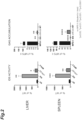
- the results of measurement of the IDS activities and GAG accumulations in the liver and spleen 6 months after transplantation are shown in FIG. 2 .
- the IDS activity is a relative activity (%) when the IDS activity in the wild-type mice (WT) is 100
- the GAG accumulation is a relative amount (%) when the amount of GAG accumulated in the MPS II mice (MPS II) is 100.
- both the IDS and mTfR-IDS mice showed IDS activities in the liver and spleen higher than those of the wild type, and also showed significantly reduced GAG accumulations as compared to those of MPS II.
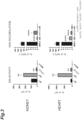
- FIG. 3 The results of measurement of the IDS activities and GAG accumulations in the kidney and heart 6 months after transplantation are shown in FIG. 3 .
- both the IDS mice and the mTfR-IDS mice showed IDS activity in the heart equal to or higher than that of the wild type (WT), but only the IDS mice showed IDS activity in the kidney higher than that of the wild type.
- WT wild type
- the GAG accumulations in the heart and kidney were significantly reduced in both the IDS and mTfR-IDS mice.
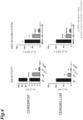
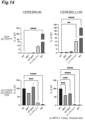
- FIG. 4 The results of measurement of the IDS activities and GAG accumulations in the cerebrum and cerebellum 6 months after transplantation are shown in FIG. 4 .
- the mTfR-IDS mice showed low IDS activity, but an excellent reduction in GAG accumulation.
- the IDS activity in the cerebrum of the mTfR-IDS mice was about 1/6 that of the IDS mice and about 5 times higher than the activity ratio in the plasma. This fact suggested that, in the mTfR-IDS mice, IDS is secreted in the cerebrum and, additionally, IDS in the blood migrates to the cerebrum.
- mice Female C57BL/6 mice ( Higuchi T et al., Mol. Genet. Metab. 2012.; 107:122-128 ) having mouse IDS gene deficiency heterozygously and male knock-in mice ( Sonoda H, et al, Mol Ther. 2018 May 2; 26 (5): 1366-1374 ) having a human transferrin receptor heterozygously were crossed, and mice (human transferrin receptor-KI/MPS II mice) having IDS deficiency hemizygously and hTfR heterozygously were selected from the created males by PCR analysis. C57BL/6 male mice served as normal controls.
- a vector pJLV1-hTfR-IDS (SEQ ID NO: 16) was produced by a cloning operation in which a DNA fragment (SEQ ID NO: 15) encoding a fusion protein (hTfR-IDS, SEQ ID NO: 14) in which the N-terminus of human IDS was functionally fused to the C-terminal side of the heavy chain of the Fab-type anti-human TfR antibody via a linker, and the N-terminus of the light chain of the Fab-type anti-human TfR antibody was functionally fused to the C-terminal side of human IDS via a self-cleaving peptide p2A was placed on the vector pJLV1.
- DNA encoding MND-hTfR-IDS was artificially synthesized in a state in which an MluI site was added to the 5' side and a XhoI site was added to the 3' side, and treated with a restriction enzyme.
- the pJLV1 plasmid was also cleaved with MluI and XhoI, and pJLV1-hTfR-IDS (SEQ ID NO: 16) was produced using Quick ligation kit.
- Example 2 The lentiviral vector pJLV1-IDS prepared in "(1) Construction of pJLV1-IDS" in Example 1 was also used in Example 2.
- the titer of the lentivirus prepared was measured using Quick Titer HIV Lentivirus Quantitation Kit (Cell Biolabs, San Diego, CA), which is an ELISA for p24 protein.
- the titers were: 1.6 ⁇ 10 9 IU/ml for pJLV1-IDS and 1.7 ⁇ 10 9 IU/ml for pJLV1-hTfR-IDS.
- Non Patent Literature 2 Transplantation of the gene-introduced hematopoietic stem cells was also performed according to the previously reported literature (Non Patent Literature 2).
- the gene-introduced hematopoietic stem cells were administered from the tail vein to the 5-month-old hTfR-KI/MPS II mice that had been irradiated with a lethal dose of 9 Gy using an X-ray irradiation system MBR-1520-R (Hitachi Power Solutions).
- X-ray irradiation system MBR-1520-R Haitachi Power Solutions
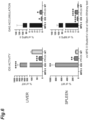
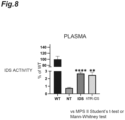
- the IDS activity in the plasma 4 weeks after transplantation is shown in FIG. 5 .
- the IDS activity in FIG. 5 is a relative activity (%) when the IDS activity in the wild-type mice (WT) is 100. From FIG. 5 , both the IDS activities in the plasma of the IDS mice and the hTfR-IDS mice were higher than that of the wild-type mice, with the IDS activity of the IDS mice being 9.36 times higher than that of the wild-type mice and the IDS activity of the hTfR-IDS mice being 1.85 times higher than that of the wild-type mice.
- the results of measurement of the IDS activities and GAG accumulations in the liver and spleen 4 weeks after transplantation are shown in FIG. 6 .
- the IDS activity is a relative activity (%) when the IDS activity in the wild-type mice (WT) is 100
- the GAG accumulation is a relative amount (%) when the amount of GAG accumulated in the human transferrin receptor-KI/MPS II mice (MPS II) is 100.
- the hTfR-IDS mice had IDS activity in the liver of 32.6% of that of the wild-type mice, IDS activity in the spleen of 147% of that of the wild-type mice, and a significant decrease in GAG accumulation was observed in both the organs.
- mice similar to the mice obtained in Example 2 were used.
- Lentiviral packaging was performed using pCAG-HIVgp as a packaging plasmid and pCMV-VSV-G-RSV-Rev as a VSV-G/Rev plasmid, in addition to the self-inactivating (SIN) lentiviral vector (pJLV1-IDS or pJLV1-hTfR-IDS) produced in Example 2, by partially modifying a standard protocol (for example, the protocol described in Patent Literature 1).
- SIN self-inactivating
- Mouse T cells were separated using Pan T Cell Isolation Kit II (Miltenyi Biotec) from the spleen of 5-month-old human transferrin receptor-KI/MPS II mice.
- the obtained lentivirus carrying IDS or hTfR-IDS was gene-introduced (infected) into the separated mouse T cells.
- Lentiviral infection of the mouse T cells was performed at a multiplicity of infection (MOI) of 50 by applying stimulation for 24 hours according to the protocol of Dynabeads Mouse T-Activator CD3/CD28 (Thermo Fisher) followed by lentiviral infection. Specifically, it was performed using 5 ⁇ 10 7 IU of lentivirus per 1 ⁇ 10 6 mouse T cells (the number of cells for transplantation per recipient).
- mice homozygously deficient in acid ⁇ glucosidase (GAA) gene were prepared by crossing (GAA-KO mice). C57BL/6 mice served as normal controls.
- DNA (SEQ ID NO: 18) encoding human GAA (SEQ ID NO: 17) was artificially synthesized in a state where a NotI site was added to the 5' side and a XhoI site was added to the 3' side, and treated with a restriction enzyme.
- the pJLV1 plasmid (SEQ ID NO: 12) was also cleaved with NotI and XhoI, and pJLV1-GAA (SEQ ID NO: 19) was produced using Quick ligation kit.
- DNA (SEQ ID NO: 21) encoding a fusion protein (mTfR-GAA, SEQ ID NO: 20) in which human GAA (SEQ ID NO: 17) was functionally fused via a linker at the 3' terminus of an anti-mouse TfR antibody (anti-mouse TfR_scFV, SEQ ID NO: 6; codon optimized DNA: SEQ ID NO: 5) was artificially synthesized in a state where a NotI site was added to the 5' side and an XhoI site was added to the 3' side, and treated with a restriction enzyme.
- pJLV1 plasmid SEQ ID NO: 12
- pJLV1-mTfR-GAA SEQ ID NO: 22
- lentiviral packaging was performed using pCAG-HIVgp as a packaging plasmid and pCMV-VSV-G-RSV-Rev as a VSV-G/Rev plasmid, in addition to the self-inactivating (SIN) lentiviral vector (pJLV1-GAA or pJLV1-mTfR-GAA) produced in the above (1) or (2), by partially modifying a standard protocol (for example, the protocol described in Patent Literature 1).
- SIN self-inactivating
- the titer of the lentivirus prepared was measured using Quick Titer HIV Lentivirus Quantitation Kit (Cell Biolabs, San Diego, CA), which is an ELISA for p24 protein.
- the titers were: 1.7 ⁇ 10 9 IU/ml for pJLV1-GAA and 1.2 ⁇ 10 9 IU/ml for pJLV1-mTfR-GAA.
- the lentivirus carrying GAA or mTfR-GAA was infected into 1 ⁇ 10 5 HEK293T cells at an MOI of 10, 1, or 0.1, and cultured for 24 hours. Thereafter, the medium was replaced with a lentivirus-free medium, the cells were further cultured for 48 hours, and then the medium and the cells were recovered.
- the GAA activity was measured for the cell extracts extracted with distilled water and the media. The GAA activity was measured as follows.
- Non Patent Literature 8 For protein quantification, a DC protein assay kit (Bio-Rad) was used, and for GAA activity measurement, 4-methylumbelliferyl ⁇ -D-glucopyranoside (Sigma-Aldrich), which is a fluorescent substrate, was used according to the previously reported literature (Non Patent Literature 8).
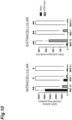
- the results of measurement of the GAA activity for the HEK293T cell extracts and the media are shown in FIG. 10 .
- the intracellular activity was lower in the HEK293T cells infected with mTfR-GAA-carried lentivirus than that in the HEK293T cells infected with the GAA-carried lentivirus, while the extracellular activity (secreted enzyme activity) was significantly higher than that in the HEK293T cells infected with GAA-carried lentivirus.
- the extracellular secretion of GAA was promoted by fusing GAA with the anti-mouse TfR antibody.
- Protein quantification was performed using a DC protein assay kit (Bio-Rad), and GAA activity measurement was performed as described above.
- the glycogen measurement was performed by the following method using Glycogen Assay Kit (abcam).
- Glycogen Assay Kit abcam
- glycogen is first hydrolyzed to glucose, an oxidized intermediate is then labeled with OxiRed Probe, and fluorescence is measured with Synergy H1 (BioTek) to quantify the glycogen.
- 50 ⁇ L each of a standard sample for a calibration curve containing glycogen at a known concentration and a tissue homogenate supernatant are added to 96F Nontreated Black microwell (Thermo scientific).
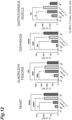
- the results of measurement of the GAA activities in the serum, liver and spleen 4 weeks after transplantation are shown in FIG. 11 .
- the GAA activity is a relative activity (%) when the GAA activity in the wild-type mice (WT) is 100. From FIG. 11 , when the GAA activities in the serum, liver, and spleen were compared among the treatment groups (ERT mice, GAA mice, mTfR-GAA mice), the mTfR-GAA mice were the highest in all cases.
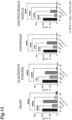
- FIG. 13 shows results of measurement of the glycogen accumulations in the heart, quadriceps femoris, diaphragm, and gastrocnemius muscle 4 weeks after transplantation.
- the glycogen accumulation is a relative amount (%) when the amount of glycogen accumulated in GAA-KO mice (NT) is 100.
- the mTfR-GAA group achieved dramatic improvement in glycogen accumulation in various muscle tissues, and showed normalization thereof in the diaphragm.
- the GAA mice showed GAA activities in the quadriceps femoris and the like comparable to those of mTfR-GAA, but showed the least decrease in glycogen accumulation among the treatment groups. This suggested that the fusion of the anti-TfR antibody improved the distribution and localization of GAA.
- ELISA ELISA was performed by the following procedures. To a microplate (Maxisorp, Thermo Scientific), 250 ng of recombinant GAA protein (avalglucosidase alpha (Sanofi)) was bound overnight at 4°C, and then blocking was performed with PBS containing 1% BSA for 2 hours.
- a peroxidase-labeled anti-mouse IgG antibody Histofine Simple Stain MAX-PO (M), Nichirei Bioscience Inc.
- a peroxidase-labeled anti-rabbit IgG antibody Histofine Simple Stain MAX-PO (R), Nichirei Bioscience Inc.
- the antibody titer of the anti-GAA antibody in the serum after treatment was the highest.
- the antibody titer of the anti-GAA antibody in the serum after treatment was lower than that in the ERT mice.
- the antibody titer of the anti-GAA antibody was the lowest, and was at the same level as those of the untreated mice and the wild-type mice.
- DNA (SEQ ID NO: 24) encoding human GLB1 (SEQ ID NO: 23) was placed downstream of the MND promoter and prepared by artificial synthesis. Specifically, MND-GLB1 in which an MluI site was added to the 5' side and a XhoI site was added to the 3' side was artificially synthesized, and treated with a restriction enzyme. Next, the pJLV1 plasmid (SEQ ID NO: 12) was also cleaved with MluII and XhoI, and pJLV1-GLB1 (SEQ ID NO: 25) was produced using Quick ligation kit.
- DNA (SEQ ID NO: 27) encoding a fusion protein (mTfR-GLB1, SEQ ID NO: 26) in which human GLB1 (SEQ ID NO: 23) was functionally fused via a linker at the 3' terminus of an anti-mouse TfR antibody (anti-mouse TfR_scFV, SEQ ID NO: 6; codon optimized DNA: SEQ ID NO: 5) was placed downstream of the MND promoter and prepared by artificial synthesis. Specifically, MND-mTfR-GLB1 in which an MluI site was added to the 5' side and a XhoI site was added to the 3' side was artificially synthesized, and treated with a restriction enzyme.
- pJLV1 plasmid SEQ ID NO: 12
- MluII and XhoI cleaved with MluII and XhoI
- pJLV1-mTfR-GLB1 SEQ ID NO: 28
- lentiviral packaging was performed using pCAG-HIVgp as a packaging plasmid and pCMV-VSV-G-RSV-Rev as a VSV-G/Rev plasmid, in addition to the self-inactivating (SIN) lentiviral vector (pJLV1-GLB1 or pJLV1-mTfR-GLB1) produced in the above (1) or (2), by partially modifying a standard protocol (for example, the protocol described in Patent Literature 1).
- SIN self-inactivating
- the titer of the lentivirus prepared was measured using Quick Titer HIV Lentivirus Quantitation Kit (Cell Biolabs, San Diego, CA), which is an ELISA for p24 protein.
- the titers were: 1.8 ⁇ 10 8 IU/ml for pJLV1-GLB1 and 4.3 ⁇ 10 8 IU/ml for pJLV1-mTfR-GLB1.
- Protein quantification was performed using a DC protein assay kit (Bio-Rad), GLB1 activity measurement was performed using 4-methylumbelliferyl- ⁇ -D-galactopyranoside, (Sigma-Aldrich) as a fluorescent substrate in accordance with the previously reported document (Non-Patent Document 7), and GM1 ganglioside measurement was also performed using a triple quadrupole high-performance liquid chromatograph mass spectrometer LCMS-8040 (Shimadzu Corporation) in accordance with the previously reported document (Non Patent Literature 7).
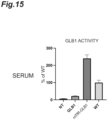
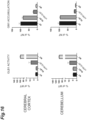
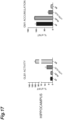
- FIGS. 15 to 17 show measurement results of GLB1 activities and GM1 ganglioside accumulations (GM1 accumulations) in the serum, cerebral cortex, cerebellum, and hippocampus 4 weeks after transplantation.
- the GLB1 activity is a relative activity (%) when the GLB1 activity in the wild-type mice (WT) is 100
- the GM1 accumulation is a relative amount (%) when the amount of GM1 accumulated in GLB1-KO mice (NT) is 100.
- the mTfR-GLB1 mice showed high GLB1 activities in all of the cerebral cortex, cerebellum, and hippocampus, and showed significantly reduced GM1 accumulations therein.
- the activity of the fusion protein is lower than the activity of the protein that does not form the fusion protein due to fusion of the anti-mTfR antibody, but, unexpectedly, the anti-mTfR antibody fusion protein showed higher blood GLB 1 activity than that of the wild-type enzyme. It is considered that the increase in amount of extracellular secretion and stabilizing action of the enzyme in the blood, which would have been caused by the fusion of the anti-mTfR antibody, may exceed the decrease in activity. Since GAA and GLB 1 are originally poorly secreted or unstable enzymes, the blood activity was not reduced but rather increased by fusion of the anti-mTfR antibody, which was an unexpected result.
Landscapes
- Health & Medical Sciences (AREA)
- Life Sciences & Earth Sciences (AREA)
- Chemical & Material Sciences (AREA)
- Engineering & Computer Science (AREA)
- Genetics & Genomics (AREA)
- Organic Chemistry (AREA)
- Bioinformatics & Cheminformatics (AREA)
- General Health & Medical Sciences (AREA)
- Zoology (AREA)
- Wood Science & Technology (AREA)
- Medicinal Chemistry (AREA)
- Molecular Biology (AREA)
- Biotechnology (AREA)
- Biomedical Technology (AREA)
- Biochemistry (AREA)
- General Engineering & Computer Science (AREA)
- Immunology (AREA)
- Public Health (AREA)
- Veterinary Medicine (AREA)
- Microbiology (AREA)
- Animal Behavior & Ethology (AREA)
- Pharmacology & Pharmacy (AREA)
- Epidemiology (AREA)
- Biophysics (AREA)
- Cell Biology (AREA)
- Proteomics, Peptides & Aminoacids (AREA)
- Virology (AREA)
- Physics & Mathematics (AREA)
- Plant Pathology (AREA)
- Developmental Biology & Embryology (AREA)
- Gastroenterology & Hepatology (AREA)
- Hematology (AREA)
- Toxicology (AREA)
- Neurology (AREA)
- Neurosurgery (AREA)
- Chemical Kinetics & Catalysis (AREA)
- General Chemical & Material Sciences (AREA)
- Nuclear Medicine, Radiotherapy & Molecular Imaging (AREA)
- Peptides Or Proteins (AREA)
- Micro-Organisms Or Cultivation Processes Thereof (AREA)
Applications Claiming Priority (2)
| Application Number | Priority Date | Filing Date | Title |
|---|---|---|---|
| JP2022110492 | 2022-07-08 | ||
| PCT/JP2023/025156 WO2024010067A1 (ja) | 2022-07-08 | 2023-07-06 | 中枢神経系疾患の治療のための、核酸分子、ベクター、組換え細胞及び薬剤 |
Publications (1)
| Publication Number | Publication Date |
|---|---|
| EP4534677A1 true EP4534677A1 (en) | 2025-04-09 |
Family
ID=89453620
Family Applications (1)
| Application Number | Title | Priority Date | Filing Date |
|---|---|---|---|
| EP23835598.6A Pending EP4534677A1 (en) | 2022-07-08 | 2023-07-06 | Nuecleic acid molecule, vector, recombinant cells, and drug for treating central nervous system diseases |
Country Status (4)
| Country | Link |
|---|---|
| US (1) | US20250381296A1 (enExample) |
| EP (1) | EP4534677A1 (enExample) |
| JP (1) | JPWO2024010067A1 (enExample) |
| WO (1) | WO2024010067A1 (enExample) |
Family Cites Families (5)
| Publication number | Priority date | Publication date | Assignee | Title |
|---|---|---|---|---|
| GB0024550D0 (enExample) * | 2000-10-06 | 2000-11-22 | Oxford Biomedica Ltd | |
| MY187033A (en) * | 2015-06-24 | 2021-08-27 | Japan Chem Res | Anti-human transferrin receptor antibody permeating blood-brain barrier |
| MX389073B (es) * | 2016-08-25 | 2025-03-20 | Japan Chem Res | Método para producir una proteína de fusión de anticuerpo. |
| KR102466248B1 (ko) | 2016-12-26 | 2022-11-10 | 제이씨알 파마 가부시키가이샤 | 혈액뇌관문을 통과하는 신규한 항인간 트랜스페린 수용체 항체 |
| JP7197901B2 (ja) | 2018-01-11 | 2022-12-28 | 学校法人慈恵大学 | Hunter症候群の遺伝子治療に使用されるベクタープラスミド、レンチウイルスベクターシステム、細胞、及び、細胞製剤 |
-
2023
- 2023-07-06 WO PCT/JP2023/025156 patent/WO2024010067A1/ja not_active Ceased
- 2023-07-06 US US18/879,163 patent/US20250381296A1/en active Pending
- 2023-07-06 JP JP2024532635A patent/JPWO2024010067A1/ja active Pending
- 2023-07-06 EP EP23835598.6A patent/EP4534677A1/en active Pending
Also Published As
| Publication number | Publication date |
|---|---|
| JPWO2024010067A1 (enExample) | 2024-01-11 |
| US20250381296A1 (en) | 2025-12-18 |
| WO2024010067A1 (ja) | 2024-01-11 |
Similar Documents
| Publication | Publication Date | Title |
|---|---|---|
| JP7659271B2 (ja) | 導入遺伝子発現のための操作されたアデノ随伴(aav)ベクター | |
| US20100015117A1 (en) | Compositions and methods for targeting a polypeptide to the central nervous system | |
| US12122844B2 (en) | Treatment of brain cancers using central nervous system mediated gene transfer of monoclonal antibodies | |
| JP2022153418A (ja) | 翻訳後修飾された完全ヒト抗VEGF Fabを用いる眼疾患の治療 | |
| US20240091321A1 (en) | Variant igf2 constructs | |
| US7034010B2 (en) | Use of recombinant gene delivery vectors for treating or preventing lysosomal storage disorders | |
| EP4265715A1 (en) | Nucleic acid molecule containing incorporated gene encoding fused protein of ligand and protein having physiological activity | |
| JP2025514631A (ja) | Cns症状を有する疾患の遺伝子治療 | |
| AU2018253303B2 (en) | Treatment of mucopolysaccharidosis II with recombinant human iduronate-2 sulfatase (IDS) produced by human neural or glial cells | |
| Dogan et al. | Screening chimeric GAA variants in preclinical study results in hematopoietic stem cell gene therapy candidate vectors for Pompe disease | |
| EP4534677A1 (en) | Nuecleic acid molecule, vector, recombinant cells, and drug for treating central nervous system diseases | |
| NL2031676B1 (en) | Gene therapy for Pompe Disease | |
| WO2000073482A9 (en) | Use of recombinant gene delivery vectors for treating or preventing lysosomal storage disorders | |
| EP4455290A1 (en) | Fusion protein of anti-transferrin receptor antibody and bioactive protein for safe gene therapy | |
| EP4603587A1 (en) | Fusion protein of serum albumin and physiologically-active protein | |
| RU2839774C2 (ru) | Сконструированные аденоассоциированные (aav) векторы для экспрессии трансгена | |
| WO2024080305A1 (ja) | 血清アルブミンと生理活性を有する蛋白質との融合蛋白質 | |
| JP2024056665A (ja) | 血清アルブミンと生理活性を有する蛋白質との融合蛋白質 | |
| KR20250110842A (ko) | 대사질환을 위한 유전자 요법 구성체 | |
| HK40053744A (zh) | 二硫键稳定的多肽组合物和使用方法 |
Legal Events
| Date | Code | Title | Description |
|---|---|---|---|
| STAA | Information on the status of an ep patent application or granted ep patent |
Free format text: STATUS: THE INTERNATIONAL PUBLICATION HAS BEEN MADE |
|
| PUAI | Public reference made under article 153(3) epc to a published international application that has entered the european phase |
Free format text: ORIGINAL CODE: 0009012 |
|
| STAA | Information on the status of an ep patent application or granted ep patent |
Free format text: STATUS: REQUEST FOR EXAMINATION WAS MADE |
|
| 17P | Request for examination filed |
Effective date: 20250102 |
|
| AK | Designated contracting states |
Kind code of ref document: A1 Designated state(s): AL AT BE BG CH CY CZ DE DK EE ES FI FR GB GR HR HU IE IS IT LI LT LU LV MC ME MK MT NL NO PL PT RO RS SE SI SK SM TR |
|
| DAV | Request for validation of the european patent (deleted) | ||
| DAX | Request for extension of the european patent (deleted) |