EP4534674A2 - Verfahren zur erzeugung synthetischer chromosomen zur expression biosynthetischer pfade und verwendungen davon - Google Patents
Verfahren zur erzeugung synthetischer chromosomen zur expression biosynthetischer pfade und verwendungen davon Download PDFInfo
- Publication number
- EP4534674A2 EP4534674A2 EP25156387.0A EP25156387A EP4534674A2 EP 4534674 A2 EP4534674 A2 EP 4534674A2 EP 25156387 A EP25156387 A EP 25156387A EP 4534674 A2 EP4534674 A2 EP 4534674A2
- Authority
- EP
- European Patent Office
- Prior art keywords
- cell
- chromosome
- synthetic
- cells
- genes
- Prior art date
- Legal status (The legal status is an assumption and is not a legal conclusion. Google has not performed a legal analysis and makes no representation as to the accuracy of the status listed.)
- Pending
Links
Images


Classifications
-
- C—CHEMISTRY; METALLURGY
- C12—BIOCHEMISTRY; BEER; SPIRITS; WINE; VINEGAR; MICROBIOLOGY; ENZYMOLOGY; MUTATION OR GENETIC ENGINEERING
- C12N—MICROORGANISMS OR ENZYMES; COMPOSITIONS THEREOF; PROPAGATING, PRESERVING, OR MAINTAINING MICROORGANISMS; MUTATION OR GENETIC ENGINEERING; CULTURE MEDIA
- C12N15/00—Mutation or genetic engineering; DNA or RNA concerning genetic engineering, vectors, e.g. plasmids, or their isolation, preparation or purification; Use of hosts therefor
- C12N15/09—Recombinant DNA-technology
- C12N15/11—DNA or RNA fragments; Modified forms thereof; Non-coding nucleic acids having a biological activity
- C12N15/52—Genes encoding for enzymes or proenzymes
-
- C—CHEMISTRY; METALLURGY
- C12—BIOCHEMISTRY; BEER; SPIRITS; WINE; VINEGAR; MICROBIOLOGY; ENZYMOLOGY; MUTATION OR GENETIC ENGINEERING
- C12N—MICROORGANISMS OR ENZYMES; COMPOSITIONS THEREOF; PROPAGATING, PRESERVING, OR MAINTAINING MICROORGANISMS; MUTATION OR GENETIC ENGINEERING; CULTURE MEDIA
- C12N15/00—Mutation or genetic engineering; DNA or RNA concerning genetic engineering, vectors, e.g. plasmids, or their isolation, preparation or purification; Use of hosts therefor
- C12N15/09—Recombinant DNA-technology
- C12N15/63—Introduction of foreign genetic material using vectors; Vectors; Use of hosts therefor; Regulation of expression
- C12N15/79—Vectors or expression systems specially adapted for eukaryotic hosts
- C12N15/80—Vectors or expression systems specially adapted for eukaryotic hosts for fungi
- C12N15/81—Vectors or expression systems specially adapted for eukaryotic hosts for fungi for yeasts
-
- C—CHEMISTRY; METALLURGY
- C12—BIOCHEMISTRY; BEER; SPIRITS; WINE; VINEGAR; MICROBIOLOGY; ENZYMOLOGY; MUTATION OR GENETIC ENGINEERING
- C12N—MICROORGANISMS OR ENZYMES; COMPOSITIONS THEREOF; PROPAGATING, PRESERVING, OR MAINTAINING MICROORGANISMS; MUTATION OR GENETIC ENGINEERING; CULTURE MEDIA
- C12N15/00—Mutation or genetic engineering; DNA or RNA concerning genetic engineering, vectors, e.g. plasmids, or their isolation, preparation or purification; Use of hosts therefor
- C12N15/09—Recombinant DNA-technology
- C12N15/63—Introduction of foreign genetic material using vectors; Vectors; Use of hosts therefor; Regulation of expression
- C12N15/79—Vectors or expression systems specially adapted for eukaryotic hosts
- C12N15/85—Vectors or expression systems specially adapted for eukaryotic hosts for animal cells
-
- C—CHEMISTRY; METALLURGY
- C12—BIOCHEMISTRY; BEER; SPIRITS; WINE; VINEGAR; MICROBIOLOGY; ENZYMOLOGY; MUTATION OR GENETIC ENGINEERING
- C12N—MICROORGANISMS OR ENZYMES; COMPOSITIONS THEREOF; PROPAGATING, PRESERVING, OR MAINTAINING MICROORGANISMS; MUTATION OR GENETIC ENGINEERING; CULTURE MEDIA
- C12N2800/00—Nucleic acids vectors
- C12N2800/20—Pseudochromosomes, minichrosomosomes
-
- C—CHEMISTRY; METALLURGY
- C12—BIOCHEMISTRY; BEER; SPIRITS; WINE; VINEGAR; MICROBIOLOGY; ENZYMOLOGY; MUTATION OR GENETIC ENGINEERING
- C12N—MICROORGANISMS OR ENZYMES; COMPOSITIONS THEREOF; PROPAGATING, PRESERVING, OR MAINTAINING MICROORGANISMS; MUTATION OR GENETIC ENGINEERING; CULTURE MEDIA
- C12N2800/00—Nucleic acids vectors
- C12N2800/20—Pseudochromosomes, minichrosomosomes
- C12N2800/208—Pseudochromosomes, minichrosomosomes of mammalian origin, e.g. minichromosome
-
- C—CHEMISTRY; METALLURGY
- C12—BIOCHEMISTRY; BEER; SPIRITS; WINE; VINEGAR; MICROBIOLOGY; ENZYMOLOGY; MUTATION OR GENETIC ENGINEERING
- C12N—MICROORGANISMS OR ENZYMES; COMPOSITIONS THEREOF; PROPAGATING, PRESERVING, OR MAINTAINING MICROORGANISMS; MUTATION OR GENETIC ENGINEERING; CULTURE MEDIA
- C12N2800/00—Nucleic acids vectors
- C12N2800/30—Vector systems comprising sequences for excision in presence of a recombinase, e.g. loxP or FRT
Definitions
- the field of the invention encompasses methods to allow one to engineer synthetic chromosomes to deliver multiple genes from a biosynthetic pathway to a recipient cell.
- cells To enable cells to make these amino acids, cells must be engineered to express heterologous genes found in fungi or bacteria; however, due to the limited payload capacity of viral and plasmid nucleic acid vector delivery systems, multiple iterations of transfection or transduction events are necessary in order to generate an entire biochemical or biosynthetic pathway in the recipient cells.
- Fully-functional mammalian synthetic chromosomes offer several advantages over bacterial-based and viral-based delivery systems including increased payload size, the fact that extrachromosomal maintenance avoids potential host-cell disruption, avoidance of transcriptional silencing of introduced genes and possible immunological complications, and mammalian synthetic chromosomes can be derived from and tailored to the species into which the synthetic chromosome is to be inserted.
- compositions and methods that allow one to deliver and express multiple genes from a biosynthetic pathway in cells to produce metabolites.
- the present invention provides methods and compositions that address this need.
- the present invention encompasses compositions and methods for delivering and expressing multiple genes from one or more biosynthetic pathways in a recipient cell via a synthetic chromosome.
- Pathways may include 1) those known to produce a specific end product; 2) a novel pathway created by incorporating existing genes in a novel combination and/or expressing existing genes in a novel cell type to produce a specific end product that may be novel to the cell type in which the end product is produced; or 3) a novel pathway created by incorporating novel genes alone or in combination with existing genes to produce a novel end product.
- the methods of the present invention provide a method for constructing a biosynthetic pathway in a recipient cell comprising: transfecting the recipient cell line with synthetic chromosome production components including nucleic acid sequences that allow for site-specific integration of target nucleic acid sequences; producing a synthetic platform chromosome with multiple site-specific recombination sites; transfecting the recipient cell line with a delivery vector comprising multiple genes capable of effectuating a biosynthetic pathway, wherein the delivery vector comprises at least one site-specific recombination site; activating site-specific recombination between the synthetic platform chromosome and the delivery vector, wherein the multiple genes capable of effectuating a biosynthetic pathway are loaded onto the synthetic platform chromosome to produce a synthetic chromosome expressing the biosynthetic pathway; and isolating a recipient cell comprising the synthetic chromosome expressing the biosynthetic pathway.
- the multiple genes capable of effectuating a biosynthetic pathway comprise genes necessary for tryptophan biosynthesis, and in some aspects, the genes necessary for tryptophan biosynthesis comprise the five genes necessary for synthesis of tryptophan in Saccharomyces cerevisiae.
- the method further comprises the steps of: isolating the synthetic chromosome expressing the biosynthetic pathway; and transferring the synthetic chromosome to a second recipient cell.
- the second recipient cell is selected from a universal donor T-cell or a patient autologous T-cell.
- Other aspects of the invention provide the synthetic chromosome expressing the biosynthetic pathway, and yet other aspects provide the second recipient cell.
- inventions further comprise the steps of transfecting the recipient cell line with a second delivery vector comprising multiple genes capable of effectuating a second biosynthetic pathway, wherein the second delivery vector comprises at least one site-specific recombination site; activating site-specific recombination between the synthetic platform chromosome and the second delivery vector, wherein the multiple genes capable of effectuating a second biosynthetic pathway are loaded onto the synthetic platform chromosome to produce a synthetic chromosome expressing the second biosynthetic pathway; and isolating a recipient cell comprising the synthetic chromosome expressing the second biosynthetic pathway.
- Some aspects of this embodiment further comprise the steps of isolating the synthetic chromosome expressing the second biosynthetic pathway; and transferring the synthetic chromosome expressing the second biosynthetic pathway to a second recipient cell.
- binding domain it is meant a polypeptide or protein domain that is able to bind non-covalently to another molecule.
- a binding domain can bind to, for example, a DNA molecule (a DNA-binding protein), an RNA molecule (an RNA-binding protein) and/or a protein molecule (a protein-binding protein).
- a "coding sequence” or a sequence that "encodes" a peptide is a nucleic acid molecule that is transcribed (in the case of DNA) and translated (in the case of mRNA) into a polypeptide in vivo when placed under the control of appropriate control sequences.
- the boundaries of the coding sequence typically are determined by a start codon at the 5' (amino) terminus and a translation stop codon at the 3' (carboxy) terminus.
- effectuating a biosynthetic pathway refers to recapitulating a known biosynthetic pathway as well as creating and executing a novel biosynthetic pathway.
- metabolite refers to natural metabolites (such as, for example, cholesterol), heterologous metabolites (such as, for example, tryptophan in humans), engineered metabolites (i.e., novel, man-made metabolites such as chimeric proteins or engineered RNA interference molecules) or any other metabolite that confers upon a cell an altered function by, e.g., enhancing or inhibiting a biosynthetic pathway.
- natural metabolites such as, for example, cholesterol
- heterologous metabolites such as, for example, tryptophan in humans
- engineered metabolites i.e., novel, man-made metabolites such as chimeric proteins or engineered RNA interference molecules
- any other metabolite confers upon a cell an altered function by, e.g., enhancing or inhibiting a biosynthetic pathway.
- operably linked refers to an arrangement of elements where the components so described are configured so as to perform their usual function.
- control sequences operably linked to a coding sequence are capable of effecting the expression of the coding sequence.
- the control sequences need not be contiguous with the coding sequence so long as they function to direct the expression of the coding sequence.
- intervening untranslated yet transcribed sequences can be present between a promoter sequence and the coding sequence and the promoter sequence can still be considered “operably linked" to the coding sequence.
- such sequences need not reside on the same contiguous DNA molecule (i.e. chromosome), and may still have interactions resulting in altered regulation.
- a “promoter” or “promoter sequence” is a DNA regulatory region capable of binding RNA polymerase in a cell and initiating transcription of a polynucleotide or polypeptide coding sequence such as messenger RNA, ribosomal RNAs, small nuclear or nucleolar RNAs or any kind of RNA transcribed by any class of any RNA polymerase I, II or III.
- a recipient cell is a cell into which the components for creating a synthetic chromosome, a synthetic platform chromosome or a synthetic platform chromosome bioengineered to contain a given set of DNA elements.
- Types of recipient cell may include but are not limited to: stem cells, mesenchymal stem cells, adult derived stem cells, T-cells, immune cells, induced pluripotent stem cells, fibroblasts, endothelial cells, cells of the mesoderm, ectoderm and endoderm. Also included would be tumor cells cell culture lines, primary cells, and germ cells. The cells can then be, e.g., cultured, prepared for transplantation, used to create whole transgenic animals, and the like.
- recognition sequences include, but are not limited to, attB and attP, attR and attL and others that are recognized by the recombinase enzyme bacteriophage Lambda Integrase.
- the recombination site designated attB is an approximately 33 base pair sequence containing two 9 base pair core-type Int binding sites and a 7 base pair overlap region;
- attP is an approximately 240 base pair sequence containing core-type Int binding sites and arm-type Int binding sites as well as sites for auxiliary proteins IHF, FIS, and Xis (see, e.g., Landy, Current Opinion in Biotechnology, 3:699-7071 (1993 )).
- a "recombinase” is an enzyme that catalyzes the exchange of DNA segments at specific recombination sites.
- An integrase refers to a recombinase that is usually derived from viruses or transposons, as well as perhaps ancient viruses.
- "Recombination proteins” include excisive proteins, integrative proteins, enzymes, co-factors and associated proteins that are involved in recombination reactions using one or more recombination sites (see, Landy, Current Opinion in Biotechnology, 3:699-707 (1993 )).
- the recombination proteins used in the methods herein can be delivered to a cell via an expression cassette on an appropriate vector, such as a plasmid, and the like.
- recombination proteins can be delivered to a cell in protein form in the same reaction mixture used to deliver the desired nucleic acid(s).
- the recombinase could also be encoded in the cell and expressed upon demand using a tightly controlled inducible promoter.
- Ribosomal RNA is the specialized RNA that forms part of the structure of a ribosome and participates in the synthesis of proteins. Ribosomal RNA is produced by transcription of genes which, in eukaryotic cells, are present in multiple copies. In human cells, the approximately 250 copies of rRNA genes (i.e., genes which encode rRNA) per haploid genome are spread out in clusters on at least five different chromosomes (chromosomes 13, 14, 15, 21 and 22).
- rRNA In human cells, multiple copies of the highly conserved rRNA genes are located in a tandemly arranged series of rDNA units, which are generally about 40-45 kb in length and contain a transcribed region and a nontranscribed region known as spacer (i.e., intergenic spacer) DNA which can vary in length and sequence.
- spacer i.e., intergenic spacer
- selectable marker refers to a gene introduced into a cell, particularly in the context of this invention into cells in culture, that confers a trait suitable for artificial selection.
- General use selectable markers are well-known to those of ordinary skill in the art.
- selectable markers for use in a human synthetic chromosome system should be non-immunogenic in the human and include, but are not limited to: human nerve growth factor receptor (detected with a MAb, such as described in U.S. Pat. No.
- Drug selectable markers such as puromycin, hygromycin, blasticidin, G418, tetracycline may also be employed.
- any fluorescent marker gene may be used for positive selection, as may chemiluminescent markers (e.g. Halotags), and the like.
- subject may be used interchangeably herein and refer to a mammal, and in some embodiments, a human.
- a “vector” is a replicon, such as plasmid, phage, viral construct, cosmid, bacterial artificial chromosome, P-1 derived artificial chromosome or yeast artificial chromosome to which another DNA segment may be attached.
- a vector may be a chromosome such as in the case of an arm exchange from one endogenous chromosome engineered to comprise a recombination site to a synthetic chromosome. Vectors are used to transduce and express a DNA segment in cell.
- the present invention encompasses compositions and methods to allow one to deliver and express multiple genes from a biosynthetic pathway in cells to produce metabolites.
- Synthetic chromosomes with their large carrying capacity can carry and express multiple gene products-in particular, multiple genes from one or more biosynthetic pathways-thereby circumventing the limitations of viral- and plasmid-based nucleic acid delivery.
- the present invention provides methods and compositions to allow for production of a metabolite (or more than one metabolite) whose synthesis requires the coordinated expression and function of multiple genes in a biochemical pathway, thereby augmenting and enhancing the cellular physiology of the recipient cell.
- Pathways may include 1) those known to produce a specific end product; 2) a novel pathway created by incorporating existing genes in a novel combination and/or expressing existing genes in a novel cell type to produce a specific end product that may be novel to the cell type in which the end product is produced; or 3) a novel pathway created by incorporating novel genes alone or in combination with existing genes to produce a novel end product.
- the methods and compositions of the present invention allow for engineering of cells to synthesize a metabolite that is absent or synthesized at a sub-optimal level in the cells, and is applicable to all methodologies of synthetic chromosome production, including the "top down” approach, the “bottom up” approach, engineering of naturally-occurring minichromosomes, and induced de novo chromosome generation by targeted amplification of specific chromosomal segments (all of which are discussed in more detail, infra ).
- An example of the utility of employing a synthetic platform chromosome for cellular functional enhancement is the engineering of immune system cells to synthesize the essential amino acid tryptophan.
- tumor cells import large amounts of tryptophan from the local tumor environment leading to the starvation and subsequent arrest of immune cells that inhibit tumor cell growth, rendering the starved immune cells incapable of inhibiting the growing tumor cells.
- Tryptophan is an essential amino acid-that is, an amino acid that cannot be synthesized de novo by humans-and dietary intake of tryptophan cannot mitigate the tryptophan starvation induced by the tumor cells.
- immune cells containing a synthetic chromosome expressing heterologous genes that lead to tryptophan biosynthesis have a selective advantage and escape "tryptophan-less" death during interaction with the tumor cells or in the tumor cell environment.
- the yeast Saccharomyces cerevisiae expresses five genes necessary for synthesis of tryptophan (TRP1-5).
- TRP1-5 the yeast Saccharomyces cerevisiae expresses five genes necessary for synthesis of tryptophan (TRP1-5).
- Each of these genes can be isolated and controlled from mammalian promotors (either constitutively expressed or expressed from a regulatable promoter) and placed onto a bacterial vector that can carry large amounts of DNA such as a Bacterial Artificial Chromosome (BAC) that is engineered to deliver or "load” the multiple genes onto a synthetic platform chromosome (described infra ).
- the synthetic chromosome comprising the tryptophan biosynthesis genes may then subsequently be introduced into immune cells (e.
- the large carrying capacity of the synthetic chromosome additionally permits engineering of genes for other biosynthetic pathways that block tumor cell inhibition, including but not limited to 1) expression of genes that interfere with or block the tumor cells' ability to inhibit immune cell cycle progression, e.g, anti-PD-1 (programmed cell death protein 1) or anti-CTLA-4 (central T-Cell activation and inhibition 4) molecules; 2) factors that enhance immune cell activation and growth (e.g., Interleukin-2 or other such cytokines); and/or 3) factors that increase specificity of the engineered immune cells to developing tumors, e.g., addition of factors that increase immune cell homing to tumors or immune cell binding to specific tumor markers.
- anti-PD-1 programmeed cell death protein 1
- anti-CTLA-4 central T-Cell activation and inhibition 4
- factors that enhance immune cell activation and growth e.g., Interleukin-2 or other such cytokines
- 3) factors that increase specificity of the engineered immune cells to developing tumors e.g.
- the engineering of the tryptophan biochemical pathway along with additional pathways and/or factors demarcates a synthetic platform chromosome for immune cell-based anti-cancer therapeutics (that is, an "immuno/onc synthetic chromosome or immuno/onc SynC").
- Synthetic chromosomes are created in cultured cells.
- the cells to be engineered and/or produce the synthetic chromosome can be cells that naturally occur in a subject (human patient, animal or plant) in which the genes or regulatory sequences from the synthetic chromosome will ultimately be expressed.
- Such cells can be primary-culture cell lines established for the purpose of synthetic chromosome production specific for an individual.
- the cells to be engineered and/or produce the synthetic chromosome are from an established cell line. A wide variety of cell lines for tissue culture are known in the art.
- cell lines include but are not limited to human cells lines such as 293-T (embryonic kidney), 721 (melanoma), A2780 (ovary), A172 (glioblastoma), A253 (carcinoma), A431 (epithelium), A549 (carcinoma), BCP-1 (lymphoma), BEAS-2B (lung), BR 293 (breast), BxPC3 (pancreatic carcinoma), Cal-27 (tongue), COR-L23 (lung), COV-434 (ovary), CML T1 (leukemia), DUI45 (prostate), DuCaP (prostate), FM3 (lymph node), H1299 (lung), H69 (lung), HCA2 (fibroblast), HEK0293 (embryonic kidney), HeLa (cervix), HL-60 (myeloblast), HMEC (epithelium), HT-29 (colon), HUVEC (umbilical vein epithelium), Jurkat (T cell leukemia), J
- the engineering of synthetic chromosomes to express multiple genes in a biochemical or biosynthetic pathway is applicable to all of the "top down”, “bottom up”, engineering of minichromosomes, and induced de novo chromosome generation methods used in the art.
- the "bottom up” approach of synthetic chromosome formation relies on cell-mediated de novo chromosome formation following transfection of a permissive cell line with cloned ⁇ -satellite sequences, which comprise typical host cell-appropriate centromeres and selectable marker gene(s), with or without telomeric and genomic DNA. (For protocols and a detailed description of these methods see, e.g., Harrington, et al., Nat.
- bottom up assembly can be linear or circular, comprise simplified and/or concatamerized input DNA with an ⁇ -satellite DNA based centromere, and typically range between 1 and 10 Mb in size.
- Bottom up-derived synthetic chromosomes also are engineered to incorporate nucleic acid sequences that permit site-specific integration of target DNA sequence onto the synthetic chromosome.
- the "top down” approach of producing synthetic chromosomes involves sequential rounds of random and/or targeted truncation of pre-existing chromosome arms to result in a pared down synthetic chromosome comprising a centromere, telomeres, and DNA replication origins.
- a pared down synthetic chromosome comprising a centromere, telomeres, and DNA replication origins.
- Top down synthetic chromosomes are constructed optimally to be devoid of naturally-occurring expressed genes and are engineered to contain DNA sequences that permit site-specific integration of target DNA sequences onto the truncated chromosome, mediated, e.g., by site-specific DNA integrases.
- a third method of producing synthetic chromosomes known in the art is engineering of naturally occurring minichromosomes.
- This production method typically involves irradiation-induced fragmentation of a chromosome containing a functional, e.g., human neocentromere possessing centromere function yet lacking ⁇ -satellite DNA sequences and engineered to be devoid of non-essential DNA.
- a functional e.g., human neocentromere possessing centromere function yet lacking ⁇ -satellite DNA sequences
- engineered minichromosomes can be engineered to contain DNA sequences that permit site-specific integration of target DNA sequences.
- the fourth and preferred approach for production of synthetic chromosomes involves induced de novo chromosome generation by targeted amplification of specific chromosomal segments.
- This approach involves large-scale amplification of pericentromeric/ribosomal DNA regions situated on acrocentric chromosomes. The amplification is triggered by co-transfection of excess DNA specific to the percentric region of chromosomes, such as ribosomal RNA, along with DNA sequences that allow for site-specific integration of target DNA sequences (such as attP, attB, attL, attR or the like), and optionally a selectable marker all of which integrate into the pericentric regions of the chromosomes.
- target DNA sequences such as attP, attB, attL, attR or the like
- the synthetic platform chromosome comprises multiple site-specific recombination sites into each of which one or several genes of interest may be inserted.
- Any known recombination system can be used, including the Cre/lox recombination system using CRE recombinase from E. coli phage P1 (see, e.g., Sauer, Methods in Enzymology, 225:890-900 (1993 ) and U.S. Pat. No.
- Lambda phage-encoded integrase (designated "Int") is a prototypical member of the integrase family. Int effects integration and excision of the phage into and out of the E. coli genome via recombination between pairs of attachment sites designated attB/attP and attL/attR. Each att site contains two inverted 9 base pair core Int binding sites and a 7 base pair overlap region that is identical in wild-type att sites. Int, like the Cre recombinase and Flp-FRT recombinase systems, executes an ordered sequential pair of strand exchanges during integrative and excisive recombination.
- the natural pairs of target sequences for Int, attB and attP or attL and attR are located on the same or different DNA molecules resulting in intra- or intermolecular recombination, respectively.
- intramolecular recombination occurs between inversely oriented attB and attP, or between attL and attR sequences, respectively, leading to inversion of the intervening DNA segment.
- wildtype Int requires additional protein factors for integrative and excisive recombination and negative supercoiling for integrative recombination
- mutant Int proteins do not require accessory proteins to perform intramolecular integrative and excisive recombination in co-transfection assays in human cells (see Lorbach et al., J Mol. Biol., 25 296:1175-1181 (2000 )) and are preferred for the methods of the present invention.
- the choice of delivery vector to be used to deliver or "load" the multiple genes in the biosynthetic pathway onto the synthetic platform chromosome will depend upon a variety of factors such as the type of cell in which propagation is desired.
- the choice of appropriate delivery vector is well within the skill of those in the art, and many vectors are available commercially.
- the multiple genes are inserted into a vector, typically by means of ligation of the gene sequences into a cleaved restriction enzyme site in the vector.
- the desired nucleotide sequences can be inserted by homologous recombination or site-specific recombination.
- homologous recombination is accomplished by attaching regions of homology to the vector on the flanks of the desired nucleotide sequence (e.g., cre-lox, att sites, etc.). Nucleic acids containing such sequences can be added by, for example, ligation of oligonucleotides, or by polymerase chain reaction using primers comprising both the region of homology and a portion of the desired nucleotide sequence.
- Exemplary delivery vectors that may be used include but are not limited to those derived from recombinant bacteriophage DNA, plasmid DNA or cosmid DNA.
- plasmid vectors such as pBR322, pUC 19/18, pUC 118, 119 and the M13 mp series of vectors may be used.
- Bacteriophage vectors may include ⁇ gt10, ⁇ gt11, ⁇ gt18-23, ⁇ ZAP/R and the EMBL series of bacteriophage vectors.
- Cosmid vectors that may be utilized include, but are not limited to, pJB8, pCV 103, pCV 107, pCV 108, pTM, pMCS, pNNL, pHSG274, COS202, COS203, pWE15, pWE16 and the charomid 9 series of vectors.
- Additional vectors include bacterial artificial chromsomes (BACs) based on a functional fertility plasmid (F-plasmid), yeast artificial chromosomes (YACs), and P1-derived artificial chromsomes, DNA constructs derived from the DNA of P1 bacteriophage (PACS).
- BACs bacterial artificial chromsomes
- F-plasmid functional fertility plasmid
- YACs yeast artificial chromosomes
- P1-derived artificial chromsomes DNA constructs derived from the DNA of P1 bacteriophage
- recombinant virus vectors may be engineered, including but not limited to those derived from viruses such as herpes virus, retroviruses, vaccinia virus, poxviruses, adenoviruses, lentiviruses, adeno-associated viruses or bovine papilloma virus.
- BAC vectors are the preferred delivery vectors for the present invention, due to their ability to carry large amounts of nucleic acids, i.e., multiple genes.
- the multiple genes may be loaded onto the synthetic platform chromosome via sequential loading using multiple delivery vectors; that is, a first gene may be loaded onto the synthetic platform chromosome via a first delivery vector, a second gene may be loaded onto the synthetic platform chromosome via a second delivery vector, as so on.
- Perkins and Greene USSN 62/321,711 filed 12 April 2016 , describe sequential loading of multiple delivery vectors while recycling a single selectable marker.
- Each of the genes from the biosynthetic pathway can be isolated and controlled from mammalian promoters, expressed either constituitively or from a regulatable promoter.
- a selectable marker operative in the expression host optionally may be present to facilitate selection of cells containing the delivery vector.
- the delivery vector may include additional elements; for example, the delivery vector may have one or two replication systems; thus allowing it to be maintained in organisms, for example in mammalian cells for expression and in a prokaryotic host for cloning and amplification.
- any other recombinase-mediated site-specific recombination-the target genes are introduced or "loaded” from the delivery vector onto the synthetic platform chromosome. Because the synthetic platform chromosome contains multiple site-specific recombination sites, the multiple genes are loaded onto a single synthetic platform chromosome.
- the recombinase that mediates the site-specific recombination may be delivered to the cell by encoding the gene for the recombinase on the delivery vector, or purified or encapsulated recombinase protein may be delivered to a recipient cells using standard technologies.
- Each of the multiple target genes may be under the control of its own promoter; alternatively, the expression of the multiple target genes may be coordinately regulated via viral-based or human internal ribosome entry site (IRES) elements (see, e.g., Jackson et al., Trends Biochem Sci. 15: 477-83 (1990 ); and Oumard et al., Mol. Cell. Biol. 20: 2755-2759 (2000 )).
- IRES type elements linked to a fluorescent marker downstream from the target genes e.g., green, red or blue fluorescent proteins (GFP, RFP, BFP)-allows for the identification of synthetic platform chromosomes expressing the integrated target gene(s).
- GFP green, red or blue fluorescent proteins
- site-specific recombination events on the synthetic chromosome can be quickly screened by designing primers to detect integration by PCR.
- the components appropriate for synthetic chromosome production and the delivery vector(s) can be delivered to the recipient cells by any method known in the art.
- transfection and transformation refer to the taking up of exogenous nucleic acid, e.g., an expression vector, by a host cell whether or not any coding sequences are, in fact, expressed.
- transfection Numerous methods of transfection are known to the ordinarily skilled artisan, for example, by Agrobacterium-mediated transformation, protoplast transformation (including polyethylene glycol (PEG)-mediated transformation, electroporation, protoplast fusion, and microcell fusion), lipid-mediated delivery, liposomes, electroporation, sonoporation, microinjection, particle bombardment and silicon carbide whisker-mediated transformation and combinations thereof (see, e.g., Paszkowski, et al., EMBO J., 3:2717-2722 (1984 ); Potrykus, et al., Mol. Gen.
- the production and loading of the synthetic platform chromosomes of the present invention can be monitored by various methods. Lindenbaum and Perkins, et al., Nucleic Acid Research, 32(21):e172 (2004 ) describe the production of a mammalian satellite DNA-based Artificial Chromosome Expression (ACE) System using prior art technology. In this prior art system, conventional single-color and two-color FISH analysis and high-resolution FISH were carried out using PCR-generated probes or nick-translated probes. For detection of telomere sequences, mitotic spreads were hybridized with a commercially-obtained peptide nucleic acid probe. Microscopy was performed using fluorescent microscopy.
- ACE Artificial Chromosome Expression
- Perkins and Greene PCT/US16/17179 filed 09 Feb 2016 , describes compositions and methods to allow one to monitor formation of synthetic chromosomes in real-time via standardized fluorescent technology using two labeled tags: one labeled tag specific to endogenous chromosomes in the cell line used to produce the synthetic platform chromosomes, and one differently-labled tag specific to a sequence on the synthetic chromosome that is to be produced.
- Isolation and transfer of synthetic chromosomes typically involves utilizing microcell mediated cell transfer (MMCT) technology or dye-dependent, chromosome staining with subsequent flow cytometric-based sorting.
- MMCT microcell mediated cell transfer
- donor cells are chemically induced to multinucleate their chromosomes with subsequent packaging into microcells and eventual fusion into recipient cells.
- Establishing that the synthetic chromosomes have been transferred to recipient cells is carried out with drug selection and intact delivery of the transferred chromosome confirmed by FISH.
- flow cytometric-based transfer can be used.
- mitotically arrested chromosomes are isolated and stained with DNA specific dyes and flow sorted based on size and differential dye staining.
- the flow-sorted chromosomes are then delivered into recipient cells via standard DNA transfection technology, and delivery of intact chromosomes is determined by FISH.
- the synthetic chromosome tags can be used to isolate the synthetic chromosomes from the synthetic chromosome production cells via flow cytometry, as well as to monitor the transfer of the synthetic chromosomes into recipient cells (i.e., immune cells).
- the newly-generated synthetic chromosome is validated by observation of fluorescent chromosome painting (or FISH), via an endogenous chromosome tag and a synthetic chromosome tag that was engineered into the HT1080 synthetic chromosome production cell line.
- FISH fluorescent chromosome painting
- the HT1080 synthetic chromosome production cell line cells were split to a density of approximately 2.0 to 8.0 x 10 4 adherent cells into 24-well tissue culture dishes, and the vectors comprising the exogenous DNA were purified (e.g., using a Qiagen EndoFree Plasmid Maxi Kit), linearized, and the concentration of the vectors was determined for transfection.
- the cultured HT1080 cells were fed 3-5 hours before transfection.
- pSTV28HurDNA vector 225ng of pSTV28HurDNA vector and 12.5ng p15A72481acEF1attPPuro vector per 24-well semiconfluent tissue culture dish was used to transfect the HT1080 cells using standard transfection reagents, e.g., ThermoFisher Lipofectamine LTX, Promega's Viafect, or Invitrogen's Calcium Phosphate Transfection Kit.
- the pSTV28HurDNA vector comprises the ribosomal DNA sequences.
- the p15A72481acEF1attPPuro vector comprises the components for the site-specific recombination system, the LacO repeats and an ampicillin and a puromycin resistance gene.
- Cells were maintained for 1-3 days post-transfection at which point they were trypsinized and replated onto a 10cm dish. Selective medium was added to the 10cm dish at the time of plating or 1-3 days post plating. Selective conditions were maintained for 10-21 days with media changed every 2-3 days. Antibiotic resistant clones were picked when a colony reached 2-3 mm in diameter. Colonies that were well separated are preferred. Cells were removed by use of a cloning cylinder and trypsin, and transferred to a 24-well plate for expansion.
- a BLoVeL-TTS vector is used as the backbone delivery vector to insert the five genes from the Saccharomyces cerevisiae tryptophan pathway (Trp1-Trp5) onto the synthetic chromosome.
- the five tryptophan genes are separated by DNA sequences encoding either 2A peptides or IRES elements to form a single transcript containing the five genes, thereby resulting in nearly equivalent expression levels of the proteins required for tryptophan synthesis.
- 2A self-cleaving peptides that may be employed include but are not limited to: the porcine teschovirus-1 2A (P2A), thosea asigna virus 2A (T2A), equine rhinitis A virus 2A (E2A), foot and mouth disease virus 2A (F2A), cytoplasmic polyhedrosis virus (BmCPV 2A), and flacherie Virus 2A (BmIFV2A) (see below).
- P2A porcine teschovirus-1 2A
- T2A porcine teschovirus-1 2A
- T2A porcine teschovirus-1 2A
- E2A equine rhinitis A virus 2A
- F2A foot and mouth disease virus 2A
- BmCPV 2A cytoplasmic polyhedrosis virus
- BmIFV2A flacherie Virus 2A
- Type I includes enterovirus (EV, PV, HRV), type II, cardiovirus (EMCV) and aphthovirus (foot-and-mouth disease virus, FMDV), type III, is used for hepatitis A virus (HAV), and the hepatitis C virus (HCV)-like IRES conforms group IV.
- HAV enterovirus
- EMCV cardiovirus
- FMDV aphthovirus
- HCV hepatitis A virus
- HCV hepatitis C virus
- BLoVeL-TTS is digested with Eco53KI to linearize the delivery vector backbone.
- the five Trp genes are either synthesized or PCR amplified from Saccharomyces cerevisiae s288c genomic DNA using primers designed for IN-Fusion cloning (Takara) of the 5 genes and promoter of choice into the linearized BLoVeL-TTS vector.
- the promoter may be selected from those found in nature of an artificially assembled promoter.
- the desired expression control determines whether a constituitive promoter or an inducible promoter is preferred for the specific pathway and application. For example, one could utilize a promoter that would provide a feedback mechanism to induce or suppress transcription depending on levels of specific metabolites in the cell.
- Trp1, Trp2, Trp3, Trp4 genes are synthesized without a stop codon; 2) the P2A spacer is encoded upstream of the Trp2 gene and a glycine-serine-glycine spacer plus 15bp of T2A spacer is encoded downstream of the last Trp2 amino acid codon; 3) the T2A spacer is encoded upstream of the Trp3 gene and a glycine-serine-glycine spacer plus 15bp of E2A spacer is encoded downstream of the last Trp3 amino acid codon; 4) the E2A spacer is encoded upstream of the Trp4 gene and a glycine-serine-glycine spacer plus 15bp of F2A spacer is encoded downstream of the last Trp4 amino acid codon; and 5) the F2A spacer is encoded upstream of the
- PCR primers are designed to PCR amplify the five synthesized DNA elements as well as the Human EF1alpha promoter (amplified from pEF1hrGFP) for IN-Fusion cloning into the linearized BLoVeL-TSS vector backbone.
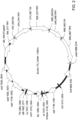
- the resulting construct, BLoVeL-TSS_TrpPath is shown in Figure 2 .
- sopA, sopB, and sopC plasmid partitioning proteins
- SV40pAn SV40 poly A
- TTS transcription termination signal
- attB site specific recombination site
- lox site specific recombination site
- eGFP fluorescent protein
- Bsr blasticidin resistance gene
- repE replication initiation site
- Ori2 origin of replication
- CmR chloramphenicol resistance gene
- polyAn poly A
- EF1alphaPr promoter
- TRP1, TRP2, TRP3 TRP4, and TRP5 tryptophan genes 1-5
- P2A, T2A, E2A, and F2A self cleaving peptides.
- the BLoVeL-TTS vector is used as the delivery vector to insert the five genes from the Saccharomyces cerevisiae tryptophan pathway (Trp1-Trp5) onto the synthetic chromosome.
- the recipient cell line e.g., HT1080
- hSynC synthetic chromosome
- the cells are incubated overnight at 37°C, 5%CO 2 , in appropriate medium (e.g., DMEM + 10% FC3 for HT1080).
- both the delivery vector e.g. BLoVeL-TSS_TrpPath
- the plasmid encoding the recombination protein e.g. pCXLamIntR
- Transfections are performed in duplicate so that a comparison of drug selection and direct cell sorting can be made.
- the Lipofectamine LTX is diluted in Opti-MEM medium (Gibco; 1.5ul LTX/50ul Opti-MEM for each well of the 24-well dish to be transfected), and 250ng DNA is added to 50ul diluted LTX in Opti-MEM (e.g. 125ng BLoVeL-TSS_TrpPath plasmid and 125ng pCXLamIntR per well). 0.25ul PLUS reagent is added to each ⁇ 50ul DNA-LTX-Opti_MEM sample, and each sample is incubated at room temperature for 5 minutes. The medium is then removed from the cells plated on Day 0 and fresh medium is used to replace the medium during the 5 minute incubation. DNA-lipid complexes are added to the cells and incubated at 37°C, 5%CO 2 , in appropriate medium.
- Opti-MEM medium Gibco; 1.5ul LTX/50ul Opti-MEM for each well of the 24-well dish to be transfected
- the cells in the duplicate wells can be trypsinized and placed in a 6cm dish with fresh medium lacking drug selection, and incubated at 37°C, 5% CO 2 , in appropriate medium.
- the cells in the 6cm dish are trypsinized and applied to a cell sorter to single cell sort fluorescent cells that have integrated the vector and are expressing the fluorescent protein on the delivery vector (e.g. GFP; BLoVeL-TSS_TrpPath).
- the sorter identifies the in-frame GFP positive recombinants after integration onto the synthetic chromosome, which is one of the unique aspects of the methods of the invention.
- Integration of the delivery vector containing the gene/DNA elements of interest is identifed by the production of a unique PCR product that spans the recombination site between the synthetic chromosome and the delivery vector (BLoVeL-TSS_TrpPath) using appropriate PCR primers. Negative control PCR reactions of water and host genomic DNA (e.g. HT1080) are performed in conjunction with the test genomic DNA samples.
- the PCR primers used to amplify the junction PCR products from BLoVeL-TSS_TrpPath vector integration are: Junction 1 - Expected product size 392bp (ACCGAGCTGCAAGAACTCTTCCTC [SEQ ID No.
- telomeres e.g. TRP1, TRP2, TRP3, TRP4 and TRP5
- TRP5 synthetic chromosome
- a test of the production of tryptophan is performed, and can be determined in a number of ways. First, the cells may be tested for ability to grow in cell culture medium lacking the amino acid tryptophan with the growth of these cells compared to cells grown in cell culture medium containing tryptophan.
- An alternate test for tryptophan synthesis may be to assay tryptophan levels in lysed cell pellets with the Bridge-it L-Tryptophan Fluorescence Assay Kit (Mediomics, LLC). Levels of tryptophan are measured in triplicate on independent cultures carrying the TRP1, TRP2, TRP3, TRP4 and TRP5 genes and compared to cultures of cells without the BLoVeL-TSS_TrpPath containing synthetic chromosome.
- the tryptophan pathway from yeast may require the ARO pathway as well to provide the precursor for the tryptophan biosynthetic pathway in human cells.
- the precursor molecule that enters the tryptophan biosynthetic pathway is chorismate, which is produced by the aromatic amino acids pathway (also referred to as the shikamate pathway). In S.
- the selectable marker cassette (eGFP-BSR) is removed using CRE-Lox recombination.
- the cell line containing the synthetic chromosome is transfected with a CRE-expressing plasmid.
- the cells are seeded at 2E5 cells per 6cm cell culture dish and incubate at 37°C with 5% CO 2 overnight.
- the CRE-expressing plasmid (e.g.
- PSF-CMV-CRE-CRE Recombinase Expression Vector Sigma Aldrich
- PSF-CMV-CRE-CRE Recombinase Expression Vector Sigma Aldrich
- Opti-MEM medium Gibco; 7.25ul LTX/500ul Opti-MEM for each 6-well dish to be transfected
- 1.25ug DNA is added to 500ul diluted LTX in Opti-MEM (e.g. PSF-CMV-CRE-CRE Recombinase Expression Vector per 6cm dish).
- the non-fluorescent cells can be single cell sorted into a 96-well dish and/or bulk sorted into a tube then plated to a cell culture dish (e.g. 6cm dish). Cells are then monitored for fluorescence as they expand in culture. Those single cell clones showing no fluorescence are expanded in culture for cold storage and genomic DNA isolation.
- PCR confirmation of a proper CRE-lox recombination event is determined using the following primers for BLoVeL-TSS based vectors: Lox cassette forward: (AGCCGTGTAACCGAGCATAGtgaagcctgctttttttatactaacttgagcgaa [SEQ ID No.
- the four ARO genes in the Saccharomyces cerevisiae biosynthetic pathway are synthesized with the following modifications: 1) ARO1, ARO2, ARO3, genes are synthesized without a stop codon; 2) the P2A spacer is encoded upstream of the ARO2 gene and a glycine-serine-glycine spacer plus 15bp of T2A spacer is encoded downstream of the last ARO2 amino acid codon; 3) the T2A spacer is encoded upstream of the ARO3 gene and a glycine-serine-glycine spacer plus 15bp of E2A spacer is encoded downstream of the last ARO3 amino acid codon; and 4) the E2A spacer is encoded upstream of the ARO4 gene and polyadenylation signal is encoded downstream of the ARO4 gene.
- the novel synthetic polyadenylation site was copied from pGLuc-Basic_2 (NEB).
- PCR primers are designed to PCR amplify these four synthesized DNA elements as well as the EF1alpha promoter (amplified from pEF1hrGFP) for IN-Fusion cloning into the linearized BLoVeL-TSS delivery vector backbone.
- the resulting construct, BLoVeL-TSS_AroPath is shown at Figure 3 .
- sopA, sopB, and sopC plasmid partitioning proteins
- SV40pAn SV40 poly A
- TTS transcription termination signal
- attB site specific recombination site
- lox site specific recombination site
- eGFP fluorescent protein
- Bsr blasticidin resistance gene
- repE replication initiation site
- Ori2 origin of replication
- CmR chloramphenicol resistance gene
- polyAn poly A
- EF1alphaPr promoter
- ARO1, ARO2, ARO3, and ARO4 aromatic amino acid genes 1-4
- P2A, T2A, and E2A, self cleaving peptides.
- the BLoVeL-TSS_AroPath vector is transfected into cells containing the synthetic chromosome that has already been loaded with the TRP1, TRP2, TRP3, Trp4 and TRP
- the recipient cell line e.g. HT1080
- the synthetic chromosome hSynC
- appropriate medium e.g. DMEM + 10% FC3 for HT1080.
- delivery vector e.g. BLoVeL-TSS_AroPath
- plasmid encoding the recombination protein
- pCXLamIntR are transfected into the HT1080 cells. Transfections typically are performed in duplicate so that a comparison of drug selection and direct cell sorting can be made.
- the Lipofectamine LTX is diluted in Opti-MEM medium (Gibco; 1.5ul LTX/50ul Opti-MEM for each well of the 24-well dish to be transfected), and 250ng DNA is added to 50ul diluted LTX in Opti-MEM (e.g. 125ng BLoVeL-TSS_AroPath plasmid and 125ng pCXLamIntR per well).
- the cells in the duplicate wells can be trypsinized and placed in a 6 cm dish with fresh medium lacking drug selection, and incubated at at 37°C, 5% CO2, in appropriate medium.
- the cells on the 6cm dish are trypsinized and applied to a cell sorter to single cell sort fluorescent cells that have integrated the vector and are expressing the fluorescent protein on the targeting vector (GFP; BLoVeL-TSS_AroPath).
- Integration of the delivery vector containing the gene/DNA elements of interest is identified by the production of a unique PCR product that spans the recombination site between the synthetic chromosome and the delivery vector (BLoVeL-TSS_AroPath) using appropriate PCR primers.
- Negative control PCR reactions of water and host genomic DNA are performed in conjunction with the test genomic DNA samples.
- the PCR primers used to amplify the unique junction PCR product from BLoVeL-TSS_AroPath delivery vector integration are: Junction 1 - expected product size 401bp (gcgctaatgctctgttacaggt [SEQ ID No. 7] and GGAAAGCTGCCAGTGCCTTG [SEQ ID No. 8]).
- junction PCR is no longer unique with a second loading onto the synthetic chromosome: Junction shared by both BLoVeL-TSS_AroPath and BLoVeL-TSS_TrpPath targeted integrations events - expected product size 392bp (accgagctgcaagaactcttcctc [SEQ ID No.
- a test of the production of chorismate is performed. This could be determined in a number of ways. For example, the cells may be tested for the ability to grow in cell culture medium lacking the amino acid tryptophan and growth compared to cells grown in cell culture medium containing tryptophan. These cells now have both the Tryptophan and Aromatic amino acid biosynthesis pathways. The latter pathway should produce the chorismate substrate for production of Tryptophan by the former pathway.
- An alternate test for tryptophan synthesis would be to assay tryptophan levels in lysed cell pellets with the Bridge-it L-Tryptophan Fluorescence Assay Kit (Mediomics, LLC). Levels of tryptophan are measured in triplicate on independent cultures carrying the tryptophan and compared to cultures of cells without the BLoVeL-TSS_AroPath containing synthetic chromosome as well as cultures lacking both the BLoVeL-TSS-AroPath and BLoVeL-TSS-TrpPath integration events.
Landscapes
- Genetics & Genomics (AREA)
- Health & Medical Sciences (AREA)
- Life Sciences & Earth Sciences (AREA)
- Engineering & Computer Science (AREA)
- Biomedical Technology (AREA)
- Wood Science & Technology (AREA)
- Organic Chemistry (AREA)
- Chemical & Material Sciences (AREA)
- Biotechnology (AREA)
- General Engineering & Computer Science (AREA)
- Zoology (AREA)
- Bioinformatics & Cheminformatics (AREA)
- Molecular Biology (AREA)
- Microbiology (AREA)
- Plant Pathology (AREA)
- Biophysics (AREA)
- Biochemistry (AREA)
- General Health & Medical Sciences (AREA)
- Physics & Mathematics (AREA)
- Mycology (AREA)
- Micro-Organisms Or Cultivation Processes Thereof (AREA)
- Medicines Containing Material From Animals Or Micro-Organisms (AREA)
- Medicines That Contain Protein Lipid Enzymes And Other Medicines (AREA)
Applications Claiming Priority (3)
| Application Number | Priority Date | Filing Date | Title |
|---|---|---|---|
| US201662321716P | 2016-04-12 | 2016-04-12 | |
| EP17783010.6A EP3442598B1 (de) | 2016-04-12 | 2017-04-11 | Verfahren zur erzeugung synthetischer, biosynthesesignalwege exprimierender chromosomen und verwendungen davon |
| PCT/US2017/027069 WO2017180665A2 (en) | 2016-04-12 | 2017-04-11 | Methods for creatings synthetic chromosomes expressing biosynthetic pathways and uses thereof |
Related Parent Applications (1)
| Application Number | Title | Priority Date | Filing Date |
|---|---|---|---|
| EP17783010.6A Division EP3442598B1 (de) | 2016-04-12 | 2017-04-11 | Verfahren zur erzeugung synthetischer, biosynthesesignalwege exprimierender chromosomen und verwendungen davon |
Publications (2)
| Publication Number | Publication Date |
|---|---|
| EP4534674A2 true EP4534674A2 (de) | 2025-04-09 |
| EP4534674A3 EP4534674A3 (de) | 2025-06-18 |
Family
ID=60041962
Family Applications (2)
| Application Number | Title | Priority Date | Filing Date |
|---|---|---|---|
| EP17783010.6A Active EP3442598B1 (de) | 2016-04-12 | 2017-04-11 | Verfahren zur erzeugung synthetischer, biosynthesesignalwege exprimierender chromosomen und verwendungen davon |
| EP25156387.0A Pending EP4534674A3 (de) | 2016-04-12 | 2017-04-11 | Verfahren zur erzeugung synthetischer chromosomen zur expression biosynthetischer pfade und verwendungen davon |
Family Applications Before (1)
| Application Number | Title | Priority Date | Filing Date |
|---|---|---|---|
| EP17783010.6A Active EP3442598B1 (de) | 2016-04-12 | 2017-04-11 | Verfahren zur erzeugung synthetischer, biosynthesesignalwege exprimierender chromosomen und verwendungen davon |
Country Status (8)
| Country | Link |
|---|---|
| US (2) | US11692196B2 (de) |
| EP (2) | EP3442598B1 (de) |
| JP (3) | JP7497139B2 (de) |
| CN (1) | CN109328232A (de) |
| AU (2) | AU2017249321B2 (de) |
| CA (1) | CA3024161A1 (de) |
| RU (1) | RU2018139464A (de) |
| WO (1) | WO2017180665A2 (de) |
Families Citing this family (7)
| Publication number | Priority date | Publication date | Assignee | Title |
|---|---|---|---|---|
| US10704021B2 (en) | 2012-03-15 | 2020-07-07 | Flodesign Sonics, Inc. | Acoustic perfusion devices |
| CA2935960C (en) | 2014-01-08 | 2023-01-10 | Bart Lipkens | Acoustophoresis device with dual acoustophoretic chamber |
| US11708572B2 (en) | 2015-04-29 | 2023-07-25 | Flodesign Sonics, Inc. | Acoustic cell separation techniques and processes |
| US11377651B2 (en) | 2016-10-19 | 2022-07-05 | Flodesign Sonics, Inc. | Cell therapy processes utilizing acoustophoresis |
| US11214789B2 (en) | 2016-05-03 | 2022-01-04 | Flodesign Sonics, Inc. | Concentration and washing of particles with acoustics |
| EP3725092A4 (de) | 2017-12-14 | 2021-09-22 | FloDesign Sonics, Inc. | Antrieb und steuergerät für akustischen wandler |
| WO2023034729A1 (en) | 2021-08-30 | 2023-03-09 | Carrygenes Bioengineering, Llc | Safety switches for engineered cells carrying synthetic chromosomes |
Citations (19)
| Publication number | Priority date | Publication date | Assignee | Title |
|---|---|---|---|---|
| US4966843A (en) | 1982-11-01 | 1990-10-30 | Cetus Corporation | Expression of interferon genes in Chinese hamster ovary cells |
| US5011776A (en) | 1988-02-11 | 1991-04-30 | The Royal Institution For The Advancement Of Learning (Mcgill University) | Shuttle vector, utilizing the E. coli asparagine synthetase gene, and capable of dominant transfection and amplification in animal cells |
| US5288625A (en) | 1991-09-13 | 1994-02-22 | Biologic Research Center Of The Hungarian Academy Of Sciences | Mammalian artificial chromosomes |
| US5396767A (en) | 1992-04-06 | 1995-03-14 | Yamaha Hatsudoki Kabushiki Kaisha | Engine exhaust gas cleaning system |
| US5627059A (en) | 1989-08-22 | 1997-05-06 | University Of Utah | Cells and non-human organisms containing predetermined genomic modifications and positive-negative selection methods and vectors for making same |
| US5658772A (en) | 1989-12-22 | 1997-08-19 | E. I. Du Pont De Nemours And Company | Site-specific recombination of DNA in plant cells |
| US5681713A (en) | 1987-05-08 | 1997-10-28 | Smithkline Beecham Corporation | Expression of heterologous proteins in Drosophila cells |
| WO1997040183A2 (en) | 1996-04-10 | 1997-10-30 | The Biological Research Center Of The Hungarian Academy Of Sciences | Artificial chromosomes, uses thereof and methods for preparing artificial chromosomes |
| US5695967A (en) | 1995-06-07 | 1997-12-09 | Case Western Reserve University | Method for stably cloning large repeating units of DNA |
| US5712134A (en) | 1990-05-09 | 1998-01-27 | The Biological Research Center Of The Hungarian Academy Of Sciences | Method of producing a cell carrying an excess of mammalian centromeres |
| US5721118A (en) | 1995-10-31 | 1998-02-24 | The Regents Of The University Of California, San Diego | Mammalian artificial chromosomes and methods of using same |
| WO1998008964A1 (en) | 1996-08-26 | 1998-03-05 | Tsuneko Okazaki | Mammalian artificial chromosomes |
| US5747308A (en) | 1989-10-25 | 1998-05-05 | Celltech Therapeutics Limited | Recombinant DNA method |
| US5869294A (en) | 1995-06-07 | 1999-02-09 | Case Western Reserve University | Method for stably cloning large repeating DNA sequences |
| US6077697A (en) | 1996-04-10 | 2000-06-20 | Chromos Molecular Systems, Inc. | Artificial chromosomes, uses thereof and methods for preparing artificial chromosomes |
| US6143949A (en) | 1997-03-26 | 2000-11-07 | Japan As Represented By Director General Of Ministry Of Agriculture, Forestry And Fisheries National Institue Of Agrobiological Resources | Method for transferring gene |
| US6365373B2 (en) | 1997-04-25 | 2002-04-02 | Genentech, Inc. | Nucleic acids encoding NGF variants |
| US7521240B2 (en) | 2001-05-30 | 2009-04-21 | Smithkline Beecham Corporation | Chromosome-based platforms |
| US8389802B2 (en) | 1996-04-10 | 2013-03-05 | The Biological Research Center Of The Hungarian Academy Of Sciences | Artificial chromosomes, uses thereof and methods for preparing artificial chromosomes |
Family Cites Families (13)
| Publication number | Priority date | Publication date | Assignee | Title |
|---|---|---|---|---|
| US7585622B1 (en) | 1996-10-01 | 2009-09-08 | Geron Corporation | Increasing the proliferative capacity of cells using telomerase reverse transcriptase |
| WO1999029310A2 (en) | 1997-12-05 | 1999-06-17 | Medical College Of Georgia Research Institute, Inc. | Regulation of t cell-mediated immunity by tryptophan and its analogs |
| GB9821193D0 (en) | 1998-09-30 | 1998-11-25 | Medical Res Council | Mammalian artificial chromosomes and uses thereof |
| MXPA03010967A (es) * | 2001-05-30 | 2004-10-28 | Chromos Molecular Systems Inc | Cromosomas artificiales de plantas, usos de los mismos y metodos para preparar cromosomas artificiales de plantas. |
| WO2004022741A1 (ja) | 2002-09-03 | 2004-03-18 | Japan Science And Technology Agency | 哺乳類人工染色体 |
| US20060185025A1 (en) | 2002-10-04 | 2006-08-17 | Kirin Beer Kabushiki Kaisha | Human artificial chromosome (hac) vector |
| US7267984B2 (en) | 2002-10-31 | 2007-09-11 | Rice University | Recombination assembly of large DNA fragments |
| CA2705841C (en) * | 2007-11-14 | 2015-01-27 | National University Corporation Tottori University | Mammalian artificial chromosome vector comprising human cytochrome p450 gene (cluster) and non-human mammalian animal retaining the same |
| KR101485840B1 (ko) | 2010-01-06 | 2015-01-23 | 도쿠리츠 다이가쿠 호우진 돗토리 다이가쿠 | 마우스 인공염색체 벡터 |
| HU230368B1 (hu) * | 2012-11-16 | 2016-03-29 | Magyar Tudományos Akadémia Szegedi Biológiai Kutatóközpont | Új módszer az emlős mesterséges kromoszóma több génnel való feltöltésére |
| KR102481330B1 (ko) | 2013-07-10 | 2022-12-23 | 프레지던트 앤드 펠로우즈 오브 하바드 칼리지 | Rna-가이드된 유전자 조절 및 편집을 위한 직교 cas9 단백질 |
| US9932610B2 (en) | 2013-11-04 | 2018-04-03 | Bgn Tech Llc | Methods of making vanillin via the microbial fermentation of ferulic acid from eugenol using a plant dehydrogenase |
| US11155836B2 (en) | 2015-02-09 | 2021-10-26 | CarryGenes Bioengineering | Compositions and methods for monitoring in real-time construction and bioengineering of mammalian synthetic chromosomes |
-
2017
- 2017-04-11 AU AU2017249321A patent/AU2017249321B2/en active Active
- 2017-04-11 CA CA3024161A patent/CA3024161A1/en active Pending
- 2017-04-11 EP EP17783010.6A patent/EP3442598B1/de active Active
- 2017-04-11 CN CN201780036557.2A patent/CN109328232A/zh active Pending
- 2017-04-11 WO PCT/US2017/027069 patent/WO2017180665A2/en not_active Ceased
- 2017-04-11 JP JP2018553999A patent/JP7497139B2/ja active Active
- 2017-04-11 RU RU2018139464A patent/RU2018139464A/ru not_active Application Discontinuation
- 2017-04-11 US US16/092,837 patent/US11692196B2/en active Active
- 2017-04-11 EP EP25156387.0A patent/EP4534674A3/de active Pending
-
2022
- 2022-02-10 JP JP2022019409A patent/JP7601402B2/ja active Active
-
2023
- 2023-07-02 US US18/217,601 patent/US20250002935A1/en active Pending
-
2024
- 2024-08-19 AU AU2024206914A patent/AU2024206914A1/en active Pending
- 2024-11-28 JP JP2024206830A patent/JP2025023055A/ja active Pending
Patent Citations (21)
| Publication number | Priority date | Publication date | Assignee | Title |
|---|---|---|---|---|
| US4966843A (en) | 1982-11-01 | 1990-10-30 | Cetus Corporation | Expression of interferon genes in Chinese hamster ovary cells |
| US5681713A (en) | 1987-05-08 | 1997-10-28 | Smithkline Beecham Corporation | Expression of heterologous proteins in Drosophila cells |
| US5011776A (en) | 1988-02-11 | 1991-04-30 | The Royal Institution For The Advancement Of Learning (Mcgill University) | Shuttle vector, utilizing the E. coli asparagine synthetase gene, and capable of dominant transfection and amplification in animal cells |
| US5627059A (en) | 1989-08-22 | 1997-05-06 | University Of Utah | Cells and non-human organisms containing predetermined genomic modifications and positive-negative selection methods and vectors for making same |
| US5747308A (en) | 1989-10-25 | 1998-05-05 | Celltech Therapeutics Limited | Recombinant DNA method |
| US5658772A (en) | 1989-12-22 | 1997-08-19 | E. I. Du Pont De Nemours And Company | Site-specific recombination of DNA in plant cells |
| US5891691A (en) | 1990-05-09 | 1999-04-06 | The Biological Research Center Of The Hungarian Academy Of Sciences | Method of producing a cell carrying an excess of mammalian centromeres and the cell line carrying an excess of mammalian centromeres |
| US5712134A (en) | 1990-05-09 | 1998-01-27 | The Biological Research Center Of The Hungarian Academy Of Sciences | Method of producing a cell carrying an excess of mammalian centromeres |
| US5288625A (en) | 1991-09-13 | 1994-02-22 | Biologic Research Center Of The Hungarian Academy Of Sciences | Mammalian artificial chromosomes |
| US5396767A (en) | 1992-04-06 | 1995-03-14 | Yamaha Hatsudoki Kabushiki Kaisha | Engine exhaust gas cleaning system |
| US5695967A (en) | 1995-06-07 | 1997-12-09 | Case Western Reserve University | Method for stably cloning large repeating units of DNA |
| US5869294A (en) | 1995-06-07 | 1999-02-09 | Case Western Reserve University | Method for stably cloning large repeating DNA sequences |
| US5721118A (en) | 1995-10-31 | 1998-02-24 | The Regents Of The University Of California, San Diego | Mammalian artificial chromosomes and methods of using same |
| WO1997040183A2 (en) | 1996-04-10 | 1997-10-30 | The Biological Research Center Of The Hungarian Academy Of Sciences | Artificial chromosomes, uses thereof and methods for preparing artificial chromosomes |
| US6025155A (en) | 1996-04-10 | 2000-02-15 | Chromos Molecular Systems, Inc. | Artificial chromosomes, uses thereof and methods for preparing artificial chromosomes |
| US6077697A (en) | 1996-04-10 | 2000-06-20 | Chromos Molecular Systems, Inc. | Artificial chromosomes, uses thereof and methods for preparing artificial chromosomes |
| US8389802B2 (en) | 1996-04-10 | 2013-03-05 | The Biological Research Center Of The Hungarian Academy Of Sciences | Artificial chromosomes, uses thereof and methods for preparing artificial chromosomes |
| WO1998008964A1 (en) | 1996-08-26 | 1998-03-05 | Tsuneko Okazaki | Mammalian artificial chromosomes |
| US6143949A (en) | 1997-03-26 | 2000-11-07 | Japan As Represented By Director General Of Ministry Of Agriculture, Forestry And Fisheries National Institue Of Agrobiological Resources | Method for transferring gene |
| US6365373B2 (en) | 1997-04-25 | 2002-04-02 | Genentech, Inc. | Nucleic acids encoding NGF variants |
| US7521240B2 (en) | 2001-05-30 | 2009-04-21 | Smithkline Beecham Corporation | Chromosome-based platforms |
Non-Patent Citations (60)
| Title |
|---|
| "Essentials of Stem Cell Biology", 2012, ACADEMIC PRESS |
| "Gene Therapy Protocols", 2008, SPRINGER |
| "Genetic Variation: A Laboratory Manual", 2007 |
| "Immunology Methods Manua", 1997, ACADEMIC PRESS |
| "Mammalian Chromosome Engineering - Methods and Protocols", 2011, ACADEMIC PRESS |
| "Stem Cell Therapies: Opportunities for Ensuring the Quality and Safety of Clinical Offerings", 2014, BOARD ON HEALTH SCIENCES POLICY SUMMARY OF A JOINT WORKSHOP, article "Summary of a Joint Workshop" |
| ALBRECHT ET AL., ANN. HEMATOL, vol. 72, 1996, pages 73 - 79 |
| ARAKI ET AL., J. MOL. BIOL., vol. 225, 1992, pages 25 - 37 |
| AURICHE ET AL., EMBO REP, vol. 2, 2001, pages 102 - 914 |
| BARNETT ET AL., NUC. AC. RES, vol. 21, 1993, pages 27 - 36 |
| CARINE, SOMAT. CELL MOL. GENET, vol. 15, 1989, pages 445 - 460 |
| CHEN ET AL., J. GEN. MICROBIOL, vol. 138, 1992, pages 337 - 345 |
| CHEN ET AL., NUCLEIC ACIDS RES., vol. 314, 1986, pages 4471 - 4481 |
| CHOO, TRENDS MOL. MED, vol. 7, 2001, pages 235 - 37 |
| CSONKA ET AL., J. CELL SCI, vol. 113, 2002, pages 3207 - 16 |
| DHAR ET AL., SOMATIC CELL MOL. GENET, vol. 10, 1984, pages 547 - 559 |
| EBERSOLE ET AL., HUM. MOL. GENE, vol. 9, 2000, pages 1623 - 31 |
| ENOMOTO ET AL., J BACTERIOL, vol. 6, 1983, pages 663 - 668 |
| FRAME ET AL., PLANT J, vol. 6, 1994, pages 941 - 948 |
| GRIMES ET AL., MOL. THER, vol. 5, 2002, pages 798 - 805 |
| HADLACZKY ET AL., CURR. OPINI. MOL. THER, vol. 3, 2001, pages 125 - 32 |
| HARRINGTON ET AL., NAT. GENET, vol. 15, pages 345 - 55 |
| HELLENSARNOW, GENES DEV, vol. 15, no. 13, 2001, pages 1593 - 612 |
| HELLER ET AL., PNAS USA, vol. 93, 1996, pages 7125 - 30 |
| HENNING ET AL., PNAS USA, vol. I-IV, 1999, pages 592 - 97 |
| HOLMEN ET AL., IN VITRO CELL DEV. BIOL. ANIM, vol. 31, 1995, pages 347 - 351 |
| IKENO ET AL., NAT. BIOTECHNOL, vol. 16, 1998, pages 431 - 39 |
| JACKSON ET AL., TRENDS BIOCHEM SCI., vol. 15, 1990, pages 477 - 83 |
| KATOH ET AL., BIOCHEM. BIOPHYS. RES. COMMUN., vol. 321, 2004, pages 280 - 90 |
| KIM ET AL., PLOS ONE, vol. 6, no. 4, pages l8556, Retrieved from the Internet <URL:http://doi.org/10.1371/journal.pone.0018556> |
| KIMEBERWINE, ANAL. BIOANAL. CHEM, vol. 397, no. 8, 2010, pages 3173 - 3178 |
| KLEIN ET AL., NATURE, vol. 327, 1987, pages 70 - 73 |
| LAMBERT, PROC. NATL. ACAD. SCI. U.S.A., vol. 88, 1991, pages 5907 - 5911 |
| LANDY, CURRENT OPINION IN BIOTECHNOLOGY, vol. 3, 1993, pages 699 - 7071 |
| LE BOLCH ET AL., TETRAHEDRON LETT., vol. 36, 1995, pages 6681 - 6684 |
| LINDENBAUMPERKINS ET AL., NUC. AC. RES, vol. 32, no. 21, 2004, pages 172 |
| LINDENBAUMPERKINS ET AL., NUCLEIC ACID RESEARCH, vol. 32, no. 21, 2004, pages 172 |
| LOEFFLER ET AL., METH. ENZYMOL, vol. 217, 1993, pages 599 - 618 |
| LORBACH ET AL., J MOL. BIOL., vol. 25, no. 296, 2000, pages 1175 - 1181 |
| MAESER ET AL., MOL GEN GENET, vol. 230, 1991, pages 170 - 176 |
| MASUMOTO ET AL., CHROMOSOMA, vol. 107, 1998, pages 406 - 16 |
| MCNEILL-KILLARY ET AL., METH. ENZYMOL, vol. 254, 1995, pages 133 - 152 |
| MEJIA ET AL., GENOMICS, vol. 79, 2002, pages 297 - 304 |
| MORALLI ET AL., CYTOGENET. CELL GENET, vol. 94, 2001, pages 113 - 20 |
| OUMARD ET AL., MOL. CELL. BIOL, vol. 20, 2000, pages 2755 - 2759 |
| PACHECOMARTINEZ-SALAS, J BIOMED BIOTECHNOL, 2 February 2010 (2010-02-02), pages 458927 |
| PASZKOWSKI ET AL., EMBO J., vol. 3, 1984, pages 2717 - 2722 |
| PASZKOWSKI ET AL.: "Molecular Biology of Plant Nuclear Genes", vol. 6, 1989, ACADEMIC PUBLISHERS, article "Cell Culture and Somatic Cell Genetics of Plants" |
| PNAS USA, vol. 88, 1991, pages 7006 - 10 |
| POTRYKUS ET AL., MOL. GEN. GENET, vol. 199, 1985, pages 169 - 177 |
| REICH ET AL., BIOTECHNOLOGY, vol. 4, 1986, pages 1001 - 1004 |
| REMY ET AL., BIOCONJUG. CHEM, vol. 5, 1994, pages 647 - 654 |
| SAFFERY ET AL., PNAS USA, vol. 98, 2001, pages 5705 - 10 |
| SAMBROOKRUSSELL: "Condensed Protocols from Molecular Cloning: A Laboratory Manual", 2006 |
| SAUER, CURRENT OPINION IN BIOTECHNOLOGY, vol. 5, 1994, pages 521 - 527 |
| SAUER, METHODS IN ENZYMOLOGY, vol. 225, 1993, pages 890 - 900 |
| SAWFORD ET AL., SOMATIC CELL MOL. GENET, vol. 13, 1987, pages 279 - 284 |
| STRAUSS, METH. MOL. BIOL, vol. 54, 1996, pages 307 - 327 |
| TEIFEL ET AL., BIOTECHNIQUES, vol. 19, 1995, pages 79 - 80 |
| WIGLER ET AL., PROC. NATL. ACAD. SCI. U.S.A., vol. 76, 1979, pages 1373 - 1376 |
Also Published As
| Publication number | Publication date |
|---|---|
| US11692196B2 (en) | 2023-07-04 |
| AU2024206914A1 (en) | 2024-09-05 |
| JP7601402B2 (ja) | 2024-12-17 |
| CA3024161A1 (en) | 2017-10-19 |
| JP7497139B2 (ja) | 2024-06-10 |
| US20210403930A1 (en) | 2021-12-30 |
| EP3442598A4 (de) | 2019-11-20 |
| EP3442598A2 (de) | 2019-02-20 |
| EP3442598C0 (de) | 2025-02-19 |
| AU2017249321B2 (en) | 2024-05-23 |
| AU2017249321A1 (en) | 2018-11-22 |
| WO2017180665A3 (en) | 2017-12-28 |
| EP3442598B1 (de) | 2025-02-19 |
| RU2018139464A (ru) | 2020-05-12 |
| JP2019511235A (ja) | 2019-04-25 |
| JP2025023055A (ja) | 2025-02-14 |
| US20250002935A1 (en) | 2025-01-02 |
| JP2022070950A (ja) | 2022-05-13 |
| EP4534674A3 (de) | 2025-06-18 |
| CN109328232A (zh) | 2019-02-12 |
| WO2017180665A2 (en) | 2017-10-19 |
Similar Documents
| Publication | Publication Date | Title |
|---|---|---|
| US20250002935A1 (en) | Synthetic chromosomes expressing biosynthetic pathways | |
| AU2017250265B2 (en) | Methods for creating synthetic chromosomes having gene regulatory systems and uses thereof | |
| US20220025404A1 (en) | Compositions and methods for monitoring in real-time construction and bioengineering of mammalian synthetic chromosomes | |
| US12522843B2 (en) | Compositions and methods of chromosomal silencing | |
| AU2017250178B2 (en) | Sequential loadings of multiple delivery vectors using a single selectable marker | |
| AU2018330033A1 (en) | Lineage reporter synthetic chromosomes and methods of use | |
| HK40059985A (en) | Methods for creating synthetic chromosomes having gene regulatory systems and uses thereof |
Legal Events
| Date | Code | Title | Description |
|---|---|---|---|
| PUAI | Public reference made under article 153(3) epc to a published international application that has entered the european phase |
Free format text: ORIGINAL CODE: 0009012 |
|
| STAA | Information on the status of an ep patent application or granted ep patent |
Free format text: STATUS: THE APPLICATION HAS BEEN PUBLISHED |
|
| AC | Divisional application: reference to earlier application |
Ref document number: 3442598 Country of ref document: EP Kind code of ref document: P |
|
| AK | Designated contracting states |
Kind code of ref document: A2 Designated state(s): AL AT BE BG CH CY CZ DE DK EE ES FI FR GB GR HR HU IE IS IT LI LT LU LV MC MK MT NL NO PL PT RO RS SE SI SK SM TR |
|
| PUAL | Search report despatched |
Free format text: ORIGINAL CODE: 0009013 |
|
| AK | Designated contracting states |
Kind code of ref document: A3 Designated state(s): AL AT BE BG CH CY CZ DE DK EE ES FI FR GB GR HR HU IE IS IT LI LT LU LV MC MK MT NL NO PL PT RO RS SE SI SK SM TR |
|
| RIC1 | Information provided on ipc code assigned before grant |
Ipc: C12N 15/85 20060101ALI20250513BHEP Ipc: C12N 15/52 20060101AFI20250513BHEP |
|
| STAA | Information on the status of an ep patent application or granted ep patent |
Free format text: STATUS: REQUEST FOR EXAMINATION WAS MADE |
|
| 17P | Request for examination filed |
Effective date: 20251211 |