EP4534148A2 - Polymorphe und feste formen von (s)-2-((2-(s)-4-(difluormethyl)-2-oxooxazolidin-3-yl)-5,6-dihydrobenzo[f!imidazo[1,2-d [1, 4-oxazepin-9-yl)amino)propanamid und verfahren zur herstellung - Google Patents
Polymorphe und feste formen von (s)-2-((2-(s)-4-(difluormethyl)-2-oxooxazolidin-3-yl)-5,6-dihydrobenzo[f!imidazo[1,2-d [1, 4-oxazepin-9-yl)amino)propanamid und verfahren zur herstellung Download PDFInfo
- Publication number
- EP4534148A2 EP4534148A2 EP25158128.6A EP25158128A EP4534148A2 EP 4534148 A2 EP4534148 A2 EP 4534148A2 EP 25158128 A EP25158128 A EP 25158128A EP 4534148 A2 EP4534148 A2 EP 4534148A2
- Authority
- EP
- European Patent Office
- Prior art keywords
- polymorph
- crystalline
- gdc
- pharmaceutical composition
- acid
- Prior art date
- Legal status (The legal status is an assumption and is not a legal conclusion. Google has not performed a legal analysis and makes no representation as to the accuracy of the status listed.)
- Pending
Links
Images







Classifications
-
- C—CHEMISTRY; METALLURGY
- C07—ORGANIC CHEMISTRY
- C07D—HETEROCYCLIC COMPOUNDS
- C07D498/00—Heterocyclic compounds containing in the condensed system at least one hetero ring having nitrogen and oxygen atoms as the only ring hetero atoms
- C07D498/02—Heterocyclic compounds containing in the condensed system at least one hetero ring having nitrogen and oxygen atoms as the only ring hetero atoms in which the condensed system contains two hetero rings
- C07D498/04—Ortho-condensed systems
-
- A—HUMAN NECESSITIES
- A61—MEDICAL OR VETERINARY SCIENCE; HYGIENE
- A61K—PREPARATIONS FOR MEDICAL, DENTAL OR TOILETRY PURPOSES
- A61K31/00—Medicinal preparations containing organic active ingredients
- A61K31/33—Heterocyclic compounds
- A61K31/395—Heterocyclic compounds having nitrogen as a ring hetero atom, e.g. guanethidine or rifamycins
- A61K31/55—Heterocyclic compounds having nitrogen as a ring hetero atom, e.g. guanethidine or rifamycins having seven-membered rings, e.g. azelastine, pentylenetetrazole
- A61K31/553—Heterocyclic compounds having nitrogen as a ring hetero atom, e.g. guanethidine or rifamycins having seven-membered rings, e.g. azelastine, pentylenetetrazole having at least one nitrogen and one oxygen as ring hetero atoms, e.g. loxapine, staurosporine
-
- A—HUMAN NECESSITIES
- A61—MEDICAL OR VETERINARY SCIENCE; HYGIENE
- A61P—SPECIFIC THERAPEUTIC ACTIVITY OF CHEMICAL COMPOUNDS OR MEDICINAL PREPARATIONS
- A61P35/00—Antineoplastic agents
-
- A—HUMAN NECESSITIES
- A61—MEDICAL OR VETERINARY SCIENCE; HYGIENE
- A61P—SPECIFIC THERAPEUTIC ACTIVITY OF CHEMICAL COMPOUNDS OR MEDICINAL PREPARATIONS
- A61P35/00—Antineoplastic agents
- A61P35/02—Antineoplastic agents specific for leukemia
-
- A—HUMAN NECESSITIES
- A61—MEDICAL OR VETERINARY SCIENCE; HYGIENE
- A61P—SPECIFIC THERAPEUTIC ACTIVITY OF CHEMICAL COMPOUNDS OR MEDICINAL PREPARATIONS
- A61P35/00—Antineoplastic agents
- A61P35/04—Antineoplastic agents specific for metastasis
-
- A—HUMAN NECESSITIES
- A61—MEDICAL OR VETERINARY SCIENCE; HYGIENE
- A61K—PREPARATIONS FOR MEDICAL, DENTAL OR TOILETRY PURPOSES
- A61K9/00—Medicinal preparations characterised by special physical form
- A61K9/20—Pills, tablets, discs, rods
-
- C—CHEMISTRY; METALLURGY
- C07—ORGANIC CHEMISTRY
- C07B—GENERAL METHODS OF ORGANIC CHEMISTRY; APPARATUS THEREFOR
- C07B2200/00—Indexing scheme relating to specific properties of organic compounds
- C07B2200/13—Crystalline forms, e.g. polymorphs
Definitions
- the main PI3-kinase isoform in cancer is the Class I PI3-kinase, p110 ⁇ (alpha) ( US 5824492 ; US 5846824 ; US 6274327 ).
- Other isoforms are implicated in cardiovascular and immune-inflammatory disease ( Workman P (2004) Biochem Soc Trans 32:393-396 ; Patel et al (2004) Proceedings of the American Association of Cancer Research (Abstract LB-247) 95th Annual Meeting, March 27-31, Orlando, Florida, USA ; Ahmadi K and Waterfield MD (2004) Encyclopedia of Biological Chemistry (Lennarz W J, Lane M D eds) Elsevier/Academic Press ).
- GDC-0077 also known by the IUPAC name: ( S )-2-((2-(( S )-4-(difluoromethyl)-2-oxooxazolidin-3-yl)-5,6-dihydrobenzo[ f ]imidazo[1,2- d ][1,4]oxazepin-9-yl)amino)propanamide, has potent PI3K activity ( WO 2017/001645 , US 2017/0015678 , Edgar K. et al, #156, "Preclinical characterization of GDC-0077, a specific PI3K alpha inhibitor in early clinical development", and Staben. S.
- Powder X-ray Diffraction is a powerful tool in identifying different crystal phases by their unique diffraction patterns
- the invention relates to polymorph forms of the PI3K inhibitor GDC-0077 ( CAS Registry Number 2060571-02-8, Genentech, Inc. ), named as ( S )-2-((2-(( S )-4-(difluoromethyl)-2-oxooxazolidin-3-yl)-5,6-dihydrob enzo[ f ]imidazo[1,2- d ][1,4] oxazepin-9-yl)amino)propanamide, having the structure, Formula I: or stereoisomers, geometric isomers, tautomers, and pharmaceutically acceptable salts thereof.
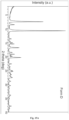
- An aspect of the invention is the Form A polymorph as described herein characterized by the X-ray powder diffraction pattern substantially as shown in Figure 4 .
- An aspect of the invention is the Form A polymorph as described wherein a differential scanning calorimetry DSC shows a melting endotherm at approximately 212 to 215 °C.
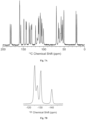
- An aspect of the invention is the Form A polymorph as described herein characterized by the 13 C SSNMR (solid-state nuclear magnetic resonance) spectra substantially as shown in Figure 7A .
- An aspect of the invention is the Form A polymorph as described herein characterized by the 19 F SSNMR (solid-state nuclear magnetic resonance) spectra substantially as shown in Figure 7B .
- An aspect of the invention is a crystalline, trihydrate polymorph of ( S )-2-((2-(( S )-4-(difluoromethyl)-2-oxooxazolidin-3-yl)-5,6-dihydrobenzo[ f ]imidazo[1,2- d ][1,4]oxazepin-9-yl)amino)propanamide designated the Form B polymorph that exhibits an X-ray powder diffraction pattern having characteristic peaks expressed in degrees 2-theta at approximately 5.4, 10.5, and 25.2.
- the Form B polymorph exhibits an X-ray powder diffraction pattern having characteristic peaks expressed in degrees 2-theta at approximately 5.4, 10.5, 19.5, 20.1, 21.6, and 25.2.
- the Form B polymorph as described herein is characterized by the X-ray powder diffraction pattern shown in Figure 12C .
- the Form B polymorph as described herein is characterized by the X-ray powder diffraction peaks shown in Table 2A.
- An aspect of the invention is a crystalline, trihydrate polymorph of ( S )-2-((2-(( S )-4-(difluoromethyl)-2-oxooxazolidin-3-yl)-5,6-dihydrobenzo[ f ]imidazo[1,2- d ][1,4]oxazepin-9-yl)amino)propanamide designated the Form B polymorph that exhibits an X-ray powder diffraction pattern using an incident beam of Cu K ⁇ radiation having characteristic peaks expressed in degrees 2-theta at approximately 5.4, 10.5, and 25.2; or having characteristic peaks expressed in degrees 2-theta at approximately 5.4, 10.5, 19.5, 20.1, 21.6, and 25.2.
- An aspect of the invention is a crystalline, trihydrate polymorph of ( S )-2-((2-(( S )-4-(difluoromethyl)-2-oxooxazolidin-3-yl)-5,6-dihydrobenzo[ f ]imidazo[1,2- d ][1,4]oxazepin-9-yl)amino)propanamide designated the Form B polymorph that exhibits an X-ray powder diffraction pattern using an incident beam of Cu K ⁇ (1.541904 ⁇ ) radiation generated using Cross Beam optics (40 kV ⁇ 44 mA) having characteristic peaks expressed in degrees 2-theta at approximately 5.4, 10.5, and 25.2; or having characteristic peaks expressed in degrees 2-theta at approximately 5.4, 10.5, 19.5, 20.1, 21.6, and 25.2.
- An aspect of the invention is a pharmaceutical composition
- a pharmaceutical composition comprising a therapeutically effective amount of the crystalline, anhydrate polymorph of Form A as described above, and a pharmaceutically acceptable carrier, glidant, diluent, or excipient.
- An aspect of the invention is a pharmaceutical composition
- a pharmaceutical composition comprising a therapeutically effective amount of the crystalline, anhydrate polymorph of Form D as described above, and a pharmaceutically acceptable carrier, glidant, diluent, or excipient.
- An aspect of the invention is a pharmaceutical composition
- a pharmaceutical composition comprising a therapeutically effective amount of the crystalline, trihydrate polymorph of Form B as described above, and a pharmaceutically acceptable carrier, glidant, diluent, or excipient.
- An aspect of the invention is the pharmaceutical composition as described above in the form of a tablet.
- An aspect of the invention is the pharmaceutical composition as described above wherein the therapeutically effective amount is from about 1 to about 100 mg.
- An aspect of the invention is the pharmaceutical composition as described above wherein the crystalline, anhydrate or trihydrate polymorph is milled.
- An aspect of the invention is the process for preparing a crystalline polymorph comprising heating a slurry of ( S )-2-((2-(( S )-4-(difluoromethyl)-2-oxooxazolidin-3-yl)-5,6-dihydrobenzo[ f ]imidazo[1,2- d ][1,4]oxazepin-9-yl)amino)propanamide in ethanol (with or without water) or n-propanol (with or without water), and then cooling the mixture whereby a Form A crystalline polymorph that exhibits an X-ray powder diffraction pattern having a characteristic peak expressed in degrees 2-theta at approximately 5.7; or having characteristic peaks expressed in degrees 2-theta at approximately 5.7, 11.4, and 19.0; or having characteristic peaks expressed in degrees 2-theta at approximately 5.7, 11.4, 17.2, 19.0, 19.7, and 24.4, is formed.
- the process comprises heating a slurry of GDC-0077 in ethanol in the presence of less than 40% (or less than 20%, or less than 10%) of water, and then cooling the mixture whereby forming the Form A polymorph.
- the process further comprises seeding the mixture with crystalline GDC-0077 (e.g., a crystalline THF solvate).
- An aspect of the invention is the process for preparing a crystalline trihydrate polymorph of ( S )-2-((2-(( S )-4-(difluoromethyl)-2-oxooxazolidin-3-yl)-5,6-dihydrobenzo[ f ]imidazo[1,2- d ][1,4]oxazepin-9-yl)amino)propanamide comprising slurring ( S )-2-((2-(( S )-4-(difluoromethyl)-2-oxooxazolidin-3-yl)-5,6-dihydrobenzo[ f ]imidazo[1,2- d ][1,4]oxazepin-9-yl)amino)propanamide in water (e.g., DI water).
- water e.g., DI water
- the term "about” when used in reference to x-ray powder diffraction pattern peak positions refers to the inherent variability of the peaks depending on, for example, the calibration of the equipment used, the process used to produce the polymorph, the age of the crystallized material and the like, depending on the instrumentation used. In this case the measure variability of the instrument was about +-.0.2 degrees 2-theta ( ⁇ ). A person skilled in the art, having the benefit of this disclosure, would understand the use of "about” in this context.
- the term “about” in reference to other defined parameters, e.g., water content, C max , t max , AUC, intrinsic dissolution rates, temperature, and time indicates the inherent variability in, for example, measuring the parameter or achieving the parameter. A person skilled in the art, having the benefit of this disclosure, would understand the variability of a parameter as connoted by the use of the word about.
- Polymorphic forms of a compound can be distinguished in a laboratory by X-ray diffractometry and by other methods such as, infrared or Raman or solid-state NMR spectrometry.
- X-ray diffractometry and by other methods such as, infrared or Raman or solid-state NMR spectrometry.
- J. K. Haleblian and W. McCrone J. Pharm. Sci., 58:911 (1969 ); " Polymorphism in Pharmaceutical Solids, Second Edition (Drugs and the Pharmaceutical Sciences)", Harry G. Brittain, Ed. (2011) CRC Press (2009 ); and J. K. Haleblian, J. Pharm. Sci., 64, 1269 (1975 ), all of which are incorporated herein by reference.
- XRPD means X-ray powder diffraction, an analytical technique which measures the diffraction of X-rays in the presence of a solid component.
- Materials which are crystalline and have regular repeating arrays of atoms generate a distinctive powder pattern. Materials with similar unit cells will give powder patterns that are similar in position as measured in °2 ⁇ (theta). Solvates which exhibit this property are called isostructural or isomorphous solvates.
- the intensity of the reflections varies according to the electron density causing diffraction as well as sample, sample preparation, and instrument parameters. Analysis of XRPD data is based upon the general appearance of the measured powder pattern(s) with respect to the known response of the X-ray diffraction system used to collect the data.
- diffraction peaks that may be present in the powder pattern
- their positions, shapes, widths and relative intensity distributions can be used to characterize the type of solid state order in the powder sample.
- the position, shape and intensity of any broad diffuse scatter (halos) on top of the instrumental background can be used to characterize the level and type of solid state disorder.
- the combined interpretation of the solid state order and disorder present in a powder sample provides a qualitative measure of the macro-structure of the sample.
- phrases "pharmaceutically acceptable salt” as used herein, refers to pharmaceutically acceptable organic or inorganic salts of a compound of the invention.
- Exemplary salts include, but are not limited, to sulfate, citrate, acetate, oxalate, chloride, bromide, iodide, nitrate, bisulfate, phosphate, acid phosphate, isonicotinate, lactate, salicylate, acid citrate, tartrate, oleate, tannate, pantothenate, bitartrate, ascorbate, succinate, maleate, gentisinate, fumarate, gluconate, glucuronate, saccharate, formate, benzoate, glutamate, methanesulfonate "mesylate", ethanesulfonate, benzenesulfonate, p-toluenesulfonate, and pamoate (i.e., 1,1'-methylene-bis
- a pharmaceutically acceptable salt may involve the inclusion of another molecule such as an acetate ion, a succinate ion or other counter ion.
- the counter ion may be any organic or inorganic moiety that stabilizes the charge on the parent compound.
- a pharmaceutically acceptable salt may have more than one charged atom in its structure. Instances where multiple charged atoms are part of the pharmaceutically acceptable salt can have multiple counter ions. Hence, a pharmaceutically acceptable salt can have one or more charged atoms and/or one or more counter ion.
- the desired pharmaceutically acceptable salt may be prepared by any suitable method available in the art, for example, treatment of the free base with an inorganic acid, such as hydrochloric acid, hydrobromic acid, sulfuric acid, nitric acid, methanesulfonic acid, phosphoric acid and the like, or with an organic acid, such as acetic acid, maleic acid, succinic acid, mandelic acid, fumaric acid, malonic acid, pyruvic acid, oxalic acid, glycolic acid, salicylic acid, a pyranosidyl acid, such as glucuronic acid or galacturonic acid, an alpha hydroxy acid, such as citric acid or tartaric acid, an amino acid, such as aspartic acid or glutamic acid, an aromatic acid, such as benzoic acid or cinnamic acid, a sulfonic acid, such as p-toluenesulfonic acid or ethanesulfonic acid
- an inorganic acid such as hydro
- the desired pharmaceutically acceptable salt may be prepared by any suitable method, for example, treatment of the free acid with an inorganic or organic base, such as an amine (primary, secondary or tertiary), an alkali metal hydroxide or alkaline earth metal hydroxide, or the like.
- suitable salts include, but are not limited to, organic salts derived from amino acids, such as glycine and arginine, ammonia, primary, secondary, and tertiary amines, and cyclic amines, such as piperidine, morpholine and piperazine, and inorganic salts derived from sodium, calcium, potassium, magnesium, manganese, iron, copper, zinc, aluminum and lithium.
- the desired pharmaceutically acceptable salt may be prepared by any suitable method available in the art.
- an inorganic acid such as hydrochloric acid, hydrobromic acid, sulfuric acid, nitric acid, methanesulfonic acid, phosphoric acid and the like
- an organic acid such as acetic acid, maleic acid, succinic acid, mandelic acid, fumaric acid, malonic acid, pyruvic acid, oxalic acid, glycolic acid, salicylic acid, a pyranosidyl acid, such as glucuronic acid or galacturonic acid, an alpha hydroxy acid, such as citric acid or tartaric acid, an amino acid, such as aspartic acid or glutamic acid, an aromatic acid, such as benzoic acid or cinnamic acid, a sulfonic acid, such as p-toluenesulfonic acid or ethanesulfonic acid, or the like.
- Acids which are generally considered suitable for the formation of pharmaceutically useful or acceptable salts from basic pharmaceutical compounds are discussed, for example, by P. Stahl et al, Camille G. (eds.) Handbook of Pharmaceutical Salts. Properties, Selection and Use. (2002) Zurich: Wiley-VCH ; S. Berge et al, Journal of Pharmaceutical Sciences (1977) 66(1) 1 19 ; P. Gould, International J. of Pharmaceutics (1986) 33 201 217 ; Anderson et al, The Practice of Medicinal Chemistry (1996), Academic Press, New York ; Remington's Pharmaceutical Sciences, 18th ed., (1995) Mack Publishing Co., Easton PA ; and in The Orange Book (Food & Drug Administration, Washington, D.C. on their website ). These disclosures are incorporated herein by reference thereto.
- optically active compounds i.e., they have the ability to rotate the plane of plane-polarized light.
- the prefixes D and L, or R and S are used to denote the absolute configuration of the molecule about its chiral center(s).
- the prefixes d and 1 or (+) and (-) are employed to designate the sign of rotation of plane-polarized light by the compound, with (-) or 1 meaning that the compound is levorotatory.
- a compound prefixed with (+) or d is dextrorotatory. For a given chemical structure, these stereoisomers are identical except that they are mirror images of one another.
- a specific stereoisomer may also be referred to as an enantiomer, and a mixture of such isomers is often called an enantiomeric mixture.
- a 50:50 mixture of enantiomers is referred to as a racemic mixture or a racemate, which may occur where there has been no stereoselection or stereospecificity in a chemical reaction or process.
- the terms “racemic mixture” and “racemate” refer to an equimolar mixture of two enantiomeric species, devoid of optical activity.
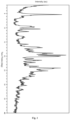
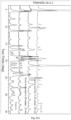
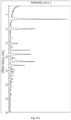
- the XRPD pattern of GDC-0077 as starting material, prepared as in Example 1, is shown in Figure 1 . As evident from the increased baseline counts and poorly resolved diffraction peaks, the starting material is poorly crystalline.
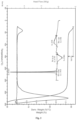
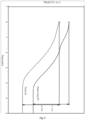
- Figure 2 shows DSC (Differential Scanning Calorimetry) and TGA (Thermogravimetry) traces of starting material GDC-0077. The desolvation/vaporization endotherm and the recrystallization endotherm occur at 64 and 141 °C respectively (onset), followed by the melting endotherm at 214 °C.
- TGA shows a weight loss of ⁇ 2.5% w/w before the melting event.
- the TGA data ( Figure 2 ) shows a weight loss of -2.5% by 150°C.
- the DSC thermogram shows a sharp melting endotherm with an extrapolated onset of ⁇ 214°C preceded by a prominent shallow endotherm (possibly desolvation/vaporization) and an exotherm (crystallization/rearrangement/phase transformation) in the 50-175°C range.
- the desolvation/vaporization endotherm and the recrystallization endotherm occur at 64 and 141°C respectively (onset), followed by the melting endotherm at 214 °C.
- TGA shows a weight loss of ⁇ 2.5% w/w before the melting event.
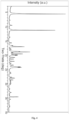
- Figure 4 shows XRPD of anhydrous Form I (Form A) GDC-0077. Table 2 shows the XRPD Peak Search Report for GDC-0077 Form I/A.
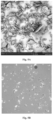
- Figure 5A shows Scanning electron microscopy (SEM) at 1000X magnification of anhydrous Form I (Form A) GDC-0077.
- Figure 5B shows Polarized light microscopy (PLM) at 200X magnification of anhydrous Form I (Form A) GDC-0077.
- Form I was found to be substantially crystalline with small, rod shaped crystals of 30-40 ⁇ m (microns) in length.
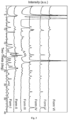
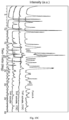
- Forms IV-VI appeared similar by XRPD ( Figure 3 ) with differences in relative peak intensities in the 5-20° 2 ⁇ range. These three forms showed a weight loss of ⁇ 13% w/w up to 150 °C by TGA ( Figure 6B ), and multiple transitions up to the melting point at 214 °C by DSC ( Figure 6C ). These transitions are speculated to be solvent loss (first endotherm, 88 °C for Forms IV and V) followed by crystallization of intermediate form and its subsequent melting/conversion to Form A, which melts at 214 °C.
- Form VI shows a similar trend of desolvation followed by a recrystallization exotherm to Form A by DSC.
- Form III showed only a 3% w/w weight loss by TGA, its water content was found to be 11% by qNMR.
- Form II was found to be the same as the starting material characterized in Figures 1 and 2 . Substantial similarity was observed upon comparison of the XRPD patterns of Form II, Form III and the product phase obtained upon isothermal dehydration of Form B at 60°C, indicating that Forms II and III are simply partially desolvated intermediates of Form B, and differing only in their degrees of desolvation.
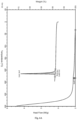
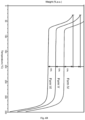
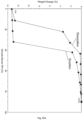
- Form is the partially dehydrated intermediate of Form B trihydrate. The possibility of existence of an intermediate hydrate form is also suggested from the step wise desorption profile of Form B ( Figure 10A ).
- Forms II/III partially dehydrated form
- Form C At higher temperatures (>165C), Form III/C converts to Form I/A.
- Figure 12B summarizes the results of the slurry bridging experiments of hydrate-anhydrate mixtures, where the water activity is plotted against the vehicle composition (% water, v/v).
- Figure 12B shows slurry bridging experiment data for GDC-0077 hydrate-anhydrate system in ethanol-water mixtures at RT (room temperature).
- the equilibrium RH (relative humidity) zone for the two forms was identified as 82-86%, equivalent to 65-83% w/w water content.
- the anhydrous form (Form A) was found to be stable up to water activity (a w ) of 0.82, whereas the hydrate (Form B) was found to be the stable form at a w > 0.86.
- the a w of anhydrate-hydrate equilibrium lies in the 0.82-0.86 range.
- Figure 12C shows XRPD of trihydrate Form B GDC-0077.
- Table 2A shows the XRPD Peak Search Report for GDC-0077 Form B.
- Table 2A XRPD Peak Search Report for GDC-0077 trihydrate Form B 2-Theta d( ⁇ ) BG Height H% 5.359 16.4771 162 3466 100.0 9.470 9.3316 137 574 16.6 10.470 8.4424 136 1467 42.3 16.958 5.2242 115 813 23.5 19.511 4.5460 100 877 25.3 20.118 4.4102 100 1260 36.4 21.634 4.1045 112 1381 39.8 25.234 3.5265 148 1474 42.5
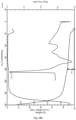
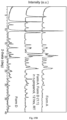
- Figure 13A shows the XRPD pattern of GDC-0077 THF solvate, which was found to contain 10% w/w THF as analyzed by LC-MS. A 14% w/w weight loss was observed by TGA. DSC showed multiple transitions which were further investigated by heating the sample to 175°C and 201°C, prior to the occurrence of the endotherms ( Figure 13B ). An overlay of the XRPD patterns of THF solvate, and the product phases obtained upon heating to 175 and 210°C shows the solvate desolvates to intermediate anhydrous Form which ultimately converts to Form A ( Figure 13C ).
- THF solvate desolvates completely to form an intermediate anhydrous form (Form D) which subsequently melts and recrystallizes to Form A that melts at 215°C (onset).
- Form D intermediate anhydrous form
- Figure 14 shows Thermal analysis of Form D. The phase transitions are marked against the respective endotherms. Negligible weight loss ( ⁇ 1% w/w) prior to melting confirms that Form D is anhydrous.
- Form D melts at ⁇ 188 °C, recrystallizes to Form A which subsequently melts at 215 °C.
- Form D is also obtained by slurrying the crude starting GDC-077, as the Active Pharmaceutical Ingredient (API), in n-propanol: water (99:1 v/v). The THF solvate was found to desolvate to anhydrous Form D.
- Form D and Form A are monotropically related, with Form A being the thermodynamically stable form over the temperature range studied.
- Figure 15A shows XRPD of anhydrous Form D GDC-0077. Table 3 shows the representative XRPD peaks of Form D.
- Form A which melts at -213-215 °C has a heat of fusion of ⁇ 100 J/g ( Figure 6A ) whereas Form D shows a melting onset of 190 °C with a heat of fusion of -82-48 J/g ( Figure 14 ) by thermal analysis of the GDC-0077 THF solvate, depending on the sample history and purity.
- Milling of Form A may optimize certain PK properties.
- a scaled up Form A lot was milled and also placed on stability studies (40 °C/75% RH, 25 °C/60% RH, open vials). Three more lots were also milled which behaved similarly upon milling.
- a milled representative lot was characterized and the physical form was determined. This lot was slurried in 100% ethanol to obtain Form A and milled using a jet mill at for 3.5 hrs with 60 psi pressure. The yield was found to be 91%.
- API Active Pharmaceutical Ingredient, i.e. GDC-0077
- stability at 40 °C/75% RH and 25 °C/60% RH in open vials.
- Solid-state data was collected at 4 and 8 weeks to evaluate effect of temperature and humidity on the physical form.
- the milled and stability samples were characterized by XRPD, PLM, DSC, TGA, Water sorption analysis and surface area analysis. DSC runs were performed in the modulated mode using non-hermetically crimped pans, a heating rate of 1°C/min from 0-175 °C, modulation amplitude of ⁇ 1 °C and a period of 60 seconds.
- Methods of the invention also include treating cancer selected from breast, ovary, cervix, prostate, testis, genitourinary tract, esophagus, larynx, glioblastoma, neuroblastoma, stomach, skin, keratoacanthoma, lung, epidermoid carcinoma, large cell carcinoma, non-small cell lung carcinoma (NSCLC), small cell carcinoma, lung adenocarcinoma, bone, colon, adenoma, pancreas, adenocarcinoma, thyroid, follicular carcinoma, undifferentiated carcinoma, papillary carcinoma, seminoma, melanoma, sarcoma, bladder carcinoma, liver carcinoma and biliary passages, kidney carcinoma, pancreatic, myeloid disorders, lymphoma, hairy cells, buccal cavity, naso-pharyngeal, pharynx, lip, tongue, mouth, small intestine, colon-rectum, large intestine, rectum, brain and
- thermogravimetric analyzer In a thermogravimetric analyzer (Q500 TGA, TA instruments), 3-4 mg of GDC-0077 samples were heated in an open aluminum pan from RT to 60°C at a heating rate of 10°C/min held isothermally at 60°C overnight. Samples were then either analyzed by XRPD or left to equilibrate at RT for 4 hours in the sample pan and then rerun isothermally at 60°C using the same experimental parameters as mentioned above.
- Samples were dispersed in silicon oil and observed under cross polarizers of a video enhanced Leica DM 4000B microscope equipped with a high resolution CCD camera and motorized stage (Clemex Technologies Inc., Longueuil, Quebec, Canada) at 200X magnification. Photomicrographs were acquired using the Clemex Vision PE software (Clemex Technologies Inc., Longueuil, Quebec, Canada).
- Particle size analysis was performed using a Malvern Mastersizer 2000 instrument equipped with a Hydros 2000SM wet dispersion attachment (Malvern Instruments Ltd., Malvern, UK). ⁇ 30 mg of API was weighed into a vial and 1 mL of 0.1% Span 85 in heptane was added. The vial was sonicated for 5 seconds, about 0.3 mL was added to the sampler at a stir speed of 1500 rpm, and a PSD was performed at an obscuration of 10-20%. The sample was then sonicated for 10 more seconds (a total of 15 seconds), about 0.3 mL was added to the sampler, a PLM image was acquired, and PSD was performed.
- the same sample was then sonicated for another 15 seconds (a total of 30 seconds), about 0.3 mL was added, a PLM photo was taken and PSD was performed. From the sonication study, an appropriate sonication period was chosen. The PLM images and PSDs were used to determine how much sonication the sample needed to disperse clumps but prevent or minimize crystal fracturing. Three more samples, of ⁇ 10 mg, were weighed into vials and 1 mL of 0.1% Span 85 in heptane was added. The samples were sonicated for the sonication period determined in the sonication study. The final PSD analysis was performed in triplicate using the predetermined sonication period. The instrument was rinsed twice with isopropyl alcohol (IPA) and once with heptane before being filled with 0.1% Span 85 in heptane for each sample. After the last sample had run, the instrument was rinsed with IPA once.
- IPA isopropyl alcohol
Landscapes
- Health & Medical Sciences (AREA)
- Chemical & Material Sciences (AREA)
- Organic Chemistry (AREA)
- Public Health (AREA)
- Veterinary Medicine (AREA)
- Medicinal Chemistry (AREA)
- General Health & Medical Sciences (AREA)
- Animal Behavior & Ethology (AREA)
- Pharmacology & Pharmacy (AREA)
- Life Sciences & Earth Sciences (AREA)
- Chemical Kinetics & Catalysis (AREA)
- Nuclear Medicine, Radiotherapy & Molecular Imaging (AREA)
- General Chemical & Material Sciences (AREA)
- Oncology (AREA)
- Hematology (AREA)
- Epidemiology (AREA)
- Pharmaceuticals Containing Other Organic And Inorganic Compounds (AREA)
- Nitrogen And Oxygen Or Sulfur-Condensed Heterocyclic Ring Systems (AREA)
- Medicinal Preparation (AREA)
Applications Claiming Priority (3)
| Application Number | Priority Date | Filing Date | Title |
|---|---|---|---|
| US201762491812P | 2017-04-28 | 2017-04-28 | |
| EP18728514.3A EP3615541B1 (de) | 2017-04-28 | 2018-04-26 | Polymorphe und feste formen von (s)-2-((2-((s)-4-(difluormethyl)-2-oxooxazolidin-3-yl)-5,6-dihydrobenzo[f]imidazo[1,2-d][1,4]oxazepin-9-yl)amino)propanamid und verfahren zur herstellung |
| PCT/EP2018/060820 WO2018197653A1 (en) | 2017-04-28 | 2018-04-26 | Polymorphs and solid forms of (s)-2-((2-((s)-4-(difluoromethyl)-2-oxooxazolidin-3-yl)-5,6-dihydrobenzo[f]imidazo[1,2-d][1,4]oxazepin-9-yl)amino)propanamide, and methods of production |
Related Parent Applications (1)
| Application Number | Title | Priority Date | Filing Date |
|---|---|---|---|
| EP18728514.3A Division EP3615541B1 (de) | 2017-04-28 | 2018-04-26 | Polymorphe und feste formen von (s)-2-((2-((s)-4-(difluormethyl)-2-oxooxazolidin-3-yl)-5,6-dihydrobenzo[f]imidazo[1,2-d][1,4]oxazepin-9-yl)amino)propanamid und verfahren zur herstellung |
Publications (2)
| Publication Number | Publication Date |
|---|---|
| EP4534148A2 true EP4534148A2 (de) | 2025-04-09 |
| EP4534148A3 EP4534148A3 (de) | 2025-05-21 |
Family
ID=62492573
Family Applications (2)
| Application Number | Title | Priority Date | Filing Date |
|---|---|---|---|
| EP25158128.6A Pending EP4534148A3 (de) | 2017-04-28 | 2018-04-26 | Polymorphe und feste formen von (s)-2-((2-(s)-4-(difluormethyl)-2-oxooxazolidin-3-yl)-5,6-dihydrobenzo[f!imidazo[1,2-d [1, 4-oxazepin-9-yl)amino)propanamid und verfahren zur herstellung |
| EP18728514.3A Active EP3615541B1 (de) | 2017-04-28 | 2018-04-26 | Polymorphe und feste formen von (s)-2-((2-((s)-4-(difluormethyl)-2-oxooxazolidin-3-yl)-5,6-dihydrobenzo[f]imidazo[1,2-d][1,4]oxazepin-9-yl)amino)propanamid und verfahren zur herstellung |
Family Applications After (1)
| Application Number | Title | Priority Date | Filing Date |
|---|---|---|---|
| EP18728514.3A Active EP3615541B1 (de) | 2017-04-28 | 2018-04-26 | Polymorphe und feste formen von (s)-2-((2-((s)-4-(difluormethyl)-2-oxooxazolidin-3-yl)-5,6-dihydrobenzo[f]imidazo[1,2-d][1,4]oxazepin-9-yl)amino)propanamid und verfahren zur herstellung |
Country Status (13)
| Country | Link |
|---|---|
| US (4) | US20180339997A1 (de) |
| EP (2) | EP4534148A3 (de) |
| JP (2) | JP6998969B2 (de) |
| KR (1) | KR102342776B1 (de) |
| CN (1) | CN110650963B (de) |
| AU (1) | AU2018259089B2 (de) |
| CA (1) | CA3048591A1 (de) |
| ES (1) | ES3027566T3 (de) |
| IL (3) | IL317762A (de) |
| MX (1) | MX394540B (de) |
| PL (1) | PL3615541T3 (de) |
| TW (1) | TWI826373B (de) |
| WO (1) | WO2018197653A1 (de) |
Families Citing this family (10)
| Publication number | Priority date | Publication date | Assignee | Title |
|---|---|---|---|---|
| EP4585597A1 (de) * | 2015-07-02 | 2025-07-16 | F. Hoffmann-La Roche AG | Benzoxazepin-oxazolidinon-verbindungen und anwendungsverfahren |
| SG10201913961PA (en) | 2016-12-15 | 2020-03-30 | Hoffmann La Roche | Process for the preparation of (s)-2-((2-((s)-4-(difluoromethyl)-2-oxooxazolidin-3-yl)-5,6-dihydrobenzo[f]imidazo[1,2-d][1,4]oxazepin-9-yl)amino) propanamide |
| TWI826373B (zh) | 2017-04-28 | 2023-12-21 | 瑞士商赫孚孟拉羅股份公司 | (s)-2-((2-((s)-4-(二氟甲基)-2-氧代唑烷-3-基)-5,6-二氫苯并[f]咪唑并[1,2-d][1,4]氧氮呯-9-基)胺基)丙醯胺之多晶型及固體形式及製造方法 |
| US12435023B2 (en) * | 2019-05-21 | 2025-10-07 | Shanghai Forefront Pharmceutical Co., Ltd. | Crystal form of Treprostinil sodium salt and preparation method therefor |
| CA3144791A1 (en) * | 2019-07-07 | 2021-01-14 | Olema Pharmaceuticals, Inc. | Regimens of estrogen receptor antagonists |
| KR20220054347A (ko) | 2019-08-26 | 2022-05-02 | 아비나스 오퍼레이션스, 인코포레이티드 | 에스트로겐 수용체 분해제로서의 테트라히드로나프탈렌 유도체로 유방암을 치료하는 방법 |
| CN112830935B (zh) * | 2019-11-25 | 2023-12-22 | 上海翰森生物医药科技有限公司 | 含三并环类衍生物自由碱的晶型及其药物组合物 |
| WO2021104146A1 (zh) * | 2019-11-25 | 2021-06-03 | 上海翰森生物医药科技有限公司 | 含三并环类衍生物的盐或晶型及其药物组合物 |
| TWI801730B (zh) * | 2020-04-07 | 2023-05-11 | 神雲科技股份有限公司 | 具系統設定資料同步功能的伺服器 |
| WO2024206147A1 (en) | 2023-03-24 | 2024-10-03 | Arvinas Operations, Inc. | Dosage regimens of estrogen receptor degraders |
Citations (4)
| Publication number | Priority date | Publication date | Assignee | Title |
|---|---|---|---|---|
| US5824492A (en) | 1992-04-13 | 1998-10-20 | Ludwig Institute For Cancer Research | Polypeptides having kinase activity, their preparation and use |
| US5846824A (en) | 1994-02-07 | 1998-12-08 | Ludwig Institute For Cancer Research | Polypeptides having kinase activity, their preparation and use |
| US6274327B1 (en) | 1992-04-13 | 2001-08-14 | Ludwig Institute For Cancer Research | Polypeptides having kinase activity, their preparation and use |
| WO2017001645A1 (en) | 2015-07-02 | 2017-01-05 | F. Hoffmann-La Roche Ag | Benzoxazepin oxazolidinone compounds and methods of use |
Family Cites Families (5)
| Publication number | Priority date | Publication date | Assignee | Title |
|---|---|---|---|---|
| WO2011036280A1 (en) | 2009-09-28 | 2011-03-31 | F. Hoffmann-La Roche Ag | Benzoxazepin pi3k inhibitor compounds and methods of use |
| CN103476770B (zh) | 2010-11-25 | 2017-02-15 | 拉蒂欧制药有限责任公司 | 阿法替尼盐和多晶型物 |
| SG11201604903VA (en) | 2013-12-16 | 2016-07-28 | Hoffmann La Roche | Polymorphs of 2-(4-(2-(1-isopropyl-3-methyl-1h-1,2,4-triazol-5-yl)-5,6-dihydrobenzo[f]imidazo[1,2-d][1,4]oxazepin-9-yl)-1h-pyrazol-1-yl)-2-methylpropanamide, methods of production, and pharmaceutical uses thereof |
| SG10201913961PA (en) | 2016-12-15 | 2020-03-30 | Hoffmann La Roche | Process for the preparation of (s)-2-((2-((s)-4-(difluoromethyl)-2-oxooxazolidin-3-yl)-5,6-dihydrobenzo[f]imidazo[1,2-d][1,4]oxazepin-9-yl)amino) propanamide |
| TWI826373B (zh) | 2017-04-28 | 2023-12-21 | 瑞士商赫孚孟拉羅股份公司 | (s)-2-((2-((s)-4-(二氟甲基)-2-氧代唑烷-3-基)-5,6-二氫苯并[f]咪唑并[1,2-d][1,4]氧氮呯-9-基)胺基)丙醯胺之多晶型及固體形式及製造方法 |
-
2018
- 2018-04-26 TW TW107114314A patent/TWI826373B/zh active
- 2018-04-26 IL IL317762A patent/IL317762A/en unknown
- 2018-04-26 MX MX2019012507A patent/MX394540B/es unknown
- 2018-04-26 KR KR1020197031575A patent/KR102342776B1/ko active Active
- 2018-04-26 CA CA3048591A patent/CA3048591A1/en active Pending
- 2018-04-26 EP EP25158128.6A patent/EP4534148A3/de active Pending
- 2018-04-26 IL IL298518A patent/IL298518B2/en unknown
- 2018-04-26 WO PCT/EP2018/060820 patent/WO2018197653A1/en not_active Ceased
- 2018-04-26 JP JP2019558502A patent/JP6998969B2/ja active Active
- 2018-04-26 CN CN201880028227.3A patent/CN110650963B/zh active Active
- 2018-04-26 ES ES18728514T patent/ES3027566T3/es active Active
- 2018-04-26 PL PL18728514.3T patent/PL3615541T3/pl unknown
- 2018-04-26 US US15/963,876 patent/US20180339997A1/en not_active Abandoned
- 2018-04-26 EP EP18728514.3A patent/EP3615541B1/de active Active
- 2018-04-26 AU AU2018259089A patent/AU2018259089B2/en active Active
-
2019
- 2019-06-18 IL IL267464A patent/IL267464B2/en unknown
-
2020
- 2020-05-15 US US16/875,537 patent/US11028100B2/en active Active
- 2020-05-15 US US16/875,545 patent/US11591345B2/en active Active
-
2021
- 2021-07-19 JP JP2021118355A patent/JP2021181446A/ja active Pending
-
2023
- 2023-01-26 US US18/101,951 patent/US12410189B2/en active Active
Patent Citations (5)
| Publication number | Priority date | Publication date | Assignee | Title |
|---|---|---|---|---|
| US5824492A (en) | 1992-04-13 | 1998-10-20 | Ludwig Institute For Cancer Research | Polypeptides having kinase activity, their preparation and use |
| US6274327B1 (en) | 1992-04-13 | 2001-08-14 | Ludwig Institute For Cancer Research | Polypeptides having kinase activity, their preparation and use |
| US5846824A (en) | 1994-02-07 | 1998-12-08 | Ludwig Institute For Cancer Research | Polypeptides having kinase activity, their preparation and use |
| WO2017001645A1 (en) | 2015-07-02 | 2017-01-05 | F. Hoffmann-La Roche Ag | Benzoxazepin oxazolidinone compounds and methods of use |
| US20170015678A1 (en) | 2015-07-02 | 2017-01-19 | Genentech, Inc. | Benzoxazepin oxazolidinone compounds and methods of use |
Non-Patent Citations (23)
| Title |
|---|
| "McGraw -Hill Dictionary of Chemical Terms", 1984, MCGRAW-HILL BOOK COMPANY |
| "Pharmaceutical Dosage Forms", vol. 3, MARCEL DECKER |
| "Polymorphism in Pharmaceutical Solids", 2009, CRC PRESS, article "Drugs and the Pharmaceutical Sciences" |
| "Remington's Pharmaceutical Sciences", 1995, MACK PUBLISHING CO |
| "The Orange Book", article "Food & Drug Administration" |
| ANDERSON ET AL.: "The Practice of Medicinal Chemistry", 1996, ACADEMIC PRESS |
| CARPTEN J ET AL., NATURE, vol. 448, 2007, pages 439 - 444 |
| EDGAR K ET AL., PRECLINICAL CHARACTERIZATION OF GDC-0077, A SPECIFIC P13K ALPHA INHIBITOR IN EARLY CLINICAL DEVELOPMENT |
| ELIEL, EWILEN, S: "tereochemistry of Organic Compounds", 1994, JOHN WILEY & SONS, INC. |
| FOLKES ET AL., J. MED. CHEM., vol. 51, 2008, pages 5522 - 5532 |
| G. M. WALL, PHARM MANUF., vol. 3, no. 2060571-02-8, 1986, pages 33 |
| J. K. HALEBLIAN, J. PHARM. SCI., vol. 64, 1975, pages 1269 |
| J. K. HALEBLIANW. MCCRONE, J. PHARM. SCI., vol. 58, 1969, pages 911 |
| P. GOULD, INTERNATIONAL J. OF PHARMACEUTICS, vol. 33, no. 201, 1986, pages 217 |
| P. STAHL: "Handbook of Pharmaceutical Salts. Properties, Selection and Use.", 2002, WILEY-VCH |
| PATEL ET AL., PROCEEDINGS OF THE AMERICAN ASSOCIATION OF CANCER RESEARCH (ABSTRACT LB-247) 95TH ANNUAL MEETING, MARCH 27-31, ORLANDO, FLORIDA, USA, 2004 |
| PHILLIPS ET AL., CANCER, vol. 83, 1998, pages 41 |
| S. BERGE ET AL., JOURNAL OF PHARMACEUTICAL SCIENCES, vol. 66, no. 1, 1977 |
| SAMUELS Y ET AL., SCIENCE, vol. 304, no. 5670, 2004, pages 554 |
| STABEN. S., DISCOVERY OF GDC-0077, A HIGHLY ISOFORM SELECTIVE INHIBITOR OF PI3KALPHA THAT PROMOTES SELECTIVE LOSS OF MUTANT-PL10ALPHA, 2 April 2017 (2017-04-02) |
| VIVANCO ET AL., NATURE REV. CANCER, vol. 2, 2002, pages 489 |
| WORKMAN P, BIOCHEM SOC TRANS, vol. 32, 2004, pages 393 - 396 |
| YAGUCHI ET AL., JOUR. OF THE NAT. CANCER INST., vol. 98, no. 8, 2006, pages 545 - 556 |
Also Published As
Similar Documents
| Publication | Publication Date | Title |
|---|---|---|
| US12410189B2 (en) | Polymorphs and solid forms of (S)-2-2((2-((S)-4-(difluoromethyl)-2-oxooxazolidin-3-yl)-5,6-dihydrobenzo[f]imidazo[1,2-d][1,4]oxazepin-9- yl)amino)propanamide, and methods of production | |
| CA2900322C (en) | Solid forms of the selective cdk4/6 inhibitor compound acetyl-8-cyclopentyl-5-methyl-2-(5-piperazin-1-yl-pyridin-2-ylamino)-8h-pyrido[2,3-d]pyrimidin-7-one | |
| TWI638818B (zh) | 2-(4-(2-(1-異丙基-3-甲基-1h-1,2,4-三唑-5-基)-5,6-二氫苯并[f]咪唑并[1,2-d][1,4]氧氮呯-9-基)-1h-吡唑-1-基)-2-甲基丙醯胺之多晶型、製造方法及醫藥用途 | |
| HK40124018A (en) | Polymorphs and solid forms of (s)-2-((2-((s)-4-(difluoromethyl)-2-oxooxazolidin-3-yl)-5,6-dihydrobenzo[f]imidazo[1,2-d][1,4]oxazepin-9-yl)amino)propanamide, and methods of production | |
| BR112019013292B1 (pt) | Polimorfos anidratos cristalinos, polimorfo triidrato cristalino, composições farmacêuticas, processo para preparar um polimorfo cristalino e uso de um polimorfo cristalino | |
| HK40020487A (en) | Polymorphs and solid forms of gdc-0077, and methods of production thereof | |
| HK40020487B (en) | Polymorphs and solid forms of gdc-0077, and methods of production thereof | |
| HK1223101B (zh) | Gdc-0032的多晶型物、其制备方法和药物用途 | |
| HK40003818A (en) | Polymorphs of gdc-0032, methods of production, and pharmaceutical uses thereof |
Legal Events
| Date | Code | Title | Description |
|---|---|---|---|
| PUAI | Public reference made under article 153(3) epc to a published international application that has entered the european phase |
Free format text: ORIGINAL CODE: 0009012 |
|
| STAA | Information on the status of an ep patent application or granted ep patent |
Free format text: STATUS: THE APPLICATION HAS BEEN PUBLISHED |
|
| AC | Divisional application: reference to earlier application |
Ref document number: 3615541 Country of ref document: EP Kind code of ref document: P |
|
| AK | Designated contracting states |
Kind code of ref document: A2 Designated state(s): AL AT BE BG CH CY CZ DE DK EE ES FI FR GB GR HR HU IE IS IT LI LT LU LV MC MK MT NL NO PL PT RO RS SE SI SK SM TR |
|
| REG | Reference to a national code |
Ref country code: DE Ref legal event code: R079 Free format text: PREVIOUS MAIN CLASS: A61P0035000000 Ipc: C07D0498040000 |
|
| PUAL | Search report despatched |
Free format text: ORIGINAL CODE: 0009013 |
|
| AK | Designated contracting states |
Kind code of ref document: A3 Designated state(s): AL AT BE BG CH CY CZ DE DK EE ES FI FR GB GR HR HU IE IS IT LI LT LU LV MC MK MT NL NO PL PT RO RS SE SI SK SM TR |
|
| RIC1 | Information provided on ipc code assigned before grant |
Ipc: A61P 35/00 20060101ALI20250416BHEP Ipc: C07B 63/00 20060101ALI20250416BHEP Ipc: A61K 31/553 20060101ALI20250416BHEP Ipc: C07D 498/04 20060101AFI20250416BHEP |
|
| REG | Reference to a national code |
Ref country code: HK Ref legal event code: DE Ref document number: 40124018 Country of ref document: HK |
|
| STAA | Information on the status of an ep patent application or granted ep patent |
Free format text: STATUS: REQUEST FOR EXAMINATION WAS MADE |