EP4530289A1 - Sel hybride d'acide dialkylphosphinique, son procédé de préparation et son utilisation - Google Patents
Sel hybride d'acide dialkylphosphinique, son procédé de préparation et son utilisation Download PDFInfo
- Publication number
- EP4530289A1 EP4530289A1 EP22959032.8A EP22959032A EP4530289A1 EP 4530289 A1 EP4530289 A1 EP 4530289A1 EP 22959032 A EP22959032 A EP 22959032A EP 4530289 A1 EP4530289 A1 EP 4530289A1
- Authority
- EP
- European Patent Office
- Prior art keywords
- phosphinic acid
- ion
- acid
- olefin
- flame
- Prior art date
- Legal status (The legal status is an assumption and is not a legal conclusion. Google has not performed a legal analysis and makes no representation as to the accuracy of the status listed.)
- Pending
Links
Images


Classifications
-
- C—CHEMISTRY; METALLURGY
- C09—DYES; PAINTS; POLISHES; NATURAL RESINS; ADHESIVES; COMPOSITIONS NOT OTHERWISE PROVIDED FOR; APPLICATIONS OF MATERIALS NOT OTHERWISE PROVIDED FOR
- C09K—MATERIALS FOR MISCELLANEOUS APPLICATIONS, NOT PROVIDED FOR ELSEWHERE
- C09K21/00—Fireproofing materials
- C09K21/06—Organic materials
- C09K21/12—Organic materials containing phosphorus
-
- C—CHEMISTRY; METALLURGY
- C07—ORGANIC CHEMISTRY
- C07F—ACYCLIC, CARBOCYCLIC OR HETEROCYCLIC COMPOUNDS CONTAINING ELEMENTS OTHER THAN CARBON, HYDROGEN, HALOGEN, OXYGEN, NITROGEN, SULFUR, SELENIUM OR TELLURIUM
- C07F9/00—Compounds containing elements of Groups 5 or 15 of the Periodic Table
- C07F9/02—Phosphorus compounds
- C07F9/28—Phosphorus compounds with one or more P—C bonds
- C07F9/30—Phosphinic acids [R2P(=O)(OH)]; Thiophosphinic acids ; [R2P(=X1)(X2H) (X1, X2 are each independently O, S or Se)]
-
- C—CHEMISTRY; METALLURGY
- C07—ORGANIC CHEMISTRY
- C07F—ACYCLIC, CARBOCYCLIC OR HETEROCYCLIC COMPOUNDS CONTAINING ELEMENTS OTHER THAN CARBON, HYDROGEN, HALOGEN, OXYGEN, NITROGEN, SULFUR, SELENIUM OR TELLURIUM
- C07F9/00—Compounds containing elements of Groups 5 or 15 of the Periodic Table
- C07F9/02—Phosphorus compounds
- C07F9/28—Phosphorus compounds with one or more P—C bonds
- C07F9/30—Phosphinic acids [R2P(=O)(OH)]; Thiophosphinic acids ; [R2P(=X1)(X2H) (X1, X2 are each independently O, S or Se)]
- C07F9/301—Acyclic saturated acids which can have further substituents on alkyl
-
- C—CHEMISTRY; METALLURGY
- C08—ORGANIC MACROMOLECULAR COMPOUNDS; THEIR PREPARATION OR CHEMICAL WORKING-UP; COMPOSITIONS BASED THEREON
- C08K—Use of inorganic or non-macromolecular organic substances as compounding ingredients
- C08K5/00—Use of organic ingredients
- C08K5/0008—Organic ingredients according to more than one of the "one dot" groups of C08K5/01 - C08K5/59
- C08K5/0066—Flame-proofing or flame-retarding additives
-
- C—CHEMISTRY; METALLURGY
- C08—ORGANIC MACROMOLECULAR COMPOUNDS; THEIR PREPARATION OR CHEMICAL WORKING-UP; COMPOSITIONS BASED THEREON
- C08K—Use of inorganic or non-macromolecular organic substances as compounding ingredients
- C08K5/00—Use of organic ingredients
- C08K5/49—Phosphorus-containing compounds
- C08K5/51—Phosphorus bound to oxygen
- C08K5/53—Phosphorus bound to oxygen bound to oxygen and to carbon only
- C08K5/5313—Phosphinic compounds, e.g. R2=P(:O)OR'
-
- C—CHEMISTRY; METALLURGY
- C08—ORGANIC MACROMOLECULAR COMPOUNDS; THEIR PREPARATION OR CHEMICAL WORKING-UP; COMPOSITIONS BASED THEREON
- C08L—COMPOSITIONS OF MACROMOLECULAR COMPOUNDS
- C08L101/00—Compositions of unspecified macromolecular compounds
-
- C—CHEMISTRY; METALLURGY
- C08—ORGANIC MACROMOLECULAR COMPOUNDS; THEIR PREPARATION OR CHEMICAL WORKING-UP; COMPOSITIONS BASED THEREON
- C08L—COMPOSITIONS OF MACROMOLECULAR COMPOUNDS
- C08L67/00—Compositions of polyesters obtained by reactions forming a carboxylic ester link in the main chain; Compositions of derivatives of such polymers
-
- C—CHEMISTRY; METALLURGY
- C08—ORGANIC MACROMOLECULAR COMPOUNDS; THEIR PREPARATION OR CHEMICAL WORKING-UP; COMPOSITIONS BASED THEREON
- C08L—COMPOSITIONS OF MACROMOLECULAR COMPOUNDS
- C08L77/00—Compositions of polyamides obtained by reactions forming a carboxylic amide link in the main chain; Compositions of derivatives of such polymers
-
- C—CHEMISTRY; METALLURGY
- C08—ORGANIC MACROMOLECULAR COMPOUNDS; THEIR PREPARATION OR CHEMICAL WORKING-UP; COMPOSITIONS BASED THEREON
- C08L—COMPOSITIONS OF MACROMOLECULAR COMPOUNDS
- C08L77/00—Compositions of polyamides obtained by reactions forming a carboxylic amide link in the main chain; Compositions of derivatives of such polymers
- C08L77/02—Polyamides derived from omega-amino carboxylic acids or from lactams thereof
-
- C—CHEMISTRY; METALLURGY
- C08—ORGANIC MACROMOLECULAR COMPOUNDS; THEIR PREPARATION OR CHEMICAL WORKING-UP; COMPOSITIONS BASED THEREON
- C08L—COMPOSITIONS OF MACROMOLECULAR COMPOUNDS
- C08L77/00—Compositions of polyamides obtained by reactions forming a carboxylic amide link in the main chain; Compositions of derivatives of such polymers
- C08L77/06—Polyamides derived from polyamines and polycarboxylic acids
Definitions
- the present disclosure relates to a hybrid dialkylphosphinic acid salt, a preparation method therefor and use thereof and belongs to the field of preparation of flame-retardant polymer materials.
- Dialkylphosphinic acid salts (Dialkylphosphinates), especially aluminum diethylphosphinate, have been widely used as halogen-free flame retardants for polymer materials.
- existing dialkylphosphinic acid salts in glass-fiber-reinforced polymer materials have limited flame-retardant efficiency and often need to be used together with synergists.
- Patents US6207736 , US6255371 , US6547992 , etc. report diethylphosphinates and ammonium polyphosphate, melamine polyphosphates, and/or inorganic compounds such as zinc stannate-synergized flame-retardant glass-fiber-reinforced polyamides and polyesters.
- the consumption of flame retardants is large, the thermal stability of ammonium polyphosphate is not high, and melamine polyphosphate easily migrates.
- Patent US7420007 reports aluminum diethylphosphinate containing 6% or less of telomeric phosphinates, i.e., long-chain dialkylphosphinic acid salts.
- Patent CN104072537B reports a process of removing long-chain dialkylphosphinic acid salts in a process of preparing diethylphosphinates.
- the hybrid salt composed of a high content of long-chain dialkylphosphinate ion and diethylphosphinate ion has high thermal stability and very high flame-retardant efficiency and can be used alone to achieve flame retardancy of polymer materials without the help of synergistic agents, and the flame-retardant materials therefrom produce less smoke when burning.
- the hybrid dialkylphosphinic acid salt is a hybrid dialkylphosphinic acid salt having composition of formula (I).
- the hybrid dialkylphosphinic acid salt features high thermal stability, small addition amount, high flame-retardant efficiency for various polymer materials and low smoke, can meet the requirement of engineering plastics for high-temperature processing and has high cost-effectiveness.
- a hybrid dialkylphosphinic acid salt selected from the group consisting of compounds of formula (I) and combinations thereof;
- R 1 and R 2 are each independently selected from C 4 -C 12 -alkyl and are identical or different, and at least one of R 1 and R 2 is not isobutyl.
- the C 4 -C 12 -alkyl may be linear or branched alkyl, including but not limited to, n-butyl, isobutyl, sec-butyl, tert-butyl, n-amyl, isoamyl, neopentyl, sec-amyl, tert-amyl, n-hexyl, isohexyl, sec-hexyl, tert-hexyl, n-heptyl, isoheptyl, sec-heptyl, tert-heptyl, n-octyl, isooctyl, sec-octyl, tert-octyl, n-nonyl, sec-nonyl
- R 1 or R 2 comprises a mixture of isomers
- substances that are isomers of each other are regarded as one substance for the purpose of calculating the value of y.
- R 1 is butyl, including n-butyl, isobutyl, sec-butyl, and tert-butyl.
- the ethyl butylphosphinate ions include ethyl n-butylphosphinate ion, ethyl isobutylphosphinate ion, ethyl sec-butylphosphinate ion, and ethyl tert-butylphosphinate ion.
- y is a ratio of the total number of moles of these four ethyl butylphosphinate ions to the total number of moles of all dialkylphosphinate ions (i.e., the sum of the number of moles of diethylphosphinate ion, the number of moles of ethyl butylphosphinate ion and the number of moles of R 1 -R 2 -phosphinate ion).
- R 1 and R 2 both have isomers, the substances that are isomers of each other are regarded as one substance in the same way as described above.
- the flame retardant performance is poor. If z is greater than 0.76, the thermal stability decreases, which is unfavorable to the preparation and physical properties of flame-retardant polymer materials. If y is greater than 0.76, the preparation cost is high and the cost-effectiveness is poor.
- the lower limit of x is independently selected from 0, 0.01, 0.03, 0.05, 0.10, 0.15, 0.20, 0.25 and 0.30; the upper limit is independently selected from 0.76, 0.70, 0.67, 0.65, 0.60, 0.55, 0.50, 0.45, 0.40 and 0.35.
- the lower limit of y is independently selected from 0.05, 0.10, 0.15, 0.20, 0.25, 0.30, 0.35 and 0.40; the upper limit is independently selected from 0.76, 0.70, 0.67, 0.65, 0.60, 0.55, 0.50 and 0.45.
- the lower limit of z is independently selected from 0, 0.001, 0.005, 0.01, 0.02, 0.03, 0.05 and 0.08; the upper limit is independently selected from 0.76, 0.70, 0.67, 0.65, 0.60, 0.55, 0.50, 0.45, 0.40, 0.35, 0.30, 0.25, 0.20, 0.15 and 0.10.
- the group IIA metal element is selected from the group consisting of Be, Mg, Ca, Sr, Ba and combinations thereof;
- the metal element is selected from the group consisting of Al, Zn, Ca, Fe and combinations thereof.
- the hybrid dialkylphosphinic acid salts in the present disclosure are not simple physical mixtures of different dialkylphosphinic acid salts.
- the hybrid dialkylphosphinic acid salts are not simple mixtures of aluminum diethylphosphinate, aluminum ethyl-butylphosphinate and aluminum dibutylphosphinate, but hybrid salts composed of at least two of diethylphosphinate ion, ethyl-butylphosphinate ion and dibutylphosphinate ion coordinated with the same aluminum atom, and one ligand in the hybrid salts is ethyl-butylphosphinate ion.
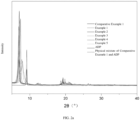
- the X-ray diffraction (XRD) patterns of these hybrid salts are very different from the XRD patterns of simple physical mixtures of dialkylphosphinates.
- the hybrid dialkylphosphinic acid salts of formula (I) show single peaks in strongest absorption peak regions in the XRD patterns.
- the physical mixtures obtained by simply mixing aluminum diethylphosphinate and aluminum dibutylphosphinate show two completely independent peaks in the XRD patterns, and their d values are close to the respective d values of aluminum diethylphosphinate and aluminum dibutylphosphinate.
- the hybrid dialkylphosphinic acid salts having composition of formula (I) in the present invention are not simple mixtures of aluminum diethylphosphinate, aluminum ethyl-R 1 -phosphinate and aluminum R 1 -R 2 -phosphinate, but structures consisting of at least two of diethylphosphinate ion, ethyl-R 1 -phosphinate ion and R 1 -R 2 phosphinate ion paired with the same aluminum atom, and one ligand in the hybrid dialkylphosphinic acid salts is ethyl-R 1 -phosphinate ion.
- pure long-chain aluminum dialkylphosphinate (R 1 and R 2 are C 4 -C 12 -alkyl) has poor thermal stability, which cannot satisfy requirements of polymer materials for high-temperature processing.
- the flame-retardant efficiency is not high, and in practice, it is found that the long-chain aluminum dialkylphosphinate-based flame-retardant polymer produces more smoke than the aluminum diethylphosphinate-based flame-retardant system.
- the pure aluminum diethylphosphinate has low flame-retardant efficiency when used alone, and it is difficult to promote the polymer material to obtain good flame retardant effect when the pure aluminum diethylphosphinate is used alone.
- the hybrid dialkylphosphinic acid salt having composition of formula (I) has higher thermal stability than long-chain aluminum dialkylphosphinate, lower smoke, and better flame retardant effect than pure aluminum diethylphosphinate and pure aluminum dialkylphosphinate, which is very unexpected.
- a preparation method for the hybrid dialkylphosphinic acid salt including:
- reaction I is carried out at 0-250°C, 0.1 MPa-10 MPa for 0.01-20 h.
- reaction I is carried out at a pH of 0 to 4.
- the metal element is Al.
- the reaction I is carried out at a pH of 0-4, preferably 1-3.5, and more preferably 2.3-3.3.
- reaction I does not produce a precipitate if the pH is too low. If the pH is too high, hydroxide of metal ions is formed, and impurities are introduced.
- a molar ratio of the diethylphosphinic acid and/or the alkali metal salt thereof to the ethyl-R 1 -phosphinic acid and/or the alkali metal salt thereof to the R 1 -R 2 -phosphinic acid and/or the alkali metal salt thereof in the mixture A is the same or substantially the same as the ratio of x:y:z in formula (I).
- Solubility of the hybrid salt in water varies with M.
- the calculated mole numbers of the diethylphosphinic acid and/or the alkali metal salt thereof, the ethyl-R 1 -phosphinic acid and/or the alkali metal salt thereof and the R 1 -R 2 -phosphinic acid and/or the alkali metal salt thereof in the mixture A differ from the values of x,y,z in the hybrid salt, and therefore the molar ratio to the M source will also varies.
- the molar ratio of x to y to z to the M corresponding to reactants may also be greater than a theoretical calculation value.
- obtaining of the mixture A includes the following step: introducing ethylene and C 4 -C 12 -olefin into an aqueous solution containing phosphinic acid and/or an alkali metal salt of the phosphinic acid and a radical initiator for reaction II, thereby obtaining the mixture A.
- a molar ratio of the phosphinic acid and/or the alkali metal salt of the phosphinic acid to the ethylene to the C 4 -C 12 -olefin is 1:0.24-1.76:1.76-0.24.
- the consumption of ethylene and/or C 4 -C 12 -olefin is higher than a theoretical value due to existence of some side reactions, such as polymerization of ethylene and/or C 4 -C 12 -olefin producing long-chain dialkylphosphinic acid salt.
- the molar ratio of the phosphinic acid and/or the alkali metal salt of the phosphinic acid to the ethylene to the C 4 -C 12 -olefin is the same as or close to a theoretical value calculated according to the values of x, y and z in formula (I).
- the value of y has a maximum value less than 1. Depending on the type of olefin, the maximum value is 0.76 or below, with common values around 0.66. After the maximum value is reached, x or z increases, such that y cannot reach 1.
- a reaction intermediate product needs to be isolated and purified to remove the diethylphosphinic acid and/or the alkali metal salt thereof and the R 1 -R 2 -phosphinic acid and/or the alkali metal salt thereof, which is not cost-effective.
- an order of addition of the ethylene and the C 4 -C 12 -olefin may be reversed.
- the ethylene and the C 4 -C 12 -olefin may be added simultaneously, or partially added first.
- the mass of the water is 10%-99% of the total mass of the aqueous solution.
- the mass of the water is 20%-95% of the total mass of the aqueous solution.
- the mass of the water is 45%-92% of the total mass of the aqueous solution.
- the mass of the water is 50%-90% of the total mass of the aqueous solution.
- the mass of the water is 55%-90% of the total mass of the aqueous solution.
- reaction II is carried out at 0-250°C, 0-3 MPa for 0.01-50 h.
- the reaction II if the temperature of the reaction II is too low, the reaction slows down. If the temperature is too high, the hypophosphite is prone to decomposition.
- the temperature of the reaction II is 10° C-200° C.
- the pressure of the reaction II is 0.2-1.5 MPa.
- a molar ratio of the radical initiator to the phosphinic acid and/or the alkali metal salt thereof is 0.001-0.1:1.
- the molar ratio of the radical initiator to the phosphinic acid and/or the alkali metal salt thereof is 0.003-0.05:1.
- the radical initiator is selected from the group consisting of an azo initiator, a peroxide initiator, a photoinitiator and combinations thereof.
- the addition amount of the radical initiator can be determined according to actual needs.
- the azo initiator is selected from cationic and/or non-cationic azo initiators, including one or more of azobisisobutyronitrile, 4,4' azobis (4-cyanovaleric acid), 2,2'-azobis (2-methylbutyronitrile), 2,2'-azobis (2-amidinopropane) dihydrochloride, and 2,2'-azo dipropyl amidine dihydrochloride.
- the peroxide initiator is preferably an inorganic peroxide and an organic peroxide, particularly preferably one or more of hydrogen peroxide, ammonium persulfate, potassium persulfate, sodium persulfate, sodium percarbonate, benzoyl peroxide, di-tert-butyl peroxide, tert-butyl perbenzoate and peracetic acid.
- the radical initiator is a peroxide initiator.
- the radical initiator is selected from the group consisting of ammonium persulfate, potassium persulfate, and sodium persulfate.
- obtaining of the mixture A includes the following steps: introducing C 4 -C 12 -olefin into an aqueous solution containing phosphinic acid and/or an alkali metal salt of the phosphinic acid and a radical initiator for reaction, after a molar ratio of the introduced C 4 -C 12 -olefin to the total phosphorus of the phosphinic acid and/or the alkali metal salt of the phosphinic acid reaches (y+2z)/1 in formula (I), stopping introducing the C 4 -C 12 -olefin, and then introducing ethylene for reaction, thereby obtaining the mixture A.
- the C 4 -C 12 -olefin may be pure C 4 -C 12 -olefin or mixed C 4 -C 12 -olefin.
- obtaining of the mixture A includes the following steps: introducing C 4 -C 12 -olefin into an aqueous solution containing phosphinic acid and/or an alkali metal salt of the phosphinic acid and a radical initiator, and then introducing ethylene for reaction after the C 4 -C 12 -olefin completely or nearly completely reacts, thereby obtaining the mixture A.
- the C 4 -C 12 -olefin may be pure C 4 -C 12 -olefin or mixed C 4 -C 12 -olefin.
- the phosphinic acid and/or the alkali metal salt of the phosphinic acid reacts with the C 4 -C 12 -olefin to obtain mono-R 1 -phosphinic acid and/or an alkali metal salt thereof having a value of y or a value substantially close to y, z is controlled to be less than or equal to 0.76, the addition of C 4 -C 12 -olefin is stopped, the ethylene is added instead, and reaction is continued in the presence of the initiator. Subsequent reaction with a desired metal salt proceeds, such that a flame retardant of formula (I) is obtained.
- the C 4 -C 12 -olefin may be pure C 4 -C 12 -olefin or mixed C 4 -C 12 -olefin.
- obtaining of the mixture A includes the following steps: introducing C 4 -C 12 -olefin and portion of ethylene into an aqueous solution containing phosphinic acid and/or an alkali metal salt of the phosphinic acid and a radical initiator for reaction, and then introducing the remaining ethylene for reaction after the C 4 -C 12 -olefin and the portion of ethylene completely or nearly completely react, thereby obtaining the mixture A.
- the C 4 -C 12 -olefin may be pure C 4 -C 12 -olefin or mixed C 4 -C 12 -olefin.
- obtaining of the mixture A includes the following steps: introducing C 4 -C 12 -olefin and portion of ethylene into an aqueous solution containing phosphinic acid and/or an alkali metal salt of the phosphinic acid and a radical initiator for reaction, wherein a molar ratio of the ethylene to the total phosphorus of the phosphinic acid and/or the alkali metal salt of the phosphinic acid is less than (2x+y)/1 in formula (I), after a molar ratio of the introduced C 4 -C 12 -olefin to the total phosphorus of the phosphinic acid and/or the alkali metal salt of the phosphinic acid reaches (y+2z)/1 in formula (I), stopping introducing the C 4 -C 12 -olefin, and then introducing the remaining ethylene for reaction, thereby obtaining the mixture A.
- the C 4 -C 12 -olefin may be pure C 4 -C
- obtaining of the mixture A includes the following steps: introducing portion of ethylene into an aqueous solution containing phosphinic acid and/or an alkali metal salt of the phosphinic acid and a radical initiator, wherein a molar ratio of the portion of ethylene to the total phosphorus of the phosphinic acid and/or the alkali metal salt of the phosphinic acid is less than or equal to (2x+y)/1 in formula (I); after the portion of ethylene completely reacts, introducing C 4 -C 12 -olefin for reaction; and after a molar ratio of the introduced C 4 -C 12 -olefin to the total phosphorus of the phosphinic acid and/or the alkali metal salt of the phosphinic acid reaches (y+2z)/1 in formula (I), stopping introducing the C 4 -C 12 -olefin, and then introducing the remaining ethylene for reaction, thereby obtaining the mixture A.
- obtaining of the mixture A includes the following steps: introducing portion of ethylene into an aqueous solution containing phosphinic acid and/or an alkali metal salt of the phosphinic acid and a radical initiator; after the portion of the ethylene reacts completely or nearly completely, introducing C 4 -C 12 -olefin for reaction; and after the C 4 -C 12 -olefin reacts completely or nearly completely, introducing the remaining ethylene for reaction, thereby obtaining the mixture A.
- the C 4 -C 12 -olefin may be pure C 4 -C 12 -olefin or mixed C 4 -C 12 -olefin.
- a molar ratio of the total amount of the ethylene to the total amount of the C 4 -C 12 -olefin is 0.14-7.33:1.
- the metal element M source is selected from the group consisting of metal element M salts and combinations thereof.
- the metal element M salt is selected from the group consisting of nitrates, sulfates, hydrochlorides, acetates and oxides of the metal element M and combinations thereof.
- the phosphinic acid and/or the alkali metal salt of the phosphinic acid reacts with the C 4 -C 12 -olefin and portion of the ethylene simultaneously in the presence of the radical initiator.
- the amount of the C 4 -C 12 -olefin and the ethylene is controlled.
- obtaining of the mixture A includes the following steps: introducing ethylene into an aqueous solution containing phosphinic acid and/or an alkali metal salt of the phosphinic acid and a radical initiator for reaction, controlling the amount of the ethylene, and after a molar ratio of the introduced ethylene to the total phosphorus of the phosphinic acid and/or the alkali metal salt of the phosphinic acid reaches (y+2x)/1 in formula (I), stopping introducing the ethylene, and then introducing C 4 -C 12 -olefin in the presence of the initiator until the reaction ends, thereby obtaining the mixture A.
- the C 4 -C 12 -olefin may be pure C 4 -C 12 -olefin or mixed C 4 -C 12 -olefin.
- the subsequent reaction can be directly carried out without separating the diethylphosphinic acid, the ethyl-R 1 -phosphinic acid, the R 1 -R 2 -phosphinic acid or their alkali metal salts.
- a flame retardant comprises the hybrid dialkylphosphinic acid salt described above and/or a hybrid dialkylphosphinic acid salt prepared by the method described above.
- the flame retardant further comprises at least one of phosphates, phosphites, alkylphosphonates and alkyl phosphinates.
- a mole percent of these phosphorus-containing impurities in the flame retardant is less than or equal to 10%.
- the mole number of the flame retardant is calculated by the mole number of the phosphorus element comprised in the flame retardant.
- a flame-retardant material comprises a flame retardant P and a thermoplastic polymer material; the flame retardant P is at least one of the flame retardants described above.
- a mass percent of the flame retardant P in the flame-retardant material is 1 %-35%.
- the flame-retardant material comprises 1wt%-35wt% of the flame retardant P and 65wt%-99wt% of the thermoplastic polymer material.
- thermoplastic polymer material in the present disclosure refers to plastics having characteristics of softening by heating and hardening by cooling.
- the required amount of the flame retardant P depends on the thermoplastic polymer material.
- the mass percent of the flame retardant P in the flame-retardant material is 3%-20%.
- the flame-retardant material further comprises a functional additive.
- the functional additive is selected from the group consisting of a reinforcing agent, an anti-dripping agent, a stabilizer, a pigment, a dye, a charring catalyst, a dispersant, a nucleating agent, an inorganic filler, an antioxidant, and combinations thereof.
- a mass percent of the functional additive in the flame-retardant material is 5%-40%.
- the reinforcing agent is glass fibers.
- the anti-dripping agent is Teflon.
- the inorganic filler is selected from the group consisting of mica, calcium carbonate, calcium oxide, silica and combinations thereof.
- the flame-retardant material further comprises a flame retardant Q.
- the flame retardant Q is a nitrogen-based flame retardant and/or a boron-based flame retardant.
- the nitrogen-based flame retardant is selected from the group consisting of melamine cyanurate, melamine polyphosphate, ammonium polyphosphate and combinations thereof.
- the boron-based flame retardant is zinc borate.
- a mass percent of the flame retardant Q in the flame-retardant material is 0.5%-20%.
- thermoplastic polymer material is a polyamide and/or a polyester.
- the polyamide is selected from the group consisting of aliphatic polyamide, aromatic polyamide, semi-aromatic polyamide, a copolymer of semi-aromatic polyamide and aliphatic polyamide, and combinations thereof.
- polyamide also known as nylon
- nylon is a generic term for polymers including -NH-C(O)-amide groups in structural units, and is synthesized by condensation or ring-opening reactions of one or more of dicarboxylic acids and one or more of diamines, and/or one or more of amino acids, and/or one or more of lactams.
- the polyamide is generally classified into aliphatic polyamide, aromatic polyamide and semi-aromatic polyamide according to composition of a main chain.
- the semi-aromatic polyamide means that at least one monomer structure of its synthetic monomer comprises an aromatic group.
- the aliphatic polyamide is optionally selected from the group consisting of a copolymer of polyamide 6 and polyamide 66, polyamide 6, polyamide 66 and mixtures thereof.
- the semi-aromatic polyamide may be prepared from any one or more of aromatic dicarboxylic acids and any one or more of aliphatic diamines, or from any one or more of aromatic diamines and any one or more of aliphatic dicarboxylic acids.
- One or any more of dicarboxylic acid, diamine, lactam and amino acid may also be optionally added to the system, to prepare polyamide copolymers with corresponding properties.
- the added dicarboxylic acid is aromatic dicarboxylic acid and/or aliphatic dicarboxylic acid.
- the added diamine is aromatic diamine and/or aliphatic diamine.
- the added lactam may be aliphatic lactam or aromatic lactam.
- the added amino acid may be aromatic amino acid or aliphatic amino acid.
- the semi-aromatic polyamide is prepared from one or more aromatic dicarboxylic acids optionally selected from terephthalic acid, isophthalic acid, and naphthalenedicarboxylic acid, and one or more aliphatic diamines optionally selected from butylene diamine, hexane diamine, octane diamine, decane diamine, and 2-methylpentylene diamine.
- aromatic dicarboxylic acids optionally selected from terephthalic acid, isophthalic acid, and naphthalenedicarboxylic acid
- aliphatic diamines optionally selected from butylene diamine, hexane diamine, octane diamine, decane diamine, and 2-methylpentylene diamine.
- the semi-aromatic polyamide is prepared from aliphatic diamine, aromatic dicarboxylic acid, and aliphatic dicarboxylic acid.
- the semi-aromatic polyamide is prepared from aliphatic diamine and aromatic dicarboxylic acid.
- the aromatic dicarboxylic acid is optionally selected from the group consisting of terephthalic acid, isophthalic acid, naphthalenedicarboxylic acid and combinations thereof;
- the aliphatic diamine is optionally selected from the group consisting of butylene diamine, hexane diamine, octane diamine, decane diamine, 2-methylpentylene diamine and combinations thereof;
- the aliphatic dicarboxylic acid is optionally selected from the group consisting of adipic acid, succinic acid, sebacic acid, suberic acid and combinations thereof.
- the polyamide is optionally selected from the group consisting of polyhexamethylene terephthalamide (PA6T), polyhexamethylene isophthalamide (PA6I), a terephthalic acid/hexamethylenediamine/caprolactam copolymer (PA6T/6), a terephthalic acid/hexamethylenediamine/adipic acid copolymer (PA6T/66), a terephthalic acid/hexamethylenediamine/adipic acid/isophthalic acid copolymer (PA6T/6I/66), Poly(iminocarbonyl-1,4-phenylenecarbonylimino-1,9-nonanediyl) (PA9T), polydecanediamide terephthaloyl (PA10T), polydodecylenediamine terephthaloyl (PA12T), a terephthalic acid/hexamethylenediamine/dodecylactam copolymer
- the aliphatic polyamide is selected from the group consisting of polyamide 6, polyamide 66, a copolymer of polyamide 6 and polyamide 66, and combinations thereof.
- the semi-aromatic polyamide is polyphthalamide (PPA).
- the polyester is polybutylene terephthalate (PBT).
- a flame retardant having composition of formula (I) may comprise trace amounts of other phosphorus-containing impurities. Due to impurities in raw materials or impurities generated by a synthesis process, trace amounts of phosphates, phosphites, alkyl phosphonates and alkyl phosphinates may exist in the flame retardant.
- telomer products such as ethyl n-tetradecylphosphinate and ethyl cetylphosphinate, derived from polymerization or copolymerization of ethylene and/or C 4 -C 12 -olefin may also exist as impurities in the flame retardant of formula (I). However, as long as the total molar amount of these other phosphorus-containing ions does not exceed 5% mol of the total phosphorus, they do not influence the normal operation of the flame retardant of formula (I).
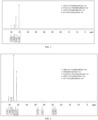
- a ratio of x to y to z in formula (I) may be determined by 31 P-NMR (nuclear magnetic resonance) after alkaline/acid hydrolysis of the flame retardant. Diethylphosphinate ion, ethyl-R 1 -phosphinate ion and R 1 -R 2 -phosphinate ion have different chemical shifts of 31 P and present independent peaks in 31 P-NMR spectra in most cases.
- Peak areas of these peaks correspond to molar concentrations of the dialkylphosphinate ions respectively. Since some dialkylphosphinate ions with the same chemical formula will have isomers, different peaks are shown in the phosphorus NMR spectra, and these isomers are grouped together during the calculation of the values of x,y and z.
- R 1 and R 2 are butyl
- five peaks appear in the 31 P-NMR spectrum of the obtained hybrid dialkylphosphinic acid salt and these five peaks correspond to ethyl-sec-butyl-phosphinate ion, n-butyl-sec-butyl-phosphinate ion, diethylphosphinate ion, ethyl-n-butyl-phosphinate ion and di-n-butyl-phosphinate ion respectively.
- a molar concentration of diethylphosphinate ion corresponds to x
- a sum of molar concentrations of ethyl sec-butyl-phosphinate ion and ethyl n-butyl-phosphinate ion corresponds to y
- a sum of molar concentrations of di-n-butyl-phosphinate ion and n-butyl sec-butyl-phosphinate ion (abbreviated as a molar concentration of dibutylphosphinate ion) corresponds to z
- the ratio of the three is the ratio of x to y to z.
- telomeric dialkylphosphinate ions are present in small amounts and have chemical shifts close to the corresponding dialkylphosphinate ions, such that the telomeric dialkylphosphinate ions are incorporated into the corresponding dialkylphosphinate ions when integrated.
- the present disclosure have the following beneficial effects.
- the butylphosphinate ion is the sum of sec-butylphosphinate ion and n-butylphosphinate ion; the butylphosphonate ion is the sum of sec-butylphosphonate ion and n-butylphosphonate ion.
- the 31 P-NMR spectrum showed that the molar content of ethyl sec-butylphosphinate ion was 2.45%, the molar content of ethyl n-butylphosphinate ion was 29.44%, the molar content of n-butyl sec-butylphosphinate ion was 6.83%, and the molar content of di-n-butylphosphinate ion was 61.28%.
- the molar fractions of the hypophosphinate ions with the same chemical formula were added up (that is, the molar fractions of ethyl n-butylphosphinate ion and ethyl sec-butylphosphinate ion were added up to calculate the value of y; the molar fractions of n-butyl sec-butylphosphinate ion and di-n-butylphosphinate ion were added up to calculate the value of z).
- the 31 P-NMR spectrum showed that the molar content of diethylphosphinate ion was 1.99%, the molar content of ethyl sec-butylphosphinate was 4.30%, the molar content of ethyl n-butylphosphinate ion was 58.22%, the molar content of n-butyl sec-butylphosphinate ion was 3.44%, the molar content of di-n-butylphosphinate ion was 30.67%, and the total molar content of other phosphorous-containing impurities such as ethylphosphinate ion, butylphosphinate ion, ethylphosphonate ion, butylphosphonate ion was 1.38%.
- the molar fractions of the hypophosphinate ions with the same chemical formula were added up (that is, the molar fractions of ethyl n-butylphosphinate ion and ethyl sec-butylphosphinate ion were added up to calculate the value of y; the molar fractions of n-butyl sec-butylphosphinate ion, di-n-butylphosphinate ion and dialkylphosphinic acid telomers were added up to calculate the value of z.
- the ethyl hexylphosphinate ion comprises ethyl sec-hexylphosphinate ion and ethyl n-hexylphosphinate ion;
- the hexylphosphinate ion comprises sec-hexylphosphinate ion and n-hexylphosphinate ion;
- the hexylphosphonate ion is the sum of sec-hexylphosphonate ion and n-hexylphosphonate ion.
- FIG. 1 shows thermogravimetric curves (TGA) of hybrid salts with different values of x, y, z (Example 1, Example 4, and Example 5) and aluminum diethylphosphinate and aluminum dibutylphosphinate (Comparative Example 1).
- TGA thermogravimetric curves
- FIG. 2a shows an XRD spectrum of hybrid salts with different values of x, y, z (Examples 1-5), aluminum dibutylphosphinate (Comparative Example 1), aluminum diethylphosphinate (ADP) and a physical mixture of aluminum dibutylphosphinate and ADP.
- FIG. 2b is a partial enlargement of the strongest absorption peak in FIG. 2a . It can be seen from FIG. 2b that a simple physical mixture has two independent peaks in a strongest absorption peak region in the XRD spectrum, d values of the two peaks are close to d values of aluminum diethylphosphinate and aluminum dibutylphosphinate respectively.
- the hybrid salts of formula (I) have only one peak or overlapping peaks, and d values basically fall between the d values of the aluminum diethylphosphinate and the aluminum dibutylphosphinate.
- Polyamide PA66, the hybrid salt prepared in Example 1, and a composite antioxidant were mixed in an internal mixer at 50 rpm in a weight ratio of 79.6: 20: 0.4 at 280 °C for 5 minutes. After that, the mixture was taken out for cooling and drying. Then the mixture filled a mold and was preheated in a flat vulcanizing press at 280 °C for 10 minutes and the pressure was held at 10 MPa for 5 minutes. Cold pressing was then performed. The sample was cut and tested after cooling. The flame retardant rating of the sample was UL94 V-0 (1.6 mm).
- Polyamide PA6, the hybrid salt prepared in Example 1, and a composite antioxidant were mixed in an internal mixer at 50 rpm in a weight ratio of 79.6: 20: 0.4 at 260 °C for 5 minutes. After that, the mixture was taken out for cooling and drying. Then the mixture filled a mold and was preheated in a flat vulcanizing press at 260°C for 10 minutes and the pressure was held at 10 MPa for 5 minutes. Cold pressing was then performed. The sample was cut and tested after cooling. The flame retardant rating of the sample was UL94 V-0 (1.6 mm).
- Polyamide PA66, the aluminum dibutylphosphinate prepared in Comparative Example 1, and a composite antioxidant were mixed in an internal mixer at 50 rpm in a weight ratio of 79.6: 20: 0.4 at 280 °C for 5 minutes. After that, the mixture was taken out for cooling and drying. Then the mixture filled a mold and was preheated in a flat vulcanizing press at 280°C for 10 minutes and the pressure was held at 10 MPa for 5 minutes. Cold pressing was then performed. The sample was cut and tested after cooling. The flame retardant rating of the sample was UL94 no rating (1.6 mm).
- Polyamide PA6, the aluminum dibutylphosphinate prepared in Comparative Example 1, and a composite antioxidant were mixed in an internal mixer at 50 rpm in a weight ratio of 79.6: 20: 0.4 at 260 °C for 5 minutes. After that, the mixture was taken out for cooling and drying. Then the mixture filled a mold and was preheated in a flat vulcanizing press at 260°C for 10 minutes and the pressure was held at 10 MPa for 5 minutes. Cold pressing was then performed. The sample was cut and tested after cooling. The flame retardant rating of the sample was UL94 V-1 (1.6 mm).
- Polyamide PA66, aluminum diethylphosphinate, and a composite antioxidant were mixed in an internal mixer at 50 rpm in a weight ratio of 79.6: 20: 0.4 at 280 °C for 5 minutes. After that, the mixture was taken out for cooling and drying. Then the mixture filled a mold and was preheated in a flat vulcanizing press at 280°C for 10 minutes and the pressure was held at 10 MPa for 5 minutes. Cold pressing was then performed. The sample was cut and tested after cooling. The flame retardant rating of the sample was UL94 no rating (1.6 mm).
- Polyamide PA6, aluminum diethylphosphinate, and a composite antioxidant were mixed in an internal mixer at 50 rpm in a weight ratio of 79.6: 20: 0.4 at 260 °C for 5 minutes. After that, the mixture was taken out for cooling and drying. Then the mixture filled a mold and was preheated in a flat vulcanizing press at 260°C for 10 minutes and the pressure was held at 10 MPa for 5 minutes. Cold pressing was then performed. The sample was cut and tested after cooling. The flame retardant rating of the sample was UL94 no rating (1.6 mm).
- Examples 8-22 illustrate that a flame retardant comprising the hybrid dialkylphosphinic acid salt of the present disclosure has outstanding flame-retardant efficiency for polyamide.
- the flame retardant PA66 samples prepared have desirable toughness and no obvious degradation. No obvious smoke was observed during combustion test of flame retardant polyamide.
- Comparative Examples 2-3 show that the flame-retardant efficiency of dibutylphosphinate for polyamide is not as good as that of the hybrid salts of formula (I) according to the present disclosure and when the flame retardant polyamide is burning, lot of smoke is observed, resulting in poor escape environment. It can be seen from FIG.
Landscapes
- Chemical & Material Sciences (AREA)
- Organic Chemistry (AREA)
- Health & Medical Sciences (AREA)
- Chemical Kinetics & Catalysis (AREA)
- Medicinal Chemistry (AREA)
- Polymers & Plastics (AREA)
- Biochemistry (AREA)
- Life Sciences & Earth Sciences (AREA)
- General Health & Medical Sciences (AREA)
- Molecular Biology (AREA)
- Materials Engineering (AREA)
- Engineering & Computer Science (AREA)
- Compositions Of Macromolecular Compounds (AREA)
- Fireproofing Substances (AREA)
- Addition Polymer Or Copolymer, Post-Treatments, Or Chemical Modifications (AREA)
Applications Claiming Priority (1)
| Application Number | Priority Date | Filing Date | Title |
|---|---|---|---|
| PCT/CN2022/119947 WO2024060020A1 (fr) | 2022-09-20 | 2022-09-20 | Sel hybride d'acide dialkylphosphinique, son procédé de préparation et son utilisation |
Publications (2)
| Publication Number | Publication Date |
|---|---|
| EP4530289A1 true EP4530289A1 (fr) | 2025-04-02 |
| EP4530289A4 EP4530289A4 (fr) | 2025-08-27 |
Family
ID=90453707
Family Applications (1)
| Application Number | Title | Priority Date | Filing Date |
|---|---|---|---|
| EP22959032.8A Pending EP4530289A4 (fr) | 2022-09-20 | 2022-09-20 | Sel hybride d'acide dialkylphosphinique, son procédé de préparation et son utilisation |
Country Status (4)
| Country | Link |
|---|---|
| EP (1) | EP4530289A4 (fr) |
| JP (1) | JP2025521365A (fr) |
| KR (1) | KR20250022810A (fr) |
| WO (1) | WO2024060020A1 (fr) |
Family Cites Families (15)
| Publication number | Priority date | Publication date | Assignee | Title |
|---|---|---|---|---|
| DE19734437A1 (de) | 1997-08-08 | 1999-02-11 | Clariant Gmbh | Synergistische Flammschutzmittel-Kombination für Polymere |
| AU3587399A (en) * | 1997-11-28 | 1999-06-16 | Clariant Gmbh | Method for producing salts of dialkylphophinic acids |
| ATE313597T1 (de) | 1999-01-30 | 2006-01-15 | Clariant Gmbh | Flammschutzmittel-kombination für thermoplastische polymere i |
| DE19933901A1 (de) | 1999-07-22 | 2001-02-01 | Clariant Gmbh | Flammschutzmittel-Kombination |
| DE10323116A1 (de) * | 2003-05-22 | 2004-12-16 | Clariant Gmbh | Titanhaltige Phosphinat-Flammschutzmittel |
| DE10359814A1 (de) | 2003-12-19 | 2005-07-28 | Clariant Gmbh | Dialkylphosphinsäure-Salze |
| CN103073577B (zh) * | 2012-09-19 | 2015-11-04 | 广州金凯新材料有限公司 | 一种二烷基次膦酸盐及其制备方法 |
| CN103172670B (zh) * | 2013-03-04 | 2015-09-30 | 广州金凯新材料有限公司 | 一种单烷基/二烷基次膦酸盐及其制备方法 |
| CN104072537B (zh) | 2014-06-19 | 2018-05-22 | 中国科学院宁波材料技术与工程研究所 | 高纯度二乙基次膦酸盐及其制备工艺 |
| CN106700539A (zh) * | 2015-11-14 | 2017-05-24 | 无锡华联塑料制品有限公司 | 一种基于四(二异丙基次磷酸)钛的全芳香族聚酰胺人造革阻燃组合物及制造方法 |
| DE102016213280B4 (de) * | 2016-07-20 | 2024-03-07 | Clariant International Ltd | Diorganylphosphinsäuresalze, ein Verfahren zu deren Herstellung und ihre Verwendung |
| CN111662323A (zh) * | 2019-03-07 | 2020-09-15 | 黎杰 | 二烷基次膦酸-烷基亚磷酸金属复合盐,其制备方法和用途 |
| CN111825883A (zh) * | 2019-04-15 | 2020-10-27 | 黎杰 | 多二烷基次膦酸金属复合盐和/或其混合物,和其用途 |
| KR20240074798A (ko) * | 2021-10-15 | 2024-05-28 | 닝보 인스티튜트 오브 머티리얼즈 테크놀러지 앤드 엔지니어링, 차이니즈 아카데미 오브 사이언시즈 | 디알킬 포스핀산 하이브리드 염 및 이의 제조 방법, 응용 |
| KR20240074799A (ko) * | 2022-04-19 | 2024-05-28 | 닝보 인스티튜트 오브 머티리얼즈 테크놀러지 앤드 엔지니어링, 차이니즈 아카데미 오브 사이언시즈 | 디알킬 포스핀산 하이브리드 염 및 이의 제조 방법, 응용 |
-
2022
- 2022-09-20 EP EP22959032.8A patent/EP4530289A4/fr active Pending
- 2022-09-20 JP JP2024576394A patent/JP2025521365A/ja active Pending
- 2022-09-20 WO PCT/CN2022/119947 patent/WO2024060020A1/fr not_active Ceased
- 2022-09-20 KR KR1020257000895A patent/KR20250022810A/ko active Pending
Also Published As
| Publication number | Publication date |
|---|---|
| JP2025521365A (ja) | 2025-07-08 |
| WO2024060020A1 (fr) | 2024-03-28 |
| KR20250022810A (ko) | 2025-02-17 |
| EP4530289A4 (fr) | 2025-08-27 |
Similar Documents
| Publication | Publication Date | Title |
|---|---|---|
| ES2562226T3 (es) | Procedimiento para la preparación de ácidos dialquil-fosfínicos mono-funcionalizados y de sus ésteres y sales, y su utilización | |
| JP4405077B2 (ja) | ジアルキルホスフィン酸塩の製造方法 | |
| JP4308427B2 (ja) | ジアルキルホスフィン酸の製造方法 | |
| KR102593037B1 (ko) | 난연성, 비부식성, 및 안정한 폴리아미드 성형 조성물의 제조방법 | |
| KR100725245B1 (ko) | 멜라민 축합반응 생성물과 인-함유 산의 염 | |
| KR101697948B1 (ko) | 아세틸렌을 사용하는 에틸렌디알킬포스핀산, 에틸렌디알킬포스핀산 에스테르 및 에틸렌디알킬포스핀산 염의 제조방법 및 이의 용도 | |
| CN105085988A (zh) | 一种用于聚合物的添加剂组合物和其制备方法及由其组成的阻燃热塑性聚合物模塑材料 | |
| AU2001234222A1 (en) | Salt of a melamine condensation product and a phosphorus-containing acid | |
| CN115974915A (zh) | 二烷基次膦酸杂化盐及其制备方法、应用 | |
| KR20200041907A (ko) | 난연성 폴리아미드 조성물 및 이의 용도 | |
| TWI410453B (zh) | 含二取代膦酸鹽與單取代膦酸鹽之混合物的阻焰性組成物 | |
| US20240279436A1 (en) | Hybrid dialkylphosphinic acid salt, and preparation method therefor and application thereof | |
| US20240279433A1 (en) | Hybrid dialkylphosphinate salt, method for preparing same, and use thereof | |
| EP4530289A1 (fr) | Sel hybride d'acide dialkylphosphinique, son procédé de préparation et son utilisation | |
| CA2641112A1 (fr) | Utilisation de sels d'acides dialkylphosphiniques pour preparer des ignifugeants et comme additifs de composes a mouler polymeriques | |
| EP4530313A1 (fr) | Composition de phosphinate de dialkyle, son procédé de préparation et son utilisation | |
| CN117777191A (zh) | 二烷基次膦酸杂化盐及其制备方法、应用 | |
| JP6334150B2 (ja) | 難燃性樹脂組成物およびその成形品 | |
| CN118515912A (zh) | 一类二烷基次膦酸盐组合物及其制备方法和应用 | |
| CN116947918A (zh) | 二烷基次膦酸杂化盐及其制备方法、应用 | |
| CN109796490A (zh) | 一种有机膦阻燃剂1-羟基亚膦酸盐的制备方法 | |
| CN115109310B (zh) | 一种阻燃剂及相应阻燃塑料制品 | |
| CN117285748A (zh) | 一种抗腐蚀二烷基次膦酸杂化盐组合物及包含其的阻燃材料 | |
| WO2024168827A1 (fr) | Composition de dialkylphosphinate, son procédé de préparation et son utilisation |
Legal Events
| Date | Code | Title | Description |
|---|---|---|---|
| STAA | Information on the status of an ep patent application or granted ep patent |
Free format text: STATUS: THE INTERNATIONAL PUBLICATION HAS BEEN MADE |
|
| PUAI | Public reference made under article 153(3) epc to a published international application that has entered the european phase |
Free format text: ORIGINAL CODE: 0009012 |
|
| STAA | Information on the status of an ep patent application or granted ep patent |
Free format text: STATUS: REQUEST FOR EXAMINATION WAS MADE |
|
| 17P | Request for examination filed |
Effective date: 20241226 |
|
| AK | Designated contracting states |
Kind code of ref document: A1 Designated state(s): AL AT BE BG CH CY CZ DE DK EE ES FI FR GB GR HR HU IE IS IT LI LT LU LV MC MK MT NL NO PL PT RO RS SE SI SK SM TR |
|
| A4 | Supplementary search report drawn up and despatched |
Effective date: 20250724 |
|
| RIC1 | Information provided on ipc code assigned before grant |
Ipc: C07F 9/30 20060101AFI20250718BHEP Ipc: C08L 77/02 20060101ALI20250718BHEP Ipc: C09K 21/12 20060101ALI20250718BHEP Ipc: C08K 5/5313 20060101ALI20250718BHEP Ipc: C08L 77/06 20060101ALI20250718BHEP |
|
| DAV | Request for validation of the european patent (deleted) | ||
| DAX | Request for extension of the european patent (deleted) |