EP4529966A2 - Chelatbildende plattform zur abgabe von radionukliden - Google Patents
Chelatbildende plattform zur abgabe von radionukliden Download PDFInfo
- Publication number
- EP4529966A2 EP4529966A2 EP24218831.6A EP24218831A EP4529966A2 EP 4529966 A2 EP4529966 A2 EP 4529966A2 EP 24218831 A EP24218831 A EP 24218831A EP 4529966 A2 EP4529966 A2 EP 4529966A2
- Authority
- EP
- European Patent Office
- Prior art keywords
- group
- individually
- carbon atoms
- hopo
- fraction
- Prior art date
- Legal status (The legal status is an assumption and is not a legal conclusion. Google has not performed a legal analysis and makes no representation as to the accuracy of the status listed.)
- Pending
Links
Images
















Classifications
-
- A—HUMAN NECESSITIES
- A61—MEDICAL OR VETERINARY SCIENCE; HYGIENE
- A61K—PREPARATIONS FOR MEDICAL, DENTAL OR TOILETRY PURPOSES
- A61K51/00—Preparations containing radioactive substances for use in therapy or testing in vivo
- A61K51/02—Preparations containing radioactive substances for use in therapy or testing in vivo characterised by the carrier, i.e. characterised by the agent or material covalently linked or complexing the radioactive nucleus
- A61K51/04—Organic compounds
- A61K51/0474—Organic compounds complexes or complex-forming compounds, i.e. wherein a radioactive metal (e.g. 111In3+) is complexed or chelated by, e.g. a N2S2, N3S, NS3, N4 chelating group
- A61K51/0482—Organic compounds complexes or complex-forming compounds, i.e. wherein a radioactive metal (e.g. 111In3+) is complexed or chelated by, e.g. a N2S2, N3S, NS3, N4 chelating group chelates from cyclic ligands, e.g. DOTA
-
- A—HUMAN NECESSITIES
- A61—MEDICAL OR VETERINARY SCIENCE; HYGIENE
- A61K—PREPARATIONS FOR MEDICAL, DENTAL OR TOILETRY PURPOSES
- A61K51/00—Preparations containing radioactive substances for use in therapy or testing in vivo
- A61K51/02—Preparations containing radioactive substances for use in therapy or testing in vivo characterised by the carrier, i.e. characterised by the agent or material covalently linked or complexing the radioactive nucleus
- A61K51/04—Organic compounds
- A61K51/0474—Organic compounds complexes or complex-forming compounds, i.e. wherein a radioactive metal (e.g. 111In3+) is complexed or chelated by, e.g. a N2S2, N3S, NS3, N4 chelating group
- A61K51/0478—Organic compounds complexes or complex-forming compounds, i.e. wherein a radioactive metal (e.g. 111In3+) is complexed or chelated by, e.g. a N2S2, N3S, NS3, N4 chelating group complexes from non-cyclic ligands, e.g. EDTA, MAG3
-
- A—HUMAN NECESSITIES
- A61—MEDICAL OR VETERINARY SCIENCE; HYGIENE
- A61P—SPECIFIC THERAPEUTIC ACTIVITY OF CHEMICAL COMPOUNDS OR MEDICINAL PREPARATIONS
- A61P35/00—Antineoplastic agents
-
- B—PERFORMING OPERATIONS; TRANSPORTING
- B01—PHYSICAL OR CHEMICAL PROCESSES OR APPARATUS IN GENERAL
- B01D—SEPARATION
- B01D15/00—Separating processes involving the treatment of liquids with solid sorbents; Apparatus therefor
- B01D15/08—Selective adsorption, e.g. chromatography
- B01D15/26—Selective adsorption, e.g. chromatography characterised by the separation mechanism
- B01D15/34—Size-selective separation, e.g. size-exclusion chromatography; Gel filtration; Permeation
-
- B—PERFORMING OPERATIONS; TRANSPORTING
- B01—PHYSICAL OR CHEMICAL PROCESSES OR APPARATUS IN GENERAL
- B01D—SEPARATION
- B01D15/00—Separating processes involving the treatment of liquids with solid sorbents; Apparatus therefor
- B01D15/08—Selective adsorption, e.g. chromatography
- B01D15/26—Selective adsorption, e.g. chromatography characterised by the separation mechanism
- B01D15/38—Selective adsorption, e.g. chromatography characterised by the separation mechanism involving specific interaction not covered by one or more of groups B01D15/265 and B01D15/30 - B01D15/36, e.g. affinity, ligand exchange or chiral chromatography
- B01D15/3804—Affinity chromatography
-
- C—CHEMISTRY; METALLURGY
- C07—ORGANIC CHEMISTRY
- C07K—PEPTIDES
- C07K14/00—Peptides having more than 20 amino acids; Gastrins; Somatostatins; Melanotropins; Derivatives thereof
- C07K14/435—Peptides having more than 20 amino acids; Gastrins; Somatostatins; Melanotropins; Derivatives thereof from animals; from humans
- C07K14/46—Peptides having more than 20 amino acids; Gastrins; Somatostatins; Melanotropins; Derivatives thereof from animals; from humans from vertebrates
- C07K14/47—Peptides having more than 20 amino acids; Gastrins; Somatostatins; Melanotropins; Derivatives thereof from animals; from humans from vertebrates from mammals
-
- C—CHEMISTRY; METALLURGY
- C22—METALLURGY; FERROUS OR NON-FERROUS ALLOYS; TREATMENT OF ALLOYS OR NON-FERROUS METALS
- C22B—PRODUCTION AND REFINING OF METALS; PRETREATMENT OF RAW MATERIALS
- C22B60/00—Obtaining metals of atomic number 87 or higher, i.e. radioactive metals
- C22B60/02—Obtaining thorium, uranium, or other actinides
Definitions
- the present disclosure provides siderocalin-metal chelator combinations that bind metallic radioisotopes used in nuclear medicine with high affinity.
- the high affinity siderocalin-metal chelator combinations include a number of chelator backbone arrangements with functional groups that coordinate with metals.
- the siderocalin-metal chelator combinations can be used to deliver radionuclides for imaging and therapeutic purposes.
- Nuclear medicine refers to the diagnosis and/or treatment of conditions by administering radioactive isotopes (radioisotopes or radionuclides) to a subject.
- nuclear medicine can be used to diagnose various conditions through imaging, such as positron emission topography (PET) imaging.
- Therapeutic nuclear medicine is often referred to as radiation therapy or radioimmunotherapy (RIT). Examples of conditions that are treated with RIT include various cancers, thyroid diseases, blood disorders, and restenosis following balloon angioplasty and/or stent placement.
- radionuclides have been attached to chelating agents that are then attached to a targeting ligand that specifically recognizes and attaches to particular cell types.
- a common example of such a targeting ligand is an antibody.
- antibodies targeted to tumor-specific cell surface markers or other disease-related markers have been chemically conjugated to potent synthetic chelating agents such as DOTA (1,4,7,10-tetra-azacylcododecane-N,N',N",N′′′-tetraacetic acid) and DTPA (diethylenetriamine pentaacetic acid).
- DOTA 1,4,7,10-tetra-azacylcododecane-N,N',N",N′′′-tetraacetic acid
- DTPA diethylenetriamine pentaacetic acid
- Radioisotopes of the rare earth elements such as Y 3+ or Lu 3+ or similar trivalent metal ions, such as In 3+ or Bi 3+ .
- radionuclide-conjugated antibodies directed against the tumor-specific cell surface marker, CD20 have been approved for use in human patients: Zevalin ® (RIT Oncology, LLC, Seattle, WA) and Bexxar ® (GlaxoSmithKline, LLC, Wilmington, DE).
- Skerra particularly teaches modifying natural Scn to form Scn "muteins" that bind non-natural ligands.
- Skerra defines non-natural ligands as any compound which does not bind to native, mature hNGAL under physiological conditions. See, for example, Skerra, paragraph [0021].
- non-natural ligands exclude many, if not all, metal and chelated metal complexes.
- the Scn muteins bind non-natural ligands that Scn does not bind with under normal physiological conditions.
- the alterations to Scn include mutations at one or more of positions 33, 36, 41, 52, 54, 68, 70, 79, 81, 134, 136 and 138.
- nuclear medicine there are other challenges associated with the use of nuclear medicine.
- one beneficial use of nuclear medicine would be to administer a targeted radioactive imaging complex to ensure that the radioactive complex selectively reaches the physiological site of interest.
- a radioactive therapeutic complex could be administered with confidence in its selective and targeted delivery to the site of interest.
- targeted delivery of a therapeutic cannot be confirmed with pre-imaging. This is because of two reasons. First, different radionuclides are used for imaging and therapeutic purposes and there are currently no "universal chelators" that can bind all types of metallic radionuclides.
- radionuclides When different chelators must be used for an imaging radionuclide versus a therapeutic radionuclide, the activity of one within the physiological environment is not sufficiently predictive of the activity of the second. Second, currently available chelators do not effectively shield radionuclides from the physiological environment. This means that radionuclides interact with the physiological environment following administration and en route to a site of interest. As a result, radionuclides with different charge states ( 2+ , 3+ , 4+ ) interact with the physiological environment differently, potentially affecting intended delivery.
- the present disclosure provides siderocalin (Scn)-metal chelator combinations that bind metallic radioisotopes used in nuclear medicine (e.g., transition metals, f-elements) with high affinity and effectively shields the metallic radioisotopes from the physiological environment.
- the high affinity siderocalin-metal chelator combinations include a number of chelator backbone arrangements with functional groups that coordinate with metals.
- the siderocalin-metal chelator combinations can be used to deliver radionuclides for imaging and therapeutic purposes.
- the disclosed chelating platforms utilize Scn.
- the current disclosure teaches that the muteins described in Skerra, designed to increase binding to non-natural ligands (e.g., targeting ligands) have reduced chelating efficacy.
- Scn utilized in the currently disclosed Scn-metal chelator combinations do not include mutations that reduce chelating efficacy. If Scn mutations are used, the mutations maintain or increase, rather than decrease, Scn's chelating efficacy.
- the Scn-metal chelator combinations disclosed herein have high affinity, both between the Scn and metal chelator and between the metal chelator and radionuclide.
- the high affinity between each of these components reduces early release of radioactivity, reducing side effects associated with the use of nuclear medicine.
- the current disclosure provides a universal chelating platform that accommodates metallic radioisotopes used in nuclear medicine and effectively shields them from the physiological environment following administration.
- the Scn-metal chelator combinations (sometimes referred to as SCCs herein) can be used to administer a targeted radioactive imaging complex to ensure that the radioactive complex selectively reaches the physiological site of interest. Once selective delivery is confirmed with the imaging complex, a radioactive therapeutic complex can be administered, with confidence that the radioactive therapeutic complex will exhibit substantially the same delivery and release kinetics.
- the current disclosure also provides a method of separating metal ions.
- the method can comprise contacting a liquid comprising a plurality of metal ions with a composition as described herein, under conditions sufficient to form a metal ion-composition complex comprising a metal ion of the plurality of metal ions.
- the method can further comprise separating a first fraction of the mixture enriched for the metal ion-composition complex from a second fraction depleted for the metal ion-composition complex.
- the first fraction can be enriched for a first metal ion that has a charge that is different from a charge of a second metal ion enriched in the second fraction.
- the current disclosure provides a method of preparing Bk 4+ from a mixture.
- the method can comprise contacting a first mixture comprising Bk 4+ and a trivalent metal ion with a composition as described herein under conditions sufficient to form a complex comprising the trivalent metal ion and the composition.
- the method can further include separating the complex from the first mixture to generate a second mixture depleted for the trivalent metal ion and chromatographically isolating the Bk 4+ in the second mixture.
- the current disclosure provides a method of reclaiming an actinide from a sample.
- the method comprises obtaining an aqueous sample comprising, or suspected of comprising, an actinide, contacting the sample with a composition as described herein to generate a mixture under conditions sufficient to form a complex comprising the actinide and the composition, and separating the complex from the mixture.
- Nuclear medicine refers to the diagnosis and/or treatment of conditions by administering radioactive isotopes (radioisotopes or radionuclides) to a subject.
- nuclear medicine can be used to diagnose various conditions through the use of imaging, such as positron emission topography (PET) imaging.
- Therapeutic nuclear medicine is often referred to as radiation therapy or radioimmunotherapy (RIT). Examples of conditions that are treated with RIT include various cancers, thyroid diseases, blood disorders, and restenosis following balloon angioplasty and/or stent placement.
- radionuclides have been attached to chelating agents that are then attached to a targeting ligand that specifically recognizes and attaches to particular cell types.
- a common example of such a targeting ligand is an antibody.
- antibodies targeted to tumor-specific cell surface markers or other disease-related markers have been chemically conjugated to potent synthetic chelating agents such as DOTA (1,4,7,10-tetra-azacylcododecane-N,N',N",N'"-tetraacetic acid) and DTPA (diethylenetriamine pentaacetic acid).
- Radioisotopes of the rare earth elements such as Y 3+ or Lu 3+ or similar trivalent metal ions, such as In 3+ or Bi 3+ .
- radionuclide-conjugated antibodies directed against the tumor-specific cell surface marker, CD20 have been approved for use in human patients: Zevalin ® (RIT Oncology, LLC, Seattle, WA) and Bexxar ® (GlaxoSmithKline, LLC, Wilmington, DE).
- Skerra particularly teaches modifying natural Scn to form Scn "muteins" that bind non-natural Scn ligands.
- Skerra defines non-natural ligands as any compound which does not bind to native, mature hNGAL under physiological conditions. See, for example, Skerra, paragraph [0021].
- non-natural ligands exclude many, if not all, metal and chelated metal complexes.
- the Scn muteins bind non-natural ligands that Scn does not bind with under normal physiological conditions.
- the alterations to Scn include mutations at one or more of positions 33, 36, 41, 52, 54, 68, 70, 79, 81, 134, 136 and 138.
- nuclear medicine there are other challenges associated with the use of nuclear medicine. For example, one beneficial use of nuclear medicine would be to administer a targeted radioactive imaging complex to ensure that the radioactive complex selectively reaches the physiological site of interest. Once selective delivery is confirmed with the imaging complex, a radioactive therapeutic complex could be administered. In practice, however, such targeted delivery of a therapeutic cannot be confirmed with pre-imaging. This is because of two reasons. First, different radionuclides are used for imaging and therapeutic purposes and there are currently no "universal chelators" that can bind all types of metallic radionuclides. When different chelators must be used for an imaging radionuclide versus a therapeutic radionuclide, the activity of one within the physiological environment is not sufficiently predictive of the activity of the second.
- radionuclides interact with the physiological environment following administration and en route to a site of interest.
- radionuclides with different charge states 2+ , 3+ , 4+ ) interact with the physiological environment differently, potentially affecting intended delivery.
- the present disclosure provides siderocalin (Scn)-metal chelator combinations that bind metallic radioisotopes used in nuclear medicine with high affinity and effectively shield the metallic radioisotopes from the physiological environment.
- the high affinity siderocalin-metal chelator combinations include a number of backbone arrangements with functional groups that coordinate with metals.
- the siderocalin-metal chelator combinations can be used to deliver radionuclides for imaging and therapeutic purposes.
- the disclosed chelating platforms utilize Scn.
- the current disclosure teaches that the muteins described in Skerra, designed to increase binding to non-natural ligands (e.g., targeting ligands) have reduced chelating efficacy.
- Scn utilized in the currently disclosed Scn-metal chelator combinations do not include mutations that reduce chelating efficacy. If Scn mutations are used, the mutations maintain or increase, rather than decrease, Scn's chelating efficacy.
- the Scn-metal chelator combinations disclosed herein have high affinity, both between the Scn and metal chelator and between the metal chelator and radionuclide.
- the high affinity between each of these components reduces early release of radioactivity, reducing side effects associated with the use of nuclear medicine.
- the current disclosure provides a universal chelating platform that accommodates metallic radioisotopes used in nuclear medicine and effectively shields them from the physiological environment following administration.
- effective shielding can be confirmed by thermodynamic and kinetic assays.
- the Scn-metal chelator combinations (sometimes referred to as SCCs herein) can be used to administer a targeted radioactive imaging complex to ensure that the radioactive complex selectively reaches the physiological site of interest. Once selective delivery is confirmed with the imaging complex, a radioactive therapeutic complex can be administered, with confidence that the radioactive therapeutic complex will exhibit substantially the same delivery and release kinetics.
- Lipocalins are extracellular ligand-binding proteins that are found in a variety of organisms from bacteria to humans. Lipocalins possess many different functions, such as the binding and transport of small hydrophobic molecules, nutrient transport, cell growth regulation, modulation of the immune response, inflammation, and prostaglandin synthesis. Lipocalins have a deep ligand-binding pocket, which allows for high-affinity ligand interactions. Ligands that bind lipocalin can become deeply buried within the protein, and can therefore be shielded from the physiological environment.
- Scn also known as Lipocalin-2 or neutrophil gelatinase-associated lipocalin
- Scn is a member of the lipocalin family that binds siderophores, a type of small chelator, with very high affinity (in the sub-nanomolar range).
- Siderophores secreted by microbes can steal iron from host organisms by binding tightly to iron and delivering the iron to the microbe.
- Scn secreted by host organisms can prevent iron-pirating by microbes, by sequestering siderophores and preventing their delivery back to the microbe. Therefore, high affinity binding to chelators is a natural function of Scn.
- Scn also has an exceptionally stable protein structure, and therefore is an ideal binding partner for fusion proteins, as the stability of the Scn domain can impart stability on the whole fusion protein. Additionally, Scn naturally contains a secretion signal, so Scn can be a useful fusion partner for of a variety of peptides, proteins, and protein domains, including when extracellular expression is desired. Further, Scn possesses a single N-linked glycosylation site, which is involved in correct processing in the ER before secretion. Another advantage is that human Scn can be used, reducing stimulation of immune responses against it in human diagnostic and/or therapeutic uses. Making minimal (e.g., 3 or less or 2 or less) mutations to the Scn can also minimize the likelihood of immune response stimulation. For all of these reasons, Scn was chosen as the chelator binding protein for the chelating platforms disclosed herein.
- Scn refers to a natural Scn sequence that retains its natural specificity for its chelator binding partners, such as carboxymycobactin and enterochelin. Retaining natural specificity means that there is no statistically significant difference in binding affinity when assessed under comparable conditions.
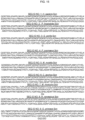
- Scn particularly refers to the human ortholog of Scn (SWISS-PROT Data Bank Accession Number P80188), which has 178 amino acids and a molecular weight of 20,547 Da ( FIG. 15 ; SEQ ID NO: 1, which is P80188 with the first 20 amino acids deleted).
- Scn can refer to the ortholog expressed by another species, such as the mouse ortholog ( FIG.
- FIG. 15 SEQ ID NO: 7, which is SWISS-PROT Data Bank Accession Number P11672 with the first 20 amino acids deleted
- FIG. 15 SEQ ID NO: 8 which is SWISS-PROT Data Bank Accession Number P30152 with the first 20 amino acids deleted
- FIG. 15 SEQ ID NOs. 2-6 and 9-18
- Correnti & Strong (2013) "Iron Sequestration in Immunity” In Metals in Cells, Encyclopedia of Inorganic and Bioinorganic Chemistry. (Culcotta & Scott, eds.) John Wiley & Sons, pp. 349-59 .
- Scn refers to an Scn sequence that can include mutations, so long as the mutations do not significantly affect Scn's natural specificity for its chelator binding partners, such as carboxymycobactin and enterochelin.
- Human Scn residues that are important for binding to siderophores include (referring to SEQ ID NO: 1): 52, 54, 68, 70, 79, 81, 100, 106, 123, 125, 132, 133, 134, 138, and 141. Holmes, et al., Structure 2005, 13, 29-41 .
- Scns disclosed herein exclude mutations at one or more of residues: 52, 54, 68, 70, 79, 81, 100, 106, 123, 125, 132, 133, 134, 138, and 141 of SEQ ID NO: 1.
- Scns disclosed herein exclude mutations at 2 or more, 3 or more, 4 or more, 5 or more, 6 or more, 7 or more, 8 or more, 9 or more, 10 or more, 11 or more, 12 or more, 13 or more, 14 or more or 15 or more of residues: 52, 54, 68, 70, 79, 81, 100, 106, 123, 125, 132, 133, 134, 138, and 141 of SEQ ID NO: 1.
- Scns disclosed herein exclude mutations at residues: 52, 54, 68, 70, 79, 81, 100, 106, 123, 125, 132, 133, 134, 138, and 141 of SEQ ID NO: 1.
- Scns can include mutations that improve its ability to bind to chelators.
- mutations at residues 54 and/or 68 can stabilize Scn interaction with chelators by providing a "chelator trap".
- chelator traps can be created by providing a cysteine at residues 54 and/or 68 to introduce a thiol moiety.
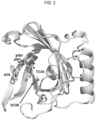
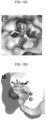
- FIG 2 shows the superposition of the structures of wild-type, human Scn and two mutants: T54C and S68C. Scn structures are shown as cartoon ribbons, highlighting the conservation of overall structure despite mutagenesis. The side-chains of four residues are highlighted in licorice-stick representations: T/C54, S/C68, W79, and R81.
- W79 and R81 are the most mobile side-chains in the ligand binding site, and are observed in different rotamers in different structures.
- the side-chains at positions 54 and 68 show that replacing the wild-type residues with cysteine does not affect the local structure of the ligand binding site, conserving wild-type ligand specificity.
- the crystal structures of the mutants, protected deep in the ligand binding site, also show that these cysteines, protected deep in the ligand binding site, remain reduced, available for conjugation.
- At least one of the amino acids of Scn may be substituted for a non-native amino acid to achieve a different benefit.
- a C87S mutation in Scn can prevent dimerization and can yield pure monomeric fusion protein. Goetz, et al., Molecular Cell 2002, 10, 1033-43 .
- mutations can be generated that enable interactions with non-native ligands, so long as the mutations do not reduce chelator binding affinity.
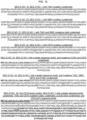
- FIG. 16 depicts Scn of SEQ ID NO: 1 altered to include: a T54C mutation (SEQ ID NO: 19); a S68C mutation (SEQ ID NO: 20); T54C and S68C mutations (SEQ ID NO: 21); a C87S mutation (SEQ ID NO: 22); a leader sequence, K125A and C87S mutations (SEQ ID NO: 23); a leader sequence, T54C, S68C, C87S, and K125A mutations (SEQ ID NO: 24); and a leader sequence, T54C and C87S mutations, a GSS linker, and a CD19 scFV (SEQ ID NO: 25).
- any combination of mutations depicted in FIG. 16 can be used. Additional potential alternations to Scn that can be used are described in the Section of this application related to Methods of Protein Expression.
- Chelators are molecules that can bind metals. Chelators can include organic molecules that covalently bond with a metal. As used herein, a covalent bond describes the sharing of one or more pairs of electrons between atoms. In some instances, chelators are agents that remove excess metal from an environment. Previous metal chelators that have been joined to proteins for the purpose of loading the chelator with a radioisotope are described in U.S. Pat. Nos.
- chelators can include a number of metal coordinating atoms that bond with a metal.
- the metal coordinating atoms can bond with metals having cations with a +1 charge.
- the metal coordinating atoms can also bond with metals having cations with a +2 charge.
- the metal coordinating atoms can bond with metals having cations with a +3 charge.
- the metal coordination atoms can bond with metals having cations with a +4 charge.
- the chelators described herein can, in some cases, include siderophores.
- the metal coordinating atoms of the chelators described herein can be included in one or more functional groups of the chelators.
- the metal coordinating atoms of the chelators can be included in one or more catecholate (CAM) groups.
- a CAM group can include at least a phenyl ring substituted by hydroxyl groups on adjacent carbon atoms.
- a CAM group can include:
- a HA group can include: where R a can include H or an alkyl group including no greater than 5 carbon atoms.
- R a can include a methyl group, an ethyl group, a propyl group, an isopropyl group, a butyl group, a sec-butyl group, an iso-butyl group, a tert-butyl group, a pentyl group, a tert-pentyl group, a neopentyl group, or an iso-pentyl group.
- the metal coordinating atoms of the chelators can be included in one or more hydroxypyridinone (HOPO) groups.
- a HOPO group can include a pyridinone ring substituted by a hydroxyl group on the N atom.
- a HOPO group can include a 1,2-HOPO group.
- a 1,2-HOPO group can include:
- the metal coordinating atoms of the chelators can be included in combinations of two or more of one or more CAM groups, one or more HA groups, or one or more HOPO groups.
- the metal coordinating atoms of the chelators can be included in one or more CAM groups and one or more HA groups.
- the metal coordinating atoms of the chelators can be included in one or more CAM groups and one or more HOPO groups.
- the metal coordinating atoms of the chelators can be included in one or more HA groups and one or more HOPO groups.
- the metal coordinating atoms of the chelators can be included in one or more HA groups, one or more CAM groups, and one or more HOPO groups.
- the chelators can include a number of functional groups having metal coordinating atoms with the functional groups being bonded to a linear scaffold or a branched scaffold.
- the functional groups and/or substituents described herein may be substituted or unsubstituted.
- Substituted functional groups and/or substituents can be substituted by one or more hydroxyl groups, one or more alkyl groups having no greater than 10 carbon atoms, one or more amine groups, one of more thiol groups, one or more ester groups, or combinations thereof.
- the scaffold can include one or more amine groups.
- An amine group can include a nitrogen atom bonded to three substituents.
- an amine group can include a nitrogen atom bonded at least one carbon atom of substituent.
- an amine group can include a nitrogen atom bonded to at least a first carbon atom of a first substituent and a second carbon atom of a second substituent.
- an amine group can include a nitrogen atom bonded to a first carbon atom of a first substituent, a second carbon atom of a second substituent and a third carbon atom of a third substituent.
- an amine group can include a nitrogen atom bonded to one or more hydrogen atoms.
- the scaffold can include one or more amide groups.
- An amide group can include a nitrogen atom bonded to a carbonyl group and two additional substituents.
- an amide group can include a nitrogen atom bonded to a carbonyl group and a carbon atom of a first additional substituent.
- an amide group can include a nitrogen atom bonded to a carbonyl group and a first carbon atom of a first additional substituent and a second carbon atom of a second additional substituent.
- the scaffold can include one or more amine groups and one or more amide groups.
- the scaffold can include one or more carbon-based chains bonded between amine groups, a carbon-based chain bonded between amide groups, or one or more carbon-based chains bonded between a combination of one or more amine groups and one or more amide groups.
- the carbon-based chains can include at least one carbon atom, at least 2 carbon atoms, at least 3 carbon atoms, at least 4 carbon atoms, or at least 5 carbon atoms.
- the carbon-based chains can include no greater than 10 carbon atoms, no greater than 9 carbon atoms, no greater than 8 carbon atoms, no greater than 7 carbon atoms, or no greater than 6 carbon atoms.
- the carbon-based chains can include from 1 carbon atom to 10 carbon atoms, from 2 carbon atoms to 7 carbon atoms, or from 3 carbon atoms to 6 carbon atoms.
- the carbon-based chains can include alkane chains having carbon-carbon single bonds.
- the carbon-based chains can include alkene chains having at least one carbon-carbon double bond.
- the carbon-based chains can be substituted or unsubstituted.
- compositions that function as chelators for radionuclides can have the following structure, referred to herein as Structure I:
- At least one of L1, L2, L3, L4, L5, L6, L7, L8, L9, L10, L11, L12, or L13 can, individually, include H, an alkyl group having no greater than 10 carbon atoms, an alkylamino group having no greater than 10 carbon atoms and no greater than 2 nitrogen atoms; an alkyl ether group having no greater than 10 carbon atoms, a hydroxy ester group, or an alkyl ester group having no greater than 10 carbon atoms.
- at least one of L1, L5, L6, L7, L8, L9, L10, L11, L12, or L13 can be optional.
- At least another one of L2, L3, or L4, can, individually, include an amine group or an amide group.
- L2, L3, L4, L6, L8, L10, and L12 can, individually, include an alkyl group having no greater than 5 carbon atoms.
- A1 can include a CAM group or a 1, 2-HOPO group
- A2 can include a HA group
- A3 can include a HA group
- A4 can include a CAM group, a 1,2-HOPO group, or a HA group.
- at least one of L2, L3, or L4 includes an alkylamino group.
- B1, B2, and B3 can, individually, include an amide group and B4 can include an amino group, L2 and L3 can include an amino group, and L4 can include an alky group having no greater than 5 carbon atoms.
- C1, C2, C3, C4, C5, L1, A1, A2, A3, L1, L6, L7, L8, L9, L10, L11, L12, and L13 can be absent;
- A4 can include a CAM group, a 1,2-HOPO group, or a HA group; and L5 can include an alkyl group having no greater than 5 carbon atoms.
- B1, B2, and B3 can include an amide group and B4 can include an amide group; L2 and L3 can, individually, include an amino group; and L4 includes an alky group having no greater than 5 carbon atoms.
- C1, C2, C3, C4, C5, A1, A2, A3, L1, L6, L7, L8, L9, L10, L11, and L13 can be absent, L12 can include an amino group, L5 can include an ether group having no greater than 10 carbon atoms, and A4 can include a CAM group, a 1,2-HOPO group, or a HA group.
- C1, C2, C5, C6, L1, L2, L3, L4, L5, L7, L13, B2, and B4 can be absent;
- B1 and B3 can, individually, include an amide group;
- L6, L8, L10, and L12 can, individually, include an amino group,
- A1, A2, A3, and A4 can, individually, include a CAM group, a 1,2-HOPO group, or a HA group;
- L9 and L11 can, individually, include an alkyl group having no greater than 5 carbon atoms.
- compositions that function as chelators for radionuclides can have the following structure, referred to herein as Structure II:
- R 1 , R 2 , R 3 , R 4 , and R 5 can, individually, include H, an alkyl group having from 1 to 10 carbon atoms, a CAM group, a HA group, or a 1,2-HOPO group.
- m can be from 1 to 6;
- n can be from 1 to 6; and
- o can be from 1 to 6.
- R 1 , R 2 , R 3 , R 4 , or R 5 can, individually, include a CAM group, a HA group, or a 1,2-HOPO group.
- Structure II can include a linear, spermine-based backbone.
- R 1 can include a CAM group or a 1,2-HOPO group
- R 3 and R 4 can, individually, include a HA group
- R 5 can include a CAM group, a 1,2-HOPO group, or a HA group.
- compositions that function as chelators for radionuclides can have the following structure, referred to herein as Structure IV:
- R 2 , R 8 , and R 9 can, individually, include H, OH, or an alkyl group including from 1 to 5 carbon atoms.
- p can be from 0 to 4.
- compositions that function as chelators for radionuclides can have the following structure, referred to herein as Structure V:
- R 2 , R 8 , and R 9 can, individually, include H, OH, or an alkyl group including from 1 to 5 carbon atoms.
- p can be from 0 to 4.
- compositions that function as chelators for radionuclides can have the following structure, referred to herein as Structure VI:
- R 2 , R 8 , R 9 , and R 10 can, individually, include H, OH, or an alkyl group including from 1 to 5 carbon atoms.
- p can be from 0 to 4.
- compositions that function as chelators for radionuclides can have the following structure, referred to herein as Structure VII:
- R 2 , R 8 , and R 9 can, individually, include H, OH, or an alkyl group including from 1 to 5 carbon atoms.
- p can be from 0 to 4.
- compositions that function as chelators for radionuclides can have the following structure, referred to herein as Structure VIII:
- R 2 , R 8 , and R 9 can, individually, include H, OH, or an alkyl group including from 1 to 5 carbon atoms.
- p can be from 0 to 4.
- compositions that function as chelators for radionuclides can have the following structure, referred to herein as Structure IX:
- R 2 , R 8 , R 9 , and R 10 can, individually, include H, OH, or an alkyl group including from 1 to 5 carbon atoms.
- p can be from 0 to 4.
- compositions that function as chelators for radionuclides can have the following structure, referred to herein as Structure X:
- compositions that function as chelators for radionuclides can have the following structure, referred to herein as Structure XI:
- compositions can have a branched backbone rather than the linear, spermine-based backbone of Structures III-XI.
- compositions that function as chelators for radionuclides can have the following structure, referred to herein as Structure XII: At least one of R 11 , R 12 , R 13 , or R 13 , can, individually, include a CAM group, a HA group, or a 1,2-HOPO group. Optionally, at least another one of R 11 , R 12 , R 13 , or R 15 can, individually, include H, OH, or an alkyl group having from 1 to 10 carbon atoms.
- R 2 , R 14 , and R 16 can, individually, include H, OH, or an alkyl group having from 1 to 10 carbon atoms.
- R 11 can include a CAM group or a 1,2-HOPO group
- R 12 and R 15 can, individually, include a HA group
- R 13 can include a CAM group, a 1,2-HOPO group, or a HA group.
- compositions that function as chelators for radionuclides can have the following structure, referred to herein as Structure XIII:
- R 2 , R 14 , R 16 , R 18 , and R 19 can, individually, include H, OH, or an alkyl group having from 1 to 10 carbon atoms.
- r can be from 0 to 4.
- compositions that function as chelators for radionuclides can have the following structure, referred to herein as Structure XIV:
- R 2 , R 14 , R 16 , R 18 , and R 19 can, individually, include H, OH, or an alkyl group having from 1 to 10 carbon atoms.
- r can be from 0 to 4.
- compositions that function as chelators for radionuclides can have the following structure, referred to herein as Structure XV:
- R 2 , R 14 , R 16 , R 18 , R 19 , and R 20 can, individually, include H, OH, or an alkyl group having from 1 to 10 carbon atoms.
- r can be from 0 to 4.
- compositions that function as chelators for radionuclides can have the following structure, referred to herein as Structure XVI:
- R 2 , R 14 , R 16 , R 18 , R 19 , and R 20 can, individually, include H, OH, or an alkyl group having from 1 to 10 carbon atoms.
- r can be from 0 to 4.
- compositions that function as chelators for radionuclides can have the following structure, referred to herein as Structure XVII:
- R 2 , R 14 , R 16 , R 18 , and R 19 can, individually, include H, OH, or an alkyl group having from 1 to 10 carbon atoms.
- r can be from 0 to 4.
- compositions that function as chelators for radionuclides can have the following structure, referred to herein as Structure XVIII:
- R 2 , R 14 , R 16 , R 18 , and R 19 can include H, OH, or an alkyl group having from 1 to 10 carbon atoms.
- r can be from 0 to 4.
- compositions can have a backbone that includes a number of amide groups and a number of amine groups.
- the backbone of compositions that function as chelators for radionuclides can be based on Desferrioxamine B.
- compositions that function as chelators can have the following structure, referred to herein as Structure XIX:
- R 21 and R 22 can include H, OH, or an alkyl group having from 1 to 10 carbon atoms.
- R 24 can include a substituent that includes a CAM group, a 1,2-HOPO group, or a HA group.
- a, b, and c can include from 1 to 10 and d can include from 1 to 4.
- compositions that function as chelators for radionuclides can have the following structure, referred to herein as Structure XX:
- R 25 , R 26 , and R 27 can, individually, include H, OH, or an alkyl group having from 1 to 10 carbon atoms.
- s can be from 0 to 4.
- compositions that function as chelators for radionuclides can have the following structure, referred to herein as Structure XXI:
- R 25 , R 26 , R 27 , and R 30 can, individually, include H, OH, or an alkyl group having from 1 to 10 carbon atoms.
- s can be from 0 to 4.
- t can be from 0 to 4.
- compositions that function as chelators for radionuclides can have the following structure, referred to herein as Structure XXII:
- R 25 , R 26 , R 27 , and R 30 can, individually, include H, OH, or an alkyl group having from 1 to 10 carbon atoms.
- s can be from 0 to 4.
- t can be from 0 to 4.
- compositions that function as chelators for radionuclides can have the following structure, referred to herein as Structure XXIII:
- R 25 , R 26 , R 27 , R 30 , and R 31 can, individually, include H, OH, or an alkyl group having from 1 to 10 carbon atoms.
- s can be from 0 to 4.
- t can be from 0 to 4.
- compositions that function as chelators for radionuclides can have the following structure, referred to herein as Structure XXIV:
- R 25 , R 26 , and R 27 can, individually, include H, OH, or an alkyl group having from 1 to 10 carbon atoms.
- s can be from 0 to 4.
- compositions that function as chelators for radionuclides can have the following structure, referred to herein as Structure XXV:
- R 25 , R 26 , R 27 , and R 32 can, individually, include H, OH, or an alkyl group having from 1 to 10 carbon atoms.
- s can be from 0 to 4.
- compositions can have an amide-based backbone.
- compositions that function as chelators can have the following structure, referred to herein as Structure XXVI:
- A, B, C, and D can, individually, include one or more amide groups, one or more amine groups, or an alkyl group having from 1 to 10 carbon atoms.
- R 33 , R 34 , R 35 , and R 36 can, individually, include a CAM group, a 1,2-HOPO group, or a HA group.
- g, h, i, and j can, individually, be from 1 to 10.
- compositions that function as chelators for radionuclides can have the following structure, referred to herein as Structure XXVII:
- R 38 , R 39 , R 40 , and R 41 can, individually, include H, OH, or an alkyl group having from 1 to 5 carbon atoms.
- u and v can, individually, be from 0 to 5.
- compositions that function as chelators for radionuclides can have the following structure, referred to herein as Structure XXVIII:
- R 38 , R 39 , R 40 , and R 41 can, individually, include H, OH, or an alkyl group having from 1 to 5 carbon atoms.
- u and v can, individually, be from 0 to 5.
- compositions that function as chelators for radionuclides can have the following structure, referred to herein as Structure XXIX:
- R 38 , R 39 , R 40 , and R 41 can, individually, include H, OH, or an alkyl group having from 1 to 5 carbon atoms.
- u and v can, individually, be from 0 to 5.
- the chelators can bind to a protein.
- the chelators can bind to siderocalin.
- the chelators can bind to a dye.
- the chelators can bind to a fluorophore.
- the chelators can bind to both a protein and a dye.
- the chelators can bind to a metal to form a chelator-metal complex that can also bind to siderocalin.
- the metal can include a radionuclide.
- the chelators and/or the chelator-metal complex can have an equilibrium dissociation constant with siderocalin of no greater than 100 nanomolar (nM), no greater than 90 nM, no greater than 80 nM, no greater than 70 nM, no greater than 60 nM, no greater than 50 nM, no greater than 45 nM, no greater than 40 nM, no greater than 35 nM, no greater than 30 nM, no greater than 25 nM, no greater than 20 nM, or no greater than 15 nM.
- nM nanomolar
- the chelators can have an equilibrium dissociation constant with siderocalin of at least 0.1 nM, at least 0.5 nM, at least 0.8 nM, at least 1 nM, at least 1.5 nM, at least 2 nM, at least 3 nM, at least 5 nM, at least 8 nM, at least 10 nM, or at least 12 nM.
- the equilibrium dissociation constant between a chelator and siderocalin can be within a range between any of the values noted above.
- the equilibrium dissociation constant between a chelator and siderocalin can be from 0.1 nM to 50 nM.
- the equilibrium dissociation constant between a chelator and siderocalin can be from 1 nM to 40 nM. In additional illustrative examples, the equilibrium dissociation constant between a chelator and siderocalin can be from 0.8 nM to 10 nM. In further illustrative examples, the equilibrium dissociation constant between a chelator and siderocalin can be from 0.5 nM to 5 nM.
- a composition E can be bound to a dye, a protein, or both a dye and a protein. Additionally, the composition E can be bound to one or more CAM groups, one or more 1,2-HOPO groups, one or more HA groups, or a combination thereof. In some embodiments, the composition E can be bound to the one or more CAM groups, the one or more 1,2-HOPO groups, or the one or more HA groups through an amide linkage. In particular embodiments, the composition E can include a number of carbon atoms, a number of nitrogen atoms, and a number of oxygen atoms.
- the composition E can include from 4 to 40 carbon atoms, from 1 to 20 nitrogen atoms, and from 1 to 15 oxygen atoms. In various embodiments, the composition E can include from 1 to 20 carbon atoms, from 1 to 8 nitrogen atoms, and from 1 to 5 oxygen atoms.
- a composition according to embodiments herein can include the following structure, referred to herein as Structure XXXI: R 43 and R 44 can, individually, include H or an alkyl group from 1 to 5 carbon atoms.
- q can be from 0 to 4
- w can be from 0 to 4
- x can be from 0 to 4. In some embodiments, at least one of q, w, or x is 1.
- y and z can, individually, be from 0 to 4.
- the dye and/or the protein can be bound to E via an SH group, an amide group, or a carboxyl group.
- one or more groups included in the structures described herein can bind to a protein and/or a dye.
- R 6 , R 7 , R 17 , R 23 , R 28 , R 29 , R 37 , R 42 , or combinations thereof, can, individually, bind to a protein and/or a dye.
- the composition E can be bound to one or more amino acids of the protein.
- the composition E can be bound to one or more lysine residues of siderocalin, such as K125 and/or K134.
- the composition E can be bound to one or more amino acids of the protein that have been modified.
- siderocalin can be modified such that T54 and S68 are modified to cysteine residues.
- the composition E can be bound to at least one of the modified Scn T54C or Scn S68C mutations.
- Radionuclides The Scn-chelator combinations (SCCs) disclosed herein are charged with radionuclides for use in nuclear medicine. Radionuclides that are chemically compatible with the SCCs should be chosen. Chemically compatible means that the radionuclide, in its elemental form or ionic form should not be so reactive that it changes the structure or function of any component of SCCs in a way that impairs achievement of an intended purpose.
- Criteria for choosing radionuclides for a particular use in nuclear medicine can include the type and energy of radioactive decay product yielded by the radioisotope; the half-life of decay; chemical properties of the atom or ion; and the biological and/or toxicological properties of the atom or ion.
- the decay product(s) yielded by the decay of a radionuclide should be capable of interacting with cells in such a way as to inhibit or interfere with biological processes necessary for cellular replication, or that cause the cell to undergo apoptosis.
- the decay product(s) should be of sufficiently high energy, and sufficiently low mass such that they, whether particles or photons, reach and penetrate the nuclei of unwanted cells.
- the energy is not so high that the decay product(s) reach tissues far away from unwanted cells, or reach persons in close proximity to a patient. However, there may be circumstances wherein high energy and highly penetrative decay products are desirable.
- particularly useful radionuclides are those that decay with the emission of alpha particles, beta particles, gamma rays, positrons, x-rays, or Auger electrons. In particular embodiments, particularly useful radionuclides decay with the emission of alpha particles.
- Radionuclides with different half-lives can be chosen based on the length of time desirable for irradiation of unwanted cells. Usually, a half-life of decay is not chosen if it is too short and thus, not sufficiently effective to arrest the growth of unwanted cells. Likewise, a half-life of decay that is too long is not chosen, thus avoiding the persistence of radiation at a high level after such time that unwanted cells are substantially or completely growth inhibited. In this manner, deleterious side effects of radiation are minimized.
- isotopes that decay with half-lives of 3 hours to 300 days are selected. Such isotopes can decay to negligible levels in 1 day to 4 years.
- radioisotopes useful in nuclear medicine include 225 Ac, 226 Ac, 228 Ac, 105 Ag, 106 mAg, 110 mAg, 111 Ag, 112 Ag, 113 Ag, 239 Am, 240 Am, 242 Am, 244 Am, 37 Ar, 71 As, 72 As, 73 As, 74 As, 76 As, 77 As, 209 At, 210 At, 191 Au, 192 Au, 193 Au, 194 Au, 195 Au, 196 Au, 196 m 2 Au, 198 Au, 198 mAu, 199 Au, 200 mAu, 128Ba, 131 Ba, 133 mBa, 135 mBa, 140 Ba, 7 Be, 203 Bi, 204 Bi, 205 Bi, 206 Bi, 210 Bi, 212 Bi, 243 Bk, 244 Bk, 245 Bk, 246 Bk, 248 mBk, 250 Bk, 76 Br, 77 Br, 80 mBr,
- cytotoxic radionuclides into groups, for example, metals (e.g., 90 Y, 6 7Cu, 213 Bi, 212 Bi), and transitional elements (e.g., 186 Re).
- metals e.g., 90 Y, 6 7Cu, 213 Bi, 212 Bi
- transitional elements e.g., 186 Re
- examples of pure ⁇ -emitters include 67 Cu and 90 Y; and examples of ⁇ -emitters include 213 Bi.
- ⁇ -emitters that emit ⁇ -radiation include 177 Lu and 186 Re
- Auger emitters and radionuclides that decay by internal conversion include 67 Ga.
- SCCs can be charged with radionuclides that are useful for imaging methods, such as PET imaging.
- An example of a radionuclide that is useful for PET imaging includes 89 Zr. 89 Zr has a half-life of 3 days and forms the daughter isotope 89 Y.
- SCCs can be charged with radionuclides that are useful for radiation therapy.
- radionuclides that are useful for radiation therapy include 225 Ac and 227 Th.
- 225 Ac is a radionuclide with the half-life of ten days. As 225 Ac decays the daughter isotopes 221 Fr, 213 Bi, and 209 Pb are formed.
- 227 Th has a half-life of 19 days, and forms the daughter isotope 223 Ra.
- radionuclides can decay to form daughter isotopes.
- the SCCs disclosed herein retain daughter isotopes.
- 223 Ra daughter isotopes can be produced.
- the 223 Ra daughter isotope can be retained in the SCC longer than in classical chelating constructs due to encapsulation within the protein calyx. As is understood by one of ordinary skill in the art, such longer retention may be characterized by kinetic assays.
- radioisotope may be chosen and used in particular nuclear medicine indications.
- embodiments can include a single species of radioisotope, two species of radioisotopes, or a population of a plurality of species of radioisotopes combined in various proportions. In this manner the useful properties of different radioisotopes can be combined. For example, a single radioisotope decays at a linear rate. By combining radioisotopes of different half-lives, it is possible to create a non-linear decay rate.
- SCCs disclosed herein include a targeting domain.
- Targeting domains can direct charged SCCs to imaging or therapeutic areas of interest.
- the targeting domains direct the SCC to a region of the body that will be imaged using nuclear medicine diagnostic techniques.
- the targeting domains direct the SCC to a cell type that is targeted for radiotherapy.
- targeting domains can be derived from whole proteins or protein fragments with an affinity for particular tissues and/or cell types of interest.
- targeting domains can be derived from whole antibodies or binding fragments of an antibody, e.g., Fv, Fab, Fab', F(ab') 2 , Fc, and single chain Fv fragments (scFvs) or any biologically effective fragments of an immunoglobulin that bind specifically to, for example, a cancer antigen epitope.
- Antibodies or antigen binding fragments include all or a portion of polyclonal antibodies, monoclonal antibodies, human antibodies, humanized antibodies, synthetic antibodies, chimeric antibodies, bispecific antibodies, mini bodies, and linear antibodies.
- Targeting domains from human origin or humanized antibodies have lowered or no immunogenicity in humans and have a lower number of non-immunogenic epitopes compared to non-human antibodies.
- Antibodies and their fragments will generally be selected to have a reduced level or no antigenicity in human subjects.
- Targeting domains can particularly include any peptide that specifically binds a selected unwanted cell epitope.
- Sources of targeting domains include antibody variable regions from various species (which can be in the form of antibodies, sFvs, scFvs, Fabs, scFv-based grababody, or soluble VH domain or domain antibodies).
- these antibodies can form antigen-binding regions using only a heavy chain variable region, i.e., these functional antibodies are homodimers of heavy chains only (referred to as "heavy chain antibodies") (Jespers et al., Nat. Biotechnol. 22:1161, 2004 ; Cortez-Retamozo et al., Cancer Res. 64:2853, 2004 ; Baral et al., Nature Med. 12:580, 2006 ; and Barthelemy et al., J. Biol. Chem. 283:3639, 2008 ).
- Phage display libraries of partially or fully synthetic antibodies are available and can be screened for an antibody or fragment thereof that can bind a selected epitope. For example, targeting domains may be identified by screening a Fab phage library for Fab fragments that specifically bind to a target of interest (see Hoet et al., Nat. Biotechnol. 23:344, 2005 ). Phage display libraries of human antibodies are also available. Additionally, traditional strategies for hybridoma development using a target of interest as an immunogen in convenient systems ( e.g ., mice, HuMAb mouse ® , TC mouse TM , KM-mouse ® , llamas, chicken, rats, hamsters, rabbits, etc.
- targeting domains may be identified by screening a Fab phage library for Fab fragments that specifically bind to a target of interest (see Hoet et al., Nat. Biotechnol. 23:344, 2005 ). Phage display libraries of human antibodies are also available. Additionally,
- antibodies can be used to develop targeting domains.
- antibodies specifically bind to selected epitopes expressed by targeted cells and do not cross react with nonspecific components or unrelated targets. Once identified, the amino acid sequence or polynucleotide sequence coding for the antibody can be isolated and/or determined.
- An alternative source of targeting domains includes sequences that encode random peptide libraries or sequences that encode an engineered diversity of amino acids in loop regions of alternative non-antibody scaffolds, such as scTCR (see, e.g., Lake et al., Int. Immunol.11:745, 1999 ; Maynard et al., J. Immunol. Methods 306:51, 2005 ; U.S. Patent No. 8,361,794 ), mAb 2 or Fcab TM ( see, e.g., PCT Patent Application Publication Nos.
- scTCR see, e.g., Lake et al., Int. Immunol.11:745, 1999 ; Maynard et al., J. Immunol. Methods 306:51, 2005 ; U.S. Patent No. 8,361,794
- mAb 2 or Fcab TM see, e.g., PCT Patent Application Publication Nos.
- an antibody fragment is used as the targeting domain of a SCC.
- An "antibody fragment” denotes a portion of a complete or full length antibody that retains the ability to bind to an epitope. Examples of antibody fragments include Fv, scFv, Fab, Fab', Fab'-SH, F(ab') 2 ; diabodies; and linear antibodies.
- a single chain variable fragment is a fusion protein of the variable regions of the heavy and light chains of immunoglobulins connected with a short linker peptide.
- Fv fragments include the VL and VH domains of a single arm of an antibody. Although the two domains of the Fv fragment, VL and VH, are coded by separate genes, they can be joined, using, for example, recombinant methods, by a synthetic linker that enables them to be made as a single protein chain in which the VL and VH regions pair to form monovalent molecules (single chain Fv (scFv)).
- a Fab fragment is a monovalent antibody fragment including VL, VH, CL and CH1 domains.
- a F(ab') 2 fragment is a bivalent fragment including two Fab fragments linked by a disulfide bridge at the hinge region.
- Diabodies include two epitope-binding sites that may be bivalent. See, for example, EP 0404097 ; WO1993/01161 ; and Holliger, et al., Proc. Natl. Acad. Sci. USA 90 (1993) 6444-6448 .
- Dual affinity retargeting antibodies (DART TM ; based on the diabody format but featuring a C-terminal disulfide bridge for additional stabilization ( Moore et al., Blood 117, 4542-51 (2011 )) can also be used.
- Antibody fragments can also include isolated CDRs. For a review of antibody fragments, see Hudson, et al., Nat. Med. 9 (2003) 129-134 .
- Antibody fragments can be made by various techniques, including proteolytic digestion of an intact antibody as well as production by recombinant host-cells (e.g. E. coli or phage), as described herein. Antibody fragments can be screened for their binding properties in the same manner as intact antibodies.
- targeting domains can also include a natural receptor or ligand for an epitope.
- a target for binding includes PD-L1
- the binding domain can include PD-1 (including, e.g., a PD-1/antiCD3 fusion).
- PD-1 including, e.g., a PD-1/antiCD3 fusion.
- a receptor fusion for binding is Enbrel ® (Immunex).
- Natural receptors or ligands can also be modified to enhance binding.
- betalacept is a modified version of abatacept.
- Binding can also be enhanced through increasing avidity. Any screening method known in the art can be used to identify increased avidity to an antigen epitope.
- an epitope denotes the binding site on a protein target bound by a corresponding targeting domain.
- the targeting domain either binds to a linear epitope, (e.g., an epitope including a stretch of 5 to 12 consecutive amino acids), or the targeting domains binds to a three-dimensional structure formed by the spatial arrangement of several short stretches of the protein target.
- Three-dimensional epitopes recognized by a targeting domain e.g. by the epitope recognition site or paratope of an antibody or antibody fragment, can be thought of as three-dimensional surface features of an epitope molecule. These features fit precisely (in)to the corresponding binding site of the targeting domains and thereby binding between the targeting domains and its target protein is facilitated.
- Bind means that the targeting domain associates with its target epitope with a dissociation constant (1(D) of 10 -8 M or less, in one embodiment of from 10 -5 M to 10 -13 M, in one embodiment of from 10 -5 M to 10 -10 M, in one embodiment of from 10 -5 M to 10 -7 M, in one embodiment of from 10 -8 M to 10 -13 M, or in one embodiment of from 10 -9 M to 10 -13 M.
- the term can be further used to indicate that the targeting domains does not bind to other biomolecules present, (e.g., it binds to other biomolecules with a dissociation constant (KD) of 10 -4 M or more, in one embodiment of from 10 -4 M to 1 M.
- KD dissociation constant
- targeting domains of SCCs can be designed to target cancer cell antigens.
- Cancer cell antigens are preferentially expressed by cancer cells. "Preferentially expressed” means that a cancer cell antigen is found at higher levels on cancer cells as compared to other cell types. The difference in expression level is significant enough that, within sound medical judgment, administration of therapeutics selectively targeting the cancer cells based on the presence of the cancer antigen outweighs the risk of collateral killing of other non-cancer cells that may also express the marker to a lesser degree. In some instances, a cancer antigen is only expressed by the targeted cancer cell type.
- the cancer antigen is expressed on the targeted cancer cell type at least 25%, 35%, 45%, 55%, 65%, 75%, 85%, 95%, 96%, 97%, 98%, 99%, or 100% more than on non-targeted cells.
- Targeted Cancer Cancer Antigens Leukemia/Lymphoma CD19, CD20, CD22, ROR1, CD33, WT-1 Multiple Myeloma B-cell maturation antigen (BCMA) Prostate Cancer PSMA, WT1, Prostate Stem Cell antigen (PSCA), SV40 T Breast Cancer HER2, ERBB2, ROR1 Stem Cell Cancer CD133 Ovarian Cancer L1-CAM, extracellular domain of MUC16 (MUC-CD), folate binding protein (folate receptor), Lewis Y, ROR1, mesothelin, WT-1 Mesothelioma mesothelin Renal Cell Carcinoma carboxy-anhydrase-IX (CAIX); Melanoma GD2 Pancreatic Cancer mesothelin, CEA, CD24, ROR1 Lung Cancer ROR1
- cancer cell antigens include: Cancer Antigen Sequence PSMA PSCA Mesothelin CD19 CD20 ROR1 WT1
- the targeting domains of the SCC targets a RORI epitope.
- the targeting domains of the SCC is a human or humanized scFv including a variable light chain including a CDRL1 sequence of ASGFDFSAYYM (SEQ ID NO: 33), CDRL2 sequence of TIYPSSG (SEQ ID NO: 34), and a CDRL3 sequence of ADRATYFCA (SEQ ID NO: 35).
- the targeting domain of the SCC is a human or humanized scFv including a variable heavy chain including CDRH1 sequence of DTIDWY (SEQ ID NO: 36), CDRH2 sequence of VQSDGSYTKRPGVPDR (SEQ ID NO: 37), and a CDRH3 sequence of YIGGYVFG (SEQ ID NO: 38).
- CDRH1 sequence of DTIDWY SEQ ID NO: 36
- CDRH2 sequence of VQSDGSYTKRPGVPDR SEQ ID NO: 37
- YIGGYVFG a variable heavy chain including CDRH1 sequence of DTIDWY (SEQ ID NO: 36), CDRH2 sequence of VQSDGSYTKRPGVPDR (SEQ ID NO: 37), and a CDRH3 sequence of YIGGYVFG (SEQ ID NO: 38).
- a number of antibodies specific for RORI are known to those of skill in the art and can be readily characterized for sequence, epitope binding, and affinity.
- the targeting domain of the SCC binds to a CD19 epitope.
- the targeting domain of the SCC is a single chain Fv fragment (scFv) that includes VH and VL regions specific for CD19.
- the V H and V L regions are human.
- Exemplary V H and V L regions include the segments of anti-CD19 specific monoclonal antibody FMC63.
- the scFV is a human or humanized and includes a variable light chain including a CDRL1 sequence of RASQDISKYLN (SEQ ID NO: 39), CDRL2 sequence of SRLHSGV (SEQ ID NO: 40), and a CDRL3 sequence of GNTLPYTFG (SEQ ID NO: 41).
- the scFV is a human or humanized ScFv including a variable heavy chain including CDRH1 sequence of DYGVS (SEQ ID NO: 42), CDRH2 sequence of VTWGSETTYYNSALKS (SEQ ID NO: 43), and a CDRH3 sequence of YAMDYWG (SEQ ID NO: 44).
- Other CD19-targeting antibodies such as SJ25C1 and HD37 are known. (SJ25C1: Bejcek et al. Cancer Res 2005, PMID 7538901 ; HD37: Pezutto et al. JI 1987, PMID 2437199 ).
- the targeting domain of the SCC targets a PSMA epitope.
- PSMA protein-binding protein
- a number of antibodies specific for PSMA are known to those of skill in the art and can be readily characterized for sequence, epitope binding, and affinity.
- Targeting domains can also include anti-Mesothelin ligands (associated with treating ovarian cancer, pancreatic cancer, and mesothelioma).
- the targeting domains can bind any number of epitopes on the cancer antigens disclosed herein (among others).
- Rituxan targets CD20 for CD20-positive non-Hodgkin's lymphoma and Arzerra (Ofatumumab, Novartis), targets a different epitope of CD20.
- Herceptin can also be used.
- Proteins disclosed herein include variants. Variants of proteins disclosed herein include proteins having one or more amino acid additions, deletions, stop positions, or substitutions, as compared to a protein disclosed herein. To qualify as a variant, the altered protein must provide an equivalent or improved intended effect as compared to a reference protein provided elsewhere herein. Equivalent means not statistically significantly different. Improved means higher affinity binding.
- An amino acid substitution can be a conservative or a non-conservative substitution.
- Variants of proteins disclosed herein can include those having one or more conservative amino acid substitutions.
- a conservative substitution involves a substitution found in one of the following conservative substitutions groups: Group 1: alanine (Ala or A), glycine (Gly or G), Ser, Thr; Group 2: aspartic acid (Asp or D), E; Group 3: asparagine (Asn or N), glutamine (Gln or Q); Group 4: Arg, lysine (Lys or K), histidine (His or H); Group 5: Ile, leucine (Leu or L), methionine (Met or M), valine (Val or V); and Group 6: F, Tyr, W.
- amino acids can be grouped into conservative substitution groups by similar function, chemical structure, or composition (e.g., acidic, basic, aliphatic, aromatic, sulfur-containing).
- an aliphatic grouping may include, for purposes of substitution, G, A, V, L, and I.
- Other groups containing amino acids that are considered conservative substitutions for one another include: sulfur-containing: M and C; acidic: D, E, N, and Q; small aliphatic, nonpolar or slightly polar residues: A, S, T, P, and G; polar, negatively charged residues and their amides: D, N, E, and Q; polar, positively charged residues: H, R, and K; large aliphatic, nonpolar residues: M, L, I, V, and C; and large aromatic residues: F, Y, and W. Additional information is found in Creighton (1984) Proteins, W.H. Freeman and Company .
- Variants of proteins disclosed herein also include sequences with at least 70% sequence identity, at least 80% sequence identity, at least 85% sequence, at least 90% sequence identity, at least 95% sequence identity, at least 96% sequence identity, at least 97% sequence identity, at least 98% sequence identity, or at least 99% sequence identity to a protein disclosed herein.
- variants of the proteins disclosed herein include proteins that share: 70% sequence identity with any of e.g., SEQ ID NO: 1-46; 80% sequence identity with any of e.g., SEQ ID NO: 1-46; 81% sequence identity with any of e.g., SEQ ID NO: 1-46; 82% sequence identity with any of e.g., SEQ ID NO: 1-46; 83% sequence identity with any of e.g., SEQ ID NO: 1-46; 84% sequence identity with any of e.g., SEQ ID NO: 1-46; 85% sequence identity with any of e.g., SEQ ID NO: 1-46; 86% sequence identity with any of e.g., SEQ ID NO: 1-46; 87% sequence identity with any of e.g., SEQ ID NO: 1-46; 88% sequence identity with any of e.g., SEQ ID NO: 1-46; 89% sequence identity with any of e.g., SEQ ID NO: 1-46; 90% sequence identity with any of e.g.
- % sequence identity refers to a relationship between two or more sequences, as determined by comparing the sequences. In the art, identity also means the degree of sequence relatedness between sequences as determined by the match between strings of such sequences. Identity (often referred to as similarity) can be readily calculated by known methods, including those described in: Computational Molecular Biology (Lesk, A. M., ed.) Oxford University Press, NY (1988 ); Biocomputing: Informatics and Genome Projects (Smith, D. W., ed.) Academic Press, NY (1994 ); Computer Analysis of Sequence Data, Part I (Griffin, A. M., and Griffin, H.
- Relevant programs also include the GCG suite of programs (Wisconsin Package Version 9.0, Genetics Computer Group (GCG), Madison, Wisconsin); BLASTP, BLASTN, BLASTX ( Altschul, et al., J. Mol. Biol. 215:403-410 (1990 ); DNASTAR (DNASTAR, Inc., Madison, Wisconsin); and the FASTA program incorporating the Smith-Waterman algorithm ( Pearson, Comput. Methods Genome Res., [Proc. Int.
- D-substituted analogs include protein disclosed herein having one more L-amino acids substituted with one or more D-amino acids.
- the D-amino acid can be the same amino acid type as that found in the reference sequence or can be a different amino acid. Accordingly, D-analogs can also be variants.
- sequence information provided by public databases can be used to identify additional related and relevant protein sequences and associated nucleic acid sequences encoding such proteins.
- Embodiments disclosed herein utilize siderocalin (Scn), in particular embodiments, in combination or as a fusion with a targeting domain.
- proteins disclosed herein are formed using the Daedalus expression system as described in Pechman et al., Am J Physiol 294: R1234-R1239, 2008 .
- the Daedalus system utilizes inclusion of minimized ubiquitous chromatin opening elements in transduction vectors to reduce or prevent genomic silencing and to help maintain the stability of decigram levels of expression. This system can bypass tedious and time-consuming steps of other protein production methods by employing the secretion pathway of serum-free adapted human suspension cell lines, such as 293 Freestyle.
- the amount of peptide obtained can be between 10 mg/L and 200 mg/L, between 50 mg/L and 200 mg/L, between 100 mg/L and 200 mg/L, and between 150 mg/L and 200 mg/L.
- most proteins can be purified using a single size-exclusion chromatography step, immediately appropriate for use in structural, biophysical or therapeutic applications. Bannesayake et al., Nucleic Acids Res., 2011 (Nov); 39(21 ). In some instances, purification by chromatography may not be needed due to the purity of manufacture according the methods described herein. Further, Scn when loaded with siderophores and iron, has a deep red color that can aid in chromatography or other purification steps.
- DNA constructs e.g., chimeric genes, expression cassettes, expression vectors, recombination vectors, etc.
- DNA constructs including a nucleic acid sequence encoding the protein or proteins of interest operatively linked to appropriate regulatory sequences.
- Such DNA constructs are not naturally-occurring DNA molecules and are useful for introducing DNA into host-cells to express selected proteins of interest.
- Operatively linked refers to the linking of DNA sequences (including the order of the sequences, the orientation of the sequences, and the relative spacing of the various sequences) in such a manner that the encoded protein is expressed.
- Methods of operatively linking expression control sequences to coding sequences are well known in the art. See, e.g., Maniatis et al., Molecular Cloning: A Laboratory Manual, Cold Spring Harbor, N. Y., 1982 ; and Sambrook et al., Molecular Cloning: A Laboratory Manual, Cold Spring Harbor, N. Y., 1989 .
- Expression control sequences are DNA sequences involved in any way in the control of transcription or translation. Suitable expression control sequences and methods of making and using them are well known in the art.
- Expression control sequences generally include a promoter.
- the promoter may be inducible or constitutive. It may be naturally-occurring, may be composed of portions of various naturally-occurring promoters, or may be partially or totally synthetic. Guidance for the design of promoters is provided by studies of promoter structure, such as that of Harley and Reynolds, Nucleic Acids Res., 15, 2343-2361, 1987 . Also, the location of the promoter relative to the transcription start may be optimized. See, e.g., Roberts et al., Proc. Natl. Acad. Sci. USA, 76:760-764, 1979 .
- the promoter may include, or be modified to include, one or more enhancer elements.
- the promoter will include a plurality of enhancer elements. Promoters containing enhancer elements can provide for higher levels of transcription as compared to promoters that do not include them.
- the coding sequences can be operatively linked to a 3' untranslated sequence.
- the 3' untranslated sequence can include a transcription termination sequence and a polyadenylation sequence.
- the 3' untranslated region can be obtained, for example, from the flanking regions of genes.
- a 5' untranslated leader sequence can also be employed.
- the 5' untranslated leader sequence is the portion of an mRNA that extends from the 5' CAP site to the translation initiation codon.
- a "hisavi" tag can be added to the N-terminus or C-terminus of a gene by the addition of nucleotides coding for the Avitag amino acid sequence, GLNDIFEAQKIEWHE (SEQ ID NO: 45), as well as the 6xhistidine tag coding sequence, HHHHHH (SEQ ID NO: 46).
- the Avitag avidity tag can be biotinylated by a biotin ligase to allow for biotin-avidin or biotin-streptavidin based interactions for protein purification, as well as for immunobiology (such as immunoblotting or immunofluorescence) using anti-biotin antibodies.
- the 6xhistidine tag allows for protein purification using Ni-2+ affinity chromatography.
- expressed fusion proteins can include or be encoded by an IgK starter sequence, a sFLAG, a HIS, and a TEV.
- the fusion protein includes the following construct: IgK SP-sFLAG-HIS-siderocalin-TEV-peptide.
- the fusion protein is generated by direct fusion of each subunit to the adjacent subunits.
- the composition further includes a linker sequence between the targeting domain and the Scn protein.
- Nucleic acid sequences encoding proteins disclosed herein can be derived by those of ordinary skill in the art. Nucleic acid sequences can also include one or more of various sequence polymorphisms, mutations, and/or sequence variants. In particular embodiments, the sequence polymorphisms, mutations, and/or sequence variants do not affect the function of the encoded protein. The sequences can also include degenerate codons of a native sequence or sequences that may be introduced to provide codon preference.
- the DNA constructs can be introduced by transfection, a technique that involves introduction of foreign DNA into the nucleus of eukaryotic cells.
- the proteins can be synthesized by transient transfection (DNA does not integrate with the genome of the eukaryotic cells, but the genes are expressed for 24-96 hours).
- Various methods can be used to introduce the foreign DNA into the host-cells, and transfection can be achieved by chemical-based means including by the calcium phosphate, by dendrimers, by liposomes, and by the use of cationic polymers.
- Non-chemical methods of transfection include electroporation, sono-poration, optical transfection, protoplast fusion, impalefection, and hydrodynamic delivery.
- transfection can be achieved by particle-based methods including gene gun where the DNA construct is coupled to a nanoparticle of an inert solid which is then "shot" directly into the target-cell's nucleus.
- particle-based transfection methods include magnet assisted transfection and impalefection.
- compositions of chelators described herein can be synthesized using techniques that are simpler and less harsh than conventional techniques.
- dichlorophenylmethane improves the synthesis of natural siderophores and analogs, such as 3,4,3-LI(CAM), by minimizing the use of harsh, toxic substances in the synthesis of siderophores and siderophore-like ligands.
- the reaction conditions are improved when dichlorophenylmethane is used in the synthesis of siderophores and siderophore-like ligands.
- SCCs can be made by contacting Scn or Scn-targeting domain fusion protiens with chelators and allowing complexes between the two molecules to form.
- Radioisotopes can be obtained in solution in water or other polar fluid in elemental form (i.e., uncharged) or ionic form. As appreciated by the skilled artisan, when in ionic form, radioisotopes may occur in various different valence states, as anions, or as cations, depending upon the particular radioisotope being considered.
- chelators can be charged with radionuclides by contacting the chelators with metallic radioisotopes and allowing complexes between the two molecules to form.
- SCC-metal complexes can be made by contacting SCCs with metallic radioisotopes and allowing complexes between the molecules to form.
- SCC-metal complexes can be made by contacting chelator-metal combinations with siderocalins and allowing complexes between the molecules to form.
- Active ingredients also include prodrugs, salts, analogs, and/or derivatives of SCCs, charged SCCs, or portions of SCCs or charged SCCs.
- a prodrug includes an active ingredient which is converted into a therapeutically active or more therapeutically active compound after administration, such as by cleavage of a protein.
- a pharmaceutically acceptable salt includes any salt that retains the activity of the active ingredient and is acceptable for pharmaceutical use.
- a pharmaceutically acceptable salt also refers to any salt which may form in vivo as a result of administration of an acid, another salt, or a prodrug which is converted into an acid or salt.
- Suitable pharmaceutically acceptable acid addition salts can be prepared from an inorganic acid or an organic acid. Examples of inorganic acids include hydrochloric, hydrobromic, hydroiodic, nitric, carbonic, sulfuric and phosphoric acid. Appropriate organic acids can be selected from aliphatic, cycloaliphatic, aromatic, arylaliphatic, heterocyclic, carboxylic and sulfonic classes of organic acids.
- Suitable pharmaceutically acceptable base addition salts include metallic salts made from aluminum, calcium, lithium, magnesium, potassium, sodium and zinc or organic salts made from N,N'-dibenzylethylene-diamine, chloroprocaine, choline, diethanolamine, ethylenediamine, N-methylglucamine, lysine, arginine and procaine.
- analog also structural analog or chemical analog
- derivative refers to a compound that is obtained from a similar compound or a precursor compound by a chemical reaction.
- analogs and derivatives retain the therapeutic effectiveness of the parent compound (i.e., there is no statistically significant difference in therapeutic activity according to an imaging assay or assessment of clinical improvement) or have improved therapeutic effectiveness as defined elsewhere herein.
- compositions include at least one active ingredient and at least one pharmaceutically acceptable carrier.
- compositions include active ingredients of at least 0.1% w/v or w/w of the composition; at least 1% w/v or w/w of composition; at least 10% w/v or w/w of composition; at least 20% w/v or w/w of composition; at least 30% w/v or w/w of composition; at least 40% w/v or w/w of composition; at least 50% w/v or w/w of composition; at least 60% w/v or w/w of composition; at least 70% w/v or w/w of composition; at least 80% w/v or w/w of composition; at least 90% w/v or w/w of composition; at least 95% w/v or w/w of composition; or at least 99% w/v or w/w of composition.
- Exemplary generally used pharmaceutically acceptable carriers include any and all absorption delaying agents, antioxidants, binders, buffering agents, bulking agents or fillers, chelating agents, coatings, disintegration agents, dispersion media, gels, isotonic agents, lubricants, preservatives, salts, solvents or co-solvents, stabilizers, surfactants, and/or delivery vehicles.
- antioxidants include ascorbic acid, methionine, and vitamin E.
- Exemplary buffering agents include citrate buffers, succinate buffers, tartrate buffers, fumarate buffers, gluconate buffers, oxalate buffers, lactate buffers, acetate buffers, phosphate buffers, histidine buffers, and/or trimethylamine salts.
- An exemplary chelating agent for use as a pharmaceutically acceptable carrier is EDTA.
- Other chelating agents disclosed herein may also be used.
- Exemplary isotonic agents include polyhydric sugar alcohols including trihydric or higher sugar alcohols, such as glycerin, erythritol, arabitol, xylitol, sorbitol, or mannitol.
- Exemplary preservatives include phenol, benzyl alcohol, meta-cresol, methyl paraben, propyl paraben, octadecyldimethylbenzyl ammonium chloride, benzalkonium halides, hexamethonium chloride, alkyl parabens such as methyl or propyl paraben, catechol, resorcinol, cyclohexanol, and 3-pentanol.
- Stabilizers refer to a broad category of excipients which can range in function from a bulking agent to an additive which solubilizes the active ingredient or helps to prevent denaturation or adherence to the container wall.
- Typical stabilizers can include polyhydric sugar alcohols; amino acids, such as R, K, G, Q, N, H, A, ornithine, L-leucine, 2-F, E, and T; organic sugars or sugar alcohols, such as lactose, trehalose, stachyose, mannitol, sorbitol, xylitol, ribitol, myoinisitol, galactitol, glycerol, and cyclitols, such as inositol; PEG; amino acid polymers; sulfur-containing reducing agents, such as urea, glutathione, thioctic acid, sodium thioglycolate, thioglycerol, alpha-monothiog
- compositions disclosed herein can be formulated for administration by injection (e.g., intravenous injection).
- Compositions can also be formulated for administration by, for example, inhalation, infusion, perfusion, lavage, or ingestion.
- the compositions disclosed herein can further be formulated for intradermal, intraarterial, intranodal, intralymphatic, intraperitoneal, intralesional, intraprostatic, intravaginal, intrarectal, topical, intrathecal, intravesicular, oral and/or subcutaneous administration and more particularly by intravenous, intradermal, intraarterial, intranodal, intralymphatic, intraperitoneal, intralesional, intraprostatic, intravaginal, intrarectal, intrathecal, intramuscular, intravesicular, and/or subcutaneous injection.
- compositions can be formulated as aqueous solutions, such as in buffers including Hanks' solution, Ringer's solution, or physiological saline.
- aqueous solutions can contain formulatory agents such as suspending, stabilizing, and/or dispersing agents.
- the formulation can be in lyophilized and/or powder form for constitution with a suitable vehicle, e.g., sterile pyrogen-free water, before use.
- a suitable vehicle e.g., sterile pyrogen-free water
- compositions can be formulated as tablets, pills, dragees, capsules, liquids, gels, syrups, slurries, suspensions and the like.
- Compositions can be formulated as an aerosol for inhalation. In one embodiment, the aerosol is provided as part of an anhydrous, liquid or dry powder inhaler.
- Compositions can also be formulated as depot preparations. Depot preparations can be formulated with suitable polymeric or hydrophobic materials (for example as an emulsion in an acceptable oil) or ion exchange resins, or as sparingly soluble derivatives, for example, as a sparingly soluble salts. Additionally, compositions can be formulated as sustained-release systems utilizing semipermeable matrices of solid polymers containing at least one active ingredient.
- compositions disclosed herein can advantageously include any other pharmaceutically acceptable carriers which include those that do not produce significantly adverse, allergic, or other untoward reactions that outweigh the benefit of administration.
- exemplary pharmaceutically acceptable carriers and formulations are disclosed in Remington's Pharmaceutical Sciences, 18th Ed. Mack Printing Company, 1990 .
- formulations can be prepared to meet sterility, pyrogenicity, general safety, and purity standards as required by U.S. FDA Office of Biological Standards and/or other relevant foreign regulatory agencies.
- kits including one or more containers including one or more of the active ingredients, compositions, Scn proteins, chelators, and/or radionuclides described herein.
- the kits may include one or more containers containing one or more portions of active ingredients and/or compositions to be used in combination with other portions of the active ingredients and/or compositions described herein.
- Associated with such container(s) can be a notice in the form prescribed by a governmental agency regulating the manufacture, use, or sale of pharmaceuticals or biological products, which notice reflects approval by the agency of manufacture, use, or sale for human administration.
- kits described herein further include instructions for using the kit in the methods disclosed herein.
- the kit may include instructions regarding preparation of the active ingredients and/or compositions for administration; administration of the active ingredients and/or compositions; appropriate reference levels to interpret results associated with using the kit; proper disposal of the related waste; and the like.
- the instructions can be in the form of printed instructions provided within the kit or the instructions can be printed on a portion of the kit itself. Instructions may be in the form of a sheet, pamphlet, brochure, CD-Rom, or computer-readable device, or can provide directions to instructions at a remote location, such as a website.
- the instructions may be in English and/or in any national or regional language.
- possible side effects and contraindications to further use of components of the kit based on a subject's symptoms can be included.
- kits described herein include some or all of the necessary medical supplies needed to use the kit effectively, thereby eliminating the need to locate and gather such medical supplies.
- medical supplies can include syringes, ampules, tubing, facemasks, protective clothing, a needleless fluid transfer device, an injection cap, sponges, sterile adhesive strips, Chloraprep, gloves, and the like. Variations in contents of any of the kits described herein can be made.
- Particular kits provide materials to administer compositions through intravenous administration.
- Methods disclosed herein include treating subjects (humans, veterinary animals (dogs, cats, reptiles, birds, etc.) livestock (horses, cattle, goats, pigs, chickens, etc.) and research animals (monkeys, rats, mice, fish, etc.) with therapeutic compositions disclosed herein. Treating subjects includes delivering therapeutically effective amounts. Therapeutically effective amounts include those that provide effective amounts and therapeutic treatments.
- an “effective amount” is the amount of a composition necessary to result in a desired physiological change in the subject. Effective amounts are often administered for research purposes. Effective amounts disclosed herein can cause a statistically-significant effect in an animal model assessing a use of nuclear medicine.
- a "therapeutic treatment” can include a treatment administered to a subject in need of imaging.
- the subject can be in need of imaging to aid in diagnosis; to locate a position for a therapeutic intervention; to assess the functioning of a body part; and/or to assess the presence or absence of a condition.
- the effectiveness of a therapeutic imaging treatment can be confirmed based on the capture of an image sufficient for its intended purpose.
- Exemplary types of imaging that utilize nuclear medicine include: positron emission tomography (PET), single photon emission computed tomography, radioisotope renography, and scintigraphy.
- PET positron emission tomography
- single photon emission computed tomography single photon emission computed tomography
- radioisotope renography radioisotope renography
- scintigraphy scintigraphy
- a “therapeutic treatment” can also include a treatment administered to a subject with a condition.
- the therapeutic treatment reduces, controls, or eliminates the condition or a symptom associated with the condition.
- Conditions treated with nuclear medicine include those associated with the proliferation of unwanted cells.
- therapeutic treatments reduce cellular proliferation.
- Cellular proliferation refers to the process of cellular division, either through mitosis or meiosis, whereby increased cell numbers result.
- therapeutic treatments reduce cellular growth.
- Cellular growth refers both to an increase in cell mass or size, as well as cellular physiological processes necessary to support a cell's life.
- Particular conditions that can be treated include various cancers, thyroid diseases (e.g., hyperthyroidism or thyrotoxicosis), blood disorders (e.g., Polycythemia vera, an excess of red blood cells produced in the bone marrow), and cellular proliferation in blood vessels following balloon angioplasty and/or stent placement (known as restenosis).
- thyroid diseases e.g., hyperthyroidism or thyrotoxicosis
- blood disorders e.g., Polycythemia vera, an excess of red blood cells produced in the bone marrow
- cellular proliferation in blood vessels following balloon angioplasty and/or stent placement known as restenosis
- the effectiveness of a therapeutic treatment can be confirmed based on a beneficial change related to the condition following the treatment.
- therapeutic treatments can decrease the number of cancer cells, decrease the number of metastases, decrease tumor volume, increase life expectancy, induce chemo- or radiosensitivity in cancer cells, inhibit angiogenesis near cancer cells, inhibit cancer cell proliferation, inhibit tumor growth, prevent or reduce metastases, prolong a subject's life, reduce cancer-associated pain, and/or reduce relapse or re-occurrence of cancer following treatment.
- therapeutic treatments reduce, delay, or prevent further metastasis from occurring.
- therapeutic treatments can aid in the return of thyroid secreted hormones, such as T3 and T4, to more normal levels. These hormones can be measured from patient blood samples.
- a therapeutic treatment returns serum levels of T3 and/or T4 to within a normal range (80-180 ng/dl and 4.6-12 ⁇ g/dl, respectively).
- therapeutic treatments can aid in the return of red blood cell counts to more normal levels.
- a therapeutic treatment returns the red blood cell count to within a normal range (4.7 to 6.1 million cells/ ⁇ l).
- therapeutic treatments can include the placement of radionuclides in the region of a vessel where a stent was placed or balloon angioplasty was performed, in order to inhibit the narrowing of the vessel due to proliferation of blood vessel cells.
- Treatment for restenosis can be deemed effective if normal blood flow through the affected blood vessel is restored.
- One test that can be used to diagnose improper blood flow is a stress test, which involves physical exercise while blood pressure and heart rate are measured.
- a normal stress test result means that the patient was able to exercise for a normal length of time and at a normal intensity level for their age and gender.
- Another test that can be performed to diagnose improper blood flow is a CT or MRI angiogram, which involves placement of a dye into the bloodstream and imaging of blood vessels. If restenosis treatment is effective, the CT or MRI angiogram will reveal normal blood flow through the affected vessel.
- the actual dose amount administered to a particular subject can be determined by a physician, veterinarian, or researcher taking into account parameters such as physical and physiological factors including body weight; severity of condition; previous or concurrent therapeutic interventions; idiopathy of the subject; and route of administration.
- the total dose of absorbed radiation may include 10-3 grays (Gy), 10-2 Gy, 10-1 Gy, 1 Gy, 5 Gy, 10 Gy, 25 Gy, 50 Gy, 75 Gy, 100 Gy, 200 Gy, 300 Gy, 400 Gy, 500 Gy, 600 Gy, 700 Gy, 800 Gy, 900 Gy, or 1000 Gy.
- Doses of absorbed radiation can be achieved by delivering an appropriate amount of a composition.
- exemplary amounts of compositions can include 0.05 mg/kg to 5.0 mg/kg administered to a subject per day in one or more doses.
- the total daily dose can be 0.05 mg/kg to 3.0 mg/kg administered intravenously to a subject one to three times a day, including administration of total daily doses of 0.05-3.0, 0.1-3.0, 0.5-3.0, 1.0-3.0, 1.5-3.0, 2.0-3.0, 2.5-3.0, and 0.5-3.0 mg/kg/day of composition using 60-minute QD, BID, or TID intravenous infusion dosing.
- Additional useful doses can often range from 0.1 to 5 ⁇ g/kg or from 0.5 to 1 ⁇ g/kg.
- a dose can include 1 ⁇ g/kg, 20 ⁇ g/kg, 40 ⁇ g/kg, 60 ⁇ g/kg, 80 ⁇ g/kg, 100 ⁇ g/kg, 200 ⁇ g/kg, 350 ⁇ g/kg, 500 ⁇ g/kg, 700 ⁇ g/kg, 0.1 to 5 mg/kg, or from 0.5 to 1 mg/kg.
- a dose can include 1 mg/kg, 10 mg/kg, 20 mg/kg, 40 mg/kg, 60 mg/kg, 80 mg/kg, 100 mg/kg, 200 mg/kg, 400 mg/kg, 500 mg/kg, 700 mg/kg, 750 mg/kg, 1000 mg/kg, or more.
- Therapeutically effective amounts can be achieved by administering single or multiple doses during the course of an imaging or treatment regimen (e.g., daily, every other day, every 3 days, every 4 days, every 5 days, every 6 days, weekly, every 2 weeks, every 3 weeks, monthly, every 2 months, every 3 months, every 4 months, every 5 months, every 6 months, every 7 months, every 8 months, every 9 months, every 10 months, every 11 months, or yearly).
- an imaging or treatment regimen e.g., daily, every other day, every 3 days, every 4 days, every 5 days, every 6 days, weekly, every 2 weeks, every 3 weeks, monthly, every 2 months, every 3 months, every 4 months, every 5 months, every 6 months, every 7 months, every 8 months, every 9 months, every 10 months, every 11 months, or yearly.
- hydrometallurgical processes liquid-liquid extraction, precipitation, electrodeposition, etc.
- analytical techniques high performance liquid chromatography, ion chromatography, impregnated resins, capillary electrophoresis, mass spectrometry, etc.
- the hydrometallurgical processes usually allow one to process important quantities of materials, are operated at ambient or low pressure but require harsh chemical conditions and multiple steps in order to reach the desire purity. Their recovery yield also rarely reaches 100%.
- siderocalin protein is able to bind various charged metal complexes through electrostatic interactions. While siderocalin binds tightly to negatively charged complexes, it doesn't bind to neutral complexes due to a lack of electrostatic interactions.
- the general strategy provided is to use siderocalin (or variants thereof or other proteins) as a platform for the separation of metal ions owing to the formation of high-molecular species (Protein-composition (e.g., ligand) metal adduct) versus low-molecular weight species (composition (e.g., ligand)-metal complex that is not recognized by the protein).
- the low-molecular weight composition (e.g., ligand) can be tuned to match the charge of the metal ions to separate.
- the complex of zirconium ion (Zr 4+ ) with [3,4,3-LI(1,2-HOPO)] 4- is neutral ([Zr(IV)L] 0 ) and therefore it is not recognized by siderocalin.
- the complex of europium ion (Eu 3+ ) with [3,4,3-LI(1,2-HOPO)] 4- possesses one negative charge ([Eu(III)L] - ) and it is recognized and tightly bound by siderocalin.
- Zr 4+ and Eu 3+ ions can therefore be separated.
- the separation of ions is based on the formation of high-molecular weight versus low-molecular weight species.
- the protein-composition (e.g., ligand) system therefore acts as a sorting device at a molecular level.
- the separation in itself between the low-molecular weight species and the macromolecular entities can be based on various fundamental leverages like differences in size, mass, polarity, solubility, etc.
- the separation of the metal-composition (e.g., ligand)-protein adducts from the low-molecular weight species can potentially be performed by various techniques such as (among others) size exclusion chromatography, cut-off filter filtration, solid-liquid extraction using solid supports grafted with the protein or the protein-composition (e.g., ligand) adduct, tangential filtration, ultra-, micro- or nano-filtration and liquid-liquid extraction.
- size exclusion chromatography cut-off filter filtration
- solid-liquid extraction using solid supports grafted with the protein or the protein-composition (e.g., ligand) adduct tangential filtration, ultra-, micro- or nano-filtration and liquid-liquid extraction.
- Some embodiments provided herein can be used for the separation of actinides.
- the methods provided herein can be used for sequestering and separation of radioactive elements.
- the protein siderocalin displays a range of affinities with different actinide and lanthanide complexes of natural and synthetic compositions (e.g., ligands) that can allow new separation approaches.
- siderocalin is an iron-transport protein that also binds actinide elements (such as thorium, plutonium, americium, and curium).
- actinide elements such as thorium, plutonium, americium, and curium.
- M 3+ ions can be separated from M 4+ ions, using a system comprising the composition (e.g., ligand), such as 3,4,3-LI(1,2-HOPO) and the protein siderocalin (or other protein that selectively binds to a charged (or uncharged) complex).
- the composition e.g., ligand
- the protein siderocalin or other protein that selectively binds to a charged (or uncharged) complex.
- separation processes for M 4+ ions based on the use of 3,4,3-LI(1,2-HOPO). That is, the resulting complex of metal + composition (e.g., ligand) is either bound, or not, by a larger molecular weight protein.
- the metal composition (e.g., ligand) complex is either bound or not to the larger molecular weight protein allows one to separate the metal via separating the larger protein.
- the binding of the composition (e.g., ligand) to the metal allows one to create either a charged complex or a neutral complex (depending upon the combined charge of the ligand and metal), which in turn is selectively bound (or not) by the protein (e.g., siderocalin).
- methods and compositions are provided for separation between Bk 4+ and other M 3+ metals.
- the applications of the invention are numerous, going from water purification to nuclear waste treatment and also portable analysis, production of radiation sources, etc.
- the process can selectively remove (or enrich) one charged species over a different charge species.
- Typical examples of metal ions separation include, among others, the separation of plutonium (Pu 4+ ) from adjacent actinide elements (Am 3+ , Cm 3+ , Cf 3+ ), the separation of thorium (Th 4+ ) from actinium (Ac 3+ ) or scandium (Sc 3+ ), the separation of zirconium (Zr 4+ ) from yttrium (Y 3+ ), the separation of tin (Sn 4+ ) from indium (In 3+ ), the separation of cerium (Ce 4+ ) from other lanthanides (Ln 3+ ) and the separation of berkelium (Bk 4+ ) form other actinides (Cf 3+ , Cm 3+ , Am 3+ ).
- the final adduct "metal-ligand-protein” is referred hereafter as "Scn[ML]" (Scn standing for siderocalin, M for metal and L for ligand, such as one of the compositions provided herein).
- the protein recognizes the metal complexes of the synthetic ligands [3,4,3-LI(1,2-HOPO)] 4- or [3,4,3-Ll-CAM] 8- (shown below). Formulas for 3,4,3-LI(1,2-HOPO) (top) and 3,4,3-LI-CAM (bottom).
- the general strategy is to use siderocalin (or other proteins) as a platform for the separation of metal ions owing to the formation of high-molecular species versus low-molecular weight species.
- the discrimination between two or more ions can be due to fundamentally different processes, some embodiments of which are summarized in FIG. 17 .
- FIG. 17 is a flow chart of some embodiments of the processes leading to the formation of a low-molecular weight species or high-molecular weight species.
- a metal ion of interest to either enrich or remove
- a composition e.g., ligand
- the complex can either be uncharged (resulting in no recognition or adequate binding by the protein (such as siderocalin), or charged, which in turn can be recognized by the protein (bound by it) resulting in the metal being associated with the higher molecular weight species or not recognized by the protein (resulting in the metal being in the low-molecular weight species.
- selection of the metal can occur or go through one or more of the steps outlined in FIG. 17 .
- selection is based upon formation of a charged complex and then selection of the higher molecular weight species over the lower molecular weight species (to obtain the metal).
- the selection is such that the composition (e.g., ligand) binds to the metal, resulting in a neutral complex, which is then obtained by selecting the low-molecular weight species from the sample.
- selection occurs by a charged complex being generated and the protein recognizing the complex (and one collects the high-molecular weight species).
- the low-molecular weight composition (e.g., ligand) can be tuned to match the charge of the metal ions to separate.
- the complex of zirconium ion (Zr 4+ ) with [3,4,3-LI(1,2-HOPO)] 4- is neutral ([Zr(IV)L] 0 ) and therefore it is not recognized by siderocalin.
- the complex of europium ion (Eu 3+ ) with [3,4,3-LI(1,2-HOPO)] 4- possesses one negative charge ([Eu(III)L] - ) and it is recognized and tightly bound by siderocalin.
- Zr 4+ and Eu 3+ ions (or other ions with similar charge differences) can therefore be separated.
- the applications of the invention are numerous, going from water purification to nuclear waste treatment and also portable analysis, production of radiation sources, etc.
- metal ions separation would include (but are not limited to), the separation of plutonium (Pu 4+ ) from adjacent actinide elements (Am 3+ , Cm 3+ , Cf 3+ ), the separation of thorium (Th 4+ ) from actinium (Ac 3+ ) or scandium (Sc 3+ ), the separation of zirconium (Zr 4+ ) from yttrium (Y 3+ ), the separation of tin (Sn 4+ ) from indium (In 3+ ), the separation of cerium (Ce 4+ ) from other lanthanides (Ln 3+ ) and the separation of berkelium (Bk 4+ ) form other actinides (Cf 3+ , Cm 3+ , Am 3+ ).
- any first metal can be separated from a second metal as long as there is a difference in charge between the first metal and the second metal.
- the first metal can be separated from two, three, four, five or more other metals, as long as the first metal differs in charge from the other metals.
- the methods provided herein can be performed at room temperature, and/or ambient temperature, and/or in a one-step process, and/or under mild chemical conditions (e.g., fully aqueous solvent, pH 7.4). In some embodiments, there are no volatile elements in the processing. In some embodiments, there are volatile elements in the processing.
- separation can be achieved between any two metals that differ in charge, including those above, below in the examples, and/or any of the following pairs Ac 3+ /Th 4+ , Bk 4+ /Cf 3+ , M 4+ /M 3+ , and M 4+ /M 2+ .
- the enrichment/purification method can comprise contacting a liquid comprising a plurality of metal ions with a composition as described herein, under conditions sufficient to form a metal ion-composition complex comprising a metal ion of the plurality of metal ions.
- the method can further comprise separating a first fraction of the mixture enriched for the metal ion-composition complex from a second fraction depleted for the metal ion-composition complex, wherein the first fraction is enriched for a first metal ion that has a charge that is different from a charge of a second metal ion enriched in the second fraction.
- the method isolates Bk 4+ from a mixture.
- the method can comprise contacting a first mixture comprising Bk 4+ and a trivalent metal ion with a composition as described herein under conditions sufficient to form a complex comprising the trivalent metal ion and the composition.
- the method can further include separating the complex from the first mixture to generate a second mixture depleted for the trivalent metal ion and chromatographically isolating the Bk 4+ in the second mixture.
- the method reclaims an actinide from a sample.
- the method comprises obtaining an aqueous sample comprising, or suspected of comprising, an actinide, contacting the sample with a composition as described herein to generate a mixture under conditions sufficient to form a complex comprising the actinide and the composition; and separating the complex from the mixture.
- separating is based on molecular weight. In some embodiments, the separating comprises size-exclusion chromatography or affinity chromatography.
- a first fraction is enriched for a trivalent metal ion or a divalent metal ion
- a second fraction is enriched for a tetravalent metal ion.
- a first fraction is enriched for a metal ion selected from the group consisting of: actinides, lanthanides, Ac 3+ , Sc 3+ , Y 3+ , and In 3+ .
- a second fraction is enriched for a metal ion selected from the group consisting of: Pu 4+ , Np 4+ , Th 4+ , Zr 4+ , Sn 4+ , Ce 4+ , and Bk 4+ .
- a first fraction is enriched for a metal ion selected from the group consisting of Am 3+ , Cm 3+ , Bk 3+ and Cf 3+
- a second fraction comprises Pu 4+
- a first fraction is enriched for Ac 3+ and/or Sc 3+
- a second fraction is enriched for Th 4+
- a first fraction is enriched for Eu 3+ or Y 3+
- a second fraction is enriched for Zr 4+
- a first fraction is enriched for In 3+
- a second fraction is enriched for Sn 4+ .
- a first fraction is enriched for a lanthanide, and a second fraction is enriched for Ce 4+ . In some embodiments, a first fraction is enriched for Tm 3+ . In some embodiments, a first fraction is enriched for an actinide, and a second fraction is enriched for Bk 4+ . In some embodiments, a first fraction is enriched for a metal ion selected from the group consisting of Am 3+ , Cm 3+ , and Cf 3+ .
- a first mixture further comprises one or more actinides selected from the group consisting of: Cm 3+ , Am 3+ , Cf 3+ , Th 4+ , Np 4+ , Pu 4+ , and Ce 4+ .
- a mixture is prepared by neutron irradiation of Pu, Am or Cm.
- the composition comprises a hydroxypyridonate ligand.
- the composition comprises 3,4,3-LI(1,2-HOPO).
- the actinide comprises Am 3+ and/or Cm 3+ .
- the sample is derived from a river, ocean, lake, soil, or industrial run off. In some embodiments, the sample is an industrial sample.
- the composition comprises a hydroxypyridonate ligand. In some embodiments, the composition comprises 3,4,3-LI(1,2-HOPO).
- FIG. 26 displays the relative retention of various M(IV) complexes of 3,4,3-LI(1,2-HOPO) on a classical C18 LC column.
- the retention time of the Bk complex falls between those of Zr(IV) and Ce(IV), trending with the ionic radii of the metals, when octa-coordinated (0.84, 0.93, and 0.97 pm for Zr 4+ , Bk 4+ and Ce 4+ , respectively).
- [Bk IV 3,4,3-LI(1,2-HOPO)] was easily discriminated from its Ce, Th and Pu analogs.
- step 1 sequestering 3 + ions based on Scn selectivity towards [M III 3,4,3-LI(1,2-HOPO)] - complexes, and step 2 separating Bk from 4 + ions under classical chromatography.
- This entire procedure is mono-phasic, operated at room temperature and does not require any liquid-liquid extraction step or introduce additional nonvolatile elements.
- further separation of metals with the same valence or oxidation state can be achieved through classical liquid chromatography, as the complexes formed between the metal and ligands described in the invention (including 3,4,3-LI(1,2-HOPO)) exhibit different retention times on standard chromatographic columns (see Fig. 26 ).
- Example 1 Tightening the Recognition of Tetravalent Zr and Th Complexes by the Siderophore-Binding Mammalian Protein Siderocalin for Theranostic Applications.
- Targeted alpha therapy or radioimmunotherapy that uses ⁇ -particle emitting nuclides
- TAT Targeted alpha therapy
- ⁇ -particle emitting nuclides Owing to ⁇ -particles' short path length, much of the decay energy may be deposited into target areas while mitigating damage to surrounding tissue ( Mulford, et al., Journal of Nuclear Medicine, 46 (1 suppl), 199S-204S, 2005 ).
- a number of radionuclides that emit single ⁇ particles, including 213 Bi and 212 Pb, are currently under investigation ( Kim & Brechbiel, Tumor Biol., 33: 573-590, 2012 ).
- a growing subset of the field includes in vivo ⁇ -generator radionuclides 225 Ac, 223 Ra, and 227 Th, isotopes that emit multiple ⁇ particles in their decay chains and dramatically increase the potential delivered dose ( McDevitt, et al., Science, 2001, 294 (5546): 1537-1540 ).
- This principle was recently exploited in the development of Alpharadin, 223 RaCl 2 , a drug for bone metastases ( Liepe & Alpharadin, Curr Opin Investig Drugs, 2009, 10 (12): 1346-1358 ).
- Alpharadin relies on the natural propensity of 223 Ra for bone
- other specifically targeted ⁇ -radiation delivery strategies use constructs formed with a chelating agent to complex metallic ⁇ -emitters and a cancer site targeting vector (i.e., targeting ligand) ( Kim & Brechbiel, Tumor Biol., 33: 573-590, 2012 ).
- the 225 Ac and 227 Th radioisotopes are members of the actinide (An) series of elements. They display high coordination numbers and are best chelated by high denticity chelators that contain hard donor atoms, such as the multidentate hydroxypyridinone-based (HOPO) compounds, workhorse chelators for in vivo actinide decorporation ( Bunin, et al., Rad. Res. 2013, 179: 171-182 ).
- the chelator 3,4,3-LI(1,2-HOPO) is an octadentate, tetraprotic compound including 4 bidentate 1,2-HOPO metal binding units attached onto a spermine (“3,4,3-LI”) scaffold ( FIG.
- the ferric complex of the hexadentate catecholate enterobactin ([Fe III (Ent)] 3- ) is Scn's native ligand ( Clifton, et al., Biometals, 2009, 22 (4): 557-564 ), Scn's sterically hindered binding pocket was shown to bind Ln and An complexes of Ent ( FIG.
- the advantage of using a protein-mediated binding system is two-fold: potentially tighter binding to nuclides of interest and retention of daughter products within the macromolecular construct, as well as easier conjugation to targeting ligands by using well-established biochemical methods.
- the aforementioned 225 Ac 3+ and 227 Th 4+ show promise in radioimmunotherapy, while 89 Zr 4+ is useful as a PET tracer; all of these metals may be captured by the Scn-ligand system. Formed upon deprotonotation of the 1,2-HOPO units ( FIG.
- Th(IV) and Zr(IV) were prepared from 232 ThCl 4 •8H 2 O (Baker & Adamson, ACS grade) and ZrCl 4 (Sigma-Aldrich, 99.99%), respectively.
- a stock of 238 Pu(IV) was purchased as 238 Pu(NO 3 ) 4 in 4 M HNO 3 from Eckert & Ziegler (lot 118521).
- 242 Pu was received from Oak Ridge National Laboratory as PuO2 (lot Pu-242-327 A, 99.93 wt% of metal 242 Pu) and a stock solution of 242 Pu(IV) was prepared as described previously ( Ravandi, et al., Blood, 2013, 122 (21): 1460-1460 ).
- the 242 Pu isotope was used for in vitro binding experiments whereas 238 Pu was used in biodistribution studies.
- Aliquots of acidified stocks of carrier-free 243 Am and 248 Cm (95.78% 248 Cm, 4.12% 246 Cm, 0.06% 245 Cm, 0.02% 244 Cm/ 247 Cm isotopic distribution by atom percentage) from Lawrence Berkeley National Laboratory were used. All solutions were prepared using deionized water purified by a Millipore Milli-Q reverse osmosis cartridge system, and special care was taken to adjust the pH with concentrated HCl, H 2 SO 4 , KOH, or NaOH when needed. Measurements were conducted at room temperature unless otherwise noted.
- the ESI source parameter settings were: mass range m/z 100-1000, gas temperature 350°C, gas flow 10 L/min, nebulizer 50 psi, sheath gas temperature 400°C, sheath gas flow 12 L/min, capillary voltage (Vcap) 3500 V, nozzle voltage 500 V, fragmentor 200 V, skimmer 65 V, octopole RF (OCT 1 RF Vpp) 750 V.
- Reverse phase preparatory HPLC was performed on a Varian ProStar system with a Vydac C18 column. High-resolution mass spectra were acquired using a Waters Xevo G2 QTof mass spectrometer. Absorption spectra were recorded on a Varian Cary G5 double beam absorption spectrometer or a NanoDrop 2000C, using quartz cells of 10 and 2 mm path lengths, respectively.
- Methyl 2,3-dihydroxybenzoate (2) A stirred suspension of 1 (8.06 g, 52.3 mmol) in 100 mL of MeOH was treated with 2.00 ml of concentrated sulfuric acid. The suspension warmed and clarified 2 minutes after the addition. The reaction was equipped with a reflux condenser and was heated to 65°C overnight. The next morning the conversion was verified by LC-MS and the volatiles were removed under reduced pressure. The crude was partitioned between H 2 O (100 mL) and ethyl acetate (100 mL) and the aqueous layer was extracted with ethyl acetate (3x50 mL). The organic extracts were combined, dried over MgSO 4 , and concentrated under reduced pressure.
- the ensuing greyish oil was dissolved in 30 mL of hot MeOH (65°C) and was slowly cooled to 5°C, which resulted in the formation of white crystals.
- the crystals were a mixture of 3 and benzophenone that could not be easily separated; the crude product was used as is for the subsequent step.
- Another pathway for synthesizing a chelator that includes a carboxyl group for binding with another compound, such as a protein or a dye, can include:
- the trivalent lanthanide Ln(lll) working stock solutions were prepared in standardized 0.1 M HCl.
- a Zr(IV) stock solution was prepared by dissolving ZrCl 4 in 3.0 M H 2 SO 4 , to prevent hydrolysis.
- the metal salt ZrCl 4 was handled and stored in a glovebox kept under inert atmosphere.
- the Zr(IV) stock solution was standardized against EDTA, with xylene orange as the indicator ( Poper, F. J. The analytical uses of ethylenediamine tetraacetic acid; 1958 ).
- a Th(IV) stock solution was prepared in 0.1 M H 2 SO 4 .
- the calibration data were analyzed using the program GLEE ( Gans & O'Sullivan, Talanta, 2000, 51 (1): 33-37 ) to refine for the E° and slope. All thermodynamic measurements were conducted at 25.0°C, in 0.1 M KCI supporting electrolyte under positive Ar gas pressure.
- the automated titration system was controlled by an 867 pH Module (Metrohm). Two-milliliter Dosino 800 burets (Metrohm) dosed the titrant (0.1 M KOH or 0.1 M HCl) into the thermostated titration vessel (5-90 mL).
- UV-visible spectra were acquired with an Ocean Optics USB4000-UV-vis spectrometer equipped with a TP-300 dip probe (Ocean Optics; path length of 10 mm), fiber optics and a DH-2000 light source (deuterium and halogen lamps).
- the fully automated titration system and the UV-vis spectrophotometer were coordinated by LBNL titration system, a computer program developed in house.
- Incremental Spectrophotometric Titrations This method was used to determine the protonation constants of 3,4,3-Ll(CAM) as well as the stability constants of its complexes formed with Eu(III), Zr(IV) and 232 Th(IV).
- the experimental titration setup is similar to previously described systems ( Sturzbecher-Hoehne, et al., Radiochimica Acta., 2013, 101 (6): 359-366 ).
- titrations were performed with an initial concentration of 50 ⁇ M of 3,4,3-LI(CAM) (and 50 ⁇ M of Eu(lll)) resulting in absorbance values included between 0 and 1.0 throughout the titration.
- 9 mL of a sample containing 3,4,3-LI(CAM) (and Eu(lll)) and the supporting electrolyte (KCl/HCl) were incrementally perturbed by addition of 0.025 mL of carbonate-free 0.1 M KOH followed by a time delay of 80 s.
- Buffering of the solution was ensured by the addition of 10 mM of HEPES, 10 mM of CHES and 10 mM of MES. Between 130 and 250 data points were collected per titration, each data point including a pH measurement and a UV-Vis spectrum (250-450 nm) over the pH range 1.5 to 12.0. All spectra were corrected for dilution before data fitting. The entire procedure (electrode calibrate, titration and data treatment) was performed independently five times for the protonation constants and four times for the Eu(lll)-3,4,3-LI(CAM) complexes.
- titrations were performed similarly but in the presence of DTPA to avoid the formation of metal hydroxides at low pH, before the uptake by 3,4,3-LI(CAM).
- titrations were performed independently in the presence of 1.1 to 40 equivalents of DTPA. Examples of titrations are displayed in the Supporting Information ( FIGs. 5-7 ).
- Thermodynamic constants and spectral deconvolution were refined using the nonlinear least-squares fitting program HypSpec ( Gans, et al., Talanta, 1996, 43 (10): 1739-1753 ). All equilibrium constants were defined as cumulative formation constants, ⁇ mlh according to Equation (1), where the metal and chelator are designated as M and L, respectively. All metal and chelator concentrations were held at estimated values determined from the volume of standardized stock solutions. All species formed with 3,4,3-LI(CAM) were considered to have significant absorbance to be observed in the UV-vis spectra and were therefore included in the refinement process.
- the intrinsic fluorescence in proteins is generally attributed to tryptophan residues; two residues W31 and W79 are found in the proximity of the Scn binding site. Fluorescence values were corrected for dilution upon addition of titrant. Fluorescence data were analyzed by nonlinear regression analysis of fluorescence response versus chelator concentration using a one-site binding model as described elsewhere.
- K d values are the results of at least three independent titrations were determined according to Equation (2). Control experiments were performed with [Fe III (Ent)] 3- to ensure the stability of the protein under experimental conditions.
- Solutions of 238 Pu complexed by 3,4,3-LI(CAM) and Scn:3,4,3-LI(CAM) were prepared in situ at molar ratios protein:ligand: 238 Pu of 0:100:1 and 100:100:1, respectively by mixing and incubating the appropriate quantities of 238 Pu(NO 3 ) 4 , ligand, and protein in phosphate-buffered saline (PBS) to reach a 238 Pu concentration of 12 ng L-1.
- PBS phosphate-buffered saline
- mice Under isoflurane anesthesia, groups of three normally fed mice were injected intravenously with 0.2 mL of a complex solution (370 Bq per mouse). After injection of the 238 Pu tracer, mice were weighed, identified, and housed in groups of three in plastic stock cages lined with a 0.5 cm layer of highly absorbent low-ash pelleted cellulose bedding (Alpha-dri) for separation of urine and feces. Mice were given water and food ad libitum and euthanized at 4, 24, or 48 h after tracer injection.
- This octadentate ligand leverages grafting of catecholamide (CAM) moieties found in microbial siderophores on the spermine scaffold to form a hybrid version of Ent and 3,4,3-LI(1,2-HOPO) that should (i) display increased complex stability over Ent due to its higher denticity and (ii) bear more negative charges than 3,4,3-LI(1,2-HOPO) due to CAM units requiring further deprotonation for metal binding ( FIG. 1 ).
- 3,4,3-LI(CAM) was synthesized from readily available building blocks using a process developed in-house ( FIG. 10 ). The new preparation moves away from using harsh reaction conditions by using the protected diphenylmethylene acetal derivative (5), which greatly simplifies purification of the final product.
- Incremental spectrophotometric titrations were then carried out to determine the formation of Eu III , Zr IV or Th IV complexes with 3,4,3-LI(CAM). Because of the very short half-life of 225 Ac and the scarce availability of the longer-lived 227 Ac, Eu III was used here as a nonradioactive Ln surrogate for Ac III . Based on previous solution thermodynamic studies of Ln III complexes of 3,4,3-LI(1,2-HOPO) and other common polyaminocarboxylate chelators,15 it is reasonable to expect similar stability constants for Eu III and Ac III complexes of 3,4,3-LI(CAM).
- the CAM octadentate chelator showed a very high affinity for both 3+ and 4+ ions ( FIG. 11 ).
- the stability constants of [Eu-3,4,3-LI(CAM)] 5- , [Th-3,4,3-LI(CAM)] 4- and [Zr-3,4,3-LI(CAM)] 4- are several orders of magnitude higher than those of their 1,2-HOPO counterparts, with log ⁇ 110 values of 29.7, 47.7 and 57.3, respectively. Consequently, 3,4,3-LI(CAM) is one of the strongest chelators ever reported for the chelation of both trivalent and tetravalent f-elements.
- 238 Pu(IV) was used as a radiolabel.
- 238 Pu(IV) likely behaves similarly to Th(IV) and Zr(IV) (the ionic radius of Pu 4+ is included between those of Th 4+ and Zr 4+ ) ( Sturzbecher-Hoehne, et al., Inorganic Chemistry, 2015, 54 (7): 3462-3468 ) but allows for more accurate metabolic balance experiments due to its relatively long radioactive half-life (87.8 yr) and low specific activity (0.63 TBq/g), compared to the therapeutic 227 Th (18.68 d; 1139 TBq/g) and imaging 89 Zr (78.42 h; 16,630 TBq/g) isotopes.
- kidney and liver contents suggest a dramatic difference in excretion pattern: when free, the 3,4,3-LI(CAM) complex is predominantly found in the liver at early time points after administration and follows a biliary pathway, similar to what is known for HOPO complexes.
- insertion within the protein favors elimination through the renal system, with up to 52% of 238 Pu found in the kidneys 4 h after administration of the Scn adducts, a burden that subsequently slowly decreases.
- this major difference between kidney vs. liver 238 Pu retention of the Scn-bound vs. free complex evidences the high in vivo stability of the Scn:[Pu IV (3,43-LI(CAM))] adduct.
- the Scn:3,4,3-LI(CAM) system is a novel and highly promising chelator platform to develop new radiopharmaceuticals and imaging agents. Scn's highly specific binding to 3,4,3-LI(CAM)-M IV and 3,4,3-LI(CAM)-M III complexes eliminates the need for costly bioconjugation of chelators to targeting ligands as the protein may be encoded via well-established biochemical methods. Interestingly, one can envision a system where both imaging ( 89 Zr IV ) and therapeutic ( 227 Th IV or 225 Ac III ) metallic radioisotopes may be used in conjunction for dual diagnostics/treatment applications. The described results illustrate the promise of this system.
- Example 2 Tests with cut-off filters.
- the present example presents a separation process that uses size exclusion.
- Various systems are already commercially available for the purification of macromolecules (including proteins) from low-molecular weight molecules by size exclusion. These systems usually contain a porous membrane that lets the small molecules pass but retains the macromolecules.
- Samples containing tin ions complexed to the composition (e.g., ligand) [3,4,3-LI(1,2-HOPO)] 4- were passed through 3 kDa cut-off filters (2 filters from 2 different suppliers). As seen on FIG. 18 , the majority of the tin ions passed through the filters.
- the same experiment was performed with samples containing europium ions (Eu 3+ ) complexed to the composition (e.g., ligand) [3,4,3-LI(1,2-HOPO)] 4- and siderocalin. In this case, since a high molecular weight adduct is formed (Scn[Eu(lll)L]), the majority of europium is retained by the filters.
- FIG. 19 shows that the addition of the protein allows to form a high-molecular weight adduct that is retained by the filter. Indeed, in the absence of the protein, 89% of the europium passed through the filter compared to only 7.7% under similar conditions but in the presence of the protein.
- Example 3 Tests with size exclusion column. An additional size exclusion system was tested. A chromatographic size-exclusion media, called “Sephadex G-25", was used to separate the low-molecular weight complex from the high-molecular weight adduct metal-composition (e.g., ligand)-protein.
- the Sephadex media is a classical porous size-exclusion media used in biology for protein purification. Macromolecules such as proteins are too big to go inside the pores of the media and are consequently not retained, whereas the small molecules can go inside the pores of the media and their elution is delayed compared to the protein. A scheme is give in FIG. 20 .
- Samples containing metal ions and the composition (e.g., ligand) [3,4,3-LI(1,2-HOPO)] 4- in the presence or in the absence of siderocalin were injected in a gravity column at room temperature and ambient pressure.
- the samples were eluted at pH 7.4 with a classical TBS buffer and fractions were collected and analyzed.
- the first test was performed with europium ions (Eu 3+ ) in order to evaluate the applicability of this system.
- the [Eu(III)-3,4,3-LI(1,2-HOPO)] - complex and the siderocalin-[Eu(III)-3,4,3-Ll(1,2-HOPO)] adduct are fluorescent under UV irradiation and can therefore be followed easily.
- the size-exclusion column was also tested with the tin(IV) neutral complex [Sn(IV)-3,4,3-LI(1,2-HOPO)].
- the elution of the complex was followed by UV-vis since the latter is neither luminescent nor radioactive but has a characteristic maximum absorbance at 304 nm.
- FIG. 23 shows that the elution of the tin(IV) complex is not recognized by the protein and that its elution is delayed compared to the macromolecular adducts (comparison FIG. 22 and FIG. 23 ).
- plutonium ions Pu 4+ .
- a sample containing 238 Pu 4+ ions, the composition (e.g., ligand) [3,4,3-LI(1,2-HOPO)] 4- and siderocalin was eluted through a Sephadex column and followed by liquid scintillation since the isotope 238 Pu has a high specific activity (17.1 Ci.g -1 ).
- Example 4 A separation experiment was performed for a sample containing both curium ions ( 248 Cm 3+ ) and plutonium ions ( 238 Pu 4+ ). Curium and plutonium separation is especially important in the frame of nuclear fuel cycles because these two actinides elements are present in the nuclear wastes and are difficult to separate.
- the plutonium-curium case is a good model for the separation of Bk 4+ ions from Cf 3+ and Cm 3+ .
- the plutonium-curium separation is also a good model for the separation of actinium (Ac 3+ ) from thorium (Th 4+ ) which are two other actinides of interest in the context of medical applications.
- the curium(III) retention time is similar to the europium(III) one (comparison of FIG. 25 and FIG. 22 ) whereas the plutonium(IV) retention time is similar to the tin(IV) one (comparison of FIG. 25 and FIG. 23 ).
- the separation doesn't depend on the nature of the metal ion but on the charge of its complex with the small composition (e.g., ligand) (here [3,4,3-LI(1,2-HOPO)] 4- ).
- the system described above also exhibits a high selectivity and allows separating and purifying ions even for samples that present a very unfavorable metal ions ratio (as demonstrated in the Cm 3+ /Pu 4+ experiment).
- the results also indicate that the system selectivity is generic for ions having the same electronic charge (for example Cm 3+ and Eu 3+ versus Sn 4+ and Pu 4+ ) which open ways to several applications.
- Example 5 The oxidation state of Bk when bound to 3,4,3-L(1,2-HOPO) was unambiguously assigned through liquid chromatography (LC) coupled with high resolution mass spectrometry (MS). Analysis of 1:1 metal:ligand aqueous mixtures prepared under ambient conditions with 241 Am, 248 Cm and 249 Cf, whose M 4+ /M 3+ redox potentials are extremely high ([Am], +3.1 and +3.2 V, respectively), confirmed the formation of trivalent 3,4,3-LI(1,2-HOPO) complexes.
- LC liquid chromatography
- MS mass spectrometry
- LC-HRMS spectra were acquired on a UPLC Waters Xevo system interfaced with a QTOF mass spectrometer (Waters Corporation, Milford, MA, USA) in Micromass Z-spray geometry. Chromatographic separation was achieved on an analytical Zorbax Eclipse column (Agilent Technologies, XDB-C18, 5 ⁇ m, 4.6 ⁇ 150 mm) maintained at ambient temperature (25 °C) with two mobile phases (water (A) and methanol (B)) containing 0.5% formic acid. Samples (10 ⁇ L injection) were eluted using a gradient initially held constant at 7% B for 6.0 min and were then progressed to 40% B in the next 6.0 min and held at 40% B for 10 min.
- Mobile phase B was then increased to 99% over 3.0 min, held constant at 99% for 5.0 min, and then rapidly switched to 7% B and held until 46 min for equilibration.
- the flow rate was maintained at 0.5 mL/min.
- the mass spectrometer equipped with an ESI source was operated in positive ion mode, and mass spectra were acquired in the continuum mode across the m/z range of 100-1200, at 5 s per scan, with a 14 ms interscan delay. Data acquisition and instrument control were accomplished using MassLynx software, version 4.1. Samples were infused into the ionization chamber from the LC system.
- the operating parameters were as follows: the nebulization gas flow rate was set to 600 L/h with a desolvation temperature of 375 °C, the cone gas flow rate was set to 30 L/h, and the ion source temperature was 125 °C.
- the capillary, sampling cone, and extraction cone voltages were tuned to 2.7 kV, 47 V, and 3.3 V, respectively.
- Liquid nitrogen served as nebulizer and argon was used as collision gas with collision energies up to 50 eV.
- a calibration check of the instrument was performed with 0.5 mM sodium formate, prior to sample analysis.
- Samples containing an equal concentration of actinide and 3,4,3-LI(1,2-HOPO) were prepared in 0.1 M HEPES buffer at pH 7.4 (for Cm, Cf and Bk) or in 0.5% formic acid at pH 2 (for Ce, Th, and Pu).
- the concentrations used were 10 ⁇ M for 243 Am, 249 Bk and 249 Cf samples and 1 ⁇ M for Ce, 232 Th, 242 Pu, and 248 Cm.
- an addition of 0.1 ⁇ M of [Zr IV 3,4,3-LI(1,2-HOPO)] was performed in each sample in order to use the Zr complex as internal reference. The retention times of independent samples were then normalized using that of [Zr IV 3,4,3-LI(1,2-HOPO)].
- each embodiment disclosed herein can comprise, consist essentially of, or consist of its particular stated element, step, ingredient or component.
- the terms “include” or “including” should be interpreted to recite: “comprise, consist of, or consist essentially of.”
- the transition term “comprise” or “comprises” means includes, but is not limited to, and allows for the inclusion of unspecified elements, steps, ingredients, or components, even in major amounts.
- the transitional phrase “consisting of” excludes any element, step, ingredient or component not specified.
- the transition phrase “consisting essentially of” limits the scope of the embodiment to the specified elements, steps, ingredients or components and to those that do not materially affect the embodiment.
- a material effect would cause a statistically significant reduction in the ability of Scn, chelators, and radionuclides to form SCC complexes, and/or in the ability of a particular SCC complex to provide a therapeutically effective treatment according to an objective measure disclosed herein.
- the term "about” has the meaning reasonably ascribed to it by a person skilled in the art when used in conjunction with a stated numerical value or range, i.e. denoting somewhat more or somewhat less than the stated value or range, to within a range of ⁇ 20% of the stated value; ⁇ 19% of the stated value; ⁇ 18% of the stated value; ⁇ 17% of the stated value; ⁇ 16% of the stated value; ⁇ 15% of the stated value; ⁇ 14% of the stated value; ⁇ 13% of the stated value; ⁇ 12% of the stated value; ⁇ 11% of the stated value; ⁇ 10% of the stated value; ⁇ 9% of the stated value; ⁇ 8% of the stated value; ⁇ 7% of the stated value; ⁇ 6% of the stated value; ⁇ 5% of the stated value; ⁇ 4% of the stated value; ⁇ 3% of the stated value; ⁇ 2% of the stated value; or ⁇ 1% of the stated value.
Landscapes
- Chemical & Material Sciences (AREA)
- Health & Medical Sciences (AREA)
- Life Sciences & Earth Sciences (AREA)
- Medicinal Chemistry (AREA)
- General Health & Medical Sciences (AREA)
- Proteomics, Peptides & Aminoacids (AREA)
- Organic Chemistry (AREA)
- Chemical Kinetics & Catalysis (AREA)
- Veterinary Medicine (AREA)
- Public Health (AREA)
- Animal Behavior & Ethology (AREA)
- Pharmacology & Pharmacy (AREA)
- Optics & Photonics (AREA)
- Analytical Chemistry (AREA)
- Physics & Mathematics (AREA)
- Epidemiology (AREA)
- Engineering & Computer Science (AREA)
- Biophysics (AREA)
- Genetics & Genomics (AREA)
- Biochemistry (AREA)
- Molecular Biology (AREA)
- Gastroenterology & Hepatology (AREA)
- Zoology (AREA)
- Toxicology (AREA)
- Metallurgy (AREA)
- Mechanical Engineering (AREA)
- Materials Engineering (AREA)
- Manufacturing & Machinery (AREA)
- Geology (AREA)
- General Life Sciences & Earth Sciences (AREA)
- Environmental & Geological Engineering (AREA)
- General Chemical & Material Sciences (AREA)
- Nuclear Medicine, Radiotherapy & Molecular Imaging (AREA)
- Medicines Containing Antibodies Or Antigens For Use As Internal Diagnostic Agents (AREA)
Applications Claiming Priority (5)
| Application Number | Priority Date | Filing Date | Title |
|---|---|---|---|
| US201662380885P | 2016-08-29 | 2016-08-29 | |
| US201662401687P | 2016-09-29 | 2016-09-29 | |
| US201762505458P | 2017-05-12 | 2017-05-12 | |
| EP17847318.7A EP3503930B1 (de) | 2016-08-29 | 2017-08-28 | Chelatbildende plattform zur abgabe von radionukliden |
| PCT/US2017/048954 WO2018044812A2 (en) | 2016-08-29 | 2017-08-28 | Chelating platform for delivery of radionuclides |
Related Parent Applications (1)
| Application Number | Title | Priority Date | Filing Date |
|---|---|---|---|
| EP17847318.7A Division EP3503930B1 (de) | 2016-08-29 | 2017-08-28 | Chelatbildende plattform zur abgabe von radionukliden |
Publications (2)
| Publication Number | Publication Date |
|---|---|
| EP4529966A2 true EP4529966A2 (de) | 2025-04-02 |
| EP4529966A3 EP4529966A3 (de) | 2025-06-18 |
Family
ID=61301663
Family Applications (2)
| Application Number | Title | Priority Date | Filing Date |
|---|---|---|---|
| EP24218831.6A Pending EP4529966A3 (de) | 2016-08-29 | 2017-08-28 | Chelatbildende plattform zur abgabe von radionukliden |
| EP17847318.7A Active EP3503930B1 (de) | 2016-08-29 | 2017-08-28 | Chelatbildende plattform zur abgabe von radionukliden |
Family Applications After (1)
| Application Number | Title | Priority Date | Filing Date |
|---|---|---|---|
| EP17847318.7A Active EP3503930B1 (de) | 2016-08-29 | 2017-08-28 | Chelatbildende plattform zur abgabe von radionukliden |
Country Status (4)
| Country | Link |
|---|---|
| US (2) | US11235076B2 (de) |
| EP (2) | EP4529966A3 (de) |
| ES (1) | ES3015117T3 (de) |
| WO (1) | WO2018044812A2 (de) |
Families Citing this family (4)
| Publication number | Priority date | Publication date | Assignee | Title |
|---|---|---|---|---|
| HUE070137T2 (hu) | 2014-12-15 | 2025-05-28 | Univ California | CD19-re és CD20-ra érzékeny bispecifikus VAGY-kapu kiméra antigénreceptor |
| EP4529966A3 (de) * | 2016-08-29 | 2025-06-18 | Fred Hutchinson Cancer Center | Chelatbildende plattform zur abgabe von radionukliden |
| US12479735B2 (en) * | 2022-04-15 | 2025-11-25 | Lawrence Livermore National Security, Llc | Separation of elements using polyoxometalates and cations |
| WO2025030160A1 (en) * | 2023-08-03 | 2025-02-06 | The Regents Of The University Of California | Chelating compounds and methods of uses thereof |
Citations (22)
| Publication number | Priority date | Publication date | Assignee | Title |
|---|---|---|---|---|
| US4454106A (en) | 1982-06-07 | 1984-06-12 | Gansow Otto A | Use of metal chelate conjugated monoclonal antibodies |
| US4472509A (en) | 1982-06-07 | 1984-09-18 | Gansow Otto A | Metal chelate conjugated monoclonal antibodies |
| US4831175A (en) | 1986-09-05 | 1989-05-16 | The United States Of America As Represented By The Secretary Of The Department Of Health And Human Services | Backbone polysubstituted chelates for forming a metal chelate-protein conjugate |
| EP0404097A2 (de) | 1989-06-22 | 1990-12-27 | BEHRINGWERKE Aktiengesellschaft | Bispezifische und oligospezifische, mono- und oligovalente Rezeptoren, ihre Herstellung und Verwendung |
| WO1993001161A1 (en) | 1991-07-11 | 1993-01-21 | Pfizer Limited | Process for preparing sertraline intermediates |
| US5246692A (en) | 1986-09-05 | 1993-09-21 | The United States Of America As Represented By The Secretary Of Health And Human Services | Backbone polysubstituted chelates for forming a metal chelate-protein conjugate |
| WO1993016185A3 (en) | 1992-02-06 | 1993-09-30 | Creative Biomolecules Inc | Biosynthetic binding protein for cancer marker |
| US5250285A (en) | 1985-05-08 | 1993-10-05 | The General Hospital Corporation | Hydroxy-aryl metal chelates for diagnostic NMR imaging |
| US5514363A (en) | 1988-04-01 | 1996-05-07 | Immunomedics, Inc. | Method for radiolabeling antibody fragments |
| US5571894A (en) | 1991-02-05 | 1996-11-05 | Ciba-Geigy Corporation | Recombinant antibodies specific for a growth factor receptor |
| US5587458A (en) | 1991-10-07 | 1996-12-24 | Aronex Pharmaceuticals, Inc. | Anti-erbB-2 antibodies, combinations thereof, and therapeutic and diagnostic uses thereof |
| US5837218A (en) | 1995-09-15 | 1998-11-17 | Resolution Pharmaceuticals Inc. | Non-receptor cell mediated imaging agents |
| US5869046A (en) | 1995-04-14 | 1999-02-09 | Genentech, Inc. | Altered polypeptides with increased half-life |
| US5891418A (en) | 1995-06-07 | 1999-04-06 | Rhomed Incorporated | Peptide-metal ion pharmaceutical constructs and applications |
| US5922302A (en) | 1993-05-17 | 1999-07-13 | Immunomedics, Inc. | Detection and therapy of lesions with biotin/avidin-metal chelating protein conjugates |
| US6180082B1 (en) | 1997-11-24 | 2001-01-30 | Board Of Supervisors Of Louisiana State University And Agricultural And Mechanical College | Method to enhance tissue accumulation of radiolabeled compounds |
| US6183721B1 (en) | 1994-09-06 | 2001-02-06 | Novartis Ag | Chelated peptides, complexes thereof, pharmaceutical compositions containing them and their use as radiopharmaceuticals |
| US6203775B1 (en) | 1993-03-19 | 2001-03-20 | The General Hospital Corporation | Chelating polymers for labeling of proteins |
| WO2006072620A1 (en) | 2005-01-05 | 2006-07-13 | F-Star Biotechnologische Forschungs- Und Entwicklungsges.M.B.H. | Synthetic immunoglobulin domains with binding properties engineered in regions of the molecule different from the complementarity determining regions |
| WO2007098934A1 (en) | 2006-03-03 | 2007-09-07 | F-Star Biotechnologische Forschungs- Und Entwicklungsges.M.B.H. | Bispecific molecule binding tlr9 and cd32 and comprising a t cell epitope for treatment of allergies |
| US20110262353A1 (en) | 2008-06-24 | 2011-10-27 | Technische Universitat Munchen | Muteins of hngal and related proteins with affinity for a given target |
| US8361794B2 (en) | 2004-06-29 | 2013-01-29 | Immunocore Limited | Cells expressing a modified T cell receptor |
Family Cites Families (39)
| Publication number | Priority date | Publication date | Assignee | Title |
|---|---|---|---|---|
| US4278559A (en) | 1978-02-16 | 1981-07-14 | Electric Power Research Institute | Method for processing spent nuclear reactor fuel |
| US4698431A (en) | 1985-11-12 | 1987-10-06 | The United States Of America As Represented By The United States Department Of Energy | Hydroxypyridonate chelating agents |
| GB8602304D0 (en) | 1986-01-30 | 1986-03-05 | Dakubu S | Dihydropyridine condensation products |
| FR2694451B1 (fr) | 1992-07-29 | 1994-09-30 | Asulab Sa | Cellule photovoltaïque. |
| US5634901A (en) | 1992-11-02 | 1997-06-03 | Localmed, Inc. | Method of using a catheter sleeve |
| US5624901A (en) | 1994-04-15 | 1997-04-29 | The Regents Of The University Of California | 3-hydroxy-2(1H)-pyridinone chelating agents |
| FR2748951B1 (fr) | 1996-05-24 | 1998-07-03 | Commissariat Energie Atomique | Procede de separation selective des actinides (iii) et lanthanides (iii) |
| US20060078493A1 (en) | 1998-05-05 | 2006-04-13 | Randolf Von Oepen | Methods and apparatus for localized administration of inhibitory moieties to a patient |
| US20020122752A1 (en) | 1998-11-05 | 2002-09-05 | Taylor Charles E. | Electro-kinetic air transporter-conditioner devices with interstitial electrode |
| FR2794032B1 (fr) | 1999-05-27 | 2002-06-14 | Univ Claude Bernard Lyon | Procede pour separer en milieu aqueux des lanthanides et/ou des actinides par complexation-nanofiltration, et nouveaux complexants mis en oeuvre dans ce procede |
| US6846915B2 (en) | 2001-08-13 | 2005-01-25 | The Regents Of The University Of California | Hydroxypyridonate and hydroxypyrimidinone chelating agents |
| EP1755586A2 (de) | 2004-04-29 | 2007-02-28 | The Regents of the University of California | Hydroxypyridinon-, hydroxypyridinethion-, pyron- und thiopyron-metalloproteinhemmer |
| WO2006107626A1 (en) | 2005-04-04 | 2006-10-12 | University Of Florida Research Foundation, Inc. | Desferrithiocin polyether analogues |
| FR2900159B1 (fr) | 2006-04-19 | 2008-06-13 | Commissariat Energie Atomique | Separation groupee des actinides a partir d'une phase aqueuse fortement acide |
| CA2659251C (en) | 2006-07-10 | 2016-06-14 | The Regents Of The University Of California | Luminescent 1-hydroxy-2-pyridinone chelates of lanthanides |
| JP4911538B2 (ja) | 2006-12-26 | 2012-04-04 | 独立行政法人日本原子力研究開発機構 | 酸素及び窒素原子が活性な官能基を持つハイブリットドナー型抽出剤による3価及び4価アクチノイドの3価ランタノイドからの選択的分離法 |
| US8217173B2 (en) | 2007-02-13 | 2012-07-10 | Board Of Supervisors Of Louisiana State University And Agricultural And Mechanical College | Fluoride-releasing compositions |
| US20110250138A1 (en) | 2007-08-01 | 2011-10-13 | Alnylam Pharmaceuticals, Inc. | Single-stranded and double-stranded oligonucleotides comprising a metal-chelating ligand |
| US8475747B1 (en) | 2008-06-13 | 2013-07-02 | U.S. Department Of Energy | Processing fissile material mixtures containing zirconium and/or carbon |
| EP2344526A1 (de) | 2008-11-05 | 2011-07-20 | Abbott Laboratories | Aus urin und rekombinanten chinese hamster ovary-(cho-)zellen angereicherte isoformen des neutrophil gelatinase-associated lipocalin-(ngal-)proteins und damit in zusammenhang stehende zusammensetzungen, antikörper und verfahren zur anreicherung, analyse und anwendung |
| WO2010129962A2 (en) | 2009-05-08 | 2010-11-11 | The Regents Of The University Of California | Combination treatment of hydroxypyridonate actinide/lanthanide decorporation agents |
| US8933526B2 (en) | 2009-07-15 | 2015-01-13 | First Solar, Inc. | Nanostructured functional coatings and devices |
| US20110189088A1 (en) | 2009-12-24 | 2011-08-04 | Lumiphore, Inc. | Radiopharmaceutical complexes |
| AU2011331232B2 (en) | 2010-11-15 | 2015-05-07 | Pieris Ag | Muteins of human lipocalin 2 with affinity for Glypican-3 (GPC3) |
| US20120132277A1 (en) | 2010-11-30 | 2012-05-31 | General Electric Company | Photovoltaic device and method for making |
| FR2988222B1 (fr) | 2012-03-13 | 2016-06-24 | Commissariat Energie Atomique | Module photovoltaique comprenant des elements de conversion spectrale localises et procede de realisation |
| US9472694B2 (en) | 2012-04-23 | 2016-10-18 | The Board Of Trustees Of The Leland Stanford Junior University | Composition and method for upconversion of light and devices incorporating same |
| CA2913029A1 (en) | 2012-12-10 | 2014-06-19 | Fred Hutchinson Cancer Research Center | Lipocalin fusion partners |
| US10544187B2 (en) | 2013-03-15 | 2020-01-28 | Xencor, Inc. | Targeting regulatory T cells with heterodimeric proteins |
| WO2015077655A1 (en) | 2013-11-22 | 2015-05-28 | University Of Florida Research Foundation, Inc. | Desferrithiocin analogs and uses thereof |
| CN104825389B (zh) | 2015-04-10 | 2018-03-16 | 广东药学院 | 一种盐酸小檗碱自微乳制剂及其制备方法 |
| CN104998251A (zh) | 2015-07-08 | 2015-10-28 | 哈尔滨吉象隆生物技术有限公司 | 用于口服肠溶制剂制备的具有促肠吸收作用的利拉鲁肽盐 |
| US10821195B2 (en) | 2015-09-10 | 2020-11-03 | Memorial Sloan Kettering Cancer Center | Compositions for therapeutics, targeted PET imaging and methods of their use |
| US10982136B2 (en) | 2016-02-26 | 2021-04-20 | The Regents Of The University Of California | Ligand-sensitized lanthanide nanocrystals as ultraviolet downconverters |
| EP4393548A3 (de) | 2016-05-03 | 2024-09-04 | The Regents of the University of California | Formulierungen und behandlungen mit hydroxypyridonat-aktinid/lanthanid-dekorporationsmitteln |
| EP4529966A3 (de) | 2016-08-29 | 2025-06-18 | Fred Hutchinson Cancer Center | Chelatbildende plattform zur abgabe von radionukliden |
| JP7018210B2 (ja) | 2016-09-06 | 2022-02-10 | ザ リージェンツ オブ ザ ユニバーシティ オブ カリフォルニア | ヒドロキシピリドネートアクチニド/ランタニド体外除去剤の製剤 |
| EP3519034A4 (de) | 2016-09-29 | 2021-02-17 | The Regents of The University of California | Chelatbildende moleküle |
| WO2018097871A2 (en) | 2016-09-29 | 2018-05-31 | The Regents Of The University Of California | Separation of metal ions by liquid-liquid extraction |
-
2017
- 2017-08-28 EP EP24218831.6A patent/EP4529966A3/de active Pending
- 2017-08-28 US US16/329,178 patent/US11235076B2/en active Active
- 2017-08-28 WO PCT/US2017/048954 patent/WO2018044812A2/en not_active Ceased
- 2017-08-28 EP EP17847318.7A patent/EP3503930B1/de active Active
- 2017-08-28 ES ES17847318T patent/ES3015117T3/es active Active
-
2021
- 2021-12-10 US US17/643,734 patent/US12257325B2/en active Active
Patent Citations (22)
| Publication number | Priority date | Publication date | Assignee | Title |
|---|---|---|---|---|
| US4472509A (en) | 1982-06-07 | 1984-09-18 | Gansow Otto A | Metal chelate conjugated monoclonal antibodies |
| US4454106A (en) | 1982-06-07 | 1984-06-12 | Gansow Otto A | Use of metal chelate conjugated monoclonal antibodies |
| US5250285A (en) | 1985-05-08 | 1993-10-05 | The General Hospital Corporation | Hydroxy-aryl metal chelates for diagnostic NMR imaging |
| US4831175A (en) | 1986-09-05 | 1989-05-16 | The United States Of America As Represented By The Secretary Of The Department Of Health And Human Services | Backbone polysubstituted chelates for forming a metal chelate-protein conjugate |
| US5246692A (en) | 1986-09-05 | 1993-09-21 | The United States Of America As Represented By The Secretary Of Health And Human Services | Backbone polysubstituted chelates for forming a metal chelate-protein conjugate |
| US5514363A (en) | 1988-04-01 | 1996-05-07 | Immunomedics, Inc. | Method for radiolabeling antibody fragments |
| EP0404097A2 (de) | 1989-06-22 | 1990-12-27 | BEHRINGWERKE Aktiengesellschaft | Bispezifische und oligospezifische, mono- und oligovalente Rezeptoren, ihre Herstellung und Verwendung |
| US5571894A (en) | 1991-02-05 | 1996-11-05 | Ciba-Geigy Corporation | Recombinant antibodies specific for a growth factor receptor |
| WO1993001161A1 (en) | 1991-07-11 | 1993-01-21 | Pfizer Limited | Process for preparing sertraline intermediates |
| US5587458A (en) | 1991-10-07 | 1996-12-24 | Aronex Pharmaceuticals, Inc. | Anti-erbB-2 antibodies, combinations thereof, and therapeutic and diagnostic uses thereof |
| WO1993016185A3 (en) | 1992-02-06 | 1993-09-30 | Creative Biomolecules Inc | Biosynthetic binding protein for cancer marker |
| US6203775B1 (en) | 1993-03-19 | 2001-03-20 | The General Hospital Corporation | Chelating polymers for labeling of proteins |
| US5922302A (en) | 1993-05-17 | 1999-07-13 | Immunomedics, Inc. | Detection and therapy of lesions with biotin/avidin-metal chelating protein conjugates |
| US6183721B1 (en) | 1994-09-06 | 2001-02-06 | Novartis Ag | Chelated peptides, complexes thereof, pharmaceutical compositions containing them and their use as radiopharmaceuticals |
| US5869046A (en) | 1995-04-14 | 1999-02-09 | Genentech, Inc. | Altered polypeptides with increased half-life |
| US5891418A (en) | 1995-06-07 | 1999-04-06 | Rhomed Incorporated | Peptide-metal ion pharmaceutical constructs and applications |
| US5837218A (en) | 1995-09-15 | 1998-11-17 | Resolution Pharmaceuticals Inc. | Non-receptor cell mediated imaging agents |
| US6180082B1 (en) | 1997-11-24 | 2001-01-30 | Board Of Supervisors Of Louisiana State University And Agricultural And Mechanical College | Method to enhance tissue accumulation of radiolabeled compounds |
| US8361794B2 (en) | 2004-06-29 | 2013-01-29 | Immunocore Limited | Cells expressing a modified T cell receptor |
| WO2006072620A1 (en) | 2005-01-05 | 2006-07-13 | F-Star Biotechnologische Forschungs- Und Entwicklungsges.M.B.H. | Synthetic immunoglobulin domains with binding properties engineered in regions of the molecule different from the complementarity determining regions |
| WO2007098934A1 (en) | 2006-03-03 | 2007-09-07 | F-Star Biotechnologische Forschungs- Und Entwicklungsges.M.B.H. | Bispecific molecule binding tlr9 and cd32 and comprising a t cell epitope for treatment of allergies |
| US20110262353A1 (en) | 2008-06-24 | 2011-10-27 | Technische Universitat Munchen | Muteins of hngal and related proteins with affinity for a given target |
Non-Patent Citations (74)
| Title |
|---|
| "Computational Molecular Biology", 1988, OXFORD UNIVERSITY PRESS |
| "Methods in Enzymology", vol. 276, 1997, ACADEMIC PRESS, article "Processing of X-ray Diffraction Data Collected in Oscillation Mode", pages: 307 - 326 |
| "Oxford Dictionary of Biochemistry and Molecular Biology", 2004, OXFORD UNIVERSITY PRESS |
| "Remington's Pharmaceutical Sciences", 1990, MACK PRINTING COMPANY |
| "SWISS-PROT", Database accession no. P30152 |
| ABERGEL ET AL., INORGANIC CHEMISTRY, vol. 48, no. 23, 2009, pages 10868 - 10870 |
| ABERGEL ET AL., J AM CHEM SOC, vol. 128, no. 34, 2006, pages 10998 - 10999 |
| ABERGEL ET AL., PNAS, vol. 103, no. 49, 2006, pages 18499 - 18503 |
| ALDERIGHI ET AL., COORDINATION CHEMISTRY REVIEWS, vol. 184, no. 1, 1999, pages 311 - 318 |
| ALLRED ET AL., PNAS, vol. 112, no. 33, 2015, pages 10342 - 10347 |
| ALLRED ET AL., PROCEEDINGS OF THE NATIONAL ACADEMY OF SCIENCES, vol. 112, no. 33, 2015, pages 10342 - 10347 |
| ALTSCHUL ET AL., J. MOL. BIOL., vol. 215, 1990, pages 403 - 410 |
| B. E. ALLREDP. B. RUPERTS. S. GAUNYD. D. ANC. Y. RALSTONM. STURZBECHER-HOEHNER. K. STRONGR. J. ABERGEL: "Siderocalin-mediated recognition, sensitization, and cellular uptake of actinides", PROC. NATL. ACAD. SCI., vol. 112, no. 33, August 2015 (2015-08-01), pages 10342 - 10347, XP055490033, DOI: 10.1073/pnas.1508902112 |
| BANDARANAYAKE ET AL., NUCLEIC ACIDS RES., vol. 39, no. 21, October 2011 (2011-10-01) |
| BARAL ET AL., NATURE MED., vol. 12, 2006, pages 580 |
| BARTHELEMY ET AL., J. BIOL. CHEM., vol. 283, 2008, pages 3639 |
| BEJCEK ET AL., CANCER RES, 2005 |
| BERMAN ET AL., NUCLEIC ACIDS RES., vol. 28, no. 1, 2000, pages 235 - 242 |
| BINZ ET AL., NAT. BIOTECHNOL., vol. 23, 2005, pages 1257 |
| BIRD ET AL., SCIENCE, vol. 242, 1988, pages 423 - 426 |
| BOERSMAPLUCKTHUN, CURR. OPIN. BIOTECHNOL., vol. 22, 2011, pages 849 |
| BUNIN ET AL., RAD. RES., vol. 179, 2013, pages 171 - 182 |
| CLIFTON ET AL., BIOMETALS, vol. 22, no. 4, 2009, pages 557 - 564 |
| CORRENTISTRONG: "In Metals in Cells, Encyclopedia of Inorganic and Bioinorganic Chemistry", 2013, JOHN WILEY & SONS, article "Iron Sequestration in Immunity", pages: 349 - 59 |
| CORTEZ-RETAMOZO ET AL., CANCER RES., vol. 64, 2004, pages 2853 |
| DAVIS ET AL., NUCLEIC ACIDS RES., vol. 35, 2007, pages W375 - 383 |
| DEBLONDE ET AL., INORGANIC CHEMISTRY, vol. 52, no. 15, 2013, pages 8805 - 8811 |
| DERI ET AL., BIOCONJUGATE CHEMISTRY, vol. 26, no. 12, 2015, pages 2579 - 2591 |
| DERI ET AL., J. MED. CHEM., vol. 57, no. 11, 2014, pages 4849 - 4860 |
| DURBIN ET AL., HEALTH PHYSICS, vol. 78, no. 5, 2000, pages 511 - 521 |
| GANS ET AL., TALANTA, vol. 43, no. 10, 1996, pages 1739 - 1753 |
| GANSO'SULLIVAN, TALANTA, vol. 51, no. 1, 2000, pages 33 - 37 |
| GOETZ ET AL., MOLECULAR CELL, vol. 10, 2002, pages 1033 - 43 |
| GOETZ ET AL., MOLECULAR CELL, vol. 10, no. 5, 2002, pages 1033 - 1043 |
| HARLEYREYNOLDS, NUCLEIC ACIDS RES., vol. 15, 1987, pages 2343 - 2361 |
| HEYERDAHL ET AL., PLOS ONE, vol. 7, no. 8, 2012, pages e42345 |
| HIGGINSSHARP, CABIOS, vol. 5, 1989, pages 151 - 153 |
| HOLLIGER ET AL., PROC. NATL. ACAD. SCI. USA, vol. 90, 1993, pages 6444 - 6448 |
| HOLMES ET AL., STRUCTURE, vol. 13, no. 1, 2005, pages 29 - 41 |
| HUDSON ET AL., NAT. MED., vol. 9, 2003, pages 129 - 134 |
| HUSTON ET AL., PROC. NATL. ACAD. SCI. USA, vol. 85, 1988, pages 5879 - 5883 |
| JESPERS ET AL., NAT. BIOTECHNOL., vol. 22, 2004, pages 1161 |
| KIMBRECHBIEL, TUMOR BIOL., vol. 33, 2012, pages 573 - 590 |
| KULLGREN ET AL., TOXICOLOGY MECHANISMS AND METHODS, vol. 23, no. 1, 2013, pages 18 - 26 |
| LAKE ET AL., INT. IMMUNOL., vol. 11, 1999, pages 745 |
| LASKOWSKI ET AL., J. APPL. CRYST., vol. 26, 1993, pages 283 - 291 |
| LIEPEALPHARADIN, CURR OPIN INVESTIG DRUGS, vol. 10, no. 12, 2009, pages 1346 - 1358 |
| LOOMISRAYMOND, INORGANIC CHEMISTRY, vol. 30, no. 5, 1991, pages 906 - 911 |
| M. STURZBECHER-HOEHNET.A. CHOIR.J. ABERGEL: "Hydroxypyridinonate Complex Stability of Group (IV) Metals and Tetravalent f-Block Elements: The Key to the Next Generation of Chelating Agents for Radiopharmaceuticals", INORG. CHEM., vol. 54, 2015, pages 3462 - 3468, XP055674786, DOI: 10.1021/acs.inorgchem.5b00033 |
| MAYNARD ET AL., J. IMMUNOL. METHODS, vol. 306, 2005, pages 51 |
| MCDEVITT ET AL., SCIENCE, vol. 294, no. 5546, 2001, pages 1537 - 1540 |
| MOORE ET AL., BLOOD, vol. 117, 2011, pages 4542 - 51 |
| MULFORD ET AL., JOURNAL OF NUCLEAR MEDICINE, vol. 46, 2005, pages 199S - 204S |
| MURSHUDOV ET AL., ACTA CRYSTALLOGR D BIOL CRYSTALLOGR, vol. 53, 1997, pages 240 - 255 |
| NORD ET AL., EURO. J. BIOCHEM., vol. 268, 2001, pages 4269 |
| NORD ET AL., NAT. BIOTECHNOL., vol. 15, 1997, pages 772 |
| NORD ET AL., PROTEIN ENG., vol. 8, 1995, pages 601 |
| PEARSON: "Comput. Methods Genome Res., [Proc. Int. Symp.] (1994", 1992, SUHAI, SANDOR. PUBLISHER: PLENUM, pages: 111 - 20 |
| PECHMAN ET AL., AM J PHYSIOL, vol. 294, 2008, pages R1234 - R1239 |
| PEZUTTO ET AL., JI, 1987 |
| PHAM ET AL., J. AM. CHEM. SOC., vol. 136, no. 25, 2014, pages 9106 - 9115 |
| PLUECKTHUN: "Biocomputing: Informatics and Genome Projects", vol. 113, 1994, SPRINGER-VERLAG, pages: 269 - 315 |
| RAVANDI ET AL., BLOOD, vol. 122, no. 21, 2013, pages 1460 - 1460 |
| ROBERTS ET AL., PROC. NATL. ACAD. SCI. USA, vol. 76, 1979, pages 760 - 764 |
| SAMBROOK ET AL.: "Molecular Cloning: A Laboratory Manual", 1989, COLD SPRING HARBOR |
| SMITH ET AL.: "NIST standard reference database 46", NIST CRITICALLY SELECTED STABILITY CONSTANTS OF METAL COMPLEXES DATABASE VER, vol. 2, 2004 |
| STURZBECHER-HOEHNE ET AL., DALTON TRANSACTIONS, vol. 40, no. 33, 2011, pages 8340 - 8346 |
| STURZBECHER-HOEHNE ET AL., INORGANIC CHEMISTRY, vol. 54, no. 7, 2015, pages 3462 - 3468 |
| STURZBECHER-HOEHNE ET AL., RADIOCHIMICA ACTA., vol. 101, no. 6, 2013, pages 359 - 366 |
| VAGINTEPLYAKOV: "MOLREP: an automated program for molecular replacement", J. APPL. CRYST., vol. 30, 1997, pages 1022 - 1025 |
| WEIDLE ET AL., CANCER GEN. PROTEO., vol. 10, 2013, pages 155 |
| WEITL ET AL., J AM CHEM SOC, vol. 102, no. 7, 1980, pages 2289 - 2293 |
| WEITL ET AL., J. AM. CHEM. SOC., vol. 102, no. 7, 1980, pages 2289 - 2293 |
| WELCHER, F. J., THE ANALYTICAL USES OF ETHYLENEDIAMINE TETRAACETIC ACID, 1958 |
Also Published As
| Publication number | Publication date |
|---|---|
| US12257325B2 (en) | 2025-03-25 |
| EP3503930B1 (de) | 2024-12-11 |
| ES3015117T3 (en) | 2025-04-29 |
| US11235076B2 (en) | 2022-02-01 |
| EP3503930A4 (de) | 2020-08-05 |
| US20190184041A1 (en) | 2019-06-20 |
| WO2018044812A2 (en) | 2018-03-08 |
| EP3503930A2 (de) | 2019-07-03 |
| US20220160904A1 (en) | 2022-05-26 |
| EP4529966A3 (de) | 2025-06-18 |
| WO2018044812A3 (en) | 2018-06-07 |
Similar Documents
| Publication | Publication Date | Title |
|---|---|---|
| US12257325B2 (en) | Chelating platform for delivery of radionuclides | |
| Dilworth et al. | The chemistry of PET imaging with zirconium-89 | |
| EP3470418B1 (de) | Stellenspezifischer radioisotopenmarkierter antikoerper unter verwendung von igg-bindendem peptid | |
| US12479792B2 (en) | Compositions of chelating molecules | |
| EP3783016A1 (de) | Modifizierter antikörper und radioaktiv markierter antikörper | |
| JP7679326B2 (ja) | Ri標識されたヒト化抗体 | |
| Alirezapour et al. | Production and quality control of [67Ga]-DOTA-trastuzumab for radioimmunoscintigraphy | |
| CN112996764B (zh) | 螯合aazta缀合物及其配合物 | |
| Alirezapour et al. | Optimized preparation and preliminary evaluation of [64Cu]–DOTA–trastuzumab for targeting ErbB2/Neu expression | |
| JP2024517879A (ja) | 放射性金属用キレート剤ならびにその製造方法および使用方法 | |
| JP5604680B2 (ja) | 放射性標識薬剤 | |
| Jalilian et al. | Preparation, quality control and biodistribution studies of [67Ga]-DOTA-anti-CD20 | |
| WO2025030160A1 (en) | Chelating compounds and methods of uses thereof | |
| KR20230163487A (ko) | 항egfr 항체의 방사성 복합체 및 방사성 의약 | |
| Buchwalder | Octadentate chelators for zirconium-and other metal-based radiopharmaceuticals | |
| EP4230637A1 (de) | Radioaktive komplexe von anti-her2-antikörpern und radiopharmazeutikum | |
| EA050335B1 (ru) | Радиоактивный комплекс анти-egfr антитела и радиофармацевтическое средство | |
| AU2023242087A1 (en) | Method for producing complex | |
| WO2023277144A1 (ja) | Heg1タンパク質に結合するヒト化抗体および当該抗体と放射性核種との複合体 | |
| KR20230174243A (ko) | β선을 방출하는 핵종으로 표지된 인간화 항체 | |
| KR20230174238A (ko) | 방사성 항종양제 | |
| CN117377690A (zh) | 抗egfr抗体的放射性复合物和放射性药物 | |
| CN118695878A (zh) | 抗vegf抗体的放射性复合物和放射性药物 |
Legal Events
| Date | Code | Title | Description |
|---|---|---|---|
| PUAI | Public reference made under article 153(3) epc to a published international application that has entered the european phase |
Free format text: ORIGINAL CODE: 0009012 |
|
| STAA | Information on the status of an ep patent application or granted ep patent |
Free format text: STATUS: THE APPLICATION HAS BEEN PUBLISHED |
|
| AC | Divisional application: reference to earlier application |
Ref document number: 3503930 Country of ref document: EP Kind code of ref document: P |
|
| AK | Designated contracting states |
Kind code of ref document: A2 Designated state(s): AL AT BE BG CH CY CZ DE DK EE ES FI FR GB GR HR HU IE IS IT LI LT LU LV MC MK MT NL NO PL PT RO RS SE SI SK SM TR |
|
| REG | Reference to a national code |
Ref country code: DE Ref legal event code: R079 Free format text: PREVIOUS MAIN CLASS: B01D0015380000 Ipc: A61K0051040000 |
|
| PUAL | Search report despatched |
Free format text: ORIGINAL CODE: 0009013 |
|
| AK | Designated contracting states |
Kind code of ref document: A3 Designated state(s): AL AT BE BG CH CY CZ DE DK EE ES FI FR GB GR HR HU IE IS IT LI LT LU LV MC MK MT NL NO PL PT RO RS SE SI SK SM TR |
|
| RIC1 | Information provided on ipc code assigned before grant |
Ipc: C07K 14/47 20060101ALI20250512BHEP Ipc: B01D 15/38 20060101ALI20250512BHEP Ipc: B01D 15/34 20060101ALI20250512BHEP Ipc: A61K 103/40 20060101ALI20250512BHEP Ipc: A61P 35/00 20060101ALI20250512BHEP Ipc: A61K 51/04 20060101AFI20250512BHEP |