EP4524973A1 - Probandunabhängiges haplotypkonstruktionsverfahren - Google Patents
Probandunabhängiges haplotypkonstruktionsverfahren Download PDFInfo
- Publication number
- EP4524973A1 EP4524973A1 EP23849277.1A EP23849277A EP4524973A1 EP 4524973 A1 EP4524973 A1 EP 4524973A1 EP 23849277 A EP23849277 A EP 23849277A EP 4524973 A1 EP4524973 A1 EP 4524973A1
- Authority
- EP
- European Patent Office
- Prior art keywords
- pathogenic
- haplotype
- embryo
- parent
- pathogenic variation
- Prior art date
- Legal status (The legal status is an assumption and is not a legal conclusion. Google has not performed a legal analysis and makes no representation as to the accuracy of the status listed.)
- Pending
Links
Images


Classifications
-
- G—PHYSICS
- G16—INFORMATION AND COMMUNICATION TECHNOLOGY [ICT] SPECIALLY ADAPTED FOR SPECIFIC APPLICATION FIELDS
- G16B—BIOINFORMATICS, i.e. INFORMATION AND COMMUNICATION TECHNOLOGY [ICT] SPECIALLY ADAPTED FOR GENETIC OR PROTEIN-RELATED DATA PROCESSING IN COMPUTATIONAL MOLECULAR BIOLOGY
- G16B20/00—ICT specially adapted for functional genomics or proteomics, e.g. genotype-phenotype associations
- G16B20/30—Detection of binding sites or motifs
-
- G—PHYSICS
- G16—INFORMATION AND COMMUNICATION TECHNOLOGY [ICT] SPECIALLY ADAPTED FOR SPECIFIC APPLICATION FIELDS
- G16B—BIOINFORMATICS, i.e. INFORMATION AND COMMUNICATION TECHNOLOGY [ICT] SPECIALLY ADAPTED FOR GENETIC OR PROTEIN-RELATED DATA PROCESSING IN COMPUTATIONAL MOLECULAR BIOLOGY
- G16B30/00—ICT specially adapted for sequence analysis involving nucleotides or amino acids
- G16B30/20—Sequence assembly
-
- C—CHEMISTRY; METALLURGY
- C12—BIOCHEMISTRY; BEER; SPIRITS; WINE; VINEGAR; MICROBIOLOGY; ENZYMOLOGY; MUTATION OR GENETIC ENGINEERING
- C12Q—MEASURING OR TESTING PROCESSES INVOLVING ENZYMES, NUCLEIC ACIDS OR MICROORGANISMS; COMPOSITIONS OR TEST PAPERS THEREFOR; PROCESSES OF PREPARING SUCH COMPOSITIONS; CONDITION-RESPONSIVE CONTROL IN MICROBIOLOGICAL OR ENZYMOLOGICAL PROCESSES
- C12Q1/00—Measuring or testing processes involving enzymes, nucleic acids or microorganisms; Compositions therefor; Processes of preparing such compositions
- C12Q1/68—Measuring or testing processes involving enzymes, nucleic acids or microorganisms; Compositions therefor; Processes of preparing such compositions involving nucleic acids
- C12Q1/6806—Preparing nucleic acids for analysis, e.g. for polymerase chain reaction [PCR] assay
-
- C—CHEMISTRY; METALLURGY
- C12—BIOCHEMISTRY; BEER; SPIRITS; WINE; VINEGAR; MICROBIOLOGY; ENZYMOLOGY; MUTATION OR GENETIC ENGINEERING
- C12Q—MEASURING OR TESTING PROCESSES INVOLVING ENZYMES, NUCLEIC ACIDS OR MICROORGANISMS; COMPOSITIONS OR TEST PAPERS THEREFOR; PROCESSES OF PREPARING SUCH COMPOSITIONS; CONDITION-RESPONSIVE CONTROL IN MICROBIOLOGICAL OR ENZYMOLOGICAL PROCESSES
- C12Q1/00—Measuring or testing processes involving enzymes, nucleic acids or microorganisms; Compositions therefor; Processes of preparing such compositions
- C12Q1/68—Measuring or testing processes involving enzymes, nucleic acids or microorganisms; Compositions therefor; Processes of preparing such compositions involving nucleic acids
- C12Q1/6813—Hybridisation assays
- C12Q1/6827—Hybridisation assays for detection of mutation or polymorphism
-
- G—PHYSICS
- G16—INFORMATION AND COMMUNICATION TECHNOLOGY [ICT] SPECIALLY ADAPTED FOR SPECIFIC APPLICATION FIELDS
- G16B—BIOINFORMATICS, i.e. INFORMATION AND COMMUNICATION TECHNOLOGY [ICT] SPECIALLY ADAPTED FOR GENETIC OR PROTEIN-RELATED DATA PROCESSING IN COMPUTATIONAL MOLECULAR BIOLOGY
- G16B20/00—ICT specially adapted for functional genomics or proteomics, e.g. genotype-phenotype associations
- G16B20/20—Allele or variant detection, e.g. single nucleotide polymorphism [SNP] detection
-
- G—PHYSICS
- G16—INFORMATION AND COMMUNICATION TECHNOLOGY [ICT] SPECIALLY ADAPTED FOR SPECIFIC APPLICATION FIELDS
- G16B—BIOINFORMATICS, i.e. INFORMATION AND COMMUNICATION TECHNOLOGY [ICT] SPECIALLY ADAPTED FOR GENETIC OR PROTEIN-RELATED DATA PROCESSING IN COMPUTATIONAL MOLECULAR BIOLOGY
- G16B20/00—ICT specially adapted for functional genomics or proteomics, e.g. genotype-phenotype associations
- G16B20/50—Mutagenesis
-
- G—PHYSICS
- G16—INFORMATION AND COMMUNICATION TECHNOLOGY [ICT] SPECIALLY ADAPTED FOR SPECIFIC APPLICATION FIELDS
- G16B—BIOINFORMATICS, i.e. INFORMATION AND COMMUNICATION TECHNOLOGY [ICT] SPECIALLY ADAPTED FOR GENETIC OR PROTEIN-RELATED DATA PROCESSING IN COMPUTATIONAL MOLECULAR BIOLOGY
- G16B30/00—ICT specially adapted for sequence analysis involving nucleotides or amino acids
-
- Y—GENERAL TAGGING OF NEW TECHNOLOGICAL DEVELOPMENTS; GENERAL TAGGING OF CROSS-SECTIONAL TECHNOLOGIES SPANNING OVER SEVERAL SECTIONS OF THE IPC; TECHNICAL SUBJECTS COVERED BY FORMER USPC CROSS-REFERENCE ART COLLECTIONS [XRACs] AND DIGESTS
- Y02—TECHNOLOGIES OR APPLICATIONS FOR MITIGATION OR ADAPTATION AGAINST CLIMATE CHANGE
- Y02A—TECHNOLOGIES FOR ADAPTATION TO CLIMATE CHANGE
- Y02A90/00—Technologies having an indirect contribution to adaptation to climate change
- Y02A90/10—Information and communication technologies [ICT] supporting adaptation to climate change, e.g. for weather forecasting or climate simulation
Definitions
- the present application belongs to the field of gene detection technology and relates to a haplotype construction method independent of a proband.
- Monogenic disorders are a type of disease caused by mutations in a single gene. Such disorders are passed on to later generations following Mendelian laws and are therefore also known as Mendelian diseases. Although conventional prenatal diagnosis during pregnancy can prevent the birth of affected offspring; however, termination the pregnancy brings great pain and psychological burden to pregnant woman and her family. Therefore, it is of great significance and clinical value to fundamentally block the transmission of pathogenic genes of genetic diseases.
- Chromosome structural variation includes chromosome translocation and chromosome inversion.
- the chromosome translocation includes reciprocal translocation and Robertsonian translocation.
- the incidence rate of balanced translocations in the population is 0.19%.
- Carriers of balanced reciprocal translocations usually do not have any obvious phenotypic abnormalities, but the balanced reciprocal translocations are closely associated with adverse pregnancy outcomes such as recurrent spontaneous abortion, fetal death, stillbirth, neonatal mental retardation, and other congenital malformations.
- PTT-M monogenic diseases
- PTT-SR structural rearrangements
- FISH fluorescent in situ hybridization
- arrayCGH array comparative genomic hybridization
- SNP array single nucleotide polymorphism array
- NGS next-generation sequencing
- PGT-M and PGT-SR testing rely on the amplification of minute quantity of samples derived from embryos.
- allele drop-out (ADO) may occur during the amplification process, meaning that one of the alleles may be preferentially amplified or fail to amplify entirely, leading to false positive or false negative results. Consequently, clinical practice often utilizes family-based linkage haplotype analysis to enhance the accuracy of preimplantation genetic testing (PGT).
- PGT preimplantation genetic testing
- the pathogenic allele from either the father or mother of the embryo or fetus is distinguished based on the proband (or reference individuals), and then the pathogenicity of the embryo or fetus is determined.
- the aforementioned method cannot be used to determine whether the embryo or fetus carries pathogenic variants in its genome.
- the present application provides a haplotype construction method that does not rely on a proband.
- sequencing only one chromosome abnormality carrier the method directly obtains the pathogenic site and its flanking sequence information. This approach addresses the challenges in clinical settings where no proband or unbalanced embryo sample is available for PGT-M/PGT-SR testing, thereby broadening the applicability of PGT-M/PGT-SR.
- the present application provides a method for constructing a haplotype that does not rely on a proband, and the method includes the following steps:
- a haplotype construction method that does not rely on a proband is designed.
- a pathogenic/normal haplotype of a chromosomal abnormality carrier can be obtained without relying on a proband or a reference, and thus the method can be applied to determine whether an embryo inherits the pathogenic variation, thereby assisting in screening a normal embryo for implantation and avoiding the birth of a progeny carrying the pathogenic variation.
- the long fragment sequencing may be single-molecule long-read sequencing or may be long-read sequencing indirectly implemented by introducing a sequence tag to a large fragment.
- the genotype information of the pathogenic variation includes structural variation, point mutation or Indel, and duplication.
- the method of marking the haplotype of the parent includes marking the haplotype of the parent with a specific color.
- the haplotype of the parent may be marked with a color as required.
- the pathogenic variation-carrying chromosome strand is marked with blue in a specific embodiment of the present application.
- the method further includes a step of extracting the genomic DNA of the couple.
- the haplotype construction method that does not rely on a proband includes the following steps:
- the present application provides an apparatus for screening an embryo for genetic diseases and chromosomal abnormalities.
- the apparatus includes a haplotype constructing unit and a screening unit.
- the haplotype constructing unit is used for performing the haplotype construction method independent of a proband described in the first aspect.
- the screening unit is used for performing whole-genome SNP analysis on a whole-genome amplification product of a progeny embryo sample and performing SNP linkage analysis on a homozygous genotype of the progeny embryo according to a haplotype result of a pathogenic variation carrier parent to obtain a phasing result of a single chromosome strand of the progeny embryo.
- a pathogenic/normal haplotype of a chromosomal abnormality carrier is constructed without relying on a proband or a reference based on the haplotype construction method independent of a proband, accurate haplotyping of the whole chromosome can be achieved by performing SNP linkage analysis and correction on embryos, and then whether the embryo carries a pathogenic mutation is determined, thereby helping to screen chromosomally normal embryos for patients who cannot receive conventional PGT-M/PGT-SR treatment in the case where a haplotype cannot be constructed due to various factors such as the lack of a proband sample, the presence of a de novo mutation or the existence of a large number of homologous regions due to the consanguineous marriage.
- a family with chromosomal balanced translocations who have undergone assisted reproductive procedures (with chromosomal karyotype results available).
- the family chromosomal karyotypes of the patient are shown in Table 1.
- Peripheral blood samples (5 mL each) from the balanced translocation carrier, their spouse, and the patient's immediate family members should be collected in EDTA-anticoagulated vials.
- the whole-genome amplification products of embryo biopsy samples of the couple were obtained, respectively. Genomic DNAs were extracted from the peripheral blood samples of the family according to the high-molecular-weight DNA extraction method in the art.
- Table 1 Sample information Relationship Karyotype CJJ (Male) Father 46,XY CYJ Mother 46,XX,t(3;19)(q22;q13.2) (Female) CR (Mother of the female) Mother of the female 46,XX,t(3;19)(q23;q13.3) CYJ01E (Embryo) Embryo 1 dup(3)(q22.3q29)(60.76Mb); dup(19)(p13.3q13.32)(45.34Mb); unbalanced translocation, non-transplantable CYJ02E (Embryo) Embryo 2 t(3:19)(g22.3:q13.32); balanced translocation, transplantable
- the haplotype information of the breakpoints region in the embryo (blastocyst) cells was compared with the chromosome haplotype information of the reference sample to distinguish whether the embryo carried balanced translocation.
- the haplotype information of the pathogenic variation region in embryonic (blastocyst) cells was compared with the haplotype information of the reference sample to distinguish whether the embryo carried the pathogenic variation.
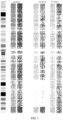
- the phasing results of the samples of the balanced translocation family detected using the method of the present application in Example 1 are shown in FIG. 1 .
- the blank region on the long arm of the CYJ01E chromosome is the region of unbalanced translocation, and the starting and ending sites of the region are the breakpoints; the yellow block on the long arm of the CYJ02E chromosome crosses over the breakpoints, and thus the CYJ02E is a balanced translocation carrier.
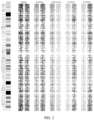
- the results of the routine PGH family-based linkage analysis method in Comparative Example 1 are shown in FIG. 2 .
- the results of the method of the present application in Example 1 are compared with the results of the routine PGH family-based linkage analysis method in Comparative Example 1, and the comparison results are shown in Table 3.
- the karyotype results of the female and the mother of the female in the balanced translocation family are balanced translocation carriers.
- the detection results of the method of the present application are consistent with the results of the karyotypes and PGH results of the embryos, and the results of breakpoints of the carrier are consistent with the PGH results of the embryos, indicating that the present application can construct haplotypes independently of probands or references and can be effectively applied to genetic screening.
- the phasing results of the single-gene disorder family samples detected by the method of the present application in Example 2 are shown in FIG. 3 .
- the results of the routine PGH family-based linkage analysis method in Comparative Example 2 are shown in FIG. 4 .
- the results of the method of the present application in Example 1 are compared with the results of the routine PGH family-based linkage analysis method in Comparative Example 1 (Table 4).
- the single sample haplotype phasing results of the method of the present application are consistent with the PGH phasing results, and the progenies all carry alpha-thalassemia mutation.
- Table 4 Family sample ID Relationship Routine PGH family-based linkage analysis results Detection results of the method of the present application Thalassemia family-FO Father -- SEA / ⁇ -- SEA / ⁇ Thalassemia family-MO Mother ⁇ / ⁇ , ⁇ N/ ⁇ N ⁇ / ⁇ , ⁇ N/ ⁇ N Thalassemia family-R1 Reference --SEA/ ⁇ , ⁇ N/ ⁇ N --SEA/ ⁇ , ⁇ N/ ⁇ N Thalassemia family progeny-S1 Embryo --SEA/ ⁇ , ⁇ N/ ⁇ N --SEA/ ⁇ , ⁇ N/ ⁇ N Thalassemia family progeny-S2 Embryo --SEA/ ⁇ , ⁇ N/ ⁇ N --SEA/ ⁇ , ⁇ N/ ⁇ N
- the present application provides a haplotype construction method that does not depend on a proband or a reference. Only a pathogenic chromosome variation carrier is subjected to long fragment sequencing to construct a haplotype of the carrier. Therefore, the method can be effectively applied to genetic screening, accurate haplotyping of the whole chromosome can be achieved by performing SNP linkage analysis and correction on embryos, and then whether the embryo carries a pathogenic mutation can be determined, thereby helping to screen normal embryos for patients who cannot receive conventional PGT-M/PGT-SR treatment in the case where a haplotype cannot be constructed due to various factors such as the lack of a proband sample, the presence of a de novo mutation or the existence of a large number of homologous regions due to the consanguineous marriage.
Landscapes
- Life Sciences & Earth Sciences (AREA)
- Chemical & Material Sciences (AREA)
- Health & Medical Sciences (AREA)
- Engineering & Computer Science (AREA)
- Physics & Mathematics (AREA)
- Bioinformatics & Cheminformatics (AREA)
- Proteomics, Peptides & Aminoacids (AREA)
- Analytical Chemistry (AREA)
- Biotechnology (AREA)
- Biophysics (AREA)
- General Health & Medical Sciences (AREA)
- Organic Chemistry (AREA)
- Theoretical Computer Science (AREA)
- Genetics & Genomics (AREA)
- Bioinformatics & Computational Biology (AREA)
- Medical Informatics (AREA)
- Spectroscopy & Molecular Physics (AREA)
- Molecular Biology (AREA)
- Evolutionary Biology (AREA)
- Zoology (AREA)
- Wood Science & Technology (AREA)
- Microbiology (AREA)
- Immunology (AREA)
- Biochemistry (AREA)
- General Engineering & Computer Science (AREA)
- Chemical Kinetics & Catalysis (AREA)
- Measuring Or Testing Involving Enzymes Or Micro-Organisms (AREA)
Applications Claiming Priority (2)
| Application Number | Priority Date | Filing Date | Title |
|---|---|---|---|
| CN202210935337.6A CN114999570B (zh) | 2022-08-05 | 2022-08-05 | 一种不依赖于先证者的单体型构建方法 |
| PCT/CN2023/109731 WO2024027569A1 (zh) | 2022-08-05 | 2023-07-28 | 一种不依赖于先证者的单体型构建方法 |
Publications (2)
| Publication Number | Publication Date |
|---|---|
| EP4524973A1 true EP4524973A1 (de) | 2025-03-19 |
| EP4524973A4 EP4524973A4 (de) | 2026-04-22 |
Family
ID=83022850
Family Applications (1)
| Application Number | Title | Priority Date | Filing Date |
|---|---|---|---|
| EP23849277.1A Pending EP4524973A4 (de) | 2022-08-05 | 2023-07-28 | Probandunabhängiges haplotypkonstruktionsverfahren |
Country Status (4)
| Country | Link |
|---|---|
| US (1) | US20250384961A1 (de) |
| EP (1) | EP4524973A4 (de) |
| CN (1) | CN114999570B (de) |
| WO (1) | WO2024027569A1 (de) |
Families Citing this family (9)
| Publication number | Priority date | Publication date | Assignee | Title |
|---|---|---|---|---|
| CN114999570B (zh) * | 2022-08-05 | 2023-06-23 | 苏州贝康医疗器械有限公司 | 一种不依赖于先证者的单体型构建方法 |
| WO2024138733A1 (zh) * | 2022-12-30 | 2024-07-04 | 深圳华大生命科学研究院 | 基因组结构变异的检测方法、系统、设备及介质 |
| CN115798580B (zh) * | 2023-02-10 | 2023-11-07 | 北京中仪康卫医疗器械有限公司 | 基于基因型填补和低深度测序的一体化基因组分析方法 |
| CN116665774A (zh) * | 2023-04-24 | 2023-08-29 | 苏州贝康医疗器械有限公司 | 一种家系全基因组单体型连锁分析方法、装置、存储介质和设备 |
| CN117230175B (zh) * | 2023-06-21 | 2024-05-28 | 广州序源医学科技有限公司 | 一种基于三代测序的胚胎植入前遗传学检测方法 |
| CN116804220A (zh) * | 2023-08-18 | 2023-09-26 | 北京贝瑞和康生物技术有限公司 | 一种检测致病基因双拷贝染色体连锁携带的方法 |
| CN117577178B (zh) * | 2024-01-16 | 2024-03-26 | 山东大学 | 一种结构变异精确断裂信息的检测方法、系统及其应用 |
| CN118380053A (zh) * | 2024-06-24 | 2024-07-23 | 首都医科大学附属北京天坛医院 | 一种筛选髓母细胞瘤新遗传易感基因的方法 |
| CN119776515A (zh) * | 2024-12-25 | 2025-04-08 | 云南省第一人民医院 | 一种利用胚胎培养液确定染色体拷贝数及特定基因携带链的方法 |
Family Cites Families (8)
| Publication number | Priority date | Publication date | Assignee | Title |
|---|---|---|---|---|
| CN108866172B (zh) * | 2017-05-15 | 2021-11-16 | 深圳华大基因股份有限公司 | 基于长片段dna环化和三代测序的无创产前单体型构建方法 |
| CN108070648B (zh) * | 2018-01-25 | 2022-07-15 | 广州精科医学检验所有限公司 | 确定胎儿脊髓性肌肉萎缩症基因单体型的方法及系统 |
| CN110628891B (zh) * | 2018-06-25 | 2024-01-09 | 深圳华大智造科技股份有限公司 | 一种对胚胎进行基因异常筛查的方法 |
| WO2021232388A1 (zh) * | 2020-05-22 | 2021-11-25 | 深圳华大智造科技有限公司 | 确定胚胎细胞染色体中预定位点碱基类型的方法及其应用 |
| CN113436680B (zh) * | 2020-05-22 | 2022-03-25 | 复旦大学附属妇产科医院 | 一种同时鉴别胚胎染色体结构异常和致病基因携带状态的方法 |
| US11814682B2 (en) * | 2020-10-29 | 2023-11-14 | Reprobiogen Inc. | Method for preimplantation genetic screening of embryos for detection of structural rearrangements |
| CN113345518A (zh) * | 2021-08-02 | 2021-09-03 | 北京嘉宝仁和医疗科技有限公司 | 一种不依赖先证者或参照者的单基因病的单体型构建方法 |
| CN114999570B (zh) * | 2022-08-05 | 2023-06-23 | 苏州贝康医疗器械有限公司 | 一种不依赖于先证者的单体型构建方法 |
-
2022
- 2022-08-05 CN CN202210935337.6A patent/CN114999570B/zh active Active
-
2023
- 2023-07-28 US US18/877,351 patent/US20250384961A1/en active Pending
- 2023-07-28 WO PCT/CN2023/109731 patent/WO2024027569A1/zh not_active Ceased
- 2023-07-28 EP EP23849277.1A patent/EP4524973A4/de active Pending
Also Published As
| Publication number | Publication date |
|---|---|
| EP4524973A4 (de) | 2026-04-22 |
| CN114999570A (zh) | 2022-09-02 |
| WO2024027569A1 (zh) | 2024-02-08 |
| CN114999570B (zh) | 2023-06-23 |
| US20250384961A1 (en) | 2025-12-18 |
Similar Documents
| Publication | Publication Date | Title |
|---|---|---|
| EP4524973A1 (de) | Probandunabhängiges haplotypkonstruktionsverfahren | |
| CN105543339B (zh) | 一种同时完成基因位点、染色体及连锁分析的方法 | |
| Vrettou et al. | Prenatal and preimplantation diagnosis of hemoglobinopathies | |
| Vialard et al. | Prenatal BACs‐on‐BeadsTM: the prospective experience of five prenatal diagnosis laboratories | |
| CN110349631B (zh) | 确定子代对象的单体型的分析方法和装置 | |
| US20040137452A1 (en) | Diagnostic test | |
| Vestergaard et al. | Prenatal diagnosis: array comparative genomic hybridization in fetuses with abnormal sonographic findings | |
| CN114480667A (zh) | 一种通过孕妇外周血游离dna检测胎儿染色体平衡性结构变异的方法 | |
| Butler | Benefits and limitations of prenatal screening for Prader–Willi syndrome | |
| WO2015042980A1 (zh) | 确定染色体预定区域中snp信息的方法、系统和计算机可读介质 | |
| Mamas et al. | Hemoglobinopathies and preimplantation diagnostics | |
| EP2978860B1 (de) | Beurteilung des risikos von aneuploidie | |
| CN117925820B (zh) | 一种用于胚胎植入前变异检测的方法 | |
| CN111172248B (zh) | 一种基于片段分析技术验证拷贝数变异的通用试剂盒 | |
| US20180119210A1 (en) | Fetal haplotype identification | |
| KR101890810B1 (ko) | 피코액적 디지탈 pcr을 이용한 상염색체 열성질환의 비침습적 산전 진단 방법 및 그를 위한 키트 | |
| CN116218976B (zh) | 一种检测人类胚胎染色体罗氏易位的引物组合以及方法 | |
| CN111073975B (zh) | 一种用于基因snp位点检测的探针体系及其应用 | |
| Fryer | Genetics of fetal anomalies | |
| Zhang et al. | Cost-effective and Flexible Preimplantation Genetic Testing (PGT) Using Adaptive Sampling-based Targeted Nanopore Sequencing (ASTN-seq) | |
| He et al. | Haplotype analysis in Preimplantation Genetic Testing for Special Monogenic Diseases Cases based on Nanopore Sequencing | |
| Cervero et al. | Preimplantation Genetic Diagnosis for Single Gene Disorders | |
| Zhang et al. | Cost-effective and flexible preimplantation genetic testing (PGT) by nanopore adaptive sampling | |
| Botha | Investigating the Genetic Factors for Gestational Diabetes Mellitus (GDM) in a Black South African Cohort | |
| CN118291596A (zh) | 一种胚胎植入前等位基因分型筛选的方法 |
Legal Events
| Date | Code | Title | Description |
|---|---|---|---|
| STAA | Information on the status of an ep patent application or granted ep patent |
Free format text: STATUS: THE INTERNATIONAL PUBLICATION HAS BEEN MADE |
|
| PUAI | Public reference made under article 153(3) epc to a published international application that has entered the european phase |
Free format text: ORIGINAL CODE: 0009012 |
|
| STAA | Information on the status of an ep patent application or granted ep patent |
Free format text: STATUS: REQUEST FOR EXAMINATION WAS MADE |
|
| 17P | Request for examination filed |
Effective date: 20241210 |
|
| AK | Designated contracting states |
Kind code of ref document: A1 Designated state(s): AL AT BE BG CH CY CZ DE DK EE ES FI FR GB GR HR HU IE IS IT LI LT LU LV MC ME MK MT NL NO PL PT RO RS SE SI SK SM TR |
|
| DAV | Request for validation of the european patent (deleted) | ||
| DAX | Request for extension of the european patent (deleted) | ||
| A4 | Supplementary search report drawn up and despatched |
Effective date: 20260318 |
|
| RIC1 | Information provided on ipc code assigned before grant |
Ipc: G16B 20/30 20190101AFI20260313BHEP Ipc: C12Q 1/6806 20180101ALI20260313BHEP |