EP4521672A2 - Verfahren und vorrichtung zum empfangen eines gemeinsam genutzten physikalischen downlink-kanals - Google Patents
Verfahren und vorrichtung zum empfangen eines gemeinsam genutzten physikalischen downlink-kanals Download PDFInfo
- Publication number
- EP4521672A2 EP4521672A2 EP24219638.4A EP24219638A EP4521672A2 EP 4521672 A2 EP4521672 A2 EP 4521672A2 EP 24219638 A EP24219638 A EP 24219638A EP 4521672 A2 EP4521672 A2 EP 4521672A2
- Authority
- EP
- European Patent Office
- Prior art keywords
- pdsch
- time domain
- domain resource
- resource allocation
- urllc
- Prior art date
- Legal status (The legal status is an assumption and is not a legal conclusion. Google has not performed a legal analysis and makes no representation as to the accuracy of the status listed.)
- Pending
Links
Images


Classifications
-
- H—ELECTRICITY
- H04—ELECTRIC COMMUNICATION TECHNIQUE
- H04W—WIRELESS COMMUNICATION NETWORKS
- H04W72/00—Local resource management
- H04W72/12—Wireless traffic scheduling
- H04W72/1263—Mapping of traffic onto schedule, e.g. scheduled allocation or multiplexing of flows
- H04W72/1273—Mapping of traffic onto schedule, e.g. scheduled allocation or multiplexing of flows of downlink data flows
-
- H—ELECTRICITY
- H04—ELECTRIC COMMUNICATION TECHNIQUE
- H04L—TRANSMISSION OF DIGITAL INFORMATION, e.g. TELEGRAPHIC COMMUNICATION
- H04L1/00—Arrangements for detecting or preventing errors in the information received
- H04L1/08—Arrangements for detecting or preventing errors in the information received by repeating transmission, e.g. Verdan system
-
- H—ELECTRICITY
- H04—ELECTRIC COMMUNICATION TECHNIQUE
- H04L—TRANSMISSION OF DIGITAL INFORMATION, e.g. TELEGRAPHIC COMMUNICATION
- H04L5/00—Arrangements affording multiple use of the transmission path
- H04L5/003—Arrangements for allocating sub-channels of the transmission path
- H04L5/0032—Distributed allocation, i.e. involving a plurality of allocating devices, each making partial allocation
- H04L5/0035—Resource allocation in a cooperative multipoint environment
-
- H—ELECTRICITY
- H04—ELECTRIC COMMUNICATION TECHNIQUE
- H04L—TRANSMISSION OF DIGITAL INFORMATION, e.g. TELEGRAPHIC COMMUNICATION
- H04L5/00—Arrangements affording multiple use of the transmission path
- H04L5/003—Arrangements for allocating sub-channels of the transmission path
- H04L5/0044—Allocation of payload; Allocation of data channels, e.g. PDSCH or PUSCH
-
- H—ELECTRICITY
- H04—ELECTRIC COMMUNICATION TECHNIQUE
- H04L—TRANSMISSION OF DIGITAL INFORMATION, e.g. TELEGRAPHIC COMMUNICATION
- H04L5/00—Arrangements affording multiple use of the transmission path
- H04L5/003—Arrangements for allocating sub-channels of the transmission path
- H04L5/0053—Allocation of signalling, i.e. of overhead other than pilot signals
-
- H—ELECTRICITY
- H04—ELECTRIC COMMUNICATION TECHNIQUE
- H04L—TRANSMISSION OF DIGITAL INFORMATION, e.g. TELEGRAPHIC COMMUNICATION
- H04L5/00—Arrangements affording multiple use of the transmission path
- H04L5/0091—Signalling for the administration of the divided path, e.g. signalling of configuration information
- H04L5/0094—Indication of how sub-channels of the path are allocated
-
- H—ELECTRICITY
- H04—ELECTRIC COMMUNICATION TECHNIQUE
- H04W—WIRELESS COMMUNICATION NETWORKS
- H04W72/00—Local resource management
- H04W72/04—Wireless resource allocation
- H04W72/044—Wireless resource allocation based on the type of the allocated resource
- H04W72/0446—Resources in time domain, e.g. slots or frames
-
- H—ELECTRICITY
- H04—ELECTRIC COMMUNICATION TECHNIQUE
- H04W—WIRELESS COMMUNICATION NETWORKS
- H04W72/00—Local resource management
- H04W72/20—Control channels or signalling for resource management
- H04W72/23—Control channels or signalling for resource management in the downlink direction of a wireless link, i.e. towards a terminal
- H04W72/232—Control channels or signalling for resource management in the downlink direction of a wireless link, i.e. towards a terminal the control data signalling from the physical layer, e.g. DCI signalling
-
- H—ELECTRICITY
- H04—ELECTRIC COMMUNICATION TECHNIQUE
- H04W—WIRELESS COMMUNICATION NETWORKS
- H04W72/00—Local resource management
- H04W72/20—Control channels or signalling for resource management
- H04W72/23—Control channels or signalling for resource management in the downlink direction of a wireless link, i.e. towards a terminal
Definitions
- Embodiments of the present disclosure generally relate to communication technologies, and more particularly, to a method and device for receiving a physical downlink shared channel.
- the 5th generation (5G) mobile communication system supports aggregated transmissions of Physical Downlink Shared Channel (PDSCH) and Ultra-Reliable Low-Latency Communication (URLLC) repetitions.
- PDSCH Physical Downlink Shared Channel
- URLLC Ultra-Reliable Low-Latency Communication
- a network device can retransmit the PDSCH in multiple consecutive slots through the same transmission/reception point (TRP), and the number of PDSCH retransmissions is indicated by higher layer signaling.
- TRP transmission/reception point
- URLLC repetitions a network device can retransmit the PDSCH in multiple slots, the network device can use different TRPs to retransmit the PDSCH in the multiple slots, and the number of retransmissions is determined by DCI signaling.
- the network device configures the above-mentioned two transmission methods for a terminal device at the same time, the two transmission methods may conflict, resulting in that the terminal cannot determine which method to use to receive the PDSCH.
- Embodiments of the present disclosure provide a method and device for receiving a PDSCH, which can avoid the conflict between the above-mentioned two transmission methods.
- a method for receiving a PDSCH including:
- the terminal device may determine the specific time domain position of the PDSCH in the slot according to the first time domain resource allocation. Based on different situations of the first time domain resource allocation, the terminal device can choose to use the PDSCH aggregation factor or not to use the PDSCH aggregation factor when receiving at least one PDSCH, thereby avoiding the conflict between aggregated PDSCH transmissions and URLLC repetitions.
- a method for receiving a PDSCH including:
- the not expecting to receive the PDSCH aggregation factor may be interpreted as: when the PDSCH aggregation factor is received, the terminal device determines not to receive the PDSCH; or the terminal device does not expect to be configured with the URLLC repetition number and the PDSCH aggregation factor at the same time. Therefore, the method can avoid the conflict between the aggregated PDSCH transmissions and URLLC repetitions.
- a device for receiving a PDSCH configured to realize the functions corresponding to the method according to the first aspect or the second aspect.
- the function can be realized by hardware, or by hardware executing corresponding software.
- the hardware or software includes one or more units or modules corresponding to the above-mentioned functions.
- the device is a terminal device or a chip.
- the device may include a processing unit and a transceiving unit.
- the processing unit may be a processor
- the transceiving unit may be a transceiver.
- the terminal device may further include a storage unit, and the storage unit may be a memory.
- the storage unit is used to store instructions, and the processing unit executes the instructions stored in the storage unit, so that the terminal device performs the method described in the first aspect or the second aspect.
- the processing unit may be a processor
- the transceiving unit may be an input/output interface, a pin or a circuit, etc.
- the processing unit executes the instructions stored in a storage unit to cause the terminal device including the chip to perform the method described in the first aspect or the second aspect.
- the storage unit may be a storage unit (for example, a register, a cache, etc.) in the chip, or a storage unit (for example, read only memory, random access memory, etc.) of the terminal device located outside the chip.
- a computer-readable storage medium configured to store a computer program.
- the processor is caused to perform the method according to the first or second aspect.
- a computer program product including computer program codes.
- the processor is caused to perform the method according to the first aspect or the second aspect.
- a computer program When the computer program is run on a computer, the computer is caused to perform the method according to the first aspect or the second aspect.
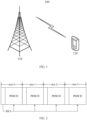
- FIG. 1 is a schematic diagram of a communication system suitable for embodiments of the present disclosure.
- the communication system 100 includes a network device 110 and a terminal device 120.
- the terminal device 120 communicates with the network device 110 through electromagnetic waves.
- the terminal device 120 may include various handheld devices with wireless communication functions, vehicle-mounted devices, wearable devices, computing devices, or other processing devices connected to a wireless modem, for example, user equipment (UE) defined in 3rd Generation Partnership Project (3GPP), mobile station (MS), soft terminal, home gateway, set-top box, etc.
- UE user equipment
- 3GPP 3rd Generation Partnership Project
- MS mobile station
- soft terminal home gateway
- set-top box etc.
- the network device 110 may be a base station defined in 3GPP, for example, a base station (gNB) in a 5G mobile communication system.
- the network device 110 may be a non-3GPP access network device, such as an access gateway (AG).
- AG access gateway
- the network device 110 may be a relay station, an access point, a vehicle-mounted device, a wearable device, or other types of devices.
- the communication system 100 is only an example, and the communication system applicable to embodiments of the present disclosure is not limited to this.
- the number of network devices and terminal devices included in the communication system 100 may be other numbers.
- the PDSCH in slot 0 and the PDSCH in slot 1 occupy the same time domain resources, which can be understood as: the serial numbers of symbols occupied by the PDSCH in slot 0 are the same as the serial numbers of symbols occupied by the PDSCH in slot 1.
- the network device can configure the URLLC repetition number (URLLCRepNum) for the terminal device.
- the network device can pre-configure a time domain resource allocation list (pdsch-TimeDomainAllocationList) through RRC signaling.
- the list inlcudes one or more PDSCH time domain resource allocations (PSDCH-TimeDomainResourceAllocation).
- the PDSCH time domain resource allocation is an RRC parameter, which can include the URLLC repetition number.
- the terminal device can, according to a Time Domain Resource Allocation) (TDRA) field in the DCI, determines one time domain resource allocation from the time domain resource allocation list.
- TDRA Time Domain Resource Allocation
- the terminal device does not need to repeatedly receive the PDSCH. If the one time domain resource allocation determined by the terminal device from the time domain resource list includes the URLLC repetition number, the terminal device repeatedly receives the PDSCH according to the URLLC repetition number. In the above-mentioned time domain resource allocation list, the remaining parameters other than the URLLC repetition number can be used in the aggregated PDSCH transmissions.
- the network device needs to indicate multiple Transmission Configuration Indicator (TCI) states, and each TCI state is used for repetition of a TRP.
- TCI Transmission Configuration Indicator
- FIG. 3 is a schematic diagram showing a URLLC repetition according to an embodiment of the present disclosure.
- the number of URLLC repetitions determined by the terminal device is 4, and the network device schedules the terminal device to receive the PDSCH in slot 0 through the DCI.
- the terminal device After receiving the DCI, the terminal device, starting from slot 0, receives the PDSCH in 4 consecutive slots, that is, the terminal device receives the PDSCH in slot 0, slot 1, slot 2, and slot 3.
- the frequency domain resources and time domain resources used by the 4 PDSCHs may be the same or different.
- the 4 PDSCHs using the same time domain resources means that the time domain resources occupied by the 4 PDSCHs in the slots are the same.
- the PDSCH in slot 0 and the PDSCH in slot 1 occupy the same time domain resources, which can be understood as: the serial numbers of symbols occupied by the PDSCH in slot 0 are the same as the serial numbers of symbols occupied by the PDSCH in slot 1.
- DCI can indicate two TCI states and one redundancy version (RV).
- the two TCI states are TCI state 0 and TCI state 1.
- the RV is RV0.
- TCI state 0 corresponds to TRP1
- TCI state 1 corresponds to TRP2, and RV0 corresponds to the PDSCH in slot 0.
- the terminal device receives PDSCH from TRP1 in slot 0 based on the RV0 and TCI state 0.
- the terminal device may determine that the redundancy version in slot 1 is RV2 according to a preset rule, and receive the PDSCH from TRP1 based on RV2 and TCI state 0. Subsequently, the terminal device may receive the PDSCH from TRP2 based on RV0 and TCI state 1, and receive the PDSCH from TRP2 based on RV2 and TCI state 1.
- the terminal device can send an acknowledgement (ACK) or a negative acknowledgement (NACK) to TRP1, indicating the receptions of the PDSCH which is received for four times.
- ACK acknowledgement
- NACK negative acknowledgement
- the method includes the following steps.
- a PDSCH aggregation factor and a first time domain resource allocation are determined.
- the first time domain resource allocation is a time domain resource allocation list configured by higher layer signaling, or the first time domain resource allocation is a time domain resource allocation determined from a time domain resource allocation list configured by higher layer signaling according to DCI.
- the method shown in FIG. 5 may be performed by a terminal device or a chip in the terminal device.
- the higher layer signaling is, for example, RRC signaling.
- the method for the terminal device to determine the first time domain resource allocation is as shown in the above examples related to time domain resource allocations.
- first and second are used to distinguish different ones of objects of the same type.
- first time domain resource allocation and “second time domain resource allocation” are two different time domain resource allocations, and there is no other restrictions on the meaning of the two terms.
- the terminal device After determining the PDSCH aggregation factor and the first time domain resource allocation, the terminal device can perform the following step.
- At least one PDSCH is received according to the PDSCH aggregation factor and/or the first time domain resource allocation.
- the terminal device may determine the specific time domain position of the PDSCH in the slot according to the first time domain resource allocation. In addition, based on different situations of the first time domain resource allocation, the terminal device can choose to use the PDSCH aggregation factor or not to use the PDSCH aggregation factor when receiving at least one PDSCH, thereby avoiding the conflict between the aggregated PDSCH transmissions and URLLC repetitions.
- the at least one PDSCH refers to one or more PDSCHs that transmits the same data, or the at least one PDSCH is referred to as repetitions of the same PDSCH.
- Method 1 the first time domain resource allocation is a time domain resource allocation list. Case 1-1 and Case 1-2 below are two exemplary embodiments of Method 1.
- Case 1-1 at least one time domain resource allocation in the time domain resource allocation list includes the URLLC repetition number.
- the terminal device receives one PDSCH in one slot, and the slot may be determined based on the DCI indicating the second time domain resource allocation.
- each PDSCH in the at least one PDSCH received by the terminal device includes one or two data streams.
- One data stream is, for example, data corresponding to a Demodulation Reference Signal (DMRS) port.
- DMRS Demodulation Reference Signal
- the DCI used for scheduling the at least one PDSCH may indicate at most two TCI states, that is, the DCI used for scheduling the at least one PDSCH may indicate one TCI state, or may indicate two TCI states, or may not indicate a TCI state.
- the terminal device receives the at least one PDSCH in M consecutive slots, where M is a PDSCH aggregation factor, and M is an integer greater than 1.
- the at least one PDSCH received by the terminal device includes one data stream.
- the DCI used for scheduling the at least one PDSCH may indicate at most one TCI state, that is, the DCI used for scheduling the at least one PDSCH may indicate one TCI state, or may not indicate a TCI state.
- Method 2 the first time domain resource allocation is a time domain resource allocation determined by the terminal device from a time domain resource allocation list configured by higher layer signaling according to DCI.
- Case 2-1 and Case 2-2 below are two exemplary embodiments of Method 2.
- Case 2-1 the first time domain resource allocation includes the URLLC repetition number.
- the terminal device may receive at least one PDSCH in N consecutive slots, where N is the URLLC repetition number included in the first time domain resource allocation, and N is a positive integer.
- N may be an integer greater than 1.
- N may be an integer greater than or equal to 1.
- the at least one PDSCH includes one or two data streams.
- the DCI for scheduling the at least one PDSCH indicates at most two TCI states, that is, the DCI for scheduling the at least one PDSCH may indicate one TCI state, or may indicate two TCI states, or may not indicate a TCI state.
- Case 2-2 the first time domain resource allocation does not include the URLLC repetition number.
- the terminal device may receive at least one PDSCH in M consecutive slots, where M is a PDSCH aggregation factor, and M is an integer greater than 1.
- the at least one PDSCH includes one data stream.
- the DCI used for scheduling the at least one PDSCH indicates at most one TCI state.
- Method 3 the first time domain resource allocation is a time domain resource allocation determined by the terminal device from a time domain resource allocation list configured by higher layer signaling according to DCI.
- the following Case 3-1, Case 3-2, and Case 3-3 are three exemplary embodiments of Method 3.
- Case 3-1 the first time domain resource allocation includes the URLLC repetition number, and the URLLC repetition number is greater than one.
- the terminal device may receive at least one PDSCH in N consecutive slots, where N is the URLLC repetition number included in the first time domain resource allocation, and N is a positive integer.
- the at least one PDSCH includes one or two data streams.
- the DCI for scheduling the at least one PDSCH indicates at most two TCI states, that is, the DCI for scheduling the at least one PDSCH may indicate one TCI state, or may indicate two TCI states, or may not indicate a TCI state.
- Case 3-2 the first time domain resource allocation includes the URLLC repetition number, and the URLLC repetition number is equal to one.
- the terminal device may receive at least one PDSCH in M consecutive slots, where M is a PDSCH aggregation factor, and M is an integer greater than 1.
- the at least one PDSCH includes one data stream.
- the DCI used for scheduling the at least one PDSCH indicates at most one TCI state.
- Case 3-3 the first time domain resource allocation does not include the URLLC repetition number.
- the terminal device can adopt the same processing method as in Case 3-2.
- the above has introduced examples of how to receive the PDSCH when the terminal device receives the PDSCH aggregation factor and the first time domain resource allocation.
- the terminal device receives the time domain resource allocation list for PDSCH transmissions, and when at least one time domain resource allocation in the time domain resource allocation list includes the URLLC repetition number, the terminal device can perform the method shown in FIG. 6 .
- a time domain resource allocation list used for PDSCH transmissions is received. At least one time domain resource allocation in the time domain resource allocation list includes the URLLC repetition number.
- the network device has sent the URLLC repetition number for PDSCH transmissions. If the network device also sends the PDSCH aggregation factor, there may be conflict between the aggregated PDSCH transmissions and the URLLC repetitions. Therefore, the terminal device can perform the following steps.
- the terminal device does not expect to receive the PDSCH aggregation factor.
- the terminal device not expecting to receive the PDSCH aggregation factor may be interpreted as: when the PDSCH aggregation factor is received, the terminal device determines not to receive the PDSCH; or the terminal device does not expect to be configured with the URLLC repetition number and the PDSCH aggregation factor at the same time.
- the network device does not send the PDSCH aggregation factor after sending the URLLC repetition number for PDSCH transmissions; or the network device does not configure the URLLC repetition number and the PDSCH aggregation factor at the same time.
- an apparatus for receiving a PDSCH includes hardware structures and/or software modules corresponding to the functions.
- an apparatus for receiving a PDSCH includes hardware structures and/or software modules corresponding to the functions.
- embodiments of the present disclosure can be implemented in the form of hardware or a combination of hardware and computer software. Whether a certain function is implemented by hardware or hardware driven by computer software depends on the specific application and design constraint conditions of the technical solutions, and those skilled in this art can use different methods for each specific application to implement the described functions, but such implementations should not be considered as beyond the scope of the present disclosure.
- the functional units in the device for receiving the PDSCH may be divided according to the foregoing method embodiments. For example, functions may be divided into functional units, or two or more functions may be integrated into one processing unit.
- the functional units can be implemented in the form of hardware or software functional units. It should be noted that the division of units in the present disclosure is illustrative, and is only a logical function division, and there may be other division methods in actual implementations.
- FIG. 7 is a schematic structural diagram of a device for receiving a PDSCH according to an embodiment of the present disclosure.
- the device 700 includes a processing unit 710 and a receiving unit 720.
- the receiving unit 720 can perform receiving steps under control of the processing unit 710.
- the processing unit 710 is configured to determine a PDSCH aggregation factor and a first time domain resource allocation, wherein the first time domain resource allocation is a time domain resource allocation list configured by higher layer signaling, or the first time domain resource allocation is a time domain resource allocation determined from a time domain resource allocation list configured by higher layer signaling according to DCI.
- the receiving unit 720 is configured to receive at least one PDSCH according to the PDSCH aggregation factor and/or the first time domain resource allocation.
- the processing unit 710 is further configured to:
- the receiving unit 720 when the second time domain resource allocation includes the URLLC repetition number, is configured to: receive the at least one PDSCH in N consecutive slots, wherein N is the URLLC repetition number included in the second time domain resource allocation, and N is a positive integer.
- each PDSCH in the at least one PDSCH includes one or two data streams.
- the DCI used for scheduling the at least one PDSCH indicates at most two TCI states.
- the PDSCH aggregation factor is not used for receiving the at least one PDSCH.
- the receiving unit 720 when the first time domain resource allocation is the time domain resource allocation list, the receiving unit 720 is configured to: when none of time domain resource allocations in the time domain resource allocation list includes a URLLC repetition number, receive the at least one PDSCH in M consecutive slots according to the PDSCH aggregation factor M, wherein M is the PDSCH aggregation factor, and M is an integer greater than 1.
- each PDSCH in the at least one PDSCH includes one data stream.
- the DCI used for scheduling the at least one PDSCH indicates at most one TCI state.
- the receiving unit 720 is configured to:
- each PDSCH in the at least one PDSCH includes one or two data streams.
- the DCI used for scheduling the at least one PDSCH indicates at most two TCI states.
- the PDSCH aggregation factor is not used for receiving the at least one PDSCH.
- each PDSCH in the at least one PDSCH includes one data stream.
- the DCI used for scheduling the at least one PDSCH indicates at most one TCI state.
- the receiving unit 720 is configured to:
- each PDSCH in the at least one PDSCH includes one or two data streams.
- the DCI used for scheduling the at least one PDSCH indicates at most two TCI states.
- the PDSCH aggregation factor is not used for receiving the at least one PDSCH.
- each PDSCH in the at least one PDSCH includes one data stream.
- the DCI used for scheduling the at least one PDSCH indicates at most one TCI state.
- the device 700 performs the method for receiving the PDSCH and the beneficial effects, reference may be made to the related description in the method embodiments.
- FIG. 8 is a schematic structural diagram of another device for receiving a PDSCH according to an embodiment of the present disclosure.
- the device 800 includes a processing unit 810 and a receiving unit 820.
- the receiving unit 820 can perform receiving steps under control of the processing unit 810.
- the receiving unit 820 is configured to receive a time domain resource allocation list for a PDSCH transmission, wherein at least one time domain resource allocation in the time domain resource allocation list includes a URLLC repetition number.
- the processing unit 810 is configured to: when the PDSCH aggregation factor is received by the receiving unit 820, determine not to receive the PDSCH.
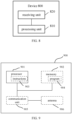
- FIG. 9 shows a schematic structural diagram of a device for receiving a PDSCH according to an embodiment of the present disclosure.
- the dotted lines in FIG. 9 indicate that the units or the modules are optional.
- the device 900 may be used to implement the methods described in the foregoing method embodiments.
- the device 900 may be a terminal device or a chip.
- the device 900 includes one or more processors 901, and the one or more processors 901 can support the device 900 to implement the methods in the method embodiments corresponding to FIGS. 2 to 6 .
- the processor 901 may be a general-purpose processor or a special-purpose processor.
- the processor 901 may be a Central Processing Unit (CPU).
- the CPU can be used to control the device 900 to execute software programs, and process data of the software programs.
- the device 900 may further include a communication unit 905 to implement signal input (reception) and output (transmission).
- the device 900 may be a chip, and the communication unit 905 may be an input and/or output circuit of the chip, or the communication unit 905 may be a communication interface of the chip, and the chip may be used as a constituting element of a terminal device or a network device or other wireless communication device.
- the device 900 may be a terminal device, and the communication unit 905 may be a transceiver of the terminal device, or the communication unit 905 may be a transceiver circuit of the terminal device.
- the device 900 may include one or more memories 902, on which a program 904 is stored.
- the program 904 can be run by the processor 901 to generate instructions 903, so that the processor 901 performs the methods described in the foregoing method embodiments according to the instructions 903.
- data may also be stored in the memory 902.
- the processor 901 may read data stored in the memory 902. The data may be stored at the same storage address as the program 904, or the data may be stored at a storage address different from the storage address of the program 904.
- the processor 901 and the memory 902 may be separately provided or integrated together, for example, the processor 901 and the memory 902 may be integrated on a system on chip (SOC) of a terminal device.
- SOC system on chip
- the device 900 may further include an antenna 906.
- the communication unit 905 is used to implement the transceiving function of the device 900 through the antenna 906.
- the processor 901 may be a CPU, a Digital Signal Processor (DSP), an Application Specific Integrated Circuit (ASIC), a Field Programmable Gate Array (FPGA) or other programmable logic devices, such as, discrete gates, transistor logic devices, or discrete hardware components.
- DSP Digital Signal Processor
- ASIC Application Specific Integrated Circuit
- FPGA Field Programmable Gate Array
- An embodiment of the present disclosure further provides a computer program product.
- the processor 901 is caused to perform the method described in any method embodiment of the present disclosure.
- the computer program product may be stored in the memory 902, for example, may be the program 904.
- the program 904 is finally converted into an executable object file that can be executed by the processor 901 through processes such as preprocessing, compilation, assembly, and linking.
- An embodiment of the present disclosure further provides a computer-readable storage medium on which a computer program is stored, and when the computer program is executed by a computer, the computer is caused to perform the method described in any method embodiment in the present disclosure.
- the computer program can be a high-level language program or an executable target program.
- the computer-readable storage medium is, for example, the memory 902.
- the memory 902 can be a volatile memory or a non-volatile memory, or can include both volatile memory and non-volatile memory.
- the non-volatile memory can be a Read-Only Memory (ROM), a Programmable ROM (PROM), an Erasable PROM (EPROM), an Electrically EPROM (EEPROM) or a flash memory.
- the volatile memory can be a Random Access Memory (RAM) that serves as an external cache.
- RAMs can be used, for example, a Static RAM (SRAM), a Dynamic RAM (DRAM), a Synchronous DRAM (SDRAM), a Double Data Rate SDRAM (DDR SDRAM), an Enhanced SDRAM (ESDRAM), a Synchlink DRAM (SLDRAM) and a Direct Rambus RAM (DR RAM).
- SRAM Static RAM
- DRAM Dynamic RAM
- SDRAM Synchronous DRAM
- DDR SDRAM Double Data Rate SDRAM
- ESDRAM Enhanced SDRAM
- SLDRAM Synchlink DRAM
- DR RAM Direct Rambus RAM
- the disclosed systems, devices and methods may be implemented in other ways. For example, some features in the above method embodiments may be omitted, or not executed.
- the device embodiments described above are merely illustrative.
- the division of the units is only a kind of logical function division. In practice, other division manner may be used.
- multiple units or components may be combined or integrated into another system.
- the coupling between units or components may be direct coupling or indirect coupling, and the coupling may include connections in electrical, mechanical or other forms.
- sequence numbers of processes do not mean the order of execution.
- the execution order of the processes should be determined by their functions and internal logics, and the sequence numbers of the processes should not be construed as constituting any limitation on the implementations of the present disclosure.
Landscapes
- Engineering & Computer Science (AREA)
- Signal Processing (AREA)
- Computer Networks & Wireless Communication (AREA)
- Mobile Radio Communication Systems (AREA)
Priority Applications (1)
| Application Number | Priority Date | Filing Date | Title |
|---|---|---|---|
| EP24219638.4A EP4521672A3 (de) | 2019-11-27 | 2019-11-27 | Verfahren und vorrichtung zum empfangen eines gemeinsam genutzten physikalischen downlink-kanals |
Applications Claiming Priority (3)
| Application Number | Priority Date | Filing Date | Title |
|---|---|---|---|
| PCT/CN2019/121376 WO2021102763A1 (zh) | 2019-11-27 | 2019-11-27 | 接收物理下行共享信道的方法和装置 |
| EP24219638.4A EP4521672A3 (de) | 2019-11-27 | 2019-11-27 | Verfahren und vorrichtung zum empfangen eines gemeinsam genutzten physikalischen downlink-kanals |
| EP19954463.6A EP4044723B1 (de) | 2019-11-27 | 2019-11-27 | Verfahren und vorrichtung zum empfangen eines gemeinsam genutzten physikalischen downlink-kanals |
Related Parent Applications (2)
| Application Number | Title | Priority Date | Filing Date |
|---|---|---|---|
| EP19954463.6A Division EP4044723B1 (de) | 2019-11-27 | 2019-11-27 | Verfahren und vorrichtung zum empfangen eines gemeinsam genutzten physikalischen downlink-kanals |
| EP19954463.6A Division-Into EP4044723B1 (de) | 2019-11-27 | 2019-11-27 | Verfahren und vorrichtung zum empfangen eines gemeinsam genutzten physikalischen downlink-kanals |
Publications (2)
| Publication Number | Publication Date |
|---|---|
| EP4521672A2 true EP4521672A2 (de) | 2025-03-12 |
| EP4521672A3 EP4521672A3 (de) | 2025-05-21 |
Family
ID=76129771
Family Applications (2)
| Application Number | Title | Priority Date | Filing Date |
|---|---|---|---|
| EP19954463.6A Active EP4044723B1 (de) | 2019-11-27 | 2019-11-27 | Verfahren und vorrichtung zum empfangen eines gemeinsam genutzten physikalischen downlink-kanals |
| EP24219638.4A Pending EP4521672A3 (de) | 2019-11-27 | 2019-11-27 | Verfahren und vorrichtung zum empfangen eines gemeinsam genutzten physikalischen downlink-kanals |
Family Applications Before (1)
| Application Number | Title | Priority Date | Filing Date |
|---|---|---|---|
| EP19954463.6A Active EP4044723B1 (de) | 2019-11-27 | 2019-11-27 | Verfahren und vorrichtung zum empfangen eines gemeinsam genutzten physikalischen downlink-kanals |
Country Status (6)
| Country | Link |
|---|---|
| US (2) | US12238736B2 (de) |
| EP (2) | EP4044723B1 (de) |
| JP (1) | JP7509877B2 (de) |
| KR (1) | KR20220104727A (de) |
| CN (2) | CN113708906B (de) |
| WO (1) | WO2021102763A1 (de) |
Families Citing this family (2)
| Publication number | Priority date | Publication date | Assignee | Title |
|---|---|---|---|---|
| CN120152020A (zh) * | 2023-03-24 | 2025-06-13 | 上海移远通信技术股份有限公司 | 被用于无线通信的节点的方法和装置 |
| WO2025211881A1 (ko) * | 2024-04-04 | 2025-10-09 | 엘지전자 주식회사 | 무선 통신 시스템에서 앰비언트 iot 통신의 데이터 인코딩 및 변조를 지원하기 위한 장치 및 방법 |
Family Cites Families (19)
| Publication number | Priority date | Publication date | Assignee | Title |
|---|---|---|---|---|
| US20110267948A1 (en) * | 2010-05-03 | 2011-11-03 | Koc Ali T | Techniques for communicating and managing congestion in a wireless network |
| EP3198747B1 (de) * | 2014-09-25 | 2021-01-13 | Apple Inc. | Übertragung von gemeinsamen steuerungsnachrichten für maschinenkommunikationsbenutzergeräte mit reduzierter bandbreite |
| CN109152050B (zh) * | 2017-06-15 | 2021-03-23 | 华为技术有限公司 | 下行控制信道参数的配置方法、网络设备和终端设备 |
| EP3666001B1 (de) * | 2017-08-10 | 2022-10-05 | Sharp Kabushiki Kaisha | Verfahren, basisstation und benutzervorrichtung zur uplink-übertragung ohne berechtigung |
| US11025456B2 (en) * | 2018-01-12 | 2021-06-01 | Apple Inc. | Time domain resource allocation for mobile communication |
| CN110167170B (zh) * | 2018-02-13 | 2023-01-13 | 华为技术有限公司 | 通信方法、装置和系统 |
| US10779276B2 (en) * | 2018-03-30 | 2020-09-15 | Apple Inc. | Self-contained slot and slot duration configuration in NR systems |
| CN110351027A (zh) * | 2018-04-04 | 2019-10-18 | 华为技术有限公司 | 一种反馈信息的传输方法和装置 |
| US10841942B2 (en) * | 2018-04-05 | 2020-11-17 | Qualcomm Incorporated | Scheduling and time-domain configuration in integrated access and backhaul |
| CN110391890B (zh) * | 2018-04-16 | 2024-07-05 | 中兴通讯股份有限公司 | 一种确定准共址参考信号集合的方法和装置 |
| EP3837786B1 (de) * | 2018-09-27 | 2022-11-23 | Sony Group Corporation | Infrastrukturausrüstung, kommunikationsvorrichtung und -verfahren |
| US12177829B2 (en) * | 2018-09-28 | 2024-12-24 | Telefonaktiebolaget Lm Ericsson (Publ) | Signalling for repetition |
| EP3681085B1 (de) * | 2019-01-09 | 2022-07-27 | Comcast Cable Communications, LLC | Verfahren, vorrichtungen und geräte zur strahlverwaltung |
| US11191071B2 (en) * | 2019-04-16 | 2021-11-30 | Ofinno, Llc | Monitoring downlink control information supporting multiple services |
| US11224059B2 (en) * | 2019-07-17 | 2022-01-11 | FG Innovation Company Limited | Method and apparatus for handling repetitions of physical uplink shared channel (PUSCH) transmission in wireless communication system |
| CN111092695B (zh) | 2019-11-05 | 2023-09-26 | 中兴通讯股份有限公司 | 重传次数确定方法、指示方法、装置、终端、通信节点及介质 |
| WO2021087895A1 (zh) * | 2019-11-07 | 2021-05-14 | 富士通株式会社 | 传输参数的确定方法及装置 |
| US20220394708A1 (en) * | 2019-11-08 | 2022-12-08 | Telefonaktiebolaget Lm Ericsson (Publ) | Signaling of multi-trp schemes in a wireless communication system |
| US12069627B2 (en) * | 2020-12-08 | 2024-08-20 | Asustek Computer Inc. | Method and apparatus of indicating aggregation number in a wireless communication system |
-
2019
- 2019-11-27 CN CN202110975953.XA patent/CN113708906B/zh active Active
- 2019-11-27 KR KR1020227018370A patent/KR20220104727A/ko not_active Ceased
- 2019-11-27 JP JP2022529707A patent/JP7509877B2/ja active Active
- 2019-11-27 CN CN201980082042.5A patent/CN113261358A/zh active Pending
- 2019-11-27 EP EP19954463.6A patent/EP4044723B1/de active Active
- 2019-11-27 WO PCT/CN2019/121376 patent/WO2021102763A1/zh not_active Ceased
- 2019-11-27 EP EP24219638.4A patent/EP4521672A3/de active Pending
-
2022
- 2022-05-02 US US17/735,059 patent/US12238736B2/en active Active
-
2025
- 2025-01-07 US US19/012,723 patent/US20250151075A1/en active Pending
Also Published As
| Publication number | Publication date |
|---|---|
| WO2021102763A1 (zh) | 2021-06-03 |
| EP4521672A3 (de) | 2025-05-21 |
| EP4044723A4 (de) | 2023-01-04 |
| EP4044723A1 (de) | 2022-08-17 |
| US20250151075A1 (en) | 2025-05-08 |
| CN113261358A (zh) | 2021-08-13 |
| CN113708906B (zh) | 2023-09-01 |
| CN113708906A (zh) | 2021-11-26 |
| US20220264627A1 (en) | 2022-08-18 |
| US12238736B2 (en) | 2025-02-25 |
| JP2023509286A (ja) | 2023-03-08 |
| JP7509877B2 (ja) | 2024-07-02 |
| EP4044723B1 (de) | 2025-04-02 |
| KR20220104727A (ko) | 2022-07-26 |
Similar Documents
| Publication | Publication Date | Title |
|---|---|---|
| US20250151075A1 (en) | Method for receiving physical downlink shared channel, terminal device and network device | |
| CN110830151A (zh) | 反馈信息的传输方法和装置 | |
| US10440735B2 (en) | Uplink hopping pattern for contention-based reliable communication | |
| WO2021052254A1 (zh) | 数据传输方法、装置和系统 | |
| CN111193576B (zh) | 发送码本的方法和装置以及接收码本的方法和装置 | |
| EP4387142A2 (de) | Verfahren und vorrichtung zur rückmeldung des status einer sidelink-übertragung | |
| CN110999153A (zh) | 数据传输方法和装置 | |
| CN111264084A (zh) | 确定传输方案 | |
| CN110140371A (zh) | 资源预留 | |
| US20240365243A1 (en) | Communication method and apparatus | |
| CN111654913B (zh) | 通信方法和通信装置 | |
| CN107113818A (zh) | 一种数据传输方法和装置 | |
| KR102830784B1 (ko) | 피드백 정보 전송 방법 및 장치, 그리고 피드백 정보 수신 방법 및 장치 | |
| CN118056373A (zh) | 用于并行上行链路传输的物理上行链路控制信道调整 | |
| WO2022022378A1 (zh) | 发送或接收物理上行共享信道的方法和装置 | |
| CN114365438B (zh) | 通信方法和通信装置 | |
| WO2020200012A1 (zh) | 通信方法和通信装置 | |
| US20240306156A1 (en) | Physical uplink control channel transmission slot determination | |
| EP4366414A1 (de) | Verfahren und vorrichtung zur uplink-kanalübertragung, vorrichtung und speichermedium | |
| US20240357611A1 (en) | Feedback information sending method and apparatus and feedback information receiving method and apparatus | |
| CA3130250C (en) | Feedback information sending method and apparatus and feedback information receiving method and apparatus | |
| JP2023521114A (ja) | マルチ送受信ポイントアーキテクチャにおける再送信方法および装置 |
Legal Events
| Date | Code | Title | Description |
|---|---|---|---|
| PUAI | Public reference made under article 153(3) epc to a published international application that has entered the european phase |
Free format text: ORIGINAL CODE: 0009012 |
|
| STAA | Information on the status of an ep patent application or granted ep patent |
Free format text: STATUS: THE APPLICATION HAS BEEN PUBLISHED |
|
| AC | Divisional application: reference to earlier application |
Ref document number: 4044723 Country of ref document: EP Kind code of ref document: P |
|
| AK | Designated contracting states |
Kind code of ref document: A2 Designated state(s): AL AT BE BG CH CY CZ DE DK EE ES FI FR GB GR HR HU IE IS IT LI LT LU LV MC MK MT NL NO PL PT RO RS SE SI SK SM TR |
|
| REG | Reference to a national code |
Ref country code: DE Ref legal event code: R079 Free format text: PREVIOUS MAIN CLASS: H04L0005000000 Ipc: H04W0072044600 |
|
| PUAL | Search report despatched |
Free format text: ORIGINAL CODE: 0009013 |
|
| AK | Designated contracting states |
Kind code of ref document: A3 Designated state(s): AL AT BE BG CH CY CZ DE DK EE ES FI FR GB GR HR HU IE IS IT LI LT LU LV MC MK MT NL NO PL PT RO RS SE SI SK SM TR |
|
| RIC1 | Information provided on ipc code assigned before grant |
Ipc: H04W 72/23 20230101ALN20250417BHEP Ipc: H04L 5/00 20060101ALI20250417BHEP Ipc: H04L 1/08 20060101ALI20250417BHEP Ipc: H04W 72/0446 20230101AFI20250417BHEP |
|
| STAA | Information on the status of an ep patent application or granted ep patent |
Free format text: STATUS: REQUEST FOR EXAMINATION WAS MADE |
|
| 17P | Request for examination filed |
Effective date: 20251103 |