EP4516579A1 - Batterieheizsystem und elektrofahrzeug - Google Patents
Batterieheizsystem und elektrofahrzeug Download PDFInfo
- Publication number
- EP4516579A1 EP4516579A1 EP23794916.9A EP23794916A EP4516579A1 EP 4516579 A1 EP4516579 A1 EP 4516579A1 EP 23794916 A EP23794916 A EP 23794916A EP 4516579 A1 EP4516579 A1 EP 4516579A1
- Authority
- EP
- European Patent Office
- Prior art keywords
- switch tube
- timing sequence
- battery
- inductor
- battery assembly
- Prior art date
- Legal status (The legal status is an assumption and is not a legal conclusion. Google has not performed a legal analysis and makes no representation as to the accuracy of the status listed.)
- Pending
Links
Images


Classifications
-
- B—PERFORMING OPERATIONS; TRANSPORTING
- B60—VEHICLES IN GENERAL
- B60L—PROPULSION OF ELECTRICALLY-PROPELLED VEHICLES; SUPPLYING ELECTRIC POWER FOR AUXILIARY EQUIPMENT OF ELECTRICALLY-PROPELLED VEHICLES; ELECTRODYNAMIC BRAKE SYSTEMS FOR VEHICLES IN GENERAL; MAGNETIC SUSPENSION OR LEVITATION FOR VEHICLES; MONITORING OPERATING VARIABLES OF ELECTRICALLY-PROPELLED VEHICLES; ELECTRIC SAFETY DEVICES FOR ELECTRICALLY-PROPELLED VEHICLES
- B60L1/00—Supplying electric power to auxiliary equipment of vehicles
- B60L1/02—Supplying electric power to auxiliary equipment of vehicles to electric heating circuits
-
- B—PERFORMING OPERATIONS; TRANSPORTING
- B60—VEHICLES IN GENERAL
- B60L—PROPULSION OF ELECTRICALLY-PROPELLED VEHICLES; SUPPLYING ELECTRIC POWER FOR AUXILIARY EQUIPMENT OF ELECTRICALLY-PROPELLED VEHICLES; ELECTRODYNAMIC BRAKE SYSTEMS FOR VEHICLES IN GENERAL; MAGNETIC SUSPENSION OR LEVITATION FOR VEHICLES; MONITORING OPERATING VARIABLES OF ELECTRICALLY-PROPELLED VEHICLES; ELECTRIC SAFETY DEVICES FOR ELECTRICALLY-PROPELLED VEHICLES
- B60L58/00—Methods or circuit arrangements for monitoring or controlling batteries or fuel cells, specially adapted for electric vehicles
- B60L58/10—Methods or circuit arrangements for monitoring or controlling batteries or fuel cells, specially adapted for electric vehicles for monitoring or controlling batteries
- B60L58/18—Methods or circuit arrangements for monitoring or controlling batteries or fuel cells, specially adapted for electric vehicles for monitoring or controlling batteries of two or more battery modules
-
- B—PERFORMING OPERATIONS; TRANSPORTING
- B60—VEHICLES IN GENERAL
- B60L—PROPULSION OF ELECTRICALLY-PROPELLED VEHICLES; SUPPLYING ELECTRIC POWER FOR AUXILIARY EQUIPMENT OF ELECTRICALLY-PROPELLED VEHICLES; ELECTRODYNAMIC BRAKE SYSTEMS FOR VEHICLES IN GENERAL; MAGNETIC SUSPENSION OR LEVITATION FOR VEHICLES; MONITORING OPERATING VARIABLES OF ELECTRICALLY-PROPELLED VEHICLES; ELECTRIC SAFETY DEVICES FOR ELECTRICALLY-PROPELLED VEHICLES
- B60L58/00—Methods or circuit arrangements for monitoring or controlling batteries or fuel cells, specially adapted for electric vehicles
- B60L58/10—Methods or circuit arrangements for monitoring or controlling batteries or fuel cells, specially adapted for electric vehicles for monitoring or controlling batteries
- B60L58/24—Methods or circuit arrangements for monitoring or controlling batteries or fuel cells, specially adapted for electric vehicles for monitoring or controlling batteries for controlling the temperature of batteries
- B60L58/27—Methods or circuit arrangements for monitoring or controlling batteries or fuel cells, specially adapted for electric vehicles for monitoring or controlling batteries for controlling the temperature of batteries by heating
-
- H—ELECTRICITY
- H01—ELECTRIC ELEMENTS
- H01M—PROCESSES OR MEANS, e.g. BATTERIES, FOR THE DIRECT CONVERSION OF CHEMICAL ENERGY INTO ELECTRICAL ENERGY
- H01M10/00—Secondary cells; Manufacture thereof
- H01M10/42—Methods or arrangements for servicing or maintenance of secondary cells or secondary half-cells
-
- H—ELECTRICITY
- H01—ELECTRIC ELEMENTS
- H01M—PROCESSES OR MEANS, e.g. BATTERIES, FOR THE DIRECT CONVERSION OF CHEMICAL ENERGY INTO ELECTRICAL ENERGY
- H01M10/00—Secondary cells; Manufacture thereof
- H01M10/42—Methods or arrangements for servicing or maintenance of secondary cells or secondary half-cells
- H01M10/44—Methods for charging or discharging
-
- H—ELECTRICITY
- H01—ELECTRIC ELEMENTS
- H01M—PROCESSES OR MEANS, e.g. BATTERIES, FOR THE DIRECT CONVERSION OF CHEMICAL ENERGY INTO ELECTRICAL ENERGY
- H01M10/00—Secondary cells; Manufacture thereof
- H01M10/42—Methods or arrangements for servicing or maintenance of secondary cells or secondary half-cells
- H01M10/44—Methods for charging or discharging
- H01M10/441—Methods for charging or discharging for several batteries or cells simultaneously or sequentially
-
- H—ELECTRICITY
- H01—ELECTRIC ELEMENTS
- H01M—PROCESSES OR MEANS, e.g. BATTERIES, FOR THE DIRECT CONVERSION OF CHEMICAL ENERGY INTO ELECTRICAL ENERGY
- H01M10/00—Secondary cells; Manufacture thereof
- H01M10/60—Heating or cooling; Temperature control
- H01M10/61—Types of temperature control
- H01M10/615—Heating or keeping warm
-
- H—ELECTRICITY
- H01—ELECTRIC ELEMENTS
- H01M—PROCESSES OR MEANS, e.g. BATTERIES, FOR THE DIRECT CONVERSION OF CHEMICAL ENERGY INTO ELECTRICAL ENERGY
- H01M10/00—Secondary cells; Manufacture thereof
- H01M10/60—Heating or cooling; Temperature control
- H01M10/62—Heating or cooling; Temperature control specially adapted for specific applications
- H01M10/625—Vehicles
-
- H—ELECTRICITY
- H01—ELECTRIC ELEMENTS
- H01M—PROCESSES OR MEANS, e.g. BATTERIES, FOR THE DIRECT CONVERSION OF CHEMICAL ENERGY INTO ELECTRICAL ENERGY
- H01M10/00—Secondary cells; Manufacture thereof
- H01M10/60—Heating or cooling; Temperature control
- H01M10/63—Control systems
- H01M10/637—Control systems characterised by the use of reversible temperature-sensitive devices, e.g. NTC, PTC or bimetal devices; characterised by control of the internal current flowing through the cells, e.g. by switching
-
- H—ELECTRICITY
- H01—ELECTRIC ELEMENTS
- H01M—PROCESSES OR MEANS, e.g. BATTERIES, FOR THE DIRECT CONVERSION OF CHEMICAL ENERGY INTO ELECTRICAL ENERGY
- H01M10/00—Secondary cells; Manufacture thereof
- H01M10/60—Heating or cooling; Temperature control
- H01M10/65—Means for temperature control structurally associated with the cells
- H01M10/657—Means for temperature control structurally associated with the cells by electric or electromagnetic means
-
- H—ELECTRICITY
- H02—GENERATION; CONVERSION OR DISTRIBUTION OF ELECTRIC POWER
- H02J—ELECTRIC POWER NETWORKS; CIRCUIT ARRANGEMENTS OR SYSTEMS FOR SUPPLYING OR DISTRIBUTING ELECTRIC POWER; SYSTEMS FOR STORING ELECTRIC ENERGY
- H02J7/00—Circuit arrangements for charging or discharging batteries or for supplying loads from batteries
-
- H—ELECTRICITY
- H02—GENERATION; CONVERSION OR DISTRIBUTION OF ELECTRIC POWER
- H02M—APPARATUS FOR CONVERSION BETWEEN AC AND AC, BETWEEN AC AND DC, OR BETWEEN DC AND DC, AND FOR USE WITH MAINS OR SIMILAR POWER SUPPLY SYSTEMS; CONVERSION OF DC OR AC INPUT POWER INTO SURGE OUTPUT POWER; CONTROL OR REGULATION THEREOF
- H02M3/00—Conversion of DC power input into DC power output
- H02M3/02—Conversion of DC power input into DC power output without intermediate conversion into AC
- H02M3/04—Conversion of DC power input into DC power output without intermediate conversion into AC by static converters
- H02M3/10—Conversion of DC power input into DC power output without intermediate conversion into AC by static converters using discharge tubes with control electrode or semiconductor devices with control electrode
- H02M3/145—Conversion of DC power input into DC power output without intermediate conversion into AC by static converters using discharge tubes with control electrode or semiconductor devices with control electrode using devices of a triode or transistor type requiring continuous application of a control signal
- H02M3/155—Conversion of DC power input into DC power output without intermediate conversion into AC by static converters using discharge tubes with control electrode or semiconductor devices with control electrode using devices of a triode or transistor type requiring continuous application of a control signal using semiconductor devices only
- H02M3/156—Conversion of DC power input into DC power output without intermediate conversion into AC by static converters using discharge tubes with control electrode or semiconductor devices with control electrode using devices of a triode or transistor type requiring continuous application of a control signal using semiconductor devices only with automatic control of output voltage or current, e.g. switching regulators
- H02M3/158—Conversion of DC power input into DC power output without intermediate conversion into AC by static converters using discharge tubes with control electrode or semiconductor devices with control electrode using devices of a triode or transistor type requiring continuous application of a control signal using semiconductor devices only with automatic control of output voltage or current, e.g. switching regulators including plural semiconductor devices as final control devices for a single load
- H02M3/1582—Buck-boost converters
-
- B—PERFORMING OPERATIONS; TRANSPORTING
- B60—VEHICLES IN GENERAL
- B60Y—INDEXING SCHEME RELATING TO ASPECTS CROSS-CUTTING VEHICLE TECHNOLOGY
- B60Y2200/00—Type of vehicle
- B60Y2200/90—Vehicles comprising electric prime movers
- B60Y2200/91—Electric vehicles
-
- H—ELECTRICITY
- H01—ELECTRIC ELEMENTS
- H01M—PROCESSES OR MEANS, e.g. BATTERIES, FOR THE DIRECT CONVERSION OF CHEMICAL ENERGY INTO ELECTRICAL ENERGY
- H01M2220/00—Batteries for particular applications
- H01M2220/20—Batteries in motive systems, e.g. vehicle, ship, plane
-
- H—ELECTRICITY
- H02—GENERATION; CONVERSION OR DISTRIBUTION OF ELECTRIC POWER
- H02J—ELECTRIC POWER NETWORKS; CIRCUIT ARRANGEMENTS OR SYSTEMS FOR SUPPLYING OR DISTRIBUTING ELECTRIC POWER; SYSTEMS FOR STORING ELECTRIC ENERGY
- H02J2207/00—Details of circuit arrangements for charging or discharging batteries or supplying loads from batteries
- H02J2207/20—Charging or discharging characterised by the power electronics converter
-
- Y—GENERAL TAGGING OF NEW TECHNOLOGICAL DEVELOPMENTS; GENERAL TAGGING OF CROSS-SECTIONAL TECHNOLOGIES SPANNING OVER SEVERAL SECTIONS OF THE IPC; TECHNICAL SUBJECTS COVERED BY FORMER USPC CROSS-REFERENCE ART COLLECTIONS [XRACs] AND DIGESTS
- Y02—TECHNOLOGIES OR APPLICATIONS FOR MITIGATION OR ADAPTATION AGAINST CLIMATE CHANGE
- Y02E—REDUCTION OF GREENHOUSE GAS [GHG] EMISSIONS, RELATED TO ENERGY GENERATION, TRANSMISSION OR DISTRIBUTION
- Y02E60/00—Enabling technologies; Technologies with a potential or indirect contribution to GHG emissions mitigation
- Y02E60/10—Energy storage using batteries
-
- Y—GENERAL TAGGING OF NEW TECHNOLOGICAL DEVELOPMENTS; GENERAL TAGGING OF CROSS-SECTIONAL TECHNOLOGIES SPANNING OVER SEVERAL SECTIONS OF THE IPC; TECHNICAL SUBJECTS COVERED BY FORMER USPC CROSS-REFERENCE ART COLLECTIONS [XRACs] AND DIGESTS
- Y02—TECHNOLOGIES OR APPLICATIONS FOR MITIGATION OR ADAPTATION AGAINST CLIMATE CHANGE
- Y02T—CLIMATE CHANGE MITIGATION TECHNOLOGIES RELATED TO TRANSPORTATION
- Y02T10/00—Road transport of goods or passengers
- Y02T10/60—Other road transportation technologies with climate change mitigation effect
- Y02T10/70—Energy storage systems for electromobility, e.g. batteries
-
- Y—GENERAL TAGGING OF NEW TECHNOLOGICAL DEVELOPMENTS; GENERAL TAGGING OF CROSS-SECTIONAL TECHNOLOGIES SPANNING OVER SEVERAL SECTIONS OF THE IPC; TECHNICAL SUBJECTS COVERED BY FORMER USPC CROSS-REFERENCE ART COLLECTIONS [XRACs] AND DIGESTS
- Y02—TECHNOLOGIES OR APPLICATIONS FOR MITIGATION OR ADAPTATION AGAINST CLIMATE CHANGE
- Y02T—CLIMATE CHANGE MITIGATION TECHNOLOGIES RELATED TO TRANSPORTATION
- Y02T10/00—Road transport of goods or passengers
- Y02T10/60—Other road transportation technologies with climate change mitigation effect
- Y02T10/72—Electric energy management in electromobility
Definitions
- the present disclosure relates to the technical filed of vehicles, and specifically to a battery heating system and an electric vehicle.
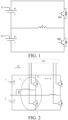
- a battery pack includes batteries B1 and B2, and an inductor L as an energy storage element.
- the battery B1 charges the inductor L
- the inductor L charges the battery B2
- the battery B2 charges the inductor L
- the inductor L charges the battery B1.
- the self-heating of the battery is realized by generating heat by the internal resistor of the battery.
- the terminal voltage of the battery pack will fluctuate greatly, affecting the stability in powering a load, and causing a great voltage impact to a charging device under the charging and self-heating condition.
- the present disclosure provides a battery heating system and an electric vehicle.
- a power battery pack can be heated efficiently at a low cost, to maintain a stable battery pack voltage, ensure a high quality in powering a load, and prevent voltage impact on a charging device under the charging and self-heating condition.
- an embodiment of the present disclosure provides a battery heating system.
- the system includes: a power battery pack, where the power battery pack includes a first battery assembly and a second battery assembly, the first battery assembly and the second battery assembly are connected in series, and a center line is led out at a point of serial connection of the first battery assembly and the second battery assembly; n buck-boost inverters, where each of the buck-boost inverter includes an inverter bridge and an inductor, the n inverter bridges are connected in parallel to form a first bus terminal and a second bus terminal, the first bus terminal is connected to a positive electrode of the power battery pack and the second bus terminal is connected to a negative electrode of the power battery pack, one terminal of the inductor is connected to a midpoint of the inverter bridge, and the other terminal of the inductor is connected to the center line, where n is an integer greater than 1; and a controller, where the controller is connected to a control terminal of the inverter bridge, and configured
- the battery heating system in the embodiment of the present disclosure further has the following additional technical features.
- the inverter bridge includes: an upper bridge arm switch tube and a lower bridge arm switch tube.
- One terminal of the upper bridge arm switch tube is connected to one terminal of the lower bridge arm switch tube, and the point of connection is the midpoint of the inverter bridge.
- the other terminal of the upper bridge arm switch tube is connected to the first bus terminal, and the other terminal of the lower bridge arm switch tube is connected to the second bus terminal.
- the absolute value of a-b is less than or equal to 1.
- the controller is specifically configured to control the turn-on angle of each upper bridge arm switch tube to be out of phase by 2* ⁇ /n, and control, in each on/off period, the upper bridge arm switch tube and the lower bridge arm switch tube in the same inverter bridge to be complementarily turned on, where ⁇ represents one half of the on/off period.
- the first bus terminal is connected to the positive electrode of the first battery assembly
- the second bus terminal is connected to the negative electrode of the second battery assembly.
- the 3 buck-boost inverter are respectively designated as a first buck-boost inverter, a second buck-boost inverter, and a third buck-boost inverter.
- the first buck-boost inverter includes a first switch tube, a fourth switch tube and a third inductor.
- the second buck-boost inverter includes a second switch tube, a fifth switch tube and a second inductor.
- the third buck-boost inverter includes a third switch tube, a sixth switch tube and a first inductor.
- the first switch tube, the second switch tube, and the third switch tube are all upper bridge arm switch tubes.
- the fourth switch tube, the fifth switch tube and the sixth switch tube are all lower bridge arm switch tubes.
- the controller is specifically configured to: control, in a first timing sequence, the first switch tube, the third switch tube, and the fifth switch tube to be turned on, and the second switch tube, the fourth switch tube, and the sixth switch tube to be turned off, where the length of time of the first timing sequence is ⁇ /3; control, in a second timing sequence, the first switch tube, the fifth switch tube, and the sixth switch tube to be turned on, and the second switch tube, the third switch tube, and the fourth switch tube to be turned off, where the second timing sequence is adjacent to the first timing sequence, and the length of time of the second timing sequence is ⁇ /3; control, in a third timing sequence, the first switch tube, the second switch tube, and the sixth switch tube to be turned on, and the third switch tube, the fourth switch tube, and the fifth switch tube to be turned off, where the third timing sequence is adjacent to the second timing sequence, and the length of time of the third timing sequence is ⁇ /3; control, in a fourth timing sequence, the second switch tube, the fourth switch tube, and the fifth switch tube to be
- the controller is further specifically configured to: control the net on-time of each switch tube to be equal to the net off-time.
- the system further includes: a switch assembly, where the switch assembly is connected between the center line and the other terminals of all the inductors, and configured to control the connection and disconnection of the center line to and from the inductors.
- the system further includes: a heat transport assembly, where the heat transport assembly is arranged between the inductor and the power battery pack, and configured to transmit heat generated by the inductor to the power battery pack.
- the heat transport assembly includes: a heat pump loop.
- the heat pump loop includes a heat transport medium and a heat pump, where the heat pump is configured to control the heat transport medium to flow in the heat pump loop, so that the heat transport medium transmits, when flowing through the power battery pack, the absorbed heat generated by the inductor to the power battery pack.
- the flowing direction and the magnitude of the current on the n inductors included in the n buck-boost inverters are the same.
- the present disclosure provides an electric vehicle, which includes the battery heating system as described above.
- a power battery pack including a first battery assembly and a second battery assembly is arranged, and n buck-boost inverters are arranged, where each buck-boost inverter includes an inverter bridge and an inductor.
- a center line is led out at point of serial connection of the first battery assembly and the second battery assembly.
- One terminal of the inductor is connected to a midpoint of the corresponding inverter bridge, and the other terminal of the inductor is connected to the center line.
- a controller performs out-of-phase control on the inverter bridges, to realize simultaneous self-heating of the first battery assembly and the second battery assembly, maintain a stable battery pack voltage, ensure a high quality in powering a load, and prevent voltage impact on a charging device under the charging and self-heating condition.
- the present disclosure provides a battery heating system and an electric vehicle.
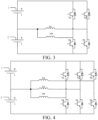
- FIG. 2 is a schematic structural diagram of a battery heating system according to an embodiment of the present disclosure.
- the battery heating system 10 includes: a power battery pack, n buck-boost inverters 3, and a controller 100.
- the power battery pack includes a first battery assembly 1 and a second battery assembly 2.
- Each buck-boost inverter 3 includes an inverter bridge and an inductor.
- the n inverter bridges are connected in parallel to form a first bus terminal B and a second bus terminal C, and the first bus terminal B is connected to a positive electrode of the power battery pack and the second bus terminal C is connected to a negative electrode of the power battery pack.
- One terminal of the inductor is connected to a midpoint of the corresponding inverter bridge, and the other terminal of the inductor is connected to the center line.
- n is an integer greater than 1.
- the controller 100 is connected to a control terminal of the inverter bridge, and configured to perform out-of-phase control on the n buck-boost inverters 3, to realize simultaneous self-heating of the first battery assembly 1 and the second battery assembly 2.
- the period of a driving signal that the controller 100 outputs to each bridge arm switch tube in each buck-boost inverter is T, and the phase of each driving signal is sequentially differed by T/n*k, whereby out-of-phase control is realized, and where k is the number of bridge arm switch tube in each buck-boost inverter.
- the embodiment shown in FIG. 2 is a specific embodiment where the first bus terminal B is connected to a positive electrode of the first battery assembly 1, and the second bus terminal C is connected to a negative electrode of the second battery assembly 2.
- the first battery assembly 1 and the second battery assembly 2 can be separate battery packs, or the same battery pack.
- each battery pack can be obtained by serially or parallelly connecting multiple battery cores, and the number of serially or parallelly connected battery cores may be the same, or different.
- the flowing direction and the magnitude of the current on the n inductors included in the n buck-boost inverters are the same.
- the inverter bridge includes: an upper bridge arm switch tube and a lower bridge arm switch tube.
- One terminal of the upper bridge arm switch tube is connected to one terminal of the lower bridge arm switch tube, and the point of connection is the midpoint of the inverter bridge.
- the other terminal of the upper bridge arm switch tube is connected to the first bus terminal B, and the other terminal of the lower bridge arm switch tube is connected to the second bus terminal C.
- the controller 100 is arranged to control the on/off of the upper bridge arm switch tubes and lower bridge arm switch tubes in the n inverter bridges, and perform out-of-phase control to enable the first battery assembly 1 to charge the second battery assembly 2 and enable the second battery assembly 2 to the first battery assembly 1 alternately. Therefore, currents flow through the first battery assembly 1 and the second battery assembly 2 simultaneously, with the flowing directions of the currents being opposite, thereby realizing simultaneous self-heating of the first battery assembly 1 the second battery assembly 2, and improving the heating efficiency.
- the simultaneous self-heating the total voltage is stable during the heating process, to ensure a high quality in powering a load, and prevent voltage impact on a charging device under the charging and self-heating condition.
- the controller 100 is connected to a control terminal of the upper bridge arm switch tube and a control terminal of the lower bridge arm switch tube respectively, and specifically configured to control the turn-on angle of the upper bridge arm switch tube on each inverter bridge to be out of phase by 2* ⁇ /n, and control, in each on/off period, the upper bridge arm switch tube and the lower bridge arm switch tube in the same inverter bridge to be complementarily turned on, where ⁇ represents one half of the on/off period.
- the on-time (duty ratio) of each bridge arm changes from 0 to 1. Specifically, the on-time can be adjusted at will according to the desired waveform output during practical use, provided that the upper and lower switch tubes on the same bridge arm are complementary.
- the controller 100 is further configured to control the net on-time of each switch tube to be equal to the net off-time. That is, after multiple on/off for a period of time, the total on- and off-time of each switch tube should be equal, so that the electric quantity released by the first battery assembly 1 is the same as that released by the second battery assembly 2, and the first battery assembly 1 is charged with the same amount of electricity as that charged to the second battery assembly 2, to ensure the equalization of power of the first battery assembly 1 and the second battery assembly 2.
- the mode of control by the controller 100 can be adjusted adaptively according to the dead time.
- n 2
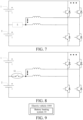
- a circuit diagram of the battery heating system 10 is as shown in FIG. 3 .
- the battery heating system 10 according to the embodiment of the present disclosure will be described in detail with reference to the example shown in FIG. 3 .
- the duty ratio of each bridge arm is fixed (e.g. 0.5), the first bus terminal B is connected to the positive electrode of the first battery assembly 1, and the second bus terminal C is connected to the negative electrode of the second battery assembly 2.
- the 2 buck-boost inverter 3 are respectively designated as a first buck-boost inverter 3 and a second buck-boost inverter 3.
- the first buck-boost inverter 3 includes a first switch tube T1, a fourth switch tube T4 and a third inductor Lw.
- the second buck-boost inverter 3 includes a second switch tube T2, a fifth switch tube T5 and a second inductor Lv.
- the first switch tube T1 and the second switch tube T2 are both upper bridge arm switch tubes.
- the fourth switch tube T4 and the fifth switch tube T5 are both lower bridge arm switch tubes.
- the controller 100 is specifically configured to:
- the first battery assembly 1 discharges, via the first switch tube T1, electricity to the third inductor Lw for energy storage, and the discharging current i 11 of the first battery assembly 1 is i, where i is the current flowing through the single-phase bridge arm, and the flowing direction of the current is defined as the positive direction.
- the second inductor Lv releases, via the fifth switch tube T5, the energy stored therein to the second battery assembly 2, to charge the second battery assembly 2, where the charging current i 12 of the second battery assembly 2 is -i.
- the first battery assembly 1 discharges, via the second switch tube T2, electricity to the second inductor Lv for energy storage, where the discharging current i 21 of the first battery assembly 1 is i.
- the third inductor Lw releases, via the fourth switch tube T4, the energy stored therein to the second battery assembly 2, to charge the second battery assembly 2, where the charging current i 22 of the second battery assembly 2 is -i.
- the first battery assembly 1 discharges a current continuously, and the second battery assembly 2 is continuously charged.
- the controller 100 is configured to control, in a third timing sequence, the first switch tube T1 and the fifth switch tube T5 to be turned on, and the second switch tube T2 and the fourth switch tube T4 to be turned off, where the third timing sequence is adjacent to the second timing sequence, and the length of time of the third timing sequence is ⁇ /2.
- the third inductor Lw discharges, via the first switch tube T1, the energy stored therein to charge the first battery assembly 1, where the charging current i 31 of the first battery assembly 1 is -i.
- the second battery assembly 2 discharges, via the fifth switch tube T5, electricity to the second inductor Lv for energy storage, where the discharging current i 32 of the second battery assembly 2 is i.
- the controller 100 is configured to control, in a fourth timing sequence, the second switch tube T2 and the fourth switch tube T4 to be turned on, and the first switch tube T1 and the fifth switch tube T5 to be turned off, where the fourth timing sequence is adjacent to the third timing sequence, and the length of time of the fourth timing sequence is ⁇ /2.
- the second inductor Lw discharges, via the second switch tube T2, the energy stored therein to charge the first battery assembly 1, where the charging current i 41 of the first battery assembly 1 is -i.
- the second battery assembly 2 discharges, via the fourth switch tube T4, electricity to the third inductor Lw for energy storage, where the discharging current i 42 of the second battery assembly 2 is i.
- the second battery assembly 2 discharges a current continuously, and the first battery assembly 1 is continuously charged.
- the first battery assembly 1 and the second battery assembly 2 both have currents with phases that are completely differed by 180 degrees, so the currents flow in opposite directions and offset each other.
- the first battery assembly 1 discharges electricity
- the second battery assembly 2 is charged, and the voltage changes of the two offset each other, so the terminal voltage of the power battery pack remains stable.
- n 3
- a circuit diagram of the battery heating system 10 is as shown in FIG. 4 .
- the battery heating system 10 according to the embodiment of the present disclosure will be described in detail with reference to the example shown in FIG. 4 .
- the duty ratio of each bridge arm is fixed (e.g. 0.5), the first bus terminal B is connected to the positive electrode of the first battery assembly 1, and the second bus terminal C is connected to the negative electrode of the second battery assembly 2.
- the 3 buck-boost inverter 3 are respectively designated as a first buck-boost inverter 3, a second buck-boost inverter 3 and a third buck-boost inverter 3.
- the first buck-boost inverter 3 includes a first switch tube T1, a fourth switch tube T4 and a third inductor Lw.
- the second buck-boost inverter 3 includes a second switch tube T2, a fifth switch tube T5 and a second inductor Lv.
- the third buck-boost inverter 3 includes a third switch tube T3, a sixth switch tube T6 and a first inductor Lu.
- the first switch tube T1, the second switch tube T2, and the third switch tube T3 are all upper bridge arm switch tubes.
- the fourth switch tube T4, the fifth switch tube T5 and the sixth switch tube T6 are all lower bridge arm switch tubes.
- the specific mode of control of the first switch tube T1, the second switch tube T2, the third switch tube T3, the fourth switch tube T4, the fifth switch tube T5, and the sixth switch tube T6 by the controller 100 is shown in FIG. 5 .
- the controller 100 is specifically configured to: control, in a first timing sequence, the first switch tube T1, the third switch tube T3, and the fifth switch tube T5 to be turned on, and the second switch tube T2, the fourth switch tube T4, and the sixth switch tube T6 to be turned off, where the length of time of the first timing sequence is ⁇ /3.
- the first battery assembly 1 discharges, via the first switch tube T1 and the third switch tube T3, electricity to the first inductor Lu and the third inductor Lw for energy storage, and the discharging current i 11 of the first battery assembly 1 is 2*i, where i is the current flowing through the single-phase bridge arm, and the flowing direction of the current is defined as the positive direction.
- the second inductor Lv releases, via the fifth switch tube T5, the energy stored therein to the second battery assembly 2, to charge the second battery assembly 2, where the charging current i 12 of the second battery assembly 2 is -i.
- the controller 100 is configured to control, in a second timing sequence, the first switch tube T1, the fifth switch tube T5, and the sixth switch tube T6 to be turned on, the second switch tube T2, the third switch tube T3, and the fourth switch tube T4 to be turned off, where the second timing sequence is adj acent to the first timing sequence, and the length of time of the second timing sequence is ⁇ /3.
- the first battery assembly 1 continuously discharges, via the first switch tube T1, electricity to the third inductor Lw for energy storage, where the discharging current i 21 of the first battery assembly 1 is i.
- the first inductor Lu and the second inductor Lv release, via the fifth switch tube T5 and the sixth switch tube T6, the energy stored therein to the second battery assembly 2, to charge the second battery assembly 2, where the charging current i 22 of the second battery assembly 2 is -2*i.
- the controller 100 is configured to control, in a third timing sequence, the first switch tube T1, the second switch tube T2, and the sixth switch tube T6 to be turned on, and the third switch tube T3, the fourth switch tube T4, and the fifth switch tube T5 to be turned off, where the third timing sequence is adjacent to the second timing sequence, and the length of time of the third timing sequence is ⁇ /3.
- the first battery assembly 1 discharges, via the first switch tube T1 and the second switch tube T2, electricity to the second inductor Lv and the third inductor Lw for energy storage, where the discharging current i 31 of the first battery assembly 1 is 2*i.
- the first inductor Lu release the energy stored therein to charge the second battery assembly 2, where the charging current i 32 of the second battery assembly 2 is -i.
- the first battery assembly 1 discharges a current continuously, and the second battery assembly 2 is continuously charged.
- the controller 100 is configured to control, in a fourth timing sequence, the second switch tube T2, the fourth switch tube T4, and the sixth switch tube T6 to be turned on, and the first switch tube T1, the third switch tube T3, and the fifth switch tube T5 to be turned off, where the fourth timing sequence is adjacent to the third timing sequence, and the length of time of the fourth timing sequence is ⁇ /3.
- the second inductor Lw discharges, via the second switch tube T2, the energy stored therein to charge the first battery assembly 1, where the charging current i 41 of the first battery assembly 1 is -i.
- the second battery assembly 2 discharges, via the fourth switch tube T4 and the sixth switch tube T6, electricity to the first inductor Lu and the third inductor Lw for energy storage, where the discharging current i 42 of the second battery assembly 2 is 2*i.
- the controller 100 is configured to control, in a fifth timing sequence, the second switch tube T2, the third switch tube T3, and the fourth switch tube T4 to be turned on, and the first switch tube T1, the fifth switch tube T5, and the sixth switch tube T6 to be turned off, where the fifth timing sequence is adjacent to the fourth timing sequence, and the length of time of the fifth timing sequence is ⁇ /3.
- the first inductor Lu and the second inductor Lv release, via the second switch tube T2 and the third switch tube T3, the energy stored therein to charge the first battery assembly 1, where the charging current i 51 of the first battery assembly 1 is -2*i.
- the second battery assembly 2 discharges, via the fourth switch tube T4, electricity to the third inductor Lw for energy storage, where the discharging current i 52 of the second battery assembly 2 is i.
- the controller 100 is configured to control, in a sixth timing sequence, the third switch tube T3, the fourth switch tube T4, and the fifth switch tube T5 to be turned on, and the first switch tube T1, the second switch tube T2, and the sixth switch tube T6 to be turned off, where the sixth timing sequence is adjacent to the fifth timing sequence, and the length of time of the sixth timing sequence is ⁇ /3.
- the first inductor Lu releases, via the third switch tube T3, the energy stored therein to charge the first battery assembly 1, where the charging current i 61 of the first battery assembly 1 is -i.
- the second battery assembly 2 discharges, via the fourth switch tube T4 and the fifth switch tube T5, electricity to the second inductor Lv and the third inductor Lw for energy storage, where the discharging current i 62 of the second battery assembly 2 is 2*i.
- the second battery assembly 2 discharges a current continuously, and the first battery assembly 1 is continuously charged.
- the current i1 of the first battery assembly 1 and the current i2 of the second battery assembly 2 are as shown in FIG. 6 . It can be seen that the first battery assembly 1 and the second battery assembly 2 both have currents with phase that are completely differed by 180 degrees, so the currents flow in opposite directions and offset each other. When the first battery assembly 1 discharges electricity, the second battery assembly 2 is charged, and the voltage changes of the two offset each other, so the terminal voltage of the power battery pack remains stable.
- n 2 and n is 3 respectively.
- the absolute value of a-b can be set to
- ⁇ 1. That is, the difference between a and b is within 1. Especially when n is an even number, a b. At this time, the charging and discharging currents of the first battery assembly and the second battery assembly are equal, and the changes of the terminal voltages of the two completely offset each other, so the terminal voltage of the power battery pack is the most stable.
- the system further includes: a switch assembly 5, where the switch assembly 5 is connected between the center line and the other terminals of all the inductors, and configured to control the connection and disconnection of the center line to and from the inductors.
- the topology of the circuit can be controlled, to realize different functions according to actual needs.
- the switch assembly 5 is controlled to be turned on, so that the n buck-boost inverters 3 are connected to the center line, and controlled by the controller 100 to realize self-heating.
- the switch assembly 5 is controlled to turn off, such that the n buck-boost inverters 3 are disconnected from the center line.
- the switch assembly 5 may include a function switch 51, where one terminal of the function switch 51 is connected to the center line, and the other terminal of the switch assembly 5 is connected respectively to the other terminals of all the inductors.
- the battery heating system 10 is used in an electric vehicle.
- the electric vehicle includes a motor and a motor controller.
- An inverter bridge in the motor controller is reused as the inverter bridge, and a motor winding in a motor is reused as the inductor.
- any two-phase inverter bridges in the motor controller 100 of the electric vehicle are reused as the two inverter bridges in the multiple buck-boost inverters 3, and any two-phase motor windings of the electric vehicle are reused as the two inductors in the multiple buck-boost inverters 3; or when n is 3, three-phase inverter bridges in the motor controller 100 of the electric vehicle are reused as the three inverter bridges in the multiple buck-boost inverters 3, and three-phase motor windings of the electric vehicle are reused as the three inductors in the multiple buck-boost inverters 3.
- the battery heating system 10 further includes: a heat transport assembly, where the heat transport assembly is arranged between the inductor and the power battery pack, and configured to transmit heat generated by the inductor to the power battery pack.
- both the internal resistance of the battery pack and the windings in the circuit will consume energy, causing the waste of energy, and circuit fault.
- a permanent magnet motor may be demagnetized. Therefore, a heat transport assembly may be further arranged in the electromagnetic heating system, to transmit the heat generated by the inductor to the power battery pack, to accelerate the heating rate of the battery pack on the one hand, and cool the inductor on the other hand.
- the heat transport assembly may include a heat pump loop.
- the heat pump loop includes a heat transport medium and a heat pump.
- the heat pump is configured to control the heat transport medium to flow in the heat pump loop, so that the heat transport medium transmits, when flowing through the power battery pack, the absorbed heat generated by the inductor to the power battery pack.
- a power battery pack including a first battery assembly and a second battery assembly is arranged, and n buck-boost inverters are arranged, where each buck-boost inverter includes an inverter bridge and an inductor.
- a center line is led out at point of serial connection of the first battery assembly and the second battery assembly.
- One terminal of the inductor is connected to a midpoint of the corresponding inverter bridge, and the other terminal of the inductor is connected to the center line.
- a controller performs out-of-phase control on the inverter bridges, to enable the first battery assembly to charge the second battery assembly and enable the second battery assembly to charge the first battery assembly alternately.
- the buck-boost inverter can be obtained by reuse of the components on the electric vehicle, to further reduce the vehicle cost.
- heat generated during the operation of the inductor is transferred to the power battery pack, to further increase the heating rate, and prevent the adverse impact caused by the battery heating system to the vehicle.
- the present disclosure further provides an electric vehicle.
- FIG. 9 is a block diagram showing the structure of an electric vehicle according to an embodiment of the present disclosure.
- an electric vehicle 1000 includes the battery heating system 10.
- a power battery pack including a first battery assembly and a second battery assembly is arranged, and n buck-boost inverters are arranged, where each buck-boost inverter includes an inverter bridge and an inductor.
- a center line is led out at point of serial connection of the first battery assembly and the second battery assembly.
- One terminal of the inductor is connected to a midpoint of the corresponding inverter bridge, and the other terminal of the inductor is connected to the center line.
- a controller performs out-of-phase control on the inverter bridges, to enable the first battery assembly to charge the second battery assembly and enable the second battery assembly to charge the first battery assembly alternately.
- the buck-boost inverter can be obtained by reuse of the components on the electric vehicle, to further reduce the vehicle cost.
- heat generated during the operation of the inductor is transferred to the power battery pack, to further increase the heating rate, and prevent the adverse impact caused by the battery heating system to the vehicle.
Landscapes
- Engineering & Computer Science (AREA)
- Manufacturing & Machinery (AREA)
- Chemical & Material Sciences (AREA)
- Chemical Kinetics & Catalysis (AREA)
- Electrochemistry (AREA)
- General Chemical & Material Sciences (AREA)
- Power Engineering (AREA)
- Mechanical Engineering (AREA)
- Transportation (AREA)
- Sustainable Energy (AREA)
- Life Sciences & Earth Sciences (AREA)
- Sustainable Development (AREA)
- Automation & Control Theory (AREA)
- Electromagnetism (AREA)
- Physics & Mathematics (AREA)
- Electric Propulsion And Braking For Vehicles (AREA)
- Secondary Cells (AREA)
- Charge And Discharge Circuits For Batteries Or The Like (AREA)
- Dc-Dc Converters (AREA)
Applications Claiming Priority (2)
| Application Number | Priority Date | Filing Date | Title |
|---|---|---|---|
| CN202210472874.1A CN117002326B (zh) | 2022-04-29 | 2022-04-29 | 电池加热系统以及电动交通工具 |
| PCT/CN2023/084473 WO2023207481A1 (zh) | 2022-04-29 | 2023-03-28 | 电池加热系统以及电动交通工具 |
Publications (2)
| Publication Number | Publication Date |
|---|---|
| EP4516579A1 true EP4516579A1 (de) | 2025-03-05 |
| EP4516579A4 EP4516579A4 (de) | 2026-04-29 |
Family
ID=88517336
Family Applications (1)
| Application Number | Title | Priority Date | Filing Date |
|---|---|---|---|
| EP23794916.9A Pending EP4516579A4 (de) | 2022-04-29 | 2023-03-28 | Batterieheizsystem und elektrofahrzeug |
Country Status (7)
| Country | Link |
|---|---|
| US (1) | US20250046904A1 (de) |
| EP (1) | EP4516579A4 (de) |
| JP (1) | JP7763969B2 (de) |
| KR (1) | KR20240170951A (de) |
| CN (2) | CN117002326B (de) |
| CA (1) | CA3250273A1 (de) |
| WO (1) | WO2023207481A1 (de) |
Families Citing this family (9)
| Publication number | Priority date | Publication date | Assignee | Title |
|---|---|---|---|---|
| CN117002326B (zh) * | 2022-04-29 | 2024-10-11 | 比亚迪股份有限公司 | 电池加热系统以及电动交通工具 |
| CN118107440B (zh) * | 2022-11-30 | 2025-11-11 | 比亚迪股份有限公司 | 电池动态均衡装置及其控制方法和车辆 |
| CN118107442B (zh) * | 2022-11-30 | 2025-11-07 | 比亚迪股份有限公司 | 电池动态均衡装置及其控制方法和车辆 |
| CN116142024B (zh) * | 2022-12-14 | 2026-02-10 | 南京航空航天大学 | 一种电动车电机控制器集成蓄电池保护功能的方法 |
| CN118418844A (zh) * | 2023-01-31 | 2024-08-02 | 比亚迪股份有限公司 | 能量转换装置和车辆 |
| CN118810556A (zh) * | 2023-04-21 | 2024-10-22 | 比亚迪股份有限公司 | 电池控制系统及车辆 |
| CN116722237B (zh) * | 2023-06-09 | 2024-06-04 | 武汉理工大学 | 一种动力电池的低温预热电路结构及控制方法 |
| CN118173940A (zh) * | 2024-01-09 | 2024-06-11 | 小米汽车科技有限公司 | 电池自加热电路、方法、装置和车辆 |
| CN118868299A (zh) * | 2024-06-28 | 2024-10-29 | 比亚迪股份有限公司 | 电池包、电能设备以及储能系统 |
Family Cites Families (18)
| Publication number | Priority date | Publication date | Assignee | Title |
|---|---|---|---|---|
| US6259229B1 (en) * | 1998-04-30 | 2001-07-10 | Daimlerchrysler Corporation | Circulating current battery heater |
| JP2009142069A (ja) * | 2007-12-06 | 2009-06-25 | Gs Yuasa Corporation:Kk | 組電池の温度調整装置、組電池の温度調整方法 |
| DE102012205119A1 (de) * | 2012-03-29 | 2013-10-02 | Robert Bosch Gmbh | Verfahren zum Aufheizen von Energiespeicherzellen einer Energiespeichereinrichtung und aufheizbare Energiespeichereinrichtung |
| CN105762434B (zh) * | 2016-05-16 | 2018-12-07 | 北京理工大学 | 一种具有自加热功能的电源系统和车辆 |
| CN111347928B (zh) * | 2018-12-21 | 2021-09-03 | 比亚迪股份有限公司 | 车辆及其动力电池温度控制装置 |
| CN111347900B (zh) * | 2018-12-21 | 2021-11-12 | 比亚迪股份有限公司 | 一种车辆、电机控制电路、动力电池充电与加热方法 |
| JP7370223B2 (ja) * | 2019-01-24 | 2023-10-27 | 株式会社Soken | 電力変換装置 |
| CN212373187U (zh) * | 2020-05-29 | 2021-01-19 | 比亚迪股份有限公司 | 电池自加热装置和车辆 |
| CN111404246B (zh) | 2020-06-04 | 2020-10-23 | 比亚迪股份有限公司 | 电池能量处理装置、方法和车辆 |
| CN214625176U (zh) * | 2020-11-20 | 2021-11-05 | 福建福夏科技有限责任公司 | 一种极低损耗的电池自加热电路 |
| CN113346164B (zh) * | 2021-05-20 | 2022-05-31 | 山东大学 | 寒区电动汽车动力电池智能柔性预热方法及系统 |
| CN216213712U (zh) * | 2021-10-21 | 2022-04-05 | 吉林大学 | 一种具有均衡功能的电池自加热复合电路 |
| CN116552335B (zh) | 2022-01-29 | 2024-10-11 | 比亚迪股份有限公司 | 动力电池的加热电路和电动车 |
| CN116923043B (zh) | 2022-03-31 | 2025-10-17 | 比亚迪股份有限公司 | 集成式热管理系统及车辆 |
| CN216980690U (zh) | 2022-04-28 | 2022-07-15 | 比亚迪股份有限公司 | 动力电池的加热系统和电动车 |
| CN117002328B (zh) | 2022-04-29 | 2024-09-10 | 比亚迪股份有限公司 | 电池自加热装置、方法及车辆 |
| CN117002326B (zh) * | 2022-04-29 | 2024-10-11 | 比亚迪股份有限公司 | 电池加热系统以及电动交通工具 |
| CN117013144A (zh) | 2022-04-29 | 2023-11-07 | 比亚迪股份有限公司 | 电池自加热控制方法、控制系统及电动交通工具 |
-
2022
- 2022-04-29 CN CN202210472874.1A patent/CN117002326B/zh active Active
- 2022-04-29 CN CN202221054598.9U patent/CN217788552U/zh active Active
-
2023
- 2023-03-28 KR KR1020247036752A patent/KR20240170951A/ko active Pending
- 2023-03-28 JP JP2024562355A patent/JP7763969B2/ja active Active
- 2023-03-28 WO PCT/CN2023/084473 patent/WO2023207481A1/zh not_active Ceased
- 2023-03-28 EP EP23794916.9A patent/EP4516579A4/de active Pending
- 2023-03-28 CA CA3250273A patent/CA3250273A1/en active Pending
-
2024
- 2024-10-23 US US18/924,851 patent/US20250046904A1/en active Pending
Also Published As
| Publication number | Publication date |
|---|---|
| KR20240170951A (ko) | 2024-12-05 |
| WO2023207481A1 (zh) | 2023-11-02 |
| CN217788552U (zh) | 2022-11-11 |
| EP4516579A4 (de) | 2026-04-29 |
| CN117002326B (zh) | 2024-10-11 |
| CN117002326A (zh) | 2023-11-07 |
| JP2025517252A (ja) | 2025-06-04 |
| JP7763969B2 (ja) | 2025-11-04 |
| CA3250273A1 (en) | 2025-02-04 |
| US20250046904A1 (en) | 2025-02-06 |
Similar Documents
| Publication | Publication Date | Title |
|---|---|---|
| EP4516579A1 (de) | Batterieheizsystem und elektrofahrzeug | |
| US12132432B2 (en) | Energy conversion device and vehicle | |
| CN111391718B (zh) | 电池能量处理装置、方法及车辆 | |
| US20250202264A1 (en) | Power battery charging method, motor control circuit, and vehicle | |
| CN111404246B (zh) | 电池能量处理装置、方法和车辆 | |
| CN111404247B (zh) | 电池能量处理装置、方法及车辆 | |
| JP6761172B2 (ja) | 車両用電源装置 | |
| KR101863717B1 (ko) | 배터리용 충전 균일화 시스템 | |
| CN104334393B (zh) | 蓄电池系统、机动车及用于调试蓄电池系统的方法 | |
| CN117656951B (zh) | 电池自加热系统及车辆 | |
| JPH10271703A (ja) | 充電器用のコンバータ回路 | |
| CN112688375A (zh) | 基于多绕组变压器的均衡输出系统 | |
| CN214112341U (zh) | 电池能量处理装置及车辆 | |
| CN116923119A (zh) | 双电机驱动系统、控制方法及车辆 | |
| KR20240170571A (ko) | 배터리 자가 가열 디바이스 및 방법, 및 차량 | |
| CN117656952B (zh) | 电池自加热系统及车辆 | |
| CN117656947B (zh) | 电池自加热系统及车辆 | |
| CN217720747U (zh) | 均衡电路、充电电路及车载充电机 | |
| CN117656948A (zh) | 电池自加热系统及车辆 | |
| CN117656945A (zh) | 电池自加热系统及车辆 | |
| CN221476812U (zh) | 动力电池充电系统和车辆 | |
| CN117656946B (zh) | 电池自加热系统及车辆 | |
| CN121200874A (zh) | 电池的加热控制系统和车辆 | |
| CN117175728A (zh) | 电池充电系统及利用其充电的方法 |
Legal Events
| Date | Code | Title | Description |
|---|---|---|---|
| STAA | Information on the status of an ep patent application or granted ep patent |
Free format text: STATUS: THE INTERNATIONAL PUBLICATION HAS BEEN MADE |
|
| PUAI | Public reference made under article 153(3) epc to a published international application that has entered the european phase |
Free format text: ORIGINAL CODE: 0009012 |
|
| STAA | Information on the status of an ep patent application or granted ep patent |
Free format text: STATUS: REQUEST FOR EXAMINATION WAS MADE |
|
| 17P | Request for examination filed |
Effective date: 20241126 |
|
| AK | Designated contracting states |
Kind code of ref document: A1 Designated state(s): AL AT BE BG CH CY CZ DE DK EE ES FI FR GB GR HR HU IE IS IT LI LT LU LV MC ME MK MT NL NO PL PT RO RS SE SI SK SM TR |
|
| DAV | Request for validation of the european patent (deleted) | ||
| DAX | Request for extension of the european patent (deleted) |