EP4516380A1 - Gas recovery device and recovery method - Google Patents
Gas recovery device and recovery method Download PDFInfo
- Publication number
- EP4516380A1 EP4516380A1 EP23796532.2A EP23796532A EP4516380A1 EP 4516380 A1 EP4516380 A1 EP 4516380A1 EP 23796532 A EP23796532 A EP 23796532A EP 4516380 A1 EP4516380 A1 EP 4516380A1
- Authority
- EP
- European Patent Office
- Prior art keywords
- chamber
- gas
- pump
- valve
- specific
- Prior art date
- Legal status (The legal status is an assumption and is not a legal conclusion. Google has not performed a legal analysis and makes no representation as to the accuracy of the status listed.)
- Pending
Links
Images
















Classifications
-
- C—CHEMISTRY; METALLURGY
- C01—INORGANIC CHEMISTRY
- C01B—NON-METALLIC ELEMENTS; COMPOUNDS THEREOF; METALLOIDS OR COMPOUNDS THEREOF NOT COVERED BY SUBCLASS C01C
- C01B32/00—Carbon; Compounds thereof
- C01B32/50—Carbon dioxide
-
- B—PERFORMING OPERATIONS; TRANSPORTING
- B01—PHYSICAL OR CHEMICAL PROCESSES OR APPARATUS IN GENERAL
- B01D—SEPARATION
- B01D53/00—Separation of gases or vapours; Recovering vapours of volatile solvents from gases; Chemical or biological purification of waste gases, e.g. engine exhaust gases, smoke, fumes, flue gases, aerosols
- B01D53/02—Separation of gases or vapours; Recovering vapours of volatile solvents from gases; Chemical or biological purification of waste gases, e.g. engine exhaust gases, smoke, fumes, flue gases, aerosols by adsorption, e.g. preparative gas chromatography
- B01D53/04—Separation of gases or vapours; Recovering vapours of volatile solvents from gases; Chemical or biological purification of waste gases, e.g. engine exhaust gases, smoke, fumes, flue gases, aerosols by adsorption, e.g. preparative gas chromatography with stationary adsorbents
- B01D53/047—Pressure swing adsorption
-
- B—PERFORMING OPERATIONS; TRANSPORTING
- B01—PHYSICAL OR CHEMICAL PROCESSES OR APPARATUS IN GENERAL
- B01D—SEPARATION
- B01D53/00—Separation of gases or vapours; Recovering vapours of volatile solvents from gases; Chemical or biological purification of waste gases, e.g. engine exhaust gases, smoke, fumes, flue gases, aerosols
- B01D53/02—Separation of gases or vapours; Recovering vapours of volatile solvents from gases; Chemical or biological purification of waste gases, e.g. engine exhaust gases, smoke, fumes, flue gases, aerosols by adsorption, e.g. preparative gas chromatography
- B01D53/04—Separation of gases or vapours; Recovering vapours of volatile solvents from gases; Chemical or biological purification of waste gases, e.g. engine exhaust gases, smoke, fumes, flue gases, aerosols by adsorption, e.g. preparative gas chromatography with stationary adsorbents
- B01D53/0407—Constructional details of adsorbing systems
-
- B—PERFORMING OPERATIONS; TRANSPORTING
- B01—PHYSICAL OR CHEMICAL PROCESSES OR APPARATUS IN GENERAL
- B01D—SEPARATION
- B01D53/00—Separation of gases or vapours; Recovering vapours of volatile solvents from gases; Chemical or biological purification of waste gases, e.g. engine exhaust gases, smoke, fumes, flue gases, aerosols
- B01D53/34—Chemical or biological purification of waste gases
- B01D53/46—Removing components of defined structure
- B01D53/62—Carbon oxides
-
- B—PERFORMING OPERATIONS; TRANSPORTING
- B01—PHYSICAL OR CHEMICAL PROCESSES OR APPARATUS IN GENERAL
- B01D—SEPARATION
- B01D2253/00—Adsorbents used in seperation treatment of gases and vapours
- B01D2253/20—Organic adsorbents
- B01D2253/204—Metal organic frameworks (MOF's)
-
- B—PERFORMING OPERATIONS; TRANSPORTING
- B01—PHYSICAL OR CHEMICAL PROCESSES OR APPARATUS IN GENERAL
- B01D—SEPARATION
- B01D2257/00—Components to be removed
- B01D2257/50—Carbon oxides
- B01D2257/504—Carbon dioxide
-
- B—PERFORMING OPERATIONS; TRANSPORTING
- B01—PHYSICAL OR CHEMICAL PROCESSES OR APPARATUS IN GENERAL
- B01D—SEPARATION
- B01D2258/00—Sources of waste gases
- B01D2258/06—Polluted air
-
- B—PERFORMING OPERATIONS; TRANSPORTING
- B01—PHYSICAL OR CHEMICAL PROCESSES OR APPARATUS IN GENERAL
- B01D—SEPARATION
- B01D2259/00—Type of treatment
- B01D2259/40—Further details for adsorption processes and devices
- B01D2259/40083—Regeneration of adsorbents in processes other than pressure or temperature swing adsorption
- B01D2259/40088—Regeneration of adsorbents in processes other than pressure or temperature swing adsorption by heating
-
- Y—GENERAL TAGGING OF NEW TECHNOLOGICAL DEVELOPMENTS; GENERAL TAGGING OF CROSS-SECTIONAL TECHNOLOGIES SPANNING OVER SEVERAL SECTIONS OF THE IPC; TECHNICAL SUBJECTS COVERED BY FORMER USPC CROSS-REFERENCE ART COLLECTIONS [XRACs] AND DIGESTS
- Y02—TECHNOLOGIES OR APPLICATIONS FOR MITIGATION OR ADAPTATION AGAINST CLIMATE CHANGE
- Y02C—CAPTURE, STORAGE, SEQUESTRATION OR DISPOSAL OF GREENHOUSE GASES [GHG]
- Y02C20/00—Capture or disposal of greenhouse gases
- Y02C20/40—Capture or disposal of greenhouse gases of CO2
Definitions
- the present disclosure relates to a gas recovery device and a gas recovery method.
- the present disclosure relates to a device and method for recovering specific gas component(s) from a gas mixture.
- the present disclosure relates to Direct Air Capture (DAC) technology, which captures carbon dioxide from the air.
- DAC Direct Air Capture
- One example of a technique for separating and recovering a specific gas component from a mixed gas is a method using a solid adsorbent.
- Non-Patent Document 1 discloses a carbon dioxide recovery device including a solid adsorbent that preferentially adsorbs carbon dioxide, a chamber containing the solid adsorbent, a fan for feeding air into the chamber, a vacuum pump used for exhausting remaining atmospheric gas from the chamber and transporting carbon dioxide desorbed from the solid adsorbent, an intermediate tank for storing the desorbed carbon dioxide at 1 atmospheric pressure, and a compressor for pressurizing the carbon dioxide stored in the intermediate tank.
- this device first, air is sent into a chamber using a fan, and carbon dioxide is adsorbed onto a solid adsorbent in the chamber. Next, the atmospheric gas remaining in the chamber is evacuated using a vacuum pump. The chamber is then heated to 90° C and reduced in pressure to 3 kPa using a vacuum pump to transfer the desorbed carbon dioxide to an intermediate tank, thereby obtaining 1 bar of carbon dioxide. The carbon dioxide stored in the intermediate tank is then compressed by a compressor, and 151 bar of carbon dioxide is recovered.
- Non-Patent Document 1 Cost Evaluation of Direct Air Capture (DAC) Process (Vol. 2): Adsorption Method" by Center for Low Carbon Society Strategy, Japan Science and Technology Agency
- an object of the present invention is to improve the amount of gas recovered per hour in a gas recovery device and recovery method.
- the present invention makes it possible to improve the amount of gas recovered per hour in a gas recovery device and a gas recovery method.
- the device according to the present invention is a device for recovering a specific gas component from a mixed gas (a gas mixture).
- the device comprises a first chamber, a second chamber, and a pump.
- the first chamber contains a solid adsorbent for adsorbing a specific gas component in the gas mixture.
- This solid adsorbent is configured to preferentially adsorb the specific gas component among the multiple gas components that make up the mixed gas.
- the type of mixed gas is not particularly limited as long as it contains the specific gas component.
- the gas mixture may be, for example, air or gases exhausted from point sources such as equipment and industrial facilities.
- the air as the mixed gas may be dry air.
- the specific gas component may be, for example, a greenhouse gas and/or a harmful gas.
- the specific gas component to be immobilized can be appropriately selected depending on the adsorption capacity of the solid adsorbent described below.
- the specific gas component to be recovered may include a plurality of gas components.
- Greenhouse gases include, for example, carbon dioxide, methane, nitrous oxide, chlorofluorocarbons, and other fluorides.
- fluorocarbons include hydrofluorocarbons (HFCs) and perfluorocarbons (PFCs).
- fluorides include sulfur hexafluoride (SF 6 ) and nitrogen trifluoride (NF 3 ).
- Harmful gases include, for example, gases whose emissions are subject to regulations in accordance with the laws of each country.
- harmful gases or components thereof include fluorine and its compounds, hydrogen cyanide, formaldehyde, hydrogen chloride, acrolein, chlorine, bromine and its compounds, methyl bromide, nitrogen oxides, phenol, sulfuric acid (including sulfur trioxide), chromium compounds, chlorosulfonic acid, pyridine, styrene, ethylene, carbon disulfide, chloropicrin, dichloromethane, 1,2-dichloroethane, chloroform, vinyl chloride monomer, ethylene oxide, arsenic and its compounds, manganese and its compounds, nickel and its compounds, cadmium and its compounds, lead and its compounds, methanol, isoamyl alcohol, isopropyl alcohol, acetone, methyl ethyl ketone, methyl isobutyl ketone, benzene, toluene, xy
- the mixed gas is typically air and the specific gas component is typically carbon dioxide.
- the device is used as a DAC device.
- the temperature of the mixed gas introduced into the device is preferably 150°C or less, more preferably 100°C or less, and even more preferably 50°C or less. In general, since the gas adsorption reaction by a solid adsorbent is an exothermic reaction, it is preferable that the temperature of the mixed gas is not too high.
- the pressure of the mixed gas introduced into the device at the inlet to the first chamber is preferably 1 atm or more, more preferably 2 atm or more.
- the content (volume fraction) of the specific gas component in the mixed gas is preferably 100 ppb or more, and more preferably 1 ppm or more.
- the higher this content the easier it is for a specific gas component to be adsorbed by the solid adsorbent.
- the content of nitrous oxide in the air is about 330 ppb, and the content of carbon dioxide therein is about 400 ppm.
- the solid adsorbent may be configured to physically adsorb a specific gas component, or may be configured to chemically adsorb a specific gas component.
- a metal-organic framework hereinafter also referred to as MOF
- activated carbon zeolite, mesoporous silica, or the like can be used.
- a plurality of solid adsorbents may be used in combination.
- the solid adsorbent comprises a metal-organic framework.
- Metal-organic frameworks are superior in designability compared to other solid adsorbents. That is, when a metal organic framework is used, the adsorption amount and selectivity for a specific gas component in a mixed gas can be optimized by appropriately selecting a combination of a metal ion and a ligand. This makes it possible to improve the recovery amount and purity of a specific gas component from a mixed gas.
- any types of MOFs can be used. Appropriately combining the type and coordination number of the metal ion with the type and topology of the multidentate ligand leads to a MOF with a desired structure.
- the metal elements in the MOF can be, for example, any elements belonging to alkali metals (Group 1), alkaline earth metals (Group 2), or transition metals (Groups 3 to 12).
- the multidentate ligand in the MOF typically is an organic ligand, examples of which include carboxylate anion and heterocyclic compound.
- carboxylic acid anion include dicarboxylic acid anion and tricarboxylic acid anion. Specific examples include anions of citric acid, malic acid, terephthalic acid, isophthalic acid, trimesic acid, and derivatives thereof.
- the heterocyclic compound include bipyridine, imidazole, adenine, and derivatives thereof.
- the ligand may be an amine compound, a sulfonate anion, or a phosphate anion.
- the MOF may further contain monodentate ligand(s).
- the combination of the metal and the ligand forming the MOF can be appropriately determined according to the expected function and the desired pore size.
- the MOF may contain two or more types of metal elements, and may contain two or more types of ligands.
- the MOF can be surface-modified with a polymer or other modifiers.
- the solid adsorbent may be in the form of a powder or a processed body. In the latter case, the solid adsorbent may be, for example, in the form of pellets, beads, plates, disks, hollow cylinders, or membranes. A plurality of forms of porous materials may be used in combination.
- the solid adsorbent is more preferably in the form of a processed body for the purpose of reducing the effect of pressure loss due to clogging of piping.
- the solid adsorbent may further comprise a support and/or a binder.
- the exterior material of the first chamber may be, for example, metal or enamel, and may include stainless steel, iron, aluminum, or titanium.
- the first chamber may further include a sealant in the sealing portion.
- the internal volume of the first chamber can be appropriately determined taking into consideration the volume of the solid adsorbent and the free volume that serves as a flow path for the mixed gas.
- the volume ratio of the solid adsorbent to the internal volume of the first chamber can be, for example, 10 to 95%, preferably 30 to 90%, and more preferably 40 to 85%. If this ratio is excessively small, the amount of the specific gas component adsorbed onto the solid adsorbent will be small, and the specific gas component desorbed from the solid adsorbent will tend to remain in the free volume portion of the first chamber. If this ratio is excessively large, it becomes difficult to uniformly flow the mixed gas inside the first chamber, and the amount of a specific gas component adsorbed on the solid adsorbent may be reduced. By appropriately designing the above ratio, the amount of gas recovered per unit time can be optimized.
- the first chamber may include a structure for forming a gas flow path therein.
- the first chamber may also include a support for supporting the solid adsorbent.
- the first chamber may include a heating device for heating the solid adsorbent, and may include a heating element as part of the heating device.
- the first chamber may include a thermal insulator.
- the solid adsorbent is preferably disposed in the vicinity of the heating device or the heating element. In this case, Joule heat from the heating device or heating element is efficiently transferred to the solid adsorbent, shortening the time required to desorb gas from the solid adsorbent and increasing the amount of gas recovered per unit time.
- the first chamber typically has a gas exhaust port.
- a gas exhaust port By passing the mixed gas through the solid adsorbent and immediately discharging the mixed gas from the gas exhaust port, in which the concentration of the specific gas component to be recovered has been reduced, the time required for the gas to be adsorbed by the solid adsorbent is shortened, and the amount of gas recovered per unit time is increased.
- the gas exhaust port be configured so that it can be switched between open and closed states.
- the gas exhaust port may be configured so that the gas discharged from the exhaust port can be supplied again to the gas inlet, which will be described later.
- the first chamber may further comprise, instead of or in addition to the exhaust port, a gas inlet for supplying the mixed gas to the device.
- the gas inlet port may be the same as the gas exhaust port. That is, the first chamber may be provided with a connection port that can be used as both a gas exhaust port and a gas inlet.
- a device may include a plurality of first chambers, each of which contains a solid adsorbent.
- the plurality of first chambers may be connected in parallel or in series in the above-mentioned device.
- adsorption and desorption can be performed using another first chamber.
- first chambers When there are a plurality of first chambers, these chambers are preferably configured so that they can be switched between for use.
- the device may further include two or more first chambers, or may include three or more first chambers.
- Each of the multiple first chambers may contain a different type and/or amount of solid adsorbent.
- the second chamber is configured to store or utilize the specific gas component desorbed from the solid adsorbent. That is, the second chamber is configured to store or utilize the specific gas component recovered from the first chamber.
- the second chamber may be a storage tank for the specific gas component or the specific gas component may be directly utilized in the second chamber.
- the second chamber may be configured to be separable from the device.
- the device according to an aspect of the present invention may further include a plurality of second chambers.
- the recovered specific gas component may be utilized.
- the specific gas component is carbon dioxide
- the captured carbon dioxide can be used for beverages, agriculture, dry ice production, chemical reactions, or the like.
- the specific gas components that have been collected can be buried underground or rendered harmless at a specific facility.
- the exterior of the second chamber may, for example, be constructed of the same material as the first chamber.
- the second chamber may further include a sealant in the sealing portion.
- the internal volume of the second chamber can be appropriately determined based on the amount of gas transferred from the first chamber.
- the second chamber Prior to the start of the collection cycle, the second chamber may be under a vacuum of 0.1 atm or less. Such a vacuum may be created using the same pump that is used to transfer gas from the first chamber to the second chamber, as described below. Such an arrangement can make the device smaller.
- the second chamber may have a gas exhaust port. In this case, it is easier to further transfer a specific gas component from the second chamber. It is preferable that the gas exhaust port be configured so that it can be switched between open and closed states.
- a pump is provided between the first and second chambers and is used to transport a specific gas component from the first chamber to the second chamber.
- a certain unit when a certain unit is provided "between A and B,” it means that the unit exists "between A and B" on a gas flow diagram, and the physical installation position of the unit does not necessarily have to be "between A and B.”
- the pump is used not only to transport a specific gas component from a first chamber to a second chamber, but also to feed a mixed gas into the first chamber. That is, in this device, the same pump is used to introduce the mixed gas into the first chamber and to transport a specific gas component from the first chamber to the second chamber.
- the present inventors have found that, when the gas recovery operation is repeatedly performed in the conventional apparatus, fine powder generated from the solid adsorbent adheres to the pump, which can cause malfunctions.
- the present inventors have discovered that such problems can be solved by using the pump used to transport a specific gas component from the first chamber to the second chamber also to introduce the mixed gas into the first chamber.
- the mechanism is as follows.
- the fine powder generated from the solid adsorbent by the repetition of the gas recovery process floats in the gas transferred from the first chamber to the second chamber and is sent to the pump.
- the fine powder may adhere to the pump. That is, repeated use of a pump to transfer a specific gas component from a first chamber to a second chamber can result in a buildup of fine powders in the pump. The presence of fine powders can then degrade the pump's function and adversely affect the overall performance of the device.
- the pump is also used to introduce the mixed gas into the first chamber.
- a large amount of mixed gas passes through the pump each time the recovery cycle is repeated.
- Such ventilation can prevent accumulation of fine powder inside the pump. Therefore, the occurrence of malfunctions in the pump can be reduced, and the frequency of maintenance can be significantly reduced.
- the mixed gas is the gas itself that is introduced into the device for the purpose of recovering a specific gas component. Therefore, the above-mentioned "cleaning" of the pump can be performed without the need for additional steps. That is, in this device, the pump can be cleaned at the same time as the essential step of introducing the mixed gas into the first chamber. Therefore, by adopting such a configuration, it is possible to reduce the time and/or frequency required for pump maintenance without adding any additional steps, and to increase the amount of gas recovered per hour.
- the mixed gas typically contains many components other than the specific gas component to be recovered. Furthermore, the entire amount of a specific gas component in the mixed gas fed into the first chamber is not necessarily adsorbed by the solid adsorbent. Therefore, the amount of the mixed gas fed to the first chamber is typically in excess of the amount of gas desorbed from the solid adsorbent and transferred to the second chamber. For example, when the device according to the present embodiment is used to recover carbon dioxide from the atmosphere containing carbon dioxide at a concentration of 400 ppm, the amount of mixed gas sent to the first chamber until the amount of gas adsorbed in the solid adsorbent becomes saturated can be as much as about 2,000 times the amount of gas adsorbed in the solid adsorbent. That is, the amount of gas mixture introduced, which also acts to clean the pump, is often overwhelmingly excessive compared to the amount of gas passed through the pump during the transfer process, which causes the build-up of fine particles.
- the pump is automatically cleaned with an excess amount of mixed gas during each recovery cycle, so that the inside of the pump can always be kept clean in this device. This significantly reduces the frequency of pump maintenance and extends the life of the pump. It is also possible to reduce the amount of fine powder passing through the pump to reach the second chamber, thereby improving the purity of the specific gas components in the second chamber.
- the pump described above are the same as those used to transport a specific gas component from the first chamber to the second chamber. That is, in this device, the mixed gas can be introduced into the first chamber without using an additional unit such as a fan.
- the fan used to introduce the mixed gas is large in scale and accounts for a large proportion of the cost of the device. Therefore, if the fan can be omitted, the device can be made smaller and the cost of the device can be reduced.
- additional units such as a fan in combination. Even in this case, if the size of the required fan can be reduced, it is possible to achieve a smaller device and lower costs.
- the pump may be configured so that it can also be used to remove gases other than the specific gas component remaining in the first chamber.
- Such an arrangement allows the purity of a specific gas component to be transferred to the second chamber to be increased without increasing the number of device components.
- the proportion of the desorbed gas in the gas to be transported can be increased, the time required for transporting the gas by a pump is reduced, and the efficiency of recovering the desorbed gas is increased. It should be noted that the removal of remaining gas from the first chamber may be performed using another pump.
- the pump may also be configured to be used to remove gas from the second chamber.
- gas can be removed from the second chamber without increasing the number of components in the device. Removal of gas from the second chamber may be performed, for example, to evacuate the second chamber prior to use of the device. Alternatively, removal of gas from the second chamber may be performed to transport a specific gas component stored in the second chamber out of the system. It should be noted that the removal of gas from the second chamber may be performed using another pump.
- the pump is typically a vacuum pump, preferably a vacuum pump that can also be used as a compressor.
- a vacuum pump that can also be used as a compressor.
- the amount of gas recovered per hour can be further increased.
- the gas to be collected can be made high pressure, it is possible to reduce the volume of the second chamber as necessary.
- the pump is preferably capable of achieving a vacuum of, for example, 0.05 atm or less, more preferably 0.01 atm or less. By adopting such a configuration, the desorption rate of a specific gas component from the solid adsorbent can be further increased.
- a gas transport type vacuum pump or a gas storage type vacuum pump can be used.
- a reciprocating pump can be used.
- the pump is preferably an oil-free vacuum pump to minimize the effect of moisture in the gas on performance.
- the first chamber, the second chamber, and the pump are typically connected to each other by piping.
- the total internal volume of the piping is preferably 0.5% to 50% of the internal volume of the first chamber, and more preferably 1% to 30%. If this ratio is too small, the piping may be easily clogged with fine powder derived from the solid adsorbent, which may increase the frequency of maintenance of the device. If this ratio is too large, the volume of gas remaining in the passage will be large, and the amount of gas recovered may decrease.
- the device according to this aspect may further comprise at least one valve for varying the flow of gas through the device.
- the valves are used, for example, to control gas flow paths, flow rates, and pressures.
- the valve may be located, for example, anywhere between the first and second chambers.
- the valve may be, for example, a globe valve, a ball valve, a gate valve, or a butterfly valve. A combination of valve types may be used.
- the device may further include a controller (a control unit) for controlling the operation of the device.
- the controller may be configured to control, for example, the pressure and temperature of the first chamber, the pressure and temperature of the second chamber, the strength of the pump, and the operation of the valves.
- the device may further comprise at least one filter.
- the filter is configured, for example, to capture at least a portion of the fine powder described above.
- the filter may be located anywhere between the first and second chambers, but is preferably located between the first chamber and the pump, and more preferably near the first chamber. With this configuration, at least a portion of the fine powder produced from the first chamber can be captured by the filter. Furthermore, if the filter is positioned so that the mixed gas passes toward the first chamber when the mixed gas is introduced, the introduction of the mixed gas by the pump can return at least a portion of the fine powder captured by the filter to the first chamber, typically allowing it to be discharged from the gas exhaust port of the first chamber. Therefore, by adopting such a configuration, it is possible to further reduce the amount of fine powder that reaches the pump, and further reduce the frequency of maintenance.
- the back pressure of the pump becomes close to atmospheric pressure, so that the pump does not need to perform a pressure increasing operation. Therefore, in this case, the load on the pump is reduced, and the time and/or frequency required for pump maintenance can be reduced. In this case, the need for a pump to boost the pressure is eliminated, which can reduce the power consumption of the entire device.
- the above-mentioned device may be provided with a plurality of gas inlets.
- the device according to this embodiment may further include a gas outlet for removing gases other than the specific gas component remaining in the first chamber.
- the gas outlet is preferably provided between the first chamber and the second chamber, and more preferably between the pump and the second chamber.
- the above-mentioned device may be provided with a plurality of gas outlets.
- At least one of the gas inlets and at least one of the gas outlets may be common to each other. That is, at least one of the gas inlets may have a configuration that allows it to be used as a gas outlet for removing gases other than the specific gas component remaining in the first chamber. By adopting such a configuration, the device can be made simpler.
- the method according to the present invention is a method for recovering a specific gas component from a mixed gas.
- This method includes a step of using a pump to feed the mixed gas into a solid adsorbent, thereby adsorbing a specific gas component in the mixed gas onto the solid adsorbent (hereinafter also referred to as an adsorption step), and a step of using the pump to desorb the specific gas component from the solid adsorbent (hereinafter also referred to as a desorption step).
- the adsorption step is a process in which a specific gas component in a mixed gas is adsorbed onto a solid adsorbent.
- the mixed gas, the specific gas component, and the solid adsorbent may be the same as those described above.
- the solid adsorbent may be disposed within a specific chamber.
- a specific chamber for example, a configuration similar to that described above for the first chamber can be adopted.
- such a specific chamber will also be referred to as a first chamber.
- the solid adsorbent may be disposed in a plurality of first chambers.
- the desorption step is a process of desorbing the specific gas component from the solid adsorbent. This desorption step is typically accomplished by heating and/or reducing pressure on the solid adsorbent or the chamber containing it.
- the desorbed gas component may be stored in a specific chamber or may be utilized in the specific chamber.
- a specific chamber for example, a configuration similar to that described above for the second chamber can be adopted.
- such a specific chamber will also be referred to as a second chamber.
- the method of utilizing the recovered specific gas components is the same as that described above.
- the step of removing residual gas from the first chamber is preferably carried out using the same pump as is used in the adsorption and desorption steps.
- the method according to one aspect of the present invention may further include a step of removing gas from the second chamber (hereinafter also referred to as a removal step from the second chamber).
- This step is carried out, for example, before the desorption step, preferably before the adsorption step.
- the purity of the specific gas component recovered in the second chamber can be improved.
- the second chamber can be kept at a low pressure, the time required for gas transfer is reduced, and the efficiency of recovery of the desorbed gas is increased.
- the removal of gas from the second chamber may be performed in order to transport a specific gas component stored in the second chamber out of the system.
- the step of removing gas from the second chamber is preferably carried out using the same pump as is used in the adsorption and desorption steps.
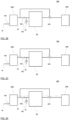
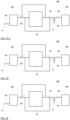
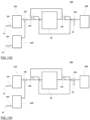
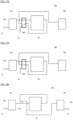
- FIG. 1A is a schematic diagram illustrating an example of a device according to one embodiment of the present invention.
- FIG. 1B is a flow diagram showing an example of an adsorption process using the device shown in FIG. 1A.
- FIG. 1C is a flow diagram showing an example of a desorption process using the device shown in FIG. 1A .
- the valve 30A In the adsorption step shown in FIG. 1B , the valve 30A is open, the valve 30B connects the gas inlet 50 to the pump 20, and the valve 30C connects the pump 20 to the first chamber 10A.
- a mixed gas is introduced from a gas inlet 50 as shown by a dashed arrow in FIG. 1B .
- the introduction of the mixed gas is carried out by a pump 20 .
- the mixed gas that has passed through the pump 20 passes through the valve 30C and enters the first chamber 10A.
- the first chamber 10A contains a solid adsorbent that adsorbs at least a portion of a specific gas component from the mixed gas. Most of the gas that is not adsorbed passes through valve 30A and is exhausted from exhaust port 40 to the outside of the system.
- the valve 30A In the desorption step shown in FIG. 1C , the valve 30A is closed, the valve 30B connects the first chamber 10A to the pump 20, and the valve 30C connects the pump 20 to the second chamber 10B. In this step, as shown by the dashed arrow in FIG. 1C , at least a portion of the specific gas component desorbed from the solid adsorbent in the first chamber 10A is transferred by the pump 20 to the second chamber 10B.
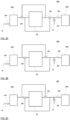
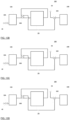
- valve 30A is open and valve 30B is closed.
- the valve 30C connects gas inlet 50 and pump 20, and valve 30D connects pump 20 and first chamber 10A via the above-mentioned junction.
- a mixed gas is introduced from the gas inlet 50 via the valve 30C.
- the introduction of the mixed gas is carried out by a pump 20 .
- the mixed gas that has passed through the pump 20 passes through the valve 30D and the filter 60 and enters the first chamber 10A.
- the first chamber 10A contains a solid adsorbent that adsorbs at least a portion of a specific gas component from the mixed gas. Most of the gas that is not adsorbed passes through valve 30A and is exhausted from exhaust port 40 to the outside of the system.
- FIGs. 2A to 2C there is only one connection point between the first chamber 10A and the piping (except for the connection to the exhaust port).
- the piping between the first chamber and the above-mentioned junction is less likely to become clogged with fine powder, thereby reducing the frequency of maintenance of the device.
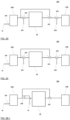
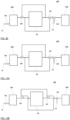
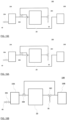
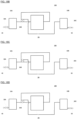
- FIG. 3A is a schematic diagram illustrating an example of a device according to another embodiment of the present invention.
- FIG. 3B is a flow diagram showing an example of an adsorption process using the device shown in FIG. 3A .
- FIG. 3C is a flow diagram showing an example of a desorption process using the device shown in FIG. 3A .
- a first chamber 10A, a pump 20, and a second chamber 10B are connected in this order by piping.
- the first chamber 10A is connected to an exhaust port 40 via a two-way valve 30A.
- a three-way valve 30B is provided between the first chamber 10A and the pump 20, and branches off to a gas inlet 50.
- a three-way valve 30C is provided between the pump 20 and the second chamber 10B, and branches to a junction with the piping between the first chamber 10A and the pump 20. This junction is located between the first chamber 10A and the valve 30B.
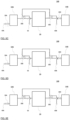
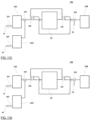
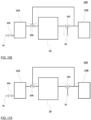
- FIG. 4A is a schematic diagram illustrating an example of a device according to another embodiment of the present invention.
- FIG. 4B-1 is a flow diagram showing an example of an adsorption process using the device shown in FIG. 4A .
- FIG. 4B-2 is a flow diagram showing another example of the adsorption process using the device shown in FIG. 4A .
- FIG. 4C is a flow diagram showing an example of a process for removing gases other than the specific gas component remaining in the first chamber in the device shown in FIG. 4A .
- FIG. 4D is a flow diagram showing an example of a desorption process using the device shown in FIG. 4A .
- a first chamber 10A, a pump 20, and a second chamber 10B are connected in this order by piping.
- the first chamber 10A is connected to an exhaust port (gas inlet) 40 via a two-way valve 30A.
- a three-way valve 30B is provided between the first chamber 10A and the pump 20, and branches off to a gas inlet 50A.
- a three-way valve 30C is provided between the pump 20 and the second chamber 10B, and branches to a junction with the piping between the first chamber 10A and the pump 20. This junction is located between the first chamber 10A and the valve 30B.
- a three-way valve 30D is provided between the three-way valve 30C and the second chamber 10B, and branches off to a gas outlet 50B.
- valve 30A In the removal process from the first chamber shown in FIG. 4C , valve 30A is closed, valve 30B connects first chamber 10A to pump 20, and valves 30C and 30D connect pump 20 to gas outlet 50B. In this step, as indicated by the dashed arrow in FIG. 4C , at least a portion of the gas remaining in the first chamber 10A is exhausted by the pump 20 to the outside of the system via the gas outlet 50B.
- valve 30A In the desorption step shown in FIG. 4D , the valve 30A is closed, the valve 30B connects the first chamber 10A to the pump 20, and the valves 30C and 30D connect the pump 20 to the second chamber 10B. In this step, as shown by the dashed arrow in FIG. 4D , at least a portion of the specific gas component desorbed from the solid adsorbent in the first chamber 10A is transferred by the pump 20 to the second chamber 10B.
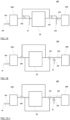
- FIG. 5A is a schematic diagram illustrating an example of a device according to another embodiment of the present invention.
- FIG. 5B-1 is a flow diagram showing an example of an adsorption process using the device shown in FIG. 5A .
- FIG. 5B-2 is a flow diagram showing another example of the adsorption process using the device shown in FIG. 5A .
- FIG. 5C is a flow diagram showing an example of a process for removing gases other than the specific gas component remaining in the first chamber in the device shown in FIG. 5A .
- FIG. 5D is a flow diagram showing an example of a desorption process using the device shown in FIG. 5A .
- the gas recovery device 100 shown in FIG. 5A includes a first chamber 10A, a second chamber 10B, a pump 20, valves 30A/30B/30C, an exhaust port (gas inlet) 40, and a gas inlet (gas outlet) 50.
- a first chamber 10A, a pump 20, and a second chamber 10B are connected in this order by piping.
- the first chamber 10A is connected to an exhaust port (gas inlet) 40 via a two-way valve 30A.
- a four-way valve 30B is provided between the first chamber 10A and the pump 20, and branches off to a gas inlet (gas outlet) 50.
- a three-way valve 30C is provided between the pump 20 and the second chamber 10B, and branches off to a four-way valve 30B between the first chamber 10A and the pump 20.
- valve 30A is open
- valve 30B connects gas inlet 50 to pump 20
- valve 30C connects pump 20 to first chamber 10A via valve 30B. That is, in this step, as shown by the dashed arrow in FIG. 5B-1 , first, the mixed gas is introduced from the gas inlet 50 via the valve 30B. The introduction of the mixed gas is carried out by a pump 20 . The mixed gas that has passed through the pump 20 passes through valves 30C and 30B and enters the first chamber 10A.
- the first chamber 10A contains a solid adsorbent that adsorbs at least a portion of a specific gas component from the mixed gas. Most of the gas that is not adsorbed passes through valve 30A and is exhausted from exhaust port 40 to the outside of the system.
- the gas inlet 40 provided in the first chamber 10A and the gas outlet 50 provided between the first chamber 10A and the second chamber 10B are used.
- the valve 30A is open, the valve 30B connects the first chamber 10A to the pump 20, and the valve 30C connects the pump 20 to the gas outlet 50 via the valve 30B. That is, in this step, as shown by the dashed arrow in FIG. 5B-2 , first, the mixed gas is introduced directly into the first chamber 10A from the gas inlet 40 via the valve 30A. The introduction of the mixed gas is carried out by a pump 20 .
- the first chamber 10A contains a solid adsorbent that adsorbs at least a portion of a specific gas component from the mixed gas. Most of the gas that is not adsorbed passes through valve 30B, pump 20, valve 30C, and valve 30B, and is discharged from gas outlet 50 to the outside of the system.
- valve 30A In the removal process from the first chamber shown in FIG. 5C , valve 30A is closed, valve 30B connects first chamber 10A to pump 20, and valve 30C connects pump 20 to gas outlet 50 via valve 30B.
- valve 30C In this step, as indicated by the dashed arrow in FIG. 5C , at least a portion of the gas remaining in the first chamber 10A is exhausted to the outside of the system via the gas outlet 50 by the pump 20.
- the gas outlet 50 is the same as the gas inlet 50 used in the adsorption process illustrated in F IG. 5B-1 . That is, when the adsorption process illustrated in FIG. 5B-1 is adopted, the gas inlet 50 is also used as a gas outlet 50 for removing gases other than the specific gas components remaining in the first chamber 10A.
- valve 30A In the desorption step shown in FIG. 5D , the valve 30A is closed, the valve 30B connects the first chamber 10A to the pump 20, and the valve 30C connects the pump 20 to the second chamber 10B. In this step, as shown by the dashed arrow in FIG. 5D , at least a portion of the specific gas component desorbed from the solid adsorbent in the first chamber 10A is transferred by the pump 20 to the second chamber 10B.
- the configuration shown in FIGs. 5A-5D requires fewer valves than, for example, the configuration shown in FIGs. 4A-4D .
- the configuration shown in FIGs. 5A to 5D when the adsorption process illustrated in Figure 5B-1 is adopted, the gas outlet used to remove gas other than the specific gas component remaining in the first chamber is common to the gas inlet used to introduce the mixed gas. By adopting such a configuration, the device can be made simpler.
- the configurations shown in FIGs. 5A to 5D when the adsorption process illustrated in Figure 5B-2 is adopted, as described above, the load on the pump 20 is reduced, and it is possible to reduce the time and/or frequency required for maintenance of the pump 20.
- FIG. 6A is a schematic diagram illustrating an example of a device according to another embodiment of the present invention.
- FIG. 6B-1 is a flow diagram showing an example of an adsorption process using the device shown in FIG. 6A.
- FIG. 6B-2 is a flow diagram showing another example of the adsorption process using the device shown in FIG. 6A .
- FIG. 6C is a flow diagram showing an example of a process for removing gases other than the specific gas component remaining in the first chamber in the device shown in FIG. 6A .
- FIG. 6D is a flow diagram showing an example of a desorption process using the device shown in FIG. 6A .
- FIG. 6E is a flow diagram showing an example of a process for recovering or removing gas in the second chamber in the device shown in FIG. 6A .
- the gas recovery device 100 shown in FIG. 6A includes a first chamber 10A, a second chamber 10B, a pump 20, valves 30A/30B/30C/30D, an exhaust port (gas inlet) 40A, an exhaust port 40B, and a gas inlet (gas outlet) 50.
- a first chamber 10A, a pump 20, and a second chamber 10B are connected in this order by piping.
- the first chamber 10A is connected to an exhaust port (gas inlet) 40A via a two-way valve 30A.
- a four-way valve 30B is provided between the first chamber 10A and the pump 20, and branches off to a gas inlet (gas outlet) 50.
- a four-way valve 30C is provided between the pump 20 and the second chamber 10B, and branches out to an exhaust port 40B and a four-way valve 30B.
- a two-way valve 30D is provided between the four-way valve 30C and the second chamber 10B.
- valve 30A is open
- valve 30B connects gas inlet 50 to pump 20
- valve 30C connects pump 20 to first chamber 10A via valve 30B. That is, in this step, as shown by the dashed arrow in FIG. 6B-1 , first, the mixed gas is introduced from the gas inlet 50 via the valve 30B. The introduction of the mixed gas is carried out by a pump 20 . The mixed gas that has passed through the pump 20 passes through valves 30C and 30B and enters the first chamber 10A.
- the first chamber 10A contains a solid adsorbent that adsorbs at least a portion of a specific gas component from the mixed gas. Most of the gas that is not adsorbed passes through valve 30A and is exhausted from exhaust port 40A to the outside of the system.
- a gas inlet 40A provided in the first chamber 10A and a gas outlet 50 provided between the first chamber 10A and the second chamber 10B are used.
- the valve 30A is open, the valve 30B connects the first chamber 10A to the pump 20, and the valve 30C connects the pump 20 to the gas outlet 50 via the valve 30B. That is, in this step, as shown by the dashed arrow in FIG. 6B-2 , first, the mixed gas is introduced directly into the first chamber 10A from the gas inlet 40A via the valve 30A. The introduction of the mixed gas is carried out by a pump 20 .
- the first chamber 10A contains a solid adsorbent that adsorbs at least a portion of a specific gas component from the mixed gas. Most of the gas that is not adsorbed passes through valve 30B, pump 20, valve 30C, and valve 30B, and is discharged from gas outlet 50 to the outside of the system.
- valve 30A In the removal process from the first chamber shown in FIG. 6C , valve 30A is closed, valve 30B connects the first chamber 10A to the pump 20, and valve 30C connects the pump 20 to the gas outlet 50 via valve 30B.
- valve 30C In this step, as indicated by the dashed arrow in FIG. 6C , at least a portion of the gas remaining in the first chamber 10A is exhausted to the outside of the system via the gas outlet 50 by the pump 20.
- the gas outlet 50 is the same as the gas inlet 50 used in the adsorption process illustrated in FIG. 6B-1 . That is, when the adsorption process illustrated in FIG. 6B-1 is adopted, the gas inlet 50 is also used as a gas outlet 50 for removing gases other than the specific gas components remaining in the first chamber 10A.
- valve 30A In the desorption step shown in FIG. 6D , the valve 30A is closed, the valve 30B connects the first chamber 10A to the pump 20, the valve 30C connects the pump 20 to the valve 30D, and the valve 30D is open. In this step, as shown by the dashed arrow in FIG. 6D , at least a portion of the specific gas component desorbed from the solid adsorbent in the first chamber 10A is transferred by the pump 20 to the second chamber 10B.
- valves 30A and 30B are closed, and valve 30C connects second chamber 10B to exhaust port 40B via open valve 30D.
- this step is performed to collect or remove the gas in the second chamber 10B.
- this step may be performed to recover a specific gas component that was transferred to the second chamber 10B.
- this step may be performed before each of the steps described above in order to evacuate the second chamber 10B.
- the gas in the second chamber can be removed at any time. With such a configuration, it is easy to recover the gas from the second chamber.
- the gas may be collected from the second chamber using a pump other than the pump 20 . Also, as explained above, in the configurations shown in the other figures, withdrawal of gas from the second chamber may occur through a separate exhaust port, not shown.
- FIG. 7A is a schematic diagram illustrating an example of a device according to another embodiment of the present invention.
- FIG. 7B is a flow diagram showing an example of a process for removing gas from the second chamber in the device shown in FIG. 7A.
- FIG. 7C-1 is a flow diagram showing an example of an adsorption process using the device shown in FIG. 7A .
- FIG. 7C-2 is a flow diagram showing another example of the adsorption process using the device shown in FIG. 7A .
- FIG. 7D is a flow diagram showing an example of a process for removing gases other than the specific gas component remaining in the first chamber in the device shown in FIG. 7A .
- FIG. 7E is a flow diagram showing an example of a desorption process using the device shown in FIG. 7A .
- the gas recovery device 100 shown in FIG. 7A includes a first chamber 10A, a second chamber 10B, a pump 20, valves 30A/30B/30C/30D/30E, an exhaust port (gas inlet) 40, and a gas inlet (gas outlet) 50.
- a first chamber 10A, a pump 20, and a second chamber 10B are connected in this order by piping.
- the first chamber 10A is connected to an exhaust port (gas inlet) 40 via a two-way valve 30A.
- a three-way valve 30B is provided between the first chamber 10A and the pump 20, and branches to a junction with a piping between the pump 20 and the second chamber 10B.
- a three-way valve 30C is provided between the pump 20 and the second chamber 10B, and branches to a junction with the piping between the first chamber 10A and the pump 20.
- the former junction is located between the pump 20 and the three-way valve 30C, and the latter junction is located between the three-way valve 30B and the pump 20.
- a two-way valve 30D is provided between the three-way valve 30C and the second chamber 10B. Between the three-way valve 30C and the two-way valve 30D, the piping branches off, and the branched piping is provided with a two-way valve 30E. The two-way valve 30E is connected to a gas inlet (gas outlet) 50.
- valve 30D is open and valve 30E is closed.
- the valve 30C connects the second chamber 10B with the pump 20.
- the valve 30B connects the pump 20 to the first chamber 10A.
- Valve 30A is open.
- this step is typically performed before each of the steps described below in order to evacuate the second chamber 10B. As can be seen from FIG. 7B , this process is carried out by the power of pump 20.
- valve 30D is closed and valve 30E is open.
- Valve 30C connects gas inlet 50 and pump 20 via valve 30E.
- the valve 30B connects the pump 20 to the first chamber 10A.
- Valve 30A is open. That is, in this step, as shown by the dashed arrow in FIG. 7C-1 , first, the mixed gas is introduced from the gas inlet 50 via the valves 30E and 30C. The introduction of the mixed gas is carried out by a pump 20.
- the mixed gas that has passed through the pump 20 passes through the valve 30B and enters the first chamber 10A.
- the first chamber 10A contains a solid adsorbent that adsorbs at least a portion of a specific gas component from the mixed gas. Most of the gas that is not adsorbed passes through valve 30A and is exhausted from exhaust port 40 to the outside of the system.
- the transition from the process shown in FIG. 7B to the process shown in FIG. 7C-1 can be realized simply by controlling the opening and closing of the valves 30D and 30E.
- valve 30A is open, valve 30B connects first chamber 10A to pump 20, and valve 30C connects pump 20 to gas outlet 50 via valve 30E. That is, in this step, as shown by the dashed arrow in FIG. 7C-2 , first, the mixed gas is introduced directly into the first chamber 10A from the gas inlet 40 via the valve 30A. The introduction of the mixed gas is carried out by a pump 20.
- the first chamber 10A contains a solid adsorbent that adsorbs at least a portion of a specific gas component from the mixed gas. Most of the gas that is not adsorbed passes through valve 30B, pump 20, valve 30C, and valve 30E and is discharged from gas outlet 50 to the outside of the system.
- valve 30A In the removal process from the first chamber shown in FIG. 7D , valve 30A is closed, valve 30B connects first chamber 10A to pump 20, valve 30C connects pump 20 to gas outlet 50 via valve 30E, and valve 30D is closed.
- valve 30D In this step, as indicated by the dashed arrow in FIG. 7D , at least a portion of the gas remaining in the first chamber 10A is exhausted to the outside of the system via the gas outlet 50 by the pump 20.
- the gas outlet 50 is the same as the gas inlet 50 used in the adsorption process illustrated in FIG. 7C-1 . That is, when the adsorption process illustrated in FIG. 7C-1 is adopted, the gas inlet 50 is also used as a gas outlet 50 for removing gases other than the specific gas components remaining in the first chamber 10A.
- valve 30A In the desorption process shown in FIG. 7E , valve 30A is closed, valve 30B connects first chamber 10A to pump 20, valve 30C connects pump 20 to valve 30D, valve 30D is open, and valve 30E is closed. In this step, as shown by the dashed arrow in FIG. 7E , at least a portion of the specific gas component desorbed from the solid adsorbent in the first chamber 10A is transferred by the pump 20 to the second chamber 10B.
- a first chamber 10A, a pump 20, and a second chamber 10B are connected in this order by piping.
- the first chamber 10A is connected to an exhaust port 40 via a two-way valve 30A.
- a three-way valve 30B is provided between the first chamber 10A and the pump 20, and branches to a junction with a piping between the pump 20 and the second chamber 10B.
- a three-way valve 30C is provided between the pump 20 and the second chamber 10B, and branches to a junction with the piping between the first chamber 10A and the pump 20.
- the former junction is located between the pump 20 and the three-way valve 30C, and the latter junction is located between the three-way valve 30B and the pump 20.
- a three-way valve 30D is provided between the three-way valve 30C and the second chamber 10B, and branches off to a gas inlet (gas outlet) 50.
- the valve 30A is opened, and the valve 30B connects the pump 20 to the gas outlet 50.
- the mixed gas is introduced directly into the first chamber 10A from the gas inlet 40 via the valve 30A.
- the introduction of the mixed gas is carried out by a pump 20 .
- the first chamber 10A contains a solid adsorbent that adsorbs at least a portion of a specific gas component from the mixed gas. Most of the gas that is not adsorbed is discharged to the outside of the system from the gas outlet 50 via the pump 20 and the valve 30B.
- valve 30A is closed and valve 30B connects pump 20 to vent port 50.
- valve 30B connects pump 20 to vent port 50.
- at least a portion of the gas remaining in the first chamber 10A is exhausted to the outside of the system via the gas outlet 50 by the pump 20.
- valve 30A In the desorption step shown in FIG. 15E , the valve 30A is closed, the valve 30B connects the first chamber 10A to the pump 20, and the valves 30C and 30B connect the pump 20 to the second chamber 10B. In this step, as shown by the dashed arrow in FIG. 15E , at least a portion of the specific gas component desorbed from the solid adsorbent in the first chamber 10A is transferred by the pump 20 to the second chamber 10B.
- FIGs. 15A-15E requires fewer valves than, for example, the configuration shown in FIGs. 10A-10E . By adopting such a configuration, the device can be made simpler.
- a gas inlet 40 is provided in the first chamber 10A. In this case, as described above, by reducing the load on the pump 20, it is also possible to reduce the time and/or frequency required for maintenance of the pump 20.
- FIG. 16A is a schematic diagram illustrating an example of a device according to another embodiment of the present invention.
- FIG. 16B is a flow diagram showing an example of a process for removing gas from the second chamber in the device shown in FIG. 16A .
- FIG. 16C is a flow diagram showing an example of an adsorption process using the device shown in FIG. 16A .
- FIG. 16D is a flow diagram showing an example of a process for removing gases other than the specific gas component remaining in the first chamber in the device shown in FIG. 16A .
- FIG. 16E is a flow diagram showing an example of a desorption process using the device shown in FIG. 16A .
- the gas recovery device 100 shown in FIG. 16A includes a first chamber 10A, a second chamber 10B, a pump 20, valves 30A/30B/30C, a gas inlet 40, and a gas outlet 50.
- a first chamber 10A, a pump 20, and a second chamber 10B are connected in this order by piping.
- the first chamber 10A is connected to a gas inlet 40 via a two-way valve 30A.
- a three-way valve 30B is provided between the first chamber 10A and the pump 20, and branches to a junction with a pipe between the pump 20 and the second chamber 10B. This junction is located between valve 30C and second chamber 10B.
- a three-way valve 30C is provided between the pump 20 and the second chamber 10B. The three-way valve 30C further branches into a gas outlet 50.
- valve 30B connects the second chamber 10B to the pump 20. Furthermore, the valve 30C connects the pump 20 and the gas outlet 50 . In this step, as indicated by the dashed arrow in FIG. 16B , at least a portion of the gas in the second chamber 10B is exhausted to the outside of the system via the gas outlet 50. This step is typically performed before each of the steps described below in order to evacuate the second chamber 10B. As can be seen from FIG. 16B , this process is carried out by the power of pump 20.
- valve 30A In the desorption step shown in FIG. 16E , the valve 30A is closed, the valve 30B connects the first chamber 10A to the pump 20, and the valve 30C connects the pump 20 to the second chamber 10B. In this step, as shown by the dashed arrow in FIG. 16E , at least a portion of the specific gas component desorbed from the solid adsorbent in the first chamber 10A is transferred by the pump 20 to the second chamber 10B.
- the configuration shown in FIGs. 16A-16E requires fewer valves than, for example, the configuration shown in FIGs. 10A-10E .
- the device can be made simpler.
- a gas inlet 40 is provided in the first chamber 10A.
- the gas inlet provided in the first chamber 10A can also be used as an exhaust port.
- the device 100 can be made simpler than when the first chamber 10A is provided with a separate gas inlet and exhaust port.
- the gas recovery device 100 shown in FIG. 17A includes a first chamber 10A, a second chamber 10B, a pump 20, valves 30A/30B, a gas inlet 40, and a gas outlet 50.
- a first chamber 10A, a pump 20, and a second chamber 10B are connected in this order by piping.
- the first chamber 10A is connected to a gas inlet 40 via a two-way valve 30A.
- five-way valves 30B are provided between the first chamber 10A and the pump 20, between the pump 20 and the second chamber 10B, and between the pump 20 and the gas outlet 50.
- a three-position exhaust center type valve can typically be used as the five-way valve 30B.
- the valve 30B connects the second chamber 10B to the pump 20 and also connects the pump 20 to the gas outlet 50. In this step, as indicated by the dashed arrow in FIG.
- the valve 30A is open, and the valve 30B connects the first chamber 10A to the pump 20 and also connects the pump 20 to the gas outlet 50.
- the mixed gas is introduced directly into the first chamber 10A from the gas inlet 40 via the valve 30A.
- the introduction of the mixed gas is carried out by a pump 20.
- the first chamber 10A contains a solid adsorbent that adsorbs at least a portion of a specific gas component from the mixed gas. Most of the gas that is not adsorbed passes through valve 30B, pump 20, and valve 30B and is discharged from gas outlet 50 to the outside of the system.
- valve 30A In the removal step from the first chamber shown in FIG. 17D , the valve 30A is closed, and the valve 30B connects the first chamber 10A to the pump 20 and also connects the pump 20 to the gas outlet 50. In this step, as indicated by the dashed arrow in FIG. 17D , at least a portion of the gas remaining in the first chamber 10A is exhausted by the pump 20 to the outside of the system via the gas outlet 50.
- valve 30A In the desorption step shown in FIG. 17E , the valve 30A is closed, and the valve 30B connects the first chamber 10A to the pump 20 and also connects the pump 20 to the second chamber 10B. In this step, as shown by the dashed arrow in FIG. 17E , at least a portion of the specific gas component desorbed from the solid adsorbent in the first chamber 10A is transferred by the pump 20 to the second chamber 10B.
- the configuration shown in FIGs. 17A-17E requires fewer valves than, for example, the configuration shown in FIGs. 12A-12E .
- the device can be made simpler.
- the length of the piping portion through which gas can pass in the above-described desorption step can be made shorter than in the configuration shown in FIGs. 12A to 12E , for example.
- the amount of gas remaining in the piping can be reduced, thereby shortening the time required to transfer the gas. For the same reason, it is also possible to increase the purity of a specific gas component being recovered.
- a gas inlet 40 is provided in the first chamber 10A. In this case, as described above, by reducing the load on the pump 20, it is also possible to reduce the time and/or frequency required for maintenance of the pump 20.
- FIG. 18A is a schematic diagram illustrating an example of a device according to another embodiment of the present invention.
- FIG. 18B is a flow diagram showing an example of an adsorption process using the device shown in FIG. 18A .
- FIG. 18C is a flow diagram showing an example of a process for removing gas from the second chamber in the device shown in FIG. 18A .
- FIG. 18D is a flow diagram showing an example of a desorption process using the device shown in FIG. 18A .
- the gas recovery device 100 shown in FIG. 18A includes a first chamber 10A, a second chamber 10B, a pump 20, valves 30A/30B/30C, a gas inlet (exhaust port) 40, and a gas outlet 50.
- a first chamber 10A, a pump 20, and a second chamber 10B are connected in this order by piping.
- the first chamber 10A is connected to a gas inlet (exhaust port) 40 via a two-way valve 30A.
- a four-way valve 30B is provided between the first chamber 10A and the pump 20, and between the pump 20 and the second chamber 10B.
- the second chamber 10B is connected to a gas outlet 50 via a two-way valve 30C.
- valve 30A In the adsorption process shown in FIG. 18B , valve 30A is open, valve 30B connects the first chamber 10A to the pump 20 and also connects the pump 20 to the second chamber 10B, and valve 30C is open.
- the mixed gas is introduced directly into the first chamber 10A from the gas inlet 40 via the valve 30A.
- the introduction of the mixed gas is carried out by a pump 20 .
- the first chamber 10A contains a solid adsorbent that adsorbs at least a portion of a specific gas component from the mixed gas. Most of the gas that has not been adsorbed passes through valve 30B, pump 20, valve 30B, and second chamber 10B and is discharged from gas outlet 50 to the outside of the system.
- valve 30C In the removal process from the second chamber shown in FIG. 18C , valve 30C is closed, valve 30B connects second chamber 10B with pump 20 and first chamber 10A, and valve 30A is open. In this step, as indicated by the dashed arrow in FIG. 18C , at least a portion of the gas in the second chamber 10B is exhausted to the outside of the system via the exhaust port 40. This step is carried out for the purpose of removing any gas remaining in the second chamber 10B after the adsorption step shown in FIG. 18B . As can be seen from FIG. 18C , this process is carried out by the power of pump 20.
- valve 30A In the desorption step shown in FIG. 18D , the valve 30A is closed, the valve 30B connects the first chamber 10A to the pump 20 and also connects the pump 20 to the second chamber 10B, and the valve 30C is closed. In this step, as shown by the dashed arrow in FIG. 18D , at least a portion of the specific gas component desorbed from the solid adsorbent in the first chamber 10A is transferred by the pump 20 to the second chamber 10B.
- the configuration shown in FIGs. 18A-18D requires fewer valves than, for example, the configuration shown in FIGs. 10A-10E .
- the device can be made simpler.
- the length of the piping through which gas can pass in the above-described desorption step can be made shorter than in the configuration shown in FIGs. 10A to 10E , for example.
- the amount of gas remaining in the piping can be reduced, thereby shortening the time required to transfer the gas. For the same reason, it is also possible to increase the purity of a specific gas component being recovered.
- a gas inlet 40 is provided in the first chamber 10A.
- the gas inlet provided in the first chamber 10A can also be used as an exhaust port.
- the device 100 can be made simpler than when the first chamber 10A is provided with a separate gas inlet and exhaust port.
Landscapes
- Chemical & Material Sciences (AREA)
- Engineering & Computer Science (AREA)
- Chemical Kinetics & Catalysis (AREA)
- Analytical Chemistry (AREA)
- General Chemical & Material Sciences (AREA)
- Oil, Petroleum & Natural Gas (AREA)
- Organic Chemistry (AREA)
- Health & Medical Sciences (AREA)
- Environmental & Geological Engineering (AREA)
- Inorganic Chemistry (AREA)
- Biomedical Technology (AREA)
- Treating Waste Gases (AREA)
- Separation Of Gases By Adsorption (AREA)
- Filling Or Discharging Of Gas Storage Vessels (AREA)
- Feeding, Discharge, Calcimining, Fusing, And Gas-Generation Devices (AREA)
Applications Claiming Priority (2)
| Application Number | Priority Date | Filing Date | Title |
|---|---|---|---|
| JP2022074344 | 2022-04-28 | ||
| PCT/JP2023/016808 WO2023210797A1 (ja) | 2022-04-28 | 2023-04-28 | ガスの回収装置及び回収方法 |
Publications (1)
| Publication Number | Publication Date |
|---|---|
| EP4516380A1 true EP4516380A1 (en) | 2025-03-05 |
Family
ID=88518885
Family Applications (1)
| Application Number | Title | Priority Date | Filing Date |
|---|---|---|---|
| EP23796532.2A Pending EP4516380A1 (en) | 2022-04-28 | 2023-04-28 | Gas recovery device and recovery method |
Country Status (4)
| Country | Link |
|---|---|
| US (1) | US20250288942A1 (https=) |
| EP (1) | EP4516380A1 (https=) |
| JP (1) | JPWO2023210797A1 (https=) |
| WO (1) | WO2023210797A1 (https=) |
Family Cites Families (8)
| Publication number | Priority date | Publication date | Assignee | Title |
|---|---|---|---|---|
| JPH0494307A (ja) * | 1990-08-07 | 1992-03-26 | Yutaka Noguchi | 窒素ガス富化貯蔵装置 |
| JPH0824553A (ja) * | 1994-07-20 | 1996-01-30 | Nippondenso Co Ltd | ガス組成制御装置 |
| US6245127B1 (en) * | 1999-05-27 | 2001-06-12 | Praxair Technology, Inc. | Pressure swing adsorption process and apparatus |
| MX2010011017A (es) * | 2008-04-06 | 2011-01-21 | Innosepra Llc | Recuperacion de dioxido de carbono. |
| JP5401121B2 (ja) * | 2009-03-02 | 2014-01-29 | 株式会社松井製作所 | 粉粒体材料の除湿乾燥装置 |
| JP6107695B2 (ja) * | 2014-02-10 | 2017-04-05 | 日立化成株式会社 | 二酸化炭素回収装置及び二酸化炭素回収方法 |
| JP6790403B2 (ja) * | 2016-03-25 | 2020-11-25 | 株式会社Ihi | 二酸化炭素の回収方法及び回収装置 |
| JP6805770B2 (ja) * | 2016-12-05 | 2020-12-23 | 株式会社Ihi | 気体濃縮装置 |
-
2023
- 2023-04-28 EP EP23796532.2A patent/EP4516380A1/en active Pending
- 2023-04-28 JP JP2024518064A patent/JPWO2023210797A1/ja active Pending
- 2023-04-28 WO PCT/JP2023/016808 patent/WO2023210797A1/ja not_active Ceased
- 2023-04-28 US US18/860,020 patent/US20250288942A1/en active Pending
Also Published As
| Publication number | Publication date |
|---|---|
| JPWO2023210797A1 (https=) | 2023-11-02 |
| US20250288942A1 (en) | 2025-09-18 |
| WO2023210797A1 (ja) | 2023-11-02 |
Similar Documents
| Publication | Publication Date | Title |
|---|---|---|
| KR101205078B1 (ko) | 고로가스의 분리방법 | |
| CN108043064B (zh) | 一种VOCs回收工艺及系统 | |
| CN109432947B (zh) | 从六氟化硫混合气体中提纯六氟化硫气体的装置及方法 | |
| CN103052435A (zh) | 排气处理系统 | |
| JPWO2018179351A1 (ja) | 二酸化炭素除去装置及び吸着剤の二酸化炭素吸着容量の回復方法 | |
| JP5743215B2 (ja) | ヘリウムガスの精製方法および精製装置 | |
| CN115779652A (zh) | 一种从氮氧化物尾气中回收氮氧化物的方法及系统 | |
| CN110394020B (zh) | 一种用于处理含VOCs的废活性炭的氮气集中脱附系统 | |
| JP6084830B2 (ja) | パーフルオロコンパウンド系排ガスの除害処理装置および方法 | |
| CN101617031A (zh) | 可燃性气体浓缩装置及可燃性气体浓缩方法 | |
| EP4516380A1 (en) | Gas recovery device and recovery method | |
| CN110433606B (zh) | 气体提纯装置及具有其的气体回收系统 | |
| US8979979B2 (en) | Method and device for removing volatile organic substances from the contained air of closed habitats | |
| JP2012229151A (ja) | アルゴンガスの精製方法および精製装置 | |
| CN210729079U (zh) | 一种移动式氮气脱附再生系统集成车 | |
| CN210874701U (zh) | 气体提纯装置及具有其的气体回收系统 | |
| CN220071181U (zh) | 一种低温冷凝去除voc的装置 | |
| CN210729081U (zh) | 一种生物药厂废气处理装置 | |
| US20040187683A1 (en) | Gas recovery system to improve the efficiency of abatementand/or implement reuse/reclamation | |
| CN116440648A (zh) | 一种有机废气吸附再生系统及其控制方法 | |
| CN101274191A (zh) | 油气回收备用吸附方法 | |
| CN1315563C (zh) | 从混合气体中脱除乙烯、二氧化碳的吸附分离法 | |
| JP2001314008A (ja) | ガス回収装置及びガス回収方法 | |
| CN210385495U (zh) | 一种高效油气回收及净化处理系统 | |
| CN210729077U (zh) | 一种用于处理含VOCs的废活性炭的氮气集中脱附系统 |
Legal Events
| Date | Code | Title | Description |
|---|---|---|---|
| STAA | Information on the status of an ep patent application or granted ep patent |
Free format text: STATUS: THE INTERNATIONAL PUBLICATION HAS BEEN MADE |
|
| PUAI | Public reference made under article 153(3) epc to a published international application that has entered the european phase |
Free format text: ORIGINAL CODE: 0009012 |
|
| STAA | Information on the status of an ep patent application or granted ep patent |
Free format text: STATUS: REQUEST FOR EXAMINATION WAS MADE |
|
| 17P | Request for examination filed |
Effective date: 20241128 |
|
| AK | Designated contracting states |
Kind code of ref document: A1 Designated state(s): AL AT BE BG CH CY CZ DE DK EE ES FI FR GB GR HR HU IE IS IT LI LT LU LV MC ME MK MT NL NO PL PT RO RS SE SI SK SM TR |
|
| DAV | Request for validation of the european patent (deleted) | ||
| DAX | Request for extension of the european patent (deleted) |