EP4512918A1 - Aluminum alloy plate for tank and manufacturing method therefor - Google Patents
Aluminum alloy plate for tank and manufacturing method therefor Download PDFInfo
- Publication number
- EP4512918A1 EP4512918A1 EP23791243.1A EP23791243A EP4512918A1 EP 4512918 A1 EP4512918 A1 EP 4512918A1 EP 23791243 A EP23791243 A EP 23791243A EP 4512918 A1 EP4512918 A1 EP 4512918A1
- Authority
- EP
- European Patent Office
- Prior art keywords
- aluminum alloy
- alloy sheet
- cast slab
- sheet
- hot
- Prior art date
- Legal status (The legal status is an assumption and is not a legal conclusion. Google has not performed a legal analysis and makes no representation as to the accuracy of the status listed.)
- Pending
Links
Images



Classifications
-
- C—CHEMISTRY; METALLURGY
- C22—METALLURGY; FERROUS OR NON-FERROUS ALLOYS; TREATMENT OF ALLOYS OR NON-FERROUS METALS
- C22C—ALLOYS
- C22C1/00—Making non-ferrous alloys
- C22C1/06—Making non-ferrous alloys with the use of special agents for refining or deoxidising
-
- B—PERFORMING OPERATIONS; TRANSPORTING
- B21—MECHANICAL METAL-WORKING WITHOUT ESSENTIALLY REMOVING MATERIAL; PUNCHING METAL
- B21B—ROLLING OF METAL
- B21B1/00—Metal-rolling methods or mills for making semi-finished products of solid or profiled cross-section; Sequence of operations in milling trains; Layout of rolling-mill plant, e.g. grouping of stands; Succession of passes or of sectional pass alternations
- B21B1/22—Metal-rolling methods or mills for making semi-finished products of solid or profiled cross-section; Sequence of operations in milling trains; Layout of rolling-mill plant, e.g. grouping of stands; Succession of passes or of sectional pass alternations for rolling plates, strips, bands or sheets of indefinite length
-
- B—PERFORMING OPERATIONS; TRANSPORTING
- B21—MECHANICAL METAL-WORKING WITHOUT ESSENTIALLY REMOVING MATERIAL; PUNCHING METAL
- B21B—ROLLING OF METAL
- B21B3/00—Rolling materials of special alloys so far as the composition of the alloy requires or permits special rolling methods or sequences ; Rolling of aluminium, copper, zinc or other non-ferrous metals
-
- B—PERFORMING OPERATIONS; TRANSPORTING
- B21—MECHANICAL METAL-WORKING WITHOUT ESSENTIALLY REMOVING MATERIAL; PUNCHING METAL
- B21B—ROLLING OF METAL
- B21B37/00—Control devices or methods specially adapted for metal-rolling mills or the work produced thereby
- B21B37/58—Roll-force control; Roll-gap control
-
- C—CHEMISTRY; METALLURGY
- C22—METALLURGY; FERROUS OR NON-FERROUS ALLOYS; TREATMENT OF ALLOYS OR NON-FERROUS METALS
- C22C—ALLOYS
- C22C1/00—Making non-ferrous alloys
- C22C1/02—Making non-ferrous alloys by melting
- C22C1/026—Alloys based on aluminium
-
- C—CHEMISTRY; METALLURGY
- C22—METALLURGY; FERROUS OR NON-FERROUS ALLOYS; TREATMENT OF ALLOYS OR NON-FERROUS METALS
- C22C—ALLOYS
- C22C1/00—Making non-ferrous alloys
- C22C1/02—Making non-ferrous alloys by melting
- C22C1/03—Making non-ferrous alloys by melting using master alloys
-
- C—CHEMISTRY; METALLURGY
- C22—METALLURGY; FERROUS OR NON-FERROUS ALLOYS; TREATMENT OF ALLOYS OR NON-FERROUS METALS
- C22C—ALLOYS
- C22C21/00—Alloys based on aluminium
-
- C—CHEMISTRY; METALLURGY
- C22—METALLURGY; FERROUS OR NON-FERROUS ALLOYS; TREATMENT OF ALLOYS OR NON-FERROUS METALS
- C22C—ALLOYS
- C22C21/00—Alloys based on aluminium
- C22C21/06—Alloys based on aluminium with magnesium as the next major constituent
- C22C21/08—Alloys based on aluminium with magnesium as the next major constituent with silicon
-
- C—CHEMISTRY; METALLURGY
- C22—METALLURGY; FERROUS OR NON-FERROUS ALLOYS; TREATMENT OF ALLOYS OR NON-FERROUS METALS
- C22F—CHANGING THE PHYSICAL STRUCTURE OF NON-FERROUS METALS AND NON-FERROUS ALLOYS
- C22F1/00—Changing the physical structure of non-ferrous metals or alloys by heat treatment or by hot or cold working
- C22F1/04—Changing the physical structure of non-ferrous metals or alloys by heat treatment or by hot or cold working of aluminium or alloys based thereon
-
- C—CHEMISTRY; METALLURGY
- C22—METALLURGY; FERROUS OR NON-FERROUS ALLOYS; TREATMENT OF ALLOYS OR NON-FERROUS METALS
- C22F—CHANGING THE PHYSICAL STRUCTURE OF NON-FERROUS METALS AND NON-FERROUS ALLOYS
- C22F1/00—Changing the physical structure of non-ferrous metals or alloys by heat treatment or by hot or cold working
- C22F1/04—Changing the physical structure of non-ferrous metals or alloys by heat treatment or by hot or cold working of aluminium or alloys based thereon
- C22F1/047—Changing the physical structure of non-ferrous metals or alloys by heat treatment or by hot or cold working of aluminium or alloys based thereon of alloys with magnesium as the next major constituent
-
- C—CHEMISTRY; METALLURGY
- C22—METALLURGY; FERROUS OR NON-FERROUS ALLOYS; TREATMENT OF ALLOYS OR NON-FERROUS METALS
- C22F—CHANGING THE PHYSICAL STRUCTURE OF NON-FERROUS METALS AND NON-FERROUS ALLOYS
- C22F1/00—Changing the physical structure of non-ferrous metals or alloys by heat treatment or by hot or cold working
- C22F1/04—Changing the physical structure of non-ferrous metals or alloys by heat treatment or by hot or cold working of aluminium or alloys based thereon
- C22F1/05—Changing the physical structure of non-ferrous metals or alloys by heat treatment or by hot or cold working of aluminium or alloys based thereon of alloys of the Al-Si-Mg type, i.e. containing silicon and magnesium in approximately equal proportions
-
- B—PERFORMING OPERATIONS; TRANSPORTING
- B21—MECHANICAL METAL-WORKING WITHOUT ESSENTIALLY REMOVING MATERIAL; PUNCHING METAL
- B21B—ROLLING OF METAL
- B21B1/00—Metal-rolling methods or mills for making semi-finished products of solid or profiled cross-section; Sequence of operations in milling trains; Layout of rolling-mill plant, e.g. grouping of stands; Succession of passes or of sectional pass alternations
- B21B1/22—Metal-rolling methods or mills for making semi-finished products of solid or profiled cross-section; Sequence of operations in milling trains; Layout of rolling-mill plant, e.g. grouping of stands; Succession of passes or of sectional pass alternations for rolling plates, strips, bands or sheets of indefinite length
- B21B2001/221—Metal-rolling methods or mills for making semi-finished products of solid or profiled cross-section; Sequence of operations in milling trains; Layout of rolling-mill plant, e.g. grouping of stands; Succession of passes or of sectional pass alternations for rolling plates, strips, bands or sheets of indefinite length by cold-rolling
-
- B—PERFORMING OPERATIONS; TRANSPORTING
- B21—MECHANICAL METAL-WORKING WITHOUT ESSENTIALLY REMOVING MATERIAL; PUNCHING METAL
- B21B—ROLLING OF METAL
- B21B1/00—Metal-rolling methods or mills for making semi-finished products of solid or profiled cross-section; Sequence of operations in milling trains; Layout of rolling-mill plant, e.g. grouping of stands; Succession of passes or of sectional pass alternations
- B21B1/22—Metal-rolling methods or mills for making semi-finished products of solid or profiled cross-section; Sequence of operations in milling trains; Layout of rolling-mill plant, e.g. grouping of stands; Succession of passes or of sectional pass alternations for rolling plates, strips, bands or sheets of indefinite length
- B21B2001/225—Metal-rolling methods or mills for making semi-finished products of solid or profiled cross-section; Sequence of operations in milling trains; Layout of rolling-mill plant, e.g. grouping of stands; Succession of passes or of sectional pass alternations for rolling plates, strips, bands or sheets of indefinite length by hot-rolling
-
- B—PERFORMING OPERATIONS; TRANSPORTING
- B21—MECHANICAL METAL-WORKING WITHOUT ESSENTIALLY REMOVING MATERIAL; PUNCHING METAL
- B21B—ROLLING OF METAL
- B21B3/00—Rolling materials of special alloys so far as the composition of the alloy requires or permits special rolling methods or sequences ; Rolling of aluminium, copper, zinc or other non-ferrous metals
- B21B2003/001—Aluminium or its alloys
Definitions
- the present disclosure relates to the technical field of metallic materials and their processing, in particular to an aluminum alloy sheet for a can body with excellent perforation resistance and low cost, and a method for preparing the same.
- aluminum cans Compared with tin-plated steel cans, aluminum cans have become one of the most heavily used materials in the metal packaging industry due to their advantages like light weight, corrosion resistance, good thermal conductivity, good formability, easy recycling, simple post-printing processing, and environmental friendliness.
- An aluminum alloy sheet for a can body may be manufactured by homogenizing, hot rolling and cold rolling a large-size flat cast slab of aluminum alloy. After the resulting sheet is degreased, washed and oiled, it may be used to manufacture beer and beverage cans through processes such as cup body forming, washing, drying, coating, baking, necking and flanging.
- Beer and beverage cans need to have a certain compressive strength. However, after baking, the strength of the cans will decrease. In order to reduce the degradation of the strength after baking, it is necessary to control and optimize the solid-dissolution amounts, relative contents and precipitation amounts of alloying elements including impurity elements. In the case of improper control, substrates with higher perforation risk will flow into downstream can-making enterprises. Since post-canning tracing is difficult for the downstream enterprises, to be on the safe side, they often isolate or return the entire batch of substrates with perforation defects. The sum of claim for compensation not only involves the can bodies themselves, but also involves the value of the entire cans and the user experience, which often exceeds the cost of the can bodies by many times, causing huge losses and waste of resources. Therefore, if recycled aluminum can be put into use, it will bring huge long-term benefits to the ecological environment and energy utilization.
- the inventors have conducted service simulation tests on the composition and impurity distribution of an aluminum material, and have discovered that the type and spatial size distribution feature of an intermetallic compound in the matrix are closely related with the incidence of perforation defects in the can material.
- one of the objects of the present disclosure is to provide an aluminum alloy sheet for a can body, wherein the aluminum alloy sheet for a can body is prepared using a recycled can body material of the same series, wherein the aluminum alloy sheet for a can body comprises, by mass percentage, Mn: 0.70-1.35%, Mg: 0.80-1.55%, Si: 0.30-0.50%, Fe: 0.40-0.80% (e.g., 0.40-0.75%), Cu: 0.15-0.35%, Zn: 0-0.30%, Ti: 0-0.08%, a rare earth mixture of Ce+La: 0.005-0.008%, and a balance of Al and other unavoidable impurities, wherein a mass ratio of Fe/Si is greater than 1.5; and the recycled can body material of the same series is added in an amount that accounts for at least 50% of a total weight of the aluminum alloy sheet.
- the present disclosure provides an aluminum alloy sheet for a can body whose chemical composition is designed to limit the mass ratio of Fe/Si to greater than 1.5, and have a relatively increased content of Mg, so as to overcome the negative influences of Si and Fe on the microstructure and product performances.
- the amount of the recycled can body material of the same series added accounts for at least 50% of the total metal mass, the input of fresh aluminum is reduced greatly, which is conducive to low-carbon production of a cost-effective aluminum alloy material for a can body.
- the excess Si combines with Mn to form a complex ternary phase Al 12 Mn 3 Si 2 , with Mg to form a Mg 2 Si precipitation phase, and with Fe to form an AI(FeMn)Si quaternary phase.
- the corrosion potential follows the following relationship: Mg 2 Si>Al 6 Mn> ⁇ AlFeMnSi> ⁇ -Al. Therefore, increasing the relative proportion of ⁇ AlFeMnSi is beneficial to improving the corrosion resistance of the can material.
- the proportion of the ⁇ AlFeMnSi phase also has a non-negligible positive influence on the control of the cubic texture in the subsequent rolling process.
- the porosity of the aluminum alloy sheet for a can body does not exceed 0.15%.
- the thickness of the aluminum alloy sheet for a can body is 0.23-0.50 mm.
- the aluminum alloy sheet for a can body has a tensile strength of ⁇ 290MPa, for example, 290-310MPa; a yield strength of ⁇ 270MPa, for example, 270-290MPa, and an elongation of ⁇ 6.0%, for example, 6.0-7.0%.
- the perforation incidence of the aluminum alloy sheet for a can body is ⁇ 10ppm, for example, ⁇ 5ppm.
- the perforation fracture surface of the aluminum alloy sheet for a can body is devoid of impurities.
- the primary alloy composition of the aluminum alloy sheet for a can body provided by the present disclosure is limited, and the conversion ratio of the ⁇ AlFeMnSi phase is quantitatively controlled, so that the distribution of the second phase is more dispersive and more uniform, and the size distribution at a hazardous level is further narrowed.
- the incidence of perforation defects after canning is reduced by at least 10ppm in comparison with those products manufactured by conventional processes, indicating excellent perforation resistance.
- Another object of the present disclosure is to provide a method for preparing an aluminum alloy sheet for a can body, comprising the following steps:
- This technical solution allows the matrix structure, impurity elements and inclusions of the aluminum alloy sheet made using a recycled can body material to be more evenly distributed, reducing the incidence of perforation defects in the thin aluminum alloy sheet. At the same time, this solution also reduces the input of fresh aluminum, which is conducive to low-carbon production of a cost-effective aluminum alloy material for a can body.
- an aluminum ingot with Al ⁇ 99.70% by mass percentage is selected.
- the recycled can body material is a Series 3 recycled aluminum alloy material.
- a recycled material is also named a recovered material, or a secondary material. It is an aluminum alloy or aluminum metal obtained by smelting an aluminum waste material, an aluminum alloy waste material, or an aluminum-containing waste material. A recycled material must undergo strict internal control testing before it is put into use.
- the Series 3 recycled aluminum alloy material used in the present disclosure has a well-known meaning in the art, and refers to an aluminum alloy with AlMn as the main component, originating from waste materials from the AlMn aluminum alloy process, recycled can materials, etc.
- the metal additives are added in the order of Mn, Si, Fe, Cu, Mg, and the rare earth mixture to further save energy.
- smelting is performed in a smelting furnace, and refining is performed in a holding furnace, followed by standing still.
- AL-5Ti-0.2B is used as a refiner for online grain refinement in an amount of 1.0-1.3 kg per ton aluminum;
- a SNIF (Spinning Nozzel Inert Floatation) degassing device is used for online degassing, with the H content in the melt being controlled to be ⁇ 0.12 ml/100 g Al; and the melt is purified by 50 PPI plate filtration and RC grade or higher tubular filtration.
- the flat cast slab obtained in the casting step has a fraction of loosening area of 2 ⁇ m or more in a low-magnification cross section in the range of 0.05-0.18%.
- the flat cast slab is obtained by semi-continuous casting at a casting speed of 50-60 mm/min and a casting temperature of 660-710°C. Subsequently, the sprue portion and the starter head portion are saw-cut from the flat cast slab and milled, with the saw-cutting length of the sprue portion from the cast slab being ⁇ 150mm, and the saw-cutting length of the starter head portion from the cast slab being ⁇ 400mm.
- the cast slab obtained has a fraction of loosening area of 2 ⁇ m or more in a low-magnification cross section in the range of 0.05-0.18%.
- the large surface of the flat cast slab is milled with a milling amount of 10-15 mm, and the side surface of the cast slab is milled with a milling amount of 8-12 mm.
- the flat cast slab obtained in the casting step is milled and then subjected to homogenization treatment at 570-610°C for 8-15 hours, for example, 10-15 hours or 8-12 hours. Since the use of the recycled material brings in a higher content of Si and Fe, stress concentration points are formed when the coarse second phase is formed. The stress concentration points, besides inclusions, are one of the main causes of perforation defects.
- this technical solution also allows for optimization of the degree of elemental segregation inside the cast slab, which not only avoids overburning, but also ensures that the a phase conversion ratio is greater than 80%, and the matrix structure, impurity elements and inclusions are more evenly distributed, thereby reducing the incidence of perforation defects after canning by at least 10ppm in comparison with those products manufactured by conventional processes.
- the flat cast slab is cooled rapidly by lowering the temperature of the flat cast slab to 510-540°C at full power, and held for 2-12 hours before being discharged from the furnace and rolled. The cooling rate is controlled within 20-80°C/h.
- the rolling step comprises:
- a hot-rough-rolled sheet with a thickness of 30-45 mm is obtained through 19-27 passes.
- the total reduction rate obtained after 3-5 passes is ⁇ 87%.
- the size of the second phase in the aluminum alloy sheet for a can body is kept at 70 ⁇ m or less, thereby reducing the incidence of failure caused by perforation defects in the thin aluminum alloy sheet for a can body, and on the other hand, the manufacture of a thinner sheet is enabled.
- the aluminum alloy sheet for a can body provided in the present disclosure may be prepared by the following method:
- a recycled can body material of the same series, an aluminum ingot, rare earth metals and metal additives are added to prepare a batch material, wherein the recycled can body material of the same series is added in a mass amount that accounts for at least 50% of a total mass of the batch material; wherein, by mass percentage, the batch material is controlled to comprise Mn: 0.70-1.35%, Mg: 0.80-1.55%, Si: 0.30-0.50%, Fe: 0.40-0.80%, Cu: 0.15-0.35%, Zn: 0-0.30% , Ti: 0-0.08%, a rare earth mixture of Ce+La: 0.005-0.008%, and a balance of Al and unavoidable impurities; wherein the mass ratio of Fe/Si is greater than 1.5.
- the recycled can body material is a Series 3 aluminum alloy recycled material; an aluminum ingot with Al ⁇ 99.70% by mass percentage is selected; according to the melting points and burn-off ratios of the alloying elements, the metal additives are added in the order of Mn, Si, Fe, Cu, Mg, and the rare earth mixture to further save energy.
- AL-5Ti-0.2B is used as a refiner for online grain refinement in an amount of 1.0-1.3 kg per ton aluminum; a SNIF (Spinning Nozzel Inert Floatation) degassing device is used for online degassing, with the H content in the melt being controlled to be ⁇ 0.12 ml/100 g Al; and the melt is purified by 50 PPI plate filtration and RC grade or higher tubular filtration.
- SNIF Spin Nozzel Inert Floatation
- the flat cast slab is obtained by semi-continuous casting at a casting speed of 50-60 mm/min and a casting temperature of 660-710°C. Subsequently, the sprue portion and the starter head portion are saw-cut from the cast slab and milled, with the saw-cutting length of the sprue portion from the cast slab being ⁇ 150mm, and the saw-cutting length of the starter head portion from the cast slab being ⁇ 400mm.
- the cast slab obtained has a fraction of loosening area of 2 ⁇ m or more in a low-magnification cross section in the range of 0.05-0.18%.
- the large surface of the flat cast slab is milled with a milling amount of 10-15 mm, and the side surface of the cast slab is milled with a milling amount of 8-12 mm.
- Hot rough rolling The start temperature of the hot rough rolling is controlled to be 510-540°C, for example, 530-540°C; the final temperature of the hot rough rolling is ⁇ 450°C; and a hot-rough-rolled sheet with a thickness of 30-45 mm is obtained after 19-27 passes.
- the final temperature of the cold rolling is controlled to be 145-160°C, and the total reduction rate obtained after 3-5 passes is ⁇ 87%, so as to obtain a cold-rolled sheet with a thickness of 0.23-0.50 mm.
- the aluminum alloy sheet is trimmed, oiled, and cut up to be used for can bodies.
- the aluminum alloy sheet for a can body provided according to the present disclosure exhibits superior purity indicators. Its porosity is reduced ( ⁇ 0.15%); the inclusion with larger size and higher hardness is controlled and modified effectively; the conversion ratio of the second phase (the conversion ratio of the ⁇ AlFeMnSi phase) is further improved; and the size distribution at a hazardous level is further narrowed. With the same sheet thickness, the incidence of perforation defects after canning is reduced by at least 10ppm in comparison with those products manufactured by conventional processes.
- the metallographic sample of Comparative Example 1 was subjected to scanning electron microscopy analysis. As shown by FIG. 3a , multiple particles of at least 10 ⁇ m were present in the sample structure.
Landscapes
- Chemical & Material Sciences (AREA)
- Engineering & Computer Science (AREA)
- Mechanical Engineering (AREA)
- Materials Engineering (AREA)
- Metallurgy (AREA)
- Organic Chemistry (AREA)
- Physics & Mathematics (AREA)
- Thermal Sciences (AREA)
- Crystallography & Structural Chemistry (AREA)
- Continuous Casting (AREA)
- Metal Rolling (AREA)
- Manufacture And Refinement Of Metals (AREA)
Abstract
Description
- The present disclosure relates to the technical field of metallic materials and their processing, in particular to an aluminum alloy sheet for a can body with excellent perforation resistance and low cost, and a method for preparing the same.
- Compared with tin-plated steel cans, aluminum cans have become one of the most heavily used materials in the metal packaging industry due to their advantages like light weight, corrosion resistance, good thermal conductivity, good formability, easy recycling, simple post-printing processing, and environmental friendliness. An aluminum alloy sheet for a can body may be manufactured by homogenizing, hot rolling and cold rolling a large-size flat cast slab of aluminum alloy. After the resulting sheet is degreased, washed and oiled, it may be used to manufacture beer and beverage cans through processes such as cup body forming, washing, drying, coating, baking, necking and flanging.
- Beer and beverage cans need to have a certain compressive strength. However, after baking, the strength of the cans will decrease. In order to reduce the degradation of the strength after baking, it is necessary to control and optimize the solid-dissolution amounts, relative contents and precipitation amounts of alloying elements including impurity elements. In the case of improper control, substrates with higher perforation risk will flow into downstream can-making enterprises. Since post-canning tracing is difficult for the downstream enterprises, to be on the safe side, they often isolate or return the entire batch of substrates with perforation defects. The sum of claim for compensation not only involves the can bodies themselves, but also involves the value of the entire cans and the user experience, which often exceeds the cost of the can bodies by many times, causing huge losses and waste of resources. Therefore, if recycled aluminum can be put into use, it will bring huge long-term benefits to the ecological environment and energy utilization.
- At present, the waste reclamation, regeneration technology and comprehensive utilization of aluminum cans are gaining more and more attention from the product development end. However, the waste recycling will bring in additional impurity elements such as Fe, Si and the like. This brings more severe challenges to the existing use rate and quality control of a recycled material. Moreover, the level of precise control of alloying elements including impurity elements has a direct influence on the application scope of a low-cost material. Therefore, in view of the fact that the proportion of a recycled material in use is continuously increased, an unavoidable primary issue in designing a low-cost, high-performance wrought aluminum alloy packaging material is to sharpen the ability to precisely control the type and relative content, size distribution, and spatial distribution of an intermetallic compound in the aluminum alloy.
- Among the existing aluminum alloy sheets for can bodies, there is no material that can achieve a low cost, a high use rate of recycled aluminum, and a low perforation incidence at the same time. As such, a problem in an urgent need to be solved in the industry for developing wrought aluminum alloy products is how to manufacture a new environmentally friendly aluminum alloy that has both a low cost and a low perforation incidence.
- In order to solve the above problem, the inventors have conducted service simulation tests on the composition and impurity distribution of an aluminum material, and have discovered that the type and spatial size distribution feature of an intermetallic compound in the matrix are closely related with the incidence of perforation defects in the can material.
- On such a basis, one of the objects of the present disclosure is to provide an aluminum alloy sheet for a can body, wherein the aluminum alloy sheet for a can body is prepared using a recycled can body material of the same series, wherein the aluminum alloy sheet for a can body comprises, by mass percentage, Mn: 0.70-1.35%, Mg: 0.80-1.55%, Si: 0.30-0.50%, Fe: 0.40-0.80% (e.g., 0.40-0.75%), Cu: 0.15-0.35%, Zn: 0-0.30%, Ti: 0-0.08%, a rare earth mixture of Ce+La: 0.005-0.008%, and a balance of Al and other unavoidable impurities, wherein a mass ratio of Fe/Si is greater than 1.5; and the recycled can body material of the same series is added in an amount that accounts for at least 50% of a total weight of the aluminum alloy sheet. Preferably, by mass percentage, the aluminum alloy sheet for a can body comprises Mn: 1.00-1.15%, Mg: 0.80-1.20%, Si: 0.40-0.50%, Fe: 0.70-0.80%, Cu: 0.20-0.30%, Zn: 0.08-0.15%, Ti: 0.05-0.08%, a rare earth (RE, Rare Earth) mixture of Ce+La: 0.005-0.008%, and a balance of Al and other unavoidable impurities, wherein the mass ratio of Fe/Si is greater than 1.5 and less than or equal to 1.8.
- As used herein, "the same series" means aluminum alloys with the same first digit in their grades according to Standard GB/T 3190-2020 (e.g., 2219 and 2195, or 7001 and 7075 belong to "aluminum alloys of the same series" respectively).
- In some prior arts, in order to solve the problem that the strength of a can made from a high Si waste material is insufficient, the Fe/Si mass ratio is controlled below 1, but this solution cannot overcome perforation defects. By taking into account the negative influences of the Si and Fe elements in a recycled aluminum alloy material on the microstructure and product performances, the present disclosure provides an aluminum alloy sheet for a can body whose chemical composition is designed to limit the mass ratio of Fe/Si to greater than 1.5, and have a relatively increased content of Mg, so as to overcome the negative influences of Si and Fe on the microstructure and product performances.
- In this technical solution, a trace amount of rare earth element(s) (Ce and/or La) is added to capture oxygen from high-melting-point and high-hardness metal oxide inclusions SiO2, MnO2, FeO, Al2O3 remaining in the melt to plastically modify the oxides, thereby increasing the solid-dissolution amounts of the main alloying elements. If the AlTi3 phase formed from the Ti and Al elements is not well controlled, it is easy to form a coarse second phase. After a recycled material (aluminum cans or other waste materials) is added, the excess Ti element in the original waste material still exists. Therefore, after melt casting, the excess Ti element tends to combine with the Al element and precipitate to form a coarse second phase of AlTi3. At this point, if an AlTiB modifier is still added to refine the grains, it is easy to result in a Ti content in the matrix that is too high. Considering that rare earth elements are prone to combining with the B element to form RE-B compounds which become nucleation points and inhibit grain growth, thus having a grain refining effect, the relative content of the refiner Al-Ti-B can be reduced appropriately.
- In addition, since the amount of the recycled can body material of the same series added accounts for at least 50% of the total metal mass, the input of fresh aluminum is reduced greatly, which is conducive to low-carbon production of a cost-effective aluminum alloy material for a can body.
- Further, in the aluminum alloy sheet for a can body, the total area fraction of an intermetallic compound phase (such as AIFeMnSi) and an inclusion of 5 µm or more is in the range of 0.08% to 0.80%, preferably not more than 0.5%, such as 0.2 to 0.5%; and/or the total area fraction of an intermetallic compound phase and an inclusion of 0.5 to 5 µm is 0.3%-1.5%, preferably 1.10%-1.35%.
- Since the intermetallic compound has a sharp angle at the edge, and it's quite different from the matrix in plasticity, it's extremely prone to inducing dislocation accumulation during the can body forming process, resulting in a potential cracking point. At the same time, opposing forces exist between intermetallic compounds, leading to voids which also form cracking points inside the sheet. Therefore, the perforation incidence of the can body cannot be reduced by simply controlling the proportion of a small-sized intermetallic compound phase. In the prior art, the cracking problem of a high Si can body is solved by limiting the area fraction of a small-sized intermetallic compound phase. In contrast, in the present disclosure, the occurrence of stress concentration is reduced by controlling the area fractions of an intermetallic compound phase and an inclusion of different sizes, thereby solving the cracking problem of a low-cost thin aluminum alloy sheet.
- Further, 75-95% of the Fe, Si and Mn elements in the aluminum alloy sheet for a can body are converted into AlFeMnSi. Preferably, the conversion ratio (based on area fraction) of the AIFeMnSi phase in the aluminum alloy sheet for a can body is 80-95%, preferably 85-95%. The conversion ratio of an element may be obtained by scanning a metallographic sample of the aluminum alloy sheet using EPMA (Electron Probe X-ray Micro-Analyzer) and counting the total area of the pixel points corresponding to the element signal.
- Since the solid solubility of Fe in Al at room temperature is only 0.002%, and the solid solubility at 500°C is also only 0.005%, the excess Fe combines with Al to form a cathodic phase FeAl3, resulting in a decrease in local corrosion resistance. Moreover, Fe is prone to combining with Mn, a solid solution strengthening alloying element, to form a coarse lamellar (FeMn)Al6 compound. As a result, on the one hand, the solid-dissolution amount of the solid solution strengthening element Mn is reduced, leading to baking softening; on the other hand, improper control of the size distribution of the intermetallic compound increases the risk of perforation and cracking of the thin can wall under the pressure inside the can. The excess Si combines with Mn to form a complex ternary phase Al12Mn3Si2, with Mg to form a Mg2Si precipitation phase, and with Fe to form an AI(FeMn)Si quaternary phase. Thus, the conversion of the primary crystal compound into an αAlFeMnSi phase is promoted. The corrosion potential follows the following relationship: Mg2Si>Al6Mn>αAlFeMnSi>α-Al. Therefore, increasing the relative proportion of αAlFeMnSi is beneficial to improving the corrosion resistance of the can material. Moreover, the proportion of the αAlFeMnSi phase also has a non-negligible positive influence on the control of the cubic texture in the subsequent rolling process.
- Further, the size of the second phase (including the non-AI matrix phase such as an intermetallic compound, an elemental phase, an impurity phase or an inclusion) in the aluminum alloy sheet for a can body does not exceed 70 µm. Controlling the size of the second phase can effectively reduce the incidence of failure caused by perforation defects in the thin aluminum alloy sheet for a can body.
- Preferably, the porosity of the aluminum alloy sheet for a can body does not exceed 0.15%.
- Further, the thickness of the aluminum alloy sheet for a can body is 0.23-0.50 mm.
- Further, the aluminum alloy sheet for a can body has a tensile strength of ≥290MPa, for example, 290-310MPa; a yield strength of ≥270MPa, for example, 270-290MPa, and an elongation of ≥6.0%, for example, 6.0-7.0%.
- Further, the pre-service yield strength of the aluminum alloy sheet for a can body is ≥250MPa, for example, 250-260MPa.
- Further, the perforation incidence of the aluminum alloy sheet for a can body is ≤10ppm, for example, ≤5ppm.
- Further, the perforation fracture surface of the aluminum alloy sheet for a can body is devoid of impurities.
- The primary alloy composition of the aluminum alloy sheet for a can body provided by the present disclosure is limited, and the conversion ratio of the αAlFeMnSi phase is quantitatively controlled, so that the distribution of the second phase is more dispersive and more uniform, and the size distribution at a hazardous level is further narrowed. The incidence of perforation defects after canning is reduced by at least 10ppm in comparison with those products manufactured by conventional processes, indicating excellent perforation resistance.
- Another object of the present disclosure is to provide a method for preparing an aluminum alloy sheet for a can body, comprising the following steps:
- Batching: Adding a recycled can body material of the same series, an aluminum ingot, rare earth metals and metal additives to prepare a batch material, wherein the recycled can body material of the same series is added in a mass amount that accounts for at least 50% of a total mass of the batch material, e.g., 50-70% or 50-60%; by mass percentage, the batch material is controlled to comprise Mn: 0.70-1.35%, Mg: 0.80-1.55%, Si: 0.30-0.50%, Fe: 0.40-0.80% (e.g., 0.40-0.75%), Cu: 0.15-0.35%, Zn: 0-0.30%, Ti: 0-0.08%, a rare earth mixture of Ce+La: 0.005-0.008%, and a balance of Al and unavoidable impurities; wherein a mass ratio of Fe/Si is greater than 1.5; preferably, the batch material is controlled to comprise Mn: 1.00-1.15%, Mg: 0.80-1.20%, Si: 0.40-0.50%, Fe: 0.70-0.80%, Cu: 0.20-0.30%, Zn: 0.08-0.15%, Ti: 0.05-0.08%, a rare earth (RE, Rare Earth) mixture of Ce+La: 0.005-0.008%, and a balance of Al and other unavoidable impurities, wherein the mass ratio of Fe/Si is greater than 1.5 and less than or equal to 1.8;
- Smelting;
- Casting to obtain a flat cast slab;
- Homogenization; and
- Rolling.
- This technical solution allows the matrix structure, impurity elements and inclusions of the aluminum alloy sheet made using a recycled can body material to be more evenly distributed, reducing the incidence of perforation defects in the thin aluminum alloy sheet. At the same time, this solution also reduces the input of fresh aluminum, which is conducive to low-carbon production of a cost-effective aluminum alloy material for a can body.
- Further, in the batching step, an aluminum ingot with Al≥99.70% by mass percentage is selected.
- Further, the recycled can body material is a
Series 3 recycled aluminum alloy material. A recycled material is also named a recovered material, or a secondary material. It is an aluminum alloy or aluminum metal obtained by smelting an aluminum waste material, an aluminum alloy waste material, or an aluminum-containing waste material. A recycled material must undergo strict internal control testing before it is put into use. TheSeries 3 recycled aluminum alloy material used in the present disclosure has a well-known meaning in the art, and refers to an aluminum alloy with AlMn as the main component, originating from waste materials from the AlMn aluminum alloy process, recycled can materials, etc. - Further, in the batching step, according to the melting points and burn-off ratios of the alloying elements, the metal additives are added in the order of Mn, Si, Fe, Cu, Mg, and the rare earth mixture to further save energy.
- Further, in the smelting step, smelting is performed in a smelting furnace, and refining is performed in a holding furnace, followed by standing still. In some embodiments, AL-5Ti-0.2B is used as a refiner for online grain refinement in an amount of 1.0-1.3 kg per ton aluminum; a SNIF (Spinning Nozzel Inert Floatation) degassing device is used for online degassing, with the H content in the melt being controlled to be ≤0.12 ml/100 g Al; and the melt is purified by 50 PPI plate filtration and RC grade or higher tubular filtration.
- Further, the flat cast slab obtained in the casting step has a fraction of loosening area of 2 µm or more in a low-magnification cross section in the range of 0.05-0.18%.
- In some embodiments, the flat cast slab is obtained by semi-continuous casting at a casting speed of 50-60 mm/min and a casting temperature of 660-710°C. Subsequently, the sprue portion and the starter head portion are saw-cut from the flat cast slab and milled, with the saw-cutting length of the sprue portion from the cast slab being ≥150mm, and the saw-cutting length of the starter head portion from the cast slab being ≥400mm. The cast slab obtained has a fraction of loosening area of 2 µm or more in a low-magnification cross section in the range of 0.05-0.18%. In some embodiments, prior to homogenization, the large surface of the flat cast slab is milled with a milling amount of 10-15 mm, and the side surface of the cast slab is milled with a milling amount of 8-12 mm.
- Further, in the homogenization step, the flat cast slab obtained in the casting step is milled and then subjected to homogenization treatment at 570-610°C for 8-15 hours, for example, 10-15 hours or 8-12 hours. Since the use of the recycled material brings in a higher content of Si and Fe, stress concentration points are formed when the coarse second phase is formed. The stress concentration points, besides inclusions, are one of the main causes of perforation defects. In addition to all the advantages brought by the composition of the elements, this technical solution also allows for optimization of the degree of elemental segregation inside the cast slab, which not only avoids overburning, but also ensures that the a phase conversion ratio is greater than 80%, and the matrix structure, impurity elements and inclusions are more evenly distributed, thereby reducing the incidence of perforation defects after canning by at least 10ppm in comparison with those products manufactured by conventional processes. Subsequently, the flat cast slab is cooled rapidly by lowering the temperature of the flat cast slab to 510-540°C at full power, and held for 2-12 hours before being discharged from the furnace and rolled. The cooling rate is controlled within 20-80°C/h.
- Further, the rolling step comprises:
- Hot rough rolling: After the flat cast slab is milled, the flat cast slab is cooled rapidly, wherein the start temperature of the hot rough rolling is controlled to be 510-540°C, and the final temperature of the hot rough rolling is ≥450°C, so as to obtain a hot-rough-rolled sheet with a thickness of 30-45mm;
- Hot finish rolling: The hot-rough-rolled sheet is subjected to hot finish rolling, wherein the final temperature of the hot finish rolling is controlled to be 320-360°C, so as to obtain a hot-finish-rolled sheet with a thickness of 1.6-3.0 mm, preferably 1.6-2.5 mm;
- Cold rolling: The final temperature of the cold rolling is controlled to be 145-160°C, and the reduction rate of the final pass is controlled to be ≥87%, so as to obtain a cold-rolled sheet with a thickness of 0.23-0.50 mm.
- In some embodiments, in the above-mentioned hot rough rolling step, a hot-rough-rolled sheet with a thickness of 30-45 mm is obtained through 19-27 passes.
- In some embodiments, in the cold rolling step, the total reduction rate obtained after 3-5 passes is ≥ 87%.
- In the prior art, if the reduction rate of the rolling in the passes is not set to match the material, an intermetallic compound tends to aggregate and grow into a coarse and hazardous phase, instead of being broken sufficiently, which consumes the alloying element Mn around the coarse phase and fails to reduce the risk of cracking. By adopting the above technical solution, on the one hand, the size of the second phase in the aluminum alloy sheet for a can body is kept at 70 µm or less, thereby reducing the incidence of failure caused by perforation defects in the thin aluminum alloy sheet for a can body, and on the other hand, the manufacture of a thinner sheet is enabled.
-
-
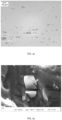
FIG. 1 shows the EPMA elemental map of the αAlFeMnSi phase in Example 2, indicating a phase conversion ratio up to 91%; -
FIG. 2 shows the EPMA elemental map of the αAlFeMnSi phase in Comparative Example 3, indicating a phase conversion ratio of only 65%; -
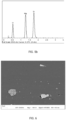
FIG. 3a shows the scanning electron microscope (SEM) metallograph of the matrix structure in Comparative Example 1; -
FIG. 3b shows the scanning electron microscope fractograph at the perforation defect in Comparative Example 1; -
FIG. 3c shows the energy dispersive spectroscopy (EDS) result of the particles at the fracture surface inFIG. 3b , wherein the coarse second phase is Mg2Si; -
FIG. 4a shows the scanning electron microscope fractograph at the pre-service crack in Comparative Example 2; -
FIG. 4b shows the energy dispersive spectroscopy result of the particles at the fracture surface inFIG. 4a ; -
FIG. 5a shows the scanning electron microscope fractograph at the pre-service crack in Comparative Example 2; -
FIG. 5b shows the energy dispersive spectroscopy result of the particles at the fracture surface inFIG. 5a , wherein the particles are spinel-like inclusions, and cracks exist; -
FIG. 6 shows the scanning electron microscope image of the matrix structure in Comparative Example 3, indicating the cracking morphology of the coarse second phase of a single particle with a size of more than 10 microns, and the surrounding pores. - The embodiments of the present disclosure will be illustrated with reference to specific examples. Those skilled in the art can readily get knowledge of other advantages and effects of the present disclosure from the contents disclosed in this specification. Although the description of the present disclosure will be made with reference to preferred examples, it does not mean that the features of the present disclosure are limited to these embodiments. On the contrary, the purpose of introducing the present disclosure with reference to the examples is to cover other options or modifications that may be derived from the claims of the present disclosure. In order to provide an in-depth understanding of the present disclosure, the following description will include a good number of specific details. The present disclosure may also be practiced without these details. In addition, in order to avoid confusing or obscuring the main points of the present disclosure, some specific details will be omitted from the description. It should be noted that, in the absence of conflict, the examples of the present disclosure and the features in the examples may be combined with each other.
- It should be noted that, in the present specification, like reference numerals and letters designate like items in the following drawings, and therefore, once an item is defined with reference to one drawing, it does not need to be further defined or explained in follow-up drawings. In addition, whenever a numerical range is mentioned herein, unless otherwise specified, the range shall include its endpoints and all integers and fractions within the range.
- To make the objects, technical solutions and advantages of the present disclosure clearer, the embodiments of the present disclosure will be further described in detail with reference to the accompanying drawings.
- The aluminum alloy sheet for a can body provided in the present disclosure may be prepared by the following method:
- A recycled can body material of the same series, an aluminum ingot, rare earth metals and metal additives are added to prepare a batch material, wherein the recycled can body material of the same series is added in a mass amount that accounts for at least 50% of a total mass of the batch material; wherein, by mass percentage, the batch material is controlled to comprise Mn: 0.70-1.35%, Mg: 0.80-1.55%, Si: 0.30-0.50%, Fe: 0.40-0.80%, Cu: 0.15-0.35%, Zn: 0-0.30% , Ti: 0-0.08%, a rare earth mixture of Ce+La: 0.005-0.008%, and a balance of Al and unavoidable impurities; wherein the mass ratio of Fe/Si is greater than 1.5.
- In some embodiments, the recycled can body material is a
Series 3 aluminum alloy recycled material; an aluminum ingot with Al ≥ 99.70% by mass percentage is selected; according to the melting points and burn-off ratios of the alloying elements, the metal additives are added in the order of Mn, Si, Fe, Cu, Mg, and the rare earth mixture to further save energy. - Subsequently, in some embodiments, AL-5Ti-0.2B is used as a refiner for online grain refinement in an amount of 1.0-1.3 kg per ton aluminum; a SNIF (Spinning Nozzel Inert Floatation) degassing device is used for online degassing, with the H content in the melt being controlled to be ≤0.12 ml/100 g Al; and the melt is purified by 50 PPI plate filtration and RC grade or higher tubular filtration.
- In some embodiments, the flat cast slab is obtained by semi-continuous casting at a casting speed of 50-60 mm/min and a casting temperature of 660-710°C. Subsequently, the sprue portion and the starter head portion are saw-cut from the cast slab and milled, with the saw-cutting length of the sprue portion from the cast slab being ≥150mm, and the saw-cutting length of the starter head portion from the cast slab being ≥400mm. The cast slab obtained has a fraction of loosening area of 2 µm or more in a low-magnification cross section in the range of 0.05-0.18%.
- Prior to homogenization, the large surface of the flat cast slab is milled with a milling amount of 10-15 mm, and the side surface of the cast slab is milled with a milling amount of 8-12 mm.
- The homogenization treatment is carried out at 570-610°C for 8-15 hours, for example, 10-15 hours.
- Subsequently, the flat cast slab is cooled rapidly by lowering the temperature of the flat cast slab to 510-540°C at full power, and held for 2-12 hours before being discharged from the furnace and rolled. The cooling rate is controlled within 20-80°C/h.
- Hot rough rolling: The start temperature of the hot rough rolling is controlled to be 510-540°C, for example, 530-540°C; the final temperature of the hot rough rolling is ≥ 450°C; and a hot-rough-rolled sheet with a thickness of 30-45 mm is obtained after 19-27 passes.
- Hot finish rolling: The hot finish rolling is performed on the hot-rough-rolled sheet, and the final temperature of the hot finish rolling is controlled to be 320-360°C, so as to obtain a hot-finish-rolled sheet with a sheet thickness of 1.6-3.0 mm.
- Cold rolling: The final temperature of the cold rolling is controlled to be 145-160°C, and the total reduction rate obtained after 3-5 passes is ≥87%, so as to obtain a cold-rolled sheet with a thickness of 0.23-0.50 mm.
- Finally, the aluminum alloy sheet is trimmed, oiled, and cut up to be used for can bodies.
- Following the above method, the Examples and Comparative Examples of the present disclosure are as follows:
- Table 1 shows the compositions and process parameters for Examples 1 to 3 and Comparative Examples 1 to 3. The control of the alloy compositions was carried out at the melting and casting stage according to GB/T 3190-2008 "Wrought aluminium and aluminium alloys - Chemical composition", GB/T20975.1-31 "Method for chemical analysis of aluminum and aluminum alloys", and YST805-2012 "Method for analysis of rare earth in aluminium and aluminium alloys". As it can be seen by comparison, the use ratios of the recycled aluminum materials in Examples 1 to 3 were all no less than 50%, whereas the use rates of the recycled aluminum materials in Comparative Examples 1 to 3 were all no more than 35%. Compared with the Examples, the Fe/Si mass ratios in Comparative Examples 1 to 3 were lower than 1.5, and no rare earth elements (Ce+La) were added. In addition, the Cu content in Comparative Example 2 was also lower.
- Table 2 shows the purity indicators of Examples 1 to 3 and Comparative Examples 1 to 3. Industrial CT was used to perform nondestructive measurement of a low-density loosening matter, and the total area fraction of the intermetallic compound and inclusion of different sizes was obtained by pixel value statistics. Similarly, the area fraction of the intermetallic compound and inclusion could also be determined by examining multiple aluminum alloy sheet samples (e.g., 3) with an optical microscope or a scanning electron microscope at a magnification of 50-1000 times. EPMA was used to perform mapping measurement on the aluminum alloy sheet samples, and the conversion ratios of the Fe, Si, and Mn elements into αAlFeMnSi were obtained based on the measured areas in the images. EPMA mapping was performed on the samples of Example 2 and Comparative Example 3, respectively, to detect the distribution of the Fe, Si, and Mn elements therein. The mapping results are shown by
Figures 1 and 2 . As found by pixel statistics, 91% of the Fe, Si, and Mn elements in Example 2 were distributed in the αAlFEMnSi particles, whereas only about 73% was observed in Comparative Example 3. This means that in Example 2, the Fe, Si, and Mn elements were mostly present in the form of αAlFEMnSi phase which is beneficial to the alloy performances, whereas a considerable portion of Fe and Si in Comparative Example 3 would form a corrosion-inducing phase such as FeAl3, or combine with the Mn element to form the (FeMn)Al6 compound which is prone to causing baking softening, resulting in an increased risk of perforation. - Table 3 shows a comparison of the mechanical and pre-service performance indicators between Examples 1 to 3 and Comparative Examples 1 to 3. The methods for testing the mechanical performances of the alloys including tensile strength, yield strength and elongation meet the testing requirements of GB/T 228.1. Perforation incidence = (perforated cans from the same batch/finished cans from the same batch) × 100%, wherein the perforated cans are identified using a pinhole detector on a can production line. In this technical field, a reduction of 10 ppm in the incidence of perforation defects indicates that the perforation incidence of the product has been improved significantly.
- As it can be seen from the results of the comparison, the aluminum alloy sheet for a can body provided according to the present disclosure exhibits superior purity indicators. Its porosity is reduced (<0.15%); the inclusion with larger size and higher hardness is controlled and modified effectively; the conversion ratio of the second phase (the conversion ratio of the αAlFeMnSi phase) is further improved; and the size distribution at a hazardous level is further narrowed. With the same sheet thickness, the incidence of perforation defects after canning is reduced by at least 10ppm in comparison with those products manufactured by conventional processes. The metallographic sample of Comparative Example 1 was subjected to scanning electron microscopy analysis. As shown by
FIG. 3a , multiple particles of at least 10µm were present in the sample structure. The fracture position of the perforated sample of Comparative Example 1 was subjected to scanning electron microscopy analysis, with the result shown byFIG. 3b . Particles with a width of about 10µm were visible at the fracture position. The particles at the fracture surface were subjected to energy dispersive spectroscopy analysis, with the result shown byFIG. 3c , indicating that the particles at the fracture surface were Mg2Si. A fracture surface of the sample in Comparative Example 2 at the pre-service cracking site was subjected to scanning electron microscopy analysis, with the result shown byFIG. 4a . Particles of at least 10 µm were visible at the fracture surface. The particles were subjected to energy dispersive spectroscopy analysis, with the result shown byFIG. 4b , indicating that the particles at the fracture surface were SiO2. Another fracture surface of the sample in Comparative Example 2 at the pre-service cracking site was subjected to scanning electron microscopy analysis, with the result shown byFIG. 5a . Broken particles of at least 10 µm were also visible at the fracture surface. The particles were subjected to energy dispersive spectroscopy analysis, with the result shown byFIG. 5b , indicating a mixture of the Mg-Si-O elements, which was inferred to be a spinel-like inclusion. This suggests that the particles of the strengthening phase in the structure in Comparative Example 2 were not fine or distributed dispersively, not conducive to the performances of the aluminum alloy sheet. The metallographic sample of Comparative Example 3 was subjected to scanning electron microscopy analysis. As shown byFIG. 6 , it can be seen that multiple large particles of at least 10 µm were present in the sample structure, and pores or cracks were present between the particles and the matrix, indicating that these particles had an adverse effect on the mechanical performances of the aluminum alloy sheet. - While the aluminum alloy sheets of Examples 1-3 had lower perforation risk and better structural performances, the input rate of the recycled materials of the same series in Examples 1-3 was increased to at least 50%, which could save the total cost by 350-420 yuan/ton compared with Comparative Examples 1-3.
- Although the present disclosure has been illustrated and described with reference to certain preferred embodiments of the present disclosure, those skilled in the art shall understand that the above contents are intended to further describe the present disclosure in detail with reference to the specific embodiments, and it shall not be construed that the specific practice of the present disclosure is limited to these descriptions. Those skilled in the art can make various changes in form and details, including making several simple deductions or substitutions, without departing from the spirit and scope of the present disclosure.
| wt% | Mn | Mg | Si | Fe | Cu | Zn | Ti | RE | Homogenization process | Use ratio of recycled material |
| Ex. 1 | 1.13 | 0.85 | 0.43 | 0.77 | 0.30 | 0.11 | 0.06 | 0.005 | 580°C/12h | 50% |
| Ex. 2 | 1.08 | 0.93 | 0.46 | 0.71 | 0.20 | 0.12 | 0.08 | 0.005 | 600°C/10h | 55% |
| Ex. 3 | 1.08 | 1.13 | 0.48 | 0.73 | 0.25 | 0.12 | 0.08 | 0.007 | 610°C/8h | 60% |
| Comp. Ex. 1 | 1.12 | 0.87 | 0.23 | 0.38 | 0.19 | 0.10 | 0.04 | 0 | 590°C/12h | 30% |
| Comp. Ex. 2 | 1.18 | 1.02 | 0.21 | 0.40 | 0.12 | 0.19 | 0.03 | 0 | 590°C/12h | 30% |
| Comp. Ex. 3 | 1.01 | 1.17 | 0.28 | 0.48 | 0.25 | 0.22 | 0.04 | 0 | 590°C/12h | 35% |
| Total area fraction % of intermetallic compound and inclusion of 0.5-5µm | Porosity (area fraction %) | Conversion ratio of αAlFeMnSi phase (area fraction %) | Size of second phase of cast ingot: ≥70µm within every 200mm2 (number) | Total area fraction of intermetallic compound and inclusion of more than 5µm (area fraction %) | |
| Ex. 1 | 1.31 | 0.11 | 87 | 0 | 0.28 |
| Ex. 2 | 1.29 | 0.10 | 91 | 0 | 0.33 |
| Ex. 3 | 1.15 | 0.14 | 90 | 0 | 0.49 |
| Comp. Ex. 1 | 0.47 | 0.24 | 67 | 2 | 1.61 |
| Comp. Ex. 2 | 0.33 | 0.26 | 70 | 5 | 1.83 |
| Comp. Ex. 3 | 0.31 | 0.30 | 73 | 8 | 2.07 |
| No. | Traditional mechanical performances | Pre-service | Cause tracing | Gauge | |||
| Tensile strength MPa | Yield strength MPa | Elongation % | Yield strength MPa | Perforation incidence ppm | Perforation fracture surface analysis | Sheet thickness (mm) | |
| Ex. 1 | 301 | 279 | 6.5 | 256 | 3 | Fracture surface devoid of impurities | 0.23 |
| Ex. 2 | 296 | 274 | 6.3 | 253 | 2 | Fracture surface devoid of impurities | 0.23 |
| Ex. 3 | 299 | 276 | 6.4 | 255 | 4 | Fracture surface devoid of impurities | 0.25 |
| Comp. Ex. 1 | 303 | 280 | 5.9 | 252 | 18 | Coarse second phase | 0.25 |
| Comp. Ex. 2 | 299 | 279 | 6.0 | 250 | 15 | Inclusion, second phase | 0.25 |
| Comp. Ex. 3 | 305 | 282 | 5.8 | 253 | 21 | Coarse second phase | 0.30 |
Claims (15)
- An aluminum alloy sheet for a can body, wherein the aluminum alloy sheet for a can body comprises, by mass percentage:Mn: 0.70-1.35%, Mg: 0.80-1.55%, Si: 0.30-0.50%, Fe: 0.40-0.80%, Cu: 0.15-0.35%, Zn: 0-0.30%, Ti: 0-0.08%, a rare earth mixture of Ce+La: 0.005-0.008%, and a balance of Al and other unavoidable impurities; wherein a mass ratio of Fe/Si is greater than 1.5;preferably, the aluminum alloy sheet for a can body comprises, by mass percentage, Mn: 1.00-1.15%, Mg: 0.80-1.20%, Si: 0.40-0.50%, Fe: 0.70-0.80%, Cu: 0.20-0.30%, Zn: 0.08-0.15%, Ti: 0.05-0.08%, a rare earth (RE, Rare Earth) mixture of Ce+La: 0.005-0.008%, and a balance of Al and other unavoidable impurities, wherein the mass ratio of Fe/Si is greater than 1.5 and less than or equal to 1.8;wherein in the aluminum alloy sheet for a can body, a content of a recycled can body material of the same series accounts for at least 50% of a total weight of the aluminum alloy sheet.
- The aluminum alloy sheet for a can body according to claim 1, wherein in the aluminum alloy sheet for a can body:a total area fraction of an intermetallic compound phase and an inclusion of 5 µm or more is in the range of 0.08% to 0.80%; and/ora total area fraction of an intermetallic compound phase and an inclusion of 0.5 to 5 µm is 0.3%-1.5%.
- The aluminum alloy sheet for a can body according to claim 1, wherein in the aluminum alloy sheet for a can body:a total area fraction of an intermetallic compound phase and an inclusion of 5 µm or more is not more than 0.5%; and/ora total area fraction of an intermetallic compound phase and an inclusion of 0.5 to 5 µm is 1.10%-1.35%.
- The aluminum alloy sheet for a can body according to claim 1, wherein 75-95%, preferably no less than 80% of Fe, Si and Mn elements in the aluminum alloy sheet for a can body are converted into AIFeMnSi phase.
- The aluminum alloy sheet for a can body according to claim 1, wherein:the aluminum alloy sheet for a can body has a tensile strength of ≥290MPa, for example, 290-310MPa; a yield strength of ≥270MPa, for example, 270-290MPa, and an elongation of ≥6.0%, for example, 6.0-7.0%; and/orthe aluminum alloy sheet for a can body has a pre-service yield strength of ≥250MPa, for example, 250-260MPa; and/orthe aluminum alloy sheet for a can body has a perforation incidence of ≤10ppm, for example, ≤5ppm; and/orthe aluminum alloy sheet for a can body has a perforation fracture surface devoid of impurities.
- The aluminum alloy sheet for a can body according to claim 1, wherein the aluminum alloy sheet for a can body has a porosity of no more than 0.15%.
- The aluminum alloy sheet for a can body according to claim 1, wherein a second phase in the aluminum alloy sheet for a can body has a size of no more than 70 µm.
- The aluminum alloy sheet for a can body according to claim 1, wherein the aluminum alloy sheet for a can body has a thickness of 0.23-0.50 mm.
- A preparation method for an aluminum alloy sheet for a can body, comprising the following steps:Batching: Adding a recycled can body material of the same series, an aluminum ingot, rare earth metals and metal additives to prepare a batch material, wherein the recycled can body material of the same series is added in a mass amount that accounts for at least 50% of a total mass of the batch material; by mass percentage, the batch material is controlled to comprise Mn: 0.70-1.35%, Mg: 0.80-1.55%, Si: 0.30-0.50%, Fe: 0.40-0.80%, Cu: 0.15-0.35%, Zn: 0-0.30% , Ti: 0-0.08%, a rare earth mixture of Ce+La: 0.005-0.008%, and a balance of Al and unavoidable impurities; wherein a mass ratio of Fe/Si is greater than 1.5; preferably, by mass percentage, the batch material is controlled to comprise Mn: 1.00-1.15%, Mg: 0.80-1.20%, Si: 0.40-0.50%, Fe: 0.70-0.80%, Cu: 0.20-0.30%, Zn: 0.08-0.15%, Ti: 0.05-0.08%, a rare earth (RE, Rare Earth) mixture of Ce+La:0.005-0.008%, and a balance of Al and other unavoidable impurities, wherein the mass ratio of Fe/Si is greater than 1.5 and less than or equal to 1.8;Smelting;Casting to obtain a flat cast slab;Homogenization; andRolling.
- The preparation method for an aluminum alloy sheet for a can body according to claim 9, wherein: the recycled can body material is a Series 3 recycled aluminum alloy material; and/or the aluminum ingot has an Al content of ≥99.70wt%.
- The preparation method for an aluminum alloy sheet for a can body according to claim 9, wherein in the batching step, the metal additives are added in the order of Mn, Si, Fe, Cu, Mg, and the rare earth mixture.
- The preparation method for an aluminum alloy sheet for a can body according to claim 9, wherein the smelting is performed in a smelting furnace, and refining is performed in a holding furnace, followed by standing still;
preferably, Al-5Ti-0.2B is used as a refiner for online grain refinement in an amount of 1.0-1.3 kg per ton aluminum; a SNIF degassing device is used for online degassing, with a H content in a melt being controlled to be ≤0.12 ml/100 g Al; and the melt is purified by 50 PPI plate filtration and RC grade or higher tubular filtration. - The preparation method for an aluminum alloy sheet for a can body according to claim 9, wherein the flat cast slab obtained in the casting step has a fraction of loosening area of 2 µm or more in a low-magnification cross section in the range of 0.05-0.18%;
preferably, the flat cast slab is obtained by semi-continuous casting at a casting speed of 50-60 mm/min and a casting temperature of 660-710°C; subsequently, a sprue portion and a starter head portion are saw-cut from the cast slab and milled, with a saw-cutting length of the sprue portion from the cast slab being ≥150mm, and a saw-cutting length of the starter head portion from the cast slab being ≥400mm. - The preparation method for an aluminum alloy sheet for a can body according to claim 9, wherein in the homogenization step, the flat cast slab obtained in the casting step is milled and then subjected to homogenization treatment at 570-610°C for 8-15 hours;preferably, a large surface of the flat cast slab is milled with a milling amount of 10-15 mm, and a side surface of the flat cast slab is milled with a milling amount of 8-12 mm;preferably, after the homogenization treatment, the flat cast slab is cooled at a cooling rate of 20-80°C/h to lower a temperature of the flat cast slab to 510-540°C, held for 2-12 hours, and then discharged.
- The preparation method for an aluminum alloy sheet for a can body according to claim 9, wherein the rolling step comprises:Hot rough rolling: After the flat cast slab is milled, the flat cast slab is cooled rapidly, wherein a start temperature of the hot rough rolling is controlled to be 510-540°C, and a final temperature of the hot rough rolling is ≥450°C, so as to obtain a hot-rough-rolled sheet with a thickness of 30-45mm; preferably, a hot-rough-rolled sheet with a thickness of 30-45mm is obtained after 19-27 passes;Hot finish rolling: The hot finish rolling is performed on the hot-rough-rolled sheet, and a final temperature of the hot finish rolling is controlled to be 320-360°C, so as to obtain a hot-finish-rolled sheet with a sheet thickness of 1.6-3.0 mm;Cold rolling: A final temperature of the cold rolling is controlled to be 145-160°C, and a total processing degree of the final pass is ≥87%, so as to obtain a cold-rolled sheet with a thickness of 0.23-0.50 mm; preferably, a total reduction rate obtained after 3-5 passes is ≥ 87%.
Applications Claiming Priority (2)
| Application Number | Priority Date | Filing Date | Title |
|---|---|---|---|
| CN202210410209.XA CN116949321A (en) | 2022-04-19 | 2022-04-19 | Aluminum alloy plate for tank body and manufacturing method thereof |
| PCT/CN2023/089036 WO2023202588A1 (en) | 2022-04-19 | 2023-04-18 | Aluminum alloy plate for tank and manufacturing method therefor |
Publications (2)
| Publication Number | Publication Date |
|---|---|
| EP4512918A1 true EP4512918A1 (en) | 2025-02-26 |
| EP4512918A4 EP4512918A4 (en) | 2025-09-03 |
Family
ID=88419221
Family Applications (1)
| Application Number | Title | Priority Date | Filing Date |
|---|---|---|---|
| EP23791243.1A Pending EP4512918A4 (en) | 2022-04-19 | 2023-04-18 | Aluminum alloy plate for tank and manufacturing method therefor |
Country Status (6)
| Country | Link |
|---|---|
| EP (1) | EP4512918A4 (en) |
| JP (1) | JP2025514728A (en) |
| KR (1) | KR20250004766A (en) |
| CN (1) | CN116949321A (en) |
| MX (1) | MX2024013001A (en) |
| WO (1) | WO2023202588A1 (en) |
Families Citing this family (1)
| Publication number | Priority date | Publication date | Assignee | Title |
|---|---|---|---|---|
| CN118086732A (en) * | 2024-03-01 | 2024-05-28 | 北京车和家汽车科技有限公司 | Aluminum profile and preparation method and application thereof |
Family Cites Families (20)
| Publication number | Priority date | Publication date | Assignee | Title |
|---|---|---|---|---|
| JP2525017B2 (en) * | 1987-10-30 | 1996-08-14 | 古河電気工業株式会社 | Aluminum alloy material for can ends |
| JPH0860283A (en) * | 1994-08-15 | 1996-03-05 | Sky Alum Co Ltd | Aluminum alloy plate for DI can body and method for producing the same |
| JP4019082B2 (en) * | 2005-03-25 | 2007-12-05 | 株式会社神戸製鋼所 | Aluminum alloy plate for bottle cans with excellent high temperature characteristics |
| JP5091415B2 (en) * | 2006-03-16 | 2012-12-05 | 株式会社神戸製鋼所 | Manufacturing method of aluminum alloy plate for bottle can |
| JP5449693B2 (en) * | 2008-03-28 | 2014-03-19 | 株式会社神戸製鋼所 | Aluminum alloy cold-rolled plate for bottle can and method for producing the same |
| JP5675447B2 (en) * | 2011-03-10 | 2015-02-25 | 株式会社神戸製鋼所 | Aluminum alloy plate for resin-coated can body and manufacturing method thereof |
| FR3005664B1 (en) * | 2013-05-17 | 2016-05-27 | Constellium France | ALLOY ALLOY SHEET FOR METAL BOTTLE OR AEROSOL HOUSING |
| CN104294194B (en) * | 2013-07-16 | 2016-09-28 | 大力神铝业股份有限公司 | A kind of manufacture method improving 3104 aluminium alloy strips Erichsen numbers |
| CN104561697B (en) * | 2014-12-31 | 2017-10-31 | 云南铝业股份有限公司 | A kind of method that direct use electrolytic aluminium liquid bottom pouring type casting and roll process produces pop can tank material |
| CN105441742B (en) * | 2015-11-14 | 2018-10-12 | 合肥市易远新材料有限公司 | A kind of pop-top can tank material |
| CN105401002A (en) * | 2015-11-14 | 2016-03-16 | 合肥标兵凯基新型材料有限公司 | Aluminum alloy for ring-pull can |
| JP6898254B2 (en) * | 2015-12-25 | 2021-07-07 | 株式会社Uacj | Aluminum alloy plate for can body and its manufacturing method |
| JP2018003074A (en) * | 2016-06-29 | 2018-01-11 | 株式会社Uacj | Aluminum alloy sheet and manufacturing method therefor |
| CN108359810A (en) * | 2018-03-09 | 2018-08-03 | 北京科技大学 | A kind of environment-friendly type regeneration aluminium refining agent and its application method |
| JP7138179B2 (en) * | 2018-08-31 | 2022-09-15 | 株式会社Uacj | aluminum alloy plate |
| JP7111563B2 (en) * | 2018-08-31 | 2022-08-02 | 株式会社Uacj | aluminum alloy plate |
| CN109518044A (en) * | 2018-12-29 | 2019-03-26 | 中铝材料应用研究院有限公司 | A kind of preparation method of slim can body 3104 aluminium alloys and its plate |
| CN111424186A (en) * | 2020-05-08 | 2020-07-17 | 河南科创铝基新材料有限公司 | Efficient composite refining agent for secondary aluminum melt and preparation method and use method thereof |
| CN111910111A (en) * | 2020-08-13 | 2020-11-10 | 中铝瑞闽股份有限公司 | Preparation method of aluminum-magnesium-manganese-copper alloy plate for thinning and drawing can body |
| CN113549794A (en) * | 2021-09-22 | 2021-10-26 | 山东宏桥新型材料有限公司 | Aluminum alloy tank produced by using waste aluminum alloy tank |
-
2022
- 2022-04-19 CN CN202210410209.XA patent/CN116949321A/en active Pending
-
2023
- 2023-04-18 EP EP23791243.1A patent/EP4512918A4/en active Pending
- 2023-04-18 KR KR1020247037552A patent/KR20250004766A/en active Pending
- 2023-04-18 WO PCT/CN2023/089036 patent/WO2023202588A1/en not_active Ceased
- 2023-04-18 JP JP2024561623A patent/JP2025514728A/en active Pending
-
2024
- 2024-10-21 MX MX2024013001A patent/MX2024013001A/en unknown
Also Published As
| Publication number | Publication date |
|---|---|
| CN116949321A (en) | 2023-10-27 |
| MX2024013001A (en) | 2024-11-08 |
| JP2025514728A (en) | 2025-05-09 |
| WO2023202588A1 (en) | 2023-10-26 |
| EP4512918A4 (en) | 2025-09-03 |
| KR20250004766A (en) | 2025-01-08 |
Similar Documents
| Publication | Publication Date | Title |
|---|---|---|
| EP3722446B1 (en) | Aluminum alloy sheet for battery lids for molding integrated explosion-prevention valve, and method for producing same | |
| CN114457265B (en) | High-strength high-fatigue-performance 6-series aluminum alloy, gas cylinder and preparation method thereof | |
| CN101037744A (en) | Manufacturing method of aluminum alloy plate for train compartment | |
| CN113174500B (en) | Method for improving O-state bending performance of 5083 alloy | |
| CN112981153B (en) | High-strength high-conductivity aluminum/aluminum alloy composite board and preparation method thereof | |
| CN108823440B (en) | Preparation method and application of hypoeutectic aluminum-silicon alloy plate blank | |
| CN103842535A (en) | Aluminum-magnesium alloy and alloy plate thereof | |
| CN108368570B (en) | Aluminum alloy plate for can and method for producing same | |
| CN113528903A (en) | 5052 aluminum alloy with high bending performance and preparation method thereof | |
| EP3872203A1 (en) | Aluminum alloy sheet for battery lid for forming integrated explosion prevention valve, and method for producing same | |
| CN115094276A (en) | Aluminum alloy and preparation method and application thereof | |
| CN106574328B (en) | Aluminum alloy plate | |
| CN110684937B (en) | Preparation method of layered double-scale magnesium alloy | |
| CN117305669A (en) | Preparation method of aluminum alloy plate and aluminum alloy plate obtained by the method | |
| CN117165821B (en) | Aluminum alloy plate for hydrogen storage bottle of hydrogen energy automobile and processing method thereof | |
| CN106917017A (en) | Aluminum alloy plate materials and its production method | |
| EP3842560A1 (en) | Aluminum alloy sheet for battery lid for molding integrated explosion-proof valve and production method therefor | |
| CN114262827A (en) | Aluminum alloy material with crater for mobile phone back plate and preparation method of aluminum alloy material | |
| CN106893909A (en) | A kind of aluminum alloy plate materials and preparation method thereof | |
| CN113046603A (en) | Aluminum alloy plate and preparation method thereof | |
| JP2025514728A (en) | Aluminum alloy sheet for can body and its manufacturing method | |
| CN113862498A (en) | High-strength aluminum plate for cargo vehicle oil tank and production method thereof | |
| JP3737744B2 (en) | Method for manufacturing aluminum foil | |
| EP3862449A1 (en) | Aluminum alloy plate for battery lid for use in molding of integral explosion-proof valve, and method for producing same | |
| CN117888008A (en) | A high-strength and tough 6-series aluminum alloy strip and casting and rolling method thereof |
Legal Events
| Date | Code | Title | Description |
|---|---|---|---|
| STAA | Information on the status of an ep patent application or granted ep patent |
Free format text: STATUS: THE INTERNATIONAL PUBLICATION HAS BEEN MADE |
|
| PUAI | Public reference made under article 153(3) epc to a published international application that has entered the european phase |
Free format text: ORIGINAL CODE: 0009012 |
|
| STAA | Information on the status of an ep patent application or granted ep patent |
Free format text: STATUS: REQUEST FOR EXAMINATION WAS MADE |
|
| 17P | Request for examination filed |
Effective date: 20241112 |
|
| AK | Designated contracting states |
Kind code of ref document: A1 Designated state(s): AL AT BE BG CH CY CZ DE DK EE ES FI FR GB GR HR HU IE IS IT LI LT LU LV MC ME MK MT NL NO PL PT RO RS SE SI SK SM TR |
|
| DAV | Request for validation of the european patent (deleted) | ||
| DAX | Request for extension of the european patent (deleted) | ||
| A4 | Supplementary search report drawn up and despatched |
Effective date: 20250731 |
|
| RIC1 | Information provided on ipc code assigned before grant |
Ipc: C22C 21/08 20060101AFI20250725BHEP Ipc: C22F 1/05 20060101ALI20250725BHEP Ipc: C22C 1/06 20060101ALI20250725BHEP Ipc: C22C 21/00 20060101ALI20250725BHEP Ipc: C22C 1/03 20060101ALI20250725BHEP Ipc: C22F 1/04 20060101ALI20250725BHEP Ipc: C22F 1/047 20060101ALI20250725BHEP |