EP4509509A1 - Method for synthesizing 1h-furo[3,2-b]imidazo[4,5-d]pyridine compound - Google Patents
Method for synthesizing 1h-furo[3,2-b]imidazo[4,5-d]pyridine compound Download PDFInfo
- Publication number
- EP4509509A1 EP4509509A1 EP22914356.5A EP22914356A EP4509509A1 EP 4509509 A1 EP4509509 A1 EP 4509509A1 EP 22914356 A EP22914356 A EP 22914356A EP 4509509 A1 EP4509509 A1 EP 4509509A1
- Authority
- EP
- European Patent Office
- Prior art keywords
- compound
- reaction
- added
- solvent
- solution
- Prior art date
- Legal status (The legal status is an assumption and is not a legal conclusion. Google has not performed a legal analysis and makes no representation as to the accuracy of the status listed.)
- Pending
Links
Images



Classifications
-
- C—CHEMISTRY; METALLURGY
- C07—ORGANIC CHEMISTRY
- C07D—HETEROCYCLIC COMPOUNDS
- C07D491/00—Heterocyclic compounds containing in the condensed ring system both one or more rings having oxygen atoms as the only ring hetero atoms and one or more rings having nitrogen atoms as the only ring hetero atoms, not provided for by groups C07D451/00 - C07D459/00, C07D463/00, C07D477/00 or C07D489/00
- C07D491/12—Heterocyclic compounds containing in the condensed ring system both one or more rings having oxygen atoms as the only ring hetero atoms and one or more rings having nitrogen atoms as the only ring hetero atoms, not provided for by groups C07D451/00 - C07D459/00, C07D463/00, C07D477/00 or C07D489/00 in which the condensed system contains three hetero rings
- C07D491/14—Ortho-condensed systems
- C07D491/147—Ortho-condensed systems the condensed system containing one ring with oxygen as ring hetero atom and two rings with nitrogen as ring hetero atom
-
- C—CHEMISTRY; METALLURGY
- C07—ORGANIC CHEMISTRY
- C07D—HETEROCYCLIC COMPOUNDS
- C07D213/00—Heterocyclic compounds containing six-membered rings, not condensed with other rings, with one nitrogen atom as the only ring hetero atom and three or more double bonds between ring members or between ring members and non-ring members
- C07D213/02—Heterocyclic compounds containing six-membered rings, not condensed with other rings, with one nitrogen atom as the only ring hetero atom and three or more double bonds between ring members or between ring members and non-ring members having three double bonds between ring members or between ring members and non-ring members
- C07D213/04—Heterocyclic compounds containing six-membered rings, not condensed with other rings, with one nitrogen atom as the only ring hetero atom and three or more double bonds between ring members or between ring members and non-ring members having three double bonds between ring members or between ring members and non-ring members having no bond between the ring nitrogen atom and a non-ring member or having only hydrogen or carbon atoms directly attached to the ring nitrogen atom
- C07D213/60—Heterocyclic compounds containing six-membered rings, not condensed with other rings, with one nitrogen atom as the only ring hetero atom and three or more double bonds between ring members or between ring members and non-ring members having three double bonds between ring members or between ring members and non-ring members having no bond between the ring nitrogen atom and a non-ring member or having only hydrogen or carbon atoms directly attached to the ring nitrogen atom with hetero atoms or with carbon atoms having three bonds to hetero atoms with at the most one bond to halogen, e.g. ester or nitrile radicals, directly attached to ring carbon atoms
- C07D213/62—Oxygen or sulfur atoms
- C07D213/69—Two or more oxygen atoms
-
- C—CHEMISTRY; METALLURGY
- C07—ORGANIC CHEMISTRY
- C07D—HETEROCYCLIC COMPOUNDS
- C07D309/00—Heterocyclic compounds containing six-membered rings having one oxygen atom as the only ring hetero atom, not condensed with other rings
- C07D309/02—Heterocyclic compounds containing six-membered rings having one oxygen atom as the only ring hetero atom, not condensed with other rings having no double bonds between ring members or between ring members and non-ring members
- C07D309/08—Heterocyclic compounds containing six-membered rings having one oxygen atom as the only ring hetero atom, not condensed with other rings having no double bonds between ring members or between ring members and non-ring members with hetero atoms or with carbon atoms having three bonds to hetero atoms with at the most one bond to halogen, e.g. ester or nitrile radicals, directly attached to ring carbon atoms
- C07D309/14—Nitrogen atoms not forming part of a nitro radical
-
- C—CHEMISTRY; METALLURGY
- C07—ORGANIC CHEMISTRY
- C07D—HETEROCYCLIC COMPOUNDS
- C07D491/00—Heterocyclic compounds containing in the condensed ring system both one or more rings having oxygen atoms as the only ring hetero atoms and one or more rings having nitrogen atoms as the only ring hetero atoms, not provided for by groups C07D451/00 - C07D459/00, C07D463/00, C07D477/00 or C07D489/00
- C07D491/02—Heterocyclic compounds containing in the condensed ring system both one or more rings having oxygen atoms as the only ring hetero atoms and one or more rings having nitrogen atoms as the only ring hetero atoms, not provided for by groups C07D451/00 - C07D459/00, C07D463/00, C07D477/00 or C07D489/00 in which the condensed system contains two hetero rings
- C07D491/04—Ortho-condensed systems
- C07D491/044—Ortho-condensed systems with only one oxygen atom as ring hetero atom in the oxygen-containing ring
- C07D491/048—Ortho-condensed systems with only one oxygen atom as ring hetero atom in the oxygen-containing ring the oxygen-containing ring being five-membered
-
- C—CHEMISTRY; METALLURGY
- C07—ORGANIC CHEMISTRY
- C07F—ACYCLIC, CARBOCYCLIC OR HETEROCYCLIC COMPOUNDS CONTAINING ELEMENTS OTHER THAN CARBON, HYDROGEN, HALOGEN, OXYGEN, NITROGEN, SULFUR, SELENIUM OR TELLURIUM
- C07F9/00—Compounds containing elements of Groups 5 or 15 of the Periodic Table
- C07F9/02—Phosphorus compounds
- C07F9/547—Heterocyclic compounds, e.g. containing phosphorus as a ring hetero atom
- C07F9/553—Heterocyclic compounds, e.g. containing phosphorus as a ring hetero atom having one nitrogen atom as the only ring hetero atom
- C07F9/576—Six-membered rings
- C07F9/58—Pyridine rings
-
- A—HUMAN NECESSITIES
- A61—MEDICAL OR VETERINARY SCIENCE; HYGIENE
- A61K—PREPARATIONS FOR MEDICAL, DENTAL OR TOILETRY PURPOSES
- A61K31/00—Medicinal preparations containing organic active ingredients
- A61K31/33—Heterocyclic compounds
- A61K31/395—Heterocyclic compounds having nitrogen as a ring hetero atom, e.g. guanethidine or rifamycins
- A61K31/435—Heterocyclic compounds having nitrogen as a ring hetero atom, e.g. guanethidine or rifamycins having six-membered rings with one nitrogen as the only ring hetero atom
- A61K31/4353—Heterocyclic compounds having nitrogen as a ring hetero atom, e.g. guanethidine or rifamycins having six-membered rings with one nitrogen as the only ring hetero atom ortho- or peri-condensed with heterocyclic ring systems
- A61K31/437—Heterocyclic compounds having nitrogen as a ring hetero atom, e.g. guanethidine or rifamycins having six-membered rings with one nitrogen as the only ring hetero atom ortho- or peri-condensed with heterocyclic ring systems the heterocyclic ring system containing a five-membered ring having nitrogen as a ring hetero atom, e.g. indolizine, beta-carboline
-
- Y—GENERAL TAGGING OF NEW TECHNOLOGICAL DEVELOPMENTS; GENERAL TAGGING OF CROSS-SECTIONAL TECHNOLOGIES SPANNING OVER SEVERAL SECTIONS OF THE IPC; TECHNICAL SUBJECTS COVERED BY FORMER USPC CROSS-REFERENCE ART COLLECTIONS [XRACs] AND DIGESTS
- Y02—TECHNOLOGIES OR APPLICATIONS FOR MITIGATION OR ADAPTATION AGAINST CLIMATE CHANGE
- Y02P—CLIMATE CHANGE MITIGATION TECHNOLOGIES IN THE PRODUCTION OR PROCESSING OF GOODS
- Y02P20/00—Technologies relating to chemical industry
- Y02P20/50—Improvements relating to the production of bulk chemicals
- Y02P20/55—Design of synthesis routes, e.g. reducing the use of auxiliary or protecting groups
Definitions
- the present invention relates to the field of pharmaceutical synthesis, in particular to methods for synthesizing 1H-furo[3,2-b]imidazo[4,5-d]pyridine compounds.
- 1H-furo[3,2-b]imidazo[4,5-d]pyridine compounds are highly selective JAK1 and TYK2 inhibitors that selectively inhibit the activity of one or more protein kinases relative to other related kinases. Therefore, they are expected to be used in the treatment of diseases mediated by the selectively inhibited kinase or kinases while avoiding the adverse side effects associated with the inhibitions of other kinases, e.g., for the treatment of disorders associated with the activity of JAK1/TYK2, such as autoimmune diseases or disorders, or inflammatory diseases or disorders, as well as cancers or tumor or disorders.
- the purpose of the present invention is to provide methods for synthesizing 1H-furo[3,2-b]imidazo[4,5-d]pyridine compounds, which save the cost, and are simple and convenient to operate, thus are suitable for industrial scale.
- a method for synthesizing 1H-furo[3,2-b]imidazo[4,5-d]pyridine compounds comprises the following steps of:
- step 1 in the step 1,
- step 2 in the step 2,
- step 3 in the step 3,
- the present invention provides a method for synthesizing 1H-furo[3,2-b]imidazo[4,5-d]pyridine compound (using "synthesis route 1", used for synthesizing compound 6A, 6C or a hydrate thereof, preferably a monohydrate), comprising the following steps of:
- the step 1 and the step 2 are as described above, and in the step 3,
- the present invention provides a method for synthesizing 1H-furo[3,2-b]imidazo[4,5-d]pyridine compound (using "synthesis route 1") for synthesizing compound 6B or 6D, comprising the following steps of:
- the step 1 and the step 2 are as described above, and in the step 3,
- the present invention further provides a method for synthesizing compound 1, comprising the following steps of:
- step 1-1 further, in the step 1-1,
- step 1-2 further, in the step 1-2,
- step 1-3 further, in the step 1-3,
- a mass-to-volume ratio (g/mL) of the compound 1-3 to the dichloromethane is from 1:6 to 1:10;
- step 1-4 further, in the step 1-4,
- step 1-5 further, in the step 1-5,
- step 1-6 further, in the step 1-6,
- the present invention when the compound 2 is compound 2a, the present invention further provides a method for synthesizing compound 2a hydrochloride, comprising the following steps of:
- step 2-1 further, in the step 2-1,
- step 2-2 further, in the step 2-2,
- the present invention provides another method for synthesizing a 1H-furo[3,2-b]imidazo[4,5-d]pyridine compound (hereinafter referred to as "synthesis route 2" for synthesizing compounds 6A and 6B), comprising the following steps of:
- the steps 1A, 2A and 3A are in accordance with the steps 1, 2 and 3 of the synthesis route 1.
- the reaction is carried out under basic condition, and the base is alkoxide base, preferably alkali metal C 1-6 alkoxide, more preferably, potassium tert-butoxide.
- the present invention provides another method for synthesizing the compound 6A, comprising step 1A, step 2A, step 3A and step 4A, wherein the steps 1A, 2A and 3A are in accordance with the methods described in the steps 1, 2 and 3 for preparing the compound 6A (synthesis route 1) above, wherein:
- the present invention provides another method for synthesizing the compound 6B, comprising step 1A, step 2A, step 3A and step 4A, wherein the steps 1A, 2A and 3A are in accordance with the methods described in the steps 1, 2 and 3 for preparing the compound 6B (synthesis route 1) above, wherein:
- step 4A in the method for synthesizing compound 6B through steps 1A to 4A, in step 4A, in step 4A,
- the present application further provides a mixture of formula 8 (cis-trans isomer mixture 8): or salts of the mixture of formula 8, wherein the mixture of formula 8 comprises a compound of formula 3a and a compound of formula 8A:
- the present application further provides a mixture of formula 9 (cis-trans isomer mixture 9): or salts of the mixture of formula 9, wherein the mixture of formula 9 comprises a compound of formula 4a and a compound of formula 9A:
- the present application further provides a mixture of formula 6Aa (mixture 6Aa): or hydrates of the mixture of formula 6Aa, or salts of the mixture of formula 6Aa, wherein the mixture of formula 6Aa comprises a compound of formula 6A and a compound of formula 6Ab:
- the present application further provides a mixture of formula 6Ba (mixture 6Ba): or salts of the mixture of formula 6Ba, wherein the mixture of formula 6Ba comprises a compound of formula 6B and a compound of formula 6Bb:
- the methods for synthesizing the 1H-furo[3,2-b]imidazo[4,5-d]pyridine compounds of the present invention have the advantages of high yield, less impurities and are easy to control, save the cost.
- the methods are simple, convenient to operate, and are suitable for industrial scale.
- test sample of compound 1 was weighted, and the result was accurate to 0.1 mg.
- the test sample was added into a titration cup of a titrator for determination. The result was recorded.
- the test sample was determined twice in parallel with the same method, an average value of the two results was taken as the moisture content of the test sample, and one decimal place of the result was kept.
- a test sample of evenly mixed compound 1 (if the sample was a relatively large crystal, it should be quickly mashed into particles of about 2mm) was taken and 1-2 gram of the sample was accurately weighed, and placed in a dried flat shape weighing bottle with a plug under the same condition as the sample, the weighing bottle was weighed while it is empty first, and a bottle cup was covered after the sample was added, and then a total weight was weighed. The weighing bottle was shaken parallelly in a gentle way, so that the sample could be evenly spread as much as possible, and the thickness of the sample should not exceed 5 mm.
- the weighing bottle with the sample was placed in a drying oven under constant temperature and reduced pressure (the bottle cap was taken out and put in a dryer) and dried at 50°C for 4 hours at -0.09 - -0.1 MPa.
- the dried sample in the oven was covered with the bottle cap immediately after drying, moved into a dryer, cooled to room temperature, and then weighed.
- W1 was the sample weight before drying
- W2 was the sample weight after drying
- This product was put under natural light for visual inspection.
- the aqueous phase was extracted with toluene (225 kg) again, the lower aqueous phase was discarded, and the organic phase was combined in the reaction vessel 1.
- the combined organic phase was washed with brine (204 kg) and dried with anhydrous sodium sulfate (150 kg).
- the obtained filtrate after filtering was transferred to reaction vessel 3, and the obtained solid was rinsed with toluene (50 kg).
- Triphenylphosphine 350 kg, 1.2 eq
- was added to the reaction vessel 3 the system was stirred, the internal temperature was heated to 108-115°C, the reaction solution was refluxed with a Dean-Stark apparatus for 18 hours. After the reaction was completed, the materials in the reaction vessel 3 were cooled to 20-30°C.
- the materials were centrifuged, and the obtained solids were rinsed with toluene (100 kg).
- the wet product was dried with double cones, the temperature of the hot water in the jacket was 50-60°C, a vacuum degree was below -0.090 Mpa, until water was less than or equal to 0.2%.
- the product was collected, packed with two-layer PE bags and put into a fibreboard drum (output: 489.8 kg, yield: 97.4%, and HPLC purity: 99.8%).
- reaction vessel 1 was cooled to a temperature less than or equal to 25°C.
- the reaction mixture was extracted with ethyl acetate (1320.7 kg, 3V) and drinking water (1467.4 kg, 3V), the obtained organic layer was separated, the obtained aqueous phase was extracted with ethyl acetate twice.
- the organic phases were combined, and washed with water (978.3 kg).
- Water (1467.4 kg) was added to the organic phase and hydrochloric acid (108.7 kg) was dropwise added to adjust the pH to 5-6.
- the organic phase was separated and washed with water (250.0 kg), the aqueous phases were combined and extracted with ethyl acetate (1320.2 kg) twice.
- ethyl acetate 1320.7 kg, 3V
- sodium carbonate 54.0 kg
- the organic phase was separated, and the obtained aqueous phase was extracted with ethyl acetate (880.4 kg, 2V).
- the combined organic phases were washed with brine (341.3 kg), dried with anhydrous sodium sulfate (217.4 kg), filtered under vacuum, and rinsed with ethyl acetate (81.5 kg).
- the filtrate was collected and the solvent was removed.
- the residue was triturated with n-heptane (337.0 kg) and centrifuged.
- the obtained solid was rinsed with n-neptane (76.0 kg), and dried to obtain the compound 1-3 (output: 202.0 kg, yield: 88.8%, and HPLC purity: 97.3%).
- Benzoyl chloride (214.6 kg, 2.0 eq) was slowly dropwise added to a dichloromethane solution (3271.0 kg, 25.5 V) containing compound 1-4 (170.0 kg, 1.0 eq) at 0-10°C.
- the reaction solution was stirred at 0-10°C for 1 hour.
- the reaction solution was slowly added dropwise into a reaction vessel containing sulfuric acid (1518.0 kg, 4.85 V), and the resulting mixture was stirred for 1 hour.
- the reaction solution was quenched with water (850.0 kg, 5 V) at 0-10°C.
- the solid was separated and rinsed with water (85.0 kg, 0.5 V), and the mother solution was cooled to 0-10°C and dropwise added with aqueous ammonia (1841.3 kg) to adjust pH to 7-8. The mixture was stirred at 53-57°C for 0.5 hour and then cooled to 20-25°C. The solid were separated and rinsed with water (170.0 kg, 1 V). The thus obtained solids were dried to obtain the compound 1-5 (output: 92.7 kg, yield: 91.7%, and HPLC purity: 98.3%).
- Nitric acid (52.5 kg) was dropwise added into reaction vessel 1 containing acetic acid (141.0 kg) and acetic anhydride (89.25 kg) at 15-30°C and stirred at 20-30°C for 0.5 hour.
- the mixed solution was slowly added dropwise into an acetic acid solution (450.0 kg, 10W) containing compound 1-5 (45.0 kg, 1.0 eq) at the temperature of 113-116°C under the protection of nitrogen for more than 2 hours, keeping the temperature at 112-117°C.
- the mixed solution was stirred for 1 hour with the temperature kept at 112-117°C.
- methyl tert-butyl ether 337.5 kg, 10 V
- the solid was separated and rinsed with methyl tert-butyl ether (100.8 kg 3 V). The thus obtained solids were dried to obtain the compound 1-6 (output: 44.4 kg, yield: 74.0%, and HPLC purity: 94.7%).
- Phosphorus oxychloride (72.8 kg, 1.2 eq) was dropwise added into an N,N- dimethylformamide solution (214.2 kg, 3.0 W) containing compound 1-6 (71.8 kg) at 15-25°C under the protection of nitrogen.
- the reaction mixture was stirred at 38-43°C for 1 hour and then cooled to 15-20°C.
- the reaction solution was dropwise added into water (714.0 kg, 10 W) for quenching, and the reaction solution was stirred for 1 hour with the temperature kept at 20-30°C.
- the solid was separated, rinsed with water (214.2 kg, 3 W), and then stirred in dichloromethane (1224.0 kg, 13 V) for 15 minutes.
- the resulting mixture was stirred for 1 hour at 20-30°C, filtered and rinsed with dichloromethane (93.8 kg, 1 V). The solvents were removed, and n-heptane (242.8 kg, 5 V) was added for trituration. The separated solid was rinsed with n-heptane (47.9 kg, 1 V) and dried to obtain the compound 1 (output: 62.2 kg, yield: 78.5%, and HPLC purity: 99.96%).
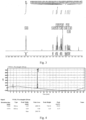
- the 1 H NMR spectrogram was shown in FIG. 1
- the LCMS spectrogram was shown in FIG. 2
- the HPLC spectrogram was shown in FIG. 13 .
- a methanol solution of sodium methoxide (19.18 kg, 0.25 eq) and tetrahydrofuran (91.1 kg, 1.0 V) were added to a tetrahydrofuran solution (911.4 kg, 10 V) containing compound 2-1 (102.4 kg, 1.0 eq) at 0-5°C.
- the reaction was stirred at 20-25°C for 4-8 hours.
- the reaction was monitored by GC and HPLC until the starting material was less than or equal to 1.0%.
- the temperature was reduced to 15-20°C, and an aqueous solution (13.3 kg, 0.13 V) of ammonium chloride (5.69 kg, 0.25 eq) was added to the reaction to adjust the pH to 7-8, keeping the temperature at 15-25°C.
- Methyl tert-butyl ether (166.7 kg, 2.2 V) and 20% sodium chloride solution (61.4 kg sodium chloride, 0.6 W and 245.8 kg drinking water, 2.4 W) were added to the mixed solution respectively.
- the organic phase was separated, and the aqueous phase was extracted with methyl tert-butyl ether (75.8 kg, 1 V), and the organic phases were combined.
- the organic phases were washed with 30% sodium chloride aqueous solution (43.0 kg,0.42 W sodium chloride solid, 100.4 kg, 0.98 W drinking water), and then separated.
- the aqueous phase was extracted with methyl tert-butyl ether (75.8kg, 1V).
- Quality standards of compound 2-2 appearance: off-white solid; purity (GC): 96.0%; maximum unknown single impurity: 1.6%; and moisture: 0.0%.
- the system was centrifuged to obtain a wet product of the hydrochloride of the compound 2a, and then the wet product was rinsed with dichloromethane (32.0 kg, 1 V), and centrifuged to dryness; double-cone jacket was at 55-65°C and the obtained material was dried under vacuum with a vacuum degree of less than or equal to - 0.095 MPa for 12 hours to obtain the compound 2a hydrochloride (output: 28.96 kg, and yield: 91.2%).
- the 1 H NMR spectrogram was shown in FIG. 3
- the TsCl-derived HPLC spectrogram was shown in FIG. 4
- the N ⁇ -(2,4-dinitro-5-fluorophenyl)-L-valinamide-derived HPLC spectrogram was shown in FIG. 5 .
- Quality standards of the compound 2a hydrochloride appearance: white solid; purity (TsCl-derived HPLC): 99.8%; d.e value (TsCl-derived HPLC): 99.8%; e.e value (N ⁇ -(2,4-dinitro-5-fluorophenyl)-L-valinamide-derived HPLC): 99.9%; maximum single impurity: 0.2%; and moisture:0.1%.
- the reaction solution was continuously stirred for 1.0 hour with the temperature kept at 20-30°C.
- the materials were centrifuged after stirred for 2 hours at 0-5°C, and the filter cake was rinsed once with a mixed solvent of acetonitrile and water (pre-cooled at 0-10°C, 25 kg of acetonitrile + 56 kg of water).
- the filter cake was dried in a vacuum oven at 45-55°C to obtain the compound 3a (output: 37.51 kg, moisture: 0.03%, and yield: 88.1%).
- the compound 3a was prepared by the same preparation method as that of the method B, except that the added base was different from that of the method B, wherein the added base was sodium carbonate (2.2 eq), and the compound 3a detected by HPLC was 72%.
- the compound 3a was prepared by the same preparation method as that of the method B, except that the added base was different from that of the method B, wherein the added base was potassium bicarbonate (2.2 eq), and the compound 3a detected by HPLC was 83%.
- acetonitrile 264 kg, 9 V
- acetic acid 90 kg, 12 eq
- compound 3a 37.43 kg, 1.0 eq
- Iron powder 41.17 kg, 6.0 eq
- Iron powder 14 kg, 2.02 eq
- acetic acid 10 kg, 1.34 eq
- the reaction solution was cooled to 30-40°C, filtered and eluted with hot acetonitrile (50-60°C, 176 kg, 6 V).
- the filter cake was eluted with 1000 mL of dichloromethane, the filtrate was collected, and sodium bicarbonate (105 g) was added in batches at 20-30°C and the system was stirred with the temperature kept at 20-30°C for 1 hour, and the system was allowed to settle for 0.5 hour.
- the obtained organic phase was separated, and the obtained aqueous phase was extracted with dichloromethane (660 mL ⁇ 3).
- the thus obtained organic phases were combined, dried with anhydrous sodium sulfate (210 g).
- Hydrochloric acid in ethanol solution (230 mL, 30%) was dropwise added at 15-25°C and the obtained system was stirred for 8 hours with the temperature kept at 15-25°C.
- compound 3a (1.00 g, 3.31 mmol), 4,4'-bipyridine (2.58 mg, 0.0165 mmol) and solvent DMF (20 mL) were added into a 50 mL multi-necked flask. The mixture was purged with nitrogen for three times with stirring, and B 2 (OH) 4 (0.89 g, 9.92 mmol) was added. The mixture was reacted at 15-25°C for 5 hours. The reaction solution was detected with HPLC. After the compound 3a was fully consumed, the reaction was stopped, and 200 mL of water was added.
- the obtained system was extracted with ethyl acetate five times (50 mL each time), washed with 100 mL of brine, dried with anhydrous sodium sulfate, and concentrated to obtain a crude product.
- the crude product was further separated by column chromatography with dichloromethane and methanol (30:1 (v/v)) to obtain the compound 4a, with a yield of 44.4%.
- Recrystallization (107.16 kg of isopropanol, and 45.36 kg of water) was carried out again to obtain a secondary recrystallized compound 6A.
- HPLC purity of compound 6A 99.66%; HPLC content of the isomer of compound 6A: 0.43%.
- 87.7 kg of methanol and 1.2 kg of activated carbon were added to 17.1 kg of the wet product of the compound 6A, and the obtained system was refluxed with stirring for 1 hour.
- the mixture was filtered with pressure (through polishing filter) and rinsed with 13.5 kg of methanol.
- the solvent was removed under reduced pressure. 13.5kg of isopropanol was added, and then the solvent was removed under reduced pressure again.
- Recrystallization was carried out by the same recrystallization method as above.
- the compound 6A was obtained after drying (the compound 6A was characterized as a monohydrate of the compound 6A, and thermogravimetric analysis (TGA) thermogram was shown in FIG 15 .
- the TGA thermogram showed that there was 5.353% weight loss when heating from 25°C to 133°C, corresponding to the loss of the weight of one molecule of water), output: 14.76 kg, water: 5.2%, isopropanol residue: 0.0405%.
- HPLC purity of compound 6A 99.94%; HPLC content of the isomer of compound 6A: 0.21%; yield: 66.2%.
- the 1 H NMR spectrogram was shown in FIG. 6
- the HPLC spectrogram of the compound 6A was shown in FIG. 7
- the HPLC spectrogram of the isomer of the compound 6A was shown in FIG. 8 .
- the compound 6A was prepared by the same preparation method as the method A, wherein the amount of the compound 4a was 1 g; the reaction solvent was 1,4-dioxane (6 mL); and R-lactic acid (20 eq) and methanesulfonic acid (2 g) were added.
- HPLC 91.1%; HPLC after sodium hydroxide hydrolysis: 98.2%.
- the compound 6A was prepared by the same preparation method as the method A, wherein the amount of the compound 4a was 1 g; the reaction solvent was 1,4-dioxane (10 mL); R-lactic acid (30.2 eq) was added; and the reaction solution was heated for 16 hours at 95-105°C.
- HPLC 70%, HPLC after sodium hydroxide hydrolysis: 99.6%; chiral purity: 99.0%.
- the compound 6A was prepared by the same preparation method as the method A, wherein the amount of the compound 4a was 10 g; the reaction solvent was toluene (75 mL); and the reaction solution was heated for 10 hours at 108-113°C. HPLC: 97%; chiral purity: 96%.
- the compound 6B was prepared by the same preparation method as the method A, wherein the amount of the compound 4a hydrochloride was 0.5 g; the reagent/solvent was acetic acid (2.5 mL); the temperature was controlled at 100-110°C; reaction time was 23 hours. HPLC: 26%.
- the compound 6B was prepared by the same preparation method as the method A, wherein the amount of the compound 4a hydrochloride was 0.5 g; the reagent/solvent was acetic acid (2.5 mL); sodium acetate (0.24 g, 2 eq) was added; reaction time was 23 hours. HPLC: 93%.
- the compound 6B was prepared by the same preparation method as the method A, wherein acetic acid (0.2 eq) was added to the system; reaction time was 18 hours. HPLC: 99%.
- the compound 6B was prepared by the same preparation method as the method A, wherein sodium acetate (0.5 eq) was added to the system; reaction time was 18 hours. HPLC: 99%.
- the filter cake was triturated with 5 V of water at 20-25°C for 0.5-1.0 hour.
- the mixture was filtered, and rinsed with 4 V of water (20-25°C).
- Cis-trans isomer mixture 8 (19 g, 1.0 eq), water (76 g, 4 V) and methanol (15.0 g, 1 V) were mixed and heated to 60-70°C.
- Hypoboric acid (20 g, 1.0 eq + 1.0 eq + 1.0 eq + 0.5 eq) was added in batches, and the reaction mixture was heated at 70-80°C for 1-3 hours. The reaction was stopped when mixture 8 was less than or equal to 1%.
- the reaction solution was cooled to 45°C and concentrated under reduced pressure to 4-5 V (this process is mainly for removing part of methanol). The reaction solution was cooled to 0-10°C, stirred for 1.0 hour, and filtered under reduced pressure.
- the filter cake was eluted with 6V of DCM, and then sodium bicarbonate (35.43 g, 0.5 W) was added to the filtrate with stirring. After being stirred for 0.5 -1.0 hour, the aqueous layer was extracted with 3 V of DCM for four times respectively. The obtained organic phases were combined, dried with 1W anhydrous sodium sulfate, and filtered. The filtrate was concentrated to 2 V of DCM, and 10 V of TBME was slowly dropwise added at less than or equal to 30°C. The resulting mixture was mechanically stirred for 1-2 hours, cooled to 1-10°C and kept for 1-2 hours.
- the mixture 6Aa (6.5 g) and a potassium tert-butoxide solution (0.39 g, 10.5 mL of tetrahydrofuran) were combined, stirred until the isomer 6Ab was less than 2.85%.
- Diluted hydrochloric acid was added to adjust the pH to 6-7.
- the solvents were removed by rotary evaporation, and 98 mL of water was added.
- the resulting mixture was stirred for 2 hours, filtered, and washed with water (20ml*2).
- the filter cake was collected and dried at 50°C to obtain the compound 6A (5.35 g). 5 g of the compound 6A, 28.3 g of isopropanol, and 12 g of water were refluxed to a clear solution.
- the reaction solution was cooled at less than 5°C for 3 hours, filtered, washed with a mixed solvent to obtain 4.35 g of wet product. 28.3 g of isopropanol and 12 g of water were added to the wet product, and refluxed to a clear solution. The reaction solution was cooled at less than 5°C for 3 hours, and filtered to obtain the compound 6A (3.5 g, purity: 99.62%, isomer: 0.49%, and yield: 54%).
- the 1 H NMR spectrogram of the compound 6A obtained was consistent with FIG. 6 .
Landscapes
- Chemical & Material Sciences (AREA)
- Organic Chemistry (AREA)
- Health & Medical Sciences (AREA)
- Life Sciences & Earth Sciences (AREA)
- General Health & Medical Sciences (AREA)
- Biochemistry (AREA)
- Molecular Biology (AREA)
- Nitrogen Condensed Heterocyclic Rings (AREA)
- Pharmaceuticals Containing Other Organic And Inorganic Compounds (AREA)
- Low-Molecular Organic Synthesis Reactions Using Catalysts (AREA)
- Medicinal Chemistry (AREA)
- Pharmacology & Pharmacy (AREA)
- Epidemiology (AREA)
- Animal Behavior & Ethology (AREA)
- Public Health (AREA)
- Veterinary Medicine (AREA)
Applications Claiming Priority (2)
| Application Number | Priority Date | Filing Date | Title |
|---|---|---|---|
| CN202111658903.5A CN114213424B (zh) | 2021-12-30 | 2021-12-30 | 一种呋喃[3,2-b]并吡啶衍生物的合成方法 |
| PCT/CN2022/139966 WO2023125102A1 (zh) | 2021-12-30 | 2022-12-19 | 1H-呋喃并[3,2-b]咪唑并[4,5-d]吡啶化合物的合成方法 |
Publications (1)
| Publication Number | Publication Date |
|---|---|
| EP4509509A1 true EP4509509A1 (en) | 2025-02-19 |
Family
ID=80707144
Family Applications (1)
| Application Number | Title | Priority Date | Filing Date |
|---|---|---|---|
| EP22914356.5A Pending EP4509509A1 (en) | 2021-12-30 | 2022-12-19 | Method for synthesizing 1h-furo[3,2-b]imidazo[4,5-d]pyridine compound |
Country Status (10)
| Country | Link |
|---|---|
| US (1) | US20250171458A1 (https=) |
| EP (1) | EP4509509A1 (https=) |
| JP (1) | JP2024546195A (https=) |
| KR (1) | KR20240129021A (https=) |
| CN (2) | CN114213424B (https=) |
| AU (1) | AU2022426316A1 (https=) |
| CA (1) | CA3244846A1 (https=) |
| IL (1) | IL313966A (https=) |
| MX (1) | MX2024008276A (https=) |
| WO (1) | WO2023125102A1 (https=) |
Cited By (1)
| Publication number | Priority date | Publication date | Assignee | Title |
|---|---|---|---|---|
| WO2025224600A1 (en) * | 2024-04-21 | 2025-10-30 | Biohaven Therapeutics Ltd. | Treatment of alpha-synucleinopathies and neuroprotection |
Families Citing this family (2)
| Publication number | Priority date | Publication date | Assignee | Title |
|---|---|---|---|---|
| MX390005B (es) | 2016-10-03 | 2025-03-20 | Hangzhou Highlightll Pharmaceutical Co Ltd | Inhibidores selectivos de jak1 novedosos y usos de los mismos. |
| CN114213424B (zh) * | 2021-12-30 | 2023-05-26 | 杭州高光制药有限公司 | 一种呋喃[3,2-b]并吡啶衍生物的合成方法 |
Family Cites Families (15)
| Publication number | Priority date | Publication date | Assignee | Title |
|---|---|---|---|---|
| WO2007039146A1 (en) * | 2005-09-23 | 2007-04-12 | Smithkline Beecham Corporation | 4-carboxy pyrazole derivatives as anti-viral agents |
| WO2011138657A1 (en) * | 2010-05-04 | 2011-11-10 | Glenmark Pharmaceuticals S.A. | Aryl substituted olefinic compounds as pde10a inhibitors |
| WO2013051672A1 (ja) * | 2011-10-04 | 2013-04-11 | 株式会社ヤクルト本社 | チアゾリジン誘導体又はその塩を有効成分とする医薬品 |
| CN103450125B (zh) * | 2013-07-18 | 2016-01-13 | 嘉兴中科化学有限公司 | 一种5-取代苯丙呋喃-2-羧酸及其衍生物的合成方法 |
| EP2940022B1 (en) * | 2014-04-30 | 2020-09-02 | Masarykova Univerzita | Furopyridines as inhibitors of protein kinases |
| CN105418620B (zh) * | 2014-09-23 | 2018-05-04 | 天津药明康德新药开发有限公司 | 一种4-(叔丁氧羰基)八氢呋喃并[3,2-b]吡啶-6-羧酸的合成方法 |
| WO2016100349A2 (en) * | 2014-12-16 | 2016-06-23 | Rugen Holdings (Cayman) Limited | Bicyclic azaheterocyclic compounds as nr2b nmda receptor antagonists |
| WO2016196244A1 (en) * | 2015-05-29 | 2016-12-08 | Incyte Corporation | Pyridineamine compounds useful as pim kinase inhibitors |
| CN106432232A (zh) * | 2016-09-18 | 2017-02-22 | 苏州汉德创宏生化科技有限公司 | 1‑哌啶‑4‑基‑1,3‑二氢‑咪唑[4,5‑b]吡啶‑2‑酮的合成方法 |
| MX390005B (es) * | 2016-10-03 | 2025-03-20 | Hangzhou Highlightll Pharmaceutical Co Ltd | Inhibidores selectivos de jak1 novedosos y usos de los mismos. |
| CN107216334A (zh) * | 2017-06-29 | 2017-09-29 | 上海吉尔多肽有限公司 | 一种6‑氯呋喃[3,2‑b]吡啶的合成方法 |
| CN118619944A (zh) * | 2019-06-06 | 2024-09-10 | 北京泰德制药股份有限公司 | 作为atr激酶抑制剂的2,4,6-三取代的嘧啶化合物 |
| WO2020244349A1 (zh) | 2019-06-06 | 2020-12-10 | 广州高瓴制药有限公司 | 呋喃并咪唑并吡啶类化合物的合成方法、多晶型物、及盐的多晶型物 |
| BR112021024533A2 (pt) | 2019-06-06 | 2022-01-18 | Highlightll Pharmaceutical Hainan Co Ltd | Método de síntese de composto de furoimidazopiridina, forma cristalina de composto de furoimidazopiridina, e forma cristalina de sal do mesmo |
| CN114213424B (zh) * | 2021-12-30 | 2023-05-26 | 杭州高光制药有限公司 | 一种呋喃[3,2-b]并吡啶衍生物的合成方法 |
-
2021
- 2021-12-30 CN CN202111658903.5A patent/CN114213424B/zh active Active
-
2022
- 2022-12-19 KR KR1020247025635A patent/KR20240129021A/ko active Pending
- 2022-12-19 CN CN202280087204.6A patent/CN118679166A/zh active Pending
- 2022-12-19 WO PCT/CN2022/139966 patent/WO2023125102A1/zh not_active Ceased
- 2022-12-19 IL IL313966A patent/IL313966A/en unknown
- 2022-12-19 MX MX2024008276A patent/MX2024008276A/es unknown
- 2022-12-19 AU AU2022426316A patent/AU2022426316A1/en active Pending
- 2022-12-19 CA CA3244846A patent/CA3244846A1/en active Pending
- 2022-12-19 JP JP2024539899A patent/JP2024546195A/ja active Pending
- 2022-12-19 EP EP22914356.5A patent/EP4509509A1/en active Pending
- 2022-12-19 US US18/725,431 patent/US20250171458A1/en active Pending
Cited By (1)
| Publication number | Priority date | Publication date | Assignee | Title |
|---|---|---|---|---|
| WO2025224600A1 (en) * | 2024-04-21 | 2025-10-30 | Biohaven Therapeutics Ltd. | Treatment of alpha-synucleinopathies and neuroprotection |
Also Published As
| Publication number | Publication date |
|---|---|
| CA3244846A1 (en) | 2025-06-13 |
| MX2024008276A (es) | 2024-09-02 |
| AU2022426316A1 (en) | 2024-07-25 |
| IL313966A (en) | 2024-08-01 |
| JP2024546195A (ja) | 2024-12-17 |
| KR20240129021A (ko) | 2024-08-27 |
| US20250171458A1 (en) | 2025-05-29 |
| CN118679166A (zh) | 2024-09-20 |
| CN114213424A (zh) | 2022-03-22 |
| CN114213424B (zh) | 2023-05-26 |
| WO2023125102A1 (zh) | 2023-07-06 |
Similar Documents
| Publication | Publication Date | Title |
|---|---|---|
| EP4509509A1 (en) | Method for synthesizing 1h-furo[3,2-b]imidazo[4,5-d]pyridine compound | |
| CN115322209B (zh) | 作为dna-pk抑制剂的三并环化合物 | |
| EP2346878B1 (en) | Fused pyridine derivatives as kinase inhibitors | |
| EP4074710A1 (en) | Pyrazolo[1,5-a]pyridine compound, preparation method therefor and use thereof | |
| CN115991703A (zh) | 并环化合物及其制备方法、药物组合物和应用 | |
| EP2722332B1 (en) | Quinolylpyrrolopyrimidyl fused-ring compound or salt thereof | |
| AU2023202251B2 (en) | Process for preparing (15α,16α,17β)-Estra-1,3,5(10)-Triene-3,15,16,17-Tetrol Monohydrate (Estetrol Monohydrate) | |
| EP4385511A2 (en) | Method for synthesizing furoimidazopyridine compound, polymorphic substance and polymorphic substance of salt | |
| EP2100894A1 (en) | Pyridopyrimidines used as Plk1 (polo-like kinase) inhibitors | |
| AU2012253237A1 (en) | Methods for preparing naphthyridines | |
| KR20250103773A (ko) | 질소 함유 헤테로시클릭계 화합물의 약학적으로 사용 가능한 염, 결정형 및 제조 방법 | |
| KR102136958B1 (ko) | 7H-피롤로[2,3-d]피리미딘 화합물의 결정형, 염형 및 그 제조방법 | |
| EP4446317A1 (en) | Salt of 3,4-dihydroisoquinoline compound and use thereof | |
| CN108976233A (zh) | 巴瑞替尼的杂质及其制备、检测方法 | |
| CN117645598A (zh) | 氮杂二并多元稠环化合物及其药物组合物和应用 | |
| CN113614069B (zh) | 用于制备(3r,4r)-1-苄基-n,4-二甲基哌啶-3-胺或其盐的方法以及使用其制备托法替尼的方法 | |
| CN116768906B (zh) | 一种三并环化合物及其制备方法和应用 | |
| CN117586282A (zh) | 一种稠合四环类衍生物的可药用盐、晶型及制备方法 | |
| EP3549935A1 (en) | Method for producing triazine compound | |
| CN118434729A (zh) | 作为hpk1抑制剂的稠环化合物 | |
| CN117567466B (zh) | 一种喹唑啉衍生物的制备方法 | |
| CN115785089A (zh) | 一种利奥西呱杂质c的合成方法 | |
| HK40112200A (en) | Method for synthesizing furoimidazopyridine compound, polymorphic substance and polymorphic substance of salt | |
| HK40112199A (en) | Method for synthesizing furoimidazopyridine compound, polymorphic substance and polymorphic substance of salt | |
| CN118772149A (zh) | 利格列汀杂质8的合成方法 |
Legal Events
| Date | Code | Title | Description |
|---|---|---|---|
| STAA | Information on the status of an ep patent application or granted ep patent |
Free format text: STATUS: THE INTERNATIONAL PUBLICATION HAS BEEN MADE |
|
| STAA | Information on the status of an ep patent application or granted ep patent |
Free format text: STATUS: THE APPLICATION IS DEEMED TO BE WITHDRAWN |
|
| STAA | Information on the status of an ep patent application or granted ep patent |
Free format text: STATUS: THE INTERNATIONAL PUBLICATION HAS BEEN MADE |
|
| PUAI | Public reference made under article 153(3) epc to a published international application that has entered the european phase |
Free format text: ORIGINAL CODE: 0009012 |
|
| STAA | Information on the status of an ep patent application or granted ep patent |
Free format text: STATUS: REQUEST FOR EXAMINATION WAS MADE |
|
| 17P | Request for examination filed |
Effective date: 20240726 |
|
| AK | Designated contracting states |
Kind code of ref document: A1 Designated state(s): AL AT BE BG CH CY CZ DE DK EE ES FI FR GB GR HR HU IE IS IT LI LT LU LV MC ME MK MT NL NO PL PT RO RS SE SI SK SM TR |
|
| RAV | Requested validation state of the european patent: fee paid |
Extension state: MD Effective date: 20240827 |