EP4501427A1 - Endotoxin-adsorptionsmittel - Google Patents
Endotoxin-adsorptionsmittel Download PDFInfo
- Publication number
- EP4501427A1 EP4501427A1 EP23780637.7A EP23780637A EP4501427A1 EP 4501427 A1 EP4501427 A1 EP 4501427A1 EP 23780637 A EP23780637 A EP 23780637A EP 4501427 A1 EP4501427 A1 EP 4501427A1
- Authority
- EP
- European Patent Office
- Prior art keywords
- adsorbent
- nitrogen atom
- silica monolith
- cationic group
- material containing
- Prior art date
- Legal status (The legal status is an assumption and is not a legal conclusion. Google has not performed a legal analysis and makes no representation as to the accuracy of the status listed.)
- Pending
Links
Images
Classifications
-
- B—PERFORMING OPERATIONS; TRANSPORTING
- B01—PHYSICAL OR CHEMICAL PROCESSES OR APPARATUS IN GENERAL
- B01J—CHEMICAL OR PHYSICAL PROCESSES, e.g. CATALYSIS OR COLLOID CHEMISTRY; THEIR RELEVANT APPARATUS
- B01J39/00—Cation exchange; Use of material as cation exchangers; Treatment of material for improving the cation exchange properties
- B01J39/08—Use of material as cation exchangers; Treatment of material for improving the cation exchange properties
- B01J39/09—Inorganic material
-
- C—CHEMISTRY; METALLURGY
- C02—TREATMENT OF WATER, WASTE WATER, SEWAGE, OR SLUDGE
- C02F—TREATMENT OF WATER, WASTE WATER, SEWAGE, OR SLUDGE
- C02F1/00—Treatment of water, waste water, or sewage
- C02F1/28—Treatment of water, waste water, or sewage by sorption
- C02F1/281—Treatment of water, waste water, or sewage by sorption using inorganic sorbents
-
- B—PERFORMING OPERATIONS; TRANSPORTING
- B01—PHYSICAL OR CHEMICAL PROCESSES OR APPARATUS IN GENERAL
- B01D—SEPARATION
- B01D15/00—Separating processes involving the treatment of liquids with solid sorbents; Apparatus therefor
- B01D15/08—Selective adsorption, e.g. chromatography
- B01D15/26—Selective adsorption, e.g. chromatography characterised by the separation mechanism
- B01D15/36—Selective adsorption, e.g. chromatography characterised by the separation mechanism involving ionic interaction, e.g. ion-exchange, ion-pair, ion-suppression or ion-exclusion
- B01D15/361—Ion-exchange
- B01D15/363—Anion-exchange
-
- B—PERFORMING OPERATIONS; TRANSPORTING
- B01—PHYSICAL OR CHEMICAL PROCESSES OR APPARATUS IN GENERAL
- B01J—CHEMICAL OR PHYSICAL PROCESSES, e.g. CATALYSIS OR COLLOID CHEMISTRY; THEIR RELEVANT APPARATUS
- B01J20/00—Solid sorbent compositions or filter aid compositions; Sorbents for chromatography; Processes for preparing, regenerating or reactivating thereof
- B01J20/02—Solid sorbent compositions or filter aid compositions; Sorbents for chromatography; Processes for preparing, regenerating or reactivating thereof comprising inorganic material
- B01J20/10—Solid sorbent compositions or filter aid compositions; Sorbents for chromatography; Processes for preparing, regenerating or reactivating thereof comprising inorganic material comprising silica or silicate
- B01J20/103—Solid sorbent compositions or filter aid compositions; Sorbents for chromatography; Processes for preparing, regenerating or reactivating thereof comprising inorganic material comprising silica or silicate comprising silica
-
- B—PERFORMING OPERATIONS; TRANSPORTING
- B01—PHYSICAL OR CHEMICAL PROCESSES OR APPARATUS IN GENERAL
- B01J—CHEMICAL OR PHYSICAL PROCESSES, e.g. CATALYSIS OR COLLOID CHEMISTRY; THEIR RELEVANT APPARATUS
- B01J20/00—Solid sorbent compositions or filter aid compositions; Sorbents for chromatography; Processes for preparing, regenerating or reactivating thereof
- B01J20/28—Solid sorbent compositions or filter aid compositions; Sorbents for chromatography; Processes for preparing, regenerating or reactivating thereof characterised by their form or physical properties
- B01J20/28014—Solid sorbent compositions or filter aid compositions; Sorbents for chromatography; Processes for preparing, regenerating or reactivating thereof characterised by their form or physical properties characterised by their form
- B01J20/28042—Shaped bodies; Monolithic structures
-
- B—PERFORMING OPERATIONS; TRANSPORTING
- B01—PHYSICAL OR CHEMICAL PROCESSES OR APPARATUS IN GENERAL
- B01J—CHEMICAL OR PHYSICAL PROCESSES, e.g. CATALYSIS OR COLLOID CHEMISTRY; THEIR RELEVANT APPARATUS
- B01J20/00—Solid sorbent compositions or filter aid compositions; Sorbents for chromatography; Processes for preparing, regenerating or reactivating thereof
- B01J20/28—Solid sorbent compositions or filter aid compositions; Sorbents for chromatography; Processes for preparing, regenerating or reactivating thereof characterised by their form or physical properties
- B01J20/28014—Solid sorbent compositions or filter aid compositions; Sorbents for chromatography; Processes for preparing, regenerating or reactivating thereof characterised by their form or physical properties characterised by their form
- B01J20/28042—Shaped bodies; Monolithic structures
- B01J20/28045—Honeycomb or cellular structures; Solid foams or sponges
-
- B—PERFORMING OPERATIONS; TRANSPORTING
- B01—PHYSICAL OR CHEMICAL PROCESSES OR APPARATUS IN GENERAL
- B01J—CHEMICAL OR PHYSICAL PROCESSES, e.g. CATALYSIS OR COLLOID CHEMISTRY; THEIR RELEVANT APPARATUS
- B01J20/00—Solid sorbent compositions or filter aid compositions; Sorbents for chromatography; Processes for preparing, regenerating or reactivating thereof
- B01J20/30—Processes for preparing, regenerating, or reactivating
- B01J20/32—Impregnating or coating ; Solid sorbent compositions obtained from processes involving impregnating or coating
- B01J20/3202—Impregnating or coating ; Solid sorbent compositions obtained from processes involving impregnating or coating characterised by the carrier, support or substrate used for impregnation or coating
- B01J20/3204—Inorganic carriers, supports or substrates
-
- B—PERFORMING OPERATIONS; TRANSPORTING
- B01—PHYSICAL OR CHEMICAL PROCESSES OR APPARATUS IN GENERAL
- B01J—CHEMICAL OR PHYSICAL PROCESSES, e.g. CATALYSIS OR COLLOID CHEMISTRY; THEIR RELEVANT APPARATUS
- B01J20/00—Solid sorbent compositions or filter aid compositions; Sorbents for chromatography; Processes for preparing, regenerating or reactivating thereof
- B01J20/30—Processes for preparing, regenerating, or reactivating
- B01J20/32—Impregnating or coating ; Solid sorbent compositions obtained from processes involving impregnating or coating
- B01J20/3214—Impregnating or coating ; Solid sorbent compositions obtained from processes involving impregnating or coating characterised by the method for obtaining this coating or impregnating
- B01J20/3217—Resulting in a chemical bond between the coating or impregnating layer and the carrier, support or substrate, e.g. a covalent bond
- B01J20/3219—Resulting in a chemical bond between the coating or impregnating layer and the carrier, support or substrate, e.g. a covalent bond involving a particular spacer or linking group, e.g. for attaching an active group
-
- B—PERFORMING OPERATIONS; TRANSPORTING
- B01—PHYSICAL OR CHEMICAL PROCESSES OR APPARATUS IN GENERAL
- B01J—CHEMICAL OR PHYSICAL PROCESSES, e.g. CATALYSIS OR COLLOID CHEMISTRY; THEIR RELEVANT APPARATUS
- B01J20/00—Solid sorbent compositions or filter aid compositions; Sorbents for chromatography; Processes for preparing, regenerating or reactivating thereof
- B01J20/30—Processes for preparing, regenerating, or reactivating
- B01J20/32—Impregnating or coating ; Solid sorbent compositions obtained from processes involving impregnating or coating
- B01J20/3231—Impregnating or coating ; Solid sorbent compositions obtained from processes involving impregnating or coating characterised by the coating or impregnating layer
- B01J20/3242—Layers with a functional group, e.g. an affinity material, a ligand, a reactant or a complexing group
- B01J20/3244—Non-macromolecular compounds
- B01J20/3246—Non-macromolecular compounds having a well defined chemical structure
- B01J20/3248—Non-macromolecular compounds having a well defined chemical structure the functional group or the linking, spacer or anchoring group as a whole comprising at least one type of heteroatom selected from a nitrogen, oxygen or sulfur, these atoms not being part of the carrier as such
-
- B—PERFORMING OPERATIONS; TRANSPORTING
- B01—PHYSICAL OR CHEMICAL PROCESSES OR APPARATUS IN GENERAL
- B01J—CHEMICAL OR PHYSICAL PROCESSES, e.g. CATALYSIS OR COLLOID CHEMISTRY; THEIR RELEVANT APPARATUS
- B01J20/00—Solid sorbent compositions or filter aid compositions; Sorbents for chromatography; Processes for preparing, regenerating or reactivating thereof
- B01J20/30—Processes for preparing, regenerating, or reactivating
- B01J20/32—Impregnating or coating ; Solid sorbent compositions obtained from processes involving impregnating or coating
- B01J20/3231—Impregnating or coating ; Solid sorbent compositions obtained from processes involving impregnating or coating characterised by the coating or impregnating layer
- B01J20/3242—Layers with a functional group, e.g. an affinity material, a ligand, a reactant or a complexing group
- B01J20/3244—Non-macromolecular compounds
- B01J20/3246—Non-macromolecular compounds having a well defined chemical structure
- B01J20/3248—Non-macromolecular compounds having a well defined chemical structure the functional group or the linking, spacer or anchoring group as a whole comprising at least one type of heteroatom selected from a nitrogen, oxygen or sulfur, these atoms not being part of the carrier as such
- B01J20/3255—Non-macromolecular compounds having a well defined chemical structure the functional group or the linking, spacer or anchoring group as a whole comprising at least one type of heteroatom selected from a nitrogen, oxygen or sulfur, these atoms not being part of the carrier as such comprising a cyclic structure containing at least one of the heteroatoms nitrogen, oxygen or sulfur, e.g. heterocyclic or heteroaromatic structures
-
- B—PERFORMING OPERATIONS; TRANSPORTING
- B01—PHYSICAL OR CHEMICAL PROCESSES OR APPARATUS IN GENERAL
- B01J—CHEMICAL OR PHYSICAL PROCESSES, e.g. CATALYSIS OR COLLOID CHEMISTRY; THEIR RELEVANT APPARATUS
- B01J20/00—Solid sorbent compositions or filter aid compositions; Sorbents for chromatography; Processes for preparing, regenerating or reactivating thereof
- B01J20/30—Processes for preparing, regenerating, or reactivating
- B01J20/32—Impregnating or coating ; Solid sorbent compositions obtained from processes involving impregnating or coating
- B01J20/3291—Characterised by the shape of the carrier, the coating or the obtained coated product
- B01J20/3293—Coatings on a core, the core being particle or fiber shaped, e.g. encapsulated particles, coated fibers
-
- C—CHEMISTRY; METALLURGY
- C02—TREATMENT OF WATER, WASTE WATER, SEWAGE, OR SLUDGE
- C02F—TREATMENT OF WATER, WASTE WATER, SEWAGE, OR SLUDGE
- C02F1/00—Treatment of water, waste water, or sewage
- C02F1/28—Treatment of water, waste water, or sewage by sorption
- C02F1/288—Treatment of water, waste water, or sewage by sorption using composite sorbents, e.g. coated, impregnated, multi-layered
-
- C—CHEMISTRY; METALLURGY
- C08—ORGANIC MACROMOLECULAR COMPOUNDS; THEIR PREPARATION OR CHEMICAL WORKING-UP; COMPOSITIONS BASED THEREON
- C08B—POLYSACCHARIDES; DERIVATIVES THEREOF
- C08B37/00—Preparation of polysaccharides not provided for in groups C08B1/00 - C08B35/00; Derivatives thereof
- C08B37/0003—General processes for their isolation or fractionation, e.g. purification or extraction from biomass
-
- A—HUMAN NECESSITIES
- A23—FOODS OR FOODSTUFFS; TREATMENT THEREOF, NOT COVERED BY OTHER CLASSES
- A23L—FOODS, FOODSTUFFS OR NON-ALCOHOLIC BEVERAGES, NOT OTHERWISE PROVIDED FOR; PREPARATION OR TREATMENT THEREOF
- A23L5/00—Preparation or treatment of foods or foodstuffs, in general; Food or foodstuffs obtained thereby; Materials therefor
- A23L5/20—Removal of unwanted matter, e.g. deodorisation or detoxification
- A23L5/27—Removal of unwanted matter, e.g. deodorisation or detoxification by chemical treatment, by adsorption or by absorption
-
- C—CHEMISTRY; METALLURGY
- C02—TREATMENT OF WATER, WASTE WATER, SEWAGE, OR SLUDGE
- C02F—TREATMENT OF WATER, WASTE WATER, SEWAGE, OR SLUDGE
- C02F2103/00—Nature of the water, waste water, sewage or sludge to be treated
- C02F2103/02—Non-contaminated water, e.g. for industrial water supply
- C02F2103/026—Treating water for medical or cosmetic purposes
-
- C—CHEMISTRY; METALLURGY
- C02—TREATMENT OF WATER, WASTE WATER, SEWAGE, OR SLUDGE
- C02F—TREATMENT OF WATER, WASTE WATER, SEWAGE, OR SLUDGE
- C02F2303/00—Specific treatment goals
- C02F2303/04—Disinfection
Definitions
- the present invention relates to an endotoxin adsorbent and a method of producing a material from which endotoxin has been removed by using thereof.
- ET Endotoxin
- LPS lipopolysaccharide
- ET causes fever or shock reaction when taken into a living body due to ET contamination of an injectable solution or the like.
- the Japanese Pharmacopoeia defines the ET concentration in injectable solutions as being 10 to 100 pg/ml (0.1 to 1.0 endotoxin unit (EU)/ml).
- Patent Literature 1 discloses an ET adsorbent comprising a cellulose nanofiber having a nitrogen atom-containing cationic group.
- ET as a lipopolysaccharide has an anionic heterosaccharide such as N-acetylgalactosamine and N-acetylglucosamine or a hydrogen phosphate ion as an anion.
- use of an ET adsorbent having a cationic group for removal of ET from a material containing a substance having a cationic group generally causes competitive ET adsorption between the ET adsorbent and the substance having a cationic group, resulting in insufficient ET removal.
- the ET adsorbent of Patent Literature 1 can sufficiently remove ET from the material containing a substance having a cationic group.
- Patent Literature 2 discloses an ET adsorbent comprising an inorganic material.
- Patent Literature 2 teaches that an ET adsorbent comprising a silica gel having an amino group and a hydrophobic group can interact with a phosphate group of ET to selectively adsorb the ET.
- the ET adsorbent in Patent Literature 2 however, has an insufficient ET adsorption capacity in practice.
- the present invention has a main objective to provide an ET adsorbent comprising an inorganic material as a base material and having a sufficient ET adsorption capacity in practice.
- the inventors of the present invention have carried out intensive studies in order to attain the above objective and have found that a silica monolith having a nitrogen atom-containing cationic group can very efficiently remove ET.
- the ET adsorbent of the present invention has an extremely high ET adsorption capacity as compared to conventional ET adsorbents.
- the adsorbent is required to be subjected to high temperature sterilization, high temperature and high pressure sterilization, or radiation sterilization.
- the base material silica is an inorganic material and thus is unlikely to be degenerated even by high temperature sterilization, high temperature and high pressure sterilization, or radiation sterilization.
- the ET adsorbent can be suitably used to remove ET from medical materials or food materials.
- the ET adsorbent of the present invention comprises a highly hydrophilic silica monolith as a base material, thus is compatible with an aqueous composition, and consequently can efficiently remove ET from an aqueous material containing ET to be removed.
- an ET adsorbent comprising a hydrophilic substance as a base material
- the base material strongly interacts with water molecules.
- the adsorbent when used in a batch system, the adsorbent has poor filterability, and when used in a column system, the adsorbent needs high pressure for allowing a liquid to pass.
- the ET adsorbent of the present invention comprises a hydrophilic base material, but after mixture with an aqueous material containing ET to be removed, the adsorbent is readily separated from the aqueous material. Hence, after contact in a batch system with a material containing ET to be removed, the material from which the ET has been removed can be immediately separated by filtration.
- the ET adsorbent of the present invention is packed in a column through which a material containing ET to be removed is allowed to pass, the material can speedily pass without high pressure.
- Many pharmaceutical materials and food materials are highly viscous materials such as polysaccharides, but use of the ET adsorbent of the present invention enables the rapid removal of ET from such a highly viscous material.
- Silica which is hardly absorbed into a living body, has been generally used as a diluent for pharmaceutical products, an adsorbent for food or pharmaceutical products, a filter, an abrasive for toothpastes, and the like, and the safety thereof has been established. Accordingly, the ET adsorbent of the present invention is highly safe and thus can be suitably used to remove ET from medical materials or food materials.
- the endotoxin adsorbent (ET adsorbent) of the present invention is an ET adsorbent comprising a silica monolith having a nitrogen atom-containing cationic group.
- the silica monolith comprises silica and has through-holes interconnected therein, and the ends of the through-holes are open to the outside of the silica monolith.
- the silica monolith is a silica having through-holes connected to the outside and connected to each other therein.
- the silica monolith is also called an interconnected porous silica.
- the framework of a three-dimensional network structure having through-holes has a large number of pores.
- the diameter of the through-holes is, for example, on the order of micrometers, and the diameter of the pores is, for example, on the order of nanometers.
- the silica gel disclosed in Patent Literature 2 have pores but has no through-holes unlike the silica monolith.
- the method of producing a silica monolith is well known, and the silica monolith can be produced by a sol-gel method involving phase separation from an alkoxysilane as a starting material.
- a silica precursor containing an alkoxysilane as a main component is mixed with a solvent phase to prepare a sol.
- the sol is maintained at a temperature not less than a predetermined gelation acceleration temperature to promote sol-gel transition in parallel with phase separation, and this forms a co-continuous structure comprising a silica hydrogel phase which has a three-dimensional continuous network structure and a solvent phase. From the co-continuous structure, the solvent phase is removed, and accordingly a silica monolith is produced.
- the sol preparation step in the method at least one of a compound constituting the solvent phase and a compound of the silica precursor to be added to the reaction system is strongly cooled to prepare a solid refrigerant, and the solid refrigerant is added into the solvent phase.
- This can suppress an increase in temperature of the sol during the sol preparation step to prepare a homogeneous gel, resulting in the production of a silica monolith having a homogeneous frame structure ( JP 2012-96960 A ).
- a silica monolith in the particulate form, the massive form, the film form, or the like may be used.
- a commercially available silica monolith may also be used.
- Commercial products of the silica monolith may be purchased from DPS Inc., SNG Inc., GL Sciences Inc., or the like.
- the silica monolith in the ET adsorbent of the present invention has a nitrogen atom-containing cationic group.
- the nitrogen atom-containing cationic group include amino groups (such as primary amino groups, secondary amino groups, and tertiary amino groups), quaternary ammonium groups, an imino group, an amidine group, a guanidino group, an imidazole group, a quaternary imidazolium group, a pyridyl group, and a quaternary pyridinium group.
- the amino group may be any of a functional group formed by elimination of a hydrogen atom from ammonia (-NH 2 ), a functional group formed by elimination of a hydrogen atom from a primary amine (-NHR), and a functional group formed by elimination of a hydrogen atom from a secondary amine (-NRR').
- the nitrogen atom-containing cationic group may be acyclic or may be cyclic.
- a nitrogen atom-containing cationic group can be introduced by reacting a silica monolith with a silane coupling agent to introduce an epoxy group and then reacting the epoxy group with a donor of the nitrogen atom-containing cationic group.
- the reaction with a donor of the nitrogen atom-containing cationic group may be further performed or may not be performed.
- the ET adsorbent of the present invention includes an ET adsorbent in which a nitrogen atom-containing cationic group is bonded to a silica monolith through a spacer or crosslinking agent such as a silane coupling agent and an ET adsorbent in which a nitrogen atom-containing cationic group is bonded to a silica monolith without a spacer or a crosslinking agent.
- the nitrogen atom-containing cationic group is a cationic group derived from a donor of the nitrogen atom-containing cationic group or a cationic group derived from a nitrogen atom-containing cationic compound.
- silane coupling agent examples include vinyltrimethoxysilane, vinyltriethoxysilane, 2-(3,4-epoxycyclohexyl)ethyltrimethoxysilane, 3-glycidoxypropylmethyldiethoxysilane, 3-glycidoxypropylmethyldimethoxysilane, 3-glycidoxypropyltriethoxysilane, 3-glycidoxypropyltrimethoxysilane, p-styryltrimethoxysilane, 3-methacryloxypropylmethyldimethoxysilane, 3-methacryloxypropyltrimethoxysilane, 3-methacryloxypropyltrimethoxysilane, 3-methacryloxypropylmethyldiethoxysilane, 3-methacryloxypropyltriethoxysilane, 3-acryloxypropyltrimethoxysilane, [3-(diethylamino)propyl]trimethoxysilane, N-2-(
- an alkoxysilane having an epoxy group is preferred, and 3-glycidoxypropyltriethoxysilane and 3-glycidoxypropylmethyldiethoxysilane are more preferred.
- One or more silane coupling agents may be used.
- a donor of the nitrogen atom-containing cationic group may have a single nitrogen atom-containing cationic group or may have two or more nitrogen atom-containing cationic groups.
- the nitrogen atom-containing cationic compound is an amine
- the amine may be a monovalent amine, a divalent amine, or a more polyvalent amine.
- the nitrogen atom-containing cationic compound may be a polymer or may not be a polymer.
- Examples of the monovalent amine include aliphatic amines specifically including alkylamines (primary amines such as methylamine, ethylamine, propylamine, butylamine, pentylamine, hexylamine, heptylamine, coconut amine, octylamine, nonylamine, decylamine, laurylamine, stearylamine, and oleylamine; secondary amines such as dimethylamine, diethylamine, dipropylamine, dibutylamine, dipentylamine, dihexylamine, diheptylamine, dioctylamine, dinonylamine, and didecylamine; and tertiary amines such as trimethylamine, triethylamine, tripropylamine, tributylamine, diisopropylethylamine, N,N-dimethylethylamine, N,N-dimethylpropylamine, N
- polyvalent amine examples include aliphatic diamines such as ethylenediamine, tetramethylethylenediamine, tetramethylenediamine, and hexamethylenediamine; alicyclic diamines such as 4,4'-diamino-3,3'-dimethyldicyclohexylmethane, N,N,N',N'-tetramethyl-1,6-diaminohexane, diamine cyclohexane, and isophoronediamine; aromatic diamines such as phenylenediamine, diaminonaphthalene, and xylylenediamine; heterocyclic diamines such as piperazine; trivalent or higher valent aliphatic amines such as diethylenetriamine, triethylenetetramine, tetraethylenepentamine, pentaethylenehexamine, hexaethylenepentamine, tris(2-aminoethyl)amine, tris(3-amino
- polyvalent amine examples include polyethyleneimine, polyvinylamine, polyallylamine, methoxy poly(oxyethylene/oxypropylene)-2-propylamine, polyoxypropylenediamine, polyetheramine, triethylene glycol diamine, trimethylolpropane poly(oxypropylene) triamine, glyceryl poly(oxypropylene) triamine, amino acids (specifically basic amino acids such as lysine, arginine, histidine, ornithine, and tryptophan), amino acid polymers (specifically basic amino acid polymers such as polylysine, polyarginine, polyhistidine, polyornithine, and polytryptophan), and polymers having an amino group such as polycreatinine.
- amino acids specifically basic amino acids such as lysine, arginine, histidine, ornithine, and tryptophan
- amino acid polymers specifically basic amino acid polymers such as polylysine, polyarginine, polyhistidine, polyor
- the polymer may be linear or branched.
- the polymer may have a number average molecular weight of, for example, 50 or more, 100 or more, or 150 or more and 1,000,000 or less, 100,000 or less, 10,000 or less, 5,000 or less, 2,000 or less, or 1,000 or less.
- the polymer has a number average molecular weight of, for example, 50 to 1,000,000, 50 to 100,000, 50 to 10,000, 50 to 5,000, 50 to 2,000, 50 to 1,000, 100 to 1,000,000, 100 to 100,000, 100 to 10,000, 100 to 5,000, 100 to 2,000, 100 to 1,000, 150 to 1,000,000, 150 to 100,000, 150 to 10,000, 150 to 5,000, 150 to 2,000, or 150 to 1,000.
- quaternary ammonium salt examples include glycidyltrimethylammonium salts (such as a hydrochloride and a hydrobromide).
- glycidyltrimethylammonium salts such as a hydrochloride and a hydrobromide
- a quaternary amine quaternized by alkylation of the above-exemplified tertiary amine may also be used.
- Examples of the quaternary imidazolium salt include 1-decyl-3-methylimidazolium salts, 1-methyl-3-octylimidazolium salts, and 1-methyl-benzoimidazolium salts (such as a hydrochloride and a hydrobromide).
- Examples of the quaternary pyridinium salt include butylpyridinium salts and dodecylpyridinium salts (such as a hydrochloride and a hydrobromide).
- nitrogen atom-containing cationic compound monovalent amines and polyvalent amines are preferred. Of them, octylamine, laurylamine, N,N-dimethyloctylamine, N,N-dimethyldecylamine, N,N-dimethyllaurylamine, N,N-dimethylmyristylamine, N,N-dimethylpalmitylamine, N,N-dimethylstearylamine, didecylmonomethylamine, N,N-dimethyloctylamine, polyallylamine, and polylysine are specifically preferred.
- One or more nitrogen atom-containing cationic compounds may be used.
- a mixture of silica monoliths to which the corresponding cationic compounds have been introduced may be used, or a silica monolith to which two or more cationic compounds have been introduced may be used.
- the product may be further modified to increase the cationic properties.
- an amino group may be quaternized to increase the cationic properties.
- the compound for quaternizing an amino group include epoxy group donors such as chloromethyloxirane (epichlorohydrin), glycidyl methacrylate, glycidyl acrylate, diglycidyl ether, epibromohydrin, and ethylene glycol diglycidyl ether, p-toluenesulfonyl chloride, 2-fluoro-1-methylpyridinium, chloroacetyl chloride, hexamethylene diisocyanate, m-xylene diisocyanate, toluene-2,4-diisocyanate, iodomethane, and iodoethane.
- epoxy group donors such as chloromethyloxirane (epichlorohydrin), glycidyl methacrylate, glycidyl acrylate, diglycidyl ether, epibromohydrin, and
- the cationic properties may also be increased.
- the method of additionally introducing a nitrogen atom-containing cationic group include a method by activation of an introduced cationic group with an activating agent (such as a compound for quaternizing an amino group) and subsequent reaction with a nitrogen atom-containing cationic compound having a cationic group that is identical to or different from the previously introduced cationic group.
- an activating agent such as a compound for quaternizing an amino group
- the nitrogen atom-containing cationic compound the above-exemplified compounds may be used.
- One or more compounds to be reacted for increasing the cationic properties may be used.
- reaction conditions between a silica monolith and a silane coupling agent may be appropriately set by a person skilled in the art according to the silane coupling agent to be used. If needed, an appropriate catalyst and an appropriate solvent may be used, and an appropriate temperature and an appropriate time may be set.
- a silica monolith to which an epoxy group has been introduced may be reacted with a donor of the nitrogen atom-containing cationic group, for example, at about 10 to 100°C for about 1 to 48 hours.
- the solvent used may typically be water.
- An alcohol such as methanol, ethanol, 2-propanol, and ethylene glycol monomethyl ether (2-methoxyethanol) or an aprotic polar solvent such as dimethylformamide and dimethyl sulfoxide may also be used.
- One or more solvents may be used.
- the content of the nitrogen atom-containing cationic group is preferably, for example, 0.01 mEq/dry ⁇ g or more, specifically 0.1 mEq/dry ⁇ g or more, specifically 0.5 mEq/dry ⁇ g or more, and specifically 1 mEq/dry ⁇ g or more, in terms of anion exchange capacity (AEC).
- the content may be, for example, 10 mEq/dry ⁇ g or less, 5 mEq/dry ⁇ g or less, or 3 mEq/dry ⁇ g or less. Within such a range, ET can be sufficiently adsorbed and removed.
- the AEC is, for example, 0.01 to 10 mEq/dry ⁇ g, 0.01 to 5 mEq/dry ⁇ g , 0.01 to 3 mEq/dry ⁇ g , 0.1 to 10 mEq/dry ⁇ g , 0.1 to 5 mEq/dry ⁇ g , 0.1 to 3 mEq/dry ⁇ g , 0.5 to 10 mEq/dry ⁇ g , 0.5 to 5 mEq/dry ⁇ g, 0.5 to 3 mEq/dry ⁇ g , 1 to 10 mEq/dry ⁇ g , 1 to 5 mEq/dry ⁇ g, or 1 to 3 mEq/dry.g.
- the silica monolith having a nitrogen atom-containing cationic group may have a cationic group (anion exchange group) other than the nitrogen atom-containing cationic group as long as the advantageous effects of the invention are not impaired.
- the content of the cationic group other than the nitrogen atom-containing cationic group may be, for example, 3 mEq/dry ⁇ g or less in terms of anion exchange capacity (AEC).
- AEC anion exchange capacity
- the cationic group other than the nitrogen atom-containing cationic group may not be contained.
- the silica monolith having a nitrogen atom-containing cationic group comprises an anionic group
- a cation is non-specifically adsorbed to the anionic group.
- the silica monolith having a nitrogen atom-containing cationic group preferably comprises no anionic group.
- an anionic group is contained, the content thereof may be, for example, 1 mEq/dry ⁇ g or less in terms of cation exchange capacity (CEC).
- the ion exchange capacity is determined by a pH titration method and is specifically determined in accordance with the method in Examples.
- the through-holes may have an average diameter of 0.1 ⁇ m or more, specifically 1 ⁇ m or more, and specifically 10 ⁇ m or more.
- a material containing ET to be removed easily enters the through-holes, and the ET can be efficiently adsorbed.
- the average diameter may be 50 ⁇ m or less, specifically 20 ⁇ m or less, specifically 10 ⁇ m or less, and specifically 1 ⁇ m or less.
- the silica monolith has a sufficiently large specific surface area and can efficiently adsorb ET.
- the through-holes have an average diameter of, for example, 0.1 to 50 ⁇ m, 0.1 to 20 ⁇ m, 0.1 to 10 ⁇ m, 0.1 to 1 ⁇ m, 1 to 50 ⁇ m, 1 to 20 ⁇ m, 1 to 10 ⁇ m, 10 to 50 ⁇ m, or 10 to 20 ⁇ m.
- the average diameter of through-holes is determined by using a scanning electron microscope (SEM).
- the pores may have an average diameter of 1 nm or more, specifically 5 nm or more, and specifically 8 nm or more.
- a material containing ET to be removed easily enters the pores, and the ET can be efficiently adsorbed.
- the average diameter may be 200 nm or less, specifically 100 nm or less, and specifically 10 nm or less.
- the silica monolith has a sufficiently large specific surface area and can efficiently adsorb ET.
- the pores have an average diameter of, for example, 1 nm to 200 nm, 1 nm to 100 nm, 1 nm to 10 nm, 5 nm to 200 nm, 5 nm to 100 nm, 5 nm to 10 nm, 8 nm to 200 nm, 8 nm to 100 nm, or 8 nm to 10 nm.
- the average diameter of pores is determined by the Barrett-Joyner-Halenda (BJH) method.
- the silica monolith having a nitrogen atom-containing cationic group may have a specific surface area of 0.1 m 2 /g or more, specifically 1 m 2 /g or more, specifically 10 m 2 /g or more, and specifically 100 m 2 /g or more. Within such a range, ET can be efficiently adsorbed.
- the specific surface area may be 1,000 m 2 /g or less, specifically 700 m 2 /g or less, and specifically 500 m 2 /g or less. Within such a range, the silica monolith has sufficient mechanical strength.
- the silica monolith having a nitrogen atom-containing cationic group has a specific surface area of, for example, 0.1 to 1,000 m 2 /g, 0.1 to 700 m 2 /g, 0.1 to 500 m 2 /g, 1 to 1,000 m 2 /g, 1 to 700 m 2 /g, 1 to 500 m 2 /g, 10 to 1,000 m 2 /g, 10 to 700 m 2 /g, 10 to 500 m 2 /g, 100 to 1,000 m 2 /g, 100 to 700 m 2 /g, or 100 to 500 m 2 /g.
- the specific surface area is determined by the Brunauer-Emmett-Teller (BET) method.
- the average diameter of the through-holes or the pores and the specific surface area of the silica monolith remain almost the same even after introduction of a nitrogen atom-containing cationic group.
- the ET removal rate per AEC of the ET adsorbent of the present invention may be 30% ⁇ dry weight/mEq or more, specifically 50% ⁇ dry weight/mEq or more, specifically 70% ⁇ dry weight/mEq or more, specifically 100% ⁇ dry weight/mEq or more, specifically 110% ⁇ dry weight/mEq or more, specifically 120% ⁇ dry weight/mEq or more, specifically 150% ⁇ dry weight/mEq or more, and specifically 200% ⁇ dry weight/mEq or more.
- the upper limit of the ET removal rate per AEC may be about 500% ⁇ dry weight/mEq.
- the ET removal rate per AEC is, for example, 30 to 500% ⁇ dry weight/mEq, 50 to 500% ⁇ dry weight/mEq, 70 to 500% ⁇ dry weight/mEq, 100 to 500% ⁇ dry weight/mEq, 110 to 500% ⁇ dry weight/mEq, 120 to 500% ⁇ dry weight/mEq, 150 to 500% ⁇ dry weight/mEq, or 200 to 500% ⁇ dry weight/mEq.
- the ET removal rate is the percentage of a decrease in ET concentration by ET adsorbent treatment relative to the ET concentration of a material containing ET to be absorbed.
- the silica monolith having a nitrogen atom-containing cationic group can be used independently or in combination with other components, as the ET adsorbent of the present invention.
- the ET adsorbent of the present invention can be packed in a column and used.
- the column packed with the ET adsorbent of the present invention can be used as a column for removing ET.
- the ET adsorbent of the present invention can be treated into an ET-free form as needed and used.
- the ET-free form can be prepared in a usual manner.
- ET can be removed, for example, by washing the ET adsorbent of the present invention once or multiple times with a cleaning liquid.
- the cleaning liquid include water such as water for injection, ethanol solution, an aqueous solution of sodium hydroxide and an ethanol solution of sodium hydroxide.
- the ET adsorbent of the present invention can be separated from the cleaning liquid by a solid-liquid separating means such as centrifugation and filtration.
- the ET adsorbent of the present invention By bringing the ET adsorbent of the present invention into contact with a material containing ET to be removed, the ET in the material containing ET to be removed is adsorbed to the ET adsorbent. Accordingly, a material from which ET has been removed is obtained. Then, the material from which ET has been removed can be separated from the ET adsorbent that has adsorbed ET.
- the ET removal method of the present invention is a method comprising a step of bringing the ET adsorbent of the present invention into contact with a material containing ET to be removed.
- the method can further comprise a step of separating a material from which ET has been removed from the ET adsorbent that has adsorbed ET, for example, a step of collecting the material from which ET has been removed from a mixture of the ET adsorbent of the present invention and the material containing ET to be removed.
- the ET removal method of the present invention is a method of producing a material from which ET has been removed.
- the material containing ET to be removed may be a floating or liquid material.
- the material containing ET to be removed may be a floating or liquid material made by heating or warming.
- the material containing ET to be removed may comprise a single target component or may comprise two or more target components.
- the target component is a necessary component contained in the material containing ET to be removed, and should not be removed.
- the material containing ET to be removed may be a solution or suspension of a single or two or more components in water or another solvent. Even when brought into contact with an aqueous composition, the ET adsorbent of the present invention is easily separated from the aqueous composition after contact.
- the material containing ET to be removed is preferably a material containing water.
- Examples of the material containing ET to be removed include water for medical use such as distilled water for injection and saline for injection, injection fluids, water for food preparation, and beverage.
- the ET adsorbent of the present invention can be suitably used for removal of ET from a highly viscous material.
- the material containing ET to be removed include mucopolysaccharides such as chondroitin sulfate, hyaluronic acid, sodium hyaluronate, heparan sulfate, dermatan sulfate, keratan sulfate, and heparin.
- Mucopolysaccharides are used as a component in pharmaceutical products, cosmetics, and the like.
- Examples of the highly viscous material containing ET to be removed include ⁇ -glucans such as laminaran, curdlan, and cellulose; ⁇ -glucans such as pullulan, amylose, glycogen, amylopectin, and dextran; and an aqueous solution of decomposed collagen. These materials are used as a component in pharmaceutical products, dietary supplements, cosmetics, and the like or as a food additive.
- Examples of the highly viscous material containing ET to be removed also include polysaccharides such as alginic acid, sodium alginate, pectin, carrageenan, guar gum, locust bean gum, tamarind gum, and xanthan gum, propylene glycol, and carboxymethyl cellulose. These materials are used as a thickener, a gelling agent, an adhesive paste, or the like for production of pharmaceutical or food products.
- a material prepared by decomposition of such a material with an acid, an alkali, or an enzyme may also be used.
- Examples of the highly viscous material containing ET to be removed also include monomers used as a material of artificial organs or artificial bones.
- a solution or suspension prepared by dissolving or suspending such a material in water or another solvent can also be used as the material containing ET to be removed.
- the material containing ET to be removed include solutions or suspensions of proteins, peptides, vitamins, and the like.
- the material containing ET to be removed can have various pH values depending on the type of a cationic group, the pH stability of the material containing ET to be removed, and the like.
- the pH can be 1 to 14, particularly 3 or more, 4 or more, 5 or more, or 6 or more and can be 10 or less, 9 or less, or 8 or less.
- the pH may be 7 or less.
- the material containing ET to be removed has a pH of, for example, 3 to 10, 3 to 9, 3 to 8, 3 to 7, 4 to 10, 4 to 9, 4 to 8, 4 to 7, 5 to 10, 5 to 9, 5 to 8, 5 to 7, 6 to 10, 6 to 9, 6 to 8, or 6 to 7.
- the material containing ET to be removed can have various ionic strengths depending on the type of a cationic group, the ionic strength stability of the material containing ET to be removed, and the like.
- the ionic strength can be 0.8 or less, 0.6 or less, or 0.4 or less.
- the ionic strength can be zero or practically zero or can be 0.001 or more, 0.003 or more, or 0.005 or more.
- the material containing ET to be removed has an ionic strength of 0 to 0.8, 0 to 0.6, 0 to 0.4, 0.001 to 0.8, 0.001 to 0.6, 0.001 to 0.4, 0.003 to 0.8, 0.003 to 0.6, 0.003 to 0.4, 0.005 to 0.8, 0.005 to 0.6, or 0.005 to 0.4.
- the ET adsorbent of the present invention can be brought into contact with the material containing ET to be removed, for example, in a batch system.
- the "batch system” is a system by mixing the ET adsorbent of the present invention with a material containing ET to be removed in an appropriate container, thereby bringing the ET adsorbent of the present invention into contact with the material containing ET to be removed.
- a mixture may be allowed to stand or may be stirred or shaken.
- the contact time varies with the type of a material containing ET to be removed and the like and can be, for example, 5 minutes to 120 hours, 30 minutes to 24 hours, 1 to 12 hours, or 2 to 4 hours.
- the temperature at the time of contact varies with the type of a material containing ET to be removed and the like and can be, for example, 5 to 80°C, 15 to 65°C, or 25 to 50°C.
- the ET adsorbent of the present invention can be separated from the mixture by filtration, centrifugation, or the like.
- the ET adsorbent of the present invention can be brought into contact with a material containing ET to be removed, for example, by a fluidizing separation method.
- the "fluidizing separation method” is a technique by allowing a material containing ET to be removed to pass through the ET adsorbent of the present invention, thereby bringing the ET adsorbent of the present invention into contact with the material containing ET to be removed.
- the ET adsorbent of the present invention can be brought into contact with the material containing ET to be removed.
- the ET adsorbent of the present invention when the ET adsorbent of the present invention is formed into a filter shape, by allowing a material containing ET to be removed to pass through the filter, the ET adsorbent of the present invention can be brought into contact with the material containing ET to be removed.
- the membrane include a membrane filter, a hollow fiber membrane, and a tubular membrane.
- ET in a material containing ET to be removed is removed.
- the ET can be removed to such a degree that the ET concentration or content in a material containing ET to be removed after the treatment (after contact with the ET adsorbent of the present invention) is lower than that before the treatment (before contact with the ET adsorbent of the present invention).
- ET being removed may mean that, for example, the ET concentration or content in the material containing ET to be removed after treatment is reduced, as compared with that before the treatment, to 50% or less, 30% or less, 20% or less, 10% or less, 5% or less, 2% or less, 1% or less, or practically zero% (especially, zero%). That is, ET removal rate may be 50% or more, 70% or more, 80% or more, 90% or more, 95% or more, 98% or more, 99% or more, or practically 100% (especially, 100%).
- the "ET being removed” may mean that, for example, the liquid after the treatment has an ET concentration of 100 EU/g or less, 60 EU/g or less, 10 EU/g or less, 5 EU/g or less, 1 EU/g or less, or practically zero EU/g (especially zero EU/g).
- the target component in a material containing ET to be removed is a solution or suspension containing a target component that is to be separated from ET, the target component is not removed after treatment.
- a target component in a material containing ET to be removed being not removed may mean that the content of the target component in the material containing ET to be removed after treatment is maintained at 90% or more, 95% or more, 97% or more, 99% or more, or practically 100% (especially 100%) as compared with that before treatment.
- Removal of ET is ascertained by quantitative determination of the ET in the material containing ET to be removed after treatment.
- Examples of the quantitative determination method of ET include a Limulus test using a Limulus reagent.
- the Limulus test can be performed in a usual manner.
- the Limulus test can be performed, for example, by a colorimetric method, a turbidimetric method, or a gelation method.
- N,N-dimethyldecylamine-immobilized silica monolith particles DDA-PSM
- N,N-dimethyloctylamine-immobilized silica monolith particles DMOA-PSM
- PAA-PSM polyallylamine-immobilized silica monolith particles
- ⁇ -PLL-PSM poly- ⁇ -lysine-immobilized silica monolith particles
- DEAP-PSM [3-(diethylamino)propyl]trimethoxysilane-immobilized silica monolith particles
- the resulting slurry was subjected to suction filtration through a filter cloth (trade name "TF-301B”; Toray Industries, Inc.) and was rinsed with a large amount of water, giving epoxy group-introduced porous silica monolith particles (hereinafter also called "EP-PSM").
- TF-301B filter cloth
- EP-PSM epoxy group-introduced porous silica monolith particles
- the resulting EP-PSM was dispersed in 60 g of denatured alcohol (trade name "AP-7”; Japan Alcohol Trading Co., Ltd.) and 60 g of water.
- 32 g of N,N-dimethyldecylamine (trade name “Farmin DM1098”; Kao Corporation) was added, and the whole was stirred in a water bath at 45°C for 24 hours.
- the reaction product was subjected to suction filtration through a filter cloth and was rinsed with a large amount of denatured alcohol and then with a large amount of water, giving N,N-dimethyldecylamine-immobilized silica monolith particles (hereinafter also called "DDA-PSM").
- DDA-PSM N,N-dimethyldecylamine-immobilized silica monolith particles
- EP-PSM After preparation of EP-PSM in the same manner as in Example 1, 5 g of EP-PSM was placed in a separable flask and was dispersed in 60 g of denatured alcohol (trade name "AP-7"; Japan Alcohol Trading Co., Ltd.) and 60 g of water. Next, 32 g of N,N-dimethyloctylamine (trade name "D1814”; Tokyo Chemical Industry Co., Ltd.) was added, and the whole was stirred in a water bath at 45°C for 24 hours.
- denatured alcohol trade name "AP-7”
- D1814 Japanese Alcohol Trading Co., Ltd.
- the reaction product was subjected to suction filtration through a filter cloth and was rinsed with a large amount of denatured alcohol and then with a large amount of water, giving N,N-dimethyloctylamine-immobilized porous silica monolith particles (hereinafter also called "DMOA-PSM").
- DMOA-PSM N,N-dimethyloctylamine-immobilized porous silica monolith particles
- EP-PSM After preparation of EP-PSM in the same manner as in Example 1, 5 g of EP-PSM was placed in a separable flask and was dispersed in 60 g of denatured alcohol (trade name "AP-7"; Japan Alcohol Trading Co., Ltd.) and 60 g of water. Next, 32 g of polyallylamine (trade name "PAA-05”; Nittobo Medical Co., Ltd.) was added, and the whole was stirred in a water bath at 45°C for 24 hours.
- denatured alcohol trade name "AP-7”; Japan Alcohol Trading Co., Ltd.
- PAA-05 polyallylamine
- the reaction product was subjected to suction filtration through a filter cloth and was rinsed with a large amount of denatured alcohol and then with a large amount of water, giving polyallylamine-immobilized porous silica monolith particles (hereinafter also called "PAA-PSM").
- PAA-PSM polyallylamine-immobilized porous silica monolith particles
- EP-PSM After preparation of EP-PSM in the same manner as in Example 1, 5 g of EP-PSM was placed in a separable flask and was dispersed in 60 g of denatured alcohol (trade name "AP-7"; Japan Alcohol Trading Co., Ltd.) and 60 g of water. Next, 32 g of poly- ⁇ -lysine (trade name "POLYLYSINE”; JNC Corporation) was added, and the whole was stirred in a water bath at 45°C for 24 hours.
- denatured alcohol trade name "AP-7”; Japan Alcohol Trading Co., Ltd.
- POLYLYSINE poly- ⁇ -lysine
- the reaction product was subjected to suction filtration through a filter cloth and was rinsed with a large amount of denatured alcohol and then with a large amount of water, giving ⁇ -polylysine-immobilized porous silica monolith particles (hereinafter also called " ⁇ -PLL-PSM”) .
- ⁇ -PLL-PSM ⁇ -polylysine-immobilized porous silica monolith particles
- the resulting slurry was subjected to suction filtration through a filter cloth (trade name "TF-301B”; Toray Industries, Inc.) and was rinsed with a large amount of denatured alcohol and then with a large amount of water, giving [3-(diethylamino)propyl]trimethoxysilane-immobilized porous silica monolith particles (hereinafter also called "DEAP-PSM”) .
- TF-301B filter cloth
- DEP-PSM [3-(diethylamino)propyl]trimethoxysilane-immobilized porous silica monolith particles
- the cationized silica monolith particles produced in Examples 1 to 5 were observed under a scanning electron microscope. The observation revealed that the particles were almost spherical and the ends of pores were open on the surface.
- Example 5 The same procedure as in Example 5 was performed except that silica gel (SMB100-20/45; Fuji Silysia Chemical Ltd.; a pore diameter of 10 nm, a specific surface area of 312 m 2 /g) was used in place of the porous silica monolith particles (Dual Pore SIL; DPS Inc.; a pore diameter of 8.2 nm, a through-hole diameter of 1.0 ⁇ m, a specific surface area of 490 m 2 /g), giving [3-(diethylamino)propyl]trimethoxysilane-immobilized porous silica gel particles (hereinafter also called "DEAP-PS").
- the resulting epoxy-activated cellulose nanofibers and a mixed liquid of 0.55 g of ethylenediamine (trade name "E0077”; Tokyo Chemical Industry Co., Ltd.), 35 mL of water, and 35 mL of denatured alcohol (trade name "AP-7”; Japan Alcohol Trading Co., Ltd.) were placed in a separable flask, and the whole was stirred in a water bath at 45°C for 4 hours.
- the reaction product was thoroughly washed on a Toray Silk with ultrapure water until the pH of the washing solution became almost neutral, giving ethylenediamine-immobilized cellulose nanofibers (hereinafter also called EDA-CNF) as a solid content (filtration residue).
- EDA-CNF ethylenediamine-immobilized cellulose nanofibers
- AEC anion exchange capacity
- Each particle was dried under reduced pressure for 24 hours or more at room temperature, and 0.5 g of the dried product was accurately weighed in a screw tube.
- 20 ml of a 0.1 mol/l hydrochloric acid with a known factor was added, and the whole was stirred on a roller for 2 hours.
- the mixture was filtered through a filter paper, and the filtrate was collected in another 10-ml screw tube. Titration was performed by using a 0.05 mol/l aqueous sodium hydroxide solution with a known factor using phenolphthalein as an indicator.
- AEC was calculated in accordance with the following equation.
- AEC mEq/dry ⁇ g 0.1 ⁇ f HCl ⁇ 20 ⁇ 0.05 ⁇ f NaOH ⁇ V ⁇ 20/10 / W
- the ET adsorption capacity was evaluated in a batch system.
- Dry heat sterilizable instruments (conical beakers, transfer pipettes, pipettes, glass filters, spoons, Limulus tubes, and tube caps) were thoroughly washed and then was sterilized at 250°C for 4 hours. Syringes, membrane filters, and chips used were previously sterilized by ⁇ -ray irradiation.
- dissolving pullulan Hayashibara Co., Ltd.
- water for injection Otsuka Distilled Water; Otsuka Pharmaceutical Factory, Inc.
- the aqueous solution containing particles was sucked with a syringe and was filtered through a 0.8- ⁇ m membrane filter.
- the filtrate was diluted with water for injection (Otsuka Distilled Water) 10 to 1,000 times.
- water for injection Otsuka Distilled Water
- 0.2 ml of each diluted liquid was added, and the whole was thoroughly mixed with a vortex mixer.
- the test tube was installed in an EG Reader (SV-12;SEIKAGAKU CORPORATION), and the residual ET concentration was determined by a kinetic colorimetric method (Ee).
- the concentration of ET contained in the aqueous pullulan solution before contact with the adsorbent (Es) was determined in a similar manner to the above: the aqueous pullulan solution was filtered through a 0.8- ⁇ m membrane filter; the filtrate was diluted with water for injection (Otsuka Distilled Water) 10 to 1,000 times; and the concentration was determined using the Limulus reagent by the kinetic colorimetric method.
- the cationized porous silica monolith particles in Examples 1 to 5 had an extremely high ET removal capacity of almost 100%.
- the cationized porous silica gel particles in Comparative Example 1 had a low ET removal rate.
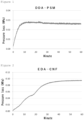
- Example 1 The N,N-dimethyldecylamine-immobilized porous silica monolith particles produced in Example 1 and the ethylenediamine-immobilized cellulose nanofibers produced in Comparative Example 2 were used to prepare columns.
- DDA-PSM and EDA-CNF were dried under reduced pressure at room temperature for 24 hours, and 0.2 to 0.5 g of each dried product was placed in a column having a volume of about 1 ml.
- the solution was passed at a flow rate of 1.0 mL/min through the column having a volume of about 1 ml.
- the solution was able to be passed at a relatively stable pressure of up to nearly 0.03 MPa. Problems including container breakage due to pressurization did not arise.
- the pressure loss reached 0.1 MPa.
- the column packed with the ET adsorbent of the present invention has been revealed to be practically usable for ET removal from an aqueous composition.
- Example 1 The N,N-dimethyldecylamine-immobilized porous silica monolith particles produced in Example 1 and the ethylenediamine-immobilized cellulose nanofibers produced in Comparative Example 2 were irradiated with ⁇ -rays at 10 to 40 kGy for sterilization.
- the adsorbent comprising cellulose nanofibers as the base material in Comparative Example 2 had a slightly lower ET removal rate after the gamma sterilization. Due to an increase in AEC after the gamma sterilization, the ET removal rate per AEC largely decreased. In contrast, the AEC and the ET removal rate of the adsorbent comprising silica monolith as the base material in Example 1 did not decrease even after the gamma sterilization.
- the ET adsorbent of the present invention has an extremely high ET adsorption capacity and comprises an inorganic material as the base material. Hence, the ET adsorbent can be used for medical applications requiring high temperature sterilization. Therefore, the ET adsorbent is highly practical.
Landscapes
- Chemical & Material Sciences (AREA)
- Organic Chemistry (AREA)
- Chemical Kinetics & Catalysis (AREA)
- Analytical Chemistry (AREA)
- Life Sciences & Earth Sciences (AREA)
- Inorganic Chemistry (AREA)
- Engineering & Computer Science (AREA)
- Health & Medical Sciences (AREA)
- Water Supply & Treatment (AREA)
- Environmental & Geological Engineering (AREA)
- Hydrology & Water Resources (AREA)
- Sustainable Development (AREA)
- General Health & Medical Sciences (AREA)
- Molecular Biology (AREA)
- Biochemistry (AREA)
- Materials Engineering (AREA)
- Medicinal Chemistry (AREA)
- Polymers & Plastics (AREA)
- Solid-Sorbent Or Filter-Aiding Compositions (AREA)
Applications Claiming Priority (2)
| Application Number | Priority Date | Filing Date | Title |
|---|---|---|---|
| JP2022054158 | 2022-03-29 | ||
| PCT/JP2023/012713 WO2023190628A1 (ja) | 2022-03-29 | 2023-03-28 | エンドトキシン吸着材 |
Publications (2)
| Publication Number | Publication Date |
|---|---|
| EP4501427A1 true EP4501427A1 (de) | 2025-02-05 |
| EP4501427A4 EP4501427A4 (de) | 2026-03-18 |
Family
ID=88201952
Family Applications (1)
| Application Number | Title | Priority Date | Filing Date |
|---|---|---|---|
| EP23780637.7A Pending EP4501427A4 (de) | 2022-03-29 | 2023-03-28 | Endotoxin-adsorptionsmittel |
Country Status (4)
| Country | Link |
|---|---|
| US (1) | US20250196122A1 (de) |
| EP (1) | EP4501427A4 (de) |
| JP (1) | JPWO2023190628A1 (de) |
| WO (1) | WO2023190628A1 (de) |
Family Cites Families (7)
| Publication number | Priority date | Publication date | Assignee | Title |
|---|---|---|---|---|
| JPH04256434A (ja) | 1991-02-06 | 1992-09-11 | Mitsui Toatsu Chem Inc | 発熱物質吸着剤 |
| JP5017848B2 (ja) * | 2005-11-25 | 2012-09-05 | Jnc株式会社 | エンドトキシン吸着体、およびそれを用いたエンドトキシンの除去方法 |
| JP4842395B1 (ja) | 2010-11-02 | 2011-12-21 | 株式会社Reiメディカル | モノリス多孔体の製造方法 |
| KR101597567B1 (ko) * | 2014-03-05 | 2016-02-25 | 한국과학기술연구원 | 아민 화합물이 결합된 다단기공 구조를 갖는 실리카 구조물 및 이의 제조방법 |
| JP6424343B2 (ja) * | 2014-09-02 | 2018-11-21 | 国立大学法人 熊本大学 | エンドトキシン吸着剤 |
| EP3329989B1 (de) | 2015-07-30 | 2022-08-31 | Nagase ChemteX Corporation | Verwendung von endotoxin-adsorbens |
| WO2022163833A1 (ja) * | 2021-01-29 | 2022-08-04 | 三井金属鉱業株式会社 | 吸着材を使用した方法 |
-
2023
- 2023-03-28 US US18/846,476 patent/US20250196122A1/en active Pending
- 2023-03-28 EP EP23780637.7A patent/EP4501427A4/de active Pending
- 2023-03-28 JP JP2024512638A patent/JPWO2023190628A1/ja active Pending
- 2023-03-28 WO PCT/JP2023/012713 patent/WO2023190628A1/ja not_active Ceased
Also Published As
| Publication number | Publication date |
|---|---|
| JPWO2023190628A1 (de) | 2023-10-05 |
| EP4501427A4 (de) | 2026-03-18 |
| US20250196122A1 (en) | 2025-06-19 |
| WO2023190628A1 (ja) | 2023-10-05 |
Similar Documents
| Publication | Publication Date | Title |
|---|---|---|
| EP3329989B1 (de) | Verwendung von endotoxin-adsorbens | |
| TWI751270B (zh) | 結晶纖維素之用途、充填有結晶纖維素之管柱之用途、內毒素除去方法、及內毒素已被除去之材料之製造方法 | |
| WO2013087552A1 (en) | Doped membranes | |
| EP3283202B1 (de) | Verfahren zur reinigung eines biologischen materials von interesse in einer probe mittels nanofaserultrafiltrationsmembrane in querstromfiltrationsmodus | |
| JP6424343B2 (ja) | エンドトキシン吸着剤 | |
| CN111836824A (zh) | 用于从溶液中去除污染物的复合材料 | |
| EP4501427A1 (de) | Endotoxin-adsorptionsmittel | |
| US10155217B2 (en) | Endotoxin adsorbent | |
| JP7462901B2 (ja) | エンドトキシン吸着剤及びその製造方法 | |
| CN112533960A (zh) | 用于动态过滤交联水凝胶的方法 | |
| CN101977938B (zh) | 海藻酸盐的超纯化方法 | |
| JP2025054862A (ja) | エンドトキシン吸着材 | |
| JP2024093058A (ja) | エンドトキシン吸着材 | |
| JP2024128845A (ja) | ペプチドグリカン吸着材 | |
| HK40011230A (en) | Endotoxin adsorbent | |
| WO2026058777A1 (ja) | エンドトキシン吸着材 | |
| JP2022144336A (ja) | エンドトキシン吸着剤 | |
| CN117599615A (zh) | Pes膜改性方法、pes膜及在去除内毒素中应用 | |
| HK40041159B (en) | Method for dynamic filtration of a cross-linked hydrogel | |
| HK40041159A (en) | Method for dynamic filtration of a cross-linked hydrogel | |
| SAKATA et al. | poly (ε-lysine)-immobilized cellulose beads |
Legal Events
| Date | Code | Title | Description |
|---|---|---|---|
| STAA | Information on the status of an ep patent application or granted ep patent |
Free format text: STATUS: THE INTERNATIONAL PUBLICATION HAS BEEN MADE |
|
| PUAI | Public reference made under article 153(3) epc to a published international application that has entered the european phase |
Free format text: ORIGINAL CODE: 0009012 |
|
| STAA | Information on the status of an ep patent application or granted ep patent |
Free format text: STATUS: REQUEST FOR EXAMINATION WAS MADE |
|
| 17P | Request for examination filed |
Effective date: 20241007 |
|
| AK | Designated contracting states |
Kind code of ref document: A1 Designated state(s): AL AT BE BG CH CY CZ DE DK EE ES FI FR GB GR HR HU IE IS IT LI LT LU LV MC ME MK MT NL NO PL PT RO RS SE SI SK SM TR |
|
| DAV | Request for validation of the european patent (deleted) | ||
| DAX | Request for extension of the european patent (deleted) | ||
| REG | Reference to a national code |
Ref country code: DE Ref legal event code: R079 Free format text: PREVIOUS MAIN CLASS: B01D0015000000 Ipc: B01D0015360000 |
|
| A4 | Supplementary search report drawn up and despatched |
Effective date: 20260212 |
|
| RIC1 | Information provided on ipc code assigned before grant |
Ipc: B01D 15/36 20060101AFI20260206BHEP Ipc: B01J 20/10 20060101ALI20260206BHEP Ipc: B01J 20/28 20060101ALI20260206BHEP Ipc: B01J 20/32 20060101ALI20260206BHEP Ipc: A23L 5/20 20160101ALI20260206BHEP Ipc: C02F 1/28 20230101ALI20260206BHEP |