EP4501407A2 - Spezifische tryptamine zur verwendung bei der behandlung von stimmungsstörungen - Google Patents
Spezifische tryptamine zur verwendung bei der behandlung von stimmungsstörungen Download PDFInfo
- Publication number
- EP4501407A2 EP4501407A2 EP24219503.0A EP24219503A EP4501407A2 EP 4501407 A2 EP4501407 A2 EP 4501407A2 EP 24219503 A EP24219503 A EP 24219503A EP 4501407 A2 EP4501407 A2 EP 4501407A2
- Authority
- EP
- European Patent Office
- Prior art keywords
- disorder
- compound
- pharmaceutically acceptable
- composition
- acceptable salt
- Prior art date
- Legal status (The legal status is an assumption and is not a legal conclusion. Google has not performed a legal analysis and makes no representation as to the accuracy of the status listed.)
- Pending
Links
Images

Classifications
-
- A—HUMAN NECESSITIES
- A61—MEDICAL OR VETERINARY SCIENCE; HYGIENE
- A61K—PREPARATIONS FOR MEDICAL, DENTAL OR TOILETRY PURPOSES
- A61K31/00—Medicinal preparations containing organic active ingredients
- A61K31/33—Heterocyclic compounds
- A61K31/395—Heterocyclic compounds having nitrogen as a ring hetero atom, e.g. guanethidine or rifamycins
- A61K31/40—Heterocyclic compounds having nitrogen as a ring hetero atom, e.g. guanethidine or rifamycins having five-membered rings with one nitrogen as the only ring hetero atom, e.g. sulpiride, succinimide, tolmetin, buflomedil
- A61K31/403—Heterocyclic compounds having nitrogen as a ring hetero atom, e.g. guanethidine or rifamycins having five-membered rings with one nitrogen as the only ring hetero atom, e.g. sulpiride, succinimide, tolmetin, buflomedil condensed with carbocyclic rings, e.g. carbazole
- A61K31/404—Indoles, e.g. pindolol
-
- A—HUMAN NECESSITIES
- A61—MEDICAL OR VETERINARY SCIENCE; HYGIENE
- A61K—PREPARATIONS FOR MEDICAL, DENTAL OR TOILETRY PURPOSES
- A61K31/00—Medicinal preparations containing organic active ingredients
- A61K31/33—Heterocyclic compounds
- A61K31/395—Heterocyclic compounds having nitrogen as a ring hetero atom, e.g. guanethidine or rifamycins
- A61K31/40—Heterocyclic compounds having nitrogen as a ring hetero atom, e.g. guanethidine or rifamycins having five-membered rings with one nitrogen as the only ring hetero atom, e.g. sulpiride, succinimide, tolmetin, buflomedil
- A61K31/403—Heterocyclic compounds having nitrogen as a ring hetero atom, e.g. guanethidine or rifamycins having five-membered rings with one nitrogen as the only ring hetero atom, e.g. sulpiride, succinimide, tolmetin, buflomedil condensed with carbocyclic rings, e.g. carbazole
- A61K31/404—Indoles, e.g. pindolol
- A61K31/4045—Indole-alkylamines; Amides thereof, e.g. serotonin, melatonin
-
- A—HUMAN NECESSITIES
- A61—MEDICAL OR VETERINARY SCIENCE; HYGIENE
- A61P—SPECIFIC THERAPEUTIC ACTIVITY OF CHEMICAL COMPOUNDS OR MEDICINAL PREPARATIONS
- A61P25/00—Drugs for disorders of the nervous system
-
- A—HUMAN NECESSITIES
- A61—MEDICAL OR VETERINARY SCIENCE; HYGIENE
- A61P—SPECIFIC THERAPEUTIC ACTIVITY OF CHEMICAL COMPOUNDS OR MEDICINAL PREPARATIONS
- A61P25/00—Drugs for disorders of the nervous system
- A61P25/18—Antipsychotics, i.e. neuroleptics; Drugs for mania or schizophrenia
-
- A—HUMAN NECESSITIES
- A61—MEDICAL OR VETERINARY SCIENCE; HYGIENE
- A61P—SPECIFIC THERAPEUTIC ACTIVITY OF CHEMICAL COMPOUNDS OR MEDICINAL PREPARATIONS
- A61P25/00—Drugs for disorders of the nervous system
- A61P25/20—Hypnotics; Sedatives
-
- A—HUMAN NECESSITIES
- A61—MEDICAL OR VETERINARY SCIENCE; HYGIENE
- A61P—SPECIFIC THERAPEUTIC ACTIVITY OF CHEMICAL COMPOUNDS OR MEDICINAL PREPARATIONS
- A61P25/00—Drugs for disorders of the nervous system
- A61P25/22—Anxiolytics
-
- A—HUMAN NECESSITIES
- A61—MEDICAL OR VETERINARY SCIENCE; HYGIENE
- A61P—SPECIFIC THERAPEUTIC ACTIVITY OF CHEMICAL COMPOUNDS OR MEDICINAL PREPARATIONS
- A61P25/00—Drugs for disorders of the nervous system
- A61P25/24—Antidepressants
-
- A—HUMAN NECESSITIES
- A61—MEDICAL OR VETERINARY SCIENCE; HYGIENE
- A61P—SPECIFIC THERAPEUTIC ACTIVITY OF CHEMICAL COMPOUNDS OR MEDICINAL PREPARATIONS
- A61P25/00—Drugs for disorders of the nervous system
- A61P25/26—Psychostimulants, e.g. nicotine, cocaine
-
- A—HUMAN NECESSITIES
- A61—MEDICAL OR VETERINARY SCIENCE; HYGIENE
- A61P—SPECIFIC THERAPEUTIC ACTIVITY OF CHEMICAL COMPOUNDS OR MEDICINAL PREPARATIONS
- A61P25/00—Drugs for disorders of the nervous system
- A61P25/28—Drugs for disorders of the nervous system for treating neurodegenerative disorders of the central nervous system, e.g. nootropic agents, cognition enhancers, drugs for treating Alzheimer's disease or other forms of dementia
-
- A—HUMAN NECESSITIES
- A61—MEDICAL OR VETERINARY SCIENCE; HYGIENE
- A61P—SPECIFIC THERAPEUTIC ACTIVITY OF CHEMICAL COMPOUNDS OR MEDICINAL PREPARATIONS
- A61P25/00—Drugs for disorders of the nervous system
- A61P25/30—Drugs for disorders of the nervous system for treating abuse or dependence
-
- C—CHEMISTRY; METALLURGY
- C07—ORGANIC CHEMISTRY
- C07D—HETEROCYCLIC COMPOUNDS
- C07D209/00—Heterocyclic compounds containing five-membered rings, condensed with other rings, with one nitrogen atom as the only ring hetero atom
- C07D209/02—Heterocyclic compounds containing five-membered rings, condensed with other rings, with one nitrogen atom as the only ring hetero atom condensed with one carbocyclic ring
- C07D209/04—Indoles; Hydrogenated indoles
- C07D209/10—Indoles; Hydrogenated indoles with substituted hydrocarbon radicals attached to carbon atoms of the hetero ring
- C07D209/14—Radicals substituted by nitrogen atoms, not forming part of a nitro radical
- C07D209/16—Tryptamines
Definitions
- Depression is a common psychological problem and refers to a mental state of low mood and aversion to activity.
- Various symptoms associated with depression include persistent anxious or sad feelings, feelings of helplessness, hopelessness, pessimism, and/or worthlessness, low energy, restlessness, irritability, fatigue, loss of interest in pleasurable activities or hobbies, excessive sleeping, overeating, appetite loss, Insomnia, thoughts of suicide, and suicide attempts.
- the presence, severity, frequency, and duration of the above-mentioned symptoms vary on a case-by-case basis.
- Tryptamines are monoamine alkaloids that contain an indole ring and are structurally similar to the amino acid tryptophan, from which the name derives.
- tryptamine compounds that include naturally occurring compounds and chemical derivatives with similar structure that may be ring unsubstituted or ring substituted.
- Many tryptamines are 5HT 2A receptor agonists and/or modulators of other serotonin receptors and are known to be psychoactive and, in many cases, cause prolonged hallucinations.
- tryptamines are psychedelic compounds, including compounds derived from entheogenic fungi (psilocybin and psilocin), N , N -dimethyltryptamine (DMT), lysergic acid diethylamide (LSD), 5-methoxy- N , N -dimethyltryptamine (5-MeO-DMT), bufotenin, and ibogaine.
- psilocybin and psilocin compounds derived from entheogenic fungi (psilocybin and psilocin), N , N -dimethyltryptamine (DMT), lysergic acid diethylamide (LSD), 5-methoxy- N , N -dimethyltryptamine (5-MeO-DMT), bufotenin, and ibogaine.
- DMT N -dimethyltryptamine
- LSD lysergic acid diethylamide
- tryptamines are metabolized by a number of pathways, in some cases including monoamine oxidase, limiting the oral bioavailability of some compounds and resulting in very short durations of action.
- other tryptamines have very long durations of action, which makes them challenging to use in a guided therapy setting, where supervised sessions of many hours in duration are costly for patients and inconvenient for healthcare providers.
- the present disclosure includes compound 2: or a pharmaceutically acceptable salt thereof.
- present disclosure includes pharmaceutical compositions of compound 2 and methods of using the same.
- the present disclosure is includes methods of treating mood disorders in a patient in need thereof, comprising administering an effective amount of Compound 2 or compound 4: or a pharmaceutically acceptable salt thereof.
- compositions directed to treating a mood disorder by administering to a patient in need thereof a pharmaceutical composition comprising an effective amount of compound 2 or compound 4, or a pharmaceutically acceptable salt thereof.
- the methods and compositions may treat mood disorders that include depressive disorders, bipolar and related disorders, substance-related disorders, and/or anxiety disorders.
- the methods and compositions may treat mood disorders that include obsessive-compulsive and related disorders. In embodiments, the methods and compositions may treat mood disorders that include trauma- and stressor-related disorders. In embodiments, the methods and compositions may treat mood disorders that include feeding and eating disorders. In embodiments, the methods and compositions may treat mood disorders that include neurocognitive disorders. In embodiments, the methods and compositions may treat mood disorders that include neurodevelopmental disorders. In embodiments, the methods and compositions may treat mood disorders that include personality disorders. In embodiments, the methods and compositions may treat mood disorders that include sexual dysfunctions. In embodiments, the methods and compositions may treat mood disorders that include gender dysphoria.
- the present disclosure includes a compound according to Formula I: or a pharmaceutically acceptable salt thereof, wherein
- R 1 is selected from the group consisting of Me, Et, nPr, iPr, cyclopropyl, allyl, isobutyl, cyclopropylmethyl.
- R 2 is selected from the group consisting of Me, Et, nPr, iPr, cyclopropyl, allyl, isobutyl, cyclopropylmethyl.
- R 26 is selected from the group consisting of hydrogen, F, Cl, Br, I, CF 3 , Me, CN, OMe, OH, OAc, and NH 2 . In some embodiments, R 26 is selected from the group consisting of F, Cl, Br, I, CF 3 , Me, CN, OMe, OH, OAc, and NH 2 . In some embodiments, R 26 is halogen. In some embodiments, R 26 is fluoro. In some embodiments, R 26 is chloro. In some embodiments, R 26 is bromo. In some embodiments, R 26 is iodo.
- the present disclosure includes a compound selected from the group consisting of: or a pharmaceutically acceptable salt thereof.
- the present disclosure includes a compound selected from the group consisting of: or a pharmaceutically acceptable salt thereof.
- the present disclosure includes a compound selected from the group consisting of: or a pharmaceutically acceptable salt thereof.
- compositions for treating a mood disorder by administering to a patient in need thereof a compound disclosed herein.
- pharmaceutical compositions that include a compound disclosed herein.
- the methods and compositions may be used to treat a mood disorder including depressive disorders, e.g., major depressive disorder, persistent depressive disorder, postpartum depression, premenstrual dysphoric disorder, seasonal affective disorder, psychotic depression, disruptive mood dysregulation disorder, substance/medication-induced depressive disorder, and depressive disorder due to another medical condition.
- depressive disorders e.g., major depressive disorder, persistent depressive disorder, postpartum depression, premenstrual dysphoric disorder, seasonal affective disorder, psychotic depression, disruptive mood dysregulation disorder, substance/medication-induced depressive disorder, and depressive disorder due to another medical condition.
- depression conditions include major depressive disorder and dysthymic disorder.
- depression conditions develop under unique circumstances, including, but are not limited to, psychotic depression, postpartum depression, seasonal affective disorder (SAD), mood disorder, depressions caused by chronic medical conditions such as cancer or chronic pain, chemotherapy, chronic stress, post traumatic stress disorders, and bipolar disorder (or manic depressive disorder).
- SAD seasonal affective disorder
- mood disorder depressions caused by chronic medical conditions such as cancer or chronic pain
- chemotherapy chronic stress
- chronic stress chronic stress
- post traumatic stress disorders and bipolar disorder (or manic depressive disorder).
- depression conditions that are expected to be treated according to this aspect of the present disclosure include, but are not limited to, major depressive disorder, dysthymic disorder, psychotic depression, postpartum depression, premenstrual syndrome, premenstrual dysphoric disorder, seasonal affective disorder (SAD), anxiety, mood disorder, depressions caused by chronic medical conditions such as cancer or chronic pain, chemotherapy, chronic stress, post traumatic stress disorders, and bipolar disorder (or manic depressive disorder).
- major depressive disorder include, but are not limited to, major depressive disorder, dysthymic disorder, psychotic depression, postpartum depression, premenstrual syndrome, premenstrual dysphoric disorder, seasonal affective disorder (SAD), anxiety, mood disorder, depressions caused by chronic medical conditions such as cancer or chronic pain, chemotherapy, chronic stress, post traumatic stress disorders, and bipolar disorder (or manic depressive disorder).
- refractory depression e.g., patients suffering from a depressive disorder that does not, and/or has not, responded to adequate courses of at least one, or at least two, other antidepressant compounds or therapeutics.
- a method of treating depression in a treatment resistant patient comprising a) optionally identifying the patient as treatment resistant and b) administering an effective dose of a disclosed compound.
- depressive disorder encompasses refractory depression.
- refractory depression occurs in patients suffering from depression who are resistant to standard pharmacological treatments, including tricyclic antidepressants, MAOIs, SSRIs, and double and triple uptake inhibitors and/or anxiolytic drugs, as well non-pharmacological treatments such as psychotherapy, electroconvulsive therapy, vagus nerve stimulation and/or transcranial magnetic stimulation.
- a treatment resistant-patient may be identified as one who fails to experience alleviation of one or more symptoms of depression (e.g., persistent anxious or sad feelings, feelings of helplessness, hopelessness, pessimism) despite undergoing one or more standard pharmacological or non-pharmacological treatment.
- a treatment-resistant patient is one who fails to experience alleviation of one or more symptoms of depression despite undergoing treatment with two different antidepressant drugs. In other embodiments, a treatment-resistant patient is one who fails to experience alleviation of one or more symptoms of depression despite undergoing treatment with four different antidepressant drugs. In some embodiments, a treatment-resistant patient may also be identified as one who is unwilling or unable to tolerate the side effects of one or more standard pharmacological or non-pharmacological treatment.
- symptoms associated with depression include, but are not limited to, persistent anxious or sad feelings, feelings of helplessness, hopelessness, pessimism, and/or worthlessness, low energy, restlessness, irritability, fatigue, loss of interest in pleasurable activities or hobbies, excessive sleeping, overeating, appetite loss, insomnia, thoughts of suicide, or suicide attempts.
- various symptoms associated with anxiety include fear, panic, heart palpitations, shortness of breath, fatigue, nausea, and headaches among others.
- patients suffering from any form of depression often experience anxiety. It is expected that the methods of the present condition can be used to treat anxiety or any of the symptoms thereof.
- presence, severity, frequency, and duration of symptoms of depression vary on a case to case basis.
- the methods and compositions may be used to treat a mood disorder including bipolar and related disorders, e.g., bipolar I disorder, bipolar II disorder, cyclothymic disorder, substance/medication-induced bipolar and related disorder, and bipolar and related disorder due to another medical condition.
- a mood disorder including bipolar and related disorders, e.g., bipolar I disorder, bipolar II disorder, cyclothymic disorder, substance/medication-induced bipolar and related disorder, and bipolar and related disorder due to another medical condition.
- the methods and compositions may be used to treat a mood disorder including substance-related disorders, e.g., preventing a substance use craving, diminishing a substance use craving, and/or facilitating substance use cessation or withdrawal.
- Substance use disorders involve abuse of psychoactive compounds such as alcohol, caffeine, cannabis, inhalants, opioids, sedatives, hypnotics, anxiolytics, stimulants, nicotine and tobacco.
- psychoactive compounds such as alcohol, caffeine, cannabis, inhalants, opioids, sedatives, hypnotics, anxiolytics, stimulants, nicotine and tobacco.
- “substance” or “substances” are psychoactive compounds which can be addictive such as alcohol, caffeine, cannabis, hallucinogens, inhalants, opioids, sedatives, hypnotics, anxiolytics, stimulants, nicotine and tobacco.
- the methods and compositions may be used to facilitate smoking cessation or cessation of opioid use.
- the methods and compositions may be used to treat a mood disorder including anxiety disorders, e.g., separation anxiety disorder, selective mutism, specific phobia, social anxiety disorder (social phobia), panic disorder, panic attack, agoraphobia, generalized anxiety disorder, substance/medication-induced anxiety disorder, and anxiety disorder due to another medical condition.
- anxiety disorders e.g., separation anxiety disorder, selective mutism, specific phobia, social anxiety disorder (social phobia), panic disorder, panic attack, agoraphobia, generalized anxiety disorder, substance/medication-induced anxiety disorder, and anxiety disorder due to another medical condition.
- the methods and compositions may be used to treat a mood disorder including obsessive-compulsive and related disorders, e.g., obsessive-compulsive disorder, body dysmorphic disorder, hoarding disorder, trichotillomania (hair-pulling disorder), excoriation (skin-picking) disorder, substance/medication-induced obsessive-compulsive and related disorder, and obsessive-compulsive and related disorder due to another medical condition.
- a mood disorder including obsessive-compulsive and related disorders, e.g., obsessive-compulsive disorder, body dysmorphic disorder, hoarding disorder, trichotillomania (hair-pulling disorder), excoriation (skin-picking) disorder, substance/medication-induced obsessive-compulsive and related disorder, and obsessive-compulsive and related disorder due to another medical condition.
- the methods and compositions may be used to treat a mood disorder including trauma- and stressor-related disorders, e.g., reactive attachment disorder, disinhibited social engagement disorder, posttraumatic stress disorder, acute stress disorder, and adjustment disorders.
- a mood disorder including trauma- and stressor-related disorders, e.g., reactive attachment disorder, disinhibited social engagement disorder, posttraumatic stress disorder, acute stress disorder, and adjustment disorders.
- the methods and compositions may be used to treat a mood disorder including feeding and eating disorders, e.g., anorexia nervosa, bulimia nervosa, binge-eating disorder, pica, rumination disorder, and avoidant/restrictive food intake disorder.
- a mood disorder including feeding and eating disorders, e.g., anorexia nervosa, bulimia nervosa, binge-eating disorder, pica, rumination disorder, and avoidant/restrictive food intake disorder.
- the methods and compositions may be used to treat a mood disorder including neurocognitive disorders, e.g., delirium, major neurocognitive disorder, mild neurocognitive disorder, major or mild neurocognitive disorder due to Alzheimer's disease, major or mild frontotemporal neurocognitive disorder, major or mild neurocognitive disorder with Lewy bodies, major or mild vascular neurocognitive disorder, major or mild neurocognitive disorder due to traumatic brain injury, substance/medication-induced major or mild neurocognitive disorder, major or mild neurocognitive disorder due to HIV infection, major or mild neurocognitive disorder due to prion disease, major or mild neurocognitive disorder due to Parkinson's disease, major or mild neurocognitive disorder due to Huntington's disease, major or mild neurocognitive disorder due to another medical condition, and major or mild neurocognitive disorder due to multiple etiologies.
- neurocognitive disorders e.g., delirium, major neurocognitive disorder, mild neurocognitive disorder, major or mild
- the methods and compositions may be used to treat a mood disorder including neurodevelopmental disorders, e.g., autism spectrum disorder, attention-deficit/hyperactivity disorder, stereotypic movement disorder, tic disorders, Tourette's disorder, persistent (chronic) motor or vocal tic disorder, and provisional tic disorder.
- a mood disorder including neurodevelopmental disorders, e.g., autism spectrum disorder, attention-deficit/hyperactivity disorder, stereotypic movement disorder, tic disorders, Tourette's disorder, persistent (chronic) motor or vocal tic disorder, and provisional tic disorder.
- a variety of other neurological conditions are expected to be treated according to the methods of the present disclosure.
- neurological conditions include, but are not limited to, a learning disorder, autistic disorder, attention-deficit hyperactivity disorder, Tourette's syndrome, phobia, post-traumatic stress disorder, dementia, AIDS dementia, Alzheimer's disease, Parkinson's disease, spasticity, myoclonus, muscle spasm, bipolar disorder, a substance abuse disorder, urinary incontinence, and schizophrenia.
- the methods and compositions may be used to treat a mood disorder including personality disorders, e.g., borderline personality disorder.
- the methods and compositions may be used to treat a mood disorder including sexual dysfunctions, e.g ., delayed ejaculation, erectile disorder, female orgasmic disorder, female sexual interest/arousal disorder, genito-pelvic pain/penetration disorder, male hypoactive sexual desire disorder, premature (early) ejaculation, and substance/medication-induced sexual dysfunction.
- a mood disorder including sexual dysfunctions, e.g ., delayed ejaculation, erectile disorder, female orgasmic disorder, female sexual interest/arousal disorder, genito-pelvic pain/penetration disorder, male hypoactive sexual desire disorder, premature (early) ejaculation, and substance/medication-induced sexual dysfunction.
- the methods and compositions may be used to treat a mood disorder including gender dysphoria.
- EPT ethylpropyltryptamine
- MET methylethyltryptamine
- compositions for treating a mood disorder by administering to a subject in need thereof an effective amount of a compound disclosed herein selected from the following structures: or a pharmaceutically acceptable salt thereof.
- compositions for treating a mood disorder by administering to a subject in need thereof an effective amount of a compound disclosed herein selected from the following structures: or a pharmaceutically acceptable salt thereof.
- provided herein are methods and compositions for treating migraine or cluster headache by administering to a patient in need thereof a compound of the present disclosure.
- provided herein are methods and compositions for treating inflammation by administering to a patient in need thereof a compound of the present disclosure.
- methods include treating a mood disorder, e.g., a depressive disorder, by administering to a patient in need thereof a pharmaceutical composition including about 0.01 mg to about 400 mg of a compound disclosed herein.
- doses may be, e.g., in the range of about 0.01 to 400 mg, 0.01 to 300 mg, 0.01 to 250 mg, 0.01 to 200 mg, 0.01 to 150 mg, 0.01 to 100 mg, 0.01 to 75 mg, 0.01 to 50 mg, 0.01 to 25 mg, 0.01 to 20 mg, 0.01 to 15 mg, 0.01 to 10 mg, 0.01 to 5 mg, 0.01 to 1 mg, 0.01 to 0.5 mg, 0.01 to 0.1 mg, 0.1 to 300 mg, 0.1 to 250 mg, 0.1 to 200 mg, 0.1 to 150 mg, 0.1 to 100 mg, 0.1 to 75 mg, 0.1 to 50 mg, 0.1 to 25 mg, 0.1 to 20 mg, 0.1 to 15 mg, 0.1 to 10 mg, 0.1 to 5 mg, 0.1 to 1 mg, 10 to 300 mg,
- dosages may include amounts of a compound disclosed herein in the range of about, e.g., 1 mg to 200 mg, 1 mg to 100 mg, 1 mg to 50 mg, 1 mg to 40 mg, 1 mg to 30 mg, 1 mg to 20 mg, 1 mg to 15 mg, 0.01 mg to 10 mg, 0.1 mg to 15 mg, 0.15 mg to 12.5 mg, or 0.2 mg to 10 mg, with doses of 0.1 mg, 0.2 mg, 0.3 mg, 0.4 mg, 0.5 mg, 0.6 mg, 0.7 mg, 0.8 mg, 0.9 mg, 1.0 mg, 1.5 mg, 1.75 mg, 2 mg, 2.5 mg, 2.75 mg, 3 mg, 3.5 mg, 3.75 mg, 4 mg, 4.5 mg, 4.75 mg, 5 mg, 5.5 mg, 6 mg, 6.5 mg, 7 mg, 7.5 mg, 8 mg, 8.5 mg, 9 mg, 9.5 mg, 10 mg, 11 mg, 12 mg, 15 mg, 20 mg, 25 mg, 30 mg, 35 mg, 40 mg, 45 mg, 50 mg, 60 mg,
- dosages of a compound disclosed herein are administered once, twice, three or four times daily, every other day, every three days, once weekly, twice monthly, once monthly, or 3-4 times yearly to a patient in need thereof.
- the dosage is about, e.g., 1-400 mg/day, or 1-300 mg/day, or 1-250 mg/day, or 1-200 mg/day, for example 300 mg/day, 250 mg/day, 200 mg/day, 150 mg/day, 100 mg/day, 75 mg/day, 50 mg/day, 40 mg/day, 30 mg/day, 25 mg/day, 20 mg/day, 15 mg/day, 10 mg/day, 5 mg/day, or 1 mg/day.
- compositions for parenteral administration or inhalation, e.g., a spray or mist, of a compound disclosed herein include a concentration of about 0.005 mg/ml to about 500 mg/mL.
- the compositions include a compound disclosed herein at a concentration of, e.g., about 0.05 mg/mL to about 50 mg/mL, about 0.05 mg/mL to about 100 mg/mL, about 0.005 mg/mL to about 500 mg/mL, about 0.1 mg/mL to about 50 mg/mL, about 0.1 mg/mL to about 10 mg/mL, about 0.05 mg/mL to about 25 mg/mL, about 0.05 mg/mL to about 10 mg/mL, about 0.05 mg/mL to about 5 mg/mL, or about 0.05 mg/mL to about 1 mg/mL.
- the composition includes a compound disclosed herein at a concentration of, e.g., about 0.05 mg/mL to about 15 mg/mL, about 0.5 mg/mL to about 10 mg/mL, about 0.25 mg/mL to about 5 mg/mL, about 0.5 mg/mL to about 7 mg/mL, about 1 mg/mL to about 10 mg/mL, about 5 mg/mL to about 10 mg/mL, about 5 mg/mL to about 15 mg/mL, about 5 mg/mL to 25 mg/mL, about 5 mg/mL to 50 mg/mL, or about 10 mg/mL to 100 mg/mL.
- the pharmaceutical compositions are formulated as a total volume of about, e.g., 10 mL, 20 mL, 25 mL, 50 mL, 100 mL, 200 mL, 250 mL, or 500 mL.
- dosages may be administered to a subject once, twice, three or four times daily, every other day, every three days, once weekly, twice monthly, once monthly, or 3-4 times yearly.
- a compound disclosed herein is administered to a subject once in the morning, or once in the evening.
- a compound disclosed herein is administered to a subject once in the morning, and once in the evening.
- a compound disclosed herein is administered to a subject three times a day (e.g., at breakfast, lunch, and dinner), at a dose, e.g., of 50 mg/administration ( e.g ., 150 mg/day).
- a compound disclosed herein is administered to a subject 12.5 mg/day in one or more doses. In embodiments, a compound disclosed herein is administered to a subject 25 mg/day in one or more doses. In embodiments, a compound disclosed herein is administered to a subject 35 mg/day in one or more doses. In embodiments, a compound disclosed herein is administered to a subject 50 mg/day in one or more doses. In embodiments, a compound disclosed herein is administered to a subject 75 mg/day in one or more doses. In embodiments, a compound disclosed herein is administered to a subject 100 mg/day in one or more doses. In embodiments, a compound disclosed herein is administered to a subject 150 mg/day in one or more doses. In embodiments, a compound disclosed herein is administered to a subject 200 mg/day in one or more doses. In embodiments, a compound disclosed herein is administered to a subject 250 mg/day in one or more doses.
- the dosage of a compound disclosed herein is 0.0005-5 mg/kg, 0.001-1 mg/kg, 0.01-1 mg/kg or 0.1-5 mg/kg once, twice, three times or four times daily.
- the dosage is 0.0005 mg/kg, 0.001 mg/kg, 0.005 mg/kg, 0.01 mg/kg, 0.025 mg/kg, 0.05 mg/kg, 0.1 mg/kg, 0.15 mg/kg, 0.2 mg/kg, 0.25 mg/kg, 0.3 mg/kg, 0.4 mg/kg, 0.5 mg/kg, 0.75 mg/kg, 1 mg/kg, 2.5 mg/kg, or 5 mg/kg, once, twice, three times or four times daily.
- a subject is administered a total daily dose of 0.01 mg to 500 mg of a compound disclosed herein once, twice, three times, or four times daily.
- the total amount administered to a subject in a 24-hour period is, e.g., 0.01 mg, 0.025 mg, 0.05 mg, 0.075 mg, 0.1 mg, 0.125 mg, 0.15 mg, 0.175 mg, 0.2 mg, 0.25 mg, 0.3 mg, 0.4 mg, 0.5 mg, 0.75 mg, 1 mg, 1.5 mg, 2 mg, 2.5 mg, 3 mg, 4 mg, 5 mg, 7.5 mg, 10 mg, 12.5 mg, 15 mg, 17.5 mg, 20 mg, 25 mg, 30 mg, 35 mg, 40 mg, 45 mg, 50 mg, 60 mg, 75 mg, 80 mg, 90 mg, 100 mg, 125 mg, 150 mg, 175 mg, 200 mg, 250 mg, 300 mg, 400 mg, or 500 mg.
- the subject may be started at a low dose and the dosage is escalated.
- the subject may be started at a low dose and the
- a compound disclosed herein may be administered, e.g., via inhalation or orally, at specified intervals.
- a patient may be administered a compound disclosed herein at intervals of every, e.g., 1 year, 6 months, 90 days, 60 days, 30 days, 14 days, 7 days, 3 days, 24 hours, 12 hours, 8 hours, 6 hours, 5 hours, 4 hours, 3 hours, 2.5 hours, 2.25 hours, 2 hours, 1.75 hours, 1.5 hours, 1.25 hours, 1 hour, 0.75 hour, 0.5 hour, or 0.25 hour.
- a compound of the present disclosure or a pharmaceutically acceptable salt thereof is administered to a patient under the supervision of a healthcare provider.
- a compound of the present disclosure or a pharmaceutically acceptable salt thereof is administered to a patient under the supervision of a healthcare provider at a clinic specializing in the delivery of psychoactive treatments.
- a compound of the present disclosure is administered to a patient under the supervision of a healthcare provider at a high dose intended to induce a psychedefic experience in the subject, e.g., 12.5 mg, 15 mg, 17.5 mg, 20 mg, 25 mg, 30 mg, 35 mg, 40 mg, 45 mg, 50 mg, 60 mg, 70 mg, 80 mg, 90 mg, 100 mg, 125 mg, or 150 mg.
- the administration to a patient of a high dose under the supervision of a healthcare provider occurs periodically in order to maintain a therapeutic effect in the patient, e.g., every three days, twice weekly, once weekly, twice monthly, once monthly, thrice yearly, twice yearly, or once yearly.
- a compound of the present disclosure or a pharmaceutically acceptable salt thereof is administered by a patient on their own at home or otherwise away from the supervision of a healthcare provider.
- a compound of the present disclosure or a pharmaceutically acceptable salt thereof is administered by a patient on their own at home or otherwise away from the supervision of a healthcare provider at a low dose intended to be sub-perceptual or to induce threshold psychoactive effects, e.g., 0.1 mg, 0.25 mg, 0.5 mg, 0.75 mg, 1 mg, 1.5 mg, 2 mg, 2.5 mg, 3 mg, 4 mg, 5 mg, 7.5 mg, or 10 mg.
- the administration by a patient of a low dose on their own occurs periodically in order to maintain a therapeutic effect in the patient, e.g., daily, every other day, every three days, twice weekly, once weekly, twice monthly, or once monthly.
- Suitable dosage forms for a compound disclosed herein include, but are not limited to, oral forms, such as tablets, hard or soft gelatin capsules, powders, granules and oral solutions, syrups or suspensions, troches, as well as sublingual, buccal, intratracheal, intraocular, or intranasal forms, forms adapted to inhalation, topical forms, transdermal forms, or parenteral forms, for example, forms adapted for intravenous, intra-arterial, intraperitoneal, intrathecal, intraventricular, intramuscular or subcutaneous administration.
- parenteral administration it may be in the form of a sterile aqueous solution which may contain other substances, for example, enough salts or glucose to make the solution isotonic with blood.
- aqueous solutions should be suitably buffered (preferably to a pH of from 3 to 9), if necessary.
- the preparation of suitable parenteral formulations under sterile conditions is readily accomplished by standard pharmaceutical techniques well-known to those skilled in the art.
- compositions herein may be provided with immediate release, delayed release, extended release, or modified release profiles.
- pharmaceutical compositions with different drug release profiles may be combined to create a two-phase or three-phase release profile.
- pharmaceutical compositions may be provided with an immediate release and an extended release profile.
- pharmaceutical compositions may be provided with an extended release and delayed release profile.
- Such composition may be provided as pulsatile formulations, multilayer tablets, or capsules containing tablets, beads, granules, etc.
- Compositions may be prepared using a pharmaceutically acceptable "carrier” composed of materials that are considered safe and effective.
- the "carrier” includes all components present in the pharmaceutical formulation other than the active ingredient or ingredients.
- carrier includes, but is not limited to, diluents, binders, lubricants, glidants, disintegrants, fillers, and coating compositions.
- compositions include those suitable for oral, rectal, nasal, topical (including transdermal, buccal and sublingual), vaginal or parenteral (including subcutaneous, intramuscular, intravenous and intradermal) administration or administration via an implant.
- the compositions may be prepared by any method well known in the art of pharmacy.
- Such methods include the step of bringing in association compounds used in the disclosure or combinations thereof with any auxiliary agent.
- auxiliary agent(s) also named accessory ingredient(s) include those conventional in the art, such as carriers, fillers, binders, diluents, disintegrants, lubricants, colorants, flavoring agents, anti-oxidants, and wetting agents.
- auxiliary agents are suitably selected with respect to the intended form and route of administration and as consistent with conventional pharmaceutical practices.
- compositions suitable for oral administration may be presented as discrete dosage units such as pills, tablets, dragées or capsules, or as a powder or granules, or as a solution or suspension.
- the active ingredient may also be presented as a bolus or paste.
- the compositions can further be processed into a suppository or enema for rectal administration.
- Tablets may contain the active ingredient compounds and suitable binders, lubricants, disintegrating agents, coloring agents, flavoring agents, flow-inducing agents, and melting agents.
- Gelatin capsules may contain the active ingredient compounds and powdered carriers, such as lactose, starch, cellulose derivatives, magnesium stearate, stearic acid, and the like. Similar diluents can be used to make compressed tablets. Compressed tablets can be sugar coated or film coated to mask any unpleasant taste and protect the tablet from the atmosphere, or enteric coated for selective disintegration in the gastrointestinal tract.
- the active drug component can be combined with an oral, non-toxic, pharmaceutically acceptable, inert carrier such as lactose, gelatin, agar, starch, sucrose, glucose, methyl cellulose, magnesium stearate, dicalcium phosphate, calcium sulfate, mannitol, sorbitol and the like.
- Suitable binders include starch, gelatin, natural sugars such as glucose or beta-lactose, corn sweeteners, natural and synthetic gums such as acacia, tragacanth, or sodium alginate, carboxymethylcellulose, polyethylene glycol, waxes, and the like.
- Lubricants used in these dosage forms include sodium oleate, sodium stearate, magnesium stearate, sodium benzoate, sodium acetate, sodium chloride, and the like.
- Disintegrators include, without limitation, starch, methyl cellulose, agar, bentonite, xanthan gum, and the like.
- liquid dosage form For oral administration in liquid dosage form, the oral drug components are combined with any oral, non-toxic, pharmaceutically acceptable inert carrier such as ethanol, glycerol, water, and the like.
- suitable liquid dosage forms include, but are not limited to, solutions or suspensions in water, pharmaceutically acceptable fats and oils, alcohols or other organic solvents, including esters, emulsions, syrups or elixirs, suspensions, solutions and/or suspensions reconstituted from non-effervescent granules and effervescent preparations reconstituted from effervescent granules.
- Such liquid dosage forms may contain, for example, suitable solvents, preservatives, emulsifying agents, suspending agents, diluents, sweeteners, thickeners, and melting agents.
- Liquid dosage forms for oral administration can contain coloring and flavoring to increase patient acceptance.
- suitable compositions include aqueous and nonaqueous sterile solutions.
- water, a suitable oil, saline, aqueous dextrose (glucose), and related sugar solutions and glycols such as propylene glycol or polyethylene glycols are suitable carriers for parenteral solutions.
- Solutions for parenteral administration preferably contain a watersoluble salt of the active ingredient, suitable stabilizing agents, and if necessary, buffer substances.
- Antioxidizing agents such as sodium bisulfite, sodium sulfite, or ascorbic acid, either alone or combined, are suitable stabilizing agents.
- citric acid and its salts and sodium EDTA are also used.
- parenteral solutions can contain preservatives, such as benzalkonium chloride, methyl- or propyl-paraben, and chlorobutanol.
- the compositions may be presented in unit-dose or multi-dose containers, for example sealed vials and ampoules, and may be stored in a freeze-dried (lyophilized) condition requiring only the addition of sterile liquid carrier, for example water, prior to use.
- sterile liquid carrier for example water
- transdermal administration e.g. gels, patches or sprays can be contemplated.
- Compositions or formulations suitable for pulmonary administration e.g. by nasal inhalation, include fine dusts or mists which may be generated by means of metered dose pressurized aerosols, nebulizers or insufflators.
- Parenteral and intravenous forms may also include minerals and other materials to make them compatible with the type of injection or delivery system chosen.
- the compounds used in the method of the present disclosure may also be administered in the form of liposome delivery systems, such as small unilamellar vesicles, large unilamellar vesicles, and multilamellar vesicles.
- Liposomes can be formed from a variety of phospholipids, such as cholesterol, stearylamine, or phosphatidylcholines.
- the compounds may be administered as components of tissue-targeted emulsions.
- the compounds used in the method of the present disclosure may also be coupled to soluble polymers as targetable drug carriers or as prodrugs.
- soluble polymers include polyvinylpyrrolidone, pyran copolymer, polyhydroxylpropylmethacrylamide-phenol, polyhydroxyethylasparta-midephenol, or polyethyleneoxide-polylysine substituted with palmitoyl residues.
- the compounds may be coupled to a class of biodegradable polymers useful in achieving controlled release of a drug, for example, polylactic acid, polyglycolic acid, copolymers of polylactic and polyglycolic acid, polyepsilon caprolactone, polyhydroxy butyric acid, polyorthoesters, polyacetals, polydihydropyrans, polycyanoacylates, and crosslinked or amphipathic block copolymers of hydrogels.
- a class of biodegradable polymers useful in achieving controlled release of a drug
- a drug for example, polylactic acid, polyglycolic acid, copolymers of polylactic and polyglycolic acid, polyepsilon caprolactone, polyhydroxy butyric acid, polyorthoesters, polyacetals, polydihydropyrans, polycyanoacylates, and crosslinked or amphipathic block copolymers of hydrogels.
- compositions herein may be provided with immediate release, delayed release, extended release, or modified release profiles.
- pharmaceutical compositions with different drug release profiles may be combined to create a two-phase or three-phase release profile.
- pharmaceutical compositions may be provided with an immediate release and an extended-release profile.
- pharmaceutical compositions may be provided with an extended release and delayed release profile.
- Such composition may be provided as pulsatile formulations, multilayer tablets, or capsules containing tablets, beads, granules, etc.
- compositions herein may be provided with abuse deterrent features by techniques know in the art, for example, by making a tablet that is difficult to crush or to dissolve in water.
- the disclosure further includes a pharmaceutical composition, as hereinbefore described, in combination with packaging material, including instructions for the use of the composition for a use as hereinbefore described.
- the exact dose and regimen of administration of the composition will necessarily be dependent upon the type and magnitude of the therapeutic or nutritional effect to be achieved and may vary depending on factors such as the particular compound, formula, route of administration, or age and condition of the individual subject to whom the composition is to be administered.
- the compounds used in the method of the present disclosure may be administered in various forms, including those detailed herein.
- the treatment with the compound may be a component of a combination therapy or an adjunct therapy, i.e. the subject or patient in need of the drug is treated or given another drug for the disease in conjunction with one or more of the instant compounds.
- This combination therapy can be sequential therapy where the patient is treated first with one drug and then the other or the two drugs are given simultaneously.
- These can be administered independently by the same route or by two or more different routes of administration depending on the dosage forms employed.
- compounds disclosed herein may be administered in combination with one or more other antidepressant treatments, such as, tricyclic antidepressants, MAOIs, SSRIs, and double and triple uptake inhibitors and/or anxiolytic drugs for manufacturing a medicament for treating depression, anxiety, and/or other related diseases, including to provide relief from depression or anxiety and preventing recurrence of depression or anxiety.
- antidepressant treatments such as, tricyclic antidepressants, MAOIs, SSRIs, and double and triple uptake inhibitors and/or anxiolytic drugs for manufacturing a medicament for treating depression, anxiety, and/or other related diseases, including to provide relief from depression or anxiety and preventing recurrence of depression or anxiety.
- therapeutics that may be used in combination with a compound of the present disclosure include, but are not limited to, Anafranil, Adapin, Aventyl, Elavil, Norpramin, Pamelor, Pertofrane, Sinequan, Surmontil, Tofranil, Vivactil, Parnate, Nardil, Marplan, Celexa, Lexapro, Luvox, Paxil, Prozac, Zoloft, Wellbutrin, Effexor, Remeron, Cymbalta, Desyrel (trazodone), and Ludiomill.
- 5-HT2a receptor agonist is intended to mean any compound or substance that activates the 5-HT2a receptor.
- the agonist may be a partial or full agonist.
- aliphatic or "aliphatic group”, as used herein, means a straight-chain (i.e., unbranched) or branched, substituted or unsubstituted hydrocarbon chain that is completely saturated or that contains one or more units of unsaturation, or a monocyclic hydrocarbon or bicyclic hydrocarbon that is completely saturated or that contains one or more units of unsaturation, but which is not aromatic (also referred to herein as “carbocycle” "cycloaliphatic” or “cycloalkyl”), that has a single point of attachment to the rest of the molecule.
- aliphatic groups contain 1-6 aliphatic carbon atoms.
- aliphatic groups contain 1-5 aliphatic carbon atoms. In other embodiments, aliphatic groups contain 1-4 aliphatic carbon atoms. In still other embodiments, aliphatic groups contain 1-3 aliphatic carbon atoms, and in yet other embodiments, aliphatic groups contain 1-2 aliphatic carbon atoms.
- cycloaliphatic (or “carbocycle” or “cycloalkyl”) refers to a monocyclic C 3 -C 6 hydrocarbon that is completely saturated or that contains one or more units of unsaturation, but which is not aromatic, that has a single point of attachment to the rest of the molecule.
- Suitable aliphatic groups include, but are not limited to, linear or branched, substituted or unsubstituted alkyl, alkenyl, alkynyl groups and hybrids thereof such as (cycloalkyl)alkyl, (cycloalkenyl)alkyl or (cycloalkyl)alkenyl.
- alkyl refers to a straight or branched alkyl group.
- exemplary alkyl groups are methyl, ethyl, propyl, isopropyl, butyl, isobutyl, and tert-butyl.
- haloalkyl refers to a straight or branched alkyl group that is substituted with one or more halogen atoms.
- halogen means F, Cl, Br, or I.
- the term "pharmaceutically acceptable” refers to molecular entities and compositions that are "generally regarded as safe", e.g., that are physiologically tolerable and do not typically produce an allergic or similar untoward reaction when administered to a human.
- this term refers to molecular entities and compositions approved by a regulatory agency of the federal or a state government, as the GRAS list under sections 204(s) and 409 of the Federal Food, Drug and Cosmetic Act, that is subject to premarket review and approval by the FDA or similar lists, the U.S. Pharmacopeia or another generally recognized pharmacopeia for use in animals, and more particularly in humans.
- compounds of the invention may contain "optionally substituted” moieties.
- substituted whether preceded by the term “optionally” or not, means that one or more hydrogens of the designated moiety are replaced with a suitable substituent.
- an “optionally substituted” group may have a suitable substituent at each substitutable position of the group, and when more than one position in any given structure may be substituted with more than one substituent selected from a specified group, the substituent may be either the same or different at every position.
- Combinations of substituents envisioned by this invention are preferably those that result in the formation of stable or chemically feasible compounds.
- stable refers to compounds that are not substantially altered when subjected to conditions to allow for their production, detection, and, in certain embodiments, their recovery, purification, and use for one or more of the purposes disclosed herein.
- Suitable monovalent substituents on R° are independently halogen, -(CH 2 ) 0-2 R • , - (haloR • ), -(CH 2 ) 0-2 0H, -(CH 2 ) 0-2 OR • , -(CH 2 ) 0-2 CH(OR • ) 2 ; -O(haloR • ), -CN, -N 3 , - (CH 2 ) 0-2 C(O)R • , -(CH 2 ) 0-2 C(O)OH, -(CH 2 ) 0-2 C(O)OR • , -(CH 2 ) 0-2 SR • , -(CH 2 ) 0-2 SH, -(CH 2 ) 0-2 NH 2 , -(CH 2 ) 0-2 NHR • , -(CH 2 ) 0-2 NR • 2
- Suitable divalent substituents that are bound to vicinal substitutable carbons of an "optionally substituted” group include: -O(CR* 2 ) 2-3 O-, wherein each independent occurrence of R* is selected from hydrogen, C 1-6 aliphatic which may be substituted as defined below, or an unsubstituted 5-6-membered saturated, partially unsaturated, or aryl ring having 0-4 heteroatoms independently selected from nitrogen, oxygen, or sulfur.
- Suitable substituents on the aliphatic group of R* include halogen, -R*, -(haloR*), -OH, -OR • , -O(haloR • ), -CN, -C(O)OH, -C(O)OR • , -NH 2 , -NHR • , -NR • 2 , or -NO 2 , wherein each R' is unsubstituted or where preceded by "halo" is substituted only with one or more halogens, and is independently C 1-4 aliphatic, -CH 2 Ph, -O(CH 2 ) 0-1 Ph, or a 5-6-membered saturated, partially unsaturated, or aryl ring having 0-4 heteroatoms independently selected from nitrogen, oxygen, or sulfur.
- Suitable substituents on a substitutable nitrogen of an "optionally substituted" group include -R ⁇ , -NR ⁇ 2 , -C(O)R ⁇ , -C(O)OR ⁇ , -C(O)C(O)R ⁇ , -C(O)CH 2 C(O)R ⁇ , -S(O) 2 R ⁇ , - S(O) 2 NR ⁇ 2 , -C(S)NR ⁇ 2 , -C(NH)NR ⁇ 2 , or -N(R ⁇ )S(O) 2 R ⁇ ; wherein each R ⁇ is independently hydrogen, C 1-6 aliphatic which may be substituted as defined below, unsubstituted -OPh, or an unsubstituted 5-6-membered saturated, partially unsaturated, or aryl ring having 0-4 heteroatoms independently selected from nitrogen, oxygen, or sulfur, or, notwithstanding the definition above, two independent occurrence
- Suitable substituents on the aliphatic group of R ⁇ are independently halogen, -R*, -(haloR*), -OH, -OR • , -O(haloR • ), -CN, -C(O)OH, -C(O)OR • , -NH 2 , -NHR • , -NR • 2 , or -NO 2 , wherein each R' is unsubstituted or where preceded by "halo" is substituted only with one or more halogens, and is independently C 1-4 aliphatic, -CH 2 Ph, -O(CH 2 ) 0-1 Ph, or a 5-6-membered saturated, partially unsaturated, or aryl ring having 0-4 heteroatoms independently selected from nitrogen, oxygen, or sulfur.
- pharmaceutically acceptable salts includes both acid and base addition salts, wherein the compound is modified by making acid or base salts thereof.
- examples of pharmaceutically acceptable salts include but are not limited to mineral or organic acid salts of basic residues such as amines, and alkali or organic salts of acidic residues such as carboxylic acids.
- Pharmaceutically acceptable salts include conventional non-toxic salts or quaternary ammonium salts of the parent compound formed, for example, from non-toxic inorganic or organic acids.
- Such conventional non-toxic salts include those derived from inorganic acids such as hydrochloric, hydrobromic, sulfuric, sulfamic, phosphoric, and nitric acids; and the salts prepared from organic acids such as acetic, propionic, succinic, glycolic, stearic, lactic, malic, tartaric, citric, ascorbic, pamoic, maleic, hydroxymaleic, phenylacetic, glutamic, benzoic, salicylic, sulfanilic, 2-acetoxybenzoic, fumaric, tolunesulfonic, naphthalenesulfonic, methanesulfonic, ethane disulfonic, and oxalic acids.
- the pharmaceutically acceptable salts of a compound disclosed herein can be synthesized from the parent compound, which contains a basic or acidic moiety, by conventional chemical methods.
- the terms "effective amount” or “therapeutically effective amount” refer to an amount of a compound, material, composition, medicament, or other material that is effective to achieve a particular pharmacological and/or physiologic effect including but not limited to reducing the frequency or severity of sadness or lethargy, depressed mood, anxious or sad feelings, diminished interest in all or nearly all activities, significant increased or decreased appetite leading to weight gain or weight loss, insomnia, irritability, fatigue, feelings of worthlessness, feelings of helplessness, inability to concentrate, and recurrent thoughts of death or suicide, or to provide a desired pharmacologic and/or physiologic effect, for example, reducing, inhibiting, or reversing one or more of the underlying pathophysiological mechanisms underlying the neurological dysfunction, modulating dopamine levels or signaling, modulating serotonin levels or signaling, modulating norepinephrine levels or signaling, modulating glutamate or GABA levels or signaling, modulating synaptic connectivity or neurogenesis in certain brain regions, or a combination thereof
- deuterium-enriched compounds disclosed herein and their use are contemplated and within the scope of the methods and compositions described herein.
- Deuterium can be incorporated in any position in place of hydrogen (protium) synthetically, according to synthetic procedures known in the art.
- deuterium may be incorporated to various positions having an exchangeable proton, such as an amine N-H, via proton-deuterium equilibrium exchange.
- deuterium may be incorporated selectively or non-selectively through methods known in the art.
- the level of deuterium at each deuterium-enriched -H site of the compound is 0.02% to 100%.
- the level of deuterium at each deuterium-enriched -H site of the compound is 50%-100%, 70%-100%, 90%-100%, 95%-100%, 96%-100%, 97%-100%, 98%-100%, or 99%-100%.
- Exemplary deuterium-enriched compounds disclosed herein include:
- the compounds disclosed herein may be racemic and/or optically active isomers thereof.
- some of the compounds can have asymmetric carbon atoms, and therefore, can exist either as racemic mixtures or as individual optical isomers (enantiomers).
- Compounds described herein that contain a chiral center include all possible stereoisomers of the compound, including compositions including the racemic mixture of the two enantiomers, as well as compositions including each enantiomer individually, substantially free of the other enantiomer.
- contemplated herein is a composition including the S enantiomer of a compound substantially free of the R enantiomer, or the R enantiomer substantially free of the S enantiomer.
- compositions including mixtures of varying proportions between the diastereomers as well as compositions including one or more diastereomers substantially free of one or more of the other diastereomers.
- substantially free it is meant that the composition includes less than 25%, 15%, 10%, 8%, 5%, 3%, or less than 1% of the minor enantiomer or diastereomer(s).Enumerated
- An individual enantiomer of a compound disclosed herein may also be prepared from a corresponding optically pure intermediate or by resolution, such as by HPLC of the corresponding racemate using a suitable chiral support or by fractional crystallization of the diastereomeric salts formed by reaction of the corresponding racemate with a suitable optically active acid or base, as appropriate.
- the compounds used in the method of the present disclosure may be prepared by techniques well known in organic synthesis and familiar to a practitioner ordinarily skilled in the art.
- the compounds may be prepared by the synthetic transformations shown below under general procedures and further described in the specific examples that follow.
- the present disclosure provides a pharmaceutical composition
- a pharmaceutical composition comprising the compound of the present disclosure and a pharmaceutically acceptable carrier.
- isotopes include those atoms having the same atomic number but different mass numbers.
- isotopes of hydrogen include tritium and deuterium.
- isotopes of carbon include 13 C and 14 C.
- any notation of a carbon in structures throughout this application when used without further notation, is intended to represent all isotopes of carbon, such as 12 C, 13 C, or 14 C.
- any compounds containing 13 C or 14 C may specifically have the structure of any of the compounds disclosed herein.
- any notation of a hydrogen in structures throughout this application when used without further notation, is intended to represent all isotopes of hydrogen, such as 1 H, 2 H, or 3 H.
- any compounds containing 2 H or 3 H may specifically have the structure of any of the compounds disclosed herein.
- Isotopically-labeled compounds can generally be prepared by conventional techniques known to those skilled in the art using appropriate isotopically-labeled reagents in place of the non-labeled reagents employed.
- Step 1 Preparation of 2-(5-fluoro-1H-indol-3-yl)-2-oxoacetyl chloride.
- oxalyl dichloride (4.23 g, 33.30 mmol, 2.91 mL, 1.5 eq) in one portion at 0 °C under N 2 .
- the mixture was stirred at 15 °C for 2 hours.
- the reaction mixture was concentrated to obtain 2-(5-fluoro-1H-indol-3-yl)-2-oxo-acetyl chloride as a yellow solid (5.01 g, 22.21 mmol, 100% yield).
- Step 2 Preparation of N -ethyl-2-(5-fluoro-1 H -indol-3-yl)-2-oxo- N -propylacetamide.
- N -ethylpropan-1-amine (2.90 g, 33.32 mmol, 4.63 mL, 1.5 eq) in DCM (20 mL) was added N , N -diisopropylethylamine (5.74 g, 44.42 mmol, 7.74 mL, 2 eq).
- Step 3 Preparation of N -ethyl-N-(2-(5-fluoro-1 H -indol-3-yl)ethyl)propan-1-amine hydrochloride (3 ⁇ HCl).
- N -ethyl-2-(5-fluoro-1 H -indol-3-yl)-2-oxo- N- propylacetamide (2 g, 7.24 mmol, 1 eq) in THF (30 mL) was added lithium aluminum hydride (824.18 mg, 21.72 mmol, 3 eq) at 0 °C.
- the mixture was then stirred at 60 °C for 5 hours. On completion, the mixture was cooled to 0 °C.
- HLM human liver microsomes
- HLM Stability Pooled HLM from adult male and female donors (Corning 452117) were used. Microsomal incubations were carried out in multi-well plates. Liver microsomal incubation medium consisted of PBS (100 mM, pH 7.4), MgCl 2 (1 mM), and NADPH (1 mM), with 0.50 mg of liver microsomal protein per mL. Control incubations were performed by replacing the NADPH-cofactor system with PBS. Test compounds (1 ⁇ M, final solvent concentration 1.0%) were incubated with microsomes at 37 °C with constant shaking. Six time points over 60 minutes were analyzed, with 60 ⁇ L aliquots of the reaction mixture being drawn at each time point.
- reaction aliquots were stopped by adding 180 ⁇ L of cold (4°C) acetonitrile containing 200 ng/mL tolbutamide and 200 ng/mL labetalol as internal standards (IS), followed by shaking for 10 minutes, and then protein sedimentation by centrifugation at 4000 rpm for 20 minutes at 4°C.
- Supernatant samples 80 ⁇ L were diluted with water (240 ⁇ L) and analyzed for parent compound remaining using a fit-for-purpose liquid chromatography-tandem mass spectrometry (LC-MS/MS) method.
- MLM Stability Pooled MLM from CD-1 mice (BIOIVT M00501) were used. Microsomal incubations were carried out in multi-well plates. Liver microsomal incubation medium consisted of PBS (100 mM, pH 7.4), MgCl 2 (1 mM), and NADPH (1 mM), with 0.50 mg of liver microsomal protein per mL. Control incubations were performed by replacing the NADPH-cofactor system with PBS. Test compounds (1 ⁇ M, final solvent concentration 1.0%) were incubated with microsomes at 37 °C with constant shaking. Six time points over 60 minutes were analyzed, with 60 ⁇ L aliquots of the reaction mixture being drawn at each time point.
- reaction aliquots were stopped by adding 180 ⁇ L of cold (4°C) acetonitrile containing 200 ng/mL tolbutamide and 200 ng/mL labetalol as internal standards (IS), followed by shaking for 10 minutes, and then protein sedimentation by centrifugation at 4000 rpm for 20 minutes at 4°C.
- Supernatant samples 80 ⁇ L were diluted with water (240 ⁇ L) and analyzed for parent compound remaining using a fit-for-purpose liquid chromatography-tandem mass spectrometry (LC-MS/MS) method.
- RLM Stability Pooled RLM from adult male and female donors (Xenotech R1000) were used. Microsomal incubations were carried out in multi-well plates. Liver microsomal incubation medium consisted of PBS (100 mM, pH 7.4), MgCl 2 (1 mM), and NADPH (1 mM), with 0.50 mg of liver microsomal protein per mL. Control incubations were performed by replacing the NADPH-cofactor system with PBS. Test compounds (1 ⁇ M, final solvent concentration 1.0%) were incubated with microsomes at 37 °C with constant shaking. Six time points over 60 minutes were analyzed, with 60 ⁇ L aliquots of the reaction mixture being drawn at each time point.
- reaction aliquots were stopped by adding 180 ⁇ L of cold (4°C) acetonitrile containing 200 ng/mL tolbutamide and 200 ng/mL labetalol as internal standards (IS), followed by shaking for 10 minutes, and then protein sedimentation by centrifugation at 4000 rpm for 20 minutes at 4°C.
- Supernatant samples 80 ⁇ L were diluted with water (240 ⁇ L) and analyzed for parent compound remaining using a fit-for-purpose liquid chromatography-tandem mass spectrometry (LC-MS/MS) method.
- mice Male C57BL/6 mice, aged 8-12 weeks, were used in these studies. Four mice were housed in each cage. Temperature and humidity were maintained at 22 ⁇ 3 °C and 30-70%, respectively, and illumination was controlled to give a 12 h light and 12 h dark cycle. Temperature and humidity were recorded by an auto-controlled data logger system. All animals were provided laboratory rodent diet. Reverse osmosis water treated with ultraviolet light was provided ad libitum. Animals were randomly assigned to treatment groups.
- Test compounds were used as the hydrogen fumarate salts and were dissolved in a vehicle consisting of normal saline. They were then administered intravenously (iv) via the tail vein or orally (po) via gavage at a dose of 10 mg/kg (calculated based on the free base) and at a volume of 5 mL/kg body weight.
- Plasma samples were collected under light isoflurane anesthesia (Surgivet ® ) from the retro orbital plexus at 0.08, 0.25, 0.5, 1, 2, 4, 8, and 24 h (4 animals per time point).
- plasma was harvested by centrifugation at 4000 rpm for 10 min at 4 °C and samples were stored at -70 ⁇ 10 °C until bioanalysis.
- animals were immediately sacrificed, the abdominal vena-cava was cut open, and the whole body was perfused from the heart using 10 mL of normal saline, and brain samples were collected from all animals.
- brain samples were rinsed three times in ice-cold normal saline (for 5-10 seconds/rinse using ⁇ 5-10 mL normal saline in disposable petri dish for each rinse) and dried on blotting paper. Brain samples were homogenized using ice-cold phosphate-buffered saline (pH 7.4). Total homogenate volume was three times the tissue weight. All homogenates were stored at -70 ⁇ 10 °C until bioanalysis.
- cytochrome P450 (CYP) enzymes (1A2, 2C9, 2C19, 2D6, and 3A4) was determined in human liver microsomes (HLM) by using LC-MS/MS to monitor the metabolic conversion of a cocktail of reference CYP substrates in the presence and absence of the test compounds (Table 6 ).
- HLM human liver microsomes
- the test compounds At the test concentration of 10 ⁇ M, the test compounds generally exhibited limited inhibition of CYPs. At most of the CYPs tested, Compound 1 exhibited the least inhibition.
- HLM Incubations Pooled HLM from adult male and female donors (Corning 452117) were used. Microsomal incubations were carried out in multi-well plates. Liver microsomal incubation aliquots contained 1) PBS (100 mM, pH 7.4), MgCl 2 (3.3 mM), and NADPH (1 mM); 2) liver microsomal protein (0.2 mg/mL); 3) the reference CYP substrates: phenacetin for CYP1A2 (10 ⁇ M), diclofenac for CYP2C9 (5 ⁇ M), (S)-mephenytoin for CYP2C19 (30 ⁇ M), dextromethorphan for CYP2D6 (5 ⁇ M), and midazolam for CYP3A4 (2 ⁇ M); and 4) test compounds (10 ⁇ M), control inhibitors (3 ⁇ M ⁇ -naphthoflavone for CYP1A2, 3 ⁇ M sulfaphenazole for CYP2
- Disclosed compounds were tested for stability in the presence of monoamine oxidase A and B (MAO-A and MAO-B) in human liver mitochondria preparations, with the results summarized in Table 7. Disclosed compounds exhibited much greater MAO stability than DMT in this model.
- Liver Mitochondria Incubations Human liver mitochondria (Xenotech H0610.M) were used. Mitochondrial incubations were carried out in multi-well plates. Liver mitochondrial incubation medium consisted of PBS (100 mM, pH 7.4) with 0.30 mg of liver mitochondrial protein per mL. Test compounds (1 ⁇ M, final solvent concentration 1.0%) were incubated with liver mitochondrial protein at 37 °C with constant shaking (total reaction volume 100 ⁇ L per well). Six time points over 60 minutes were analyzed.
- Disclosed compounds were tested for agonist activity at several serotonin receptor subtypes (5-HT2A, 5-HT2B, 5-HT2C, and 5-HT1A) using Ca 2+ flux functional assays, with the results summarized in Table 8. All compounds exhibited potent agonist activity at 5-HT2A, suggestive of potential hallucinogenic activity as well as possible therapeutic effects. However, the signaling efficacy at 5-HT2A and the selectivity for this target over other serotonin receptors varied dramatically with even small changes to the chemical structure. For example, Compound 1 showed little selectivity for 5-HT2A over 5-HT2B, whereas Compound 2 was highly selective for 5-HT2A relative to 5-HT2B.
- Compounds 3 and 4 were both significantly more potent at the 5-HT1A receptor than their non-fluorinated analogs Compounds 1 and 2, respectively.
- fluorination also increased potency at 5-HT2A relative to Compound 1.
- fluorination had little effect on potency at 5-HT2A, but dramatically increased the maximal efficacy compared to Compound 2, resulting in a high efficacy rather than partial agonist.
- Agonist activity at 5-HT2A, 5-HT2B, and 5-HT1A receptors was determined using a FLIPR Ca 2+ flux assay at WuXi AppTec (Hong Kong) Limited according to their standard protocols. Briefly, stably transfected cells expressing the receptor of interest (HEK293 for 5-HT2A and 5-HT2B; CHO cells for 5-HT1A) were grown and plated in a 384 well plate and incubated at 37°C and 5% CO 2 overnight. A solution of 250 mM probenecid in 1mL FLIPR assay buffer was prepared fresh.
- Agonist activity at 5-HT2C was determined using a FLIPR Ca 2+ flux assay at Eurofins DiscoverX (Fremont, CA) according to their standard protocols. Briefly, stably transfected cells expressing the human 5-HT2C receptor were grown and plated in a 384 well plate and incubated at 37 °C and 5% CO 2 overnight. Assays were performed in 1x Dye Loading Buffer consisting of 1x Dye, 1x Additive A, and 2.5 mM Probenecid in HBSS / 20 mM Hepes. Probenecid was prepared fresh. Cells were loaded with dye prior to testing and incubated at 37 °C for 30-60 minutes.
- HTR head twitch response
- Test compounds were used as the hydrogen fumarate salts and DOI was used as the HCl salt.
- Drugs were dissolved in a vehicle consisting of normal saline and administered subcutaneously (s.c.) in a volume of 10mL/kg.
- mice were administered one dose of a test drug (or vehicle) s.c. and immediately placed into a small open field for behavioral observation. Animals were observed continuously for 20 mins and the number of HTRs were counted by an observer blind to the treatment condition.
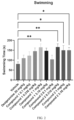
- Disclosed compounds induced antidepressant-like effects in the forced swim test (FST) in rats with a 23.5-h pre-treatment time ( FIG. 1 ). Specifically, the compounds reduced immobility time relative to vehicle control, indicative of an antidepressant-like effect. These effects on immobility were observed 23.5 hours after a single compound administration, a time point at which most or all of the drug has been cleared from the systemic circulation, suggesting that the compounds have both rapid-acting and long-lasting antidepressant-like effects. Additionally, the compounds induced significant increases in swimming behavior during the test ( FIG. 2 ). These effects on swimming were stronger than those induced by the control antidepressant desipramine.
- Test compounds, saline vehicle, and the positive control desipramine were administered subcutaneously (s.c.), with doses calculated based on the free base. Normal saline was used as the vehicle. All compounds were administered at a volume of 5 mL/kg. Test compounds and vehicle were administered 0.5 h after the start of the training swim (Swim 1) and 23.5 h before the test swim (Swim 2). Desipramine was administered 3 times, at 23.5 h, 5 h, and 1 h before the test swim (Swim 2), each time at a dose of 20 mg/kg.
- a compound administration time of 23.5 h before Swim 2 means 0.5 h after the start of Swim 1 and 0.25 h after the completion of Swim 1 (i.e., immediately after return to the home cage).
- animals performed the test swim (Swim 2) for a period of 5 min but otherwise under the same conditions as Swim 1. During all swim sessions, the water was changed between each animal.
- Behavioral scoring was conducted by observers who were blind to the treatment groups. Animals were continuously observed during Swim 2 and the total time spent engaging in the following behaviors was recorded: immobile, swimming, and climbing.
- a rat was judged to be immobile when it remained floating in the water without struggling and was making only those movements necessary to keep its head above water.
- a rat was judged to be swimming when it made active swimming motions, more than necessary to merely maintain its head above water (e.g., moving around in the cylinder).
- a rat was judged to be climbing when it made active movements with its forepaws in and out of the water, usually directed against the walls.
- FIG. 1 and FIG. 2 represent the mean ⁇ standard error of the mean (SEM). Analysis was performed using GraphPad Prism 9. Comparisons between groups were performed using the one-way analysis of variance (ANOVA), followed by Dunnett's test for comparisons to vehicle.
- mice plasma Table 10
- mouse brain homogenate Table 11
- the compounds were stable under the conditions of the experiment, suggesting that they are not subject to substantial plasma or brain metabolism.
- dialysis buffer phosphate buffered saline pH 7.4 - 0.1 M sodium phosphate and 0.15 M sodium chloride
- Compounds 3 and 4 are tested for stability in human, mouse, or rat liver microsomes, as described in Examples 3-5.
- Compound 4 exhibits moderate to high stability in human and mouse microsomes and is more stable than DMT in such preparations.
- Compounds 3 and 4 are tested to determine their pharmacokinetic properties and oral bioavailability in mice, as described in Example 6. Compound 4 exhibits moderate to high oral bioavailability.
- Additional disclosed compounds including Compounds 3 and 4, are tested to determine their stability in the presence of monoamine oxidases using liver mitochondria preparations, as described in Example 8. Compounds 3 and 4 exhibit moderate to high stability in such preparations.
- Additional disclosed compounds including Compounds 3 and 4, are tested to determine their ability to induce a head twitch response (HTR) in mice, as described in Example 10.
- HTR head twitch response
- Compounds 3 and 4 induce a head twitch response in mice in a dose-dependent manner, consistent with their agonist activity at the 5-HT2A receptor in vitro.
- Additional disclosed compounds including Compounds 3 and 4, are tested in the forced swim test (FST) in rats, as described in Example 11. Compounds 3 and 4 reduce immobility in this test in a dose-dependent manner, consistent with an antidepressant-like effect.
- FST forced swim test
- Additional disclosed compounds may be prepared by standard methods known to those skilled in the art of organic synthesis, for example, those presented in Examples 1-2 and described elsewhere herein.
- the present invention is further defined by the following items:
Landscapes
- Health & Medical Sciences (AREA)
- Chemical & Material Sciences (AREA)
- Medicinal Chemistry (AREA)
- Pharmacology & Pharmacy (AREA)
- Life Sciences & Earth Sciences (AREA)
- Animal Behavior & Ethology (AREA)
- General Health & Medical Sciences (AREA)
- Public Health (AREA)
- Veterinary Medicine (AREA)
- Organic Chemistry (AREA)
- Engineering & Computer Science (AREA)
- Bioinformatics & Cheminformatics (AREA)
- Neurology (AREA)
- Neurosurgery (AREA)
- Biomedical Technology (AREA)
- Chemical Kinetics & Catalysis (AREA)
- General Chemical & Material Sciences (AREA)
- Nuclear Medicine, Radiotherapy & Molecular Imaging (AREA)
- Psychiatry (AREA)
- Epidemiology (AREA)
- Pain & Pain Management (AREA)
- Addiction (AREA)
- Hospice & Palliative Care (AREA)
- Anesthesiology (AREA)
- Pharmaceuticals Containing Other Organic And Inorganic Compounds (AREA)
- Acyclic And Carbocyclic Compounds In Medicinal Compositions (AREA)
Applications Claiming Priority (3)
| Application Number | Priority Date | Filing Date | Title |
|---|---|---|---|
| US202062978075P | 2020-02-18 | 2020-02-18 | |
| EP21711684.7A EP4084791B1 (de) | 2020-02-18 | 2021-02-18 | Spezifische tryptamine zur behandlung von stimmungsstörungen |
| PCT/US2021/018534 WO2021168082A1 (en) | 2020-02-18 | 2021-02-18 | Specific tryptamines for use in the treatment of mood disorders |
Related Parent Applications (1)
| Application Number | Title | Priority Date | Filing Date |
|---|---|---|---|
| EP21711684.7A Division EP4084791B1 (de) | 2020-02-18 | 2021-02-18 | Spezifische tryptamine zur behandlung von stimmungsstörungen |
Publications (2)
| Publication Number | Publication Date |
|---|---|
| EP4501407A2 true EP4501407A2 (de) | 2025-02-05 |
| EP4501407A3 EP4501407A3 (de) | 2025-04-23 |
Family
ID=74871827
Family Applications (2)
| Application Number | Title | Priority Date | Filing Date |
|---|---|---|---|
| EP21711684.7A Active EP4084791B1 (de) | 2020-02-18 | 2021-02-18 | Spezifische tryptamine zur behandlung von stimmungsstörungen |
| EP24219503.0A Pending EP4501407A3 (de) | 2020-02-18 | 2021-02-18 | Spezifische tryptamine zur verwendung bei der behandlung von stimmungsstörungen |
Family Applications Before (1)
| Application Number | Title | Priority Date | Filing Date |
|---|---|---|---|
| EP21711684.7A Active EP4084791B1 (de) | 2020-02-18 | 2021-02-18 | Spezifische tryptamine zur behandlung von stimmungsstörungen |
Country Status (22)
| Country | Link |
|---|---|
| US (4) | US20220241243A1 (de) |
| EP (2) | EP4084791B1 (de) |
| JP (3) | JP7242969B2 (de) |
| KR (2) | KR102567903B1 (de) |
| CN (2) | CN117503759A (de) |
| AU (2) | AU2021224899B2 (de) |
| BR (1) | BR112022016382A2 (de) |
| CA (1) | CA3172046A1 (de) |
| DK (1) | DK4084791T3 (de) |
| ES (1) | ES3014741T3 (de) |
| FI (1) | FI4084791T3 (de) |
| HR (1) | HRP20250148T1 (de) |
| HU (1) | HUE070631T2 (de) |
| IL (2) | IL301235A (de) |
| LT (1) | LT4084791T (de) |
| MX (2) | MX2022010082A (de) |
| PL (1) | PL4084791T3 (de) |
| PT (1) | PT4084791T (de) |
| RS (1) | RS66496B1 (de) |
| SI (1) | SI4084791T1 (de) |
| SM (1) | SMT202500143T1 (de) |
| WO (1) | WO2021168082A1 (de) |
Families Citing this family (23)
| Publication number | Priority date | Publication date | Assignee | Title |
|---|---|---|---|---|
| EP3934633A4 (de) * | 2019-03-07 | 2023-03-29 | Arbormentis LLC | Zusammensetzungen und verwendungsverfahren mit substanzen mit neuralen plastizitätswirkungen, die in nicht-psychedelischen/psychotomimetischen dosierungen und formulierungen verabreicht werden |
| PL4084791T3 (pl) * | 2020-02-18 | 2025-04-22 | Gilgamesh Pharmaceuticals, Inc. | Specyficzne tryptaminy do zastosowania w leczeniu zaburzeń nastroju |
| EP4146198A4 (de) | 2020-05-08 | 2024-05-15 | Psilera Inc. | Neue stoffzusammensetzungen und pharmazeutische zusammensetzungen |
| CN115667217A (zh) | 2020-05-19 | 2023-01-31 | 赛本爱尔兰有限公司 | 氘化的色胺衍生物和使用方法 |
| EP4208445A4 (de) | 2020-09-01 | 2024-10-02 | Enveric Biosciences Canada Inc. | Halogenierte psilocybinderivate und verfahren zur verwendung |
| JP2024523822A (ja) * | 2021-06-02 | 2024-07-02 | セント ジョセフズ ユニバーシティー | フッ素化トリプタミン化合物、その類似体、及びそれを使用する方法 |
| EP4396162A4 (de) * | 2021-09-03 | 2025-11-12 | Alexander Shulgin Res Institute Inc | Asymmetrische allyltryptamine |
| EP4159201A1 (de) | 2021-09-30 | 2023-04-05 | Biomind Labs Inc | Verkapselte mikro- und nanopartikel von dimethyltriptaminen |
| EP4423062A4 (de) * | 2021-10-29 | 2025-08-27 | Psilera Inc | Modifizierte indolverbindungen |
| WO2023108174A1 (en) * | 2021-12-10 | 2023-06-15 | Terran Biosciences, Inc. | Analogs of 6-methoxy- n, n-dimethyltryptamine |
| EP4452937A4 (de) * | 2021-12-24 | 2025-12-03 | Psylo Pty Ltd | Verbindungen |
| WO2023147424A1 (en) * | 2022-01-27 | 2023-08-03 | Terran Biosciences, Inc. | Salts and solid forms of n-ethyl-2-(5-fluoro-1h-indol-3-yl)- n-methylethan-1-amine |
| US12060328B2 (en) | 2022-03-04 | 2024-08-13 | Reset Pharmaceuticals, Inc. | Co-crystals or salts of psilocybin and methods of treatment therewith |
| CN119255799A (zh) * | 2022-03-27 | 2025-01-03 | Gh研究爱尔兰有限公司 | 用于治疗双相情感障碍的5-meo-dtm |
| KR20250053871A (ko) * | 2022-08-31 | 2025-04-22 | 사이빈 아이알엘 리미티드 | 트립타민 화합물, 조성물, 및 사용 방법 |
| WO2024108195A1 (en) * | 2022-11-17 | 2024-05-23 | Remedi, Inc. | Combinations of monoamine oxidase inhibitors and serotonin receptor agonists and their therapeutic use |
| US12396981B2 (en) | 2023-03-09 | 2025-08-26 | William Shulman | Methods of using DMT |
| AU2024309903A1 (en) | 2023-06-28 | 2026-01-08 | Psylo Pty Ltd | Compounds |
| WO2025000051A1 (en) | 2023-06-28 | 2025-01-02 | Psylo Pty Ltd | Pyrrolopyridine compounds for the treatment of mental illnesses |
| US12129234B1 (en) * | 2023-08-03 | 2024-10-29 | Gilgamesh Pharmaceuticals, Inc. | Crystalline salts of N-ethyl-(5-fluoro-1H-indol-3-yl)-N-methylethan-1-amine |
| US12180158B1 (en) * | 2023-08-03 | 2024-12-31 | Gilgamesh Pharmaceuticals, Inc. | Crystalline fumarate salts of n-ethyl-2-(5-fluoro-1H-indol-3-yl)-n-methylethan-1-amine |
| WO2025052388A1 (en) * | 2023-09-07 | 2025-03-13 | Yissum Research Development Company Of The Hebrew University Of Jerusalem Ltd. | Psychedelic compounds, methods of their preparation and uses thereof |
| WO2025111597A1 (en) * | 2023-11-22 | 2025-05-30 | Gilgamesh Pharmaceuticals, Inc. | A treatment for patients with mood disorders using n-ethyl-2-(5-fluoro-1h-indol-3-yl)- n-methylethan-1-amine or a pharmaceutically acceptable salt thereof |
Family Cites Families (37)
| Publication number | Priority date | Publication date | Assignee | Title |
|---|---|---|---|---|
| GB853775A (en) | 1957-09-19 | 1960-11-09 | Parke Davis & Co | Pharmaceutical compositions and methods for producing phenylcyclohexane compounds |
| DE1668550A1 (de) | 1967-09-19 | 1971-07-22 | Parke Davis & Co | 2-Alkoxyalkylamino-2-phenylcyclohexanonverbindungen und ihre Saeure-Additionssalze und Verfahren zu ihrer Herstellung |
| CA1105938A (en) | 1976-06-03 | 1981-07-28 | Daniel Lednicer | 4-amino-4-arylcyclohexanone ketals |
| US4065573A (en) | 1976-06-03 | 1977-12-27 | The Upjohn Company | 4-Amino-4-phenylcyclohexanone ketal compositions and process of use |
| CA1100516A (en) | 1976-06-03 | 1981-05-05 | Daniel Lednicer | 4-amino-4-arylcyclohexanones and their ketals |
| ITRM20010356A1 (it) | 2001-06-21 | 2002-12-23 | Sigma Tau Ind Farmaceuti | "5-alogeno derivati della triptamina utili come ligandi del recettore5-ht6 e/o 5-ht7 della serotonina. |
| DE60309324T2 (de) | 2002-06-21 | 2007-05-10 | Suven Life Sciences Ltd. | Tetracyclische arylcarbonyl indole mit serotoninrezeptoraffinität als arzneimittel, verfahren zu ihrer herstellung und pharmazeutische zubereitungen |
| EP1523486B1 (de) | 2002-06-21 | 2007-11-07 | Suven Life Sciences Limited | Tetracyklische arylsulfonylindole mit affinität zum serotonin rezeptor |
| US7297711B2 (en) | 2002-06-21 | 2007-11-20 | Suven Life Sciences Limited | Arylalkyl indoles having serotonin receptor affinity useful as therapeutic agents, process for their preparation and pharmaceutical compositions containing them |
| DE10252667A1 (de) | 2002-11-11 | 2004-05-27 | Grünenthal GmbH | Spirocyclische Cyclohexan-Derivate |
| DE10252666A1 (de) | 2002-11-11 | 2004-08-05 | Grünenthal GmbH | N-Piperidyl-cyclohexan-Derivate |
| DE10360793A1 (de) | 2003-12-23 | 2005-07-28 | Grünenthal GmbH | Spirocyclische Cyclohexan-Derivate |
| JP2009504597A (ja) | 2005-08-10 | 2009-02-05 | バイエル・シエーリング・ファーマ アクチエンゲゼルシャフト | アシルトリプトファノール |
| EP1956016A1 (de) | 2006-12-15 | 2008-08-13 | Bayer Schering Pharma Aktiengesellschaft | Bizyklische Acyltryptophanole |
| WO2008071455A1 (en) | 2006-12-15 | 2008-06-19 | Bayer Schering Pharma Aktiengesellschaft | Bicyclic acyltryptophanols |
| CA2719739A1 (en) | 2008-03-27 | 2009-10-01 | Sven Frormann | Hydroxymethylcyclohexylamines |
| KR20110110297A (ko) | 2009-01-09 | 2011-10-06 | 프레지던트 앤드 펠로우즈 오브 하바드 칼리지 | 불소 함유 화합물 및 이의 사용방법 |
| AU2010251930A1 (en) * | 2009-05-27 | 2011-11-24 | Universite Libre De Bruxelles | 3-alkyl-5-fluoroindole derivatives as myeloperoxidase inhibitors |
| TWI582092B (zh) | 2010-07-28 | 2017-05-11 | 歌林達股份有限公司 | 順式-四氫-螺旋(環己烷-1,1’-吡啶[3,4-b]吲哚)-4-胺-衍生物 |
| CN104276993B (zh) | 2013-07-12 | 2019-03-15 | 广东东阳光药业有限公司 | 吲哚衍生物及其在药物上的应用 |
| US20180021326A1 (en) * | 2016-07-23 | 2018-01-25 | Paul Edward Stamets | Compositions and methods for enhancing neuroregeneration and cognition by combining mushroom extracts containing active ingredients psilocin or psilocybin with erinacines or hericenones enhanced with niacin |
| WO2018064465A1 (en) * | 2016-09-29 | 2018-04-05 | The Regents Of The University Of California | Compounds for increasing neural plasticity |
| US10933073B2 (en) * | 2017-02-09 | 2021-03-02 | Caamtech Llc | Compositions and methods comprising a psilocybin derivative |
| GB201808150D0 (en) | 2018-05-18 | 2018-07-11 | Small Pharma Ltd | Therapeutic compounds |
| GB201716942D0 (en) | 2017-10-16 | 2017-11-29 | Small Pharma Ltd | Therapeutic compounds |
| EP3713568A1 (de) * | 2017-10-26 | 2020-09-30 | Consejo Superior de Investigaciones Cientificas (CSIC) | Kombinationsprodukt zur behandlung von neurologischen und/oder psychiatrischen erkrankungen |
| EP3505509A1 (de) | 2017-12-29 | 2019-07-03 | Université de Liège | Verfahren zur herstellung von arylcycloalkylamin-derivaten |
| CN111936127A (zh) | 2018-02-15 | 2020-11-13 | 国立大学法人千叶大学 | 炎症性疾病或骨病的预防或治疗剂及医药组合物 |
| CN110343050B (zh) | 2018-04-04 | 2021-09-24 | 上海键合医药科技有限公司 | 芳香类化合物及其制备方法和用途 |
| KR102104953B1 (ko) | 2018-04-17 | 2020-04-27 | 삼육대학교 산학협력단 | 신규 케타민 유도체 및 이의 우울증의 예방 또는 치료 용도 |
| TW202026281A (zh) | 2018-12-12 | 2020-07-16 | 西班牙商艾斯提夫製藥股份有限公司 | 用於治療疼痛和疼痛相關病症之新吡咯啶–2– 甲酸衍生物 |
| EP3934633A4 (de) | 2019-03-07 | 2023-03-29 | Arbormentis LLC | Zusammensetzungen und verwendungsverfahren mit substanzen mit neuralen plastizitätswirkungen, die in nicht-psychedelischen/psychotomimetischen dosierungen und formulierungen verabreicht werden |
| CN115190815B (zh) | 2019-12-26 | 2024-06-18 | 吉尔伽美什制药公司 | 芳基环己基胺衍生物及其在精神障碍的治疗中的用途 |
| PL4084791T3 (pl) * | 2020-02-18 | 2025-04-22 | Gilgamesh Pharmaceuticals, Inc. | Specyficzne tryptaminy do zastosowania w leczeniu zaburzeń nastroju |
| EP4208445A4 (de) * | 2020-09-01 | 2024-10-02 | Enveric Biosciences Canada Inc. | Halogenierte psilocybinderivate und verfahren zur verwendung |
| CN112174851A (zh) | 2020-11-09 | 2021-01-05 | 广州万孚生物技术股份有限公司 | 一种氟胺酮半抗原、氟胺酮抗原及其制备方法和应用 |
| CN113234036B (zh) | 2021-05-12 | 2023-07-14 | 斯莱普泰(上海)生物医药科技有限公司 | Nmda受体拮抗剂及其用途 |
-
2021
- 2021-02-18 PL PL21711684.7T patent/PL4084791T3/pl unknown
- 2021-02-18 CA CA3172046A patent/CA3172046A1/en active Pending
- 2021-02-18 HR HRP20250148TT patent/HRP20250148T1/hr unknown
- 2021-02-18 EP EP21711684.7A patent/EP4084791B1/de active Active
- 2021-02-18 MX MX2022010082A patent/MX2022010082A/es unknown
- 2021-02-18 EP EP24219503.0A patent/EP4501407A3/de active Pending
- 2021-02-18 KR KR1020227028602A patent/KR102567903B1/ko active Active
- 2021-02-18 ES ES21711684T patent/ES3014741T3/es active Active
- 2021-02-18 FI FIEP21711684.7T patent/FI4084791T3/fi active
- 2021-02-18 AU AU2021224899A patent/AU2021224899B2/en active Active
- 2021-02-18 SM SM20250143T patent/SMT202500143T1/it unknown
- 2021-02-18 RS RS20250141A patent/RS66496B1/sr unknown
- 2021-02-18 SI SI202130280T patent/SI4084791T1/sl unknown
- 2021-02-18 JP JP2022549507A patent/JP7242969B2/ja active Active
- 2021-02-18 PT PT217116847T patent/PT4084791T/pt unknown
- 2021-02-18 KR KR1020237027449A patent/KR20230124103A/ko active Pending
- 2021-02-18 DK DK21711684.7T patent/DK4084791T3/da active
- 2021-02-18 HU HUE21711684A patent/HUE070631T2/hu unknown
- 2021-02-18 IL IL301235A patent/IL301235A/en unknown
- 2021-02-18 CN CN202311299060.3A patent/CN117503759A/zh active Pending
- 2021-02-18 BR BR112022016382A patent/BR112022016382A2/pt unknown
- 2021-02-18 CN CN202180015399.9A patent/CN115135320B/zh active Active
- 2021-02-18 WO PCT/US2021/018534 patent/WO2021168082A1/en not_active Ceased
- 2021-02-18 LT LTEPPCT/US2021/018534T patent/LT4084791T/lt unknown
- 2021-08-17 US US17/404,923 patent/US20220241243A1/en not_active Abandoned
- 2021-10-25 US US17/510,080 patent/US11440879B2/en active Active
-
2022
- 2022-08-10 IL IL295536A patent/IL295536B2/en unknown
- 2022-08-16 MX MX2024006123A patent/MX2024006123A/es unknown
-
2023
- 2023-03-07 JP JP2023034728A patent/JP7640600B2/ja active Active
-
2024
- 2024-05-31 US US18/680,473 patent/US20240317683A1/en not_active Abandoned
- 2024-06-28 US US18/758,102 patent/US20240351983A1/en active Pending
-
2025
- 2025-02-20 JP JP2025026050A patent/JP2025071254A/ja active Pending
- 2025-02-20 AU AU2025201184A patent/AU2025201184A1/en active Pending
Also Published As
Similar Documents
| Publication | Publication Date | Title |
|---|---|---|
| EP4084791B1 (de) | Spezifische tryptamine zur behandlung von stimmungsstörungen | |
| US20240390301A1 (en) | Combinations of peripheral 5-ht2a receptor antagonists and central 5-ht2a receptor agonists | |
| US20230322735A1 (en) | Azetidinyl tryptamines and methods of treating psychiatric disorders | |
| US12534425B2 (en) | Phenalkylamines and methods of treating mood disorders | |
| US20240246911A1 (en) | Novel tryptamines and methods of treating mood disorders | |
| HK40116486A (en) | Specific tryptamines for use in the treatment of mood disorders | |
| KR20260008838A (ko) | 기분 장애 치료에 사용되기 위한 특이적 트립타민 | |
| BR122025018058A2 (pt) | Composto de triptamina agonista do receptor 5ht2a, composição que compreende o mesmo, assim como seus usos para tratar uma doença do humor | |
| EP4635492A2 (de) | Tryptamine und verfahren zur behandlung von stimmungsstörungen |
Legal Events
| Date | Code | Title | Description |
|---|---|---|---|
| PUAI | Public reference made under article 153(3) epc to a published international application that has entered the european phase |
Free format text: ORIGINAL CODE: 0009012 |
|
| STAA | Information on the status of an ep patent application or granted ep patent |
Free format text: STATUS: THE APPLICATION HAS BEEN PUBLISHED |
|
| AC | Divisional application: reference to earlier application |
Ref document number: 4084791 Country of ref document: EP Kind code of ref document: P |
|
| AK | Designated contracting states |
Kind code of ref document: A2 Designated state(s): AL AT BE BG CH CY CZ DE DK EE ES FI FR GB GR HR HU IE IS IT LI LT LU LV MC MK MT NL NO PL PT RO RS SE SI SK SM TR |
|
| REG | Reference to a national code |
Ref country code: DE Ref legal event code: R079 Free format text: PREVIOUS MAIN CLASS: A61P0025300000 Ipc: A61K0031404500 |
|
| PUAL | Search report despatched |
Free format text: ORIGINAL CODE: 0009013 |
|
| AK | Designated contracting states |
Kind code of ref document: A3 Designated state(s): AL AT BE BG CH CY CZ DE DK EE ES FI FR GB GR HR HU IE IS IT LI LT LU LV MC MK MT NL NO PL PT RO RS SE SI SK SM TR |
|
| RIC1 | Information provided on ipc code assigned before grant |
Ipc: A61P 25/30 20060101ALI20250320BHEP Ipc: A61P 25/26 20060101ALI20250320BHEP Ipc: A61P 25/24 20060101ALI20250320BHEP Ipc: A61P 25/18 20060101ALI20250320BHEP Ipc: A61K 9/00 20060101ALI20250320BHEP Ipc: A61K 31/404 20060101ALI20250320BHEP Ipc: A61K 31/4045 20060101AFI20250320BHEP |
|
| REG | Reference to a national code |
Ref country code: HK Ref legal event code: DE Ref document number: 40116486 Country of ref document: HK |
|
| STAA | Information on the status of an ep patent application or granted ep patent |
Free format text: STATUS: REQUEST FOR EXAMINATION WAS MADE |