EP4484792A1 - Nouveau revêtement de surface pour courroie dentée comprenant des microsphères à base de silicone - Google Patents
Nouveau revêtement de surface pour courroie dentée comprenant des microsphères à base de silicone Download PDFInfo
- Publication number
- EP4484792A1 EP4484792A1 EP24182916.7A EP24182916A EP4484792A1 EP 4484792 A1 EP4484792 A1 EP 4484792A1 EP 24182916 A EP24182916 A EP 24182916A EP 4484792 A1 EP4484792 A1 EP 4484792A1
- Authority
- EP
- European Patent Office
- Prior art keywords
- elastomer
- rubber
- composite
- elastomer article
- base body
- Prior art date
- Legal status (The legal status is an assumption and is not a legal conclusion. Google has not performed a legal analysis and makes no representation as to the accuracy of the status listed.)
- Pending
Links
Images
Classifications
-
- F—MECHANICAL ENGINEERING; LIGHTING; HEATING; WEAPONS; BLASTING
- F16—ENGINEERING ELEMENTS AND UNITS; GENERAL MEASURES FOR PRODUCING AND MAINTAINING EFFECTIVE FUNCTIONING OF MACHINES OR INSTALLATIONS; THERMAL INSULATION IN GENERAL
- F16G—BELTS, CABLES, OR ROPES, PREDOMINANTLY USED FOR DRIVING PURPOSES; CHAINS; FITTINGS PREDOMINANTLY USED THEREFOR
- F16G1/00—Driving-belts
- F16G1/06—Driving-belts made of rubber
- F16G1/08—Driving-belts made of rubber with reinforcement bonded by the rubber
- F16G1/10—Driving-belts made of rubber with reinforcement bonded by the rubber with textile reinforcement
-
- B—PERFORMING OPERATIONS; TRANSPORTING
- B29—WORKING OF PLASTICS; WORKING OF SUBSTANCES IN A PLASTIC STATE IN GENERAL
- B29D—PRODUCING PARTICULAR ARTICLES FROM PLASTICS OR FROM SUBSTANCES IN A PLASTIC STATE
- B29D29/00—Producing belts or bands
- B29D29/08—Toothed driving belts
-
- B—PERFORMING OPERATIONS; TRANSPORTING
- B32—LAYERED PRODUCTS
- B32B—LAYERED PRODUCTS, i.e. PRODUCTS BUILT-UP OF STRATA OF FLAT OR NON-FLAT, e.g. CELLULAR OR HONEYCOMB, FORM
- B32B25/00—Layered products comprising a layer of natural or synthetic rubber
- B32B25/02—Layered products comprising a layer of natural or synthetic rubber with fibres or particles being present as additives in the layer
-
- B—PERFORMING OPERATIONS; TRANSPORTING
- B32—LAYERED PRODUCTS
- B32B—LAYERED PRODUCTS, i.e. PRODUCTS BUILT-UP OF STRATA OF FLAT OR NON-FLAT, e.g. CELLULAR OR HONEYCOMB, FORM
- B32B25/00—Layered products comprising a layer of natural or synthetic rubber
- B32B25/10—Layered products comprising a layer of natural or synthetic rubber next to a fibrous or filamentary layer
-
- B—PERFORMING OPERATIONS; TRANSPORTING
- B32—LAYERED PRODUCTS
- B32B—LAYERED PRODUCTS, i.e. PRODUCTS BUILT-UP OF STRATA OF FLAT OR NON-FLAT, e.g. CELLULAR OR HONEYCOMB, FORM
- B32B25/00—Layered products comprising a layer of natural or synthetic rubber
- B32B25/14—Layered products comprising a layer of natural or synthetic rubber comprising synthetic rubber copolymers
-
- B—PERFORMING OPERATIONS; TRANSPORTING
- B32—LAYERED PRODUCTS
- B32B—LAYERED PRODUCTS, i.e. PRODUCTS BUILT-UP OF STRATA OF FLAT OR NON-FLAT, e.g. CELLULAR OR HONEYCOMB, FORM
- B32B25/00—Layered products comprising a layer of natural or synthetic rubber
- B32B25/20—Layered products comprising a layer of natural or synthetic rubber comprising silicone rubber
-
- B—PERFORMING OPERATIONS; TRANSPORTING
- B32—LAYERED PRODUCTS
- B32B—LAYERED PRODUCTS, i.e. PRODUCTS BUILT-UP OF STRATA OF FLAT OR NON-FLAT, e.g. CELLULAR OR HONEYCOMB, FORM
- B32B5/00—Layered products characterised by the non- homogeneity or physical structure, i.e. comprising a fibrous, filamentary, particulate or foam layer; Layered products characterised by having a layer differing constitutionally or physically in different parts
- B32B5/02—Layered products characterised by the non- homogeneity or physical structure, i.e. comprising a fibrous, filamentary, particulate or foam layer; Layered products characterised by having a layer differing constitutionally or physically in different parts characterised by structural features of a fibrous or filamentary layer
- B32B5/024—Woven fabric
-
- B—PERFORMING OPERATIONS; TRANSPORTING
- B32—LAYERED PRODUCTS
- B32B—LAYERED PRODUCTS, i.e. PRODUCTS BUILT-UP OF STRATA OF FLAT OR NON-FLAT, e.g. CELLULAR OR HONEYCOMB, FORM
- B32B7/00—Layered products characterised by the relation between layers; Layered products characterised by the relative orientation of features between layers, or by the relative values of a measurable parameter between layers, i.e. products comprising layers having different physical, chemical or physicochemical properties; Layered products characterised by the interconnection of layers
- B32B7/04—Interconnection of layers
- B32B7/12—Interconnection of layers using interposed adhesives or interposed materials with bonding properties
-
- D—TEXTILES; PAPER
- D06—TREATMENT OF TEXTILES OR THE LIKE; LAUNDERING; FLEXIBLE MATERIALS NOT OTHERWISE PROVIDED FOR
- D06N—WALL, FLOOR, OR LIKE COVERING MATERIALS, e.g. LINOLEUM, OILCLOTH, ARTIFICIAL LEATHER, ROOFING FELT, CONSISTING OF A FIBROUS WEB COATED WITH A LAYER OF MACROMOLECULAR MATERIAL; FLEXIBLE SHEET MATERIAL NOT OTHERWISE PROVIDED FOR
- D06N3/00—Artificial leather, oilcloth or other material obtained by covering fibrous webs with macromolecular material, e.g. resins, rubber or derivatives thereof
- D06N3/04—Artificial leather, oilcloth or other material obtained by covering fibrous webs with macromolecular material, e.g. resins, rubber or derivatives thereof with macromolecular compounds obtained by reactions only involving carbon-to-carbon unsaturated bonds
- D06N3/10—Artificial leather, oilcloth or other material obtained by covering fibrous webs with macromolecular material, e.g. resins, rubber or derivatives thereof with macromolecular compounds obtained by reactions only involving carbon-to-carbon unsaturated bonds with styrene-butadiene copolymerisation products or other synthetic rubbers or elastomers except polyurethanes
-
- D—TEXTILES; PAPER
- D06—TREATMENT OF TEXTILES OR THE LIKE; LAUNDERING; FLEXIBLE MATERIALS NOT OTHERWISE PROVIDED FOR
- D06N—WALL, FLOOR, OR LIKE COVERING MATERIALS, e.g. LINOLEUM, OILCLOTH, ARTIFICIAL LEATHER, ROOFING FELT, CONSISTING OF A FIBROUS WEB COATED WITH A LAYER OF MACROMOLECULAR MATERIAL; FLEXIBLE SHEET MATERIAL NOT OTHERWISE PROVIDED FOR
- D06N3/00—Artificial leather, oilcloth or other material obtained by covering fibrous webs with macromolecular material, e.g. resins, rubber or derivatives thereof
- D06N3/12—Artificial leather, oilcloth or other material obtained by covering fibrous webs with macromolecular material, e.g. resins, rubber or derivatives thereof with macromolecular compounds obtained otherwise than by reactions only involving carbon-to-carbon unsaturated bonds, e.g. gelatine proteins
- D06N3/128—Artificial leather, oilcloth or other material obtained by covering fibrous webs with macromolecular material, e.g. resins, rubber or derivatives thereof with macromolecular compounds obtained otherwise than by reactions only involving carbon-to-carbon unsaturated bonds, e.g. gelatine proteins with silicon polymers
-
- F—MECHANICAL ENGINEERING; LIGHTING; HEATING; WEAPONS; BLASTING
- F16—ENGINEERING ELEMENTS AND UNITS; GENERAL MEASURES FOR PRODUCING AND MAINTAINING EFFECTIVE FUNCTIONING OF MACHINES OR INSTALLATIONS; THERMAL INSULATION IN GENERAL
- F16G—BELTS, CABLES, OR ROPES, PREDOMINANTLY USED FOR DRIVING PURPOSES; CHAINS; FITTINGS PREDOMINANTLY USED THEREFOR
- F16G5/00—V-belts, i.e. belts of tapered cross-section
- F16G5/04—V-belts, i.e. belts of tapered cross-section made of rubber
- F16G5/06—V-belts, i.e. belts of tapered cross-section made of rubber with reinforcement bonded by the rubber
- F16G5/08—V-belts, i.e. belts of tapered cross-section made of rubber with reinforcement bonded by the rubber with textile reinforcement
-
- B—PERFORMING OPERATIONS; TRANSPORTING
- B32—LAYERED PRODUCTS
- B32B—LAYERED PRODUCTS, i.e. PRODUCTS BUILT-UP OF STRATA OF FLAT OR NON-FLAT, e.g. CELLULAR OR HONEYCOMB, FORM
- B32B2307/00—Properties of the layers or laminate
- B32B2307/70—Other properties
- B32B2307/732—Dimensional properties
-
- B—PERFORMING OPERATIONS; TRANSPORTING
- B32—LAYERED PRODUCTS
- B32B—LAYERED PRODUCTS, i.e. PRODUCTS BUILT-UP OF STRATA OF FLAT OR NON-FLAT, e.g. CELLULAR OR HONEYCOMB, FORM
- B32B2307/00—Properties of the layers or laminate
- B32B2307/70—Other properties
- B32B2307/732—Dimensional properties
- B32B2307/737—Dimensions, e.g. volume or area
- B32B2307/7375—Linear, e.g. length, distance or width
- B32B2307/7376—Thickness
-
- B—PERFORMING OPERATIONS; TRANSPORTING
- B32—LAYERED PRODUCTS
- B32B—LAYERED PRODUCTS, i.e. PRODUCTS BUILT-UP OF STRATA OF FLAT OR NON-FLAT, e.g. CELLULAR OR HONEYCOMB, FORM
- B32B2433/00—Closed loop articles
- B32B2433/02—Conveyor belts
-
- C—CHEMISTRY; METALLURGY
- C08—ORGANIC MACROMOLECULAR COMPOUNDS; THEIR PREPARATION OR CHEMICAL WORKING-UP; COMPOSITIONS BASED THEREON
- C08G—MACROMOLECULAR COMPOUNDS OBTAINED OTHERWISE THAN BY REACTIONS ONLY INVOLVING UNSATURATED CARBON-TO-CARBON BONDS
- C08G77/00—Macromolecular compounds obtained by reactions forming a linkage containing silicon with or without sulfur, nitrogen, oxygen or carbon in the main chain of the macromolecule
- C08G77/80—Siloxanes having aromatic substituents, e.g. phenyl side groups
-
- C—CHEMISTRY; METALLURGY
- C08—ORGANIC MACROMOLECULAR COMPOUNDS; THEIR PREPARATION OR CHEMICAL WORKING-UP; COMPOSITIONS BASED THEREON
- C08L—COMPOSITIONS OF MACROMOLECULAR COMPOUNDS
- C08L83/00—Compositions of macromolecular compounds obtained by reactions forming in the main chain of the macromolecule a linkage containing silicon with or without sulfur, nitrogen, oxygen or carbon only; Compositions of derivatives of such polymers
- C08L83/04—Polysiloxanes
-
- D—TEXTILES; PAPER
- D06—TREATMENT OF TEXTILES OR THE LIKE; LAUNDERING; FLEXIBLE MATERIALS NOT OTHERWISE PROVIDED FOR
- D06N—WALL, FLOOR, OR LIKE COVERING MATERIALS, e.g. LINOLEUM, OILCLOTH, ARTIFICIAL LEATHER, ROOFING FELT, CONSISTING OF A FIBROUS WEB COATED WITH A LAYER OF MACROMOLECULAR MATERIAL; FLEXIBLE SHEET MATERIAL NOT OTHERWISE PROVIDED FOR
- D06N2205/00—Condition, form or state of the materials
- D06N2205/08—Microballoons, microcapsules
-
- D—TEXTILES; PAPER
- D06—TREATMENT OF TEXTILES OR THE LIKE; LAUNDERING; FLEXIBLE MATERIALS NOT OTHERWISE PROVIDED FOR
- D06N—WALL, FLOOR, OR LIKE COVERING MATERIALS, e.g. LINOLEUM, OILCLOTH, ARTIFICIAL LEATHER, ROOFING FELT, CONSISTING OF A FIBROUS WEB COATED WITH A LAYER OF MACROMOLECULAR MATERIAL; FLEXIBLE SHEET MATERIAL NOT OTHERWISE PROVIDED FOR
- D06N2211/00—Specially adapted uses
- D06N2211/04—Belts
Definitions
- the invention relates to elastomer articles, in particular drive belts, with a slippery surface, which are suitable for use in a wide variety of drive systems.
- the state of the art generally provides for a textile surface on the running side of drive belts, which is equipped with a fluoropolymer-containing, in particular PTFE-containing coating in order to generate the desired sliding friction.
- PTFE is polytetrafluoroethylene or Teflon.
- the object of the present invention is to overcome the disadvantages of the prior art described above.
- the object of the invention was to provide an elastomer article, in particular a drive belt, which has a more sustainable and safer surface layer on the power transmission zone than the coatings used in the prior art, such as PTFE-based coatings, and at the same time shows at least equivalent sliding friction. Furthermore, sufficient strength or friction resistance should be achieved.
- Processability-complicating properties of PTFE-based coatings such as undesirable adhesion to metals from which most molding devices are made, should be reduced or avoided.
- the invention thus relates to an elastomer article comprising an elastomer base body and a composite of an elastomer plate and a textile sheet, wherein the composite is arranged as a surface layer on one side of the base body so that the textile sheet faces the base body, and wherein the elastomer plate contains particles, preferably beads, of cross-linked polyorganosiloxane.
- the elastomer articles according to the invention are characterized by the fact that the particles used, preferably microspheres, made of cross-linked polyorganosiloxane are, in contrast to PTFE, not bioaccumulative and biopersistent. If PTFE is used as a functionalized surface for drive belts, wear and tear inevitably leads to contamination of the environment.
- the composite material used according to the invention is easily recyclable and the contamination of the environment is not bioaccumulative or biopersistent. In contrast, PTFE is usually burned, which creates toxic reaction products such as hydrofluoric acid.
- the abrasion resistance of the composite used as a surface layer is approximately equivalent or even better compared to textiles treated with PTFE.
- the sliding effect of the composite used as a surface layer according to the invention is also increased compared to textiles treated with PTFE and less material has to be used, which represents a further environmental and cost advantage.
- the necessary sliding friction or high sliding ability of drive belts is guaranteed according to the invention.
- the service life of drive belts according to the invention is increased compared to drive belts coated with PTFE.
- PFAS perfluorinated acids
- the composite used according to the invention can serve as a sustainable and safe replacement for surface layers made of textile fabrics equipped with fluorine-containing polymers according to the state of the art.
- the elastomer article according to the invention can be any conventional elastomer article.
- the elastomer article according to the invention is preferably a drive belt.
- the drive belt can be selected, for example, from a conveyor belt, a flat belt, a V-belt, a V-ribbed belt or a toothed belt.
- the drive belt is particularly preferably a toothed belt.
- the elastomer article according to the invention has an elastomer base body and a composite.
- the composite is formed from an elastomer plate and a textile sheet.
- the textile sheet of the composite can be any conventional textile sheet.
- the textile sheet is preferably a woven fabric, a warp-knitted fabric or a knitted fabric, with a woven fabric being particularly preferred.
- the textile fabric in particular the fabric, or the yarns or fibers from which the textile fabric is formed, can be made of polyamide (PA), polyester, natural fibers such as cotton, aramid, cellulose, polyurethane, polyetheretherketone (PEEK), polyimide (PI) or a combination thereof.
- the textile sheet in particular the fabric, is made of polyamide.
- the thickness of the textile sheet can, for example, be in the range of 0.5 to 2 mm, preferably 0.8 to 1.7 mm.
- the textile sheet bodies used in elastomer articles, in particular drive belts, are usually provided with a polymer finish or impregnation. According to the invention, it is preferred that the textile sheet body is not provided with a polymer finish, in particular not with a finish made of a fluorine-containing polymer.
- the elastomer plate of the composite is in particular formed from a vulcanized rubber compound.
- the rubber compound may comprise any suitable rubber or mixture of rubbers customary in the art.
- the rubber in the rubber compound for the elastomer plate is preferably selected from the group consisting of (partially) hydrogenated nitrile rubber (HNBR), nitrile rubber (NBR), ethylene-propylene rubber (EPM), ethylene-propylene-diene rubber (EPDM), natural rubber (NR), polychloroprene rubber (CR), butadiene rubber (BR), styrene-butadiene rubber (SBR), ethylene-vinyl acetate copolymer (EVA), polyurethane (PU) or mixtures thereof.
- HNBR hydrogenated nitrile rubber
- NBR nitrile rubber
- EPM ethylene-propylene rubber
- EPDM ethylene-propylene-diene rubber
- NR natural rubber
- CR polychloroprene rubber
- BR butadiene rubber
- SBR styrene-butadiene rubber
- EVA ethylene-vinyl acetate copolymer
- PU
- the rubber is preferably selected from (partially) hydrogenated nitrile rubber (HNBR), ethylene-propylene-diene rubber (EPDM), nitrile rubber (NBR) or a mixture thereof or a mixture of one of these rubbers with another rubber mentioned.
- HNBR hydrogenated nitrile rubber
- EPDM ethylene-propylene-diene rubber
- NBR nitrile rubber
- the rubber compound for the elastomer plate does not contain fluororubber (FKM).
- the elastomer plate or the rubber compound from which the elastomer plate is formed contains particles of cross-linked polyorganosiloxane.
- the cross-linked polyorganosiloxane is thus present as a solid in particle form.
- the particles of cross-linked polyorganosiloxane are preferably spherical particles or beads, particularly preferably microbeads. The average diameter of the particles or microbeads is therefore preferably in the micrometer range.
- the particles, preferably beads, of crosslinked polyorganosiloxane have an average diameter of 0.5 to 12 ⁇ m, preferably 1 to 10 ⁇ m, more preferably 1.5 to 5 ⁇ m.
- the mean diameter as used here refers to the number average and can be determined, for example, by means of a light transmission measurement in a dispersion (e.g. ultrasonic dispersion with isopropanol as a dispersant, sedimentation or centrifugal sedimentation).
- a suitable measuring device for this is, for example, the Horiba CAPA 700 particle size distribution analyzer.
- the proportion of particles, preferably beads, of cross-linked polyorganosiloxane in the elastomer plate or in the rubber compound for the elastomer plate is, for example, 5 to 60 phr, preferably 10 to 50 phr, more preferably 20 to 40 phr. Phr here means parts by weight per 100 parts by weight of rubber.
- the particles or beads are made of cross-linked polyorganosiloxane.
- Cross-linked polyorganosiloxane is also known as cross-linked silicone or silicone resin. Such cross-linked polyorganosiloxanes are state of the art.
- the crosslinked polyorganosiloxane contains organic groups which are bonded to the silicon atoms of the polyorganosiloxane.
- the organic groups are preferably phenyl groups and/or alkyl groups, with alkyl groups being preferred.
- the alkyl groups are preferably alkyl groups having 1 to 8 carbon atoms, preferably 1 or 2 carbon atoms. Ethyl groups and in particular methyl groups are particularly preferred.
- Crosslinked polyorganosiloxanes can be prepared by hydrolysis and condensation of hydrolyzable silanes which at least partially have an organic group bonded to the silicon atom. These processes are known to those skilled in the art.
- the hydrolysis and condensation can be catalyzed by a base or acid, with basic catalysis, eg with NH 3 or an alkali hydroxide such as NaOH, being preferred.
- a crosslinked polyorganosiloxane can be prepared by hydrolysis and condensation of at least one silane of the formula RSiXs and optionally one or more silanes selected from RsSiX, R 2 SiX 2 and SiX 4 , where R is independently an organic group and X is independently a hydrolyzable group.
- R is preferably phenyl or alkyl, preferably alkyl, in particular an alkyl having 1 to 8 carbon atoms or an alkyl having 1 to 6 carbon atoms, more preferably methyl or ethyl, with methyl being particularly preferred.
- X is preferably a halogen atom, preferably Cl, or an alkoxy group, preferably an alkoxy group having 1 to 4 carbon atoms, in particular methoxy or ethoxy.
- Preferred examples of silanes of the formula RSiX 3 are methyltrichlorosilane, methyltrimethoxysilane, methyltriethoxysilane, ethyltrichlorosilane, ethyltrimethoxysilane and ethyltriethoxysilane.
- silanol groups (-Si-OH). These silanol groups are reactive and condense with each other to form -Si-O-Si- bridges, so that condensates or cross-linked polyorganosiloxanes with the following structural units can be formed:
- a proportion of one or more silanes selected from R 3 SiX, R 2 SiX 2 and SiX 4 can be mixed in, whereby the degree of crosslinking of the polyorganosiloxane can be varied. In a preferred embodiment, however, only at least one silane of the formula RSiXs is used.
- the crosslinked polyorganosiloxane is preferably a silsesquioxane.
- Silsesquioxanes typically have RSiO 1.5 as structural units or molecular formula, where R is the organic group. Silsesquioxanes are generally made up of structural units as shown above.
- the organic group (R) of the silsesquioxane is preferably, independently of one another, phenyl or alkyl, preferably alkyl, in particular an alkyl having 1 to 8 carbon atoms or an alkyl having 1 to 6 carbon atoms, more preferably methyl or ethyl, with methyl being particularly preferred.
- the crosslinked polyorganosiloxane is particularly preferably a methylsilsesquioxane.
- Particles or beads made of cross-linked polyorganosiloxanes or silsesquioxanes are commercially available. Particularly suitable are, for example, the microbeads with the trade name Tospearls ® from Momentive, Germany, which are available in different sizes, such as Tospearls ® 120, which has an average particle diameter of about 2 ⁇ m and is particularly suitable.
- the elastomer plate or the rubber compound for the elastomer plate generally contains one or more additives, in particular usually at least one cross-linker or a cross-linker system consisting of cross-linking agent and accelerator.
- the cross-linker or the cross-linker system can contain, for example, at least one peroxide and/or at least one metal oxide.
- additives are fillers, processing aids, plasticizers, anti-aging agents and combinations thereof.
- Other additives that can be used as required are, for example, color pigments or resins. Reference is made to the general state of rubber compound technology.
- the elastomer plate of the composite has a thickness in the range of 0.1 to 1.0 mm, preferably 0.2 to 0.4 mm.
- An elastomer plate with a thickness of about 0.3 mm has proven to be very suitable.
- the rubber compound is obtained by compounding the particles, preferably beads, of cross-linked polyorganosiloxane and usually one or more additives into the rubber or mixture of rubbers.
- the rubber compound is then formed into an unvulcanized rubber sheet, usually by a calendering treatment.
- the composite is preformed by coating the textile sheet with the unvulcanized rubber sheet.
- the coating is preferably carried out by calendering a superimposed arrangement of the unvulcanized rubber sheet with the textile sheet, e.g. using the skim process.
- the coating is preferably supported by heating.
- the rubber sheet usually partially penetrates the textile sheet. The penetration depth of the rubber sheet into the textile sheet can be adjusted using the process parameters.
- This composite or pre-composite can be further processed for an elastomer article, in particular drive belts, and then preferably forms the Functional surface of the running side of the drive belt, e.g. the tooth or rib side.
- the invention In contrast to the finishing of the textile sheet by wet coating or impregnation with a liquid finishing agent, which is usually used in the prior art, the invention involves a so-called dry coating of the textile sheet with the rubber plate or the elastomer plate.
- an asymmetrical composite or pre-composite is usually formed, with the unvulcanized rubber sheet on one side (the coated side) and the textile sheet protruding on the other side (the uncoated side).
- the part of the textile sheet into which the rubber sheet has penetrated is located in the intermediate zone of the pre-composite.
- the unvulcanized rubber sheet is also vulcanized to form the elastomer sheet.
- the elastomer article further comprises an elastomer base body.
- the base body can also be referred to as an elastic base body.
- the elastomer article of the composite is formed in particular from a vulcanized rubber compound.
- the rubber compound can comprise any suitable rubber or any suitable mixture of rubbers customary in the field.
- the rubber in the rubber compound for the elastomeric base body is preferably selected from the group consisting of (partially) hydrogenated nitrile rubber (HNBR), nitrile rubber (NBR), ethylene-propylene rubber (EPM), ethylene-propylene-diene rubber (EPDM), natural rubber (NR), polychloroprene rubber (CR), butadiene rubber (BR), ethylene-vinyl acetate copolymer (EVA), polyurethane (PU), styrene-butadiene rubber (SBR), fluororubber (FKM) or mixtures thereof.
- the rubber is preferably selected from HNBR, NBR, EPDM or a mixture thereof or a mixture of one of these rubbers with another rubber mentioned.
- the elastomeric base body or the rubber compound for the elastomeric base body contains, in addition to the rubber or the mixture of rubbers, usually one or more additives, in particular usually at least a crosslinker or a crosslinker system consisting of a crosslinking agent and an accelerator.
- the crosslinker or the crosslinker system can contain, for example, at least one peroxide and/or at least one metal oxide.
- additives are fillers, processing aids, plasticizers, anti-aging agents and combinations thereof.
- Other additives that can be used as required are, for example, color pigments or resins. Reference is made to the general state of rubber compound technology.
- the rubber compound for the elastomer base body is usually obtained by compounding one or more additives into the rubber or the mixture of rubbers.
- the rubber compound is then formed into an unvulcanized rubber sheet, usually by calendering.
- the elastomer base body is formed during the subsequent vulcanization of the unvulcanized rubber sheet.
- the composite of elastomer plate and textile sheet is arranged as a surface layer on one side of the elastomer base body, so that the textile sheet faces the base body.
- the composite thus forms the surface layer on one side of the elastomer base body.
- the side of the elastomer base body on which the composite is arranged is particularly preferably a power transmission zone of the elastomer article, preferably the power transmission zone of a drive belt.
- the power transmission zone of a drive belt is also referred to as the running side.
- the elastomer base body has a profiled surface on one side, e.g. in the form of teeth on a toothed belt.
- the elastomer base body then forms the substructure with the profiled surface and the belt back.
- the profiled surface of the elastomer base body forms the force transmission zone to which the composite is applied as a surface layer.
- the composite can be directly bonded to the elastomer base body.
- the bonding takes place during the shaping and vulcanization of the arrangement, which may be carried out, which consists of the rubber plate for the elastomer base body and the pre-composite or composite of the rubber plate for the elastomer plate and the textile If necessary, the textile surface can be provided with an adhesion promoter on the side of the composite that faces the elastomer base body for better bonding.
- the elastomer article comprises at least one intermediate layer, in particular at least one adhesive layer, between the elastomer base body and the composite.
- the intermediate layer in particular adhesive layer, serves to better bond the composite to the elastomer base body.
- the at least one intermediate layer, preferably adhesive layer can have a thickness in the range of 0.05 to 1.0 mm, preferably 0.3 to 0.5 mm, for example.
- the adhesive layer can be formed, for example, from the adhesives commonly used in the field, such as adhesive cements or rubber solutions or sheets made from an adhesive cement or rubber mixture.
- the textile sheet is usually provided with the adhesive on the side of the composite that faces the elastomer base body before the arrangement is formed.
- the adhesive can also be applied to the side of the rubber plate for the elastomer base body that faces the composite.
- the elastomer article according to the invention can have further components, e.g. a textile coating on the side of the elastomer base body which is opposite the side with the composite as a surface layer.
- the elastomer article according to the invention further comprises a strength carrier which is embedded in the elastomer base body. This is preferred, for example, for drive belts such as toothed belts.
- the reinforcement can be made from one or more tensile cords. Several tensile cords arranged next to each other can form a reinforcement layer.
- the reinforcement in the base body can be made from one reinforcement layer or several reinforcement layers.
- the tensile cord, particularly in the form of cords, can be made from polyamide (PA), aramid, polyester, glass (e.g. E- or K-glass), carbon, polyetheretherketone (PEEK) or polyethylene-2,6-naphthalate (PEN) or combinations thereof (hybrid cord).
- PA polyamide
- aramid aramid
- polyester e.g. E- or K-glass
- carbon e.g. E- or K-glass
- PEEK polyetheretherketone
- PEN polyethylene-2,6-naphthalate
- the embedded tension cords or the embedded tension cord layer usually run in the longitudinal direction of the belt, wherein the tension cords are preferably in cord construction.
- the elastomer article according to the invention is obtainable by a process according to the invention as described below.
- the first unvulcanized rubber sheet for the elastomer sheet which contains particles, preferably beads, of cross-linked polyorganosiloxane, is formed from a rubber compound obtained by compounding the particles, preferably beads, of cross-linked polyorganosiloxane and usually one or more additives into the rubber or mixture of rubbers.
- the rubber compound is then formed into the first unvulcanized rubber sheet, usually by a calendering treatment.
- the components of the rubber compound for the elastomer sheet have been described above.
- the first unvulcanized rubber sheet containing the particles, preferably beads, of cross-linked polyorganosiloxane is used to coat a textile
- the rubber plate or its material partially penetrates or is pressed into the textile sheet in order to form the composite or pre-composite of the rubber plate and the textile sheet.
- the coating which can also be referred to as a dry coating or solid coating, is preferably carried out by calendering.
- the first unvulcanized rubber plate and the textile sheet are arranged one above the other and subjected to a calendering treatment.
- a calendering treatment is also referred to as a skim process and is known to those skilled in the art.
- the calenders used for the calendering treatment are also referred to as coating calenders or laminating calenders.
- a second unvulcanized rubber plate for the elastomeric base body can be formed from a corresponding rubber compound for the elastomeric base body as already described above.
- the textile surface on the side of the composite facing the elastomer base body can be provided with an adhesion promoter for better bonding.
- an adhesive such as an adhesive cement or a rubber solution or a sheet of an adhesive cement or a rubber mixture, is applied to the textile sheet on the side of the composite facing the second rubber plate and/or on the side of the second rubber plate facing the composite, which forms an adhesive layer between the composite and the elastomer base body in the elastomer article.
- an adhesive such as an adhesive cement or a rubber solution or a sheet of an adhesive cement or a rubber mixture
- the elastomer article according to the invention comprises a reinforcement which is in the elastomeric base body
- one or more tension cords can be arranged in the arrangement between the composite and the second rubber plate.
- the tension cord(s) are preferably used in the form of cords.
- the arrangement can optionally be provided with a further textile sheet on the side of the second unvulcanized rubber plate which is opposite the composite, which then forms a textile overlay on the elastomer base body of the finished elastomer article which is opposite the side with the composite as a surface layer.
- the arrangement is preferably subjected to shaping according to the optional step c), in particular if the elastomer article is to be provided with a profiled surface, such as a tooth-shaped surface.
- a profiled surface such as a tooth-shaped surface.
- the arrangement is introduced into a mold, e.g. a metal mold, which has a profiled inner side.
- the mold can be in the form of a drum or metal drum, for example.
- the arrangement is preferably introduced into the mold in such a way that the composite faces the profiled inner side of the mold.
- the mold is then pressurized and optionally heated so that the arrangement is pressed into the profiled side of the mold to form the profiled side of the elastomer body.
- the assembly or the molded assembly is then vulcanized according to step d) to form the elastomer body, in particular the elastomer body according to the invention.
- the elastomer body obtained is preferably a drive belt.
- the invention further relates to the use of a composite of an elastomer plate containing particles, preferably beads, of cross-linked polyorganosiloxane and a textile sheet, as a surface layer on the power transmission zone of elastomer bodies, in particular drive belts.
- the elastomer article comprises, in addition to the composite of elastomer plate and textile sheet, an elastomer base body, wherein the composite is arranged as a surface layer on one side of the base body, so that the textile sheet faces the base body.
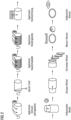
- another fabric can then be placed on the rubber plate, which can form a back fabric of the belt (textile overlay). It is also possible to provide the formed arrangement (blank) with a marking. The two ends of the arrangement are connected to form a wrap.
- the formed roll is placed in a mold, with the composite facing the inside of the mold.
- the mold represents a vulcanization chamber that has a profiled surface on the inside. The profile of the surface corresponds to the teeth of the timing belt to be produced.
- the vulcanization chamber is closed.
- the roll is pressed against the profiled surface of the mold and vulcanized using heat and pressure treatment. After vulcanization, the roll is removed from the mold, pulled off the drum and cut into the finished timing belt.
- the timing belts produced can then usually be subjected to various quality control procedures.
- Rubber compounds were prepared according to the composition shown in Table 1 below. The amounts given in the table are in phr (parts by weight per 100 parts by weight of rubber).
- the cross-linked polyorganosiloxane microspheres are Tospearls ® 120, a commercial product of Momentive. These are cross-linked polyorganosiloxane microspheres with an average particle diameter of about 2 ⁇ m.
- the cross-linked polyorganosiloxane is specifically a methylsilsesquioxane.
- Example 1 Example 2
- Example 3 hydrogenated nitrile rubber (HNBR) 100 100 100 soot N220 10
- DPGDA Dipropylene glycol diacrylate (activator/crosslinker) 25 25 25 microspheres made of cross-linked polyorganosiloxane 20 40 60 soot N550 25 25 25 25 stearic acid 1 1 1 zinc oxide 5 5 5 anti-aging agent 1 2 2 2 anti-aging agent 2 2 2 2 peroxide compound (crosslinker) 10 10 10
- HNBR hydrogenated nitrile rubber
- DPGDA Dipropylene glycol diacrylate
- a rubber sheet with a thickness of 0.3 mm was produced by calendering from the rubber mixture according to Example 1.
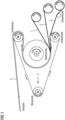
- a fabric made of a polyamide yarn with a basis weight of about 700 g/m 2 was produced according to the Figure 1 described process coated on one side with the rubber sheet and on the other side with an adhesive to form a composite.
- a timing belt was produced according to the Figure 2 described process so that the timing belt was provided with the composite on the tooth side.
- a fabric made of a polyamide yarn with a basis weight of approximately 700 g/m 2 was provided with a PTFE-containing coating on one side and an adhesive on the other side according to the state of the art.
- the fabric with PTFE finish produced was then used to manufacture a toothed belt, the production being the same as described in Example 4, except that the fabric with PTFE finish was used instead of the composite according to Example 4.
- the PTFE coating is on the outside of the tooth side.
- the timing belts manufactured in Example 4 and Comparative Example 1 were subjected to a running time test in a belt drive test bench with a heat chamber at 140 °C and a load of 2700 N.
- the running time in the dynamic load test for the belt according to the invention is thus even higher than the level of the sample belt with PTFE as a lubricant.
- the physical static tests from the test laboratory show at least equivalent strengths.
Landscapes
- Engineering & Computer Science (AREA)
- Textile Engineering (AREA)
- General Engineering & Computer Science (AREA)
- Mechanical Engineering (AREA)
- Chemical & Material Sciences (AREA)
- Chemical Kinetics & Catalysis (AREA)
- Dispersion Chemistry (AREA)
- Laminated Bodies (AREA)
Applications Claiming Priority (1)
| Application Number | Priority Date | Filing Date | Title |
|---|---|---|---|
| DE102023205975.4A DE102023205975A1 (de) | 2023-06-26 | 2023-06-26 | Neuartige Oberflächenbeschichtung für Zahnriemen mit Mikrokügelchen auf Silikonbasis |
Publications (1)
| Publication Number | Publication Date |
|---|---|
| EP4484792A1 true EP4484792A1 (fr) | 2025-01-01 |
Family
ID=91585681
Family Applications (1)
| Application Number | Title | Priority Date | Filing Date |
|---|---|---|---|
| EP24182916.7A Pending EP4484792A1 (fr) | 2023-06-26 | 2024-06-18 | Nouveau revêtement de surface pour courroie dentée comprenant des microsphères à base de silicone |
Country Status (2)
| Country | Link |
|---|---|
| EP (1) | EP4484792A1 (fr) |
| DE (1) | DE102023205975A1 (fr) |
Citations (6)
| Publication number | Priority date | Publication date | Assignee | Title |
|---|---|---|---|---|
| GB2049485A (en) * | 1979-04-17 | 1980-12-31 | Dow Corning Ltd | Protective mat |
| EP0517883B1 (fr) * | 1990-12-27 | 1996-09-25 | The Gates Rubber Company | Courroie en polyurethane resistante aux temperatures elevees |
| JP2013113343A (ja) * | 2011-11-25 | 2013-06-10 | Mitsuboshi Belting Ltd | 摩擦伝動ベルト及びその製造方法 |
| US9568070B2 (en) * | 2012-10-08 | 2017-02-14 | Hutchinson | Power transmission belt with thermoplastic film containing a silicone elastomer |
| WO2017110790A1 (fr) * | 2015-12-22 | 2017-06-29 | 三ツ星ベルト株式会社 | Courroie de transmission à frottement et son procédé de fabrication |
| EP3094580B1 (fr) * | 2014-01-16 | 2021-03-10 | Forbo Siegling Gmbh | Bande transporteuse et dispositif de transport équipé de ladite bande transporteuse |
-
2023
- 2023-06-26 DE DE102023205975.4A patent/DE102023205975A1/de active Pending
-
2024
- 2024-06-18 EP EP24182916.7A patent/EP4484792A1/fr active Pending
Patent Citations (6)
| Publication number | Priority date | Publication date | Assignee | Title |
|---|---|---|---|---|
| GB2049485A (en) * | 1979-04-17 | 1980-12-31 | Dow Corning Ltd | Protective mat |
| EP0517883B1 (fr) * | 1990-12-27 | 1996-09-25 | The Gates Rubber Company | Courroie en polyurethane resistante aux temperatures elevees |
| JP2013113343A (ja) * | 2011-11-25 | 2013-06-10 | Mitsuboshi Belting Ltd | 摩擦伝動ベルト及びその製造方法 |
| US9568070B2 (en) * | 2012-10-08 | 2017-02-14 | Hutchinson | Power transmission belt with thermoplastic film containing a silicone elastomer |
| EP3094580B1 (fr) * | 2014-01-16 | 2021-03-10 | Forbo Siegling Gmbh | Bande transporteuse et dispositif de transport équipé de ladite bande transporteuse |
| WO2017110790A1 (fr) * | 2015-12-22 | 2017-06-29 | 三ツ星ベルト株式会社 | Courroie de transmission à frottement et son procédé de fabrication |
Also Published As
| Publication number | Publication date |
|---|---|
| DE102023205975A1 (de) | 2025-01-02 |
Similar Documents
| Publication | Publication Date | Title |
|---|---|---|
| DE102008055497B4 (de) | Elastischer Artikel, insbesondere Antriebsriemen, mit einer Textilauflage und einem Haftvermittler aus schmelzbarem Kunststoff | |
| EP2567122B1 (fr) | Courroie de transfert de force, notamment courroie crantée | |
| DE112007002633B4 (de) | Treibriemen und Verfahren zur Herstellung desselben | |
| DE69020509T2 (de) | Mit selbstklebender Polysiloxankautschukzusammensetzung beschichtete Gewebe. | |
| DE102008037561B4 (de) | Artikel, insbesondere Antriebsriemen, mit einer Textilauflage und Verfahren zur Herstellung eines Antriebsriemens | |
| EP2994300B1 (fr) | Procédé de fabrication d'une courroie pourvue de tirants préparés présentant une couche de revêtement | |
| FR2532245A1 (fr) | Courroie constituee d'un caoutchouc polymere et renforcee par des fibres | |
| DE102014217309A1 (de) | Riemen für die Antriebstechnik, insbesondere riemenartiges Zugelement für die Aufzugstechnik, mit brandhemmenden Eigenschaften | |
| EP4013977A1 (fr) | Courroie dentée destinée à être utilisée tout en étant entourée d'huile | |
| US5254050A (en) | Power transmission belt | |
| DE102023205975A1 (de) | Neuartige Oberflächenbeschichtung für Zahnriemen mit Mikrokügelchen auf Silikonbasis | |
| EP3194306B1 (fr) | Composition de caoutchouc écologique | |
| DE102013104764A1 (de) | Verfahren zur Fertigung eines PU-Riemens mit Zugträgern | |
| EP2664645A1 (fr) | Article élastique, en particulier courroie d'entraînement, avec un revêtement | |
| EP3947547A1 (fr) | Compositions de caoutchouc comprenant des polyorganosiloxanes en tant que plastifiants | |
| EP2594414B1 (fr) | Support de fixation à gomme | |
| EP2405155B1 (fr) | Courroie de transmission de puissance, notamment courroie dentée | |
| KR101651227B1 (ko) | 산화제 처리에 의한 uhmwpe 섬유의 표면개질방법 | |
| DE2934203B2 (de) | Verfahren zur Herstellung von Beschichtungen aus einem vulkanisierten Siliconkautschuk auf einem Träger | |
| EP2702093B1 (fr) | Article élastique, en particulier courroie d'entraînement, comportant un revêtement en forme de non-tissé en matière synthétique fusible | |
| EP3784922B1 (fr) | Article revêtu d'une couche textile traitée avec du polyéthylène partiellement oxydé | |
| Al-Maamori et al. | Effect of TiO2 percent on transmission properties for (X-ray) of rubber compound (SBR) | |
| DE102019132294A1 (de) | Flammwidrige Polymerzusammensetzung | |
| DE102022124485A1 (de) | Dichtungskautschukzusammensetzung und Dichtungselement | |
| DE102022210531A1 (de) | Brandhemmendes aufzugstragmittel mit antistatischen eigenschaften |
Legal Events
| Date | Code | Title | Description |
|---|---|---|---|
| PUAI | Public reference made under article 153(3) epc to a published international application that has entered the european phase |
Free format text: ORIGINAL CODE: 0009012 |
|
| STAA | Information on the status of an ep patent application or granted ep patent |
Free format text: STATUS: THE APPLICATION HAS BEEN PUBLISHED |
|
| AK | Designated contracting states |
Kind code of ref document: A1 Designated state(s): AL AT BE BG CH CY CZ DE DK EE ES FI FR GB GR HR HU IE IS IT LI LT LU LV MC ME MK MT NL NO PL PT RO RS SE SI SK SM TR |
|
| STAA | Information on the status of an ep patent application or granted ep patent |
Free format text: STATUS: REQUEST FOR EXAMINATION WAS MADE |
|
| 17P | Request for examination filed |
Effective date: 20250701 |
|
| GRAP | Despatch of communication of intention to grant a patent |
Free format text: ORIGINAL CODE: EPIDOSNIGR1 |
|
| STAA | Information on the status of an ep patent application or granted ep patent |
Free format text: STATUS: GRANT OF PATENT IS INTENDED |
|
| INTG | Intention to grant announced |
Effective date: 20260122 |
|
| GRAS | Grant fee paid |
Free format text: ORIGINAL CODE: EPIDOSNIGR3 |
|
| GRAA | (expected) grant |
Free format text: ORIGINAL CODE: 0009210 |
|
| STAA | Information on the status of an ep patent application or granted ep patent |
Free format text: STATUS: THE PATENT HAS BEEN GRANTED |