EP4480322A2 - Mit polyhalit angereichertes tierfutter - Google Patents
Mit polyhalit angereichertes tierfutter Download PDFInfo
- Publication number
- EP4480322A2 EP4480322A2 EP24204423.8A EP24204423A EP4480322A2 EP 4480322 A2 EP4480322 A2 EP 4480322A2 EP 24204423 A EP24204423 A EP 24204423A EP 4480322 A2 EP4480322 A2 EP 4480322A2
- Authority
- EP
- European Patent Office
- Prior art keywords
- polyhalite
- feed
- fish
- chicks
- diet
- Prior art date
- Legal status (The legal status is an assumption and is not a legal conclusion. Google has not performed a legal analysis and makes no representation as to the accuracy of the status listed.)
- Granted
Links
Images





Classifications
-
- A—HUMAN NECESSITIES
- A23—FOODS OR FOODSTUFFS; TREATMENT THEREOF, NOT COVERED BY OTHER CLASSES
- A23K—FODDER
- A23K20/00—Accessory food factors for animal feeding-stuffs
- A23K20/20—Inorganic substances, e.g. oligoelements
- A23K20/22—Compounds of alkali metals
-
- A—HUMAN NECESSITIES
- A23—FOODS OR FOODSTUFFS; TREATMENT THEREOF, NOT COVERED BY OTHER CLASSES
- A23K—FODDER
- A23K20/00—Accessory food factors for animal feeding-stuffs
- A23K20/10—Organic substances
- A23K20/142—Amino acids; Derivatives thereof
- A23K20/147—Polymeric derivatives, e.g. peptides or proteins
-
- A—HUMAN NECESSITIES
- A23—FOODS OR FOODSTUFFS; TREATMENT THEREOF, NOT COVERED BY OTHER CLASSES
- A23K—FODDER
- A23K20/00—Accessory food factors for animal feeding-stuffs
- A23K20/10—Organic substances
- A23K20/158—Fatty acids; Fats; Products containing oils or fats
-
- A—HUMAN NECESSITIES
- A23—FOODS OR FOODSTUFFS; TREATMENT THEREOF, NOT COVERED BY OTHER CLASSES
- A23K—FODDER
- A23K20/00—Accessory food factors for animal feeding-stuffs
- A23K20/10—Organic substances
- A23K20/163—Sugars; Polysaccharides
-
- A—HUMAN NECESSITIES
- A23—FOODS OR FOODSTUFFS; TREATMENT THEREOF, NOT COVERED BY OTHER CLASSES
- A23K—FODDER
- A23K20/00—Accessory food factors for animal feeding-stuffs
- A23K20/20—Inorganic substances, e.g. oligoelements
- A23K20/24—Compounds of alkaline earth metals, e.g. magnesium
-
- A—HUMAN NECESSITIES
- A23—FOODS OR FOODSTUFFS; TREATMENT THEREOF, NOT COVERED BY OTHER CLASSES
- A23K—FODDER
- A23K20/00—Accessory food factors for animal feeding-stuffs
- A23K20/20—Inorganic substances, e.g. oligoelements
- A23K20/26—Compounds containing phosphorus
-
- A—HUMAN NECESSITIES
- A23—FOODS OR FOODSTUFFS; TREATMENT THEREOF, NOT COVERED BY OTHER CLASSES
- A23K—FODDER
- A23K50/00—Feeding-stuffs specially adapted for particular animals
- A23K50/10—Feeding-stuffs specially adapted for particular animals for ruminants
-
- A—HUMAN NECESSITIES
- A23—FOODS OR FOODSTUFFS; TREATMENT THEREOF, NOT COVERED BY OTHER CLASSES
- A23K—FODDER
- A23K50/00—Feeding-stuffs specially adapted for particular animals
- A23K50/70—Feeding-stuffs specially adapted for particular animals for birds
- A23K50/75—Feeding-stuffs specially adapted for particular animals for birds for poultry
-
- A—HUMAN NECESSITIES
- A23—FOODS OR FOODSTUFFS; TREATMENT THEREOF, NOT COVERED BY OTHER CLASSES
- A23K—FODDER
- A23K50/00—Feeding-stuffs specially adapted for particular animals
- A23K50/80—Feeding-stuffs specially adapted for particular animals for aquatic animals, e.g. fish, crustaceans or molluscs
-
- A—HUMAN NECESSITIES
- A23—FOODS OR FOODSTUFFS; TREATMENT THEREOF, NOT COVERED BY OTHER CLASSES
- A23V—INDEXING SCHEME RELATING TO FOODS, FOODSTUFFS OR NON-ALCOHOLIC BEVERAGES AND LACTIC OR PROPIONIC ACID BACTERIA USED IN FOODSTUFFS OR FOOD PREPARATION
- A23V2002/00—Food compositions, function of food ingredients or processes for food or foodstuffs
Definitions
- the present invention relates to an animal feed composition that comprises Polyhalite and a process for the preparation thereof.
- feed efficiency is a major variable that determines the final cost of a kilogram of poultry meat.
- proportion of feed in the broiler's farming running costs ranges from 40 to 70% of the total cost of production.
- the Feed Conversion Ratio (FCR) which varies depending on the type of production applied, is always a very helpful benchmark to determine the profitability of a farm.
- FCR Feed Conversion Ratio
- Aaquaculture is the fastest growing sector in agriculture with an annual growth rate of close to 10%. This is due to the fact that world fisheries have reached a plateau while the demand for fish is growing. Tilapia fish are rapidly growing sector of aquaculture with the current world production reaching 4.5 million tons per year. For comparison - the Salmon annual production reaches only 1.4 million tons.
- fish feed In a typical aquaculture farm, fish feed represents about 50-60% of the total direct production expenses. Since the cost of feed is the major expense in the fish production unit, any change that will lead to more efficient utilization of the feed will have a substantial impact on the profitability of these production systems in addition to the beneficial environmental effects.
- Fish utilize protein for energy purposes and therefore compared to terrestrial animal feeds, fish feeds are rich in proteins, often amounting to 40-50% of the feed.
- the source of protein is fishmeal that is becoming a rare and expensive commodity.
- the nitrogenous products (ammonia, nitrite and nitrate) and phosphorous stemming from either leftover food, or partially digested protein and food are harmful to the fish themselves, can lead to growth retardation and at high levels cause mortality.
- a reduction in the amount of food wastage produced by the fish and especially those harmful to the environment will enable substantial saving on production of fish at high densities; concomitantly the effluents of the fish farms will not have an adverse impact on the environment.
- an animal feed composition comprising Polyhalite in a concentration between 0.5%-5% w/w.
- the animal may be selected from the group including, poultry, bovine, and fish.
- the Polyhalite is in a concentration between 0.75%-2% w/w.
- the composition may be fed to poultry and includes Polyhalite in a concentration of 0.75% w/w.
- the composition is fed to poultry and includes Polyhalite in a concentration of 2% w/w.
- the composition may be fed to said animal on a daily basis.
- an animal feed enriched with Polyhalite enriched with Polyhalite.
- Polyhalite is an evaporite mineral, a hydrated Sulfate of Potassium, Calcium and Magnesium with formula: K 2 Ca 2 Mg(SO 4 ) 4 ⁇ 2H 2 O.
- the addition of Polyhalite to the animal diets may provide a positive effect on the growth of the animals and/or on feed utilization.
- Polyhalite may be added to animal feed to be used as a growth enhancer for farm animals since Potassium and Sulphur are known to take part in the metabolism of the animals and Potassium is the third mineral in order of importance following Phosphorus and Calcium.
- animal as used herein may refer to any member of the kingdom Animalia, including for example, domesticated livestock and animal husbandry, such as, Chickens, cattle, sheep, pigs; marine (oceanic) or freshwater fish and the like.
- an animal feed composition comprising Polyhalite in a concentration between 0.5%-5% w/w, preferably, between 0.75%-2% w/w.
- the composition may be fed to said animal on a daily basis.
- a method for producing an animal feed comprising polyhalite comprising mixing polyhalite, e.g., in a pellet, granule, powder or dust form, with a feed, e.g., a fodder and/or forage.
- a general process for the manufacture of animal feed may include the steps of: Grinding of raw materials, mixing, pelltizing, cooling, crumbling, quality inspection, weighing and packaging and storage.
- polyhalite is preferably added at one or more of the following steps: grinding, mixing, pelletizing and/or crumbling.
- the polyhalite may be coated with one or more layers to enable discharge in the gastrointestinal track of an animal.
- a method for producing a fish feed comprising polyhalite comprising polyhalite, wherein said method comprises mixing polyhalite, e.g., in a pellet, granule, powder or dust form, preferably in powder form, with the feed.
- modern fish feeds are made by grinding and mixing together ingredients such as fishmeal, vegetable proteins and binding agents such as wheat. Water may be added and the resulting paste is extruded through holes in a metal plate. The diameter of the holes sets the diameter of the pellets, which can range from less than a millimeter to over a centimeter. As the feed is extruded it is cut to form pellets of the required length. The pellets are dried and oils are added. Adjusting parameters such as temperature and pressure enables the manufacturers to make pellets that suit different fish farming methods, for example feeds that float or sink slowly and feeds suited to recirculation systems. The dry feed pellets are stable for relatively long periods, for convenient storage and distribution.
- Polyhalite may be added to normal animal feed (grains as corn, wheat, etc.), of all growth stages and mixed mechanically.
- the Polyhalite may be added to the fish feed (bone ash, proteins, etc.) and may be extruded, to get a pellet shaped particle feed.
- the Polyhalite may be dissolved in an aqueous environment in a continuous release manner, and this may have an impact of the uptake of the nutrients by the animals.
- the animal stomach acidity has also an impact on the Polyhalite dissolution in the animals.
- a Standard grade of polyhalite may be used for incorporation into an animal and/or fish feed, however, in accordance with some other embodiments, other Polyhalite products and/or appearances may be used, including, for example, the Granular (up to 5 mm particles) and the Mini-Granular (up to 2 mm particles), and their mixtures in various percentages.
- polyhalite may be added at the grinding and/or mixing stage.
- the polyhalite may be added to fish food, especially to feed juvenile fish since in these fish the results would be more pronounced.
- the polyhalite may be added on top of the regular diet components leading to a proportional reduction in all the other ingredients of the diet. According to these embodiments, this may enable replacing expensive fish diet ingredients with polyhlite, which is considered a much cheaper ingredient, e.g., especially since the addition of polyhalite to the diet resulted in a positive effect (better growth and FCR) when added at a 0.75%-3% concentration, preferably at a 1-2% concentration.
- a fish feed comprising at least 30% protein w/w; 2% fat w/w; 3% fiber w/w; 0.5% phosphorous w/w; 0.5% calcium w/w; and 1% Polyhalite w/w
- the fish feed composition may include 35% protein w/w; 4% fat w/w; 5% fiber w/w; 1.2% phosphorous w/w; 1.2% calcium w/w; and 2% Polyhalite w/w
- Polyhalite the additive was given to the chicken in the form of powder and the feed formula was provided at a level of grinding (to powder) that was fit to the growth stages of the chicken from hatching to market size.
- the chicks were individually weight, 360 chicks with a body weight (BW) of 41 ⁇ 5 g were selected. Each chick was individually tagged.
- Each dietary treatment was divided into 4 battery cages where the chicks grew together until the age of 14 days (15 chicks X 4 battery cages for each treatment).
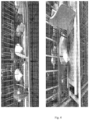
- FIG 2 depicts brooding cages, each cage housing 15 chicks.
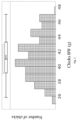
- Table 1 below presents the data of these treatment groups depicted in Fig. 3 : Table 1 Level Number Mean Std Error Lower 95% Upper 95% 0.5% 60 41.2462 0.36008 40.538 41.954 0.75% 60 41.2498 0.36008 40.542 41.958 1.5% 60 41.2490 0.36008 40.541 41.957 2% 60 41.2510 0.36008 40.543 41.959 5% 60 41.2597 0.36008 40.552 41.968 Con 60 41.3490 0.36008 40.741 42.157
- the dietary treatment groups included: Control (C) the regular powdered feed given to broilers, C + 0.5% Polyhalite (PS), C + 0.75% PS, C + 1.5% PS, C + 2% PS, and C + 5% PS.
- Each chick was weighed every week and its individual weekly food intake was calculated. At the end of the experiment, at the age of 35 days, the chicken were individually weighed and the feed was removed 12 hours before slaughter. Breast muscle, abdominal fat pad, heart and liver were removed and weighed, and their weights calculated relative to their live body weight.
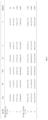
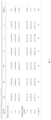
- Figure 5 illustrates a table demonstrating the mean BW measured when the birds were held in brooding cages (BC, from day of hatch to d17), and in individual cages (IC, from d 17 to the end of the trial on d 35), in chicks from the additive treatments.
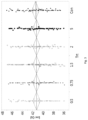
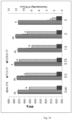
- Figure 6 depicts graphs 6A and 6B which illustrate the mean body weight of chicks Vs. Age (days) when fed with a Polyhalite enriched feed in various concentrations, in accordance with some demonstrative embodiments.
- Graph 6A illustrates the mean BW (g) measured when the birds were held in brooding cages from day of hatch to day 17 in chicks from the different additive treatments.
- Graph 6B illustrates the mean (g) BW measured when the birds were held in individual cages from day 17 to the end of the trial on day 35, in chicks from the different additive treatments.
- the chicks feed with the 5% PS dietary treatment were found to have significantly lower weight compared with all chicks from other dietary treatments on d14, d17 and d21, and from the chicks fed with control, 0.5, 0.75 and 2% diets on d28.
- the chicks fed the 5% PS diet differed significantly only from chicks that were fed with 0.75 and 2% diets. It can be seen that supplying the birds with 5% Polyhalite damaged the chick's performance already at the second week, with lower daily growth rate (See Figs. 7 and 8 ) and significantly lower BW, feeding the chicks with 0.75 or 2% Polyhalite resulted in improved performance.
- FIG 7 illustrates a table demonstrating the mean WG calculated when the birds were held in brooding cages (BC, from day of hatch to d 17), and in individual cages (IC, from d 17 to the end of the trial on d 35), in chicks from the additive treatments.
- figure 8 illustrates a graph depicting the mean WG (g/d) measured from day of hatch to the end of the trial on day 35, in chicks from the different additive treatments.
- Feed intake and feed conversion rate (FCR):
- FIG. 9 illustrates a table representing the mean BW, Feed intake and FCR calculated when the birds were held in brooding cages (BC, from day of hatch to d 17), and in individual cages (IC, from d 17 to the end of the trial on d 35), in chicks from the additive treatments.
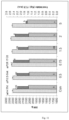
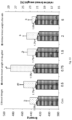
- FIG. 11 illustrates a graph depicting the mean BW (g) Feed intake (Kg) and FCR (a.u.) calculated for 35 day old birds held in individual cages from day 17 to day 35.
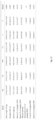
- Figure 12 illustrates a table demonstrating the effect of the additive treatments on slaughter BW, relative breast at slaughter and after 48h, abdominal fat, heart and liver weights (% from slaughter BW) at the age.
- figure 13 illustrates a graph depicting the mean breast weight (g), and relative breast weight (%) at slaughter time and 48h post-mortem, for chickens from different additive treatments.
- FIG 14 illustrates a graph depicting the mean Heart weight (g), and relative heart weight (%) at slaughter time for chickens from different additive treatments.
- the fish were reared in this system for a period of one month. During this period, they were fed twice daily (7 days a week). In order to monitor the effect of Polyhalite on feed consumption, the fish were hand fed twice a day ad libitum from a preweighed container for each aquarium, and at the end of each day the amount of feed consumed was registered.
- the results of this experiment showed that there was no effect of Polyhalite addition on food consumption but the fish receiving the Polyhalite at a level of 2% exhibited significantly better growth (Table 3) and FCR (Table 4).
- the Feed Conversion Ratio (FCR) is the amount of feed (in kg) ingested by an animal which can be converted into one kg of live weight.
- the Polyhalite was added on top of the regular diet components leading to a proportional reduction in all the other ingredients of the diet. Under these circumstances, it is suggested to replace fish diet ingredients that cost 1 dollar with a much cheaper ingredient Polyhalite, which may cost less than half the cost of the feed ingredients and save on the cost of the feed.
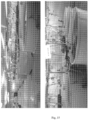
- FIG 15 depicts pictures of a Fish Rearing Facility, in accordance with some demonstrative embodiments.
- the Aquaculture holding facility is situated within an insulated building and has 2 sets of 36 experimental round plastic tanks of 250 liters each, every 6 tanks are connected to a central biofilter.
- Table 6 shows Specific Growth Rate (SGR) for fish fed a diet containing 2% Polyhalite, wherein Specific Growth Rate of normally fed fish was 0.8% and the Specific Growth Rate of fish fed with polyhalite was 1.17 %.
- Polyhalite was added as a feed additive at graded levels (1, 2, 3, 4 and 5%) to the regular commercial diet of the fish manufactured by Zemach Feed Mill diet number 4622 containing 35% protein; 4% fat; 5% fiber; 1.2% phosphorous; 1.2% calcium.
- the Polyhalite was added to the above feed formula on top of the prepared diet.
- the percent of added Polyhalite is proportionally subtracting each of the diet ingredients.
- the pellet diameter was 2.5mm and at the beginning of the experiment (during the initial 2 weeks), the pellets were partially crushed to enable smaller fish to consume the feed.
- the fish were reared in this system for a period of one month at a temperature of 26 ⁇ 1°C. During this period, they were fed twice daily (7 days a week). In order to monitor the effect of Polyhalite on feed consumption and growth the fish were hand fed twice a day ad libitum from a pre weighed container for each aquarium and at the end of each day, the amount of feed consumed was registered.
- the results of this experiment showed that the addition of Polyhalite had no negative effect on food consumption and the fish receiving the Polyhalite at a level of 2% exhibited better growth (Table 7) and better FCR (Table 8).
- the Feed Conversion Ratio (FCR) is the amount of feed (in kg) consumed by an animal leading to a gain of one kg live weight.
Landscapes
- Chemical & Material Sciences (AREA)
- Life Sciences & Earth Sciences (AREA)
- Polymers & Plastics (AREA)
- Engineering & Computer Science (AREA)
- Zoology (AREA)
- Animal Husbandry (AREA)
- Food Science & Technology (AREA)
- Birds (AREA)
- Inorganic Chemistry (AREA)
- Proteomics, Peptides & Aminoacids (AREA)
- Insects & Arthropods (AREA)
- Marine Sciences & Fisheries (AREA)
- Fodder In General (AREA)
- Feed For Specific Animals (AREA)
Applications Claiming Priority (3)
| Application Number | Priority Date | Filing Date | Title |
|---|---|---|---|
| US201862668724P | 2018-05-08 | 2018-05-08 | |
| EP19800237.0A EP3790403B1 (de) | 2018-05-08 | 2019-05-05 | Mit polyhalit angereichertes tierfutter |
| PCT/IL2019/050504 WO2019215724A1 (en) | 2018-05-08 | 2019-05-05 | Polyhalite enriched animal feed |
Related Parent Applications (2)
| Application Number | Title | Priority Date | Filing Date |
|---|---|---|---|
| EP19800237.0A Division EP3790403B1 (de) | 2018-05-08 | 2019-05-05 | Mit polyhalit angereichertes tierfutter |
| EP19800237.0A Division-Into EP3790403B1 (de) | 2018-05-08 | 2019-05-05 | Mit polyhalit angereichertes tierfutter |
Publications (3)
| Publication Number | Publication Date |
|---|---|
| EP4480322A2 true EP4480322A2 (de) | 2024-12-25 |
| EP4480322A3 EP4480322A3 (de) | 2025-01-01 |
| EP4480322B1 EP4480322B1 (de) | 2025-12-31 |
Family
ID=68467317
Family Applications (2)
| Application Number | Title | Priority Date | Filing Date |
|---|---|---|---|
| EP19800237.0A Active EP3790403B1 (de) | 2018-05-08 | 2019-05-05 | Mit polyhalit angereichertes tierfutter |
| EP24204423.8A Active EP4480322B1 (de) | 2018-05-08 | 2019-05-05 | Mit polyhalit angereichertes tierfutter |
Family Applications Before (1)
| Application Number | Title | Priority Date | Filing Date |
|---|---|---|---|
| EP19800237.0A Active EP3790403B1 (de) | 2018-05-08 | 2019-05-05 | Mit polyhalit angereichertes tierfutter |
Country Status (9)
| Country | Link |
|---|---|
| US (2) | US11589599B2 (de) |
| EP (2) | EP3790403B1 (de) |
| CN (1) | CN111867390A (de) |
| CA (1) | CA3093523C (de) |
| DK (1) | DK3790403T3 (de) |
| FI (1) | FI3790403T3 (de) |
| IL (1) | IL277013B2 (de) |
| MX (1) | MX2020008830A (de) |
| WO (1) | WO2019215724A1 (de) |
Families Citing this family (4)
| Publication number | Priority date | Publication date | Assignee | Title |
|---|---|---|---|---|
| EP3790403B1 (de) | 2018-05-08 | 2025-03-19 | ICL Europe Cooperatief U.A. | Mit polyhalit angereichertes tierfutter |
| WO2021064720A1 (en) * | 2019-10-02 | 2021-04-08 | Icl Europe Cooperatief U.A. | Polyhalite enriched fish feed |
| US12538934B2 (en) | 2018-05-08 | 2026-02-03 | Icl Europe Cooperatief U.A. | Polyhalite enriched fish feed |
| EP4615247A1 (de) * | 2022-11-10 | 2025-09-17 | ICL Europe Cooperatief U.A. | Insektenfutter mit einem kalium- oder magnesiumhaltigen mineral |
Family Cites Families (15)
| Publication number | Priority date | Publication date | Assignee | Title |
|---|---|---|---|---|
| US2512537A (en) * | 1947-07-28 | 1950-06-20 | Mabel W Zellers | Mineral pellets |
| HU9302976D0 (en) | 1993-10-21 | 1994-01-28 | Koeroesi | Plains foodelementsource and heavy-metal and isotope-intake using produces and process for producing it |
| NO319618B1 (no) * | 2002-07-05 | 2005-09-05 | Norsk Hydro As | Fiskefôr som inneholder tokotrienol for a forbedre stabiliteten og pigmentfordelingen i fiskefilet og bearbeidede fiskeprodukter. |
| CA2601889C (en) * | 2005-03-21 | 2011-02-15 | Archer-Daniels-Midland Company | Corn fiber hulls as a food additive or animal feed |
| CA2542289A1 (en) * | 2005-04-07 | 2006-10-07 | The Mosaic Company | Use of urea-formaldehyde resin in potash ore processing |
| TW200911131A (en) | 2007-01-10 | 2009-03-16 | Blue Limit As | Feed composition for aquatic organisms |
| KR100889830B1 (ko) * | 2007-07-18 | 2009-03-20 | 손승락 | 광물성 동물사료 |
| WO2012043949A1 (ko) * | 2010-09-27 | 2012-04-05 | 한국생명공학연구원 | 화학식 1 내지 8로 표시되는 화합물 또는 고삼 추출물을 유효성분으로 포함하는 면역 증강용 조성물 |
| CN103947866B (zh) | 2014-04-02 | 2015-09-02 | 林震能 | 凝胶鱼粮 |
| CN104187016A (zh) * | 2014-07-23 | 2014-12-10 | 朱婷婷 | 鸡用饲料矿物质添加剂 |
| US20190256431A1 (en) * | 2016-06-09 | 2019-08-22 | Avalon Alliance Inc. | Bio-available mineral fertilizer and derivative applications, including product processes |
| CN106135752B (zh) * | 2016-07-06 | 2018-05-29 | 广东省实验动物监测所 | 一种诸氏鲻虾虎鱼生长配合饲料及其制备方法 |
| GB201615711D0 (en) | 2016-09-15 | 2016-11-02 | Exosect Ltd | Coated Product form |
| US20180360732A1 (en) * | 2016-12-21 | 2018-12-20 | Mge Holdings Llc | Oral Care Products and Methods |
| EP3790403B1 (de) | 2018-05-08 | 2025-03-19 | ICL Europe Cooperatief U.A. | Mit polyhalit angereichertes tierfutter |
-
2019
- 2019-05-05 EP EP19800237.0A patent/EP3790403B1/de active Active
- 2019-05-05 IL IL277013A patent/IL277013B2/en unknown
- 2019-05-05 US US17/051,082 patent/US11589599B2/en active Active
- 2019-05-05 CA CA3093523A patent/CA3093523C/en active Active
- 2019-05-05 DK DK19800237.0T patent/DK3790403T3/da active
- 2019-05-05 MX MX2020008830A patent/MX2020008830A/es unknown
- 2019-05-05 FI FIEP19800237.0T patent/FI3790403T3/fi active
- 2019-05-05 EP EP24204423.8A patent/EP4480322B1/de active Active
- 2019-05-05 WO PCT/IL2019/050504 patent/WO2019215724A1/en not_active Ceased
- 2019-05-05 CN CN201980019205.5A patent/CN111867390A/zh active Pending
-
2021
- 2021-04-18 US US17/233,490 patent/US11864568B2/en active Active
Also Published As
| Publication number | Publication date |
|---|---|
| DK3790403T3 (da) | 2025-06-23 |
| EP3790403A4 (de) | 2022-01-26 |
| US20210235724A1 (en) | 2021-08-05 |
| EP4480322B1 (de) | 2025-12-31 |
| US20210051980A1 (en) | 2021-02-25 |
| FI3790403T3 (fi) | 2025-06-25 |
| MX2020008830A (es) | 2020-10-05 |
| CN111867390A (zh) | 2020-10-30 |
| CA3093523A1 (en) | 2019-11-14 |
| US11864568B2 (en) | 2024-01-09 |
| WO2019215724A1 (en) | 2019-11-14 |
| IL277013B2 (en) | 2024-06-01 |
| IL277013B1 (en) | 2024-02-01 |
| US11589599B2 (en) | 2023-02-28 |
| IL277013A (en) | 2020-10-29 |
| BR112020016976A2 (pt) | 2021-01-19 |
| EP3790403B1 (de) | 2025-03-19 |
| CA3093523C (en) | 2024-03-26 |
| EP4480322A3 (de) | 2025-01-01 |
| EP3790403A1 (de) | 2021-03-17 |
Similar Documents
| Publication | Publication Date | Title |
|---|---|---|
| US11864568B2 (en) | Polyhalite enriched animal feed | |
| US6682762B2 (en) | Poultry and livestock feed additive | |
| RU2628295C2 (ru) | Обработка птицы, свиней или рыбы для снижения затрат корма или повышения привесов | |
| CN102362636B (zh) | 后备母香猪饲料组合物 | |
| RU2259832C2 (ru) | Препарат для усиления обменных процессов и иммунитета у сельскохозяйственных животных и птицы | |
| RU2489896C2 (ru) | Способ кормления маралов-рогачей в период начального роста пантов | |
| Ramos et al. | Glutamine use in feeding juvenile pirarucu, Arapaima gigas (Schinz, 1822) | |
| US12538934B2 (en) | Polyhalite enriched fish feed | |
| Palii et al. | Biotechnical aspects of the feeding heifer full-purpose courses of different granulometric composition | |
| RU2088109C1 (ru) | Премикс | |
| EP4378320A1 (de) | Verwendung einer furan-ameisensäureverbindung bei der herstellung eines tierfutterzusatzstoffs | |
| RU2308201C2 (ru) | Способ повышения продуктивности ремонтных свинок в условиях кемеровской области | |
| RU2679058C1 (ru) | Комбикорм для кур-несушек | |
| JP6513248B2 (ja) | 鶏に対する飼料要求率改善用剤の給与方法 | |
| EP4037494A1 (de) | Mit polyisobutylen angereichertes fischfutter | |
| RU2363237C1 (ru) | Способ выращивания бройлеров мясного кросса | |
| Uddin et al. | Growth responses, carcass yield characteristics, gastro-intestinal development, viability and profitability of Japanese quail fed on conventional diet supplemented with organic acid | |
| BR112020016976B1 (pt) | Uso de polihalita na fabricação de ração animal | |
| Vasquez-Anon et al. | The use of methionine hydroxy analog in aquaculture feeds | |
| RU2054266C1 (ru) | Способ выращивания цыплят-бройлеров и поросят | |
| SEDILO et al. | THE INFLUENCE OF L-CARNITINE ON THE PRODUCTIVITY OF YOUNG RABBITS. | |
| Yulfiperius et al. | EFFECT OF DIFFERENT FEEDING RATES OF CORN COB FLOUR SUPPLEMENTED-FEED ON THE GROWTH OF FARMED Osphronemus gouramy | |
| Beeson et al. | The Phosphorus Requirements of Beef Cattle | |
| DE102005063251B4 (de) | Verfahren zum Herstellen eines Organo-Mineral-Düngers | |
| JPS5971651A (ja) | 養魚用飼料 |
Legal Events
| Date | Code | Title | Description |
|---|---|---|---|
| PUAI | Public reference made under article 153(3) epc to a published international application that has entered the european phase |
Free format text: ORIGINAL CODE: 0009012 |
|
| REG | Reference to a national code |
Ref country code: DE Ipc: A23K0020200000 Ref country code: DE Ref legal event code: R079 Ref document number: 602019080042 Country of ref document: DE Free format text: PREVIOUS MAIN CLASS: A23K0050750000 Ipc: A23K0020200000 |
|
| STAA | Information on the status of an ep patent application or granted ep patent |
Free format text: STATUS: THE APPLICATION HAS BEEN PUBLISHED |
|
| PUAL | Search report despatched |
Free format text: ORIGINAL CODE: 0009013 |
|
| AC | Divisional application: reference to earlier application |
Ref document number: 3790403 Country of ref document: EP Kind code of ref document: P |
|
| AK | Designated contracting states |
Kind code of ref document: A2 Designated state(s): AL AT BE BG CH CY CZ DE DK EE ES FI FR GB GR HR HU IE IS IT LI LT LU LV MC MK MT NL NO PL PT RO RS SE SI SK SM TR |
|
| AK | Designated contracting states |
Kind code of ref document: A3 Designated state(s): AL AT BE BG CH CY CZ DE DK EE ES FI FR GB GR HR HU IE IS IT LI LT LU LV MC MK MT NL NO PL PT RO RS SE SI SK SM TR |
|
| RIC1 | Information provided on ipc code assigned before grant |
Ipc: A23K 50/75 20160101ALI20241122BHEP Ipc: A23K 50/80 20160101ALI20241122BHEP Ipc: A23K 10/00 20160101ALI20241122BHEP Ipc: A23K 20/20 20160101AFI20241122BHEP |
|
| STAA | Information on the status of an ep patent application or granted ep patent |
Free format text: STATUS: REQUEST FOR EXAMINATION WAS MADE |
|
| 17P | Request for examination filed |
Effective date: 20250616 |
|
| STAA | Information on the status of an ep patent application or granted ep patent |
Free format text: STATUS: EXAMINATION IS IN PROGRESS |
|
| 17Q | First examination report despatched |
Effective date: 20250818 |
|
| GRAP | Despatch of communication of intention to grant a patent |
Free format text: ORIGINAL CODE: EPIDOSNIGR1 |
|
| STAA | Information on the status of an ep patent application or granted ep patent |
Free format text: STATUS: GRANT OF PATENT IS INTENDED |
|
| GRAS | Grant fee paid |
Free format text: ORIGINAL CODE: EPIDOSNIGR3 |
|
| INTG | Intention to grant announced |
Effective date: 20251028 |
|
| GRAA | (expected) grant |
Free format text: ORIGINAL CODE: 0009210 |
|
| STAA | Information on the status of an ep patent application or granted ep patent |
Free format text: STATUS: THE PATENT HAS BEEN GRANTED |
|
| AC | Divisional application: reference to earlier application |
Ref document number: 3790403 Country of ref document: EP Kind code of ref document: P |
|
| AK | Designated contracting states |
Kind code of ref document: B1 Designated state(s): AL AT BE BG CH CY CZ DE DK EE ES FI FR GB GR HR HU IE IS IT LI LT LU LV MC MK MT NL NO PL PT RO RS SE SI SK SM TR |
|
| REG | Reference to a national code |
Ref country code: CH Ref legal event code: F10 Free format text: ST27 STATUS EVENT CODE: U-0-0-F10-F00 (AS PROVIDED BY THE NATIONAL OFFICE) Effective date: 20251231 Ref country code: GB Ref legal event code: FG4D |
|
| REG | Reference to a national code |
Ref country code: DE Ref legal event code: R096 Ref document number: 602019080042 Country of ref document: DE |