EP4478731A1 - Videoaufzeichnungsverfahren und -vorrichtung und elektronische vorrichtung - Google Patents
Videoaufzeichnungsverfahren und -vorrichtung und elektronische vorrichtung Download PDFInfo
- Publication number
- EP4478731A1 EP4478731A1 EP23752391.5A EP23752391A EP4478731A1 EP 4478731 A1 EP4478731 A1 EP 4478731A1 EP 23752391 A EP23752391 A EP 23752391A EP 4478731 A1 EP4478731 A1 EP 4478731A1
- Authority
- EP
- European Patent Office
- Prior art keywords
- video
- input
- image region
- user
- target
- Prior art date
- Legal status (The legal status is an assumption and is not a legal conclusion. Google has not performed a legal analysis and makes no representation as to the accuracy of the status listed.)
- Pending
Links
Images







Classifications
-
- H—ELECTRICITY
- H04—ELECTRIC COMMUNICATION TECHNIQUE
- H04M—TELEPHONIC COMMUNICATION
- H04M1/00—Substation equipment, e.g. for use by subscribers
- H04M1/72—Mobile telephones; Cordless telephones, i.e. devices for establishing wireless links to base stations without route selection
- H04M1/724—User interfaces specially adapted for cordless or mobile telephones
- H04M1/72403—User interfaces specially adapted for cordless or mobile telephones with means for local support of applications that increase the functionality
-
- G—PHYSICS
- G06—COMPUTING OR CALCULATING; COUNTING
- G06T—IMAGE DATA PROCESSING OR GENERATION, IN GENERAL
- G06T7/00—Image analysis
- G06T7/50—Depth or shape recovery
-
- H—ELECTRICITY
- H04—ELECTRIC COMMUNICATION TECHNIQUE
- H04M—TELEPHONIC COMMUNICATION
- H04M1/00—Substation equipment, e.g. for use by subscribers
- H04M1/72—Mobile telephones; Cordless telephones, i.e. devices for establishing wireless links to base stations without route selection
- H04M1/724—User interfaces specially adapted for cordless or mobile telephones
- H04M1/72403—User interfaces specially adapted for cordless or mobile telephones with means for local support of applications that increase the functionality
- H04M1/7243—User interfaces specially adapted for cordless or mobile telephones with means for local support of applications that increase the functionality with interactive means for internal management of messages
- H04M1/72439—User interfaces specially adapted for cordless or mobile telephones with means for local support of applications that increase the functionality with interactive means for internal management of messages for image or video messaging
-
- H—ELECTRICITY
- H04—ELECTRIC COMMUNICATION TECHNIQUE
- H04N—PICTORIAL COMMUNICATION, e.g. TELEVISION
- H04N23/00—Cameras or camera modules comprising electronic image sensors; Control thereof
- H04N23/60—Control of cameras or camera modules
- H04N23/62—Control of parameters via user interfaces
-
- H—ELECTRICITY
- H04—ELECTRIC COMMUNICATION TECHNIQUE
- H04N—PICTORIAL COMMUNICATION, e.g. TELEVISION
- H04N23/00—Cameras or camera modules comprising electronic image sensors; Control thereof
- H04N23/60—Control of cameras or camera modules
- H04N23/63—Control of cameras or camera modules by using electronic viewfinders
- H04N23/631—Graphical user interfaces [GUI] specially adapted for controlling image capture or setting capture parameters
-
- H—ELECTRICITY
- H04—ELECTRIC COMMUNICATION TECHNIQUE
- H04N—PICTORIAL COMMUNICATION, e.g. TELEVISION
- H04N23/00—Cameras or camera modules comprising electronic image sensors; Control thereof
- H04N23/60—Control of cameras or camera modules
- H04N23/63—Control of cameras or camera modules by using electronic viewfinders
- H04N23/631—Graphical user interfaces [GUI] specially adapted for controlling image capture or setting capture parameters
- H04N23/632—Graphical user interfaces [GUI] specially adapted for controlling image capture or setting capture parameters for displaying or modifying preview images prior to image capturing, e.g. variety of image resolutions or capturing parameters
-
- H—ELECTRICITY
- H04—ELECTRIC COMMUNICATION TECHNIQUE
- H04N—PICTORIAL COMMUNICATION, e.g. TELEVISION
- H04N23/00—Cameras or camera modules comprising electronic image sensors; Control thereof
- H04N23/60—Control of cameras or camera modules
- H04N23/63—Control of cameras or camera modules by using electronic viewfinders
- H04N23/633—Control of cameras or camera modules by using electronic viewfinders for displaying additional information relating to control or operation of the camera
- H04N23/635—Region indicators; Field of view indicators
-
- H—ELECTRICITY
- H04—ELECTRIC COMMUNICATION TECHNIQUE
- H04N—PICTORIAL COMMUNICATION, e.g. TELEVISION
- H04N23/00—Cameras or camera modules comprising electronic image sensors; Control thereof
- H04N23/60—Control of cameras or camera modules
- H04N23/667—Camera operation mode switching, e.g. between still and video, sport and normal or high- and low-resolution modes
-
- H—ELECTRICITY
- H04—ELECTRIC COMMUNICATION TECHNIQUE
- H04N—PICTORIAL COMMUNICATION, e.g. TELEVISION
- H04N23/00—Cameras or camera modules comprising electronic image sensors; Control thereof
- H04N23/60—Control of cameras or camera modules
- H04N23/69—Control of means for changing angle of the field of view, e.g. optical zoom objectives or electronic zooming
-
- H—ELECTRICITY
- H04—ELECTRIC COMMUNICATION TECHNIQUE
- H04N—PICTORIAL COMMUNICATION, e.g. TELEVISION
- H04N5/00—Details of television systems
- H04N5/222—Studio circuitry; Studio devices; Studio equipment
- H04N5/262—Studio circuits, e.g. for mixing, switching-over, change of character of image, other special effects ; Cameras specially adapted for the electronic generation of special effects
- H04N5/2621—Cameras specially adapted for the electronic generation of special effects during image pickup, e.g. digital cameras, camcorders, video cameras having integrated special effects capability
-
- H—ELECTRICITY
- H04—ELECTRIC COMMUNICATION TECHNIQUE
- H04N—PICTORIAL COMMUNICATION, e.g. TELEVISION
- H04N5/00—Details of television systems
- H04N5/222—Studio circuitry; Studio devices; Studio equipment
- H04N5/262—Studio circuits, e.g. for mixing, switching-over, change of character of image, other special effects ; Cameras specially adapted for the electronic generation of special effects
- H04N5/2628—Alteration of picture size, shape, position or orientation, e.g. zooming, rotation, rolling, perspective, translation
-
- H—ELECTRICITY
- H04—ELECTRIC COMMUNICATION TECHNIQUE
- H04N—PICTORIAL COMMUNICATION, e.g. TELEVISION
- H04N5/00—Details of television systems
- H04N5/76—Television signal recording
-
- H—ELECTRICITY
- H04—ELECTRIC COMMUNICATION TECHNIQUE
- H04N—PICTORIAL COMMUNICATION, e.g. TELEVISION
- H04N5/00—Details of television systems
- H04N5/76—Television signal recording
- H04N5/765—Interface circuits between an apparatus for recording and another apparatus
- H04N5/77—Interface circuits between an apparatus for recording and another apparatus between a recording apparatus and a television camera
- H04N5/772—Interface circuits between an apparatus for recording and another apparatus between a recording apparatus and a television camera the recording apparatus and the television camera being placed in the same enclosure
-
- G—PHYSICS
- G06—COMPUTING OR CALCULATING; COUNTING
- G06T—IMAGE DATA PROCESSING OR GENERATION, IN GENERAL
- G06T2207/00—Indexing scheme for image analysis or image enhancement
- G06T2207/20—Special algorithmic details
- G06T2207/20112—Image segmentation details
- G06T2207/20132—Image cropping
-
- H—ELECTRICITY
- H04—ELECTRIC COMMUNICATION TECHNIQUE
- H04M—TELEPHONIC COMMUNICATION
- H04M2250/00—Details of telephonic subscriber devices
- H04M2250/52—Details of telephonic subscriber devices including functional features of a camera
-
- H—ELECTRICITY
- H04—ELECTRIC COMMUNICATION TECHNIQUE
- H04N—PICTORIAL COMMUNICATION, e.g. TELEVISION
- H04N23/00—Cameras or camera modules comprising electronic image sensors; Control thereof
- H04N23/45—Cameras or camera modules comprising electronic image sensors; Control thereof for generating image signals from two or more image sensors being of different type or operating in different modes, e.g. with a CMOS sensor for moving images in combination with a charge-coupled device [CCD] for still images
Definitions
- This application relates to the field of photographing technologies, and specifically, to a video recording method and apparatus, and an electronic device.
- An objective of embodiments of this application is to provide a video recording method and apparatus, and an electronic device, which can resolve problems of complex video recording operations and a low creation rate in related arts.
- an embodiment of this application provides a video recording apparatus, including:
- an embodiment of this application provides an electronic device, including a processor, a memory, and a program or instructions stored on the memory and runnable on the processor, where the program or the instructions, when executed by the processor, implement steps of the method according to the first aspect.
- an embodiment of this application provides a readable storage medium, storing a program or instructions, where the program or the instructions, when executed by the processor, implement steps of the method according to the first aspect.
- an embodiment of this application provides a chip, including a processor and a communication interface, where the communication interface is coupled to the processor, and the processor is configured to run a program or instructions, to implement the method according to the first aspect.
- an embodiment of this application provides a computer program product, stored in a storage medium, where the program product, when executed by at least one processor, implements the method according to the first aspect.
- a first input by a user to a shooting preview interface is received; in response to the first input, recording is performed based on preset parameters to obtain a first video and a second video, where the first video is a video corresponding to a first image region in the shooting preview interface, the second video is a video corresponding to a second image region in the shooting preview interface, video parameter information of the first video is different from video parameter information of the second video, and the video parameter information includes at least one of the following: a video image frame number or a video image parameter; and a target video is generated based on the first video and the second video.
- pictures of a generated video corresponding to each image region have a different video recording effect.
- one time video recording that is, simultaneously implementing video editing and rendering, a demand of the user for recording an interesting video is met, there is no need to perform a plurality of times of video recording with different recording modes or recording parameters for a same field of view, and there is no need for complex post-editing processing.
- one time video recording can ensure uniformity of an environment such as lighting, thereby improving a creation rate of a recorded video. Therefore, operational difficulty for the user to create a special effect video is effectively reduced, and interaction experience of the user is improved.
- first and second are used to distinguish similar objects, but are unnecessarily used to describe a specific sequence or order. It should be understood that the data in such a way are interchangeable in proper circumstances, so that the embodiments of this application can be implemented in other orders than the order illustrated or described herein.
- Objects distinguished by “first”, “second”, and the like are usually one type, and the number of objects is not limited.
- the first object may be one or more than one.
- “and/or” means at least one of the connected objects, and the character “/" generally indicates an "or” relationship between the associated objects.
- Step 102 Receive a first input by a user to a shooting preview interface.
- the shooting preview interface is a preview picture corresponding to a target field of view range.
- the target field of view range is a same field of view range, where a location of a camera of a terminal device is fixed.
- the preview picture that can be captured in the field of view range may be obtained.
- the preview picture may include a still shot object or a moving shot object. For example, if the camera needs to record a seaside road in a fixed field of view range, still objects in the preview picture include sea, sky, and the road, and moving objects include various moving vehicles or pedestrians or the like. In this way, a location, a shape, and a size of the still object are fixed in a recorded video with predetermined duration.
- Step 104 Perform, in response to the first input, recording based on preset parameters to obtain a first video and a second video, where the first video is a video corresponding to a first image region in the shooting preview interface, the second video is a video corresponding to a second image region in the shooting preview interface, video parameter information of the first video is different from video parameter information of the second video, and the video parameter information includes at least one of the following: a video image frame number or a video image parameter.
- Step 106 Generate a target video based on the first video and the second video.
- the second input includes a first sub-input and a second sub-input
- the receiving a second input by the user to the shooting preview interface includes: receiving the first sub-input by the user to a shape control in the shooting preview interface; and the determining, in response to the second input, the first image region and the second image region in the shooting preview interface includes: displaying at least one candidate shape in response to the first sub-input; receiving the second sub-input by the user to a target candidate shape in the at least one candidate shape; and determining, in response to the second sub-input, the first image region and the second image region based on the target candidate shape.
- the first sub-input may be a click input to the shape control in the shooting preview interface.
- the shape control in the shooting preview interface may include various preset shapes, such as a rectangle, a circle, and a triangle. Through the first sub-input, the various shapes included in the shape control may be displayed in the shooting preview interface.
- the second sub-input may be a click input to the target candidate shape.
- the target candidate shape is used as a shape for dividing the shooting preview interface into the plurality of image regions. For example, a region surrounded by the target candidate shape is determined as the first image region, and a region outside the target candidate shape, that is, a region other than the first image region in the shooting preview interface, is determined as the second image region.
- the method further includes: receiving a third input by the user; and displaying, in response to the third input, the target candidate shape in a target region of the shooting preview interface, where a shape of a target object in the target region is adapted to the target candidate shape.
- the third input may be an input to a snap control in the shooting preview interface; or may refer to clicking a target object in the shooting preview interface for automatic snapping.
- the target candidate shape is adapted to a shape of the target object in the shooting preview interface and displayed.
- the foregoing step may be automatically performed by a back-end processor of the terminal device.
- a user operation interface may also be provided, to implement image region division in the shooting preview interface based on a user operation and automatic processing by the terminal device.
- video recording is performed through a single camera.
- the image sensor performs shooting in a normal mode at 1X speed of the ordinary video, and acquires a plurality of frames of video images.
- corresponding images are extracted from the video image frames output by the image sensor based on a set frame rate, to obtain a video corresponding to the image region.
- 30X speed requires extracting one frame of video image every 30 frames from the acquired images
- 480X speed requires extracting one frame of video image every 480 frames from the acquired images.
- video recording modes corresponding to the cameras are set.
- the video recording modes include, for example, time-lapse photography, slow motion, super night scene, and time slow shutter. Different video recording modes are executed by different cameras respectively.
- different cameras may perform video recording for different image regions in different video recording modes.
- a video recording control in a recording interface of the terminal device is clicked, and based on selected video recording modes, different cameras are used to start video recording in corresponding video recording modes, to obtain a plurality of videos corresponding to different video recording modes. Based on set shapes of image regions, a plurality of image frames of pre-recorded videos acquired by the corresponding cameras are cropped, to obtain videos of a plurality of image regions corresponding to different video recording modes.
- video image parameters of the image regions recorded by the corresponding cameras are different. It should be pointed out that, in different video recording modes, different recording parameters corresponding to each video recording mode may also be adjusted, for example, a beautification parameter, a filter parameter, and/or the like in the time-lapse mode may be set at the same time, to implement video recording for the corresponding image regions by implementing different video recording modes and different recording parameters, so that a final video presents a video playback effect with different image modes and recording parameters in the image regions.
- a beautification parameter, a filter parameter, and/or the like in the time-lapse mode may be set at the same time, to implement video recording for the corresponding image regions by implementing different video recording modes and different recording parameters, so that a final video presents a video playback effect with different image modes and recording parameters in the image regions.
- the method before the receiving a first input by a user to a shooting preview interface, the method further includes: receiving a seventh input by the user to the shooting preview interface; and displaying a first alignment window in response to the seventh input, where the first alignment window is for setting a video image frame alignment manner of the first video and the second video.
- a time alignment manner may be preset before the user performs video recording.
- recorded videos corresponding to the image regions may be synthesized based on such a presetting, to generate a target video for playback.
- the time alignment manner may include any one of the following:
- FIG. 5 is a schematic diagram of a user interface for setting a time alignment manner according to an embodiment of this application. If the "align" control 28 at the bottom of the preview interface is clicked, controls of three time alignment manners are displayed in the shooting preview interface, and include a "start point alignment” control 282, a “middle alignment” control 284, and an "end alignment” control 286. The user may select one of the three time alignment manners: the start point alignment, the middle alignment, or the end alignment; or the start point alignment may be default, as shown in FIG. 5 .
- the recording frame rates set for the image regions with various shapes are different, and video image frame numbers obtained through corresponding recording by using different frame rates are different due to frame extraction. Therefore, when recorded videos of the image regions are played at a normal frame rate, playback duration of a video with a small frame number is shorter than that of a video with a large frame number. In this way, when a final video is generated, it is necessary to determine playback time points of the videos corresponding to the shapes of the image regions.
- the time alignment manner may alternatively be set by the user after video recording.
- the method before the generating a target video based on the first video and the second video, the method further includes: displaying a second alignment window, where the second alignment window includes a first sign and a second sign, the first sign indicates playback duration of the first video, and the second sign indicates playback duration of the second video; receiving an eighth input by the user to a target sign, where the target sign includes at least one of the following: the first sign or the second sign; and updating, in response to the eighth input, relative location information between the first sign and the second sign, where the relative location information indicates relative playback time of the first video and the second video.
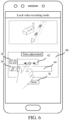
- FIG. 6 is a schematic diagram of a user interface for setting a time alignment manner according to another embodiment of this application.
- the rectangular control indicating the video A of the image region of the sky is dragged to the right, to adjust a relative location between the rectangular control indicating the video A of the image region of the sky and the rectangular control indicating the video B of the image region of the road, to indicate that the video A of the image region of the sky is played later than the video B of the image region of the road.
- the videos of the image regions may be synthesized based on the corresponding preset time alignment manners, to generate the target video.
- video image frames of the second video are synthesized in a one-to-one correspondence with video image frames of the first video corresponding to a first frame number; and a last frame of video image of the second video is synthesized with each of video image frames of the first video corresponding to a second frame number.
- a sum of the first frame number and the second frame number is a video image frame number of the first video, and a video image frame number of the second video is equal to the first frame number.
- the first video and a second video may be correspondingly synthesized, to generate the final target video.
- the longest first video may start to be played, a first frame of picture of the shorter second video is displayed for a period of time before the video starts to be played, and videos of all image regions end at a same time point.
- a middle frame of video image of the first video and a middle frame of video image of the second video are obtained and synthesized; based on the corresponding time sequence, the first frame of video image of the second video is synthesized with each of video image frames of the first video corresponding to a fifth frame number; video image frames before the middle frame of video image of the second video is synthesized in a one-to-one correspondence with video image frames of the first video corresponding to a sixth frame number; video image frames after the middle frame of video image of the second video are synthesized in a one-to-one correspondence with video image frames of the first video corresponding to a seventh frame number; and the last frame of video image of the second video is synthesized with each of video image frames of the first video corresponding to an eighth frame number.
- a sum of the fifth frame number, the sixth frame number, the seventh frame number, the eighth frame number, and the middle frame are the video image frame number of the first video, and the video image frame number of the second video is equal to a sum of the sixth frame number, the seventh frame number, and the middle frame.
- the videos of all the image regions are aligned based on centers of duration; and other than the longest first video, the first frame of video image of the remaining second video is displayed for a period of time before the video is normally played, and the last frame of video image is displayed for a period of time at the end of the playback until the duration of the first video is reached.
- the playback of the videos of all the image regions ends.
- locations of the video image frames of the corresponding videos may be determined based on corresponding set time points, and then the video image frames may be synthesized.
- the principle is the same as that described above, and details are not described herein again.
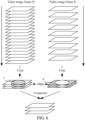
- a first camera shoots a first image region in a slow-motion photography mode, to obtain a video image frame D; and on a right side, a second camera shoots a second image region in a time-lapse photography mode, to obtain a video image frame E.
- image frames shot by the first camera are cropped based on a shape of the first image region, to obtain shaded regions c; and image frames shot by the second camera are cropped based on a shape of the second image region, to obtain shaded regions d.
- image shadows c and d of each frame are synthesized based on a preset time alignment manner, to obtain a video image frame of a target video, where the first image region in the target video presents a video playback effect with slow-motion shooting, and the second image region presents a video playback effect with time-lapse shooting.
- a first input by a user to a shooting preview interface is received; in response to the first input, recording is performed based on preset parameters to obtain a first video and a second video, where the first video is a video corresponding to a first image region in the shooting preview interface, the second video is a video corresponding to a second image region in the shooting preview interface, video parameter information of the first video is different from video parameter information of the second video, and the video parameter information includes at least one of the following: a video image frame number or a video image parameter; and a target video is generated based on the first video and the second video.
- pictures of a generated video corresponding to each image region have a different video recording effect.
- one time video recording that is, simultaneously implementing video editing and rendering, a demand of the user for recording an interesting video is met, there is no need to perform a plurality of times of video recording with different recording modes or recording parameters for a same field of view, and there is no need for complex post-editing processing.
- one time video recording can ensure uniformity of an environment such as lighting, thereby improving a creation rate of a recorded video. Therefore, operational difficulty for the user to create a special effect video is effectively reduced, and interaction experience of the user is improved.
- a video recording apparatus 800 includes:
- a first input by a user to a shooting preview interface is received; in response to the first input, recording is performed based on preset parameters to obtain a first video and a second video, where the first video is a video corresponding to a first image region in the shooting preview interface, the second video is a video corresponding to a second image region in the shooting preview interface, video parameter information of the first video is different from video parameter information of the second video, and the video parameter information includes at least one of the following: a video image frame number or a video image parameter; and a target video is generated based on the first video and the second video.
- pictures of a generated video corresponding to each image region have a different video recording effect.
- the recording module is further configured to:
- a single camera can be used to simultaneously record a plurality of videos with different frame rates, so that a local video recording effect with a different frame rate is generated, and there is no need for complex post-editing processing, thereby reducing operational difficulty of the user, meeting a demand of the user for recording an interesting video, and improving interaction experience of the user.
- the video recording apparatus 800 further includes:
- the video recording apparatus in the embodiments of this application may be an electronic device; or may be a component in an electronic device, such as an integrated circuit or a chip.
- the electronic device may be a terminal or another device other than the terminal.
- a mobile electronic device may be a mobile phone, a tablet computer, a notebook computer, a palmtop computer, an in-vehicle electronic device, a mobile Internet device (Mobile Internet Device, MID), an augmented reality (Augmented Reality, AR)/virtual reality (Virtual Reality, VR) device, a robot, a wearable device, an ultra-mobile personal computer (Ultra-mobile Personal Computer, UMPC), a netbook, a personal digital assistant (Personal Digital Assistant, PDA), or the like; and may be a server, a network attached memory (Network Attached Storage, NAS), a personal computer (Personal Computer, PC), a television (Television, TV), a teller machine, a self-service machine, or the like. This is
- the video recording apparatus provided in the embodiments of this application can implement processes implemented in the method embodiments of FIG. 1 to FIG. 10 , and can achieve the same technical effects. To avoid repetition, details are not described herein again.
- the electronic device 1000 further includes a power supply (such as a battery) for supplying power to the components.
- the power supply may logically connect to the processor 1010 by using a power supply management system, thereby implementing functions, such as charging, discharging, and power consumption management, by using the power supply management system.
- the structure of the electronic device shown in FIG. 11 constitutes no limitation on the electronic device, and the electronic device may include more or fewer components than those shown in the figure, or some components may be combined, or a different component deployment may be used. Details are not described herein again.
- the user input unit 1007 is configured to receive a first input by a user to a shooting preview interface.
- the user input unit 1007 is further configured to receive a second input by the user to the shooting preview interface before the first input by the user to the shooting preview interface is received.
- the user input unit 1007 is further configured to receive a first sub-input by the user to a shape control in the shooting preview interface.
- the user input unit 1007 is further configured to receive a second sub-input by the user to a target candidate shape in the at least one candidate shape.
- the user can select a shape most similar to each image region to quickly select a boundary of the image region, to facilitate the user to obtain each image region accurately and quickly.
- the user input unit 1007 is further configured to receive the second input by the user to a first target object in the shooting preview interface.
- the processor 1010 is further configured to determine, in response to the second input, the first image region and the second image region based on an image region of the first target object.
- the display unit 1006 is configured to display, in response to the third input, the target candidate shape in a target region of the shooting preview interface, where a shape of a target object in the target region is adapted to the target candidate shape.
- the selected shape can be quickly matched to a boundary of the corresponding image region.
- the user input unit 1007 is further configured to receive a fourth input by the user to the target candidate shape after the target candidate shape is displayed in the target region of the shooting preview interface.
- the processor 1010 is further configured to update display information of the target candidate shape in response to the fourth input, where the display information includes at least one of the following: location information or size information.
- the determined shape of the image region can be further adjusted based on a manual operation of the user, to achieve more accurate division of the image regions.
- the user input unit 1007 is further configured to receive a fifth input by the user to a first target image region before the first input by the user to the shooting preview interface is received.
- the processor 1010 is further configured to display a frame rate setting window in response to the fifth input, where the frame rate setting window is for setting a recording frame rate of the first target image region; and the first target image region includes at least one of the following: the first image region or the second image region.
- processor 1010 is further configured to:
- a single camera can be used to simultaneously record a plurality of videos with different frame rates, so that a local video recording effect with a different frame rate is generated, and there is no need for complex post-editing processing, thereby reducing operational difficulty of the user, meeting a demand of the user for recording an interesting video, and improving interaction experience of the user.
- the user input unit 1007 is further configured to receive a sixth input by the user to a second target image region before the first input by the user to the shooting preview interface is received.
- the processor 1010 is further configured to display a video recording mode window in response to the sixth input, where the video recording mode window is for setting a video recording mode of the second target image region; and the second target image region includes at least one of the following: the first image region or the second image region.
- processor 1010 is further configured to:
- an electronic device has a plurality of cameras
- video recording in different video recording modes is performed on a plurality of image regions in a same field of view range, to generate in real time that the plurality of image regions in the same field of view range have different video recording effects.
- the plurality of cameras are used to simultaneously record the plurality of videos with the different video recording modes, so that a local video recording effect with a different video recording mode is generated, and there is no need for complex post-editing processing, thereby reducing operational difficulty of the user, meeting a demand of the user for recording an interesting video, and improving interaction experience of the user.
- the user input unit 1007 is further configured to receive a seventh input by the user to the shooting preview interface before the first input by the user to the shooting preview interface is received;
- the processor 1010 is further configured to display a first alignment window in response to the seventh input, where the first alignment window is for setting a video image frame alignment manner of the first video and the second video.
- the display unit 1006 is further configured to display a second alignment window before the target video is generated based on the first video and the second video, where the second alignment window includes a first sign and a second sign, the first sign indicates playback duration of the first video, and the second sign indicates playback duration of the second video.
- the user input unit 1007 is further configured to receive an eighth input by the user to a target sign, where the target sign includes at least one of the following: the first sign or the second sign.
- the processor 1010 is further configured to update, in response to the eighth input, relative location information between the first sign and the second sign, where the relative location information indicates relative playback time of the first video and the second video.
- the input unit 1004 may include a graphics processing unit (Graphics Processing Unit, GPU) 10041 and a microphone 10042.
- the graphics processing unit 10041 processes image data of a still picture or a video obtained by an image capture apparatus (such as a camera) in a video capture mode or an image capture mode.
- the display unit 1006 may include a display panel 10061, for example, the display panel 10061 may be configured in a form such as a liquid crystal display or an organic light-emitting diode.
- the user input unit 1007 includes at least one of a touch panel 10071 or another input device 10072.
- the touch panel 10071 is also referred to as a touchscreen.
- the touch panel 10071 may include a touch detection apparatus and a touch controller.
- the another input device 10072 may include, but is not limited to, a physical keyboard, a function key (such as a volume control key, a switch key, or the like), a trackball, a mouse, and an operating lever, which is not described in detail herein.
- the memory 1009 may be configured to store a software program and various data.
- the memory 1009 may mainly include a first storage region for storing the program or the instructions and a second storage region for storing data, where the first storage region may store an operating system, an application program or instructions required for at least one function (for example, a sound playing function and an image playing function), or the like.
- the memory 1009 may include a volatile memory or a non-volatile memory, or the memory 1009 may include both the volatile memory and the non-volatile memory.
- the non-volatile memory may be a read-only memory (Read-Only Memory, ROM), a programmable read-only memory (Programmable ROM, PROM), an erasable programmable read-only memory (Erasable PROM, EPROM), an electrically erasable programmable read-only memory (Electrically EPROM, EEPROM), or a flash memory.
- ROM Read-Only Memory
- PROM programmable read-only memory
- Erasable PROM Erasable PROM
- EPROM electrically erasable programmable read-only memory
- EEPROM electrically erasable programmable read-only memory
- the volatile memory may be a random access memory (Random Access Memory, RAM), a static random access memory (Static RAM, SRAM), a dynamic random access memory (Dynamic RAM, DRAM), a synchronous dynamic random access memory (Synchronous DRAM, SDRAM), a double data rate synchronous dynamic random access memory (Double Data Rate SDRAM, DDR SDRAM), an enhanced synchronous dynamic random access memory (Enhanced SDRAM, ESDRAM), a synch link dynamic random access memory (Synch link DRAM, SLDRAM), or a direct rambus random access memory (Direct Rambus RAM, DR RAM).
- RAM Random Access Memory
- SRAM static random access memory
- DRAM dynamic random access memory
- DRAM synchronous dynamic random access memory
- SDRAM double data rate synchronous dynamic random access memory
- Enhanced SDRAM, ESDRAM enhanced synchronous dynamic random access memory
- Synch link DRAM, SLDRAM synch link dynamic random access memory
- Direct Rambus RAM Direct Rambus RAM, DR RAM
- the processor 1010 may include one or more processing units.
- the processor 1010 integrates an application processor and a modem.
- the application processor mainly processes operations related to an operating system, a user interface, an application program, and the like.
- the modem mainly processes a wireless communication signal, such as a baseband processor. It may be understood that, the foregoing modem may not be integrated into the processor 1010.
- An embodiment of this application further provides a readable storage medium, storing a program or instructions.
- the program or the instructions when executed by a processor, implement processes of the embodiments of the foregoing video recording method, and can achieve the same technical effects. To avoid repetition, details are not described herein again.
- the processor is the processor in the foregoing electronic device in the foregoing embodiments.
- the readable storage medium includes a computer-readable storage medium, for example, a computer read-only memory (Read-Only Memory, ROM), a random access memory (Random Access Memory, RAM), a magnetic disk, or an optical disc.
- An embodiment of this application further provides a chip, including a processor and a communication interface, where the communication interface is coupled to the processor, and the processor is configured to run a program or instructions, to implement processes of the embodiments of the foregoing video recording method, and can achieve the same technical effects. To avoid repetition, details are not described herein again.
- the chip mentioned in this embodiment of this application may also be referred to as a system-level chip, a system chip, a chip system, a system on chip, or the like.
- An embodiment of this application further provides a computer program product, stored in a storage medium.
- the program product is executed by at least one processor to implement processes of the embodiments of the foregoing video recording method, and can achieve the same technical effects. To avoid repetition, details are not described herein again.
- the term “include”, “comprise” or any other variation thereof in this specification is intended to cover a non-exclusive inclusion, which specifies the presence of stated processes, methods, objects, or apparatuses, but does not preclude the presence or addition of one or more other processes, methods, objects, or apparatuses. Without more limitations, elements defined by the sentence “including one " does not exclude that there are still other same elements in the processes, methods, objects, or apparatuses.
- the scope of the methods and apparatuses in the implementations of this application is not limited to performing the functions in the order shown or discussed, but may also include performing, according to involved functions, the functions basically simultaneously or in a reverse order. For example, the described methods may be performed in an order different from that described, and various steps may also be added, omitted, or combined.
- a feature described with reference to an example may be combined in another example.
- the computer software product is stored in a storage medium (for example, a read-only memory (ROM)/random access memory (RAM), a magnetic disk or an optical disc), and includes several instructions for instructing a terminal (which may be a mobile phone, a computer, a server, an air conditioner, a network device, or the like) to perform the method described in the embodiments of this application.
- a storage medium for example, a read-only memory (ROM)/random access memory (RAM), a magnetic disk or an optical disc
- a terminal which may be a mobile phone, a computer, a server, an air conditioner, a network device, or the like
Landscapes
- Engineering & Computer Science (AREA)
- Signal Processing (AREA)
- Multimedia (AREA)
- Human Computer Interaction (AREA)
- Computer Networks & Wireless Communication (AREA)
- Physics & Mathematics (AREA)
- Computer Vision & Pattern Recognition (AREA)
- General Physics & Mathematics (AREA)
- Theoretical Computer Science (AREA)
- Business, Economics & Management (AREA)
- General Business, Economics & Management (AREA)
- Television Signal Processing For Recording (AREA)
- Studio Devices (AREA)
Applications Claiming Priority (2)
| Application Number | Priority Date | Filing Date | Title |
|---|---|---|---|
| CN202210126659.6A CN114520877A (zh) | 2022-02-10 | 2022-02-10 | 视频录制方法、装置和电子设备 |
| PCT/CN2023/075133 WO2023151611A1 (zh) | 2022-02-10 | 2023-02-09 | 视频录制方法、装置和电子设备 |
Publications (2)
| Publication Number | Publication Date |
|---|---|
| EP4478731A1 true EP4478731A1 (de) | 2024-12-18 |
| EP4478731A4 EP4478731A4 (de) | 2025-04-23 |
Family
ID=81596731
Family Applications (1)
| Application Number | Title | Priority Date | Filing Date |
|---|---|---|---|
| EP23752391.5A Pending EP4478731A4 (de) | 2022-02-10 | 2023-02-09 | Videoaufzeichnungsverfahren und -vorrichtung und elektronische vorrichtung |
Country Status (4)
| Country | Link |
|---|---|
| US (1) | US12598373B2 (de) |
| EP (1) | EP4478731A4 (de) |
| CN (1) | CN114520877A (de) |
| WO (1) | WO2023151611A1 (de) |
Families Citing this family (6)
| Publication number | Priority date | Publication date | Assignee | Title |
|---|---|---|---|---|
| CN114520877A (zh) * | 2022-02-10 | 2022-05-20 | 维沃移动通信有限公司 | 视频录制方法、装置和电子设备 |
| CN114827477B (zh) * | 2022-05-26 | 2024-03-29 | 维沃移动通信有限公司 | 延时摄影的方法、装置、电子设备及介质 |
| CN115174838B (zh) * | 2022-06-30 | 2025-04-08 | 南京欧珀软件科技有限公司 | 视频融合方法、装置、终端设备及存储介质 |
| CN115334235B (zh) * | 2022-07-01 | 2024-06-04 | 西安诺瓦星云科技股份有限公司 | 视频处理方法、装置、终端设备和存储介质 |
| CN115334242B (zh) * | 2022-08-19 | 2024-06-18 | 维沃移动通信有限公司 | 视频录制方法、装置、电子设备及介质 |
| CN117177080B (zh) * | 2023-11-03 | 2024-04-16 | 荣耀终端有限公司 | 视频获取方法、电子设备及计算机可读存储介质 |
Family Cites Families (25)
| Publication number | Priority date | Publication date | Assignee | Title |
|---|---|---|---|---|
| JP4956988B2 (ja) * | 2005-12-19 | 2012-06-20 | カシオ計算機株式会社 | 撮像装置 |
| KR101691833B1 (ko) * | 2010-11-04 | 2017-01-09 | 엘지전자 주식회사 | 이동 단말기 및 이것의 영상 촬영 제어 방법 |
| US20120120277A1 (en) * | 2010-11-16 | 2012-05-17 | Apple Inc. | Multi-point Touch Focus |
| JP5779959B2 (ja) * | 2011-04-21 | 2015-09-16 | 株式会社リコー | 撮像装置 |
| US8866943B2 (en) * | 2012-03-09 | 2014-10-21 | Apple Inc. | Video camera providing a composite video sequence |
| US20140111534A1 (en) * | 2012-10-22 | 2014-04-24 | Apple Inc. | Media-Editing Application for Generating and Editing Shadows |
| GB2522670A (en) * | 2014-01-31 | 2015-08-05 | Sony Corp | Computing device |
| US20150237268A1 (en) * | 2014-02-20 | 2015-08-20 | Reflective Practices, LLC | Multiple Camera Imaging |
| EP2942936B1 (de) * | 2014-05-06 | 2017-12-20 | Nokia Technologies OY | Zoomeingabe und Kameraauswahl |
| KR102216246B1 (ko) * | 2014-08-07 | 2021-02-17 | 엘지전자 주식회사 | 이동단말기 및 그 제어방법 |
| US10503264B1 (en) * | 2015-06-16 | 2019-12-10 | Snap Inc. | Radial gesture navigation |
| US10652618B2 (en) * | 2017-02-16 | 2020-05-12 | Facebook, Inc. | Transmitting video clips of viewers' reactions during a broadcast of a live video stream |
| US11212439B2 (en) * | 2018-07-24 | 2021-12-28 | Ricoh Company, Ltd. | Communication terminal, display method, and non-transitory computer-readable medium for displaying images and controller |
| CN110072070B (zh) | 2019-03-18 | 2021-03-23 | 华为技术有限公司 | 一种多路录像方法及设备、介质 |
| CN113518148A (zh) * | 2019-05-06 | 2021-10-19 | 苹果公司 | 用于捕获和管理视觉媒体的用户界面 |
| CN113365012B (zh) | 2020-03-06 | 2025-02-25 | 华为技术有限公司 | 一种音频处理方法及设备 |
| CN112565611B (zh) * | 2020-12-08 | 2022-07-15 | 维沃移动通信(杭州)有限公司 | 视频录制方法、装置、电子设备及介质 |
| CN112714255B (zh) * | 2020-12-30 | 2023-02-21 | 维沃移动通信(杭州)有限公司 | 拍摄方法、装置、电子设备及可读存储介质 |
| CN112954193B (zh) * | 2021-01-27 | 2023-02-10 | 维沃移动通信有限公司 | 拍摄方法、装置、电子设备及介质 |
| CN113014801B (zh) * | 2021-02-01 | 2022-11-29 | 维沃移动通信有限公司 | 录像方法、装置、电子设备及介质 |
| CN113572954B (zh) * | 2021-06-15 | 2022-10-04 | 荣耀终端有限公司 | 一种视频录制方法、电子设备及介质 |
| CN113873151A (zh) * | 2021-09-18 | 2021-12-31 | 维沃移动通信有限公司 | 录像方法、装置及电子设备 |
| US20230171459A1 (en) * | 2021-11-29 | 2023-06-01 | Meta Platforms, Inc. | Platform for video-based stream synchronization |
| CN114025237B (zh) * | 2021-12-02 | 2024-06-14 | 维沃移动通信有限公司 | 视频生成方法、装置和电子设备 |
| CN114520877A (zh) * | 2022-02-10 | 2022-05-20 | 维沃移动通信有限公司 | 视频录制方法、装置和电子设备 |
-
2022
- 2022-02-10 CN CN202210126659.6A patent/CN114520877A/zh active Pending
-
2023
- 2023-02-09 EP EP23752391.5A patent/EP4478731A4/de active Pending
- 2023-02-09 WO PCT/CN2023/075133 patent/WO2023151611A1/zh not_active Ceased
-
2024
- 2024-08-09 US US18/798,946 patent/US12598373B2/en active Active
Also Published As
| Publication number | Publication date |
|---|---|
| WO2023151611A1 (zh) | 2023-08-17 |
| US12598373B2 (en) | 2026-04-07 |
| EP4478731A4 (de) | 2025-04-23 |
| US20240406543A1 (en) | 2024-12-05 |
| CN114520877A (zh) | 2022-05-20 |
Similar Documents
| Publication | Publication Date | Title |
|---|---|---|
| US12598373B2 (en) | Video recording method and apparatus, and electronic device | |
| EP4207742B1 (de) | Fotografieverfahren, fotografievorrichtung und aufzeichnbares speichermedium | |
| CN114598819B (zh) | 视频录制方法、装置和电子设备 | |
| CN112135046A (zh) | 视频拍摄方法、视频拍摄装置及电子设备 | |
| EP3945490B1 (de) | Verfahren und vorrichtung zur verarbeitung von video und speichermedium | |
| CN112492215B (zh) | 拍摄控制方法、装置和电子设备 | |
| CN114422692B (zh) | 视频录制方法、装置及电子设备 | |
| US20250097568A1 (en) | Shooting method and apparatus | |
| CN107231524A (zh) | 拍摄方法及装置、计算机装置和计算机可读存储介质 | |
| EP4472223A1 (de) | Fotografieverfahren und -vorrichtung sowie elektronische vorrichtung | |
| CN114466232B (zh) | 视频处理方法、装置、电子设备和介质 | |
| CN112637515A (zh) | 拍摄方法、装置和电子设备 | |
| CN114222069B (zh) | 拍摄方法、拍摄装置及电子设备 | |
| CN115589458B (zh) | 拍摄方法、装置、电子设备及存储介质 | |
| KR101645427B1 (ko) | 유저 인터페이스를 통한 카메라 장치의 동작 방법 | |
| WO2025087165A1 (zh) | 拍摄方法、拍摄装置和电子设备 | |
| CN114025237B (zh) | 视频生成方法、装置和电子设备 | |
| CN114500852B (zh) | 拍摄方法、拍摄装置、电子设备和可读存储介质 | |
| CN115914859B (zh) | 拍摄方法、装置、电子设备和可读存储介质 | |
| CN114390205B (zh) | 拍摄方法、装置和电子设备 | |
| CN117278842A (zh) | 拍摄控制方法、装置、电子设备和可读存储介质 | |
| CN112672059B (zh) | 一种拍摄方法及拍摄装置 | |
| CN115604415A (zh) | 录像帧率调整方法及其装置 | |
| CN114143455A (zh) | 拍摄方法、装置及电子设备 | |
| CN113489920A (zh) | 一种视频合成方法、装置及电子设备 |
Legal Events
| Date | Code | Title | Description |
|---|---|---|---|
| STAA | Information on the status of an ep patent application or granted ep patent |
Free format text: STATUS: THE INTERNATIONAL PUBLICATION HAS BEEN MADE |
|
| PUAI | Public reference made under article 153(3) epc to a published international application that has entered the european phase |
Free format text: ORIGINAL CODE: 0009012 |
|
| STAA | Information on the status of an ep patent application or granted ep patent |
Free format text: STATUS: REQUEST FOR EXAMINATION WAS MADE |
|
| 17P | Request for examination filed |
Effective date: 20240806 |
|
| AK | Designated contracting states |
Kind code of ref document: A1 Designated state(s): AL AT BE BG CH CY CZ DE DK EE ES FI FR GB GR HR HU IE IS IT LI LT LU LV MC ME MK MT NL NO PL PT RO RS SE SI SK SM TR |
|
| A4 | Supplementary search report drawn up and despatched |
Effective date: 20250326 |
|
| RIC1 | Information provided on ipc code assigned before grant |
Ipc: H04N 23/68 20230101AFI20250320BHEP |
|
| DAV | Request for validation of the european patent (deleted) | ||
| DAX | Request for extension of the european patent (deleted) |