EP3945490B1 - Verfahren und vorrichtung zur verarbeitung von video und speichermedium - Google Patents
Verfahren und vorrichtung zur verarbeitung von video und speichermedium Download PDFInfo
- Publication number
- EP3945490B1 EP3945490B1 EP21171253.4A EP21171253A EP3945490B1 EP 3945490 B1 EP3945490 B1 EP 3945490B1 EP 21171253 A EP21171253 A EP 21171253A EP 3945490 B1 EP3945490 B1 EP 3945490B1
- Authority
- EP
- European Patent Office
- Prior art keywords
- frame
- video
- video frame
- target object
- freeze
- Prior art date
- Legal status (The legal status is an assumption and is not a legal conclusion. Google has not performed a legal analysis and makes no representation as to the accuracy of the status listed.)
- Active
Links
Images


Classifications
-
- G—PHYSICS
- G06—COMPUTING OR CALCULATING; COUNTING
- G06T—IMAGE DATA PROCESSING OR GENERATION, IN GENERAL
- G06T7/00—Image analysis
- G06T7/10—Segmentation; Edge detection
- G06T7/12—Edge-based segmentation
-
- G—PHYSICS
- G06—COMPUTING OR CALCULATING; COUNTING
- G06V—IMAGE OR VIDEO RECOGNITION OR UNDERSTANDING
- G06V20/00—Scenes; Scene-specific elements
- G06V20/60—Type of objects
- G06V20/69—Microscopic objects, e.g. biological cells or cellular parts
- G06V20/695—Preprocessing, e.g. image segmentation
-
- G—PHYSICS
- G06—COMPUTING OR CALCULATING; COUNTING
- G06T—IMAGE DATA PROCESSING OR GENERATION, IN GENERAL
- G06T1/00—General purpose image data processing
-
- G—PHYSICS
- G06—COMPUTING OR CALCULATING; COUNTING
- G06T—IMAGE DATA PROCESSING OR GENERATION, IN GENERAL
- G06T7/00—Image analysis
- G06T7/10—Segmentation; Edge detection
-
- G—PHYSICS
- G06—COMPUTING OR CALCULATING; COUNTING
- G06T—IMAGE DATA PROCESSING OR GENERATION, IN GENERAL
- G06T7/00—Image analysis
- G06T7/10—Segmentation; Edge detection
- G06T7/194—Segmentation; Edge detection involving foreground-background segmentation
-
- G—PHYSICS
- G06—COMPUTING OR CALCULATING; COUNTING
- G06T—IMAGE DATA PROCESSING OR GENERATION, IN GENERAL
- G06T7/00—Image analysis
- G06T7/30—Determination of transform parameters for the alignment of images, i.e. image registration
- G06T7/33—Determination of transform parameters for the alignment of images, i.e. image registration using feature-based methods
- G06T7/337—Determination of transform parameters for the alignment of images, i.e. image registration using feature-based methods involving reference images or patches
-
- G—PHYSICS
- G06—COMPUTING OR CALCULATING; COUNTING
- G06V—IMAGE OR VIDEO RECOGNITION OR UNDERSTANDING
- G06V10/00—Arrangements for image or video recognition or understanding
- G06V10/20—Image preprocessing
- G06V10/26—Segmentation of patterns in the image field; Cutting or merging of image elements to establish the pattern region, e.g. clustering-based techniques; Detection of occlusion
- G06V10/267—Segmentation of patterns in the image field; Cutting or merging of image elements to establish the pattern region, e.g. clustering-based techniques; Detection of occlusion by performing operations on regions, e.g. growing, shrinking or watersheds
-
- G—PHYSICS
- G06—COMPUTING OR CALCULATING; COUNTING
- G06V—IMAGE OR VIDEO RECOGNITION OR UNDERSTANDING
- G06V10/00—Arrangements for image or video recognition or understanding
- G06V10/40—Extraction of image or video features
- G06V10/44—Local feature extraction by analysis of parts of the pattern, e.g. by detecting edges, contours, loops, corners, strokes or intersections; Connectivity analysis, e.g. of connected components
-
- G—PHYSICS
- G06—COMPUTING OR CALCULATING; COUNTING
- G06V—IMAGE OR VIDEO RECOGNITION OR UNDERSTANDING
- G06V20/00—Scenes; Scene-specific elements
- G06V20/10—Terrestrial scenes
-
- G—PHYSICS
- G11—INFORMATION STORAGE
- G11B—INFORMATION STORAGE BASED ON RELATIVE MOVEMENT BETWEEN RECORD CARRIER AND TRANSDUCER
- G11B27/00—Editing; Indexing; Addressing; Timing or synchronising; Monitoring; Measuring tape travel
- G11B27/02—Editing, e.g. varying the order of information signals recorded on, or reproduced from, record carriers
- G11B27/031—Electronic editing of digitised analogue information signals, e.g. audio or video signals
- G11B27/034—Electronic editing of digitised analogue information signals, e.g. audio or video signals on discs
-
- G—PHYSICS
- G11—INFORMATION STORAGE
- G11B—INFORMATION STORAGE BASED ON RELATIVE MOVEMENT BETWEEN RECORD CARRIER AND TRANSDUCER
- G11B27/00—Editing; Indexing; Addressing; Timing or synchronising; Monitoring; Measuring tape travel
- G11B27/02—Editing, e.g. varying the order of information signals recorded on, or reproduced from, record carriers
- G11B27/031—Electronic editing of digitised analogue information signals, e.g. audio or video signals
- G11B27/036—Insert-editing
-
- H—ELECTRICITY
- H04—ELECTRIC COMMUNICATION TECHNIQUE
- H04N—PICTORIAL COMMUNICATION, e.g. TELEVISION
- H04N21/00—Selective content distribution, e.g. interactive television or video on demand [VOD]
- H04N21/40—Client devices specifically adapted for the reception of or interaction with content, e.g. set-top-box [STB]; Operations thereof
- H04N21/47—End-user applications
- H04N21/472—End-user interface for requesting content, additional data or services; End-user interface for interacting with content, e.g. for content reservation or setting reminders, for requesting event notification, for manipulating displayed content
- H04N21/47205—End-user interface for requesting content, additional data or services; End-user interface for interacting with content, e.g. for content reservation or setting reminders, for requesting event notification, for manipulating displayed content for manipulating displayed content, e.g. interacting with MPEG-4 objects, editing locally
-
- H—ELECTRICITY
- H04—ELECTRIC COMMUNICATION TECHNIQUE
- H04N—PICTORIAL COMMUNICATION, e.g. TELEVISION
- H04N21/00—Selective content distribution, e.g. interactive television or video on demand [VOD]
- H04N21/40—Client devices specifically adapted for the reception of or interaction with content, e.g. set-top-box [STB]; Operations thereof
- H04N21/47—End-user applications
- H04N21/472—End-user interface for requesting content, additional data or services; End-user interface for interacting with content, e.g. for content reservation or setting reminders, for requesting event notification, for manipulating displayed content
- H04N21/47217—End-user interface for requesting content, additional data or services; End-user interface for interacting with content, e.g. for content reservation or setting reminders, for requesting event notification, for manipulating displayed content for controlling playback functions for recorded or on-demand content, e.g. using progress bars, mode or play-point indicators or bookmarks
-
- H—ELECTRICITY
- H04—ELECTRIC COMMUNICATION TECHNIQUE
- H04N—PICTORIAL COMMUNICATION, e.g. TELEVISION
- H04N5/00—Details of television systems
- H04N5/222—Studio circuitry; Studio devices; Studio equipment
- H04N5/262—Studio circuits, e.g. for mixing, switching-over, change of character of image, other special effects ; Cameras specially adapted for the electronic generation of special effects
- H04N5/265—Mixing
-
- G—PHYSICS
- G06—COMPUTING OR CALCULATING; COUNTING
- G06T—IMAGE DATA PROCESSING OR GENERATION, IN GENERAL
- G06T2207/00—Indexing scheme for image analysis or image enhancement
- G06T2207/10—Image acquisition modality
- G06T2207/10016—Video; Image sequence
-
- G—PHYSICS
- G06—COMPUTING OR CALCULATING; COUNTING
- G06T—IMAGE DATA PROCESSING OR GENERATION, IN GENERAL
- G06T2207/00—Indexing scheme for image analysis or image enhancement
- G06T2207/20—Special algorithmic details
- G06T2207/20092—Interactive image processing based on input by user
- G06T2207/20104—Interactive definition of region of interest [ROI]
-
- G—PHYSICS
- G06—COMPUTING OR CALCULATING; COUNTING
- G06T—IMAGE DATA PROCESSING OR GENERATION, IN GENERAL
- G06T2207/00—Indexing scheme for image analysis or image enhancement
- G06T2207/30—Subject of image; Context of image processing
- G06T2207/30196—Human being; Person
-
- H—ELECTRICITY
- H04—ELECTRIC COMMUNICATION TECHNIQUE
- H04N—PICTORIAL COMMUNICATION, e.g. TELEVISION
- H04N5/00—Details of television systems
- H04N5/222—Studio circuitry; Studio devices; Studio equipment
- H04N5/262—Studio circuits, e.g. for mixing, switching-over, change of character of image, other special effects ; Cameras specially adapted for the electronic generation of special effects
- H04N5/272—Means for inserting a foreground image in a background image, i.e. inlay, outlay
Definitions
- the present invention relates to multimedia technologies, and more particularly, to a method and device for processing a video, and a storage medium.
- video special effects are often used in film and television works to display rich and colorful and even surrealistic video effects such as a time static special effect, a doppelsleyr (or clone, or copy) special effect, etc.
- implementation of a special effect of a video requires professional post-processing, and massive amount of edition and production using post-production tools, which makes it difficult to promote and apply the special effect technology. In this way, it is also difficult to preview the special effect directly in the video photographing process.
- the production of the video special effect is difficult, the learning cost is high, and therefore, a high professional requirement is also required for the post-production personnel.
- US 2017/0094193 A1 concerns a processing device that generates composite images from a sequence of images.
- the composite images may be used as frames of video.
- a foreground/background segmentation is performed at selected frames to extract a plurality of foreground object images depicting a foreground object at different locations as it moves across a scene.
- the foreground object images are stored to a foreground object list.
- the foreground object images in the foreground object list are overlaid onto subsequent video frames that follow the respective frames from which they were extracted, thereby generating a composite video.
- the present invention is set out in the appended set of claims.
- the present invention provides a method and device for processing a video, and a storage medium.
- a video is processed using a terminal, a region of the image of a video frame is isolated and overlaid on another video frame, so that a target object may be displayed simultaneously at a plurality of different locations in a video picture, thereby implementing a doppelêtr effect.
- the target object is identified by the terminal itself without any complicated processing tool or post-production technique, and a special effect frame is generated intelligently, with a simple operation facilitating direct generation of a special effect during photographing.
- determining the subject region of the video frame in the video in which the target object is located and the background region other than the subject region includes:
- the first video frame includes a freeze-frame.
- the second video frame includes a video frame after the freeze-frame.
- Selecting the at least one of the freeze-frame from the video frame of the video includes:
- selecting the at least one of the freeze-frame from the video frame of the video includes:
- the method further includes: determining an alignment parameter of the subject region of the first video frame according to a location of the target object in the first video frame.
- the alignment parameter may be used to determine a target location of the subject region of the first video frame in the special effect frame.
- the subject region in at least one video frame may be overlaid on at least one video frame other than the video frame where the target object is located, generating the special effect frame including at least two subject regions where the target object is located, as follows.
- the subject region may be overlaid, according to the alignment parameter, at the target location on at least one video frame other than the video frame in which the target object is located, generating the special effect frame including two subject regions in each of which the target object is located.
- determining the alignment parameter of the subject region of the first video frame according to the location of the target object in the first video frame includes:
- the second video frame includes a video frame before the freeze-frame.
- Overlaying the subject region in the at least one of the first video frame having the target object on the at least one of the second video frame having the target object, generating the special effect frame including the at least two subject regions in each of which the target object is located, may include:
- a device for processing a video according to claim 6 is provided.
- the first determining module includes:
- the first video frame includes a freeze-frame.
- the second video frame may include a video frame after the freeze-frame.
- the first selecting sub-module includes: a third determining sub-module configured to determine a stance of the target object in the video frame of the video; and
- a second selecting sub-module configured to, in response to stances of the target object in a consecutive number N of the video frame being identical, select one of the consecutive number N of the video frame as the freeze-frame.
- the N may be a positive integer greater than or equal to 2.
- the first selecting sub-module includes:
- the device further includes: a second determining module configured to determine an alignment parameter of the subject region of the first video frame according to a location of the target object in the first video frame.
- the alignment parameter may be used to determine a target location of the subject region of the first video frame in the special effect frame.
- the generating module may be specifically configured to: according to the alignment parameter, overlay the subject region of the first video frame at the target location on at least one video frame other than the first video frame in which the target object is located, generating the special effect frame including two subject regions in each of which the target object is located.
- the second determining module includes:
- the second video frame includes a video frame before the freeze-frame.
- the generating module may be specifically configured to: overlay the subject region in the at least one of the first video frame having the target object on at least one of a second video frame before the first video frame, generating the special effect frame.
- a computer-readable storage medium having stored therein stored therein computer-executable instructions which, when executed by a processor, implement a step of any method for processing a video herein.
- the information medium can be any entity or device capable of storing the program.
- the support can include storage means such as a ROM, for example a CD ROM or a microelectronic circuit ROM, or magnetic storage means, for example a diskette (floppy disk) or a hard disk.
- the information medium can be an integrated circuit in which the program is incorporated, the circuit being adapted to execute the method in question or to be used in its execution.
- the steps of the method for processing a video are determined by computer program instructions.
- the present invention is further directed to a computer program for executing the steps of the method for processing a video, when said program is executed by a computer.
- This program can use any programming language and take the form of source code, object code or a code intermediate between source code and object code, such as a partially compiled form, or any other desirable form.
- first, second, third may be adopted in an embodiment herein to describe various kinds of information, such information should not be limited to such a term. Such a term is merely for distinguishing information of the same type.
- first information may also be referred to as the second information.
- second information may also be referred to as the first information.
- a "if” as used herein may be interpreted as "when” or “while” or "in response to determining that”.
- a block diagram shown in the accompanying drawings may be a functional entity which may not necessarily correspond to a physically or logically independent entity.
- Such a functional entity may be implemented in form of software, in one or more hardware modules or integrated circuits, or in different networks and /or processor devices and /or microcontroller devices.
- a terminal may sometimes be referred to as a smart terminal.
- the terminal may be a mobile terminal.
- the terminal may also be referred to as User Equipment (UE), a Mobile Station (MS), etc.
- UE User Equipment
- MS Mobile Station
- a terminal may be equipment or a chip provided therein that provides a user with a voice and / or data connection, such as handheld equipment, onboard equipment, etc., with a wireless connection function.
- Examples of a terminal may include a mobile phone, a tablet computer, a notebook computer, a palm computer, a Mobile Internet Device (MID), wearable equipment, Virtual Reality (VR) equipment, Augmented Reality (AR) equipment, a wireless terminal in industrial control, a wireless terminal in unmanned drive, a wireless terminal in remote surgery, a wireless terminal in a smart grid, a wireless terminal in transportation safety, a wireless terminal in smart city, a wireless terminal in smart home, etc.
- MID Mobile Internet Device
- VR Virtual Reality
- AR Augmented Reality
- a wireless terminal in industrial control a wireless terminal in unmanned drive, a wireless terminal in remote surgery, a wireless terminal in a smart grid, a wireless terminal in transportation safety, a wireless terminal in smart city, a wireless terminal in smart home, etc.
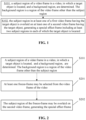
- FIG. 1 is a flowchart of a method for processing a video according to an illustrative embodiment. As shown in FIG. 1 , the method is applied to a terminal, and includes steps as follows.
- a subject region of a video frame in a video, in which a target object is located, and a background region, are determined.
- the background region is a region of the video frame other than the subject region.
- the subject region in at least one of a first video frame having the target object is overlaid on at least one of a second video frame having the target object, generating a special effect frame including at least two subject regions in each of which the target object is located.
- the terminal is electronic equipment having a display function.
- a user may play a video or preview video content during recording of the video through the terminal.
- the video to be processed may be a recorded video file or a video being recorded.
- the process of video recording includes a process of acquiring a plurality of consecutive video frames. A recorded video part is formed of the video frames.
- the target object may be identified in a video frame in a target identification manner.
- the target object may be the subject part of focus in a picture, including a subject that may move in the video, such as a movable object such as a person, an animal, an automobile, an airplane, etc., in the picture.
- the subject region in which the target object is located may be isolated from the image of a video frame.
- a doppelêtr effect of displaying at least two subject regions in a video picture may be implemented.
- the first video frame serves as a video frame providing a segment subject region of the target object
- the second video frame serves as a video frame on which the segment subject region overlays.
- a first video frame may also serve as a second video frame on which the subject region of another first video frame overlays.
- the subject region in the first frame is isolated and overlaid on the second frame and each following video frame
- the subject region in the 100th frame is isolated and overlaid on the 101st frame and each following video frame.
- the second frame and each following video frame each serve as a second video frame
- the 100th frame serves both as a first video frame and a second video frame.
- the subject person walks from the left end of the picture to the right end of the picture.
- video processing a picture in which the subject person is located at the left end is segmented to acquire the subject region.
- the segment subject region acquired from the segmentation is then overlaid on each of video frames in the video where the subject person walks from left to right. In this way, while displaying that the subject person is walking toward the right end, the subject person frozen at the left end is displayed simultaneously, thereby implementing the frozen doppelêtr special effect.
- the subject region in which the target object is located may be an image region within the edge of the target object.
- the target object is cut out of a video frame along the edge by image segmentation technique, and the region enclosed by the edge of the target object is taken as the subject region.
- the subject region in which the target object is located may also be a graphic region of a fixed shape including the target object, such as a rectangular region or a circular region, etc. If the background picture of the video is a static environment, in which case the region of each of a plurality of video frames other than the target object is a fixed picture, then, the subject region in which the target object is located may be isolated by a simple rule graph.
- the special effect frame may be cached in predetermined cache space. After the video recording completes, a prompt of whether to generate a special effect video is displayed. It is determined whether to generate a special effect video according to the operation instruction of the user. If the user determines to generate a special effect video, the cached special effect frame replaces an original video frame to generate and save as a special effect video. If the user determines not to generate any special effect video, the cached special effect frame may be deleted.
- the selection of whether to save the original video may be provided as needed by the user. If the user chooses not to save the original video, the original video frame corresponding to the generated special effect frame may be deleted and replaced with the special effect frame. The video frame stream composed of video frames after replacement with the special effect frame is then used to generate the special effect video. If the user chooses to retain the original video, both the special effect video after replacement with the special effect frame, and the original video composed of original video frames, may be generated, respectively. This facilitates subsequent comparison, viewing, and further adjustment by the user.
- a target object in different video frames in a video is automatically identified and isolated via image segmentation technology of the terminal per se, and overlaid on another video frame, thereby generating a video special effect of doppel réellers or copies of the target object easily and quickly, without having to use any complex post-production tool or production technique.
- a special effect frame may be displayed directly in a picture, displaying a special effect, thereby facilitating video production at a terminal, while improving a viewing experience of a user.
- the subject region of the video frame in the video in which the target object is located and the background region other than the subject region may be determined as follows.
- the target object in the video frame in the video may be identified.
- the subject region and the background region may be determined according to the target object.
- a target object in a video frame is identified using an image identification technique.
- different objects in an image are identified using an edge identification technique.
- An object in an image having a characteristic of a person is identified using portrait identification, etc.
- a target object to be identified may also be determined according to the operation of the user.
- the edges of different objects in an image are determined using an edge identification technique, and then the subject region of the target object is determined through the image region clicked on by the user.
- an edge graph plotted by a user by an operation such as touch is received, and a region enclosed by the edge graph is determined as a subject region of the target object.
- a region beyond the edge of the subject region may be determined as the background region.
- the target object in an image may be identified in a simple manner, and a video image may be divided into the subject region and the background region according to the target object.
- the first video frame includes a freeze-frame
- the second video frame includes a video frame after the freeze-frame.
- the subject region in the at least one of the first video frame having the target object may be overlaid on the at least one of the second video frame having the target object, generating the special effect frame including the at least two subject regions in each of which the target object is located, as follows.
- At least one of the freeze-frame may be selected from the video frame of the video.
- the subject region of the freeze-frame may be overlaid on the second video frame, generating the special effect frame.
- video frames at different locations in the video may be selected as freeze-frames.
- the subject region in a freeze-frame may serve to be overlaid on another video frame that comes after the freeze-frame.
- the target object in the freeze-frame in the video may form a "frozen" effect, that is, the target object in the freeze-frame is always displayed in each video frame after the freeze-frame.
- freeze-frames in a video
- frozen doppel saurs or clones, or copies
- the target object is a running person. While the person is running, a freeze-frame appears once in a while, then a plurality of "doppel réellers", or duplicates, of the person fixed at different locations will appear one after another in the video picture, thereby implementing a "frozen doppelêtr” specific effect.
- the process of identifying the target object, selecting a freeze-frame, and generating a special effect frame may be performed in the process of processing the video file after the video recording completes, or may be performed at any time in the process of acquiring the video frames during video recording, and the special effect frame with the overlaid subject region may be displayed directly on a preview interface.
- a photographing parameter may be fixed, reducing special effect frame distortion caused by automatic adjustment of the photographing parameter due to a change in light.
- a photographing parameter includes, but is not limited to, parameters such as International Organization for Standardization (ISO) photosensibility, exposure time, a focus distance, white balance, etc.
- ISO International Organization for Standardization
- the at least one of the freeze-frame may be selected from the video frame of the video as follows.
- a predetermined operation instruction may be detected during playback of the video.
- a video frame displayed when the predetermined operation instruction is detected may be determined as the freeze-frame.
- a freeze-frame may be selected in different modes according to different video features or user preferences.
- a freeze-frame may be selected according to a user operation received.
- the process of video playback may be a process of playback of an existing video file, or may be preview playback during recording.
- playback may also be performed at different playback speeds as needed by the user. For example, in order to facilitate clear display of the video to allow a user to perform a selection operation, slow playback may be performed, such as at 0. 5 times the speed, at 0. 1 times the speed, or even in a frame-by-frame switch mode.
- slow playback may be performed, such as at 0. 5 times the speed, at 0. 1 times the speed, or even in a frame-by-frame switch mode.
- the user may select a freeze-frame flexibly according to the interaction between the user and the photographed object or the actual action of the photographed object in the photographing process.
- the terminal may determine a freeze-frame according to a predetermined operation instruction, and when it is detected that the operation instruction of the user is the predetermined operation instruction, the terminal may determine that the currently displayed video frame is to be used as a freeze-frame.
- the predetermined operation instruction may be a touch instruction of a predetermined gesture, such as an instruction of a touch operation such as clicking, double-clicking, sliding upward, sliding downward, or irregular sliding.
- the predetermined operation instruction may also be a case operation instruction, such as pressing a volume key and an on/off key at the same time, etc.
- the predetermined operation instruction may also be a voice input instruction, etc.
- the at least one of the freeze-frame may be selected from the video frame of the video as follows.
- Video frames at intervals of a predetermined duration in the video may be selected as the freeze-frame.
- the terminal may automatically select a freeze-frame according to an interval of a predetermined duration, such as an interval of a predetermined duration of 10 seconds. Then, the terminal may use a video frame being played as a freeze-frame every 10 seconds during video recording or video file playback.
- a predetermined duration such as an interval of a predetermined duration of 10 seconds.
- the mode may also be performed other than during playback or preview. Since video frames of the video are played at a fixed frequency, it is possible to determine the number of video frames in between video frames at intervals of a predetermined duration without playback. That is, each freeze-frame in a video file may be determined directly according to the interval of the number of video frames. For example, if the video is played at a frequency of 30 frames per second, and the predetermined duration is 10 seconds, then frames spaced at every 300 frames in the video may be determined as freeze-frames.
- freeze-frame selection may be completed automatically by the terminal by simple setting, without having to watching the video repeatedly to perform selection, and without requiring any accurate user operation.
- the at least one of the freeze-frame is selected from the video frame of the video as follows.
- a stance of the target object in the video frame of the video is determined.
- the N may be a positive integer greater than or equal to 2.
- automatic selection may also be performed through the content of the video.
- a selected freeze-frame is determined by detecting the stance of the target object in a video frame.
- personalized automatic selection may be implemented.
- the photographed object and the user themselves may pose and photograph an action as the frozen doppelgänger. That is, while moving, the photographed object may pose in a specific stance when it is desired to produce a frozen doppel réeller effect, and pause for a period of time before continuing to move.
- the terminal selects a freeze-frame according to whether the target object remains the same stance in the photographed picture in N consecutive video frames.
- the "same stance" here may be understood as not generating a movement beyond a predetermined range, and is not limited to a slight shaking of the target object or a small movement of a body part such as a blink, a finger wobble, etc.
- a freeze-frame is selected by identifying the stance of the target object, so that it is not necessary for the user to make a manual selection, and it is possible to implement automatic personalized selection of video content, improving the flexibility and the degree of automation in the video production process, providing better human-terminal interaction experience.
- the at least one of the freeze-frame may be selected from the video frame of the video as follows.
- a location of the target object in a current video frame may be determined.
- the current video frame may be determined as the freeze-frame.
- selection of a freeze-frame is also performed according to a video picture, and video frames in which the target object is at locations spaced apart by a fixed distance are selected as freeze-frames according to the location of the target object in each video frame. For example, whenever the target object is at a predetermined distance from its location in the last freeze-frame, the current video frame is selected as a freeze-frame, so that a plurality of freeze-frames may be distributed evenly in a video picture.
- one of the several modes for selecting a freeze-frame may always be used, or the mode may be switched at any time according to a user setting. Further, a selection from the several modes is possible in producing the same video. In this way, more diversified operations may be implemented, and a combination of automatic and manual operations may be implemented, facilitating the production of more abundant special effects.
- prompt information is displayed before video recording starts.
- the prompt information serves to prompt the user whether to enable the function of automatic freeze-frame selection. If the received user instruction determines to enable the function of automatic freeze-frame selection, automatic selection is performed in accordance with at least one of the above modes during the recording process. At least one of the above modes includes automatically selecting a freeze-frame according to a location or a stance of the target object, or an interval of a predetermined duration in the video.
- the user may select whether to activate automatic selection of a freeze-frame and the mode for the automatic selection according to the actual requirement, the type and content of the video to be shot.
- the user may also determine whether to select a freeze-frame by manual selection before video recording starts.
- a manual slection mode may also be used as a default mode, and by default a freeze-frame is determined in a manual selection mode as long as the function of special effect frame production during recording is activated.
- the method further includes a step as follows.
- An alignment parameter of the subject region of the first video frame may be determined according to a location of the target object in the first video frame.
- the alignment parameter may be used to determine a target location of the subject region of the first video frame in the special effect frame.
- the subject region in at least one video frame may be overlaid on at least one video frame other than the video frame where the target object is located, generating the special effect frame including at least two subject regions where the target object is located, as follows.
- the subject region may be overlaid, according to the alignment parameter, at the target location on at least one video frame other than the video frame in which the target object is located, generating the special effect frame including two subject regions in each of which the target object is located.
- the subject region of the freeze-frame in which the target object is located may be overlaid on each video frame after the freeze-frame, thereby implementing the "frozen” effect.
- a background region does not need to be covered.
- other regions still change with playback of the video, thereby producing an unreal feeling visually beyond a physical law, bringing about visual impact of a special effect.
- an alignment parameter of the subject region is determined here according to the location of the target object in the original video frame, that is, the freeze-frame.
- the location where the subject region is overlaid may be determined according to the alignment parameter of the subject region, so that the location of the "frozen doppelêtr"on the special effect frame is consistent with the location of the target object in the freeze-frame.
- the alignment parameter of the subject region of the first video frame may be determined according to the location of the target object in the first video frame as follows.
- a video frame may be selected as a reference frame from the video frame of the video.
- the alignment parameter may be determined according to a location offset of the target object in the first video frame with respect to the target object in the reference frame.
- the alignment parameter may be determined according to the reference frame of the video. For example, the first frame in the video frame, or the first freeze-frame, etc., is selected as the reference frame, and then a corresponding alignment parameter is determined based on the location offset of the target object in a subsequent freeze-frame and the reference frame with respect to the reference frame.
- the alignment parameter of each freeze-frame is determined according to the location with respect to the reference frame of the video, thereby maintaining continuity in locations of the target object in different video frames.
- the relative location relationship is used instead of the absolute location of the entire video picture, so that the location deviation caused by the picture jitter and the like may be reduced, thereby making the picture of the special effect frame more smooth.
- a fixing tool such as a tripod.
- the second video frame includes a video frame before the freeze-frame.
- the subject region in the at least one of the first video frame having the target object may be overlaid on the at least one of the second video frame having the target object, generating the special effect frame including the at least two subject regions in each of which the target object is located as follows.
- the subject region in the at least one of the first video frame having the target object may be overlaid on at least one of a second video frame before the first video frame, generating the special effect frame.
- a post special effect adjustment may also be performed on a video file that has been recorded, to implement the specific effect of decreasing "frozen doppelêtrs".
- the subject region of a freeze-frame overlaid may be adjusted in video frames at different locations during a subsequent playback.
- the subject region of a freeze-frame is overlaid on a video frame before the freeze-frame, and not on a video frame after the freeze-frame.
- Embodiments of the present invention also provide an example as follows.
- a frozen doppelêtr special effect is produced by editing a video, such that a plurality of frozen images of the same person appear in the video picture at the same time, and freeze-frames may be increased or decreased as the location of the person changes.
- identification of a subject region of a target object in a video picture is implemented using an artificial intelligence technology, including video picture target identification, image segmentation technology, etc.
- the location of the subject region, time of overlaying, etc. may be computed automatically through an alignment technology.
- a video result may be previewed in real time during the photographing process, and the video with a special effect picture may be quickly generated.
- a film may be acquired directly using a user terminal such as a mobile phone without using a post-stage video editing tool by a professional, and the production cost is low, the production time is short, and the application range is wide.
- the alignment parameter of the subject region is determined using the location with respect to the reference frame, reducing the location deviation caused by the jitter in the photographing process, therefore implementing hand-held photographing without having to use a fixing tool such as a tripod.
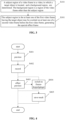
- a flow of recording a video with a frozen doppelêtr special effect using a terminal is as shown in FIG. 4 , and includes steps as follows.
- a preview screen may be displayed on a preview interface after a camera function is turned on.
- a recording state may be entered according to an instruction received, to start recording a video picture.
- a recorded video picture and a generated special effect frame may be displayed on the preview interface, implementing effect preview.
- switch to a frozen doppel saur mode may be performed according to a switch instruction received to preview and display a special effect frame in the frozen doppel saur mode.
- An original video frame may be previewed and displayed in a non-frozen doppel réeller mode.
- the process of producing a special effect frame may be implemented by a flowchart as shown in FIG. 5 as per an aspect not being part of the invention.
- a photographing parameter of the first frame may be locked.
- the photographing parameter includes, but is not limited to, parameters such as ISO, exposure time, a focus distance, white balance, etc.
- a freeze frame selecting module is initialized, providing a selection method, storage space, etc., for selecting a freeze-frame.
- the first frame may be determined as a reference frame, and an alignment module for subsequently determining the location of the target object may be generated according to the reference frame.
- the subject region mask i in which the target object of the frame is located is acquired using an image segmentation technique.
- the alignment parameter Wi of the target object in the frame is determined using the alignment module.
- the sequence number i of the current frame and the subject region mask i are added to the freeze-frame selecting module, and the freeze-frame selecting module determines whether to add the current frame or a previous frame as a new freeze-frame according to a preset selection rule.
- the selection rule may include the following.
- a selection is made according to time. For example, a current frame is automatically added as a freeze-frame every second.
- selection is made according to a user operation received. For example, when a touch screen receives a user click operation, a video frame at the time of the click is selected as a freeze-frame.
- a freeze-frame is selected automatically according to the location of the target object in a video frame. For example, each time the target object is at a predetermined distance from the location in the last freeze-frame, the current video frame is selected as a freeze-frame, so that a plurality of freeze-frames may be distributed uniformly in the video picture.
- a freeze-frame is selected automatically according to the location and time of the target object in the video. For example, when the target object stays at one location in N consecutive video frames, one of the N video frames is selected as a freeze-frame, so that automatic freeze may be implemented as willed by the person being photographed.
- the subject region mask of the target object may be plotted in a video frame after each freeze-frame using the alignment parameter of the target object in the each freeze-frame, thereby generating a special effect frame with a plurality of frozen doppelêtrs.
- the video may be processed after recording completes, generating a special effect, including different effects of increasing frozen doppeleriers and decreasing frozen doppel réellers.
- the effect of decreasing frozen doppeleriers is as shown in FIG. 6A as per an aspect not being part of the invention, where the subject region in a freeze-frame in which the target object is located is overlaid in each video frame before the freeze-frame, implementing the effect of decreasing frozen doppeleriers in the process of playback.
- the effect of increasing frozen doppeleriers is as shown in FIG.
- a complex video special effect editing algorithm is hidden in a product function of a terminal through an artificial intelligence technology.
- the user may preview a synthesized special effect in real time during a photographing process, and adjust a photographing process at any time according to feedback of the preview. After photographing completes, a video file with a special effect may be acquired, thereby effectively improving user experience.
- FIG. 7 is a block diagram of a structure of a device for processing a video according to an illustrative embodiment. As shown in FIG. 7 , the device 700 is applied to a terminal, and includes modules as follows.
- a first determining module 701 is configured to determine a subject region of a video frame in a video, in which a target object is located, and a background region.
- the background region is a region of the video frame other than the subject region.
- a generating module 702 is configured to overlay the subject region in at least one of a first video frame having the target object on at least one of a second video frame having the target object, generating a special effect frame including at least two subject regions in each of which the target object is located.
- the first determining module includes:
- the first video frame includes a freeze-frame.
- the second video frame includes a video frame after the freeze-frame.
- the generating module includes:
- the first selecting sub-module includes:
- the first selecting sub-module is specifically configured to: select, as the freeze-frame, video frames at intervals of a predetermined duration in the video.
- the first selecting sub-module includes:
- the first selecting sub-module includes:
- the device further includes: a second determining module configured to determine an alignment parameter of the subject region of the first video frame according to a location of the target object in the first video frame.
- the alignment parameter may be used to determine a target location of the subject region of the first video frame in the special effect frame.
- the generating module may be specifically configured to: according to the alignment parameter, overlay the subject region of the first video frame at the target location on at least one video frame other than the first video frame in which the target object is located, generating the special effect frame including two subject regions in each of which the target object is located.
- the second determining module includes:
- the second video frame includes a video frame before the freeze-frame.
- the generating module is specifically configured to: overlay the subject region in the at least one of the first video frame having the target object on at least one of a second video frame before the first video frame, generating the special effect frame.
- a module of the device according to an aforementioned embodiment herein may perform an operation in a mode elaborated in an aforementioned embodiment of the method herein, which will not be repeated here.
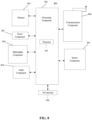
- FIG. 8 is a block diagram of a terminal 800 according to an illustrative embodiment not being part of the invention.
- the terminal 800 may be a terminal such as a mobile phone, a computer, a digital broadcasting terminal, messaging equipment, a game console, tablet equipment, medical equipment, fitness equipment, a Personal Digital Assistant (PDA), etc.
- PDA Personal Digital Assistant
- the terminal 800 may include one or more components as follows: a processing component 801, a memory 802, a power component 803, a multimedia component 804, an audio component 805, an Input / Output (I/O) interface 806, a sensor component 807, and a communication component 808.
- a processing component 801 a memory 802
- a power component 803 a multimedia component 804
- an audio component 805 an Input / Output (I/O) interface 806, a sensor component 807, and a communication component 808.
- I/O Input / Output
- the processing component 801 generally controls an overall operation of the display equipment, such as operations associated with display, a telephone call, data communication, a camera operation, a recording operation, etc.
- the processing component 801 may include one or more processors 810 to execute instructions so as to complete all or some steps of the method.
- the processing component 801 may include one or more modules to facilitate interaction between the processing component 801 and other components.
- the processing component 801 may include a multimedia module to facilitate interaction between the multimedia component 804 and the processing component 801.
- the memory 802 is configured to store various types of data to support operation on the terminal 800. Examples of these data include instructions of any application or method configured to operate on the terminal 800, contact data, phonebook data, messages, pictures, videos, and /or the like.
- the memory 802 may be realized by any type of volatile or non-volatile storage equipment or combination thereof, such as Static Random Access Memory (SRAM), Electrically Erasable Programmable Read-Only Memory (EEPROM), Erasable Programmable Read-Only Memory (EPROM), Programmable Read-Only Memory (PROM), Read-Only Memory (ROM), magnetic memory, flash memory, magnetic disk, or compact disk.
- SRAM Static Random Access Memory
- EEPROM Electrically Erasable Programmable Read-Only Memory
- EPROM Erasable Programmable Read-Only Memory
- PROM Programmable Read-Only Memory
- ROM Read-Only Memory
- magnetic memory flash memory, magnetic disk, or compact disk.
- the power component 803 supplies electric power to various components of the terminal 800.
- the power component 803 may include a power management system, one or more power supplies, and other components related to generating, managing and distributing electric power for the terminal 800.
- the multimedia component 804 includes a screen providing an output interface between the terminal 800 and a user.
- the screen may include a Liquid Crystal Display (LCD) and a Touch Panel (TP). If the screen includes a TP, the screen may be realized as a touch screen to receive an input signal from a user.
- the TP includes one or more touch sensors for sensing touch, slide and gestures on the TP. The touch sensors not only may sense the boundary of a touch or slide move, but also detect the duration and pressure related to the touch or slide move.
- the multimedia component 804 includes a front camera and /or a rear camera. When the terminal 800 is in an operation mode such as a shooting mode or a video mode, the front camera and /or the rear camera may receive external multimedia data. Each of the front camera and /or the rear camera may be a fixed optical lens system or may have a focal length and be capable of optical zooming.
- the audio component 805 is configured to output and /or input an audio signal.
- the audio component 805 includes a microphone (MIC).
- the MIC When the terminal 800 is in an operation mode such as a call mode, a recording mode, and a voice recognition mode, the MIC is configured to receive an external audio signal.
- the received audio signal may be further stored in the memory 802 or may be sent via the communication component 808.
- the audio component 805 further includes a loudspeaker configured to output the audio signal.
- the I/O interface 806 provides an interface between the processing component 801 and a peripheral interface module.
- the peripheral interface module may be a keypad, a click wheel, a button or the like. These buttons may include but are not limited to: a homepage button, a volume button, a start button, and a lock button.
- the sensor component 807 includes one or more sensors for assessing various states of the terminal 800.
- the sensor component 807 may detect an on/off state of the terminal 800 and relative positioning of components such as the display and the keypad of the terminal 800.
- the sensor component 807 may further detect a change in the location of the terminal 800 or of a component of the terminal 800, whether there is contact between the terminal 800 and a user, the orientation or acceleration/deceleration of the terminal 800, and a change in the temperature of the terminal 800.
- the sensor component 807 may include a proximity sensor configured to detect existence of a nearby object without physical contact.
- the sensor component 807 may further include an optical sensor such as a Complementary Metal-Oxide-Semiconductor (CMOS) or Charge-Coupled-Device (CCD) image sensor used in an imaging application.
- CMOS Complementary Metal-Oxide-Semiconductor
- CCD Charge-Coupled-Device
- the sensor component 807 may further include an acceleration sensor, a gyroscope sensor, a magnetic sensor, a pressure sensor, or a temperature sensor.
- the communication component 808 is configured to facilitate wired or wireless/radio communication between the terminal 800 and other equipment.
- the terminal 800 may access a radio network based on a communication standard such as WiFi, 2G, 3G, 4G/LTE, 5G/NR, or a combination thereof.
- the communication component 808 broadcasts related information or receives a broadcast signal from an external broadcast management system via a broadcast channel.
- the communication component 808 further includes a Near Field Communication (NFC) module for short-range communication.
- the NFC module may be realized based on Radio Frequency Identification (RFID), Infrared Data Association (IrDA), Ultra-WideBand (UWB) technology, BlueTooth (BT) technology, and other technologies.
- RFID Radio Frequency Identification
- IrDA Infrared Data Association
- UWB Ultra-WideBand
- BT BlueTooth
- the terminal 800 may be realized by one or more of Application Specific Integrated Circuits (ASIC), Digital Signal Processors (DSP), Digital Signal Processing Device (DSPD), Programmable Logic Devices (PLD), Field Programmable Gate Arrays (FPGA), controllers, microcontrollers, microprocessors or other electronic components, to implement the method.
- ASIC Application Specific Integrated Circuits
- DSP Digital Signal Processors
- DSPD Digital Signal Processing Device
- PLD Programmable Logic Devices
- FPGA Field Programmable Gate Arrays
- controllers microcontrollers, microprocessors or other electronic components, to implement the method.
- a transitory or non-transitory computer-readable storage medium including instructions such as the memory 802 including instructions, is further provided.
- the instructions may be executed by the processor 810 of the terminal 800 to implement the method.
- the non-transitory computer-readable storage medium may be a Read-Only Memory (ROM), a Random Access Memory (RAM), a Compact Disc Read-Only Memory (CD-ROM), a magnetic tape, a floppy disk, optical data storage equipment, etc.
- Embodiments of the present invention further provide a transitory or non-transitory computer-readable storage medium.
- the storage medium When instructions in the storage medium are executed by a processor of a mobile terminal, the mobile terminal is allowed to perform the method provided in any one of the embodiments.
- a term “and / or” may describe an association between associated objects, indicating three possible relationships. For example, by A and / or B, it may mean that there may be three cases, namely, existence of but A, existence of both A and B, or existence of but B.
- a slash mark “/” may generally denote an "or” relationship between two associated objects that come respectively before and after the slash mark. Singulars "a/an”, “said” and “the” are intended to include the plural form, unless expressly illustrated otherwise by context.
Landscapes
- Engineering & Computer Science (AREA)
- Multimedia (AREA)
- Theoretical Computer Science (AREA)
- Physics & Mathematics (AREA)
- General Physics & Mathematics (AREA)
- Signal Processing (AREA)
- Computer Vision & Pattern Recognition (AREA)
- Databases & Information Systems (AREA)
- Human Computer Interaction (AREA)
- Health & Medical Sciences (AREA)
- Life Sciences & Earth Sciences (AREA)
- Biomedical Technology (AREA)
- General Health & Medical Sciences (AREA)
- Molecular Biology (AREA)
- Television Signal Processing For Recording (AREA)
- Studio Circuits (AREA)
- Two-Way Televisions, Distribution Of Moving Picture Or The Like (AREA)
- Studio Devices (AREA)
Claims (11)
- Computer-implementiertes Verfahren zum Verarbeiten eines Videos, wobei das Verfahren auf ein Endgerät (800) angewendet wird, und die folgenden Schritte aufweist:Bestimmen (S101) eines betreffenden Bereichs eines Videoframes in einem Video, in welchem sich ein Zielobjekt befindet, und eines Hintergrundbereichs, wobei der Hintergrundbereich ein von dem betreffenden Bereich verschiedener Bereich des Videoframes ist; undÜberlagern (S102) des betreffenden Bereichs mit mindestens einem das Zielobjekt aufweisenden ersten Videoframe über mindestens einen das Zielobjekt aufweisenden zweiten Videoframe, wobei ein Spezialeffekt-Frame erzeugt wird, der mindestens zwei betreffende Bereiche aufweist, in welchen das Zielobjekt jeweils enthalten ist,wobei der erste Videoframe einen Freeze-Frame aufweist, der zweite Videoframe einen Videoframe nach dem Freeze-Frame aufweist,dadurch gekennzeichnet,dass das Überlagern des betreffenden Bereichs mit mindestens einem das Zielobjekt aufweisenden ersten Videoframe über mindestens einen das Zielobjekt aufweisenden zweiten Videoframe, wobei ein Spezialeffekt-Frame erzeugt wird, der mindestens zwei betreffende Bereiche aufweist, in welchen das Zielobjekt jeweils enthalten ist, die folgenden Schritte aufweist:Bestimmen einer Haltung des Zielobjekts in dem Videoframe des Videos;in Reaktion darauf, dass Haltungen des Zielobjekts in einer aufeinanderfolgenden Anzahl N der Videoframes identisch sind, Wählen eines der aufeinanderfolgenden Anzahl N der Videoframes als den Freeze-Frame, wobei N eine positive ganze Zahl größer als oder gleich 2 ist; undÜberlagern (S202) des betreffenden Bereichs des Freeze-Frames über den zweiten Videoframe, wodurch der Spezialeffekt-Frame erzeugt wird.
- Verfahren nach Anspruch 1, bei welchem das Bestimmen des betreffenden Bereichs des Videoframes in dem Video, in welchem sich das Zielobjekt befindet, und des Hintergrundbereichs, der von dem betreffenden Bereich verschieden ist, die folgenden Schritte aufweist:Identifizieren des Zielobjekts in dem Videoframe in dem Video; undBestimmen des betreffenden Bereichs und des Hintergrundbereichs gemäß dem Zielobjekt.
- Verfahren nach Anspruch 1 oder 2, ferner mit dem folgenden Schritt:Bestimmen eines Ausrichtungsparameters des betreffenden Bereichs des ersten Videoframes gemäß einer Position des Zielobjekts in dem ersten Videoframe, wobei der Ausrichtungsparameter dazu verwendet wird, eine Zielposition des betreffenden Bereichs des ersten Videoframes in dem Spezialeffekt-Frame zu bestimmen,wobei das Überlagern des betreffenden Bereichs in mindestens einem das Zielobjekt aufweisenden ersten Videoframe mit mindestens einen das Zielobjekt aufweisenden zweiten Videoframe, wobei der Spezialeffekt-Frame erzeugt wird, der die mindestens zwei betreffende Bereiche aufweist, in welchen das Zielobjekt jeweils enthalten ist, den folgenden Schritt aufweist:
gemäß dem Ausrichtungsparameter, Überlagern des betreffenden Bereichs des ersten Videoframes an der Zielposition mit mindestens einen von dem ersten Videoframe verschiedenen Videoframe, in welchem sich das Zielobjekt befindet, wobei der Spezialeffektframe erzeugt wird, welcher zwei betreffende Bereiche aufweist, in welchen das Zielobjekt jeweils enthalten ist. - Verfahren nach Anspruch 3, bei welchem das Bestimmen des Ausrichtungsparameters des betreffenden Bereichs des ersten Videoframes gemäß der Position des Zielobjekts in dem ersten Videoframe die folgenden Schritte aufweist:Wählen eines Videoframes als einen Referenzframe aus dem Videoframe des Videos; undBestimmen des Ausrichtungsparameters gemäß einem Positionsversatz des Zielobjekts in dem ersten Videoframe in Bezug auf das Zielobjekt in dem Referenzframe.
- Verfahren nach Anspruch 1, bei welchem das Überlagern des betreffenden Bereichs in mindestens einem das Zielobjekt aufweisenden ersten Videoframe mit mindestens einen das Zielobjekt aufweisenden zweiten Videoframe, wobei der Spezialeffekt-Frame erzeugt wird, der die mindestens zwei betreffende Bereiche aufweist, in welchen das Zielobjekt jeweils enthalten ist, den folgenden Schritt aufweist:
Überlagern (S301) des betreffenden Bereichs in dem mindestens einen das Zielobjekt aufweisenden ersten Videoframe mit mindestens einen zweiten Videoframe vor dem ersten Videoframe, wodurch der Spezialeffekt-Frame erzeugt wird. - Vorrichtung (700) zum Verarbeiten eines Videos, wobei die Vorrichtung bei einem Endgerät (800) Anwendung findet, und mit:einem ersten Bestimmungsmodul (701), das zum Bestimmen eines betreffenden Bereichs eines Videoframes in einem Video, in welchem sich ein Zielobjekt befindet, und eines Hintergrundbereichs ausgebildet ist, wobei der Hintergrundbereich ein von dem betreffenden Bereich verschiedener Bereich des Videoframes ist; undeinem Erzeugungsmodul (702), das zum Überlagern des betreffenden Bereichs in mindestens einem das Zielobjekt aufweisenden ersten Videoframe mit mindestens einen das Zielobjekt aufweisenden zweiten Videoframe ausgebildet ist, wobei ein Spezialeffekt-Frame erzeugt wird, der mindestens zwei betreffende Bereiche aufweist, in welchen das Zielobjekt jeweils enthalten ist,wobei der erste Videoframe einen Freeze-Frame aufweist, der zweie Videoframe einen Videoframe nach dem Freeze-Frame aufweist,dadurch gekennzeichnet,dass das Erzeugungsmodul (702) aufweist:ein erstes Wähl-Submodul, das dazu ausgebildet ist, eine Haltung des Zielobjekts in dem Videoframe des Videos durch ein drittes Bestimmungs-Submodul des ersten Wähl-Submoduls zu bestimmen, und in Reaktion darauf, dass Haltungen des Zielobjekts in einer aufeinanderfolgenden Anzahl N der Videoframes identisch sind, durch ein zweites Bestimmungs-Submodul des ersten Wähl-Submoduls einen der aufeinanderfolgenden Anzahl N der Videoframes als den Freeze-Frame zu wählen, wobei N eine positive ganze Zahl größer als oder gleich 2 ist; undein Erzeugungs-Submodul, das zum Überlagern des betreffenden Bereichs des Freeze-Frames mit den zweiten Videoframe ausgebildet ist, wodurch der Spezialeffekt-Frame erzeugt wird.
- Vorrichtung (700) nach Anspruch 6, bei welcher das erste Bestimmungsmodul (701) aufweist:ein Identifizierungs-Submodul, das zum Identifizieren des Zielobjekts in dem Videoframe in dem Video ausgebildet ist; undeinem ersten Bestimmungs-Submodul, das zum Bestimmen des betreffenden Bereichs und des Hintergrundbereichs gemäß dem Zielobjekt ausgebildet ist.
- Vorrichtung (700) nach Anspruch 6 oder 7, ferner mit:einem zweiten Bestimmungsmodul, das zum Bestimmen eines Ausrichtungsparameters des betreffenden Bereichs des ersten Videoframes gemäß einer Position des Zielobjekts in dem ersten Videoframe ausgebildet ist, wobei der Ausrichtungsparameter dazu verwendet wird, eine Zielposition des betreffenden Bereichs des ersten Videoframes in dem Spezialeffekt-Frame zu bestimmen,wobei das zweite Bestimmungsmodul (702) insbesondere dazu ausgebildet ist,gemäß dem Ausrichtungsparameter, den betreffenden Bereich des ersten Videoframes an der Zielposition mit mindestens einen von dem ersten Videoframe verschiedenen Videoframe, in welchem sich das Zielobjekt befindet, zu überlagern wobei der Spezialeffektframe erzeugt wird, welcher zwei betreffende Bereiche aufweist, in welchen das Zielobjekt jeweils enthalten ist.
- Vorrichtung (700) nach Anspruch 8, bei welcher das zweite Bestimmungsmodul aufweist:ein drittes Wähl-Submodul, das zum Wählen eines Videoframes als einen Referenzframe aus dem Videoframe des Videos ausgebildet ist; undein sechstes Bestimmungs-Submodul, das zum Bestimmen des Ausrichtungsparameters gemäß einem Positionsversatz des Zielobjekts in dem ersten Videoframe in Bezug auf das Zielobjekt in dem Referenzframe ausgebildet ist.
- Vorrichtung (700) nach Anspruch 6, bei welcher das Erzeugungsmodul (702) insbesondere dazu ausgebildet ist,
den betreffenden Bereich in dem mindestens einen das Zielobjekt aufweisenden ersten Videoframe mit mindestens einen zweiten Videoframe vor dem ersten Videoframe zu überlagern, wodurch der Spezialeffekt-Frame erzeugt wird. - Computerlesbares Speichermedium, in welchem computerausführbare Befehle gespeichert sind, welche bei Ausführung durch einen Prozessor das Verfahren nach einem der Ansprüche 1 bis 5 implementieren.
Applications Claiming Priority (1)
| Application Number | Priority Date | Filing Date | Title |
|---|---|---|---|
| CN202010737025.5A CN111832539A (zh) | 2020-07-28 | 2020-07-28 | 视频处理方法及装置、存储介质 |
Publications (2)
| Publication Number | Publication Date |
|---|---|
| EP3945490A1 EP3945490A1 (de) | 2022-02-02 |
| EP3945490B1 true EP3945490B1 (de) | 2024-08-21 |
Family
ID=72925792
Family Applications (1)
| Application Number | Title | Priority Date | Filing Date |
|---|---|---|---|
| EP21171253.4A Active EP3945490B1 (de) | 2020-07-28 | 2021-04-29 | Verfahren und vorrichtung zur verarbeitung von video und speichermedium |
Country Status (5)
| Country | Link |
|---|---|
| US (1) | US11770497B2 (de) |
| EP (1) | EP3945490B1 (de) |
| JP (1) | JP7279108B2 (de) |
| KR (1) | KR102457864B1 (de) |
| CN (1) | CN111832539A (de) |
Families Citing this family (6)
| Publication number | Priority date | Publication date | Assignee | Title |
|---|---|---|---|---|
| CN114697723B (zh) * | 2020-12-28 | 2024-01-16 | 北京小米移动软件有限公司 | 一种视频生成方法、装置及介质 |
| CN112822419A (zh) * | 2021-01-28 | 2021-05-18 | 上海盛付通电子支付服务有限公司 | 一种用于生成视频信息的方法与设备 |
| CN113223012B (zh) * | 2021-04-30 | 2023-09-29 | 北京字跳网络技术有限公司 | 视频处理方法、设备及电子设备 |
| CN113497973B (zh) * | 2021-09-06 | 2021-12-10 | 北京市商汤科技开发有限公司 | 视频处理方法和装置、计算机可读存储介质及计算机设备 |
| CN113490050B (zh) * | 2021-09-07 | 2021-12-17 | 北京市商汤科技开发有限公司 | 视频处理方法和装置、计算机可读存储介质及计算机设备 |
| US12592257B1 (en) * | 2023-05-04 | 2026-03-31 | Meta Platforms, Inc. | Media editing with client-side edits and server-side edits |
Family Cites Families (13)
| Publication number | Priority date | Publication date | Assignee | Title |
|---|---|---|---|---|
| JP2002344946A (ja) * | 2001-05-16 | 2002-11-29 | Oki Electric Ind Co Ltd | 監視装置 |
| JP4131929B2 (ja) * | 2002-12-03 | 2008-08-13 | 株式会社東芝 | オブジェクト画像合成方法 |
| JP5196230B2 (ja) * | 2006-12-22 | 2013-05-15 | 富士フイルム株式会社 | 出力装置、出力方法、及びプログラム |
| JP2010183370A (ja) * | 2009-02-05 | 2010-08-19 | Sanyo Electric Co Ltd | 画像再生装置 |
| US20120002112A1 (en) * | 2010-07-02 | 2012-01-05 | Sony Corporation | Tail the motion method of generating simulated strobe motion videos and pictures using image cloning |
| KR101316848B1 (ko) * | 2011-12-27 | 2013-10-10 | 중앙대학교 산학협력단 | 배경 합성을 위한 자동 객체 분할 장치 및 방법 |
| JP2013162333A (ja) * | 2012-02-06 | 2013-08-19 | Sony Corp | 画像処理装置、画像処理方法、プログラムおよび記録媒体 |
| US10044944B2 (en) * | 2015-09-28 | 2018-08-07 | Gopro, Inc. | Automatic composition of video with dynamic background and composite frames selected based on foreground object criteria |
| CN110476421A (zh) * | 2017-03-31 | 2019-11-19 | 日本电气株式会社 | 视频图像处理设备、视频图像分析系统、方法和程序 |
| CN108737852A (zh) * | 2018-04-26 | 2018-11-02 | 深圳天珑无线科技有限公司 | 一种视频处理方法、终端、具有存储功能的装置 |
| CN110225241A (zh) * | 2019-04-29 | 2019-09-10 | 努比亚技术有限公司 | 一种视频拍摄控制方法、终端及计算机可读存储介质 |
| CN110458820A (zh) * | 2019-08-06 | 2019-11-15 | 腾讯科技(深圳)有限公司 | 一种多媒体信息植入方法、装置、设备及存储介质 |
| CN111065001B (zh) * | 2019-12-25 | 2022-03-22 | 广州酷狗计算机科技有限公司 | 视频制作的方法、装置、设备及存储介质 |
-
2020
- 2020-07-28 CN CN202010737025.5A patent/CN111832539A/zh active Pending
-
2021
- 2021-04-28 KR KR1020210054745A patent/KR102457864B1/ko active Active
- 2021-04-28 JP JP2021075819A patent/JP7279108B2/ja active Active
- 2021-04-29 EP EP21171253.4A patent/EP3945490B1/de active Active
- 2021-04-29 US US17/244,919 patent/US11770497B2/en active Active
Also Published As
| Publication number | Publication date |
|---|---|
| CN111832539A (zh) | 2020-10-27 |
| US20220038642A1 (en) | 2022-02-03 |
| JP2022024993A (ja) | 2022-02-09 |
| EP3945490A1 (de) | 2022-02-02 |
| US11770497B2 (en) | 2023-09-26 |
| KR102457864B1 (ko) | 2022-10-24 |
| KR20220014278A (ko) | 2022-02-04 |
| JP7279108B2 (ja) | 2023-05-22 |
Similar Documents
| Publication | Publication Date | Title |
|---|---|---|
| EP3945490B1 (de) | Verfahren und vorrichtung zur verarbeitung von video und speichermedium | |
| CN109600659B (zh) | 播放视频时的操作方法、装置、设备及存储介质 | |
| KR102194094B1 (ko) | 가상과 실제 물체의 합성 방법, 장치, 프로그램 및 기록매체 | |
| KR102575196B1 (ko) | 촬영 방법, 촬영 장치, 전자기기 및 저장매체 | |
| CN109151537B (zh) | 视频处理方法、装置、电子设备及存储介质 | |
| CN112135046B (zh) | 视频拍摄方法、视频拍摄装置及电子设备 | |
| EP3136391B1 (de) | Verfahren, vorrichtung und endgerätevorrichtung zur videoeffektverarbeitung | |
| US20210343070A1 (en) | Method, apparatus and electronic device for processing image | |
| US11310443B2 (en) | Video processing method, apparatus and storage medium | |
| WO2022089284A1 (zh) | 拍摄处理方法、装置、电子设备和可读存储介质 | |
| CN112738402B (zh) | 拍摄方法、装置、电子设备及介质 | |
| CN110636382A (zh) | 在视频中添加可视对象的方法、装置、电子设备及存储介质 | |
| CN111586296B (zh) | 图像拍摄方法、图像拍摄装置及存储介质 | |
| CN112887620A (zh) | 视频拍摄方法、装置及电子设备 | |
| CN114697517A (zh) | 视频处理方法、装置、终端设备及存储介质 | |
| CN110995993A (zh) | 星轨视频拍摄方法、星轨视频拍摄装置及存储介质 | |
| CN114745505A (zh) | 拍摄方法、装置、电子设备和可读存储介质 | |
| EP4503590A1 (de) | Aufnahmeverfahren, vorrichtung, elektronische vorrichtung und medium | |
| CN114070998A (zh) | 一种拍摄月亮的方法、装置、电子设备及介质 | |
| CN115604415A (zh) | 录像帧率调整方法及其装置 | |
| CN116939351A (zh) | 拍摄方法、装置、电子设备及可读储存介质 | |
| EP4546808A1 (de) | Videoaufzeichnungsverfahren, -vorrichtung und -medium | |
| CN114697723B (zh) | 一种视频生成方法、装置及介质 | |
| CN112506393B (zh) | 图标显示方法、装置及存储介质 | |
| EP3826282B1 (de) | Verfahren und vorrichtung zur bildaufnahme |
Legal Events
| Date | Code | Title | Description |
|---|---|---|---|
| PUAI | Public reference made under article 153(3) epc to a published international application that has entered the european phase |
Free format text: ORIGINAL CODE: 0009012 |
|
| STAA | Information on the status of an ep patent application or granted ep patent |
Free format text: STATUS: THE APPLICATION HAS BEEN PUBLISHED |
|
| AK | Designated contracting states |
Kind code of ref document: A1 Designated state(s): AL AT BE BG CH CY CZ DE DK EE ES FI FR GB GR HR HU IE IS IT LI LT LU LV MC MK MT NL NO PL PT RO RS SE SI SK SM TR |
|
| STAA | Information on the status of an ep patent application or granted ep patent |
Free format text: STATUS: REQUEST FOR EXAMINATION WAS MADE |
|
| 17P | Request for examination filed |
Effective date: 20220729 |
|
| RBV | Designated contracting states (corrected) |
Designated state(s): AL AT BE BG CH CY CZ DE DK EE ES FI FR GB GR HR HU IE IS IT LI LT LU LV MC MK MT NL NO PL PT RO RS SE SI SK SM TR |
|
| GRAP | Despatch of communication of intention to grant a patent |
Free format text: ORIGINAL CODE: EPIDOSNIGR1 |
|
| STAA | Information on the status of an ep patent application or granted ep patent |
Free format text: STATUS: GRANT OF PATENT IS INTENDED |
|
| INTG | Intention to grant announced |
Effective date: 20240523 |
|
| GRAS | Grant fee paid |
Free format text: ORIGINAL CODE: EPIDOSNIGR3 |
|
| GRAA | (expected) grant |
Free format text: ORIGINAL CODE: 0009210 |
|
| STAA | Information on the status of an ep patent application or granted ep patent |
Free format text: STATUS: THE PATENT HAS BEEN GRANTED |
|
| AK | Designated contracting states |
Kind code of ref document: B1 Designated state(s): AL AT BE BG CH CY CZ DE DK EE ES FI FR GB GR HR HU IE IS IT LI LT LU LV MC MK MT NL NO PL PT RO RS SE SI SK SM TR |
|
| P01 | Opt-out of the competence of the unified patent court (upc) registered |
Free format text: CASE NUMBER: APP_42060/2024 Effective date: 20240716 |
|
| REG | Reference to a national code |
Ref country code: GB Ref legal event code: FG4D |
|
| REG | Reference to a national code |
Ref country code: CH Ref legal event code: EP |
|
| REG | Reference to a national code |
Ref country code: IE Ref legal event code: FG4D |
|
| REG | Reference to a national code |
Ref country code: DE Ref legal event code: R096 Ref document number: 602021017390 Country of ref document: DE |
|
| REG | Reference to a national code |
Ref country code: LT Ref legal event code: MG9D |
|
| REG | Reference to a national code |
Ref country code: NL Ref legal event code: MP Effective date: 20240821 |
|
| PG25 | Lapsed in a contracting state [announced via postgrant information from national office to epo] |
Ref country code: NO Free format text: LAPSE BECAUSE OF FAILURE TO SUBMIT A TRANSLATION OF THE DESCRIPTION OR TO PAY THE FEE WITHIN THE PRESCRIBED TIME-LIMIT Effective date: 20241121 |
|
| REG | Reference to a national code |
Ref country code: AT Ref legal event code: MK05 Ref document number: 1716258 Country of ref document: AT Kind code of ref document: T Effective date: 20240821 |
|
| PG25 | Lapsed in a contracting state [announced via postgrant information from national office to epo] |
Ref country code: NL Free format text: LAPSE BECAUSE OF FAILURE TO SUBMIT A TRANSLATION OF THE DESCRIPTION OR TO PAY THE FEE WITHIN THE PRESCRIBED TIME-LIMIT Effective date: 20240821 Ref country code: PT Free format text: LAPSE BECAUSE OF FAILURE TO SUBMIT A TRANSLATION OF THE DESCRIPTION OR TO PAY THE FEE WITHIN THE PRESCRIBED TIME-LIMIT Effective date: 20241223 Ref country code: FI Free format text: LAPSE BECAUSE OF FAILURE TO SUBMIT A TRANSLATION OF THE DESCRIPTION OR TO PAY THE FEE WITHIN THE PRESCRIBED TIME-LIMIT Effective date: 20240821 Ref country code: GR Free format text: LAPSE BECAUSE OF FAILURE TO SUBMIT A TRANSLATION OF THE DESCRIPTION OR TO PAY THE FEE WITHIN THE PRESCRIBED TIME-LIMIT Effective date: 20241122 Ref country code: PL Free format text: LAPSE BECAUSE OF FAILURE TO SUBMIT A TRANSLATION OF THE DESCRIPTION OR TO PAY THE FEE WITHIN THE PRESCRIBED TIME-LIMIT Effective date: 20240821 |
|
| PG25 | Lapsed in a contracting state [announced via postgrant information from national office to epo] |
Ref country code: BG Free format text: LAPSE BECAUSE OF FAILURE TO SUBMIT A TRANSLATION OF THE DESCRIPTION OR TO PAY THE FEE WITHIN THE PRESCRIBED TIME-LIMIT Effective date: 20240821 |
|
| PG25 | Lapsed in a contracting state [announced via postgrant information from national office to epo] |
Ref country code: LV Free format text: LAPSE BECAUSE OF FAILURE TO SUBMIT A TRANSLATION OF THE DESCRIPTION OR TO PAY THE FEE WITHIN THE PRESCRIBED TIME-LIMIT Effective date: 20240821 |
|
| PG25 | Lapsed in a contracting state [announced via postgrant information from national office to epo] |
Ref country code: IS Free format text: LAPSE BECAUSE OF FAILURE TO SUBMIT A TRANSLATION OF THE DESCRIPTION OR TO PAY THE FEE WITHIN THE PRESCRIBED TIME-LIMIT Effective date: 20241221 Ref country code: AT Free format text: LAPSE BECAUSE OF FAILURE TO SUBMIT A TRANSLATION OF THE DESCRIPTION OR TO PAY THE FEE WITHIN THE PRESCRIBED TIME-LIMIT Effective date: 20240821 |
|
| PG25 | Lapsed in a contracting state [announced via postgrant information from national office to epo] |
Ref country code: HR Free format text: LAPSE BECAUSE OF FAILURE TO SUBMIT A TRANSLATION OF THE DESCRIPTION OR TO PAY THE FEE WITHIN THE PRESCRIBED TIME-LIMIT Effective date: 20240821 |
|
| PG25 | Lapsed in a contracting state [announced via postgrant information from national office to epo] |
Ref country code: RS Free format text: LAPSE BECAUSE OF FAILURE TO SUBMIT A TRANSLATION OF THE DESCRIPTION OR TO PAY THE FEE WITHIN THE PRESCRIBED TIME-LIMIT Effective date: 20241121 Ref country code: ES Free format text: LAPSE BECAUSE OF FAILURE TO SUBMIT A TRANSLATION OF THE DESCRIPTION OR TO PAY THE FEE WITHIN THE PRESCRIBED TIME-LIMIT Effective date: 20240821 |
|
| PG25 | Lapsed in a contracting state [announced via postgrant information from national office to epo] |
Ref country code: RS Free format text: LAPSE BECAUSE OF FAILURE TO SUBMIT A TRANSLATION OF THE DESCRIPTION OR TO PAY THE FEE WITHIN THE PRESCRIBED TIME-LIMIT Effective date: 20241121 Ref country code: PT Free format text: LAPSE BECAUSE OF FAILURE TO SUBMIT A TRANSLATION OF THE DESCRIPTION OR TO PAY THE FEE WITHIN THE PRESCRIBED TIME-LIMIT Effective date: 20241223 Ref country code: PL Free format text: LAPSE BECAUSE OF FAILURE TO SUBMIT A TRANSLATION OF THE DESCRIPTION OR TO PAY THE FEE WITHIN THE PRESCRIBED TIME-LIMIT Effective date: 20240821 Ref country code: NO Free format text: LAPSE BECAUSE OF FAILURE TO SUBMIT A TRANSLATION OF THE DESCRIPTION OR TO PAY THE FEE WITHIN THE PRESCRIBED TIME-LIMIT Effective date: 20241121 Ref country code: NL Free format text: LAPSE BECAUSE OF FAILURE TO SUBMIT A TRANSLATION OF THE DESCRIPTION OR TO PAY THE FEE WITHIN THE PRESCRIBED TIME-LIMIT Effective date: 20240821 Ref country code: LV Free format text: LAPSE BECAUSE OF FAILURE TO SUBMIT A TRANSLATION OF THE DESCRIPTION OR TO PAY THE FEE WITHIN THE PRESCRIBED TIME-LIMIT Effective date: 20240821 Ref country code: IS Free format text: LAPSE BECAUSE OF FAILURE TO SUBMIT A TRANSLATION OF THE DESCRIPTION OR TO PAY THE FEE WITHIN THE PRESCRIBED TIME-LIMIT Effective date: 20241221 Ref country code: HR Free format text: LAPSE BECAUSE OF FAILURE TO SUBMIT A TRANSLATION OF THE DESCRIPTION OR TO PAY THE FEE WITHIN THE PRESCRIBED TIME-LIMIT Effective date: 20240821 Ref country code: GR Free format text: LAPSE BECAUSE OF FAILURE TO SUBMIT A TRANSLATION OF THE DESCRIPTION OR TO PAY THE FEE WITHIN THE PRESCRIBED TIME-LIMIT Effective date: 20241122 Ref country code: FI Free format text: LAPSE BECAUSE OF FAILURE TO SUBMIT A TRANSLATION OF THE DESCRIPTION OR TO PAY THE FEE WITHIN THE PRESCRIBED TIME-LIMIT Effective date: 20240821 Ref country code: ES Free format text: LAPSE BECAUSE OF FAILURE TO SUBMIT A TRANSLATION OF THE DESCRIPTION OR TO PAY THE FEE WITHIN THE PRESCRIBED TIME-LIMIT Effective date: 20240821 Ref country code: BG Free format text: LAPSE BECAUSE OF FAILURE TO SUBMIT A TRANSLATION OF THE DESCRIPTION OR TO PAY THE FEE WITHIN THE PRESCRIBED TIME-LIMIT Effective date: 20240821 Ref country code: AT Free format text: LAPSE BECAUSE OF FAILURE TO SUBMIT A TRANSLATION OF THE DESCRIPTION OR TO PAY THE FEE WITHIN THE PRESCRIBED TIME-LIMIT Effective date: 20240821 |
|
| PG25 | Lapsed in a contracting state [announced via postgrant information from national office to epo] |
Ref country code: DK Free format text: LAPSE BECAUSE OF FAILURE TO SUBMIT A TRANSLATION OF THE DESCRIPTION OR TO PAY THE FEE WITHIN THE PRESCRIBED TIME-LIMIT Effective date: 20240821 Ref country code: RO Free format text: LAPSE BECAUSE OF FAILURE TO SUBMIT A TRANSLATION OF THE DESCRIPTION OR TO PAY THE FEE WITHIN THE PRESCRIBED TIME-LIMIT Effective date: 20240821 Ref country code: SM Free format text: LAPSE BECAUSE OF FAILURE TO SUBMIT A TRANSLATION OF THE DESCRIPTION OR TO PAY THE FEE WITHIN THE PRESCRIBED TIME-LIMIT Effective date: 20240821 |
|
| PG25 | Lapsed in a contracting state [announced via postgrant information from national office to epo] |
Ref country code: EE Free format text: LAPSE BECAUSE OF FAILURE TO SUBMIT A TRANSLATION OF THE DESCRIPTION OR TO PAY THE FEE WITHIN THE PRESCRIBED TIME-LIMIT Effective date: 20240821 |
|
| PG25 | Lapsed in a contracting state [announced via postgrant information from national office to epo] |
Ref country code: CZ Free format text: LAPSE BECAUSE OF FAILURE TO SUBMIT A TRANSLATION OF THE DESCRIPTION OR TO PAY THE FEE WITHIN THE PRESCRIBED TIME-LIMIT Effective date: 20240821 |
|
| PG25 | Lapsed in a contracting state [announced via postgrant information from national office to epo] |
Ref country code: SK Free format text: LAPSE BECAUSE OF FAILURE TO SUBMIT A TRANSLATION OF THE DESCRIPTION OR TO PAY THE FEE WITHIN THE PRESCRIBED TIME-LIMIT Effective date: 20240821 Ref country code: IT Free format text: LAPSE BECAUSE OF FAILURE TO SUBMIT A TRANSLATION OF THE DESCRIPTION OR TO PAY THE FEE WITHIN THE PRESCRIBED TIME-LIMIT Effective date: 20240821 |
|
| REG | Reference to a national code |
Ref country code: DE Ref legal event code: R097 Ref document number: 602021017390 Country of ref document: DE |
|
| PLBE | No opposition filed within time limit |
Free format text: ORIGINAL CODE: 0009261 |
|
| STAA | Information on the status of an ep patent application or granted ep patent |
Free format text: STATUS: NO OPPOSITION FILED WITHIN TIME LIMIT |
|
| 26N | No opposition filed |
Effective date: 20250522 |
|
| PG25 | Lapsed in a contracting state [announced via postgrant information from national office to epo] |
Ref country code: SE Free format text: LAPSE BECAUSE OF FAILURE TO SUBMIT A TRANSLATION OF THE DESCRIPTION OR TO PAY THE FEE WITHIN THE PRESCRIBED TIME-LIMIT Effective date: 20240821 |
|
| REG | Reference to a national code |
Ref country code: DE Ref legal event code: R119 Ref document number: 602021017390 Country of ref document: DE |
|
| REG | Reference to a national code |
Ref country code: CH Ref legal event code: H13 Free format text: ST27 STATUS EVENT CODE: U-0-0-H10-H13 (AS PROVIDED BY THE NATIONAL OFFICE) Effective date: 20251125 |
|
| PG25 | Lapsed in a contracting state [announced via postgrant information from national office to epo] |
Ref country code: LU Free format text: LAPSE BECAUSE OF NON-PAYMENT OF DUE FEES Effective date: 20250429 |
|
| PG25 | Lapsed in a contracting state [announced via postgrant information from national office to epo] |
Ref country code: MC Free format text: LAPSE BECAUSE OF FAILURE TO SUBMIT A TRANSLATION OF THE DESCRIPTION OR TO PAY THE FEE WITHIN THE PRESCRIBED TIME-LIMIT Effective date: 20240821 |
|
| REG | Reference to a national code |
Ref country code: BE Ref legal event code: MM Effective date: 20250430 |
|
| PG25 | Lapsed in a contracting state [announced via postgrant information from national office to epo] |
Ref country code: DE Free format text: LAPSE BECAUSE OF NON-PAYMENT OF DUE FEES Effective date: 20251104 |
|
| PG25 | Lapsed in a contracting state [announced via postgrant information from national office to epo] |
Ref country code: FR Free format text: LAPSE BECAUSE OF NON-PAYMENT OF DUE FEES Effective date: 20250430 |
|
| PG25 | Lapsed in a contracting state [announced via postgrant information from national office to epo] |
Ref country code: BE Free format text: LAPSE BECAUSE OF NON-PAYMENT OF DUE FEES Effective date: 20250430 |
|
| PG25 | Lapsed in a contracting state [announced via postgrant information from national office to epo] |
Ref country code: CH Free format text: LAPSE BECAUSE OF NON-PAYMENT OF DUE FEES Effective date: 20250430 |
|
| PGFP | Annual fee paid to national office [announced via postgrant information from national office to epo] |
Ref country code: GB Payment date: 20260312 Year of fee payment: 6 |
|
| PG25 | Lapsed in a contracting state [announced via postgrant information from national office to epo] |
Ref country code: IE Free format text: LAPSE BECAUSE OF NON-PAYMENT OF DUE FEES Effective date: 20250429 |