EP4474398A2 - Zellkulturmaterialien - Google Patents
Zellkulturmaterialien Download PDFInfo
- Publication number
- EP4474398A2 EP4474398A2 EP24202851.2A EP24202851A EP4474398A2 EP 4474398 A2 EP4474398 A2 EP 4474398A2 EP 24202851 A EP24202851 A EP 24202851A EP 4474398 A2 EP4474398 A2 EP 4474398A2
- Authority
- EP
- European Patent Office
- Prior art keywords
- elastomer
- bulk
- acid
- substrate
- fluidic device
- Prior art date
- Legal status (The legal status is an assumption and is not a legal conclusion. Google has not performed a legal analysis and makes no representation as to the accuracy of the status listed.)
- Pending
Links
Images






Classifications
-
- C—CHEMISTRY; METALLURGY
- C12—BIOCHEMISTRY; BEER; SPIRITS; WINE; VINEGAR; MICROBIOLOGY; ENZYMOLOGY; MUTATION OR GENETIC ENGINEERING
- C12M—APPARATUS FOR ENZYMOLOGY OR MICROBIOLOGY; APPARATUS FOR CULTURING MICROORGANISMS FOR PRODUCING BIOMASS, FOR GROWING CELLS OR FOR OBTAINING FERMENTATION OR METABOLIC PRODUCTS, i.e. BIOREACTORS OR FERMENTERS
- C12M23/00—Constructional details, e.g. recesses, hinges
- C12M23/02—Form or structure of the vessel
- C12M23/16—Microfluidic devices; Capillary tubes
-
- C—CHEMISTRY; METALLURGY
- C08—ORGANIC MACROMOLECULAR COMPOUNDS; THEIR PREPARATION OR CHEMICAL WORKING-UP; COMPOSITIONS BASED THEREON
- C08C—TREATMENT OR CHEMICAL MODIFICATION OF RUBBERS
- C08C19/00—Chemical modification of rubber
- C08C19/28—Reaction with compounds containing carbon-to-carbon unsaturated bonds
-
- C—CHEMISTRY; METALLURGY
- C08—ORGANIC MACROMOLECULAR COMPOUNDS; THEIR PREPARATION OR CHEMICAL WORKING-UP; COMPOSITIONS BASED THEREON
- C08F—MACROMOLECULAR COMPOUNDS OBTAINED BY REACTIONS ONLY INVOLVING CARBON-TO-CARBON UNSATURATED BONDS
- C08F136/00—Homopolymers of compounds having one or more unsaturated aliphatic radicals, at least one having two or more carbon-to-carbon double bonds
- C08F136/02—Homopolymers of compounds having one or more unsaturated aliphatic radicals, at least one having two or more carbon-to-carbon double bonds the radical having only two carbon-to-carbon double bonds
- C08F136/04—Homopolymers of compounds having one or more unsaturated aliphatic radicals, at least one having two or more carbon-to-carbon double bonds the radical having only two carbon-to-carbon double bonds conjugated
- C08F136/06—Butadiene
-
- C—CHEMISTRY; METALLURGY
- C08—ORGANIC MACROMOLECULAR COMPOUNDS; THEIR PREPARATION OR CHEMICAL WORKING-UP; COMPOSITIONS BASED THEREON
- C08G—MACROMOLECULAR COMPOUNDS OBTAINED OTHERWISE THAN BY REACTIONS ONLY INVOLVING UNSATURATED CARBON-TO-CARBON BONDS
- C08G77/00—Macromolecular compounds obtained by reactions forming a linkage containing silicon with or without sulfur, nitrogen, oxygen or carbon in the main chain of the macromolecule
- C08G77/04—Polysiloxanes
- C08G77/38—Polysiloxanes modified by chemical after-treatment
-
- C—CHEMISTRY; METALLURGY
- C12—BIOCHEMISTRY; BEER; SPIRITS; WINE; VINEGAR; MICROBIOLOGY; ENZYMOLOGY; MUTATION OR GENETIC ENGINEERING
- C12M—APPARATUS FOR ENZYMOLOGY OR MICROBIOLOGY; APPARATUS FOR CULTURING MICROORGANISMS FOR PRODUCING BIOMASS, FOR GROWING CELLS OR FOR OBTAINING FERMENTATION OR METABOLIC PRODUCTS, i.e. BIOREACTORS OR FERMENTERS
- C12M23/00—Constructional details, e.g. recesses, hinges
- C12M23/20—Material Coatings
-
- C—CHEMISTRY; METALLURGY
- C12—BIOCHEMISTRY; BEER; SPIRITS; WINE; VINEGAR; MICROBIOLOGY; ENZYMOLOGY; MUTATION OR GENETIC ENGINEERING
- C12M—APPARATUS FOR ENZYMOLOGY OR MICROBIOLOGY; APPARATUS FOR CULTURING MICROORGANISMS FOR PRODUCING BIOMASS, FOR GROWING CELLS OR FOR OBTAINING FERMENTATION OR METABOLIC PRODUCTS, i.e. BIOREACTORS OR FERMENTERS
- C12M23/00—Constructional details, e.g. recesses, hinges
- C12M23/22—Transparent or translucent parts
-
- C—CHEMISTRY; METALLURGY
- C12—BIOCHEMISTRY; BEER; SPIRITS; WINE; VINEGAR; MICROBIOLOGY; ENZYMOLOGY; MUTATION OR GENETIC ENGINEERING
- C12M—APPARATUS FOR ENZYMOLOGY OR MICROBIOLOGY; APPARATUS FOR CULTURING MICROORGANISMS FOR PRODUCING BIOMASS, FOR GROWING CELLS OR FOR OBTAINING FERMENTATION OR METABOLIC PRODUCTS, i.e. BIOREACTORS OR FERMENTERS
- C12M23/00—Constructional details, e.g. recesses, hinges
- C12M23/38—Caps; Covers; Plugs; Pouring means
-
- C—CHEMISTRY; METALLURGY
- C12—BIOCHEMISTRY; BEER; SPIRITS; WINE; VINEGAR; MICROBIOLOGY; ENZYMOLOGY; MUTATION OR GENETIC ENGINEERING
- C12M—APPARATUS FOR ENZYMOLOGY OR MICROBIOLOGY; APPARATUS FOR CULTURING MICROORGANISMS FOR PRODUCING BIOMASS, FOR GROWING CELLS OR FOR OBTAINING FERMENTATION OR METABOLIC PRODUCTS, i.e. BIOREACTORS OR FERMENTERS
- C12M29/00—Means for introduction, extraction or recirculation of materials, e.g. pumps
- C12M29/04—Filters; Permeable or porous membranes or plates, e.g. dialysis
-
- C—CHEMISTRY; METALLURGY
- C12—BIOCHEMISTRY; BEER; SPIRITS; WINE; VINEGAR; MICROBIOLOGY; ENZYMOLOGY; MUTATION OR GENETIC ENGINEERING
- C12M—APPARATUS FOR ENZYMOLOGY OR MICROBIOLOGY; APPARATUS FOR CULTURING MICROORGANISMS FOR PRODUCING BIOMASS, FOR GROWING CELLS OR FOR OBTAINING FERMENTATION OR METABOLIC PRODUCTS, i.e. BIOREACTORS OR FERMENTERS
- C12M33/00—Means for introduction, transport, positioning, extraction, harvesting, peeling or sampling of biological material in or from the apparatus
- C12M33/14—Means for introduction, transport, positioning, extraction, harvesting, peeling or sampling of biological material in or from the apparatus with filters, sieves or membranes
-
- C—CHEMISTRY; METALLURGY
- C12—BIOCHEMISTRY; BEER; SPIRITS; WINE; VINEGAR; MICROBIOLOGY; ENZYMOLOGY; MUTATION OR GENETIC ENGINEERING
- C12N—MICROORGANISMS OR ENZYMES; COMPOSITIONS THEREOF; PROPAGATING, PRESERVING, OR MAINTAINING MICROORGANISMS; MUTATION OR GENETIC ENGINEERING; CULTURE MEDIA
- C12N5/00—Undifferentiated human, animal or plant cells, e.g. cell lines; Tissues; Cultivation or maintenance thereof; Culture media therefor
- C12N5/0068—General culture methods using substrates
-
- G—PHYSICS
- G01—MEASURING; TESTING
- G01N—INVESTIGATING OR ANALYSING MATERIALS BY DETERMINING THEIR CHEMICAL OR PHYSICAL PROPERTIES
- G01N33/00—Investigating or analysing materials by specific methods not covered by groups G01N1/00 - G01N31/00
- G01N33/48—Biological material, e.g. blood, urine; Haemocytometers
- G01N33/50—Chemical analysis of biological material, e.g. blood, urine; Testing involving biospecific ligand binding methods; Immunological testing
- G01N33/5005—Chemical analysis of biological material, e.g. blood, urine; Testing involving biospecific ligand binding methods; Immunological testing involving human or animal cells
- G01N33/5008—Chemical analysis of biological material, e.g. blood, urine; Testing involving biospecific ligand binding methods; Immunological testing involving human or animal cells for testing or evaluating the effect of chemical or biological compounds, e.g. drugs, cosmetics
-
- C—CHEMISTRY; METALLURGY
- C12—BIOCHEMISTRY; BEER; SPIRITS; WINE; VINEGAR; MICROBIOLOGY; ENZYMOLOGY; MUTATION OR GENETIC ENGINEERING
- C12N—MICROORGANISMS OR ENZYMES; COMPOSITIONS THEREOF; PROPAGATING, PRESERVING, OR MAINTAINING MICROORGANISMS; MUTATION OR GENETIC ENGINEERING; CULTURE MEDIA
- C12N2500/00—Specific components of cell culture medium
- C12N2500/30—Organic components
- C12N2500/36—Lipids
-
- C—CHEMISTRY; METALLURGY
- C12—BIOCHEMISTRY; BEER; SPIRITS; WINE; VINEGAR; MICROBIOLOGY; ENZYMOLOGY; MUTATION OR GENETIC ENGINEERING
- C12N—MICROORGANISMS OR ENZYMES; COMPOSITIONS THEREOF; PROPAGATING, PRESERVING, OR MAINTAINING MICROORGANISMS; MUTATION OR GENETIC ENGINEERING; CULTURE MEDIA
- C12N2500/00—Specific components of cell culture medium
- C12N2500/90—Serum-free medium, which may still contain naturally-sourced components
-
- C—CHEMISTRY; METALLURGY
- C12—BIOCHEMISTRY; BEER; SPIRITS; WINE; VINEGAR; MICROBIOLOGY; ENZYMOLOGY; MUTATION OR GENETIC ENGINEERING
- C12N—MICROORGANISMS OR ENZYMES; COMPOSITIONS THEREOF; PROPAGATING, PRESERVING, OR MAINTAINING MICROORGANISMS; MUTATION OR GENETIC ENGINEERING; CULTURE MEDIA
- C12N2503/00—Use of cells in diagnostics
- C12N2503/02—Drug screening
-
- C—CHEMISTRY; METALLURGY
- C12—BIOCHEMISTRY; BEER; SPIRITS; WINE; VINEGAR; MICROBIOLOGY; ENZYMOLOGY; MUTATION OR GENETIC ENGINEERING
- C12N—MICROORGANISMS OR ENZYMES; COMPOSITIONS THEREOF; PROPAGATING, PRESERVING, OR MAINTAINING MICROORGANISMS; MUTATION OR GENETIC ENGINEERING; CULTURE MEDIA
- C12N2533/00—Supports or coatings for cell culture, characterised by material
- C12N2533/30—Synthetic polymers
- C12N2533/40—Polyhydroxyacids, e.g. polymers of glycolic or lactic acid (PGA, PLA, PLGA); Bioresorbable polymers
-
- C—CHEMISTRY; METALLURGY
- C12—BIOCHEMISTRY; BEER; SPIRITS; WINE; VINEGAR; MICROBIOLOGY; ENZYMOLOGY; MUTATION OR GENETIC ENGINEERING
- C12N—MICROORGANISMS OR ENZYMES; COMPOSITIONS THEREOF; PROPAGATING, PRESERVING, OR MAINTAINING MICROORGANISMS; MUTATION OR GENETIC ENGINEERING; CULTURE MEDIA
- C12N2533/00—Supports or coatings for cell culture, characterised by material
- C12N2533/50—Proteins
- C12N2533/52—Fibronectin; Laminin
-
- C—CHEMISTRY; METALLURGY
- C12—BIOCHEMISTRY; BEER; SPIRITS; WINE; VINEGAR; MICROBIOLOGY; ENZYMOLOGY; MUTATION OR GENETIC ENGINEERING
- C12N—MICROORGANISMS OR ENZYMES; COMPOSITIONS THEREOF; PROPAGATING, PRESERVING, OR MAINTAINING MICROORGANISMS; MUTATION OR GENETIC ENGINEERING; CULTURE MEDIA
- C12N2537/00—Supports and/or coatings for cell culture characterised by physical or chemical treatment
- C12N2537/10—Cross-linking
-
- G—PHYSICS
- G01—MEASURING; TESTING
- G01N—INVESTIGATING OR ANALYSING MATERIALS BY DETERMINING THEIR CHEMICAL OR PHYSICAL PROPERTIES
- G01N2500/00—Screening for compounds of potential therapeutic value
- G01N2500/10—Screening for compounds of potential therapeutic value involving cells
Definitions
- the invention relates to a cell culturing substrate comprising an elastomer material for culturing cells.
- the invention further relates to a fluidic device module and fluidic device comprising such a cell culturing substrate.
- the invention further relates to a method of culturing cells.
- the invention further relates to a drug testing method with a fluidic device module comprising such an elastomeric material.
- the invention relates to use of an elastomer material for cell culturing.
- the invention relates to manufacture of a cell culturing substrate.
- In-vitro testing of mammalian cells or tissue is an important technique to obtain clinically important information of the mammalian material under investigation.
- biopsied mammalian cell or tissue material may be subjected to such testing in order to determine anomalies or disease in such mammalian material or to expose diseased mammalian material to drugs, e.g. experimental drugs, to monitor the response of the diseased mammalian material to such exposure.
- drugs e.g. experimental drugs
- This approach for example is frequently used in oncological procedures. This can provide important insights in how a disease in an individual can be effectively treated without having to expose the individual to a range of potentially effective drugs, which can be undesirable for a number of reasons, such as drug toxicity.
- the efficacy of experimental drugs for existing diseases for which no established satisfactory drug treatment is yet available may be tested in this manner. There are many other well-known reasons for deploying such in-vitro tests.
- a common approach to such in-vitro testing is to immobilize the mammalian material in a fluidic device, which is sometimes referred to as an organ-on-chip.
- the mammalian material is typically immobilized on a membrane separating two fluidic channels of the fluidic device, with a first channel being used to feed the mammalian material and the second channel being used to expose the mammalian material to a chemical compound or composition of interest such as a drug treatment, e.g. to test the efficacy and/or toxicity of the drug as previously explained.
- the fluidic device may be made of an elastomer such that the fluidic device may be diced or sliced in order to obtain a slice of the membrane including the mammalian material for evaluation purposes, e.g. to evaluate the reaction of the mammalian material to the exposure to the chemical compound or composition of interest.
- a challenge in such in-vitro testing is to ensure that the mammalian material, e.g. cells or tissue, are stabilized and develop normally on the membrane of the fluidic device such that they live for the duration of the test procedure.
- the mammalian material may be stabilized using a biocompatible material such as fibronectin, which ensures that the mammalian cells will keep multiplying by providing the cells with a chemical environment mimicking that of natural tissue.
- a common approach is to coat a well cell plate with a polymer having carboxylic acid groups, as such groups can (covalently) bond to the fibronectin, thereby facilitating the stabilization of the mammalian cells on the membrane within the fluidic device as the fibronectin makes the polymer bioconnective.
- this approach is not without its disadvantages.
- the fluidic streams through the fluidic device may partially remove the aforementioned polymer, which compromises the ability to evaluate the mammalian material at a desired point in time due to the fact that at least some of this material may have been lost.
- the membrane is treated with UV or plasma to generate binding sites for the fibronectin on the membrane.
- this approach has the drawback that it is rather difficult to avoid an inhomogeneous distribution of such binding sites, which again hampers evaluation of testing results.
- membranes comprising such a biocompatible coating are notoriously difficult to manufacture, which makes the manufacture of such fluidic devices rather costly and cumbersome.
- such membranes typically need to be manufactured using thin-film technology, which is expensive, and need to be integrated within the fluidic device without leakage, which is far from straightforward.
- the membrane itself is not made of a biocompatible material the membrane typically needs to be provided with a plurality of cell-sized holes with a small pitch to facilitate cell growth, which is also difficult to achieve.
- microfabrication of such a human organ-on-chip based on thin film techniques is disclosed by Dongeun Huh et al. in Nature Protocols, Vol. 8, No. 11, 2013, pages 2135-2157 .
- micro-engineering is used to fabricate a multi-layered microfluidic device containing two parallel elastomeric micro-channels separated by a thin porous flexible membrane along with two full-height, although vacuum chambers on either side, which device takes approximately 3 1 ⁇ 2 days to produce.
- the total microfabrication procedure includes over 100 steps, with a significant number of them being critical steps. This clearly demonstrates the complexity of such manufacturing procedures.
- WO 2018/021906 A1 discloses a silicon-based (PDMS) fluidic device that can be made biocompatible using a coating of e.g. collagen.
- PDMS silicon-based
- Such a device may be manufactured in a few manufacturing steps only, but still suffers from the drawback that it needs coating with a biocompatible material, which as explained above can erode from the polymer surface when exposed to fluid streams, thus leading to the unwanted loss of cell material from the fluidic device surface.
- a material for binding to a cell culturing protein contains a bulk-modified elastomer comprising a plurality of fatty acid moieties covalently bound to the elastomer bulk, wherein the carboxylic acid groups of said moieties are available to provide said binding on the surface of an object formed from the bulk-modified elastomer by bulk-modifying the elastomer with the fatty acid moieties in a mold in the shape of the object and having a polar inner surface such that the hydrophilic carboxylic acid groups of the fatty acid moieties are attracted to this polar inner surface.
- a biocompatible material such as fibronectin may be covalently bound to the surface carboxylic acid groups of the bulk-modified elastomer whilst retaining its cell culturing properties.
- substrate adapted to culture cells or cell culturing substrate is meant to include any device or surface that is intended for use in cell culturing. It is intended that the substrate defined in this way embodies the use of the elastomeric material as defined herein in the field of cell culturing.
- Cell culturing is meant to include e.g. keeping cells alive and/or multiply the number of cells and/or differentiate cells.
- a residue is a part of a precursor molecule carrying the acidic group in either of the forms and an ethylenic bond capable of participating in a reaction to covalently bond the precursor to the elastomer bulk. The residue is the part of the precursor that remains after such reaction.
- the acidic groups preferably have a pKa less than 5 such that most of the groups are in dissociated form.
- the pKa is less than 4.5 or even less than 4.
- the pKa may be in a range of 5 to 1 or 5 to 2 or 5 to 3.
- a cell culturing substrate with any particular shape may now be prepared effectively in one step by mixing the appropriate precursors for forming the bulk modified elastomer and reacting such precursors within a reaction vessel such as that of an injection molding apparatus to form, shape and prepare the surface of a cell culturing substrate such that it can be used for cell culturing without further adaptation. This may also make reproduction of series of such devices easier and more constant.
- the one or more acidic groups are phosphorus based acidic groups, sulfur based acidic groups and carboxylic acid groups or a mixture of two or more of these.
- Phosphoric acid groups and their conjugated bases are preferred over sulphonic acid groups and carboxylic acid groups preferred over phosphoric acid groups. Residues carrying such groups are more easy to use during the bulk modification as during such modification method their precursors having the acidic groups in conjugated base form with metal counter ions and such residues mix better with the other consitiuents to form the elastomer from.
- the acidic groups may be chosen according to pKa (as specified herein before) needed.
- the residues comprise or consist of an aliphatic portion comprising 3 or more carbon atomes and less than 50 carbon atoms, the one or more acidic groups being covalently coupled to the aliphatic portion and the aliphatic portion being covalently coupled to the elatomer bulk.
- the aliphatic portion may be linear or branched. It can comprise one or more carbon-carbon double or triple bonds or aryl or benzene units.
- the aliphatic portion can comprise cyclic units such as cyclohexyl or cyclopentyl or other.
- the aliphatic portion prefearalby is a saturated hydrocarbon portion.
- the aliphatic portion preferably comprises only carbon and hydrogen atoms.
- the aliphatic portion is linear chain coupled to the elastomer bulk at a terminal end. In some embodiments the aliphatic portion further comprises no carbon-carbon triple bonds to increase flexibility of the residue.
- the residues within a bulk modified elastomer may be different from eachother each one chosen as defined herein.
- at least part of the residues maybe bound to the elastomer bul via two covalent bonds. This may for example result from resdieu precursors that have two ethylenic bonds for participating in the modification reaction.
- the residues are the remainder of unsaturated fatty acid precursors that were covalently bound to the elastomer bulk via reaction of one or more (if present) of their ethylenic groups (carbon-carbon double bonds).
- the unsaurated fatty acid residues are one or more residues of fatty acids chosen from the group consisting of: myristoleic acid, palmitoleic acid, sapienic acid, oleic acid, elaidic acid, vaccenic acid, linoleic acid, linoeladic acid, ⁇ -linolenic acid, arachidonic acid, eicospaentaenoic acid, erucic acid and docosahexaenoic acid
- the residues are the remainders of precursors having linear or branched alkyl chains carrying one or more acidic groups and at least one ethylenic group (carbon carbon double bond).
- ethylenic group is a terminal chain ethylenic group.
- Terminal ethylenic groups may provide increased reactivity as compared to non-terminal ethylenic groups during formation of the elastomer bulk in the manufacturing process.
- Linear chains with one terminal ethylenic group and one acidic group such as e.g. a carboxyl group are preferred examples. In such case there may be between 5 and 15 carbon atoms in the chain.
- the elastomer bulk comprises a silicone or a polydiene backbone.
- Polybutadiene and polyisorpene are examples of polydienes.
- Polydimethylsiloxane is an example of a polysioxane (silicone).
- the silicones have a higher water permeability and are more transparent allowing easier optical inspection of cell culturing.
- the residues are covalently bound to the elastomer bulk as a result of a reaction between an unsaturated carbon-carbon bond of a precursor of the residu and a vinyl or hydride functional group of the elastomer bulk.
- a reaction between an unsaturated carbon-carbon bond of a precursor of the residu and a vinyl or hydride functional group of the elastomer bulk.
- polydienes such reaction is to vinyl groups while in silicones such binding is usually with silylhydirde functional groups.
- the residue concentration in the bulk modified elastomer or the corresponding precursor for the residue in a mixture of precursors for forming the elastomer is preferably in a range of 2.10 -4 to 1.10 -2 mol/kg by weight of the total weight of the elastomer. It has been found that lower concentration causes irreproducible cell culturing properties while higher concentrations are difficult to make in that incomplete mixing of precursors and/or reaction between precursors occurs during manufacture of the bulk modified material causing irreproducible or deteriorated culturing properties.
- the bulk-modified elastomer is obtainable or obtained by mixing a vinyl-functionalized or a hydride-functionalized elastomer or at least one precursor thereof and a residue precursor in a concentration in the range of 2.10 -4 to 1.10 -2 mol/kg by weight of the total weight of the bulk modified elastomer and heating the mixture.
- the heating is performed in a reaction vessel having a metal metal oxide inner surface. This is believed to cause that the acidic groups (in conjugated base form) while in the reaction vessel associate at least partly with the oxide surface such that during the polymerisation reactions to form the modified bulk at least part of the acidic groups is available at the surface of the material.
- a cell culturing substrate as claimed hereinwherein the substrate comprises a fluidic device module including a flow channel extending over a membrane comprising the material.
- the cell culturing substrate comprises a first major surface comprising a first recessed structure defining a first flow channel and a second major surface opposing the first major surface and comprising a second recessed structure defining a second flow channel; wherein the membrane separates the first flow channel from the second flow channel.
- the cell culturing substrate of the fluidic device is a monolithic fluidic device.
- a use of a material having an external surface for culturing cells thereon the material containing a bulk-modified elastomer having an elastomer bulk and a plurality of residues each comprising one or more acidic groups in free and/or conjugated base form, the plurality of residues being covalently bound to the elastomer bulk such that part of the one or more acidic groups is available on the external surface, the use comprising contacting the external surface with cells to be cultured and a cell growth medium.
- the cell culturing substrate embodying this use such use was not known or obvious while it provides big advantages.
- the bulk-modified elastomer is obtained by forming a composition comprising a vinyl-functionalized or a hydride-functionalized elastomer or at least one precursor thereof, a free of saponified unsaturated fatty acid in a range of 0.5 - 5 % by weight of the total weight of the a vinyl-functionalized or a hydride-functionalized elastomer or at least one precursor thereof and a cross-linking catalyst in a mold having a polar inner surface; and bulk-modifying the vinyl-functionalized or the hydride-functionalized elastomer by covalently binding the free or saponified unsaturated fatty acid to the elastomer bulk in said mold by a cross-linking reaction between a vinyl group or a hydride group of the elastomer and an unsaturated carbon-carbon bond of the unsaturated fatty acid to obtain the material.
- a material for culturing cells the material containing a bulk-modified elastomer having a Shore hardness (DIN EN ISO 868) in a range of Shore00 20 to Shore A 80 and comprising a plurality of fatty acid moieties covalently bound to the elastomer bulk, wherein the carboxylic acid groups of said moieties are available on an external surface of said material to provide said binding, and wherein the bulk-modified elastomer is obtained by forming a composition comprising a vinyl-functionalized or a hydride-functionalized elastomer or at least one precursor thereof, a free of saponified unsaturated fatty acid in a range of 0.5 - 5 % by weight of the total weight of the a vinyl-functionalized or a hydride-functionalized elastomer or at least one precursor thereof and a cross-linking catalyst in a mold having a polar inner surface; and bulk-modifying the vinyl-functionalized or the
- a relatively soft elastomer i.e. having a Shore hardness in a range of a range of Shore00 20 to Shore A 80 (or Shore A 2-80) as determined using the measurement method specified in the DIN EN ISO 868 standard
- a relatively soft elastomer when bulk modified with an unsaturated fatty acid as previously disclosed in WO 2019/015988 A1 can act as a biocompatible material onto which cellular material can be directly cultured without the need for an extracellular matrix such as fibronectin when the amount of unsaturated fatty acid is in a range of 0.5 - 5 % by weight (wt%) based on the total weight of the elastomer or its at least one precursor.
- the bulk-modified elastomer has a covalently bound fraction of free or saponified fatty acid groups in a range of 0.5 - 5 wt% based on the total weight of the elastomer given that in this range a full conversion of the cross-linking reaction between the elastomer (or its one or more precursors) and the unsaturated fatty acid in free or saponified form is expected.
- the bulk-modified elastomer is chosen to have a hardness in a range of Shore 00 20 to Shore A 80 to ensure that the elastomer is sufficiently flexible to promote cell proliferation, as it for instance is well-known per se that softness of a cell carrier material is essential for growth (and differentiation) of stem cells due to the fact that tissues grown from stem cells want to move, e.g. (heart) muscle, lung, gut and blood vessel tissues. Some organs need to grow in a movable carrier like heart muscles.
- the bulk-modified elastomer material has a Shore A hardness in excess of 80, the material becomes insufficiently stretchable to facilitate the desired cell proliferation directly onto its functionalized surface, in which case the use of a scaffold or extracellular matrix material would be required to provide the developing cell culture with its desired flexibility.
- the unsaturated fatty acid used in the bulk modification of the elastomer may be used in free or saponified form, such as for example as a sodium salt.
- the use of the unsaturated fatty acid in saponified form has the advantage that the risk of catalyst poisoning by the unsaturated fatty acid protons is avoided, whilst it has surprisingly been found that cell culture will also proliferate onto the external surface of a bulk-modified elastomer carrying carboxylate groups with a suitable counter ion such as Na + or K + .
- a suitable counter ion such as Na + or K + .
- a material for cell culturing can be manufactured in a small number of steps, e.g. a single step in some embodiments, by combining the elastomer and the fatty acid in a coating (spin coating, dip coating, spray coating, dispensing) or an injection molding process in which the cross-linking of the elastomer with the fatty acid carbon-carbon double bond can be achieved without significant epoxidation of the fatty acid carbon-carbon double bond due to the limited exposure to ambient oxygen in the spin coating or injection molding process.
- a coating spin coating, dip coating, spray coating, dispensing
- an injection molding process in which the cross-linking of the elastomer with the fatty acid carbon-carbon double bond can be achieved without significant epoxidation of the fatty acid carbon-carbon double bond due to the limited exposure to ambient oxygen in the spin coating or injection molding process.
- a material in which the elastomer is bulk modified with fatty acid moieties in which the carboxylic acid or carboxylate groups of the (saponified) fatty acid are available to directly bind to harvested cells.
- carboxylic acid or carboxylate groups are also present on an outer surface of the material, thereby providing a substantially homogeneous distribution of carboxylic acid or carboxylate groups on such outer surface, which makes the material particularly suitable for use as a membrane material for a fluidic device, as each cross-section of the material will exhibit the same surface properties, in contrast to membrane materials onto which an anchor for a biocompatible material needs to be grafted or otherwise formed as previously explained.
- the inventive material retains the elastomeric properties of the elastomer, which adds to the suitability of the inventive material for use in fluidic devices and facilitates the slicing or otherwise cutting of the inventive material for investigative purposes.
- each of the free or saponified fatty acid moieties is covalently bound to the elastomer bulk through a cross-linking reaction between a vinyl functional group or a hydride functional group of the elastomer and an unsaturated carbon-carbon bond of an unsaturated fatty acid to ensure that the number of carboxylic acid or carboxylate groups available for binding to the biocompatible material can be optimized.
- the unsaturated fatty acid may be any suitable unsaturated fatty acid.
- the unsaturated fatty acid is selected from myristoleic acid, palmitoleic acid, sapienic acid, oleic acid, elaidic acid, vaccenic acid, linoleic acid, linoeladic acid, ⁇ -linolenic acid, arachidonic acid, eicospaentaenoic acid, erucic acid, undodecanoic acid and docosahexaenoic acid. Linoleic acid is specifically mentioned.
- the elastomer may be any suitable elastomer.
- the elastomer comprises a polybutadiene backbone or a silicone backbone.
- the elastomer comprises a silicone backbone
- at least a fraction of the carboxylic acid groups within the silicone backbone may be saponified as saponification of the carboxylic acid groups prior to the cross-linking between the unsaturated fatty acid molecules and the elastomer molecules may be required to prevent the cross-linking catalyst from being deactivated by the protons of the carboxylic acid groups of the unsaturated fatty acid molecules.
- the polybutadiene may be cross-linked with a saponified unsaturated fatty acid as the cell culturing properties of the bulk-modified material are not significantly affected by saponification of the unsaturated fatty acid as previously explained.
- the composition comprises the free or saponified unsaturated fatty acid in a range of 0.5 - 2 % by weight of the total weight of the a vinyl-functionalized or a hydride-functionalized elastomer or at least one precursor thereof, as it has been found that particularly good cell proliferation is achieved when the amount of free or saponified unsaturated fatty acid to be incorporated into the bulk of the elastomer is within this range.
- the composition comprises the free or saponified unsaturated fatty acid in an amount of about 1 % by weight of the total weight of the a vinyl-functionalized or a hydride-functionalized elastomer or at least one precursor thereof.
- a fluidic device module including a flow channel extending over a membrane, the membrane comprising the inventive material according to any of the herein described embodiments.
- a fluidic device module may comprise a first major surface comprising a first recessed structure defining a first flow channel; a second major surface opposing the first major surface and comprising a second recessed structure defining a second flow channel; with the membrane separating the first flow channel from the second flow channel.
- the fluidic device module is a monolithic fluidic device module, which has the advantage that the device module can be manufactured in a small number of processing steps, e.g. a single processing step, by injection molding.
- the membrane may comprise a plurality of holes or grooves extending through the membrane. Such holes or grooves preferably have cell-size dimensions to prevent cells from passing through the membrane.
- first flow channel and the second flow channel are accessible through respective septums, such that the separate flow channels may be individually accessed without cross-contamination risk.
- a fluidic device comprising the fluidic device module of any of the herein described embodiments and a pair of cover plates to fluidly seal the fluidic device module.
- the cover plates may be arranged such that one of said cover plates covers the first major surface, thereby sealing the first fluidic channel and the other of said cover plates covers the second major surface, thereby sealing the second fluidic channel.
- a method of culturing cells comprising providing a molded article formed from the bulk-modified elastomer material of any of the herein described embodiments, said article comprising the external surface of the material as one of its exposed surfaces; and culturing said cells directly on said exposed surface.
- cells can proliferate directly onto the exposed surface of such an article, e.g. a fluid device module as previously described, without the need for attaching an extracellular matrix such as fibronectin or the like to the exposed surface of the article, thereby significantly simplifying the cell culturing process.
- a drug testing method comprising providing a fluidic device module according to an embodiment; applying harvested cells to a surface of the membrane of the fluidic device module; culturing the harvested cells on said surface; forming a fluidic device with the prepared fluidic device module; feeding the cultured cells through one of the pair of flow channels of the fluidic device; exposing the cultured cells to a drug to be tested through the other of the pair of flow channels of the fluidic device; and monitoring the response of the cultured cells to the drug to be tested.
- Such a drug testing method can be deployed in a simple and straightforward manner, in particular in terms of preparation of the fluidic device to be used in such a drug testing method, thereby providing a significant simplification of existing drug testing methods where such fluidic devices are typically very cumbersome to prepare.
- the monitoring of the response of the cultured cells to the drug to be tested may comprise immobilizing and fixating the cultured cells within the fluid device and slicing the fluid device module to obtain a slice for microscopic evaluation, said slice comprising at least a portion of the immobilized and fixated cultured cells.
- the generation of such slices for microscopic evaluation no longer is critical or subject to variable results due to the fact that the cultured cells are homogeneously distributed across the membrane surface of the fluidic device module owing to the bulk-modification of the elastomer with a free or saponified unsaturated fatty acid as previously explained.
- the monitoring of the response of the cultured cells may be performed within the assembled fluid device using confocal microscopy. This facilitates the real-time monitoring of such responses.
- FIG. 1 depicts a reaction between ethylenic bonds of a precursors of residues 20 having and the ethylenic bond of a polymer backbone 10 for producing a bulk-modified elastomer material according to some embodiments of the present invention.
- reaction is between a fatty acid precursor residue linolenic acid and a vinyl-functionalized elastomer 10 (from here on simply referred to as elastomer) in the form of polybutadiene.
- elastomer vinyl-functionalized elastomer 10
- Such reaction may be catalyzed with appropriate catalyst such as for example a peroxide.
- polybutadiene 10 is shown to react with linoleic acid in saponified form with R is e.g. alkali metal such as lithium, sodium or potassium ion, it will be clear that other ethylenic bond precursor residues and other ethylenic bond backbone polymers may be used in such reaction type.
- such a reaction can provide a bulk-modified elastomer in which the carboxylic acid groups of at least a fraction of the unsaturated fatty acid molecules 20 having engaged in the reaction with the elastomer 10 are presented on an external surface of the bulk-modified elastomer, such that these carboxylic acid groups are available for stabilizing cell cultures directly on the external surface of the bulk-modified elastomer 10.
- a step of binding a protein to such carboxylic acid groups to facilitate the cell stabilization is no longer needed and this saves considerable time and effort and opens new opportunities for defining cell culture substrates including the material.
- reaction vessel is the mold for example of an injection molding apparatus.
- Fig. 1 is just one type of ethylenic bond chemistry that can be used in such process.
- a reaction based on addition of silyl hydrides over ethylenic bonds in the presence of a catalyst can also be used as will be explained in more detail herein below.
- the elastomer 10 is soft or flexible to facilitate cell-induced movement.
- the elastomer 10 typically may have a Shore hardness as determined in accordance with the DIN EN ISO 868 standard ranging from Shore 00 20 (i.e. Shore A 2) to Shore A 80, i.e. a Shore A hardness of 2-80.
- Suitable elastomers include polyenes such as polybutadiene and silicones.
- Such saponification may be achieved in any suitable manner, e.g. using a concentrated NaOH or KOH solution. As such saponification reactions are well-known per se, this will not be explained in further detail for the sake of brevity only.
- the saponification of the unsaturated fatty acid residues in the bulk modified elastomer s does not need to be reversed as it has been surprisingly found that cell proliferation on the external surface of the bulk-modified elastomer 10 also takes place when this surface is functionalized with saponified carboxylic acid groups, i.e. carboxylate groups having a counter ion such as a Na + or K + counter ion, as will be explained in further detail below.
- the presence of the carboxylic acid or carboxylate groups on the external surface of the bulk-modified elastomer 10 may be considered surprising given that the elastomer 10 can be non-polar in character, in particular when the elastomer 10 is dissolved in a non-polar solvent.
- the unsaturated fatty acid molecules 20 tend to form micelles in which the carboxylic acid moieties of these molecules are turned inwardly within such micelles, which typically leads to such carboxylic acid moieties ending up within the bulk of the modified elastomer.
- Embodiments of the present invention are based on the insight that if a reaction mixture including the elastomer 10 and the unsaturated fatty acid 20 in saponified form is brought into contact with a polar surface, this promotes orientation of the carboxylic acid groups of the fatty acid molecules along such a polar surface such that an external surface of the bulk-modified elastomer material exhibits a high density and homogeneous distribution of these carboxylic acid groups. Moreover, it has been found that when bulk modifying the elastomer 10 in this manner in an injection molding process at elevated temperatures, e.g.
- the elastomer 10 is bulk-modified with an amount of the unsaturated fatty acid 20 in free or saponified form in a range of 2.10 -4 to 1.10 -2 mol/kg by weight of the total weight of the elastomer 10 or the total weight of the one or more precursors of the elastomer 10. If a smaller amount of the unsaturated fatty acid 20 in free or saponified form is used, it has been found that cells will not substantially proliferate onto the bulk-modified elastomer 10, which may be due to the surface of the bulk-modified elastomer 10 onto which the cells are seeded being too hydrophobic in nature.
- the cells also largely fail to proliferate on the surface of the bulk-modified elastomer 10 and/or the proliferation results differ from experiment to experiment such that they are not reproducible, which may be caused by unreacted unsaturated fatty acid 20 in free or saponified form leaching from the bulk modified polymer and poisoning the cell culture.
- the amount of unsaturated fatty acid 20 in free or saponified form is in the aforementioned range, the flexibility or hardness of the unmodified elastomer 10 is not significantly altered by the bulk modification with the unsaturated fatty acid 20 in free or saponified form.
- transparency to at least optical radiation such as e.g. visible light of the elastomer becomes less for example because of increased scattering due to opaqueness when higher concentrations are used. This may impair the use of the cell culturing substrate for optical inspection of the cell proliferation or culturing.
- Fig. 1 was described for a polydiene type bulk elastomer, other elastomers may be used. Preferably such elastomers also have the desired Shore hardness.
- elastomers that can be used are for example, a homopolymer, a copolymer, a block copolymer, a terpolymer, a block terpolymer and so on.
- a particularly suitable elastomer may be selected from polyenes such as polybutadiene, or isoprene or neoprene. Where polyenes are used, they may be made using any suitable polymerization process after which the coupling as described with reference to Fig. 1 may be performed.
- a polybutadiene formed in a Nd or Li-catalyzed polymerization reaction is particularly preferred due to its high degree of 1,2-vinyl content (about 11%).
- polybutadiene e.g. polybutadiene obtained from a Co, Ni or Ti-catalyzed polymerization reaction may be used instead.
- the cross-linking reaction between the elastomer 10 and the unsaturated fatty acid 20 may be catalyzed using a peroxide catalyst.
- a Li-catalyzed polybutadiene is used having a degree of branching in a range of 5-15% as it has been found that when the degree of branching of the polybutadiene is in this range, the reactivity of the polybutadiene with the unsaturated fatty acid 20 is improved. It is noted for the sake of completeness that it is well-known per se how to control the degree of branching when synthesizing polybutadiene such that this will not be further explained for the sake of brevity only.
- silicones are suitable for injection molding processing.
- Such silicones may comprise a Polydimethylsiloxane (PDMS) backbone including vinyl moieties to facilitate cross-linking through Pt-catalyzed addition reactions, e.g. with (poly methyl) hydrogen siloxanes.
- PDMS Polydimethylsiloxane
- vinyl-functionalized PDMS backbone may be reacted with unsaturated fatty acids 20.
- Such elastomers in the form of silicones may be formed by a cross-linking reaction between a vinyl-functionalized linear or branched silicone monomer or oligomer, e.g. a T-branched or Q-branched silicone monomer or oligomer and a linear hydride-functionalized silicone monomer or oligomer, between a hydride-functionalized linear or branched silicone monomer or oligomer, e.g. a T-branched or Q-branched silicone monomer or oligomer and a linear vinyl-functionalized silicone monomer or oligomer or mixtures of vinyl-functionalized and hydride-functionalized linear or branched silicone monomers or oligomers, e.g. a T-branched or Q-branched silicone monomer or oligomer and/or a mixture of linear hydride-functionalized and vinyl-functionalized silicone monomer or oligomer.
- a vinyl-functionalized linear or branched silicone monomer or oligomer e
- the two-component silicone may be formed by a cross-linking reaction between a linear component 1 and a linear component 2, which each may correspond to the general formula below:
- R1 and R2 are individually selected from C1-C3 alkyl
- R3-R8 are individually selected from C1-C3 alkyl and vinyl, with the proviso that at least one of R3-R5 and at least one of R6-R8 is vinyl.
- at least three of R3-R8 are vinyl.
- n may be in the range of 100 - 200,000.
- each of the groups R1-R8 that is an alkyl group is a methyl group, i.e. the component 1 is vinyl-functionalized PDMS having terminal vinyl groups.
- R1 is hydrogen
- R2 C1-C3 alkyl
- none of the groups R3-R8 are hydrogen.
- each of R2-R8 are methyl.
- Component 2 typically acts as a cross-linking agent for component 1.
- Such cross-linking reactions which are typically Pt-catalyzed, are well-known per se, see for example WO 2009/147602 A2 and are therefore not explained in further detail for the sake of brevity.
- Bulk modifying such silicones may be done by forming the elastome in the presence of an unsaturated fatty acid 20, the covalent bond between the silicone and the unsaturated fatty acid 20 may be formed by a reaction between a hydride functional group of the (cross-linked) silicone and the unsaturated fatty acid 20 as suggested in the below reaction mechanism:
- the unsaturated fatty acid may be used in a saponified form in the cross-linking reaction with a silicone elastomer, e.g. as the sodium salt of such an unsaturated fatty acid.
- a silicone elastomer e.g. as the sodium salt of such an unsaturated fatty acid.
- the reaction product (the bulk modified elastomer) subsequently may be treated with a protic acid, e.g.
- HCl or the like in order to reinstate the carboxylic acid groups on the surface of the bulk-modified elastomer, but, this is not necessary in case the bulk-modified elastomer is to be used for cell culturing directly on its surface, given that it has been demonstrated that cells will also proliferate when the polar surface groups are carboxylate anions, i.e. saponified carboxylic acid groups.
- Any silicone elastomer having free silylhydride groups present for reacting with the ehtylenic bond carrying residue precursor may be used for such bulk modification of the elastomer.
- elastomer formation does not need to have commenced before performing the modification reaction. This may be done in some embodiments, but preferably the modification is performed at least partly during the elastomer formation by mixing the appropriate amounts of elastomer formation components and modification precursor residues.
- a silicone backbone such as a (poly methyl) hydrogen siloxane backbone may be crosslinked with rubber-like polymers such as polybutadiene and polyisoprene, with the unsaturated fatty acid being incorporated in such a crosslinked product.
- rubber-like polymers such as polybutadiene and polyisoprene
- the unsaturated fatty acid being incorporated in such a crosslinked product.
- This for example may be done to tune the water permeability of the final material as silicones typically have a rather open structure whilst such rubber-like polymers have a rather closed structure, such that the openness, i.e. the water permeability, of the crosslinked product can be tuned by the ratio of silicone and rubber-like polymer therein.
- the properties of the material according to this embodiment may be optimized for cell/protein interaction to build good scaffolds.
- the elastomer is a silicone-based, e.g. PDMS-based
- a material that is highly permeable to water and other compounds e.g. drugs
- a polyene-based material such as a polybutadiene-based material that is non-permeable to water and drugs may be preferable, as the rate of perfusion of these compounds to the cells can be controlled using the density of apertures through the membrane.
- the polysiloxane may be formed from a multi-component starting material as previously explained in order to prevent premature cross-linking of the polysiloxane.
- multi-component starting materials are well-known per se; for example, such multi-component starting material kits are marketed by Wacker Chemie AG from Kunststoff, Germany under the tradename Elastosil.
- Elastosil such multi-component starting material kits are marketed by Wacker Chemie AG from Kunststoff, Germany under the tradename Elastosil.
- other silicones that form elastomers and may be reacted with ethylenic bond comprising
- Linoleic acid has been used as the precursor for the acidic group carrying residue with which the bulk modified elastomer is modified. It should be understood that this is by way of non-limiting example only as other acdic group carrying residues may be used as will described herein below. Advantages described herein before obtained with linoleic acid will also be achieved with the further residues and their precursors below unless otherwise indicated.
- any suitable unsaturated fatty acid may be used for the purpose of reacting it with the elastomer 10.
- the unsaturated fatty acid 20 may be selected from myristoleic acid, palmitoleic acid, sapienic acid, oleic acid, elaidic acid, vaccenic acid, linoleic acid, linoeladic acid, ⁇ -linolenic acid, arachidonic acid, eicospaentaenoic acid, erucic acid, undodecanoic acid and docosahexaenoic acid.
- an unsaturated fatty acid 20 in relation to the example of Fig. 1 , it is to be understood that this is intended to refer to any organic compound comprising one or more acidic groups either in free or conjugaed base form and comprising at least one carbon-carbon double bond.
- residues in the bulk modified elatomer result from reaction of a residue precursor (that is used for the modification of the bulk modified elastomer) with the elastomer bulk or its precursors.
- Fatty acids are in this sense only one type of such residue precursors.
- the residue precursors comprise or consist of an aliphatic portion comprising 3 or more carbon atomes and less than 50 carbon atoms, and at least one carbon-carbon double bond, where the one or more acidic groups are covalently coupled to the aliphatic portion.
- the aliphatic portion may be linear or branched. It can comprise one or more (e.g. 2, 3 or 4) carbon-carbon double or triple bonds (preferably only double bonds) or aryl or benzene units.
- the aliphatic portion can comprise cyclic units such as cyclohexyl or cyclopentyl or other.
- the aliphatic portion preferably comprises only carbon and hydrogen atoms.
- the aliphatic portion maybe a saturated hydrocarbon portion. In some embodiments the aliphatic portion further comprises no carbon-carbon triple bonds to increase flexibility of the residue.
- a mixture of precursor residues may be used to arrive at a bulk modified elastomer with at least part of its residues mutually different.
- Ech of the precursor residues may be chosen as defined herein.
- at least part of the aliphatic protion of the residue precursors includes at least 2 carbon carbon double bonds.
- the portion of the precursor residue comprise at least 5 carbon atoms and more preferably at least 10 carbon atoms.
- the aliphatic portion comprises less than 40 or less than 30 carbon atoms.
- the number of carbon atoms of such portion is preferably between 5 and 30 more preferably between 5 and 20 or 5 and 15.
- the portion and.or chain may have one or more aryl groups.
- One or more of the acidic groups may be directly attached to an aryl group such as a benzene ring.
- the residue precursors are unsaturated fatty acids and the residues the remainder of such unsaturated fatty acid precursors that were covalently bound to the elastomer bulk via reaction of one or more (if present) of their ethylenic groups (carbon-carbon double bonds).
- the unsaurated fatty acid residues are one or more residues of fatty acids chosen from the group consisting of: myristoleic acid, palmitoleic acid, sapienic acid, oleic acid, elaidic acid, vaccenic acid, linoleic acid, linoeladic acid, ⁇ -linolenic acid, arachidonic acid, eicospaentaenoic acid, erucic acid and docosahexaenoic acid.
- the residues are the remainders of precursors having linear or branched alkyl chains carrying one or more acidic groups and at least one ethylenic group (carbon carbon double bond).
- ethylenic group is a terminal chain ethylenic group.
- Terminal ethylenic groups may provide increased reactivity as compared to non-terminal ethylenic groups during formation of the elastomer bulk in the manufacturing process.
- Linear chains with one terminal ethylenic group and one acidic group such as e.g. a carboxyl group are preferred examples. In such case there may be between 5 and 15 carbon atoms in the chain.
- the residue may have an aliphatic part comprising at least 3 carbon atoms to which one or more acidic groups are covalently bound.
- the corresponding precursor for such residue includes at least one carbon-carbon double bond in its aliphatic part.
- the aliphatic part comprises 5 or more, 7 or more, 9 or more 11 or more carbon atomes.
- the aliphatic part comprises less than 30 or less than 20 or less than 15 carbon atoms.
- the aliphatic part of the residue or precursor may be linear or branched, with linear preferred. It may have cyclic structures.
- the aliphatic tail may terminate in a non-aromatic ring structure, e.g.
- an organic compound intended to fall within the above definition of an unsaturated fatty acid 20 is retinoic acid.
- the aliphatic part may have one, two, three or four ethylenic bonds. Preferably there are less than 3. More preferably there is only 1. At least one ethylenic bond is substituted with at least two hydrogen atoms. More preferably at least one ethylenic bond is substituted with three hydrogen atoms. Such ethylenic bonds typically show increased reactivity in reacitons described herein with higher reactivity for the latter metnioned one.
- the acidic groups carried by the aliphatic parts are preferably connected to a saturated carbon atom of the aliphatic part.
- Acidic groups may be carboxylic acid groups and their carboxylate groups (conjugated base groups), phosphorus comprising acidic groups such as phosphoric acid groups and the corresponding phosphates and hydrogen phosphates, phosphorous acid groups and the corresponding conjugated bases and/or sulfur comprising acidic groups such as sulponic acid groups and the corresponding sulphonates.
- a phosphoric acid group is a phosphorus oxoacid in which each phosphorus atom is in the oxidation state +5, and is bonded to four oxygen atoms.
- Two or more of these PO4 units may be connected by shared single-bonded oxygens, forming linear or branched chains with at least one of the oxygen atoms bonded to the rest of the residue.
- the single-bonded oxygen atoms that are not shared are completed with acidic hydrogen atoms or can accept protons.
- the general formula of a phosphoric acid group is H n+1-2x P n O 3n+1-x , where n is the number of phosphorus atoms and x is the number of fundamental cycles in the molecule's structure, between 0 and (n+2)/2.
- Phosphoric acid groups are well known in the art and will not be further described in detail. Further definitions can be found in many textbooks on organic chemistry.
- any of the conjugated bases of the acidic groups such as e.g. the carboxylates, phosphates, hydrogen phosphates sulfonates etc. preferably are associated with or saponified with metal counter ions such as those of the alkali metals (e.g. lithium, sodium and potassium) and alkaline earth (e.g. barium and calcium) metals.
- metal counter ions such as those of the alkali metals (e.g. lithium, sodium and potassium) and alkaline earth (e.g. barium and calcium) metals.
- the molalities of residues in the bulk modified elastomer or of the precursors used to prepare such bulk modified elastomers also reflect the molalities of acidic groups presnet within the bulk modified elastomer. To calculate the final molality of acidic groups from the the molality of the residue, the latter needs to be multiplied by the number of acidic groups per residue.
- the residue concentration in the bulk modified elastomer or the corresponding precursor for the residue in a mixture of precursors for forming the elastomer is preferably in a range of 2.10 -4 to 2.10 -2 mol/kg by weight of the total weight of the elastomer or the total weight of the one or more precursors of the elastomer.
- this residue concentration range preferably is 2.10 -4 to 1.10 -2 mol/kg. This largely avoids washing of the substrate to remove unreacted precursor before use.
- the residue molality range may be 2.10 -4 to 2.10 -3 mol/kg for a low concentration of acidic groups. It may be 1.10 -3 to 5.10 -3 for a higher concentration of acidic groups.
- the cell proliferation for different cell lines may require different concentrations within the ranges.
- molalities disclosed herein may be translated into weight percentages when considering the molar weights of the residues or precursors for residues using commonly known calculations.
- the residue precursors are used with their acidic groups in conjugated base form. For example, they are saponified. As such they are added as salts of the alkali or alkaline-earth metals. This avoids contamination of the Pt catalyst used for the aforementioned chemistry. This is however not needed for the polydiene type modification as in that chemistry acid insensitive catalysts are used.
- Polybutadiene chunks as obtained from Lanxess AG, Cologne, Germany are inserted into a compounder or mix extruder.
- the chunks contain a peroxide such as Dicumylperoxide as a catalyst.
- An amount of linoleic acid (60-74% concentrated as obtained from Aldrich Chemistry) in a range of 1-5 wt% by weight of the polybutadiene chunks is mixed into the polybutadiene bulk by kneading at a temperature in the range of 110-150°C.
- the resulting extruded mixture is injected into a stainless steel mold defining a fluidic device and having an oxidized inner surface contacting the extruded mixture for 3-10 minutes at a temperature in a range of 150-200°C to yield a monolithic fluidic device module of a polybutadiene rubber cross-linked with the linoleic acid.
- a 4.848 g sodium linoleate solution in a solution of water and isopropylalcohol (1:1 ratio of the solvents by weight) such that the weight fraction of the sodium linoleate in solution is 30% by weight is mixed into silicone component A (240g) of Elastosil LR 3040 from Wacker Chemie AG and vigorously stirred under vacuum conditions at room temperature to evaporate the water from the composition.
- the resultant mixture is mixed with component B (240g) of Elastosil LR 3040 from Wacker Chemie AG (including Pt-catalyst) and fed into an injection molding apparatus where the resultant mixture is injected into a stainless steel mold having an oxidized inner surface contacting the resultant mixture and defining a fluidic device module and molded for 10-60 seconds at a temperature in a range of 150-200°C to yield a monolithic fluidic device module of a silicone rubber cross-linked with the sodium linoleate in which the sodium linoleate is present in the polymer matrix in an amount of 1% by weight relative to the weight of the polymer matrix (based on starting material weights).
- the molded product may be subsequently dropped in an aqueous HCl solution (pH 2-4) to convert at least the sodium carbonate groups at the surface of the molded product into free carboxylic acid groups.
- the contact angle for the unmodified silicone is largely insensitive to the pH of the droplet.
- the small increase in contact angle measured for the unfunctionalized silicone with increasing pH may be result of a pH dependence on the hydrogen bonding between the water molecules and silanol moieties in the silicone.
- modified silicones are the same regardless of the form (free or conjugated base) of the surface available carboxylic acid groups.
- both internal slices (obtained after cutting) and external surfaces of the polybutadiene crosslinked with linoleate showed a strong pH dependency of the measured contact angle with decreasing contact angles being measured with increasing pH.
- the pH of droplets to be used for the contact angle discrimination method are dependent on the pKa value of acidic groups used in a substrate.
- pKa is around 4.7 and hence the low pH droplet should have a pH below 4.7 and the high pH droplet a pH around 2 pH units higher than the pKa to cause full dissociation in the droplet.
- Those skilled in the art will be able to choose the correct conditions for particular acidic groups with a certain pKa.
- a further method to check availability of surface acidic groups was performed. To this end all slabs or slices were treated with HCL as described herein to revert any accessible conjugated base of acidic groups to its acid form. The resulting dried slabs were coupled to fluorescent labelled cadaverine by reacting the NH 2 group of the cadaverine to the acidic group using the well-known coupling chemistry of EDC/NHS. A comparison of treatment of the modified elastomers and a non-modified elastomer clearly shows increased Fluorescence for the latter with quite homogenous spatial greyscale and absence of fluorescence for the non-modified elastomer. Such staining test can be used to show the presence of surface accessible acidic groups such as carboxylic acid groups.
- a bulk-modified elastomer may be molded in any suitable form to produce an article or cell culturing substrate onto which cells may be directly cultured.
- Such articles may take any suitable shape.
- the mold used in such an injection molding process may be shaped in the form of a fluidic device module such that a monolithic fluidic device module may be formed in a single step injection molding process. Due to the high density and homogeneous distribution of carboxylic acid groups or carboxylate groups on the external surface(s) of such a monolithic fluidic device module, such a device module can be used a straightforward manner as a cell-culturing substrate.
- the mold may be made of or have an inner surface coated with any suitable polar material, such as stainless steel, a metal or a metal oxide such as aluminium oxide in order to achieve the desired orientation of the carboxylic acid or carboxylate groups of the bulk-modified elastomer on at least one of its external surfaces.
- a typical example of a fluidic device module 100 is schematically depicted in FIG. 2 and FIG. 3 , in which perspective views of opposing major surfaces of the fluidic device module 100 are schematically depicted.
- the fluidic device module 100 may comprise a membrane 110 over which at least one flow channel 115 extends.
- the fluidic device module 100 comprises opposing flow channels spatially separated by the membrane 110.
- At least the membrane 110 is made of the bulk-modified elastomer 30 although in a preferred embodiment the entire fluidic device module 100 is made of the bulk-modified elastomer 30, thereby yielding a monolithic fluidic device module 100.
- the fluidic device module 100 may comprise one or more septums 120 through which such flow channels 115 may be accessed. Each flow channel 115 preferably is accessible through a dedicated set of septums 120, such that cross-contamination between multiple flow channels 115 is avoided.
- an exposed surface of the fluidic device module 100 e.g. the membrane 110, may be used to directly bind a cell culture, such that cells may be cultured (proliferated) on the biocompatible surface.
- the membrane 110 may comprise a plurality of holes or grooves such that liquid nutrition and solutions with compounds such as potential drugs may reach both sides of the membrane and cells/tissue, which holes or grooves may be formed in any suitable manner, e.g. through laser cutting.
- Such holes or grooves in the membrane 110 of the fluidic device module 100 preferably are in the same order as the typical diameter of the cells to be immobilized on the membrane 110, with the pitch between such holes or grooves not being particularly critical.
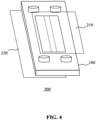
- a fluidic device 200 as schematically depicted in FIG. 4 may be formed from such a fluidic device module 100 by the provision of a pair of cover plates 210, 220, which cover plates fluidly seal the fluidic device module 100 such that fluids passed through the one or more flow channels 115 of the fluidic device module 100 cannot leak out of the fluidic device 200.
- the cover plates 210, 220 are arranged such that the cover plate 210 covers a first major surface of the fluidic device module 100, thereby sealing a first fluidic channel 115 of the fluidic device module and the other cover plate 220 covers a second major surface of the fluidic device module 100, thereby sealing a second fluidic channel 115 of the fluidic device module.
- the cover plates 210 and 220 may be made of any suitable material, e.g. glass or a plastic material.
- the cover plates are stretchable and flexible to ensure a good fit with the fluidic device module 100 whilst retaining the flexibility of the fluidic device module 100 in the fluidic device 200.
- Such a fluidic device 200 may be deployed as an organ on chip as will be readily understood by the skilled person.
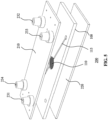
- FIG. 5 schematically depicts an example embodiment of a fluidic device 200 in which the device comprises a fluidic device module 100 according to the present invention in between two rigid cover plates 210 and 220.
- the upper plate 210 comprises a first inlet 231 and a first outlet 232 in fluid connection with a lower channel (not visible) underneath the membrane 110 in the fluidic device module 100 such that the membrane 110 is in fluid contact with a fluid passing through this lower channel.
- the upper plate 210 further comprises a second inlet 233 and a second outlet 234 in fluid connection with an upper channel 115 over the membrane 110 such that the membrane 110 is in fluid contact with a further fluid passing through this upper channel 115.
- the fluid passing through the lower channel may comprise drugs to be tested on the cell cultures attached to the membrane 110 as explained in more detail below, which can reach the cell cultures through the membrane 110 owing to the fact that the membrane 110 is made porous, e.g. by laser drilling holes or grooves in the membrane 110 as previously explained.
- such holes or grooves may be formed in the membrane 110 when forming the fluidic device module 100 in the polar mold. This has the advantage that a regular pattern of such fluid passages (pores) may be formed through the membrane 110.
- the further fluid passing through the upper channel 115 may be in direct contact with such cell cultures and provide such cell cultures with nutrients.
- the inlets 231, 233 and the outlets 232, 234 in some embodiments are septa through which fluids may be hydraulically pumped over the membrane 110 through the aforementioned channels, e.g. by pressing the septa.
- the inlets 231, 233 and the outlets 232, 234 may be ferrules to which tubing may be attached, e.g. clamped, which for instance is useful when the fluidic device 200 is used as a well plate or the like in a lab on chip system.
- the upper and lower channels 115 are incorporated in the (monolithic) fluidic device module 100 (only one of the channels is shown), e.g. when molding the fluidic device module 100.
- at least one of the upper and lower channels may be formed in one of the cover plates.
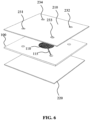
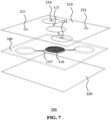
- FIG. 7 schematically depicts a perspective top view
- FIG. 8 schematically depicts a perspective bottom view of an example embodiment of a fluidic device 200 in which the upper channel 115 is formed in the upper cover plate 210 whilst the lower channel 115' is formed in the fluidic device module 100. It is of course equally feasible to form the lower channel 115' in the bottom cover plate 220 as will be readily understood by the skilled person.
- the fluidic device 200 such as the device shown in FIG. 7 and FIG. 8 for example may be used as a microwell in a lab on chip device in which a plurality of such microwells may be clamped or otherwise secured to facilitate parallel testing of a plurality of different samples within a single lab on chip device, in which each microwell typically comprises one of these samples.
- the fluidic device 200 may be used in methods in which the immobilized proliferated cell culture 50 is exposed to a fluid comprising a compound of interest, which fluid may be passed through a flow channel 115 of the fluidic device 200 in order to expose the immobilized cell culture 50 to the compound of interest in the fluid and monitor the reaction of the immobilized cell culture 50 to such exposure.
- a method for example may be deployed in an oncology setting where the immobilized cell culture 50 may be exposed to a drug, e.g. a chemotherapy drug, in order to monitor the response of the immobilized cell culture 50 to such a drug.
- the immobilized cell culture 50 may include tumor cells in order to test the efficacy of the drug and/or may include healthy cells in order to test the toxicity of the drug on healthy tissue.
- Such a drug testing method typically involves providing a fluidic device module 100 in accordance with one or more embodiments of the present invention, e.g. providing a monolithic fluidic device module 100 and applying a harvested cell culture to at least the membrane 110 where the cell culture can directly bind to the carboxylic acid or carboxylate groups on this exposed surface to obtain a prepared fluidic device module 100 from which a fluidic device 200, e.g. an organ on chip, is formed as previously explained.
- a fluidic device 200 e.g. an organ on chip
- the cell culture within the fluid device 200 may be fed through one of a pair of flow channels 115 of the fluidic device 200 in order to keep the cell culture alive, whilst the cell culture may be exposed to a drug to be tested through the other of the pair of flow channels 115 of the fluidic device 200, with the drug testing method typically being completed by monitoring the response of the cell culture to the drug to be tested.
- This for example may be achieved by disassembling the fluidic device 200 by removing the cover plates 210, 220 and slicing the fluid device module 100 such that a slice of this module including a portion of the cell culture is obtained, which slice may be investigated under a microscope or the like in order to investigate the effects of the drug under test on the cell culture.
- the cell culture is typically stained, treated with formalin and fixated in a fixating agent such as paraffin to facilitate such microscopic investigation.
- a fixating agent such as paraffin to facilitate such microscopic investigation.
- Such staining, treating and fixating of the cell culture may be deployed within the fluidic device 200, e.g. by passing the appropriate chemical agents through a fluidic channel 115 of the fluidic device 200 in which the cell culture is exposed.
- such disassembly of the fluidic device 200 can be avoided and the monitoring of the response of the cell culture to one or more compounds such as a drug to be tested can be achieved in real time using confocal microscopy.
- confocal microscopy may be used to monitor the cell culture within an assembled fluidic device 200.
- the bottom cover plate 220 can be kept thin, for example having a thickness in a range of 150-300 ⁇ m, with the distance between the membrane 110 of the fluidic device module 100 carrying the cell culture and the bottom cover plate 220 being less than 200 ⁇ m such that the focal length limits of confocal microscopy (typically around 500 ⁇ m from the object to be investigated to the lens objective).
- the membrane 110 may have a thickness in a range of 10-100 ⁇ m, such as a thickness of 20-30 ⁇ m.
- the thickness of the upper cover plate 210 is not critical; any suitable thickness may be contemplated, such as a thickness of 300 ⁇ m - 3 mm.
- the evaluation of the cell culture within the fluidic device 200 using confocal microscopy is particularly suitable where the cell spheroids have a diameter of less than 500 ⁇ m, e.g. about 200 ⁇ m in order to ensure that the overall focal length of the optical path facilitates the capture of a sharp image with the confocal microscope.
- the fluidic device 200 may have to be dismantled such that the membrane 110 including the spheroids can be pressed onto a glass cover slip for positioning in the optical objective of the confocal microscope.
- the aforementioned dimensions of the fluidic device 200 typically apply during the real-time monitoring of the cell culture within the fluidic device 200.
- the dimensions of the fluidic device 200 are less critical as long as the formalin and paraffin fixation can be performed thereon.
- Such substrates may be a well cell plate.
- the substrate may be formed to be used with a well cell plate for example slabs of the substrate may be arranged to have shapes and sizes adapted such that they can be inserted into the standard sizes of wells of well cell plates.
- well cell plates with open wells may be used with portions of the material closing off the bottoms of the well cell plates. Such ensembles or arrangements may be clamped.
- drug testing methods may significantly differ in terms of protocol, e.g. drug dosages, administration frequencies, and so on. It should be understood that the drug testing method of the present invention is not limited to a particular protocol as long as such methods may be deployed using a fluidic device 200 according to an embodiment of the present invention in which cells are cultured directly onto an exposed surface, e.g. the membrane 110, of the device.
- Example 1 The WPMY-1 cell culture was developed in accordance with the general procedure as described above on a silicone elastomer bulk modified in accordance with the teachings of the present invention with 0.5 wt% linoleic acid. To this end, synthesis example 2 was amended by replacing the 4.848 g of sodium linoleate with 2.41 g of linoleic acid to obtain the bulk modified silicone elastomer used in this example.
- Comparative Example 1 The WPMY-1 cell culture was developed in accordance with the general procedure as described above on the same silicone elastomer as example 1 but without bulk modification.
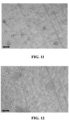
- Example 2 The WPMY-1 cell culture was developed in accordance with the general procedure as described above on the bulk modified silicone elastomer prepared in accordance with synthesis example 2 (i.e. containing 1.0% by weight of sodium linoleate).
- FIG. 9 shows the resulting cell culture of example 1 after the overnight cultivation. It can be clearly seen in this image that the cells show good adherence to the surface of the linoleic acid-functionalized silicone.
- FIG. 10 shows the resulting cell culture of comparative example 1 after the overnight cultivation. It can be clearly seen in this image that the cells show minimal adherence to the surface of the unfunctionalized silicone elastomer.
- FIG. 11 shows the resulting cell culture of example 2 after the overnight cultivation. It can be clearly seen in this image that the cells show good adherence to the surface of the sodium linoleate-functionalized silicone.
- FIG. 12 shows the cell culture of example 2 after culturing for 2 days and
- FIG. 13 shows the cell culture of example 2 after culturing for 7 days. Ongoing cell proliferation can clearly be recognized from these images, which demonstrates that mammalian cell material can be directly cultured and proliferated onto the bulk-functionalized elastomers of the present invention.
- Example 3 The Endothelial cells Ea.hy926 cell culture was developed in accordance with the general procedure as described above on the bulk modified silicone elastomer prepared in accordance with synthesis example 2 (i.e. containing 1.0% by weight of sodium linoleate).
- Example 4 The Epithelial cells Caco-2 cell culture was developed in accordance with the general procedure as described above on the bulk modified silicone elastomer prepared in accordance with synthesis example 2 (i.e. containing 1.0% by weight of sodium linoleate).
- Figs 14 and 15 show the cell proliferation after 4 Days for example 3 and 4 respectively. Thus all cell lines show good proliferation after several days on the substrates.
Landscapes
- Health & Medical Sciences (AREA)
- Chemical & Material Sciences (AREA)
- Life Sciences & Earth Sciences (AREA)
- Engineering & Computer Science (AREA)
- Organic Chemistry (AREA)
- Bioinformatics & Cheminformatics (AREA)
- Wood Science & Technology (AREA)
- Zoology (AREA)
- Biomedical Technology (AREA)
- Biotechnology (AREA)
- Genetics & Genomics (AREA)
- Microbiology (AREA)
- Biochemistry (AREA)
- General Health & Medical Sciences (AREA)
- General Engineering & Computer Science (AREA)
- Sustainable Development (AREA)
- Medicinal Chemistry (AREA)
- Chemical Kinetics & Catalysis (AREA)
- Polymers & Plastics (AREA)
- Cell Biology (AREA)
- Immunology (AREA)
- Clinical Laboratory Science (AREA)
- Molecular Biology (AREA)
- General Chemical & Material Sciences (AREA)
- Urology & Nephrology (AREA)
- Hematology (AREA)
- Tropical Medicine & Parasitology (AREA)
- Pathology (AREA)
- General Physics & Mathematics (AREA)
- Analytical Chemistry (AREA)
- Dispersion Chemistry (AREA)
- Physics & Mathematics (AREA)
- Food Science & Technology (AREA)
- Toxicology (AREA)
- Apparatus Associated With Microorganisms And Enzymes (AREA)
- Micro-Organisms Or Cultivation Processes Thereof (AREA)
- Measuring Or Testing Involving Enzymes Or Micro-Organisms (AREA)
- Manufacture Of Macromolecular Shaped Articles (AREA)
Applications Claiming Priority (3)
| Application Number | Priority Date | Filing Date | Title |
|---|---|---|---|
| EP19199362.5A EP3798300A1 (de) | 2019-09-24 | 2019-09-24 | Zellkulturmaterialen |
| PCT/EP2020/076749 WO2021058657A1 (en) | 2019-09-24 | 2020-09-24 | Cell culturing materials |
| EP20775022.5A EP4034634B1 (de) | 2019-09-24 | 2020-09-24 | Zellkulturmaterialen |
Related Parent Applications (2)
| Application Number | Title | Priority Date | Filing Date |
|---|---|---|---|
| EP20775022.5A Division EP4034634B1 (de) | 2019-09-24 | 2020-09-24 | Zellkulturmaterialen |
| EP20775022.5A Division-Into EP4034634B1 (de) | 2019-09-24 | 2020-09-24 | Zellkulturmaterialen |
Publications (2)
| Publication Number | Publication Date |
|---|---|
| EP4474398A2 true EP4474398A2 (de) | 2024-12-11 |
| EP4474398A3 EP4474398A3 (de) | 2025-03-05 |
Family
ID=68069493
Family Applications (3)
| Application Number | Title | Priority Date | Filing Date |
|---|---|---|---|
| EP19199362.5A Withdrawn EP3798300A1 (de) | 2019-09-24 | 2019-09-24 | Zellkulturmaterialen |
| EP20775022.5A Active EP4034634B1 (de) | 2019-09-24 | 2020-09-24 | Zellkulturmaterialen |
| EP24202851.2A Pending EP4474398A3 (de) | 2019-09-24 | 2020-09-24 | Zellkulturmaterialien |
Family Applications Before (2)
| Application Number | Title | Priority Date | Filing Date |
|---|---|---|---|
| EP19199362.5A Withdrawn EP3798300A1 (de) | 2019-09-24 | 2019-09-24 | Zellkulturmaterialen |
| EP20775022.5A Active EP4034634B1 (de) | 2019-09-24 | 2020-09-24 | Zellkulturmaterialen |
Country Status (5)
| Country | Link |
|---|---|
| US (1) | US20220380722A1 (de) |
| EP (3) | EP3798300A1 (de) |
| JP (2) | JP2022548726A (de) |
| CN (2) | CN114450394B (de) |
| WO (1) | WO2021058657A1 (de) |
Families Citing this family (5)
| Publication number | Priority date | Publication date | Assignee | Title |
|---|---|---|---|---|
| MY204234A (en) | 2018-08-27 | 2024-08-16 | Regeneron Pharma | Use of raman spectroscopy in downstream purification |
| EP4151710A1 (de) * | 2021-09-21 | 2023-03-22 | Koninklijke Philips N.V. | Polymermembran und verfahren zur herstellung davon |
| EP4480580A1 (de) | 2023-06-23 | 2024-12-25 | Koninklijke Philips N.V. | Fluidische vorrichtung |
| WO2024260974A1 (en) | 2023-06-23 | 2024-12-26 | Koninklijke Philips N.V. | A fluidic device |
| WO2024261342A1 (en) | 2023-06-23 | 2024-12-26 | Koninklijke Philips N.V. | Biological material testing device and methods for manufacturing and using the same |
Citations (3)
| Publication number | Priority date | Publication date | Assignee | Title |
|---|---|---|---|---|
| WO2009147602A2 (en) | 2008-06-06 | 2009-12-10 | Koninklijke Philips Electronics N.V. | Silicone rubber material for soft lithography |
| WO2018021906A1 (en) | 2016-07-25 | 2018-02-01 | Technische Universiteit Delft | Versatile 3d stretchable micro-environment for organ-on-chip devices fabricated with standard silicon technology |
| WO2019015988A1 (en) | 2017-07-18 | 2019-01-24 | Koninklijke Philips N.V. | CELL CULTURE MATERIALS |
Family Cites Families (4)
| Publication number | Priority date | Publication date | Assignee | Title |
|---|---|---|---|---|
| JPH04108377A (ja) * | 1990-08-27 | 1992-04-09 | Ube Nitto Kasei Co Ltd | 細胞培養用基材 |
| DE102006029051A1 (de) * | 2006-06-24 | 2007-12-27 | Forschungszentrum Jülich GmbH | Zellkulturvorrichtung, Verfahren zur Herstellung der Vorrichtung und Zellkulturverfahren |
| EP2158268B1 (de) * | 2007-05-30 | 2013-01-09 | Dow Corning Corporation | Von natürlichen ölen abgeleitete silikoncopolymere und elastomere |
| DE102008060991A1 (de) * | 2008-12-08 | 2010-06-10 | MAX-PLANCK-Gesellschaft zur Förderung der Wissenschaften e.V. | Subtrate zur Selektion und spezifischen Beeinflussung der Funktion von Zellen |
-
2019
- 2019-09-24 EP EP19199362.5A patent/EP3798300A1/de not_active Withdrawn
-
2020
- 2020-09-24 CN CN202080067111.8A patent/CN114450394B/zh active Active
- 2020-09-24 EP EP20775022.5A patent/EP4034634B1/de active Active
- 2020-09-24 JP JP2022517758A patent/JP2022548726A/ja active Pending
- 2020-09-24 CN CN202510783246.9A patent/CN120648556A/zh active Pending
- 2020-09-24 EP EP24202851.2A patent/EP4474398A3/de active Pending
- 2020-09-24 WO PCT/EP2020/076749 patent/WO2021058657A1/en not_active Ceased
- 2020-09-24 US US17/762,396 patent/US20220380722A1/en active Pending
-
2025
- 2025-08-13 JP JP2025134571A patent/JP2025179077A/ja active Pending
Patent Citations (3)
| Publication number | Priority date | Publication date | Assignee | Title |
|---|---|---|---|---|
| WO2009147602A2 (en) | 2008-06-06 | 2009-12-10 | Koninklijke Philips Electronics N.V. | Silicone rubber material for soft lithography |
| WO2018021906A1 (en) | 2016-07-25 | 2018-02-01 | Technische Universiteit Delft | Versatile 3d stretchable micro-environment for organ-on-chip devices fabricated with standard silicon technology |
| WO2019015988A1 (en) | 2017-07-18 | 2019-01-24 | Koninklijke Philips N.V. | CELL CULTURE MATERIALS |
Non-Patent Citations (1)
| Title |
|---|
| DONGEUN HUH ET AL., NATURE PROTOCOLS, vol. 8, no. 11, 2013, pages 2135 - 2157 |
Also Published As
| Publication number | Publication date |
|---|---|
| CN114450394B (zh) | 2025-06-27 |
| JP2022548726A (ja) | 2022-11-21 |
| CN120648556A (zh) | 2025-09-16 |
| US20220380722A1 (en) | 2022-12-01 |
| EP4474398A3 (de) | 2025-03-05 |
| JP2025179077A (ja) | 2025-12-09 |
| WO2021058657A1 (en) | 2021-04-01 |
| CN114450394A (zh) | 2022-05-06 |
| EP4034634A1 (de) | 2022-08-03 |
| EP4034634C0 (de) | 2025-01-01 |
| EP3798300A1 (de) | 2021-03-31 |
| EP4034634B1 (de) | 2025-01-01 |
Similar Documents
| Publication | Publication Date | Title |
|---|---|---|
| EP4034634B1 (de) | Zellkulturmaterialen | |
| US20250075174A1 (en) | Cell cultering materials | |
| EP2952267A2 (de) | Reaktive superhydrophobe oberflächen, gemusterte superhydrophobe oberflächen, verfahren zur herstellung davon und verwendung der gemusterten superhydrophoben oberflächen | |
| Genchi et al. | Bio/non-bio interfaces: a straightforward method for obtaining long term PDMS/muscle cell biohybrid constructs | |
| US20250129319A1 (en) | Polymer membrane and method of manufacturing the same | |
| JP5261920B2 (ja) | 細胞を用いた試験法および試験用キット | |
| Khan | Synthesis of Thiol-Acrylate Hydrogels for 3D Cell Culture and Microfluidic Applications | |
| US20100015704A1 (en) | Process for the enrichment of melanocytes by means of modified surfaces | |
| EP4731339A1 (de) | Testvorrichtung für biologisches material und verfahren zur herstellung und verwendung davon | |
| Navarrete-Segado et al. | High-Throughput 3D Spheroid Production with Photocurable Polyurethane Microwell Arrays via LCD 3D Printing | |
| Simms | Functionalized microfluidic devices for directing and monitoring cell-material interactions | |
| Leonardi et al. | Synthesis and Characterization of Low-Swelling Polyethylene Glycol Hydrogels formed by Michael Type Addition Reaction for use as a Cell Culture Platform |
Legal Events
| Date | Code | Title | Description |
|---|---|---|---|
| PUAI | Public reference made under article 153(3) epc to a published international application that has entered the european phase |
Free format text: ORIGINAL CODE: 0009012 |
|
| STAA | Information on the status of an ep patent application or granted ep patent |
Free format text: STATUS: THE APPLICATION HAS BEEN PUBLISHED |
|
| AC | Divisional application: reference to earlier application |
Ref document number: 4034634 Country of ref document: EP Kind code of ref document: P |
|
| AK | Designated contracting states |
Kind code of ref document: A2 Designated state(s): AL AT BE BG CH CY CZ DE DK EE ES FI FR GB GR HR HU IE IS IT LI LT LU LV MC MK MT NL NO PL PT RO RS SE SI SK SM TR |
|
| REG | Reference to a national code |
Ref country code: DE Ref legal event code: R079 Free format text: PREVIOUS MAIN CLASS: C08C0019000000 Ipc: C12N0005000000 |
|
| PUAL | Search report despatched |
Free format text: ORIGINAL CODE: 0009013 |
|
| AK | Designated contracting states |
Kind code of ref document: A3 Designated state(s): AL AT BE BG CH CY CZ DE DK EE ES FI FR GB GR HR HU IE IS IT LI LT LU LV MC MK MT NL NO PL PT RO RS SE SI SK SM TR |
|
| RIC1 | Information provided on ipc code assigned before grant |
Ipc: C08F 136/06 20060101ALI20250127BHEP Ipc: C08C 19/28 20060101ALI20250127BHEP Ipc: C08C 19/00 20060101ALI20250127BHEP Ipc: C07K 14/47 20060101ALI20250127BHEP Ipc: C12N 5/00 20060101AFI20250127BHEP |
|
| STAA | Information on the status of an ep patent application or granted ep patent |
Free format text: STATUS: REQUEST FOR EXAMINATION WAS MADE |
|
| 17P | Request for examination filed |
Effective date: 20250826 |
|
| STAA | Information on the status of an ep patent application or granted ep patent |
Free format text: STATUS: EXAMINATION IS IN PROGRESS |
|
| 17Q | First examination report despatched |
Effective date: 20251204 |