EP4474152A1 - Hygroskopischer film und hygroskopisches laminat - Google Patents
Hygroskopischer film und hygroskopisches laminat Download PDFInfo
- Publication number
- EP4474152A1 EP4474152A1 EP23747129.7A EP23747129A EP4474152A1 EP 4474152 A1 EP4474152 A1 EP 4474152A1 EP 23747129 A EP23747129 A EP 23747129A EP 4474152 A1 EP4474152 A1 EP 4474152A1
- Authority
- EP
- European Patent Office
- Prior art keywords
- layer
- resin
- hygroscopic
- moisture
- moisture absorption
- Prior art date
- Legal status (The legal status is an assumption and is not a legal conclusion. Google has not performed a legal analysis and makes no representation as to the accuracy of the status listed.)
- Pending
Links
Images



Classifications
-
- B—PERFORMING OPERATIONS; TRANSPORTING
- B29—WORKING OF PLASTICS; WORKING OF SUBSTANCES IN A PLASTIC STATE IN GENERAL
- B29C—SHAPING OR JOINING OF PLASTICS; SHAPING OF MATERIAL IN A PLASTIC STATE, NOT OTHERWISE PROVIDED FOR; AFTER-TREATMENT OF THE SHAPED PRODUCTS, e.g. REPAIRING
- B29C48/00—Extrusion moulding, i.e. expressing the moulding material through a die or nozzle which imparts the desired form; Apparatus therefor
- B29C48/03—Extrusion moulding, i.e. expressing the moulding material through a die or nozzle which imparts the desired form; Apparatus therefor characterised by the shape of the extruded material at extrusion
- B29C48/07—Flat, e.g. panels
- B29C48/08—Flat, e.g. panels flexible, e.g. films
-
- B—PERFORMING OPERATIONS; TRANSPORTING
- B32—LAYERED PRODUCTS
- B32B—LAYERED PRODUCTS, i.e. PRODUCTS BUILT-UP OF STRATA OF FLAT OR NON-FLAT, e.g. CELLULAR OR HONEYCOMB, FORM
- B32B27/00—Layered products comprising a layer of synthetic resin
- B32B27/32—Layered products comprising a layer of synthetic resin comprising polyolefins
-
- B—PERFORMING OPERATIONS; TRANSPORTING
- B29—WORKING OF PLASTICS; WORKING OF SUBSTANCES IN A PLASTIC STATE IN GENERAL
- B29C—SHAPING OR JOINING OF PLASTICS; SHAPING OF MATERIAL IN A PLASTIC STATE, NOT OTHERWISE PROVIDED FOR; AFTER-TREATMENT OF THE SHAPED PRODUCTS, e.g. REPAIRING
- B29C48/00—Extrusion moulding, i.e. expressing the moulding material through a die or nozzle which imparts the desired form; Apparatus therefor
- B29C48/022—Extrusion moulding, i.e. expressing the moulding material through a die or nozzle which imparts the desired form; Apparatus therefor characterised by the choice of material
-
- B—PERFORMING OPERATIONS; TRANSPORTING
- B29—WORKING OF PLASTICS; WORKING OF SUBSTANCES IN A PLASTIC STATE IN GENERAL
- B29C—SHAPING OR JOINING OF PLASTICS; SHAPING OF MATERIAL IN A PLASTIC STATE, NOT OTHERWISE PROVIDED FOR; AFTER-TREATMENT OF THE SHAPED PRODUCTS, e.g. REPAIRING
- B29C48/00—Extrusion moulding, i.e. expressing the moulding material through a die or nozzle which imparts the desired form; Apparatus therefor
- B29C48/16—Articles comprising two or more components, e.g. co-extruded layers
- B29C48/18—Articles comprising two or more components, e.g. co-extruded layers the components being layers
- B29C48/21—Articles comprising two or more components, e.g. co-extruded layers the components being layers the layers being joined at their surfaces
-
- B—PERFORMING OPERATIONS; TRANSPORTING
- B32—LAYERED PRODUCTS
- B32B—LAYERED PRODUCTS, i.e. PRODUCTS BUILT-UP OF STRATA OF FLAT OR NON-FLAT, e.g. CELLULAR OR HONEYCOMB, FORM
- B32B15/00—Layered products comprising a layer of metal
- B32B15/04—Layered products comprising a layer of metal comprising metal as the main or only constituent of a layer, which is next to another layer of the same or of a different material
- B32B15/08—Layered products comprising a layer of metal comprising metal as the main or only constituent of a layer, which is next to another layer of the same or of a different material of synthetic resin
- B32B15/085—Layered products comprising a layer of metal comprising metal as the main or only constituent of a layer, which is next to another layer of the same or of a different material of synthetic resin comprising polyolefins
-
- B—PERFORMING OPERATIONS; TRANSPORTING
- B32—LAYERED PRODUCTS
- B32B—LAYERED PRODUCTS, i.e. PRODUCTS BUILT-UP OF STRATA OF FLAT OR NON-FLAT, e.g. CELLULAR OR HONEYCOMB, FORM
- B32B15/00—Layered products comprising a layer of metal
- B32B15/04—Layered products comprising a layer of metal comprising metal as the main or only constituent of a layer, which is next to another layer of the same or of a different material
- B32B15/08—Layered products comprising a layer of metal comprising metal as the main or only constituent of a layer, which is next to another layer of the same or of a different material of synthetic resin
- B32B15/09—Layered products comprising a layer of metal comprising metal as the main or only constituent of a layer, which is next to another layer of the same or of a different material of synthetic resin comprising polyesters
-
- B—PERFORMING OPERATIONS; TRANSPORTING
- B32—LAYERED PRODUCTS
- B32B—LAYERED PRODUCTS, i.e. PRODUCTS BUILT-UP OF STRATA OF FLAT OR NON-FLAT, e.g. CELLULAR OR HONEYCOMB, FORM
- B32B15/00—Layered products comprising a layer of metal
- B32B15/20—Layered products comprising a layer of metal comprising aluminium or copper
-
- B—PERFORMING OPERATIONS; TRANSPORTING
- B32—LAYERED PRODUCTS
- B32B—LAYERED PRODUCTS, i.e. PRODUCTS BUILT-UP OF STRATA OF FLAT OR NON-FLAT, e.g. CELLULAR OR HONEYCOMB, FORM
- B32B27/00—Layered products comprising a layer of synthetic resin
- B32B27/06—Layered products comprising a layer of synthetic resin as the main or only constituent of a layer, which is next to another layer of the same or of a different material
- B32B27/08—Layered products comprising a layer of synthetic resin as the main or only constituent of a layer, which is next to another layer of the same or of a different material of synthetic resin
-
- B—PERFORMING OPERATIONS; TRANSPORTING
- B32—LAYERED PRODUCTS
- B32B—LAYERED PRODUCTS, i.e. PRODUCTS BUILT-UP OF STRATA OF FLAT OR NON-FLAT, e.g. CELLULAR OR HONEYCOMB, FORM
- B32B27/00—Layered products comprising a layer of synthetic resin
- B32B27/18—Layered products comprising a layer of synthetic resin characterised by the use of special additives
-
- B—PERFORMING OPERATIONS; TRANSPORTING
- B32—LAYERED PRODUCTS
- B32B—LAYERED PRODUCTS, i.e. PRODUCTS BUILT-UP OF STRATA OF FLAT OR NON-FLAT, e.g. CELLULAR OR HONEYCOMB, FORM
- B32B27/00—Layered products comprising a layer of synthetic resin
- B32B27/18—Layered products comprising a layer of synthetic resin characterised by the use of special additives
- B32B27/20—Layered products comprising a layer of synthetic resin characterised by the use of special additives using fillers, pigments, thixotroping agents
-
- B—PERFORMING OPERATIONS; TRANSPORTING
- B32—LAYERED PRODUCTS
- B32B—LAYERED PRODUCTS, i.e. PRODUCTS BUILT-UP OF STRATA OF FLAT OR NON-FLAT, e.g. CELLULAR OR HONEYCOMB, FORM
- B32B27/00—Layered products comprising a layer of synthetic resin
- B32B27/30—Layered products comprising a layer of synthetic resin comprising vinyl (co)polymers; comprising acrylic (co)polymers
- B32B27/302—Layered products comprising a layer of synthetic resin comprising vinyl (co)polymers; comprising acrylic (co)polymers comprising aromatic vinyl (co)polymers, e.g. styrenic (co)polymers
-
- B—PERFORMING OPERATIONS; TRANSPORTING
- B32—LAYERED PRODUCTS
- B32B—LAYERED PRODUCTS, i.e. PRODUCTS BUILT-UP OF STRATA OF FLAT OR NON-FLAT, e.g. CELLULAR OR HONEYCOMB, FORM
- B32B27/00—Layered products comprising a layer of synthetic resin
- B32B27/30—Layered products comprising a layer of synthetic resin comprising vinyl (co)polymers; comprising acrylic (co)polymers
- B32B27/304—Layered products comprising a layer of synthetic resin comprising vinyl (co)polymers; comprising acrylic (co)polymers comprising vinyl halide (co)polymers, e.g. PVC, PVDC, PVF, PVDF
-
- B—PERFORMING OPERATIONS; TRANSPORTING
- B32—LAYERED PRODUCTS
- B32B—LAYERED PRODUCTS, i.e. PRODUCTS BUILT-UP OF STRATA OF FLAT OR NON-FLAT, e.g. CELLULAR OR HONEYCOMB, FORM
- B32B27/00—Layered products comprising a layer of synthetic resin
- B32B27/30—Layered products comprising a layer of synthetic resin comprising vinyl (co)polymers; comprising acrylic (co)polymers
- B32B27/306—Layered products comprising a layer of synthetic resin comprising vinyl (co)polymers; comprising acrylic (co)polymers comprising vinyl acetate or vinyl alcohol (co)polymers
-
- B—PERFORMING OPERATIONS; TRANSPORTING
- B32—LAYERED PRODUCTS
- B32B—LAYERED PRODUCTS, i.e. PRODUCTS BUILT-UP OF STRATA OF FLAT OR NON-FLAT, e.g. CELLULAR OR HONEYCOMB, FORM
- B32B27/00—Layered products comprising a layer of synthetic resin
- B32B27/30—Layered products comprising a layer of synthetic resin comprising vinyl (co)polymers; comprising acrylic (co)polymers
- B32B27/308—Layered products comprising a layer of synthetic resin comprising vinyl (co)polymers; comprising acrylic (co)polymers comprising acrylic (co)polymers
-
- B—PERFORMING OPERATIONS; TRANSPORTING
- B32—LAYERED PRODUCTS
- B32B—LAYERED PRODUCTS, i.e. PRODUCTS BUILT-UP OF STRATA OF FLAT OR NON-FLAT, e.g. CELLULAR OR HONEYCOMB, FORM
- B32B27/00—Layered products comprising a layer of synthetic resin
- B32B27/34—Layered products comprising a layer of synthetic resin comprising polyamides
-
- B—PERFORMING OPERATIONS; TRANSPORTING
- B32—LAYERED PRODUCTS
- B32B—LAYERED PRODUCTS, i.e. PRODUCTS BUILT-UP OF STRATA OF FLAT OR NON-FLAT, e.g. CELLULAR OR HONEYCOMB, FORM
- B32B27/00—Layered products comprising a layer of synthetic resin
- B32B27/36—Layered products comprising a layer of synthetic resin comprising polyesters
-
- B—PERFORMING OPERATIONS; TRANSPORTING
- B32—LAYERED PRODUCTS
- B32B—LAYERED PRODUCTS, i.e. PRODUCTS BUILT-UP OF STRATA OF FLAT OR NON-FLAT, e.g. CELLULAR OR HONEYCOMB, FORM
- B32B37/00—Methods or apparatus for laminating, e.g. by curing or by ultrasonic bonding
- B32B37/14—Methods or apparatus for laminating, e.g. by curing or by ultrasonic bonding characterised by the properties of the layers
- B32B37/15—Methods or apparatus for laminating, e.g. by curing or by ultrasonic bonding characterised by the properties of the layers with at least one layer being manufactured and immediately laminated before reaching its stable state, e.g. in which a layer is extruded and laminated while in semi-molten state
- B32B37/153—Methods or apparatus for laminating, e.g. by curing or by ultrasonic bonding characterised by the properties of the layers with at least one layer being manufactured and immediately laminated before reaching its stable state, e.g. in which a layer is extruded and laminated while in semi-molten state at least one layer is extruded and immediately laminated while in semi-molten state
-
- B—PERFORMING OPERATIONS; TRANSPORTING
- B32—LAYERED PRODUCTS
- B32B—LAYERED PRODUCTS, i.e. PRODUCTS BUILT-UP OF STRATA OF FLAT OR NON-FLAT, e.g. CELLULAR OR HONEYCOMB, FORM
- B32B7/00—Layered products characterised by the relation between layers; Layered products characterised by the relative orientation of features between layers, or by the relative values of a measurable parameter between layers, i.e. products comprising layers having different physical, chemical or physicochemical properties; Layered products characterised by the interconnection of layers
- B32B7/04—Interconnection of layers
- B32B7/12—Interconnection of layers using interposed adhesives or interposed materials with bonding properties
-
- B—PERFORMING OPERATIONS; TRANSPORTING
- B65—CONVEYING; PACKING; STORING; HANDLING THIN OR FILAMENTARY MATERIAL
- B65D—CONTAINERS FOR STORAGE OR TRANSPORT OF ARTICLES OR MATERIALS, e.g. BAGS, BARRELS, BOTTLES, BOXES, CANS, CARTONS, CRATES, DRUMS, JARS, TANKS, HOPPERS, FORWARDING CONTAINERS; ACCESSORIES, CLOSURES, OR FITTINGS THEREFOR; PACKAGING ELEMENTS; PACKAGES
- B65D65/00—Wrappers or flexible covers; Packaging materials of special type or form
- B65D65/38—Packaging materials of special type or form
- B65D65/40—Applications of laminates for particular packaging purposes
-
- B—PERFORMING OPERATIONS; TRANSPORTING
- B29—WORKING OF PLASTICS; WORKING OF SUBSTANCES IN A PLASTIC STATE IN GENERAL
- B29K—INDEXING SCHEME ASSOCIATED WITH SUBCLASSES B29B, B29C OR B29D, RELATING TO MOULDING MATERIALS OR TO MATERIALS FOR MOULDS, REINFORCEMENTS, FILLERS OR PREFORMED PARTS, e.g. INSERTS
- B29K2023/00—Use of polyalkenes or derivatives thereof as moulding material
- B29K2023/04—Polymers of ethylene
- B29K2023/06—PE, i.e. polyethylene
- B29K2023/0608—PE, i.e. polyethylene characterised by its density
- B29K2023/0633—LDPE, i.e. low density polyethylene
-
- B—PERFORMING OPERATIONS; TRANSPORTING
- B29—WORKING OF PLASTICS; WORKING OF SUBSTANCES IN A PLASTIC STATE IN GENERAL
- B29K—INDEXING SCHEME ASSOCIATED WITH SUBCLASSES B29B, B29C OR B29D, RELATING TO MOULDING MATERIALS OR TO MATERIALS FOR MOULDS, REINFORCEMENTS, FILLERS OR PREFORMED PARTS, e.g. INSERTS
- B29K2023/00—Use of polyalkenes or derivatives thereof as moulding material
- B29K2023/04—Polymers of ethylene
- B29K2023/08—Copolymers of ethylene
-
- B—PERFORMING OPERATIONS; TRANSPORTING
- B29—WORKING OF PLASTICS; WORKING OF SUBSTANCES IN A PLASTIC STATE IN GENERAL
- B29K—INDEXING SCHEME ASSOCIATED WITH SUBCLASSES B29B, B29C OR B29D, RELATING TO MOULDING MATERIALS OR TO MATERIALS FOR MOULDS, REINFORCEMENTS, FILLERS OR PREFORMED PARTS, e.g. INSERTS
- B29K2505/00—Use of metals, their alloys or their compounds, as filler
-
- B—PERFORMING OPERATIONS; TRANSPORTING
- B29—WORKING OF PLASTICS; WORKING OF SUBSTANCES IN A PLASTIC STATE IN GENERAL
- B29K—INDEXING SCHEME ASSOCIATED WITH SUBCLASSES B29B, B29C OR B29D, RELATING TO MOULDING MATERIALS OR TO MATERIALS FOR MOULDS, REINFORCEMENTS, FILLERS OR PREFORMED PARTS, e.g. INSERTS
- B29K2995/00—Properties of moulding materials, reinforcements, fillers, preformed parts or moulds
- B29K2995/0037—Other properties
- B29K2995/0092—Other properties hydrophilic
-
- B—PERFORMING OPERATIONS; TRANSPORTING
- B32—LAYERED PRODUCTS
- B32B—LAYERED PRODUCTS, i.e. PRODUCTS BUILT-UP OF STRATA OF FLAT OR NON-FLAT, e.g. CELLULAR OR HONEYCOMB, FORM
- B32B2250/00—Layers arrangement
- B32B2250/03—3 layers
-
- B—PERFORMING OPERATIONS; TRANSPORTING
- B32—LAYERED PRODUCTS
- B32B—LAYERED PRODUCTS, i.e. PRODUCTS BUILT-UP OF STRATA OF FLAT OR NON-FLAT, e.g. CELLULAR OR HONEYCOMB, FORM
- B32B2250/00—Layers arrangement
- B32B2250/04—4 layers
-
- B—PERFORMING OPERATIONS; TRANSPORTING
- B32—LAYERED PRODUCTS
- B32B—LAYERED PRODUCTS, i.e. PRODUCTS BUILT-UP OF STRATA OF FLAT OR NON-FLAT, e.g. CELLULAR OR HONEYCOMB, FORM
- B32B2250/00—Layers arrangement
- B32B2250/05—5 or more layers
-
- B—PERFORMING OPERATIONS; TRANSPORTING
- B32—LAYERED PRODUCTS
- B32B—LAYERED PRODUCTS, i.e. PRODUCTS BUILT-UP OF STRATA OF FLAT OR NON-FLAT, e.g. CELLULAR OR HONEYCOMB, FORM
- B32B2255/00—Coating on the layer surface
- B32B2255/10—Coating on the layer surface on synthetic resin layer or on natural or synthetic rubber layer
-
- B—PERFORMING OPERATIONS; TRANSPORTING
- B32—LAYERED PRODUCTS
- B32B—LAYERED PRODUCTS, i.e. PRODUCTS BUILT-UP OF STRATA OF FLAT OR NON-FLAT, e.g. CELLULAR OR HONEYCOMB, FORM
- B32B2255/00—Coating on the layer surface
- B32B2255/20—Inorganic coating
-
- B—PERFORMING OPERATIONS; TRANSPORTING
- B32—LAYERED PRODUCTS
- B32B—LAYERED PRODUCTS, i.e. PRODUCTS BUILT-UP OF STRATA OF FLAT OR NON-FLAT, e.g. CELLULAR OR HONEYCOMB, FORM
- B32B2255/00—Coating on the layer surface
- B32B2255/20—Inorganic coating
- B32B2255/205—Metallic coating
-
- B—PERFORMING OPERATIONS; TRANSPORTING
- B32—LAYERED PRODUCTS
- B32B—LAYERED PRODUCTS, i.e. PRODUCTS BUILT-UP OF STRATA OF FLAT OR NON-FLAT, e.g. CELLULAR OR HONEYCOMB, FORM
- B32B2255/00—Coating on the layer surface
- B32B2255/26—Polymeric coating
-
- B—PERFORMING OPERATIONS; TRANSPORTING
- B32—LAYERED PRODUCTS
- B32B—LAYERED PRODUCTS, i.e. PRODUCTS BUILT-UP OF STRATA OF FLAT OR NON-FLAT, e.g. CELLULAR OR HONEYCOMB, FORM
- B32B2264/00—Composition or properties of particles which form a particulate layer or are present as additives
- B32B2264/10—Inorganic particles
- B32B2264/102—Oxide or hydroxide
-
- B—PERFORMING OPERATIONS; TRANSPORTING
- B32—LAYERED PRODUCTS
- B32B—LAYERED PRODUCTS, i.e. PRODUCTS BUILT-UP OF STRATA OF FLAT OR NON-FLAT, e.g. CELLULAR OR HONEYCOMB, FORM
- B32B2264/00—Composition or properties of particles which form a particulate layer or are present as additives
- B32B2264/10—Inorganic particles
- B32B2264/104—Oxysalt, e.g. carbonate, sulfate, phosphate or nitrate particles
-
- B—PERFORMING OPERATIONS; TRANSPORTING
- B32—LAYERED PRODUCTS
- B32B—LAYERED PRODUCTS, i.e. PRODUCTS BUILT-UP OF STRATA OF FLAT OR NON-FLAT, e.g. CELLULAR OR HONEYCOMB, FORM
- B32B2270/00—Resin or rubber layer containing a blend of at least two different polymers
-
- B—PERFORMING OPERATIONS; TRANSPORTING
- B32—LAYERED PRODUCTS
- B32B—LAYERED PRODUCTS, i.e. PRODUCTS BUILT-UP OF STRATA OF FLAT OR NON-FLAT, e.g. CELLULAR OR HONEYCOMB, FORM
- B32B2307/00—Properties of the layers or laminate
- B32B2307/20—Properties of the layers or laminate having particular electrical or magnetic properties, e.g. piezoelectric
- B32B2307/21—Anti-static
-
- B—PERFORMING OPERATIONS; TRANSPORTING
- B32—LAYERED PRODUCTS
- B32B—LAYERED PRODUCTS, i.e. PRODUCTS BUILT-UP OF STRATA OF FLAT OR NON-FLAT, e.g. CELLULAR OR HONEYCOMB, FORM
- B32B2307/00—Properties of the layers or laminate
- B32B2307/30—Properties of the layers or laminate having particular thermal properties
- B32B2307/31—Heat sealable
-
- B—PERFORMING OPERATIONS; TRANSPORTING
- B32—LAYERED PRODUCTS
- B32B—LAYERED PRODUCTS, i.e. PRODUCTS BUILT-UP OF STRATA OF FLAT OR NON-FLAT, e.g. CELLULAR OR HONEYCOMB, FORM
- B32B2307/00—Properties of the layers or laminate
- B32B2307/50—Properties of the layers or laminate having particular mechanical properties
- B32B2307/514—Oriented
- B32B2307/518—Oriented bi-axially
-
- B—PERFORMING OPERATIONS; TRANSPORTING
- B32—LAYERED PRODUCTS
- B32B—LAYERED PRODUCTS, i.e. PRODUCTS BUILT-UP OF STRATA OF FLAT OR NON-FLAT, e.g. CELLULAR OR HONEYCOMB, FORM
- B32B2307/00—Properties of the layers or laminate
- B32B2307/70—Other properties
-
- B—PERFORMING OPERATIONS; TRANSPORTING
- B32—LAYERED PRODUCTS
- B32B—LAYERED PRODUCTS, i.e. PRODUCTS BUILT-UP OF STRATA OF FLAT OR NON-FLAT, e.g. CELLULAR OR HONEYCOMB, FORM
- B32B2307/00—Properties of the layers or laminate
- B32B2307/70—Other properties
- B32B2307/72—Density
-
- B—PERFORMING OPERATIONS; TRANSPORTING
- B32—LAYERED PRODUCTS
- B32B—LAYERED PRODUCTS, i.e. PRODUCTS BUILT-UP OF STRATA OF FLAT OR NON-FLAT, e.g. CELLULAR OR HONEYCOMB, FORM
- B32B2307/00—Properties of the layers or laminate
- B32B2307/70—Other properties
- B32B2307/724—Permeability to gases, adsorption
-
- B—PERFORMING OPERATIONS; TRANSPORTING
- B32—LAYERED PRODUCTS
- B32B—LAYERED PRODUCTS, i.e. PRODUCTS BUILT-UP OF STRATA OF FLAT OR NON-FLAT, e.g. CELLULAR OR HONEYCOMB, FORM
- B32B2307/00—Properties of the layers or laminate
- B32B2307/70—Other properties
- B32B2307/724—Permeability to gases, adsorption
- B32B2307/7242—Non-permeable
- B32B2307/7244—Oxygen barrier
-
- B—PERFORMING OPERATIONS; TRANSPORTING
- B32—LAYERED PRODUCTS
- B32B—LAYERED PRODUCTS, i.e. PRODUCTS BUILT-UP OF STRATA OF FLAT OR NON-FLAT, e.g. CELLULAR OR HONEYCOMB, FORM
- B32B2307/00—Properties of the layers or laminate
- B32B2307/70—Other properties
- B32B2307/728—Hydrophilic
-
- B—PERFORMING OPERATIONS; TRANSPORTING
- B32—LAYERED PRODUCTS
- B32B—LAYERED PRODUCTS, i.e. PRODUCTS BUILT-UP OF STRATA OF FLAT OR NON-FLAT, e.g. CELLULAR OR HONEYCOMB, FORM
- B32B2307/00—Properties of the layers or laminate
- B32B2307/70—Other properties
- B32B2307/732—Dimensional properties
- B32B2307/737—Dimensions, e.g. volume or area
- B32B2307/7375—Linear, e.g. length, distance or width
- B32B2307/7376—Thickness
-
- B—PERFORMING OPERATIONS; TRANSPORTING
- B32—LAYERED PRODUCTS
- B32B—LAYERED PRODUCTS, i.e. PRODUCTS BUILT-UP OF STRATA OF FLAT OR NON-FLAT, e.g. CELLULAR OR HONEYCOMB, FORM
- B32B2311/00—Metals, their alloys or their compounds
- B32B2311/24—Aluminium
-
- B—PERFORMING OPERATIONS; TRANSPORTING
- B32—LAYERED PRODUCTS
- B32B—LAYERED PRODUCTS, i.e. PRODUCTS BUILT-UP OF STRATA OF FLAT OR NON-FLAT, e.g. CELLULAR OR HONEYCOMB, FORM
- B32B2323/00—Polyalkenes
- B32B2323/04—Polyethylene
-
- B—PERFORMING OPERATIONS; TRANSPORTING
- B32—LAYERED PRODUCTS
- B32B—LAYERED PRODUCTS, i.e. PRODUCTS BUILT-UP OF STRATA OF FLAT OR NON-FLAT, e.g. CELLULAR OR HONEYCOMB, FORM
- B32B2323/00—Polyalkenes
- B32B2323/04—Polyethylene
- B32B2323/046—LDPE, i.e. low density polyethylene
-
- B—PERFORMING OPERATIONS; TRANSPORTING
- B32—LAYERED PRODUCTS
- B32B—LAYERED PRODUCTS, i.e. PRODUCTS BUILT-UP OF STRATA OF FLAT OR NON-FLAT, e.g. CELLULAR OR HONEYCOMB, FORM
- B32B2367/00—Polyesters, e.g. PET, i.e. polyethylene terephthalate
-
- B—PERFORMING OPERATIONS; TRANSPORTING
- B32—LAYERED PRODUCTS
- B32B—LAYERED PRODUCTS, i.e. PRODUCTS BUILT-UP OF STRATA OF FLAT OR NON-FLAT, e.g. CELLULAR OR HONEYCOMB, FORM
- B32B2439/00—Containers; Receptacles
-
- B—PERFORMING OPERATIONS; TRANSPORTING
- B32—LAYERED PRODUCTS
- B32B—LAYERED PRODUCTS, i.e. PRODUCTS BUILT-UP OF STRATA OF FLAT OR NON-FLAT, e.g. CELLULAR OR HONEYCOMB, FORM
- B32B2439/00—Containers; Receptacles
- B32B2439/40—Closed containers
- B32B2439/46—Bags
-
- B—PERFORMING OPERATIONS; TRANSPORTING
- B32—LAYERED PRODUCTS
- B32B—LAYERED PRODUCTS, i.e. PRODUCTS BUILT-UP OF STRATA OF FLAT OR NON-FLAT, e.g. CELLULAR OR HONEYCOMB, FORM
- B32B2439/00—Containers; Receptacles
- B32B2439/70—Food packaging
-
- B—PERFORMING OPERATIONS; TRANSPORTING
- B32—LAYERED PRODUCTS
- B32B—LAYERED PRODUCTS, i.e. PRODUCTS BUILT-UP OF STRATA OF FLAT OR NON-FLAT, e.g. CELLULAR OR HONEYCOMB, FORM
- B32B2439/00—Containers; Receptacles
- B32B2439/80—Medical packaging
-
- B—PERFORMING OPERATIONS; TRANSPORTING
- B32—LAYERED PRODUCTS
- B32B—LAYERED PRODUCTS, i.e. PRODUCTS BUILT-UP OF STRATA OF FLAT OR NON-FLAT, e.g. CELLULAR OR HONEYCOMB, FORM
- B32B2553/00—Packaging equipment or accessories not otherwise provided for
-
- B—PERFORMING OPERATIONS; TRANSPORTING
- B32—LAYERED PRODUCTS
- B32B—LAYERED PRODUCTS, i.e. PRODUCTS BUILT-UP OF STRATA OF FLAT OR NON-FLAT, e.g. CELLULAR OR HONEYCOMB, FORM
- B32B37/00—Methods or apparatus for laminating, e.g. by curing or by ultrasonic bonding
- B32B37/12—Methods or apparatus for laminating, e.g. by curing or by ultrasonic bonding characterised by using adhesives
- B32B37/1284—Application of adhesive
Definitions
- the present invention relates to a hygroscopic film and a hygroscopic laminate having an excellent balance between moisture absorbability and heat sealability to suppress deterioration of contents caused by moisture absorption.
- a resin is kneaded with a moisture absorbing agent, an anti-blocking agent, and an antistatic agent and formed into a film when imparting moisture absorbability, anti-blocking properties, and antistatic properties to a resin film, but this method is not practical because the antistatic agent likely bleeds out, thus severely contaminating manufacturing equipment and product surfaces.
- Patent Literature 1 Japanese Patent Laid-Open No. 2008-23862
- An object of the present invention is to provide a hygroscopic film having an excellent balance between moisture absorbability for quickly absorbing a large amount of moisture to suppress deterioration of contents caused by moisture absorption and heat sealability, also a hygroscopic film having excellent antistatic properties (static electricity preventing properties, electrification preventing properties), a hygroscopic packaging material produced with the hygroscopic film, and moreover a hygroscopic laminate.
- Another object of the present invention is to provide a hygroscopic laminate having an excellent balance between moisture absorbability for quickly absorbing a large amount of moisture to suppress deterioration of contents caused by moisture absorption and heat sealability, also a hygroscopic laminate having excellent antistatic properties (static electricity preventing properties, electrification preventing properties), and a hygroscopic packaging material produced with the hygroscopic laminate.
- a hygroscopic film and a hygroscopic laminate having, in a laminated manner, at least a first resin layer containing a specific polyethylene resin and a moisture absorption layer containing a specific polyethylene resin and a moisture absorbing agent can achieve the objects described above.
- the present invention is characterized by the following points:
- the present invention can provide a hygroscopic film having an excellent balance between moisture absorbability for quickly absorbing a large amount of moisture to suppress deterioration of contents caused by moisture absorption and heat sealability, also a hygroscopic film having excellent antistatic properties (static electricity preventing properties, electrification preventing properties), and a hygroscopic packaging material produced with the hygroscopic film.
- the present invention can provide a hygroscopic laminate having an excellent balance between moisture absorbability for quickly absorbing a large amount of moisture to suppress deterioration of contents caused by moisture absorption and heat sealability, also a hygroscopic laminate having excellent antistatic properties (static electricity preventing properties, electrification preventing properties), and a hygroscopic packaging material produced with the hygroscopic laminate.
- an adhesive layer may be provided between the layers.
- the lamination surface of each layer may receive in advance a physical surface treatment such as corona discharge treatment, ozone treatment, plasma treatment, glow discharge treatment, or sandblasting treatment, or a chemical surface treatment such as oxidation treatment with a chemical, as necessary.
- a physical surface treatment such as corona discharge treatment, ozone treatment, plasma treatment, glow discharge treatment, or sandblasting treatment
- a chemical surface treatment such as oxidation treatment with a chemical, as necessary.
- the hygroscopic film, the packaging material produced with the hygroscopic film, the hygroscopic laminate, and the packaging material produced with the hygroscopic laminate of the present invention will now be described in more detail, but the present invention is not limited thereto.
- film and sheet are synonymous.
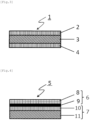
- the hygroscopic film of the present invention has a layer structure having at least a resin layer and a moisture absorption layer in a laminated manner and is capable of quickly absorbing a large amount of moisture.
- the resin layer is a layer containing a polyethylene resin and not containing a moisture absorbing agent.
- the moisture absorption layer is a layer containing a moisture absorbing agent and a polyethylene resin and having excellent moisture absorbability.
- the hygroscopic film may further have a second resin layer and have a layer structure in which the aforementioned resin layer (hereinafter referred to as the first resin layer), the moisture absorption layer, and the second resin layer are laminated in this order.
- the second resin layer is a layer containing a polyethylene resin, not containing a moisture absorbing agent, and having excellent heat sealability.
- the polyethylene resin contained in each layer may be the same or different.
- the first resin layer, the moisture absorption layer, or the second resin layer when constituting the surface layer of the hygroscopic film may contain an anti-blocking agent.
- the hygroscopic film may further contain an antistatic agent in the outermost first resin layer or the outermost second resin layer to enhance antistatic properties (static electricity preventing properties, electrification preventing properties).
- the antistatic agent is preferably not contained in a layer that contains a moisture absorbing agent.
- the antistatic agent is contained in a layer containing a moisture absorbing agent, there is a tendency that high antistatic properties are unlikely obtained.
- the antistatic agent is a polymer antistatic agent, sufficient antistatic properties can be obtained even when the moisture absorption layer contains the antistatic agent.
- the hygroscopic film may further contain small amounts of a slipping agent, an antioxidant, a solvent, and other additives in addition to those described above.
- the amount of moisture absorbed in 24 hours in an environment of 23°C and 50% RH is preferably 1.0 g/m 2 or more and 6.0 g/m 2 or less, and more preferably 2.0 g/m 2 or more and 4.0 g/m 2 or less.
- the amount of moisture absorbed in 48 hours is preferably 2.0 g/m 2 or more and 8.0 g/m 2 or less, and more preferably 4.0 g/m 2 or more and 6.0 g/m 2 or less.
- the moisture absorbing effect may be insufficient for contents that deteriorate with even a small amount of moisture absorbed. Also, when the amount of moisture absorbed is larger than the above range, the rate of moisture absorbed is excessively high, possibly resulting in poor workability.
- the amount of moisture absorbed in two weeks is preferably 2.5 g/m 2 or more and 20.0 g/m 2 or less, and more preferably 3.0 g/m 2 or more and 15.0 g/m 2 or less.
- the hygroscopic film may further have a layer other than the first resin layer, the moisture absorption layer, and the second resin layer as necessary.
- the hygroscopic film of the present invention may be laminated by interposing adhesive layers between the aforementioned layers constituting the film and between the sub-layers of each layer.
- an anchor coat layer may be provided at the interface between the adhesive layer and the aforementioned layers to improve adhesion.
- the intrinsic surface resistance of the outermost second resin layer containing an antistatic agent of the hygroscopic film is preferably 1.0x10 7 ⁇ / ⁇ or more and less than 1.0 ⁇ 10 12 ⁇ / ⁇ , and more preferably 1.0 ⁇ 10 8 ⁇ / ⁇ or more and less than 1.0 ⁇ 10 11 ⁇ / ⁇ .
- the intrinsic surface resistance of the hygroscopic film is preferably 1.0x10 7 ⁇ / ⁇ or more and less than 1.0 ⁇ 10 14 ⁇ / ⁇ .
- An intrinsic surface resistance lower than the above range likely results in poor sealability and extremely high costs, and an intrinsic surface resistance higher than the above range likely results in insufficient antistatic properties.
- the elutable ion content is preferably small to suppress the contents of the package from being contaminated by ions.
- the elutable ion content in the hygroscopic film can be measured by, for example, carrying out an extraction treatment using a 10 cm ⁇ 20 cm hygroscopic film and 100 g of ultrapure water in one atmosphere at 30°C for 20 minutes to give an extract, and then analyzing the extract.
- the total content of five extracted elutable cations Li + , Na + , K + , Mg 2+ , and Ca 2+ in the hygroscopic film is preferably 100 ppb or less, and more preferably 50 ppb or less.
- the total content of seven extracted elutable anions F-, Cl-, NO 2 - , Br-, NO 3 - , SO 4 2- , and PO 4 2- in the hygroscopic film is preferably 100 ppb or less, and more preferably 50 ppb or less.
- the hygroscopic film may be sufficiently usable depending on the application as long as the Na + content and the K + content is each 100 ppb or less.
- the hygroscopic film may be sufficiently usable depending on the application.
- the hygroscopic film may be sufficiently usable depending on the application as long as the Cl - content and the Br - content is each 100 ppb or less.
- the hygroscopic film may be sufficiently usable depending on the application.
- the electrical conductivity of the extract obtained above is preferably 50 ⁇ S/m or less, and more preferably 40 ⁇ S/m or less.
- the content of elutable cations and elutable anions extracted is most preferably 0 ppb, and the electrical conductivity of the extract is most preferably 0 S/cm or less, but it is difficult to attain such a content and such an electrical conductivity because of the impurities contained in materials and contamination during the course of manufacturing process.
- the thickness of the hygroscopic film is preferably 20 ⁇ m or more and 200 ⁇ m or less, more preferably 30 ⁇ m or more and 150 ⁇ m or less, and even more preferably 50 ⁇ m or more and 120 ⁇ m or less to strike a good balance between moisture absorbability, rigidity, heat sealability, and antistatic properties.
- a thickness smaller than the above range may result in insufficient heat sealability, moisture absorbability, and antistatic properties, and a thickness larger than the above range may result in excessive rigidity and thus poor workability, a long time for heat sealing, increased costs, and poor moisture absorbability depending on the thick layer structure.
- the first resin layer is a layer containing a polyethylene resin, and may be composed of one layer or two or more layers.
- the polyethylene resin contained in the first resin while the density is not particularly limited, is preferably a polyethylene resin having excellent heat sealability. Also, the polyethylene resin contained in the moisture absorption layer or the second resin layer may be used as well.
- the first resin layer may further contain other resins or various additives to such an extent that the heat sealability is not significantly impaired.
- the outermost first resin layer may further contain an anti-blocking agent to increase the blocking resistance of the hygroscopic film.
- the content of the anti-blocking agent in the first resin layer is preferably 0.1% by mass or more and 5.0% by mass or less, and more preferably 0.5% by mass or more and 2.0% by mass or less.
- a content smaller than the above range may not provide sufficient blocking resistance, and a content larger than the above range does not increase blocking resistance so much.
- the thickness of the first resin layer is preferably 3 ⁇ m or more and 40 ⁇ m or less, more preferably 5 ⁇ m or more and 30 ⁇ m or less, and even more preferably 8 ⁇ m or more and 20 ⁇ m or less to strike a good balance between moisture absorbability, heat sealability, and rigidity.
- a thickness smaller than the above range may result in insufficient adhesion and heat sealability, and a thickness larger than the above range may result in excessive rigidity.
- the moisture absorption layer is a layer that contains a moisture absorbing agent and a polyethylene resin, and having excellent moisture absorbability.
- the polyethylene resin also functions as a binder resin that disperses the moisture absorbing agent.
- the moisture absorption layer may further contain a polymer antistatic agent.
- the moisture absorption layer may contain other resins or various additives to such an extent that the moisture absorbability is not significantly impaired.
- the moisture absorption layer may be composed of one layer or two or more layers, and when the moisture absorption layer is composed of two or more layers, the polyethylene resin and the moisture absorbing agent contained in each moisture absorption layer may be the same or different, and the content may be the same or different.
- the polyethylene resin contained in the moisture absorption layer preferably has a density of 0.880 g/cm 3 or more and 0.930 g/cm 3 or less.
- a density smaller than the above range may likely result in poor processability of the hygroscopic film, and a density larger than the above range may not provide sufficient moisture absorbability.
- the content of the polyethylene resin having a density of 0.880 g/cm 3 or more and 0.930 g/cm 3 or less in the moisture absorption layer is preferably 40% by mass or more and 90% by mass or less, and more preferably 50% by mass or more and 70% by mass or less.
- a content smaller than the above range may not provide sufficient film strength, and a content larger than the above range may result in that a sufficient amount of the moisture absorbing agent cannot be contained.
- the content of the moisture absorbing agent in a layer containing the moisture absorbing agent is preferably 10% by mass or more and 60% by mass or less, and more preferably 30% by mass or more and 50% by mass or less.
- a content is smaller than the above range, a sufficient moisture absorbing effect may be unlikely provided, and a content larger than the above range may result in impaired film formability, impaired adhesion to other layers, and impaired heat seal strength.
- the thickness of the moisture absorption layer is preferably 5 ⁇ m or more and 55 ⁇ m or less, more preferably 10 ⁇ m or more and 50 ⁇ m or less, and even more preferably 20 ⁇ m or more and 45 ⁇ m or less.
- a thickness smaller than the above range may result in insufficient moisture absorbability, and a thickness larger than the above range may result in excessive moisture absorbability and poor economy.
- the second resin layer is a layer containing an antistatic agent and a polyethylene resin, not containing a moisture absorbing agent, and having excellent heat sealability, and may be composed of one layer or two or more layers.
- the second resin layer may contain other resins or various additives to such an extent that moisture absorbability, heat sealability, antistatic properties, and the like are not significantly impaired.
- the content of the antistatic agent in the second resin layer is preferably 5.0% by mass or more and 25.0% by mass or less, and more preferably 10.0% by mass or more and 20.0% by mass or less.
- a content smaller than the above range may not provide sufficient antistatic properties, and a content larger than the above range may result in poor film formability and sealability.
- the antistatic agent contained in the second resin layer is a polymer antistatic agent
- compatibility between the polymer antistatic agent and the polyethylene resin may be poor, large phase separation such as a sea-island structure may be created, and heat seal strength may be impaired.
- the melt flow rate of the resin composition constituting the second resin layer is preferably regulated to thereby increase the uniformity of the resin composition and suppress phase separation, and the melt flow rate is preferably 2.8 g/10 min or more and 10 g/10 min or less.
- a compatibilizer may be added to make the polymer antistatic agent and the polyethylene resin compatible.
- compatibilizers examples include modified polyolefins such as modified polyethylene and modified polypropylene having various functional groups.
- a specific example may be Admer (modified polyolefin) of Mitsui Chemicals, Inc.
- the polyethylene resin contained in the second resin layer is preferably a polyethylene resin having a density of 0.880 g/cm 3 or more and 0.930 g/cm 3 or less.
- a density smaller than the above range likely results in poor processability of the hygroscopic film and poor heat seal strength.
- a density larger than the above range may result in a decreased moisture absorption rate and poor heat sealability.
- the content of the polyethylene resin having a density of 0.880 g/cm 3 or more and 0.930 g/cm 3 or less in the second resin layer is preferably 60% by mass or more and 95% by mass or less, and more preferably 70% by mass or more and 85% by mass or less.
- the thickness of the second resin layer is preferably 3 ⁇ m or more and 40 ⁇ m or less, more preferably 5 ⁇ m or more and 30 ⁇ m or less, and even more preferably 8 ⁇ m or more and 20 ⁇ m or less. A thickness smaller than the above range tends to result in impaired antistatic properties, and a thickness larger than the above range likely results in a lowered moisture absorption rate.
- the proportion of the thickness of the second resin layer to the total thickness of the hygroscopic film is preferably 5% or more and 50% or less.
- a proportion lower than the above range likely results in poor film formability and impaired productivity, and a proportion higher than the above range may result in poor film formability and impaired productivity as well as impaired moisture absorbability.
- the adhesive (the adhesive composition) that forms the adhesive layer may be heat curable, UV curable, electron beam curable, or the like, may be in an aqueous, solution, emulsion, dispersion, or like type, may be in a film/sheet, powder, solid, or like form, and, moreover, may have any mechanism of adhesion, e.g., a chemical reaction, solvent volatilization, thermal melting, or thermal pressure type.
- adhesives examples include polyvinyl acetate adhesives such as polyvinyl acetate and vinyl acetate-ethylene copolymers; polyacrylic acid adhesives composed of copolymers of polyacrylic acid with polystyrene, polyester, polyvinyl acetate, or the like; cyanoacrylate adhesives; ethylene copolymer adhesives composed of copolymers of ethylene with a monomer such as vinyl acetate, ethyl acrylate, acrylic acid, or methacrylic acid; polyurethane adhesives, polyester adhesives; polyimide adhesives; polyolefin adhesives; amino resin adhesives composed of urea resin, melamine resin, or the like; phenol resin adhesives, epoxy adhesives, reactive (meth)acrylic adhesives; elastomer adhesives composed of chloroprene rubber, nitrile rubber, styrene-butadiene rubber, or the like; silicone adhesives; and inorganic adhesives composed of alkali metal silicate, low
- the adhesive layer may be a layer composed of any of an adhesive for dry lamination, an adhesive for non-solvent lamination, and the like.
- the adhesive layer may be formed by sandwich lamination.
- a thermoplastic resin is thermally melted, expanded/stretched in the required width direction with a T-die or the like to extrude it into a curtain form, then allowed to flow down onto an adhering target layer, and sandwiched between a rubber roll and a cooled metal roll, and thereby formation of an adhesive layer as well as adhesion and lamination to the adhering target layer are simultaneously achieved.
- any resin that can be thermally melted and applied to an extruder can be used in the adhesive layer.
- a resin set forth above as a thermoplastic resin having heat sealability can be preferably used.
- the adhesive dispersed or dissolved in a solvent is applied to one film and dried, the other film is placed on top for lamination, then the adhesive is aged for several hours to several days at 30 to 120°C, and thereby the adhesive is cured and adhered, thus enabling lamination.
- the adhesive When using an adhesive for non-solvent lamination, the adhesive itself is applied to the adhering target layer without being dispersed or dissolved in a solvent and then dried, a film for forming the other layer is then placed on top for lamination, the adhesive is then aged for several hours to several days at 30 to 120°C, and thereby the adhesive is cured for lamination.
- the adhesive for dry lamination or the adhesive for non-solvent lamination can be used by way of coating such as roll coating, gravure roll coating, or kiss coating, and the amount of the adhesive coated is preferably 0.1 to 10 g/m 2 (in a dry state). An amount of the adhesive coated within the above range results in good adhesion.
- the anchor coat layer can be formed from any anchor coating agent.
- anchor coating agents examples include organotitanium, isocyanate (urethane), polyethyleneimine, acid-modified polyethylene, polybutadiene, polyacrylic, polyester, epoxy, polyvinyl acetate, and other anchor coating agents.
- the hygroscopic packaging material of the present invention is a packaging material produced from the hygroscopic film of the present invention, and examples include hygroscopic packaging materials for packaging food products and industrial materials.
- Examples of food products include cooked or frozen food, grains, confections, articles of personal preference, and seasonings, and the food products when accommodated therein may be in their original form, processed form, powdery/granular form (powder), tablet form, or the like.
- industrial materials include drugs (quasi-drugs), amenities, electronic materials/components, electric/electronic products, and mechanical parts.
- drugs examples include pesticides, insect repellents, insecticides, poultice, toothpaste, and tablets.
- amenities include air fresheners, fragrances, bath additives, cosmetics, toiletry products, surfactants, shampoos, rinses, deodorants, and detergents.
- Examples of electronic materials/components and electric/electronic products include semiconductor silicon wafers, batteries, solar cells, semiconductor packages, discrete components such as organic light-emitting diodes, wavelength conversion sheets, and display devices.
- mechanical parts include screws, shafts, metal plates, and the like for use in vehicles.
- the hygroscopic package of the present invention is a package produced by forming the hygroscopic packaging material of the present invention into a pouch.
- hygroscopic package of the present invention include pillow pouches and gazette pouches produced by folding the hygroscopic packaging material of the present invention or placing two pieces of the hygroscopic packaging material one on top of the other such that the heat-sealing surfaces of the hygroscopic packaging material face each other, and heat-sealing the circumferential edges, for example, in a side seal type, two-side seal type, three-side seal type, four-side seal type, envelope seal type, center seal type (pillow seal type), pleated seal type, flat-bottom seal type, square-bottom seal type, gazette seal type, or like heat seal form.
- the polyethylene resin contained in each of the first resin layer, the moisture absorption layer, and the second resin layer is preferably a polyethylene resin having a density of 0.880 g/cm 3 or more and 0.930 g/cm 3 or less, and is preferably a linear polyethylene copolymer of ethylene and an ⁇ -olefin.
- ⁇ -olefin examples include 1-butene, 1-hexene, 4-methyl-1-pentene, and 1-octene, and one of or two or more of these may be used.
- a linear polyethylene copolymer of ethylene and ⁇ -olefin has a molecular structure in which a side chain derived from 1-butene, 1-hexene, 4-methyl-1-pentene, or 1-octene is present on the polyethylene main chain derived from ethylene.
- a linear polyethylene copolymer of ethylene and 1-hexene is preferable.
- L-LDPE linear low density polyethylene
- JIS K6899-1 2000 as a linear polyethylene copolymer having a density of 0.910 to 0.925
- this classification by density is not applicable herein to the linear polyethylene copolymer of ethylene and ⁇ -olefin having a density of 0.880 g/cm 3 or more and 0.930 g/cm 3 or less.
- the density of the polyethylene resin contained in a resin film can be verified by measuring the melting point of a polyethylene resin film by DSC analysis and comparing it with the similarly measured melting point of a LLDPE film of known density.
- the melt flow rate (MFR) of the polyethylene resin is preferably 1 g/10 min or more and 10 g/10 min or less, and more preferably 1.5 g/10 min or more and 7 g/10 min or less.
- MFR melt flow rate
- the resin can maintain a good MFR and exhibit good film formability and adhesion even when mixed with another resin or a moisture absorbing agent.
- a commonly used polyethylene resin may be contained as long as the moisture absorbability and the heat sealability of the hygroscopic film are not significantly impaired.
- polyethylene resins include, but are not limited to, LDPE, MDPE, HDPE, LLDPE, ethylene-vinyl acetate copolymers, ethylene-ethyl acrylate copolymers, ethylene-acrylic acid copolymers, ethylene-methacrylic acid copolymers, ethylene-methacrylic acid methyl copolymers, ethylene-propylene copolymers, and mixtures of such resins.
- the moisture absorbing agent in the present invention preferably contains a metal oxide.
- One or more metal oxides selected from the group consisting of calcium oxide, magnesium oxide, and hydrophilic zeolite are preferably contained.
- the moisture absorbing agent may have any of a spherical, rod, elliptical, or like external shape and may be in any of a powder, aggregated, granular, or like form
- the moisture absorbing agent preferably has a powder form from the viewpoint of uniform dispersion, kneading characteristics, film formability, and the like when dispersed in a resin.
- the average particle size is preferably 0.01 ⁇ m or more and 15 ⁇ m or less, and more preferably 1 ⁇ m or more and 12 ⁇ m or less.
- the average particle size is a value measured by dynamic light scattering.
- An average particle size smaller than the above range likely results in aggregation of the moisture absorbing agent, and dispersibility tends to be impaired.
- An average particle size larger than the above range tends to result in poor film formability of a layer containing the moisture absorbing agent, thus making it difficult to add a large amount of the moisture absorbing agent, moreover, the surface area is also reduced, and thus a sufficient moisture absorbing effect may not be obtained.
- Hydrophilic zeolite maintains its moisture absorbing effect even when exposed to a temperature of 230°C or higher, and is thus preferably usable.
- hydrophilic zeolite Being hydrophilic, hydrophilic zeolite likely adsorbs highly polar water molecules and the like but, on the other hand, affinity for low-polarity organic gas is low, affinity for other low-polarity gas components, hydrophobic gas, and lipophilic gas (including solvent gas) is also low, and thus hydrophilic zeolite unlikely adsorbs such materials. That is to say, hydrophilic zeolite has the excellent function of not adsorbing gas components that do not have functional groups.
- the dispersibility of the moisture absorbing agent in the moisture absorption layer is preferably increased by a so-called masterbatch method in which a high concentration of the moisture absorbing agent is mixed with a thermoplastic resin and then melt-kneaded (melt-blended) to produce a masterbatch, and this is then mixed and melt-kneaded with other components of the moisture absorption layer in a proportion according to the target content.
- the mass ratio of the moisture absorbing agent/the thermoplastic resin in the masterbatch is not particularly limited, and is preferably 20/80 or more and 60/40 or less, and more preferably 30/70 or more and 50/50 or less.
- a known or conventional kneading method is applicable to a method for kneading the moisture absorbing agent and the thermoplastic resin.
- the thermoplastic resin used in the masterbatch can be of a type and in a content that do not adversely affect the overall heat sealability, film formability, and moisture absorbability of the moisture absorption layer in a significant manner, and is preferably a resin that is highly compatible with other resins such as a polyethylene resin contained in the moisture absorption layer and that has comparable density and heat sealability, and may be the same as or different from such resins.
- thermoplastic resin used in the masterbatch include, but are not limited to, general-purpose polyolefin resins such as polyethylene, polypropylene, methylpentene polymers and acid-modified polyolefin resins, and mixtures of these resins, and a thermoplastic resin of a type that conforms to the purpose can be selected.
- general-purpose polyolefin resins such as polyethylene, polypropylene, methylpentene polymers and acid-modified polyolefin resins, and mixtures of these resins
- thermoplastic resin of a type that conforms to the purpose can be selected.
- the melt flow rate (MFR) of the thermoplastic resin used in the masterbatch is preferably 0.2 g/10 min or more and 10 g/10 min or less. With a MFR in this range, melt-kneading with the moisture absorbing agent is easy, the moisture absorbing agent can be readily dispersed in the moisture absorption layer, and the film formability of the moisture absorption layer is likely maintained.
- the anti-blocking agent is preferably zeolite, silica (spherical), silica (acicular), talc, PMMA, or the like.
- the antistatic agent in the present invention preferably contains a polymer antistatic agent.
- a low molecular weight antistatic agent such as a surfactant, when used in combination with a moisture absorbing agent, may lose its antistatic performance depending on the type of the moisture absorbing agent.
- the polymer antistatic agent even when used in combination with a moisture absorbing agent, can maintain both moisture absorbability and antistatic properties without losing its antistatic performance.
- the antistatic agent used in the present invention may be any type among a cationic antistatic agent, an anionic antistatic agent, an amphoteric antistatic agent, and a nonionic antistatic agent.
- the cationic antistatic agent is an antistatic agent that forms a positive ion when dissolved in water, and examples include antistatic agents containing a quaternary ammonium salt, a pyridinium salt, or a compound having a cationic group such as a primary, secondary or tertiary amino group.
- the polymer cationic antistatic agent may be an antistatic agent in which a polymer compound forms a positive ion, or may be an antistatic agent obtained by adding an additive that forms a positive ion to a polymer compound.
- the anionic antistatic agent is an antistatic agent that forms negative ions when dissolved in water, and examples include antistatic agents containing a compound having an anionic group such as a sulfonic acid salt group, a sulfuric acid ester group, a phosphoric acid ester salt group, or a phosphonic acid salt group.
- the polymer anionic antistatic agent may be an antistatic agent in which a polymer compound forms positive ions, or may be an antistatic agent obtained by adding an additive that forms a negative ion to a polymer compound.
- the amphoteric antistatic agent is an antistatic agent that, when dissolved in water, forms negative ions in the alkaline region and a positive ion in the acidic region, and examples include antistatic agents containing a compound such as an amino acid compound or an aminosulfuric acid ester.
- the nonionic antistatic agent is an antistatic agent that does not ionize when dissolved in water, and examples include antistatic agents containing an amino alcohol compound, a glycerin compound, a polyethylene glycol compound, a polyether ester amide compound, an ethylene oxide-epichlorohydrin compound, or a polyether ester compound.
- a polyether skeleton moiety may have antistatic properties, and a moiety composed of a polypropylene skeleton and a polyamide skeleton may enhance dispersibility in resin and strength.
- polymer antistatic agents are a cationic polymer antistatic agent that contains an ionomer including an ethylene-unsaturated carboxylic acid copolymer and an aliphatic polyhydric alcohol having three or more hydroxyl groups within the molecule, or is a polymer nonionic antistatic agent having a polyether skeleton, a polypropylene skeleton, and a polyamide skeleton in the main skeleton.
- the intrinsic surface resistance of a molded article composed solely of the polymer antistatic agent is preferably 1 ⁇ 10 8 to 1 ⁇ 10 13 ⁇ / ⁇ , and more preferably 1 ⁇ 10 8 to 1 ⁇ 10 12 ⁇ / ⁇ . It is difficult to obtain an intrinsic surface resistivity lower than the above range, and an intrinsic surface resistivity higher than the above range may result in an insufficient effect of lowering the intrinsic surface resistivity of the hygroscopic film.
- a nonionic polymer antistatic agent is preferably used, and, in particular, a nonionic polymer antistatic agent is preferably contained in the surface layer, such as the second resin layer, of the hygroscopic film.
- the polymer antistatic agent is particularly preferably a polymer nonionic antistatic agent in which the main skeleton has a polyether skeleton, a polypropylene skeleton, and a polyamide skeleton, and the intrinsic surface resistivity of a molded article composed solely of the polymer antistatic agent is 1 ⁇ 10 8 to 1 ⁇ 10 12 ⁇ / ⁇ .
- the moisture absorption layer is not a surface layer, e.g., when being sandwiched between the first resin layer and the second resin layer, a cationic polymer antistatic agent or an anionic polymer antistatic agent may be contained in the moisture absorption layer.
- the method for producing the hygroscopic film provided below is one example, and the present invention is not limited thereto.
- Film formation and lamination for the layers constituting the hygroscopic film are not particularly limited, and known or commonly used film formation and lamination methods are applicable.
- any method may be used such as wet lamination, dry lamination, solventless dry lamination, extrusion lamination, T-die co-extrusion molding, co-extrusion lamination, inflation, or the like.
- the resulting hygroscopic film may be subjected to secondary processing to impart, for example, surface functions such as chemical functions, electrical functions, magnetic functions, mechanical functions, friction/abrasion/lubrication functions, optical functions, thermal functions, and biocompatibility.
- surface functions such as chemical functions, electrical functions, magnetic functions, mechanical functions, friction/abrasion/lubrication functions, optical functions, thermal functions, and biocompatibility.
- Examples of secondary processing include embossing, painting, bonding, printing, metallizing (such as plating), machining, and surface treatment (such as antistatic treatment, corona discharge treatment, plasma treatment, photochromism treatment, physical vapor deposition, chemical vapor deposition, and coating).
- the hygroscopic package of the present invention can be produced by folding the hygroscopic packaging material of the present invention or placing two pieces of the hygroscopic packaging material one on top of the other such that the heat-sealing surfaces face each other, and heat-sealing the circumferential edges, for example, in a side seal type, two-side seal type, three-side seal type, four-side seal type, envelope seal type, center seal type (pillow seal type), pleated seal type, flat-bottom seal type, square-bottom seal type, gazette seal type, or like heat seal form.
- heat sealing method examples include bar sealing, rotary roll sealing, belt sealing, impulse sealing, high frequency sealing, and ultrasonic sealing.
- two sheets of the hygroscopic packaging material of the present invention having about 500 mm ⁇ 500 mm are provided, the three sides of the hygroscopic packaging material are heat-sealed to a width of about 10 mm such that the heat-sealing surfaces face each other, and thus a hygroscopic packaging pouch, the only one side of which is not heat-sealed, is obtained.
- the dedicated carrier case containing the semiconductor silicon wafers is then placed in the resulting hygroscopic packaging pouch, and the remaining one side is heat-sealed to a width of about 10 mm to give a filled hygroscopic package.
- degassed packaging may be performed as necessary.
- the hygroscopic laminate of the present invention has at least a gas barrier base layer and a moisture-absorbing sealant layer containing a moisture absorbing agent.
- the moisture-absorbing sealant layer contains a moisture absorbent and thus has excellent moisture absorbability, and contains a heat sealing resin and thus has excellent heat sealability.
- the gas barrier base layer and the moisture-absorbing sealant layer may be laminated directly or via an adhesive layer.
- the hygroscopic laminate may be laminated by interposing adhesive layers between the aforementioned layers constituting the laminate and between the sub-layers of each layer.
- an anchor coat layer may be provided at the interface between the adhesive layer and the aforementioned layers to improve adhesion.
- the gas barrier base layer is a layer having a basal layer and a gas barrier layer.
- the basal layer may be a single layer, or two or more identical or different layers may be adjacent to each other or may be separated by another layer.
- the gas barrier layer may be a single layer, or two or more identical or different layers may be adjacent to each other or may be separated by another layer.
- gas barrier base layer [basal layer 1/adhesive layer 1/gas barrier layer/adhesive layer 2/basal layer 2/adhesive layer 3]/moisture-absorbing sealant layer [resin layer 1/moisture absorption layer/resin layer 2]
- the amount of moisture absorbed in 24 hours in an environment of 23°C and 50% RH is preferably 0.8 g/m 2 or more and 4.0 g/m 2 or less, and more preferably 1.0 g/m 2 or more and 3.0 g/m 2 or less.
- the amount of moisture absorbed in 48 hours is preferably 1.5 g/m 2 or more and 6.0 g/m 2 or less, and more preferably 2.0 g/m 2 or more and 5.0 g/m 2 or less.
- the moisture absorbing effect may be insufficient for contents that deteriorate with even a small amount of moisture absorbed.
- the rate of moisture absorbed is excessively high, possibly resulting in poor workability.
- the amount of moisture absorbed in two weeks is preferably 2.5 g/m 2 or more and 20.0 g/m 2 or less, and more preferably 3.0 g/m 2 or more and 15.0 g/m 2 or less.
- the moisture absorbing effect may be insufficient. Also, an amount of moisture absorbed larger than the above moisture absorbability may result in excessive moisture absorption and increased costs.
- the outermost gas barrier base layer and/or the outermost moisture-absorbing sealant layer may have antistatic properties.
- an antistatic polyester film may be used as the basal layer disposed on the surface of the hygroscopic laminate, or an antistatic agent may be contained in the second resin layer of the moisture-absorbing sealant layer.
- the intrinsic surface resistance of the surface having antistatic properties of the hygroscopic laminate is preferably 1.0x10 7 ⁇ / ⁇ or more and less than 1.0 ⁇ 10 12 ⁇ / ⁇ , and more preferably 1.0 ⁇ 10 8 ⁇ / ⁇ or more and less than 1.0 ⁇ 10 11 ⁇ / ⁇ .
- the intrinsic surface resistance of the surface having antistatic properties of the hygroscopic laminate is preferably 1.0x10 7 ⁇ / ⁇ or more and less than 1.0 ⁇ 10 14 ⁇ / ⁇ .
- An intrinsic surface resistance lower than the above range likely results in poor sealability and extremely high costs, and an intrinsic surface resistance higher than the above range likely results in insufficient antistatic properties.
- the elutable ion content is preferably small to suppress the contents of the package from being contaminated by ions.
- the elutable ion content in the hygroscopic laminate can be measured by, for example, carrying out an extraction treatment using a 10 cm ⁇ 20 cm hygroscopic laminate and 100 g of ultrapure water in one atmosphere at 30°C for 20 minutes to give an extract, and then analyzing the extract.
- the total content of five extracted elutable cations Li + , Na + , K + , Mg 2+ , and Ca 2+ in the hygroscopic film is preferably 100 ppb or less, and more preferably 50 ppb or less.
- the total content of seven extracted elutable anions F-, Cl-, NO 2 - , Br-, NO 3 - , SO 4 2- , and PO 4 2- in the hygroscopic laminate is preferably 100 ppb or less, and more preferably 50 ppb or less.
- the hygroscopic laminate may be sufficiently usable depending on the application as long as the Na + content and the K + content is each 100 ppb or less.
- the hygroscopic laminate may be sufficiently usable depending on the application.
- the hygroscopic laminate may be sufficiently usable depending on the application as long as the Cl- content and the Br-content is each 100 ppb or less.
- the hygroscopic laminate may be sufficiently usable depending on the application.
- the electrical conductivity of the extract obtained above is preferably 50 ⁇ S/m or less, and more preferably 40 ⁇ S/m or less.
- the content of elutable cations and elutable anions extracted is most preferably 0 ppb, and the electrical conductivity of the extract is most preferably 0 S/cm or less, but it is difficult to attain such a content and such an electrical conductivity because of the impurities contained in materials and contamination during the course of manufacturing process.
- the thickness of the hygroscopic laminate is preferably 50 ⁇ m or more and 250 ⁇ m or less, more preferably 60 ⁇ m or more and 200 ⁇ m or less, and even more preferably 70 ⁇ m or more and 150 ⁇ m or less to strike a good balance between moisture absorbability, rigidity, heat sealability, and antistatic properties.
- a thickness smaller than the above range may result in insufficient heat sealability, moisture absorbability, and antistatic properties, and a thickness larger than the above range may result in excessive rigidity and thus poor workability, a long time for heat sealing, increased costs, and poor moisture absorbability depending on the thick layer structure.
- the gas barrier base layer in the present invention refers to a base layer having gas barrier properties, and it may be composed of a single layer such as a gas barrier resin film having gas barrier properties and properties as a base, or may be composed of multiple layers including a gas barrier layer and a basal layer.
- an adhesive layer may be provided between the layers constituting the gas barrier base layer or between such constituting layers and other layers to improve adhesion, or a desired surface treatment layer may be provided in advance on the surfaces of such constituting layers as necessary.
- pretreatment may be carried out as desired, such as corona discharge treatment, ozone treatment, low-temperature plasma treatment with oxygen gas or nitrogen gas, glow discharge treatment, or oxidation treatment with chemicals or the like, and thus a corona treatment layer, an ozone treatment layer, a plasma treatment layer, an oxidation treatment layer, or the like may be formed/provided.
- various coating agent layers may be formed on the surfaces of such constituting layers as desired, such as a primer coating agent layer, an undercoating agent layer, an anchor coating agent layer, an adhesive layer, and a vapor-deposited anchor coating agent layer, and regarded as surface treatment layers.
- a resin composition may be used that contains a polyester resin, a polyurethane resin, an epoxy resin, a phenol resin, a (meth)acrylic resin, a polyvinyl acetate resin, a polyolefin resin such as polyethylene or polypropylene or a copolymer or modified resin thereof, a cellulose resin, or the like as a main component of a vehicle.
- the thickness of the gas barrier base layer is preferably 5 ⁇ m or more and 50 ⁇ m or less, and more preferably 7 ⁇ m or more and 25 ⁇ m or less. A thickness smaller than the above range may result in insufficient rigidity and/or gas barrier properties, and a thickness larger than the above range may result in excessive rigidity and poor workability.
- a resin film, paper, or the like may be used in the basal layer, and the base layer may be composed of a single layer or a multiple layers including two or more layers having the same or different compositions.
- the thickness of the basal layer varies according to the material and, in the case of a resin film, is preferably 5 ⁇ m or more and 50 ⁇ m or less, and more preferably 10 ⁇ m or more and 30 ⁇ m or less.
- the resin film used in the basal layer may be a film of a thermoplastic resin, and is preferably a film of a thermoplastic resin that has excellent chemical or physical strength, withstands the conditions for forming a vapor-deposited film of metal or metal oxide, and is capable of favorably retaining the properties of such a vapor-deposited film without deterioration.
- highly hygroscopic resins include polyamide resins such as various types of nylon, ethylene-vinyl alcohol copolymers, and polyvinyl alcohols.
- Such a resin is preferably not contained in large amounts in the gas barrier base layer not only in the form of a basal layer but also in any other form.
- the resin used in the basal layer examples include various resins, e.g., polyolefin resins such as polyethylene resins and polypropylene resins, cyclic polyolefin resins, polystyrene resins, acrylonitrile-styrene copolymers (AS resins), acrylonitrile-butadienestyrene copolymers (ABS resins), poly(meth)acrylic resins, polycarbonate resins, polyester resins such as polyethylene terephthalate and polyethylene naphthalate, polyurethane resins, and acetal resins.
- polyolefin resins such as polyethylene resins and polypropylene resins
- cyclic polyolefin resins polystyrene resins, acrylonitrile-styrene copolymers (AS resins), acrylonitrile-butadienestyrene copolymers (ABS resins)
- AS resins acrylonitrile-
- the resin is preferably a polyester resin or a polyolefin resin, and is particularly preferably polyethylene terephthalate (PET) or polypropylene (PP).
- PET polyethylene terephthalate
- PP polypropylene
- thermoplastic resin to be used in the basal layer can be formed into a film by various film forming methods.
- Examples include a method in which one resin is formed into a film by a film forming method such as extrusion, casting, T-die method, cutting, or inflation, a method in which two or more resins are formed into a film by multilayer co-extrusion, and a method in which two or more resins are mixed before being formed into a film by the above film forming methods.
- a tenter, tubular, or like method may be used to form a uniaxially or biaxially stretched film.
- one or more resins may be applied to another resin film and dried for coating, or a molten resin may be laminated by T-die method or the like.
- the resin film is preferably a polyester film, and more preferably a biaxially stretched PET film or a biaxially stretched PP film or sheet.
- plastic supplements, additives and the like may be added to the resin film during the film formation thereof to improve or modify, for example, film processability, heat resistance, weather resistance, mechanical properties, dimensional stability, oxidation resistance, slipperiness, mold releasability, flame retardancy, mold resistance, electrical properties, and strength, and the amount of such supplements and additives added may suitably vary from an extremely small amount to several tens of percent according to the purpose.
- additives include lubricants, crosslinking agents, antioxidants, ultraviolet absorbers, photostabilizers, fillers, reinforcing agents, antistatic agents, pigments, and modifier resins.
- the gas barrier layer is a layer that prevents atmospheric gas from passing through the hygroscopic laminate from the outside to the inside of a package produced with the hygroscopic laminate of the present invention.
- the gas barrier base layer may have at least one or more basal layers and a gas barrier layer, wherein the basal layer may be a layer composed of a resin film, and the gas barrier layer may be a layer including a foil or a vapor-deposited film composed of an inorganic compound.
- the gas barrier layer may be a layer containing an inorganic compound or a gas barrier resin, and specifically one or more selected from the group consisting of a gas barrier resin film, a metal foil, a resin film provided with a metal or metal oxide vapor-deposited layer, and a gas barrier resin coating film may be used in the gas barrier layer.
- the gas barrier resin film may be a resin film having gas barrier properties.
- the gas barrier film is preferably a resin film composed of a resin such as PET, polybutylene terephthalate, polyethylene naphthalate, or polyimide.
- the metal foil is preferably an aluminum foil having a thickness of 3 ⁇ m or more and 15 ⁇ m or less.
- the resin film provided with a metal or metal oxide vapor-deposited layer is preferably a film obtained by forming an aluminum vapor-deposited film, a silica vapor-deposited film, or an aluminum oxide vapor-deposited film on at least one surface of the base resin film.
- a commercially available resin film provided with an aluminum oxide vapor-deposited film may be, for example, alumina-deposited IB-PET-PIR (thickness 12 ⁇ m) manufactured by Dai Nippon Printing Co., Ltd., which is a PET film containing alumina vapor-deposited on one surface by PVD method.
- the gas barrier resin coating film is preferably a coating film containing a sol-gel hydrolysis polycondensate formed from a metal alkoxide and a watersoluble polymer.
- the metal foil, or the resin film provided with a metal or metal oxide vapor-deposited layer, for the gas barrier layer can be bonded to other layers using a dry lamination adhesive.
- a resin film for the basal layer may be used in place of the resin film of the resin film provided with a metal or metal oxide vapor-deposited layer, and thereby lamination to the basal layer can be omitted.
- the moisture-absorbing sealant layer has a layer structure having at least a resin layer and a moisture absorption layer in a laminated manner, and is capable of quickly absorbing a large amount of moisture.
- the moisture-absorbing sealant layer is preferably a layer composed of a hygroscopic film.
- the resin layer is a layer containing a polyethylene resin, not containing a moisture absorbing agent, and having excellent heat sealability.
- the moisture absorption layer is a layer containing a moisture absorbing agent and a polyethylene resin and having excellent moisture absorbability.
- the moisture-absorbing sealant layer may further have a second resin layer and have a layer structure in which the aforementioned resin layer (hereinafter referred to as the first resin layer), the moisture absorption layer, and the second resin layer are laminated in this order.
- the second resin layer is a layer containing a polyethylene resin, not containing a moisture absorbing agent, and having excellent heat sealability.
- the polyethylene resin contained in each layer may be the same or different.
- the first resin layer, the moisture absorption layer, or the second resin layer when constituting the surface layer of the hygroscopic laminate may contain an anti-blocking agent.
- the moisture-absorbing sealant layer may contain an antistatic agent in the outermost second resin layer when constituting the surface layer of the hygroscopic laminate to enhance antistatic properties (static electricity preventing properties, electrification preventing properties).
- the antistatic agent is preferably not contained in a layer that contains a moisture absorbing agent.
- the antistatic agent is contained in a layer containing a moisture absorbing agent, there is a tendency that high antistatic properties are unlikely obtained.
- the antistatic agent is a polymer antistatic agent, sufficient antistatic properties can be obtained even when the moisture absorption layer contains the antistatic agent.
- the moisture-absorbing sealant layer may further contain small amounts of a slipping agent, an antioxidant, a solvent, and other additives in addition to those described above.
- the moisture-absorbing sealant layer may further have a layer other than the first resin layer, the moisture absorption layer, and the second resin layer as necessary.
- the thickness of the moisture-absorbing sealant layer is preferably 20 ⁇ m or more and 200 ⁇ m or less, more preferably 30 ⁇ m or more and 150 ⁇ m or less, and even more preferably 50 ⁇ m or more and 120 ⁇ m or less to strike a good balance between moisture absorbability, rigidity, heat sealability, and antistatic properties.
- a thickness smaller than the above range may result in insufficient heat sealability, moisture absorbability, and antistatic properties, and a thickness larger than the above range may result in excessive rigidity and thus poor workability, a lowered heat seal rate, increased costs, and poor moisture absorbability depending on the thick layer structure.
- the first resin layer is the same as the first resin layer of the hygroscopic film described above.
- the moisture absorption layer is the same as the moisture absorption layer of the hygroscopic film described above.
- the second resin layer is the same as the second resin layer of the hygroscopic film described above.
- the adhesive (the adhesive composition) forming the adhesive layer is the same as the adhesive of the hygroscopic film described above.
- the anchor coat layer is the same as the anchor coat layer of the hygroscopic film described above.
- the hygroscopic packaging material of the present invention is the same as the hygroscopic packaging material of the hygroscopic film described above.
- the hygroscopic package of the present invention is the same as the hygroscopic package of the hygroscopic package described above.
- the polyethylene resin contained in each of the first resin layer, the moisture absorption layer, and the second resin layer is the same as the polyethylene resin of the hygroscopic film described above.
- the moisture absorbing agent in the present invention is the same as the moisture absorbing agent of the hygroscopic film described above.
- Hydrophilic zeolite is the same as hydrophilic zeolite of the hygroscopic film described above.
- Improvement of dispersibility by forming the moisture absorbing agent into a masterbatch is the same as the improvement of dispersibility by forming the moisture absorbing agent into a masterbatch described above.
- the anti-blocking agent is the same as the anti-blocking agent of the hygroscopic film described above.
- the antistatic agent in the present invention is the same as the antistatic agent of the hygroscopic film described above.
- a low molecular weight antistatic agent such as a surfactant may lose its antistatic performance depending on the type of the moisture absorbing agent.
- a polymer-type antistatic agent even when used in combination with a moisture absorbing agent, can maintain both moisture absorbability and antistatic properties without losing its antistatic performance.
- Film formation and lamination for the layers constituting the hygroscopic laminate are not particularly limited, and known or commonly used film formation and lamination methods are applicable.
- any method may be used such as wet lamination, dry lamination, solventless dry lamination, extrusion lamination, T-die co-extrusion molding, co-extrusion lamination, inflation, or the like.
- the resulting hygroscopic laminate may be subjected to secondary processing to impart, for example, surface functions such as chemical functions, electrical functions, magnetic functions, mechanical functions, friction/abrasion/lubrication functions, optical functions, thermal functions, and biocompatibility.
- surface functions such as chemical functions, electrical functions, magnetic functions, mechanical functions, friction/abrasion/lubrication functions, optical functions, thermal functions, and biocompatibility.
- Examples of secondary processing include embossing, painting, bonding, printing, metallizing (such as plating), machining, and surface treatment (such as antistatic treatment, corona discharge treatment, plasma treatment, photochromism treatment, physical vapor deposition, chemical vapor deposition, and coating).
- a resin composition for the first resin layer, a resin composition for the moisture absorption layer, and a resin composition for the second resin layer are each provided by being prepared, and subjected to an inflation method to give a hygroscopic film having the following layer structure.
- a base film for the basal layer, an aluminum foil for the gas barrier layer, and the hygroscopic film for the moisture-absorbing sealant layer obtained above are bonded together in this order by dry lamination (e.g., application amount: 3.5 g/m 2 , drying temperature: 70°C) via a dry laminate (DL) adhesive for the adhesive layer to give a hygroscopic laminate having the above layer structure.
- dry lamination e.g., application amount: 3.5 g/m 2 , drying temperature: 70°C
- DL dry laminate
- a hygroscopic laminate having the following layer structure can be produced by dry lamination.
- gas barrier base layer [polyester film (25 ⁇ m thick)/DL adhesive 1 (3.5 g/m 2 )/aluminum foil 1 (7 ⁇ m thick)/DL adhesive 1 (3.5 g/m 2 )/polyester film (16 ⁇ m thick)]/DL adhesive 1 (3.5 g/m 2 )/moisture-absorbing sealant layer [first resin layer (30 ⁇ m thick)/moisture absorption layer (40 ⁇ m thick)/second resin layer (10 ⁇ m thick)]
- the moisture-absorbing sealant layer may be laminated onto another layer such as a gas barrier base layer by an extrusion coating method involving extrusion or co-extrusion.
- the moisture-absorbing sealant layer may be laminated via an adhesive layer as necessary.
- the hygroscopic package of the present invention can be produced by folding the hygroscopic packaging material of the present invention or placing two pieces of the hygroscopic packaging material one on top of the other such that the heat-sealing surfaces face each other, and heat-sealing the circumferential edges, for example, in a side seal type, two-side seal type, three-side seal type, four-side seal type, envelope seal type, center seal type (pillow seal type), pleated seal type, flat-bottom seal type, square-bottom seal type, gazette seal type, or like heat seal form.
- heat sealing method examples include bar sealing, rotary roll sealing, belt sealing, impulse sealing, high frequency sealing, and ultrasonic sealing.
- two sheets of the hygroscopic packaging material of the present invention having about 500 mm ⁇ 500 mm are provided, the three sides of the hygroscopic packaging material are heat-sealed to a width of about 10 mm such that the heat-sealing surfaces face each other, and thus a hygroscopic packaging pouch, the only one side of which is not heat-sealed, is obtained.
- the dedicated carrier case containing the semiconductor silicon wafers is then placed in the resulting hygroscopic packaging pouch, and the remaining one side is heat-sealed to a width of about 10 mm to give a filled hygroscopic package.
- degassed packaging may be performed as necessary.
- a hygroscopic laminate having the following layer structure is produced by dry lamination using a polyester film, a DL adhesive, an aluminum foil, and a hygroscopic film.
- gas barrier base layer [polyester film (25 ⁇ m thick)/DL adhesive 1 (3.5 g/m 2 )/aluminum foil 1 (7 ⁇ m thick)/DL adhesive 1 (3.5 g/m 2 )/polyester film (16 ⁇ m thick)]/DL adhesive 1 (3.5 g/m 2 )/moisture-absorbing sealant layer [first resin layer (30 ⁇ m thick)/moisture absorption layer (40 ⁇ m thick)/second resin layer (10 ⁇ m thick)]
- hygroscopic packaging material of the present invention having about 500 mm ⁇ 500 mm are provided, the three sides of the hygroscopic packaging material are heat-sealed to a width of about 10 mm such that the heat-sealing surfaces face each other, and thus a hygroscopic packaging pouch, the only one side of which is not heat-sealed, is obtained.
- the dedicated carrier case containing the semiconductor silicon wafers is then placed in the resulting hygroscopic packaging pouch, and the remaining one side is heat-sealed to a width of about 10 mm to give a filled hygroscopic package.
- degassed packaging may be performed as necessary.
- the masterbatch used in a moisture absorption layer was prepared as follows.
- Polyethylene resin 1 and metal oxide 1 were melt-blended in the following proportions to prepare masterbatch 1 (MB1).
- Polyethylene resin 1 40 parts by mass
- Metal oxide 1 60 parts by mass
- Polyethylene resin 2 and AB agent 1 were dry-blended in the following proportions to prepare a resin composition for the first resin layer.
- Polyethylene resin 2 95 parts by mass AB agent 1 5 parts by mass
- Masterbatch 1 and polyethylene resin 2 were dry-blended in the following proportions to give a resin composition for the first moisture absorption layer.
- Masterbatch 1 67 parts by mass
- Polyethylene resin 2 33 parts by mass
- first resin layer/first moisture absorption layer/second moisture absorption layer 20 ⁇ m thick/40 ⁇ m thick/20 ⁇ m thick
- a resin composition for the first resin layer, a resin composition for the first moisture absorption layer, and a resin composition for the second moisture absorption layer were prepared according to Table 1 in the same manner as Example A1, and a hygroscopic film was produced and similarly evaluated.
- Polyethylene resin 3 and AB agent 1 were dry-blended in the following proportions to prepare a resin composition for the first resin layer.
- Polyethylene resin 3 95 parts by mass
- AB agent 1 5 parts by mass
- Masterbatch 1 and polyethylene resin 3 were dry-blended in the following proportions to give a resin composition for the moisture absorption layer.
- Masterbatch 1 67 parts by mass
- Polyethylene resin 3 33 parts by mass
- first resin layer/moisture absorption layer/second resin layer 20 ⁇ m thick/40 ⁇ m thick/20 ⁇ m thick
- a resin composition for the first resin layer, a resin composition for the moisture absorption layer, and a resin composition for the second resin layer were prepared according to Table 2 in the same manner as Example B1, and a hygroscopic film was produced and similarly evaluated.
- Polyethylene resin 2 and AB agent 1 were dry-blended in the following proportions to prepare a resin composition for the first resin layer.
- Polyethylene resin 2 95 parts by mass AB agent 1 5 parts by mass
- Masterbatch 1 and polyethylene resin 3 were dry-blended in the following proportions to give a resin composition for the moisture absorption layer.
- Masterbatch 1 67 parts by mass
- Polyethylene resin 3 33 parts by mass
- first resin layer/moisture absorption layer/second resin layer 30 ⁇ m thick/40 ⁇ m thick/10 ⁇ m thick
- a resin composition for the first resin layer, a resin composition for the moisture absorption layer, and a resin composition for the second resin layer were prepared according to Table 3 in the same manner as Example C1, and a hygroscopic film was produced and similarly evaluated.
- the appearance of the hygroscopic film was observed and sensorily evaluated.
- the evaluation criteria are as follows:
- the intrinsic surface resistivity of the surface of the second resin layer was measured in an environment of 23°C and 50% RH with "Hiresta-UP” manufactured by Mitsubishi Chemical Corporation.
- the resulting hygroscopic film was cut into a 10 cm ⁇ 20 cm piece and folded in half, three sides were heat-sealed to give a pouch, and the weight of the pouch was measured.
- the concentrations of the following cations and anions in the extract were measured with an ion chromatography "ICS-6000" manufactured by Thermo Fisher Scientific, and the content of each cation and anion in the hygroscopic film was calculated.
- the electrical conductivity of the extract obtained in the measurement of the content of elutable ions was measured with a conductivity sensor "1.5Tri 0.1C SS ISM" manufactured by Mettler Toledo.
- the hygroscopic film was cut into 10 cm ⁇ 10 cm pieces, one piece was placed on top of another such that the first resin layers or the second resin layers face each other, and a 1 cm ⁇ 10 cm area was heat-sealed with a heat seal tester (TP-701-A manufactured by Tester Sangyo Co., Ltd.) such that the edge was bifurcated not being heat-sealed.
- a heat seal tester TP-701-A manufactured by Tester Sangyo Co., Ltd.
- the film was then cut into a strip having a width of 15 mm to produce a test piece for measuring heat seal strength.
- Each bifurcated edge of the test piece was attached to a tensile tester and pulled so as to separate the heat-sealed portion and measure heat seal strength (N/15 mm width).
- the hygroscopic films of all Examples of the present invention showed good film formability, moisture absorbability, and antistatic properties.
- Comparative Examples A1 and A2 which did not contain a moisture absorbing agent, showed insufficient moisture absorbability
- Comparative Examples A3 and B1 which did not contain a sufficient amount of polyethylene resin having a density of 0.880 g/cm 3 or more and 0.930 g/cm 3 or less in the moisture absorption layer, showed insufficient moisture absorbability.
- Examples C1 to C5 in which the second resin layer contained a polymer antistatic agent and had a melt flow rate of 2.8 g/10 min or more and 10 g/10 min or less, showed a good balance between film formability, moisture absorbability, antistatic properties, and heat sealability, but Comparative Example C1, in which the second resin layer contained a polymer antistatic agent and had a melt flow rate of less than 2.8 g/10 min, showed poor heat sealability.
- DL adhesive 1 Adlock RU77T/H7 manufactured by Rock Paint Co., Ltd. Polyester adhesive.
- the masterbatch used in a moisture absorption layer was prepared as follows.
- Polyethylene resin 1 and metal oxide 1 were melt-blended in the following proportions to prepare masterbatch 1 (MB1).
- Polyethylene resin 1 40 parts by mass
- Metal oxide 1 60 parts by mass
- Polyethylene resin 2 and AB agent 1 were dry-blended in the following proportions to prepare a resin composition for the first resin layer.
- Polyethylene resin 2 95 parts by mass AB agent 1 5 parts by mass
- Masterbatch 1 and polyethylene resin 2 were dry-blended in the following proportions to give a resin composition for the first moisture absorption layer.
- Masterbatch 1 67 parts by mass
- Polyethylene resin 2 33 parts by mass
- first resin layer/first moisture absorption layer/second moisture absorption layer 20 ⁇ m thick/40 ⁇ m thick/20 ⁇ m thick
- a hygroscopic laminate having the following layer structure was produced by dry lamination. Then, various evaluations were made.
- Layer structure: gas barrier base layer [basal layer 1/adhesive layer/gas barrier layer/adhesive layer/basal layer 2]/adhesive layer/moisture-absorbing sealant layer [first resin layer/first moisture absorption layer/second moisture absorption layer] gas barrier base layer [polyester film 1 (12 ⁇ m thick)/DL adhesive 1 (3.5 g/m 2 )/aluminum foil 1 (7 ⁇ m thick)/DL adhesive 1 (3.5 g/m 2 )/polyester film 2 (12 ⁇ m thick)]/DL adhesive 1 (3.5 g/m 2 )/moisture-absorbing sealant layer [first resin layer (20 ⁇ m thick)/first moisture absorption layer (40 ⁇ m thick)/second moisture absorption layer (20 ⁇ m thick)]
- a resin composition for the first resin layer, a resin composition for the first moisture absorption layer, and a resin composition for the second moisture absorption layer were prepared according to Table 1 in the same manner as Example A1, and a hygroscopic film and a hygroscopic laminate were produced and similarly evaluated.
- Polyethylene resin 3 and AB agent 1 were dry-blended in the following proportions to prepare a resin composition for the first resin layer.
- Polyethylene resin 3 95 parts by mass
- AB agent 1 5 parts by mass
- Masterbatch 1 and polyethylene resin 3 were dry-blended in the following proportions to give a resin composition for the moisture absorption layer.
- Masterbatch 1 67 parts by mass
- Polyethylene resin 3 33 parts by mass
- first resin layer/moisture absorption layer/second resin layer 20 ⁇ m thick/40 ⁇ m thick/20 ⁇ m thick
- a hygroscopic laminate having the following layer structure was produced by dry lamination. Then, various evaluations were made.
- Layer structure: gas barrier base layer [basal layer 1/adhesive layer/gas barrier layer/adhesive layer/basal layer 2]/adhesive layer/moisture-absorbing sealant layer [first resin layer/moisture absorption layer/second resin layer] gas barrier base layer [polyester film 1 (12 ⁇ m thick)/DL adhesive 1 (3.5 g/m 2 )/aluminum foil 1 (7 ⁇ m thick)/DL adhesive 1 (3.5 g/m 2 )/polyester film 2 (12 ⁇ m thick)]/DL adhesive 1 (3.5 g/m 2 )/moisture-absorbing sealant layer [first resin layer (20 ⁇ m thick)/moisture absorption layer (40 ⁇ m thick)/second resin layer (20 ⁇ m thick)]
- a resin composition for the first resin layer, a resin composition for the moisture absorption layer, and a resin composition for the second resin layer were prepared according to Table 2 in the same manner as Example B1, and a hygroscopic film and a hygroscopic laminate were produced and similarly evaluated.
- Polyethylene resin 2 and AB agent 1 were dry-blended in the following proportions to prepare a resin composition for the first resin layer.
- Polyethylene resin 2 95 parts by mass AB agent 1 5 parts by mass
- Masterbatch 1 and polyethylene resin 3 were dry-blended in the following proportions to give a resin composition for the moisture absorption layer.
- Masterbatch 1 67 parts by mass
- Polyethylene resin 3 33 parts by mass
- first resin layer/moisture absorption layer/second resin layer 30 ⁇ m thick/40 ⁇ m thick/10 ⁇ m thick
- a hygroscopic laminate having the following layer structure was produced by dry lamination. Then, various evaluations were made.
- Layer structure: gas barrier base layer [basal layer /adhesive layer/gas barrier layer]/adhesive layer/moisture-absorbing sealant layer [first resin layer/moisture absorption layer/second resin layer] gas barrier base layer [polyester film 1 (12 ⁇ m thick)/DL adhesive 1 (3.5 g/m 2 )/aluminum foil 1 (7 ⁇ m thick)]/DL adhesive 1 (3.5 g/m 2 )/moisture-absorbing sealant layer [first resin layer (30 ⁇ m thick)/moisture absorption layer (40 ⁇ m thick)/second resin layer (10 ⁇ m thick)]
- a resin composition for the first resin layer, a resin composition for the moisture absorption layer, and a resin composition for the second resin layer were prepared according to Table 3 in the same manner as Example C1, and a hygroscopic film and a hygroscopic laminate were produced and similarly evaluated.
- the appearance of the hygroscopic laminate was observed and sensorily evaluated.
- the evaluation criteria are as follows:
- the intrinsic surface resistivity of the surface of the second resin layer was measured in an environment of 23°C and 50% RH with "Hiresta-UP” manufactured by Mitsubishi Chemical Corporation.
- the resulting hygroscopic film was cut into a 10 cm ⁇ 20 cm piece and folded in half, three sides were heat-sealed to give a pouch, and the weight of the pouch was measured.
- the concentrations of the following cations and anions in the extract were measured with an ion chromatography "ICS-6000" manufactured by Thermo Fisher Scientific, and the content of each cation and anion in the hygroscopic film was calculated.
- the electrical conductivity of the extract obtained in the measurement of the content of elutable ions was measured with a conductivity sensor "1.5Tri 0.1C SS ISM" manufactured by Mettler Toledo.
- the hygroscopic laminate was cut into 10 cm ⁇ 10 cm pieces, one piece was placed on top of another such that the moisture-absorbing sealant layers face each other, and a 1 cm ⁇ 10 cm area was heat-sealed with a heat seal tester (TP-701-A manufactured by Tester Sangyo Co., Ltd.) such that the edge was bifurcated not being heat-sealed.
- a heat seal tester TP-701-A manufactured by Tester Sangyo Co., Ltd.
- the film was then cut into a strip having a width of 15 mm to produce a test piece for measuring heat seal strength.
- Each bifurcated edge of the test piece was attached to a tensile tester and pulled so as to separate the heat-sealed portion and measure heat seal strength (N/15 mm width).
- the hygroscopic laminates of all Examples of the present invention showed good film formability, moisture absorbability, and antistatic properties.
- Comparative Examples A1 and A2 which did not contain a moisture absorbing agent, showed insufficient moisture absorbability
- Comparative Examples A3 and B1 which did not contain a sufficient amount of polyethylene resin having a density of 0.880 g/cm 3 or more and 0.930 g/cm 3 or less in the moisture absorption layer, showed insufficient heat sealability.
- Examples C1 to C5 in which the second resin layer contained a polymer antistatic agent and had a melt flow rate of 2.8 g/10 min or more and 10 g/10 min or less, showed a good balance between film formability, moisture absorbability, antistatic properties, and heat sealability, but Comparative Example C1, in which the second resin layer contained a polymer antistatic agent and had a melt flow rate of less than 2.8 g/10 min, showed poor heat sealability.
Landscapes
- Engineering & Computer Science (AREA)
- Mechanical Engineering (AREA)
- Laminated Bodies (AREA)
Applications Claiming Priority (5)
| Application Number | Priority Date | Filing Date | Title |
|---|---|---|---|
| JP2022012838 | 2022-01-31 | ||
| JP2022012839 | 2022-01-31 | ||
| JP2023009243A JP2023111877A (ja) | 2022-01-31 | 2023-01-25 | 吸湿性フィルム |
| JP2023009244A JP2023111878A (ja) | 2022-01-31 | 2023-01-25 | 吸湿性積層体 |
| PCT/JP2023/002775 WO2023145919A1 (ja) | 2022-01-31 | 2023-01-30 | 吸湿性フィルムおよび吸湿性積層体 |
Publications (2)
| Publication Number | Publication Date |
|---|---|
| EP4474152A1 true EP4474152A1 (de) | 2024-12-11 |
| EP4474152A4 EP4474152A4 (de) | 2026-02-11 |
Family
ID=87471663
Family Applications (1)
| Application Number | Title | Priority Date | Filing Date |
|---|---|---|---|
| EP23747129.7A Pending EP4474152A4 (de) | 2022-01-31 | 2023-01-30 | Hygroskopischer film und hygroskopisches laminat |
Country Status (5)
| Country | Link |
|---|---|
| US (1) | US20250170767A1 (de) |
| EP (1) | EP4474152A4 (de) |
| KR (1) | KR20240141303A (de) |
| TW (1) | TW202337687A (de) |
| WO (1) | WO2023145919A1 (de) |
Families Citing this family (2)
| Publication number | Priority date | Publication date | Assignee | Title |
|---|---|---|---|---|
| JP2024118803A (ja) * | 2023-02-21 | 2024-09-02 | 東洋製罐グループホールディングス株式会社 | 水分バリア性積層フィルム |
| JP2025097817A (ja) * | 2023-12-19 | 2025-07-01 | 東洋製罐グループホールディングス株式会社 | 絶乾用吸湿性シート |
Family Cites Families (13)
| Publication number | Priority date | Publication date | Assignee | Title |
|---|---|---|---|---|
| JP3474285B2 (ja) * | 1994-11-16 | 2003-12-08 | 三井・デュポンポリケミカル株式会社 | アイオノマー組成物及びその用途 |
| JP2002347850A (ja) * | 2001-05-29 | 2002-12-04 | Toyo Seikan Kaisha Ltd | 積層パウチ |
| JP4839688B2 (ja) * | 2005-06-16 | 2011-12-21 | 四国化工株式会社 | 包装容器用積層フイルムの製造方法 |
| JP4870489B2 (ja) | 2006-07-21 | 2012-02-08 | 共同印刷株式会社 | 非帯電性乾燥剤含有フィルム |
| JP2009040439A (ja) * | 2007-08-07 | 2009-02-26 | Dainippon Printing Co Ltd | 酸素水分吸収性パウチ、およびそれを使用した包装製品 |
| JP6255712B2 (ja) * | 2013-05-13 | 2018-01-10 | 住友ベークライト株式会社 | 吸湿性フィルムおよび包装体 |
| WO2015046485A1 (ja) * | 2013-09-30 | 2015-04-02 | 大日本印刷株式会社 | 吸湿性包装体 |
| JP6694387B2 (ja) * | 2014-08-15 | 2020-05-13 | デンカ株式会社 | カバーフィルムおよびそれを用いた電子部品包装体 |
| JP5858311B1 (ja) * | 2015-01-23 | 2016-02-10 | 富田製薬株式会社 | 吸湿性無機フィラー含有ポリオレフィン組成物及びこれを用いた成型体 |
| TWI752061B (zh) * | 2016-07-20 | 2022-01-11 | 日商電化股份有限公司 | 具有毛狀體之熱塑性樹脂片及其成形品 |
| CN109952200B (zh) * | 2016-11-18 | 2021-10-29 | 东洋制罐集团控股株式会社 | 水分吸收用层叠保护膜 |
| JPWO2020213517A1 (de) * | 2019-04-18 | 2020-10-22 | ||
| JP7472443B2 (ja) * | 2019-09-02 | 2024-04-23 | 大日本印刷株式会社 | 防錆積層体 |
-
2023
- 2023-01-30 TW TW112102986A patent/TW202337687A/zh unknown
- 2023-01-30 US US18/834,159 patent/US20250170767A1/en active Pending
- 2023-01-30 EP EP23747129.7A patent/EP4474152A4/de active Pending
- 2023-01-30 WO PCT/JP2023/002775 patent/WO2023145919A1/ja not_active Ceased
- 2023-01-30 KR KR1020247028785A patent/KR20240141303A/ko active Pending
Also Published As
| Publication number | Publication date |
|---|---|
| EP4474152A4 (de) | 2026-02-11 |
| TW202337687A (zh) | 2023-10-01 |
| KR20240141303A (ko) | 2024-09-26 |
| WO2023145919A1 (ja) | 2023-08-03 |
| US20250170767A1 (en) | 2025-05-29 |
Similar Documents
| Publication | Publication Date | Title |
|---|---|---|
| EP2990451B1 (de) | Wässriges beschichtungsmittel und gassperrschicht | |
| EP4474152A1 (de) | Hygroskopischer film und hygroskopisches laminat | |
| JP6210145B2 (ja) | 包装容器 | |
| EP2695735B1 (de) | Abdeckfolie | |
| JP2013208901A (ja) | ガスバリア性積層体 | |
| EP3064351B1 (de) | Folie mit gasbarriereeigenschaften | |
| CN103619724B (zh) | 覆盖带 | |
| EP4129672A1 (de) | Verbundfolie | |
| JP2012066868A (ja) | 液体用紙容器 | |
| EP3543009B1 (de) | Mehrschichtige schutzschicht für wasserabsorption | |
| EP3269548A1 (de) | Laminat für wärmeversiegelung | |
| JP7331406B2 (ja) | 液体紙容器用の消臭積層体 | |
| JP2014156017A (ja) | ガスバリアフィルム | |
| JP6769212B2 (ja) | 含水内容物用包装材料およびその製造方法 | |
| JP2019055548A (ja) | 低臭気積層体と該積層体からなる包装材料、及び該積層体の製造方法 | |
| JP2023111878A (ja) | 吸湿性積層体 | |
| CN113474157A (zh) | 阻气结构体和膜叠层体 | |
| JP2023111877A (ja) | 吸湿性フィルム | |
| JP7543800B2 (ja) | 医薬品または食品包装用の易手切れ性吸湿積層体 | |
| JP6194724B2 (ja) | Ptp包装体用外装体 | |
| JP7255279B2 (ja) | 消臭積層体 | |
| CN118613373A (zh) | 吸湿性膜和吸湿性层积体 | |
| JP2022049777A (ja) | 透明防錆フィルム | |
| JP2021160769A (ja) | 防錆性フィルム | |
| US20250162775A1 (en) | Moisture scavenging film structures |
Legal Events
| Date | Code | Title | Description |
|---|---|---|---|
| STAA | Information on the status of an ep patent application or granted ep patent |
Free format text: STATUS: THE INTERNATIONAL PUBLICATION HAS BEEN MADE |
|
| PUAI | Public reference made under article 153(3) epc to a published international application that has entered the european phase |
Free format text: ORIGINAL CODE: 0009012 |
|
| STAA | Information on the status of an ep patent application or granted ep patent |
Free format text: STATUS: REQUEST FOR EXAMINATION WAS MADE |
|
| 17P | Request for examination filed |
Effective date: 20240801 |
|
| AK | Designated contracting states |
Kind code of ref document: A1 Designated state(s): AL AT BE BG CH CY CZ DE DK EE ES FI FR GB GR HR HU IE IS IT LI LT LU LV MC ME MK MT NL NO PL PT RO RS SE SI SK SM TR |
|
| DAV | Request for validation of the european patent (deleted) | ||
| DAX | Request for extension of the european patent (deleted) | ||
| A4 | Supplementary search report drawn up and despatched |
Effective date: 20260113 |
|
| RIC1 | Information provided on ipc code assigned before grant |
Ipc: B32B 27/32 20060101AFI20260107BHEP Ipc: B32B 27/18 20060101ALI20260107BHEP Ipc: B65D 65/40 20060101ALI20260107BHEP Ipc: B32B 27/08 20060101ALI20260107BHEP Ipc: B32B 15/085 20060101ALI20260107BHEP Ipc: B32B 27/20 20060101ALI20260107BHEP Ipc: B32B 15/20 20060101ALI20260107BHEP Ipc: B32B 27/36 20060101ALI20260107BHEP |