EP4467613A1 - Inorganic powder - Google Patents
Inorganic powder Download PDFInfo
- Publication number
- EP4467613A1 EP4467613A1 EP23752815.3A EP23752815A EP4467613A1 EP 4467613 A1 EP4467613 A1 EP 4467613A1 EP 23752815 A EP23752815 A EP 23752815A EP 4467613 A1 EP4467613 A1 EP 4467613A1
- Authority
- EP
- European Patent Office
- Prior art keywords
- equal
- powder
- inorganic powder
- measured
- particle size
- Prior art date
- Legal status (The legal status is an assumption and is not a legal conclusion. Google has not performed a legal analysis and makes no representation as to the accuracy of the status listed.)
- Withdrawn
Links
- 239000000843 powder Substances 0.000 title claims abstract description 179
- VYPSYNLAJGMNEJ-UHFFFAOYSA-N Silicium dioxide Chemical compound O=[Si]=O VYPSYNLAJGMNEJ-UHFFFAOYSA-N 0.000 claims abstract description 85
- 239000000377 silicon dioxide Substances 0.000 claims abstract description 38
- PNEYBMLMFCGWSK-UHFFFAOYSA-N aluminium oxide Inorganic materials [O-2].[O-2].[O-2].[Al+3].[Al+3] PNEYBMLMFCGWSK-UHFFFAOYSA-N 0.000 claims abstract description 28
- 239000002245 particle Substances 0.000 claims description 57
- 238000000034 method Methods 0.000 claims description 36
- 238000009826 distribution Methods 0.000 claims description 16
- 230000001186 cumulative effect Effects 0.000 claims description 15
- 238000005259 measurement Methods 0.000 claims description 11
- 230000006835 compression Effects 0.000 claims description 9
- 238000007906 compression Methods 0.000 claims description 9
- 238000002347 injection Methods 0.000 claims description 8
- 239000007924 injection Substances 0.000 claims description 8
- 238000010079 rubber tapping Methods 0.000 claims description 8
- 238000000790 scattering method Methods 0.000 claims description 7
- 239000007789 gas Substances 0.000 description 23
- 239000002994 raw material Substances 0.000 description 14
- 238000002844 melting Methods 0.000 description 13
- 230000008018 melting Effects 0.000 description 13
- 229920005989 resin Polymers 0.000 description 13
- 239000011347 resin Substances 0.000 description 13
- 239000011342 resin composition Substances 0.000 description 13
- 238000004519 manufacturing process Methods 0.000 description 9
- 239000012798 spherical particle Substances 0.000 description 9
- 230000000052 comparative effect Effects 0.000 description 8
- 229910002026 crystalline silica Inorganic materials 0.000 description 7
- 238000002156 mixing Methods 0.000 description 7
- 235000012239 silicon dioxide Nutrition 0.000 description 7
- 238000007751 thermal spraying Methods 0.000 description 7
- 239000000945 filler Substances 0.000 description 6
- ATUOYWHBWRKTHZ-UHFFFAOYSA-N Propane Chemical compound CCC ATUOYWHBWRKTHZ-UHFFFAOYSA-N 0.000 description 4
- XLYOFNOQVPJJNP-UHFFFAOYSA-N water Substances O XLYOFNOQVPJJNP-UHFFFAOYSA-N 0.000 description 4
- 238000002441 X-ray diffraction Methods 0.000 description 3
- XAGFODPZIPBFFR-UHFFFAOYSA-N aluminium Chemical compound [Al] XAGFODPZIPBFFR-UHFFFAOYSA-N 0.000 description 3
- 229910052782 aluminium Inorganic materials 0.000 description 3
- 238000002485 combustion reaction Methods 0.000 description 3
- -1 for example Substances 0.000 description 3
- XKRFYHLGVUSROY-UHFFFAOYSA-N Argon Chemical compound [Ar] XKRFYHLGVUSROY-UHFFFAOYSA-N 0.000 description 2
- VTYYLEPIZMXCLO-UHFFFAOYSA-L Calcium carbonate Chemical compound [Ca+2].[O-]C([O-])=O VTYYLEPIZMXCLO-UHFFFAOYSA-L 0.000 description 2
- GWEVSGVZZGPLCZ-UHFFFAOYSA-N Titan oxide Chemical compound O=[Ti]=O GWEVSGVZZGPLCZ-UHFFFAOYSA-N 0.000 description 2
- QVGXLLKOCUKJST-UHFFFAOYSA-N atomic oxygen Chemical compound [O] QVGXLLKOCUKJST-UHFFFAOYSA-N 0.000 description 2
- 239000001273 butane Substances 0.000 description 2
- 238000001816 cooling Methods 0.000 description 2
- ZUOUZKKEUPVFJK-UHFFFAOYSA-N diphenyl Chemical compound C1=CC=CC=C1C1=CC=CC=C1 ZUOUZKKEUPVFJK-UHFFFAOYSA-N 0.000 description 2
- 239000006185 dispersion Substances 0.000 description 2
- 230000000694 effects Effects 0.000 description 2
- 239000003822 epoxy resin Substances 0.000 description 2
- 230000020169 heat generation Effects 0.000 description 2
- 238000011835 investigation Methods 0.000 description 2
- 239000000463 material Substances 0.000 description 2
- 239000012778 molding material Substances 0.000 description 2
- KBJFYLLAMSZSOG-UHFFFAOYSA-N n-(3-trimethoxysilylpropyl)aniline Chemical compound CO[Si](OC)(OC)CCCNC1=CC=CC=C1 KBJFYLLAMSZSOG-UHFFFAOYSA-N 0.000 description 2
- IJDNQMDRQITEOD-UHFFFAOYSA-N n-butane Chemical compound CCCC IJDNQMDRQITEOD-UHFFFAOYSA-N 0.000 description 2
- OFBQJSOFQDEBGM-UHFFFAOYSA-N n-pentane Natural products CCCCC OFBQJSOFQDEBGM-UHFFFAOYSA-N 0.000 description 2
- 239000001301 oxygen Substances 0.000 description 2
- 229910052760 oxygen Inorganic materials 0.000 description 2
- 239000005011 phenolic resin Substances 0.000 description 2
- 239000004033 plastic Substances 0.000 description 2
- 229920003023 plastic Polymers 0.000 description 2
- 230000010287 polarization Effects 0.000 description 2
- 229920000647 polyepoxide Polymers 0.000 description 2
- 229920000728 polyester Polymers 0.000 description 2
- 238000002203 pretreatment Methods 0.000 description 2
- 239000001294 propane Substances 0.000 description 2
- 239000002904 solvent Substances 0.000 description 2
- RIOQSEWOXXDEQQ-UHFFFAOYSA-N triphenylphosphine Chemical compound C1=CC=CC=C1P(C=1C=CC=CC=1)C1=CC=CC=C1 RIOQSEWOXXDEQQ-UHFFFAOYSA-N 0.000 description 2
- MYMOFIZGZYHOMD-UHFFFAOYSA-N Dioxygen Chemical compound O=O MYMOFIZGZYHOMD-UHFFFAOYSA-N 0.000 description 1
- 239000004593 Epoxy Substances 0.000 description 1
- 229920000106 Liquid crystal polymer Polymers 0.000 description 1
- 239000004977 Liquid-crystal polymers (LCPs) Substances 0.000 description 1
- 239000004640 Melamine resin Substances 0.000 description 1
- 229920000877 Melamine resin Polymers 0.000 description 1
- MXRIRQGCELJRSN-UHFFFAOYSA-N O.O.O.[Al] Chemical compound O.O.O.[Al] MXRIRQGCELJRSN-UHFFFAOYSA-N 0.000 description 1
- 239000004952 Polyamide Substances 0.000 description 1
- 239000004962 Polyamide-imide Substances 0.000 description 1
- 239000004695 Polyether sulfone Substances 0.000 description 1
- 239000004697 Polyetherimide Substances 0.000 description 1
- 239000004642 Polyimide Substances 0.000 description 1
- 239000004734 Polyphenylene sulfide Substances 0.000 description 1
- 229910052581 Si3N4 Inorganic materials 0.000 description 1
- 229920001807 Urea-formaldehyde Polymers 0.000 description 1
- 229920000122 acrylonitrile butadiene styrene Polymers 0.000 description 1
- 239000000654 additive Substances 0.000 description 1
- 230000000996 additive effect Effects 0.000 description 1
- HSFWRNGVRCDJHI-UHFFFAOYSA-N alpha-acetylene Natural products C#C HSFWRNGVRCDJHI-UHFFFAOYSA-N 0.000 description 1
- 229910052786 argon Inorganic materials 0.000 description 1
- 125000003118 aryl group Chemical group 0.000 description 1
- 235000010290 biphenyl Nutrition 0.000 description 1
- 239000004305 biphenyl Substances 0.000 description 1
- 229910000019 calcium carbonate Inorganic materials 0.000 description 1
- 239000012159 carrier gas Substances 0.000 description 1
- 125000003636 chemical group Chemical group 0.000 description 1
- 239000011362 coarse particle Substances 0.000 description 1
- 239000011247 coating layer Substances 0.000 description 1
- 239000000571 coke Substances 0.000 description 1
- PMHQVHHXPFUNSP-UHFFFAOYSA-M copper(1+);methylsulfanylmethane;bromide Chemical compound Br[Cu].CSC PMHQVHHXPFUNSP-UHFFFAOYSA-M 0.000 description 1
- 239000013078 crystal Substances 0.000 description 1
- 238000011161 development Methods 0.000 description 1
- 230000018109 developmental process Effects 0.000 description 1
- 238000010586 diagram Methods 0.000 description 1
- 238000001035 drying Methods 0.000 description 1
- 125000002534 ethynyl group Chemical group [H]C#C* 0.000 description 1
- 238000000605 extraction Methods 0.000 description 1
- 238000010285 flame spraying Methods 0.000 description 1
- 238000010438 heat treatment Methods 0.000 description 1
- 239000011261 inert gas Substances 0.000 description 1
- 238000004898 kneading Methods 0.000 description 1
- 239000000203 mixture Substances 0.000 description 1
- 238000012986 modification Methods 0.000 description 1
- 230000004048 modification Effects 0.000 description 1
- 238000000465 moulding Methods 0.000 description 1
- 229920002492 poly(sulfone) Polymers 0.000 description 1
- 229920002647 polyamide Polymers 0.000 description 1
- 229920002312 polyamide-imide Polymers 0.000 description 1
- 229920001707 polybutylene terephthalate Polymers 0.000 description 1
- 229920000515 polycarbonate Polymers 0.000 description 1
- 239000004417 polycarbonate Substances 0.000 description 1
- 229920006393 polyether sulfone Polymers 0.000 description 1
- 229920001601 polyetherimide Polymers 0.000 description 1
- 229920000139 polyethylene terephthalate Polymers 0.000 description 1
- 239000005020 polyethylene terephthalate Substances 0.000 description 1
- 229920001721 polyimide Polymers 0.000 description 1
- 229920000069 polyphenylene sulfide Polymers 0.000 description 1
- HBMJWWWQQXIZIP-UHFFFAOYSA-N silicon carbide Chemical compound [Si+]#[C-] HBMJWWWQQXIZIP-UHFFFAOYSA-N 0.000 description 1
- 229910010271 silicon carbide Inorganic materials 0.000 description 1
- HQVNEWCFYHHQES-UHFFFAOYSA-N silicon nitride Chemical compound N12[Si]34N5[Si]62N3[Si]51N64 HQVNEWCFYHHQES-UHFFFAOYSA-N 0.000 description 1
- 229920002050 silicone resin Polymers 0.000 description 1
- 239000002002 slurry Substances 0.000 description 1
- 239000000243 solution Substances 0.000 description 1
- 238000003860 storage Methods 0.000 description 1
- 239000000126 substance Substances 0.000 description 1
- 239000000454 talc Substances 0.000 description 1
- 229910052623 talc Inorganic materials 0.000 description 1
- AYEKOFBPNLCAJY-UHFFFAOYSA-O thiamine pyrophosphate Chemical compound CC1=C(CCOP(O)(=O)OP(O)(O)=O)SC=[N+]1CC1=CN=C(C)N=C1N AYEKOFBPNLCAJY-UHFFFAOYSA-O 0.000 description 1
- 229920006305 unsaturated polyester Polymers 0.000 description 1
Images
Classifications
-
- C—CHEMISTRY; METALLURGY
- C01—INORGANIC CHEMISTRY
- C01F—COMPOUNDS OF THE METALS BERYLLIUM, MAGNESIUM, ALUMINIUM, CALCIUM, STRONTIUM, BARIUM, RADIUM, THORIUM, OR OF THE RARE-EARTH METALS
- C01F7/00—Compounds of aluminium
- C01F7/02—Aluminium oxide; Aluminium hydroxide; Aluminates
- C01F7/021—After-treatment of oxides or hydroxides
- C01F7/025—Granulation or agglomeration
-
- C—CHEMISTRY; METALLURGY
- C01—INORGANIC CHEMISTRY
- C01B—NON-METALLIC ELEMENTS; COMPOUNDS THEREOF; METALLOIDS OR COMPOUNDS THEREOF NOT COVERED BY SUBCLASS C01C
- C01B33/00—Silicon; Compounds thereof
- C01B33/113—Silicon oxides; Hydrates thereof
- C01B33/12—Silica; Hydrates thereof, e.g. lepidoic silicic acid
- C01B33/18—Preparation of finely divided silica neither in sol nor in gel form; After-treatment thereof
-
- C—CHEMISTRY; METALLURGY
- C08—ORGANIC MACROMOLECULAR COMPOUNDS; THEIR PREPARATION OR CHEMICAL WORKING-UP; COMPOSITIONS BASED THEREON
- C08K—Use of inorganic or non-macromolecular organic substances as compounding ingredients
- C08K3/00—Use of inorganic substances as compounding ingredients
- C08K3/18—Oxygen-containing compounds, e.g. metal carbonyls
- C08K3/20—Oxides; Hydroxides
- C08K3/22—Oxides; Hydroxides of metals
-
- C—CHEMISTRY; METALLURGY
- C08—ORGANIC MACROMOLECULAR COMPOUNDS; THEIR PREPARATION OR CHEMICAL WORKING-UP; COMPOSITIONS BASED THEREON
- C08L—COMPOSITIONS OF MACROMOLECULAR COMPOUNDS
- C08L101/00—Compositions of unspecified macromolecular compounds
-
- C—CHEMISTRY; METALLURGY
- C01—INORGANIC CHEMISTRY
- C01P—INDEXING SCHEME RELATING TO STRUCTURAL AND PHYSICAL ASPECTS OF SOLID INORGANIC COMPOUNDS
- C01P2002/00—Crystal-structural characteristics
- C01P2002/70—Crystal-structural characteristics defined by measured X-ray, neutron or electron diffraction data
-
- C—CHEMISTRY; METALLURGY
- C01—INORGANIC CHEMISTRY
- C01P—INDEXING SCHEME RELATING TO STRUCTURAL AND PHYSICAL ASPECTS OF SOLID INORGANIC COMPOUNDS
- C01P2004/00—Particle morphology
- C01P2004/30—Particle morphology extending in three dimensions
- C01P2004/32—Spheres
-
- C—CHEMISTRY; METALLURGY
- C01—INORGANIC CHEMISTRY
- C01P—INDEXING SCHEME RELATING TO STRUCTURAL AND PHYSICAL ASPECTS OF SOLID INORGANIC COMPOUNDS
- C01P2004/00—Particle morphology
- C01P2004/51—Particles with a specific particle size distribution
-
- C—CHEMISTRY; METALLURGY
- C01—INORGANIC CHEMISTRY
- C01P—INDEXING SCHEME RELATING TO STRUCTURAL AND PHYSICAL ASPECTS OF SOLID INORGANIC COMPOUNDS
- C01P2004/00—Particle morphology
- C01P2004/60—Particles characterised by their size
- C01P2004/61—Micrometer sized, i.e. from 1-100 micrometer
-
- C—CHEMISTRY; METALLURGY
- C01—INORGANIC CHEMISTRY
- C01P—INDEXING SCHEME RELATING TO STRUCTURAL AND PHYSICAL ASPECTS OF SOLID INORGANIC COMPOUNDS
- C01P2004/00—Particle morphology
- C01P2004/60—Particles characterised by their size
- C01P2004/62—Submicrometer sized, i.e. from 0.1-1 micrometer
-
- C—CHEMISTRY; METALLURGY
- C01—INORGANIC CHEMISTRY
- C01P—INDEXING SCHEME RELATING TO STRUCTURAL AND PHYSICAL ASPECTS OF SOLID INORGANIC COMPOUNDS
- C01P2006/00—Physical properties of inorganic compounds
- C01P2006/11—Powder tap density
-
- C—CHEMISTRY; METALLURGY
- C08—ORGANIC MACROMOLECULAR COMPOUNDS; THEIR PREPARATION OR CHEMICAL WORKING-UP; COMPOSITIONS BASED THEREON
- C08K—Use of inorganic or non-macromolecular organic substances as compounding ingredients
- C08K3/00—Use of inorganic substances as compounding ingredients
- C08K3/18—Oxygen-containing compounds, e.g. metal carbonyls
- C08K3/20—Oxides; Hydroxides
- C08K3/22—Oxides; Hydroxides of metals
- C08K2003/2227—Oxides; Hydroxides of metals of aluminium
-
- C—CHEMISTRY; METALLURGY
- C08—ORGANIC MACROMOLECULAR COMPOUNDS; THEIR PREPARATION OR CHEMICAL WORKING-UP; COMPOSITIONS BASED THEREON
- C08K—Use of inorganic or non-macromolecular organic substances as compounding ingredients
- C08K2201/00—Specific properties of additives
- C08K2201/002—Physical properties
-
- C—CHEMISTRY; METALLURGY
- C08—ORGANIC MACROMOLECULAR COMPOUNDS; THEIR PREPARATION OR CHEMICAL WORKING-UP; COMPOSITIONS BASED THEREON
- C08K—Use of inorganic or non-macromolecular organic substances as compounding ingredients
- C08K2201/00—Specific properties of additives
- C08K2201/002—Physical properties
- C08K2201/003—Additives being defined by their diameter
-
- C—CHEMISTRY; METALLURGY
- C08—ORGANIC MACROMOLECULAR COMPOUNDS; THEIR PREPARATION OR CHEMICAL WORKING-UP; COMPOSITIONS BASED THEREON
- C08K—Use of inorganic or non-macromolecular organic substances as compounding ingredients
- C08K2201/00—Specific properties of additives
- C08K2201/014—Additives containing two or more different additives of the same subgroup in C08K
-
- C—CHEMISTRY; METALLURGY
- C08—ORGANIC MACROMOLECULAR COMPOUNDS; THEIR PREPARATION OR CHEMICAL WORKING-UP; COMPOSITIONS BASED THEREON
- C08K—Use of inorganic or non-macromolecular organic substances as compounding ingredients
- C08K2201/00—Specific properties of additives
- C08K2201/016—Additives defined by their aspect ratio
-
- C—CHEMISTRY; METALLURGY
- C08—ORGANIC MACROMOLECULAR COMPOUNDS; THEIR PREPARATION OR CHEMICAL WORKING-UP; COMPOSITIONS BASED THEREON
- C08K—Use of inorganic or non-macromolecular organic substances as compounding ingredients
- C08K3/00—Use of inorganic substances as compounding ingredients
- C08K3/34—Silicon-containing compounds
- C08K3/36—Silica
Definitions
- the present invention relates to inorganic powder.
- Patent Document 1 describes, as the inorganic powder, spherical alumina powder including a silica coating layer, spheroidized by a flame spraying method.
- Patent Document 1 Japanese Unexamined Patent Publication No. 2013-014513
- Patent Document 1 has room for improvement in terms of fluidity during mixing with a resin.
- the following inorganic powder is provided.
- inorganic powder having excellent fluidity during mixing with a resin is provided.
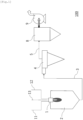
- Fig. 1 is a schematic cross-sectional view showing a configuration of a thermal spraying device.
- the inorganic powder according to the present embodiment includes spherical alumina powder and spherical silica powder, in which an angle of repose is configured to be more than or equal to 35° and less than or equal to 47°.
- the upper limit of the angle of repose in the inorganic powder is less than or equal to 47°, preferably less than or equal to 46°, and more preferably less than or equal to 45°. As a result, fluidity in a resin composition including the inorganic powder can be improved.
- the lower limit of the angle of repose in the inorganic powder is, for example, more than or equal to 35°, preferably more than or equal to 36°, and more preferably more than or equal to 37°. As a result, improvement of handleability of the powder can be expected.
- the upper limit of the angle of collapse in the inorganic powder is less than or equal to 37°, preferably less than or equal to 36°, and more preferably less than or equal to 35 °. As a result, fluidity in the resin composition including the inorganic powder can be further improved.
- the lower limit of the angle of collapse in the inorganic powder is, for example, more than or equal to 20°, preferably more than or equal to 21°, and more preferably more than or equal to 22°. As a result, improvement of handleability of the powder can be expected.
- a measurement procedure A of the angle of repose and the angle of collapse in the inorganic powder is as follows.
- a funnel having an outlet diameter of 0.5 cm is attached to a position at a height of 15 cm from a horizontal plate provided in a powder tester.
- the inorganic powder is continuously supplied to a surface of the horizontal plate from a perpendicular direction through the funnel to form a conical deposit having a certain shape.
- An angle of elevation between a side surface of the conical deposit and the surface of the horizontal plate is measured using a protractor and set as the angle of repose (°).
- a weight of 110 g is allowed to fall from a height of 18 cm to the horizontal plate three times to apply an impact.
- an angle of elevation between the side surface of the conical deposit and the surface of the horizontal plate is measured using the protractor and set as an angle of collapse (°).
- a compression degree is calculated based on ((P - A) /P) ⁇ 100 using a loose bulk density (A) and a tight bulk density (P) obtained in the following procedure B.
- the upper limit of the compression degree in the inorganic powder is, for example, less than or equal to 44%, preferably less than or equal to 43%, and more preferably less than or equal to 42%. As a result, improvement of compatibility of the inorganic powder with a resin can be expected.
- the lower limit of the compression degree in the inorganic powder is, for example, more than or equal to 30%, preferably more than or equal to 31%, and more preferably more than or equal to 32%. As a result, improvement of handleability of the powder can be expected.
- the upper limit of the tight bulk density (P) in the inorganic powder is, for example, less than or equal to 2.3 g/cm 3 , preferably less than or equal to 2.2 g/cm 3 , and more preferably less than or equal to 2.1 g/cm 3 .
- P tight bulk density
- the lower limit of the tight bulk density (P) in the inorganic powder is, for example, more than or equal to 1.5 g/cm 3 , preferably more than or equal to 1.6 g/cm 3 , and more preferably more than or equal to 1.7 g/cm 3 . As a result, handleability of the powder may be improved.
- the inorganic powder is allowed to free-fall from a height of 25 cm to be injected into a 100 cm 3 cup for measurement in an injection amount of 5 to 10 g for 1 minute, and the injection is continued until the spherical silica powder overflows from the cup to prepare a heaped cup.
- a mass (g) of the inorganic powder filled in the cup is measured to calculate the loose bulk density (g/cm 3 ).
- a volume frequency particle size distribution of the inorganic powder is measured using a wet laser diffraction scattering method, and in the volume frequency particle size distribution, a particle size corresponding to a cumulative value of 10% is represented by D 10 , a particle size corresponding to a cumulative value of 50% is represented by D 50 , and a particle size corresponding to a cumulative value of 97% is represented by D 97 .
- the lower limit of (D 97 - D 10 )/D 50 is, for example, more than or equal to 4, preferably more than or equal to 5, and more preferably more than or equal to 6.
- the upper limit of (D 97 - D 10 )/D 50 is, for example, less than or equal to 30, preferably less than or equal to 25, and more preferably less than or equal to 20.
- the upper limit of - D 10 is, for example, less than or equal to 17 um, preferably less than or equal to 16 um, and more preferably less than or equal to 15 um. As a result, appropriate fluidity, thermal conductivity, or the like can be secured.
- the lower limit of - D 10 is, for example, more than or equal to 0.5 um, preferably more than or equal to 1 um, and more preferably more than or equal to 2 um. As a result, fillability can be secured.
- the particle size distribution of the inorganic powder includes values based on particle size measurement using a laser diffraction scattering method, and can be measured using a particle size distribution analyzer, for example, "MODEL LS-13-230" (manufactured by Beckman Coulter, Inc.).
- a particle size distribution analyzer for example, "MODEL LS-13-230" (manufactured by Beckman Coulter, Inc.).
- water is used as a solvent, and as a pre-treatment, a dispersion treatment is performed by applying an output of 200 W for 1 minute using a homogenizer.
- a polarization intensity differential scattering (PIDS) concentration is adjusted to be 45 to 55%.
- 1.33 is used as a refractive index of water, and a refractive index of a material of the powder is considered as a refractive index of the powder.
- amorphous silica is measured assuming that the refractive index is 1.50
- alumina is measured assuming that the
- the angle of repose, the angle of collapse, the bulk density, and the compression degree described above can be controlled.
- an appropriate process of storing the alumina powder and/or the silica powder immediately after collection, an appropriately adjustment of an aperture during a classification process of these powders, and a combination of spherical alumina powder and spherical silica powder having different particle sizes are elements for adjusting the angle of repose, the angle of collapse, the bulk density, and the compression degree to be in the desired numerical ranges.
- Each of the spherical alumina powder and the spherical silica powder in the inorganic powder will also be referred to as molten spherical particles, and raw material powder is supplied into a high-temperature flame formed by a combustion reaction of combustible gas and supporting gas, and is melted and spheroidized at a temperature higher than or equal to a melting point thereof to manufacture the molten spherical particle.
- the molten spherical particle obtained as described above may be classified and screened.
- the spherical alumina powder and the spherical silica powder are manufactured, respectively, and are mixed to obtain the inorganic powder.
- Fig. 1 shows an example of a schematic diagram of a thermal spraying device used for manufacturing the molten spherical particle.
- a thermal spraying device 100 of Fig. 1 is configured by: a melting furnace 2 provided in a burner 1; a cyclone 4 for classifying molten spherical particles produced from high-temperature exhaust gas of the flame by suction of a blower 9; and a bag filter 8 for recovering fine powder that cannot be collected by the cyclone 4.
- the melting furnace 2 is configured with a vertical furnace body but is not limited thereto.
- the melting furnace 2 may be a so-called horizontal furnace or an inclined furnace that is a horizontal type and blasts a flame in a horizontal direction.
- the high-temperature exhaust gas is cooled by pipes 3 and 5 including a water-cooling jacket.
- a suction gas amount control valve and a gas exhaust port may be connected to the blower 9.
- a collected powder extraction device (not shown) may be connected to lower portions of the melting furnace 2, the cyclone 4, and the bag filter 8.
- the classification can be performed using a well-known device such as a gravity-settling chamber, a cyclone, or a classifier having a rotary blade. This classification operation may be incorporated into a transport step of a melted and spheroidized product, or may be performed in another line after collecting the powder in a batchwise manner.
- a well-known device such as a gravity-settling chamber, a cyclone, or a classifier having a rotary blade. This classification operation may be incorporated into a transport step of a melted and spheroidized product, or may be performed in another line after collecting the powder in a batchwise manner.
- the combustible gas for example, one kind or two or more kinds such as acetylene, propane, or butane may be used. Propane, butane, or a mixed gas thereof having a relatively small amount of heat generation is preferable.
- the supporting gas for example, gas including oxygen is used.
- gas including oxygen is used.
- pure oxygen having a concentration of more than or equal to 99 mass% is inexpensive and most preferable.
- inert gas such as air or argon can also be mixed with the supporting gas.
- alumina raw material powder that is raw material powder
- alumina powder having an average particle size of 3 to 70 um may be used.
- the supply of aluminum hydroxide powder into a high-temperature flame may be performed through a dry process or a wet process in the form of a slurry using water or the like.
- silica raw material powder that is raw material powder
- a silica raw material such as crystal or natural silica may be used after adjusting the particle size configuration such that the proportion of particles having a particle size of less than or equal to 1 um is 15 to 50% and the proportion of particles having a particle size of more than or equal to 5 ⁇ m is 50 to 80%.
- the content of the spherical silica powder in the inorganic powder is, for example, 3 to 30 mass%, preferably 3 to 20 mass%, and more preferably 3 to 10 mass% with respect to 100 mass% of the total value of the spherical alumina powder and the spherical silica powder.
- the spherical silica powder may be amorphous and/or crystalline .
- a ratio of amorphousness measured using the following method is preferably more than or equal to 95% and more preferably more than or equal to 97%.
- the ratio of amorphousness is measured from an intensity ratio between specific diffraction peaks obtained by performing X-ray diffraction analysis in a 20 range of 26° to 27.5° of a CuK ⁇ ray using a powder X-ray diffractometer (for example, trade name "MODEL MiniFlex", manufactured by RIGAKU Corporation).
- crystalline silica has a main peak at 26.7°, and amorphous silica has no peak.
- an average sphericity of particles having a particle size of less than a cumulative particle size distribution of 75% (d75) is more than or equal to 0.90 and an average sphericity of particles having a particle size of more than or equal to d75 is more than or equal to 0.85.
- d75 cumulative particle size distribution of 75%
- d75 average sphericity of particles having a particle size of more than or equal to d75
- the average sphericity can be measured as follows. That is, a projected area (A) and a perimeter (PM) of the particle are measured from the photograph. When an area of a true circle corresponding to the perimeter (PM) is represented by (B), a roundness of the particle can be displayed as A/B.
- a stereoscopic microscope for example, MODEL "SMZ-10 type” manufactured by Nikon Corporation
- a scanning electron microscope for example, manufactured by Nippon Avionics Co., Ltd.
- a material where the inorganic powder according to the present invention is mixed in a resin composition can be suitably used as a resin molding material.
- the resin composition includes a resin or a well-known resin additive in addition to the inorganic powder according to the present invention.
- the inorganic powder in the resin composition may be used alone or may be mixed with another filler for use.
- the resin composition may include 10 to 99 mass% of the inorganic powder, or may include 10 to 99 mass% of mixed inorganic powder including the inorganic powder and the other filler.
- the content of the other filler in the mixed inorganic powder may be, for example, 1 to 20 mass% or 3 to 15 mass% with respect to 100 mass% of the inorganic powder.
- Examples of the other filler include titania, silicon nitride, aluminum nitride, silicon carbide, talc, and calcium carbonate.
- a filler having an average particle size of about 5 to 100 um is used, and a particle size configuration and a shape thereof are not particularly limited.
- Examples of the above-described resin include an epoxy resin, a silicone resin, a phenol resin, a melamine resin, a urea resin, an unsaturated polyester, a fluororesin, a polyamide such as polyimide, polyamideimide, or polyetherimide, a polyester such as polybutylene terephthalate or polyethylene terephthalate, polyphenylene sulfide, wholly aromatic polyester, polysulfone, a liquid crystal polymer, polyethersulfone, polycarbonate, a maleimide-modified resin, an ABS resin, an acrylonitrile-acrylic rubber-styrene (AAS) resin, and an acrylonitrile-ethylene-propylene-diene rubber-styrene (AES) resin. These resins may be used alone or may be used in combination of two or more kinds.
- AAS acrylonitrile-acrylic rubber-styrene
- AES acrylonitrile-ethylene-propylene-d
- the resin composition can be manufactured, for example, by blending raw material components at a predetermined amount ratio using a blender, a Henschel mixer, or the like, kneading the blended product using a heating roll, a kneader, a single-screw or twin-screw kneader, or the like, and cooling and crushing the kneaded product.
- the embodiment of the present invention has been described.
- the embodiment is merely an example of the present invention, and various configurations other than the above-described configurations can be adopted.
- the present invention is not limited to the above-described embodiment, and modifications, improvements, and the like within a range where the object of the present invention can be achieved are included in the present invention.
- Various spherical alumina powders and spherical silica powders were manufactured using the thermal spraying device 100 shown in Fig. 1 .
- the thermal spraying device 100 shown in Fig. 1 includes the melting furnace 2, the burner 1 that is provided in an upper portion of the melting furnace 2, and a collection line that is directly connected to a lower portion of the melting furnace 2 and consists of the cyclone 4 and the bag filter 8.
- the burner 1 had a double pipe structure capable of forming an inner flame and an outer flame, was provided on the top portion of the melting furnace 2, and was connected to each of a combustible gas pipe 11, a supporting gas supply pipe 12, and a raw material supply pipe 13.
- the raw material powder was supplied into a high-temperature flame by the raw material supply pipe 13 and was melted such that spheroidized molten spherical particles were able to be formed.
- the molten spherical particles having passed through the melting furnace 2 were sucked by the blower 9 together with combustion exhaust gas, were moved into the pipes 3 and 5 by the air, and were classified and collected by the cyclone 4 or the bag filter 8.
- Secondary air was supplied to the cyclone 4 by a rotary valve (not shown) provided in the pipe 3.
- a rotary valve (not shown) provided in the pipe 3.
- air heated in the melting furnace 2 was used.
- a lower aperture of the cyclone 4 was set to 100%.
- alumina powder where the average particle size (D 50 ) had a maximum value in a range of 2 to 45 um was used.
- the molten spherical particles collected by the bag filter 8 were recovered as the spherical alumina powder.
- Spherical silica powder was manufactured using the same method as the spherical alumina powder described above, except that natural silica powder having an average particle size (D 50 ) of 5 um was used as the raw material powder and the supply amount of carrier gas of the raw materials was 10 Nm 3 /hr, the supply amount of the combustible gas of the burner was 10 Nm 3 /hr, and the supply amount of the supporting gas was 25 Nm 3 /hr.
- D 50 average particle size
- the molten spherical particles collected by the bag filter 8 were recovered as the spherical silica powder having an average particle size (D 50 ) of 0.3 ⁇ m.
- the spherical silica powder was stored in an aluminum bag (LAMIZIP AL, manufactured by Seisannipponsha Ltd.) at a humidity of 60 to 80% and a temperature of 20 to 30°C (storage process).
- LAMIZIP AL manufactured by Seisannipponsha Ltd.
- the spherical silica powder that was just taken out by opening the aluminum bag and the spherical alumina powder that was just manufactured as described above were mixed at a mass ratio of 90:10 to obtain inorganic powder.
- Spherical alumina powders were obtained using the same method as that of Example 1, except that the lower apertures during the classification process during the manufacturing of the spherical alumina powder were changed to 20%, 25%, and 35%, respectively, and inorganic powders were obtained using the spherical alumina powders.
- the above-described spherical alumina powder was used as the inorganic powder without being mixed with the spherical silica powder.
- Silica powder having an average particle size (D 50 ) of 5 um was obtained by changing the conditions of the classification process during the manufacturing of the inorganic powder.
- the obtained spherical silica powder and the above-described spherical alumina powder were mixed at a mass ratio of 90: 10 to obtain inorganic powder.
- Spherical alumina powder was obtained using the same method as that of Example 1, except that secondary air was not supplied and the lower aperture in the cyclone 4 was set to 0%, and inorganic powder was obtained using the spherical alumina powder.
- Silica powder was obtained using the same method as that of Example 3, except that the spherical silica powder was changed not to be stored in the aluminum bag during the manufacturing of the spherical silica powder, and inorganic powder was obtained using the silica powder.
- a loose bulk density and a tight bulk density were measured using a powder tester (PT-E type, manufactured by Hosokawa Micron Group) under conditions of a room temperature of 25°C and a humidity of 55%.
- the inorganic powder as a measurement sample was allowed to free-fall from a height of 25 cm to be injected into a 100 cm 3 cup for measurement in an injection amount of 5 to 10 g for 1 minute, and the injection was continued until the spherical silica powder overflows from the cup to prepare a heaped cup.
- an angle of repose and an angle of collapse were measured using a powder tester (PT-E type, manufactured by Hosokawa Micron Group) under conditions of a room temperature of 25°C and a humidity of 65%.
- a funnel having an outlet diameter of 0.5 cm was attached to a position at a height of 15 cm from a horizontal plate provided in a powder tester.
- the inorganic powder was continuously supplied to a surface of the horizontal plate from a perpendicular direction through the funnel to form a conical deposit having a certain shape.
- An angle of elevation between a side surface of the conical deposit and the surface of the horizontal plate was measured using a protractor and set as the angle of repose (°).
- a weight of 110 g was allowed to fall from a height of 18 cm to the horizontal plate three times to apply an impact.
- an angle of elevation between the side surface of the conical deposit and the surface of the horizontal plate was measured using the protractor and set as an angle of collapse (°).
- a volume frequency particle size distribution was obtained with a wet laser diffraction scattering method using a particle size distribution analyzer (LS-13-230, manufactured by Beckman Coulter, Inc.) .
- Water was used as a solvent, and as a pre-treatment, a dispersion treatment was performed by applying an output of 200 W for 1 minute using a homogenizer.
- a polarization intensity differential scattering (PIDS) concentration was adjusted to be 45 to 55% for the measurement.
- the obtained resin composition was used and was tested using a spiral flow mold according to EMMI-1-66 (Epoxy Molding Material Institute; Society of Plastic Industry).
- a mold temperature was 175°C
- a molding pressure was 7.4 MPa
- a pressure holding time was 90 seconds.
- a spiral flow of more than or equal to 200 cm was evaluated as Good, and a spiral flow of less than 200 cm was evaluated as Bad.
Landscapes
- Chemical & Material Sciences (AREA)
- Organic Chemistry (AREA)
- Inorganic Chemistry (AREA)
- Health & Medical Sciences (AREA)
- Chemical Kinetics & Catalysis (AREA)
- Medicinal Chemistry (AREA)
- Polymers & Plastics (AREA)
- Life Sciences & Earth Sciences (AREA)
- Geology (AREA)
- Silicon Compounds (AREA)
- Compositions Of Macromolecular Compounds (AREA)
- Compounds Of Alkaline-Earth Elements, Aluminum Or Rare-Earth Metals (AREA)
Applications Claiming Priority (2)
| Application Number | Priority Date | Filing Date | Title |
|---|---|---|---|
| JP2022018507 | 2022-02-09 | ||
| PCT/JP2023/003739 WO2023153351A1 (ja) | 2022-02-09 | 2023-02-06 | 無機質粉末 |
Publications (1)
| Publication Number | Publication Date |
|---|---|
| EP4467613A1 true EP4467613A1 (en) | 2024-11-27 |
Family
ID=87564413
Family Applications (1)
| Application Number | Title | Priority Date | Filing Date |
|---|---|---|---|
| EP23752815.3A Withdrawn EP4467613A1 (en) | 2022-02-09 | 2023-02-06 | Inorganic powder |
Country Status (7)
| Country | Link |
|---|---|
| US (1) | US20250136461A1 (https=) |
| EP (1) | EP4467613A1 (https=) |
| JP (1) | JPWO2023153351A1 (https=) |
| KR (1) | KR20240144980A (https=) |
| CN (1) | CN118786183A (https=) |
| TW (1) | TW202344478A (https=) |
| WO (1) | WO2023153351A1 (https=) |
Family Cites Families (5)
| Publication number | Priority date | Publication date | Assignee | Title |
|---|---|---|---|---|
| JP3446951B2 (ja) * | 1999-11-15 | 2003-09-16 | 電気化学工業株式会社 | 無機質粉末及びそれが充填された樹脂組成物 |
| JP4112396B2 (ja) * | 2003-02-13 | 2008-07-02 | 電気化学工業株式会社 | 樹脂用充填材および用途 |
| JP5506883B2 (ja) | 2004-12-24 | 2014-05-28 | 新日鉄住金マテリアルズ株式会社 | 球状アルミナ粉末 |
| JP5568399B2 (ja) * | 2010-07-14 | 2014-08-06 | 電気化学工業株式会社 | 球状アルミナ粉末、その製造方法及び用途 |
| JP6788929B1 (ja) | 2020-07-15 | 2020-11-25 | フジモールド工業株式会社 | 被検物判定用の画像処理装置及び画像処理方法 |
-
2023
- 2023-02-06 KR KR1020247029272A patent/KR20240144980A/ko not_active Withdrawn
- 2023-02-06 US US18/837,068 patent/US20250136461A1/en active Pending
- 2023-02-06 CN CN202380020963.5A patent/CN118786183A/zh not_active Withdrawn
- 2023-02-06 EP EP23752815.3A patent/EP4467613A1/en not_active Withdrawn
- 2023-02-06 JP JP2023580229A patent/JPWO2023153351A1/ja active Pending
- 2023-02-06 WO PCT/JP2023/003739 patent/WO2023153351A1/ja not_active Ceased
- 2023-02-08 TW TW112104339A patent/TW202344478A/zh unknown
Also Published As
| Publication number | Publication date |
|---|---|
| US20250136461A1 (en) | 2025-05-01 |
| WO2023153351A1 (ja) | 2023-08-17 |
| TW202344478A (zh) | 2023-11-16 |
| KR20240144980A (ko) | 2024-10-04 |
| JPWO2023153351A1 (https=) | 2023-08-17 |
| CN118786183A (zh) | 2024-10-15 |
Similar Documents
| Publication | Publication Date | Title |
|---|---|---|
| EP4467615A1 (en) | Inorganic powder | |
| EP4467613A1 (en) | Inorganic powder | |
| EP4467614A1 (en) | Inorganic powder | |
| EP4464662A1 (en) | Spherical silica powder | |
| EP4464663A1 (en) | Spherical silica powder | |
| WO2024128320A1 (ja) | 球状アルミナ粉末 | |
| EP4464661A1 (en) | Spherical silica powder | |
| WO2024128318A1 (ja) | 球状アルミナ粉末 | |
| WO2024128321A1 (ja) | 球状アルミナ粉末 | |
| WO2024128317A1 (ja) | 球状アルミナ粉末 | |
| TW202525718A (zh) | 無機質粉末 | |
| WO2024128316A1 (ja) | 球状アルミナ粉末 | |
| WO2025229849A1 (ja) | アルミナ粉末、無機粉末および樹脂組成物 |
Legal Events
| Date | Code | Title | Description |
|---|---|---|---|
| STAA | Information on the status of an ep patent application or granted ep patent |
Free format text: STATUS: THE INTERNATIONAL PUBLICATION HAS BEEN MADE |
|
| PUAI | Public reference made under article 153(3) epc to a published international application that has entered the european phase |
Free format text: ORIGINAL CODE: 0009012 |
|
| STAA | Information on the status of an ep patent application or granted ep patent |
Free format text: STATUS: REQUEST FOR EXAMINATION WAS MADE |
|
| 17P | Request for examination filed |
Effective date: 20240819 |
|
| AK | Designated contracting states |
Kind code of ref document: A1 Designated state(s): AL AT BE BG CH CY CZ DE DK EE ES FI FR GB GR HR HU IE IS IT LI LT LU LV MC ME MK MT NL NO PL PT RO RS SE SI SK SM TR |
|
| STAA | Information on the status of an ep patent application or granted ep patent |
Free format text: STATUS: THE APPLICATION HAS BEEN WITHDRAWN |
|
| 18W | Application withdrawn |
Effective date: 20250325 |