EP4467565A2 - Anti-tnf alpha antibody formulations - Google Patents
Anti-tnf alpha antibody formulations Download PDFInfo
- Publication number
- EP4467565A2 EP4467565A2 EP24193070.0A EP24193070A EP4467565A2 EP 4467565 A2 EP4467565 A2 EP 4467565A2 EP 24193070 A EP24193070 A EP 24193070A EP 4467565 A2 EP4467565 A2 EP 4467565A2
- Authority
- EP
- European Patent Office
- Prior art keywords
- concentration
- adalimumab
- stable aqueous
- formulation includes
- calcium chloride
- Prior art date
- Legal status (The legal status is an assumption and is not a legal conclusion. Google has not performed a legal analysis and makes no representation as to the accuracy of the status listed.)
- Pending
Links
Images
































Classifications
-
- C—CHEMISTRY; METALLURGY
- C07—ORGANIC CHEMISTRY
- C07K—PEPTIDES
- C07K16/00—Immunoglobulins [IG], e.g. monoclonal or polyclonal antibodies
- C07K16/18—Immunoglobulins [IG], e.g. monoclonal or polyclonal antibodies against material from animals or humans
- C07K16/24—Immunoglobulins [IG], e.g. monoclonal or polyclonal antibodies against material from animals or humans against cytokines, lymphokines or interferons
- C07K16/241—Tumor Necrosis Factors
-
- A—HUMAN NECESSITIES
- A61—MEDICAL OR VETERINARY SCIENCE; HYGIENE
- A61K—PREPARATIONS FOR MEDICAL, DENTAL OR TOILETRY PURPOSES
- A61K39/00—Medicinal preparations containing antigens or antibodies
- A61K39/395—Antibodies; Immunoglobulins; Immune serum, e.g. antilymphocytic serum
- A61K39/39591—Stabilisation, fragmentation
-
- A—HUMAN NECESSITIES
- A61—MEDICAL OR VETERINARY SCIENCE; HYGIENE
- A61K—PREPARATIONS FOR MEDICAL, DENTAL OR TOILETRY PURPOSES
- A61K47/00—Medicinal preparations characterised by the non-active ingredients used, e.g. carriers or inert additives; Targeting or modifying agents chemically bound to the active ingredient
- A61K47/06—Organic compounds, e.g. natural or synthetic hydrocarbons, polyolefins, mineral oil, petrolatum or ozokerite
- A61K47/08—Organic compounds, e.g. natural or synthetic hydrocarbons, polyolefins, mineral oil, petrolatum or ozokerite containing oxygen, e.g. ethers, acetals, ketones, quinones, aldehydes, peroxides
- A61K47/10—Alcohols; Phenols; Salts thereof, e.g. glycerol; Polyethylene glycols [PEG]; Poloxamers; PEG/POE alkyl ethers
-
- A—HUMAN NECESSITIES
- A61—MEDICAL OR VETERINARY SCIENCE; HYGIENE
- A61K—PREPARATIONS FOR MEDICAL, DENTAL OR TOILETRY PURPOSES
- A61K47/00—Medicinal preparations characterised by the non-active ingredients used, e.g. carriers or inert additives; Targeting or modifying agents chemically bound to the active ingredient
- A61K47/06—Organic compounds, e.g. natural or synthetic hydrocarbons, polyolefins, mineral oil, petrolatum or ozokerite
- A61K47/16—Organic compounds, e.g. natural or synthetic hydrocarbons, polyolefins, mineral oil, petrolatum or ozokerite containing nitrogen, e.g. nitro-, nitroso-, azo-compounds, nitriles, cyanates
- A61K47/18—Amines; Amides; Ureas; Quaternary ammonium compounds; Amino acids; Oligopeptides having up to five amino acids
- A61K47/183—Amino acids, e.g. glycine, EDTA or aspartame
-
- A—HUMAN NECESSITIES
- A61—MEDICAL OR VETERINARY SCIENCE; HYGIENE
- A61K—PREPARATIONS FOR MEDICAL, DENTAL OR TOILETRY PURPOSES
- A61K9/00—Medicinal preparations characterised by special physical form
- A61K9/0012—Galenical forms characterised by the site of application
- A61K9/0019—Injectable compositions; Intramuscular, intravenous, arterial, subcutaneous administration; Compositions to be administered through the skin in an invasive manner
-
- A—HUMAN NECESSITIES
- A61—MEDICAL OR VETERINARY SCIENCE; HYGIENE
- A61K—PREPARATIONS FOR MEDICAL, DENTAL OR TOILETRY PURPOSES
- A61K9/00—Medicinal preparations characterised by special physical form
- A61K9/08—Solutions
Definitions
- sequence listing is provided as a file entitled A-2102-WO-PCT_SeqListing_122017.txt, created December 19, 2017, which is 8kb in size.
- the information in the electronic format of the sequence listing is incorporated herein by reference in its entirety.
- TNF ⁇ tumor necrosis factor alpha
- psoriatic arthritis ankylosing spondylitis, axial spondyloarthritis, juvenile idiopathic arthritis, enthesitis related arthritis, osteoarthritis, peripheral spondyloarthritis, acute disc prolapse, inflammatory bowel disease, Crohn's disease, ulcerative colitis, intestinal Behcet's disease, chronic pouchitis, small bowel lesions, Hermansky-Pudlak syndrome, psoriasis, psoriasis vulgaris, psoriasis arthropica, plaque psoriasis, hidradenitis suppurativa, interstitial cystitis, sleep apnea, sarcoidosis, retinal vascular disorders, uveitis, choroidal neovascularization, Pyoderma Gang
- the present disclosure is directed to stable aqueous adalimumab formulations, to methods of making stable aqueous adalimumab formulations, to use of a formulation as disclosed herein, and to methods of treating a disease comprising administering to a patient a formulation as disclosed herein.
- the disclosure includes a stable aqueous formulation comprising about 180 mg/mL adalimumab, about 20 mM glutamate, and about 160 mM monoethanolamine (MEA), wherein the formulation has a pH of about 5.2, and demonstrates less than about a 2.1-fold increase in acidic species as measured by cation-exchange high-performance liquid chromatography (CEX-HPLC) after storage for 28 days at 40°C.
- a stable aqueous formulation comprising about 180 mg/mL adalimumab, about 20 mM glutamate, and about 160 mM monoethanolamine (MEA), wherein the formulation has a pH of about 5.2, and demonstrates less than about a 2.1-fold increase in acidic species as measured by cation-exchange high-performance liquid chromatography (CEX-HPLC) after storage for 28 days at 40°C.
- CEX-HPLC cation-exchange high-performance liquid chromatography
- the disclosure provides a stable adalimumab formulation as described in the Tables provided herein.
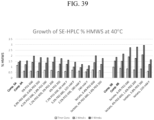
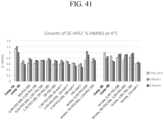
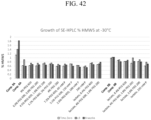
- the stable adalimumab formulation provided herein demonstrates one or more of the following parameters: (i) less than about a 2.1-fold increase in acidic species, as measured by cation-exchange high-performance liquid chromatography (CEX-HPLC) after storage for 28 days at 40°C; (ii) less than about a 5-fold increase in high molecular weight species (HMWS) species, as measured by size-exclusion chromatography (SE-HPLC) after storage for 28 days at 40°C; and/or (iii) less than about 500 nephelometric turbidity units (NTUs) after stirring at room temperature for 5 days.
- CEX-HPLC cation-exchange high-performance liquid chromatography
- SE-HPLC size-exclusion chromatography
- the present disclosure provides stable aqueous adalimumab formulations and related methods of making stable aqueous adalimumab formulations. Also provided are lyophilized forms of the aqueous adalimumab formulations disclosed herein.
- the present disclosure also provides related uses of the formulations disclosed herein and related methods of administering these formulations to treat diseases such as arthritis, rheumatoid arthritis, psoriatic arthritis, ankylosing spondylitis, axial spondyloarthritis, juvenile idiopathic arthritis, enthesitis related arthritis, osteoarthritis, peripheral spondyloarthritis, acute disc prolapse, inflammatory bowel disease, Crohn's disease, ulcerative colitis, intestinal Behcet's disease, chronic pouchitis, small bowel lesions, Hermansky-Pudlak syndrome, psoriasis, psoriasis vulgaris, psoriasis arthropica, plaque psoriasis, hidradenitis suppurativa, interstitial cystitis, sleep apnea, sarcoidosis, retinal vascular disorders, uveitis, choroidal neovascularization, Pyoderma Gang
- the stable aqueous adalimumab formulations include adalimumab and one or more excipients selected such that the formulation demonstrates characteristics suitable for use as a pharmaceutical composition.
- a formulation suitable for use as a pharmaceutical composition generally exhibits a low amount of high molecular weight species (HMWS), such as aggregates and dimers, and/or also exhibits a low degree of oxidation over time.
- HMWS high molecular weight species
- a suitable adalimumab formulation may exhibit minimal oxidation of residues TRP 53, MET 34, MET 256, and MET 432.
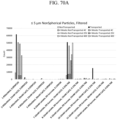
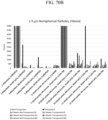
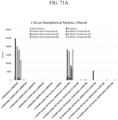
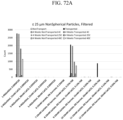
- a suitable formulation may also exhibit a minimal amount of sub-visible particles (e.g., particles having a diameter of ⁇ 10 ⁇ m or ⁇ 25 ⁇ m) and/or non-spherical particles (e.g., particles having an aspect ratio of _ ⁇ 5 ⁇ m). High amounts of HMWS, oxidation, and/or particles may impact the shelf-life, safety and/or potency of a formulation. Stable aqueous adalimumab formulations are described in the embodiments set forth below.
- the stable aqueous adalimumab formulations include adalimumab, calcium chloride, and optionally one or more (typically one, two, or three) additional excipients as described herein.
- the stable aqueous adalimumab formulations include adalimumab, a buffer, and optionally one or more (typically one, two, or three) additional excipients as described herein.
- Suitable buffers include glutamate/glutamic acid buffers ("glutamate buffer”), adipate/adipic acid buffers (“adipate buffer”), glucuronate/glucuronic acid buffers (“glucuronate buffer”), acetate/acetic acid buffers (“acetate buffer”), benzoate/benzoic acid buffers (“benzoate buffer”), glycolate/glycolic acid buffers (“glycolate buffer”), lactate/lactic acid buffers (“lactate buffer”), and histidine buffers.
- glutamate buffer glutamate/glutamic acid buffers
- adipate buffer adipate buffer
- glucuronate/glucuronic acid buffers glucuronate buffer
- acetate/acetic acid buffers acetate buffer
- the stable aqueous adalimumab formulations include adalimumab and do not include a buffer.
- these adalimumab formulations additionally include one or more (typically one, two, or three) excipients as described herein.
- the stable aqueous adalimumab formulation includes adalimumab, a buffer (e.g., lactate buffer), calcium chloride, and optionally one or more (typically one, two, or three) additional excipients as described herein.
- a buffer e.g., lactate buffer
- calcium chloride e.g., calcium chloride
- additional excipients typically one, two, or three
- a stable formulation demonstrates stability sufficient to permit administration to a patient.
- a stable formulation may demonstrate long-term stability, such as stability upon storage for 6 months or 1 year. Stability of a formulation may, for example, be assessed by growth of acidic species over time, growth of high molecular weight species over time, or increase in opalescence over time.
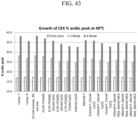
- a stable formulation may demonstrate less than about a 4-fold increase (e.g., less than about a 3.5-fold increase, less than about a 3-fold increase, less than about a 2.5-fold increase, less than about a 2.4-fold increase, less than about a 2.3-fold increase, less than about a 2.25-fold increase, less than about a 2.2-fold increase, less than about a 2. 15-fold increase, less than about a 2. 1-fold increase, less than about a 2.05-fold increase, or less than about a 2-fold increase) in acidic species as measured by CEX-HPLC after storage for 28 days at 40°C.
- 4-fold increase e.g., less than about a 3.5-fold increase, less than about a 3-fold increase, less than about a 2.5-fold increase, less than about a 2.4-fold increase, less than about a 2.3-fold increase, less than about a 2.25-fold increase, less than about a 2.2-fold increase, less than about a 2. 15-fold increase,
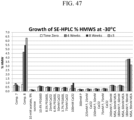
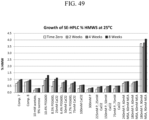
- a stable formulation may demonstrate less than about a 5-fold increase (e.g., less than about a 4.5-fold increase, less than about a 4-fold increase, less than about a 3.9-fold increase, less than about a 3.8-fold increase, less than about a 3.7-fold increase, less than about a 3.6-fold increase, less than about a 3.5-fold increase, less than about a 3.4-fold increase, less than about a 3.3-fold increase, less than about a 3.2-fold increase, less than about a 3.
- a 5-fold increase e.g., less than about a 4.5-fold increase, less than about a 4-fold increase, less than about a 3.9-fold increase, less than about a 3.8-fold increase, less than about a 3.7-fold increase, less than about a 3.6-fold increase, less than about a 3.5-fold increase, less than about a 3.4-fold increase, less than about a 3.3-fold increase, less than about a 3.2-fold increase
- a stable formulation may demonstrate less than about 500 nephelometric turbidity units (NTUs) (e.g., less than about 400 NTUs, less than about 350 NTUs, less than about 300 NTUs, less than about 250 NTUs, less than about 200 NTUs, less than about 150 NTUs, less than about 140 NTUs, less than about 130 NTUs, less than about 125 NTUs, less than about 120 NTUs, less than about 115 NTUs, less than about 110 NTUs, less than about 100 NTUs, less than about 90 NTUs, less than about 80 NTUs, or less than about 70 NTUs) after stirring at room temperature for 5 days.
- NTUs nephelometric turbidity units
- an "aqueous" formulation contains water.
- Aqueous formulations can be in a liquid state or a frozen state, and preferably are liquid formulations.
- an "excipient” is a component of a formulation other than water and the active agent (e.g., adalimumab or biosimilar thereof) added to the formulation.
- excipients include buffers; stabilizers such as amino acids and amino acid derivatives, polyethylene glycols and polyethylene glycol derivatives, polyols, acids, amines, polysaccharides or polysaccharide derivatives, salts, and surfactants; and pH-adjusting agents.
- a "biosimilar,” particularly an adalimumab biosimilar is a biological product that is highly similar to HUMIRA (also known as adalimumab or D2E7) notwithstanding minor differences in clinically inactive components; and there are no clinically meaningful differences between the biological product and HUMIRA in terms of safety, purity, and potency of the product.
- HUMIRA also known as adalimumab or D2E7
- the term "about,” when used to modify a particular value or range, generally means within 20 percent, e.g., within 10 percent, 5 percent, 4 percent, 3 percent, 2 percent, or 1 percent of the stated value or range.
- Adalimumab is a fully human monoclonal antibody of the immunoglobulin G1 (IgG1) subclass expressed in the Chinese hamster ovary (CHO) cell line and consists of 2 heavy chains (HC), and 2 light chains (LC) of the kappa subclass.
- Adalimumab contains 32 total cysteine residues involved in both intrachain and interchain disulfide bonds.
- Each HC contains 451 amino acids with 4 intrachain disulfides.
- Each LC contains 214 amino acids with 2 intrachain disulfides.
- Each HC contains an N-linked glycan at the consensus glycosylation site on Asn301.
- the amino acid sequences of the adalimumab variable LC and variable HC are set out at SEQ ID NO: 1 and 2, respectively and the full length LC and HC are set out as SEQ ID NO: 3 and 4; respectively.
- the adalimumab LC CDRs are set out as SEQ ID NO: 5 (LC CDR1), SEQ ID NO: 6 (LC CDR2) and SEQ ID NO: 7 (LC CDR3).
- Adalimumab HC CDRs are set out as SEQ ID NO: 8 (HC CDR1), SEQ ID No: 9 (HC CDR2), and SEQ ID NO: 10 (HC CDR3).
- Adalimumab has been described and claimed in U.S. Pat. No. 6,090,382 , the disclosure of which is hereby incorporated by reference in its entirety.
- the term "adalimumab” includes biosimilars of adalimumab.
- the stable aqueous adalimumab formulation includes adalimumab at a concentration of about 40 to about 200 mg/mL, such as about 90 to about 120 mg/mL, about 80 to about 120 mg/mL, about 90 to about 110 mg/mL, about 160 to about 190 mg/mL, about 40 to about 60 mg/mL, about 50 mg/mL, about 100 mg/mL, or about 170 mg/mL, calcium chloride at a concentration of about 1 to about 150 mM, such as about 5 to about 50 mM, about 5 to about 30 mM, about 10 to about 30 mM, about 12.5 to about 17.5 mM about 20 to about 40 mM, about 30 to about 50 mM, about 40 to about 80 mM, about 50 to about 100 mM, about 10 mM, about 15 mM, about 20 mM, about 25 mM, or about 30 mM, and one or more excipients as discussed below.
- the presence of calcium chloride in the formulations advantageously and unexpectedly provides improved stability over time as compared to other salts, particularly with respect to levels of acidic species at 40°C as detected by cation-exchange high-performance liquid chromatography (CEX-HPLC).
- CEX-HPLC cation-exchange high-performance liquid chromatography
- the presence of calcium chloride at low concentrations advantageously lowers the rate of growth of acidic species without significantly increasing the growth of high molecular weight species (HMWS) at 40°C as detected by size-exclusion high-performance liquid chromatography (SE-HPLC).
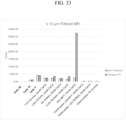
- the presence of calcium chloride at low concentrations advantageously minimizes formation of sub-visible and/or non-spherical particles in a formulation, as detected by micro-flow imaging ("MFI") even if the formulation has been subjected to transport conditions.
- MFI micro-flow imaging
- Suitable excipients for combination with the calcium chloride-containing adalimumab formulations include certain buffers, and certain stabilizers such as certain amino acids and amino acid derivatives, certain polyethylene glycols and polyethylene glycol derivatives, certain polyols, certain acids, certain amines, certain polysaccharides or polysaccharide derivatives, and certain surfactants.
- Suitable buffers include glutamate (e.g., at a concentration of about 5 mM to about 50 mM, about 10 mM to about 25 mM, about 15 mM to about 20 mM, about 10 mM, about 15 mM, about 20 mM, and/or about 25 mM), adipate (e.g., at a concentration of about 5 mM to about 50 mM, about 10 mM to about 25 mM, about 15 mM to about 20 mM, about 10 mM, about 15 mM, about 20 mM, and/or about 25 mM), glucuronate (e.g., at a concentration of about 5 mM to about 50 mM, about 10 mM to about 30 mM, about 10 mM, about 15 mM, about 20 mM, and/or about 25 mM), acetic acid and/or acetate (e.g., at a concentration of about 0.1 mM
- suitable amino acids and amino acid derivatives include proline (e.g., at a concentration of about 0.1 to about 450 mM, about 50 to about 320 mM, and/or about 50 to about 300 mM), N-acetyl arginine (e.g., at a concentration of about 0.1 to about 450 mM or about 90 to about 150 mM), citruline (e.g., at a concentration of about 0.1 to about 450 mM or about 100 to about 150 mM), sarcosine (e.g., at a concentration of about 0.1 to about 450 mM or about 100 to about 150 mM), N-acetyl proline (e.g., at a concentration of about 0.1 to about 450 mM or about 100 to about 150 mM), N-acetyl ornithine (e.g., at a concentration of about 0.1 to about 450 mM or about 100 to about 150 mM), ornithine
- polyethylene glycols and polyethylene glycol derivatives examples include PEG 15 hydroxystearate (e.g., at a concentration of about 0.1% (w/v) to about 20% (w/v) or about 3% (w/v) to about 6% (w/v)), PEG 3350 (e.g., at a concentration of about 0.1% (w/v) to about 30% (w/v) or about 1% (w/v) to about 7% (w/v)), PEG 200 (e.g., at a concentration of about 0.1% (w/v) to about 10% (w/v) or about 0.6% (w/v) to about 4.8% (w/v)), PEG 600 (e.g., at a concentration of about 0.1% (w/v) to about 30% (w/v) or about 1.2% (w/v) to about 14.5% (w/v)), and PEG 400 (e.g., at a concentration of about 0.1% (w/v) to about 20% (w/v) or about 0.3% (w/
- suitable polyols include inositol (e.g., at a concentration of about 0.1 to about 450 mM or about 150 to about 210 mM), glycerol (also referred to as glycerin) (e.g., at a concentration of about 0.1% (w/v) to about 15% (w/v) or about 0.5% (w/v) to about 1% (w/v)), sucrose (e.g., at a concentration of about 0.1% (w/v) to about 15% (w/v), about 4% (w/v) to about 10% (w/v), about 6% (w/v) to about 8.5% (w/v), about 6.2% (w/v) to about 7.3% (w/v), about 4% (w/v) to about 9% (w/v), about 6.5% (w/v), about 6.8% (w/v), about 6.9% (w/v), about 7.4% (w/v), or about 9% (w/v)), and sorbitol (e.
- suitable acids include glycolic acid (e.g., at a concentration of about 0.1 to about 300 mM or about 50 to about 70 mM), pyrollidone carboxylic acid (PCA) (e.g., at a concentration of about 0.1% (w/v) to about 15% (w/v) or about 0.05% (w/v) to about 2% (w/v)), medronic acid (e.g., at a concentration of about 0.1 to about 450 mM or about 100 to about 150 mM), benzene sulfonic acid (e.g., at a concentration of about 0.1 to about 300 mM or about 60 to about 90 mM), and methane sulfonic acid (MSA) (e.g., at a concentration of about 0.1 to about 150 mM, about 0.1 to about 50 mM, and/or about 10 to about 30 mM).
- glycolic acid e.g., at a concentration of about 0.1 to about 300 mM or
- Suitable amines include monoethanolamine hydrochloride (MEA-HCl) (e.g., at a concentration of about 0.1 to about 150 mM or about 0.1 to about 40 mM), monoethanolamine (MEA) (e.g., at a concentration of about 0.1 to about 300 mM, about 0.1 to about 50 mM, and/or about 30 to about 160 mM), and triethanolamine (TEA) (e.g., at a concentration of about 0.1 to about 170 mM or about 30 to about 150 mM).
- MEA-HCl monoethanolamine hydrochloride
- MEA monoethanolamine
- TEA triethanolamine
- Suitable polysaccharides or polysaccharide derivatives include hyaluronic acid (e.g., at a concentration of about 0.05% (w/v) to about 2.5% (w/v) or about 0.1% (w/v) to about 0.05% (w/v)), sodium carboxymethylcellulose (NaCMC) (e.g., at a concentration of about 0.1% (w/v) to about 15% (w/v) or about 0.1% (w/v) to about 2% (w/v)), and dextran (e.g., at a concentration of about 0.1% (w/v) to about 15% (w/v) or about 8% (w/v) to about 12% (w/v)).
- hyaluronic acid e.g., at a concentration of about 0.05% (w/v) to about 2.5% (w/v) or about 0.1% (w/v) to about 0.05% (w/v)
- NaCMC sodium carboxymethylcellulose
- dextran e.
- Suitable surfactants include Pluronic F68 (e.g., at a concentration of about 0.001% (w/v) to about 10% (w/v), about 0.005% (w/v) to about 1% (w/v), about 0.05% (w/v) to about 0.4% (w/v), about 0.05% (w/v) to about 0.1% (w/v), about 0.01% (w/v) to about 0.2% (w/v), about 0.03% (w/v) to about 0.06% (w/v), about 0.01% (w/v), about 0.05% (w/v), about 0.06% (w/v), and/or about 0.1% (w/v)), Polysorbate 80 (e.g., at a concentration of about 0.001% (w/v) to about 2% (w/v), about 0.005% (w/v) to about 0.1% (w/v), about 0.03% (w/v) to about 0.1% (w/v), about 0.04% (w/v) to about 0.1% (w/
- excipients examples include imidazole (e.g., at a concentration of about 0.1% (w/v) to about 15% (w/v) or about 0.5% (w/v) to about 2% (w/v)), taurine (e.g., at a concentration of about 0.1 to about 450 mM or about 100 to about 150 mM), betaine (e.g., at a concentration of about 0.1 to about 450 mM or about 100 to about 150 mM), gelatin (e.g., at a concentration of about 0.1% (w/v) to about 15% (w/v) or about 0.5% (w/v) to about 2% (w/v)), niacinamide (e.g., at a concentration of about 0.1 to about 450 mM or about 100 to about 120 mM), polyvinylpyrrolidone (PVP), for example, 10K PVP, (e.g., at a concentration of about 0.001% (w/v) to about 10% (
- the calcium chloride-containing stable aqueous adalimumab formulation has a pH of about 4.8 to about 5.7, for example, about 4.9 to about 5.6, about 5.0 to about 5.5, about 5.1 to about 5.4, about 5.1 to about 5.3, about 5.1 to about 5.2, about 5.2 to about 5.3, and/or about 5.2.
- the pH of the stable aqueous adalimumab formulation is adjusted using a strong acid and/or a strong base including, but not limited to, hydrochloric acid, sodium hydroxide, calcium hydroxide, MSA, and/or MEA.
- Suitable excipients for combination with the calcium chloride-containing adalimumab formulations also include, but are not limited to, glutamate at a concentration of about 5 mM to about 50 mM (e.g., about 10 mM to about 25 mM, about 15 mM to about 20 mM, about 10 mM, about 15 mM, about 20 mM, and/or about 25 mM), adipate at a concentration of about 5 mM to about 50 mM (e.g., about 10 mM to about 25 mM, about 15 mM to about 20 mM, about 10 mM, about 15 mM, about 20 mM, and/or about 25 mM), glucuronate at a concentration of about 5 mM to about 50 mM (e.g., about 10 mM to about 30 mM, about 10 mM, about 15 mM, about 20 mM, and/or about 25 mM),
- the calcium chloride-containing stable aqueous adalimumab formulation has a pH of about 4.8 to about 5.7, for example, about 4.9 to about 5.6, about 5.0 to about 5.5, about 5.1 to about 5.4, about 5.1 to about 5.3, about 5.1 to about 5.2, about 5.2 to about 5.3, and/or about 5.2.
- the pH of the stable aqueous adalimumab formulation is adjusted using a strong acid and/or a strong base including, but not limited to, hydrochloric acid, sodium hydroxide, calcium hydroxide, MSA, and/or MEA.
- the stable aqueous adalimumab formulation includes adalimumab at a concentration of about 90 to about 120 mg/mL, glutamate at a concentration of about 10 mM to about 25 mM, PEG 3350 at a concentration of about 5% (w/v) to about 10% (w/v), calcium chloride at a concentration of about 30 to about 60 mM, and has a pH of about 5.0 to about 5.5.
- the stable aqueous adalimumab formulation includes adalimumab at a concentration of about 90 to about 140 mg/mL, glutamate at a concentration of about 10 mM to about 25 mM, dextran at a concentration of about 5% (w/v) to about 15% (w/v), calcium chloride at a concentration of about 30 to about 60 mM, and has a pH of about 5.0 to about 5.5.
- the stable aqueous adalimumab formulation includes adalimumab at a concentration of about 90 to about 120 mg/mL, glutamate at a concentration of about 10 mM to about 25 mM, PEG 200 at a concentration of about 0.5% (w/v) to about 2% (w/v), calcium chloride at a concentration of about 30 to about 60 mM, and has a pH of about 5.0 to about 5.5.
- the stable aqueous adalimumab formulation includes adalimumab at a concentration of about 90 to about 120 mg/mL, glutamate at a concentration of about 10 mM to about 25 mM, PEG 600 at a concentration of about 1.5% (w/v) to about 4% (w/v), calcium chloride at a concentration of about 30 to about 60 mM, and has a pH of about 5.0 to about 5.5.
- the stable aqueous adalimumab formulation includes adalimumab at a concentration of about 170 to about 190 mg/mL, glutamate at a concentration of about 10 mM to about 25 mM, calcium chloride at a concentration of about 50 mM to about 100 mM, proline at a concentration of about 50 mM to about 150 mM, and has a pH of about 5.0 to about 5.5.
- the stable aqueous adalimumab formulation includes adalimumab at a concentration of about 90 to about 120 mg/mL, glutamate at a concentration of about 10 mM to about 25 mM, ethanol at a concentration of about 0.3% (w/v) to about 0.8% (w/v), calcium chloride at a concentration of about 30 mM to about 60 mM, and has a pH of about 5.0 to about 5.5.
- the stable aqueous adalimumab formulation includes adalimumab at a concentration of about 90 to about 120 mg/mL, glutamate at a concentration of about 10 mM to about 25 mM, ethanol at a concentration of about 0.3% (w/v) to about 0.8% (w/v), PEG 3350 at a concentration of about 0.7% (w/v) to about 1.5% (w/v), calcium chloride at a concentration of about 30 mM to about 60 mM, and has a pH of about 5.0 to about 5.5.
- the stable aqueous adalimumab formulation includes adalimumab at a concentration of about 90 to about 120 mg/mL, glutamate at a concentration of about 10 mM to about 25 mM, TEA at a concentration of about 100 mM to about 200 mM, calcium chloride at a concentration of about 30 mM to about 60 mM, and has a pH of about 5.0 to about 5.5.
- the stable aqueous adalimumab formulation includes adalimumab at a concentration of about 90 to about 120 mg/mL, glutamate at a concentration of about 10 mM to about 25 mM, TEA at a concentration of about 20 mM to about 40 mM, calcium chloride at a concentration of about 60 mM to about 90 mM, and has a pH of about 5.0 to about 5.5.
- the stable aqueous adalimumab formulation includes adalimumab at a concentration of about 90 to about 120 mg/mL, glutamate at a concentration of about 10 mM to about 25 mM, alanine at a concentration of about 80 mM to about 120 mM, calcium chloride at a concentration of about 30 mM to about 60 mM, and has a pH of about 5.0 to about 5.5.
- the stable aqueous adalimumab formulation includes adalimumab at a concentration of about 90 to about 120 mg/mL, glutamate at a concentration of about 10 mM to about 25 mM, asparagine at a concentration of about 80 mM to about 120 mM, calcium chloride at a concentration of about 30 mM to about 60 mM, and has a pH of about 5.0 to about 5.5.
- the stable aqueous adalimumab formulation includes adalimumab at a concentration of about 90 to about 120 mg/mL, glutamate at a concentration of about 10 mM to about 25 mM, isoleucine at a concentration of about 80 mM to about 120 mM, calcium chloride at a concentration of about 30 mM to about 60 mM, and has a pH of about 5.0 to about 5.5.
- the stable aqueous adalimumab formulation includes adalimumab at a concentration of about 90 to about 120 mg/mL, glutamate at a concentration of about 10 mM to about 25 mM, serine at a concentration of about 80 mM to about 120 mM, calcium chloride at a concentration of about 30 mM to about 60 mM, and has a pH of about 5.0 to about 5.5.
- the stable aqueous adalimumab formulation includes adalimumab at a concentration of about 90 to about 120 mg/mL, glutamate at a concentration of about 10 mM to about 25 mM, aspartic acid at a concentration of about 10 mM to about 30 mM, proline at a concentration of about 60 mM to about 100 mM, calcium chloride at a concentration of about 30 mM to about 60 mM, and has a pH of about 5.0 to about 5.5.
- the stable aqueous adalimumab formulation includes adalimumab at a concentration of about 90 to about 120 mg/mL, glutamate at a concentration of about 10 mM to about 25 mM, creatine at a concentration of about 15 mM to about 35 mM, proline at a concentration of about 60 mM to about 90 mM, calcium chloride at a concentration of about 30 mM to about 60 mM, and has a pH of about 5.0 to about 5.5.
- the stable aqueous adalimumab formulation includes adalimumab at a concentration of about 90 to about 120 mg/mL, glutamate at a concentration of about 10 mM to about 25 mM, glutamine at a concentration of about 40 mM to about 60 mM, proline at a concentration of about 40 mM to about 60 mM, calcium chloride at a concentration of about 30 mM to about 60 mM, and has a pH of about 5.0 to about 5.5.
- the stable aqueous adalimumab formulation includes adalimumab at a concentration of about 90 to about 120 mg/mL, glutamate at a concentration of about 10 mM to about 25 mM, leucine at a concentration of about 40 mM to about 60 mM, proline at a concentration of about 40 mM to about 60 mM, calcium chloride at a concentration of about 30 mM to about 60 mM, and has a pH of about 5.0 to about 5.5.
- the stable aqueous adalimumab formulation includes adalimumab at a concentration of about 90 to about 120 mg/mL, glutamate at a concentration of about 10 mM to about 25 mM, phenylalanine at a concentration of about 40 mM to about 60 mM, proline at a concentration of about 40 mM to about 60 mM, calcium chloride at a concentration of about 30 mM to about 60 mM, and has a pH of about 5.0 to about 5.5.
- the stable aqueous adalimumab formulation includes adalimumab at a concentration of about 80 to about 120 mg/mL, glutamate at a concentration of about 10 mM to about 25 mM, tryptophan at a concentration of about 10 mM to about 40 mM, proline at a concentration of about 60 mM to about 90 mM, calcium chloride at a concentration of about 30 mM to about 60 mM, and has a pH of about 5.0 to about 5.5.
- the stable aqueous adalimumab formulation includes adalimumab at a concentration of about 90 to about 120 mg/mL, glutamate at a concentration of about 10 mM to about 25 mM, calcium chloride at a concentration of about 30 to about 60 mM, and optionally Pluronic F68 at a concentration of about 0.05% (w/v) to about 0.4% (w/v) or Polysorbate 80 at a concentration of about 0.005% (w/v) to about 0.1% (w/v), and has a pH of about 5.0 to about 5.5.
- the stable aqueous adalimumab formulation includes adalimumab at a concentration of about 90 to about 120 mg/mL, glutamate at a concentration of about 10 mM to about 25 mM, calcium chloride at a concentration of about 30 to about 60 mM, proline at a concentration of about 80 to about 120 mM, and optionally Pluronic F68 at a concentration of about 0.05% (w/v) to about 0.4% (w/v) or Polysorbate 80 at a concentration of about 0.005% (w/v) to about 0.1% (w/v), and has a pH of about 5.0 to about 5.5.
- the stable aqueous adalimumab formulation includes adalimumab at a concentration of about 90 to about 120 mg/mL, glutamate at a concentration of about 10 mM to about 25 mM, PEG 15 hydroxystearate at a concentration of about 3% (w/v) to about 8% (w/v), calcium chloride at a concentration of about 30 to about 60 mM, and optionally Pluronic F68 at a concentration of about 0.05% (w/v) to about 0.4% (w/v) or Polysorbate 80 at a concentration of about 0.005% (w/v) to about 0.1% (w/v), and has a pH of about 5.0 to about 5.5.
- the stable aqueous adalimumab formulation includes adalimumab at a concentration of about 90 to about 120 mg/mL, glutamate at a concentration of about 10 mM to about 25 mM, PEG 15 hydroxystearate at a concentration of about 3% (w/v) to about 8% (w/v), calcium chloride at a concentration of about 30 to about 60 mM, proline at a concentration of about 80 to about 120 mM, and optionally Pluronic F68 at a concentration of about 0.05% (w/v) to about 0.4% (w/v) or Polysorbate 80 at a concentration of about 0.005% (w/v) to about 0.1% (w/v), and has a pH of about 5.0 to about 5.5.
- the stable aqueous adalimumab formulation includes adalimumab at a concentration of about 90 to about 120 mg/mL, glutamate at a concentration of about 10 mM to about 25 mM, imidazole at a concentration of about 0.7% (w/v) to about 1.5% (w/v), calcium chloride at a concentration of about 30 to about 60 mM, and optionally Pluronic F68 at a concentration of about 0.05% (w/v) to about 0.4% (w/v) or Polysorbate 80 at a concentration of about 0.005% (w/v) to about 0.1% (w/v), and has a pH of about 5.0 to about 5.5.
- the stable aqueous adalimumab formulation includes adalimumab at a concentration of about 90 to about 120 mg/mL, glutamate at a concentration of about 10 mM to about 25 mM, N-acetyl arginine at a concentration of about 100 to about 150 mM, calcium chloride at a concentration of about 30 to about 60 mM, and optionally Pluronic F68 at a concentration of about 0.05% (w/v) to about 0.4% (w/v) or Polysorbate 80 at a concentration of about 0.005% (w/v) to about 0.1% (w/v), and has a pH of about 5.0 to about 5.5.
- the stable aqueous adalimumab formulation includes adalimumab at a concentration of about 90 to about 120 mg/mL, glutamate at a concentration of about 10 mM to about 25 mM, inositol at a concentration of about 200 to about 300 mM, calcium chloride at a concentration of about 30 to about 60 mM, and optionally Pluronic F68 at a concentration of about 0.05% (w/v) to about 0.4% (w/v) or Polysorbate 80 at a concentration of about 0.005% (w/v) to about 0.1% (w/v), and has a pH of about 5.0 to about 5.5.
- the stable aqueous adalimumab formulation includes adalimumab at a concentration of about 90 to about 120 mg/mL, glutamate at a concentration of about 10 mM to about 25 mM, PEG 3350 at a concentration of about 0.7% (w/v) to about 1.5% (w/v), calcium chloride at a concentration of about 30 to about 60 mM, and optionally Pluronic F68 at a concentration of about 0.05% (w/v) to about 0.4% (w/v) or Polysorbate 80 at a concentration of about 0.005% (w/v) to about 0.1% (w/v), and has a pH of about 5.0 to about 5.5.
- the stable aqueous adalimumab formulation includes adalimumab at a concentration of about 90 to about 120 mg/mL, glutamate at a concentration of about 10 mM to about 25 mM, taurine at a concentration of about 100 to about 150 mM, calcium chloride at a concentration of about 30 to about 60 mM, and optionally Pluronic F68 at a concentration of about 0.05% (w/v) to about 0.4% (w/v) or Polysorbate 80 at a concentration of about 0.005% (w/v) to about 0.1% (w/v), and has a pH of about 5.0 to about 5.5.
- the stable aqueous adalimumab formulation includes adalimumab at a concentration of about 90 to about 120 mg/mL, glutamate at a concentration of about 10 mM to about 25 mM, citruline at a concentration of about 100 to about 150 mM, calcium chloride at a concentration of about 30 to about 60 mM, and optionally Pluronic F68 at a concentration of about 0.05% (w/v) to about 0.4% (w/v) or Polysorbate 80 at a concentration of about 0.005% (w/v) to about 0.1% (w/v), and has a pH of about 5.0 to about 5.5.
- the stable aqueous adalimumab formulation includes adalimumab at a concentration of about 90 to about 120 mg/mL, glutamate at a concentration of about 10 mM to about 25 mM, betaine at a concentration of about 100 to about 150 mM, calcium chloride at a concentration of about 30 to about 60 mM, and optionally Pluronic F68 at a concentration of about 0.05% (w/v) to about 0.4% (w/v) or Polysorbate 80 at a concentration of about 0.005% (w/v) to about 0.1% (w/v), and has a pH of about 5.0 to about 5.5.
- the stable aqueous adalimumab formulation includes adalimumab at a concentration of about 90 to about 120 mg/mL, glutamate at a concentration of about 10 mM to about 25 mM, sarcosine at a concentration of about 100 to about 150 mM, calcium chloride at a concentration of about 30 to about 60 mM, and optionally Pluronic F68 at a concentration of about 0.05% (w/v) to about 0.4% (w/v) or Polysorbate 80 at a concentration of about 0.005% (w/v) to about 0.1% (w/v), and has a pH of about 5.0 to about 5.5.
- the stable aqueous adalimumab formulation includes adalimumab at a concentration of about 90 to about 120 mg/mL, glutamate at a concentration of about 10 mM to about 25 mM, glycolic acid at a concentration of about 40 to about 80 mM, calcium chloride at a concentration of about 60 to about 90 mM, and optionally Pluronic F68 at a concentration of about 0.05% (w/v) to about 0.4% (w/v) or Polysorbate 80 at a concentration of about 0.005% (w/v) to about 0.1% (w/v), and has a pH of about 5.0 to about 5.5.
- the stable aqueous adalimumab formulation includes adalimumab at a concentration of about 90 to about 120 mg/mL, glutamate at a concentration of about 10 mM to about 25 mM, PCA at a concentration of about 0.7% (w/v) to about 1.5% (w/v), calcium chloride at a concentration of about 60 to about 90 mM, and optionally Pluronic F68 at a concentration of about 0.05% (w/v) to about 0.4% (w/v) or Polysorbate 80 at a concentration of about 0.005% (w/v) to about 0.1% (w/v), and has a pH of about 5.0 to about 5.5.
- the stable aqueous adalimumab formulation includes adalimumab at a concentration of about 90 to about 120 mg/mL, glutamate at a concentration of about 10 mM to about 25 mM, gelatin at a concentration of about 0.7% (w/v) to about 1.5% (w/v), calcium chloride at a concentration of about 60 to about 90 mM, and optionally Pluronic F68 at a concentration of about 0.05% (w/v) to about 0.4% (w/v) or Polysorbate 80 at a concentration of about 0.005% (w/v) to about 0.1% (w/v), and has a pH of about 5.0 to about 5.5.
- the stable aqueous adalimumab formulation includes adalimumab at a concentration of about 90 to about 120 mg/mL, glutamate at a concentration of about 10 mM to about 25 mM, hyaluronic acid at a concentration of about 0.1% (w/v) to about 0.5% (w/v), calcium chloride at a concentration of about 60 to about 90 mM, and optionally Pluronic F68 at a concentration of about 0.05% (w/v) to about 0.4% (w/v) or Polysorbate 80 at a concentration of about 0.005% (w/v) to about 0.1% (w/v), and has a pH of about 5.0 to about 5.5.
- the stable aqueous adalimumab formulation includes adalimumab at a concentration of about 90 to about 120 mg/mL, glutamate at a concentration of about 10 mM to about 25 mM, N-acetyl proline at a concentration of about 100 to about 150 mM, calcium chloride at a concentration of about 30 to about 60 mM, and optionally Pluronic F68 at a concentration of about 0.05% (w/v) to about 0.4% (w/v) or Polysorbate 80 at a concentration of about 0.005% (w/v) to about 0.1% (w/v), and has a pH of about 5.0 to about 5.5.
- the stable aqueous adalimumab formulation includes adalimumab at a concentration of about 90 to about 120 mg/mL, glutamate at a concentration of about 10 mM to about 25 mM, N-acetyl ornithine at a concentration of about 100 to about 150 mM, calcium chloride at a concentration of about 30 to about 60 mM, and optionally Pluronic F68 at a concentration of about 0.05% (w/v) to about 0.4% (w/v) or Polysorbate 80 at a concentration of about 0.005% (w/v) to about 0.1% (w/v), and has a pH of about 5.0 to about 5.5.
- the stable aqueous adalimumab formulation includes adalimumab at a concentration of about 90 to about 120 mg/mL, glutamate at a concentration of about 10 mM to about 25 mM, ornithine at a concentration of about 100 to about 150 mM, calcium chloride at a concentration of about 30 to about 60 mM, and optionally Pluronic F68 at a concentration of about 0.05% (w/v) to about 0.4% (w/v) or Polysorbate 80 at a concentration of about 0.005% (w/v) to about 0.1% (w/v), and has a pH of about 5.0 to about 5.5.
- the stable aqueous adalimumab formulation includes adalimumab at a concentration of about 90 to about 120 mg/mL, glutamate at a concentration of about 10 mM to about 25 mM, beta-alanine at a concentration of about 100 to about 150 mM, calcium chloride at a concentration of about 30 to about 60 mM, and optionally Pluronic F68 at a concentration of about 0.05% (w/v) to about 0.4% (w/v) or Polysorbate 80 at a concentration of about 0.005% (w/v) to about 0.1% (w/v), and has a pH of about 5.0 to about 5.5.
- the stable aqueous adalimumab formulation includes adalimumab at a concentration of about 90 to about 120 mg/mL, glutamate at a concentration of about 10 mM to about 25 mM, niacinamide at a concentration of about 100 to about 150 mM, calcium chloride at a concentration of about 30 to about 60 mM, and optionally Pluronic F68 at a concentration of about 0.05% (w/v) to about 0.4% (w/v) or Polysorbate 80 at a concentration of about 0.005% (w/v) to about 0.1% (w/v), and has a pH of about 5.0 to about 5.5.
- the stable aqueous adalimumab formulation includes adalimumab at a concentration of about 90 to about 120 mg/mL, glutamate at a concentration of about 10 mM to about 25 mM, medronic acid at a concentration of about 100 to about 150 mM, calcium chloride at a concentration of about 30 to about 60 mM, and optionally Pluronic F68 at a concentration of about 0.05% (w/v) to about 0.4% (w/v) or Polysorbate 80 at a concentration of about 0.005% (w/v) to about 0.1% (w/v), and has a pH of about 5.0 to about 5.5.
- the stable aqueous adalimumab formulation includes adalimumab at a concentration of about 90 to about 120 mg/mL, glutamate at a concentration of about 10 mM to about 25 mM, PEG 200 at a concentration of about 0.7% (w/v) to about 1.5% (w/v), calcium chloride at a concentration of about 30 to about 60 mM, and optionally Pluronic F68 at a concentration of about 0.05% (w/v) to about 0.4% (w/v) or Polysorbate 80 at a concentration of about 0.005% (w/v) to about 0.1% (w/v), and has a pH of about 5.0 to about 5.5.
- the stable aqueous adalimumab formulation includes adalimumab at a concentration of about 90 to about 120 mg/mL, glutamate at a concentration of about 10 mM to about 25 mM, PEG 600 at a concentration of about 1.5% (w/v) to about 4% (w/v), and calcium chloride at a concentration of about 30 to about 60 mM, and has a pH of about 5.0 to about 5.5.
- the stable aqueous adalimumab formulation includes adalimumab at a concentration of about 90 to about 120 mg/mL, glutamate at a concentration of about 10 mM to about 25 mM, niacinamide at a concentration of about 80 to about 120 mM, calcium chloride at a concentration of about 60 to about 100 mM, and optionally Pluronic F68 at a concentration of about 0.05% (w/v) to about 0.4% (w/v) or Polysorbate 80 at a concentration of about 0.005% (w/v) to about 0.1% (w/v), and has a pH of about 5.0 to about 5.5.
- the stable aqueous adalimumab formulation includes adalimumab at a concentration of about 90 to about 120 mg/mL, glutamate at a concentration of about 10 mM to about 25 mM, benzene sulfonic acid at a concentration of about 60 to about 90 mM, calcium chloride at a concentration of about 25 to about 75 mM, and optionally Pluronic F68 at a concentration of about 0.05% (w/v) to about 0.4% (w/v) or Polysorbate 80 at a concentration of about 0.005% (w/v) to about 0.1% (w/v), and has a pH of about 5.0 to about 5.5.
- the stable aqueous adalimumab formulation includes adalimumab at a concentration of about 170 to about 190 mg/mL, glutamate at a concentration of about 10 mM to about 25 mM, PEG 400 at a concentration of about 0.25% (w/v) to about 0.75% (w/v), calcium chloride at a concentration of about 40 to about 80 mM, glycerin at a concentration of about 0.5% (w/v) to about 1% (w/v), and optionally Pluronic F68 at a concentration of about 0.05% (w/v) to about 0.4% (w/v) or Polysorbate 80 at a concentration of about 0.005% (w/v) to about 0.1% (w/v), and has a pH of about 5.0 to about 5.5.
- the stable aqueous adalimumab formulation includes adalimumab at a concentration of about 170 to about 190 mg/mL, adipate at a concentration of about 10 mM to about 25 mM, N-acetyl arginine at a concentration of about 100 to about 150 mM, calcium chloride at a concentration of about 30 to about 50 mM, and MSA at a concentration of about 10 to about 30 mM, and has a pH of about 5.0 to about 5.5.
- the stable aqueous adalimumab formulation includes adalimumab at a concentration of about 170 to about 190 mg/mL, adipate at a concentration of about 10 mM to about 25 mM, calcium chloride at a concentration of about 60 to about 90 mM, PEG 400 at a concentration of about 0.1% (w/v) to about 0.5% (w/v), and 10K PVP at a concentration of about 0.5% (w/v) to about 2% (w/v), and has a pH of about 5.0 to about 5.5.
- the stable aqueous adalimumab formulation includes adalimumab at a concentration of about 170 to about 190 mg/mL, adipate at a concentration of about 10 mM to about 25 mM, PEG 400 at a concentration of about 0.5% (w/v) to about 2% (w/v), and calcium chloride at a concentration of about 30 to about 50 mM, and has a pH of about 5.0 to about 5.5.
- the stable aqueous adalimumab formulation includes adalimumab at a concentration of about 170 to about 190 mg/mL, adipate at a concentration of about 10 mM to about 25 mM, PEG 3350 at a concentration of about 0.5% (w/v) to about 2% (w/v), and calcium chloride at a concentration of about 60 to about 90 mM, and has a pH of about 5.0 to about 5.5.
- the stable aqueous adalimumab formulation includes adalimumab at a concentration of about 170 to about 190 mg/mL, adipate at a concentration of about 10 mM to about 25 mM, PEG 3350 at a concentration of about 0.5% (w/v) to about 2% (w/v), PEG 400 at a concentration of about 1% (w/v) to about 3% (w/v), and calcium chloride at a concentration of about 10 to about 30 mM, and has a pH of about 5.0 to about 5.5.
- the stable aqueous adalimumab formulation includes adalimumab at a concentration of about 170 to about 190 mg/mL, adipate at a concentration of about 10 mM to about 25 mM, PEG 3350 at a concentration of about 0.5% (w/v) to about 2% (w/v), PEG 400 at a concentration of about 0.5% (w/v) to about 2% (w/v), and calcium chloride at a concentration of about 30 to about 50 mM, and has a pH of about 5.0 to about 5.5.
- the stable aqueous adalimumab formulation includes adalimumab at a concentration of about 120 to about 160 mg/mL, acetate at a concentration of about 15 mM to about 25 mM, calcium chloride at a concentration of about 30 to about 60 mM, arginine-HCl at a concentration of about 80 to about 120 mM, and Polysorbate 20 at a concentration of about 0.05% (w/v) to about 0.5% (w/v), and has a pH of about 5.1 to 5.3.
- the stable aqueous adalimumab formulation includes adalimumab at a concentration of about 120 to about 160 mg/mL, acetate at a concentration of about 15 mM to about 25 mM, calcium chloride at a concentration of about 30 to about 60 mM, arginine-HCl at a concentration of about 80 to about 120 mM, and Polysorbate 80 at a concentration of about 0.05% (w/v) to about 0.5% (w/v), and has a pH of about 5.1 to 5.3.
- the stable aqueous adalimumab formulation includes adalimumab at a concentration of about 120 to about 160 mg/mL, acetate at a concentration of about 15 mM to about 25 mM, calcium chloride at a concentration of about 30 to about 60 mM, arginine-HCl at a concentration of about 80 to about 120 mM, and Pluronic F68 at a concentration of about 0.05% (w/v) to about 0.5% (w/v), and has a pH of about 5.1 to 5.3.
- the stable aqueous adalimumab formulation includes adalimumab at a concentration of about 120 to about 160 mg/mL, acetate at a concentration of about 15 mM to about 25 mM, calcium chloride at a concentration of about 30 to about 60 mM, arginine-HCl at a concentration of about 80 to about 120 mM, and Docusate sodium at a concentration of about 0.005% (w/v) to about 0.05% (w/v), and has a pH of about 5.1 to 5.3.
- the stable aqueous adalimumab formulation includes adalimumab at a concentration of about 120 to about 160 mg/mL, acetate at a concentration of about 15 mM to about 25 mM, calcium chloride at a concentration of about 30 to about 60 mM, arginine-HCl at a concentration of about 80 to about 120 mM, and benzalkonium chloride at a concentration of about 0.05% (w/v) to about 0.5% (w/v), and has a pH of about 5.1 to 5.3.
- the stable aqueous adalimumab formulation includes adalimumab at a concentration of about 120 to about 160 mg/mL, acetate at a concentration of about 15 mM to about 25 mM, calcium chloride at a concentration of about 30 to about 60 mM, arginine-HCl at a concentration of about 80 to about 120 mM, and Span 40 at a concentration of about 0.05% (w/v) to about 0.5% (w/v), and has a pH of about 5.1 to 5.3.
- the stable aqueous adalimumab formulation includes adalimumab at a concentration of about 120 to about 160 mg/mL, acetate at a concentration of about 15 mM to about 25 mM, calcium chloride at a concentration of about 30 to about 60 mM, arginine-HCl at a concentration of about 80 to about 120 mM, and Triton X-100 at a concentration of about 0.05% (w/v) to about 0.5% (w/v), and has a pH of about 5.1 to 5.3.
- the stable aqueous adalimumab formulation includes adalimumab at a concentration of about 120 to about 160 mg/mL, acetate at a concentration of about 15 mM to about 25 mM, calcium chloride at a concentration of about 30 to about 60 mM, and arginine-HCl at a concentration of about 80 to about 120 mM, and has a pH of about 5.1 to 5.3.
- the stable aqueous adalimumab formulation includes adalimumab at a concentration of about 120 to about 160 mg/mL, acetate at a concentration of about 15 mM to about 25 mM, calcium chloride at a concentration of about 30 to about 60 mM, arginine-HCl at a concentration of about 80 to about 120 mM, and Polysorbate 80 at a concentration of about 0.0025% (w/v) to about 0.025% (w/v), and has a pH of about 5.1 to 5.3.
- the stable aqueous adalimumab formulation includes adalimumab at a concentration of about 120 to about 160 mg/mL, acetate at a concentration of about 15 mM to about 25 mM, calcium chloride at a concentration of about 30 to about 60 mM, arginine-HCl at a concentration of about 80 to about 120 mM, and Polysorbate 80 at a concentration of about 0.005% (w/v) to about 0.05% (w/v), and has a pH of about 5.1 to 5.3.
- the stable aqueous adalimumab formulation includes adalimumab at a concentration of about 120 to about 160 mg/mL, acetate at a concentration of about 15 mM to about 25 mM, calcium chloride at a concentration of about 30 to about 60 mM, arginine-HCl at a concentration of about 80 to about 120 mM, and Polysorbate 80 at a concentration of about 0.025% (w/v) to about 0.25% (w/v), and has a pH of about 5.1 to 5.3.
- the stable aqueous adalimumab formulation includes adalimumab at a concentration of about 120 to about 160 mg/mL, acetate at a concentration of about 15 mM to about 25 mM, calcium chloride at a concentration of about 30 to about 60 mM, arginine-HCl at a concentration of about 80 to about 120 mM, and Polysorbate 20 at a concentration of about 0.0025% (w/v) to about 0.025% (w/v), and has a pH of about 5.1 to 5.3.
- the stable aqueous adalimumab formulation includes adalimumab at a concentration of about 120 to about 160 mg/mL, acetate at a concentration of about 15 mM to about 25 mM, calcium chloride at a concentration of about 30 to about 60 mM, arginine-HCl at a concentration of about 80 to about 120 mM, and Polysorbate 20 at a concentration of about 0.005% (w/v) to about 0.05% (w/v), and has a pH of about 5.1 to 5.3.
- the stable aqueous adalimumab formulation includes adalimumab at a concentration of about 120 to about 160 mg/mL, acetate at a concentration of about 15 mM to about 25 mM, calcium chloride at a concentration of about 30 to about 60 mM, arginine-HCl at a concentration of about 80 to about 120 mM, and Polysorbate 20 at a concentration of about 0.025% (w/v) to about 0.25% (w/v), and has a pH of about 5.1 to 5.3.
- the stable aqueous adalimumab formulation includes adalimumab at a concentration of about 120 to about 160 mg/mL, acetate at a concentration of about 15 mM to about 25 mM, calcium chloride at a concentration of about 30 to about 60 mM, arginine-HCl at a concentration of about 80 to about 120 mM, and Triton X-100 at a concentration of about 0.0025% (w/v) to about 0.025% (w/v), and has a pH of about 5.1 to 5.3.
- the stable aqueous adalimumab formulation includes adalimumab at a concentration of about 120 to about 160 mg/mL, acetate at a concentration of about 15 mM to about 25 mM, calcium chloride at a concentration of about 30 to about 60 mM, arginine-HCl at a concentration of about 80 to about 120 mM, and Triton X-100 at a concentration of about 0.005% (w/v) to about 0.05% (w/v), and has a pH of about 5.1 to 5.3.
- the stable aqueous adalimumab formulation includes adalimumab at a concentration of about 120 to about 160 mg/mL, acetate at a concentration of about 15 mM to about 25 mM, calcium chloride at a concentration of about 30 to about 60 mM, arginine-HCl at a concentration of about 80 to about 120 mM, and Triton X-100 at a concentration of about 0.025% (w/v) to about 0.25% (w/v), and has a pH of about 5.1 to 5.3.
- the stable aqueous adalimumab formulation includes adalimumab at a concentration of about 120 to about 160 mg/mL, acetate at a concentration of about 15 mM to about 25 mM, calcium chloride at a concentration of about 30 to about 60 mM, arginine-HCl at a concentration of about 80 to about 120 mM, and Pluronic F68 at a concentration of about 0.025% (w/v) to about 0.25% (w/v), and has a pH of about 5.1 to 5.3.
- the stable aqueous adalimumab formulation includes adalimumab at a concentration of about 120 to about 160 mg/mL, acetate at a concentration of about 15 mM to about 25 mM, calcium chloride at a concentration of about 30 to about 60 mM, arginine-HCl at a concentration of about 80 to about 120 mM, and Pluronic F68 at a concentration of about 0.05% (w/v) to about 0.5% (w/v), and has a pH of about 5.1 to 5.3.
- the stable aqueous adalimumab formulation includes adalimumab at a concentration of about 120 to about 160 mg/mL, acetate at a concentration of about 15 mM to about 25 mM, calcium chloride at a concentration of about 30 to about 60 mM, arginine-HCl at a concentration of about 80 to about 120 mM, and Pluronic F68 at a concentration of about 0.2% (w/v) to about 0.6% (w/v), and has a pH of about 5.1 to 5.3.
- the stable aqueous adalimumab formulation includes adalimumab at a concentration of about 40 to about 50 mg/mL, acetate at a concentration of about 5 mM to about 15 mM, sucrose at a concentration of about 6.5% (w/v) to about 7.1% (w/v), calcium chloride at a concentration of about 15 to about 35 mM, and Pluronic F68 at a concentration of about 0.05% (w/v) to about 0.5% (w/v), and has a pH of about 5.1 to 5.3.
- the stable aqueous adalimumab formulation includes adalimumab at a concentration of about 40 to about 50 mg/mL, acetate at a concentration of about 5 mM to about 15 mM, sucrose at a concentration of about 6.0% (w/v) to about 6.5% (w/v), calcium chloride at a concentration of about 15 to about 35 mM, and Pluronic F68 at a concentration of about 0.05% (w/v) to about 0.5% (w/v), and has a pH of about 5.1 to 5.3.
- the stable aqueous adalimumab formulation includes adalimumab at a concentration of about 40 to about 50 mg/mL, acetate at a concentration of about 5 mM to about 15 mM, sucrose at a concentration of about 6.7% (w/v) to about 7.3% (w/v), calcium chloride at a concentration of about 5 to about 15 mM, guanidine hydrochloride (GnHCl) at a concentration of about 10 to about 30 mM, and Pluronic F68 at a concentration of about 0.05% (w/v) to about 0.5% (w/v), and has a pH of about 5.1 to 5.3.
- adalimumab at a concentration of about 40 to about 50 mg/mL
- acetate at a concentration of about 5 mM to about 15 mM
- sucrose at a concentration of about 6.7% (w/v) to about 7.3% (w/v)
- calcium chloride at a concentration of about 5 to
- the stable aqueous adalimumab formulation includes adalimumab at a concentration of about 90 to about 120 mg/mL, acetate at a concentration of about 5 mM to about 15 mM, sucrose at a concentration of about 6.4% (w/v) to about 7.2% (w/v), calcium chloride at a concentration of about 15 to about 35 mM, and Pluronic F68 at a concentration of about 0.05% (w/v) to about 0.5% (w/v), and has a pH of about 5.1 to 5.3.
- the pH of the formulation is adjusted within this range with HCl, NaOH, and/or Ca(OH) 2 .
- the stable aqueous adalimumab formulation includes adalimumab at a concentration of about 90 to about 120 mg/mL, acetate at a concentration of about 5 mM to about 15 mM, proline at a concentration of about 190 to about 250 mM, calcium chloride at a concentration of about 15 to about 35 mM, and Pluronic F68 at a concentration of about 0.05% (w/v) to about 0.5% (w/v), and has a pH of about 5.1 to 5.3.
- the pH of the formulation is adjusted within this range with HCl, NaOH, and/or Ca(OH) 2 .
- the stable aqueous adalimumab formulation includes adalimumab at a concentration of about 90 to about 120 mg/mL, acetate at a concentration of about 5 mM to about 15 mM, sucrose at a concentration of about 6.4% (w/v) to about 7.2% (w/v), calcium chloride at a concentration of about 15 to about 35 mM, and Polysorbate 80 at a concentration of about 0.05% (w/v) to about 0.5% (w/v), and has a pH of about 5.1 to 5.3.
- the pH of the formulation is adjusted within this range with HCl, NaOH, and/or Ca(OH) 2 .
- the stable aqueous adalimumab formulation includes adalimumab at a concentration of about 90 to about 110 mg/mL, acetate at a concentration of about 5 mM to about 15 mM, sucrose at a concentration of about 6.6% (w/v) to about 7% (w/v), calcium chloride at a concentration of about 20 to about 30 mM, and Polysorbate 80 at a concentration of about 0.05% (w/v) to about 0.2% (w/v), and has a pH of about 5.1 to 5.3.
- the pH of the formulation is adjusted within this range with HCl, NaOH, and/or Ca(OH) 2 .
- the stable aqueous adalimumab formulation includes adalimumab at a concentration of about 90 to about 120 mg/mL, acetate at a concentration of about 5 mM to about 15 mM, proline at a concentration of about 190 to about 250 mM, calcium chloride at a concentration of about 15 to about 35 mM, and Polysorbate 80 at a concentration of about 0.05% (w/v) to about 0.5% (w/v), and has a pH of about 5.1 to 5.3.
- the pH of the formulation is adjusted within this range with HCl, NaOH, and/or Ca(OH) 2 .
- the stable aqueous adalimumab formulation includes adalimumab at a concentration of about 90 to about 120 mg/mL, acetate at a concentration of about 5 mM to about 15 mM, sucrose at a concentration of about 6.4% (w/v) to about 7.2% (w/v), calcium chloride at a concentration of about 15 to about 35 mM, and Polysorbate 80 at a concentration of about 0.01% (w/v) to about 0.1% (w/v), and has a pH of about 5.1 to 5.3.
- the pH of the formulation is adjusted within this range with HCl, NaOH, and/or Ca(OH) 2 .
- the stable aqueous adalimumab formulation includes adalimumab at a concentration of about 90 to about 120 mg/mL, acetate at a concentration of about 5 mM to about 15 mM, proline at a concentration of about 190 to about 250 mM, calcium chloride at a concentration of about 15 to about 35 mM, and Polysorbate 80 at a concentration of about 0.01% (w/v) to about 0.1% (w/v), and has a pH of about 5.1 to 5.3.
- the pH of the formulation is adjusted within this range with HCl, NaOH, and/or Ca(OH) 2 .
- the stable aqueous adalimumab formulation includes adalimumab at a concentration of about 90 to about 120 mg/mL, lactate at a concentration of about 5 mM to about 15 mM, proline at a concentration of about 190 to about 240 mM, calcium chloride at a concentration of about 15 to about 35 mM, and Pluronic F68 at a concentration of about 0.05% (w/v) to about 0.5% (w/v), and has a pH of about 5.1 to 5.3.
- the pH of the formulation is adjusted within this range with MSA and/or MEA.
- the stable aqueous adalimumab formulation includes adalimumab at a concentration of about 160 to about 190 mg/mL, lactate at a concentration of about 5 mM to about 15 mM, proline at a concentration of about 200 to about 250 mM, calcium chloride at a concentration of about 10 to about 30 mM, and Pluronic F68 at a concentration of about 0.05% (w/v) to about 0.5% (w/v), and has a pH of about 5.1 to 5.3.
- the pH of the formulation is adjusted within this range with MSA and/or MEA.
- the stable aqueous adalimumab formulation includes adalimumab at a concentration of about 160 to about 190 mg/mL, lactate at a concentration of about 5 mM to about 15 mM, PEG 600 at a concentration of about 11% (w/v) to about 15% (w/v), calcium chloride at a concentration of about 20 to about 40 mM, and Pluronic F68 at a concentration of about 0.05% (w/v) to about 0.5% (w/v), and has a pH of about 5.1 to 5.3.
- the pH of the formulation is adjusted within this range with MSA and/or MEA.
- the stable aqueous adalimumab formulation includes adalimumab at a concentration of about 160 to about 190 mg/mL, lactate at a concentration of about 5 mM to about 15 mM, PEG 600 at a concentration of about 11% (w/v) to about 15% (w/v), calcium chloride at a concentration of about 10 to about 30 mM, and Pluronic F68 at a concentration of about 0.05% (w/v) to about 0.5% (w/v), and has a pH of about 5.1 to 5.3.
- the pH of the formulation is adjusted within this range with MSA and/or MEA.
- the stable aqueous adalimumab formulation includes adalimumab at a concentration of about 160 to about 190 mg/mL, lactate at a concentration of about 5 mM to about 15 mM, PEG 600 at a concentration of about 8% (w/v) to about 9% (w/v), calcium chloride at a concentration of about 10 to about 30 mM, and Pluronic F68 at a concentration of about 0.05% (w/v) to about 0.5% (w/v), and has a pH of about 5.1 to 5.3.
- the pH of the formulation is adjusted within this range with MSA and/or MEA.
- the stable aqueous adalimumab formulation includes adalimumab at a concentration of about 160 to about 190 mg/mL, lactate at a concentration of about 5 mM to about 15 mM, PEG 600 at a concentration of about 3% (w/v) to about 5% (w/v), PEG 200 at a concentration of about 1.2% (w/v) to about 2% (w/v), calcium chloride at a concentration of about 10 to about 30 mM, and Pluronic F68 at a concentration of about 0.05% (w/v) to about 0.5% (w/v), and has a pH of about 5.1 to 5.3.
- the pH of the formulation is adjusted within this range with MSA and/or MEA.
- the stable aqueous adalimumab formulation includes adalimumab at a concentration of about 160 to about 190 mg/mL, lactate at a concentration of about 5 mM to about 15 mM, PEG 200 at a concentration of about 3.5% (w/v) to about 4.2% (w/v), calcium chloride at a concentration of about 10 to about 30 mM, and Pluronic F68 at a concentration of about 0.05% (w/v) to about 0.5% (w/v), and has a pH of about 5.1 to 5.3.
- the pH of the formulation is adjusted within this range with MSA and/or MEA.
- the stable aqueous adalimumab formulation includes adalimumab at a concentration of about 160 to about 190 mg/mL, lactate at a concentration of about 5 mM to about 15 mM, PEG 600 at a concentration of about 5% (w/v) to about 5.7% (w/v), calcium chloride at a concentration of about 10 to about 30 mM, proline at a concentration of about 90 to about 130 mM, and Pluronic F68 at a concentration of about 0.05% (w/v) to about 0.5% (w/v), and has a pH of about 5.1 to 5.3.
- the pH of the formulation is adjusted within this range with MSA and/or MEA.
- the stable aqueous adalimumab formulation includes adalimumab at a concentration of about 160 to about 190 mg/mL, lactate at a concentration of about 5 mM to about 15 mM, calcium chloride at a concentration of about 10 to about 30 mM, proline at a concentration of about 190 to about 250 mM, and Pluronic F68 at a concentration of about 0.05% (w/v) to about 0.5% (w/v), and has a pH of about 5.1 to 5.3.
- the pH of the formulation is adjusted within this range with MSA and/or MEA.
- the stable aqueous adalimumab formulation includes adalimumab at a concentration of about 90 to about 120 mg/mL, lactate at a concentration of about 5 mM to about 15 mM, calcium chloride at a concentration of about 15 to about 35 mM, proline at a concentration of about 190 to about 250 mM, and Pluronic F68 at a concentration of about 0.05% (w/v) to about 0.5% (w/v), and has a pH of about 5.1 to 5.3.
- the pH of the formulation is adjusted within this range with HCl, NaOH, and/or Ca(OH) 2 .
- the stable aqueous adalimumab formulation includes adalimumab at a concentration of about 90 to about 120 mg/mL, histidine at a concentration of about 5 mM to about 15 mM, proline at a concentration of about 270 to about 370 mM, and calcium chloride at a concentration of about 10 to about 30 mM, and has a pH of about 6.7 to 6.9.
- the pH of the formulation is adjusted within this range with MEA and/or MSA.
- the stable aqueous adalimumab formulation includes adalimumab at a concentration of about 90 to about 120 mg/mL, PEG 600 at a concentration of about 8% (w/v) to about 10% (w/v), calcium chloride at a concentration of about 10 to about 30 mM, and Pluronic F68 at a concentration of about 0.05% (w/v) to about 0.5% (w/v), and has a pH of about 5.1 to 5.3.
- the pH of the formulation is adjusted within this range with MEA and/or MSA.
- the stable aqueous adalimumab formulation includes adalimumab at a concentration of about 90 to about 120 mg/mL, PEG 600 at a concentration of about 6.5% (w/v) to about 7.3% (w/v), PEG 200 at a concentration of about 0.3% (w/v) to about 1% (w/v), calcium chloride at a concentration of about 10 to about 30 mM, and Pluronic F68 at a concentration of about 0.05% (w/v) to about 0.5% (w/v), and has a pH of about 5.1 to 5.3.
- the pH of the formulation is adjusted within this range with MEA and/or MSA.
- the stable aqueous adalimumab formulation includes adalimumab at a concentration of about 90 to about 120 mg/mL, PEG 600 at a concentration of about 4% (w/v) to about 5% (w/v), PEG 200 at a concentration of about 1.5% (w/v) to about 2.1% (w/v), calcium chloride at a concentration of about 10 to about 30 mM, and Pluronic F68 at a concentration of about 0.05% (w/v) to about 0.5% (w/v), and has a pH of about 5.1 to 5.3.
- the pH of the formulation is adjusted within this range with MEA and/or MSA.
- the stable aqueous adalimumab formulation includes adalimumab at a concentration of about 90 to about 120 mg/mL, PEG 600 at a concentration of about 0.9% (w/v) to about 1.5% (w/v), PEG 200 at a concentration of about 2.5% (w/v) to about 3.5% (w/v), calcium chloride at a concentration of about 10 to about 30 mM, and Pluronic F68 at a concentration of about 0.05% (w/v) to about 0.5% (w/v), and has a pH of about 5.1 to 5.3.
- the pH of the formulation is adjusted within this range with MEA and/or MSA.
- the stable aqueous adalimumab formulation includes adalimumab at a concentration of about 90 to about 120 mg/mL, PEG 200 at a concentration of about 3% (w/v) to about 5% (w/v), calcium chloride at a concentration of about 10 to about 30 mM, and Pluronic F68 at a concentration of about 0.05% (w/v) to about 0.5% (w/v), and has a pH of about 5.1 to 5.3.
- the pH of the formulation is adjusted within this range with MEA and/or MSA.
- the stable aqueous adalimumab formulation includes adalimumab at a concentration of about 90 to about 120 mg/mL, PEG 600 at a concentration of about 6.9% (w/v) to about 7.7% (w/v), proline at a concentration of about 40 to about 80 mM, calcium chloride at a concentration of about 10 to about 30 mM, and Pluronic F68 at a concentration of about 0.05% (w/v) to about 0.5% (w/v), and has a pH of about 5.1 to 5.3.
- the pH of the formulation is adjusted within this range with MEA and/or MSA.
- the stable aqueous adalimumab formulation includes adalimumab at a concentration of about 90 to about 120 mg/mL, PEG 600 at a concentration of about 5% (w/v) to about 6% (w/v), proline at a concentration of about 90 to about 150 mM, calcium chloride at a concentration of about 10 to about 30 mM, and Pluronic F68 at a concentration of about 0.05% (w/v) to about 0.5% (w/v), and has a pH of about 5.1 to 5.3.
- the pH of the formulation is adjusted within this range with MEA and/or MSA.
- the stable aqueous adalimumab formulation includes adalimumab at a concentration of about 90 to about 120 mg/mL, PEG 600 at a concentration of about 2% (w/v) to about 3% (w/v), proline at a concentration of about 150 to about 210 mM, calcium chloride at a concentration of about 10 to about 30 mM, and Pluronic F68 at a concentration of about 0.05% (w/v) to about 0.5% (w/v), and has a pH of about 5.1 to 5.3.
- the pH of the formulation is adjusted within this range with MEA and/or MSA.
- the stable aqueous adalimumab formulation includes adalimumab at a concentration of about 90 to about 120 mg/mL, proline at a concentration of about 200 to about 300 mM, calcium chloride at a concentration of about 10 to about 30 mM, and Pluronic F68 at a concentration of about 0.05% (w/v) to about 0.5% (w/v), and has a pH of about 5.1 to 5.3.
- the pH of the formulation is adjusted within this range with MEA and/or MSA.
- the stable aqueous adalimumab formulation includes adalimumab at a concentration of about 90 to about 120 mg/mL, sorbitol at a concentration of about 3% (w/v) to about 5% (w/v), calcium chloride at a concentration of about 15 to about 35 mM, and Pluronic F68 at a concentration of about 0.05% (w/v) to about 0.5% (w/v), and has a pH of about 5.1 to 5.3.
- the pH of the formulation is adjusted within this range with HCl and/or NaOH.
- the stable aqueous adalimumab formulation includes adalimumab at a concentration of about 90 to about 120 mg/mL, sucrose at a concentration of about 5% (w/v) to about 8% (w/v), calcium chloride at a concentration of about 15 to about 35 mM, and Pluronic F68 at a concentration of about 0.05% (w/v) to about 0.5% (w/v), and has a pH of about 5.1 to 5.3.
- the pH of the formulation is adjusted within this range with MEA and/or MSA.
- the stable aqueous adalimumab formulation includes adalimumab at a concentration of about 90 to about 120 mg/mL, proline at a concentration of about 200 to about 250 mM, calcium chloride at a concentration of about 15 to about 35 mM, and Pluronic F68 at a concentration of about 0.05% (w/v) to about 0.5% (w/v), and has a pH of about 5.1 to 5.3.
- the pH of the formulation is adjusted within this range with MEA and/or MSA.
- the stable aqueous adalimumab formulation includes adalimumab at a concentration of about 90 to about 120 mg/mL, PEG 600 at a concentration of about 11% (w/v) to about 15% (w/v), calcium chloride at a concentration of about 20 to about 40 mM, and Pluronic F68 at a concentration of about 0.05% (w/v) to about 0.5% (w/v), and has a pH of about 5.1 to 5.3.
- the pH of the formulation is adjusted within this range with MEA and/or MSA.
- the stable aqueous adalimumab formulation includes adalimumab at a concentration of about 160 to about 190 mg/mL, sucrose at a concentration of about 5% (w/v) to about 8% (w/v), calcium chloride at a concentration of about 15 to about 35 mM, and Pluronic F68 at a concentration of about 0.05% (w/v) to about 0.5% (w/v), and has a pH of about 5.1 to 5.3.
- the pH of the formulation is adjusted within this range with MEA and/or MSA.
- the stable aqueous adalimumab formulation includes adalimumab at a concentration of about 90 to about 120 mg/mL, sucrose at a concentration of about 6.9% (w/v) to about 7.7% (w/v), calcium chloride at a concentration of about 10 to about 30 mM, and Pluronic F68 at a concentration of about 0.05% (w/v) to about 0.5% (w/v), and has a pH of about 5.1 to 5.3.
- the pH of the formulation is adjusted within this range with MEA and/or MSA.
- the stable aqueous adalimumab formulation includes adalimumab at a concentration of about 90 to about 120 mg/mL, PEG 200 at a concentration of about 4.5% (w/v) to about 5.1% (w/v), calcium chloride at a concentration of about 10 to about 30 mM, and Pluronic F68 at a concentration of about 0.05% (w/v) to about 0.5% (w/v), and has a pH of about 5.1 to 5.3.
- the pH of the formulation is adjusted within this range with MEA and/or MSA.
- the stable aqueous adalimumab formulation includes adalimumab at a concentration of about 90 to about 120 mg/mL, sorbitol at a concentration of about 3% (w/v) to about 5% (w/v), calcium chloride at a concentration of about 15 to about 35 mM, and Pluronic F68 at a concentration of about 0.05% (w/v) to about 0.5% (w/v), and has a pH of about 5.1 to 5.3.
- the pH of the formulation is adjusted within this range with HCl.
- the stable aqueous adalimumab formulation includes adalimumab at a concentration of about 90 to about 120 mg/mL, PEG 600 at a concentration of about 13% (w/v) to about 16% (w/v), calcium chloride at a concentration of about 10 to about 30 mM, and Pluronic F68 at a concentration of about 0.05% (w/v) to about 0.5% (w/v), and has a pH of about 5.1 to 5.3.
- the pH of the formulation is adjusted within this range with MEA and/or MSA.
- the stable aqueous adalimumab formulation includes adalimumab at a concentration of about 90 to about 120 mg/mL, PEG 600 at a concentration of about 3% (w/v) to about 3.6% (w/v), calcium chloride at a concentration of about 10 to about 30 mM, proline at a concentration of about 150 to about 210 mM, and Pluronic F68 at a concentration of about 0.05% (w/v) to about 0.5% (w/v), and has a pH of about 5.1 to 5.3.
- the pH of the formulation is adjusted within this range with MEA and/or MSA.
- the stable aqueous adalimumab formulation includes adalimumab at a concentration of about 40 to about 60 mg/mL, PEG 600 at a concentration of about 8% (w/v) to about 9% (w/v), and calcium chloride at a concentration of about 15 to about 35 mM, and has a pH of about 5.1 to 5.3.
- the pH of the formulation is adjusted within this range with MEA and/or MSA.
- the stable aqueous adalimumab formulation includes adalimumab at a concentration of about 40 to about 60 mg/mL, PEG 600 at a concentration of about 6% (w/v) to about 7% (w/v), and calcium chloride at a concentration of about 40 to about 60 mM, and has a pH of about 5.1 to 5.3.
- the pH of the formulation is adjusted within this range with MEA and/or MSA.
- the stable aqueous adalimumab formulation includes adalimumab at a concentration of about 40 to about 60 mg/mL, PEG 600 at a concentration of about 3.4% (w/v) to about 4% (w/v), and calcium chloride at a concentration of about 65 to about 85 mM, and has a pH of about 5.1 to 5.3.
- the pH of the formulation is adjusted within this range with MEA and/or MSA.
- the stable aqueous adalimumab formulation includes adalimumab at a concentration of about 40 to about 60 mg/mL and calcium chloride at a concentration of about 80 to about 120 mM, and has a pH of about 5.1 to 5.3.
- the pH of the formulation is adjusted within this range with MEA and/or MSA.
- the stable aqueous adalimumab formulation includes adalimumab at a concentration of about 40 to about 60 mg/mL, proline at a concentration of about 200 to about 250 mM, and calcium chloride at a concentration of about 15 to about 35 mM, and has a pH of about 5.1 to 5.3.
- the pH of the formulation is adjusted within this range with MEA and/or MSA.
- the stable aqueous adalimumab formulation includes adalimumab at a concentration of about 40 to about 60 mg/mL, proline at a concentration of about 120 to about 180 mM, and calcium chloride at a concentration of about 40 to about 60 mM, and has a pH of about 5.1 to 5.3.
- the pH of the formulation is adjusted within this range with MEA and/or MSA.
- the stable aqueous adalimumab formulation includes adalimumab at a concentration of about 40 to about 60 mg/mL, proline at a concentration of about 60 to about 90 mM, and calcium chloride at a concentration of about 65 to about 85 mM, and has a pH of about 5.1 to 5.3.
- the pH of the formulation is adjusted within this range with MEA and/or MSA.
- a lyophilized form of any one of the foregoing calcium chloride-containing adalimumab formulations is provided.
- the stable aqueous adalimumab formulation includes adalimumab at a concentration of about 40 mg/ml to about 200 mg/ml, or about 160 mg/ml to about 190 mg/mL, or about 80 mg/ml to about 120 mg/ml, or about 90 mg/ml to about 110 mg/ml, or about 95 mg/ml to about 105 mg/ml, or about 40 mg/ml, or about 45 mg/ml, or about 50 mg/ml, or about 55 mg/ml, or about 60 mg/ml, or about 65 mg/ml, or about 70 mg/ml, or about 75 mg/ml, or about 80 mg/ml, or about 85 mg/ml, or about 90 mg/ml, or about 95 mg/ml, or about 100 mg/ml, or about 105 mg/ml, or about 110 mg/ml, or about 115 mg/ml, or about 120 mg/ml, or about 125 mg/ml
- the stable aqueous adalimumab formulation includes adalimumab at a concentration or about 40 mg/ml to 200 mg/ml, lactate buffer at a concentration of about 5 mM to about 15 mM, sucrose at a concentration of about 4% (w/v) to about 10% (w/v), calcium chloride at a concentration of about 5 to about 30 mM, and Pluronic F68 at a concentration of about 0.03% (w/v) to about 0.1% (w/v), and has a pH of about 3.5 to 8.
- the stable aqueous adalimumab formulation includes adalimumab at a concentration or about 40 mg/ml to 200 mg/ml, lactate buffer at a concentration of about 1 mM to about 15 mM, sucrose at a concentration of about 4% (w/v) to about 10% (w/v), calcium chloride at a concentration of about 10 to about 20 mM, and Pluronic F68 at a concentration of about 0.03% (w/v) to about 0.1% (w/v), and has a pH of about 3.5 to 8.
- the stable aqueous adalimumab formulation includes adalimumab at a concentration of about 80 mg/ml to about 120 mg/mL, lactate buffer at a concentration of about 7 mM to about 12 mM, sucrose at a concentration of about 4% (w/v) to about 10% (w/v), calcium chloride at a concentration of about 12.5 to about 17.5 mM, and Pluronic F68 at a concentration of about 0.03% (w/v) to about 0.07% (w/v), and a pH of about 4 to about 7.
- the stable aqueous adalimumab formulation includes adalimumab at a concentration of about 90 mg/ml to about 110 mg/mL, lactate buffer at a concentration of about 9 mM to about 11 mM, sucrose at a concentration of about 6% (w/v) to about 8.5% (w/v), calcium chloride at a concentration of about 14 to about 16 mM, and Pluronic F68 at a concentration of about 0.03% (w/v) to about 0.07% (w/v), and a pH of about 5.0 to about 5.5.
- the stable aqueous adalimumab formulation includes adalimumab at a concentration of about 100 mg/mL, lactate buffer at a concentration of about 10 mM, sucrose at a concentration of about 7.4% (w/v), calcium chloride at a concentration of about 15 mM, and Pluronic F68 at a concentration of about 0.06% (w/v), and a pH of about 5.2.
- the stable aqueous adalimumab formulation is one of the lactate buffer formulations described in Tables G, H, I, 1, 11, 12, 13, 15, 16 or 17 provided herein.
- the stable aqueous adalimumab formulations described above which include lactate buffer, calcium chloride, and Pluronic F68, are in lyophilized form.
- the stable aqueous adalimumab formulations described above, which include lactate, calcium chloride, and Pluronic F68 are not in lyophilized form (e.g., are hydrated).
- the pH of the stable aqueous adalimumab formulations described above can be adjusted using HCl/Ca(OH) 2 .
- the pH of the stable aqueous adalimumab formulations described above, which include lactate buffer, calcium chloride, and Pluronic F68 is not adjusted using a pH adjusting agent.
- the stable aqueous adalimumab formulations described above which include lactate buffer, calcium chloride, and Pluronic F68, exhibit a conductivity of less than about 4 mS/cm, or less than about 3.5 mS/cm, or less than about 3 mS/cm, or less than about 2.5 mS/cm, or less than about 2 mS/cm, or less than about 1.5 mS/cm, or less than about 1 mS/cm, or less than about 0.5 mS/cm, or about 0.5 mS/cm to about 3.5 mS/cm at ambient room temperature.
- the stable aqueous adalimumab formulations described above which include lactate buffer, calcium chloride, and Pluronic F68, exhibit an osmolality of 270-330 mOsM, or about 300 mOsM.
- Aqueous adalimumab formulations having the specific combination of about 5 to about 30 mM (e.g., 12.5 mM to about 17.5 mM, or about 15 mM) calcium chloride, about 5 mM to about 15 mM (e.g., about 7 mM to about 12 mM, or about 9 mM to about 11 mM, or about 10 mM) lactate buffer, and Pluronic F68 surfactant (e.g., about 0.03% (w/v) to about 0.1% (w/v); about 0.03% (w/v) or about 0.06% (w/v)), advantageously exhibit a lowered growth rate of acidic species, as detected by CEX-HPLC), a lowered growth rate of HMWS, as detected by SE-HPLC, and a minimal amount of sub-visible and/or non-spherical particles, as detected by MFI. See, e.g., Examples 15-17 below.
- the stable aqueous adalimumab formulation includes adalimumab at a concentration of about 40 to about 200 mg/mL, such as about 90 to about 120 mg/mL, about 160 to about 190 mg/mL, about 40 to about 60 mg/mL, about 50 mg/mL, about 100 mg/mL, or about 170 mg/mL, glutamate at a concentration of about 5 mM to about 50 mM (e.g., about 5 mM to about 30 mM, about 10 mM to about 25 mM, about 15 mM to about 20 mM, about 10 mM, about 15 mM, about 20 mM, and/or about 25 mM), and one or more excipients.
- adalimumab at a concentration of about 40 to about 200 mg/mL such as about 90 to about 120 mg/mL, about 160 to about 190 mg/mL, about 40 to about 60 mg/mL, about 50 mg/m
- Suitable excipients include certain stabilizers such as certain amino acids and amino acid derivatives, certain polyethylene glycols and polyethylene glycol derivatives, certain polyols, certain acids, certain amines, certain polysaccharides or polysaccharide derivatives, certain salts, and certain surfactants.
- suitable amino acids and amino acid derivatives include proline (e.g., at a concentration of about 0.1 to about 450 mM or about 50 to about 300 mM), arginine (e.g., at a concentration of about 0.1 to about 450 mM or about 60 to about 90 mM), N-acetyl arginine (e.g., at a concentration of about 0.1 to about 450 mM or about 90 to about 150 mM), citruline (e.g., at a concentration of about 0.1 to about 450 mM or about 100 to about 150 mM), sarcosine (e.g., at a concentration of about 0.1 to about 450 mM or about 100 to about 150 mM), N-acetyl proline (e.g., at a concentration of about 0.1 to about 450 mM or about 100 to about 150 mM), N-acetyl ornithine (e.g., at a concentration of about 0.1 to
- polyethylene glycols and polyethylene glycol derivatives examples include PEG 15 hydroxystearate (e.g., at a concentration of about 0.1% (w/v) to about 20% (w/v) or about 2.5% (w/v) to about 5% (w/v)), PEG 3350 (e.g., at a concentration of about 0.1% (w/v) to about 30% (w/v), about 0.5% (w/v) to about 2% (w/v), about 1% (w/v) to about 7% (w/v), about 5% (w/v) to about 10% (w/v), and/or about 6% (w/v) to about 8% (w/v)), PEG 600 (e.g., at a concentration of about 0.1% (w/v) to about 30% (w/v), about 1% (w/v) to about 4% (w/v), and/or about 1% (w/v) to about 2% (w/v)), PEG 400 (e.g., at a concentration of about 0.
- Suitable polyols include glycerol (also referred to as glycerin) (e.g., at a concentration of about 0.1% (w/v) to about 15% (w/v), about 0.7% (w/v) to about 2.5% (w/v), and/or about 0.5% (w/v) to about 4% (w/v)), inositol (e.g., at a concentration of about 0.1 to about 450 mM or about 180 to about 250 mM), sucrose (e.g., at a concentration of about 0.1% (w/v) to about 15% (w/v), about 4% (w/v) to about 10% (w/v), about 4% (w/v) to about 9% (w/v), about 6.5% (w/v), about 6.8% (w/v), about 6.9% (w/v), or about 9% (w/v)), and sorbitol (e.g., at a concentration of about 0.1% (w/v) to about 10% (w/v
- suitable acids include glycolic acid (e.g., at a concentration of about 0.1 to about 300 mM or about 50 to about 70 mM), PCA (e.g., at a concentration of about 0.1% (w/v) to about 15% (w/v) or about 0.05% (w/v) to about 2% (w/v)), medronic acid (e.g., at a concentration of about 0.1 to about 450 mM or about 100 to about 150 mM), methane sulfonic acid (MSA) (e.g., at a concentration of about 0.1 to about 150 mM, about 0.1 to about 50 mM, and/or about 20 to about 125 mM), benzene sulfonic acid (e.g., at a concentration of about 0.1 to about 300 mM or about 75 to about 150 mM), and adipic acid (e.g., at a concentration of about 0.1 to about 300 mM or about 120 to about 180 mM).
- Suitable amines include triethanolamine (TEA) (e.g., at a concentration of about 0.1 to about 170 mM or about 30 to about 150 mM), monoethanolamine hydrochloride (MEA-HCl) (e.g., at a concentration of about 0.1 to about 150 mM or about 0.1 to about 40 mM), monoethanolamide (MEA) (e.g., at a concentration of about 0.1 to about 300 mM, about 0.1 to about 50 mM, about 0.1 to about 170 mM, and/or about 30 to about 160 mM).
- TAA triethanolamine
- MEA-HCl monoethanolamine hydrochloride
- MEA monoethanolamide
- MEA monoethanolamide
- polysaccharides or polysaccharide derivatives examples include dextran (e.g., at a concentration of about 0.1% (w/v) to about 15% (w/v) or about 2% (w/v) to about 10% (w/v)) and hyaluronic acid (e.g., at a concentration of about 0.05% (w/v) to about 2.5% (w/v) or about 0.1% (w/v) to about 0.05% (w/v)).
- Suitable salts include calcium chloride (e.g., at a concentration of about 1 to about 150 mM, about 5 to about 50 mM, about 10 to about 30 mM, about 20 to about 40 mM, about 30 to about 50 mM, about 40 to about 80 mM, about 50 to about 100 mM, or about 25 mM), sodium borate (e.g., at a concentration of about 0.1 to about 150 mM or about 60 to about 90 mM), sodium bicarbonate (e.g., at a concentration of about 0.1 to about 150 mM or about 60 to about 90 mM), sodium sulfate (e.g., at a concentration of about 0.1 to about 150 mM or about 60 to about 90 mM), calcium sulfate (e.g., at a concentration of about 0.1 to about 150 mM or about 10 to about 30 mM), ammonium sulfate (e.g., at a concentration of about 0.1 to about 150
- Suitable surfactants include benzalkonium chloride (e.g., at a concentration of about 0.001% (w/v) to about 1% (w/v) or about 0.005% (w/v) to about 0.05% (w/v)), guanidine HCl (e.g., at a concentration of about 0.001% (w/v) to about 1% (w/v) or about 0.005% (w/v) to about 0.05% (w/v)), lecithin (e.g., at a concentration of about 0.001% (w/v) to about 1% (w/v) or about 0.005% (w/v) to about 0.05% (w/v)), oleic acid (e.g., at a concentration of about 0.001% (w/v) to about 1% (w/v) or about 0.005% (w/v) to about 0.05% (w/v)), Pluronic F68 (e.g., at a concentration of about 0.001% (w/v)
- excipients examples include imidazole (e.g., at a concentration of about 0.1% (w/v) to about 15% (w/v) or about 1% (w/v) to about 2% (w/v)), taurine (e.g., at a concentration of about 0.1 to about 450 mM or about 100 to about 150 mM), betaine (e.g., at a concentration of about 0.1 to about 450 mM or about 100 to about 150 mM), gelatin (e.g., at a concentration of about 0.1% (w/v) to about 15% (w/v) or about 0.5% (w/v) to about 2% (w/v)), niacinamide (e.g., at a concentration of about 0.1 to about 450 mM, about 100 to about 270 mM, and/or about 100 to about 150 mM), and ethanol (e.g., at a concentration of about 0.05% (w/v) to about 2.5% (w/v)
- the glutamate-containing stable aqueous adalimumab formulation has a pH of about 4.8 to about 5.7, for example, about 4.9 to about 5.6, about 5.0 to about 5.5, about 5.1 to about 5.4, about 5.1 to about 5.3, about 5.1 to about 5.2, about 5.2 to about 5.3, and/or about 5.2.
- the pH of the stable aqueous adalimumab formulation is adjusted using a strong acid and/or a strong base including, but not limited to, hydrochloric acid, sodium hydroxide, calcium hydroxide, MSA, and/or MEA.
- the stable aqueous adalimumab formulation includes adalimumab at a concentration of about 40 to about 200 mg/mL, such as about 90 to about 120 mg/mL, about 160 to about 190 mg/mL, about 40 to about 60 mg/mL, about 50 mg/mL, about 100 mg/mL, or about 170 mg/mL, glutamate at a concentration of about 5 mM to about 50 mM (e.g., about 5 mM to about 30 mM, about 10 mM to about 25 mM, about 15 mM to about 20 mM, about 10 mM, about 15 mM, about 20 mM, and/or about 25 mM), and one or more excipients selected from the group consisting of PEG 3350 at a concentration of about 0.1% (w/v) to about 30% (w/v) (e.g., about 0.5% (w/v) to about 2% (w/v), about 1% (w/v)
- the glutamate-containing stable aqueous adalimumab formulation has a pH of about 4.8 to about 5.7, for example, about 4.9 to about 5.6, about 5.0 to about 5.5, about 5.1 to about 5.4, about 5.1 to about 5.3, about 5.1 to about 5.2, about 5.2 to about 5.3, and/or about 5.2.
- the pH of the stable aqueous adalimumab formulation is adjusted using a strong acid and/or a strong base including, but not limited to, hydrochloric acid, sodium hydroxide, calcium hydroxide, MSA, and/or MEA.
- the stable aqueous adalimumab formulation includes adalimumab at a concentration of about 90 to about 120 mg/mL, glutamate at a concentration of about 10 mM to about 25 mM, proline at a concentration of about 250 mM to about 350 mM, and has a pH of about 5.0 to about 5.5.
- the pH of the stable aqueous adalimumab formulation is adjusted within this range with MEA or sodium hydroxide.
- the stable aqueous adalimumab formulation includes adalimumab at a concentration of about 90 to about 120 mg/mL, glutamate at a concentration of about 10 mM to about 25 mM, PEG 3350 at a concentration of about 5% (w/v) to about 10% (w/v), and has a pH of about 5.0 to about 5.5.
- the stable aqueous adalimumab formulation includes adalimumab at a concentration of about 90 to about 120 mg/mL, glutamate at a concentration of about 10 mM to about 25 mM, PEG 3350 at a concentration of about 5% (w/v) to about 10% (w/v), calcium chloride at a concentration of about 30 to about 60 mM, and has a pH of about 5.0 to about 5.5.
- the stable aqueous adalimumab formulation includes adalimumab at a concentration of about 90 to about 140 mg/mL, glutamate at a concentration of about 10 mM to about 25 mM, dextran at a concentration of about 5% (w/v) to about 15% (w/v), and has a pH of about 5.0 to about 5.5.
- the stable aqueous adalimumab formulation includes adalimumab at a concentration of about 90 to about 140 mg/mL, glutamate at a concentration of about 10 mM to about 25 mM, dextran at a concentration of about 5% (w/v) to about 15% (w/v), calcium chloride at a concentration of about 30 to about 60 mM, and has a pH of about 5.0 to about 5.5.
- the stable aqueous adalimumab formulation includes adalimumab at a concentration of about 90 to about 120 mg/mL, glutamate at a concentration of about 10 mM to about 25 mM, PEG 200 at a concentration of about 0.5% (w/v) to about 2% (w/v), and has a pH of about 5.0 to about 5.5.
- the stable aqueous adalimumab formulation includes adalimumab at a concentration of about 90 to about 120 mg/mL, glutamate at a concentration of about 10 mM to about 25 mM, PEG 200 at a concentration of about 0.5% (w/v) to about 2% (w/v), calcium chloride at a concentration of about 30 to about 60 mM, and has a pH of about 5.0 to about 5.5.
- the stable aqueous adalimumab formulation includes adalimumab at a concentration of about 90 to about 120 mg/mL, glutamate at a concentration of about 10 mM to about 25 mM, PEG 600 at a concentration of about 1.5% (w/v) to about 4% (w/v), and has a pH of about 5.0 to about 5.5.
- the stable aqueous adalimumab formulation includes adalimumab at a concentration of about 90 to about 120 mg/mL, glutamate at a concentration of about 10 mM to about 25 mM, PEG 600 at a concentration of about 1.5% (w/v) to about 4% (w/v), calcium chloride at a concentration of about 30 to about 60 mM, and has a pH of about 5.0 to about 5.5.
- the stable aqueous adalimumab formulation includes adalimumab at a concentration of about 90 to about 140 mg/mL, glutamate at a concentration of about 10 mM to about 25 mM, proline at a concentration of about 200 to about 300 mM, and has a pH of about 5.0 to about 5.5.
- the stable aqueous adalimumab formulation includes adalimumab at a concentration of about 90 to about 120 mg/mL, glutamate at a concentration of about 10 mM to about 25 mM, PEG 3350 at a concentration of about 0.5% (w/v) to about 2% (w/v), and has a pH of about 5.0 to about 5.5.
- the stable aqueous adalimumab formulation includes adalimumab at a concentration of about 90 to about 120 mg/mL, glutamate at a concentration of about 10 mM to about 25 mM, MSA at a concentration of about 50 mM to about 150 mM, TEA at a concentration of about 25 mM to about 75 mM, and has a pH of about 5.0 to about 5.5.
- the stable aqueous adalimumab formulation includes adalimumab at a concentration of about 170 to about 190 mg/mL, glutamate at a concentration of about 10 mM to about 25 mM, sodium borate at a concentration of about 50 mM to about 100 mM, proline at a concentration of about 50 mM to about 150 mM, and has a pH of about 5.0 to about 5.5.
- the stable aqueous adalimumab formulation includes adalimumab at a concentration of about 170 to about 190 mg/mL, glutamate at a concentration of about 10 mM to about 25 mM, sodium bicarbonate at a concentration of about 50 mM to about 100 mM, proline at a concentration of about 50 mM to about 150 mM, and has a pH of about 5.0 to about 5.5.
- the stable aqueous adalimumab formulation includes adalimumab at a concentration of about 170 to about 190 mg/mL, glutamate at a concentration of about 10 mM to about 25 mM, sodium sulfate at a concentration of about 50 mM to about 100 mM, proline at a concentration of about 50 mM to about 150 mM, and has a pH of about 5.0 to about 5.5.
- the stable aqueous adalimumab formulation includes adalimumab at a concentration of about 170 to about 190 mg/mL, glutamate at a concentration of about 10 mM to about 25 mM, calcium sulfate at a concentration of about 10 mM to about 30 mM, proline at a concentration of about 50 mM to about 150 mM, and has a pH of about 5.0 to about 5.5.
- the stable aqueous adalimumab formulation includes adalimumab at a concentration of about 170 to about 190 mg/mL, glutamate at a concentration of about 10 mM to about 25 mM, ammonium sulfate at a concentration of about 50 mM to about 100 mM, proline at a concentration of about 50 mM to about 150 mM, and has a pH of about 5.0 to about 5.5.
- the stable aqueous adalimumab formulation includes adalimumab at a concentration of about 170 to about 190 mg/mL, glutamate at a concentration of about 10 mM to about 25 mM, calcium chloride at a concentration of about 50 mM to about 100 mM, proline at a concentration of about 50 mM to about 150 mM, and has a pH of about 5.0 to about 5.5.
- the stable aqueous adalimumab formulation includes adalimumab at a concentration of about 170 to about 190 mg/mL, glutamate at a concentration of about 10 mM to about 25 mM, sodium chloride at a concentration of about 50 mM to about 100 mM, proline at a concentration of about 50 mM to about 150 mM, and has a pH of about 5.0 to about 5.5.
- the stable aqueous adalimumab formulation includes adalimumab at a concentration of about 170 to about 200 mg/mL, glutamate at a concentration of about 10 mM to about 25 mM, magnesium chloride at a concentration of about 50 mM to about 100 mM, proline at a concentration of about 50 mM to about 150 mM, and has a pH of about 5.0 to about 5.5.
- the stable aqueous adalimumab formulation includes adalimumab at a concentration of about 170 to about 190 mg/mL, glutamate at a concentration of about 10 mM to about 25 mM, MEA at a concentration of about 20 mM to about 50 mM, and has a pH of about 5.0 to about 5.5.
- the stable aqueous adalimumab formulation includes adalimumab at a concentration of about 170 to about 190 mg/mL, glutamate at a concentration of about 10 mM to about 25 mM, MEA at a concentration of about 70 mM to about 90 mM, and has a pH of about 5.0 to about 5.5.
- the stable aqueous adalimumab formulation includes adalimumab at a concentration of about 170 to about 190 mg/mL, glutamate at a concentration of about 10 mM to about 25 mM, MEA at a concentration of about 100 mM to about 130 mM, and has a pH of about 5.0 to about 5.5.
- the stable aqueous adalimumab formulation includes adalimumab at a concentration of about 90 to about 120 mg/mL, glutamate at a concentration of about 10 mM to about 25 mM, ethanol at a concentration of about 1% (w/v) to about 2% (w/v), and has a pH of about 5.0 to about 5.5.
- the stable aqueous adalimumab formulation includes adalimumab at a concentration of about 90 to about 120 mg/mL, glutamate at a concentration of about 10 mM to about 25 mM, ethanol at a concentration of about 0.3% (w/v) to about 0.8% (w/v), calcium chloride at a concentration of about 30 mM to about 60 mM, and has a pH of about 5.0 to about 5.5.
- the stable aqueous adalimumab formulation includes adalimumab at a concentration of about 90 to about 120 mg/mL, glutamate at a concentration of about 10 mM to about 25 mM, ethanol at a concentration of about 0.3% (w/v) to about 0.8% (w/v), PEG 3350 at a concentration of about 0.7% (w/v) to about 1.5% (w/v), calcium chloride at a concentration of about 30 mM to about 60 mM, and has a pH of about 5.0 to about 5.5.
- the stable aqueous adalimumab formulation includes adalimumab at a concentration of about 90 to about 120 mg/mL, glutamate at a concentration of about 10 mM to about 25 mM, TEA at a concentration of about 100 mM to about 200 mM, calcium chloride at a concentration of about 30 mM to about 60 mM, and has a pH of about 5.0 to about 5.5.
- the stable aqueous adalimumab formulation includes adalimumab at a concentration of about 90 to about 120 mg/mL, glutamate at a concentration of about 10 mM to about 25 mM, TEA at a concentration of about 20 mM to about 40 mM, calcium chloride at a concentration of about 60 mM to about 90 mM, and has a pH of about 5.0 to about 5.5.
- the stable aqueous adalimumab formulation includes adalimumab at a concentration of about 90 to about 120 mg/mL, glutamate at a concentration of about 10 mM to about 25 mM, ethanol at a concentration of about 0.3% (w/v) to about 0.8% (w/v), and has a pH of about 5.0 to about 5.5.
- the stable aqueous adalimumab formulation includes adalimumab at a concentration of about 90 to about 120 mg/mL, glutamate at a concentration of about 10 mM to about 25 mM, ethanol at a concentration of about 0.3% (w/v) to about 0.8% (w/v), PEG 200 at a concentration of about 1.5% (w/v) to about 4% (w/v), and has a pH of about 5.0 to about 5.5.
- the stable aqueous adalimumab formulation includes adalimumab at a concentration of about 90 to about 120 mg/mL, glutamate at a concentration of about 10 mM to about 25 mM, ethanol at a concentration of about 0.1% (w/v) to about 0.4% (w/v), PEG 200 at a concentration of about 1.5% (w/v) to about 4% (w/v), and has a pH of about 5.0 to about 5.5.
- the stable aqueous adalimumab formulation includes adalimumab at a concentration of about 90 to about 120 mg/mL, glutamate at a concentration of about 10 mM to about 25 mM, ethanol at a concentration of about 0.3% (w/v) to about 0.8% (w/v), MSA at a concentration of about 80 mM to about 120 mM, and has a pH of about 5.0 to about 5.5.
- the stable aqueous adalimumab formulation includes adalimumab at a concentration of about 90 to about 120 mg/mL, glutamate at a concentration of about 10 mM to about 25 mM, ethanol at a concentration of about 0.3% (w/v) to about 0.8% (w/v), 10K PVP at a concentration of about 0.3% (w/v) to about 0.8% (w/v), MSA at a concentration of about 80 mM to about 120 mM, and has a pH of about 5.0 to about 5.5.
- the stable aqueous adalimumab formulation includes adalimumab at a concentration of about 90 to about 120 mg/mL, glutamate at a concentration of about 10 mM to about 25 mM, ethanol at a concentration of about 0.3% (w/v) to about 0.8% (w/v), MEA at a concentration of about 80 mM to about 120 mM, and has a pH of about 5.0 to about 5.5.
- the stable aqueous adalimumab formulation includes adalimumab at a concentration of about 90 to about 120 mg/mL, glutamate at a concentration of about 10 mM to about 25 mM, alanine at a concentration of about 80 mM to about 120 mM, calcium chloride at a concentration of about 30 mM to about 60 mM, and has a pH of about 5.0 to about 5.5.
- the stable aqueous adalimumab formulation includes adalimumab at a concentration of about 90 to about 120 mg/mL, glutamate at a concentration of about 10 mM to about 25 mM, asparagine at a concentration of about 80 mM to about 120 mM, calcium chloride at a concentration of about 30 mM to about 60 mM, and has a pH of about 5.0 to about 5.5.
- the stable aqueous adalimumab formulation includes adalimumab at a concentration of about 90 to about 120 mg/mL, glutamate at a concentration of about 10 mM to about 25 mM, isoleucine at a concentration of about 80 mM to about 120 mM, calcium chloride at a concentration of about 30 mM to about 60 mM, and has a pH of about 5.0 to about 5.5.
- the stable aqueous adalimumab formulation includes adalimumab at a concentration of about 90 to about 120 mg/mL, glutamate at a concentration of about 10 mM to about 25 mM, serine at a concentration of about 80 mM to about 120 mM, calcium chloride at a concentration of about 30 mM to about 60 mM, and has a pH of about 5.0 to about 5.5.
- the stable aqueous adalimumab formulation includes adalimumab at a concentration of about 90 to about 120 mg/mL, glutamate at a concentration of about 10 mM to about 25 mM, aspartic acid at a concentration of about 10 mM to about 30 mM, proline at a concentration of about 60 mM to about 100 mM, calcium chloride at a concentration of about 30 mM to about 60 mM, and has a pH of about 5.0 to about 5.5.
- the stable aqueous adalimumab formulation includes adalimumab at a concentration of about 90 to about 120 mg/mL, glutamate at a concentration of about 10 mM to about 25 mM, creatine at a concentration of about 15 mM to about 35 mM, proline at a concentration of about 60 mM to about 90 mM, calcium chloride at a concentration of about 30 mM to about 60 mM, and has a pH of about 5.0 to about 5.5.
- the stable aqueous adalimumab formulation includes adalimumab at a concentration of about 90 to about 120 mg/mL, glutamate at a concentration of about 10 mM to about 25 mM, glutamine at a concentration of about 40 mM to about 60 mM, proline at a concentration of about 40 mM to about 60 mM, calcium chloride at a concentration of about 30 mM to about 60 mM, and has a pH of about 5.0 to about 5.5.
- the stable aqueous adalimumab formulation includes adalimumab at a concentration of about 90 to about 120 mg/mL, glutamate at a concentration of about 10 mM to about 25 mM, leucine at a concentration of about 40 mM to about 60 mM, proline at a concentration of about 40 mM to about 60 mM, calcium chloride at a concentration of about 30 mM to about 60 mM, and has a pH of about 5.0 to about 5.5.
- the stable aqueous adalimumab formulation includes adalimumab at a concentration of about 90 to about 120 mg/mL, glutamate at a concentration of about 10 mM to about 25 mM, phenylalanine at a concentration of about 40 mM to about 60 mM, proline at a concentration of about 40 mM to about 60 mM, calcium chloride at a concentration of about 30 mM to about 60 mM, and has a pH of about 5.0 to about 5.5.
- the stable aqueous adalimumab formulation includes adalimumab at a concentration of about 80 to about 120 mg/mL, glutamate at a concentration of about 10 mM to about 25 mM, tryptophan at a concentration of about 10 mM to about 40 mM, proline at a concentration of about 60 mM to about 90 mM, calcium chloride at a concentration of about 30 mM to about 60 mM, and has a pH of about 5.0 to about 5.5.
- the stable aqueous adalimumab formulation includes adalimumab at a concentration of about 80 to about 120 mg/mL, glutamate at a concentration of about 10 mM to about 25 mM, benzalkonium chloride at a concentration of about 0.005% (w/v) to about 0.05% (w/v), proline at a concentration of about 250 mM to about 350 mM, and has a pH of about 5.0 to about 5.5.
- the stable aqueous adalimumab formulation includes adalimumab at a concentration of about 80 to about 120 mg/mL, glutamate at a concentration of about 10 mM to about 25 mM, guanidine HCl at a concentration of about 0.005% (w/v) to about 0.05% (w/v), proline at a concentration of about 250 mM to about 350 mM, and has a pH of about 5.0 to about 5.5.
- the stable aqueous adalimumab formulation includes adalimumab at a concentration of about 80 to about 120 mg/mL, glutamate at a concentration of about 10 mM to about 25 mM, lecithin at a concentration of about 0.005% (w/v) to about 0.05% (w/v), proline at a concentration of about 250 mM to about 350 mM, and has a pH of about 5.0 to about 5.5.
- the stable aqueous adalimumab formulation includes adalimumab at a concentration of about 80 to about 120 mg/mL, glutamate at a concentration of about 10 mM to about 25 mM, oleic acid at a concentration of about 0.005% (w/v) to about 0.05% (w/v), proline at a concentration of about 250 mM to about 350 mM, and has a pH of about 5.0 to about 5.5.
- the stable aqueous adalimumab formulation includes adalimumab at a concentration of about 80 to about 120 mg/mL, glutamate at a concentration of about 10 mM to about 25 mM, Polysorbate 80 at a concentration of about 0.005% (w/v) to about 0.05% (w/v), proline at a concentration of about 250 mM to about 350 mM, and has a pH of about 5.0 to about 5.5.
- the stable aqueous adalimumab formulation includes adalimumab at a concentration of about 80 to about 120 mg/mL, glutamate at a concentration of about 10 mM to about 25 mM, polyvinyl alcohol 205K at a concentration of about 0.05% (w/v) to about 0.5% (w/v), proline at a concentration of about 250 mM to about 350 mM, and has a pH of about 5.0 to about 5.5.
- the stable aqueous adalimumab formulation includes adalimumab at a concentration of about 80 to about 120 mg/mL, glutamate at a concentration of about 10 mM to about 25 mM, polyvinyl alcohol 31K at a concentration of about 0.05% (w/v) to about 0.5% (w/v), proline at a concentration of about 250 mM to about 350 mM, and has a pH of about 5.0 to about 5.5.
- the stable aqueous adalimumab formulation includes adalimumab at a concentration of about 80 to about 120 mg/mL, glutamate at a concentration of about 10 mM to about 25 mM, PVP at a concentration of about 0.005% (w/v) to about 0.05% (w/v), proline at a concentration of about 250 mM to about 350 mM, and has a pH of about 5.0 to about 5.5.
- the stable aqueous adalimumab formulation includes adalimumab at a concentration of about 80 to about 120 mg/mL, glutamate at a concentration of about 10 mM to about 25 mM, protamine sulfate at a concentration of about 0.005% (w/v) to about 0.05% (w/v), proline at a concentration of about 250 mM to about 350 mM, and has a pH of about 5.0 to about 5.5.
- the stable aqueous adalimumab formulation includes adalimumab at a concentration of about 90 to about 120 mg/mL, glutamate at a concentration of about 10 mM to about 25 mM, PEG 400 at a concentration of about 5% (w/v) to about 12% (w/v), glycerol at a concentration of about 0.7% (w/v) to about 1.5% (w/v), and optionally Pluronic F68 at a concentration of about 0.05% (w/v) to about 0.4% (w/v) or Polysorbate 80 at a concentration of about 0.005% (w/v) to about 0.1% (w/v), and has a pH of about 5.0 to about 5.5.
- the stable aqueous adalimumab formulation includes adalimumab at a concentration of about 90 to about 120 mg/mL, glutamate at a concentration of about 10 mM to about 25 mM, PEG 400 at a concentration of about 2% (w/v) to about 6% (w/v), glycerol at a concentration of about 0.7% (w/v) to about 1.5% (w/v), and optionally Pluronic F68 at a concentration of about 0.05% (w/v) to about 0.4% (w/v) or Polysorbate 80 at a concentration of about 0.005% (w/v) to about 0.1% (w/v), and has a pH of about 5.0 to about 5.5.
- the stable aqueous adalimumab formulation includes adalimumab at a concentration of about 90 to about 120 mg/mL, glutamate at a concentration of about 10 mM to about 25 mM, PEG 400 at a concentration of about 0.5% (w/v) to about 2% (w/v), glycerol at a concentration of about 1.5% (w/v) to about 4% (w/v), and optionally Pluronic F68 at a concentration of about 0.05% (w/v) to about 0.4% (w/v) or Polysorbate 80 at a concentration of about 0.005% (w/v) to about 0.1% (w/v), and has a pH of about 5.0 to about 5.5.
- the stable aqueous adalimumab formulation includes adalimumab at a concentration of about 90 to about 120 mg/mL, glutamate at a concentration of about 10 mM to about 25 mM, PEG 400 at a concentration of about 8% (w/v) to about 12% (w/v), and optionally Pluronic F68 at a concentration of about 0.05% (w/v) to about 0.4% (w/v) or Polysorbate 80 at a concentration of about 0.005% (w/v) to about 0.1% (w/v), and has a pH of about 5.0 to about 5.5.
- the stable aqueous adalimumab formulation includes adalimumab at a concentration of about 90 to about 120 mg/mL, glutamate at a concentration of about 10 mM to about 25 mM, PVP at a concentration of about 0.7% (w/v) to about 1.5% (w/v), and optionally Pluronic F68 at a concentration of about 0.05% (w/v) to about 0.4% (w/v) or Polysorbate 80 at a concentration of about 0.005% (w/v) to about 0.1% (w/v), and has a pH of about 5.0 to about 5.5.
- the stable aqueous adalimumab formulation includes adalimumab at a concentration of about 90 to about 120 mg/mL, glutamate at a concentration of about 10 mM to about 25 mM, calcium chloride at a concentration of about 30 to about 60 mM, and optionally Pluronic F68 at a concentration of about 0.05% (w/v) to about 0.4% (w/v) or Polysorbate 80 at a concentration of about 0.005% (w/v) to about 0.1% (w/v), and has a pH of about 5.0 to about 5.5.
- the stable aqueous adalimumab formulation includes adalimumab at a concentration of about 90 to about 120 mg/mL, glutamate at a concentration of about 10 mM to about 25 mM, calcium chloride at a concentration of about 30 to about 60 mM, proline at a concentration of about 80 to about 120 mM, and optionally Pluronic F68 at a concentration of about 0.05% (w/v) to about 0.4% (w/v) or Polysorbate 80 at a concentration of about 0.005% (w/v) to about 0.1% (w/v), and has a pH of about 5.0 to about 5.5.
- the stable aqueous adalimumab formulation includes adalimumab at a concentration of about 90 to about 120 mg/mL, glutamate at a concentration of about 10 mM to about 25 mM, PEG 15 hydroxystearate at a concentration of about 1.5% (w/v) to about 4% (w/v), and optionally Pluronic F68 at a concentration of about 0.05% (w/v) to about 0.4% (w/v) or Polysorbate 80 at a concentration of about 0.005% (w/v) to about 0.1% (w/v), and has a pH of about 5.0 to about 5.5.
- the stable aqueous adalimumab formulation includes adalimumab at a concentration of about 90 to about 120 mg/mL, glutamate at a concentration of about 10 mM to about 25 mM, PEG 15 hydroxystearate at a concentration of about 1.5% (w/v) to about 4% (w/v), arginine at a concentration of about 60 to about 90 mM, and optionally Pluronic F68 at a concentration of about 0.05% (w/v) to about 0.4% (w/v) or Polysorbate 80 at a concentration of about 0.005% (w/v) to about 0.1% (w/v), and has a pH of about 5.0 to about 5.5.
- the stable aqueous adalimumab formulation includes adalimumab at a concentration of about 90 to about 120 mg/mL, glutamate at a concentration of about 10 mM to about 25 mM, PEG 15 hydroxystearate at a concentration of about 3% (w/v) to about 8% (w/v), calcium chloride at a concentration of about 30 to about 60 mM, and optionally Pluronic F68 at a concentration of about 0.05% (w/v) to about 0.4% (w/v) or Polysorbate 80 at a concentration of about 0.005% (w/v) to about 0.1% (w/v), and has a pH of about 5.0 to about 5.5.
- the stable aqueous adalimumab formulation includes adalimumab at a concentration of about 90 to about 120 mg/mL, glutamate at a concentration of about 10 mM to about 25 mM, PEG 15 hydroxystearate at a concentration of about 3% (w/v) to about 8% (w/v), calcium chloride at a concentration of about 30 to about 60 mM, proline at a concentration of about 80 to about 120 mM, and optionally Pluronic F68 at a concentration of about 0.05% (w/v) to about 0.4% (w/v) or Polysorbate 80 at a concentration of about 0.005% (w/v) to about 0.1% (w/v), and has a pH of about 5.0 to about 5.5.
- the stable aqueous adalimumab formulation includes adalimumab at a concentration of about 90 to about 120 mg/mL, glutamate at a concentration of about 10 mM to about 25 mM, dextran at a concentration of about 1.5% (w/v) to about 4% (w/v), and optionally Pluronic F68 at a concentration of about 0.05% (w/v) to about 0.4% (w/v) or Polysorbate 80 at a concentration of about 0.005% (w/v) to about 0.1% (w/v), and has a pH of about 5.0 to about 5.5.
- the stable aqueous adalimumab formulation includes adalimumab at a concentration of about 90 to about 120 mg/mL, glutamate at a concentration of about 10 mM to about 25 mM, imidazole at a concentration of about 1.5% (w/v) to about 4% (w/v), and optionally Pluronic F68 at a concentration of about 0.05% (w/v) to about 0.4% (w/v) or Polysorbate 80 at a concentration of about 0.005% (w/v) to about 0.1% (w/v), and has a pH of about 5.0 to about 5.5.
- the stable aqueous adalimumab formulation includes adalimumab at a concentration of about 90 to about 120 mg/mL, glutamate at a concentration of about 10 mM to about 25 mM, imidazole at a concentration of about 0.7% (w/v) to about 1.5% (w/v), calcium chloride at a concentration of about 30 to about 60 mM, and optionally Pluronic F68 at a concentration of about 0.05% (w/v) to about 0.4% (w/v) or Polysorbate 80 at a concentration of about 0.005% (w/v) to about 0.1% (w/v), and has a pH of about 5.0 to about 5.5.
- the stable aqueous adalimumab formulation includes adalimumab at a concentration of about 90 to about 120 mg/mL, glutamate at a concentration of about 10 mM to about 25 mM, N-acetyl arginine at a concentration of about 100 to about 150 mM, and optionally Pluronic F68 at a concentration of about 0.05% (w/v) to about 0.4% (w/v) or Polysorbate 80 at a concentration of about 0.005% (w/v) to about 0.1% (w/v), and has a pH of about 5.0 to about 5.5.
- the stable aqueous adalimumab formulation includes adalimumab at a concentration of about 90 to about 120 mg/mL, glutamate at a concentration of about 10 mM to about 25 mM, N-acetyl arginine at a concentration of about 100 to about 150 mM, calcium chloride at a concentration of about 30 to about 60 mM, and optionally Pluronic F68 at a concentration of about 0.05% (w/v) to about 0.4% (w/v) or Polysorbate 80 at a concentration of about 0.005% (w/v) to about 0.1% (w/v), and has a pH of about 5.0 to about 5.5.
- the stable aqueous adalimumab formulation includes adalimumab at a concentration of about 90 to about 120 mg/mL, glutamate at a concentration of about 10 mM to about 25 mM, inositol at a concentration of about 200 to about 300 mM, and optionally Pluronic F68 at a concentration of about 0.05% (w/v) to about 0.4% (w/v) or Polysorbate 80 at a concentration of about 0.005% (w/v) to about 0.1% (w/v), and has a pH of about 5.0 to about 5.5.
- the stable aqueous adalimumab formulation includes adalimumab at a concentration of about 90 to about 120 mg/mL, glutamate at a concentration of about 10 mM to about 25 mM, inositol at a concentration of about 200 to about 300 mM, calcium chloride at a concentration of about 30 to about 60 mM, and optionally Pluronic F68 at a concentration of about 0.05% (w/v) to about 0.4% (w/v) or Polysorbate 80 at a concentration of about 0.005% (w/v) to about 0.1% (w/v), and has a pH of about 5.0 to about 5.5.
- the stable aqueous adalimumab formulation includes adalimumab at a concentration of about 90 to about 120 mg/mL, glutamate at a concentration of about 10 mM to about 25 mM, PEG 3350 at a concentration of about 0.7% (w/v) to about 1.5% (w/v), calcium chloride at a concentration of about 30 to about 60 mM, and optionally Pluronic F68 at a concentration of about 0.05% (w/v) to about 0.4% (w/v) or Polysorbate 80 at a concentration of about 0.005% (w/v) to about 0.1% (w/v), and has a pH of about 5.0 to about 5.5.
- the stable aqueous adalimumab formulation includes adalimumab at a concentration of about 90 to about 120 mg/mL, glutamate at a concentration of about 10 mM to about 25 mM, taurine at a concentration of about 100 to about 150 mM, calcium chloride at a concentration of about 30 to about 60 mM, and optionally Pluronic F68 at a concentration of about 0.05% (w/v) to about 0.4% (w/v) or Polysorbate 80 at a concentration of about 0.005% (w/v) to about 0.1% (w/v), and has a pH of about 5.0 to about 5.5.
- the stable aqueous adalimumab formulation includes adalimumab at a concentration of about 90 to about 120 mg/mL, glutamate at a concentration of about 10 mM to about 25 mM, citruline at a concentration of about 100 to about 150 mM, calcium chloride at a concentration of about 30 to about 60 mM, and optionally Pluronic F68 at a concentration of about 0.05% (w/v) to about 0.4% (w/v) or Polysorbate 80 at a concentration of about 0.005% (w/v) to about 0.1% (w/v), and has a pH of about 5.0 to about 5.5.
- the stable aqueous adalimumab formulation includes adalimumab at a concentration of about 90 to about 120 mg/mL, glutamate at a concentration of about 10 mM to about 25 mM, betaine at a concentration of about 100 to about 150 mM, calcium chloride at a concentration of about 30 to about 60 mM, and optionally Pluronic F68 at a concentration of about 0.05% (w/v) to about 0.4% (w/v) or Polysorbate 80 at a concentration of about 0.005% (w/v) to about 0.1% (w/v), and has a pH of about 5.0 to about 5.5.
- the stable aqueous adalimumab formulation includes adalimumab at a concentration of about 90 to about 120 mg/mL, glutamate at a concentration of about 10 mM to about 25 mM, sarcosine at a concentration of about 100 to about 150 mM, calcium chloride at a concentration of about 30 to about 60 mM, and optionally Pluronic F68 at a concentration of about 0.05% (w/v) to about 0.4% (w/v) or Polysorbate 80 at a concentration of about 0.005% (w/v) to about 0.1% (w/v), and has a pH of about 5.0 to about 5.5.
- the stable aqueous adalimumab formulation includes adalimumab at a concentration of about 90 to about 120 mg/mL, glutamate at a concentration of about 10 mM to about 25 mM, PEG 400 at a concentration of about 1% (w/v) to about 1.5% (w/v), glycolic acid at a concentration of about 40 to about 80 mM, and optionally Pluronic F68 at a concentration of about 0.05% (w/v) to about 0.4% (w/v) or Polysorbate 80 at a concentration of about 0.005% (w/v) to about 0.1% (w/v), and has a pH of about 5.0 to about 5.5.
- the stable aqueous adalimumab formulation includes adalimumab at a concentration of about 90 to about 120 mg/mL, glutamate at a concentration of about 10 mM to about 25 mM, glycolic acid at a concentration of about 40 to about 80 mM, calcium chloride at a concentration of about 60 to about 90 mM, and optionally Pluronic F68 at a concentration of about 0.05% (w/v) to about 0.4% (w/v) or Polysorbate 80 at a concentration of about 0.005% (w/v) to about 0.1% (w/v), and has a pH of about 5.0 to about 5.5.
- the stable aqueous adalimumab formulation includes adalimumab at a concentration of about 90 to about 120 mg/mL, glutamate at a concentration of about 10 mM to about 25 mM, PCA at a concentration of about 0.7% (w/v) to about 1.5% (w/v), and optionally Pluronic F68 at a concentration of about 0.05% (w/v) to about 0.4% (w/v) or Polysorbate 80 at a concentration of about 0.005% (w/v) to about 0.1% (w/v), and has a pH of about 5.0 to about 5.5.
- the stable aqueous adalimumab formulation includes adalimumab at a concentration of about 90 to about 120 mg/mL, glutamate at a concentration of about 10 mM to about 25 mM, PCA at a concentration of about 0.7% (w/v) to about 1.5% (w/v), calcium chloride at a concentration of about 60 to about 90 mM, and optionally Pluronic F68 at a concentration of about 0.05% (w/v) to about 0.4% (w/v) or Polysorbate 80 at a concentration of about 0.005% (w/v) to about 0.1% (w/v), and has a pH of about 5.0 to about 5.5.
- the stable aqueous adalimumab formulation includes adalimumab at a concentration of about 90 to about 120 mg/mL, glutamate at a concentration of about 10 mM to about 25 mM, gelatin at a concentration of about 0.7% (w/v) to about 1.5% (w/v), calcium chloride at a concentration of about 60 to about 90 mM, and optionally Pluronic F68 at a concentration of about 0.05% (w/v) to about 0.4% (w/v) or Polysorbate 80 at a concentration of about 0.005% (w/v) to about 0.1% (w/v), and has a pH of about 5.0 to about 5.5.
- the stable aqueous adalimumab formulation includes adalimumab at a concentration of about 90 to about 120 mg/mL, glutamate at a concentration of about 10 mM to about 25 mM, hyaluronic acid at a concentration of about 0.1% (w/v) to about 0.5% (w/v), and optionally Pluronic F68 at a concentration of about 0.05% (w/v) to about 0.4% (w/v) or Polysorbate 80 at a concentration of about 0.005% (w/v) to about 0.1% (w/v), and has a pH of about 5.0 to about 5.5.
- the stable aqueous adalimumab formulation includes adalimumab at a concentration of about 90 to about 120 mg/mL, glutamate at a concentration of about 10 mM to about 25 mM, hyaluronic acid at a concentration of about 0.1% (w/v) to about 0.5% (w/v), calcium chloride at a concentration of about 60 to about 90 mM, and optionally Pluronic F68 at a concentration of about 0.05% (w/v) to about 0.4% (w/v) or Polysorbate 80 at a concentration of about 0.005% (w/v) to about 0.1% (w/v), and has a pH of about 5.0 to about 5.5.
- the stable aqueous adalimumab formulation includes adalimumab at a concentration of about 90 to about 120 mg/mL, glutamate at a concentration of about 10 mM to about 25 mM, N-acetyl proline at a concentration of about 100 to about 150 mM, calcium chloride at a concentration of about 30 to about 60 mM, and optionally Pluronic F68 at a concentration of about 0.05% (w/v) to about 0.4% (w/v) or Polysorbate 80 at a concentration of about 0.005% (w/v) to about 0.1% (w/v), and has a pH of about 5.0 to about 5.5.
- the stable aqueous adalimumab formulation includes adalimumab at a concentration of about 90 to about 120 mg/mL, glutamate at a concentration of about 10 mM to about 25 mM, N-acetyl ornithine at a concentration of about 100 to about 150 mM, calcium chloride at a concentration of about 30 to about 60 mM, and optionally Pluronic F68 at a concentration of about 0.05% (w/v) to about 0.4% (w/v) or Polysorbate 80 at a concentration of about 0.005% (w/v) to about 0.1% (w/v), and has a pH of about 5.0 to about 5.5.
- the stable aqueous adalimumab formulation includes adalimumab at a concentration of about 90 to about 120 mg/mL, glutamate at a concentration of about 10 mM to about 25 mM, ornithine at a concentration of about 100 to about 150 mM, calcium chloride at a concentration of about 30 to about 60 mM, and optionally Pluronic F68 at a concentration of about 0.05% (w/v) to about 0.4% (w/v) or Polysorbate 80 at a concentration of about 0.005% (w/v) to about 0.1% (w/v), and has a pH of about 5.0 to about 5.5.
- the stable aqueous adalimumab formulation includes adalimumab at a concentration of about 90 to about 120 mg/mL, glutamate at a concentration of about 10 mM to about 25 mM, beta-alanine at a concentration of about 100 to about 150 mM, calcium chloride at a concentration of about 30 to about 60 mM, and optionally Pluronic F68 at a concentration of about 0.05% (w/v) to about 0.4% (w/v) or Polysorbate 80 at a concentration of about 0.005% (w/v) to about 0.1% (w/v), and has a pH of about 5.0 to about 5.5.
- the stable aqueous adalimumab formulation includes adalimumab at a concentration of about 90 to about 120 mg/mL, glutamate at a concentration of about 10 mM to about 25 mM, niacinamide at a concentration of about 100 to about 150 mM, calcium chloride at a concentration of about 30 to about 60 mM, and optionally Pluronic F68 at a concentration of about 0.05% (w/v) to about 0.4% (w/v) or Polysorbate 80 at a concentration of about 0.005% (w/v) to about 0.1% (w/v), and has a pH of about 5.0 to about 5.5.
- the stable aqueous adalimumab formulation includes adalimumab at a concentration of about 90 to about 120 mg/mL, glutamate at a concentration of about 10 mM to about 25 mM, medronic acid at a concentration of about 100 to about 150 mM, calcium chloride at a concentration of about 30 to about 60 mM, and optionally Pluronic F68 at a concentration of about 0.05% (w/v) to about 0.4% (w/v) or Polysorbate 80 at a concentration of about 0.005% (w/v) to about 0.1% (w/v), and has a pH of about 5.0 to about 5.5.
- the stable aqueous adalimumab formulation includes adalimumab at a concentration of about 90 to about 120 mg/mL, glutamate at a concentration of about 10 mM to about 25 mM, PEG 200 at a concentration of about 0.7% (w/v) to about 1.5% (w/v), and optionally Pluronic F68 at a concentration of about 0.05% (w/v) to about 0.4% (w/v) or Polysorbate 80 at a concentration of about 0.005% (w/v) to about 0.1% (w/v), and has a pH of about 5.0 to about 5.5.
- the stable aqueous adalimumab formulation includes adalimumab at a concentration of about 90 to about 120 mg/mL, glutamate at a concentration of about 10 mM to about 25 mM, PEG 200 at a concentration of about 0.7% (w/v) to about 1.5% (w/v), calcium chloride at a concentration of about 30 to about 60 mM, and optionally Pluronic F68 at a concentration of about 0.05% (w/v) to about 0.4% (w/v) or Polysorbate 80 at a concentration of about 0.005% (w/v) to about 0.1% (w/v), and has a pH of about 5.0 to about 5.5.
- the stable aqueous adalimumab formulation includes adalimumab at a concentration of about 90 to about 120 mg/mL, glutamate at a concentration of about 10 mM to about 25 mM, PEG 600 at a concentration of about 1.5% (w/v) to about 4% (w/v), and optionally Pluronic F68 at a concentration of about 0.05% (w/v) to about 0.4% (w/v) or Polysorbate 80 at a concentration of about 0.005% (w/v) to about 0.1% (w/v), and has a pH of about 5.0 to about 5.5.
- the stable aqueous adalimumab formulation includes adalimumab at a concentration of about 90 to about 120 mg/mL, glutamate at a concentration of about 10 mM to about 25 mM, PEG 600 at a concentration of about 1.5% (w/v) to about 4% (w/v), and calcium chloride at a concentration of about 30 to about 60 mM, and has a pH of about 5.0 to about 5.5.
- the stable aqueous adalimumab formulation includes adalimumab at a concentration of about 90 to about 120 mg/mL, glutamate at a concentration of about 10 mM to about 25 mM, MSA at a concentration of about 80 to about 120 mM, TEA at a concentration of about 30 to about 70 mM, and optionally Pluronic F68 at a concentration of about 0.05% (w/v) to about 0.4% (w/v) or Polysorbate 80 at a concentration of about 0.005% (w/v) to about 0.1% (w/v), and has a pH of about 5.0 to about 5.5.
- the stable aqueous adalimumab formulation includes adalimumab at a concentration of about 90 to about 120 mg/mL, glutamate at a concentration of about 10 mM to about 25 mM, MSA at a concentration of about 110 to about 140 mM, and optionally Pluronic F68 at a concentration of about 0.05% (w/v) to about 0.4% (w/v) or Polysorbate 80 at a concentration of about 0.005% (w/v) to about 0.1% (w/v), and has a pH of about 5.0 to about 5.5.
- the stable aqueous adalimumab formulation includes adalimumab at a concentration of about 90 to about 120 mg/mL, glutamate at a concentration of about 10 mM to about 25 mM, niacinamide at a concentration of about 250 to about 300 mM, and optionally Pluronic F68 at a concentration of about 0.05% (w/v) to about 0.4% (w/v) or Polysorbate 80 at a concentration of about 0.005% (w/v) to about 0.1% (w/v), and has a pH of about 5.0 to about 5.5.
- the stable aqueous adalimumab formulation includes adalimumab at a concentration of about 90 to about 120 mg/mL, glutamate at a concentration of about 10 mM to about 25 mM, niacinamide at a concentration of about 80 to about 120 mM, and optionally Pluronic F68 at a concentration of about 0.05% (w/v) to about 0.4% (w/v) or Polysorbate 80 at a concentration of about 0.005% (w/v) to about 0.1% (w/v), and has a pH of about 5.0 to about 5.5.
- the stable aqueous adalimumab formulation includes adalimumab at a concentration of about 90 to about 120 mg/mL, glutamate at a concentration of about 10 mM to about 25 mM, niacinamide at a concentration of about 80 to about 120 mM, calcium chloride at a concentration of about 60 to about 100 mM, and optionally Pluronic F68 at a concentration of about 0.05% (w/v) to about 0.4% (w/v) or Polysorbate 80 at a concentration of about 0.005% (w/v) to about 0.1% (w/v), and has a pH of about 5.0 to about 5.5.
- the stable aqueous adalimumab formulation includes adalimumab at a concentration of about 90 to about 120 mg/mL, glutamate at a concentration of about 10 mM to about 25 mM, niacinamide at a concentration of about 80 to about 120 mM, MSA at a concentration of about 60 to about 100 mM, and optionally Pluronic F68 at a concentration of about 0.05% (w/v) to about 0.4% (w/v) or Polysorbate 80 at a concentration of about 0.005% (w/v) to about 0.1% (w/v), and has a pH of about 5.0 to about 5.5.
- the stable aqueous adalimumab formulation includes adalimumab at a concentration of about 90 to about 120 mg/mL, glutamate at a concentration of about 10 mM to about 25 mM, niacinamide at a concentration of about 80 to about 120 mM, PEG 200 at a concentration of about 0.7% (w/v) to about 1.5% (w/v), and optionally Pluronic F68 at a concentration of about 0.05% (w/v) to about 0.4% (w/v) or Polysorbate 80 at a concentration of about 0.005% (w/v) to about 0.1% (w/v), and has a pH of about 5.0 to about 5.5.
- the stable aqueous adalimumab formulation includes adalimumab at a concentration of about 90 to about 120 mg/mL, glutamate at a concentration of about 10 mM to about 25 mM, ethanol at a concentration of about 0.25% (w/v) to about 0.75% (w/v), and optionally Pluronic F68 at a concentration of about 0.05% (w/v) to about 0.4% (w/v) or Polysorbate 80 at a concentration of about 0.005% (w/v) to about 0.1% (w/v), and has a pH of about 5.0 to about 5.5.
- the stable aqueous adalimumab formulation includes adalimumab at a concentration of about 90 to about 120 mg/mL, glutamate at a concentration of about 10 mM to about 25 mM, ethanol at a concentration of about 0.25% (w/v) to about 0.75% (w/v), PEG 200 at a concentration of about 1.5% (w/v) to about 4% (w/v), and optionally Pluronic F68 at a concentration of about 0.05% (w/v) to about 0.4% (w/v) or Polysorbate 80 at a concentration of about 0.005% (w/v) to about 0.1% (w/v), and has a pH of about 5.0 to about 5.5.
- the stable aqueous adalimumab formulation includes adalimumab at a concentration of about 90 to about 120 mg/mL, glutamate at a concentration of about 10 mM to about 25 mM, ethanol at a concentration of about 0.1% (w/v) to about 0.4% (w/v), PEG 200 at a concentration of about 1.5% (w/v) to about 4% (w/v), and optionally Pluronic F68 at a concentration of about 0.05% (w/v) to about 0.4% (w/v) or Polysorbate 80 at a concentration of about 0.005% (w/v) to about 0.1% (w/v), and has a pH of about 5.0 to about 5.5.
- the stable aqueous adalimumab formulation includes adalimumab at a concentration of about 90 to about 120 mg/mL, glutamate at a concentration of about 10 mM to about 25 mM, ethanol at a concentration of about 0.1% (w/v) to about 0.4% (w/v), PEG 200 at a concentration of about 1.5% (w/v) to about 4% (w/v), MSA at a concentration of about 80 to about 120 mM, and optionally Pluronic F68 at a concentration of about 0.05% (w/v) to about 0.4% (w/v) or Polysorbate 80 at a concentration of about 0.005% (w/v) to about 0.1% (w/v), and has a pH of about 5.0 to about 5.5.
- the stable aqueous adalimumab formulation includes adalimumab at a concentration of about 90 to about 120 mg/mL, glutamate at a concentration of about 10 mM to about 25 mM, ethanol at a concentration of about 0.25% (w/v) to about 0.75% (w/v), MSA at a concentration of about 80 to about 120 mM, 10K PVP at a concentration of about 0.25% (w/v) to about 0.75% (w/v), and optionally Pluronic F68 at a concentration of about 0.05% (w/v) to about 0.4% (w/v) or Polysorbate 80 at a concentration of about 0.005% (w/v) to about 0.1% (w/v), and has a pH of about 5.0 to about 5.5.
- the stable aqueous adalimumab formulation includes adalimumab at a concentration of about 90 to about 120 mg/mL, glutamate at a concentration of about 10 mM to about 25 mM, ethanol at a concentration of about 0.25% (w/v) to about 0.75% (w/v), MEA at a concentration of about 80 to about 120 mM, and optionally Pluronic F68 at a concentration of about 0.05% (w/v) to about 0.4% (w/v) or Polysorbate 80 at a concentration of about 0.005% (w/v) to about 0.1% (w/v), and has a pH of about 5.0 to about 5.5.
- the stable aqueous adalimumab formulation includes adalimumab at a concentration of about 90 to about 120 mg/mL, glutamate at a concentration of about 10 mM to about 25 mM, benzene sulfonic acid at a concentration of about 100 to about 200 mM, and optionally Pluronic F68 at a concentration of about 0.05% (w/v) to about 0.4% (w/v) or Polysorbate 80 at a concentration of about 0.005% (w/v) to about 0.1% (w/v), and has a pH of about 5.0 to about 5.5.
- the pH of the formulation is adjusted within this range with sodium hydroxide or calcium hydroxide.
- the stable aqueous adalimumab formulation includes adalimumab at a concentration of about 90 to about 120 mg/mL, glutamate at a concentration of about 10 mM to about 25 mM, benzene sulfonic acid at a concentration of about 60 to about 90 mM, and optionally Pluronic F68 at a concentration of about 0.05% (w/v) to about 0.4% (w/v) or Polysorbate 80 at a concentration of about 0.005% (w/v) to about 0.1% (w/v), and has a pH of about 5.0 to about 5.5.
- the stable aqueous adalimumab formulation includes adalimumab at a concentration of about 90 to about 120 mg/mL, glutamate at a concentration of about 10 mM to about 25 mM, benzene sulfonic acid at a concentration of about 60 to about 90 mM, calcium chloride at a concentration of about 25 to about 75 mM, and optionally Pluronic F68 at a concentration of about 0.05% (w/v) to about 0.4% (w/v) or Polysorbate 80 at a concentration of about 0.005% (w/v) to about 0.1% (w/v), and has a pH of about 5.0 to about 5.5.
- the stable aqueous adalimumab formulation includes adalimumab at a concentration of about 90 to about 120 mg/mL, glutamate at a concentration of about 10 mM to about 25 mM, benzene sulfonic acid at a concentration of about 60 to about 90 mM, MEA at a concentration of about 60 to about 90 mM, and optionally Pluronic F68 at a concentration of about 0.05% (w/v) to about 0.4% (w/v) or Polysorbate 80 at a concentration of about 0.005% (w/v) to about 0.1% (w/v), and has a pH of about 5.0 to about 5.5.
- the stable aqueous adalimumab formulation includes adalimumab at a concentration of about 90 to about 120 mg/mL, glutamate at a concentration of about 10 mM to about 25 mM, adipic acid at a concentration of about 100 to about 200 mM, and optionally Pluronic F68 at a concentration of about 0.05% (w/v) to about 0.4% (w/v) or Polysorbate 80 at a concentration of about 0.005% (w/v) to about 0.1% (w/v), and has a pH of about 5.0 to about 5.5.
- the stable aqueous adalimumab formulation includes adalimumab at a concentration of about 170 to about 190 mg/mL, glutamate at a concentration of about 10 mM to about 25 mM, PEG 400 at a concentration of about 0.25% (w/v) to about 0.75% (w/v), calcium chloride at a concentration of about 40 to about 80 mM, glycerin at a concentration of about 0.5% (w/v) to about 1% (w/v), and optionally Pluronic F68 at a concentration of about 0.05% (w/v) to about 0.4% (w/v) or Polysorbate 80 at a concentration of about 0.005% (w/v) to about 0.1% (w/v), and has a pH of about 5.0 to about 5.5.
- aqueous adalimumab formulations are provided in Table A.
- Each formulation in Table A may optionally include Pluronic F68 at a concentration of about 0.001% (w/v) to about 10% (w/v) (e.g., about 0.005% (w/v) to about 1% (w/v), about 0.05% (w/v) to about 0.4% (w/v), about 0.05% (w/v) to about 0.1% (w/v), about 0.01% (w/v), about 0.05% (w/v), and/or about 0.1% (w/v)), Polysorbate 20 at a concentration of about 0.001% (w/v) to about 2% (w/v) (e.g., about 0.005% (w/v) to about 0.1% (w/v)), or Polysorbate 80 at a concentration of about 0.001% (w/v) to about 2% (w/v) (e.g., about 0.005% (w/v) to about 0.1% (w/v), about
- Each formulation in Table A has a pH of about 5.0 to about 5.5, e.g., about 5.1 to about 5.3 and/or about 5.2.
- the pH of each formulation in Table A is adjusted using a strong acid and/or strong base including, but not limited to, hydrochloric acid, sodium hydroxide, calcium hydroxide, MSA, and/or MEA.
- a strong acid and/or strong base including, but not limited to, hydrochloric acid, sodium hydroxide, calcium hydroxide, MSA, and/or MEA.
- Buffer Excipient(s) 1 100 mg/mL 15 mM glutamate 8% PEG 400 1% glycerol 100 mg/mL 15 mM glutamate 4% PEG 200 1% glycerol 100 mg/mL 15 mM glutamate 1% PEG 400 2.5% glycerol 100 mg/mL 15 mM glutamate 10% PEG 400 100 mg/mL 15 mM glutamate 1% PVP 110 mg/mL 20 mM glutamate 45 mM CaCl 2 110 mg/mL 20 mM glutamate 45 mM CaCl 2 100 mM proline 110 mg/mL 20 mM glutamate 2.5% PEG 15 hydroxystearate 110 mg/mL 20 mM glutamate 2.5% PEG 15 hydroxystearate 75 mM arginine 110 mg/mL 20 mM glutamate 5% PEG 15 hydroxystearate 45 mM CaCl 2 110 mg/mL 20 mM glutamate
- a lyophilized form of any one of the foregoing glutamate-containing adalimumab formulations is provided.
- the stable aqueous adalimumab formulation includes adalimumab at a concentration of about 40 to about 200 mg/mL, such as about 170 to about 190 mg/mL, about 90 to about 120 mg/mL, about 160 to about 190 mg/mL, about 40 to about 60 mg/mL, about 50 mg/mL, about 100 mg/mL, or about 170 mg/mL, adipate at a concentration of about 5 mM to about 50 mM (e.g., about 10 mM to about 25 mM, about 15 mM to about 20 mM, about 10 mM, about 15 mM, about 20 mM, and/or about 25 mM), and one or more excipients.
- adalimumab at a concentration of about 40 to about 200 mg/mL, such as about 170 to about 190 mg/mL, about 90 to about 120 mg/mL, about 160 to about 190 mg/mL, about
- Suitable excipients include certain stabilizers such as certain amino acids and amino acid derivatives, certain polyethylene glycols and polyethylene glycol derivatives, certain polyols, certain acids, certain amines, certain salts, and certain surfactants.
- suitable amino acids and amino acid derivatives include proline (e.g., at a concentration of about 0.1 to about 450 mM or about 50 to about 300 mM) and N-acetyl arginine (e.g., at a concentration of about 0.1 to about 450 mM or about 100 to about 150 mM).
- polyethylene glycols and polyethylene glycol derivatives examples include PEG 400 (e.g., at a concentration of about 0.1% (w/v) to about 20% (w/v) or about 0.3% (w/v) to about 1.5% (w/v)) and PEG 3350 (e.g., at a concentration of about 0.1% (w/v) to about 30% (w/v) or about 0.5% (w/v) to about 2% (w/v)).
- PEG 400 e.g., at a concentration of about 0.1% (w/v) to about 20% (w/v) or about 0.3% (w/v) to about 1.5% (w/v)
- PEG 3350 e.g., at a concentration of about 0.1% (w/v) to about 30% (w/v) or about 0.5% (w/v) to about 2% (w/v)
- suitable polyols include glycerol (e.g., at a concentration of about 0.1% (w/v) to about 15% (w/v) or about 1% (w/v) to about 2% (w/v)), sucrose (e.g., at a concentration of about 0.1% (w/v) to about 15% (w/v), about 4% (w/v) to about 10% (w/v), about 4% (w/v) to about 9% (w/v), about 6.5% (w/v), about 6.8% (w/v), about 6.9% (w/v), or about 9% (w/v)), and sorbitol (e.g., at a concentration of about 0.1% (w/v) to about 10% (w/v), about 3% (w/v) to about 5% (w/v), and/or about 4% (w/v)).
- sucrose e.g., at a concentration of about 0.1% (w/v) to about 15% (w/v)
- sucrose e.g
- suitable acids include MSA (e.g., at a concentration of about 0.1 to about 150 mM, about 0.1 to about 50 mM, and/or about 10 to about 40 mM).
- suitable amines include monoethanolamine hydrochloride (MEA-HCl) (e.g., at a concentration of about 0.1 to about 150 mM, about 0.1 to about 40 mM, or about 50 to about 100 mM) and methanolamine (MEA) (e.g., at a concentration of about 0.1 to about 150 mM, about 0.1 to about 50 mM, or about 50 to about 100 mM).
- MEA-HCl monoethanolamine hydrochloride
- MEA methanolamine
- suitable salts include calcium chloride (e.g., at a concentration of about 1 to about 150 mM, about 20 to about 75 mM, about 5 to about 50 mM, about 10 to about 30 mM, about 20 to about 40 mM, about 30 to about 50 mM, about 40 to about 80 mM, about 50 to about 100 mM, or about 25 mM) and sodium chloride (e.g., at a concentration of about 10 to about 100 mM, about 60 to about 90 mM, about 15 to about 50 mM, and/or about 35 mM).
- calcium chloride e.g., at a concentration of about 1 to about 150 mM, about 20 to about 75 mM, about 5 to about 50 mM, about 10 to about 30 mM, about 20 to about 40 mM, about 30 to about 50 mM, about 40 to about 80 mM, about 50 to about 100 mM, or about 25 mM
- sodium chloride e.g., at
- Pluronic F68 e.g., at a concentration of about 0.001% (w/v) to about 10% (w/v), about 0.005% (w/v) to about 1% (w/v), about 0.05% (w/v) to about 0.4% (w/v), about 0.05% (w/v) to about 0.1% (w/v), about 0.01% (w/v), about 0.05% (w/v), and/or about 0.1% (w/v)
- Polysorbate 20 e.g., at a concentration of about 0.001% (w/v) to about 2% (w/v) or about 0.005% (w/v) to about 0.1% (w/v)
- Polysorbate 80 e.g., at a concentration of about 0.001% (w/v) to about 2% (w/v), about 0.005% (w/v) to about 0.1% (w/v), about 0.005% (w/v) to about 0.05% (w/v), about 0.03% (w/v
- excipients examples include imidazole (e.g., at a concentration of about 0.1% (w/v) to about 15% (w/v) or about 1% (w/v) to about 1.5% (w/v)) and PVP, for example, 10K PVP, (e.g., at a concentration of about 0.1% (w/v) to about 10% (w/v) or about 0.5% (w/v) to about 2% (w/v)).
- imidazole e.g., at a concentration of about 0.1% (w/v) to about 15% (w/v) or about 1% (w/v) to about 1.5% (w/v)
- PVP for example, 10K PVP, (e.g., at a concentration of about 0.1% (w/v) to about 10% (w/v) or about 0.5% (w/v) to about 2% (w/v)).
- the adipate-containing stable aqueous adalimumab formulation has a pH of about 4.8 to about 5.7, for example, about 4.9 to about 5.6, about 5.0 to about 5.5, about 5.1 to about 5.4, about 5.1 to about 5.3, about 5.1 to about 5.2, about 5.2 to about 5.3, and/or about 5.2.
- the pH of the stable aqueous adalimumab formulation is adjusted using a strong acid and/or a strong base including, but not limited to, hydrochloric acid, sodium hydroxide, calcium hydroxide, MSA, and/or MEA.
- the stable aqueous adalimumab formulation includes adalimumab at a concentration of about 40 to about 200 mg/mL, such as about 170 to about 190 mg/mL, about 90 to about 120 mg/mL, about 160 to about 190 mg/mL, about 40 to about 60 mg/mL, about 50 mg/mL, about 100 mg/mL, or about 170 mg/mL, adipate at a concentration of about 5 mM to about 50 mM (e.g., about 10 mM to about 25 mM, about 15 mM to about 20 mM, about 10 mM, about 15 mM, about 20 mM, and/or about 25 mM), and one or more excipients selected from the group consisting of N-acetyl arginine at a concentration of about 0.1 to about 450 mM (e.g., about 100 to about 150 mM), PEG 400 at a concentration of about 0.1% (
- the adipate-containing stable aqueous adalimumab formulation has a pH of about 4.8 to about 5.7, for example, about 4.9 to about 5.6, about 5.0 to about 5.5, about 5.1 to about 5.4, about 5.1 to about 5.3, about 5.1 to about 5.2, about 5.2 to about 5.3, and/or about 5.2.
- the pH of the stable aqueous adalimumab formulation is adjusted using a strong acid and/or a strong base including, but not limited to, hydrochloric acid, sodium hydroxide, calcium hydroxide, MSA, and/or MEA.
- the stable aqueous adalimumab formulation includes adalimumab at a concentration of about 170 to about 190 mg/mL, adipate at a concentration of about 10 mM to about 25 mM, N-acetyl arginine at a concentration of about 100 to about 150 mM, PEG 400 at a concentration of about 0.5% (w/v) to about 1% (w/v), and MSA at a concentration of about 10 to about 30 mM, and has a pH of about 5.0 to about 5.5.
- the stable aqueous adalimumab formulation includes adalimumab at a concentration of about 170 to about 190 mg/mL, adipate at a concentration of about 10 mM to about 25 mM, N-acetyl arginine at a concentration of about 100 to about 150 mM, calcium chloride at a concentration of about 30 to about 50 mM, and MSA at a concentration of about 10 to about 30 mM, and has a pH of about 5.0 to about 5.5.
- the stable aqueous adalimumab formulation includes adalimumab at a concentration of about 170 to about 190 mg/mL, adipate at a concentration of about 10 mM to about 25 mM, N-acetyl arginine at a concentration of about 100 to about 150 mM, MEA-HCl at a concentration of about 30 to about 70 mM, and MSA at a concentration of about 5 to about 15 mM, and has a pH of about 5.0 to about 5.5.
- the stable aqueous adalimumab formulation includes adalimumab at a concentration of about 170 to about 190 mg/mL, adipate at a concentration of about 10 mM to about 25 mM, glycerol at a concentration of about 1% (w/v) to about 2% (w/v), and MSA at a concentration of about 30 to about 50 mM, and has a pH of about 5.0 to about 5.5.
- the stable aqueous adalimumab formulation includes adalimumab at a concentration of about 170 to about 190 mg/mL, adipate at a concentration of about 10 mM to about 25 mM, PEG 400 at a concentration of about 0.5% (w/v) to about 2% (w/v), and MSA at a concentration of about 30 to about 50 mM, and has a pH of about 5.0 to about 5.5.
- the stable aqueous adalimumab formulation includes adalimumab at a concentration of about 170 to about 190 mg/mL, adipate at a concentration of about 10 mM to about 25 mM, and imidazole at a concentration of about 1% (w/v) to about 1.5% (w/v), and has a pH of about 5.0 to about 5.5.
- the stable aqueous adalimumab formulation includes adalimumab at a concentration of about 170 to about 190 mg/mL, adipate at a concentration of about 10 mM to about 25 mM, calcium chloride at a concentration of about 60 to about 90 mM, PEG 400 at a concentration of about 0.1% (w/v) to about 0.5% (w/v), and 10K PVP at a concentration of about 0.5% (w/v) to about 2% (w/v), and has a pH of about 5.0 to about 5.5.
- the stable aqueous adalimumab formulation includes adalimumab at a concentration of about 170 to about 190 mg/mL, adipate at a concentration of about 10 mM to about 25 mM, MEA-HCl at a concentration of about 80 to about 120 mM, PEG 400 at a concentration of about 0.1% (w/v) to about 0.5% (w/v), and 10K PVP at a concentration of about 0.5% (w/v) to about 2% (w/v), and has a pH of about 5.0 to about 5.5.
- the stable aqueous adalimumab formulation includes adalimumab at a concentration of about 170 to about 190 mg/mL, adipate at a concentration of about 10 mM to about 25 mM, PEG 400 at a concentration of about 0.5% (w/v) to about 2% (w/v), and calcium chloride at a concentration of about 30 to about 50 mM, and has a pH of about 5.0 to about 5.5.
- the stable aqueous adalimumab formulation includes adalimumab at a concentration of about 170 to about 190 mg/mL, adipate at a concentration of about 10 mM to about 25 mM, PEG 3350 at a concentration of about 0.5% (w/v) to about 2% (w/v), and calcium chloride at a concentration of about 60 to about 90 mM, and has a pH of about 5.0 to about 5.5.
- the stable aqueous adalimumab formulation includes adalimumab at a concentration of about 170 to about 190 mg/mL, adipate at a concentration of about 10 mM to about 25 mM, PEG 3350 at a concentration of about 0.5% (w/v) to about 2% (w/v), PEG 400 at a concentration of about 1% (w/v) to about 3% (w/v), and calcium chloride at a concentration of about 10 to about 30 mM, and has a pH of about 5.0 to about 5.5.
- the stable aqueous adalimumab formulation includes adalimumab at a concentration of about 170 to about 190 mg/mL, adipate at a concentration of about 10 mM to about 25 mM, PEG 3350 at a concentration of about 0.5% (w/v) to about 2% (w/v), PEG 400 at a concentration of about 0.5% (w/v) to about 2% (w/v), and calcium chloride at a concentration of about 30 to about 50 mM, and has a pH of about 5.0 to about 5.5.
- aqueous adalimumab formulations are provided in Table B.
- Each formulation in Table B may optionally include Pluronic F68 at a concentration of about 0.001% (w/v) to about 10% (w/v) (e.g., about 0.005% (w/v) to about 1% (w/v), about 0.05% (w/v) to about 0.4% (w/v), about 0.05% (w/v) to about 0.1% (w/v), about 0.01% (w/v), about 0.05% (w/v), and/or about 0.1% (w/v)), Polysorbate 20 at a concentration of about 0.001% (w/v) to about 2% (w/v) (e.g., about 0.005% (w/v) to about 0.1% (w/v)), or Polysorbate 80 at a concentration of about 0.001% (w/v) to about 2% (w/v) (e.g., about 0.005% (w/v) to about 0.1% (w/v), about
- Each formulation in Table B has a pH of about 5.0 to about 5.5, e.g., about 5.1 to about 5.3 and/or about 5.2.
- the pH of each formulation in Table B is adjusted using a strong acid and/or strong base including, but not limited to, hydrochloric acid, sodium hydroxide, calcium hydroxide, MSA, and/or MEA.
- a strong acid and/or strong base including, but not limited to, hydrochloric acid, sodium hydroxide, calcium hydroxide, MSA, and/or MEA.
- Table B Protein conc.
- a lyophilized form of any one of the foregoing adipate-containing adalimumab formulations is provided.
- the stable aqueous adalimumab formulation includes adalimumab at a concentration of about 40 to about 200 mg/mL, such as about 170 to about 190 mg/mL, about 90 to about 120 mg/mL, about 160 to about 190 mg/mL, about 40 to about 60 mg/mL, about 50 mg/mL, about 100 mg/mL, or about 170 mg/mL, glucuronate at a concentration of about 5 mM to about 50 mM (e.g., about 10 mM to about 30 mM, about 10 mM, about 15 mM, about 20 mM, and/or about 25 mM), and one or more excipients.
- adalimumab at a concentration of about 40 to about 200 mg/mL, such as about 170 to about 190 mg/mL, about 90 to about 120 mg/mL, about 160 to about 190 mg/mL, about 40 to about 60 mg/mL, about 50
- Suitable excipients include certain stabilizers such as certain amino acids and amino acid derivatives, certain polyols, certain acids, certain amines, certain salts, and certain surfactants.
- suitable amino acids and amino acid derivatives include proline (e.g., at a concentration of about 0.1 to about 450 mM, about 250 to about 350 mM, or about 50 to about 300 mM).
- suitable polyols include sucrose (e.g., at a concentration of about 0.1% (w/v) to about 15% (w/v), about 4% (w/v) to about 10% (w/v), about 4% (w/v) to about 9% (w/v), about 6.5% (w/v), about 6.8% (w/v), about 6.9% (w/v), or about 9% (w/v)) and sorbitol (e.g., at a concentration of about 0.1% (w/v) to about 10% (w/v), about 3% (w/v) to about 5% (w/v), and/or about 4% (w/v)).
- sucrose e.g., at a concentration of about 0.1% (w/v) to about 15% (w/v), about 4% (w/v) to about 10% (w/v), about 4% (w/v) to about 9% (w/v), about 6.5% (w/v), or about 9% (w/v)
- sorbitol e
- suitable acids include methane sulfonic acid (MSA) (e.g., at a concentration of about 0.1 to about 150 mM or about 0.1 to about 50 mM).
- suitable amines include monoethanolamide hydrochloride (MEA-HCl) (e.g., at a concentration of about 0.1 to about 150 mM or about 0.1 to about 40 mM) and monoethanolamide (MEA) (e.g., at a concentration of about 0.1 to about 300 mM or about 0.1 to about 50 mM).
- suitable salts include sodium chloride (e.g., at a concentration of about 10 to about 100 mM, about 60 to about 90 mM, about 15 to about 50 mM, and/or about 35 mM) and calcium chloride (e.g., at a concentration of about 1 to about 150 mM, about 5 to about 50 mM, about 10 to about 30 mM, about 20 to about 40 mM, about 30 to about 50 mM, about 40 to about 80 mM, about 50 to about 100 mM, or about 25 mM).
- sodium chloride e.g., at a concentration of about 10 to about 100 mM, about 60 to about 90 mM, about 15 to about 50 mM, and/or about 35 mM
- calcium chloride e.g., at a concentration of about 1 to about 150 mM, about 5 to about 50 mM, about 10 to about 30 mM, about 20 to about 40 mM, about 30 to about 50 mM, about 40 to
- Suitable surfactants include Pluronic F68 (e.g., at a concentration of about 0.001% (w/v) to about 10% (w/v), about 0.005% (w/v) to about 1% (w/v), about 0.05% (w/v) to about 0.4% (w/v), about 0.05% (w/v) to about 0.1% (w/v), about 0.01% (w/v), about 0.05% (w/v), and/or about 0.1% (w/v)), Polysorbate 20 (e.g., at a concentration of about 0.001% (w/v) to about 2% (w/v) or about 0.005% (w/v) to about 0.1% (w/v)), and Polysorbate 80 (e.g., at a concentration of about 0.001% (w/v) to about 2% (w/v), about 0.005% (w/v) to about 0.1% (w/v), about 0.005% (w/v) to about 0.05% (w/v), about 0.03% (w/
- the glucuronate-containing stable aqueous adalimumab formulation has a pH of about 4.8 to about 5.7, for example, about 4.9 to about 5.6, about 5.0 to about 5.5, about 5.1 to about 5.4, about 5.1 to about 5.3, about 5.1 to about 5.2, about 5.2 to about 5.3, and/or about 5.2.
- the pH of the stable aqueous adalimumab formulation is adjusted using a strong acid and/or a strong base including, but not limited to, hydrochloric acid, sodium hydroxide, calcium hydroxide, MSA, and/or MEA.
- the stable aqueous adalimumab formulation includes adalimumab at a concentration of about 40 to about 200 mg/mL, such as about 170 to about 190 mg/mL, about 90 to about 120 mg/mL, about 160 to about 190 mg/mL, about 40 to about 60 mg/mL, about 50 mg/mL, about 100 mg/mL, or about 170 mg/mL, glucuronate at a concentration of about 5 mM to about 50 mM (e.g., about 10 mM to about 30 mM, about 10 mM, about 15 mM, about 20 mM, and/or about 25 mM), and one or more excipients selected from the group consisting of proline at a concentration of about 0.1 to about 450 mM (e.g., about 250 to about 350 mM or about 50 to about 300 mM), sodium chloride at a concentration of about 10 to about 100 mM (e.g.,
- the glucuronate-containing stable aqueous adalimumab formulation has a pH of about 4.8 to about 5.7, for example, about 4.9 to about 5.6, about 5.0 to about 5.5, about 5.1 to about 5.4, about 5.1 to about 5.3, about 5.1 to about 5.2, about 5.2 to about 5.3, and/or about 5.2.
- the pH of the stable aqueous adalimumab formulation is adjusted using a strong acid and/or a strong base including, but not limited to, hydrochloric acid, sodium hydroxide, calcium hydroxide, MSA, and/or MEA.
- the stable aqueous adalimumab formulation includes adalimumab at a concentration of about 90 to about 120 mg/mL, glucuronate at a concentration of about 10 mM to about 30 mM, and proline at a concentration of about 250 to about 350 mM, and has a pH of about 5.0 to about 5.5.
- aqueous adalimumab formulations are provided in Table C.
- Each formulation in Table C may optionally include Pluronic F68 at a concentration of about 0.001% (w/v) to about 10% (w/v) (e.g., about 0.005% (w/v) to about 1% (w/v), about 0.05% (w/v) to about 0.4% (w/v), about 0.05% (w/v) to about 0.1% (w/v), about 0.01% (w/v), about 0.05% (w/v), and/or about 0.1% (w/v)), Polysorbate 20 at a concentration of about 0.001% (w/v) to about 2% (w/v) (e.g., about 0.005% (w/v) to about 0.1% (w/v)), or Polysorbate 80 at a concentration of about 0.001% (w/v) to about 2% (w/v) (e.g., about 0.005% (w/v) to about 0.1% (w/v), about
- Each formulation in Table C has a pH of about 5.0 to about 5.5, e.g., about 5.1 to about 5.3 and/or about 5.2.
- the pH of each formulation in Table C is adjusted using a strong acid and/or strong base including, but not limited to, hydrochloric acid, sodium hydroxide, calcium hydroxide, MSA, and/or MEA.
- Table C Protein conc. Buffer Excipient(s) 105 mg/mL 20 mM MEA glucuronate 300 mM proline 105 mg/mL 20 mM Na glucuronate 300 mM proline
- a lyophilized form of any one of the foregoing glucuronate-containing adalimumab formulations is provided.
- the stable aqueous adalimumab formulation includes adalimumab at a concentration of about 40 to about 200 mg/mL, such as about 90 to about 120 mg/mL, about 90 to about 110 mg/mL, about 100 to about 110 mg/mL, about 120 to about 160 mg/mL, about 130 to about 150 mg/mL, about 160 to about 190 mg/mL, about 160 to about 180 mg/mL, about 170 to about 180 mg/mL, about 40 to about 60 mg/mL, about 40 to about 50 mg/mL, about 50 mg/mL, about 100 mg/mL, or about 170 mg/mL, acetic acid and/or acetate at a concentration of about 0.1 mM to about 300 mM (e.g., about 2 mM to about 30 mM, about 5 mM to about 50 mM, about 5 mM to about 15 mM, about 10 mM to about 20 mM, about 10 m
- Suitable excipients include certain stabilizers such as certain amino acids and amino acid derivatives, certain polyols, certain acids, certain amines, certain salts, certain polysaccharides or polysaccharide derivatives, and certain surfactants.
- suitable amino acids and amino acid derivatives include arginine-HCl (e.g., at a concentration of about 0.1 to about 450 mM, about 20 to about 200 mM, about 50 to about 150 mM, about 80 to about 120 mM, and/or about 100 mM) and proline (e.g., at a concentration of about 0.1 to about 450 mM, about 20 to about 400 mM, about 50 to about 350 mM, about 50 to about 300 mM, about 80 to about 300 mM, about 100 to about 250 mM, about 150 to about 230 mM, about 100 to about 140 mM, about 130 to about 170 mM, about 160 to about 200 mM, about 190 to about 230 m
- suitable polyols include sucrose (e.g., at a concentration of about 0.1% (w/v) to about 15% (w/v) about 4% (w/v) to about 12% (w/v), about 4% (w/v) to about 10% (w/v), about 4% (w/v) to about 9% (w/v), about 5% (w/v) to about 10% (w/v), about 6% (w/v) to about 8% (w/v), about 8% (w/v) to about 10% (w/v), about 8.5% (w/v) to about 9.5% (w/v), about 9% (w/v), about 5.8% (w/v) to about 6.6% (w/v), about 6% (w/v) to about 6.4% (w/v), about 6.2% (w/v), about 6.1% (w/v) to about 6.9% (w/v), about 6.3% (w/v) to about 6.7% (w/v), about 6.5% (w/v), about 6.4% (w/v) to about
- suitable acids include MSA (e.g., at a concentration of about 0.1 to about 150 mM, about 0.1 to about 50 mM, about 10 to about 50 mM, about 20 to about 40 mM, about 30 mM, about 30 to about 50 mM, about 40 to about 60 mM, about 50 to about 70 mM, about 60 to about 80 mM, about 70 to about 90 mM, and/or about 80 to about 100 mM).
- MSA e.g., at a concentration of about 0.1 to about 150 mM, about 0.1 to about 50 mM, about 10 to about 50 mM, about 20 to about 40 mM, about 30 mM, about 30 to about 50 mM, about 40 to about 60 mM, about 50 to about 70 mM, about 60 to about 80 mM, about 70 to about 90 mM, and/or about 80 to about 100 mM.
- Suitable amines include MEA-HCl (e.g., at a concentration of about 0.1 to about 150 mM, about 0.1 to about 40 mM, about 10 to about 50 mM, about 20 to about 40 mM, about 30 mM, about 30 to about 50 mM, about 40 to about 60 mM, about 50 to about 70 mM, about 60 to about 80 mM, about 70 to about 90 mM, and/or about 80 to about 100 mM) and MEA (e.g., at a concentration of about 0.1 to about 300 mM, about 0.1 to about 50 mM, about 10 to about 50 mM, about 20 to about 40 mM, about 30 mM, about 30 to about 50 mM, about 40 to about 60 mM, about 50 to about 70 mM, about 60 to about 80 mM, about 70 to about 90 mM, and/or about 80 to about 100 mM).
- MEA-HCl e.g., at a
- suitable salts include calcium chloride (e.g., at a concentration of about 1 to about 150 mM, about 5 to about 50 mM, about 5 to about 15 mM, about 10 to about 40 mM, about 10 to about 30 mM, about 15 to about 35 mM, about 20 to about 30 mM, about 20 to about 40 mM, about 30 to about 50 mM, about 40 to about 50 mM, about 40 to about 60 mM, about 40 to about 80 mM, about 50 to about 100 mM, about 10 mM, about 25 mM, and/or about 45 mM) and sodium chloride (e.g., at a concentration of about 10 to about 100 mM, about 60 to about 90 mM, about 15 to about 50 mM, and/or about 35 mM).
- calcium chloride e.g., at a concentration of about 1 to about 150 mM, about 5 to about 50 mM, about 5 to about 15 mM, about 10 to about
- suitable polysaccharides or polysaccharide derivatives include sodium carboxymethylcellulose (NaCMC) (e.g., at a concentration of about 0.1% (w/v) to about 15% (w/v), about 0.1% (w/v) to about 5% (w/v), about 0.1% (w/v) to about 2% (w/v), about 0.1% (w/v) to about 1% (w/v), and/or about 0.1% (w/v) to about 0.5% (w/v)).
- NaCMC sodium carboxymethylcellulose
- guanidine hydrochloride (e.g., at a concentration of about 0.1 to about 150 mM, 5 to about 50 mM, about 10 to about 40 mM, about 15 to about 30 mM, and/or 20 mM), Pluronic F68 (e.g., at a concentration of about 0.001% (w/v) to about 10% (w/v), about 0.005% (w/v) to about 1% (w/v), about 0.01% (w/v) to about 0.1% (w/v), about 0.01% (w/v) to about 1% (w/v), about 0.05% (w/v) to about 0.1% (w/v), about 0.05% (w/v) to about 0.1% (w/v), about 0.05% (w/v) to about 0.4% (w/v), about 0.05% (w/v) to about 0.5% (w/v), about 0.1% (w/v) to about 2% (w/v), about 0.2% (w/v), about 0.2% (w/v
- the acetate-containing stable aqueous adalimumab formulation has a pH of about 4.8 to about 5.7, for example, about 4.9 to about 5.6, about 5.0 to about 5.5, about 5.1 to about 5.4, about 5.1 to about 5.3, about 5.1 to about 5.2, about 5.2 to about 5.3, and/or about 5.2.
- the pH of the stable aqueous adalimumab formulation is adjusted using a strong acid and/or a strong base including, but not limited to, hydrochloric acid, sodium hydroxide, calcium hydroxide, MSA, and/or MEA.
- the stable aqueous adalimumab formulation includes adalimumab at a concentration of about 40 to about 200 mg/mL, such as about 90 to about 120 mg/mL, about 90 to about 110 mg/mL, about 100 to about 110 mg/mL, about 120 to about 160 mg/mL, about 130 to about 150 mg/mL, about 160 to about 190 mg/mL, about 160 to about 180 mg/mL, about 170 to about 180 mg/mL, about 40 to about 60 mg/mL, about 40 to about 50 mg/mL, about 50 mg/mL, about 100 mg/mL, or about 170 mg/mL, acetic acid and/or acetate at a concentration of about 0.1 mM to about 300 mM (e.g., about 2 mM to about 30 mM, about 5 mM to about 50 mM, about 5 mM to about 15 mM, about 10 mM to about 20 mM, about 10 m
- the acetate-containing stable aqueous adalimumab formulation has a pH of about 4.8 to about 5.7, for example, about 4.9 to about 5.6, about 5.0 to about 5.5, about 5.1 to about 5.4, about 5.1 to about 5.3, about 5.1 to about 5.2, about 5.2 to about 5.3, and/or about 5.2.
- the pH of the stable aqueous adalimumab formulation is adjusted using a strong acid and/or a strong base including, but not limited to, hydrochloric acid, sodium hydroxide, calcium hydroxide, MSA, and/or MEA.
- the stable aqueous adalimumab formulation includes adalimumab at a concentration of about 120 to about 160 mg/mL, acetate at a concentration of about 15 mM to about 25 mM, calcium chloride at a concentration of about 30 to about 60 mM, arginine-HCl at a concentration of about 80 to about 120 mM, and Polysorbate 20 at a concentration of about 0.05% (w/v) to about 0.5% (w/v), and has a pH of about 5.1 to 5.3.
- the stable aqueous adalimumab formulation includes adalimumab at a concentration of about 120 to about 160 mg/mL, acetate at a concentration of about 15 mM to about 25 mM, calcium chloride at a concentration of about 30 to about 60 mM, arginine-HCl at a concentration of about 80 to about 120 mM, and Polysorbate 80 at a concentration of about 0.05% (w/v) to about 0.5% (w/v), and has a pH of about 5.1 to 5.3.
- the stable aqueous adalimumab formulation includes adalimumab at a concentration of about 120 to about 160 mg/mL, acetate at a concentration of about 15 mM to about 25 mM, calcium chloride at a concentration of about 30 to about 60 mM, arginine-HCl at a concentration of about 80 to about 120 mM, and Pluronic F68 at a concentration of about 0.05% (w/v) to about 0.5% (w/v), and has a pH of about 5.1 to 5.3.
- the stable aqueous adalimumab formulation includes adalimumab at a concentration of about 120 to about 160 mg/mL, acetate at a concentration of about 15 mM to about 25 mM, calcium chloride at a concentration of about 30 to about 60 mM, arginine-HCl at a concentration of about 80 to about 120 mM, and Docusate sodium at a concentration of about 0.005% (w/v) to about 0.05% (w/v), and has a pH of about 5.1 to 5.3.
- the stable aqueous adalimumab formulation includes adalimumab at a concentration of about 120 to about 160 mg/mL, acetate at a concentration of about 15 mM to about 25 mM, calcium chloride at a concentration of about 30 to about 60 mM, arginine-HCl at a concentration of about 80 to about 120 mM, and benzalkonium chloride at a concentration of about 0.05% (w/v) to about 0.5% (w/v), and has a pH of about 5.1 to 5.3.
- the stable aqueous adalimumab formulation includes adalimumab at a concentration of about 120 to about 160 mg/mL, acetate at a concentration of about 15 mM to about 25 mM, calcium chloride at a concentration of about 30 to about 60 mM, arginine-HCl at a concentration of about 80 to about 120 mM, and Span 40 at a concentration of about 0.05% (w/v) to about 0.5% (w/v), and has a pH of about 5.1 to 5.3.
- the stable aqueous adalimumab formulation includes adalimumab at a concentration of about 120 to about 160 mg/mL, acetate at a concentration of about 15 mM to about 25 mM, calcium chloride at a concentration of about 30 to about 60 mM, arginine-HCl at a concentration of about 80 to about 120 mM, and Triton X-100 at a concentration of about 0.05% (w/v) to about 0.5% (w/v), and has a pH of about 5.1 to 5.3.
- the stable aqueous adalimumab formulation includes adalimumab at a concentration of about 120 to about 160 mg/mL, acetate at a concentration of about 15 mM to about 25 mM, calcium chloride at a concentration of about 30 to about 60 mM, and arginine-HCl at a concentration of about 80 to about 120 mM, and has a pH of about 5.1 to 5.3.
- the stable aqueous adalimumab formulation includes adalimumab at a concentration of about 120 to about 160 mg/mL, acetate at a concentration of about 15 mM to about 25 mM, calcium chloride at a concentration of about 30 to about 60 mM, arginine-HCl at a concentration of about 80 to about 120 mM, and Polysorbate 80 at a concentration of about 0.0025% (w/v) to about 0.025% (w/v), and has a pH of about 5.1 to 5.3.
- the stable aqueous adalimumab formulation includes adalimumab at a concentration of about 120 to about 160 mg/mL, acetate at a concentration of about 15 mM to about 25 mM, calcium chloride at a concentration of about 30 to about 60 mM, arginine-HCl at a concentration of about 80 to about 120 mM, and Polysorbate 80 at a concentration of about 0.005% (w/v) to about 0.05% (w/v), and has a pH of about 5.1 to 5.3.
- the stable aqueous adalimumab formulation includes adalimumab at a concentration of about 120 to about 160 mg/mL, acetate at a concentration of about 15 mM to about 25 mM, calcium chloride at a concentration of about 30 to about 60 mM, arginine-HCl at a concentration of about 80 to about 120 mM, and Polysorbate 80 at a concentration of about 0.025% (w/v) to about 0.25% (w/v), and has a pH of about 5.1 to 5.3.
- the stable aqueous adalimumab formulation includes adalimumab at a concentration of about 120 to about 160 mg/mL, acetate at a concentration of about 15 mM to about 25 mM, calcium chloride at a concentration of about 30 to about 60 mM, arginine-HCl at a concentration of about 80 to about 120 mM, and Polysorbate 20 at a concentration of about 0.0025% (w/v) to about 0.025% (w/v), and has a pH of about 5.1 to 5.3.
- the stable aqueous adalimumab formulation includes adalimumab at a concentration of about 120 to about 160 mg/mL, acetate at a concentration of about 15 mM to about 25 mM, calcium chloride at a concentration of about 30 to about 60 mM, arginine-HCl at a concentration of about 80 to about 120 mM, and Polysorbate 20 at a concentration of about 0.005% (w/v) to about 0.05% (w/v), and has a pH of about 5.1 to 5.3.
- the stable aqueous adalimumab formulation includes adalimumab at a concentration of about 120 to about 160 mg/mL, acetate at a concentration of about 15 mM to about 25 mM, calcium chloride at a concentration of about 30 to about 60 mM, arginine-HCl at a concentration of about 80 to about 120 mM, and Polysorbate 20 at a concentration of about 0.025% (w/v) to about 0.25% (w/v), and has a pH of about 5.1 to 5.3.
- the stable aqueous adalimumab formulation includes adalimumab at a concentration of about 120 to about 160 mg/mL, acetate at a concentration of about 15 mM to about 25 mM, calcium chloride at a concentration of about 30 to about 60 mM, arginine-HCl at a concentration of about 80 to about 120 mM, and Triton X-100 at a concentration of about 0.0025% (w/v) to about 0.025% (w/v), and has a pH of about 5.1 to 5.3.
- the stable aqueous adalimumab formulation includes adalimumab at a concentration of about 120 to about 160 mg/mL, acetate at a concentration of about 15 mM to about 25 mM, calcium chloride at a concentration of about 30 to about 60 mM, arginine-HCl at a concentration of about 80 to about 120 mM, and Triton X-100 at a concentration of about 0.005% (w/v) to about 0.05% (w/v), and has a pH of about 5.1 to 5.3.
- the stable aqueous adalimumab formulation includes adalimumab at a concentration of about 120 to about 160 mg/mL, acetate at a concentration of about 15 mM to about 25 mM, calcium chloride at a concentration of about 30 to about 60 mM, arginine-HCl at a concentration of about 80 to about 120 mM, and Triton X-100 at a concentration of about 0.025% (w/v) to about 0.25% (w/v), and has a pH of about 5.1 to 5.3.
- the stable aqueous adalimumab formulation includes adalimumab at a concentration of about 120 to about 160 mg/mL, acetate at a concentration of about 15 mM to about 25 mM, calcium chloride at a concentration of about 30 to about 60 mM, arginine-HCl at a concentration of about 80 to about 120 mM, and Pluronic F68 at a concentration of about 0.025% (w/v) to about 0.25% (w/v), and has a pH of about 5.1 to 5.3.
- the stable aqueous adalimumab formulation includes adalimumab at a concentration of about 120 to about 160 mg/mL, acetate at a concentration of about 15 mM to about 25 mM, calcium chloride at a concentration of about 30 to about 60 mM, arginine-HCl at a concentration of about 80 to about 120 mM, and Pluronic F68 at a concentration of about 0.05% (w/v) to about 0.5% (w/v), and has a pH of about 5.1 to 5.3.
- the stable aqueous adalimumab formulation includes adalimumab at a concentration of about 120 to about 160 mg/mL, acetate at a concentration of about 15 mM to about 25 mM, calcium chloride at a concentration of about 30 to about 60 mM, arginine-HCl at a concentration of about 80 to about 120 mM, and Pluronic F68 at a concentration of about 0.2% (w/v) to about 0.6% (w/v), and has a pH of about 5.1 to 5.3.
- the stable aqueous adalimumab formulation includes adalimumab at a concentration of about 150 to about 180 mg/mL, acetate at a concentration of about 5 mM to about 10 mM, sucrose at a concentration of about 7% (w/v) to about 10% (w/v), and Polysorbate 80 at a concentration of about 0.05% (w/v) to about 0.2% (w/v), and has a pH of about 5.1 to 5.3.
- the pH of the formulation is adjusted within this range with MSA and/or MEA.
- the stable aqueous adalimumab formulation includes adalimumab at a concentration of about 40 to about 50 mg/mL, acetate at a concentration of about 5 mM to about 15 mM, sucrose at a concentration of about 6.5% (w/v) to about 7.1% (w/v), calcium chloride at a concentration of about 15 to about 35 mM, and Pluronic F68 at a concentration of about 0.05% (w/v) to about 0.5% (w/v), and has a pH of about 5.1 to 5.3.
- the stable aqueous adalimumab formulation includes adalimumab at a concentration of about 40 to about 50 mg/mL, acetate at a concentration of about 5 mM to about 15 mM, sucrose at a concentration of about 6.0% (w/v) to about 6.5% (w/v), calcium chloride at a concentration of about 15 to about 35 mM, and Pluronic F68 at a concentration of about 0.05% (w/v) to about 0.5% (w/v), and has a pH of about 5.1 to 5.3.
- the stable aqueous adalimumab formulation includes adalimumab at a concentration of about 40 to about 50 mg/mL, acetate at a concentration of about 5 mM to about 15 mM, sucrose at a concentration of about 6.6% (w/v) to about 7.2% (w/v), MEA-HCl at a concentration of about 20 to about 40 mM, and Pluronic F68 at a concentration of about 0.05% (w/v) to about 0.5% (w/v), and has a pH of about 5.1 to 5.3.
- the stable aqueous adalimumab formulation includes adalimumab at a concentration of about 40 to about 50 mg/mL, acetate at a concentration of about 5 mM to about 15 mM, sucrose at a concentration of about 6.7% (w/v) to about 7.3% (w/v), calcium chloride at a concentration of about 5 to about 15 mM, guanidine hydrochloride (GnHCl) at a concentration of about 10 to about 30 mM, and Pluronic F68 at a concentration of about 0.05% (w/v) to about 0.5% (w/v), and has a pH of about 5.1 to 5.3.
- adalimumab at a concentration of about 40 to about 50 mg/mL
- acetate at a concentration of about 5 mM to about 15 mM
- sucrose at a concentration of about 6.7% (w/v) to about 7.3% (w/v)
- calcium chloride at a concentration of about 5 to
- the stable aqueous adalimumab formulation includes adalimumab at a concentration of about 40 to about 50 mg/mL, acetate at a concentration of about 5 mM to about 15 mM, sucrose at a concentration of about 6.7% (w/v) to about 7.3% (w/v), calcium chloride at a concentration of about 5 to about 15 mM, NaCMC at a concentration of about 0.2% (w/v) to about 1% (w/v), and Pluronic F68 at a concentration of about 0.05% (w/v) to about 0.5% (w/v), and has a pH of about 5.1 to 5.3.
- the stable aqueous adalimumab formulation includes adalimumab at a concentration of about 40 to about 60 mg/mL, acetate at a concentration of about 5 mM to about 15 mM, and sucrose at a concentration of about 8% (w/v) to about 10% (w/v), and has a pH of about 5.1 to 5.3.
- the pH of the formulation is adjusted within this range with HCl and/or NaOH.
- the stable aqueous adalimumab formulation includes adalimumab at a concentration of about 40 to about 60 mg/mL, acetate at a concentration of about 5 mM to about 15 mM, sucrose at a concentration of about 8% (w/v) to about 10% (w/v), and Polysorbate 80 at a concentration of about 0.05% (w/v) to about 0.5% (w/v), and has a pH of about 5.1 to 5.3.
- the pH of the formulation is adjusted within this range with HCl, NaOH, Ca(OH) 2 , MEA, and/or MSA.
- the stable aqueous adalimumab formulation includes adalimumab at a concentration of about 40 to about 60 mg/mL, acetate at a concentration of about 5 mM to about 15 mM, sucrose at a concentration of about 8.5% (w/v) to about 9.5% (w/v), and Polysorbate 80 at a concentration of about 0.05% (w/v) to about 0.2% (w/v), and has a pH of about 5.1 to 5.3.
- the pH of the formulation is adjusted within this range with HCl, NaOH, Ca(OH) 2 , MEA, and/or MSA.
- the stable aqueous adalimumab formulation includes adalimumab at a concentration of about 90 to about 120 mg/mL, acetate at a concentration of about 5 mM to about 15 mM, sucrose at a concentration of about 8% (w/v) to about 10% (w/v), and Pluronic F68 at a concentration of about 0.05% (w/v) to about 0.5% (w/v), and has a pH of about 5.1 to 5.3.
- the pH of the formulation is adjusted within this range with HCl, NaOH, Ca(OH) 2 , MEA, and/or MSA.
- the stable aqueous adalimumab formulation includes adalimumab at a concentration of about 90 to about 110 mg/mL, acetate at a concentration of about 5 mM to about 15 mM, sucrose at a concentration of about 8.5% (w/v) to about 9.5% (w/v), and Pluronic F68 at a concentration of about 0.05% (w/v) to about 0.2% (w/v), and has a pH of about 5.1 to 5.3.
- the pH of the formulation is adjusted within this range with HCl, NaOH, Ca(OH) 2 , MEA, and/or MSA.
- the stable aqueous adalimumab formulation includes adalimumab at a concentration of about 90 to about 120 mg/mL, acetate at a concentration of about 5 mM to about 15 mM, sucrose at a concentration of about 6.4% (w/v) to about 7.2% (w/v), calcium chloride at a concentration of about 15 to about 35 mM, and Pluronic F68 at a concentration of about 0.05% (w/v) to about 0.5% (w/v), and has a pH of about 5.1 to 5.3.
- the pH of the formulation is adjusted within this range with HCl, NaOH, Ca(OH) 2 , MEA, and/or MSA.
- the stable aqueous adalimumab formulation includes adalimumab at a concentration of about 90 to about 120 mg/mL, acetate at a concentration of about 5 mM to about 15 mM, proline at a concentration of about 190 to about 250 mM, calcium chloride at a concentration of about 15 to about 35 mM, and Pluronic F68 at a concentration of about 0.05% (w/v) to about 0.5% (w/v), and has a pH of about 5.1 to 5.3.
- the pH of the formulation is adjusted within this range with HCl, NaOH, Ca(OH) 2 , MEA, and/or MSA.
- the stable aqueous adalimumab formulation includes adalimumab at a concentration of about 90 to about 120 mg/mL, acetate at a concentration of about 5 mM to about 15 mM, sucrose at a concentration of about 6.5% (w/v) to about 7.3% (w/v), MEA-HCl at a concentration of about 20 to about 40 mM, and Pluronic F68 at a concentration of about 0.05% (w/v) to about 0.5% (w/v), and has a pH of about 5.1 to 5.3.
- the pH of the formulation is adjusted within this range with HCl, NaOH, Ca(OH) 2 , MEA, and/or MSA.
- the stable aqueous adalimumab formulation includes adalimumab at a concentration of about 90 to about 120 mg/mL, acetate at a concentration of about 5 mM to about 15 mM, sucrose at a concentration of about 6.9% (w/v) to about 7.7% (w/v), MSA at a concentration of about 20 to about 40 mM, and Pluronic F68 at a concentration of about 0.05% (w/v) to about 0.5% (w/v), and has a pH of about 5.1 to 5.3.
- the pH of the formulation is adjusted within this range with NaOH, Ca(OH) 2 , or MEA.
- the stable aqueous adalimumab formulation includes adalimumab at a concentration of about 90 to about 120 mg/mL, acetate at a concentration of about 5 mM to about 15 mM, sucrose at a concentration of about 6.5% (w/v) to about 7.3% (w/v), sodium chloride at a concentration of about 20 to about 45 mM, and Pluronic F68 at a concentration of about 0.05% (w/v) to about 0.5% (w/v), and has a pH of about 5.1 to 5.3.
- the pH of the formulation is adjusted within this range with HCl, NaOH, Ca(OH) 2 , MEA, and/or MSA.
- the stable aqueous adalimumab formulation includes adalimumab at a concentration of about 90 to about 120 mg/mL, acetate at a concentration of about 5 mM to about 15 mM, sucrose at a concentration of about 8% (w/v) to about 10% (w/v), and Pluronic F68 at a concentration of about 0.01% (w/v) to about 0.1% (w/v), and has a pH of about 5.1 to 5.3.
- the pH of the formulation is adjusted within this range with HCl, NaOH, Ca(OH) 2 , MEA, and/or MSA.
- the stable aqueous adalimumab formulation includes adalimumab at a concentration of about 90 to about 110 mg/mL, acetate at a concentration of about 5 mM to about 15 mM, sucrose at a concentration of about 8.5% (w/v) to about 9.5% (w/v), and Pluronic F68 at a concentration of about 0.03% (w/v) to about 0.1% (w/v), and has a pH of about 5.1 to 5.3.
- the pH of the formulation is adjusted within this range with HCl, NaOH, Ca(OH) 2 , MEA, and/or MSA.
- the stable aqueous adalimumab formulation includes adalimumab at a concentration of about 90 to about 120 mg/mL, acetate at a concentration of about 5 mM to about 15 mM, sucrose at a concentration of about 6.4% (w/v) to about 7.2% (w/v), calcium chloride at a concentration of about 15 to about 35 mM, and Pluronic F68 at a concentration of about 0.01% (w/v) to about 0.1% (w/v), and has a pH of about 5.1 to 5.3.
- the pH of the formulation is adjusted within this range with HCl, NaOH, Ca(OH) 2 , MEA, and/or MSA.
- the stable aqueous adalimumab formulation includes adalimumab at a concentration of about 90 to about 120 mg/mL, acetate at a concentration of about 5 mM to about 15 mM, proline at a concentration of about 190 to about 250 mM, calcium chloride at a concentration of about 15 to about 35 mM, and Pluronic F68 at a concentration of about 0.01% (w/v) to about 0.1% (w/v), and has a pH of about 5.1 to 5.3.
- the pH of the formulation is adjusted within this range with HCl, NaOH, Ca(OH) 2 , MEA, and/or MSA.
- the stable aqueous adalimumab formulation includes adalimumab at a concentration of about 90 to about 120 mg/mL, acetate at a concentration of about 5 mM to about 15 mM, sucrose at a concentration of about 6.5% (w/v) to about 7.3% (w/v), MEA-HCl at a concentration of about 20 to about 40 mM, and Pluronic F68 at a concentration of about 0.01% (w/v) to about 0.1% (w/v), and has a pH of about 5.1 to 5.3.
- the pH of the formulation is adjusted within this range with HCl, NaOH, Ca(OH) 2 , MEA, and/or MSA.
- the stable aqueous adalimumab formulation includes adalimumab at a concentration of about 90 to about 120 mg/mL, acetate at a concentration of about 5 mM to about 15 mM, sucrose at a concentration of about 6.9% (w/v) to about 7.7% (w/v), MSA at a concentration of about 20 to about 40 mM, and Pluronic F68 at a concentration of about 0.01% (w/v) to about 0.1% (w/v), and has a pH of about 5.1 to 5.3.
- the pH of the formulation is adjusted within this range with NaOH, Ca(OH) 2 , or MEA.
- the stable aqueous adalimumab formulation includes adalimumab at a concentration of about 90 to about 120 mg/mL, acetate at a concentration of about 5 mM to about 15 mM, sucrose at a concentration of about 6.5% (w/v) to about 7.3% (w/v), sodium chloride at a concentration of about 20 to about 45 mM, and Pluronic F68 at a concentration of about 0.01% (w/v) to about 0.1% (w/v), and has a pH of about 5.1 to 5.3.
- the pH of the formulation is adjusted within this range with HCl, NaOH, Ca(OH) 2 , MEA, and/or MSA.
- the stable aqueous adalimumab formulation includes adalimumab at a concentration of about 90 to about 120 mg/mL, acetate at a concentration of about 5 mM to about 15 mM, sucrose at a concentration of about 8% (w/v) to about 10% (w/v), and Polysorbate 80 at a concentration of about 0.05% (w/v) to about 0.5% (w/v), and has a pH of about 5.1 to 5.3.
- the pH of the formulation is adjusted within this range with HCl, NaOH, Ca(OH) 2 , MEA, and/or MSA.
- the stable aqueous adalimumab formulation includes adalimumab at a concentration of about 90 to about 120 mg/mL, acetate at a concentration of about 5 mM to about 15 mM, sucrose at a concentration of about 6.4% (w/v) to about 7.2% (w/v), calcium chloride at a concentration of about 15 to about 35 mM, and Polysorbate 80 at a concentration of about 0.05% (w/v) to about 0.5% (w/v), and has a pH of about 5.1 to 5.3.
- the pH of the formulation is adjusted within this range with HCl, NaOH, Ca(OH) 2 , MEA, and/or MSA.
- the stable aqueous adalimumab formulation includes adalimumab at a concentration of about 90 to about 120 mg/mL, acetate at a concentration of about 5 mM to about 15 mM, proline at a concentration of about 190 to about 250 mM, calcium chloride at a concentration of about 15 to about 35 mM, and Polysorbate 80 at a concentration of about 0.05% (w/v) to about 0.5% (w/v), and has a pH of about 5.1 to 5.3.
- the pH of the formulation is adjusted within this range with HCl, NaOH, Ca(OH) 2 , MEA, and/or MSA.
- the stable aqueous adalimumab formulation includes adalimumab at a concentration of about 90 to about 120 mg/mL, acetate at a concentration of about 5 mM to about 15 mM, sucrose at a concentration of about 6.5% (w/v) to about 7.3% (w/v), MEA-HCl at a concentration of about 20 to about 40 mM, and Polysorbate 80 at a concentration of about 0.05% (w/v) to about 0.5% (w/v), and has a pH of about 5.1 to 5.3.
- the pH of the formulation is adjusted within this range with HCl, NaOH, Ca(OH) 2 , MEA, and/or MSA.
- the stable aqueous adalimumab formulation includes adalimumab at a concentration of about 90 to about 120 mg/mL, acetate at a concentration of about 5 mM to about 15 mM, sucrose at a concentration of about 6.9% (w/v) to about 7.7% (w/v), MSA at a concentration of about 20 to about 40 mM, and Polysorbate 80 at a concentration of about 0.05% (w/v) to about 0.5% (w/v), and has a pH of about 5.1 to 5.3.
- the pH of the formulation is adjusted within this range with NaOH, Ca(OH) 2 , or MEA.
- the stable aqueous adalimumab formulation includes adalimumab at a concentration of about 90 to about 120 mg/mL, acetate at a concentration of about 5 mM to about 15 mM, sucrose at a concentration of about 6.5% (w/v) to about 7.3% (w/v), sodium chloride at a concentration of about 20 to about 45 mM, and Polysorbate 80 at a concentration of about 0.05% (w/v) to about 0.5% (w/v), and has a pH of about 5.1 to 5.3.
- the pH of the formulation is adjusted within this range with HCl, NaOH, Ca(OH) 2 , MEA, and/or MSA.
- the stable aqueous adalimumab formulation includes adalimumab at a concentration of about 90 to about 120 mg/mL, acetate at a concentration of about 5 mM to about 15 mM, sucrose at a concentration of about 8% (w/v) to about 10% (w/v), and Polysorbate 80 at a concentration of about 0.01% (w/v) to about 0.1% (w/v), and has a pH of about 5.1 to 5.3.
- the pH of the formulation is adjusted within this range with HCl, NaOH, Ca(OH) 2 , MEA, and/or MSA.
- the stable aqueous adalimumab formulation includes adalimumab at a concentration of about 90 to about 110 mg/mL, acetate at a concentration of about 5 mM to about 15 mM, sucrose at a concentration of about 8.5% (w/v) to about 9.5% (w/v), and Polysorbate 80 at a concentration of about 0.03% (w/v) to about 0.1% (w/v), and has a pH of about 5.1 to 5.3.
- the pH of the formulation is adjusted within this range with HCl, NaOH, Ca(OH) 2 , MEA, and/or MSA.
- the stable aqueous adalimumab formulation includes adalimumab at a concentration of about 90 to about 120 mg/mL, acetate at a concentration of about 5 mM to about 15 mM, sucrose at a concentration of about 6.4% (w/v) to about 7.2% (w/v), calcium chloride at a concentration of about 15 to about 35 mM, and Polysorbate 80 at a concentration of about 0.01% (w/v) to about 0.1% (w/v), and has a pH of about 5.1 to 5.3.
- the pH of the formulation is adjusted within this range with HCl, NaOH, Ca(OH) 2 , MEA, and/or MSA.
- the stable aqueous adalimumab formulation includes adalimumab at a concentration of about 90 to about 110 mg/mL, acetate at a concentration of about 5 mM to about 15 mM, sucrose at a concentration of about 6.6% (w/v) to about 7 % (w/v), calcium chloride at a concentration of about 20 to about 30 mM, and Polysorbate 80 at a concentration of about 0.03% (w/v) to about 0.1% (w/v), and has a pH of about 5.1 to 5.3.
- the pH of the formulation is adjusted within this range with HCl, NaOH, Ca(OH) 2 , MEA, and/or MSA.
- the stable aqueous adalimumab formulation includes adalimumab at a concentration of about 90 to about 120 mg/mL, acetate at a concentration of about 5 mM to about 15 mM, proline at a concentration of about 190 to about 250 mM, calcium chloride at a concentration of about 15 to about 35 mM, and Polysorbate 80 at a concentration of about 0.01% (w/v) to about 0.1% (w/v), and has a pH of about 5.1 to 5.3.
- the pH of the formulation is adjusted within this range with HCl, NaOH, Ca(OH) 2 , MEA, and/or MSA.
- the stable aqueous adalimumab formulation includes adalimumab at a concentration of about 90 to about 120 mg/mL, acetate at a concentration of about 5 mM to about 15 mM, sucrose at a concentration of about 6.5% (w/v) to about 7.3% (w/v), MEA-HCl at a concentration of about 20 to about 40 mM, and Polysorbate 80 at a concentration of about 0.01% (w/v) to about 0.1% (w/v), and has a pH of about 5.1 to 5.3.
- the pH of the formulation is adjusted within this range with HCl, NaOH, Ca(OH) 2 , MEA, and/or MSA.
- the stable aqueous adalimumab formulation includes adalimumab at a concentration of about 90 to about 120 mg/mL, acetate at a concentration of about 5 mM to about 15 mM, sucrose at a concentration of about 6.9% (w/v) to about 7.7% (w/v), MSA at a concentration of about 20 to about 40 mM, and Polysorbate 80 at a concentration of about 0.01% (w/v) to about 0.1% (w/v), and has a pH of about 5.1 to 5.3.
- the pH of the formulation is adjusted within this range with NaOH, Ca(OH) 2 , or MEA.
- the stable aqueous adalimumab formulation includes adalimumab at a concentration of about 90 to about 120 mg/mL, acetate at a concentration of about 5 mM to about 15 mM, sucrose at a concentration of about 6.5% (w/v) to about 7.3% (w/v), sodium chloride at a concentration of about 20 to about 45 mM, and Polysorbate 80 at a concentration of about 0.01% (w/v) to about 0.1% (w/v), and has a pH of about 5.1 to 5.3.
- the pH of the formulation is adjusted within this range with HCl, NaOH, Ca(OH) 2 , MEA, and/or MSA.
- the stable aqueous adalimumab formulation includes adalimumab at a concentration of about 90 to about 110 mg/mL, acetate at a concentration of about 5 mM to about 15 mM, sucrose at a concentration of about 6.7% (w/v) to about 7.1% (w/v), sodium chloride at a concentration of about 25 to about 40 mM, and Polysorbate 80 at a concentration of about 0.03% (w/v) to about 0.1% (w/v), and has a pH of about 5.1 to 5.3.
- the pH of the formulation is adjusted within this range with HCl, NaOH, Ca(OH) 2 , MEA, and/or MSA.
- the stable aqueous adalimumab formulation includes adalimumab at a concentration of about 90 to about 120 mg/mL, acetate at a concentration of about 5 mM to about 15 mM, sucrose at a concentration of about 8% (w/v) to about 10% (w/v), and Polysorbate 20 at a concentration of about 0.05% (w/v) to about 0.5% (w/v), and has a pH of about 5.1 to 5.3.
- the pH of the formulation is adjusted within this range with HCl, NaOH, Ca(OH) 2 , MEA, and/or MSA.
- the stable aqueous adalimumab formulation includes adalimumab at a concentration of about 90 to about 120 mg/mL, acetate at a concentration of about 5 mM to about 15 mM, sucrose at a concentration of about 6.4% (w/v) to about 7.2% (w/v), calcium chloride at a concentration of about 15 to about 35 mM, and Polysorbate 20 at a concentration of about 0.05% (w/v) to about 0.5% (w/v), and has a pH of about 5.1 to 5.3.
- the pH of the formulation is adjusted within this range with HCl, NaOH, Ca(OH) 2 , MEA, and/or MSA.
- the stable aqueous adalimumab formulation includes adalimumab at a concentration of about 90 to about 120 mg/mL, acetate at a concentration of about 5 mM to about 15 mM, proline at a concentration of about 190 to about 250 mM, calcium chloride at a concentration of about 15 to about 35 mM, and Polysorbate 20 at a concentration of about 0.05% (w/v) to about 0.5% (w/v), and has a pH of about 5.1 to 5.3.
- the pH of the formulation is adjusted within this range with HCl, NaOH, Ca(OH) 2 , MEA, and/or MSA.
- the stable aqueous adalimumab formulation includes adalimumab at a concentration of about 90 to about 120 mg/mL, acetate at a concentration of about 5 mM to about 15 mM, sucrose at a concentration of about 6.5% (w/v) to about 7.3% (w/v), MEA-HCl at a concentration of about 20 to about 40 mM, and Polysorbate 20 at a concentration of about 0.05% (w/v) to about 0.5% (w/v), and has a pH of about 5.1 to 5.3.
- the pH of the formulation is adjusted within this range with HCl, NaOH, Ca(OH) 2 , MEA, and/or MSA.
- the stable aqueous adalimumab formulation includes adalimumab at a concentration of about 90 to about 120 mg/mL, acetate at a concentration of about 5 mM to about 15 mM, sucrose at a concentration of about 6.9% (w/v) to about 7.7% (w/v), MSA at a concentration of about 20 to about 40 mM, and Polysorbate 20 at a concentration of about 0.05% (w/v) to about 0.5% (w/v), and has a pH of about 5.1 to 5.3.
- the pH of the formulation is adjusted within this range with NaOH, Ca(OH) 2 , or MEA.
- the stable aqueous adalimumab formulation includes adalimumab at a concentration of about 90 to about 120 mg/mL, acetate at a concentration of about 5 mM to about 15 mM, sucrose at a concentration of about 6.5% (w/v) to about 7.3% (w/v), sodium chloride at a concentration of about 20 to about 45 mM, and Polysorbate 20 at a concentration of about 0.05% (w/v) to about 0.5% (w/v), and has a pH of about 5.1 to 5.3.
- the pH of the formulation is adjusted within this range with HCl, NaOH, Ca(OH) 2 , MEA, and/or MSA.
- the stable aqueous adalimumab formulation includes adalimumab at a concentration of about 90 to about 120 mg/mL, acetate at a concentration of about 5 mM to about 15 mM, sucrose at a concentration of about 8% (w/v) to about 10% (w/v), and Polysorbate 20 at a concentration of about 0.01% (w/v) to about 0.1% (w/v), and has a pH of about 5.1 to 5.3.
- the pH of the formulation is adjusted within this range with HCl, NaOH, Ca(OH) 2 , MEA, and/or MSA.
- the stable aqueous adalimumab formulation includes adalimumab at a concentration of about 90 to about 120 mg/mL, acetate at a concentration of about 5 mM to about 15 mM, sucrose at a concentration of about 6.4% (w/v) to about 7.2% (w/v), calcium chloride at a concentration of about 15 to about 35 mM, and Polysorbate 20 at a concentration of about 0.01% (w/v) to about 0.1% (w/v), and has a pH of about 5.1 to 5.3.
- the pH of the formulation is adjusted within this range with HCl, NaOH, Ca(OH) 2 , MEA, and/or MSA.
- the stable aqueous adalimumab formulation includes adalimumab at a concentration of about 90 to about 120 mg/mL, acetate at a concentration of about 5 mM to about 15 mM, proline at a concentration of about 190 to about 250 mM, calcium chloride at a concentration of about 15 to about 35 mM, and Polysorbate 20 at a concentration of about 0.01% (w/v) to about 0.1% (w/v), and has a pH of about 5.1 to 5.3.
- the pH of the formulation is adjusted within this range with HCl, NaOH, Ca(OH) 2 , MEA, and/or MSA.
- the stable aqueous adalimumab formulation includes adalimumab at a concentration of about 90 to about 120 mg/mL, acetate at a concentration of about 5 mM to about 15 mM, sucrose at a concentration of about 6.5% (w/v) to about 7.3% (w/v), MEA-HCl at a concentration of about 20 to about 40 mM, and Polysorbate 20 at a concentration of about 0.01% (w/v) to about 0.1% (w/v), and has a pH of about 5.1 to 5.3.
- the pH of the formulation is adjusted within this range with HCl, NaOH, Ca(OH) 2 , MEA, and/or MSA.
- the stable aqueous adalimumab formulation includes adalimumab at a concentration of about 90 to about 120 mg/mL, acetate at a concentration of about 5 mM to about 15 mM, sucrose at a concentration of about 6.9% (w/v) to about 7.7% (w/v), MSA at a concentration of about 20 to about 40 mM, and Polysorbate 20 at a concentration of about 0.01% (w/v) to about 0.1% (w/v), and has a pH of about 5.1 to 5.3.
- the pH of the formulation is adjusted within this range with NaOH, Ca(OH) 2 , or MEA.
- the stable aqueous adalimumab formulation includes adalimumab at a concentration of about 90 to about 120 mg/mL, acetate at a concentration of about 5 mM to about 15 mM, sucrose at a concentration of about 6.5% (w/v) to about 7.3% (w/v), sodium chloride at a concentration of about 20 to about 45 mM, and Polysorbate 20 at a concentration of about 0.01% (w/v) to about 0.1% (w/v), and has a pH of about 5.1 to 5.3.
- the pH of the formulation is adjusted within this range with HCl, NaOH, Ca(OH) 2 , MEA, and/or MSA.
- aqueous adalimumab formulations are provided in Table D.
- Each formulation in Table D may optionally include Pluronic F68 at a concentration of about 0.001% (w/v) to about 10% (w/v) (e.g., about 0.005% (w/v) to about 1% (w/v), about 0.01% (w/v) to about 0.1% (w/v), about 0.01% (w/v) to about 1% (w/v), about 0.05% (w/v) to about 0.1% (w/v), about 0.05% (w/v) to about 0.4% (w/v), about 0.05% (w/v) to about 0.5% (w/v), about 0.1% (w/v) to about 2% (w/v), about 0.2% (w/v) to about 1% (w/v), about 0.01% (w/v), about 0.05% (w/v), about 0.1% (w/v), and/or about 0.4% (w/v)), Polysorbate 20 at a concentration of about
- Each formulation in Table D has a pH of about 5.0 to about 5.5, e.g., about 5.1 to about 5.3 and/or about 5.2.
- the pH of each formulation in Table D is adjusted using a strong acid and/or strong base including, but not limited to, hydrochloric acid, sodium hydroxide, calcium hydroxide, MSA, and/or MEA.
- a strong acid and/or strong base including, but not limited to, hydrochloric acid, sodium hydroxide, calcium hydroxide, MSA, and/or MEA.
- Table D Protein conc.
- Exemplary aqueous adalimumab formulations are provided in Table E.
- Each formulation in Table E has a pH of about 5.0 to about 5.5, e.g., about 5.1 to about 5.3 and/or about 5.2.
- the pH of each formulation in Table E is adjusted using a strong acid and/or strong base including, but not limited to, hydrochloric acid, sodium hydroxide, calcium hydroxide, MSA, and/or MEA.
- Table E Protein conc.
- aqueous adalimumab formulations are provided in Table F.
- Table F Protein conc.
- Buffer Excipient(s) pH Adjusting Agent Surfactant pH 50 mg/mL 10 mM sodium acetate 6.8% (w/v) sucrose HCl/NaOH, HCl/Ca(OH) 2 , HCl/MEA, MSA/Ca(OH) 2 , or MSA/MEA 0.1% (w/v) 5.2 25 mM CaCl 2
- Exemplary aqueous adalimumab formulations are also provided in Tables 8, 9, 12, 14 and 15.
- the stable aqueous adalimumab formulation is one of the acetate formulations described in Tables D, E, F, 8, 9, 12, 14 or 15 provided herein.
- a lyophilized form of any one of the foregoing acetate-containing adalimumab formulations is provided.
- the stable aqueous adalimumab formulation includes adalimumab at a concentration of about 40 to about 200 mg/mL, such as about 90 to about 120 mg/mL, about 170 to about 190, about 160 to about 190 mg/mL, about 60 to about 90 mg/mL, about 40 to about 60 mg/mL, about 50 mg/mL, about 100 mg/mL, or about 170 mg/mL, benzoate at a concentration of about 5 mM to about 50 mM (e.g., about 10 mM to about 30 mM, about 10 mM, about 15 mM, about 20 mM, and/or about 25 mM), and one or more excipients.
- adalimumab at a concentration of about 40 to about 200 mg/mL, such as about 90 to about 120 mg/mL, about 170 to about 190, about 160 to about 190 mg/mL, about 60 to about 90 mg/mL, about 40
- Suitable excipients include certain stabilizers such as certain amino acids and amino acid derivatives, certain polyols, certain acids, certain amines, certain salts, and certain surfactants.
- suitable amino acids and amino acid derivatives include proline (e.g., at a concentration of about 0.1 to about 450 mM, about 50 to about 300 mM, or about 250 mM to about 350 mM).
- suitable polyols include sucrose (e.g., at a concentration of about 0.1% (w/v) to about 15% (w/v), about 4% (w/v) to about 10% (w/v), about 4% (w/v) to about 9% (w/v), about 6.5% (w/v), about 6.8% (w/v), about 6.9% (w/v), about 9% (w/v)) and sorbitol (e.g., at a concentration of about 0.1% (w/v) to about 10% (w/v), about 3% (w/v) to about 5% (w/v), and/or about 4% (w/v)).
- sucrose e.g., at a concentration of about 0.1% (w/v) to about 15% (w/v), about 4% (w/v) to about 10% (w/v), about 4% (w/v) to about 9% (w/v), about 6.5% (w/v), about 9% (w/v)
- sorbitol e.g
- suitable acids include methane sulfonic acid (MSA) (e.g., at a concentration of about 0.1 to about 150 mM or about 0.1 to about 50 mM).
- suitable amines include MEA-HCl (e.g., at a concentration of about 0.1 to about 150 mM or about 0.1 to about 40 mM) and MEA (e.g., at a concentration of about 0.1 to about 300 mM or about 0.1 to about 50 mM).
- suitable salts include sodium chloride (e.g., at a concentration of about 10 to about 100 mM, about 60 to about 90 mM, about 15 to about 50 mM, and/or about 35 mM) and calcium chloride (e.g., at a concentration of about 1 to about 150 mM, about 5 to about 50 mM, about 10 to about 30 mM, about 20 to about 40 mM, about 30 to about 50 mM, about 40 to about 80 mM, about 50 to about 100 mM, or about 25 mM).
- sodium chloride e.g., at a concentration of about 10 to about 100 mM, about 60 to about 90 mM, about 15 to about 50 mM, and/or about 35 mM
- calcium chloride e.g., at a concentration of about 1 to about 150 mM, about 5 to about 50 mM, about 10 to about 30 mM, about 20 to about 40 mM, about 30 to about 50 mM, about 40 to
- Suitable surfactants include Pluronic F68 (e.g., at a concentration of about 0.001% (w/v) to about 10% (w/v), about 0.005% (w/v) to about 1% (w/v), about 0.05% (w/v) to about 0.4% (w/v), about 0.05% (w/v) to about 0.1% (w/v), about 0.01% (w/v), about 0.05% (w/v), and/or about 0.1% (w/v)), Polysorbate 20 (e.g., at a concentration of about 0.001% (w/v) to about 2% (w/v) or about 0.005% (w/v) to about 0.1% (w/v)), and Polysorbate 80 (e.g., at a concentration of about 0.001% (w/v) to about 2% (w/v), about 0.005% (w/v) to about 0.1% (w/v), about 0.005% (w/v) to about 0.05% (w/v), about 0.03% (w/
- the benzoate-containing stable aqueous adalimumab formulation has a pH of about 4.8 to about 5.7, for example, about 4.9 to about 5.6, about 5.0 to about 5.5, about 5.1 to about 5.4, about 5.1 to about 5.3, about 5.1 to about 5.2, about 5.2 to about 5.3, and/or about 5.2.
- the pH of the stable aqueous adalimumab formulation is adjusted using a strong acid and/or a strong base including, but not limited to, hydrochloric acid, sodium hydroxide, calcium hydroxide, MSA, and/or MEA.
- the stable aqueous adalimumab formulation includes adalimumab at a concentration of about 40 to about 200 mg/mL, such as about 90 to about 120 mg/mL, about 170 to about 190, about 160 to about 190 mg/mL, about 60 to about 90 mg/mL, about 40 to about 60 mg/mL, about 50 mg/mL, about 100 mg/mL, or about 170 mg/mL, benzoate at a concentration of about 5 mM to about 50 mM (e.g., about 10 mM to about 30 mM, about 10 mM, about 15 mM, about 20 mM, and/or about 25 mM), and one or more excipients selected from the group consisting of proline at a concentration of about 0.1 to about 450 mM (e.g., about 50 to about 300 mM or about 250 mM to about 350 mM), sodium chloride at a concentration of about 10 to about 100 m
- the benzoate-containing stable aqueous adalimumab formulation has a pH of about 4.8 to about 5.7, for example, about 4.9 to about 5.6, about 5.0 to about 5.5, about 5.1 to about 5.4, about 5.1 to about 5.3, about 5.1 to about 5.2, about 5.2 to about 5.3, and/or about 5.2.
- the pH of the stable aqueous adalimumab formulation is adjusted using a strong acid and/or a strong base including, but not limited to, hydrochloric acid, sodium hydroxide, calcium hydroxide, MSA, and/or MEA.
- the stable aqueous adalimumab formulation includes adalimumab at a concentration of about 60 to about 90 mg/mL, benzoate at a concentration of about 10 mM to about 30 mM, and proline at a concentration of about 250 to about 350 mM, and has a pH of about 5.1 to 5.3.
- the pH of the formulation is adjusted within this range with MEA.
- the stable aqueous adalimumab formulation includes adalimumab at a concentration of about 90 to about 120 mg/mL, benzoate at a concentration of about 10 mM to about 30 mM, and proline at a concentration of about 250 to about 350 mM, and has a pH of about 5.1 to 5.3.
- the pH of the formulation is adjusted within this range with NaOH.
- a lyophilized form of any one of the foregoing benzoate-containing adalimumab formulations is provided.
- the stable aqueous adalimumab formulation includes adalimumab at a concentration of about 40 to about 200 mg/mL, such as about 90 to about 120 mg/mL, about 170 to about 190, about 160 to about 190 mg/mL, about 60 to about 90 mg/mL, about 40 to about 60 mg/mL, about 50 mg/mL, about 100 mg/mL, or about 170 mg/mL, glycolate at a concentration of about 5 mM to about 50 mM (e.g., about 10 mM to about 30 mM, about 10 mM, about 15 mM, about 20 mM, and/or about 25 mM), and one or more excipients.
- adalimumab at a concentration of about 40 to about 200 mg/mL, such as about 90 to about 120 mg/mL, about 170 to about 190, about 160 to about 190 mg/mL, about 60 to about 90 mg/mL, about 40 to
- Suitable excipients include certain stabilizers such as certain amino acids and amino acid derivatives, certain polyols, certain acids, certain amines, certain salts, and certain surfactants.
- suitable amino acids and amino acid derivatives include proline (e.g., at a concentration of about 0.1 to about 450 mM, about 250 mM to about 350 mM, or about 50 to about 300 mM).
- suitable polyols include sucrose (e.g., at a concentration of about 0.1% (w/v) to about 15% (w/v), about 4% (w/v) to about 10% (w/v), about 4% (w/v) to about 9% (w/v), about 6.5% (w/v), about 6.8% (w/v), about 6.9% (w/v), about 9% (w/v)) and sorbitol (e.g., at a concentration of about 0.1% (w/v) to about 10% (w/v), about 3% (w/v) to about 5% (w/v), and/or about 4% (w/v)).
- sucrose e.g., at a concentration of about 0.1% (w/v) to about 15% (w/v), about 4% (w/v) to about 10% (w/v), about 4% (w/v) to about 9% (w/v), about 6.5% (w/v), about 9% (w/v)
- sorbitol e.g
- suitable acids include methane sulfonic acid (MSA) (e.g., at a concentration of about 0.1 to about 150 mM or about 0.1 to about 50 mM).
- suitable amines include MEA-HCl (e.g., at a concentration of about 0.1 to about 150 mM or about 0.1 to about 40 mM) and MEA (e.g., at a concentration of about 0.1 to about 300 mM or about 0.1 to about 50 mM).
- suitable salts include sodium chloride (e.g., at a concentration of about 10 to about 100 mM, about 60 to about 90 mM, about 15 to about 50 mM, and/or about 35 mM) and calcium chloride (e.g., at a concentration of about 1 to about 150 mM, about 5 to about 50 mM, about 10 to about 30 mM, about 20 to about 40 mM, about 30 to about 50 mM, about 40 to about 80 mM, about 50 to about 100 mM, or about 25 mM).
- sodium chloride e.g., at a concentration of about 10 to about 100 mM, about 60 to about 90 mM, about 15 to about 50 mM, and/or about 35 mM
- calcium chloride e.g., at a concentration of about 1 to about 150 mM, about 5 to about 50 mM, about 10 to about 30 mM, about 20 to about 40 mM, about 30 to about 50 mM, about 40 to
- Suitable surfactants include Pluronic F68 (e.g., at a concentration of about 0.001% (w/v) to about 10% (w/v), about 0.005% (w/v) to about 1% (w/v), about 0.05% (w/v) to about 0.4% (w/v), about 0.05% (w/v) to about 0.1% (w/v), about 0.01% (w/v), about 0.05% (w/v), and/or about 0.1% (w/v)), Polysorbate 20 (e.g., at a concentration of about 0.001% (w/v) to about 2% (w/v) or about 0.005% (w/v) to about 0.1% (w/v)), and Polysorbate 80 (e.g., at a concentration of about 0.001% (w/v) to about 2% (w/v), about 0.005% (w/v) to about 0.1% (w/v), about 0.005% (w/v) to about 0.05% (w/v), about 0.03% (w/
- the glycolate-containing stable aqueous adalimumab formulation has a pH of about 4.8 to about 5.7, for example, about 4.9 to about 5.6, about 5.0 to about 5.5, about 5.1 to about 5.4, about 5.1 to about 5.3, about 5.1 to about 5.2, about 5.2 to about 5.3, and/or about 5.2.
- the pH of the stable aqueous adalimumab formulation is adjusted using a strong acid and/or a strong base including, but not limited to, hydrochloric acid, sodium hydroxide, calcium hydroxide, MSA, and/or MEA.
- the stable aqueous adalimumab formulation includes adalimumab at a concentration of about 40 to about 200 mg/mL, such as about 90 to about 120 mg/mL, about 170 to about 190, about 160 to about 190 mg/mL, about 60 to about 90 mg/mL, about 40 to about 60 mg/mL, about 50 mg/mL, about 100 mg/mL, or about 170 mg/mL, glycolate at a concentration of about 5 mM to about 50 mM (e.g., about 10 mM to about 30 mM, about 10 mM, about 15 mM, about 20 mM, and/or about 25 mM), and one or more excipients selected from the group consisting of proline at a concentration of about 0.1 to about 450 mM (e.g., about 250 mM to about 350 mM or about 50 to about 300 mM), sodium chloride at a concentration of about 10 to about 100 mM
- the glycolate-containing stable aqueous adalimumab formulation has a pH of about 4.8 to about 5.7, for example, about 4.9 to about 5.6, about 5.0 to about 5.5, about 5.1 to about 5.4, about 5.1 to about 5.3, about 5.1 to about 5.2, about 5.2 to about 5.3, and/or about 5.2.
- the pH of the stable aqueous adalimumab formulation is adjusted using a strong acid and/or a strong base including, but not limited to, hydrochloric acid, sodium hydroxide, calcium hydroxide, MSA, and/or MEA.
- the stable aqueous adalimumab formulation includes adalimumab at a concentration of about 90 to about 120 mg/mL, glycolate at a concentration of about 10 mM to about 30 mM, and proline at a concentration of about 250 to about 350 mM, and has a pH of about 5.1 to 5.3.
- the pH of the formulation is adjusted within this range with MEA or NaOH.
- a lyophilized form of any one of the foregoing glycolate-containing adalimumab formulations is provided.
- the stable aqueous adalimumab formulation includes adalimumab at a concentration of about 40 to about 200 mg/mL, such as about 90 to about 120 mg/mL, about 160 to 190 mg/mL, about 40 to about 60 mg/mL, about 50 mg/mL, about 100 mg/mL, or about 170 mg/mL, lactic acid and/or lactate at a concentration of about 0.1 mM to about 300 mM (e.g., about 2 mM to about 30 mM, about 10 mM to about 30 mM, about 5 mM to about 15 mM, about 10 mM, about 15 mM, about 20 mM, and/or about 25 mM), and one or more excipients.
- adalimumab at a concentration of about 40 to about 200 mg/mL, such as about 90 to about 120 mg/mL, about 160 to 190 mg/mL, about 40 to about 60 mg/mL,
- Suitable excipients include certain stabilizers such as certain amino acids and amino acid derivatives, certain polyethylene glycols and polyethylene glycol derivatives, certain salts, certain polyols, certain acids, certain amines, and certain surfactants.
- suitable amino acids include proline (e.g., at a concentration of about 0.1 to about 450 mM, about 50 to about 300 mM, about 110 to about 300 mM, about 250 to about 350 mM, about 190 to about 250 mM, and/or about 220 mM).
- suitable polyethylene glycols include PEG 600 (e.g., at a concentration of about 0.1% (w/v) to about 30% (w/v) or about 4% (w/v) to about 13% (w/v)), PEG 400 (e.g., at a concentration of about 0.1% (w/v) to about 20% (w/v) or about 0.5% (w/v) to about 2% (w/v)), and PEG 200 (e.g., at a concentration of about 0.1% (w/v) to about 10% (w/v) or about 1.6% (w/v) to about 3.8% (w/v)).
- PEG 600 e.g., at a concentration of about 0.1% (w/v) to about 30% (w/v) or about 4% (w/v) to about 13% (w/v)
- PEG 400 e.g., at a concentration of about 0.1% (w/v) to about 20% (w/v) or about 0.5% (w/v) to about 2% (w/v
- suitable salts include calcium chloride (e.g., at a concentration of about 1 to about 150 mM, about 5 to about 50 mM, about 10 to about 30 mM, about 20 to about 30 mM, about 20 to about 40 mM, about 30 to about 50 mM, about 40 to about 80 mM, about 50 to about 100 mM, or about 25 mM) and sodium chloride (e.g., at a concentration of about 10 to about 100 mM, about 60 to about 90 mM, about 15 to about 50 mM, or about 35 mM).
- calcium chloride e.g., at a concentration of about 1 to about 150 mM, about 5 to about 50 mM, about 10 to about 30 mM, about 20 to about 30 mM, about 20 to about 40 mM, about 30 to about 50 mM, about 40 to about 80 mM, about 50 to about 100 mM, or about 25 mM
- sodium chloride e.g., at a
- suitable polyols include sucrose (e.g., at a concentration of about 0.1% (w/v) to about 15% (w/v), about 4% (w/v) to about 10% (w/v), about 4% (w/v) to about 9% (w/v), about 6.5% (w/v), about 6.8% (w/v), about 6.9% (w/v), about 9% (w/v)) and sorbitol (e.g., at a concentration of about 0.1% (w/v) to about 10% (w/v), about 3% (w/v) to about 5% (w/v), and/or about 4% (w/v)).
- sucrose e.g., at a concentration of about 0.1% (w/v) to about 15% (w/v), about 4% (w/v) to about 10% (w/v), about 4% (w/v) to about 9% (w/v), about 6.5% (w/v), about 9% (w/v)
- sorbitol e.g
- suitable acids include methane sulfonic acid (MSA) (e.g., at a concentration of about 0.1 to about 150 mM or about 0.1 to about 50 mM).
- suitable amines include monoethanolamide hydrochloride (MEA-HCl) (e.g., at a concentration of about 0.1 to about 150 mM or about 0.1 to about 40 mM) and monoethanolamide (MEA) (e.g., at a concentration of about 0.1 to about 300 mM or about 0.1 to about 50 mM).
- Suitable surfactants include Pluronic F68 (e.g., at a concentration of about 0.001% (w/v) to about 10% (w/v), about 0.005% (w/v) to about 1% (w/v), about 0.05% (w/v) to about 0.5% (w/v), about 0.05% (w/v) to about 0.4% (w/v), about 0.05% (w/v) to about 0.1% (w/v), about 0.01% (w/v), about 0.05% (w/v), and/or about 0.1% (w/v)), Polysorbate 20 (e.g., at a concentration of about 0.001% (w/v) to about 2% (w/v) or about 0.005% (w/v) to about 0.1% (w/v)), and Polysorbate 80 (e.g., at a concentration of about 0.001% (w/v) to about 2% (w/v), about 0.005% (w/v) to about 0.1% (w/v), about 0.005% (w/v
- the lactate-containing stable aqueous adalimumab formulation has a pH of about 4.8 to about 5.7, for example, about 4.9 to about 5.6, about 5.0 to about 5.5, about 5.1 to about 5.4, about 5.1 to about 5.3, about 5.1 to about 5.2, about 5.2 to about 5.3, and/or about 5.2.
- the pH of the stable aqueous adalimumab formulation is adjusted using a strong acid and/or a strong base including, but not limited to, hydrochloric acid, sodium hydroxide, calcium hydroxide, MSA, and/or MEA.
- the stable aqueous adalimumab formulation includes adalimumab at a concentration of about 40 to about 200 mg/mL, such as about 90 to about 120 mg/mL, about 160 to 190 mg/mL, or about 40 to about 60 mg/mL, about 50 mg/mL, about 100 mg/mL, or about 170 mg/mL, lactic acid and/or lactate at a concentration of about 0.1 mM to about 300 mM (e.g., about 2 mM to about 30 mM, about 10 mM to about 30 mM, about 5 mM to about 15 mM, about 10 mM, about 15 mM, about 20 mM, and/or about 25 mM), and one or more excipients selected from the group consisting of proline at a concentration of about 0.1 to about 450 mM (e.g., about 50 to about 300 mM, about 110 to about 300 mM, about 250 to about 350 to about 0.1
- the lactate-containing stable aqueous adalimumab formulation has a pH of about 4.8 to about 5.7, for example, about 4.9 to about 5.6, about 5.0 to about 5.5, about 5.1 to about 5.4, about 5.1 to about 5.3, about 5.1 to about 5.2, about 5.2 to about 5.3, and/or about 5.2.
- the pH of the stable aqueous adalimumab formulation is adjusted using a strong acid and/or a strong base including, but not limited to, hydrochloric acid, sodium hydroxide, calcium hydroxide, MSA, and/or MEA.
- the stable aqueous adalimumab formulation includes adalimumab at a concentration of about 90 to about 120 mg/mL, lactate at a concentration of about 10 mM to about 30 mM, and proline at a concentration of about 250 to about 350 mM, and has a pH of about 5.1 to 5.3.
- the pH of the formulation is adjusted within this range with MEA or NaOH.
- the stable aqueous adalimumab formulation includes adalimumab at a concentration of about 90 to about 120 mg/mL, lactate at a concentration of about 5 mM to about 15 mM, PEG 600 at a concentration of about 8% (w/v) to about 9% (w/v), and Pluronic F68 at a concentration of about 0.05% (w/v) to about 0.5% (w/v), and has a pH of about 5.1 to 5.3.
- the stable aqueous adalimumab formulation includes adalimumab at a concentration of about 90 to about 120 mg/mL, lactate at a concentration of about 5 mM to about 15 mM, PEG 600 at a concentration of about 3% (w/v) to about 5% (w/v), PEG 200 at a concentration of about 1.2% (w/v) to about 2% (w/v), and Pluronic F68 at a concentration of about 0.05% (w/v) to about 0.5% (w/v), and has a pH of about 5.1 to 5.3.
- the stable aqueous adalimumab formulation includes adalimumab at a concentration of about 160 to about 190 mg/mL, lactate at a concentration of about 5 mM to about 15 mM, PEG 600 at a concentration of about 8% (w/v) to about 9% (w/v), and Pluronic F68 at a concentration of about 0.05% (w/v) to about 0.5% (w/v), and has a pH of about 5.1 to 5.3.
- the stable aqueous adalimumab formulation includes adalimumab at a concentration of about 160 to about 190 mg/mL, lactate at a concentration of about 5 mM to about 15 mM, PEG 600 at a concentration of about 3% (w/v) to about 5% (w/v), PEG 200 at a concentration of about 1.2% (w/v) to about 2% (w/v), and Pluronic F68 at a concentration of about 0.05% (w/v) to about 0.5% (w/v), and has a pH of about 5.1 to 5.3.
- the stable aqueous adalimumab formulation includes adalimumab at a concentration of about 160 to about 190 mg/mL, lactate at a concentration of about 5 mM to about 15 mM, PEG 200 at a concentration of about 3.5% (w/v) to about 4.2% (w/v), and Pluronic F68 at a concentration of about 0.05% (w/v) to about 0.5% (w/v), and has a pH of about 5.1 to 5.3.
- the stable aqueous adalimumab formulation includes adalimumab at a concentration of about 160 to about 190 mg/mL, lactate at a concentration of about 5 mM to about 15 mM, proline at a concentration of about 190 to about 250 mM, and Pluronic F68 at a concentration of about 0.05% (w/v) to about 0.5% (w/v), and has a pH of about 5.1 to 5.3.
- the stable aqueous adalimumab formulation includes adalimumab at a concentration of about 90 to about 120 mg/mL, lactate at a concentration of about 5 mM to about 15 mM, proline at a concentration of about 190 to about 240 mM, calcium chloride at a concentration of about 15 to about 35 mM, and Pluronic F68 at a concentration of about 0.05% (w/v) to about 0.5% (w/v), and has a pH of about 5.1 to 5.3.
- the pH of the formulation is adjusted within this range with MSA and/or MEA.
- the stable aqueous adalimumab formulation includes adalimumab at a concentration of about 160 to about 190 mg/mL, lactate at a concentration of about 5 mM to about 15 mM, proline at a concentration of about 200 to about 250 mM, calcium chloride at a concentration of about 10 to about 30 mM, and Pluronic F68 at a concentration of about 0.05% (w/v) to about 0.5% (w/v), and has a pH of about 5.1 to 5.3.
- the pH of the formulation is adjusted within this range with MSA and/or MEA.
- the stable aqueous adalimumab formulation includes adalimumab at a concentration of about 160 to about 190 mg/mL, lactate at a concentration of about 5 mM to about 15 mM, PEG 600 at a concentration of about 11% (w/v) to about 15% (w/v), calcium chloride at a concentration of about 20 to about 40 mM, and Pluronic F68 at a concentration of about 0.05% (w/v) to about 0.5% (w/v), and has a pH of about 5.1 to 5.3.
- the pH of the formulation is adjusted within this range with MSA and/or MEA.
- the stable aqueous adalimumab formulation includes adalimumab at a concentration of about 160 to about 190 mg/mL, lactate at a concentration of about 5 mM to about 15 mM, PEG 600 at a concentration of about 11% (w/v) to about 15% (w/v), calcium chloride at a concentration of about 10 to about 30 mM, and Pluronic F68 at a concentration of about 0.05% (w/v) to about 0.5% (w/v), and has a pH of about 5.1 to 5.3.
- the pH of the formulation is adjusted within this range with MSA and/or MEA.
- the stable aqueous adalimumab formulation includes adalimumab at a concentration of about 160 to about 190 mg/mL, lactate at a concentration of about 5 mM to about 15 mM, PEG 600 at a concentration of about 8% (w/v) to about 9% (w/v), calcium chloride at a concentration of about 10 to about 30 mM, and Pluronic F68 at a concentration of about 0.05% (w/v) to about 0.5% (w/v), and has a pH of about 5.1 to 5.3.
- the pH of the formulation is adjusted within this range with MSA and/or MEA.
- the stable aqueous adalimumab formulation includes adalimumab at a concentration of about 160 to about 190 mg/mL, lactate at a concentration of about 5 mM to about 15 mM, PEG 600 at a concentration of about 3% (w/v) to about 5% (w/v), PEG 200 at a concentration of about 1.2% (w/v) to about 2% (w/v), calcium chloride at a concentration of about 10 to about 30 mM, and Pluronic F68 at a concentration of about 0.05% (w/v) to about 0.5% (w/v), and has a pH of about 5.1 to 5.3.
- the pH of the formulation is adjusted within this range with MSA and/or MEA.
- the stable aqueous adalimumab formulation includes adalimumab at a concentration of about 160 to about 190 mg/mL, lactate at a concentration of about 5 mM to about 15 mM, PEG 200 at a concentration of about 3.5% (w/v) to about 4.2% (w/v), calcium chloride at a concentration of about 10 to about 30 mM, and Pluronic F68 at a concentration of about 0.05% (w/v) to about 0.5% (w/v), and has a pH of about 5.1 to 5.3.
- the pH of the formulation is adjusted within this range with MSA and/or MEA.
- the stable aqueous adalimumab formulation includes adalimumab at a concentration of about 160 to about 190 mg/mL, lactate at a concentration of about 5 mM to about 15 mM, PEG 600 at a concentration of about 5% (w/v) to about 5.7% (w/v), calcium chloride at a concentration of about 10 to about 30 mM, proline at a concentration of about 90 to about 130 mM, and Pluronic F68 at a concentration of about 0.05% (w/v) to about 0.5% (w/v), and has a pH of about 5.1 to 5.3.
- the pH of the formulation is adjusted within this range with MSA and/or MEA.
- the stable aqueous adalimumab formulation includes adalimumab at a concentration of about 160 to about 190 mg/mL, lactate at a concentration of about 5 mM to about 15 mM, calcium chloride at a concentration of about 10 to about 30 mM, proline at a concentration of about 190 to about 250 mM, and Pluronic F68 at a concentration of about 0.05% (w/v) to about 0.5% (w/v), and has a pH of about 5.1 to 5.3.
- the pH of the formulation is adjusted within this range with MSA and/or MEA.
- the stable aqueous adalimumab formulation includes adalimumab at a concentration of about 90 to about 120 mg/mL, lactate at a concentration of about 5 mM to about 15 mM, calcium chloride at a concentration of about 15 to about 35 mM, proline at a concentration of about 190 to about 250 mM, and Pluronic F68 at a concentration of about 0.05% (w/v) to about 0.5% (w/v), and has a pH of about 5.1 to 5.3.
- the pH of the formulation is adjusted within this range with HCl, NaOH, Ca(OH) 2 , MEA, and/or MSA.
- the stable aqueous adalimumab formulation includes adalimumab at a concentration of about 90 to about 120 mg/mL, lactate at a concentration of about 5 mM to about 15 mM, calcium chloride at a concentration of about 15 to about 35 mM, proline at a concentration of about 190 to about 250 mM, and Pluronic F68 at a concentration of about 0.01% (w/v) to about 0.1% (w/v), and has a pH of about 5.1 to 5.3.
- the pH of the formulation is adjusted within this range with HCl, NaOH, Ca(OH) 2 , MEA, and/or MSA.
- the stable aqueous adalimumab formulation includes adalimumab at a concentration of about 90 to about 120 mg/mL, lactate at a concentration of about 5 mM to about 15 mM, sucrose at a concentration of about 8% (w/v) to about 10% (w/v), and Pluronic F68 at a concentration of about 0.05% (w/v) to about 0.5% (w/v), and has a pH of about 5.1 to 5.3.
- the pH of the formulation is adjusted within this range with HCl, NaOH, Ca(OH) 2 , MEA, and/or MSA.
- the stable aqueous adalimumab formulation includes adalimumab at a concentration of about 90 to about 120 mg/mL, lactate at a concentration of about 5 mM to about 15 mM, sucrose at a concentration of about 8% (w/v) to about 10% (w/v), and Pluronic F68 at a concentration of about 0.01% (w/v) to about 0.1% (w/v), and has a pH of about 5.1 to 5.3.
- the pH of the formulation is adjusted within this range with HCl, NaOH, Ca(OH) 2 , MEA, and/or MSA.
- the stable aqueous adalimumab formulation includes adalimumab at a concentration of about 90 to about 110 mg/mL, lactate at a concentration of about 5 mM to about 15 mM, sucrose at a concentration of about 8.5% (w/v) to about 9.5% (w/v), and Pluronic F68 at a concentration of about 0.03% (w/v) to about 0.1% (w/v), and has a pH of about 5.1 to 5.3.
- the pH of the formulation is adjusted within this range with HCl, NaOH, Ca(OH) 2 , MEA, and/or MSA.
- the stable aqueous adalimumab formulation includes adalimumab at a concentration of about 90 to about 120 mg/mL, lactate at a concentration of about 5 mM to about 15 mM, sucrose at a concentration of about 8% (w/v) to about 10% (w/v), calcium chloride at a concentration of about 15 mM to about 35 mM, and Pluronic F68 at a concentration of about 0.005% (w/v) to about 0.05% (w/v), and has a pH of about 5.1 to 5.3.
- the pH of the formulation is adjusted within this range with HCl, NaOH, Ca(OH) 2 , MEA, and/or MSA.
- the stable aqueous adalimumab formulation includes adalimumab at a concentration of about 90 to about 120 mg/mL, lactate at a concentration of about 5 mM to about 15 mM, sucrose at a concentration of about 8% (w/v) to about 10% (w/v), calcium chloride at a concentration of about 15 mM to about 35 mM, and Pluronic F68 at a concentration of about 0.01% (w/v) to about 0.1% (w/v), and has a pH of about 5.1 to 5.3.
- the pH of the formulation is adjusted within this range with HCl, NaOH, Ca(OH) 2 , MEA, and/or MSA.
- the stable aqueous adalimumab formulation includes adalimumab at a concentration of about 90 to about 120 mg/mL, lactate at a concentration of about 5 mM to about 15 mM, calcium chloride at a concentration of about 15 to about 35 mM, proline at a concentration of about 190 to about 250 mM, and Polysorbate 80 at a concentration of about 0.05% (w/v) to about 0.5% (w/v), and has a pH of about 5.1 to 5.3.
- the pH of the formulation is adjusted within this range with HCl, NaOH, Ca(OH) 2 , MEA, and/or MSA.
- the stable aqueous adalimumab formulation includes adalimumab at a concentration of about 90 to about 120 mg/mL, lactate at a concentration of about 5 mM to about 15 mM, calcium chloride at a concentration of about 15 to about 35 mM, proline at a concentration of about 190 to about 250 mM, and Polysorbate 80 at a concentration of about 0.01% (w/v) to about 0.1% (w/v), and has a pH of about 5.1 to 5.3.
- the pH of the formulation is adjusted within this range with HCl, NaOH, Ca(OH) 2 , MEA, and/or MSA.
- the stable aqueous adalimumab formulation includes adalimumab at a concentration of about 90 to about 120 mg/mL, lactate at a concentration of about 5 mM to about 15 mM, sucrose at a concentration of about 8% (w/v) to about 10% (w/v), and Polysorbate 80 at a concentration of about 0.05% (w/v) to about 0.5% (w/v), and has a pH of about 5.1 to 5.3.
- the pH of the formulation is adjusted within this range with HCl, NaOH, Ca(OH) 2 , MEA, and/or MSA.
- the stable aqueous adalimumab formulation includes adalimumab at a concentration of about 90 to about 120 mg/mL, lactate at a concentration of about 5 mM to about 15 mM, sucrose at a concentration of about 8% (w/v) to about 10% (w/v), and Polysorbate 80 at a concentration of about 0.01% (w/v) to about 0.1% (w/v), and has a pH of about 5.1 to 5.3.
- the pH of the formulation is adjusted within this range with HCl, NaOH, Ca(OH) 2 , MEA, and/or MSA.
- the stable aqueous adalimumab formulation includes adalimumab at a concentration of about 90 to about 120 mg/mL, lactate at a concentration of about 5 mM to about 15 mM, calcium chloride at a concentration of about 15 to about 35 mM, proline at a concentration of about 190 to about 250 mM, and Polysorbate 20 at a concentration of about 0.05% (w/v) to about 0.5% (w/v), and has a pH of about 5.1 to 5.3.
- the pH of the formulation is adjusted within this range with HCl, NaOH, Ca(OH) 2 , MEA, and/or MSA.
- the stable aqueous adalimumab formulation includes adalimumab at a concentration of about 90 to about 120 mg/mL, lactate at a concentration of about 5 mM to about 15 mM, calcium chloride at a concentration of about 15 to about 35 mM, proline at a concentration of about 190 to about 250 mM, and Polysorbate 20 at a concentration of about 0.01% (w/v) to about 0.1% (w/v), and has a pH of about 5.1 to 5.3.
- the pH of the formulation is adjusted within this range with HCl, NaOH, Ca(OH) 2 , MEA, and/or MSA.
- the stable aqueous adalimumab formulation includes adalimumab at a concentration of about 90 to about 120 mg/mL, lactate at a concentration of about 5 mM to about 15 mM, sucrose at a concentration of about 8% (w/v) to about 10% (w/v), and Polysorbate 20 at a concentration of about 0.05% (w/v) to about 0.5% (w/v), and has a pH of about 5.1 to 5.3.
- the pH of the formulation is adjusted within this range with HCl, NaOH, Ca(OH) 2 , MEA, and/or MSA.
- the stable aqueous adalimumab formulation includes adalimumab at a concentration of about 90 to about 120 mg/mL, lactate at a concentration of about 5 mM to about 15 mM, sucrose at a concentration of about 8% (w/v) to about 10% (w/v), and Polysorbate 20 at a concentration of about 0.01% (w/v) to about 0.1% (w/v), and has a pH of about 5.1 to 5.3.
- the pH of the formulation is adjusted within this range with HCl, NaOH, Ca(OH) 2 , MEA, and/or MSA.
- the stable aqueous adalimumab formulation includes adalimumab at a concentration of about 40 mg/ml to about 200 mg/ml, or about 160 mg/ml to about 190 mg/mL, or about 80 mg/ml to about 120 mg/ml, or about 90 mg/ml to about 110 mg/ml, or about 95 mg/ml to about 105 mg/ml, or about 40 mg/ml, or about 45 mg/ml, or about 50 mg/ml, or about 55 mg/ml, or about 60 mg/ml, or about 65 mg/ml, or about 70 mg/ml, or about 75 mg/ml, or about 80 mg/ml, or about 85 mg/ml, or about 90 mg/ml, or about 95 mg/ml, or about 100 mg/ml, or about 105 mg/ml, or about 110 mg/ml, or about 115 mg/ml, or about 120 mg/ml, or about 125 mg/ml
- the stable aqueous adalimumab formulation includes adalimumab at a concentration or about 40 mg/ml to 200 mg/ml, lactate buffer at a concentration of about 5 mM to about 15 mM, sucrose at a concentration of about 4% (w/v) to about 10% (w/v), calcium chloride at a concentration of about 5 to about 30 mM, and Pluronic F68 at a concentration of about 0.03% (w/v) to about 0.1% (w/v), and has a pH of about 3.5 to 8.
- the stable aqueous adalimumab formulation includes adalimumab at a concentration or about 40 mg/ml to 200 mg/ml, lactate buffer at a concentration of about 1 mM to about 15 mM, sucrose at a concentration of about 4% (w/v) to about 10% (w/v), calcium chloride at a concentration of about 10 to about 20 mM, and Pluronic F68 at a concentration of about 0.03% (w/v) to about 0.1% (w/v), and has a pH of about 3.5 to 8.
- the stable aqueous adalimumab formulation includes adalimumab at a concentration of about 80 mg/ml to about 120 mg/mL, lactate buffer at a concentration of about 7 mM to about 12 mM, sucrose at a concentration of about 4% (w/v) to about 10% (w/v), calcium chloride at a concentration of about 12.5 to about 17.5 mM, and Pluronic F68 at a concentration of about 0.03% (w/v) to about 0.07% (w/v), and a pH of about 4 to about 7.
- the stable aqueous adalimumab formulation includes adalimumab at a concentration of about 90 mg/ml to about 110 mg/mL, lactate buffer at a concentration of about 9 mM to about 11 mM, sucrose at a concentration of about 6% (w/v) to about 8.5% (w/v), calcium chloride at a concentration of about 14 to about 16 mM, and Pluronic F68 at a concentration of about 0.03% (w/v) to about 0.07% (w/v), and a pH of about 5.0 to about 5.5.
- the stable aqueous adalimumab formulation includes adalimumab at a concentration of about 100 mg/mL, lactate buffer at a concentration of about 10 mM, sucrose at a concentration of about 7.4% (w/v), calcium chloride at a concentration of about 15 mM, and Pluronic F68 at a concentration of about 0.06% (w/v), and a pH of about 5.2.
- aqueous adalimumab formulations are provided in Table G.
- Each formulation in Table G may optionally include Pluronic F68 at a concentration of about 0.001% (w/v) to about 10% (w/v) (e.g., about 0.005% (w/v) to about 1% (w/v), about 0.01% (w/v) to about 0.1% (w/v), about 0.01% (w/v) to about 1% (w/v), about 0.05% (w/v) to about 0.1% (w/v), about 0.05% (w/v) to about 0.4% (w/v), about 0.01% (w/v), about 0.05% (w/v) to about 0.5% (w/v), about 0.1% (w/v) to about 2% (w/v), about 0.2% (w/v) to about 1% (w/v), about 0.05% (w/v), about 0.1% (w/v), and/or about 0.4% (w/v)), Polysorbate 20 at a concentration of about
- Each formulation in Table G has a pH of about 5.0 to about 5.5, e.g., about 5.1 to about 5.3 and/or about 5.2.
- the pH of each formulation in Table G is adjusted using a strong acid and/or strong base including, but not limited to, hydrochloric acid, sodium hydroxide, calcium hydroxide, MSA, and/or MEA.
- Table G Protein conc. Buffer Excipient(s) 100 mg/mL 10 mM lactate 220 mM proline 25 mM CaCl 2 100 mg/mL 10 mM lactate 9 % (w/v) sucrose 100 mg/mL 10 mM lactate 9 % (w/v) sucrose 25 mM CaCl 2
- Exemplary aqueous adalimumab formulations are provided in Table H.
- Each formulation in Table H has a pH of about 5.0 to about 5.5, e.g., about 5.1 to about 5.3 and/or about 5.2.
- the pH of each formulation in Table H is adjusted using a strong acid and/or strong base including, but not limited to, hydrochloric acid, sodium hydroxide, calcium hydroxide, MSA, and/or MEA.
- Table H Protein conc.
- Buffer Excipient(s) Surfactant 100 mg/mL 10 mM lactate 220 mM proline 0.1% (w/v) Pluronic F68 25 mM CaCl 2 100 mg/mL 10 mM lactate 9 % (w/v) sucrose 0.1% (w/v) Pluronic F68 100 mg/mL 10 mM lactate 9 % (w/v) sucrose 0.1% (w/v) Pluronic F68 25 mM CaCl 2 100 mg/mL 10 mM lactate 220 mM proline 0.05% (w/v) Pluronic F68 25 mM CaCl 2 100 mg/mL 10 mM lactate 9 % (w/v) sucrose 0.05% (w/v) Pluronic F68 100 mg/mL 10 mM lactate 9 % (w/v) sucrose 0.05% (w/v) Pluronic F68 100 mg/mL 10 mM lactate 9 % (w/v) sucrose 0.05%
- aqueous adalimumab formulations are provided in Table I.
- Table I Protein conc.
- Buffer Excipient(s) pH Adjusting Agent Surfactant pH 100 mg/mL 10 mM lactate 220 mM proline HCl/NaOH, HCl/Ca(OH) 2 , HCl/MEA, MSA/Ca(OH) 2 , or MSA/MEA 0.1% (w/v) 5.2 25 mM CaCl 2
- Pluronic F68 100 mg/mL 10 mM lactate 9 % (w/v) sucrose HCl/NaOH, HCl/Ca(OH) 2 , HCl/MEA, MSA/Ca(OH) 2 , or MSA/MEA 0.1% (w/v) 5.2
- Pluronic F68 100 mg/mL 10 mM lactate 9 % (w/v) sucrose HCl/NaOH, HCl/Ca(OH) 2 ,
- Exemplary aqueous adalimumab lactate formulations are also provided in Tables 1, 11, 12, 13, 15, 16 and 17.
- the stable aqueous adalimumab formulation is one of the lactate buffer formulations described in Tables G, H, I, 1, 11, 12, 13, 15, 16 or 17 provided herein.
- a lyophilized form of any one of the foregoing lactate-containing adalimumab formulations is provided.
- the stable aqueous adalimumab formulation includes adalimumab at a concentration of about 40 to about 200 mg/mL, such as about 90 to about 120 mg/mL, about 160 to 190 mg/mL, about 40 to about 60 mg/mL, about 50 mg/mL, about 100 mg/mL, or about 170 mg/mL, histidine at a concentration of about 5 mM to about 50 mM (e.g., about 5 mM to about 15 mM, about 10 mM, about 15 mM, about 20 mM, and/or about 25 mM), and one or more excipients.
- adalimumab at a concentration of about 40 to about 200 mg/mL, such as about 90 to about 120 mg/mL, about 160 to 190 mg/mL, about 40 to about 60 mg/mL, about 50 mg/mL, about 100 mg/mL, or about 170 mg/mL, histidine at a concentration
- Suitable excipients include certain stabilizers such as certain amino acids and amino acid derivatives, certain salts, certain polyols, certain acids, certain amines, and certain surfactants.
- suitable amino acids and amino acid derivatives include proline (e.g., at a concentration of about 0.1 to about 450 mM, about 50 to about 300 mM, or about 270 to about 370 mM).
- suitable salts include calcium chloride (e.g., at a concentration of about 1 to about 150 mM, about 5 to about 50 mM, about 10 to about 30 mM, about 20 to about 40 mM, about 30 to about 50 mM, about 40 to about 80 mM, about 50 to about 100 mM, or about 25 mM) and sodium chloride (e.g., at a concentration of about 10 to about 100 mM, about 60 to about 90 mM, about 15 to about 50 mM, and/or about 35 mM).
- suitable polyols include sucrose (e.g., at a concentration of about 0.1% (w/v) to about 15% (w/v), about 4% (w/v) to about 10% (w/v), about 4% (w/v) to about 9% (w/v), about 6.5% (w/v), about 6.8% (w/v), about 6.9% (w/v), about 9% (w/v)) and sorbitol (e.g., at a concentration of about 0.1% (w/v) to about 10% (w/v), about 3% (w/v) to about 5% (w/v), and/or about 4% (w/v)).
- sucrose e.g., at a concentration of about 0.1% (w/v) to about 15% (w/v), about 4% (w/v) to about 10% (w/v), about 4% (w/v) to about 9% (w/v), about 6.5% (w/v), about 9% (w/v)
- sorbitol e.g
- suitable acids include methane sulfonic acid (MSA) (e.g., at a concentration of about 0.1 to about 150 mM or about 0.1 to about 50 mM).
- suitable amines include MEA-HCl (e.g., at a concentration of about 0.1 to about 150 mM or about 0.1 to about 40 mM) and MEA (e.g., at a concentration of about 0.1 to about 300 mM or about 0.1 to about 50 mM).
- Suitable surfactants include Pluronic F68 (e.g., at a concentration of about 0.001% (w/v) to about 10% (w/v), about 0.005% (w/v) to about 1% (w/v), about 0.05% (w/v) to about 0.4% (w/v), about 0.05% (w/v) to about 0.1% (w/v), about 0.01% (w/v), about 0.05% (w/v), and/or about 0.1% (w/v)), Polysorbate 20 (e.g., at a concentration of about 0.001% (w/v) to about 2% (w/v) or about 0.005% (w/v) to about 0.1% (w/v)), and Polysorbate 80 (e.g., at a concentration of about 0.001% (w/v) to about 2% (w/v), about 0.005% (w/v) to about 0.1% (w/v), about 0.005% (w/v) to about 0.05% (w/v), about 0.03% (w/
- the histidine-containing stable aqueous adalimumab formulation has a pH of about 4.8 to about 5.7, for example, about 4.9 to about 5.6, about 5.0 to about 5.5, about 5.1 to about 5.4, about 5.1 to about 5.3, about 5.1 to about 5.2, about 5.2 to about 5.3, about 6.4 to about 7.2, about 6.5 to about 7.1, about 6.6 to about 7.0, about 6.7 to about 6.9, about 6.7 to about 6.8, about 6.8 to about 6.9, about 5.2, and/or about 6.8.
- a pH of about 4.8 to about 5.7 for example, about 4.9 to about 5.6, about 5.0 to about 5.5, about 5.1 to about 5.4, about 5.1 to about 5.3, about 5.1 to about 5.2, about 5.2 to about 5.3, about 6.4 to about 7.2, about 6.5 to about 7.1, about 6.6 to about 7.0, about 6.7 to about 6.9, about 6.7 to about 6.8, about 6.8 to about 6.9, about
- the pH of the stable aqueous adalimumab formulation is adjusted using a strong acid and/or a strong base including, but not limited to, hydrochloric acid, sodium hydroxide, calcium hydroxide, MSA, and/or MEA.
- a strong acid and/or a strong base including, but not limited to, hydrochloric acid, sodium hydroxide, calcium hydroxide, MSA, and/or MEA.
- the stable aqueous adalimumab formulation includes adalimumab at a concentration of about 40 to about 200 mg/mL, such as about 90 to about 120 mg/mL, about 160 to 190 mg/mL, about 40 to about 60 mg/mL, about 50 mg/mL, about 100 mg/mL, or about 170 mg/mL, histidine at a concentration of about 5 mM to about 50 mM (e.g., about 5 mM to about 15 mM, about 10 mM, about 15 mM, about 20 mM, and/or about 25 mM), and one or more excipients selected from the group consisting of proline at a concentration of about 0.1 to about 450 mM (e.g., about 50 to about 300 mM or about 270 to about 370 mM), calcium chloride at a concentration of about 1 to about 150 mM (e.g., about 5 to about 50 mM, about 10 to about
- the histidine-containing stable aqueous adalimumab formulation has a pH of about 4.8 to about 5.7, for example, about 4.9 to about 5.6, about 5.0 to about 5.5, about 5.1 to about 5.4, about 5.1 to about 5.3, about 5.1 to about 5.2, about 5.2 to about 5.3, about 6.4 to about 7.2, about 6.5 to about 7.1, about 6.6 to about 7.0, about 6.7 to about 6.9, about 6.7 to about 6.8, about 6.8 to about 6.9, about 5.2, and/or about 6.8.
- a pH of about 4.8 to about 5.7 for example, about 4.9 to about 5.6, about 5.0 to about 5.5, about 5.1 to about 5.4, about 5.1 to about 5.3, about 5.1 to about 5.2, about 5.2 to about 5.3, about 6.4 to about 7.2, about 6.5 to about 7.1, about 6.6 to about 7.0, about 6.7 to about 6.9, about 6.7 to about 6.8, about 6.8 to about 6.9, about
- the pH of the stable aqueous adalimumab formulation is adjusted using a strong acid and/or a strong base including, but not limited to, hydrochloric acid, sodium hydroxide, calcium hydroxide, MSA, and/or MEA.
- a strong acid and/or a strong base including, but not limited to, hydrochloric acid, sodium hydroxide, calcium hydroxide, MSA, and/or MEA.
- the stable aqueous adalimumab formulation includes adalimumab at a concentration of about 90 to about 120 mg/mL, histidine at a concentration of about 5 mM to about 15 mM, proline at a concentration of about 270 to about 370 mM, and calcium chloride at a concentration of about 10 to about 30 mM, and has a pH of about 6.7 to 6.9.
- the pH of the formulation is adjusted within this range with MEA and/or MSA.
- aqueous adalimumab formulations are provided in Table J.
- Table J Protein conc.
- Buffer Excipient(s) pH Adjusting Agent pH 100 mg/mL 10 mM histidine 320 mM proline HCl/NaOH, HCl/Ca(OH) 2 , HCl/MEA, MSA/Ca(OH) 2 , or MSA/MEA 5.2 20 mM CaCl 2
- a lyophilized form of any one of the foregoing histidine-containing adalimumab formulations is provided.
- the stable aqueous adalimumab formulation includes adalimumab at a concentration of about 40 to about 200 mg/mL, such as about 90 to about 120 mg/mL, about 160 to 190 mg/mL, about 40 to about 60 mg/mL, about 50 mg/mL, about 100 mg/mL, or about 170 mg/mL, and one or more excipients.
- Suitable excipients include certain stabilizers such as certain amino acids and amino acid derivatives, certain polyethylene glycols and polyethylene glycol derivatives, certain salts, certain polyols, certain acids, certain amines, and certain surfactants.
- suitable amino acids and amino acid derivatives include proline (e.g., at a concentration of about 0.1 to about 450 mM, about 50 to about 300 mM, or about 60 to about 300 mM).
- suitable polyethylene glycols and polyethylene glycol derivatives include PEG 600 (e.g., at a concentration of about 0.1% (w/v) to about 30% (w/v) or about 1.2% (w/v) to about 14.5% (w/v)) and PEG 200 (e.g., at a concentration of about 0.1% (w/v) to about 10% (w/v) or about 0.6% (w/v) to about 4.8% (w/v)).
- suitable salts include calcium chloride (e.g., at a concentration of about 1 to about 150 mM, about 5 to about 50 mM, about 10 to about 30 mM, about 20 to about 40 mM, about 30 to about 50 mM, about 40 to about 80 mM, about 20 to about 100 mM, about 50 to about 100 mM, or about 25 mM) and sodium chloride (e.g., at a concentration of about 10 to about 100 mM, about 60 to about 90 mM, about 15 to about 50 mM, and/or about 35 mM).
- calcium chloride e.g., at a concentration of about 1 to about 150 mM, about 5 to about 50 mM, about 10 to about 30 mM, about 20 to about 40 mM, about 30 to about 50 mM, about 40 to about 80 mM, about 20 to about 100 mM, about 50 to about 100 mM, or about 25 mM
- sodium chloride e.g., at
- suitable polyols include sorbitol (e.g., at a concentration of about 0.1% (w/v) to about 10% (w/v), about 3% (w/v) to about 5% (w/v), and/or about 4% (w/v)) and sucrose (e.g., at a concentration of about 0.1% (w/v) to about 15% (w/v), about 4% (w/v) to about 10% (w/v), about 4% (w/v) to about 9% (w/v), about 6.5% (w/v) to about 7.3% (w/v), about 6.5% (w/v), about 6.8% (w/v), about 6.9% (w/v), about 9% (w/v)).
- sucrose e.g., at a concentration of about 0.1% (w/v) to about 15% (w/v), about 4% (w/v) to about 10% (w/v), about 4% (w/v) to about 9% (w/v), about 6.5% (w/v) to about
- suitable acids include MSA (e.g., at a concentration of about 0.1 to about 150 mM, about 0.1 to about 50 mM, or about 20 to about 90 mM).
- suitable amines include MEA-HCl (e.g., at a concentration of about 0.1 to about 150 mM, about 0.1 to about 40 mM, or about 60 to about 90 mM) and MEA (e.g., at a concentration of about 0.1 to about 300 mM, about 0.1 to about 50 mM, or about 60 to about 90 mM).
- Suitable surfactants include Pluronic F68 (e.g., at a concentration of about 0.001% (w/v) to about 10% (w/v), about 0.005% (w/v) to about 1% (w/v), about 0.05% (w/v) to about 0.5% (w/v), about 0.05% (w/v) to about 0.4% (w/v), about 0.05% (w/v) to about 0.1% (w/v), about 0.01% (w/v), about 0.05% (w/v), and/or about 0.1% (w/v)), Polysorbate 20 (e.g., at a concentration of about 0.001% (w/v) to about 2% (w/v) or about 0.005% (w/v) to about 0.1% (w/v)), and Polysorbate 80 (e.g., at a concentration of about 0.001% (w/v) to about 2% (w/v), about 0.005% (w/v) to about 0.1% (w/v), about 0.005% (w/v
- the stable aqueous adalimumab formulation without buffer has a pH of about 4.8 to about 5.7, for example, about 4.9 to about 5.6, about 5.0 to about 5.5, about 5.1 to about 5.4, about 5.1 to about 5.3, about 5.1 to about 5.2, about 5.2 to about 5.3, and/or about 5.2.
- the pH of the stable aqueous adalimumab formulation is adjusted using a strong acid and/or a strong base including, but not limited to, hydrochloric acid, sodium hydroxide, calcium hydroxide, MSA, and/or MEA.
- the stable aqueous adalimumab formulation includes adalimumab at a concentration of about 40 to about 200 mg/mL, such as about 90 to about 120 mg/mL, about 160 to 190 mg/mL, about 40 to about 60 mg/mL, about 50 mg/mL, about 100 mg/mL, or about 170 mg/mL, and one or more excipients selected from the group consisting of proline at a concentration of about 0.1 to about 450 mM (e.g., about 50 to about 300 mM or about 60 to about 300 mM), PEG 600 at a concentration of about 0.1% (w/v) to about 30% (w/v) (e.g., about 1.2% (w/v) to about 14.5% (w/v)), PEG 200 at a concentration of about 0.1% (w/v) to about 10% (w/v) (e.g., about 0.6% (w/v) to about 4.8% (w/v)), calcium chloride at a concentration of
- the stable aqueous adalimumab formulation without buffer has a pH of about 4.8 to about 5.7, for example, about 4.9 to about 5.6, about 5.0 to about 5.5, about 5.1 to about 5.4, about 5.1 to about 5.3, about 5.1 to about 5.2, about 5.2 to about 5.3, and/or about 5.2.
- the pH of the stable aqueous adalimumab formulation is adjusted using a strong acid and/or a strong base including, but not limited to, hydrochloric acid, sodium hydroxide, calcium hydroxide, MSA, and/or MEA.
- the stable aqueous adalimumab formulation includes adalimumab at a concentration of about 90 to about 120 mg/mL, MSA at a concentration of about 10 to about 30 mM, and proline at a concentration of about 250 to about 350 mM, and has a pH of about 5.1 to 5.3.
- the pH of the formulation is adjusted within this range with MEA or NaOH.
- the stable aqueous adalimumab formulation includes adalimumab at a concentration of about 90 to about 120 mg/mL, PEG 600 at a concentration of about 8% (w/v) to about 10% (w/v), calcium chloride at a concentration of about 10 to about 30 mM, and Pluronic F68 at a concentration of about 0.05% (w/v) to about 0.5% (w/v), and has a pH of about 5.1 to 5.3.
- the pH of the formulation is adjusted within this range with MEA and/or MSA.
- the stable aqueous adalimumab formulation includes adalimumab at a concentration of about 90 to about 120 mg/mL, PEG 600 at a concentration of about 6.5% (w/v) to about 7.3% (w/v), PEG 200 at a concentration of about 0.3% (w/v) to about 1% (w/v), calcium chloride at a concentration of about 10 to about 30 mM, and Pluronic F68 at a concentration of about 0.05% (w/v) to about 0.5% (w/v), and has a pH of about 5.1 to 5.3.
- the pH of the formulation is adjusted within this range with MEA and/or MSA.
- the stable aqueous adalimumab formulation includes adalimumab at a concentration of about 90 to about 120 mg/mL, PEG 600 at a concentration of about 4% (w/v) to about 5% (w/v), PEG 200 at a concentration of about 1.5% (w/v) to about 2.1% (w/v), calcium chloride at a concentration of about 10 to about 30 mM, and Pluronic F68 at a concentration of about 0.05% (w/v) to about 0.5% (w/v), and has a pH of about 5.1 to 5.3.
- the pH of the formulation is adjusted within this range with MEA and/or MSA.
- the stable aqueous adalimumab formulation includes adalimumab at a concentration of about 90 to about 120 mg/mL, PEG 600 at a concentration of about 0.9% (w/v) to about 1.5% (w/v), PEG 200 at a concentration of about 2.5% (w/v) to about 3.5% (w/v), calcium chloride at a concentration of about 10 to about 30 mM, and Pluronic F68 at a concentration of about 0.05% (w/v) to about 0.5% (w/v), and has a pH of about 5.1 to 5.3.
- the pH of the formulation is adjusted within this range with MEA and/or MSA.
- the stable aqueous adalimumab formulation includes adalimumab at a concentration of about 90 to about 120 mg/mL, PEG 200 at a concentration of about 3% (w/v) to about 5% (w/v), calcium chloride at a concentration of about 10 to about 30 mM, and Pluronic F68 at a concentration of about 0.05% (w/v) to about 0.5% (w/v), and has a pH of about 5.1 to 5.3.
- the pH of the formulation is adjusted within this range with MEA and/or MSA.
- the stable aqueous adalimumab formulation includes adalimumab at a concentration of about 90 to about 120 mg/mL, PEG 600 at a concentration of about 6.9% (w/v) to about 7.7% (w/v), proline at a concentration of about 40 to about 80 mM, calcium chloride at a concentration of about 10 to about 30 mM, and Pluronic F68 at a concentration of about 0.05% (w/v) to about 0.5% (w/v), and has a pH of about 5.1 to 5.3.
- the pH of the formulation is adjusted within this range with MEA and/or MSA.
- the stable aqueous adalimumab formulation includes adalimumab at a concentration of about 90 to about 120 mg/mL, PEG 600 at a concentration of about 5% (w/v) to about 6% (w/v), proline at a concentration of about 90 to about 150 mM, calcium chloride at a concentration of about 10 to about 30 mM, and Pluronic F68 at a concentration of about 0.05% (w/v) to about 0.5% (w/v), and has a pH of about 5.1 to 5.3.
- the pH of the formulation is adjusted within this range with MEA and/or MSA.
- the stable aqueous adalimumab formulation includes adalimumab at a concentration of about 90 to about 120 mg/mL, PEG 600 at a concentration of about 2% (w/v) to about 3% (w/v), proline at a concentration of about 150 to about 210 mM, calcium chloride at a concentration of about 10 to about 30 mM, and Pluronic F68 at a concentration of about 0.05% (w/v) to about 0.5% (w/v), and has a pH of about 5.1 to 5.3.
- the pH of the formulation is adjusted within this range with MEA and/or MSA.
- the stable aqueous adalimumab formulation includes adalimumab at a concentration of about 90 to about 120 mg/mL, proline at a concentration of about 200 to about 300 mM, calcium chloride at a concentration of about 10 to about 30 mM, and Pluronic F68 at a concentration of about 0.05% (w/v) to about 0.5% (w/v), and has a pH of about 5.1 to 5.3.
- the pH of the formulation is adjusted within this range with MEA and/or MSA.
- the stable aqueous adalimumab formulation includes adalimumab at a concentration of about 90 to about 120 mg/mL, sorbitol at a concentration of about 3% (w/v) to about 5% (w/v), calcium chloride at a concentration of about 15 to about 35 mM, and Pluronic F68 at a concentration of about 0.05% (w/v) to about 0.5% (w/v), and has a pH of about 5.1 to 5.3.
- the pH of the formulation is adjusted within this range with HCl, NaOH, CaCl 2 , MEA, and/or MSA.
- the stable aqueous adalimumab formulation includes adalimumab at a concentration of about 90 to about 110 mg/mL, sorbitol at a concentration of about 3.5% (w/v) to about 4.5% (w/v), calcium chloride at a concentration of about 20 to about 30 mM, and Pluronic F68 at a concentration of about 0.05% (w/v) to about 0.2% (w/v), and has a pH of about 5.1 to 5.3.
- the pH of the formulation is adjusted within this range with HCl, NaOH, CaCl 2 , MEA, and/or MSA.
- the stable aqueous adalimumab formulation includes adalimumab at a concentration of about 90 to about 120 mg/mL, sorbitol at a concentration of about 3% (w/v) to about 5% (w/v), calcium chloride at a concentration of about 15 to about 35 mM, and Pluronic F68 at a concentration of about 0.01% (w/v) to about 0.1% (w/v), and has a pH of about 5.1 to 5.3.
- the pH of the formulation is adjusted within this range with HCl, NaOH, CaCl 2 , MEA, and/or MSA.
- the stable aqueous adalimumab formulation includes adalimumab at a concentration of about 90 to about 110 mg/mL, sorbitol at a concentration of about 3.5% (w/v) to about 4.5% (w/v), calcium chloride at a concentration of about 20 to about 30 mM, and Pluronic F68 at a concentration of about 0.03% (w/v) to about 0.1% (w/v), and has a pH of about 5.1 to 5.3.
- the pH of the formulation is adjusted within this range with HCl, NaOH, CaCl 2 , MEA, and/or MSA.
- the stable aqueous adalimumab formulation includes adalimumab at a concentration of about 90 to about 120 mg/mL, sorbitol at a concentration of about 3% (w/v) to about 5% (w/v), calcium chloride at a concentration of about 15 to about 35 mM, and Polysorbate 80 at a concentration of about 0.05% (w/v) to about 0.5% (w/v), and has a pH of about 5.1 to 5.3.
- the pH of the formulation is adjusted within this range with HCl, NaOH, CaCl 2 , MEA, and/or MSA.
- the stable aqueous adalimumab formulation includes adalimumab at a concentration of about 90 to about 120 mg/mL, sorbitol at a concentration of about 3% (w/v) to about 5% (w/v), calcium chloride at a concentration of about 15 to about 35 mM, and Polysorbate 80 at a concentration of about 0.01% (w/v) to about 0.1% (w/v), and has a pH of about 5.1 to 5.3.
- the pH of the formulation is adjusted within this range with HCl, NaOH, CaCl 2 , MEA, and/or MSA.
- the stable aqueous adalimumab formulation includes adalimumab at a concentration of about 90 to about 120 mg/mL, sorbitol at a concentration of about 3% (w/v) to about 5% (w/v), calcium chloride at a concentration of about 15 to about 35 mM, and Polysorbate 20 at a concentration of about 0.05% (w/v) to about 0.5% (w/v), and has a pH of about 5.1 to 5.3.
- the pH of the formulation is adjusted within this range with HCl, NaOH, CaCl 2 , MEA, and/or MSA.
- the stable aqueous adalimumab formulation includes adalimumab at a concentration of about 90 to about 120 mg/mL, sorbitol at a concentration of about 3% (w/v) to about 5% (w/v), calcium chloride at a concentration of about 15 to about 35 mM, and Polysorbate 20 at a concentration of about 0.01% (w/v) to about 0.1% (w/v), and has a pH of about 5.1 to 5.3.
- the pH of the formulation is adjusted within this range with HCl, NaOH, CaCl 2 , MEA, and/or MSA.
- the stable aqueous adalimumab formulation includes adalimumab at a concentration of about 90 to about 120 mg/mL, sucrose at a concentration of about 5% (w/v) to about 8% (w/v), calcium chloride at a concentration of about 15 to about 35 mM, and Pluronic F68 at a concentration of about 0.05% (w/v) to about 0.5% (w/v), and has a pH of about 5.1 to 5.3.
- the pH of the formulation is adjusted within this range with MEA and/or MSA.
- the stable aqueous adalimumab formulation includes adalimumab at a concentration of about 90 to about 120 mg/mL, sucrose at a concentration of about 6.1% (w/v) to about 6.9% (w/v), calcium chloride at a concentration of about 15 to about 35 mM, and Pluronic F68 at a concentration of about 0.05% (w/v) to about 0.5% (w/v), and has a pH of about 5.1 to 5.3.
- the pH of the formulation is adjusted within this range with HCl, NaOH, CaCl 2 , MEA, and/or MSA.
- the stable aqueous adalimumab formulation includes adalimumab at a concentration of about 90 to about 110 mg/mL, sucrose at a concentration of about 6.3% (w/v) to about 6.7% (w/v), calcium chloride at a concentration of about 20 to about 30 mM, and Pluronic F68 at a concentration of about 0.05% (w/v) to about 0.2% (w/v), and has a pH of about 5.1 to 5.3.
- the pH of the formulation is adjusted within this range with HCl, NaOH, CaCl 2 , MEA, and/or MSA.
- the stable aqueous adalimumab formulation includes adalimumab at a concentration of about 90 to about 120 mg/mL, sucrose at a concentration of about 6.1% (w/v) to about 6.9% (w/v), calcium chloride at a concentration of about 15 to about 35 mM, and Pluronic F68 at a concentration of about 0.01% (w/v) to about 0.1% (w/v), and has a pH of about 5.1 to 5.3.
- the pH of the formulation is adjusted within this range with HCl, NaOH, CaCl 2 , MEA, and/or MSA.
- the stable aqueous adalimumab formulation includes adalimumab at a concentration of about 90 to about 110 mg/mL, sucrose at a concentration of about 6.3% (w/v) to about 6.7% (w/v), calcium chloride at a concentration of about 20 to about 30 mM, and Pluronic F68 at a concentration of about 0.03% (w/v) to about 0.1% (w/v), and has a pH of about 5.1 to 5.3.
- the pH of the formulation is adjusted within this range with HCl, NaOH, CaCl 2 , MEA, and/or MSA.
- the stable aqueous adalimumab formulation includes adalimumab at a concentration of about 90 to about 120 mg/mL, sucrose at a concentration of about 6.1% (w/v) to about 6.9% (w/v), calcium chloride at a concentration of about 15 to about 35 mM, and Polysorbate 80 at a concentration of about 0.05% (w/v) to about 0.5% (w/v), and has a pH of about 5.1 to 5.3.
- the pH of the formulation is adjusted within this range with HCl, NaOH, CaCl 2 , MEA, and/or MSA.
- the stable aqueous adalimumab formulation includes adalimumab at a concentration of about 90 to about 120 mg/mL, sucrose at a concentration of about 6.1% (w/v) to about 6.9% (w/v), calcium chloride at a concentration of about 15 to about 35 mM, and Polysorbate 80 at a concentration of about 0.01% (w/v) to about 0.1% (w/v), and has a pH of about 5.1 to 5.3.
- the pH of the formulation is adjusted within this range with HCl, NaOH, CaCl 2 , MEA, and/or MSA.
- the stable aqueous adalimumab formulation includes adalimumab at a concentration of about 90 to about 120 mg/mL, sucrose at a concentration of about 6.1% (w/v) to about 6.9% (w/v), calcium chloride at a concentration of about 15 to about 35 mM, and Polysorbate 20 at a concentration of about 0.05% (w/v) to about 0.5% (w/v), and has a pH of about 5.1 to 5.3.
- the pH of the formulation is adjusted within this range with HCl, NaOH, CaCl 2 , MEA, and/or MSA.
- the stable aqueous adalimumab formulation includes adalimumab at a concentration of about 90 to about 120 mg/mL, sucrose at a concentration of about 6.1% (w/v) to about 6.9% (w/v), calcium chloride at a concentration of about 15 to about 35 mM, and Polysorbate 20 at a concentration of about 0.01% (w/v) to about 0.1% (w/v), and has a pH of about 5.1 to 5.3.
- the pH of the formulation is adjusted within this range with HCl, NaOH, CaCl 2 , MEA, and/or MSA.
- the stable aqueous adalimumab formulation includes adalimumab at a concentration of about 90 to about 120 mg/mL, proline at a concentration of about 200 to about 250 mM, calcium chloride at a concentration of about 15 to about 35 mM, and Pluronic F68 at a concentration of about 0.05% (w/v) to about 0.5% (w/v), and has a pH of about 5.1 to 5.3.
- the pH of the formulation is adjusted within this range with MEA and/or MSA.
- the stable aqueous adalimumab formulation includes adalimumab at a concentration of about 90 to about 120 mg/mL, PEG 600 at a concentration of about 11% (w/v) to about 15% (w/v), calcium chloride at a concentration of about 20 to about 40 mM, and Pluronic F68 at a concentration of about 0.05% (w/v) to about 0.5% (w/v), and has a pH of about 5.1 to 5.3.
- the pH of the formulation is adjusted within this range with MEA and/or MSA.
- the stable aqueous adalimumab formulation includes adalimumab at a concentration of about 160 to about 190 mg/mL, sucrose at a concentration of about 5% (w/v) to about 8% (w/v), calcium chloride at a concentration of about 15 to about 35 mM, and Pluronic F68 at a concentration of about 0.05% (w/v) to about 0.5% (w/v), and has a pH of about 5.1 to 5.3.
- the pH of the formulation is adjusted within this range with MEA and/or MSA.
- the stable aqueous adalimumab formulation includes adalimumab at a concentration of about 90 to about 120 mg/mL, sucrose at a concentration of about 6.9% (w/v) to about 7.7% (w/v), calcium chloride at a concentration of about 10 to about 30 mM, and Pluronic F68 at a concentration of about 0.05% (w/v) to about 0.5% (w/v), and has a pH of about 5.1 to 5.3.
- the pH of the formulation is adjusted within this range with MEA and/or MSA.
- the stable aqueous adalimumab formulation includes adalimumab at a concentration of about 90 to about 120 mg/mL, PEG 200 at a concentration of about 4.5% (w/v) to about 5.1% (w/v), calcium chloride at a concentration of about 10 to about 30 mM, and Pluronic F68 at a concentration of about 0.05% (w/v) to about 0.5% (w/v), and has a pH of about 5.1 to 5.3.
- the pH of the formulation is adjusted within this range with MEA and/or MSA.
- the stable aqueous adalimumab formulation includes adalimumab at a concentration of about 90 to about 120 mg/mL, sorbitol at a concentration of about 3% (w/v) to about 5% (w/v), calcium chloride at a concentration of about 15 to about 35 mM, and Pluronic F68 at a concentration of about 0.05% (w/v) to about 0.5% (w/v), and has a pH of about 5.1 to 5.3.
- the pH of the formulation is adjusted within this range with HCl.
- the stable aqueous adalimumab formulation includes adalimumab at a concentration of about 90 to about 120 mg/mL, PEG 600 at a concentration of about 13% (w/v) to about 16% (w/v), calcium chloride at a concentration of about 10 to about 30 mM, and Pluronic F68 at a concentration of about 0.05% (w/v) to about 0.5% (w/v), and has a pH of about 5.1 to 5.3.
- the pH of the formulation is adjusted within this range with MEA and/or MSA.
- the stable aqueous adalimumab formulation includes adalimumab at a concentration of about 90 to about 120 mg/mL, PEG 600 at a concentration of about 3% (w/v) to about 3.6% (w/v), calcium chloride at a concentration of about 10 to about 30 mM, proline at a concentration of about 150 to about 210 mM, and Pluronic F68 at a concentration of about 0.05% (w/v) to about 0.5% (w/v), and has a pH of about 5.1 to 5.3.
- the pH of the formulation is adjusted within this range with MEA and/or MSA.
- the stable aqueous adalimumab formulation includes adalimumab at a concentration of about 40 to about 60 mg/mL and PEG 600 at a concentration of about 10% (w/v) to about 11% (w/v), and has a pH of about 5.1 to 5.3.
- the pH of the formulation is adjusted within this range with MEA and/or MSA.
- the stable aqueous adalimumab formulation includes adalimumab at a concentration of about 40 to about 60 mg/mL, PEG 600 at a concentration of about 8% (w/v) to about 9% (w/v), and calcium chloride at a concentration of about 15 to about 35 mM, and has a pH of about 5.1 to 5.3.
- the pH of the formulation is adjusted within this range with MEA and/or MSA.
- the stable aqueous adalimumab formulation includes adalimumab at a concentration of about 40 to about 60 mg/mL, PEG 600 at a concentration of about 6% (w/v) to about 7% (w/v), and calcium chloride at a concentration of about 40 to about 60 mM, and has a pH of about 5.1 to 5.3.
- the pH of the formulation is adjusted within this range with MEA and/or MSA.
- the stable aqueous adalimumab formulation includes adalimumab at a concentration of about 40 to about 60 mg/mL, PEG 600 at a concentration of about 3.4% (w/v) to about 4% (w/v), and calcium chloride at a concentration of about 65 to about 85 mM, and has a pH of about 5.1 to 5.3.
- the pH of the formulation is adjusted within this range with MEA and/or MSA.
- the stable aqueous adalimumab formulation includes adalimumab at a concentration of about 40 to about 60 mg/mL and calcium chloride at a concentration of about 80 to about 120 mM, and has a pH of about 5.1 to 5.3.
- the pH of the formulation is adjusted within this range with MEA and/or MSA.
- the stable aqueous adalimumab formulation includes adalimumab at a concentration of about 40 to about 60 mg/mL and proline at a concentration of about 250 to about 350 mM, and has a pH of about 5.1 to 5.3.
- the pH of the formulation is adjusted within this range with MEA and/or MSA.
- the stable aqueous adalimumab formulation includes adalimumab at a concentration of about 40 to about 60 mg/mL, proline at a concentration of about 200 to about 250 mM, and calcium chloride at a concentration of about 15 to about 35 mM, and has a pH of about 5.1 to 5.3.
- the pH of the formulation is adjusted within this range with MEA and/or MSA.
- the stable aqueous adalimumab formulation includes adalimumab at a concentration of about 40 to about 60 mg/mL, proline at a concentration of about 120 to about 180 mM, and calcium chloride at a concentration of about 40 to about 60 mM, and has a pH of about 5.1 to 5.3.
- the pH of the formulation is adjusted within this range with MEA and/or MSA.
- the stable aqueous adalimumab formulation includes adalimumab at a concentration of about 40 to about 60 mg/mL, proline at a concentration of about 60 to about 90 mM, and calcium chloride at a concentration of about 65 to about 85 mM, and has a pH of about 5.1 to 5.3.
- the pH of the formulation is adjusted within this range with MEA and/or MSA.
- the stable aqueous adalimumab formulation includes adalimumab at a concentration of about 40 to about 60 mg/mL, proline at a concentration of about 200 to about 300 mM, MEA at a concentration of about 40 to about 80 mM, and MSA at a concentration of about 40 to about 80 mM, and has a pH of about 5.1 to 5.3.
- the pH of the formulation is adjusted within this range with MEA and/or MSA.
- the stable aqueous adalimumab formulation includes adalimumab at a concentration of about 40 to about 60 mg/mL, proline at a concentration of about 150 to about 210 mM, MEA at a concentration of about 40 to about 80 mM, and MSA at a concentration of about 40 to about 80 mM, and has a pH of about 5.1 to 5.3.
- the pH of the formulation is adjusted within this range with MEA and/or MSA.
- the stable aqueous adalimumab formulation includes adalimumab at a concentration of about 40 to about 60 mg/mL, proline at a concentration of about 90 to about 150 mM, MEA at a concentration of about 70 to about 110 mM, and MSA at a concentration of about 70 to about 110 mM, and has a pH of about 5.1 to 5.3.
- the pH of the formulation is adjusted within this range with MEA and/or MSA.
- aqueous adalimumab formulations are provided in Table J.
- Each formulation in Table J may optionally include Pluronic F68 at a concentration of about 0.001% (w/v) to about 10% (w/v) (e.g., about 0.005% (w/v) to about 1% (w/v), about 0.01% (w/v) to about 0.1% (w/v), about 0.01% (w/v) to about 1% (w/v), about 0.05% (w/v) to about 0.1% (w/v), about 0.05% (w/v) to about 0.4% (w/v), about 0.01% (w/v), about 0.05% (w/v) to about 0.5% (w/v), about 0.1% (w/v) to about 2% (w/v), about 0.2% (w/v) to about 1% (w/v), about 0.05% (w/v), about 0.1% (w/v), and/or about 0.4% (w/v)), Polysorbate 20 at a concentration of about
- Each formulation in Table J has a pH of about 5.0 to about 5.5, e.g., about 5.1 to about 5.3 and/or about 5.2.
- the pH of each formulation in Table J is adjusted using a strong acid and/or strong base including, but not limited to, hydrochloric acid, sodium hydroxide, calcium hydroxide, MSA, and/or MEA.
- Table J Protein conc. Excipient(s) 100 mg/mL 4% (w/v) sorbitol 25 mM CaCl 2 100 mg/mL 6.5% (w/v) sucrose 25 mM CaCl 2
- Exemplary aqueous adalimumab formulations are provided in Table K.
- Each formulation in Table K has a pH of about 5.0 to about 5.5, e.g., about 5.1 to about 5.3 and/or about 5.2.
- the pH of each formulation in Table K is adjusted using a strong acid and/or strong base including, but not limited to, hydrochloric acid, sodium hydroxide, calcium hydroxide, MSA, and/or MEA.
- Table K Protein conc.
- Exemplary aqueous adalimumab formulations are provided in Table L. Table L Protein conc. Excipient(s) pH Adjusting Agent Surfactant pH 100 mg/mL 4% (w/v) sorbitol HCl/NaOH, HCl/Ca(OH) 2 , HCl/MEA, MSA/Ca(OH) 2 , or MSA/MEA 0.1% (w/v) Pluronic F68 5.2 25 mM CaCl 2 100 mg/mL 6.5% (w/v) sucrose HCl/NaOH, HCl/Ca(OH) 2 , HCl/MEA, MSA/Ca(OH) 2 , or MSA/MEA 0.1% (w/v) Pluronic F68 5.2 25 mM CaCl 2 100 mg/mL 4% (w/v) sorbitol HCl/NaOH, HCl/Ca(OH) 2 , HCl/MEA, MSA/Ca
- a lyophilized form of any one of the foregoing adalimumab formulations without buffer is provided.
- the invention provides for methods of treating a patient suffering from a TNF- ⁇ associated disease or disorder comprising administering to the patient any of the stable aqueous adalimumab formulations of the invention (or lyophilized formulations thereof once reconstituted, e.g., with sterile water for injection).
- TNF- ⁇ diseases and disorders include, but are not limited to, inflammatory diseases and disorders, intestinal diseases and disorders, autoimmune diseases and disorders, eye diseases and disorders, pulmonary diseases and disorders, and infectious diseases and disorders.
- patient includes humans and non-human animal subjects.
- compositions comprising any of the stable aqueous or lyophilized adalimumab formulations of the invention for the treatment of a TNF- ⁇ associated disease or disorder, such as inflammatory diseases and disorders, intestinal diseases and disorders, autoimmune diseases and disorders, eye diseases and disorders, pulmonary diseases and disorders, and infectious diseases and disorders.
- a TNF- ⁇ associated disease or disorder such as inflammatory diseases and disorders, intestinal diseases and disorders, autoimmune diseases and disorders, eye diseases and disorders, pulmonary diseases and disorders, and infectious diseases and disorders.
- the invention further provides for use of the stable aqueous or lyophilized adalimumab formulations of the invention for the preparation of a medicament for the treatment of TNF- ⁇ associated diseases or disorders, such as inflammatory diseases and disorders, intestinal diseases and disorders, autoimmune diseases and disorders, eye diseases and disorders, pulmonary diseases and disorders, and infectious diseases and disorders.
- TNF- ⁇ associated diseases or disorders such as inflammatory diseases and disorders, intestinal diseases and disorders, autoimmune diseases and disorders, eye diseases and disorders, pulmonary diseases and disorders, and infectious diseases and disorders.
- Inflammatory diseases and disorders include, but are not limited to, arthritis, adult and juvenile rheumatoid arthritis, juvenile idiopathic arthritis, polyarticular juvenile idiopathic arthritis, psoriatic arthritis, osteoarthritis including erosive osteoarthritis and hund osteoarthritis, plaque psoriasis, general pustular psoriasis, nail and scalp psoriasis, hidradenitis suppurativa, ankylosing spondylitis, interstitial cystitis, spondyloarthritis including peripheral spondyloarthritis and axial spondyloarthritis, spondylarthropathy, pulmonary inflammation disorder, allergy, uveitis, chronic pulmonary inflammation disease, vascular inflammation, enthesitis related arthritis, enthesopathy, coronary atherosclerosis, inflammatory bone disorders, bone resorption disease, hepatitis including alcoholic hepatitis, chronic pouchit
- Intestinal diseases and disorders include, but are not limited to, chronic pouchitis, inflammatory bowel disease, adult and pediatric Crohn's disease, ulcerative colitis, small bowel lesions, anal squamous intraepithelial lesions, anal fissures, and intestinal Behcet's disease.
- Autoimmune diseases and disorders include, but are not limited to, adult and juvenile rheumatoid arthritis, juvenile idiopathic arthritis, psoriasis, plaque psoriasis, general pustular psoriasis, nail and scalp psoriasis, psoriasis vulgaris, psoriasis arthropica, psoriatic arthritis, pyoderma gangrenosum, gouty arthritis, allergy, multiple sclerosis, autoimmune diabetes, autoimmune uveitis, nephrotic syndrome, diabetic ulcers, and graft vs. host disease
- Eye diseases and disorders include, but are not limited to, uveitis, anterior uveitis, intermediate uveitis and posterior uveitis, refractory diabetic retinopathy, choroid diseases, choroidal neovascularization, macular degeneration including age-related macular degeneration, albinism, Behcet's syndrome, Hermanski-Pudluk syndrome, panuveitis, pars planitis, retinal degeneration, uveal diseases, retinal vascular disorders, and schleritis.
- Infectious diseases and disorders include, but are not limited to, malaria, acquired immune deficiency (AIDS), cytomegalovirus infection and influenza.
- AIDS acquired immune deficiency
- influenza cytomegalovirus infection
- Pulmonary disease and disorders include, but are not limited to, adult respiratory distress syndrome, asthma, refractory asthma, pulmonary inflammation disorder, shock lung, chronic pulmonary inflammatory disease, pulmonary sarcoidosis, pulmonary fibrosis and silicosis.
- TNF- ⁇ associated diseases and disorders include, but are not limited to, mucopolysaccharidosis including mucopolysaccharidosis type I, mucopolysaccharidosis type II, mucopolysaccharidosis type IV, cancers, cachexia, ischemia of the heart, coagulation disturbances, acute disc prolapse, sleep apnea, anaplastic thyroid cancer and focal segmental glomeruloschelorisis.
- Stable aqueous adalimumab formulations of the invention may be administered subcutaneously, intravenously, parenterally, intradermally, intramuscularly, and/or intraperitoneally using standard techniques.
- the stable aqueous adalimumab formulations of the invention may be prepared to be subcutaneously administered using a prefilled syringe.
- any of the formulations of the invention may be administered once every week or 6 to 8 days or 7 to 10 days, or every other week or every two weeks or 12 to 16 days or 7 to 14 days or 13 to 15 days, or every three weeks or 19 to 23 days, or every month or 26 to 30 days or 29 to 31 days, or every five weeks or 33 to 34 days, or every six weeks or 40 to 44 days, or every seven weeks or 47 to 51 days, or every two months or 54 to 58 days subcutaneously, intravenously, parenterally, intradermally, intramuscularly, and/or intraperitoneally at a therapeutically effective dosage and in the formulations described herein for an indefinite period of time for the treatment of the diseases and conditions described above.
- Administration and dosage regimens of stable aqueous adalimumab formulations of the invention can be adjusted to provide an effective amount for an optimum therapeutic response.
- a single bolus can be administered, two or more divided doses can be administered over time or the dose can be proportionally reduced or increased as indicated by the exigencies of the therapeutic situation.
- a unit dose can be administered over two consecutive days every two weeks.
- Unit dosing refers to a physically discrete amount of adalimumab or a biosimilar thereof suited as unitary dosages for the patients to be treated; each unit contains a predetermined quantity of active biopharmaceutical calculated to produce a desired therapeutic effect.
- the dosing regimen of stable aqueous adalimumab formulations of the invention may comprise administering a dose given on Day one, followed by the administration of the same dose every other week.
- a dose of 40 mg adalimumab or biosimilar thereof is administered every other week in patients suffering from rheumatoid arthritis, psoriatic arthritis or ankylosing spondylitis.
- a dose of 10 mg adalimumab or biosimilar thereof is administered every other week, for example.
- a dose of 20 mg adalimumab or biosimilar thereof is administered every other week, for example.
- a dose of 40 mg adalimumab or biosimilar thereof is administered every other week, for example.
- This dosing regimen may also include administering methotrexate (MTX), other non-biologic DMARDS, glucocorticoid, nonsteroidal anti-inflammatory drugs (NSAIDS) and/or analgesics throughout the administration or for a portion of the time of administration of any of the stable aqueous adalimumab formulations of the invention.
- MTX methotrexate
- NSAIDS nonsteroidal anti-inflammatory drugs
- analgesics throughout the administration or for a portion of the time of administration of any of the stable aqueous adalimumab formulations of the invention.
- the dosing regimen of stable aqueous adalimumab formulations of the invention may (or lyophilized formulations thereof once reconstituted, e.g., with sterile water for injection) comprise administering an initial dose given on day one or split over two consecutive days, followed by the administration of the same or a reduced dose two weeks later (Day 15), e.g. the initial dose reduced by half.
- the dosing regimen may further comprise administration of the same or further reduced dose two weeks later (Day 29); e.g. a dose that is a fourth of the initial dose which will be continued as a maintenance dose every two weeks.
- an initial dose of 160 mg adalimumab or biosimilar thereof is administered on Day 1
- a second dose of 80 mg adalimumab or biosimilar thereof is administered two weeks later (Day 15)
- an initial dose of 80 mg adalimumab or biosimilar thereof is administered on Day 1
- a second dose of 40 mg adalimumab or biosimilar thereof is administered two weeks later (Day 15)
- a maintenance dose of 20 mg adalimumab or biosimilar thereof administered two weeks later is continued every other week, for example.
- an initial dose of 160 mg adalimumab or biosimilar thereof is administered on Day 1
- a second dose of 80 mg adalimumab or biosimilar thereof is administered two weeks later (Day 15)
- a maintenance dose of 40 mg adalimumab or biosimilar thereof administered two weeks later (Day 29) is continued every other week, for example.
- This dosing regimen may also include administering aminosalicylates and/or corticosteroids, azathioprine, 6-mercaptopurine (6-MP) or MTX throughout the administration or for a portion of the time of administration of any of the stable aqueous adalimumab formulations of the invention.
- the dosing regimen of stable aqueous adalimumab formulations of the invention may comprise administering an initial dose given on Day one or split over two consecutive days, followed by the administration of the same or a reduced dose two weeks later (Day 15), e.g. an initial dose reduced by half.
- the dosing regimen may further comprise administration of the same or further reduced dose two weeks later (Day 29), e.g. a dose that is a fourth of the initial dose.
- an initial dose of 160 mg adalimumab or biosimilar thereof is administered on Day 1
- a second dose of 80 mg adalimumab or biosimilar thereof is administered two weeks later (Day 15)
- a third dose of 40 mg adalimumab or biosimilar thereof is administered on Day 29 followed by administration of 40 mg adalimumab or biosimilar thereof every week.
- This dosing regimen may be administered to patients suffering from hidradenitis suppurativa.
- the dosing regimen of stable aqueous adalimumab formulations of the invention may comprise administering an initial dose given on Day one or split over two consecutive days, followed by the administration of the same or a reduced dose one week after the initial dose e.g. an initial dose reduced by half and continued administration every other week.
- This dosing regimen may be administered to patients suffering from plaque psoriasis or uveitis.
- the invention provides for a method of preparing a stable aqueous adalimumab formulations of the invention, comprising combining an aqueous solution comprising one or more excipients and an therapeutically effective amount of adalimumab using techniques standard in the art.
- the invention further provides for a method of preparing the stable lyophilized adalimumab formulations of the invention, comprising lyophilizing an aqueous adalimumab formulation comprising one or more excipients and a therapeutically effective amount of adalimumab using techniques standard in the art.
- CEX-HPLC Cation-exchange high-performance liquid chromatography
- SE-HPLC size-exclusion high-performance liquid chromatography
- CEX-HPLC examines changes in charge, mainly due to deamidation, which is measured as pre-peak or acidic growth
- SE-HPLC is used to resolve and measure soluble aggregation, also known as high molecular weight species (HMWS), which is determined as a growth in pre-peak area.
- HMWS high molecular weight species
- changes in degradation should be greater than the intermediate precision of the assays: the standard deviation is +/- 0.16 for the CEX-HPLC method and +/- 0.032 for the SE-HPLC method.
- CEX-HPLC was performed using, a Pro Pac WCX-10 analytical column, 4.0 mm X 250 mm (Dionex, 054993) for the charge separation of protein in a gradient mobile phase.
- Mobile Phase A was 20 mM sodium phosphate, pH 6.8 and Mobile Phase B was 20 mM sodium phosphate, 0.5 M NaCl, pH 6.8.
- Samples were injected onto the column at a 50 ⁇ g mass load and detected at a wavelength of 230 nm.
- SE-HPLC was performed using an Agilent 1200 system.
- a UV detector with a wavelength of 220 nm was used to detect samples injected at a mass load of 35 ⁇ g.
- the mobile phase which allows for separation on the column was 100 mM sodium phosphate, 250 mM sodium
- Opalescence measurement was also used to assess stability. Opalescence examines physical instability of a formulation due to the presence of aggregates. Opalescence was measured in a 2100 AN Turbidimeter, using 13 cm x 100 mm glass tubes and a 13 mm sample tube adapter. Samples of at least 2.5 mL were used for each measurement. A standard curve was generated using Stablcal ® turbidity standard (Hach Company) prepared to expected turbidimetry readings of 3, 6, 18 and 30 nephelometric turbidity units (NTUs) by diluting a stock standard in water.
- Stablcal ® turbidity standard Hach Company
- NTUs nephelometric turbidity units
- the formulation was sterile-filtered a second time prior to filling into syringes followed by stoppering.
- the formulations were pressure-filtered through a 0.2 ⁇ m PVDF filter, then hand-filled into syringes or vials.
- the hand-filled syringes were stoppered using an ASPU (autoclavable stopper placement unit) system.
- ASPU autoclavable stopper placement unit
- the filled and stoppered syringes were placed in a laminar air flow hood at room temperature for 3 days to mimic room temperature and light exposure stresses expected during manufacturing. Temperature was recorded using a TempTale ® temperature monitor, and UV and visible light levels were recorded using a photometer. A portion of the filled syringes were subjected to simulated air and ground transportation stresses.
- Air and ground simulated transport stress studies were carried out. for a total duration of 91.5 hours, with air transportation vibration of 48 hours and truck transportation vibration for 43.5 hours. Samples were also subjected to the International Safe Transit Association (ISTA 3A) drop test sequence six times which included drops 1 thru 9 prior to the 91.5 hour air and ground vibrational simulation and drops 10 thru 17 after the air and ground vibrational transport simulation. The syringes were stored for 2 weeks at 40°C. Stability was assessed by SE-HPLC, CEX-HPLC, and micro-flow imaging (MFI). MFI measures the presence of sub-visible particles by passing a sample through a visual flow cell, counting particles as they pass through the cell, and categorizing into different bins based on size.
- MFI micro-flow imaging
- An aspect ratio is applied to resolve silicone oil, if present, from proteinaceous particles.
- MFI Micro-Flow Imaging
- the size range of particles measured was from 1 to 70 ⁇ m.
- the sample volume measured was 1 mL, with pre filled syringes pooled into a clean glass vial to allow for adequate volume of at least 1 mL for measurement. Between each measurement, the system was flushed and a baseline established before proceeding. For each sample measurement, a digital camera is used to magnify, record the size, shape and morphology of visible particles.
- Conductivity is the ability of an aqueous solution to conduct an electric current between two electrodes. Because a current flows via ion transport, the more ions in a particular solution, the higher the conductivity.
- Conductivity of the formulations described herein was assessed on a Model CDM83, Thermo Orion 4 or Model S230 Seven Compact, Mettler Toledo instrument, using a conductivity cell. At minimum of at least 20 mL sample (Thermo Orion) or 3 mL sample (Mettler Toledo) was used for each measurement. The cell was rinsed with water and dried between sample measurements. Conductivity measurements were performed at ambient room temperature, and is reported using the standard SI unit of siemens per meter (S/m).
- Osmolality is the concentration of a solution in terms of amount of solute quantity of solvent.
- serum has an osmolality ranging from about 270-300 mOsM.
- Osmolality of the formulations described herein can be determined using, for example, Freezing Point Depression Osmometry.
- Adalimumab biosimilar was prepared in a target formulation buffer by centrifuge concentration using a 30kD MW cutoff filter tube. 2 mL of adalimumab biosimilar was diluted with the target formulation buffer to a volume of 15 mL, followed by a centrifuge concentration step to a final volume of around 2 mL before repeating the dilution and centrifuge concentration step three times. Around 3 mL were collected after the last centrifuge concentration step, which was diluted with the desired formulation buffer to 100 mg/mL, sterile filtered and aliquoted into 5cc glass vials. Following the filling step, samples were placed at 40°C and examined for stability at approximately 1 week, 2 weeks and 4 weeks.
- the formulation buffers used for the centrifuge concentration step contained various buffers, with the pH of the buffer adjusted to 5.2 ⁇ 0.1 using either NaOH or monoethanolamine (MEA). Each buffer contained isotonic proline as an additional excipient. Formulations without buffer were prepared by adjusting the pH of methane sulfonic acid (MSA) to pH 5.2 ⁇ 0.1 with MEA or NaOH. The composition of the formulation buffer, and the pH and antibody (Ab) concentration of the formulations are provided in Table 1. Table 1 Ref. Buffer Excipient pH adjusting agent pH Ab conc.
- the % acidic peak was measured by CEX-HPLC after 0, 6, 13, and 28 days at 40°C.
- the formulations containing lactate or glycolate buffers demonstrated less acidic peak growth over time compared to the formulations containing benzoate or glutamate buffers.
- the formulations without buffer, but including MSA demonstrated stability comparable to the buffered formulations and improved compared to the benzoate and glutamate-buffered formulations at the 28 day time point.
- HMWS high molecular weight species
- Adalimumab biosimilar solution at a concentration of 220 mg/mL (“UF DF stock”) was prepared by ultrafiltration/diafiltration (UF DF) into a buffer of 20 mM glutamate, pH 5.1 using a Cogent ⁇ Scale tangential flow filtration (TFF) system with a delta pressure set to about 23 psi.
- THF Cogent ⁇ Scale tangential flow filtration
- a Millipore Pellicon 3 Ultracell 30 kD 0.11m 2 cassette was used as the exchange filter. The resulting material was then further concentrated to 220 mg/mL to obtain the UF DF stock.
- Stock 2X excipient solutions were prepared, and were then diluted into UF DF stock adalimumab biosimilar solution. Upon final dilution and mixing in of the 2X excipients, the adalimumab biosimilar concentration was adjusted to about 100 mg/mL. If needed, the pH was adjusted to 5.2 ⁇ 0.2 using NaOH or HCl. The composition of the formulation buffer, and the pH and antibody concentration of the formulations are provided in Table 2. Following sterile filtration, aliquots were filled into 5cc glass vials and stored at -30°C, 4°C, and 40°C. Table 2 Ref. Buffer Excipient(s) pH Ab conc.
- the % acidic peak was measured by CEX-HPLC after 0, 7, 14, and 28 days at 40°C.
- the formulations containing calcium chloride and one of PEG 200, PEG 600, PEG 3350, or dextran demonstrated less acidic peak growth over time compared to otherwise similar formulations without calcium chloride.
- the formulations containing PEG 200 or PEG 600 demonstrated less acidic peak growth over time compared to the formulations containing PEG 3350 or dextran.
- HMWS Stability also was assessed by measuring HMWS by SE-HPLC after 0, 7, 14, and 28 days at 40°C. As shown in FIG. 4 , the formulations containing PEG 200, PEG 600, or PEG 3350 (alone or in combination with calcium chloride) demonstrated less HMWS growth over time compared to the formulations containing dextran.
- HMWS Stability was also assessed by measuring HMWS by SE-HPLC after 0 days, after 3 F/T cycles, after 35 days at -30°C, and after 56 days at -30°C.
- the formulations containing PEG 600 and a formulation with MSA and triethanolamine (TEA) demonstrated a small decrease in HMWS growth upon F/T stress and storage at -30°C compared to the formulations containing PEG 200.
- the UF DF stock adalimumab biosimilar solution described in Example 2 was diluted to 170 mg/mL with 20 mM glutamate, pH 5.2 buffer and various salts were added directly by weight until dissolved at a final concentration of 75 mM.
- a stock concentrated solution of proline in the 20 mM glutamate, pH 5.2 buffer was also added to achieve a final concentration of 100 mM.
- the pH was adjusted if needed with either HCl or NaOH to 5.2 ⁇ 0.4.
- the composition of the formulation buffer, and the pH and antibody concentration of the formulations are provided in Table 4.
- the % acidic peak was measured by CEX-HPLC after 0, 7, 14, and 28 days at 40°C.
- the formulations containing calcium chloride or magnesium chloride demonstrated less acidic peak growth over time compared to the formulations containing sodium borate, sodium bicarbonate, sodium sulfate, calcium sulfate, ammonium sulfate, or sodium chloride.
- HMWS Stability also was assessed by measuring HMWS by SE-HPLC after 0, 7, 14, and 28 days at 40°C. As shown in FIG. 8 , the formulations containing calcium sulfate, ammonium sulfate, calcium chloride, sodium chloride, or magnesium chloride demonstrated less HMWS growth over time compared to the formulations containing sodium borate, sodium bicarbonate, or sodium sulfate.
- the UF DF stock adalimumab biosimilar solution described in Example 2 was diluted with 20 mM glutamate buffer, pH 5.0 and 2M MEA in volumes needed to generate the final MEA concentrations shown in Table 5.
- the pH was adjusted if needed with either HCl or NaOH to 5.2.
- the composition of the formulation buffer, and the pH and antibody concentration of the formulations are provided in Table 5. Following sterile filtration, aliquots were filled into 5cc glass vials and stored at 4°C or 40°C. Table 5 Ref. Buffer Excipient(s) pH Ab conc.
- the % acidic peak was measured by CEX-HPLC after 0, 7, 14, and 28 days at 40°C.
- the formulations containing higher concentrations of MEA e.g., 160 mM MEA
- demonstrated less acidic peak growth over time compared to the formulations containing lower concentrations of MEA e.g., 30 mM MEA.
- the ratio of % acidic peak after 28 days to the % acidic peak at 0 days was 2.23 for formulation 5A, 2.17 for formulation 5B, 2.11 for formulation 5C, and 2.09 for formulation 5D.
- HMWS Stability also was assessed by measuring HMWS by SE-HPLC after 0, 7, 14, and 28 days at 40°C. As shown in FIG. 10 , the formulations containing higher concentrations of MEA (e.g., 160 mM MEA) demonstrated slightly less HMWS growth over time compared to the formulations containing lower concentrations of MEA (e.g., 30 mM MEA).
- higher concentrations of MEA e.g. 160 mM MEA
- the UF DF stock adalimumab biosimilar solution described in Example 2 was diluted to around 105 mg/mL once excipients were added.
- 2X stock excipient solutions in 20 mM glutamate buffer, pH 5.2 were added to a final protein concentration of around 105 mg/mL.
- the pH was adjusted to 5.2 ⁇ 0.1 with HCl or NaOH if needed.
- the final formulations were sterile filtered and placed into 5 cc glass vials for subsequent tests.
- the composition of the formulation buffer, and the pH and antibody concentration of the formulations are provided in Table 6. Table 6 Ref. Buffer Excipient(s) pH Ab conc.
- the % acidic peak was measured by CEX-HPLC after 0, 7, 14, and 28 days at 40°C.
- the formulations containing ethanol with calcium chloride, ethanol with calcium chloride and PEG 3350, TEA with calcium chloride, and ethanol with MEA demonstrated less than 30% of acidic peak after 4 weeks at 40°C.
- the formulations containing 1.4% ethanol with no additional excipients demonstrated stability comparable to the formulations containing 0.5% ethanol with no additional excipients at the 4 week time point.
- HMWS Stability also was assessed by measuring HMWS by SE-HPLC after 0, 7, 14, and 28 days at 40°C. As shown in FIG. 12 , the formulation containing 1.4% ethanol with no additional excipients demonstrated less than 1% of HMWS after 4 weeks at 40°C. The formulations containing 0.5% ethanol, ethanol in combination with calcium chloride, ethanol in combination with calcium chloride and PEG 3350, ethanol in combination with PEG 200, and ethanol in combination with MEA demonstrated less than 1.5% of HMWS at the 4 week time point.
- Adalimumab biosimilar was prepared in a buffer containing 15 mM glutamate, pH 5.2 using a Cogent ⁇ Scale TFF system with a 30kD Millipore cassette and a pressure difference of about 23 psi.
- the protein was concentrated to 114 mg/mL, and the resulting material in 15 mM glutamic acid, pH 5.2 buffer was then concentrated by centrifugation concentration to 186 mg/mL.
- 2X stock excipient solutions in 15 mM glutamate buffer, pH 5.2 were added to the starting material, resulting in a final protein concentration of around 90-100 mg/mL.
- the pH was adjusted to 5.2 with HCl or NaOH if needed.
- the final formulations were sterile filtered and placed into 5 cc glass vials for subsequent tests.
- the composition of the formulation buffer, and the pH and antibody concentration of the formulations are provided in Table 7.
- the % acidic peak was measured by CEX-HPLC after 0 and 7 days at 40°C.
- the formulations containing alanine, serine, proline in combination with glutamine, or proline in combination with creatine, for example demonstrated 18-19% of acidic peak after 7 days incubation at 40°C, in comparison to the formulation containing proline in combination with phenylalanine, which demonstrated almost 20% of acidic peak after 7 days.
- HMWS Stability also was assessed by measuring HMWS by SE-HPLC after 0 and 7 days at 40°C.
- the formulations containing alanine, asparagine, isoleucine, serine, proline in combination with aspartic acid, proline in combination with creatine, proline in combination with glutamine, and proline in combination with tryptophan demonstrated about 0.5% or less of HMWS after 7 days at 40°C.
- Adalimumab biosimilar was prepared using a Cogent ⁇ Scale TFF system with a 30kD Millipore cassette and a pressure difference of about 23 psi in a buffer containing 20 mM acetate, 45 mM calcium chloride, and 100 mM arginine, with a final pH of 5.2.
- the resulting protein was concentrated to greater than 143 mg/mL.
- the material was then used for the addition of stock surfactant solutions to the final concentrations of surfactant and protein listed in Table 8.
- Final pH adjustment to 5.2 was accomplished with NaOH or HCl. For accelerated stability tests, aliquots were filled into 5 cc glass vials and examined for stability at 40°C.
- the % acidic peak was measured by CEX-HPLC after 0, 3, and 7 days at 40°C.
- the formulations containing nonionic, anionic, or cationic surfactants demonstrated similar amounts of acidic peak after 7 days at 40°C, in comparison to a formulation without surfactant.
- HMWS Stability also was assessed by measuring HMWS by SE-HPLC after 0, 3, 7, and 14 days at 40°C. As shown in FIG. 16 , the formulations containing nonionic, anionic, or cationic surfactants demonstrated similar amounts of HMWS after 14 days at 40°C, in comparison to a formulation without surfactant.
- Stability was further assessed after subjecting the formulations to shaking stress.
- the % acidic peak was measured by CEX-HPLC after continuous shaking at room temperature for 0 and 158 hours.
- the formulations containing surfactants demonstrated around 0.3% or less of acidic peak after continuous shaking at room temperature for 158 hours, in comparison to a formulation without surfactant.
- HMWS were measured by SE-HPLC after continuous shaking at room temperature for 0 and 158 hours.
- the formulation containing benzalkonium chloride demonstrated about twice the percentage of HMWS, in comparison to the formulations containing other surfactants and a formulation without surfactant.
- Adalimumab biosimilar in a buffer consisting of 20 mM acetate, with 45 mM calcium chloride and 100 mM arginine, with a final pH set at 5.2 was used to assess stability upon stirring stress.
- the final formulation pH was adjusted to 5.2 using NaOH or HCl.
- Surfactants were chosen and selected at low, medium and high levels to assess stirring stability with adalimumab biosimilar at a final concentration of approximately 140 mg/mL.
- Stock surfactant solutions were made and diluted with the starting material to achieve the final surfactant concentrations as shown in Table 9. For each formulation condition, 30 mL were prepared, transferred to 50 cc containers and stirred continuously for 5 days at room temperature. Table 9 Ref.
- % acidic peak was measured by CEX-HPLC after stirring at room temperature for 0, 1, 2, and 5 days. The results are shown in FIG. 19 . With the exception of the 0.005% Polysorbate 80 formulation (9A), which had a slightly higher level of % acidic peak, there was no meaningful difference due to the level of surfactant in the range tested on stability as measured by CEX-HPLC.
- Stability additionally was assessed by measuring opalescence after stirring at room temperature for 0, 1, 2, and 5 days.
- the formulations containing low levels of Polysorbate 20 or Polysorbate 80 demonstrated the highest opalescence of the formulations tested after stirring at room temperature for 5 days.
- the formulations containing Pluronic F68 demonstrated the lowest opalescence of the formulations tested after stirring at room temperature for 5 days.
- Adalimumab biosimilar was prepared in a buffer containing 15 mM glutamate, 300 mM proline, pH 5.2 using the Cogent ⁇ Scale TFF system described in Example 2. Surfactant stock solutions were then added to obtain a final protein concentration close to 110 mg/mL. The pH was adjusted to 5.2 using NaOH or HCl if needed. Aliquots were then filled into 5cc glass vials for evaluation of stability at accelerated temperature. The composition of the formulation buffer, and the pH and antibody concentration of the formulations are provided in Table 10. Table 10 Ref. Buffer Surfactant Excipient(s) pH Ab conc.
- % acidic peak was measured by CEX-HPLC after 0, 7, 14, and 28 days at 40°C. The results are shown in FIG. 22 . The amount of acidic peak formed after storage at 40°C for 28 days was found to be similar. Meaningful differences were not observed.
- Adalimumab biosimilar frozen in a buffer with 20 mM glutamic acid, pH 5.2 was thawed and subjected to dialysis using dialysis tubing into one of the following buffers: 20 mM calcium chloride; 10 mM lactate; 4.2% mannitol; and 14.4 mM sodium phosphate with 7.7 mM citrate, 105 mM sodium chloride and 1.2% mannitol. Stock excipient solutions were then added to achieve the final concentrations as shown in Table 11. If needed, the pH was adjusted to 5.2 ⁇ 0.1 with MEA or MSA. Comparative formulations were also prepared and adjusted to pH 5.2 ⁇ 0.1 with NaOH or HCl as needed.
- the % acidic peak was measured by CEX-HPLC after 0, 2, and 4 weeks at 40°C and at 25°C. The results are shown in FIG. 24 and FIG. 25 . At 25°C, meaningful differences were not observed. After storage at 40°C, the formulations labeled 2A and 2B appeared to have higher growth of the % acidic peak, however the other formulations tested did not show apparent differences that could be considered meaningful.
- Stability also was assessed by measuring HMWS by SE-HPLC after 0, 2, and 4 weeks at 40°C and at 25°C. The results are shown in FIG. 26 and FIG. 27 .
- the formulation buffered with lactate and containing proline had superior stability, both at 25°C and at 40°C.
- stability was worse than the other formulations at 170 mg/mL.
- Formulations at approximately 100 mg/mL also showed a preference for proline in that the amount of HMWS was reduced as the proline concentration increased, a trend which was most apparent at 40°C and to a lesser extent at 25°C.
- HMWS Stability was assessed after freeze/thaw cycling as described in Example 3.
- the percentage of HMWS was measured by SE-HPLC after 0 days and after 3 F/T cycles. The results are shown in FIG. 28 .
- the comp 1A and comp 2A formulations appeared to have the largest increase in HMWS compared to the other formulations examined.
- the formulation with PEG 600 and PEG 200 (11M) appeared to have the largest increase in HMWS.
- Adalimumab biosimilar starting material was prepared using a Cogent ⁇ Scale TFF with a 30kD Millipore cassette and a pressure difference of about 23 psi in the following buffers: 4.2% mannitol; 14.4 mM sodium phosphate with 7.7 mM citrate, 105 mM sodium chloride and 1.2% mannitol; 7.3% sucrose with 20 mM calcium chloride; 20 mM calcium chloride; 4% sorbitol with 25 mM calcium chloride; 320 mM proline with 20 mM calcium chloride; 10 mM lactate with 225 mM proline and 20 mM calcium chloride; 10 mM lactate with 20 mM calcium chloride; 10 mM acetate with 9% sucrose.
- the % acidic peak was measured by CEX-HPLC after 0 days, after transport, and after storing the transported sample at 40°C for 2 weeks. The results are shown in FIG. 29 . After 2 weeks at 40°C, the lowest amount of % acidic peak was found in the formulation buffered with lactate and containing calcium chloride (12F). Otherwise, formulations buffered with histidine, containing PEG 600 at a high concentration or the formulation buffered with sodium phosphate were less stable (12E, 12D, Comp 4). The antibody concentration of each formulation, i.e. whether at 50, 100 or 170 mg/mL did not appear to influence the amount of % acidic peak.
- HMWS The lowest amount of HMWS was measured for the acetate formulation with sucrose (12H), followed by the lactate buffered formulation with proline (12F) and finally the formulation with the high amount of PEG 600 (12G). In formulations at 100 mg/mL, the lowest HMWS was found in the self-buffering formulation with sorbitol and calcium chloride (12C). The addition of PEG 200 resulted in more HMWS at 100 mg/mL (12B).
- Adalimumab biosimilar starting material at 200 mg/mL was diluted to 180 mg/mL and then subjected to dialysis using 3kD cutoff dialysis tubing in the following buffers: 20 mM calcium chloride, pH adjusted with MSA or MEA; 14.4 mM sodium phosphate with 7.7 mM citrate, 105 mM sodium chloride and 1.2% mannitol, pH adjusted with HCl or NaOH to a final pH of 4.8; 10 mM lactate with 20 mM calcium chloride, pH adjusted with MSA or MEA; and 4.2% mannitol, pH adjusted with MSA or MEA.
- the % acidic peak was measured by CEX-HPLC after 0, 2, and 4 weeks at 40°C and at 25°C. The results are shown in FIG. 37 and FIG. 38 . At 25°C, after 4 weeks, the lowest % acidic peak was found in the formulation containing proline and calcium chloride (13I) and the formulation with PEG 200 and PEG 600 and calcium chloride (13D). Lower growth was also observed in formulations with a mixture of PEG 600, proline and calcium chloride (13H) and in the formulation buffered with sodium phosphate (Comp 6A).
- the proline formulations had the lowest amount of HMWS at both 100 mg/mL and 170 mg/mL (13I, 130).
- stability was assessed by measuring HMWS by SE-HPLC after 0, 4, and 8 weeks. The results are shown in FIG. 41 . Minimal growth of HMWS is observed at 4°C in most formulations. At time zero, the lowest HMWS in the 100 mg/mL formulation is found in the proline formulation with calcium chloride (13I). Likewise, at 170 mg/mL, HMWS is minimized in the lactate buffer formulation with proline at time zero (130). Finally, stability was assessed by measuring HMWS by SE-HPLC after 0 weeks, after 3 F/T cycles, and after 8 weeks at -30°C.
- Adalimumab biosimilar starting material at 50 mg/mL was prepared using 3.5 kD cutoff dialysis tubing in the following buffers: 5 mM MEA with 5 mM MSA, pH adjusted using MSA or MEA to a final pH of 4.8; 14.4 mM sodium phosphate with 7.7 mM citrate, 105 mM sodium chloride and 1.2% mannitol, pH adjusted with HCl or NaOH to a final pH of 4.8; 4.2% mannitol, pH adjusted with HCl or NaOH to a final pH of 4.8; 10 mM acetate with 9% sucrose, pH adjusted with HCl or NaOH to a final pH of 4.8.
- % acidic peak was measured by CEX-HPLC after 0, 2, and 4 weeks at 40°C and after 0, 2, 4, and 8 weeks at 25°C. The results are shown in FIG. 43 and FIG. 44 .
- lower amounts of HMWS were measured in the formulation with proline and high MEA and MSA (14M) and in the formulations with the higher concentrations of calcium chloride (14E, 14F and 14J).
- the level of HMWS increased as the concentration of PEG 600 increased after 8 weeks at 25°C. Similar trends were observed at 40°C that had been apparent at 25°C.
- HMWS Increasing levels of calcium chloride were beneficial in minimizing the formation of HMWS.
- PEG 600 was not preferred for stability at 40°C.
- Low HMWS was observed in the formulation containing proline and high MEA and MSA after 4 weeks at 40°C.
- Stability was assessed by measuring acidic peak by CEX-HPLC after 0, 4 and 8 weeks at 4°C. The results are shown in FIG. 45 . Minor differences were measured in the % acidic peak at time zero and after storage for 8 weeks at 4°C. These differences were not considered meaningful. Stability was assessed by measuring acidic peak by CEX-HPLC after 0 days, after 3 F/T cycles, and after 4 weeks at - 30°C. The results are shown in FIG. 46 . Consistent with the results obtained at 4°C, differences between formulations were minor and apparent growth of the % acidic peak was not observed after multiple freeze thaws and 8 weeks storage at -30°C.
- Stability also was assessed by measuring HMWS by SE-HPLC after 0 days and after 3 F/T cycles. The results are shown in FIG. 47 .
- multiple freezing and thawing did not result in growth of HMWS, with the exception of formulation Comp 8.
- formulations Comp. 8, self-buffered, and 14M, containing high amounts of MEA and MSA were assessed by measuring HMWS by SE-HPLC after 0 and 2 weeks at 40°C and at 25°C. The results are shown in FIG. 48 and FIG. 49 .
- HMWS growth appeared to be higher in formulations containing PEG 600 or higher amounts of calcium chloride and in the formulation buffered with sodium phosphate (Comp 7, 14B, 14C, 14D, 14E, 14F). Overall, the highest amount of HMWS at >3% was measured in the formulation with higher MEA and MSA (14M). Low amounts of HMWS were observed in the formulation buffered with acetate and the proline formulation (14A, 14G). Similar trends were observed at 25°C as were found at 40°C. Low HMWS were apparent in formulations 14A and 14G, with PEG 600 not preferred for stability, along with high levels of MEA and MSA.
- the % acidic peak was measured by CEX-HPLC at 0 days, 1 week, 2 weeks, 1 month, and 2 months, at 2-8°C, and at 0 days, 1 week, 2 weeks, 1 month, and 2 months at 25°C.
- the results are shown in FIG. 51 (2-8°C) and FIG. 52 (25°C). All three formulation (formulations 15A-C) exhibited similar stability with respect to acidic species at 2-8°C. At 25°C, formulation 15C (acetate buffer with sodium chloride) had the highest amount of % acidic peak.
- HMWS Stability also was assessed by measuring HMWS by SE-HPLC after 0 days, 1 week, 2 weeks, 1 month, and 2 months at 2-8°C, and after 0 days, 1 week, 2 weeks, 1 month, and 2 months at 25°C.
- the results are shown in FIGs. 53 (2-8°C) and 54 (25°C).
- the highest HMWS was measured in the self-buffered formulation, followed by the acetate buffer formulation with sodium chloride and the lactate buffer formulation with calcium chloride, respectively. This trend was maintained at 4°C over time, with the lactate buffer formulation having the least amount of HMWS.
- the lactate buffer formulation exhibited the least growth of HMWS.
- the rate of degradation also slowed down compared to the earlier time points at 25°C. This trend was observed for all formulations at 25°C.
- the rate of growth of HMWS were similar for each formulation, with a minor increase observed in all formulations after time zero and up to two weeks, followed by a leveling off of the rate after the two week time point.
- the lactate buffer formulation also had the lowest amount of HMWS at time zero.
- Stability also was assessed by measuring the count of 5 ⁇ M, 10 ⁇ M, and 25 ⁇ M sub-visible particles by MFI in non-transported and transported samples at 2-8°C for 1, 2, and 4 weeks.
- the particles exhibited an equivalent circular diameter of at least 5.000 and an aspect ratio of less than 0.700.
- the results are shown in FIGs. 55-57 . All formulations at ⁇ 25 ⁇ M had low particle counts.
- the acetate formulation (formulation 15B) showed the lowest amount of sub-visible particles.
- each formulation showed an increase in particles post-transport, followed by a trend of lower particle counts at the 1 week, 2 week and 4 week time points.
- the % acidic peak was measured by CEX-HPLC in non-transported samples and transported samples at 0, 1, and 2 weeks at 4°C, 25°C, and 40°C. The results are shown in FIGs. 58-63 . No meaningful differences in the % acidic peak were exhibited at time 0 for all twelve formulations. The lack of meaningful differences between formulations was also apparent after 1 month at 4°C for both transport stressed and non-transport stressed conditions. At 25°C, and 40°C, as a general trend, formulations without calcium chloride (16A and 16F) had the highest amount of % acidic peak after 1 month. In addition, differences between transported stressed and non-transported stressed formulations were not apparent at 25°C.
- the non-transported formulations that were self-buffered and containing calcium chloride (16B - 16E) had lower rates of growth of % acidic peak compared to the identical formulations that were transport stressed. Otherwise, the presence of calcium chloride appears to reduce the formation of the acidic peak at both 25°C and at 40°C.
- Formulations having 15 mM of calcium chloride (formulations 16G-16I) exhibited better stability than formulations having 0 mM or 30 mM of calcium chloride. This trend was more apparent in the self-buffered formulations (16A - 16E) in which 15 mM calcium chloride was superior for stability at 25°C compared to self-buffered formulations with 30 mM calcium chloride. Overall, formulations having the combination of lactate buffer and calcium chloride exhibited surprisingly superior stability at 25°C.
- Stability also was assessed by measuring the count of 5 ⁇ M, 10 ⁇ M, and 25 ⁇ M sub-visible particles by MFI in non-transported and transported samples at 4°C, 25°C, or 40°C for 1, 2, and 4 weeks.
- the particles exhibited an equivalent circular diameter of at least 5.000 and an aspect ratio of less than 0.700.
- the results are shown in FIGs. 70-72 .
- the lactate buffered formulation with 0.25% Pluronic F68 had the highest number of particles following transport and at later time points.
- the absence of calcium chloride resulted likewise in a high 5 ⁇ M particle count initially and over time.
- the % acidic peak was measured by CEX-HPLC after 0 days, after transport, and after 1 week, 2 weeks and 4 weeks at 4°C, 25°C and 40°C. The results are shown in FIGs. 73-78 .
- the % acidic peak was similar either with or without transport stress, with only minor variability observed.
- the rate of growth was similar in all formulations, with the level of calcium chloride in the range evaluated in this study having minor to no impact, tested in both transport stressed and non-transport stressed samples.
- a smaller amount of % acidic peak was observed as the level of calcium chloride increased after 1 month's storage. This trend was observed for both the transport and non-transport stressed formulations. Otherwise, transport stress did not appear to result in higher rates of degradation.
- HMWS Stability also was assessed by measuring HMWS by SE-HPLC after 0 days, after transport, and after storing the non-transported and transported samples at 4°C, 25°C, or 40°C for 1, 2, and 4 weeks. The results are shown in FIGs. 79-84 . At time zero, a very minor increase in HMWS was observed as the calcium chloride level increased. This is most likely not meaningful, considering assay variability. Formulations that were transport stressed did not appear to have higher HMWS than non-transport stressed formulations. After one month at 25°C and at 40°C, it is difficult to detect a correlation in formulations with a higher amount of HMWS and increasing amounts of calcium chloride. These results suggest that levels of calcium chloride in the range tested do not adversely affect stability with respect to the formation of HMWS.
Landscapes
- Health & Medical Sciences (AREA)
- Chemical & Material Sciences (AREA)
- Life Sciences & Earth Sciences (AREA)
- Medicinal Chemistry (AREA)
- General Health & Medical Sciences (AREA)
- Veterinary Medicine (AREA)
- Public Health (AREA)
- Epidemiology (AREA)
- Animal Behavior & Ethology (AREA)
- Pharmacology & Pharmacy (AREA)
- Engineering & Computer Science (AREA)
- Proteomics, Peptides & Aminoacids (AREA)
- Organic Chemistry (AREA)
- Chemical Kinetics & Catalysis (AREA)
- General Chemical & Material Sciences (AREA)
- Oil, Petroleum & Natural Gas (AREA)
- Immunology (AREA)
- Genetics & Genomics (AREA)
- Molecular Biology (AREA)
- Biophysics (AREA)
- Biochemistry (AREA)
- Dermatology (AREA)
- Bioinformatics & Cheminformatics (AREA)
- Microbiology (AREA)
- Mycology (AREA)
- Medicinal Preparation (AREA)
- Pharmaceuticals Containing Other Organic And Inorganic Compounds (AREA)
- Medicines Containing Antibodies Or Antigens For Use As Internal Diagnostic Agents (AREA)
Abstract
Description
- This application claims the benefit of
U.S. Provisional Application No. 62/437,640, filed December 21, 2016 - The present application is being filed along with a sequence listing in electronic format. The sequence listing is provided as a file entitled A-2102-WO-PCT_SeqListing_122017.txt, created December 19, 2017, which is 8kb in size. The information in the electronic format of the sequence listing is incorporated herein by reference in its entirety.
- Elevated levels of tumor necrosis factor alpha (TNFα) have been associated with a number of human disorders such as arthritis, rheumatoid arthritis, psoriatic arthritis, ankylosing spondylitis, axial spondyloarthritis, juvenile idiopathic arthritis, enthesitis related arthritis, osteoarthritis, peripheral spondyloarthritis, acute disc prolapse, inflammatory bowel disease, Crohn's disease, ulcerative colitis, intestinal Behcet's disease, chronic pouchitis, small bowel lesions, Hermansky-Pudlak syndrome, psoriasis, psoriasis vulgaris, psoriasis arthropica, plaque psoriasis, hidradenitis suppurativa, interstitial cystitis, sleep apnea, sarcoidosis, retinal vascular disorders, uveitis, choroidal neovascularization, Pyoderma Gangrenosum, giant cell arteritis, Netherton syndrome, anaplastic thyroid cancers, asthma, and refractory asthma. TNFα inhibitors are frequently used to treat these disorders. One such inhibitor is adalimumab, also known as D2E7, a recombinant human IgG1 monoclonal antibody specific for human TNFα.
- The present disclosure is directed to stable aqueous adalimumab formulations, to methods of making stable aqueous adalimumab formulations, to use of a formulation as disclosed herein, and to methods of treating a disease comprising administering to a patient a formulation as disclosed herein.
- In one aspect, the disclosure includes a stable aqueous formulation comprising about 180 mg/mL adalimumab, about 20 mM glutamate, and about 160 mM monoethanolamine (MEA), wherein the formulation has a pH of about 5.2, and demonstrates less than about a 2.1-fold increase in acidic species as measured by cation-exchange high-performance liquid chromatography (CEX-HPLC) after storage for 28 days at 40°C.
- In another aspect, the disclosure provides a stable adalimumab formulation as described in the Tables provided herein. In some aspects, the stable adalimumab formulation provided herein demonstrates one or more of the following parameters: (i) less than about a 2.1-fold increase in acidic species, as measured by cation-exchange high-performance liquid chromatography (CEX-HPLC) after storage for 28 days at 40°C; (ii) less than about a 5-fold increase in high molecular weight species (HMWS) species, as measured by size-exclusion chromatography (SE-HPLC) after storage for 28 days at 40°C; and/or (iii) less than about 500 nephelometric turbidity units (NTUs) after stirring at room temperature for 5 days.
-
-
FIG. 1 is a bar graph of stability of adalimumab formulations as determined by cation-exchange high-performance liquid chromatography (CEX-HPLC). -
FIG. 2 is a bar graph of stability of adalimumab formulations as determined by size-exclusion high-performance liquid chromatography (SE-HPLC). -
FIG. 3 is a bar graph of stability of adalimumab formulations as determined by CEX-HPLC. -
FIG. 4 is a bar graph of stability of adalimumab formulations as determined by SE-HPLC. -
FIG. 5 is a bar graph of stability of adalimumab formulations as determined by SE-HPLC. -
FIG. 6 is a bar graph of stability of adalimumab formulations as determined by SE-HPLC. -
FIG. 7 is a bar graph of stability of adalimumab formulations as determined by CEX-HPLC. -
FIG. 8 is a bar graph of stability of adalimumab formulations as determined by SE-HPLC. The symbol "..." indicates a value above the maximum shown on the y-axis. -
FIG. 9 is a bar graph of stability of adalimumab formulations as determined by CEX-HPLC. -
FIG. 10 is a bar graph of stability of adalimumab formulations as determined by SE-HPLC. -
FIG. 11 is a bar graph of stability of adalimumab formulations as determined by CEX-HPLC. -
FIG. 12 is a bar graph of stability of adalimumab formulations as determined by SE-HPLC. -
FIG. 13 is a bar graph of stability of adalimumab formulations as determined by CEX-HPLC. -
FIG. 14 is a bar graph of stability of adalimumab formulations as determined by SE-HPLC. -
FIG. 15 is a bar graph of stability of adalimumab formulations as determined by CEX-HPLC. -
FIG. 16 is a bar graph of stability of adalimumab formulations as determined by SE-HPLC. -
FIG. 17 is a bar graph of stability of adalimumab formulations as determined by CEX-HPLC. -
FIG. 18 is a bar graph of stability of adalimumab formulations as determined by SE-HPLC. -
FIG. 19 is a bar graph of stability of adalimumab formulations as determined by CEX-HPLC. -
FIG. 20 is a bar graph of stability of adalimumab formulations as determined by SE-HPLC. -
FIG. 21 is a bar graph of stability of adalimumab formulations as determined by opalescence measurement. -
FIG. 22 is a bar graph of stability of adalimumab formulations as determined by CEX-HPLC. -
FIG. 23 is a bar graph of stability of adalimumab formulations as determined by SE-HPLC. -
FIG. 24 is a bar graph of stability of adalimumab formulations as determined by CEX-HPLC. -
FIG. 25 is a bar graph of stability of adalimumab formulations as determined by CEX-HPLC. -
FIG. 26 is a bar graph of stability of adalimumab formulations as determined by SE-HPLC. -
FIG. 27 is a bar graph of stability of adalimumab formulations as determined by SE-HPLC. -
FIG. 28 is a bar graph of stability of adalimumab formulations as determined by SE-HPLC. -
FIG. 29 is a bar graph of stability of adalimumab formulations as determined by CEX-HPLC. -
FIG. 30 is a bar graph of stability of adalimumab formulations as determined by SE-HPLC. -
FIG. 31 is a bar graph of stability of adalimumab formulations as determined by micro-flow imaging (MFI). -
FIG. 32 is a bar graph of stability of adalimumab formulations as determined by MFI. The symbol "..." indicates a value above the maximum shown on the y-axis. -
FIG. 33 is a bar graph of stability of adalimumab formulations as determined by MFI. -
FIG. 34 is a bar graph of stability of adalimumab formulations as determined by MFI. The symbol "..." indicates a value above the maximum shown on the y-axis. -
FIG. 35 is a bar graph of stability of adalimumab formulations as determined by MFI. -
FIG. 36 is a bar graph of stability of adalimumab formulations as determined by MFI. The symbol "..." indicates a value above the maximum shown on the y-axis. -
FIG. 37 is a bar graph of stability of adalimumab formulations as determined by CEX-HPLC. -
FIG. 38 is a bar graph of stability of adalimumab formulations as determined by CEX-HPLC. -
FIG. 39 is a bar graph of stability of adalimumab formulations as determined by SE-HPLC. -
FIG. 40 is a bar graph of stability of adalimumab formulations as determined by SE-HPLC. -
FIG. 41 is a bar graph of stability of adalimumab formulations as determined by SE-HPLC. -
FIG. 42 is a bar graph of stability of adalimumab formulations as determined by SE-HPLC. -
FIG. 43 is a bar graph of stability of adalimumab formulations as determined by CEX-HPLC. -
FIG. 44 is a bar graph of stability of adalimumab formulations as determined by CEX-HPLC. -
FIG. 45 is a bar graph of stability of adalimumab formulations as determined by CEX-HPLC. -
FIG. 46 is a bar graph of stability of adalimumab formulations as determined by CEX-HPLC. -
FIG. 47 is a bar graph of stability of adalimumab formulations as determined by SE-HPLC. -
FIG. 48 is a bar graph of stability of adalimumab formulations as determined by SE-HPLC. -
FIG. 49 is a bar graph of stability of adalimumab formulations as determined by SE-HPLC. -
FIG. 50 is a bar graph of stability of adalimumab formulations as determined by SE-HPLC. -
FIG. 51 is a line graph of stability of adalimumab formulations as determined by CEX-HPLC. -
FIG. 52 is a line graph of stability of adalimumab formulations as determined by CEX-HPLC. -
FIG. 53 is a line graph of stability of adalimumab formulations as determined by SE-HPLC. -
FIG. 54 is a line graph of stability of adalimumab formulations as determined by SE-HPLC. -
FIG. 55 is a bar graph of stability of adalimumab formulations as determined by MFI. -
FIG. 56 is a bar graph of stability of adalimumab formulations as determined by MFI. -
FIG. 57 is a bar graph of stability of adalimumab formulations as determined by MFI. -
FIG. 58 is a bar graph of stability of adalimumab formulations (non-transport at 4°C) as determined by CEX-HPLC. -
FIG. 59 is a bar graph of stability of adalimumab formulations (transport at 4°C) as determined by CEX-HPLC. -
FIG. 60 is a bar graph of stability of adalimumab formulations (non-transport at 25°C) as determined by CEX-HPLC. -
FIG. 61 is a bar graph of stability of adalimumab formulations (transport at 25°C) as determined by CEX-HPLC. -
FIG. 62 is a bar graph of stability of adalimumab formulations (non-transport at 40°C) as determined by CEX-HPLC. -
FIG. 63 is a bar graph of stability of adalimumab formulations (transport at 40°C) as determined by CEX-HPLC. -
FIG. 64 is a bar graph of stability of adalimumab formulations (non-transport at 4°C) as determined by SE-HPLC. -
FIG. 65 is a bar graph of stability of adalimumab formulations (transport at 4°C) as determined by SE-HPLC. -
FIG. 66 is a bar graph of stability of adalimumab formulations (non-transport at 25°C) as determined by SE-HPLC. -
FIG. 67 is a bar graph of stability of adalimumab formulations (transport at 25°C) as determined by SE-HPLC. -
FIG. 68 is a bar graph of stability of adalimumab formulations (non-transport at 40°C) as determined by SE-HPLC. -
FIG. 69 is a bar graph of stability of adalimumab formulations (transport at 40°C) as determined by SE-HPLC. -
FIGs. 70A-B are a bar graph of stability of adalimumab formulations as determined by MFI.FIG. 70B is the same data presented inFIG. 70A but graphed at a different scale. -
FIGs. 71A-B are a bar graph of stability of adalimumab formulations as determined by MFI.FIG. 71B is the same data presented inFIG. 71A but graphed at a different scale. -
FIGs. 72A-B are a bar graph of stability of adalimumab formulations as determined by determined by MFI.FIG. 72B is the same data presented inFIG. 72A but graphed at a different scale. -
FIG. 73 is a bar graph of stability of adalimumab formulations (non-transport at 4°C) as determined by CEX-HPLC. -
FIG. 74 is a bar graph of stability of adalimumab formulations (transport at 4°C) as determined by CEX-HPLC. -
FIG. 75 is a bar graph of stability of adalimumab formulations (non-transport at 25°C) as determined by CEX-HPLC. -
FIG. 76 is a bar graph of stability of adalimumab formulations (transport at 25°C) as determined by CEX-HPLC. -
FIG. 77 is a bar graph of stability of adalimumab formulations as (non-transport at 40°C) determined by CEX-HPLC. -
FIG. 78 is a bar graph of stability of adalimumab formulations (transport at 40°C) as determined by CEX-HPLC. -
FIG. 79 is a bar graph of stability of adalimumab formulations (non-transport at 4°C) as determined by SE-HPLC. -
FIG. 80 is a bar graph of stability of adalimumab formulations (transport at 4°C) as determined by SE-HPLC. -
FIG. 81 is a bar graph of stability of adalimumab formulations (non-transport at 25°C) as determined by SE-HPLC. -
FIG. 82 is a bar graph of stability of adalimumab formulations (transport at 25°C) as determined by SE-HPLC. -
FIG. 83 is a bar graph of stability of adalimumab formulations (non-transport at 40°C) as determined by SE-HPLC. -
FIG. 84 is a bar graph of stability of adalimumab formulations (transport at 40°C) as determined by SE-HPLC. -
FIG. 85 is a bar graph of stability of adalimumab formulations as determined by MFI. -
FIG. 86 is a bar graph of stability of adalimumab formulations as determined by MFI. -
FIG. 87 is a bar graph of stability of adalimumab formulations as determined by MFI. - The present disclosure provides stable aqueous adalimumab formulations and related methods of making stable aqueous adalimumab formulations. Also provided are lyophilized forms of the aqueous adalimumab formulations disclosed herein. The present disclosure also provides related uses of the formulations disclosed herein and related methods of administering these formulations to treat diseases such as arthritis, rheumatoid arthritis, psoriatic arthritis, ankylosing spondylitis, axial spondyloarthritis, juvenile idiopathic arthritis, enthesitis related arthritis, osteoarthritis, peripheral spondyloarthritis, acute disc prolapse, inflammatory bowel disease, Crohn's disease, ulcerative colitis, intestinal Behcet's disease, chronic pouchitis, small bowel lesions, Hermansky-Pudlak syndrome, psoriasis, psoriasis vulgaris, psoriasis arthropica, plaque psoriasis, hidradenitis suppurativa, interstitial cystitis, sleep apnea, sarcoidosis, retinal vascular disorders, uveitis, choroidal neovascularization, Pyoderma Gangrenosum, giant cell arteritis, Netherton syndrome, anaplastic thyroid cancers, asthma, and refractory asthma.
- The stable aqueous adalimumab formulations include adalimumab and one or more excipients selected such that the formulation demonstrates characteristics suitable for use as a pharmaceutical composition. A formulation suitable for use as a pharmaceutical composition generally exhibits a low amount of high molecular weight species (HMWS), such as aggregates and dimers, and/or also exhibits a low degree of oxidation over time. For example, a suitable adalimumab formulation may exhibit minimal oxidation of residues TRP 53,
MET 34, MET 256, and MET 432. A suitable formulation may also exhibit a minimal amount of sub-visible particles (e.g., particles having a diameter of ≥ 10 µm or ≥ 25 µm) and/or non-spherical particles (e.g., particles having an aspect ratio of _ ≥ 5 µm). High amounts of HMWS, oxidation, and/or particles may impact the shelf-life, safety and/or potency of a formulation. Stable aqueous adalimumab formulations are described in the embodiments set forth below. - In some cases, the stable aqueous adalimumab formulations include adalimumab, calcium chloride, and optionally one or more (typically one, two, or three) additional excipients as described herein.
- In some cases, the stable aqueous adalimumab formulations include adalimumab, a buffer, and optionally one or more (typically one, two, or three) additional excipients as described herein. Suitable buffers include glutamate/glutamic acid buffers ("glutamate buffer"), adipate/adipic acid buffers ("adipate buffer"), glucuronate/glucuronic acid buffers ("glucuronate buffer"), acetate/acetic acid buffers ("acetate buffer"), benzoate/benzoic acid buffers ("benzoate buffer"), glycolate/glycolic acid buffers ("glycolate buffer"), lactate/lactic acid buffers ("lactate buffer"), and histidine buffers.
- In some cases, the stable aqueous adalimumab formulations include adalimumab and do not include a buffer. Optionally, these adalimumab formulations additionally include one or more (typically one, two, or three) excipients as described herein.
- In some cases, the stable aqueous adalimumab formulation includes adalimumab, a buffer (e.g., lactate buffer), calcium chloride, and optionally one or more (typically one, two, or three) additional excipients as described herein.
- As used herein, a "stable" formulation demonstrates stability sufficient to permit administration to a patient. For example, a stable formulation may demonstrate long-term stability, such as stability upon storage for 6 months or 1 year. Stability of a formulation may, for example, be assessed by growth of acidic species over time, growth of high molecular weight species over time, or increase in opalescence over time. When stability is assessed by growth of acidic species over time, a stable formulation may demonstrate less than about a 4-fold increase (e.g., less than about a 3.5-fold increase, less than about a 3-fold increase, less than about a 2.5-fold increase, less than about a 2.4-fold increase, less than about a 2.3-fold increase, less than about a 2.25-fold increase, less than about a 2.2-fold increase, less than about a 2. 15-fold increase, less than about a 2. 1-fold increase, less than about a 2.05-fold increase, or less than about a 2-fold increase) in acidic species as measured by CEX-HPLC after storage for 28 days at 40°C. When stability is assessed by growth of high molecular weight species over time, a stable formulation may demonstrate less than about a 5-fold increase (e.g., less than about a 4.5-fold increase, less than about a 4-fold increase, less than about a 3.9-fold increase, less than about a 3.8-fold increase, less than about a 3.7-fold increase, less than about a 3.6-fold increase, less than about a 3.5-fold increase, less than about a 3.4-fold increase, less than about a 3.3-fold increase, less than about a 3.2-fold increase, less than about a 3. 15-fold increase, less than about a 3.1-fold increase, less than about a 3.05-fold increase, less than about a 3-fold increase, less than about a 2.95-fold increase, or less than about a 2.9-fold increase) in HMWS species as measured by SE-HPLC after storage for 28 days at 40°C. When stability is assessed by increase in opalescence over time, a stable formulation may demonstrate less than about 500 nephelometric turbidity units (NTUs) (e.g., less than about 400 NTUs, less than about 350 NTUs, less than about 300 NTUs, less than about 250 NTUs, less than about 200 NTUs, less than about 150 NTUs, less than about 140 NTUs, less than about 130 NTUs, less than about 125 NTUs, less than about 120 NTUs, less than about 115 NTUs, less than about 110 NTUs, less than about 100 NTUs, less than about 90 NTUs, less than about 80 NTUs, or less than about 70 NTUs) after stirring at room temperature for 5 days.
- As used herein, an "aqueous" formulation contains water. Aqueous formulations can be in a liquid state or a frozen state, and preferably are liquid formulations.
- As used herein, an "excipient" is a component of a formulation other than water and the active agent (e.g., adalimumab or biosimilar thereof) added to the formulation. Examples of excipients include buffers; stabilizers such as amino acids and amino acid derivatives, polyethylene glycols and polyethylene glycol derivatives, polyols, acids, amines, polysaccharides or polysaccharide derivatives, salts, and surfactants; and pH-adjusting agents.
- As used herein, a "biosimilar," particularly an adalimumab biosimilar, is a biological product that is highly similar to HUMIRA (also known as adalimumab or D2E7) notwithstanding minor differences in clinically inactive components; and there are no clinically meaningful differences between the biological product and HUMIRA in terms of safety, purity, and potency of the product.
- As used herein, the term "about," when used to modify a particular value or range, generally means within 20 percent, e.g., within 10 percent, 5 percent, 4 percent, 3 percent, 2 percent, or 1 percent of the stated value or range.
- Adalimumab is a fully human monoclonal antibody of the immunoglobulin G1 (IgG1) subclass expressed in the Chinese hamster ovary (CHO) cell line and consists of 2 heavy chains (HC), and 2 light chains (LC) of the kappa subclass. Adalimumab contains 32 total cysteine residues involved in both intrachain and interchain disulfide bonds. Each HC contains 451 amino acids with 4 intrachain disulfides. Each LC contains 214 amino acids with 2 intrachain disulfides. Each HC contains an N-linked glycan at the consensus glycosylation site on Asn301. The amino acid sequences of the adalimumab variable LC and variable HC are set out at SEQ ID NO: 1 and 2, respectively and the full length LC and HC are set out as SEQ ID NO: 3 and 4; respectively. In addition, the adalimumab LC CDRs are set out as SEQ ID NO: 5 (LC CDR1), SEQ ID NO: 6 (LC CDR2) and SEQ ID NO: 7 (LC CDR3). Adalimumab HC CDRs are set out as SEQ ID NO: 8 (HC CDR1), SEQ ID No: 9 (HC CDR2), and SEQ ID NO: 10 (HC CDR3). Adalimumab has been described and claimed in
U.S. Pat. No. 6,090,382 , the disclosure of which is hereby incorporated by reference in its entirety. As used herein, the term "adalimumab" includes biosimilars of adalimumab. - In an embodiment, the stable aqueous adalimumab formulation includes adalimumab at a concentration of about 40 to about 200 mg/mL, such as about 90 to about 120 mg/mL, about 80 to about 120 mg/mL, about 90 to about 110 mg/mL, about 160 to about 190 mg/mL, about 40 to about 60 mg/mL, about 50 mg/mL, about 100 mg/mL, or about 170 mg/mL, calcium chloride at a concentration of about 1 to about 150 mM, such as about 5 to about 50 mM, about 5 to about 30 mM, about 10 to about 30 mM, about 12.5 to about 17.5 mM about 20 to about 40 mM, about 30 to about 50 mM, about 40 to about 80 mM, about 50 to about 100 mM, about 10 mM, about 15 mM, about 20 mM, about 25 mM, or about 30 mM, and one or more excipients as discussed below. The presence of calcium chloride in the formulations advantageously and unexpectedly provides improved stability over time as compared to other salts, particularly with respect to levels of acidic species at 40°C as detected by cation-exchange high-performance liquid chromatography (CEX-HPLC). Further, the presence of calcium chloride at low concentrations (e.g., about 20 to about 25 mM, about 10 mM to about 20 mM, about 12.5 mM to about 17.5 mM, or about 15 mM) advantageously lowers the rate of growth of acidic species without significantly increasing the growth of high molecular weight species (HMWS) at 40°C as detected by size-exclusion high-performance liquid chromatography (SE-HPLC).
- Increased levels of acidic species over time are generally due to protein deamidation. It is therefore beneficial for the stable aqueous adalimumab formulations to demonstrate minimal growth of acidic species over time. Similarly, it is beneficial for the stable aqueous adalimumab formulations to demonstrate minimal growth over time of HMWS because HMWS provide a measure of soluble aggregation.
- Further still, the presence of calcium chloride at low concentrations (e.g., about 10 mM to about 20 mM, about 12.5 mM to about 17.5 mM or about 15 mM) advantageously minimizes formation of sub-visible and/or non-spherical particles in a formulation, as detected by micro-flow imaging ("MFI") even if the formulation has been subjected to transport conditions.
- Suitable excipients for combination with the calcium chloride-containing adalimumab formulations include certain buffers, and certain stabilizers such as certain amino acids and amino acid derivatives, certain polyethylene glycols and polyethylene glycol derivatives, certain polyols, certain acids, certain amines, certain polysaccharides or polysaccharide derivatives, and certain surfactants. Examples of suitable buffers include glutamate (e.g., at a concentration of about 5 mM to about 50 mM, about 10 mM to about 25 mM, about 15 mM to about 20 mM, about 10 mM, about 15 mM, about 20 mM, and/or about 25 mM), adipate (e.g., at a concentration of about 5 mM to about 50 mM, about 10 mM to about 25 mM, about 15 mM to about 20 mM, about 10 mM, about 15 mM, about 20 mM, and/or about 25 mM), glucuronate (e.g., at a concentration of about 5 mM to about 50 mM, about 10 mM to about 30 mM, about 10 mM, about 15 mM, about 20 mM, and/or about 25 mM), acetic acid and/or acetate (e.g., at a concentration of about 0.1 mM to about 300 mM, about 2 mM to about 30 mM, about 5 mM to about 50 mM, about 5 mM to about 15 mM, about 10 mM to about 20 mM, about 10 mM to about 30 mM, about 15 mM to about 25 mM, about 30 mM to about 40 mM, about 35 mM to about 45 mM, about 40 mM to about 50 mM, about 10 mM, about 15 mM, about 20 mM, and/or about 25 mM), benzoate (e.g., at a concentration of about 5 mM to about 50 mM, about 10 mM to about 30 mM, about 10 mM, about 15 mM, about 20 mM, and/or about 25 mM), glycolate (e.g., at a concentration of about 5 mM to about 50 mM, about 10 mM to about 30 mM, about 10 mM, about 15 mM, about 20 mM, and/or about 25 mM), lactic acid and/or lactate (e.g., at a concentration of about 0.1 mM to about 300 mM, about 2 mM to about 30 mM, about 10 mM to about 30 mM, about 5 mM to about 15 mM, about 7 mM to about 12 mM, about 9 mM to about 11 mM, about 10 mM, about 15 mM, about 20 mM, and/or about 25 mM), and histidine (e.g., at a concentration of about 5 mM to about 50 mM, about 5 mM to about 15 mM, about 10 mM, about 15 mM, about 20 mM, and/or about 25 mM). Examples of suitable amino acids and amino acid derivatives include proline (e.g., at a concentration of about 0.1 to about 450 mM, about 50 to about 320 mM, and/or about 50 to about 300 mM), N-acetyl arginine (e.g., at a concentration of about 0.1 to about 450 mM or about 90 to about 150 mM), citruline (e.g., at a concentration of about 0.1 to about 450 mM or about 100 to about 150 mM), sarcosine (e.g., at a concentration of about 0.1 to about 450 mM or about 100 to about 150 mM), N-acetyl proline (e.g., at a concentration of about 0.1 to about 450 mM or about 100 to about 150 mM), N-acetyl ornithine (e.g., at a concentration of about 0.1 to about 450 mM or about 100 to about 150 mM), ornithine (e.g., at a concentration of about 0.1 to about 450 mM or about 100 to about 150 mM), beta-alanine (e.g., at a concentration of about 0.1 to about 450 mM or about 100 to about 150 mM), alanine (e.g., at a concentration of about 0.1 to about 450 mM or about 80 to about 120 mM), asparagine (e.g., at a concentration of about 0.1 to about 450 mM or about 80 to about 120 mM), isoleucine (e.g., at a concentration of about 0.1 to about 450 mM or about 80 to about 120 mM), serine (e.g., at a concentration of about 0.1 to about 450 mM or about 80 to about 120 mM), aspartic acid (e.g., at a concentration of about 0.1 to about 450 mM or about 10 to about 30 mM), creatine (e.g., at a concentration of about 0.1 to about 450 mM or about 15 to about 35 mM), glutamine (e.g., at a concentration of about 0.1 to about 450 mM or about 40 to about 60 mM), phenylalanine (e.g., at a concentration of about 0.1 to about 450 mM or about 40 to about 60 mM), tryptophan (e.g., at a concentration of about 0.1 to about 450 mM or about 15 to about 35 mM), and arginine-HCl (e.g., at a concentration of about 0.1 to about 450 mM or about 80 to about 120 mM). Examples of suitable polyethylene glycols and polyethylene glycol derivatives include
PEG 15 hydroxystearate (e.g., at a concentration of about 0.1% (w/v) to about 20% (w/v) or about 3% (w/v) to about 6% (w/v)), PEG 3350 (e.g., at a concentration of about 0.1% (w/v) to about 30% (w/v) or about 1% (w/v) to about 7% (w/v)), PEG 200 (e.g., at a concentration of about 0.1% (w/v) to about 10% (w/v) or about 0.6% (w/v) to about 4.8% (w/v)), PEG 600 (e.g., at a concentration of about 0.1% (w/v) to about 30% (w/v) or about 1.2% (w/v) to about 14.5% (w/v)), and PEG 400 (e.g., at a concentration of about 0.1% (w/v) to about 20% (w/v) or about 0.3% (w/v) to about 1.5% (w/v)). Examples of suitable polyols include inositol (e.g., at a concentration of about 0.1 to about 450 mM or about 150 to about 210 mM), glycerol (also referred to as glycerin) (e.g., at a concentration of about 0.1% (w/v) to about 15% (w/v) or about 0.5% (w/v) to about 1% (w/v)), sucrose (e.g., at a concentration of about 0.1% (w/v) to about 15% (w/v), about 4% (w/v) to about 10% (w/v), about 6% (w/v) to about 8.5% (w/v), about 6.2% (w/v) to about 7.3% (w/v), about 4% (w/v) to about 9% (w/v), about 6.5% (w/v), about 6.8% (w/v), about 6.9% (w/v), about 7.4% (w/v), or about 9% (w/v)), and sorbitol (e.g., at a concentration of about 0.1% (w/v) to about 10% (w/v), about 3% (w/v) to about 5% (w/v), and/or about 4% (w/v)). Examples of suitable acids include glycolic acid (e.g., at a concentration of about 0.1 to about 300 mM or about 50 to about 70 mM), pyrollidone carboxylic acid (PCA) (e.g., at a concentration of about 0.1% (w/v) to about 15% (w/v) or about 0.05% (w/v) to about 2% (w/v)), medronic acid (e.g., at a concentration of about 0.1 to about 450 mM or about 100 to about 150 mM), benzene sulfonic acid (e.g., at a concentration of about 0.1 to about 300 mM or about 60 to about 90 mM), and methane sulfonic acid (MSA) (e.g., at a concentration of about 0.1 to about 150 mM, about 0.1 to about 50 mM, and/or about 10 to about 30 mM). Examples of suitable amines include monoethanolamine hydrochloride (MEA-HCl) (e.g., at a concentration of about 0.1 to about 150 mM or about 0.1 to about 40 mM), monoethanolamine (MEA) (e.g., at a concentration of about 0.1 to about 300 mM, about 0.1 to about 50 mM, and/or about 30 to about 160 mM), and triethanolamine (TEA) (e.g., at a concentration of about 0.1 to about 170 mM or about 30 to about 150 mM). Examples of suitable polysaccharides or polysaccharide derivatives include hyaluronic acid (e.g., at a concentration of about 0.05% (w/v) to about 2.5% (w/v) or about 0.1% (w/v) to about 0.05% (w/v)), sodium carboxymethylcellulose (NaCMC) (e.g., at a concentration of about 0.1% (w/v) to about 15% (w/v) or about 0.1% (w/v) to about 2% (w/v)), and dextran (e.g., at a concentration of about 0.1% (w/v) to about 15% (w/v) or about 8% (w/v) to about 12% (w/v)). Examples of suitable surfactants include Pluronic F68 (e.g., at a concentration of about 0.001% (w/v) to about 10% (w/v), about 0.005% (w/v) to about 1% (w/v), about 0.05% (w/v) to about 0.4% (w/v), about 0.05% (w/v) to about 0.1% (w/v), about 0.01% (w/v) to about 0.2% (w/v), about 0.03% (w/v) to about 0.06% (w/v), about 0.01% (w/v), about 0.05% (w/v), about 0.06% (w/v), and/or about 0.1% (w/v)), Polysorbate 80 (e.g., at a concentration of about 0.001% (w/v) to about 2% (w/v), about 0.005% (w/v) to about 0.1% (w/v), about 0.03% (w/v) to about 0.1% (w/v), about 0.04% (w/v) to about 0.1% (w/v), about 0.03% (w/v), about 0.04% (w/v), and/or about 0.1% (w/v)), Polysorbate 20 (e.g., at a concentration of about 0.001% (w/v) to about 2% (w/v) or about 0.005% (w/v) to about 0.1% (w/v)), Docusate sodium (e.g., at a concentration of about 0.001% (w/v) to about 1% (w/v) or about 0.005% (w/v) to about 0.05% (w/v)), benzalkonium chloride (e.g., at a concentration of about 0.001% (w/v) to about 1% (w/v) or about 0.05% (w/v) to about 0.5% (w/v)), Span 40 (sorbitan monopalmitate) (e.g., at a concentration of about 0.001% (w/v) to about 1% (w/v) or about 0.05% (w/v) to about 0.5% (w/v)), and Triton X-100 (e.g., at a concentration of about 0.001% (w/v) to about 1% (w/v) or about 0.005% (w/v) to about 0.1% (w/v)). Examples of other suitable excipients include imidazole (e.g., at a concentration of about 0.1% (w/v) to about 15% (w/v) or about 0.5% (w/v) to about 2% (w/v)), taurine (e.g., at a concentration of about 0.1 to about 450 mM or about 100 to about 150 mM), betaine (e.g., at a concentration of about 0.1 to about 450 mM or about 100 to about 150 mM), gelatin (e.g., at a concentration of about 0.1% (w/v) to about 15% (w/v) or about 0.5% (w/v) to about 2% (w/v)), niacinamide (e.g., at a concentration of about 0.1 to about 450 mM or about 100 to about 120 mM), polyvinylpyrrolidone (PVP), for example, 10K PVP, (e.g., at a concentration of about 0.001% (w/v) to about 10% (w/v) or about 0.05% (w/v) to about 2% (w/v)), guanidine hydrochloride (GnHCl) (e.g., at a concentration of about 0.1 to about 150 mM or about 10 to about 30 mM), and ethanol (e.g., at a concentration of about 0.05% (w/v) to about 2.5% (w/v) or about 0.25% (w/v) to about 1% (w/v)). Optionally, the calcium chloride-containing stable aqueous adalimumab formulation has a pH of about 4.8 to about 5.7, for example, about 4.9 to about 5.6, about 5.0 to about 5.5, about 5.1 to about 5.4, about 5.1 to about 5.3, about 5.1 to about 5.2, about 5.2 to about 5.3, and/or about 5.2. Optionally, the pH of the stable aqueous adalimumab formulation is adjusted using a strong acid and/or a strong base including, but not limited to, hydrochloric acid, sodium hydroxide, calcium hydroxide, MSA, and/or MEA. - Suitable excipients for combination with the calcium chloride-containing adalimumab formulations also include, but are not limited to, glutamate at a concentration of about 5 mM to about 50 mM (e.g., about 10 mM to about 25 mM, about 15 mM to about 20 mM, about 10 mM, about 15 mM, about 20 mM, and/or about 25 mM), adipate at a concentration of about 5 mM to about 50 mM (e.g., about 10 mM to about 25 mM, about 15 mM to about 20 mM, about 10 mM, about 15 mM, about 20 mM, and/or about 25 mM), glucuronate at a concentration of about 5 mM to about 50 mM (e.g., about 10 mM to about 30 mM, about 10 mM, about 15 mM, about 20 mM, and/or about 25 mM), acetic acid and/or acetate at a concentration of about 0.1 mM to about 300 mM (e.g., about 2 mM to about 30 mM, about 5 mM to about 50 mM, about 5 mM to about 15 mM, about 10 mM to about 20 mM, about 10 mM to about 30 mM, about 15 mM to about 25 mM, about 30 mM to about 40 mM, about 35 mM to about 45 mM, about 40 mM to about 50 mM, about 10 mM, about 15 mM, about 20 mM, and/or 25 mM), benzoate at a concentration of about 5 mM to about 50 mM (e.g., about 10 mM to about 30 mM, about 10 mM, about 15 mM, about 20 mM, and/or about 25 mM), glycolate at a concentration of about 5 mM to about 50 mM (e.g., about 10 mM to about 30 mM, about 10 mM, about 15 mM, about 20 mM, and/or about 25 mM), lactic acid and/or lactate at a concentration of about 0.1 mM to about 300 mM (e.g., about 2 mM to about 30 mM, about 10 mM to about 30 mM, about 5 mM to about 15 mM, about 10 mM, about 15 mM, about 20 mM, and/or about 25 mM), histidine at a concentration of about 5 mM to about 50 mM (e.g., about 5 mM to about 15 mM, about 10 mM, about 15 mM, about 20 mM, and/or about 25 mM), proline at a concentration of about 0.1 to about 450 mM (e.g., about 50 to about 320 mM and/or about 50 to about 300 mM), N-acetyl arginine at a concentration of about 0.1 to about 450 mM (e.g., about 90 to about 150 mM), citruline at a concentration of about 0.1 to about 450 mM (e.g., about 100 to about 150 mM), sarcosine at a concentration of about 0.1 to about 450 mM (e.g., about 100 to about 150 mM), N-acetyl proline at a concentration of about 0.1 to about 450 mM (e.g., about 100 to about 150 mM), N-acetyl ornithine at a concentration of about 0.1 to about 450 mM (e.g., about 100 to about 150 mM), ornithine at a concentration of about 0.1 to about 450 mM (e.g., about 100 to about 150 mM), beta-alanine at a concentration of about 0.1 to about 450 mM (e.g., about 100 to about 150 mM), alanine at a concentration of about 0.1 to about 450 mM (e.g., about 80 to about 120 mM), asparagine at a concentration of about 0.1 to about 450 mM (e.g., about 80 to about 120 mM), isoleucine at a concentration of about 0.1 to about 450 mM (e.g., about 80 to about 120 mM), serine at a concentration of about 0.1 to about 450 mM (e.g., about 80 to about 120 mM), aspartic acid at a concentration of about 0.1 to about 450 mM (e.g., about 10 to about 30 mM), creatine at a concentration of about 0.1 to about 450 mM (e.g., about 15 to about 35 mM), glutamine at a concentration of about 0.1 to about 450 mM (e.g., about 40 to about 60 mM), phenylalanine at a concentration of about 0.1 to about 450 mM (e.g., about 40 to about 60 mM), tryptophan at a concentration of about 0.1 to about 450 mM (e.g., about 15 to about 35 mM), arginine-HCl at a concentration of about 0.1 to about 450 mM (e.g., about 80 to about 120 mM), PEG 15 hydroxystearate at a concentration of about 0.1% (w/v) to about 20% (w/v) (e.g., about 3% (w/v) to about 6% (w/v)), PEG 3350 at a concentration of about 0.1% (w/v) to about 30% (w/v) (e.g., about 1% (w/v) to about 7% (w/v)), PEG 200 at a concentration of about 0.1% (w/v) to about 10% (w/v) (e.g., about 0.6% (w/v) to about 4.8% (w/v)), PEG 600 at a concentration of about 0.1% (w/v) to about 30% (w/v) (e.g., about 1.2% (w/v) to about 14.5% (w/v)), PEG 400 at a concentration of about 0.1% (w/v) to about 20% (w/v) (e.g., about 0.3% (w/v) to about 1.5% (w/v)), inositol at a concentration of about 0.1 to about 450 mM (e.g., about 150 to about 210 mM), glycerol (also referred to as glycerin) at a concentration of about 0.1% (w/v) to about 15% (w/v) (e.g., about 0.5% (w/v) to about 1% (w/v)), sucrose at a concentration of about 0.1% (w/v) to about 15% (w/v) (e.g., about 4% (w/v) to about 10% (w/v), about 6.2% (w/v) to about 7.3% (w/v), about 4% (w/v) to about 9% (w/v), about 6.5% (w/v), about 6.8% (w/v), about 6.9% (w/v), or about 9% (w/v)), sorbitol at a concentration of about 0.1% (w/v) to about 10% (w/v) (e.g., about 3% (w/v) to about 5% (w/v) and/or about 4% (w/v)), glycolic acid at a concentration of about 0.1 to about 300 mM (e.g., about 50 to about 70 mM), PCA at a concentration of about 0.1% (w/v) to about 15% (w/v) (e.g., about 0.05% (w/v) to about 2% (w/v)), medronic acid at a concentration of about 0.1 to about 450 mM (e.g., about 100 to about 150 mM), benzene sulfonic acid at a concentration of about 0.1 to about 300 mM (e.g., about 60 to about 90 mM), methane sulfonic acid (MSA) at a concentration of about 0.1 to about 150 mM (e.g., about 0.1 to about 50 mM and/or about 10 to about 30 mM), monoethanolamine hydrochloride (MEA-HCl) at a concentration of about 0.1 to about 150 mM (e.g., about 0.1 to about 40 mM), monoethanolamine (MEA) at a concentration of about 0.1 to about 300 mM (e.g., about 0.1 to about 50 mM and/or about 30 to about 160 mM), triethanolamine (TEA) at a concentration of about 0.1 to about 170 mM (e.g., about 30 to about 150 mM), hyaluronic acid at a concentration of about 0.05% (w/v) to about 2.5% (w/v) (e.g., about 0.1% (w/v) to about 0.05% (w/v)), sodium carboxymethylcellulose (NaCMC) at a concentration of about 0.1% (w/v) to about 15% (w/v) (e.g., about 0.1% (w/v) to about 2% (w/v)), dextran at a concentration of about 0.1% (w/v) to about 15% (w/v) (e.g., about 8% (w/v) to about 12% (w/v)), Pluronic F68 at a concentration of about 0.001% (w/v) to about 10% (w/v) (e.g., about 0.005% (w/v) to about 1% (w/v), about 0.05% (w/v) to about 0.4% (w/v), about 0.05% (w/v) to about 0.1% (w/v), about 0.01% (w/v), about 0.05% (w/v), and/or about 0.1% (w/v)), Polysorbate 80 at a concentration of about 0.001% (w/v) to about 2% (w/v) (e.g., about 0.005% (w/v) to about 0.1% (w/v), about 0.03% (w/v) to about 0.1% (w/v), about 0.04% (w/v) to about 0.1% (w/v), about 0.03% (w/v), about 0.04% (w/v), and/or about 0.1% (w/v)), Polysorbate 20 at a concentration of about 0.001% (w/v) to about 2% (w/v) (e.g., about 0.005% (w/v) to about 0.1% (w/v)), Docusate sodium at a concentration of about 0.001% (w/v) to about 1% (w/v) (e.g., about 0.005% (w/v) to about 0.05% (w/v)), benzalkonium chloride at a concentration of about 0.001% (w/v) to about 1% (w/v) (e.g., about 0.05% (w/v) to about 0.5% (w/v)), Span 40 (sorbitan monopalmitate) at a concentration of about 0.001% (w/v) to about 1% (w/v) (e.g., about 0.05% (w/v) to about 0.5% (w/v)), Triton X-100 at a concentration of about 0.001% (w/v) to about 1% (w/v) (e.g., about 0.005% (w/v) to about 0.1% (w/v)), imidazole at a concentration of about 0.1% (w/v) to about 15% (w/v) (e.g., about 0.5% (w/v) to about 2% (w/v)), taurine at a concentration of about 0.1 to about 450 mM (e.g., about 100 to about 150 mM), betaine at a concentration of about 0.1 to about 450 mM (e.g., about 100 to about 150 mM), gelatin at a concentration of about 0.1% (w/v) to about 15% (w/v) (e.g., about 0.5% (w/v) to about 2% (w/v)), niacinamide at a concentration of about 0.1 to about 450 mM (e.g., about 100 to about 120 mM), polyvinylpyrrolidone (PVP), for example, 10K PVP, at a concentration of about 0.001% (w/v) to about 10% (w/v) (e.g., about 0.05% (w/v) to about 2% (w/v)), guanidine hydrochloride (GnHCl) at a concentration of about 0.1 to about 150 mM (e.g., about 10 to about 30 mM), and ethanol at a concentration of about 0.05% (w/v) to about 2.5% (w/v) (e.g., about 0.25% (w/v) to about 1% (w/v)). Optionally, the calcium chloride-containing stable aqueous adalimumab formulation has a pH of about 4.8 to about 5.7, for example, about 4.9 to about 5.6, about 5.0 to about 5.5, about 5.1 to about 5.4, about 5.1 to about 5.3, about 5.1 to about 5.2, about 5.2 to about 5.3, and/or about 5.2. Optionally, the pH of the stable aqueous adalimumab formulation is adjusted using a strong acid and/or a strong base including, but not limited to, hydrochloric acid, sodium hydroxide, calcium hydroxide, MSA, and/or MEA.
- In an embodiment, the stable aqueous adalimumab formulation includes adalimumab at a concentration of about 90 to about 120 mg/mL, glutamate at a concentration of about 10 mM to about 25 mM,
PEG 3350 at a concentration of about 5% (w/v) to about 10% (w/v), calcium chloride at a concentration of about 30 to about 60 mM, and has a pH of about 5.0 to about 5.5. - In an embodiment, the stable aqueous adalimumab formulation includes adalimumab at a concentration of about 90 to about 140 mg/mL, glutamate at a concentration of about 10 mM to about 25 mM, dextran at a concentration of about 5% (w/v) to about 15% (w/v), calcium chloride at a concentration of about 30 to about 60 mM, and has a pH of about 5.0 to about 5.5.
- In an embodiment, the stable aqueous adalimumab formulation includes adalimumab at a concentration of about 90 to about 120 mg/mL, glutamate at a concentration of about 10 mM to about 25 mM,
PEG 200 at a concentration of about 0.5% (w/v) to about 2% (w/v), calcium chloride at a concentration of about 30 to about 60 mM, and has a pH of about 5.0 to about 5.5. - In an embodiment, the stable aqueous adalimumab formulation includes adalimumab at a concentration of about 90 to about 120 mg/mL, glutamate at a concentration of about 10 mM to about 25 mM,
PEG 600 at a concentration of about 1.5% (w/v) to about 4% (w/v), calcium chloride at a concentration of about 30 to about 60 mM, and has a pH of about 5.0 to about 5.5. - In an embodiment, the stable aqueous adalimumab formulation includes adalimumab at a concentration of about 170 to about 190 mg/mL, glutamate at a concentration of about 10 mM to about 25 mM, calcium chloride at a concentration of about 50 mM to about 100 mM, proline at a concentration of about 50 mM to about 150 mM, and has a pH of about 5.0 to about 5.5.
- In an embodiment, the stable aqueous adalimumab formulation includes adalimumab at a concentration of about 90 to about 120 mg/mL, glutamate at a concentration of about 10 mM to about 25 mM, ethanol at a concentration of about 0.3% (w/v) to about 0.8% (w/v), calcium chloride at a concentration of about 30 mM to about 60 mM, and has a pH of about 5.0 to about 5.5.
- In an embodiment, the stable aqueous adalimumab formulation includes adalimumab at a concentration of about 90 to about 120 mg/mL, glutamate at a concentration of about 10 mM to about 25 mM, ethanol at a concentration of about 0.3% (w/v) to about 0.8% (w/v),
PEG 3350 at a concentration of about 0.7% (w/v) to about 1.5% (w/v), calcium chloride at a concentration of about 30 mM to about 60 mM, and has a pH of about 5.0 to about 5.5. - In an embodiment, the stable aqueous adalimumab formulation includes adalimumab at a concentration of about 90 to about 120 mg/mL, glutamate at a concentration of about 10 mM to about 25 mM, TEA at a concentration of about 100 mM to about 200 mM, calcium chloride at a concentration of about 30 mM to about 60 mM, and has a pH of about 5.0 to about 5.5.
- In an embodiment, the stable aqueous adalimumab formulation includes adalimumab at a concentration of about 90 to about 120 mg/mL, glutamate at a concentration of about 10 mM to about 25 mM, TEA at a concentration of about 20 mM to about 40 mM, calcium chloride at a concentration of about 60 mM to about 90 mM, and has a pH of about 5.0 to about 5.5.
- In an embodiment, the stable aqueous adalimumab formulation includes adalimumab at a concentration of about 90 to about 120 mg/mL, glutamate at a concentration of about 10 mM to about 25 mM, alanine at a concentration of about 80 mM to about 120 mM, calcium chloride at a concentration of about 30 mM to about 60 mM, and has a pH of about 5.0 to about 5.5.
- In an embodiment, the stable aqueous adalimumab formulation includes adalimumab at a concentration of about 90 to about 120 mg/mL, glutamate at a concentration of about 10 mM to about 25 mM, asparagine at a concentration of about 80 mM to about 120 mM, calcium chloride at a concentration of about 30 mM to about 60 mM, and has a pH of about 5.0 to about 5.5.
- In an embodiment, the stable aqueous adalimumab formulation includes adalimumab at a concentration of about 90 to about 120 mg/mL, glutamate at a concentration of about 10 mM to about 25 mM, isoleucine at a concentration of about 80 mM to about 120 mM, calcium chloride at a concentration of about 30 mM to about 60 mM, and has a pH of about 5.0 to about 5.5.
- In an embodiment, the stable aqueous adalimumab formulation includes adalimumab at a concentration of about 90 to about 120 mg/mL, glutamate at a concentration of about 10 mM to about 25 mM, serine at a concentration of about 80 mM to about 120 mM, calcium chloride at a concentration of about 30 mM to about 60 mM, and has a pH of about 5.0 to about 5.5.
- In an embodiment, the stable aqueous adalimumab formulation includes adalimumab at a concentration of about 90 to about 120 mg/mL, glutamate at a concentration of about 10 mM to about 25 mM, aspartic acid at a concentration of about 10 mM to about 30 mM, proline at a concentration of about 60 mM to about 100 mM, calcium chloride at a concentration of about 30 mM to about 60 mM, and has a pH of about 5.0 to about 5.5.
- In an embodiment, the stable aqueous adalimumab formulation includes adalimumab at a concentration of about 90 to about 120 mg/mL, glutamate at a concentration of about 10 mM to about 25 mM, creatine at a concentration of about 15 mM to about 35 mM, proline at a concentration of about 60 mM to about 90 mM, calcium chloride at a concentration of about 30 mM to about 60 mM, and has a pH of about 5.0 to about 5.5.
- In an embodiment, the stable aqueous adalimumab formulation includes adalimumab at a concentration of about 90 to about 120 mg/mL, glutamate at a concentration of about 10 mM to about 25 mM, glutamine at a concentration of about 40 mM to about 60 mM, proline at a concentration of about 40 mM to about 60 mM, calcium chloride at a concentration of about 30 mM to about 60 mM, and has a pH of about 5.0 to about 5.5.
- In an embodiment, the stable aqueous adalimumab formulation includes adalimumab at a concentration of about 90 to about 120 mg/mL, glutamate at a concentration of about 10 mM to about 25 mM, leucine at a concentration of about 40 mM to about 60 mM, proline at a concentration of about 40 mM to about 60 mM, calcium chloride at a concentration of about 30 mM to about 60 mM, and has a pH of about 5.0 to about 5.5.
- In an embodiment, the stable aqueous adalimumab formulation includes adalimumab at a concentration of about 90 to about 120 mg/mL, glutamate at a concentration of about 10 mM to about 25 mM, phenylalanine at a concentration of about 40 mM to about 60 mM, proline at a concentration of about 40 mM to about 60 mM, calcium chloride at a concentration of about 30 mM to about 60 mM, and has a pH of about 5.0 to about 5.5.
- In an embodiment, the stable aqueous adalimumab formulation includes adalimumab at a concentration of about 80 to about 120 mg/mL, glutamate at a concentration of about 10 mM to about 25 mM, tryptophan at a concentration of about 10 mM to about 40 mM, proline at a concentration of about 60 mM to about 90 mM, calcium chloride at a concentration of about 30 mM to about 60 mM, and has a pH of about 5.0 to about 5.5.
- In an embodiment, the stable aqueous adalimumab formulation includes adalimumab at a concentration of about 90 to about 120 mg/mL, glutamate at a concentration of about 10 mM to about 25 mM, calcium chloride at a concentration of about 30 to about 60 mM, and optionally Pluronic F68 at a concentration of about 0.05% (w/v) to about 0.4% (w/v) or
Polysorbate 80 at a concentration of about 0.005% (w/v) to about 0.1% (w/v), and has a pH of about 5.0 to about 5.5. - In an embodiment, the stable aqueous adalimumab formulation includes adalimumab at a concentration of about 90 to about 120 mg/mL, glutamate at a concentration of about 10 mM to about 25 mM, calcium chloride at a concentration of about 30 to about 60 mM, proline at a concentration of about 80 to about 120 mM, and optionally Pluronic F68 at a concentration of about 0.05% (w/v) to about 0.4% (w/v) or
Polysorbate 80 at a concentration of about 0.005% (w/v) to about 0.1% (w/v), and has a pH of about 5.0 to about 5.5. - In an embodiment, the stable aqueous adalimumab formulation includes adalimumab at a concentration of about 90 to about 120 mg/mL, glutamate at a concentration of about 10 mM to about 25 mM,
PEG 15 hydroxystearate at a concentration of about 3% (w/v) to about 8% (w/v), calcium chloride at a concentration of about 30 to about 60 mM, and optionally Pluronic F68 at a concentration of about 0.05% (w/v) to about 0.4% (w/v) orPolysorbate 80 at a concentration of about 0.005% (w/v) to about 0.1% (w/v), and has a pH of about 5.0 to about 5.5. - In an embodiment, the stable aqueous adalimumab formulation includes adalimumab at a concentration of about 90 to about 120 mg/mL, glutamate at a concentration of about 10 mM to about 25 mM,
PEG 15 hydroxystearate at a concentration of about 3% (w/v) to about 8% (w/v), calcium chloride at a concentration of about 30 to about 60 mM, proline at a concentration of about 80 to about 120 mM, and optionally Pluronic F68 at a concentration of about 0.05% (w/v) to about 0.4% (w/v) orPolysorbate 80 at a concentration of about 0.005% (w/v) to about 0.1% (w/v), and has a pH of about 5.0 to about 5.5. - In an embodiment, the stable aqueous adalimumab formulation includes adalimumab at a concentration of about 90 to about 120 mg/mL, glutamate at a concentration of about 10 mM to about 25 mM, imidazole at a concentration of about 0.7% (w/v) to about 1.5% (w/v), calcium chloride at a concentration of about 30 to about 60 mM, and optionally Pluronic F68 at a concentration of about 0.05% (w/v) to about 0.4% (w/v) or
Polysorbate 80 at a concentration of about 0.005% (w/v) to about 0.1% (w/v), and has a pH of about 5.0 to about 5.5. - In an embodiment, the stable aqueous adalimumab formulation includes adalimumab at a concentration of about 90 to about 120 mg/mL, glutamate at a concentration of about 10 mM to about 25 mM, N-acetyl arginine at a concentration of about 100 to about 150 mM, calcium chloride at a concentration of about 30 to about 60 mM, and optionally Pluronic F68 at a concentration of about 0.05% (w/v) to about 0.4% (w/v) or
Polysorbate 80 at a concentration of about 0.005% (w/v) to about 0.1% (w/v), and has a pH of about 5.0 to about 5.5. - In an embodiment, the stable aqueous adalimumab formulation includes adalimumab at a concentration of about 90 to about 120 mg/mL, glutamate at a concentration of about 10 mM to about 25 mM, inositol at a concentration of about 200 to about 300 mM, calcium chloride at a concentration of about 30 to about 60 mM, and optionally Pluronic F68 at a concentration of about 0.05% (w/v) to about 0.4% (w/v) or
Polysorbate 80 at a concentration of about 0.005% (w/v) to about 0.1% (w/v), and has a pH of about 5.0 to about 5.5. - In an embodiment, the stable aqueous adalimumab formulation includes adalimumab at a concentration of about 90 to about 120 mg/mL, glutamate at a concentration of about 10 mM to about 25 mM,
PEG 3350 at a concentration of about 0.7% (w/v) to about 1.5% (w/v), calcium chloride at a concentration of about 30 to about 60 mM, and optionally Pluronic F68 at a concentration of about 0.05% (w/v) to about 0.4% (w/v) orPolysorbate 80 at a concentration of about 0.005% (w/v) to about 0.1% (w/v), and has a pH of about 5.0 to about 5.5. - In an embodiment, the stable aqueous adalimumab formulation includes adalimumab at a concentration of about 90 to about 120 mg/mL, glutamate at a concentration of about 10 mM to about 25 mM, taurine at a concentration of about 100 to about 150 mM, calcium chloride at a concentration of about 30 to about 60 mM, and optionally Pluronic F68 at a concentration of about 0.05% (w/v) to about 0.4% (w/v) or
Polysorbate 80 at a concentration of about 0.005% (w/v) to about 0.1% (w/v), and has a pH of about 5.0 to about 5.5. - In an embodiment, the stable aqueous adalimumab formulation includes adalimumab at a concentration of about 90 to about 120 mg/mL, glutamate at a concentration of about 10 mM to about 25 mM, citruline at a concentration of about 100 to about 150 mM, calcium chloride at a concentration of about 30 to about 60 mM, and optionally Pluronic F68 at a concentration of about 0.05% (w/v) to about 0.4% (w/v) or
Polysorbate 80 at a concentration of about 0.005% (w/v) to about 0.1% (w/v), and has a pH of about 5.0 to about 5.5. - In an embodiment, the stable aqueous adalimumab formulation includes adalimumab at a concentration of about 90 to about 120 mg/mL, glutamate at a concentration of about 10 mM to about 25 mM, betaine at a concentration of about 100 to about 150 mM, calcium chloride at a concentration of about 30 to about 60 mM, and optionally Pluronic F68 at a concentration of about 0.05% (w/v) to about 0.4% (w/v) or
Polysorbate 80 at a concentration of about 0.005% (w/v) to about 0.1% (w/v), and has a pH of about 5.0 to about 5.5. - In an embodiment, the stable aqueous adalimumab formulation includes adalimumab at a concentration of about 90 to about 120 mg/mL, glutamate at a concentration of about 10 mM to about 25 mM, sarcosine at a concentration of about 100 to about 150 mM, calcium chloride at a concentration of about 30 to about 60 mM, and optionally Pluronic F68 at a concentration of about 0.05% (w/v) to about 0.4% (w/v) or
Polysorbate 80 at a concentration of about 0.005% (w/v) to about 0.1% (w/v), and has a pH of about 5.0 to about 5.5. - In an embodiment, the stable aqueous adalimumab formulation includes adalimumab at a concentration of about 90 to about 120 mg/mL, glutamate at a concentration of about 10 mM to about 25 mM, glycolic acid at a concentration of about 40 to about 80 mM, calcium chloride at a concentration of about 60 to about 90 mM, and optionally Pluronic F68 at a concentration of about 0.05% (w/v) to about 0.4% (w/v) or
Polysorbate 80 at a concentration of about 0.005% (w/v) to about 0.1% (w/v), and has a pH of about 5.0 to about 5.5. - In an embodiment, the stable aqueous adalimumab formulation includes adalimumab at a concentration of about 90 to about 120 mg/mL, glutamate at a concentration of about 10 mM to about 25 mM, PCA at a concentration of about 0.7% (w/v) to about 1.5% (w/v), calcium chloride at a concentration of about 60 to about 90 mM, and optionally Pluronic F68 at a concentration of about 0.05% (w/v) to about 0.4% (w/v) or
Polysorbate 80 at a concentration of about 0.005% (w/v) to about 0.1% (w/v), and has a pH of about 5.0 to about 5.5. - In an embodiment, the stable aqueous adalimumab formulation includes adalimumab at a concentration of about 90 to about 120 mg/mL, glutamate at a concentration of about 10 mM to about 25 mM, gelatin at a concentration of about 0.7% (w/v) to about 1.5% (w/v), calcium chloride at a concentration of about 60 to about 90 mM, and optionally Pluronic F68 at a concentration of about 0.05% (w/v) to about 0.4% (w/v) or
Polysorbate 80 at a concentration of about 0.005% (w/v) to about 0.1% (w/v), and has a pH of about 5.0 to about 5.5. - In an embodiment, the stable aqueous adalimumab formulation includes adalimumab at a concentration of about 90 to about 120 mg/mL, glutamate at a concentration of about 10 mM to about 25 mM, hyaluronic acid at a concentration of about 0.1% (w/v) to about 0.5% (w/v), calcium chloride at a concentration of about 60 to about 90 mM, and optionally Pluronic F68 at a concentration of about 0.05% (w/v) to about 0.4% (w/v) or
Polysorbate 80 at a concentration of about 0.005% (w/v) to about 0.1% (w/v), and has a pH of about 5.0 to about 5.5. - In an embodiment, the stable aqueous adalimumab formulation includes adalimumab at a concentration of about 90 to about 120 mg/mL, glutamate at a concentration of about 10 mM to about 25 mM, N-acetyl proline at a concentration of about 100 to about 150 mM, calcium chloride at a concentration of about 30 to about 60 mM, and optionally Pluronic F68 at a concentration of about 0.05% (w/v) to about 0.4% (w/v) or
Polysorbate 80 at a concentration of about 0.005% (w/v) to about 0.1% (w/v), and has a pH of about 5.0 to about 5.5. - In an embodiment, the stable aqueous adalimumab formulation includes adalimumab at a concentration of about 90 to about 120 mg/mL, glutamate at a concentration of about 10 mM to about 25 mM, N-acetyl ornithine at a concentration of about 100 to about 150 mM, calcium chloride at a concentration of about 30 to about 60 mM, and optionally Pluronic F68 at a concentration of about 0.05% (w/v) to about 0.4% (w/v) or
Polysorbate 80 at a concentration of about 0.005% (w/v) to about 0.1% (w/v), and has a pH of about 5.0 to about 5.5. - In an embodiment, the stable aqueous adalimumab formulation includes adalimumab at a concentration of about 90 to about 120 mg/mL, glutamate at a concentration of about 10 mM to about 25 mM, ornithine at a concentration of about 100 to about 150 mM, calcium chloride at a concentration of about 30 to about 60 mM, and optionally Pluronic F68 at a concentration of about 0.05% (w/v) to about 0.4% (w/v) or
Polysorbate 80 at a concentration of about 0.005% (w/v) to about 0.1% (w/v), and has a pH of about 5.0 to about 5.5. - In an embodiment, the stable aqueous adalimumab formulation includes adalimumab at a concentration of about 90 to about 120 mg/mL, glutamate at a concentration of about 10 mM to about 25 mM, beta-alanine at a concentration of about 100 to about 150 mM, calcium chloride at a concentration of about 30 to about 60 mM, and optionally Pluronic F68 at a concentration of about 0.05% (w/v) to about 0.4% (w/v) or
Polysorbate 80 at a concentration of about 0.005% (w/v) to about 0.1% (w/v), and has a pH of about 5.0 to about 5.5. - In an embodiment, the stable aqueous adalimumab formulation includes adalimumab at a concentration of about 90 to about 120 mg/mL, glutamate at a concentration of about 10 mM to about 25 mM, niacinamide at a concentration of about 100 to about 150 mM, calcium chloride at a concentration of about 30 to about 60 mM, and optionally Pluronic F68 at a concentration of about 0.05% (w/v) to about 0.4% (w/v) or
Polysorbate 80 at a concentration of about 0.005% (w/v) to about 0.1% (w/v), and has a pH of about 5.0 to about 5.5. - In an embodiment, the stable aqueous adalimumab formulation includes adalimumab at a concentration of about 90 to about 120 mg/mL, glutamate at a concentration of about 10 mM to about 25 mM, medronic acid at a concentration of about 100 to about 150 mM, calcium chloride at a concentration of about 30 to about 60 mM, and optionally Pluronic F68 at a concentration of about 0.05% (w/v) to about 0.4% (w/v) or
Polysorbate 80 at a concentration of about 0.005% (w/v) to about 0.1% (w/v), and has a pH of about 5.0 to about 5.5. - In an embodiment, the stable aqueous adalimumab formulation includes adalimumab at a concentration of about 90 to about 120 mg/mL, glutamate at a concentration of about 10 mM to about 25 mM,
PEG 200 at a concentration of about 0.7% (w/v) to about 1.5% (w/v), calcium chloride at a concentration of about 30 to about 60 mM, and optionally Pluronic F68 at a concentration of about 0.05% (w/v) to about 0.4% (w/v) orPolysorbate 80 at a concentration of about 0.005% (w/v) to about 0.1% (w/v), and has a pH of about 5.0 to about 5.5. - In an embodiment, the stable aqueous adalimumab formulation includes adalimumab at a concentration of about 90 to about 120 mg/mL, glutamate at a concentration of about 10 mM to about 25 mM,
PEG 600 at a concentration of about 1.5% (w/v) to about 4% (w/v), and calcium chloride at a concentration of about 30 to about 60 mM, and has a pH of about 5.0 to about 5.5. - In an embodiment, the stable aqueous adalimumab formulation includes adalimumab at a concentration of about 90 to about 120 mg/mL, glutamate at a concentration of about 10 mM to about 25 mM, niacinamide at a concentration of about 80 to about 120 mM, calcium chloride at a concentration of about 60 to about 100 mM, and optionally Pluronic F68 at a concentration of about 0.05% (w/v) to about 0.4% (w/v) or
Polysorbate 80 at a concentration of about 0.005% (w/v) to about 0.1% (w/v), and has a pH of about 5.0 to about 5.5. - In an embodiment, the stable aqueous adalimumab formulation includes adalimumab at a concentration of about 90 to about 120 mg/mL, glutamate at a concentration of about 10 mM to about 25 mM, benzene sulfonic acid at a concentration of about 60 to about 90 mM, calcium chloride at a concentration of about 25 to about 75 mM, and optionally Pluronic F68 at a concentration of about 0.05% (w/v) to about 0.4% (w/v) or
Polysorbate 80 at a concentration of about 0.005% (w/v) to about 0.1% (w/v), and has a pH of about 5.0 to about 5.5. - In an embodiment, the stable aqueous adalimumab formulation includes adalimumab at a concentration of about 170 to about 190 mg/mL, glutamate at a concentration of about 10 mM to about 25 mM,
PEG 400 at a concentration of about 0.25% (w/v) to about 0.75% (w/v), calcium chloride at a concentration of about 40 to about 80 mM, glycerin at a concentration of about 0.5% (w/v) to about 1% (w/v), and optionally Pluronic F68 at a concentration of about 0.05% (w/v) to about 0.4% (w/v) orPolysorbate 80 at a concentration of about 0.005% (w/v) to about 0.1% (w/v), and has a pH of about 5.0 to about 5.5. - In an embodiment, the stable aqueous adalimumab formulation includes adalimumab at a concentration of about 170 to about 190 mg/mL, adipate at a concentration of about 10 mM to about 25 mM, N-acetyl arginine at a concentration of about 100 to about 150 mM, calcium chloride at a concentration of about 30 to about 50 mM, and MSA at a concentration of about 10 to about 30 mM, and has a pH of about 5.0 to about 5.5.
- In an embodiment, the stable aqueous adalimumab formulation includes adalimumab at a concentration of about 170 to about 190 mg/mL, adipate at a concentration of about 10 mM to about 25 mM, calcium chloride at a concentration of about 60 to about 90 mM,
PEG 400 at a concentration of about 0.1% (w/v) to about 0.5% (w/v), and 10K PVP at a concentration of about 0.5% (w/v) to about 2% (w/v), and has a pH of about 5.0 to about 5.5. - In an embodiment, the stable aqueous adalimumab formulation includes adalimumab at a concentration of about 170 to about 190 mg/mL, adipate at a concentration of about 10 mM to about 25 mM,
PEG 400 at a concentration of about 0.5% (w/v) to about 2% (w/v), and calcium chloride at a concentration of about 30 to about 50 mM, and has a pH of about 5.0 to about 5.5. - In an embodiment, the stable aqueous adalimumab formulation includes adalimumab at a concentration of about 170 to about 190 mg/mL, adipate at a concentration of about 10 mM to about 25 mM,
PEG 3350 at a concentration of about 0.5% (w/v) to about 2% (w/v), and calcium chloride at a concentration of about 60 to about 90 mM, and has a pH of about 5.0 to about 5.5. - In an embodiment, the stable aqueous adalimumab formulation includes adalimumab at a concentration of about 170 to about 190 mg/mL, adipate at a concentration of about 10 mM to about 25 mM,
PEG 3350 at a concentration of about 0.5% (w/v) to about 2% (w/v),PEG 400 at a concentration of about 1% (w/v) to about 3% (w/v), and calcium chloride at a concentration of about 10 to about 30 mM, and has a pH of about 5.0 to about 5.5. - In an embodiment, the stable aqueous adalimumab formulation includes adalimumab at a concentration of about 170 to about 190 mg/mL, adipate at a concentration of about 10 mM to about 25 mM,
PEG 3350 at a concentration of about 0.5% (w/v) to about 2% (w/v),PEG 400 at a concentration of about 0.5% (w/v) to about 2% (w/v), and calcium chloride at a concentration of about 30 to about 50 mM, and has a pH of about 5.0 to about 5.5. - In an embodiment, the stable aqueous adalimumab formulation includes adalimumab at a concentration of about 120 to about 160 mg/mL, acetate at a concentration of about 15 mM to about 25 mM, calcium chloride at a concentration of about 30 to about 60 mM, arginine-HCl at a concentration of about 80 to about 120 mM, and
Polysorbate 20 at a concentration of about 0.05% (w/v) to about 0.5% (w/v), and has a pH of about 5.1 to 5.3. - In an embodiment, the stable aqueous adalimumab formulation includes adalimumab at a concentration of about 120 to about 160 mg/mL, acetate at a concentration of about 15 mM to about 25 mM, calcium chloride at a concentration of about 30 to about 60 mM, arginine-HCl at a concentration of about 80 to about 120 mM, and
Polysorbate 80 at a concentration of about 0.05% (w/v) to about 0.5% (w/v), and has a pH of about 5.1 to 5.3. - In an embodiment, the stable aqueous adalimumab formulation includes adalimumab at a concentration of about 120 to about 160 mg/mL, acetate at a concentration of about 15 mM to about 25 mM, calcium chloride at a concentration of about 30 to about 60 mM, arginine-HCl at a concentration of about 80 to about 120 mM, and Pluronic F68 at a concentration of about 0.05% (w/v) to about 0.5% (w/v), and has a pH of about 5.1 to 5.3.
- In an embodiment, the stable aqueous adalimumab formulation includes adalimumab at a concentration of about 120 to about 160 mg/mL, acetate at a concentration of about 15 mM to about 25 mM, calcium chloride at a concentration of about 30 to about 60 mM, arginine-HCl at a concentration of about 80 to about 120 mM, and Docusate sodium at a concentration of about 0.005% (w/v) to about 0.05% (w/v), and has a pH of about 5.1 to 5.3.
- In an embodiment, the stable aqueous adalimumab formulation includes adalimumab at a concentration of about 120 to about 160 mg/mL, acetate at a concentration of about 15 mM to about 25 mM, calcium chloride at a concentration of about 30 to about 60 mM, arginine-HCl at a concentration of about 80 to about 120 mM, and benzalkonium chloride at a concentration of about 0.05% (w/v) to about 0.5% (w/v), and has a pH of about 5.1 to 5.3.
- In an embodiment, the stable aqueous adalimumab formulation includes adalimumab at a concentration of about 120 to about 160 mg/mL, acetate at a concentration of about 15 mM to about 25 mM, calcium chloride at a concentration of about 30 to about 60 mM, arginine-HCl at a concentration of about 80 to about 120 mM, and
Span 40 at a concentration of about 0.05% (w/v) to about 0.5% (w/v), and has a pH of about 5.1 to 5.3. - In an embodiment, the stable aqueous adalimumab formulation includes adalimumab at a concentration of about 120 to about 160 mg/mL, acetate at a concentration of about 15 mM to about 25 mM, calcium chloride at a concentration of about 30 to about 60 mM, arginine-HCl at a concentration of about 80 to about 120 mM, and Triton X-100 at a concentration of about 0.05% (w/v) to about 0.5% (w/v), and has a pH of about 5.1 to 5.3.
- In an embodiment, the stable aqueous adalimumab formulation includes adalimumab at a concentration of about 120 to about 160 mg/mL, acetate at a concentration of about 15 mM to about 25 mM, calcium chloride at a concentration of about 30 to about 60 mM, and arginine-HCl at a concentration of about 80 to about 120 mM, and has a pH of about 5.1 to 5.3.
- In an embodiment, the stable aqueous adalimumab formulation includes adalimumab at a concentration of about 120 to about 160 mg/mL, acetate at a concentration of about 15 mM to about 25 mM, calcium chloride at a concentration of about 30 to about 60 mM, arginine-HCl at a concentration of about 80 to about 120 mM, and
Polysorbate 80 at a concentration of about 0.0025% (w/v) to about 0.025% (w/v), and has a pH of about 5.1 to 5.3. - In an embodiment, the stable aqueous adalimumab formulation includes adalimumab at a concentration of about 120 to about 160 mg/mL, acetate at a concentration of about 15 mM to about 25 mM, calcium chloride at a concentration of about 30 to about 60 mM, arginine-HCl at a concentration of about 80 to about 120 mM, and
Polysorbate 80 at a concentration of about 0.005% (w/v) to about 0.05% (w/v), and has a pH of about 5.1 to 5.3. - In an embodiment, the stable aqueous adalimumab formulation includes adalimumab at a concentration of about 120 to about 160 mg/mL, acetate at a concentration of about 15 mM to about 25 mM, calcium chloride at a concentration of about 30 to about 60 mM, arginine-HCl at a concentration of about 80 to about 120 mM, and
Polysorbate 80 at a concentration of about 0.025% (w/v) to about 0.25% (w/v), and has a pH of about 5.1 to 5.3. - In an embodiment, the stable aqueous adalimumab formulation includes adalimumab at a concentration of about 120 to about 160 mg/mL, acetate at a concentration of about 15 mM to about 25 mM, calcium chloride at a concentration of about 30 to about 60 mM, arginine-HCl at a concentration of about 80 to about 120 mM, and
Polysorbate 20 at a concentration of about 0.0025% (w/v) to about 0.025% (w/v), and has a pH of about 5.1 to 5.3. - In an embodiment, the stable aqueous adalimumab formulation includes adalimumab at a concentration of about 120 to about 160 mg/mL, acetate at a concentration of about 15 mM to about 25 mM, calcium chloride at a concentration of about 30 to about 60 mM, arginine-HCl at a concentration of about 80 to about 120 mM, and
Polysorbate 20 at a concentration of about 0.005% (w/v) to about 0.05% (w/v), and has a pH of about 5.1 to 5.3. - In an embodiment, the stable aqueous adalimumab formulation includes adalimumab at a concentration of about 120 to about 160 mg/mL, acetate at a concentration of about 15 mM to about 25 mM, calcium chloride at a concentration of about 30 to about 60 mM, arginine-HCl at a concentration of about 80 to about 120 mM, and
Polysorbate 20 at a concentration of about 0.025% (w/v) to about 0.25% (w/v), and has a pH of about 5.1 to 5.3. - In an embodiment, the stable aqueous adalimumab formulation includes adalimumab at a concentration of about 120 to about 160 mg/mL, acetate at a concentration of about 15 mM to about 25 mM, calcium chloride at a concentration of about 30 to about 60 mM, arginine-HCl at a concentration of about 80 to about 120 mM, and Triton X-100 at a concentration of about 0.0025% (w/v) to about 0.025% (w/v), and has a pH of about 5.1 to 5.3.
- In an embodiment, the stable aqueous adalimumab formulation includes adalimumab at a concentration of about 120 to about 160 mg/mL, acetate at a concentration of about 15 mM to about 25 mM, calcium chloride at a concentration of about 30 to about 60 mM, arginine-HCl at a concentration of about 80 to about 120 mM, and Triton X-100 at a concentration of about 0.005% (w/v) to about 0.05% (w/v), and has a pH of about 5.1 to 5.3.
- In an embodiment, the stable aqueous adalimumab formulation includes adalimumab at a concentration of about 120 to about 160 mg/mL, acetate at a concentration of about 15 mM to about 25 mM, calcium chloride at a concentration of about 30 to about 60 mM, arginine-HCl at a concentration of about 80 to about 120 mM, and Triton X-100 at a concentration of about 0.025% (w/v) to about 0.25% (w/v), and has a pH of about 5.1 to 5.3.
- In an embodiment, the stable aqueous adalimumab formulation includes adalimumab at a concentration of about 120 to about 160 mg/mL, acetate at a concentration of about 15 mM to about 25 mM, calcium chloride at a concentration of about 30 to about 60 mM, arginine-HCl at a concentration of about 80 to about 120 mM, and Pluronic F68 at a concentration of about 0.025% (w/v) to about 0.25% (w/v), and has a pH of about 5.1 to 5.3.
- In an embodiment, the stable aqueous adalimumab formulation includes adalimumab at a concentration of about 120 to about 160 mg/mL, acetate at a concentration of about 15 mM to about 25 mM, calcium chloride at a concentration of about 30 to about 60 mM, arginine-HCl at a concentration of about 80 to about 120 mM, and Pluronic F68 at a concentration of about 0.05% (w/v) to about 0.5% (w/v), and has a pH of about 5.1 to 5.3.
- In an embodiment, the stable aqueous adalimumab formulation includes adalimumab at a concentration of about 120 to about 160 mg/mL, acetate at a concentration of about 15 mM to about 25 mM, calcium chloride at a concentration of about 30 to about 60 mM, arginine-HCl at a concentration of about 80 to about 120 mM, and Pluronic F68 at a concentration of about 0.2% (w/v) to about 0.6% (w/v), and has a pH of about 5.1 to 5.3.
- In an embodiment, the stable aqueous adalimumab formulation includes adalimumab at a concentration of about 40 to about 50 mg/mL, acetate at a concentration of about 5 mM to about 15 mM, sucrose at a concentration of about 6.5% (w/v) to about 7.1% (w/v), calcium chloride at a concentration of about 15 to about 35 mM, and Pluronic F68 at a concentration of about 0.05% (w/v) to about 0.5% (w/v), and has a pH of about 5.1 to 5.3.
- In an embodiment, the stable aqueous adalimumab formulation includes adalimumab at a concentration of about 40 to about 50 mg/mL, acetate at a concentration of about 5 mM to about 15 mM, sucrose at a concentration of about 6.0% (w/v) to about 6.5% (w/v), calcium chloride at a concentration of about 15 to about 35 mM, and Pluronic F68 at a concentration of about 0.05% (w/v) to about 0.5% (w/v), and has a pH of about 5.1 to 5.3.
- In an embodiment, the stable aqueous adalimumab formulation includes adalimumab at a concentration of about 40 to about 50 mg/mL, acetate at a concentration of about 5 mM to about 15 mM, sucrose at a concentration of about 6.7% (w/v) to about 7.3% (w/v), calcium chloride at a concentration of about 5 to about 15 mM, guanidine hydrochloride (GnHCl) at a concentration of about 10 to about 30 mM, and Pluronic F68 at a concentration of about 0.05% (w/v) to about 0.5% (w/v), and has a pH of about 5.1 to 5.3.
- In an embodiment, the stable aqueous adalimumab formulation includes adalimumab at a concentration of about 40 to about 50 mg/mL, acetate at a concentration of about 5 mM to about 15 mM, sucrose at a concentration of about 6.7% (w/v) to about 7.3% (w/v), calcium chloride at a concentration of about 5 to about 15 mM, NaCMC at a concentration of about 0.2% (w/v) to about 1% (w/v), and Pluronic F68 at a concentration of about 0.05% (w/v) to about 0.5% (w/v), and has a pH of about 5.1 to 5.3.
- In an embodiment, the stable aqueous adalimumab formulation includes adalimumab at a concentration of about 90 to about 120 mg/mL, acetate at a concentration of about 5 mM to about 15 mM, sucrose at a concentration of about 6.4% (w/v) to about 7.2% (w/v), calcium chloride at a concentration of about 15 to about 35 mM, and Pluronic F68 at a concentration of about 0.05% (w/v) to about 0.5% (w/v), and has a pH of about 5.1 to 5.3. Optionally, the pH of the formulation is adjusted within this range with HCl, NaOH, and/or Ca(OH)2.
- In an embodiment, the stable aqueous adalimumab formulation includes adalimumab at a concentration of about 90 to about 120 mg/mL, acetate at a concentration of about 5 mM to about 15 mM, proline at a concentration of about 190 to about 250 mM, calcium chloride at a concentration of about 15 to about 35 mM, and Pluronic F68 at a concentration of about 0.05% (w/v) to about 0.5% (w/v), and has a pH of about 5.1 to 5.3. Optionally, the pH of the formulation is adjusted within this range with HCl, NaOH, and/or Ca(OH)2.
- In an embodiment, the stable aqueous adalimumab formulation includes adalimumab at a concentration of about 90 to about 120 mg/mL, acetate at a concentration of about 5 mM to about 15 mM, sucrose at a concentration of about 6.4% (w/v) to about 7.2% (w/v), calcium chloride at a concentration of about 15 to about 35 mM, and
Polysorbate 80 at a concentration of about 0.05% (w/v) to about 0.5% (w/v), and has a pH of about 5.1 to 5.3. Optionally, the pH of the formulation is adjusted within this range with HCl, NaOH, and/or Ca(OH)2. - In an embodiment, the stable aqueous adalimumab formulation includes adalimumab at a concentration of about 90 to about 110 mg/mL, acetate at a concentration of about 5 mM to about 15 mM, sucrose at a concentration of about 6.6% (w/v) to about 7% (w/v), calcium chloride at a concentration of about 20 to about 30 mM, and
Polysorbate 80 at a concentration of about 0.05% (w/v) to about 0.2% (w/v), and has a pH of about 5.1 to 5.3. Optionally, the pH of the formulation is adjusted within this range with HCl, NaOH, and/or Ca(OH)2. - In an embodiment, the stable aqueous adalimumab formulation includes adalimumab at a concentration of about 90 to about 120 mg/mL, acetate at a concentration of about 5 mM to about 15 mM, proline at a concentration of about 190 to about 250 mM, calcium chloride at a concentration of about 15 to about 35 mM, and
Polysorbate 80 at a concentration of about 0.05% (w/v) to about 0.5% (w/v), and has a pH of about 5.1 to 5.3. Optionally, the pH of the formulation is adjusted within this range with HCl, NaOH, and/or Ca(OH)2. - In an embodiment, the stable aqueous adalimumab formulation includes adalimumab at a concentration of about 90 to about 120 mg/mL, acetate at a concentration of about 5 mM to about 15 mM, sucrose at a concentration of about 6.4% (w/v) to about 7.2% (w/v), calcium chloride at a concentration of about 15 to about 35 mM, and
Polysorbate 80 at a concentration of about 0.01% (w/v) to about 0.1% (w/v), and has a pH of about 5.1 to 5.3. Optionally, the pH of the formulation is adjusted within this range with HCl, NaOH, and/or Ca(OH)2. - In an embodiment, the stable aqueous adalimumab formulation includes adalimumab at a concentration of about 90 to about 120 mg/mL, acetate at a concentration of about 5 mM to about 15 mM, proline at a concentration of about 190 to about 250 mM, calcium chloride at a concentration of about 15 to about 35 mM, and
Polysorbate 80 at a concentration of about 0.01% (w/v) to about 0.1% (w/v), and has a pH of about 5.1 to 5.3. Optionally, the pH of the formulation is adjusted within this range with HCl, NaOH, and/or Ca(OH)2. - In an embodiment, the stable aqueous adalimumab formulation includes adalimumab at a concentration of about 90 to about 120 mg/mL, lactate at a concentration of about 5 mM to about 15 mM, proline at a concentration of about 190 to about 240 mM, calcium chloride at a concentration of about 15 to about 35 mM, and Pluronic F68 at a concentration of about 0.05% (w/v) to about 0.5% (w/v), and has a pH of about 5.1 to 5.3. Optionally, the pH of the formulation is adjusted within this range with MSA and/or MEA.
- In an embodiment, the stable aqueous adalimumab formulation includes adalimumab at a concentration of about 160 to about 190 mg/mL, lactate at a concentration of about 5 mM to about 15 mM, proline at a concentration of about 200 to about 250 mM, calcium chloride at a concentration of about 10 to about 30 mM, and Pluronic F68 at a concentration of about 0.05% (w/v) to about 0.5% (w/v), and has a pH of about 5.1 to 5.3. Optionally, the pH of the formulation is adjusted within this range with MSA and/or MEA.
- In an embodiment, the stable aqueous adalimumab formulation includes adalimumab at a concentration of about 160 to about 190 mg/mL, lactate at a concentration of about 5 mM to about 15 mM,
PEG 600 at a concentration of about 11% (w/v) to about 15% (w/v), calcium chloride at a concentration of about 20 to about 40 mM, and Pluronic F68 at a concentration of about 0.05% (w/v) to about 0.5% (w/v), and has a pH of about 5.1 to 5.3. Optionally, the pH of the formulation is adjusted within this range with MSA and/or MEA. - In an embodiment, the stable aqueous adalimumab formulation includes adalimumab at a concentration of about 160 to about 190 mg/mL, lactate at a concentration of about 5 mM to about 15 mM,
PEG 600 at a concentration of about 11% (w/v) to about 15% (w/v), calcium chloride at a concentration of about 10 to about 30 mM, and Pluronic F68 at a concentration of about 0.05% (w/v) to about 0.5% (w/v), and has a pH of about 5.1 to 5.3. Optionally, the pH of the formulation is adjusted within this range with MSA and/or MEA. - In an embodiment, the stable aqueous adalimumab formulation includes adalimumab at a concentration of about 160 to about 190 mg/mL, lactate at a concentration of about 5 mM to about 15 mM,
PEG 600 at a concentration of about 8% (w/v) to about 9% (w/v), calcium chloride at a concentration of about 10 to about 30 mM, and Pluronic F68 at a concentration of about 0.05% (w/v) to about 0.5% (w/v), and has a pH of about 5.1 to 5.3. Optionally, the pH of the formulation is adjusted within this range with MSA and/or MEA. - In an embodiment, the stable aqueous adalimumab formulation includes adalimumab at a concentration of about 160 to about 190 mg/mL, lactate at a concentration of about 5 mM to about 15 mM,
PEG 600 at a concentration of about 3% (w/v) to about 5% (w/v),PEG 200 at a concentration of about 1.2% (w/v) to about 2% (w/v), calcium chloride at a concentration of about 10 to about 30 mM, and Pluronic F68 at a concentration of about 0.05% (w/v) to about 0.5% (w/v), and has a pH of about 5.1 to 5.3. Optionally, the pH of the formulation is adjusted within this range with MSA and/or MEA. - In an embodiment, the stable aqueous adalimumab formulation includes adalimumab at a concentration of about 160 to about 190 mg/mL, lactate at a concentration of about 5 mM to about 15 mM,
PEG 200 at a concentration of about 3.5% (w/v) to about 4.2% (w/v), calcium chloride at a concentration of about 10 to about 30 mM, and Pluronic F68 at a concentration of about 0.05% (w/v) to about 0.5% (w/v), and has a pH of about 5.1 to 5.3. Optionally, the pH of the formulation is adjusted within this range with MSA and/or MEA. - In an embodiment, the stable aqueous adalimumab formulation includes adalimumab at a concentration of about 160 to about 190 mg/mL, lactate at a concentration of about 5 mM to about 15 mM,
PEG 600 at a concentration of about 5% (w/v) to about 5.7% (w/v), calcium chloride at a concentration of about 10 to about 30 mM, proline at a concentration of about 90 to about 130 mM, and Pluronic F68 at a concentration of about 0.05% (w/v) to about 0.5% (w/v), and has a pH of about 5.1 to 5.3. Optionally, the pH of the formulation is adjusted within this range with MSA and/or MEA. - In an embodiment, the stable aqueous adalimumab formulation includes adalimumab at a concentration of about 160 to about 190 mg/mL, lactate at a concentration of about 5 mM to about 15 mM, calcium chloride at a concentration of about 10 to about 30 mM, proline at a concentration of about 190 to about 250 mM, and Pluronic F68 at a concentration of about 0.05% (w/v) to about 0.5% (w/v), and has a pH of about 5.1 to 5.3. Optionally, the pH of the formulation is adjusted within this range with MSA and/or MEA.
- In an embodiment, the stable aqueous adalimumab formulation includes adalimumab at a concentration of about 90 to about 120 mg/mL, lactate at a concentration of about 5 mM to about 15 mM, calcium chloride at a concentration of about 15 to about 35 mM, proline at a concentration of about 190 to about 250 mM, and Pluronic F68 at a concentration of about 0.05% (w/v) to about 0.5% (w/v), and has a pH of about 5.1 to 5.3. Optionally, the pH of the formulation is adjusted within this range with HCl, NaOH, and/or Ca(OH)2.
- In an embodiment, the stable aqueous adalimumab formulation includes adalimumab at a concentration of about 90 to about 120 mg/mL, histidine at a concentration of about 5 mM to about 15 mM, proline at a concentration of about 270 to about 370 mM, and calcium chloride at a concentration of about 10 to about 30 mM, and has a pH of about 6.7 to 6.9. Optionally, the pH of the formulation is adjusted within this range with MEA and/or MSA.
- In an embodiment, the stable aqueous adalimumab formulation includes adalimumab at a concentration of about 90 to about 120 mg/mL,
PEG 600 at a concentration of about 8% (w/v) to about 10% (w/v), calcium chloride at a concentration of about 10 to about 30 mM, and Pluronic F68 at a concentration of about 0.05% (w/v) to about 0.5% (w/v), and has a pH of about 5.1 to 5.3. Optionally, the pH of the formulation is adjusted within this range with MEA and/or MSA. - In an embodiment, the stable aqueous adalimumab formulation includes adalimumab at a concentration of about 90 to about 120 mg/mL,
PEG 600 at a concentration of about 6.5% (w/v) to about 7.3% (w/v),PEG 200 at a concentration of about 0.3% (w/v) to about 1% (w/v), calcium chloride at a concentration of about 10 to about 30 mM, and Pluronic F68 at a concentration of about 0.05% (w/v) to about 0.5% (w/v), and has a pH of about 5.1 to 5.3. Optionally, the pH of the formulation is adjusted within this range with MEA and/or MSA. - In an embodiment, the stable aqueous adalimumab formulation includes adalimumab at a concentration of about 90 to about 120 mg/mL,
PEG 600 at a concentration of about 4% (w/v) to about 5% (w/v),PEG 200 at a concentration of about 1.5% (w/v) to about 2.1% (w/v), calcium chloride at a concentration of about 10 to about 30 mM, and Pluronic F68 at a concentration of about 0.05% (w/v) to about 0.5% (w/v), and has a pH of about 5.1 to 5.3. Optionally, the pH of the formulation is adjusted within this range with MEA and/or MSA. - In an embodiment, the stable aqueous adalimumab formulation includes adalimumab at a concentration of about 90 to about 120 mg/mL,
PEG 600 at a concentration of about 0.9% (w/v) to about 1.5% (w/v),PEG 200 at a concentration of about 2.5% (w/v) to about 3.5% (w/v), calcium chloride at a concentration of about 10 to about 30 mM, and Pluronic F68 at a concentration of about 0.05% (w/v) to about 0.5% (w/v), and has a pH of about 5.1 to 5.3. Optionally, the pH of the formulation is adjusted within this range with MEA and/or MSA. - In an embodiment, the stable aqueous adalimumab formulation includes adalimumab at a concentration of about 90 to about 120 mg/mL,
PEG 200 at a concentration of about 3% (w/v) to about 5% (w/v), calcium chloride at a concentration of about 10 to about 30 mM, and Pluronic F68 at a concentration of about 0.05% (w/v) to about 0.5% (w/v), and has a pH of about 5.1 to 5.3. Optionally, the pH of the formulation is adjusted within this range with MEA and/or MSA. - In an embodiment, the stable aqueous adalimumab formulation includes adalimumab at a concentration of about 90 to about 120 mg/mL,
PEG 600 at a concentration of about 6.9% (w/v) to about 7.7% (w/v), proline at a concentration of about 40 to about 80 mM, calcium chloride at a concentration of about 10 to about 30 mM, and Pluronic F68 at a concentration of about 0.05% (w/v) to about 0.5% (w/v), and has a pH of about 5.1 to 5.3. Optionally, the pH of the formulation is adjusted within this range with MEA and/or MSA. - In an embodiment, the stable aqueous adalimumab formulation includes adalimumab at a concentration of about 90 to about 120 mg/mL,
PEG 600 at a concentration of about 5% (w/v) to about 6% (w/v), proline at a concentration of about 90 to about 150 mM, calcium chloride at a concentration of about 10 to about 30 mM, and Pluronic F68 at a concentration of about 0.05% (w/v) to about 0.5% (w/v), and has a pH of about 5.1 to 5.3. Optionally, the pH of the formulation is adjusted within this range with MEA and/or MSA. - In an embodiment, the stable aqueous adalimumab formulation includes adalimumab at a concentration of about 90 to about 120 mg/mL,
PEG 600 at a concentration of about 2% (w/v) to about 3% (w/v), proline at a concentration of about 150 to about 210 mM, calcium chloride at a concentration of about 10 to about 30 mM, and Pluronic F68 at a concentration of about 0.05% (w/v) to about 0.5% (w/v), and has a pH of about 5.1 to 5.3. Optionally, the pH of the formulation is adjusted within this range with MEA and/or MSA. - In an embodiment, the stable aqueous adalimumab formulation includes adalimumab at a concentration of about 90 to about 120 mg/mL, proline at a concentration of about 200 to about 300 mM, calcium chloride at a concentration of about 10 to about 30 mM, and Pluronic F68 at a concentration of about 0.05% (w/v) to about 0.5% (w/v), and has a pH of about 5.1 to 5.3. Optionally, the pH of the formulation is adjusted within this range with MEA and/or MSA.
- In an embodiment, the stable aqueous adalimumab formulation includes adalimumab at a concentration of about 90 to about 120 mg/mL, sorbitol at a concentration of about 3% (w/v) to about 5% (w/v), calcium chloride at a concentration of about 15 to about 35 mM, and Pluronic F68 at a concentration of about 0.05% (w/v) to about 0.5% (w/v), and has a pH of about 5.1 to 5.3. Optionally, the pH of the formulation is adjusted within this range with HCl and/or NaOH.
- In an embodiment, the stable aqueous adalimumab formulation includes adalimumab at a concentration of about 90 to about 120 mg/mL, sucrose at a concentration of about 5% (w/v) to about 8% (w/v), calcium chloride at a concentration of about 15 to about 35 mM, and Pluronic F68 at a concentration of about 0.05% (w/v) to about 0.5% (w/v), and has a pH of about 5.1 to 5.3. Optionally, the pH of the formulation is adjusted within this range with MEA and/or MSA.
- In an embodiment, the stable aqueous adalimumab formulation includes adalimumab at a concentration of about 90 to about 120 mg/mL, proline at a concentration of about 200 to about 250 mM, calcium chloride at a concentration of about 15 to about 35 mM, and Pluronic F68 at a concentration of about 0.05% (w/v) to about 0.5% (w/v), and has a pH of about 5.1 to 5.3. Optionally, the pH of the formulation is adjusted within this range with MEA and/or MSA.
- In an embodiment, the stable aqueous adalimumab formulation includes adalimumab at a concentration of about 90 to about 120 mg/mL,
PEG 600 at a concentration of about 11% (w/v) to about 15% (w/v), calcium chloride at a concentration of about 20 to about 40 mM, and Pluronic F68 at a concentration of about 0.05% (w/v) to about 0.5% (w/v), and has a pH of about 5.1 to 5.3. Optionally, the pH of the formulation is adjusted within this range with MEA and/or MSA. - In an embodiment, the stable aqueous adalimumab formulation includes adalimumab at a concentration of about 160 to about 190 mg/mL, sucrose at a concentration of about 5% (w/v) to about 8% (w/v), calcium chloride at a concentration of about 15 to about 35 mM, and Pluronic F68 at a concentration of about 0.05% (w/v) to about 0.5% (w/v), and has a pH of about 5.1 to 5.3. Optionally, the pH of the formulation is adjusted within this range with MEA and/or MSA.
- In an embodiment, the stable aqueous adalimumab formulation includes adalimumab at a concentration of about 90 to about 120 mg/mL, sucrose at a concentration of about 6.9% (w/v) to about 7.7% (w/v), calcium chloride at a concentration of about 10 to about 30 mM, and Pluronic F68 at a concentration of about 0.05% (w/v) to about 0.5% (w/v), and has a pH of about 5.1 to 5.3. Optionally, the pH of the formulation is adjusted within this range with MEA and/or MSA.
- In an embodiment, the stable aqueous adalimumab formulation includes adalimumab at a concentration of about 90 to about 120 mg/mL,
PEG 200 at a concentration of about 4.5% (w/v) to about 5.1% (w/v), calcium chloride at a concentration of about 10 to about 30 mM, and Pluronic F68 at a concentration of about 0.05% (w/v) to about 0.5% (w/v), and has a pH of about 5.1 to 5.3. Optionally, the pH of the formulation is adjusted within this range with MEA and/or MSA. - In an embodiment, the stable aqueous adalimumab formulation includes adalimumab at a concentration of about 90 to about 120 mg/mL, sorbitol at a concentration of about 3% (w/v) to about 5% (w/v), calcium chloride at a concentration of about 15 to about 35 mM, and Pluronic F68 at a concentration of about 0.05% (w/v) to about 0.5% (w/v), and has a pH of about 5.1 to 5.3. Optionally, the pH of the formulation is adjusted within this range with HCl.
- In an embodiment, the stable aqueous adalimumab formulation includes adalimumab at a concentration of about 90 to about 120 mg/mL,
PEG 600 at a concentration of about 13% (w/v) to about 16% (w/v), calcium chloride at a concentration of about 10 to about 30 mM, and Pluronic F68 at a concentration of about 0.05% (w/v) to about 0.5% (w/v), and has a pH of about 5.1 to 5.3. Optionally, the pH of the formulation is adjusted within this range with MEA and/or MSA. - In an embodiment, the stable aqueous adalimumab formulation includes adalimumab at a concentration of about 90 to about 120 mg/mL,
PEG 600 at a concentration of about 3% (w/v) to about 3.6% (w/v), calcium chloride at a concentration of about 10 to about 30 mM, proline at a concentration of about 150 to about 210 mM, and Pluronic F68 at a concentration of about 0.05% (w/v) to about 0.5% (w/v), and has a pH of about 5.1 to 5.3. Optionally, the pH of the formulation is adjusted within this range with MEA and/or MSA. - In an embodiment, the stable aqueous adalimumab formulation includes adalimumab at a concentration of about 40 to about 60 mg/mL,
PEG 600 at a concentration of about 8% (w/v) to about 9% (w/v), and calcium chloride at a concentration of about 15 to about 35 mM, and has a pH of about 5.1 to 5.3. Optionally, the pH of the formulation is adjusted within this range with MEA and/or MSA. - In an embodiment, the stable aqueous adalimumab formulation includes adalimumab at a concentration of about 40 to about 60 mg/mL,
PEG 600 at a concentration of about 6% (w/v) to about 7% (w/v), and calcium chloride at a concentration of about 40 to about 60 mM, and has a pH of about 5.1 to 5.3. Optionally, the pH of the formulation is adjusted within this range with MEA and/or MSA. - In an embodiment, the stable aqueous adalimumab formulation includes adalimumab at a concentration of about 40 to about 60 mg/mL,
PEG 600 at a concentration of about 3.4% (w/v) to about 4% (w/v), and calcium chloride at a concentration of about 65 to about 85 mM, and has a pH of about 5.1 to 5.3. Optionally, the pH of the formulation is adjusted within this range with MEA and/or MSA. - In an embodiment, the stable aqueous adalimumab formulation includes adalimumab at a concentration of about 40 to about 60 mg/mL and calcium chloride at a concentration of about 80 to about 120 mM, and has a pH of about 5.1 to 5.3. Optionally, the pH of the formulation is adjusted within this range with MEA and/or MSA.
- In an embodiment, the stable aqueous adalimumab formulation includes adalimumab at a concentration of about 40 to about 60 mg/mL, proline at a concentration of about 200 to about 250 mM, and calcium chloride at a concentration of about 15 to about 35 mM, and has a pH of about 5.1 to 5.3. Optionally, the pH of the formulation is adjusted within this range with MEA and/or MSA.
- In an embodiment, the stable aqueous adalimumab formulation includes adalimumab at a concentration of about 40 to about 60 mg/mL, proline at a concentration of about 120 to about 180 mM, and calcium chloride at a concentration of about 40 to about 60 mM, and has a pH of about 5.1 to 5.3. Optionally, the pH of the formulation is adjusted within this range with MEA and/or MSA.
- In an embodiment, the stable aqueous adalimumab formulation includes adalimumab at a concentration of about 40 to about 60 mg/mL, proline at a concentration of about 60 to about 90 mM, and calcium chloride at a concentration of about 65 to about 85 mM, and has a pH of about 5.1 to 5.3. Optionally, the pH of the formulation is adjusted within this range with MEA and/or MSA.
- In an embodiment, a lyophilized form of any one of the foregoing calcium chloride-containing adalimumab formulations is provided.
- In an embodiment, the stable aqueous adalimumab formulation includes adalimumab at a concentration of about 40 mg/ml to about 200 mg/ml, or about 160 mg/ml to about 190 mg/mL, or about 80 mg/ml to about 120 mg/ml, or about 90 mg/ml to about 110 mg/ml, or about 95 mg/ml to about 105 mg/ml, or about 40 mg/ml, or about 45 mg/ml, or about 50 mg/ml, or about 55 mg/ml, or about 60 mg/ml, or about 65 mg/ml, or about 70 mg/ml, or about 75 mg/ml, or about 80 mg/ml, or about 85 mg/ml, or about 90 mg/ml, or about 95 mg/ml, or about 100 mg/ml, or about 105 mg/ml, or about 110 mg/ml, or about 115 mg/ml, or about 120 mg/ml, or about 125 mg/ml, or about 130 mg/ml, or about 135 mg/ml, or about 140 mg/ml, or about 145 mg/ml, or about 150 mg/ml, or about 155 mg/ml, or about 160 mg/ml, or about 165 mg/ml, or about 170 mg/ml, or about 175 mg/ml, or about 180 mg/ml, or about 185 mg/ml, or about 190 mg/mL, with the following excipients:
- (a) lactate buffer at a concentration of about 5 mM to about 15 mM, or about 7 mM to about 12 mM, or about 9 mM to about 11 mM, or about 5 mM, or about 6 mM, or about 7 mM, or about 8 mM, or about 8 mM, or about 9 mM, or about 10 mM, or about 11 mM, or about 12 mM, or about 13 mM, or about 14 mM, or about 15 mM;
- (b) calcium chloride at a concentration of about 5 to about 30 mM, about 10 to about 20 mM, or about 12.5 mM to about 17.5 mM, or about 14 mM to about 16 mM, or about 10 mM, or about 10.5 mM, or about 11 mM, or about 11.5 mM, or about 12 mM, or about 12.5 mM, or about 13 mM, or about 13.5 mM, or about 14 mM, or about 14.5 mM, or about 15 mM, or about 15.5 mM, or about 16 mM, or about 16.5 mM, or about 17 mM, or about 17.5 mM, or about 18 mM, or about 18.5 mM, or about 19 mM, or about 19.5 mM, or about 20 mM;
- (c) sucrose at a concentration of about 4% (w/v) to about 10% (w/v), or about 6% (w/v) to about 8.5% (w/v), or about 4% (w/v), or about 4.5% (w/v), or about 5% (w/v), or about 5.5% (w/v), or about 6% (w/v), or about 6.5% (w/v), or about 7% (w/v), or about 7.1% (w/v), or about 7.2% (w/v), or about 7.3% (w/v), or about 7.4% (w/v), or about 7.5% (w/v), or about 7.6% (w/v), or about 7.7% (w/v), or about 7.8% (w/v), or about 8% (w/v), or about 8.5% (w/v);
- (d) Pluronic F68 at a concentration of about 0.03% (w/v) to about 0.09% (w/v), or about 0.03% (w/v) to about 0.06% (w/v), about 0.01% (w/v) to about 0.2% (w/v), about 0.01% (w/v) to about 0.1% (w/v), about 0.03% (w/v) to about 0.1% (w/v), or about 0.05% (w/v) to about 0.07% (w/v), or about 0.03% (w/v), or about 0.04% (w/v), or about 0.05% (w/v), or about 0.06% (w/v), or about 0.07% (w/v), or about 0.08% (w/v), about 0.09% (w/v), or about 0.1% (w/v); and (e) has a pH of about 3.5 to about 8, or about 4 to about 7, or about 4.5 to about 6, or about 5 to about 5.5, or about 3.5, or about 4, or about 4.5, or about 4.6, or about 4.7, or about 4.8, or about 4.9, or about 5.0, or about 5.1, or about 5.2, or about 5.3, or about 5.4, or about 5.5, or about 5.6, or about 5.7, or about 5.8, or about 5.9, or about 6.0, or about 6.5, or about 7.0, or about 7.5, or about 8.0.
- In an embodiment, the stable aqueous adalimumab formulation includes adalimumab at a concentration or about 40 mg/ml to 200 mg/ml, lactate buffer at a concentration of about 5 mM to about 15 mM, sucrose at a concentration of about 4% (w/v) to about 10% (w/v), calcium chloride at a concentration of about 5 to about 30 mM, and Pluronic F68 at a concentration of about 0.03% (w/v) to about 0.1% (w/v), and has a pH of about 3.5 to 8.
- In an embodiment, the stable aqueous adalimumab formulation includes adalimumab at a concentration or about 40 mg/ml to 200 mg/ml, lactate buffer at a concentration of about 1 mM to about 15 mM, sucrose at a concentration of about 4% (w/v) to about 10% (w/v), calcium chloride at a concentration of about 10 to about 20 mM, and Pluronic F68 at a concentration of about 0.03% (w/v) to about 0.1% (w/v), and has a pH of about 3.5 to 8.
- In an embodiment, the stable aqueous adalimumab formulation includes adalimumab at a concentration of about 80 mg/ml to about 120 mg/mL, lactate buffer at a concentration of about 7 mM to about 12 mM, sucrose at a concentration of about 4% (w/v) to about 10% (w/v), calcium chloride at a concentration of about 12.5 to about 17.5 mM, and Pluronic F68 at a concentration of about 0.03% (w/v) to about 0.07% (w/v), and a pH of about 4 to about 7.
- In an embodiment, the stable aqueous adalimumab formulation includes adalimumab at a concentration of about 90 mg/ml to about 110 mg/mL, lactate buffer at a concentration of about 9 mM to about 11 mM, sucrose at a concentration of about 6% (w/v) to about 8.5% (w/v), calcium chloride at a concentration of about 14 to about 16 mM, and Pluronic F68 at a concentration of about 0.03% (w/v) to about 0.07% (w/v), and a pH of about 5.0 to about 5.5.
- In an embodiment, the stable aqueous adalimumab formulation includes adalimumab at a concentration of about 100 mg/mL, lactate buffer at a concentration of about 10 mM, sucrose at a concentration of about 7.4% (w/v), calcium chloride at a concentration of about 15 mM, and Pluronic F68 at a concentration of about 0.06% (w/v), and a pH of about 5.2.
- In an embodiment, the stable aqueous adalimumab formulation is one of the lactate buffer formulations described in Tables G, H, I, 1, 11, 12, 13, 15, 16 or 17 provided herein.
- In an embodiment, the stable aqueous adalimumab formulations described above, which include lactate buffer, calcium chloride, and Pluronic F68, are in lyophilized form. In an embodiment, the stable aqueous adalimumab formulations described above, which include lactate, calcium chloride, and Pluronic F68, are not in lyophilized form (e.g., are hydrated).
- In an embodiment, the pH of the stable aqueous adalimumab formulations described above, which include lactate buffer, calcium chloride, and Pluronic F68, can be adjusted using HCl/Ca(OH)2. In an embodiment, the pH of the stable aqueous adalimumab formulations described above, which include lactate buffer, calcium chloride, and Pluronic F68, is not adjusted using a pH adjusting agent.
- The stable aqueous adalimumab formulations described above, which include lactate buffer, calcium chloride, and Pluronic F68, exhibit a conductivity of less than about 4 mS/cm, or less than about 3.5 mS/cm, or less than about 3 mS/cm, or less than about 2.5 mS/cm, or less than about 2 mS/cm, or less than about 1.5 mS/cm, or less than about 1 mS/cm, or less than about 0.5 mS/cm, or about 0.5 mS/cm to about 3.5 mS/cm at ambient room temperature.
- The stable aqueous adalimumab formulations described above, which include lactate buffer, calcium chloride, and Pluronic F68, exhibit an osmolality of 270-330 mOsM, or about 300 mOsM.
- Aqueous adalimumab formulations having the specific combination of about 5 to about 30 mM (e.g., 12.5 mM to about 17.5 mM, or about 15 mM) calcium chloride, about 5 mM to about 15 mM (e.g., about 7 mM to about 12 mM, or about 9 mM to about 11 mM, or about 10 mM) lactate buffer, and Pluronic F68 surfactant (e.g., about 0.03% (w/v) to about 0.1% (w/v); about 0.03% (w/v) or about 0.06% (w/v)), advantageously exhibit a lowered growth rate of acidic species, as detected by CEX-HPLC), a lowered growth rate of HMWS, as detected by SE-HPLC, and a minimal amount of sub-visible and/or non-spherical particles, as detected by MFI. See, e.g., Examples 15-17 below.
- In an embodiment, the stable aqueous adalimumab formulation includes adalimumab at a concentration of about 40 to about 200 mg/mL, such as about 90 to about 120 mg/mL, about 160 to about 190 mg/mL, about 40 to about 60 mg/mL, about 50 mg/mL, about 100 mg/mL, or about 170 mg/mL, glutamate at a concentration of about 5 mM to about 50 mM (e.g., about 5 mM to about 30 mM, about 10 mM to about 25 mM, about 15 mM to about 20 mM, about 10 mM, about 15 mM, about 20 mM, and/or about 25 mM), and one or more excipients. Suitable excipients include certain stabilizers such as certain amino acids and amino acid derivatives, certain polyethylene glycols and polyethylene glycol derivatives, certain polyols, certain acids, certain amines, certain polysaccharides or polysaccharide derivatives, certain salts, and certain surfactants. Examples of suitable amino acids and amino acid derivatives include proline (e.g., at a concentration of about 0.1 to about 450 mM or about 50 to about 300 mM), arginine (e.g., at a concentration of about 0.1 to about 450 mM or about 60 to about 90 mM), N-acetyl arginine (e.g., at a concentration of about 0.1 to about 450 mM or about 90 to about 150 mM), citruline (e.g., at a concentration of about 0.1 to about 450 mM or about 100 to about 150 mM), sarcosine (e.g., at a concentration of about 0.1 to about 450 mM or about 100 to about 150 mM), N-acetyl proline (e.g., at a concentration of about 0.1 to about 450 mM or about 100 to about 150 mM), N-acetyl ornithine (e.g., at a concentration of about 0.1 to about 450 mM or about 100 to about 150 mM), ornithine (e.g., at a concentration of about 0.1 to about 450 mM or about 100 to about 150 mM), beta-alanine (e.g., at a concentration of about 0.1 to about 450 mM or about 100 to about 150 mM), alanine (e.g., at a concentration of about 0.1 to about 450 mM or about 80 to about 120 mM), asparagine (e.g., at a concentration of about 0.1 to about 450 mM or about 80 to about 120 mM), isoleucine (e.g., at a concentration of about 0.1 to about 450 mM or about 80 to about 120 mM), serine (e.g., at a concentration of about 0.1 to about 450 mM or about 80 to about 120 mM), aspartic acid (e.g., at a concentration of about 0.1 to about 450 mM or about 10 to about 30 mM), creatine (e.g., at a concentration of about 0.1 to about 450 mM or about 15 to about 35 mM), glutamine (e.g., at a concentration of about 0.1 to about 450 mM or about 40 to about 60 mM), leucine (e.g., at a concentration of about 0.1 to about 450 mM or about 40 to about 60 mM), phenylalanine (e.g., at a concentration of about 0.1 to about 450 mM or about 40 to about 60 mM), and tryptophan (e.g., at a concentration of about 0.1 to about 450 mM or about 15 to about 35 mM). Examples of suitable polyethylene glycols and polyethylene glycol derivatives include PEG 15 hydroxystearate (e.g., at a concentration of about 0.1% (w/v) to about 20% (w/v) or about 2.5% (w/v) to about 5% (w/v)), PEG 3350 (e.g., at a concentration of about 0.1% (w/v) to about 30% (w/v), about 0.5% (w/v) to about 2% (w/v), about 1% (w/v) to about 7% (w/v), about 5% (w/v) to about 10% (w/v), and/or about 6% (w/v) to about 8% (w/v)), PEG 600 (e.g., at a concentration of about 0.1% (w/v) to about 30% (w/v), about 1% (w/v) to about 4% (w/v), and/or about 1% (w/v) to about 2% (w/v)), PEG 400 (e.g., at a concentration of about 0.1% (w/v) to about 20% (w/v), about 0.5% (w/v) to about 10% (w/v), about 0.2% (w/v) to about 2% (w/v), and/or about 6% (w/v) to about 12% (w/v)), and PEG 200 (e.g., at a concentration of about 0.1% (w/v) to about 10% (w/v), about 1% (w/v) to about 4% (w/v), and/or about 0.05% (w/v) to about 5% (w/v)). Examples of suitable polyols include glycerol (also referred to as glycerin) (e.g., at a concentration of about 0.1% (w/v) to about 15% (w/v), about 0.7% (w/v) to about 2.5% (w/v), and/or about 0.5% (w/v) to about 4% (w/v)), inositol (e.g., at a concentration of about 0.1 to about 450 mM or about 180 to about 250 mM), sucrose (e.g., at a concentration of about 0.1% (w/v) to about 15% (w/v), about 4% (w/v) to about 10% (w/v), about 4% (w/v) to about 9% (w/v), about 6.5% (w/v), about 6.8% (w/v), about 6.9% (w/v), or about 9% (w/v)), and sorbitol (e.g., at a concentration of about 0.1% (w/v) to about 10% (w/v), about 3% (w/v) to about 5% (w/v), and/or about 4% (w/v)). Examples of suitable acids include glycolic acid (e.g., at a concentration of about 0.1 to about 300 mM or about 50 to about 70 mM), PCA (e.g., at a concentration of about 0.1% (w/v) to about 15% (w/v) or about 0.05% (w/v) to about 2% (w/v)), medronic acid (e.g., at a concentration of about 0.1 to about 450 mM or about 100 to about 150 mM), methane sulfonic acid (MSA) (e.g., at a concentration of about 0.1 to about 150 mM, about 0.1 to about 50 mM, and/or about 20 to about 125 mM), benzene sulfonic acid (e.g., at a concentration of about 0.1 to about 300 mM or about 75 to about 150 mM), and adipic acid (e.g., at a concentration of about 0.1 to about 300 mM or about 120 to about 180 mM). Examples of suitable amines include triethanolamine (TEA) (e.g., at a concentration of about 0.1 to about 170 mM or about 30 to about 150 mM), monoethanolamine hydrochloride (MEA-HCl) (e.g., at a concentration of about 0.1 to about 150 mM or about 0.1 to about 40 mM), monoethanolamide (MEA) (e.g., at a concentration of about 0.1 to about 300 mM, about 0.1 to about 50 mM, about 0.1 to about 170 mM, and/or about 30 to about 160 mM). Examples of suitable polysaccharides or polysaccharide derivatives include dextran (e.g., at a concentration of about 0.1% (w/v) to about 15% (w/v) or about 2% (w/v) to about 10% (w/v)) and hyaluronic acid (e.g., at a concentration of about 0.05% (w/v) to about 2.5% (w/v) or about 0.1% (w/v) to about 0.05% (w/v)). Examples of suitable salts include calcium chloride (e.g., at a concentration of about 1 to about 150 mM, about 5 to about 50 mM, about 10 to about 30 mM, about 20 to about 40 mM, about 30 to about 50 mM, about 40 to about 80 mM, about 50 to about 100 mM, or about 25 mM), sodium borate (e.g., at a concentration of about 0.1 to about 150 mM or about 60 to about 90 mM), sodium bicarbonate (e.g., at a concentration of about 0.1 to about 150 mM or about 60 to about 90 mM), sodium sulfate (e.g., at a concentration of about 0.1 to about 150 mM or about 60 to about 90 mM), calcium sulfate (e.g., at a concentration of about 0.1 to about 150 mM or about 10 to about 30 mM), ammonium sulfate (e.g., at a concentration of about 0.1 to about 150 mM or about 60 to about 90 mM), sodium chloride (e.g., at a concentration of about 10 to about 100 mM, about 60 to about 90 mM, about 15 to about 50 mM, and/or about 35 mM), and magnesium chloride (e.g., at a concentration of about 0.1 to about 150 mM or about 60 to about 90 mM). Examples of suitable surfactants include benzalkonium chloride (e.g., at a concentration of about 0.001% (w/v) to about 1% (w/v) or about 0.005% (w/v) to about 0.05% (w/v)), guanidine HCl (e.g., at a concentration of about 0.001% (w/v) to about 1% (w/v) or about 0.005% (w/v) to about 0.05% (w/v)), lecithin (e.g., at a concentration of about 0.001% (w/v) to about 1% (w/v) or about 0.005% (w/v) to about 0.05% (w/v)), oleic acid (e.g., at a concentration of about 0.001% (w/v) to about 1% (w/v) or about 0.005% (w/v) to about 0.05% (w/v)), Pluronic F68 (e.g., at a concentration of about 0.001% (w/v) to about 10% (w/v), about 0.005% (w/v) to about 1% (w/v), about 0.05% (w/v) to about 0.4% (w/v), about 0.05% (w/v) to about 0.1% (w/v), about 0.01% (w/v), about 0.05% (w/v), and/or about 0.1% (w/v)), Polysorbate 20 (e.g., at a concentration of about 0.001% (w/v) to about 2% (w/v) or about 0.005% (w/v) to about 0.1% (w/v)), Polysorbate 80 (e.g., at a concentration of about 0.001% (w/v) to about 2% (w/v), about 0.005% (w/v) to about 0.1% (w/v), about 0.005% (w/v) to about 0.05% (w/v), about 0.03% (w/v) to about 0.1% (w/v), about 0.04% (w/v) to about 0.1% (w/v), about 0.03% (w/v), about 0.04% (w/v), and/or about 0.1% (w/v)), polyvinyl alcohol, for example, 31K or 205 K polyvinyl alcohol, (e.g., at a concentration of about 0.01% (w/v) to about 10% (w/v) or about 0.05% (w/v) to about 0.5% (w/v)), polyvinylpyrrolidone (PVP), for example, 10K PVP, (e.g., at a concentration of about 0.001% (w/v) to about 10% (w/v), about 0.01% (w/v) to about 1% (w/v), and/or about 0.005% (w/v) to about 2% (w/v)), and protamine sulfate (e.g., at a concentration of about 0.001% (w/v) to about 2% (w/v) or about 0.005% (w/v) to about 0.05% (w/v)). Examples of other suitable excipients include imidazole (e.g., at a concentration of about 0.1% (w/v) to about 15% (w/v) or about 1% (w/v) to about 2% (w/v)), taurine (e.g., at a concentration of about 0.1 to about 450 mM or about 100 to about 150 mM), betaine (e.g., at a concentration of about 0.1 to about 450 mM or about 100 to about 150 mM), gelatin (e.g., at a concentration of about 0.1% (w/v) to about 15% (w/v) or about 0.5% (w/v) to about 2% (w/v)), niacinamide (e.g., at a concentration of about 0.1 to about 450 mM, about 100 to about 270 mM, and/or about 100 to about 150 mM), and ethanol (e.g., at a concentration of about 0.05% (w/v) to about 2.5% (w/v) or about 0.25% (w/v) to about 1.4% (w/v)). Optionally, the glutamate-containing stable aqueous adalimumab formulation has a pH of about 4.8 to about 5.7, for example, about 4.9 to about 5.6, about 5.0 to about 5.5, about 5.1 to about 5.4, about 5.1 to about 5.3, about 5.1 to about 5.2, about 5.2 to about 5.3, and/or about 5.2. Optionally, the pH of the stable aqueous adalimumab formulation is adjusted using a strong acid and/or a strong base including, but not limited to, hydrochloric acid, sodium hydroxide, calcium hydroxide, MSA, and/or MEA.
- In an embodiment, the stable aqueous adalimumab formulation includes adalimumab at a concentration of about 40 to about 200 mg/mL, such as about 90 to about 120 mg/mL, about 160 to about 190 mg/mL, about 40 to about 60 mg/mL, about 50 mg/mL, about 100 mg/mL, or about 170 mg/mL, glutamate at a concentration of about 5 mM to about 50 mM (e.g., about 5 mM to about 30 mM, about 10 mM to about 25 mM, about 15 mM to about 20 mM, about 10 mM, about 15 mM, about 20 mM, and/or about 25 mM), and one or more excipients selected from the group consisting of PEG 3350 at a concentration of about 0.1% (w/v) to about 30% (w/v) (e.g., about 0.5% (w/v) to about 2% (w/v), about 1% (w/v) to about 7% (w/v), about 5% (w/v) to about 10% (w/v), and/or about 6% (w/v) to about 8% (w/v)), PEG 600 at a concentration of about 0.1% (w/v) to about 30% (w/v) (e.g., about 1% (w/v) to about 4% (w/v) and/or about 1% (w/v) to about 2% (w/v)), PEG 400 at a concentration of about 0.1% (w/v) to about 20% (w/v) (e.g., about 0.5% (w/v) to about 10% (w/v), about 0.2% (w/v) to about 2% (w/v) and/or about 6% (w/v) to about 12% (w/v)), PEG 200 at a concentration of about 0.1% (w/v) to about 10% (w/v) (e.g., about 1% (w/v) to about 4% (w/v)and/or about 0.05% (w/v) to about 5% (w/v)), glycerol (also referred to as glycerin) at a concentration of about 0.1% (w/v) to about 15% (w/v) (e.g., about 0.7% (w/v) to about 2.5% (w/v) and/or about 0.5% (w/v) to about 4% (w/v)), polyvinylpyrrolidone (PVP), for example, 10K PVP, at a concentration of about 0.001% (w/v) to about 10% (w/v) (e.g., about 0.01% (w/v) to about 1% (w/v) and/or about 0.005% (w/v) to about 2% (w/v)), calcium chloride at a concentration of about 1 to about 150 mM (e.g., about 5 to about 50 mM, about 10 to about 30 mM, about 20 to about 40 mM, about 30 to about 50 mM, about 40 to about 80 mM, about 50 to about 100 mM, or about 25 mM), proline at a concentration of about 0.1 to about 450 mM (e.g., about 50 to about 300 mM), PEG 15 hydroxystearate at a concentration of about 0.1% (w/v) to about 20% (w/v) (e.g., about 2.5% (w/v) to about 5% (w/v)), arginine at a concentration of about 0.1 to about 450 mM (e.g., about 60 to about 90 mM), dextran at a concentration of about 0.1% (w/v) to about 15% (w/v) (e.g., about 2% (w/v) to about 10% (w/v)), imidazole at a concentration of about 0.1% (w/v) to about 15% (w/v) (e.g., about 1% (w/v) to about 2% (w/v)), N-acetyl arginine at a concentration of about 0.1 to about 450 mM (e.g., about 90 to about 150 mM), inositol at a concentration of about 0.1 to about 450 mM (e.g., about 180 to about 250 mM), taurine at a concentration of about 0.1 to about 450 mM (e.g., about 100 to about 150 mM), citruline at a concentration of about 0.1 to about 450 mM (e.g., about 100 to about 150 mM), betaine at a concentration of about 0.1 to about 450 mM (e.g., about 100 to about 150 mM), sarcosine at a concentration of about 0.1 to about 450 mM (e.g., about 100 to about 150 mM), glycolic acid at a concentration of about 0.1 to about 300 mM (e.g., about 50 to about 70 mM), PCA at a concentration of about 0.1% (w/v) to about 15% (w/v) (e.g., about 0.05% (w/v) to about 2% (w/v)), gelatin at a concentration of about 0.1% (w/v) to about 15% (w/v) (e.g., about 0.5% (w/v) to about 2% (w/v)), hyaluronic acid at a concentration of about 0.05% (w/v) to about 2.5% (w/v) (e.g., about 0.1% (w/v) to about 0.05% (w/v)), N-acetyl proline at a concentration of about 0.1 to about 450 mM (e.g., about 100 to about 150 mM), N-acetyl ornithine at a concentration of about 0.1 to about 450 mM (e.g., about 100 to about 150 mM), ornithine at a concentration of about 0.1 to about 450 mM (e.g., about 100 to about 150 mM), beta-alanine at a concentration of about 0.1 to about 450 mM (e.g., about 100 to about 150 mM), niacinamide at a concentration of about 0.1 to about 450 mM (e.g., about 100 to about 270 mM and/or about 100 to about 150 mM), medronic acid at a concentration of about 0.1 to about 450 mM (e.g., about 100 to about 150 mM), methane sulfonic acid (MSA) at a concentration of about 0.1 to about 150 mM (e.g., about 0.1 to about 50 mM and/or about 20 to about 125 mM), triethanolamine (TEA) at a concentration of about 0.1 to about 170 mM (e.g., about 30 to about 150 mM), monoethanolamide hydrochloride (MEA-HCl) at a concentration of about 0.1 to about 150 mM (e.g., about 0.1 to about 40 mM), monoethanolamide (MEA) at a concentration of about 0.1 to about 300 mM (e.g., about 0.1 to about 50 mM, about 0.1 to about 170 mM, and/or about 30 to about 160 mM), ethanol at a concentration of about 0.05% (w/v) to about 2.5% (w/v) (e.g., about 0.25% (w/v) to about 1.4% (w/v)), benzene sulfonic acid at a concentration of about 0.1 to about 300 mM (e.g., about 75 to about 150 mM), adipic acid at a concentration of about 0.1 to about 300 mM (e.g., about 120 to about 180 mM), sodium borate at a concentration of about 0.1 to about 150 mM (e.g., about 60 to about 90 mM), sodium bicarbonate at a concentration of about 0.1 to about 150 mM (e.g., about 60 to about 90 mM), sodium sulfate at a concentration of about 0.1 to about 150 mM (e.g., about 60 to about 90 mM), calcium sulfate at a concentration of about 0.1 to about 150 mM (e.g., about 10 to about 30 mM), ammonium sulfate at a concentration of about 0.1 to about 150 mM (e.g., about 60 to about 90 mM), sodium chloride at a concentration of about 10 to about 100 mM (e.g., about 60 to about 90 mM, about 15 to about 50 mM, and/or about 35 mM), magnesium chloride at a concentration of about 0.1 to about 150 mM (e.g., about 60 to about 90 mM), alanine at a concentration of about 0.1 to about 450 mM (e.g., about 80 to about 120 mM), asparagine at a concentration of about 0.1 to about 450 mM (e.g., about 80 to about 120 mM), isoleucine at a concentration of about 0.1 to about 450 mM (e.g., about 80 to about 120 mM), serine at a concentration of about 0.1 to about 450 mM (e.g., about 80 to about 120 mM), aspartic acid at a concentration of about 0.1 to about 450 mM (e.g., about 10 to about 30 mM), creatine at a concentration of about 0.1 to about 450 mM (e.g., about 15 to about 35 mM), glutamine at a concentration of about 0.1 to about 450 mM (e.g., about 40 to about 60 mM), leucine at a concentration of about 0.1 to about 450 mM (e.g., about 40 to about 60 mM), phenylalanine at a concentration of about 0.1 to about 450 mM (e.g., about 40 to about 60 mM), tryptophan at a concentration of about 0.1 to about 450 mM (e.g., about 15 to about 35 mM), benzalkonium chloride at a concentration of about 0.001% (w/v) to about 1% (w/v) (e.g., about 0.005% (w/v) to about 0.05% (w/v)), guanidine HCl at a concentration of about 0.001% (w/v) to about 1% (w/v) (e.g., about 0.005% (w/v) to about 0.05% (w/v)), lecithin at a concentration of about 0.001% (w/v) to about 1% (w/v) (e.g., about 0.005% (w/v) to about 0.05% (w/v)), oleic acid at a concentration of about 0.001% (w/v) to about 1% (w/v) (e.g., about 0.005% (w/v) to about 0.05% (w/v)), sucrose at a concentration of about 0.1% (w/v) to about 15% (w/v) (e.g., about 4% (w/v) to about 10% (w/v), about 4% (w/v) to about 9% (w/v), about 6.5% (w/v), about 6.8% (w/v), about 6.9% (w/v), or about 9% (w/v)), sorbitol at a concentration of about 0.1% (w/v) to about 10% (w/v) (e.g., about 3% (w/v) to about 5% (w/v) and/or about 4% (w/v)), Pluronic F68 at a concentration of about 0.001% (w/v) to about 10% (w/v) (e.g., about 0.005% (w/v) to about 1% (w/v), about 0.05% (w/v) to about 0.4% (w/v), about 0.05% (w/v) to about 0.1% (w/v), about 0.01% (w/v), about 0.05% (w/v), and/or about 0.1% (w/v)), Polysorbate 20 at a concentration of about 0.001% (w/v) to about 2% (w/v) (e.g., about 0.005% (w/v) to about 0.1% (w/v)), Polysorbate 80 at a concentration of about 0.001% (w/v) to about 2% (w/v) (e.g., about 0.005% (w/v) to about 0.1% (w/v), about 0.005% (w/v) to about 0.05% (w/v), about 0.03% (w/v) to about 0.1% (w/v), about 0.04% (w/v) to about 0.1% (w/v), about 0.03% (w/v), about 0.04% (w/v), and/or about 0.1% (w/v)), polyvinyl alcohol, for example, 31K or 205 K polyvinyl alcohol, at a concentration of about 0.01% (w/v) to about 10% (w/v) (e.g., about 0.05% (w/v) to about 0.5% (w/v)), and protamine sulfate at a concentration of about 0.001% (w/v) to about 2% (w/v) (e.g., about 0.005% (w/v) to about 0.05% (w/v)). Optionally, the glutamate-containing stable aqueous adalimumab formulation has a pH of about 4.8 to about 5.7, for example, about 4.9 to about 5.6, about 5.0 to about 5.5, about 5.1 to about 5.4, about 5.1 to about 5.3, about 5.1 to about 5.2, about 5.2 to about 5.3, and/or about 5.2. Optionally, the pH of the stable aqueous adalimumab formulation is adjusted using a strong acid and/or a strong base including, but not limited to, hydrochloric acid, sodium hydroxide, calcium hydroxide, MSA, and/or MEA.
- In an embodiment, the stable aqueous adalimumab formulation includes adalimumab at a concentration of about 90 to about 120 mg/mL, glutamate at a concentration of about 10 mM to about 25 mM, proline at a concentration of about 250 mM to about 350 mM, and has a pH of about 5.0 to about 5.5. Optionally, the pH of the stable aqueous adalimumab formulation is adjusted within this range with MEA or sodium hydroxide.
- In an embodiment, the stable aqueous adalimumab formulation includes adalimumab at a concentration of about 90 to about 120 mg/mL, glutamate at a concentration of about 10 mM to about 25 mM,
PEG 3350 at a concentration of about 5% (w/v) to about 10% (w/v), and has a pH of about 5.0 to about 5.5. - In an embodiment, the stable aqueous adalimumab formulation includes adalimumab at a concentration of about 90 to about 120 mg/mL, glutamate at a concentration of about 10 mM to about 25 mM,
PEG 3350 at a concentration of about 5% (w/v) to about 10% (w/v), calcium chloride at a concentration of about 30 to about 60 mM, and has a pH of about 5.0 to about 5.5. - In an embodiment, the stable aqueous adalimumab formulation includes adalimumab at a concentration of about 90 to about 140 mg/mL, glutamate at a concentration of about 10 mM to about 25 mM, dextran at a concentration of about 5% (w/v) to about 15% (w/v), and has a pH of about 5.0 to about 5.5.
- In an embodiment, the stable aqueous adalimumab formulation includes adalimumab at a concentration of about 90 to about 140 mg/mL, glutamate at a concentration of about 10 mM to about 25 mM, dextran at a concentration of about 5% (w/v) to about 15% (w/v), calcium chloride at a concentration of about 30 to about 60 mM, and has a pH of about 5.0 to about 5.5.
- In an embodiment, the stable aqueous adalimumab formulation includes adalimumab at a concentration of about 90 to about 120 mg/mL, glutamate at a concentration of about 10 mM to about 25 mM,
PEG 200 at a concentration of about 0.5% (w/v) to about 2% (w/v), and has a pH of about 5.0 to about 5.5. - In an embodiment, the stable aqueous adalimumab formulation includes adalimumab at a concentration of about 90 to about 120 mg/mL, glutamate at a concentration of about 10 mM to about 25 mM,
PEG 200 at a concentration of about 0.5% (w/v) to about 2% (w/v), calcium chloride at a concentration of about 30 to about 60 mM, and has a pH of about 5.0 to about 5.5. - In an embodiment, the stable aqueous adalimumab formulation includes adalimumab at a concentration of about 90 to about 120 mg/mL, glutamate at a concentration of about 10 mM to about 25 mM,
PEG 600 at a concentration of about 1.5% (w/v) to about 4% (w/v), and has a pH of about 5.0 to about 5.5. - In an embodiment, the stable aqueous adalimumab formulation includes adalimumab at a concentration of about 90 to about 120 mg/mL, glutamate at a concentration of about 10 mM to about 25 mM,
PEG 600 at a concentration of about 1.5% (w/v) to about 4% (w/v), calcium chloride at a concentration of about 30 to about 60 mM, and has a pH of about 5.0 to about 5.5. - In an embodiment, the stable aqueous adalimumab formulation includes adalimumab at a concentration of about 90 to about 140 mg/mL, glutamate at a concentration of about 10 mM to about 25 mM, proline at a concentration of about 200 to about 300 mM, and has a pH of about 5.0 to about 5.5.
- In an embodiment, the stable aqueous adalimumab formulation includes adalimumab at a concentration of about 90 to about 120 mg/mL, glutamate at a concentration of about 10 mM to about 25 mM,
PEG 3350 at a concentration of about 0.5% (w/v) to about 2% (w/v), and has a pH of about 5.0 to about 5.5. - In an embodiment, the stable aqueous adalimumab formulation includes adalimumab at a concentration of about 90 to about 120 mg/mL, glutamate at a concentration of about 10 mM to about 25 mM, MSA at a concentration of about 50 mM to about 150 mM, TEA at a concentration of about 25 mM to about 75 mM, and has a pH of about 5.0 to about 5.5.
- In an embodiment, the stable aqueous adalimumab formulation includes adalimumab at a concentration of about 170 to about 190 mg/mL, glutamate at a concentration of about 10 mM to about 25 mM, sodium borate at a concentration of about 50 mM to about 100 mM, proline at a concentration of about 50 mM to about 150 mM, and has a pH of about 5.0 to about 5.5.
- In an embodiment, the stable aqueous adalimumab formulation includes adalimumab at a concentration of about 170 to about 190 mg/mL, glutamate at a concentration of about 10 mM to about 25 mM, sodium bicarbonate at a concentration of about 50 mM to about 100 mM, proline at a concentration of about 50 mM to about 150 mM, and has a pH of about 5.0 to about 5.5.
- In an embodiment, the stable aqueous adalimumab formulation includes adalimumab at a concentration of about 170 to about 190 mg/mL, glutamate at a concentration of about 10 mM to about 25 mM, sodium sulfate at a concentration of about 50 mM to about 100 mM, proline at a concentration of about 50 mM to about 150 mM, and has a pH of about 5.0 to about 5.5.
- In an embodiment, the stable aqueous adalimumab formulation includes adalimumab at a concentration of about 170 to about 190 mg/mL, glutamate at a concentration of about 10 mM to about 25 mM, calcium sulfate at a concentration of about 10 mM to about 30 mM, proline at a concentration of about 50 mM to about 150 mM, and has a pH of about 5.0 to about 5.5.
- In an embodiment, the stable aqueous adalimumab formulation includes adalimumab at a concentration of about 170 to about 190 mg/mL, glutamate at a concentration of about 10 mM to about 25 mM, ammonium sulfate at a concentration of about 50 mM to about 100 mM, proline at a concentration of about 50 mM to about 150 mM, and has a pH of about 5.0 to about 5.5.
- In an embodiment, the stable aqueous adalimumab formulation includes adalimumab at a concentration of about 170 to about 190 mg/mL, glutamate at a concentration of about 10 mM to about 25 mM, calcium chloride at a concentration of about 50 mM to about 100 mM, proline at a concentration of about 50 mM to about 150 mM, and has a pH of about 5.0 to about 5.5.
- In an embodiment, the stable aqueous adalimumab formulation includes adalimumab at a concentration of about 170 to about 190 mg/mL, glutamate at a concentration of about 10 mM to about 25 mM, sodium chloride at a concentration of about 50 mM to about 100 mM, proline at a concentration of about 50 mM to about 150 mM, and has a pH of about 5.0 to about 5.5.
- In an embodiment, the stable aqueous adalimumab formulation includes adalimumab at a concentration of about 170 to about 200 mg/mL, glutamate at a concentration of about 10 mM to about 25 mM, magnesium chloride at a concentration of about 50 mM to about 100 mM, proline at a concentration of about 50 mM to about 150 mM, and has a pH of about 5.0 to about 5.5.
- In an embodiment, the stable aqueous adalimumab formulation includes adalimumab at a concentration of about 170 to about 190 mg/mL, glutamate at a concentration of about 10 mM to about 25 mM, MEA at a concentration of about 20 mM to about 50 mM, and has a pH of about 5.0 to about 5.5.
- In an embodiment, the stable aqueous adalimumab formulation includes adalimumab at a concentration of about 170 to about 190 mg/mL, glutamate at a concentration of about 10 mM to about 25 mM, MEA at a concentration of about 70 mM to about 90 mM, and has a pH of about 5.0 to about 5.5.
- In an embodiment, the stable aqueous adalimumab formulation includes adalimumab at a concentration of about 170 to about 190 mg/mL, glutamate at a concentration of about 10 mM to about 25 mM, MEA at a concentration of about 100 mM to about 130 mM, and has a pH of about 5.0 to about 5.5.
- In an embodiment, the stable aqueous adalimumab formulation includes adalimumab at a concentration of about 90 to about 120 mg/mL, glutamate at a concentration of about 10 mM to about 25 mM, ethanol at a concentration of about 1% (w/v) to about 2% (w/v), and has a pH of about 5.0 to about 5.5.
- In an embodiment, the stable aqueous adalimumab formulation includes adalimumab at a concentration of about 90 to about 120 mg/mL, glutamate at a concentration of about 10 mM to about 25 mM, ethanol at a concentration of about 0.3% (w/v) to about 0.8% (w/v), calcium chloride at a concentration of about 30 mM to about 60 mM, and has a pH of about 5.0 to about 5.5.
- In an embodiment, the stable aqueous adalimumab formulation includes adalimumab at a concentration of about 90 to about 120 mg/mL, glutamate at a concentration of about 10 mM to about 25 mM, ethanol at a concentration of about 0.3% (w/v) to about 0.8% (w/v),
PEG 3350 at a concentration of about 0.7% (w/v) to about 1.5% (w/v), calcium chloride at a concentration of about 30 mM to about 60 mM, and has a pH of about 5.0 to about 5.5. - In an embodiment, the stable aqueous adalimumab formulation includes adalimumab at a concentration of about 90 to about 120 mg/mL, glutamate at a concentration of about 10 mM to about 25 mM, TEA at a concentration of about 100 mM to about 200 mM, calcium chloride at a concentration of about 30 mM to about 60 mM, and has a pH of about 5.0 to about 5.5.
- In an embodiment, the stable aqueous adalimumab formulation includes adalimumab at a concentration of about 90 to about 120 mg/mL, glutamate at a concentration of about 10 mM to about 25 mM, TEA at a concentration of about 20 mM to about 40 mM, calcium chloride at a concentration of about 60 mM to about 90 mM, and has a pH of about 5.0 to about 5.5.
- In an embodiment, the stable aqueous adalimumab formulation includes adalimumab at a concentration of about 90 to about 120 mg/mL, glutamate at a concentration of about 10 mM to about 25 mM, ethanol at a concentration of about 0.3% (w/v) to about 0.8% (w/v), and has a pH of about 5.0 to about 5.5.
- In an embodiment, the stable aqueous adalimumab formulation includes adalimumab at a concentration of about 90 to about 120 mg/mL, glutamate at a concentration of about 10 mM to about 25 mM, ethanol at a concentration of about 0.3% (w/v) to about 0.8% (w/v),
PEG 200 at a concentration of about 1.5% (w/v) to about 4% (w/v), and has a pH of about 5.0 to about 5.5. - In an embodiment, the stable aqueous adalimumab formulation includes adalimumab at a concentration of about 90 to about 120 mg/mL, glutamate at a concentration of about 10 mM to about 25 mM, ethanol at a concentration of about 0.1% (w/v) to about 0.4% (w/v),
PEG 200 at a concentration of about 1.5% (w/v) to about 4% (w/v), and has a pH of about 5.0 to about 5.5. - In an embodiment, the stable aqueous adalimumab formulation includes adalimumab at a concentration of about 90 to about 120 mg/mL, glutamate at a concentration of about 10 mM to about 25 mM, ethanol at a concentration of about 0.3% (w/v) to about 0.8% (w/v), MSA at a concentration of about 80 mM to about 120 mM, and has a pH of about 5.0 to about 5.5.
- In an embodiment, the stable aqueous adalimumab formulation includes adalimumab at a concentration of about 90 to about 120 mg/mL, glutamate at a concentration of about 10 mM to about 25 mM, ethanol at a concentration of about 0.3% (w/v) to about 0.8% (w/v), 10K PVP at a concentration of about 0.3% (w/v) to about 0.8% (w/v), MSA at a concentration of about 80 mM to about 120 mM, and has a pH of about 5.0 to about 5.5.
- In an embodiment, the stable aqueous adalimumab formulation includes adalimumab at a concentration of about 90 to about 120 mg/mL, glutamate at a concentration of about 10 mM to about 25 mM, ethanol at a concentration of about 0.3% (w/v) to about 0.8% (w/v), MEA at a concentration of about 80 mM to about 120 mM, and has a pH of about 5.0 to about 5.5.
- In an embodiment, the stable aqueous adalimumab formulation includes adalimumab at a concentration of about 90 to about 120 mg/mL, glutamate at a concentration of about 10 mM to about 25 mM, alanine at a concentration of about 80 mM to about 120 mM, calcium chloride at a concentration of about 30 mM to about 60 mM, and has a pH of about 5.0 to about 5.5.
- In an embodiment, the stable aqueous adalimumab formulation includes adalimumab at a concentration of about 90 to about 120 mg/mL, glutamate at a concentration of about 10 mM to about 25 mM, asparagine at a concentration of about 80 mM to about 120 mM, calcium chloride at a concentration of about 30 mM to about 60 mM, and has a pH of about 5.0 to about 5.5.
- In an embodiment, the stable aqueous adalimumab formulation includes adalimumab at a concentration of about 90 to about 120 mg/mL, glutamate at a concentration of about 10 mM to about 25 mM, isoleucine at a concentration of about 80 mM to about 120 mM, calcium chloride at a concentration of about 30 mM to about 60 mM, and has a pH of about 5.0 to about 5.5.
- In an embodiment, the stable aqueous adalimumab formulation includes adalimumab at a concentration of about 90 to about 120 mg/mL, glutamate at a concentration of about 10 mM to about 25 mM, serine at a concentration of about 80 mM to about 120 mM, calcium chloride at a concentration of about 30 mM to about 60 mM, and has a pH of about 5.0 to about 5.5.
- In an embodiment, the stable aqueous adalimumab formulation includes adalimumab at a concentration of about 90 to about 120 mg/mL, glutamate at a concentration of about 10 mM to about 25 mM, aspartic acid at a concentration of about 10 mM to about 30 mM, proline at a concentration of about 60 mM to about 100 mM, calcium chloride at a concentration of about 30 mM to about 60 mM, and has a pH of about 5.0 to about 5.5.
- In an embodiment, the stable aqueous adalimumab formulation includes adalimumab at a concentration of about 90 to about 120 mg/mL, glutamate at a concentration of about 10 mM to about 25 mM, creatine at a concentration of about 15 mM to about 35 mM, proline at a concentration of about 60 mM to about 90 mM, calcium chloride at a concentration of about 30 mM to about 60 mM, and has a pH of about 5.0 to about 5.5.
- In an embodiment, the stable aqueous adalimumab formulation includes adalimumab at a concentration of about 90 to about 120 mg/mL, glutamate at a concentration of about 10 mM to about 25 mM, glutamine at a concentration of about 40 mM to about 60 mM, proline at a concentration of about 40 mM to about 60 mM, calcium chloride at a concentration of about 30 mM to about 60 mM, and has a pH of about 5.0 to about 5.5.
- In an embodiment, the stable aqueous adalimumab formulation includes adalimumab at a concentration of about 90 to about 120 mg/mL, glutamate at a concentration of about 10 mM to about 25 mM, leucine at a concentration of about 40 mM to about 60 mM, proline at a concentration of about 40 mM to about 60 mM, calcium chloride at a concentration of about 30 mM to about 60 mM, and has a pH of about 5.0 to about 5.5.
- In an embodiment, the stable aqueous adalimumab formulation includes adalimumab at a concentration of about 90 to about 120 mg/mL, glutamate at a concentration of about 10 mM to about 25 mM, phenylalanine at a concentration of about 40 mM to about 60 mM, proline at a concentration of about 40 mM to about 60 mM, calcium chloride at a concentration of about 30 mM to about 60 mM, and has a pH of about 5.0 to about 5.5.
- In an embodiment, the stable aqueous adalimumab formulation includes adalimumab at a concentration of about 80 to about 120 mg/mL, glutamate at a concentration of about 10 mM to about 25 mM, tryptophan at a concentration of about 10 mM to about 40 mM, proline at a concentration of about 60 mM to about 90 mM, calcium chloride at a concentration of about 30 mM to about 60 mM, and has a pH of about 5.0 to about 5.5.
- In an embodiment, the stable aqueous adalimumab formulation includes adalimumab at a concentration of about 80 to about 120 mg/mL, glutamate at a concentration of about 10 mM to about 25 mM, benzalkonium chloride at a concentration of about 0.005% (w/v) to about 0.05% (w/v), proline at a concentration of about 250 mM to about 350 mM, and has a pH of about 5.0 to about 5.5.
- In an embodiment, the stable aqueous adalimumab formulation includes adalimumab at a concentration of about 80 to about 120 mg/mL, glutamate at a concentration of about 10 mM to about 25 mM, guanidine HCl at a concentration of about 0.005% (w/v) to about 0.05% (w/v), proline at a concentration of about 250 mM to about 350 mM, and has a pH of about 5.0 to about 5.5.
- In an embodiment, the stable aqueous adalimumab formulation includes adalimumab at a concentration of about 80 to about 120 mg/mL, glutamate at a concentration of about 10 mM to about 25 mM, lecithin at a concentration of about 0.005% (w/v) to about 0.05% (w/v), proline at a concentration of about 250 mM to about 350 mM, and has a pH of about 5.0 to about 5.5.
- In an embodiment, the stable aqueous adalimumab formulation includes adalimumab at a concentration of about 80 to about 120 mg/mL, glutamate at a concentration of about 10 mM to about 25 mM, oleic acid at a concentration of about 0.005% (w/v) to about 0.05% (w/v), proline at a concentration of about 250 mM to about 350 mM, and has a pH of about 5.0 to about 5.5.
- In an embodiment, the stable aqueous adalimumab formulation includes adalimumab at a concentration of about 80 to about 120 mg/mL, glutamate at a concentration of about 10 mM to about 25 mM,
Polysorbate 80 at a concentration of about 0.005% (w/v) to about 0.05% (w/v), proline at a concentration of about 250 mM to about 350 mM, and has a pH of about 5.0 to about 5.5. - In an embodiment, the stable aqueous adalimumab formulation includes adalimumab at a concentration of about 80 to about 120 mg/mL, glutamate at a concentration of about 10 mM to about 25 mM,
polyvinyl alcohol 205K at a concentration of about 0.05% (w/v) to about 0.5% (w/v), proline at a concentration of about 250 mM to about 350 mM, and has a pH of about 5.0 to about 5.5. - In an embodiment, the stable aqueous adalimumab formulation includes adalimumab at a concentration of about 80 to about 120 mg/mL, glutamate at a concentration of about 10 mM to about 25 mM,
polyvinyl alcohol 31K at a concentration of about 0.05% (w/v) to about 0.5% (w/v), proline at a concentration of about 250 mM to about 350 mM, and has a pH of about 5.0 to about 5.5. - In an embodiment, the stable aqueous adalimumab formulation includes adalimumab at a concentration of about 80 to about 120 mg/mL, glutamate at a concentration of about 10 mM to about 25 mM, PVP at a concentration of about 0.005% (w/v) to about 0.05% (w/v), proline at a concentration of about 250 mM to about 350 mM, and has a pH of about 5.0 to about 5.5.
- In an embodiment, the stable aqueous adalimumab formulation includes adalimumab at a concentration of about 80 to about 120 mg/mL, glutamate at a concentration of about 10 mM to about 25 mM, protamine sulfate at a concentration of about 0.005% (w/v) to about 0.05% (w/v), proline at a concentration of about 250 mM to about 350 mM, and has a pH of about 5.0 to about 5.5.
- In an embodiment, the stable aqueous adalimumab formulation includes adalimumab at a concentration of about 90 to about 120 mg/mL, glutamate at a concentration of about 10 mM to about 25 mM,
PEG 400 at a concentration of about 5% (w/v) to about 12% (w/v), glycerol at a concentration of about 0.7% (w/v) to about 1.5% (w/v), and optionally Pluronic F68 at a concentration of about 0.05% (w/v) to about 0.4% (w/v) orPolysorbate 80 at a concentration of about 0.005% (w/v) to about 0.1% (w/v), and has a pH of about 5.0 to about 5.5. - In an embodiment, the stable aqueous adalimumab formulation includes adalimumab at a concentration of about 90 to about 120 mg/mL, glutamate at a concentration of about 10 mM to about 25 mM,
PEG 400 at a concentration of about 2% (w/v) to about 6% (w/v), glycerol at a concentration of about 0.7% (w/v) to about 1.5% (w/v), and optionally Pluronic F68 at a concentration of about 0.05% (w/v) to about 0.4% (w/v) orPolysorbate 80 at a concentration of about 0.005% (w/v) to about 0.1% (w/v), and has a pH of about 5.0 to about 5.5. - In an embodiment, the stable aqueous adalimumab formulation includes adalimumab at a concentration of about 90 to about 120 mg/mL, glutamate at a concentration of about 10 mM to about 25 mM,
PEG 400 at a concentration of about 0.5% (w/v) to about 2% (w/v), glycerol at a concentration of about 1.5% (w/v) to about 4% (w/v), and optionally Pluronic F68 at a concentration of about 0.05% (w/v) to about 0.4% (w/v) orPolysorbate 80 at a concentration of about 0.005% (w/v) to about 0.1% (w/v), and has a pH of about 5.0 to about 5.5. - In an embodiment, the stable aqueous adalimumab formulation includes adalimumab at a concentration of about 90 to about 120 mg/mL, glutamate at a concentration of about 10 mM to about 25 mM,
PEG 400 at a concentration of about 8% (w/v) to about 12% (w/v), and optionally Pluronic F68 at a concentration of about 0.05% (w/v) to about 0.4% (w/v) orPolysorbate 80 at a concentration of about 0.005% (w/v) to about 0.1% (w/v), and has a pH of about 5.0 to about 5.5. - In an embodiment, the stable aqueous adalimumab formulation includes adalimumab at a concentration of about 90 to about 120 mg/mL, glutamate at a concentration of about 10 mM to about 25 mM, PVP at a concentration of about 0.7% (w/v) to about 1.5% (w/v), and optionally Pluronic F68 at a concentration of about 0.05% (w/v) to about 0.4% (w/v) or
Polysorbate 80 at a concentration of about 0.005% (w/v) to about 0.1% (w/v), and has a pH of about 5.0 to about 5.5. - In an embodiment, the stable aqueous adalimumab formulation includes adalimumab at a concentration of about 90 to about 120 mg/mL, glutamate at a concentration of about 10 mM to about 25 mM, calcium chloride at a concentration of about 30 to about 60 mM, and optionally Pluronic F68 at a concentration of about 0.05% (w/v) to about 0.4% (w/v) or
Polysorbate 80 at a concentration of about 0.005% (w/v) to about 0.1% (w/v), and has a pH of about 5.0 to about 5.5. - In an embodiment, the stable aqueous adalimumab formulation includes adalimumab at a concentration of about 90 to about 120 mg/mL, glutamate at a concentration of about 10 mM to about 25 mM, calcium chloride at a concentration of about 30 to about 60 mM, proline at a concentration of about 80 to about 120 mM, and optionally Pluronic F68 at a concentration of about 0.05% (w/v) to about 0.4% (w/v) or
Polysorbate 80 at a concentration of about 0.005% (w/v) to about 0.1% (w/v), and has a pH of about 5.0 to about 5.5. - In an embodiment, the stable aqueous adalimumab formulation includes adalimumab at a concentration of about 90 to about 120 mg/mL, glutamate at a concentration of about 10 mM to about 25 mM,
PEG 15 hydroxystearate at a concentration of about 1.5% (w/v) to about 4% (w/v), and optionally Pluronic F68 at a concentration of about 0.05% (w/v) to about 0.4% (w/v) orPolysorbate 80 at a concentration of about 0.005% (w/v) to about 0.1% (w/v), and has a pH of about 5.0 to about 5.5. - In an embodiment, the stable aqueous adalimumab formulation includes adalimumab at a concentration of about 90 to about 120 mg/mL, glutamate at a concentration of about 10 mM to about 25 mM,
PEG 15 hydroxystearate at a concentration of about 1.5% (w/v) to about 4% (w/v), arginine at a concentration of about 60 to about 90 mM, and optionally Pluronic F68 at a concentration of about 0.05% (w/v) to about 0.4% (w/v) orPolysorbate 80 at a concentration of about 0.005% (w/v) to about 0.1% (w/v), and has a pH of about 5.0 to about 5.5. - In an embodiment, the stable aqueous adalimumab formulation includes adalimumab at a concentration of about 90 to about 120 mg/mL, glutamate at a concentration of about 10 mM to about 25 mM,
PEG 15 hydroxystearate at a concentration of about 3% (w/v) to about 8% (w/v), calcium chloride at a concentration of about 30 to about 60 mM, and optionally Pluronic F68 at a concentration of about 0.05% (w/v) to about 0.4% (w/v) orPolysorbate 80 at a concentration of about 0.005% (w/v) to about 0.1% (w/v), and has a pH of about 5.0 to about 5.5. - In an embodiment, the stable aqueous adalimumab formulation includes adalimumab at a concentration of about 90 to about 120 mg/mL, glutamate at a concentration of about 10 mM to about 25 mM,
PEG 15 hydroxystearate at a concentration of about 3% (w/v) to about 8% (w/v), calcium chloride at a concentration of about 30 to about 60 mM, proline at a concentration of about 80 to about 120 mM, and optionally Pluronic F68 at a concentration of about 0.05% (w/v) to about 0.4% (w/v) orPolysorbate 80 at a concentration of about 0.005% (w/v) to about 0.1% (w/v), and has a pH of about 5.0 to about 5.5. - In an embodiment, the stable aqueous adalimumab formulation includes adalimumab at a concentration of about 90 to about 120 mg/mL, glutamate at a concentration of about 10 mM to about 25 mM, dextran at a concentration of about 1.5% (w/v) to about 4% (w/v), and optionally Pluronic F68 at a concentration of about 0.05% (w/v) to about 0.4% (w/v) or
Polysorbate 80 at a concentration of about 0.005% (w/v) to about 0.1% (w/v), and has a pH of about 5.0 to about 5.5. - In an embodiment, the stable aqueous adalimumab formulation includes adalimumab at a concentration of about 90 to about 120 mg/mL, glutamate at a concentration of about 10 mM to about 25 mM, imidazole at a concentration of about 1.5% (w/v) to about 4% (w/v), and optionally Pluronic F68 at a concentration of about 0.05% (w/v) to about 0.4% (w/v) or
Polysorbate 80 at a concentration of about 0.005% (w/v) to about 0.1% (w/v), and has a pH of about 5.0 to about 5.5. - In an embodiment, the stable aqueous adalimumab formulation includes adalimumab at a concentration of about 90 to about 120 mg/mL, glutamate at a concentration of about 10 mM to about 25 mM, imidazole at a concentration of about 0.7% (w/v) to about 1.5% (w/v), calcium chloride at a concentration of about 30 to about 60 mM, and optionally Pluronic F68 at a concentration of about 0.05% (w/v) to about 0.4% (w/v) or
Polysorbate 80 at a concentration of about 0.005% (w/v) to about 0.1% (w/v), and has a pH of about 5.0 to about 5.5. - In an embodiment, the stable aqueous adalimumab formulation includes adalimumab at a concentration of about 90 to about 120 mg/mL, glutamate at a concentration of about 10 mM to about 25 mM, N-acetyl arginine at a concentration of about 100 to about 150 mM, and optionally Pluronic F68 at a concentration of about 0.05% (w/v) to about 0.4% (w/v) or
Polysorbate 80 at a concentration of about 0.005% (w/v) to about 0.1% (w/v), and has a pH of about 5.0 to about 5.5. - In an embodiment, the stable aqueous adalimumab formulation includes adalimumab at a concentration of about 90 to about 120 mg/mL, glutamate at a concentration of about 10 mM to about 25 mM, N-acetyl arginine at a concentration of about 100 to about 150 mM, calcium chloride at a concentration of about 30 to about 60 mM, and optionally Pluronic F68 at a concentration of about 0.05% (w/v) to about 0.4% (w/v) or
Polysorbate 80 at a concentration of about 0.005% (w/v) to about 0.1% (w/v), and has a pH of about 5.0 to about 5.5. - In an embodiment, the stable aqueous adalimumab formulation includes adalimumab at a concentration of about 90 to about 120 mg/mL, glutamate at a concentration of about 10 mM to about 25 mM, inositol at a concentration of about 200 to about 300 mM, and optionally Pluronic F68 at a concentration of about 0.05% (w/v) to about 0.4% (w/v) or
Polysorbate 80 at a concentration of about 0.005% (w/v) to about 0.1% (w/v), and has a pH of about 5.0 to about 5.5. - In an embodiment, the stable aqueous adalimumab formulation includes adalimumab at a concentration of about 90 to about 120 mg/mL, glutamate at a concentration of about 10 mM to about 25 mM, inositol at a concentration of about 200 to about 300 mM, calcium chloride at a concentration of about 30 to about 60 mM, and optionally Pluronic F68 at a concentration of about 0.05% (w/v) to about 0.4% (w/v) or
Polysorbate 80 at a concentration of about 0.005% (w/v) to about 0.1% (w/v), and has a pH of about 5.0 to about 5.5. - In an embodiment, the stable aqueous adalimumab formulation includes adalimumab at a concentration of about 90 to about 120 mg/mL, glutamate at a concentration of about 10 mM to about 25 mM,
PEG 3350 at a concentration of about 0.7% (w/v) to about 1.5% (w/v), calcium chloride at a concentration of about 30 to about 60 mM, and optionally Pluronic F68 at a concentration of about 0.05% (w/v) to about 0.4% (w/v) orPolysorbate 80 at a concentration of about 0.005% (w/v) to about 0.1% (w/v), and has a pH of about 5.0 to about 5.5. - In an embodiment, the stable aqueous adalimumab formulation includes adalimumab at a concentration of about 90 to about 120 mg/mL, glutamate at a concentration of about 10 mM to about 25 mM, taurine at a concentration of about 100 to about 150 mM, calcium chloride at a concentration of about 30 to about 60 mM, and optionally Pluronic F68 at a concentration of about 0.05% (w/v) to about 0.4% (w/v) or
Polysorbate 80 at a concentration of about 0.005% (w/v) to about 0.1% (w/v), and has a pH of about 5.0 to about 5.5. - In an embodiment, the stable aqueous adalimumab formulation includes adalimumab at a concentration of about 90 to about 120 mg/mL, glutamate at a concentration of about 10 mM to about 25 mM, citruline at a concentration of about 100 to about 150 mM, calcium chloride at a concentration of about 30 to about 60 mM, and optionally Pluronic F68 at a concentration of about 0.05% (w/v) to about 0.4% (w/v) or
Polysorbate 80 at a concentration of about 0.005% (w/v) to about 0.1% (w/v), and has a pH of about 5.0 to about 5.5. - In an embodiment, the stable aqueous adalimumab formulation includes adalimumab at a concentration of about 90 to about 120 mg/mL, glutamate at a concentration of about 10 mM to about 25 mM, betaine at a concentration of about 100 to about 150 mM, calcium chloride at a concentration of about 30 to about 60 mM, and optionally Pluronic F68 at a concentration of about 0.05% (w/v) to about 0.4% (w/v) or
Polysorbate 80 at a concentration of about 0.005% (w/v) to about 0.1% (w/v), and has a pH of about 5.0 to about 5.5. - In an embodiment, the stable aqueous adalimumab formulation includes adalimumab at a concentration of about 90 to about 120 mg/mL, glutamate at a concentration of about 10 mM to about 25 mM, sarcosine at a concentration of about 100 to about 150 mM, calcium chloride at a concentration of about 30 to about 60 mM, and optionally Pluronic F68 at a concentration of about 0.05% (w/v) to about 0.4% (w/v) or
Polysorbate 80 at a concentration of about 0.005% (w/v) to about 0.1% (w/v), and has a pH of about 5.0 to about 5.5. - In an embodiment, the stable aqueous adalimumab formulation includes adalimumab at a concentration of about 90 to about 120 mg/mL, glutamate at a concentration of about 10 mM to about 25 mM,
PEG 400 at a concentration of about 1% (w/v) to about 1.5% (w/v), glycolic acid at a concentration of about 40 to about 80 mM, and optionally Pluronic F68 at a concentration of about 0.05% (w/v) to about 0.4% (w/v) orPolysorbate 80 at a concentration of about 0.005% (w/v) to about 0.1% (w/v), and has a pH of about 5.0 to about 5.5. - In an embodiment, the stable aqueous adalimumab formulation includes adalimumab at a concentration of about 90 to about 120 mg/mL, glutamate at a concentration of about 10 mM to about 25 mM, glycolic acid at a concentration of about 40 to about 80 mM, calcium chloride at a concentration of about 60 to about 90 mM, and optionally Pluronic F68 at a concentration of about 0.05% (w/v) to about 0.4% (w/v) or
Polysorbate 80 at a concentration of about 0.005% (w/v) to about 0.1% (w/v), and has a pH of about 5.0 to about 5.5. - In an embodiment, the stable aqueous adalimumab formulation includes adalimumab at a concentration of about 90 to about 120 mg/mL, glutamate at a concentration of about 10 mM to about 25 mM, PCA at a concentration of about 0.7% (w/v) to about 1.5% (w/v), and optionally Pluronic F68 at a concentration of about 0.05% (w/v) to about 0.4% (w/v) or
Polysorbate 80 at a concentration of about 0.005% (w/v) to about 0.1% (w/v), and has a pH of about 5.0 to about 5.5. - In an embodiment, the stable aqueous adalimumab formulation includes adalimumab at a concentration of about 90 to about 120 mg/mL, glutamate at a concentration of about 10 mM to about 25 mM, PCA at a concentration of about 0.7% (w/v) to about 1.5% (w/v), calcium chloride at a concentration of about 60 to about 90 mM, and optionally Pluronic F68 at a concentration of about 0.05% (w/v) to about 0.4% (w/v) or
Polysorbate 80 at a concentration of about 0.005% (w/v) to about 0.1% (w/v), and has a pH of about 5.0 to about 5.5. - In an embodiment, the stable aqueous adalimumab formulation includes adalimumab at a concentration of about 90 to about 120 mg/mL, glutamate at a concentration of about 10 mM to about 25 mM, gelatin at a concentration of about 0.7% (w/v) to about 1.5% (w/v), calcium chloride at a concentration of about 60 to about 90 mM, and optionally Pluronic F68 at a concentration of about 0.05% (w/v) to about 0.4% (w/v) or
Polysorbate 80 at a concentration of about 0.005% (w/v) to about 0.1% (w/v), and has a pH of about 5.0 to about 5.5. - In an embodiment, the stable aqueous adalimumab formulation includes adalimumab at a concentration of about 90 to about 120 mg/mL, glutamate at a concentration of about 10 mM to about 25 mM, hyaluronic acid at a concentration of about 0.1% (w/v) to about 0.5% (w/v), and optionally Pluronic F68 at a concentration of about 0.05% (w/v) to about 0.4% (w/v) or
Polysorbate 80 at a concentration of about 0.005% (w/v) to about 0.1% (w/v), and has a pH of about 5.0 to about 5.5. - In an embodiment, the stable aqueous adalimumab formulation includes adalimumab at a concentration of about 90 to about 120 mg/mL, glutamate at a concentration of about 10 mM to about 25 mM, hyaluronic acid at a concentration of about 0.1% (w/v) to about 0.5% (w/v), calcium chloride at a concentration of about 60 to about 90 mM, and optionally Pluronic F68 at a concentration of about 0.05% (w/v) to about 0.4% (w/v) or
Polysorbate 80 at a concentration of about 0.005% (w/v) to about 0.1% (w/v), and has a pH of about 5.0 to about 5.5. - In an embodiment, the stable aqueous adalimumab formulation includes adalimumab at a concentration of about 90 to about 120 mg/mL, glutamate at a concentration of about 10 mM to about 25 mM, N-acetyl proline at a concentration of about 100 to about 150 mM, calcium chloride at a concentration of about 30 to about 60 mM, and optionally Pluronic F68 at a concentration of about 0.05% (w/v) to about 0.4% (w/v) or
Polysorbate 80 at a concentration of about 0.005% (w/v) to about 0.1% (w/v), and has a pH of about 5.0 to about 5.5. - In an embodiment, the stable aqueous adalimumab formulation includes adalimumab at a concentration of about 90 to about 120 mg/mL, glutamate at a concentration of about 10 mM to about 25 mM, N-acetyl ornithine at a concentration of about 100 to about 150 mM, calcium chloride at a concentration of about 30 to about 60 mM, and optionally Pluronic F68 at a concentration of about 0.05% (w/v) to about 0.4% (w/v) or
Polysorbate 80 at a concentration of about 0.005% (w/v) to about 0.1% (w/v), and has a pH of about 5.0 to about 5.5. - In an embodiment, the stable aqueous adalimumab formulation includes adalimumab at a concentration of about 90 to about 120 mg/mL, glutamate at a concentration of about 10 mM to about 25 mM, ornithine at a concentration of about 100 to about 150 mM, calcium chloride at a concentration of about 30 to about 60 mM, and optionally Pluronic F68 at a concentration of about 0.05% (w/v) to about 0.4% (w/v) or
Polysorbate 80 at a concentration of about 0.005% (w/v) to about 0.1% (w/v), and has a pH of about 5.0 to about 5.5. - In an embodiment, the stable aqueous adalimumab formulation includes adalimumab at a concentration of about 90 to about 120 mg/mL, glutamate at a concentration of about 10 mM to about 25 mM, beta-alanine at a concentration of about 100 to about 150 mM, calcium chloride at a concentration of about 30 to about 60 mM, and optionally Pluronic F68 at a concentration of about 0.05% (w/v) to about 0.4% (w/v) or
Polysorbate 80 at a concentration of about 0.005% (w/v) to about 0.1% (w/v), and has a pH of about 5.0 to about 5.5. - In an embodiment, the stable aqueous adalimumab formulation includes adalimumab at a concentration of about 90 to about 120 mg/mL, glutamate at a concentration of about 10 mM to about 25 mM, niacinamide at a concentration of about 100 to about 150 mM, calcium chloride at a concentration of about 30 to about 60 mM, and optionally Pluronic F68 at a concentration of about 0.05% (w/v) to about 0.4% (w/v) or
Polysorbate 80 at a concentration of about 0.005% (w/v) to about 0.1% (w/v), and has a pH of about 5.0 to about 5.5. - In an embodiment, the stable aqueous adalimumab formulation includes adalimumab at a concentration of about 90 to about 120 mg/mL, glutamate at a concentration of about 10 mM to about 25 mM, medronic acid at a concentration of about 100 to about 150 mM, calcium chloride at a concentration of about 30 to about 60 mM, and optionally Pluronic F68 at a concentration of about 0.05% (w/v) to about 0.4% (w/v) or
Polysorbate 80 at a concentration of about 0.005% (w/v) to about 0.1% (w/v), and has a pH of about 5.0 to about 5.5. - In an embodiment, the stable aqueous adalimumab formulation includes adalimumab at a concentration of about 90 to about 120 mg/mL, glutamate at a concentration of about 10 mM to about 25 mM,
PEG 200 at a concentration of about 0.7% (w/v) to about 1.5% (w/v), and optionally Pluronic F68 at a concentration of about 0.05% (w/v) to about 0.4% (w/v) orPolysorbate 80 at a concentration of about 0.005% (w/v) to about 0.1% (w/v), and has a pH of about 5.0 to about 5.5. - In an embodiment, the stable aqueous adalimumab formulation includes adalimumab at a concentration of about 90 to about 120 mg/mL, glutamate at a concentration of about 10 mM to about 25 mM,
PEG 200 at a concentration of about 0.7% (w/v) to about 1.5% (w/v), calcium chloride at a concentration of about 30 to about 60 mM, and optionally Pluronic F68 at a concentration of about 0.05% (w/v) to about 0.4% (w/v) orPolysorbate 80 at a concentration of about 0.005% (w/v) to about 0.1% (w/v), and has a pH of about 5.0 to about 5.5. - In an embodiment, the stable aqueous adalimumab formulation includes adalimumab at a concentration of about 90 to about 120 mg/mL, glutamate at a concentration of about 10 mM to about 25 mM,
PEG 600 at a concentration of about 1.5% (w/v) to about 4% (w/v), and optionally Pluronic F68 at a concentration of about 0.05% (w/v) to about 0.4% (w/v) orPolysorbate 80 at a concentration of about 0.005% (w/v) to about 0.1% (w/v), and has a pH of about 5.0 to about 5.5. - In an embodiment, the stable aqueous adalimumab formulation includes adalimumab at a concentration of about 90 to about 120 mg/mL, glutamate at a concentration of about 10 mM to about 25 mM,
PEG 600 at a concentration of about 1.5% (w/v) to about 4% (w/v), and calcium chloride at a concentration of about 30 to about 60 mM, and has a pH of about 5.0 to about 5.5. - In an embodiment, the stable aqueous adalimumab formulation includes adalimumab at a concentration of about 90 to about 120 mg/mL, glutamate at a concentration of about 10 mM to about 25 mM, MSA at a concentration of about 80 to about 120 mM, TEA at a concentration of about 30 to about 70 mM, and optionally Pluronic F68 at a concentration of about 0.05% (w/v) to about 0.4% (w/v) or
Polysorbate 80 at a concentration of about 0.005% (w/v) to about 0.1% (w/v), and has a pH of about 5.0 to about 5.5. - In an embodiment, the stable aqueous adalimumab formulation includes adalimumab at a concentration of about 90 to about 120 mg/mL, glutamate at a concentration of about 10 mM to about 25 mM, MSA at a concentration of about 110 to about 140 mM, and optionally Pluronic F68 at a concentration of about 0.05% (w/v) to about 0.4% (w/v) or
Polysorbate 80 at a concentration of about 0.005% (w/v) to about 0.1% (w/v), and has a pH of about 5.0 to about 5.5. - In an embodiment, the stable aqueous adalimumab formulation includes adalimumab at a concentration of about 90 to about 120 mg/mL, glutamate at a concentration of about 10 mM to about 25 mM, niacinamide at a concentration of about 250 to about 300 mM, and optionally Pluronic F68 at a concentration of about 0.05% (w/v) to about 0.4% (w/v) or
Polysorbate 80 at a concentration of about 0.005% (w/v) to about 0.1% (w/v), and has a pH of about 5.0 to about 5.5. - In an embodiment, the stable aqueous adalimumab formulation includes adalimumab at a concentration of about 90 to about 120 mg/mL, glutamate at a concentration of about 10 mM to about 25 mM, niacinamide at a concentration of about 80 to about 120 mM, and optionally Pluronic F68 at a concentration of about 0.05% (w/v) to about 0.4% (w/v) or
Polysorbate 80 at a concentration of about 0.005% (w/v) to about 0.1% (w/v), and has a pH of about 5.0 to about 5.5. - In an embodiment, the stable aqueous adalimumab formulation includes adalimumab at a concentration of about 90 to about 120 mg/mL, glutamate at a concentration of about 10 mM to about 25 mM, niacinamide at a concentration of about 80 to about 120 mM, calcium chloride at a concentration of about 60 to about 100 mM, and optionally Pluronic F68 at a concentration of about 0.05% (w/v) to about 0.4% (w/v) or
Polysorbate 80 at a concentration of about 0.005% (w/v) to about 0.1% (w/v), and has a pH of about 5.0 to about 5.5. - In an embodiment, the stable aqueous adalimumab formulation includes adalimumab at a concentration of about 90 to about 120 mg/mL, glutamate at a concentration of about 10 mM to about 25 mM, niacinamide at a concentration of about 80 to about 120 mM, MSA at a concentration of about 60 to about 100 mM, and optionally Pluronic F68 at a concentration of about 0.05% (w/v) to about 0.4% (w/v) or
Polysorbate 80 at a concentration of about 0.005% (w/v) to about 0.1% (w/v), and has a pH of about 5.0 to about 5.5. - In an embodiment, the stable aqueous adalimumab formulation includes adalimumab at a concentration of about 90 to about 120 mg/mL, glutamate at a concentration of about 10 mM to about 25 mM, niacinamide at a concentration of about 80 to about 120 mM,
PEG 200 at a concentration of about 0.7% (w/v) to about 1.5% (w/v), and optionally Pluronic F68 at a concentration of about 0.05% (w/v) to about 0.4% (w/v) orPolysorbate 80 at a concentration of about 0.005% (w/v) to about 0.1% (w/v), and has a pH of about 5.0 to about 5.5. - In an embodiment, the stable aqueous adalimumab formulation includes adalimumab at a concentration of about 90 to about 120 mg/mL, glutamate at a concentration of about 10 mM to about 25 mM, ethanol at a concentration of about 0.25% (w/v) to about 0.75% (w/v), and optionally Pluronic F68 at a concentration of about 0.05% (w/v) to about 0.4% (w/v) or
Polysorbate 80 at a concentration of about 0.005% (w/v) to about 0.1% (w/v), and has a pH of about 5.0 to about 5.5. - In an embodiment, the stable aqueous adalimumab formulation includes adalimumab at a concentration of about 90 to about 120 mg/mL, glutamate at a concentration of about 10 mM to about 25 mM, ethanol at a concentration of about 0.25% (w/v) to about 0.75% (w/v),
PEG 200 at a concentration of about 1.5% (w/v) to about 4% (w/v), and optionally Pluronic F68 at a concentration of about 0.05% (w/v) to about 0.4% (w/v) orPolysorbate 80 at a concentration of about 0.005% (w/v) to about 0.1% (w/v), and has a pH of about 5.0 to about 5.5. - In an embodiment, the stable aqueous adalimumab formulation includes adalimumab at a concentration of about 90 to about 120 mg/mL, glutamate at a concentration of about 10 mM to about 25 mM, ethanol at a concentration of about 0.1% (w/v) to about 0.4% (w/v),
PEG 200 at a concentration of about 1.5% (w/v) to about 4% (w/v), and optionally Pluronic F68 at a concentration of about 0.05% (w/v) to about 0.4% (w/v) orPolysorbate 80 at a concentration of about 0.005% (w/v) to about 0.1% (w/v), and has a pH of about 5.0 to about 5.5. - In an embodiment, the stable aqueous adalimumab formulation includes adalimumab at a concentration of about 90 to about 120 mg/mL, glutamate at a concentration of about 10 mM to about 25 mM, ethanol at a concentration of about 0.1% (w/v) to about 0.4% (w/v),
PEG 200 at a concentration of about 1.5% (w/v) to about 4% (w/v), MSA at a concentration of about 80 to about 120 mM, and optionally Pluronic F68 at a concentration of about 0.05% (w/v) to about 0.4% (w/v) orPolysorbate 80 at a concentration of about 0.005% (w/v) to about 0.1% (w/v), and has a pH of about 5.0 to about 5.5. - In an embodiment, the stable aqueous adalimumab formulation includes adalimumab at a concentration of about 90 to about 120 mg/mL, glutamate at a concentration of about 10 mM to about 25 mM, ethanol at a concentration of about 0.25% (w/v) to about 0.75% (w/v), MSA at a concentration of about 80 to about 120 mM, 10K PVP at a concentration of about 0.25% (w/v) to about 0.75% (w/v), and optionally Pluronic F68 at a concentration of about 0.05% (w/v) to about 0.4% (w/v) or
Polysorbate 80 at a concentration of about 0.005% (w/v) to about 0.1% (w/v), and has a pH of about 5.0 to about 5.5. - In an embodiment, the stable aqueous adalimumab formulation includes adalimumab at a concentration of about 90 to about 120 mg/mL, glutamate at a concentration of about 10 mM to about 25 mM, ethanol at a concentration of about 0.25% (w/v) to about 0.75% (w/v), MEA at a concentration of about 80 to about 120 mM, and optionally Pluronic F68 at a concentration of about 0.05% (w/v) to about 0.4% (w/v) or
Polysorbate 80 at a concentration of about 0.005% (w/v) to about 0.1% (w/v), and has a pH of about 5.0 to about 5.5. - In an embodiment, the stable aqueous adalimumab formulation includes adalimumab at a concentration of about 90 to about 120 mg/mL, glutamate at a concentration of about 10 mM to about 25 mM, benzene sulfonic acid at a concentration of about 100 to about 200 mM, and optionally Pluronic F68 at a concentration of about 0.05% (w/v) to about 0.4% (w/v) or
Polysorbate 80 at a concentration of about 0.005% (w/v) to about 0.1% (w/v), and has a pH of about 5.0 to about 5.5. Optionally, the pH of the formulation is adjusted within this range with sodium hydroxide or calcium hydroxide. - In an embodiment, the stable aqueous adalimumab formulation includes adalimumab at a concentration of about 90 to about 120 mg/mL, glutamate at a concentration of about 10 mM to about 25 mM, benzene sulfonic acid at a concentration of about 60 to about 90 mM, and optionally Pluronic F68 at a concentration of about 0.05% (w/v) to about 0.4% (w/v) or
Polysorbate 80 at a concentration of about 0.005% (w/v) to about 0.1% (w/v), and has a pH of about 5.0 to about 5.5. - In an embodiment, the stable aqueous adalimumab formulation includes adalimumab at a concentration of about 90 to about 120 mg/mL, glutamate at a concentration of about 10 mM to about 25 mM, benzene sulfonic acid at a concentration of about 60 to about 90 mM, calcium chloride at a concentration of about 25 to about 75 mM, and optionally Pluronic F68 at a concentration of about 0.05% (w/v) to about 0.4% (w/v) or
Polysorbate 80 at a concentration of about 0.005% (w/v) to about 0.1% (w/v), and has a pH of about 5.0 to about 5.5. - In an embodiment, the stable aqueous adalimumab formulation includes adalimumab at a concentration of about 90 to about 120 mg/mL, glutamate at a concentration of about 10 mM to about 25 mM, benzene sulfonic acid at a concentration of about 60 to about 90 mM, MEA at a concentration of about 60 to about 90 mM, and optionally Pluronic F68 at a concentration of about 0.05% (w/v) to about 0.4% (w/v) or
Polysorbate 80 at a concentration of about 0.005% (w/v) to about 0.1% (w/v), and has a pH of about 5.0 to about 5.5. - In an embodiment, the stable aqueous adalimumab formulation includes adalimumab at a concentration of about 90 to about 120 mg/mL, glutamate at a concentration of about 10 mM to about 25 mM, adipic acid at a concentration of about 100 to about 200 mM, and optionally Pluronic F68 at a concentration of about 0.05% (w/v) to about 0.4% (w/v) or
Polysorbate 80 at a concentration of about 0.005% (w/v) to about 0.1% (w/v), and has a pH of about 5.0 to about 5.5. - In an embodiment, the stable aqueous adalimumab formulation includes adalimumab at a concentration of about 170 to about 190 mg/mL, glutamate at a concentration of about 10 mM to about 25 mM,
PEG 400 at a concentration of about 0.25% (w/v) to about 0.75% (w/v), calcium chloride at a concentration of about 40 to about 80 mM, glycerin at a concentration of about 0.5% (w/v) to about 1% (w/v), and optionally Pluronic F68 at a concentration of about 0.05% (w/v) to about 0.4% (w/v) orPolysorbate 80 at a concentration of about 0.005% (w/v) to about 0.1% (w/v), and has a pH of about 5.0 to about 5.5. - Exemplary aqueous adalimumab formulations are provided in Table A. Each formulation in Table A may optionally include Pluronic F68 at a concentration of about 0.001% (w/v) to about 10% (w/v) (e.g., about 0.005% (w/v) to about 1% (w/v), about 0.05% (w/v) to about 0.4% (w/v), about 0.05% (w/v) to about 0.1% (w/v), about 0.01% (w/v), about 0.05% (w/v), and/or about 0.1% (w/v)), Polysorbate 20 at a concentration of about 0.001% (w/v) to about 2% (w/v) (e.g., about 0.005% (w/v) to about 0.1% (w/v)), or Polysorbate 80 at a concentration of about 0.001% (w/v) to about 2% (w/v) (e.g., about 0.005% (w/v) to about 0.1% (w/v), about 0.03% (w/v) to about 0.1% (w/v), about 0.04% (w/v) to about 0.1% (w/v), about 0.03% (w/v), about 0.04% (w/v), and/or about 0.1% (w/v)). Each formulation in Table A has a pH of about 5.0 to about 5.5, e.g., about 5.1 to about 5.3 and/or about 5.2. Optionally, the pH of each formulation in Table A is adjusted using a strong acid and/or strong base including, but not limited to, hydrochloric acid, sodium hydroxide, calcium hydroxide, MSA, and/or MEA.
Table A Protein conc. Buffer Excipient(s)1 100 mg/mL 15 mM glutamate 8% PEG 400 1% glycerol 100 mg/mL 15 mM glutamate 4% PEG 200 1% glycerol 100 mg/mL 15 mM glutamate 1% PEG 400 2.5% glycerol 100 mg/mL 15 mM glutamate 10% PEG 400 100 mg/mL 15 mM glutamate 1% PVP 110 mg/mL 20 mM glutamate 45 mM CaCl2 110 mg/mL 20 mM glutamate 45 mM CaCl2 100 mM proline 110 mg/mL 20 mM glutamate 2.5% PEG 15 hydroxystearate 110 mg/mL 20 mM glutamate 2.5% PEG 15 hydroxystearate 75 mM arginine 110 mg/mL 20 mM glutamate 5% PEG 15 hydroxystearate 45 mM CaCl2 110 mg/mL 20 mM glutamate 5% PEG 15 hydroxystearate 45 mM CaCl2 100 mM proline 110 mg/mL 20 mM glutamate 2% dextran 110 mg/mL 20 mM glutamate 2% imidazole 110 mg/mL 20 mM glutamate 1% imidazole 45 mM CaCl2 110 mg/mL 20 mM glutamate 120 mM N-acetyl arginine 110 mg/mL 20 mM glutamate 120 mM N-acetyl arginine 45 mM CaCl2 105 mg/mL 20 mM glutamic acid 250 mM inositol 105 mg/mL 20 mM glutamic acid 180 mM inositol 40 mM CaCl2 105 mg/mL 20 mM glutamic acid 1% PEG 3350 40 mM CaCl2 105 mg/mL 20 mM glutamic acid 120 mM taurine 40 mM CaCl2 105 mg/mL 20 mM glutamic acid 120 mM citruline 40 mM CaCl2 105 mg/mL 20 mM glutamic acid 120 mM betaine 40 mM CaCl2 105 mg/mL 20 mM glutamic acid 120 mM sarcosine 40 mM CaCl2 105 mg/mL 20 mM glutamic acid 1.2% PEG 400 60 mM glycolic acid 105 mg/mL 20 mM glutamic acid 60 mM glycolic acid 75 mM CaCl2 105 mg/mL 20 mM glutamic acid 1% PCA 105 mg/mL 20 mM glutamic acid 1% PCA 75 mM CaCl2 110 mg/mL 20 mM glutamic acid 1% Type B gelatin 75 mM CaCl2 110 mg/mL 20 mM glutamic acid 0.25% hyaluronic acid 110 mg/mL 20 mM glutamic acid 0.25% hyaluronic acid 75 mM CaCl2 110 mg/mL 20 mM glutamic acid 120 mM N-acetyl proline 40 mM CaCl2 110 mg/mL 20 mM glutamic acid 120 mM N-acetyl ornithine 40 mM CaCl2 110 mg/mL 20 mM glutamic acid 120 mM ornithine 40 mM CaCl2 110 mg/mL 20 mM glutamic acid 120 mM beta-alanine 40 mM CaCl2 110 mg/mL 20 mM glutamic acid 120 mM niacinamide 40 mM CaCl2 110 mg/mL 20 mM glutamic acid 120 mM medronic acid 40 mM CaCl2 110 mg/mL 20 mM glutamic acid 1% PEG 200 110 mg/mL 20 mM glutamic acid 1% PEG 200 40 mM CaCl2 110 mg/mL 20 mM glutamic acid 2% PEG 600 110 mg/mL 20 mM glutamic acid 2% PEG 600 40 mM CaCl2 110 mg/mL 20 mM glutamic acid 100 mM MSA 50 mM TEA 110 mg/mL 20 mM glutamic acid 125 mM MSA 110 mg/mL 20 mM glutamic acid 270 mM niacinamide 110 mg/mL 20 mM glutamic acid 100 mM niacinamide 110 mg/mL 20 mM glutamic acid 100 mM niacinamide 80 mM CaCl2 110 mg/mL 20 mM glutamic acid 100 mM niacinamide 80 mM MSA 110 mg/mL 20 mM glutamic acid 100 mM niacinamide 1% PEG 200 110 mg/mL 20 mM glutamic acid 0.5% ethanol 110 mg/mL 20 mM glutamic acid 0.5% ethanol 2% PEG 200 110 mg/mL 20 mM glutamic acid 0.25% ethanol 2% PEG 200 110 mg/mL 20 mM glutamic acid 0.25% ethanol 2% PEG 200 100 mM MSA 110 mg/mL 20 mM glutamic acid 0.5% ethanol 100 mM MSA 0.5% 10KPVP 110 mg/mL 20 mM glutamic acid 0.5% ethanol 100 mM MEA 110 mg/mL 20 mM glutamic acid 150 mM benzene sulfonic acid (adjust pH with NaOH) 110 mg/mL 20 mM glutamic acid 150 mM benzene sulfonic acid (adjust pH with Ca(OH)2) 110 mg/mL 20 mM glutamic acid 75 mM benzene sulfonic acid 110 mg/mL 20 mM glutamic acid 75 mM benzene sulfonic acid 50 mM CaCl2 110 mg/mL 20 mM glutamic acid 75 mM benzene sulfonic acid 75 mM MEA 110 mg/mL 20 mM glutamic acid 150 mM adipic acid 180 mg/mL 20 mM glutamic acid 0.5% PEG 400 60 mM CaCl2 0.7% glycerin 1All percentages are (w/v). - In an embodiment, a lyophilized form of any one of the foregoing glutamate-containing adalimumab formulations is provided.
- In an embodiment, the stable aqueous adalimumab formulation includes adalimumab at a concentration of about 40 to about 200 mg/mL, such as about 170 to about 190 mg/mL, about 90 to about 120 mg/mL, about 160 to about 190 mg/mL, about 40 to about 60 mg/mL, about 50 mg/mL, about 100 mg/mL, or about 170 mg/mL, adipate at a concentration of about 5 mM to about 50 mM (e.g., about 10 mM to about 25 mM, about 15 mM to about 20 mM, about 10 mM, about 15 mM, about 20 mM, and/or about 25 mM), and one or more excipients. Suitable excipients include certain stabilizers such as certain amino acids and amino acid derivatives, certain polyethylene glycols and polyethylene glycol derivatives, certain polyols, certain acids, certain amines, certain salts, and certain surfactants. Examples of suitable amino acids and amino acid derivatives include proline (e.g., at a concentration of about 0.1 to about 450 mM or about 50 to about 300 mM) and N-acetyl arginine (e.g., at a concentration of about 0.1 to about 450 mM or about 100 to about 150 mM). Examples of suitable polyethylene glycols and polyethylene glycol derivatives include PEG 400 (e.g., at a concentration of about 0.1% (w/v) to about 20% (w/v) or about 0.3% (w/v) to about 1.5% (w/v)) and PEG 3350 (e.g., at a concentration of about 0.1% (w/v) to about 30% (w/v) or about 0.5% (w/v) to about 2% (w/v)). Examples of suitable polyols include glycerol (e.g., at a concentration of about 0.1% (w/v) to about 15% (w/v) or about 1% (w/v) to about 2% (w/v)), sucrose (e.g., at a concentration of about 0.1% (w/v) to about 15% (w/v), about 4% (w/v) to about 10% (w/v), about 4% (w/v) to about 9% (w/v), about 6.5% (w/v), about 6.8% (w/v), about 6.9% (w/v), or about 9% (w/v)), and sorbitol (e.g., at a concentration of about 0.1% (w/v) to about 10% (w/v), about 3% (w/v) to about 5% (w/v), and/or about 4% (w/v)). Examples of suitable acids include MSA (e.g., at a concentration of about 0.1 to about 150 mM, about 0.1 to about 50 mM, and/or about 10 to about 40 mM). Examples of suitable amines include monoethanolamine hydrochloride (MEA-HCl) (e.g., at a concentration of about 0.1 to about 150 mM, about 0.1 to about 40 mM, or about 50 to about 100 mM) and methanolamine (MEA) (e.g., at a concentration of about 0.1 to about 150 mM, about 0.1 to about 50 mM, or about 50 to about 100 mM). Examples of suitable salts include calcium chloride (e.g., at a concentration of about 1 to about 150 mM, about 20 to about 75 mM, about 5 to about 50 mM, about 10 to about 30 mM, about 20 to about 40 mM, about 30 to about 50 mM, about 40 to about 80 mM, about 50 to about 100 mM, or about 25 mM) and sodium chloride (e.g., at a concentration of about 10 to about 100 mM, about 60 to about 90 mM, about 15 to about 50 mM, and/or about 35 mM). Examples of suitable surfactants Pluronic F68 (e.g., at a concentration of about 0.001% (w/v) to about 10% (w/v), about 0.005% (w/v) to about 1% (w/v), about 0.05% (w/v) to about 0.4% (w/v), about 0.05% (w/v) to about 0.1% (w/v), about 0.01% (w/v), about 0.05% (w/v), and/or about 0.1% (w/v)), Polysorbate 20 (e.g., at a concentration of about 0.001% (w/v) to about 2% (w/v) or about 0.005% (w/v) to about 0.1% (w/v)), and Polysorbate 80 (e.g., at a concentration of about 0.001% (w/v) to about 2% (w/v), about 0.005% (w/v) to about 0.1% (w/v), about 0.005% (w/v) to about 0.05% (w/v), about 0.03% (w/v) to about 0.1% (w/v), about 0.04% (w/v) to about 0.1% (w/v), about 0.03% (w/v), about 0.04% (w/v), and/or about 0.1% (w/v)). Examples of other suitable excipients include imidazole (e.g., at a concentration of about 0.1% (w/v) to about 15% (w/v) or about 1% (w/v) to about 1.5% (w/v)) and PVP, for example, 10K PVP, (e.g., at a concentration of about 0.1% (w/v) to about 10% (w/v) or about 0.5% (w/v) to about 2% (w/v)). Optionally, the adipate-containing stable aqueous adalimumab formulation has a pH of about 4.8 to about 5.7, for example, about 4.9 to about 5.6, about 5.0 to about 5.5, about 5.1 to about 5.4, about 5.1 to about 5.3, about 5.1 to about 5.2, about 5.2 to about 5.3, and/or about 5.2. Optionally, the pH of the stable aqueous adalimumab formulation is adjusted using a strong acid and/or a strong base including, but not limited to, hydrochloric acid, sodium hydroxide, calcium hydroxide, MSA, and/or MEA.
- In an embodiment, the stable aqueous adalimumab formulation includes adalimumab at a concentration of about 40 to about 200 mg/mL, such as about 170 to about 190 mg/mL, about 90 to about 120 mg/mL, about 160 to about 190 mg/mL, about 40 to about 60 mg/mL, about 50 mg/mL, about 100 mg/mL, or about 170 mg/mL, adipate at a concentration of about 5 mM to about 50 mM (e.g., about 10 mM to about 25 mM, about 15 mM to about 20 mM, about 10 mM, about 15 mM, about 20 mM, and/or about 25 mM), and one or more excipients selected from the group consisting of N-acetyl arginine at a concentration of about 0.1 to about 450 mM (e.g., about 100 to about 150 mM), PEG 400 at a concentration of about 0.1% (w/v) to about 20% (w/v) (e.g., about 0.3% (w/v) to about 1.5% (w/v)), MSA at a concentration of about 0.1 to about 150 mM (e.g., about 0.1 to about 50 mM and/or about 10 to about 40 mM), calcium chloride at a concentration of about 1 to about 150 mM (e.g., about 20 to about 75 mM, about 5 to about 50 mM, about 10 to about 30 mM, about 20 to about 40 mM, about 30 to about 50 mM, about 40 to about 80 mM, about 50 to about 100 mM, or about 25 mM), monoethanolamide hydrochloride (MEA-HCl) at a concentration of about 0.1 to about 150 mM (e.g., about 0.1 to about 40 mM or about 50 to about 100 mM), monoethanolamide (MEA) at a concentration of about 0.1 to about 150 mM (e.g., about 0.1 to about 50 mM or about 50 to about 100 mM), glycerol at a concentration of about 0.1% (w/v) to about 15% (w/v) (e.g., about 1% (w/v) to about 2% (w/v)), imidazole at a concentration of about 0.1% (w/v) to about 15% (w/v) (e.g., about 1% (w/v) to about 1.5% (w/v)), PVP, for example, 10K PVP, at a concentration of about 0.1% (w/v) to about 10% (w/v) (e.g., about 0.5% (w/v) to about 2% (w/v)), PEG 3350 at a concentration of about 0.1% (w/v) to about 30% (w/v) (e.g., about 0.5% (w/v) to about 2% (w/v)), sodium chloride at a concentration of about 10 to about 100 mM (e.g., about 60 to about 90 mM, about 15 to about 50 mM, and/or about 35 mM), proline at a concentration of about 0.1 to about 450 mM (e.g., about 50 to about 300 mM), sucrose at a concentration of about 0.1% (w/v) to about 15% (w/v) (e.g., about 4% (w/v) to about 10% (w/v), about 4% (w/v) to about 9% (w/v), about 6.5% (w/v), about 6.8% (w/v), about 6.9% (w/v), or about 9% (w/v)), sorbitol at a concentration of about 0.1% (w/v) to about 10% (w/v) (e.g., about 3% (w/v) to about 5% (w/v) and/or about 4% (w/v)), Pluronic F68 at a concentration of about 0.001% (w/v) to about 10% (w/v) (e.g., about 0.005% (w/v) to about 1% (w/v), about 0.05% (w/v) to about 0.4% (w/v), about 0.05% (w/v) to about 0.1% (w/v), about 0.01% (w/v), about 0.05% (w/v), and/or about 0.1% (w/v)), Polysorbate 20 at a concentration of about 0.001% (w/v) to about 2% (w/v) (e.g., about 0.005% (w/v) to about 0.1% (w/v)), and Polysorbate 80 at a concentration of about 0.001% (w/v) to about 2% (w/v) (e.g., about 0.005% (w/v) to about 0.1% (w/v), about 0.005% (w/v) to about 0.05% (w/v), about 0.03% (w/v) to about 0.1% (w/v), about 0.04% (w/v) to about 0.1% (w/v), about 0.03% (w/v), about 0.04% (w/v), and/or about 0.1% (w/v)). Optionally, the adipate-containing stable aqueous adalimumab formulation has a pH of about 4.8 to about 5.7, for example, about 4.9 to about 5.6, about 5.0 to about 5.5, about 5.1 to about 5.4, about 5.1 to about 5.3, about 5.1 to about 5.2, about 5.2 to about 5.3, and/or about 5.2. Optionally, the pH of the stable aqueous adalimumab formulation is adjusted using a strong acid and/or a strong base including, but not limited to, hydrochloric acid, sodium hydroxide, calcium hydroxide, MSA, and/or MEA.
- In an embodiment, the stable aqueous adalimumab formulation includes adalimumab at a concentration of about 170 to about 190 mg/mL, adipate at a concentration of about 10 mM to about 25 mM, N-acetyl arginine at a concentration of about 100 to about 150 mM,
PEG 400 at a concentration of about 0.5% (w/v) to about 1% (w/v), and MSA at a concentration of about 10 to about 30 mM, and has a pH of about 5.0 to about 5.5. - In an embodiment, the stable aqueous adalimumab formulation includes adalimumab at a concentration of about 170 to about 190 mg/mL, adipate at a concentration of about 10 mM to about 25 mM, N-acetyl arginine at a concentration of about 100 to about 150 mM, calcium chloride at a concentration of about 30 to about 50 mM, and MSA at a concentration of about 10 to about 30 mM, and has a pH of about 5.0 to about 5.5.
- In an embodiment, the stable aqueous adalimumab formulation includes adalimumab at a concentration of about 170 to about 190 mg/mL, adipate at a concentration of about 10 mM to about 25 mM, N-acetyl arginine at a concentration of about 100 to about 150 mM, MEA-HCl at a concentration of about 30 to about 70 mM, and MSA at a concentration of about 5 to about 15 mM, and has a pH of about 5.0 to about 5.5.
- In an embodiment, the stable aqueous adalimumab formulation includes adalimumab at a concentration of about 170 to about 190 mg/mL, adipate at a concentration of about 10 mM to about 25 mM, glycerol at a concentration of about 1% (w/v) to about 2% (w/v), and MSA at a concentration of about 30 to about 50 mM, and has a pH of about 5.0 to about 5.5.
- In an embodiment, the stable aqueous adalimumab formulation includes adalimumab at a concentration of about 170 to about 190 mg/mL, adipate at a concentration of about 10 mM to about 25 mM,
PEG 400 at a concentration of about 0.5% (w/v) to about 2% (w/v), and MSA at a concentration of about 30 to about 50 mM, and has a pH of about 5.0 to about 5.5. - In an embodiment, the stable aqueous adalimumab formulation includes adalimumab at a concentration of about 170 to about 190 mg/mL, adipate at a concentration of about 10 mM to about 25 mM, and imidazole at a concentration of about 1% (w/v) to about 1.5% (w/v), and has a pH of about 5.0 to about 5.5.
- In an embodiment, the stable aqueous adalimumab formulation includes adalimumab at a concentration of about 170 to about 190 mg/mL, adipate at a concentration of about 10 mM to about 25 mM, calcium chloride at a concentration of about 60 to about 90 mM,
PEG 400 at a concentration of about 0.1% (w/v) to about 0.5% (w/v), and 10K PVP at a concentration of about 0.5% (w/v) to about 2% (w/v), and has a pH of about 5.0 to about 5.5. - In an embodiment, the stable aqueous adalimumab formulation includes adalimumab at a concentration of about 170 to about 190 mg/mL, adipate at a concentration of about 10 mM to about 25 mM, MEA-HCl at a concentration of about 80 to about 120 mM,
PEG 400 at a concentration of about 0.1% (w/v) to about 0.5% (w/v), and 10K PVP at a concentration of about 0.5% (w/v) to about 2% (w/v), and has a pH of about 5.0 to about 5.5. - In an embodiment, the stable aqueous adalimumab formulation includes adalimumab at a concentration of about 170 to about 190 mg/mL, adipate at a concentration of about 10 mM to about 25 mM,
PEG 400 at a concentration of about 0.5% (w/v) to about 2% (w/v), and calcium chloride at a concentration of about 30 to about 50 mM, and has a pH of about 5.0 to about 5.5. - In an embodiment, the stable aqueous adalimumab formulation includes adalimumab at a concentration of about 170 to about 190 mg/mL, adipate at a concentration of about 10 mM to about 25 mM,
PEG 3350 at a concentration of about 0.5% (w/v) to about 2% (w/v), and calcium chloride at a concentration of about 60 to about 90 mM, and has a pH of about 5.0 to about 5.5. - In an embodiment, the stable aqueous adalimumab formulation includes adalimumab at a concentration of about 170 to about 190 mg/mL, adipate at a concentration of about 10 mM to about 25 mM,
PEG 3350 at a concentration of about 0.5% (w/v) to about 2% (w/v),PEG 400 at a concentration of about 1% (w/v) to about 3% (w/v), and calcium chloride at a concentration of about 10 to about 30 mM, and has a pH of about 5.0 to about 5.5. - In an embodiment, the stable aqueous adalimumab formulation includes adalimumab at a concentration of about 170 to about 190 mg/mL, adipate at a concentration of about 10 mM to about 25 mM,
PEG 3350 at a concentration of about 0.5% (w/v) to about 2% (w/v),PEG 400 at a concentration of about 0.5% (w/v) to about 2% (w/v), and calcium chloride at a concentration of about 30 to about 50 mM, and has a pH of about 5.0 to about 5.5. - Exemplary aqueous adalimumab formulations are provided in Table B. Each formulation in Table B may optionally include Pluronic F68 at a concentration of about 0.001% (w/v) to about 10% (w/v) (e.g., about 0.005% (w/v) to about 1% (w/v), about 0.05% (w/v) to about 0.4% (w/v), about 0.05% (w/v) to about 0.1% (w/v), about 0.01% (w/v), about 0.05% (w/v), and/or about 0.1% (w/v)), Polysorbate 20 at a concentration of about 0.001% (w/v) to about 2% (w/v) (e.g., about 0.005% (w/v) to about 0.1% (w/v)), or Polysorbate 80 at a concentration of about 0.001% (w/v) to about 2% (w/v) (e.g., about 0.005% (w/v) to about 0.1% (w/v), about 0.03% (w/v) to about 0.1% (w/v), about 0.04% (w/v) to about 0.1% (w/v), about 0.03% (w/v), about 0.04% (w/v), and/or about 0.1% (w/v)). Each formulation in Table B has a pH of about 5.0 to about 5.5, e.g., about 5.1 to about 5.3 and/or about 5.2. Optionally, the pH of each formulation in Table B is adjusted using a strong acid and/or strong base including, but not limited to, hydrochloric acid, sodium hydroxide, calcium hydroxide, MSA, and/or MEA.
Table B Protein conc. Buffer Excipient(s) 180 mg/ mL 15 mM adipate 120 mM N-acetyl arginine 0.7 % PEG 40020 mM MSA 180 mg/ mL 15 mM adipate 120 mM N- acetyl arginine 40 mM CaCl 220 mM MSA 180 mg/ mL 15 mM adipate 120 mM N- acetyl arginine 50 mM MEA- HCl 10 mM MSA 180 mg/ mL 15 mM adipate 1.4 % glycerol 40 mM MSA 180 mg/ mL 15 mM adipate 1 % PEG 40040 mM MSA 180 mg/ mL 15 mM adipate 1.2% imidazole 180 mg/ mL 20 mM adipate 75 mM CaCl2 0.3 % PEG 4001 % PVP 10K180 mg/ mL 20 mM adipate 100 mM MEA-HCl 0.3 % PEG 4001 % PVP 10K180 mg/ mL 20 mM adipate 1 % PEG 40040 mM CaCl2 180 mg/ mL 20 mM adipate 1 % PEG 335075 mM CaCl2 180 mg/ mL 20 mM adipate 1 % PEG 33501.5 % PEG 40020 mM CaCl2 180 mg/ mL 20 mM adipate 1 % PEG 33501 % PEG 40040 mM CaCl2 - In an embodiment, a lyophilized form of any one of the foregoing adipate-containing adalimumab formulations is provided.
- In an embodiment, the stable aqueous adalimumab formulation includes adalimumab at a concentration of about 40 to about 200 mg/mL, such as about 170 to about 190 mg/mL, about 90 to about 120 mg/mL, about 160 to about 190 mg/mL, about 40 to about 60 mg/mL, about 50 mg/mL, about 100 mg/mL, or about 170 mg/mL, glucuronate at a concentration of about 5 mM to about 50 mM (e.g., about 10 mM to about 30 mM, about 10 mM, about 15 mM, about 20 mM, and/or about 25 mM), and one or more excipients. Suitable excipients include certain stabilizers such as certain amino acids and amino acid derivatives, certain polyols, certain acids, certain amines, certain salts, and certain surfactants. Examples of suitable amino acids and amino acid derivatives include proline (e.g., at a concentration of about 0.1 to about 450 mM, about 250 to about 350 mM, or about 50 to about 300 mM). Examples of suitable polyols include sucrose (e.g., at a concentration of about 0.1% (w/v) to about 15% (w/v), about 4% (w/v) to about 10% (w/v), about 4% (w/v) to about 9% (w/v), about 6.5% (w/v), about 6.8% (w/v), about 6.9% (w/v), or about 9% (w/v)) and sorbitol (e.g., at a concentration of about 0.1% (w/v) to about 10% (w/v), about 3% (w/v) to about 5% (w/v), and/or about 4% (w/v)). Examples of suitable acids include methane sulfonic acid (MSA) (e.g., at a concentration of about 0.1 to about 150 mM or about 0.1 to about 50 mM). Examples of suitable amines include monoethanolamide hydrochloride (MEA-HCl) (e.g., at a concentration of about 0.1 to about 150 mM or about 0.1 to about 40 mM) and monoethanolamide (MEA) (e.g., at a concentration of about 0.1 to about 300 mM or about 0.1 to about 50 mM). Examples of suitable salts include sodium chloride (e.g., at a concentration of about 10 to about 100 mM, about 60 to about 90 mM, about 15 to about 50 mM, and/or about 35 mM) and calcium chloride (e.g., at a concentration of about 1 to about 150 mM, about 5 to about 50 mM, about 10 to about 30 mM, about 20 to about 40 mM, about 30 to about 50 mM, about 40 to about 80 mM, about 50 to about 100 mM, or about 25 mM). Examples of suitable surfactants include Pluronic F68 (e.g., at a concentration of about 0.001% (w/v) to about 10% (w/v), about 0.005% (w/v) to about 1% (w/v), about 0.05% (w/v) to about 0.4% (w/v), about 0.05% (w/v) to about 0.1% (w/v), about 0.01% (w/v), about 0.05% (w/v), and/or about 0.1% (w/v)), Polysorbate 20 (e.g., at a concentration of about 0.001% (w/v) to about 2% (w/v) or about 0.005% (w/v) to about 0.1% (w/v)), and Polysorbate 80 (e.g., at a concentration of about 0.001% (w/v) to about 2% (w/v), about 0.005% (w/v) to about 0.1% (w/v), about 0.005% (w/v) to about 0.05% (w/v), about 0.03% (w/v) to about 0.1% (w/v), about 0.04% (w/v) to about 0.1% (w/v), about 0.03% (w/v), about 0.04% (w/v), and/or about 0.1% (w/v)). Optionally, the glucuronate-containing stable aqueous adalimumab formulation has a pH of about 4.8 to about 5.7, for example, about 4.9 to about 5.6, about 5.0 to about 5.5, about 5.1 to about 5.4, about 5.1 to about 5.3, about 5.1 to about 5.2, about 5.2 to about 5.3, and/or about 5.2. Optionally, the pH of the stable aqueous adalimumab formulation is adjusted using a strong acid and/or a strong base including, but not limited to, hydrochloric acid, sodium hydroxide, calcium hydroxide, MSA, and/or MEA.
- In an embodiment, the stable aqueous adalimumab formulation includes adalimumab at a concentration of about 40 to about 200 mg/mL, such as about 170 to about 190 mg/mL, about 90 to about 120 mg/mL, about 160 to about 190 mg/mL, about 40 to about 60 mg/mL, about 50 mg/mL, about 100 mg/mL, or about 170 mg/mL, glucuronate at a concentration of about 5 mM to about 50 mM (e.g., about 10 mM to about 30 mM, about 10 mM, about 15 mM, about 20 mM, and/or about 25 mM), and one or more excipients selected from the group consisting of proline at a concentration of about 0.1 to about 450 mM (e.g., about 250 to about 350 mM or about 50 to about 300 mM), sodium chloride at a concentration of about 10 to about 100 mM (e.g., about 60 to about 90 mM, about 15 to about 50 mM, and/or about 35 mM), calcium chloride at a concentration of about 1 to about 150 mM (e.g., about 5 to about 50 mM, about 10 to about 30 mM, about 20 to about 40 mM, about 30 to about 50 mM, about 40 to about 80 mM, about 50 to about 100 mM, or about 25 mM), sucrose at a concentration of about 0.1% (w/v) to about 15% (w/v) (e.g., about 4% (w/v) to about 10% (w/v), about 4% (w/v) to about 9% (w/v), about 6.5% (w/v), about 6.8% (w/v), about 6.9% (w/v), or about 9% (w/v)), sorbitol at a concentration of about 0.1% (w/v) to about 10% (w/v) (e.g., about 3% (w/v) to about 5% (w/v) and/or about 4% (w/v)), methane sulfonic acid (MSA) at a concentration of about 0.1 to about 150 mM (e.g., about 0.1 to about 50 mM), monoethanolamide hydrochloride (MEA-HCl) at a concentration of about 0.1 to about 150 mM (e.g., about 0.1 to about 40 mM), monoethanolamide (MEA) at a concentration of about 0.1 to about 300 mM (e.g., about 0.1 to about 50 mM), Pluronic F68 at a concentration of about 0.001% (w/v) to about 10% (w/v) (e.g., about 0.005% (w/v) to about 1% (w/v), about 0.05% (w/v) to about 0.4% (w/v), about 0.05% (w/v) to about 0.1% (w/v), about 0.01% (w/v), about 0.05% (w/v), and/or about 0.1% (w/v)), Polysorbate 20 at a concentration of about 0.001% (w/v) to about 2% (w/v) (e.g., about 0.005% (w/v) to about 0.1% (w/v)), and Polysorbate 80 at a concentration of about 0.001% (w/v) to about 2% (w/v) (e.g., about 0.005% (w/v) to about 0.1% (w/v), about 0.005% (w/v) to about 0.05% (w/v), about 0.03% (w/v) to about 0.1% (w/v), about 0.04% (w/v) to about 0.1% (w/v), about 0.03% (w/v), about 0.04% (w/v), and/or about 0.1% (w/v)). Optionally, the glucuronate-containing stable aqueous adalimumab formulation has a pH of about 4.8 to about 5.7, for example, about 4.9 to about 5.6, about 5.0 to about 5.5, about 5.1 to about 5.4, about 5.1 to about 5.3, about 5.1 to about 5.2, about 5.2 to about 5.3, and/or about 5.2. Optionally, the pH of the stable aqueous adalimumab formulation is adjusted using a strong acid and/or a strong base including, but not limited to, hydrochloric acid, sodium hydroxide, calcium hydroxide, MSA, and/or MEA.
- In an embodiment, the stable aqueous adalimumab formulation includes adalimumab at a concentration of about 90 to about 120 mg/mL, glucuronate at a concentration of about 10 mM to about 30 mM, and proline at a concentration of about 250 to about 350 mM, and has a pH of about 5.0 to about 5.5.
- Exemplary aqueous adalimumab formulations are provided in Table C. Each formulation in Table C may optionally include Pluronic F68 at a concentration of about 0.001% (w/v) to about 10% (w/v) (e.g., about 0.005% (w/v) to about 1% (w/v), about 0.05% (w/v) to about 0.4% (w/v), about 0.05% (w/v) to about 0.1% (w/v), about 0.01% (w/v), about 0.05% (w/v), and/or about 0.1% (w/v)), Polysorbate 20 at a concentration of about 0.001% (w/v) to about 2% (w/v) (e.g., about 0.005% (w/v) to about 0.1% (w/v)), or Polysorbate 80 at a concentration of about 0.001% (w/v) to about 2% (w/v) (e.g., about 0.005% (w/v) to about 0.1% (w/v), about 0.03% (w/v) to about 0.1% (w/v), about 0.04% (w/v) to about 0.1% (w/v), about 0.03% (w/v), about 0.04% (w/v), and/or about 0.1% (w/v)). Each formulation in Table C has a pH of about 5.0 to about 5.5, e.g., about 5.1 to about 5.3 and/or about 5.2. Optionally, the pH of each formulation in Table C is adjusted using a strong acid and/or strong base including, but not limited to, hydrochloric acid, sodium hydroxide, calcium hydroxide, MSA, and/or MEA.
Table C Protein conc. Buffer Excipient(s) 105 mg/ mL 20 mM MEA glucuronate 300 mM proline 105 mg/ mL 20 mM Na glucuronate 300 mM proline - In an embodiment, a lyophilized form of any one of the foregoing glucuronate-containing adalimumab formulations is provided.
- In an embodiment, the stable aqueous adalimumab formulation includes adalimumab at a concentration of about 40 to about 200 mg/mL, such as about 90 to about 120 mg/mL, about 90 to about 110 mg/mL, about 100 to about 110 mg/mL, about 120 to about 160 mg/mL, about 130 to about 150 mg/mL, about 160 to about 190 mg/mL, about 160 to about 180 mg/mL, about 170 to about 180 mg/mL, about 40 to about 60 mg/mL, about 40 to about 50 mg/mL, about 50 mg/mL, about 100 mg/mL, or about 170 mg/mL, acetic acid and/or acetate at a concentration of about 0.1 mM to about 300 mM (e.g., about 2 mM to about 30 mM, about 5 mM to about 50 mM, about 5 mM to about 15 mM, about 10 mM to about 20 mM, about 10 mM to about 30 mM, about 15 mM to about 25 mM, about 30 mM to about 40 mM, about 35 mM to about 45 mM, about 40 mM to about 50 mM, about 10 mM, about 15 mM, about 20 mM, and/or about 25 mM), and one or more excipients. Suitable excipients include certain stabilizers such as certain amino acids and amino acid derivatives, certain polyols, certain acids, certain amines, certain salts, certain polysaccharides or polysaccharide derivatives, and certain surfactants. Examples of suitable amino acids and amino acid derivatives include arginine-HCl (e.g., at a concentration of about 0.1 to about 450 mM, about 20 to about 200 mM, about 50 to about 150 mM, about 80 to about 120 mM, and/or about 100 mM) and proline (e.g., at a concentration of about 0.1 to about 450 mM, about 20 to about 400 mM, about 50 to about 350 mM, about 50 to about 300 mM, about 80 to about 300 mM, about 100 to about 250 mM, about 150 to about 230 mM, about 100 to about 140 mM, about 130 to about 170 mM, about 160 to about 200 mM, about 190 to about 230 mM, about 220 to about 260 mM, about 250 to about 290 mM and/or about 220 mM). Examples of suitable polyols include sucrose (e.g., at a concentration of about 0.1% (w/v) to about 15% (w/v) about 4% (w/v) to about 12% (w/v), about 4% (w/v) to about 10% (w/v), about 4% (w/v) to about 9% (w/v), about 5% (w/v) to about 10% (w/v), about 6% (w/v) to about 8% (w/v), about 8% (w/v) to about 10% (w/v), about 8.5% (w/v) to about 9.5% (w/v), about 9% (w/v), about 5.8% (w/v) to about 6.6% (w/v), about 6% (w/v) to about 6.4% (w/v), about 6.2% (w/v), about 6.1% (w/v) to about 6.9% (w/v), about 6.3% (w/v) to about 6.7% (w/v), about 6.5% (w/v), about 6.4% (w/v) to about 7.2% (w/v), about 6.6% (w/v) to about 7% (w/v), about 6.8% (w/v), about 6.5% (w/v) to about 7.3% (w/v), about 6.7% (w/v) to about 7.1% (w/v), about 6.9% (w/v), about 6.6% (w/v) to about 7.4% (w/v), about 6.8% (w/v) to about 7.2% (w/v), about 7% (w/v), about 6.9% (w/v) to about 7.7% (w/v), about 7.1% (w/v) to about 7.5% (w/v), and/or about 7.3% (w/v)) and sorbitol (e.g., at a concentration of about 0.1% (w/v) to about 10% (w/v), about 3% (w/v) to about 5% (w/v), and/or about 4% (w/v)). Examples of suitable acids include MSA (e.g., at a concentration of about 0.1 to about 150 mM, about 0.1 to about 50 mM, about 10 to about 50 mM, about 20 to about 40 mM, about 30 mM, about 30 to about 50 mM, about 40 to about 60 mM, about 50 to about 70 mM, about 60 to about 80 mM, about 70 to about 90 mM, and/or about 80 to about 100 mM). Examples of suitable amines include MEA-HCl (e.g., at a concentration of about 0.1 to about 150 mM, about 0.1 to about 40 mM, about 10 to about 50 mM, about 20 to about 40 mM, about 30 mM, about 30 to about 50 mM, about 40 to about 60 mM, about 50 to about 70 mM, about 60 to about 80 mM, about 70 to about 90 mM, and/or about 80 to about 100 mM) and MEA (e.g., at a concentration of about 0.1 to about 300 mM, about 0.1 to about 50 mM, about 10 to about 50 mM, about 20 to about 40 mM, about 30 mM, about 30 to about 50 mM, about 40 to about 60 mM, about 50 to about 70 mM, about 60 to about 80 mM, about 70 to about 90 mM, and/or about 80 to about 100 mM). Examples of suitable salts include calcium chloride (e.g., at a concentration of about 1 to about 150 mM, about 5 to about 50 mM, about 5 to about 15 mM, about 10 to about 40 mM, about 10 to about 30 mM, about 15 to about 35 mM, about 20 to about 30 mM, about 20 to about 40 mM, about 30 to about 50 mM, about 40 to about 50 mM, about 40 to about 60 mM, about 40 to about 80 mM, about 50 to about 100 mM, about 10 mM, about 25 mM, and/or about 45 mM) and sodium chloride (e.g., at a concentration of about 10 to about 100 mM, about 60 to about 90 mM, about 15 to about 50 mM, and/or about 35 mM). Examples of suitable polysaccharides or polysaccharide derivatives include sodium carboxymethylcellulose (NaCMC) (e.g., at a concentration of about 0.1% (w/v) to about 15% (w/v), about 0.1% (w/v) to about 5% (w/v), about 0.1% (w/v) to about 2% (w/v), about 0.1% (w/v) to about 1% (w/v), and/or about 0.1% (w/v) to about 0.5% (w/v)). Examples of suitable surfactants include guanidine hydrochloride (GnHCl) (e.g., at a concentration of about 0.1 to about 150 mM, 5 to about 50 mM, about 10 to about 40 mM, about 15 to about 30 mM, and/or 20 mM), Pluronic F68 (e.g., at a concentration of about 0.001% (w/v) to about 10% (w/v), about 0.005% (w/v) to about 1% (w/v), about 0.01% (w/v) to about 0.1% (w/v), about 0.01% (w/v) to about 1% (w/v), about 0.05% (w/v) to about 0.1% (w/v), about 0.05% (w/v) to about 0.4% (w/v), about 0.05% (w/v) to about 0.5% (w/v), about 0.1% (w/v) to about 2% (w/v), about 0.2% (w/v) to about 1% (w/v), about 0.01% (w/v), about 0.05% (w/v), about 0.1% (w/v), and/or about 0.4% (w/v)), Docusate sodium (e.g., at a concentration of about 0.001% (w/v) to about 1% (w/v) or about 0.005% (w/v) to about 0.05% (w/v)), benzalkonium chloride (e.g., at a concentration of about 0.001% (w/v) to about 1% (w/v) or about 0.05% (w/v) to about 0.5% (w/v)), Span 40 (e.g., at a concentration of about 0.001% (w/v) to about 1% (w/v) or about 0.05% (w/v) to about 0.5% (w/v)), Triton X-100 (e.g., at a concentration of about 0.001% (w/v) to about 1% (w/v), about 0.002% (w/v) to about 0.01% (w/v), about 0.005% (w/v) to about 0.05% (w/v), about 0.02% (w/v) to about 0.1% (w/v), and/or about 0.05% (w/v) to about 0.2% (w/v)), Polysorbate 20 (e.g., at a concentration of about 0.001% (w/v) to about 2% (w/v), about 0.002% (w/v) to about 0.01% (w/v), about 0.005% (w/v) to about 0.05% (w/v), about 0.005% (w/v) to about 0.1% (w/v), about 0.02% (w/v) to about 0.1% (w/v), and/or about 0.05% (w/v) to about 0.2% (w/v)), and Polysorbate 80 (e.g., at a concentration of about 0.001% (w/v) to about 2% (w/v), about 0.002% (w/v) to about 0.01% (w/v), about 0.005% (w/v) to about 0.1% (w/v), about 0.005% (w/v) to about 0.05% (w/v), about 0.02% (w/v) to about 0.1% (w/v), about 0.03% (w/v) to about 0.1% (w/v), 0.04% (w/v) to about 0.1% (w/v), about 0.05% (w/v) to about 0.2% (w/v), about 0.03% (w/v), about 0.04% (w/v), and/or about 0.1% (w/v)). Optionally, the acetate-containing stable aqueous adalimumab formulation has a pH of about 4.8 to about 5.7, for example, about 4.9 to about 5.6, about 5.0 to about 5.5, about 5.1 to about 5.4, about 5.1 to about 5.3, about 5.1 to about 5.2, about 5.2 to about 5.3, and/or about 5.2. Optionally, the pH of the stable aqueous adalimumab formulation is adjusted using a strong acid and/or a strong base including, but not limited to, hydrochloric acid, sodium hydroxide, calcium hydroxide, MSA, and/or MEA.
- In an embodiment, the stable aqueous adalimumab formulation includes adalimumab at a concentration of about 40 to about 200 mg/mL, such as about 90 to about 120 mg/mL, about 90 to about 110 mg/mL, about 100 to about 110 mg/mL, about 120 to about 160 mg/mL, about 130 to about 150 mg/mL, about 160 to about 190 mg/mL, about 160 to about 180 mg/mL, about 170 to about 180 mg/mL, about 40 to about 60 mg/mL, about 40 to about 50 mg/mL, about 50 mg/mL, about 100 mg/mL, or about 170 mg/mL, acetic acid and/or acetate at a concentration of about 0.1 mM to about 300 mM (e.g., about 2 mM to about 30 mM, about 5 mM to about 50 mM, about 5 mM to about 15 mM, about 10 mM to about 20 mM, about 10 mM to about 30 mM, about 15 mM to about 25 mM, about 30 mM to about 40 mM, about 35 mM to about 45 mM, about 40 mM to about 50 mM, about 10 mM, about 15 mM, about 20 mM, and/or about 25 mM), and one or more excipients selected from the group consisting of sucrose at a concentration of about 0.1% (w/v) to about 15% (w/v) (e.g., about 4% (w/v) to about 12% (w/v), about 4% (w/v) to about 10% (w/v), about 4% (w/v) to about 9% (w/v), about 5% (w/v) to about 10% (w/v), about 6% (w/v) to about 8% (w/v), about 8% (w/v) to about 10% (w/v), about 8.5% (w/v) to about 9.5% (w/v), about 9% (w/v), about 5.8% (w/v) to about 6.6% (w/v), about 6% (w/v) to about 6.4% (w/v), about 6.2% (w/v), about 6.1% (w/v) to about 6.9% (w/v), about 6.3% (w/v) to about 6.7% (w/v), about 6.5% (w/v), about 6.4% (w/v) to about 7.2% (w/v), about 6.6% (w/v) to about 7% (w/v), about 6.8% (w/v), about 6.5% (w/v) to about 7.3% (w/v), about 6.7% (w/v) to about 7.1% (w/v), about 6.9% (w/v), about 6.6% (w/v) to about 7.4% (w/v), about 6.8% (w/v) to about 7.2% (w/v), about 7% (w/v), about 6.9% (w/v) to about 7.7% (w/v), about 7.1% (w/v) to about 7.5% (w/v), and/or about 7.3% (w/v)), sorbitol at a concentration of about 0.1% (w/v) to about 10% (w/v) (e.g., about 3% (w/v) to about 5% (w/v) and/or about 4% (w/v)), calcium chloride at a concentration of about 1 to about 150 mM (e.g., about 5 to about 50 mM, about 5 to about 15 mM, about 10 to about 40 mM, about 10 to about 30 mM, about 15 to about 35 mM, about 20 to about 30 mM, about 20 to about 40 mM, about 30 to about 50 mM, about 40 to about 50 mM, about 40 to about 60 mM, about 40 to about 80 mM, about 50 to about 100 mM, about 10 mM, about 25 mM, and/or about 45 mM), sodium chloride at a concentration of about 10 to about 100 mM (e.g., about 60 to about 90 mM, about 15 to about 50 mM, and/or about 35 mM), MSA at a concentration of about 0.1 to about 150 mM (e.g., about 0.1 to about 50 mM, about 10 to about 50 mM, about 20 to about 40 mM, about 30 mM, about 30 to about 50 mM, about 40 to about 60 mM, about 50 to about 70 mM, about 60 to about 80 mM, about 70 to about 90 mM, and/or about 80 to about 100 mM), MEA-HCl at a concentration of about 0.1 to about 150 mM (e.g., about 0.1 to about 40 mM, about 10 to about 50 mM, about 20 to about 40 mM, about 30 mM, about 30 to about 50 mM, about 40 to about 60 mM, about 50 to about 70 mM, about 60 to about 80 mM, about 70 to about 90 mM, and/or about 80 to about 100 mM), MEA at a concentration of about 0.1 to about 300 mM (e.g., about 0.1 to about 50 mM, about 10 to about 50 mM, about 20 to about 40 mM, about 30 mM, about 30 to about 50 mM, about 40 to about 60 mM, about 50 to about 70 mM, about 60 to about 80 mM, about 70 to about 90 mM, and/or about 80 to about 100 mM), guanidine hydrochloride (GnHCl) at a concentration of about 0.1 to about 150 mM (e.g., 5 to about 50 mM, about 10 to about 40 mM, about 15 to about 30 mM, and/or 20 mM), sodium carboxymethylcellulose (NaCMC) at a concentration of about 0.1% (w/v) to about 15% (w/v) (e.g., about 0.1% (w/v) to about 5% (w/v), about 0.1% (w/v) to about 2% (w/v), about 0.1% (w/v) to about 1% (w/v), and/or about 0.1% (w/v) to about 0.5% (w/v)), arginine-HCl at a concentration of about 0.1 to about 450 mM (e.g., about 20 to about 200 mM, about 50 to about 150 mM, about 80 to about 120 mM, and/or about 100 mM), proline at a concentration of about 0.1 to about 450 mM (e.g., about 20 to about 400 mM, about 50 to about 350 mM, about 50 to about 300 mM, about 80 to about 300 mM, about 100 to about 250 mM, about 150 to about 230 mM, about 100 to about 140 mM, about 130 to about 170 mM, about 160 to about 200 mM, about 190 to about 230 mM, about 220 to about 260 mM, about 250 to about 290 mM and/or about 220 mM), Pluronic F68 at a concentration of about 0.001% (w/v) to about 10% (w/v) (e.g., about 0.005% (w/v) to about 1% (w/v), about 0.01% (w/v) to about 0.1% (w/v), about 0.01% (w/v) to about 1% (w/v), about 0.05% (w/v) to about 0.1% (w/v), about 0.05% (w/v) to about 0.4% (w/v), about 0.05% (w/v) to about 0.5% (w/v), about 0.1% (w/v) to about 2% (w/v), about 0.2% (w/v) to about 1% (w/v), about 0.01% (w/v), about 0.05% (w/v), about 0.1% (w/v), and/or about 0.4% (w/v)), Docusate sodium at a concentration of about 0.001% (w/v) to about 1% (w/v) (e.g., about 0.005% (w/v) to about 0.05% (w/v)), benzalkonium chloride at a concentration of about 0.001% (w/v) to about 1% (w/v) (e.g., about 0.05% (w/v) to about 0.5% (w/v)), Span 40 at a concentration of about 0.001% (w/v) to about 1% (w/v) (e.g., about 0.05% (w/v) to about 0.5% (w/v)), Triton X-100 at a concentration of about 0.001% (w/v) to about 1% (w/v) (e.g., about 0.002% (w/v) to about 0.01% (w/v), about 0.005% (w/v) to about 0.05% (w/v), about 0.02% (w/v) to about 0.1% (w/v), and/or about 0.05% (w/v) to about 0.2% (w/v)), Polysorbate 20 at a concentration of about 0.001% (w/v) to about 2% (w/v) (e.g., about 0.002% (w/v) to about 0.01% (w/v), about 0.005% (w/v) to about 0.05% (w/v), about 0.005% (w/v) to about 0.1% (w/v), about 0.02% (w/v) to about 0.1% (w/v), and/or about 0.05% (w/v) to about 0.2% (w/v)), and Polysorbate 80 at a concentration of about 0.001% (w/v) to about 2% (w/v) (e.g., about 0.002% (w/v) to about 0.01% (w/v), about 0.005% (w/v) to about 0.1% (w/v), about 0.005% (w/v) to about 0.05% (w/v), about 0.02% (w/v) to about 0.1% (w/v), about 0.03% (w/v) to about 0.1% (w/v), 0.04% (w/v) to about 0.1% (w/v), about 0.05% (w/v) to about 0.2% (w/v), about 0.03% (w/v), about 0.04% (w/v), and/or about 0.1% (w/v)). Optionally, the acetate-containing stable aqueous adalimumab formulation has a pH of about 4.8 to about 5.7, for example, about 4.9 to about 5.6, about 5.0 to about 5.5, about 5.1 to about 5.4, about 5.1 to about 5.3, about 5.1 to about 5.2, about 5.2 to about 5.3, and/or about 5.2. Optionally, the pH of the stable aqueous adalimumab formulation is adjusted using a strong acid and/or a strong base including, but not limited to, hydrochloric acid, sodium hydroxide, calcium hydroxide, MSA, and/or MEA.
- In an embodiment, the stable aqueous adalimumab formulation includes adalimumab at a concentration of about 120 to about 160 mg/mL, acetate at a concentration of about 15 mM to about 25 mM, calcium chloride at a concentration of about 30 to about 60 mM, arginine-HCl at a concentration of about 80 to about 120 mM, and
Polysorbate 20 at a concentration of about 0.05% (w/v) to about 0.5% (w/v), and has a pH of about 5.1 to 5.3. - In an embodiment, the stable aqueous adalimumab formulation includes adalimumab at a concentration of about 120 to about 160 mg/mL, acetate at a concentration of about 15 mM to about 25 mM, calcium chloride at a concentration of about 30 to about 60 mM, arginine-HCl at a concentration of about 80 to about 120 mM, and
Polysorbate 80 at a concentration of about 0.05% (w/v) to about 0.5% (w/v), and has a pH of about 5.1 to 5.3. - In an embodiment, the stable aqueous adalimumab formulation includes adalimumab at a concentration of about 120 to about 160 mg/mL, acetate at a concentration of about 15 mM to about 25 mM, calcium chloride at a concentration of about 30 to about 60 mM, arginine-HCl at a concentration of about 80 to about 120 mM, and Pluronic F68 at a concentration of about 0.05% (w/v) to about 0.5% (w/v), and has a pH of about 5.1 to 5.3.
- In an embodiment, the stable aqueous adalimumab formulation includes adalimumab at a concentration of about 120 to about 160 mg/mL, acetate at a concentration of about 15 mM to about 25 mM, calcium chloride at a concentration of about 30 to about 60 mM, arginine-HCl at a concentration of about 80 to about 120 mM, and Docusate sodium at a concentration of about 0.005% (w/v) to about 0.05% (w/v), and has a pH of about 5.1 to 5.3.
- In an embodiment, the stable aqueous adalimumab formulation includes adalimumab at a concentration of about 120 to about 160 mg/mL, acetate at a concentration of about 15 mM to about 25 mM, calcium chloride at a concentration of about 30 to about 60 mM, arginine-HCl at a concentration of about 80 to about 120 mM, and benzalkonium chloride at a concentration of about 0.05% (w/v) to about 0.5% (w/v), and has a pH of about 5.1 to 5.3.
- In an embodiment, the stable aqueous adalimumab formulation includes adalimumab at a concentration of about 120 to about 160 mg/mL, acetate at a concentration of about 15 mM to about 25 mM, calcium chloride at a concentration of about 30 to about 60 mM, arginine-HCl at a concentration of about 80 to about 120 mM, and
Span 40 at a concentration of about 0.05% (w/v) to about 0.5% (w/v), and has a pH of about 5.1 to 5.3. - In an embodiment, the stable aqueous adalimumab formulation includes adalimumab at a concentration of about 120 to about 160 mg/mL, acetate at a concentration of about 15 mM to about 25 mM, calcium chloride at a concentration of about 30 to about 60 mM, arginine-HCl at a concentration of about 80 to about 120 mM, and Triton X-100 at a concentration of about 0.05% (w/v) to about 0.5% (w/v), and has a pH of about 5.1 to 5.3.
- In an embodiment, the stable aqueous adalimumab formulation includes adalimumab at a concentration of about 120 to about 160 mg/mL, acetate at a concentration of about 15 mM to about 25 mM, calcium chloride at a concentration of about 30 to about 60 mM, and arginine-HCl at a concentration of about 80 to about 120 mM, and has a pH of about 5.1 to 5.3.
- In an embodiment, the stable aqueous adalimumab formulation includes adalimumab at a concentration of about 120 to about 160 mg/mL, acetate at a concentration of about 15 mM to about 25 mM, calcium chloride at a concentration of about 30 to about 60 mM, arginine-HCl at a concentration of about 80 to about 120 mM, and
Polysorbate 80 at a concentration of about 0.0025% (w/v) to about 0.025% (w/v), and has a pH of about 5.1 to 5.3. - In an embodiment, the stable aqueous adalimumab formulation includes adalimumab at a concentration of about 120 to about 160 mg/mL, acetate at a concentration of about 15 mM to about 25 mM, calcium chloride at a concentration of about 30 to about 60 mM, arginine-HCl at a concentration of about 80 to about 120 mM, and
Polysorbate 80 at a concentration of about 0.005% (w/v) to about 0.05% (w/v), and has a pH of about 5.1 to 5.3. - In an embodiment, the stable aqueous adalimumab formulation includes adalimumab at a concentration of about 120 to about 160 mg/mL, acetate at a concentration of about 15 mM to about 25 mM, calcium chloride at a concentration of about 30 to about 60 mM, arginine-HCl at a concentration of about 80 to about 120 mM, and
Polysorbate 80 at a concentration of about 0.025% (w/v) to about 0.25% (w/v), and has a pH of about 5.1 to 5.3. - In an embodiment, the stable aqueous adalimumab formulation includes adalimumab at a concentration of about 120 to about 160 mg/mL, acetate at a concentration of about 15 mM to about 25 mM, calcium chloride at a concentration of about 30 to about 60 mM, arginine-HCl at a concentration of about 80 to about 120 mM, and
Polysorbate 20 at a concentration of about 0.0025% (w/v) to about 0.025% (w/v), and has a pH of about 5.1 to 5.3. - In an embodiment, the stable aqueous adalimumab formulation includes adalimumab at a concentration of about 120 to about 160 mg/mL, acetate at a concentration of about 15 mM to about 25 mM, calcium chloride at a concentration of about 30 to about 60 mM, arginine-HCl at a concentration of about 80 to about 120 mM, and
Polysorbate 20 at a concentration of about 0.005% (w/v) to about 0.05% (w/v), and has a pH of about 5.1 to 5.3. - In an embodiment, the stable aqueous adalimumab formulation includes adalimumab at a concentration of about 120 to about 160 mg/mL, acetate at a concentration of about 15 mM to about 25 mM, calcium chloride at a concentration of about 30 to about 60 mM, arginine-HCl at a concentration of about 80 to about 120 mM, and
Polysorbate 20 at a concentration of about 0.025% (w/v) to about 0.25% (w/v), and has a pH of about 5.1 to 5.3. - In an embodiment, the stable aqueous adalimumab formulation includes adalimumab at a concentration of about 120 to about 160 mg/mL, acetate at a concentration of about 15 mM to about 25 mM, calcium chloride at a concentration of about 30 to about 60 mM, arginine-HCl at a concentration of about 80 to about 120 mM, and Triton X-100 at a concentration of about 0.0025% (w/v) to about 0.025% (w/v), and has a pH of about 5.1 to 5.3.
- In an embodiment, the stable aqueous adalimumab formulation includes adalimumab at a concentration of about 120 to about 160 mg/mL, acetate at a concentration of about 15 mM to about 25 mM, calcium chloride at a concentration of about 30 to about 60 mM, arginine-HCl at a concentration of about 80 to about 120 mM, and Triton X-100 at a concentration of about 0.005% (w/v) to about 0.05% (w/v), and has a pH of about 5.1 to 5.3.
- In an embodiment, the stable aqueous adalimumab formulation includes adalimumab at a concentration of about 120 to about 160 mg/mL, acetate at a concentration of about 15 mM to about 25 mM, calcium chloride at a concentration of about 30 to about 60 mM, arginine-HCl at a concentration of about 80 to about 120 mM, and Triton X-100 at a concentration of about 0.025% (w/v) to about 0.25% (w/v), and has a pH of about 5.1 to 5.3.
- In an embodiment, the stable aqueous adalimumab formulation includes adalimumab at a concentration of about 120 to about 160 mg/mL, acetate at a concentration of about 15 mM to about 25 mM, calcium chloride at a concentration of about 30 to about 60 mM, arginine-HCl at a concentration of about 80 to about 120 mM, and Pluronic F68 at a concentration of about 0.025% (w/v) to about 0.25% (w/v), and has a pH of about 5.1 to 5.3.
- In an embodiment, the stable aqueous adalimumab formulation includes adalimumab at a concentration of about 120 to about 160 mg/mL, acetate at a concentration of about 15 mM to about 25 mM, calcium chloride at a concentration of about 30 to about 60 mM, arginine-HCl at a concentration of about 80 to about 120 mM, and Pluronic F68 at a concentration of about 0.05% (w/v) to about 0.5% (w/v), and has a pH of about 5.1 to 5.3.
- In an embodiment, the stable aqueous adalimumab formulation includes adalimumab at a concentration of about 120 to about 160 mg/mL, acetate at a concentration of about 15 mM to about 25 mM, calcium chloride at a concentration of about 30 to about 60 mM, arginine-HCl at a concentration of about 80 to about 120 mM, and Pluronic F68 at a concentration of about 0.2% (w/v) to about 0.6% (w/v), and has a pH of about 5.1 to 5.3.
- In an embodiment, the stable aqueous adalimumab formulation includes adalimumab at a concentration of about 150 to about 180 mg/mL, acetate at a concentration of about 5 mM to about 10 mM, sucrose at a concentration of about 7% (w/v) to about 10% (w/v), and
Polysorbate 80 at a concentration of about 0.05% (w/v) to about 0.2% (w/v), and has a pH of about 5.1 to 5.3. Optionally, the pH of the formulation is adjusted within this range with MSA and/or MEA. - In an embodiment, the stable aqueous adalimumab formulation includes adalimumab at a concentration of about 40 to about 50 mg/mL, acetate at a concentration of about 5 mM to about 15 mM, sucrose at a concentration of about 6.5% (w/v) to about 7.1% (w/v), calcium chloride at a concentration of about 15 to about 35 mM, and Pluronic F68 at a concentration of about 0.05% (w/v) to about 0.5% (w/v), and has a pH of about 5.1 to 5.3.
- In an embodiment, the stable aqueous adalimumab formulation includes adalimumab at a concentration of about 40 to about 50 mg/mL, acetate at a concentration of about 5 mM to about 15 mM, sucrose at a concentration of about 6.0% (w/v) to about 6.5% (w/v), calcium chloride at a concentration of about 15 to about 35 mM, and Pluronic F68 at a concentration of about 0.05% (w/v) to about 0.5% (w/v), and has a pH of about 5.1 to 5.3.
- In an embodiment, the stable aqueous adalimumab formulation includes adalimumab at a concentration of about 40 to about 50 mg/mL, acetate at a concentration of about 5 mM to about 15 mM, sucrose at a concentration of about 6.6% (w/v) to about 7.2% (w/v), MEA-HCl at a concentration of about 20 to about 40 mM, and Pluronic F68 at a concentration of about 0.05% (w/v) to about 0.5% (w/v), and has a pH of about 5.1 to 5.3.
- In an embodiment, the stable aqueous adalimumab formulation includes adalimumab at a concentration of about 40 to about 50 mg/mL, acetate at a concentration of about 5 mM to about 15 mM, sucrose at a concentration of about 6.7% (w/v) to about 7.3% (w/v), calcium chloride at a concentration of about 5 to about 15 mM, guanidine hydrochloride (GnHCl) at a concentration of about 10 to about 30 mM, and Pluronic F68 at a concentration of about 0.05% (w/v) to about 0.5% (w/v), and has a pH of about 5.1 to 5.3.
- In an embodiment, the stable aqueous adalimumab formulation includes adalimumab at a concentration of about 40 to about 50 mg/mL, acetate at a concentration of about 5 mM to about 15 mM, sucrose at a concentration of about 6.7% (w/v) to about 7.3% (w/v), calcium chloride at a concentration of about 5 to about 15 mM, NaCMC at a concentration of about 0.2% (w/v) to about 1% (w/v), and Pluronic F68 at a concentration of about 0.05% (w/v) to about 0.5% (w/v), and has a pH of about 5.1 to 5.3.
- In an embodiment, the stable aqueous adalimumab formulation includes adalimumab at a concentration of about 40 to about 60 mg/mL, acetate at a concentration of about 5 mM to about 15 mM, and sucrose at a concentration of about 8% (w/v) to about 10% (w/v), and has a pH of about 5.1 to 5.3. Optionally, the pH of the formulation is adjusted within this range with HCl and/or NaOH.
- In an embodiment, the stable aqueous adalimumab formulation includes adalimumab at a concentration of about 40 to about 60 mg/mL, acetate at a concentration of about 5 mM to about 15 mM, sucrose at a concentration of about 8% (w/v) to about 10% (w/v), and
Polysorbate 80 at a concentration of about 0.05% (w/v) to about 0.5% (w/v), and has a pH of about 5.1 to 5.3. Optionally, the pH of the formulation is adjusted within this range with HCl, NaOH, Ca(OH)2, MEA, and/or MSA. - In an embodiment, the stable aqueous adalimumab formulation includes adalimumab at a concentration of about 40 to about 60 mg/mL, acetate at a concentration of about 5 mM to about 15 mM, sucrose at a concentration of about 8.5% (w/v) to about 9.5% (w/v), and
Polysorbate 80 at a concentration of about 0.05% (w/v) to about 0.2% (w/v), and has a pH of about 5.1 to 5.3. Optionally, the pH of the formulation is adjusted within this range with HCl, NaOH, Ca(OH)2, MEA, and/or MSA. - In an embodiment, the stable aqueous adalimumab formulation includes adalimumab at a concentration of about 90 to about 120 mg/mL, acetate at a concentration of about 5 mM to about 15 mM, sucrose at a concentration of about 8% (w/v) to about 10% (w/v), and Pluronic F68 at a concentration of about 0.05% (w/v) to about 0.5% (w/v), and has a pH of about 5.1 to 5.3. Optionally, the pH of the formulation is adjusted within this range with HCl, NaOH, Ca(OH)2, MEA, and/or MSA.
- In an embodiment, the stable aqueous adalimumab formulation includes adalimumab at a concentration of about 90 to about 110 mg/mL, acetate at a concentration of about 5 mM to about 15 mM, sucrose at a concentration of about 8.5% (w/v) to about 9.5% (w/v), and Pluronic F68 at a concentration of about 0.05% (w/v) to about 0.2% (w/v), and has a pH of about 5.1 to 5.3. Optionally, the pH of the formulation is adjusted within this range with HCl, NaOH, Ca(OH)2, MEA, and/or MSA.
- In an embodiment, the stable aqueous adalimumab formulation includes adalimumab at a concentration of about 90 to about 120 mg/mL, acetate at a concentration of about 5 mM to about 15 mM, sucrose at a concentration of about 6.4% (w/v) to about 7.2% (w/v), calcium chloride at a concentration of about 15 to about 35 mM, and Pluronic F68 at a concentration of about 0.05% (w/v) to about 0.5% (w/v), and has a pH of about 5.1 to 5.3. Optionally, the pH of the formulation is adjusted within this range with HCl, NaOH, Ca(OH)2, MEA, and/or MSA.
- In an embodiment, the stable aqueous adalimumab formulation includes adalimumab at a concentration of about 90 to about 120 mg/mL, acetate at a concentration of about 5 mM to about 15 mM, proline at a concentration of about 190 to about 250 mM, calcium chloride at a concentration of about 15 to about 35 mM, and Pluronic F68 at a concentration of about 0.05% (w/v) to about 0.5% (w/v), and has a pH of about 5.1 to 5.3. Optionally, the pH of the formulation is adjusted within this range with HCl, NaOH, Ca(OH)2, MEA, and/or MSA.
- In an embodiment, the stable aqueous adalimumab formulation includes adalimumab at a concentration of about 90 to about 120 mg/mL, acetate at a concentration of about 5 mM to about 15 mM, sucrose at a concentration of about 6.5% (w/v) to about 7.3% (w/v), MEA-HCl at a concentration of about 20 to about 40 mM, and Pluronic F68 at a concentration of about 0.05% (w/v) to about 0.5% (w/v), and has a pH of about 5.1 to 5.3. Optionally, the pH of the formulation is adjusted within this range with HCl, NaOH, Ca(OH)2, MEA, and/or MSA.
- In an embodiment, the stable aqueous adalimumab formulation includes adalimumab at a concentration of about 90 to about 120 mg/mL, acetate at a concentration of about 5 mM to about 15 mM, sucrose at a concentration of about 6.9% (w/v) to about 7.7% (w/v), MSA at a concentration of about 20 to about 40 mM, and Pluronic F68 at a concentration of about 0.05% (w/v) to about 0.5% (w/v), and has a pH of about 5.1 to 5.3. Optionally, the pH of the formulation is adjusted within this range with NaOH, Ca(OH)2, or MEA.
- In an embodiment, the stable aqueous adalimumab formulation includes adalimumab at a concentration of about 90 to about 120 mg/mL, acetate at a concentration of about 5 mM to about 15 mM, sucrose at a concentration of about 6.5% (w/v) to about 7.3% (w/v), sodium chloride at a concentration of about 20 to about 45 mM, and Pluronic F68 at a concentration of about 0.05% (w/v) to about 0.5% (w/v), and has a pH of about 5.1 to 5.3. Optionally, the pH of the formulation is adjusted within this range with HCl, NaOH, Ca(OH)2, MEA, and/or MSA.
- In an embodiment, the stable aqueous adalimumab formulation includes adalimumab at a concentration of about 90 to about 120 mg/mL, acetate at a concentration of about 5 mM to about 15 mM, sucrose at a concentration of about 8% (w/v) to about 10% (w/v), and Pluronic F68 at a concentration of about 0.01% (w/v) to about 0.1% (w/v), and has a pH of about 5.1 to 5.3. Optionally, the pH of the formulation is adjusted within this range with HCl, NaOH, Ca(OH)2, MEA, and/or MSA.
- In an embodiment, the stable aqueous adalimumab formulation includes adalimumab at a concentration of about 90 to about 110 mg/mL, acetate at a concentration of about 5 mM to about 15 mM, sucrose at a concentration of about 8.5% (w/v) to about 9.5% (w/v), and Pluronic F68 at a concentration of about 0.03% (w/v) to about 0.1% (w/v), and has a pH of about 5.1 to 5.3. Optionally, the pH of the formulation is adjusted within this range with HCl, NaOH, Ca(OH)2, MEA, and/or MSA.
- In an embodiment, the stable aqueous adalimumab formulation includes adalimumab at a concentration of about 90 to about 120 mg/mL, acetate at a concentration of about 5 mM to about 15 mM, sucrose at a concentration of about 6.4% (w/v) to about 7.2% (w/v), calcium chloride at a concentration of about 15 to about 35 mM, and Pluronic F68 at a concentration of about 0.01% (w/v) to about 0.1% (w/v), and has a pH of about 5.1 to 5.3. Optionally, the pH of the formulation is adjusted within this range with HCl, NaOH, Ca(OH)2, MEA, and/or MSA.
- In an embodiment, the stable aqueous adalimumab formulation includes adalimumab at a concentration of about 90 to about 120 mg/mL, acetate at a concentration of about 5 mM to about 15 mM, proline at a concentration of about 190 to about 250 mM, calcium chloride at a concentration of about 15 to about 35 mM, and Pluronic F68 at a concentration of about 0.01% (w/v) to about 0.1% (w/v), and has a pH of about 5.1 to 5.3. Optionally, the pH of the formulation is adjusted within this range with HCl, NaOH, Ca(OH)2, MEA, and/or MSA.
- In an embodiment, the stable aqueous adalimumab formulation includes adalimumab at a concentration of about 90 to about 120 mg/mL, acetate at a concentration of about 5 mM to about 15 mM, sucrose at a concentration of about 6.5% (w/v) to about 7.3% (w/v), MEA-HCl at a concentration of about 20 to about 40 mM, and Pluronic F68 at a concentration of about 0.01% (w/v) to about 0.1% (w/v), and has a pH of about 5.1 to 5.3. Optionally, the pH of the formulation is adjusted within this range with HCl, NaOH, Ca(OH)2, MEA, and/or MSA.
- In an embodiment, the stable aqueous adalimumab formulation includes adalimumab at a concentration of about 90 to about 120 mg/mL, acetate at a concentration of about 5 mM to about 15 mM, sucrose at a concentration of about 6.9% (w/v) to about 7.7% (w/v), MSA at a concentration of about 20 to about 40 mM, and Pluronic F68 at a concentration of about 0.01% (w/v) to about 0.1% (w/v), and has a pH of about 5.1 to 5.3. Optionally, the pH of the formulation is adjusted within this range with NaOH, Ca(OH)2, or MEA.
- In an embodiment, the stable aqueous adalimumab formulation includes adalimumab at a concentration of about 90 to about 120 mg/mL, acetate at a concentration of about 5 mM to about 15 mM, sucrose at a concentration of about 6.5% (w/v) to about 7.3% (w/v), sodium chloride at a concentration of about 20 to about 45 mM, and Pluronic F68 at a concentration of about 0.01% (w/v) to about 0.1% (w/v), and has a pH of about 5.1 to 5.3. Optionally, the pH of the formulation is adjusted within this range with HCl, NaOH, Ca(OH)2, MEA, and/or MSA.
- In an embodiment, the stable aqueous adalimumab formulation includes adalimumab at a concentration of about 90 to about 120 mg/mL, acetate at a concentration of about 5 mM to about 15 mM, sucrose at a concentration of about 8% (w/v) to about 10% (w/v), and
Polysorbate 80 at a concentration of about 0.05% (w/v) to about 0.5% (w/v), and has a pH of about 5.1 to 5.3. Optionally, the pH of the formulation is adjusted within this range with HCl, NaOH, Ca(OH)2, MEA, and/or MSA. - In an embodiment, the stable aqueous adalimumab formulation includes adalimumab at a concentration of about 90 to about 120 mg/mL, acetate at a concentration of about 5 mM to about 15 mM, sucrose at a concentration of about 6.4% (w/v) to about 7.2% (w/v), calcium chloride at a concentration of about 15 to about 35 mM, and
Polysorbate 80 at a concentration of about 0.05% (w/v) to about 0.5% (w/v), and has a pH of about 5.1 to 5.3. Optionally, the pH of the formulation is adjusted within this range with HCl, NaOH, Ca(OH)2, MEA, and/or MSA. - In an embodiment, the stable aqueous adalimumab formulation includes adalimumab at a concentration of about 90 to about 120 mg/mL, acetate at a concentration of about 5 mM to about 15 mM, proline at a concentration of about 190 to about 250 mM, calcium chloride at a concentration of about 15 to about 35 mM, and
Polysorbate 80 at a concentration of about 0.05% (w/v) to about 0.5% (w/v), and has a pH of about 5.1 to 5.3. Optionally, the pH of the formulation is adjusted within this range with HCl, NaOH, Ca(OH)2, MEA, and/or MSA. - In an embodiment, the stable aqueous adalimumab formulation includes adalimumab at a concentration of about 90 to about 120 mg/mL, acetate at a concentration of about 5 mM to about 15 mM, sucrose at a concentration of about 6.5% (w/v) to about 7.3% (w/v), MEA-HCl at a concentration of about 20 to about 40 mM, and
Polysorbate 80 at a concentration of about 0.05% (w/v) to about 0.5% (w/v), and has a pH of about 5.1 to 5.3. Optionally, the pH of the formulation is adjusted within this range with HCl, NaOH, Ca(OH)2, MEA, and/or MSA. - In an embodiment, the stable aqueous adalimumab formulation includes adalimumab at a concentration of about 90 to about 120 mg/mL, acetate at a concentration of about 5 mM to about 15 mM, sucrose at a concentration of about 6.9% (w/v) to about 7.7% (w/v), MSA at a concentration of about 20 to about 40 mM, and
Polysorbate 80 at a concentration of about 0.05% (w/v) to about 0.5% (w/v), and has a pH of about 5.1 to 5.3. Optionally, the pH of the formulation is adjusted within this range with NaOH, Ca(OH)2, or MEA. - In an embodiment, the stable aqueous adalimumab formulation includes adalimumab at a concentration of about 90 to about 120 mg/mL, acetate at a concentration of about 5 mM to about 15 mM, sucrose at a concentration of about 6.5% (w/v) to about 7.3% (w/v), sodium chloride at a concentration of about 20 to about 45 mM, and
Polysorbate 80 at a concentration of about 0.05% (w/v) to about 0.5% (w/v), and has a pH of about 5.1 to 5.3. Optionally, the pH of the formulation is adjusted within this range with HCl, NaOH, Ca(OH)2, MEA, and/or MSA. - In an embodiment, the stable aqueous adalimumab formulation includes adalimumab at a concentration of about 90 to about 120 mg/mL, acetate at a concentration of about 5 mM to about 15 mM, sucrose at a concentration of about 8% (w/v) to about 10% (w/v), and
Polysorbate 80 at a concentration of about 0.01% (w/v) to about 0.1% (w/v), and has a pH of about 5.1 to 5.3. Optionally, the pH of the formulation is adjusted within this range with HCl, NaOH, Ca(OH)2, MEA, and/or MSA. - In an embodiment, the stable aqueous adalimumab formulation includes adalimumab at a concentration of about 90 to about 110 mg/mL, acetate at a concentration of about 5 mM to about 15 mM, sucrose at a concentration of about 8.5% (w/v) to about 9.5% (w/v), and
Polysorbate 80 at a concentration of about 0.03% (w/v) to about 0.1% (w/v), and has a pH of about 5.1 to 5.3. Optionally, the pH of the formulation is adjusted within this range with HCl, NaOH, Ca(OH)2, MEA, and/or MSA. - In an embodiment, the stable aqueous adalimumab formulation includes adalimumab at a concentration of about 90 to about 120 mg/mL, acetate at a concentration of about 5 mM to about 15 mM, sucrose at a concentration of about 6.4% (w/v) to about 7.2% (w/v), calcium chloride at a concentration of about 15 to about 35 mM, and
Polysorbate 80 at a concentration of about 0.01% (w/v) to about 0.1% (w/v), and has a pH of about 5.1 to 5.3. Optionally, the pH of the formulation is adjusted within this range with HCl, NaOH, Ca(OH)2, MEA, and/or MSA. - In an embodiment, the stable aqueous adalimumab formulation includes adalimumab at a concentration of about 90 to about 110 mg/mL, acetate at a concentration of about 5 mM to about 15 mM, sucrose at a concentration of about 6.6% (w/v) to about 7 % (w/v), calcium chloride at a concentration of about 20 to about 30 mM, and
Polysorbate 80 at a concentration of about 0.03% (w/v) to about 0.1% (w/v), and has a pH of about 5.1 to 5.3. Optionally, the pH of the formulation is adjusted within this range with HCl, NaOH, Ca(OH)2, MEA, and/or MSA. - In an embodiment, the stable aqueous adalimumab formulation includes adalimumab at a concentration of about 90 to about 120 mg/mL, acetate at a concentration of about 5 mM to about 15 mM, proline at a concentration of about 190 to about 250 mM, calcium chloride at a concentration of about 15 to about 35 mM, and
Polysorbate 80 at a concentration of about 0.01% (w/v) to about 0.1% (w/v), and has a pH of about 5.1 to 5.3. Optionally, the pH of the formulation is adjusted within this range with HCl, NaOH, Ca(OH)2, MEA, and/or MSA. - In an embodiment, the stable aqueous adalimumab formulation includes adalimumab at a concentration of about 90 to about 120 mg/mL, acetate at a concentration of about 5 mM to about 15 mM, sucrose at a concentration of about 6.5% (w/v) to about 7.3% (w/v), MEA-HCl at a concentration of about 20 to about 40 mM, and
Polysorbate 80 at a concentration of about 0.01% (w/v) to about 0.1% (w/v), and has a pH of about 5.1 to 5.3. Optionally, the pH of the formulation is adjusted within this range with HCl, NaOH, Ca(OH)2, MEA, and/or MSA. - In an embodiment, the stable aqueous adalimumab formulation includes adalimumab at a concentration of about 90 to about 120 mg/mL, acetate at a concentration of about 5 mM to about 15 mM, sucrose at a concentration of about 6.9% (w/v) to about 7.7% (w/v), MSA at a concentration of about 20 to about 40 mM, and
Polysorbate 80 at a concentration of about 0.01% (w/v) to about 0.1% (w/v), and has a pH of about 5.1 to 5.3. Optionally, the pH of the formulation is adjusted within this range with NaOH, Ca(OH)2, or MEA. - In an embodiment, the stable aqueous adalimumab formulation includes adalimumab at a concentration of about 90 to about 120 mg/mL, acetate at a concentration of about 5 mM to about 15 mM, sucrose at a concentration of about 6.5% (w/v) to about 7.3% (w/v), sodium chloride at a concentration of about 20 to about 45 mM, and
Polysorbate 80 at a concentration of about 0.01% (w/v) to about 0.1% (w/v), and has a pH of about 5.1 to 5.3. Optionally, the pH of the formulation is adjusted within this range with HCl, NaOH, Ca(OH)2, MEA, and/or MSA. - In an embodiment, the stable aqueous adalimumab formulation includes adalimumab at a concentration of about 90 to about 110 mg/mL, acetate at a concentration of about 5 mM to about 15 mM, sucrose at a concentration of about 6.7% (w/v) to about 7.1% (w/v), sodium chloride at a concentration of about 25 to about 40 mM, and
Polysorbate 80 at a concentration of about 0.03% (w/v) to about 0.1% (w/v), and has a pH of about 5.1 to 5.3. Optionally, the pH of the formulation is adjusted within this range with HCl, NaOH, Ca(OH)2, MEA, and/or MSA. - In an embodiment, the stable aqueous adalimumab formulation includes adalimumab at a concentration of about 90 to about 120 mg/mL, acetate at a concentration of about 5 mM to about 15 mM, sucrose at a concentration of about 8% (w/v) to about 10% (w/v), and
Polysorbate 20 at a concentration of about 0.05% (w/v) to about 0.5% (w/v), and has a pH of about 5.1 to 5.3. Optionally, the pH of the formulation is adjusted within this range with HCl, NaOH, Ca(OH)2, MEA, and/or MSA. - In an embodiment, the stable aqueous adalimumab formulation includes adalimumab at a concentration of about 90 to about 120 mg/mL, acetate at a concentration of about 5 mM to about 15 mM, sucrose at a concentration of about 6.4% (w/v) to about 7.2% (w/v), calcium chloride at a concentration of about 15 to about 35 mM, and
Polysorbate 20 at a concentration of about 0.05% (w/v) to about 0.5% (w/v), and has a pH of about 5.1 to 5.3. Optionally, the pH of the formulation is adjusted within this range with HCl, NaOH, Ca(OH)2, MEA, and/or MSA. - In an embodiment, the stable aqueous adalimumab formulation includes adalimumab at a concentration of about 90 to about 120 mg/mL, acetate at a concentration of about 5 mM to about 15 mM, proline at a concentration of about 190 to about 250 mM, calcium chloride at a concentration of about 15 to about 35 mM, and
Polysorbate 20 at a concentration of about 0.05% (w/v) to about 0.5% (w/v), and has a pH of about 5.1 to 5.3. Optionally, the pH of the formulation is adjusted within this range with HCl, NaOH, Ca(OH)2, MEA, and/or MSA. - In an embodiment, the stable aqueous adalimumab formulation includes adalimumab at a concentration of about 90 to about 120 mg/mL, acetate at a concentration of about 5 mM to about 15 mM, sucrose at a concentration of about 6.5% (w/v) to about 7.3% (w/v), MEA-HCl at a concentration of about 20 to about 40 mM, and
Polysorbate 20 at a concentration of about 0.05% (w/v) to about 0.5% (w/v), and has a pH of about 5.1 to 5.3. Optionally, the pH of the formulation is adjusted within this range with HCl, NaOH, Ca(OH)2, MEA, and/or MSA. - In an embodiment, the stable aqueous adalimumab formulation includes adalimumab at a concentration of about 90 to about 120 mg/mL, acetate at a concentration of about 5 mM to about 15 mM, sucrose at a concentration of about 6.9% (w/v) to about 7.7% (w/v), MSA at a concentration of about 20 to about 40 mM, and
Polysorbate 20 at a concentration of about 0.05% (w/v) to about 0.5% (w/v), and has a pH of about 5.1 to 5.3. Optionally, the pH of the formulation is adjusted within this range with NaOH, Ca(OH)2, or MEA. - In an embodiment, the stable aqueous adalimumab formulation includes adalimumab at a concentration of about 90 to about 120 mg/mL, acetate at a concentration of about 5 mM to about 15 mM, sucrose at a concentration of about 6.5% (w/v) to about 7.3% (w/v), sodium chloride at a concentration of about 20 to about 45 mM, and
Polysorbate 20 at a concentration of about 0.05% (w/v) to about 0.5% (w/v), and has a pH of about 5.1 to 5.3. Optionally, the pH of the formulation is adjusted within this range with HCl, NaOH, Ca(OH)2, MEA, and/or MSA. - In an embodiment, the stable aqueous adalimumab formulation includes adalimumab at a concentration of about 90 to about 120 mg/mL, acetate at a concentration of about 5 mM to about 15 mM, sucrose at a concentration of about 8% (w/v) to about 10% (w/v), and
Polysorbate 20 at a concentration of about 0.01% (w/v) to about 0.1% (w/v), and has a pH of about 5.1 to 5.3. Optionally, the pH of the formulation is adjusted within this range with HCl, NaOH, Ca(OH)2, MEA, and/or MSA. - In an embodiment, the stable aqueous adalimumab formulation includes adalimumab at a concentration of about 90 to about 120 mg/mL, acetate at a concentration of about 5 mM to about 15 mM, sucrose at a concentration of about 6.4% (w/v) to about 7.2% (w/v), calcium chloride at a concentration of about 15 to about 35 mM, and
Polysorbate 20 at a concentration of about 0.01% (w/v) to about 0.1% (w/v), and has a pH of about 5.1 to 5.3. Optionally, the pH of the formulation is adjusted within this range with HCl, NaOH, Ca(OH)2, MEA, and/or MSA. - In an embodiment, the stable aqueous adalimumab formulation includes adalimumab at a concentration of about 90 to about 120 mg/mL, acetate at a concentration of about 5 mM to about 15 mM, proline at a concentration of about 190 to about 250 mM, calcium chloride at a concentration of about 15 to about 35 mM, and
Polysorbate 20 at a concentration of about 0.01% (w/v) to about 0.1% (w/v), and has a pH of about 5.1 to 5.3. Optionally, the pH of the formulation is adjusted within this range with HCl, NaOH, Ca(OH)2, MEA, and/or MSA. - In an embodiment, the stable aqueous adalimumab formulation includes adalimumab at a concentration of about 90 to about 120 mg/mL, acetate at a concentration of about 5 mM to about 15 mM, sucrose at a concentration of about 6.5% (w/v) to about 7.3% (w/v), MEA-HCl at a concentration of about 20 to about 40 mM, and
Polysorbate 20 at a concentration of about 0.01% (w/v) to about 0.1% (w/v), and has a pH of about 5.1 to 5.3. Optionally, the pH of the formulation is adjusted within this range with HCl, NaOH, Ca(OH)2, MEA, and/or MSA. - In an embodiment, the stable aqueous adalimumab formulation includes adalimumab at a concentration of about 90 to about 120 mg/mL, acetate at a concentration of about 5 mM to about 15 mM, sucrose at a concentration of about 6.9% (w/v) to about 7.7% (w/v), MSA at a concentration of about 20 to about 40 mM, and
Polysorbate 20 at a concentration of about 0.01% (w/v) to about 0.1% (w/v), and has a pH of about 5.1 to 5.3. Optionally, the pH of the formulation is adjusted within this range with NaOH, Ca(OH)2, or MEA. - In an embodiment, the stable aqueous adalimumab formulation includes adalimumab at a concentration of about 90 to about 120 mg/mL, acetate at a concentration of about 5 mM to about 15 mM, sucrose at a concentration of about 6.5% (w/v) to about 7.3% (w/v), sodium chloride at a concentration of about 20 to about 45 mM, and
Polysorbate 20 at a concentration of about 0.01% (w/v) to about 0.1% (w/v), and has a pH of about 5.1 to 5.3. Optionally, the pH of the formulation is adjusted within this range with HCl, NaOH, Ca(OH)2, MEA, and/or MSA. - Exemplary aqueous adalimumab formulations are provided in Table D. Each formulation in Table D may optionally include Pluronic F68 at a concentration of about 0.001% (w/v) to about 10% (w/v) (e.g., about 0.005% (w/v) to about 1% (w/v), about 0.01% (w/v) to about 0.1% (w/v), about 0.01% (w/v) to about 1% (w/v), about 0.05% (w/v) to about 0.1% (w/v), about 0.05% (w/v) to about 0.4% (w/v), about 0.05% (w/v) to about 0.5% (w/v), about 0.1% (w/v) to about 2% (w/v), about 0.2% (w/v) to about 1% (w/v), about 0.01% (w/v), about 0.05% (w/v), about 0.1% (w/v), and/or about 0.4% (w/v)), Polysorbate 20 at a concentration of about 0.001% (w/v) to about 2% (w/v) (e.g., about 0.002% (w/v) to about 0.01% (w/v), about 0.005% (w/v) to about 0.05% (w/v), about 0.005% (w/v) to about 0.1% (w/v), about 0.02% (w/v) to about 0.1% (w/v), and/or about 0.05% (w/v) to about 0.2% (w/v)), or Polysorbate 80 at a concentration of about 0.001% (w/v) to about 2% (w/v) (e.g., about 0.002% (w/v) to about 0.01% (w/v), about 0.005% (w/v) to about 0.1% (w/v), about 0.005% (w/v) to about 0.05% (w/v), about 0.02% (w/v) to about 0.1% (w/v), about 0.03% (w/v) to about 0.1% (w/v), 0.04% (w/v) to about 0.1% (w/v), about 0.05% (w/v) to about 0.2% (w/v), about 0.03% (w/v), about 0.04% (w/v), and/or about 0.1% (w/v)). Each formulation in Table D has a pH of about 5.0 to about 5.5, e.g., about 5.1 to about 5.3 and/or about 5.2. Optionally, the pH of each formulation in Table D is adjusted using a strong acid and/or strong base including, but not limited to, hydrochloric acid, sodium hydroxide, calcium hydroxide, MSA, and/or MEA.
Table D Protein conc. Buffer Excipient(s) 50 mg/ mL 10 mM sodium acetate 6.8% (w/v) sucrose 25 mM CaCl 250 mg/ mL 10 mM calcium acetate 6.2% (w/v) sucrose 25 mM CaCl 250 mg/ mL 10 mM sodium acetate 6.9% (w/v) sucrose 30 mM MEA- HCl 50 mg/ mL 10 mM sodium acetate 7% (w/v) sucrose 10 mM CaCl 220 mM GnHCl 50 mg/ mL 10 mM sodium acetate 7% (w/v) sucrose 10 mM CaCl2 0.5 % NaCMC 50 mg/ mL 10 mM acetate 9% (w/v) sucrose 100 mg/ mL 10 mM acetate 9% (w/v) sucrose 100 mg/ mL 10 mM acetate 6.8% (w/v) sucrose 25 mM CaCl 2100 mg/ mL 10 mM acetate 220 mM proline 25 mM CaCl 2100 mg/ mL 10 mM acetate 6.9% (w/v) sucrose 30 mM MEA- HCl 100 mg/ mL 10 mM acetate 7.3% (w/v) sucrose 30 mM MSA 100 mg/ mL 10 mM acetate 6.9% (w/v) sucrose 35 mMNaCl - Exemplary aqueous adalimumab formulations are provided in Table E. Each formulation in Table E has a pH of about 5.0 to about 5.5, e.g., about 5.1 to about 5.3 and/or about 5.2. Optionally, the pH of each formulation in Table E is adjusted using a strong acid and/or strong base including, but not limited to, hydrochloric acid, sodium hydroxide, calcium hydroxide, MSA, and/or MEA.
Table E Protein conc. Buffer Excipient(s) Surfactant 50 mg/mL 10 mM sodium acetate 6.8% (w/v) sucrose 0.1% (w/v) Pluronic F68 25 mM CaCl2 50 mg/mL 10 mM calcium acetate 6.2% (w/v) sucrose 0.1% (w/v) Pluronic F68 25 mM CaCl2 50 mg/mL 10 mM sodium acetate 6.9% (w/v) sucrose 0.1% (w/v) Pluronic F68 30 mM MEA-HCl 50 mg/mL 10 mM sodium acetate 7% (w/v) sucrose 0.1% (w/v) Pluronic F68 10 mM CaCl2 20 mM GnHCl 50 mg/mL 10 mM sodium acetate 7% (w/v) sucrose 0.1% (w/v) Pluronic F68 10 mM CaCl2 0.5% NaCMC 50 mg/mL 10 mM acetate 9% (w/v) sucrose 0.1% (w/v) Polysorbate 80 100 mg/mL 10 mM acetate 9% (w/v) sucrose 0.1% (w/v) Pluronic F68 100 mg/mL 10 mM acetate 6.8% (w/v) sucrose 0.1% (w/v) Pluronic F68 25 mM CaCl2 100 mg/mL 10 mM acetate 220 mM proline 0.1% (w/v) Pluronic F68 25 mM CaCl2 100 mg/mL 10 mM acetate 6.9% (w/v) sucrose 0.1% (w/v) Pluronic F68 30 mM MEA-HCl 100 mg/mL 10 mM acetate 7.3% (w/v) sucrose 0.1% (w/v) Pluronic F68 30 mM MSA 100 mg/mL 10 mM acetate 6.9% (w/v) sucrose 0.1% (w/v) Pluronic F68 35 mMNaCl 100 mg/mL 10 mM acetate 9% (w/v) sucrose 0.05% (w/v) Pluronic F68 100 mg/mL 10 mM acetate 6.8% (w/v) sucrose 0.05% (w/v) Pluronic F68 25 mM CaCl2 100 mg/mL 10 mM acetate 220 mM proline 0.05% (w/v) Pluronic F68 25 mM CaCl2 100 mg/mL 10 mM acetate 6.9% (w/v) sucrose 0.05% (w/v) Pluronic F68 30 mM MEA-HCl 100 mg/mL 10 mM acetate 7.3% (w/v) sucrose 0.05% (w/v) Pluronic F68 30 mM MSA 100 mg/mL 10 mM acetate 6.9% (w/v) sucrose 0.05% (w/v) Pluronic F68 35 mMNaCl 100 mg/mL 10 mM acetate 9% (w/v) sucrose 0.1% (w/v) Polysorbate 80 100 mg/mL 10 mM acetate 6.8% (w/v) sucrose 0.1% (w/v) Polysorbate 80 25 mM CaCl2 100 mg/mL 10 mM acetate 220 mM proline 0.1% (w/v) Polysorbate 80 25 mM CaCl2 100 mg/mL 10 mM acetate 6.9% (w/v) sucrose 0.1% (w/v) Polysorbate 80 30 mM MEA-HCl 100 mg/mL 10 mM acetate 7.3% (w/v) sucrose 0.1% (w/v) Polysorbate 80 30 mM MSA 100 mg/mL 10 mM acetate 6.9% (w/v) sucrose 0.1% (w/v) Polysorbate 80 35 mMNaCl 100 mg/mL 10 mM acetate 9% (w/v) sucrose 0.05% (w/v) Polysorbate 80 100 mg/mL 10 mM acetate 6.8% (w/v) sucrose 0.05% (w/v) Polysorbate 80 25 mM CaCl2 100 mg/mL 10 mM acetate 220 mM proline 0.05% (w/v) Polysorbate 80 25 mM CaCl2 100 mg/mL 10 mM acetate 6.9% (w/v) sucrose 0.05% (w/v) Polysorbate 80 30 mM MEA-HCl 100 mg/mL 10 mM acetate 7.3% (w/v) sucrose 0.05% (w/v) Polysorbate 80 30 mM MSA 100 mg/mL 10 mM acetate 6.9% (w/v) sucrose 0.05% (w/v) Polysorbate 80 35 mMNaCl 100 mg/mL 10 mM acetate 9% (w/v) sucrose 0.1% (w/v) Polysorbate 20 100 mg/mL 10 mM acetate 6.8% (w/v) sucrose 0.1% (w/v) Polysorbate 20 25 mM CaCl2 100 mg/mL 10 mM acetate 220 mM proline 0.1% (w/v) Polysorbate 20 25 mM CaCl2 100 mg/mL 10 mM acetate 6.9% (w/v) sucrose 0.1% (w/v) Polysorbate 20 30 mM MEA-HCl 100 mg/mL 10 mM acetate 7.3% (w/v) sucrose 0.1% (w/v) Polysorbate 20 30 mM MSA 100 mg/mL 10 mM acetate 6.9% (w/v) sucrose 0.1% (w/v) Polysorbate 20 35 mMNaCl 100 mg/mL 10 mM acetate 9% (w/v) sucrose 0.05% (w/v) Polysorbate 20 100 mg/mL 10 mM acetate 6.8% (w/v) sucrose 0.05% (w/v) Polysorbate 20 25 mM CaCl2 100 mg/mL 10 mM acetate 220 mM proline 0.05% (w/v) Polysorbate 20 25 mM CaCl2 100 mg/mL 10 mM acetate 6.9% (w/v) sucrose 0.05% (w/v) Polysorbate 20 30 mM MEA-HCl 100 mg/mL 10 mM acetate 7.3% (w/v) sucrose 0.05% (w/v) Polysorbate 20 30 mM MSA 100 mg/mL 10 mM acetate 6.9% (w/v) sucrose 0.05% (w/v) Polysorbate 20 35 mMNaCl - Exemplary aqueous adalimumab formulations are provided in Table F.
Table F Protein conc. Buffer Excipient(s) pH Adjusting Agent Surfactant pH 50 mg/mL 10 mM sodium acetate 6.8% (w/v) sucrose HCl/NaOH, HCl/Ca(OH)2, HCl/MEA, MSA/Ca(OH) 2, or MSA/MEA 0.1% (w/v) 5.2 25 mM CaCl2 Pluronic F68 50 mg/mL 10 mM calcium acetate 6.2% (w/v) sucrose HCl/NaOH, HCl/Ca(OH)2, HCl/MEA, MSA/Ca(OH) 2, or MSA/MEA 0.1% (w/v) 5.2 25 mM CaCl2 Pluronic F68 50 mg/mL 10 mM sodium acetate 6.9% (w/v) sucrose HCl/NaOH, HCl/Ca(OH)2, HCl/MEA, MSA/Ca(OH) 2, or MSA/MEA 0.1% (w/v) 5.2 30 mM MEA-HCl Pluronic F68 50 mg/mL 10 mM sodium acetate 7% (w/v) sucrose HCl/NaOH, HCl/Ca(OH)2, HCl/MEA, MSA/Ca(OH) 2, or MSA/MEA 0.1% (w/v) 5.2 10 mM CaCl2 Pluronic F68 20 mM GnHCl 50 mg/mL 10 mM sodium acetate 7% (w/v) sucrose HCl/NaOH, HCl/Ca(OH)2, HCl/MEA, MSA/Ca(OH) 2, or MSA/MEA 0.1% (w/v) 5.2 10 mM CaCl2 Pluronic F68 0.5% NaCMC 50 mg/mL 10 mM acetate 9% (w/v) sucrose HCl/NaOH, HCl/Ca(OH)2, HCl/MEA, MSA/Ca(OH) 2, or MSA/MEA 0.1% (w/v) 5.2 Polysorbate 80 100 mg/mL 10 mM acetate 9% (w/v) sucrose HCl/NaOH, HCl/Ca(OH)2, HCl/MEA, MSA/Ca(OH) 2, or MSA/MEA 0.1% (w/v) 5.2 Pluronic F68 100 mg/mL 10 mM acetate 6.8% (w/v) sucrose HCl/NaOH, HCl/Ca(OH)2, HCl/MEA, MSA/Ca(OH) 2, or MSA/MEA 0.1% (w/v) 5.2 25 mM CaCl2 Pluronic F68 100 mg/mL 10 mM acetate 220 mM proline HCl/MEA, MSA/Ca(OH) 2, or MSA/MEA 0.1% (w/v) 5.2 25 mM CaCl2 Pluronic F68 100 mg/mL 10 mM acetate 6.9% (w/v) sucrose HCl/NaOH, HCl/Ca(OH)2, HCl/MEA, MSA/Ca(OH) 2, or MSA/MEA 0.1% (w/v) 5.2 30 mM MEA-HCl Pluronic F68 100 mg/mL 10 mM acetate 7.3% (w/v) sucrose NaOH, Ca(OH)2, or MEA 0.1% (w/v) 5.2 30 mM MSA Pluronic F68 100 mg/mL 10 mM acetate 6.9% (w/v) sucrose HCl/NaOH, HCl/Ca(OH)2, HCl/MEA, MSA/Ca(OH) 2, or MSA/MEA 0.1% (w/v) 5.2 35 mM NaCl Pluronic F68 100 mg/mL 10 mM acetate 9% (w/v) sucrose HCl/NaOH, HCl/Ca(OH)2, HCl/MEA, MSA/Ca(OH) 2, or MSA/MEA 0.05% (w/v) 5.2 Pluronic F68 100 mg/mL 10 mM acetate 6.8% (w/v) sucrose HCl/NaOH, HCl/Ca(OH)2, HCl/MEA, MSA/Ca(OH) 2, or MSA/MEA 0.05% (w/v) 5.2 25 mM CaCl2 Pluronic F68 100 mg/mL 10 mM acetate 220 mM proline HCl/NaOH, HCl/Ca(OH)2, HCl/MEA, MSA/Ca(OH) 2, or MSA/MEA 0.05% (w/v) 5.2 25 mM CaCl2 Pluronic F68 100 mg/mL 10 mM acetate 6.9% (w/v) sucrose HCl/NaOH, HCl/Ca(OH)2, HCl/MEA, MSA/Ca(OH) 2, or MSA/MEA 0.05% (w/v) 5.2 30 mM MEA-HCl Pluronic F68 100 mg/mL 10 mM acetate 7.3% (w/v) sucrose NaOH, Ca(OH)2, or MEA 0.05% (w/v) 5.2 30 mM MSA Pluronic F68 100 mg/mL 10 mM acetate 6.9% (w/v) sucrose HCl/NaOH, HCl/Ca(OH)2, HCl/MEA, MSA/Ca(OH) 2, or MSA/MEA 0.05% (w/v) 5.2 35 mM NaCl Pluronic F68 100 mg/mL 10 mM acetate 9% (w/v) sucrose HCl/NaOH, HCl/Ca(OH)2, HCl/MEA, MSA/Ca(OH) 2, or MSA/MEA 0.1% (w/v) 5.2 Polysorbate 80 100 mg/mL 10 mM acetate 6.8% (w/v) sucrose HCl/NaOH, HCl/Ca(OH)2, HCl/MEA, MSA/Ca(OH) 2, or MSA/MEA 0.1% (w/v) 5.2 25 mM CaCl2 Polysorbate 80 100 mg/mL 10 mM acetate 220 mM proline HCl/NaOH, HCl/Ca(OH)2, HCl/MEA, MSA/Ca(OH) 2, or MSA/MEA 0.1% (w/v) 5.2 25 mM CaCl2 Polysorbate 80 100 mg/mL 10 mM acetate 6.9% (w/v) sucrose HCl/NaOH, HCl/Ca(OH)2, HCl/MEA, MSA/Ca(OH) 2, or MSA/MEA 0.1% (w/v) 5.2 30 mM MEA-HCl Polysorbate 80 100 mg/mL 10 mM acetate 7.3% (w/v) sucrose NaOH, Ca(OH)2, or MEA 0.1% (w/v) 5.2 30 mM MSA Polysorbate 80 100 mg/mL 10 mM acetate 6.9% (w/v) sucrose HCl/NaOH, HCl/Ca(OH)2, HCl/MEA, MSA/Ca(OH) 2, or MSA/MEA 0.1% (w/v) 5.2 35 mM NaCl Polysorbate 80 100 mg/mL 10 mM acetate 9% (w/v) sucrose HCl/NaOH, HCl/Ca(OH)2, HCl/MEA, MSA/Ca(OH) 2, or MSA/MEA 0.05% (w/v) 5.2 Polysorbate 80 100 mg/mL 10 mM acetate 6.8% (w/v) sucrose HCl/NaOH, HCl/Ca(OH)2, HCl/MEA, MSA/Ca(OH) 2, or MSA/MEA 0.05% (w/v) 5.2 25 mM CaCl2 Polysorbate 80 100 mg/mL 10 mM acetate 220 mM proline HCl/NaOH, HCl/Ca(OH)2, HCl/MEA, MSA/Ca(OH) 2, or MSA/MEA 0.05% (w/v) 5.2 25 mM CaCl2 Polysorbate 80 100 mg/mL 10 mM acetate 6.9% (w/v) sucrose HCl/NaOH, HCl/Ca(OH)2, HCl/MEA, MSA/Ca(OH) 2, or MSA/MEA 0.05% (w/v) 5.2 30 mM MEA-HCl Polysorbate 80 100 mg/mL 10 mM acetate 7.3% (w/v) sucrose NaOH, Ca(OH)2, or MEA 0.05% (w/v) 5.2 30 mM MSA Polysorbate 80 100 mg/mL 10 mM acetate 6.9% (w/v) sucrose HCl/NaOH, HCl/Ca(OH)2, HCl/MEA, MSA/Ca(OH) 2, or MSA/MEA 0.05% (w/v) 5.2 35 mM NaCl Polysorbate 80 100 mg/mL 10 mM acetate 9% (w/v) sucrose HCl/NaOH, HCl/Ca(OH)2, HCl/MEA, MSA/Ca(OH) 2, or MSA/MEA 0.04% (w/v) 5.2 Polysorbate 80 100 mg/mL 10 mM acetate 6.8% (w/v) sucrose HCl/NaOH, HCl/Ca(OH)2, HCl/MEA, MSA/Ca(OH) 2, or MSA/MEA 0.04% (w/v) 5.2 25 mM CaCl2 Polysorbate 80 100 mg/mL 10 mM acetate 220 mM proline HCl/NaOH, HCl/Ca(OH)2, HCl/MEA, MSA/Ca(OH) 2, or MSA/MEA 0.04% (w/v) 5.2 25 mM CaCl2 Polysorbate 80 100 mg/mL 10 mM acetate 6.9% (w/v) sucrose HCl/NaOH, HCl/Ca(OH)2, HCl/MEA, MSA/Ca(OH) 2, or MSA/MEA 0.04% (w/v) 5.2 30 mM MEA-HCl Polysorbate 80 100 mg/mL 10 mM acetate 7.3% (w/v) sucrose NaOH, Ca(OH)2, or MEA 0.04% (w/v) 5.2 30 mM MSA Polysorbate 80 100 mg/mL 10 mM acetate 6.9% (w/v) sucrose HCl/NaOH, HCl/Ca(OH)2, HCl/MEA, MSA/Ca(OH) 2, or MSA/MEA 0.04% (w/v) 5.2 35 mM NaCl Polysorbate 80 100 mg/mL 10 mM acetate 9% (w/v) sucrose HCl/NaOH, HCl/Ca(OH)2, HCl/MEA, MSA/Ca(OH) 2, or MSA/MEA 0.03% (w/v) 5.2 Polysorbate 80 100 mg/mL 10 mM acetate 6.8% (w/v) sucrose HCl/NaOH, HCl/Ca(OH)2, HCl/MEA, MSA/Ca(OH) 2, or MSA/MEA 0.03% (w/v) 5.2 25 mM CaCl2 Polysorbate 80 100 mg/mL 10 mM acetate 220 mM proline HCl/NaOH, HCl/Ca(OH)2, HCl/MEA, MSA/Ca(OH) 2, or MSA/MEA 0.03% (w/v) 5.2 25 mM CaCl2 Polysorbate 80 100 mg/mL 10 mM acetate 6.9% (w/v) sucrose HCl/NaOH, HCl/Ca(OH)2, HCl/MEA, MSA/Ca(OH)2, or MSA/MEA 0.03% (w/v) 5.2 30 mM MEA-HCl Polysorbate 80 100 mg/mL 10 mM acetate 7.3% (w/v) sucrose NaOH, Ca(OH)2, or MEA 0.03% (w/v) 5.2 30 mM MSA Polysorbate 80 100 mg/mL 10 mM acetate 6.9% (w/v) sucrose HCl/NaOH, HCl/Ca(OH)2, HCl/MEA, MSA/Ca(OH) 2, or MSA/MEA 0.03% (w/v) 5.2 35 mM NaCl Polysorbate 80 100 mg/mL 10 mM acetate 9% (w/v) sucrose HCl/NaOH, HCl/Ca(OH)2, HCl/MEA, MSA/Ca(OH) 2, or MSA/MEA 0.1% (w/v) 5.2 Polysorbate 20 100 mg/mL 10 mM acetate 6.8% (w/v) sucrose HCl/NaOH, HCl/Ca(OH)2, HCl/MEA, MSA/Ca(OH) 2, or MSA/MEA 0.1% (w/v) 5.2 25 mM CaCl2 Polysorbate 20 100 mg/mL 10 mM acetate 220 mM proline HCl/NaOH, HCl/Ca(OH)2, HCl/MEA, MSA/Ca(OH) 2, or MSA/MEA 0.1% (w/v) 5.2 25 mM CaCl2 Polysorbate 20 100 mg/mL 10 mM acetate 6.9% (w/v) sucrose HCl/NaOH, HCl/Ca(OH)2, HCl/MEA, MSA/Ca(OH) 2, or MSA/MEA 0.1% (w/v) 5.2 30 mM MEA-HCl Polysorbate 20 100 mg/mL 10 mM acetate 7.3% (w/v) sucrose NaOH, Ca(OH)2, or MEA 0.1% (w/v) 5.2 30 mM MSA Polysorbate 20 100 mg/mL 10 mM acetate 6.9% (w/v) sucrose HCl/NaOH, HCl/Ca(OH)2, HCl/MEA, MSA/Ca(OH) 2, or MSA/MEA 0.1% (w/v) 5.2 35 mM NaCl Polysorbate 20 100 mg/mL 10 mM acetate 9% (w/v) sucrose HCl/NaOH, HCl/Ca(OH)2, HCl/MEA, MSA/Ca(OH) 2, or MSA/MEA 0.05% (w/v) 5.2 Polysorbate 20 100 mg/mL 10 mM acetate 6.8% (w/v) sucrose HCl/NaOH, HCl/Ca(OH)2, HCl/MEA, MSA/Ca(OH) 2, or MSA/MEA 0.05% (w/v) 5.2 25 mM CaCl2 Polysorbate 20 100 mg/mL 10 mM acetate 220 mM proline HCl/NaOH, HCl/Ca(OH)2, HCl/MEA, MSA/Ca(OH) 2, or MSA/MEA 0.05% (w/v) 5.2 25 mM CaCl2 Polysorbate 20 100 mg/mL 10 mM acetate 6.9% (w/v) sucrose HCl/NaOH, HCl/Ca(OH)2, HCl/MEA, MSA/Ca(OH) 2, or MSA/MEA 0.05% (w/v) 5.2 30 mM MEA-HCl Polysorbate 20 100 mg/mL 10 mM acetate 7.3% (w/v) sucrose NaOH, Ca(OH)2, or MEA 0.05% (w/v) 5.2 30 mM MSA Polysorbate 20 100 mg/mL 10 mM acetate 6.9% (w/v) sucrose HCl/NaOH, HCl/Ca(OH)2, HCl/MEA, MSA/Ca(OH) 2, or MSA/MEA 0.05% (w/v) 5.2 35 mM NaCl Polysorbate 20 - Exemplary aqueous adalimumab formulations are also provided in Tables 8, 9, 12, 14 and 15. In an embodiment, the stable aqueous adalimumab formulation is one of the acetate formulations described in Tables D, E, F, 8, 9, 12, 14 or 15 provided herein.
- In an embodiment, a lyophilized form of any one of the foregoing acetate-containing adalimumab formulations is provided.
- In an embodiment, the stable aqueous adalimumab formulation includes adalimumab at a concentration of about 40 to about 200 mg/mL, such as about 90 to about 120 mg/mL, about 170 to about 190, about 160 to about 190 mg/mL, about 60 to about 90 mg/mL, about 40 to about 60 mg/mL, about 50 mg/mL, about 100 mg/mL, or about 170 mg/mL, benzoate at a concentration of about 5 mM to about 50 mM (e.g., about 10 mM to about 30 mM, about 10 mM, about 15 mM, about 20 mM, and/or about 25 mM), and one or more excipients. Suitable excipients include certain stabilizers such as certain amino acids and amino acid derivatives, certain polyols, certain acids, certain amines, certain salts, and certain surfactants. Examples of suitable amino acids and amino acid derivatives include proline (e.g., at a concentration of about 0.1 to about 450 mM, about 50 to about 300 mM, or about 250 mM to about 350 mM). Examples of suitable polyols include sucrose (e.g., at a concentration of about 0.1% (w/v) to about 15% (w/v), about 4% (w/v) to about 10% (w/v), about 4% (w/v) to about 9% (w/v), about 6.5% (w/v), about 6.8% (w/v), about 6.9% (w/v), about 9% (w/v)) and sorbitol (e.g., at a concentration of about 0.1% (w/v) to about 10% (w/v), about 3% (w/v) to about 5% (w/v), and/or about 4% (w/v)). Examples of suitable acids include methane sulfonic acid (MSA) (e.g., at a concentration of about 0.1 to about 150 mM or about 0.1 to about 50 mM). Examples of suitable amines include MEA-HCl (e.g., at a concentration of about 0.1 to about 150 mM or about 0.1 to about 40 mM) and MEA (e.g., at a concentration of about 0.1 to about 300 mM or about 0.1 to about 50 mM). Examples of suitable salts include sodium chloride (e.g., at a concentration of about 10 to about 100 mM, about 60 to about 90 mM, about 15 to about 50 mM, and/or about 35 mM) and calcium chloride (e.g., at a concentration of about 1 to about 150 mM, about 5 to about 50 mM, about 10 to about 30 mM, about 20 to about 40 mM, about 30 to about 50 mM, about 40 to about 80 mM, about 50 to about 100 mM, or about 25 mM). Examples of suitable surfactants include Pluronic F68 (e.g., at a concentration of about 0.001% (w/v) to about 10% (w/v), about 0.005% (w/v) to about 1% (w/v), about 0.05% (w/v) to about 0.4% (w/v), about 0.05% (w/v) to about 0.1% (w/v), about 0.01% (w/v), about 0.05% (w/v), and/or about 0.1% (w/v)), Polysorbate 20 (e.g., at a concentration of about 0.001% (w/v) to about 2% (w/v) or about 0.005% (w/v) to about 0.1% (w/v)), and Polysorbate 80 (e.g., at a concentration of about 0.001% (w/v) to about 2% (w/v), about 0.005% (w/v) to about 0.1% (w/v), about 0.005% (w/v) to about 0.05% (w/v), about 0.03% (w/v) to about 0.1% (w/v), about 0.04% (w/v) to about 0.1% (w/v), about 0.03% (w/v), about 0.04% (w/v), and/or about 0.1% (w/v)). Optionally, the benzoate-containing stable aqueous adalimumab formulation has a pH of about 4.8 to about 5.7, for example, about 4.9 to about 5.6, about 5.0 to about 5.5, about 5.1 to about 5.4, about 5.1 to about 5.3, about 5.1 to about 5.2, about 5.2 to about 5.3, and/or about 5.2. Optionally, the pH of the stable aqueous adalimumab formulation is adjusted using a strong acid and/or a strong base including, but not limited to, hydrochloric acid, sodium hydroxide, calcium hydroxide, MSA, and/or MEA.
- In an embodiment, the stable aqueous adalimumab formulation includes adalimumab at a concentration of about 40 to about 200 mg/mL, such as about 90 to about 120 mg/mL, about 170 to about 190, about 160 to about 190 mg/mL, about 60 to about 90 mg/mL, about 40 to about 60 mg/mL, about 50 mg/mL, about 100 mg/mL, or about 170 mg/mL, benzoate at a concentration of about 5 mM to about 50 mM (e.g., about 10 mM to about 30 mM, about 10 mM, about 15 mM, about 20 mM, and/or about 25 mM), and one or more excipients selected from the group consisting of proline at a concentration of about 0.1 to about 450 mM (e.g., about 50 to about 300 mM or about 250 mM to about 350 mM), sodium chloride at a concentration of about 10 to about 100 mM (e.g., about 60 to about 90 mM, about 15 to about 50 mM, and/or about 35 mM), calcium chloride at a concentration of about 1 to about 150 mM (e.g., about 5 to about 50 mM, about 10 to about 30 mM, about 20 to about 40 mM, about 30 to about 50 mM, about 40 to about 80 mM, about 50 to about 100 mM, or about 25 mM), sucrose at a concentration of about 0.1% (w/v) to about 15% (w/v) (e.g., about 4% (w/v) to about 10% (w/v), about 4% (w/v) to about 9% (w/v), about 6.5% (w/v), about 6.8% (w/v), about 6.9% (w/v), about 9% (w/v)), sorbitol at a concentration of about 0.1% (w/v) to about 10% (w/v) (e.g., about 3% (w/v) to about 5% (w/v) and/or about 4% (w/v)), methane sulfonic acid (MSA) at a concentration of about 0.1 to about 150 mM (e.g., about 0.1 to about 50 mM), MEA-HCl at a concentration of about 0.1 to about 150 mM (e.g., about 0.1 to about 40 mM), MEA at a concentration of about 0.1 to about 300 mM (e.g., about 0.1 to about 50 mM), Pluronic F68 at a concentration of about 0.001% (w/v) to about 10% (w/v) (e.g., about 0.005% (w/v) to about 1% (w/v), about 0.05% (w/v) to about 0.4% (w/v), about 0.01% (w/v), about 0.05% (w/v) to about 0.1% (w/v), about 0.05% (w/v), and/or about 0.1% (w/v)), Polysorbate 20 at a concentration of about 0.001% (w/v) to about 2% (w/v) (e.g., about 0.005% (w/v) to about 0.1% (w/v)), and Polysorbate 80 at a concentration of about 0.001% (w/v) to about 2% (w/v) (e.g., about 0.005% (w/v) to about 0.1% (w/v), about 0.005% (w/v) to about 0.05% (w/v), about 0.03% (w/v) to about 0.1% (w/v), about 0.04% (w/v) to about 0.1% (w/v), about 0.03% (w/v), about 0.04% (w/v), and/or about 0.1% (w/v)). Optionally, the benzoate-containing stable aqueous adalimumab formulation has a pH of about 4.8 to about 5.7, for example, about 4.9 to about 5.6, about 5.0 to about 5.5, about 5.1 to about 5.4, about 5.1 to about 5.3, about 5.1 to about 5.2, about 5.2 to about 5.3, and/or about 5.2. Optionally, the pH of the stable aqueous adalimumab formulation is adjusted using a strong acid and/or a strong base including, but not limited to, hydrochloric acid, sodium hydroxide, calcium hydroxide, MSA, and/or MEA.
- In an embodiment, the stable aqueous adalimumab formulation includes adalimumab at a concentration of about 60 to about 90 mg/mL, benzoate at a concentration of about 10 mM to about 30 mM, and proline at a concentration of about 250 to about 350 mM, and has a pH of about 5.1 to 5.3. Optionally, the pH of the formulation is adjusted within this range with MEA.
- In an embodiment, the stable aqueous adalimumab formulation includes adalimumab at a concentration of about 90 to about 120 mg/mL, benzoate at a concentration of about 10 mM to about 30 mM, and proline at a concentration of about 250 to about 350 mM, and has a pH of about 5.1 to 5.3. Optionally, the pH of the formulation is adjusted within this range with NaOH.
- In an embodiment, a lyophilized form of any one of the foregoing benzoate-containing adalimumab formulations is provided.
- In an embodiment, the stable aqueous adalimumab formulation includes adalimumab at a concentration of about 40 to about 200 mg/mL, such as about 90 to about 120 mg/mL, about 170 to about 190, about 160 to about 190 mg/mL, about 60 to about 90 mg/mL, about 40 to about 60 mg/mL, about 50 mg/mL, about 100 mg/mL, or about 170 mg/mL, glycolate at a concentration of about 5 mM to about 50 mM (e.g., about 10 mM to about 30 mM, about 10 mM, about 15 mM, about 20 mM, and/or about 25 mM), and one or more excipients. Suitable excipients include certain stabilizers such as certain amino acids and amino acid derivatives, certain polyols, certain acids, certain amines, certain salts, and certain surfactants. Examples of suitable amino acids and amino acid derivatives include proline (e.g., at a concentration of about 0.1 to about 450 mM, about 250 mM to about 350 mM, or about 50 to about 300 mM). Examples of suitable polyols include sucrose (e.g., at a concentration of about 0.1% (w/v) to about 15% (w/v), about 4% (w/v) to about 10% (w/v), about 4% (w/v) to about 9% (w/v), about 6.5% (w/v), about 6.8% (w/v), about 6.9% (w/v), about 9% (w/v)) and sorbitol (e.g., at a concentration of about 0.1% (w/v) to about 10% (w/v), about 3% (w/v) to about 5% (w/v), and/or about 4% (w/v)). Examples of suitable acids include methane sulfonic acid (MSA) (e.g., at a concentration of about 0.1 to about 150 mM or about 0.1 to about 50 mM). Examples of suitable amines include MEA-HCl (e.g., at a concentration of about 0.1 to about 150 mM or about 0.1 to about 40 mM) and MEA (e.g., at a concentration of about 0.1 to about 300 mM or about 0.1 to about 50 mM). Examples of suitable salts include sodium chloride (e.g., at a concentration of about 10 to about 100 mM, about 60 to about 90 mM, about 15 to about 50 mM, and/or about 35 mM) and calcium chloride (e.g., at a concentration of about 1 to about 150 mM, about 5 to about 50 mM, about 10 to about 30 mM, about 20 to about 40 mM, about 30 to about 50 mM, about 40 to about 80 mM, about 50 to about 100 mM, or about 25 mM). Examples of suitable surfactants include Pluronic F68 (e.g., at a concentration of about 0.001% (w/v) to about 10% (w/v), about 0.005% (w/v) to about 1% (w/v), about 0.05% (w/v) to about 0.4% (w/v), about 0.05% (w/v) to about 0.1% (w/v), about 0.01% (w/v), about 0.05% (w/v), and/or about 0.1% (w/v)), Polysorbate 20 (e.g., at a concentration of about 0.001% (w/v) to about 2% (w/v) or about 0.005% (w/v) to about 0.1% (w/v)), and Polysorbate 80 (e.g., at a concentration of about 0.001% (w/v) to about 2% (w/v), about 0.005% (w/v) to about 0.1% (w/v), about 0.005% (w/v) to about 0.05% (w/v), about 0.03% (w/v) to about 0.1% (w/v), about 0.04% (w/v) to about 0.1% (w/v), about 0.03% (w/v), about 0.04% (w/v), and/or about 0.1% (w/v)). Optionally, the glycolate-containing stable aqueous adalimumab formulation has a pH of about 4.8 to about 5.7, for example, about 4.9 to about 5.6, about 5.0 to about 5.5, about 5.1 to about 5.4, about 5.1 to about 5.3, about 5.1 to about 5.2, about 5.2 to about 5.3, and/or about 5.2. Optionally, the pH of the stable aqueous adalimumab formulation is adjusted using a strong acid and/or a strong base including, but not limited to, hydrochloric acid, sodium hydroxide, calcium hydroxide, MSA, and/or MEA.
- In an embodiment, the stable aqueous adalimumab formulation includes adalimumab at a concentration of about 40 to about 200 mg/mL, such as about 90 to about 120 mg/mL, about 170 to about 190, about 160 to about 190 mg/mL, about 60 to about 90 mg/mL, about 40 to about 60 mg/mL, about 50 mg/mL, about 100 mg/mL, or about 170 mg/mL, glycolate at a concentration of about 5 mM to about 50 mM (e.g., about 10 mM to about 30 mM, about 10 mM, about 15 mM, about 20 mM, and/or about 25 mM), and one or more excipients selected from the group consisting of proline at a concentration of about 0.1 to about 450 mM (e.g., about 250 mM to about 350 mM or about 50 to about 300 mM), sodium chloride at a concentration of about 10 to about 100 mM (e.g., about 60 to about 90 mM, about 15 to about 50 mM, and/or about 35 mM), calcium chloride at a concentration of about 1 to about 150 mM (e.g., about 5 to about 50 mM, about 10 to about 30 mM, about 20 to about 40 mM, about 30 to about 50 mM, about 40 to about 80 mM, about 50 to about 100 mM, or about 25 mM), sucrose at a concentration of about 0.1% (w/v) to about 15% (w/v) (e.g., about 4% (w/v) to about 10% (w/v), about 4% (w/v) to about 9% (w/v), about 6.5% (w/v), about 6.8% (w/v), about 6.9% (w/v), about 9% (w/v)), sorbitol at a concentration of about 0.1% (w/v) to about 10% (w/v) (e.g., about 3% (w/v) to about 5% (w/v) and/or about 4% (w/v)), methane sulfonic acid (MSA) at a concentration of about 0.1 to about 150 mM (e.g., about 0.1 to about 50 mM), MEA-HCl at a concentration of about 0.1 to about 150 mM (e.g., about 0.1 to about 40 mM), MEA at a concentration of about 0.1 to about 300 mM (e.g., about 0.1 to about 50 mM), Pluronic F68 at a concentration of about 0.001% (w/v) to about 10% (w/v) (e.g., about 0.005% (w/v) to about 1% (w/v), about 0.05% (w/v) to about 0.4% (w/v), about 0.05% (w/v) to about 0.1% (w/v), about 0.01% (w/v), about 0.05% (w/v), and/or about 0.1% (w/v)), Polysorbate 20 at a concentration of about 0.001% (w/v) to about 2% (w/v) (e.g., about 0.005% (w/v) to about 0.1% (w/v)), and Polysorbate 80 at a concentration of about 0.001% (w/v) to about 2% (w/v) (e.g., about 0.005% (w/v) to about 0.1% (w/v), about 0.005% (w/v) to about 0.05% (w/v), about 0.03% (w/v) to about 0.1% (w/v), about 0.04% (w/v) to about 0.1% (w/v), about 0.03% (w/v), about 0.04% (w/v), and/or about 0.1% (w/v)). Optionally, the glycolate-containing stable aqueous adalimumab formulation has a pH of about 4.8 to about 5.7, for example, about 4.9 to about 5.6, about 5.0 to about 5.5, about 5.1 to about 5.4, about 5.1 to about 5.3, about 5.1 to about 5.2, about 5.2 to about 5.3, and/or about 5.2. Optionally, the pH of the stable aqueous adalimumab formulation is adjusted using a strong acid and/or a strong base including, but not limited to, hydrochloric acid, sodium hydroxide, calcium hydroxide, MSA, and/or MEA.
- In an embodiment, the stable aqueous adalimumab formulation includes adalimumab at a concentration of about 90 to about 120 mg/mL, glycolate at a concentration of about 10 mM to about 30 mM, and proline at a concentration of about 250 to about 350 mM, and has a pH of about 5.1 to 5.3. Optionally, the pH of the formulation is adjusted within this range with MEA or NaOH.
- In an embodiment, a lyophilized form of any one of the foregoing glycolate-containing adalimumab formulations is provided.
- In an embodiment, the stable aqueous adalimumab formulation includes adalimumab at a concentration of about 40 to about 200 mg/mL, such as about 90 to about 120 mg/mL, about 160 to 190 mg/mL, about 40 to about 60 mg/mL, about 50 mg/mL, about 100 mg/mL, or about 170 mg/mL, lactic acid and/or lactate at a concentration of about 0.1 mM to about 300 mM (e.g., about 2 mM to about 30 mM, about 10 mM to about 30 mM, about 5 mM to about 15 mM, about 10 mM, about 15 mM, about 20 mM, and/or about 25 mM), and one or more excipients. Suitable excipients include certain stabilizers such as certain amino acids and amino acid derivatives, certain polyethylene glycols and polyethylene glycol derivatives, certain salts, certain polyols, certain acids, certain amines, and certain surfactants. Examples of suitable amino acids include proline (e.g., at a concentration of about 0.1 to about 450 mM, about 50 to about 300 mM, about 110 to about 300 mM, about 250 to about 350 mM, about 190 to about 250 mM, and/or about 220 mM). Examples of suitable polyethylene glycols include PEG 600 (e.g., at a concentration of about 0.1% (w/v) to about 30% (w/v) or about 4% (w/v) to about 13% (w/v)), PEG 400 (e.g., at a concentration of about 0.1% (w/v) to about 20% (w/v) or about 0.5% (w/v) to about 2% (w/v)), and PEG 200 (e.g., at a concentration of about 0.1% (w/v) to about 10% (w/v) or about 1.6% (w/v) to about 3.8% (w/v)). Examples of suitable salts include calcium chloride (e.g., at a concentration of about 1 to about 150 mM, about 5 to about 50 mM, about 10 to about 30 mM, about 20 to about 30 mM, about 20 to about 40 mM, about 30 to about 50 mM, about 40 to about 80 mM, about 50 to about 100 mM, or about 25 mM) and sodium chloride (e.g., at a concentration of about 10 to about 100 mM, about 60 to about 90 mM, about 15 to about 50 mM, or about 35 mM). Examples of suitable polyols include sucrose (e.g., at a concentration of about 0.1% (w/v) to about 15% (w/v), about 4% (w/v) to about 10% (w/v), about 4% (w/v) to about 9% (w/v), about 6.5% (w/v), about 6.8% (w/v), about 6.9% (w/v), about 9% (w/v)) and sorbitol (e.g., at a concentration of about 0.1% (w/v) to about 10% (w/v), about 3% (w/v) to about 5% (w/v), and/or about 4% (w/v)). Examples of suitable acids include methane sulfonic acid (MSA) (e.g., at a concentration of about 0.1 to about 150 mM or about 0.1 to about 50 mM). Examples of suitable amines include monoethanolamide hydrochloride (MEA-HCl) (e.g., at a concentration of about 0.1 to about 150 mM or about 0.1 to about 40 mM) and monoethanolamide (MEA) (e.g., at a concentration of about 0.1 to about 300 mM or about 0.1 to about 50 mM). Examples of suitable surfactants include Pluronic F68 (e.g., at a concentration of about 0.001% (w/v) to about 10% (w/v), about 0.005% (w/v) to about 1% (w/v), about 0.05% (w/v) to about 0.5% (w/v), about 0.05% (w/v) to about 0.4% (w/v), about 0.05% (w/v) to about 0.1% (w/v), about 0.01% (w/v), about 0.05% (w/v), and/or about 0.1% (w/v)), Polysorbate 20 (e.g., at a concentration of about 0.001% (w/v) to about 2% (w/v) or about 0.005% (w/v) to about 0.1% (w/v)), and Polysorbate 80 (e.g., at a concentration of about 0.001% (w/v) to about 2% (w/v), about 0.005% (w/v) to about 0.1% (w/v), about 0.005% (w/v) to about 0.05% (w/v), about 0.03% (w/v) to about 0.1% (w/v), 0.04% (w/v) to about 0.1% (w/v), about 0.05% (w/v) to about 0.1% (w/v), about 0.03% (w/v), about 0.04% (w/v), and/or about 0.1% (w/v)). Optionally, the lactate-containing stable aqueous adalimumab formulation has a pH of about 4.8 to about 5.7, for example, about 4.9 to about 5.6, about 5.0 to about 5.5, about 5.1 to about 5.4, about 5.1 to about 5.3, about 5.1 to about 5.2, about 5.2 to about 5.3, and/or about 5.2. Optionally, the pH of the stable aqueous adalimumab formulation is adjusted using a strong acid and/or a strong base including, but not limited to, hydrochloric acid, sodium hydroxide, calcium hydroxide, MSA, and/or MEA.
- In an embodiment, the stable aqueous adalimumab formulation includes adalimumab at a concentration of about 40 to about 200 mg/mL, such as about 90 to about 120 mg/mL, about 160 to 190 mg/mL, or about 40 to about 60 mg/mL, about 50 mg/mL, about 100 mg/mL, or about 170 mg/mL, lactic acid and/or lactate at a concentration of about 0.1 mM to about 300 mM (e.g., about 2 mM to about 30 mM, about 10 mM to about 30 mM, about 5 mM to about 15 mM, about 10 mM, about 15 mM, about 20 mM, and/or about 25 mM), and one or more excipients selected from the group consisting of proline at a concentration of about 0.1 to about 450 mM (e.g., about 50 to about 300 mM, about 110 to about 300 mM, about 250 to about 350 mM, about 190 to about 250 mM, and/or about 220 mM), PEG 600 at a concentration of about 0.1% (w/v) to about 30% (w/v) (e.g., about 4% (w/v) to about 13% (w/v)), PEG 400 at a concentration of about 0.1% (w/v) to about 20% (w/v) (e.g., about 0.5% (w/v) to about 2% (w/v)), PEG 200 at a concentration of about 0.1% (w/v) to about 10% (w/v) (e.g., about 1.6% (w/v) to about 3.8% (w/v)), calcium chloride at a concentration of about 1 to about 150 mM (e.g., about 5 to about 50 mM, about 10 to about 30 mM, about 20 to about 30 mM, about 20 to about 40 mM, about 30 to about 50 mM, about 40 to about 80 mM, about 50 to about 100 mM, or about 25 mM), sodium chloride at a concentration of about 10 to about 100 mM (e.g., about 60 to about 90 mM, about 15 to about 50 mM, and/or about 35 mM), sucrose at a concentration of about 0.1% (w/v) to about 15% (w/v) (e.g., about 4% (w/v) to about 10% (w/v), about 4% (w/v) to about 9% (w/v), about 6.5% (w/v), about 6.8% (w/v), about 6.9% (w/v), about 9% (w/v)), sorbitol at a concentration of about 0.1% (w/v) to about 10% (w/v) (e.g., about 3% (w/v) to about 5% (w/v) and/or about 4% (w/v)), methane sulfonic acid (MSA) at a concentration of about 0.1 to about 150 mM (e.g., about 0.1 to about 50 mM), monoethanolamide hydrochloride (MEA-HCl) at a concentration of about 0.1 to about 150 mM (e.g., about 0.1 to about 40 mM), monoethanolamide (MEA) at a concentration of about 0.1 to about 300 mM (e.g., about 0.1 to about 50 mM), Pluronic F68 at a concentration of about 0.001% (w/v) to about 10% (w/v) (e.g., about 0.005% (w/v) to about 1% (w/v), about 0.05% (w/v) to about 0.5% (w/v), about 0.05% (w/v) to about 0.4% (w/v), about 0.05% (w/v) to about 0.1% (w/v), about 0.01% (w/v), about 0.05% (w/v), and/or about 0.1% (w/v)), Polysorbate 20 at a concentration of about 0.001% (w/v) to about 2% (w/v) (e.g., about 0.005% (w/v) to about 0.1% (w/v)), and Polysorbate 80 at a concentration of about 0.001% (w/v) to about 2% (w/v) (e.g., about 0.005% (w/v) to about 0.1% (w/v), about 0.005% (w/v) to about 0.05% (w/v), about 0.03% (w/v) to about 0.1% (w/v), 0.04% (w/v) to about 0.1% (w/v), about 0.05% (w/v) to about 0.1% (w/v), about 0.03% (w/v), about 0.04% (w/v), and/or about 0.1% (w/v)). Optionally, the lactate-containing stable aqueous adalimumab formulation has a pH of about 4.8 to about 5.7, for example, about 4.9 to about 5.6, about 5.0 to about 5.5, about 5.1 to about 5.4, about 5.1 to about 5.3, about 5.1 to about 5.2, about 5.2 to about 5.3, and/or about 5.2. Optionally, the pH of the stable aqueous adalimumab formulation is adjusted using a strong acid and/or a strong base including, but not limited to, hydrochloric acid, sodium hydroxide, calcium hydroxide, MSA, and/or MEA.
- In an embodiment, the stable aqueous adalimumab formulation includes adalimumab at a concentration of about 90 to about 120 mg/mL, lactate at a concentration of about 10 mM to about 30 mM, and proline at a concentration of about 250 to about 350 mM, and has a pH of about 5.1 to 5.3. Optionally, the pH of the formulation is adjusted within this range with MEA or NaOH.
- In an embodiment, the stable aqueous adalimumab formulation includes adalimumab at a concentration of about 90 to about 120 mg/mL, lactate at a concentration of about 5 mM to about 15 mM,
PEG 600 at a concentration of about 8% (w/v) to about 9% (w/v), and Pluronic F68 at a concentration of about 0.05% (w/v) to about 0.5% (w/v), and has a pH of about 5.1 to 5.3. - In an embodiment, the stable aqueous adalimumab formulation includes adalimumab at a concentration of about 90 to about 120 mg/mL, lactate at a concentration of about 5 mM to about 15 mM,
PEG 600 at a concentration of about 3% (w/v) to about 5% (w/v),PEG 200 at a concentration of about 1.2% (w/v) to about 2% (w/v), and Pluronic F68 at a concentration of about 0.05% (w/v) to about 0.5% (w/v), and has a pH of about 5.1 to 5.3. - In an embodiment, the stable aqueous adalimumab formulation includes adalimumab at a concentration of about 160 to about 190 mg/mL, lactate at a concentration of about 5 mM to about 15 mM,
PEG 600 at a concentration of about 8% (w/v) to about 9% (w/v), and Pluronic F68 at a concentration of about 0.05% (w/v) to about 0.5% (w/v), and has a pH of about 5.1 to 5.3. - In an embodiment, the stable aqueous adalimumab formulation includes adalimumab at a concentration of about 160 to about 190 mg/mL, lactate at a concentration of about 5 mM to about 15 mM,
PEG 600 at a concentration of about 3% (w/v) to about 5% (w/v),PEG 200 at a concentration of about 1.2% (w/v) to about 2% (w/v), and Pluronic F68 at a concentration of about 0.05% (w/v) to about 0.5% (w/v), and has a pH of about 5.1 to 5.3. - In an embodiment, the stable aqueous adalimumab formulation includes adalimumab at a concentration of about 160 to about 190 mg/mL, lactate at a concentration of about 5 mM to about 15 mM,
PEG 200 at a concentration of about 3.5% (w/v) to about 4.2% (w/v), and Pluronic F68 at a concentration of about 0.05% (w/v) to about 0.5% (w/v), and has a pH of about 5.1 to 5.3. - In an embodiment, the stable aqueous adalimumab formulation includes adalimumab at a concentration of about 160 to about 190 mg/mL, lactate at a concentration of about 5 mM to about 15 mM, proline at a concentration of about 190 to about 250 mM, and Pluronic F68 at a concentration of about 0.05% (w/v) to about 0.5% (w/v), and has a pH of about 5.1 to 5.3.
- In an embodiment, the stable aqueous adalimumab formulation includes adalimumab at a concentration of about 90 to about 120 mg/mL, lactate at a concentration of about 5 mM to about 15 mM, proline at a concentration of about 190 to about 240 mM, calcium chloride at a concentration of about 15 to about 35 mM, and Pluronic F68 at a concentration of about 0.05% (w/v) to about 0.5% (w/v), and has a pH of about 5.1 to 5.3. Optionally, the pH of the formulation is adjusted within this range with MSA and/or MEA.
- In an embodiment, the stable aqueous adalimumab formulation includes adalimumab at a concentration of about 160 to about 190 mg/mL, lactate at a concentration of about 5 mM to about 15 mM, proline at a concentration of about 200 to about 250 mM, calcium chloride at a concentration of about 10 to about 30 mM, and Pluronic F68 at a concentration of about 0.05% (w/v) to about 0.5% (w/v), and has a pH of about 5.1 to 5.3. Optionally, the pH of the formulation is adjusted within this range with MSA and/or MEA.
- In an embodiment, the stable aqueous adalimumab formulation includes adalimumab at a concentration of about 160 to about 190 mg/mL, lactate at a concentration of about 5 mM to about 15 mM,
PEG 600 at a concentration of about 11% (w/v) to about 15% (w/v), calcium chloride at a concentration of about 20 to about 40 mM, and Pluronic F68 at a concentration of about 0.05% (w/v) to about 0.5% (w/v), and has a pH of about 5.1 to 5.3. Optionally, the pH of the formulation is adjusted within this range with MSA and/or MEA. - In an embodiment, the stable aqueous adalimumab formulation includes adalimumab at a concentration of about 160 to about 190 mg/mL, lactate at a concentration of about 5 mM to about 15 mM,
PEG 600 at a concentration of about 11% (w/v) to about 15% (w/v), calcium chloride at a concentration of about 10 to about 30 mM, and Pluronic F68 at a concentration of about 0.05% (w/v) to about 0.5% (w/v), and has a pH of about 5.1 to 5.3. Optionally, the pH of the formulation is adjusted within this range with MSA and/or MEA. - In an embodiment, the stable aqueous adalimumab formulation includes adalimumab at a concentration of about 160 to about 190 mg/mL, lactate at a concentration of about 5 mM to about 15 mM,
PEG 600 at a concentration of about 8% (w/v) to about 9% (w/v), calcium chloride at a concentration of about 10 to about 30 mM, and Pluronic F68 at a concentration of about 0.05% (w/v) to about 0.5% (w/v), and has a pH of about 5.1 to 5.3. Optionally, the pH of the formulation is adjusted within this range with MSA and/or MEA. - In an embodiment, the stable aqueous adalimumab formulation includes adalimumab at a concentration of about 160 to about 190 mg/mL, lactate at a concentration of about 5 mM to about 15 mM,
PEG 600 at a concentration of about 3% (w/v) to about 5% (w/v),PEG 200 at a concentration of about 1.2% (w/v) to about 2% (w/v), calcium chloride at a concentration of about 10 to about 30 mM, and Pluronic F68 at a concentration of about 0.05% (w/v) to about 0.5% (w/v), and has a pH of about 5.1 to 5.3. Optionally, the pH of the formulation is adjusted within this range with MSA and/or MEA. - In an embodiment, the stable aqueous adalimumab formulation includes adalimumab at a concentration of about 160 to about 190 mg/mL, lactate at a concentration of about 5 mM to about 15 mM,
PEG 200 at a concentration of about 3.5% (w/v) to about 4.2% (w/v), calcium chloride at a concentration of about 10 to about 30 mM, and Pluronic F68 at a concentration of about 0.05% (w/v) to about 0.5% (w/v), and has a pH of about 5.1 to 5.3. Optionally, the pH of the formulation is adjusted within this range with MSA and/or MEA. - In an embodiment, the stable aqueous adalimumab formulation includes adalimumab at a concentration of about 160 to about 190 mg/mL, lactate at a concentration of about 5 mM to about 15 mM,
PEG 600 at a concentration of about 5% (w/v) to about 5.7% (w/v), calcium chloride at a concentration of about 10 to about 30 mM, proline at a concentration of about 90 to about 130 mM, and Pluronic F68 at a concentration of about 0.05% (w/v) to about 0.5% (w/v), and has a pH of about 5.1 to 5.3. Optionally, the pH of the formulation is adjusted within this range with MSA and/or MEA. - In an embodiment, the stable aqueous adalimumab formulation includes adalimumab at a concentration of about 160 to about 190 mg/mL, lactate at a concentration of about 5 mM to about 15 mM, calcium chloride at a concentration of about 10 to about 30 mM, proline at a concentration of about 190 to about 250 mM, and Pluronic F68 at a concentration of about 0.05% (w/v) to about 0.5% (w/v), and has a pH of about 5.1 to 5.3. Optionally, the pH of the formulation is adjusted within this range with MSA and/or MEA.
- In an embodiment, the stable aqueous adalimumab formulation includes adalimumab at a concentration of about 90 to about 120 mg/mL, lactate at a concentration of about 5 mM to about 15 mM, calcium chloride at a concentration of about 15 to about 35 mM, proline at a concentration of about 190 to about 250 mM, and Pluronic F68 at a concentration of about 0.05% (w/v) to about 0.5% (w/v), and has a pH of about 5.1 to 5.3. Optionally, the pH of the formulation is adjusted within this range with HCl, NaOH, Ca(OH)2, MEA, and/or MSA.
- In an embodiment, the stable aqueous adalimumab formulation includes adalimumab at a concentration of about 90 to about 120 mg/mL, lactate at a concentration of about 5 mM to about 15 mM, calcium chloride at a concentration of about 15 to about 35 mM, proline at a concentration of about 190 to about 250 mM, and Pluronic F68 at a concentration of about 0.01% (w/v) to about 0.1% (w/v), and has a pH of about 5.1 to 5.3. Optionally, the pH of the formulation is adjusted within this range with HCl, NaOH, Ca(OH)2, MEA, and/or MSA.
- In an embodiment, the stable aqueous adalimumab formulation includes adalimumab at a concentration of about 90 to about 120 mg/mL, lactate at a concentration of about 5 mM to about 15 mM, sucrose at a concentration of about 8% (w/v) to about 10% (w/v), and Pluronic F68 at a concentration of about 0.05% (w/v) to about 0.5% (w/v), and has a pH of about 5.1 to 5.3. Optionally, the pH of the formulation is adjusted within this range with HCl, NaOH, Ca(OH)2, MEA, and/or MSA.
- In an embodiment, the stable aqueous adalimumab formulation includes adalimumab at a concentration of about 90 to about 120 mg/mL, lactate at a concentration of about 5 mM to about 15 mM, sucrose at a concentration of about 8% (w/v) to about 10% (w/v), and Pluronic F68 at a concentration of about 0.01% (w/v) to about 0.1% (w/v), and has a pH of about 5.1 to 5.3. Optionally, the pH of the formulation is adjusted within this range with HCl, NaOH, Ca(OH)2, MEA, and/or MSA.
- In an embodiment, the stable aqueous adalimumab formulation includes adalimumab at a concentration of about 90 to about 110 mg/mL, lactate at a concentration of about 5 mM to about 15 mM, sucrose at a concentration of about 8.5% (w/v) to about 9.5% (w/v), and Pluronic F68 at a concentration of about 0.03% (w/v) to about 0.1% (w/v), and has a pH of about 5.1 to 5.3. Optionally, the pH of the formulation is adjusted within this range with HCl, NaOH, Ca(OH)2, MEA, and/or MSA.
- In an embodiment, the stable aqueous adalimumab formulation includes adalimumab at a concentration of about 90 to about 120 mg/mL, lactate at a concentration of about 5 mM to about 15 mM, sucrose at a concentration of about 8% (w/v) to about 10% (w/v), calcium chloride at a concentration of about 15 mM to about 35 mM, and Pluronic F68 at a concentration of about 0.005% (w/v) to about 0.05% (w/v), and has a pH of about 5.1 to 5.3. Optionally, the pH of the formulation is adjusted within this range with HCl, NaOH, Ca(OH)2, MEA, and/or MSA.
- In an embodiment, the stable aqueous adalimumab formulation includes adalimumab at a concentration of about 90 to about 120 mg/mL, lactate at a concentration of about 5 mM to about 15 mM, sucrose at a concentration of about 8% (w/v) to about 10% (w/v), calcium chloride at a concentration of about 15 mM to about 35 mM, and Pluronic F68 at a concentration of about 0.01% (w/v) to about 0.1% (w/v), and has a pH of about 5.1 to 5.3. Optionally, the pH of the formulation is adjusted within this range with HCl, NaOH, Ca(OH)2, MEA, and/or MSA.
- In an embodiment, the stable aqueous adalimumab formulation includes adalimumab at a concentration of about 90 to about 120 mg/mL, lactate at a concentration of about 5 mM to about 15 mM, calcium chloride at a concentration of about 15 to about 35 mM, proline at a concentration of about 190 to about 250 mM, and
Polysorbate 80 at a concentration of about 0.05% (w/v) to about 0.5% (w/v), and has a pH of about 5.1 to 5.3. Optionally, the pH of the formulation is adjusted within this range with HCl, NaOH, Ca(OH)2, MEA, and/or MSA. - In an embodiment, the stable aqueous adalimumab formulation includes adalimumab at a concentration of about 90 to about 120 mg/mL, lactate at a concentration of about 5 mM to about 15 mM, calcium chloride at a concentration of about 15 to about 35 mM, proline at a concentration of about 190 to about 250 mM, and
Polysorbate 80 at a concentration of about 0.01% (w/v) to about 0.1% (w/v), and has a pH of about 5.1 to 5.3. Optionally, the pH of the formulation is adjusted within this range with HCl, NaOH, Ca(OH)2, MEA, and/or MSA. - In an embodiment, the stable aqueous adalimumab formulation includes adalimumab at a concentration of about 90 to about 120 mg/mL, lactate at a concentration of about 5 mM to about 15 mM, sucrose at a concentration of about 8% (w/v) to about 10% (w/v), and
Polysorbate 80 at a concentration of about 0.05% (w/v) to about 0.5% (w/v), and has a pH of about 5.1 to 5.3. Optionally, the pH of the formulation is adjusted within this range with HCl, NaOH, Ca(OH)2, MEA, and/or MSA. - In an embodiment, the stable aqueous adalimumab formulation includes adalimumab at a concentration of about 90 to about 120 mg/mL, lactate at a concentration of about 5 mM to about 15 mM, sucrose at a concentration of about 8% (w/v) to about 10% (w/v), and
Polysorbate 80 at a concentration of about 0.01% (w/v) to about 0.1% (w/v), and has a pH of about 5.1 to 5.3. Optionally, the pH of the formulation is adjusted within this range with HCl, NaOH, Ca(OH)2, MEA, and/or MSA. - In an embodiment, the stable aqueous adalimumab formulation includes adalimumab at a concentration of about 90 to about 120 mg/mL, lactate at a concentration of about 5 mM to about 15 mM, calcium chloride at a concentration of about 15 to about 35 mM, proline at a concentration of about 190 to about 250 mM, and
Polysorbate 20 at a concentration of about 0.05% (w/v) to about 0.5% (w/v), and has a pH of about 5.1 to 5.3. Optionally, the pH of the formulation is adjusted within this range with HCl, NaOH, Ca(OH)2, MEA, and/or MSA. - In an embodiment, the stable aqueous adalimumab formulation includes adalimumab at a concentration of about 90 to about 120 mg/mL, lactate at a concentration of about 5 mM to about 15 mM, calcium chloride at a concentration of about 15 to about 35 mM, proline at a concentration of about 190 to about 250 mM, and
Polysorbate 20 at a concentration of about 0.01% (w/v) to about 0.1% (w/v), and has a pH of about 5.1 to 5.3. Optionally, the pH of the formulation is adjusted within this range with HCl, NaOH, Ca(OH)2, MEA, and/or MSA. - In an embodiment, the stable aqueous adalimumab formulation includes adalimumab at a concentration of about 90 to about 120 mg/mL, lactate at a concentration of about 5 mM to about 15 mM, sucrose at a concentration of about 8% (w/v) to about 10% (w/v), and
Polysorbate 20 at a concentration of about 0.05% (w/v) to about 0.5% (w/v), and has a pH of about 5.1 to 5.3. Optionally, the pH of the formulation is adjusted within this range with HCl, NaOH, Ca(OH)2, MEA, and/or MSA. - In an embodiment, the stable aqueous adalimumab formulation includes adalimumab at a concentration of about 90 to about 120 mg/mL, lactate at a concentration of about 5 mM to about 15 mM, sucrose at a concentration of about 8% (w/v) to about 10% (w/v), and
Polysorbate 20 at a concentration of about 0.01% (w/v) to about 0.1% (w/v), and has a pH of about 5.1 to 5.3. Optionally, the pH of the formulation is adjusted within this range with HCl, NaOH, Ca(OH)2, MEA, and/or MSA. - In an embodiment, the stable aqueous adalimumab formulation includes adalimumab at a concentration of about 40 mg/ml to about 200 mg/ml, or about 160 mg/ml to about 190 mg/mL, or about 80 mg/ml to about 120 mg/ml, or about 90 mg/ml to about 110 mg/ml, or about 95 mg/ml to about 105 mg/ml, or about 40 mg/ml, or about 45 mg/ml, or about 50 mg/ml, or about 55 mg/ml, or about 60 mg/ml, or about 65 mg/ml, or about 70 mg/ml, or about 75 mg/ml, or about 80 mg/ml, or about 85 mg/ml, or about 90 mg/ml, or about 95 mg/ml, or about 100 mg/ml, or about 105 mg/ml, or about 110 mg/ml, or about 115 mg/ml, or about 120 mg/ml, or about 125 mg/ml, or about 130 mg/ml, or about 135 mg/ml, or about 140 mg/ml, or about 145 mg/ml, or about 150 mg/ml, or about 155 mg/ml, or about 160 mg/ml, or about 165 mg/ml, or about 170 mg/ml, or about 175 mg/ml, or about 180 mg/ml, or about 185 mg/ml, or about 190 mg/mL, with the following excipients:
- (a) lactate buffer at a concentration of about 5 mM to about 15 mM, or about 7 mM to about 12 mM, or about 9 mM to about 11 mM, or about 5 mM, or about 6 mM, or about 7 mM, or about 8 mM, or about 8 mM, or about 9 mM, or about 10 mM, or about 11 mM, or about 12 mM, or about 13 mM, or about 14 mM, or about 15 mM;
- (b) calcium chloride at a concentration of about 5 to about 30 mM, about 10 to about 20 mM, or about 12.5 mM to about 17.5 mM, or about 14 mM to about 16 mM, or about 10 mM, or about 10.5 mM, or about 11 mM, or about 11.5 mM, or about 12 mM, or about 12.5 mM, or about 13 mM, or about 13.5 mM, or about 14 mM, or about 14.5 mM, or about 15 mM, or about 15.5 mM, or about 16 mM, or about 16.5 mM, or about 17 mM, or about 17.5 mM, or about 18 mM, or about 18.5 mM, or about 19 mM, or about 19.5 mM, or about 20 mM;
- (c) sucrose at a concentration of about 4% (w/v) to about 10% (w/v), or about 6% (w/v) to about 8.5% (w/v), or about 4% (w/v), or about 4.5% (w/v), or about 5% (w/v), or about 5.5% (w/v), or about 6% (w/v), or about 6.5% (w/v), or about 7% (w/v), or about 7.1% (w/v), or about 7.2% (w/v), or about 7.3% (w/v), or about 7.4% (w/v), or about 7.5% (w/v), or about 7.6% (w/v), or about 7.7% (w/v), or about 7.8% (w/v), or about 8% (w/v), or about 8.5% (w/v);
- (d) Pluronic F68 at a concentration of about 0.03% (w/v) to about 0.09% (w/v), or about 0.03% (w/v) to about 0.06% (w/v), about 0.01% (w/v) to about 0.2% (w/v), about 0.01% (w/v) to about 0.1% (w/v), about 0.03% (w/v) to about 0.1% (w/v), or about 0.05% (w/v) to about 0.07% (w/v), or about 0.03% (w/v), or about 0.04% (w/v), or about 0.05% (w/v), or about 0.06% (w/v), or about 0.07% (w/v), or about 0.08% (w/v), about 0.09% (w/v), or about 0.1% (w/v); and (e) has a pH of about 3.5 to about 8, or about 4 to about 7, or about 4.5 to about 6, or about 5 to about 5.5, or about 3.5, or about 4, or about 4.5, or about 4.6, or about 4.7, or about 4.8, or about 4.9, or about 5.0, or about 5.1, or about 5.2, or about 5.3, or about 5.4, or about 5.5, or about 5.6, or about 5.7, or about 5.8, or about 5.9, or about 6.0, or about 6.5, or about 7.0, or about 7.5, or about 8.0.
- In an embodiment, the stable aqueous adalimumab formulation includes adalimumab at a concentration or about 40 mg/ml to 200 mg/ml, lactate buffer at a concentration of about 5 mM to about 15 mM, sucrose at a concentration of about 4% (w/v) to about 10% (w/v), calcium chloride at a concentration of about 5 to about 30 mM, and Pluronic F68 at a concentration of about 0.03% (w/v) to about 0.1% (w/v), and has a pH of about 3.5 to 8.
- In an embodiment, the stable aqueous adalimumab formulation includes adalimumab at a concentration or about 40 mg/ml to 200 mg/ml, lactate buffer at a concentration of about 1 mM to about 15 mM, sucrose at a concentration of about 4% (w/v) to about 10% (w/v), calcium chloride at a concentration of about 10 to about 20 mM, and Pluronic F68 at a concentration of about 0.03% (w/v) to about 0.1% (w/v), and has a pH of about 3.5 to 8.
- In an embodiment, the stable aqueous adalimumab formulation includes adalimumab at a concentration of about 80 mg/ml to about 120 mg/mL, lactate buffer at a concentration of about 7 mM to about 12 mM, sucrose at a concentration of about 4% (w/v) to about 10% (w/v), calcium chloride at a concentration of about 12.5 to about 17.5 mM, and Pluronic F68 at a concentration of about 0.03% (w/v) to about 0.07% (w/v), and a pH of about 4 to about 7.
- In an embodiment, the stable aqueous adalimumab formulation includes adalimumab at a concentration of about 90 mg/ml to about 110 mg/mL, lactate buffer at a concentration of about 9 mM to about 11 mM, sucrose at a concentration of about 6% (w/v) to about 8.5% (w/v), calcium chloride at a concentration of about 14 to about 16 mM, and Pluronic F68 at a concentration of about 0.03% (w/v) to about 0.07% (w/v), and a pH of about 5.0 to about 5.5.
- In an embodiment, the stable aqueous adalimumab formulation includes adalimumab at a concentration of about 100 mg/mL, lactate buffer at a concentration of about 10 mM, sucrose at a concentration of about 7.4% (w/v), calcium chloride at a concentration of about 15 mM, and Pluronic F68 at a concentration of about 0.06% (w/v), and a pH of about 5.2.
- Exemplary aqueous adalimumab formulations are provided in Table G. Each formulation in Table G may optionally include Pluronic F68 at a concentration of about 0.001% (w/v) to about 10% (w/v) (e.g., about 0.005% (w/v) to about 1% (w/v), about 0.01% (w/v) to about 0.1% (w/v), about 0.01% (w/v) to about 1% (w/v), about 0.05% (w/v) to about 0.1% (w/v), about 0.05% (w/v) to about 0.4% (w/v), about 0.01% (w/v), about 0.05% (w/v) to about 0.5% (w/v), about 0.1% (w/v) to about 2% (w/v), about 0.2% (w/v) to about 1% (w/v), about 0.05% (w/v), about 0.1% (w/v), and/or about 0.4% (w/v)), Polysorbate 20 at a concentration of about 0.001% (w/v) to about 2% (w/v) (e.g., about 0.002% (w/v) to about 0.01% (w/v), about 0.005% (w/v) to about 0.05% (w/v), about 0.005% (w/v) to about 0.1% (w/v), about 0.02% (w/v) to about 0.1% (w/v), and/or about 0.05% (w/v) to about 0.2% (w/v)), or Polysorbate 80 at a concentration of about 0.001% (w/v) to about 2% (w/v) (e.g., about 0.002% (w/v) to about 0.01% (w/v), about 0.005% (w/v) to about 0.1% (w/v), about 0.005% (w/v) to about 0.05% (w/v), about 0.02% (w/v) to about 0.1% (w/v), about 0.03% (w/v) to about 0.1% (w/v), 0.04% (w/v) to about 0.1% (w/v), about 0.05% (w/v) to about 0.2% (w/v), about 0.03% (w/v), about 0.04% (w/v), and/or about 0.1% (w/v)). Each formulation in Table G has a pH of about 5.0 to about 5.5, e.g., about 5.1 to about 5.3 and/or about 5.2. Optionally, the pH of each formulation in Table G is adjusted using a strong acid and/or strong base including, but not limited to, hydrochloric acid, sodium hydroxide, calcium hydroxide, MSA, and/or MEA.
Table G Protein conc. Buffer Excipient(s) 100 mg/ mL 10 mM lactate 220 mM proline 25 mM CaCl 2100 mg/ mL 10 mM lactate 9 % (w/v) sucrose 100 mg/ mL 10 mM lactate 9 % (w/v) sucrose 25 mM CaCl2 - Exemplary aqueous adalimumab formulations are provided in Table H. Each formulation in Table H has a pH of about 5.0 to about 5.5, e.g., about 5.1 to about 5.3 and/or about 5.2. Optionally, the pH of each formulation in Table H is adjusted using a strong acid and/or strong base including, but not limited to, hydrochloric acid, sodium hydroxide, calcium hydroxide, MSA, and/or MEA.
Table H Protein conc. Buffer Excipient(s) Surfactant 100 mg/mL 10 mM lactate 220 mM proline 0.1% (w/v) Pluronic F68 25 mM CaCl2 100 mg/mL 10 mM lactate 9 % (w/v) sucrose 0.1% (w/v) Pluronic F68 100 mg/mL 10 mM lactate 9 % (w/v) sucrose 0.1% (w/v) Pluronic F68 25 mM CaCl2 100 mg/mL 10 mM lactate 220 mM proline 0.05% (w/v) Pluronic F68 25 mM CaCl2 100 mg/mL 10 mM lactate 9 % (w/v) sucrose 0.05% (w/v) Pluronic F68 100 mg/mL 10 mM lactate 9 % (w/v) sucrose 0.05% (w/v) Pluronic F68 25 mM CaCl2 100 mg/mL 10 mM lactate 220 mM proline 0.01% (w/v) Pluronic F68 25 mM CaCl2 100 mg/mL 10 mM lactate 9 % (w/v) sucrose 0.01% (w/v) Pluronic F68 100 mg/mL 10 mM lactate 9 % (w/v) sucrose 0.01% (w/v) Pluronic F68 25 mM CaCl2 100 mg/mL 10 mM lactate 220 mM proline 0.1% (w/v) Polysorbate 80 25 mM CaCl2 100 mg/mL 10 mM lactate 9 % (w/v) sucrose 0.1% (w/v) Polysorbate 80 100 mg/mL 10 mM lactate 220 mM proline 0.05% (w/v) Polysorbate 80 25 mM CaCl2 100 mg/mL 10 mM lactate 9 % (w/v) sucrose 0.05% (w/v) Polysorbate 80 100 mg/mL 10 mM lactate 220 mM proline 0.1% (w/v) Polysorbate 20 25 mM CaCl2 100 mg/mL 10 mM lactate 9 % (w/v) sucrose 0.1% (w/v) Polysorbate 20 100 mg/mL 10 mM lactate 220 mM proline 0.05% (w/v) Polysorbate 20 25 mM CaCl2 100 mg/mL 10 mM lactate 9 % (w/v) sucrose 0.05% (w/v) Polysorbate 20 - Exemplary aqueous adalimumab formulations are provided in Table I.
Table I Protein conc. Buffer Excipient(s) pH Adjusting Agent Surfactant pH 100 mg/mL 10 mM lactate 220 mM proline HCl/NaOH, HCl/Ca(OH)2, HCl/MEA, MSA/Ca(OH) 2, or MSA/MEA 0.1% (w/v) 5.2 25 mM CaCl2 Pluronic F68 100 mg/mL 10 mM lactate 9 % (w/v) sucrose HCl/NaOH, HCl/Ca(OH)2, HCl/MEA, MSA/Ca(OH) 2, or MSA/MEA 0.1% (w/v) 5.2 Pluronic F68 100 mg/mL 10 mM lactate 9 % (w/v) sucrose HCl/NaOH, HCl/Ca(OH)2, HCl/MEA, MSA/Ca(OH) 2, or MSA/MEA 0.1% (w/v) 5.2 25 mM CaCl2 Pluronic F68 100 mg/mL 10 mM lactate 220 mM proline HCl/NaOH, HCl/Ca(OH)2, HCl/MEA, MSA/Ca(OH) 2, or MSA/MEA 0.05% (w/v) 5.2 25 mM CaCl2 Pluronic F68 100 mg/mL 10 mM lactate 9 % (w/v) sucrose HCl/NaOH, HCl/Ca(OH)2, HCl/MEA, MSA/Ca(OH) 2, or MSA/MEA 0.05% (w/v) 5.2 Pluronic F68 100 mg/mL 10 mM lactate 9 % (w/v) sucrose HCl/NaOH, HCl/Ca(OH)2, HCl/MEA, MSA/Ca(OH) 2, or MSA/MEA 0.05% (w/v) 5.2 25 mM CaCl2 Pluronic F68 100 mg/mL 10 mM lactate 220 mM proline HCl/NaOH, HCl/Ca(OH)2, HCl/MEA, MSA/Ca(OH) 2, or MSA/MEA 0.01% (w/v) 5.2 25 mM CaCl2 Pluronic F68 100 mg/mL 10 mM lactate 9 % (w/v) sucrose HCl/NaOH, HCl/Ca(OH)2, HCl/MEA, MSA/Ca(OH) 2, or MSA/MEA 0.01% (w/v) 5.2 Pluronic F68 100 mg/mL 10 mM lactate 9 % (w/v) sucrose HCl/NaOH, HCl/Ca(OH)2, HCl/MEA, MSA/Ca(OH) 2, or MSA/MEA 0.01% (w/v) 5.2 25 mM CaCl2 Pluronic F68 100 mg/mL 10 mM lactate 220 mM proline HCl/NaOH, HCl/Ca(OH)2, HCl/MEA, MSA/Ca(OH) 2, or MSA/MEA 0.1% (w/v) 5.2 25 mM CaCl2 Polysorbate 80 100 mg/mL 10 mM lactate 9 % (w/v) sucrose HCl/NaOH, HCl/Ca(OH)2, HCl/MEA, MSA/Ca(OH) 2, or MSA/MEA 0.1% (w/v) 5.2 Polysorbate 80 100 mg/mL 10 mM lactate 220 mM proline HCl/NaOH, HCl/Ca(OH)2, HCl/MEA, MSA/Ca(OH) 2, or MSA/MEA 0.05% (w/v) 5.2 25 mM CaCl2 Polysorbate 80 100 mg/mL 10 mM lactate 9 % (w/v) sucrose HCl/NaOH, HCl/Ca(OH)2, HCl/MEA, MSA/Ca(OH) 2, or MSA/MEA 0.05% (w/v) 5.2 Polysorbate 80 100 mg/mL 10 mM lactate 220 mM proline HCl/NaOH, HCl/Ca(OH)2, HCl/MEA, MSA/Ca(OH) 2, or MSA/MEA 0.1% (w/v) 5.2 25 mM CaCl2 Polysorbate 20 100 mg/mL 10 mM lactate 9 % (w/v) sucrose HCl/NaOH, HCl/Ca(OH)2, HCl/MEA, MSA/Ca(OH) 2, or MSA/MEA 0.1% (w/v) 5.2 Polysorbate 20 100 mg/mL 10 mM lactate 220 mM proline HCl/NaOH, HCl/Ca(OH)2, HCl/MEA, MSA/Ca(OH) 2, or MSA/MEA 0.05% (w/v) 5.2 25 mM CaCl2 Polysorbate 20 100 mg/mL 10 mM lactate 9 % (w/v) sucrose HCl/NaOH, HCl/Ca(OH)2, HCl/MEA, MSA/Ca(OH) 2, or MSA/MEA 0.05% (w/v) 5.2 Polysorbate 20 - Exemplary aqueous adalimumab lactate formulations are also provided in Tables 1, 11, 12, 13, 15, 16 and 17. In an embodiment, the stable aqueous adalimumab formulation is one of the lactate buffer formulations described in Tables G, H, I, 1, 11, 12, 13, 15, 16 or 17 provided herein.
- In an embodiment, a lyophilized form of any one of the foregoing lactate-containing adalimumab formulations is provided.
- In an embodiment, the stable aqueous adalimumab formulation includes adalimumab at a concentration of about 40 to about 200 mg/mL, such as about 90 to about 120 mg/mL, about 160 to 190 mg/mL, about 40 to about 60 mg/mL, about 50 mg/mL, about 100 mg/mL, or about 170 mg/mL, histidine at a concentration of about 5 mM to about 50 mM (e.g., about 5 mM to about 15 mM, about 10 mM, about 15 mM, about 20 mM, and/or about 25 mM), and one or more excipients. Suitable excipients include certain stabilizers such as certain amino acids and amino acid derivatives, certain salts, certain polyols, certain acids, certain amines, and certain surfactants. Examples of suitable amino acids and amino acid derivatives include proline (e.g., at a concentration of about 0.1 to about 450 mM, about 50 to about 300 mM, or about 270 to about 370 mM). Examples of suitable salts include calcium chloride (e.g., at a concentration of about 1 to about 150 mM, about 5 to about 50 mM, about 10 to about 30 mM, about 20 to about 40 mM, about 30 to about 50 mM, about 40 to about 80 mM, about 50 to about 100 mM, or about 25 mM) and sodium chloride (e.g., at a concentration of about 10 to about 100 mM, about 60 to about 90 mM, about 15 to about 50 mM, and/or about 35 mM). Examples of suitable polyols include sucrose (e.g., at a concentration of about 0.1% (w/v) to about 15% (w/v), about 4% (w/v) to about 10% (w/v), about 4% (w/v) to about 9% (w/v), about 6.5% (w/v), about 6.8% (w/v), about 6.9% (w/v), about 9% (w/v)) and sorbitol (e.g., at a concentration of about 0.1% (w/v) to about 10% (w/v), about 3% (w/v) to about 5% (w/v), and/or about 4% (w/v)). Examples of suitable acids include methane sulfonic acid (MSA) (e.g., at a concentration of about 0.1 to about 150 mM or about 0.1 to about 50 mM). Examples of suitable amines include MEA-HCl (e.g., at a concentration of about 0.1 to about 150 mM or about 0.1 to about 40 mM) and MEA (e.g., at a concentration of about 0.1 to about 300 mM or about 0.1 to about 50 mM). Examples of suitable surfactants include Pluronic F68 (e.g., at a concentration of about 0.001% (w/v) to about 10% (w/v), about 0.005% (w/v) to about 1% (w/v), about 0.05% (w/v) to about 0.4% (w/v), about 0.05% (w/v) to about 0.1% (w/v), about 0.01% (w/v), about 0.05% (w/v), and/or about 0.1% (w/v)), Polysorbate 20 (e.g., at a concentration of about 0.001% (w/v) to about 2% (w/v) or about 0.005% (w/v) to about 0.1% (w/v)), and Polysorbate 80 (e.g., at a concentration of about 0.001% (w/v) to about 2% (w/v), about 0.005% (w/v) to about 0.1% (w/v), about 0.005% (w/v) to about 0.05% (w/v), about 0.03% (w/v) to about 0.1% (w/v), about 0.04% (w/v) to about 0.1% (w/v), about 0.03% (w/v), about 0.04% (w/v), and/or about 0.1% (w/v)). Optionally, the histidine-containing stable aqueous adalimumab formulation has a pH of about 4.8 to about 5.7, for example, about 4.9 to about 5.6, about 5.0 to about 5.5, about 5.1 to about 5.4, about 5.1 to about 5.3, about 5.1 to about 5.2, about 5.2 to about 5.3, about 6.4 to about 7.2, about 6.5 to about 7.1, about 6.6 to about 7.0, about 6.7 to about 6.9, about 6.7 to about 6.8, about 6.8 to about 6.9, about 5.2, and/or about 6.8. Optionally, the pH of the stable aqueous adalimumab formulation is adjusted using a strong acid and/or a strong base including, but not limited to, hydrochloric acid, sodium hydroxide, calcium hydroxide, MSA, and/or MEA.
- In an embodiment, the stable aqueous adalimumab formulation includes adalimumab at a concentration of about 40 to about 200 mg/mL, such as about 90 to about 120 mg/mL, about 160 to 190 mg/mL, about 40 to about 60 mg/mL, about 50 mg/mL, about 100 mg/mL, or about 170 mg/mL, histidine at a concentration of about 5 mM to about 50 mM (e.g., about 5 mM to about 15 mM, about 10 mM, about 15 mM, about 20 mM, and/or about 25 mM), and one or more excipients selected from the group consisting of proline at a concentration of about 0.1 to about 450 mM (e.g., about 50 to about 300 mM or about 270 to about 370 mM), calcium chloride at a concentration of about 1 to about 150 mM (e.g., about 5 to about 50 mM, about 10 to about 30 mM, about 20 to about 40 mM, about 30 to about 50 mM, about 40 to about 80 mM, about 50 to about 100 mM, or about 25 mM), sodium chloride at a concentration of about 10 to about 100 mM (e.g., about 60 to about 90 mM, about 15 to about 50 mM, and/or about 35 mM), sucrose at a concentration of about 0.1% (w/v) to about 15% (w/v) (e.g., about 4% (w/v) to about 10% (w/v), about 4% (w/v) to about 9% (w/v), about 6.5% (w/v), about 6.8% (w/v), about 6.9% (w/v), about 9% (w/v)), sorbitol at a concentration of about 0.1% (w/v) to about 10% (w/v) (e.g., about 3% (w/v) to about 5% (w/v) and/or about 4% (w/v)), methane sulfonic acid (MSA) at a concentration of about 0.1 to about 150 mM (e.g., about 0.1 to about 50 mM), MEA-HCl at a concentration of about 0.1 to about 150 mM (e.g., about 0.1 to about 40 mM), MEA at a concentration of about 0.1 to about 300 mM (e.g., about 0.1 to about 50 mM), Pluronic F68 at a concentration of about 0.001% (w/v) to about 10% (w/v) (e.g., about 0.005% (w/v) to about 1% (w/v), about 0.05% (w/v) to about 0.4% (w/v), about 0.05% (w/v) to about 0.1% (w/v), about 0.01% (w/v), about 0.05% (w/v), and/or about 0.1% (w/v)), Polysorbate 20 at a concentration of about 0.001% (w/v) to about 2% (w/v) (e.g., about 0.005% (w/v) to about 0.1% (w/v)), and Polysorbate 80 at a concentration of about 0.001% (w/v) to about 2% (w/v) (e.g., about 0.005% (w/v) to about 0.1% (w/v), about 0.005% (w/v) to about 0.05% (w/v), about 0.03% (w/v) to about 0.1% (w/v), about 0.04% (w/v) to about 0.1% (w/v), about 0.03% (w/v), about 0.04% (w/v), and/or about 0.1% (w/v)). Optionally, the histidine-containing stable aqueous adalimumab formulation has a pH of about 4.8 to about 5.7, for example, about 4.9 to about 5.6, about 5.0 to about 5.5, about 5.1 to about 5.4, about 5.1 to about 5.3, about 5.1 to about 5.2, about 5.2 to about 5.3, about 6.4 to about 7.2, about 6.5 to about 7.1, about 6.6 to about 7.0, about 6.7 to about 6.9, about 6.7 to about 6.8, about 6.8 to about 6.9, about 5.2, and/or about 6.8. Optionally, the pH of the stable aqueous adalimumab formulation is adjusted using a strong acid and/or a strong base including, but not limited to, hydrochloric acid, sodium hydroxide, calcium hydroxide, MSA, and/or MEA.
- In an embodiment, the stable aqueous adalimumab formulation includes adalimumab at a concentration of about 90 to about 120 mg/mL, histidine at a concentration of about 5 mM to about 15 mM, proline at a concentration of about 270 to about 370 mM, and calcium chloride at a concentration of about 10 to about 30 mM, and has a pH of about 6.7 to 6.9. Optionally, the pH of the formulation is adjusted within this range with MEA and/or MSA.
- Exemplary aqueous adalimumab formulations are provided in Table J.
Table J Protein conc. Buffer Excipient(s) pH Adjusting Agent pH 100 mg/ mL 10 mM histidine 320 mM proline HCl/NaOH, HCl/Ca(OH)2, HCl/MEA, MSA/Ca(OH)2, or MSA/MEA 5.2 20 mM CaCl2 - In an embodiment, a lyophilized form of any one of the foregoing histidine-containing adalimumab formulations is provided.
- In an embodiment, the stable aqueous adalimumab formulation includes adalimumab at a concentration of about 40 to about 200 mg/mL, such as about 90 to about 120 mg/mL, about 160 to 190 mg/mL, about 40 to about 60 mg/mL, about 50 mg/mL, about 100 mg/mL, or about 170 mg/mL, and one or more excipients. Suitable excipients include certain stabilizers such as certain amino acids and amino acid derivatives, certain polyethylene glycols and polyethylene glycol derivatives, certain salts, certain polyols, certain acids, certain amines, and certain surfactants. Examples of suitable amino acids and amino acid derivatives include proline (e.g., at a concentration of about 0.1 to about 450 mM, about 50 to about 300 mM, or about 60 to about 300 mM). Examples of suitable polyethylene glycols and polyethylene glycol derivatives include PEG 600 (e.g., at a concentration of about 0.1% (w/v) to about 30% (w/v) or about 1.2% (w/v) to about 14.5% (w/v)) and PEG 200 (e.g., at a concentration of about 0.1% (w/v) to about 10% (w/v) or about 0.6% (w/v) to about 4.8% (w/v)). Examples of suitable salts include calcium chloride (e.g., at a concentration of about 1 to about 150 mM, about 5 to about 50 mM, about 10 to about 30 mM, about 20 to about 40 mM, about 30 to about 50 mM, about 40 to about 80 mM, about 20 to about 100 mM, about 50 to about 100 mM, or about 25 mM) and sodium chloride (e.g., at a concentration of about 10 to about 100 mM, about 60 to about 90 mM, about 15 to about 50 mM, and/or about 35 mM). Examples of suitable polyols include sorbitol (e.g., at a concentration of about 0.1% (w/v) to about 10% (w/v), about 3% (w/v) to about 5% (w/v), and/or about 4% (w/v)) and sucrose (e.g., at a concentration of about 0.1% (w/v) to about 15% (w/v), about 4% (w/v) to about 10% (w/v), about 4% (w/v) to about 9% (w/v), about 6.5% (w/v) to about 7.3% (w/v), about 6.5% (w/v), about 6.8% (w/v), about 6.9% (w/v), about 9% (w/v)). Examples of suitable acids include MSA (e.g., at a concentration of about 0.1 to about 150 mM, about 0.1 to about 50 mM, or about 20 to about 90 mM). Examples of suitable amines include MEA-HCl (e.g., at a concentration of about 0.1 to about 150 mM, about 0.1 to about 40 mM, or about 60 to about 90 mM) and MEA (e.g., at a concentration of about 0.1 to about 300 mM, about 0.1 to about 50 mM, or about 60 to about 90 mM). Examples of suitable surfactants include Pluronic F68 (e.g., at a concentration of about 0.001% (w/v) to about 10% (w/v), about 0.005% (w/v) to about 1% (w/v), about 0.05% (w/v) to about 0.5% (w/v), about 0.05% (w/v) to about 0.4% (w/v), about 0.05% (w/v) to about 0.1% (w/v), about 0.01% (w/v), about 0.05% (w/v), and/or about 0.1% (w/v)), Polysorbate 20 (e.g., at a concentration of about 0.001% (w/v) to about 2% (w/v) or about 0.005% (w/v) to about 0.1% (w/v)), and Polysorbate 80 (e.g., at a concentration of about 0.001% (w/v) to about 2% (w/v), about 0.005% (w/v) to about 0.1% (w/v), about 0.005% (w/v) to about 0.05% (w/v), about 0.03% (w/v) to about 0.1% (w/v), 0.04% (w/v) to about 0.1% (w/v), about 0.05% (w/v) to about 0.1% (w/v), about 0.03% (w/v), about 0.04% (w/v), and/or about 0.1% (w/v)). Optionally, the stable aqueous adalimumab formulation without buffer has a pH of about 4.8 to about 5.7, for example, about 4.9 to about 5.6, about 5.0 to about 5.5, about 5.1 to about 5.4, about 5.1 to about 5.3, about 5.1 to about 5.2, about 5.2 to about 5.3, and/or about 5.2. Optionally, the pH of the stable aqueous adalimumab formulation is adjusted using a strong acid and/or a strong base including, but not limited to, hydrochloric acid, sodium hydroxide, calcium hydroxide, MSA, and/or MEA.
- In an embodiment, the stable aqueous adalimumab formulation includes adalimumab at a concentration of about 40 to about 200 mg/mL, such as about 90 to about 120 mg/mL, about 160 to 190 mg/mL, about 40 to about 60 mg/mL, about 50 mg/mL, about 100 mg/mL, or about 170 mg/mL, and one or more excipients selected from the group consisting of proline at a concentration of about 0.1 to about 450 mM (e.g., about 50 to about 300 mM or about 60 to about 300 mM), PEG 600 at a concentration of about 0.1% (w/v) to about 30% (w/v) (e.g., about 1.2% (w/v) to about 14.5% (w/v)), PEG 200 at a concentration of about 0.1% (w/v) to about 10% (w/v) (e.g., about 0.6% (w/v) to about 4.8% (w/v)), calcium chloride at a concentration of about 1 to about 150 mM (e.g., about 5 to about 50 mM, about 10 to about 30 mM, about 20 to about 40 mM, about 30 to about 50 mM, about 40 to about 80 mM, about 20 to about 100 mM, about 50 to about 100 mM, or about 25 mM), sodium chloride at a concentration of about 10 to about 100 mM (e.g., about 60 to about 90 mM, about 15 to about 50 mM, and/or about 35 mM), MSA at a concentration of about 0.1 to about 150 mM (e.g., about 0.1 to about 50 mM or about 20 to about 90 mM), MEA-HCl at a concentration of about 0.1 to about 150 mM (e.g., about 0.1 to about 40 mM or about 60 to about 90 mM), MEA at a concentration of about 0.1 to about 300 mM (e.g., about 0.1 to about 50 mM or about 60 to about 90 mM), sorbitol at a concentration of about 0.1% (w/v) to about 10% (w/v) (e.g., about 3% (w/v) to about 5% (w/v), and/or about 4% (w/v)), sucrose at a concentration of about 0.1% (w/v) to about 15% (w/v) (e.g., about 4% (w/v) to about 10% (w/v), about 4% (w/v) to about 9% (w/v), about 6.5% (w/v) to about 7.3% (w/v), about 6.5% (w/v), about 6.8% (w/v), about 6.9% (w/v), about 9% (w/v)), Pluronic F68 at a concentration of about 0.001% (w/v) to about 10% (w/v) (e.g., about 0.005% (w/v) to about 1% (w/v), about 0.05% (w/v) to about 0.5% (w/v), about 0.05% (w/v) to about 0.4% (w/v), about 0.05% (w/v) to about 0.1% (w/v), about 0.01% (w/v), about 0.05% (w/v), and/or about 0.1% (w/v)), Polysorbate 20 at a concentration of about 0.001% (w/v) to about 2% (w/v) (e.g., about 0.005% (w/v) to about 0.1% (w/v)), and Polysorbate 80 at a concentration of about 0.001% (w/v) to about 2% (w/v) (e.g., about 0.005% (w/v) to about 0.1% (w/v), about 0.005% (w/v) to about 0.05% (w/v), about 0.03% (w/v) to about 0.1% (w/v), 0.04% (w/v) to about 0.1% (w/v), about 0.05% (w/v) to about 0.1% (w/v), about 0.03% (w/v), about 0.04% (w/v), and/or about 0.1% (w/v)). Optionally, the stable aqueous adalimumab formulation without buffer has a pH of about 4.8 to about 5.7, for example, about 4.9 to about 5.6, about 5.0 to about 5.5, about 5.1 to about 5.4, about 5.1 to about 5.3, about 5.1 to about 5.2, about 5.2 to about 5.3, and/or about 5.2. Optionally, the pH of the stable aqueous adalimumab formulation is adjusted using a strong acid and/or a strong base including, but not limited to, hydrochloric acid, sodium hydroxide, calcium hydroxide, MSA, and/or MEA.
- In an embodiment, the stable aqueous adalimumab formulation includes adalimumab at a concentration of about 90 to about 120 mg/mL, MSA at a concentration of about 10 to about 30 mM, and proline at a concentration of about 250 to about 350 mM, and has a pH of about 5.1 to 5.3. Optionally, the pH of the formulation is adjusted within this range with MEA or NaOH.
- In an embodiment, the stable aqueous adalimumab formulation includes adalimumab at a concentration of about 90 to about 120 mg/mL,
PEG 600 at a concentration of about 8% (w/v) to about 10% (w/v), calcium chloride at a concentration of about 10 to about 30 mM, and Pluronic F68 at a concentration of about 0.05% (w/v) to about 0.5% (w/v), and has a pH of about 5.1 to 5.3. Optionally, the pH of the formulation is adjusted within this range with MEA and/or MSA. - In an embodiment, the stable aqueous adalimumab formulation includes adalimumab at a concentration of about 90 to about 120 mg/mL,
PEG 600 at a concentration of about 6.5% (w/v) to about 7.3% (w/v),PEG 200 at a concentration of about 0.3% (w/v) to about 1% (w/v), calcium chloride at a concentration of about 10 to about 30 mM, and Pluronic F68 at a concentration of about 0.05% (w/v) to about 0.5% (w/v), and has a pH of about 5.1 to 5.3. Optionally, the pH of the formulation is adjusted within this range with MEA and/or MSA. - In an embodiment, the stable aqueous adalimumab formulation includes adalimumab at a concentration of about 90 to about 120 mg/mL,
PEG 600 at a concentration of about 4% (w/v) to about 5% (w/v),PEG 200 at a concentration of about 1.5% (w/v) to about 2.1% (w/v), calcium chloride at a concentration of about 10 to about 30 mM, and Pluronic F68 at a concentration of about 0.05% (w/v) to about 0.5% (w/v), and has a pH of about 5.1 to 5.3. Optionally, the pH of the formulation is adjusted within this range with MEA and/or MSA. - In an embodiment, the stable aqueous adalimumab formulation includes adalimumab at a concentration of about 90 to about 120 mg/mL,
PEG 600 at a concentration of about 0.9% (w/v) to about 1.5% (w/v),PEG 200 at a concentration of about 2.5% (w/v) to about 3.5% (w/v), calcium chloride at a concentration of about 10 to about 30 mM, and Pluronic F68 at a concentration of about 0.05% (w/v) to about 0.5% (w/v), and has a pH of about 5.1 to 5.3. Optionally, the pH of the formulation is adjusted within this range with MEA and/or MSA. - In an embodiment, the stable aqueous adalimumab formulation includes adalimumab at a concentration of about 90 to about 120 mg/mL,
PEG 200 at a concentration of about 3% (w/v) to about 5% (w/v), calcium chloride at a concentration of about 10 to about 30 mM, and Pluronic F68 at a concentration of about 0.05% (w/v) to about 0.5% (w/v), and has a pH of about 5.1 to 5.3. Optionally, the pH of the formulation is adjusted within this range with MEA and/or MSA. - In an embodiment, the stable aqueous adalimumab formulation includes adalimumab at a concentration of about 90 to about 120 mg/mL,
PEG 600 at a concentration of about 6.9% (w/v) to about 7.7% (w/v), proline at a concentration of about 40 to about 80 mM, calcium chloride at a concentration of about 10 to about 30 mM, and Pluronic F68 at a concentration of about 0.05% (w/v) to about 0.5% (w/v), and has a pH of about 5.1 to 5.3. Optionally, the pH of the formulation is adjusted within this range with MEA and/or MSA. - In an embodiment, the stable aqueous adalimumab formulation includes adalimumab at a concentration of about 90 to about 120 mg/mL,
PEG 600 at a concentration of about 5% (w/v) to about 6% (w/v), proline at a concentration of about 90 to about 150 mM, calcium chloride at a concentration of about 10 to about 30 mM, and Pluronic F68 at a concentration of about 0.05% (w/v) to about 0.5% (w/v), and has a pH of about 5.1 to 5.3. Optionally, the pH of the formulation is adjusted within this range with MEA and/or MSA. - In an embodiment, the stable aqueous adalimumab formulation includes adalimumab at a concentration of about 90 to about 120 mg/mL,
PEG 600 at a concentration of about 2% (w/v) to about 3% (w/v), proline at a concentration of about 150 to about 210 mM, calcium chloride at a concentration of about 10 to about 30 mM, and Pluronic F68 at a concentration of about 0.05% (w/v) to about 0.5% (w/v), and has a pH of about 5.1 to 5.3. Optionally, the pH of the formulation is adjusted within this range with MEA and/or MSA. - In an embodiment, the stable aqueous adalimumab formulation includes adalimumab at a concentration of about 90 to about 120 mg/mL, proline at a concentration of about 200 to about 300 mM, calcium chloride at a concentration of about 10 to about 30 mM, and Pluronic F68 at a concentration of about 0.05% (w/v) to about 0.5% (w/v), and has a pH of about 5.1 to 5.3. Optionally, the pH of the formulation is adjusted within this range with MEA and/or MSA.
- In an embodiment, the stable aqueous adalimumab formulation includes adalimumab at a concentration of about 90 to about 120 mg/mL, sorbitol at a concentration of about 3% (w/v) to about 5% (w/v), calcium chloride at a concentration of about 15 to about 35 mM, and Pluronic F68 at a concentration of about 0.05% (w/v) to about 0.5% (w/v), and has a pH of about 5.1 to 5.3. Optionally, the pH of the formulation is adjusted within this range with HCl, NaOH, CaCl2, MEA, and/or MSA.
- In an embodiment, the stable aqueous adalimumab formulation includes adalimumab at a concentration of about 90 to about 110 mg/mL, sorbitol at a concentration of about 3.5% (w/v) to about 4.5% (w/v), calcium chloride at a concentration of about 20 to about 30 mM, and Pluronic F68 at a concentration of about 0.05% (w/v) to about 0.2% (w/v), and has a pH of about 5.1 to 5.3. Optionally, the pH of the formulation is adjusted within this range with HCl, NaOH, CaCl2, MEA, and/or MSA.
- In an embodiment, the stable aqueous adalimumab formulation includes adalimumab at a concentration of about 90 to about 120 mg/mL, sorbitol at a concentration of about 3% (w/v) to about 5% (w/v), calcium chloride at a concentration of about 15 to about 35 mM, and Pluronic F68 at a concentration of about 0.01% (w/v) to about 0.1% (w/v), and has a pH of about 5.1 to 5.3. Optionally, the pH of the formulation is adjusted within this range with HCl, NaOH, CaCl2, MEA, and/or MSA.
- In an embodiment, the stable aqueous adalimumab formulation includes adalimumab at a concentration of about 90 to about 110 mg/mL, sorbitol at a concentration of about 3.5% (w/v) to about 4.5% (w/v), calcium chloride at a concentration of about 20 to about 30 mM, and Pluronic F68 at a concentration of about 0.03% (w/v) to about 0.1% (w/v), and has a pH of about 5.1 to 5.3. Optionally, the pH of the formulation is adjusted within this range with HCl, NaOH, CaCl2, MEA, and/or MSA.
- In an embodiment, the stable aqueous adalimumab formulation includes adalimumab at a concentration of about 90 to about 120 mg/mL, sorbitol at a concentration of about 3% (w/v) to about 5% (w/v), calcium chloride at a concentration of about 15 to about 35 mM, and
Polysorbate 80 at a concentration of about 0.05% (w/v) to about 0.5% (w/v), and has a pH of about 5.1 to 5.3. Optionally, the pH of the formulation is adjusted within this range with HCl, NaOH, CaCl2, MEA, and/or MSA. - In an embodiment, the stable aqueous adalimumab formulation includes adalimumab at a concentration of about 90 to about 120 mg/mL, sorbitol at a concentration of about 3% (w/v) to about 5% (w/v), calcium chloride at a concentration of about 15 to about 35 mM, and
Polysorbate 80 at a concentration of about 0.01% (w/v) to about 0.1% (w/v), and has a pH of about 5.1 to 5.3. Optionally, the pH of the formulation is adjusted within this range with HCl, NaOH, CaCl2, MEA, and/or MSA. - In an embodiment, the stable aqueous adalimumab formulation includes adalimumab at a concentration of about 90 to about 120 mg/mL, sorbitol at a concentration of about 3% (w/v) to about 5% (w/v), calcium chloride at a concentration of about 15 to about 35 mM, and
Polysorbate 20 at a concentration of about 0.05% (w/v) to about 0.5% (w/v), and has a pH of about 5.1 to 5.3. Optionally, the pH of the formulation is adjusted within this range with HCl, NaOH, CaCl2, MEA, and/or MSA. - In an embodiment, the stable aqueous adalimumab formulation includes adalimumab at a concentration of about 90 to about 120 mg/mL, sorbitol at a concentration of about 3% (w/v) to about 5% (w/v), calcium chloride at a concentration of about 15 to about 35 mM, and
Polysorbate 20 at a concentration of about 0.01% (w/v) to about 0.1% (w/v), and has a pH of about 5.1 to 5.3. Optionally, the pH of the formulation is adjusted within this range with HCl, NaOH, CaCl2, MEA, and/or MSA. - In an embodiment, the stable aqueous adalimumab formulation includes adalimumab at a concentration of about 90 to about 120 mg/mL, sucrose at a concentration of about 5% (w/v) to about 8% (w/v), calcium chloride at a concentration of about 15 to about 35 mM, and Pluronic F68 at a concentration of about 0.05% (w/v) to about 0.5% (w/v), and has a pH of about 5.1 to 5.3. Optionally, the pH of the formulation is adjusted within this range with MEA and/or MSA.
- In an embodiment, the stable aqueous adalimumab formulation includes adalimumab at a concentration of about 90 to about 120 mg/mL, sucrose at a concentration of about 6.1% (w/v) to about 6.9% (w/v), calcium chloride at a concentration of about 15 to about 35 mM, and Pluronic F68 at a concentration of about 0.05% (w/v) to about 0.5% (w/v), and has a pH of about 5.1 to 5.3. Optionally, the pH of the formulation is adjusted within this range with HCl, NaOH, CaCl2, MEA, and/or MSA.
- In an embodiment, the stable aqueous adalimumab formulation includes adalimumab at a concentration of about 90 to about 110 mg/mL, sucrose at a concentration of about 6.3% (w/v) to about 6.7% (w/v), calcium chloride at a concentration of about 20 to about 30 mM, and Pluronic F68 at a concentration of about 0.05% (w/v) to about 0.2% (w/v), and has a pH of about 5.1 to 5.3. Optionally, the pH of the formulation is adjusted within this range with HCl, NaOH, CaCl2, MEA, and/or MSA.
- In an embodiment, the stable aqueous adalimumab formulation includes adalimumab at a concentration of about 90 to about 120 mg/mL, sucrose at a concentration of about 6.1% (w/v) to about 6.9% (w/v), calcium chloride at a concentration of about 15 to about 35 mM, and Pluronic F68 at a concentration of about 0.01% (w/v) to about 0.1% (w/v), and has a pH of about 5.1 to 5.3. Optionally, the pH of the formulation is adjusted within this range with HCl, NaOH, CaCl2, MEA, and/or MSA.
- In an embodiment, the stable aqueous adalimumab formulation includes adalimumab at a concentration of about 90 to about 110 mg/mL, sucrose at a concentration of about 6.3% (w/v) to about 6.7% (w/v), calcium chloride at a concentration of about 20 to about 30 mM, and Pluronic F68 at a concentration of about 0.03% (w/v) to about 0.1% (w/v), and has a pH of about 5.1 to 5.3. Optionally, the pH of the formulation is adjusted within this range with HCl, NaOH, CaCl2, MEA, and/or MSA.
- In an embodiment, the stable aqueous adalimumab formulation includes adalimumab at a concentration of about 90 to about 120 mg/mL, sucrose at a concentration of about 6.1% (w/v) to about 6.9% (w/v), calcium chloride at a concentration of about 15 to about 35 mM, and
Polysorbate 80 at a concentration of about 0.05% (w/v) to about 0.5% (w/v), and has a pH of about 5.1 to 5.3. Optionally, the pH of the formulation is adjusted within this range with HCl, NaOH, CaCl2, MEA, and/or MSA. - In an embodiment, the stable aqueous adalimumab formulation includes adalimumab at a concentration of about 90 to about 120 mg/mL, sucrose at a concentration of about 6.1% (w/v) to about 6.9% (w/v), calcium chloride at a concentration of about 15 to about 35 mM, and
Polysorbate 80 at a concentration of about 0.01% (w/v) to about 0.1% (w/v), and has a pH of about 5.1 to 5.3. Optionally, the pH of the formulation is adjusted within this range with HCl, NaOH, CaCl2, MEA, and/or MSA. - In an embodiment, the stable aqueous adalimumab formulation includes adalimumab at a concentration of about 90 to about 120 mg/mL, sucrose at a concentration of about 6.1% (w/v) to about 6.9% (w/v), calcium chloride at a concentration of about 15 to about 35 mM, and
Polysorbate 20 at a concentration of about 0.05% (w/v) to about 0.5% (w/v), and has a pH of about 5.1 to 5.3. Optionally, the pH of the formulation is adjusted within this range with HCl, NaOH, CaCl2, MEA, and/or MSA. - In an embodiment, the stable aqueous adalimumab formulation includes adalimumab at a concentration of about 90 to about 120 mg/mL, sucrose at a concentration of about 6.1% (w/v) to about 6.9% (w/v), calcium chloride at a concentration of about 15 to about 35 mM, and
Polysorbate 20 at a concentration of about 0.01% (w/v) to about 0.1% (w/v), and has a pH of about 5.1 to 5.3. Optionally, the pH of the formulation is adjusted within this range with HCl, NaOH, CaCl2, MEA, and/or MSA. - In an embodiment, the stable aqueous adalimumab formulation includes adalimumab at a concentration of about 90 to about 120 mg/mL, proline at a concentration of about 200 to about 250 mM, calcium chloride at a concentration of about 15 to about 35 mM, and Pluronic F68 at a concentration of about 0.05% (w/v) to about 0.5% (w/v), and has a pH of about 5.1 to 5.3. Optionally, the pH of the formulation is adjusted within this range with MEA and/or MSA.
- In an embodiment, the stable aqueous adalimumab formulation includes adalimumab at a concentration of about 90 to about 120 mg/mL,
PEG 600 at a concentration of about 11% (w/v) to about 15% (w/v), calcium chloride at a concentration of about 20 to about 40 mM, and Pluronic F68 at a concentration of about 0.05% (w/v) to about 0.5% (w/v), and has a pH of about 5.1 to 5.3. Optionally, the pH of the formulation is adjusted within this range with MEA and/or MSA. - In an embodiment, the stable aqueous adalimumab formulation includes adalimumab at a concentration of about 160 to about 190 mg/mL, sucrose at a concentration of about 5% (w/v) to about 8% (w/v), calcium chloride at a concentration of about 15 to about 35 mM, and Pluronic F68 at a concentration of about 0.05% (w/v) to about 0.5% (w/v), and has a pH of about 5.1 to 5.3. Optionally, the pH of the formulation is adjusted within this range with MEA and/or MSA.
- In an embodiment, the stable aqueous adalimumab formulation includes adalimumab at a concentration of about 90 to about 120 mg/mL, sucrose at a concentration of about 6.9% (w/v) to about 7.7% (w/v), calcium chloride at a concentration of about 10 to about 30 mM, and Pluronic F68 at a concentration of about 0.05% (w/v) to about 0.5% (w/v), and has a pH of about 5.1 to 5.3. Optionally, the pH of the formulation is adjusted within this range with MEA and/or MSA.
- In an embodiment, the stable aqueous adalimumab formulation includes adalimumab at a concentration of about 90 to about 120 mg/mL,
PEG 200 at a concentration of about 4.5% (w/v) to about 5.1% (w/v), calcium chloride at a concentration of about 10 to about 30 mM, and Pluronic F68 at a concentration of about 0.05% (w/v) to about 0.5% (w/v), and has a pH of about 5.1 to 5.3. Optionally, the pH of the formulation is adjusted within this range with MEA and/or MSA. - In an embodiment, the stable aqueous adalimumab formulation includes adalimumab at a concentration of about 90 to about 120 mg/mL, sorbitol at a concentration of about 3% (w/v) to about 5% (w/v), calcium chloride at a concentration of about 15 to about 35 mM, and Pluronic F68 at a concentration of about 0.05% (w/v) to about 0.5% (w/v), and has a pH of about 5.1 to 5.3. Optionally, the pH of the formulation is adjusted within this range with HCl.
- In an embodiment, the stable aqueous adalimumab formulation includes adalimumab at a concentration of about 90 to about 120 mg/mL,
PEG 600 at a concentration of about 13% (w/v) to about 16% (w/v), calcium chloride at a concentration of about 10 to about 30 mM, and Pluronic F68 at a concentration of about 0.05% (w/v) to about 0.5% (w/v), and has a pH of about 5.1 to 5.3. Optionally, the pH of the formulation is adjusted within this range with MEA and/or MSA. - In an embodiment, the stable aqueous adalimumab formulation includes adalimumab at a concentration of about 90 to about 120 mg/mL,
PEG 600 at a concentration of about 3% (w/v) to about 3.6% (w/v), calcium chloride at a concentration of about 10 to about 30 mM, proline at a concentration of about 150 to about 210 mM, and Pluronic F68 at a concentration of about 0.05% (w/v) to about 0.5% (w/v), and has a pH of about 5.1 to 5.3. Optionally, the pH of the formulation is adjusted within this range with MEA and/or MSA. - In an embodiment, the stable aqueous adalimumab formulation includes adalimumab at a concentration of about 40 to about 60 mg/mL and
PEG 600 at a concentration of about 10% (w/v) to about 11% (w/v), and has a pH of about 5.1 to 5.3. Optionally, the pH of the formulation is adjusted within this range with MEA and/or MSA. - In an embodiment, the stable aqueous adalimumab formulation includes adalimumab at a concentration of about 40 to about 60 mg/mL,
PEG 600 at a concentration of about 8% (w/v) to about 9% (w/v), and calcium chloride at a concentration of about 15 to about 35 mM, and has a pH of about 5.1 to 5.3. Optionally, the pH of the formulation is adjusted within this range with MEA and/or MSA. - In an embodiment, the stable aqueous adalimumab formulation includes adalimumab at a concentration of about 40 to about 60 mg/mL,
PEG 600 at a concentration of about 6% (w/v) to about 7% (w/v), and calcium chloride at a concentration of about 40 to about 60 mM, and has a pH of about 5.1 to 5.3. Optionally, the pH of the formulation is adjusted within this range with MEA and/or MSA. - In an embodiment, the stable aqueous adalimumab formulation includes adalimumab at a concentration of about 40 to about 60 mg/mL,
PEG 600 at a concentration of about 3.4% (w/v) to about 4% (w/v), and calcium chloride at a concentration of about 65 to about 85 mM, and has a pH of about 5.1 to 5.3. Optionally, the pH of the formulation is adjusted within this range with MEA and/or MSA. - In an embodiment, the stable aqueous adalimumab formulation includes adalimumab at a concentration of about 40 to about 60 mg/mL and calcium chloride at a concentration of about 80 to about 120 mM, and has a pH of about 5.1 to 5.3. Optionally, the pH of the formulation is adjusted within this range with MEA and/or MSA.
- In an embodiment, the stable aqueous adalimumab formulation includes adalimumab at a concentration of about 40 to about 60 mg/mL and proline at a concentration of about 250 to about 350 mM, and has a pH of about 5.1 to 5.3. Optionally, the pH of the formulation is adjusted within this range with MEA and/or MSA.
- In an embodiment, the stable aqueous adalimumab formulation includes adalimumab at a concentration of about 40 to about 60 mg/mL, proline at a concentration of about 200 to about 250 mM, and calcium chloride at a concentration of about 15 to about 35 mM, and has a pH of about 5.1 to 5.3. Optionally, the pH of the formulation is adjusted within this range with MEA and/or MSA.
- In an embodiment, the stable aqueous adalimumab formulation includes adalimumab at a concentration of about 40 to about 60 mg/mL, proline at a concentration of about 120 to about 180 mM, and calcium chloride at a concentration of about 40 to about 60 mM, and has a pH of about 5.1 to 5.3. Optionally, the pH of the formulation is adjusted within this range with MEA and/or MSA.
- In an embodiment, the stable aqueous adalimumab formulation includes adalimumab at a concentration of about 40 to about 60 mg/mL, proline at a concentration of about 60 to about 90 mM, and calcium chloride at a concentration of about 65 to about 85 mM, and has a pH of about 5.1 to 5.3. Optionally, the pH of the formulation is adjusted within this range with MEA and/or MSA.
- In an embodiment, the stable aqueous adalimumab formulation includes adalimumab at a concentration of about 40 to about 60 mg/mL, proline at a concentration of about 200 to about 300 mM, MEA at a concentration of about 40 to about 80 mM, and MSA at a concentration of about 40 to about 80 mM, and has a pH of about 5.1 to 5.3. Optionally, the pH of the formulation is adjusted within this range with MEA and/or MSA.
- In an embodiment, the stable aqueous adalimumab formulation includes adalimumab at a concentration of about 40 to about 60 mg/mL, proline at a concentration of about 150 to about 210 mM, MEA at a concentration of about 40 to about 80 mM, and MSA at a concentration of about 40 to about 80 mM, and has a pH of about 5.1 to 5.3. Optionally, the pH of the formulation is adjusted within this range with MEA and/or MSA.
- In an embodiment, the stable aqueous adalimumab formulation includes adalimumab at a concentration of about 40 to about 60 mg/mL, proline at a concentration of about 90 to about 150 mM, MEA at a concentration of about 70 to about 110 mM, and MSA at a concentration of about 70 to about 110 mM, and has a pH of about 5.1 to 5.3. Optionally, the pH of the formulation is adjusted within this range with MEA and/or MSA.
- Exemplary aqueous adalimumab formulations are provided in Table J. Each formulation in Table J may optionally include Pluronic F68 at a concentration of about 0.001% (w/v) to about 10% (w/v) (e.g., about 0.005% (w/v) to about 1% (w/v), about 0.01% (w/v) to about 0.1% (w/v), about 0.01% (w/v) to about 1% (w/v), about 0.05% (w/v) to about 0.1% (w/v), about 0.05% (w/v) to about 0.4% (w/v), about 0.01% (w/v), about 0.05% (w/v) to about 0.5% (w/v), about 0.1% (w/v) to about 2% (w/v), about 0.2% (w/v) to about 1% (w/v), about 0.05% (w/v), about 0.1% (w/v), and/or about 0.4% (w/v)), Polysorbate 20 at a concentration of about 0.001% (w/v) to about 2% (w/v) (e.g., about 0.002% (w/v) to about 0.01% (w/v), about 0.005% (w/v) to about 0.05% (w/v), about 0.005% (w/v) to about 0.1% (w/v), about 0.02% (w/v) to about 0.1% (w/v), and/or about 0.05% (w/v) to about 0.2% (w/v)), or Polysorbate 80 at a concentration of about 0.001% (w/v) to about 2% (w/v) (e.g., about 0.002% (w/v) to about 0.01% (w/v), about 0.005% (w/v) to about 0.1% (w/v), about 0.005% (w/v) to about 0.05% (w/v), about 0.02% (w/v) to about 0.1% (w/v), about 0.03% (w/v) to about 0.1% (w/v), 0.04% (w/v) to about 0.1% (w/v), about 0.05% (w/v) to about 0.2% (w/v), about 0.03% (w/v), about 0.04% (w/v), and/or about 0.1% (w/v)). Each formulation in Table J has a pH of about 5.0 to about 5.5, e.g., about 5.1 to about 5.3 and/or about 5.2. Optionally, the pH of each formulation in Table J is adjusted using a strong acid and/or strong base including, but not limited to, hydrochloric acid, sodium hydroxide, calcium hydroxide, MSA, and/or MEA.
Table J Protein conc. Excipient(s) 100 mg/ mL 4% (w/v) sorbitol 25 mM CaCl 2100 mg/mL 6.5% (w/v) sucrose 25 mM CaCl2 - Exemplary aqueous adalimumab formulations are provided in Table K. Each formulation in Table K has a pH of about 5.0 to about 5.5, e.g., about 5.1 to about 5.3 and/or about 5.2. Optionally, the pH of each formulation in Table K is adjusted using a strong acid and/or strong base including, but not limited to, hydrochloric acid, sodium hydroxide, calcium hydroxide, MSA, and/or MEA.
Table K Protein conc. Excipient(s) Surfactant 100 mg/mL 4% (w/v) sorbitol 0.1% (w/v) Pluronic F68 25 mM CaCl2 100 mg/mL 6.5% (w/v) sucrose 0.1% (w/v) Pluronic F68 25 mM CaCl2 100 mg/mL 4% (w/v) sorbitol 0.05% (w/v) Pluronic F68 25 mM CaCl2 100 mg/mL 6.5% (w/v) sucrose 0.05% (w/v) Pluronic F68 25 mM CaCl2 100 mg/mL 4% (w/v) sorbitol 0.1% (w/v) Polysorbate 80 25 mM CaCl2 100 mg/mL 6.5% (w/v) sucrose 0.1% (w/v) Polysorbate 80 25 mM CaCl2 100 mg/mL 4% (w/v) sorbitol 0.05% (w/v) Polysorbate 80 25 mM CaCl2 100 mg/mL 6.5% (w/v) sucrose 0.05% (w/v) Polysorbate 80 25 mM CaCl2 100 mg/mL 4% (w/v) sorbitol 0.1% (w/v) Polysorbate 20 25 mM CaCl2 100 mg/mL 6.5% (w/v) sucrose 0.1% (w/v) Polysorbate 20 25 mM CaCl2 100 mg/mL 4% (w/v) sorbitol 0.05% (w/v) Polysorbate 20 25 mM CaCl2 100 mg/mL 6.5% (w/v) sucrose 0.05% (w/v) Polysorbate 20 25 mM CaCl2 - Exemplary aqueous adalimumab formulations are provided in Table L.
Table L Protein conc. Excipient(s) pH Adjusting Agent Surfactant pH 100 mg/mL 4% (w/v) sorbitol HCl/NaOH, HCl/Ca(OH)2, HCl/MEA, MSA/Ca(OH)2, or MSA/MEA 0.1% (w/v) Pluronic F68 5.2 25 mM CaCl2 100 mg/mL 6.5% (w/v) sucrose HCl/NaOH, HCl/Ca(OH)2, HCl/MEA, MSA/Ca(OH)2, or MSA/MEA 0.1% (w/v) Pluronic F68 5.2 25 mM CaCl2 100 mg/mL 4% (w/v) sorbitol HCl/NaOH, HCl/Ca(OH)2, HCl/MEA, MSA/Ca(OH)2, or MSA/MEA 0.05% (w/v) Pluronic F68 5.2 25 mM CaCl2 100 mg/mL 6.5% (w/v) sucrose HCl/NaOH, HCl/Ca(OH)2, HCl/MEA, MSA/Ca(OH)2, or MSA/MEA 0.05% (w/v) Pluronic F68 5.2 25 mM CaCl2 100 mg/mL 4% (w/v) sorbitol HCl/NaOH, HCl/Ca(OH)2, HCl/MEA, MSA/Ca(OH)2, or MSA/MEA 0.1% (w/v) Polysorbate 80 5.2 25 mM CaCl2 100 mg/mL 6.5% (w/v) sucrose HCl/NaOH, HCl/Ca(OH)2, HCl/MEA, MSA/Ca(OH)2, or MSA/MEA 0.1% (w/v) Polysorbate 80 5.2 25 mM CaCl2 100 mg/mL 4% (w/v) sorbitol HCl/NaOH, HCl/Ca(OH)2, HCl/MEA, MSA/Ca(OH)2, or MSA/MEA 0.05% (w/v) Polysorbate 80 5.2 25 mM CaCl2 100 mg/mL 6.5% (w/v) sucrose HCl/NaOH, HCl/Ca(OH)2, HCl/MEA, MSA/Ca(OH)2, or MSA/MEA 0.05% (w/v) Polysorbate 80 5.2 25 mM CaCl2 100 mg/mL 4% (w/v) sorbitol HCl/NaOH, HCl/Ca(OH)2, HCl/MEA, MSA/Ca(OH)2, or MSA/MEA 0.1% (w/v) Polysorbate 20 5.2 25 mM CaCl2 100 mg/mL 6.5% (w/v) sucrose HCl/NaOH, HCl/Ca(OH)2, HCl/MEA, MSA/Ca(OH)2, or MSA/MEA 0.1% (w/v) Polysorbate 20 5.2 25 mM CaCl2 100 mg/mL 4% (w/v) sorbitol HCl/NaOH, HCl/Ca(OH)2, HCl/MEA, MSA/Ca(OH)2, or MSA/MEA 0.05% (w/v) Polysorbate 20 5.2 25 mM CaCl2 100 mg/mL 6.5% (w/v) sucrose HCl/NaOH, HCl/Ca(OH)2, HCl/MEA, MSA/Ca(OH)2, or MSA/MEA 0.05% (w/v) Polysorbate 20 5.2 25 mM CaCl2 - In an embodiment, a lyophilized form of any one of the foregoing adalimumab formulations without buffer is provided.
- The invention provides for methods of treating a patient suffering from a TNF-α associated disease or disorder comprising administering to the patient any of the stable aqueous adalimumab formulations of the invention (or lyophilized formulations thereof once reconstituted, e.g., with sterile water for injection). The TNF-α diseases and disorders include, but are not limited to, inflammatory diseases and disorders, intestinal diseases and disorders, autoimmune diseases and disorders, eye diseases and disorders, pulmonary diseases and disorders, and infectious diseases and disorders. The term "patient" includes humans and non-human animal subjects.
- The invention also provides for compositions comprising any of the stable aqueous or lyophilized adalimumab formulations of the invention for the treatment of a TNF-α associated disease or disorder, such as inflammatory diseases and disorders, intestinal diseases and disorders, autoimmune diseases and disorders, eye diseases and disorders, pulmonary diseases and disorders, and infectious diseases and disorders.
- The invention further provides for use of the stable aqueous or lyophilized adalimumab formulations of the invention for the preparation of a medicament for the treatment of TNF-α associated diseases or disorders, such as inflammatory diseases and disorders, intestinal diseases and disorders, autoimmune diseases and disorders, eye diseases and disorders, pulmonary diseases and disorders, and infectious diseases and disorders.
- Inflammatory diseases and disorders include, but are not limited to, arthritis, adult and juvenile rheumatoid arthritis, juvenile idiopathic arthritis, polyarticular juvenile idiopathic arthritis, psoriatic arthritis, osteoarthritis including erosive osteoarthritis and hund osteoarthritis, plaque psoriasis, general pustular psoriasis, nail and scalp psoriasis, hidradenitis suppurativa, ankylosing spondylitis, interstitial cystitis, spondyloarthritis including peripheral spondyloarthritis and axial spondyloarthritis, spondylarthropathy, pulmonary inflammation disorder, allergy, uveitis, chronic pulmonary inflammation disease, vascular inflammation, enthesitis related arthritis, enthesopathy, coronary atherosclerosis, inflammatory bone disorders, bone resorption disease, hepatitis including alcoholic hepatitis, chronic pouchitis, inflammatory bowel disease, adult and pediatric Crohn's disease, ulcerative colitis, schleritis, sarcoidosis, cutaneous sarcoidosis, Netherton syndrome, and giant cell arteritis.
- Intestinal diseases and disorders include, but are not limited to, chronic pouchitis, inflammatory bowel disease, adult and pediatric Crohn's disease, ulcerative colitis, small bowel lesions, anal squamous intraepithelial lesions, anal fissures, and intestinal Behcet's disease.
- Autoimmune diseases and disorders include, but are not limited to, adult and juvenile rheumatoid arthritis, juvenile idiopathic arthritis, psoriasis, plaque psoriasis, general pustular psoriasis, nail and scalp psoriasis, psoriasis vulgaris, psoriasis arthropica, psoriatic arthritis, pyoderma gangrenosum, gouty arthritis, allergy, multiple sclerosis, autoimmune diabetes, autoimmune uveitis, nephrotic syndrome, diabetic ulcers, and graft vs. host disease
- Eye diseases and disorders include, but are not limited to, uveitis, anterior uveitis, intermediate uveitis and posterior uveitis, refractory diabetic retinopathy, choroid diseases, choroidal neovascularization, macular degeneration including age-related macular degeneration, albinism, Behcet's syndrome, Hermanski-Pudluk syndrome, panuveitis, pars planitis, retinal degeneration, uveal diseases, retinal vascular disorders, and schleritis.
- Infectious diseases and disorders include, but are not limited to, malaria, acquired immune deficiency (AIDS), cytomegalovirus infection and influenza.
- Pulmonary disease and disorders include, but are not limited to, adult respiratory distress syndrome, asthma, refractory asthma, pulmonary inflammation disorder, shock lung, chronic pulmonary inflammatory disease, pulmonary sarcoidosis, pulmonary fibrosis and silicosis.
- Other TNF-α associated diseases and disorders include, but are not limited to, mucopolysaccharidosis including mucopolysaccharidosis type I, mucopolysaccharidosis type II, mucopolysaccharidosis type IV, cancers, cachexia, ischemia of the heart, coagulation disturbances, acute disc prolapse, sleep apnea, anaplastic thyroid cancer and focal segmental glomeruloschelorisis.
- Stable aqueous adalimumab formulations of the invention (or lyophilized formulations thereof once reconstituted, e.g., with sterile water for injection) may be administered subcutaneously, intravenously, parenterally, intradermally, intramuscularly, and/or intraperitoneally using standard techniques. For example, the stable aqueous adalimumab formulations of the invention may be prepared to be subcutaneously administered using a prefilled syringe. Specifically, any of the formulations of the invention may be administered once every week or 6 to 8 days or 7 to 10 days, or every other week or every two weeks or 12 to 16 days or 7 to 14 days or 13 to 15 days, or every three weeks or 19 to 23 days, or every month or 26 to 30 days or 29 to 31 days, or every five weeks or 33 to 34 days, or every six weeks or 40 to 44 days, or every seven weeks or 47 to 51 days, or every two months or 54 to 58 days subcutaneously, intravenously, parenterally, intradermally, intramuscularly, and/or intraperitoneally at a therapeutically effective dosage and in the formulations described herein for an indefinite period of time for the treatment of the diseases and conditions described above.
- Administration and dosage regimens of stable aqueous adalimumab formulations of the invention (or lyophilized formulations thereof once reconstituted, e.g., with sterile water for injection) can be adjusted to provide an effective amount for an optimum therapeutic response. For example, a single bolus can be administered, two or more divided doses can be administered over time or the dose can be proportionally reduced or increased as indicated by the exigencies of the therapeutic situation. For example, a unit dose can be administered over two consecutive days every two weeks. Unit dosing refers to a physically discrete amount of adalimumab or a biosimilar thereof suited as unitary dosages for the patients to be treated; each unit contains a predetermined quantity of active biopharmaceutical calculated to produce a desired therapeutic effect.
- The dosing regimen of stable aqueous adalimumab formulations of the invention (or lyophilized formulations thereof once reconstituted, e.g., with sterile water for injection) may comprise administering a dose given on Day one, followed by the administration of the same dose every other week. For example, a dose of 40 mg adalimumab or biosimilar thereof is administered every other week in patients suffering from rheumatoid arthritis, psoriatic arthritis or ankylosing spondylitis. For patients suffering from juvenile idiopathic arthritis that are 10 kg (22 lbs) to less than 15 kg (33 lbs), a dose of 10 mg adalimumab or biosimilar thereof is administered every other week, for example. For patients suffering from juvenile idiopathic arthritis that are 15 kg (33 lbs) to less than 30 kg (66 lbs), a dose of 20 mg adalimumab or biosimilar thereof is administered every other week, for example. For patients suffering from juvenile idiopathic arthritis that are greater or equal to 30 kg (66 lbs), a dose of 40 mg adalimumab or biosimilar thereof is administered every other week, for example. This dosing regimen may also include administering methotrexate (MTX), other non-biologic DMARDS, glucocorticoid, nonsteroidal anti-inflammatory drugs (NSAIDS) and/or analgesics throughout the administration or for a portion of the time of administration of any of the stable aqueous adalimumab formulations of the invention.
- The dosing regimen of stable aqueous adalimumab formulations of the invention may (or lyophilized formulations thereof once reconstituted, e.g., with sterile water for injection) comprise administering an initial dose given on day one or split over two consecutive days, followed by the administration of the same or a reduced dose two weeks later (Day 15), e.g. the initial dose reduced by half. The dosing regimen may further comprise administration of the same or further reduced dose two weeks later (Day 29); e.g. a dose that is a fourth of the initial dose which will be continued as a maintenance dose every two weeks. For example, for patients suffering from adult Crohn's disease or ulcerative colitis, an initial dose of 160 mg adalimumab or biosimilar thereof is administered on
Day 1, a second dose of 80 mg adalimumab or biosimilar thereof is administered two weeks later (Day 15), followed by a maintenance dose of 40 mg adalimumab or biosimilar thereof administered two weeks later (Day 29) that is continued every other week. For patients suffering from pediatric Crohn's disease that are 17 kb (37 lbs) to less than 40 kg (88 lbs), an initial dose of 80 mg adalimumab or biosimilar thereof is administered onDay 1, a second dose of 40 mg adalimumab or biosimilar thereof is administered two weeks later (Day 15), followed by a maintenance dose of 20 mg adalimumab or biosimilar thereof administered two weeks later (Day 29) that is continued every other week, for example. For patients suffering from pediatric Crohn's disease that are greater than 40 kg (88 lbs), an initial dose of 160 mg adalimumab or biosimilar thereof is administered onDay 1, a second dose of 80 mg adalimumab or biosimilar thereof is administered two weeks later (Day 15), followed by a maintenance dose of 40 mg adalimumab or biosimilar thereof administered two weeks later (Day 29) that is continued every other week, for example. This dosing regimen may also include administering aminosalicylates and/or corticosteroids, azathioprine, 6-mercaptopurine (6-MP) or MTX throughout the administration or for a portion of the time of administration of any of the stable aqueous adalimumab formulations of the invention. - The dosing regimen of stable aqueous adalimumab formulations of the invention (or lyophilized formulations thereof once reconstituted, e.g., with sterile water for injection) may comprise administering an initial dose given on Day one or split over two consecutive days, followed by the administration of the same or a reduced dose two weeks later (Day 15), e.g. an initial dose reduced by half. The dosing regimen may further comprise administration of the same or further reduced dose two weeks later (Day 29), e.g. a dose that is a fourth of the initial dose. For example, an initial dose of 160 mg adalimumab or biosimilar thereof is administered on
Day 1, a second dose of 80 mg adalimumab or biosimilar thereof is administered two weeks later (Day 15), and a third dose of 40 mg adalimumab or biosimilar thereof is administered onDay 29 followed by administration of 40 mg adalimumab or biosimilar thereof every week. This dosing regimen may be administered to patients suffering from hidradenitis suppurativa. - The dosing regimen of stable aqueous adalimumab formulations of the invention (or lyophilized formulations thereof once reconstituted, e.g., with sterile water for injection) may comprise administering an initial dose given on Day one or split over two consecutive days, followed by the administration of the same or a reduced dose one week after the initial dose e.g. an initial dose reduced by half and continued administration every other week.. For example, an initial dose of 80 mg adalimumab or biosimilar thereof, followed by administration of 40 mg adalimumab or biosimilar thereof every other week starting one week after the initial dose. This dosing regimen may be administered to patients suffering from plaque psoriasis or uveitis.
- The invention provides for a method of preparing a stable aqueous adalimumab formulations of the invention, comprising combining an aqueous solution comprising one or more excipients and an therapeutically effective amount of adalimumab using techniques standard in the art. The invention further provides for a method of preparing the stable lyophilized adalimumab formulations of the invention, comprising lyophilizing an aqueous adalimumab formulation comprising one or more excipients and a therapeutically effective amount of adalimumab using techniques standard in the art.
- The foregoing detailed description is not intended to define every aspect of the invention, and other features and advantages of the present disclosure will be apparent to those skilled in the art. The present disclosure is intended to be related as a unified document, and it should be understood that all combinations of features described herein are contemplated, even if the combination of features are not found together in the same sentence, paragraph, or section of this disclosure. In addition, the disclosure includes, as an additional aspect, all embodiments of the invention narrower in scope in any way than the variations specifically mentioned above. With respect to aspects of the disclosure described or claimed with "a" or "an," it should be understood that these terms mean "one or more" unless context unambiguously requires a more restricted meaning. With respect to elements described as one or more within a set, it should be understood that all combinations within the set are contemplated. If aspects of the disclosure are described as "comprising" a feature, embodiments also are contemplated "consisting of' or "consisting essentially of" the feature. Additional features and variations of the disclosure will be apparent to those skilled in the art from the entirety of this application, and all such features are intended as aspects of the disclosure.
- The present disclosure will be more readily understood by reference to the following examples, which are provided by way of illustration and are not intended to be limiting.
- The following Examples describe formulations of the present disclosure.
- General Materials: In the following examples, an adalimumab biosimilar as described in Velayudhan et al., BioDrugs 30:339-351 (2016) (i.e., ABP 501) was used.
- General Analytical Methods: Cation-exchange high-performance liquid chromatography (CEX-HPLC) and size-exclusion high-performance liquid chromatography (SE-HPLC) were used to assess stability. CEX-HPLC examines changes in charge, mainly due to deamidation, which is measured as pre-peak or acidic growth, and SE-HPLC is used to resolve and measure soluble aggregation, also known as high molecular weight species (HMWS), which is determined as a growth in pre-peak area. To be considered significant, changes in degradation should be greater than the intermediate precision of the assays: the standard deviation is +/- 0.16 for the CEX-HPLC method and +/- 0.032 for the SE-HPLC method. CEX-HPLC was performed using, a Pro Pac WCX-10 analytical column, 4.0
mm X 250 mm (Dionex, 054993) for the charge separation of protein in a gradient mobile phase. Mobile Phase A was 20 mM sodium phosphate, pH 6.8 and Mobile Phase B was 20 mM sodium phosphate, 0.5 M NaCl, pH 6.8. Samples were injected onto the column at a 50 µg mass load and detected at a wavelength of 230 nm. SE-HPLC was performed using anAgilent 1200 system. A TSK-GEL G3000SWXL column, 5 µM particle size ,7.8 X 300 nm (Tosoh Bioscience, 08541) to separate protein by size. A UV detector with a wavelength of 220 nm was used to detect samples injected at a mass load of 35 µg. The mobile phase which allows for separation on the column was 100 mM sodium phosphate, 250 mM sodium chloride, pH 6.8. - Opalescence measurement was also used to assess stability. Opalescence examines physical instability of a formulation due to the presence of aggregates. Opalescence was measured in a 2100 AN Turbidimeter, using 13 cm x 100 mm glass tubes and a 13 mm sample tube adapter. Samples of at least 2.5 mL were used for each measurement. A standard curve was generated using Stablcal® turbidity standard (Hach Company) prepared to expected turbidimetry readings of 3, 6, 18 and 30 nephelometric turbidity units (NTUs) by diluting a stock standard in water.
- Transport stress studies were also used to assess stability. Frozen formulations were thawed statically at room temperature protected from light using a TempTale® temperature monitor to monitor temperature conditions in the cold room during the thaw. After fully thawing, the cap on the bottle was tightened to avoid leakage. The bottle was placed on its side and rolled gently for 4-6 minutes to ensure thorough mixing. The bottle was then placed at - 30°C for 8 hours to re-freeze. Freezing was confirmed visually. The freeze-thaw process was repeated for a total of 3 cycles. Next, the formulation was mixed with an overhead mixer for 15 minutes to simulate shear from a mixing operation, and then filtered at 2-8°C under pressure using a 0.2 µm PVDF filter. The formulation was sterile-filtered a second time prior to filling into syringes followed by stoppering. The formulations were pressure-filtered through a 0.2 µm PVDF filter, then hand-filled into syringes or vials. The hand-filled syringes were stoppered using an ASPU (autoclavable stopper placement unit) system. The filled and stoppered syringes were placed in a laminar air flow hood at room temperature for 3 days to mimic room temperature and light exposure stresses expected during manufacturing. Temperature was recorded using a TempTale® temperature monitor, and UV and visible light levels were recorded using a photometer. A portion of the filled syringes were subjected to simulated air and ground transportation stresses. Air and ground simulated transport stress studies were carried out. for a total duration of 91.5 hours, with air transportation vibration of 48 hours and truck transportation vibration for 43.5 hours. Samples were also subjected to the International Safe Transit Association (
ISTA 3A) drop test sequence six times which included drops 1 thru 9 prior to the 91.5 hour air and ground vibrational simulation and drops 10 thru 17 after the air and ground vibrational transport simulation. The syringes were stored for 2 weeks at 40°C. Stability was assessed by SE-HPLC, CEX-HPLC, and micro-flow imaging (MFI). MFI measures the presence of sub-visible particles by passing a sample through a visual flow cell, counting particles as they pass through the cell, and categorizing into different bins based on size. An aspect ratio is applied to resolve silicone oil, if present, from proteinaceous particles. MFI (Micro-Flow Imaging) was performed on MFI 5200 systems. The size range of particles measured was from 1 to 70 µm. The sample volume measured was 1 mL, with pre filled syringes pooled into a clean glass vial to allow for adequate volume of at least 1 mL for measurement. Between each measurement, the system was flushed and a baseline established before proceeding. For each sample measurement, a digital camera is used to magnify, record the size, shape and morphology of visible particles. - Conductivity is the ability of an aqueous solution to conduct an electric current between two electrodes. Because a current flows via ion transport, the more ions in a particular solution, the higher the conductivity. Conductivity of the formulations described herein was assessed on a Model CDM83,
Thermo Orion 4 or Model S230 Seven Compact, Mettler Toledo instrument, using a conductivity cell. At minimum of at least 20 mL sample (Thermo Orion) or 3 mL sample (Mettler Toledo) was used for each measurement. The cell was rinsed with water and dried between sample measurements. Conductivity measurements were performed at ambient room temperature, and is reported using the standard SI unit of siemens per meter (S/m). - Osmolality is the concentration of a solution in terms of amount of solute quantity of solvent. For example, serum has an osmolality ranging from about 270-300 mOsM. Osmolality of the formulations described herein can be determined using, for example, Freezing Point Depression Osmometry.
- Adalimumab biosimilar was prepared in a target formulation buffer by centrifuge concentration using a 30kD MW cutoff filter tube. 2 mL of adalimumab biosimilar was diluted with the target formulation buffer to a volume of 15 mL, followed by a centrifuge concentration step to a final volume of around 2 mL before repeating the dilution and centrifuge concentration step three times. Around 3 mL were collected after the last centrifuge concentration step, which was diluted with the desired formulation buffer to 100 mg/mL, sterile filtered and aliquoted into 5cc glass vials. Following the filling step, samples were placed at 40°C and examined for stability at approximately 1 week, 2 weeks and 4 weeks.
- The formulation buffers used for the centrifuge concentration step contained various buffers, with the pH of the buffer adjusted to 5.2 ± 0.1 using either NaOH or monoethanolamine (MEA). Each buffer contained isotonic proline as an additional excipient. Formulations without buffer were prepared by adjusting the pH of methane sulfonic acid (MSA) to pH 5.2 ± 0.1 with MEA or NaOH. The composition of the formulation buffer, and the pH and antibody (Ab) concentration of the formulations are provided in Table 1.
Table 1 Ref. Buffer Excipient pH adjusting agent pH Ab conc. (mg/mL) 1A 20 mM benzoate 300 mM proline MEA 5.2 73 1B 20 mM benzoate 300 mM proline NaOH 5.2 109 1C 20 mM glutamate 300 mM proline MEA 5.2 105 1D 20 mM glutamate 300 mM proline NaOH 5.1 111 1E 20 mM glycolate 300 mM proline MEA 5.2 110 1F 20 mM glycolate 300 mM proline NaOH 5.2 108 1G 20 mM lactate 300 mM proline MEA 5.1 109 1H 20 mM lactate 300 mM proline NaOH 5.1 104 1 I --- 20 mM MSA MEA 5.3 100 300 mM proline 1J --- 20 mM MSA NaOH 5.3 107 300 mM proline - To assess stability, the % acidic peak was measured by CEX-HPLC after 0, 6, 13, and 28 days at 40°C. As shown in
FIG. 1 , the formulations containing lactate or glycolate buffers demonstrated less acidic peak growth over time compared to the formulations containing benzoate or glutamate buffers. The formulations without buffer, but including MSA, demonstrated stability comparable to the buffered formulations and improved compared to the benzoate and glutamate-buffered formulations at the 28 day time point. - Stability also was assessed by measuring high molecular weight species (HMWS) by SE-HPLC after 0, 6, 13, and 28 days at 40°C. As shown in
FIG. 2 , the formulations containing lactate demonstrated significantly less HMWS growth over time compared to the other formulations. Compared to glycolic acid, lactic acid has a structure that differs only by including an additional methyl group. As shown inFIG. 2 , HMWS were surprisingly lower for the formulations containing lactate compared to the formulations containing glycolate. The formulations without buffer, but including MSA, demonstrated stability comparable to the buffered formulations. - Adalimumab biosimilar solution at a concentration of 220 mg/mL ("UF DF stock") was prepared by ultrafiltration/diafiltration (UF DF) into a buffer of 20 mM glutamate, pH 5.1 using a Cogent µScale tangential flow filtration (TFF) system with a delta pressure set to about 23 psi. A
Millipore Pellicon 3Ultracell 30 kD 0.11m2 cassette was used as the exchange filter. The resulting material was then further concentrated to 220 mg/mL to obtain the UF DF stock. - Stock 2X excipient solutions were prepared, and were then diluted into UF DF stock adalimumab biosimilar solution. Upon final dilution and mixing in of the 2X excipients, the adalimumab biosimilar concentration was adjusted to about 100 mg/mL. If needed, the pH was adjusted to 5.2 ± 0.2 using NaOH or HCl. The composition of the formulation buffer, and the pH and antibody concentration of the formulations are provided in Table 2. Following sterile filtration, aliquots were filled into 5cc glass vials and stored at -30°C, 4°C, and 40°C.
Table 2 Ref. Buffer Excipient(s) pH Ab conc. (mg/mL) 2A 20 mM glutamate 7 % PEG 33505.4 114 2B 20 mM glutamate 7 % PEG 33505.3 114 45 mM calcium chloride 2C 20 mM glutamate 10% dextran 5.1 128 2D 20 mM glutamate 10% dextran 5.2 119 45 mM calcium chloride 2E 20 mM glutamate 1 % PEG 2005.1 110 2F 20 mM glutamate 1 % PEG 2005.1 115 40 mM calcium chloride 2G 20 mM glutamate 2 % PEG 6005.1 110 2H 20 mM glutamate 2 % PEG 6005.1 109 40 mM calcium chloride - To assess stability, the % acidic peak was measured by CEX-HPLC after 0, 7, 14, and 28 days at 40°C. As shown in
FIG. 3 , the formulations containing calcium chloride and one ofPEG 200,PEG 600,PEG 3350, or dextran demonstrated less acidic peak growth over time compared to otherwise similar formulations without calcium chloride. In addition, theformulations containing PEG 200 orPEG 600 demonstrated less acidic peak growth over time compared to theformulations containing PEG 3350 or dextran. - Stability also was assessed by measuring HMWS by SE-HPLC after 0, 7, 14, and 28 days at 40°C. As shown in
FIG. 4 , theformulations containing PEG 200,PEG 600, or PEG 3350 (alone or in combination with calcium chloride) demonstrated less HMWS growth over time compared to the formulations containing dextran. - Stock 2X excipient solutions in 20 mM glutamate buffer, pH 5.2 were added to the UF DF stock adalimumab biosimilar solution described in Example 2 to a final protein concentration of 100 mg/mL. If needed, the pH was adjusted to 5.2 ± 0.2 using NaOH or HCl. The final formulations were sterile filtered and placed into 5 cc glass vials for subsequent tests.
- Three free thaw (F/T) cycles were executed, with room temperature thaws of samples stored at -30°C at each cycle. After the freeze thaw cycles, each formulation was then analyzed for stability and the remainder of the material stored at -30°C for long term storage stability. The composition of the formulation buffer, and the pH and antibody concentration of the formulations are provided in Table 3.
Table 3 Ref. Buffer Excipient(s) pH Ab conc. (mg/mL) 3A 20 mM glutamate 250 mM proline 5.1 119 3B 20 mM glutamate 1 % PEG 33505.4 114 2A 20 mM glutamate 7 % PEG 33505.4 114 2B 20 mM glutamate 7 % PEG 33505.3 114 45 mM calcium chloride 2E 20 mM glutamate 1 % PEG 2005.1 110 2F 20 mM glutamate 1 % PEG 2005.1 115 40 mM calcium chloride 2G 20 mM glutamate 2 % PEG 6005.1 109 2H 20 mM glutamate 2 % PEG 6005.1 109 40 mM calcium chloride 3C 20 mM glutamate 100 mM MSA 5.2 109 50 mM TEA - Stability was assessed by measuring HMWS by SE-HPLC after 0 days, after 3 F/T cycles, and after 83 days at -30°C. As shown in
FIG. 5 , the formulations containing proline demonstrated almost no HMWS growth over time. - Stability was also assessed by measuring HMWS by SE-HPLC after 0 days, after 3 F/T cycles, after 35 days at -30°C, and after 56 days at -30°C. As shown in
FIG. 6 , theformulations containing PEG 600 and a formulation with MSA and triethanolamine (TEA) demonstrated a small decrease in HMWS growth upon F/T stress and storage at -30°C compared to theformulations containing PEG 200. - The UF DF stock adalimumab biosimilar solution described in Example 2 was diluted to 170 mg/mL with 20 mM glutamate, pH 5.2 buffer and various salts were added directly by weight until dissolved at a final concentration of 75 mM. A stock concentrated solution of proline in the 20 mM glutamate, pH 5.2 buffer was also added to achieve a final concentration of 100 mM. After preparing the protein solutions, the pH was adjusted if needed with either HCl or NaOH to 5.2 ± 0.4. The composition of the formulation buffer, and the pH and antibody concentration of the formulations are provided in Table 4. Following sterile filtration, aliquots were filled into 5cc glass vials and stored at -30°C, 4°C, and 40°C.
Table 4 Ref. Buffer Excipient(s) pH Ab conc. (mg/mL) 4A 20 mM glutamate 75 mM sodium borate 5.6 175 100 mM proline 4B 20 mM glutamate 75 mM sodium bicarbonate 5.2 180 100 mM proline 4C 20 mM glutamate 75 mM sodium sulfate 5.2 183 100 mM proline 4D 20 mM glutamate 15 mM calcium sulfate 5.1 178 100 mM proline 4E 20 mM glutamate 75 mM ammonium sulfate 5.2 175 100 mM proline 4F 20 mM glutamate 75 mM calcium chloride 5.1 172 100 mM proline 4G 20 mM glutamate 75 mM sodium chloride 5.2 167 100 mM proline 4H 20 mM glutamate 75 mM magnesium chloride 5.1 193 100 mM proline - To assess stability, the % acidic peak was measured by CEX-HPLC after 0, 7, 14, and 28 days at 40°C. As shown in
FIG. 7 , the formulations containing calcium chloride or magnesium chloride demonstrated less acidic peak growth over time compared to the formulations containing sodium borate, sodium bicarbonate, sodium sulfate, calcium sulfate, ammonium sulfate, or sodium chloride. - Stability also was assessed by measuring HMWS by SE-HPLC after 0, 7, 14, and 28 days at 40°C. As shown in
FIG. 8 , the formulations containing calcium sulfate, ammonium sulfate, calcium chloride, sodium chloride, or magnesium chloride demonstrated less HMWS growth over time compared to the formulations containing sodium borate, sodium bicarbonate, or sodium sulfate. - The UF DF stock adalimumab biosimilar solution described in Example 2 was diluted with 20 mM glutamate buffer, pH 5.0 and 2M MEA in volumes needed to generate the final MEA concentrations shown in Table 5. After preparing the protein solutions, the pH was adjusted if needed with either HCl or NaOH to 5.2. The composition of the formulation buffer, and the pH and antibody concentration of the formulations are provided in Table 5. Following sterile filtration, aliquots were filled into 5cc glass vials and stored at 4°C or 40°C.
Table 5 Ref. Buffer Excipient(s) pH Ab conc. (mg/mL) 5A 20 mM glutamate 30 mM MEA 5.2 182 5B 20 mM glutamate 80 mM MEA 5.2 182 5C 20 mM glutamate 115 mM MEA 5.2 185 5D 20 mM glutamate 160 mM MEA 5.2 177 - To assess stability, the % acidic peak was measured by CEX-HPLC after 0, 7, 14, and 28 days at 40°C. As shown in
FIG. 9 , the formulations containing higher concentrations of MEA (e.g., 160 mM MEA) demonstrated less acidic peak growth over time compared to the formulations containing lower concentrations of MEA (e.g., 30 mM MEA). The ratio of % acidic peak after 28 days to the % acidic peak at 0 days was 2.23 forformulation 5A, 2.17 forformulation 5B, 2.11 for formulation 5C, and 2.09 for formulation 5D. - Stability also was assessed by measuring HMWS by SE-HPLC after 0, 7, 14, and 28 days at 40°C. As shown in
FIG. 10 , the formulations containing higher concentrations of MEA (e.g., 160 mM MEA) demonstrated slightly less HMWS growth over time compared to the formulations containing lower concentrations of MEA (e.g., 30 mM MEA). - The UF DF stock adalimumab biosimilar solution described in Example 2 was diluted to around 105 mg/mL once excipients were added. In each formulation, 2X stock excipient solutions in 20 mM glutamate buffer, pH 5.2 were added to a final protein concentration of around 105 mg/mL. The pH was adjusted to 5.2 ± 0.1 with HCl or NaOH if needed. The final formulations were sterile filtered and placed into 5 cc glass vials for subsequent tests. The composition of the formulation buffer, and the pH and antibody concentration of the formulations are provided in Table 6.
Table 6 Ref. Buffer Excipient(s) pH Ab conc. (mg/mL) 6A 20 mM glutamate 1.4% ethanol 5.1 102 6B 20 mM glutamate 0.5% ethanol 5.2 106 40 mM calcium chloride 6C 20 mM glutamate 0.5% ethanol 5.2 108 1 % PEG 335040 mM calcium chloride 6D 20 mM glutamate 150 mM TEA 5.2 107 40 mM calcium chloride 6E 20 mM glutamate 30 mM TEA 5.2 105 75 mM calcium chloride 6F 20 mM glutamate 0.5% ethanol 5.2 106 6G 20 mM glutamate 0.5% ethanol 5.2 106 2 % PEG 2006H 20 mM glutamate 0.25% ethanol 5.2 102 2 % PEG 20061 20 mM glutamate 0.5% ethanol 5.1 105 100 mM MSA 6J 20 mM glutamate 0.5% ethanol 5.2 105 0.5% poly(vinylpyrrolidone) (PVP) 10K 100 mM MSA 6K 20 mM glutamate 0.5% ethanol 5.2 101 100 mM MEA - To assess stability, the % acidic peak was measured by CEX-HPLC after 0, 7, 14, and 28 days at 40°C. As shown in
FIG. 11 , the formulations containing ethanol with calcium chloride, ethanol with calcium chloride andPEG 3350, TEA with calcium chloride, and ethanol with MEA demonstrated less than 30% of acidic peak after 4 weeks at 40°C. The formulations containing 1.4% ethanol with no additional excipients demonstrated stability comparable to the formulations containing 0.5% ethanol with no additional excipients at the 4 week time point. - Stability also was assessed by measuring HMWS by SE-HPLC after 0, 7, 14, and 28 days at 40°C. As shown in
FIG. 12 , the formulation containing 1.4% ethanol with no additional excipients demonstrated less than 1% of HMWS after 4 weeks at 40°C. The formulations containing 0.5% ethanol, ethanol in combination with calcium chloride, ethanol in combination with calcium chloride andPEG 3350, ethanol in combination withPEG 200, and ethanol in combination with MEA demonstrated less than 1.5% of HMWS at the 4 week time point. - Adalimumab biosimilar was prepared in a buffer containing 15 mM glutamate, pH 5.2 using a Cogent µScale TFF system with a 30kD Millipore cassette and a pressure difference of about 23 psi. The protein was concentrated to 114 mg/mL, and the resulting material in 15 mM glutamic acid, pH 5.2 buffer was then concentrated by centrifugation concentration to 186 mg/mL. In each formulation, 2X stock excipient solutions in 15 mM glutamate buffer, pH 5.2 were added to the starting material, resulting in a final protein concentration of around 90-100 mg/mL. The pH was adjusted to 5.2 with HCl or NaOH if needed. The final formulations were sterile filtered and placed into 5 cc glass vials for subsequent tests. The composition of the formulation buffer, and the pH and antibody concentration of the formulations are provided in Table 7.
Table 7 Ref. Buffer Excipient(s) pH Ab conc. (mg/mL) 7A 15 mM glutamate 100 mM alanine 5.2 92 45 mM calcium chloride 7B 15 mM glutamate 100 mM asparagine 5.2 95 45 mM calcium chloride 7C 15 mM glutamate 100 mM isoleucine 5.2 96 45 mM calcium chloride 7D 15 mM glutamate 100 mM serine 5.2 98 45 mM calcium chloride 7E 15 mM glutamate 20 mM aspartic acid 5.2 96 80 mM proline 45 mM calcium chloride 7F 15 mM glutamate 25 mM creatine 5.2 96 75 mM proline 45 mM calcium chloride 7G 15 mM glutamate 50 mM glutamine 5.2 97 50 mM proline 45 mM calcium chloride 7H 15 mM glutamate 50 mM leucine 5.2 97 50 mM proline 45 mM calcium chloride 71 15 mM glutamate 50 mM phenylalanine 5.2 97 50 mM proline 45 mM calcium chloride 7J 15 mM glutamate 25 mM tryptophan 5.2 90 75 mM proline 45 mM calcium chloride - To assess stability, the % acidic peak was measured by CEX-HPLC after 0 and 7 days at 40°C. As shown in
FIG. 13 , the formulations containing alanine, serine, proline in combination with glutamine, or proline in combination with creatine, for example, demonstrated 18-19% of acidic peak after 7 days incubation at 40°C, in comparison to the formulation containing proline in combination with phenylalanine, which demonstrated almost 20% of acidic peak after 7 days. - Stability also was assessed by measuring HMWS by SE-HPLC after 0 and 7 days at 40°C. As shown in
FIG. 14 , the formulations containing alanine, asparagine, isoleucine, serine, proline in combination with aspartic acid, proline in combination with creatine, proline in combination with glutamine, and proline in combination with tryptophan demonstrated about 0.5% or less of HMWS after 7 days at 40°C. - Adalimumab biosimilar was prepared using a Cogent µScale TFF system with a 30kD Millipore cassette and a pressure difference of about 23 psi in a buffer containing 20 mM acetate, 45 mM calcium chloride, and 100 mM arginine, with a final pH of 5.2. The resulting protein was concentrated to greater than 143 mg/mL. The material was then used for the addition of stock surfactant solutions to the final concentrations of surfactant and protein listed in Table 8. Final pH adjustment to 5.2 was accomplished with NaOH or HCl. For accelerated stability tests, aliquots were filled into 5 cc glass vials and examined for stability at 40°C. For shaking stress studies, 36 mL of each formulation in 50 cc containers was subjected to continued shaking stress at room temperature. The composition of the formulation buffer, and the pH and antibody concentration of the formulations are provided in Table 8.
Table 8 Ref. Buffer Surfactant Excipient(s) pH Ab conc. (mg/mL) 8A 20 mM acetate 0.1% Polysorbate 20 45 mM calcium chloride 5.2 140 100 mM arginine-HCl 8B 20 mM acetate 0.1% Polysorbate 80 45 mM calcium chloride 5.2 140 100 mM arginine-HCl 8C 20 mM acetate 0.1% Pluronic F68 45 mM calcium chloride 5.2 140 100 mM arginine-HCl 8D 20 mM acetate 0.01% Docusate sodium 45 mM calcium chloride 5.2 140 100 mM arginine-HCl 8E 20 mM acetate 0.1% benzalkonium chloride 45 mM calcium chloride 5.2 140 100 mM arginine-HCl 8F 20 mM acetate 0.1% Span 40 45 mM calcium chloride 5.2 140 100 mM arginine-HCl 8G 20 mM acetate 0.1% Triton X-100 45 mM calcium chloride 5.2 140 100 mM arginine-HCl 8H 20 mM acetate --- 45 mM calcium chloride 5.2 140 100 mM arginine-HCl - To assess stability, the % acidic peak was measured by CEX-HPLC after 0, 3, and 7 days at 40°C. As shown in
FIG. 15 , the formulations containing nonionic, anionic, or cationic surfactants demonstrated similar amounts of acidic peak after 7 days at 40°C, in comparison to a formulation without surfactant. - Stability also was assessed by measuring HMWS by SE-HPLC after 0, 3, 7, and 14 days at 40°C. As shown in
FIG. 16 , the formulations containing nonionic, anionic, or cationic surfactants demonstrated similar amounts of HMWS after 14 days at 40°C, in comparison to a formulation without surfactant. - Stability was further assessed after subjecting the formulations to shaking stress. The % acidic peak was measured by CEX-HPLC after continuous shaking at room temperature for 0 and 158 hours. As shown in
FIG. 17 , the formulations containing surfactants demonstrated around 0.3% or less of acidic peak after continuous shaking at room temperature for 158 hours, in comparison to a formulation without surfactant. HMWS were measured by SE-HPLC after continuous shaking at room temperature for 0 and 158 hours. As shown inFIG. 18 , the formulation containing benzalkonium chloride demonstrated about twice the percentage of HMWS, in comparison to the formulations containing other surfactants and a formulation without surfactant. - Adalimumab biosimilar in a buffer consisting of 20 mM acetate, with 45 mM calcium chloride and 100 mM arginine, with a final pH set at 5.2 was used to assess stability upon stirring stress. The final formulation pH was adjusted to 5.2 using NaOH or HCl. Surfactants were chosen and selected at low, medium and high levels to assess stirring stability with adalimumab biosimilar at a final concentration of approximately 140 mg/mL. Stock surfactant solutions were made and diluted with the starting material to achieve the final surfactant concentrations as shown in Table 9. For each formulation condition, 30 mL were prepared, transferred to 50 cc containers and stirred continuously for 5 days at room temperature.
Table 9 Ref. Buffer Surfactant Excipient(s) pH Ab conc. (mg/mL) 9A 20 mM acetate 0.005% Polysorbate 80 45 mM calcium chloride 5.2 137 100 mM arginine-HCl 9B 20 mM acetate 0.01% Polysorbate 80 45 mM calcium chloride 5.2 135 100 mM arginine-HCl 9C 20 mM acetate 0.05% Polysorbate 80 45 mM calcium chloride 5.2 138 100 mM arginine-HCl 9D 20 mM acetate 0.005% Polysorbate 20 45 mM calcium chloride 5.2 138 100 mM arginine-HCl 9E 20 mM acetate 0.01% Polysorbate 20 45 mM calcium chloride 5.2 136 100 mM arginine-HCl 9F 20 mM acetate 0.05% Polysorbate 20 45 mM calcium chloride 5.2 136 100 mM arginine-HCl 9G 20 mM acetate 0.005% Triton X-100 45 mM calcium chloride 5.2 134 100 mM arginine-HCl 9H 20 mM acetate 0.01% Triton X-100 45 mM calcium chloride 5.2 139 100 mM arginine-HCl 91 20 mM acetate 0.05% Triton X-100 45 mM calcium chloride 5.2 138 100 mM arginine-HCl 9J 20 mM acetate 0.05% Pluronic F68 45 mM calcium chloride 5.2 139 100 mM arginine-HCl 9K 20 mM acetate 0.1% Pluronic F68 45 mM calcium chloride 5.2 139 100 mM arginine-HCl 9L 20 mM acetate 0.4% Pluronic F68 45 mM calcium chloride 5.2 134 100 mM arginine-HCl - To assess stability, the % acidic peak was measured by CEX-HPLC after stirring at room temperature for 0, 1, 2, and 5 days. The results are shown in
FIG. 19 . With the exception of the 0.005% Polysorbate 80 formulation (9A), which had a slightly higher level of % acidic peak, there was no meaningful difference due to the level of surfactant in the range tested on stability as measured by CEX-HPLC. - Stability also was assessed by measuring HMWS by SE-HPLC after stirring at room temperature for 0, 1, 2, and 5 days. The results are shown in
FIG. 20 . No meaningful differences in the amount of HMWS were observed in the concentration range of surfactants examined. - Stability additionally was assessed by measuring opalescence after stirring at room temperature for 0, 1, 2, and 5 days. As shown in
FIG. 21 , the formulations containing low levels of Polysorbate 20 or Polysorbate 80 demonstrated the highest opalescence of the formulations tested after stirring at room temperature for 5 days. In comparison, the formulations containing Pluronic F68 demonstrated the lowest opalescence of the formulations tested after stirring at room temperature for 5 days. - Adalimumab biosimilar was prepared in a buffer containing 15 mM glutamate, 300 mM proline, pH 5.2 using the Cogent µScale TFF system described in Example 2. Surfactant stock solutions were then added to obtain a final protein concentration close to 110 mg/mL. The pH was adjusted to 5.2 using NaOH or HCl if needed. Aliquots were then filled into 5cc glass vials for evaluation of stability at accelerated temperature. The composition of the formulation buffer, and the pH and antibody concentration of the formulations are provided in Table 10.
Table 10 Ref. Buffer Surfactant Excipient(s) pH Ab conc. (mg/mL) 10A 15 mM glutamate 0.01% benzalkonium chloride 300 mM proline 5.2 109 10B 15 mM glutamate 0.01% guanidine HCl 300 mM proline 5.2 109 10C 15 mM glutamate 0.01% lecithin 300 mM proline 5.2 109 10D 15 mM glutamate 0.01% oleic acid 300 mM proline 5.2 109 10E 15 mM glutamate 0.01% Polysorbate 80 300 mM proline 5.2 109 10F 15 mM glutamate 0.1% polyvinyl alcohol 205K 300 mM proline 5.2 100 10G 15 mM glutamate 0.1% polyvinyl alcohol 31K 300 mM proline 5.2 100 10H 15 mM glutamate 0.01% PVP 300 mM proline 5.2 109 101 15 mM glutamate 0.01% protamine sulfate 300 mM proline 5.2 109 - To assess stability, the % acidic peak was measured by CEX-HPLC after 0, 7, 14, and 28 days at 40°C. The results are shown in
FIG. 22 . The amount of acidic peak formed after storage at 40°C for 28 days was found to be similar. Meaningful differences were not observed. - Stability also was assessed by measuring HMWS by SE-HPLC after 0, 7, 14, and 28 days at 40°C. The results are shown in
FIG. 23 . The formulations containing benzalkonium chloride and protamine sulfate (10A and 10I) appeared to have the lowest amount of HMWS after 28 days at 40°C. - Adalimumab biosimilar frozen in a buffer with 20 mM glutamic acid, pH 5.2 was thawed and subjected to dialysis using dialysis tubing into one of the following buffers: 20 mM calcium chloride; 10 mM lactate; 4.2% mannitol; and 14.4 mM sodium phosphate with 7.7 mM citrate, 105 mM sodium chloride and 1.2% mannitol. Stock excipient solutions were then added to achieve the final concentrations as shown in Table 11. If needed, the pH was adjusted to 5.2 ± 0.1 with MEA or MSA. Comparative formulations were also prepared and adjusted to pH 5.2 ± 0.1 with NaOH or HCl as needed. The final formulation compositions, pH, and antibody concentration are listed in Table 11.
Table 11 Ref. Buffer/pH Adjusting Agent Excipient(s) Surfactant pH Ab conc. (mg/mL) Osmolality (mOsm/kg) Comp. 1A ---/HCl, NaOH 4.2% mannitol 0.1% polysorbate 80 5.2 102 271 Comp. 2A 7.7 mM citrate, 14.1 mM sodium phosphate 105 mM NaCl 1.2% mannitol 0.1% polysorbate 80 5.1 110 309 11A ---/ MEA, MSA 9% PEG 600 0.1% Pluronic F68 5.1 105 383 20 mM calcium chloride 11B ---/ MEA, MSA 6.9% PEG 600 0.1% Pluronic F68 5.1 97 367 0.6% PEG 200 20 mM calcium chloride 11C ---/ MEA, MSA 4.5% PEG 600 0.1% Pluronic F68 5.1 104 321 1.8% PEG 200 20 mM calcium chloride 11D ---/ MEA, MSA 1.2% PEG 600 0.1% Pluronic F68 5.1 112 349 3% PEG 200 20 mM calcium chloride 11E ---/ MEA, MSA 4% PEG 200 0.1% Pluronic F68 5.1 99 321 20 mM calcium chloride 11F ---/ MEA, MSA 7.3% PEG 600 0.1% Pluronic F68 5.2 114 439 60 mM proline 20 mM calcium chloride 11G ---/ MEA, MSA 5.5% PEG 600 0.1% Pluronic F68 5.1 107 404 120 mM proline 20 mM calcium chloride 11H ---/ MEA, MSA 2.5% PEG 600 0.1% Pluronic F68 5.2 105 410 180 mM proline 20 mM calcium chloride 11I ---/ MEA, MSA 240 mM proline 0.1% Pluronic F68 5.1 109 367 20 mM calcium chloride 11J 10 mM lactate 8.4% PEG 600 0.1% Pluronic F68 5.1 107 379 11K 10 mM lactate 4% PEG 600 0.1% Pluronic F68 5.1 102 307 1.6% PEG 200 Comp. 1B ---/HCl, NaOH 4.2% mannitol 0.1% polysorbate 80 5.2 173 301 Comp. 2B 7.7 mM citrate 105 mM NaCl 0.1% polysorbate 80 5.1 174 317 14.1 mM sodium phosphate 1.2% mannitol 11L 10 mM lactate 8.4% PEG 600 0.1% Pluronic F68 5.2 177 488 11M 10 mM lactate 4% PEG 600 1.6% PEG 200 0.1% Pluronic F68 5.2 178 413 11N 10 mM lactate 3.8% PEG 200 0.1% Pluronic F68 5.2 182 310 11O 10 mM lactate 220 mM proline 0.1% Pluronic F68 5.2 170 389 - To assess stability, the % acidic peak was measured by CEX-HPLC after 0, 2, and 4 weeks at 40°C and at 25°C. The results are shown in
FIG. 24 andFIG. 25 . At 25°C, meaningful differences were not observed. After storage at 40°C, the formulations labeled 2A and 2B appeared to have higher growth of the % acidic peak, however the other formulations tested did not show apparent differences that could be considered meaningful. - Stability also was assessed by measuring HMWS by SE-HPLC after 0, 2, and 4 weeks at 40°C and at 25°C. The results are shown in
FIG. 26 andFIG. 27 . In formulations at a protein concentration of around 170 mg/mL, the formulation buffered with lactate and containing proline had superior stability, both at 25°C and at 40°C. In formulations containing PEG 200 or PEG 600, stability was worse than the other formulations at 170 mg/mL. Formulations at approximately 100 mg/mL also showed a preference for proline in that the amount of HMWS was reduced as the proline concentration increased, a trend which was most apparent at 40°C and to a lesser extent at 25°C. - Stability was assessed after freeze/thaw cycling as described in Example 3. The percentage of HMWS was measured by SE-HPLC after 0 days and after 3 F/T cycles. The results are shown in
FIG. 28 . In general, at around 100 mg/mL, thecomp 1A andcomp 2A formulations appeared to have the largest increase in HMWS compared to the other formulations examined. At 170 mg/mL, the formulation with PEG 600 and PEG 200 (11M) appeared to have the largest increase in HMWS. - Adalimumab biosimilar starting material was prepared using a Cogent µScale TFF with a 30kD Millipore cassette and a pressure difference of about 23 psi in the following buffers: 4.2% mannitol; 14.4 mM sodium phosphate with 7.7 mM citrate, 105 mM sodium chloride and 1.2% mannitol; 7.3% sucrose with 20 mM calcium chloride; 20 mM calcium chloride; 4% sorbitol with 25 mM calcium chloride; 320 mM proline with 20 mM calcium chloride; 10 mM lactate with 225 mM proline and 20 mM calcium chloride; 10 mM lactate with 20 mM calcium chloride; 10 mM acetate with 9% sucrose. The pH was adjusted as shown in Table 12. The resulting protein was concentrated to achieve the concentration provided in Table 12, with the exception of
Comp 3A which was diluted to 100 mg/mL with buffer from a bulk preparation at 170 mg/mL. The formulations are provided in Table 12. The formulations were stored at -30°C.Table 12 Ref. Buffer/pH Adjusting Agent Excipient(s) Surfactant pH Ab conc. (mg/mL) Comp. 3A --- 4.2% mannitol 0.1% Polysorbate 805.2 100 Comp. 3B --- 4.2% mannitol 0.1% Polysorbate 805.2 170 Comp. 4 14.1 mM sodium phosphate 7.7 mM citrate 105 mMNaCl 0.1% Polysorbate 805.2 50 1.2% mannitol 12A ---/ MSA, MEA 7.3 % sucrose 0.1% Pluronic F68 5.2 100 20 mM calcium chloride 12B ---/ MSA, MEA 4.8% PEG 200 0.1% Pluronic F68 5.2 100 20 mM calcium chloride 12C ---/ HCl 4% sorbitol, 25 mM calcium chloride 0.1% Pluronic F68 5.2 100 12D ---/ MSA, MEA 14.5% PEG 6000.1% Pluronic F68 5.2 100 20 mM calcium chloride 12E 10 mM histidine/ MSA, MEA 320 mM proline --- 6.8 100 20 mM calcium chloride 12F 10 mM lactate/ MSA, MEA 225 mM proline 0.1% Pluronic F68 5.2 170 20 mM calcium chloride 12G 10 mM lactate/ MSA, MEA 13% PEG 6000.1% Pluronic F68 5.2 170 20 mM calcium chloride 12H 10 mM acetate/ MSA, MEA 9% sucrose 0.1% Polysorbate 805.2 170 - To assess stability, the % acidic peak was measured by CEX-HPLC after 0 days, after transport, and after storing the transported sample at 40°C for 2 weeks. The results are shown in
FIG. 29 . After 2 weeks at 40°C, the lowest amount of % acidic peak was found in the formulation buffered with lactate and containing calcium chloride (12F). Otherwise, formulations buffered with histidine, containingPEG 600 at a high concentration or the formulation buffered with sodium phosphate were less stable (12E, 12D, Comp 4). The antibody concentration of each formulation, i.e. whether at 50, 100 or 170 mg/mL did not appear to influence the amount of % acidic peak. - Stability also was assessed by measuring HMWS by SE-HPLC after 0 days, after transport, and after storing the transported sample at 40°C for 2 weeks. The results are shown in
FIG. 30 . The lower the concentration, the lower the amount of HMWS. This is shown in comparingComp 3B,Comp 3A andComp 4 in which as the concentration changes from 170 mg/mL to 100 mg/mL to 50 mg/mL the HMWS is correspondingly reduced. For the other formulations tested, at 170 mg/mL, there are differences in the amount of HMWS after two weeks at 40°C. The lowest amount of HMWS was measured for the acetate formulation with sucrose (12H), followed by the lactate buffered formulation with proline (12F) and finally the formulation with the high amount of PEG 600 (12G). In formulations at 100 mg/mL, the lowest HMWS was found in the self-buffering formulation with sorbitol and calcium chloride (12C). The addition of PEG 200 resulted in more HMWS at 100 mg/mL (12B). - Stability was further assessed by MFI. The results are shown in
FIGs. 31-36 . High particle counts at 5 µM were measured in the formulation containing proline and calcium chloride after transport stress (12E). In general, particle counts were higher at 100 mg/mL than at 170 mg/mL at the 5 µM particle size. At 100 mg/mL,formulation Comp 3A and the self-buffered formulation with sorbitol had lower particle counts at 5 µM post transport than the other formulations tested at this concentration (compare 12C andComp 3A to 12A, 12B, 12D and 12E). The particle count trends observed at 5 µM were also observed at the 10 µM particle size. The lowest particle counts at 10 µM were measured at 170 mg/mL. At 100 mg/mL, a low particle count increase post transport was also observed in the self-buffered formulation with sorbitol (12C) and inComp 3A. Finally, the particle count trends reported for the 5 µM and 10 µM particle sizes were also observed at 25 µM. The lowest particle counts were again at the 25 µM size. At 100 mg/mL, the lowest particle counts post transport were measured informulations Comp 3A, 12A and 12C. - Adalimumab biosimilar starting material at 200 mg/mL was diluted to 180 mg/mL and then subjected to dialysis using 3kD cutoff dialysis tubing in the following buffers: 20 mM calcium chloride, pH adjusted with MSA or MEA; 14.4 mM sodium phosphate with 7.7 mM citrate, 105 mM sodium chloride and 1.2% mannitol, pH adjusted with HCl or NaOH to a final pH of 4.8; 10 mM lactate with 20 mM calcium chloride, pH adjusted with MSA or MEA; and 4.2% mannitol, pH adjusted with MSA or MEA. Stock excipient solutions were then added to achieve the final concentrations as shown in Table 13 and the pH was adjusted to 5.2 if needed. The formulations are provided in Table 13.
Table 13 Ref. Buffer/pH Adjusting Agent Excipient(s) Surfactant pH Ab conc. (mg/mL) Comp. 5A ---/HCl, NaOH 4.2% mannitol 0.1% Polysorbate 805.2 100 Comp. 6A 14.1 mM sodium phosphate 105mM NaCl 0.1% Polysorbate 805.2 100 1.2% mannitol 7.7 mM citrate/ HCl, NaOH 13A ---/ MSA, MEA 9% PEG600 0.1% Pluronic F68 5.2 100 20 mM calcium chloride 13B ---/ MSA, MEA 6.9% PEG600 0.1% Pluronic F68 5.2 100 0.6% PEG200 20 mM calcium chloride 13C ---/ MSA, MEA 4.5% PEG600 0.1% Pluronic F68 5.2 100 1.8 % PEG200 20 mM calcium chloride 13D ---/ MSA, MEA 1.2% PEG600 0.1% Pluronic F68 5.2 100 3% PEG200 20 mM calcium chloride 13E ---/ MSA, MEA 4% PEG200 0.1% Pluronic F68 5.2 100 20 mM calcium chloride 13F ---/ MSA, MEA 7.3% PEG600 0.1% Pluronic F68 5.2 100 20 mM calcium chloride 60 mM proline 13G ---/ MSA, MEA 5.5% PEG600 0.1% Pluronic F68 5.2 100 20 mM calcium chloride 120 mM proline 13H ---/ MSA, MEA 2.5% PEG600 0.1% Pluronic F68 5.2 100 20 mM calcium chloride 180 mM proline 131 ---/ MSA, MEA 20 mM calcium chloride 0.1% Pluronic F68 5.2 100 240 mM proline 13J 10 mM lactate/ MSA, MEA 20 mM calcium chloride 0.1% Pluronic F68 5.2 100 8.4% PEG 600 13K 10 mM lactate/ MSA, MEA 20 mM calcium chloride 0.1% Pluronic F68 5.2 100 4% PEG 600, 1.6% PEG 200Comp. 5B -/HCl, NaOH 4.2% mannitol 0.1% Polysorbate 805.2 170 Comp. 6B 14.1 mM sodium phosphate 105mM NaCl 0.1% Polysorbate 805.2 170 1.2% mannitol 7.7 mM citrate/ HCl, NaOH 13L 10 mM lactate/ MSA, MEA 8.4% PEG600 0.1% Pluronic F68 5.2 170 20 mM calcium chloride 13M 10 mM lactate/ MSA, MEA 4% PEG600 0.1% Pluronic F68 5.2 170 1.6% PEG200 20 mM calcium chloride 13N 10 mM lactate/ MSA, MEA 3.8% PEG200 0.1% Pluronic F68 5.2 170 20 mM calcium chloride 13O 10 mM lactate/ MSA, MEA 20 mM calcium chloride 0.1% Pluronic F68 5.2 170 220 mM proline - To assess stability, the % acidic peak was measured by CEX-HPLC after 0, 2, and 4 weeks at 40°C and at 25°C. The results are shown in
FIG. 37 andFIG. 38 . At 25°C, after 4 weeks, the lowest % acidic peak was found in the formulation containing proline and calcium chloride (13I) and the formulation with PEG 200 and PEG 600 and calcium chloride (13D). Lower growth was also observed in formulations with a mixture ofPEG 600, proline and calcium chloride (13H) and in the formulation buffered with sodium phosphate (Comp 6A). In formulations at a concentration of 170 mg/mL, the lowest % acidic peak after storage for 4 weeks at 25°C was found in the lactate buffer formulation with proline (130) and in the sodium phosphate buffered formulation (Comp 6B). After 4 weeks at 40°C, meaningful differences between formulations were not as apparent. The highest amount of % acidic peak found after 4 weeks at 40°C were in the formulations buffered with sodium phosphate at both 100 and 170 mg/mL (Comp 6A,Comp 6B respectively.) - Stability was assessed by measuring HMWS by SE-HPLC after 0, 2, and 4 weeks at 40°C and at 25°C. The results are shown in
FIG. 39 andFIG. 40 . At 25°C, after 4 weeks, the formulation with proline and calcium chloride had the lowest HMWS (13I). Otherwise, increasing concentrations ofPEG 600 and lower proline levels in formulations resulted in higher amounts of HMWS (compare 13I, 13H, 13G and 13F). In formulations at 170 mg/mL stored for 4 weeks at 25°C, the proline formulation with calcium chloride was again superior in having the lowest HMWS (130). At 40°C, similar trends to those observed at 25°C were noted. The proline formulations had the lowest amount of HMWS at both 100 mg/mL and 170 mg/mL (13I, 130). At 4°C, stability was assessed by measuring HMWS by SE-HPLC after 0, 4, and 8 weeks. The results are shown inFIG. 41 . Minimal growth of HMWS is observed at 4°C in most formulations. At time zero, the lowest HMWS in the 100 mg/mL formulation is found in the proline formulation with calcium chloride (13I). Likewise, at 170 mg/mL, HMWS is minimized in the lactate buffer formulation with proline at time zero (130). Finally, stability was assessed by measuring HMWS by SE-HPLC after 0 weeks, after 3 F/T cycles, and after 8 weeks at -30°C. The results are shown inFIG. 42 . In agreement with the results obtained at 4°C, the proline formulation at 100 and 170 mg/mL (13I, 130) had the lowest amount of HMWS and no meaningful change in HMWS after the freeze thaw cycles. Most formulations did not show meaningful change upon repeated freezing and thawing at -30°C. The lone exception appears to be theComp 5A formulation, in which HMWS increased upon repeated freezing and thawing and after 8 weeks at -30°C. - Adalimumab biosimilar starting material at 50 mg/mL was prepared using 3.5 kD cutoff dialysis tubing in the following buffers: 5 mM MEA with 5 mM MSA, pH adjusted using MSA or MEA to a final pH of 4.8; 14.4 mM sodium phosphate with 7.7 mM citrate, 105 mM sodium chloride and 1.2% mannitol, pH adjusted with HCl or NaOH to a final pH of 4.8; 4.2% mannitol, pH adjusted with HCl or NaOH to a final pH of 4.8; 10 mM acetate with 9% sucrose, pH adjusted with HCl or NaOH to a final pH of 4.8. Stock excipient solutions were then added to achieve the final concentrations as shown in Table 14 and the pH was adjusted to 5.2 if needed. The formulations are provided in Table 14.
Table 14 Ref. Buffer Excipient(s) pH Adjusting Agent pH Ab conc. (mg/mL) Comp. 7 14.1 mM sodium phosphate 105 mMNaCl HCl, NaOH 5.2 50 1.2% mannitol 7.7 mM citrate Comp. 8 --- 4.2% mannitol HCl, NaOH 5.2 50 14A 10 mM acetate 9% sucrose HCl, NaOH 5.2 50 14B --- 10.4% PEG600 MSA, MEA 5.2 50 14C --- 8.5% PEG600 MSA, MEA 5.2 50 25 mM calcium chloride 14D --- 6.4% PEG600 MSA, MEA 5.2 50 50 mM calcium chloride 14E --- 3.7% PEG600 MSA, MEA 5.2 50 75 mM calcium chloride 14F --- 100 mM calcium chloride MSA, MEA 5.2 50 14G --- 300 mM proline MSA, MEA 5.2 50 14H --- 225 mM proline MSA, MEA 5.2 50 25 mM calcium chloride 141 --- 150 mM proline MSA, MEA 5.2 50 50 mM calcium chloride 14J --- 75 mM proline MSA, MEA 5.2 50 75 mM calcium chloride 14K --- 240 mM proline MSA, MEA 5.2 50 60 mM MEA 60 mM MSA 14L --- 180 mM proline MSA, MEA 5.2 50 60 mM MEA 60 mM MSA 14M --- 120 mM proline MSA, MEA 5.2 50 90 mM MEA 90 mM MSA - To assess stability, the % acidic peak was measured by CEX-HPLC after 0, 2, and 4 weeks at 40°C and after 0, 2, 4, and 8 weeks at 25°C. The results are shown in
FIG. 43 andFIG. 44 . At 25°C, after 8 weeks, lower amounts of HMWS were measured in the formulation with proline and high MEA and MSA (14M) and in the formulations with the higher concentrations of calcium chloride (14E, 14F and 14J). As is shown by comparing formulations 14B, 14C, 14D, 14E and 14F, the level of HMWS increased as the concentration ofPEG 600 increased after 8 weeks at 25°C. Similar trends were observed at 40°C that had been apparent at 25°C. Increasing levels of calcium chloride were beneficial in minimizing the formation of HMWS.PEG 600 was not preferred for stability at 40°C. Low HMWS was observed in the formulation containing proline and high MEA and MSA after 4 weeks at 40°C. Stability was assessed by measuring acidic peak by CEX-HPLC after 0, 4 and 8 weeks at 4°C. The results are shown inFIG. 45 . Minor differences were measured in the % acidic peak at time zero and after storage for 8 weeks at 4°C. These differences were not considered meaningful. Stability was assessed by measuring acidic peak by CEX-HPLC after 0 days, after 3 F/T cycles, and after 4 weeks at - 30°C. The results are shown inFIG. 46 . Consistent with the results obtained at 4°C, differences between formulations were minor and apparent growth of the % acidic peak was not observed after multiple freeze thaws and 8 weeks storage at -30°C. - Stability also was assessed by measuring HMWS by SE-HPLC after 0 days and after 3 F/T cycles. The results are shown in
FIG. 47 . For most formulations, multiple freezing and thawing did not result in growth of HMWS, with the exception offormulation Comp 8. Several formulations, although not showing an increase in HMWS after multiple freeze thaw steps, did grow in HMWS after storage at -30°C following the freeze thaw steps (formulations Comp. 8, self-buffered, and 14M, containing high amounts of MEA and MSA). Stability was assessed by measuring HMWS by SE-HPLC after 0 and 2 weeks at 40°C and at 25°C. The results are shown inFIG. 48 andFIG. 49 . After storage at 40°C for 4 weeks, HMWS growth appeared to be higher informulations containing PEG 600 or higher amounts of calcium chloride and in the formulation buffered with sodium phosphate (Comp 7, 14B, 14C, 14D, 14E, 14F). Overall, the highest amount of HMWS at >3% was measured in the formulation with higher MEA and MSA (14M). Low amounts of HMWS were observed in the formulation buffered with acetate and the proline formulation (14A, 14G). Similar trends were observed at 25°C as were found at 40°C. Low HMWS were apparent in formulations 14A and 14G, withPEG 600 not preferred for stability, along with high levels of MEA and MSA. Finally, stability was also assessed at 4°C by SE-HPLC after 0, 4 and 8 weeks. The results are shown inFigure 50 . Meaningful growth of HMWS at 4°C was not observed in most formulations, with the exception of the formulations containing higher amounts of PEG 600 (14B, 14C). As discussed previously, at time zero the highest HMWS was observed in the formulation containing high levels of MEA and MSA. - Three adalimumab formulations were prepared, as shown in Table 15.
Table 15 Ref. Buffer/pH Adjusting Agent Excipients Surfactant pH Ab conc. (mg/mL) Conductivity 15A --/HCl, Ca(OH)2 4% sorbitol, 30 mM calcium chloride 0.05% Pluronic F68 5.2 100 4.7 mS/ cm 15B 10 mM Lactate/HC l, Ca(OH)2 6% sucrose, 30 mM calcium chloride 0.006% Pluronic F68 5.1 100 4.78 mS/ cm 15C 10 mM Acetate/HC l, NaOH 6% sucrose, 45 mM NaCl 0.1 % Polysorbate 805.2 100 4.05 mS/cm - To assess stability, the % acidic peak was measured by CEX-HPLC at 0 days, 1 week, 2 weeks, 1 month, and 2 months, at 2-8°C, and at 0 days, 1 week, 2 weeks, 1 month, and 2 months at 25°C. The results are shown in
FIG. 51 (2-8°C) andFIG. 52 (25°C). All three formulation (formulations 15A-C) exhibited similar stability with respect to acidic species at 2-8°C. At 25°C, formulation 15C (acetate buffer with sodium chloride) had the highest amount of % acidic peak. - Stability also was assessed by measuring HMWS by SE-HPLC after 0 days, 1 week, 2 weeks, 1 month, and 2 months at 2-8°C, and after 0 days, 1 week, 2 weeks, 1 month, and 2 months at 25°C. The results are shown in
FIGs. 53 (2-8°C) and 54 (25°C). At time zero, the highest HMWS was measured in the self-buffered formulation, followed by the acetate buffer formulation with sodium chloride and the lactate buffer formulation with calcium chloride, respectively. This trend was maintained at 4°C over time, with the lactate buffer formulation having the least amount of HMWS. Likewise, at 25°C, the lactate buffer formulation exhibited the least growth of HMWS. At the 1 and 2 month time point, the rate of degradation also slowed down compared to the earlier time points at 25°C. This trend was observed for all formulations at 25°C. At 4°C, the rate of growth of HMWS were similar for each formulation, with a minor increase observed in all formulations after time zero and up to two weeks, followed by a leveling off of the rate after the two week time point. The lactate buffer formulation also had the lowest amount of HMWS at time zero. - Stability also was assessed by measuring the count of 5 µM, 10 µM, and 25 µM sub-visible particles by MFI in non-transported and transported samples at 2-8°C for 1, 2, and 4 weeks. The particles exhibited an equivalent circular diameter of at least 5.000 and an aspect ratio of less than 0.700. The results are shown in
FIGs. 55-57 . All formulations at ≤ 25 µM had low particle counts. For the 10 µM sub-visible counts, the acetate formulation (formulation 15B) showed the lowest amount of sub-visible particles. For the non-spherical ≤ 5 µM particle counts, the self-buffered and lactate buffer formulations (formulations 15A and 15C) showed higher particle counts at t=0 (pre-transport) and at later time points compared to the acetate formulation with sodium chloride. In general, for ≤ 5 µM particle counts, each formulation showed an increase in particles post-transport, followed by a trend of lower particle counts at the 1 week, 2 week and 4 week time points. - Several adalimumab formulations (formulations 16A-16L) were prepared, as shown in Table 16.
Table 16 Ref. Buffer/pH Adjusting Agent CaCl2 (mM) Excipient Surfactant pH Ab conc. (mg/mL) Conductivity Osmolality Viscositv 16A --/-- 0 4% sorbitol 0.09 % Polysorbate 205.21 97.89 0.76 mS/cm 241 mOsm 2.54 mPa·s 16B --/60 µL Ca(OH)2 15 4% sorbitol 0.09 % Polysorbate 205.09 99.37 3.01 mS/cm 283 mOsm 2.59 mPa·s 16C --/40 µL Ca(OH)2 30 4% sorbitol 0.03 % Polysorbate 205.06 103.47 4.98 mS/cm 317 mOsm 2.62 mPa·s 16D --/40 µL Ca(OH) 15 4% sorbitol 0.03 % Polysorbate 205.1 99.99 3.07 mS/cm 283 mOsm 2.46 mPa·s 16E --/60 µL Ca(OH)2 30 4% sorbitol 0.09 % Polysorbate 205.03 103.77 4.97 mS/cm 316 mOsm 2.54 mPa· s 16F 10 mM Lactate/-- 0 6% sucrose 0.10% Pluronic F68 5.25 97.68 0.744 mS/cm 219 mOsm 2.82 mPa·s 16G 10 mM Lactate/-- 15 6% sucrose -- 5.09 111.79 2.99 mS/cm 268 mOsm 3.03 mPa· s 16H 10 mM Lactate/-- 15 6% sucrose 0.08% Pluronic F68 5.09 106.72 2.97 mS/cm 266 mOsm 3.00 mPa·s 161 10 mM Lactate/-- 15 6% sucrose 0.02% Pluronic F68 5.06 109.35 2.99 mS/cm 268 mOsm 2.93 mPa· s 16J 10 mM Lactate/-- 30 6% sucrose 0.2% Pluronic F68 5.04 101.79 4.99 mS/cm 305 mOsm 2.75 mPa· s 16K 10 mM Lactate/-- 30 6% sucrose 0.08% Pluronic F68 5.05 102.27 5.03 mS/cm 309 mOsm 2.70 mPa· s 16L 10 mM Lactate/-- 30 6% sucrose 0.03% Pluronic F68 5.04 104.89 5.06 mS/cm 308 mOsm 2.68 mPa·s - To assess stability, the % acidic peak was measured by CEX-HPLC in non-transported samples and transported samples at 0, 1, and 2 weeks at 4°C, 25°C, and 40°C. The results are shown in
FIGs. 58-63 . No meaningful differences in the % acidic peak were exhibited attime 0 for all twelve formulations. The lack of meaningful differences between formulations was also apparent after 1 month at 4°C for both transport stressed and non-transport stressed conditions. At 25°C, and 40°C, as a general trend, formulations without calcium chloride (16A and 16F) had the highest amount of % acidic peak after 1 month. In addition, differences between transported stressed and non-transported stressed formulations were not apparent at 25°C. At 40°C, the non-transported formulations that were self-buffered and containing calcium chloride (16B - 16E) had lower rates of growth of % acidic peak compared to the identical formulations that were transport stressed. Otherwise, the presence of calcium chloride appears to reduce the formation of the acidic peak at both 25°C and at 40°C. - Stability also was assessed by measuring HMWS by SE-HPLC after 0 days, after transport, and after storing the non-transported and transported samples at 4°C, 25°C, or 40°C for 1, 2, and 4 weeks. The results are shown in
FIGs. 64-69 . The formulations having the combination of lactate buffer and calcium chloride (e.g., formulations 16G-16L), versus self-buffered and formulations with sorbitol (formulations 16A-E), exhibited the lowest amount of HMWS attime 0. Formulations having lactate buffer exhibited better stability than formulations without lactate buffer at 25°C. Formulations having 15 mM of calcium chloride (formulations 16G-16I) exhibited better stability than formulations having 0 mM or 30 mM of calcium chloride. This trend was more apparent in the self-buffered formulations (16A - 16E) in which 15 mM calcium chloride was superior for stability at 25°C compared to self-buffered formulations with 30 mM calcium chloride. Overall, formulations having the combination of lactate buffer and calcium chloride exhibited surprisingly superior stability at 25°C. After storage for 1 month at 40°C, the growth of HMWS appeared to increase faster in the lactate buffer formulations compared to the self-buffered formulations, however the amount of HMWS formed did not exceed that of the HMWS measured in the self-buffered formulations at this same temperature and time point. In general, formulations having the combination of lactate buffer and 15 mM calcium chloride exhibited the lowest amount of HMWS, in part, because they initially had the lowest amount of HMWS. - Stability also was assessed by measuring the count of 5 µM, 10 µM, and 25 µM sub-visible particles by MFI in non-transported and transported samples at 4°C, 25°C, or 40°C for 1, 2, and 4 weeks. The particles exhibited an equivalent circular diameter of at least 5.000 and an aspect ratio of less than 0.700. The results are shown in
FIGs. 70-72 . For the 5 µM size particles, the lactate buffered formulation with 0.25% Pluronic F68 had the highest number of particles following transport and at later time points. In the self-buffered formulations, the absence of calcium chloride resulted likewise in a high 5 µM particle count initially and over time. These results were not expected, especially with the higher level of Pluronic F68 in the lactate buffer formulation associated with high particle counts. In the lactate buffer formulations in general at 5 µM, 0.13% Pluronic F68 appeared best at minimizing particles in formulations with either 15 mM or 30 mM calcium chloride.FIGs. 70A-B . At the 10 µM particle level, a similar trend to that observed for the 5 µM results was observed. The lactate buffer formulation with 0.13% Pluronic F68 was effective in reducing the number of particles compared to higher Pluronic F68 at 0.25%.FIGs. 71A-B . Finally, at 25 µM, Pluronic F68 at 0.13% minimized particle growth in lactate buffer formulations. Calcium chloride at concentrations of either 15 or 30 mM minimized particle growth in self-buffered formulations in the presence ofPS 20.FIGs. 72A-B . - Several adalimumab formulations (formulations 17A-17E) were prepared, as shown in Table 17.
Table 17 Ref. Buffer/pH Adjusting Agent CaCl2 (mM) Excipient Surfactant pH Ab conc. (mg/mL) Conductivity Osmolality 17A 10 mM Lactate/HC l, Ca(OH)2 5 8.3% sucrose 0.03% Pluronic F68 5.11 100 1.339 mS/cm 292 mOsm 17B 10 mM Lactate/HC l, Ca(OH)2 10 7.8% sucrose 0.03% Pluronic F68 5.12 100 2.125 mS/cm 304 mOsm 17C 10 mM Lactate/HC l, Ca(OH)2 15 7.4% sucrose 0.03% Pluronic F68 5.10 100 2.792 mS/cm 304 mOsM 17D 10 mM Lactate/HC l, Ca(OH)2 20 6.9% sucrose 0.03% Pluronic F68 5.13 100 3.527 mS/cm 302 mOsM 17E 10 mM Lactate/HC l, Ca(OH)2 -- mM 8.8% sucrose 0.03% Pluronic F68 5.23 100 0.534 mS/cm 314 mOsM - To assess stability, the % acidic peak was measured by CEX-HPLC after 0 days, after transport, and after 1 week, 2 weeks and 4 weeks at 4°C, 25°C and 40°C. The results are shown in
FIGs. 73-78 . At time zero, the % acidic peak was similar either with or without transport stress, with only minor variability observed. After 1 month at 25°C, the rate of growth was similar in all formulations, with the level of calcium chloride in the range evaluated in this study having minor to no impact, tested in both transport stressed and non-transport stressed samples. In formulations stored at 40°C, a smaller amount of % acidic peak was observed as the level of calcium chloride increased after 1 month's storage. This trend was observed for both the transport and non-transport stressed formulations. Otherwise, transport stress did not appear to result in higher rates of degradation. - Stability also was assessed by measuring HMWS by SE-HPLC after 0 days, after transport, and after storing the non-transported and transported samples at 4°C, 25°C, or 40°C for 1, 2, and 4 weeks. The results are shown in
FIGs. 79-84 . At time zero, a very minor increase in HMWS was observed as the calcium chloride level increased. This is most likely not meaningful, considering assay variability. Formulations that were transport stressed did not appear to have higher HMWS than non-transport stressed formulations. After one month at 25°C and at 40°C, it is difficult to detect a correlation in formulations with a higher amount of HMWS and increasing amounts of calcium chloride. These results suggest that levels of calcium chloride in the range tested do not adversely affect stability with respect to the formation of HMWS. - Stability also was assessed by measuring the count of 5 µM, 10 µM, and 25 µM sub-visible particles by MFI in non-transported and transported samples. The particles exhibited an equivalent circular diameter of at least 5.000 and an aspect ratio of less than 0.700. The results are shown in
FIGs. 85-87 . In formulations tested for particle counts at ≤ 5 µm, counts appeared to spike after transport stress, however the particle counts dropped at all time points and temperature conditions thereafter. High temperature exposure (25°C, 40°C) resulted in only a modest increase in particles. There was a less apparent spike in particles ≤ 10 µm in most formulations that had been transport stressed, but the counts were also reduced at the 1 month time point at all temperatures tested. A modest particle count increase was also observed in samples stored after 1 month at 25°C and 40°C. MFI results measured for particles in the range ≤ 25 µm did not show an apparent trend, as the number of particles was low or not detected. - All publications, patents and patent applications cited in this specification are herein incorporated by reference as if each individual publication or patent application were specifically and individually indicated to be incorporated by reference. Although the foregoing invention has been described in some detail by way of illustration and example for purposes of clarity of understanding, it will be readily apparent to those of ordinary skill in the art in light of the teachings of this disclosure that certain changes and modifications may be made thereto without departing from the spirit or scope of the disclosed embodiments.
In view of the above, it will be appreciated that the invention also encompasses the following item: - 1. A stable aqueous formulation comprising about 180 mg/mL adalimumab, about 20 mM glutamate, and about 160 mM monoethanolamine (MEA), wherein the formulation has a pH of about 5.2, and demonstrates less than about a 2.1-fold increase in acidic species as measured by cation-exchange high-performance liquid chromatography (CEX-HPLC) after storage for 28 days at 40°C.
Claims (6)
- A stable aqueous formulation comprising 90 to 120 mg/mL adalimumab, 5 mM to 15 mM lactate, 8 % to 10 % sucrose and 0.05 % to 0.5 % polysorbate 80, wherein the formulation has a pH of 5.1 to 5.3.
- The stable aqueous formulation according to claim 1, wherein the pH of the formulation is adjusted with HCl, NaOH, Ca(OH)2, MEA, and/or MSA.
- The stable aqueous formulation according to claim 1 or 2, wherein the formulation comprises 100 mg/mL adalimumab, 10 mM lactate, 9 % sucrose, and 0.05 % to 0.2 % polysorbate 80.
- The stable aqueous formulation according to claim 4, wherein the formulation comprises 0.05 % or 0.1 % polysorbate 80.
- The stable aqueous formulation according to claim 4 or 5, wherein the formulation has a pH of 5.2.
- The stable aqueous formulation according to any one of claims 1 to 6, wherein the formulation comprises 100 mg/mL adalimumab, 10 mM lactate, 9 % sucrose, and 0.1 % polysorbate 80, wherein the formulation has a pH of 5.2.
Applications Claiming Priority (4)
| Application Number | Priority Date | Filing Date | Title |
|---|---|---|---|
| US201662437640P | 2016-12-21 | 2016-12-21 | |
| PCT/US2017/067723 WO2018119142A1 (en) | 2016-12-21 | 2017-12-20 | Anti-tnf alpha antibody formulations |
| EP17832444.8A EP3558363A1 (en) | 2016-12-21 | 2017-12-20 | Anti-tnf alpha antibody formulations |
| EP20211821.2A EP3824906A1 (en) | 2016-12-21 | 2017-12-20 | Anti-tnf alpha antibody formulations |
Related Parent Applications (2)
| Application Number | Title | Priority Date | Filing Date |
|---|---|---|---|
| EP17832444.8A Division EP3558363A1 (en) | 2016-12-21 | 2017-12-20 | Anti-tnf alpha antibody formulations |
| EP20211821.2A Division EP3824906A1 (en) | 2016-12-21 | 2017-12-20 | Anti-tnf alpha antibody formulations |
Publications (2)
| Publication Number | Publication Date |
|---|---|
| EP4467565A2 true EP4467565A2 (en) | 2024-11-27 |
| EP4467565A3 EP4467565A3 (en) | 2025-03-12 |
Family
ID=61006357
Family Applications (3)
| Application Number | Title | Priority Date | Filing Date |
|---|---|---|---|
| EP17832444.8A Withdrawn EP3558363A1 (en) | 2016-12-21 | 2017-12-20 | Anti-tnf alpha antibody formulations |
| EP20211821.2A Withdrawn EP3824906A1 (en) | 2016-12-21 | 2017-12-20 | Anti-tnf alpha antibody formulations |
| EP24193070.0A Pending EP4467565A3 (en) | 2016-12-21 | 2017-12-20 | Anti-tnf alpha antibody formulations |
Family Applications Before (2)
| Application Number | Title | Priority Date | Filing Date |
|---|---|---|---|
| EP17832444.8A Withdrawn EP3558363A1 (en) | 2016-12-21 | 2017-12-20 | Anti-tnf alpha antibody formulations |
| EP20211821.2A Withdrawn EP3824906A1 (en) | 2016-12-21 | 2017-12-20 | Anti-tnf alpha antibody formulations |
Country Status (4)
| Country | Link |
|---|---|
| US (3) | US20200087390A1 (en) |
| EP (3) | EP3558363A1 (en) |
| MA (1) | MA47106A (en) |
| WO (1) | WO2018119142A1 (en) |
Families Citing this family (4)
| Publication number | Priority date | Publication date | Assignee | Title |
|---|---|---|---|---|
| US20200087390A1 (en) | 2016-12-21 | 2020-03-19 | Amgen Inc. | Anti-tnf alpha antibody formulations |
| TW202108171A (en) * | 2019-04-23 | 2021-03-01 | 法商賽諾菲公司 | Stable, low-viscosity antibody formulations and uses thereof |
| US11655302B2 (en) | 2019-06-10 | 2023-05-23 | Sanofi | Anti-CD38 antibodies and formulations |
| IL310275A (en) * | 2021-08-12 | 2024-03-01 | Amgen Inc | Antibody formulations |
Citations (1)
| Publication number | Priority date | Publication date | Assignee | Title |
|---|---|---|---|---|
| US6090382A (en) | 1996-02-09 | 2000-07-18 | Basf Aktiengesellschaft | Human antibodies that bind human TNFα |
Family Cites Families (668)
| Publication number | Priority date | Publication date | Assignee | Title |
|---|---|---|---|---|
| US5945098A (en) | 1990-02-01 | 1999-08-31 | Baxter International Inc. | Stable intravenously-administrable immune globulin preparation |
| US6284471B1 (en) | 1991-03-18 | 2001-09-04 | New York University Medical Center | Anti-TNFa antibodies and assays employing anti-TNFa antibodies |
| US7192584B2 (en) | 1991-03-18 | 2007-03-20 | Centocor, Inc. | Methods of treating psoriasis with anti-TNF antibodies |
| US6277969B1 (en) | 1991-03-18 | 2001-08-21 | New York University | Anti-TNF antibodies and peptides of human tumor necrosis factor |
| US5698195A (en) | 1991-03-18 | 1997-12-16 | New York University Medical Center | Methods of treating rheumatoid arthritis using chimeric anti-TNF antibodies |
| US5919452A (en) | 1991-03-18 | 1999-07-06 | New York University | Methods of treating TNFα-mediated disease using chimeric anti-TNF antibodies |
| US5656272A (en) | 1991-03-18 | 1997-08-12 | New York University Medical Center | Methods of treating TNF-α-mediated Crohn's disease using chimeric anti-TNF antibodies |
| US6270766B1 (en) | 1992-10-08 | 2001-08-07 | The Kennedy Institute Of Rheumatology | Anti-TNF antibodies and methotrexate in the treatment of arthritis and crohn's disease |
| KR100388569B1 (en) | 1994-04-22 | 2003-10-11 | 야마노우치세이야쿠 가부시키가이샤 | Colon specific drug release oral pharmaceutical preparations |
| HU230048B1 (en) | 1996-02-09 | 2015-06-29 | Abbvie Biotechnology Ltd | Use of human tnf-alpha binding antibodies |
| GB9610992D0 (en) | 1996-05-24 | 1996-07-31 | Glaxo Group Ltd | Concentrated antibody preparation |
| EP0938334A4 (en) | 1996-07-26 | 2004-12-15 | Smithkline Beecham Corp | Improved method of treating immune cell mediated systemic diseases |
| US6171586B1 (en) | 1997-06-13 | 2001-01-09 | Genentech, Inc. | Antibody formulation |
| DK0917879T3 (en) | 1997-11-22 | 2002-11-04 | Roche Diagnostics Gmbh | Improved protein stabilization method |
| AU742250B2 (en) | 1997-12-26 | 2001-12-20 | Astellas Pharma Inc. | Sustained release medicinal compositions |
| DE19814084B4 (en) | 1998-03-30 | 2005-12-22 | Lts Lohmann Therapie-Systeme Ag | D2 agonist-containing transdermal therapeutic system for the treatment of Parkinson's syndrome and process for its preparation |
| JP4685238B2 (en) | 1998-06-09 | 2011-05-18 | ツエー・エス・エル・ベーリング・アクチエンゲゼルシヤフト | Process for the production of intravenous immunoglobulins and other immunoglobulin products |
| GB9812545D0 (en) | 1998-06-10 | 1998-08-05 | Celltech Therapeutics Ltd | Biological products |
| DE69922009T2 (en) | 1998-07-23 | 2005-04-07 | Fujisawa Pharmaceutical Co., Ltd. | IMIDAZOL COMPOUNDS AND THEIR USE AS ADENOSINDEAMINASE INHIBITORS |
| GB9824632D0 (en) | 1998-11-10 | 1999-01-06 | Celltech Therapeutics Ltd | Biological compounds |
| ATE331730T1 (en) | 1999-01-13 | 2006-07-15 | Astellas Pharma Inc | NEW DEPSIPEPTIDE COMPOUND |
| EP2168984B1 (en) | 1999-03-25 | 2012-08-29 | Abbott GmbH & Co. KG | Human antibodies that bind human IL-12 and methods for producing |
| US6716613B1 (en) | 1999-11-11 | 2004-04-06 | Yamanouchi Pharmaceutical Co., Ltd. | Metalloprotease having aggrecanase activity |
| EP1240313B1 (en) | 1999-12-22 | 2006-07-26 | Ucb, S.A. | Homologue enzymes of human heparanase and splice variants thereof |
| KR100740761B1 (en) | 2000-02-25 | 2007-07-19 | 옥스포드 글리코사이언시스(유케이) 리미티드 | protein |
| DE60130910T2 (en) | 2000-04-17 | 2008-07-10 | Ucb Pharma, S.A. | ENAMINE DERIVATIVES AS CELL ADHESION MOLECULES |
| JP2001322933A (en) | 2000-05-15 | 2001-11-20 | Ucb Sa | CD40 signal blocker |
| GB0013810D0 (en) | 2000-06-06 | 2000-07-26 | Celltech Chiroscience Ltd | Biological products |
| US6902734B2 (en) | 2000-08-07 | 2005-06-07 | Centocor, Inc. | Anti-IL-12 antibodies and compositions thereof |
| UA81743C2 (en) | 2000-08-07 | 2008-02-11 | Центокор, Инк. | HUMAN MONOCLONAL ANTIBODY WHICH SPECIFICALLY BINDS TUMOR NECROSIS FACTOR ALFA (TNFα), PHARMACEUTICAL MIXTURE CONTAINING THEREOF, AND METHOD FOR TREATING ARTHRITIS |
| ATE368735T1 (en) | 2000-12-18 | 2007-08-15 | Astellas Pharma Inc | NEW AGGRECANASE |
| WO2002053544A1 (en) | 2000-12-29 | 2002-07-11 | Darwin Discovery Ltd. | Pharmaceutical uses and synthesis of nicotinanilide-n-oxides |
| CA2817619A1 (en) | 2001-06-08 | 2002-12-08 | Abbott Laboratories (Bermuda) Ltd. | Methods of administering anti-tnf.alpha. antibodies |
| GB0114644D0 (en) | 2001-06-15 | 2001-08-08 | Oxford Glycosciences Uk Ltd | Protein |
| ATE417038T1 (en) | 2001-06-15 | 2008-12-15 | Astellas Pharma Inc | PHENYLPYRIDINE CARBONYL PIPERAZINE DERIVATIVES |
| CA2451955C (en) | 2001-06-26 | 2015-09-29 | Abgenix, Inc. | Antibodies to opgl |
| WO2003009740A2 (en) | 2001-07-24 | 2003-02-06 | Biogen Idec Ma Inc. | Methods for treating or preventing sclerotic disorders using cd2-binding agents |
| TWI327597B (en) | 2001-08-01 | 2010-07-21 | Centocor Inc | Anti-tnf antibodies, compositions, methods and uses |
| JP2005500847A (en) | 2001-08-24 | 2005-01-13 | アドバンスド セル テクノロジー、インコーポレイテッド | Screening assay for identification of differentiation inducers and preparation of differentiated cells for cell therapy |
| BR0213078A (en) | 2001-09-25 | 2004-11-23 | Fujisawa Pharmaceutical Co | Recombinant anti-osteopontin antibody and use |
| ES2392073T3 (en) | 2001-11-08 | 2012-12-04 | Abbott Biotherapeutics Corp. | Stable liquid pharmaceutical formulation of IGG antibodies |
| US20050118656A1 (en) | 2001-11-27 | 2005-06-02 | Terrett Jonathan A. | Methods for diagnosis and treatment of epithelial-derived cancers |
| US7261892B2 (en) | 2001-11-27 | 2007-08-28 | Celltech R&D Limited | Methods for diagnosis and treatment of epithelial-derived cancers |
| GB0129105D0 (en) | 2001-12-05 | 2002-01-23 | Celltech R&D Ltd | Expression control using variable intergenic sequences |
| GB0207533D0 (en) | 2002-04-02 | 2002-05-08 | Oxford Glycosciences Uk Ltd | Protein |
| GB0208089D0 (en) | 2002-04-09 | 2002-05-22 | Oxford Glycosciences Uk Ltd | Protein |
| CN101200450A (en) | 2002-04-30 | 2008-06-18 | Ucb公司 | 2,6-Quinolinyl and 2,6-naphthyl derivatives, processes for their preparation and their use as VLA-4 inhibitors |
| AU2003240790A1 (en) | 2002-05-28 | 2003-12-12 | Pharmacia Corporation | Antibody peg positional isomers, compositions comprising same, and use thereof |
| CA2480619A1 (en) | 2002-06-06 | 2003-12-18 | Masakatsu Kawakami | Novel oxidase |
| GB0214268D0 (en) | 2002-06-20 | 2002-07-31 | Celltech R&D Ltd | Chemical compounds |
| EP1521581B1 (en) | 2002-07-02 | 2008-02-20 | UCB Farchim S.A. | Diarylmethylpiperazines as prophylactic or therapeutic agents for viral myocarditis |
| PL218992B1 (en) | 2002-07-19 | 2015-02-27 | Abbott Biotech Ltd | Neutralising, a high-affinity anti-TNF-alpha isolated human antibody, use of this antibody, crystal containing the anti-TNF-alpha human antibody and a preparation containing the crystal |
| GB0218800D0 (en) | 2002-08-13 | 2002-09-18 | Celltech R&D Ltd | Chemical compounds |
| US20040033228A1 (en) | 2002-08-16 | 2004-02-19 | Hans-Juergen Krause | Formulation of human antibodies for treating TNF-alpha associated disorders |
| GB0222743D0 (en) | 2002-10-01 | 2002-11-06 | Celltech R&D Ltd | Chemical compounds |
| MY150740A (en) | 2002-10-24 | 2014-02-28 | Abbvie Biotechnology Ltd | Low dose methods for treating disorders in which tnf? activity is detrimental |
| EP2258724A1 (en) | 2002-11-21 | 2010-12-08 | Celltech R & D, Inc. | Modulating immune responses using multimerized anti-CD83 antibodies |
| US9498530B2 (en) | 2002-12-24 | 2016-11-22 | Rinat Neuroscience Corp. | Methods for treating osteoarthritis pain by administering a nerve growth factor antagonist and compositions containing the same |
| NZ541232A (en) | 2003-01-09 | 2008-02-29 | Astellas Pharma Inc | Pyrrolopyridazine derivatives |
| CA2513660C (en) | 2003-01-23 | 2012-05-08 | Esperion Therapeutics, Inc. | Hydroxyl compounds and compositions for cholesterol management and related uses |
| US20040230309A1 (en) | 2003-02-14 | 2004-11-18 | Depuy Spine, Inc. | In-situ formed intervertebral fusion device and method |
| EP1595952A4 (en) | 2003-02-19 | 2008-05-21 | Astellas Pharma Inc | Method of estimating antitumor effect of histone deacetylase inhibitor |
| US6805686B1 (en) | 2003-05-06 | 2004-10-19 | Abbott Laboratories | Autoinjector with extendable needle protector shroud |
| GB0312481D0 (en) | 2003-05-30 | 2003-07-09 | Celltech R&D Ltd | Antibodies |
| EP1481683A1 (en) | 2003-05-30 | 2004-12-01 | Yamanouchi Pharmaceutical Co. Ltd. | P-selectin targeting ligand and compositions thereof |
| EP1641804A1 (en) | 2003-06-20 | 2006-04-05 | Celltech R & D Limited | Thienopyridone derivatives as kinase inhibitors |
| JP2007516162A (en) | 2003-06-20 | 2007-06-21 | セルテック アール アンド ディ リミテッド | Thienopyridone derivatives as kinase inhibitors |
| EP1640010A1 (en) | 2003-07-01 | 2006-03-29 | Astellas Pharma Inc. | Agent inducing increase in bone mass |
| HUE026278T2 (en) | 2003-07-01 | 2016-05-30 | Ucb Biopharma Sprl | Modified antibody fab fragments |
| AR045563A1 (en) | 2003-09-10 | 2005-11-02 | Warner Lambert Co | ANTIBODIES DIRECTED TO M-CSF |
| EP1680429A1 (en) | 2003-10-24 | 2006-07-19 | Celltech R & D Limited | Thieno-pyridinone derivatives as kinase inhibitors |
| GB0325836D0 (en) | 2003-11-05 | 2003-12-10 | Celltech R&D Ltd | Biological products |
| PT1685849E (en) | 2003-11-20 | 2012-02-15 | Astellas Pharma Inc | Pde 4 inhibitors for the treatment of interstitial cystitis |
| SI1983000T1 (en) | 2003-11-21 | 2015-12-31 | Ucb Biopharma Sprl | Method for the treatment of multiple sclerosis by inhibiting IL-17 activity |
| MX370489B (en) | 2004-01-09 | 2019-12-16 | Pfizer | ANTIBODIES TO MAdCAM. |
| JP2007104901A (en) | 2004-01-16 | 2007-04-26 | Astellas Pharma Inc | Screening method for rheumatoid arthritis drug |
| JP2007104902A (en) | 2004-01-16 | 2007-04-26 | Astellas Pharma Inc | Screening method for rheumatoid arthritis drug |
| US20190282622A1 (en) | 2004-01-23 | 2019-09-19 | Astellas Institute For Regenerative Medicine | Modalities for the treatment of degenerative diseases of the retina |
| US7670624B2 (en) | 2004-01-29 | 2010-03-02 | Astella Pharma Inc. | Gastrointestinal-specific multiple drug release system |
| TWI439284B (en) | 2004-04-09 | 2014-06-01 | 艾伯維生物技術有限責任公司 | Multiple variable dose therapy for the treatment of TNFα-related disorders |
| MXPA06011827A (en) | 2004-04-15 | 2007-01-16 | Astellas Pharma Inc | 2-aminopyridine derivative. |
| GB0411186D0 (en) | 2004-05-19 | 2004-06-23 | Celltech R&D Ltd | Biological products |
| GB0412181D0 (en) | 2004-06-01 | 2004-06-30 | Celltech R&D Ltd | Biological products |
| JP2007269629A (en) | 2004-06-21 | 2007-10-18 | Astellas Pharma Inc | Quinazoline derivatives |
| JP2007277093A (en) | 2004-06-21 | 2007-10-25 | Astellas Pharma Inc | Tricyclic compounds |
| GB0414054D0 (en) | 2004-06-23 | 2004-07-28 | Owen Mumford Ltd | Improvements relating to automatic injection devices |
| JP5092402B2 (en) | 2004-07-05 | 2012-12-05 | アステラス製薬株式会社 | Pyrazolopyridine derivative |
| WO2006004191A1 (en) | 2004-07-05 | 2006-01-12 | Astellas Pharma Inc. | Pyrrolopyridazine derivatives which inhibit pde iv and tnf alfa |
| WO2006038734A1 (en) | 2004-10-08 | 2006-04-13 | Astellas Pharma Inc. | Pyridazinone derivatives cytokines inhibitors |
| US7893315B2 (en) | 2004-11-04 | 2011-02-22 | Advanced Cell Technology, Inc. | Derivation of embryonic stem cells and embryo-derived cells |
| GB0425569D0 (en) | 2004-11-19 | 2004-12-22 | Celltech R&D Ltd | Biological products |
| GB0425972D0 (en) | 2004-11-25 | 2004-12-29 | Celltech R&D Ltd | Biological products |
| EA016022B1 (en) | 2004-12-21 | 2012-01-30 | Сентокор, Инк. | Dedicated anti-body antibody against IL-12 and a way to change its activity |
| US20090012499A1 (en) | 2005-02-08 | 2009-01-08 | Japan As Rep. By Pres. Of Nat. Cardiovascular Ctr. | Novel method for treating chronic severe heart failure by using insulin-like growth factor-1 (igf-1) |
| EP1854484A4 (en) | 2005-02-16 | 2010-02-10 | Astellas Pharma Inc | Pain remedy containing rock inhibitor |
| GB0506912D0 (en) | 2005-04-05 | 2005-05-11 | Celltech R&D Ltd | Biological products |
| KR101465456B1 (en) | 2005-05-16 | 2014-11-27 | 애브비 바이오테크놀로지 리미티드 | Use of TNF inhibitor for treatment of erosive polyarthritis |
| DE602006019731D1 (en) | 2005-06-09 | 2011-03-03 | Ucb Pharma Sa | 2,6-CHINOLINE DERIVATIVES AND METHOD FOR THEIR PREPARATION AND USE AS MEDICAMENTS |
| WO2006138181A2 (en) | 2005-06-14 | 2006-12-28 | Amgen Inc. | Self-buffering protein formulations |
| EP2452694B1 (en) | 2005-06-30 | 2018-11-14 | Janssen Biotech, Inc. | Anti-IL-23 antibodies, compositions, methods and uses |
| GB0513852D0 (en) | 2005-07-06 | 2005-08-10 | Celltech R&D Ltd | Biological products |
| GB0514779D0 (en) | 2005-07-19 | 2005-08-24 | Celltech R&D Ltd | Biological products |
| CA2659945C (en) | 2005-08-03 | 2014-12-16 | Advanced Cell Technology, Inc. | Improved methods of reprogramming animal somatic cells |
| JP4992716B2 (en) | 2005-08-12 | 2012-08-08 | アステラス製薬株式会社 | Method for identifying target protein of drug and method for screening therapeutic agent for diabetes using target protein |
| EP1754476A1 (en) | 2005-08-18 | 2007-02-21 | Schwarz Pharma Ag | Lacosamide (SPM 927) for treating myalgia, e.g. fibromyalgia |
| KR20080049758A (en) | 2005-09-01 | 2008-06-04 | 아스텔라스세이야쿠 가부시키가이샤 | Pyridazinone Derivatives Used to Treat Pain |
| AU2006290567A1 (en) | 2005-09-14 | 2007-03-22 | Ucb Pharma S.A | Comb polymers |
| GB0520169D0 (en) | 2005-10-04 | 2005-11-09 | Celltech R&D Ltd | Biological products |
| PT1948235E (en) | 2005-11-01 | 2013-11-26 | Abbvie Biotechnology Ltd | Methods for determining efficacy of adalimumab in subjects having ankylosing spondylitis using ctx-ii and mmp3 as biomarkers |
| GB0523954D0 (en) | 2005-11-24 | 2006-01-04 | Ucb Celltech | Bioassays |
| EP1790664A1 (en) | 2005-11-24 | 2007-05-30 | Ganymed Pharmaceuticals AG | Monoclonal antibodies against claudin-18 for treatment of cancer |
| WO2007060411A1 (en) | 2005-11-24 | 2007-05-31 | Ucb Pharma S.A. | Anti-tnf alpha antibodies which selectively inhibit tnf alpha signalling through the p55r |
| CN101356194B (en) | 2005-12-09 | 2013-06-12 | Ucb医药有限公司 | Antibody molecules specific to human IL-6 |
| EP2738179A1 (en) | 2006-04-05 | 2014-06-04 | AbbVie Biotechnology Ltd | Antibody purification |
| EP2012586A4 (en) | 2006-04-10 | 2010-08-18 | Abbott Biotech Ltd | Uses and compositions for treatment of ankylosing spondylitis |
| US9605064B2 (en) | 2006-04-10 | 2017-03-28 | Abbvie Biotechnology Ltd | Methods and compositions for treatment of skin disorders |
| WO2007120656A2 (en) | 2006-04-10 | 2007-10-25 | Abbott Biotechnology Ltd. | Uses and compositions for treatment of rheumatoid arthritis |
| EP2666472A3 (en) | 2006-04-10 | 2014-04-02 | Abbott Biotechnology Ltd | Uses and compositions for treatment of psoriatic arthritis |
| KR102651433B1 (en) | 2006-04-14 | 2024-03-25 | 아스텔라스 인스티튜트 포 리제너러티브 메디슨 | Hemangio-colony forming cells |
| US8808707B1 (en) | 2006-05-08 | 2014-08-19 | Wyeth Llc | Pneumococcal dosing regimen |
| TW200813087A (en) | 2006-05-31 | 2008-03-16 | Astellas Pharma Inc | Humanized anti-human osteopontin antibody |
| US20100021451A1 (en) | 2006-06-08 | 2010-01-28 | Wong Robert L | Uses and compositions for treatment of ankylosing spondylitis |
| AU2007256352A1 (en) | 2006-06-08 | 2007-12-13 | Ucb Pharma Gmbh | Therapeutic combination for painful medical conditions |
| TWI392670B (en) | 2006-06-22 | 2013-04-11 | Ucb Pharma Gmbh | Use of substituted 2-aminotetralines for the manufacture of a medicament for the prevention, alleviation and/or treatment of various types of pain |
| GB0612928D0 (en) | 2006-06-29 | 2006-08-09 | Ucb Sa | Biological products |
| TWI498137B (en) | 2006-06-30 | 2015-09-01 | Abbvie Biotechnology Ltd | Automatic injection device |
| GB0613209D0 (en) | 2006-07-03 | 2006-08-09 | Ucb Sa | Methods |
| EP2046739B1 (en) | 2006-07-24 | 2015-08-26 | UCB Biopharma SPRL | Substituted aniline derivatives |
| GB0614780D0 (en) | 2006-07-25 | 2006-09-06 | Ucb Sa | Biological products |
| SG174013A1 (en) | 2006-07-27 | 2011-09-29 | Wyeth Corp | High-cell density fed-batch fermentation process for producing recombinant protein |
| US20090317455A1 (en) | 2006-08-31 | 2009-12-24 | Naoto Oku | Reverse targeting lipid vesicle |
| US20100035863A1 (en) | 2006-09-12 | 2010-02-11 | Ucb Pharma, S.A. | 2 Amino-Pyrimidine Derivatives As H4 Receptor Antagonists, Processes For Preparing Them And Their Use In Pharmaceutical Compositions |
| MX353340B (en) | 2006-09-13 | 2018-01-09 | Abbvie Inc | Cell culture improvements. |
| US8911964B2 (en) | 2006-09-13 | 2014-12-16 | Abbvie Inc. | Fed-batch method of making human anti-TNF-alpha antibody |
| CN101517082B (en) | 2006-09-27 | 2014-01-22 | 科勒制药有限责任公司 | Cpg oligonucleotide analogs containing hydrophobic t analogs with enhanced immunostimulatory activity |
| GB0619291D0 (en) | 2006-09-29 | 2006-11-08 | Ucb Sa | Altered antibodies |
| US10068220B2 (en) | 2006-10-11 | 2018-09-04 | Visa International Service Association | Systems and methods for brokered authentication express seller links |
| GB0620729D0 (en) | 2006-10-18 | 2006-11-29 | Ucb Sa | Biological products |
| NZ613356A (en) | 2006-10-27 | 2015-02-27 | Abbvie Biotechnology Ltd | Crystalline anti-htnfalpha antibodies |
| WO2008064830A1 (en) | 2006-11-27 | 2008-06-05 | Ucb Pharma, S.A. | Bicyclic and heterobicyclic derivatives, processes for preparing them and their pharmaceutical uses |
| WO2008064823A1 (en) | 2006-11-27 | 2008-06-05 | Ucb Pharma, S.A. | Bicyclic and heterobicyclic derivatives, processes for preparing them and their uses |
| US20100179185A1 (en) | 2006-11-30 | 2010-07-15 | Ucb Pharma, S.A. | Novel Aminothienopyridinone Derivatives Processes for Preparing Them and Pharmaceutical Compositions Thereof |
| WO2008074445A1 (en) | 2006-12-18 | 2008-06-26 | Ucb Pharma, S.A. | Novel tricyclic and heterotricyclic derivatives, processes for preparing them, pharmaceutical compositions thereof |
| US8540992B2 (en) | 2006-12-28 | 2013-09-24 | Michael Naso | Methods and vectors for generating asialylated immunoglobulins |
| US20090022727A1 (en) | 2007-01-26 | 2009-01-22 | Alza Corp. | Injectable, nonaqueous suspension with high concentration of therapeutic agent |
| US8147833B2 (en) | 2007-02-23 | 2012-04-03 | Neotope Biosciences Limited | Prevention and treatment of synucleinopathic and amyloidogenic disease |
| WO2008103462A2 (en) | 2007-02-23 | 2008-08-28 | Advanced Cell Technology, Inc. | Highly efficient methods for reprogramming differentiated cells and for generating animals and embryonic stem cells from reprogrammed cells |
| SG196697A1 (en) | 2007-03-22 | 2014-02-13 | Biogen Idec Inc | Binding proteins, including antibodies, antibody derivatives and antibody fragments, that specifically bind cd154 and uses thereof |
| WO2008121324A2 (en) | 2007-03-30 | 2008-10-09 | Abbott Laboratories | Recombinant expression vector elements (reves) for enhancing expression of recombinant proteins in host cells |
| WO2008122378A1 (en) | 2007-04-04 | 2008-10-16 | Ucb Pharma, S.A. | Novel pyridine derivatives, processes for preparing them, pharmaceutical compositions thereof |
| WO2008125215A1 (en) | 2007-04-12 | 2008-10-23 | Ucb Pharma, S.A. | Bicyclic and heterobicyclic derivatives, processes for preparing them and their uses |
| WO2008125210A1 (en) | 2007-04-12 | 2008-10-23 | Ucb Pharma, S.A. | Quinoline and naphthalene derivatives, processes for their preparation and their use in treatment of inflammatory diseases |
| TW200904421A (en) | 2007-05-03 | 2009-02-01 | Astellas Pharma Inc | New compounds |
| WO2008138592A1 (en) | 2007-05-14 | 2008-11-20 | Ucb Pharma, S.A. | Bicyclic and heterobicyclic derivatives, processes for preparing them and their uses |
| WO2008138591A2 (en) | 2007-05-14 | 2008-11-20 | Ucb Pharma, S.A. | Bicyclic and heterobicyclic derivatives,processes for preparing them and their uses |
| WO2008138615A1 (en) | 2007-05-16 | 2008-11-20 | Ucb Pharma, S.A. | Bicyclic and heterobicyclic derivatives, processes for preparing them and their uses |
| EP1997832A1 (en) | 2007-05-29 | 2008-12-03 | Ganymed Pharmaceuticals AG | Monoclonal antibodies against Claudin-18 for treatment of cancer |
| US8092998B2 (en) | 2007-05-31 | 2012-01-10 | Abbott Laboratories | Biomarkers predictive of the responsiveness to TNFα inhibitors in autoimmune disorders |
| EP2154130A4 (en) | 2007-06-07 | 2011-09-07 | Astellas Pharma Inc | Pyridone compound |
| MX2009013410A (en) | 2007-06-08 | 2010-03-22 | Biogen Idec Inc | Biomarkers for predicting anti-tnf responsiveness or non-responsiveness. |
| US8999337B2 (en) | 2007-06-11 | 2015-04-07 | Abbvie Biotechnology Ltd. | Methods for treating juvenile idiopathic arthritis by inhibition of TNFα |
| WO2009020654A1 (en) | 2007-08-08 | 2009-02-12 | Abbott Laboratories | Compositions and methods for crystallizing antibodies |
| CA2696210A1 (en) | 2007-08-28 | 2009-03-12 | Abbott Biotechnology Ltd. | Compositions and methods comprising binding proteins for adalimumab |
| US8629246B2 (en) | 2007-09-26 | 2014-01-14 | Ucb Pharma S.A. | Dual specificity antibody fusions |
| US20100298289A1 (en) | 2007-10-09 | 2010-11-25 | Ucb Pharma, S.A. | Heterobicyclic compounds as histamine h4-receptor antagonists |
| CN104946591A (en) | 2007-10-12 | 2015-09-30 | 奥卡塔治疗公司 | Improved methods of producing RPE cells and compositions of RPE cells |
| PT2222697E (en) | 2007-11-01 | 2013-02-15 | Perseid Therapeutics Llc | Immunosuppressive polypeptides and nucleic acids |
| WO2009059235A2 (en) | 2007-11-01 | 2009-05-07 | Facet Biotech Corporation | Immunoglobulin display vectors |
| KR20210049186A (en) | 2007-11-30 | 2021-05-04 | 애브비 바이오테크놀로지 리미티드 | Protein formulations and methods of making same |
| US8883146B2 (en) | 2007-11-30 | 2014-11-11 | Abbvie Inc. | Protein formulations and methods of making same |
| KR101577843B1 (en) | 2007-12-14 | 2015-12-16 | 브리스톨-마이어스 스큅 컴퍼니 | Binding molecules to the human ox40 receptor |
| BRPI0906490A2 (en) | 2008-01-15 | 2015-07-14 | Abbott Lab | Improved Mammal Expression Vectors and Usage |
| KR101709141B1 (en) | 2008-01-25 | 2017-02-22 | 브이티브이 테라퓨틱스 엘엘씨 | - 4 3 tricyclic compounds as modulators of tnf- synthesis and as pde4 inhibitors |
| GB0807413D0 (en) | 2008-04-23 | 2008-05-28 | Ucb Pharma Sa | Biological products |
| EP2712921B1 (en) | 2008-05-06 | 2018-07-11 | Astellas Institute for Regenerative Medicine | Hemangio colony forming cells and non-engrafting hemangio cells |
| KR20210003301A (en) | 2008-05-06 | 2021-01-11 | 아스텔라스 인스티튜트 포 리제너러티브 메디슨 | Methods for producing enucleated erythroid cells derived from pluripotent stem cells |
| US8598355B2 (en) | 2008-05-14 | 2013-12-03 | Astellas Pharma Inc. | Amide compound |
| BRPI0909866B1 (en) | 2008-06-11 | 2021-08-24 | Fresenius Medical Care Deutschland Gmbh | METHOD OF PRODUCTION OF A CONDITIONED MEDIUM OF LIVER PROGENITOR CELLS, CONDITIONED MEDIUM AND PHARMACEUTICAL COMPOSITION |
| CN102066326A (en) | 2008-06-17 | 2011-05-18 | 安斯泰来制药株式会社 | Pyridone compound |
| WO2009156960A2 (en) | 2008-06-27 | 2009-12-30 | Pfizer Inc. | Novel adjuvant compositions |
| PL3581223T3 (en) | 2008-07-18 | 2024-11-25 | UCB Biopharma SRL | Systems for automatically administering medication |
| EP2166021A1 (en) | 2008-09-16 | 2010-03-24 | Ganymed Pharmaceuticals AG | Monoclonal antibodies for treatment of cancer |
| WO2010035012A1 (en) | 2008-09-26 | 2010-04-01 | Ucb Pharma S.A. | Biological products |
| TW201024318A (en) | 2008-10-20 | 2010-07-01 | Abbott Lab | Isolation and purification of antibodies using protein A affinity chromatography |
| SG195577A1 (en) | 2008-10-20 | 2013-12-30 | Abbott Lab | Viral inactivation during purification of antibodies |
| US20100119492A1 (en) | 2008-10-31 | 2010-05-13 | Synthes Usa, Llc | Method and device for activating stem cells |
| WO2010057870A1 (en) | 2008-11-18 | 2010-05-27 | Ucb Pharma, S.A. | Prolonged release formulations comprising an 2 -oxo- 1 -pyrrolidine derivative |
| ES2385138T3 (en) | 2008-12-16 | 2012-07-18 | Astellas Pharma Inc. | Rodent disease model for chronic muscle pain |
| BRPI1008692B8 (en) | 2009-02-17 | 2021-05-25 | Ucb Biopharma Sprl | antagonist antibody having specificity for human ox40, isolated DNA sequence, cloning or expression vector, host cell, process for producing said antibody, pharmaceutical composition, use of said antibody and fusion protein |
| GB0904214D0 (en) | 2009-03-11 | 2009-04-22 | Ucb Pharma Sa | Biological products |
| CN103585643A (en) | 2009-04-03 | 2014-02-19 | 梅里亚有限公司 | Newcastle disease virus vectored avian vaccines |
| AU2010236256C1 (en) | 2009-04-16 | 2015-10-22 | Abbvie Biotherapeutics Inc. | Anti-TNF-alpha antibodies and their uses |
| MX2011011541A (en) | 2009-04-29 | 2012-02-28 | Abbott Biotech Ltd | Automatic injection device. |
| JP2012197228A (en) | 2009-07-27 | 2012-10-18 | Kyoto Univ | Therapeutic agent or prophylactic agent for hepatitis |
| ES2667258T3 (en) | 2009-09-10 | 2018-05-10 | Ucb Biopharma Sprl | Multivalent antibodies |
| US20110070227A1 (en) | 2009-09-18 | 2011-03-24 | Anna-Marie Novotney-Barry | Treatment of Autoimmune and Inflammatory Diseases |
| WO2011036455A1 (en) | 2009-09-24 | 2011-03-31 | Ucb Pharma S.A. | Bacterial strain for recombinant protein expression, having protease deficient degp retaining chaperone activity, and knocked out tsp and ptr genes |
| IN2012DN02401A (en) | 2009-09-24 | 2015-08-21 | Ucb Pharma Sa | |
| GB201005063D0 (en) | 2010-03-25 | 2010-05-12 | Ucb Pharma Sa | Biological products |
| JP2012254939A (en) | 2009-10-07 | 2012-12-27 | Astellas Pharma Inc | Oxazole compound |
| GB0920127D0 (en) | 2009-11-17 | 2009-12-30 | Ucb Pharma Sa | Antibodies |
| EP2501802A4 (en) | 2009-11-17 | 2013-08-21 | Advanced Cell Tech Inc | METHODS OF GENERATING HUMAN CELLS OF RETINAL PIGMENT EPITHELIUM (RPE) AND PHARMACEUTICAL PREPARATIONS THEREOF |
| GB0920324D0 (en) | 2009-11-19 | 2010-01-06 | Ucb Pharma Sa | Antibodies |
| US9096879B2 (en) | 2009-11-24 | 2015-08-04 | Biogen Ma Inc. | Method of supplementing culture media to prevent undesirable amino acid substitutions |
| JPWO2011071136A1 (en) | 2009-12-11 | 2013-04-22 | アステラス製薬株式会社 | Fibromyalgia treatment |
| US8758301B2 (en) | 2009-12-15 | 2014-06-24 | Abbvie Biotechnology Ltd | Firing button for automatic injection device |
| WO2011073154A1 (en) | 2009-12-17 | 2011-06-23 | Boehringer Ingelheim International Gmbh | New ccr2 receptor antagonists and uses thereof |
| HRP20181173T1 (en) | 2009-12-22 | 2018-09-21 | Ucb Biopharma Sprl | Polyvinylpyrrolidone for the stabilization of a solid dispersion of the non-crystalline form of rotigotine |
| SG181628A1 (en) | 2009-12-22 | 2012-07-30 | Celldex Therapeutics Inc | Vaccine compositions |
| GB201000467D0 (en) | 2010-01-12 | 2010-02-24 | Ucb Pharma Sa | Antibodies |
| GB201000590D0 (en) | 2010-01-14 | 2010-03-03 | Ucb Pharma Sa | Bacterial host strain |
| GB201000588D0 (en) | 2010-01-14 | 2010-03-03 | Ucb Pharma Sa | Bacterial host strain |
| GB201000591D0 (en) | 2010-01-14 | 2010-03-03 | Ucb Pharma Sa | Bacterial hoist strain |
| GB201000587D0 (en) | 2010-01-14 | 2010-03-03 | Ucb Pharma Sa | Bacterial hoist strain |
| GB201001791D0 (en) | 2010-02-03 | 2010-03-24 | Ucb Pharma Sa | Process for obtaining antibodies |
| EP2545078A1 (en) | 2010-03-11 | 2013-01-16 | UCB Pharma, S.A. | Pd-1 antibody |
| TW201134488A (en) | 2010-03-11 | 2011-10-16 | Ucb Pharma Sa | PD-1 antibodies |
| EP2371864A1 (en) | 2010-03-23 | 2011-10-05 | Ganymed Pharmaceuticals AG | Monoclonal antibodies for treatment of cancer |
| GB201005064D0 (en) | 2010-03-25 | 2010-05-12 | Ucb Pharma Sa | Biological products |
| EP2550297B1 (en) | 2010-03-25 | 2019-01-23 | UCB Biopharma SPRL | Disulfide stabilized dvd-lg molecules |
| NZ602020A (en) | 2010-03-31 | 2014-05-30 | Boehringer Ingelheim Int | Anti-cd40 antibodies |
| PH12012501991A1 (en) | 2010-04-07 | 2017-07-26 | Abbvie Inc | Tnf-alpha binding proteins |
| JP5786020B2 (en) | 2010-04-16 | 2015-09-30 | アボットジャパン株式会社 | Methods and reagents for diagnosing rheumatoid arthritis |
| KR101850687B1 (en) | 2010-04-21 | 2018-04-20 | 애브비 바이오테크놀로지 리미티드 | Wearable automatic injection device for controlled delivery of therapeutic agents |
| SMT201900074T1 (en) | 2010-05-04 | 2019-02-28 | Five Prime Therapeutics Inc | Antibodies that bind csf1r |
| EP2571903B1 (en) | 2010-05-17 | 2019-09-04 | EMD Millipore Corporation | Stimulus responsive polymers for the purification of biomolecules |
| EP2575878B1 (en) | 2010-05-28 | 2018-06-13 | Zoetis Belgium S.A. | Vaccines comprising cholesterol and cpg as sole adjuvant-carrier molecules |
| CA2801917C (en) | 2010-06-03 | 2017-04-25 | Abbvie Biotechnology Ltd | Uses and compositions for treatment of hidradenitis suppurativa (hs) |
| US8933228B2 (en) | 2010-06-17 | 2015-01-13 | Respivert, Ltd. | Respiratory formulations and compounds for use therein |
| ES2703774T3 (en) | 2010-06-18 | 2019-03-12 | Xbiotech Inc | Treatment for arthritis |
| AU2011280878B2 (en) | 2010-07-23 | 2016-06-16 | Astellas Institute For Regenerative Medicine | Methods for detection of rare subpopulations of cells and highly purified compositions of cells |
| GB201012599D0 (en) | 2010-07-27 | 2010-09-08 | Ucb Pharma Sa | Process for purifying proteins |
| GB201012603D0 (en) | 2010-07-27 | 2010-09-08 | Ucb Pharma Sa | Protein purification |
| GB201012784D0 (en) | 2010-07-29 | 2010-09-15 | Ucb Pharma Sa | Method |
| GB201014033D0 (en) | 2010-08-20 | 2010-10-06 | Ucb Pharma Sa | Biological products |
| WO2012032489A1 (en) | 2010-09-10 | 2012-03-15 | Wyeth Llc | Non-lipidated variants of neisseria meningitidis orf2086 antigens |
| JP2013249256A (en) | 2010-09-15 | 2013-12-12 | Astellas Pharma Inc | Fat liver disease therapeutic agent |
| UA112062C2 (en) | 2010-10-04 | 2016-07-25 | Бьорінгер Інгельхайм Інтернаціональ Гмбх | CD33-Binding Agent |
| CA2814652C (en) | 2010-10-13 | 2021-05-18 | Janssen Biotech, Inc. | Human oncostatin m antibodies and methods of use |
| SG190006A1 (en) | 2010-11-04 | 2013-06-28 | Boehringer Ingelheim Int | Anti-il-23 antibodies |
| CN103458926B (en) | 2010-11-11 | 2016-10-26 | 艾伯维生物技术有限公司 | Improved liquid preparation of high concentration anti-TNFα antibody |
| JP6027539B2 (en) | 2010-12-02 | 2016-11-16 | ウーツェーベー ファルマ ゲーエムベーハーUcb Pharma Gmbh | Formulation of lacosamide once a day |
| AR084210A1 (en) | 2010-12-08 | 2013-05-02 | Abbott Lab | PROTEINS OF UNION TO TNF-a |
| US10208349B2 (en) | 2011-01-07 | 2019-02-19 | Ucb Biopharma Sprl | Lipocalin 2 as a biomarker for IL-17 inhibitor therapy efficacy |
| ME02734B (en) | 2011-01-14 | 2017-10-20 | Ucb Biopharma Sprl | ANTIBODY MODULES FOR BINDING TO IL-17A AND IL-17F |
| RU2602039C2 (en) | 2011-01-24 | 2016-11-10 | Эббви Байотекнолоджи Лтд. | Automatic injection devices having overmoulded gripping surfaces |
| US9170249B2 (en) | 2011-03-12 | 2015-10-27 | Momenta Pharmaceuticals, Inc. | N-acetylhexosamine-containing N-glycans in glycoprotein products |
| TW201249867A (en) | 2011-04-01 | 2012-12-16 | Astellas Pharma Inc | Novel anti-human il-23 receptor antibody |
| US9062106B2 (en) | 2011-04-27 | 2015-06-23 | Abbvie Inc. | Methods for controlling the galactosylation profile of recombinantly-expressed proteins |
| ES2764079T3 (en) | 2011-05-27 | 2020-06-02 | Boehringer Ingelheim Animal Health Usa Inc | Genetic vaccines against Hendra virus and Nipah virus |
| PL2714162T3 (en) | 2011-05-27 | 2020-08-24 | Boehringer Ingelheim International Gmbh | Inhaler and capsule for an inhaler |
| ES2542250T3 (en) | 2011-06-02 | 2015-08-03 | Ucb Biopharma Sprl | Autoinjector |
| UY34105A (en) | 2011-06-03 | 2012-07-31 | Lg Life Sciences Ltd | STABLE LIQUID FORMULATION OF ETANERCEPT |
| WO2013009648A2 (en) | 2011-07-08 | 2013-01-17 | Momenta Pharmaceuticals, Inc. | Cell culture process |
| EP2734537B1 (en) | 2011-07-20 | 2022-12-21 | Zepteon, Incorporated | Polypeptide separation methods |
| LT2741740T (en) | 2011-08-12 | 2017-08-10 | Merial, Inc. | Vacuum-assisted preservation of biological products, in particular of vaccines |
| US9802954B2 (en) | 2011-08-24 | 2017-10-31 | Boehringer Ingelheim International Gmbh | Piperidino-dihydrothienopyrimidine sulfoxides and their use for treating COPD and asthma |
| HRP20182194T1 (en) | 2011-09-08 | 2019-02-22 | New York University | ONCOLYTIC HERPES SIMPLEX VIRUS AND ITS THERAPEUTIC USE |
| ES2691492T3 (en) | 2011-09-22 | 2018-11-27 | Abbvie Inc. | Syringe holder for an automatic injection device |
| MX356808B (en) | 2011-09-23 | 2018-06-14 | Xbiotech Inc | USE OF A PHARMACEUTICAL COMPOSITION THAT INCLUDES AN ANTI-IL-1A ANTIBODY FOR THE TREATMENT OF CAQUEXY. |
| EP2578582A1 (en) | 2011-10-03 | 2013-04-10 | Respivert Limited | 1-Pyrazolyl-3-(4-((2-anilinopyrimidin-4-yl)oxy)napththalen-1-yl)ureas as p38 MAP kinase inhibitors |
| PE20142355A1 (en) | 2011-10-03 | 2015-01-10 | Respivert Ltd | 1-PIRAZOLIL-3- (4 - ((2-ANILINOPYRIMIDIN-4-IL) OXI) NAPHTHALEN-1-IL) UREAS AS INHIBITORS OF MITOGEN P38-ACTIVATED PROTEIN KINES |
| US10493151B2 (en) | 2011-10-18 | 2019-12-03 | Coherus Biosciences, Inc. | Etanercept formulations stabilized with sodium chloride |
| SG11201401562RA (en) | 2011-10-18 | 2014-09-26 | Coherus Biosciences Inc | Etanercept formulations stabilized with sodium chloride |
| AR088512A1 (en) | 2011-10-24 | 2014-06-18 | Abbvie Inc | ANTIBODIES DIRECTED AGAINST TNF |
| WO2013066707A1 (en) | 2011-10-31 | 2013-05-10 | Merck Sharp & Dohme Corp. | Chromatography process for resolving heterogeneous antibody aggregates |
| UA112203C2 (en) | 2011-11-11 | 2016-08-10 | Юсб Фарма С.А. | Fusion protein of a biospecific antibody that binds to human OX40 and serum human albumin |
| US9803004B2 (en) | 2011-11-11 | 2017-10-31 | Ucb Biopharma Sprl | Albumin binding antibodies and binding fragments thereof |
| IL287381B2 (en) | 2011-11-14 | 2024-04-01 | Astellas Inst For Regenerative Medicine | Pharmaceutical preparations of human RPE cells and their use |
| RS57886B1 (en) | 2011-11-30 | 2019-01-31 | Astellas Inst For Regenerative Medicine | Mesenchymal stromal cells and uses related thereto |
| US8961956B2 (en) | 2011-11-30 | 2015-02-24 | Ocata Therapeutics, Inc. | Mesenchymal stromal cells and uses related thereto |
| DE102011087676A1 (en) | 2011-12-02 | 2013-06-06 | Continental Automotive Gmbh | Method and device for checking a loudspeaker arrangement |
| US20130158077A1 (en) | 2011-12-19 | 2013-06-20 | Ares Trading S.A. | Pharmaceutical compositions |
| GB201203051D0 (en) | 2012-02-22 | 2012-04-04 | Ucb Pharma Sa | Biological products |
| GB201203071D0 (en) | 2012-02-22 | 2012-04-04 | Ucb Pharma Sa | Biological products |
| PL2821416T3 (en) | 2012-02-28 | 2019-01-31 | Astellas Pharma Inc. | Novel anti-human il-23 receptor antibody |
| US9443445B2 (en) | 2012-03-02 | 2016-09-13 | Abbvie Inc. | Automatic injection training device |
| US10093728B2 (en) | 2012-03-07 | 2018-10-09 | Cadila Healthcare Limited | Pharmaceutical formulations of TNF-alpha antibodies |
| SA115360586B1 (en) | 2012-03-09 | 2017-04-12 | فايزر انك | Neisseria meningitidis compositions and methods thereof |
| BR122020002414B1 (en) | 2012-03-15 | 2022-03-03 | Janssen Biotech, Inc | USE OF HUMAN ANTI-CD27 ANTIBODIES |
| KR102951567B1 (en) | 2012-03-22 | 2026-04-10 | 뵈링거 잉겔하임 애니멀 헬스 유에스에이 인코포레이티드 | Modified marek's disease virus, and vaccines made therefrom |
| WO2013158273A1 (en) | 2012-04-20 | 2013-10-24 | Abbvie Inc. | Methods to modulate c-terminal lysine variant distribution |
| WO2013158279A1 (en) | 2012-04-20 | 2013-10-24 | Abbvie Inc. | Protein purification methods to reduce acidic species |
| US9067990B2 (en) | 2013-03-14 | 2015-06-30 | Abbvie, Inc. | Protein purification using displacement chromatography |
| SI2844637T1 (en) | 2012-05-02 | 2018-07-31 | Boehringer Ingelheim International Gmbh | Substituted 3-haloaliline SSAO inhibitors and their use |
| RU2737765C2 (en) | 2012-05-04 | 2020-12-02 | Пфайзер Инк. | Prostate-associated antigens and immunotherapeutic regimens based on vaccines |
| GB201208367D0 (en) | 2012-05-14 | 2012-06-27 | Ucb Pharma Sa | Biological product |
| GB201208370D0 (en) | 2012-05-14 | 2012-06-27 | Ucb Pharma Sa | Antibodies |
| WO2013174403A1 (en) | 2012-05-23 | 2013-11-28 | Ganymed Pharmaceuticals Ag | Combination therapy involving antibodies against claudin 18.2 for treatment of cancer |
| US9249182B2 (en) | 2012-05-24 | 2016-02-02 | Abbvie, Inc. | Purification of antibodies using hydrophobic interaction chromatography |
| CA2874303C (en) | 2012-06-11 | 2020-10-13 | Ucb Biopharma Sprl | Tnf -alpha modulating benz imidazoles |
| US20150150982A1 (en) | 2012-06-12 | 2015-06-04 | Boehringer Ingelheim International Gmbh | Pharmaceutical formulation for a therapeutic antibody |
| MX2014014717A (en) | 2012-06-21 | 2015-03-06 | Ucb Pharma Sa | Pharmaceutical formulation. |
| US9309243B2 (en) | 2012-07-13 | 2016-04-12 | Ucb Biopharma Sprl | Imidazopyridine derivatives as modulators of TNF activity |
| GB201212513D0 (en) | 2012-07-13 | 2012-08-29 | Ucb Pharma Sa | Therapeutic agents |
| JP2015180606A (en) | 2012-08-01 | 2015-10-15 | アステラス製薬株式会社 | Cancer treatment method in combination with anticancer drug |
| WO2014020171A1 (en) | 2012-08-03 | 2014-02-06 | Boehringer Ingelheim International Gmbh | Buffer capacity of antibodies |
| MA37830B1 (en) | 2012-08-10 | 2018-09-28 | Boehringer Ingelheim Int | Heteroromatic compounds as inhibitors of crude tyrosine kinase (btk) |
| US9512214B2 (en) | 2012-09-02 | 2016-12-06 | Abbvie, Inc. | Methods to control protein heterogeneity |
| KR20150043523A (en) | 2012-09-02 | 2015-04-22 | 애브비 인코포레이티드 | Methods to control protein heterogeneity |
| MX2015003007A (en) | 2012-09-07 | 2015-06-05 | Coherus Biosciences Inc | Stable aqueous formulations of adalimumab. |
| AU2013315750B9 (en) | 2012-09-11 | 2018-11-15 | Coherus Biosciences, Inc. | Correctly folded etanercept in high purity and excellent yield |
| LT2897978T (en) | 2012-09-19 | 2017-06-12 | Abbvie Biotherapeutics Inc. | Methods for identifying antibodies with reduced immunogenicity |
| BR122016023101B1 (en) | 2012-10-21 | 2022-03-22 | Pfizer Inc | Polypeptide, immunogenic composition comprising it, as well as recombinant cell derived from Clostridium difficile |
| CN105008344B (en) | 2012-11-02 | 2017-07-25 | 辉瑞公司 | Bruton's tyrosine kinase inhibitor |
| RU2664541C2 (en) | 2012-11-13 | 2018-08-20 | Эррэй Биофарма Инк. | Bicyclic urea, thiourea, guanidine and cyanohuanidine compounds, useful for the treatment of pain |
| WO2014075697A1 (en) | 2012-11-13 | 2014-05-22 | Biontech Ag | Agents for treatment of claudin expressing cancer diseases |
| EP2934587A4 (en) | 2012-12-18 | 2016-08-03 | Merck Sharp & Dohme | LIQUID FORMULATIONS FOR ANTI-TNFALPHA ANTIBODY |
| SG11201504649RA (en) | 2012-12-20 | 2015-07-30 | Merck Patent Gmbh | Copolymers for protein precipitation |
| ES2933127T3 (en) | 2012-12-20 | 2023-02-01 | Pfizer | Glycoconjugation procedure |
| UA111305C2 (en) | 2012-12-21 | 2016-04-11 | Пфайзер Інк. | Condensed with lactams of aryl and heteroaryl |
| GB201223276D0 (en) | 2012-12-21 | 2013-02-06 | Ucb Pharma Sa | Antibodies and methods of producing same |
| CN114558032B (en) | 2012-12-21 | 2025-07-29 | 安斯泰来再生医药协会 | Methods for producing platelets from pluripotent stem cells and compositions thereof |
| JP6533932B2 (en) | 2012-12-28 | 2019-06-26 | アボット カーディオバスキュラー システムズ インコーポレイテッド | Therapeutic composition comprising an antibody |
| EP2752426A1 (en) | 2013-01-03 | 2014-07-09 | Covagen AG | Human serum albumin binding compounds and fusion proteins thereof |
| GB201300683D0 (en) | 2013-01-15 | 2013-02-27 | Apitope Int Nv | Peptide |
| JP2016093104A (en) | 2013-02-19 | 2016-05-26 | 国立大学法人京都大学 | Anti-human CD3ε antibody or fragment thereof, and immunosuppressant comprising the same as an active ingredient |
| EP2959909B1 (en) | 2013-02-20 | 2019-12-18 | Samsung Life Public Welfare Foundation | Composition for treating inflammatory brain diseases which includes stem cell as active ingredient |
| WO2014127785A1 (en) | 2013-02-20 | 2014-08-28 | Ganymed Pharmaceuticals Ag | Combination therapy involving antibodies against claudin 18.2 for treatment of cancer |
| SG11201507230PA (en) | 2013-03-12 | 2015-10-29 | Abbvie Inc | Human antibodies that bind human tnf-alpha and methods of preparing the same |
| AU2014230814B2 (en) | 2013-03-14 | 2017-12-21 | Boehringer Ingelheim International Gmbh | Substituted 2-Aza-bicyclo[2.2.1]heptane-3-carboxylic acid (benzyl-cyano-methyl)-amides inhibitors of Cathepsin C |
| US9217168B2 (en) | 2013-03-14 | 2015-12-22 | Momenta Pharmaceuticals, Inc. | Methods of cell culture |
| WO2014151878A2 (en) | 2013-03-14 | 2014-09-25 | Abbvie Inc. | Methods for modulating protein glycosylation profiles of recombinant protein therapeutics using monosaccharides and oligosacharides |
| US9017687B1 (en) | 2013-10-18 | 2015-04-28 | Abbvie, Inc. | Low acidic species compositions and methods for producing and using the same using displacement chromatography |
| US8921526B2 (en) | 2013-03-14 | 2014-12-30 | Abbvie, Inc. | Mutated anti-TNFα antibodies and methods of their use |
| AU2014237635B2 (en) | 2013-03-15 | 2020-03-12 | Janssen Biologics B.V. | Manufacturing methods to control C-terminal lysine, galactose and sialic acid content in recombinant proteins |
| DK2970378T3 (en) | 2013-03-15 | 2021-08-23 | Biogen Ma Inc | HYDROPHOB INTERACTION PROTEIN CHROMATOGRAPHY UNDER SALT-FREE CONDITIONS |
| KR102527507B1 (en) | 2013-03-15 | 2023-04-28 | 아스텔라스 인스티튜트 포 리제너러티브 메디슨 | Photoreceptors and photoreceptor progenitors produced from pluripotent stem cells |
| MD20180107A2 (en) | 2013-03-18 | 2019-06-30 | Biocerox Products B.V. | Humanized anti-CD134 (OX40) antibodies and uses thereof |
| WO2014146672A1 (en) | 2013-03-18 | 2014-09-25 | Ganymed Pharmaceuticals Ag | Therapy involving antibodies against claudin 18.2 for treatment of cancer |
| JP2016000003A (en) | 2013-04-19 | 2016-01-07 | アステラス製薬株式会社 | New anti-human TWEAK antibody |
| EP3683312B1 (en) | 2013-04-23 | 2022-09-07 | Elasmogen Limited | Synthetic library of specific binding molecules |
| JP6294872B2 (en) | 2013-04-26 | 2018-03-14 | 国立大学法人京都大学 | Pharmaceutical composition for inhibiting or reducing the formation and / or increase of cerebral aneurysms |
| TW201446961A (en) | 2013-05-06 | 2014-12-16 | Abbvie Inc | Compositions for cell culture and methods of using the same |
| EP2803668A1 (en) | 2013-05-17 | 2014-11-19 | Boehringer Ingelheim International Gmbh | Novel (cyano-dimethyl-methyl)-isoxazoles and -[1,3,4]thiadiazoles |
| EP2999459A1 (en) | 2013-05-22 | 2016-03-30 | UCB Biopharma SPRL | Methods to produce particles comprising therapeutic proteins |
| EP3003369A4 (en) | 2013-05-28 | 2017-04-26 | Momenta Pharmaceuticals, Inc. | Pharmaceutical compositions comprising pyrophosphate |
| TWI596107B (en) | 2013-06-25 | 2017-08-21 | 卡地拉保健有限公司 | Novel purification process for monoclonal antibodies |
| HK1218297A1 (en) | 2013-07-06 | 2017-02-10 | Cadila Healthcare Limited | Improved process for production of monoclonal antibodies |
| US9856502B2 (en) | 2013-07-23 | 2018-01-02 | Biocon Limited | Methods for controlling fucosylation levels in proteins |
| CN105745081B (en) | 2013-07-28 | 2019-10-25 | 惠普工业印刷有限公司 | Medium support device |
| GEP20186876B (en) | 2013-08-02 | 2018-07-10 | Pfizer | Heterobicycloaryl rorc2 inhibitors and methods of use thereof |
| KR101809072B1 (en) | 2013-08-02 | 2017-12-14 | 화이자 인코포레이티드 | Anti-cxcr4 antibodies and antibody-drug conjugates |
| GB201313888D0 (en) | 2013-08-02 | 2013-09-18 | Consort Medical Plc | Assembly for an autoinjector device |
| LT3031913T (en) | 2013-08-09 | 2019-05-27 | Astellas Pharma Inc. | Novel anti-human tslp receptor antibody |
| PL3036320T5 (en) | 2013-08-19 | 2024-06-10 | Biogen Ma Inc. | Control of protein glycosylation by culture medium supplementation and cell culture process parameters |
| US20160237399A1 (en) | 2015-02-18 | 2016-08-18 | Biogen Ma Inc. | Control of Protein Glycosylation by Culture Medium Supplementation and Cell Culture Process Parameters |
| AU2014310480B2 (en) | 2013-08-23 | 2020-03-05 | Boehringer Ingelheim Rcv Gmbh & Co Kg | Microparticles for cell disruption and/or biomolecule recovery |
| GB201315487D0 (en) | 2013-08-30 | 2013-10-16 | Ucb Pharma Sa | Antibodies |
| US20160192626A1 (en) | 2013-09-18 | 2016-07-07 | Kyoto University | Method For Creating Endometriotic Cells And Endometriosis Model Animal |
| EP3048899B1 (en) | 2013-09-25 | 2021-09-08 | Bioverativ Therapeutics Inc. | On-column viral inactivation methods |
| JP6526025B2 (en) | 2013-10-16 | 2019-06-05 | オンコバイオロジクス,インコーポレイティド | Buffer solution formulation for enhancing antibody stability |
| US8946395B1 (en) | 2013-10-18 | 2015-02-03 | Abbvie Inc. | Purification of proteins using hydrophobic interaction chromatography |
| US9085618B2 (en) | 2013-10-18 | 2015-07-21 | Abbvie, Inc. | Low acidic species compositions and methods for producing and using the same |
| US9181337B2 (en) | 2013-10-18 | 2015-11-10 | Abbvie, Inc. | Modulated lysine variant species compositions and methods for producing and using the same |
| GB201320066D0 (en) | 2013-11-13 | 2013-12-25 | Ucb Pharma Sa | Biological products |
| EP3068801A1 (en) | 2013-11-13 | 2016-09-21 | Pfizer Inc. | Tumor necrosis factor-like ligand 1a specific antibodies and compositions and uses thereof |
| WO2015073884A2 (en) | 2013-11-15 | 2015-05-21 | Abbvie, Inc. | Glycoengineered binding protein compositions |
| WO2015086519A1 (en) | 2013-12-09 | 2015-06-18 | Ucb Biopharma Sprl | Imidazopyridine derivatives as modulators of tnf activity |
| GB201321739D0 (en) | 2013-12-09 | 2014-01-22 | Ucb Pharma Sa | Therapeutic agents |
| GB201321738D0 (en) | 2013-12-09 | 2014-01-22 | Ucb Pharma Sa | Therapeutic Agents |
| GB201321745D0 (en) | 2013-12-09 | 2014-01-22 | Ucb Pharma Sa | Therapeutic agents |
| GB201321734D0 (en) | 2013-12-09 | 2014-01-22 | Ucb Pharma Sa | Therapeutic Agents |
| GB201321737D0 (en) | 2013-12-09 | 2014-01-22 | Ucb Pharma Sa | Therapeutic Agents |
| GB201321740D0 (en) | 2013-12-09 | 2014-01-22 | Ucb Pharma Sa | Therapeutic agents |
| GB201321744D0 (en) | 2013-12-09 | 2014-01-22 | Ucb Pharma Sa | Therapeutic agents |
| EP3080085B1 (en) | 2013-12-09 | 2019-08-14 | UCB Biopharma SPRL | Fused bicyclic heteroaromatic derivatives as modulators of tnf activity |
| GB201321731D0 (en) | 2013-12-09 | 2014-01-22 | Ucb Pharma Sa | Therapeutic agents |
| GB201321741D0 (en) | 2013-12-09 | 2014-01-22 | Ucb Pharma Sa | Therapeutic agents |
| GB201321743D0 (en) | 2013-12-09 | 2014-01-22 | Ucb Pharma Sa | Therapeutic agents |
| GB201321732D0 (en) | 2013-12-09 | 2014-01-22 | Ucb Pharma Sa | Therapeutic agents |
| GB201321746D0 (en) | 2013-12-09 | 2014-01-22 | Ucb Pharma Sa | Therapeutic agents |
| GB201321733D0 (en) | 2013-12-09 | 2014-01-22 | Ucb Pharma Sa | Therapeutic agents |
| GB201321736D0 (en) | 2013-12-09 | 2014-01-22 | Ucb Pharma Sa | Therapeutic agents |
| GB201321735D0 (en) | 2013-12-09 | 2014-01-22 | Ucb Pharma Sa | Therapeutic Agents |
| GB201321728D0 (en) | 2013-12-09 | 2014-01-22 | Ucb Pharma Sa | Therapeutic agents |
| GB201321742D0 (en) | 2013-12-09 | 2014-01-22 | Ucb Pharma Sa | Therapeutic agents |
| GB201321729D0 (en) | 2013-12-09 | 2014-01-22 | Ucb Pharma Sa | Therapeutic agents |
| GB201321748D0 (en) | 2013-12-09 | 2014-01-22 | Ucb Pharma Sa | Therapeutic agents |
| GB201321730D0 (en) | 2013-12-09 | 2014-01-22 | Ucb Pharma Sa | Therapeutic agents |
| GB201321749D0 (en) | 2013-12-09 | 2014-01-22 | Ucb Pharma Sa | Therapeutic agents |
| CN104707146B (en) * | 2013-12-16 | 2019-04-16 | 浙江海正药业股份有限公司 | A pharmaceutical composition containing adalimumab |
| EP4043493A1 (en) | 2013-12-24 | 2022-08-17 | Janssen Pharmaceutica NV | Anti-vista antibodies and fragments |
| CN114292331A (en) | 2013-12-24 | 2022-04-08 | 安斯泰来制药株式会社 | Anti-human BDCA-2 antibody, method for producing same, polynucleotide, expression vector, host cell and pharmaceutical composition |
| EP3088517B1 (en) | 2013-12-26 | 2023-11-01 | Mitsubishi Tanabe Pharma Corporation | Human anti-il-33 neutralizing monoclonal antibody |
| KR20210032013A (en) | 2014-01-21 | 2021-03-23 | 화이자 인코포레이티드 | Streptococcus pneumoniae capsular polysaccharides and conjugates thereof |
| US10342925B2 (en) | 2014-01-27 | 2019-07-09 | Ucb Biopharma Sprl | Auto-injector |
| PL3348556T3 (en) | 2014-01-29 | 2020-11-02 | UCB Biopharma SRL | Heteroaryl amides as inhibitors of protein aggregation |
| WO2016039801A1 (en) | 2014-01-31 | 2016-03-17 | Boehringer Ingelheim International Gmbh | Novel anti-baff antibodies |
| EP3102589A1 (en) | 2014-02-04 | 2016-12-14 | Biogen MA Inc. | Use of cation-exchange chromatography in the flow-through mode to enrich post-translational modifications |
| PT3357919T (en) | 2014-02-14 | 2020-02-20 | Respivert Ltd | Aromatic heterocyclic compounds as antiinflammatory compounds |
| USRE47493E1 (en) | 2014-02-20 | 2019-07-09 | Boehringer Ingelheim International Gmbh | Substituted bicyclic dihydropyrimidinones and their use as inhibitors of neutrophil elastase activity |
| CA2941014A1 (en) | 2014-02-28 | 2015-09-03 | Astellas Pharma Inc. | Novel bispecific antibody binding to human tlr2 and human tlr4 |
| US10323095B2 (en) | 2014-03-17 | 2019-06-18 | Mitsubishi Tanabe Pharma Corporation | Antibody-fynomer conjugates |
| US9135573B1 (en) | 2014-03-17 | 2015-09-15 | Linkedin Corporation | Estimating reputation scores in reputation systems |
| CA2942997C (en) | 2014-03-19 | 2022-09-13 | Boehringer Ingelheim International Gmbh | Heteroaryl syk inhibitors |
| TW201623277A (en) | 2014-03-26 | 2016-07-01 | 安斯泰來製藥股份有限公司 | Amide compound |
| EP3125928A4 (en) | 2014-04-02 | 2017-11-29 | Intas Pharmaceuticals Ltd. | Liquid pharmaceutical composition of adalimumab |
| WO2015150995A1 (en) | 2014-04-04 | 2015-10-08 | Pfizer Inc. | Bicyclic-fused heteroaryl or aryl compounds and their use as irak4 inhibitors |
| EP4234569A3 (en) | 2014-04-15 | 2023-10-18 | Boehringer Ingelheim International GmbH | Method and use for continuously inactivating a virus during manufacture of a biological product |
| SG10201809152QA (en) | 2014-04-17 | 2018-11-29 | Boehringer Ingelheim Rcv Gmbh | Recombinant host cell for expressing proteins of interest |
| KR102092225B1 (en) | 2014-04-30 | 2020-03-23 | 주식회사 엘지화학 | A protein secretory factor with a high secretory efficiency and a expression vector comprising the same |
| US10392438B2 (en) | 2014-05-16 | 2019-08-27 | Pfizer Inc. | Bispecific antibodies |
| EP2946767B1 (en) | 2014-05-23 | 2016-10-05 | Ares Trading S.A. | Liquid pharmaceutical composition |
| ES2572919T3 (en) | 2014-05-23 | 2016-06-03 | Ares Trading S.A. | Liquid pharmaceutical composition |
| PL2946765T3 (en) | 2014-05-23 | 2017-08-31 | Ares Trading S.A. | Liquid pharmaceutical composition |
| GB201409558D0 (en) | 2014-05-29 | 2014-07-16 | Ucb Biopharma Sprl | Method |
| ES2864079T3 (en) | 2014-05-30 | 2021-10-13 | Pfizer | Carbonitrile derivatives as selective androgen receptor modulators |
| KR20170018810A (en) | 2014-06-10 | 2017-02-20 | 메이지 세이카 파루마 가부시키가이샤 | Stable aqueous adalimumab preparation |
| AP2016009605A0 (en) | 2014-06-17 | 2016-12-31 | Pfizer | Substituted dihydroisoquinolinone compounds |
| TWI713453B (en) | 2014-06-23 | 2020-12-21 | 美商健生生物科技公司 | Interferon alpha and omega antibody antagonists |
| GB201412659D0 (en) | 2014-07-16 | 2014-08-27 | Ucb Biopharma Sprl | Molecules |
| GB201412658D0 (en) | 2014-07-16 | 2014-08-27 | Ucb Biopharma Sprl | Molecules |
| WO2016014775A1 (en) | 2014-07-24 | 2016-01-28 | Boehringer Ingelheim International Gmbh | Biomarkers useful in the treatment of il-23a related diseases |
| JP6627761B2 (en) | 2014-08-06 | 2020-01-08 | アステラス製薬株式会社 | New anti-human Igβ antibody |
| SG11201700243YA (en) | 2014-08-06 | 2017-02-27 | Pfizer | Imidazopyridazine compounds |
| AR101479A1 (en) | 2014-08-11 | 2016-12-21 | Boehringer Ingelheim Int | DERIVATIVES OF 6-ALQUINIL-PIRIDINA |
| NO2721710T3 (en) | 2014-08-21 | 2018-03-31 | ||
| JP2017527564A (en) | 2014-09-03 | 2017-09-21 | バヴァリアン ノルディック エー/エス | Methods and compositions aimed at enhancing immune responses |
| US10435464B1 (en) | 2014-09-05 | 2019-10-08 | Coherus Biosciences, Inc. | Methods for making recombinant proteins |
| JP6778181B2 (en) | 2014-09-05 | 2020-10-28 | アステラス インスティテュート フォー リジェネレイティブ メディシン | Retinal ganglion cells and their precursors |
| UA118610C2 (en) | 2014-09-12 | 2019-02-11 | Бьорінгер Інгельхайм Інтернаціональ Гмбх | Spirocyclic inhibitors of cathepsin c |
| ES2897782T3 (en) | 2014-09-17 | 2022-03-02 | Merck Patent Gmbh | Method of treatment of diseases of bone metastasis, drugs for treatment and method of predicting clinical outcome of treatment of diseases caused by bone metastasis |
| HUE068152T2 (en) | 2014-09-25 | 2024-12-28 | Boehringer Ingelheim Vetmedica Gmbh | Combination treatment of sglt2 inhibitors and dopamine agonists for preventing metabolic disorders in equine animals |
| MA40759A (en) | 2014-09-26 | 2017-08-01 | Pfizer | PYRROLOPYRIDINE-SUBSTITUTED BY METHYL AND TRIFLUOROMETHYL RORC2 MODULATORS AND THEIR METHODS OF USE |
| PE20170693A1 (en) | 2014-10-03 | 2017-06-13 | Ucb Biopharma Sprl | FUSED PENTACICLIC IMIDAZOLE DERIVATIVES |
| HUP1400510A1 (en) * | 2014-10-28 | 2016-05-30 | Richter Gedeon Nyrt | Pharmaceutical anti-tnfalpha antibody formulation |
| US10213452B2 (en) | 2014-10-31 | 2019-02-26 | Fresenius Medical Care Deutschland Gmbh | Pharmaceutical compositions containing steviosides |
| KR102265924B1 (en) | 2014-10-31 | 2021-06-15 | 삼성바이오에피스 주식회사 | Production of a polypeptide by PDK inactivation |
| CA2965566A1 (en) | 2014-11-14 | 2016-05-19 | Boehringer Ingelheim International Gmbh | Morpholine and 1,4-oxazepane amides as somatostatin receptor subtype 4 (sstr4) agonists |
| CN107108743B (en) | 2014-12-03 | 2021-05-04 | (株)爱恩德生物 | Antibodies that bind neuropilin 1 and uses thereof |
| KR20160068558A (en) | 2014-12-05 | 2016-06-15 | 삼성바이오에피스 주식회사 | Fusion Polynucleotide Containing Murine CMV Promoter and Method of Preparing a Polypeptide of Interest Using the Same |
| AU2015371381A1 (en) | 2014-12-22 | 2017-07-20 | Ares Trading S.A. | Liquid pharmaceutical composition |
| PL3237432T3 (en) | 2014-12-22 | 2024-03-04 | UCB Biopharma SRL | Protein manufacture |
| FI3237433T3 (en) | 2014-12-22 | 2025-10-14 | UCB Biopharma SRL | Method of protein manufacture |
| EP3237000A1 (en) * | 2014-12-23 | 2017-11-01 | Pfizer Inc | Stable aqueous antibody formulation for anti tnf alpha antibodies |
| US10696735B2 (en) | 2015-01-21 | 2020-06-30 | Outlook Therapeutics, Inc. | Modulation of charge variants in a monoclonal antibody composition |
| AR103544A1 (en) * | 2015-01-28 | 2017-05-17 | Mabxience S A | PHARMACEUTICAL FORMULATIONS FOR ANTI-TNF-a ANTIBODIES |
| GB201501613D0 (en) | 2015-01-30 | 2015-03-18 | Ucb Biopharma Sprl | Treatment of autoimmune disorders with CD154 antibodies |
| JP2018510131A (en) | 2015-01-30 | 2018-04-12 | ファイザー・インク | RORC2 sulfonamide substituted indole modulator and method of use thereof |
| US10336748B2 (en) | 2015-01-30 | 2019-07-02 | Pfizer Inc. | Methyoxy-substituted pyrrolopyridine modulators of RORC2 and methods of use thereof |
| EP3053572A1 (en) | 2015-02-06 | 2016-08-10 | Ares Trading S.A. | Liquid pharmaceutical composition |
| US20180008707A1 (en) * | 2015-02-13 | 2018-01-11 | Sanofi | Stable liquid formulation for monoclonal antibodies |
| WO2016149139A1 (en) | 2015-03-13 | 2016-09-22 | Samsung Bioepis Co., Ltd. | Anti-tnf-alpha polypeptide composition and use thereof |
| KR20240093910A (en) | 2015-04-01 | 2024-06-24 | 베링거 인겔하임 인터내셔날 게엠베하 | Cell culture medium |
| WO2016162819A1 (en) * | 2015-04-07 | 2016-10-13 | Lupin Limited | Stable aqueous pharmaceutical composition of anti-tnf alpha antibody |
| EP3078675A1 (en) | 2015-04-10 | 2016-10-12 | Ares Trading S.A. | Induction dosing regimen for the treatment of tnf alpha mediated disorders |
| TWI700298B (en) | 2015-04-13 | 2020-08-01 | 美商輝瑞股份有限公司 | Chimeric antigen receptors targeting b-cell maturation antigen |
| MX2017013156A (en) | 2015-04-14 | 2018-02-21 | Boehringer Ingelheim Int | Methods of treating diseases. |
| EP3081227A1 (en) | 2015-04-15 | 2016-10-19 | Institut National De La Recherche Agronomique | Lactococcus lactis producing tslp or il-25 and their uses as probiotics and therapeutics |
| WO2016165765A1 (en) | 2015-04-15 | 2016-10-20 | Ganymed Pharmaceuticals Ag | Methods and compositions for prediction of therapeutic efficacy of cancer treatments and cancer prognosis |
| GB201506786D0 (en) | 2015-04-21 | 2015-06-03 | Ucb Biopharma Sprl | Therapeutic use |
| PE20180251A1 (en) | 2015-04-28 | 2018-02-02 | Mitsubishi Tanabe Pharma Corp | BINDING PROTEIN TO RGMA AND ITS USE |
| HK1245646A1 (en) | 2015-04-28 | 2018-08-31 | 安斯泰来制药有限公司 | Pharmaceutical composition for oral administration |
| EP3288584A2 (en) | 2015-04-30 | 2018-03-07 | President and Fellows of Harvard College | Anti-ap2 antibodies and antigen binding agents to treat metabolic disorders |
| TWI807252B (en) | 2015-05-04 | 2023-07-01 | 美商輝瑞股份有限公司 | Group b streptococcus polysaccharide-protein conjugates, methods for producing conjugates, immunogenic compositions comprising conjugates, and uses thereof |
| JP6851322B2 (en) | 2015-05-27 | 2021-03-31 | ユーシービー バイオファルマ エスアールエル | How to treat neurological disorders |
| EP3303561A2 (en) | 2015-05-29 | 2018-04-11 | Biogen MA Inc. | Cell culture methods and systems |
| US10308615B2 (en) | 2015-05-29 | 2019-06-04 | Pfizer Inc. | Heterocyclic compounds as inhibitors of Vanin-1 enzyme |
| GB201509888D0 (en) | 2015-06-08 | 2015-07-22 | Ucb Biopharma Sprl | Therapeutic agents |
| GB201509893D0 (en) | 2015-06-08 | 2015-07-22 | Ucb Biopharma Sprl | Therapeutic agents |
| GB201509885D0 (en) | 2015-06-08 | 2015-07-22 | Ucb Biopharma Sprl | Therapeutic agents |
| ES2832893T3 (en) | 2015-06-17 | 2021-06-11 | Pfizer | Tricyclic compounds and their use as phosphodiesterase inhibitors |
| GB201510758D0 (en) | 2015-06-18 | 2015-08-05 | Ucb Biopharma Sprl | Novel TNFa structure for use in therapy |
| AR105025A1 (en) | 2015-06-19 | 2017-08-30 | Astellas Pharma Inc | IMIDAZODIAZEPIN COMPOUND |
| US20170044265A1 (en) | 2015-06-24 | 2017-02-16 | Janssen Biotech, Inc. | Immune Modulation and Treatment of Solid Tumors with Antibodies that Specifically Bind CD38 |
| JP2018519344A (en) | 2015-07-03 | 2018-07-19 | アステラス ファーマ ユーロープ リミテッド | A novel dosing regimen for thiamycin compounds |
| MX2017015908A (en) | 2015-07-06 | 2018-03-15 | Ucb Biopharma Sprl | Tau-binding antibodies. |
| EA037092B1 (en) | 2015-07-06 | 2021-02-04 | Юсб Биофарма Срл | TAU-BINDING ANTIBODIES |
| KR102225282B1 (en) | 2015-07-21 | 2021-03-10 | 화이자 인코포레이티드 | Immunogenic composition comprising conjugated capsular saccharide antigen, kit comprising same, and use thereof |
| UA125433C2 (en) | 2015-07-23 | 2022-03-09 | Бьорінґер Інґельхайм Інтернаціональ Ґмбх | AIM-23A AIMED AND B-LYMPHOCYTIC ACTIVATING FACTOR (BAFF) COMPOUND AND ITS APPLICATIONS |
| PT3333165T (en) | 2015-08-04 | 2019-10-29 | Astellas Pharma Inc | Piperazine derivative |
| SG10201913250SA (en) | 2015-08-18 | 2020-03-30 | Astellas Inst For Regenerative Medicine | Clinical formulations |
| RS61719B1 (en) | 2015-08-27 | 2021-05-31 | Pfizer | Bicyclic-fused heteroaryl or aryl compounds as irak4 modulators |
| US20170058038A1 (en) | 2015-09-01 | 2017-03-02 | Boehringer Ingelheim International Gmbh | Use of anti-cd40 antibodies for treatment of lupus nephritis |
| ES2974666T3 (en) | 2015-09-29 | 2024-07-01 | Boehringer Ingelheim Animal Health Usa Inc | Canine parvovirus (CPV) virus-like particle (VLP) vaccines and uses thereof |
| BR112018006360A2 (en) | 2015-09-30 | 2018-10-09 | Janssen Biotech Inc | agonistic antibodies that specifically bind to human cd40 and methods of use |
| DK3359688T3 (en) | 2015-10-05 | 2021-08-23 | Biogen Ma Inc | MOLECULAR SIGNATURES FOR USE FOR DIAGNOSIS AND ANALYSIS OF RESPONSE TO TREATMENT OF AUTOIMMUNAL DISEASES |
| KR101949451B1 (en) | 2015-10-13 | 2019-05-10 | 주식회사 이노파마스크린 | A composition for treating inflammatory bowel disease and atopic dermatitis |
| EP3365335B1 (en) | 2015-10-23 | 2024-02-14 | Array Biopharma, Inc. | 2-aryl- and 2-heteroaryl-substituted 2-pyridazin-3(2h)-one compounds as inhibitors of fgfr tyrosine kinases |
| MY207225A (en) | 2015-10-27 | 2025-02-06 | UCB Biopharma SRL | Methods of treatment using anti-il-17a/f antibodies |
| US20170121420A1 (en) | 2015-11-02 | 2017-05-04 | Janssen Pharmaceutica Nv | Anti-il1rap antibodies, bispecific antigen binding molecules that bind il1rap and cd3, and uses thereof |
| US10421717B2 (en) | 2015-11-03 | 2019-09-24 | Ucb Biopharma Sprl | Process for preparing brivaracetam |
| BR112018010494A8 (en) | 2015-11-23 | 2019-02-26 | Merial Inc | fmdv and e2 fusion proteins and their uses |
| TWI703160B (en) | 2015-11-30 | 2020-09-01 | 美商輝瑞股份有限公司 | Antibodies and antibody fragments for site-specific conjugation |
| GB201521389D0 (en) | 2015-12-03 | 2016-01-20 | Ucb Biopharma Sprl | Method |
| GB201521391D0 (en) | 2015-12-03 | 2016-01-20 | Ucb Biopharma Sprl | Antibodies |
| GB201521393D0 (en) | 2015-12-03 | 2016-01-20 | Ucb Biopharma Sprl | Antibodies |
| GB201521382D0 (en) | 2015-12-03 | 2016-01-20 | Ucb Biopharma Sprl | Antibodies |
| GB201521383D0 (en) | 2015-12-03 | 2016-01-20 | Ucb Biopharma Sprl And Ucb Celltech | Method |
| PE20181074A1 (en) | 2015-12-16 | 2018-07-04 | Boehringer Ingelheim Int | HETEROAROMATIC COMPOUNDS AS BTK INHIBITORS |
| WO2017104778A1 (en) | 2015-12-18 | 2017-06-22 | アステラス製薬株式会社 | Pharmaceutical composition containing anti-human tslp receptor antibody |
| GB201522391D0 (en) | 2015-12-18 | 2016-02-03 | Ucb Biopharma Sprl | Antibody molecules |
| US10570118B2 (en) | 2016-01-13 | 2020-02-25 | Boehringer Ingelheim International Gmbh | Isoquinolones as BTK inhibitors |
| ES2811523T3 (en) | 2016-01-19 | 2021-03-12 | Pfizer | Cancer vaccines |
| ES3041841T3 (en) | 2016-01-19 | 2025-11-14 | Janssen Pharmaceutica Nv | Formulations/compositions comprising a btk inhibitor |
| CN108472259A (en) | 2016-01-19 | 2018-08-31 | 詹森药业有限公司 | Include preparation/composition of BTK inhibitor |
| CN109219618B (en) | 2016-01-21 | 2022-08-09 | 辉瑞大药厂 | Monospecific and bispecific antibodies against epidermal growth factor receptor variants III and CD3 and uses thereof |
| EP3405481B1 (en) | 2016-01-21 | 2023-01-18 | Pfizer Inc. | Chimeric antigen receptors targeting epidermal growth factor receptor variant iii |
| MA46681A (en) | 2016-01-28 | 2019-09-11 | Janssen Biotech Inc | ANTI-TNF-ALPHA / IL-17A BISPECIFIC ANTIBODIES ANTIBODIES AND ANTI-TNF-ALPHA ANTIBODIES AND METHODS FOR USING THEM |
| TWI760322B (en) | 2016-01-29 | 2022-04-11 | 美商百靈佳殷格翰動物保健美國有限公司 | Recombinant adenovirus vectored fmdv vaccines and uses thereof |
| US10465003B2 (en) | 2016-02-05 | 2019-11-05 | Janssen Biotech, Inc. | Anti-TNF antibodies, compositions, methods and use for the treatment or prevention of type 1 diabetes |
| EP3413915A1 (en) | 2016-02-08 | 2018-12-19 | Synaffix B.V. | Antibody-conjugates with improved therapeutic index for targeting her2 tumours and method for improving therapeutic index of antibody-conjugates |
| DE102016001407A1 (en) | 2016-02-09 | 2017-08-24 | Fresenius Medical Care Deutschland Gmbh | Blood treatment with inactivation of free nucleic acids |
| GB201602938D0 (en) | 2016-02-19 | 2016-04-06 | Ucb Biopharma Sprl | Protein purification |
| GB201603104D0 (en) | 2016-02-23 | 2016-04-06 | Ucb Biopharma Sprl | Therapeutic agents |
| PL3419979T3 (en) | 2016-02-23 | 2020-06-29 | Pfizer Inc. | 6,7-dihydro-5h-pyrazolo[5,1-b][1,3]oxazine-2-carboxamide compounds |
| ES2794779T3 (en) | 2016-02-24 | 2020-11-19 | Pfizer | Pyrazolo [1,5-a] pyrazin-4-yl derivatives as JAK inhibitors |
| US10611800B2 (en) | 2016-03-11 | 2020-04-07 | Pfizer Inc. | Human cytomegalovirus gB polypeptide |
| SG11201807824UA (en) | 2016-03-11 | 2018-10-30 | Boehringer Ingelheim Int | Methods for continuously inactivating a virus during manufacture of a protein |
| WO2017159653A1 (en) | 2016-03-15 | 2017-09-21 | アステラス製薬株式会社 | Tablet |
| US10519479B1 (en) | 2016-03-15 | 2019-12-31 | Ares Trading S.A. | Methods for modifying glycosylation using manganese |
| US10526631B1 (en) | 2016-03-15 | 2020-01-07 | Ares Trading S.A. | Method of reducing serine for asparagine misincorporation |
| KR102023058B1 (en) | 2016-03-25 | 2019-09-19 | 사회복지법인 삼성생명공익재단 | Drug Delivery System using Dual ionic pH-sensitive copolymer for Ischemic Brain Disease |
| MX2018011975A (en) | 2016-03-29 | 2019-01-15 | Astellas Pharma Inc | Combination therapy for the treatment of acute myeloid leukemia. |
| EA201892142A1 (en) | 2016-04-01 | 2019-04-30 | Юсб Байофарма Спрл | CONDENSED PENTACYCLIC DERIVATIVES OF IMIDAZOLE AS TNF ACTIVITY MODULATORS |
| US10793578B2 (en) | 2016-04-01 | 2020-10-06 | UCB Biopharma SRL | Fused pentacyclic imidazole derivatives as modulators of TNF activity |
| EP3436459B1 (en) | 2016-04-01 | 2021-08-25 | UCB Biopharma SRL | Fused pentacyclic imidazole derivatives as modulators of tnf activity |
| US10766906B2 (en) | 2016-04-01 | 2020-09-08 | UCB Biopharma SRL | Fused hexacyclic imidazole derivatives as modulators of TNF activity |
| RU2737539C2 (en) | 2016-04-01 | 2020-12-01 | Юсб Биофарма Спрл | Protein purification method |
| EP3441065B1 (en) | 2016-04-06 | 2024-10-09 | Astellas Pharma Inc. | Fast-eluting three-dimensional molding, filament for fast-eluting three-dimensional molding, and material for fast-eluting three-dimensional molding |
| US10485857B2 (en) | 2016-04-07 | 2019-11-26 | Boehringer Ingelheim Animal Health USA Inc. | Heartworm vaccine, methods and uses thereof |
| CA3018352A1 (en) | 2016-04-13 | 2017-10-19 | Ucb Biopharma Sprl | Tetrahydroisoquinoline derivatives |
| WO2017180770A1 (en) | 2016-04-13 | 2017-10-19 | Synthetic Genomics, Inc. | Recombinant arterivirus replicon systems and uses thereof |
| EP3429634A1 (en) | 2016-04-15 | 2019-01-23 | Cellectis | A method of engineering prodrug-specific hypersensitive t-cells for immunotherapy by gene expression |
| JP7184751B2 (en) | 2016-04-15 | 2022-12-06 | イミュネクスト インコーポレイテッド | ANTI-HUMAN VISTA ANTIBODY AND USES THEREOF |
| RU2740309C2 (en) | 2016-04-27 | 2021-01-13 | Пфайзер Инк. | Antibodies against il-33, compositions, methods and their application |
| KR20170122650A (en) | 2016-04-27 | 2017-11-06 | 사회복지법인 삼성생명공익재단 | Methods for Selecting Improved Stem Cell for Treating Intraventricular Hemorrhage of Premature Infants |
| CA3022494A1 (en) | 2016-05-01 | 2017-11-09 | Ucb Biopharma Sprl | Affinity engineered serum protein carrier binding domain |
| CA3022769A1 (en) | 2016-05-10 | 2017-11-16 | Ares Trading S.A. | Methods for modulating protein galactosylation profiles of recombinant proteins using peracetyl galactose |
| GB201608323D0 (en) | 2016-05-12 | 2016-06-29 | Ucb Biopharma Sprl | Pharmaceutical compositions |
| GB201608797D0 (en) | 2016-05-19 | 2016-07-06 | Ucb Biopharma Sprl | Therapeutic use |
| US20190336552A1 (en) | 2016-05-30 | 2019-11-07 | Astellas Pharma Inc. | Genetically engineered vaccinia viruses |
| TW201808987A (en) | 2016-06-08 | 2018-03-16 | 健生生物科技公司 | GM-CSF variants and methods of use |
| GB201610044D0 (en) | 2016-06-08 | 2016-07-20 | Ucb Biopharma Sprl | Antibodies |
| GB201610198D0 (en) | 2016-06-10 | 2016-07-27 | Ucb Biopharma Sprl | Anti-ige antibodies |
| MX2019000536A (en) | 2016-07-14 | 2019-04-01 | Pfizer | Novel pyrimidine carboxamides as inhibitors of vanin-1 enzyme. |
| WO2018011768A1 (en) | 2016-07-15 | 2018-01-18 | Janssen Vaccines And Prevention B.V. | Methods and compositions for inducing protective immunity against a marburg virus infection |
| CN109563074B (en) | 2016-07-19 | 2021-09-28 | 安斯泰来制药株式会社 | Piperazine derivatives |
| WO2018022851A1 (en) | 2016-07-28 | 2018-02-01 | Mitobridge, Inc. | Methods of treating acute kidney injury |
| MA45770A (en) | 2016-07-29 | 2019-06-05 | Pfizer | CYCLIC PEPTIDES AS C5 RECEPTOR ANTAGONISTS |
| EP3498835A4 (en) | 2016-08-10 | 2020-03-18 | Astellas Pharma Inc. | DETECTION OF THE CLDN18-ARHGAP6 FUSION GENE OR THE CLDN18-ARHGAP26 FUSION GENE IN PANCREASER |
| SG11201901081XA (en) | 2016-08-17 | 2019-03-28 | Boehringer Ingelheim Int | Process for the preparation of highly concentrated liquid formulations containing biomolecules |
| US20190292265A1 (en) | 2016-08-19 | 2019-09-26 | Janssen Biotech, Inc. | Methods of Treating Crohn's Disease with an Anti-NKG2D Antibody |
| DK3510141T3 (en) | 2016-09-12 | 2023-12-04 | Ares Trading Sa | Methods for Modulating Production Profiles of Recombinant Proteins |
| SI3512833T1 (en) | 2016-09-15 | 2020-11-30 | Boehringer Ingelheim International Gmbh | Heteroaryl carboxamide compounds as inhibitors of ripk2 |
| AU2017333367A1 (en) | 2016-09-27 | 2019-04-04 | Fresenius Kabi Deutschland Gmbh | Liquid pharmaceutical composition |
| GB201616563D0 (en) | 2016-09-29 | 2016-11-16 | Ucb Biopharma Sprl | Therapeutic agents |
| US10537590B2 (en) | 2016-09-30 | 2020-01-21 | Boehringer Ingelheim International Gmbh | Cyclic dinucleotide compounds |
| KR101971323B1 (en) | 2016-10-17 | 2019-04-23 | 사회복지법인 삼성생명공익재단 | Methods for Selecting Improved Stem Cell for Treating Immune Disease |
| EP3525828B1 (en) | 2016-10-17 | 2024-12-25 | Pfizer Inc. | Anti-edb antibodies and antibody-drug conjugates |
| KR101971322B1 (en) | 2016-10-17 | 2019-04-23 | 사회복지법인 삼성생명공익재단 | Methods for Selecting Improved Stem Cell Using SOCS Inhibition |
| GB201617924D0 (en) | 2016-10-24 | 2016-12-07 | Ucb Biopharma Sprl | Proteins and users |
| JPWO2018079570A1 (en) | 2016-10-26 | 2019-09-19 | アステラス製薬株式会社 | Stable pharmaceutical composition |
| KR101837449B1 (en) | 2016-10-28 | 2018-03-12 | 삼성전자주식회사 | Microneedle patch, method and apparatus for manufacturing microneedle |
| EP3532500A1 (en) | 2016-10-31 | 2019-09-04 | Vectura Limited | Inhalable powder composition comprising il-13 antibody |
| WO2018078162A1 (en) | 2016-10-31 | 2018-05-03 | Ares Trading S.A. | Liquid pharmaceutical composition |
| MY195529A (en) | 2016-11-18 | 2023-01-30 | Astellas Pharma Inc | Novel Anti-Human MUC1 Antibody Fab Fragment |
| WO2018098213A1 (en) | 2016-11-23 | 2018-05-31 | Wake Forest University Health Sciences | Medical image analysis using mechanical deformation information |
| GB201620948D0 (en) | 2016-12-09 | 2017-01-25 | Ucb Biopharma Sprl | Therapeutic agents |
| MX392340B (en) | 2016-12-13 | 2025-03-21 | Astellas Pharma Inc | HUMAN ANTI CD73 ANTIBODY. |
| GB201621728D0 (en) | 2016-12-20 | 2017-02-01 | Ucb Biopharma Sprl | Methods |
| US20200087390A1 (en) | 2016-12-21 | 2020-03-19 | Amgen Inc. | Anti-tnf alpha antibody formulations |
| TWI754702B (en) | 2016-12-28 | 2022-02-11 | 德商Ucb製藥有限公司 | (aza)indole- and benzofuran-3-sulfonamides |
| MX392525B (en) | 2017-01-20 | 2025-03-12 | Pfizer | Immunogenic compositions for use in pneumococcal vaccines |
| PL3575284T3 (en) | 2017-01-24 | 2021-12-27 | Astellas Pharma Inc. | Phenyldifluoromethyl-substituted prolinamide compound |
| WO2018138591A1 (en) | 2017-01-24 | 2018-08-02 | Pfizer Inc. | Calicheamicin derivatives and antibody drug conjugates thereof |
| MX2019007053A (en) | 2017-01-26 | 2019-08-29 | Ucb Biopharma Sprl | Bis-heteroaryl derivatives as modulators of protein aggregation. |
| US10889584B2 (en) | 2017-01-26 | 2021-01-12 | UCB Biopharma SRL | Bicyclic bis-heteroaryl derivatives as modulators of protein aggregation |
| JP2020506916A (en) | 2017-01-30 | 2020-03-05 | ヤンセン バイオテツク,インコーポレーテツド | Anti-TNF antibodies, compositions and methods for the treatment of active psoriatic arthritis |
| JOP20190186A1 (en) | 2017-02-02 | 2019-08-01 | Astellas Pharma Inc | Quinazoline compound |
| EP3579871A4 (en) | 2017-02-07 | 2021-07-21 | Janssen Biotech, Inc. | ANTI-TNF ANTIBODIES, COMPOSITIONS AND METHODS FOR THE TREATMENT OF ACTIVE ANKYLOSING SPONDYLARTHRITIS |
| EP3582813A4 (en) | 2017-02-16 | 2020-12-30 | XBiotech, Inc | TREATMENT OF HIDRADENITIS SUPPURATIVA |
| WO2018150269A1 (en) | 2017-02-17 | 2018-08-23 | Lonza Ltd. | Multi-site specific integration cells for difficult to express proteins |
| EP4417262A3 (en) | 2017-03-01 | 2024-11-27 | Janssen Sciences Ireland Unlimited Company | Combination therapy |
| EP3372241A1 (en) | 2017-03-06 | 2018-09-12 | Ares Trading S.A. | Liquid pharmaceutical composition |
| EP3372242A1 (en) | 2017-03-06 | 2018-09-12 | Ares Trading S.A. | Liquid pharmaceutical composition |
| WO2018163030A1 (en) | 2017-03-10 | 2018-09-13 | Pfizer Inc. | Cyclic substituted imidazo[4,5-c]quinoline derivatives |
| EP3596078B1 (en) | 2017-03-15 | 2023-04-12 | UCB Biopharma SRL | Fused pentacyclic imidazole derivatives as modulators of tnf activity |
| JP6901292B2 (en) | 2017-03-15 | 2021-07-14 | 株式会社Adeka | A water-soluble composition, a method for producing a cured product thereof, a cured product thereof, and an acylphosphinate. |
| US20200085944A1 (en) | 2017-03-17 | 2020-03-19 | Curevac Ag | Rna vaccine and immune checkpoint inhibitors for combined anticancer therapy |
| JOP20190218A1 (en) | 2017-03-22 | 2019-09-22 | Boehringer Ingelheim Int | Modified cyclic dinucleotide compounds |
| CA3053226A1 (en) | 2017-03-31 | 2018-10-04 | Boehringer Ingelheim International Gmbh | Anticancer combination therapy |
| PT3939980T (en) | 2017-04-25 | 2023-08-07 | UCB Biopharma SRL | Fused pentacyclic imidazole derivatives as modulators of tnf activity |
| EP3615687A4 (en) | 2017-04-26 | 2021-01-13 | The RNA Medicines Company, Inc. | OLIGONUCLEOTIDE BINDERS |
| AU2018281045A1 (en) | 2017-06-05 | 2019-12-12 | Janssen Biotech, Inc. | Engineered multispecific antibodies and other multimeric proteins with asymmetrical CH2-CH3 region mutations |
| MX394645B (en) | 2017-06-12 | 2025-03-21 | Boehringer Ingelheim Int | HETEROAROMATIC COMPOUNDS AS VANIN INHIBITORS. |
| GB201709456D0 (en) | 2017-06-14 | 2017-07-26 | Ucb Biopharma Sprl | Therapeutic agents |
| AU2018300189B2 (en) | 2017-07-14 | 2025-05-15 | Pfizer, Inc. | Antibodies to MAdCAM |
| WO2019018647A1 (en) | 2017-07-20 | 2019-01-24 | Pfizer Inc. | Anti-gd3 antibodies and antibody-drug conjugates |
| US11560549B2 (en) | 2017-08-11 | 2023-01-24 | Boehringer Ingelheim International Gmbh | Integration sites in CHO cells |
| WO2019035649A1 (en) | 2017-08-14 | 2019-02-21 | 주식회사 레고켐 바이오사이언스 | Antibody-drug conjugates including antibody against egfrviii |
| EP3668858A1 (en) | 2017-08-14 | 2020-06-24 | Pfizer Inc | Pyrazolo[1,5-a]pyrazin-4-yl and related derivatives |
| CN111094566B (en) | 2017-08-23 | 2024-05-24 | 诺华股份有限公司 | Multi-copy gene protein expression system |
| CA3074317C (en) | 2017-08-25 | 2024-06-18 | Janssen Biotech, Inc. | Fc.gamma.rii binding fibronectin type iii domains, their conjugates and multispecific molecules comprising them |
| EP3676281A1 (en) | 2017-08-30 | 2020-07-08 | Ares Trading S.A. | Method for purifying proteins |
| AU2018325645C1 (en) | 2017-08-31 | 2025-01-30 | Hyogo College Of Medicine | IL-33 antagonist-containing therapeutic agent for endometriosis |
| EP3681504B1 (en) | 2017-09-14 | 2023-08-23 | Icagen, Inc. | Methods of detection using x-ray fluorescence |
| TW201922780A (en) | 2017-09-25 | 2019-06-16 | 美商健生生物科技公司 | Safe and effective method for treating lupus with anti-IL12/IL23 antibody |
| WO2019059741A1 (en) | 2017-09-25 | 2019-03-28 | 사회복지법인 삼성생명공익재단 | Stem cell dosage formulation containing cerebrospinal fluid and method for producing same |
| US11364303B2 (en) | 2017-09-29 | 2022-06-21 | Pfizer Inc. | Cysteine engineered antibody drug conjugates |
| US11447559B2 (en) | 2017-09-29 | 2022-09-20 | Mogam Institute For Biomedical Research | Anti-BCMA antibody having high affinity for BCMA and pharmaceutical composition for treatment of cancer, comprising same |
| US20190153096A1 (en) | 2017-10-02 | 2019-05-23 | Covagen Ag | Cd3/cd33 bispecific binding molecules |
| US20190100587A1 (en) | 2017-10-02 | 2019-04-04 | Covagen Ag | IgG1 Fc MUTANTS WITH ABLATED EFFECTOR FUNCTIONS |
| EP3694551A1 (en) | 2017-10-13 | 2020-08-19 | Merck Patent GmbH | Combination of a parp inhibitor and a pd-1 axis binding antagonist |
| SG11202003354VA (en) | 2017-10-13 | 2020-05-28 | Boehringer Ingelheim Int | Perfusion medium |
| CN111630069B (en) | 2017-10-13 | 2024-05-31 | 勃林格殷格翰国际有限公司 | Human antibodies against Thomsen-nouvelle (Tn) antigen |
| MX2020004074A (en) | 2017-10-19 | 2020-10-16 | Debiopharm Int Sa | Combination product for the treatment of cancer. |
| MX2020004381A (en) | 2017-10-27 | 2020-08-20 | Pfizer | ANTIBODIES AND ANTIBODY-DRUG CONJUGATES SPECIFIC TO CD123 AND USES THEREOF. |
| US20190135910A1 (en) | 2017-11-06 | 2019-05-09 | Janssen Biotech, Inc. | Safe and Effective Method of Treating Psoriatic Arthritis with Anti-IL23 Specific Antibody |
| BR112020007884A2 (en) | 2017-11-20 | 2020-11-03 | Janssen Pharmaceuticals, Inc. | method of providing safe administration of adenoviral vectors that encode a Zika virus antigen |
| GB201719447D0 (en) | 2017-11-23 | 2018-01-10 | Ucb Biopharma Sprl | Pharmaceutical composition |
| KR20190064293A (en) | 2017-11-30 | 2019-06-10 | (주)메디노 | Methods for Selecting Improved Stem Cell for Treating Intraventricular Hemorrhage of Premature Infants |
| BR112020010753A2 (en) | 2017-12-01 | 2020-11-24 | The Regents Of The University Of California | anti-cxcr5 antibodies and compositions and uses thereof |
| GB201720970D0 (en) | 2017-12-15 | 2018-01-31 | Ucb Biopharma Sprl | Antibodies |
| GB201720975D0 (en) | 2017-12-15 | 2018-01-31 | Ucb Biopharma Sprl | Anti-alpha synuclein antibodies |
| TW201938165A (en) | 2017-12-18 | 2019-10-01 | 美商輝瑞股份有限公司 | Methods and combination therapy to treat cancer |
| US11020476B2 (en) | 2017-12-19 | 2021-06-01 | Janssen Sciences Ireland Unlimited Company | Methods and compositions for inducing an immune response against Hepatitis B Virus (HBV) |
| MX2020006471A (en) | 2017-12-19 | 2020-09-22 | Janssen Sciences Ireland Unlimited Co | Methods and compositions for inducing an immune response against hepatitis b virus (hbv). |
| CA3085405A1 (en) | 2017-12-20 | 2019-06-27 | Ares Trading S.A. | Methods for modulating protein mannosylation profiles using maduramycin, narasin, or salinomycin |
| EP3727374A4 (en) | 2017-12-21 | 2021-11-10 | Merck Patent GmbH | COMBINATION OF AN ANTI-PD-L1 ANTIBODY AND AN IDO1 INHIBITOR FOR THE TREATMENT OF CANCER |
| KR20200110356A (en) | 2018-01-15 | 2020-09-23 | 화이자 인코포레이티드 | Method of administering chimeric antigen receptor immunotherapy in combination with a 4-1BB agonist |
| EP3740478B1 (en) | 2018-01-15 | 2023-11-01 | UCB Biopharma SRL | Fused imidazole derivatives as il-17 modulators |
| TWI878213B (en) | 2018-02-01 | 2025-04-01 | 美商輝瑞大藥廠 | Antibodies specific for cd70 and their uses |
| TW201936633A (en) | 2018-02-01 | 2019-09-16 | 美商輝瑞大藥廠 | Chimeric antigen receptors targeting CD70 |
| CN111788222A (en) | 2018-02-27 | 2020-10-16 | 辉瑞大药厂 | Antibody purification |
| WO2019166946A1 (en) | 2018-02-28 | 2019-09-06 | Pfizer Inc. | Il-15 variants and uses thereof |
| EP3759132A1 (en) | 2018-03-02 | 2021-01-06 | Allogene Therapeutics, Inc. | Inducible chimeric cytokine receptors |
| ES3064335T3 (en) | 2018-03-05 | 2026-04-24 | Janssen Biotech Inc | Methods of treating crohn's disease with anti-il23 specific antibody |
| IL277095B2 (en) | 2018-03-07 | 2025-10-01 | Pfizer | Anti-pd-1 antibody compositions |
| WO2019177883A2 (en) | 2018-03-14 | 2019-09-19 | Boehringer Ingelheim International Gmbh | Use of anti-il-36r antibodies for treatment of inflammatory bowel disease |
| AU2019236105B2 (en) | 2018-03-14 | 2025-07-31 | Boehringer Ingelheim International Gmbh | Use of anti-IL-36R antibodies for treatment of generalized pustular psoriasis |
| US20210009627A1 (en) | 2018-03-27 | 2021-01-14 | Boehringer Ingelheim International Gmbh | Cyclic dinucleotide compounds containing 2-aza-hypoxanthine or 6h-pytazolo[1,5-d][1,2,4]trizain-7-one as string agonists |
| JP2021519279A (en) | 2018-03-27 | 2021-08-10 | ベーリンガー インゲルハイム インターナショナル ゲゼルシャフト ミット ベシュレンクテル ハフツング | Modified cyclic dinucleotide compound |
| HUE058711T2 (en) | 2018-04-20 | 2022-09-28 | Janssen Biotech Inc | Chromatographic column quality control in manufacturing processes for the production of anti-IL12/IL23 antibody preparations |
| WO2019212253A1 (en) | 2018-05-02 | 2019-11-07 | 사회복지법인 삼성생명공익재단 | Antibody specifically binding to c-met, and use thereof |
| KR20210006412A (en) | 2018-05-08 | 2021-01-18 | 얀센 사이언시즈 아일랜드 언리미티드 컴퍼니 | Dihydropyrimidine derivatives and their use in the treatment of HBV infections or HBV-induced diseases |
| JP2021523138A (en) | 2018-05-11 | 2021-09-02 | ヤンセン バイオテツク,インコーポレーテツド | How to treat depression with IL-23 antibody |
| SG11202011306TA (en) | 2018-05-16 | 2020-12-30 | Janssen Biotech Inc | Bcma/cd3 and gprdc5d/cd3 bispecific antibodies for use in cancer therapy |
| US11578124B2 (en) | 2018-05-18 | 2023-02-14 | Janssen Biotech, Inc. | Safe and effective method of treating lupus with anti-IL12/IL23 antibody |
| EP3569618A1 (en) | 2018-05-19 | 2019-11-20 | Boehringer Ingelheim International GmbH | Antagonizing cd73 antibody |
| DK3797121T3 (en) | 2018-05-23 | 2024-07-08 | Pfizer | Antibodies specific for CD3 and uses thereof |
| BR112020022595A2 (en) | 2018-05-23 | 2021-02-09 | Pfizer Inc. | specific antibodies to gucy2c and uses thereof |
| CN112912397B (en) | 2018-05-24 | 2025-03-14 | 詹森生物科技公司 | Anti-CD3 antibodies and uses thereof |
| MA52777A (en) | 2018-05-24 | 2021-04-14 | Janssen Biotech Inc | PSMA LIAISON OFFICERS AND CORRESPONDING USES |
| EP3802846A1 (en) | 2018-05-24 | 2021-04-14 | Ares Trading S.A. | Method for controlling the afucosylation level of a glycoprotein composition |
| JOP20190116A1 (en) | 2018-05-24 | 2019-11-24 | Janssen Biotech Inc | CD33 antibody, and CD33 bis-specific antibody 33 (CD33) / CD3 and their uses |
| WO2019231243A1 (en) | 2018-05-29 | 2019-12-05 | 사회복지법인 삼성생명공익재단 | Feeder cell expressing ox40l and method for culturing natural killer cells using same |
| US20190365743A1 (en) | 2018-05-30 | 2019-12-05 | Hedgepath Pharmaceuticals, Inc. | Hedgehog pathway inhibition for treatment of high-risk basal cell carcinoma or high-risk basal cell carcinoma nevus syndrome |
| WO2019235839A1 (en) | 2018-06-05 | 2019-12-12 | 사회복지법인 삼성생명공익재단 | Graves' ophthalmopathy phenotype animal model, construction method therefor, and method for screening therapeutic material for graves' ophthalmopathy |
| US20210196823A1 (en) | 2018-06-08 | 2021-07-01 | Pfizer Inc. | Methods of Treating Metabolic Disease |
| TWI848953B (en) | 2018-06-09 | 2024-07-21 | 德商百靈佳殷格翰國際股份有限公司 | Multi-specific binding proteins for cancer treatment |
| CN119185533A (en) | 2018-06-11 | 2024-12-27 | 耶鲁大学 | Novel immune checkpoint inhibitors |
| GB201809700D0 (en) | 2018-06-13 | 2018-08-01 | Singapore Health Serv Pte Ltd | IL-11 antibodies |
| GB201809699D0 (en) | 2018-06-13 | 2018-08-01 | Singapore Health Serv Pte Ltd | IL-11 antibodies |
| EA202092962A1 (en) | 2018-06-18 | 2021-09-06 | Янссен Фармацевтика Нв | PYRAZOL DERIVATIVES AS MALT1 INHIBITORS |
| JP7296408B2 (en) | 2018-06-18 | 2023-06-22 | ヤンセン ファーマシューティカ エヌ.ベー. | Pyrazole derivatives as MALT1 inhibitors |
| CA3099605A1 (en) | 2018-06-26 | 2020-01-02 | Janssen Sciences Ireland Unlimited Company | Dihydropyrimidine derivatives and uses thereof in the treatment of hbv infection or of hbv-induced diseases |
| KR20210032972A (en) | 2018-06-27 | 2021-03-25 | 베링거 인겔하임 에르체파우 게엠베하 운트 코 카게 | Means and methods for increasing protein expression using transcription factors |
| AU2019291890A1 (en) | 2018-06-29 | 2020-12-17 | Boehringer Ingelheim International Gmbh | Anti-CD40 antibodies for use in treating autoimmune disease |
| JP7634474B2 (en) | 2018-07-18 | 2025-02-21 | ヤンセン バイオテツク,インコーポレーテツド | Predictors of sustained response following treatment with anti-IL23 specific antibodies |
| US11053235B2 (en) | 2018-08-09 | 2021-07-06 | Janssen Sciences Ireland Unlimited Company | Substituted 1,4-dihydropyrimidines for the treatment of HBV infection or HBV-induced diseases |
| CA3109905A1 (en) | 2018-08-20 | 2020-02-27 | Pfizer Inc. | Anti-gdf15 antibodies, compositions and methods of use |
| US20200061015A1 (en) | 2018-08-23 | 2020-02-27 | Janssen Biotech, Inc. | Lipase Degradation Resistant Surfactants for Use in Large Molecule Therapeutic Formulations |
| US11260119B2 (en) | 2018-08-24 | 2022-03-01 | Pfizer Inc. | Escherichia coli compositions and methods thereof |
| DK3844161T3 (en) | 2018-08-28 | 2022-12-12 | Boehringer Ingelheim Int | Heteroaromatic compounds as vanin inhibitors. |
| CN112654637A (en) | 2018-09-05 | 2021-04-13 | 株式会社Lg化学 | Fusion polypeptide comprising polypeptide region which can be O-glycosylated |
| US11359024B2 (en) | 2018-09-07 | 2022-06-14 | Pfizer Inc. | Anti-AVB8 antibodies and compositions and uses thereof |
-
2017
- 2017-12-20 US US16/471,492 patent/US20200087390A1/en not_active Abandoned
- 2017-12-20 WO PCT/US2017/067723 patent/WO2018119142A1/en not_active Ceased
- 2017-12-20 EP EP17832444.8A patent/EP3558363A1/en not_active Withdrawn
- 2017-12-20 MA MA047106A patent/MA47106A/en unknown
- 2017-12-20 EP EP20211821.2A patent/EP3824906A1/en not_active Withdrawn
- 2017-12-20 EP EP24193070.0A patent/EP4467565A3/en active Pending
-
2022
- 2022-08-19 US US17/820,958 patent/US12247071B2/en active Active
-
2025
- 2025-01-14 US US19/019,768 patent/US20250171527A1/en active Pending
Patent Citations (1)
| Publication number | Priority date | Publication date | Assignee | Title |
|---|---|---|---|---|
| US6090382A (en) | 1996-02-09 | 2000-07-18 | Basf Aktiengesellschaft | Human antibodies that bind human TNFα |
Non-Patent Citations (1)
| Title |
|---|
| VELAYUDHAN ET AL., BIODRUGS, vol. 30, 2016, pages 339 - 351 |
Also Published As
| Publication number | Publication date |
|---|---|
| EP3824906A1 (en) | 2021-05-26 |
| WO2018119142A1 (en) | 2018-06-28 |
| US12247071B2 (en) | 2025-03-11 |
| US20200087390A1 (en) | 2020-03-19 |
| US20230151086A1 (en) | 2023-05-18 |
| EP4467565A3 (en) | 2025-03-12 |
| MA47106A (en) | 2019-10-30 |
| US20250171527A1 (en) | 2025-05-29 |
| EP3558363A1 (en) | 2019-10-30 |
Similar Documents
| Publication | Publication Date | Title |
|---|---|---|
| US12247071B2 (en) | Anti-TNF alpha antibody formulations | |
| JP7542589B2 (en) | Use of Amino Acids as Stabilizing Compounds in Pharmaceutical Compositions Containing High Concentrations of Protein-Based Therapeutics | |
| AU2013255413C1 (en) | Pharmaceutical formulations of TNF-alpha antibodies | |
| JP7402195B2 (en) | Pharmaceutical preparations and their manufacturing methods | |
| EP3428189A1 (en) | Pharmaceutical anti-tnf-alpha antibody formulation | |
| EP3867271A1 (en) | Formulations of anti-rsv antibodies and methods of use thereof | |
| EP3236990B1 (en) | Liquid pharmaceutical composition | |
| AU2023298155A1 (en) | Anti-pd-1 antibody formulations | |
| CN121513192A (en) | antibody preparations | |
| HK40005823B (en) | Pharmaceutical formulations and methods of making the same | |
| HK40005823A (en) | Pharmaceutical formulations and methods of making the same |
Legal Events
| Date | Code | Title | Description |
|---|---|---|---|
| PUAI | Public reference made under article 153(3) epc to a published international application that has entered the european phase |
Free format text: ORIGINAL CODE: 0009012 |
|
| STAA | Information on the status of an ep patent application or granted ep patent |
Free format text: STATUS: THE APPLICATION HAS BEEN PUBLISHED |
|
| AC | Divisional application: reference to earlier application |
Ref document number: 3558363 Country of ref document: EP Kind code of ref document: P Ref document number: 3824906 Country of ref document: EP Kind code of ref document: P |
|
| AK | Designated contracting states |
Kind code of ref document: A2 Designated state(s): AL AT BE BG CH CY CZ DE DK EE ES FI FR GB GR HR HU IE IS IT LI LT LU LV MC MK MT NL NO PL PT RO RS SE SI SK SM TR |
|
| REG | Reference to a national code |
Ref country code: DE Ref legal event code: R079 Free format text: PREVIOUS MAIN CLASS: C07K0016240000 Ipc: A61K0039395000 |
|
| PUAL | Search report despatched |
Free format text: ORIGINAL CODE: 0009013 |
|
| AK | Designated contracting states |
Kind code of ref document: A3 Designated state(s): AL AT BE BG CH CY CZ DE DK EE ES FI FR GB GR HR HU IE IS IT LI LT LU LV MC MK MT NL NO PL PT RO RS SE SI SK SM TR |
|
| RIC1 | Information provided on ipc code assigned before grant |
Ipc: C07K 16/24 20060101ALI20250205BHEP Ipc: A61K 9/08 20060101ALI20250205BHEP Ipc: A61K 9/00 20060101ALI20250205BHEP Ipc: A61K 39/395 20060101AFI20250205BHEP |
|
| STAA | Information on the status of an ep patent application or granted ep patent |
Free format text: STATUS: REQUEST FOR EXAMINATION WAS MADE |
|
| 17P | Request for examination filed |
Effective date: 20250905 |