EP4465705A1 - Verfahren und vorrichtung zum senden/empfangen eines drahtlossignals in einem drahtloskommunikationssystem - Google Patents
Verfahren und vorrichtung zum senden/empfangen eines drahtlossignals in einem drahtloskommunikationssystem Download PDFInfo
- Publication number
- EP4465705A1 EP4465705A1 EP23740397.7A EP23740397A EP4465705A1 EP 4465705 A1 EP4465705 A1 EP 4465705A1 EP 23740397 A EP23740397 A EP 23740397A EP 4465705 A1 EP4465705 A1 EP 4465705A1
- Authority
- EP
- European Patent Office
- Prior art keywords
- csi
- resource
- reference signal
- resources
- base station
- Prior art date
- Legal status (The legal status is an assumption and is not a legal conclusion. Google has not performed a legal analysis and makes no representation as to the accuracy of the status listed.)
- Pending
Links
Images








Classifications
-
- H—ELECTRICITY
- H04—ELECTRIC COMMUNICATION TECHNIQUE
- H04W—WIRELESS COMMUNICATION NETWORKS
- H04W52/00—Power management, e.g. Transmission Power Control [TPC] or power classes
- H04W52/02—Power saving arrangements
- H04W52/0209—Power saving arrangements in terminal devices
- H04W52/0212—Power saving arrangements in terminal devices managed by the network, e.g. network or access point is leader and terminal is follower
-
- H—ELECTRICITY
- H04—ELECTRIC COMMUNICATION TECHNIQUE
- H04L—TRANSMISSION OF DIGITAL INFORMATION, e.g. TELEGRAPHIC COMMUNICATION
- H04L5/00—Arrangements affording multiple use of the transmission path
- H04L5/003—Arrangements for allocating sub-channels of the transmission path
- H04L5/0053—Allocation of signalling, i.e. of overhead other than pilot signals
- H04L5/0057—Physical resource allocation for CQI
-
- H—ELECTRICITY
- H04—ELECTRIC COMMUNICATION TECHNIQUE
- H04B—TRANSMISSION
- H04B7/00—Radio transmission systems, i.e. using radiation field
- H04B7/02—Diversity systems; Multi-antenna system, i.e. transmission or reception using multiple antennas
- H04B7/04—Diversity systems; Multi-antenna system, i.e. transmission or reception using multiple antennas using two or more spaced independent antennas
- H04B7/06—Diversity systems; Multi-antenna system, i.e. transmission or reception using multiple antennas using two or more spaced independent antennas at the transmitting station
- H04B7/0613—Diversity systems; Multi-antenna system, i.e. transmission or reception using multiple antennas using two or more spaced independent antennas at the transmitting station using simultaneous transmission
- H04B7/0615—Diversity systems; Multi-antenna system, i.e. transmission or reception using multiple antennas using two or more spaced independent antennas at the transmitting station using simultaneous transmission of weighted versions of same signal
- H04B7/0619—Diversity systems; Multi-antenna system, i.e. transmission or reception using multiple antennas using two or more spaced independent antennas at the transmitting station using simultaneous transmission of weighted versions of same signal using feedback from receiving side
- H04B7/0621—Feedback content
- H04B7/0626—Channel coefficients, e.g. channel state information [CSI]
-
- H—ELECTRICITY
- H04—ELECTRIC COMMUNICATION TECHNIQUE
- H04L—TRANSMISSION OF DIGITAL INFORMATION, e.g. TELEGRAPHIC COMMUNICATION
- H04L25/00—Baseband systems
- H04L25/02—Details ; arrangements for supplying electrical power along data transmission lines
- H04L25/0202—Channel estimation
- H04L25/024—Channel estimation channel estimation algorithms
-
- H—ELECTRICITY
- H04—ELECTRIC COMMUNICATION TECHNIQUE
- H04L—TRANSMISSION OF DIGITAL INFORMATION, e.g. TELEGRAPHIC COMMUNICATION
- H04L25/00—Baseband systems
- H04L25/02—Details ; arrangements for supplying electrical power along data transmission lines
- H04L25/0202—Channel estimation
- H04L25/024—Channel estimation channel estimation algorithms
- H04L25/0254—Channel estimation channel estimation algorithms using neural network algorithms
-
- H—ELECTRICITY
- H04—ELECTRIC COMMUNICATION TECHNIQUE
- H04L—TRANSMISSION OF DIGITAL INFORMATION, e.g. TELEGRAPHIC COMMUNICATION
- H04L5/00—Arrangements affording multiple use of the transmission path
- H04L5/003—Arrangements for allocating sub-channels of the transmission path
- H04L5/0048—Allocation of pilot signals, i.e. of signals known to the receiver
-
- H—ELECTRICITY
- H04—ELECTRIC COMMUNICATION TECHNIQUE
- H04L—TRANSMISSION OF DIGITAL INFORMATION, e.g. TELEGRAPHIC COMMUNICATION
- H04L5/00—Arrangements affording multiple use of the transmission path
- H04L5/003—Arrangements for allocating sub-channels of the transmission path
- H04L5/0048—Allocation of pilot signals, i.e. of signals known to the receiver
- H04L5/005—Allocation of pilot signals, i.e. of signals known to the receiver of common pilots, i.e. pilots destined for multiple users or terminals
-
- H—ELECTRICITY
- H04—ELECTRIC COMMUNICATION TECHNIQUE
- H04L—TRANSMISSION OF DIGITAL INFORMATION, e.g. TELEGRAPHIC COMMUNICATION
- H04L5/00—Arrangements affording multiple use of the transmission path
- H04L5/0091—Signalling for the administration of the divided path, e.g. signalling of configuration information
- H04L5/0094—Indication of how sub-channels of the path are allocated
-
- H—ELECTRICITY
- H04—ELECTRIC COMMUNICATION TECHNIQUE
- H04W—WIRELESS COMMUNICATION NETWORKS
- H04W24/00—Supervisory, monitoring or testing arrangements
- H04W24/10—Scheduling measurement reports ; Arrangements for measurement reports
-
- H—ELECTRICITY
- H04—ELECTRIC COMMUNICATION TECHNIQUE
- H04W—WIRELESS COMMUNICATION NETWORKS
- H04W52/00—Power management, e.g. Transmission Power Control [TPC] or power classes
- H04W52/02—Power saving arrangements
- H04W52/0209—Power saving arrangements in terminal devices
- H04W52/0225—Power saving arrangements in terminal devices using monitoring of external events, e.g. the presence of a signal
- H04W52/0229—Power saving arrangements in terminal devices using monitoring of external events, e.g. the presence of a signal where the received signal is a wanted signal
-
- H—ELECTRICITY
- H04—ELECTRIC COMMUNICATION TECHNIQUE
- H04W—WIRELESS COMMUNICATION NETWORKS
- H04W72/00—Local resource management
- H04W72/20—Control channels or signalling for resource management
- H04W72/21—Control channels or signalling for resource management in the uplink direction of a wireless link, i.e. towards the network
-
- H—ELECTRICITY
- H04—ELECTRIC COMMUNICATION TECHNIQUE
- H04W—WIRELESS COMMUNICATION NETWORKS
- H04W72/00—Local resource management
- H04W72/20—Control channels or signalling for resource management
- H04W72/23—Control channels or signalling for resource management in the downlink direction of a wireless link, i.e. towards a terminal
-
- Y—GENERAL TAGGING OF NEW TECHNOLOGICAL DEVELOPMENTS; GENERAL TAGGING OF CROSS-SECTIONAL TECHNOLOGIES SPANNING OVER SEVERAL SECTIONS OF THE IPC; TECHNICAL SUBJECTS COVERED BY FORMER USPC CROSS-REFERENCE ART COLLECTIONS [XRACs] AND DIGESTS
- Y02—TECHNOLOGIES OR APPLICATIONS FOR MITIGATION OR ADAPTATION AGAINST CLIMATE CHANGE
- Y02D—CLIMATE CHANGE MITIGATION TECHNOLOGIES IN INFORMATION AND COMMUNICATION TECHNOLOGIES [ICT], I.E. INFORMATION AND COMMUNICATION TECHNOLOGIES AIMING AT THE REDUCTION OF THEIR OWN ENERGY USE
- Y02D30/00—Reducing energy consumption in communication networks
- Y02D30/70—Reducing energy consumption in communication networks in wireless communication networks
Definitions
- the present disclosure relates to a wireless communication system, and more particularly, to a method and a device for transmitting and receiving a wireless signal in a wireless communication system.
- a mobile communication system has been developed to provide a voice service while guaranteeing mobility of users.
- a mobile communication system has extended even to a data service as well as a voice service, and currently, an explosive traffic increase has caused shortage of resources and users have demanded a faster service, so a more advanced mobile communication system has been required.
- a technical object of the present disclosure is to provide a method and a device for transmitting and receiving a wireless signal in a wireless communication system.
- an additional technical object of the present disclosure is to provide a method and a device for performing an Artificial Intelligence (AI)/ Machine Learning (ML)-based channel estimation in an advanced wireless communication system.
- AI Artificial Intelligence
- ML Machine Learning
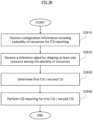
- a method performed by a user equipment (UE) in a wireless communication system may comprise: receiving configuration information including a plurality of resources for channel state information (CSI) reporting; receiving a reference signal by skipping at least one resource among the plurality of resources; at least one of determining a first CSI for a resource excluding the at least one resource among the plurality of resources based on the received reference signal or determining a second CSI for the at least one resource based on a CSI prediction related algorithm; and performing the CSI reporting for at least one of the first CSI or the second CSI.
- CSI channel state information
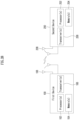
- a method performed by a base station in a wireless communication system may comprise: transmitting configuration information including a plurality of resources for channel state information (CSI) reporting; transmitting a reference signal in the plurality of resources; and receiving the CSI reporting for at least one of first CSI or second CSI.
- the first CSI may correspond to CSI for a resource excluding at least one resource skipped by a user equipment (UE) among the plurality of resources, based on the reference signal
- the second CSI may correspond to CSI for the at least one resource based on a CSI prediction related algorithm.
- channel state estimation and channel state information reporting according to prediction based on an evolved wireless communication system may be supported.
- the UE does not perform actual reception of resources for channel state estimation, thereby reducing the UE's power consumption required for CSI estimation and the RS overhead related thereto.
- known structures and devices may be omitted or may be shown in a form of a block diagram based on a core function of each structure and device in order to prevent a concept of the present disclosure from being ambiguous.
- an element when referred to as being “connected”, “combined” or “linked” to another element, it may include an indirect connection relation that yet another element presents therebetween as well as a direct connection relation.
- a term, “include” or “have”, specifies the presence of a mentioned feature, step, operation, component and/or element, but it does not exclude the presence or addition of one or more other features, stages, operations, components, elements and/or their groups.
- a term such as “first”, “second”, etc. is used only to distinguish one element from other element and is not used to limit elements, and unless otherwise specified, it does not limit an order or importance, etc. between elements. Accordingly, within a scope of the present disclosure, a first element in an embodiment may be referred to as a second element in another embodiment and likewise, a second element in an embodiment may be referred to as a first element in another embodiment.
- a term used in the present disclosure is to describe a specific embodiment, and is not to limit a claim. As used in a described and attached claim of an embodiment, a singular form is intended to include a plural form, unless the context clearly indicates otherwise.
- a term used in the present disclosure, "and/or”, may refer to one of related enumerated items or it means that it refers to and includes any and all possible combinations of two or more of them.
- "/" between words in the present disclosure has the same meaning as “and/or”, unless otherwise described.
- the present disclosure describes a wireless communication network or a wireless communication system, and an operation performed in a wireless communication network may be performed in a process in which a device (e.g., a base station) controlling a corresponding wireless communication network controls a network and transmits or receives a signal, or may be performed in a process in which a terminal associated to a corresponding wireless network transmits or receives a signal with a network or between terminals.
- a device e.g., a base station
- transmitting or receiving a channel includes a meaning of transmitting or receiving information or a signal through a corresponding channel.
- transmitting a control channel means that control information or a control signal is transmitted through a control channel.
- transmitting a data channel means that data information or a data signal is transmitted through a data channel.
- a downlink means a communication from a base station to a terminal
- an uplink means a communication from a terminal to a base station.
- a transmitter may be part of a base station and a receiver may be part of a terminal.
- a transmitter may be part of a terminal and a receiver may be part of a base station.
- a base station may be expressed as a first communication device and a terminal may be expressed as a second communication device.
- a base station may be substituted with a term such as a fixed station, a Node B, an eNB(evolved-NodeB), a gNB(Next Generation NodeB), a BTS(base transceiver system), an Access Point(AP), a Network(5G network), an AI(Artificial Intelligence) system/module, an RSU(road side unit), a robot, a drone(UAV: Unmanned Aerial Vehicle), an AR(Augmented Reality) device, a VR(Virtual Reality) device, etc.
- a term such as a fixed station, a Node B, an eNB(evolved-NodeB), a gNB(Next Generation NodeB), a BTS(base transceiver system), an Access Point(AP), a Network(5G network), an AI(Artificial Intelligence) system/module, an RSU(road side unit), a robot, a drone(UAV: Unmanned Aerial Vehicle), an AR
- a terminal may be fixed or mobile, and may be substituted with a term such as a UE(User Equipment), an MS(Mobile Station), a UT(user terminal), an MSS(Mobile Subscriber Station), an SS(Subscriber Station), an AMS(Advanced Mobile Station), a WT(Wireless terminal), an MTC(Machine-Type Communication) device, an M2M(Machine-to-Machine) device, a D2D(Device-to-Device) device, a vehicle, an RSU(road side unit), a robot, an AI(Artificial Intelligence) module, a drone(UAV: Unmanned Aerial Vehicle), an AR(Augmented Reality) device, a VR(Virtual Reality) device, etc.
- a term such as a UE(User Equipment), an MS(Mobile Station), a UT(user terminal), an MSS(Mobile Subscriber Station), an SS(Subscriber Station), an AMS(Advanced Mobile Station
- CDMA may be implemented by a wireless technology such as UTRA(Universal Terrestrial Radio Access) or CDMA2000.
- TDMA may be implemented by a radio technology such as GSM(Global System for Mobile communications)/GPRS(General Packet Radio Service)/EDGE(Enhanced Data Rates for GSM Evolution).
- OFDMA may be implemented by a radio technology such as IEEE 802.11(Wi-Fi), IEEE 802.16(WiMAX), IEEE 802-20, E-UTRA(Evolved UTRA), etc.
- UTRA is a part of a UMTS(Universal Mobile Telecommunications System).
- 3GPP(3rd Generation Partnership Project) LTE(Long Term Evolution) is a part of an E-UMTS(Evolved UMTS) using E-UTRA and LTE-A(Advanced)/LTE-A pro is an advanced version of 3GPP LTE.
- 3GPP NR(New Radio or New Radio Access Technology) is an advanced version of 3GPP LTE/LTE-A/LTE-A pro.
- LTE means a technology after 3GPP TS(Technical Specification) 36.xxx Release 8.
- LTE-A an LTE technology in or after 3GPP TS 36.
- xxx Release 10 is referred to as LTE-A
- LTE-A pro an LTE technology in or after 3GPP TS 36.
- xxx Release 13 is referred to as LTE-A pro.
- 3GPP NR means a technology in or after TS 38.xxx Release 15.
- LTE/NR may be referred to as a 3GPP system.
- "xxx" means a detailed number for a standard document.
- LTE/NR may be commonly referred to as a 3GPP system.
- a term, an abbreviation, etc. used to describe the present disclosure matters described in a standard document disclosed before the present disclosure may be referred to.
- the following document may be referred to.
- TS 36.211 physical channels and modulation
- TS 36.212 multiplexing and channel coding
- TS 36.213 physical layer procedures
- TS 36.300 overall description
- TS 36.331 radio resource control
- TS 38.211 physical channels and modulation
- TS 38.212 multiplexing and channel coding
- TS 38.213 physical layer procedures for control
- TS 38.214 physical layer procedures for data
- TS 38.300 NR and NG-RAN(New Generation-Radio Access Network) overall description
- TS 38.331 radio resource control protocol specification
- NR is an expression which represents an example of a 5G RAT.
- a new RAT system including NR uses an OFDM transmission method or a transmission method similar to it.
- a new RAT system may follow OFDM parameters different from OFDM parameters of LTE.
- a new RAT system follows a numerology of the existing LTE/LTE-A as it is, but may support a wider system bandwidth (e.g., 100MHz).
- one cell may support a plurality of numerologies. In other words, terminals which operate in accordance with different numerologies may coexist in one cell.
- a numerology corresponds to one subcarrier spacing in a frequency domain.
- a reference subcarrier spacing is scaled by an integer N, a different numerology may be defined.
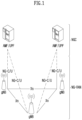
- FIG. 1 illustrates a structure of a wireless communication system to which the present disclosure may be applied.
- NG-RAN is configured with gNBs which provide a control plane (RRC) protocol end for a NG-RA(NG-Radio Access) user plane (i.e., a new AS(access stratum) sublayer/PDCP(Packet Data Convergence Protocol)/RLC(Radio Link Control)/MAC/PHY) and UE.
- RRC control plane
- the gNBs are interconnected through a Xn interface.
- the gNB in addition, is connected to an NGC(New Generation Core) through an NG interface.
- the gNB is connected to an AMF(Access and Mobility Management Function) through an N2 interface, and is connected to a UPF(User Plane Function) through an N3 interface.
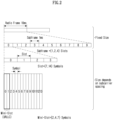
- FIG. 2 illustrates a frame structure in a wireless communication system to which the present disclosure may be applied.
- a NR system may support a plurality of numerologies.
- a numerology may be defined by a subcarrier spacing and a cyclic prefix (CP) overhead.
- CP cyclic prefix
- a plurality of subcarrier spacings may be derived by scaling a basic (reference) subcarrier spacing by an integer N (or, ⁇ ).
- N or, ⁇
- a used numerology may be selected independently from a frequency band.
- a variety of frame structures according to a plurality of numerologies may be supported in a NR system.
- a plurality of OFDM numerologies supported in a NR system may be defined as in the following Table 1.
- CP 0 15 Normal 1 30 Normal 2 60 Normal, Extended 3 120 Normal 4 240 Normal
- NR supports a plurality of numerologies (or subcarrier spacings (SCS)) for supporting a variety of 5G services. For example, when a SCS is 15kHz, a wide area in traditional cellular bands is supported, and when a SCS is 30kHz/60kHz, dense-urban, lower latency and a wider carrier bandwidth are supported, and when a SCS is 60kHz or higher, a bandwidth wider than 24.25GHz is supported to overcome a phase noise.
- numerologies or subcarrier spacings (SCS)
- NR frequency band is defined as a frequency range in two types (FR1, FR2).
- FR1, FR2 may be configured as in the following Table 2.
- FR2 may mean a millimeter wave (mmW).
- mmW millimeter wave
- ⁇ f max is 480 ⁇ 10 3 Hz and N f is 4096.
- One slot is configured with N symb slot consecutive OFDM symbols and N symb slot is determined according to CP.
- a start of a slot n s ⁇ in a subframe is temporally arranged with a start of an OFDM symbol n s ⁇ N symb slot in the same subframe. All terminals may not perform transmission and reception at the same time, which means that all OFDM symbols of a downlink slot or an uplink slot may not be used.
- Table 3 represents the number of OFDM symbols per slot (N symb slot ), the number of slots per radio frame (N slot frame, ⁇ ) and the number of slots per subframe (N slot subframe, ⁇ ) in a normal CP and Table 4 represents the number of OFDM symbols per slot, the number of slots per radio frame and the number of slots per subframe in an extended CP.
- Table 3 ⁇ N symb slot N slot frame, ⁇ N slot subframe, ⁇ 0 14 10 1 1 14 20 2 2 14 40 4 3 14 80 8 4 14 160 16
- Table 4 ⁇ N symb slot N slot frame, ⁇ N slot subframe, ⁇ 2 12 40 4
- a mini-slot may include 2, 4 or 7 symbols or more or less symbols.
- an antenna port a resource grid, a resource element, a resource block, a carrier part, etc. may be considered.
- the physical resources which may be considered in an NR system will be described in detail.
- an antenna port in relation to an antenna port, is defined so that a channel where a symbol in an antenna port is carried can be inferred from a channel where other symbol in the same antenna port is carried.
- a large-scale property of a channel where a symbol in one antenna port is carried may be inferred from a channel where a symbol in other antenna port is carried, it may be said that 2 antenna ports are in a QC/QCL(quasi co-located or quasi co-location) relationship.
- the large-scale property includes at least one of delay spread, doppler spread, frequency shift, average received power, received timing.
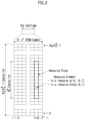
- FIG. 3 illustrates a resource grid in a wireless communication system to which the present disclosure may be applied.
- a resource grid is configured with N RB ⁇ N sc RB subcarriers in a frequency domain and one subframe is configured with 14 ⁇ 2 ⁇ OFDM symbols, but it is not limited thereto.
- a transmitted signal is described by OFDM symbols of 2 ⁇ N symb ( ⁇ ) and one or more resource grids configured with N RB ⁇ N sc RB subcarriers.
- N RB ⁇ ⁇ N RB max, ⁇ The N RB max, ⁇ represents a maximum transmission bandwidth, which may be different between an uplink and a downlink as well as between numerologies.
- one resource grid may be configured per ⁇ and antenna port p.
- Each element of a resource grid for ⁇ and an antenna port p is referred to as a resource element and is uniquely identified by an index pair (k,l').
- an index pair (k,l) is used.
- l 0,...,N symb ⁇ -1.
- a resource element (k,l') for ⁇ and an antenna port p corresponds to a complex value, a k,l' (p, ⁇ ) .
- indexes p and ⁇ may be dropped, whereupon a complex value may be a k,l' (p) or a k,l' .
- Point A plays a role as a common reference point of a resource block grid and is obtained as follows.
- offsetToPointA for a primary cell (PCell) downlink represents a frequency offset between point A and the lowest subcarrier of the lowest resource block overlapped with a SS/PBCH block which is used by a terminal for an initial cell selection. It is expressed in resource block units assuming a 15kHz subcarrier spacing for FR1 and a 60kHz subcarrier spacing for FR2.
- absoluteFrequencyPointA represents a frequency-position of point A expressed as in ARFCN (absolute radiofrequency channel number).
- Common resource blocks are numbered from 0 to the top in a frequency domain for a subcarrier spacing configuration ⁇ .
- the center of subcarrier 0 of common resource block 0 for a subcarrier spacing configuration ⁇ is identical to 'point A'.
- a relationship between a common resource block number n CRB ⁇ and a resource element (k,l) for a subcarrier spacing configuration ⁇ in a frequency domain is given as in the following Equation 1.
- n CRB ⁇ k N sc RB
- Physical resource blocks are numbered from 0 to N BWP,i size, ⁇ -1 in a bandwidth part (BWP) and i is a number of a BWP.
- a relationship between a physical resource block n PRB and a common resource block n CRB in BWP i is given by the following Equation 2.
- N BWP,i start, ⁇ is a common resource block that a BWP starts relatively to common resource block 0.
- FIG. 4 illustrates a physical resource block in a wireless communication system to which the present disclosure may be applied.
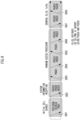
- FIG. 5 illustrates a slot structure in a wireless communication system to which the present disclosure may be applied.
- a slot includes a plurality of symbols in a time domain. For example, for a normal CP, one slot includes 7 symbols, but for an extended CP, one slot includes 6 symbols.
- a carrier includes a plurality of subcarriers in a frequency domain.
- An RB Resource Block
- a BWP(Bandwidth Part) is defined as a plurality of consecutive (physical) resource blocks in a frequency domain and may correspond to one numerology (e.g., an SCS, a CP length, etc.).
- a carrier may include a maximum N (e.g., 5) BWPs.
- a data communication may be performed through an activated BWP and only one BWP may be activated for one terminal.
- each element is referred to as a resource element (RE) and one complex symbol may be mapped.
- RE resource element
- a terminal operating in such a wideband CC may always operate turning on a radio frequency (FR) chip for the whole CC, terminal battery consumption may increase.
- FR radio frequency
- a different numerology e.g., a subcarrier spacing, etc.
- each terminal may have a different capability for the maximum bandwidth.
- a base station may indicate a terminal to operate only in a partial bandwidth, not in a full bandwidth of a wideband CC, and a corresponding partial bandwidth is defined as a bandwidth part (BWP) for convenience.
- a BWP may be configured with consecutive RBs on a frequency axis and may correspond to one numerology (e.g., a subcarrier spacing, a CP length, a slot/a mini-slot duration).
- a base station may configure a plurality of BWPs even in one CC configured to a terminal. For example, a BWP occupying a relatively small frequency domain may be configured in a PDCCH monitoring slot, and a PDSCH indicated by a PDCCH may be scheduled in a greater BWP.
- some terminals may be configured with other BWP for load balancing.
- some middle spectrums of a full bandwidth may be excluded and BWPs on both edges may be configured in the same slot.
- a base station may configure at least one DL/UL BWP to a terminal associated with a wideband CC.
- a base station may activate at least one DL/UL BWP of configured DL/UL BWP(s) at a specific time (by L1 signaling or MAC CE(Control Element) or RRC signaling, etc.).
- a base station may indicate switching to other configured DL/UL BWP (by L1 signaling or MAC CE or RRC signaling, etc.).
- a timer when a timer value is expired, it may be switched to a determined DL/UL BWP.
- an activated DL/UL BWP is defined as an active DL/UL BWP.
- a configuration on a DL/UL BWP may not be received when a terminal performs an initial access procedure or before a RRC connection is set up, so a DL/UL BWP which is assumed by a terminal under these situations is defined as an initial active DL/UL BWP.
- FIG. 6 illustrates physical channels used in a wireless communication system to which the present disclosure may be applied and a general signal transmission and reception method using them.
- a terminal receives information through a downlink from a base station and transmits information through an uplink to a base station.
- Information transmitted and received by a base station and a terminal includes data and a variety of control information and a variety of physical channels exist according to a type/a usage of information transmitted and received by them.
- a terminal When a terminal is turned on or newly enters a cell, it performs an initial cell search including synchronization with a base station or the like (S601).
- a terminal may synchronize with a base station by receiving a primary synchronization signal (PSS) and a secondary synchronization signal (SSS) from a base station and obtain information such as a cell identifier (ID), etc.
- PSS primary synchronization signal
- SSS secondary synchronization signal
- ID cell identifier
- a terminal may obtain broadcasting information in a cell by receiving a physical broadcast channel (PBCH) from a base station.
- PBCH physical broadcast channel
- a terminal may check out a downlink channel state by receiving a downlink reference signal (DL RS) at an initial cell search stage.
- DL RS downlink reference signal
- a terminal which completed an initial cell search may obtain more detailed system information by receiving a physical downlink control channel (PDCCH) and a physical downlink shared channel (PDSCH) according to information carried in the PDCCH (S602).
- PDCCH physical downlink control channel
- PDSCH physical downlink shared channel
- a terminal when a terminal accesses to a base station for the first time or does not have a radio resource for signal transmission, it may perform a random access (RACH) procedure to a base station (S603 to S606).
- RACH random access
- a terminal may transmit a specific sequence as a preamble through a physical random access channel (PRACH) (S603 and S605) and may receive a response message for a preamble through a PDCCH and a corresponding PDSCH (S604 and S606).
- PRACH physical random access channel
- a contention based RACH may additionally perform a contention resolution procedure.
- a terminal which performed the above-described procedure subsequently may perform PDCCH/PDSCH reception (S607) and PUSCH(Physical Uplink Shared Channel)/PUCCH(physical uplink control channel) transmission (S608) as a general uplink/downlink signal transmission procedure.
- a terminal receives downlink control information (DCI) through a PDCCH.
- DCI includes control information such as resource allocation information for a terminal and a format varies depending on its purpose of use.
- control information which is transmitted by a terminal to a base station through an uplink or is received by a terminal from a base station includes a downlink/uplink ACK/NACK(Acknowledgement/Non-Acknowledgement) signal, a CQI(Channel Quality Indicator), a PMI(Precoding Matrix Indicator), a RI(Rank Indicator), etc.
- a terminal may transmit control information of the above-described CQI/PMI/RI, etc. through a PUSCH and/or a PUCCH.
- Table 5 represents an example of a DCI format in an NR system.
- DCI Format Use 0_0 Scheduling of a PUSCH in one cell 0_1 Scheduling of one or multiple PUSCHs in one cell, or indication of cell group downlink feedback information to a UE 0_2 Scheduling of a PUSCH in one cell 1_0 Scheduling of a PDSCH in one DL cell 1_1 Scheduling of a PDSCH in one cell 1_2 Scheduling of a PDSCH in one cell
- DCI formats 0_0, 0_1 and 0_2 may include resource information (e.g.,
- a transport block(TB) e.g., MCS(Modulation Coding and Scheme), a NDI(New Data Indicator), a RV(Redundancy Version
- DCI format 0_0 is used for scheduling of a PUSCH in one cell.
- Information included in DCI format 0_0 is CRC (cyclic redundancy check) scrambled by a C-RNTI(Cell Radio Network Temporary Identifier) or a CS-RNTI(Configured Scheduling RNTI) or a MCS-C-RNTI(Modulation Coding Scheme Cell RNTI) and transmitted.
- CRC cyclic redundancy check
- DCI format 0_1 is used to indicate scheduling of one or more PUSCHs or configure grant (CG) downlink feedback information to a terminal in one cell.
- Information included in DCI format 0_1 is CRC scrambled by a C-RNTI or a CS-RNTI or a SP-CSI-RNTI(Semi-Persistent CSI RNTI) or a MCS-C-RNTI and transmitted.
- DCI format 0_2 is used for scheduling of a PUSCH in one cell.
- Information included in DCI format 0_2 is CRC scrambled by a C-RNTI or a CS-RNTI or a SP-CSI-RNTI or a MCS-C-RNTI and transmitted.
- DCI formats 1_0, 1_1 and 1_2 may include resource information (e.g., frequency resource allocation, time resource allocation, VRB(virtual resource block)-PRB(physical resource block) mapping, etc.), information related to a transport block(TB)(e.g., MCS, NDI, RV, etc.), information related to a HARQ (e.g., a process number, DAI, PDSCH-HARQ feedback timing, etc.), information related to multiple antennas (e.g., an antenna port, a TCI(transmission configuration indicator), a SRS(sounding reference signal) request, etc.), information related to a PUCCH (e.g., PUCCH power control, a PUCCH resource indicator, etc.) related to scheduling of a PDSCH and control information included in each DCI format may be pre-defined.
- resource information e.g., frequency resource allocation, time resource allocation, VRB(virtual resource block)-PRB(physical resource block) mapping, etc.
- DCI format 1_0 is used for scheduling of a PDSCH in one DL cell.
- Information included in DCI format 1_0 is CRC scrambled by a C-RNTI or a CS-RNTI or a MCS-C-RNTI and transmitted.
- DCI format 1_1 is used for scheduling of a PDSCH in one cell.
- Information included in DCI format 1_1 is CRC scrambled by a C-RNTI or a CS-RNTI or a MCS-C-RNTI and transmitted.
- DCI format 1_2 is used for scheduling of a PDSCH in one cell.
- Information included in DCI format 1_2 is CRC scrambled by a C-RNTI or a CS-RNTI or a MCS-C-RNTI and transmitted.
- a coordinated multi point (CoMP) scheme refers to a scheme in which a plurality of base stations effectively control interference by exchanging (e.g., using an X2 interface) or utilizing channel information (e.g., RI/CQI/PMI/LI(layer indicator), etc.) fed back by a terminal and cooperatively transmitting to a terminal.
- a CoMP may be classified into joint transmission(JT), coordinated Scheduling(CS), coordinated Beamforming(CB), dynamic Point Selection(DPS), dynamic Point Blocking(DPB), etc.
- M-TRP transmission schemes that M TRPs transmit data to one terminal may be largely classified into i) eMBB M-TRP transmission, a scheme for improving a transfer rate, and ii) URLLC M-TRP transmission, a scheme for increasing a reception success rate and reducing latency.
- M-TRP transmission schemes may be classified into i) M-TRP transmission based on M-DCI(multiple DCI) that each TRP transmits different DCIs and ii) M-TRP transmission based on S-DCI(single DCI) that one TRP transmits DCI.
- M-DCI based M-TRP transmission all scheduling information on data transmitted by M TRPs should be delivered to a terminal through one DCI, it may be used in an environment of an ideal BackHaul (ideal BH) where dynamic cooperation between two TRPs is possible.
- scheme 3/4 is under discussion for standardization.
- scheme 4 means a scheme in which one TRP transmits a transport block(TB) in one slot and it has an effect to improve a probability of data reception through the same TB received from multiple TRPs in multiple slots.
- scheme 3 means a scheme in which one TRP transmits a TB through consecutive number of OFDM symbols (i.e., a symbol group) and TRPs may be configured to transmit the same TB through a different symbol group in one slot.
- UE may recognize PUSCH (or PUCCH) scheduled by DCI received in different control resource sets(CORESETs)(or CORESETs belonging to different CORESET groups) as PUSCH (or PUCCH) transmitted to different TRPs or may recognize PDSCH (or PDCCH) from different TRPs.
- the below-described method for UL transmission e.g., PUSCH/PUCCH
- PUSCH/PUCCH PUSCH/PUCCH
- MTRP-URLLC may mean that a M TRPs transmit the same transport block(TB) by using different layer/time/frequency.
- a UE configured with a MTRP-URLLC transmission scheme receives an indication on multiple TCI state(s) through DCI and may assume that data received by using a QCL RS of each TCI state are the same TB.
- MTRP-eMBB may mean that M TRPs transmit different TBs by using different layer/time/frequency.
- a UE configured with a MTRP-eMBB transmission scheme receives an indication on multiple TCI state(s) through DCI and may assume that data received by using a QCL RS of each TCI state are different TBs.
- UE may decide/determine whether the corresponding M-TRP transmission is URLLC transmission or eMBB transmission.
- CRC masking of DCI received by UE is performed by using a RNTI configured for MTRP-URLLC, it may correspond to URLLC transmission
- CRC masking of DCI is performed by using a RNTI configured for MTRP-eMBB, it may correspond to eMBB transmission.
- a CORESET group ID described/mentioned in the present disclosure may mean an index/identification information (e.g., an ID, etc.) for distinguishing a CORESET for each TRP/panel.
- a CORESET group may be a group/union of CORESET distinguished by an index/identification information (e.g., an ID)/the CORESET group ID, etc. for distinguishing a CORESET for each TRP/panel.
- a CORESET group ID may be specific index information defined in a CORESET configuration.
- a CORESET group may be configured/indicated/defined by an index defined in a CORESET configuration for each CORESET.
- a CORESET group ID may mean an index/identification information/an indicator, etc. for distinguishment/identification between CORESETs configured/associated with each TRP/panel.
- a CORESET group ID described/mentioned in the present disclosure may be expressed by being substituted with a specific index/specific identification information/a specific indicator for distinguishment/identification between CORESETs configured/associated with each TRP/panel.
- the CORESET group ID i.e., a specific index/specific identification information/a specific indicator for distinguishment/identification between CORESETs configured/associated with each TRP/panel may be configured/indicated to a terminal through higher layer signaling (e.g., RRC signaling)/L2 signaling (e.g., MAC-CE)/L1 signaling (e.g., DCI), etc.
- RRC signaling e.g., RRC signaling
- L2 signaling e.g., MAC-CE
- L1 signaling e.g., DCI
- uplink control information e.g., CSI, HARQ-A/N(ACK/NACK), SR(scheduling request)
- uplink physical channel resources e.g., PUCCH/PRACH/SRS resources
- HARQ A/N(process/retransmission) for PDSCH/PUSCH, etc. scheduled per each TRP/panel may be managed per corresponding CORESET group (i.e., per TRP/panel belonging to the same CORESET group).
- ControlResourceSet information element is used to configure a time/frequency control resource set (CORESET).
- the control resource set (CORESET) may be related to detection and reception of downlink control information.
- the ControlResourceSet IE may include a CORESET-related ID (e.g., controlResourceSetID)/an index of a CORESET pool for a CORESET (e.g., CORESETPoolIndex)/a time/frequency resource configuration of a CORESET/TCI information related to a CORESET, etc.
- an index of a CORESET pool (e.g., CORESETPoolIndex) may be configured as 0 or 1.
- a CORESET group may correspond to a CORESET pool and a CORESET group ID may correspond to a CORESET pool index (e.g., CORESETPoolIndex).
- NCJT Non-coherent joint transmission
- TP transmission points
- DMRS Demodulation Multiplexing Reference Signal
- a TP delivers data scheduling information through DCI to a terminal receiving NCJT.
- a scheme in which each TP participating in NCJT delivers scheduling information on data transmitted by itself through DCI is referred to as 'multi DCI based NCJT'.
- UE receives N DCI and N PDSCHs from N TPs.
- a scheme in which one representative TP delivers scheduling information on data transmitted by itself and data transmitted by a different TP (i.e., a TP participating in NCJT) through one DCI is referred to as 'single DCI based NCJT'.
- N TPs transmit one PDSCH, but each TP transmits only some layers of multiple layers included in one PDSCH. For example, when 4-layer data is transmitted, TP 1 may transmit 2 layers and TP 2 may transmit 2 remaining layers to UE.
- NCJT partially overlapped NCJT
- NCJT may be classified into fully overlapped NCJT that time frequency resources transmitted by each TP are fully overlapped and partially overlapped NCJT that only some time frequency resources are overlapped.
- data of both of TP 1 and TP 2 are transmitted in some time frequency resources and data of only one TP of TP 1 or TP 2 is transmitted in remaining time frequency resources.
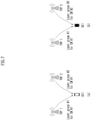
- FIG. 7 illustrates a method of multiple TRPs transmission in a wireless communication system to which the present disclosure may be applied.
- a layer group may mean a predetermined layer set including one or more layers.
- the amount of transmitted resources increases due to the number of a plurality of layers and thereby a robust channel coding with a low coding rate may be used for a TB, and additionally, because a plurality of TRPs have different channels, it may be expected to improve reliability of a received signal based on a diversity gain.
- FIG. 15(b) an example that different CWs are transmitted through layer groups corresponding to different TRPs is shown.
- a TB corresponding to CW #1 and CW #2 in the drawing is identical to each other.
- CW #1 and CW #2 mean that the same TB is respectively transformed through channel coding, etc. into different CWs by different TRPs. Accordingly, it may be considered as an example that the same TB is repetitively transmitted.
- FIG. 15(b) it may have a disadvantage that a code rate corresponding to a TB is higher compared to FIG. 15(a).
- it has an advantage that it may adjust a code rate by indicating a different RV (redundancy version) value or may adjust a modulation order of each CW for encoded bits generated from the same TB according to a channel environment.
- RV redundancy version
- probability of data reception of a terminal may be improved as the same TB is repetitively transmitted through a different layer group and each layer group is transmitted by a different TRP/panel. It is referred to as a SDM (Spatial Division Multiplexing) based M-TRP URLLC transmission method. Layers belonging to different layer groups are respectively transmitted through DMRS ports belonging to different DMRS CDM groups.
- the above-described contents related to multiple TRPs are described based on an SDM (spatial division multiplexing) method using different layers, but it may be naturally extended and applied to a FDM (frequency division multiplexing) method based on a different frequency domain resource (e.g., RB/PRB (set), etc.) and/or a TDM (time division multiplexing) method based on a different time domain resource (e.g., a slot, a symbol, a sub-symbol, etc.).
- FDM frequency division multiplexing
- a different frequency domain resource e.g., RB/PRB (set), etc.
- TDM time division multiplexing
- FIG. 8 is a diagram illustrating a downlink transmission and reception operation in a wireless communication system to which the present disclosure can be applied.
- a base station schedules downlink transmission such as a frequency/time resource, a transport layer, a downlink precoder, an MCS, etc. (S1401).
- a base station can determine a beam for PDSCH transmission to a UE through the operations described above.
- a UE receives DCI for downlink scheduling (i.e., including scheduling information of a PDSCH) from a base station on a PDCCH (S1402).
- DCI for downlink scheduling i.e., including scheduling information of a PDSCH
- DCI format 1_0, 1_1, or 1_2 may be used for downlink scheduling, and in particular, DCI format 1_1 includes the following information: an identifier for a DCI format, a bandwidth part indicator, a frequency domain resource assignment, a time domain resource assignment, a PRB bundling size indicator, a rate matching indicator, a ZP CSI-RS trigger, antenna port(s), a transmission configuration indication (TCI), an SRS request, a DMRS (Demodulation Reference Signal) sequence initialization
- a number of DMRS ports may be scheduled according to each state indicated in an antenna port(s) field, and also single-user (SU)/multi-user (MU) user transmission scheduling is possible.
- SU single-user
- MU multi-user
- a TCI field is composed of 3 bits, and a QCL for a DMRS is dynamically indicated by indicating up to 8 TCI states according to a TCI field value.
- a UE receives downlink data from a base station on a PDSCH (S1403).
- a UE When a UE detects a PDCCH including DCI formats 1_0, 1_1, and 1_2, it decodes a PDSCH according to indications by corresponding DCI.
- a DMRS configuration type may be configured for the UE by a higher layer parameter 'dmrs-Type', and a DMRS type is used to receive a PDSCH.
- a maximum number of front-loaded DMRA symbols for the PDSCH may be configured for a terminal by a higher layer parameter 'maxLength'.
- DMRS configuration type 1 For DMRS configuration type 1, if a single codeword is scheduled for a UE and an antenna port mapped to an index of ⁇ 2, 9, 10, 11 or 30 ⁇ is indicated or if a single codeword is scheduled and an antenna port mapped to an index of ⁇ 2, 9, 10, 11 or 12 ⁇ or ⁇ 2, 9, 10, 11, 30 or 31 ⁇ is indicated, or if two codewords are scheduled, the UE assumes that all remaining orthogonal antenna ports are not associated with PDSCH transmission to another UE.
- DMRS configuration type 1 if a single codeword is scheduled for a UE and an antenna port mapped to an index of ⁇ 2, 10 or 23 ⁇ is indicated, or if a single codeword is scheduled and an antenna port mapped to an index of ⁇ 2, 10, 23 or 24 ⁇ or ⁇ 2, 10, 23 or 58 ⁇ is indicated, or if two codewords are scheduled for a UE, the UE assumes that all remaining orthogonal antenna ports are not associated with PDSCH transmission to another UE.
- a precoding unit (precoding granularity) P' may be assumed to be a contiguous resource block in a frequency domain.
- P' may correspond to one of ⁇ 2, 4, wideband ⁇ .
- P' is determined to be wideband, a UE does not expect to be scheduled with non-contiguous PRBs, and a UE can assume that the same precoding is applied to allocated resources.
- a precoding resource block group PRG is divided into P' consecutive PRBs.
- An actual number of consecutive PRBs in each PRG may be one or more.
- a UE may assume that the same precoding is applied to consecutive downlink PRBs within a PRG.
- the UE In order for a UE to determine a modulation order, a target code rate, and a transport block size in a PDSCH, the UE first reads a 5-bit MCD field in DCI and determines a modulation order and a target code rate. Then, the UE reads a redundancy version field in the DCI and determines a redundancy version. Then, a UE determines a transport block size using a number of layers and a total number of allocated PRBs before rate matching.
- FIG. 9 is a diagram illustrating an uplink transmission and reception operation in a wireless communication system to which the present disclosure can be applied.
- a base station schedules uplink transmission such as a frequency/time resource, a transport layer, an uplink precoder, an MCS, etc. (S1501).
- a base station can determine a beam for PUSCH transmission to a UE through the operations described above.
- a UE receives DCI for uplink scheduling (i.e., including scheduling information of a PUSCH) from a base station on a PDCCH (S1502).
- DCI format 0_0, 0_1, or 0_2 may be used for uplink scheduling, and in particular, DCI format 0_1 includes the following information: an identifier for a DCI format, a UL/SUL (supplementary uplink) indicator, a bandwidth part indicator, a frequency domain resource assignment, a time domain resource assignment, a frequency hopping flag, a modulation and coding scheme (MCS), an SRS resource indicator (SRI), precoding information and number of layers, antenna port(s), an SRS request, a DMRS sequence initialization, a UL-SCH (Uplink Shared Channel) indicator
- MCS modulation and coding scheme
- SRI SRS resource indicator
- SRS resources configured in an SRS resource set associated with the higher upper layer parameter 'usage' may be indicated by an SRS resource indicator field.
- the 'spatialRelationInfo' can be configured for each SRS resource, and its value can be one of ⁇ CRI, SSB, SRI ⁇ .
- a UE transmits uplink data to a base station on a PUSCH (S1503).
- a UE When a UE detects a PDCCH including DCI formats 0_0, 0_1, and 0_2, it transmits a PUSCH according to indications by corresponding DCI.
- codebook-based transmission Two transmission methods are supported for PUSCH transmission: codebook-based transmission and non-codebook-based transmission:
- a UE When the higher layer parameter 'txConfig' is set to 'codebook', a UE is configured to codebook-based transmission. On the other hand, when the higher layer parameter 'txConfig' is set to 'nonCodebook', a UE is configured to non-codebook based transmission. If the up higher per layer parameter 'txConfig' is not set, a UE does not expect to be scheduled by DCI format 0_1. When a PUSCH is scheduled by DCI format 0_0, PUSCH transmission is based on a single antenna port.
- a PUSCH may be scheduled in DCI format 0_0, DCI format 0_1, DCI format 0_2, or semi-statically. If this PUSCH is scheduled by DCI format 0_1, a UE determines a PUSCH transmission precoder based on an SRI, a TPMI (Transmit Precoding Matrix Indicator), and a transmission rank from DCI, as given by an SRS resource indicator field and a precoding information and number of layers field.
- a TPMI is used to indicate a precoder to be applied across antenna ports, and corresponds to an SRS resource selected by an SRI when multiple SRS resources are configured.
- a TPMI is used to indicate a precoder to be applied across antenna ports and corresponds to that single SRS resource.
- a transmission precoder is selected from an uplink codebook having the same number of antenna ports as the higher layer parameter 'nrofSRS-Ports'.
- the UE is configured with at least one SRS resource.
- An SRI indicated in slot n is associated with the most recent transmission of an SRS resource identified by the SRI, where the SRS resource precedes a PDCCH carrying the SRI (i.e., slot n).
- a PUSCH may be scheduled in DCI format 0_0, DCI format 0_1, or semi-statically.
- a UE can determine a PUSCH precoder and a transmission rank based on a wideband SRI, where, the SRI is given by an SRS resource indicator in DCI or by the higher layer parameter 'srs-ResourceIndicator'.
- a UE uses one or multiple SRS resources for SRS transmission, where the number of SRS resources can be configured for simultaneous transmission within the same RB based on a UE capability. Only one SRS port is configured for each SRS resource.
- SRS resource Only one SRS resource can be configured with the higher layer parameter 'usage' set to 'nonCodebook'.
- the maximum number of SRS resources that can be configured for non-codebook based uplink transmission is 4.
- An SRI indicated in slot n is associated with the most recent transmission of an SRS resource identified by the SRI, where the SRS transmission precedes a PDCCH carrying the SRI (i.e., slot n).
- a CSI-RS channel state information-reference signal
- L1(layer 1)-RSRP reference signal received power
- mobility L1(layer 1)-RSRP(reference signal received power) computation
- CSI computation is related to CSI acquisition and L1-RSRP computation is related to beam management (BM).
- CSI(channel state information) collectively refers to information which may represent quality of a radio channel (or also referred to as a link) formed between a terminal and an antenna port.
- the configuration information related to CSI may include at least one of information related to a CSI-IM (interference management) resource, information related to CSI measurement configuration, information related to CSI resource configuration, information related to a CSI-RS resource or information related to CSI report configuration.
- CSI-IM interference management
- Parameters representing a usage of a CSI-RS may be configured per NZP CSI-RS resource set.
- Information related to a CSI report configuration includes a report configuration type (reportConfigType) parameter representing a time domain behavior and a report quantity (reportQuantity) parameter representing CSI-related quantity for a report.
- the time domain behavior may be periodic, aperiodic or semi-persistent.
- the CSI measurement may include (1) a process in which a terminal receives a CSI-RS and (2) a process in which CSI is computed through a received CSI-RS and detailed description thereon is described after.
- RE(resource element) mapping of a CSI-RS resource in a time and frequency domain is configured by higher layer parameter CSI-RS-ResourceMapping.
- the terminal may omit the report. But, although the quantity is configured as 'none (or No report)', the terminal may perform a report to a base station.
- the quantity is configured as 'none', an aperiodic TRS is triggered or repetition is configured. In this case, only when repetition is configured as 'ON', a report of the terminal may be omitted.
- node(s) and UE(s) in a wireless communication network are becoming more intelligent/advanced.
- various network/base station decision parameter values e.g., transmission/reception power of each base station, transmission power of each UE, precoder/beam of base station/UE, time/frequency resource allocation for each UE, duplex method of each base station, etc.
- environmental parameters e.g., distribution/location of base stations, distribution/location/material of buildings/furniture, etc., location/movement direction/speed of UEs, climate information, etc.
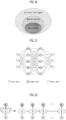
- FIG. 10 illustrates a classification of artificial intelligence.
- AI artificial intelligence
- Machine Learning refers to a technology in which machines learn patterns for decision-making from data on their own without explicitly programming rules.
- Deep Learning is an artificial neural network-based model that allows a machine to perform feature extraction and decision from unstructured data at once.
- the algorithm relies on a multi-layer network of interconnected nodes for feature extraction and transformation, inspired by the biological nervous system, or Neural Network.
- Common deep learning network architectures include deep neural networks (DNNs), recurrent neural networks (RNNs), and convolutional neural networks (CNNs).
- AI can be narrowly referred to as artificial intelligence based on deep learning, but is not limited to this in the present disclosure. That is, in the present disclosure, AI (or AI/ML) may collectively refer to automation technologies applied to intelligent machines (e.g., UE, RAN, network nodes, etc.) that can perform tasks like humans.
- intelligent machines e.g., UE, RAN, network nodes, etc.
- AI (or AI/ML) can be classified according to various criteria as follows.
- Offline learning follows a sequential procedure of database collection, learning, and prediction. In other words, collection and learning can be performed offline, and the completed program can be installed in the field and used for prediction work.
- centralized learning training data collected from a plurality of different nodes is reported to a centralized node, all data resources/storage/learning (e.g., supervised learning, unsupervised learning, reinforcement learning, etc.) are performed in one centralized node.
- all data resources/storage/learning e.g., supervised learning, unsupervised learning, reinforcement learning, etc.
- Federated learning is a collective model built on data that exists across distributed data owners. Instead of collecting data into a model, AI/ML models are imported into a data source, allowing local nodes/individual devices to collect data and train their own copies of the model, eliminating the need to report the source data to a central node. In federated learning, the parameters/weights of an AI/ML model can be sent back to the centralized node to support general model training. Federated learning has advantages in terms of increased computation speed and information security. In other words, the process of uploading personal data to the central server is unnecessary, preventing leakage and misuse of personal information.
- Distributed learning refers to the concept in which machine learning processes are scaled and distributed across a cluster of nodes. Training models are split and shared across multiple nodes operating simultaneously to speed up model training.
- Supervised learning is a machine learning task that aims to learn a mapping function from input to output, given a labeled data set.
- the input data is called training data and has known labels or results.
- An example of supervised learning is as follows.
- Supervised learning can be further grouped into regression and classification problems, where classification is predicting a label and regression is predicting a quantity.
- Unsupervised learning is a machine learning task that aims to learn features that describe hidden structures in unlabeled data. The input data is not labeled and there are no known results.
- Some examples of unsupervised learning include K-means clustering, Principal Component Analysis (PCA), nonlinear Independent Component Analysis (ICA), and Long-Short-Term Memory (LSTM).
- RL reinforcement learning
- the agent aims to optimize long-term goals by interacting with the environment based on a trial and error process, and is goal-oriented learning based on interaction with the environment.
- An example of the RL algorithm is as follows.
- reinforcement learning can be grouped into model-based reinforcement learning and model-free reinforcement learning as follows.
- RL algorithm can also be classified into value-based RL vs. policy-based RL, policy-based RL vs. non-policy RL, etc.
- FIG. 11 illustrates a feed-forward neural network
- a feed-forward neural network is composed of an input layer, a hidden layer, and an output layer.
- FFNN In FFNN, information is transmitted only from the input layer to the output layer, and if there is a hidden layer, it passes through it.
- Category 1, Category 2, and Category 3 may be considered in terms of training, and Category 1 and Category 2 may be considered in terms of inference.
- FIG. 12 illustrates a recurrent neural network
- a recurrent neural network is a type of artificial neural network in which hidden nodes are connected to directed edges to form a directed cycle. This model is suitable for processing data that appears sequentially, such as voice and text.
- A represents a neural network
- xt represents an input value
- ht represents an output value
- ht may refer to a state value representing the current state based on time
- ht-1 may represent a previous state value
- LSTM Long Short-Term Memory
- LSTM Long Short-Term Memory
- FIG. 13 illustrates a convolutional neural network
- CNN Convolutional neural network
- Category 1, Category 2, and Category 3 may be considered in terms of training, and Category 1 and Category 2 may be considered in terms of inference.
- FIG. 14 illustrates an auto encoder
- Auto encoder refers to a neural network that receives a feature vector x (x1, x2, x3, ...) as input and outputs the same or similar vector x' (x'1, x'2, x'3, ...)'.
- Auto encoder has the same characteristics as the input node and output node. Since the auto encoder reconstructs the input, the output can be referred to as reconstruction. Additionally, auto encoder is a type of unsupervised learning.
- the loss function of the auto encoder illustrated in FIG. 14 is calculated based on the difference between input and output, and based on this, the degree of input loss is identified and an optimization process is performed in the auto encoder to minimize the loss.
- AI or AI/ML
- AI/ML Training An online or offline process to train an AI model by learning features and patterns that best present data and get the trained AI/ML model for inference.
- AI/ML Inference A process of using a trained AI/ML model to make a prediction or guide the decision based on collected data and AI/ML model.
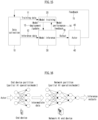
- FIG. 15 illustrates a functional framework for an AI operation.
- the data collection function (10) is a function that collects input data and provides processed input data to the model training function (20) and the model inference function (30).
- Examples of input data may include measurements from UEs or different network entities, feedback from Actor, output from an AI model.
- the Data Collection function (10) performs data preparation based on input data and provides input data processed through data preparation.
- the Data Collection function (10) does not perform specific data preparation (e.g., data pre-processing and cleaning, formatting and transformation) for each AI algorithm, and data preparation common to AI algorithms can be performed.
- the Model Training function (10) After performing the data preparation process, the Model Training function (10) provides Training Data (11) to the Model Training function (20) and provides Inference Data (12) to the Model Inference function (30).
- Training Data (11) is data required as input for the AI Model Training function (20).
- Inference Data (12) is data required as input for the AI Model Inference function (30).
- the Data Collection function (10) may be performed by a single entity (e.g., UE, RAN node, network node, etc.), but may also be performed by a plurality of entities.
- Training Data (11) and Inference Data (12) can be provided from a plurality of entities to the Model Training function (20) and the Model Inference function (30), respectively.
- Model Training function (20) is a function that performs the AI model training, validation, and testing which may generate model performance metrics as part of the model testing procedure.
- the Model Training function (20) is also responsible for data preparation (e.g., data pre-processing and cleaning, formatting, and transformation) based on Training Data (11) delivered by a Data Collection function (10), if required.
- Model Deployment/Update (13) is used to initially deploy a trained, validated, and tested AI model to the Model Inference function (30) or to deliver an updated model to the Model Inference function (30).
- Model Inference function (30) is a function that provides AI model inference output (16) (e.g., predictions or decisions). Model Inference function (30) may provide Model Performance Feedback (14) to Model Training function (20) when applicable. The Model Inference function (30) is also responsible for data preparation (e.g., data pre-processing and cleaning, formatting, and transformation) based on Inference Data (12) delivered by a Data Collection function (10), if required.
- Output (16) refers to the inference output of the AI model produced by a Model Inference function (30), and details of inference output may be use case specific.
- Model Performance Feedback (14) may be used for monitoring the performance of the AI model, when available, and this feedback may be omitted.
- Actor function (40) is a function that receives the Output (16) from the Model Inference function (30) and
- the Actor function (40) may trigger actions directed to other entities (e.g., one or more UEs, one or more RAN nodes, one or more network nodes, etc) or to itself.
- Feedback (15) may be used to derive Training data (11), Inference data (12) or to monitor the performance of the AI Model and its impact to the network, etc.
- training data and validation data can be divided into 8:2 or 7:3, and if testing is included, 6:2:2 (training: validation: test) can be used.
- a cooperation level can be defined as follows, and modifications can be made by combining the following multiple levels or separating any one level.
- Cat 1 This involves inter-node support to improve the AI/ML algorithm of each node. This applies if a UE receives support from a gNB (for training, adaptation, etc.) and vice versa. At this level, model exchange between network nodes is not required.
- a RAN node e.g., base station, TRP, base station central unit (CU), etc.
- a network node e.g., a network operator's operation administration maintenance (OAM), or a UE.
- OAM network operator's operation administration maintenance
- the function illustrated in FIG. 15 may be implemented through cooperation of two or more entities among a RAN, a network node, an CAM of network operator, or a UE.
- one entity may perform some of the functions of FIG. 15 and other entities may perform the remaining functions.
- transmission/provision of data/information between each function may be omitted.
- the Model Training function (20) and the Model Inference function (30) are performed by the same entity, the delivery/provision of Model Deployment/Update (13) and Model Performance Feedback (14) can be omitted.
- any one of the functions illustrated in FIG. 15 may be performed through collaboration between two or more entities among a RAN, a network node, an CAM of a network operator, or a UE. This can be referred to as a split AI operation.
- FIG. 16 is a diagram illustrating split AI inference.
- FIG. 16 illustrates a case in which, among split AI operations, the Model Inference function is performed in cooperation with an end device such as a UE and a network AI/ML endpoint.
- Model Training function In addition to the Model Inference function, the Model Training function, the Actor, and the Data Collection function are respectively split into multiple parts depending on the current task and environment, and can be performed by multiple entities collaborating.
- computation-intensive and energy-intensive parts may be performed at a network endpoint, while parts sensitive to personal information and delay-sensitive parts may be performed at an end device.
- an end device can execute a task/model from input data to a specific part/layer and then transmit intermediate data to a network endpoint.
- a network endpoint executes the remaining parts/layers and provides inference outputs to one or more devices that perform an action/task.
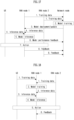
- FIG. 17 illustrates an application of a functional framework in a wireless communication system.
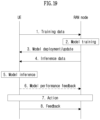
- FIG. 7 illustrates a case where the AI Model Training function is performed by a network node (e.g., core network node, network operator's OAM, etc.) and the AI Model Inference function is performed by a RAN node (e.g., base station, TRP, CU of base station, etc.).
- a network node e.g., core network node, network operator's OAM, etc.
- the AI Model Inference function is performed by a RAN node (e.g., base station, TRP, CU of base station, etc.).
- Step 1 RAN Node 1 and RAN Node 2 transmit input data (i.e., Training data) for AI Model Training to the network node.
- RAN Node 1 and RAN Node 2 may transmit the data collected from the UE (e.g., UE measurements related to RSRP, RSRQ, SINR of the serving cell and neighboring cells, UE location, speed, etc.) to the network node.
- the UE e.g., UE measurements related to RSRP, RSRQ, SINR of the serving cell and neighboring cells, UE location, speed, etc.
- Step 2 The network node trains the AI Model using the received training data.
- Step 3 The network node distributes/updates the AI Model to RAN Node 1 and/or RAN Node 2.
- RAN Node 1 (and/or RAN Node 2) may continue to perform model training based on the received AI Model.
- Step 4 RAN Node 1 receives input data (i.e., Inference data) for AI Model Inference from the UE and RAN Node 2.
- input data i.e., Inference data
- Step 5 RAN Node 1 performs AI Model Inference using the received Inference data to generate output data (e.g., prediction or decision).
- output data e.g., prediction or decision
- Step 6 If applicable, RAN Node 1 may send model performance feedback to the network node.
- Step 7 RAN Node 1, RAN Node 2, and UE (or 'RAN Node 1 and UE', or 'RAN Node 1 and RAN Node 2') perform an action based on the output data. For example, in the case of load balancing operation, the UE may move from RAN node 1 to RAN node 2.
- Step 8 RAN Node 1 and RAN Node 2 transmit feedback information to the network node.
- FIG. 18 illustrates an application of a functional framework in a wireless communication system.
- FIG. 18 illustrates a case where both the AI Model Training function and the AI Model Inference function are performed by a RAN node (e.g., base station, TRP, CU of the base station, etc.).
- a RAN node e.g., base station, TRP, CU of the base station, etc.
- Step 1 The UE and RAN Node 2 transmit input data (i.e., Training data) for AI Model Training to RAN Node 1.
- input data i.e., Training data
- Step 2 RAN Node 1 trains the AI Model using the received training data.
- Step 3 RAN Node 1 receives input data (i.e., Inference data) for AI Model Inference from the UE and RAN Node 2.
- input data i.e., Inference data
- Step 4 RAN Node 1 performs AI Model Inference using the received Inference data to generate output data (e.g., prediction or decision).
- output data e.g., prediction or decision
- Step 5 RAN Node 1, RAN Node 2, and the UE (or 'RAN Node 1 and UE', or 'RAN Node 1 and RAN Node 2') perform an action based on the output data. For example, in the case of load balancing operation, the UE may move from RAN node 1 to RAN node 2.
- Step 6 RAN node 2 transmits feedback information to RAN node 1.
- FIG. 19 illustrates an application of a functional framework in a wireless communication system.
- FIG. 19 illustrates a case where the AI Model Training function is performed by a RAN node (e.g., base station, TRP, CU of the base station, etc.), and the AI Model Inference function is performed by the UE.
- a RAN node e.g., base station, TRP, CU of the base station, etc.
- the AI Model Inference function is performed by the UE.
- Step 1 The UE transmits input data (i.e., Training data) for AI Model Training to the RAN node.
- the RAN node may collect data (e.g., measurements of the UE related to RSRP, RSRQ, SINR of the serving cell and neighboring cells, location of the UE, speed, etc.) from various UEs and/or from other RAN nodes.
- Step 2 The RAN node trains the AI Model using the received training data.
- Step 3 The RAN node distributes/updates the AI Model to the UE.
- the UE may continue to perform model training based on the received AI Model.
- Step 4 The UE receives input data (i.e., Inference data) for AI Model Inference from the RAN node (and/or from other UEs).
- input data i.e., Inference data
- Step 5 The UE performs AI Model Inference using the received Inference data to generate output data (e.g., prediction or decision).
- output data e.g., prediction or decision
- Step 6 If applicable, the UE may transmit model performance feedback to the RAN node.
- Step 7 The UE and the RAN node perform an action based on output data.
- Step 8 The UE transmits feedback information to the RAN node.
- CNN convolutional neural network
- a 1-dimensional (1D) CNN structure and a 2D CNN structure may be considered.
- FIG. 20 illustrates a 1D CNN structure for AI/ML-based channel estimation in a wireless communication system to which this disclosure may be applied.
- channel estimation in the frequency domain and channel estimation in the time domain are performed separately.
- channel estimation in the time domain may be performed after channel estimation in the frequency domain (e.g., 1D Wiener filter).
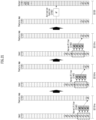
- FIG. 20 illustrates a method for configuring each layer of a CNN from channel estimate values (e.g., x0+jy0, ...) in the frequency domain.
- channel estimate values e.g., x0+jy0, ...) in the frequency domain.
- real values are exemplified, but it is obvious that the same may be applied to imaginary values.
- the channel estimate value in the frequency domain is exemplified, it is obvious that the same may be applied to the channel estimate value in the time domain.
- the input layer 2010 of the CNN may be configured based on the channel estimate value (e.g., a real number among the channel estimate values).
- the shaded area 2005 may mean an area where DMRS is transmitted.
- N convolution layers/hidden layers 2020 e.g., N is a natural number greater than or equal to 1
- the output layer 2030 may be configured from the result of the convolution layer/hidden layer 2020.
- FIG. 21 illustrates an output value estimation method in a 1D CNN structure for AI/ML-based channel estimation in a wireless communication system to which the present disclosure may be applied.
- a feature map 2120 may be derived from an input value 2110 in each convolutional layer/hidden layer constituting a 1D CNN, and an output value 2130 may be estimated.
- the operation of deriving the feature map 2120 in each convolutional layer/hidden layer may correspond to [S2110-a, S2110-b, S2110-c, ...], and the operation of estimating the output value 2130 based on the feature map 2120 may correspond to [S2120].
- a kernel/filter 2140 that applies a specific weight to the input value of a specific unit may be defined in order to derive the feature map 2120.
- Each kernel/filter 2140 may be defined with a specific size (or number of weights). Additionally, each kernel/filter 2140 may be defined as a combination of specific weights (e.g., w0/w1/w2/w3).
- Each kernel/filter 2140 may have a specific movement range for deriving a feature map 2120 within the input value 2110, and the corresponding specific movement range may be named a stride. Additionally, the kernel/filter 2140 may be defined differently for each convolution layer/hidden layer, or may be defined the same for all convolution layers/hidden layers.
- FIG. 21 shows an example of a convolutional layer/hidden layer consisting of one kernel/filter 2140 configured/defined to size 4 and stride 1.
- an activation function (AF) 2150 used to estimate the output value based on the feature map 2120 may be defined.
- An activation function 2150 may be used to add non-linearity to the feature map 2120 obtained through a convolution operation.
- the activation function 2150 may include a step function, sigmoid function, hyperbolic tangent function, ReLU function, Leaky ReLU function, softmax function, or the like.
- FIG. 22 illustrates a 2D CNN structure for AI/ML-based channel estimation in a wireless communication system to which the present disclosure may be applied.
- channel estimation in the frequency domain and channel estimation in the time domain are performed together.
- channel estimation in the frequency domain and channel estimation in the time domain may be performed simultaneously (e.g., 2D Wiener filter).
- FIG. 22 illustrates a method for configuring each layer of a CNN from channel estimate values (e.g.,
- the method of configuring each layer of the 2D CNN structure in FIG. 22 is an extension of the method of configuring each layer of the 1D CNN structure in FIG. 20 to the two-dimensional time/frequency domain, and other configuration methods may be assumed to be the same.
- the input layer 2210 of the CNN may be configured based on the channel estimate value (e.g., a real number among the channel estimate values).
- the shaded area 2205 may mean an area where DMRS is transmitted.
- N convolution layers/hidden layers 2220 e.g., N is a natural number greater than or equal to 1
- the output layer 2230 may be configured from the result of the convolution layer/hidden layer 2220.
- FIG. 23 illustrates an output value estimation method in a 2D CNN structure for AI/ML-based channel estimation in a wireless communication system to which the present disclosure may be applied.
- a feature map 2320 may be derived from an input value 2310 in each convolutional layer/hidden layer constituting a 2D CNN, and an output value 2330 may be estimated.
- the method for estimating the output value in FIG. 23 is an extension of the method for estimating the output value in FIG. 20 to the two-dimensional time/frequency domain, and other methods can be assumed to be the same.
- the operation of deriving the feature map 2320 in each convolutional layer/hidden layer may correspond to [S2310-a, S2310-b, S2310-c, ...], and the operation of estimating the output value 2330 based on the feature map 2320 may correspond to [S2320].
- a kernel/filter 2340 that applies a specific weight to the input value of a specific unit may be defined in order to derive the feature map 2320.
- Each kernel/filter 2340 may be defined with a specific size (or number of weights). In this case, the specific size may be defined based on two dimensions (e.g., two-dimensional time/frequency domain). Additionally, each kernel/filter 2340 may be defined as a combination of specific weights (e.g., w00/w10/w20/w30/w01/w11/w21/w31).
- Each kernel/filter 2340 may have a specific movement range for deriving a feature map 2320 within the input value 2310, and the corresponding specific movement range may be named a stride.
- the stride may be defined based on two dimensions (e.g., two-dimensional time/frequency domain).
- the kernel/filter 2340 may be defined differently for each convolution layer/hidden layer, or may be defined the same for all convolution layers/hidden layers.
- FIG. 23 shows an example of a convolutional layer/hidden layer consisting of one kernel/filter 2340 configured/defined with size 4x2 and stride [1, 1] (e.g., [time domain, frequency domain]).
- an activation function (AF) 2350 used to estimate the output value based on the feature map 2320 may be defined.
- An activation function 2350 may be used to add non-linearity to the feature map 2320 obtained through a convolution operation.
- the activation function 2150 may include a step function, sigmoid function, hyperbolic tangent function, ReLU function, Leaky ReLU function, softmax function, or the like.
- FIG. 24 illustrates AI/ML-based channel estimation with padding and pooling in a CNN structure in a wireless communication system to which the present disclosure may be applied. Specifically, FIG. 24(a) illustrates a padding method, and FIG. 24(b) illustrates a pooling method.
- the feature map 2420 obtained as a result of the convolution operation is smaller in size than the input 2410, and a padding method can be used to prevent this.
- the padding method may refer to a function/operation/structure that ensures that the size of the feature map 2420 remains the same as the size of the input 2410 even after the convolution operation.
- FIG. 24(a) shows an example of applying zero padding in a 1D CNN structure.
- the pooling (or pooling layer) 2440 may refer to a function/operation/structure that reduces the size of the feature map 2420 by downsampling the feature map 2420.
- Examples of pooling operations include max pooling, average pooling, etc.
- FIG. 24(b) shows an example of applying max pooling in a 1D CNN structure. The same concepts of kernel and stride may be applied to pooling operations, and in this example, a kernel of size 4 and a stride set to 4 are assumed.
- bias value may be applied in relation to the corresponding CNN structure.
- the bias value may be applied as an addition to a specific feature map to which the kernel is applied.
- the loss function and optimizer may be considered for the training process within the CNN structure (or AI/ML algorithm).
- the loss function may refer to a function that quantifies the difference between the actual value and the predicted value.
- MSE mean square error
- the optimizer may refer to a function for updating weight(s) appropriate for each layer based on the loss function. Batch gradient descent, stochastic gradient descent (SGD), moni-batch gradient descent, momentum, and adagrad, RMSprop, Adam, etc. may be considered as optimizers.
- the UE may be set to predict/estimate CSI using a NN structure, AI/ML-based model and/or algorithm. As an example, if the UE may estimate CSI based on a CSI prediction algorithm, the UE may not actually receive resources (e.g., time/frequency resources, ports, etc.) for CSI estimation. In this case, because the UE does not actually receive the corresponding resource, the UE's power consumption required for receiving data and estimating the CSI corresponding to the data may be reduced.
- resources e.g., time/frequency resources, ports, etc.
- the present disclosure proposes methods related to omitting reference signal reception by the UE to reduce power consumption of the UE and efficiently manage RS overhead.
- the proposed method in the present disclosure is proposed/described focusing on the CNN structure, but is not limited to the CNN structure. Therefore, it is clear that a method assuming other NN structures other than the CNN structure is possible based on the operating method/principle/structure of the proposed method.
- the above-described 1D CNN structure and 2D CNN structure are examples of structures mainly considered in the proposed method in the present disclosure, and are not intended to limit the proposed method, so specific functions/operations are not limited by specific terms.
- the above-described function/operation/method is not limited to a specific term and may be replaced by another term.
- the size expressed in the drawings (e.g., FIGS. 20 to 24 ) (e.g., size of input/input layer, size of output/output layer, size of convolution layer/hidden layer, size of kernel, etc.) corresponds to an example and is not suggested, since it does not limit the method, the method proposed in the present disclosure may be applied to other sizes as well.
- L1 signaling may mean DCI-based dynamic signaling between the base station and the UE
- L2 signaling may refer to RRC/MAC-CE based higher layer signaling between the base station and the UE.
- a base station and/or a UE may transmit a reference signal for channel estimation, and the base station and/or a UE may estimate a (wireless) channel based on the reference signal.
- an AI/ML model e.g., CNN structure
- channel estimation performance for resource areas where reference signals are not transmitted e.g., RE(s), RB(s), OFDM symbol(s), etc.
- channel estimation performance for resource areas where reference signals are transmitted may be improved.
- the proposed method in the present disclosure is proposed/described based on CNN structure and channel estimation operation, but it may be applied to AI/ML algorithms and/or NN structures other than CNN structures, and may also be applied to purposes such as CSI feedback/positioning/beam management/channel prediction.
- the present disclosure is about a method for a UE to skip reception of RS (e.g., CSI-RS, DMRS, etc.) corresponding to a specific resource based on a CSI prediction algorithm. Additionally or alternatively, the present disclosure relates to a method for a UE to perform CSI reporting corresponding to an RS resource that has omitted reception.
- RS e.g., CSI-RS, DMRS, etc.
- an interval in which the UE omits reception of RS corresponding to the specific resource may be configured/defined.
- the corresponding interval may also be referred to as a prediction section in relation to CSI prediction.
- the corresponding interval may be configured/defined based on resource units related to RS, slots in the time domain, symbols, and/or absolute time (e.g., msec).
- Information on the corresponding section may be configured/indicated to the UE by the base station, or a capability report of the UE related to omitting RS reception may be performed before the configuration/indication.
- the specific resource from which the UE omits RS reception may include time resources (e.g., frames, subframes, slots, symbols, etc.), frequency resources (e.g., serving cells, serving component carriers (CCs), BWPs, etc.), and/or spatial resources (e.g., ports, layers, beams, panels, etc.).
- time resources e.g., frames, subframes, slots, symbols, etc.
- frequency resources e.g., serving cells, serving component carriers (CCs), BWPs, etc.
- spatial resources e.g., ports, layers, beams, panels, etc.
- the UE may perform partial skip rather than complete skip, or additionally or alternatively, CSI measurement/prediction operations may be applied based on RS with reduced time/frequency density for all ports.
- the omission of some parts may be based on the degree of AI/ML training of the base station/UE.
- the omission of some parts may mean that the UE skips RS reception for some time/frequency resources and/or some ports.
- the level of lowering the density i.e., how much the density may be lowered
- the time/frequency/space domain e.g., port, layer, beam, etc.
- a procedure in which the UE reports information (e.g., supportable RS density reduction level) to the base station may be additionally applied.
- a method of determining reporting information (e.g., report quantity) of a CSI report based on the capability of the UE may be applied. For example, when the UE reports capability information on the CSI prediction algorithm to the base station, the base station may configure/indicate the corresponding UE to report whether prediction is made with respect to a specific CSI report.
- conditions for the UE to perform an operation of omission RS reception corresponding to a specific resource may be defined between the base station and the UE.
- the conditions may be defined as fixed rules, or may be configured/indicated/defined based on UE reports (e.g., CSI reports, UE capability reports, etc.) and/or L1/L2 signaling.
- the UE may be defined to perform the above-described omission operation.
- the error between the first estimate value estimated with the CSI prediction algorithm (by NN structure and/or AI/ML algorithm) and the second estimate value estimated based on the actual RS may be defined as delta.
- the UE may be defined to perform the above-described omission operation.
- a specific threshold e.g., X threshold dbm
- the specific threshold condition described above may be an example for applying the proposed method in the present disclosure, and does not limit the proposed method. That is, other threshold conditions may be defined to support the method proposed in the present disclosure.
- the UE may provide the base station with information on the omission in the CSI report.
- the UE may perform CSI reporting including information (e.g., indicator) indicating that the RS reception is omitted.
- information e.g., indicator
- the base station may be configured/defined to no longer transmit RS corresponding to resources for which actual reception has been omitted based on the CSI prediction algorithm.
- the UE-specific RS may mean an RS that is configured/indicated/transmitted only to a specific UE that has reported the above-described omission (from the base station's perspective).
- the base station may reconfigure the UE to a situation in which the RS corresponding to the omitted resource described above is not transmitted. For this purpose, ACK/NACK-based method, RRC reconfiguration method, timer method, and/or explicit signaling may be applied.
- information may be defined/configured/indicated to explicitly indicate that the base station will not transmit some or all of the corresponding RSs depending on the situation.
- the UE may perform rate matching. For example, if another DL channel/RS is transmitted in the RS transmission area based on the above information, the UE may receive the other DL channel/RS by rate matching the corresponding area, based on the information.
- the UE may be configured/defined not to expect transmission from the base station for RS corresponding to the resource for which actual reception was omitted based on the CSI prediction algorithm.
- the non-UE-specific RS may include a broadcast-based RS, a multicast-based RS, and/or a group common-based RS, etc.
- the timing for applying the operation of the above example may be defined or configured after a certain time period (e.g., X slot) based on the CSI report of the UE.
- the certain time period may be predefined or configured by a base station, etc.
- the UE omitted to receive is a non-UE specific RS
- the UE when it omits RS reception, it may perform an operation to clear other DL channels/RSs whose resources (full/partial) overlap with the corresponding RS so that measurements are not performed together.
- all DL slots corresponding to the DL channel/RS may be empty. That is, in this case, the UE may not perform reception/measurement for both the corresponding RS and the overlapping DL channel/RS.
- the base station may guarantee the UE not to transmit a PDCCH (of a specific type) in a symbol that overlaps with the symbol of the omitted RS or in a slot to which the corresponding symbol belongs. Accordingly, the burden on the UE for PDCCH blind detection (BD) in the corresponding slot may be reduced.
- a PDCCH of a specific type
- an operation related to the corresponding prediction may be indicated to the UE through an explicit method and/or an implicit method.
- sub-sequential signaling may be used in an implicit manner.
- the base station may sequentially/sequentially schedule/indicate the UE in advance on signals/channels to be applied at a specific time.
- operations may be performed to apply TCI states, BWP switching, and/or power control, etc. at predefined times (e.g., time lines: t1, t2, ..., tn).
- the UE may understand/interpret/recognize the signaling indication as an implicit indication indicating that the CSI prediction operation is enabled.
- the UE may be configured/indicated not to arbitrarily perform the above-described omission operation.
- the configuration/indication may be performed through L1/L2 signaling (e.g., RRC signaling, MAC-CE, DCI, etc.).
- the base station may indicated the UE to stop omitting RS reception or to prevent new applications.
- the above indication may be used to inform the UE of this information. That is, if the CSI prediction of the UE based on AI/ML training/inference may not be valid, the base station may implicitly inform the UE through the indication that the CSI prediction is invalid.
- a method that the prediction capability of the UE, etc. is defined and omitting ACK/NACK reporting for the PDSCH within the prediction interval and/or a specific window of the UE may be considered.
- the prediction interval and/or specific window may mean an interval in which CSI prediction of the UE is performed, a section in which the above-described RS reception is omitted based on the corresponding CSI prediction, etc.
- the UE may omit ACK/NACK reporting of the PDSCH within the prediction interval and/or specific window.
- ACK/NACK feedback may be considered disabled.
- the UE may perform bundled ACK/NACK reporting (i.e., bundled HARQ-ACK reporting) for the corresponding prediction interval and/or specific window.
- the UE when the UE performs ACK/NACK omission as described above, it may be assumed that the estimation performance by AI/ML is very good. In other words, when the terminal omits ACK/NACK, it may implicitly indicate that the estimation performance by AI/ML, that is, the prediction performance, is high. In this case, unnecessary operations of the base station and/or UE may be additionally omitted. Through this, additional benefits such as latency and battery drain prevention may occur.
- the above-described bundled ACK/NACK reporting (instead of ACK/NACK omission) may be applied to the PDSCH within the prediction interval and/or specific window.
- the UE may report the termination status of the omisiion operation of RS reception and/or the CSI prediction operation to the base station.
- the UE may transmit a report on the end of the prediction mode to the base station. Additionally or alternatively, the UE may also transmit a request for RS rescheduling to the base station. The base station may correct RS scheduling after the corresponding report and/or request.
- FIG. 25 is a diagram illustrating a signaling procedure between a base station and a UE for a method for reporting channel state information according to an embodiment of the present disclosure.
- FIG. 25 is for convenience of explanation and does not limit the scope of the present disclosure. Some step(s) illustrated in FIG. 25 may be omitted depending on the situation and/or setting. Additionally, the order of some step(s) illustrated in FIG. 25 may be changed. Additionally, the base station and UE in FIG. 25 are just one example and may be implemented with the device illustrated in FIG. 28 below.
- the processors 102/202 of FIG. 28 may control transmission and reception of channels/signals/data/information, etc. using the transceivers 106/206, and may also control to store transmitted or received channels/signals/data/information, etc. in the memory 104/204. Additionally, the base station in FIG. 28 may refer to a network-level device.
- FIG. 25 shows the DNN structure as an example, the signaling described in FIG. 25 may be extended and applied to sharing and application of information related to AI/ML algorithms and/or DNN/NN structures.
- the UE may transmit/report the capability information of the corresponding UE to the base station.
- the UE may report capability information related to the method proposed in the present disclosure (e.g., the above-described proposed method and related-Embodiments 1 to 6, etc.).
- the base station may perform (pre) training for the DNN.
- the base station may obtain information on the parameter(s) required for the AI/ML algorithm and/or DNN/NN structure based on the learning process. For example, based on the process, the base station may obtain parameter(s) related to the method proposed in the present disclosure (e.g., the above-described proposed method and related-Embodiments 1 to 6, etc.).
- the base station may configure/indicate the UE on information related to the AI/ML algorithm and/or DNN/NN structure.
- the base station may configure/indicate the UE on information on the parameter(s) obtained in step S010.
- parameter(s) related to the method proposed in the present disclosure e.g., the above-described proposed method and related-Embodiments 1 to 6, etc.
- the base station may apply a DNN structure based on the AI/ML algorithm and/or DNN/NN structure shared with the UE. For example, the base station may apply DNN to compress the DL channel and/or Reference Signal (RS) and transmit them to the UE.
- RS Reference Signal
- the base station may transmit a DL channel and/or RS to the UE.
- a DL channel and/or RS may be applied.
- the UE may apply the DNN shared from the base station to the DL channel and/or RS.
- the UE may decompress the DL channel and/or RS or estimate/predict the DL channel and/or RS based on the AI/ML algorithm and/or DNN/NN structure pre-configured by the base station.
- the UE may tune DNN parameters based on the DL channel and/or RS. For example, the UE may perform training based on the DL channel and/or RS, and adjust DNN parameters based on the training results.
- the UE may perform CSI reporting or transmit a UL channel and/or RS.
- the UE may perform CSI reporting on the training results in step S035.
- the UE may apply DNN to compress CSI.
- the UE may apply DNN to compress the UL channel and/or RS and transmit them to the base station.
- the UE may report information on parameter(s) related to the method proposed in the present disclosure (e.g., the above-described proposed method and related-Embodiments 1 to 6, etc.) to the base station.
- the base station may apply DNN for CSI reporting, UL channel, and/or RS. For example, based on the AI/ML algorithm and/or DNN/NN structure already shared with the UE, the base station may decompress the CSI report, UL channel, and/or RS, or estimate/predict the CSI report, UL channel, and/or RS.
- the base station may tune DNN parameters based on CSI reporting, UL channel, and/or RS. For example, the base station may perform training based on the UL channel and/or RS, and adjust DNN parameters based on the training results. Additionally/alternatively, the base station may tune the DNN parameters based on the reported values of the UE.
- step S055 the base station may
- the UE may adjust/update DNN parameters based on the update configuration/indication of the corresponding base station.
- the base station may configure/indicate the UE with information on parameter(s) related to the method proposed in the present disclosure (e.g., the above-described proposed method and related-Embodiments 1 to 6, etc.).
- the UE may adjust DNN parameters. For example, as in the update configuration/indication in step S055 above, the UE may adjust DNN parameters based on the value(s) configured/indicated by the base station based on L1/L2 signaling.
- FIG. 26 is a diagram illustrating an operation of a UE for a method for reporting channel state information according to an embodiment of the present disclosure.
- FIG. 26 illustrates an operation of the UE based on one or more of the previously proposed methods (e.g., the above-described proposed method and related-Embodiments 1 to 6, and detailed embodiments thereof (detailed) combination of embodiments).
- the example in FIG. 26 is for convenience of explanation and does not limit the scope of the present disclosure. Some step(s) illustrated in FIG. 26 may be omitted depending on the situation and/or setting.
- the UE in FIG. 26 is only an example and may be implemented as a device illustrated in FIG. 28 below.
- the processors 102/202 of FIG. 28 may control transmission and reception of channels/signals/data/information, etc. using the transceivers 106/206, and may also control to store transmitted or received channels/signals/data/information, etc. in the memory 104/204.
- FIG. 26 may be processed by one or more processors 102, 202 of FIG. 28 , and the operation of FIG. 26 is stored in memory (e.g., one or more memories 104, 204 of FIG. 28 ) in the form of instructions/programs (e.g. instructions, executable code) for driving at least one processor (e.g., 102, 202) of FIG. 28 .
- memory e.g., one or more memories 104, 204 of FIG. 28
- instructions/programs e.g. instructions, executable code
- the UE may receive configuration information including a plurality of resources for CSI reporting (S2610).
- the plurality of resources may include (NZP) CSI-RS resources.
- the corresponding configuration information may be configured through higher layer signaling.
- the UE may receive a reference signal by skipping at least one resource among the plurality of resources (S2620).
- the UE may skip reception of the reference signal from the at least one resource.
- skipping reference signal reception from the at least one resource may be performed based on a specific value related to reception of the UE satisfying a condition according to a pre-configured threshold.
- the at least one resource may be skipped based on at least one of the frequency axis or the time axis in the resource area with respect to the plurality of resources.
- Information on which axis the skip is performed may be configured in the UE (by a base station, etc.), predefined in standards, or determined by the UE (arbitrarily) and then report this information to the base station.
- the UE may determine the first CSI for/corresponding to a resource excluding the at least one resource among the plurality of resources based on the received reference signal. Additionally or alternatively, the second CSI for the at least one resource may be determined based on a CSI prediction-related algorithm (e.g., AI/ML-based CSI prediction model/algorithm) (S2630).
- a CSI prediction-related algorithm e.g., AI/ML-based CSI prediction model/algorithm
- the UE may calculate/determine/estimate the CSI for resources that have received a reference signal based on the reference signal, and may calculate/determine/estimate the CSI for resources for which reception of the reference signal is skipped based on a pre-configured/defined/designed CSI prediction-related algorithm.
- the UE may perform CSI reporting for at least one of the first CSI or the second CSI (S2640).
- the CSI report may include information on whether or not reception of a reference signal from the at least one resource is skipped.
- the reference signal may not be transmitted on the at least one resource after the CSI report time. That is, in resources where reference signal reception is skipped, the base station may no longer transmit reference signals, additionally or alternatively, the UE may not expect transmission of the corresponding reference signal.
- the at least one resource may correspond to a resource configured for transmission of a UE-specific reference signal (or a non-UE-specific reference signal). Additionally or alternatively, the UE may receive indication information from the base station indicating that the reference signal is not transmitted on the at least one resource. In this case, if another channel or reference signal is transmitted in the at least one resource, the reference signal in the at least one resource may be rate matched by the UE according to the indication information.
- skip of reference signal reception in the at least one resource may be performed based on an indication related to enable of the CSI prediction-related algorithm from a base station.
- the UE may report to the base station information indicating termination of at least one of the skip of reference signal reception from the at least one resource or the operation based on the CSI prediction-related algorithm.
- the level of skip of the plurality of resources related to reception of the reference signal may be determined according to at least one of the type or capability of the CSI prediction-related algorithm. Additionally, the UE may report UE capability information regarding skip of reference signal reception that may be supported by the UE to the base station.
- FIG. 27 is a diagram illustrating an operation of a base station for a method for reporting channel state information according to an embodiment of the present disclosure.
- FIG. 27 illustrates an operation of the base station based on one or more of the previously proposed methods (e.g., the above-described proposed method and related-Embodiments 1 to 6, and detailed embodiments thereof (detailed) combination of embodiments).
- the example in FIG. 27 is for convenience of explanation and does not limit the scope of the present disclosure. Some step(s) illustrated in FIG. 27 may be skipped depending on the situation and/or setting.
- the base station in FIG. 27 is only an example and may be implemented as a device illustrated in FIG. 28 below.
- the processors 102/202 of FIG. 28 may control transmission and reception of channels/signals/data/information, etc. using the transceivers 106/206, and may also control to store transmitted or received channels/signals/data/information, etc. in the memory 104/204.
- FIG. 27 may be processed by one or more processors 102, 202 of FIG. 28 , and the operation of FIG. 27 is stored in memory (e.g., one or more memories 104, 204 of FIG. 28 ) in the form of instructions/programs (e.g. instructions, executable code) for driving at least one processor (e.g., 102, 202) of FIG. 28 .
- memory e.g., one or more memories 104, 204 of FIG. 28
- instructions/programs e.g. instructions, executable code
- the base station may transmit configuration information including a plurality of resources for CSI reporting (S2710).
- the plurality of resources may include (NZP) CSI-RS resources.
- the corresponding configuration information may be configured through higher layer signaling.
- the base station may transmit a reference signal from the plurality of resources (S2720).
- reception of a reference signal in at least one resource among the plurality of resources may be skipped. That is, for reference signals transmitted on the plurality of resources, the UE may skip reception of the reference signal from the at least one resource.
- skipping reference signal reception from the at least one resource may be performed based on a specific value related to reception of the UE satisfying a condition according to a pre-configured threshold.
- the at least one resource may be skipped based on at least one of the frequency axis or the time axis in the resource area with respect to the plurality of resources.
- Information on which axis the skip is performed may be configured in the UE (by a base station, etc.), predefined in standards, or determined by the UE (arbitrarily) and then report this information to the base station.
- the base station may receive a CSI report for at least one of the first CSI or the second CSI (S2730).
- the first CSI may correspond to CSI for resources based on the reference signal, excluding at least one resource skipped by the UE among the plurality of resources.
- the second CSI may correspond to the CSI for the at least one resource based on a CSI prediction-related algorithm.
- the UE may calculate/determine/estimate CSI (i.e., the first CSI) for resources that have received a reference signal based on the reference signal, and may calculate/determine/estimate CSI (i.e., the second CSI) for resources for which reception of the reference signal is skipped based on a pre-configured/defined/designed CSI prediction-related algorithm.
- the CSI report may include information on whether or not reception of a reference signal from the at least one resource is skipped.
- the reference signal may not be transmitted on the at least one resource after the CSI report time. That is, in resources where reference signal reception is skipped, the base station may no longer transmit reference signals, additionally or alternatively, the UE may not expect transmission of the corresponding reference signal.
- the at least one resource may correspond to a resource configured for transmission of a UE-specific reference signal (or a non-UE-specific reference signal).
- the base station may transmit indication information to the UE indicating that the reference signal is not transmitted on the at least one resource. In this case, if another channel or reference signal is transmitted in the at least one resource, the reference signal in the at least one resource may be rate matched by the UE according to the indication information.
- skip of reference signal reception in the at least one resource may be performed based on an indication related to enable of the CSI prediction-related algorithm from a base station.
- the base station may receive information from the UE indicating termination of at least one of the skip of reference signal reception from the at least one resource or the operation based on the CSI prediction-related algorithm.
- the level of skip of the plurality of resources related to reception of the reference signal may be determined according to at least one of the type or capability of the CSI prediction-related algorithm. Additionally, the base station may receive a report from the UE about UE capability information regarding skip of reference signal reception that may be supported by the corresponding UE.
- the UE skips the actual reception operation for the RS configured for the UE, so the UE's power consumption can be reduced (i.e., power saving effect).
- the battery efficiency of the UE can be increased by skipping the operations required for channel estimation and calculation of CSI parameters based on the channel estimate value.
- the base station no longer transmits RS corresponding to resources skipped by the UE, thereby effectively managing RS overhead.
- FIG. 28 illustrates a block diagram of a wireless communication device according to an embodiment of the present disclosure.
- a first wireless device 100 and a second wireless device 200 may transmit and receive a wireless signal through a variety of radio access technologies (e.g., LTE, NR).
- radio access technologies e.g., LTE, NR.
- a first wireless device 100 may include one or more processors 102 and one or more memories 104 and may additionally include one or more transceivers 106 and/or one or more antennas 108.
- a processor 102 may control a memory 104 and/or a transceiver 106 and may be configured to implement description, functions, procedures, proposals, methods and/or operation flow charts disclosed in the present disclosure.
- a processor 102 may transmit a wireless signal including first information/signal through a transceiver 106 after generating first information/signal by processing information in a memory 104.
- a processor 102 may receive a wireless signal including second information/signal through a transceiver 106 and then store information obtained by signal processing of second information/signal in a memory 104.
- a memory 104 may be connected to a processor 102 and may store a variety of information related to an operation of a processor 102.
- a memory 104 may store a software code including commands for performing all or part of processes controlled by a processor 102 or for performing description, functions, procedures, proposals, methods and/or operation flow charts disclosed in the present disclosure.
- a processor 102 and a memory 104 may be part of a communication modem/circuit/chip designed to implement a wireless communication technology (e.g., LTE, NR).
- a transceiver 106 may be connected to a processor 102 and may transmit and/or receive a wireless signal through one or more antennas 108.
- a transceiver 106 may include a transmitter and/or a receiver.
- a transceiver 106 may be used together with a RF (Radio Frequency) unit.
- a wireless device may mean a communication modem/circuit/chip.
- a second wireless device 200 may include one or more processors 202 and one or more memories 204 and may additionally include one or more transceivers 206 and/or one or more antennas 208.
- a processor 202 may control a memory 204 and/or a transceiver 206 and may be configured to implement description, functions, procedures, proposals, methods and/or operation flows charts disclosed in the present disclosure.
- a processor 202 may generate third information/signal by processing information in a memory 204, and then transmit a wireless signal including third information/signal through a transceiver 206.
- a processor 202 may receive a wireless signal including fourth information/signal through a transceiver 206, and then store information obtained by signal processing of fourth information/signal in a memory 204.
- a memory 204 may be connected to a processor 202 and may store a variety of information related to an operation of a processor 202.
- a memory 204 may store a software code including commands for performing all or part of processes controlled by a processor 202 or for performing description, functions, procedures, proposals, methods and/or operation flow charts disclosed in the present disclosure.
- a processor 202 and a memory 204 may be part of a communication modem/circuit/chip designed to implement a wireless communication technology (e.g., LTE, NR).
- a transceiver 206 may be connected to a processor 202 and may transmit and/or receive a wireless signal through one or more antennas 208.
- a transceiver 206 may include a transmitter and/or a receiver.
- a transceiver 206 may be used together with a RF unit.
- a wireless device may mean a communication modem/circuit/chip.
- one or more protocol layers may be implemented by one or more processors 102, 202.
- one or more processors 102, 202 may implement one or more layers (e.g., a functional layer such as PHY, MAC, RLC, PDCP, RRC, SDAP).
- One or more processors 102, 202 may generate one or more PDUs (Protocol Data Unit) and/or one or more SDUs (Service Data Unit) according to description, functions, procedures, proposals, methods and/or operation flow charts included in the present disclosure.
- PDUs Protocol Data Unit
- SDUs Service Data Unit
- One or more processors 102, 202 may generate a message, control information, data or information according to description, functions, procedures, proposals, methods and/or operation flow charts disclosed in the present disclosure.
- One or more processors 102, 202 may generate a signal (e.g., a baseband signal) including a PDU, a SDU, a message, control information, data or information according to functions, procedures, proposals and/or methods disclosed in the present disclosure to provide it to one or more transceivers 106, 206.
- a signal e.g., a baseband signal
- One or more processors 102, 202 may receive a signal (e.g., a baseband signal) from one or more transceivers 106, 206 and obtain a PDU, a SDU, a message, control information, data or information according to description, functions, procedures, proposals, methods and/or operation flow charts disclosed in the present disclosure.
- a signal e.g., a baseband signal
- One or more processors 102, 202 may be referred to as a controller, a micro controller, a micro processor or a micro computer.
- One or more processors 102, 202 may be implemented by a hardware, a firmware, a software, or their combination.
- one or more ASICs Application Specific Integrated Circuit
- one or more DSPs Digital Signal Processor
- one or more DSPDs Digital Signal Processing Device
- one or more PLDs PROgrammable Logic Device
- FPGAs Field Programmable Gate Arrays
- Description, functions, procedures, proposals, methods and/or operation flow charts disclosed in the present disclosure may be implemented by using a firmware or a software and a firmware or a software may be implemented to include a module, a procedure, a function, etc.
- a firmware or a software configured to perform description, functions, procedures, proposals, methods and/or operation flow charts disclosed in the present disclosure may be included in one or more processors 102, 202 or may be stored in one or more memories 104, 204 and driven by one or more processors 102, 202.
- Description, functions, procedures, proposals, methods and/or operation flow charts disclosed in the present disclosure may be implemented by using a firmware or a software in a form of a code, a command and/or a set of commands.
- One or more memories 104, 204 may be connected to one or more processors 102, 202 and may store data, a signal, a message, information, a program, a code, an instruction and/or a command in various forms.
- One or more memories 104, 204 may be configured with ROM, RAM, EPROM, a flash memory, a hard drive, a register, a cash memory, a computer readable storage medium and/or their combination.
- One or more memories 104, 204 may be positioned inside and/or outside one or more processors 102, 202.
- one or more memories 104, 204 may be connected to one or more processors 102, 202 through a variety of technologies such as a wire or wireless connection.
- One or more transceivers 106, 206 may transmit user data, control information, a wireless signal/channel, etc. mentioned in methods and/or operation flow charts, etc. of the present disclosure to one or more other devices.
- One or more transceivers 106, 206 may receiver user data, control information, a wireless signal/channel, etc. mentioned in description, functions, procedures, proposals, methods and/or operation flow charts, etc. disclosed in the present disclosure from one or more other devices.
- one or more transceivers 106, 206 may be connected to one or more processors 102, 202 and may transmit and receive a wireless signal.
- one or more processors 102, 202 may control one or more transceivers 106, 206 to transmit user data, control information or a wireless signal to one or more other devices.
- one or more processors 102, 202 may control one or more transceivers 106, 206 to receive user data, control information or a wireless signal from one or more other devices.
- one or more transceivers 106, 206 may be connected to one or more antennas 108, 208 and one or more transceivers 106, 206 may be configured to transmit and receive user data, control information, a wireless signal/channel, etc. mentioned in description, functions, procedures, proposals, methods and/or operation flow charts, etc.
- one or more antennas may be a plurality of physical antennas or a plurality of logical antennas (e.g., an antenna port).
- One or more transceivers 106, 206 may convert a received wireless signal/channel, etc. into a baseband signal from a RF band signal to process received user data, control information, wireless signal/channel, etc. by using one or more processors 102, 202.
- One or more transceivers 106, 206 may convert user data, control information, a wireless signal/channel, etc. which are processed by using one or more processors 102, 202 from a baseband signal to a RF band signal.
- one or more transceivers 106, 206 may include an (analogue) oscillator and/or a filter.
- Embodiments described above are that elements and features of the present disclosure are combined in a predetermined form. Each element or feature should be considered to be optional unless otherwise explicitly mentioned. Each element or feature may be implemented in a form that it is not combined with other element or feature.
- an embodiment of the present disclosure may include combining a part of elements and/or features. An order of operations described in embodiments of the present disclosure may be changed. Some elements or features of one embodiment may be included in other embodiment or may be substituted with a corresponding element or a feature of other embodiment. It is clear that an embodiment may include combining claims without an explicit dependency relationship in claims or may be included as a new claim by amendment after application.
- a scope of the present disclosure includes software or machine-executable commands (e.g., an operating system, an application, a firmware, a program, etc.) which execute an operation according to a method of various embodiments in a device or a computer and a non-transitory computer-readable medium that such a software or a command, etc. are stored and are executable in a device or a computer.
- a command which may be used to program a processing system performing a feature described in the present disclosure may be stored in a storage medium or a computer-readable storage medium and a feature described in the present disclosure may be implemented by using a computer program product including such a storage medium.
- a storage medium may include a high-speed random-access memory such as DRAM, SRAM, DDR RAM or other random-access solid state memory device, but it is not limited thereto, and it may include a nonvolatile memory such as one or more magnetic disk storage devices, optical disk storage devices, flash memory devices or other nonvolatile solid state storage devices.
- a memory optionally includes one or more storage devices positioned remotely from processor(s).
- a memory or alternatively, nonvolatile memory device(s) in a memory include a non-transitory computer-readable storage medium.
- a feature described in the present disclosure may be stored in any one of machine-readable mediums to control a hardware of a processing system and may be integrated into a software and/or a firmware which allows a processing system to interact with other mechanism utilizing a result from an embodiment of the present disclosure.
- a software or a firmware may include an application code, a device driver, an operating system and an execution environment/container, but it is not limited thereto.
- a wireless communication technology implemented in a wireless device XXX, YYY of the present disclosure may include Narrowband Internet of Things for a low-power communication as well as LTE, NR and 6G.
- an NB-IoT technology may be an example of a LPWAN(Low Power Wide Area Network) technology, may be implemented in a standard of LTE Cat NB1 and/or LTE Cat NB2, etc. and is not limited to the above-described name.
- a wireless communication technology implemented in a wireless device XXX, YYY of the present disclosure may perform a communication based on a LTE-M technology.
- a LTE-M technology may be an example of a LPWAN technology and may be referred to a variety of names such as an eMTC (enhanced Machine Type Communication), etc.
- an LTE-M technology may be implemented in at least any one of various standards including 1) LTE CAT 0, 2) LTE Cat M1, 3) LTE Cat M2, 4) LTE non-BL(non-Bandwidth Limited), 5) LTE-MTC, 6) LTE Machine Type Communication, and/or 7) LTE M and so on and it is not limited to the above-described name.
- a wireless communication technology implemented in a wireless device 100, 200 of the present disclosure may include at least any one of a ZigBee, a Bluetooth and a low power wide area network (LPWAN) considering a low-power communication and it is not limited to the above-described name.
- a ZigBee technology may generate PAN(personal area networks) related to a small/low-power digital communication based on a variety of standards such as IEEE 802.15.4, etc. and may be referred to as a variety of names.
- a method proposed by the present disclosure is mainly described based on an example applied to 3GPP LTE/LTE-A, 5G system, but may be applied to various wireless communication systems other than the 3GPP LTE/LTE-A, 5G system.
Landscapes
- Engineering & Computer Science (AREA)
- Signal Processing (AREA)
- Computer Networks & Wireless Communication (AREA)
- Power Engineering (AREA)
- Artificial Intelligence (AREA)
- Evolutionary Computation (AREA)
- Mobile Radio Communication Systems (AREA)
Applications Claiming Priority (2)
| Application Number | Priority Date | Filing Date | Title |
|---|---|---|---|
| KR20220003891 | 2022-01-11 | ||
| PCT/KR2023/000264 WO2023136553A1 (ko) | 2022-01-11 | 2023-01-06 | 무선 통신 시스템에서 무선 신호 송수신 방법 및 장치 |
Publications (2)
| Publication Number | Publication Date |
|---|---|
| EP4465705A1 true EP4465705A1 (de) | 2024-11-20 |
| EP4465705A4 EP4465705A4 (de) | 2026-02-18 |
Family
ID=87279315
Family Applications (1)
| Application Number | Title | Priority Date | Filing Date |
|---|---|---|---|
| EP23740397.7A Pending EP4465705A4 (de) | 2022-01-11 | 2023-01-06 | Verfahren und vorrichtung zum senden/empfangen eines drahtlossignals in einem drahtloskommunikationssystem |
Country Status (4)
| Country | Link |
|---|---|
| US (1) | US20250070837A1 (de) |
| EP (1) | EP4465705A4 (de) |
| KR (1) | KR20240131327A (de) |
| WO (1) | WO2023136553A1 (de) |
Families Citing this family (4)
| Publication number | Priority date | Publication date | Assignee | Title |
|---|---|---|---|---|
| US20240113919A1 (en) * | 2022-09-23 | 2024-04-04 | Qualcomm Incorporated | Recurrent equivariant inference machines for channel estimation |
| WO2025073119A1 (zh) * | 2023-10-07 | 2025-04-10 | Oppo广东移动通信有限公司 | 通信方法及装置、终端设备、网络设备 |
| US20250337466A1 (en) * | 2024-04-30 | 2025-10-30 | Samsung Electronics Co., Ltd. | Artificial intelligence aided carrier aggregation |
| CN121487007B (zh) * | 2026-01-09 | 2026-03-27 | 中国民用航空飞行学院 | 基于轻量化drl的无人机iscc联合资源调度方法及系统 |
Family Cites Families (8)
| Publication number | Priority date | Publication date | Assignee | Title |
|---|---|---|---|---|
| US10193678B2 (en) * | 2009-10-08 | 2019-01-29 | Qualcomm Incorporated | Muting schemes for channel state information reference signal and signaling thereof |
| DK2847918T3 (en) * | 2012-05-10 | 2019-01-28 | Ericsson Telefon Ab L M | Methods and devices for CSI reporting |
| US9456358B2 (en) * | 2012-08-13 | 2016-09-27 | Qualcomm Incorporated | Method and apparatus for indicating active channel state information reference signal (CSI-RS) configurations |
| EP3579479B1 (de) * | 2017-02-03 | 2023-05-10 | LG Electronics Inc. | Verfahren zum messen und empfangen von kanalstatusinformationen in einem drahtloskommunikationssystem und vorrichtung dafür |
| WO2018147676A1 (ko) * | 2017-02-10 | 2018-08-16 | 엘지전자(주) | 무선 통신 시스템에서 채널 상태 정보를 측정 및 보고하는 방법 및 이를 위한 장치 |
| KR102207082B1 (ko) * | 2017-03-21 | 2021-01-25 | 엘지전자 주식회사 | 무선 통신 시스템에서 채널 상태 정보를 측정 및 보고하는 방법 및 이를 위한 장치 |
| WO2020213964A1 (en) * | 2019-04-16 | 2020-10-22 | Samsung Electronics Co., Ltd. | Method and apparatus for reporting channel state information |
| US11743889B2 (en) * | 2020-02-14 | 2023-08-29 | Qualcomm Incorporated | Channel state information (CSI) reference signal (RS) configuration with cross-component carrier CSI prediction algorithm |
-
2023
- 2023-01-06 KR KR1020247019384A patent/KR20240131327A/ko active Pending
- 2023-01-06 US US18/725,361 patent/US20250070837A1/en active Pending
- 2023-01-06 EP EP23740397.7A patent/EP4465705A4/de active Pending
- 2023-01-06 WO PCT/KR2023/000264 patent/WO2023136553A1/ko not_active Ceased
Also Published As
| Publication number | Publication date |
|---|---|
| WO2023136553A1 (ko) | 2023-07-20 |
| US20250070837A1 (en) | 2025-02-27 |
| EP4465705A4 (de) | 2026-02-18 |
| KR20240131327A (ko) | 2024-08-30 |
Similar Documents
| Publication | Publication Date | Title |
|---|---|---|
| US20240298202A1 (en) | Method and device for transmitting or receiving channel state information in wireless communication system | |
| EP4422107A1 (de) | Verfahren und vorrichtung zum senden/empfangen eines drahtlossignals in einem drahtloskommunikationssystem | |
| EP4412164A1 (de) | Verfahren und vorrichtung zum senden/empfangen eines drahtlossignals in einem drahtloskommunikationssystem | |
| EP4465705A1 (de) | Verfahren und vorrichtung zum senden/empfangen eines drahtlossignals in einem drahtloskommunikationssystem | |
| EP4429179A1 (de) | Verfahren und vorrichtung zum senden und empfangen eines physikalischen kanals in einem drahtloskommunikationssystem | |
| EP4439994A1 (de) | Verfahren und vorrichtung zum senden/empfangen eines drahtlossignals in einem drahtloskommunikationssystem | |
| US20250192963A1 (en) | Method and device for transmitting or receiving improved codebook-based channel state information in wireless communication system | |
| EP4518412A1 (de) | Verfahren und vorrichtung zum senden und empfangen von kanalstatusinformationen in einem drahtloskommunikationssystem | |
| EP4429154A1 (de) | Verfahren und vorrichtung zur durchführung von uplink- oder downlink-übertragung/-empfang in einem drahtloskommunikationssystem | |
| US20250159523A1 (en) | Method and device for transmitting or receiving quantization-based channel state information in wireless communication system | |
| US20240224287A1 (en) | Method and device for communicating in wireless communication system | |
| EP4518184A1 (de) | Verfahren und vorrichtung zum senden/empfangen eines drahtlossignals in einem drahtloskommunikationssystem | |
| EP4597867A1 (de) | Verfahren und vorrichtung zum senden oder empfangen von kanalstatusinformationen in einem drahtloskommunikationssystem | |
| EP4340282A1 (de) | Verfahren und vorrichtung zum senden und empfangen eines drahtlosen signals in einem drahtloskommunikationssystem | |
| CN118266175A (zh) | 用于在无线通信系统中发送/接收无线信号的方法和装置 | |
| EP4518177A1 (de) | Verfahren und vorrichtung für uplink-übertragung und -empfang in einem drahtloskommunikationssystem | |
| EP4542875A1 (de) | Verfahren und vorrichtung zum senden/empfangen von kanalstatusinformationen in einem drahtloskommunikationssystem | |
| EP4661304A1 (de) | Verfahren und vorrichtung zum senden und empfangen von kanalstatusinformationen in einem drahtloskommunikationssystem | |
| EP4686118A2 (de) | Verfahren und vorrichtung zum senden/empfangen von kanalstatusinformationen in einem drahtloskommunikationssystem | |
| EP4694480A1 (de) | Verfahren und vorrichtung zum senden/empfangen von uplink-steuerinformationen in einem drahtloskommunikationssystem | |
| EP4693921A1 (de) | Verfahren und vorrichtung zur meldung von konfidenzinformationen in einem drahtlosen kommunikationssystem |
Legal Events
| Date | Code | Title | Description |
|---|---|---|---|
| STAA | Information on the status of an ep patent application or granted ep patent |
Free format text: STATUS: THE INTERNATIONAL PUBLICATION HAS BEEN MADE |
|
| PUAI | Public reference made under article 153(3) epc to a published international application that has entered the european phase |
Free format text: ORIGINAL CODE: 0009012 |
|
| STAA | Information on the status of an ep patent application or granted ep patent |
Free format text: STATUS: REQUEST FOR EXAMINATION WAS MADE |
|
| 17P | Request for examination filed |
Effective date: 20240805 |
|
| AK | Designated contracting states |
Kind code of ref document: A1 Designated state(s): AL AT BE BG CH CY CZ DE DK EE ES FI FR GB GR HR HU IE IS IT LI LT LU LV MC ME MK MT NL NO PL PT RO RS SE SI SK SM TR |
|
| DAV | Request for validation of the european patent (deleted) | ||
| DAX | Request for extension of the european patent (deleted) | ||
| A4 | Supplementary search report drawn up and despatched |
Effective date: 20260119 |
|
| RIC1 | Information provided on ipc code assigned before grant |
Ipc: H04W 52/02 20090101AFI20260113BHEP Ipc: H04W 72/23 20230101ALI20260113BHEP Ipc: H04W 72/21 20230101ALI20260113BHEP Ipc: H04L 25/02 20060101ALI20260113BHEP Ipc: H04L 5/00 20060101ALI20260113BHEP |