EP4465602A1 - Verfahren und vorrichtung zur srs-port-zuordnung und endgerät - Google Patents
Verfahren und vorrichtung zur srs-port-zuordnung und endgerät Download PDFInfo
- Publication number
- EP4465602A1 EP4465602A1 EP23740010.6A EP23740010A EP4465602A1 EP 4465602 A1 EP4465602 A1 EP 4465602A1 EP 23740010 A EP23740010 A EP 23740010A EP 4465602 A1 EP4465602 A1 EP 4465602A1
- Authority
- EP
- European Patent Office
- Prior art keywords
- srs
- ports
- port
- srs resources
- srs resource
- Prior art date
- Legal status (The legal status is an assumption and is not a legal conclusion. Google has not performed a legal analysis and makes no representation as to the accuracy of the status listed.)
- Pending
Links
Images



Classifications
-
- H—ELECTRICITY
- H04—ELECTRIC COMMUNICATION TECHNIQUE
- H04L—TRANSMISSION OF DIGITAL INFORMATION, e.g. TELEGRAPHIC COMMUNICATION
- H04L5/00—Arrangements affording multiple use of the transmission path
- H04L5/0001—Arrangements for dividing the transmission path
- H04L5/0003—Two-dimensional division
- H04L5/0005—Time-frequency
- H04L5/0007—Time-frequency the frequencies being orthogonal, e.g. OFDM(A) or DMT
-
- H—ELECTRICITY
- H04—ELECTRIC COMMUNICATION TECHNIQUE
- H04B—TRANSMISSION
- H04B7/00—Radio transmission systems, i.e. using radiation field
- H04B7/02—Diversity systems; Multi-antenna system, i.e. transmission or reception using multiple antennas
- H04B7/04—Diversity systems; Multi-antenna system, i.e. transmission or reception using multiple antennas using two or more spaced independent antennas
- H04B7/06—Diversity systems; Multi-antenna system, i.e. transmission or reception using multiple antennas using two or more spaced independent antennas at the transmitting station
- H04B7/0613—Diversity systems; Multi-antenna system, i.e. transmission or reception using multiple antennas using two or more spaced independent antennas at the transmitting station using simultaneous transmission
-
- H—ELECTRICITY
- H04—ELECTRIC COMMUNICATION TECHNIQUE
- H04B—TRANSMISSION
- H04B7/00—Radio transmission systems, i.e. using radiation field
- H04B7/02—Diversity systems; Multi-antenna system, i.e. transmission or reception using multiple antennas
- H04B7/04—Diversity systems; Multi-antenna system, i.e. transmission or reception using multiple antennas using two or more spaced independent antennas
- H04B7/06—Diversity systems; Multi-antenna system, i.e. transmission or reception using multiple antennas using two or more spaced independent antennas at the transmitting station
- H04B7/0686—Hybrid systems, i.e. switching and simultaneous transmission
- H04B7/0691—Hybrid systems, i.e. switching and simultaneous transmission using subgroups of transmit antennas
-
- H—ELECTRICITY
- H04—ELECTRIC COMMUNICATION TECHNIQUE
- H04L—TRANSMISSION OF DIGITAL INFORMATION, e.g. TELEGRAPHIC COMMUNICATION
- H04L5/00—Arrangements affording multiple use of the transmission path
- H04L5/0001—Arrangements for dividing the transmission path
- H04L5/0014—Three-dimensional division
- H04L5/0023—Time-frequency-space
-
- H—ELECTRICITY
- H04—ELECTRIC COMMUNICATION TECHNIQUE
- H04L—TRANSMISSION OF DIGITAL INFORMATION, e.g. TELEGRAPHIC COMMUNICATION
- H04L5/00—Arrangements affording multiple use of the transmission path
- H04L5/003—Arrangements for allocating sub-channels of the transmission path
- H04L5/0048—Allocation of pilot signals, i.e. of signals known to the receiver
-
- H—ELECTRICITY
- H04—ELECTRIC COMMUNICATION TECHNIQUE
- H04L—TRANSMISSION OF DIGITAL INFORMATION, e.g. TELEGRAPHIC COMMUNICATION
- H04L5/00—Arrangements affording multiple use of the transmission path
- H04L5/003—Arrangements for allocating sub-channels of the transmission path
- H04L5/0048—Allocation of pilot signals, i.e. of signals known to the receiver
- H04L5/0051—Allocation of pilot signals, i.e. of signals known to the receiver of dedicated pilots, i.e. pilots destined for a single user or terminal
-
- H—ELECTRICITY
- H04—ELECTRIC COMMUNICATION TECHNIQUE
- H04L—TRANSMISSION OF DIGITAL INFORMATION, e.g. TELEGRAPHIC COMMUNICATION
- H04L5/00—Arrangements affording multiple use of the transmission path
- H04L5/0091—Signalling for the administration of the divided path, e.g. signalling of configuration information
- H04L5/0094—Indication of how sub-channels of the path are allocated
-
- H—ELECTRICITY
- H04—ELECTRIC COMMUNICATION TECHNIQUE
- H04W—WIRELESS COMMUNICATION NETWORKS
- H04W28/00—Network traffic management; Network resource management
- H04W28/02—Traffic management, e.g. flow control or congestion control
- H04W28/0205—Traffic management, e.g. flow control or congestion control at the air interface
-
- H—ELECTRICITY
- H04—ELECTRIC COMMUNICATION TECHNIQUE
- H04W—WIRELESS COMMUNICATION NETWORKS
- H04W28/00—Network traffic management; Network resource management
- H04W28/02—Traffic management, e.g. flow control or congestion control
- H04W28/0252—Traffic management, e.g. flow control or congestion control per individual bearer or channel
- H04W28/0263—Traffic management, e.g. flow control or congestion control per individual bearer or channel involving mapping traffic to individual bearers or channels, e.g. traffic flow template [TFT]
-
- H—ELECTRICITY
- H04—ELECTRIC COMMUNICATION TECHNIQUE
- H04W—WIRELESS COMMUNICATION NETWORKS
- H04W72/00—Local resource management
- H04W72/04—Wireless resource allocation
- H04W72/044—Wireless resource allocation based on the type of the allocated resource
- H04W72/0446—Resources in time domain, e.g. slots or frames
-
- H—ELECTRICITY
- H04—ELECTRIC COMMUNICATION TECHNIQUE
- H04W—WIRELESS COMMUNICATION NETWORKS
- H04W72/00—Local resource management
- H04W72/04—Wireless resource allocation
- H04W72/044—Wireless resource allocation based on the type of the allocated resource
- H04W72/0453—Resources in frequency domain, e.g. a carrier in FDMA
-
- H—ELECTRICITY
- H04—ELECTRIC COMMUNICATION TECHNIQUE
- H04W—WIRELESS COMMUNICATION NETWORKS
- H04W72/00—Local resource management
- H04W72/20—Control channels or signalling for resource management
- H04W72/23—Control channels or signalling for resource management in the downlink direction of a wireless link, i.e. towards a terminal
-
- H—ELECTRICITY
- H04—ELECTRIC COMMUNICATION TECHNIQUE
- H04B—TRANSMISSION
- H04B7/00—Radio transmission systems, i.e. using radiation field
- H04B7/02—Diversity systems; Multi-antenna system, i.e. transmission or reception using multiple antennas
- H04B7/04—Diversity systems; Multi-antenna system, i.e. transmission or reception using multiple antennas using two or more spaced independent antennas
- H04B7/06—Diversity systems; Multi-antenna system, i.e. transmission or reception using multiple antennas using two or more spaced independent antennas at the transmitting station
- H04B7/0686—Hybrid systems, i.e. switching and simultaneous transmission
- H04B7/0695—Hybrid systems, i.e. switching and simultaneous transmission using beam selection
- H04B7/06952—Selecting one or more beams from a plurality of beams, e.g. beam training, management or sweeping
- H04B7/06968—Selecting one or more beams from a plurality of beams, e.g. beam training, management or sweeping using quasi-colocation [QCL] between signals
Definitions
- This application pertains to the field of communication technologies, and specifically relates to an SRS port mapping method and apparatus, and a terminal.
- a sounding reference signal (Sounding Reference Signal, SRS) may be used for beam management, codebook-based transmission, non-codebook-based transmission, and antenna-switched sending.
- a terminal may obtain a plurality of SRS resource sets by using higher layer signaling.
- Each SRS resource set configuration includes its usage, periodicity, and other configurations.
- SRS port mapping a quantity of SRS ports supported by SRS port mapping is limited. For example, only one SRS port, two SRS ports, or four SRS ports are supported. In other words, the existing port mapping manner has limitations, and the port mapping manner is not flexible enough.
- Embodiments of this application provide an SRS port mapping method and apparatus, and a terminal to resolve a problem that an existing SRS port mapping manner lacks flexibility.
- an SRS port mapping method includes: mapping, by a terminal, M port groups to N orthogonal frequency division multiplexing OFDM symbols, where M and N are both integers greater than or equal to 1, M is greater than or equal to N, ports of a target sounding reference signal SRS include ports of one or more SRS resources, and the ports of the SRS resources are formed by the M port groups.
- an SRS port mapping apparatus includes: a mapping module, configured to map M port groups to N orthogonal frequency division multiplexing OFDM symbols, where M and N are both integers greater than or equal to 1, M is greater than or equal to N, ports of a target sounding reference signal SRS include ports of one or more SRS resources, and the ports of the SRS resources are formed by the M port groups.
- a terminal includes a processor, a memory, and a program or instructions stored in the memory and capable of running on the processor.
- the program or instructions are executed by the processor, the steps of the SRS port mapping method according to the first aspect are implemented.
- a readable storage medium stores a program or instructions.
- the program or instructions are executed by a processor, the steps of the SRS port mapping method according to the first aspect are implemented.
- a chip includes a processor and a communication interface.
- the communication interface is coupled to the processor.
- the processor is configured to run a program or instructions on a network-side device to implement the steps of the SRS port mapping method according to the first aspect.
- the terminal maps the M port groups to the N OFDM symbols, where M and N are both integers greater than or equal to 1, M is greater than or equal to N, the ports of the target SRS include the ports of the one or more SRS resources, and the ports of the SRS resources are formed by the M port groups.
- the ports of the SRS resources can be mapped to the OFDM symbols, and the mapping is not limited by a quantity of the ports of the SRS resources. This can improve flexibility of port mapping and further improve communication performance.
- first, second, and the like in this specification and claims of this application are used to distinguish between similar objects instead of describing a specific order or sequence. It should be understood that the terms used in this way are interchangeable in appropriate circumstances, so that the embodiments of this application can be implemented in other orders than the order illustrated or described herein.
- objects distinguished by “first” and “second” usually fall within one class, and a quantity of objects is not limited. For example, there may be one or more first objects.
- the term “and/or” in the specification and claims indicates at least one of connected objects, and the character “/” generally represents an "or” relationship between associated objects.
- transmission in this application means signal transmission, and not signal sending in a narrow sense.
- technologies described in the embodiments of this application are not limited to a long term evolution (Long Term Evolution, LTE)/LTE-Advanced (LTE-Advanced, LTE-A) system, and can also be used in other wireless communication systems, such as code division multiple access (Code Division Multiple Access, CDMA), time division multiple access (Time Division Multiple Access, TDMA), frequency division multiple access (Frequency Division Multiple Access, FDMA), orthogonal frequency division multiple access (Orthogonal Frequency Division Multiple Access, OFDMA), single-carrier frequency-division multiple access (Single-carrier Frequency-Division Multiple Access, SC-FDMA), and other systems.
- code division multiple access Code Division Multiple Access
- TDMA time division multiple access
- FDMA frequency division multiple access
- OFDMA Orthogonal frequency division multiple access
- SC-FDMA single-carrier Frequency-Division Multiple Access
- system and “network” in the embodiments of this application are usually used interchangeably.
- the described technologies may be used for the foregoing systems and radio technologies, and may also be used for other systems and radio technologies.
- the new radio (New Radio, NR) system is described for an illustrative purpose, and NR terms are used in most of the following descriptions.
- NR New Radio
- 6G 6th Generation
- FIG. 1 is a structural diagram of a wireless communication system to which an embodiment of this application may be applied.
- the wireless communication system includes a terminal 11 and a network-side device 12.
- the terminal 11 may also be referred to as a terminal device or a user terminal (User Equipment, UE).
- UE User Equipment
- the terminal 11 may be a terminal-side device such as a mobile phone, a tablet computer (Tablet Computer), a laptop computer (Laptop Computer) or a notebook computer, a personal digital assistant (Personal Digital Assistant, PDA), a palmtop computer, a netbook, an ultra-mobile personal computer (ultra-mobile personal computer, UMPC), a mobile Internet device (Mobile Internet Device, MID), a wearable device (Wearable Device), vehicle user equipment (Vehicle User Equipment, VUE), or pedestrian user equipment (Pedestrian User Equipment, PUE).
- the wearable device includes a smart band, a headphone, glasses, or the like. It should be noted that a specific type of the terminal 11 is not limited in the embodiments of this application.
- the network-side device 12 may be a base station or a core network.
- the base station may be referred to as a NodeB, an evolved NodeB, an access point, a base transceiver station (Base Transceiver Station, BTS), a radio base station, a radio transceiver, a basic service set (Basic Service Set, BSS), an extended service set (Extended Service Set, ESS), a NodeB, an evolved NodeB (Evolved NodeB, eNB), a home NodeB, a home evolved NodeB, a wireless local area network (Wireless Local Area Network, WLAN) access point, a Wi-Fi node, a transmission reception point (Transmission Reception Point, TRP), or another appropriate term in the art.
- the base station is not limited to specific technical terms. It should be noted that in the embodiments of this application, only a base station in an NR system is used as an example, but a specific type of the base station is not limited
- FIG. 2 is a flowchart of an SRS port mapping method according to an embodiment of this application.
- the SRS port mapping method includes the following step.
- Step 201 A terminal maps M port groups to N orthogonal frequency division multiplexing (Orthogonal Frequency Division Multiplexing, OFDM) symbols, where M and N are both integers greater than or equal to 1, M is greater than or equal to N, ports of a target SRS include ports of one or more SRS resources, and the ports of the SRS resources are formed by the M port groups.
- OFDM Orthogonal Frequency Division Multiplexing
- the ports of the target SRS include the ports of the one or more SRS resources.
- the ports of the SRS resources are grouped to obtain the M port groups, and the port groups are mapped to the N OFDM symbols respectively.
- a quantity of ports of an SRS resource may be 1, 2, 4, 8, or the like.
- the target SRS may be understood as the SRS resource.
- the terminal maps the M port groups to the N OFDM symbols, where M and N are both integers greater than or equal to 1, M is greater than or equal to N, the ports of the target SRS include the ports of the one or more SRS resources, and the ports of the SRS resources are formed by the M port groups.
- the ports of the SRS resources can be mapped to the OFDM symbols, and the mapping is not limited by a quantity of the ports of the SRS resources. This can improve flexibility of port mapping and further improve communication performance.
- time domain positions of the N OFDM symbols are determined in at least one of the following manners:
- Configuring or indicating by the network-side device may be configuring by using radio resource control (Radio Resource Control, RRC) signaling, and/or indicating by using media access control control element (Medium Access Control Control Element, MAC CE) signaling, and/or indicating by using downlink control information (Downlink Control Information, DCI) signaling, for example:
- RRC Radio Resource Control
- MAC CE Media Access Control Control Element
- DCI Downlink Control Information
- At least one of a value of M, a value of N, a quantity of ports corresponding to each of the M port groups, port numbers corresponding to each of the M port groups, a quantity of ports mapped to each OFDM symbol, and port numbers mapped to each OFDM symbol is determined in one of the following manners:
- ports of the SRS resource are 8 ports (port) (hereinafter 8 ports as an example for brevity):
- one of the foregoing items may be derived from at least one of other items. Specific examples are as follows:
- this embodiment provides a specific implementation method for mapping port groups to N OFDM symbols respectively after ports of an SRS resource are grouped.
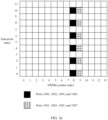
- Case 1 The comb structure of the target SRS is comb 2.
- the 8 ports are grouped into two port groups. It is assumed that port group 1 is ports ⁇ 1000, 1002, 1004, 1006 ⁇ , and that port group 2 is ports ⁇ 1001, 1003, 1005, 1007 ⁇ .
- the quantity R of repetitions of the target SRS is set to 1.
- ports of port group 1 are mapped to one OFDM symbol
- port group 1 and port group 2 are mapped to two adjacent OFDM symbols.
- port group 1 and port group 2 are mapped to two nonadjacent OFDM symbols, and OFDM symbol positions corresponding to the two port groups may be configured by using RRC signaling, or indicated by using MAC CE or DCI signaling.
- the mapping to the OFDM symbols may be performed according to a rule agreed by the network side and the terminal side by default.
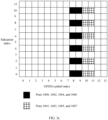
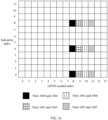
- Case 2 The comb structure of the target SRS is comb 2.
- the 8 ports are grouped into two port groups. It is assumed that port group 1 is ports ⁇ 1000, 1002, 1004, 1006 ⁇ , and that port group 2 is ports ⁇ 1001, 1003, 1005, 1007 ⁇ .
- the quantity R of repetitions of the target SRS is set to 2.
- ports of port group 1 are mapped to two OFDM symbols
- port group 1 is mapped to symbols 8 and 9, and two repetitions of the target SRS are on symbols 8 and 9.
- Port group 2 is mapped to symbols 10 and 11, and two repetitions of the target SRS are on symbols 10 and 11.
- port group 1 is mapped to symbols 8 and 10, and two repetitions of the SRS are on symbols 8 and 10.
- Port group 2 is mapped to symbols 9 and 11, and two repetitions of the target SRS are on symbols 9 and 11.
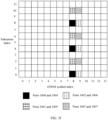
- Case 3 The comb structure of the target SRS is comb 4.
- the 8 ports are grouped into four port groups. It is assumed that port group 1 is ports ⁇ 1000, 1004 ⁇ , and that port group 2 is ports ⁇ 1001, 1005 ⁇ , and that port group 3 is ports ⁇ 1002, 1006 ⁇ , and that port group 4 is ports ⁇ 1003, 1007 ⁇ .
- the quantity R of repetitions of the target SRS is set to 1.
- the M port groups meet at least one of the following transmission characteristics:
- a first port group is any one of the M port groups, and port mapping is performed on the first port group according to a mapping rule corresponding to a quantity of ports in the first port group.
- ports on each OFDM symbol are mapped according to a mapping rule of 4 ports in a related protocol.
- ports mapped to one OFDM symbol are ⁇ 1000, 1001, 1002, 1003 ⁇ , and ports mapped to another OFDM symbol are ⁇ 1004, 1005, 1006, 1007 ⁇ .
- the ports of the target SRS include ports of a plurality of SRS resources, and the plurality of SRS resources include one of the following:
- the plurality of SRS resources may be indicated by using an SRS resource indicator (SRS resource indicator, SRI).
- SRS resource indicator SRI
- a quantity of the ports of the target SRS is a sum of quantities of ports of all SRS resources in a target SRS resource set;
- the part of SRS resources are configured or indicated by a network-side device.
- the network-side device configures or indicates a resource identifier (ID) of each SRS resource in the part of SRS resources.
- SRS resource identifiers of SRS resources in the part of SRS resources are adjacent.
- a quantity of SRS resources in the part may be configured or indicated by a network-side device, or agreed by the network-side device and the terminal by default.
- a first SRS resource in the part of SRS resources is determined in at least one of the following manners:
- the first SRS resource is used to determine a start SRS resource among a plurality of SRS resources whose SRS resource identifiers are adjacent.
- an association relationship between SRS resources in the part of SRS resources meets at least one of the following:
- the part of SRS resources include a plurality of SRS resources, and the plurality of SRS resources meet: each SRS resource in the plurality of SRS resources comes from each SRS resource set and has a same sequence number in each SRS resource set.
- the target SRS resource set includes a first SRS resource set and a second SRS resource set
- the plurality of SRS resources include a first SRS resource and a second SRS resource
- the first SRS resource comes from the first SRS resource set
- the second SRS resource comes from the second SRS resource set
- a sequence for example, a value of an ID
- an association relationship between SRS resource sets in the plurality of SRS resource sets meets at least one of the following:
- target information of each SRS resource in the plurality of SRS resources is the same, and the target information includes at least one of the following:
- a time domain symbol position corresponding to each SRS resource in the plurality of SRS resources meets one of the following:
- the SRS port mapping method in this application may resolve a problem of SRS port mapping when a quantity of SRS ports is greater than 4, for example, a mapping problem of each port when there are 8 SRS ports, thereby ensuring orthogonality between ports.
- the SRS port mapping method provided in this embodiment of this application may be performed by an SRS port mapping apparatus, or a control module configured to perform the SRS port mapping method in the SRS port mapping apparatus.
- An SRS port mapping apparatus provided in an embodiment of this application is described by assuming that the SRS port mapping method is performed by the SRS port mapping apparatus in the following embodiment.
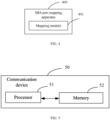
- FIG. 4 is a structural diagram of an SRS port mapping apparatus according to an embodiment of this application.
- the SRS port mapping apparatus 400 includes: a mapping module 401, configured to map M port groups to N orthogonal frequency division multiplexing OFDM symbols, where M and N are both integers greater than or equal to 1, M is greater than or equal to N, ports of a target sounding reference signal SRS include ports of one or more SRS resources, and the ports of the SRS resources are formed by the M port groups.
- time domain positions of the N OFDM symbols are determined in at least one of the following manners:
- the time domain positions of the N OFDM symbols are agreed by the network-side device and the terminal by default as N consecutive time domain positions.
- At least one of a value of M, a value of N, a quantity of ports corresponding to each of the M port groups, port numbers corresponding to each of the M port groups, a quantity of ports mapped to each OFDM symbol, and port numbers mapped to each OFDM symbol is determined in one of the following manners:
- the N OFDM symbols are located in a same slot.
- the M port groups correspond to a same quantity of ports.
- the M port groups meet at least one of the following transmission characteristics:
- a first port group is any one of the M port groups, and port mapping is performed on the first port group according to a mapping rule corresponding to a quantity of ports in the first port group.
- the ports of the target SRS include ports of a plurality of SRS resources, and the plurality of SRS resources include one of the following:
- the plurality of SRS resources are indicated by an SRS resource indicator SRI.
- a quantity of the ports of the target SRS is a sum of quantities of ports of all SRS resources in a target SRS resource set;
- the part of SRS resources are configured or indicated by a network-side device.
- the target SRS resource set includes one SRS resource set
- SRS resource identifiers of SRS resources in the part of SRS resources are adj acent.
- a first SRS resource in the part of SRS resources is determined in at least one of the following manners:
- an association relationship between SRS resources in the part of SRS resources meets at least one of the following:
- the part of SRS resources include a plurality of SRS resources, and the plurality of SRS resources meet: each SRS resource in the plurality of SRS resources comes from each SRS resource set and has a same sequence number in each SRS resource set.
- an association relationship between SRS resource sets in the plurality of SRS resource sets meets at least one of the following:
- the plurality of SRS resources correspond to port numbers of the ports of the target SRS according to at least one of the following correspondence rules:
- target information of each SRS resource in the plurality of SRS resources is the same, and the target information includes at least one of the following:
- a time domain symbol position corresponding to each SRS resource in the plurality of SRS resources meets one of the following:
- the SRS port mapping apparatus 400 in this embodiment of this application may be an apparatus, or may be a component, an integrated circuit, or a chip in a terminal.
- the SRS port mapping apparatus 400 in this embodiment of this application may be an apparatus having an operating system.
- the operating system may be an Android (Android) operating system, an iOS operating system, or other possible operating systems, and is not specifically limited in this embodiment of this application.
- the SRS port mapping apparatus 400 provided in this embodiment of this application can implement each process implemented in the method embodiment in FIG. 2 , with the same technical effect achieved. To avoid repetition, details are not described herein again.
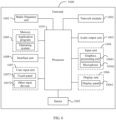
- an embodiment of this application further provides a communication device 50, including a processor 51, a memory 52, and a program or instructions stored in the memory 52 and capable of running on the processor 51.
- a communication device 50 including a processor 51, a memory 52, and a program or instructions stored in the memory 52 and capable of running on the processor 51.
- the communication device 50 is a terminal, and the program or instructions are executed by the processor 51, each process of the foregoing embodiment of the SRS port mapping method in FIG. 2 is implemented, with the same technical effect achieved.
- FIG. 6 is a schematic diagram of a hardware structure of a terminal for implementing an embodiment of this application.
- the terminal 1000 includes but is not limited to components such as a radio frequency unit 1001, a network module 1002, an audio output unit 1003, an input unit 1004, a sensor 1005, a display unit 1006, a user input unit 1007, an interface unit 1008, a memory 1009, and a processor 1010.
- the terminal 1000 may further include a power supply (for example, a battery) supplying power to all components.
- the power supply may be logically connected to the processor 1010 through a power management system. In this way, functions such as charge management, discharge management, and power consumption management are implemented by using the power management system.
- the terminal structure shown in FIG. 6 does not constitute a limitation on the terminal.
- the terminal may include more or fewer components than those shown in the figure, or some components are combined, or component arrangements are different. Details are not described herein again.
- the input unit 1004 may include a graphics processing unit (Graphics Processing Unit, GPU) 10041 and a microphone 10042.
- the graphics processing unit 10041 processes image data of a still picture or video obtained by an image capture apparatus (such as a camera) in a video capture mode or an image capture mode.
- the display unit 1006 may include a display panel 10061, and the display panel 10061 may be configured in a form of a liquid crystal display, an organic light-emitting diode, or the like.
- the user input unit 1007 includes a touch panel 10071 and other input devices 10072.
- the touch panel 10071 is also referred to as a touchscreen.
- the touch panel 10071 may include two parts: a touch detection apparatus and a touch controller.
- the other input devices 10072 may include but are not limited to a physical keyboard, a function button (such as a volume control button or a power button), a trackball, a mouse, and a joystick. Details are not described herein again.
- the radio frequency unit 1001 after receiving downlink data from a network-side device, the radio frequency unit 1001 sends the downlink data to the processor 1010 for processing, and in addition, sends uplink data to a base station.
- the radio frequency unit 1001 includes but is not limited to an antenna, at least one amplifier, a transceiver, a coupler, a low noise amplifier, a duplexer, and the like.
- the memory 1009 may be configured to store software programs or instructions and various data.
- the memory 1009 may primarily include a program or instruction storage area and a data storage area.
- the program or instruction storage area may store an operating system, an application program or instructions (such as an audio play function and an image play function) required by at least one function, and the like.
- the memory 1009 may include a high-speed random access memory, and may further include a non-volatile memory.
- the non-volatile memory may be a read-only memory (Read-Only Memory, ROM), a programmable read-only memory (Programmable ROM, PROM), an erasable programmable read-only memory (Erasable PROM, EPROM), an electrically erasable programmable read-only memory (Electrically EPROM, EEPROM), or a flash memory, for example, at least one disk storage device, a flash memory device, or another non-volatile solid-state storage device.
- ROM Read-Only Memory
- PROM programmable read-only memory
- Erasable PROM Erasable PROM
- EPROM electrically erasable programmable read-only memory
- EEPROM electrically erasable programmable read-only memory
- flash memory for example, at least one disk storage device, a flash memory device, or another non-volatile solid-state storage device.
- the processor 1010 may include one or more processing units.
- the processor 1010 may integrate an application processor and a modem processor.
- the application processor mainly processes the operating system, a user interface, an application program, or instructions.
- the modem processor mainly processes wireless communication.
- the modem processor is a baseband processor. It may be understood that the modem processor may alternatively not be integrated in the processor 1010.
- the processor 1010 is configured to map M port groups to N orthogonal frequency division multiplexing OFDM symbols, where M and N are both integers greater than or equal to 1, M is greater than or equal to N, ports of a target sounding reference signal SRS include ports of one or more SRS resources, and the ports of the SRS resources are formed by the M port groups.
- time domain positions of the N OFDM symbols are determined in at least one of the following manners:
- time domain positions of the N OFDM symbols are agreed by the network-side device and the terminal by default as N consecutive time domain positions.
- At least one of a value of M, a value of N, a quantity of ports corresponding to each of the M port groups, port numbers corresponding to each of the M port groups, a quantity of ports mapped to each OFDM symbol, and port numbers mapped to each OFDM symbol is determined in one of the following manners:
- the N OFDM symbols are located in a same slot.
- the M port groups correspond to a same quantity of ports.
- the M port groups meet at least one of the following transmission characteristics:
- a first port group is any one of the M port groups, and port mapping is performed on the first port group according to a mapping rule corresponding to a quantity of ports in the first port group.
- the ports of the target SRS include ports of a plurality of SRS resources, and the plurality of SRS resources include one of the following:
- the plurality of SRS resources are indicated by an SRS resource indicator SRI.
- a quantity of the ports of the target SRS is a sum of quantities of ports of all SRS resources in a target SRS resource set;
- the target SRS resource set includes one SRS resource set
- the part of SRS resources are configured or indicated by a network-side device.
- the target SRS resource set includes one SRS resource set
- SRS resource identifiers of SRS resources in the part of SRS resources are adjacent.
- a first SRS resource in the part of SRS resources is determined in at least one of the following manners:
- an association relationship between SRS resources in the part of SRS resources meets at least one of the following:
- the target SRS resource set includes a plurality of SRS resource sets
- the part of SRS resources include a plurality of SRS resources
- the plurality of SRS resources meet: each SRS resource in the plurality of SRS resources comes from each SRS resource set and has a same sequence number in each SRS resource set.
- an association relationship between SRS resource sets in the plurality of SRS resource sets meets at least one of the following:
- the plurality of SRS resources correspond to port numbers of the ports of the target SRS according to at least one of the following correspondence rules:
- target information of each SRS resource in the plurality of SRS resources is the same, and the target information includes at least one of the following:
- a time domain symbol position corresponding to each SRS resource in the plurality of SRS resources meets one of the following:
- the terminal 1000 provided in the foregoing embodiment can implement each process implemented in the method embodiment in FIG. 2 , with the same technical effect achieved. To avoid repetition, details are not described herein again.
- An embodiment of this application further provides a readable storage medium.
- the readable storage medium stores a program or instructions.
- the program or instructions are executed by a processor, each process of the method embodiment in FIG. 2 is implemented, with the same technical effect achieved. To avoid repetition, details are not described herein again.
- the processor is a processor in the terminal or network-side device in the foregoing embodiment.
- the readable storage medium includes a computer-readable storage medium, for example, a computer read-only memory (Read-Only Memory, ROM), a random access memory (Random Access Memory, RAM), a magnetic disk, or an optical disc.
- an embodiment of this application provides a chip.
- the chip includes a processor and a communication interface.
- the communication interface is coupled to the processor.
- the processor is configured to run a program or instructions on a network-side device to implement each process of the method embodiment in FIG. 2 , with the same technical effect achieved. To avoid repetition, details are not described herein again.
- the chip provided in this embodiment of this application may also be referred to as a system-level chip, a system chip, a chip system, a system-on-chip, or the like.
- the methods in the foregoing embodiments may be implemented by using software in combination with a necessary general hardware platform, and certainly may alternatively be implemented by using hardware. However, in most cases, the former is a preferred implementation.
- the technical solutions of this application essentially or the part contributing to the prior art may be implemented in a form of a software product.
- the computer software product is stored in a storage medium (such as a ROM/RAM, a magnetic disk, or an optical disc), and includes several instructions for instructing a terminal (which may be a mobile phone, a computer, a server, an air conditioner, a network, or the like) to perform the methods described in the embodiments of this application.
Landscapes
- Engineering & Computer Science (AREA)
- Signal Processing (AREA)
- Computer Networks & Wireless Communication (AREA)
- Mobile Radio Communication Systems (AREA)
Applications Claiming Priority (2)
| Application Number | Priority Date | Filing Date | Title |
|---|---|---|---|
| CN202210045015.4A CN116489782A (zh) | 2022-01-14 | 2022-01-14 | Srs端口映射方法、装置及终端 |
| PCT/CN2023/071567 WO2023134668A1 (zh) | 2022-01-14 | 2023-01-10 | Srs端口映射方法、装置及终端 |
Publications (2)
| Publication Number | Publication Date |
|---|---|
| EP4465602A1 true EP4465602A1 (de) | 2024-11-20 |
| EP4465602A4 EP4465602A4 (de) | 2025-04-23 |
Family
ID=87220012
Family Applications (1)
| Application Number | Title | Priority Date | Filing Date |
|---|---|---|---|
| EP23740010.6A Pending EP4465602A4 (de) | 2022-01-14 | 2023-01-10 | Verfahren und vorrichtung zur srs-port-zuordnung und endgerät |
Country Status (6)
| Country | Link |
|---|---|
| US (1) | US20240372675A1 (de) |
| EP (1) | EP4465602A4 (de) |
| JP (1) | JP2025502886A (de) |
| KR (1) | KR20240132085A (de) |
| CN (1) | CN116489782A (de) |
| WO (1) | WO2023134668A1 (de) |
Cited By (2)
| Publication number | Priority date | Publication date | Assignee | Title |
|---|---|---|---|---|
| EP4513811A4 (de) * | 2022-04-19 | 2025-09-24 | Lg Electronics Inc | Vorrichtung und verfahren zur durchführung von übertragung und empfang von srs auf basis mehrerer symbole in einem drahtloskommunikationssystem |
| EP4489337A4 (de) * | 2022-03-03 | 2026-01-07 | Beijing Xiaomi Mobile Software Co Ltd | Srs-sendeverfahren und -vorrichtung, srs-empfangsverfahren und -vorrichtung, vorrichtung, medium und produkt |
Families Citing this family (1)
| Publication number | Priority date | Publication date | Assignee | Title |
|---|---|---|---|---|
| US12531693B2 (en) * | 2022-07-27 | 2026-01-20 | Qualcomm Incorporated | Sounding reference signal port enhancements for uplink transmissions |
Family Cites Families (16)
| Publication number | Priority date | Publication date | Assignee | Title |
|---|---|---|---|---|
| CN101431357B (zh) * | 2007-11-08 | 2012-11-07 | 电信科学技术研究院 | 一种数据传输的方法和装置 |
| WO2016018100A1 (ko) * | 2014-08-01 | 2016-02-04 | 엘지전자 주식회사 | 채널 상태 보고를 위한 방법 및 이를 위한 장치 |
| CN110401518B (zh) * | 2017-01-09 | 2020-10-27 | 华为技术有限公司 | 一种传输参考信号的方法以及设备 |
| CN108631996B (zh) * | 2017-03-24 | 2021-05-14 | 华为技术有限公司 | 一种参考信号发送、接收方法及装置 |
| US10680866B2 (en) * | 2017-03-24 | 2020-06-09 | Huawei Technologies Co., Ltd. | Sounding reference signal design |
| US11558161B2 (en) * | 2017-07-27 | 2023-01-17 | Lg Electronics Inc. | Method for transmitting SRS and terminal therefor |
| CN109327290B (zh) * | 2017-07-31 | 2022-05-13 | 中国移动通信有限公司研究院 | 探测参考信号的发送方法、装置、终端、基站及通信设备 |
| CN109391395A (zh) * | 2017-08-09 | 2019-02-26 | 索尼公司 | 无线通信系统中的装置和方法、计算机可读存储介质 |
| CN109391304B (zh) * | 2017-08-11 | 2020-11-27 | 电信科学技术研究院 | 一种数据传输方法、基站、终端和存储介质 |
| CN115459822A (zh) * | 2017-11-07 | 2022-12-09 | 索尼公司 | 电子装置、无线通信方法以及计算机可读介质 |
| US11283651B2 (en) * | 2019-02-08 | 2022-03-22 | Qualcomm Incorporated | Sounding reference signal (SRS) resource and resource set configurations for positioning |
| EP3998793A4 (de) * | 2019-07-10 | 2023-03-29 | Ntt Docomo, Inc. | Endgerät und drahtloskommunikationsverfahren |
| CN111835488B (zh) * | 2019-08-15 | 2022-12-23 | 维沃移动通信有限公司 | 一种确定天线端口映射方法和终端 |
| EP4090118A4 (de) * | 2020-02-06 | 2023-01-04 | Huawei Technologies Co., Ltd. | Referenzsignal-ressourcen-konfigurationsverfahren und -vorrichtung |
| US11784768B2 (en) * | 2020-05-19 | 2023-10-10 | Lg Electronics Inc. | Method and apparatus for transmitting and receiving uplink signal in wireless communication system |
| CN113810997B (zh) * | 2020-06-12 | 2024-11-19 | 维沃移动通信有限公司 | Srs资源指示方法、srs资源确定方法及相关设备 |
-
2022
- 2022-01-14 CN CN202210045015.4A patent/CN116489782A/zh active Pending
-
2023
- 2023-01-10 EP EP23740010.6A patent/EP4465602A4/de active Pending
- 2023-01-10 KR KR1020247027376A patent/KR20240132085A/ko active Pending
- 2023-01-10 WO PCT/CN2023/071567 patent/WO2023134668A1/zh not_active Ceased
- 2023-01-10 JP JP2024542130A patent/JP2025502886A/ja active Pending
-
2024
- 2024-07-15 US US18/773,144 patent/US20240372675A1/en active Pending
Cited By (2)
| Publication number | Priority date | Publication date | Assignee | Title |
|---|---|---|---|---|
| EP4489337A4 (de) * | 2022-03-03 | 2026-01-07 | Beijing Xiaomi Mobile Software Co Ltd | Srs-sendeverfahren und -vorrichtung, srs-empfangsverfahren und -vorrichtung, vorrichtung, medium und produkt |
| EP4513811A4 (de) * | 2022-04-19 | 2025-09-24 | Lg Electronics Inc | Vorrichtung und verfahren zur durchführung von übertragung und empfang von srs auf basis mehrerer symbole in einem drahtloskommunikationssystem |
Also Published As
| Publication number | Publication date |
|---|---|
| WO2023134668A1 (zh) | 2023-07-20 |
| CN116489782A (zh) | 2023-07-25 |
| US20240372675A1 (en) | 2024-11-07 |
| JP2025502886A (ja) | 2025-01-28 |
| EP4465602A4 (de) | 2025-04-23 |
| KR20240132085A (ko) | 2024-09-02 |
Similar Documents
| Publication | Publication Date | Title |
|---|---|---|
| US20250220647A1 (en) | Resource configuration method and apparatus, and terminal and network side device | |
| EP4465602A1 (de) | Verfahren und vorrichtung zur srs-port-zuordnung und endgerät | |
| EP4280755A1 (de) | Übertragungsverarbeitungsverfahren und zugehörige vorrichtung | |
| EP3661255A1 (de) | Verfahren zur messung der signalstärke, zugehörige vorrichtung und system | |
| EP3627935A1 (de) | Zeitplanungsverfahren und zugehörige vorrichtung | |
| US10924236B2 (en) | Resource mapping method, transmit end, and receive end | |
| JP7627359B2 (ja) | 伝送方向の決定方法、装置、端末及びネットワーク側機器 | |
| US20240040589A1 (en) | Method, device and terminal for monitoring pdcch | |
| WO2022206997A1 (zh) | 功率控制参数指示方法、终端及网络侧设备 | |
| CN115720366A (zh) | 传输处理方法、装置及设备 | |
| CN114731629A (zh) | 通信方法及装置 | |
| WO2023088230A1 (zh) | 信息传输方法、装置、终端、网络侧设备及可读存储介质 | |
| US20240283589A1 (en) | Available slot determining method and apparatus, and terminal | |
| CN116366216A (zh) | 定位参考信号的处理方法、设备及可读存储介质 | |
| US20230354064A1 (en) | Signal configuration method and apparatus, device, and storage medium | |
| US20230422253A1 (en) | Physical uplink control channel resource determining method, terminal, and network-side device | |
| US10680776B2 (en) | Pilot signal transmission method, base station, and user equipment | |
| CN113301649A (zh) | 一种传输方法、装置、设备及计算机可读存储介质 | |
| WO2022242677A1 (zh) | 波束应用时间的确定方法、装置及通信设备 | |
| CN115776727A (zh) | 时隙配置方法、终端及网络侧设备 | |
| CN115707115B (zh) | 资源位置确定方法、装置、用户设备及存储介质 | |
| CN114389769B (zh) | 解调参考信号dmrs传输方法、装置及通信设备 | |
| CN115134048B (zh) | 上行传输方法及装置、终端及可读存储介质 | |
| EP4307753A1 (de) | Verfahren und vorrichtung zur bestimmung des kanalübertragungsverhaltens und endgerät | |
| EP4301068A1 (de) | Verfahren und vorrichtung zur anzeige von scs eines anfänglichen downlink-bwp |
Legal Events
| Date | Code | Title | Description |
|---|---|---|---|
| STAA | Information on the status of an ep patent application or granted ep patent |
Free format text: STATUS: THE INTERNATIONAL PUBLICATION HAS BEEN MADE |
|
| PUAI | Public reference made under article 153(3) epc to a published international application that has entered the european phase |
Free format text: ORIGINAL CODE: 0009012 |
|
| STAA | Information on the status of an ep patent application or granted ep patent |
Free format text: STATUS: REQUEST FOR EXAMINATION WAS MADE |
|
| 17P | Request for examination filed |
Effective date: 20240814 |
|
| AK | Designated contracting states |
Kind code of ref document: A1 Designated state(s): AL AT BE BG CH CY CZ DE DK EE ES FI FR GB GR HR HU IE IS IT LI LT LU LV MC ME MK MT NL NO PL PT RO RS SE SI SK SM TR |
|
| A4 | Supplementary search report drawn up and despatched |
Effective date: 20250326 |
|
| DAV | Request for validation of the european patent (deleted) | ||
| DAX | Request for extension of the european patent (deleted) | ||
| RIC1 | Information provided on ipc code assigned before grant |
Ipc: H04L 5/00 20060101ALI20250320BHEP Ipc: H04L 27/00 20060101AFI20250320BHEP |