EP4464805A1 - Method for recovering lithium from waste lithium ion batteries - Google Patents
Method for recovering lithium from waste lithium ion batteries Download PDFInfo
- Publication number
- EP4464805A1 EP4464805A1 EP23784817.1A EP23784817A EP4464805A1 EP 4464805 A1 EP4464805 A1 EP 4464805A1 EP 23784817 A EP23784817 A EP 23784817A EP 4464805 A1 EP4464805 A1 EP 4464805A1
- Authority
- EP
- European Patent Office
- Prior art keywords
- lithium
- aqueous solution
- solution
- salt aqueous
- extraction
- Prior art date
- Legal status (The legal status is an assumption and is not a legal conclusion. Google has not performed a legal analysis and makes no representation as to the accuracy of the status listed.)
- Pending
Links
Images




Classifications
-
- H—ELECTRICITY
- H01—ELECTRIC ELEMENTS
- H01M—PROCESSES OR MEANS, e.g. BATTERIES, FOR THE DIRECT CONVERSION OF CHEMICAL ENERGY INTO ELECTRICAL ENERGY
- H01M10/00—Secondary cells; Manufacture thereof
- H01M10/54—Reclaiming serviceable parts of waste accumulators
-
- B—PERFORMING OPERATIONS; TRANSPORTING
- B09—DISPOSAL OF SOLID WASTE; RECLAMATION OF CONTAMINATED SOIL
- B09B—DISPOSAL OF SOLID WASTE NOT OTHERWISE PROVIDED FOR
- B09B3/00—Destroying solid waste or transforming solid waste into something useful or harmless
- B09B3/80—Destroying solid waste or transforming solid waste into something useful or harmless involving an extraction step
-
- C—CHEMISTRY; METALLURGY
- C01—INORGANIC CHEMISTRY
- C01D—COMPOUNDS OF ALKALI METALS, i.e. LITHIUM, SODIUM, POTASSIUM, RUBIDIUM, CAESIUM, OR FRANCIUM
- C01D15/00—Lithium compounds
- C01D15/02—Oxides; Hydroxides
-
- C—CHEMISTRY; METALLURGY
- C01—INORGANIC CHEMISTRY
- C01D—COMPOUNDS OF ALKALI METALS, i.e. LITHIUM, SODIUM, POTASSIUM, RUBIDIUM, CAESIUM, OR FRANCIUM
- C01D15/00—Lithium compounds
- C01D15/08—Carbonates; Bicarbonates
-
- C—CHEMISTRY; METALLURGY
- C22—METALLURGY; FERROUS OR NON-FERROUS ALLOYS; TREATMENT OF ALLOYS OR NON-FERROUS METALS
- C22B—PRODUCTION AND REFINING OF METALS; PRETREATMENT OF RAW MATERIALS
- C22B23/00—Obtaining nickel or cobalt
- C22B23/04—Obtaining nickel or cobalt by wet processes
- C22B23/0407—Leaching processes
- C22B23/0415—Leaching processes with acids or salt solutions except ammonium salts solutions
-
- C—CHEMISTRY; METALLURGY
- C22—METALLURGY; FERROUS OR NON-FERROUS ALLOYS; TREATMENT OF ALLOYS OR NON-FERROUS METALS
- C22B—PRODUCTION AND REFINING OF METALS; PRETREATMENT OF RAW MATERIALS
- C22B23/00—Obtaining nickel or cobalt
- C22B23/04—Obtaining nickel or cobalt by wet processes
- C22B23/0407—Leaching processes
- C22B23/0415—Leaching processes with acids or salt solutions except ammonium salts solutions
- C22B23/0423—Halogenated acids or salts thereof
-
- C—CHEMISTRY; METALLURGY
- C22—METALLURGY; FERROUS OR NON-FERROUS ALLOYS; TREATMENT OF ALLOYS OR NON-FERROUS METALS
- C22B—PRODUCTION AND REFINING OF METALS; PRETREATMENT OF RAW MATERIALS
- C22B23/00—Obtaining nickel or cobalt
- C22B23/04—Obtaining nickel or cobalt by wet processes
- C22B23/0407—Leaching processes
- C22B23/0415—Leaching processes with acids or salt solutions except ammonium salts solutions
- C22B23/043—Sulfurated acids or salts thereof
-
- C—CHEMISTRY; METALLURGY
- C22—METALLURGY; FERROUS OR NON-FERROUS ALLOYS; TREATMENT OF ALLOYS OR NON-FERROUS METALS
- C22B—PRODUCTION AND REFINING OF METALS; PRETREATMENT OF RAW MATERIALS
- C22B23/00—Obtaining nickel or cobalt
- C22B23/04—Obtaining nickel or cobalt by wet processes
- C22B23/0453—Treatment or purification of solutions, e.g. obtained by leaching
-
- C—CHEMISTRY; METALLURGY
- C22—METALLURGY; FERROUS OR NON-FERROUS ALLOYS; TREATMENT OF ALLOYS OR NON-FERROUS METALS
- C22B—PRODUCTION AND REFINING OF METALS; PRETREATMENT OF RAW MATERIALS
- C22B23/00—Obtaining nickel or cobalt
- C22B23/04—Obtaining nickel or cobalt by wet processes
- C22B23/0453—Treatment or purification of solutions, e.g. obtained by leaching
- C22B23/0461—Treatment or purification of solutions, e.g. obtained by leaching by chemical methods
-
- C—CHEMISTRY; METALLURGY
- C22—METALLURGY; FERROUS OR NON-FERROUS ALLOYS; TREATMENT OF ALLOYS OR NON-FERROUS METALS
- C22B—PRODUCTION AND REFINING OF METALS; PRETREATMENT OF RAW MATERIALS
- C22B26/00—Obtaining alkali, alkaline earth metals or magnesium
- C22B26/10—Obtaining alkali metals
- C22B26/12—Obtaining lithium
-
- C—CHEMISTRY; METALLURGY
- C22—METALLURGY; FERROUS OR NON-FERROUS ALLOYS; TREATMENT OF ALLOYS OR NON-FERROUS METALS
- C22B—PRODUCTION AND REFINING OF METALS; PRETREATMENT OF RAW MATERIALS
- C22B3/00—Extraction of metal compounds from ores or concentrates by wet processes
- C22B3/04—Extraction of metal compounds from ores or concentrates by wet processes by leaching
- C22B3/06—Extraction of metal compounds from ores or concentrates by wet processes by leaching in inorganic acid solutions, e.g. with acids generated in situ; in inorganic salt solutions other than ammonium salt solutions
-
- C—CHEMISTRY; METALLURGY
- C22—METALLURGY; FERROUS OR NON-FERROUS ALLOYS; TREATMENT OF ALLOYS OR NON-FERROUS METALS
- C22B—PRODUCTION AND REFINING OF METALS; PRETREATMENT OF RAW MATERIALS
- C22B3/00—Extraction of metal compounds from ores or concentrates by wet processes
- C22B3/04—Extraction of metal compounds from ores or concentrates by wet processes by leaching
- C22B3/06—Extraction of metal compounds from ores or concentrates by wet processes by leaching in inorganic acid solutions, e.g. with acids generated in situ; in inorganic salt solutions other than ammonium salt solutions
- C22B3/08—Sulfuric acid, other sulfurated acids or salts thereof
-
- C—CHEMISTRY; METALLURGY
- C22—METALLURGY; FERROUS OR NON-FERROUS ALLOYS; TREATMENT OF ALLOYS OR NON-FERROUS METALS
- C22B—PRODUCTION AND REFINING OF METALS; PRETREATMENT OF RAW MATERIALS
- C22B3/00—Extraction of metal compounds from ores or concentrates by wet processes
- C22B3/04—Extraction of metal compounds from ores or concentrates by wet processes by leaching
- C22B3/06—Extraction of metal compounds from ores or concentrates by wet processes by leaching in inorganic acid solutions, e.g. with acids generated in situ; in inorganic salt solutions other than ammonium salt solutions
- C22B3/10—Hydrochloric acid, other halogenated acids or salts thereof
-
- C—CHEMISTRY; METALLURGY
- C22—METALLURGY; FERROUS OR NON-FERROUS ALLOYS; TREATMENT OF ALLOYS OR NON-FERROUS METALS
- C22B—PRODUCTION AND REFINING OF METALS; PRETREATMENT OF RAW MATERIALS
- C22B3/00—Extraction of metal compounds from ores or concentrates by wet processes
- C22B3/20—Treatment or purification of solutions, e.g. obtained by leaching
- C22B3/22—Treatment or purification of solutions, e.g. obtained by leaching by physical processes, e.g. by filtration, by magnetic means, or by thermal decomposition
- C22B3/24—Treatment or purification of solutions, e.g. obtained by leaching by physical processes, e.g. by filtration, by magnetic means, or by thermal decomposition by adsorption on solid substances, e.g. by extraction with solid resins
-
- C—CHEMISTRY; METALLURGY
- C22—METALLURGY; FERROUS OR NON-FERROUS ALLOYS; TREATMENT OF ALLOYS OR NON-FERROUS METALS
- C22B—PRODUCTION AND REFINING OF METALS; PRETREATMENT OF RAW MATERIALS
- C22B3/00—Extraction of metal compounds from ores or concentrates by wet processes
- C22B3/20—Treatment or purification of solutions, e.g. obtained by leaching
- C22B3/26—Treatment or purification of solutions, e.g. obtained by leaching by liquid-liquid extraction using organic compounds
- C22B3/28—Amines
-
- C—CHEMISTRY; METALLURGY
- C22—METALLURGY; FERROUS OR NON-FERROUS ALLOYS; TREATMENT OF ALLOYS OR NON-FERROUS METALS
- C22B—PRODUCTION AND REFINING OF METALS; PRETREATMENT OF RAW MATERIALS
- C22B3/00—Extraction of metal compounds from ores or concentrates by wet processes
- C22B3/20—Treatment or purification of solutions, e.g. obtained by leaching
- C22B3/26—Treatment or purification of solutions, e.g. obtained by leaching by liquid-liquid extraction using organic compounds
- C22B3/30—Oximes
-
- C—CHEMISTRY; METALLURGY
- C22—METALLURGY; FERROUS OR NON-FERROUS ALLOYS; TREATMENT OF ALLOYS OR NON-FERROUS METALS
- C22B—PRODUCTION AND REFINING OF METALS; PRETREATMENT OF RAW MATERIALS
- C22B3/00—Extraction of metal compounds from ores or concentrates by wet processes
- C22B3/20—Treatment or purification of solutions, e.g. obtained by leaching
- C22B3/26—Treatment or purification of solutions, e.g. obtained by leaching by liquid-liquid extraction using organic compounds
- C22B3/38—Treatment or purification of solutions, e.g. obtained by leaching by liquid-liquid extraction using organic compounds containing phosphorus
-
- C—CHEMISTRY; METALLURGY
- C22—METALLURGY; FERROUS OR NON-FERROUS ALLOYS; TREATMENT OF ALLOYS OR NON-FERROUS METALS
- C22B—PRODUCTION AND REFINING OF METALS; PRETREATMENT OF RAW MATERIALS
- C22B3/00—Extraction of metal compounds from ores or concentrates by wet processes
- C22B3/20—Treatment or purification of solutions, e.g. obtained by leaching
- C22B3/26—Treatment or purification of solutions, e.g. obtained by leaching by liquid-liquid extraction using organic compounds
- C22B3/38—Treatment or purification of solutions, e.g. obtained by leaching by liquid-liquid extraction using organic compounds containing phosphorus
- C22B3/384—Pentavalent phosphorus oxyacids, esters thereof
- C22B3/3842—Phosphinic acid, e.g. H2P(O)(OH)
-
- C—CHEMISTRY; METALLURGY
- C22—METALLURGY; FERROUS OR NON-FERROUS ALLOYS; TREATMENT OF ALLOYS OR NON-FERROUS METALS
- C22B—PRODUCTION AND REFINING OF METALS; PRETREATMENT OF RAW MATERIALS
- C22B3/00—Extraction of metal compounds from ores or concentrates by wet processes
- C22B3/20—Treatment or purification of solutions, e.g. obtained by leaching
- C22B3/26—Treatment or purification of solutions, e.g. obtained by leaching by liquid-liquid extraction using organic compounds
- C22B3/38—Treatment or purification of solutions, e.g. obtained by leaching by liquid-liquid extraction using organic compounds containing phosphorus
- C22B3/384—Pentavalent phosphorus oxyacids, esters thereof
- C22B3/3844—Phosphonic acid, e.g. H2P(O)(OH)2
-
- C—CHEMISTRY; METALLURGY
- C22—METALLURGY; FERROUS OR NON-FERROUS ALLOYS; TREATMENT OF ALLOYS OR NON-FERROUS METALS
- C22B—PRODUCTION AND REFINING OF METALS; PRETREATMENT OF RAW MATERIALS
- C22B3/00—Extraction of metal compounds from ores or concentrates by wet processes
- C22B3/20—Treatment or purification of solutions, e.g. obtained by leaching
- C22B3/26—Treatment or purification of solutions, e.g. obtained by leaching by liquid-liquid extraction using organic compounds
- C22B3/38—Treatment or purification of solutions, e.g. obtained by leaching by liquid-liquid extraction using organic compounds containing phosphorus
- C22B3/384—Pentavalent phosphorus oxyacids, esters thereof
- C22B3/3846—Phosphoric acid, e.g. (O)P(OH)3
-
- C—CHEMISTRY; METALLURGY
- C22—METALLURGY; FERROUS OR NON-FERROUS ALLOYS; TREATMENT OF ALLOYS OR NON-FERROUS METALS
- C22B—PRODUCTION AND REFINING OF METALS; PRETREATMENT OF RAW MATERIALS
- C22B3/00—Extraction of metal compounds from ores or concentrates by wet processes
- C22B3/20—Treatment or purification of solutions, e.g. obtained by leaching
- C22B3/44—Treatment or purification of solutions, e.g. obtained by leaching by chemical processes
-
- C—CHEMISTRY; METALLURGY
- C22—METALLURGY; FERROUS OR NON-FERROUS ALLOYS; TREATMENT OF ALLOYS OR NON-FERROUS METALS
- C22B—PRODUCTION AND REFINING OF METALS; PRETREATMENT OF RAW MATERIALS
- C22B47/00—Obtaining manganese
-
- C—CHEMISTRY; METALLURGY
- C22—METALLURGY; FERROUS OR NON-FERROUS ALLOYS; TREATMENT OF ALLOYS OR NON-FERROUS METALS
- C22B—PRODUCTION AND REFINING OF METALS; PRETREATMENT OF RAW MATERIALS
- C22B47/00—Obtaining manganese
- C22B47/0018—Treating ocean floor nodules
- C22B47/0045—Treating ocean floor nodules by wet processes
- C22B47/0081—Treatment or purification of solutions, e.g. obtained by leaching
-
- C—CHEMISTRY; METALLURGY
- C22—METALLURGY; FERROUS OR NON-FERROUS ALLOYS; TREATMENT OF ALLOYS OR NON-FERROUS METALS
- C22B—PRODUCTION AND REFINING OF METALS; PRETREATMENT OF RAW MATERIALS
- C22B7/00—Working up raw materials other than ores, e.g. scrap, to produce non-ferrous metals and compounds thereof; Methods of a general interest or applied to the winning of more than two metals
- C22B7/006—Wet processes
- C22B7/007—Wet processes by acid leaching
-
- C—CHEMISTRY; METALLURGY
- C25—ELECTROLYTIC OR ELECTROPHORETIC PROCESSES; APPARATUS THEREFOR
- C25B—ELECTROLYTIC OR ELECTROPHORETIC PROCESSES FOR THE PRODUCTION OF COMPOUNDS OR NON-METALS; APPARATUS THEREFOR
- C25B1/00—Electrolytic production of inorganic compounds or non-metals
- C25B1/01—Products
- C25B1/02—Hydrogen or oxygen
-
- C—CHEMISTRY; METALLURGY
- C25—ELECTROLYTIC OR ELECTROPHORETIC PROCESSES; APPARATUS THEREFOR
- C25B—ELECTROLYTIC OR ELECTROPHORETIC PROCESSES FOR THE PRODUCTION OF COMPOUNDS OR NON-METALS; APPARATUS THEREFOR
- C25B1/00—Electrolytic production of inorganic compounds or non-metals
- C25B1/01—Products
- C25B1/24—Halogens or compounds thereof
- C25B1/26—Chlorine; Compounds thereof
-
- C—CHEMISTRY; METALLURGY
- C25—ELECTROLYTIC OR ELECTROPHORETIC PROCESSES; APPARATUS THEREFOR
- C25B—ELECTROLYTIC OR ELECTROPHORETIC PROCESSES FOR THE PRODUCTION OF COMPOUNDS OR NON-METALS; APPARATUS THEREFOR
- C25B1/00—Electrolytic production of inorganic compounds or non-metals
- C25B1/01—Products
- C25B1/34—Simultaneous production of alkali metal hydroxides and chlorine, oxyacids or salts of chlorine, e.g. by chlor-alkali electrolysis
- C25B1/46—Simultaneous production of alkali metal hydroxides and chlorine, oxyacids or salts of chlorine, e.g. by chlor-alkali electrolysis in diaphragm cells
-
- C—CHEMISTRY; METALLURGY
- C25—ELECTROLYTIC OR ELECTROPHORETIC PROCESSES; APPARATUS THEREFOR
- C25C—PROCESSES FOR THE ELECTROLYTIC PRODUCTION, RECOVERY OR REFINING OF METALS; APPARATUS THEREFOR
- C25C1/00—Electrolytic production, recovery or refining of metals by electrolysis of solutions
- C25C1/06—Electrolytic production, recovery or refining of metals by electrolysis of solutions or iron group metals, refractory metals or manganese
- C25C1/08—Electrolytic production, recovery or refining of metals by electrolysis of solutions or iron group metals, refractory metals or manganese of nickel or cobalt
-
- C—CHEMISTRY; METALLURGY
- C25—ELECTROLYTIC OR ELECTROPHORETIC PROCESSES; APPARATUS THEREFOR
- C25C—PROCESSES FOR THE ELECTROLYTIC PRODUCTION, RECOVERY OR REFINING OF METALS; APPARATUS THEREFOR
- C25C3/00—Electrolytic production, recovery or refining of metals by electrolysis of melts
- C25C3/02—Electrolytic production, recovery or refining of metals by electrolysis of melts of alkali or alkaline earth metals
-
- B—PERFORMING OPERATIONS; TRANSPORTING
- B09—DISPOSAL OF SOLID WASTE; RECLAMATION OF CONTAMINATED SOIL
- B09B—DISPOSAL OF SOLID WASTE NOT OTHERWISE PROVIDED FOR
- B09B2101/00—Type of solid waste
- B09B2101/15—Electronic waste
- B09B2101/16—Batteries
-
- Y—GENERAL TAGGING OF NEW TECHNOLOGICAL DEVELOPMENTS; GENERAL TAGGING OF CROSS-SECTIONAL TECHNOLOGIES SPANNING OVER SEVERAL SECTIONS OF THE IPC; TECHNICAL SUBJECTS COVERED BY FORMER USPC CROSS-REFERENCE ART COLLECTIONS [XRACs] AND DIGESTS
- Y02—TECHNOLOGIES OR APPLICATIONS FOR MITIGATION OR ADAPTATION AGAINST CLIMATE CHANGE
- Y02P—CLIMATE CHANGE MITIGATION TECHNOLOGIES IN THE PRODUCTION OR PROCESSING OF GOODS
- Y02P10/00—Technologies related to metal processing
- Y02P10/20—Recycling
-
- Y—GENERAL TAGGING OF NEW TECHNOLOGICAL DEVELOPMENTS; GENERAL TAGGING OF CROSS-SECTIONAL TECHNOLOGIES SPANNING OVER SEVERAL SECTIONS OF THE IPC; TECHNICAL SUBJECTS COVERED BY FORMER USPC CROSS-REFERENCE ART COLLECTIONS [XRACs] AND DIGESTS
- Y02—TECHNOLOGIES OR APPLICATIONS FOR MITIGATION OR ADAPTATION AGAINST CLIMATE CHANGE
- Y02W—CLIMATE CHANGE MITIGATION TECHNOLOGIES RELATED TO WASTEWATER TREATMENT OR WASTE MANAGEMENT
- Y02W30/00—Technologies for solid waste management
- Y02W30/50—Reuse, recycling or recovery technologies
- Y02W30/84—Recycling of batteries or fuel cells
Definitions
- the present invention relates to a method for recovering lithium from waste lithium ion batteries.
- waste lithium ion batteries mean used lithium ion batteries that have reached the end of their useful life as battery products, lithium ion batteries discarded as defective products and the like in the production process, and residual positive electrode and negative electrode materials and the like used for productization in the production process.
- a compound other than the lithium compound, which is the recovery target is used as the alkali source, which increases the concentration of cations other than lithium and simultaneously decreases the concentration of lithium ions.
- the conventional wet process has inconveniences that the recovery rate of lithium, the target, is significantly decreased, and that the compound other than the lithium compound used as the alkali source is drained as a salt, making resource circulation impossible.
- the compound other than the lithium compound may include sodium hydroxide, sodium carbonate, and ammonia.
- An object of the present invention is to provide a method for recovering valuable metals from waste lithium ion batteries that can eliminate such inconveniences to recover lithium at a high recovery rate and enable resource circulation.
- the present inventors have found that the aforementioned inconveniences can be solved by dissolving active material powder obtained by pre-processing waste lithium ion batteries in a mineral acid, neutralizing the solution with lithium hydroxide, re-adding lithium hydroxide and filtering precipitates to obtain a first lithium salt aqueous solution as a filtrate.
- the present inventors have found that the aforementioned inconveniences can be solved by dissolving the active material powder in a mineral acid, neutralizing the solution with lithium hydroxide, and then, from the solution obtained by solid-liquid separation, extracting manganese, cobalt, and nickel in a specific order using a specific plurality of organic solvents.
- the present inventors have found that the aforementioned inconveniences can be solved by dissolving the active material powder in a mineral acid, neutralizing the solution with lithium hydroxide, and then, from the solution obtained by solid-liquid separation, extracting manganese, cobalt, and nickel using specific organic solvents.
- the present inventors have found that the aforementioned inconveniences can be solved by dissolving the active material powder in a mineral acid, neutralizing the solution with lithium hydroxide, and then, when extracting manganese, cobalt, and nickel from the solution obtained by solid-liquid separation using organic solvents, mixing an alkali-containing organic solvent obtained by mixing an alkali aqueous solution and the organic solvent, followed by oil-water separation, with the acid solution.
- the present inventors have found that the aforementioned inconveniences can be solved by dissolving the active material powder in a mineral acid, neutralizing the solution with lithium hydroxide, and then adding a sulfide and removing a metal sulfide.
- the present inventors have found that the aforementioned inconveniences can be solved by carbonating the lithium hydroxide aqueous solution and the lithium salt aqueous solution obtained in the membrane electrolysis step.
- the present inventors have found that the aforementioned inconveniences can be solved by dissolving the active material powder in a mineral acid, neutralizing the solution with lithium hydroxide, then, from the solution obtained by solid-liquid separation, extracting manganese, cobalt, and nickel using organic solvents to obtain a lithium salt aqueous solution, and thereafter mixing the lithium salt aqueous solution and an alkali to remove nickel contained in the lithium salt aqueous solution.
- the present invention has reached completion based on these findings.
- the present invention relates to a method for recovering lithium from waste lithium ion batteries, the method comprising: a dissolution step of dissolving active material powder obtained by pre-processing the waste lithium ion batteries in a mineral acid to obtain a solution; a neutralization step of neutralizing the solution with lithium hydroxide; a lithium hydroxide re-addition step of re-adding lithium hydroxide to the acid solution to which lithium hydroxide has been added and filtering precipitates to obtain a first lithium salt aqueous solution as a filtrate; and a membrane electrolysis step of subjecting the first lithium salt aqueous solution to membrane electrolysis using an ion exchange membrane to obtain a lithium hydroxide aqueous solution, an acid, and a second lithium salt aqueous solution that is more dilute than the first lithium salt aqueous solution, wherein the lithium hydroxide aqueous solution obtained in the membrane electrolysis step is reused in at least one selected from the group consisting of the neutralization step and the lithium hydroxide
- the present invention relates to a method for recovering lithium from waste lithium ion batteries, the method comprising: a dissolution step of dissolving active material powder obtained by pre-processing the waste lithium ion batteries in a mineral acid to obtain a solution; a neutralization and solid-liquid separation step of solid-liquid separating the solution into insoluble matters and a solution A produced by neutralization with lithium hydroxide; a manganese extraction step of adding an organophosphorus compound extraction solvent to the solution A to extract and separate manganese and also to obtain a solution B; a cobalt extraction step of adding an organophosphorus compound extraction solvent to the solution B to extract and separate cobalt and also to obtain a solution C; a nickel extraction step of adding an organophosphorus compound extraction solvent to the solution C to extract and separate nickel and also to obtain a first lithium salt aqueous solution; and a membrane electrolysis step of subjecting the first lithium salt aqueous solution to membrane electrolysis using an ion exchange membrane to obtain a lithium hydroxide aqueous solution
- the present invention relates to a method for recovering lithium from waste lithium ion batteries, the method comprising: a dissolution step of dissolving active material powder obtained by pre-processing the waste lithium ion batteries in a mineral acid to obtain a solution; a neutralization and solid-liquid separation step of solid-liquid separating the solution into insoluble matters and a solution A produced by neutralization with lithium hydroxide; a manganese extraction step of adding an organophosphorus compound extraction solvent to the solution A to extract and separate manganese and also to obtain a solution D; a nickel extraction step of adding a hydroxime extraction solvent to the solution D to extract and separate nickel and also to obtain a solution E; a cobalt extraction step of adding an organophosphorus compound extraction solvent to the solution E to extract and separate cobalt and also to obtain a first lithium salt aqueous solution; and a membrane electrolysis step of subjecting the first lithium salt aqueous solution to electrolysis using an ion exchange membrane to obtain a lithium hydroxide aqueous solution, an
- the present invention relates to a method for recovering lithium from waste lithium ion batteries, the method comprising: a dissolution step of dissolving active material powder obtained by pre-processing the waste lithium ion batteries in a mineral acid to obtain a solution; a neutralization and solid-liquid separation step of solid-liquid separating the solution into insoluble matters and a solution A produced by neutralization with lithium hydroxide; a cobalt extraction step of adding an organic amine compound extraction solvent to the solution A to extract and separate cobalt and also to obtain a solution F; a manganese extraction step of adding an organophosphorus compound extraction solvent to the solution F to extract and separate manganese and also to obtain a solution G; a nickel extraction step of adding an organophosphorus compound extraction solvent to the solution G to extract and separate nickel and also to obtain a first lithium salt aqueous solution; and a membrane electrolysis step of subjecting the first lithium salt aqueous solution to membrane electrolysis using an ion exchange membrane to obtain a lithium hydroxide aqueous solution,
- the present invention relates to a method for recovering lithium from waste lithium ion batteries, the method comprising: a dissolution step of dissolving active material powder obtained by pre-processing the waste lithium ion batteries in a mineral acid to obtain a solution; a neutralization and solid-liquid separation step of solid-liquid separating the solution into insoluble matters and a solution A produced by neutralization with lithium hydroxide; a cobalt extraction step of adding an organic amine compound extraction solvent to the solution A to extract and separate cobalt and also to obtain a solution H; a nickel extraction step of adding a hydroxime extraction solvent to the solution H to extract and separate nickel and also to obtain a solution I; a manganese extraction step of adding an organophosphorus compound extraction solvent to the solution I to extract and separate manganese and also to obtain a first lithium salt aqueous solution; and a membrane electrolysis step of subjecting the first lithium salt aqueous solution to membrane electrolysis using an ion exchange membrane to obtain a lithium hydroxide aqueous solution, an
- the present invention relates to a method for recovering lithium from waste lithium ion batteries, the method comprising: a dissolution step of dissolving active material powder obtained by pre-processing the waste lithium ion batteries in a mineral acid to obtain a solution; a neutralization and solid-liquid separation step of solid-liquid separating the solution into insoluble matters and a solution A produced by neutralization with lithium hydroxide; a nickel extraction step of adding a hydroxime extraction solvent to the solution A to extract and separate nickel and also to obtain a solution J; a manganese extraction step of adding an organophosphorus compound extraction solvent to the solution J to extract and separate manganese and also to obtain a solution K; a cobalt extraction step of adding an organophosphorus compound extraction solvent to the solution K to extract and separate cobalt and also to obtain a first lithium salt aqueous solution; and a membrane electrolysis step of subjecting the first lithium salt aqueous solution to membrane electrolysis using an ion exchange membrane to obtain a lithium hydroxide aqueous solution,
- the present invention relates to a method for recovering lithium from waste lithium ion batteries, the method comprising: a dissolution step of dissolving active material powder obtained by pre-processing the waste lithium ion batteries in a mineral acid to obtain a solution; a neutralization and solid-liquid separation step of solid-liquid separating the solution into insoluble matters and a solution A produced by neutralization with lithium hydroxide; a nickel extraction step of adding a hydroxime extraction solvent to the solution A to extract and separate nickel and also to obtain a solution L; a cobalt extraction step of adding an organic amine compound extraction solvent to the solution L to extract and separate cobalt and also to obtain a solution M; a manganese extraction step of adding an organophosphorus compound extraction solvent to the solution M to extract and separate manganese and also to obtain a first lithium salt aqueous solution; and a membrane electrolysis step of subjecting the first lithium salt aqueous solution to membrane electrolysis using an ion exchange membrane to obtain a lithium hydroxide aqueous solution, an
- the present invention relates to a method for recovering lithium from waste lithium ion batteries, the method comprising: a dissolution step of dissolving active material powder obtained by pre-processing the waste lithium ion batteries in a mineral acid to obtain a solution; a neutralization step of neutralizing the solution with lithium hydroxide; a solvent extraction step of separating at least one metal excluding lithium, out of metals contained in the active material powder, from the acid solution to which lithium hydroxide has been added by organic solvent extraction to obtain a first lithium salt aqueous solution as a residual liquid of the solvent extraction; and a membrane electrolysis step of subjecting the first lithium salt aqueous solution to membrane electrolysis using an ion exchange membrane to obtain a lithium hydroxide aqueous solution, an acid, and a second lithium salt aqueous solution that is more dilute than the first lithium salt aqueous solution, wherein the lithium hydroxide aqueous solution obtained in the membrane electrolysis step is reused in at least one selected from the group consisting of the neutralization step
- the present invention relates to a method for recovering lithium from waste lithium ion batteries, the method comprising: a dissolution step of dissolving active material powder obtained by pre-processing the waste lithium ion batteries in a mineral acid to obtain a solution; a neutralization step of neutralizing the solution with lithium hydroxide; a solvent extraction step of separating at least one metal excluding lithium, out of metals contained in the active material powder, from the acid solution to which lithium hydroxide has been added by solvent extraction to obtain a first lithium salt aqueous solution as a residual liquid of the solvent extraction; and a membrane electrolysis step of subjecting the first lithium salt aqueous solution to membrane electrolysis using an ion exchange membrane to obtain a lithium hydroxide aqueous solution, an acid, and a second lithium salt aqueous solution that is more dilute than the first lithium salt aqueous solution, wherein the lithium hydroxide aqueous solution obtained in the membrane electrolysis step is reused in at least one selected from the group consisting of the neutralization step and
- the present invention relates to a method for recovering lithium from waste lithium ion batteries, the method comprising: a dissolution step of dissolving active material powder obtained by pre-processing the waste lithium ion batteries in a mineral acid to obtain a solution; a neutralization step of neutralizing the solution with lithium hydroxide; a metal sulfide removal step of mixing the acid solution to which lithium hydroxide has been added with a sulfide in a pH range of 2 to 6 to produce a sulfide of at least one metal selected from the group consisting of copper, cadmium, lead, and mercury, and removing the metal sulfide; a solvent extraction step of separating at least one metal excluding lithium, out of metals contained in the active material powder, from the acid solution from which the metal sulfide has been removed by solvent extraction to obtain a first lithium salt aqueous solution as a residual liquid of the solvent extraction; and a membrane electrolysis step of subjecting the first lithium salt aqueous solution to membrane electrolysis using
- the present invention relates to a method for recovering lithium from waste lithium ion batteries, the method comprising: a dissolution step of dissolving active material powder obtained by pre-processing the waste lithium ion batteries in a mineral acid to obtain a solution; a neutralization step of neutralizing the solution with lithium hydroxide; a solvent extraction step of separating at least one metal excluding lithium, out of metals contained in the active material powder, from the acid solution to which lithium hydroxide has been added by solvent extraction to obtain a first lithium salt aqueous solution as a residual liquid of the solvent extraction; a membrane electrolysis step of subjecting the first lithium salt aqueous solution to membrane electrolysis using an ion exchange membrane to obtain a lithium hydroxide aqueous solution, an acid, and a second lithium salt aqueous solution that is more dilute than the first lithium salt aqueous solution; and a carbonation step of carbonating the lithium hydroxide aqueous solution and the second lithium salt aqueous solution, wherein the lithium hydroxide a
- the present invention relates to a method for recovering lithium from waste lithium ion batteries, the method comprising: a dissolution step of dissolving active material powder obtained by pre-processing the waste lithium ion batteries in a mineral acid to obtain a solution; a neutralization step of neutralizing the solution with lithium hydroxide; a solvent extraction step of separating at least one metal excluding lithium, out of metals contained in the active material powder, from the acid solution to which lithium hydroxide has been added by solvent extraction to obtain a first lithium salt aqueous solution as a residual liquid of the solvent extraction; a nickel removal step of mixing the first lithium salt aqueous solution and an alkali to remove nickel contained in the first lithium salt aqueous solution and to obtain a second lithium salt aqueous solution; and a membrane electrolysis step of subjecting the second lithium salt aqueous solution to membrane electrolysis using an ion exchange membrane to obtain a lithium hydroxide aqueous solution, an acid, and a third lithium salt aqueous solution that is more dilute
- the second lithium salt aqueous solution or the third lithium salt aqueous solution is preferably concentrated and added to the first lithium salt aqueous solution or the second lithium salt aqueous solution.
- the mineral acid preferably includes at least one selected from the group consisting of hydrochloric acid, sulfuric acid, and nitric acid, and more preferably includes hydrochloric acid.
- Hydrochloric acid produced by allowing chlorine and hydrogen obtained in the membrane electrolysis step to react with each other is preferably used as the mineral acid.
- Electric power used for the membrane electrolysis step preferably includes electric power obtained by renewable energy, and more preferably includes electric power obtained by at least one selected from the group consisting of solar power generation and wind power generation.
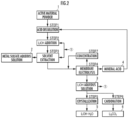
- active material powder 1 is used as the starting material.
- the active material powder 1 is dissolved in a mineral acid in STEP 1 to obtain an acid solution of the active material powder 1 containing at least lithium.
- the mineral acid preferably includes at least one selected from the group consisting of hydrochloric acid, sulfuric acid, and nitric acid, more preferably includes hydrochloric acid, and is still more preferably hydrochloric acid.
- the active material powder 1 contains valuable metals such as iron, aluminum, manganese, cobalt, and nickel, in addition to lithium.
- lithium hydroxide LiOH
- STEP 2 lithium hydroxide
- the acid solution after the neutralization lithium hydroxide is re-added in STEP 3.
- the precipitates 2 may be a mixture of the respective hydroxides of the two or more metals, or may be a hydroxide of a mixture of the two or more metals.
- hydrochloric acid is used for the acid dissolution in STEP 1
- the lithium salt contained in the first lithium salt aqueous solution is lithium chloride.
- each of the valuable metals is neutralized and recovered as a hydroxide
- sodium hydroxide, sodium carbonate, ammonia, or the like is used as an alkali source
- lithium hydroxide is used as the alkali source, which can increase the lithium recovery rate.
- lithium hydroxide LiOH
- the acid solution is solid-liquid separated into insoluble matters and a solution A produced by neutralization with lithium hydroxide.
- An organophosphorus compound extraction solvent is added to the solution A to extract and separate manganese and also to obtain a solution B (manganese extraction step).
- An organophosphorus compound extraction solvent is added to the solution B to extract and separate cobalt and also to obtain a solution C (cobalt extraction step).
- An organophosphorus compound extraction solvent is added to the solution C to extract and separate nickel and also to obtain a first lithium salt aqueous solution (nickel extraction step).
- the separation factors in these extraction steps are high, that is, the separability of each of the aforementioned metals is good in these extraction steps. Furthermore, these extraction steps can be easily controlled by pH.
- the solvents used in the manganese extraction step, the cobalt extraction step, and the nickel extraction step are organophosphorus compounds such as phosphate esters, phosphonate esters, phosphinic acid, and phosphine oxides.
- organophosphorus compounds are commercially available, and examples of acidic phosphate esters include D2EHPA (di(2-ethylhexyl) phosphate), examples of phosphonate esters include PC-88A manufactured by Daihachi Chemical Industry Co., Ltd., examples of phosphinic acid include CYANEX 272 manufactured by Solvay S.A., examples of neutral phosphate esters include TBP (tributyl phosphate), and examples of phosphine oxides include tri-n-octylphosphine (TOPO).
- D2EHPA di(2-ethylhexyl) phosphate
- examples of phosphonate esters include PC-88A manufactured by Daihachi Chemical Industry Co.
- D2EHPA is used in the manganese extraction step
- CYANEX 272 is used in the cobalt extraction step and the nickel extraction step as the extraction solvent.
- the pH of CYANEX 272 used in the cobalt extraction step and that in the nickel extraction step are different.
- the acid solution to which lithium hydroxide has been added is solid-liquid separated into insoluble matters and a solution A.
- An organophosphorus compound extraction solvent is added to the solution A to extract and separate manganese and also to obtain a solution D.
- a hydroxime extraction solvent is added to the solution D to extract and separate nickel and also to obtain a solution E.
- An organophosphorus compound extraction solvent is added to the solution E to extract and separate cobalt and also to obtain a first lithium salt aqueous solution.
- the acid solution to which lithium hydroxide has been added is solid-liquid separated into insoluble matters and a solution A.
- An organic amine compound extraction solvent is added to the solution A to extract and separate cobalt and also to obtain a solution F.
- An organophosphorus compound extraction solvent is added to the solution F to extract and separate manganese and also to obtain a solution G.
- An organophosphorus compound extraction solvent is added to the solution G to extract and separate nickel and also to obtain a first lithium salt aqueous solution.
- the acid solution to which lithium hydroxide has been added is solid-liquid separated into insoluble matters and a solution A.
- An organic amine compound extraction solvent is added to the solution A to extract and separate cobalt and also to obtain a solution H.
- a hydroxime extraction solvent is added to the solution H to extract and separate nickel and also to obtain a solution I.
- An organophosphorus compound extraction solvent is added to the solution I to extract and separate manganese and also to obtain a first lithium salt aqueous solution.
- the acid solution to which lithium hydroxide has been added is solid-liquid separated into insoluble matters and a solution A.
- a hydroxime extraction solvent is added to the solution A to extract and separate nickel and also to obtain a solution J (nickel extraction step).
- An organophosphorus compound extraction solvent is added to the solution J to extract and separate manganese and also to obtain a solution K (manganese extraction step).
- An organophosphorus compound extraction solvent is added to the solution K to extract and separate cobalt and also to obtain a first lithium salt aqueous solution (cobalt extraction step).
- the solvent used in the nickel extraction step is a hydroxime.
- the hydroxime include 7-hydroxy-5,8-diethyl-6-dodecanone oxime (LIX-63), 5-dodecyl-2-hydroxybenzaldehyde oxime (LIX 860), 2-hydroxy-5-nonylbenzophenone oxime (LIX 65N), 2-hydroxy-5-nonylacetophenone oxime (SME 529), and 2-hydroxy-5-nonylphenyl benzyl ketone oxime (Acorga P-17).
- the solvents used in the manganese extraction step and the cobalt extraction step are organophosphorus compounds such as phosphate esters, phosphonate esters, phosphinic acid, and phosphine oxides.
- organophosphorus compounds are commercially available, and examples of acidic phosphate esters include D2EHPA (di(2-ethylhexyl) phosphate), examples of phosphonate esters include PC-88A manufactured by Daihachi Chemical Industry Co., Ltd., examples of phosphinic acid include CYANEX 272 manufactured by Solvay S.A., examples of neutral phosphate esters include TBP (tributyl phosphate), and examples of phosphine oxides include tri-n-octylphosphine (TOPO).
- D2EHPA di(2-ethylhexyl) phosphate
- examples of phosphonate esters include PC-88A manufactured by Daihachi Chemical Industry Co., Ltd.
- LIX 860 is used in the nickel extraction step
- D2EHPA is used in the manganese extraction step
- CYANEX 272 is used in the cobalt extraction step as the extraction solvent.
- the acid solution to which lithium hydroxide has been added is solid-liquid separated into insoluble matters and a solution A.
- a hydroxime extraction solvent is added to the solution A to extract and separate nickel and also to obtain a solution L (nickel extraction step).
- An organic amine extraction solvent is added to the solution L to extract and separate cobalt and also to obtain a solution M (cobalt extraction step).
- An organophosphorus compound extraction solvent is added to the solution M to extract and separate manganese and also to obtain a first lithium salt aqueous solution (manganese extraction step).
- the solvent used in the nickel extraction step is a hydroxime.
- the hydroxime include 7-hydroxy-5,8-diethyl-6-dodecanone oxime (LIX-63), 5-dodecyl-2-hydroxybenzaldehyde oxime (LIX 860), 2-hydroxy-5-nonylbenzophenone oxime (LIX 65N), 2-hydroxy-5-nonylacetophenone oxime (SME 529), and 2-hydroxy-5-nonylphenyl benzyl ketone oxime (Acorga P-17).
- the solvent used in the cobalt extraction step is an organic amine compound.
- organic amine compound examples include Primene (R) JM-T manufactured by The Dow Chemical Company, which is a primary amine, Amberlite (R) LA-2 manufactured by Sigma-Aldrich Co. LLC, which is a secondary amine, Alamine 336 (trioctylamine) manufactured by Sigma-Aldrich Co. LLC, which is a tertiary amine, and Aliquat (R) 336 manufactured by Sigma-Aldrich Co. LLC, which is a quaternary ammonium salt.
- the solvent used in the manganese extraction step is an organophosphorus compound such as phosphate ester, phosphonate ester, phosphinic acid, and phosphine oxide.
- organophosphorus compounds are commercially available, and examples of acidic phosphate esters include D2EHPA (di(2-ethylhexyl) phosphate), examples of phosphonate esters include PC-88A manufactured by Daihachi Chemical Industry Co., Ltd., examples of phosphinic acid include CYANEX 272 manufactured by Solvay S.A., examples of neutral phosphate esters include TBP (tributyl phosphate), and examples of phosphine oxides include tri-n-octylphosphine (TOPO).
- D2EHPA di(2-ethylhexyl) phosphate
- examples of phosphonate esters include PC-88A manufactured by Daihachi Chemical Industry Co., Ltd.
- examples of phosphinic acid include CYANEX 272 manufactured by Solvay S.A.
- examples of neutral phosphate esters include TBP (tributyl phosphate)
- examples of phosphine oxides include
- LIX 860 is used in the nickel extraction step
- trioctylamine is used in the cobalt extraction step
- CYANEX 272 is used in the manganese extraction step as the extraction solvent.
- lithium hydroxide LiOH
- STEP 2 lithium hydroxide
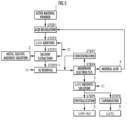
- the acid solution after the neutralization is next subjected to organic solvent extraction in STEP 3.
- organic solvent extraction manganese, cobalt, and nickel, excluding lithium, out of the valuable metals, are separately organic solvent extracted, or iron and aluminum are separated and removed as their respective metal sulfate aqueous solutions 2, thereby obtaining a first lithium salt aqueous solution.
- hydrochloric acid is used for the acid dissolution in STEP 1
- the lithium salt contained in the first lithium salt aqueous solution is lithium chloride.
- the organic solvent is at least one selected from the group consisting of an organophosphorus compound such as phosphate ester, phosphonate ester, phosphinic acid, and phosphine oxide, a hydroxime, and an organic amine compound.
- the organic solvent is preferably free from a reducing agent and an oxidizing agent.
- the organic solvent is free from an oxidizing agent
- metals contained in the acid solution after the neutralization, especially manganese are precipitated and do not cause piping clogging. Furthermore, there is no problem of deterioration of the organic solvent by the oxidizing agent.
- the organophosphorus compound is commercially available, and examples of acidic phosphate esters include D2EHPA (di(2-ethylhexyl) phosphate), examples of phosphonate esters include PC-88A manufactured by Daihachi Chemical Industry Co., Ltd., examples of phosphinic acid include CYANEX 272 manufactured by Solvay S.A., examples of neutral phosphate esters include TBP (tributyl phosphate), and examples of phosphine oxides include tri-n-octylphosphine (TOPO).
- D2EHPA di(2-ethylhexyl) phosphate
- examples of phosphonate esters include PC-88A manufactured by Daihachi Chemical Industry Co., Ltd.
- examples of phosphinic acid include CYANEX 272 manufactured by Solvay S.A.
- examples of neutral phosphate esters include TBP (tributyl phosphate)
- examples of phosphine oxides
- hydroxime examples include 7-hydroxy-5,8-diethyl-6-dodecanone oxime (LIX-63), 5-dodecyl-2-hydroxybenzaldehyde oxime (LIX 860), 2-hydroxy-5-nonylbenzophenone oxime (LIX 65N), 2-hydroxy-5-nonylacetophenone oxime (SME 529), and 2-hydroxy-5-nonylphenyl benzyl ketone oxime (Acorga P-17).
- organic amine compound examples include Primene (R) JM-T manufactured by The Dow Chemical Company, which is a primary amine, Amberlite (R) LA-2 manufactured by Sigma-Aldrich Co.
- Alamine 336 trioctylamine
- Sigma-Aldrich Co. LLC which is a tertiary amine
- Aliquat (R) 336 manufactured by Sigma-Aldrich Co. LLC, which is a quaternary ammonium salt.
- lithium hydroxide LiOH
- the acid solution after the neutralization is next subjected to solvent extraction in STEP 3.
- solvent extraction manganese, cobalt, and nickel, excluding lithium, out of the valuable metals, are separately solvent extracted, or iron and aluminum are separated and removed as their respective metal sulfate aqueous solutions 2, thereby obtaining a first lithium salt aqueous solution.
- hydrochloric acid is used for the acid dissolution in STEP 1
- the lithium salt contained in the first lithium salt aqueous solution is lithium chloride.
- an alkali-containing organic solvent obtained by mixing an alkali aqueous solution and the organic solvent, followed by oil-water separation, is mixed with the acid solution.
- lithium hydroxide LiOH
- STEP 2A lithium hydroxide
- the acid solution after the neutralization is next mixed with a sulfide in STEP 2B in the pH range of 2 to 6 to produce a sulfide of at least one metal selected from the group consisting of copper, cadmium, lead, and mercury, and the metal sulfide is removed.
- the sulfide to be mixed with the acid solution include hydrogen sulfide gas, sodium hydrosulfide, and sodium sulfide.
- the acid solution from which the metal sulfide has been removed is subjected to solvent extraction in STEP 3.
- solvent extraction manganese, cobalt, and nickel, excluding lithium, out of the valuable metals, are separately solvent extracted, or iron and aluminum are separated and removed as their respective metal sulfate aqueous solutions 2, thereby obtaining a first lithium salt aqueous solution.
- hydrochloric acid is used for the acid dissolution in STEP 1
- the lithium salt contained in the first lithium salt aqueous solution is lithium chloride.
- lithium hydroxide LiOH
- the acid solution after the neutralization is next subjected to solvent extraction in STEP 3.
- solvent extraction manganese, cobalt, and nickel, excluding lithium, out of the valuable metals, are separately solvent extracted, or iron and aluminum are separated and removed as their respective metal sulfate aqueous solutions 2, thereby obtaining a first lithium salt aqueous solution.
- the first lithium salt aqueous solution and an alkali are mixed, the pH of the aqueous solution is preferably adjusted to 8 to 14, more preferably 10 to 12, and a minute amount of nickel contained in the first lithium salt aqueous solution is removed as nickel hydroxide to obtain a second lithium salt aqueous solution.
- the alkali to be mixed with the first lithium salt aqueous solution preferably includes at least one selected from the group consisting of lithium, sodium, potassium, rubidium, cesium, and francium, more preferably includes at least one selected from the group consisting of lithium, sodium, and potassium, is still more preferably at least one selected from the group consisting of lithium, sodium, and potassium, and is particularly preferably lithium.
- the alkali may be a solid or may be an aqueous solution.
- Nickel hydroxide is separated from the second lithium salt aqueous solution by a solid-liquid separation step such as filtration.
- a flocculating agent may be used in the solid-liquid separation step for nickel hydroxide.
- the lithium salt contained in the second lithium salt aqueous solution is lithium chloride.
- a minute amount of nickel contained in the first lithium salt aqueous solution is removed as nickel hydroxide, and thus nickel is not accumulated.
- the second lithium salt aqueous solution is subjected to membrane electrolysis using an ion exchange membrane in STEP 4.
- the membrane electrolysis in STEP 4 can be carried out using, for example, an electrolytic bath 11 shown in FIG. 6 .
- the electrolytic bath 11 comprises an anode plate 12 on one inner side and a cathode plate 13 on the inner side opposite to the anode plate 12, and the anode plate 12 is connected to an anode 14 of the power source and the cathode plate 13 is connected to a cathode 15 of the power source.
- the electrolytic bath 11 is compartmentalized by an ion exchange membrane 16 into an anode chamber 17 comprising the anode plate 12 and a cathode chamber 18 comprising the cathode plate 13.
- chloride ions produce chlorine gas (Cl 2 ) on the anode plate 12, while lithium ions move through the ion exchange membrane 16 to the cathode chamber 18.
- water (H 2 O) is ionized into hydroxide ions (OH - ) and hydrogen ions (H + ), and hydrogen ions produce hydrogen gas (H 2 ) on the cathode plate 13, while hydroxide ions are combined with lithium to produce a lithium hydroxide aqueous solution 3.
- Electric power to be used for the membrane electrolysis step preferably includes electric power obtained by renewable energy, and more preferably includes electric power obtained by at least one selected from the group consisting of solar power generation and wind power generation.
- hydrochloric acid as a mineral acid 4 can be obtained, and the mineral acid 4 can be used for dissolution of the active material powder 1 in STEP 1.
- the lithium hydroxide aqueous solution 3 obtained by the membrane electrolysis can be recovered as lithium hydroxide monohydrate (LiOH ⁇ H 2 O) by crystallization in STEP 5, or can be recovered as lithium carbonate (Li 2 CO 3 ) by carbonation in STEP 6.
- the carbonation can be carried out by allowing the lithium hydroxide aqueous solution 3 to react with carbon dioxide gas (CO 2 ).
- the lithium recovery method 11 of the present invention ( FIG. 4 ) at least one of a portion of the lithium hydroxide aqueous solution 3 obtained by the membrane electrolysis and a portion of the second lithium salt aqueous solution containing at least one selected from the group consisting of sodium ions and sulfate ions is carbonated in STEP 8, and lithium carbonate 7 is separated by a solid-liquid separation step such as filtration. The filtrate separated from the lithium carbonate 7 is discarded.
- the impurities contained in the lithium hydroxide aqueous solution 3 and the impurities such as at least one type of ions selected from the group consisting of sodium ions and sulfate ions contained in the second lithium salt aqueous solution are not accumulated and are reduced.
- the lithium hydroxide aqueous solution 3 is added to an extraction solvent. Since the extraction solvent used for the solvent extraction in STEP 3 is a cation exchange extractant, if it is used continuously, the liquid nature will lean toward the acidic side and the extraction rate will be decreased, but addition of the lithium hydroxide aqueous solution 3 can suppress the decrease in the extraction rate.
- the lithium hydroxide aqueous solution 3 can be used for the solvent extraction of at least one of manganese, cobalt, and nickel, each of which is separately solvent extracted.
- the first lithium salt aqueous solution is electrolyzed, resulting in production of a third lithium salt aqueous solution that is more dilute than the second lithium salt aqueous solution.
- the third lithium salt aqueous solution is concentrated in STEP 7 and added to the first lithium salt aqueous solution.
- the concentration in STEP 7 can be carried out using, for example, a reverse osmosis membrane (RO membrane).
- a lithium salt aqueous solution of high concentration can be obtained since no alkali source other than lithium is supplied.
- lithium hydroxide can be obtained by electrolyzing the lithium salt aqueous solution of high concentration, the recovery rate of lithium can be improved.
- lithium hydroxide obtained by the electrolysis can be returned to the steps as it is, thus enabling resource circulation.
Landscapes
- Chemical & Material Sciences (AREA)
- Engineering & Computer Science (AREA)
- Materials Engineering (AREA)
- Organic Chemistry (AREA)
- Metallurgy (AREA)
- Manufacturing & Machinery (AREA)
- Mechanical Engineering (AREA)
- Environmental & Geological Engineering (AREA)
- General Life Sciences & Earth Sciences (AREA)
- Life Sciences & Earth Sciences (AREA)
- Geology (AREA)
- Geochemistry & Mineralogy (AREA)
- Chemical Kinetics & Catalysis (AREA)
- Inorganic Chemistry (AREA)
- Electrochemistry (AREA)
- General Chemical & Material Sciences (AREA)
- Ocean & Marine Engineering (AREA)
- Oceanography (AREA)
- Manufacture And Refinement Of Metals (AREA)
- Secondary Cells (AREA)
- Electrolytic Production Of Non-Metals, Compounds, Apparatuses Therefor (AREA)
- Processing Of Solid Wastes (AREA)
- Electrolytic Production Of Metals (AREA)
Abstract
Description
- The present invention relates to a method for recovering lithium from waste lithium ion batteries.
- In recent years, along with the widespread use of lithium ion batteries, methods for recovering valuable metals such as cobalt, nickel, manganese, and lithium from waste lithium ion batteries and reusing them as materials for the lithium ion batteries have been investigated.
- Conventionally, when recovering the valuable metals from the waste lithium ion batteries, it has been carried out to separate and refine cobalt, nickel, manganese, and lithium by a wet process from the powder containing the valuable metals (hereinafter, referred to as active material powder) obtained by, for example, crushing and classifying the waste lithium ion batteries with or without heating treatment (roasting) (for example, see
Patent Literatures 1 and 2). - Note that, in the present application, waste lithium ion batteries mean used lithium ion batteries that have reached the end of their useful life as battery products, lithium ion batteries discarded as defective products and the like in the production process, and residual positive electrode and negative electrode materials and the like used for productization in the production process.
-
- Patent Literature 1:
Japanese Patent No. 6835820 - Patent Literature 2:
Japanese Patent No. 6869444 - However, in the conventional wet process, a compound other than the lithium compound, which is the recovery target, is used as the alkali source, which increases the concentration of cations other than lithium and simultaneously decreases the concentration of lithium ions. As a result, the conventional wet process has inconveniences that the recovery rate of lithium, the target, is significantly decreased, and that the compound other than the lithium compound used as the alkali source is drained as a salt, making resource circulation impossible. Here, examples of the compound other than the lithium compound may include sodium hydroxide, sodium carbonate, and ammonia.
- An object of the present invention is to provide a method for recovering valuable metals from waste lithium ion batteries that can eliminate such inconveniences to recover lithium at a high recovery rate and enable resource circulation.
- As a result of investigations in view of the aforementioned problem, the present inventors have found that the aforementioned inconveniences can be solved by dissolving active material powder obtained by pre-processing waste lithium ion batteries in a mineral acid, neutralizing the solution with lithium hydroxide, re-adding lithium hydroxide and filtering precipitates to obtain a first lithium salt aqueous solution as a filtrate.
- The present inventors have found that the aforementioned inconveniences can be solved by dissolving the active material powder in a mineral acid, neutralizing the solution with lithium hydroxide, and then, from the solution obtained by solid-liquid separation, extracting manganese, cobalt, and nickel in a specific order using a specific plurality of organic solvents.
- The present inventors have found that the aforementioned inconveniences can be solved by dissolving the active material powder in a mineral acid, neutralizing the solution with lithium hydroxide, and then, from the solution obtained by solid-liquid separation, extracting manganese, cobalt, and nickel using specific organic solvents.
- The present inventors have found that the aforementioned inconveniences can be solved by dissolving the active material powder in a mineral acid, neutralizing the solution with lithium hydroxide, and then, when extracting manganese, cobalt, and nickel from the solution obtained by solid-liquid separation using organic solvents, mixing an alkali-containing organic solvent obtained by mixing an alkali aqueous solution and the organic solvent, followed by oil-water separation, with the acid solution.
- The present inventors have found that the aforementioned inconveniences can be solved by dissolving the active material powder in a mineral acid, neutralizing the solution with lithium hydroxide, and then adding a sulfide and removing a metal sulfide.
- The present inventors have found that the aforementioned inconveniences can be solved by carbonating the lithium hydroxide aqueous solution and the lithium salt aqueous solution obtained in the membrane electrolysis step.
- The present inventors have found that the aforementioned inconveniences can be solved by dissolving the active material powder in a mineral acid, neutralizing the solution with lithium hydroxide, then, from the solution obtained by solid-liquid separation, extracting manganese, cobalt, and nickel using organic solvents to obtain a lithium salt aqueous solution, and thereafter mixing the lithium salt aqueous solution and an alkali to remove nickel contained in the lithium salt aqueous solution.
- The present invention has reached completion based on these findings.
- The present invention relates to a method for recovering lithium from waste lithium ion batteries, the method comprising: a dissolution step of dissolving active material powder obtained by pre-processing the waste lithium ion batteries in a mineral acid to obtain a solution; a neutralization step of neutralizing the solution with lithium hydroxide; a lithium hydroxide re-addition step of re-adding lithium hydroxide to the acid solution to which lithium hydroxide has been added and filtering precipitates to obtain a first lithium salt aqueous solution as a filtrate; and a membrane electrolysis step of subjecting the first lithium salt aqueous solution to membrane electrolysis using an ion exchange membrane to obtain a lithium hydroxide aqueous solution, an acid, and a second lithium salt aqueous solution that is more dilute than the first lithium salt aqueous solution, wherein the lithium hydroxide aqueous solution obtained in the membrane electrolysis step is reused in at least one selected from the group consisting of the neutralization step and the lithium hydroxide re-addition step, and the acid obtained in the membrane electrolysis step is reused as the mineral acid used in the dissolution step (hereinafter, this method may be referred to as "
lithium recovery method 1 of the present invention"). - The present invention relates to a method for recovering lithium from waste lithium ion batteries, the method comprising: a dissolution step of dissolving active material powder obtained by pre-processing the waste lithium ion batteries in a mineral acid to obtain a solution; a neutralization and solid-liquid separation step of solid-liquid separating the solution into insoluble matters and a solution A produced by neutralization with lithium hydroxide; a manganese extraction step of adding an organophosphorus compound extraction solvent to the solution A to extract and separate manganese and also to obtain a solution B; a cobalt extraction step of adding an organophosphorus compound extraction solvent to the solution B to extract and separate cobalt and also to obtain a solution C; a nickel extraction step of adding an organophosphorus compound extraction solvent to the solution C to extract and separate nickel and also to obtain a first lithium salt aqueous solution; and a membrane electrolysis step of subjecting the first lithium salt aqueous solution to membrane electrolysis using an ion exchange membrane to obtain a lithium hydroxide aqueous solution, an acid, and a second lithium salt aqueous solution that is more dilute than the first lithium salt aqueous solution, wherein the lithium hydroxide aqueous solution obtained in the membrane electrolysis step is reused in at least one selected from the group consisting of the neutralization and solid-liquid separation step, the manganese extraction step, the cobalt extraction step, and the nickel extraction step, and the acid obtained in the membrane electrolysis step is reused as the mineral acid used in the dissolution step (hereinafter, this method may be referred to as "
lithium recovery method 2 of the present invention"). - The present invention relates to a method for recovering lithium from waste lithium ion batteries, the method comprising: a dissolution step of dissolving active material powder obtained by pre-processing the waste lithium ion batteries in a mineral acid to obtain a solution; a neutralization and solid-liquid separation step of solid-liquid separating the solution into insoluble matters and a solution A produced by neutralization with lithium hydroxide; a manganese extraction step of adding an organophosphorus compound extraction solvent to the solution A to extract and separate manganese and also to obtain a solution D; a nickel extraction step of adding a hydroxime extraction solvent to the solution D to extract and separate nickel and also to obtain a solution E; a cobalt extraction step of adding an organophosphorus compound extraction solvent to the solution E to extract and separate cobalt and also to obtain a first lithium salt aqueous solution; and a membrane electrolysis step of subjecting the first lithium salt aqueous solution to electrolysis using an ion exchange membrane to obtain a lithium hydroxide aqueous solution, an acid, and a second lithium salt aqueous solution that is more dilute than the first lithium salt aqueous solution, wherein the lithium hydroxide aqueous solution obtained in the membrane electrolysis step is reused in at least one selected from the group consisting of the neutralization and solid-liquid separation step, the manganese extraction step, the nickel extraction step, and the cobalt extraction step, and the acid obtained in the membrane electrolysis step is reused as the mineral acid used in the dissolution step (hereinafter, this method may be referred to as "
lithium recovery method 3 of the present invention"). - The present invention relates to a method for recovering lithium from waste lithium ion batteries, the method comprising: a dissolution step of dissolving active material powder obtained by pre-processing the waste lithium ion batteries in a mineral acid to obtain a solution; a neutralization and solid-liquid separation step of solid-liquid separating the solution into insoluble matters and a solution A produced by neutralization with lithium hydroxide; a cobalt extraction step of adding an organic amine compound extraction solvent to the solution A to extract and separate cobalt and also to obtain a solution F; a manganese extraction step of adding an organophosphorus compound extraction solvent to the solution F to extract and separate manganese and also to obtain a solution G; a nickel extraction step of adding an organophosphorus compound extraction solvent to the solution G to extract and separate nickel and also to obtain a first lithium salt aqueous solution; and a membrane electrolysis step of subjecting the first lithium salt aqueous solution to membrane electrolysis using an ion exchange membrane to obtain a lithium hydroxide aqueous solution, an acid, and a second lithium salt aqueous solution that is more dilute than the first lithium salt aqueous solution, wherein the lithium hydroxide aqueous solution obtained in the membrane electrolysis step is reused in at least one selected from the group consisting of the neutralization and solid-liquid separation step, the cobalt extraction step, the manganese extraction step, and the nickel extraction step, and the acid obtained in the membrane electrolysis step is reused as the mineral acid used in the dissolution step (hereinafter, this method may be referred to as "
lithium recovery method 4 of the present invention"). - The present invention relates to a method for recovering lithium from waste lithium ion batteries, the method comprising: a dissolution step of dissolving active material powder obtained by pre-processing the waste lithium ion batteries in a mineral acid to obtain a solution; a neutralization and solid-liquid separation step of solid-liquid separating the solution into insoluble matters and a solution A produced by neutralization with lithium hydroxide; a cobalt extraction step of adding an organic amine compound extraction solvent to the solution A to extract and separate cobalt and also to obtain a solution H; a nickel extraction step of adding a hydroxime extraction solvent to the solution H to extract and separate nickel and also to obtain a solution I; a manganese extraction step of adding an organophosphorus compound extraction solvent to the solution I to extract and separate manganese and also to obtain a first lithium salt aqueous solution; and a membrane electrolysis step of subjecting the first lithium salt aqueous solution to membrane electrolysis using an ion exchange membrane to obtain a lithium hydroxide aqueous solution, an acid, and a second lithium salt aqueous solution that is more dilute than the first lithium salt aqueous solution, wherein the lithium hydroxide aqueous solution obtained in the membrane electrolysis step is reused in at least one selected from the group consisting of the neutralization and solid-liquid separation step, the cobalt extraction step, the nickel extraction step, and the manganese extraction step, and the acid obtained in the membrane electrolysis step is reused as the mineral acid used in the dissolution step (hereinafter, this method may be referred to as "
lithium recovery method 5 of the present invention"). - The present invention relates to a method for recovering lithium from waste lithium ion batteries, the method comprising: a dissolution step of dissolving active material powder obtained by pre-processing the waste lithium ion batteries in a mineral acid to obtain a solution; a neutralization and solid-liquid separation step of solid-liquid separating the solution into insoluble matters and a solution A produced by neutralization with lithium hydroxide; a nickel extraction step of adding a hydroxime extraction solvent to the solution A to extract and separate nickel and also to obtain a solution J; a manganese extraction step of adding an organophosphorus compound extraction solvent to the solution J to extract and separate manganese and also to obtain a solution K; a cobalt extraction step of adding an organophosphorus compound extraction solvent to the solution K to extract and separate cobalt and also to obtain a first lithium salt aqueous solution; and a membrane electrolysis step of subjecting the first lithium salt aqueous solution to membrane electrolysis using an ion exchange membrane to obtain a lithium hydroxide aqueous solution, an acid, and a second lithium salt aqueous solution that is more dilute than the first lithium salt aqueous solution, wherein the lithium hydroxide aqueous solution obtained in the membrane electrolysis step is reused in at least one selected from the group consisting of the neutralization and solid-liquid separation step, the nickel extraction step, the manganese extraction step, and the cobalt extraction step, and the acid obtained in the membrane electrolysis step is reused as the mineral acid used in the dissolution step (hereinafter, this method may be referred to as "
lithium recovery method 6 of the present invention"). - The present invention relates to a method for recovering lithium from waste lithium ion batteries, the method comprising: a dissolution step of dissolving active material powder obtained by pre-processing the waste lithium ion batteries in a mineral acid to obtain a solution; a neutralization and solid-liquid separation step of solid-liquid separating the solution into insoluble matters and a solution A produced by neutralization with lithium hydroxide; a nickel extraction step of adding a hydroxime extraction solvent to the solution A to extract and separate nickel and also to obtain a solution L; a cobalt extraction step of adding an organic amine compound extraction solvent to the solution L to extract and separate cobalt and also to obtain a solution M; a manganese extraction step of adding an organophosphorus compound extraction solvent to the solution M to extract and separate manganese and also to obtain a first lithium salt aqueous solution; and a membrane electrolysis step of subjecting the first lithium salt aqueous solution to membrane electrolysis using an ion exchange membrane to obtain a lithium hydroxide aqueous solution, an acid, and a second lithium salt aqueous solution that is more dilute than the first lithium salt aqueous solution, wherein the lithium hydroxide aqueous solution obtained in the membrane electrolysis step is reused in at least one selected from the group consisting of the neutralization and solid-liquid separation step, the nickel extraction step, the cobalt extraction step, and the manganese extraction step, and the acid obtained in the membrane electrolysis step is reused as the mineral acid used in the dissolution step (hereinafter, this method may be referred to as "
lithium recovery method 7 of the present invention"). - The present invention relates to a method for recovering lithium from waste lithium ion batteries, the method comprising: a dissolution step of dissolving active material powder obtained by pre-processing the waste lithium ion batteries in a mineral acid to obtain a solution; a neutralization step of neutralizing the solution with lithium hydroxide; a solvent extraction step of separating at least one metal excluding lithium, out of metals contained in the active material powder, from the acid solution to which lithium hydroxide has been added by organic solvent extraction to obtain a first lithium salt aqueous solution as a residual liquid of the solvent extraction; and a membrane electrolysis step of subjecting the first lithium salt aqueous solution to membrane electrolysis using an ion exchange membrane to obtain a lithium hydroxide aqueous solution, an acid, and a second lithium salt aqueous solution that is more dilute than the first lithium salt aqueous solution, wherein the lithium hydroxide aqueous solution obtained in the membrane electrolysis step is reused in at least one selected from the group consisting of the neutralization step and the solvent extraction step, the acid obtained in the membrane electrolysis step is reused as the mineral acid used in the dissolution step, and the organic solvent is at least one selected from the group consisting of an organophosphorus compound, a hydroxime, and an organic amine compound (hereinafter, this method may be referred to as "lithium recovery method 8 of the present invention").
- The present invention relates to a method for recovering lithium from waste lithium ion batteries, the method comprising: a dissolution step of dissolving active material powder obtained by pre-processing the waste lithium ion batteries in a mineral acid to obtain a solution; a neutralization step of neutralizing the solution with lithium hydroxide; a solvent extraction step of separating at least one metal excluding lithium, out of metals contained in the active material powder, from the acid solution to which lithium hydroxide has been added by solvent extraction to obtain a first lithium salt aqueous solution as a residual liquid of the solvent extraction; and a membrane electrolysis step of subjecting the first lithium salt aqueous solution to membrane electrolysis using an ion exchange membrane to obtain a lithium hydroxide aqueous solution, an acid, and a second lithium salt aqueous solution that is more dilute than the first lithium salt aqueous solution, wherein the lithium hydroxide aqueous solution obtained in the membrane electrolysis step is reused in at least one selected from the group consisting of the neutralization step and the solvent extraction step, the acid obtained in the membrane electrolysis step is reused as the mineral acid used in the dissolution step, and in the solvent extraction step, an alkali-containing organic solvent obtained by mixing an alkali aqueous solution and the organic solvent, followed by oil-water separation, is mixed with the acid solution (hereinafter, this method may be referred to as "lithium recovery method 9 of the present invention").
- The present invention relates to a method for recovering lithium from waste lithium ion batteries, the method comprising: a dissolution step of dissolving active material powder obtained by pre-processing the waste lithium ion batteries in a mineral acid to obtain a solution; a neutralization step of neutralizing the solution with lithium hydroxide; a metal sulfide removal step of mixing the acid solution to which lithium hydroxide has been added with a sulfide in a pH range of 2 to 6 to produce a sulfide of at least one metal selected from the group consisting of copper, cadmium, lead, and mercury, and removing the metal sulfide; a solvent extraction step of separating at least one metal excluding lithium, out of metals contained in the active material powder, from the acid solution from which the metal sulfide has been removed by solvent extraction to obtain a first lithium salt aqueous solution as a residual liquid of the solvent extraction; and a membrane electrolysis step of subjecting the first lithium salt aqueous solution to membrane electrolysis using an ion exchange membrane to obtain a lithium hydroxide aqueous solution, an acid, and a second lithium salt aqueous solution that is more dilute than the first lithium salt aqueous solution, wherein the lithium hydroxide aqueous solution obtained in the membrane electrolysis step is reused in at least one selected from the group consisting of the neutralization step and the solvent extraction step, and the acid obtained in the membrane electrolysis step is reused as the mineral acid used in the dissolution step (hereinafter, this method may be referred to as "lithium recovery method 10 of the present invention").
- The present invention relates to a method for recovering lithium from waste lithium ion batteries, the method comprising: a dissolution step of dissolving active material powder obtained by pre-processing the waste lithium ion batteries in a mineral acid to obtain a solution; a neutralization step of neutralizing the solution with lithium hydroxide; a solvent extraction step of separating at least one metal excluding lithium, out of metals contained in the active material powder, from the acid solution to which lithium hydroxide has been added by solvent extraction to obtain a first lithium salt aqueous solution as a residual liquid of the solvent extraction; a membrane electrolysis step of subjecting the first lithium salt aqueous solution to membrane electrolysis using an ion exchange membrane to obtain a lithium hydroxide aqueous solution, an acid, and a second lithium salt aqueous solution that is more dilute than the first lithium salt aqueous solution; and a carbonation step of carbonating the lithium hydroxide aqueous solution and the second lithium salt aqueous solution, wherein the lithium hydroxide aqueous solution obtained in the membrane electrolysis step is reused in at least one selected from the group consisting of the neutralization step and the solvent extraction step, and the acid obtained in the membrane electrolysis step is reused as the mineral acid used in the dissolution step (hereinafter, this method may be referred to as "
lithium recovery method 11 of the present invention"). - The present invention relates to a method for recovering lithium from waste lithium ion batteries, the method comprising: a dissolution step of dissolving active material powder obtained by pre-processing the waste lithium ion batteries in a mineral acid to obtain a solution; a neutralization step of neutralizing the solution with lithium hydroxide; a solvent extraction step of separating at least one metal excluding lithium, out of metals contained in the active material powder, from the acid solution to which lithium hydroxide has been added by solvent extraction to obtain a first lithium salt aqueous solution as a residual liquid of the solvent extraction; a nickel removal step of mixing the first lithium salt aqueous solution and an alkali to remove nickel contained in the first lithium salt aqueous solution and to obtain a second lithium salt aqueous solution; and a membrane electrolysis step of subjecting the second lithium salt aqueous solution to membrane electrolysis using an ion exchange membrane to obtain a lithium hydroxide aqueous solution, an acid, and a third lithium salt aqueous solution that is more dilute than the second lithium salt aqueous solution, wherein the lithium hydroxide aqueous solution obtained in the membrane electrolysis step is reused in at least one selected from the group consisting of the neutralization step and the solvent extraction step, and the acid obtained in the membrane electrolysis step is reused as the mineral acid used in the dissolution step (hereinafter, this method may be referred to as "
lithium recovery method 12 of the present invention"). - The second lithium salt aqueous solution or the third lithium salt aqueous solution is preferably concentrated and added to the first lithium salt aqueous solution or the second lithium salt aqueous solution.
- The mineral acid preferably includes at least one selected from the group consisting of hydrochloric acid, sulfuric acid, and nitric acid, and more preferably includes hydrochloric acid.
- Hydrochloric acid produced by allowing chlorine and hydrogen obtained in the membrane electrolysis step to react with each other is preferably used as the mineral acid.
- Electric power used for the membrane electrolysis step preferably includes electric power obtained by renewable energy, and more preferably includes electric power obtained by at least one selected from the group consisting of solar power generation and wind power generation.
-
-
FIG. 1 is an explanatory drawing showing the configuration of one embodiment of thelithium recovery method 1 of the present invention. -
FIG. 2 is an explanatory drawing showing the configuration of one embodiment of thelithium recovery methods 2 to 9 of the present invention. -
FIG. 3 is an explanatory drawing showing the configuration of one embodiment of the lithium recovery method 10 of the present invention. -
FIG. 4 is an explanatory drawing showing the configuration of one embodiment of thelithium recovery method 11 of the present invention. -
FIG. 5 is an explanatory drawing showing the configuration of one embodiment of thelithium recovery method 12 of the present invention. -
FIG. 6 is an explanatory cross-sectional view showing the structure of the ion exchange membrane electrolytic bath used in themethods 1 to 12 for recovering lithium from waste lithium ion batteries of the present invention. - The present invention will be described in further detail.
- Note that the numerical range "X to Y" represents X or more and Y or less unless otherwise noted, and includes the numerical values at both ends. Also, when numerical ranges are given, the upper limit and lower limit values can be combined as appropriate, and the resulting numerical ranges shall also be considered as disclosed.
- Furthermore, in the description of drawings, identical elements are marked with the same reference signs, and redundant descriptions are omitted. In addition, the dimensional ratios in drawings are exaggerated for the sake of convenience of description and may differ from the actual ratios.
- With reference to the accompanying drawings, the
respective embodiments 1 to 12 of thepresent invention 1 to 12 will be described in further detail. - As shown in each of
FIGs. 1 to 5 , in the respective lithium recovery methods of thepresent embodiments 1 to 12,active material powder 1 is used as the starting material. - In the
present embodiments 1 to 12, next, theactive material powder 1 is dissolved in a mineral acid inSTEP 1 to obtain an acid solution of theactive material powder 1 containing at least lithium. The mineral acid preferably includes at least one selected from the group consisting of hydrochloric acid, sulfuric acid, and nitric acid, more preferably includes hydrochloric acid, and is still more preferably hydrochloric acid. Theactive material powder 1 contains valuable metals such as iron, aluminum, manganese, cobalt, and nickel, in addition to lithium. - In the
lithium recovery method 1 of the present invention (FIG. 1 ), for the acid solution, next, lithium hydroxide (LiOH) is added inSTEP 2, thereby neutralizing the mineral acid. For the acid solution after the neutralization, next, lithium hydroxide is re-added inSTEP 3. At least one selected from the group consisting of the valuable metals in the acid solution, such as manganese, cobalt, and nickel, is removed asprecipitates 2, and a first lithium salt aqueous solution can be obtained as a filtrate. In the case where two or more metals are contained in the acid solution as valuable metals, theprecipitates 2 may be a mixture of the respective hydroxides of the two or more metals, or may be a hydroxide of a mixture of the two or more metals. In the case where hydrochloric acid is used for the acid dissolution inSTEP 1, the lithium salt contained in the first lithium salt aqueous solution is lithium chloride. - In the case where each of the valuable metals is neutralized and recovered as a hydroxide, sodium hydroxide, sodium carbonate, ammonia, or the like is used as an alkali source, and in the
present invention 1, lithium hydroxide is used as the alkali source, which can increase the lithium recovery rate. - In the
lithium recovery methods 2 to 7 of the present invention (FIG. 2 ), for the acid solution, next, lithium hydroxide (LiOH) is added inSTEP 2, thereby neutralizing the mineral acid. - In the
lithium recovery method 2 of the present invention (FIG. 2 ), the acid solution is solid-liquid separated into insoluble matters and a solution A produced by neutralization with lithium hydroxide. An organophosphorus compound extraction solvent is added to the solution A to extract and separate manganese and also to obtain a solution B (manganese extraction step). An organophosphorus compound extraction solvent is added to the solution B to extract and separate cobalt and also to obtain a solution C (cobalt extraction step). An organophosphorus compound extraction solvent is added to the solution C to extract and separate nickel and also to obtain a first lithium salt aqueous solution (nickel extraction step). The separation factors in these extraction steps are high, that is, the separability of each of the aforementioned metals is good in these extraction steps. Furthermore, these extraction steps can be easily controlled by pH. - The solvents used in the manganese extraction step, the cobalt extraction step, and the nickel extraction step are organophosphorus compounds such as phosphate esters, phosphonate esters, phosphinic acid, and phosphine oxides. These organophosphorus compounds are commercially available, and examples of acidic phosphate esters include D2EHPA (di(2-ethylhexyl) phosphate), examples of phosphonate esters include PC-88A manufactured by Daihachi Chemical Industry Co., Ltd., examples of phosphinic acid include CYANEX 272 manufactured by Solvay S.A., examples of neutral phosphate esters include TBP (tributyl phosphate), and examples of phosphine oxides include tri-n-octylphosphine (TOPO).
- For example, D2EHPA is used in the manganese extraction step, and CYANEX 272 is used in the cobalt extraction step and the nickel extraction step as the extraction solvent. The pH of CYANEX 272 used in the cobalt extraction step and that in the nickel extraction step are different.
- In the
lithium recovery method 3 of the present invention (FIG. 2 ), the acid solution to which lithium hydroxide has been added is solid-liquid separated into insoluble matters and a solution A. An organophosphorus compound extraction solvent is added to the solution A to extract and separate manganese and also to obtain a solution D. A hydroxime extraction solvent is added to the solution D to extract and separate nickel and also to obtain a solution E. An organophosphorus compound extraction solvent is added to the solution E to extract and separate cobalt and also to obtain a first lithium salt aqueous solution. - In the
lithium recovery method 4 of the present invention (FIG. 2 ), the acid solution to which lithium hydroxide has been added is solid-liquid separated into insoluble matters and a solution A. An organic amine compound extraction solvent is added to the solution A to extract and separate cobalt and also to obtain a solution F. An organophosphorus compound extraction solvent is added to the solution F to extract and separate manganese and also to obtain a solution G. An organophosphorus compound extraction solvent is added to the solution G to extract and separate nickel and also to obtain a first lithium salt aqueous solution. - In the
lithium recovery method 5 of the present invention (FIG. 2 ), the acid solution to which lithium hydroxide has been added is solid-liquid separated into insoluble matters and a solution A. An organic amine compound extraction solvent is added to the solution A to extract and separate cobalt and also to obtain a solution H. A hydroxime extraction solvent is added to the solution H to extract and separate nickel and also to obtain a solution I. An organophosphorus compound extraction solvent is added to the solution I to extract and separate manganese and also to obtain a first lithium salt aqueous solution. - In the
lithium recovery method 6 of the present invention (FIG. 2 ), the acid solution to which lithium hydroxide has been added is solid-liquid separated into insoluble matters and a solution A. A hydroxime extraction solvent is added to the solution A to extract and separate nickel and also to obtain a solution J (nickel extraction step). An organophosphorus compound extraction solvent is added to the solution J to extract and separate manganese and also to obtain a solution K (manganese extraction step). An organophosphorus compound extraction solvent is added to the solution K to extract and separate cobalt and also to obtain a first lithium salt aqueous solution (cobalt extraction step). - The solvent used in the nickel extraction step is a hydroxime. Examples of the hydroxime include 7-hydroxy-5,8-diethyl-6-dodecanone oxime (LIX-63), 5-dodecyl-2-hydroxybenzaldehyde oxime (LIX 860), 2-hydroxy-5-nonylbenzophenone oxime (LIX 65N), 2-hydroxy-5-nonylacetophenone oxime (SME 529), and 2-hydroxy-5-nonylphenyl benzyl ketone oxime (Acorga P-17). The solvents used in the manganese extraction step and the cobalt extraction step are organophosphorus compounds such as phosphate esters, phosphonate esters, phosphinic acid, and phosphine oxides. These organophosphorus compounds are commercially available, and examples of acidic phosphate esters include D2EHPA (di(2-ethylhexyl) phosphate), examples of phosphonate esters include PC-88A manufactured by Daihachi Chemical Industry Co., Ltd., examples of phosphinic acid include CYANEX 272 manufactured by Solvay S.A., examples of neutral phosphate esters include TBP (tributyl phosphate), and examples of phosphine oxides include tri-n-octylphosphine (TOPO).
- For example, LIX 860 is used in the nickel extraction step, D2EHPA is used in the manganese extraction step, and CYANEX 272 is used in the cobalt extraction step as the extraction solvent.
- In the
lithium recovery method 7 of the present invention (FIG. 2 ), the acid solution to which lithium hydroxide has been added is solid-liquid separated into insoluble matters and a solution A. A hydroxime extraction solvent is added to the solution A to extract and separate nickel and also to obtain a solution L (nickel extraction step). An organic amine extraction solvent is added to the solution L to extract and separate cobalt and also to obtain a solution M (cobalt extraction step). An organophosphorus compound extraction solvent is added to the solution M to extract and separate manganese and also to obtain a first lithium salt aqueous solution (manganese extraction step). - The solvent used in the nickel extraction step is a hydroxime. Examples of the hydroxime include 7-hydroxy-5,8-diethyl-6-dodecanone oxime (LIX-63), 5-dodecyl-2-hydroxybenzaldehyde oxime (LIX 860), 2-hydroxy-5-nonylbenzophenone oxime (LIX 65N), 2-hydroxy-5-nonylacetophenone oxime (SME 529), and 2-hydroxy-5-nonylphenyl benzyl ketone oxime (Acorga P-17). The solvent used in the cobalt extraction step is an organic amine compound. Examples of the organic amine compound include Primene (R) JM-T manufactured by The Dow Chemical Company, which is a primary amine, Amberlite (R) LA-2 manufactured by Sigma-Aldrich Co. LLC, which is a secondary amine, Alamine 336 (trioctylamine) manufactured by Sigma-Aldrich Co. LLC, which is a tertiary amine, and Aliquat (R) 336 manufactured by Sigma-Aldrich Co. LLC, which is a quaternary ammonium salt. The solvent used in the manganese extraction step is an organophosphorus compound such as phosphate ester, phosphonate ester, phosphinic acid, and phosphine oxide. These organophosphorus compounds are commercially available, and examples of acidic phosphate esters include D2EHPA (di(2-ethylhexyl) phosphate), examples of phosphonate esters include PC-88A manufactured by Daihachi Chemical Industry Co., Ltd., examples of phosphinic acid include CYANEX 272 manufactured by Solvay S.A., examples of neutral phosphate esters include TBP (tributyl phosphate), and examples of phosphine oxides include tri-n-octylphosphine (TOPO).
- For example, LIX 860 is used in the nickel extraction step, trioctylamine is used in the cobalt extraction step, and CYANEX 272 is used in the manganese extraction step as the extraction solvent.
- In the lithium recovery method 8 of the present invention (
FIG. 2 ), for the acid solution, next, lithium hydroxide (LiOH) is added inSTEP 2, thereby neutralizing the mineral acid. The acid solution after the neutralization is next subjected to organic solvent extraction inSTEP 3. In the organic solvent extraction, manganese, cobalt, and nickel, excluding lithium, out of the valuable metals, are separately organic solvent extracted, or iron and aluminum are separated and removed as their respective metal sulfateaqueous solutions 2, thereby obtaining a first lithium salt aqueous solution. In the case where hydrochloric acid is used for the acid dissolution inSTEP 1, the lithium salt contained in the first lithium salt aqueous solution is lithium chloride. The organic solvent is at least one selected from the group consisting of an organophosphorus compound such as phosphate ester, phosphonate ester, phosphinic acid, and phosphine oxide, a hydroxime, and an organic amine compound. The organic solvent is preferably free from a reducing agent and an oxidizing agent. - In the case where the organic solvent is free from an oxidizing agent, metals contained in the acid solution after the neutralization, especially manganese, are precipitated and do not cause piping clogging. Furthermore, there is no problem of deterioration of the organic solvent by the oxidizing agent.
- The organophosphorus compound is commercially available, and examples of acidic phosphate esters include D2EHPA (di(2-ethylhexyl) phosphate), examples of phosphonate esters include PC-88A manufactured by Daihachi Chemical Industry Co., Ltd., examples of phosphinic acid include CYANEX 272 manufactured by Solvay S.A., examples of neutral phosphate esters include TBP (tributyl phosphate), and examples of phosphine oxides include tri-n-octylphosphine (TOPO). Examples of the hydroxime include 7-hydroxy-5,8-diethyl-6-dodecanone oxime (LIX-63), 5-dodecyl-2-hydroxybenzaldehyde oxime (LIX 860), 2-hydroxy-5-nonylbenzophenone oxime (LIX 65N), 2-hydroxy-5-nonylacetophenone oxime (SME 529), and 2-hydroxy-5-nonylphenyl benzyl ketone oxime (Acorga P-17). Examples of the organic amine compound include Primene (R) JM-T manufactured by The Dow Chemical Company, which is a primary amine, Amberlite (R) LA-2 manufactured by Sigma-Aldrich Co. LLC, which is a secondary amine, Alamine 336 (trioctylamine) manufactured by Sigma-Aldrich Co. LLC, which is a tertiary amine, and Aliquat (R) 336 manufactured by Sigma-Aldrich Co. LLC, which is a quaternary ammonium salt.
- In the lithium recovery method 9 of the present invention (
FIG. 2 ), for the acid solution, next, lithium hydroxide (LiOH) is added inSTEP 2, thereby neutralizing the mineral acid. The acid solution after the neutralization is next subjected to solvent extraction inSTEP 3. In the solvent extraction, manganese, cobalt, and nickel, excluding lithium, out of the valuable metals, are separately solvent extracted, or iron and aluminum are separated and removed as their respective metal sulfateaqueous solutions 2, thereby obtaining a first lithium salt aqueous solution. In the case where hydrochloric acid is used for the acid dissolution inSTEP 1, the lithium salt contained in the first lithium salt aqueous solution is lithium chloride. In the extraction step, an alkali-containing organic solvent obtained by mixing an alkali aqueous solution and the organic solvent, followed by oil-water separation, is mixed with the acid solution. - In the lithium recovery method 10 of the present invention (
FIG. 3 ), for the acid solution, next, lithium hydroxide (LiOH) is added in STEP 2A, thereby neutralizing the mineral acid. The acid solution after the neutralization is next mixed with a sulfide in STEP 2B in the pH range of 2 to 6 to produce a sulfide of at least one metal selected from the group consisting of copper, cadmium, lead, and mercury, and the metal sulfide is removed. Examples of the sulfide to be mixed with the acid solution include hydrogen sulfide gas, sodium hydrosulfide, and sodium sulfide. - The acid solution from which the metal sulfide has been removed is subjected to solvent extraction in
STEP 3. In the solvent extraction, manganese, cobalt, and nickel, excluding lithium, out of the valuable metals, are separately solvent extracted, or iron and aluminum are separated and removed as their respective metal sulfateaqueous solutions 2, thereby obtaining a first lithium salt aqueous solution. In the case where hydrochloric acid is used for the acid dissolution inSTEP 1, the lithium salt contained in the first lithium salt aqueous solution is lithium chloride. - In the
lithium recovery method 12 of the present invention (FIG. 5 ), for the acid solution, next, lithium hydroxide (LiOH) is added inSTEP 2, thereby neutralizing the mineral acid. The acid solution after the neutralization is next subjected to solvent extraction inSTEP 3. In the solvent extraction, manganese, cobalt, and nickel, excluding lithium, out of the valuable metals, are separately solvent extracted, or iron and aluminum are separated and removed as their respective metal sulfateaqueous solutions 2, thereby obtaining a first lithium salt aqueous solution. - The first lithium salt aqueous solution and an alkali are mixed, the pH of the aqueous solution is preferably adjusted to 8 to 14, more preferably 10 to 12, and a minute amount of nickel contained in the first lithium salt aqueous solution is removed as nickel hydroxide to obtain a second lithium salt aqueous solution. The alkali to be mixed with the first lithium salt aqueous solution preferably includes at least one selected from the group consisting of lithium, sodium, potassium, rubidium, cesium, and francium, more preferably includes at least one selected from the group consisting of lithium, sodium, and potassium, is still more preferably at least one selected from the group consisting of lithium, sodium, and potassium, and is particularly preferably lithium. The alkali may be a solid or may be an aqueous solution. Nickel hydroxide is separated from the second lithium salt aqueous solution by a solid-liquid separation step such as filtration. In the solid-liquid separation step for nickel hydroxide, a flocculating agent may be used. In the case where hydrochloric acid is used for the acid dissolution in
STEP 1, the lithium salt contained in the second lithium salt aqueous solution is lithium chloride. In thelithium recovery method 12 of the present invention, a minute amount of nickel contained in the first lithium salt aqueous solution is removed as nickel hydroxide, and thus nickel is not accumulated. - In the recovery methods of the
present embodiments 1 to 12, next, the second lithium salt aqueous solution is subjected to membrane electrolysis using an ion exchange membrane inSTEP 4. The membrane electrolysis inSTEP 4 can be carried out using, for example, anelectrolytic bath 11 shown inFIG. 6 . - The
electrolytic bath 11 comprises ananode plate 12 on one inner side and acathode plate 13 on the inner side opposite to theanode plate 12, and theanode plate 12 is connected to ananode 14 of the power source and thecathode plate 13 is connected to acathode 15 of the power source. In addition, theelectrolytic bath 11 is compartmentalized by anion exchange membrane 16 into ananode chamber 17 comprising theanode plate 12 and acathode chamber 18 comprising thecathode plate 13. - In the
electrolytic bath 11, when lithium chloride, for example, is supplied as the second lithium salt aqueous solution to theanode chamber 17 to carry out electrolysis, chloride ions produce chlorine gas (Cl2) on theanode plate 12, while lithium ions move through theion exchange membrane 16 to thecathode chamber 18. - In the
cathode chamber 18, water (H2O) is ionized into hydroxide ions (OH-) and hydrogen ions (H+), and hydrogen ions produce hydrogen gas (H2) on thecathode plate 13, while hydroxide ions are combined with lithium to produce a lithium hydroxideaqueous solution 3. - Electric power to be used for the membrane electrolysis step preferably includes electric power obtained by renewable energy, and more preferably includes electric power obtained by at least one selected from the group consisting of solar power generation and wind power generation.
- In the
present embodiments 1 to 12, by allowing the hydrogen gas (H2) and chlorine gas (Cl2) produced by the membrane electrolysis to react with each other, hydrochloric acid as amineral acid 4 can be obtained, and themineral acid 4 can be used for dissolution of theactive material powder 1 inSTEP 1. - The lithium hydroxide
aqueous solution 3 obtained by the membrane electrolysis can be recovered as lithium hydroxide monohydrate (LiOH·H2O) by crystallization inSTEP 5, or can be recovered as lithium carbonate (Li2CO3) by carbonation inSTEP 6. The carbonation can be carried out by allowing the lithium hydroxideaqueous solution 3 to react with carbon dioxide gas (CO2). - In the
lithium recovery method 11 of the present invention (FIG. 4 ), at least one of a portion of the lithium hydroxideaqueous solution 3 obtained by the membrane electrolysis and a portion of the second lithium salt aqueous solution containing at least one selected from the group consisting of sodium ions and sulfate ions is carbonated in STEP 8, andlithium carbonate 7 is separated by a solid-liquid separation step such as filtration. The filtrate separated from thelithium carbonate 7 is discarded. Accordingly, in thelithium recovery method 11 of the present invention, the impurities contained in the lithium hydroxideaqueous solution 3 and the impurities such as at least one type of ions selected from the group consisting of sodium ions and sulfate ions contained in the second lithium salt aqueous solution are not accumulated and are reduced. - In the case where the lithium hydroxide
aqueous solution 3 is used for the solvent extraction inSTEP 3, the lithium hydroxideaqueous solution 3 is added to an extraction solvent. Since the extraction solvent used for the solvent extraction inSTEP 3 is a cation exchange extractant, if it is used continuously, the liquid nature will lean toward the acidic side and the extraction rate will be decreased, but addition of the lithium hydroxideaqueous solution 3 can suppress the decrease in the extraction rate. - In addition, in the case where the lithium hydroxide
aqueous solution 3 is used for the solvent extraction inSTEP 3, the lithium hydroxideaqueous solution 3 can be used for the solvent extraction of at least one of manganese, cobalt, and nickel, each of which is separately solvent extracted. - In addition, in the membrane electrolysis, the first lithium salt aqueous solution is electrolyzed, resulting in production of a third lithium salt aqueous solution that is more dilute than the second lithium salt aqueous solution. Then, in the present embodiment, the third lithium salt aqueous solution is concentrated in
STEP 7 and added to the first lithium salt aqueous solution. The concentration inSTEP 7 can be carried out using, for example, a reverse osmosis membrane (RO membrane). - In the
present embodiments 1 to 12, a lithium salt aqueous solution of high concentration can be obtained since no alkali source other than lithium is supplied. In addition, in thepresent embodiments 1 to 12, since lithium hydroxide can be obtained by electrolyzing the lithium salt aqueous solution of high concentration, the recovery rate of lithium can be improved. Furthermore, in thepresent embodiments 1 to 12, since there is no unnecessary alkali source but lithium, lithium hydroxide obtained by the electrolysis can be returned to the steps as it is, thus enabling resource circulation. -
- 1 Active material powder
- 2 Metal sulfate aqueous solution
- 3 Lithium hydroxide aqueous solution
- 4 Mineral acid
- 11 Electrolytic bath
- 16 Ion exchange membrane
Claims (18)
- A method for recovering lithium from waste lithium ion batteries, the method comprising:a dissolution step of dissolving active material powder obtained by pre-processing the waste lithium ion batteries in a mineral acid to obtain a solution;a neutralization step of neutralizing the solution with lithium hydroxide;a lithium hydroxide re-addition step of re-adding lithium hydroxide to the acid solution to which lithium hydroxide has been added and filtering precipitates to obtain a first lithium salt aqueous solution as a filtrate; anda membrane electrolysis step of subjecting the first lithium salt aqueous solution to membrane electrolysis using an ion exchange membrane to obtain a lithium hydroxide aqueous solution, an acid, and a second lithium salt aqueous solution that is more dilute than the first lithium salt aqueous solution,wherein the lithium hydroxide aqueous solution obtained in the membrane electrolysis step is reused in at least one selected from a group consisting of the neutralization step and the lithium hydroxide re-addition step, andthe acid obtained in the membrane electrolysis step is reused as the mineral acid used in the dissolution step.
- A method for recovering lithium from waste lithium ion batteries, the method comprising:a dissolution step of dissolving active material powder obtained by pre-processing the waste lithium ion batteries in a mineral acid to obtain a solution;a neutralization and solid-liquid separation step of solid-liquid separating the solution into insoluble matters and a solution A produced by neutralization with lithium hydroxide;a manganese extraction step of adding an organophosphorus compound extraction solvent to the solution A to extract and separate manganese and also to obtain a solution B;a cobalt extraction step of adding an organophosphorus compound extraction solvent to the solution B to extract and separate cobalt and also to obtain a solution C;a nickel extraction step of adding an organophosphorus compound extraction solvent to the solution C to extract and separate nickel and also to obtain a first lithium salt aqueous solution; anda membrane electrolysis step of subjecting the first lithium salt aqueous solution to membrane electrolysis using an ion exchange membrane to obtain a lithium hydroxide aqueous solution, an acid, and a second lithium salt aqueous solution that is more dilute than the first lithium salt aqueous solution,wherein the lithium hydroxide aqueous solution obtained in the membrane electrolysis step is reused in at least one selected from a group consisting of the neutralization and solid-liquid separation step, the manganese extraction step, the cobalt extraction step, and the nickel extraction step, andthe acid obtained in the membrane electrolysis step is reused as the mineral acid used in the dissolution step.
- A method for recovering lithium from waste lithium ion batteries, the method comprising:a dissolution step of dissolving active material powder obtained by pre-processing the waste lithium ion batteries in a mineral acid to obtain a solution;a neutralization and solid-liquid separation step of solid-liquid separating the solution into insoluble matters and a solution A produced by neutralization with lithium hydroxide;a manganese extraction step of adding an organophosphorus compound extraction solvent to the solution A to extract and separate manganese and also to obtain a solution D;a nickel extraction step of adding a hydroxime extraction solvent to the solution D to extract and separate nickel and also to obtain a solution E;a cobalt extraction step of adding an organophosphorus compound extraction solvent to the solution E to extract and separate cobalt and also to obtain a first lithium salt aqueous solution; anda membrane electrolysis step of subjecting the first lithium salt aqueous solution to electrolysis using an ion exchange membrane to obtain a lithium hydroxide aqueous solution, an acid, and a second lithium salt aqueous solution that is more dilute than the first lithium salt aqueous solution,wherein the lithium hydroxide aqueous solution obtained in the membrane electrolysis step is reused in at least one selected from a group consisting of the neutralization and solid-liquid separation step, the manganese extraction step, the nickel extraction step, and the cobalt extraction step, andthe acid obtained in the membrane electrolysis step is reused as the mineral acid used in the dissolution step.
- A method for recovering lithium from waste lithium ion batteries, the method comprising:a dissolution step of dissolving active material powder obtained by pre-processing the waste lithium ion batteries in a mineral acid to obtain a solution;a neutralization and solid-liquid separation step of solid-liquid separating the solution into insoluble matters and a solution A produced by neutralization with lithium hydroxide;a cobalt extraction step of adding an organic amine compound extraction solvent to the solution A to extract and separate cobalt and also to obtain a solution F;a manganese extraction step of adding an organophosphorus compound extraction solvent to the solution F to extract and separate manganese and also to obtain a solution G;a nickel extraction step of adding an organophosphorus compound extraction solvent to the solution G to extract and separate nickel and also to obtain a first lithium salt aqueous solution; anda membrane electrolysis step of subjecting the first lithium salt aqueous solution to membrane electrolysis using an ion exchange membrane to obtain a lithium hydroxide aqueous solution, an acid, and a second lithium salt aqueous solution that is more dilute than the first lithium salt aqueous solution,wherein the lithium hydroxide aqueous solution obtained in the membrane electrolysis step is reused in at least one selected from a group consisting of the neutralization and solid-liquid separation step, the cobalt extraction step, the manganese extraction step, and the nickel extraction step, andthe acid obtained in the membrane electrolysis step is reused as the mineral acid used in the dissolution step.
- A method for recovering lithium from waste lithium ion batteries, the method comprising:a dissolution step of dissolving active material powder obtained by pre-processing the waste lithium ion batteries in a mineral acid to obtain a solution;a neutralization and solid-liquid separation step of solid-liquid separating the solution into insoluble matters and a solution A produced by neutralization with lithium hydroxide;a cobalt extraction step of adding an organic amine compound extraction solvent to the solution A to extract and separate cobalt and also to obtain a solution H;a nickel extraction step of adding a hydroxime extraction solvent to the solution H to extract and separate nickel and also to obtain a solution I;a manganese extraction step of adding an organophosphorus compound extraction solvent to the solution I to extract and separate manganese and also to obtain a first lithium salt aqueous solution; anda membrane electrolysis step of subjecting the first lithium salt aqueous solution to membrane electrolysis using an ion exchange membrane to obtain a lithium hydroxide aqueous solution, an acid, and a second lithium salt aqueous solution that is more dilute than the first lithium salt aqueous solution,wherein the lithium hydroxide aqueous solution obtained in the membrane electrolysis step is reused in at least one selected from a group consisting of the neutralization and solid-liquid separation step, the cobalt extraction step, the nickel extraction step, and the manganese extraction step, andthe acid obtained in the membrane electrolysis step is reused as the mineral acid used in the dissolution step.
- A method for recovering lithium from waste lithium ion batteries, the method comprising:a dissolution step of dissolving active material powder obtained by pre-processing the waste lithium ion batteries in a mineral acid to obtain a solution;a neutralization and solid-liquid separation step of solid-liquid separating the solution into insoluble matters and a solution A produced by neutralization with lithium hydroxide;a nickel extraction step of adding a hydroxime extraction solvent to the solution A to extract and separate nickel and also to obtain a solution J;a manganese extraction step of adding an organophosphorus compound extraction solvent to the solution J to extract and separate manganese and also to obtain a solution K;a cobalt extraction step of adding an organophosphorus compound extraction solvent to the solution K to extract and separate cobalt and also to obtain a first lithium salt aqueous solution; anda membrane electrolysis step of subjecting the first lithium salt aqueous solution to membrane electrolysis using an ion exchange membrane to obtain a lithium hydroxide aqueous solution, an acid, and a second lithium salt aqueous solution that is more dilute than the first lithium salt aqueous solution,wherein the lithium hydroxide aqueous solution obtained in the membrane electrolysis step is reused in at least one selected from a group consisting of the neutralization and solid-liquid separation step, the nickel extraction step, the manganese extraction step, and the cobalt extraction step, andthe acid obtained in the membrane electrolysis step is reused as the mineral acid used in the dissolution step.
- A method for recovering lithium from waste lithium ion batteries, the method comprising:a dissolution step of dissolving active material powder obtained by pre-processing the waste lithium ion batteries in a mineral acid to obtain a solution;a neutralization and solid-liquid separation step of solid-liquid separating the solution into insoluble matters and a solution A produced by neutralization with lithium hydroxide;a nickel extraction step of adding a hydroxime extraction solvent to the solution A to extract and separate nickel and also to obtain a solution L;a cobalt extraction step of adding an organic amine compound extraction solvent to the solution L to extract and separate cobalt and also to obtain a solution M;a manganese extraction step of adding an organophosphorus compound extraction solvent to the solution M to extract and separate manganese and also to obtain a first lithium salt aqueous solution; anda membrane electrolysis step of subjecting the first lithium salt aqueous solution to membrane electrolysis using an ion exchange membrane to obtain a lithium hydroxide aqueous solution, an acid, and a second lithium salt aqueous solution that is more dilute than the first lithium salt aqueous solution,wherein the lithium hydroxide aqueous solution obtained in the membrane electrolysis step is reused in at least one selected from a group consisting of the neutralization and solid-liquid separation step, the nickel extraction step, the cobalt extraction step, and the manganese extraction step, andthe acid obtained in the membrane electrolysis step is reused as the mineral acid used in the dissolution step.
- A method for recovering lithium from waste lithium ion batteries, the method comprising:a dissolution step of dissolving active material powder obtained by pre-processing the waste lithium ion batteries in a mineral acid to obtain a solution;a neutralization step of neutralizing the solution with lithium hydroxide;a solvent extraction step of separating at least one metal excluding lithium, out of metals contained in the active material powder, from the acid solution to which lithium hydroxide has been added by organic solvent extraction to obtain a first lithium salt aqueous solution as a residual liquid of the solvent extraction; anda membrane electrolysis step of subjecting the first lithium salt aqueous solution to membrane electrolysis using an ion exchange membrane to obtain a lithium hydroxide aqueous solution, an acid, and a second lithium salt aqueous solution that is more dilute than the first lithium salt aqueous solution,wherein the lithium hydroxide aqueous solution obtained in the membrane electrolysis step is reused in at least one selected from a group consisting of the neutralization step and the solvent extraction step,the acid obtained in the membrane electrolysis step is reused as the mineral acid used in the dissolution step, andthe organic solvent is at least one selected from a group consisting of an organophosphorus compound, a hydroxime, and an organic amine compound.
- A method for recovering lithium from waste lithium ion batteries, the method comprising:a dissolution step of dissolving active material powder obtained by pre-processing the waste lithium ion batteries in a mineral acid to obtain a solution;a neutralization step of neutralizing the solution with lithium hydroxide;a solvent extraction step of separating at least one metal excluding lithium, out of metals contained in the active material powder, from the acid solution to which lithium hydroxide has been added by solvent extraction to obtain a first lithium salt aqueous solution as a residual liquid of the solvent extraction; anda membrane electrolysis step of subjecting the first lithium salt aqueous solution to membrane electrolysis using an ion exchange membrane to obtain a lithium hydroxide aqueous solution, an acid, and a second lithium salt aqueous solution that is more dilute than the first lithium salt aqueous solution,wherein the lithium hydroxide aqueous solution obtained in the membrane electrolysis step is reused in at least one selected from a group consisting of the neutralization step and the solvent extraction step,the acid obtained in the membrane electrolysis step is reused as the mineral acid used in the dissolution step, andin the solvent extraction step, an alkali-containing organic solvent obtained by mixing an alkali aqueous solution and the organic solvent, followed by oil-water separation, is mixed with the acid solution.
- A method for recovering lithium from waste lithium ion batteries, the method comprising:a dissolution step of dissolving active material powder obtained by pre-processing the waste lithium ion batteries in a mineral acid to obtain a solution;a neutralization step of neutralizing the solution with lithium hydroxide;a metal sulfide removal step of mixing the acid solution to which lithium hydroxide has been added with a sulfide in a pH range of 2 to 6 to produce a sulfide of at least one metal selected from a group consisting of copper, cadmium, lead, and mercury, and removing the metal sulfide;a solvent extraction step of separating at least one metal excluding lithium, out of metals contained in the active material powder, from the acid solution from which the metal sulfide has been removed by solvent extraction to obtain a first lithium salt aqueous solution as a residual liquid of the solvent extraction; anda membrane electrolysis step of subjecting the first lithium salt aqueous solution to membrane electrolysis using an ion exchange membrane to obtain a lithium hydroxide aqueous solution, an acid, and a second lithium salt aqueous solution that is more dilute than the first lithium salt aqueous solution,wherein the lithium hydroxide aqueous solution obtained in the membrane electrolysis step is reused in at least one selected from a group consisting of the neutralization step and the solvent extraction step, andthe acid obtained in the membrane electrolysis step is reused as the mineral acid used in the dissolution step.
- A method for recovering lithium from waste lithium ion batteries, the method comprising:a dissolution step of dissolving active material powder obtained by pre-processing the waste lithium ion batteries in a mineral acid to obtain a solution;a neutralization step of neutralizing the solution with lithium hydroxide;a solvent extraction step of separating at least one metal excluding lithium, out of metals contained in the active material powder, from the acid solution to which lithium hydroxide has been added by solvent extraction to obtain a first lithium salt aqueous solution as a residual liquid of the solvent extraction;a membrane electrolysis step of subjecting the first lithium salt aqueous solution to membrane electrolysis using an ion exchange membrane to obtain a lithium hydroxide aqueous solution, an acid, and a second lithium salt aqueous solution that is more dilute than the first lithium salt aqueous solution; anda carbonation step of carbonating the lithium hydroxide aqueous solution and the second lithium salt aqueous solution,wherein the lithium hydroxide aqueous solution obtained in the membrane electrolysis step is reused in at least one selected from a group consisting of the neutralization step and the solvent extraction step, andthe acid obtained in the membrane electrolysis step is reused as the mineral acid used in the dissolution step.
- A method for recovering lithium from waste lithium ion batteries, the method comprising:a dissolution step of dissolving active material powder obtained by pre-processing the waste lithium ion batteries in a mineral acid to obtain a solution;a neutralization step of neutralizing the solution with lithium hydroxide;a solvent extraction step of separating at least one metal excluding lithium, out of metals contained in the active material powder, from the acid solution to which lithium hydroxide has been added by solvent extraction to obtain a first lithium salt aqueous solution as a residual liquid of the solvent extraction;a nickel removal step of mixing the first lithium salt aqueous solution and an alkali to remove nickel contained in the first lithium salt aqueous solution and to obtain a second lithium salt aqueous solution; anda membrane electrolysis step of subjecting the second lithium salt aqueous solution to membrane electrolysis using an ion exchange membrane to obtain a lithium hydroxide aqueous solution, an acid, and a third lithium salt aqueous solution that is more dilute than the second lithium salt aqueous solution,wherein the lithium hydroxide aqueous solution obtained in the membrane electrolysis step is reused in at least one selected from a group consisting of the neutralization step and the solvent extraction step, andthe acid obtained in the membrane electrolysis step is reused as the mineral acid used in the dissolution step.
- The method for recovering lithium from waste lithium ion batteries according to any one of claims 1 to 12, wherein the second lithium salt aqueous solution or the third lithium salt aqueous solution is concentrated and added to the first lithium salt aqueous solution or the second lithium salt aqueous solution.
- The method for recovering lithium from waste lithium ion batteries according to any one of claims 1 to 12, wherein the mineral acid includes at least one selected from a group consisting of hydrochloric acid, sulfuric acid, and nitric acid.
- The method for recovering lithium from waste lithium ion batteries according to any one of claims 1 to 12, wherein the mineral acid includes hydrochloric acid.
- The method for recovering lithium from waste lithium ion batteries according to any one of claims 1 to 12, wherein hydrochloric acid produced by allowing chlorine and hydrogen obtained in the membrane electrolysis step to react with each other is used as the mineral acid.
- The method for recovering lithium from waste lithium ion batteries according to any one of claims 1 to 12, wherein electric power used for the membrane electrolysis step includes electric power obtained by renewable energy.
- The method for recovering lithium from waste lithium ion batteries according to claim 17, wherein the electric power obtained by renewable energy includes electric power obtained by at least one selected from a group consisting of solar power generation and wind power generation.
Applications Claiming Priority (14)
| Application Number | Priority Date | Filing Date | Title |
|---|---|---|---|
| JP2021161272 | 2021-09-30 | ||
| JP2022064727A JP7588865B2 (en) | 2021-09-30 | 2022-04-08 | How to recover lithium from used lithium-ion batteries |
| JP2022064731A JP7591291B2 (en) | 2021-09-30 | 2022-04-08 | How to recover lithium from used lithium-ion batteries |
| JP2022064729A JP7591290B2 (en) | 2021-09-30 | 2022-04-08 | How to recover lithium from used lithium-ion batteries |
| JP2022064723A JP7591289B2 (en) | 2021-09-30 | 2022-04-08 | How to recover lithium from used lithium-ion batteries |
| JP2022064730A JP7573885B2 (en) | 2021-09-30 | 2022-04-08 | How to recover lithium from used lithium-ion batteries |
| JP2022064733A JP7588867B2 (en) | 2021-09-30 | 2022-04-08 | How to recover lithium from used lithium-ion batteries |
| JP2022064732A JP7573886B2 (en) | 2021-09-30 | 2022-04-08 | How to recover lithium from used lithium-ion batteries |
| JP2022064724A JP7588863B2 (en) | 2021-09-30 | 2022-04-08 | How to recover lithium from used lithium-ion batteries |
| JP2022064722A JP7825860B2 (en) | 2021-09-30 | 2022-04-08 | Method for recovering lithium from waste lithium-ion batteries |
| JP2022064725A JP7588864B2 (en) | 2021-09-30 | 2022-04-08 | How to recover lithium from used lithium-ion batteries |
| JP2022064728A JP7588866B2 (en) | 2021-09-30 | 2022-04-08 | How to recover lithium from used lithium-ion batteries |
| JP2022064726A JP7573884B2 (en) | 2021-09-30 | 2022-04-08 | How to recover lithium from used lithium-ion batteries |
| PCT/JP2023/014342 WO2023195533A1 (en) | 2021-09-30 | 2023-04-07 | Method for recovering lithium from waste lithium ion batteries |
Publications (2)
| Publication Number | Publication Date |
|---|---|
| EP4464805A1 true EP4464805A1 (en) | 2024-11-20 |
| EP4464805A4 EP4464805A4 (en) | 2025-09-17 |
Family
ID=81390820
Family Applications (1)
| Application Number | Title | Priority Date | Filing Date |
|---|---|---|---|
| EP23784817.1A Pending EP4464805A4 (en) | 2021-09-30 | 2023-04-07 | Process for recovering lithium from used lithium-ion batteries |
Country Status (7)
| Country | Link |
|---|---|
| US (1) | US20250167328A1 (en) |
| EP (1) | EP4464805A4 (en) |
| JP (13) | JP7060899B1 (en) |
| KR (1) | KR20240137028A (en) |
| CN (1) | CN118749033A (en) |
| CA (1) | CA3244502A1 (en) |
| WO (1) | WO2023195533A1 (en) |
Families Citing this family (13)
| Publication number | Priority date | Publication date | Assignee | Title |
|---|---|---|---|---|
| JP7060899B1 (en) * | 2021-09-30 | 2022-04-27 | 株式会社アサカ理研 | Lithium recovery system from waste lithium-ion batteries |
| WO2023054667A1 (en) * | 2021-09-30 | 2023-04-06 | 株式会社アサカ理研 | Method for recovering lithium from waste lithium-ion batteries |
| JP2023135553A (en) * | 2022-03-15 | 2023-09-28 | 三菱マテリアル株式会社 | Processing method for lithium ion secondary batteries |
| JPWO2024203979A1 (en) | 2023-03-28 | 2024-10-03 | ||
| JP7706177B2 (en) * | 2023-04-12 | 2025-07-11 | 株式会社アサカ理研 | Method for obtaining high purity lithium salt from low grade lithium carbonate |
| JP7801773B2 (en) * | 2023-04-12 | 2026-01-19 | 株式会社アサカ理研 | Membrane electrolysis method for lithium salt aqueous solution |
| GB202312756D0 (en) * | 2023-08-21 | 2023-10-04 | Watercycle Tech Ltd | Method |
| JP7827046B2 (en) * | 2023-09-28 | 2026-03-10 | トヨタ自動車株式会社 | Resource recovery methods |
| JP2025078215A (en) * | 2023-11-08 | 2025-05-20 | 株式会社アサカ理研 | How to recover valuable metals |
| JPWO2025100334A1 (en) | 2023-11-08 | 2025-05-15 | ||
| WO2025154801A1 (en) * | 2024-01-19 | 2025-07-24 | 三菱マテリアル株式会社 | Method for producing purified lithium carbonate |
| KR20260006213A (en) * | 2024-07-04 | 2026-01-13 | 주식회사 엘지에너지솔루션 | Method of recovery of lithium compound from cathode materials of lithium ion battery |
| CN120810052B (en) * | 2025-09-12 | 2025-11-21 | 浙江沃乐科技股份有限公司 | Device and method for fully recycling waste lithium battery electrolyte |
Family Cites Families (31)
| Publication number | Priority date | Publication date | Assignee | Title |
|---|---|---|---|---|
| JPH10287864A (en) * | 1997-04-14 | 1998-10-27 | Nippon Chem Ind Co Ltd | Method for recovering valuable metal from positive electrode active material for lithium ion secondary battery |
| JP2001508925A (en) | 1997-06-23 | 2001-07-03 | パシフィック・リシアム・リミテッド | Lithium recovery and purification |
| JPH11185834A (en) * | 1997-12-25 | 1999-07-09 | Matsushita Electric Ind Co Ltd | Method for recovering positive electrode active material of lithium ion secondary battery |
| US6835820B2 (en) | 1999-01-07 | 2004-12-28 | The University Of Massachusetts | Polyhydroxyalkanoate biosynthesis associated proteins and coding region in bacillus megaterium |
| JP3515444B2 (en) * | 1999-09-29 | 2004-04-05 | 株式会社東芝 | Battery pack sorting device |
| US6869444B2 (en) | 2000-05-22 | 2005-03-22 | Shlomo Gabbay | Low invasive implantable cardiac prosthesis and method for helping improve operation of a heart valve |
| US6764584B2 (en) * | 2002-10-22 | 2004-07-20 | Industrial Technology Research Institute | Process for producing lithium concentrate from brine or seawater |
| JP4130980B2 (en) | 2003-04-10 | 2008-08-13 | 独立行政法人産業技術総合研究所 | Method for recovering nickel from nickel-containing aqueous solution |
| JP2005042189A (en) * | 2003-07-25 | 2005-02-17 | Ise Chemicals Corp | Cobalt recovery method |
| JP2009269810A (en) * | 2008-05-07 | 2009-11-19 | Kee:Kk | Method for producing high-purity lithium hydroxide |
| JP5004106B2 (en) | 2009-03-30 | 2012-08-22 | Jx日鉱日石金属株式会社 | Method for separating and recovering nickel and lithium |
| JP5074454B2 (en) * | 2009-05-29 | 2012-11-14 | Jx日鉱日石金属株式会社 | Metal recovery method |
| JP2011031232A (en) | 2009-08-04 | 2011-02-17 | Kee:Kk | Method of manufacturing lithium hydroxide |
| JP2011032151A (en) | 2009-08-04 | 2011-02-17 | Kee:Kk | Method of converting lithium carbonate to lithium hydroxide |
| JP6271964B2 (en) * | 2013-11-21 | 2018-01-31 | Jx金属株式会社 | Method for recovering metal from cathode material for lithium ion battery |
| JP6334450B2 (en) * | 2015-03-27 | 2018-05-30 | Jx金属株式会社 | Method for recovering metals from recycled lithium-ion battery materials |
| KR101711854B1 (en) * | 2015-05-13 | 2017-03-03 | 재단법인 포항산업과학연구원 | Method for manufacturing lithium hydroxide and lithium carbonate |
| US10807879B2 (en) | 2016-03-16 | 2020-10-20 | Jx Nippon Mining & Metals Corporation | Processing method for lithium ion battery scrap |
| US11961980B2 (en) | 2017-03-31 | 2024-04-16 | Jx Metals Corporation | Lithium ion battery scrap treatment method |
| CA3076688C (en) | 2017-09-28 | 2021-01-19 | Dominique Morin | Lithium-ion batteries recycling process |
| DE102018102026A1 (en) * | 2018-01-30 | 2019-08-01 | Duesenfeld Gmbh | Process for recycling lithium batteries |
| JP7008904B2 (en) * | 2018-03-22 | 2022-01-25 | 三菱マテリアル株式会社 | How to separate cobalt from copper and aluminum |
| CN108517409B (en) * | 2018-04-04 | 2019-11-29 | 长沙矿冶研究院有限责任公司 | A method of recycling valuable metal from waste and old power battery anode waste material |
| JP6921791B2 (en) | 2018-08-31 | 2021-08-18 | Jx金属株式会社 | Lithium carbonate manufacturing method |
| US12553108B2 (en) | 2018-10-30 | 2026-02-17 | Albemarle Corporation | Processes for extracting metals from lithium-ion batteries |
| JP7106121B2 (en) * | 2019-02-20 | 2022-07-26 | 株式会社ササクラ | Cobalt recovery method |
| JP6869444B1 (en) | 2019-11-08 | 2021-05-12 | Dowaエコシステム株式会社 | Lithium separation method |
| JP7246570B2 (en) * | 2020-04-23 | 2023-03-27 | Jx金属株式会社 | Method for producing mixed metal salt |
| KR102932456B1 (en) * | 2020-06-18 | 2026-02-27 | 에스케이이노베이션 주식회사 | Method of recycling active metal of lithium secondary battery utilizing the same |
| JP7060899B1 (en) * | 2021-09-30 | 2022-04-27 | 株式会社アサカ理研 | Lithium recovery system from waste lithium-ion batteries |
| WO2023054667A1 (en) * | 2021-09-30 | 2023-04-06 | 株式会社アサカ理研 | Method for recovering lithium from waste lithium-ion batteries |
-
2021
- 2021-12-07 JP JP2021198433A patent/JP7060899B1/en active Active
-
2022
- 2022-04-08 JP JP2022064728A patent/JP7588866B2/en active Active
- 2022-04-08 JP JP2022064733A patent/JP7588867B2/en active Active
- 2022-04-08 JP JP2022064722A patent/JP7825860B2/en active Active
- 2022-04-08 JP JP2022064725A patent/JP7588864B2/en active Active
- 2022-04-08 JP JP2022064726A patent/JP7573884B2/en active Active
- 2022-04-08 JP JP2022064729A patent/JP7591290B2/en active Active
- 2022-04-08 JP JP2022064724A patent/JP7588863B2/en active Active
- 2022-04-08 JP JP2022064723A patent/JP7591289B2/en active Active
- 2022-04-08 JP JP2022064731A patent/JP7591291B2/en active Active
- 2022-04-08 JP JP2022064727A patent/JP7588865B2/en active Active
- 2022-04-08 JP JP2022064732A patent/JP7573886B2/en active Active
- 2022-04-08 JP JP2022064730A patent/JP7573885B2/en active Active
-
2023
- 2023-04-07 US US18/840,705 patent/US20250167328A1/en active Pending
- 2023-04-07 KR KR1020247027228A patent/KR20240137028A/en active Pending
- 2023-04-07 CN CN202380022803.4A patent/CN118749033A/en active Pending
- 2023-04-07 WO PCT/JP2023/014342 patent/WO2023195533A1/en not_active Ceased
- 2023-04-07 CA CA3244502A patent/CA3244502A1/en active Pending
- 2023-04-07 EP EP23784817.1A patent/EP4464805A4/en active Pending
Also Published As
| Publication number | Publication date |
|---|---|
| JP2023051708A (en) | 2023-04-11 |
| JP7588866B2 (en) | 2024-11-25 |
| JP2023051704A (en) | 2023-04-11 |
| JP7588867B2 (en) | 2024-11-25 |
| JP2023051657A (en) | 2023-04-11 |
| JP2023051700A (en) | 2023-04-11 |
| JP7060899B1 (en) | 2022-04-27 |
| JP2023051698A (en) | 2023-04-11 |
| WO2023195533A1 (en) | 2023-10-12 |
| JP7825860B2 (en) | 2026-03-09 |
| US20250167328A1 (en) | 2025-05-22 |
| JP2023051703A (en) | 2023-04-11 |
| JP7591290B2 (en) | 2024-11-28 |
| JP2023051699A (en) | 2023-04-11 |
| JP2023051701A (en) | 2023-04-11 |
| JP2023051705A (en) | 2023-04-11 |
| JP7573884B2 (en) | 2024-10-28 |
| JP7588865B2 (en) | 2024-11-25 |
| JP2023051707A (en) | 2023-04-11 |
| KR20240137028A (en) | 2024-09-19 |
| JP7588864B2 (en) | 2024-11-25 |
| JP7573885B2 (en) | 2024-10-28 |
| JP7588863B2 (en) | 2024-11-25 |
| CA3244502A1 (en) | 2025-06-13 |
| JP7591289B2 (en) | 2024-11-28 |
| EP4464805A4 (en) | 2025-09-17 |
| JP2023051697A (en) | 2023-04-11 |
| JP2023051702A (en) | 2023-04-11 |
| JP7573886B2 (en) | 2024-10-28 |
| CN118749033A (en) | 2024-10-08 |
| JP7591291B2 (en) | 2024-11-28 |
| JP2023051706A (en) | 2023-04-11 |
Similar Documents
| Publication | Publication Date | Title |
|---|---|---|
| EP4464805A1 (en) | Method for recovering lithium from waste lithium ion batteries | |
| US20250219177A1 (en) | Method for recovering lithium from waste lithium ion batteries | |
| EP4335821B1 (en) | Method for recovering metals from lithium ion battery waste | |
| WO2026009825A1 (en) | Method for separating manganese from solution containing manganese and calcium | |
| JP2025078210A (en) | How to separate magnesium | |
| WO2025100311A1 (en) | Method for recovering valuable metals |
Legal Events
| Date | Code | Title | Description |
|---|---|---|---|
| STAA | Information on the status of an ep patent application or granted ep patent |
Free format text: STATUS: THE INTERNATIONAL PUBLICATION HAS BEEN MADE |
|
| PUAI | Public reference made under article 153(3) epc to a published international application that has entered the european phase |
Free format text: ORIGINAL CODE: 0009012 |
|
| STAA | Information on the status of an ep patent application or granted ep patent |
Free format text: STATUS: REQUEST FOR EXAMINATION WAS MADE |
|
| 17P | Request for examination filed |
Effective date: 20240814 |
|
| AK | Designated contracting states |
Kind code of ref document: A1 Designated state(s): AL AT BE BG CH CY CZ DE DK EE ES FI FR GB GR HR HU IE IS IT LI LT LU LV MC ME MK MT NL NO PL PT RO RS SE SI SK SM TR |
|
| DAV | Request for validation of the european patent (deleted) | ||
| DAX | Request for extension of the european patent (deleted) | ||
| STAA | Information on the status of an ep patent application or granted ep patent |
Free format text: STATUS: EXAMINATION IS IN PROGRESS |
|
| A4 | Supplementary search report drawn up and despatched |
Effective date: 20250818 |
|
| RIC1 | Information provided on ipc code assigned before grant |
Ipc: C22B 7/00 20060101AFI20250811BHEP Ipc: C01D 15/02 20060101ALI20250811BHEP Ipc: C01D 15/08 20060101ALI20250811BHEP Ipc: C22B 3/06 20060101ALI20250811BHEP Ipc: C22B 3/08 20060101ALI20250811BHEP Ipc: C22B 3/10 20060101ALI20250811BHEP Ipc: C22B 3/22 20060101ALI20250811BHEP Ipc: C22B 3/26 20060101ALI20250811BHEP Ipc: C22B 3/28 20060101ALI20250811BHEP Ipc: C22B 3/30 20060101ALI20250811BHEP Ipc: C22B 3/38 20060101ALI20250811BHEP Ipc: C22B 3/44 20060101ALI20250811BHEP Ipc: C22B 23/00 20060101ALI20250811BHEP Ipc: C22B 26/12 20060101ALI20250811BHEP Ipc: C22B 47/00 20060101ALI20250811BHEP Ipc: C25B 1/02 20060101ALI20250811BHEP Ipc: C25B 1/26 20060101ALI20250811BHEP Ipc: C25B 1/46 20060101ALI20250811BHEP Ipc: H01M 10/54 20060101ALI20250811BHEP Ipc: C25C 1/08 20060101ALI20250811BHEP Ipc: C25C 3/02 20060101ALI20250811BHEP |
|
| 17Q | First examination report despatched |
Effective date: 20250829 |