EP4464787A1 - Beobachtungsverfahren und beobachtungsvorrichtung - Google Patents
Beobachtungsverfahren und beobachtungsvorrichtung Download PDFInfo
- Publication number
- EP4464787A1 EP4464787A1 EP22920227.0A EP22920227A EP4464787A1 EP 4464787 A1 EP4464787 A1 EP 4464787A1 EP 22920227 A EP22920227 A EP 22920227A EP 4464787 A1 EP4464787 A1 EP 4464787A1
- Authority
- EP
- European Patent Office
- Prior art keywords
- autofocus
- observation area
- observation
- area
- successful
- Prior art date
- Legal status (The legal status is an assumption and is not a legal conclusion. Google has not performed a legal analysis and makes no representation as to the accuracy of the status listed.)
- Pending
Links
Images




Classifications
-
- G—PHYSICS
- G02—OPTICS
- G02B—OPTICAL ELEMENTS, SYSTEMS OR APPARATUS
- G02B7/00—Mountings, adjusting means, or light-tight connections, for optical elements
- G02B7/28—Systems for automatic generation of focusing signals
-
- G—PHYSICS
- G02—OPTICS
- G02B—OPTICAL ELEMENTS, SYSTEMS OR APPARATUS
- G02B21/00—Microscopes
- G02B21/24—Base structure
- G02B21/241—Devices for focusing
- G02B21/244—Devices for focusing using image analysis techniques
-
- G—PHYSICS
- G02—OPTICS
- G02B—OPTICAL ELEMENTS, SYSTEMS OR APPARATUS
- G02B21/00—Microscopes
- G02B21/36—Microscopes arranged for photographic purposes or projection purposes or digital imaging or video purposes including associated control and data processing arrangements
- G02B21/365—Control or image processing arrangements for digital or video microscopes
-
- G—PHYSICS
- G03—PHOTOGRAPHY; CINEMATOGRAPHY; ANALOGOUS TECHNIQUES USING WAVES OTHER THAN OPTICAL WAVES; ELECTROGRAPHY; HOLOGRAPHY
- G03B—APPARATUS OR ARRANGEMENTS FOR TAKING PHOTOGRAPHS OR FOR PROJECTING OR VIEWING THEM; APPARATUS OR ARRANGEMENTS EMPLOYING ANALOGOUS TECHNIQUES USING WAVES OTHER THAN OPTICAL WAVES; ACCESSORIES THEREFOR
- G03B13/00—Viewfinders; Focusing aids for cameras; Means for focusing for cameras; Autofocus systems for cameras
- G03B13/32—Means for focusing
- G03B13/34—Power focusing
- G03B13/36—Autofocus systems
-
- G—PHYSICS
- G02—OPTICS
- G02B—OPTICAL ELEMENTS, SYSTEMS OR APPARATUS
- G02B21/00—Microscopes
- G02B21/06—Means for illuminating specimens
- G02B21/08—Condensers
- G02B21/082—Condensers for incident illumination only
Definitions
- the present invention relates to an observation method and an observation device for successively observing a plurality of observation areas.
- a method for measuring fine particles such as bacteria in a liquid mainly includes a light scattering method for analyzing scattering of light and an image imaging method for imaging an image of fine particles by a microscope or the like.
- a liquid to be measured is irradiated with light.
- the light incident in the liquid is scattered by fine particles in the liquid, and an amount of light transmitted through the liquid is attenuated as compared with an amount of incident light.
- a size and the number of the fine particles are measured based on the attenuation.
- a medical device using the light scattering method for example, there is a drug sensitivity testing device that tests a bacteria growth inhibiting effect of an antibacterial agent by measuring an amount of bacteria in a solution containing the antibacterial agent.
- the light scattering method has low sensitivity, it takes one day and night to culture bacteria. As a result, there is a problem that a measurement time is long.
- a culture solution containing bacteria and an antibacterial agent is cultured in culture vessels (for example, well plates), and bacteria in each culture vessel are imaged at every set time. Then, whether there is bacteria growth in a solution containing the antibacterial agent is determined by measuring feature data such as sizes, the number, and shapes of bacteria based on an imaged image and monitoring changes over time in measurement results (PTL 1).
- an observation device capable of performing an accurate focusing operation is required.
- Autofocus is known in which light is emitted from a focusing light source to an object to be measured and reflected light from the object to be measured is measured to automatically perform a focusing operation (PTL 2).
- a culture plate having a plurality of observation areas into which a bacterial suspension, a culture solution, and an antibacterial agent are introduced is used as a sample, each observation area is imaged using a microscope optical system at a certain set time interval, and feature data such as the number, areas, and shapes of bacteria is measured based on an imaged image.
- whether there is bacteria growth in a solution containing the antibacterial agent is determined by monitoring changes over time in measurement results.
- PTL 1 does not mention anything about speeding up of autofocus.
- the invention provides a technique capable of speeding up autofocus executed in a plurality of successively observed observation areas.
- the invention provides an observation method for successively observing a first observation area and a second observation area which are observation targets.
- the observation method includes: executing autofocus in the first observation area; and in a case where the autofocus in the first observation area is successful, imaging the first observation area and executing the autofocus in the second observation area starting from a first position of an objective lens when the autofocus in the first observation area is successful.
- FIG. 1 is a schematic configuration diagram showing an observation device according to Embodiment 1. A configuration of an observation device 1 according to Embodiment 1 will be described with reference to FIG. 1 .
- the observation device 1 is an observation device for observing a well plate 2.
- An observation target to be observed by the observation device 1 is not limited to a well plate, and may be a plurality of preparations or a culture vessel as long as the observation target has a plurality of observation areas.
- the well plate 2 may be formed with a plurality of wells in which samples are accommodated, and the plurality of wells serve as observation areas 3.
- the observation device 1 successively observes the plurality of observation areas 3 of the well plate 2 in a predetermined order.
- the observation device 1 includes an XY stage unit 102, an inverted microscope optical system 103, an autofocus unit 104, a control unit 105, an image processing unit 106, and a storage unit 107.
- the XY stage unit 102 moves the well plate 2 in a planar manner (in an X-axis direction and a Y-axis direction) to provide the desired observation area 3 of the well plate 2 at an observation point.
- the observation point is on an optical axis of an objective lens 109 to be described later.
- the XY stage unit 102 moves the well plate 2 in the X-axis direction and the Y-axis direction.
- the XY stage unit 102 may move the inverted microscope optical system 103 in the X-axis direction and the Y-axis direction to provide the desired observation area 3 at an observation point.
- the inverted microscope optical system 103 images each of the plurality of observation areas 3 of the well plate 2.
- the inverted microscope optical system 103 includes an illumination 108 for imaging the well plate 2, the objective lens 109, an objective lens actuator 110 that moves the objective lens 109 in a Z-axis direction, an image sensor 111, a dichroic mirror 112 for forming an image incident from the objective lens 109 on the image sensor 111, and an image-forming lens 113.
- the illumination 108 is a transmitted illumination installed at a position opposite to the objective lens 109 with the well plate 2 interposed between the illumination 108 and the objective lens 109.
- the illumination 108 may be a reflection illumination that irradiates the well plate 2 with light from immediately below the obj ective lens 109 by a beam splitter or the like.
- the image sensor 111 may be a CMOS image sensor or a CCD image sensor.
- the autofocus unit 104 executes autofocus in each of the observation areas 3.
- the autofocus unit 104 executes autofocus within a certain time, outputs a success signal when the autofocus is successful within the certain time, and outputs an error signal when the autofocus fails within the certain time.
- the autofocus unit 104 includes a focusing light source 114, a collimating lens 115, a beam splitter 116, a focusing image-forming lens 117, a cylindrical lens 118, and a light receiving element 119.
- a light beam emitted from the focusing light source 114 is converted into parallel light by the collimating lens 115, passes through the beam splitter 116, the dichroic mirror 112, and the objective lens 109, and is emitted to a bottom surface of the well plate 2.
- the light beam emitted to the bottom surface of the well plate 2 passes through the objective lens 109 and the dichroic mirror 112, and is reflected by the beam splitter 116.
- Light reflected by the beam splitter 116 passes through the focusing image-forming lens 117 and the cylindrical lens 118 and forms an image on the light receiving element 119.
- the light receiving element 119 converts a received optical signal or optical energy into an electrical signal or electrical energy, and outputs the electrical signal or electrical energy to the control unit 105.
- the control unit 105 controls an operation of each unit of the observation device 1. For example, the control unit 105 controls the XY stage unit 102 to move the desired observation area 3 of the well plate 2 to an observation point. Based on the electrical signal output from the light receiving element 119 of the autofocus unit 104, the control unit 105 controls the obj ective lens actuator 110 to move the obj ective lens 109 to a focus position. The control unit 105 acquires images of the observation areas 3 imaged by the image sensor 111, stores the images in the storage unit 107, and transfers the images to the image processing unit 106.
- the image processing unit 106 executes image processing on the images imaged by the image sensor 111, and calculates feature data such as sizes, the number, and shapes of microorganisms (for example, bacteria) contained in samples in the observation areas 3.
- feature data such as sizes, the number, and shapes of microorganisms (for example, bacteria) contained in samples in the observation areas 3.
- the storage unit 107 stores the feature data calculated based on the images of the observation areas 3, information indicating the observation area 3 in which the autofocus fails, and the like.
- the storage unit 107 may store raw data or compressed data of the images of the observation areas 3.
- FIG. 2 is a block diagram showing a hardware configuration of the control unit.
- the hardware configuration of the control unit 105 according to Embodiment 1 will be described with reference to FIG. 2 .
- the control unit 105 includes a processor 201, a communication interface 202 (hereinafter, the interface is abbreviated as an I/F), a main storage device 203, an input and output I/F 204, and a bus 205 that communicably connects the above-described modules.
- the processor 201 is a central processing unit that controls an operation of each unit of the observation device 1.
- the processor 201 is, for example, a central processing unit (CPU), a digital signal processor (DSP), or an application specific integrated circuit (ASIC).
- the processor 201 loads a program stored in the storage unit 107 to a work area of the main storage device 203 in an executable manner.
- the main storage device 203 stores a program to be executed by the processor 201, data processed by the processor, and the like.
- the main storage device 203 is a flash memory, a random access memory (RAM), a read only memory (ROM), or the like.
- the storage unit 107 is communicably connected to the control unit 105 via the input and output I/F 204.
- the storage unit 107 stores various programs such as an operating system (OS) and various kinds of data (the above-described feature data, information indicating the observation area 3 in which the autofocus fails, and the like).
- the storage unit 107 is, for example, a silicon disk including a nonvolatile semiconductor memory (a flash memory, erasable programmable ROM (EPROM)), a solid state drive device, or a hard disk drive (HDD) device.
- the image processing unit 106 is communicably connected to the control unit 105 via the input and output I/F 204.
- the image processing unit 106 is, for example, a CPU, a DSP, or an ASIC.
- the processor 201 may have a function serving as the image processing unit 106.
- FIG. 3 is a flowchart showing an observation method executed by the observation device 1 according to Embodiment 1. Each step in the flowchart shown in FIG. 3 is executed by executing a program loaded into the main storage device 203 by the processor 201 of the control unit 105 which is a computer system.
- the observation device 1 executes autofocus in each of the observation areas 3 of the well plate 2 to acquire a focused image of each observation area 3.
- autofocus is appropriately abbreviated as AF.
- the well plate 2 that accommodates a sample in each of the observation areas 3 is transported to the XY stage unit 102 by a transport device (not shown).
- Code information embedded with identification information for identifying the well plate 2 is attached to or printed on the well plate 2.
- the well plate 2 is identified by reading the code information by a bar code reader (not shown).
- the control unit 105 controls the XY stage unit 102 to move the ith observation area 3 of the well plate 2 placed on the XY stage unit 102 to an observation point of the inverted microscope optical system 103 in order to observe the ith observation area 3, i being an integer of 1 or more and an initial value being 1 (S1).
- the control unit 105 controls the objective lens actuator 110 to move the objective lens 109 to an autofocus starting position (hereinafter, appropriately referred to as "AF starting position") (S2).
- control unit 105 controls the autofocus unit 104 to execute autofocus in the ith observation area 3 (S3).
- the control unit 105 controls the objective lens actuator 110 to move the objective lens 109 in the Z-axis direction based on an electrical signal output from the light receiving element 119 of the autofocus unit 104.
- the control unit 105 determines whether the autofocus is successful (S4).
- the autofocus unit 104 outputs a success signal when the autofocus is successful within a certain time, and outputs an error signal when the autofocus fails within the certain time.
- the control unit 105 determines whether the autofocus is successful according to the success signal and the error signal received from the autofocus unit 104.
- the control unit 105 images the ith observation area 3 at a focus position of the ith observation area 3 and acquires an image of the ith observation area 3 (S5).
- the image processing unit 106 executes image processing on the acquired image and calculates feature data such as sizes, the number, and shapes of microorganisms contained in the ith observation area 3.
- control unit 105 stores the feature data calculated by the image processing unit 106 in the storage unit 107 (S6).
- the control unit 105 may store the image of the observation area 3 in the storage unit 107.
- control unit 105 proceeds the processing to S7.
- the control unit 105 proceeds the processing to S7 without executing the processing in S5 (imaging the observation area 3 and acquiring the image) and the processing in step 6 (storing the feature data).
- the processing in S5 and the processing in step 6 are not executed.
- the processing in S5 and the processing in step S6 may be executed.
- the acquired image of the observation area 3 is not imaged at the focus position, and thus becomes a defocus image.
- a user can use the defocus image for trouble shooting. That is, the imaging and the image acquisition of the observation area 3 which is an autofocus target may be executed regardless of whether the autofocus is successful or fails.
- the control unit 105 determines whether the ith observation area 3 is the last observation area 3 of the well plate 2 (S7). When it is determined that the ith observation area 3 is the last observation area 3 of the well plate 2 (S7: Yes), the control unit 105 ends the flowchart. On the other hand, when it is determined that the ith observation area 3 is not the last observation area 3 of the well plate 2 (S7: No), i is incremented and the processing returns to S1.
- the AF starting position of autofocus in the subsequent (i+1)th observation area 3 when the autofocus fails in the ith observation area 3 will be described.
- the AF starting position of autofocus in the (i+1)th observation area 3 is the home position. That is, in Embodiment 1, when the autofocus fails in the immediately preceding observation area 3, the AF starting position of autofocus in the current observation area 3 is the home position.
- the AF starting position of autofocus in the (i+1)th observation area 3 may be a position of the objective lens 109 when the immediately preceding autofocus is successful. That is, in a case where the autofocus in the ith observation area (the first observation area) 3 is successful and the autofocus in the (i+1)th observation area (the second observation area) 3 fails, the AF starting position of autofocus in the (i+2)th observation area (a third observation area) 3 is a position (a first position) of the objective lens 109 when the autofocus in the ith observation area 3 is successful.
- the AF starting position of the autofocus in the (i+2)th observation area (the third observation area) 3 is a position (a second position) of the objective lens 109 when the autofocus in the (i+1)th observation area 3 is successful.
- Embodiment 1 when the autofocus in the ith observation area 3 is successful, the objective lens 109 is kept at the focus position at the time of the success.
- the autofocus in the subsequent (i+1)th observation area 3 is executed, the autofocus is executed starting from the position where the objective lens 109 is kept. Under such control, it is not necessary to store information indicating a position where the autofocus is successful in a memory, and it is not necessary to prepare a memory or a memory area for storing the information indicating the position where the autofocus is successful.
- autofocus is limited within a certain time, and when the autofocus is not successful within the certain time, it is determined that the autofocus fails. Accordingly, autofocus in the subsequent observation area 3 can be started after a certain time at the least. Accordingly, it is possible to prevent a matter that the subsequent observation area 3 cannot be observed due to continuous failure of autofocus in the certain observation area 3. As a result, autofocus can be executed in all of the observation areas 3 of the well plate 2.
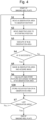
- FIG. 4 is a flowchart showing an observation method executed by the observation device 1 according to Embodiment 2. Description overlapping with Embodiment 1 will be omitted as appropriate. It is not necessary to prepare a memory for storing an autofocus starting position in the observation device 1 according to Embodiment 1, but the observation device 1 according to Embodiment 2 includes a memory for storing the autofocus starting position.
- the control unit 105 stores the feature data calculated by the image processing unit 106 in the storage unit 107 (S6), and then stores the focus position of the ith observation area 3 in the memory as the AF starting position of the autofocus in the (i+1)th observation area 3 (S20).
- the memory may be, for example, the main storage device 203, the storage unit 107, or another memory (such as a cache of the processor 201). An execution order of S6 and S20 may be reversed.
- the AF starting position stored in the memory is updated each time the autofocus is successful.
- the position of the objective lens 109 can be returned to the AF starting position using the AF starting position stored in the memory. Accordingly, in a case where the autofocus in the ith observation area 3 is successful and the autofocus in the (i+1)th observation area 3 fails, the AF starting position of the autofocus in the (i+2)th observation area 3 can be set to a position of the objective lens 109 when the autofocus in the ith observation area 3 is successful.
- the autofocus can be executed starting from the AF starting position stored in the memory.
- Other effects are the same as those in Embodiment 1, and description thereof is omitted.
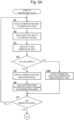
- FIGS. 5A and 5B are flowcharts showing an observation method executed by the observation device 1 according to Embodiment 3. Description overlapping with Embodiment 1 will be omitted as appropriate.
- the control unit 105 determines whether autofocus is successful (S4). When it is determined that the autofocus fails (S4: No), the control unit 105 stores information indicating the observation area 3 in which the autofocus fails in the storage unit 107 (S30).
- the control unit 105 determines whether the ith observation area 3 is the last observation area 3 of the well plate 2 (S7).
- the observation device 1 retries the autofocus in the observation area 3 in which the autofocus fails using a remaining time of an imaging reference time of the well plate 2.
- the imaging reference time of the well plate 2 is a time required for imaging all of the observation areas 3 of the well plate 2, and is determined based on the number of observation areas 3 and a certain time for determining whether the autofocus is successful.
- the remaining time is generated due to characteristics of autofocus in which a time required for autofocus varies due to various factors such as flatness of the well plate 2, an influence of external vibration, and a bacteria growth state.
- S31 to S38 are processing related to a retry of the autofocus.
- the control unit 105 determines whether there is information indicating the observation area 3 in which the autofocus fails in the storage unit 107 (S31). When there is no information indicating the observation area 3 in which the autofocus fails (S31: No), the flowchart ends. On the other hand, when there is information indicating the observation area 3 in which the autofocus fails (S31: Yes), an elapsed time from the start of imaging of the well plate 2 is confirmed, and it is determined whether the elapsed time is within the imaging reference time of the well plate 2 (S32). When the elapsed time exceeds the imaging reference time (S32: No), the flowchart ends.
- the control unit 105 controls the XY stage unit 102 to move the jth observation area 3 in which the autofocus fails to an observation point of the inverted microscope optical system 103 in order to observe the jth observation area 3 in which the autofocus fails, j being an integer of 1 or more, and an initial value being 1 (S33).
- the control unit 105 controls the objective lens actuator 110 to move the objective lens 109 to the AF starting position (S34).
- the AF starting position in S34 may be the home position, or may be the focus position of the observation area 3 which is adjacent to the jth observation area 3 and in which the autofocus is successful.
- control unit 105 controls the autofocus unit 104 to execute autofocus in the jth observation area 3 in which the autofocus fails (S35).
- control unit 105 determines whether the autofocus is successful (S36). When it is determined that the autofocus is successful within a certain time (S36: Yes), the control unit 105 images the observation area 3 at the focus position of the jth observation area 3 in which the autofocus fails, and acquires an image of the jth observation area 3 (S37).
- the control unit 105 stores, in the storage unit 107, feature data that is related to the jth observation area 3 in which the autofocus fails and is calculated by the image processing unit 106 (S38).
- a certain time during a retry may be the same as or different from a certain time at the first time. For example, it is possible to retry autofocus in all of the observation areas 3 which are retry targets by making the certain time during a retry shorter than the certain time at the first time.
- autofocus is retried in the observation area 3 in which autofocus fails, and first autofocus is preferentially executed in all of the observation areas 3 of the well plate 2.
- the autofocus can be retried by using a remaining time of the imaging reference time of the well plate 2 set in consideration of variations in a time required for the autofocus and the like.
- data loss can be reduced.
- Other effects are the same as those in Embodiment 1, and description thereof is omitted.
- FIG. 6 is a flowchart showing an observation method executed by the observation device 1 according to Embodiment 4. Description overlapping with Embodiment 1 will be omitted as appropriate. Continuation of the flowchart in FIG. 6 is the same as that in FIG. 5B , and thus description thereof is omitted.
- the observation area 3 indicating feature data exceeding the predetermined threshold a plurality of times previously or the observation area 3 in which the autofocus failed a plurality of times previously may be excluded from an execution target of the autofocus.
- the control unit 105 determines whether the ith observation area 3 is an imaging target (S40). When it is determined that the ith observation area 3 is not the imaging target (S40: No), the processing in S 1 to S6 and S30 are skipped. In order to determine whether the ith observation area 3 is the imaging target, the control unit 105 refers to information that indicates the observation area 3 in which the autofocus failed and is stored in the storage unit 107 in the previous S30 and information indicating the feature data of the observation area 3 stored in the storage unit 107 in the previous S6 or S3 8.
- the control unit 105 excludes the observation area 3 in which both the autofocus and the retry of the autofocus failed previously from the execution target of the autofocus.
- the control unit 105 excludes the observation area 3 in which the previous feature data exceeds the threshold from the execution target of the autofocus.
- the imaging reference time of the well plate 2 is set to be short in order to improve throughput. Therefore, it is not preferable that time is spent for a retry of the autofocus in the observation area 3 having little merit and time runs out before imaging other observation areas 3, which increases a risk of causing data loss. The risk is particularly significant in a latter half stage of an analysis in which bacteria growth occurs.
- the observation area 3 in which sufficient information for determining whether there is bacteria growth is obtained or the observation area 3 having a high probability that the well plate 2 has a problem or autofocus fails is excluded from the execution target of the autofocus in advance. Since it is possible to assign a time that should originally be spent for imaging the above observation area 3 to imaging of other observation areas 3 and a retry of the autofocus, it is possible to further reduce data loss. Other effects are the same as those in Embodiment 1, and description thereof is omitted.
- the invention is not limited to the above-described embodiments, and includes various modifications.
- the above-described embodiments have been described in detail to facilitate understanding of the invention, and the invention is not necessarily limited to those including all the configurations described above.
- a part of a configuration in one embodiment can be replaced with a configuration in another embodiment, and a configuration in one embodiment can also be added to a configuration in another embodiment.
- a part of a configuration in each embodiment may also be added to, deleted from, or replaced with another configuration.
Landscapes
- Physics & Mathematics (AREA)
- General Physics & Mathematics (AREA)
- Engineering & Computer Science (AREA)
- Optics & Photonics (AREA)
- Computer Vision & Pattern Recognition (AREA)
- Chemical & Material Sciences (AREA)
- Analytical Chemistry (AREA)
- Multimedia (AREA)
- Microscoopes, Condenser (AREA)
- Automatic Focus Adjustment (AREA)
Applications Claiming Priority (1)
| Application Number | Priority Date | Filing Date | Title |
|---|---|---|---|
| PCT/JP2022/000875 WO2023135702A1 (ja) | 2022-01-13 | 2022-01-13 | 観察方法及び観察装置 |
Publications (2)
| Publication Number | Publication Date |
|---|---|
| EP4464787A1 true EP4464787A1 (de) | 2024-11-20 |
| EP4464787A4 EP4464787A4 (de) | 2025-11-26 |
Family
ID=87278658
Family Applications (1)
| Application Number | Title | Priority Date | Filing Date |
|---|---|---|---|
| EP22920227.0A Pending EP4464787A4 (de) | 2022-01-13 | 2022-01-13 | Beobachtungsverfahren und beobachtungsvorrichtung |
Country Status (3)
| Country | Link |
|---|---|
| EP (1) | EP4464787A4 (de) |
| JP (1) | JP7781917B2 (de) |
| WO (1) | WO2023135702A1 (de) |
Family Cites Families (10)
| Publication number | Priority date | Publication date | Assignee | Title |
|---|---|---|---|---|
| JP4121735B2 (ja) | 2001-01-22 | 2008-07-23 | ソニー株式会社 | ポリシリコン膜評価装置 |
| JP4388298B2 (ja) * | 2003-04-18 | 2009-12-24 | オリンパス株式会社 | 顕微鏡システム |
| JP2010191298A (ja) | 2009-02-19 | 2010-09-02 | Nikon Corp | 顕微鏡 |
| JP5364430B2 (ja) | 2009-04-22 | 2013-12-11 | オリンパス株式会社 | 細胞画像取得装置及び細胞画像取得方法 |
| KR20110137053A (ko) * | 2010-06-16 | 2011-12-22 | 삼성전기주식회사 | 오토 포커스 실패 판단 방법 |
| JP2012177851A (ja) | 2011-02-28 | 2012-09-13 | Nec Casio Mobile Communications Ltd | 画像撮影装置における合焦位置探索方法、画像撮影装置 |
| US9360659B2 (en) * | 2011-08-10 | 2016-06-07 | Molecular Devices, Llc | Method for presenting and evaluation of images of micro-titer plate properties |
| JP6675279B2 (ja) | 2016-07-01 | 2020-04-01 | 富士フイルム株式会社 | 撮影装置および方法並びに撮影制御プログラム |
| JP6667411B2 (ja) * | 2016-09-30 | 2020-03-18 | 富士フイルム株式会社 | 観察装置および方法並びに観察装置制御プログラム |
| JP7284574B2 (ja) * | 2018-12-10 | 2023-05-31 | 株式会社エビデント | 観察装置、制御方法、及び、プログラム |
-
2022
- 2022-01-13 WO PCT/JP2022/000875 patent/WO2023135702A1/ja not_active Ceased
- 2022-01-13 JP JP2023573712A patent/JP7781917B2/ja active Active
- 2022-01-13 EP EP22920227.0A patent/EP4464787A4/de active Pending
Also Published As
| Publication number | Publication date |
|---|---|
| JP7781917B2 (ja) | 2025-12-08 |
| JPWO2023135702A1 (de) | 2023-07-20 |
| WO2023135702A1 (ja) | 2023-07-20 |
| EP4464787A4 (de) | 2025-11-26 |
Similar Documents
| Publication | Publication Date | Title |
|---|---|---|
| US11434082B2 (en) | Stuck slide determination system | |
| EP2402813B1 (de) | Mikroskop und Bereichsbestimmungsverfahren | |
| US20030168577A1 (en) | Reverse focusing methods and systems | |
| CN106575631B (zh) | 用于同步暗场及相位对比检验的系统及方法 | |
| JP2011221188A (ja) | ステージ制御装置、ステージ制御方法及び顕微鏡 | |
| CN108693625B (zh) | 成像方法、装置及系统 | |
| EP3625609B1 (de) | Impulsneuabtastungssystem | |
| CN113167991B (zh) | 用于在样本总成上自动地求取位置的方法和相应的显微镜 | |
| US10288861B2 (en) | Light sheet microscope and control method of light sheet microscope | |
| EP2381241B1 (de) | Vorrichtung zur messung einer fluoreszenzlebensdauer, verfahren zur messung einer fluoreszenzlebensdauer und programm dafür | |
| CN111399208A (zh) | 生物荧光样本的聚焦拍摄实现方法、显微镜和存储介质 | |
| US11445081B2 (en) | Slide rack determination system | |
| EP4464787A1 (de) | Beobachtungsverfahren und beobachtungsvorrichtung | |
| US11262306B2 (en) | Method to keep the excitation light sheet in focus in selective plane illumination microscopy | |
| CN112470010B (zh) | 扫描探针显微镜以及扫描探针显微镜的控制装置 | |
| JP2001147379A (ja) | プリズム破損防止機構を備える全反射吸収スペクトル測定装置 | |
| US7443500B2 (en) | Apparatus for scattered light inspection of optical elements | |
| US20200355902A1 (en) | Microscopy device | |
| US12051194B2 (en) | Scanning image generation apparatus and scanning image recording method | |
| JP2021083408A (ja) | 検査方法および検査装置 | |
| KR20250015748A (ko) | 슬라이드 스캔 장치 및 이의 동작 방법 | |
| US20180120244A1 (en) | X-ray diffraction imaging of material microstructures | |
| WO2023220725A2 (en) | Method of calibrating a microscope system | |
| JP4696599B2 (ja) | 共焦点光学系を有した測定装置 | |
| WO2025115679A1 (ja) | 光学顕微鏡及び性能判定方法 |
Legal Events
| Date | Code | Title | Description |
|---|---|---|---|
| STAA | Information on the status of an ep patent application or granted ep patent |
Free format text: STATUS: THE INTERNATIONAL PUBLICATION HAS BEEN MADE |
|
| PUAI | Public reference made under article 153(3) epc to a published international application that has entered the european phase |
Free format text: ORIGINAL CODE: 0009012 |
|
| STAA | Information on the status of an ep patent application or granted ep patent |
Free format text: STATUS: REQUEST FOR EXAMINATION WAS MADE |
|
| 17P | Request for examination filed |
Effective date: 20240813 |
|
| AK | Designated contracting states |
Kind code of ref document: A1 Designated state(s): AL AT BE BG CH CY CZ DE DK EE ES FI FR GB GR HR HU IE IS IT LI LT LU LV MC MK MT NL NO PL PT RO RS SE SI SK SM TR |
|
| DAV | Request for validation of the european patent (deleted) | ||
| DAX | Request for extension of the european patent (deleted) | ||
| A4 | Supplementary search report drawn up and despatched |
Effective date: 20251023 |
|
| RIC1 | Information provided on ipc code assigned before grant |
Ipc: C12Q 1/00 20060101AFI20251017BHEP Ipc: G01N 21/64 20060101ALI20251017BHEP Ipc: G02B 7/28 20210101ALI20251017BHEP Ipc: G02B 21/00 20060101ALI20251017BHEP Ipc: G02B 21/02 20060101ALI20251017BHEP Ipc: G02B 21/08 20060101ALI20251017BHEP Ipc: G02B 21/24 20060101ALI20251017BHEP Ipc: G02B 21/36 20060101ALI20251017BHEP Ipc: G03B 13/36 20210101ALI20251017BHEP |