EP4455282A1 - Verfahren zur herstellung genomeditierter zellen unter verwendung homologer rekombination - Google Patents
Verfahren zur herstellung genomeditierter zellen unter verwendung homologer rekombination Download PDFInfo
- Publication number
- EP4455282A1 EP4455282A1 EP22911232.1A EP22911232A EP4455282A1 EP 4455282 A1 EP4455282 A1 EP 4455282A1 EP 22911232 A EP22911232 A EP 22911232A EP 4455282 A1 EP4455282 A1 EP 4455282A1
- Authority
- EP
- European Patent Office
- Prior art keywords
- site
- specific
- gene
- cells
- chromosome
- Prior art date
- Legal status (The legal status is an assumption and is not a legal conclusion. Google has not performed a legal analysis and makes no representation as to the accuracy of the status listed.)
- Pending
Links
Images


Classifications
-
- C—CHEMISTRY; METALLURGY
- C12—BIOCHEMISTRY; BEER; SPIRITS; WINE; VINEGAR; MICROBIOLOGY; ENZYMOLOGY; MUTATION OR GENETIC ENGINEERING
- C12N—MICROORGANISMS OR ENZYMES; COMPOSITIONS THEREOF; PROPAGATING, PRESERVING, OR MAINTAINING MICROORGANISMS; MUTATION OR GENETIC ENGINEERING; CULTURE MEDIA
- C12N5/00—Undifferentiated human, animal or plant cells, e.g. cell lines; Tissues; Cultivation or maintenance thereof; Culture media therefor
- C12N5/10—Cells modified by introduction of foreign genetic material
-
- C—CHEMISTRY; METALLURGY
- C12—BIOCHEMISTRY; BEER; SPIRITS; WINE; VINEGAR; MICROBIOLOGY; ENZYMOLOGY; MUTATION OR GENETIC ENGINEERING
- C12N—MICROORGANISMS OR ENZYMES; COMPOSITIONS THEREOF; PROPAGATING, PRESERVING, OR MAINTAINING MICROORGANISMS; MUTATION OR GENETIC ENGINEERING; CULTURE MEDIA
- C12N15/00—Mutation or genetic engineering; DNA or RNA concerning genetic engineering, vectors, e.g. plasmids, or their isolation, preparation or purification; Use of hosts therefor
- C12N15/09—Recombinant DNA-technology
- C12N15/87—Introduction of foreign genetic material using processes not otherwise provided for, e.g. co-transformation
- C12N15/90—Stable introduction of foreign DNA into chromosome
- C12N15/902—Stable introduction of foreign DNA into chromosome using homologous recombination
- C12N15/907—Stable introduction of foreign DNA into chromosome using homologous recombination in mammalian cells
-
- C—CHEMISTRY; METALLURGY
- C12—BIOCHEMISTRY; BEER; SPIRITS; WINE; VINEGAR; MICROBIOLOGY; ENZYMOLOGY; MUTATION OR GENETIC ENGINEERING
- C12N—MICROORGANISMS OR ENZYMES; COMPOSITIONS THEREOF; PROPAGATING, PRESERVING, OR MAINTAINING MICROORGANISMS; MUTATION OR GENETIC ENGINEERING; CULTURE MEDIA
- C12N15/00—Mutation or genetic engineering; DNA or RNA concerning genetic engineering, vectors, e.g. plasmids, or their isolation, preparation or purification; Use of hosts therefor
- C12N15/09—Recombinant DNA-technology
- C12N15/10—Processes for the isolation, preparation or purification of DNA or RNA
- C12N15/102—Mutagenizing nucleic acids
-
- C—CHEMISTRY; METALLURGY
- C12—BIOCHEMISTRY; BEER; SPIRITS; WINE; VINEGAR; MICROBIOLOGY; ENZYMOLOGY; MUTATION OR GENETIC ENGINEERING
- C12N—MICROORGANISMS OR ENZYMES; COMPOSITIONS THEREOF; PROPAGATING, PRESERVING, OR MAINTAINING MICROORGANISMS; MUTATION OR GENETIC ENGINEERING; CULTURE MEDIA
- C12N15/00—Mutation or genetic engineering; DNA or RNA concerning genetic engineering, vectors, e.g. plasmids, or their isolation, preparation or purification; Use of hosts therefor
- C12N15/09—Recombinant DNA-technology
- C12N15/11—DNA or RNA fragments; Modified forms thereof; Non-coding nucleic acids having a biological activity
-
- C—CHEMISTRY; METALLURGY
- C12—BIOCHEMISTRY; BEER; SPIRITS; WINE; VINEGAR; MICROBIOLOGY; ENZYMOLOGY; MUTATION OR GENETIC ENGINEERING
- C12N—MICROORGANISMS OR ENZYMES; COMPOSITIONS THEREOF; PROPAGATING, PRESERVING, OR MAINTAINING MICROORGANISMS; MUTATION OR GENETIC ENGINEERING; CULTURE MEDIA
- C12N15/00—Mutation or genetic engineering; DNA or RNA concerning genetic engineering, vectors, e.g. plasmids, or their isolation, preparation or purification; Use of hosts therefor
- C12N15/09—Recombinant DNA-technology
- C12N15/11—DNA or RNA fragments; Modified forms thereof; Non-coding nucleic acids having a biological activity
- C12N15/111—General methods applicable to biologically active non-coding nucleic acids
-
- C—CHEMISTRY; METALLURGY
- C12—BIOCHEMISTRY; BEER; SPIRITS; WINE; VINEGAR; MICROBIOLOGY; ENZYMOLOGY; MUTATION OR GENETIC ENGINEERING
- C12N—MICROORGANISMS OR ENZYMES; COMPOSITIONS THEREOF; PROPAGATING, PRESERVING, OR MAINTAINING MICROORGANISMS; MUTATION OR GENETIC ENGINEERING; CULTURE MEDIA
- C12N9/00—Enzymes; Proenzymes; Compositions thereof; Processes for preparing, activating, inhibiting, separating or purifying enzymes
- C12N9/14—Hydrolases (3)
- C12N9/16—Hydrolases (3) acting on ester bonds (3.1)
-
- C—CHEMISTRY; METALLURGY
- C12—BIOCHEMISTRY; BEER; SPIRITS; WINE; VINEGAR; MICROBIOLOGY; ENZYMOLOGY; MUTATION OR GENETIC ENGINEERING
- C12N—MICROORGANISMS OR ENZYMES; COMPOSITIONS THEREOF; PROPAGATING, PRESERVING, OR MAINTAINING MICROORGANISMS; MUTATION OR GENETIC ENGINEERING; CULTURE MEDIA
- C12N9/00—Enzymes; Proenzymes; Compositions thereof; Processes for preparing, activating, inhibiting, separating or purifying enzymes
- C12N9/14—Hydrolases (3)
- C12N9/16—Hydrolases (3) acting on ester bonds (3.1)
- C12N9/22—Ribonucleases [RNase]; Deoxyribonucleases [DNase]
-
- C—CHEMISTRY; METALLURGY
- C12—BIOCHEMISTRY; BEER; SPIRITS; WINE; VINEGAR; MICROBIOLOGY; ENZYMOLOGY; MUTATION OR GENETIC ENGINEERING
- C12N—MICROORGANISMS OR ENZYMES; COMPOSITIONS THEREOF; PROPAGATING, PRESERVING, OR MAINTAINING MICROORGANISMS; MUTATION OR GENETIC ENGINEERING; CULTURE MEDIA
- C12N2310/00—Structure or type of the nucleic acid
- C12N2310/10—Type of nucleic acid
- C12N2310/20—Type of nucleic acid involving clustered regularly interspaced short palindromic repeats [CRISPR]
-
- C—CHEMISTRY; METALLURGY
- C12—BIOCHEMISTRY; BEER; SPIRITS; WINE; VINEGAR; MICROBIOLOGY; ENZYMOLOGY; MUTATION OR GENETIC ENGINEERING
- C12N—MICROORGANISMS OR ENZYMES; COMPOSITIONS THEREOF; PROPAGATING, PRESERVING, OR MAINTAINING MICROORGANISMS; MUTATION OR GENETIC ENGINEERING; CULTURE MEDIA
- C12N2320/00—Applications; Uses
- C12N2320/30—Special therapeutic applications
- C12N2320/34—Allele or polymorphism specific uses
Definitions
- the present invention relates to a method for producing genome-edited cells utilizing homologous recombination, and mainly relates to a method for producing cells in which a heterozygous mutation is substituted with a normal sequence via homologous recombination between homologous chromosomes.
- TALENs the previous generation of genome-editing technology, are fusion proteins of a TALE protein that targets DNA and a nuclease (mainly FokI) that cleaves DNA, but like the CRISPR-Cas system, they cause a double-strand break of DNA at the target site on the genome.
- this DNA double-strand break can be used to perform gene knock-in by homologous recombination between the genome and the donor DNA.
- a double-strand break by a genome editing system there is a problem that unintended mutations are more likely to occur at the target site than knock-in by a repair template, and genome mutations also occur at DNA sequences (off-targets) with high similarity to the target sequence.
- the present inventors have developed methods that can, by using nickase-type Cas9 with one of the two nuclease sites of Cas9 inactivated, induce homologous recombination by single-strand break in DNA to suppress the occurrence of unintended mutations due to non-homologous end joining as compared with the conventional method by double-strand break in DNA.
- One of them is a genome editing method that utilizes a tandem nick method by using nickases to nick two sites in the target genome and one site in the donor plasmid containing the repair template (NPL 1 and PTL 1).
- the present inventors have further advanced this method to also develop an SNGD method that nicks one site in the target genome and nicks one site in the donor plasmid containing the repair template (a combination of single nicks in the target gene and donor plasmid) (PTL 1).
- the present inventors developed a method of using a homologous chromosome originally present in cells as a repair template instead of exogenous donor DNA (PTL 2). Since this method can avoid the problem of random integration of donor DNA used as a repair template into the genome, safety can be improved, especially in medical applications.
- the present invention aims to further improve the efficiency and specificity of genome editing in a genome editing method utilizing recombination between homologous chromosomes.
- allele A the genetic mutation present in one of the homologous chromosomes
- allele B the genetic mutation present in the other homologous chromosome
- the method described in PTL 2 is characterized by specifically inducing recombination between homologous chromosomes at the target site by generating nicks at multiple sites in the neighboring DNA region of the nucleotide to be edited on the chromosome to be the recipient, and generating nicks in at least one of the sites corresponding to the site where the nicks are generated in the chromosome of the recipient, on the chromosome to be the donor.
- the present inventors found that, by adopting a nick pattern different from that of PTL 2, in which a nick is generated at one site in the neighboring DNA region of the mutation site in allele A and a nick is generated at a site different from the site where the nick is generated in allele A at one site in allele B, it is possible to significantly suppress the occurrence of unintended long-chain DNA deletions and improve the specificity of genome editing, and thus completed the present invention.
- the present invention includes the following embodiments.
- the present invention it has become possible to perform genome editing efficiently and specifically by utilizing homologous recombination between homologous chromosomes. Since the present invention does not use exogenous donor DNA for homologous recombination, and the problem of random integration of donor DNA does not occur as well, so that genome editing can be performed with high safety even when applied to gene therapy and the like.
- the method for producing a genome-edited cell in the present invention has a principle of unifying different bases between homologous chromosomes into any of the bases by utilizing homologous recombination between homologous chromosomes induced by single-strand breaks with site-specific nickase.
- the method includes introducing, into a cell having different bases between homologous chromosomes at a specific site of the homologous chromosomes, a combination of site-specific nickases that cleave a single strand in a neighboring DNA region of the specific site, inducing homologous recombination with one of the homologous chromosomes as a recipient and the other as a donor, and substituting the base of the recipient with the base of the donor at the specific site.
- the "specific site on the homologous chromosomes” is the target site for genome editing on the homologous chromosomes.
- the "different bases between the homologous chromosomes” at this site may be one base or multiple bases (a base sequence). Moreover, it may be a mutation or a polymorphism. Examples of mutations include substitutions, deletions, insertions, or combinations thereof, and examples of polymorphism include single base polymorphism and microsatellite polymorphism. Note that the base may be present in the genetic coding region or in the genetic non-coding region.
- chromosomes having mutations or polymorphisms at specific sites can be used as recipients or donors in homologous recombination.
- the bases at specific sites of the two chromosomes constituting the homologous chromosomes can both be made into normal sequences, or both can be made into specific mutant sequences or polymorphic sequences.
- the heterozygous HLA can be made into homozygous HLA.
- a typical utilization mode of the present invention is to repair a mutation to a normal sequence in human cells in order to treat or prevent a disease caused by a heterozygous mutation.
- diseases caused by heterozygous mutations include diseases directly caused by the heterozygous mutation (dominant genetic diseases) as well as diseases caused by a combination of two different mutations (compound heterozygotes) (recessive genetic diseases).
- target diseases include, but are not limited to, diseases with an autosomal dominant inheritance pattern that onset due to autosomal heterozygous mutations (for example, OAS1 abnormality in congenital immunodeficiency, severe congenital neutropenia caused by ELANE mutation, chronic mucocutaneous candidiasis, etc.), triplet repeat diseases with an autosomal dominant inheritance pattern (for example, Huntington's disease, spinocerebellar ataxia, myotonic dystrophy, etc.), genetic diseases with an autosomal recessive inheritance pattern (for example, ADA deficiency, etc.), and diseases that onset in females with an X-linked inheritance pattern (for example, hemophilia with Factor VIII and Factor IX deficiency, etc.).
- diseases with an autosomal dominant inheritance pattern that onset due to autosomal heterozygous mutations for example, OAS1 abnormality in congenital immunodeficiency, severe congenital neutropenia caused by ELANE mutation, chronic mucocutaneous candid
- the "site-specific nickase” used in the present invention is not limited as long as it can cleave a single strand of DNA in a site-specific manner on the genome, but is preferably a CRISPR-Cas system having a nickase-type Cas protein as a component.
- Cas proteins typically include a domain involved in cleavage of the target strand (RuvC domain) and a domain involved in cleavage of the non-target strand (HNH domain), whereas the nickase-type Cas protein typically loses its cleavage activity due to a mutation in either of these two domains.
- spCas9 protein Cas9 protein derived from S.
- examples of such mutation include a mutation of the 10th amino acid (aspartic acid) from the N-terminus to alanine (D10A: mutation within the RuvC domain), a mutation of the 840th amino acid (histidine) from the N-terminus to alanine (H840A: mutation within the HNH domain), a mutation of the 863th amino acid (asparagine) from the N-terminus to alanine (N863A: mutation within the HNH domain), a mutation of the 762th amino acid (glutamic acid) from the N-terminus to alanine (E762A: mutation within the RuvCII domain), and a mutation of the 986th amino acid (aspartic acid) from the N-terminus to alanine (D986A: mutation within the RuvCIII domain).
- Cas9 proteins of various origins are known (for example, WO2014/131833 ), and their nickase types can be utilized.
- amino acid sequences and base sequences of Cas9 proteins are registered in a public database, for example, GenBank (http://www.ncbi.nlm.nih.gov) (for example, accession number: Q99ZW2.1 and the like), and these can be used in the present invention.
- Cas proteins other than Cas9 such as Cpf1 (Cas12a), Cas12b, CasX (Cas12e), and Cas14.
- mutations in the nickase-type Cpf1 proteins include, in AsCpf1 (Cas12), a mutation of the 1226th amino acid (arginine) from the N-terminus to alanine (R1226A: mutation within the Nuc domain).
- GenBank http://www.ncbi.nlm.nih.gov
- accession numbers WP_021736722, WP_O35635841, and the like.
- the nickase-type Cas protein binds to a guide RNA to form a complex, and is targeted to a target DNA sequence to cleave a single strand of DNA.
- the guide RNA includes crRNA and tracrRNA, but in the CRISPR-Cpf1 system, for example, tracrRNA is unnecessary.
- the guide RNA in the CRISPR-Cas9 system may be a single-molecule guide RNA containing crRNA and tracrRNA, or a double-molecule guide RNA composed of a crRNA fragment and a tracrRNA fragment.
- the crRNA contains a base sequence complementary to the target DNA sequence.
- the target DNA sequence is a base sequence composed of usually 12 to 50 bases, preferably 17 to 30 bases, and more preferably 17 to 25 bases, and is preferably selected from regions adjacent to the PAM (proto-spacer adjacent motif) sequence.
- PAM proto-spacer adjacent motif
- crRNA also contains a base sequence on the 3'-side that can interact (hybridize) with the tracrRNA fragment.
- tracrRNA contains a base sequence that can interact (hybridize) with a part of the base sequence of crRNA on the 5'-side.
- PAM varies depending on the type and origin of Cas protein. Typical PAM sequences are, for example, "5'-NGG” for Cas9 protein (type II) derived from S. pyogenes, "5'-CCN” for Cas9 protein (type I-A1) derived from S. solfataricus, "5'-TCN” for Cas9 protein (type I-A2) derived from S. solfataricus, "5'-TTC” for Cas9 protein (type I-B) derived from H. walsbyi, "5'-AWG” for Cas9 protein (type I-E) derived from E. coli, "5'-CC” for Cas9 protein (type I-F) derived from E.
- Cpf1 it is typically "5'-TTN” or “5'-TTTN.”
- PAM recognition by modifying the protein (for example, introducing a mutation) ( Benjamin, P. et al., Nature 523, 481-485 (2015 ), and Hirano, S. et al., Molecular Cell 61, 886-894 (2016 )).
- a site-specific nickase other than CRISPR-Cas systems can also be used.
- site-specific nickase include an artificial nuclease fused with an enzyme having nickase activity.
- artificial nucleases usable include TALE (transcription activator-like effector), ZF (zinc finger), and PPR (pentatricopeptide repeat).
- enzymes capable of exerting nickase activity by fusion with these artificial nucleases include TevI ( Nat Commun. 2013; 4: 1762. doi: 10.1038/ncomms2782 ).
- These artificial nucleases are targeted to the target DNA sequence by a DNA-binding domain constructed by linking modules (peptides) that recognize specific bases (or specific base sequences), and cleave a single strand of DNA with a nickase fused to the DNA-binding domain.
- a suitable spacer peptide may be introduced between the DNA binding domain and the nickase in an artificial nuclease.
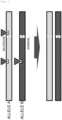
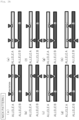
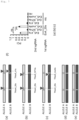
- the first embodiment of the present invention uses a combination of site-specific nickases that causes single-strand breaks in the recipient chromosome at multiple sites in the neighboring DNA region of the specific site (different bases between homologous chromosomes), and causes a single-strand break in the donor chromosome at at least one of sites corresponding to the sites of single-strand breaks in the recipient chromosome. Examples of specific patterns of single-strand breaks are shown in Figs. 2A and 2B .
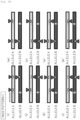
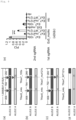
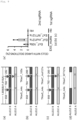
- a combination of site-specific nickases that causes a single-strand break at one site in the neighboring DNA region of the specific site on the chromosome of the recipient and causes a single-strand break at a different site from the site corresponding to the site where the single-strand break is caused on the chromosome of the recipient, at one site on the chromosome of the donor, is used. Examples of specific patterns of single-strand breaks are shown in Figs. 3A and 3B .
- the "neighboring DNA region” refers to a region within 100000 bases (for example, within 10000 bases, within 5000 bases, within 2000 bases, within 1000 bases, within 600 bases) from the specific site.
- the distance between the introduced nicks is typically 100 bases or more (for example, 200 bases or more, 300 bases or more, 500 bases or more, 700 bases or more, 1000 bases or more, 1500 bases or more).
- one of the nicks introduced into the chromosome is in the immediate vicinity of the specific site.
- “immediate vicinity” typically means within about 100 bases, and more preferably within 50 bases (for example, within 40 bases, within 30 bases, within 20 bases, within 10 bases).
- the neighboring DNA region of one specific site may contain another specific site (different bases between homologous chromosomes).
- the "multiple sites in the neighboring DNA region" may be on the same DNA strand or on different DNA strands.
- site-specific nickases that bind to the target DNA sequence on the chromosome of the recipient may be designed to also bind to the corresponding DNA sequence on the chromosome of the donor.
- the target DNA sequence on the chromosome of the recipient and the corresponding DNA sequence on the chromosome of the donor are typically the same DNA sequence.
- some of the combinations of site-specific nickases that bind to the target DNA sequence on the chromosome of the recipient should be designed so that they do not bind to the corresponding DNA sequence on the chromosome of the donor.
- the target DNA sequence on the chromosome of the recipient and the corresponding DNA sequence on the chromosome of the donor are typically different DNA sequences.
- the target DNA sequence of the site-specific nickase is set to include bases that differ between homologous chromosomes
- the target DNA sequence on the chromosome of the recipient and the corresponding DNA sequence on the chromosome of the donor will be different DNA sequences.
- some of the combinations of site-specific nickases that bind to the target DNA sequence on the chromosome of the donor should be designed so that they do not bind to the corresponding DNA sequence on the chromosome of the recipient.
- the target DNA sequence on the chromosome of the donor and the corresponding DNA sequence on the chromosome of the recipient are typically different DNA sequences.
- the guide RNA when using the CRISPR-Cas system as the site-specific nickase, the guide RNA should be designed so that it has binding specificity to the target DNA sequence on one chromosome.
- the site-specific nickase is an artificial nuclease fused with a nickase activity-bearing enzyme
- the DNA binding domain may be designed to have binding specificity to the target DNA sequence on one chromosome.
- the site of single-strand break is usually within about 100 bases, and more preferably within 50 bases (for example, within 40 bases, 30 bases, 20 bases, or 10 bases), from the specific site (different bases between homologous chromosomes).
- the distance between single-strand breaks on different DNA strands is usually 100 bases or more, and preferably 200 bases or more, and is usually within 2000 bases, preferably within 1000 bases, and further preferably within 500 bases.
- the combination of site-specific nickases described above is introduced into cells.
- the "site-specific nickases" introduced into the cells may be, for example, in the form of a combination of a guide RNA and a Cas protein, in the form of a combination of a guide RNA and a messenger RNA translated into Cas protein, or a combination of vectors expressing them, for example.
- the guide RNA may be modified (such as chemical modification) to suppress degradation.
- an artificial nuclease fused with an enzyme having nickase activity for example, they may be in the form of a protein, a messenger RNA translated into the protein, or in the form of a vector expressing the protein.
- operatively bound means that the DNA is operatively bound to the regulatory elements.
- regulatory elements include promoters, enhancers, internal ribosome entry sites (IRES), and other expression control elements (such as transcription termination signals, for example polyadenylation signals and polyU sequences).
- the regulatory elements may, for example, direct the constitutive expression of DNA in a variety of host cells, or may direct DNA expression only in specific cells, tissues, or organs. Further, they may direct the expression of DNA only at a specific time, or may direct the expression of artificially inducible DNA.
- promoters examples include polIII promoters (such as U6 and H1 promoters), polII promoters (such as retrovirus Rous sarcoma virus (RSV) LTR promoter, cytomegalovirus (CMV) promoter, SV40 promoter, dihydrofolate reductase promoter, ⁇ -actin promoter, phosphoglycerate kinase (PGK) promoter, and EF1 ⁇ promoter), polI promoters, and combinations thereof.
- polIII promoters such as U6 and H1 promoters
- polII promoters such as retrovirus Rous sarcoma virus (RSV) LTR promoter, cytomegalovirus (CMV) promoter, SV40 promoter, dihydrofolate reductase promoter, ⁇ -actin promoter, phosphoglycerate kinase (PGK) promoter, and EF1 ⁇ promoter
- RSV Rous sarcoma virus
- the "cell” that is the target of genome editing in the present invention is not limited as long as it has a homologous chromosome, and various types of eukaryotic cells can be targeted.
- Examples of “eukaryotic cells” include animal cells, plant cells, algae cells, and fungal cells.
- examples of the animal cells include cells of fish, birds, reptiles, amphibians, and insects.
- Examples of the "animal cells” include cells constituting an individual animal, cells constituting an organ-tissue extracted from an animal, cultured cells derived from an animal tissue, and the like. Specific examples include embryonic cells of embryos at various stages (such as 1-cell stage embryos, 2-cell stage embryos, 4-cell stage embryos, 8-cell stage embryos, 16-cell stage embryos, and morula stage embryos); stem cells such as induced pluripotent stem (iPS) cells, embryonic stem (ES) cells, and hematopoietic stem cells; and somatic cells such as fibroblasts, hematopoietic cells, neurons, muscle cells, osteocytes, hepatocytes, pancreatic cells, brain cells, and kidney cells.
- embryonic cells of embryos at various stages such as 1-cell stage embryos, 2-cell stage embryos, 4-cell stage embryos, 8-cell stage embryos, 16-cell stage embryos, and morula stage embryos
- stem cells such as induced pluripotent stem (iPS) cells,
- a fertilized oocyte that is, a fertilized egg
- the fertilized egg is that of a pronuclear stage embryo.
- the cryopreserved one can be thawed and used.
- mammal is a concept including human and non-human mammals.
- non-human mammals include even-toed ungulates such as cows, wild boars, pigs, sheep, and goats, odd-toed ungulates such as horses, rodents such as mice, rats, guinea pigs, hamsters, and squirrels, lagomorphs such as rabbits, and carnivores such as dogs, cats, and ferrets.
- the above-mentioned non-human mammal may be a domestic animal or a companion animal (pet animal), or may be a wild animal.
- plant cells include cells of cereals, oil crops, fodder crops, fruits, and vegetables.
- plant cells include cells constituting an individual plant, cells constituting an organ or tissue separated from a plant, cultured cells derived from a plant tissue, and the like.
- plant organs and tissues include leaves, stems, shoot apices (growth points), roots, tubers, root tubers, seeds, callus, and the like.
- plants include rice, corn, bananas, peanuts, sunflowers, tomatoes, oilseed rape, tobacco, wheat, barley, potatoes, soybeans, cotton, carnations, and the like.
- the typical base sequence of the human-derived Lig4 gene and the amino acid sequence of the protein encoded by the gene are disclosed in databases (accession numbers: NM_002312, NM_206937, NM_001098268, NP_002303, NP_996820, NP_001091738), the base sequence of the human-derived PARP1 gene and the amino acid sequence of the protein encoded by the gene are disclosed in databases (accession numbers: NM_001618, NP_001609), the base sequence of the human-derived XRCC1 gene and the amino acid sequence of the protein encoded by the gene are disclosed in databases (accession numbers: NM_006297, NP_006288), the base sequence of the human-derived MSH2 gene and the amino acid sequence of the protein encoded by the gene are disclosed in databases (accession numbers: NM_000251 or NM_001258281, NP_000242, NP_001245210), and the base sequence of the human-derived SMAR
- “Suppression of gene function” in the present invention may have a mechanism that suppresses the activity of the translation product (protein) of the gene or suppresses the expression of the gene. Suppression of the activity of the translation product (protein) of the gene can be caused by introducing mutations (such as deletion, substitution, and insertion) into the gene or by inhibitor treatment, for example.
- genome editing systems include site-specific artificial nucleases, such as CRISPR-Cas (e.g., CRISPR-Cas9) systems, TALENs, and ZFNs.
- CRISPR-Cas e.g., CRISPR-Cas9 systems
- TALENs TALENs
- ZFNs ZFNs.
- the action of genome editing systems cleaves genes at target sites, and mutations (base deletions, insertions, etc.) are introduced into genes through DNA repair mechanisms in cells.
- the deficiency may be a deficiency of the entire gene or a partial deficiency.
- inhibitor treatment examples include treatment with the Lig4 inhibitor SCR7, treatment with PARP inhibitors such as olaparib, veliparib, niraparib, or talazoparib, but are not limited to these.
- “Suppression of gene function” can also be achieved by suppressing the expression of the gene. Suppression of gene expression may be suppression of translation or suppression of transcription of the gene. Suppression of translation of genes can be caused using double-stranded RNA (dsRNA) that binds to the transcription product of the gene, for example. Examples of double-stranded RNA include siRNA, shRNA (short hairpin RNA), miRNA, etc. Suppression of transcription of genes can be caused by introducing mutations into transcriptional regulatory regions of genes, for example. The above-mentioned genome editing systems targeting the transcriptional regulatory regions can be used to introduce mutations. Whether or not the expression of genes has been suppressed can be evaluated by immunological assay methods using antibodies that bind to translation products at the translational level, and by methods such as RT-PCR and Northern blotting at the transcriptional level.
- dsRNA double-stranded RNA
- siRNA siRNA
- shRNA short hairpin RNA
- miRNA miRNA
- these molecules themselves may be introduced into cells, or in the case where these molecules are nucleic acids, DNA encoding the molecules (typically vectors into which the DNA is inserted) may be introduced into cells for intracellular expression.
- site-specific nickases and molecules that inhibit the function of the gene into cells can be performed by a known method such as electroporation, microinjection, DEAE-dextran method, lipofection method, nanoparticle-mediated transfection method, and virus-mediated nucleic acid delivery method.
- the combination of site-specific nickases causes single-strand breaks in the chromosomes of the recipient and donor. This induces homologous recombination between homologous chromosomes, and the target base of the recipient is efficiently and specifically substituted with the corresponding base of the donor.
- the present invention also provides a kit for use in the method of the present invention, comprising a combination of the above site-specific nickases.
- the kit may further comprise one or more additional reagents, and examples of additional reagents include, but are not limited to, dilution buffers, reconstitution solutions, wash buffers, nucleic acid introduction reagents, protein introduction reagents, and control reagents (e.g., control guide RNAs).
- the kit may include instructions for use to practice the method of the present invention.
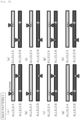
- TSCER2 cells (Fig. 4a)
- TSCER2 cells which are lymphoblastoid cells derived from TK6 cells, include allele A, which has a loss-of-function frameshift due to a 1 bp insertion (c.231_232insC) in exon 4 of the thymidine kinase 1 gene, and allele B, which has a 31 bp insertion in intron 4, a loss-of-function point mutation (c.326G>A) on exon 5, and a 1 bp insertion (c.640_641insG) on exon 7 that does not affect function.
- allele A which has a loss-of-function frameshift due to a 1 bp insertion (c.231_232insC) in exon 4 of the thymidine kinase 1 gene
- allele B which has a 31 bp insertion in intron 4
- a loss-of-function point mutation c.326G>A
- c.640_641insG
- TSCER2 cells These are cells in which the following genes were knocked out in TSCER2 cells by gene targeting.
- p53 -/- Lig4 -/- , PARP1 -/- PARP2 -/+ , XRCC1 -/- , MSH2 -/- , MLH1 -/- , MLH3 -/- , XPA -/- , MUS81 -/- , or SMARCAL1 -/- .
- the knockout cells for each gene are registered in the TK6 Mutants Consortium (https://www.nihs.go.jp/dgm/tk6.html).
- TK6261 cells which are lymphoblastoid cells derived from TK6 cells, include allele A, which has a loss-of-function frameshift due to a 1 bp insertion (c.231_232insC) in exon 4 of the thymidine kinase 1 gene, and allele B, which has an 8 bp deletion (c.309_316del8) on exon 5 causing a loss-of-function frameshift and a 1 bp insertion (c.640_641insG) on exon 7 that does not affect function.
- allele A which has a loss-of-function frameshift due to a 1 bp insertion (c.231_232insC) in exon 4 of the thymidine kinase 1 gene
- allele B which has an 8 bp deletion (c.309_316del8) on exon 5 causing a loss-of-function frameshift and a 1 bp insertion (c.640_64
- Neon Transfection System 10 ⁇ L Kit (Thermo Fisher Scientific).
- Electroporation of two types of sgRNA (sgTKex4_20s and sgS14) and Cas9D10A mRNA was performed on TSCER2 cells, TSCER2-derived p53 -/- , Lig4 -/- , PARP1 -/- PARP2 -/+ , XRCC1 -/- , MSH2 -/- , MLH1 -/- , MLH3 -/- , XPA -/- , MUS81 -/- , SMARCAL1 -/- cells, and TK6261 EGFP cells ( Fig. 5 ).
- TK6261 EGFP cells as standard cells and TSCER2 cells or TSCER2-derived knockout cells as test cells were mixed at a cell count ratio of 1:1, and some were cultured for 8 days in basal medium, while others were cultured for 4 days in CHAT medium and then for 4 days in basal medium. After culturing, the proportions of EGFP positive cells and negative cells were measured by flow cytometry. It has already been demonstrated that in cells that proliferate in CHAT medium after electroporation of sgTKex4_20s and sgS14 with Cas9D10A mRNA, exon 4 of the TK1 gene becomes the homozygous wild type.
- PCI CHAT medium index
- Fig. 6 shows the relative PCI in each knockout cell when the PCI in TSCER2 is taken as 1. An increase in genome editing efficiency was observed by knockout of Lig4, PARP1, MSH2, and SMARCAL1.
- PCI is the ratio of the genetic correction rate in test cells to that in standard cells (b/a), and the following equation holds.
- sgRNA that specifically targets allele B at the 8 bp deletion in exon 5 of TK6261 cells
- an sgRNA sgTKex5_WT4s
- an sgRNA sgTKex5_41s
- TK6261 EGFP cells For TK6261 EGFP cells, a combination of sgTKex4_20s and sgS11 was introduced by electroporation method together with Cas9D10A nickase mRNA.
- TK6261 EGFP cells and TK6261 cells were mixed at a cell count ratio of 1:1, and some were cultured for 8 days in basal medium, while others were cultured for 4 days in CHAT medium and then for 4 days in basal medium. After culturing, the proportions of EGFP positive cells and negative cells were measured by flow cytometry.
- the proliferation in CHAT medium index (PCI) was calculated from the ratio of EGFP positive cell rate after selection in CHAT medium to EGFP positive cell rate in basal medium. This allows calculation of the proportion of cells in which the genetic defect was corrected and TK activity was restored as shown in (d) or (e) .
- TK activity was restored much more efficiently than when tandem nicks were generated only in allele A (sgTKex4_20s + sgTKex5_WT4s: (b)) ( Fig. 7 ).
- tandem nicks were generated in allele A and one nick was generated in allele B (sgTKex4_20s + sgTKex5_41s: (a))
- TK activity was restored with equivalent efficiency to when nicks were generated at one site each in both homologous chromosomes (c) ( Fig. 7 ).
- sgTKex7_WT121s An sgRNA (sgTKex7_WT121s) that specifically targets allele A, which has the wild-type sequence in exon 7, or an sgRNA (sgTKex7_105s) that targets both allele A and allele B in exon 7 was combined with an sgRNA (sgTKex5_mut4s) that specifically targets allele B, which has the mutant sequence in exon 5, and introduced into TK6261 cells by electroporation together with Cas9D10A nickase mRNA.
- TK6261 EGFP cells For TK6261 EGFP cells, a combination of sgTKex4_20s and sgS12 was introduced by electroporation together with Cas9D10A nickase mRNA.
- TK6261 EGFP cells and TK6261 cells were mixed at a cell count ratio of 1:1, and some were cultured for 8 days in basal medium, while others were cultured for 4 days in CHAT medium and then for 4 days in normal medium. After culturing, the proportions of EGFP positive cells and negative cells were measured by flow cytometry.
- the proliferation in CHAT medium index (PCI) was calculated from the ratio of EGFP positive cell rate after selection in CHAT medium to EGFP positive cell rate in basal medium. This allows calculation of the proportion of cells in which the genetic defect was corrected and TK activity was restored as shown in (d).
- PCR was performed using KOD FX Neo (TOYOBO).
- the PCR products were electrophoresed in a 0.9% TAE gel, and after staining the gel with Ultra Safe Dye, they were visualized under blue LED light and photographed with a digital camera.
- tandem nicks were generated in allele B and one nick was generated in allele A (sgTKex5_mut4s + sgTKex7_105s: the method of the filed patent: (a)), large deletions of 500 bp or more (Fig.
- the present invention it is possible to unify different bases between homologous chromosomes to either base by utilizing homologous recombination between homologous chromosomes induced by single-strand cleavage by a site-specific nickase. Since the present invention does not use exogenous donor DNA, it can greatly contribute to gene therapy for diseases caused by heterozygous mutations, especially in terms of its high safety.
Landscapes
- Health & Medical Sciences (AREA)
- Life Sciences & Earth Sciences (AREA)
- Genetics & Genomics (AREA)
- Engineering & Computer Science (AREA)
- Chemical & Material Sciences (AREA)
- Biomedical Technology (AREA)
- Organic Chemistry (AREA)
- Wood Science & Technology (AREA)
- Zoology (AREA)
- Bioinformatics & Cheminformatics (AREA)
- Biotechnology (AREA)
- Molecular Biology (AREA)
- General Engineering & Computer Science (AREA)
- Microbiology (AREA)
- Biochemistry (AREA)
- General Health & Medical Sciences (AREA)
- Plant Pathology (AREA)
- Biophysics (AREA)
- Physics & Mathematics (AREA)
- Medicinal Chemistry (AREA)
- Cell Biology (AREA)
- Mycology (AREA)
- Crystallography & Structural Chemistry (AREA)
- Micro-Organisms Or Cultivation Processes Thereof (AREA)
Applications Claiming Priority (2)
| Application Number | Priority Date | Filing Date | Title |
|---|---|---|---|
| JP2021210431 | 2021-12-24 | ||
| PCT/JP2022/046917 WO2023120530A1 (ja) | 2021-12-24 | 2022-12-20 | 相同組換えを利用したゲノム編集細胞の製造方法 |
Publications (2)
| Publication Number | Publication Date |
|---|---|
| EP4455282A1 true EP4455282A1 (de) | 2024-10-30 |
| EP4455282A4 EP4455282A4 (de) | 2025-10-01 |
Family
ID=86902532
Family Applications (1)
| Application Number | Title | Priority Date | Filing Date |
|---|---|---|---|
| EP22911232.1A Pending EP4455282A4 (de) | 2021-12-24 | 2022-12-20 | Verfahren zur herstellung genomeditierter zellen unter verwendung homologer rekombination |
Country Status (5)
| Country | Link |
|---|---|
| US (1) | US20250059570A1 (de) |
| EP (1) | EP4455282A4 (de) |
| JP (1) | JPWO2023120530A1 (de) |
| CN (1) | CN118475693A (de) |
| WO (1) | WO2023120530A1 (de) |
Families Citing this family (1)
| Publication number | Priority date | Publication date | Assignee | Title |
|---|---|---|---|---|
| WO2024204215A1 (ja) * | 2023-03-28 | 2024-10-03 | 国立大学法人大阪大学 | 相同染色体の一方のCol7a遺伝子に特異的なDNA欠失を有する細胞を製造する方法 |
Family Cites Families (5)
| Publication number | Priority date | Publication date | Assignee | Title |
|---|---|---|---|---|
| WO2014131833A1 (en) | 2013-02-27 | 2014-09-04 | Helmholtz Zentrum München Deutsches Forschungszentrum Für Gesundheit Und Umwelt (Gmbh) | Gene editing in the oocyte by cas9 nucleases |
| IL323024A (en) * | 2016-05-20 | 2025-10-01 | Regeneron Pharma | Methods for breaking immunological tolerance using multiple guide RNAs |
| EP3484870B1 (de) * | 2016-07-13 | 2022-11-16 | Vertex Pharmaceuticals Incorporated | Verfahren, zusammensetzungen und kits zur erhöhung der genomeditierungseffizienz |
| JP6855037B2 (ja) | 2016-07-19 | 2021-04-07 | 国立大学法人大阪大学 | ゲノム編集方法 |
| JP7426101B2 (ja) * | 2018-11-16 | 2024-02-01 | 国立大学法人大阪大学 | ゲノム編集された細胞を製造する方法 |
-
2022
- 2022-12-20 WO PCT/JP2022/046917 patent/WO2023120530A1/ja not_active Ceased
- 2022-12-20 EP EP22911232.1A patent/EP4455282A4/de active Pending
- 2022-12-20 JP JP2023569464A patent/JPWO2023120530A1/ja active Pending
- 2022-12-20 CN CN202280085079.5A patent/CN118475693A/zh active Pending
- 2022-12-20 US US18/723,213 patent/US20250059570A1/en active Pending
Also Published As
| Publication number | Publication date |
|---|---|
| EP4455282A4 (de) | 2025-10-01 |
| WO2023120530A1 (ja) | 2023-06-29 |
| CN118475693A (zh) | 2024-08-09 |
| JPWO2023120530A1 (de) | 2023-06-29 |
| US20250059570A1 (en) | 2025-02-20 |
Similar Documents
| Publication | Publication Date | Title |
|---|---|---|
| Ruan et al. | Highly efficient CRISPR/Cas9-mediated transgene knockin at the H11 locus in pigs | |
| Whitworth et al. | Use of the CRISPR/Cas9 system to produce genetically engineered pigs from in vitro-derived oocytes and embryos | |
| AU2025205362A1 (en) | Systems, methods, and compositions for targeted nucleic acid editing | |
| US20190335725A1 (en) | Genetically sterile animals | |
| EP3392337A1 (de) | Genetische veränderung eines nicht-menschlichen organismus, eizellen, befruchtete eizellen und verfahren zur modifizierung von zielgenen | |
| KR20170102234A (ko) | 쌍 형성된 가이드 rna를 사용하는 표적화된 유전자 변형을 위한 방법 및 조성물 | |
| CN104540382A (zh) | 用于产生条件性敲除等位基因的方法和组合物 | |
| JP6958917B2 (ja) | 遺伝子ノックイン細胞の作製方法 | |
| EP4455282A1 (de) | Verfahren zur herstellung genomeditierter zellen unter verwendung homologer rekombination | |
| Yin et al. | Generation of hypoxanthine phosphoribosyltransferase gene knockout rabbits by homologous recombination and gene trapping through somatic cell nuclear transfer | |
| WO2019165465A1 (en) | Materials and methods for preventing transmission of a particular chromosome | |
| US12365923B2 (en) | Method for producing genome-edited cell | |
| EP4410975A1 (de) | Verfahren zur herstellung von zellen mit einer für ein homologes chromosom spezifischen dna-deletion | |
| US20230167443A1 (en) | Optimised Methods for Cleavage of Target Sequences | |
| Pfitzner et al. | Development of zygotic and germline gene drives in mice | |
| TWI890888B (zh) | FokI核酸酶結構域之突變體 | |
| Luqman et al. | Long Read Sequencing reveals transgene concatemerization and backbone integration following AAV-driven electroporation of CRISPR RNP complexes in mouse zygotes | |
| WO2024204215A1 (ja) | 相同染色体の一方のCol7a遺伝子に特異的なDNA欠失を有する細胞を製造する方法 | |
| KR20190023602A (ko) | 생식조절인자의 유전적 조작 및 이의 용도 | |
| CN117363649A (zh) | 基因整合方法及应用 | |
| Li et al. | CRISPR/Cas9-mediated integration of large transgene into pig potential safe harbor | |
| Hu et al. | Enhance genome editing efficiency and specificity by a quick CRISPR/Cas9 system | |
| KR20190038449A (ko) | Klotho 유전자 넉아웃 질환모델 동물 및 이의 용도 |
Legal Events
| Date | Code | Title | Description |
|---|---|---|---|
| STAA | Information on the status of an ep patent application or granted ep patent |
Free format text: STATUS: THE INTERNATIONAL PUBLICATION HAS BEEN MADE |
|
| PUAI | Public reference made under article 153(3) epc to a published international application that has entered the european phase |
Free format text: ORIGINAL CODE: 0009012 |
|
| STAA | Information on the status of an ep patent application or granted ep patent |
Free format text: STATUS: REQUEST FOR EXAMINATION WAS MADE |
|
| 17P | Request for examination filed |
Effective date: 20240712 |
|
| AK | Designated contracting states |
Kind code of ref document: A1 Designated state(s): AL AT BE BG CH CY CZ DE DK EE ES FI FR GB GR HR HU IE IS IT LI LT LU LV MC ME MK MT NL NO PL PT RO RS SE SI SK SM TR |
|
| DAV | Request for validation of the european patent (deleted) | ||
| DAX | Request for extension of the european patent (deleted) | ||
| RIC1 | Information provided on ipc code assigned before grant |
Ipc: C12N 9/16 20060101ALI20250603BHEP Ipc: C12N 5/10 20060101ALI20250603BHEP Ipc: C12N 15/09 20060101AFI20250603BHEP |
|
| A4 | Supplementary search report drawn up and despatched |
Effective date: 20250902 |
|
| RIC1 | Information provided on ipc code assigned before grant |
Ipc: C12N 15/09 20060101AFI20250827BHEP Ipc: C12N 5/10 20060101ALI20250827BHEP Ipc: C12N 9/16 20060101ALI20250827BHEP |