EP4439769A1 - Verfahren zur herstellung einer sekundärbatterie - Google Patents
Verfahren zur herstellung einer sekundärbatterie Download PDFInfo
- Publication number
- EP4439769A1 EP4439769A1 EP23740520.4A EP23740520A EP4439769A1 EP 4439769 A1 EP4439769 A1 EP 4439769A1 EP 23740520 A EP23740520 A EP 23740520A EP 4439769 A1 EP4439769 A1 EP 4439769A1
- Authority
- EP
- European Patent Office
- Prior art keywords
- separator
- electrode
- polymer electrolyte
- gel polymer
- adhesive
- Prior art date
- Legal status (The legal status is an assumption and is not a legal conclusion. Google has not performed a legal analysis and makes no representation as to the accuracy of the status listed.)
- Pending
Links
Images




Classifications
-
- H—ELECTRICITY
- H01—ELECTRIC ELEMENTS
- H01M—PROCESSES OR MEANS, e.g. BATTERIES, FOR THE DIRECT CONVERSION OF CHEMICAL ENERGY INTO ELECTRICAL ENERGY
- H01M10/00—Secondary cells; Manufacture thereof
- H01M10/05—Accumulators with non-aqueous electrolyte
- H01M10/058—Construction or manufacture
-
- H—ELECTRICITY
- H01—ELECTRIC ELEMENTS
- H01M—PROCESSES OR MEANS, e.g. BATTERIES, FOR THE DIRECT CONVERSION OF CHEMICAL ENERGY INTO ELECTRICAL ENERGY
- H01M10/00—Secondary cells; Manufacture thereof
- H01M10/05—Accumulators with non-aqueous electrolyte
- H01M10/058—Construction or manufacture
- H01M10/0583—Construction or manufacture of accumulators with folded construction elements except wound ones, i.e. folded positive or negative electrodes or separators, e.g. with "Z"-shaped electrodes or separators
-
- H—ELECTRICITY
- H01—ELECTRIC ELEMENTS
- H01M—PROCESSES OR MEANS, e.g. BATTERIES, FOR THE DIRECT CONVERSION OF CHEMICAL ENERGY INTO ELECTRICAL ENERGY
- H01M10/00—Secondary cells; Manufacture thereof
- H01M10/05—Accumulators with non-aqueous electrolyte
- H01M10/052—Li-accumulators
-
- H—ELECTRICITY
- H01—ELECTRIC ELEMENTS
- H01M—PROCESSES OR MEANS, e.g. BATTERIES, FOR THE DIRECT CONVERSION OF CHEMICAL ENERGY INTO ELECTRICAL ENERGY
- H01M10/00—Secondary cells; Manufacture thereof
- H01M10/05—Accumulators with non-aqueous electrolyte
- H01M10/056—Accumulators with non-aqueous electrolyte characterised by the materials used as electrolytes, e.g. mixed inorganic/organic electrolytes
- H01M10/0564—Accumulators with non-aqueous electrolyte characterised by the materials used as electrolytes, e.g. mixed inorganic/organic electrolytes the electrolyte being constituted of organic materials only
- H01M10/0565—Polymeric materials, e.g. gel-type or solid-type
-
- H—ELECTRICITY
- H01—ELECTRIC ELEMENTS
- H01M—PROCESSES OR MEANS, e.g. BATTERIES, FOR THE DIRECT CONVERSION OF CHEMICAL ENERGY INTO ELECTRICAL ENERGY
- H01M10/00—Secondary cells; Manufacture thereof
- H01M10/05—Accumulators with non-aqueous electrolyte
- H01M10/056—Accumulators with non-aqueous electrolyte characterised by the materials used as electrolytes, e.g. mixed inorganic/organic electrolytes
- H01M10/0564—Accumulators with non-aqueous electrolyte characterised by the materials used as electrolytes, e.g. mixed inorganic/organic electrolytes the electrolyte being constituted of organic materials only
- H01M10/0566—Liquid materials
- H01M10/0567—Liquid materials characterised by the additives
-
- H—ELECTRICITY
- H01—ELECTRIC ELEMENTS
- H01M—PROCESSES OR MEANS, e.g. BATTERIES, FOR THE DIRECT CONVERSION OF CHEMICAL ENERGY INTO ELECTRICAL ENERGY
- H01M10/00—Secondary cells; Manufacture thereof
- H01M10/05—Accumulators with non-aqueous electrolyte
- H01M10/056—Accumulators with non-aqueous electrolyte characterised by the materials used as electrolytes, e.g. mixed inorganic/organic electrolytes
- H01M10/0564—Accumulators with non-aqueous electrolyte characterised by the materials used as electrolytes, e.g. mixed inorganic/organic electrolytes the electrolyte being constituted of organic materials only
- H01M10/0566—Liquid materials
- H01M10/0569—Liquid materials characterised by the solvents
-
- H—ELECTRICITY
- H01—ELECTRIC ELEMENTS
- H01M—PROCESSES OR MEANS, e.g. BATTERIES, FOR THE DIRECT CONVERSION OF CHEMICAL ENERGY INTO ELECTRICAL ENERGY
- H01M10/00—Secondary cells; Manufacture thereof
- H01M10/42—Methods or arrangements for servicing or maintenance of secondary cells or secondary half-cells
- H01M10/4235—Safety or regulating additives or arrangements in electrodes, separators or electrolyte
-
- H—ELECTRICITY
- H01—ELECTRIC ELEMENTS
- H01M—PROCESSES OR MEANS, e.g. BATTERIES, FOR THE DIRECT CONVERSION OF CHEMICAL ENERGY INTO ELECTRICAL ENERGY
- H01M50/00—Constructional details or processes of manufacture of the non-active parts of electrochemical cells other than fuel cells, e.g. hybrid cells
- H01M50/40—Separators; Membranes; Diaphragms; Spacing elements inside cells
- H01M50/403—Manufacturing processes of separators, membranes or diaphragms
-
- H—ELECTRICITY
- H01—ELECTRIC ELEMENTS
- H01M—PROCESSES OR MEANS, e.g. BATTERIES, FOR THE DIRECT CONVERSION OF CHEMICAL ENERGY INTO ELECTRICAL ENERGY
- H01M50/00—Constructional details or processes of manufacture of the non-active parts of electrochemical cells other than fuel cells, e.g. hybrid cells
- H01M50/40—Separators; Membranes; Diaphragms; Spacing elements inside cells
- H01M50/409—Separators, membranes or diaphragms characterised by the material
- H01M50/411—Organic material
- H01M50/414—Synthetic resins, e.g. thermoplastics or thermosetting resins
- H01M50/42—Acrylic resins
-
- H—ELECTRICITY
- H01—ELECTRIC ELEMENTS
- H01M—PROCESSES OR MEANS, e.g. BATTERIES, FOR THE DIRECT CONVERSION OF CHEMICAL ENERGY INTO ELECTRICAL ENERGY
- H01M50/00—Constructional details or processes of manufacture of the non-active parts of electrochemical cells other than fuel cells, e.g. hybrid cells
- H01M50/40—Separators; Membranes; Diaphragms; Spacing elements inside cells
- H01M50/409—Separators, membranes or diaphragms characterised by the material
- H01M50/431—Inorganic material
- H01M50/434—Ceramics
-
- H—ELECTRICITY
- H01—ELECTRIC ELEMENTS
- H01M—PROCESSES OR MEANS, e.g. BATTERIES, FOR THE DIRECT CONVERSION OF CHEMICAL ENERGY INTO ELECTRICAL ENERGY
- H01M50/00—Constructional details or processes of manufacture of the non-active parts of electrochemical cells other than fuel cells, e.g. hybrid cells
- H01M50/40—Separators; Membranes; Diaphragms; Spacing elements inside cells
- H01M50/409—Separators, membranes or diaphragms characterised by the material
- H01M50/446—Composite material consisting of a mixture of organic and inorganic materials
-
- H—ELECTRICITY
- H01—ELECTRIC ELEMENTS
- H01M—PROCESSES OR MEANS, e.g. BATTERIES, FOR THE DIRECT CONVERSION OF CHEMICAL ENERGY INTO ELECTRICAL ENERGY
- H01M50/00—Constructional details or processes of manufacture of the non-active parts of electrochemical cells other than fuel cells, e.g. hybrid cells
- H01M50/40—Separators; Membranes; Diaphragms; Spacing elements inside cells
- H01M50/409—Separators, membranes or diaphragms characterised by the material
- H01M50/449—Separators, membranes or diaphragms characterised by the material having a layered structure
-
- H—ELECTRICITY
- H01—ELECTRIC ELEMENTS
- H01M—PROCESSES OR MEANS, e.g. BATTERIES, FOR THE DIRECT CONVERSION OF CHEMICAL ENERGY INTO ELECTRICAL ENERGY
- H01M50/00—Constructional details or processes of manufacture of the non-active parts of electrochemical cells other than fuel cells, e.g. hybrid cells
- H01M50/40—Separators; Membranes; Diaphragms; Spacing elements inside cells
- H01M50/409—Separators, membranes or diaphragms characterised by the material
- H01M50/449—Separators, membranes or diaphragms characterised by the material having a layered structure
- H01M50/457—Separators, membranes or diaphragms characterised by the material having a layered structure comprising three or more layers
-
- H—ELECTRICITY
- H01—ELECTRIC ELEMENTS
- H01M—PROCESSES OR MEANS, e.g. BATTERIES, FOR THE DIRECT CONVERSION OF CHEMICAL ENERGY INTO ELECTRICAL ENERGY
- H01M50/00—Constructional details or processes of manufacture of the non-active parts of electrochemical cells other than fuel cells, e.g. hybrid cells
- H01M50/40—Separators; Membranes; Diaphragms; Spacing elements inside cells
- H01M50/46—Separators, membranes or diaphragms characterised by their combination with electrodes
- H01M50/461—Separators, membranes or diaphragms characterised by their combination with electrodes with adhesive layers between electrodes and separators
-
- H—ELECTRICITY
- H01—ELECTRIC ELEMENTS
- H01M—PROCESSES OR MEANS, e.g. BATTERIES, FOR THE DIRECT CONVERSION OF CHEMICAL ENERGY INTO ELECTRICAL ENERGY
- H01M50/00—Constructional details or processes of manufacture of the non-active parts of electrochemical cells other than fuel cells, e.g. hybrid cells
- H01M50/40—Separators; Membranes; Diaphragms; Spacing elements inside cells
- H01M50/463—Separators, membranes or diaphragms characterised by their shape
- H01M50/466—U-shaped, bag-shaped or folded
-
- H—ELECTRICITY
- H01—ELECTRIC ELEMENTS
- H01M—PROCESSES OR MEANS, e.g. BATTERIES, FOR THE DIRECT CONVERSION OF CHEMICAL ENERGY INTO ELECTRICAL ENERGY
- H01M50/00—Constructional details or processes of manufacture of the non-active parts of electrochemical cells other than fuel cells, e.g. hybrid cells
- H01M50/60—Arrangements or processes for filling or topping-up with liquids; Arrangements or processes for draining liquids from casings
- H01M50/609—Arrangements or processes for filling with liquid, e.g. electrolytes
-
- H—ELECTRICITY
- H01—ELECTRIC ELEMENTS
- H01M—PROCESSES OR MEANS, e.g. BATTERIES, FOR THE DIRECT CONVERSION OF CHEMICAL ENERGY INTO ELECTRICAL ENERGY
- H01M2300/00—Electrolytes
- H01M2300/0017—Non-aqueous electrolytes
- H01M2300/0025—Organic electrolyte
-
- H—ELECTRICITY
- H01—ELECTRIC ELEMENTS
- H01M—PROCESSES OR MEANS, e.g. BATTERIES, FOR THE DIRECT CONVERSION OF CHEMICAL ENERGY INTO ELECTRICAL ENERGY
- H01M2300/00—Electrolytes
- H01M2300/0085—Immobilising or gelification of electrolyte
-
- H—ELECTRICITY
- H01—ELECTRIC ELEMENTS
- H01M—PROCESSES OR MEANS, e.g. BATTERIES, FOR THE DIRECT CONVERSION OF CHEMICAL ENERGY INTO ELECTRICAL ENERGY
- H01M2300/00—Electrolytes
- H01M2300/0088—Composites
- H01M2300/0094—Composites in the form of layered products, e.g. coatings
-
- H—ELECTRICITY
- H01—ELECTRIC ELEMENTS
- H01M—PROCESSES OR MEANS, e.g. BATTERIES, FOR THE DIRECT CONVERSION OF CHEMICAL ENERGY INTO ELECTRICAL ENERGY
- H01M50/00—Constructional details or processes of manufacture of the non-active parts of electrochemical cells other than fuel cells, e.g. hybrid cells
- H01M50/60—Arrangements or processes for filling or topping-up with liquids; Arrangements or processes for draining liquids from casings
-
- Y—GENERAL TAGGING OF NEW TECHNOLOGICAL DEVELOPMENTS; GENERAL TAGGING OF CROSS-SECTIONAL TECHNOLOGIES SPANNING OVER SEVERAL SECTIONS OF THE IPC; TECHNICAL SUBJECTS COVERED BY FORMER USPC CROSS-REFERENCE ART COLLECTIONS [XRACs] AND DIGESTS
- Y02—TECHNOLOGIES OR APPLICATIONS FOR MITIGATION OR ADAPTATION AGAINST CLIMATE CHANGE
- Y02E—REDUCTION OF GREENHOUSE GAS [GHG] EMISSIONS, RELATED TO ENERGY GENERATION, TRANSMISSION OR DISTRIBUTION
- Y02E60/00—Enabling technologies; Technologies with a potential or indirect contribution to GHG emissions mitigation
- Y02E60/10—Energy storage using batteries
-
- Y—GENERAL TAGGING OF NEW TECHNOLOGICAL DEVELOPMENTS; GENERAL TAGGING OF CROSS-SECTIONAL TECHNOLOGIES SPANNING OVER SEVERAL SECTIONS OF THE IPC; TECHNICAL SUBJECTS COVERED BY FORMER USPC CROSS-REFERENCE ART COLLECTIONS [XRACs] AND DIGESTS
- Y02—TECHNOLOGIES OR APPLICATIONS FOR MITIGATION OR ADAPTATION AGAINST CLIMATE CHANGE
- Y02P—CLIMATE CHANGE MITIGATION TECHNOLOGIES IN THE PRODUCTION OR PROCESSING OF GOODS
- Y02P70/00—Climate change mitigation technologies in the production process for final industrial or consumer products
- Y02P70/50—Manufacturing or production processes characterised by the final manufactured product
Definitions
- the present disclosure relates to a method for manufacturing a secondary battery.
- lithium secondary batteries having high energy density and high voltage have been commercialized and widely used.
- the secondary batteries may be manufactured by, for example, accommodating an electrode assembly in which electrodes and a separator are alternately laminated in a battery case, injecting an electrolyte solution into the battery case, and sealing the battery case.
- the separator is generally used in which ceramic coating layers containing inorganic particles and a binder are formed on both sides of a porous substrate.
- the binder is generally included in a large amount for easy adhesion of the electrode and the separator, and in this case, there are limitations in that resistance increases due to excessive use of the binder, and energy density of the battery decreases as the thickness of the separator increases.
- a stiffness of the cell may be decreased due to the deterioration in the adhesion between the electrode and the separator, and the quality may be deteriorated, for example, misalignment of the electrodes.
- an electrolyte in a liquid state in particular, an ion conductive organic liquid electrolyte, in which a salt is dissolved in a non-aqueous organic solvent, has been mainly used as a conventional electrolyte in a secondary battery.
- a liquid electrolyte has limitations such as the possibility of leakage out of the secondary battery, the deterioration of safety, and a decrease in cell stiffness.
- a secondary battery including a gel polymer electrolyte is prepared by adding a lithium salt, an oligomer compound, and a polymerization initiator to an organic solvent to prepare a gel polymer electrolyte composition, injecting the gel polymer electrolyte composition into a battery case in which an electrode assembly is accommodated to impregnate the electrode assembly, and curing the gel polymer electrolyte composition, but there is a limitation in that the oligomer compound of the gel polymer electrolyte composition is pre-gelled by the polymerization initiator before injecting the gel polymer electrolyte composition. This limitation further deteriorates the ion conductivity and increase the resistance due to insufficient impregnation of the electrode assembly.
- An aspect of the present disclosure provides a method for manufacturing a secondary battery having reduced resistance and simultaneously having an improvement in both cell stiffness and mechanical durability.
- a method for manufacturing a secondary battery including: preparing an electrode assembly in which electrodes and a separator are alternately laminated, and an adhesive composition is applied to the surface of at least one among the electrodes and the separator, thereby allowing the electrodes and the separator to adhere to each other; accommodating the electrode assembly in a battery case; injecting a gel polymer electrolyte composition into the battery case to impregnate the electrode assembly with the gel polymer electrolyte composition; curing the gel polymer electrolyte composition; and sealing the battery case, wherein the separator includes a porous substrate and ceramic coating layers disposed on both surfaces of the porous substrate, the ceramic coating layers comprises from 92 wt% to less than 100 wt% of inorganic particles and from more than 0 to 8 wt% of a binder, the gel polymer electrolyte composition includes a lithium salt, an organic solvent, and an oligomer compound and does not include a polymerization initiator
- the method for manufacturing a secondary battery according to the present disclosure includes an electrode assembly in which electrodes and a separator are alternately laminated, and a gel polymer electrolyte, wherein the separator contains inorganic particles and a binder in specific amounts. Since the ceramic coating layers included in the separator contains a small amount of the binder, an increase in resistance due to an excessive amount of the binder may be prevented, and the gel polymer electrolyte may compensate for a decrease in cell stiffness of the secondary battery accompanied by the reduction of resistance. Accordingly, the secondary battery manufactured by the method for manufacturing a secondary battery according to the present disclosure can reduce the resistance of the secondary battery and improve both the cell stiffness and the mechanical durability of the secondary battery according to the combination of the above components.
- the method for manufacturing a secondary battery according to the present disclosure is characterized by manufacturing a secondary battery including: an electrode assembly prepared by alternately laminating electrodes and a separator, and bonding the electrodes and the separator by an adhesive composition; and a gel polymer electrolyte formed by curing the gel polymer electrolyte composition.
- the gel polymer electrolyte composition does not include a polymerization initiator, and the polymerization initiator required for curing the gel polymer electrolyte composition is included in the adhesive composition.
- the polymerization initiator included in the adhesive composition is dissolved by the gel polymer electrolyte composition and used to cure the gel polymer electrolyte composition.
- the pre-gelation of the gel polymer electrolyte composition which may occur when the gel polymer electrolyte composition contains a polymerization initiator, is prevented, and thus the impregnation of the electrode assembly with the gel polymer electrolyte composition may be smoothly carried out, thereby preventing the limitations of resistance increase and life reduction due to the pre-gelation.
- average particle diameter (D50) in the present specification may be defined as a particle diameter at a cumulative volume of 50% in a particle size distribution curve.
- the average particle diameter (D 50 ) may be measured by using a laser diffraction method.
- the laser diffraction method may generally measure a particle diameter ranging from a submicron level to several millimeters, and may obtain highly reproducible and high resolution results.
- the present disclosure relates to a method for manufacturing a secondary battery, and specifically, to a method for manufacturing a lithium secondary battery.
- the present disclosure provides a method for manufacturing a secondary battery, the method including: preparing an electrode assembly 100 in which electrodes 110 and 120 and a separator 130 are alternately laminated, and an adhesive composition 140 is applied to the surface of at least one among the electrodes 110 and 120 and the separator 130, thereby allowing the electrodes 110 and 120 and the separator 130 to adhere to each other; accommodating the electrode assembly 100 in a battery case 300; injecting a gel polymer electrolyte composition 200 into the battery case 300 to impregnate the electrode assembly 100 with the gel polymer electrolyte composition 200; and curing the gel polymer electrolyte composition 200, wherein the separator 130 includes a porous substrate 131 and ceramic coating layers 132a and 132b disposed on both surfaces of the porous substrate 131, the ceramic coating layers 132a and 132b comprises from 92 wt% to less than 100 wt% of inorganic particles and from more than 0 to 8 wt% of a binder, the gel polymer electrolyte composition
- an electrode assembly 100 in which electrodes 110 and 120 and a separator 130 are alternately laminated and an adhesive composition 140 is applied to the surface of at least one among the electrodes 110 and 120 and the separator 130, thereby allowing the electrodes 110 and 120 and the separator 130 to adhere to each other is prepared.
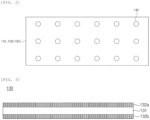
- the electrode assembly 100 includes a plurality of electrodes 110 and 120 laminated in a vertical direction P.
- the number of the electrodes 110 and 120 may be two or more.
- the term "vertical direction" may mean a vertical direction based on the ground, and is only for describing the laminating direction of the electrodes, but not for limiting the angle of the stacking direction.
- the electrodes 110 and 120 may include a first electrode 110 and a second electrode 120. As illustrated in FIG. 1 , the first electrode 110 and the second electrode 120 may be alternately laminated. The electrodes 110 and 120 may be alternately laminated with the separator 130 interposed therebetween.
- the first electrode 110 may be a positive electrode
- the second electrode 120 may be a negative electrode.
- the first electrode 110 may be a negative electrode
- the second electrode 120 may be a positive electrode.
- Each of the first electrode and the second electrode may be one or more, specifically two or more.
- the first electrode 110 and the second electrode 120 may have a structure in which an active material slurry is applied to a current collector.
- the first electrode 110 and the second electrode 120 may be formed by applying, drying, and rolling the active material slurry on both surfaces of the current collector.
- the active material slurry may be formed by adding a granular active material, a conductive agent, a binder, or the like in a solvent, and stirring the resultant solution.
- an active material, a conductive agent, a binder, or the like which are used for a positive electrode or a negative electrode in the art, may be used without limitation.
- the current collector is not particularly limited so long as it has high conductivity without causing adverse chemical changes in the battery.
- the current collector may include at least one selected from the group consisting of copper, stainless steel, aluminum, nickel, titanium, sintered carbon, and an aluminum-cadmium alloy.
- the current collector used for the electrodes 110 and 120 may include aluminum, and when the electrodes 110 and 120 are negative electrodes, the current collector used for the electrodes 110 and 120 may include copper.
- the current collector may be used in various forms such as a film, a sheet, a foil, a net, a mesh, a porous body, a foam body, and a non-woven fabric body.
- the current collector may include a polymer layer and metal layers disposed on both surfaces of the polymer layer, and the metal layers may include at least one selected from the group consisting of copper, stainless steel, aluminum, nickel, titanium, sintered carbon, and an aluminum-cadmium alloy.
- the electrodes 110 and 120 are negative electrodes
- a compound capable of reversible intercalation and deintercalation of lithium may be used as a negative electrode active material included in the negative electrodes.
- the negative electrode active material may be a carbonaceous material such as artificial graphite, natural graphite, graphitized carbon fibers, and amorphous carbon; a metallic material alloyable with lithium such as Si, Al, Sn, Pb, Zn, Bi, In, Mg, Ga, Cd, a Si alloy, a Sn alloy, or an Al alloy; a metal oxide which may be doped and undoped with lithium such as SiO ⁇ (0 ⁇ 2), SnO 2 , vanadium oxide, and lithium vanadium oxide; or a composite including the metallic material and the carbonaceous material such as a Si-C composite or a Sn-C composite, and any one thereof or a mixture of two or more thereof may be used.
- a metallic lithium thin film may be used as the negative electrode active material.
- both low crystalline carbon and high crystalline carbon may be used as the carbon material.
- Typical examples of the low crystalline carbon may be soft carbon and hard carbon
- typical examples of the high crystalline carbon may be irregular, planar, flaky, spherical, or fibrous natural graphite or artificial graphite, Kish graphite, pyrolytic carbon, mesophase pitch-based carbon fibers, meso-carbon microbeads, mesophase pitches, and high-temperature sintered carbon such as petroleum or coal tar pitch derived cokes.
- the positive electrode active material included therein is not particularly limited, and for example, the positive electrode active material may be a commonly used positive electrode active material.
- the positive electrode active material may include a layered compound, such as lithium cobalt oxide (LiCoO 2 ) or lithium nickel oxide (LiNiO 2 ), or a compound substituted with one or more transition metals; lithium iron oxides such as LiFe 3 O 4 ; lithium manganese oxides such as Li 1+c1 Mn 2-c1 O 4 (0 ⁇ c1 ⁇ 0.33), LiMnO 2 , LiMn 2 O 2 , and LiMnO 2 ; lithium copper oxide (Li 2 CuO 2 ); vanadium oxides such as LiV 3 O 8 , V 2 O 5 , and Cu 2 V 2 O 7 ; nickel (Ni)-site type lithium nickel oxide expressed by a chemical formula of LiNi 2-c2 M c2 O 2 (where M is at least one selected from the group
- the binder included in the electrodes may be any one binder polymer or a mixture of two or more thereof selected from the group consisting of a poly vinylidenefluoride polymer, polyvinyl alcohol, styrene butadiene rubber, polyethylene oxide, carboxyl methyl cellulose, cellulose acetate, cellulose acetate butyrate, cellulose acetate propionate, cyanoethyl pullulan, cyanoethyl polyvinyl alcohol, cyanoethyl cellulose, cyanoethyl sucrose, pullulan, polymethylmethacrylate, polybutylacrylate, polyacrylonitrile, polyvinylpyrrolidone, polyvinylacetate, polyethylene-co-vinyl acetate, polyarylate, and a low molecular compound having a molecular weight of 10,000 g/mol or less.
- the conductive agent included in the electrodes is not particularly limited as long as it has conductivity without causing adverse chemical changes in the battery, and, conductive materials, for example, graphite such as natural graphite and artificial graphite; carbon black such as acetylene black, Ketjen black, channel black, furnace black, lamp black, and thermal black; conductive fibers such as carbon fibers or metal fibers; conductive tubes such as carbon nanotubes; metal powder such as fluorocarbon powder, aluminum powder, and nickel powder; conductive whiskers such as zinc oxide whiskers and potassium titanate whiskers; conductive metal oxide such as titanium oxide; or polyphenylene derivatives, may be used.
- graphite such as natural graphite and artificial graphite
- carbon black such as acetylene black, Ketjen black, channel black, furnace black, lamp black, and thermal black
- conductive fibers such as carbon fibers or metal fibers
- conductive tubes such as carbon nanotubes
- metal powder such as fluorocarbon powder, aluminum powder, and nickel powder
- Examples of the thickener included in the electrodes may include carboxymethylcellulose (CMC).
- CMC carboxymethylcellulose
- the electrode assembly 100 includes a separator 130.
- the separator is alternately laminated with the electrodes.
- the separator 130 may be bent or folded in a zigzag shape to surround any one end portion of the electrodes 110 and 120.
- the separator 130 may be bent to surround one end portion 110a of the first electrode 110, and may be bent again to surround one end portion of the second electrode 120 on the reverse side from the one end portion 110a of the first electrode 110. As such bending is repeated, the separator 130 may be bent or folded in a zigzag shape.
- the electrode assembly 100 may include one separator 130.
- the electrode assembly 100 may be a zigzag stack-type electrode assembly in which a basic unit, in which the first electrode 110, the separator 130, the second electrode 120, and the separator 130 are sequentially laminated by bending or folding the separator 130 in a zigzag shape, is laminated in one or more, specifically two or more.
- the separator 130 includes a porous substrate 131 and ceramic coating layers 132a and 132b disposed on both surfaces of the porous substrate.
- the porous substrate 131 is not particularly limited as long as it is commonly used as a separator for a secondary battery. Specifically, it is preferable that the porous substrate 131 has excellent moisture-retention ability for an electrolyte as well as low resistance to ion migration in the electrolyte.
- the porous substrate 131 may include at least one selected from the group consisting of a polyolefin-based resin such as polyethylene, polypropylene, polybutylene, or polypentene; a fluorine-based resin such as polyvinylidene fluoride or polytetrafluoroethylene; a polyester-based resin such as polyethylene terephthalate or polybutylene terephthalate; a polyacrylonitrile resin; and a cellulose-based resin, and may be a porous film or a non-woven fabric including any one or two or more copolymers or mixtures thereof, or a laminated structure of two or more layers thereof.
- the porous substrate 131 may be a porous film or a non-woven fabric including the polyolefin-based resin, or a laminated structure of two or more layers thereof.
- the size and porosity of pores present in the porous substrate 131 are not particularly limited.
- the porous substrate 131 may be a porous substrate including pores having an average pore diameter of 0.01-1 pm, specifically, 20-60 nm, in a porosity of 10-90 vol%, specifically, 30-60 vol%, and in this case, it is preferable in that the mechanical strength of the porous substrate 131 may be improved, and at the same time, the ionic materials may more smoothly migrate between the positive electrode and the negative electrode.
- the average pore diameter and porosity may be measured by means of analysis using a focused ion beam (FIB), gas adsorption, or mercury intrusion porosimetry.
- FIB focused ion beam
- the thickness of the porous substrate 131 is not particularly limited, but may be specifically 1-100 pm, specifically 2-15 pm, in consideration of appropriate mechanical strength as a separator and the ease of migration of the ionic materials.
- the ceramic coating layers 132a and 132b are disposed on both surfaces of the porous substrate 131.
- the ceramic coating layers 132a and 132b include inorganic particles and a binder. More specifically, the ceramic coating layers may be made from only the inorganic particles and the binder.
- the inorganic particles may be introduced in order to prevent short-circuiting of the positive electrode and the negative electrode due to thermal shrinkage of the porous substrate at a high temperature, and the inorganic particles may be provided as a kind of spacer capable of maintaining a physical shape of the porous substrate and minimizing the thermal shrinkage.
- the inorganic particles may be used without particular limitation as long as they are electrochemically stable within an operating voltage range of the battery (for example, 0V to 5V based on Li/Li+) and do not cause oxidation and/or reduction reactions, that is, electrochemical reactions.
- the inorganic particles may include: lithium phosphate (Li 3 PO 4 ); lithium titanium phosphate (Li x Ti y (PO 4 ) 3 , 0 ⁇ x ⁇ 2, and 0 ⁇ y ⁇ 3); lithium aluminum titanium phosphate (Li x Al y Ti z (PO 4 ) 3 , 0 ⁇ x ⁇ 2, 0 ⁇ y ⁇ 1, and 0 ⁇ z ⁇ 3); (LiAlTiP) x O y -based glass (0 ⁇ x ⁇ 4 and 0 ⁇ y ⁇ 13) such as 14Li 2 O-9Al 2 O 3 -38TiO 2 -39P 2 O 5 ; lithium lanthanum titanate (Li x La y TiO 3 , 0 ⁇ x ⁇ 2, and 0 ⁇ y ⁇ 3); lithium germanium thiophosphate (Li x Ge y P z S w , 0 ⁇ x ⁇ 4, 0 ⁇ y ⁇ 1, 0 ⁇ z ⁇ 1, and 0 ⁇ w ⁇ 5) such as Li 3.25 Ge 0.25 P 0.75
- the inorganic particles may include Al 2 O 3 ; AlOOH; BaTiO 3 ; BaSO 4 ; MgO; CaO; CeO 2 ; NiO; SiO 2 ; SnO 2 ; SrTiO 3 ; TiO 2 ; Y 2 O 3 ; ZnO; ZrO 2 ; Pb(Zr,Ti)O 3 (PZT); Pb 1-x La x Zr 1-y TiyO 3 (PLZT); PB(Mg 3 Nb 2/2 )O 3 -PbTiO 3 (PMN-PT); hafnia (HfO 2 ); or a mixture of two or more thereof, and more specifically, may include at least one selected from the group consisting of Al 2 O 3 , AlOOH, BaTiO 3 , BaSO 4 , and MgO.
- the average particle diameter (D 50 ) of the inorganic particles may be 0.1-1 pm, specifically 0.2-0.7 ⁇ m.
- the inorganic particles are included in the ceramic coating layers 132a and 132b in an amount of from 92 wt% to less than 100 wt%.
- the content of the inorganic particles should be considered in relation to the content of the binder, which will be described later, and may be controlled in terms of preventing an increase in resistance due to an excess of the binder while preventing the deterioration of thermal stability due to thermal shrinkage of the porous substrate.
- the inorganic particles may be included in the ceramic coating layers in an amount of 93-98 wt%.
- the binder may be included in the ceramic coating layers 132a and 132b for binding of inorganic particles and binding of the separator and the electrodes.
- the binder is included in the ceramic coating layers in an amount of more than 0 wt% and less than 8 wt%.
- the binder may be excessively included in the ceramic coating layers, resulting in an increase in resistance of the secondary battery.
- the binder since the binder is included in the above-described range, the cell stiffness of the secondary battery may decrease due to the decrease in the adhesive strength between the electrodes and the separator, but as described later, the present disclosure uses a combination of the separator and the gel polymer electrolyte having the above-described characteristics, and thus it is possible to simultaneously achieve improvement of cell stiffness and mechanical durability as well as improvement of resistance of the secondary battery.
- the binder may be included in the ceramic coating layers in an amount of 2-7 wt%, and when the binder is included within the range, it is possible to prevent an increase in resistance of the secondary battery while securing binding force of the inorganic particles as much as possible.
- the hydrophobic binder may be polyvinylidene fluoride, polyvinylidene fluoride-co-hexafluoropropylene, polyvinylidene fluoride-co-trichloroethylene, polymethylmethacrylate, polyacrylonitrile, polyvinyl acetate, polyethylene-co-vinylacetate, polyimide, polyethylene oxide, or the like.
- the hydrophilic binder may be cyanoethylpullulan, cyanoethylpolyvinyl alcohol, cyanoethylcellulose, cyanoethylsucrose, carboxyl methyl cellulose, polyvinyl alcohol, polyacrylic acid, polymaleic anhydride, polyvinylpyrrolidone, or the like.
- the binder may be an acrylic binder.
- the acrylic binder may be well dispersed with the inorganic particles when the ceramic coating layers are prepared, thereby preventing the ceramic coating layers from being separated into a binder in an upper layer and inorganic particles in a lower layer. This layer separation consequently hinders the migration of ions in the negative electrode and the positive electrode, resulting in an increase in resistance, and thus when the acrylic binder is used as the binder, the desired resistance reduction effect of the present disclosure may be exhibited to a much superior level.
- the acrylic binder may include at least one selected from the group consisting of a copolymer of ethylhexyl acrylate and methyl methacrylate; polymethylmethacrylate; polyethylhexyl acrylate; polybutylacrylate; polyacrylonitrile; and a copolymer of butyl acrylate and methyl methacrylate.
- the ceramic coating layers may include the inorganic particles and the binder at a weight ratio of 92:8 or more and less than 100:0, specifically, 93:7 to 98:2.
- the thicknesses of the ceramic coating layers 132a and 132b may be 0.1-10 um, specifically 0.5-5 um, and more specifically 1.0-2.5 um. Since the ceramic coating layers 132a and 132b include the above-described small amount of the binder, it is possible to implement a thin separator, thereby further improving the energy density of the secondary battery and achieving low resistance.
- the thicknesses of the ceramic coating layers may mean the thickness of one ceramic coating layer formed on one surface of the porous substrate.
- the ceramic coating layers 132a and 132b may be prepared by applying a composition for forming a ceramic coating layer, in which inorganic particles and a binder are dispersed in a solvent, to the porous substrate and drying the substrate.
- the application method of the composition for forming the ceramic coating layer is not particularly limited, and a dip coating, a die coating, a roll coating, a comma coating, a gravure coating, or the like, and specifically, a gravure coating may be used.
- natural drying, reversible drying, hot air drying, or the like may be used as a drying method.
- the thickness of the separator 130 may be 1-20 ⁇ m, specifically, 5-14 ⁇ m, and according to the present disclosure, because the binder content in the ceramic coating layer is reduced, it is possible to implement a thin separator, thereby further improving the energy density of the secondary battery and achieving low resistance.
- the adhesive composition 140 is applied to the surface of at least one of the electrodes 110 and 120 and the separator 130, in this the electrodes 110 and 120 and the separator 130 adhere to each other.
- the adhesive composition 140 includes an adhesive and a polymerization initiator.
- the adhesive included in the adhesive composition 140 may be introduced for adhesion between the electrodes 110 and 120 and the separator 130. Specifically, the adhesive may be introduced to fix the alignment positions of the electrodes and the separator in the process of laminating, assembling, and stacking the electrodes and the separator during the manufacturing process of the secondary battery. As described above, since the separator 130 according to the present disclosure has a reduced binder content and may not have sufficient adhesive strength between the electrode and the separator when manufacturing the secondary battery, the adhesive composition 140 may compensate for this problem to easily bond the electrodes and the separator, and prevent the separator from being pushed out during the preparation process of the electrode assembly, thereby improving the efficiency of the process and quality.
- the adhesive may be an acrylate-based adhesive.
- the adhesive as described above may be easily dissolved and removed.
- the acrylate-based adhesive may include a copolymer including a repeating unit derived from at least one monomer selected from the group consisting of methyl methacrylate (MMA), 2-ethylhexyl acrylate (2-EHA), and 2-hydroxyethyl acrylate (2-HEA).
- MMA methyl methacrylate
- EHA 2-ethylhexyl acrylate
- 2-HEA 2-hydroxyethyl acrylate
- the weight average molecular weight (Mw) of the copolymer may be 120,000-140,000 g/mol.
- the molecular weight of the copolymer may be measured using a conventional method known in the art. For example, the measurement of the molecular weight may be performed using: a quantitative endgroup analysis method for obtaining a molecular weight by a quantitative analysis of functional groups at the ends of molecular chains; a colligative property utilization method utilizing physical properties such as osmotic pressure, vapor pressure lowering, boiling point elevation, freezing point depression (membrane osmotic method, vapor pressure osmotic pressure method, etc.); a light scattering method using light scattering; an ultracentrifugation method in which the molecular weight is measured by centrifuging a polymer solution and then analyzing a sedimentation rate or concentration distribution; a viscosity method using the viscosity of a polymer solution; a gel permeation chromatography (GPC) using high performance liquid chromatography
- the adhesive may be included in the adhesive composition in an amount of 90-99 wt%.
- the polymerization initiator is included in the adhesive composition in order to cure the gel polymer electrolyte composition which will be described later. Specifically, the polymerization initiator may be used in order to polymerize an oligomer compound contained in the gel polymer electrolyte composition to form a bonded polymer network in a three-dimensional structure.
- the polymerization initiator used for curing the gel polymer electrolyte composition or polymerizing the oligomer compound is included together in the gel polymer electrolyte composition and used, and the polymerization initiator may allow the oligomer compound to be polymerized while being decomposed in the presence of heat or light to form radicals.
- the polymerization initiator may generate radicals without heat or light, and when the oligomer compound and the polymerization initiator are included together in the gel polymer electrolyte composition, there is a limitation in that the oligomer compound is polymerized before the injection of the gel polymer electrolyte composition, and thus pre-gelation is performed. Since this inhibits sufficient impregnation of the electrode assembly, there are limitations in that the resistance of the finally manufactured battery increases and the life performance is deteriorated.
- the polymerization initiator used for curing the gel polymer electrolyte composition is included in the adhesive composition rather than the gel polymer electrolyte composition. Accordingly, the pre-gelation before the injection of the gel polymer electrolyte composition can be prevented, and thus the electrode assembly can be sufficiently impregnated with the gel polymer electrolyte composition, so that a secondary battery can be implemented, in which the limitation of increasing resistance is prevented.
- the polymerization initiator may be a photopolymerization initiator or a thermal polymerization initiator according to a polymerization method.
- the photopolymerization initiator may include at least one compound selected from the group consisting of 2-hydroxy-2-methylpropiophenone (HMPP), 1-hydroxy-cyclohexylphenyl-ketone, benzophenone, 2-hydroxy-1-[4-(2-hydroxyethoxy)phenyl]-2-methyl-1-propanone, oxy-phenylacetic acid 2-[2-oxo-2-phenyl-acetoxy-ethoxy]-ethyl ester, oxy-phenyl-acetic 2-[2-hydroxyethoxy]-ethyl ester, alpha-dimethoxy-alpha-phenylacetophenone, 2-benzyl-2-(dimethylamino)-1-[4-(4-morpholinyl)phenyl]-1-butanone, 2-methyl-1-[4-(methylthio)phenyl]-2-(4-morpholinyl)-1-propanone, diphenyl(2,4,6-trimethylbenzoyl
- HMPP 2-hydroxy-2
- the thermal polymerization initiator may include at least one compound selected from the group consisting of benzoyl peroxide, acetyl peroxide, dilauryl peroxide, di-tert-butyl peroxide, t-butyl peroxy-2-ethyl-hexanoate, cumyl hydroperoxide, hydrogen peroxide, 2,2'-azobis(2-cyanobutane), 2,2'-azobis(methylbutyronitrile), 2,2'-azobis(iso-butyronitrile) (AIBN), and 2,2'-azobisdimethyl-valeronitrile (AMVN).
- the polymerization initiator forms a radical by being dissociated by heat at 30 °C to 100 °C in the secondary battery or by being dissociated by light, such as ultraviolet (UV), at room temperature (5 °C to 30 °C), and forms cross-linking by free radical polymerization so that oligomers may be polymerized.
- UV ultraviolet
- the polymerization initiator may be included in the adhesive composition in an amount of 1-10 wt%.
- the polymerization initiator is within the above range, the polymerization of the oligomer compound may be sufficiently performed, and at the same time, the deterioration of adhesive strength due to a decrease in adhesive content may be prevented.
- the adhesive composition may be used to prepare the electrode assembly by bonding the electrodes and the separator, and after the electrode assembly is accommodated in the battery case and the gel polymer electrolyte composition is injected into the battery case, the adhesive composition may be dissolved in an organic solvent contained in the gel polymer electrolyte composition. Since the adhesive composition according to the present disclosure is dissolved and removed after being used to prepare the electrode assembly, it is possible to easily bond the electrodes and the separator without increasing the amount of binder in the separator, and it is also possible to further improve the energy density of the secondary battery by preventing an increase in the thickness of the separator due to the increase in the amount of the binder.
- the adhesive composition may be applied in the form of a plurality of patterns spaced apart from each other. Specifically, the adhesive composition may be applied to the surface of at least one among the electrodes and the separator in the form of a plurality of patterns spaced apart from each other. Specifically, the adhesive composition may be applied to the surface of at least one among the electrodes and the separator in the form of a plurality of dots spaced apart from each other.
- the adhesive may be removed by the injection of the gel polymer electrolyte composition, and thus traces of adhesive applied may remain on the surface of at least one of the electrodes 110 and 120 and the separator 130. Specifically, when the gel polymer electrolyte composition is injected into the battery case in which the electrode assembly is accommodated, the adhesive may be dissolved and removed by an organic solvent in the gel polymer electrolyte composition, thereby leaving traces of adhesive applied.
- An area of the adhesive composition applied may be 0% to 1% (exclusive of 0), for example, 0.0001% to 0.05%, with respect to an area of the surface on which the separator and the electrodes are in contact with each other. According to the above range, it is preferable that the electrodes and the separator may be bonded with sufficient adhesive strength, and at the same time, the problem, in which the adhesive is excessively applied and not dissolved in the solvent and remains to increase resistance, may be prevented.
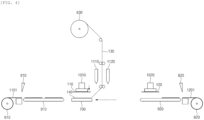
- the electrodes 110 and 120 may include the first electrode 110 and the second electrode 120, and the electrode assembly 100 may be prepared by a method including steps (a) to (d) below:
- the adhesive composition 140 is applied to at least a portion of the separation layer 130 and the first electrode 110.
- the application of the adhesive composition 140 may be carried out by applying the adhesive composition 140 to at least a portion of the separator 130 and the first electrode 110 through a first nozzle 1110.
- FIG. 4 illustrates that the adhesive composition 140 is applied to the separator 130, the present disclosure is not limited thereto, and the adhesive composition 140 may be applied to at least a portion of the separator 130, the first electrode 110, or both the separator 130 and the first electrode 110.
- the separator 130 may be unwound from a separator reel 630 and loaded on the upper surface of a table 700.
- the applied adhesive composition 140 bonds the separator 130 and the first electrode 110.
- the first electrode 110 may be formed by cutting a first electrode sheet 1101 unwound from a first electrode reel 610 by a first cutter 810. In this case, when a first transfer device 910 transfers the first electrode 110, a first header 1010 may suck the first electrode. Thereafter, the first electrode 110 may be loaded or disposed on the separator 130 according to the movement of the first header 1010 and/or the table 700.
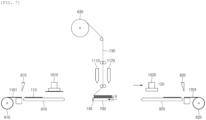
- one side of the separator 130 may be folded to cover the first electrode 110, and the adhesive composition 140 may be applied to at least a portion of the separator 130 and the second electrode 120.
- one side of the separator 130 is folded to cover the first electrode 110.
- the folding of the separator 130 may be performed by lateral movement of the table 700.
- the adhesive composition 140 is applied to at least a portion of the separator 130 and the second electrode 120.
- the application of the adhesive composition 140 may be carried out by applying the adhesive composition 140 to at least a portion of the separator 130 and the second electrode 120 through a second nozzle 1120.
- FIG. 6 illustrates that the adhesive composition 140 is applied to the separator 130, the present disclosure is not limited thereto, and the adhesive composition 140 may be applied to at least a portion of the separator 130, the second electrode 120, or both the separator 130 and the second electrode 120.
- the applied adhesive composition 140 bonds the separator 130 and the second electrode 120, and the other side of the separator 130 is folded to cover the second electrode 120.
- the second electrode 120 is bonded to the reverse surface of the separator 130 from the surface on which the separator 130 and the first electrode 110 are in contact with each other.
- the second electrode 120 may be formed by cutting a first electrode sheet 1201 unwound from a second electrode reel 620 by a second cutter 820.
- a second transfer device 920 transfers the second electrode 120
- a second header 1020 may suck the second electrode.
- the second electrode may be loaded or bonded on the separator 130 according to the movement of the second header 1020 and/or the table 700.
- the other side of the separator 130 is folded to cover the second electrode 120. Accordingly, it is possible to prepare the electrode assembly having a structure in which the first electrode and the second electrode are alternately laminated, a separator is interposed between the first electrode and the second electrode, and the separator is folded in a zigzag shape. Thereafter, repeating the above-described process can implement the electrode assembly in which a plurality of first electrodes and second electrodes are alternately laminated.
- the separator and/or the electrode may be pushed out due to the bending or folding of the separator in the preparation process, and this may lead to poor quality and reduced process efficiency.
- the electrode and/or the separator may be prevented from being pushed out at a significant level as the adhesive is applied for the bonding of the electrodes and the separator, and the secondary battery having improved quality may be manufactured.
- the application of the adhesive is particularly preferable in terms of supplementing the adhesive strength of the separator of the present disclosure in which the binder is contained in a low amount.
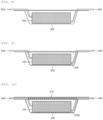
- the electrode assembly 100 is accommodated in the battery case 300.
- the electrode assembly is briefly illustrated in FIG. 8 .
- the battery case 300 may be provided in order to accommodate the electrode assembly 100 and the gel polymer electrolyte 200.
- the battery case 300 may be a case in the form of a pouch made from a material having flexibility, and may be, for example, an aluminum pouch battery case.
- the battery case 300 may be formed of, for example, a pouch film in which a polypropylene layer (PP layer), an aluminum layer, and a polyethylene terephthalate layer (PET layer) are sequentially laminated from the inside.
- PP layer polypropylene layer
- PET layer polyethylene terephthalate layer
- the battery case 300 may include a cup, which is an accommodation space for accommodating the electrode assembly.
- the battery case 300 may include a cover 310, and after accommodating the electrode assembly, curing and gelling the gel polymer electrolyte composition, the battery case 300 may be sealed with the cover to manufacture a sealed secondary battery.
- a plurality of electrode tabs 400 and 500 may be connected to the electrode assembly.
- the plurality of electrode tabs 400 and 500 may be connected to the electrodes 110 and 120 of the electrode assembly 100, and more specifically, may be connected to the first electrode 110 and the second electrode 120, respectively, and may protrude to the outside of the battery case 300 to be a path for allowing electrons to move.
- FIG. 8 illustrates that the two electrode tabs 400 and 500 are disposed in different directions with respect to the electrode assembly 100, the present disclosure is not limited thereto, and the two electrode tabs 400 and 500 may protrude side by side in the same direction from one side of the electrode assembly 100.
- the plurality of electrode tabs 400 and 500 may be a positive electrode tab and a negative electrode tab, and may be connected to the positive electrode and the negative electrode, respectively.
- the gel polymer electrolyte composition 200 is injected into the battery case 300 to impregnate the electrode assembly 100.
- the electrode assembly 100 may be impregnated with the gel polymer electrolyte composition 200 and the gel polymer electrolyte composition 200 may be cured and disposed inside and outside the electrode assembly.
- the lithium salt may be used without particular limitation as long as it is a compound capable of providing lithium ions used in the secondary battery.
- LiPF 6 , LiClO 4 , LiAsF 6 , LiBF 4 , LiSbF 6 , LiAl0 4 , LiAlCl 4 , LiCF 3 SO 3 , LiC 4 F 9 SO 3 , LiN(C 2 F 5 SO 3 ) 2 , LiN(C 2 F 5 SO 2 ) 2 , LiN(CF 3 SO 2 ) 2 , LiCl, LiI, LiB(C 2 O 4 ) 2 , or the like may be used as the lithium salt.
- the lithium salt in a concentration range of 0.1 M to 5.0 M, preferably, 0.1 M to 3.0 M.
- concentration of the lithium salt included within the above range, the electrolyte may have suitable conductivity and viscosity, thereby exhibiting excellent performance, and lithium ions may effectively migrate.
- the oligomer compound may include at least one selected from the group consisting of polyether-based oligomers, polycarbonate-based oligomers, acrylate-based oligomers, polysiloxane-based oligomers, phosphazene-based oligomers, polyethylene-based oligomers, urethane-based oligomers, epoxy-based oligomers, fluorine-based oligomers, polyethylene oxide, polyester sulfide, polyvinyl alcohol, and polyvinylidene fluoride, and in particular, at least one selected from fluorine-based oligomers, polycarbonate-based oligomers, and polysiloxane-based oligomers.
- the fluorine-based oligomers may specifically include a fluorine-based monomer-derived unit.
- the fluorine-based oligomers have the advantage that the fluorine-based functional group contained therein inhibits the generation of oxygen radicals caused by the degradation of the cathode active material, thereby further improving battery stability and having excellent flame retardancy.
- the fluorine-based oligomers may include at least one selected from among a tetrafluoroethylene (TFE)-vinyl acetate copolymer, an (allyl 1,1,2,2-tetrafluoroethyl ether)-(2,2,2-trifluoroethyl acrylate) copolymer, a tetrafluoroethylene-(2-vinyl-1,3-dioxolane) copolymer, and a tetrafluoroethylene-vinyl methacrylate copolymer.
- TFE tetrafluoroethylene
- the polycarbonate-based oligomers have the advantage of having affinity to a positive electrode, having a structure similar to an organic electrolyte solution, and having excellent ion conductivity or excellent degree of ionic dissociation.
- the polysiloxane-based oligomers may function as a scavenger of gas (HF, etc.) generated by the side reaction of the electrolyte solution, thereby having an effect of improving high-temperature storage characteristics.
- HF scavenger of gas
- the oligomer compound may have a weight-average molecular weight of 1,000-50,000 g/mol, specifically, 4,500-30,000 g/mol.
- the oligomer compound may be included in the gel polymer electrolyte composition in an amount of 1-20 wt%, specifically 3-10 wt%, and within the above range, the cell stiffness improvement effect of the secondary battery may be exhibited excellent, and the ion conductivity and the mobility of lithium ions of the gel polymer electrolyte may be exhibited excellent.
- the organic solvent may be used in order to dissolve or disperse lithium salts and second oligomer compounds.
- the organic solvent is a solvent commonly used in a secondary battery, and for example, ethers, esters (acetates and propionates), amides, linear carbonates or cyclic carbonates, or nitriles (acetonitriles, SN, etc.) may be used alone or in mixture of two or more thereof.
- a carbonate-based solvent containing a cyclic carbonate, a linear carbonate, or a carbonate compound, as a mixture thereof may be typically used.
- propylene carbonate and ethylene carbonate as cyclic carbonates among the carbonate-based solvents, are highly viscous organic solvents and have high dielectric constants
- the propylene carbonate and ethylene carbonate may well dissociate the lithium salt in the electrolyte solution, and, thus, the propylene carbonate and ethylene carbonate may be preferably used.
- an electrolyte solution having high electrical conductivity may be prepared when the above cyclic carbonate is mixed with low viscosity, low dielectric constant linear carbonate, such as ethylmethyl carbonate, diethyl carbonate, or dimethyl carbonate, in an appropriate ratio, the propylene carbonate and ethylene carbonate may be more preferably used.
- the adhesive and polymerization initiator of the adhesive composition applied into the electrode assembly may be dissolved by the injection of the gel polymer electrolyte composition, specifically, an organic solvent in the gel polymer electrolyte composition.
- the dissolution of the adhesive and the polymerization initiator may be performed more smoothly in the activation and the pressurization of the degassing process generally involved in the manufacturing process of the secondary battery.
- the activation is a process of forming the solid electrolyte interface (SEI) layer on the electrode plate surface of the electrode assembly through a charging process in the initial secondary battery and allowing the electrode assembly to be charged, and may be a process for enabling the secondary battery to supply power through the activation, for example, may be performed at 45 °C or higher, specifically, 50-70 °C.
- SEI solid electrolyte interface
- the degassing process is a process of discharging the gas generated in the activation process, etc. to the outside, and may be accompanied by a process of pressing the secondary battery by a jig or the like.
- the adhesive may be more smoothly dissolved or removed by such an increase in temperature, pressurization, or the like.
- the gel polymer electrolyte composition 200 is cured. Specifically, the gel polymer electrolyte composition 200 is cured to form a gel polymer electrolyte 200a.
- the oligomer compound When the gel polymer electrolyte composition is cured, the oligomer compound may be cross-linked and cured to form an electrolyte solidified in a gel form (gel polymer electrolyte) .
- the gel polymer electrolyte 200 may include the cured product of the oligomer compound and a lithium salt.
- the gel polymer electrolyte composition is cured by the dissolved polymerization initiator. That is, the polymerization initiator present in the adhesive composition 140 applied is dissolved by the gel polymer electrolyte composition 200, and may function as a radical-providing source for curing the gel polymer composition and polymerizing the oligomer compound. Thereafter, the gel polymer electrolyte composition may form a gel polymer electrolyte by the curing.
- Such prevention of the pre-gelation of the gel polymer electrolyte composition enables the electrode assembly to be sufficiently impregnated and to secure ion conductivity, and enables implementation of a secondary battery having improved resistance reduction and life performance effects.
- the curing of the gel polymer electrolyte composition may be performed at 50-100 °C for 0.5-48 hours, and preferably, may be performed at 60-80 °C for 0.5-24 hours.
- a composition for forming a ceramic coating layer was prepared by adding Al 2 O 3 (average particle diameter (D 50 ): 0.5 ⁇ m) as inorganic particles and an acrylic binder to water, which is a solvent, at a weight ratio of 96:4.
- an acrylic binder a mixture of the product name TRD 202A from JSR Corporation and the product name AP-0821 from APEC Corporation was used.
- the same adhesive used above was applied, using a second nozzle, onto the surface of the separator (the reverse surface from the surface on which the separator and the positive electrode are in contact with each other) in a plurality of dot-shaped patterns spaced apart from each other.
- a negative electrode sheet was unwound from a second electrode reel, around which the negative electrode sheet had been wound, cut with a second cutter to prepare a negative electrode, and the negative electrode is transferred to a second transfer device to be sucked to a second header.
- the second header is moved toward the table to bond the negative electrode to the surface of the separator (the reverse surface from the surface on which the separator and the negative electrode are in contact with each other).
- a positive electrode slurry was prepared by adding Li[Ni 0.8 Co 0.1 Mn 0.1 ]O 2 as a positive electrode active material, PVdF as a binder, and carbon black as a conductive agent in a weight ratio of 97.5:1.5:1.0 to N-methylpyrrolidone (NMP) as a solvent, and then the positive electrode slurry was applied to both surfaces of an aluminum current collector as a positive electrode collector, and dried and rolled to form a positive electrode active material layer.
- NMP N-methylpyrrolidone
- a negative electrode slurry was prepared by adding graphite as a negative electrode active material, styrene-butadiene rubber as a binder, carbon black as a conductive agent, and carboxymethylcellulose (CMC) as a thickener to water as a solvent in a weight ratio of 95.5:2.5:1.0:1.0, and the negative electrode slurry was applied to both surfaces of a copper current collector as a negative electrode collector, and dried and rolled to form a negative electrode active material layer.
- CMC carboxymethylcellulose
- a gel polymer electrolyte composition was prepared by mixing a polycarbonate (weight average molecular weight Mw: 20,000) as an oligomer, LiPF 6 as a lithium salt, and azobisisobutyronitrile (AIBN) as a polymerization initiator in a solvent.
- a polycarbonate weight average molecular weight Mw: 20,000
- LiPF 6 lithium salt
- AIBN azobisisobutyronitrile
- the solvent is a mixture of ethyl carbonate (EC) and ethyl methyl carbonate (EMC) in a volume ratio of 3:7
- the lithium salt is included in the gel polymer electrolyte composition at a concentration of 1.0 M
- the oligomer is included in the gel polymer electrolyte composition in an amount of 5 wt%
- the polymerization initiator is included in the gel polymer electrolyte composition in an amount of 0.6 parts by weight based on 100 parts by weight of the oligomer.
- a pouch-type battery case made from an aluminum material was prepared as a battery case, and an electrode assembly was accommodated in an accommodation space of the battery case.
- the gel polymer electrolyte composition was injected into the battery case in which the electrode assembly was accommodated. After the injection of the gel polymer electrolyte composition, vacuum sealing was performed.
- the gel polymer electrolyte composition injected into the battery case was cured.
- the curing was performed by heat treatment at 60 °C for 5 hours.
- the thickness of the secondary battery was 0.8 cm.
- a liquid electrolyte composition was prepared by mixing ethylene carbonate (EC) and ethyl methyl carbonate (EMC) in a volume ratio of 30:70 and using the mixture as a solvent, and adding LiPF 6 , a lithium salt, to the solvent at a concentration of 1.0 M.
- EC ethylene carbonate
- EMC ethyl methyl carbonate
- a secondary battery was manufactured in the same manner as in Example 1, except that the above-prepared liquid electrolyte composition was used and a separate curing process was not performed.
- the thickness of the secondary battery was 0.8 cm.
- An electrode assembly was prepared in the same manner as in Example 1, except that the polymerization initiator was not included in the adhesive composition.
- the gel polymer electrolyte composition was used.
- a secondary battery was manufactured in the same manner as in Example 1, except that the above-prepared gel polymer electrolyte composition was used.
- the thickness of the secondary battery was 0.8 cm.
- a composition for forming a ceramic coating layer was prepared by adding Al 2 O 3 (average particle diameter (D 50 ): 0.5 ⁇ m) as inorganic particles and PVdF as a binder to acetone, which is a solvent, at a weight ratio of 70:30.
- a plurality of the above-prepared separators were prepared.
- a plurality of those identical to the positive electrode and the negative electrode prepared in Example 1 were prepared.
- Prepared was an electrode assembly in which 18 basic units in which a separator/positive electrode/separator/negative electrode were sequentially laminated were laminated.
- the two separators in the basic unit are separate separators, and are not folded in a zigzag shape as in Example 1.
- a separate adhesive composition was not used for laminating the separator and the positive electrode or the negative electrode.
- a secondary battery was manufactured in the same manner as in Example 1, except that the above-prepared electrode assembly and gel polymer electrolyte composition were used.
- the thickness of the secondary battery was 0.8 cm.
- the impregnation completion time was evaluated by performing the Potentiostatic EIS evaluation once every 30 minutes immediately after injecting the gel polymer electrolyte composition into the battery case, and vacuum-sealing the battery case, and measuring the time until the Nyquist plot profile was saturated.
- the degree of pre-gelation upon completion of the impregnation was evaluated by calculating an NMR area peak ratio of ethylene carbonate (EC) and acryl group immediately after the injection of the gel polymer electrolyte composition, and an NMR area peak ratio of ethylene carbonate (EC) and acryl group after completion of the impregnation, and calculating the ratio thereof.
- reaction ratio (%) means the degree of pre-gelation upon completion of the impregnation
- a Acryl /A EC means the NMR area peak ratio of ethylene carbonate (EC) and acryl group after completion of the impregnation
- the resistance value was calculated using the voltage change amount ( ⁇ V) measured when discharging at 2.5 C rate for 10 seconds at 50% of SOC, and the results are shown in Table 1 below.
- Example 1 The secondary batteries of Example 1, and Comparative Examples 1 to 4 as manufactured above were charged and discharged for 100 cycles at 45 °C under the following conditions to evaluate capacity retention at the 100th cycle.
- Example 1 The secondary batteries of Example 1, and Comparative Examples 1 to 4 were fully charged at 100% of SOC, placed in a hot box, and heated at a rate of 0.5 °C/minute to measure a temperature at which ignition starts, and the measured temperature is shown in Table 1.
- Table 1 Experimental Example 2 Experim ental Example 3 Experim ental Example 4 Experim ental Example 5 Experim ental Example 6 Wettin 9 comple tion time (hr) Polymer conversion rate (%) upon wetting completion Resista nce ( ⁇ ) 100 cycle capacit y retenti on (%) Cell Stiffne ss Ignitio n tempera ture (°C) Example 1 15 3 2.11 98.5 4.57 179 Comparative Example 1 - - 2.08 99.3 3.05 167 Comparative Example 2 46 10 2.22 98.1 4.39 178 Comparative Example 3 - - 2.23 98.4 3.70 166 Comparative Example 4 63 18 2.35 95.8 6.81 168
- the polymerization initiator is included in the gel polymer electrolyte composition rather than the adhesive composition, and the pre-gelation of the gel polymer electrolyte composition is considerably progressed. Since such pre-gelation inhibits sufficient impregnation of the electrode assembly, the resistance of the manufactured secondary battery is increased by about 5% compared to Example 1, and the life characteristics are deteriorated.
- the separator in which a large amount of binders are used, is used together with the gel polymer electrolyte, and thus the resistance is increased by about 6% compared to Example 1, and the cell stiffness is decreased and the thermal stability is deteriorated due to the use of the liquid electrolyte composition.
- Comparative Example 4 uses both the gel polymer electrolyte and the separator containing a large amount of binders. Accordingly, the secondary battery manufactured in Comparative Example 4 has an increase in resistance by about 11% and significantly deteriorated life characteristics compared to that of Example 1. Meanwhile, in the case of Comparative Example 4, the thermal stability significantly deteriorates, and this seems to be because the inorganic particle content of the separator is relatively small, and thus the heat shrinkage and short circuit of the separator are not sufficiently prevented.
Landscapes
- Chemical & Material Sciences (AREA)
- Chemical Kinetics & Catalysis (AREA)
- Electrochemistry (AREA)
- General Chemical & Material Sciences (AREA)
- Engineering & Computer Science (AREA)
- Manufacturing & Machinery (AREA)
- Inorganic Chemistry (AREA)
- Condensed Matter Physics & Semiconductors (AREA)
- General Physics & Mathematics (AREA)
- Physics & Mathematics (AREA)
- Dispersion Chemistry (AREA)
- Composite Materials (AREA)
- Materials Engineering (AREA)
- Ceramic Engineering (AREA)
- Cell Separators (AREA)
Applications Claiming Priority (2)
| Application Number | Priority Date | Filing Date | Title |
|---|---|---|---|
| KR1020220006032A KR20230110028A (ko) | 2022-01-14 | 2022-01-14 | 이차전지의 제조방법 |
| PCT/KR2023/000697 WO2023136677A1 (ko) | 2022-01-14 | 2023-01-13 | 이차전지의 제조방법 |
Publications (2)
| Publication Number | Publication Date |
|---|---|
| EP4439769A1 true EP4439769A1 (de) | 2024-10-02 |
| EP4439769A4 EP4439769A4 (de) | 2025-08-06 |
Family
ID=87279459
Family Applications (1)
| Application Number | Title | Priority Date | Filing Date |
|---|---|---|---|
| EP23740520.4A Pending EP4439769A4 (de) | 2022-01-14 | 2023-01-13 | Verfahren zur herstellung einer sekundärbatterie |
Country Status (5)
| Country | Link |
|---|---|
| US (1) | US20250062416A1 (de) |
| EP (1) | EP4439769A4 (de) |
| KR (1) | KR20230110028A (de) |
| CN (1) | CN118476078A (de) |
| WO (1) | WO2023136677A1 (de) |
Family Cites Families (6)
| Publication number | Priority date | Publication date | Assignee | Title |
|---|---|---|---|---|
| KR101737223B1 (ko) * | 2014-10-02 | 2017-05-17 | 주식회사 엘지화학 | 젤 폴리머 전해질 및 이를 포함하는 리튬 이차전지 |
| JP6678389B2 (ja) * | 2014-12-26 | 2020-04-08 | 三星エスディアイ株式会社Samsung SDI Co., Ltd. | 二次電池用バインダ、二次電池用セパレータ、及び二次電池 |
| JP6570926B2 (ja) * | 2015-09-03 | 2019-09-04 | 株式会社エンビジョンAescジャパン | リチウムイオン二次電池の製造方法 |
| KR102270874B1 (ko) * | 2018-03-09 | 2021-07-01 | 주식회사 엘지에너지솔루션 | 리튬 이차 전지용 파우치 외장재 및 이를 포함하는 리튬 이차 전지 |
| KR102338540B1 (ko) * | 2018-04-10 | 2021-12-14 | 주식회사 엘지에너지솔루션 | 리튬 이차 전지 및 이의 제조방법 |
| CN111345500A (zh) | 2018-12-21 | 2020-06-30 | 云南巴菰生物科技有限公司 | 一种水性胶囊及其制备方法 |
-
2022
- 2022-01-14 KR KR1020220006032A patent/KR20230110028A/ko active Pending
-
2023
- 2023-01-13 WO PCT/KR2023/000697 patent/WO2023136677A1/ko not_active Ceased
- 2023-01-13 EP EP23740520.4A patent/EP4439769A4/de active Pending
- 2023-01-13 US US18/724,436 patent/US20250062416A1/en active Pending
- 2023-01-13 CN CN202380015782.3A patent/CN118476078A/zh active Pending
Also Published As
| Publication number | Publication date |
|---|---|
| EP4439769A4 (de) | 2025-08-06 |
| WO2023136677A1 (ko) | 2023-07-20 |
| CN118476078A (zh) | 2024-08-09 |
| US20250062416A1 (en) | 2025-02-20 |
| KR20230110028A (ko) | 2023-07-21 |
Similar Documents
| Publication | Publication Date | Title |
|---|---|---|
| EP4287341A1 (de) | Verfahren zur herstellung einer gelpolymerelektrolyt-sekundärbatterie und damit hergestellte gelpolymerelektrolyt-sekundärbatterie | |
| CN117280512A (zh) | 凝胶聚合物电解质二次电池的制造方法及由此得到的凝胶聚合物电解质二次电池 | |
| EP4465405A1 (de) | Verfahren zur herstellung einer sekundärbatterie | |
| KR102909981B1 (ko) | 겔 폴리머 전해질 이차전지의 제조방법 및 이에 의해 제조된 겔 폴리머 전해질 이차전지 | |
| EP4435923A1 (de) | Sekundärbatterie und verfahren zur herstellung davon | |
| EP4465406A1 (de) | Verfahren zur herstellung einer sekundärbatterie | |
| KR101410047B1 (ko) | 이차전지용 유무기 다공성분리막의 제조방법 및 이로부터 제조된 유무기 다공성분리막 | |
| EP4439769A1 (de) | Verfahren zur herstellung einer sekundärbatterie | |
| EP4510277A1 (de) | Gelpolymerelektrolyt und elektrochemische vorrichtung damit | |
| KR20230110025A (ko) | 이차전지의 제조방법 | |
| EP4443592A1 (de) | Sekundärbatterie und herstellungsverfahren dafür | |
| KR20190013518A (ko) | 겔 폴리머 전해질용 조성물 및 이로부터 형성된 겔 폴리머 전해질을 포함하는 리튬 이차전지 | |
| KR102685092B1 (ko) | 이차전지 | |
| KR101491612B1 (ko) | 이차전지용 유무기 다공성분리막의 제조방법 및 이로부터 제조된 유무기 다공성분리막 | |
| EP4465404A1 (de) | Sekundärbatterie | |
| KR102406744B1 (ko) | 겔 폴리머 전해질 및 이를 포함하는 리튬 이차전지 | |
| EP4668404A1 (de) | Lithiumsekundärbatterie mit verbesserter sicherheit | |
| KR20230109979A (ko) | 이차전지의 제조방법 | |
| KR20230110026A (ko) | 이차전지 및 이의 제조방법 | |
| KR20250154932A (ko) | 바이폴라 단위셀, 이의 제조방법, 및 이를 포함하는 바이폴라 전지 | |
| KR20260010340A (ko) | 바이폴라 전지, 및 이의 제조방법 | |
| KR20260021936A (ko) | 이차 전지의 제조 방법 |
Legal Events
| Date | Code | Title | Description |
|---|---|---|---|
| STAA | Information on the status of an ep patent application or granted ep patent |
Free format text: STATUS: THE INTERNATIONAL PUBLICATION HAS BEEN MADE |
|
| PUAI | Public reference made under article 153(3) epc to a published international application that has entered the european phase |
Free format text: ORIGINAL CODE: 0009012 |
|
| STAA | Information on the status of an ep patent application or granted ep patent |
Free format text: STATUS: REQUEST FOR EXAMINATION WAS MADE |
|
| 17P | Request for examination filed |
Effective date: 20240626 |
|
| AK | Designated contracting states |
Kind code of ref document: A1 Designated state(s): AL AT BE BG CH CY CZ DE DK EE ES FI FR GB GR HR HU IE IS IT LI LT LU LV MC ME MK MT NL NO PL PT RO RS SE SI SK SM TR |
|
| DAV | Request for validation of the european patent (deleted) | ||
| DAX | Request for extension of the european patent (deleted) | ||
| A4 | Supplementary search report drawn up and despatched |
Effective date: 20250703 |
|
| RIC1 | Information provided on ipc code assigned before grant |
Ipc: H01M 10/058 20100101AFI20250627BHEP Ipc: H01M 10/0565 20100101ALI20250627BHEP Ipc: H01M 10/42 20060101ALI20250627BHEP Ipc: H01M 50/46 20210101ALI20250627BHEP Ipc: H01M 10/052 20100101ALI20250627BHEP Ipc: H01M 10/0567 20100101ALI20250627BHEP Ipc: H01M 10/0569 20100101ALI20250627BHEP Ipc: H01M 10/0583 20100101ALI20250627BHEP Ipc: H01M 50/449 20210101ALI20250627BHEP Ipc: H01M 50/403 20210101ALI20250627BHEP Ipc: H01M 50/446 20210101ALI20250627BHEP |