EP4435005A1 - Asthmabehandlung durch blockierung von il-13 und tslp - Google Patents
Asthmabehandlung durch blockierung von il-13 und tslp Download PDFInfo
- Publication number
- EP4435005A1 EP4435005A1 EP23305412.1A EP23305412A EP4435005A1 EP 4435005 A1 EP4435005 A1 EP 4435005A1 EP 23305412 A EP23305412 A EP 23305412A EP 4435005 A1 EP4435005 A1 EP 4435005A1
- Authority
- EP
- European Patent Office
- Prior art keywords
- compound
- feno
- reduction
- level
- seq
- Prior art date
- Legal status (The legal status is an assumption and is not a legal conclusion. Google has not performed a legal analysis and makes no representation as to the accuracy of the status listed.)
- Pending
Links
Images


Classifications
-
- C—CHEMISTRY; METALLURGY
- C07—ORGANIC CHEMISTRY
- C07K—PEPTIDES
- C07K16/00—Immunoglobulins [IG], e.g. monoclonal or polyclonal antibodies
- C07K16/18—Immunoglobulins [IG], e.g. monoclonal or polyclonal antibodies against material from animals or humans
- C07K16/24—Immunoglobulins [IG], e.g. monoclonal or polyclonal antibodies against material from animals or humans against cytokines, lymphokines or interferons
- C07K16/244—Interleukins [IL]
-
- A—HUMAN NECESSITIES
- A61—MEDICAL OR VETERINARY SCIENCE; HYGIENE
- A61P—SPECIFIC THERAPEUTIC ACTIVITY OF CHEMICAL COMPOUNDS OR MEDICINAL PREPARATIONS
- A61P11/00—Drugs for disorders of the respiratory system
- A61P11/06—Antiasthmatics
-
- A—HUMAN NECESSITIES
- A61—MEDICAL OR VETERINARY SCIENCE; HYGIENE
- A61K—PREPARATIONS FOR MEDICAL, DENTAL OR TOILETRY PURPOSES
- A61K39/00—Medicinal preparations containing antigens or antibodies
- A61K2039/505—Medicinal preparations containing antigens or antibodies comprising antibodies
-
- C—CHEMISTRY; METALLURGY
- C07—ORGANIC CHEMISTRY
- C07K—PEPTIDES
- C07K2317/00—Immunoglobulins specific features
- C07K2317/30—Immunoglobulins specific features characterized by aspects of specificity or valency
- C07K2317/31—Immunoglobulins specific features characterized by aspects of specificity or valency multispecific
-
- C—CHEMISTRY; METALLURGY
- C07—ORGANIC CHEMISTRY
- C07K—PEPTIDES
- C07K2317/00—Immunoglobulins specific features
- C07K2317/50—Immunoglobulins specific features characterized by immunoglobulin fragments
- C07K2317/56—Immunoglobulins specific features characterized by immunoglobulin fragments variable (Fv) region, i.e. VH and/or VL
- C07K2317/569—Single domain, e.g. dAb, sdAb, VHH, VNAR or nanobody®
-
- C—CHEMISTRY; METALLURGY
- C07—ORGANIC CHEMISTRY
- C07K—PEPTIDES
- C07K2317/00—Immunoglobulins specific features
- C07K2317/60—Immunoglobulins specific features characterized by non-natural combinations of immunoglobulin fragments
- C07K2317/62—Immunoglobulins specific features characterized by non-natural combinations of immunoglobulin fragments comprising only variable region components
-
- C—CHEMISTRY; METALLURGY
- C07—ORGANIC CHEMISTRY
- C07K—PEPTIDES
- C07K2317/00—Immunoglobulins specific features
- C07K2317/70—Immunoglobulins specific features characterized by effect upon binding to a cell or to an antigen
- C07K2317/76—Antagonist effect on antigen, e.g. neutralization or inhibition of binding
-
- C—CHEMISTRY; METALLURGY
- C07—ORGANIC CHEMISTRY
- C07K—PEPTIDES
- C07K2317/00—Immunoglobulins specific features
- C07K2317/90—Immunoglobulins specific features characterized by (pharmaco)kinetic aspects or by stability of the immunoglobulin
- C07K2317/92—Affinity (KD), association rate (Ka), dissociation rate (Kd) or EC50 value
Definitions
- inflammatory diseases such as asthma, atopic dermatitis, and rheumatoid arthritis.
- a cascade of immune responses mediated by the innate and adaptive arms of the immune system e.g., antigen recognition, antigen processing, antigen presentation, cytokine production, antibody production, target cell killing
- Inflammatory diseases are often chronic and can even be life-threatening.
- Allergic and atopic diseases such as asthma are often driven predominantly by type 2 immune responses and characterized by salient features of type 2 immunity such as high IgE production and eosinophilia.
- Thymic stromal lymphopoietin (TSLP) and Interleukin-13 (IL-13) are soluble cytokine targets produced by stromal and/or immune cells ( Ziegler & Artis, Nat Rev Immunol (2010) 11:289 , Gieseck III et al., Nat Rev Immunol (2016) 18:62 ).
- Human TSLP and IL-13 drive distinct, overlapping and synergistic aspects of immunity and autoimmunity, such as type 2 inflammation.
- TSLP thymic stromal lymphopoietin receptor
- IL-7R ⁇ IL-7R alpha chain
- IL-13 signaling starts by binding to a heterodimeric receptor complex consisting of alpha IL-4 receptor (IL-4R ⁇ ) and alpha Interleukin-13 receptor (IL-13R1 ⁇ ).
- IL-4R ⁇ alpha IL-4 receptor
- IL-13R1 ⁇ alpha Interleukin-13 receptor
- TSLP drives the maturation of dendritic cells, development and proliferation of mast cells, as well as activating other immune cells such as basophils and innate lymphoid cells (ILC2).
- IL-13 exerts a range of immunopathologies such as epithelial barrier disruption, mucus production from mucosal-epithelial surfaces, airway remodeling as well as the induction of eosinophil recruiting chemokines such as eotaxin.
- immunopathologies such as epithelial barrier disruption, mucus production from mucosal-epithelial surfaces, airway remodeling as well as the induction of eosinophil recruiting chemokines such as eotaxin.
- Dual targeting of TSLP and IL-13 with a single compound may have the potential to confer efficacy in both low eosinophilic and high eosinophilic asthma, with the potential to confer efficacy in sub-populations within these indications where a single monospecific agent therapy may not be fully efficacious.
- Targeting multiple disease factors may be achieved for example by co-administration or combinatorial use of two separate biologicals, e.g., antibodies binding to different therapeutic targets.
- co-administration or combinatorial use of separate biologicals can be challenging, both from a practical and a commercial point of view.
- two injections of separate products result in a more inconvenient and more painful treatment regime to the patients which may negatively affect compliance.
- it can be difficult or impossible to provide formulations that allow for acceptable viscosity at the required concentrations and suitable stability of both products.
- co-administration and co-formulation requires production of two separate drugs which can increase overall costs. Bispecific antibodies that are able to bind to two different antigens have been suggested as one strategy for addressing such limitations associated with co-administration or combinatorial use of separate biologicals, such as antibodies.
- the present invention meets this need by providing a compound that binds both TSLP and IL-13 for use in treating a pulmonary disease, e.g. asthma.
- the present invention shows for the first time that simultaneous targeting of TSLP and IL-13 is highly effective in asthma patients.
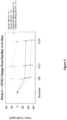
- the present invention shows that treatment with a compound which blocks TSLP and IL-13 leads to improvement of specific clinical parameters, like FeNO levels, to a much higher extent than existing asthma medication.
- the present invention shows for the first time the strong effect of simultaneously blocking TSLP and IL-13 in human subjects suffering from a pulmonary disease, like asthma.
- this effect materializes in a reduction of FeNO levels by at least 18 ppb compared to placebo and/or a reduction of eosinophil count by at least 30% compared to placebo and/or an increase of the forced expiratory volume in one second (FEV1) by at least 0.07 L.
- FEV1 forced expiratory volume in one second
- the present invention provides the following exemplary embodiments: A compound that binds IL-13 and TSLP for use in the treatment of a pulmonary disease, wherein said treatment reduces the level of fractional exhaled nitric oxide (FeNO) by at least 18 ppb compared to a control.
- FeNO fractional exhaled nitric oxide
- control is baseline or wherein the control is placebo.
- the polypeptide comprises or consists of at least four ISVDs, wherein two ISVDs specifically bind IL-13 and two ISVDs specifically bind TSLP, wherein each of said at least four ISVDs comprises three complementarity determining regions (CDR1 to CDR3, respectively), wherein the at least four ISVDs are optionally linked via one or more peptidic linkers, and wherein:
- polypeptide comprises or consists of the amino acid sequence of SEQ ID NO: 1.
- the present invention relates to a compound which blocks TSLP and IL-13 for the use in treating a pulmonary disease, e.g., asthma.
- This treatment is characterized by the improvement of certain biomarkers, in particular a reduction in FeNO level and a reduction of the eosinophil count.
- day 1 The day of drug administration as day 1 (“D1").
- D2 the day following drug administration is counted as day 2 ("D2"), so that, e.g., a measurement which occurs 24 h after drug administration is on D2 and a measurement which occurs 72 h after drug administration is on D4.
- D8 the day following drug administration is counted as day 2
- a time span of one week ends on D8 a time span of 2 weeks ends on D15, a time span of three weeks ends on D22, and a time span of 4 weeks ends on D29.
- day is often abbreviated “D”.
- the terms “day” and “D” are used interchangeably in this closure.
- a pulmonary disease is a disease of the lung.
- An example for a pulmonary disease is asthma.
- An Inflammatory disease is a disease which is characterized by auto-inflammation.
- An example for such a pulmonary inflammatory disease is asthma.
- Asthma is a pulmonary disease which is characterized by long-term airway inflammation. Asthma comprises airflow obstruction and triggered bronchospasms. Symptoms often include episodes of wheezing, coughing, chest tightness, and shortness of breath. Asthma includes to allergic, non-allergic, Th2 high, Th2 low, high eosinophilic, and low eosinophilic asthma.
- High eosinophilic asthma is asthma wherein the patient shows an eosinophil count of more than or equal 0.3 ⁇ 10 9 cells/L.
- Low eosinophilic asthma is asthma wherein the patient shows an eosinophil count of less than 0.3 ⁇ 10 9 cells/L.
- Airway inflammation is an inflammation which is located in the respiratory tract. Airway inflammation can be evaluated directly, e.g., by an induced sputum analysis, bronchial wash, bronchial biopsy or exhaled volatile markers such as FeNO or indirectly, e.g. by increased eosinophil count in blood, FeNO levels. Airway inflammation is characterized by an elevated FeNO level, an elevated eosinophil count in blood and decreased lung function (e.g. decrease FEV1).
- Type 2 inflammation is an immune response which is characterized by the activation of type 2 T helper cells and/or type 2 innate lymphoid cells.
- the immune response of a type 2 inflammation is characterized by the release of alarmins (IL-23, IL-33, TSLP) which leads to the activation of type 2 T helper cells and/or type 2 innate lymphoid cells.
- IL-4, IL-5 and IL-13 which promotes isotype switching to IgE in B cells and eosinophil recruitment.
- a type 2 inflammation can be useful for the defense of the body against helminths but is involved in a variety of autoinflammatory diseases.
- the airway inflammation in asthma patients is often a type 2 inflammation.
- Managing elevated FeNO levels means administering a treatment which reduces elevated FeNO levels which may reduce airway inflammation and/or prevent the exacerbation of airway inflammation.
- Managing airway inflammation means administering a treatment which reduces airway inflammation whereby symptoms associated with airway inflammation are reduced and/or the exacerbation of symptoms associated with airway inflammation is prevented.
- Placebo is a treatment, or a substance used in such a treatment, which does not include a pharmacologically active compound.
- a placebo can be administered to a fraction of the participants to generate a control group for the fraction of participants who receive the pharmacologically active compound to be tested.
- the treatment with placebo is identical to the treatment it is compared with, the only exception being that a placebo (e.g. an inert pill like a sugar pill) and not the pharmacologically active compound is administered.
- the change of a biomarker is determined compared to a "control".
- the control is either the "baseline” of the patients, i.e. the biomarker level of the patients before the administration of the compound of the invention; or "placebo", i.e. the biomarker level after administration of a placebo instead of the compound of the invention.
- the change of the biomarker level is determined compared to baseline, this means that the difference between the baseline biomarker level and the biomarker level at a certain time point is calculated for each patient who was treated with the compound and the mean or median of those differences is indicated as change of the biomarker level compared to baseline.
- the change of the biomarker level is determined compared to placebo, this means that the change compared to baseline is determined for a patient group treated with the compound (as explained in the previous sentence) and the same value is determined for a patient group treated with placebo; the difference between those two values is indicated as change of the biomarker level compared to placebo.
- the change of the biomarker level compared to placebo equals the "change of the biomarker level "compared to baseline” minus the change of the biomarker level of a placebo group.
- the present invention provides compounds that bind IL-13 and TSLP for use in treating a pulmonary disease. Those treatments are characterized by improvements in biomarkers and/or physiological features such as a reduction of the level of FeNO, a reduction of the eosinophil count in blood, an increase of the FEV1, and/or a reduction of airway inflammation.
- Non-human animals may be for example companion animals (e.g. dogs, cats), livestock (e.g. bovine, equine, ovine, caprine, or porcine animals), or animals used generally for research purposes and/or for producing antibodies (e.g. mice, rats, rabbits, cats, dogs, goats, sheep, horses, pigs, non-human primates, such as cynomolgus monkeys, or camelids, such as llama or alpaca).
- companion animals e.g. dogs, cats
- livestock e.g. bovine, equine, ovine, caprine, or porcine animals
- animals used generally for research purposes and/or for producing antibodies e.g. mice, rats, rabbits, cats, dogs, goats, sheep, horses, pigs, non-human primates, such as cynomolgus monkeys, or camelids, such as llama or alpaca.
- the subject can be any animal, and more specifically any mammal. In one embodiment, the subject is a human subject.
- Compounds (including polypeptides and nucleic acid molecules) or compositions used in the present invention may be administered to a subject by any suitable route of administration, for example by enteral (such as oral or rectal) or parenteral (such as epicutaneous, sublingual, buccal, nasal, intra-articular, intradermal, intramuscular, intraperitoneal, intravenous, subcutaneous (SC), transdermal, or transmucosal) administration.
- enteral such as oral or rectal
- parenteral such as epicutaneous, sublingual, buccal, nasal, intra-articular, intradermal, intramuscular, intraperitoneal, intravenous, subcutaneous (SC), transdermal, or transmucosal
- substances are administered by parenteral administration, such as intramuscular, subcutaneous or intradermal administration.
- subcutaneous administration is used.
- An effective amount of a polypeptide, a nucleic acid molecule, or a composition comprising the polypeptide or nucleic acid molecule can be administered to a subject in order to provide the intended treatment results.
- One or more doses can be administered. If more than one dose is administered, the doses can be administered in suitable intervals in order to maximize the effect of the polypeptide, composition, nucleic acid molecule or vector.
- the administered amount of the compound that binds TSLP and IL-13 is 400 mg. In some embodiments, the compound that binds TSLP and IL-13 is administered subcutaneously (SC). In some embodiments, only one dose of the compound that binds TSLP and IL-13 is administered.
- the administered amount of the compound that binds TSLP and IL-13 is 400 mg and the compound that binds TSLP and IL-13 is administered subcutaneously (SC). In some embodiments, the administered amount of the compound that binds TSLP and IL-13 is 400 mg and only one dose of the compound that binds TSLP and IL-13 is administered. In some embodiments, the compound that binds TSLP and IL-13 is administered subcutaneously (SC) and only one dose of the compound that binds TSLP and IL-13 is administered.
- the administered amount of the compound that binds TSLP and IL-13 is 400 mg, the compound that binds TSLP and IL-13 is administered subcutaneously (SC), and only one dose of the compound that binds TSLP and IL-13 is administered.
- the pulmonary disease is an inflammatory disease.
- the pulmonary disease is asthma.
- the asthma is high eosinophilic asthma.
- the asthma is low eosinophilic asthma.
- the reduction of the level of FeNO is determined compared to a control.
- the control is either the "baseline" of the patients, i.e. the FeNO level of the patients before the administration of the compound of the invention; or "placebo", i.e. the FeNO level after administration of a placebo instead of the compound of the invention.
- the reduction of the FeNO level is determined compared to baseline, this means that the difference between the baseline FeNO level and the FeNO level at a certain time point is calculated for each patient who was treated with the compound and the mean of those differences is indicated as reduction of the FeNO level compared to baseline.
- the reduction of the FeNO level is determined compared to placebo, this means that the reduction compared to baseline is determined for a patient group treated with the compound (as explained in the previous sentence) and the same value is determined for a patient group treated with placebo; the difference between those two values is indicated as reduction of the FeNO level compared to placebo.
- the reduction of the FeNO level compared to placebo equals the "reduction of FeNO level compared to baseline" minus the change of the FeNO level of a placebo group.
- the reduction of the level of FeNO is determined compared to placebo. In some embodiments of the present invention, the level of FeNO is reduced by at least 18 ppb. In some embodiments of the present invention, the level of FeNO is reduced by at least 20 ppb. In some embodiments of the present invention, the level of FeNO is reduced by at least 25 ppb. In some embodiments of the present invention, the level of FeNO is reduced by at least 30 ppb. In some embodiments of the present invention, the level of FeNO is reduced by at least 35 ppb. In some embodiments of the present invention, the level of FeNO is reduced by at least 40 ppb.
- the reduction in level of FeNO can be assessed at different time points after the administration of the compound of the present invention. In some embodiments, the reduction in level of FeNO is assessed after 1 week. In some embodiments, the reduction in level of FeNO is assessed after 2 weeks. In some embodiments, the reduction in level of FeNO is assessed after 3 weeks. In some embodiments, the reduction in level of FeNO is assessed after 4 weeks.
- managing FeNO levels comprises decreasing the FeNO level to a value of less than 40 ppb. In some embodiments, managing FeNO levels comprises decreasing the FeNO level to a value of less than 35. In some embodiments, managing FeNO levels comprises decreasing the FeNO level to a value of less than 30. In some embodiments, managing FeNO levels comprises decreasing the FeNO level to a value of less than 25. In some embodiments, managing FeNO levels comprises decreasing the FeNO level to a value of less than 20.
- the FeNO baseline level i.e. the level before the administration of the compound, can also be a parameter for the treatment of the present invention.
- the treatment of the present invention is used to manage elevated FeNO baseline levels of at least 25 ppb. In some embodiments, the treatment of the present invention is used to manage elevated FeNO baseline levels of at least 30 ppb. In some embodiments, the treatment of the present invention is used to manage elevated FeNO baseline levels of at least 40 ppb. In some embodiments, the treatment of the present invention is used to manage elevated FeNO baseline levels of at least 50 ppb. In some embodiments, the treatment of the present invention is used to manage elevated FeNO baseline levels of at least 60 ppb. In some embodiments, the treatment of the present invention is used to manage elevated FeNO baseline levels of at least 70 ppb.
- pulmonary diseases e.g., asthma.
- the pulmonary disease is an inflammatory disease.
- the pulmonary disease is asthma.
- the asthma is high eosinophilic asthma.
- the asthma is low eosinophilic asthma.
- the reduction of the level of eosinophil count is determined compared to a control.
- the control is either the "baseline" of the patients, i.e. the eosinophil count of the patients before the administration of the compound of the invention; or "placebo", i.e. the eosinophil count after administration of a placebo instead of the compound of the invention.
- baseline the difference between the baseline eosinophil count and the eosinophil count at a certain time point is calculated for each patient who was treated with the compound and the mean or the median of those differences is indicated as reduction of the eosinophil count compared to baseline.
- the reduction of the eosinophil count is determined compared to placebo, this means that the reduction compared to baseline is determined for a patient group treated with the compound (as explained in the previous sentence) and the same value is determined for a patient group treated with placebo; the difference between those two values is indicated as reduction of the eosinophil count compared to placebo.
- the reduction of the eosinophil count compared to placebo equals the "reduction of eosinophil count compared to baseline" minus the change of the eosinophil count of a placebo group.
- the reduction of eosinophil count refers to the median. In some embodiments, the reduction of eosinophil count refers to the mean.
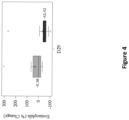
- the eosinophil count is reduced by at least 30%. In some embodiments of the present invention, the eosinophil count is reduced by at least 30% regarding the median of a patient group. In some embodiments of the present invention, the eosinophil count is reduced by at least 30% regarding the mean of a patient group. In some embodiments of the present invention, the eosinophil count is reduced by at least 35%. In some embodiments of the present invention, the eosinophil count is reduced by at least 35% regarding the median of a patient group. In some embodiments of the present invention, the eosinophil count is reduced by at least 35% regarding the mean of a patient group.
- the eosinophil count is reduced by at least 40%. In some embodiments of the present invention, the eosinophil count is reduced by at least 40% regarding the median of a patient group. In some embodiments of the present invention, the eosinophil count is reduced by at least 40% regarding the mean of a patient group.
- the reduction of the eosinophil count occurs within 4 weeks after the administration of the compound. In some embodiments, the reduction of the eosinophil count occurs within 2 weeks after the administration of the compound. In some embodiments, the reduction of the eosinophil count occurs within 1 week after the administration of the compound. In some embodiments, the reduction of the eosinophil count occurs within 3 days after the administration of the compound. In some embodiments, the reduction of the eosinophil count occurs within 1 day after the administration of the compound
- the compound that binds IL-13 and TSLP and which reduces the eosinophil count is a polypeptide, such as an antibody or an antibody fragment.
- the compound that binds IL-13 and TSLP and which reduces the eosinophil count is a polypeptide, wherein the polypeptide comprises or consists of at least four ISVDs, wherein two ISVDs specifically bind IL-13 and two ISVDs specifically bind TSLP, wherein each of said at least four ISVDs comprises three complementarity determining regions (CDR1 to CDR3, respectively), wherein the at least four ISVDs are optionally linked via one or more peptidic linkers, and wherein:
- the compound that binds IL-13 and TSLP and which reduces the eosinophil count comprises or consists of the amino acid sequence of SEQ ID NO: 1.
- the pulmonary disease is an inflammatory disease.
- the pulmonary disease is asthma.
- the asthma is high eosinophilic asthma.
- the asthma is low eosinophilic asthma.
- the increase in FEV1 is determined compared to a control, such a baseline or placebo.
- the FEV1 is increased by at least 0.05 L. In some embodiments of the present invention, the FEV1 is increased by at least 0.07 L. In some embodiments of the present invention, the FEV1 is increased by at least 0.1 L. In some embodiments of the present invention, the FEV1 is increased by at least 0.15 L. In some embodiments of the present invention, the FEV1 is increased by at least 0.2 L. In some embodiments of the present invention, the FEV1 is increased by at least 0.25 L. In some embodiments of the present invention, the FEV1 is increased by at least 0.3 L.
- the present invention provides a compound that binds IL-13 and TSLP for use in treating a pulmonary disease, wherein the FEV1 is increased by at least 0.05 L compared to placebo.
- the present invention provides a compound that binds IL-13 and TSLP for use in treating a pulmonary disease, wherein the FEV1 is increased by at least 0.07 L compared to placebo.
- the present invention provides a compound that binds IL-13 and TSLP for use in treating a pulmonary disease, wherein the FEV1 is increased by at least 0.1 L compared to placebo.
- the increase in FEV1 occurs within 4 weeks after the administration of the compound. In some embodiments, the increase in FEV1 occurs within 2 weeks after the administration of the compound. In some embodiments, the increase in FEV1 occurs within 1 week after the administration of the compound.
- the compound that binds IL-13 and TSLP and which increases FEV1 is a polypeptide, such as an antibody or an antibody fragment.
- the compound that binds IL-13 and TSLP and which increases FEV1 is a polypeptide, wherein the polypeptide comprises or consists of at least four ISVDs, wherein two ISVDs specifically bind IL-13 and two ISVDs specifically bind TSLP, wherein each of said at least four ISVDs comprises three complementarity determining regions (CDR1 to CDR3, respectively), wherein the at least four ISVDs are optionally linked via one or more peptidic linkers, and wherein:
- the compound that binds IL-13 and TSLP and which increases FEV1 comprises or consists of the amino acid sequence of SEQ ID NO: 1.
- airway inflammation indicates a better lung function and is thus beneficial for patients with pulmonary diseases, e.g., asthma.
- airway inflammation is type 2 airway inflammation.
- the reduction of airway inflammation can be determined by analyzing clinical parameter, especially FeNO, eosinophil count and FEV1. The reduction or increase of those parameters is determined compared to a control which is either baseline or placebo (as explained above for the individual clinical parameters).
- airway inflammation is characterized by a reduction of FeNO by at least 18 ppb and a reduction of eosinophil count by at least 30%. In some embodiments, airway inflammation is characterized by a reduction of FeNO by at least 18 ppb, and an increase of the forced expiratory volume of the first second (FEV1) by at least 0.07 L. In some embodiments, airway inflammation is characterized by a reduction of eosinophil count by at least 30% and an increase of the forced expiratory volume of the first second (FEV1) by at least 0.07 L.
- airway inflammation is characterized by a reduction of FeNO by at least 18 ppb, a reduction of eosinophil count by at least 30% and an increase of the forced expiratory volume of the first second (FEV1) by at least 0.07 L.
- airway inflammation is characterized by a reduction of FeNO by at least 20 ppb and a reduction of eosinophil count by at least 30%. In some embodiments, airway inflammation is characterized by a reduction of FeNO by at least 20 ppb, and an increase of the forced expiratory volume of the first second (FEV1) by at least 0.07 L. In some embodiments, airway inflammation is characterized by a reduction of FeNO by at least 20 ppb, a reduction of eosinophil count by at least 30% and an increase of the forced expiratory volume of the first second (FEV1) by at least 0.07 L.
- airway inflammation is characterized by a reduction of FeNO by at least 30 ppb and a reduction of eosinophil count by at least 30%. In some embodiments, airway inflammation is characterized by a reduction of FeNO by at least 30 ppb, and an increase of the forced expiratory volume of the first second (FEV1) by at least 0.07 L. In some embodiments, airway inflammation is characterized by a reduction of FeNO by at least 30 ppb, a reduction of eosinophil count by at least 30% and an increase of the forced expiratory volume of the first second (FEV1) by at least 0.07 L.
- airway inflammation is characterized by a reduction of FeNO by at least 40 ppb and a reduction of eosinophil count by at least 30%. In some embodiments, airway inflammation is characterized by a reduction of FeNO by at least 40 ppb, and an increase of the forced expiratory volume of the first second (FEV1) by at least 0.07 L. In some embodiments, airway inflammation is characterized by a reduction of FeNO by at least 40 ppb, a reduction of eosinophil count by at least 30% and an increase of the forced expiratory volume of the first second (FEV1) by at least 0.07 L.
- airway inflammation is characterized by a reduction of FeNO by at least 18 ppb, a reduction of eosinophil count by at least 30% and an increase of the forced expiratory volume of the first second (FEV1) by at least 0.07 L and a reduction of one or more of IL-5 level, CCL26 (eotaxin-3) level, TARC (CCL17) level and IgE level (serum).
- airway inflammation is characterized by a reduction of FeNO by at least 18 ppb, a reduction of eosinophil count by at least 30% and an increase of the forced expiratory volume of the first second (FEV1) by at least 0.07 L and a reduction of IL-5 level, CCL26 (eotaxin-3) level, TARC (CCL17) level and IgE level.
- airway inflammation is characterized by a reduction of FeNO by at least 20 ppb, a reduction of eosinophil count by at least 30% and an increase of the forced expiratory volume of the first second (FEV1) by at least 0.07 L and a reduction of one or more of IL-5 level, CCL26 (eotaxin-3) level, TARC (CCL17) level and IgE level (serum).
- airway inflammation is characterized by a reduction of FeNO by at least 20 ppb, a reduction of eosinophil count by at least 30% and an increase of the forced expiratory volume of the first second (FEV1) by at least 0.07 L and a reduction of IL-5 level, CCL26 (eotaxin-3) level, TARC (CCL17) level and IgE level.
- airway inflammation is characterized by a reduction of FeNO by at least 30 ppb, a reduction of eosinophil count by at least 30% and an increase of the forced expiratory volume of the first second (FEV1) by at least 0.07 L and a reduction of one or more of IL-5 level, CCL26 (eotaxin-3) level, TARC (CCL17) level and IgE level.
- airway inflammation is characterized by a reduction of FeNO by at least 30 ppb, a reduction of eosinophil count by at least 30% and an increase of the forced expiratory volume of the first second (FEV1) by at least 0.07 L and a reduction of IL-5 level, CCL26 (eotaxin-3) level, TARC (CCL17) level and IgE level.
- airway inflammation is characterized by a reduction of FeNO by at least 40 ppb, a reduction of eosinophil count by at least 30% and an increase of the forced expiratory volume of the first second (FEV1) by at least 0.07 L and a reduction of one or more of IL-5 level, CCL26 (eotaxin-3) level, TARC (CCL17) level and IgE level (serum).
- airway inflammation is characterized by a reduction of FeNO by at least 40 ppb, a reduction of eosinophil count by at least 30% and an increase of the forced expiratory volume of the first second (FEV1) by at least 0.07 L and a reduction of IL-5 level, CCL26 (eotaxin-3) level, TARC (CCL17) level and IgE level.
- the reduction of airway inflammation occurs within 4 weeks after the administration of the compound. In some embodiments, the reduction of airway inflammation occurs within 2 weeks after the administration of the compound. In some embodiments, the reduction of airway inflammation occurs within 1 week after the administration of the compound.
- the compound that binds IL-13 and TSLP and which reduces airway inflammation is a polypeptide, such as an antibody or an antibody fragment.
- the compound that binds IL-13 and TSLP and which reduces airway inflammation is a polypeptide, wherein the polypeptide comprises or consists of at least four ISVDs, wherein two ISVDs specifically bind IL-13 and two ISVDs specifically bind TSLP, wherein each of said at least four ISVDs comprises three complementarity determining regions (CDR1 to CDR3, respectively), wherein the at least four ISVDs are optionally linked via one or more peptidic linkers, and wherein:
- the compound that binds IL-13 and TSLP and which reduces airway inflammation comprises or consists of the amino acid sequence of SEQ ID NO: 1.
- managing airway inflammation comprises decreasing the FeNO level to a value of less than 40 ppb. In some embodiments, managing airway inflammation comprises decreasing the FeNO level to a value of less than 35. In some embodiments, managing airway inflammation comprises decreasing the FeNO level to a value of less than 30. In some embodiments, managing airway inflammation comprises decreasing the FeNO level to a value of less than 25. In some embodiments, managing airway inflammation comprises decreasing the FeNO level to a value of less than 20.
- managing airway inflammation comprises decreasing the FeNO level to a value of less than 40 ppb and to an eosinophil count in blood of less than 0.2 ⁇ 10 9 cells/L. In some embodiments, managing airway inflammation comprises decreasing the FeNO level to a value of less than 35 ppb and to an eosinophil count in blood of less than 0.2 ⁇ 10 9 cells/L. In some embodiments, managing airway inflammation comprises decreasing the FeNO level to a value of less than 30 ppb and to an eosinophil count in blood of less than 0.2 ⁇ 10 9 cells/L.
- managing airway inflammation comprises decreasing the FeNO level to a value of less than 25 ppb and to an eosinophil count in blood of less than 0.2 ⁇ 10 9 cells/L. In some embodiments, managing airway inflammation comprises decreasing the FeNO level to a value of less than 20 ppb and to an eosinophil count in blood of less than 0.2 ⁇ 10 9 cells/L.
- managing air way inflammation further comprises decreasing one or more of IL-5 level, CCL26 (eotaxin-3) level, TARC (CCL17) level and IgE level. In some embodiments, managing air way inflammation further comprises decreasing IL-5 level, CCL26 (eotaxin-3) level, TARC (CCL17) level and IgE level.
- managing type 2 airway inflammation comprises decreasing the FeNO level to a value of less than 40 ppb. In some embodiments, managing type 2 airway inflammation comprises decreasing the FeNO level to a value of less than 35. In some embodiments, managing type 2 airway inflammation comprises decreasing the FeNO level to a value of less than 30. In some embodiments, managing type 2 airway inflammation comprises decreasing the FeNO level to a value of less than 25. In some embodiments, managing type 2 airway inflammation comprises decreasing the airway inflammation to a value of less than 20.
- managing type 2 airway inflammation comprises decreasing the FeNO level to a value of less than 25 ppb and to an eosinophil count in blood of less than 0.2 ⁇ 10 9 cells/L. In some embodiments, managing type 2 airway inflammation comprises decreasing the FeNO level to a value of less than 20 ppb and to an eosinophil count in blood of less than 0.2 ⁇ 10 9 cells/L.
- the compound that binds TSLP and IL-13 for use in the present invention can be a polypeptide. Suitable polypeptides have been described in the patent application WO2021116182 , which is herewith incorporated in its entirety.
- the polypeptide is an antibody or an antibody fragment.
- exemplary polypeptides for use in the present invention are polypeptides which comprise immunoglobulin single variable domains (ISVDs). ISVDs which bind TSLP and IL-13 can be found in Tables A-1 to A-6 of WO2021116182 .
- the polypeptide comprises or consists of at least four ISVDs, wherein two ISVDs specifically bind IL-13 and two ISVDs specifically bind TSLP, wherein each of said at least four ISVDs comprises three complementarity determining regions (CDR1 to CDR3, respectively), wherein the at least four ISVDs are optionally linked via one or more peptidic linkers, and wherein:
- the compound comprises:
- the order of the ISVDs above indicates their relative position to each other considered from the N-terminus to the C-terminus of said polypeptide.
- the compound comprises a further ISVD that binds to human serum albumin, wherein the further ISVD comprises: a CDR1 that is the amino acid sequence of SEQ ID NO: 10; a CDR2 that is the amino acid sequence of SEQ ID NO: 15; and a CDR3 that is the amino acid sequence of SEQ ID NO: 20.
- this further ISVD is positioned between the third and the forth ISVD above.
- the compound comprises:
- polypeptide that binds TSLP and IL-13 is SAR443765 (SEQ ID NO: 1).
- the polypeptide that binds TSLP and IL-13 is SAR443765 (SEQ ID NO: 1).
- polypeptide for use in the present invention is a polypeptide which comprise immunoglobulin single variable domains (ISVDs).
- ISVDs immunoglobulin single variable domains
- immunoglobulin single variable domain defines immunoglobulin molecules wherein the antigen binding site is present on, and formed by, a single immunoglobulin domain. This sets ISVDs apart from “conventional” immunoglobulins (e.g., monoclonal antibodies) or their fragments (such as Fab, Fab', F(ab') 2 , scFv, di-scFv), wherein two immunoglobulin domains, in particular two variable domains, interact to form an antigen binding site.
- immunoglobulin single variable domain e.g., monoclonal antibodies
- fragments such as Fab, Fab', F(ab') 2 , scFv, di-scFv
- V H heavy chain variable domain
- V L light chain variable domain
- CDRs complementarity determining regions
- the antigen-binding domain of a conventional 4-chain antibody such as an IgG, IgM, IgA, IgD or IgE molecule; known in the art
- a conventional 4-chain antibody such as an IgG, IgM, IgA, IgD or IgE molecule; known in the art
- a Fab fragment, a F(ab') 2 fragment, an Fv fragment such as a disulfide linked Fv or a scFv fragment, or a diabody (all known in the art) derived from such conventional 4-chain antibody would normally not be regarded as an ISVD, as, in these cases, binding to the respective epitope of an antigen would normally not occur by one (single) immunoglobulin domain but by a pair of (associating) immunoglobulin domains such as light and heavy chain variable domains, i.e., by a V H -V L pair of immunoglobulin domains, which jointly bind to an epitope of the respective
- ISVDs are capable of specifically binding to an epitope of the antigen without pairing with an additional immunoglobulin variable domain.
- the binding site of an ISVD is formed by a single V H , a single V HH or single V L domain.
- the single variable domain may be a light chain variable domain sequence (e.g., a V L -sequence) or a suitable fragment thereof; or a heavy chain variable domain sequence (e.g., a V H -sequence or V HH sequence) or a suitable fragment thereof; as long as it is capable of forming a single antigen binding unit (i.e., a functional antigen binding unit that essentially consists of the single variable domain, such that the single antigen binding domain does not need to interact with another variable domain to form a functional antigen binding unit).
- a light chain variable domain sequence e.g., a V L -sequence
- a heavy chain variable domain sequence e.g., a V H -sequence or V HH sequence
- An ISVD can for example be a heavy chain ISVD, such as a V H , V HH , including a camelized V H or humanized V HH . In one embodiment, it is a V HH , including a camelized V H or humanized V HH .
- Heavy chain ISVDs can be derived from a conventional four-chain antibody or from a heavy chain antibody.
- the ISVD may be a single domain antibody (or an amino acid sequence that is suitable for use as a single domain antibody), a "dAb” or dAb (or an amino acid sequence that is suitable for use as a dAb) or a Nanobody ® (as defined herein, and including but not limited to a V HH ); other single variable domains, or any suitable fragment of any one thereof.
- the ISVD may be a Nanobody ® (such as a V HH , including a humanized V HH or camelized V H ) or a suitable fragment thereof.
- Nanobody ® , Nanobodies ® and Nanoclone ® are registered trademarks of Sanofi or its affiliates.
- V HH domains also known as V HH s, V HH antibody fragments, and V HH antibodies, have originally been described as the antigen binding immunoglobulin variable domain of "heavy chain antibodies” (i.e., of "antibodies devoid of light chains”; Hamers-Casterman et al. Nature 363: 446-448, 1993 ).
- the term "V HH domain” has been chosen in order to distinguish these variable domains from the heavy chain variable domains that are present in conventional 4-chain antibodies (which are referred to herein as "V H domains”) and from the light chain variable domains that are present in conventional 4-chain antibodies (which are referred to herein as "V L domains").
- V H domains heavy chain variable domains that are present in conventional 4-chain antibodies
- V L domains light chain variable domains that are present in conventional 4-chain antibodies
- immunoglobulins typically involve the immunization of experimental animals, fusion of immunoglobulin producing cells to create hybridomas and screening for the desired specificities.
- immunoglobulins can be generated by screening of na ⁇ ve or synthetic libraries e.g. by phage display.
- Antigens can be purified from natural sources, or in the course of recombinant production.
- Immunization and/or screening for immunoglobulin sequences can be performed using peptide fragments of such antigens.
- the present invention may use immunoglobulin sequences of different origin, comprising mouse, rat, rabbit, donkey, human and camelid immunoglobulin sequences.
- the present invention may also use fully human, humanized or chimeric sequences.
- the present invention uses camelid immunoglobulin sequences and humanized camelid immunoglobulin sequences, or camelized domain antibodies, e.g. camelized dAb as described by Ward et al (see for example WO 94/04678 and Davies and Riechmann (1994 and 1996)).
- the present invention also uses fused immunoglobulin sequences, e.g.
- a multivalent and/or multispecific construct for multivalent and multispecific polypeptides containing one or more V HH domains and their preparation, reference is also made to Conrath et al., J. Biol. Chem., Vol. 276, 10. 7346-7350, 2001 , as well as to for example WO 96/34103 and WO 99/23221 ), and immunoglobulin sequences comprising tags or other functional moieties, e.g. toxins, labels, radiochemicals, etc., which are derivable from the immunoglobulin sequences of compound used in the present invention.
- the polypeptide for use in the present invention is an antibody.
- Antibodies which bind TSLP and IL-13 can be found in Venkataramani et al. (Biochem Biophys Res Commun. 2018 Sep 26;504(1):19-24 .
- the compounds of the present invention bind to TSLP and IL-13.
- the compound of the present invention can block its target molecules.
- the compound can block the interaction between IL-13 and IL-13R ⁇ 1 (Interleukin 13 receptor, alpha 1) and/or the interaction between IL-13/IL-13R ⁇ 1 complex and IL-4R ⁇ (alpha interleukin-4 receptor), and/or can block the interaction between TSLP and TSLPR (TSLP receptor) and/or TSLP/TSLPR complex and IL-7R ⁇ (Interleukin-7 receptor subunit alpha).
- the compound of the present invention can block the interaction between IL-13 and IL-13R ⁇ 1 (Interleukin 13 receptor, alpha 1) and/or the interaction between IL-13/IL-13R ⁇ 1 complex and IL-4R ⁇ (alpha interleukin-4 receptor), and can block the interaction between TSLP and TSLPR (TSLP receptor) and/or TSLP/TSLPR complex and IL-7R ⁇ (Interleukin-7 receptor subunit alpha).
- IL-13 and IL-13R ⁇ 1 Interleukin 13 receptor, alpha 1
- IL-4R ⁇ alpha interleukin-4 receptor
- the compound for use in the present invention can bind human IL-13 (Uniprot accession P35225) and human TSLP (Uniprot accession Q969D9).
- the compound for use in the present invention can bind IL-13 and TSLP from other mammals, for example IL-13 and TSLP from mice, rats, rabbits, cats, dogs, goats, sheep, horses, pigs, non-human primates, such as cynomolgus monkeys (also referred to herein as "cyno "), or camelids, such as llama or alpaca.
- binding to IL-13 and TSLP means specific binding to IL-13 and TSLP.
- the binding of a compound to its target can be determined based on affinity.
- the affinity denotes the strength or stability of a molecular interaction.
- the affinity is commonly given as by the KD, or dissociation constant, which has units of mol/liter (or M).
- the affinity can also be expressed as an association constant, KA, which equals 1/KD and has units of (mol/liter) -1 (or M -1 ).
- the affinity is a measure for the binding strength between a moiety and a binding site on the target molecule: the lower the value of the KD, the stronger the binding strength between a target molecule and a targeting moiety.
- binding units used in the present invention will bind to their targets with a dissociation constant (KD) of 10 -5 to 10 -12 moles/liter or less, or 10 -7 to 10 -12 moles/liter or less, or 10 -8 to 10 -12 moles/liter (i.e. with an association constant (KA) of 10 5 to 10 12 liter/ moles or more, or 10 7 to 10 12 liter/moles or more, or 10 8 to 10 12 liter/moles).
- KD dissociation constant
- KA association constant
- Any KD value greater than 10 -4 mol/liter (or any KA value lower than 10 4 liters/mol) is generally considered to indicate non-specific interaction.
- the KD for biological interactions such as the binding of immunoglobulin sequences to an antigen, which are considered specific are typically in the range of 10 -5 moles/liter (10000 nM or 10 ⁇ M) to 10 -12 moles/liter (0.001 nM or 1 pM) or less.
- specific/selective binding may mean that - using the same measurement method, e.g. SPR - a compound binds to IL13 and/or TSLP with a KD value of 10 -5 to 10 -12 moles/liter or less and binds to related cytokines with a KD value greater than 10 -4 moles/liter.
- IL13 related targets are human IL4.
- related cytokines forTSLP are human IL7.
- the compound used in the present invention binds to IL13 with a KD value of 10 -5 to 10 -12 moles/liter or less and binds to IL4 of the same species with a KD value greater than 10 -4 moles/liter, and binds to TSLP with a KD value of 10 -5 to 10 -12 moles/liter or less and binds to human IL7 of the same species with a KD value greater than 10 -4 moles/liter.
- the polypeptides used in the present invention have at least half the binding affinity, or at least the same binding affinity, to human IL13 and to human TSLP as compared to a polypeptide consisting of the amino acid of SEQ ID NO: 1, wherein the binding affinity is measured using the same method, such as SPR.
- binding unit can also specifically bind to the analogous target from a different species.
- specific binding to human IL13 does not exclude that the binding unit (or a polypeptide comprising the same) can also specifically bind to IL13 from cynomolgus monkeys.
- specific binding to human TSLP does not exclude that the binding unit (or a polypeptide comprising the same) can also specifically bind to TSLP from cynomolgus monkeys ("cyno").
- Specific binding of a binding unit to its designated target can be determined in any suitable manner known per se, including, for example, Scatchard analysis and/or competitive binding assays, such as radioimmunoassays (RIA), enzyme immunoassays (EIA) and sandwich competition assays, and the different variants thereof known per se in the art; as well as the other techniques mentioned herein.
- Scatchard analysis and/or competitive binding assays such as radioimmunoassays (RIA), enzyme immunoassays (EIA) and sandwich competition assays, and the different variants thereof known per se in the art; as well as the other techniques mentioned herein.
- the dissociation constant may be the actual or apparent dissociation constant, as will be clear to the skilled person. Methods for determining the dissociation constant will be clear to the skilled person, and for example include the techniques mentioned below. In this respect, it will also be clear that it may not be possible to measure dissociation constants of more than 10 -4 moles/liter or 10 -3 moles/liter (e.g. of 10 -1 moles/liter).
- the affinity of a molecular interaction between two molecules can be measured via different techniques known per se, such as the well-known surface plasmon resonance (SPR) biosensor technique (see for example Ober et al. 2001, Intern. Immunology 13: 1551-1559 ).
- SPR surface plasmon resonance
- bio-layer interferometry refers to a label-free optical technique that analyzes the interference pattern of light reflected from two surfaces: an internal reference layer (reference beam) and a layer of immobilized protein on the biosensor tip (signal beam).
- reference beam an internal reference layer
- signal beam a layer of immobilized protein on the biosensor tip
- association and dissociation rates and affinities can be determined.
- BLI can for example be performed using the well-known Octet ® Systems (ForteBio, a division of Pall Life Sciences, Menlo Park, USA).
- affinities can be measured in Kinetic Exclusion Assay (KinExA) (see for example Drake et al. 2004, Anal. Biochem., 328: 35-43 ), using the KinExA ® platform (Sapidyne Instruments Inc, Boise, USA).
- KinExA Kinetic Exclusion Assay
- Equilibrated solutions of an antibody/antigen complex are passed over a column with beads precoated with antigen (or antibody), allowing the free antibody (or antigen) to bind to the coated molecule. Detection of the antibody (or antigen) thus captured is accomplished with a fluorescently labeled protein binding the antibody (or antigen).
- the GYROLAB ® immunoassay system provides a platform for automated bioanalysis and rapid sample turnaround ( Fraley et al. 2013, Bioanalysis 5: 1765-74 ).
- the present invention relates to a nucleic acid for use in treating a pulmonary disease, wherein the nucleic acid encodes a compound that binds IL-13 and TSLP, wherein the treatment reduces the level of fractional exhaled nitric oxide (FeNO) by at least 18 ppb compared to placebo.
- the pulmonary disease is an inflammatory disease.
- the pulmonary disease is asthma.
- the asthma is high eosinophilic asthma.
- the asthma is low eosinophilic asthma.
- a “nucleic acid molecule” (used interchangeably with “nucleic acid”) is a chain of nucleotide monomers linked to each other via a phosphate backbone to form a nucleotide sequence.
- a nucleic acid may be used to transform/transfect a host cell or host organism, e.g. for expression and/or production of a polypeptide.
- Suitable hosts or host cells for production purposes will be clear to the skilled person, and may for example be any suitable fungal, prokaryotic or eukaryotic cell or cell line or any suitable fungal, prokaryotic or eukaryotic organism.
- a host or host cell comprising a nucleic acid encoding the polypeptide of the present invention is also encompassed by the present invention.
- a nucleic acid may be for example DNA, RNA, or a hybrid thereof, and may also comprise (e.g., chemically) modified nucleotides, like PNA. It can be single- or double-stranded. In one embodiment, it is in the form of double-stranded DNA.
- the nucleotide sequences of the present invention may be genomic DNA, cDNA.
- nucleic acids of the present invention can be prepared or obtained in a manner known per se, and/or can be isolated from a suitable natural source.
- Nucleotide sequences encoding naturally occurring (poly)peptides can for example be subjected to site-directed mutagenesis, so as to provide a nucleic acid molecule encoding polypeptide with sequence variation.
- site-directed mutagenesis so as to provide a nucleic acid molecule encoding polypeptide with sequence variation.
- nucleic acid also several nucleotide sequences, such as at least one nucleotide sequence encoding a targeting moiety and for example nucleic acids encoding one or more linkers can be linked together in a suitable manner.
- nucleic acids may for instance include, but are not limited to, automated DNA synthesis; site-directed mutagenesis; combining two or more naturally occurring and/or synthetic sequences (or two or more parts thereof), introduction of mutations that lead to the expression of a truncated expression product; introduction of one or more restriction sites (e.g. to create cassettes and/or regions that may easily be digested and/or ligated using suitable restriction enzymes), and/or the introduction of mutations by means of a PCR reaction using one or more "mismatched" primers.
- restriction sites e.g. to create cassettes and/or regions that may easily be digested and/or ligated using suitable restriction enzymes
- the present invention also provides a pharmaceutical composition for use in the present invention, wherein the pharmaceutical composition comprises at least one compound that binds to TSLP and IL-13, and/or at least one nucleic acid molecule encoding a compound that binds to TSLP and IL-13.
- the composition may further comprise at least one pharmaceutically acceptable carrier, diluent or excipient and/or adjuvant, and optionally comprise one or more further pharmaceutically active polypeptides and/or compounds.
- the invention provides a pharmaceutical composition comprising a compound that binds IL-13 and TSLP for use in treating a pulmonary disease, wherein the composition further comprises at least one pharmaceutically acceptable carrier, diluent or excipient and/or adjuvant, and optionally comprises one or more further pharmaceutically active polypeptides and/or compounds, wherein the treatment reduces the level of fractional exhaled nitric oxide (FeNO) by at least 18 ppb compared to placebo.
- the pulmonary disease is an inflammatory disease.
- the pulmonary disease is asthma.
- the asthma is high eosinophilic asthma.
- the asthma is low eosinophilic asthma.
- the invention provides a pharmaceutical composition comprising a compound that binds IL-13 and TSLP for use in treating a pulmonary disease, wherein the composition further comprises at least one pharmaceutically acceptable carrier, diluent or excipient and/or adjuvant, and optionally comprises one or more further pharmaceutically active polypeptides and/or compounds, wherein the treatment reduces the level of fractional exhaled nitric oxide (FeNO) by at least 20 ppb compared to placebo.
- the pulmonary disease is an inflammatory disease.
- the pulmonary disease is asthma.
- the asthma is high eosinophilic asthma.
- the asthma is low eosinophilic asthma.
- the invention provides a pharmaceutical composition comprising a compound that binds IL-13 and TSLP for use in treating a pulmonary disease, wherein the composition further comprises at least one pharmaceutically acceptable carrier, diluent or excipient and/or adjuvant, and optionally comprises one or more further pharmaceutically active polypeptides and/or compounds, wherein the treatment reduces the level of fractional exhaled nitric oxide (FeNO) by at least 30 ppb compared to placebo.
- the pulmonary disease is an inflammatory disease.
- the pulmonary disease is asthma.
- the asthma is high eosinophilic asthma.
- the asthma is low eosinophilic asthma.
- the invention provides a pharmaceutical composition comprising a compound that binds IL-13 and TSLP for use in treating a pulmonary disease, wherein the composition further comprises at least one pharmaceutically acceptable carrier, diluent or excipient and/or adjuvant, and optionally comprises one or more further pharmaceutically active polypeptides and/or compounds, wherein the treatment reduces the level of fractional exhaled nitric oxide (FeNO) by at least 40 ppb compared to placebo.
- the pulmonary disease is an inflammatory disease.
- the pulmonary disease is asthma.
- the asthma is high eosinophilic asthma.
- the asthma is low eosinophilic asthma.
- the treatment reduces the level of fractional exhaled nitric oxide (FeNO) by at least 18 ppb compared to placebo within 4 weeks after the administration of the compound.
- FeNO fractional exhaled nitric oxide
- the treatment reduces the level of fractional exhaled nitric oxide (FeNO) by at least 18 ppb compared to placebo within 2 weeks after the administration of the compound.
- FeNO fractional exhaled nitric oxide
- the treatment reduces the level of fractional exhaled nitric oxide (FeNO) by at least 18 ppb compared to placebo within 1 week after the administration of the compound.
- FeNO fractional exhaled nitric oxide
- the treatment reduces the level of fractional exhaled nitric oxide (FeNO) by at least 20 ppb compared to placebo within 4 weeks after the administration of the compound.
- FeNO fractional exhaled nitric oxide
- the treatment reduces the level of fractional exhaled nitric oxide (FeNO) by at least 20 ppb compared to placebo within 2 weeks after the administration of the compound.
- FeNO fractional exhaled nitric oxide
- the treatment reduces the level of fractional exhaled nitric oxide (FeNO) by at least 20 ppb compared to placebo within 1 week after the administration of the compound.
- FeNO fractional exhaled nitric oxide
- the treatment reduces the level of fractional exhaled nitric oxide (FeNO) by at least 25 ppb compared to placebo within 4 weeks after the administration of the compound.
- FeNO fractional exhaled nitric oxide
- the treatment reduces the level of fractional exhaled nitric oxide (FeNO) by at least 25 ppb compared to placebo within 2 weeks after the administration of the compound.
- FeNO fractional exhaled nitric oxide
- the treatment reduces the level of fractional exhaled nitric oxide (FeNO) by at least 25 ppb compared to placebo within 1 week after the administration of the compound.
- FeNO fractional exhaled nitric oxide
- the treatment reduces the level of fractional exhaled nitric oxide (FeNO) by at least 30 ppb compared to placebo within 4 weeks after the administration of the compound.
- FeNO fractional exhaled nitric oxide
- the treatment reduces the level of fractional exhaled nitric oxide (FeNO) by at least 30 ppb compared to placebo within 2 weeks after the administration of the compound.
- FeNO fractional exhaled nitric oxide
- the treatment reduces the level of fractional exhaled nitric oxide (FeNO) by at least 30 ppb compared to placebo within 1 week after the administration of the compound.
- FeNO fractional exhaled nitric oxide
- the treatment reduces the level of fractional exhaled nitric oxide (FeNO) by at least 35 ppb compared to placebo within 4 weeks after the administration of the compound.
- FeNO fractional exhaled nitric oxide
- the treatment reduces the level of fractional exhaled nitric oxide (FeNO) by at least 35 ppb compared to placebo within 2 weeks after the administration of the compound.
- FeNO fractional exhaled nitric oxide
- the treatment reduces the level of fractional exhaled nitric oxide (FeNO) by at least 35 ppb compared to placebo within 1 week after the administration of the compound.
- FeNO fractional exhaled nitric oxide
- the treatment reduces the level of fractional exhaled nitric oxide (FeNO) by at least 40 ppb compared to placebo within 4 weeks after the administration of the compound.
- FeNO fractional exhaled nitric oxide
- the treatment reduces the level of fractional exhaled nitric oxide (FeNO) by at least 40 ppb compared to placebo within 2 weeks after the administration of the compound.
- FeNO fractional exhaled nitric oxide
- the treatment reduces the level of fractional exhaled nitric oxide (FeNO) by at least 40 ppb compared to placebo within 1 week after the administration of the compound.
- FeNO fractional exhaled nitric oxide
- the treatment is applied to patients having a baseline (before the administration of the compound) FeNO level of at least 25.
- the treatment is applied to patients having a baseline (before the administration of the compound) FeNO level of at least 30.
- the treatment is applied to patients having a baseline (before the administration of the compound) FeNO level of at least 40.
- the treatment is applied to patients having a baseline (before the administration of the compound) FeNO level of at least 50.
- the treatment is applied to patients having a baseline (before the administration of the compound) FeNO level of at least 60.
- the treatment is applied to patients having a baseline (before the administration of the compound) FeNO level of at least 70.
- the treatment is applied to patients for managing a baseline (before the administration of the compound) FeNO level of at least 25.
- the treatment is applied to patients for managing a baseline (before the administration of the compound) FeNO level of at least 30.
- the treatment is applied to patients for managing a baseline (before the administration of the compound) FeNO level of at least 40.
- the treatment is applied to patients for managing a baseline (before the administration of the compound) FeNO level of at least 50.
- the treatment is applied to patients for managing a baseline (before the administration of the compound) FeNO level of at least 60.
- the treatment is applied to patients for managing a baseline (before the administration of the compound) FeNO level of at least 70.
- the eosinophil count is reduced by at least 30% compared to placebo within 4 weeks after the administration of the compound.
- the eosinophil count is reduced by at least 30% compared to placebo within 2 weeks after the administration of the compound.
- the eosinophil count is reduced by at least 30% compared to placebo within 1 week after the administration of the compound.
- the eosinophil count is reduced by at least 30% compared to placebo within 3 days after the administration of the compound.
- the eosinophil count is reduced by at least 30% compared to placebo within 1 day after the administration of the compound.
- the eosinophil count is reduced by at least 35% compared to placebo within 4 weeks after the administration of the compound.
- the eosinophil count is reduced by at least 35% compared to placebo within 2 weeks after the administration of the compound.
- the eosinophil count is reduced by at least 35% compared to placebo within 1 week after the administration of the compound.
- the eosinophil count is reduced by at least 35% compared to placebo within 3 days after the administration of the compound.
- the eosinophil count is reduced by at least 35% compared to placebo within 1 day after the administration of the compound.
- the eosinophil count is reduced by at least 40% compared to placebo within 4 weeks after the administration of the compound.
- the eosinophil count is reduced by at least 40% compared to placebo within 2 weeks after the administration of the compound.
- the eosinophil count is reduced by at least 40% compared to placebo within 1 week after the administration of the compound.
- the eosinophil count is reduced by at least 40% compared to placebo within 3 days after the administration of the compound.
- the eosinophil count is reduced by at least 40% compared to placebo within 1 day after the administration of the compound.
- the treatment reduces the level of fractional exhaled nitric oxide (FeNO) by at least 18 ppb and reduces the eosinophil count by at least 30% compared to placebo within 4 weeks after the administration of the compound.
- FeNO fractional exhaled nitric oxide
- the treatment reduces the level of fractional exhaled nitric oxide (FeNO) by at least 20 ppb and reduces the eosinophil count by at least 30% compared to placebo within 4 weeks after the administration of the compound.
- FeNO fractional exhaled nitric oxide
- the treatment reduces the level of fractional exhaled nitric oxide (FeNO) by at least 30 ppb and reduces the eosinophil count by at least 30% compared to placebo within 4 weeks after the administration of the compound.
- FeNO fractional exhaled nitric oxide
- the treatment reduces the level of fractional exhaled nitric oxide (FeNO) by at least 40 ppb and reduces the eosinophil count by at least 30% compared to placebo within 4 weeks after the administration of the compound.
- FeNO fractional exhaled nitric oxide
- the treatment reduces the level of fractional exhaled nitric oxide (FeNO) by at least 18 ppb and reduces the eosinophil count by at least 30% compared to placebo within 2 weeks after the administration of the compound.
- FeNO fractional exhaled nitric oxide
- the treatment reduces the level of fractional exhaled nitric oxide (FeNO) by at least 20 ppb and reduces the eosinophil count by at least 30% compared to placebo within 2 weeks after the administration of the compound.
- FeNO fractional exhaled nitric oxide
- the treatment reduces the level of fractional exhaled nitric oxide (FeNO) by at least 30 ppb and reduces the eosinophil count by at least 30% compared to placebo within 2 weeks after the administration of the compound.
- FeNO fractional exhaled nitric oxide
- the treatment reduces the level of fractional exhaled nitric oxide (FeNO) by at least 40 ppb and reduces the eosinophil count by at least 30% compared to placebo within 2 weeks after the administration of the compound.
- FeNO fractional exhaled nitric oxide
- the treatment reduces the level of fractional exhaled nitric oxide (FeNO) by at least 18 ppb and reduces the eosinophil count by at least 30% compared to placebo within 1 week after the administration of the compound.
- FeNO fractional exhaled nitric oxide
- the treatment reduces the level of fractional exhaled nitric oxide (FeNO) by at least 20 ppb and reduces the eosinophil count by at least 30% compared to placebo within 1 week after the administration of the compound.
- FeNO fractional exhaled nitric oxide
- the treatment reduces the level of fractional exhaled nitric oxide (FeNO) by at least 30 ppb and reduces the eosinophil count by at least 30% compared to placebo within 1 week after the administration of the compound.
- FeNO fractional exhaled nitric oxide
- the treatment reduces the level of fractional exhaled nitric oxide (FeNO) by at least 40 ppb and reduces the eosinophil count by at least 30% compared to placebo within 1 week after the administration of the compound.
- FeNO fractional exhaled nitric oxide
- the present invention provides a compound that binds IL-13 and TSLP for use in treating asthma, wherein said compound is a polypeptide which comprises or consists of the amino acid sequence of SEQ ID NO: 1.
- the present invention provides a compound that binds IL-13 and TSLP for use in treating high eosinophilic asthma, wherein said compound is a polypeptide which comprises or consists of the amino acid sequence of SEQ ID NO: 1.
- the present invention provides a compound that binds IL-13 and TSLP for use in treating low eosinophilic asthma, wherein said compound is a polypeptide which comprises or consists of the amino acid sequence of SEQ ID NO: 1.
- the present invention provides a compound that binds IL-13 and TSLP for use in treating asthma, wherein the treatment reduces the level of fractional exhaled nitric oxide (FeNO) by at least 18 ppb compared to placebo, wherein said compound is a polypeptide which comprises or consists of the amino acid sequence of SEQ ID NO: 1.
- the present invention provides a compound that binds IL-13 and TSLP for use in treating asthma, wherein the treatment reduces the level of fractional exhaled nitric oxide (FeNO) by at least 20 ppb compared to placebo, wherein said compound is a polypeptide which comprises or consists of the amino acid sequence of SEQ ID NO: 1.
- the present invention provides a compound that binds IL-13 and TSLP for use in treating asthma, wherein the treatment reduces the level of fractional exhaled nitric oxide (FeNO) by at least 30 ppb compared to placebo, wherein said compound is a polypeptide which comprises or consists of the amino acid sequence of SEQ ID NO: 1.
- the present invention provides a compound that binds IL-13 and TSLP for use in treating asthma, wherein the treatment reduces the level of fractional exhaled nitric oxide (FeNO) by at least 40 ppb compared to placebo, wherein said compound is a polypeptide which comprises or consists of the amino acid sequence of SEQ ID NO: 1.
- the present invention provides a compound that binds IL-13 and TSLP for use in treating asthma, wherein the treatment reduces the level of fractional exhaled nitric oxide (FeNO) by at least 18 ppb compared to a control, wherein said reduction of the FenO level occurs within 4 weeks after the administration of the compound, wherein said compound is a polypeptide which comprises or consists of the amino acid sequence of SEQ ID NO: 1.
- FeNO fractional exhaled nitric oxide
- the present invention provides a compound that binds IL-13 and TSLP for use in treating asthma, wherein the treatment reduces the level of fractional exhaled nitric oxide (FeNO) by at least 20 ppb compared to compared to a control, wherein said reduction of the FenO level occurs within 4 weeks after the administration of the compound, wherein said compound is a polypeptide which comprises or consists of the amino acid sequence of SEQ ID NO: 1.
- FeNO fractional exhaled nitric oxide
- the present invention provides a compound that binds IL-13 and TSLP for use in treating asthma, wherein the treatment reduces the level of fractional exhaled nitric oxide (FeNO) by at least 30 ppb compared to a control, wherein said reduction of the FenO level occurs within 4 weeks after the administration of the compound, wherein said compound is a polypeptide which comprises or consists of the amino acid sequence of SEQ ID NO: 1.
- FeNO fractional exhaled nitric oxide
- the present invention provides a compound that binds IL-13 and TSLP for use in treating asthma, wherein the treatment reduces the level of fractional exhaled nitric oxide (FeNO) by at least 40 ppb compared to a control, wherein said reduction of the FenO level occurs within 4 weeks after the administration of the compound, wherein said compound is a polypeptide which comprises or consists of the amino acid sequence of SEQ ID NO: 1.
- FeNO fractional exhaled nitric oxide
- the present invention provides a compound that binds IL-13 and TSLP for use in treating asthma, wherein the treatment reduces the level of fractional exhaled nitric oxide (FeNO) by at least 18 ppb compared to placebo, wherein said reduction of the FenO level occurs within 4 weeks after the administration of the compound, wherein said compound is a polypeptide which comprises or consists of the amino acid sequence of SEQ ID NO: 1.
- FeNO fractional exhaled nitric oxide
- the present invention provides a compound that binds IL-13 and TSLP for use in treating asthma, wherein the treatment reduces the level of fractional exhaled nitric oxide (FeNO) by at least 20 ppb compared to placebo, wherein said reduction of the FenO level occurs within 4 weeks after the administration of the compound, wherein said compound is a polypeptide which comprises or consists of the amino acid sequence of SEQ ID NO: 1.
- FeNO fractional exhaled nitric oxide
- the present invention provides a compound that binds IL-13 and TSLP for use in treating asthma, wherein the treatment reduces the level of fractional exhaled nitric oxide (FeNO) by at least 30 ppb compared to placebo, wherein said reduction of the FenO level occurs within 4 weeks after the administration of the compound, wherein said compound is a polypeptide which comprises or consists of the amino acid sequence of SEQ ID NO: 1.
- FeNO fractional exhaled nitric oxide
- the present invention provides a compound that binds IL-13 and TSLP for use in treating asthma, wherein the treatment reduces the level of fractional exhaled nitric oxide (FeNO) by at least 40 ppb compared to placebo, wherein said reduction of the FenO level occurs within 4 weeks after the administration of the compound, wherein said compound is a polypeptide which comprises or consists of the amino acid sequence of SEQ ID NO: 1.
- FeNO fractional exhaled nitric oxide
- the present invention provides a compound that binds IL-13 and TSLP for use in treating asthma, wherein the treatment reduces the eosinophil count in blood by at least 30% compared to a control, wherein said reduction of the eosinophil count occurs within 4 weeks after the administration of the compound, wherein said compound is a polypeptide which comprises or consists of the amino acid sequence of SEQ ID NO: 1.
- the present invention provides a compound that binds IL-13 and TSLP for use in treating asthma, wherein the treatment reduces the eosinophil count in blood by at least 35% compared to a control, wherein said reduction of the eosinophil count occurs within 4 weeks after the administration of the compound, wherein said compound is a polypeptide which comprises or consists of the amino acid sequence of SEQ ID NO: 1.
- the present invention provides a compound that binds IL-13 and TSLP for use in treating asthma, wherein the treatment reduces the eosinophil count in blood by at least 40% compared to a control, wherein said reduction of the eosinophil count occurs within 4 weeks after the administration of the compound, wherein said compound is a polypeptide which comprises or consists of the amino acid sequence of SEQ ID NO: 1.
- the present invention provides a compound that binds IL-13 and TSLP for use in treating asthma, wherein the treatment reduces the eosinophil count in blood by at least 30% compared to placebo, wherein said reduction of the eosinophil count occurs within 4 weeks after the administration of the compound, wherein said compound is a polypeptide which comprises or consists of the amino acid sequence of SEQ ID NO: 1.
- the present invention provides a compound that binds IL-13 and TSLP for use in treating asthma, wherein the treatment reduces the eosinophil count in blood by at least 35% compared to placebo, wherein said reduction of the eosinophil count occurs within 4 weeks after the administration of the compound, wherein said compound is a polypeptide which comprises or consists of the amino acid sequence of SEQ ID NO: 1.
- the present invention provides a compound that binds IL-13 and TSLP for use in treating asthma, wherein the treatment reduces the eosinophil count in blood by at least 40% compared to placebo, wherein said reduction of the eosinophil count occurs within 4 weeks after the administration of the compound, wherein said compound is a polypeptide which comprises or consists of the amino acid sequence of SEQ ID NO: 1.
- the present invention provides a compound that binds IL-13 and TSLP for use in treating asthma, wherein the treatment reduces airway inflammation wherein said reduction of airway inflammation is characterized by a reduction of FeNO by at least 18 ppb, a reduction of eosinophil count by at least 30% and/or an increase of the forced expiratory volume in one second (FEV1) by at least 0.07 L compared to a control, wherein said reduction of airway inflammation occurs within 4 weeks after the administration of the compound, wherein said compound is a polypeptide which comprises or consists of the amino acid sequence of SEQ ID NO: 1.
- the present invention provides a compound that binds IL-13 and TSLP for use in treating asthma, wherein the treatment reduces airway inflammation wherein said reduction of airway inflammation is characterized by a reduction of FeNO by at least 20 ppb, a reduction of eosinophil count by at least 30% and/or an increase of the forced expiratory volume in one second (FEV1) by at least 0.07 L compared to a control, wherein said reduction of airway inflammation occurs within 4 weeks after the administration of the compound, wherein said compound is a polypeptide which comprises or consists of the amino acid sequence of SEQ ID NO: 1.
- the present invention provides a compound that binds IL-13 and TSLP for use in treating asthma, wherein the treatment reduces airway inflammation wherein said reduction of airway inflammation is characterized by a reduction of FeNO by at least 30 ppb, a reduction of eosinophil count by at least 30% and/or an increase of the forced expiratory volume in one second (FEV1) by at least 0.07 L compared to a control, wherein said reduction of airway inflammation occurs within 4 weeks after the administration of the compound, wherein said compound is a polypeptide which comprises or consists of the amino acid sequence of SEQ ID NO: 1.
- the present invention provides a compound that binds IL-13 and TSLP for use in treating asthma, wherein the treatment reduces airway inflammation wherein said reduction of airway inflammation is characterized by a reduction of FeNO by at least 40 ppb, a reduction of eosinophil count by at least 30% and/or an increase of the forced expiratory volume in one second (FEV1) by at least 0.07 L compared to a control, wherein said reduction of airway inflammation occurs within 4 weeks after the administration of the compound, wherein said compound is a polypeptide which comprises or consists of the amino acid sequence of SEQ ID NO: 1.
- the present invention provides a compound that binds IL-13 and TSLP for use in treating asthma, wherein the treatment reduces airway inflammation wherein said reduction of airway inflammation is characterized by a reduction of FeNO by at least 18 ppb, a reduction of eosinophil count by at least 30% and/or an increase of the forced expiratory volume in one second (FEV1) by at least 0.07 L compared to placebo, wherein said reduction of airway inflammation occurs within 4 weeks after the administration of the compound, wherein said compound is a polypeptide which comprises or consists of the amino acid sequence of SEQ ID NO: 1.
- the present invention provides a compound that binds IL-13 and TSLP for use in treating asthma, wherein the treatment reduces airway inflammation wherein said reduction of airway inflammation is characterized by a reduction of FeNO by at least 20 ppb, a reduction of eosinophil count by at least 30% and/or an increase of the forced expiratory volume in one second (FEV1) by at least 0.07 L compared to placebo, wherein said reduction of airway inflammation occurs within 4 weeks after the administration of the compound, wherein said compound is a polypeptide which comprises or consists of the amino acid sequence of SEQ ID NO: 1.
- the present invention provides a compound that binds IL-13 and TSLP for use in treating asthma, wherein the treatment reduces airway inflammation wherein said reduction of airway inflammation is characterized by a reduction of FeNO by at least 30 ppb, a reduction of eosinophil count by at least 30% and/or an increase of the forced expiratory volume in one second (FEV1) by at least 0.07 L compared to placebo, wherein said reduction of airway inflammation occurs within 4 weeks after the administration of the compound, wherein said compound is a polypeptide which comprises or consists of the amino acid sequence of SEQ ID NO: 1.
- the present invention provides a compound that binds IL-13 and TSLP for use in treating asthma, wherein the treatment reduces airway inflammation wherein said reduction of airway inflammation is characterized by a reduction of FeNO by at least 40 ppb, a reduction of eosinophil count by at least 30% and/or an increase of the forced expiratory volume in one second (FEV1) by at least 0.07 L compared to placebo, wherein said reduction of airway inflammation occurs within 4 weeks after the administration of the compound, wherein said compound is a polypeptide which comprises or consists of the amino acid sequence of SEQ ID NO: 1.
- the present invention also provides methods for treatment of a pulmonary disease, comprising administering to a subject an effective amount of a compound that binds IL-13 and TSLP, wherein said treatment reduces the level of fractional exhaled nitric oxide (FeNO) compared to a control.
- FeNO fractional exhaled nitric oxide
- the invention provides methods for treatment of a pulmonary disease, comprising administering to a subject an effective amount of a compound that binds IL-13 and TSLP, wherein said treatment reduces the level of fractional exhaled nitric oxide (FeNO) by at least 18 ppb compared to a control.
- FeNO fractional exhaled nitric oxide
- the invention provides a method for treatment of a pulmonary disease, comprising administering to a subject an effective amount of a compound that binds IL-13 and TSLP, wherein said treatment reduces the level of fractional exhaled nitric oxide (FeNO) by at least 20 ppb, at least 30 ppb, or by at least 40 ppb compared to a control.
- FeNO fractional exhaled nitric oxide
- the present invention also provides methods for treatment of a pulmonary disease, comprising administering to a subject an effective amount of a compound that binds IL-13 and TSLP, wherein said treatment reduces the eosinophil count in blood compared to a control.
- the invention provides methods for treatment of a pulmonary disease, comprising administering to a subject an effective amount of a compound that binds IL-13 and TSLP, wherein said treatment reduces the eosinophil count in blood by at least 30% compared to a control.
- the embodiments and examples given above for compounds that binds IL-13 and TSLP for use in the treatment of a pulmonary disease, wherein said treatment reduces the eosinophil count in blood compared to a control can be transferred to methods for treatment of a pulmonary disease, comprising administering to a subject an effective amount of a compound that binds IL-13 and TSLP, wherein said treatment reduces the eosinophil count in blood compared to a control.
- the invention provides a method for treatment of a pulmonary disease, comprising administering to a subject an effective amount of a compound that binds IL-13 and TSLP, wherein said treatment reduces the eosinophil count in blood by at least 35% or by at least 40% compared to a control.
- the present invention also provides compounds for use in reducing FeNO levels in a subject and methods for reducing FeNO levels in a subject.
- the invention provides a compound that binds IL-13 and TSLP for use in reducing the level of fractional exhaled nitric oxide (FeNO) in a subject, wherein said compound reduces the level of FeNO by at least 18 ppb compared to a control.
- the embodiments and examples given above for compounds that binds IL-13 and TSLP for use in the treatment of a pulmonary disease, wherein said treatment reduces the level of fractional exhaled nitric oxide (FeNO) compared to a control can be transferred to compounds that binds IL-13 and TSLP for use in reducing the level of fractional exhaled nitric oxide (FeNO) in a subject.
- the invention provides a compound that binds IL-13 and TSLP for use in reducing the level of fractional exhaled nitric oxide (FeNO) in a subject, wherein said compound reduces the level of FeNO by at least 20 ppb, at least 30 ppb, or by at least 40 ppb compared to a control.
- FeNO fractional exhaled nitric oxide
- the invention provides a method for reducing the level of fractional exhaled nitric oxide (FeNO) in a subject, wherein said compound reduces the level of FeNO by at least 18 ppb compared to a control.
- a method for reducing the level of fractional exhaled nitric oxide (FeNO) in a subject wherein said compound reduces the level of FeNO by at least 18 ppb compared to a control.
- the embodiments and examples given above for compounds that binds IL-13 and TSLP for use in the treatment of a pulmonary disease, wherein said treatment reduces the level of fractional exhaled nitric oxide (FeNO) compared to a control can be transferred to methods for reducing the level of fractional exhaled nitric oxide (FeNO) in a subject. This applies in particular to the reduction of FeNO level, time points, the nature of the compound, and the control.
- the invention provides a method for reducing the level of fractional exhaled nitric oxide (FeNO) in a subject, wherein said compound reduces the level of FeNO by at least 20 ppb, at least 30 ppb, or by at least 40 ppb compared to a control.
- FeNO fractional exhaled nitric oxide
- the present invention also provides compounds for use in reducing the eosinophil count in blood in a subject and methods for reducing the eosinophil count in blood in a subject.
- the invention provides a compound that binds IL-13 and TSLP for use in reducing the level of fractional exhaled nitric oxide (FeNO) in a subject, wherein said treatment reduces the eosinophil count in blood by at least 30% compared to a control.
- FeNO fractional exhaled nitric oxide
- the embodiments and examples given above for compounds that binds IL-13 and TSLP for use in the treatment of a pulmonary disease, wherein said treatment reduces the eosinophil count in blood by at least 30% compared to a control can be transferred to compounds that binds IL-13 and TSLP for use in reducing the eosinophil count in a subject.
- the invention provides a compound that binds IL-13 and TSLP for use in reducing the level of fractional exhaled nitric oxide (FeNO) in a subject, wherein said treatment reduces the eosinophil count in blood by at least 35% or by at least 40% compared to a control.
- FeNO fractional exhaled nitric oxide
- the invention provides a method for reducing the eosinophil count in a subject, wherein said treatment reduces the eosinophil count in blood by at least 30% compared to a control.
- the embodiments and examples given above for compounds that binds IL-13 and TSLP for use in the treatment of a pulmonary disease, wherein said treatment reduces the eosinophil count in blood compared to a control, can be transferred to methods for reducing the eosinophil count in a subject. This applies in particular to reduction of eosinophil count, time points, the nature of the compound, and the control.
- the invention provides a method for reducing the eosinophil count in a subject, wherein said treatment reduces the eosinophil count in blood by at least 35% or by at least 40% compared to a control.
- the compound for use according to the present invention may be used in the treatment of subjects suffering from pulmonary diseases, such as asthma.
- Example 1 PDY16622 - A double-blind, randomized, placebo-controlled, parallel design, single dose asthma study in three centers.
- Participants were dosed in subgroups of maximum 4 participants, at least 10 minutes apart, with a dosing interval of at least 2 days between subgroups. Initiation of the Asthma cohort was based on the blinded safety and PK data of an earlier study part with healthy adult participants.
- FeNO exhaled nitric oxide
- FeNO levels were collected on site with a dedicated medical device such as a commercially available hand worn device (NIOX VERO ® ).
- the FeNO test needs to be completed prior to impulse oscillometry and spirometry in order to avoid any impact on the nitric oxide measurement.
- the assessment needs to be performed at approximately the same time of day throughout the study ( ⁇ 2 hours). Participants should not eat or drink 1 hour prior to FeNO measurement, as this may affect the results.
- All carbonated drinks and nitrate rich foods should be withheld for at least 2 hours prior to the FeNO measurement.
- ICS if any, should be withheld for at least 4 hours prior to FeNO measurement.
- the participant should be sitting during FeNO testing; however, if the participant is unable to sit, then standing is acceptable. The position (sitting or standing) should remain the same for a participant throughout the study. Participants are to inhale to total lung capacity through the hand worn device (NIOX VERO ® ) and then exhale for 10 seconds at 50 mL/sec (assisted by visual and auditory cues).
- the eosinophil count in whole blood was determined at D2 (24 h), D4 (72) D8 (1 week), D15 (2 weeks), and D29 (4 weeks) using flow cytometry.
- spirometry was performed in accordance with the American Thoracic Society (ATS)/European Respiratory Society (ERS) guidelines (2019 update).
- ATS American Thoracic Society
- ERS European Respiratory Society
- spirometry was performed after a wash out period of bronchodilators according to their action duration as detailed in the ATS guidelines.
- bronchodilator withholding time is at least 6 hours for SABA, at least 24 hours for LABA and 36-48 hours for LAMA.
- Chromones need to be withheld for at least 24 hours before spirometry.
- ICS, leukotriene receptor antagonists and leukotriene synthesis inhibitors need not to be withheld prior to spirometry, however ICS need to be withheld prior to FeNO assessment.
- spirometry was performed preferably in the morning, afternoon was allowable in the exceptional circumstance when morning spirometry could not be performed. Spirometry was done at approximately the same time at each visit throughout the study ( ⁇ 2 hours). The same spirometer and standard spirometric techniques, including calibration, was used to perform spirometry at all visits, and whenever possible, the same person performed the measurements. Three measurements fulfilling the ATS acceptability and repeatability criteria should be obtained at every visit before and after bronchodilator, if possible.
- Reversibility is defined as an increase of the absolute FEV1 and/or FVC after administration of bronchodilator and is measured by spirometry as postbronchodilator increase in FEV1 or FVC in percent of the prebronchodilator FEV1 or FVC, respectively.
- spirometry for measuring prebronchodilator FEV1 participants received 4 puffs of albuterol/salbutamol or levalbuterol/levosalbutamol from a primed metered dose inhaler (MDI).
- MDI primed metered dose inhaler
- the postbronchodilator spirometry should be performed after a waiting time of at least 10 minutes and may be repeated several times within approximately 30 minutes after administration of bronchodilator.
- Fig. 2 shows the change from baseline in FeNO level of patients which have been treated with SAR443765 (dashed line) or placebo (solid line).
- the dose of SAR443765 was 400 mg, FeNO levels were measured one week (D8), two weeks (D15), and 4 weeks (D29) after the administration of SAR443765 or placebo.
- Table 1 shows the results of those FeNO level measurements.
- the baseline value is defined as the last available value before and closest to the first dose of investigational medicinal product.
- SAR443765 treatment was determined to reduce FeNO level of 31.1 ppb after one week (D8), 54.0 ppb after 2 weeks (D15) and 39.9 ppb after 4 weeks (D29), compared to placebo.
- Table 1 Change in FeNO levels after SAR443765 treatment.
- Treatment group / time point Eosinophil count Percent change from baseline Mean Standard Dev. Median Mean Standard Dev. Median Placebo Baseline 71.9 44.8 54.5 - - - D8 71.1 50.2 49.5 -0.8 29.6 0.5 D15 90.7 70.6 69.5 18.8 38.9 11.5 D29 72.8 54.5 48.5 0.8 28.8 2.0 SAR443765 (400 mg) Baseline 67.9 36.1 60.5 - - - D8 34.1 16.7 30.0 -31.9 24.9 -25.0 D15 32.7 15.9 31.5 -35.2 29.1 -27.0 D29 28.8 10.9 26.0 -39.1 29.6 -29.5
- Table 2 presents the baseline FeNO values as well as the reduction after 4 weeks (D29) of the present study and multiple published results of studies with other biologics, including tezepelumab (anti-TSLP), lebrikizumab (anti-IL-13), tralokinumab (anti-IL-13), benralizumab (anti-IL-5Ra), dupilumab (anti-IL4Ra) and itepekimab (anti-IL-33).
- SAR443765 shows a stronger reduction of FeNO levels than all other compounds, with a more than 2-fold higher reduction compared to the highest reduction reached in a trial with another compound (18 ppb in a lebrikizumab trial).
- Fig. 3 shows the same measurements as Fig. 2 divided according to the eosinophil count baseline of the patient.
- the following groups are depicted: SAR443765 with high eosinophil count ( ⁇ 0.3 ⁇ 10 9 cells/L (lower dashed line), SAR443765 with low eosinophil count ( ⁇ 0.3 ⁇ 10 9 cells/L (lower solid line), placebo with high eosinophil count ( ⁇ 0.3 ⁇ 10 9 cells/L (upper dashed line), placebo with low eosinophil count ( ⁇ 0.3 ⁇ 10 9 cells/L (upper solid line).
- the results of those four groups at D29 (4 weeks) are also depicted in Table 3.
- Table 3 Change in FeNO levels after SAR443765 treatment for high eosinophilic and low eosinophilic subgroups.
- the reduction compared to placebo is 53.0 (62.3% of baseline)
- the reduction compared to placebo is 33.5 (56,5% of baseline). This shows that the present treatment lead in both patient groups to similar relative FeNO reduction which exceed the FeNO reductions seen for any other biologic (see Table 2).
- Fig. 4 shows the change in eosinophil count of patients which have been treated with SAR443765 (right column) or placebo (left column) at D29 (4 weeks). Table 4 shows the results of eosinophil counts at D2, D4, D8, D15, and D29. The present treatment led to a median change in eosinophil count of -42.42 %, while the placebo group showed a median change in eosinophil count of-0.38%. This demonstrated that SAR443765 led to a strong reduction in eosinophil count compared to placebo.
- Fig. 5 shows the change in eosinophil count for other biologics, lebrikizumab, tezepelumab and dupilumab.
- SAR443765 shows a decrease in the same range as tezepelumab. Note that dupilumab, which like SAR443765 blocks IL-13 signaling, shows here an increase in eosinophil count. Such an eosinophil increase was not seen for SAR443765.
- Table 4 Change in eosinophil count after SAR443765 treatment. Treatment group / time point Eosinophil count Percent change from baseline Mean Standard Dev. Median Mean Standard Dev.
- Fig. 6 shows the change in FEV1 of patients which have been treated with SAR443765 (dashed line) or placebo (solid line).
- the dose of SAR443765 was 400 mg.
- Fig. 6 depicts all available FEV1 measurements.
- Fig. 7 shows the same measurements, but excludes values where the measurement did not meet all quality standards, meaning the difference between the 2 largest FEV1 values in a triplicate was >0.150 L.
- the present treatment led to an increase in FEV1 of ca. 0.25 L after one week (D8), ca. 0.2 L after 2 weeks (D15) and ca. 0.07 L after 4 weeks (D29), compared to placebo.
- the results from Fig. 7 are similar for D8 and D29 but show a smaller difference for D15.
- Those results indicate that SAR443765 improves FEV1.
- further studies with a larger patient cohort and more impaired FEB1 at baseline are needed to corroborate this finding.
- biomarkers were determined in the above clinical trial with SAR443765: IL-5 level in serum; CCL26 (eotaxin-3) level in plasma; TARC (CCL17) level in serum; and IgE level in serum.
- the determination of those biomarker levels was performed according to methods commonly known in the field. The results at D29 are show in Fig. 8 .
- Treatment with SAR443765 led to a reduction from baseline for all observed biomarkers.
Landscapes
- Health & Medical Sciences (AREA)
- Chemical & Material Sciences (AREA)
- Organic Chemistry (AREA)
- Medicinal Chemistry (AREA)
- Pulmonology (AREA)
- General Health & Medical Sciences (AREA)
- Life Sciences & Earth Sciences (AREA)
- Pharmacology & Pharmacy (AREA)
- Public Health (AREA)
- General Chemical & Material Sciences (AREA)
- Chemical Kinetics & Catalysis (AREA)
- Bioinformatics & Cheminformatics (AREA)
- Animal Behavior & Ethology (AREA)
- Engineering & Computer Science (AREA)
- Nuclear Medicine, Radiotherapy & Molecular Imaging (AREA)
- Veterinary Medicine (AREA)
- Immunology (AREA)
- Biochemistry (AREA)
- Biophysics (AREA)
- Genetics & Genomics (AREA)
- Molecular Biology (AREA)
- Proteomics, Peptides & Aminoacids (AREA)
- Medicines That Contain Protein Lipid Enzymes And Other Medicines (AREA)
Priority Applications (10)
| Application Number | Priority Date | Filing Date | Title |
|---|---|---|---|
| EP23305412.1A EP4435005A1 (de) | 2023-03-24 | 2023-03-24 | Asthmabehandlung durch blockierung von il-13 und tslp |
| EP23191749.3A EP4435004A1 (de) | 2023-03-24 | 2023-08-16 | Asthmabehandlung durch blockierung von il-13 und tslp |
| CN202480020769.1A CN120958023A (zh) | 2023-03-24 | 2024-03-25 | 通过阻断il-13和tslp治疗哮喘 |
| EP24712272.4A EP4688839A1 (de) | 2023-03-24 | 2024-03-25 | Asthmabehandlung durch blockierung von il-13 und tslp |
| TW113110963A TW202502817A (zh) | 2023-03-24 | 2024-03-25 | 藉由阻斷il-13及tslp之氣喘治療 |
| KR1020257035352A KR20250162622A (ko) | 2023-03-24 | 2024-03-25 | Il-13 및 tslp의 차단에 의한 천식 치료 |
| PCT/EP2024/057906 WO2024200332A1 (en) | 2023-03-24 | 2024-03-25 | Asthma treatment by blocking il-13 and tslp |
| AU2024247861A AU2024247861A1 (en) | 2023-03-24 | 2024-03-25 | Asthma treatment by blocking il-13 and tslp |
| IL323513A IL323513A (en) | 2023-03-24 | 2025-09-21 | Treating asthma by blocking IL-13 and TSLP |
| MX2025011212A MX2025011212A (es) | 2023-03-24 | 2025-09-22 | Tratamiento del asma mediante el bloqueo de il-13 y tslp |
Applications Claiming Priority (1)
| Application Number | Priority Date | Filing Date | Title |
|---|---|---|---|
| EP23305412.1A EP4435005A1 (de) | 2023-03-24 | 2023-03-24 | Asthmabehandlung durch blockierung von il-13 und tslp |
Publications (1)
| Publication Number | Publication Date |
|---|---|
| EP4435005A1 true EP4435005A1 (de) | 2024-09-25 |
Family
ID=86052071
Family Applications (2)
| Application Number | Title | Priority Date | Filing Date |
|---|---|---|---|
| EP23305412.1A Pending EP4435005A1 (de) | 2023-03-24 | 2023-03-24 | Asthmabehandlung durch blockierung von il-13 und tslp |
| EP23191749.3A Pending EP4435004A1 (de) | 2023-03-24 | 2023-08-16 | Asthmabehandlung durch blockierung von il-13 und tslp |
Family Applications After (1)
| Application Number | Title | Priority Date | Filing Date |
|---|---|---|---|
| EP23191749.3A Pending EP4435004A1 (de) | 2023-03-24 | 2023-08-16 | Asthmabehandlung durch blockierung von il-13 und tslp |
Country Status (1)
| Country | Link |
|---|---|
| EP (2) | EP4435005A1 (de) |
Cited By (1)
| Publication number | Priority date | Publication date | Assignee | Title |
|---|---|---|---|---|
| WO2026041740A1 (en) * | 2024-08-21 | 2026-02-26 | Sanofi | Treatment of high-risk asthma by blocking il-13 and tslp |
Citations (4)
| Publication number | Priority date | Publication date | Assignee | Title |
|---|---|---|---|---|
| WO1994004678A1 (en) | 1992-08-21 | 1994-03-03 | Casterman Cecile | Immunoglobulins devoid of light chains |
| WO1996034103A1 (en) | 1995-04-25 | 1996-10-31 | Vrije Universiteit Brussel | Variable fragments of immunoglobulins - use for therapeutic or veterinary purposes |
| WO1999023221A2 (en) | 1997-10-27 | 1999-05-14 | Unilever Plc | Multivalent antigen-binding proteins |
| WO2021116182A1 (en) | 2019-12-09 | 2021-06-17 | Ablynx Nv | Polypeptides comprising immunoglobulin single variable domains targeting il-13 and tslp |
Family Cites Families (1)
| Publication number | Priority date | Publication date | Assignee | Title |
|---|---|---|---|---|
| MX2023003522A (es) * | 2020-09-25 | 2023-04-19 | Ablynx Nv | Polipeptidos que comprenden dominios variables unicos de inmunoglobulina que se dirigen a il-13 y ox40l. |
-
2023
- 2023-03-24 EP EP23305412.1A patent/EP4435005A1/de active Pending
- 2023-08-16 EP EP23191749.3A patent/EP4435004A1/de active Pending
Patent Citations (4)
| Publication number | Priority date | Publication date | Assignee | Title |
|---|---|---|---|---|
| WO1994004678A1 (en) | 1992-08-21 | 1994-03-03 | Casterman Cecile | Immunoglobulins devoid of light chains |
| WO1996034103A1 (en) | 1995-04-25 | 1996-10-31 | Vrije Universiteit Brussel | Variable fragments of immunoglobulins - use for therapeutic or veterinary purposes |
| WO1999023221A2 (en) | 1997-10-27 | 1999-05-14 | Unilever Plc | Multivalent antigen-binding proteins |
| WO2021116182A1 (en) | 2019-12-09 | 2021-06-17 | Ablynx Nv | Polypeptides comprising immunoglobulin single variable domains targeting il-13 and tslp |
Non-Patent Citations (46)
| Title |
|---|
| ABDICHE ET AL., ANAL BIOCHEM., vol. 377, no. 2, 15 June 2008 (2008-06-15), pages 209 - 17 |
| ABDICHE ET AL., ANAL. BIOCHEM., vol. 377, 2008, pages 209 - 217 |
| ANONYMOUS: "NCT05366764 First-in-human Study of SAR443765 in Healthy Participants and in Asthmatic Participants, version 8, 06-01-2023", 6 January 2023 (2023-01-06), XP093072033, Retrieved from the Internet <URL:https://classic.clinicaltrials.gov/ct2/history/NCT05366764?V_8=View#StudyPageTop> [retrieved on 20230809] * |
| AUSTIN CARY D. ET AL: "A randomized, placebo-controlled trial evaluating effects of lebrikizumab on airway eosinophilic inflammation and remodelling in uncontrolled asthma (CLAVIER)", CLINICAL & EXPERIMENTAL ALLERGY, vol. 50, no. 12, 4 October 2020 (2020-10-04), UK, pages 1342 - 1351, XP093072479, ISSN: 0954-7894, Retrieved from the Internet <URL:https://onlinelibrary.wiley.com/doi/full-xml/10.1111/cea.13731> DOI: 10.1111/cea.13731 * |
| CASTRO ET AL., LANCET RESPIR MED, vol. 2, no. 11, November 2014 (2014-11-01), pages 879 - 890 |
| CONRATH ET AL., J BIOL CHEM., vol. 276, no. 10, 9 March 2001 (2001-03-09), pages 7346 - 50 |
| CONRATH ET AL., J. BIOL. CHEM., vol. 276, no. 10, 2001, pages 7346 - 7350 |
| CORREN ET AL., N ENGL J MED., vol. 365, no. 12, 22 September 2011 (2011-09-22), pages 1088 - 98 |
| CORREN ET AL., N ENGL J MED., vol. 377, no. 10, 7 September 2017 (2017-09-07), pages 936 - 946 |
| CORREN JONATHAN ET AL: "Efficacy of tezepelumab in patients with evidence of severe allergic asthma: Results from the phase 3 NAVIGATOR study", CLINICAL & EXPERIMENTAL ALLERGY, vol. 53, no. 4, 12 December 2022 (2022-12-12), UK, pages 417 - 428, XP093072475, ISSN: 0954-7894, Retrieved from the Internet <URL:https://onlinelibrary.wiley.com/doi/full-xml/10.1111/cea.14256> DOI: 10.1111/cea.14256 * |
| DAVIESRIECHMANN, PROTEIN ENG, vol. 9, no. 6, June 1996 (1996-06-01), pages 531 - 7 |
| DEITEREN A ET AL: "Targeting of TSLP and IL-13 by the Novel NANOBODY Molecule SAR443765 Reduces FeNO in Asthma Following Single Dose Exposure", AM J RESPIR CRIT CARE MED, 22 May 2023 (2023-05-22), XP093072078, Retrieved from the Internet <URL:www.atsjournals.org/doi/pdf/10.1164/ajrccm-conference.2023.207.1_MeetingAbstracts.A6816> [retrieved on 20230809], DOI: 10.1164/ajrccm-conference.2023.207.1_MeetingAbstracts.A6816 * |
| DRAKE ET AL., ANAL BIOCHEM., vol. 328, no. 1, 1 May 2004 (2004-05-01), pages 35 - 43 |
| DRAKE ET AL., ANAL. BIOCHEM., vol. 328, 2004, pages 35 - 43 |
| FRALEY ET AL., BIOANALYSIS, vol. 5, 2013, pages 1765 - 74 |
| FRALEY ET AL., BIOANALYSIS, vol. 5, no. 14, July 2013 (2013-07-01), pages 1765 - 74 |
| GAUVREAU ET AL., N ENGL J MED., vol. 370, no. 22, 29 May 2014 (2014-05-29), pages 2102 - 10 |
| GIESECK III ET AL., NAT REV IMMUNOL, vol. 18, 2018, pages 62 |
| GIESECK III ET AL., NAT REV IMMUNOL., vol. 18, no. 1, January 2018 (2018-01-01), pages 62 - 76 |
| GRAHAM ET AL.: "Global Initiative for Asthma 2020 Guidelines: Global strategy for asthma management and prevention, 2020 [cited 2021 May 07]. Available from: URL:www.ginasthma.org. American Thoracic Society (ATS)/European Respiratory Society (ERS) Guidelines, 2019 update", AM J RESPIR CRIT CARE MED, vol. 200, no. 8, 15 October 2019 (2019-10-15), pages e70 - e88 |
| HAMERS-CASTERMAN ET AL., NATURE, vol. 363, 1993, pages 446 - 448 |
| HAMERS-CASTERMAN ET AL., NATURE, vol. 363, no. 6428, 3 June 1993 (1993-06-03), pages 446 - 8 |
| JOHNNSON ET AL., ANAL BIOCHEM., vol. 198, no. 2, 1 November 1991 (1991-11-01), pages 268 - 77 |
| JOHNNSON ET AL., ANAL. BIOCHEM., vol. 198, 1991, pages 268 - 277 |
| JOHNSSON ET AL., J MOL RECOGNIT, vol. 8, January 1995 (1995-01-01), pages 125 - 31 |
| JOHNSSON ET AL., J. MOL. RECOGNIT., vol. 8, 1995, pages 125 - 131 |
| JONSSON ET AL., ANN BIOL CLIN (PARIS, vol. 51, no. 1, 1993, pages 19 - 26 |
| JONSSON ET AL., ANN. BIOL. CLIN., vol. 51, 1993, pages 19 - 26 |
| JONSSON ET AL., BIOTECHNIQUES, vol. 11, 1991, pages 620 - 627 |
| JONSSON ET AL., BIOTECHNIQUES, vol. 11, no. 5, November 1991 (1991-11-01), pages 620 - 7 |
| KORENBLAT ET AL., RESPIR MED., vol. 134, January 2018 (2018-01-01), pages 143 - 149 |
| LUO JIA-YING ET AL: "Blood Eosinophil Endotypes across Asthma and Chronic Obstructive Pulmonary Disease (COPD)", CANADIAN RESPIRATORY JOURNAL, vol. 2022, 19 October 2022 (2022-10-19), CA, pages 1 - 9, XP093072640, ISSN: 1198-2241, Retrieved from the Internet <URL:http://downloads.hindawi.com/journals/crj/2022/9656278.xml> DOI: 10.1155/2022/9656278 * |
| MA LINLIN ET AL: "Preclinical development of a long-acting trivalent bispecific nanobody targeting IL-5 for the treatment of eosinophilic asthma", RESPIRATORY RESEARCH, vol. 23, no. 1, 19 November 2022 (2022-11-19), XP093072052, Retrieved from the Internet <URL:https://link.springer.com/article/10.1186/s12931-022-02240-1/fulltext.html> DOI: 10.1186/s12931-022-02240-1 * |
| MENZIES-GOW ET AL., N ENGL J MED., vol. 384, no. 19, 13 May 2021 (2021-05-13), pages 1800 - 1809 |
| MUYLDERMANS, J BIOTECHNOL, vol. 74, no. 4, June 2001 (2001-06-01), pages 277 - 302 |
| MUYLDERMANS, REVIEWS IN MOLECULAR BIOTECHNOLOGY, vol. 74, 2001, pages 277 - 302 |
| OBER ET AL., INT IMMUNOL, vol. 13, no. 12, December 2001 (2001-12-01), pages 1551 - 9 |
| OBER ET AL., INTERN. IMMUNOLOGY, vol. 13, 2001, pages 1551 - 1559 |
| PANETTIERI ET AL., IMMUNOTHERAPY, vol. 10, no. 6, 1 March 2018 (2018-03-01), pages 473 - 490 |
| PANETTIERI ET AL., LANCET RESPIR MED, vol. 6, no. 7, July 2018 (2018-07-01), pages 511 - 525 |
| RICCIARDOLO FABIO LUIGI MASSIMO ET AL: "The Role of Dupilumab in Severe Asthma", BIOMEDICINES, vol. 9, no. 9, 27 August 2021 (2021-08-27), pages 1096, XP093072462, DOI: 10.3390/biomedicines9091096 * |
| VENKATARAMANI ET AL., BIOCHEM BIOPHYS RES COMMUN, vol. 504, no. 1, 26 September 2018 (2018-09-26), pages 19 - 24 |
| VENKATARAMANI SATHYADEVI ET AL: "Design and characterization of Zweimab and Doppelmab, high affinity dual antagonistic anti-TSLP/IL13 bispecific antibodies", BIOCHEMICAL AND BIOPHYSICAL RESEARCH COMMUNICATIONS, vol. 504, no. 1, 1 September 2018 (2018-09-01), Amsterdam NL, pages 19 - 24, XP055784581, ISSN: 0006-291X, DOI: 10.1016/j.bbrc.2018.08.064 * |
| WECHSLER ET AL., N ENGL J MED, vol. 385, no. 18, 28 October 2021 (2021-10-28), pages 1656 - 1668 |
| WENZEL ET AL., LANCET, vol. 388, no. 10039, 2 July 2016 (2016-07-02), pages 31 - 44 |
| ZIEGLERARTIS, NAT REV IMMUNOL, vol. 11, 2010, pages 289 - 93 |
Cited By (1)
| Publication number | Priority date | Publication date | Assignee | Title |
|---|---|---|---|---|
| WO2026041740A1 (en) * | 2024-08-21 | 2026-02-26 | Sanofi | Treatment of high-risk asthma by blocking il-13 and tslp |
Also Published As
| Publication number | Publication date |
|---|---|
| EP4435004A1 (de) | 2024-09-25 |
Similar Documents
| Publication | Publication Date | Title |
|---|---|---|
| AU2020200497B2 (en) | Methods for treating eosinophilic esophagitis by administering an IL-4R inhibitor | |
| US20210079105A1 (en) | Methods of Treating Inflammatory Conditions | |
| EP2101780B1 (de) | Verfahren zur behandlung chronischer entzündungskrankheiten mithilfe eines gm-csf-agonisten | |
| AU2021203358B2 (en) | Methods of treatment of diseases in which IL-13 activity is detrimental using anti-IL-13 antibodies | |
| US20240182558A1 (en) | Modified anti-tslp antibodies | |
| TW202229338A (zh) | 包含靶向il-13和ox40l的免疫球蛋白單可變結構域的多肽 | |
| IL323513A (en) | Treating asthma by blocking IL-13 and TSLP | |
| EP3235508A1 (de) | Zubereitungen enthaltend ein antikörperähnlichen proteins mit dualer v-region | |
| CA2475529A1 (en) | Methods for treating chronic obstructive pulmonary disease (copd) | |
| EP4435005A1 (de) | Asthmabehandlung durch blockierung von il-13 und tslp | |
| TW202106712A (zh) | 類風溼性關節炎之診斷及治療方法 | |
| JP2024515578A (ja) | 結節性痒疹のための治療法 | |
| TW202134273A (zh) | 藉由投予il-33拮抗劑治療copd的方法 | |
| TW201842933A (zh) | 使用il-17拮抗劑選擇性治療氣喘的方法 | |
| US20160002326A1 (en) | Compositions and methods for treating rheumatoid arthritis | |
| KR20240008231A (ko) | 급성호흡곤란증후군의 치료 또는 예방 방법 | |
| WO2026041740A1 (en) | Treatment of high-risk asthma by blocking il-13 and tslp | |
| US12583929B2 (en) | Method of treating acute respiratory distress syndrome | |
| TW202532439A (zh) | 治療氣喘之方法 | |
| WO2025226628A1 (en) | Use of il-6 inhibitors for preventing or inhibiting lung transplantation rejection in a subject | |
| TW202544036A (zh) | 用抗tslp抗體治療慢性阻塞性肺病 | |
| WO2021243396A1 (en) | Therapeutic methods of using cd 14 antagonistic antibodies in treating conditions associated with a coronavirus infection including sars-cov-2 (covid-19) | |
| HK40129804A (zh) | 用抗白介素-33抗体治疗慢性阻塞性肺病 | |
| CN119923276A (zh) | 用于治疗患有中度至重度系统性红斑狼疮的患者的抗cd38抗体的皮下给药 | |
| CN116887858A (zh) | 通过施用il-4r拮抗剂治疗花生过敏并增强花生过敏原特异性免疫疗法的方法 |
Legal Events
| Date | Code | Title | Description |
|---|---|---|---|
| PUAI | Public reference made under article 153(3) epc to a published international application that has entered the european phase |
Free format text: ORIGINAL CODE: 0009012 |
|
| STAA | Information on the status of an ep patent application or granted ep patent |
Free format text: STATUS: THE APPLICATION HAS BEEN PUBLISHED |
|
| AK | Designated contracting states |
Kind code of ref document: A1 Designated state(s): AL AT BE BG CH CY CZ DE DK EE ES FI FR GB GR HR HU IE IS IT LI LT LU LV MC ME MK MT NL NO PL PT RO RS SE SI SK SM TR |