EP4431553A1 - Recyclage de matériaux pré-impregnés fibrés - Google Patents
Recyclage de matériaux pré-impregnés fibrés Download PDFInfo
- Publication number
- EP4431553A1 EP4431553A1 EP24163770.1A EP24163770A EP4431553A1 EP 4431553 A1 EP4431553 A1 EP 4431553A1 EP 24163770 A EP24163770 A EP 24163770A EP 4431553 A1 EP4431553 A1 EP 4431553A1
- Authority
- EP
- European Patent Office
- Prior art keywords
- vitrimerization
- reaction mixture
- resin
- vitrimer
- impregnated
- Prior art date
- Legal status (The legal status is an assumption and is not a legal conclusion. Google has not performed a legal analysis and makes no representation as to the accuracy of the status listed.)
- Pending
Links
Images


Classifications
-
- C—CHEMISTRY; METALLURGY
- C08—ORGANIC MACROMOLECULAR COMPOUNDS; THEIR PREPARATION OR CHEMICAL WORKING-UP; COMPOSITIONS BASED THEREON
- C08J—WORKING-UP; GENERAL PROCESSES OF COMPOUNDING; AFTER-TREATMENT NOT COVERED BY SUBCLASSES C08B, C08C, C08F, C08G or C08H
- C08J11/00—Recovery or working-up of waste materials
- C08J11/04—Recovery or working-up of waste materials of polymers
- C08J11/10—Recovery or working-up of waste materials of polymers by chemically breaking down the molecular chains of polymers or breaking of crosslinks, e.g. devulcanisation
- C08J11/18—Recovery or working-up of waste materials of polymers by chemically breaking down the molecular chains of polymers or breaking of crosslinks, e.g. devulcanisation by treatment with organic material
- C08J11/22—Recovery or working-up of waste materials of polymers by chemically breaking down the molecular chains of polymers or breaking of crosslinks, e.g. devulcanisation by treatment with organic material by treatment with organic oxygen-containing compounds
- C08J11/26—Recovery or working-up of waste materials of polymers by chemically breaking down the molecular chains of polymers or breaking of crosslinks, e.g. devulcanisation by treatment with organic material by treatment with organic oxygen-containing compounds containing carboxylic acid groups, their anhydrides or esters
-
- B—PERFORMING OPERATIONS; TRANSPORTING
- B29—WORKING OF PLASTICS; WORKING OF SUBSTANCES IN A PLASTIC STATE IN GENERAL
- B29B—PREPARATION OR PRETREATMENT OF THE MATERIAL TO BE SHAPED; MAKING GRANULES OR PREFORMS; RECOVERY OF PLASTICS OR OTHER CONSTITUENTS OF WASTE MATERIAL CONTAINING PLASTICS
- B29B17/00—Recovery of plastics or other constituents of waste material containing plastics
-
- B—PERFORMING OPERATIONS; TRANSPORTING
- B29—WORKING OF PLASTICS; WORKING OF SUBSTANCES IN A PLASTIC STATE IN GENERAL
- B29B—PREPARATION OR PRETREATMENT OF THE MATERIAL TO BE SHAPED; MAKING GRANULES OR PREFORMS; RECOVERY OF PLASTICS OR OTHER CONSTITUENTS OF WASTE MATERIAL CONTAINING PLASTICS
- B29B17/00—Recovery of plastics or other constituents of waste material containing plastics
- B29B17/0005—Direct recuperation and re-use of scrap material during moulding operation, i.e. feed-back of used material
-
- B—PERFORMING OPERATIONS; TRANSPORTING
- B29—WORKING OF PLASTICS; WORKING OF SUBSTANCES IN A PLASTIC STATE IN GENERAL
- B29B—PREPARATION OR PRETREATMENT OF THE MATERIAL TO BE SHAPED; MAKING GRANULES OR PREFORMS; RECOVERY OF PLASTICS OR OTHER CONSTITUENTS OF WASTE MATERIAL CONTAINING PLASTICS
- B29B17/00—Recovery of plastics or other constituents of waste material containing plastics
- B29B17/0026—Recovery of plastics or other constituents of waste material containing plastics by agglomeration or compacting
- B29B17/0042—Recovery of plastics or other constituents of waste material containing plastics by agglomeration or compacting for shaping parts, e.g. multilayered parts with at least one layer containing regenerated plastic
-
- B—PERFORMING OPERATIONS; TRANSPORTING
- B29—WORKING OF PLASTICS; WORKING OF SUBSTANCES IN A PLASTIC STATE IN GENERAL
- B29C—SHAPING OR JOINING OF PLASTICS; SHAPING OF MATERIAL IN A PLASTIC STATE, NOT OTHERWISE PROVIDED FOR; AFTER-TREATMENT OF THE SHAPED PRODUCTS, e.g. REPAIRING
- B29C43/00—Compression moulding, i.e. applying external pressure to flow the moulding material; Apparatus therefor
- B29C43/003—Compression moulding, i.e. applying external pressure to flow the moulding material; Apparatus therefor characterised by the choice of material
-
- B—PERFORMING OPERATIONS; TRANSPORTING
- B29—WORKING OF PLASTICS; WORKING OF SUBSTANCES IN A PLASTIC STATE IN GENERAL
- B29C—SHAPING OR JOINING OF PLASTICS; SHAPING OF MATERIAL IN A PLASTIC STATE, NOT OTHERWISE PROVIDED FOR; AFTER-TREATMENT OF THE SHAPED PRODUCTS, e.g. REPAIRING
- B29C43/00—Compression moulding, i.e. applying external pressure to flow the moulding material; Apparatus therefor
- B29C43/02—Compression moulding, i.e. applying external pressure to flow the moulding material; Apparatus therefor of articles of definite length, i.e. discrete articles
- B29C43/14—Compression moulding, i.e. applying external pressure to flow the moulding material; Apparatus therefor of articles of definite length, i.e. discrete articles in several steps
-
- B—PERFORMING OPERATIONS; TRANSPORTING
- B29—WORKING OF PLASTICS; WORKING OF SUBSTANCES IN A PLASTIC STATE IN GENERAL
- B29C—SHAPING OR JOINING OF PLASTICS; SHAPING OF MATERIAL IN A PLASTIC STATE, NOT OTHERWISE PROVIDED FOR; AFTER-TREATMENT OF THE SHAPED PRODUCTS, e.g. REPAIRING
- B29C43/00—Compression moulding, i.e. applying external pressure to flow the moulding material; Apparatus therefor
- B29C43/32—Component parts, details or accessories; Auxiliary operations
- B29C43/52—Heating or cooling
-
- C—CHEMISTRY; METALLURGY
- C08—ORGANIC MACROMOLECULAR COMPOUNDS; THEIR PREPARATION OR CHEMICAL WORKING-UP; COMPOSITIONS BASED THEREON
- C08J—WORKING-UP; GENERAL PROCESSES OF COMPOUNDING; AFTER-TREATMENT NOT COVERED BY SUBCLASSES C08B, C08C, C08F, C08G or C08H
- C08J11/00—Recovery or working-up of waste materials
- C08J11/04—Recovery or working-up of waste materials of polymers
- C08J11/10—Recovery or working-up of waste materials of polymers by chemically breaking down the molecular chains of polymers or breaking of crosslinks, e.g. devulcanisation
- C08J11/18—Recovery or working-up of waste materials of polymers by chemically breaking down the molecular chains of polymers or breaking of crosslinks, e.g. devulcanisation by treatment with organic material
- C08J11/22—Recovery or working-up of waste materials of polymers by chemically breaking down the molecular chains of polymers or breaking of crosslinks, e.g. devulcanisation by treatment with organic material by treatment with organic oxygen-containing compounds
-
- C—CHEMISTRY; METALLURGY
- C08—ORGANIC MACROMOLECULAR COMPOUNDS; THEIR PREPARATION OR CHEMICAL WORKING-UP; COMPOSITIONS BASED THEREON
- C08J—WORKING-UP; GENERAL PROCESSES OF COMPOUNDING; AFTER-TREATMENT NOT COVERED BY SUBCLASSES C08B, C08C, C08F, C08G or C08H
- C08J5/00—Manufacture of articles or shaped materials containing macromolecular substances
- C08J5/24—Impregnating materials with prepolymers which can be polymerised in situ, e.g. manufacture of prepregs
- C08J5/241—Impregnating materials with prepolymers which can be polymerised in situ, e.g. manufacture of prepregs using inorganic fibres
- C08J5/243—Impregnating materials with prepolymers which can be polymerised in situ, e.g. manufacture of prepregs using inorganic fibres using carbon fibres
-
- B—PERFORMING OPERATIONS; TRANSPORTING
- B29—WORKING OF PLASTICS; WORKING OF SUBSTANCES IN A PLASTIC STATE IN GENERAL
- B29C—SHAPING OR JOINING OF PLASTICS; SHAPING OF MATERIAL IN A PLASTIC STATE, NOT OTHERWISE PROVIDED FOR; AFTER-TREATMENT OF THE SHAPED PRODUCTS, e.g. REPAIRING
- B29C43/00—Compression moulding, i.e. applying external pressure to flow the moulding material; Apparatus therefor
- B29C43/02—Compression moulding, i.e. applying external pressure to flow the moulding material; Apparatus therefor of articles of definite length, i.e. discrete articles
- B29C43/14—Compression moulding, i.e. applying external pressure to flow the moulding material; Apparatus therefor of articles of definite length, i.e. discrete articles in several steps
- B29C2043/141—Compression moulding, i.e. applying external pressure to flow the moulding material; Apparatus therefor of articles of definite length, i.e. discrete articles in several steps for making single layer articles
- B29C2043/144—Compression moulding, i.e. applying external pressure to flow the moulding material; Apparatus therefor of articles of definite length, i.e. discrete articles in several steps for making single layer articles using different moulds, i.e. the layer is compressed in consecutive steps by using different moulds for each portion of the article
-
- B—PERFORMING OPERATIONS; TRANSPORTING
- B29—WORKING OF PLASTICS; WORKING OF SUBSTANCES IN A PLASTIC STATE IN GENERAL
- B29K—INDEXING SCHEME ASSOCIATED WITH SUBCLASSES B29B, B29C OR B29D, RELATING TO MOULDING MATERIALS OR TO MATERIALS FOR MOULDS, REINFORCEMENTS, FILLERS OR PREFORMED PARTS, e.g. INSERTS
- B29K2063/00—Use of EP, i.e. epoxy resins or derivatives thereof, as moulding material
-
- B—PERFORMING OPERATIONS; TRANSPORTING
- B29—WORKING OF PLASTICS; WORKING OF SUBSTANCES IN A PLASTIC STATE IN GENERAL
- B29K—INDEXING SCHEME ASSOCIATED WITH SUBCLASSES B29B, B29C OR B29D, RELATING TO MOULDING MATERIALS OR TO MATERIALS FOR MOULDS, REINFORCEMENTS, FILLERS OR PREFORMED PARTS, e.g. INSERTS
- B29K2105/00—Condition, form or state of moulded material or of the material to be shaped
- B29K2105/06—Condition, form or state of moulded material or of the material to be shaped containing reinforcements, fillers or inserts
- B29K2105/08—Condition, form or state of moulded material or of the material to be shaped containing reinforcements, fillers or inserts of continuous length, e.g. cords, rovings, mats, fabrics, strands or yarns
- B29K2105/0809—Fabrics
- B29K2105/0845—Woven fabrics
-
- B—PERFORMING OPERATIONS; TRANSPORTING
- B29—WORKING OF PLASTICS; WORKING OF SUBSTANCES IN A PLASTIC STATE IN GENERAL
- B29K—INDEXING SCHEME ASSOCIATED WITH SUBCLASSES B29B, B29C OR B29D, RELATING TO MOULDING MATERIALS OR TO MATERIALS FOR MOULDS, REINFORCEMENTS, FILLERS OR PREFORMED PARTS, e.g. INSERTS
- B29K2307/00—Use of elements other than metals as reinforcement
- B29K2307/04—Carbon
-
- C—CHEMISTRY; METALLURGY
- C08—ORGANIC MACROMOLECULAR COMPOUNDS; THEIR PREPARATION OR CHEMICAL WORKING-UP; COMPOSITIONS BASED THEREON
- C08J—WORKING-UP; GENERAL PROCESSES OF COMPOUNDING; AFTER-TREATMENT NOT COVERED BY SUBCLASSES C08B, C08C, C08F, C08G or C08H
- C08J2300/00—Characterised by the use of unspecified polymers
- C08J2300/24—Thermosetting resins
-
- C—CHEMISTRY; METALLURGY
- C08—ORGANIC MACROMOLECULAR COMPOUNDS; THEIR PREPARATION OR CHEMICAL WORKING-UP; COMPOSITIONS BASED THEREON
- C08J—WORKING-UP; GENERAL PROCESSES OF COMPOUNDING; AFTER-TREATMENT NOT COVERED BY SUBCLASSES C08B, C08C, C08F, C08G or C08H
- C08J2300/00—Characterised by the use of unspecified polymers
- C08J2300/30—Polymeric waste or recycled polymer
-
- C—CHEMISTRY; METALLURGY
- C08—ORGANIC MACROMOLECULAR COMPOUNDS; THEIR PREPARATION OR CHEMICAL WORKING-UP; COMPOSITIONS BASED THEREON
- C08J—WORKING-UP; GENERAL PROCESSES OF COMPOUNDING; AFTER-TREATMENT NOT COVERED BY SUBCLASSES C08B, C08C, C08F, C08G or C08H
- C08J2363/00—Characterised by the use of epoxy resins; Derivatives of epoxy resins
-
- Y—GENERAL TAGGING OF NEW TECHNOLOGICAL DEVELOPMENTS; GENERAL TAGGING OF CROSS-SECTIONAL TECHNOLOGIES SPANNING OVER SEVERAL SECTIONS OF THE IPC; TECHNICAL SUBJECTS COVERED BY FORMER USPC CROSS-REFERENCE ART COLLECTIONS [XRACs] AND DIGESTS
- Y02—TECHNOLOGIES OR APPLICATIONS FOR MITIGATION OR ADAPTATION AGAINST CLIMATE CHANGE
- Y02W—CLIMATE CHANGE MITIGATION TECHNOLOGIES RELATED TO WASTEWATER TREATMENT OR WASTE MANAGEMENT
- Y02W30/00—Technologies for solid waste management
- Y02W30/50—Reuse, recycling or recovery technologies
- Y02W30/62—Plastics recycling; Rubber recycling
Definitions
- the present invention relates to the field of pre-impregnated composite materials intended to form fiber-reinforced composite materials.
- the invention relates to a method for recycling unused pre-impregnated composite materials so as to enable their reshaping and/or repair.
- the invention relates to an intermediate material comprising a pre-impregnated composite material coated with a vitrimerization reaction mixture, in particular obtained at the end of an intermediate step of the recycling method.
- Fiber-reinforced composite materials are mainly used as a replacement for metals to lighten structures, and this in a wide range of applications: sports (cycles, board sports), transport (structure of cars, trains), aerospace (structure of aircraft, space shuttles). These systems consist of a thermosetting polymer resin, crosslinked during the shaping of the material, and a reinforcement, in particular a fiber armor, which can be of variable nature (mainly carbon fibers, glass fibers, polymer fibers, etc.) and organization (woven according to different models, non-woven).
- One way to shape these composites is to pre-impregnate the fiber armor with the non-crosslinked resin, so as to obtain a pre-impregnated composite material.
- This pre-impregnated composite is then covered with a protective film known as "backing", allowing the pre-impregnated to be rolled and transported in a reel to the place of use.
- the resin since the resin is not crosslinked at this stage, it has a sticky nature that prevents the pre-impregnated materials from being stacked and stored in this way before use.
- the pre-impregnated rolls are cut with their backing to the correct size from the reels, then the pre-impregnated sheets without their backing are stacked so as to obtain the desired composite thickness and are hot-pressed to the desired shape.
- the resin crosslinks irreversibly, and the composite thus formed is then demolded.
- the method of the invention it is possible to recycle pre-impregnated materials, the first resin of which is partly crosslinked and which is no longer usable due to ageing (storage conditions in conditions that do not prevent partial crosslinking of the first resin and/or the storage time given by the supplier is exceeded) or which comes from offcuts of a pre-impregnated material. It is indeed possible to carry out hot reshaping or to locally repair the first resin using a vitrimerization reaction mixture that uses covalent dynamic chemistry leading to vitrimers whose viscoelastic properties are similar to those of glass.
- the application of a mechanical force at a temperature T1 above or equal to the glass transition temperature Tg of the vitrimer polymer makes it possible to soften the pre-impregnated materials in order to reshape or repair them.
- the temperature T1 is between 180 and 280°C.
- 'recycling' or 'recycling' mean the reshaping and/or repair of crack(s) appearing in the first resin of the prepreg for a new use and the obtaining of a vitrimer composite material which can be reshaped or reshaped in turn by the presence of the vitrimer resin.
- thermosetting polymer resin 'partially crosslinked' is well known to those skilled in the art of polymer and pre-impregnated materials as being a resin which retains functions accessible for crosslinking or for an ancillary reaction, here an exchange reaction for vitrimerization.
- partially crosslinked epoxy-amine resins there are still available amine functions. These are the ones that allow the exchange reactions. There are also still available epoxy functions, but these can react directly with the added anhydrides.
- these partially crosslinked resins are still soluble in certain solvents, for example DMF, which is not the case when crosslinking is complete. In particular, it is possible to dissolve between approximately 30% and 50% by mass in DMF in 24 hours at room temperature of the first resin of the prepreg from step a) of the process. This first partially crosslinked resin can effectively lead to vitrimerization.
- Placing the pre-impregnated material in a mold of a predefined shape includes positioning one or more pre-impregnated materials on the mold so as to orient the fibers in the desired manner and superimposing several pre-impregnated materials until the desired composite material thickness is achieved.
- 'reshaping' or 'reshaping' is meant a remodeling, a re-shaping in another conformation or repairing defects, such as cracks appearing in the vitrimer resin. This is obtained by softening the vitrimer resin and applying pressure to the composite.
- the vitrimerization reaction mixture comprises precursor compounds of a second resin, such as an epoxy-amine, epoxy-anhydride, epoxy-phenol system or an epoxy-disulfide system, and a catalyst for transformation into vitrimer resin, chosen from an organometallic or organic compound, for example respectively zinc acetate or a ternary amine.
- a second resin such as an epoxy-amine, epoxy-anhydride, epoxy-phenol system or an epoxy-disulfide system
- a catalyst for transformation into vitrimer resin chosen from an organometallic or organic compound, for example respectively zinc acetate or a ternary amine.
- thermoactivated exchange of functions in the first initial resin which leads to the transformation into vitrimer whose internal structure is a particular form of crosslinking, called “dynamic” or “reversible”, where the covalent bonds between macromolecules can be undone and remade, with the possibility of interchanging certain molecules; their internal chemical network is permanent but its topology can be reorganized thanks to exchange reactions which maintain the number of bonds constant.
- the vitrimerization reaction mixture has a maximum viscosity of 2 Pa ⁇ s (2000 cP) so that it can coat the pre-impregnated material uniformly.
- the second resin comprises accessible hydroxyl groups, so as to allow function exchange reactions with the first thermosetting resin.
- the molar ratio of epoxide functions to anhydride functions is at least 1.
- the stoichiometry of the precursor compounds of the second resin is such that all of the epoxide groups can react, so that accessible hydroxyl groups remain on the network.
- the proportion of transformation catalyst is between 2 and 15% by weight of the reaction mixture.
- the vitrimer resin transformation catalyst can also act as a crosslinking accelerator for the thermosetting polymer of the prepreg. This results in an acceleration of vitrimerization.
- the application of the heat treatment of step d) is for example carried out in a temperature range T1 from 160°C to 280°C.
- This temperature range varies according to the glass transition temperature Tg which is linked to the nature of the thermosetting polymer but also to the fibers used and to the nature of the catalyst for transformation into vitrimer resin.
- the maximum temperature of the temperature range T1 is determined by the degradation temperature of the compounds (typically observed in ATG analysis). The volatility and stability of the components of the vitrimerization formulation can also limit this maximum temperature.
- the pressure used in step d) is in a range from 2 to 20 MPa.
- the value of the optimum pressure depends on the shape, the surface quality, and the desired vitrimerization rate. High pressure improves vitrimerization (the covalent bonds are closer or "more in contact” and can exchange better).
- the application of the reaction mixture is carried out by spraying onto the at least one pre-impregnated material.
- the reaction mixture and its spraying are carried out in an independent temperature range between ambient and 80°C under an inert atmosphere or in air, and of course at a temperature lower than that of the crosslinking.
- the flow rate of the manual or automatic spraying can be between 0.01-0.1 mL/cm 2 /s.
- the composition of the reaction mixture further comprises additives to adapt the mixture to the spray application method.
- the additives are in particular diluents or rheo-thickening additives. This application method advantageously makes it possible to control the quantity of mixture applied.
- the coated prepregs can be stored without temperature conditions, used as is, or transported to their place of shaping.
- the first resin of the at least one pre-impregnated material is made of epoxy-amine polymer, in particular DGEBA for the epoxy part and the amine is chosen from diethylenetetramine, a polyetheramine, an aromatic amine or a mixture of these compounds, and the vitrimerization reaction mixture consists of DGEBA (Bisphenol A diglycidyl ether), phthalic anhydride, zinc acetate, and an acetone solvent.
- DGEBA Bisphenol A diglycidyl ether
- phthalic anhydride phthalic anhydride
- zinc acetate zinc acetate
- acetone solvent an acetone solvent
- the first resin of the at least one pre-impregnated material is made of phenolic resin, in particular a mixture of cardanol for phenol, citric acid, and formaldehyde, and the vitrimerization reaction mixture is made up of DGEBA (an English acronym for Bisphenol A diglycidyl ether), phthalic anhydride, zinc acetate, and an acetone solvent.
- DGEBA an English acronym for Bisphenol A diglycidyl ether
- phthalic anhydride phthalic anhydride
- zinc acetate acetone solvent
- the vitrimer composite material is recycled and its recovered fibers can be reused.
- the vitrimer composite material is completely recycled.
- the invention further proposes an intermediate material, which can in particular be obtained at the end of step b), or ii) of the recycling process, the intermediate material comprising a coated pre-impregnated material comprising a first partially crosslinked thermosetting polymer resin, a weave comprising fibers, the first resin being coated with a vitrimerization reaction mixture suitable for the vitrimerization of the thermosetting polymer during the application of a heat treatment at a temperature T1 greater than or equal to the glass transition temperature Tg of the thermosetting polymer.
- This intermediate material has the advantage of being able to be reused as such in a reshaping step to lead to a vitrimeric composite material, to be stored or to be transported to the shaping location without any condition of storage duration or temperature.
- the application of a temperature Tg is sufficient for the vitrimerization of the first thermosetting resin. It can be applied in conjunction with compression to obtain a very high quality composite material with a high fiber volume fraction.
- the invention consists in allowing the reuse of pre-impregnated materials that are no longer in use due to aging (storage outside ideal conditions, storage for too long), such as offcuts.
- the method consists in applying a reaction mixture of activator compounds to the pre-impregnated material that will integrate with the first pre-impregnated resin and will allow the final composite material to have the characteristics of a dynamic covalent network, capable of exchange reactions so as to allow it to be reshaped when hot, despite a significant state of crosslinking, by taking advantage of the use of dynamic covalent chemistry.
- Dynamic covalent networks, or vitrimer networks are crosslinked polymer networks with the particularity of having thermosetting characteristics at low temperature and thermoplastic characteristics at high temperature. These features arise from the presence of dynamic covalent chemical bonds, i.e. exchange reactions can occur between chains and rearrange the network topology, while maintaining a constant cross-linking rate (refer to an example of an exchange reaction figure 1 ). These exchanges are kinetically controlled and can only take place once the glass transition temperature of the polymer has been exceeded (conditions the mobility necessary for the reactions) and once the minimum temperature for the reaction to take place has been reached, linked to the activation energy of the exchange reaction.
- the invention therefore consists in using the residual reactivity of the first incompletely crosslinked resin to integrate chemical patterns allowing the production of a dynamic covalent network.
- the added patterns are preferably similar to those of the first resin used in the prepreg, such as epoxy-amine or epoxy-anhydride systems. etc., or may be based on different exchange chemistries disulfide, silyl ethers - Figures 1 to 3 ))
- epoxy amines create amines
- epoxy anhydrides create esters.
- disulfide or silyl ether bonds are integrated into the existing epoxy-amine network. This can be done in particular by adding precursors carrying groups reactive with the epoxy or the existing amines in the first partially crosslinked resin (e.g.: alcohols or amines that can react with epoxy, anhydrides, epoxy that can react with amines)
- a compound bearing a disulfide bridge and at least two amines or alcohols can be reacted to become incorporated into the existing resin and act as a dynamic crosslinker.
- Example 1 application of a vitrimerization reaction mixture by impregnation via a solvent bath.
- the pre-impregnated materials are filtered from the reaction mixture, then dried at room temperature for 4 hours.
- thermosetting resin having now crosslinked and being vitrimerized, a vitrimer composite material is obtained.
- at least two pieces of pre-impregnated materials are juxtaposed two by two in the mold so as to enlarge the surface of the final vitrimer composite material.
- at least two pieces of pre-impregnated materials are arranged one on top of the other so as to give the shape and the properties targeted to the final vitrimer composite.
- the vitrimer composite material thus formed is then reshaped under stress and temperature.
- the assembly of 2 prepregs is placed on a mold with an angle at 90°C, and heated to 240°C.
- a stress is gradually applied to the composite until reaching 10 MPa.
- the vitrimer composite is able to deform without breaking until it fits the angle of the mold. It retains this shape after cooling.
- Example 2 Application of the vitrimerization reaction mixture by spraying
- This solution is then sprayed onto the surfaces of two carbon fiber reinforced pre-impregnated materials, based on a first epoxy-amine resin, stored at room temperature for more than 30 days, with dimensions of 1 cm by 2 cm.
- Example 2 The two prepreg materials are then hot-compressed as described in Example 1.
- a vitrimeric composite material is obtained, without the presence of defects, cracks, or fiber breakage. It can be reshaped in a second mold of a predefined conformation for its future application.
- the vitrimerization reaction mixture can be composed of other systems allowing the exchanges of function and a dynamic covalent chemistry, such as the epoxy/phenol, epoxy/amine systems ( figure 7 ), epoxy/disulfide.
- the present invention has the advantage of allowing the reuse of pre-impregnated materials no longer in use or cutting waste and in particular the production of a vitrimer composite material that can be reshaped several times during its service life.
- the invention therefore allows, by a simple to implement and inexpensive method, the reuse of pre-impregnated waste that is not highly valued and the production, with this waste, of a fully recyclable composite material, unlike existing methods.
Landscapes
- Engineering & Computer Science (AREA)
- Chemical & Material Sciences (AREA)
- Mechanical Engineering (AREA)
- Chemical Kinetics & Catalysis (AREA)
- Medicinal Chemistry (AREA)
- Polymers & Plastics (AREA)
- Organic Chemistry (AREA)
- Health & Medical Sciences (AREA)
- Environmental & Geological Engineering (AREA)
- Materials Engineering (AREA)
- Life Sciences & Earth Sciences (AREA)
- Sustainable Development (AREA)
- Inorganic Chemistry (AREA)
- Manufacturing & Machinery (AREA)
- Reinforced Plastic Materials (AREA)
- Separation, Recovery Or Treatment Of Waste Materials Containing Plastics (AREA)
Abstract
Procédé de recyclage de matériaux pré-imprégnés comprenant les étapes de :- a) fourniture d'au moins un matériau pré-imprégné comprenant une première résine en polymère thermodurcissable, partiellement réticulée, et une armure comprenant des fibres,- b) application d'un mélange réactionnel de vitrimérisation sur l'au moins un matériau pré-imprégné,- c) mise en place de l'au moins un matériau pré-imprégné enduit du mélange réactionnel de vitrimérisation sur un moule d'une forme prédéfinie,- d) application d'une thermocompression sur l'au moins un matériau pré-imprégné à une température (T1) supérieure ou égale à la température de transition vitreuse (Tg) de la première résine, de sorte à activer la réaction entre le mélange réactionnel de vitrimérisation et le polymère thermodurcissable conduisant à la formation d'un polymère vitrimère et la transformation de l'au moins un matériau pré-imprégné en un matériau composite vitrimère de la forme prédéfinie.
Description
- La présente invention se rapporte au domaine des matériaux composites pré-imprégnés destinés à former des matériaux composites à renfort fibrés. En particulier, l'invention concerne un procédé de recyclage de matériaux composites pré-imprégnés hors d'usage sorte à en permettre le refaçonnage et/ou la réparation. Selon un deuxième aspect, l'invention concerne un matériau intermédiaire comprenant un matériau composite pré-imprégné enduit d'un mélange réactionnel de vitrimérisation, notamment obtenu à l'issue d'une étape intermédiaire du procédé de recyclage.
- Les matériaux composites renforcés par des fibres sont principalement utilisés en remplacement des métaux pour l'allégement des structures, et ce dans une large gamme d'application : le sport (cycles, sport de glisse), le transport (structure de voitures, de trains), l'aérospatial (structure d'avions, de navettes spatiales). Ces systèmes sont constitués d'une résine polymère thermodurcissable, réticulée pendant la mise en forme du matériau, et d'un renfort, notamment une armure de fibres, pouvant être de nature (principalement des fibres de carbone, des fibres de verre, des fibres de polymères...) et d'organisation (tissées selon différents modèles, non-tissées) variable.
- Une des manières de mettre en forme ces composites est de réaliser une pré-imprégnation de l'armure de fibres avec la résine non réticulée, de manière à obtenir un matériau composite pré-imprégné. Ce composite pré-imprégné est ensuite recouvert d'un film de protection connu sous la dénomination « backing », permettant de rouler le pré-imprégné et de le transporter en bobine jusqu'au lieu d'utilisation. En effet, la résine n'étant pas réticulée à ce stade, elle possède un caractère collant qui empêche d'empiler les pré-imprégnés et de les stocker ainsi avant utilisation. Au moment de l'utilisation, les rouleaux de pré-imprégnés sont découpés avec leur backing à la bonne dimension à partir des bobines, puis les feuilles de pré-imprégnés dépourvues de leur backing sont empilées de manière à obtenir l'épaisseur de composites voulue et sont pressées à chaud à la forme souhaitée. Lors de la chauffe, la résine réticule de manière irréversible, et le composite ainsi formé est ensuite démoulé.
- Si l'utilisation de composites pré-imprégnés permet une forte simplicité de mise en oeuvre comme l'absence de manipulation de résine chez l'utilisateur et la possible découpe à façon, elle n'en comporte pas moins des défauts. Premièrement, la réaction de réticulation des résines des composites pré-imprégnés se produit à toute température, bien que plus la température soit basse, plus la réaction progresse lentement. Cela implique soit de stocker les rouleaux de matériaux pré-imprégnés dans des conditions spécifiques, via réfrigération typiquement, soit de les utiliser rapidement une fois reçus. Ainsi, en pratique, des longueurs et masses importantes de matériaux pré-imprégnés peuvent être perdues car ayant dépassé leur temps de vie conseillé par le fournisseur à une température de stockage donné, la réaction de réticulation a trop avancé pour permettre leur mise en forme. Il en résulte qu'une grande quantité de ces préimprégnés deviennent des déchets à l'origine d'un enjeu environnemental conséquent. En outre, le procédé de découpe des matériaux pré-imprégnés implique l'existence de chutes de découpe. Ces chutes trouvent actuellement difficilement des voies d'application, même si certaines commencent à émerger à des niveaux industriels, mais qui entrainent systématiquement une forte dévaluation de la matière et sont typiquement utilisées pour des biens de consommation. Un des buts de la présente invention vise à pallier au moins un des inconvénients précités. A cet effet, la présente invention propose un procédé de recyclage de matériaux pré-imprégnés comprenant les étapes de :
- a) fourniture d'au moins un matériau pré-imprégné comprenant une première résine en polymère thermodurcissable, partiellement réticulée, et une armure comprenant des fibres,
- b) application d'un mélange réactionnel de vitrimérisation sur l'au moins un matériau pré-imprégné,
- c) mise en place de l'au moins un matériau pré-imprégné enduit du mélange réactionnel de vitrimérisation sur un moule d'une forme prédéfinie,
- d) application d'une thermocompression sur l'au moins un matériau pré-imprégné à une température T1 supérieure ou égale à la température de transition vitreuse Tg de la première résine, de sorte à activer la réaction entre le mélange réactionnel de vitrimérisation et le polymère thermodurcissable conduisant à la formation d'un polymère vitrimère et la transformation de l'au moins un matériau pré-imprégné en un matériau composite vitrimère de la forme prédéfinie.
- Grâce au procédé de l'invention, il est possible de recycler des matériaux pré-imprégnés, dont la première résine, est en partie réticulée et qui est hors d'état d'usage pour des raisons de vieillissement (conditions de stockage dans des conditions ne permettant pas d'éviter la réticulation partielle de la première résine et/ou la durée de stockage donnée par le fournisseur est dépassée) ou qui provient des chutes des découpes d'un pré-imprégné. Il est en effet possible de réaliser une remise en forme à chaud ou de réparer localement la première résine en utilisant un mélange réactionnel de vitrimérisation qui utilise une chimie dynamique covalente conduisant à des vitrimères dont les propriétés viscoélastiques sont semblables à celles du verre. Ainsi, l'application d'une force mécanique à une température T1 au-dessus ou égale à la température de transition vitreuse Tg du polymère vitrimère permet de ramollir les pré-imprégnés pour les refaçonner ou les réparer.
- Selon une disposition, la température T1 est comprise entre 180 et 280°C.
- Par les termes 'recyclage' ou 'recycler' on entend la remise en forme et/ou la réparation de fissure(s) apparue(s) dans la première résine du pré-imprégné pour une nouvelle utilisation et l'obtention d'un matériau composite vitrimère qui pourra être remodelé ou refaçonné à son tour par la présence de la résine vitrimère.
- La terminologie relative à une première résine en polymère thermodurcissable, 'partiellement réticulée' est bien connue par l'homme de l'art des matériaux polymère et pré-imprégnés comme étant une résine qui conserve des fonctions accessibles pour une réticulation ou pour une réaction annexe, ici une réaction d'échange pour une vitrimérisation.
- En particulier, dans les résines époxy-amine partiellement réticulées, il reste des fonctions amines disponibles. Ce sont ces dernières qui permettent les réactions d'échange. Il reste également des fonctions époxy disponibles, mais celles-ci peuvent directement réagir avec les anhydrides ajoutés. De plus, ces résines partiellement réticulées sont encore solubles dans certains solvants, par exemple le DMF, ce qui n'est pas le cas lorsque la réticulation est complète. Il est notamment possible de dissoudre entre environ 30% et 50% en masse dans le DMF en 24h à température ambiante de la première résine du pré-imprégné de l'étape a) du procédé. Cette première résine partiellement réticulée pourra conduire de façon efficace à la vitrimérisation.
- La mise en place du matériau pré-imprégné dans le moule d'une forme prédéfinie, pouvant être un plateau de presse, comprend le positionnement d'un ou plusieurs matériaux pré-imprégnés sur le moule de façon à orienter les fibres de manière voulue et à superposer plusieurs matériaux pré-imprégnés jusqu'à atteindre l'épaisseur de matériau composite souhaitée.
- Selon une possibilité, le procédé de recyclage comprend les étapes de :
- e) disposition du matériau composite vitrimère mis en forme selon l'étape d) sur un deuxième moule d'une conformation déterminée, et
- f) application d'une thermocompression sur le matériau composite vitrimère à ladite température T1 de sorte à refaçonner le matériau composite vitrimère.
- Il est ainsi possible de donner une seconde vie au matériau composite vitrimère sans dévaluation ni diminution des propriétés mécaniques du matériau initial. Par les expressions 'refaçonner' ou 'refaçonnage' il est entendu un remodelage, une re-mise en forme dans une autre conformation ou réparer des défauts, tels que des fissures apparues dans la résine vitrimère. Ceci s'obtient par le ramollissement de la résine vitrimère et l'application d'une pression sur le composite. Selon une disposition, le mélange réactionnel de vitrimérisation comprend des composés précurseurs d'une deuxième résine, tel qu'un système époxy-amine, époxy-anhydride, époxy-phénol ou un système époxy-disulfure, et un catalyseur de transformation en résine vitrimère, choisi parmi un composé organométallique ou organique, par exemple respectivement de l'acétate de zinc ou une amine ternaire.
- Cette composition permet l'échange thermoactivé de fonctions dans la première résine initiale qui conduit à la transformation en vitrimère dont la structure interne est une forme particulière de réticulation, dite «dynamique » ou « réversible », où les liaisons covalentes entre macromolécules peuvent être défaites et refaites, avec possibilité d'interchanger certaines molécules; leur réseau chimique interne est permanent mais sa topologie peut être réorganisée grâce à des réactions d'échange qui maintient le nombre de liaisons constant.
- De manière concrète, le mélange réactionnel de vitrimérisation présente une viscosité maximale de 2 Pa·s (2000 cP) de sorte à pouvoir enduire le matériau pré-imprégné de façon uniforme.
- Selon une possibilité, la deuxième résine comprend des groupements hydroxyles accessibles, de sorte à permettre des réactions d'échange de fonction avec la première résine thermodurcissable.
- De manière concrète, le rapport molaire des fonctions époxydes sur les fonctions l'anhydride est d'au moins 1. Ainsi, la stoechiométrie des composés précurseurs de la deuxième résine est telle que l'ensemble des groupements époxydes peut réagir, de sorte qu'il reste sur le réseau des groupements hydroxyles accessibles.
- Selon une caractéristique, la proportion de catalyseur de transformation est comprise entre 2 à 15% en poids du mélange réactionnel.
- Le catalyseur de transformation en résine vitrimère peut également jouer le rôle d'accélérateur de réticulation du polymère thermodurcissable du pré-imprégné. Il s'ensuit une accélération de la vitrimérisation.
- De manière concrète, l'application du traitement thermique de l'étape d) est par exemple réalisée dans une plage de température T1 allant de 160°C à 280°C. Cette plage de température varie selon la température de transition vitreuse Tg qui est liée à la nature du polymère thermodurcissable mais également aux fibres utilisées et à la nature du catalyseur de transformation en résine vitrimère. La température maximale de la plage de température T1 est déterminée par la température de dégradation des composés (typiquement observée en analyse ATG). La volatilité et la stabilité des composants de la formulation de vitrimérisation peuvent également limiter cette température maximale.
- Selon une caractéristique, la pression utilisée à l'étape d) est comprise dans une plage allant de 2 à 20 MPa. La valeur de la pression optimale dépend de la forme, de la qualité de surface, et de la vitesse de vitrimérisation souhaitée. Une pression élevée améliore la vitrimérisation (les liaisons covalentes sont plus proches ou « plus en contact » et peuvent mieux s'échanger).
- Selon une disposition, l'application du mélange réactionnel est réalisée par pulvérisation sur l'au moins un matériau pré-imprégné. Par exemple, le mélange réactionnel et sa pulvérisation sont réalisés dans une plage de température indépendante et comprise entre l'ambiante et 80°C sous atmosphère inerte ou à l'air, et bien entendu à une température inférieure à celle de la réticulation. Le débit de la pulvérisation manuelle ou automatique peut être comprise entre 0.01-0.1 mL/cm2/s. Selon ce mode de réalisation, la composition du mélange réactionnel comprend en outre des additifs pour adapter le mélange à la méthode d'application par pulvérisation. Les additifs sont notamment des diluants ou des additifs rhéo-épaississant. Cette méthode d'application permet avantageusement de bien contrôler la quantité de mélange appliqué.
- Selon une variante de réalisation, l'application du mélange réactionnel de vitrimérisation est réalisée par :
- i) trempage de l'au moins un matériau pré imprégné dans un bain de mélange réactionnel de vitrimérisation pour une enduction dudit au moins un matériau pré-imprégné,
- ii) filtration du mélange réactionnel de vitrimérisation, et récupération dudit au moins un matériau pré-imprégné enduit.
- Après filtration et séchage, les pré-imprégnés enduits pourront être stockés sans condition de température, utilisés tel quel, ou transportés sur leur lieu de mise en forme.
- Selon une réalisation particulière, la première résine de l'au moins un matériau pré-imprégné est en polymère époxy-amine, notamment du DGEBA pour la partie époxy et l'amine est choisie parmi de la diéthylènetétramine, une polyétheramine, une amine aromatique ou un mélange de ces composés, et le mélange réactionnel de vitrimérisation est constitué de DGEBA, (acronyme anglo-saxon de Bisphénol A diglycidyl éther), d'anhydride phtalique, d'acétate de zinc, et un solvant en acétone. Ces composés réactifs du mélange réactionnel sont disponibles auprès du fournisseur Sigma-Aldrich.
- Selon un autre exemple, la première résine de l'au moins un matériau pré-imprégné est en résine phénolique, notamment un mélange de cardanol pour le phénol, de l'acide citrique, et du formaldéhyde, et le mélange réactionnel de vitrimérisation est constitué de DGEBA, (acronyme anglo-saxon de Bisphénol A diglycidyl éther), d'anhydride phtalique, d'acétate de zinc, et un solvant en acétone.
- Le procédé est également applicable à d'autres résines, telles que par exemple des :
- résines polyester (époxy-anhydride),
- résines BMI (bismaléimide), et
- résines cyanate ester.
- Selon une disposition, le procédé comprend en outre les étapes de recyclage total de :
- g) disposer le matériau composite vitrimère dans une composition comprenant au moins un alcool monofonctionnel,
- h) appliquer un traitement thermique à une température T2 supérieure ou égale à Tg de sorte à permettre la dissolution de la résine vitrimère et la récupération des fibres de l'armure de sorte à recycler les composés du matériau composite vitrimère.
- Ainsi traité, le matériau composite vitrimère est recyclé et ses fibres récupérées peuvent être réutilisées. De préférence, le matériau composite vitrimère est totalement recyclé.
- Selon un deuxième aspect, l'invention propose en outre un matériau intermédiaire, pouvant notamment être obtenu à l'issu de l'étape b), ou ii) du procédé de recylage, le matériau intermédiaire comprenant un matériau pré-imprégné enduit comportant une première résine en polymère thermodurcissable partiellement réticulée, une armure comprenant des fibres, la première résine étant enduite d'un mélange réactionnel de vitrimérisation adapté à la vitrimérisation du polymère thermodurcissable lors de l'application d'un traitement thermique à une température T1 supérieure ou égale à la température Tg de transition vitreuse du polymère thermodurcissable. Ce matériau intermédiaire présente l'avantage de pouvoir être réuitilisé comme tel dans une étape de refaçonnage pour conduire à un matériau composite vitrimère, être stocké ou être transporté sur le lieu de mise en forme sans condition de durée ni de température de stockage. L'application d'une température Tg suffit à la vitrimérisation de la première résine themodurcissable. Elle est peut être appliquée conjointement à une compression permettant d'obtenir un matériau composite de très grande qualité fortement chargé avec une fraction volumique de fibre importante.
- Selon d'autres caractéristiques, le procédé de recyclage de l'invention comporte une ou plusieurs des caractéristiques optionnelles suivantes considérées seules ou en combinaison :
- L'étape d) de thermocompression est réalisée sur une durée allant de 3 à 30 minutes.
- Le matériau pré-imprégné est une pièce en trois dimensions, par ex un film, un revêtement.
- L'armure est constituée de fibres de carbone.
- L'armure est constituée de fibres de verre.
- L'armure est constituée de fibres de naturelles notamment des fibres de cellulose de diverses origines, chitosane.
- L'armure est constituée de fibres synthétiques notamment en PA, PET. Dans ce cas, les traitements thermiques utilisés dans le procédé sont limités par la température de fusion des fibres.
- Le moule d'une forme prédéfinie est différent ou identique au deuxième moule d'une conformation déterminée.
- Le système époxy-disulfure utilisé dans le mélange réactionnel de vitrimérisation comprend un disulfure choisi parmi le 2-aminophényl disulfure, et les composés porteurs de liaisons silyl éthers tel que le 1,3-bis(3-aminopropyl)-1,1,3,3-tétramethyl disiloxane.
- D'autres caractéristiques et avantages apparaitront à la lecture de la description détaillée ci-après, de deux exemples de mise en oeuvre non limitatifs, faite en référence aux figures annexées dans lesquelles :
- [
Fig. 1 ] représente un exemple de réaction d'échange de fonction ester par transestérification dans un réseau dynamique covalent selon un mode de réalisation de l'invention. - [
Fig. 2 ] représente un exemple de réaction d'échange de fonctions disulfures dans un réseau dynamique covalent selon un autre mode de réalisation de l'invention. - [
Fig. 3 ] représente un exemple de réaction d'échange de fonctions silyls ethers dans un réseau dynamique covalent selon encore un autre mode de réalisation de l'invention. - [
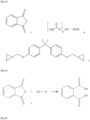
Fig. 4 ] représente la composition d'un mélange réactionnel de vitrimérisation selon un mode de réalisation de l'invention. - [
Fig. 5 ] représente une première étape de la réaction anhydride-époxy à partir d'un alcool. - [
Fig. 6 ] illustre une deuxième étape de la réaction anhydride-époxy du mélange réactionnel de vitrimérisation. - [
Fig. 7 ] illustre une réaction d'échange de fonction entre un système epoxy-anhydride partiellement réticulé et une amine libre présente dans le système epoxy-anhydride de vitrimérisation selon un mode de réalisation de l'invention. - Comme on le verra dans les exemples détaillés ci-dessous, l'invention consiste à permettre la réutilisation de matériaux pré-imprégnés hors d'état d'usage pour des raisons de vieillissement (stockage hors des conditions idéales, stockage trop long), tel que des chutes de découpes. Pour ce faire, le procédé consiste à appliquer un mélange réactionnel de composés activateurs sur le matériau pré-imprégné qui s'intégrera à la première résine pré-imprégnée et permettra au matériau composite final d'avoir les caractéristiques d'un réseau dynamique covalent, capable de réactions d'échange de manière à permettre sa remise en forme à chaud, malgré un état de réticulation important, en tirant partie de l'usage de la chimie dynamique covalente. Les réseaux covalents dynamiques, ou réseaux vitrimères sont des réseaux de polymère réticulés ayant la particularité de posséder des caractéristiques de thermodurcissables à basse température et de thermoplastiques à haute température. Ces caractéristiques découlent de la présence de liaisons chimiques covalentes dynamiques, c'est-à-dire que des réactions d'échange peuvent se produire entre chaînes et réarranger la topologie du réseau, tout en maintenant un taux de réticulation constant (se rapporter à un exemple de réaction d'échange
figure 1 ). Ces échanges sont contrôlés cinétiquement et ne peuvent se faire qu'une fois la température de transition vitreuse du polymère dépassée (conditionne la mobilité nécessaire aux réactions) et qu'une fois la température minimale pour que la réaction se fasse, liée à l'énergie d'activation de la réaction d'échange. - L'invention consiste donc à utiliser la réactivité résiduelle de la première résine réticulée de façon incomplète pour intégrer des motifs chimiques permettant l'obtention d'un réseau dynamique covalent. Les motifs rajoutés sont préférentiellement similaires à ceux de la première résine utilisée dans le pré-imprégné, comme les systèmes époxy-amine ou époxy-anhydride etc., ou peuvent être basés sur des chimies d'échange différentes disulfure, silyls éthers -
figures 1 à 3 )) - Typiquement, les époxy amines créent des amines, les époxy anhydride créent des esters. Dans les deux cas, des liaisons disulfures ou silyl-ethers sont intégrées dans le réseau époxy-amine existant. Cela peut se faire notamment en ajoutant des précurseurs porteurs de groupements réactifs avec les époxy ou les amines existantes dans la première résine partiellement réticulées (ex : alcools ou amines pouvant réagir avec epoxy, anhydrides, epoxy pouvant réagir avec les amines)
- Typiquement, si des liaisons disulfures sont souhaitées, on peut faire réagir un composé portant un pont disulfure et au moins deux amines ou alcools pour qu'il soit intégré à la résine existante et joue le rôle de réticulant dynamique.
- Un mélange réactionnel de vitrimérisation (
figures 4 à 6 ) est formé à partir de : - 500 ml d'acétone,
- 25 g de l'époxy DGEBA II (0,073 mol),
- 16 g d'anhydride phtalique I (0,108 mol), et
- 10 g d'acétate de zinc III (0,045 mol)
- Puis 50 g de matériaux pré-imprégnés renforcés de fibres de carbone, basés sur une première résine époxy-amine, stockés à température ambiante depuis plus de 30 jours, de dimensions 1 cm par 2 cm, sont plongés dans le bain du mélange réactionnel décrit ci-dessus à pression et température ambiantes.
- Après 24h d'immersion sous agitation légère à température ambiante, les matériaux pré-imprégnés sont filtrés du mélange réactionnel, puis séchés à l'ambiante 4h.
- Deux matériaux pré-imprégnés sont ensuite placés l'un contre l'autre, puis entre 2 plaques en acier recouvertes de Téflon fibré. Le tout est placé dans une presse à chaud, chauffée à 240°C, sous 10 MPa de pression, durant une durée de 5 minutes. La pression est ensuite retirée, puis les deux matériaux pré-imprégnés sont récupérés. On observe alors une adhésion entre les deux matériaux pré-imprégnés, sans destruction apparente des structures fibreuses. La première résine thermodurcissable ayant maintenant réticulée et étant vitrimérisée, un matériau composite vitrimère est obtenu. Selon une autre possibilité, au moins deux pièces de matériaux pré-imprégnés sont juxtaposées deux à deux dans le moule de sorte à agrandir la surface du matériau composite vitrimère final. Selon encore une autre possibilité, au moins deux pièces de matériaux pré-imprégnés sont disposés les uns sur les autres de sorte à donner la forme et les propriétés visées au composite vitrimère final.
- Le matériau composite vitrimère ainsi formé est ensuite refaçonné sous contrainte et température. L'assemblage de 2 pré-imprégnés est placé sur un moule comportant un angle à 90°C, et chauffé à 240°C. Une contrainte est progressivement appliquée au composite jusqu'à atteindre les 10 MPa. Le composite vitrimère est capable de se déformer sans casser jusqu'à épouser l'angle du moule. Il conserve cette forme après refroidissement.
- Pour comparaison, lorsque 2 pièces de matériaux pré-imprégnés non préalablement immergées dans le mélange réactionnel de vitrimérisation sont compressées dans les mêmes conditions, de nombreuses craquelures sont visibles en surface du fait de déchaussement de la résine réticulée des fibres.
- Un mélange réactionnel de vitrimérisation (
figures 4 à 6 ) est formé à partir de : - 50 ml d'acétone,
- 25 g de DGEBA II (0,073 mol)
- 16 g d'anhydride phtalique I (0,108 mol) et
- 10 g d'acétate de zinc III (0,045 mol)
- Cette solution est ensuite déposée par pulvérisation sur les surfaces de deux matériaux pré-imprégnés renforcés de fibre de carbone, basés sur une première résine époxy-amine, stockés à température ambiante depuis plus de 30 jours, de dimensions 1 cm par 2 cm.
- Les deux matériaux pré-imprégnés sont ensuite compressés à chaud comme décrit dans l'exemple 1. Un matériau composite vitrimère est obtenu, sans présence de défauts, craquelures, ou rupture de fibres. Il peut être remodelé dans un deuxième moule d'une conformation prédéfinie pour son application future.
- Selon d'autres possibilités non décrites dans les exemples détaillés, le mélange réactionnel de vitrimérisation peut être constitué d'autres systèmes permettant les échanges de fonction et une chimie dynamique covalente, tels que les systèmes époxy/phénol, époxy/amine (
figure 7 ), époxy/disulfure. - Ainsi, la présente invention présente l'avantage de permettre la réutilisation de matériaux pré-imprégnés hors d'usage ou de chutes de découpe et notamment l'obtention d'un matériau composite vitrimère pouvant être remis en forme plusieurs fois durant sa durée de vie. L'invention permet donc, par un procédé simple à mettre en oeuvre et peu coûteux, la réutilisation de déchets de pré-imprégnés peu valorisés ainsi que l'obtention, avec ces déchets, d'un matériau composite totalement recyclable, au contraire des procédés existants.
Claims (10)
- Procédé de recyclage de matériaux pré-imprégnés comprenant les étapes de :- a) fourniture d'au moins un matériau pré-imprégné comprenant une première résine de polymère thermodurcissable, partiellement réticulée, et une armure comprenant des fibres,- b) application d'un mélange réactionnel de vitrimérisation sur l'au moins un matériau pré-imprégné,- c) mise en place de l'au moins un matériau pré-imprégné enduit du mélange réactionnel de vitrimérisation sur un moule d'une forme prédéfinie,- d) application d'une thermocompression sur l'au moins un matériau pré-imprégné à une température (T1) supérieure ou égale à la température de transition vitreuse (Tg) de la première résine, de sorte à activer la réaction entre le mélange réactionnel de vitrimérisation et le polymère thermodurcissable conduisant à la formation d'un polymère vitrimère et la transformation de l'au moins un matériau pré-imprégné en un matériau composite vitrimère de la forme prédéfinie.
- Procédé de recyclage selon la revendication 1 comprenant les étapes de:- e) disposition du matériau composite vitrimère mis en forme selon l'étape d) sur un deuxième moule d'une conformation déterminée,- f) application d'une thermocompression sur le matériau composite vitrimère à ladite température (T1) de sorte à refaçonner le matériau composite vitrimère.
- Procédé de recyclage selon l'une des revendications précédentes, dans lequel le mélange réactionnel de vitrimérisation comprend des réactifs précurseurs de sorte à former une deuxième résine comprenant des groupements hydroxyles accessibles de sorte à permettre des réactions d'échange de fonction avec la première résine de polymère thermodurcissable.
- Procédé de recyclage selon l'une des revendications précédentes, dans lequel le mélange réactionnel de vitrimérisation comprend des réactifs précurseurs d'une deuxième résine, tel qu'un système époxy-amine, époxy-anhydride, ou un système époxy-disulfure, et un catalyseur (III) de transformation en résine vitrimère, choisi parmi un composé organométallique ou organique, par exemple respectivement de l'acétate de zinc (III) ou une amine ternaire.
- Procédé de recyclage selon la revendication 4, dans lequel la proportion de catalyseur (III) est comprise entre 2 à 15% en poids du mélange réactionnel de vitrimérisation.
- Procédé de recyclage selon l'une des revendications précédentes, dans lequel l'application du mélange réactionnel de vitrimérisation est réalisée par pulvérisation sur l'au moins un matériau pré-imprégné.
- Procédé de recyclage selon l'une des revendications 1 à 5, dans lequel l'application du mélange réactionnel de vitrimérisation est réalisée par :- i) trempage de l'au moins un matériau pré imprégné dans un bain de mélange réactionnel de vitrimérisation pour une enduction dudit au moins un matériau pré-imprégné,- ii) filtration du mélange réactionnel de vitrimérisation, et récupération dudit au moins un matériau pré-imprégné enduit.
- Procédé de recyclage selon l'une des revendications 1 à 7, dans lequel la première résine de l'au moins un matériau pré-imprégné est en polymère époxy-amine et le mélange réactionnel de vitrimérisation est constitué de DGEBA (II), d'anhydride phtalique (I), d'acétate de zinc (III), et un solvant en acétone.
- Procédé de recyclage selon l'une des revendications précédentes, lequel comprend les étapes de recyclage total de :- g) disposer le matériau composite vitrimère dans une composition comprenant au moins un alcool monofonctionnel,- h) appliquer un traitement thermique à une température (T2) supérieure ou égale à (Tg) de sorte à permettre la dissolution de la résine vitrimère et la récupération des fibres de l'armure de sorte à recycler les composés du matériau composite vitrimère.
- Matériau intermédiaire comprenant un matériau pré-imprégné enduit comportant une première résine en polymère thermodurcissable partiellement réticulée, une armure comprenant des fibres, la première résine étant enduite d'un mélange réactionnel de vitrimérisation adapté à la vitrimérisation du polymère thermodurcissable lors de l'application d'un traitement thermique à une température (T1) supérieure ou égale à la température (Tg) de transition vitreuse du polymère thermodurcissable.
Applications Claiming Priority (1)
| Application Number | Priority Date | Filing Date | Title |
|---|---|---|---|
| FR2302377A FR3146685B1 (fr) | 2023-03-15 | 2023-03-15 | Recyclage de matériaux pre-imprégnés fibrés |
Publications (1)
| Publication Number | Publication Date |
|---|---|
| EP4431553A1 true EP4431553A1 (fr) | 2024-09-18 |
Family
ID=86852117
Family Applications (1)
| Application Number | Title | Priority Date | Filing Date |
|---|---|---|---|
| EP24163770.1A Pending EP4431553A1 (fr) | 2023-03-15 | 2024-03-15 | Recyclage de matériaux pré-impregnés fibrés |
Country Status (3)
| Country | Link |
|---|---|
| US (1) | US12617926B2 (fr) |
| EP (1) | EP4431553A1 (fr) |
| FR (1) | FR3146685B1 (fr) |
Citations (3)
| Publication number | Priority date | Publication date | Assignee | Title |
|---|---|---|---|---|
| US20210032432A1 (en) * | 2019-07-30 | 2021-02-04 | Case Western Reserve University | One-step, solvent-free method for recycling and reprocessing thermoset polymers with tunable properties |
| US20220267562A1 (en) * | 2019-04-23 | 2022-08-25 | Northwestern University | Urethane exchange catalysts and methods for reprocessing cross-linked polyurethane foams |
| US20220282056A1 (en) * | 2019-07-30 | 2022-09-08 | Case Western Reserve University | One-step, solvent-free method for recycling and reprocessing thermoset polymers with tunable properties |
Family Cites Families (9)
| Publication number | Priority date | Publication date | Assignee | Title |
|---|---|---|---|---|
| ATE511436T1 (de) | 2008-07-24 | 2011-06-15 | Alenia Aeronautica Spa | Verfahren zum recyceln von abfallstoffen von prepreg-materialien |
| EP2576193B1 (fr) * | 2010-05-31 | 2017-06-21 | Arkema France | Resines et composites thermodurs epoxy acides pouvant etre faconnes a chaud et recycles |
| FR3020368B1 (fr) * | 2014-04-24 | 2017-10-27 | Arkema France | Composition pour la fabrication de resines vitrimeres de type epoxy/anhyride comprenant un polyol |
| EP2982704A1 (fr) * | 2014-08-06 | 2016-02-10 | Evonik Degussa GmbH | Émulsions de polymère réticulées réversibles |
| US10829612B2 (en) * | 2016-07-01 | 2020-11-10 | Georgia Tech Research Corporation | Methods of recycling and reshaping thermosetting polymers and composites thereof |
| US10822467B2 (en) * | 2017-04-28 | 2020-11-03 | Case Western Reserve University | Dynamic networks for recycling thermoset polymers |
| WO2021105127A1 (fr) * | 2019-11-26 | 2021-06-03 | Universiteit Gent | Réseaux adaptables covalents dérivés d'époxy et leurs procédés de production |
| US20240026102A1 (en) * | 2020-09-17 | 2024-01-25 | West Virginia University Board of Governors on behalf of West Virginia University | Recycling of fiber reinforced thermoset and thermoplastic composites and prepegs using solvents and catalysts |
| US11713370B1 (en) * | 2021-07-15 | 2023-08-01 | Hrl Laboratories, Llc | Adaptable thermoset polymers with internal dynamic bonds, and methods of making and using the same |
-
2023
- 2023-03-15 FR FR2302377A patent/FR3146685B1/fr active Active
-
2024
- 2024-03-15 US US18/606,385 patent/US12617926B2/en active Active
- 2024-03-15 EP EP24163770.1A patent/EP4431553A1/fr active Pending
Patent Citations (3)
| Publication number | Priority date | Publication date | Assignee | Title |
|---|---|---|---|---|
| US20220267562A1 (en) * | 2019-04-23 | 2022-08-25 | Northwestern University | Urethane exchange catalysts and methods for reprocessing cross-linked polyurethane foams |
| US20210032432A1 (en) * | 2019-07-30 | 2021-02-04 | Case Western Reserve University | One-step, solvent-free method for recycling and reprocessing thermoset polymers with tunable properties |
| US20220282056A1 (en) * | 2019-07-30 | 2022-09-08 | Case Western Reserve University | One-step, solvent-free method for recycling and reprocessing thermoset polymers with tunable properties |
Non-Patent Citations (1)
| Title |
|---|
| YUE LIANG ET AL: "Vitrimerization: A Novel Concept to Reprocess and Recycle Thermoset Waste via Dynamic Chemistry", vol. 3, no. 7, 7 April 2019 (2019-04-07), XP093081097, ISSN: 2056-6646, Retrieved from the Internet <URL:https://onlinelibrary.wiley.com/doi/full-xml/10.1002/gch2.201800076> DOI: 10.1002/gch2.201800076 * |
Also Published As
| Publication number | Publication date |
|---|---|
| US12617926B2 (en) | 2026-05-05 |
| US20240309171A1 (en) | 2024-09-19 |
| FR3146685B1 (fr) | 2025-03-14 |
| FR3146685A1 (fr) | 2024-09-20 |
Similar Documents
| Publication | Publication Date | Title |
|---|---|---|
| EP3105025B1 (fr) | Procede de fabrication d'un materiau fibreux pre-impregne de polymere thermoplastique en lit fluidise | |
| EP2162406B1 (fr) | Structure de fils de verre destinee a renforcer des articles abrasifs agglomeres | |
| EP3387042B1 (fr) | Procede pour un materiau composite de matrice en polyamide, renforce fibres, a partir de composition precurseur reactive de prepolymere | |
| CN118027726B (zh) | 一种双组份自修复微胶囊材料及其制备方法 | |
| EP3898786B1 (fr) | Materiau fibreux impregne de polymere thermoplastique de masse moleculaire et de viscosite optimum et son procede de preparation | |
| CN1129561C (zh) | 含有有机和/或无机材料和上浆玻璃纤维束的复合材料 | |
| EP3313917A1 (fr) | Procede en moule ouvert pour un materiau composite de matrice en polyamide semi-cristallin renforce fibres a partir de composition precurseur reactive de prepolymere | |
| FR2843967A1 (fr) | Nouveaux produits composites et articles moules obtenus a partir desdits produits | |
| WO1993014136A1 (fr) | Composition de resine epoxy et applications, en particulier dans les structures composites | |
| FR3146685A1 (fr) | Recyclage de matériaux pre-imprégnés fibrés | |
| CN117227218A (zh) | 一种低表面粘性预浸料及其制备方法与分切方法 | |
| EP3105277A1 (fr) | Composition d'ensimage pour fibres de renfort et ses applications | |
| EP4363210A1 (fr) | Structure multicouche pour le transport ou le stockage de l'hydrogene | |
| WO2019180371A2 (fr) | Nappe de materiau fibreux impregne, son procede de fabrication et son utilisation pour la fabrication de pieces composites en trois dimensions | |
| WO2021152253A1 (fr) | Structure multicouche pour le transport ou le stockage de l'hydrogene | |
| EP4097165A1 (fr) | Matériau composite thermodurcissable et procédé d'impression associé | |
| FR2460985A1 (fr) | Adhesif durcissable a chaud | |
| WO2023118385A1 (fr) | Copeau en matériau composite recyclé et procédé de fabrication | |
| EP1263576B1 (fr) | T le composite stratifiee formable, procede de fabrication de cette t le et pieces de carrosserie automobile obtenues | |
| WO2022069826A1 (fr) | Structure multicouche pour le stockage de l'hydrogene | |
| EP4097387A1 (fr) | Structure multicouche pour le transport ou le stockage de l'hydrogene | |
| FR2959226A1 (fr) | Structure de fils de verre destinee a renforcer des articles abrasifs agglomeres. | |
| CA3163652C (fr) | Structure multicouche pour le transport ou le stockage de l'hydrogene | |
| EP4253455A1 (fr) | Copeau en matériau composite recyclé et procédé de fabrication | |
| CN120699316A (zh) | 一种芳纶蜂窝复合材料及其制备方法、修复方法和应用 |
Legal Events
| Date | Code | Title | Description |
|---|---|---|---|
| PUAI | Public reference made under article 153(3) epc to a published international application that has entered the european phase |
Free format text: ORIGINAL CODE: 0009012 |
|
| STAA | Information on the status of an ep patent application or granted ep patent |
Free format text: STATUS: REQUEST FOR EXAMINATION WAS MADE |
|
| 17P | Request for examination filed |
Effective date: 20240315 |
|
| AK | Designated contracting states |
Kind code of ref document: A1 Designated state(s): AL AT BE BG CH CY CZ DE DK EE ES FI FR GB GR HR HU IE IS IT LI LT LU LV MC ME MK MT NL NO PL PT RO RS SE SI SK SM TR |
|
| RAP3 | Party data changed (applicant data changed or rights of an application transferred) |
Owner name: COMMISSARIAT A L'ENERGIE ATOMIQUE ET AUX ENERGIESALTERNATIVES |