EP4424801A2 - Benzinzusatzzusammensetzung für verbesserte motorleistung - Google Patents
Benzinzusatzzusammensetzung für verbesserte motorleistung Download PDFInfo
- Publication number
- EP4424801A2 EP4424801A2 EP24156351.9A EP24156351A EP4424801A2 EP 4424801 A2 EP4424801 A2 EP 4424801A2 EP 24156351 A EP24156351 A EP 24156351A EP 4424801 A2 EP4424801 A2 EP 4424801A2
- Authority
- EP
- European Patent Office
- Prior art keywords
- fuel
- group
- hydrocarbyl
- formula
- quaternary ammonium
- Prior art date
- Legal status (The legal status is an assumption and is not a legal conclusion. Google has not performed a legal analysis and makes no representation as to the accuracy of the status listed.)
- Granted
Links
Images
Classifications
-
- C—CHEMISTRY; METALLURGY
- C10—PETROLEUM, GAS OR COKE INDUSTRIES; TECHNICAL GASES CONTAINING CARBON MONOXIDE; FUELS; LUBRICANTS; PEAT
- C10L—FUELS NOT OTHERWISE PROVIDED FOR; NATURAL GAS; SYNTHETIC NATURAL GAS OBTAINED BY PROCESSES NOT COVERED BY SUBCLASSES C10G OR C10K; LIQUIFIED PETROLEUM GAS; USE OF ADDITIVES TO FUELS OR FIRES; FIRE-LIGHTERS
- C10L1/00—Liquid carbonaceous fuels
- C10L1/10—Liquid carbonaceous fuels containing additives
- C10L1/14—Organic compounds
- C10L1/143—Organic compounds mixtures of organic macromolecular compounds with organic non-macromolecular compounds
-
- C—CHEMISTRY; METALLURGY
- C10—PETROLEUM, GAS OR COKE INDUSTRIES; TECHNICAL GASES CONTAINING CARBON MONOXIDE; FUELS; LUBRICANTS; PEAT
- C10L—FUELS NOT OTHERWISE PROVIDED FOR; NATURAL GAS; SYNTHETIC NATURAL GAS OBTAINED BY PROCESSES NOT COVERED BY SUBCLASSES C10G OR C10K; LIQUIFIED PETROLEUM GAS; USE OF ADDITIVES TO FUELS OR FIRES; FIRE-LIGHTERS
- C10L1/00—Liquid carbonaceous fuels
- C10L1/10—Liquid carbonaceous fuels containing additives
- C10L1/14—Organic compounds
- C10L1/146—Macromolecular compounds according to different macromolecular groups, mixtures thereof
-
- C—CHEMISTRY; METALLURGY
- C10—PETROLEUM, GAS OR COKE INDUSTRIES; TECHNICAL GASES CONTAINING CARBON MONOXIDE; FUELS; LUBRICANTS; PEAT
- C10L—FUELS NOT OTHERWISE PROVIDED FOR; NATURAL GAS; SYNTHETIC NATURAL GAS OBTAINED BY PROCESSES NOT COVERED BY SUBCLASSES C10G OR C10K; LIQUIFIED PETROLEUM GAS; USE OF ADDITIVES TO FUELS OR FIRES; FIRE-LIGHTERS
- C10L1/00—Liquid carbonaceous fuels
- C10L1/10—Liquid carbonaceous fuels containing additives
- C10L1/14—Organic compounds
-
- C—CHEMISTRY; METALLURGY
- C10—PETROLEUM, GAS OR COKE INDUSTRIES; TECHNICAL GASES CONTAINING CARBON MONOXIDE; FUELS; LUBRICANTS; PEAT
- C10L—FUELS NOT OTHERWISE PROVIDED FOR; NATURAL GAS; SYNTHETIC NATURAL GAS OBTAINED BY PROCESSES NOT COVERED BY SUBCLASSES C10G OR C10K; LIQUIFIED PETROLEUM GAS; USE OF ADDITIVES TO FUELS OR FIRES; FIRE-LIGHTERS
- C10L1/00—Liquid carbonaceous fuels
- C10L1/04—Liquid carbonaceous fuels essentially based on blends of hydrocarbons
- C10L1/06—Liquid carbonaceous fuels essentially based on blends of hydrocarbons for spark ignition
-
- C—CHEMISTRY; METALLURGY
- C10—PETROLEUM, GAS OR COKE INDUSTRIES; TECHNICAL GASES CONTAINING CARBON MONOXIDE; FUELS; LUBRICANTS; PEAT
- C10L—FUELS NOT OTHERWISE PROVIDED FOR; NATURAL GAS; SYNTHETIC NATURAL GAS OBTAINED BY PROCESSES NOT COVERED BY SUBCLASSES C10G OR C10K; LIQUIFIED PETROLEUM GAS; USE OF ADDITIVES TO FUELS OR FIRES; FIRE-LIGHTERS
- C10L1/00—Liquid carbonaceous fuels
- C10L1/10—Liquid carbonaceous fuels containing additives
- C10L1/14—Organic compounds
- C10L1/22—Organic compounds containing nitrogen
- C10L1/222—Organic compounds containing nitrogen containing at least one carbon-to-nitrogen single bond
- C10L1/2222—(cyclo)aliphatic amines; polyamines (no macromolecular substituent 30C); quaternair ammonium compounds; carbamates
- C10L1/2225—(cyclo)aliphatic amines; polyamines (no macromolecular substituent 30C); quaternair ammonium compounds; carbamates hydroxy containing
-
- C—CHEMISTRY; METALLURGY
- C10—PETROLEUM, GAS OR COKE INDUSTRIES; TECHNICAL GASES CONTAINING CARBON MONOXIDE; FUELS; LUBRICANTS; PEAT
- C10L—FUELS NOT OTHERWISE PROVIDED FOR; NATURAL GAS; SYNTHETIC NATURAL GAS OBTAINED BY PROCESSES NOT COVERED BY SUBCLASSES C10G OR C10K; LIQUIFIED PETROLEUM GAS; USE OF ADDITIVES TO FUELS OR FIRES; FIRE-LIGHTERS
- C10L1/00—Liquid carbonaceous fuels
- C10L1/10—Liquid carbonaceous fuels containing additives
- C10L1/14—Organic compounds
- C10L1/22—Organic compounds containing nitrogen
- C10L1/234—Macromolecular compounds
- C10L1/238—Macromolecular compounds obtained otherwise than by reactions involving only carbon-to-carbon unsaturated bonds
- C10L1/2383—Polyamines or polyimines, or derivatives thereof (poly)amines and imines; derivatives thereof (substituted by a macromolecular group containing 30C)
-
- C—CHEMISTRY; METALLURGY
- C10—PETROLEUM, GAS OR COKE INDUSTRIES; TECHNICAL GASES CONTAINING CARBON MONOXIDE; FUELS; LUBRICANTS; PEAT
- C10L—FUELS NOT OTHERWISE PROVIDED FOR; NATURAL GAS; SYNTHETIC NATURAL GAS OBTAINED BY PROCESSES NOT COVERED BY SUBCLASSES C10G OR C10K; LIQUIFIED PETROLEUM GAS; USE OF ADDITIVES TO FUELS OR FIRES; FIRE-LIGHTERS
- C10L10/00—Use of additives to fuels or fires for particular purposes
-
- C—CHEMISTRY; METALLURGY
- C10—PETROLEUM, GAS OR COKE INDUSTRIES; TECHNICAL GASES CONTAINING CARBON MONOXIDE; FUELS; LUBRICANTS; PEAT
- C10L—FUELS NOT OTHERWISE PROVIDED FOR; NATURAL GAS; SYNTHETIC NATURAL GAS OBTAINED BY PROCESSES NOT COVERED BY SUBCLASSES C10G OR C10K; LIQUIFIED PETROLEUM GAS; USE OF ADDITIVES TO FUELS OR FIRES; FIRE-LIGHTERS
- C10L10/00—Use of additives to fuels or fires for particular purposes
- C10L10/04—Use of additives to fuels or fires for particular purposes for minimising corrosion or incrustation
-
- C—CHEMISTRY; METALLURGY
- C10—PETROLEUM, GAS OR COKE INDUSTRIES; TECHNICAL GASES CONTAINING CARBON MONOXIDE; FUELS; LUBRICANTS; PEAT
- C10L—FUELS NOT OTHERWISE PROVIDED FOR; NATURAL GAS; SYNTHETIC NATURAL GAS OBTAINED BY PROCESSES NOT COVERED BY SUBCLASSES C10G OR C10K; LIQUIFIED PETROLEUM GAS; USE OF ADDITIVES TO FUELS OR FIRES; FIRE-LIGHTERS
- C10L10/00—Use of additives to fuels or fires for particular purposes
- C10L10/06—Use of additives to fuels or fires for particular purposes for facilitating soot removal
-
- C—CHEMISTRY; METALLURGY
- C10—PETROLEUM, GAS OR COKE INDUSTRIES; TECHNICAL GASES CONTAINING CARBON MONOXIDE; FUELS; LUBRICANTS; PEAT
- C10L—FUELS NOT OTHERWISE PROVIDED FOR; NATURAL GAS; SYNTHETIC NATURAL GAS OBTAINED BY PROCESSES NOT COVERED BY SUBCLASSES C10G OR C10K; LIQUIFIED PETROLEUM GAS; USE OF ADDITIVES TO FUELS OR FIRES; FIRE-LIGHTERS
- C10L10/00—Use of additives to fuels or fires for particular purposes
- C10L10/18—Use of additives to fuels or fires for particular purposes use of detergents or dispersants for purposes not provided for in groups C10L10/02 - C10L10/16
-
- C—CHEMISTRY; METALLURGY
- C10—PETROLEUM, GAS OR COKE INDUSTRIES; TECHNICAL GASES CONTAINING CARBON MONOXIDE; FUELS; LUBRICANTS; PEAT
- C10L—FUELS NOT OTHERWISE PROVIDED FOR; NATURAL GAS; SYNTHETIC NATURAL GAS OBTAINED BY PROCESSES NOT COVERED BY SUBCLASSES C10G OR C10K; LIQUIFIED PETROLEUM GAS; USE OF ADDITIVES TO FUELS OR FIRES; FIRE-LIGHTERS
- C10L1/00—Liquid carbonaceous fuels
- C10L1/10—Liquid carbonaceous fuels containing additives
- C10L1/14—Organic compounds
- C10L1/18—Organic compounds containing oxygen
- C10L1/182—Organic compounds containing oxygen containing hydroxy groups; Salts thereof
- C10L1/1822—Organic compounds containing oxygen containing hydroxy groups; Salts thereof hydroxy group directly attached to (cyclo)aliphatic carbon atoms
-
- C—CHEMISTRY; METALLURGY
- C10—PETROLEUM, GAS OR COKE INDUSTRIES; TECHNICAL GASES CONTAINING CARBON MONOXIDE; FUELS; LUBRICANTS; PEAT
- C10L—FUELS NOT OTHERWISE PROVIDED FOR; NATURAL GAS; SYNTHETIC NATURAL GAS OBTAINED BY PROCESSES NOT COVERED BY SUBCLASSES C10G OR C10K; LIQUIFIED PETROLEUM GAS; USE OF ADDITIVES TO FUELS OR FIRES; FIRE-LIGHTERS
- C10L1/00—Liquid carbonaceous fuels
- C10L1/10—Liquid carbonaceous fuels containing additives
- C10L1/14—Organic compounds
- C10L1/18—Organic compounds containing oxygen
- C10L1/188—Carboxylic acids; metal salts thereof
- C10L1/1881—Carboxylic acids; metal salts thereof carboxylic group attached to an aliphatic carbon atom
- C10L1/1883—Carboxylic acids; metal salts thereof carboxylic group attached to an aliphatic carbon atom polycarboxylic acid
-
- C—CHEMISTRY; METALLURGY
- C10—PETROLEUM, GAS OR COKE INDUSTRIES; TECHNICAL GASES CONTAINING CARBON MONOXIDE; FUELS; LUBRICANTS; PEAT
- C10L—FUELS NOT OTHERWISE PROVIDED FOR; NATURAL GAS; SYNTHETIC NATURAL GAS OBTAINED BY PROCESSES NOT COVERED BY SUBCLASSES C10G OR C10K; LIQUIFIED PETROLEUM GAS; USE OF ADDITIVES TO FUELS OR FIRES; FIRE-LIGHTERS
- C10L1/00—Liquid carbonaceous fuels
- C10L1/10—Liquid carbonaceous fuels containing additives
- C10L1/14—Organic compounds
- C10L1/18—Organic compounds containing oxygen
- C10L1/188—Carboxylic acids; metal salts thereof
- C10L1/189—Carboxylic acids; metal salts thereof having at least one carboxyl group bound to an aromatic carbon atom
-
- C—CHEMISTRY; METALLURGY
- C10—PETROLEUM, GAS OR COKE INDUSTRIES; TECHNICAL GASES CONTAINING CARBON MONOXIDE; FUELS; LUBRICANTS; PEAT
- C10L—FUELS NOT OTHERWISE PROVIDED FOR; NATURAL GAS; SYNTHETIC NATURAL GAS OBTAINED BY PROCESSES NOT COVERED BY SUBCLASSES C10G OR C10K; LIQUIFIED PETROLEUM GAS; USE OF ADDITIVES TO FUELS OR FIRES; FIRE-LIGHTERS
- C10L1/00—Liquid carbonaceous fuels
- C10L1/10—Liquid carbonaceous fuels containing additives
- C10L1/14—Organic compounds
- C10L1/18—Organic compounds containing oxygen
- C10L1/192—Macromolecular compounds
- C10L1/198—Macromolecular compounds obtained otherwise than by reactions involving only carbon-to-carbon unsaturated bonds homo- or copolymers of compounds having one or more unsaturated aliphatic radicals, each having only one carbon to carbon double bond, and at least one being terminated by an acyloxy radical of a saturated carboxylic acid, of carbonic acid
- C10L1/1985—Macromolecular compounds obtained otherwise than by reactions involving only carbon-to-carbon unsaturated bonds homo- or copolymers of compounds having one or more unsaturated aliphatic radicals, each having only one carbon to carbon double bond, and at least one being terminated by an acyloxy radical of a saturated carboxylic acid, of carbonic acid polyethers, e.g. di- polygylcols and derivatives; ethers - esters
-
- C—CHEMISTRY; METALLURGY
- C10—PETROLEUM, GAS OR COKE INDUSTRIES; TECHNICAL GASES CONTAINING CARBON MONOXIDE; FUELS; LUBRICANTS; PEAT
- C10L—FUELS NOT OTHERWISE PROVIDED FOR; NATURAL GAS; SYNTHETIC NATURAL GAS OBTAINED BY PROCESSES NOT COVERED BY SUBCLASSES C10G OR C10K; LIQUIFIED PETROLEUM GAS; USE OF ADDITIVES TO FUELS OR FIRES; FIRE-LIGHTERS
- C10L1/00—Liquid carbonaceous fuels
- C10L1/10—Liquid carbonaceous fuels containing additives
- C10L1/14—Organic compounds
- C10L1/22—Organic compounds containing nitrogen
-
- C—CHEMISTRY; METALLURGY
- C10—PETROLEUM, GAS OR COKE INDUSTRIES; TECHNICAL GASES CONTAINING CARBON MONOXIDE; FUELS; LUBRICANTS; PEAT
- C10L—FUELS NOT OTHERWISE PROVIDED FOR; NATURAL GAS; SYNTHETIC NATURAL GAS OBTAINED BY PROCESSES NOT COVERED BY SUBCLASSES C10G OR C10K; LIQUIFIED PETROLEUM GAS; USE OF ADDITIVES TO FUELS OR FIRES; FIRE-LIGHTERS
- C10L1/00—Liquid carbonaceous fuels
- C10L1/10—Liquid carbonaceous fuels containing additives
- C10L1/14—Organic compounds
- C10L1/22—Organic compounds containing nitrogen
- C10L1/222—Organic compounds containing nitrogen containing at least one carbon-to-nitrogen single bond
- C10L1/2222—(cyclo)aliphatic amines; polyamines (no macromolecular substituent 30C); quaternair ammonium compounds; carbamates
-
- C—CHEMISTRY; METALLURGY
- C10—PETROLEUM, GAS OR COKE INDUSTRIES; TECHNICAL GASES CONTAINING CARBON MONOXIDE; FUELS; LUBRICANTS; PEAT
- C10L—FUELS NOT OTHERWISE PROVIDED FOR; NATURAL GAS; SYNTHETIC NATURAL GAS OBTAINED BY PROCESSES NOT COVERED BY SUBCLASSES C10G OR C10K; LIQUIFIED PETROLEUM GAS; USE OF ADDITIVES TO FUELS OR FIRES; FIRE-LIGHTERS
- C10L1/00—Liquid carbonaceous fuels
- C10L1/10—Liquid carbonaceous fuels containing additives
- C10L1/14—Organic compounds
- C10L1/22—Organic compounds containing nitrogen
- C10L1/234—Macromolecular compounds
- C10L1/238—Macromolecular compounds obtained otherwise than by reactions involving only carbon-to-carbon unsaturated bonds
-
- C—CHEMISTRY; METALLURGY
- C10—PETROLEUM, GAS OR COKE INDUSTRIES; TECHNICAL GASES CONTAINING CARBON MONOXIDE; FUELS; LUBRICANTS; PEAT
- C10L—FUELS NOT OTHERWISE PROVIDED FOR; NATURAL GAS; SYNTHETIC NATURAL GAS OBTAINED BY PROCESSES NOT COVERED BY SUBCLASSES C10G OR C10K; LIQUIFIED PETROLEUM GAS; USE OF ADDITIVES TO FUELS OR FIRES; FIRE-LIGHTERS
- C10L2200/00—Components of fuel compositions
- C10L2200/04—Organic compounds
- C10L2200/0407—Specifically defined hydrocarbon fractions as obtained from, e.g. a distillation column
- C10L2200/0415—Light distillates, e.g. LPG, naphtha
- C10L2200/0423—Gasoline
-
- C—CHEMISTRY; METALLURGY
- C10—PETROLEUM, GAS OR COKE INDUSTRIES; TECHNICAL GASES CONTAINING CARBON MONOXIDE; FUELS; LUBRICANTS; PEAT
- C10L—FUELS NOT OTHERWISE PROVIDED FOR; NATURAL GAS; SYNTHETIC NATURAL GAS OBTAINED BY PROCESSES NOT COVERED BY SUBCLASSES C10G OR C10K; LIQUIFIED PETROLEUM GAS; USE OF ADDITIVES TO FUELS OR FIRES; FIRE-LIGHTERS
- C10L2270/00—Specifically adapted fuels
- C10L2270/02—Specifically adapted fuels for internal combustion engines
- C10L2270/023—Specifically adapted fuels for internal combustion engines for gasoline engines
-
- C—CHEMISTRY; METALLURGY
- C10—PETROLEUM, GAS OR COKE INDUSTRIES; TECHNICAL GASES CONTAINING CARBON MONOXIDE; FUELS; LUBRICANTS; PEAT
- C10L—FUELS NOT OTHERWISE PROVIDED FOR; NATURAL GAS; SYNTHETIC NATURAL GAS OBTAINED BY PROCESSES NOT COVERED BY SUBCLASSES C10G OR C10K; LIQUIFIED PETROLEUM GAS; USE OF ADDITIVES TO FUELS OR FIRES; FIRE-LIGHTERS
- C10L2300/00—Mixture of two or more additives covered by the same group of C10L1/00 - C10L1/308
- C10L2300/30—Mixture of three components
Definitions
- This disclosure is directed to fuel additives for internal combustion engines providing enhanced engine and/or injector performance, to fuel compositions including such additives, and to methods of using such fuel additives in a fuel composition.
- Fuel compositions for vehicles are continually being improved to enhance various properties of the fuels in order to accommodate their use in newer, more advanced engines including both gasoline port fuel injected engines as well as gasoline direct injected engines.
- improvements in fuel compositions center around improved fuel additives and other components used in the fuel.
- friction modifiers may be added to fuel to reduce friction and wear in the fuel delivery systems of an engine.
- Other additives may be included to reduce the corrosion potential of the fuel or to improve the conductivity properties.
- Still other additives may be blended with the fuel to improve fuel economy.
- Engine and fuel delivery system deposits represent another concern with modern combustion engines, and therefore other fuel additives often include various deposit control additives to control and/or mitigate engine deposit problems.
- fuel compositions typically include a complex mixture of additives.
- a fuel additive package, a fuel, or a method of providing improved engine performance is provided herein.
- a fuel additive package for an internal combustion engine includes a Mannich detergent including the reaction product of a hydrocarbyl-substituted phenol, one or more aldehydes, and one or more amines; and a quaternary ammonium salt additive having the structure of Formula II [(R 10 )(R 11 )N-(CH 2 ) n -X m -(CH 2 ) n -X m -(CH 2 ) n -N ⁇ (R 7 )(R 8 )(R 9 )] M ⁇ ) (Formula II) wherein each X is a bivalent moiety selected from the group consisting of -O-, -N(R 12 )-, -C(O)-, -C(O)O-, or -C(O)NR 12 ; each R 7 , R 8, and R 9 are independently alkyl groups containing 1 to 8 carbon atoms
- the fuel additive package of the previous paragraph may include optional features or embodiments in any combination. These optional features or embodiments include one or more of the following: further comprising an alkoxylated alcohol; and/or wherein a weight ratio of the alkoxylated alcohol to the Mannich detergent is about 1.0 or less; and/or wherein the alkoxylated alcohol is a polyether prepared by reacting an alkyl alcohol or an alkylphenol with an alkylene oxide selected from ethylene oxide, propylene oxide, butylene oxide, copolymers thereof, or combinations thereof; and/or wherein a weight ratio of the Mannich detergent to the quaternary ammonium salt additive is about 4:1 to about 100:1; and/or wherein the Mannich detergent has the structure of Formula I: wherein R 1 is hydrogen or a C1 to C4 alkyl group, R 2 is a hydrocarbyl group having a number average molecular weight of about 500 to about 3000, R 3 is a C1 to C4 alkylene or alken
- a fuel including any embodiment of the above described fuel additive package is provided herein for improved engine performance.
- a gasoline fuel composition is provided that includes about 15 to about 300 ppmw of a Mannich detergent including the reaction product of a hydrocarbyl-substituted phenol, one or more aldehydes, and one or more amines; about 0.1 to about 50 ppmw of a quaternary ammonium salt additive (or about 0.1 to about 30 ppmw) has the structure of Formula II [(R 10 )(R 11 )N-(CH 2 ) n -X m -(CH 2 ) n -X m -(CH 2 ) n -N ⁇ (R 7 )(R 8 )(R 9 )] M ⁇ (Formula II) wherein each X is a bivalent moiety selected from the group consisting of -O-, -N(R 12 )-, -C(O)-,
- a diesel fuel composition in another embodiment or approach, includes about 15 to about 500 ppmw of a Mannich detergent including the reaction product of a hydrocarbyl-substituted phenol, one or more aldehydes, and one or more amines; about 0.1 to about 200 ppmw of a quaternary ammonium salt additive as described in any embodiment above.
- the gasoline fuel composition of the invention comprises
- the fuel of the previous Paragraph may include any embodiment of the fuel additive package described in this Summary.
- a method of improving the injector performance of a gasoline direct injection (GDI) engine is described herein.
- a method of improving the injector performance of a gasoline port fuel injection (PFI) engine is described herein.
- a method of improving the injector performance of both GDI and PFI engines is described herein.
- the use of a fuel additive package or a fuel for improving the injector performance of a GDI engine and/or a PFI engine is also described herein.
- the method or the use includes operating the gasoline direct injection engine on a fuel composition containing a major amount of a gasoline fuel and a minor amount of any embodiment of the fuel additive package as described in this Summary; and wherein the fuel additive package in the gasoline fuel improves the injector performance of the gasoline direct injection engine.
- the improved injector performance is one of improved fuel flow, improved fuel economy, improved engine efficiency, or combinations thereof; and/or wherein the improved injector performance is measured by one of injector pulse width, injection duration, injector flow, or combinations thereof.
- a method of improving the diesel engine performance is described herein.
- a method of improving the injector performance of a diesel engine is also described herein.
- the method or the use includes operating the diesel engine on a fuel composition containing a major amount of a diesel fuel and a minor amount of any embodiment of the fuel additive package as described in this Summary; and wherein the fuel additive package in the diesel fuel improves the injector performance of the diesel engine, i.e., a direct injection or indirect injection engine.
- the engine performance is one of improved fuel flow, improved fuel economy, improved engine efficiency, or combinations thereof; and/or wherein the improved injector performance is measured by one of injector pulse width, injection duration, injector flow, or combinations thereof.
- the method or the use of the previous paragraphs may include optional steps, features, or limitations in any combination thereof.
- Approaches or embodiments of the method or use may include one or more of the following: wherein the improved injector performance is one of improved fuel flow, improved fuel economy, improved engine efficiency, or combinations thereof; and/or wherein the improved injector performance is measured by one of long term fuel trim, injector pulse width, injection duration, injector flow, or combinations thereof.
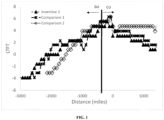
- FIG. 1 is a graph showing Long Term Fuel Trim (LTFT) of Comparative and Inventive fuel additives.
- the present disclosure relates to fuel additives including combinations of Mannich detergents and quaternary ammonium salts and, in particular, Mannich detergents and high molecular weight, polyamine and/or ether amine derived hydrocarbyl-substituted quaternary ammonium salts discovered effective to provide improved engine and/or injector performance in both port fuel injection (PFI) engines as well as gasoline direct injection (GDI) engines.
- the fuel additives in some approaches, may also include alkoxylated alcohols and, when included, certain ratios of the alkoxylated alcohol to the Mannich detergent.
- fuel compositions including the novel fuel additive combinations and methods of using or combusting a fuel including the fuel additive combinations herein to achieve the improved engine and/or injector performance.
- improved engine and/or injector performance of the fuel additive combinations herein may include one or more of controlling or reducing fuel injector deposits, controlling or reducing intake valve deposits, controlling or reducing combustion chamber deposits and/or controlling or reducing intake valve sticking.
- Improved injector performance may also be one or more of improved fuel flow, improved fuel economy, and/or improved engine efficiency as determined via one or more of long term fuel trim, injector pulse width, injection duration, and/or injector flow.
- the present disclosure also relates to fuel additives including combinations of Mannich detergents and quaternary ammonium salts and, in particular, Mannich detergents and high molecular weight, polyamine and/or ether amine derived hydrocarbyl-substituted quaternary ammonium salts discovered effective to provide improved engine and/or injector performance in diesel engines.
- the diesel engines contain a conventional distributor injection pump, a pump-nozzle system (unit-injector system or unit-pump system) or a common-rail system.
- improved engine and/or injector performance of the fuel additive combinations herein may include one or more of controlling or reducing fuel injector deposits, controlling or reducing intake valve deposits, controlling or reducing combustion chamber deposits and/or controlling or reducing intake valve sticking.
- Improved injector performance may also be one or more of improved fuel flow, improved fuel economy, and/or improved engine efficiency as determined via one or more of long term fuel trim, injector pulse width, injection duration, and/or injector flow.
- the fuel additives and fuels herein include a Mannich detergent.
- Suitable Mannich detergents include the reaction product(s) of an alkyl-substituted hydroxyaromatic or phenol compound, aldehyde, and amine as discussed more below.
- the alkyl substituents of the hydroxyaromatic compound may include long chain hydrocarbyl groups on a benzene ring of the hydroxyaromatic compound and may be derived from an olefin or polyolefin having a number average molecular weight (Mn) from about 500 to about 3000, preferably from about 700 to about 2100, as determined by gel permeation chromatography (GPC) using polystyrene as reference.
- Mn number average molecular weight
- the polyolefin in some approaches, may also have a polydispersity (weight average molecular weight/number average molecular weight) of about 1 to about 10 (in other instances, about 1 to 4 or about 1 to about 2) as determined by GPC using polystyrene as reference.
- the alkylation of the hydroxyaromatic or phenol compound is typically performed in the presence of an alkylating catalyst at a temperature in the range of about 0 to about 200°C, preferably 0 to 100°C.
- Acidic catalysts are generally used to promote Friedel-Crafts alkylation.
- Typical catalysts used in commercial production include sulphuric acid, BF 3 , aluminum phenoxide, methanesulphonic acid, cationic exchange resin, acidic clays and modified zeolites.
- Polyolefins suitable for forming the alkyl-substituted hydroxyaromatic compounds of the Mannich detergents include polypropylene, polybutenes, polyisobutylene, copolymers of butylene and/or butylene and propylene, copolymers of butylene and/or isobutylene and/or propylene, and one or more mono-olefinic comonomers copolymerizable therewith (e.g., ethylene, 1-pentene, 1-hexene, 1-octene, 1-decene, etc.) where a copolymer molecule contains at least 50% by weight, of butylene and/or isobutylene and/or propylene units.
- mono-olefinic comonomers e.g., ethylene, 1-pentene, 1-hexene, 1-octene, 1-decene, etc.
- Any comonomers polymerized with propylene or butenes may be aliphatic and can also contain non-aliphatic groups, e.g., styrene, o-methylstyrene, p-methylstyrene, divinyl benzene and the like if needed.
- the resulting polymers and copolymers used in forming the alkyl-substituted hydroxyaromatic compounds are substantially aliphatic hydrocarbon polymers.
- Polybutylene is preferred for forming the hydrocarbyl-substituted hydroxyaromatic or phenol compounds herein.
- polybutylene is used in a generic sense to include polymers made from “pure” or “substantially pure” 1-butene or isobutene, and polymers made from mixtures of two or all three of 1-butene, 2-butene and isobutene. Commercial grades of such polymers may also contain insignificant amounts of other olefins. So-called high reactivity polyisobutenes having relatively high proportions of polymer molecules having a terminal vinylidene group are also suitable for use in forming the long chain alkylated phenol reactant.
- Suitable high-reactivity polyisobutenes include those polyisobutenes that comprise at least about 20% of the more reactive methylvinylidene isomer, preferably at least 50% and more preferably at least 70%.
- Suitable polyisobutenes include those prepared using BF 3 catalysts. The preparation of such polyisobutenes in which the methylvinylidene isomer comprises a high percentage of the total composition is described in US 4,152,499 and US 4,605,808 , which are both incorporated herein by reference.
- the Mannich detergent in some approaches or embodiments, may be made from an alkylphenol or alkylcresol.
- other phenolic compounds may be used including alkyl-substituted derivatives of resorcinol, hydroquinone, catechol, hydroxydiphenyl, benzylphenol, phenethylphenol, naphthol, tolylnaphthol, among others.
- Preferred for the preparation of the Mannich detergents are the polyalkylphenol and polyalkylcresol reactants, e.g., polypropyl phenol, polybutylphenol, polypropylcresol and polybutylcresol, wherein the alkyl group has a number average molecular weight of about 500 to about 3000 or about 500 to about 2100 as measured by GPC using polystyrene as reference, while the most preferred alkyl group is a polybutyl group derived from polyisobutylene having a number average molecular weight in the range of about 700 to about 1300 as measured by GPC using polystyrene as reference.
- the polyalkylphenol and polyalkylcresol reactants e.g., polypropyl phenol, polybutylphenol, polypropylcresol and polybutylcresol
- the alkyl group has a number average molecular weight of about 500 to about 3000 or about 500 to about 2100 as measured by GPC using polysty
- the preferred configuration of the alkyl-substituted hydroxyaromatic compound is that of a para-substituted mono-alkylphenol or a para-substituted mono-alkyl ortho-cresol.
- any hydroxyaromatic compound readily reactive in the Mannich condensation reaction may be employed.
- Mannich products made from hydroxyaromatic compounds having only one ring alkyl substituent, or two or more ring alkyl substituents are suitable for forming this detergent additive.
- the alkyl substituents may contain some residual unsaturation, but in general, are substantially saturated alkyl groups.
- representative amine reactants suitable to form the Mannich detergent herein include, but are not limited to, alkylene polyamines having at least one suitably reactive primary or secondary amino group in the molecule. Other substituents such as hydroxyl, cyano, amido, etc., can be present in the polyamine.
- the alkylene polyamine is a polyethylene polyamine.
- Suitable alkylene polyamine reactants include ethylenediamine, diethylenetriamine, triethylenetetramine, tetraethylene pentamine and mixtures of such amines having nitrogen contents corresponding to alkylene polyamines of the formula H 2 N--(A-NH--) n H, where A in this formula is divalent ethylene or propylene and n is an integer of from 1 to 10, preferably 1 to 4.
- the alkylene polyamines may be obtained by the reaction of ammonia and dihalo alkanes, such as dichloro alkanes.
- the amine may also be an aliphatic diamine having one primary or secondary amino group and at least one tertiary amino group in the molecule.
- suitable polyamines include N,N,N",N"-tetraalkyldialkylenetriamines (two terminal tertiary amino groups and one central secondary amino group), N,N,N',N"-tetraalkyltrialkylene tetramines (one terminal tertiary amino group, two internal tertiary amino groups and one terminal primary amino group), N,N,N',N",N′′′-pentaalkyltrialkylenetetramines (one terminal tertiary amino group, two internal tertiary amino groups and one terminal secondary amino group), N,N'-dialkylamine, N,N-dihydroxyalkyl-alpha-, omega-alkylenediamines (one terminal tertiary amino group and one terminal primary amino group), N,N,N'-trihydroxyalkyl-al
- alkyl groups are methyl and/or ethyl groups.
- Preferred polyamine reactants are N,N-dialkyl-alpha, omega-alkylene diamine, such as those having from 3 to about 6 carbon atoms in the alkylene group and from 1 to about 12 carbon atoms in each of the alkyl groups, which most preferably are the same but which can be different.
- Exemplary amines may include N,N-dimethyl-1,3-propanediamine and/or N-methyl piperazine.
- polyamines having one reactive primary or secondary amino group that can participate in the Mannich condensation reaction, and at least one sterically hindered amino group that cannot participate directly in the Mannich condensation reaction to any appreciable extent include N-(tert-butyl)-1,3-propanediamine, N-neopentyl-1,3-propane diamine-, N - ( tert- butyl)-1-methyl-1,2-ethanediamine, N-(tert-butyl)-1-methyl-1,3-propane diamine, and 3,5-di(tert-butyl)aminoethylpiperazine.
- representative aldehydes for use in the preparation of the Mannich detergents herein include the aliphatic aldehydes such as formaldehyde, acetaldehyde, propionaldehyde, butyraldehyde, valeraldehyde, caproaldehyde, heptaldehyde, stearaldehyde.
- Aromatic aldehydes which may be used include benzaldehyde and salicylaldehyde.
- Illustrative heterocyclic aldehydes for use herein are furfural and thiophene aldehyde, etc.
- formaldehyde-producing reagents such as paraformaldehyde, or aqueous formaldehyde solutions such as formalin. Most preferred is formaldehyde or formalin.
- the condensation reaction among the alkylphenol, the specified amine(s) and the aldehyde may be conducted at a temperature typically in the range of about 40°C to about 200°C.
- the reaction can be conducted in bulk (no diluent or solvent) or in a solvent or diluent. Water is evolved and can be removed by azeotropic distillation during the course of the reaction.
- the Mannich reaction products are formed by reacting the alkyl-substituted hydroxyaromatic compound, the amine and aldehyde in the molar ratio of 1.0:0. 5-2.0:1.0-3.0, respectively.
- Suitable Mannich base detergents include those detergents taught in US 4,231,759 ; US 5,514,190 ; US 5,634,951 ; US 5,697,988 ; US 5,725,612 ; and 5,876,468 , the disclosures of which are incorporated herein by reference.
- suitable Mannich detergents for the fuel additives herein may have a structure of Formula I below: wherein R 1 is hydrogen or a C1 to C4 alkyl group, R 2 is a hydrocarbyl group having a number average molecular weight of about 500 to about 3,000 (or about 500 to about 2,100 or about 500 to about 1,800), R 3 is a C1 to C4 alkylene or alkenyl linking group, and R 4 and R 5 are, independently, hydrogen, a C1 to C12 alkyl group, or a C1 to C4 alkyl amino C1-C12 alkyl group.
- R 1 is hydrogen or a C1 to C4 alkyl group
- R 2 is a hydrocarbyl group having a number average molecular weight of about 500 to about 3,000 (or about 500 to about 2,100 or about 500 to about 1,800)
- R 3 is a C1 to C4 alkylene or alkenyl linking group
- R 4 and R 5 are, independently, hydrogen, a C1 to C12
- a fuel additive or additive package may include about 10 to about 70 weight percent of the above-described Mannich detergent, about 20 to about 60 weight percent of the Mannich detergent, or about 30 to about 50 weight percent of the Mannich detergent (based on the total weight of the active Mannich detergent in the fuel additive).
- the fuel composition When blended into a gasoline fuel, the fuel composition may include about 15 ppmw to about 300 ppmw of the above-described Mannich detergent, about 25 ppmw to about 155 ppmw, or about 55 ppmw to about 125 ppmw of the Mannich detergent in the fuel composition (active Mannich detergent treat rates).
- the mixtures herein also include a quaternary ammonium salt additive, and in particular, a polyamine or ether-amine derived hydrocarbyl-substituted succinimide quaternary ammonium salt additive having a high molecular weight hydrocarbyl substituent.
- the quaternary ammonium salt of the mixtures herein includes a quaternary ammonium salt formed through a reaction between an alkyl carboxylate and an amide or imide compound obtained by reacting a hydrocarbyl substituted acylating agent, such as a high molecular weight hydrocarbyl substituted acylating agent, and a polyamine or, more preferably, an ether amine.
- a hydrocarbyl substituted acylating agent such as a high molecular weight hydrocarbyl substituted acylating agent
- the quaternary ammonium salt is a cationic salt having the structure of Formula II [(R 10 )(R 11 )N-(CH 2 ) n -X m -(CH 2 ) n -X m -(CH 2 ) n -N ⁇ (R 7 )(R 8 )(R 9 )] M ⁇ (Formula II) wherein each X is a bivalent moiety selected from the group consisting of -O-, -N(R 12 )-, -C(O)-, -C(O)O-, or -C(O)NR 12 ; each R 7 , R 8 , and R 9 are independently alkyl groups containing 1 to 8 carbon atoms; R 10 and R 11 are independently selected from an alkyl group, an acyl group, or a hydrocarbyl substituted acyl group and, optionally, R 10 and R 11 together with the N atom to which they are attached, combine to form a
- the polyamine or, preferably, the ether amine used to form the quaternary ammonium salt additive of Formula II herein may have the structure of Formula III H 2 N-(CH 2 ) n -X m -(CH 2 ) n -X m -(CH 2 ) n -N(R 7 )(R 8 ) (Formula III) with X, R 7 , R 8 and integers n and m are defined above.
- the X moiety is an oxygen atom or nitrogen atom, and more preferably, an oxygen atom.
- the amine is 3-(2-(dimethyl amino)ethoxy)propylamine; N,N-dimethyldipropylenetriamine; or mixtures thereof.
- any of the foregoing described tertiary amines may be reacted with a hydrocarbyl substituted acylating agent having the noted high molecular weight hydrocarbyl substituent described herein to form the quaternary ammonium salt additive.
- the hydrocarbyl substituted acylating agent may be selected from a hydrocarbyl substituted mono- di- or polycarboxylic acid or a reactive equivalent thereof to form an amide or imide compound.
- a particularly suitable acylating agent is a hydrocarbyl substituted succinic acid, ester, anhydride, mono-acid/mono-ester, or diacid.
- the hydrocarbyl substituted acylating agent is a hydrocarbyl substituted dicarboxylic acid or anhydride derivative thereof, a fatty acid, or mixtures thereof.
- the hydrocarbyl substituent may have a number average molecular weight of 700 or more as discussed above and, preferably about 700 to about 5,000 (or about 900 to about 2,500).
- the hydrocarbyl substituted acylating agent may be carboxylic acid or anhydride reactant.
- the hydrocarbyl substituted acylating agent may be selected from stearic acid, oleic acid, linoleic acid, linolenic acid, palmitic acid, palmitoleic acid, lauric acid, myristic acid, myristoleic acid, capric acid, caprylic acid, arachidic acid, behenic acid, erucic acid, anhydride derivatives thereof, or a combination thereof.
- the hydrocarbyl substituted acylating agent suitable for the quaternary ammonium salt additive is a hydrocarbyl substituted dicarboxylic anhydride of Formula IV wherein R 13 of Formula IV is a hydrocarbyl or alkenyl group having a high molecular weight as discussed above.
- R 13 is a hydrocarbyl group having a number average molecular weight from about 700 to about 5,000, about 700 to about 2,500, or about 700 to about 1,500.
- the number average molecular weight of R 13 may range from about 700 to about 1300, as measured by GPC using polystyrene as a calibration reference.
- a particularly useful R 13 has a number average molecular weight of about 1000 Daltons and comprises polyisobutylene.
- the R 13 of Formula IV is a hydrocarbyl moiety that may comprise one or more polymer units chosen from linear or branched alkenyl units.
- the alkenyl units may have from about 2 to about 10 carbon atoms.
- the polyalkenyl radical may comprise one or more linear or branched polymer units formed from ethylene radicals, propylene radicals, butylene radicals, pentene radicals, hexene radicals, octene radicals and decene radicals.
- the R 13 polyalkenyl radical may be in the form of, for example, a homopolymer, copolymer or terpolymer.
- the polyalkenyl radical is polyisobutylene.
- the polyalkenyl radical may be a homopolymer of polyisobutylene comprising from about 5 to about 60 isobutylene groups, such as from about 15 to about 30 isobutylene groups.
- the polyalkenyl compounds used to form the R 13 polyalkenyl radicals may be formed by any suitable methods, such as by conventional catalytic oligomerization of alkenes.
- high reactivity polyisobutylenes having relatively high proportions of polymer molecules with a terminal vinylidene group may be used to form the R 13 group.
- at least about 60%, such as about 70% to about 90%, of the polyisobutenes comprise terminal olefinic double bonds.
- approximately one mole of maleic anhydride may be reacted per mole of polyalkylene, such that the resulting polyalkenyl succinic anhydride has about 0.8 to about 1.5 succinic anhydride group per polyalkylene substituent.
- the molar ratio of succinic anhydride groups to polyalkylene groups may range from about 0.5 to about 3.5, such as from about 1 to about 1.3.
- a suitable alkylating or quaternizing agent for the quaternary ammonium salt additive is a hydrocarbyl-substituted carboxylate, such as an alkyl carboxylate or dialkyl carboxylate.
- the quaternizing agent is an alkyl carboxylate selected form alkyl oxalate, dialkyl oxylate, alkyl salicylate, and combinations thereof.
- the alkyl group of the alkyl carboxylate includes 1 to 6 carbon atoms, and is preferably methyl groups.
- Suitable alkylating or quaternizing agents for the second quaternary ammonium salt additive herein may be dimethyl oxylate or methyl salicylate.
- the corresponding acid of the carboxylate may have a pKa of less than 4.2.
- the corresponding acid of the carboxylate may have a pKa of less than 3.8, such as less than 3.5, with a pKa of less than 3.1 being particularly desirable.
- suitable carboxylates may include, but not limited to, maleate, citrate, fumarate, phthalate, 1,2,4-benzenetricarboxylate, 1,2,4,5-benzenetetracarboxylate, nitrobenzoate, nicotinate, oxalate, aminoacetate, and salicylate.
- preferred carboxylates include oxalate, salicylate, and combinations thereof.
- Suitable examples of the quaternary ammonium salt from the above described reactions for the quaternary ammonium salt additive include, but are not limited to, compounds of the following exemplary structures: wherein X, R 7 , R 8 , R 9 , R 13 and M as well as integers n and m are as described above.
- R 14 is a C1 to C30 hydrocarbyl group.
- the quaternary ammonium salts as described herein include a relatively sterically available quaternary nitrogen that is more available for detergent activity than prior quaternary ammonium compounds.
- a fuel additive or additive package may include about 1 to about 30 weight percent of the above-described quaternary ammonium salt, about 2 to about 25 weight percent of the quaternary ammonium salt, or about 2 to about 10 weight percent of the quaternary ammonium salt (based on the total weight of the active detergent in the fuel additive).
- the fuel composition includes about 1 to about 50 ppmw, in other approaches, about 2 to about 25 ppmw, and in yet other approaches, about 4 to about 15 ppmw of the quaternary ammonium salt additive. Other ranges within the noted endpoints are also within the scope of this disclosure.
- the fuel additives or fuels of the present disclosure may also include one or more optional alkoxylated alcohols.
- the alkoxylated alcohol is preferably a polyether prepared by reacting an long chain alkyl alcohol or alkylphenol with an alkylene oxide.
- the alkoxylated alcohol may be one or more hydrocarbyl-terminated or hydrocarbyl-capped poly(oxyalkylene) polymers.
- the hydrocarbyl moieties thereof may be aryl or aliphatic groups, and preferably, aliphatic chains that are linear, branched or cyclic, and most preferably are linear aliphatic chains.
- the alkoxylated alcohols may have the structure of Formula Va, Vb, and/or Vc below: wherein R 6 of the Formulas Va, Vb, and/or Vc is an aryl group or a linear, branched, or cyclic aliphatic group and preferably having 5 to 50 carbons (or 5 to 30 carbons) or may be a -C m H 2m+1 group where m is an integer of 12 or more, R 7 of Formulas Va, Vb, and/or Vc is a C1 to C4 alkyl group, and n is an integer from 5 to 100 (or as further discussed below).
- R 6 of the Formulas Va, Vb, and/or Vc is an aryl group or a linear, branched, or cyclic aliphatic group and preferably having 5 to 50 carbons (or 5 to 30 carbons) or may be a -C m H 2m+1 group where m is an integer of 12 or more, R 7 of Formulas Va, Vb, and/or
- suitable alkoxylated alcohols are derived from lower alkylene oxides selected from the group consisting of ethylene oxide, propylene oxide, butylene oxide, copolymers thereof, and combinations thereof.
- the lower alkylene oxides are propylene oxide or butylene oxide or copolymers of ethylene oxide, propylene oxide, and butylene oxide (as well as any combinations thereof).
- the alkylene oxides are propylene oxide. Any copolymers of such alkylene oxides may be random or block copolymers.
- the alkoxylated alcohols may be terminated or capped with an aryl, alkyl, or hydrocarbyl group and may include one or more aryl or linear, branched, or cyclic aliphatic C5 to C30 terminated alkoxylated alcohols, and in other approaches, a C16 to C18 (or blend thereof) terminated alkoxylated alcohol having 5 to 100, 10 to 80, 20 to 50, or 22 to 32 repeating units of the alkylene oxide therein (that is, n integer of the formula above).
- the alkoxylated alcohols may have a weight average molecular weight of about 1300 to about 2600 and, in other approaches, about 1600 to about 2200.
- the aliphatic hydrocarbyl terminated alkoxylated alcohols may include about 20 to about 70 weight percent (in another approach, about 30 to about 50 weight percent) of an aliphatic C16 alkoxylated alcohol having 24 to 32 repeating units of alkoxylene oxide and/or may include about 80 to about 30 weight percent (in another approach, about 50 to about 70 weight percent) of an aliphatic C18 alkoxylated alcohol having 24 to 32 repeating units of alkoxylene oxide.
- the fuel additives herein if including an alkoxylated alcohol, may also have about 8 percent or less (in other approaches, about 6 percent or less, and in yet other approaches, about 4 percent or less) of C20 or greater alkoxylated alcohols and/or about 4 weight percent or less (in or other approaches about 2 weight percent or less, and in yet other approaches, about 1 percent or less) of C14 or lower alkoxylated alcohols.
- the aryl or hydrocarbyl-capped poly(oxyalkylene) alcohols may be produced by the addition of lower alkylene oxides, such as ethylene oxide, propylene oxide, or the butylene oxides, to a desired hydroxy compound R-OH (that is, a starter alcohol) under polymerization conditions, wherein R is the aryl or hydrocarbyl group having either 5 to 30 carbons or other chain length as noted above and which caps the poly(oxyalkylene) chain.
- R-OH that is, a starter alcohol
- the alkoxylated alcohols can be prepared by any starter alcohol that provides the desired polyol distribution.
- the alkoxylated alcohol can be prepared by reacting a saturated linear or branched alcohol of the desired hydrocarbon size with the selected alkylene oxide and a double metal or basic catalyst.
- the alkoxylated alcohol may be nonylphenol alkoxylated alcohol such as nonylphenol propoxylated alcohol.
- a single type of alkylene oxide may be employed, e.g., propylene oxide, in which case the product is a homopolymer, e.g., a poly(oxyalkylene) propanol.
- copolymers are equally satisfactory and random or block copolymers are readily prepared by contacting the hydroxyl-containing compound with a mixture of alkylene oxides, such as a mixture of ethylene, propylene, and/or butylene oxides. Random polymers are more easily prepared when the reactivities of the oxides are relatively equal. In certain cases, when ethylene oxides is copolymerized with other oxides, the higher reaction rate of ethylene oxide makes the preparation of random copolymers difficult.
- block copolymers can be prepared.
- Block copolymers are prepared by contacting the hydroxyl-containing compound with first one alkylene oxide, then the others in any order, or repetitively, under polymerization conditions.
- a particular block copolymer may be represented by a polymer prepared by polymerizing propylene oxide on a suitable monohydroxy compound to form a poly(oxypropylene) alcohol and then polymerizing butylene oxide on the poly(oxyalkylene) alcohol.
- a fuel additive or fuel herein when included, may include about 5 to about 30 weight percent of the alkoxylated alcohol, about 8 to about 20 weight percent of the alkoxylated alcohol, or about 10 to about 15 weight percent of the alkoxylated alcohol (based on the active alkoxylated alcohol in the fuel additive).
- the fuel When blended into a gasoline fuel, the fuel may optionally include about 2 ppmw to about 150 ppmw of the active alkoxylated alcohol, 5 to about 150 ppmw, about 8 ppmw to about 50 ppmw, or about 15 ppmw to about 40 ppmw of the alkoxylated alcohol in the fuel.
- the fuel additives or fuels herein may also include one or more optional hydrocarbyl substituted dicarboxylic anhydride derivatives, and preferably one or more optional succinimide detergents.
- this optional additive may be prepared by reacting a hydrocarbyl-substituted succinic acylating agent with an amine, polyamine, or alkyl amine having one or more primary, secondary, or tertiary amino groups.
- the hydrocarbyl substituted dicarboxylic anhydride derivative includes hydrocarbyl succinimides, succinamides, succinimide-amides and succinimide-esters.
- These nitrogen-containing derivatives of hydrocarbyl succinic acylating agents may be prepared by reacting a hydrocarbyl-substituted succinic acylating agent with an amine, polyamine, or alkyl amine having one or more primary, secondary, or tertiary amino groups.
- the detergents may be mono-succinimides, bis-succinimides, or combinations thereof.
- the hydrocarbyl substituted dicarboxylic anhydride derivative may include a hydrocarbyl substituent having a number average molecular weight ranging from about 450 to about 3,000 as measured by GPC using polystyrene as reference.
- the derivative may be selected from a diamide, acid/amide, acid/ester, diacid, amide/ester, diester, and imide.
- Such derivative may be made from reacting a hydrocarbyl substituted dicarboxylic anhydride with ammonia, a polyamine, or an alkyl amine having one or more primary, secondary, or tertiary amino groups.
- the polyamine or alkyl amine may be tetraethylene pentamine (TEPA), triethylenetetramine (TETA), and the like amines.
- TEPA tetraethylene pentamine
- TETA triethylenetetramine
- the polyamine or alkyl amine may have the formula H 2 N-((CHR 1 -(CH 2 ) q -NH) r -H, wherein R 1 of the previous formula is hydrogen or an alkyl group having from 1 to 4 carbon atoms, q is an integer of from 1 to 4 and r is an integer of from 1 to 6, and mixtures thereof.
- a molar ratio of the hydrocarbyl substituted dicarboxylic anhydride reacted with the ammonia, polyamine, or alkyl amine may be from about 0.5: 1 to about 2:1, in other approaches about 1:1 to about 2:1.
- the hydrocarbyl substituted dicarboxylic anhydride may be a hydrocarbyl carbonyl compound of the Formula VI: where R 10 of Formula VI is a hydrocarbyl group derived from a polyolefin.
- the hydrocarbyl carbonyl compound may be a polyalkylene succinic anhydride reactant wherein R 10 is a hydrocarbyl moiety, such as for example, a polyalkenyl radical having a number average molecular weight of from about 450 to about 3000 as measured by GPC using polystyrene as reference.
- the number average molecular weight of R 10 may range from about 600 to about 2,500, or from about 700 to about 1,500, as measured by GPC using polystyrene as reference.
- a particularly useful R 10 of Formula VI may have a number average molecular weight of about 950 to about 1,000 Daltons (as measured by GPC using polystyrene as reference) and comprises polyisobutylene. Unless indicated otherwise, molecular weights in the present specification are number average molecular weights as measured by GPC using polystyrene as reference.
- the R 10 of Formula VI is a hydrocarbyl moiety that may include one or more polymer units chosen from linear or branched alkenyl units.
- the alkenyl units may have from about 2 to about 10 carbon atoms.
- the polyalkenyl radical may comprise one or more linear or branched polymer units chosen from ethylene radicals, propylene radicals, butylene radicals, pentene radicals, hexene radicals, octene radicals and decene radicals.
- the R 10 polyalkenyl radical of Formula VI may be in the form of, for example, a homopolymer, copolymer or terpolymer.
- the polyalkenyl radical is isobutylene.
- the polyalkenyl radical may be a homopolymer of polyisobutylene comprising from about 10 to about 60 isobutylene groups, such as from about 20 to about 30 isobutylene groups.
- the polyalkenyl compounds used to form the R 10 polyalkenyl radicals may be formed by any suitable methods, such as by conventional catalytic oligomerization of alkenes.
- high reactivity polyisobutenes having relatively high proportions of polymer molecules with a terminal vinylidene group may be used to form the R 10 group.
- at least about 60%, such as about 70% to about 90%, of the polyisobutenes comprise terminal olefinic double bonds.
- High reactivity polyisobutenes are disclosed, for example, in US 4,152,499 , the disclosure of which is herein incorporated by reference in its entirety.
- approximately one mole of maleic anhydride may be reacted per mole of polyalkylene, such that the resulting polyalkenyl succinic anhydride has about 0.8 to about 1 succinic anhydride group per polyalkylene substituent.
- the molar ratio of succinic anhydride groups to polyalkylene groups may range from about 0.5 to about 3.5, such as from about 1 to about 1.1.
- the hydrocarbyl carbonyl compounds may be made using any suitable method.
- One example of a method for forming a hydrocarbyl carbonyl compound comprises blending a polyolefin and maleic anhydride.
- the polyolefin and maleic anhydride reactants are heated to temperatures of, for example, about 150°C to about 250°C, optionally, with the use of a catalyst, such as chlorine or peroxide.
- a catalyst such as chlorine or peroxide.
- Another exemplary method of making the polyalkylene succinic anhydrides is described in US 4,234,435 , which is incorporated herein by reference in its entirety.
- the polyamine reactant may be an alkylene polyamine.
- the polyamine may be selected from ethylene polyamine, propylene polyamine, butylenes polyamines, and the like.
- the polyamine is an ethylene polyamine that may be selected from ethylene diamine, diethylene triamine, triethylene tetramine, tetraethylene pentamine, pentaethylene hexamine, and N, N'-(iminodi-2,1,ethanediyl) bis-1,3- propanediamine.
- a particularly useful ethylene polyamine is a compound of the formula H 2 N-((CHR 1 -(CH 2 ) q -NH) r -H, wherein R 1 is hydrogen, q is 1 and r is 4.
- the hydrocarbyl substituted dicarboxylic anhydride derivative is a compound of Formula VII wherein R 10 of Formula VII is a hydrocarbyl group (such as polyisobutylene and/or the other above described R 10 moieties) and R 11 of Formula VII is a hydrogen, an alkyl group, an aryl group, -OH, -NHR 12 , or a polyamine, or an alkyl group containing one or more primary, secondary, or tertiary amino groups.
- R 10 of Formula VII is a hydrocarbyl group (such as polyisobutylene and/or the other above described R 10 moieties) and R 11 of Formula VII is a hydrogen, an alkyl group, an aryl group, -OH, -NHR 12 , or a polyamine, or an alkyl group containing one or more primary, secondary, or tertiary amino groups.
- R 11 of Formula VII is derived from ethylene diamine, diethyelene triamine, triethylene tetraamine, tetraethylene pentamine, pentaethylene hexamine, N,N'-(iminodi-2,1,ethanediyl)bis-1,3-propanediamine and combinations thereof.
- R 10 is a hydrocarbyl group and R 11 is hydrogen, an alkyl group, an aryl group, -OH, -NHR 12 , or a polyamine and wherein R 12 of this formula is a hydrogen or an alkyl group.
- the additive of Formula VII includes a hydrocarbyl substituted succinimide derived from ethylene diamine, diethylene triamine, triethylene tetraamine, tetraethylene pentamine, pentaethylene hexamine, N,N'-(iminodi-2,1,ethanediyl)bis-1,3-propanediamine and combinations thereof.
- R 10 in the compound of Formula VII is a hydrocarbyl group having a number average molecular weight from about 450 to about 3,000 and R 11 of Formula VII is derived from tetraethylene pentamine and derivatives thereof.
- R 11 of Formula VII is a compound of Formula VIII wherein A is NR 12 or an oxygen atom, R 12 , R 13 , and R 14 of Formula VIII are independently a hydrogen atom or an alkyl group, m and p are integers from 2 to 8; and n is an integer from 0 to 4.
- R 13 and R 14 of Formula VIII together with the nitrogen atom to which they are attached, form a 5 membered ring.
- the succinimide detergent is a hydrocarbyl substituted mono-succinimide detergent, a hydrocarbyl substituted bis-succinimide detergent, or a combination thereof.
- a fuel additive or fuel herein when included, may include about 0.1 to about 10 weight percent of the active succinimide detergent, about 0.5 to about 8 weight percent of the succinimide detergent, or about 1 to about 5 weight percent of the succinimide detergent (based on the total weight of the active succinimide within the fuel additive).
- the fuel When blended into a gasoline fuel, the fuel may optionally include about 0.5 ppmw to about 20 ppmw of the active succinimide detergent, about 1 ppmw to about 10 ppmw, or about 2 ppmw to about 5 ppmw of the succinimide detergent in the fuel.
- the above described additives may be employed in amounts sufficient to reduce or inhibit deposit formation in a fuel system, a combustion chamber of an engine and/or crankcase, and/or within fuel injectors and within a gasoline direction injection engine and/or a port fuel injection engine. Such additives may also be provided in amounts to improve injector performance as described herein.
- the fuel additive or fuel additive package herein may include at least the above described Mannich detergent, the quaternary ammonium salt, an optional alkoxylated alcohol, and an optional succinimide detergent.
- the fuel additives herein may also include other optional additives as needed for a particular application and may include as needed one or more of a demulsifier, a corrosion inhibitor, an antiwear additive, an antioxidant, a metal deactivator, an antistatic additive, a dehazer, an antiknock additive, a lubricity additive, and/or a combustion improver.
- the fuel additive or additive package herein may include about 20 to about 70, preferably about 20 to about 60 weight percent of the Mannich detergent and about 1 to about 20 weight percent of the quaternary ammonium salt (or any other ranges therebetween). In other approaches, the fuel additive or additive package may also include about 5 to about 20 weight percent of the alkoxylated alcohol and/or about 0.1 to about 10 weight percent of the Succinimide detergent (or any other ranges therebetween)
- a gasoline fuel composition may include about 40 to about 750 ppmw of the fuel additive or additive package herein, in other approaches, about 60 to about 380 ppmw, or about 135 to about 310 ppmw of the above noted fuel additive package and which provides about 15 to about 300 ppmw of the Mannich detergent and about 0.1 to about 50 ppmw of the quaternary ammonium salt to the fuel.
- the fuel may also include about 2 to about 90 ppmw of the alkoxylated alcohol and/or about 0.5 to about 20 ppmw of the succinimide detergent. It will also be appreciated that any endpoint between the above described ranges are also suitable range amounts as needed for a particular application.
- additives on an active ingredient basis, which means the additives noted above excludes the weight of (i) unreacted components associated with and remaining in the product as produced and used, and (ii) solvent(s), if any, used in the manufacture of the product either during or after its formation.
- the fuel additive package or fuel thereof also has a certain weight ratio of the alkoxylated alcohol to the Mannich detergent of 1.0 or less (i.e., 1.0:1 or less), about 0.8 or less, about 0.6 or less, about 0.5 or less, about 0.4 or less, or about 0.3 or less, and about 0.1 or more (i.e., 0.1:1), about 0.2 or more, or about 0.3 or more.
- the fuel additive package or fuel thereof may also have a weight ratio of the Mannich detergent to the quaternary ammonium salt of about 4:1 to about 100:1 or about 4:1 to about 50:1 or about 6:1 to about 10:1 (wherein the weight ratios are active Mannich detergent to the active quaternary ammonium salt additive).
- the fuels may contain conventional quantities of cetane improvers, octane improvers, corrosion inhibitors, cold flow improvers (CFPP additive), pour point depressants, solvents, demulsifiers, lubricity additives, friction modifiers, amine stabilizers, combustion improvers, detergents, dispersants, antioxidants, heat stabilizers, conductivity improvers, metal deactivators, marker dyes, organic nitrate ignition accelerators, cyclomatic manganese tricarbonyl compounds, carrier fluids, and the like.
- CFPP additive cold flow improvers
- compositions described herein may contain about 10 weight percent or less, or in other aspects, about 5 weight percent or less, based on the total weight of the additive concentrate, of one or more of the above optional additives.
- the fuels may contain suitable amounts of conventional fuel blending components such as methanol, ethanol, dialkyl ethers, 2-ethylhexanol, and the like.
- organic nitrate ignition accelerators that include aliphatic or cycloaliphatic nitrates in which the aliphatic or cycloaliphatic group is saturated, and that contain up to about 12 carbons may be used.
- organic nitrate ignition accelerators examples include methyl nitrate, ethyl nitrate, propyl nitrate, isopropyl nitrate, allyl nitrate, butyl nitrate, isobutyl nitrate, sec-butyl nitrate, tert-butyl nitrate, amyl nitrate, isoamyl nitrate, 2-amyl nitrate, 3-amyl nitrate, hexyl nitrate, heptyl nitrate, 2-heptyl nitrate, octyl nitrate, isooctyl nitrate, 2-ethylhexyl nitrate, nonyl nitrate, decyl nitrate, undecyl nitrate, dodecyl nitrate, cyclopentyl nitrate, cyclohexyl
- metal deactivators useful in the compositions of the present application are disclosed in U.S. Pat. No. 4,482,357 , the disclosure of which is herein incorporated by reference in its entirety.
- metal deactivators include, for example, salicylidene-o-aminophenol, disalicylidene ethylenediamine, disalicylidene propylenediamine, and N,N'-disalicylidene-1,2-diaminopropane.
- Suitable optional cyclomatic manganese tricarbonyl compounds which may be employed in the compositions of the present application include, for example, cyclopentadienyl manganese tricarbonyl, methylcyclopentadienyl manganese tricarbonyl, indenyl manganese tricarbonyl, and ethylcyclopentadienyl manganese tricarbonyl.
- suitable cyclomatic manganese tricarbonyl compounds are disclosed in U.S. Pat. No. 5,575,823 and U.S. Pat. No. 3,015,668 both of which disclosures are herein incorporated by reference in their entirety.
- detergents include but are not limited to succinimides, Mannich base detergents, PIB amine, quaternary ammonium detergents, bis-aminotriazole detergents as generally described in U.S. patent application Ser. No. 13/450,638 , and a reaction product of a hydrocarbyl substituted dicarboxylic acid, or anhydride and an aminoguanidine, wherein the reaction product has less than one equivalent of amino triazole group per molecule as generally described in U.S. patent application Ser. Nos. 13/240,233 and 13/454,697 .
- the additives of the present application and optional additives used in formulating the fuels of this invention may be blended into the base fuel individually or in various subcombinations.
- the additive components of the present application may be blended into the fuel concurrently using an additive concentrate, as this takes advantage of the mutual compatibility and convenience afforded by the combination of ingredients when in the form of an additive concentrate. Also, use of a concentrate may reduce blending time and lessen the possibility of blending errors.
- the fuels of the present application may be applicable to the operation of diesel, jet, or gasoline engines, and preferably, spark-ignition or gasoline engines.
- the engines may include both stationary engines (e.g., engines used in electrical power generation installations, in pumping stations, etc.) and ambulatory engines (e.g., engines used as prime movers in automobiles, trucks, road-grading equipment, military vehicles, etc.).
- the fuels may include any and all middle distillate fuels, diesel fuels, biorenewable fuels, biodiesel fuel, fatty acid alkyl ester, gas-to-liquid (GTL) fuels, gasoline, jet fuel, alcohols, ethers, kerosene, low sulfur fuels, synthetic fuels, such as Fischer-Tropsch fuels, liquid petroleum gas, bunker oils, coal to liquid (CTL) fuels, biomass to liquid (BTL) fuels, high asphaltene fuels, fuels derived from coal (natural, cleaned, and petcoke), genetically engineered biofuels and crops and extracts therefrom, and natural gas.
- the additives herein are used in spark-ignition fuels or gasoline.
- Biorenewable fuels as used herein is understood to mean any fuel which is derived from resources other than petroleum. Such resources include, but are not limited to, corn, maize, soybeans and other crops; grasses, such as switchgrass, miscanthus, and hybrid grasses; algae, seaweed, vegetable oils; natural fats; and mixtures thereof.
- the biorenewable fuel can comprise monohydroxy alcohols, such as those comprising from 1 to about 5 carbon atoms.
- suitable monohydroxy alcohols include methanol, ethanol, propanol, n-butanol, isobutanol, t-butyl alcohol, amyl alcohol, and isoamyl alcohol.
- Preferred fuels include diesel fuels.
- aspects of the present application are directed to methods of or the use of the noted fuel additive package for controlling or reducing fuel injector deposits, controlling or reducing intake valve deposits, controlling or reducing combustion chamber deposits, and/or controlling or reducing intake valve sticking in one of port-injection engines, direct-injection engines, and preferably both engine types.
- the method may also comprise mixing into the fuel at least one of the optional additional ingredients described above.
- the improved engine performance may be evaluated pursuant to the test protocols of ASTM D6201 or by the methods as set forth in the following two SAE publications: Smith, S.
- hydrocarbyl substituent or “hydrocarbyl group” is used in its ordinary sense, which is well-known to those skilled in the art. Specifically, it refers to a group having a carbon atom directly attached to the remainder of the molecule and having a predominantly hydrocarbon character.
- Each hydrocarbyl group is independently selected from hydrocarbon substituents, and substituted hydrocarbon substituents containing one or more of halo groups, hydroxyl groups, alkoxy groups, mercapto groups, nitro groups, nitroso groups, amino groups, pyridyl groups, furyl groups, imidazolyl groups, oxygen and nitrogen, and wherein no more than two non-hydrocarbon substituents are present for every ten carbon atoms in the hydrocarbyl group.
- percent by weight or "wt%”, unless expressly stated otherwise, means the percentage the recited component represents to the weight of the entire composition. All percent numbers herein, unless specified otherwise, is weight percent.
- alkyl refers to straight, branched, cyclic, and/or substituted saturated chain moieties from about 1 to about 200 carbon atoms.
- alkenyl refers to straight, branched, cyclic, and/or substituted unsaturated chain moieties from about 3 to about 30 carbon atoms.
- aryl refers to single and multi-ring aromatic compounds that may include alkyl, alkenyl, alkylaryl, amino, hydroxyl, alkoxy, halo substituents, and/or heteroatoms including, but not limited to, nitrogen, and oxygen.
- the molecular weight is determined by gel permeation chromatography (GPC) using commercially available polystyrene standards (with a Mp of about 162 to about 14,000 as the calibration reference).
- Mp molecular weight
- the molecular weight (Mn) for any embodiment herein may be determined with a gel permeation chromatography (GPC) instrument obtained from Waters or the like instrument and the data processed with Waters Empower Software or the like software.
- the GPC instrument may be equipped with a Waters Separations Module and Waters Refractive Index detector (or the like optional equipment).
- the GPC operating conditions may include a guard column, 4 Agilent PLgel columns (length of 300 ⁇ 7.5 mm; particle size of 5 ⁇ , and pore size ranging from 100-10000 ⁇ ) with the column temperature at about 40 °C. Un-stabilized HPLC grade tetrahydrofuran (THF) may be used as solvent, at a flow rate of 0.38 mL/min.
- the GPC instrument may be calibrated with commercially available polystyrene (PS) standards having a narrow molecular weight distribution ranging from 500 - 380,000 g/mol. The calibration curve can be extrapolated for samples having a mass less than 500 g/mol.
- PS polystyrene
- Samples and PS standards can be in dissolved in THF and prepared at concentration of 0.1-0.5 weight percent and used without filtration.
- GPC measurements are also described in US 5,266,223 , which is incorporated herein by reference.
- the GPC method additionally provides molecular weight distribution information; see, for example, W. W. Yau, J. J. Kirkland and D. D. Bly, "Modern Size Exclusion Liquid Chromatography", John Wiley and Sons, New York, 1979 , also incorporated herein by reference.
- Aromatics (vol-%) 27.9 29.1 30.7 Olefins (vol-%) 4.7 1.2 9.2 Saturates (vol-%) 67.4 69.7 60.1 Ethanol (vol-%) 9.3 ⁇ 0.10 n.a.
- Inventive and Comparative fuel additive packages at the treat rates of Table 2 below were prepared in Base Fuel A.
- the Mannich detergent was prepared from a high reactivity polyisobutylene cresol, dibutylamine, and formaldehyde according to a known method (see, e.g., US 6,800,103 , which is incorporated herein by reference); the quaternary ammonium salt was from Example 1; the propoxylated alcohol was a blend of commercially available C16-C18 propoxylated alcohols; and the succinimide detergent was a 950 number average molecular weight polyisobutenyl mono-succinimide derived from tetraethylene pentaamine (TEPA).
- TEPA tetraethylene pentaamine
- Table 2 Treat Rates in Base Fuel A Ingredients Comparison 1 Comparison 2 Comparison 3 Inventive 1 ppmw ppmw ppmw ppmw ppmw Mannich Detergent 0 69 80 68 Quaternary Ammonium Salt 8 0 0 8 Propoxylated alcohol 34 34 40 34 Succinimide Detergent 0 0 17 0 Propoxylated alcohol to Mannich detergent weight ratio - 0.49:1 0.5:1 0.5:1 Mannich detergent to Quaternary ammonium salt weight ratio - - - 8.5:1
- Table 2 The additive packages of Table 2 were blended into Base Fuel A at the treat rates set forth in Table 2. Each additive package of Table 2 also contained other non-detergent ingredients, such as demulsifier, corrosion inhibitor, and solvent. The fuel was then evaluated for intake valve deposits and improvements from the base fuel without the additive determined pursuant to ASTM D6201. Table 3: IVD (ASTM D6201) Base Fuel Comparison 1 Comparison 2 Comparison 3 Inventive 1 IVD, mg 785.3 727 60.3 78.8 48.0 Improvement from Base Fuel IVD, % - 7.4 % 92.3 % 90.0 % 94.0 %
- Example 1 A series of tests were run to evaluate the impact that the additive packages of Example 1 at the treat rates of Table 2 have on fuel inject deposits in a gasoline direct injection engine (GDI). All tests were run with a consistent Base Fuel C during a Dirty-up (DU), Clean-up (CU) and/or Keep Clean (KC) phases of the respective test.
- GDI gasoline direct injection engine
- Each base fuel was investigated for a DU level by indirect measurements of injector fouling, such as by pulse width or long term fuel trim (LTFT), on a 2008 Pontiac Solctice vehicle pursuant to the RIFT methods as set forth in Smith, S. and Imoehl, W., "Measurement and Control of Fuel Injector Deposits in Direct Injection Gasoline Vehicles," SAE Technical Paper 2013-01-2616, 2013, doi:10.4271/2013-01-2616 and/or Shanahan, C., Smith, S., and/or Sears, B., "A General Method for Fouling Injectors in Gasoline Direct Injection Vehicles and the Effects of Deposits on Vehicle Performance," SAE Int. J. Fuels Lubr. 10(3):2017, doi: 10.4271/2017-01-2298 , both of which are incorporated by reference herein.
- LTFT pulse width or long term fuel trim
- DTBDS 406 ppmw di-tert-butyl disulfide
- TBHP tert-butyl hydrogen peroxide
- ⁇ end of DU- beginning of DU
- the fuel was changed to an additized formulation that is designed to have a clean-up effect.
- C U % ⁇ LTFT at end of CU ⁇ LTFT at end of DU ⁇ 100 % LTFT at end of DU ⁇ LTFT in the begining of DU
- the clean-up was 58.5%
- clean-up with the Mannich alone in Comparative Sample 2 was only 9.3% and clean-up with the quaternary ammonium salt alone was 45.3% as generally shown in FIG. 1 .
- the clean-up of the combination was synergistically better than either additive individually.
- Table 4 Clean-Up performance Comparative 1 Comparative 2 Comparative 3 Inventive 1 GDI CU by RIFT method, % 45.3 9.3 - 58.5
- FIG. 1 also shows the LTFT of Comparative 1, Comparative 2, and Inventive 1 during the dirty up and the clean-up phases of the testing.
- the Inventive 1 fuel additive as shown in FIG. 1 and Tables 3 and 4, including the Mannich detergent and quaternary ammonium salt exhibited a synergistic effect not expected from each of the additives individually.
- each range disclosed herein is to be interpreted as a disclosure of each specific value within the disclosed range that has the same number of significant digits.
- a range from 1 to 4 is to be interpreted as an express disclosure of the values 1, 2, 3 and 4 as well as any range of such values.
- each lower limit of each range disclosed herein is to be interpreted as disclosed in combination with each upper limit of each range and each specific value within each range disclosed herein for the same component, compounds, substituent or parameter.
- this disclosure to be interpreted as a disclosure of all ranges derived by combining each lower limit of each range with each upper limit of each range or with each specific value within each range, or by combining each upper limit of each range with each specific value within each range. That is, it is also further understood that any range between the endpoint values within the broad range is also discussed herein.
- a range from 1 to 4 also means a range from 1 to 3, 1 to 2, 2 to 4, 2 to 3, and so forth.
Landscapes
- Chemical & Material Sciences (AREA)
- Oil, Petroleum & Natural Gas (AREA)
- Engineering & Computer Science (AREA)
- Organic Chemistry (AREA)
- Chemical Kinetics & Catalysis (AREA)
- General Chemical & Material Sciences (AREA)
- Combustion & Propulsion (AREA)
- Health & Medical Sciences (AREA)
- Emergency Medicine (AREA)
- Solid Fuels And Fuel-Associated Substances (AREA)
- Physical Or Chemical Processes And Apparatus (AREA)
Applications Claiming Priority (1)
| Application Number | Priority Date | Filing Date | Title |
|---|---|---|---|
| US18/165,630 US11884890B1 (en) | 2023-02-07 | 2023-02-07 | Gasoline additive composition for improved engine performance |
Publications (4)
| Publication Number | Publication Date |
|---|---|
| EP4424801A2 true EP4424801A2 (de) | 2024-09-04 |
| EP4424801A3 EP4424801A3 (de) | 2024-10-02 |
| EP4424801C0 EP4424801C0 (de) | 2025-07-23 |
| EP4424801B1 EP4424801B1 (de) | 2025-07-23 |
Family
ID=89666144
Family Applications (1)
| Application Number | Title | Priority Date | Filing Date |
|---|---|---|---|
| EP24156351.9A Active EP4424801B1 (de) | 2023-02-07 | 2024-02-07 | Benzinzusatzzusammensetzung für verbesserte motorleistung |
Country Status (6)
| Country | Link |
|---|---|
| US (1) | US11884890B1 (de) |
| EP (1) | EP4424801B1 (de) |
| KR (1) | KR102800565B1 (de) |
| CN (1) | CN118460257B (de) |
| CA (1) | CA3228454C (de) |
| MX (1) | MX2024001755A (de) |
Families Citing this family (3)
| Publication number | Priority date | Publication date | Assignee | Title |
|---|---|---|---|---|
| US12624303B2 (en) | 2023-07-28 | 2026-05-12 | Afton Chemical Corporation | Gasoline additive composition for improved engine performance |
| CN118395884B (zh) * | 2024-06-28 | 2024-08-23 | 西南科技大学 | 一种航空发动机燃烧室性能自适应优化调控方法 |
| US12553003B1 (en) | 2025-02-03 | 2026-02-17 | Afton Chemical Corporation | Quaternary ammonium compounds |
Citations (14)
| Publication number | Priority date | Publication date | Assignee | Title |
|---|---|---|---|---|
| US3015668A (en) | 1959-11-24 | 1962-01-02 | Ethyl Corp | Process for producing cyclomatic manganese tricarbonyl compounds |
| US4152499A (en) | 1977-01-22 | 1979-05-01 | Basf Aktiengesellschaft | Polyisobutenes |
| US4231759A (en) | 1973-03-12 | 1980-11-04 | Standard Oil Company (Indiana) | Liquid hydrocarbon fuels containing high molecular weight Mannich bases |
| US4234435A (en) | 1979-02-23 | 1980-11-18 | The Lubrizol Corporation | Novel carboxylic acid acylating agents, derivatives thereof, concentrate and lubricant compositions containing the same, and processes for their preparation |
| US4482357A (en) | 1983-12-30 | 1984-11-13 | Ethyl Corporation | Fuel Compositions |
| US4605808A (en) | 1983-11-01 | 1986-08-12 | Bp Chemicals Limited | Cationic polymerization of 1-olefins |
| US5266223A (en) | 1988-08-01 | 1993-11-30 | Exxon Chemical Patents Inc. | Ethylene alpha-olefin polymer substituted mono-and dicarboxylic acid dispersant additives |
| US5514190A (en) | 1994-12-08 | 1996-05-07 | Ethyl Corporation | Fuel compositions and additives therefor |
| US5575823A (en) | 1989-12-22 | 1996-11-19 | Ethyl Petroleum Additives Limited | Diesel fuel compositions |
| US5634951A (en) | 1996-06-07 | 1997-06-03 | Ethyl Corporation | Additives for minimizing intake valve deposits, and their use |
| US5697988A (en) | 1991-11-18 | 1997-12-16 | Ethyl Corporation | Fuel compositions |
| US5725612A (en) | 1996-06-07 | 1998-03-10 | Ethyl Corporation | Additives for minimizing intake valve deposits, and their use |
| US5876468A (en) | 1996-09-05 | 1999-03-02 | Lubrizol Adibis Holdings (Uk) Limited | Detergents for hydrocarbon fuels |
| US6800103B2 (en) | 2001-02-02 | 2004-10-05 | Ethyl Corporation | Secondary amine mannich detergents |
Family Cites Families (96)
| Publication number | Priority date | Publication date | Assignee | Title |
|---|---|---|---|---|
| US2448664A (en) | 1944-05-30 | 1948-09-07 | Carbide & Carbon Chem Corp | Polyoxypropylene compounds |
| US2425755A (en) | 1944-06-01 | 1947-08-19 | Carbide & Carbon Chem Corp | Mixtures of polyoxyalkylene monohydroxy compounds and methods of making such mixtures |
| US2425845A (en) | 1945-04-21 | 1947-08-19 | Carbide & Carbon Chem Corp | Mixtures of polyoxyalkylene diols and methods of making such mixtures |
| US2457139A (en) | 1946-02-26 | 1948-12-28 | Carbide & Carbon Chem Corp | Esters of polyoxyalkylene diols |
| US2475755A (en) | 1946-11-18 | 1949-07-12 | Pearson Inc | Vehicle cooling apparatus using carbon dioxide |
| DE1248643B (de) | 1959-03-30 | 1967-08-31 | The Lubrizol Corporation, Cleveland, Ohio (V. St. A.) | Verfahren zur Herstellung von öllöslichen aeylierten Aminen |
| NL124842C (de) | 1959-08-24 | |||
| US3087936A (en) | 1961-08-18 | 1963-04-30 | Lubrizol Corp | Reaction product of an aliphatic olefinpolymer-succinic acid producing compound with an amine and reacting the resulting product with a boron compound |
| US3216936A (en) | 1964-03-02 | 1965-11-09 | Lubrizol Corp | Process of preparing lubricant additives |
| US3272746A (en) | 1965-11-22 | 1966-09-13 | Lubrizol Corp | Lubricating composition containing an acylated nitrogen compound |
| BE758163A (fr) | 1969-11-06 | 1971-04-28 | Texaco Development Corp | Nouveau carburant |
| US4038043A (en) | 1975-09-12 | 1977-07-26 | E. I. Du Pont De Nemours And Company | Gasoline additive compositions comprising a combination of monoamine and polyamine mannich bases |
| US4171959A (en) | 1977-12-14 | 1979-10-23 | Texaco Inc. | Fuel composition containing quaternary ammonium salts of succinimides |
| US4248719A (en) | 1979-08-24 | 1981-02-03 | Texaco Inc. | Quaternary ammonium salts and lubricating oil containing said salts as dispersants |
| US4613341A (en) | 1985-05-31 | 1986-09-23 | Ethyl Corporation | Fuel compositions |
| US4729769A (en) | 1986-05-08 | 1988-03-08 | Texaco Inc. | Gasoline compositions containing reaction products of fatty acid esters and amines as carburetor detergents |
| DE3708338A1 (de) | 1987-03-14 | 1988-09-22 | Basf Ag | Kraftstoffe, enthaltend geringe mengen alkoxylate und polycarbonsaeureimide |
| US4877416A (en) | 1987-11-18 | 1989-10-31 | Chevron Research Company | Synergistic fuel compositions |
| US5254138A (en) | 1991-05-03 | 1993-10-19 | Uop | Fuel composition containing a quaternary ammonium salt |
| ATE140475T1 (de) | 1991-09-13 | 1996-08-15 | Chevron Chem Co | Polyisobutenylsuccinimide enthaltende brennstoffzusammensetzungen |
| CA2089833A1 (en) | 1992-02-20 | 1993-08-21 | Leonard Baldine Graiff | Gasoline composition |
| GB9207383D0 (en) | 1992-04-03 | 1992-05-13 | Ass Octel | Multi-functional gasoline detergent compositions |
| US5620486A (en) | 1994-12-30 | 1997-04-15 | Chevron Chemical Company | Fuel compositions containing aryl succinimides |
| US5814111A (en) | 1995-03-14 | 1998-09-29 | Shell Oil Company | Gasoline compositions |
| US6695890B1 (en) | 1996-10-18 | 2004-02-24 | Aae Technologies International Plc | Fuel composition |
| US5873917A (en) | 1997-05-16 | 1999-02-23 | The Lubrizol Corporation | Fuel additive compositions containing polyether alcohol and hydrocarbylphenol |
| US6048373A (en) | 1998-11-30 | 2000-04-11 | Ethyl Corporation | Fuels compositions containing polybutenes of narrow molecular weight distribution |
| DE19948111A1 (de) | 1999-10-06 | 2001-04-12 | Basf Ag | Verfahren zur Herstellung Polyisobutenphenol-haltiger Mannichaddukte |
| DE10000649C2 (de) | 2000-01-11 | 2001-11-29 | Clariant Gmbh | Mehrfunktionelles Additiv für Brennstofföle |
| US6166238A (en) | 2000-01-12 | 2000-12-26 | Crompton Corporation | High purity organofunctional alkyldialkoxysilanes |
| NL1014232C2 (nl) | 2000-01-31 | 2001-08-01 | Dsm Nv | Zout van een melaminecondensatieproduct en een fosfor bevattend zuur. |
| US6458172B1 (en) | 2000-03-03 | 2002-10-01 | The Lubrizol Corporation | Fuel additive compositions and fuel compositions containing detergents and fluidizers |
| EP1151994A1 (de) | 2000-05-01 | 2001-11-07 | Ethyl Corporation | Succinimid-Säure-Verbindungen und Derivate davon |
| WO2002038709A2 (en) | 2000-11-08 | 2002-05-16 | Aae Technologies International Limited | Fuel composition |
| US7112230B2 (en) | 2001-09-14 | 2006-09-26 | Afton Chemical Intangibles Llc | Fuels compositions for direct injection gasoline engines |
| US20030177692A1 (en) | 2002-03-12 | 2003-09-25 | The Lubrizol Corporation | Method of operating a direct injection spark-ignited engine with a fuel composition |
| US7435272B2 (en) | 2002-04-24 | 2008-10-14 | Afton Chemical Intangibles | Friction modifier alkoxyamine salts of carboxylic acids as additives for fuel compositions and methods of use thereof |
| US7402185B2 (en) | 2002-04-24 | 2008-07-22 | Afton Chemical Intangibles, Llc | Additives for fuel compositions to reduce formation of combustion chamber deposits |
| US6867171B2 (en) | 2002-11-27 | 2005-03-15 | Chevron Oronitz Company Llc | Low molecular weight branched alkenyl succinic acid derivatives prepared from low molecular weight polyisobutene and unsaturated acidic reagents |
| DE10256161A1 (de) | 2002-12-02 | 2004-06-09 | Basf Ag | Verwendung von Aminen und/oder Mannich-Addukten in Kraft- und Schmierstoffzusammensetzungen für direkteinspritzende Ottomotoren |
| DE10316871A1 (de) | 2003-04-11 | 2004-10-21 | Basf Ag | Kraftstoffzusammensetzung |
| WO2005023965A1 (en) | 2003-09-09 | 2005-03-17 | Raisz Ivan | Fuel additive with reduced emission |
| US7491248B2 (en) | 2003-09-25 | 2009-02-17 | Afton Chemical Corporation | Fuels compositions and methods for using same |
| JP2005281010A (ja) | 2004-03-26 | 2005-10-13 | Sanyo Electric Co Ltd | 誘電体セラミック材料及び積層セラミック基板 |
| EP1669433A1 (de) | 2004-12-13 | 2006-06-14 | Basf Aktiengesellschaft | Hydrocarbylbernsteinsäure und Hydrocarbylbernsteinsäurederivate, als Reibungsmodifizierungsmittel. |
| US20060196111A1 (en) | 2005-03-04 | 2006-09-07 | Colucci William J | Fuel additive composition |
| FR2888248B1 (fr) | 2005-07-05 | 2010-02-12 | Total France | Composition lubrifiante pour melange hydrocarbone et produits obtenus |
| WO2007036678A1 (en) | 2005-09-30 | 2007-04-05 | International Fuel Technology, Inc. | Fuel compositions containing fuel additive |
| WO2007053787A1 (en) | 2005-11-04 | 2007-05-10 | The Lubrizol Corporation | Fuel additive concentrate composition and fuel composition and method thereof |
| US7597726B2 (en) * | 2006-01-20 | 2009-10-06 | Afton Chemical Corporation | Mannich detergents for hydrocarbon fuels |
| US20070245621A1 (en) | 2006-04-20 | 2007-10-25 | Malfer Dennis J | Additives for minimizing injector fouling and valve deposits and their uses |
| US8231695B2 (en) | 2006-08-09 | 2012-07-31 | Afton Chemical Corporation | Fuel compositions comprising hydrocarbon oil carriers and methods for using the same |
| US8778034B2 (en) | 2006-09-14 | 2014-07-15 | Afton Chemical Corporation | Biodegradable fuel performance additives |
| US20080086936A1 (en) | 2006-10-16 | 2008-04-17 | Cunningham Lawrence J | Method and compositions for reducing wear in engines combusting ethanol-containing fuels |
| US8557003B2 (en) | 2006-12-15 | 2013-10-15 | Afton Chemical Corporation | Mannich detergents for hydrocarbon fuels |
| CN101861377B (zh) | 2007-10-19 | 2013-11-06 | 国际壳牌研究有限公司 | 用于内燃机的功能性流体 |
| US8529643B2 (en) | 2008-05-13 | 2013-09-10 | Afton Chemical Corporation | Fuel additives for treating internal deposits of fuel injectors |
| US8153570B2 (en) | 2008-06-09 | 2012-04-10 | The Lubrizol Corporation | Quaternary ammonium salt detergents for use in lubricating compositions |
| CN102089410A (zh) | 2008-07-10 | 2011-06-08 | 卢布里佐尔公司 | 在燃料中作为摩擦改性剂的羧酸衍生物 |
| US20100005706A1 (en) | 2008-07-11 | 2010-01-14 | Innospec Fuel Specialties, LLC | Fuel composition with enhanced low temperature properties |
| US20100132253A1 (en) | 2008-12-03 | 2010-06-03 | Taconic Energy, Inc. | Fuel additives and fuel compositions and methods for making and using the same |
| US8465560B1 (en) | 2009-02-05 | 2013-06-18 | Butamax Advanced Biofuels Llc | Gasoline deposit control additive composition |
| US8765650B2 (en) | 2009-03-03 | 2014-07-01 | The Lubrizol Corporation | Ashless or reduced ash quaternary detergents |
| ES2690473T5 (es) | 2009-05-15 | 2021-07-12 | Lubrizol Corp | Sales de amida de amonio cuaternario |
| GB201003973D0 (en) | 2010-03-10 | 2010-04-21 | Innospec Ltd | Fuel compositions |
| GB201007756D0 (en) | 2010-05-10 | 2010-06-23 | Innospec Ltd | Composition, method and use |
| FR2969620B1 (fr) | 2010-12-23 | 2013-01-11 | Total Raffinage Marketing | Resines alkylphenol-aldehyde modifiees, leur utilisation comme additifs ameliorant les proprietes a froid de carburants et combustibles hydrocarbones liquides |
| US20130133243A1 (en) | 2011-06-28 | 2013-05-30 | Basf Se | Quaternized nitrogen compounds and use thereof as additives in fuels and lubricants |
| GB2493377A (en) | 2011-08-03 | 2013-02-06 | Innospec Ltd | Gasoline composition comprising Mannich additive |
| GB201113388D0 (en) | 2011-08-03 | 2011-09-21 | Innospec Ltd | Fuel compositions |
| GB201113392D0 (en) | 2011-08-03 | 2011-09-21 | Innospec Ltd | Fuel compositions |
| US10131859B2 (en) | 2011-12-30 | 2018-11-20 | Butamax Advanced Biofuels Llc | Corrosion inhibitor compositions for oxygenated gasolines |
| US9039791B2 (en) | 2012-05-25 | 2015-05-26 | Basf Se | Use of a reaction product of carboxylic acids with aliphatic polyamines for improving or boosting the separation of water from fuel oils |
| CA2816776A1 (en) | 2012-05-29 | 2013-11-29 | Tpc Group Llc | Adducts of low molecular weight pib with low polydispersity and high vinylidene content |
| US8894726B2 (en) | 2012-06-13 | 2014-11-25 | Afton Chemical Corporation | Fuel additive for improved performance in fuel injected engines |
| MX2015004834A (es) | 2012-10-23 | 2015-08-20 | Lubrizol Corp | Detergente diesel sin penalizacion de bajo peso molecular. |
| EP3205705B1 (de) | 2013-06-07 | 2020-08-12 | Basf Se | Mit alkylenoxid und hydrocarbyl-substituierter polycarbonsäure quaternisierte stickstoffverbindungen und ihre verwendung als additiv in kraft- und schmierstoffen |
| AU2014294791B2 (en) | 2013-07-26 | 2018-03-29 | Innospec Limited | Fuel compositions |
| GB201313423D0 (en) | 2013-07-26 | 2013-09-11 | Innospec Ltd | Compositions and methods |
| US20150113859A1 (en) | 2013-10-24 | 2015-04-30 | Basf Se | Use of polyalkylene glycol to reduce fuel consumption |
| EP3071677B1 (de) * | 2013-11-18 | 2022-03-23 | Afton Chemical Corporation | Gemischte reinigungsmittelzusammensetzung für ablagerungskontrolle bei einem einlassventil |
| WO2015184280A1 (en) | 2014-05-30 | 2015-12-03 | The Lubrizol Corporation | Imidazole containing quaternary ammonium salts |
| US20170107438A1 (en) | 2014-05-30 | 2017-04-20 | The Lubrizol Corporation | High molecular weight imide containing quaternary ammonium salts |
| US20170096610A1 (en) | 2014-05-30 | 2017-04-06 | The Lubrizol Corporation | High molecular weight amide/ester containing quaternary ammonium salts |
| US20170121628A1 (en) | 2014-05-30 | 2017-05-04 | The Lubrizol Corporation | Low molecular weight amide/ester containing quaternary ammonium salts |
| CN106574197A (zh) | 2014-05-30 | 2017-04-19 | 路博润公司 | 含支链胺的季铵盐 |
| BR112016028032A2 (pt) | 2014-05-30 | 2017-08-22 | Lubrizol Corp | Sais de amônio quaternário acoplados |
| DK3511396T3 (da) | 2014-05-30 | 2020-08-31 | Lubrizol Corp | Lavmolekylært imid indeholdende kvaternære ammoniumsalte |
| GB201413355D0 (en) | 2014-07-28 | 2014-09-10 | Innospec Ltd | Compositons and methods |
| CN107709527B (zh) | 2015-04-09 | 2021-09-17 | 路博润公司 | 含有季铵化合物的润滑剂 |
| GB201513304D0 (en) | 2015-07-28 | 2015-09-09 | Innospec Ltd | Compositions and Methods |
| US9873849B2 (en) | 2015-12-10 | 2018-01-23 | Afton Chemical Corporation | Dialkyaminoalkanol friction modifiers for fuels and lubricants |
| US9605179B1 (en) | 2015-12-10 | 2017-03-28 | Basf Coatings Gmbh | Thermosettable coating compositions using pendant carbamate-functional polyurethane polymers and methods of forming the thermosettable coating compositions |
| US10273425B2 (en) * | 2017-03-13 | 2019-04-30 | Afton Chemical Corporation | Polyol carrier fluids and fuel compositions including polyol carrier fluids |
| US10308888B1 (en) * | 2018-06-15 | 2019-06-04 | Afton Chemical Corporation | Quaternary ammonium fuel additives |
| FR3110914B1 (fr) * | 2020-05-29 | 2023-12-29 | Total Marketing Services | Utilisation d’une composition de carburant pour nettoyer les parties internes des moteurs essence |
-
2023
- 2023-02-07 US US18/165,630 patent/US11884890B1/en active Active
-
2024
- 2024-02-06 CN CN202410170088.5A patent/CN118460257B/zh active Active
- 2024-02-07 MX MX2024001755A patent/MX2024001755A/es unknown
- 2024-02-07 EP EP24156351.9A patent/EP4424801B1/de active Active
- 2024-02-07 KR KR1020240018593A patent/KR102800565B1/ko active Active
- 2024-02-07 CA CA3228454A patent/CA3228454C/en active Active
Patent Citations (14)
| Publication number | Priority date | Publication date | Assignee | Title |
|---|---|---|---|---|
| US3015668A (en) | 1959-11-24 | 1962-01-02 | Ethyl Corp | Process for producing cyclomatic manganese tricarbonyl compounds |
| US4231759A (en) | 1973-03-12 | 1980-11-04 | Standard Oil Company (Indiana) | Liquid hydrocarbon fuels containing high molecular weight Mannich bases |
| US4152499A (en) | 1977-01-22 | 1979-05-01 | Basf Aktiengesellschaft | Polyisobutenes |
| US4234435A (en) | 1979-02-23 | 1980-11-18 | The Lubrizol Corporation | Novel carboxylic acid acylating agents, derivatives thereof, concentrate and lubricant compositions containing the same, and processes for their preparation |
| US4605808A (en) | 1983-11-01 | 1986-08-12 | Bp Chemicals Limited | Cationic polymerization of 1-olefins |
| US4482357A (en) | 1983-12-30 | 1984-11-13 | Ethyl Corporation | Fuel Compositions |
| US5266223A (en) | 1988-08-01 | 1993-11-30 | Exxon Chemical Patents Inc. | Ethylene alpha-olefin polymer substituted mono-and dicarboxylic acid dispersant additives |
| US5575823A (en) | 1989-12-22 | 1996-11-19 | Ethyl Petroleum Additives Limited | Diesel fuel compositions |
| US5697988A (en) | 1991-11-18 | 1997-12-16 | Ethyl Corporation | Fuel compositions |
| US5514190A (en) | 1994-12-08 | 1996-05-07 | Ethyl Corporation | Fuel compositions and additives therefor |
| US5634951A (en) | 1996-06-07 | 1997-06-03 | Ethyl Corporation | Additives for minimizing intake valve deposits, and their use |
| US5725612A (en) | 1996-06-07 | 1998-03-10 | Ethyl Corporation | Additives for minimizing intake valve deposits, and their use |
| US5876468A (en) | 1996-09-05 | 1999-03-02 | Lubrizol Adibis Holdings (Uk) Limited | Detergents for hydrocarbon fuels |
| US6800103B2 (en) | 2001-02-02 | 2004-10-05 | Ethyl Corporation | Secondary amine mannich detergents |
Non-Patent Citations (3)
| Title |
|---|
| SHANAHAN, C.SMITH, S.SEARS, B.: "A General Method for Fouling Injectors in Gasoline Direct Injection Vehicles and the Effects of Deposits on Vehicle Performance", SAE INT. J. FUELS LUBR, vol. 10, no. 3, pages 2017 |
| SHANAHAN, C.SMITH, S.SEARS, B.: "A General Method for Fouling Injectors in Gasoline Direct Injection Vehicles and the Effects of Deposits on Vehicle Performance", SAE INT. J. FUELS LUBR., vol. 10, no. 3, pages 2017 |
| SMITH, S.IMOEHL, W.: "Measurement and Control of Fuel Injector Deposits in Direct Injection Gasoline Vehicles", SAE TECHNICAL PAPER, 2013 |
Also Published As
| Publication number | Publication date |
|---|---|
| CA3228454A1 (en) | 2025-04-15 |
| EP4424801C0 (de) | 2025-07-23 |
| KR102800565B1 (ko) | 2025-04-24 |
| EP4424801A3 (de) | 2024-10-02 |
| KR20240123770A (ko) | 2024-08-14 |
| EP4424801B1 (de) | 2025-07-23 |
| MX2024001755A (es) | 2024-08-08 |
| US11884890B1 (en) | 2024-01-30 |
| CA3228454C (en) | 2026-03-03 |
| CN118460257B (zh) | 2025-07-01 |
| CN118460257A (zh) | 2024-08-09 |
Similar Documents
| Publication | Publication Date | Title |
|---|---|---|
| EP1518918B1 (de) | Kraftstoffzusammensetzungen und Verfahren zu deren Verwendung | |
| EP4424801B1 (de) | Benzinzusatzzusammensetzung für verbesserte motorleistung | |
| US20100107476A1 (en) | Compositions and Methods Including Hexahydrotriazines Useful as Direct Injection Fuel Additives | |
| US12024686B2 (en) | Gasoline additive composition for improved engine performance | |
| JP2016540849A (ja) | 吸気弁沈着物制御用の混合洗浄剤組成物 | |
| EP4141091B1 (de) | Kraftstoffadditive auf der basis von quaternären ammoniumsalzen auf mannich-basis | |
| US20220073832A1 (en) | Fuel-Soluble Cavitation Inhibitor for Fuels Used in Common-Rail Injection Engine | |
| EP4141092B1 (de) | Kraftstoffadditive mit mannichbasierten quaternären ammoniumsalzen | |
| EP4345151B1 (de) | Benzinzusatzzusammensetzung für verbesserte motorleistung | |
| US12454653B2 (en) | Gasoline additive composition for improved engine performance | |
| US12624303B2 (en) | Gasoline additive composition for improved engine performance | |
| US12553003B1 (en) | Quaternary ammonium compounds | |
| EP4632046A1 (de) | Multifunktionales kraftstoffadditiv zur bereitstellung von reibungsreduktion und korrosionsschutz | |
| BR102023018107A2 (pt) | Pacote de aditivo de combustível para um motor de ignição por centelha, composição de combustível gasolina, e, método para melhorar o desempenho do injetor de um motor de injeção direta a gasolina |
Legal Events
| Date | Code | Title | Description |
|---|---|---|---|
| PUAI | Public reference made under article 153(3) epc to a published international application that has entered the european phase |
Free format text: ORIGINAL CODE: 0009012 |
|
| STAA | Information on the status of an ep patent application or granted ep patent |
Free format text: STATUS: REQUEST FOR EXAMINATION WAS MADE |
|
| PUAL | Search report despatched |
Free format text: ORIGINAL CODE: 0009013 |
|
| 17P | Request for examination filed |
Effective date: 20240207 |
|
| AK | Designated contracting states |
Kind code of ref document: A2 Designated state(s): AL AT BE BG CH CY CZ DE DK EE ES FI FR GB GR HR HU IE IS IT LI LT LU LV MC ME MK MT NL NO PL PT RO RS SE SI SK SM TR |
|
| AK | Designated contracting states |
Kind code of ref document: A3 Designated state(s): AL AT BE BG CH CY CZ DE DK EE ES FI FR GB GR HR HU IE IS IT LI LT LU LV MC ME MK MT NL NO PL PT RO RS SE SI SK SM TR |
|
| RIC1 | Information provided on ipc code assigned before grant |
Ipc: C10L 10/18 20060101ALI20240828BHEP Ipc: C10L 10/06 20060101ALI20240828BHEP Ipc: C10L 10/04 20060101ALI20240828BHEP Ipc: C10L 1/2383 20060101ALI20240828BHEP Ipc: C10L 1/238 20060101ALI20240828BHEP Ipc: C10L 1/198 20060101ALI20240828BHEP Ipc: C10L 1/189 20060101ALI20240828BHEP Ipc: C10L 1/188 20060101ALI20240828BHEP Ipc: C10L 1/14 20060101AFI20240828BHEP |
|
| GRAP | Despatch of communication of intention to grant a patent |
Free format text: ORIGINAL CODE: EPIDOSNIGR1 |
|
| STAA | Information on the status of an ep patent application or granted ep patent |
Free format text: STATUS: GRANT OF PATENT IS INTENDED |
|
| RIC1 | Information provided on ipc code assigned before grant |
Ipc: C10L 10/18 20060101ALI20250422BHEP Ipc: C10L 10/06 20060101ALI20250422BHEP Ipc: C10L 10/04 20060101ALI20250422BHEP Ipc: C10L 1/2383 20060101ALI20250422BHEP Ipc: C10L 1/238 20060101ALI20250422BHEP Ipc: C10L 1/198 20060101ALI20250422BHEP Ipc: C10L 1/189 20060101ALI20250422BHEP Ipc: C10L 1/188 20060101ALI20250422BHEP Ipc: C10L 1/14 20060101AFI20250422BHEP |
|
| GRAS | Grant fee paid |
Free format text: ORIGINAL CODE: EPIDOSNIGR3 |
|
| INTG | Intention to grant announced |
Effective date: 20250513 |
|
| GRAA | (expected) grant |
Free format text: ORIGINAL CODE: 0009210 |
|
| STAA | Information on the status of an ep patent application or granted ep patent |
Free format text: STATUS: THE PATENT HAS BEEN GRANTED |
|
| AK | Designated contracting states |
Kind code of ref document: B1 Designated state(s): AL AT BE BG CH CY CZ DE DK EE ES FI FR GB GR HR HU IE IS IT LI LT LU LV MC ME MK MT NL NO PL PT RO RS SE SI SK SM TR |
|
| REG | Reference to a national code |
Ref country code: GB Ref legal event code: FG4D |
|
| REG | Reference to a national code |
Ref country code: CH Ref legal event code: EP |
|
| REG | Reference to a national code |
Ref country code: DE Ref legal event code: R096 Ref document number: 602024000317 Country of ref document: DE |
|
| REG | Reference to a national code |
Ref country code: IE Ref legal event code: FG4D |
|
| U01 | Request for unitary effect filed |
Effective date: 20250818 |
|
| U07 | Unitary effect registered |
Designated state(s): AT BE BG DE DK EE FI FR IT LT LU LV MT NL PT RO SE SI Effective date: 20250826 |
|
| PG25 | Lapsed in a contracting state [announced via postgrant information from national office to epo] |
Ref country code: IS Free format text: LAPSE BECAUSE OF FAILURE TO SUBMIT A TRANSLATION OF THE DESCRIPTION OR TO PAY THE FEE WITHIN THE PRESCRIBED TIME-LIMIT Effective date: 20251123 |
|
| PG25 | Lapsed in a contracting state [announced via postgrant information from national office to epo] |
Ref country code: NO Free format text: LAPSE BECAUSE OF FAILURE TO SUBMIT A TRANSLATION OF THE DESCRIPTION OR TO PAY THE FEE WITHIN THE PRESCRIBED TIME-LIMIT Effective date: 20251023 |
|
| PG25 | Lapsed in a contracting state [announced via postgrant information from national office to epo] |
Ref country code: HR Free format text: LAPSE BECAUSE OF FAILURE TO SUBMIT A TRANSLATION OF THE DESCRIPTION OR TO PAY THE FEE WITHIN THE PRESCRIBED TIME-LIMIT Effective date: 20250723 |
|
| PG25 | Lapsed in a contracting state [announced via postgrant information from national office to epo] |
Ref country code: GR Free format text: LAPSE BECAUSE OF FAILURE TO SUBMIT A TRANSLATION OF THE DESCRIPTION OR TO PAY THE FEE WITHIN THE PRESCRIBED TIME-LIMIT Effective date: 20251024 |
|
| PG25 | Lapsed in a contracting state [announced via postgrant information from national office to epo] |
Ref country code: PL Free format text: LAPSE BECAUSE OF FAILURE TO SUBMIT A TRANSLATION OF THE DESCRIPTION OR TO PAY THE FEE WITHIN THE PRESCRIBED TIME-LIMIT Effective date: 20250723 |
|
| PG25 | Lapsed in a contracting state [announced via postgrant information from national office to epo] |
Ref country code: RS Free format text: LAPSE BECAUSE OF FAILURE TO SUBMIT A TRANSLATION OF THE DESCRIPTION OR TO PAY THE FEE WITHIN THE PRESCRIBED TIME-LIMIT Effective date: 20251023 |
|
| PG25 | Lapsed in a contracting state [announced via postgrant information from national office to epo] |
Ref country code: ES Free format text: LAPSE BECAUSE OF FAILURE TO SUBMIT A TRANSLATION OF THE DESCRIPTION OR TO PAY THE FEE WITHIN THE PRESCRIBED TIME-LIMIT Effective date: 20250723 |
|
| PG25 | Lapsed in a contracting state [announced via postgrant information from national office to epo] |
Ref country code: SM Free format text: LAPSE BECAUSE OF FAILURE TO SUBMIT A TRANSLATION OF THE DESCRIPTION OR TO PAY THE FEE WITHIN THE PRESCRIBED TIME-LIMIT Effective date: 20250723 |
|
| U20 | Renewal fee for the european patent with unitary effect paid |
Year of fee payment: 3 Effective date: 20260227 |
|
| PG25 | Lapsed in a contracting state [announced via postgrant information from national office to epo] |
Ref country code: CZ Free format text: LAPSE BECAUSE OF FAILURE TO SUBMIT A TRANSLATION OF THE DESCRIPTION OR TO PAY THE FEE WITHIN THE PRESCRIBED TIME-LIMIT Effective date: 20250723 |
|
| PG25 | Lapsed in a contracting state [announced via postgrant information from national office to epo] |
Ref country code: SK Free format text: LAPSE BECAUSE OF FAILURE TO SUBMIT A TRANSLATION OF THE DESCRIPTION OR TO PAY THE FEE WITHIN THE PRESCRIBED TIME-LIMIT Effective date: 20250723 |