EP4422154A2 - Sichere medienanwendungseinrichtung mit nfc - Google Patents
Sichere medienanwendungseinrichtung mit nfc Download PDFInfo
- Publication number
- EP4422154A2 EP4422154A2 EP24175719.4A EP24175719A EP4422154A2 EP 4422154 A2 EP4422154 A2 EP 4422154A2 EP 24175719 A EP24175719 A EP 24175719A EP 4422154 A2 EP4422154 A2 EP 4422154A2
- Authority
- EP
- European Patent Office
- Prior art keywords
- nfc
- information
- social networking
- account
- portable device
- Prior art date
- Legal status (The legal status is an assumption and is not a legal conclusion. Google has not performed a legal analysis and makes no representation as to the accuracy of the status listed.)
- Pending
Links
Images




Classifications
-
- H—ELECTRICITY
- H04—ELECTRIC COMMUNICATION TECHNIQUE
- H04W—WIRELESS COMMUNICATION NETWORKS
- H04W4/00—Services specially adapted for wireless communication networks; Facilities therefor
- H04W4/80—Services using short range communication, e.g. near-field communication [NFC], radio-frequency identification [RFID] or low energy communication
-
- H—ELECTRICITY
- H04—ELECTRIC COMMUNICATION TECHNIQUE
- H04L—TRANSMISSION OF DIGITAL INFORMATION, e.g. TELEGRAPHIC COMMUNICATION
- H04L63/00—Network architectures or network communication protocols for network security
- H04L63/04—Network architectures or network communication protocols for network security for providing a confidential data exchange among entities communicating through data packet networks
- H04L63/0428—Network architectures or network communication protocols for network security for providing a confidential data exchange among entities communicating through data packet networks wherein the data content is protected, e.g. by encrypting or encapsulating the payload
- H04L63/0492—Network architectures or network communication protocols for network security for providing a confidential data exchange among entities communicating through data packet networks wherein the data content is protected, e.g. by encrypting or encapsulating the payload by using a location-limited connection, e.g. near-field communication or limited proximity of entities
-
- H—ELECTRICITY
- H04—ELECTRIC COMMUNICATION TECHNIQUE
- H04B—TRANSMISSION
- H04B5/00—Near-field transmission systems, e.g. inductive or capacitive transmission systems
- H04B5/20—Near-field transmission systems, e.g. inductive or capacitive transmission systems characterised by the transmission technique; characterised by the transmission medium
- H04B5/24—Inductive coupling
-
- H—ELECTRICITY
- H04—ELECTRIC COMMUNICATION TECHNIQUE
- H04B—TRANSMISSION
- H04B5/00—Near-field transmission systems, e.g. inductive or capacitive transmission systems
- H04B5/70—Near-field transmission systems, e.g. inductive or capacitive transmission systems specially adapted for specific purposes
- H04B5/72—Near-field transmission systems, e.g. inductive or capacitive transmission systems specially adapted for specific purposes for local intradevice communication
-
- H—ELECTRICITY
- H04—ELECTRIC COMMUNICATION TECHNIQUE
- H04L—TRANSMISSION OF DIGITAL INFORMATION, e.g. TELEGRAPHIC COMMUNICATION
- H04L41/00—Arrangements for maintenance, administration or management of data switching networks, e.g. of packet switching networks
- H04L41/08—Configuration management of networks or network elements
- H04L41/0803—Configuration setting
- H04L41/0806—Configuration setting for initial configuration or provisioning, e.g. plug-and-play
-
- H—ELECTRICITY
- H04—ELECTRIC COMMUNICATION TECHNIQUE
- H04L—TRANSMISSION OF DIGITAL INFORMATION, e.g. TELEGRAPHIC COMMUNICATION
- H04L63/00—Network architectures or network communication protocols for network security
- H04L63/02—Network architectures or network communication protocols for network security for separating internal from external traffic, e.g. firewalls
- H04L63/0227—Filtering policies
- H04L63/0263—Rule management
-
- H—ELECTRICITY
- H04—ELECTRIC COMMUNICATION TECHNIQUE
- H04L—TRANSMISSION OF DIGITAL INFORMATION, e.g. TELEGRAPHIC COMMUNICATION
- H04L63/00—Network architectures or network communication protocols for network security
- H04L63/06—Network architectures or network communication protocols for network security for supporting key management in a packet data network
- H04L63/061—Network architectures or network communication protocols for network security for supporting key management in a packet data network for key exchange, e.g. in peer-to-peer networks
-
- H—ELECTRICITY
- H04—ELECTRIC COMMUNICATION TECHNIQUE
- H04M—TELEPHONIC COMMUNICATION
- H04M1/00—Substation equipment, e.g. for use by subscribers
- H04M1/72—Mobile telephones; Cordless telephones, i.e. devices for establishing wireless links to base stations without route selection
- H04M1/724—User interfaces specially adapted for cordless or mobile telephones
- H04M1/72403—User interfaces specially adapted for cordless or mobile telephones with means for local support of applications that increase the functionality
- H04M1/72409—User interfaces specially adapted for cordless or mobile telephones with means for local support of applications that increase the functionality by interfacing with external accessories
- H04M1/72412—User interfaces specially adapted for cordless or mobile telephones with means for local support of applications that increase the functionality by interfacing with external accessories using two-way short-range wireless interfaces
-
- H—ELECTRICITY
- H04—ELECTRIC COMMUNICATION TECHNIQUE
- H04W—WIRELESS COMMUNICATION NETWORKS
- H04W12/00—Security arrangements; Authentication; Protecting privacy or anonymity
- H04W12/02—Protecting privacy or anonymity, e.g. protecting personally identifiable information [PII]
-
- H—ELECTRICITY
- H04—ELECTRIC COMMUNICATION TECHNIQUE
- H04W—WIRELESS COMMUNICATION NETWORKS
- H04W12/00—Security arrangements; Authentication; Protecting privacy or anonymity
- H04W12/04—Key management, e.g. using generic bootstrapping architecture [GBA]
- H04W12/047—Key management, e.g. using generic bootstrapping architecture [GBA] without using a trusted network node as an anchor
- H04W12/0471—Key exchange
-
- H—ELECTRICITY
- H04—ELECTRIC COMMUNICATION TECHNIQUE
- H04W—WIRELESS COMMUNICATION NETWORKS
- H04W12/00—Security arrangements; Authentication; Protecting privacy or anonymity
- H04W12/06—Authentication
-
- H—ELECTRICITY
- H04—ELECTRIC COMMUNICATION TECHNIQUE
- H04W—WIRELESS COMMUNICATION NETWORKS
- H04W12/00—Security arrangements; Authentication; Protecting privacy or anonymity
- H04W12/08—Access security
- H04W12/088—Access security using filters or firewalls
-
- H—ELECTRICITY
- H04—ELECTRIC COMMUNICATION TECHNIQUE
- H04W—WIRELESS COMMUNICATION NETWORKS
- H04W12/00—Security arrangements; Authentication; Protecting privacy or anonymity
- H04W12/60—Context-dependent security
- H04W12/69—Identity-dependent
-
- H—ELECTRICITY
- H04—ELECTRIC COMMUNICATION TECHNIQUE
- H04B—TRANSMISSION
- H04B5/00—Near-field transmission systems, e.g. inductive or capacitive transmission systems
- H04B5/40—Near-field transmission systems, e.g. inductive or capacitive transmission systems characterised by components specially adapted for near-field transmission
- H04B5/45—Transponders
-
- H—ELECTRICITY
- H04—ELECTRIC COMMUNICATION TECHNIQUE
- H04L—TRANSMISSION OF DIGITAL INFORMATION, e.g. TELEGRAPHIC COMMUNICATION
- H04L63/00—Network architectures or network communication protocols for network security
- H04L63/08—Network architectures or network communication protocols for network security for authentication of entities
- H04L63/083—Network architectures or network communication protocols for network security for authentication of entities using passwords
-
- H—ELECTRICITY
- H04—ELECTRIC COMMUNICATION TECHNIQUE
- H04W—WIRELESS COMMUNICATION NETWORKS
- H04W12/00—Security arrangements; Authentication; Protecting privacy or anonymity
- H04W12/06—Authentication
- H04W12/069—Authentication using certificates or pre-shared keys
-
- H—ELECTRICITY
- H04—ELECTRIC COMMUNICATION TECHNIQUE
- H04W—WIRELESS COMMUNICATION NETWORKS
- H04W12/00—Security arrangements; Authentication; Protecting privacy or anonymity
- H04W12/60—Context-dependent security
- H04W12/63—Location-dependent; Proximity-dependent
Definitions
- the present invention relates generally to near field communications.
- NFC Near field communication
- NFC is a set of short-range wireless technologies, typically requiring a distance of 4 cm or less.
- NFC generally operates at 13.56 MHz and at rates ranging from about 106 kbit/s to 848 kbit/s.
- NFC generally involves a reader (or initiator) and a tag (or target); the reader actively generates an RF field that can power a passive tag. This enables NFC tags to be configured so as to have very simple form factors such as tags, stickers, key fobs, or cards that do not require batteries.
- NFC peer-to-peer communication is of course possible, where both devices are powered. Devices that contain both reader and tag capabilities are often called controllers.
- NFC requires that NFC devices be present within a relatively close proximity to each other so that their corresponding magnetic fields can exchange information.
- a first NFC device transmits or generates a magnetic field modulated with the information, such as the credit information or the ticket fare information.
- This magnetic field inductively couples onto a second NFC device that is proximate to the first NFC device.
- the second NFC device may respond to the first NFC device by transmitting or generating its own modulated magnetic field and inductively coupling this magnetic field to the first NFC device.
- Near Field Communications is currently being added to cell phones and other portable devices for facilitating secure financial transactions. These same portable devices often contain password bearing applications. These applications support media such as Netflix°. Others support social networking such as Facebook° or Twitter ® . Once the application is loaded in the phone or other portable device and the password is initially entered, there is no need to reload the password.
- the same or similar applications are often available on televisions, Blu-ray ® Disc (BD) players and set top boxes (STBs), all of which fall within the general category of consumer electronics (CE) devices.
- BD Blu-ray ® Disc
- STBs set top boxes
- CE devices now come with downloadable applications that will each require configuration. Individual configuration of applications is time consuming and complicated and duplicates often the same work already done on the cell phone, tablet, PC, or all three.
- CE devices such as TVs, DVRs, BD and DVD players with the same personal account information that is already found in smartphones and other portable devices.
- a method for wirelessly transferring information from a portable device to a consumer electronics (CE) device comprising:
- the wireless devices are NFC devices, (d) one of the wireless devices harvesting power from the other wireless device when the portable device is placed in proximity with the CE device.
- the method further comprises:
- the method further comprises: (d) prior to step (b), receiving at the portable device a request from the CE device for the user identification and user password information after the CE device has instantiated an application necessary to access the at least one of the media website and the social networking website.
- the method further comprises:
- the method further comprises:
- the method further comprises:
- the method further comprises:
- the method further comprises:
- a token ID tag comprises:
- the token ID tag not including a character display or a character display driver.
- the automatic character generator is configured to generate characters consistent with at least one of the following NFC/RFID standards: NFC-A, NFC-B, NFC-F, ISO14443A, ISO14443B, ISO14443B', MIFARE TM , FELICA TM , Topaz TM .
- a token ID tag consisting essentially of:
- the automatic character generator is configured to generate characters consistent with at least one of the following NFC/RFID standards: NFC-A, NFC-B, NFC-F, ISO14443A, ISO14443B, ISO14443B', MIFARE TM , FELICA TM , Topaz TM .
- Embodiments of the invention may be implemented in hardware, firmware, software, or any combination thereof.
- the following Detailed Description of the exemplary embodiments will so fully reveal the general nature of the invention that others can, by applying knowledge of those skilled in relevant art(s), readily modify and/or adapt for various applications such exemplary embodiments, without undue experimentation, without departing from the spirit and scope of the invention. Therefore, such adaptations and modifications are intended to be within the meaning and plurality of equivalents of the exemplary embodiments based upon the teaching and guidance presented herein. It is to be understood that the phraseology or terminology herein is for the purpose of description and not of limitation, such that the terminology or phraseology of the present specification is to be interpreted by those skilled in relevant art(s) in light of the teachings herein.
- the present disclosure is directed primarily, but not exclusively, to digital televisions (DTVs), set top boxes (STBs), and other consumer electronic (CE) devices that are manufactured and sold with near field communication (NFC) devices built into them and with built-in access to social networking sites, such as Facebook ® , MySpace ® , LinkedIn ® , and Twitter ® , to name but a few of the myriad of social networking sites currently available via Internet access.
- DTVs digital televisions
- STBs set top boxes
- CE consumer electronic
- NFC near field communication
- CE devices such as DTVs, BD players, and STBs, herein will be to those CE devices that are sold to consumers with the ability to access one or more social networking sites built into them.
- the CE devices may also be manufactured and sold with built-in access to media sites, such as, but not limited to, on-line newspapers, retailers, like Amazon.com ® , auction sites, such as ebay ® , banking sites, etc., e-mail accounts, or any other website that requires a user to log-in with a User ID and password.
- media sites such as, but not limited to, on-line newspapers, retailers, like Amazon.com ® , auction sites, such as ebay ® , banking sites, etc., e-mail accounts, or any other website that requires a user to log-in with a User ID and password.
- references to CE devices, such as DTVs, BD players, and STBs, herein will be to those CE devices that are sold to consumers with the ability to access one or more media sites built into them.
- references to a given social networking site or media site hereafter includes any and all such sites that require log-in with a User ID and password.
- CE devices are being manufactured and sold with media and social networking capabilities built in.
- Customers e.g., end users
- They also typically have configured wireless devices, such as local access network (LAN) routers and equivalent devices, with security access passwords or key codes to enable other devices, such as desktop, laptop, notebook, and/or tablet computers, smartphones, digital recording devices, etc., to access the secure wireless LAN routers, and equivalent devices.
- LAN local access network
- Logging onto each can be time consuming and it requires that the user know or have ready access to his or her User IDs, passwords and access codes.
- Various embodiments of the present invention provide methods and apparatus for NFC-enabled portable devices to store information regarding which social networking accounts a user has, their passwords and user IDs, secure device (e.g., wireless LAN router) access codes, and the like and to interact with a CE device such that when the NFC-enabled portable device is placed next to the CE device, that CE device downloads the necessary information to enable it to connect to social networking sites and to access secure devices, such as wireless LAN routers.
- the information stored in the NFC-enabled portable device may include User ID, password and access codes encrypted using a secure element feature of NFC-enabled devices.
- NFC-enabled portable devices may include such devices as smartphones, notebook computers, laptop computers, and/or tablet computers, for example.
- NFC provides the means to securely configure all the passwords and user names for applications available both on the DTV or other CE device and the portable device just by touching the portable device to the DTV or other CE device. This provides ease of use and a favorable out of box experience to the consumer without exposing passwords in a way that could be intercepted by a third party.
- references to DTVs include STBs and other CE devices.
- NFC Near Field Communication
- portable phones, smart cards or other electronic products that include NFC communication capabilities are referred to as NFC-enabled.
- NFC communication allows data to be communicated from a first device to a second device over short distances. Although a strict definition for the range of short distances is not agreed upon in the field, short range for NFC usually is thought of as being less than 4 cm, or within one wavelength of the selected communication frequency.
- Various NFC arrangements include a pair of devices in which a first device acts as a "tag" and a second separate device within near-field range of the first device acts as a "reader".
- the first device may be equipped with the circuitry for acting as both a tag and a reader.
- NFC-enabled devices and applications have utility in at least consumer electronics and industrial products.
- any reference to a computational platform is intended to include similar computational devices and computers regardless of their form factor or input/output configuration.
- a smartphone is one type of a computational platform.
- an NFC-enabled device stores information relating to passwords for one or more social networking accounts of a user, and the user's credentials for accessing those social networking accounts. Additionally, or alternatively, the NFC-enabled device may store network keys for wireless local area network (LAN) routers, wireless remote controls, etc.
- LAN local area network
- the NFC-enabled device if the NFC-enabled device is brought within the near-field coupling range of a CE device, such as a TV, which is equipped with corresponding NFC capability, then information stored within the NFC-enabled device is near-field communicated to that CE device. That is, the communication takes place by way of near-field coupling.
- the password, network key, etc., information is stored in a portable device, such as a NFC-enabled smartphone or tablet computer.
- the portable device is then placed next to or in contact with the CE device adjacent the NFC device contained in the CE device.
- one NFC device (either the one in the portable device or the one in the CE device) operates as a reader, while the other NFC device acts as a tag.
- the necessary information is then transferred from the portable device to the CE device.
- the CE device uses the password, user identification and/or network key information to communicate with the wireless LAN router and/or media and/or social networking sites on the internet, for example.
- FIG. 1 illustrates a block diagram of a NFC environment 100 according to an exemplary embodiment.
- NFC environment 100 provides wireless communication of information among a first NFC device 102 and a second NFC device 104 that are closely proximate to each other (typically between 0 cm and 4 cm spacing).
- the information may include one or more commands to be executed by the first NFC device 102 and/or the second NFC device 104, data from one or more data storage devices that is to be transferred to the first NFC device 102 and/or the second NFC device 104, or any combination thereof.
- the data storage devices may include one or more contactless transponders, one or more contactless tags, one or more contactless smartcards, or any other machine-readable media that will be apparent to those skilled in the relevant art(s) without departing from the spirit and scope of the invention, or any combination thereof.
- the other machine-readable media may include, but are not limited to, read only memory (ROM), random access memory (RAM), magnetic disk storage media, optical storage media, flash memory devices, electrical, optical, acoustical or other forms of propagated signals such as carrier waves, infrared signals, digital signals to provide some examples.
- NFC devices 102 and 104 may be any of three types of devices.
- One type is a tag, or target.
- a tag is passive.
- a tag contains data or executes commands. When brought into communication with another device, the tag transfers data and/or commands to the second device.
- a tag may be an ID card that permits access to a building when the data stored on the tag is read.
- a second type is a reader, or initiator.
- a reader generates an electromagnetic field which is modulated by a tag.
- An example of a reader may be the unit mounted on the building wall that reads the information stored in the tag. The reader reads data stored on the tag and may take action based on the received information.
- a controller is a device that incorporates features of both a tag and a reader.
- a controller typically has more "intelligence" than a tag. That is, a controller may handle more computational and operational functions than a tag.
- a controller may act as a tag, or a reader, or both.
- a tag, a reader, and a controller will be referred to herein individually and collectively as a "NFC device.”
- the first NFC device 102 and/or the second NFC device 104 may be implemented as a standalone or a discrete device or may be incorporated within or coupled to larger electrical devices or host devices such as portable telephones, portable computing devices, other computing devices such as personal, laptop, tablet, or desktop computers, computer peripherals such as printers, portable audio and/or video players, television receivers, a payment system, ticket writing systems such as parking ticketing systems, bus ticketing systems, train ticketing systems or entrance ticketing systems to provide some examples, or in ticket reading systems, toys, games, posters, packaging, advertising materials, product inventory checking systems and/or any other suitable electronic device that will be apparent to those skilled in the relevant art(s) without departing from the spirit and scope of the invention.
- portable telephones portable computing devices
- other computing devices such as personal, laptop, tablet, or desktop computers
- computer peripherals such as printers, portable audio and/or video players, television receivers
- ticket writing systems such as parking ticketing systems, bus ticketing systems, train ticketing systems or entrance ticketing systems to provide some examples
- the first NFC device 102 and/or the second NFC device 104 interact with each other to exchange information such as data and/or one or more commands to be executed by the first NFC device 102 and/or the second NFC device 104.
- Each NFC device 102 and 104 contains an antenna 106 and 108, respectively, to enable NFC devices 102 and 104 to communicate with each other.
- One example of such communications is a peer (P2P) communications mode or a reader/writer (R/W) communications mode.
- P2P peer
- R/W reader/writer
- the first NFC device 102 and the second NFC device 104 may be configured to operate according to an active communications mode and/or a passive communications mode.
- the first NFC device 102 modulates first information onto a first carrier wave, referred to as a modulated data communication, and generates a first magnetic field by applying the modulated data communications to the first antenna 106 to provide a first data communications 110.
- the first NFC device 102 ceases to generate the first magnetic field after transferring the first information to the second NFC device 104 in the active communications mode via the second antenna 108.
- the first NFC device 102 continues to apply the first carrier wave without the first information, referred to as an unmodulated data communication, to continue to provide the first data communications 110 once the first information has been transferred to the second NFC device 104.
- the first NFC device 102 is sufficiently proximate to the second NFC device 104 that the first data communications 110 is inductively coupled onto the second antenna 108 of the second NFC device 104.
- the second NFC device 104 demodulates the first data communications 110 to recover the first information.
- the second NFC device 104 may respond to the first information by modulating second information onto a second carrier wave and generating a second magnetic field by applying this modulated data communications to the second antenna 108 to provide a second modulated data communications 112 in the active communications mode.
- the second NFC device 104 may respond to the first information by modulating the first carrier wave that is inductively coupled onto the second antenna 108 with the second information to provide the second modulated data communications 112 in the passive communications mode.
- the first NFC device 102 is configured to operate in an initiator, or reader, mode and the second NFC device 102 is configured to operate in a target, or tag, mode.
- This example is not limiting.
- the first NFC device 102 may be configured to operate in the tag mode and the second NFC device 104 may be configured to operate in the reader mode in accordance with the teachings herein without departing from the spirit and scope of the present invention.
- the first NFC device 102 modulates the first information onto the first carrier wave and generates the first magnetic field by applying the modulated data communications to the first antenna 106 to provide the first data communications 110.
- the first NFC device 102 continues to apply the first carrier wave without the first information to continue to provide the first data communications 110 once the first information has been transferred to the second NFC device 104.
- the first NFC device 102 is sufficiently proximate to the second NFC device 104 that the first data communications 110 is inductively coupled onto the second antenna 108 of the second NFC device 104.
- the second NFC device 104 derives or harvests power from the first data communications 110 to recover, to process, and/or to provide a response to the first information.
- the second NFC device 104 demodulates the first data communications 110 to recover the first information.
- the second NFC device 104 processes the first information.
- the second NFC device 104 may respond to the first information by modulating the second information onto the second carrier wave and generating the second magnetic field by applying this modulated data communications to the second antenna 108 to provide the second modulated data communications 112.
- first NFC device 102 and/or the second NFC device 104 may be described in International Standard ISO/IE 18092:2004(E), "Information Technology - Telecommunications and Information Exchange Between Systems - Near Field Communication - Interface and Protocol (NFCIP-1),” published on April 1, 2004 and International Standard ISO/IE 21481:2005(E), "Information Technology - Telecommunications and Information Exchange Between Systems - Near Field Communication - Interface and Protocol -2 (NFCIP-2)," published on January 15, 2005 , each of which is incorporated by reference herein in its entirety.
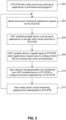
- FIG. 2 is a flowchart of the process for initially configuring a new CE device, such as a digital TV (DTV) or set top box (STB).
- a CE device acquired by a customer is plugged into a power source and activated.
- the end user initiates one or more of the media and social networking applications that are built in to the CE device software.
- the media or social networking application will likely request that the user enter a User ID and Password. Not uncommonly, the user will not recall their User ID or password for a given media or social networking application.
- the necessary User IDs and passwords for the various media and social networking websites that are regularly accessed by the user can be stored in a portable device, such as a smartphone, or a laptop, notebook, or tablet computer which has NFC capability built into it, and which run the media and social networking applications.
- the portable device is brought within close proximity to the CE device.
- One NFC device acts as a reader; the other NFC device acts as a tag. It is unimportant which NFC device acts as a reader and which acts as a tag, although the typical scenario is that the NFC device contained in the portable device acts as a tag, since the tag is not required to be connected to a power source to activate it.
- the tag harvests its power from the reader.
- the reader is typically located in the CE device, which is always connected to a power source.
- the CE device requests the user to enter the user's existing User ID and password.
- the request is typically displayed on the CE device screen.
- the portable device is brought into contact with the CE device such that the NFC devices can interact with each other.
- the User ID and password information stored on the portable device is transferred to the CE device.
- the User ID and password information for each media website and social networking website regularly accessed by the user on his/her portable device can be transferred in bulk to the CE device at one time.
- the User ID and password information for each media website and/or social networking site can be transferred independently each time that a given application is first initiated on the CE device.
- a screen may appear requesting the user to either set up a new account or to sign in with his/her User ID and password.
- the user will have this information stored on their portable device, such as a tablet computer or smartphone, through which they already access their Netflix account. It is also likely that the user will not have their User ID and password for their Netflix account readily available. But it is likely they will have their portable device within reach.
- the portable device is NFC capable, that is, it has a NFC device built into it, the user holds the portable device next to the DTV at the point where the two NFC devices are able to "talk" to each other.
- the user's Netflix account information is transferred from the portable device to the DTV with no further input from the user being needed.
- a screen will likely appear requesting either that the user set up a new account or log in to their existing account.
- the user's portable device is NFC capable
- the user's Facebook account information, including their User ID and password is transferred from the portable device to the DTV with no further input from the user being needed.
- the User ID and password information is transferred from the portable device to the DTV as an application is first opened.
- all of the User ID and password information for all media and social networking applications that is stored on the portable device is transferred at one time to the DTV.
- the DTV then applies the User ID and password information that is relevant to a given media or social networking application as that application is initiated.
- the CE device may display a list of media and/or social networking sites that are available to be accessed. The user may be given the option to select one or more sites from the displayed list.
- user ID and password information related to the selected sites is transferred to the CE device and is applied to the selected applications as the selected applications are initiated.
- the applications apply the appropriate User ID and password information to enable the applications to access the applicable media and social networking websites.
- FIG. 3 is a flowchart of the process for initially configuring a DTV (or other CE device) with content blocking information.
- a DTV (or other CE device) acquired by a customer (end user) is plugged into a power source and activated.
- the end user initiates (or opens) one or more of the media applications that are built in to the DTV software for the first time.
- the media application will likely request that the user enter a User ID and Password.
- This information can be transferred from the portable device to the DTV (or STB or other CE device) via the NFC devices contained in the DTV and the portable device as described above.
- the media application will then likely request that the user configure the application with filters, such as, but not limited to, parental filters, to block certain content, such as, but not limited to, adult or pornographic content, from being displayed.
- filters such as, but not limited to, parental filters
- certain content such as, but not limited to, adult or pornographic content
- step 310 as new media applications that are currently available on the portable device are downloaded to the DTV (or other CE device), the same procedure is followed to transfer User ID, password information, and content blocking filters from the portable device to the DTV (or other CE device).
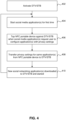
- FIG. 4 is a flowchart of the process for initially configuring a DTV (or other CE device) with privacy settings for social networking applications.
- a DTV (or other CE device) acquired by a customer (end user) is plugged into a power source and activated.
- the end user initiates (or opens) one or more of the social networking applications that are built in to the DTV software for the first time.
- the social networking application will likely request that the user enter a User ID and Password. This information can be transferred from the portable device to the DTV (or STB or other CE device) via the NFC devices contained in the DTV and the portable device as described above.
- the media application will then likely request that the user configure the application with privacy settings.
- the same privacy settings that are on the portable device are transferred to the DTV using NFC techniques, as described above.
- step 410 as new social networking applications that are currently available on the portable device are downloaded to the DTV (or other CE device), the same procedure is followed to transfer User ID, password information, and privacy settings from the portable device to the DTV (or other CE device).
- FIG. 5 is a flowchart of the process for logging in to the same application on a DTV (or other CE device) by different users (e.g., different family members), each having different log in information.
- a media or social networking application is launched on the DTV (or other CE device).
- the application requests the user to enter his/her User ID and password to log in.
- a portable device used exclusively by that user and containing only that user's log in information is brought into proximity with the DTV (or other CE device).
- that user's log in information is transferred from the portable device to the DTV (or other CE device) using NFC techniques, as described above.
- the application runs. If log in is not successful, the application may continue to request the proper log in information until it is turned off.
- NFC NFC devices
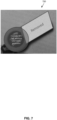
- existing token ID (or secure ID) tags such as a conventional tag 600 to provide an example, typically include a battery, a random number generator linked to an encrypted number algorithm, and an LCD display.
- Embodiments of this invention as shown in FIG. 7 remove the LCD display and replace the display with a NFC device coupled to the random number generator.
- token ID tags have a number of disadvantages. For one, they require LCD driver electronics and a power supply for the LCD display. Second, they require a long lasting battery to power the LCD display. Third, they have a relatively large form factor, thus requiring a significant amount of materials to manufacture them. Finally, there is a human error factor that cannot be discounted.
- the user is required to enter a number of digits (usually six, but there can be more or fewer digits required) from the display in addition to their user ID and password.
- the display digits typically change every 10 - 30 seconds or so (the periodicity of change may be less than 10 seconds or more than 30 seconds, depending on how the token ID tag is set, usually by the company or institution which the user wants to access.
- the LCD display is removed from the conventional tag 600 and is replaced by a NFC tag. Removing the LCD display has a number of advantages. For one, the display electronics are eliminated. For another, the size of the battery is substantially reduced, since it does not need to power the LCD display. Still further, the size of a token ID tag 700 is substantially reduced, since it is only required to contain a NFC tag and its associated antenna, the token number generator that is connected to the NFC tag, and a small battery that powers the token generator.
- An embodiment of the invention transfers the passcode data (that is, the number generated by the number generator in the token ID tag 700)) via NFC to a commercial card reader, NFC reader, etc.
- the user then only inputs his/her user name and password.
- the random number is generated by the protocol in the token ID tag 700.
- the form factor of the token ID tag 700 could change to be as small as necessary or desirable, depending on the antenna size, i.e., depending on the NFC or RFID antenna requirement. Any protocol can be used, thereby allowing for varied approaches, depending on what secure system is being used.
- the random number generator is co-located with the NFC/RFID controller such that the information generated by the existing random number generator is aligned with the secure server.
- the reader then reads the number generated by the number generator in the token ID tag 700 containing the NFC tag at that time and checks it against the server's number. The two numbers should then align. The user does not have to worry about getting any of the digits wrong because the reader has read the passcode number from the token ID tag 700.
- the user carries the code generator with them in a small form factor.
- a reader generates a magnetic field which, when the NFC tag is touched to the reader, is harvested by the NFC tag in the token ID tag 700.
- the field harvested by the NFC tag powers the NFC tag to enable it to transmit the code generated by the code generator connected to the NFC tag in the token ID tag 700 to the reader.
- the reader automatically reads the code generated by the code generator in the token ID tag 700.
- the user then only has to input their fixed user name and password. All the required information gets passed back to the secure server which aligns with the current user ID and the token ID that is currently being read by the reader. If the passcode and user ID match, a connection is established.
- the NFC reader reads the token ID number automatically from the token ID tag 700 when the token ID tag 700 is placed next to the reader.
- the reader is in the device that creates the secure connection to a server, a VPN, etc.
- the device containing the reader may be a laptop or desktop computer, a financial institution terminal, a tablet computer, or any other peripheral capable of obtaining and maintaining a secure connection. This is useful, in addition to a secure computer system access to a VPN, for banking systems, home security systems, etc.
- the token ID tag 700 is aligned with the initialization. Over time, the token ID tag 700 should remain aligned with the main system.
- a reader is required to read the data from the tag.
- the reader can be built in to a computer or other reading device, or it can be an add-on unit that connects to the computer which then connects to the network.
- the token ID tag 700 can cover all RFID/NFC standards, including NFC-A, NFC-B, NFC-F, ISO14443A, IS014443B, ISO 14443B', MIFARE TM , FELICA TM , Topaz TM etc.
- this embodiment provides ease of use on behalf of the user. More and more peripherals have NFC readers (e.g., payment terminals, laptops, mobile phones, printers, door access, etc.) incorporated in them. Not having to type in a given multi-digit number in a specific time period makes it easier for the user to establish a secure connection with his/her user ID, password, and automatically generated token ID number. Removing the LCD display, display driver electronics, and the larger battery results in a smaller form factor and a lower cost of manufacture of the token ID tag 700. In addition, the token ID tag 700 of this embodiment has a lower power requirement than the conventional tag 600.
- NFC readers e.g., payment terminals, laptops, mobile phones, printers, door access, etc.
Landscapes
- Engineering & Computer Science (AREA)
- Computer Networks & Wireless Communication (AREA)
- Signal Processing (AREA)
- Computer Security & Cryptography (AREA)
- Computing Systems (AREA)
- General Engineering & Computer Science (AREA)
- Computer Hardware Design (AREA)
- Human Computer Interaction (AREA)
- General Business, Economics & Management (AREA)
- Business, Economics & Management (AREA)
- Telephone Function (AREA)
- Mobile Radio Communication Systems (AREA)
- Stored Programmes (AREA)
- Telephonic Communication Services (AREA)
Applications Claiming Priority (3)
| Application Number | Priority Date | Filing Date | Title |
|---|---|---|---|
| US13/332,568 US20130165040A1 (en) | 2011-12-21 | 2011-12-21 | Secure Media Application Setup Using NFC |
| EP19157820.2A EP3522490B1 (de) | 2011-12-21 | 2012-08-07 | Sichere medienanwendungseinrichtung unter verwendung von nfc |
| EP12005731.0A EP2608480B1 (de) | 2011-12-21 | 2012-08-07 | Sichere Medienanwendungseinrichtung unter Verwendung von NFC |
Related Parent Applications (2)
| Application Number | Title | Priority Date | Filing Date |
|---|---|---|---|
| EP12005731.0A Division EP2608480B1 (de) | 2011-12-21 | 2012-08-07 | Sichere Medienanwendungseinrichtung unter Verwendung von NFC |
| EP19157820.2A Division EP3522490B1 (de) | 2011-12-21 | 2012-08-07 | Sichere medienanwendungseinrichtung unter verwendung von nfc |
Publications (2)
| Publication Number | Publication Date |
|---|---|
| EP4422154A2 true EP4422154A2 (de) | 2024-08-28 |
| EP4422154A3 EP4422154A3 (de) | 2024-11-20 |
Family
ID=46799948
Family Applications (3)
| Application Number | Title | Priority Date | Filing Date |
|---|---|---|---|
| EP24175719.4A Pending EP4422154A3 (de) | 2011-12-21 | 2012-08-07 | Sichere medienanwendungseinrichtung mit nfc |
| EP12005731.0A Active EP2608480B1 (de) | 2011-12-21 | 2012-08-07 | Sichere Medienanwendungseinrichtung unter Verwendung von NFC |
| EP19157820.2A Active EP3522490B1 (de) | 2011-12-21 | 2012-08-07 | Sichere medienanwendungseinrichtung unter verwendung von nfc |
Family Applications After (2)
| Application Number | Title | Priority Date | Filing Date |
|---|---|---|---|
| EP12005731.0A Active EP2608480B1 (de) | 2011-12-21 | 2012-08-07 | Sichere Medienanwendungseinrichtung unter Verwendung von NFC |
| EP19157820.2A Active EP3522490B1 (de) | 2011-12-21 | 2012-08-07 | Sichere medienanwendungseinrichtung unter verwendung von nfc |
Country Status (5)
| Country | Link |
|---|---|
| US (2) | US20130165040A1 (de) |
| EP (3) | EP4422154A3 (de) |
| KR (1) | KR101362818B1 (de) |
| CN (1) | CN103176818B (de) |
| TW (1) | TWI517063B (de) |
Families Citing this family (24)
| Publication number | Priority date | Publication date | Assignee | Title |
|---|---|---|---|---|
| US8806592B2 (en) * | 2011-01-21 | 2014-08-12 | Authentify, Inc. | Method for secure user and transaction authentication and risk management |
| US10581834B2 (en) | 2009-11-02 | 2020-03-03 | Early Warning Services, Llc | Enhancing transaction authentication with privacy and security enhanced internet geolocation and proximity |
| CN103975615B (zh) * | 2011-12-16 | 2019-09-03 | 英特尔公司 | 用自动生成的登录信息经由近场通信登录 |
| US20140300827A1 (en) * | 2012-03-09 | 2014-10-09 | Mediatek Singapore Pte. Ltd. | Mobile device and remote control connection for electronic device via near field communication |
| EP2645729A1 (de) * | 2012-03-30 | 2013-10-02 | Nagravision S.A. | Sicherheitsvorrichtung für Empfänger/Dekodierer für Abonnentenfernsehen |
| US9893769B2 (en) * | 2013-12-03 | 2018-02-13 | Sony Corporation | Computer ecosystem with temporary digital rights management (DRM) transfer |
| CN103870759A (zh) * | 2014-03-27 | 2014-06-18 | 上海斐讯数据通信技术有限公司 | 一种nfc加密的方法、系统及移动终端 |
| US9503965B2 (en) * | 2014-07-14 | 2016-11-22 | Verizon Patent And Licensing Inc. | Set-top box setup via near field communication |
| CN104349194A (zh) * | 2014-10-24 | 2015-02-11 | 深圳市嘉乐派科技有限公司 | 一种在互联网电视盒中进行身份识别的系统及方法 |
| CN104468723A (zh) * | 2014-11-12 | 2015-03-25 | 康佳集团股份有限公司 | 基于nfc技术同步应用账户信息的方法及系统 |
| CN105681877B (zh) * | 2014-11-20 | 2019-06-25 | 中国移动通信集团公司 | 机顶盒、电视、平台、遥控器及建立连接的方法、装置 |
| US9614845B2 (en) | 2015-04-15 | 2017-04-04 | Early Warning Services, Llc | Anonymous authentication and remote wireless token access |
| CN108235820B (zh) * | 2015-06-03 | 2021-10-22 | 全球硅片有限公司 | 一种近场通信启用设备 |
| US10084782B2 (en) | 2015-09-21 | 2018-09-25 | Early Warning Services, Llc | Authenticator centralization and protection |
| US9883383B1 (en) | 2017-01-27 | 2018-01-30 | Microsoft Technology Licensing, Llc | Secure near field communications |
| CN109660827B (zh) * | 2018-12-04 | 2021-05-07 | 广州长嘉电子有限公司 | 一种4k智能电视广播电视信号处理方法及系统 |
| EP3761164A1 (de) * | 2019-07-05 | 2021-01-06 | Quside Technologies S.L. | Entropiebereitsteller |
| DE102019120199B4 (de) * | 2019-07-25 | 2021-08-12 | Endress+Hauser Flowtec Ag | Verfahren zum Betreiben eines Feldgerätes der Prozessautomatisierungstechnik |
| US20210120298A1 (en) | 2019-10-17 | 2021-04-22 | Universal Electronics Inc. | Systems and methods for a customized media access user experience |
| US20210204116A1 (en) | 2019-12-31 | 2021-07-01 | Payfone, Inc. | Identity verification platform |
| US11093944B1 (en) | 2020-04-30 | 2021-08-17 | Capital One Services, Llc | Systems and methods for peer-to-peer identity verification |
| EP4232929A4 (de) * | 2020-10-20 | 2024-05-15 | Universal Electronics Inc. | Systeme und verfahren für benutzererfahrung mit angepasstem medienzugriff mit datenschutzeinstellungen |
| US12058528B2 (en) | 2020-12-31 | 2024-08-06 | Prove Identity, Inc. | Identity network representation of communications device subscriber in a digital domain |
| US12143515B2 (en) | 2021-03-26 | 2024-11-12 | Capital One Services, Llc | Systems and methods for transaction card-based authentication |
Citations (1)
| Publication number | Priority date | Publication date | Assignee | Title |
|---|---|---|---|---|
| EP1993301B1 (de) * | 2007-05-15 | 2009-07-15 | NTT DoCoMo, Inc. | Verfahren und Vorrichtung zum Betreiben eines drahtlosen Heimnetzwerkes |
Family Cites Families (15)
| Publication number | Priority date | Publication date | Assignee | Title |
|---|---|---|---|---|
| KR100732872B1 (ko) * | 2000-01-21 | 2007-06-28 | 코닌클리케 필립스 일렉트로닉스 엔.브이. | 소비자 전자 장치의 구성 방법 |
| GB2387999B (en) * | 2002-04-24 | 2004-03-24 | Richard Mervyn Gardner | Sequential authentication with infinitely variable codes |
| WO2005053228A1 (en) * | 2003-11-27 | 2005-06-09 | Koninklijke Philips Electronics N.V. | Configuring network equipment via bluetooth mobile phone |
| CN1661581A (zh) * | 2004-02-27 | 2005-08-31 | 深圳市朗科科技有限公司 | 无线数据存储装置及方法 |
| KR20060025480A (ko) * | 2004-09-16 | 2006-03-21 | 엘지전자 주식회사 | 이동통신 단말기의 웹사이트 로그인 방법 |
| US7720018B2 (en) * | 2005-04-21 | 2010-05-18 | Microsoft Corporation | Low power transmission provisioning for wireless network devices |
| US20090117883A1 (en) * | 2006-07-20 | 2009-05-07 | Dan Coffing | Transaction system for business and social networking |
| US20080039139A1 (en) * | 2006-08-14 | 2008-02-14 | Sandisk Il Ltd. | Method For Sharing Credentials |
| US20090076950A1 (en) * | 2007-09-18 | 2009-03-19 | Ujin Chang | Universal Network-Based Deposit Management Service |
| US8682960B2 (en) * | 2008-03-14 | 2014-03-25 | Nokia Corporation | Methods, apparatuses, and computer program products for providing filtered services and content based on user context |
| US20100100596A1 (en) * | 2008-10-22 | 2010-04-22 | Nokia Corporation | Sharing Media Content with Multiple Recipients |
| CN101895513A (zh) * | 2009-05-20 | 2010-11-24 | 广州盛华信息技术有限公司 | 服务网站登录认证系统及实现方法 |
| EP2280362A1 (de) * | 2009-07-30 | 2011-02-02 | Research In Motion Limited | Vorrichtung und Verfahren zur gesteuerten gemeinsamen Nutzung von persönlicher Information |
| US8850196B2 (en) * | 2010-03-29 | 2014-09-30 | Motorola Solutions, Inc. | Methods for authentication using near-field |
| US20110246778A1 (en) * | 2010-03-31 | 2011-10-06 | Emc Corporation | Providing security mechanisms for virtual machine images |
-
2011
- 2011-12-21 US US13/332,568 patent/US20130165040A1/en not_active Abandoned
-
2012
- 2012-08-07 EP EP24175719.4A patent/EP4422154A3/de active Pending
- 2012-08-07 EP EP12005731.0A patent/EP2608480B1/de active Active
- 2012-08-07 EP EP19157820.2A patent/EP3522490B1/de active Active
- 2012-09-12 TW TW101133339A patent/TWI517063B/zh not_active IP Right Cessation
- 2012-09-21 KR KR1020120105011A patent/KR101362818B1/ko active Active
- 2012-12-21 CN CN201210564199.1A patent/CN103176818B/zh active Active
-
2013
- 2013-11-15 US US14/080,895 patent/US20140099891A1/en not_active Abandoned
Patent Citations (1)
| Publication number | Priority date | Publication date | Assignee | Title |
|---|---|---|---|---|
| EP1993301B1 (de) * | 2007-05-15 | 2009-07-15 | NTT DoCoMo, Inc. | Verfahren und Vorrichtung zum Betreiben eines drahtlosen Heimnetzwerkes |
Also Published As
| Publication number | Publication date |
|---|---|
| KR101362818B1 (ko) | 2014-02-13 |
| EP2608480A3 (de) | 2013-08-14 |
| US20130165040A1 (en) | 2013-06-27 |
| EP3522490B1 (de) | 2024-06-12 |
| TWI517063B (zh) | 2016-01-11 |
| EP3522490A1 (de) | 2019-08-07 |
| HK1183947A1 (zh) | 2014-01-10 |
| TW201329884A (zh) | 2013-07-16 |
| CN103176818B (zh) | 2016-08-10 |
| EP4422154A3 (de) | 2024-11-20 |
| EP2608480B1 (de) | 2019-02-20 |
| US20140099891A1 (en) | 2014-04-10 |
| KR20130072115A (ko) | 2013-07-01 |
| EP2608480A2 (de) | 2013-06-26 |
| CN103176818A (zh) | 2013-06-26 |
Similar Documents
| Publication | Publication Date | Title |
|---|---|---|
| EP3522490B1 (de) | Sichere medienanwendungseinrichtung unter verwendung von nfc | |
| US9231662B2 (en) | Secure communications via NFC device | |
| US11232438B2 (en) | Method and system for authenticating transaction request from device | |
| TWI486004B (zh) | 近場通訊裝置、通訊裝置及用於近場通訊裝置的方法 | |
| US9197313B2 (en) | Remote control with near field communications capability | |
| US9225710B2 (en) | Secure elements broker (SEB) for application communication channel selector optimization | |
| CN104823383B (zh) | 远程产生nfc交易的方法和系统 | |
| TWI513212B (zh) | 近場通訊裝置及其通訊方法 | |
| US8630585B2 (en) | Method and apparatus for communicating with external interface device using contactless | |
| US20120330784A1 (en) | Mobile Device for Transaction Payment Delegation | |
| US20120330764A1 (en) | Point of Sale System for Transaction Payment Delegation | |
| US20160364719A1 (en) | User equipment for reverse nfc payment, nfc payment terminal, reverse nfc payment system comprising the same, control method thereof and non-transitory computer readable storage medium having computer program recorded thereon | |
| HK1183947B (en) | Secure media application setup using nfc | |
| JP2016096452A (ja) | 移動端末及び無線通信システム | |
| KR20130128736A (ko) | 뮤직 서비스 방법 | |
| KR20240106527A (ko) | 주문 대행 장치 | |
| HK1177828B (en) | Secure communications via nfc device |
Legal Events
| Date | Code | Title | Description |
|---|---|---|---|
| PUAI | Public reference made under article 153(3) epc to a published international application that has entered the european phase |
Free format text: ORIGINAL CODE: 0009012 |
|
| STAA | Information on the status of an ep patent application or granted ep patent |
Free format text: STATUS: THE APPLICATION HAS BEEN PUBLISHED |
|
| AC | Divisional application: reference to earlier application |
Ref document number: 2608480 Country of ref document: EP Kind code of ref document: P Ref document number: 3522490 Country of ref document: EP Kind code of ref document: P |
|
| AK | Designated contracting states |
Kind code of ref document: A2 Designated state(s): AL AT BE BG CH CY CZ DE DK EE ES FI FR GB GR HR HU IE IS IT LI LT LU LV MC MK MT NL NO PL PT RO RS SE SI SK SM TR |
|
| REG | Reference to a national code |
Ref country code: DE Ref legal event code: R079 Free format text: PREVIOUS MAIN CLASS: H04M0001724120 Ipc: H04W0012047100 |
|
| PUAL | Search report despatched |
Free format text: ORIGINAL CODE: 0009013 |
|
| AK | Designated contracting states |
Kind code of ref document: A3 Designated state(s): AL AT BE BG CH CY CZ DE DK EE ES FI FR GB GR HR HU IE IS IT LI LT LU LV MC MK MT NL NO PL PT RO RS SE SI SK SM TR |
|
| RIC1 | Information provided on ipc code assigned before grant |
Ipc: H04B 5/24 20240101ALI20241015BHEP Ipc: H04M 1/72412 20210101ALI20241015BHEP Ipc: H04L 41/0806 20220101ALI20241015BHEP Ipc: H04L 9/40 20220101ALI20241015BHEP Ipc: H04W 4/80 20180101ALI20241015BHEP Ipc: H04W 12/088 20210101ALI20241015BHEP Ipc: H04W 12/0471 20210101AFI20241015BHEP |
|
| STAA | Information on the status of an ep patent application or granted ep patent |
Free format text: STATUS: REQUEST FOR EXAMINATION WAS MADE |
|
| 17P | Request for examination filed |
Effective date: 20250520 |
|
| STAA | Information on the status of an ep patent application or granted ep patent |
Free format text: STATUS: EXAMINATION IS IN PROGRESS |
|
| 17Q | First examination report despatched |
Effective date: 20250911 |