EP4420751A1 - Erzeugung einer partitur für ein videospiel - Google Patents
Erzeugung einer partitur für ein videospiel Download PDFInfo
- Publication number
- EP4420751A1 EP4420751A1 EP23386017.0A EP23386017A EP4420751A1 EP 4420751 A1 EP4420751 A1 EP 4420751A1 EP 23386017 A EP23386017 A EP 23386017A EP 4420751 A1 EP4420751 A1 EP 4420751A1
- Authority
- EP
- European Patent Office
- Prior art keywords
- game
- musical score
- music generation
- keywords
- information indicative
- Prior art date
- Legal status (The legal status is an assumption and is not a legal conclusion. Google has not performed a legal analysis and makes no representation as to the accuracy of the status listed.)
- Pending
Links
- 238000000034 method Methods 0.000 claims abstract description 46
- 238000012545 processing Methods 0.000 claims abstract description 29
- 230000009471 action Effects 0.000 claims abstract description 22
- 238000004891 communication Methods 0.000 claims abstract description 20
- 238000004590 computer program Methods 0.000 claims abstract description 5
- 230000008569 process Effects 0.000 claims description 14
- 230000004044 response Effects 0.000 claims description 12
- 238000010801 machine learning Methods 0.000 claims description 6
- 230000008859 change Effects 0.000 claims description 4
- 230000007704 transition Effects 0.000 claims description 4
- 230000003993 interaction Effects 0.000 description 7
- 238000012549 training Methods 0.000 description 6
- 238000006243 chemical reaction Methods 0.000 description 5
- 238000010586 diagram Methods 0.000 description 4
- 230000000875 corresponding effect Effects 0.000 description 3
- 230000036651 mood Effects 0.000 description 3
- 230000004962 physiological condition Effects 0.000 description 3
- 230000000694 effects Effects 0.000 description 2
- 230000007246 mechanism Effects 0.000 description 2
- 230000003287 optical effect Effects 0.000 description 2
- 239000007787 solid Substances 0.000 description 2
- 230000000007 visual effect Effects 0.000 description 2
- 238000013459 approach Methods 0.000 description 1
- 238000013473 artificial intelligence Methods 0.000 description 1
- 230000004397 blinking Effects 0.000 description 1
- 230000002596 correlated effect Effects 0.000 description 1
- 230000001419 dependent effect Effects 0.000 description 1
- 230000004424 eye movement Effects 0.000 description 1
- 230000036541 health Effects 0.000 description 1
- 208000013057 hereditary mucoepithelial dysplasia Diseases 0.000 description 1
- 238000007654 immersion Methods 0.000 description 1
- 238000005259 measurement Methods 0.000 description 1
- 238000012544 monitoring process Methods 0.000 description 1
- 230000002040 relaxant effect Effects 0.000 description 1
- 230000003252 repetitive effect Effects 0.000 description 1
Images

Classifications
-
- A—HUMAN NECESSITIES
- A63—SPORTS; GAMES; AMUSEMENTS
- A63F—CARD, BOARD, OR ROULETTE GAMES; INDOOR GAMES USING SMALL MOVING PLAYING BODIES; VIDEO GAMES; GAMES NOT OTHERWISE PROVIDED FOR
- A63F13/00—Video games, i.e. games using an electronically generated display having two or more dimensions
- A63F13/50—Controlling the output signals based on the game progress
- A63F13/54—Controlling the output signals based on the game progress involving acoustic signals, e.g. for simulating revolutions per minute [RPM] dependent engine sounds in a driving game or reverberation against a virtual wall
-
- A—HUMAN NECESSITIES
- A63—SPORTS; GAMES; AMUSEMENTS
- A63F—CARD, BOARD, OR ROULETTE GAMES; INDOOR GAMES USING SMALL MOVING PLAYING BODIES; VIDEO GAMES; GAMES NOT OTHERWISE PROVIDED FOR
- A63F13/00—Video games, i.e. games using an electronically generated display having two or more dimensions
- A63F13/60—Generating or modifying game content before or while executing the game program, e.g. authoring tools specially adapted for game development or game-integrated level editor
-
- A—HUMAN NECESSITIES
- A63—SPORTS; GAMES; AMUSEMENTS
- A63F—CARD, BOARD, OR ROULETTE GAMES; INDOOR GAMES USING SMALL MOVING PLAYING BODIES; VIDEO GAMES; GAMES NOT OTHERWISE PROVIDED FOR
- A63F13/00—Video games, i.e. games using an electronically generated display having two or more dimensions
- A63F13/60—Generating or modifying game content before or while executing the game program, e.g. authoring tools specially adapted for game development or game-integrated level editor
- A63F13/67—Generating or modifying game content before or while executing the game program, e.g. authoring tools specially adapted for game development or game-integrated level editor adaptively or by learning from player actions, e.g. skill level adjustment or by storing successful combat sequences for re-use
-
- G—PHYSICS
- G10—MUSICAL INSTRUMENTS; ACOUSTICS
- G10H—ELECTROPHONIC MUSICAL INSTRUMENTS; INSTRUMENTS IN WHICH THE TONES ARE GENERATED BY ELECTROMECHANICAL MEANS OR ELECTRONIC GENERATORS, OR IN WHICH THE TONES ARE SYNTHESISED FROM A DATA STORE
- G10H1/00—Details of electrophonic musical instruments
- G10H1/0008—Associated control or indicating means
- G10H1/0025—Automatic or semi-automatic music composition, e.g. producing random music, applying rules from music theory or modifying a musical piece
-
- G—PHYSICS
- G10—MUSICAL INSTRUMENTS; ACOUSTICS
- G10H—ELECTROPHONIC MUSICAL INSTRUMENTS; INSTRUMENTS IN WHICH THE TONES ARE GENERATED BY ELECTROMECHANICAL MEANS OR ELECTRONIC GENERATORS, OR IN WHICH THE TONES ARE SYNTHESISED FROM A DATA STORE
- G10H1/00—Details of electrophonic musical instruments
- G10H1/0033—Recording/reproducing or transmission of music for electrophonic musical instruments
- G10H1/0041—Recording/reproducing or transmission of music for electrophonic musical instruments in coded form
- G10H1/0058—Transmission between separate instruments or between individual components of a musical system
- G10H1/0066—Transmission between separate instruments or between individual components of a musical system using a MIDI interface
-
- G—PHYSICS
- G10—MUSICAL INSTRUMENTS; ACOUSTICS
- G10H—ELECTROPHONIC MUSICAL INSTRUMENTS; INSTRUMENTS IN WHICH THE TONES ARE GENERATED BY ELECTROMECHANICAL MEANS OR ELECTRONIC GENERATORS, OR IN WHICH THE TONES ARE SYNTHESISED FROM A DATA STORE
- G10H2210/00—Aspects or methods of musical processing having intrinsic musical character, i.e. involving musical theory or musical parameters or relying on musical knowledge, as applied in electrophonic musical tools or instruments
- G10H2210/021—Background music, e.g. for video sequences or elevator music
- G10H2210/026—Background music, e.g. for video sequences or elevator music for games, e.g. videogames
-
- G—PHYSICS
- G10—MUSICAL INSTRUMENTS; ACOUSTICS
- G10H—ELECTROPHONIC MUSICAL INSTRUMENTS; INSTRUMENTS IN WHICH THE TONES ARE GENERATED BY ELECTROMECHANICAL MEANS OR ELECTRONIC GENERATORS, OR IN WHICH THE TONES ARE SYNTHESISED FROM A DATA STORE
- G10H2210/00—Aspects or methods of musical processing having intrinsic musical character, i.e. involving musical theory or musical parameters or relying on musical knowledge, as applied in electrophonic musical tools or instruments
- G10H2210/101—Music Composition or musical creation; Tools or processes therefor
- G10H2210/111—Automatic composing, i.e. using predefined musical rules
-
- G—PHYSICS
- G10—MUSICAL INSTRUMENTS; ACOUSTICS
- G10H—ELECTROPHONIC MUSICAL INSTRUMENTS; INSTRUMENTS IN WHICH THE TONES ARE GENERATED BY ELECTROMECHANICAL MEANS OR ELECTRONIC GENERATORS, OR IN WHICH THE TONES ARE SYNTHESISED FROM A DATA STORE
- G10H2240/00—Data organisation or data communication aspects, specifically adapted for electrophonic musical tools or instruments
- G10H2240/171—Transmission of musical instrument data, control or status information; Transmission, remote access or control of music data for electrophonic musical instruments
- G10H2240/281—Protocol or standard connector for transmission of analog or digital data to or from an electrophonic musical instrument
- G10H2240/311—MIDI transmission
Definitions
- the present technique relates to the field of video game music.
- Video games often include a musical score or soundtrack comprising audio to be played alongside the associated video data.
- a video game soundtrack is typically generated when developing the game, and comprises one or more audio files which are provided with the game data of the video game.
- the soundtrack may be made up of multiple tracks that play one after another in a pre-defined order. However, in some games, the order in which the tracks are played may be dependent on in-game events.
- an entertainment device of claim 13 In another example of the present technique there is provided an entertainment device of claim 13.
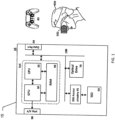
- FIG. 1 shows an example of an entertainment system 10, which comprises an entertainment device 15 (which could for example include a computer or console such as the Sony ® PlayStation 5 ® (PS5)), a display device such as a head-mounted display (HMD) 802 and one or more handheld controllers 80.
- an entertainment device 15 which could for example include a computer or console such as the Sony ® PlayStation 5 ® (PS5)
- a display device such as a head-mounted display (HMD) 802 and one or more handheld controllers 80.
- HMD head-mounted display
- the entertainment device 15 comprises a central processor 20 (also referred to as processing circuitry or a central processing unit (CPU)). This may be a single or multi core processor, for example comprising eight cores as in the PS5.
- the entertainment device also comprises a graphical processing unit or GPU 30.
- the GPU can be physically separate to the CPU, or integrated with the CPU as a system on a chip (SoC) as in the PS5.
- SoC system on a chip
- Either the CPU 20 or the CPU in combination with the GPU 30 may be an example of processing circuitry to generate game content for a game based on game assets.
- the entertainment device 15 also comprises RAM 40, and may either have separate RAM for each of the CPU and GPU, or shared RAM as in the PS5.
- the or each RAM can be physically separate, or integrated as part of an SoC as in the PS5.
- Further storage is provided by a disk 50, either as an external or internal hard drive, or as an external solid state drive, or an internal solid state drive as in the PS5.
- Access circuitry 55 is also provided to access data (such as game content) stored on the disk 50.
- the entertainment device 15 may transmit or receive data via one or more data ports 60, such as a USB port, Ethernet ® port, Wi-Fi ® port, Bluetooth ® port or similar, as appropriate. It may also optionally receive data via an optical drive 70.
- data ports 60 such as a USB port, Ethernet ® port, Wi-Fi ® port, Bluetooth ® port or similar, as appropriate. It may also optionally receive data via an optical drive 70.
- Interaction with the device 15 is typically provided using one or more handheld controllers 80, such as the DualSense ® controller in the case of the PS5.
- the handheld controllers 80 may detect user inputs and provide user input data to the entertainment device 15.
- User input data may be provided to the entertainment device via a cable connecting the controllers to the entertainment device (e.g. connecting to the data ports 60) or via a wireless connection (e.g. Bluetooth ® , Wi-Fi ® , etc.).
- Audio/visual outputs from the entertainment device are typically provided through one or more A/V ports 90, or through one or more of the wired or wireless data ports 60.
- the processing circuitry 20, 30 of the entertainment device may generate game content (e.g. image data and audio data) based on game assets received by any of the reception circuitry, and output the game content via the A/V ports 90 or the wired or wireless data ports 60.
- the processing circuitry 20, 30 may also output a musical score or soundtrack for the game via the AV ports 90 of the wired or wireless data ports 60.
- the entertainment device may transmit the game assets directly to a display device, and processing circuitry of the display device may generate the game content (in which case the processing circuitry of the display device may be the processing circuitry to generate game content for the game based on game assets).
- the display device may be a display screen such as a monitor or television screen (e.g. LCD screen, LED screen, etc.) connected to the entertainment device, and the display screen and speakers may be accessible to the entertainment device via the A/V port 90 or the data ports 60 to receive the audio/visual outputs.
- a display screen and/or speakers could be integrated as part of the entertainment device, or as part of a HMD, worn by a user 800.
- an HMD may be used to provide improved immersion, especially in virtual reality (VR) games.
- VR virtual reality
- One or both of the HMD 802 or the controller 80 may also comprise one or more sensors to detect physiological conditions of the user 800 - for example, the one or more sensors may detect one or more of a temperature, heartrate, eye movements, seating, blinking, motion or any other physiological condition of the user - and to output, to the entertainment device, signals representing the detected physiological conditions.
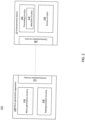
- Figure 2 illustrates a system 101 comprising the entertainment device 15 and a music generation apparatus.
- the entertainment device 15 comprises processing circuitry 102 (e.g. this could include the CPU 20 and/or the GPU 30 shown in Figure 1 ), access circuitry 104 (e.g. this could include the SSD access circuitry 55, the optical drive 70, and/or the data port 60) and communication circuitry 106 (e.g. which could include the data port 60).
- the entertainment device 15 may also include other components such as those shown in Figure 1 , but these have been omitted from Figure 2 for clarity.
- the entertainment device 15 is an example of an entertainment device comprising processing circuitry (processing circuitry 20, 30,102) to process a game state of a game in dependence on game data and an action and/or a condition associated with a user playing the game, and selection circuitry (selection circuitry 110 - discussed below in more detail) to select, during processing of the game, in dependence on the action and/or the condition associated with the user, one or more keywords for use in generating a musical score for the game.
- processing circuitry processing circuitry 20, 30,102
- selection circuitry selection circuitry 110 - discussed below in more detail
- the entertainment device 15 communicates, using the communication circuitry 106, with a music generation apparatus 108.
- the music generation apparatus 108 may be a local device, in which case the entertainment device's communication circuitry 106 may communicate with the music generation apparatus 106 over a wired connection or short-range/local wireless connection (e.g. WiFi ® or Bluetooth ® ).
- the music generation apparatus 108 may be provided within a remote server, accessible to the entertainment device over the internet - for example, the music generation apparatus 108 may be provided as part of a cloud service, and may be accessible to multiple remote entertainment devices.
- the music generation apparatus 108 may be integrated with the entertainment device 15, in which case the communication circuitry 106 may be provided by the bus 100.
- the music generation apparatus 108 is arranged to provide a personalised musical score for a game being processed by the entertainment device 15.
- the music generation apparatus is an example of a music generation apparatus for generating a musical score for a game.
- the music generation apparatus may generate the musical score itself (e.g. the music generation apparatus 108 may generate and output an audio file comprising the musical score), or some representation of the musical score (e.g. the musical generation apparatus may generate and output a Musical Instrument Digital Interface (MIDI) file/stream representing the musical score) or similar.
- MIDI Musical Instrument Digital Interface
- the music generation apparatus 108 generates and outputs information indicative of a musical score, which may or may not be the musical score itself. Therefore, it should be appreciated that where the terms "musical score” or “soundtrack” are used herein (i.e. in respect of the information generated and output by the music generation apparatus), this should be interpreted as also covering information indicative of the musical score.
- the music generation apparatus 108 comprises communication circuitry 112 to communicate with the entertainment device 15, and the communication between the communication circuitry 106 of the entertainment device 15 and the music generation apparatus 108 includes requests, sent by the entertainment device 15, for the music generation apparatus to generate a musical score for a game.
- the communication also includes one or more keywords, selected by selection circuitry 110 (which may be part of or provided by the processing circuitry 102) for example in dependence on input signals received from one or more input devices such as the one or more controllers 80 or the one or more HMDs 802, and/or in dependence upon all or part of the game state.
- the communication circuitry 112 of the music generation apparatus 108 is configured to receive a request to generate a musical score for a game, and to receive one or more keywords output by the entertainment device during processing of the game, the one or more keywords being indicative of an action and/or a condition associated with a user playing the game, and/or some or all of the game state itself.
- the input signals may include information relating to user actions (e.g. pressing buttons, moving joysticks, motion of hands or other body parts, etc.) and optionally physiological data relating to the user.
- the music generation apparatus 108 also includes music generation circuitry 114, which is responsive to the request to begin generating information indicative of the musical score, and is responsive to receiving each of the one or more keywords to update the generation of the information indicative of the musical score in dependence on such keywords.
- the music generation circuitry 114 is responsive to the communication circuitry 112 receiving the request to generate a musical score to begin generation of the information indicative of the musical score, based on information provided in the request. The information indicative of the musical score is then output, as it is generated, to the entertainment device 15 via the communication circuitry 112 of the music generation apparatus.
- the information indicative of the musical score is initially generated based on information provided in the request; for example, the request may optionally identify the game being played (although may not be necessary if the instance of the music generation apparatus is specific to the game), and may similarly optionally identify information about the user or a user profile associated with the user - this allows the musical score to be personalised to the particular game and to the individual user.
- the music generation circuitry 114 responds by updating its generation of the information indicative of the musical score based on the keywords. This provides a musical score that is personalised to the game, the user, and the user's interactions with and reactions to the game.
- communication between the entertainment device 15 and the music generation apparatus 108 may not flow directly from one apparatus to the other, but instead may be transmitted via one or more intermediate devices.
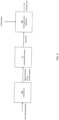
- the process by which the music generation apparatus 108 generates the information indicative of the musical score is shown in Figure 3 .
- the music generation apparatus 108 implements a machine learning (ML) or artificial intelligence (Al) program.
- ML machine learning
- Al artificial intelligence
- the inventors of the present technique realise that an AI or ML program could provide a solution to the problem of how to create a musical score with a greater degree of personalisation since, in principal, a properly-trained AI can provide an infinite amount of personalisation when generating the information indicative of the musical score.
- implementing an Al for this purpose is non-trivial, particularly when defining the input data for the Al.
- the inventors of the present technique recognised that defining the input data for the Al, in order to ensure that the generated musical score can reflect the user's interactions with and reactions to a game, requires more than simply feeding input data from an input device 116 (e.g.
- a controller 80 or HMD 802 into the Al, since this information only identifies information about the user, not how the user interacts with the game. For example, if a user presses a particular button on a controller, this fact alone does not identify how they are interacting with the game - their interaction with the game is also defined by the state of the game itself, other actions taken immediately before or after the user pressed the button, a stage of the game that the user is at, and so on. Defining input data for the AI that reflects all of these factors can be challenging.
- One option might be to provide the AI with information about the game as it is played (e.g. some or all of the game state), in addition to providing the input data from the input device 116.
- communicating such a large amount of data would require the circuitry to provide a large bandwidth, which is not ideal.
- training an Al to generate information indicative of a musical score from this data would be complex, because of the large amount of different combinations of user inputs, user conditions and game events for a single combination of user and game, let alone across a range of different users and different games.
- Such an Al would also require significant processing power.
- a similar consideration applies when providing the Al with the game state only.
- the inventors have proposed a solution to this problem, which does not require such a large amount of data to be communicated between the entertainment device 15 and the music generation apparatus 108, and for which training the Al would be simpler.
- the entertainment device 15 is responsive to signals indicative of one or more of a user action, condition, or game state to select, from a pool of keywords defined (e.g. by a game developer) for an individual game, one or more keywords which represent the user's interaction with or reaction to the game, or the state of the game (e.g. a part thereof salient to the musical score, as explained later herein).
- the pool of keywords may be defined or refined for the particular game, and hence can be arranged to reflect the specific theme and scenarios provided by the particular game. Hence, when these keywords are provided by the entertainment device to the music generation apparatus 108, the AI can use these terms to generate the musical score. Moreover, the pool of keywords may also be specific to a particular user, as well as being specific to a particular game.
- the present technique provides a mechanism that allows an AI/ML algorithm to be used to generate a highly personalised musical score, in terms of the user's inputs/reactions, and/or in terms of how the user chooses to progress the game.
- the AI may be trained using training data which includes parts of musical scores/videogame soundtracks, coupled with corresponding keywords selected to reflect how the parts of the soundtracks could be used to represent various interactions of a user with a game, and/or game states. Moreover, the AI may continue to be trained as it is used - for example, a user may be asked, on occasion, to indicate whether they felt that the musical score being generated matched their mood and/or their interactions with the game. The user's responses to these questions may then be fed back to the AI to improve its model.
- the music generation apparatus 108 in this example also includes seed generation circuitry 118.
- Adding a seed value to the AI input is similar to adding noise, and different seeds will result in different outputs from the AI for the same keywords. However, as the process is still deterministic, adding the same seed and key words will produce the same output again.
- the or each seed acts to vary the prompt and hence also the musical output.
- This may be used to simplify the keyword vocabulary, or the mark-up/association of keywords to user or game states, to create differences for the same keywords.
- a particular seed may be associated with a game title or a game developer and used to ensure that common keywords produce a musical score that is unique to that game (for example in the case where the AI is made available to multiple game developers, who would prefer not to have the same music output for their respective games).
- seeds may be fixed throughout the game to make the game/developer's music repeatable but different to that of other games/developers, whist other seeds may vary or be random, or may be algorithmically generated based on the game state; for example the seed may be based on a location value, so that the resulting music is location specific as well as responsive to the selected keywords.
- the generated music may be repeatable but unique to the game developer, game title, game location, or other aspect of game state (or user state), for the same keyword prompt.
- the AI itself may be trained with seed inputs (e.g. random seed inputs) to learn the degree to which they should influence the output - e.g. the seed, which is typically semantically meaningless, should not outweigh the keyword(s) such that, for example, key words associated with a relaxing game state produce scary music, for example.
- seed inputs e.g. random seed inputs
- the output e.g. the seed, which is typically semantically meaningless
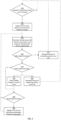
- FIG. 4 is a flow diagram showing an example of a process carried out by the entertainment device 15 described above.
- the method includes a step 200 of processing a game state of a game.
- the entertainment device optionally determines whether a signal (e.g. indicative of a condition and/or action of a user) has been received from a controller and/or a sensor. If such a signal has not been received, the method returns to step 200. If such as signal has been received, the method includes a step 204 of updating the game state based on the signal. Alternatively or in addition the game state may update in any event, e.g. due to the actions of non-player characters in the game.
- one or more keywords are selected based on the signal and/or the game data, and in step 208, the selected one or more keywords are sent to the music generation apparatus.
- FIG. 5 is a flow diagram showing an example of a process carried out by the music generation apparatus 108 described above.
- step 210 it is determined whether a request to generate a musical score has been received.
- the method includes a step 212 of updating a set of musical score generation parameters based on the request.
- step 214 the music generation apparatus begins generating the information indicative of the musical score based on the parameters, and outputting the information indicative of the musical score as it is generated. Generating the information indicative of the musical score based on a set of parameters that are updated based on, for example, the request provides a mechanism for defining the input parameters for the music generation process.
- the combination with 212 and 214 in this example amounts to beginning the generation of a musical score (or information indicative of a musical score) in dependence on the request.
- step 216 it is determined whether a stop signal has been received, indicating that generation of the information indicative of the musical score should be halted. For example, such a signal may be sent to the musical generation apparatus by the entertainment device in response to a game being paused or muted, or in response to an in-game event.
- the method includes a step 217 of stopping (or pausing) generating and outputting the information indicative of the musical score. The method then returns to step 210, and waits for a further request or instruction to resume to be received.
- the method includes a step 218 of determining whether an event signal has been received - for example, the event signal may be received by the communication circuitry 112 of the music generation device.
- an event signal may indicate that a sudden in-game event has occurred, such as a jump scare. It can be desirable for the musical score to suddenly change in response to such an in-game event.
- step 220 the music generation apparatus responds to the event signal by stopping/pausing the generation and output of the information indicative of the musical score, so that the entertainment device can switch to playing some pre-recorded content relevant to the event.
- the method then returns to step 210.
- step 222 a sudden change (e.g. in style, tempo or volume) is created in the musical score, and the method continues to step 224.
- the AI is trained on common transitions between keywords, and may optionally include in its inputs both current keywords and one or more preceding keywords to provide context for such a transition.
- the AI may be trained on keywords including 'meadow' and 'cave', to generate distinctive atmospheric music for each of these environments. Subsequently when a user leaves a meadow to enter a cave, the Al has been trained to segue between these musical outputs.
- the AI can be trained in this manner for common successions of keywords, either specific to the individual game, and/or more generally in terms of mood, style, tempo or the like, so that the musical score can flow pleasingly as the game unfolds and/or in response to player input/reaction.
- the AI is, as noted elsewhere herein, trained on such keywords and corresponding example music.
- the training may also include one or more random seed inputs that act to vary the output, and during training the AI learns that these seeds are not correlated with the example music, but are in effect a noise within the input.
- the training may also include one or more prior keyword inputs, to train the AI for common musical transitions.
- the game state may then be tagged with appropriate keywords to act as salient inputs to the music generating apparatus.
- keywords For example locations, NPCs, objects, with user's character etc. may be tagged with keywords such as those above.
- These keywords may be fixed or vary depending on the progress of the game (for example an NPC may start friendly and then become unfriendly based on user actions).
- the selection of the keywords may be fixed or may change depending on how the game unfolds, for example in response to a story within the game and/or in response to the user's actions in it.
- Such selections of keyword may be scripted / rule based.
- For NPCs, whose state may be complex, such keywords may be associated with dialogue trees, for example, so that the keywords reflect how the NPC is talking to the user's character.
- the music generation apparatus performs a method which, in general, includes the following steps:
- Either one (or both) of these methods can be implemented by a computer program - for example, a computer program may be stored on a transitory or non-transitory computer-readable storage medium, and may comprise instructions which, when executed on a computer, cause the computer to perform one of the above methods.
Landscapes
- Engineering & Computer Science (AREA)
- Multimedia (AREA)
- Physics & Mathematics (AREA)
- Acoustics & Sound (AREA)
- Theoretical Computer Science (AREA)
- Electrophonic Musical Instruments (AREA)
Priority Applications (2)
| Application Number | Priority Date | Filing Date | Title |
|---|---|---|---|
| EP23386017.0A EP4420751A1 (de) | 2023-02-23 | 2023-02-23 | Erzeugung einer partitur für ein videospiel |
| US18/443,515 US20240286037A1 (en) | 2023-02-23 | 2024-02-16 | Generating a musical score for a game |
Applications Claiming Priority (1)
| Application Number | Priority Date | Filing Date | Title |
|---|---|---|---|
| EP23386017.0A EP4420751A1 (de) | 2023-02-23 | 2023-02-23 | Erzeugung einer partitur für ein videospiel |
Publications (1)
| Publication Number | Publication Date |
|---|---|
| EP4420751A1 true EP4420751A1 (de) | 2024-08-28 |
Family
ID=85704750
Family Applications (1)
| Application Number | Title | Priority Date | Filing Date |
|---|---|---|---|
| EP23386017.0A Pending EP4420751A1 (de) | 2023-02-23 | 2023-02-23 | Erzeugung einer partitur für ein videospiel |
Country Status (2)
| Country | Link |
|---|---|
| US (1) | US20240286037A1 (de) |
| EP (1) | EP4420751A1 (de) |
Family Cites Families (4)
| Publication number | Priority date | Publication date | Assignee | Title |
|---|---|---|---|---|
| US9098579B2 (en) * | 2011-06-07 | 2015-08-04 | Kodak Alaris Inc. | Automatically selecting thematically representative music |
| US11344808B2 (en) * | 2019-06-28 | 2022-05-31 | Activision Publishing, Inc. | Systems and methods for dynamically generating and modulating music based on gaming events, player profiles and/or player reactions |
| EP4478338B1 (de) * | 2020-06-09 | 2026-04-01 | Google Llc | Erzeugung von interaktiven tonspuren aus visuellem inhalt |
| US12347409B1 (en) * | 2021-06-08 | 2025-07-01 | Look Sharp Labs, Inc. | Systems and methods for converting music into segmented digital assets for dynamic uses in digital experiences |
-
2023
- 2023-02-23 EP EP23386017.0A patent/EP4420751A1/de active Pending
-
2024
- 2024-02-16 US US18/443,515 patent/US20240286037A1/en active Pending
Non-Patent Citations (3)
| Title |
|---|
| ADAM TOMOTHEY ET AL: "Procedurally generated, adaptive music for rapid game development", FOUNDATIONS OF DIGITAL GAMES 2014, 16 April 2014 (2014-04-16), XP093062467, Retrieved from the Internet <URL:http://www.fdg2014.org/workshops/ggj2014_paper_02.pdf> [retrieved on 20230710] * |
| PLANS DAVID ET AL: "Expereince-Driven Procedural Music Generation for Games", IEEE TRANSACTIONS ON COMPUTATIONAL INTELLIGENCE AND AI IN GAMES, VOL. 4, NO. 3, 30 September 2012 (2012-09-30), XP093062430, Retrieved from the Internet <URL:https://axon.cs.byu.edu/~dan/673/papers/plans.pdf> [retrieved on 20230710] * |
| PRAFULLA DHARIWAL ET AL: "Jukebox: A Generative Model for Music", ARXIV.ORG, CORNELL UNIVERSITY LIBRARY, 201 OLIN LIBRARY CORNELL UNIVERSITY ITHACA, NY 14853, 30 April 2020 (2020-04-30), XP081656139 * |
Also Published As
| Publication number | Publication date |
|---|---|
| US20240286037A1 (en) | 2024-08-29 |
Similar Documents
| Publication | Publication Date | Title |
|---|---|---|
| US12157059B2 (en) | Apparatus and method for enhancing sound produced by a gaming application | |
| US8393967B2 (en) | Construction of gaming messages with contextual information | |
| Allman et al. | Rock Vibe: Rock Band® computer games for people with no or limited vision | |
| CN113727762B (zh) | 视频游戏引导系统 | |
| US8814687B1 (en) | Multi-player music game | |
| JP2025142069A (ja) | コンテンツ配信システム及びプログラム | |
| WO2025090238A1 (en) | Annotating player or spectator sentiment for video game fragment generation | |
| JP2023146391A (ja) | サーバシステム、プログラム及びゲーム実況プレイの実況配信方法 | |
| WO2025071673A1 (en) | Automatic creation and recommendation of video game fragments | |
| JP7140996B2 (ja) | ゲーム関連サービス提供プログラムならびにサーバ装置 | |
| WO2022137376A1 (ja) | 方法、コンピュータ可読媒体、および情報処理装置 | |
| EP4420751A1 (de) | Erzeugung einer partitur für ein videospiel | |
| WO2022003938A1 (ja) | 情報処理システム、情報処理方法、コンピュータプログラムおよびデバイス | |
| GB2636197A (en) | Apparatus, systems and methods for visual description | |
| US20250121279A1 (en) | Data processing apparatus and method | |
| JP7508733B2 (ja) | ゲームシステム、ゲーム装置、ゲームシステムの動作方法およびプログラム | |
| Hodges | The Effects of Haptics on Rhythm Dance Game Performance and Enjoyment | |
| US12589309B2 (en) | Tailoring in-game dialogue to player attributes | |
| US20240278134A1 (en) | Dynamic content | |
| WO2025206215A1 (ja) | コンピュータシステムおよびコンテンツの実行制御方法 | |
| GB2629371A (en) | Help response based on one or more help parameters | |
| JP2025068356A (ja) | ゲームシステム及びプログラム | |
| GB2621873A (en) | Content display system and method | |
| JP2021069601A (ja) | コンピュータシステム | |
| KR20220169926A (ko) | 스트리밍 내기 게임 방법 및 시스템 |
Legal Events
| Date | Code | Title | Description |
|---|---|---|---|
| PUAI | Public reference made under article 153(3) epc to a published international application that has entered the european phase |
Free format text: ORIGINAL CODE: 0009012 |
|
| STAA | Information on the status of an ep patent application or granted ep patent |
Free format text: STATUS: THE APPLICATION HAS BEEN PUBLISHED |
|
| AK | Designated contracting states |
Kind code of ref document: A1 Designated state(s): AL AT BE BG CH CY CZ DE DK EE ES FI FR GB GR HR HU IE IS IT LI LT LU LV MC ME MK MT NL NO PL PT RO RS SE SI SK SM TR |
|
| STAA | Information on the status of an ep patent application or granted ep patent |
Free format text: STATUS: REQUEST FOR EXAMINATION WAS MADE |
|
| 17P | Request for examination filed |
Effective date: 20250126 |